


Gold World News Flash |
- Preparing For War On Lies To Cover Up The Economic Collapse
- Gold And Silver: Current Price Is The Story
- Staying Invested in Cash Is Not Such a Sure Thing After All
- DOLLAR COLLAPSE: Largest Event in Human History | Duane & Hoffman
- Global Leaders Lying About The State Of The Economy, As Gold Is On Sale
- Russians Stunned As Chinese Leader Pushes Gold Backed Yuan
- Who Will Buy More Silver?
- The Chart Every Silver Investor Should See
- Um, Confused Yet? The Silver Paradox In One Chart
- The end of tapering and government funding
- Long Term Gold Chart with Retracements
- Russia Adds Another 300,000 Ounces of Gold To Its Reserves In August
- The Silver Paradox In One Chart
- Bill Holter -- US Broke-Crash Mathematical Certainty
- Gold Price Tumbled $10.40 to End Comex at $1,215.30, down 0.8%
- Quantitative Proof The Fed Is Destroying The Middle Class
- Birds Eye View of the Gold Stocks
- What are your questions for former Fed Chairman Alan Greenspan in New Orleans?
- Julian Phillips: Of course gold is manipulated -- the London Gold Pool, 1961-68
- Gold Daily and Silver Weekly Charts - Option Expiration
- Gold And Silver Price Drop To Critical Fibonacci Levels
- Sage Advice for Bored Investors
- Jim’s Mailbox
- Central Bankers Ready for the Next False Flag Attack
- Von Greyerz thinks Swiss gold referendum proposal has a good chance
- Gold Bullion "Finds Chinese Bargain-Hunting" at 2014 Lows as Shanghai's New FTZ Contracts Open to Thin Trade, US & Italy Jewelry Demand Grows
- Finding Zero
- Another Miserable Week for Gold and Silver
- Bird's Eye View of the Gold Stocks
- Silver Price at Critical Juncture
- Snowden’s Material Was Just the Tip of the Iceberg: The Situation Is Actually Worse Than You Think
- Silver - Almost Time to Backup the Truck and Load up
- The Geopolitical Situation of Europe
- Martin Armstrong: Capital Herding Into the U.S., Likely to Push Dollar, Stocks Higher Into Next Year
| Preparing For War On Lies To Cover Up The Economic Collapse Posted: 20 Sep 2014 01:00 AM PDT from X22 Report: Episode 471 | |||||||||||||||||||||||||||||||||||||||||||||||||||||||||||||||||||||||||||||||
| Gold And Silver: Current Price Is The Story Posted: 20 Sep 2014 12:56 AM PDT Forget all the news, all the fundamentals, all the [mostly errant] price projections. There is a reason why a picture is worth more than 1,000 words, and this is one of those times where it is best to focus on pictures of the market, over various time frames, to get a better handle on what to expect moving forward. Put to rest every so-called PMs pundit or blogger that has persistently been calling for higher prices or saying the low is in. We keep saying that the best and most reliable indicators come from the market. Time to stop listening about what others have been saying about the market and pay closer attention to what the market is saying about others. Several months ago, we expressed the thought that 2014 would likely be more like 2013 and to not expect a dramatic increase in gold and silver prices. Even that was optimistic as silver just reached recent 4 year lows. Are the markets manipulated? Absolutely! The United States and United Kingdom are both in the throes of desperation to keep alive the largest ever Ponzi scheme, that of Western central banks run by the unelected bureaucrats of the Bank for International Settlements [BIS], and all of the similarly unelected bureaucrats from the International Monetary Fund [IMF], who rule over all Western governments. Gold, and silver to a much lesser extent, are the proverbial wooden stake to be driven into the heart of the fiat system which rules over your life, realize it or not, like it or not. Have these unseen faces been successful in suppressing PM prices? Without question. Can it continue? Without question, but the increasingly pertinent question now is, for how much longer? No one has the answer, which has been proven despite the never- ending opinions asserted over the past few years. With each passing month it becomes sooner rather than later, but even sooner is taking longer than most have expected. A look at the charts tells us in no uncertain terms that the end is not yet in sight. Here is our read of what the market is saying, and has been saying for some time. We start with silver because it just broke to low levels not seen for the past 4 years. The importance of acknowledging the trend deserves front and center attention because this simple circumstance is so often overlooked for its power to prevail over price direction. Bearish spacing is also mentioned because of what it connotes: a bearish undertone in the market. With successive lower swing highs, the message of both the trend and bearish spacing have gone unchallenged, and that means there is no way the down trend can end. The KISS principle at work. Even in a down market, past support still has validity to check, at least temporarily, any downward momentum. It does not mean a turn in trend is imminent, so one should not read sentiment into market reality, rather, just be aware and pay closer attention to how price develops/reacts around this possible support area. The weekly chart is context, and we look at the daily chart for more clarity, if any is to be found.
There are no definitive signs of trend change. None. We can see that silver has reached an oversold market condition. That being said, it can never be forgotten that oversold can easily become more oversold, so this current condition is no reason to take a position from the long side in anticipation of an upside reaction. Ask yourself a simple question. Over the past 4 years, how many longs are showing a profit? Counting on just one hand may provide an adequate answer. Is that the kind of position in which you want to find yourself? This is why the trend is your friend.
Trust us, a 60 minute chart is not going to overrule to strength of a weekly chart. What we want to see here is how the market looks in the aftermath of last week's decline. The picture tells an interesting story not seen on the weekly or even the daily chart. What you have to understand is the role volume plays in any market. It is akin to the energy, or the lack of energy behind any market move. When you see sharp volume increases, pay close attention for it is usually smart money making a move, preferably without being detected. Knowing how to read volume activity, an art more than not, the intent of the market movers becomes more apparent. We are all like minnows that can buy and sell without any impact on the market. Smart money has substantial position size that must be moved over a period of days, sometimes weeks so as to not impact the market and show their hand. The first line, marked "1″ at the bottom of the chart, shows the average volume turnover on any given day. The second line, "2," shows notable volume pick-up and should be viewed more closely because the large market movers are doing something without trying to tip their hand. Then, there are the exceptional spike volume standout days, such as what occurred last Friday as silver descended to 4 year lows. Anytime there is such an extreme, count on it being a change from weak hands into strong hands. Here, weak-handed sellers and stops are being triggered, and it is strong hands that are buying, strong hands that generate the exceptionally high volume. The public does not have the ability to independently create such strong volume, rather, the public reacts to it, almost always to its detriment. What the intra day market activity from last Friday does is create a need to focus very closely on HOW the market develops over the next several days. Notice has been served that something important just occurred. When silver activity is viewed along with what transpired in gold, at the same time, the potential for change becomes a higher probability, but one that must still be confirmed. The market is "speaking" for those willing to pay attention.
The standout difference between weekly gold and silver is that gold has not made a new recent low. In fact, gold did not even reach the TR support [Trading Range]. Is the market "speaking" here? Yes. In fact, it does all the time, the trend being its most important message for it tells everyone that the market momentum will persist in one direction for some undetermined length of time. The market message we see is more at hand, and it is shown by the smaller TR from last week, compared to the two preceding weeks as the market has declined. The smaller range tells us that the downward momentum was stopped, to a degree, at a point in time where sellers have clearly been in control. The fact that buyers prevented sellers from moving price lower than occurred does not mean the trend is changing, but it is a piece of information, just like in a jigsaw puzzle where one piece may not mean anything special, but when combined with a few other pieces interconnecting, a part of the puzzle become clearer. A look at the daily chart may provide additional insight.
Within the same down channel as silver, gold did not even reach its lower support channel line, and that is a tribute to buyers for preventing sellers from exerting more influence with momentum on their side. We discussed how last week's smaller range might be an important message, and the daily activity shows why. Focus on the last 3 bars, all with red volume because each close was lower than the day preceding. The 3rd bar from the end was the widest range and lowest volume, and it tells us the there was Ease of Downward Movement [EDM], but the close was in the upper 3rd of the range, buyers winning the battle over sellers that day. On the 2d bar from the right, volume increased, the bar range was smaller, and the close was near the high of the day, again, buyers are showing up and controlling sellers. Friday's bar is the most interesting. Volume was second highest of the month. Increases in volume are usually attributable to smart money intervening, [which may account for why the prior two bars had higher closes; smart money trying to disguise their buying activity]. The question to be asked is, why did smart money increase the effort, via increased volume when price was at the low? It is not because they were selling into a hole, but more likely scooping up all the offerings from sellers and stops being triggered by the lower prices. Reading volume is an art form, and one can sometimes, even often, be wrong. Maybe the intra day chart can add to the interpretation?
Indeed it does. The chart comments explain the set-up. Comparing the activity, [volume effort and extent of resulting price movement] between Wednesday and Friday confirms what was surmised on the daily chart read. Pay attention to these two days and what they mean for you will see this kind of activity repeat itself over and over in all markets and over all time frames. Frankly, most people do not know how to read charts, and that is why they offer opinions about what they think is happening instead of what the market is actually saying. The volume effort from Friday is clearly higher than the volume effort from Wednesday, yet the EDM was much greater on Wednesday than it was on Friday. Here, you can see readily that strong hands were very active buyers on Friday, taking everything sellers had to offer, as well as all sell stops. Will this mean a change in trend? No, but it could be an important step that leads to a change, if we see evidence that buyers are persistently putting in a greater effort than sellers. We need to be patient and wait for confirmation. Actually, there is no other choice. Those too impatient to wait for more confirmation are the ones who were more than likely selling out their longs on Wednesday and Friday from higher prices. What does this mean for holders of the physical? More buying opportunities. What about those who bought at higher levels and have seen a "loss in value?" Ask yourself this question? Are you going to sell any of your holdings at these low levels? If no, then do not be bothered about where price is, unless you are buying more. One has not "lost" anything unless one sells. You have the best form of wealth preservation insurance for what is inevitable, and 5,000 years of history is on your side. We have purchases of silver when priced at 47, and gold at 1,800. Is there any concern over having paid much higher prices? Not in the least. The reason for buying has not changed, and there was more buying of silver on Friday when price was just under 18. We practice what we preach. It is wrong to focus on what one paid over the past few years as price peaked. It is necessary to look at the broader time frame. Those who have been buying silver since $4 and gold since $300 continue to do well. Keep in mind, a quarter made of 90% silver still buys a gallon of gas at today's prices. When the price of PMs one day jumps a few hundred percentages overnight, as is likely to happen, those who paid top dollar for either metal will be overjoyed at their smart decision-making, although that is not currently how they feel. The preference is for silver over gold, at this point where the ratio is around 68:1. In fact, in line with the previous article, Use Magic Of Gold/Silver Ratio, we are starting to look at switching some gold into silver. As a reminder, assume you exchange 10 oz of gold at 65:1, getting you 650 oz of silver. At some point in the future, the ratio may go under 35:1 or 30:1, and you switch back 650 oz of silver to gold at 40:1. You will then have 16 oz of gold, 60% more than previously held, all without risk, just by "playing the ratio." Steady the course PM holders. Add whenever possible.
| |||||||||||||||||||||||||||||||||||||||||||||||||||||||||||||||||||||||||||||||
| Staying Invested in Cash Is Not Such a Sure Thing After All Posted: 20 Sep 2014 12:00 AM PDT by Philippe Herlin, Gold Broker:
In normal times, profits go toward investments. As Helmut Schmidt, former Chancellor of Germany from 1974 to 1982, famously said, "Today's profits are tomorrow's investments and day-after-tomorrow's jobs". But this is not how the economy is working nowadays, especially since 2008. Businesses are not investing (as much as they could) because there is hardly any growth or demand. Instead of investing, these companies choose to pay more dividends to their shareholders or go on merger/acquisitions sprees (Astra Zeneca-Pfizer, TWC-Comcast, General Electric-Alstom, Lafarge-Holcim are some of the important ones of the last months). Paying dividends does not create value per se, it's just a simple transfer, and merger/acquisitions, as can be observed these last decades, rarely create any value as well. The objective is, mainly, for the predator business to strengthen its position in the market. | |||||||||||||||||||||||||||||||||||||||||||||||||||||||||||||||||||||||||||||||
| DOLLAR COLLAPSE: Largest Event in Human History | Duane & Hoffman Posted: 19 Sep 2014 09:40 PM PDT from FinanceAndLiberty: | |||||||||||||||||||||||||||||||||||||||||||||||||||||||||||||||||||||||||||||||
| Global Leaders Lying About The State Of The Economy, As Gold Is On Sale Posted: 19 Sep 2014 09:20 PM PDT by David Levenstein, Gold Silver Worlds:
Last week, gold came under selling pressure as prices fell below certain key technical levels triggering sell-stop orders which caused prices to fall to the $1230 an ounce handle in relatively thin volumes. By the end of the week, the price of the yellow metal settled at $1228.30 per ounce. The recent price drop can be attributed to traders on Comex who have a bearish view on gold due to the current U.S. dollar strength. And, the strength in the greenback has nothing to do with a vibrant economy and instead has everything to do with the weakness in the euro and the yen as economies in Europe and Japan plunge. | |||||||||||||||||||||||||||||||||||||||||||||||||||||||||||||||||||||||||||||||
| Russians Stunned As Chinese Leader Pushes Gold Backed Yuan Posted: 19 Sep 2014 09:01 PM PDT  Today a legend who was just asked by the Chinese government to give a speech to government officials in China told King World News that the Russians listened intently as the leader of a state owned Chinese company pushed for a gold backed yuan. John Ing, who has been in the business for 43 years, also shared many other stunning developments from his trip to speak with a large number Chinese government officials. Today a legend who was just asked by the Chinese government to give a speech to government officials in China told King World News that the Russians listened intently as the leader of a state owned Chinese company pushed for a gold backed yuan. John Ing, who has been in the business for 43 years, also shared many other stunning developments from his trip to speak with a large number Chinese government officials.This posting includes an audio/video/photo media file: Download Now | |||||||||||||||||||||||||||||||||||||||||||||||||||||||||||||||||||||||||||||||
| Posted: 19 Sep 2014 08:20 PM PDT from Alexiscom1: | |||||||||||||||||||||||||||||||||||||||||||||||||||||||||||||||||||||||||||||||
| The Chart Every Silver Investor Should See Posted: 19 Sep 2014 08:00 PM PDT by Steven St. Angelo, SRS Rocco:
On the other hand, the clowns on the financial networks continue to be euphoric about the broader stock markets as they head toward the heavens. The Dow Jones Industrial Average hit a new ALL TIME HIGH reaching 17,265 today. However, if we look at the chart below, we can see a troubling trend. | |||||||||||||||||||||||||||||||||||||||||||||||||||||||||||||||||||||||||||||||
| Um, Confused Yet? The Silver Paradox In One Chart Posted: 19 Sep 2014 07:45 PM PDT from ZeroHedge:
As gold and silver prices tumble to multi-year lows, an odd thing is happening in the ‘paper’ precious metals ETF markets. Demand remains high for silver ETF exposure as ‘someone’ is aggressively unwinding gold ETF positions.. and yet the prices for both are falling rapidly. It appears the retail investor is taking advantage of the lower prices in silver to accumulate additional exposure as Credit Suisse notes, “the perception is that silver will do well, and should outperform gold as the economic recovery strengthens,” adding that “belief in silver's dual properties, as a financial asset and also as an industrial metal, appears to remain strong.” | |||||||||||||||||||||||||||||||||||||||||||||||||||||||||||||||||||||||||||||||
| The end of tapering and government funding Posted: 19 Sep 2014 07:20 PM PDT from Silver Doctors:
This contrasts with the ending of QE1 and QE2, which were marked by falls in the S&P 500 Index of 9% and 11.6% respectively. Presumably the introduction of twist followed by QE3 was designed at least in part to return financial assets to a rising price trend, and tapering has been consistent with this strategy. From a monetary point of view there is only a loose correlation between the growth of fiat money as measured by the Fiat Money Quantity, and monthly bond-buying by the Fed. FMQ is unique in that it specifically seeks to measure the quantity of fiat money created on the back of gold originally given to the commercial banks by our forebears in return for money substitutes and deposit guarantees. This gold, in the case of Americans’ forebears, was then handed to the Fed by these commercial banks after the Federal Reserve System was created. Subsequently gold has always been acquired by the Fed in return for fiat dollars. FMQ is therefore the sum of cash plus instant access bank accounts and commercial bank assets held at the Fed. | |||||||||||||||||||||||||||||||||||||||||||||||||||||||||||||||||||||||||||||||
| Long Term Gold Chart with Retracements Posted: 19 Sep 2014 06:39 PM PDT | |||||||||||||||||||||||||||||||||||||||||||||||||||||||||||||||||||||||||||||||
| Russia Adds Another 300,000 Ounces of Gold To Its Reserves In August Posted: 19 Sep 2014 06:24 PM PDT | |||||||||||||||||||||||||||||||||||||||||||||||||||||||||||||||||||||||||||||||
| The Silver Paradox In One Chart Posted: 19 Sep 2014 05:37 PM PDT As gold and silver prices tumble to multi-year lows, an odd thing is happening in the 'paper' precious metals ETF markets. Demand remains high for silver ETF exposure as 'someone' is aggressively unwinding gold ETF positions.. and yet the prices for both are falling rapidly. It appears the retail investor is taking advantage of the lower prices in silver to accumulate additional exposure as Credit Suisse notes, "the perception is that silver will do well, and should outperform gold as the economic recovery strengthens," adding that "belief in silver's dual properties, as a financial asset and also as an industrial metal, appears to remain strong."
ETF demand remains high for silver... as gold ETF demand tumbles...
And yet Silver prices are languishing just as much as gold prices...
Short-term...
And longer-term...
Charts: Bloomberg Bloomberg suggests,
* * *
In the meantime, the retail silver investor, as indicated by the silver ETF flows, appears to be taking advantage of the lower price environment to accumulate additional metal. This is also true in the silver coin and bar market. | |||||||||||||||||||||||||||||||||||||||||||||||||||||||||||||||||||||||||||||||
| Bill Holter -- US Broke-Crash Mathematical Certainty Posted: 19 Sep 2014 05:22 PM PDT Bill Holter of MilesFranklin.com says a crash of the financial system is on the way. Holter says, "I believe that many things that are real will be revalued many multiples higher. Silver and gold I see being revalued eight to ten times higher or more if we have a closure of the banking system and... [[ This is a content summary only. Visit http://www.GoldSilverNewsBlog.com or http://www.newsbooze.com or http://www.figanews.com for full links, other content, and more! ]]  | |||||||||||||||||||||||||||||||||||||||||||||||||||||||||||||||||||||||||||||||
| Gold Price Tumbled $10.40 to End Comex at $1,215.30, down 0.8% Posted: 19 Sep 2014 04:58 PM PDT

The GOLD/SILVER RATIO gapped up today to 68.348. Either it is pointing to a low in silver and GOLD PRICES, or signaling a huge fall coming in both.
The SILVER PRICE has broken to a new low, but not gold. In June 2013 silver hit $1,179.40, then in December $1,181.40. That is the most likely goal for this fall, but given how oversold both silver and gold are, and how overbought the US dollar, gold might also stop here. Also, gold is punching into its long term uptrend line from 2003, so this is serious. Silver remains above the analogous uptrend, which today comes in about $17.40. Good place to stop. This morning a friend sent me a comment from Bill Fleckenstein mentioning that he and a friend were starting to get gold hate-mail, and hate-mailers have an uncanny ability to signal turning points. I tucked that away in my head as probably quite accurate, then my webmaster, who filters out my email, later mentioned that I had gotten several of the same. It's amazing what low-life, mean, and hurtful things people will say by email, when they known they are beyond the reach of your punching them in the nose. But the chief point is that these chickens usually launch their emails at turning points. The week was wretched for silver and gold, but kind to stocks and especially the US dollar index. Stocks are stretching the cellophane envelope of reality. Stocks are flashing all sorts of non-confirmations. Today the Dow rose 13.75 (0.08%) to 17,279.74 (a new high) but the S&P500 fell 0.96 (0.05%) to 2010.40. S&P500 still couldn't close above that internal resistance line I mentioned yesterday, Whew! Dow in Gold rose 0.84% to 14.20 oz (G$293.54 gold dollars) and grows overboughter every day. Looney overbought. Dow in silver rose above that upper resistance line 3.87% to 968.38 oz (S$1,252.05 silver dollars). More overbought than the Dow in Silver. If this isn't the peak, then silver's gonna drop a lot more and stocks rise. US dollar index rose 47 basis points (0.55%) basically rose as much today as it fell yesterday, plus change. Hovering above the long term resistance line but tremendously overbought. Why do I keep talking about "overbought"? Because it can't last forever. It's a sign that a turn is coming, but it can persist long enough to make you pull your hair out and leave you balder than a pool ball. Euro lost another 0.65% to reach a new low at $1.2834. Yen fell again, 0.25%, to 91.79. Here both are severely, grotesquely oversold. Ten year treasury note yield fell back today to 2.587%. It remains close to breaking out through its downtrend line, about 2.800%. Y'all enjoy your weekend! Aurum et argentum comparenda sunt -- -- Gold and silver must be bought. - Franklin Sanders, The Moneychanger The-MoneyChanger.com © 2014, The Moneychanger. May not be republished in any form, including electronically, without our express permission. To avoid confusion, please remember that the comments above have a very short time horizon. Always invest with the primary trend. Gold's primary trend is up, targeting at least $3,130.00; silver's primary is up targeting 16:1 gold/silver ratio or $195.66; stocks' primary trend is down, targeting Dow under 2,900 and worth only one ounce of gold or 18 ounces of silver. or 18 ounces of silver. US $ and US$-denominated assets, primary trend down; real estate bubble has burst, primary trend down. WARNING AND DISCLAIMER. Be advised and warned: Do NOT use these commentaries to trade futures contracts. I don't intend them for that or write them with that short term trading outlook. I write them for long-term investors in physical metals. Take them as entertainment, but not as a timing service for futures. NOR do I recommend investing in gold or silver Exchange Trade Funds (ETFs). Those are NOT physical metal and I fear one day one or another may go up in smoke. Unless you can breathe smoke, stay away. Call me paranoid, but the surviving rabbit is wary of traps. NOR do I recommend trading futures options or other leveraged paper gold and silver products. These are not for the inexperienced. NOR do I recommend buying gold and silver on margin or with debt. What DO I recommend? Physical gold and silver coins and bars in your own hands. One final warning: NEVER insert a 747 Jumbo Jet up your nose. | |||||||||||||||||||||||||||||||||||||||||||||||||||||||||||||||||||||||||||||||
| Quantitative Proof The Fed Is Destroying The Middle Class Posted: 19 Sep 2014 04:26 PM PDT Submitted by Thad Beversdorf via Voices Of Liberty blog, Listening to pundits on television, one would think we’ve found a magical species of leprechauns that piss gold rainbows amongst the masses and so we need never again worry about the economy, the markets and whether or not things are improving. And looking at the market’s six-year run to all-time highs, perhaps such euphoria is warranted. I mean, isn’t the market supposed to be a highly efficient gauge of the underlying economy? The market is a function of expected future cash flows based on demand, supply and productivity. If true, and if the market is at all-time highs, then things must be good, correct? Let’s look into this proposition. Under historical, normal conditions the market has been a very efficient gauge of the underlying economy. However, these are not normal times and we have unprecedented monetary policies in place. As such, we need to confirm whether or not markets are functioning the same way today as they do in normal times. Specifically we need to confirm that the unprecedented money printing and the Fed targeting higher stock prices haven’t impeded the markets ability to gauge the underlying economy. Now it’s very difficult to know exactly how much money has been printed since the beginning of the last collapse. I’ve heard figures close to $100 trillion (T) if you consider all of the bailouts globally. But looking at a conservative figure based on M2 money supply and the Fed’s own balance sheet we come to about $4T or $5T since the middle of 2007.
Since the collapse in 2008 we’ve had a first round of quantitative easing (QE1), a program of buying US Treasuries at a rate of hundreds of billions per month, followed by QE2. We are just nearing the end of QE3. In November 2010, then-Fed Chair Ben Bernanke explained the purpose of the purchasing programs was to boost economic growth through lower borrowing costs and higher stock prices. This is the first recovery attempt I am aware of that the Fed is explicitly targeting higher stock prices. The idea is to create a trickle down recovery. High equity values and low borrowing costs increase profitability expectations for capital investments by way of reduced capital costs. As such, prima facie, one would expect an increase in capital investments leading to job creation and increased demand which are the ingredients for a strong economy. From that perspective it seems reasonable that the Fed is doing the right things. However, we have to remember that at the end of the day corporations are just money allocators like any hedge fund or mutual fund manager. CEOs are sworn to maximize shareholder funds. Understanding this we must expect corporations to invest based on the best risk/reward scenario available to them as we do for any other investors. Herein lies the invalidity of the Fed’s assumptions. The Fed assumed that low borrowing costs and high equity values would drive corporate fixed capital investment. It did drive investment, but not fixed capital investment. Corporations, like all other investors, realized the stock market was being backstopped by the Fed. This essentially gave all market long side participants a free put option. In other words, the Fed was protecting folks from any downside risk by explicitly stating they were targeting higher stock prices. Thus corporations and everyone else realized the smart money was directly tied to the market. To understand this more clearly, imagine you are a CEO of a company and you have sworn to make the best use of shareholder funds. Would you spend $1 billion (B) dollars building out new factories, expanding operations and hiring permanent workers under union contracts when the economy is still very unhealthy or would you simply invest that $1B into the stock market which you know the Fed is pushing higher? When this strategy was first explained back in 2008, I put together a hypothesis that suggested such a strategy would in fact hurt not help economic growth. Given we are six years in, there is sufficient data to test my theory. Allow me to walk through the results. My theory asserts the Fed is pulling money away from job creating fixed capital investment and toward no-growth investments, namely, financial markets. If this is correct we should see a decline in fixed capital investment and an increase in dividend payouts (dividends get paid out when the CEO is unable to produce better returns with that money than the shareholders can produce on their own i.e. in the market). Have a look at the following chart which depicts the fixed capital investment as a percentage of GDP less dividend payouts as a percentage of GDP.
Note the line goes negative, meaning dividend payouts exceed fixed capital investment around the time the Fed’s QE1 program began. Another effect is that we should see increased levels of corporate share buy backs. The reason is the same, however, an added benefit to share buy backs is that they reduce the amount of shares outstanding and thus increase the very important earnings per share ratio. Let’s see if corporate share buy backs did, in fact, increase. Have a look at the following chart.
Again the chart supports the theory. You can see the blue bars increase significantly during QE1 all the way through QE3. I’ve added black slope lines to indicate periods of QE and red slope lines to indicate periods between QE programs. I did this to see if, during the QE pauses, there were differences in the rate of increase of the share buy backs. You can see from the chart that buybacks increase at a higher rate (black slopes) during periods of QE than periods between the QE programs (red slopes). So this is all in line with our theory that these QE programs targeting low borrowing costs and higher stock prices led to increased corporate investment directly to the market. We proved that while the Fed is targeting higher stock prices, money moved away from fixed capital investment and moved into financial markets. But why is this important? I mean, do we really care what CEO’s do with their money? The answer is absolutely and I will show you why. This is where the theory becomes a bit more interesting. I have not seen the following two charts produced or discussed anywhere else. So this is a premier event folks. Grab your popcorn, sit back and enjoy the show! The theory suggests that allocating funds away from fixed capital investment and into financial markets is a good decision for CEO’s with their microeconomic viewpoints but a very ineffective use of funds from a macroeconomic viewpoint. Given the overall economy is macro by definition we should be able to observe a positive correlation between the first chart above (showing money moving from fixed investment to markets) and M2 money velocity, which represents how effectively we are allocating our money to generate output. Let’s take a look.
What we find is that as money is reallocated from fixed capital investment into financial markets the economy becomes less and less efficient. As a note, I regressed these two functions and found both statistical significance and very strong explanatory properties (adjusted R^2 of .8). Our theory seems to be getting stronger as we go so let’s not stop here. The theory also attempts to explain this inefficiency. It suggests that, as fixed capital investment declines, we get increasing slack in the job market due to reduced capacity. If this is true, we should also see a correlation between the first chart above and median household incomes which should decline as job market slack increases. Let’s have a look.
And again we find significant support for our theory. One can see simply by looking at the chart there is a strong correlation between the reallocation from fixed capital investment to financial markets and median household incomes. Specifically, as we move away from fixed capital investment we see a decline in real median household incomes. As a note, I regressed these functions as well and although not as strong as the M2 regression I found statistical significance and good explanatory properties. There appears to be material quantitative support for the theory, but what does it all mean and how does it all work? Fixed capital investments are required to sustain long term economic growth. Without it capacity deteriorates. As capacity deteriorates jobs go away. As jobs go away demand goes away. As demand goes away we circle back to more capacity reductions and the problem becomes circular. And so it begs the question, why did the Fed implement such a flawed strategy? The answer is because it worked in the past. What the Fed overlooked was that between the crash in 2001 and the latest crash the Fed decided to be more transparent in its activities. They did this in hopes of being able to steer market behavior to some degree. This resulted in a very different message than in the past. This time we all knew the Fed was targeting higher stock prices. This is something that was perhaps assumed in the past but not made explicit. That made all the difference in the world. Without the Fed targeting higher stock prices the market is still a very risky investment and corporations will be more inclined to stick with their area of expertise. In effect, they will invest in their own operations rather than risk shareholder funds in risky financial markets. Remember the Fed was also targeting lower borrowing costs by way of interest rates. And so companies could borrow cheap money to invest, however, this time the borrowed funds went to the financial markets rather than job creating investments. The Fed’s strategy of targeting higher stock prices to boost economic growth has done the exact opposite. This strategy has pulled money away from effective macroeconomic investments and into ineffective macroeconomic albeit effective short term microeconomic investments. The end result is that we have all time high stock prices but no economic growth. This is exactly what our theory predicted would happen. Now in economic terms these are all sunk costs, incredibly high sunk costs, but sunk costs nonetheless. The right course of action at this time is to admit the Fed’s strategy failed and to implement a new strategy that aligns both microeconomic and macroeconomic incentives. Whether this will happen is looking doubtful. We continue to hear Fed Chair Janet Yellen indicate the economy is not yet healthy enough to stand on its own and so they will have to continue with the current strategy until it gets healthier. Given our discussion above, we know that this will never work. We will be stuck in this economic lull until the Fed is ready to admit defeat and allow for a new more effective strategy to be implemented. | |||||||||||||||||||||||||||||||||||||||||||||||||||||||||||||||||||||||||||||||
| Birds Eye View of the Gold Stocks Posted: 19 Sep 2014 04:15 PM PDT The Daily Gold | |||||||||||||||||||||||||||||||||||||||||||||||||||||||||||||||||||||||||||||||
| What are your questions for former Fed Chairman Alan Greenspan in New Orleans? Posted: 19 Sep 2014 03:10 PM PDT 6:08p ET Friday, September 19, 2014 Dear Friend of GATA and Gold: GATA again will have a big part in the New Orleans Investment Conference this year, what with GATA Chairman Bill Murphy and your secretary/treasurer making presentations, your secretary/treasurer debating Casey Research founder Doug Casey about whether the gold market is manipulated, and former Federal Reserve Chairman Alan Greenspan not only speaking but taking questions from the audience. Conference sponsor Brien Lundin of Gold Newsletter and the Jefferson Companies in Louisiana is asking for help in devising questions for Greenspan, and GATA has appended his appeal. ... Dispatch continues below ... ADVERTISEMENT Buy precious metals free of value-added tax throughout Europe Europe Silver Bullion is a fast-growing dealer sourcing its products from renowned mints, refiners, and distributors. Because of a legal loophole that will close soon, you can acquire the world's most popular bullion coins free of value-added tax throughout the European Union. You can collect your order in person at our headquarters in Tallinn, Estonia, or have it delivered in any of the 28 EU countries. Europe Silver Bullion is owned and operated by North American and European experts in selling, storing, and transporting precious metals. We have an extensive product inventory of silver, gold, platinum, and palladium, and our network spans the world. Visit us at www.europesilverbullion.com. Of course we hope that GATA supporters will not only propose questions for Greenspan but will join us at the conference, which is probably both the most informative financial conference and the most enjoyable one in the world because of the great city where it is held. CHRIS POWELL, Secretary/Treasurer * * * What Are Your Questions for Alan Greenspan in New Orleans? By Brien Lundin Excitement is building for our 40th anniversary New Orleans Investment Conference, featuring unprecedented insight into the workings of the Federal Reserve by Alan Greenspan. Why do I say unprecedented? Well, first, because I'm going to make it so. Never before has Greenspan agreed to be quizzed by an audience of individual investors. And I'm going to make sure that we pull no punches in exploring how a well-known and eloquent advocate for gold and against planned economies ended up pulling the levers controlling the world's largest economy. And if I have anything to say about it, we're going to find out -- once and for all -- if central banks are manipulating the gold market, and how. Moreover, we're going to get Greenspan's honest, unhedged prediction of how (and if) the Fed can exit its "quantitative easing" experiment; what the repercussions will be; and where the economy is heading as a result. Second, at this point in his life, Greenspan doesn't have any reason to be less than frank and forthright -- especially in this venue. As you may know, long before he ascended to the chairmanship of the Fed, Greenspan was a speaker at our event -- invited because of his reputation as one of the foremost gold bugs. And in congressional testimony during his tenure as Fed chairman, he always defended gold as the "currency of last resort." In fact, in a private conversation with Jim Blanchard while he was in office, Greenspan confessed his belief that his writings on gold were "the best things I ever wrote." So I'm confident that Greenspan's face-to-face question-and-answer period with our audience will make headlines if not history. And you can bet that his panel with Marc Faber and Porter Stansberry will be a fireworks show that people will be talking about for years. Few investors will be able to say they were there. Will you be there? If so, then you'll also witness one of the most exciting and entertaining debates you've ever seen, as Doug Casey (libertarian) takes on Charles Krauthammer (conservative). No rhetorical punches will be pulled. You'll also enjoy dynamic individual presentations by Krauthammer, Stansberry, Casey, and Faber, as well as Peter Schiff, Rick Rule, Robert Prechter, Frank Holmes, Mark Skousen, Mary Anne and Pam Aden, Adrian Day, Brent Cook, Matthew Badiali, Nick Hodge, Ian McAvity, Eric Coffin, Chris Powell, Bill Murphy, Thom Calandra, Scott Gibson, and more. Throw in our spectacular opening and closing receptions (including a very special retrospective panel) and other celebrations throughout the event, and this is an event that you cannot afford to miss. In fact, with our ironclad "Quadruple Your Money Guarantee" you can't lose: We will refund your entire registration fee if you find the conference doesn't provide profits more than quadruple your registration fee over the first six months following the event. No risk but huge potential rewards -- just the kind of investment you need in today's uncertain times. Plus, you'll save up to $400 by registering now -- and guarantee your place in our convenient host hotel. (Our room block will close soon.) So click here -- https://jeffersoncompanies.com/landing/noic2014?IDPromotion=614011014520... -- to lock in your spot at our blockbuster 40th anniversary event. In any case, I ask your help. We're starting to compile the questions we're going to ask Greenspan. So please tell me what you want us to ask him. Just e-mail your suggestions to me at: brien_lundin@jeffersoncompanies.com Join GATA here: Canadian Investor Conference http://cambridgehouse.com/event/31/canadian-investor-conference-toronto-... New Orleans Investment Conference https://jeffersoncompanies.com/landing/noic2014?IDPromotion=614011014520... Mines and Money London http://www.minesandmoney.com/london/ * * * Support GATA by purchasing DVDs of our London conference in August 2011 or our Dawson City conference in August 2006: http://www.goldrush21.com/order.html Or by purchasing a colorful GATA T-shirt: Or a colorful poster of GATA's full-page ad in The Wall Street Journal on January 31, 2009: http://gata.org/node/wallstreetjournal Help keep GATA going GATA is a civil rights and educational organization based in the United States and tax-exempt under the U.S. Internal Revenue Code. Its e-mail dispatches are free, and you can subscribe at: To contribute to GATA, please visit: | |||||||||||||||||||||||||||||||||||||||||||||||||||||||||||||||||||||||||||||||
| Julian Phillips: Of course gold is manipulated -- the London Gold Pool, 1961-68 Posted: 19 Sep 2014 01:50 PM PDT 4:49p ET Friday, September 19, 2014 Dear Friend of GATA and Gold: In his latest commentary about gold market manipulation, Julian Phillips of the Gold Forecaster letter reviews the establishment of the London Gold Pool, the gold market-rigging mechanism of the Western central banks in the 1960s. The U.S. dollar survived the gold pool's collapse, Phillips writes, because the dollar was still required to purchase oil from the Middle East. His commentary is headlined "Of Oourse the Gold Price Is Manipulated; That's the Point! -- The London Gold Pool, 1961 to 1968," and it's posted at the Gold Forecaster's Internet site here: http://goldforecaster.com/course-gold-price-manipulated-thats-point-lond... CHRIS POWELL, Secretary/Treasurer ADVERTISEMENT Jim Sinclair Plans Market Seminar in Nashville on September 20 Mining entrepreneur and gold advocate Jim Sinclair will hold his next market seminar on Saturday, September 20, in Nashville, Tennesse. For details about attending, please visit: http://www.jsmineset.com/qa-session-tickets/ Join GATA here: Casey Research 2014 Summit http://www.caseyresearch.com/summit/2014-fall Canadian Investor Conference http://cambridgehouse.com/event/31/canadian-investor-conference-toronto-... New Orleans Investment Conference https://jeffersoncompanies.com/landing/noic2014?IDPromotion=614011014520... Mines and Money London http://www.minesandmoney.com/london/ * * * Support GATA by purchasing DVDs of our London conference in August 2011 or our Dawson City conference in August 2006: http://www.goldrush21.com/order.html Or by purchasing a colorful GATA T-shirt: Or a colorful poster of GATA's full-page ad in The Wall Street Journal on January 31, 2009: http://gata.org/node/wallstreetjournal Help keep GATA going GATA is a civil rights and educational organization based in the United States and tax-exempt under the U.S. Internal Revenue Code. Its e-mail dispatches are free, and you can subscribe at: To contribute to GATA, please visit: | |||||||||||||||||||||||||||||||||||||||||||||||||||||||||||||||||||||||||||||||
| Gold Daily and Silver Weekly Charts - Option Expiration Posted: 19 Sep 2014 01:46 PM PDT | |||||||||||||||||||||||||||||||||||||||||||||||||||||||||||||||||||||||||||||||
| Gold And Silver Price Drop To Critical Fibonacci Levels Posted: 19 Sep 2014 01:32 PM PDT The Fed decided to keep the "considerable time" pledge until the first rate hike in its statement on Wednesday. This boosted stocks, sending the Dow and S&P to fresh record highs. The dollar bulls were also satisfied with the so-called "dot plot" of Fed members' forecasts for interest rates edging higher. As the dollar and stocks continued to strengthen, so too did the pressure on commodities priced in the US currency. And so as another week draws to a close, both gold and silver are once again falling. The sell-off has forced the metals to break below some key technical support levels. As a result, fresh sell orders have been triggered which have thus exacerbated the sell-off. In fact, silver has just broken below the 2013 low of $18.20 and at the time of this writing, it looks like more losses are on the way for the grey metal. For silver, the next potential support is around $17.75/80, a level which corresponds with the 127.2% Fibonacci extension of the last major upswing. The 161.8% extension of that move comes in way down at $16.75. Worryingly for the bulls, the metal has also created a "death crossover" which is another bearish development. This crossover occurs when the 50-day moving average drops below the 200-day SMA. The bulls will be hoping that the metal may bounce back off its lows and close the day above where it had opened or ideally at an even better level. If that were to happen, it would indicate that there was lack of supply below $18.20 and we would potentially have a false breakdown reversal pattern on the cards. As we go to press, the chances look slim for this scenario, but it is nonetheless a possibility. The RSI meanwhile is also at an extremely oversold level and this also point to a possible bounce. The near-term resistance levels to watch are at $18.20, $18.60, $18.90 and $19.30 – levels that were formerly support.
Meanwhile, gold has been coming under increased pressure too following the break of the key $1240 level and the subsequent rejection of the rally there. As a result, a move down to $1210/12, where a couple of Fibonacci extension levels converge, could be the next stop – potentially ahead of $1180/5 after that. However, a closing break above $1240 would invalidate this bearish outlook.
By Matthew Weller
| |||||||||||||||||||||||||||||||||||||||||||||||||||||||||||||||||||||||||||||||
| Sage Advice for Bored Investors Posted: 19 Sep 2014 12:46 PM PDT I was at lunch with a friend of mine and we were talking about the big vote in Scotland. (As I write, the vote is not yet in.) And then my friend offered up a reason why many people would vote yes. "They're bored! They just want something to happen." The more I thought about this, the more I thought there might be something to it. Boredom can explain a lot. It can explain all kinds of financial behavior. And there is definitely a "boredom arbitrage" to take advantage of in the markets. Below, then, is a tongue-in-cheek exploration of my theory of boredom. In the financial markets, people often wind up sabotaging their own portfolios out of sheer boredom. Boredom was invented in 1768. Well, not the concept, but the word bore first appeared in the English language in print in that year. So says my copy of The Oxford English Dictionary. (And yes, I have the physical copy — all 20 volumes!) The OED defines the word bore in this way: "To be weary by tedious conversation or simply by the failure to be interesting." Funnily enough, the first usage appeared in a letter by an Englishman to a fellow Englishman complaining about the French. "I pity my Newmarket friends who are to be bored by these Frenchmen." Classic. "Boredom" — as in "the state of being bored" — came along much later. In 1852, Dickens used it in Bleak House: "the malady of boredom." Author Tom Hodgkinson would agree with Dickens. In his The Freedom Manifesto, he devotes a whole chapter to boredom. He writes: "If contemporary science were more sophisticated and subtle, then I'm absolutely certain that it would rank boredom as one of the central killers in the modern world… It would not surprise me one jot if boredom were one day revealed to be a carcinogenic." Read in the proper lighthearted spirit, Hodgkinson's book is terrific. He talks about all the ways in which modern life creates boredom — especially in the workplace. Mechanical, boring jobs "require just enough concentration to prevent you from going off into a dream but not enough really to occupy your mind." As a result, we have boredom on a mass scale. People are bored. And they do all kinds of things to alleviate the boredom. They act like idiots. They dress like fools. Anything to kill the boredom. They may even commit acts of sabotage. In the financial markets, people often wind up sabotaging their own portfolios out of sheer boredom. Why else put money into tiny 70 cent share "mining" companies that have virtually no chance of being anything at all? Why bother chasing hyped-up biotech companies that trade at absurd levels based on flimsy prospects? Because people are bored! It seems exciting to lose your money in this way. It's no different than going to a casino. (And just like in a casino, these bets pay off often enough to keep people coming back.) Why do people buy and sell stocks so frequently? Why can't they just buy a stock and hold it for at least a year? Why can't people follow the more time-tested ways to wealth? I'm sure you can guess my answer by now. I think people often do dumb things with their portfolio just because they're bored. They feel they have to do something. (Here I recall that bit of wisdom from Pascal: "All men's miseries derive from not being able to sit in a quiet room alone.") I know I get bored, but in a different way. For example, it's incredible to me that people spend so much time talking about the Federal Reserve. My newsletter peers, people in the media. It's unbelievable. Don't these people get bored? Or do they do this because they're bored? I'm so bored with the Federal Reserve. I know it was in the news this week with another pronouncement on interest rates. Boring. And thankfully, it is largely irrelevant to you as an investor. Warren Buffett himself once said, "If Fed Chairman Alan Greenspan were to whisper to me what his monetary policy was going to be over the next two years, it wouldn't change one thing I do." I read every day where somebody, somewhere writes about QE or interest rates or the dollar. They are mostly rehashing the same old narrative. "When QE stops, stocks will fall." "The dollar is going to collapse!" "When interest rates go up, stocks will fall." I mean for crying out loud, how much more can you read about this stuff? And for how many years on end? It's just the same old crap, heated up and re-served again and again and again… This is part of the reason why I travel. That way I don't have to write about what the Fed said this week or go over some garbled macro scenario I drew up in my head. ("Let me tell you about Zero G-Day, Oil Doom, 13-X… You see, very few people know about this secret government document, but you could make blah, blah, blah…") Instead, I can write about what I see… in Greece, hopefully overlooking stunning cliffs and deep-blue water. Ha. Or in Germany, sitting at a long wooden table under oak trees drinking beer at a thousand-year-old brewery. Not boring! But seriously, at least it actually has something to do with the real world. I'm almost desperate to find something new, something different, something interesting… You don't need me to repeat what is in the newspapers. You don't need me to add the chorus of noise you already hear. Today, the market seems bored with just about anything that isn't tech, biotech, social media or Tesla. In fact, taking advantage of the noise is a simple arbitrage. Sometimes you'll hear (smart) people talk about "time arbitrage." The idea is just that most investors have a hard time looking out even just a year or two. They focus on now. And so, the idea goes, all you have to do is think out a year and you can pick up stocks that are cheap today because others can't look beyond the current quarter or two or three. I think the same kind of arbitrage exists with boredom. People get bored holding the same stock for a long time — especially if it doesn't do much. They see other shiny stocks zipping by them and can't stand it. So they chase whatever is moving and get into trouble. As the famed money manager Ralph Wanger used to say, investors tend to like to "buy more lobsters as the price goes up." Weird, since you probably don't exhibit this behavior otherwise. You usually look for a deal when it comes to gasoline or washing machines or cars. And you don't sell your house or golf clubs or sneakers because someone offers less than what you paid. Speaking of Wanger, he wrote an investment book called A Zebra in Lion Country, published in 1997. It's an entertaining read, and I recommend it. In it, he gets to the boredom arbitrage: "Usually, the market pays what you might call an entertainment tax, a premium, for stocks with an exciting story. So boring stocks sell at a discount. Buy enough of them and you can cover your losses in high-tech." That was in 1997, before the 2000 bubble popped. Good advice from Wanger, as usual. (I met him once in his office in Chicago, in 2005. He was generous with his time and spent almost two hours with me, just sharing his wisdom.) Today, the market seems bored with just about anything that isn't tech, biotech, social media or Tesla. Anyway, if you can find ways to fight boredom and not take it out on your portfolio, I think your returns will benefit. In any event, I hope I wasn't boring today. Have a great weekend… and don't get bored, Chris Mayer Ed. Note: Staving off boredom can be a difficult thing to do as an investor. But as Chris points out, knowing when to stay put is just as important as knowing when to buy and sell. Filter out the noise and keep a level head. Sign up for The Daily Reckoning email edition, for FREE, and you’ll read about other great investment insights you won’t find anywhere else. | |||||||||||||||||||||||||||||||||||||||||||||||||||||||||||||||||||||||||||||||
| Posted: 19 Sep 2014 10:52 AM PDT Jim, Wonder where the global banks are getting their physical to trade? With Gold at 1221 price discovery on SGE is not having an impact. CIGA Craig Shanghai gold trading platform given surprise launch date By Mark O’Byrne September 16, 2014 Tuesday the Chinese government backed Shanghai Gold Exchange (SGE) brought forward the launch date... Read more » The post Jim’s Mailbox appeared first on Jim Sinclair's Mineset. | |||||||||||||||||||||||||||||||||||||||||||||||||||||||||||||||||||||||||||||||
| Central Bankers Ready for the Next False Flag Attack Posted: 19 Sep 2014 07:22 AM PDT Central Bankers Ready To Attack Syria Under The Pretext Assad Unleashed The Islamists Germany recovery is now falling a part and investor sentiment has fallen for 9 consective months. Shanghai gold exchange going live earlier than expected. FED giving illegals more time keep Obamacare. NSA... [[ This is a content summary only. Visit http://www.GoldSilverNewsBlog.com or http://www.newsbooze.com or http://www.figanews.com for full links, other content, and more! ]]  | |||||||||||||||||||||||||||||||||||||||||||||||||||||||||||||||||||||||||||||||
| Von Greyerz thinks Swiss gold referendum proposal has a good chance Posted: 19 Sep 2014 07:07 AM PDT 10a ET Friday, September 19, 2014 Dear Friend of GATA and Gold: Swiss gold fund manager Egon von Greyerz tells King World News today that Switzerland's gold referendum proposal on the ballot in November has a good chance of approval, which might transform the gold market: http://kingworldnews.com/kingworldnews/KWN_DailyWeb/Entries/2014/9/18_He... KWN also interviews United Kingdom Independence Party leader Nigel Farage about the West's counterproductive provocation of Russia over Ukraine: http://kingworldnews.com/kingworldnews/KWN_DailyWeb/Entries/2014/9/19_Ni... CHRIS POWELL, Secretary/Treasurer ADVERTISEMENT Silver mining stock report comes with 1-ounce silver round Future Money Trends is offering a special 18-page silver mining stock report about how to profit with the monetary and industrial metal in 2014, and it comes with a free 1-ounce silver round. Proceeds from the report's sales are shared with the Gold Anti-Trust Action Committee to support its efforts to expose manipulation in the monetary metals markets. To learn about this report, please visit: Join GATA here: Canadian Investor Conference http://cambridgehouse.com/event/31/canadian-investor-conference-toronto-... New Orleans Investment Conference https://jeffersoncompanies.com/landing/noic2014?IDPromotion=614011014520... Mines and Money London http://www.minesandmoney.com/london/ * * * Support GATA by purchasing DVDs of our London conference in August 2011 or our Dawson City conference in August 2006: http://www.goldrush21.com/order.html Or by purchasing a colorful GATA T-shirt: Or a colorful poster of GATA's full-page ad in The Wall Street Journal on January 31, 2009: http://gata.org/node/wallstreetjournal Help keep GATA going GATA is a civil rights and educational organization based in the United States and tax-exempt under the U.S. Internal Revenue Code. Its e-mail dispatches are free, and you can subscribe at: To contribute to GATA, please visit: | |||||||||||||||||||||||||||||||||||||||||||||||||||||||||||||||||||||||||||||||
| Posted: 19 Sep 2014 06:38 AM PDT GOLD BULLION prices ticked up to $1224 per ounce in London on Friday, rallying 0.7% from yesterday's new 2014 lows against the Dollar but heading for a third weekly loss in a row. World stock markets rose – and trading began in New York's biggest ever IPO, online Chinese retail site Alibaba – as the US Dollar pushed the Euro back towards Thursday's fresh 15-month low. Gold bullion for UK investors meantime reversed an overnight drop to new 2014 lows, hit as the Pound jumped on news that 55% of Scottish voters said "No" in yesterday's independence referendum. Priced in Sterling, gold this morning fell to £737 per ounce – down £50 per ounce from the shock pollster report of a possible "Yes" vote less than two weeks ago. "We expect further [gold] weakness through to December," says one bank analyst's note. "Investor positioning points to further downside." But in Asia, "Physical demand is very slowly creeping in at these lower levels," says one trading desk [and] when we did break through $1220 early Chinese bargain hunters were waiting to scoop the market." Trading volume in the Shanghai Gold Exchange's most popular contract today jumped to its heaviest level since June 20th, when Yuan gold prices rose almost 3%. Yuan prices for gold bullion fell 0.5% to new 2014 lows Friday, but held a $5 premium to equivalent London quotes. The SGE's new international gold contracts meantime – traded for bullion in Shanghai's free-trade zone – were reported as closing up to $94 per ounce above world prices. Dealing volume in the FTZ's wholesale gold-bullion contract was barely one-fifth of one per cent of the most active domestic trade. "Gold demand in China remains slow," says a monthly review from Australia's ANZ Bank, "reflected in low import volumes compared to the buying frenzy of 2013. "Onshore stocks are elevated, suggesting that weak import demand could persist for the next few months [before the] seasonally strong Chinese New Year period." Despite recent improvements, gold bullion inflows to India – the former No.1 consumer nation – "are still well below the monthly averages of 2012 and 2013," says French investment and bullion bank Natixis. Only the United States saw "any notable gain in physical demand in the first half of this year" says Thomson Reuters GFMS in its new Gold Survey 2014 Update, with an 8% increase in jewelry fabrication "driven by weaker gold prices and improving consumer sentiment." Luxury jewelry-producer Italy will this year become a net importer of gold bullion for the first time since 2008, new London-based consultancy Metallis said in a note on Tuesday. | |||||||||||||||||||||||||||||||||||||||||||||||||||||||||||||||||||||||||||||||
| Posted: 19 Sep 2014 04:34 AM PDT “If you want to find the secrets of the universe, think in terms of energy, frequency and vibration.” ― Nikola Tesla The silver market is always one day from panic. The same could be said for the bond market or the dollar. In the age of electronic price discovery and massive reckless monetary Imbalance anything can happen - and it probably will. | |||||||||||||||||||||||||||||||||||||||||||||||||||||||||||||||||||||||||||||||
| Another Miserable Week for Gold and Silver Posted: 19 Sep 2014 04:32 AM PDT Gold and silver drifted lower over the course of the week, with a challenge to the $1200 level for gold becoming a distinct possibility. Silver is struggling to hold $18.50. Mainstream opinion has been negative for commodities generally, with a strong dollar undermining them. Brent crude, for example, is now well under $100. | |||||||||||||||||||||||||||||||||||||||||||||||||||||||||||||||||||||||||||||||
| Bird's Eye View of the Gold Stocks Posted: 19 Sep 2014 04:26 AM PDT Since last summer, investing in the mining sector has been akin to riding a mini roller coaster. There have been two huge rallies, two sudden and sharp declines while more than a handful of individual stocks have rebounded over 200% from their lows. Nevertheless, as we noted a few weeks ago the weakness of the metals won out and are dictating the terms. Since we covered the metals in our last missive we wanted to focus soley on the miners. A look at the bear market analog chart as well as a very long-term chart of GDM illustrates the coming risks and opportunities. | |||||||||||||||||||||||||||||||||||||||||||||||||||||||||||||||||||||||||||||||
| Silver Price at Critical Juncture Posted: 18 Sep 2014 11:41 PM PDT Silver has just kept tanking and tanking over the last couple of months. And taking my silver longs with it. It's been painful stuff. That will teach me to trade against the trend. It's certainly a different picture to all the hooting and hollering of the bulls back in June. Silver is now back to just above its major yearly low of US$18.17 set in 2013. I often remark how the market likes to take things to the extreme and once again we have a clear case of that here. So, we are now at a critical juncture. If price were to break to new yearly lows now then price would likely capitulate. I just do not see this happening. Let's investigate. | |||||||||||||||||||||||||||||||||||||||||||||||||||||||||||||||||||||||||||||||
| Snowden’s Material Was Just the Tip of the Iceberg: The Situation Is Actually Worse Than You Think Posted: 18 Sep 2014 11:09 PM PDT Dear Reader, You were probably troubled by the Snowden revelations. They were, after all, disturbing and insulting. But there is, sadly, more to the story. Mass surveillance was just the first step, and it gets uglier from there. Honestly, I’d rather not write about what’s bad in the world; I’d rather build a better world and leave the bad to collapse of its own weight. Nonetheless, there is a time to warn about the things that threaten us, and I think this is one of those times. So, this week I’m addressing a very serious danger that is running wild on the Internet… a realm that I care very much about. Also in this issue, Doug French will discuss the coming changes in currencies—in particular, the changeover from dollars to “special drawing rights” as the world’s reserve currency. So let’s get to it. Snowden's Material Was Just the Tip of the Iceberg: The Situation Is Actually Worse Than You ThinkMonetary One World OrderDoug French, Contributing Editor When you mumbled the Pledge of Allegiance in grade school, you likely didn’t think you’d grow up to be taxed to death and a pawn in central-banker economic chess games. If you’re old enough, the dimes and quarters you did chores for were silver. You heard there was gold in Fort Knox backing US greenbacks, making them so very precious. Your parents didn’t know who was running America’s central bank or what the central bank did, for that matter. Now, Fed chairs are maestros and persons of the year. The current chair, Dr. Yellen, would be in line to be similarly worshipped, but she, Mario Draghi, and the other central bankers of the world may begin taking marching orders from even higher powers. Today’s Fed watchers should train their eyes on the International Monetary Fund (IMF) to get an idea who will bail out the bailouters. The likes of IMF deputy managing director Dr. Min Zhu could make Yellen and Draghi yesterday’s news in the coming financial crash and ensuing monetary one world order. After all, these competing currencies are so messy, as economist Robert Mundell would say, “The optimum currency area is the world.” The IMF was born in the scenic mountains of New Hampshire at the 1944 Bretton Woods Conference, an event that dragged on for three weeks, with 730 delegates from 44 nations and 70 members of the press corps overflowing the resort grounds and filling hotels miles away. Long forgotten is the American protagonist Harry Dexter White, but the great man representing Britain remains worshipped to this day by the world’s monetary mandarins—John Maynard Keynes. Lord Keynes’ wife, former prima ballerina Lydia Lopokova, would swim daily in the frigid waters of the Ammonoosuc River and dance late into the night in her room, interrupting the sleep of US Treasury Secretary Henry Morgenthau, Jr. rooming directly below. Maybe this is why Morgenthau delivered the opening address and vowed not to let the “slick-tongued, aristocratic bamboozler”—Lord Keynes—“near the podium on the opening day.” Lord Keynes may have the last laugh. The IMF hides in plain sight. The organization, writes Jim Rickards in his outstanding new book The Death of Money, “is little understood even by experts, in part because of the unique role it performs and the highly technical jargon it uses in doing so.” Through the years, the IMF’s mission has changed; at one time, it was even thought to be useless. Then came 2008 and the financial crash, and the fund became “the de facto secretariat and operating arm of the G20,” Rickards explains, “coordinating policy responses to the financial panic that year.” Quite simply, the IMF has become the central bank of the world. The IMF’s face (with a George Hamilton tan) is world power hitter Christine Lagarde. But the 6-foot 4-inch Dr. Zhu is Legarde’s go-to guy. Zhu earned his PhD in the US, worked in the World Bank (another Bretton Woods creation), at the Bank of China, and was an advisor to former IMF Chief Dominique Strauss-Kahn. “From East to West, from communism to capitalism, Min Zhu straddles the contending forces in world finance today, with a foot in both camps,” writes Rickards. Dr. Zhu sees the world as his economic petri dish to study, manage, and manipulate. His world isn’t East vs. West, but “country clusters based on economic factors, supply-chain linkages, and historical bonds.” The IMF through Zhu’s worldview is developing a risk management model much more advanced than the central banks have. Zhu is Keynes 2.0, incorporating what Keynes left out—the role of banks—into his considerations. Between Lagarde, Zhu, David Lipton from the United States, Naoyuki Shinohara from Japan, and Egypt’s Nermat Shafik, the IMF brain trust has the world covered. Lipton is another Robert Rubin protégé, who as a group, in Rickards’ words, “are extraordinary in the incompetence they displayed during their years in public and private service, and in the financial devastation they left in their wake.” People may associate the IMF with loans to poor countries, but over 80% of its loans, according to the financial statements for the year ended April 30, 2014, are to Ireland, Greece, and Portugal. The fund’s total credit outstanding has ramped up considerably, from 9.8 billion SDRs in 2008 to over 10 times that amount—99.7 billion SDRs in 2012—reflecting credit to prop up the countries that could have taken down European banks. President Obama urged Congress to approve US funding of $100 billion to the IMF in 2009, indicating the money would go to developing and emerging-market countries. Instead, in addition to European and US banks being propped up, Rickards writes, “taxpayer money would be used to bail out Greek bureaucrats who retired at age fifty with lifetime pensions, while Americans were working past seventy to make ends meet.” A special drawing right is a potential claim on the freely usable currencies of IMF members. While the SDR has always been a fiat currency, its value was initially defined as equivalent to 0.888671 grams of fine gold—which at the time was also equivalent to one US dollar. When the Bretton Woods system collapsed in 1973, the SDR was redefined as a basket of currencies. Today it consists of the euro, Japanese yen, pound sterling, and US dollar. Some experts say the SDR isn’t money, but it is very much a currency that can be used among participating countries… money created only for the world’s elite and can be created in abundance if the need arises. The ensuing inflation would show up in the usual places—gas stations and grocery stores—with the cause safely hidden away. As the IMF “is a self-perpetuating supranational organization,” explains Rickards, “the buck would stop nowhere.” Kenneth Dam wrote in his history of the IMF that some called SDRs “manna from heaven.” Rickards points out that SDRs have been issued during periods of dollar weakness, but the IMF has ambitions to have the SDR replace the dollar as the world’s reserve currency. Further SDR creation and the issuing of bonds denominated in SDR creating a deeper more liquid market are on the IMF’s drawing board. The 2009 issuance, at over 182 billion SDR (only 204 billion in total have been issued since the IMF’s inception) was a test drive toward greater ambitions. If you’re still confused by SDRs, Dr. Zhu explains them with more candor than your typical central banker. “They are fake money, but they are a kind of fake money that can be real money.” So what’s this fake money cum real money for? To slay the deflation dragon that keeps all central bankers awake at night. The IMF Articles of Agreement state that the allocation of SDRs “shall seek to meet the long-term global need, as and when it arises, to supplement existing reserve assets in such manner as will … avoid … deflation.” Oh, and if a few central and big commercial banks get bailed out along the way, all the better. Global debt and derivative and monetary levels are building to create a cataclysmic crash beyond what the central banks can paper over. When it happens, the IMF will act on Rahm Emanuel’s famous advice, “You never let a serious crisis go to waste. And what I mean by that it’s an opportunity to do things you think you could not do before.” Bye-bye dollar; hello SDR. Meet the new boss, same as the old boss. | |||||||||||||||||||||||||||||||||||||||||||||||||||||||||||||||||||||||||||||||
| Silver - Almost Time to Backup the Truck and Load up Posted: 18 Sep 2014 11:07 PM PDT The following is a plausible forecast / prediction Despite my known disdain for time and price predictions, I base the plausible forecast for an October 2014 generational low in the dollar-denominated value of Silver upon the cyclical duration of a prior elongated bear market that occurred from May 1968 thru November 1971. | |||||||||||||||||||||||||||||||||||||||||||||||||||||||||||||||||||||||||||||||
| The Geopolitical Situation of Europe Posted: 18 Sep 2014 10:22 PM PDT Claudio Grass writes: Prof. Dr. Albert A. Stahel, a renowned political economist and honorary professor of strategic studies at the University of Zurich, is writing about the actual conflict herds in the Middle East, Eastern Europe and Central Asia. Claudio Grass of Global Gold in Switzerland (www.globalgold.ch) asked him to share his view on the role of regional powers and the interests at stake for Russia and the United States, as well as the potential implications the actions of those stakeholders will have on Europe over the coming years. | |||||||||||||||||||||||||||||||||||||||||||||||||||||||||||||||||||||||||||||||
| Martin Armstrong: Capital Herding Into the U.S., Likely to Push Dollar, Stocks Higher Into Next Year Posted: 18 Sep 2014 05:00 PM PDT With mounting geopolitical tension, lack of opportunities overseas, and the relative attractiveness of U.S. markets, foreign investors are bidding up the price of U.S. stocks and the dollar, which is putting increasing pressure on gold, oil, and commodities, says Martin Armstrong. |


 According to a study by
  Gold prices have begun this week on a slightly firmer note, reversing the trend of the previous six days, after physical buying emerged in Asia as well as some short covering ahead of a meeting of the U.S. Federal Open Market Committee meeting this week.
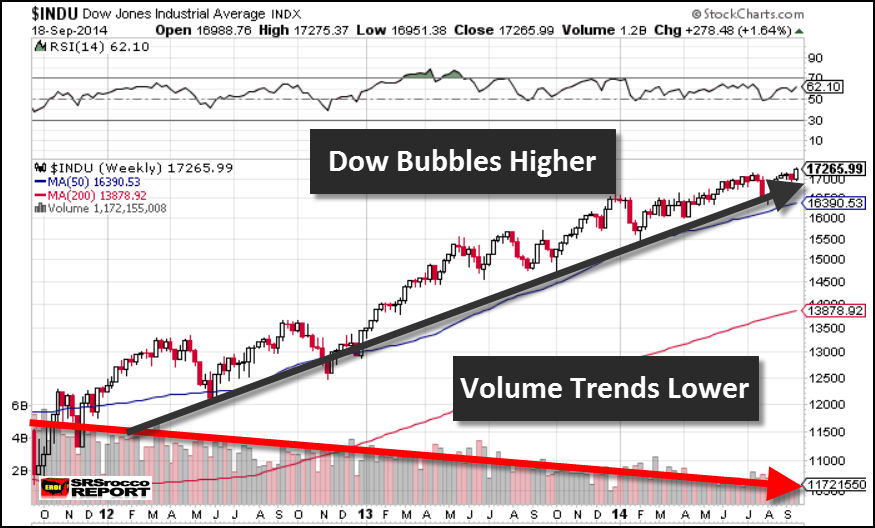 There is a chart that every silver investor needs to see. Especially now, as the Fed and Central Banks continue to manipulate the precious metals lower while propping up the broader stock and bond markets. Even though precious metals sentiment is at record lows, this normally represents a turning point in the gold and silver markets.
 Last year markets behaved nervously on rumours that QE3 would be tapered; this year we have lived with the fact. It turned out that there has been little or no damage to markets, with bond yields at historic lows and equity markets hitting new highs.


| You are subscribed to email updates from Save Your ASSets First To stop receiving these emails, you may unsubscribe now. | Email delivery powered by Google |
| Google Inc., 20 West Kinzie, Chicago IL USA 60610 | |

No comments:
Post a Comment