


Gold World News Flash |

- End the TSA
- Sovereigns Declare War on US Dollar
- Murray Pollitt: Gold is the uninvited guest
- Turk and Embry interviewed by King World News
- Guest Post: The Loan: An Exchange Of Wealth For Income
- John Embry - Gold is the Cure to Epic Monetary Debasement
- Gold Seeker Closing Report: Gold and Silver End Modestly Lower
- Brevan Howard Made Money In 2011 Betting On Market Stupidity, Sees "Substantial Dislocation" In 2012
- Why Did the Baltic Dry Index Collapse? Here?s Why
- There is a MUCH Better Way to Own Gold Than Via ETFs and ETRs ? Here?s How
- Sprott's David Franklin Talks Gold & Silver Stocks
- Tehran Pushes to Ditch the US Dollar
- (Miserable) State of the Union
- George Soros Worried about Survival!
- George Soros Predicts Class War and Riots
- “The Dollar Vigilante” Jeff Berwick's Speech at the Resource Investment Conference
- Gold – The New Offical Reserve Currency
- Full Text And Word Cloud Of Obama's State Of The Union
- MILITARY EXERCISES IN LOS ANGELES
- Gold Slides but Remains above Recent Lows
- FOOL'S GOLD
- Jim's Mailbox
- Precious Metals Mixed as Chinese Growth Softens and India Hikes Bullion Import Taxes
- The Demise of the Petrodollar
- The Gold Price Gave Back $13.80 Today This is no More That a Correction Within an Uptrend
- Guest Post: Paychecks, Perception, Propaganda & Power
- George Soros Predicts Economic Chaos/Conflict in Europe and Riots in the U.S.!
- Super Mario
- In An Epic Crisis Strong Beats Smart
| Posted: 24 Jan 2012 06:46 PM PST Even if you can donate $1, every dollar counts. Lets give money to the man who has risked his...
| ||||
| Sovereigns Declare War on US Dollar Posted: 24 Jan 2012 06:02 PM PST Neptune Global
| ||||
| Murray Pollitt: Gold is the uninvited guest Posted: 24 Jan 2012 04:40 PM PST 12:30a ET Wednesday, January 25, 2012 Dear Friend of GATA and Gold: Resource broker and market analyst Murray Pollitt of Pollitt & Co. in Toronto writes in his January market letter that central bank price suppression has devastated the gold industry and dramatically reduced supply just when currencies are blowing up and taxes and geopolitical risk are reducing supply as well. Pollitt thinks 2012 will be the year when the chickens come home to roost. His January letter is titled "The Uninvited Guest" and it's posted at GATA's Internet site here: http://www.gata.org/files/MurrayPollitt-01-18-2012.pdf CHRIS POWELL, Secretary/Treasurer ADVERTISEMENT Sona Discovers Potential High-Grade Gold Mineralization From a Company Press Release VANCOUVER, British Columbia -- With its latest surface diamond drilling program at its 100-percent-owned, formerly producing Blackdome gold mine in southern British Columbia, Sona Resources Corp. has discovered a potentially high-grade gold-mineralized area, with one hole intersecting 13.6 grams of gold in 1.5 meters of core drilling. "We intersected a promising new mineralized zone, and we feel optimistic about the assay results," says Sona's president and CEO, John P. Thompson. "We have undertaken an aggressive exploration program that has tested a number of target zones. Our discovery of this new gold-bearing structure is significant, and it represents a positive development for the company." Sona aims to bring its permitted Blackdome mill back into production over the next year and a half, at a rate of 200 tonnes per day, with feed from the formerly producing Blackdome mine and the nearby Elizabeth gold deposit property. A positive preliminary economic assessment by Micon International Ltd., based on a gold price of $950 per ounce over eight years, has estimated a cash cost of $208 per tonne milled, or $686 per gold ounce recovered. For the company's complete press release, please visit: http://www.sonaresources.com/_resources/news/SONA_NR18_2011-opt.pdf Join GATA here: http://cambridgehouse.com/conference-details/vancouver-resource-investme... California Investment Conference http://cambridgehouse.com/conference-details/california-investment-confe... Support GATA by purchasing gold and silver commemorative coins: https://www.amsterdamgold.eu/gata/index.asp?BiD=12 Or by purchasing a colorful GATA T-shirt: Or a colorful poster of GATA's full-page ad in The Wall Street Journal on January 31, 2009: http://gata.org/node/wallstreetjournal Or a video disc of GATA's 2005 Gold Rush 21 conference in the Yukon: Help keep GATA going GATA is a civil rights and educational organization based in the United States and tax-exempt under the U.S. Internal Revenue Code. Its e-mail dispatches are free, and you can subscribe at: To contribute to GATA, please visit: ADVERTISEMENT Prophecy Coal (TSX: PCY) Wins Positive Feasibility Study Company Press Release VANCOUVER, British Columbia, Canada -- Prophecy Coal Corp. (TSX: PCY, OTCQX: PRPCF, Frankfurt: 1P2) has received a positive feasibility study for the company's 600-megawatt Chandgana Mine-Mouth Power Project in central Mongolia. The report was independently prepared by Ralf Thomsen, project manager at Steag, a German firm specializing in the planning, financing, construction, and operation of highly efficient thermal power plants for fossil fuels. The study covers technical specifications, deployment, and financial analysis of a 4x150-mw thermal power plant to be built adjacent to Prophecy's Chandgana Tal coal deposit, which contains 140 million tonnes of measured coal. Last year the power plant received a construction license and the coal deposit received a mining license. Engineering, procurement, and construction management selection and project financing discussion have begun and are expected to be concluded this year. Construction is planned to start in April 2013, with the first 150-mw unit being commissioned in October 2015 and subsequent units to start in April 2016, October 2016, and April 2017. With proper maintenance the project will have 30 years of commercial operation. For the complete statement from the company, including maps and charts, please visit: http://www.prophecycoal.com/news_2011_jan17_prophecy_receives_power_plan...
This posting includes an audio/video/photo media file: Download Now | ||||
| Turk and Embry interviewed by King World News Posted: 24 Jan 2012 04:19 PM PST 12:22a ET Wednesday, January 25, 2012 Dear Friend of GATA and Gold: GoldMoney founder and GATA consultant James Turk tells King World News that a Greek debt default is imminent and Greece couldn't pay even a renegotiated debt anyway: http://kingworldnews.com/kingworldnews/KWN_DailyWeb/Entries/2012/1/24_Tu... And Sprott Asset Management's John Embry tells King that people seeking to buy dips in gold now aren't getting any, because gold was driven down too far in the paper market at the end of 2011: http://kingworldnews.com/kingworldnews/KWN_DailyWeb/Entries/2012/1/25_Jo... Embry will be keynote speaker at the California Investment Conference at the beautiful Hyatt Grand Champions Resort in Indian Wells, California, just down the street from Palm Springs, on Saturday and Sunday, February 11-12. GATA Chairman Bill Murphy and your secretary/treasurer will be there too, as well as Solari Inc. investment adviser and former GATA board member Catherine Austin Fitts. See the conference information below. CHRIS POWELL, Secretary/Treasurer ADVERTISEMENT Prophecy Coal (TSX: PCY) Wins Positive Feasibility Study Company Press Release VANCOUVER, British Columbia, Canada -- Prophecy Coal Corp. (TSX: PCY, OTCQX: PRPCF, Frankfurt: 1P2) has received a positive feasibility study for the company's 600-megawatt Chandgana Mine-Mouth Power Project in central Mongolia. The report was independently prepared by Ralf Thomsen, project manager at Steag, a German firm specializing in the planning, financing, construction, and operation of highly efficient thermal power plants for fossil fuels. The study covers technical specifications, deployment, and financial analysis of a 4x150-mw thermal power plant to be built adjacent to Prophecy's Chandgana Tal coal deposit, which contains 140 million tonnes of measured coal. Last year the power plant received a construction license and the coal deposit received a mining license. Engineering, procurement, and construction management selection and project financing discussion have begun and are expected to be concluded this year. Construction is planned to start in April 2013, with the first 150-mw unit being commissioned in October 2015 and subsequent units to start in April 2016, October 2016, and April 2017. With proper maintenance the project will have 30 years of commercial operation. For the complete statement from the company, including maps and charts, please visit: http://www.prophecycoal.com/news_2011_jan17_prophecy_receives_power_plan... Join GATA here: California Investment Conference http://cambridgehouse.com/conference-details/california-investment-confe... Support GATA by purchasing gold and silver commemorative coins: https://www.amsterdamgold.eu/gata/index.asp?BiD=12 Or by purchasing a colorful GATA T-shirt: Or a colorful poster of GATA's full-page ad in The Wall Street Journal on January 31, 2009: http://gata.org/node/wallstreetjournal Or a video disc of GATA's 2005 Gold Rush 21 conference in the Yukon: Help keep GATA going GATA is a civil rights and educational organization based in the United States and tax-exempt under the U.S. Internal Revenue Code. Its e-mail dispatches are free, and you can subscribe at: To contribute to GATA, please visit: ADVERTISEMENT Sona Discovers Potential High-Grade Gold Mineralization From a Company Press Release VANCOUVER, British Columbia -- With its latest surface diamond drilling program at its 100-percent-owned, formerly producing Blackdome gold mine in southern British Columbia, Sona Resources Corp. has discovered a potentially high-grade gold-mineralized area, with one hole intersecting 13.6 grams of gold in 1.5 meters of core drilling. "We intersected a promising new mineralized zone, and we feel optimistic about the assay results," says Sona's president and CEO, John P. Thompson. "We have undertaken an aggressive exploration program that has tested a number of target zones. Our discovery of this new gold-bearing structure is significant, and it represents a positive development for the company." Sona aims to bring its permitted Blackdome mill back into production over the next year and a half, at a rate of 200 tonnes per day, with feed from the formerly producing Blackdome mine and the nearby Elizabeth gold deposit property. A positive preliminary economic assessment by Micon International Ltd., based on a gold price of $950 per ounce over eight years, has estimated a cash cost of $208 per tonne milled, or $686 per gold ounce recovered. For the company's complete press release, please visit: http://www.sonaresources.com/_resources/news/SONA_NR18_2011-opt.pdf
| ||||
| Guest Post: The Loan: An Exchange Of Wealth For Income Posted: 24 Jan 2012 04:12 PM PST Submitted by Keith Warner The Loan: An Exchange Of Wealth For Income As the title of this essay suggests, a loan is an exchange of wealth for income. Like everything else in a free market (imagine happier days of yore), it is a voluntary trade. Contrary to the endemic language of victimization, both parties regard themselves as gaining thereby, or else they would not enter into the transaction. In a loan, one party is the borrower and the other is the lender. Mechanically, it is very simple. The lender gives the borrower money and the borrower agrees to pay interest on the outstanding balance and to repay the principle. As with many principles in economics, one can shed light on a trade by looking back in history to a time before the trade existed and considering how the trade developed. It is part of the nature of being a human that one is born unable to work, living on the surplus produced by one's parents. One grows up and then one can work for a time. And then one becomes old and infirm, living but not able to work. If one wishes not to starve to death in old age, one can have lots of children and hope that they will care for their parents in their old age. Or, one can produce more than one consumes and hoard the difference. One discovers that certain goods are better for hoarding than others. Beyond a little food for the next winter season, one cannot hoard very much. One of the uses of the monetary commodity is to carry value over time. So one uses a part of one's weekly income to buy, for example, silver. And over the years, one accumulates a pile of silver. Then, when one is no longer able to work, one can sell the silver a little at a time to buy food, clothing, fuel, etc. Like direct barter trade, this is inefficient. And there is the risk of outliving one's hoard. So at some point, a long time ago, they discovered lending. Lending makes possible the concept of saving, as distinct from hoarding. It is as significant a change as when people discovered money and solved the problem of "coincidence of wants". This is for the same reason: direct exchange is replaced by indirect exchange and thereby made much more efficient. With this new innovation, one can lend one's silver hoard in old age and get an income from the interest payments. One can budget to live on the interest, with no risk of running out of money. That is, one can exchange one's wealth for income. If there is a lender, there must also be a borrower or there is no trade. Who is the borrower? He is typically someone young, who has an income and an opportunity to grow his income. But the opportunity—for example, to build his own shop—requires capital that he does not have and does not want to spend half his working years accumulating. The trade is therefore mutually beneficial. Neither is "exploiting" the other, and neither is a victim. Both gain from the deal, or else they would not agree to it. The lender needs the income and the borrower needs the wealth. They agree on an interest rate, a term, and an amortization schedule and the deal is consummated. I want to emphasize that we are still contemplating the world long before the advent of the bank. There is still the problem of "coincidence of wants" with regard to lending; the old man with the hoard must somehow come across the young man with the income and the opportunity. The young man must have a need for an amount equal to what the old man wants to lend (or an amount much smaller so that the old man can lend the remainder to another young man). The old man cannot diversify easily, and therefore his credit risk is unduly concentrated in the one young man's business. And bid-ask spreads on interest rates are very wide, and thus whichever party needs the other more urgently (typically the borrower) is at a large disadvantage. Of course the very next innovation that they discovered is that one need not hoard silver one's whole career and offer to lend it only when one retires. One can lend even while one is working to earn interest and let it compound. This innovation lead to the creation of banks. But before we get to the bank, I want to drill a little more deeply into the structure of money and credit that develops. Before the loan, we had only money (i.e. specie). After the loan, we have a more complex structure. The lender has a paper asset; he is the creditor of the young man and his business who must pay him specie in the future. But the lender does not have the money any more. The borrower has the money, but only temporarily. He will typically spend the money. In our example, he will hire the various laborers to clear a plot of land, build a building and he will buy tools and inventory. What will those laborers and vendors do with the money? Likely they will keep some of it, spend some of it… and lend some of it. That's right. The proceeds that come from what began as a loan from someone's hoard have been disbursed into the economy and eventually land in the hands of someone who lends them again! The "same" money is being lent again! And what will the next borrower do with it? Spend it. And what will those who earn it do? Spend some, keep some, and lend some. Again. There is an expansion of credit! There is no particular limit to how far it can expand. In fact, it will develop iteratively into the same topology (mathematical structure) as one observes with fractional reserve banking under a proper, unadulterated gold standard! Without banks, there are two concepts that are not applicable yet. First is "reserve ratio". Each person is free to lend up to 100% of his money if he wishes, though most people would not do that in most circumstances. And second is duration mismatch. Since each lender is lending his own money, by definition and by nature he is lending it for precisely as long as he means to. And if he makes a mistake, only he will bear the consequences. If one lends for 10 years duration, and a year later one realizes that one needs the money, one must go to the market to try to find someone who will buy the loan. And then discover the other side of that large bid-ask spread, as one may take a loss doing this. Now, let's fast forward to the advent of the investment bank. Like everyone else in the free market, the bank must do something to add value or else it will not find willing trading partners. What does the bank do? As I hinted above, the bank is the market maker. The market maker narrows the bid-ask spread, which benefits everyone. The bank does this by standardizing loans into bonds, and the bank stands ready to buy or sell such bonds. The bank also aggregates bonds across multiple lenders and across multiple borrowers. This solves the problem of excessive credit risk concentration, coincidence of wants (i.e. size matching), and saves both lenders and borrowers enormous amounts of time. And of course if either needs to get out of a deal when circumstances change, the bank makes a liquid market. The bank must be careful to protect its own solvency in case of credit risk greater than it assumed. This is the reason for keeping some of its capital in reserve! If the bank lent 100% of its funds, then it would be bankrupt if any loan ever defaulted. What the bank must not do, what it has no right to do, is lend its depositors' funds for longer than they expressly intended. If a depositor wants to lend for 5 years, it is not the right of the bank to lend that depositor's money for 10! The bank has no right to declare, "well, we have a reserve ratio greater than our estimated credit risk and therefore we are safe to borrow short from our depositors to lend long" Not only has the bank no way to know what reserve ratio will be proof against a run on the bank, but it is inevitable that a run will occur. This is because the depositors think they will be getting their money back, but the bank is concealing the fact that they won't behind an opaque balance sheet and a large operation. So, sooner or later, depositors need their money for something and the bank cannot honor its obligations. So the bank must sell bonds in quantity. If other banks are in the same situation, the bond market suddenly goes "no bid". The bank has no legal right and no moral right to lend a demand deposit or to lend a time deposit for one day longer than its duration. And even then, the bank has no mathematical expectation that it can get away with it forever. Like every other actor in the market (and more broadly, in civilization) the bank adds enormous value to everyone it transacts with, provided it acts honestly. If a bank chooses to act dishonestly (or there is a central bank that centrally plans money, credit, interest, and discount and forces all banks to play dirty) then it can destroy value rather than creating it. Unfortunately, in 2012 the world is in this sorry state. It is not the nature of banks or banking per se, it is not the nature of borrowing and lending per se, it is not the nature of fractional reserves per se. It is duration mismatch, central planning, counterfeit credit, buyers of last/only resort, falling interest rates, and a lack of any extinguisher of debt that are the causes of our monetary ills.
| ||||
| John Embry - Gold is the Cure to Epic Monetary Debasement Posted: 24 Jan 2012 04:04 PM PST  With gold holding on to gains above the $1,650 level, today King World News interviewed John Embry, Chief Investment Strategist of the $10 billion strong Sprott Asset Management, to get his take on where he sees gold headed from here. Embry told KWN that we are witnessing monetary debasement of epic proportions. Here is what Embry had to say about the situation: "My attitude is very simple. If you don't understand the dynamics of this market and what is really going on, your chance of making any money in the gold and silver markets is zero. The influence of the paper markets is maligned. If you want to trade in those markets against the boys on the other side, you really are putting your net worth at risk." With gold holding on to gains above the $1,650 level, today King World News interviewed John Embry, Chief Investment Strategist of the $10 billion strong Sprott Asset Management, to get his take on where he sees gold headed from here. Embry told KWN that we are witnessing monetary debasement of epic proportions. Here is what Embry had to say about the situation: "My attitude is very simple. If you don't understand the dynamics of this market and what is really going on, your chance of making any money in the gold and silver markets is zero. The influence of the paper markets is maligned. If you want to trade in those markets against the boys on the other side, you really are putting your net worth at risk."
This posting includes an audio/video/photo media file: Download Now | ||||
| Gold Seeker Closing Report: Gold and Silver End Modestly Lower Posted: 24 Jan 2012 04:00 PM PST Gold fell to as low as $1661.40 by about 9AM EST before it bounced back higher midday, but it still ended with a loss of 0.71%. Silver slipped to $31.874 before it also rebounded, but it still ended with a loss of 0.93%.
| ||||
| Posted: 24 Jan 2012 03:53 PM PST While Paulson's star was finally setting in 2011, that of mega macro fund Brevan Howard was rising, and has been rising for years by never posting a negative return since 2003. The $34.2 billion fund, now about double the size of John Paulson's, returned 12.12% in a year marked by abysmal hedge fund performance. But how did it make money? Simple - by taking advantage of the same permabullish market myopia that marked the beginning of 2011, and that has gripped the market once again. "The Fund's large gains during the third quarter were due predominantly to pressing the thematic view that markets were ignoring clear signs of economic slowdown and were not correctly pricing the probability of central bank accommodation, particularly the reversal of the ECB rate hikes in April and July." Not to mention the €800 billion ECB liquidity accommodation that started in July and has continued since. So yes: those betting again that the market correction is overdue, will once again be proven right Why? Because "we are about to witness an unprecedented policy move. In the US, Eurozone and UK, fiscal austerity is being prescribed as the cure following the bursting of the credit bubble and to overcome the malaise following a balance-sheet recession. Unfortunately, there is no historical example of when this approach has been successful." As for looking into the future "we continue to believe that markets remain at risk of substantial dislocation." Lastly, for all those who believe Europe is "priced in", the right thing to say it is not priced at all: "One risk that we are particularly careful to avoid is betting on the outcome of the Eurozone crisis. Its resolution will ultimately be a political decision and we have no real edge in understanding which way the politicians may go. For us, the better trade is to look to the macroeconomic picture and position around macroeconomic developments rather than try to second guess the politicians." Alas, macroeconomic developments are now more defined by politicians than ever. We, unlike Brevan Howard, instead would bet on the stupidity of these politicians, and the certainty that as usual, they will screw things up, only to be bailed out by immense printing as the usual last ditch resort. Which means that stupidity hedging precious metals, are and continue to be since March 2009, our preferred "investment" category. From the letter: As we wrote in the Fund's Annual Investment Manager Review this time last year, our strategy for 2011 was to strike a better balance between harvesting modest short-term profits and pressing large thematic trades. This strategy proved successful. During the first half of the year, a balance between general optimism on the state of the global economy on the one hand and fear of possible large event risks on the other hand kept markets in a broad trading range; this allowed the Fund to make steady, modest gains by trading tactically. For example, the Fund held both long and short positions in European interest rates during this period, depending on the market's probabilistic pricing of future ECB rate hikes at any one point in time. The Fund's long interest rate volatility positions also benefited from this environment, generating steady returns through gamma trading. Tactical opportunities in other areas including yield curves, bond versus swap spreads, commodities and credit also generated positive returns. The Fund's large gains during the third quarter were due predominantly to pressing the thematic view that markets were ignoring clear signs of economic slowdown and were not correctly pricing the probability of central bank accommodation, particularly the reversal of the ECB rate hikes in April and July. The Fund took significant long positions in G7 interest rates, with a concentration in European short-term and US medium-term rates. As the economic data softened over the summer and the euro crisis escalated, forward interest rates fell sharply in G7 and the Fund's positions made substantial profits. The Fund's structural volatility positions also paid off from this move, as interest rate option deltas were allowed to expand, thereby increasing the size of the Fund's positioning during the rally. The decision to position early and in size for a decline in interest rates was the primary driver of performance in 2011. Apart from the basic long rates position, the Fund profited from gains made across several strategies during the third quarter including bond versus swap spreads, libor basis, foreign exchange, commodity and equity trading, while credit proved modestly unprofitable. The Fund's general positioning, although reduced, was maintained into the fourth quarter, resulting in further gains in November which were partially offset by small losses in October and December as markets settled once again into a more mean-reverting, tactical environment, with interest rates and the euro initially rising before resuming their downward path. I am particularly pleased to report that a meaningful part the Fund's return was generated by newly recruited traders. At the end of 2010 and in the early part of 2011, the closure of bank prop activities caused by the introduction of the Volcker rules allowed Brevan Howard to add 13 new risk takers to our trading group and 3 new people to our research efforts. These additions made a material contribution to our results in 2011. Brevan Howard has never had a deeper, broader or more talented investment team. In 2011, we took the unusual step of asking the Fund's Board to return some capital to investors. This was done simply to alleviate ongoing investor concerns about the Fund's size and not because of liquidity issues or a poor opportunity set. Following the Fund's lacklustre performance in 2010, there was a degree of investor unease over the size of the Fund and whether it was an impediment to performance. It wasn't. As we wrote in this letter last year, the reason 2010 was lacklustre was because the three major themes we positioned for in that year proved unprofitable. Nonetheless, in order to assuage this investor concern, we undertook to return capital if the Fund got larger than $25bn. As a result of strong performance, the Fund exceeded the $25bn AUM level during the summer and, in line with our undertaking, we announced that we would return almost $2bn to investors. Having done so there are no plans at this time to return further capital. However, as always, we will monitor the size of the Fund, the opportunity set, our trading capacity and the market liquidity on an ongoing basis to ensure that we are comfortable with the size of the Fund. Looking forward, we continue to believe that markets remain at risk of substantial dislocation. The European sovereign and banking issues appear to be approaching a head and may result in extreme outcomes (in either direction). The US fiscal situation remains highly strained and large imbalances remain in emerging market economies. In short, the issues we raised in last year's letter are still unresolved. In light of the ongoing binary risks, we have taken decisive action to focus on liquid, uncomplicated strategies, to increase the Fund's cash liquidity and to ensure that the exposure of the Fund to potentially vulnerable counterparties is kept to a minimum. One risk that we are particularly careful to avoid is betting on the outcome of the Eurozone crisis. Its resolution will ultimately be a political decision and we have no real edge in understanding which way the politicians may go. For us, the better trade is to look to the macroeconomic picture and position around macroeconomic developments rather than try to second guess the politicians. As we start 2012 the Fund's positioning is once again quite tactical, with the only structural position being long volatility across multiple asset classes, in particular interest rates. I want to thank, as I do each year in this letter, all of our investors for their continued support and I assure you once again that all of us at Brevan Howard will do our utmost to deliver another profitable outcome in 2012. Sincerely, Alan Howard Market Commentary In terms of market sentiment and the macroeconomic outlook, 2011 was a year of two halves for the US. In the first half of the year, markets and commentators expressed optimistic views about the future. Equities hit a high during the second quarter, with major indices up almost 10%. At the same time, buoyant forecasts were relying upon increasingly strained rationalisations in the face of worse-than-expected data. In the third quarter, another EU summit failed to deliver the measures required to resolve the European sovereign debt crisis and the normally pro forma vote to increase the US debt ceiling turned into a fiasco that cost the US its AAA credit rating. In response to these developments, investor and consumer sentiment collapsed, equities swung to 10% losses on the year, and the economy barely avoided a recession. Investors fled to the traditional safe havens of US Treasuries, German Bunds, the US dollar, and the Japanese yen. By the end of the year, the US economy regained its footing, led by brisk business capital expenditure, improved consumer spending, and moderate gains in payroll employment. In addition, inflationary pressures eased, as total and core consumer inflation fell below an annualised rate of 1% in the fourth quarter, import and producer prices declined, and longer-term inflation expectations drifted into the lower end of their range for the last decade. Additional monetary policy easing by the Federal Reserve ("Fed") and European Central Bank ("ECB") played a role in stabilising the economy in the second half of the year. In September, the Fed rolled out a Treasury duration extension programme and renewed its purchases of mortgage-backed securities. As a result, the Fed committed to buying virtually all of the net issuance of longer-term Treasury duration through to the middle of 2012, a move that, if nothing else, signalled that monetary policy would be utilised if the economy threatened to rollover. Despite the rollercoaster ride, equity markets were largely unchanged in 2011, Treasury interest rates ended at historic lows and economic growth registered somewhere near its long-term trend. Looking to 2012, investors appear to be expecting moderate growth, inflation and financial market returns. At Brevan Howard, we expect the continuation of enormous uncertainty. On the one hand, policymakers appear to have a much-improved grasp of the dangers posed by the banking and sovereign debt crisis in Europe. Furthermore, we are one year further along the long road of deleveraging household balance sheets and repairing the housing market. On the other hand, we are about to witness an unprecedented policy move. In the US, Eurozone and UK, fiscal austerity is being prescribed as the cure following the bursting of the credit bubble and to overcome the malaise following a balance-sheet recession. Unfortunately, there is no historical example of when this approach has been successful. In the Great Depression, economies grew to the extent they pursued Keynesian stimulus and sizable depreciations in the exchange rate of their currencies. Presently, enthusiasm for additional stimulus appears to have come to an end and the room for competitive devaluation appears limited given that the largest economies are in a liquidity trap and emerging markets are slowing markedly. Financial markets and the economy are at the mercy of the convergence of these positive and negative forces in 2012. As such, developments in 2012 look set to mirror the ups and downs of 2011. h/t Value walk
| ||||
| Why Did the Baltic Dry Index Collapse? Here?s Why Posted: 24 Jan 2012 03:50 PM PST The Baltic Dry Index is generally viewed as a leading indicator of global economic activity as dry bulk primarily consists of commodities such as building materials, coal, metallic ores and grain. My research, however,*indicates that global manufacturing demand has very little to do with it but, rather, Chinese manufacturing demand – but not the actual level of manufacturing as*measured by the CFLP Manufacturing PMI. [Let me explain.] [INDENT]So says Prieur du Plessis (www.investmentpostcards.com) in edited excerpts from his original article* which is of such a nature that, as editor editor of www.FinancialArticleSummariesToday.com (A site for sore eyes and inquisitive minds) and www.munKNEE.com (Your Key to Making Money!) I present a live hyperlink directly to the article rather than providing an edited ([ ]), abridged (…) and reformatted (some sub-titles and bold/italics emphases) for the sake of clarity and brevity to ensure a fast and easy read. Please note that this paragra...
| ||||
| There is a MUCH Better Way to Own Gold Than Via ETFs and ETRs ? Here?s How Posted: 24 Jan 2012 03:50 PM PST Late last year the Royal Canadian Mint intoduced an Exchange Traded Receipt (ETR) in another long line of paper-gold investments that are now trading on securities exchanges worldwide. It, like all of the other programs, comes with a slew of fees and risks. [Why not*take personal physical possession of your gold or silver, store it in an allocated and secure non-government vault, be able to have*any or all of it shipped to you immediately upon request - and for dramatically less than any ETF or ETR?**Let me explain how easily it is to do just that.] Words: 1601 So says Chris Horlacher (www.MapleLeafMetals.ca) in edited excerpts from his original article*.** [INDENT]Lorimer Wilson, editor of www.FinancialArticleSummariesToday.com (A site for sore eyes and inquisitive minds) and www.munKNEE.com (Your Key to Making Money!) has edited ([ ]), abridged (…) and reformatted (some sub-titles and bold/italics emphases) the article below for the sake of clarity and brevity to ensure a fast and ...
| ||||
| Sprott's David Franklin Talks Gold & Silver Stocks Posted: 24 Jan 2012 03:25 PM PST [Ed. Note: This one's definitely worth a listen. Franlkin addresses the risks of the MF Global debacle starting at 6:25.] from TheSilverWatch:
| ||||
| Tehran Pushes to Ditch the US Dollar Posted: 24 Jan 2012 03:08 PM PST The Demise of the Petrodollar from CaseyResearch.com: The official line from the United States and the European Union is that Tehran must be punished for continuing its efforts to develop a nuclear weapon. The punishment: sanctions on Iran's oil exports, which are meant to isolate Iran and depress the value of its currency to such a point that the country crumbles. But that line doesn't make sense, and the sanctions will not achieve their goals. Iran is far from isolated and its friends – like India – will stand by the oil-producing nation until the US either backs down or acknowledges the real matter at hand. That matter is the American dollar and its role as the global reserve currency. The short version of the story is that a 1970s deal cemented the US dollar as the only currency to buy and sell crude oil, and from that monopoly on the all-important oil trade the US dollar slowly but surely became the reserve currency for global trades in most commodities and goods. Massive demand for US dollars ensued, pushing the dollar's value up, up, and away. In addition, countries stored their excess US dollars savings in US Treasuries, giving the US government a vast pool of credit from which to draw.
| ||||
| (Miserable) State of the Union Posted: 24 Jan 2012 03:05 PM PST by Andrew Hoffman, MilesFranklin.com:
Another Monday passed, another financial market "LOCKDOWN" in front of a blizzard of "events," which I say in quotes because they will ALL be exacerbated dramatically by simultaneous, premeditated Cartel/QE/PPT/ESF manipulation to produce the desired psychological effect. Not that I am sure they will be successful in such efforts, particularly in the silver market which could do ANYTHING as Eric Sprott seeks to source ten million PHYSICAL ounces, but you can be sure PERCEPTION management, or as Jim Sinclair would call it, "MOPE," will be front and center, to be discussed below. Let start with today's (Monday's) PM market, where the Cartel was determined to invoke one of its cardinal rules, to NEVER allow gold, silver, and the mining shares to perform well simultaneously. Actually, scratch that, as the shares now appear unable to EVER perform well. You can bet that any time a minor negative piece of news comes out, such as mild dilution from Pan American's proposed acquisition of Minefinders, and the Cartel will be there to double up the decline to make it look much worse. That is why KGC, NEM, and HL were obliterated in the past two weeks, and why PAAS was slaughtered 12% today.
| ||||
| George Soros Worried about Survival! Posted: 24 Jan 2012 03:01 PM PST by Greg Hunter's USAWatchdog.com:
The World Economic Forum (January 25-29) in Davos, Switzerland, is probably the most important ever. The world is closer to another financial meltdown that could crush the tenuous global economy. Many experts have said the next meltdown will be bigger than 2008. On top of the list of problems to tackle is the sovereign debt crisis and insolvent European banks. Last year, Davos participants said the world needed $100 trillion to "support growth." I wonder if that figure will increase this year. Now, billionaire George Soros is not worried about a financial meltdown but just his "survival!" He thinks things could get so out of hand that there could be great upheavals in societies around the planet. He said he was worried about "danger . . . and evil." The Daily Beast reported yesterday, "Has the great short seller gone soft? Well, yes. Sitting in his 33rd-floor corner office high above Seventh Avenue in New York, preparing for his trip to Davos, he is more concerned with surviving than staying rich. "At times like these, survival is the most important thing," he says, peering through his owlish glasses and brushing wisps of gray hair off his forehead. He doesn't just mean it's time to protect your assets. He means it's time to stave off disaster. As he sees it, the world faces one of the most dangerous periods of modern history—a period of "evil." Europe is confronting a descent into chaos and conflict. In America he predicts riots on the streets that will lead to a brutal clampdown that will dramatically curtail civil liberties. The global economic system could even collapse altogether." (Click here for the complete Daily Beast story on Soros.)
| ||||
| George Soros Predicts Class War and Riots Posted: 24 Jan 2012 02:58 PM PST George Soros, the billionaire investor, has predicted riots on the streets and global class war as the economic downturn results in a new "age of fallibility". by Rosa Prince, Telegraph.co.uk:
Known as the "man who broke the Bank of England" after betting against the pound on Black Wednesday in 1994, Mr Soros plans to use his Davos address to issue a stern warning that he now considers it "more likely than not" that Greece will default in 2012. And unless Europe's leaders do more to stop it, the euro is likely to collapse with a devastating impact on the rest of the world, he will add. The financier compared the crisis to the collapse of the Soviet empire and the Great Depression, adding that the old belief in the power of the market to prevent turmoil could no longer be relied upon.
| ||||
| “The Dollar Vigilante” Jeff Berwick's Speech at the Resource Investment Conference Posted: 24 Jan 2012 02:22 PM PST from TheSilverWatch :
| ||||
| Gold – The New Offical Reserve Currency Posted: 24 Jan 2012 02:21 PM PST It would seem as each day passes that gold is exerting itself as the new reserve currency. India has agreed to pay Iran in gold to get access to its oil. China has indicated it is considering the same. As noted by RT.com, this will increase the demand for gold and hence increase the price. Who was it that coined the term, "he who has the gold makes the rules"… Related article here from rt.com
| ||||
| Full Text And Word Cloud Of Obama's State Of The Union Posted: 24 Jan 2012 01:21 PM PST Here is the text of President Barack Obama's State of the Union Address as prepared for delivery at 9 p.m. ET. "Jobs" 33 vs. "Fat Cats" 0 Rich 3 vs Poor 1 Hope 2 vs Unicorns 0 Change 9 vs Tooth-Fairy 0 Mortgages 5 vs Apple 0 Main Street 1 vs Wall Street 3 DEBT CEILING 0
Here is Obama's SOTU word cloud...
And here is the last SOTU by Dubya:
Live speech: http://www.whitehouse.gov/sites/default/themes/whitehouse/img/facebook_b...) no-repeat; padding-top: 13px; height: 30px; float: left;">JOIN THE LIVE CHAT
OBAMA: Mr. Speaker, Mr. Vice President, members of Congress, distinguished guests, and fellow Americans: And I want to cut through the maze of confusing training programs, so that from now on, people like Jackie have one program, one website, and one place to go for all the information and help they need. It's time to turn our unemployment system into a reemployment system that puts people to work. We also know that when students aren't allowed to walk away from their education, more of them walk the stage to get their diploma. So tonight, I call on every State to require that all students stay in high school until they graduate or turn eighteen.
| ||||
| MILITARY EXERCISES IN LOS ANGELES Posted: 24 Jan 2012 01:18 PM PST First it was Boston, now Los Angeles. The military has thousands of bases in the U.S. where they can conduct training. Instead they are conditioning the masses for a future of military occupation. The signs of economic collapse are increasing. Those in control see it coming. They are preparing for the riots and violence that will [...]
| ||||
| Gold Slides but Remains above Recent Lows Posted: 24 Jan 2012 01:01 PM PST courtesy of DailyFX.com January 24, 2012 03:50 PM Daily Bars Prepared by Jamie Saettele, CMT Gold has exceeded the 50% retracement of the decline from the November top and focus has shifted to a cluster of resistance near 1700. Aside from round number significance, the 61.8% retracement resides near there as do lows from early December. Short term channel resistance is just above 1700. Bottom Line – flat...
| ||||
| Posted: 24 Jan 2012 12:44 PM PST The rich have always dangled the plum before the great unwashed masses that if you work hard and sacrifice, you too may be rich someday. After decades of this chase after fool's gold, people are starting to realize they are getting screwed worse than a blond $2 hooker. The rich keep getting richer, and there [...]
| ||||
| Posted: 24 Jan 2012 12:25 PM PST Gold and Equities, Gold Wins This Cycle CIGA Eric Gold and global equities will move higher together. Those that have not succumb to short-term fear understand that this move will not be equal. Gold's surge relative US large cap stocks (equities) is not done. Chart 1 and 2 provide an indication of both duration Continue reading Jim's Mailbox
| ||||
| Precious Metals Mixed as Chinese Growth Softens and India Hikes Bullion Import Taxes Posted: 24 Jan 2012 11:15 AM PST Precious metals prices were buffeted last week as news was released of a reduced economic growth rate in China that sparked renewed speculation of near term monetary easing by the People's Bank of China or PBOC. The release of softer Chinese GDP data may have prompted a rally in gold and silver prices as traders increasingly anticipated that the PBOC may move to increase economic production by lowering its benchmark interest rates. Chinese stock prices also generally improved. Nevertheless, these initial gains were soon moderated by selling pressure and gap filling (where technically traders like to see the trade retrace a bit and fill in moves), that emerged in the metals on news that the Indian government would almost double bullion import duties — a move that was expected to dampen demand in the world's top bullion consuming country. Chinese Quarterly GDP Falls Below 9% Level In particular, the Chinese National Bureau of Statistics put out its quarterly Gross D...
| ||||
| Posted: 24 Jan 2012 10:39 AM PST Synopsis: Developments in the world's oil trade reveal that the standoff between the US and Iran may have little, if anything, to do with nukes.
Marin Katusa
Chief Energy Investment Strategist
| ||||
| The Gold Price Gave Back $13.80 Today This is no More That a Correction Within an Uptrend Posted: 24 Jan 2012 10:30 AM PST Gold Price Close Today : 1664.20 Change : (13.80) or -0.8% Silver Price Close Today : 3193.10 Change : 30.2 cents or -0.9% Gold Silver Ratio Today : 52.119 Change : 0.060 or 0.1% Silver Gold Ratio Today : 0.01919 Change : -0.000022 or -0.1% Platinum Price Close Today : 1546.90 Change : -16.80 or -1.1% Palladium Price Close Today : 677.80 Change : -8.25 or -1.2% S&P 500 : 1,314.65 Change : -1.35 or -0.1% Dow In GOLD$ : $157.45 Change : $ 0.90 or 0.6% Dow in GOLD oz : 7.617 Change : 0.044 or 0.6% Dow in SILVER oz : 396.97 Change : 2.69 or 0.7% Dow Industrial : 12,675.75 Change : -33.07 or -0.3% US Dollar Index : 79.81 Change : 0.023 or 0.0% The GOLD PRICE bounced off that barrier at $1,680 yesterday and gave back $13.80 today, closing at $1,664.20. The GOLD PRICE can drop back to $1,658 - $1,656 and remain in an uptrend. So far, today's action classifies as no more than a correction within an uptrend. The SILVER PRICE backed off 30.2c to close Comex at 3193.1c. Silver dipped its toe below 3200c to 3184c, but held there rock solid. And so it must do tomorrow to avoid a painful correction, down to 3080c, a dollar lower. You always have to take care that you are not "talking your position," looking at a chart and seeing only what you want to see and ignoring the rest. Still, I believe that pattern on silver's chart is a continuation pattern, very tight, and will break out upside. So (as my friend R. asked me today) why not talk about the GOLD/SILVER RATIO? Because I am still holding out for 57.5 to swap, and believe we will yet see that. Silver and gold have most likely made their bottoms, but first time silver makes a correction, it will suffer much more than gold will, and that (I hope) will give us that push. Think about something else. I am still smarting by swapping out of SILVER into GOLD too early last year. I don't want to jump too early on the swap back, and I know from previous years that the ratio can post several similar highs before it turns down for good. Right, that's risky, but for right now I believe it's a risk worth taking. US dollar today gained a massive, spectacular 2.3 basis points (0.03%) to end at 79.806. It skidded to a stop just above the 50 DMA (79.52). High today reached 80.184, low skidded to 79.643. Without closing higher than 80.20, the dollar is merely trolling for fools gullible enough to buy it on the way down. Of course, if the buck hangs around above 79.50 for a few days, I might change my mind. Scabby euro rose 0.09% today to 1.3036, not much changed from yesterday, but still rallying. Still headed for 1.3200 at least. Yen, on the other hand, fell off a cliff today. Dropped 0.9% to 128.71c/Y100 (Y77.69/US$1), leaving behind a huge gap and punching through its 20 DMA (129.65) and 50 DMA (129.19). Support there is none before 128c, or the 200 DMA at 127.37c. Looks like the Nice Government Men in Japan woke up today and decided to lower the yen. Stock indices shrugged off their confusion today and all decided to drop together. Dow lost 33.07 (0.26%) to 12,675.75. S&P500 gave back 1.35 to 0.1%. Charts aren't quite the same. S&P500 has bumped into overhead resistance from last spring's highs and stopped cold. Dow punched through slightly, reached 12,764, and has traded back to the line for -- a failure and fall back, or a final kiss good-bye? Not clear yet, but stocks don't have much gas left. Dow won't reach 12,870, S&P500 shouldn't reach 1,360. On 24 January 1848 James W. Marshall discovered a gold nugget at Sutter's Mill in northern California, the discovery that set off the Gold Rush. Discoveries of gold in California, Australia, and later South Africa led to a CHEAPENING of gold against silver, and the price of silver in gold rose steadily from 1848 until 1873, when silver was corruptly demonetized first in the US ("Crime of '73") and then in the new German Reich. Contrary to the propaganda, it was NOT new silver discoveries, like the Comstock Lode, that led to silver's cheapening against gold or its demonetization. That was all politics, and silver was gaining value from 1848 forward, never trading below the $1.2929 statutory value from 1848 to 1873, and rising at some points to $1.35 (4.4% over statutory price). No, ultimately driving silver out of the monetary system was a project of special interests who planned to drive out first, silver, and then gold, and so create their own money out of thin air. So far, they've won, and think what a tragedy it would have been if the banks had lost. Why, how would states have raised the money to fight all those world wars without central banks and fiat money? Gee, they couldn't have, so they would have been forced to make peace. It would have been a historical tragedy, wouldn't it? Argentum et aurum comparenda sunt -- -- Gold and silver must be bought. - Franklin Sanders, The Moneychanger The-MoneyChanger.com © 2012, The Moneychanger. May not be republished in any form, including electronically, without our express permission. To avoid confusion, please remember that the comments above have a very short time horizon. Always invest with the primary trend. Gold's primary trend is up, targeting at least $3,130.00; silver's primary is up targeting 16:1 gold/silver ratio or $195.66; stocks' primary trend is down, targeting Dow under 2,900 and worth only one ounce of gold; US$ or US$-denominated assets, primary trend down; real estate bubble has burst, primary trend down. WARNING AND DISCLAIMER. Be advised and warned: Do NOT use these commentaries to trade futures contracts. I don't intend them for that or write them with that short term trading outlook. I write them for long-term investors in physical metals. Take them as entertainment, but not as a timing service for futures. NOR do I recommend investing in gold or silver Exchange Trade Funds (ETFs). Those are NOT physical metal and I fear one day one or another may go up in smoke. Unless you can breathe smoke, stay away. Call me paranoid, but the surviving rabbit is wary of traps. NOR do I recommend trading futures options or other leveraged paper gold and silver products. These are not for the inexperienced. NOR do I recommend buying gold and silver on margin or with debt. What DO I recommend? Physical gold and silver coins and bars in your own hands. One final warning: NEVER insert a 747 Jumbo Jet up your nose. 
| ||||
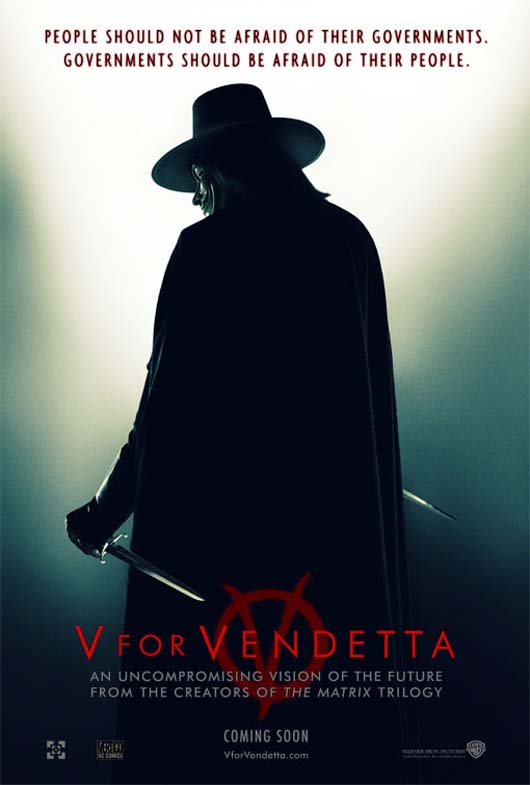
| Guest Post: Paychecks, Perception, Propaganda & Power Posted: 24 Jan 2012 10:10 AM PST Submitted by Jim Quinn of The Burning Platform Paychecks, Perception, Propaganda & Power "It is difficult to get a man to understand something, when his salary depends upon his not understanding it!" - Upton Sinclair I began to write this article in early December. I had just written a piece that attempted to scrutinize how the American public could stand idly by while heavily armed mercenary thugs viciously crushed the Occupy encampments across the country in a Department of Homeland Security coordinated attack at the behest of the ruling oligarchy. Comfortably Numb made a case that the political and economic systems of the United States have been captured by a few evil men and they use their wealth and power to control the message hammered into the psyches of an apathetic, distracted, vincibly ignorant public. I started to tackle the question of why Americans could stand by as the new Greatest Generation was being abandoned, derided, scorned, beaten, tear gassed, and arrested for having the courage and audacity to stand up to a powerful corrupt unholy alliance between Wall Street psychopaths, corporate fascist barbarians, and Washington DC power hungry jackals. But I became overwhelmed with a feeling of disillusionment and hopelessness and was unable to write anything for about a month. I found myself questioning whether it was worth fighting such a powerful foe after seeing how easily they crushed the opposition put forth by OWS. After a month I decided I am not one to love my servitude. "Most men and women will grow up to love their servitude and will never dream of revolution." – Huxley's Brave New World I owe it to my three sons to keep fighting the good fight. They deserve a future. Day by day we draw ever closer to a showdown with the traitors who have sold this country into debt slavery. I don't dream of revolution, but my eyes are wide open and I see it coming. I had been trying to wrap my head around what happened with the Occupy Movement since the Department of Homeland Security coordinated destruction of most of the encampments around the country in November. The corporate mainstream media immediately moved onto more pressing issues like the Kim Kardashian divorce and Jessica Simpson's weight gain. The American public has been instructed by the media the Occupy story is history, just like the BP oil spill, the Fukushima nuclear meltdown, and the Egyptian revolution. In a society consumed by reality TV Occupy Wall Street was just another show. The credulous American populace dutifully turned their attention to Black Friday and whipping out one of their 15 credit cards to purchase remote control pillows, 3D 72 inch HDTVs, a see through tank top from the Snooki line of slutware, or thousands of other ludicrous Chinese crap churned out by slave labor in factories built to support the "efficiency" efforts of U.S. conglomerates. Without a constant irritating presence in the heart of NYC and other large cities, the Occupy Movement appears to have lost steam. I've been trying to figure out how and why this happened. The issues that motivated the protests have not gone away. The despicable MF Global crime, committed by a hall of shame member of the .01% – Jon Corzine – has proven beyond a shadow of a doubt the Wall Street/Washington DC criminal conspiracy is alive and well. Unless you have been sitting in line at a Wal-Mart for the last two months to get a $3 waffle-maker, you saw young people across the country tear gassed, shot with rubber bullets, maced, bludgeoned, and brutalized by the paid thugs of the ruling oligarchy on a daily basis. The outrage at the continued looting by the psychopathic Wall Street aristocracy and the horrific police brutality against young people exercising their Constitutional right to free speech and assembly should have ignited widespread anger and mass protest. Instead the reaction has been silence, scorn and smug satisfaction with the government response. Paychecks & PerceptionsThere are a plethora of rationales for the apathy and lack of critical thinking overwhelming our society as we plunge into the depths of a looming economic calamity. They include economic self interest, the power of propaganda to condition the masses, fear of opposing authority, and the perception of a reality that allows you to sleep at night. The Upton Sinclair quote above hit home for me a few weeks ago and explains much of the disdain for the Occupy movement. I was in a high level meeting at my University and during the course of the meeting the Occupy Movement was brought up. A senior executive made a derogatory comment about Occupy and then laughed. I smiled and bit my tongue. In retrospect it shouldn't have surprised me. I work at one of the top business schools in the world. The person who made the comment has spent his entire life educating students who end up with jobs at Wall Street financial institutions and with America's largest corporations. It is a natural response for someone whose whole life is reliant upon the existing financial system to psychologically overlook the obvious criminality of the Wall Street fat cats and corporate executives who validate his entire existence and life's work. He chooses to not understand the message of these protestors because to truthfully comprehend their message would nullify his thirty years of academic efforts. My non-response to the comment about the Occupy Movement was also based upon self-interest and reliance on a paycheck to make a living. I had learned my lesson the hard way during a previous career stop. It appears older generations have a considerably more negative view of young people protesting the capture of our political and economic system than younger generations. This also makes sense because they have the most to lose and cannot visualize a society other than the one they have created. To acknowledge the validity of the Occupy Movement and the justice of their positions would be to admit their own guilt in the creation of a society that has allowed a chosen few to enrich themselves at the expense of the many. The Baby Boom Generation has been living a lie their entire adulthood. It is true that prior generations created the welfare/warfare state we have today, but the Boomers have had the reins of power for the last two decades in Congress and chose to not only ignore the fact the entitlement promises made by previous administrations could not be fulfilled. They even made further promises in the trillions to their fellow Boomers. Instead of making a budgetary choice between guns and butter, the Boomers chose guns, butter, education, universal healthcare, the right to own a home, the right to a 72 inch HDTV, and zero percent financing on their Cadillac Escalade from government motors. The consequences of these choices are a $15.2 trillion National Debt growing at a rate of $3.7 billion per day and unfunded entitlement liabilities totaling in excess of $100 trillion. I had the pleasure of meeting Neil Howe, co-author of The Fourth Turning and fourteen other books, in early December. His ground breaking work with William Strauss on generational theory has proven to be uncannily accurate, as their 1997 assessment of what dynamics would drive the course of history over the coming decades have materialized exactly as they presumed. We had a fascinating two hour discussion about various topics impacting the world today and I found that we were in agreement on just about everything, except for the Occupy protests. Neil Howe is an expert on interpreting how generations react to events. I expected him to be impressed by the courage and fortitude of the Millenials leading this protest against Wall Street gluttony and audacious criminality. This is the new GI Generation and I anticipated him perceiving these protests as a prelude to greater feats ahead by this generation. Instead he described them as naive adolescents being led down a phony path by anarchist Boomers. As an example he referenced the fact that many of the protestors were wearing Guy Fawkes masks, the most famous anarchist in history. He found this distasteful and dangerous. My interpretation of the Guy Fawkes masks was more in line with the movie V For Vendetta and the theme of a corrupt evil government keeping the public living in perpetual fear. "Because while the truncheon may be used in lieu of conversation, words will always retain their power. Words offer the means to meaning, and for those who will listen, the enunciation of truth. And the truth is, there is something terribly wrong with this country, isn't there? Cruelty and injustice, intolerance and oppression. And where once you had the freedom to object, to think and speak as you saw fit, you now have censors and systems of surveillance coercing your conformity and soliciting your submission. How did this happen? Who's to blame? Well certainly there are those more responsible than others, and they will be held accountable, but again truth be told, if you're looking for the guilty, you need only look into a mirror. I know why you did it. I know you were afraid. Who wouldn't be? War, terror, disease. There were a myriad of problems which conspired to corrupt your reason and rob you of your common sense. Fear got the best of you, and in your panic you turned to the now high chancellor, Adam Sutler. He promised you order, he promised you peace, and all he demanded in return was your silent, obedient consent." – V For Vendetta Neil Howe's impression of the movie centered on the terroristic aspects of blowing up Parliament, not on the symbolism of citizens rising up and casting off the yoke of a malevolent oligarchy that has used propaganda, fear and intimidation to manipulate and control the population. Howe is a Baby Boomer and I'm Generation X. We are each viewing the Occupy Movement through the prism of our life experiences and perceptions about the intentions of these protestors. The existing social, economic, and political structure is dominated by Boomers. Neil Howe views the Occupy Movement as a threat to the system he believes in and supports. As a cynical Xer with no allegiance to a corrupt government, a crony capitalist economic system or a greedy self centered society, I see these young revolutionaries as our last great hope. Neil Howe runs a very successful consulting firm whose clients include Fortune 500 corporations, including Wall Street financial firms. His annual income and net worth is dependent upon the existing corporate dynamic. When your living depends upon not understanding the real reason young people are protesting corporate malfeasance, fraud and corruption, your mind can ignore observable facts and visible truths. Anything can be rationalized when putting food on the table requires you to ignore obvious truths and understandable facts. Propaganda & Power"The conscious and intelligent manipulation of the organized habits and opinions of the masses is an important element in democratic society. Those who manipulate this unseen mechanism of society constitute an invisible government which is the true ruling power of our country. …We are governed, our minds are molded, our tastes formed, our ideas suggested, largely by men we have never heard of. This is a logical result of the way in which our democratic society is organized. Vast numbers of human beings must cooperate in this manner if they are to live together as a smoothly functioning society. In almost every act of our daily lives, whether in the sphere of politics or business, in our social conduct or our ethical thinking, we are dominated by the relatively small number of persons…who understand the mental processes and social patterns of the masses. It is they who pull the wires which control the public mind." – Edward Bernays, Propaganda, 1928 I was shocked when I came across the above quote a few months ago. Bernays had it figured out 84 years ago before mass media, television, or spin doctors. His vision of a society manipulated by a small number of governing elite who believe they know better than the masses has come to fruition. True republican equality as defined by the founders in the Constitution is considered quaint and a belief of the trusting and naïve masses by the wealthy elite. Manipulation of the masses through a relentless never ending barrage of propaganda disguised as news and unremitting false advertising is designed to control and herd the cattle into the slaughterhouse. We are given the illusion of free choice, when in reality the choices are being made for us by a chosen few who think they know what is best. These puppeteers controlling the strings inhabit the financial, government and corporate halls of power. Their purpose is not to benefit society and its citizens but to protect their wealth and influence, using any means at their disposal. Propaganda to control the minds of a willfully uninformed public has been their most potent weapon. Source: Mike Kreiger Most people have never heard the name Edward Bernays. That is the way public relations specialists (manipulators of the truth) like it. They operate in the shadows, subtly influencing public opinion through what Bernays arrogantly referred to as the sinister method of "engineering of consent". The Governing Elite have no time for messy processes like true capitalism or non-manipulated free elections. The objective for Bernays and his ilk has always been to provide corrupt government power brokers, shadowy bankers and corporate media kingpins with potent psychological instruments of social persuasion and mind control. Edward Bernays is considered the "father of public relations", and he was the nephew of Sigmund Freud. He pioneered media manipulation techniques. He understood the weaknesses of the human mind and developed methods and processes for taking advantage of that weakness. "The average citizen is the world's most efficient censor. His own mind is the greatest barrier between him and the facts. His own 'logic proof compartments,' his own absolutism are the obstacles which prevent him from seeing in terms of experience and thought rather than in terms of group reaction." – Bernays, Crystallizing Public Opinion Bernays got his big break during the administration of Woodrow Wilson, the outset of the American interventionist empire bankrolled by an inflation creating Federal Reserve and a tax and spend Congress. During WWI, Edward began work for the Committee on Public Information, the immense propaganda machine ordered by Woodrow Wilson to sway the American public towards a war he campaigned to keep us out of. He became so instrumental he was invited to accompany Wilson to the Paris peace conference. His claims to fame afterward included:
His biggest claim to fame was inspiring the most reviled propagandist in history. Bernays' techniques were so effective that Joseph Goebbels, the Nazi propaganda minister, made copious use of Bernays' book, "Propaganda" throughout the Holocaust, often crediting Bernays. That was quite a feather in Bernays' cap. The German people were gradually indoctrinated by their government through propaganda into consenting and supporting the most horrific crimes in history as described by Milton Mayer in his book, They Thought They Were Free – The Germans, 1933-45: "This separation of government from people, this widening of the gap, took place so gradually and so insensibly, each step disguised (perhaps not even intentionally) as a temporary emergency measure or associated with true patriotic allegiance or with real social purposes. And all the crises and reforms (real reforms, too) so occupied the people that they did not see the slow motion underneath, of the whole process of government growing remoter and remoter. "To live in this process is absolutely not to be able to notice it—please try to believe me—unless one has a much greater degree of political awareness, acuity, than most of us had ever had occasion to develop. Each step was so small, so inconsequential, so well explained or, on occasion, 'regretted,' that, unless one were detached from the whole process from the beginning, unless one understood what the whole thing was in principle, what all these 'little measures' that no 'patriotic German' could resent must someday lead to, one no more saw it developing from day to day than a farmer in his field sees the corn growing. One day it is over his head." Bernays was a master of using psychological techniques to mask the motives of his clients, as part of a calculated strategy aimed at keeping the public unaware of the forces that were working to mold their psyches. Bernays died in 1995, but his techniques have been taken to a new level as our government, media and financial elite use any means at their disposal to keep the masses sedated and content while they are fleeced and herded towards the slaughterhouse. The Big Lie perpetrated upon the masses is the fallacy of America being a democratic society. The anti-democratic and treacherous corporate public relations Madison Avenue maggots manage and manipulate the opinions of the many in order to make sure a true democratic system doesn't threaten the privileges and supremacy of the governing elite. I wonder if it was coincidental the creation of the Federal Reserve, implementation of the personal income tax, and virtually non-stop war coincided with the rise of an industry designed to manipulate and control the thoughts and opinions of an easily influenced and willfully unaware populace. Most people want to be led and told what to believe. Critical thinking and taking personal responsibility for your life and your society requires hard work, sacrifice, honesty, and self restraint. Simply believing storylines supplied by authority figures and media pundits allow the masses to continue living lives of debt delusion and hope, occasionally stirred into a frenzy of fear and loathing towards the foreign bogeyman of the moment, chosen by the governing elite. Bernays and his disciples understood this dynamic and have been able to utilize corporate mass media and the human weakness of trusting in the judgments of authority figures to control and manage the vast swath of America without them knowing it. "If we understand the mechanism and motives of the group mind, it is now possible to control and regiment the masses according to our will without them knowing it." – Edward Bernays The propaganda techniques employed to manipulate the masses seemed less abhorrent when they centered upon just consumer products. Convincing women they would look like a gorgeous model if they used a company's cosmetics or convincing a man he'd be admired by his neighbors if he drove a certain car was small potatoes. In the last few decades the misinformation and outright lies fed to the American public by oligarchy of governing elite has become more manifest and repugnant. The list of abuses is virtually endless.
| ||||
| George Soros Predicts Economic Chaos/Conflict in Europe and Riots in the U.S.! Posted: 24 Jan 2012 09:50 AM PST George Soros…is more concerned with surviving than staying rich…He doesn’t just mean it’s time to protect your assets. He means it’s time to stave off disaster. As he sees it, the world faces one of the most dangerous periods of modern history—a period of “evil.” Europe is confronting a descent into chaos and conflict. In America he predicts riots on the streets that will lead to a brutal clampdown that will dramatically curtail civil liberties. The global economic system could even collapse altogether.*[Perhaps] we should be, too, [but as] we have often explained, [such comments ar nothing more than] the fear-based promotions of the*power elite to*frighten the middle classes into giving up power and wealth to globalist institutions. Let us explain.* So says an article* posted at [url]www.TheDailybell.com[/url] that I encourage you to read. *[URL]http://www.thedailybell.com/3535/Soros-Threatens-Blood-on-the-Streets[/URL] Related Articles:...
| ||||
| Posted: 24 Jan 2012 09:20 AM PST From The January 2012 HRA Journal David Coffin and Eric Coffin We are extremely comfortable that our prognosticating for 2012 may or may not work out. Which puts us in the same camp as most others. That said, a contrarian turn ahead of possible normalizing of the debt issues still with us that we suggested in December does seem to be gaining ground in the market. With that should come a greater focus on basic technical indicators like metal stockpile changes. We note small copper stocks on page 4, but will point out here these are focused by direction over weeks. Don’t get hung up on day to day changes. Both bull and bear issues in this market are really year to year, which means looking for value and for sustainability. This month we review a gold juniors merger in the making. It involves two Canadian focused explorers we have mentioned in the past, and which we put in the same room for reasons outlined in the review. We are in an environment of high me...
| ||||
| In An Epic Crisis Strong Beats Smart Posted: 24 Jan 2012 09:11 AM PST Stewart Thomson email: [EMAIL="stewart@gracelandupdates.com"]stewart@gracelandupdates.com[/EMAIL] email: [EMAIL="stewart@gracelandjuniors.com"]stewart@gracelandjuniors.com[/EMAIL] Jan 24, 2012 [*]How much gold have you bought since the lows of late December? Hopefully, you bought none. Click this gold battle zone chart now. [*]When the price of any asset is in a rising trend, as it is now, the only thoughts in your head should be to hold your positions or book some profit. The gold asset has been in a rising trend against the dollar since late December, so you really should have bought no gold since then. [*]Gold has rallied over $150 on this move from $1525 to $1680. The reason you bought no gold since the $1525 area lows is because you already bought into those lows, or should have, as gold declined from about $1923 to about $1525. [*]There is an enormous financial difference between one professional investor who bought his own fears into the price zon...
|






| You are subscribed to email updates from Save Your ASSets First To stop receiving these emails, you may unsubscribe now. | Email delivery powered by Google |
| Google Inc., 20 West Kinzie, Chicago IL USA 60610 | |

No comments:
Post a Comment