


Gold World News Flash |

- James Turk: Silver still bullish despite Friday's tape painting
- Graham Summers’ Weekly Market Forecast (discounting Bernanke edition)
- Credit should be awarded to MAX KEISER who courageously stated on Alex Jones that there would be a possibility of CRASHING JBMORGAN by BUY SILVER as a campaign that has a dual purpose.
- BLOCKBUSTER – JP Morgan's short position in silver could be as high as 3.3 billion ounces
- WHAT THE FED HAS WROUGHT
- U.S. Election Rejection of Obama is Bullish for U.S. Dollar, Gold Rally Defferred
- QE2: Last Rites for the World’s “Reserve Currency”
- BECK, PALIN & THE 4TH TURNING
- FOA on Currency Styling, Currency Management, Dollar Hyperinflation and End Game Scenarios
- Thou Shalt Crucify JP Morgan Upon A Cross of Silver And Drive A Silver Stake Through Its Heart Of Darkness
- Chances Of Hyperinflation 100%, Within Months: Gold To $8000
- 5 ALARM FIRE AT COMEX: SILVER WILL SOAR ONCE AGAIN
- Gold Thoughts
- Got Gold Report – Pullback or Pinnacle?
- THE GREATEST GENERATION
- Jim Grant Joins The Chorus Demanding A Return To The Gold Standard
- Cantona: withdraw your money and collapse the banks
- Bill Buckler On The Incompatibility Of Money And The Modern Financial System; A Look At The Upcoming Great Unwind Now That All 'Talk' Has Failed
- No safe currencies anymore, just precious metals, Turk tells MMNews
- Use gold as the measure for currencies - Jim Rickards
- Why You Should Have Silver as well as Gold in Your Portfolio
- There’s a guerilla war growing on the Internet to crash J.P. Morgan, and the weapon of choice is silver.
- At least we seem no nearer to falling for the gold delusion
- Gold Price Worst Plunge Since February, Will it Do the Same Again?
- Use gold as the measure of currencies, Jim Rickards tells CNBC
- “Do right by JFK for whose silver standard [executive order 11110] was blown away . . .Crush JP Morgan buy Silver”
- Dollar Finds a Footing
- Japan and the US Ten-Year
- How to Get Even With OPEC When Crude Oil Hits $100
- The Euro Back Under the Microscope, PIIGS Debt Crisis Round3
- The Economy Will Not Recover Until the Economic Criminals are Prosecuted, and There Are Real Investigations Into 9/11 and Other Government Failures
- iShares Silver Trust (SLV) Growing at a Blistering Pace
- Gold Bubble? You Decide
- Gold: Second Currency or Speculation?
- Is Gold Back?
- To the Top Shareholders of JP Morgan
- Its All Over: Save Yourself You're On Your Own Now
- Stock Market Remains Vulnerable Short-Term
- The Outlook for Silver Remains Very Bullish
- In The News Today
- Stock Market Reverses at 61.8% Level, Gold Unconfirmed New Highs
- Why Some Think a Gold Standard Wouldn’t Work
- Canadian Government Can't Explain Photos of Missiles Launched From Sea Near Newfoundland
| James Turk: Silver still bullish despite Friday's tape painting Posted: 14 Nov 2010 02:44 PM PST 10:36p ET Sunday, November 14, 2010 Dear Friend of GATA and Gold (and Silver): GoldMoney founder, Freemarket Gold & Money Report editor, and GATA consultant James Turk tonight recasts his silver chart and concludes that Friday's smashdown didn't diminish the metal's bullish prospects. Rather, Turk writes, the smashdown was probably just more paper "tape painting" that will accelerate demand for real metal. Turk's commentary is headlined "The Outlook for Silver Remains Very Bullish" and you can find it at the Freemarket Gold & Money Report Internet site here: http://www.fgmr.com/outlook-for-silver-remains-very-bullish.html CHRIS POWELL, Secretary/Treasurer ADVERTISEMENT Prophecy Receives Permit To Mine at Ulaan Ovoo in Mongolia VANCOUVER, British Columbia -- Prophecy Resource Corp. (TSX-V:PCY, OTCQX: PRPCF, Frankfurt: 1P2) announces that on November 9, 2010, it received the final permit to commence mining operations at its Ulaan Ovoo coal project in Mongolia. Prophecy is one of few international mining companies to achieve such a milestone. The mine is production-ready, with a mine opening ceremony scheduled for November 20. Prophecy CEO John Lee said: "I thank the government of Mongolia for the expeditious way this permit was issued. The opening of Ulaan Ovoo is a testament to the industrious and skilled workforce in Mongolia. Prophecy directly and indirectly (through Leighton Asia) employs more than 65 competent Mongolian nationals and four expatriots. The company also reaffirms its commitment to deliver coal to the local Edernet and Darkhan power plants in Mongolia." The Ulaan Ovoo open pit mine is 10 kilometers from the Russian border and within 120km of the Nauski TransSiberian railway station, enabling transportation of coal to Russia and its eastern seaports. Thermal coal prices are trading at two-year highs at Russian seaports due to strong demand from Asian economies. For the complete press release, please visit: http://prophecyresource.com/news_2010_nov11.php Support GATA by purchasing a colorful GATA T-shirt: Or a colorful poster of GATA's full-page ad in The Wall Street Journal on January 31, 2009: http://gata.org/node/wallstreetjournal Or a video disc of GATA's 2005 Gold Rush 21 conference in the Yukon: * * * Help keep GATA going GATA is a civil rights and educational organization based in the United States and tax-exempt under the U.S. Internal Revenue Code. Its e-mail dispatches are free, and you can subscribe at: To contribute to GATA, please visit: ADVERTISEMENT Sona Drills 85.4g Gold/Ton Over 4 Metres at Elizabeth Gold Deposit, Company Press Release, October 27, 2010 VANCOUVER, British Columbia -- Sona Resources Corp. reports on five drillling holes in the third round of assay results from the recently completed drill program at its 100 percent-owned Elizabeth Gold Deposit Property in the Lillooet Mining District of southern British Columbia. Highlights from the diamond drilling include: -- Hole E10-66 intersected 17.4g gold/ton over 1.54 metres. -- Hole E10-67 intersected 96.4g gold/ton over 2.5 metres, including one assay interval of 383g of gold/ton over 0.5 metres. -- Hole E10-69 intersected 85.4g gold/ton over 4.03 metres, including one assay interval of 230g gold/ton over 1 metre. Four drill holes, E10-66 to E10-69, targeted the southwestern end of the Southwest Vein, and three of the holes have expanded the mineralized zone in that direction. The Southwest Vein gold mineralization has now been intersected over a strike length of 325 metres, with the deepest hole drilled less than 200 metres from surface. "The assay results from the Southwest Zone quartz vein continue to be extremely positive," says John P. Thompson, Sona's president and CEO. "We are expanding the Southwest Vein, and this high-grade gold mineralization remains wide open down dip and along strike to the southwest." For the company's full press release, please visit: http://sonaresources.com/_resources/news/SONA_NR19_2010.pdf
|
| Graham Summers’ Weekly Market Forecast (discounting Bernanke edition) Posted: 14 Nov 2010 01:35 PM PST
And so it begins
The Fed’s QE 2 program begins this week. Combined with its ongoing QE lite program, we’ve got $105 billion in US Debt purchases in the next four weeks alone.
The Fed initially claimed QE 1 was an emergency measure that would save jobs and the US economy. Amazingly this one time emergency measure (which failed to do anything for the US economy, I might add) has now become a way of life for the Fed.
Indeed, QE 1 never really ended as the Fed continued juicing stocks every options expiration week even after QE 1 was supposedly completed. And yet, despite this, the Fed has now announced QE lite and QE 2.
Unfortunately for Bernanke, the markets appear to have already discounted his stupidity… and then some. In fact, his arch-nemesis, the US Dollar, has actually begun rallying ever since he announced QE 2:
Of course this has nothing to do with an improvement in the US’s fiscal position. Rather, it’s because Europe’s banking system is collapsing again, which is resulting in the Euro falling off a cliff (the Euro comprises over 50% of the US Dollar index):
I’ve written before that the inflation trade was overcrowded. With stocks, commodities, and precious metals all overbought and US dollar bearishness at or near record levels (US Dollar shorts hit a record high a few weeks ago), this has the makings of becoming a REAL issue.
Indeed, the big picture here shows the US Dollar bouncing off its long-term trend-line (black line below). If it US can break above resistance at 78 (red line below), we’re likely looking at a significant rally which could kick stocks and commodities right off a cliff.
Remember, the world stock market is roughly $36 trillion in market cap. In contrast, the currency markets trade over $3 trillion in volume PER DAY. Consequently, these markets are far more liquid (and sophisticated) than stocks. So those who are betting that the Fed will never let stocks fall need to be paying attention to currencies as they are flashing major warning signs that the stock rally is in for a significant correction.
Indeed, stocks have already shown pronounced weakness in spite of the Fed’s QE 2, falling from an intraday high of 1127.05 on Friday November 5 to 1,199 where they are today. In fact, they look to have just broken their uptrend line of the last few months:
This latest rally was built upon a series of gaps up. We’ve already closed one gap to the downside. We do have support at 1,180, 1,165, and 1,145. However, if the US Dollar breaks above 78 we’re likely to see stocks break through most of these to 1,145 in relatively short order.
On that note, I expect this week will continue to see US Dollar strength along with weakness in commodities and stocks. Keep your eyes on the Euro as it is driving this trend. A SERIOUS breakdown there would result in a very nasty reversal in the inflation trade in no time.
Good Investing!
Graham Summers
PS. If you’re worried about the future of the stock market and have yet to take steps to prepare for the Second Round of the Financial Crisis… I highly suggest you download my FREE Special Report specifying exactly how to prepare for what’s to come.
I call it The Financial Crisis “Round Two” Survival Kit. And its 17 pages contain a wealth of information about portfolio protection, which investments to own and how to take out Catastrophe Insurance on the stock market (this “insurance” paid out triple digit gains in the Autumn of 2008).
Again, this is all 100% FREE. To pick up your copy today, got to http://www.gainspainscapital.com and click on FREE REPORTS.
|
| Posted: 14 Nov 2010 11:26 AM PST Crash JPMorgan, Buy Silver Now – A Report
|
| BLOCKBUSTER – JP Morgan's short position in silver could be as high as 3.3 billion ounces Posted: 14 Nov 2010 10:58 AM PST To the Top Shareholders of JP Morgan Sold his silver at $9 "Save America from financial terrorists. Crash JP Morgan Buy Silver."
|
| Posted: 14 Nov 2010 10:56 AM PST Charles Hugh Smith http://www.oftwominds.com/blog.html analyzes QE2 and comes to the proper conclusion that Bennie and the Jets are screwing 90% of the population in order to benefit the top 10% and mostly the top 1%. I hope the top 1% are using their windfall to beef up the security around their estates and mansions. They're going to need it. Fed's QE2 Misadventure Costs U.S. Households $4.6 Trillion (November 10, 2010) The Fed's Quantitative Easing Part 2 has destroyed $4.6 trillion in household wealth, all to boost the stock portfolios of the top 10%.The Federal Reserve's stated goals in launching QE2 were to trigger a "wealth effect" and boost inflation. The net result of their program is a massive destruction of household wealth. The basic idea is that goosing "risk assets," i.e. stocks, then consumers will feel wealthier and thus motivated to open their wallets and spend, spend, spend. This spending won't be based on any increase in income (household income fell in 2009 despite the massive run-up in stocks) but on the illusion of greater wealth created by a temporarily rising stock market. The Fed must be aware that the top fifth of households collects 50.3% of all pre-tax income and the bottom two-fifths receive 12%, so the "wealth effect" is in essence another "trickle down" scheme in which the top earners buy more handbags manufactured in China and the bottom 80% of Americans are supposed to benefit by being hired to stock the shelves with Elite goods. As I often report, only the top 10% of households own enough equities to feel wealthier; so the Fed's central faith is doubly a "trickle down" theory: only the top 10% can possibly experience a wealth effect.
But the destruction of purchasing power as the Fed destroys the dollar is felt by all households–especially the bottom 80%. The Boiling Frog: Effects of QE2 On The Bottom 80% of the U.S. Population. As I noted in Are the Fed's Honchos Simpletons, Or Are They Just Taking Orders? (November 1, 2010), Quantitative Easing 2 makes no sense. Today I will quantify just how perverse and destructive the Fed's policies have been to U.S. households. The latest snapshot of the household's balance sheet comes from the Fed Flow of Funds for the second quarter (June 30, 2010). If we measure what has happened to the U.S. dollar and the S&P 500 since July 1, then we can measure the effects on the household balance sheet. Let's collect a few key numbers from the Balance Sheet of Households and Nonprofits. All numbers are as of June 20, 2010 (Q2 2010). Real estate: $18.8 trillion, down from $24.9 trillion in 2006 (bubble top) Total financial assets: Q2 2010 $43.7 trillion, down from $50.6 trillion in 2007 (pre-recession) Deposits (cash): $7.55 trillion, down from $7.9 trillion Credit market instruments: (bonds etc.) $4.3 trillion, up from $4 trillion in 2007 Corporate equities (stocks): $6.7 trillion, down from $9.6 trillion in 2007 mutual fund shares: $4 trillion, down from $4.5 trillion in 2007 Liabilities (debts, mortgages, etc.): Total liabilities: $13.9 trillion, down from $14.4 trillion home mortgages: $10.15 trillion, down from $10.5 trillion Net worth: $53.5 trillion, down from $64.2 trillion, a decline of $10.7 trillion So mortgage debt decreased by a trivial $.35 trillion, total liabilities decreased by a modest $.5 trillion, and net worth declined by a whopping $10 trillion. Most of the mortgage and debt declines result from write-downs of debt by lenders, not from households paying down debt. In other words, after suffering a staggering 17% decline in net worth, households managed to write down or pay down a tiny 3.4% of their liabilities. Disposable personal income: $11.3 trillion, up from $10.4 trillion. As noted above, the increase flowed to the top 20%, as median income has declined by almost 5%. Homeowners equity: $6.9 trillion, down from $12.8 trillion in 2006. So homeowners have lost roughly $6 trillion in home equity: about 60% of the total decline in net worth. Since the bottom 80% have few financial assets (stocks and bonds) then this destruction of home equity means their only real asset base has been largely wiped out. Owners equity as a % of household real estate: 40.7% As I have noted before. since a third of all homes are owned free and clear, then 33% of the 40% equity left in homes results from homes with no mortgage, and thus a mere 7% of equity is all that's left for the 2/3 of homes with mortgages: 7% of $18.8 trillion (total value of all household real estate) equals $1.3 trillion in equity for the 50 million homes with mortgages. Now let's calculate the decline in purchasing power as the Fed purposefully depreciated the U.S. dollar: Decline in the dollar since July 1, 2010: 12.2% Decline in value (purchasing power) of all household assets since June 1: (12.2% of non-equities net worth–$42.8 trillion) -$5.2 trillion Decline in value (purchasing power) of household disposable personal income: (annualized: 12.2% of $11.3 trillion): -$1.4 trillion And exactly how much did household wealth in stocks rise as the dollar was crushed? Rise in S&P 500 since July 1, 2010: 19% Increase in net worth of equities from July 1: (19% of $10.7 trillion): +$2 trillion Net loss due to Fed's QE2 (from July 1): -$3.2 trillion. Decline in purchasing power of household disposable personal income (annualized): -$1.4 trillion Total loss inflicted on households by QE2 to date: $4.6 trillion. The Fed's QE2 has been an unmitigated disaster for 90% of American households, as it has destroyed the value of their purchasing power in a Devil's Pact to goose stocks, which only benefits the top 10% of households–and most of those paper gains are reserved for the top 1%. Those are the numbers; exactly what conclusion can be drawn from them except the Fed is a horrendously misguided, Elite-dominated destructive force which must be reined in politically?
|
| U.S. Election Rejection of Obama is Bullish for U.S. Dollar, Gold Rally Defferred Posted: 14 Nov 2010 10:52 AM PST Rejection may be hard for most politicians to accept, but might be good for the nation and the world. Obama Regime's mismanagement of U.S. economy was rejected on 2nd of November in the U.S. election. That rejection ushered in the greatest change in political power in U.S. since 1948. Thus far, Obama Regime's only positive legacy will be the greatest political rejection in 62 years. That development means Obama Regime's reign of terror on wealth and economic growth has ended. That is bullish news for the U.S. dollar.
|
| QE2: Last Rites for the World’s “Reserve Currency” Posted: 14 Nov 2010 10:32 AM PST
QE2: Last Rites for the World’s “Reserve Currency” By Mike Whitney Millions of Americans have no idea what Quantitative Easing is or how it will effect them personally. That’s why Wednesday’s announcement that the Fed will purchase another $600 billion in US Treasuries merely reinforced feelings of helplessness and a sense that government spending is out-of-control. Unfortunately, Ben Bernanke’s rambling explanation of QE2 in a Washington Post op-ed on Thursday only added to the confusion. The article is loaded with half-truths and omissions that are meant to mislead the public about how the program works and what the Fed’s real objectives are. It’s another missed opportunity by Bernanke to come clean with the people and let them know what policies are being enacted in their name. Here’s an excerpt from the article: “The Federal Reserve’s objectives — are to promote a high level of employment and low, stable inflation. Unfortunately, the job market remains quite weak; the national unemployment rate is nearly 10 percent, a large number of people can find only part-time work, and a substantial fraction of the unemployed have been out of work six months or longer. The heavy costs of unemployment include intense strains on family finances, more foreclosures and the loss of job skills…..Low and falling inflation indicate that the economy has considerable spare capacity, implying that there is scope for monetary policy to support further gains in employment without risking economic overheating. The FOMC decided this week that, with unemployment high and inflation very low, further support to the economy is needed…..the Federal Reserve has a particular obligation to help promote increased employment and sustain price stability. Steps taken this week should help us fulfill that obligation.” Bernanke mentions employment/unemployment 5 times in the first 3 paragraphs to give the impression that QE is about creating new jobs. But everyone knows that’s baloney. If Bernanke was really worried about jobs, he would have appealed to Congress for a second round of fiscal stimulus in his speech, which he didn’t, because he remains hawkish on deficits like his colleagues in the GOP-led congress. Also, if QE2 is mainly about jobs, than why not settle on benchmarks to determine whether the program is successful or not? In other words, if unemployment is still hovering at 8 or 9% in June 2011, when the program ends, then we can assume that Bernanke was either wrong in his calculations or deliberately misled the public about what the program really does. The truth is, Quantitative Easing will not reduce unemployment, narrow the output gap, or increase aggregate demand. At best, it will lower long-term interest rates (slightly) and buoy asset prices. That may be good for the stock market, but it won’t lay the groundwork for a strong recovery. In fact, it might not even be enough to keep the economy from slipping back into recession. As last Friday’s report from he Bureau of Economic Analysis indicates, most of 3rd Quarter GDP was from rebuilding inventories. Remove inventory restocking, and final demand was a sickly 0.6%. So, how will Bernanke’s bond purchasing program increase final demand? It won’t. If the Fed buys Treasuries, Treasury yields go down which pushes investors into riskier assets (like stocks). That pushes stocks higher, investors feel richer, spending takes off, businesses hire more workers, and the economy grows. It’s a great theory, but it doesn’t work. Yields are already at record lows and businesses are still not hiring because there’s no demand for their products. The problem cannot be fixed from the supply side, which is to say, that it doesn’t matter how cheap money is, if no one is borrowing. And no one is borrowing because they are either broke or out-of-work. Bernanke’s grand plan doesn’t get money to the people who need it, so the economy will continue to sputter. Also, Yields on the 10-year and 30-year Treasuries have already dipped in anticipation of QE2, but is there any sign that businesses are planning to start hiring again? Of course not, because low interest rates don’t matter in this environment. Case in point; record-low interest rates haven’t increased home sales at all. Cheap money doesn’t generate demand when personal balance sheets are underwater. Bernanke knows this because he’s studied Japan’s Lost Decade and understands what happened. They initiated two massive QE programs and got zippo—bank loans and credit continued to go sideways. So, Bernanke is being disingenuous. But why? The Fed is at war; that’s the truth of the matter. Economist Michael Hudson calls Quantitative Easing (QE) “a form of financial aggression.” But Hudson probably understates the case; “monetary terrorism” (moneterrorism?) is probably closer to the truth. QE is flooding emerging markets with cheap capital that’s forcing their leaders to take defensive action to protect their economies. EM’s have already seen the first wave of liquidity surge into their markets raising havoc with prices and forcing central banks to raise rates. But emerging markets aren’t taking it laying down. They’re throwing up protectionist barriers and monitoring capital flows. If Bernanke’s going to print more money, they’ll print, too. Mass competitive devaluation will ignite a full-blown currency war that leaves the present trade regime in tatters and the dollar in the dustbin. This is from Richard Portes in an article titled “Currency wars and the emerging-market countries”: “If the large developed market countries do more QE, however, then the flow of liquidity to the emerging markets may force the latter to respond. They may try to resist exchange-rate appreciation by intervening in the foreign exchange markets. Here we do have competitive devaluation – the “currency wars”…. This is why we see statements like “The US will win this war: it will either inflate the rest of the world or force their exchange rates up against the dollar” (Wolf 2010). But there is a potential downside for the US. Substantial dollar depreciation will weaken the global position of the dollar, as it did in the late 1970s. (Chinn and Frankel 2007) The Fed will proceed with QE. It will not accept foreign constraints on its monetary policy, nor will it run an internationally “coordinated” or “cooperative” monetary policy.” (“Currency wars and the emerging-market countries”, Richard Portes, VOX) See? This isn’t about jobs at all. It’s about power. It’s about who is going to dictate policy to the rest of the world. Bernanke wants emerging markets to bear the costs of a financial crisis that originated on Wall Street and was nurtured every step of the way by the easy money policies of the Federal Reserve. Rather than accept responsibility for his actions–by restructuring the banking system and forcing them to write down their debts– Bernanke has decided to create inflation by opening the sluice-gates and releasing a wall of liquidity that will (inevitably) produce asset bubbles and turmoil in foreign markets. The plan will put the dollar under severe pressure and could trigger a flight from dollar-backed assets, particularly US Treasuries. That would spark the Doomsday Scenario; a disorderly unwinding of the dollar and a swift plunge into crisis. That possibility is not as remote as many think. Here’s a clip from the UK Telegraph’s Ambrose-Evans Pritchard: “The Fed’s “QE2″ risks accelerating the demise of the dollar-based currency system… a chorus of Chinese officials and advisers is demanding that China switch reserves into gold or forms of oil. As this anti-dollar revolt gathers momentum worldwide, the US risks losing its “exorbitant privilege” of currency hegemony.” (QE risks currency wars and the end of dollar hegemony, Ambrose-Evans Pritchard, Telegraph) Or, this from Nobel prize winner, Joseph Stiglitz: “The world is on the verge of moving to another regime of managed exchange rates and fragmented capital markets….A new global reserve system or an expansion of IMF “money” (called special drawing rights, or SDRs) will be central to this co-operative approach. With such a system, poor countries would no longer need to put aside hundreds of billions of dollars to protect themselves from global volatility, and these would add to global aggregate demand…. with such a system, the US would no longer enjoy the extraordinarily cheap borrowing that comes with being the minter of the most important global reserve currency. But the current arrangement is an anomaly. The world is at a critical juncture.” (A currency war has no winners, Joseph Stiglitz, The Guardian) Or this from economist Michael Hudson who believes that the rising powers Brazil, Russia, India and China (BRIC) will challenge the current dollar-dominated regime leading the way to a new multi-polar world order. Here’s what he says: “The most decisive counter-strategy to U.S. QE II policy is to create a full-fledged BRIC-centered currency bloc that would minimize use of the dollar….A BRIC-centered system would reverse the policy of open and unprotected capital markets put in place after World War II. … In September, China supported a Russian proposal to start direct trading using the yuan and the ruble rather than pricing their trade or taking payment in U.S. dollars or other foreign currencies. China then negotiated a similar deal with Brazil. And on the eve of the IMF meetings in Washington on Friday, Premier Wen stopped off in Istanbul to reach agreement with Turkish Prime Minister Erdogan to use their own currencies in a planned tripling Turkish-Chinese trade to $50 billion over the next five years, effectively excluding the dollar.”
|
| BECK, PALIN & THE 4TH TURNING Posted: 14 Nov 2010 10:30 AM PST Neil Howe seems worried about the ascension of Beck & Palin in this 4th Turning. Demagogues and tribalists rise up during 4th Turnings. The last 4th Turning led to the rise of Hitler, Stalin and Mao. These were three of the biggest megalomaniac murdering thugs in the history of the world. Could someone like that rise to power in the US? If economic conditions deteriorate as I expect, anything can happen. Glenn Beck: PolarizerPosted by Neil Howe under 4th Turning (Crisis), Baby Boomer, Generation X, Politics Glenn Beck has quickly become just about the most polarizing figure in America today. If Obama has come to represent America's left brain, Glenn Beck is auditioning to become its right brain. (I mean that in both senses.) In a Third Turning (Unraveling), this would be cause for entertainment. In a Fourth Turning (Crisis), this development takes on a darker, more sinister hue. The red zone widely reveres Beck—not for who he is (no one really knows that much about the guy), but simply for what he says. The blue zone widely reviles him—not for who he is or what he says, but rather for what he reflects about what is happening in America today. The Obama election already seems distant. For the literati, Glenn Beck is William Butler Yeats' "rough beast, its hour come round at last, slouching toward Bethlehem to be born." See this cute Youtube video from NYC ( "Glenn Beck Scares Me"). He sends the prophets of the secular left into such apoplectic rage that, like Kunstler, they simply shout themselves into incoherence. The dominant theme of Kunstler's piece is that prayer "is what people resort to when they don't understand what is happening to them." I'd love to hear Kunstler's take on Martin Luther King, Jr.'s original 1963 speech. Kunstler is on firmer footing when he says that Obama's caution often stems from the fear that any precipitous policy change may trigger a catastrophe. In 4T-land, one is tempted to walk on tiptoes. You are on the brink. Don't you dare throw the shadow-bank CEOs into prison. Or raise tax rates on the rich. Or shove cap-and-trade down the throats of big energy. Or close down Gitmo. Or offend Putin. Or vaporize Ahmadinejad's new reactors. The economy may implode (again). That dreaded WMD may finally be unleashed. And *then* what will everyone think of your presidency? True, by behaving (in Kunstler's unplugged words) "like a weenie," Obama may end up encouraging the very riptides of history he is trying to evade. On the other hand, by behaving as Kunstler would urge, we would almost certainly end up in the midst of a crisis Though perhaps, Kunstler would argue, it would be a crisis we could survive rather than one that we could not—logic that only makes sense to an Ayatollah like Kunstler. Maybe what really burns Kunstler up about Beck is that they both share the same turning-yearning. I offer here two other more even-tempered reflections on the Beck "honor" rally from the Washington Post. The first, by Kathleen Parker, makes the interesting point that everything about Beck's message stems from the 12-step recovery program—with a riveting emphasis on the utter worthlessness and depravity of the speaker. Glenn Beck, a first-wave Xer (born in 1964), does this with grandiose self loathing: "Hi. My name is Glenn, and I'm messed up."
"You know, we all have our inner demons. I, for one — I can't speak for you, but I'm on the verge of moral collapse at any time. It can happen by the end of the show."
"You can get rich making fun of me. I know. I've made a lot of money making fun of me." And some of his lines are just funny, showing that he didn't become a radio star for nothing. Parker quotes one of them. Not coincidentally, it extends the addiction metaphor in a new direction: "It is still morning in America. It just happens to be kind of a head-pounding, hung-over, vomiting-for-four-hours kind of morning in America." The second, by Ruth Marcus, points out that Beck's rhetoric has found a way to unite the two sides of GOP—the libertarian (business) side with the moral (evangelical) side. The tea party has never enjoyed such solidarity, with its "black robe regiment" (an allusion to the Prophets archetype during the American Revolution) blasting away from the pulpits. And to accomplish this, only a cross-over Boomer-Xer voice seems to work. Beck is Boomer (born 1943-1960) in his bombastic moralism, yet also Generation X (born 1961-1981) in his pessimism about human nature, his fear that everything around us is vulnerable and at risk, his historical revanchism, and his in-your-face bluntness. His opening lines, announcing that today we talk too much about America's "scars" and not what makes America "good" is very Xer. Only a kid who was born the year after MLK's speech and who grew up in the 1970s would say that. Glenn Beck and Sarah Palin remind us of the un-pretty side of the Gen-X role in history. Let me offer a prediction we made in The Fourth Turning(1997):
"By the middle 2020s, the archetypal constellation will change, as each generation begins entering a new phase of life. If the Crisis ends badly, very old Boomers could be truly despised. Generation X might provide the demagogues, authoritarians, even the tribal warlords who try to pick up the pieces." If any of this comes to pass, I have no doubt that many of the Xers who fill the role described here will remind us of Beck and Palin. The original MLK (Artist archetype) appealed to our super-ego. In front of the Lincoln Memorial, his lofty, grandiloquent words appealed to principle on the eve of an era of economic and aspirational inflation. In front of the Lincoln Memorial, he was the right man for his time. Glenn Beck and Sarah Palin ( Nomad archetype) appeal to our id. In front of the Lincoln Memorial, their blunt, sardonic words appeal to honor on the eve of an era of economic and aspirational deflation. Are they (gulp!) the ineluctable duo for our time?
|
| FOA on Currency Styling, Currency Management, Dollar Hyperinflation and End Game Scenarios Posted: 14 Nov 2010 10:17 AM PST Somewhere out there, FOA is walking this trail alone. He told us as much: "I will walk this trail in silence." :( <--That's me sad. FOA (11/12/01; 16:31:28MT - usagold.com msg#132)There comes a timeThere comes a time in all things when one must do nothing and simply wait. This is an ages old truth that crosses all the boundaries of life's endeavors; for everything is not always in the doing, but
|
| Posted: 14 Nov 2010 10:08 AM PST Thou Shalt Crucify JPMorgan Upon a Cross of Silver "The full title should be: Thou Shalt Crucify J P Morgan Upon A Cross of Silver And Drive A Silver Stake Through Its Heart Of Darkness Those of us who studied American history remember William Jennings Bryan's famous 1896 Presidential campaign speech, "Thou shalt not crucify [...]
|
| Chances Of Hyperinflation 100%, Within Months: Gold To $8000 Posted: 14 Nov 2010 10:03 AM PST Turk believes, that the fair price for gold would at least double from the current level. His longer term price forcast between 2013 and 2015 is 8000 Dollar per ounce, a prognosis that he did already in 2003. If gold went from 35 $ to 800$ it could well go from 350 (in 2003) to 8000$ says Turk. "In order to protect yourself you have to go to gold", says Turk. "The fact of the matter is that there is a lot paper out there and very little gold. It only takes a small amount of people to move into gold to have a big impact on the goldprice. Just like it did back in the 70ies: Gold finally broke free at 35 Dollars and went from 35 to 200 in the course of three years. My guess is that in the next couple of years gold ist going to 2000-3000$ before its going to 8000$ in 2015." According to turk a gold confiscation could be possible if the price goes too high and reflects an alarm signal that there is something wrong in the financial system. "America did that in 1933 but they didn't prohibit ownership outside the united states. And there may be a prohibition sgsin in the future. So you need to diversify geograficly, different countries, different political systems and hold your gold at different places around the world. In that way you can medicate the risk of confiscation." Turk believes that the chances of hyperinflation is 100%. The US is on the road to hyperinflation. More Here.. Silent Run on the Bank of Ireland by Corporate Depositors 
This posting includes an audio/video/photo media file: Download Now |
| 5 ALARM FIRE AT COMEX: SILVER WILL SOAR ONCE AGAIN Posted: 14 Nov 2010 10:00 AM PST Alex Jones will be a guest on this week's "Keiser Report" talking about the TSA scandals that he brought to the MSM's attention using infowars 'google bombs,' and the rocketing 'Crash JP Morgan Buy Silver' campaign hatched on infowars last week.
|
| Posted: 14 Nov 2010 09:58 AM PST Rejection may be hard for most politicians to accept, but might be good for the nation and the world. Obama Regime's mismanagement of U.S. economy was rejected on 2nd of November in the U.S. election. That rejection ushered in ... Read More...
|
| Got Gold Report – Pullback or Pinnacle? Posted: 14 Nov 2010 09:20 AM PST The over-heated markets for gold and especially silver had some cold water thrown on them this week – twice. This time, instead of shrugging off the bearish news the high-flying metals nose dived in two sell-stop triggering high percentage wallops. The thing is that the down moves started from very high levels. Which means that the week-on-week damage comes out looking fairly mundane in the weekly re-cap just below. But, really, the action this week was anything but mundane.
|
| Posted: 14 Nov 2010 09:04 AM PST JimQ's recent moving and eloquent eulogy "Until We Meet Again" for his father got me to musing on the lifetime of the Greatest Generation, of which my parents were also a part. My own father died a couple of years ago at the age of 82, and like Jim's dad also served in WWII, enlisting at the age of 18 right at the close of the war and serving only briefly in the Navy as a cook on a Submarine. This generation was born right at the close of the last 4 Turnings cycle into the maw of the Great Depression, but for those who survived that transition; for those who got on the bandwagon in one form or another, they enjoyed an ever increasing level of general prosperity in the FSofA where the horizons seemed limitless and where any boy could grow up from humble beginnings to become the CEO of a Multinational Corporation. Of course, MOST boys did not grow up to be that, most boys grew up and hitched a ride on the bus in one form or another at a fairly average wage in a fairly average job. For Jim's dad, he got a Lifetime Job with Atlantic Refining earning a decent Wage driving a truck for some 40 years or so, up to the age of 59. For my dad, he went to Pace College in NYC on the GI Bill for his few months of service cooking on the sub and got a Bizness Degree, hooked up with the Republican Party for a while and through those connections and a knack for mathematics got selected for the Executive Training Program at Chase Manhattan. Of the three guys selected for that program, one of them eventually became CEO of Merrill Lynch, another started his own Bank in New Jersey. My dad remained a middle level apparatchik for Chase, spending his Glory Years in the 60s down in Brasil acquiring small Banks to bring under the umbrella of Chase. After that he did a similar thing Down Under in Australia in the 70s, and came very close to becoming a Big Cheese CEO himself down there in the acquisition of one of the Banks, but he made one of his many marital mistakes and got dragged back to the FSofA by his wife of that time, declining the position. He moved back to the US and took charge of the Systems Department at Chase in the main office, the precursor to today's IT departments. He had a fairly magnificent office 2 floors below David Rockefeller on the same side of the building, which I got to see on the alternate Weekends he had custody of me in the Divorce Settlement. Anyhow, as the 70s came to a close, many of the loans made to SA countries came back to haunt the balance sheets of TBTF banks like Chase Manhattan, and they went through a period of Downsizing. My dad was offered a Golden Parachute to take an early retirement at the age of 50, which he took, along with many other middle level executives at the bank at that time. Nothing like the multi-million dollar parachutes Pigmen get nowadays of course, but still a nice comfortable 6 figure Lifetime Annuity for giving approximately 25 years of his life for the greater glory and profit of Chase Manhattan and the Rockefeller family (members of which I met on many occasions through my boyhood years in Brasil, when my dad would host the visiting Elite for conferences with local Brasilian Banksters. My Pigman dad was very good with languages as well as math, and became fluent in Portuguese with just a few months of study prior to moving down there, so he served as interpreter for the Rockefeller group). Anyhow, for both Jim's dad and my own, they both got to retire in their 50s, though the Group Think here now seems to think that the French Rioting over their Retirement age being pushed back from 60 to 62 makes them unrealistic and greedy. Times change, eh? Here in the FSofA, we are certainly on the cusp of the retirement age being further pushed back from 65 to 68 or 70 to try to keep Social Security and various insolvent Pension Funds solvent a bit longer, if that even works and they don't collapse altogether. I am already 3 years past the age my dad retired at, and I NEVER expect to retire. I expect to pretty much work until I am completely unable to do anything productive. After that, I'll be taking that last Kayak trip out to sea or be giving myself up to the Bear as my ticket to the Great Beyond. For Jim's dad, upon returning from WWII he was able to buy a nice little house in a new suburb of Philadelphia, and by living through the growth years following WWII and maintaining a Lifetime Job with Atlantic, he was able to pay off that mortgage in 1985. My mom (dad's first wife) also paid off her mortgage on the house he put a down payment on as part of the Divorce Settlement back in the early 70s. He bought that house on a 25 year mortgage for $30K, which at the top of the RE Bubble sold for around $300K, but mom missed that top and sold it for $200K in the late 90s. She took that money and put it into "safe" CDs, eschewing the big returns possible in the Stock Market through the last decade for Safety. She lost nothing when the market crashed in 2008, but on the other hand she made nothing while the market exploded from 1998 to 2008. Basically a wash there. She lives now on what little interest she gets from that, her Social Security and a Pension from her years of working for the CA State Franchise Tax Board as a Secretary in their NY office, her last job she held after the divorce for about 15 years until the age of 65. While married to my dad for the first 15 years of her adult life, she was just a Homemaker in the Ozzie and Harriet paradigm of the 1950s-60s. She was nowhere near as educated as my dad, nor anywhere near as smart as he was either. She was however an extraordinarily beautiful girl at the age of 19 when they got married. Going to work nearing age 40 with only a HS education was for her a very difficult transition, but a necessary one if she was to be able to keep the House, because the Alimony alone would not make all the payments. She managed to do it, and she managed to pay off that house. She is finishing the last days of her life at the moment still barely independent in a small apartment she rents near my sister in Springfield, MO, though my sister and I talk about moving her to a retirement home, even though decent ones would suck up most of the money she has in CDs, along with her Pension and SS . My mom often told me stories of the Great Depression. Her parents were immigrants from Poland in the early 1900s, Polish Jews who were fortunate to leave before the Holocaust came in the 1930s-40s. They lived on the Lower East Side of NYC, on Delancey Street. In the worst years of the Great Depression, when my Maternal Grandfather could not find any work at all, they survived running a Rag Shop selling used clothing, the store in which my mother grew up. He died long before I was born, a broken man, and like my mom did later after the divorce from my father, my Grandmother on that side of the family kept four kids dressed in rags alive through the worst years of the Great Depression on her own, running her Rag Shop. My father's parents also were immigrants, not from Poland but from Ukraine and Russia. They weren't Jews, they were Gypsies. They also manged to avoid the Holocaust, where Gypsies went down in numbers quite close to the Jews of the time. They were both young acrobats, part of a traveling Circus which was in Spain in May of 1917. That for those of you who do not know your history this is when the Bolshevik Revolution went down. They resolved not to return to their homelands, but to emigrate to America. My Paternal grandmother was only 14 at the time, my grandfather only 17 and they weren't married yet. My Grandmother was with her family, who were also part of the Circus, and they had enough money saved up to be able to book steerage on a Freighter bound for America. My Grandfather was on his own, no family, and he did not have money enough to book passage. He told my Grandmother he would come and find her in America when he could get there. She BELIEVED him. She told him she would wait for him FOREVER. She was 14 years old and in love. It took my Grandfather about a year to make it to Lisbon from Barcelona where he bid Goodbye to his true love, walking most of the way. He worked odd jobs as a farmhand and did street performances throwing backflips to keep going. He stole food at markets and broke into shops and warehouses, climbing walls during the night and cutting through roofs and skylights to break and enter. He was a criminal for that year, but he never got caught. He was 100% on his own, and he had only one goal in his head. Make it to AMERICA to find my Grandmother. He slept in Barns with the Cows and along the side of many roads in a small tent. He had been told by friends that ports in Lisbon were very lax in security, and that there were many freighters leaving that port bound for America you could stow away on. In the middle of the night, with just the clothes on his back and some dried meat and a bag of flour held with his teeth, my grandfather the acrobat climbed the anchor chain of an American Freighter and stowed away for two weeks on the voyage to America in the Anchor Locker. He swam ashore in the middle of the night also, bypassing Immigration at Ellis Island. He was an Illegal Alien, in addition to being a Criminal Burglar. He wasn't ashamed of it either. He did what he HAD to do to SURVIVE, and to make it to America and fulfill his PROMISE to my Grandmother. It took my Grandfather another 2 years after that to find my Grandmother. He talked to every Gypsie and every Jew he found who had some connection to Circus. Circus families are a relatively small group, and eventually he found one who knew where my Grandmother and her family were living. He knocked on the door of the Tenement building on Delancey Street they were living in, my Grandmother answered the door, and they were married a week later. IMAGINE THAT MOMENT. Imagine it. That is the CRUX of the Fourth Turning, a Rebirth from the Depth of Despair. How much of this story is true? I don't know, but it's the way my Grandfather told it to us when I was a boy. Knowing my Grandfather had the same tendencies toward Romanticizing life that I do, I expect it wasn't quite so Cinematic as he made it sound, but I do believe most of it. My Paternal Grandfather did better through the inter-War period between WWI and WWII than my mother's parents did. Despite having no Papers, he was able to easily hook up a job as a Construction Worker on the Skyscrapers being built up in NYC through the Roaring 20s. He was young, strong and utterly FEARLESS. He had been walking the Wire from the time he was 5 or so, and walking the High Steel was no problem at all for him. Nobody wore clip-on belts in those days with carabiners, you either had the guts and balance necessary to walk free on the girders or you did not. Many men fell to their deaths from the High Steel. High Steel workers at the time included many Navajo and Lakota, it was a dangerous profession and Native Americans were more comfortable working at great heights than most White folks. I first got to know Native Americans from friends of my Grandfather from his early days in the FSofA. They all came to visit at the house in Westchester County he built in 1945 on 10 acres, complete with High Wire and Trapeze in the backyard. I learned to flip and twist and get chucked around by my Aunts and Uncles in that backyard. I landed on my head more than few times, which might explain why I am so deranged these days. LOL. The house Grandpa built most recently sold for $3M in 1997. Not money anybody in my family got, it was sold when Grandpa died in the mid 60s. Not sure what it sold for then, probably less than $100K. He made a good living in his time working the High Steel, and saved his pennies. He used that money to open a Speak Easy in Brooklyn in the Prohibition years, and used the proceeds from that to buy the land in Westchester to build his house on. My dad grew up in his Speak Easy turned Bar during the Great Depression, getting to know the local Politicians, and that is how he came to work for the Republican Party after graduating Magna Cum Laude from Pace College, which later got him the job with Chase Manhattan after WWII came to a close. Looking backward in time at the Greatest Generation and the Generation that preceded them through both Jim's genealogy and my own, you can see the 4 Turnings and their outcomes in vivid relief. In the time of our Grandparents, they managed to survive through their own Wits and Inner Strength and with much Luck through the great turmoil of History of their 4th Turning. Jim's Grandpa had 2 horses shot out from under him, he easily could have been hit by one of those bullets himself and Jim would not be here. My Grandad easily could have taken a tumble from the 50th story of Skyscraper, and I would not be here. For our parents, they were lucky enough to be born at the very BEGINNING of the cycle, to have the succor of their parents through the harshest years of their childhood in the Great Depression, and to board the Great Train of Prosperity through their Adult Years through the next 3 Turnings. They got the benefit of a VERY long period of retirement as well. Good grief, my dad was Retired for more than 30 YEARS, more than 1/3rd of his lifespan. This is NEVER going to happen again. It was an artifact of the accessing of the Thermodynamic Energy of Oil through that cycle, and nothing like this is likely to ever again present itself to Homo Sapiens. Prior to Oil NOBODY besides Hereditary Rulers or Illuminati could live for 30 YEARS without working, and even that wasn't too likely. Yet many people believe this is a God Given right, to retire at age 60-65 or so. It is highly unlikely that most of us who manage to make it to 65 will be retiring in the future. What the Greatest Generation got was a One Time Gift from the thermodynamic energy of Oil. Jim's Dad and my Dad were extraordinarily LUCKY to have been born precisely at the time of the last Fourth Turning, precisely at the time the therodynmic energy of Oil was being accessed. Nothing like their lives will EVER exist again. It was an anomaly, and is not reproducible under any current technology. The IMAGE many have in their minds if they were born much past 1960 or so is one of ever increasing Prosperity, where the pain and sacrifice made by those who lived through the last 4th Turning has gone out of their living memory. Really, even amongst Baby Boomers who had parents and grandparents alive to tell them stories of this time, the ever increasing prosperity made those stories seem like Old Wives Tales, such things could NEVER happen again, certainly not in AMERIKA! But of course they can, it's a very regular mathematical function based on Compounding Interest, and now we are faced once again with the very same situation my Grandfather faced back in 1917 and Jim's Granddad experienced in WWI when he got two horses shot out from under him. The DIFFERENCE here is one of Emigration Possibilities. Jim's Grandad emigrated from Ireland, my Grandad emigrated from Russia, both arrived on the shores of America, a land still open for much Growth as the Oil Age came to pass. Jim's father hitched a ride as a Truck Driver distributing Oil product, my Dad hitched a ride distributing Illuminati Money as a Bankster in South America. We both got very good educations as a result, though of course our Politics are very different these days because of differing ways we reacted to and lived within the 3rd Turning of the cycle. Jim followed the Path and became what he is, a financial officer for the UofP. I rejected the Path, walked away from Wall Street on one cool September Morning in 1981 and eventually became what I am, a Teacher living on the far edge of Human Civilization here on the Last Great Frontier. Neither one of these choices is incorrect, they are just choices you have to make based on the parameters you are faced with. Of course, as things spin down here, my expectation would be the choice to remain nearby the Big Shitty of Philadelphia and the 30 Blocks of Squalor isn't quite as sustainable as the choice to move to the far edge of human civilization in the Matanuska-Susitna River Valley of Alaska, but I could be wrong on that one of course. I'll live with the choice if I am wrong. As it goes so far however, things look a good deal better up here in Alaska than they do in Philadelphia. LOL. For the Young People, this time is DIFFERENT than the last 4th Turning, when Jim's Grandad and my Grandad ESCAPED from Europe and built new lives for themselves and their families in the FSofA. In 1915-1925 the Industrial Revolution was just taking hold, and the FSofA had a HUGE supply of easily accessible Oil to tap within its boundaries. Where would the Young Person of today seek to escape to? No place is really growing anymore, no place readily will accept Immigrants, no place is a haven for the poor and disenfranchised massed yearning to be FREE. The best you can do is travel out to the far edge of human civilization and hope not to be a near term victim of the conflagrations to come. Freedom will be near to non-existent in the foreseeable future as the Police State expands. The only REAL freedom remains in your mind, and must wait for the Collapse of the Conduits before it can grow again in the real world. The final collapse is quite some ways off still, the collapse of the monetary sytem will only bring on an even more onerous period of neo-feudalism that supercedes the current corporate fascism of Capitalism. A very ugly period of history that will be tough to survive for most people. You may survive it by becoming very meek and acquiescing to rules laid down upon you, or you may survive by exiting as far as you can to the periphery, but in either case to survive you will have to make compromises until the Conduits fail epically, which they will. When they do, all bets are OFF. Take No Prisoners time. Get MAD, then get EVEN. The Meek Shall Inherit the Earth. Right AFTER the Meek get very, VERY Angry. Coming Soon to a Theatre Near You. RE
|
| Jim Grant Joins The Chorus Demanding A Return To The Gold Standard Posted: 14 Nov 2010 07:30 AM PST
We salute Jim Grant for joining the ever greater chorus demanding a return to the gold standard: "Let the economists gasp: The classical gold standard, the one that was in place from 1880 to 1914, is what the world needs now. In its utility, economy and elegance, there has never been a monetary system like it." And no, as Jim Rickards among others claim, a return to the gold standard would not be deflationary...if gold were to be converted to the USD at between $5,000 and $35,000/oz. How to Make the Dollar Sound Again, by James Grant Originally appearing in the New York Times BY disclosing a plan to conjure $600 billion to support the sagging economy, the Federal Reserve affirmed the interesting fact that dollars can be conjured. In the digital age, you don’t even need a printing press. This was on Nov. 3. A general uproar ensued, with the dollar exchange rate weakening and the price of gold surging. And when, last Monday, the president of the World Bank suggested, almost diffidently, that there might be a place for gold in today’s international monetary arrangements, you could hear a pin drop. Let the economists gasp: The classical gold standard, the one that was in place from 1880 to 1914, is what the world needs now. In its utility, economy and elegance, there has never been a monetary system like it. It was simplicity itself. National currencies were backed by gold. If you didn’t like the currency you could exchange it for shiny coins (money was “sound” if it rang when dropped on a counter). Borders were open and money was footloose. It went where it was treated well. In gold-standard countries, government budgets were mainly balanced. Central banks had the single public function of exchanging gold for paper or paper for gold. The public decided which it wanted. “You can’t go back,” today’s central bankers are wont to protest, before adding, “And you shouldn’t, anyway.” They seem to forget that we are forever going back (and forth, too), because nothing about money is really new. “Quantitative easing,” a k a money-printing, is as old as the hills. Draftsmen of the United States Constitution, well recalling the overproduction of the Continental paper dollar, defined money as “coin.” “To coin money” and “regulate the value thereof” was a Congressional power they joined in the same constitutional phrase with that of fixing “the standard of weights and measures.” For most of the next 200 years, the dollar was, in fact, defined as a weight of metal. The pure paper era did not begin until 1971. The Federal Reserve was created in 1913 — by coincidence, the final full year of the original gold standard. (Less functional variants followed in the 1920s and ’40s; no longer could just anybody demand gold for paper, or paper for gold.) At the outset, the Fed was a gold standard central bank. It could not have conjured money even if it had wanted to, as the value of the dollar was fixed under law as one 20.67th of an ounce of gold. Neither was the Fed concerned with managing the national economy. Fast forward 65 years or so, to the late 1970s, and the Fed would have been unrecognizable to the men who voted it into existence. It was now held responsible for ensuring full employment and stable prices alike. Today, the Fed’s hundreds of Ph.D.’s conduct research at the frontiers of economic science. “The Two-Period Rational Inattention Model: Accelerations and Analyses” is the title of one of the treatises the monetary scholars have recently produced. “Continuous Time Extraction of a Nonstationary Signal with Illustrations in Continuous Low-pass and Band-pass Filtering” is another. You can’t blame the learned authors for preferring the life they lead to the careers they would have under a true-blue gold standard. Rather than writing monographs for each other, they would be standing behind a counter exchanging paper for gold and vice versa. If only they gave it some thought, though, the economists — nothing if not smart — would fairly jump at the chance for counter duty. For a convertible currency is a sophisticated, self-contained information system. By choosing to hold it, or instead the gold that stands behind it, the people tell the central bank if it has issued too much money or too little. It’s democracy in money, rather than mandarin rule. Today, it’s the mandarins at the Federal Reserve who decide what interest rate to impose, and what volume of currency to conjure. The Bank of England once had an unhappy experience with this method of operation. To fight the Napoleonic wars of the early 19th century, Britain traded in its gold pound for a scrip, and the bank had to decide unilaterally how many pounds to print. Lacking the information encased in the gold standard, it printed too many. A great inflation bubbled. Later, a parliamentary inquest determined that no institution should again be entrusted with such powers as the suspension of gold convertibility had dumped in the lap of those bank directors. They had meant well enough, the parliamentarians concluded, but even the most minute knowledge of the British economy, “combined with the profound science in all the principles of money and circulation,” would not enable anyone to circulate the exact amount of money needed for “the wants of trade.” The same is true now at the Fed. The chairman, Ben Bernanke, and his minions have taken it upon themselves to decide that a lot more money should circulate. According to the Consumer Price Index, which is showing year-over-year gains of less than 1.5 percent, prices are essentially stable. ... To reinstitute a modern gold standard today would take time, too. The United States would first have to call an international monetary conference. A chastened Ben Bernanke would have to announce that, in fact, he cannot see into the future and needs the information that the convertibility feature of a gold dollar would impart. That humbling chore completed, the delegates could get down to the technical work of proposing a rate of exchange between gold and the dollar (probably it would be even higher than the current price of gold, the better to encourage new exploration and production). Other countries, thunderstruck, would then have to follow suit. The main thing, Mr. Bernanke would emphasize, would be to create a monetary system that synchronizes national economies rather than driving them apart. If the classical gold standard in its every Edwardian feature could not, after all, be teleported into the 21st century, there would be plenty of scope for adaptation and, perhaps, improvement. Let the author of “The Two-Period Rational Inattention Model: Accelerations and Analyses” have a crack at it. (read the full Op-Ed here)
|
| Cantona: withdraw your money and collapse the banks Posted: 14 Nov 2010 06:54 AM PST (Sorry about the awful, loud music underneath; but it's interesting video so had to link to it)
|
| Posted: 14 Nov 2010 06:35 AM PST
In the past few weeks, there have been tomes of disjointed literature written on why the final days of the modern financial system may be approaching. Disjointed, as it goes against everything that existing economists believe in, and thus are forced to forget all they have learned from Ive League professor-written textbooks and start from scratch, i.e., acknowledge their religion has been flawed all along. Bill Buckler (author of the Privateer newsletter), who has seen this for ages, shares some of the most comprehensive views on the upcoming great financial unwind, first analyzing the case study of the aftermath of Volcker's 1979 Belgrade meeting, which was everything that Bernanke's "easy way out" QE choice was not. Buckler then analyzes the broken fabric of financial reality, and explains why at its very core, money is incompatible with everything that modern finance stands for. Lastly, Buckler looks at the aftermath of the failed G20 meetings, and concludes that: "Now that the LAST hope of an international agreement to solve an insoluble problem has been lost, it is just a matter of time before talk is followed by action." We may in fact see the first "action" today if, as some rumors are swirling Portugal or Greece may escalate to the "next level" of bailout action. From Buckler's as always must read The Privateer (number 666). On Volcker and Bernanke: a compare and contrast in success and failure.
On the intractable problem of modern money:
Most importantly, now that all talk has failed and yielded absolutely nothing, the time for action may begin. Sadly, it will do nothing more than confirm that America has now lost its hegemony as an absolute power. What happens next is anyone's guess.
|
| No safe currencies anymore, just precious metals, Turk tells MMNews Posted: 14 Nov 2010 05:20 AM PST 1:15p ET Sunday, November 14, 2010 Dear Friend of GATA and Gold (and Silver): GoldMoney founder and GATA consultant James Turk, interviewed for nine minutes by MMNews in Germany, remarks that there are no safe currencies anymore, only gold and silver, that he expects capital controls rather than attempts by governments to confiscate the precious metals, and that hyperinflation is certain for the United States. You can watch the interview in the video window at the bottom of the text summary at MMNews here: http://www.mmnews.de/index.php/english-news/6779-james-turk-gold-8000-hy... Or try this abbreviated link: CHRIS POWELL, Secretary/Treasurer ADVERTISEMENT Sona Drills 85.4g Gold/Ton Over 4 Metres at Elizabeth Gold Deposit, Company Press Release, October 27, 2010 VANCOUVER, British Columbia -- Sona Resources Corp. reports on five drillling holes in the third round of assay results from the recently completed drill program at its 100 percent-owned Elizabeth Gold Deposit Property in the Lillooet Mining District of southern British Columbia. Highlights from the diamond drilling include: -- Hole E10-66 intersected 17.4g gold/ton over 1.54 metres. -- Hole E10-67 intersected 96.4g gold/ton over 2.5 metres, including one assay interval of 383g of gold/ton over 0.5 metres. -- Hole E10-69 intersected 85.4g gold/ton over 4.03 metres, including one assay interval of 230g gold/ton over 1 metre. Four drill holes, E10-66 to E10-69, targeted the southwestern end of the Southwest Vein, and three of the holes have expanded the mineralized zone in that direction. The Southwest Vein gold mineralization has now been intersected over a strike length of 325 metres, with the deepest hole drilled less than 200 metres from surface. "The assay results from the Southwest Zone quartz vein continue to be extremely positive," says John P. Thompson, Sona's president and CEO. "We are expanding the Southwest Vein, and this high-grade gold mineralization remains wide open down dip and along strike to the southwest." For the company's full press release, please visit: http://sonaresources.com/_resources/news/SONA_NR19_2010.pdf Support GATA by purchasing a colorful GATA T-shirt: Or a colorful poster of GATA's full-page ad in The Wall Street Journal on January 31, 2009: http://gata.org/node/wallstreetjournal Or a video disc of GATA's 2005 Gold Rush 21 conference in the Yukon: * * * Help keep GATA going GATA is a civil rights and educational organization based in the United States and tax-exempt under the U.S. Internal Revenue Code. Its e-mail dispatches are free, and you can subscribe at: To contribute to GATA, please visit:http://www.gata.org/node/16 ADVERTISEMENT Prophecy Receives Permit To Mine at Ulaan Ovoo in Mongolia VANCOUVER, British Columbia -- Prophecy Resource Corp. (TSX-V:PCY, OTCQX: PRPCF, Frankfurt: 1P2) announces that on November 9, 2010, it received the final permit to commence mining operations at its Ulaan Ovoo coal project in Mongolia. Prophecy is one of few international mining companies to achieve such a milestone. The mine is production-ready, with a mine opening ceremony scheduled for November 20. Prophecy CEO John Lee said: "I thank the government of Mongolia for the expeditious way this permit was issued. The opening of Ulaan Ovoo is a testament to the industrious and skilled workforce in Mongolia. Prophecy directly and indirectly (through Leighton Asia) employs more than 65 competent Mongolian nationals and four expatriots. The company also reaffirms its commitment to deliver coal to the local Edernet and Darkhan powerplants in Mongolia." The Ulaan Ovoo open pit mine is 10 kilometers from the Russian border and within 120km of the Nauski TransSiberian railway station, enabling transportation of coal to Russia and its eastern seaports. Thermal coal prices are trading at two-year highs at Russian seaports due to strong demand from Asian economies. For the complete press release, please visit: http://prophecyresource.com/news_2010_nov11.php
|
| Use gold as the measure for currencies - Jim Rickards Posted: 14 Nov 2010 05:15 AM PST ...
|
| Why You Should Have Silver as well as Gold in Your Portfolio Posted: 14 Nov 2010 05:07 AM PST Jerry Western writes: Silver has had quite a run the last couple months so it’s no surprise that it has gained much attention and interest from investors – even more so than gold. It is extremely volatile, however, and tends to rise or fall in spurts so I’d like to focus on its attributes as compared to gold, make a case for holding some, and discuss some ultimate price possibilities.
|
| Posted: 14 Nov 2010 05:07 AM PST Crash JP Morgan Buy Silver – Growing Economic Guerrilla War to Crash Bank With Silver Bullets
|
| At least we seem no nearer to falling for the gold delusion Posted: 14 Nov 2010 04:47 AM PST The world needs a new international economic and monetary regime to replace the bedlam which currently threatens a return to the 1930s but gold is not the answer, says Roger Bootle.
This posting includes an audio/video/photo media file: Download Now |
| Gold Price Worst Plunge Since February, Will it Do the Same Again? Posted: 14 Nov 2010 04:39 AM PST Ouch! That was some decline on Friday, the worst single day decline since early Feb. The Feb decline ended the next day and gold took off for a $350 advance until this past week. Will it do the same again?
|
| Use gold as the measure of currencies, Jim Rickards tells CNBC Posted: 14 Nov 2010 03:49 AM PST 11:50a ET Sunday, November 14, 2010 Dear Friend of GATA and Gold: Jim Rickards, senior managing director for market intelligence at research firm Omnis Inc., was interviewed on CNBC last Thursday about dollar devaluation, the G20's evasion of the sovereign debt crisis, and the need to use gold as the measure of currencies, including possibly open market operations by governments to target -- candidly -- the gold price as the measure of their currencies. Of course the latter is what GATA has complained the U.S. government and its closest allies long have been doing surreptitiously to support the dollar -- what might be called "closed" market operations. The interview with Rickards is six minutes long and you can find it at the CNBC Internet site here: http://www.cnbc.com/id/15840232/?video=1640480430&lay=1 CHRIS POWELL, Secretary/Treasurer ADVERTISEMENT Prophecy Receives Permit To Mine at Ulaan Ovoo in Mongolia VANCOUVER, British Columbia -- Prophecy Resource Corp. (TSX-V:PCY, OTCQX: PRPCF, Frankfurt: 1P2) announces that on November 9, 2010, it received the final permit to commence mining operations at its Ulaan Ovoo coal project in Mongolia. Prophecy is one of few international mining companies to achieve such a milestone. The mine is production-ready, with a mine opening ceremony scheduled for November 20. Prophecy CEO John Lee said: "I thank the government of Mongolia for the expeditious way this permit was issued. The opening of Ulaan Ovoo is a testament to the industrious and skilled workforce in Mongolia. Prophecy directly and indirectly (through Leighton Asia) employs more than 65 competent Mongolian nationals and four expatriots. The company also reaffirms its commitment to deliver coal to the local Edernet and Darkhan power plants in Mongolia." The Ulaan Ovoo open pit mine is 10 kilometers from the Russian border and within 120km of the Nauski TransSiberian railway station, enabling transportation of coal to Russia and its eastern seaports. Thermal coal prices are trading at two-year highs at Russian seaports due to strong demand from Asian economies. For the complete press release, please visit: http://prophecyresource.com/news_2010_nov11.php Support GATA by purchasing a colorful GATA T-shirt: Or a colorful poster of GATA's full-page ad in The Wall Street Journal on January 31, 2009: http://gata.org/node/wallstreetjournal Or a video disc of GATA's 2005 Gold Rush 21 conference in the Yukon: * * * Help keep GATA going GATA is a civil rights and educational organization based in the United States and tax-exempt under the U.S. Internal Revenue Code. Its e-mail dispatches are free, and you can subscribe at: To contribute to GATA, please visit: ADVERTISEMENT Sona Drills 85.4g Gold/Ton Over 4 Metres at Elizabeth Gold Deposit, Company Press Release, October 27, 2010 VANCOUVER, British Columbia -- Sona Resources Corp. reports on five drillling holes in the third round of assay results from the recently completed drill program at its 100 percent-owned Elizabeth Gold Deposit Property in the Lillooet Mining District of southern British Columbia. Highlights from the diamond drilling include: -- Hole E10-66 intersected 17.4g gold/ton over 1.54 metres. -- Hole E10-67 intersected 96.4g gold/ton over 2.5 metres, including one assay interval of 383g of gold/ton over 0.5 metres. -- Hole E10-69 intersected 85.4g gold/ton over 4.03 metres, including one assay interval of 230g gold/ton over 1 metre. Four drill holes, E10-66 to E10-69, targeted the southwestern end of the Southwest Vein, and three of the holes have expanded the mineralized zone in that direction. The Southwest Vein gold mineralization has now been intersected over a strike length of 325 metres, with the deepest hole drilled less than 200 metres from surface. "The assay results from the Southwest Zone quartz vein continue to be extremely positive," says John P. Thompson, Sona's president and CEO. "We are expanding the Southwest Vein, and this high-grade gold mineralization remains wide open down dip and along strike to the southwest." For the company's full press release, please visit: http://sonaresources.com/_resources/news/SONA_NR19_2010.pdf
|
| Posted: 14 Nov 2010 02:46 AM PST Executive Order 11110 was issued by U.S. President John F. Kennedy on June 4, 1963. This executive order delegated to the Secretary of the Treasury the president's authority to issue silver certificates under the Thomas Amendment of the Agricultural Adjustment Act.
|
| Posted: 14 Nov 2010 02:36 AM PST There was quite a bit of euphoria generated by the FOMC meeting, especially after several members of the Fed suggested the cabal was explicitly targeting higher stock prices. As with dollar bearishness, bullishness toward equities reached ... Read More...
|
| Posted: 14 Nov 2010 02:35 AM PST
A bond trader I know sent me this at the end of the week. He is obviously in the bull camp: I expect the 10yr UST to be closer to 1.50% than to 2.50% by this time next year. Deflation, deleveraging, and risk-aversion will likely continue for closer to a decade than a few years. Add in QE and the Fed’s desire to keep rates low, and we should see a yield curve with even lower yields than today in the coming years.
The US situation in 2010 is not all too different from Japan’s in 1990 – yes there are differences, but many similarities, and most importantly, our “solutions” are nearly identical to what Japan tried. Japan has wound up with 2 decades of deflation and a 10yr yield that hit 1% for the first time in 1998, and now sits at 0.95%.


Looking forward, there is all the reason in the world to think that THIS FLATTENING WILL CONTINUE, even if on QE alone, further pushing down rates in the 5-10yr part of the curve…

|
| How to Get Even With OPEC When Crude Oil Hits $100 Posted: 14 Nov 2010 12:31 AM PST The meeting of the G-20 in Seoul this week still has not produced a solution or agreement to end the global currency war that is ensuing. Because of the lack of a global currency solution from the G-20 and being that crude oil prices are fixed to the U.S. dollar... we can expect a weak dollar to equal high crude oil prices. West Texas Crude hit $88 a barrel on Thursday, after OPEC revised its 2011 demand growth forecasts upward.
|
| The Euro Back Under the Microscope, PIIGS Debt Crisis Round3 Posted: 14 Nov 2010 12:04 AM PST Investors, politicians and the media have had tunnel vision for the better part of the past five months. And it’s been directed squarely on the United States. The world has been transfixed on the dollar. Experts have tirelessly surmised how the Fed’s recent decision to launch another round of quantitative easing was reckless. And they’ve claimed this action will do irreparable damage to the buck — the world’s primary reserve currency.
|
| Posted: 13 Nov 2010 11:25 PM PST
Trust in Government is Necessary for a Stable Economy A 2005 letter in premier scientific journal Nature reviews the research on trust and economics:
Forbes wrote an article in 2006 entitled "The Economics of Trust". The article summarizes the importance of trust in creating a healthy economy:
Similarly, market psychologists Richard L. Peterson M.D. and Frank Murtha, Ph.D. wrote in October:
Two professors of finance write:
They quote a Nobel laureate economist on the subject:
And a distinguished international group of economists (Giancarlo Corsetti, Michael P. Devereux, Luigi Guiso, John Hassler, Gilles Saint-Paul, Hans-Werner Sinn, Jan-Egbert Sturm and Xavier Vives) have written a brief essay arguing:
They note:
Time Magazine notes:
In other words, the government's political actions affect investments, such as gold, and thus the broader economy.
and
It wasn't, and they didn't ... and so people have lost trust in the government.
But there's another important reason for Americans' lack of trust in our government and our economy: the failure to prosecute the criminals. Prosecuting the Criminals and Launching REAL Investigations Is Necessary to Restore Trust One of the leading business schools in America - the Wharton School of Business - has written an essay on the psychological causes and solutions to the economic crisis. Wharton points out that restoring trust is the key to recovery, and that trust cannot be restored until wrongdoers are held accountable:
Note that Sachs urges "hold[ing] the perpetrators of the economic disaster responsible." In other words, just "looking forward" and promising to do things differently isn't enough. Nobel prize winning economist George Akerlof has demonstrated that failure to punish white collar criminals - and instead bailing them out- creates incentives for more economic crimes and further destruction of the economy in the future. See this, this and this. Nobel prize winning economists Joseph Stiglitz and George Akerlof agree. Indeed, polls show that:
Remember, distrust in the political actions of those in Washington D.C. undermines the economy. Therefore, the economy will not recover until the economic criminals are prosecuted, and there are real investigations into 9/11 (even the 9/11 Commissioners themselves think there should be more investigation: see this and this), the Iraq war, torture, spying on Americans and other government failures.
|
| iShares Silver Trust (SLV) Growing at a Blistering Pace Posted: 13 Nov 2010 10:26 PM PST We kick off with a quick look at the ‘weekly’ chart of iShares Silver Trust (SLV) which shows the sudden jump in the volume of shares traded last week largely attributable to the surprise changes to the rules governing the use of margin, which were introduced with immediate effect, causing investors to scramble to meet higher margin requirements.
|
| Posted: 13 Nov 2010 08:46 PM PST Geoffrey Ching submits: click to enlarge
When identifying and discussing bubbles, it helps to look at the facts from as far away as possible. The chart above shows the inflation-adjusted price of gold going back over 200 years. I have added two trend lines to get something of an idea about where the historical average was and if there is any clear direction to the inflation-adjusted price of gold. The longer-term trend line has a slight upward slope, suggesting that gold may outperform inflation by a small amount over the long run. The shorter red trend line, starting when the gold standard was no longer used, has a stronger upward slope. Unless there has been a major change in the relationship between gold and other prices in the last few years, these trend lines can give a good idea about where the "fair value" of gold is. I would note that the second trend line might not paint an accurate picture because the time it spans contains two large bull markets, but only one bear market. Complete Story »
|
| Gold: Second Currency or Speculation? Posted: 13 Nov 2010 08:06 PM PST Kurt Brouwer submits: Gold is on a roll these days and silver is even stronger. I listen to the radio a lot when I’m driving and I hear about gold more than any other product, with the possible exception of mortgage refinancing. MarketWatch.com’s Money & Investing Editor Jonathan Burton interviewed me on the topic of investing in gold. Let’s roll the tape: Complete Story »
|
| Posted: 13 Nov 2010 07:33 PM PST Katy Delay submits: I couldn't suppress a grin as I read the headline in Saturday's Financial Times: "In gold they rush. World economy: Bullion's sharp rise in price is prompting a rethink for the first time in four decades about whether the metal should have a monetary role, write Robin Harding, Javier Blas and Alan Beattie." Complete Story »
|
| To the Top Shareholders of JP Morgan Posted: 13 Nov 2010 06:03 PM PST (Your company is bankrupt in terms of silver!) Silver Stock Report by Jason Hommel, November 13th, 2010 To the Top Ten Institutional Shareholders and Top Ten Mutual Fund Shareholders of JP Morgan: It's news that JP Morgan is being sued for manipulating the silver market by maintaining a large concentrated naked short position in futures contracts on the CME's COMEX metals exchange. http://www.marketwatch.com/story/jp-morgan-hsbc-sued-for-silver-manipulation-2010-10-27 The lawsuits were announced just days after a brave man in government, Bart Chilton, Commissioner of the CFTC (http://www.cftc.gov/), the Commodities Futures Trading Commission, made a statement that acknowledged silver price manipulation. http://www.gold-speculator.com/editors-picks/41121-cftc-chairman-bart-chilton-silver-has-been-subject-attempted-manipulation.html The lawsuits mean that very intelligent l...
|
| Its All Over: Save Yourself You're On Your Own Now Posted: 13 Nov 2010 12:02 PM PST (important snippets) Our Best Advisor Says It's All Over. I'm not a pessimist but our top and best advisor who seems to be always correct offers the following. If he is correct, and I suspect he is, we have a long slow Japan-style slog in the economic mud with a major system breakdown, like Russia's bust-up some years ago. I suspect somewhere along the trail in this movie, the USA Sheeple go to pitchforks and torches. I sure hope not but it almost seems inevitable. What a shame that a few Marxists can do so much permanent damage to my beloved America. All political parties are guilty. ---As we write this forecast on Election Day, we feel certain Bernanke will smooth talk the public after the FOMC meeting tomorrow. These efforts are designed to ease the minds of Wall Street, central bankers, and foreign nations while preparing to jam another $500B in QE2 printing of new bonds, bills and currency. The outcome is a dollar dilution-devaluation with a large move toward inflationary destruction of international credit. They hope for and talk of the opposite. Expect $500B more in each quarter in the first three quarters of 2011; $2 Trillion total. --As Americans on food stamps approach 50,000,000 next year, the American government and most particularly the bankrupt states cannot afford to keep paying unemployment checks and related benefits. We noticed last week that one state is posting armed guards at unemployment offices as those folks prepare to cut-off the checks. They are expecting violence and I think they are correct. U.S. jobless is 24% going to 35%. --Immigration problems are spreading and violence is increasing. Watch Arizona and southern California for stand-offs between USA citizens and both legal and illegal immigrants. The American southwest has millions of guns and the Sheeple are getting super angry faster. We think the federal government should immediately order two full divisions of troops to guard the border and cool the hot tempers. They won't do it as it would admit policy defeat and interfere with new immigrants' votes for the administration. This dust-up is now in the 9th Circuit Court in San Francisco. The outcome will be against the State of Arizona. Arizona State and local police are unfairly caught in the middle. This turns ugly as citizens take charge and do what they think they must. --I can foresee, that if this is permitted to continue and spread while the current US administration does nothing, the entire USA Southwest goes under siege. It could turn very violent. One of the larger wet blankets on America and other economies will be massive, hard-core inflation. Most still think we are in a deflation with no inflation. Food and energy are always the first to inflate and they are running at +9% and moving-up faster. Soon many other parts of the U.S. economy inflate on a sinking U.S. Dollar. We already have a tightening noose on capital controls. Expect this to get worse. Next we'll see price controls, which are most familiar in war time. Pensioners and those older Americans on fixed incomes will be largely, economically destroyed in the forthcoming inflation. New GOP House members will be in open warfare with Obama and his democratically controlled senate. Obama is a one term president going out in disgrace as one of the worst ever to hold the job. His is an event worse than Jimmy Carter and Woodrow Wilson. May we live in interesting times so be prepared. --The next fall rally in gold and silver should commence after Thanksgiving. From the signals we see, this rally could be absolutely outstanding. Try your best to own physical gold and silver and trade the shares of the related companies. The next larger-faster phase of commodities trading can continue for another 7 years based upon previous historical cycles. 
|
| Stock Market Remains Vulnerable Short-Term Posted: 13 Nov 2010 12:00 PM PST On November 9th, in the Dollar, Euro, Gold, Silver, and the VIX are Poised for Reversals, we outlined numerous concerns related to the elevated odds of short-to-intermediate term reversal of the "risk-on" trade. The elements remain in place for a...
|
| The Outlook for Silver Remains Very Bullish Posted: 13 Nov 2010 11:00 AM PST November 14, 2010 Silver's short-term uptrend remains intact, notwithstanding silver's big price drop on Friday. The fundamental factors driving silver higher have not
|
| Posted: 13 Nov 2010 09:43 AM PST Trader Dan's Commentary We have been warning for some time now that based on the price action of the CCI (Continuous Commodity Index) and some of the various food markets that are a contributing input to that index, it was only a matter of time before the rise in prices at the wholesale level would work their way through the distribution channel and become manifest at the retail level where their impact would then be felt by consumers. Since there is a lag in the commodity futures markets and the retail price increases that result from rises in this sector, it is only going to get worse as more and more markets have gone on to make either record highs (cotton for example) or two year or longer highs in price. Also, consider the fact that as the Dollar weakens further on account of the effects of QE, the price of imported goods from those nations which do not have a fixed exchange rate against the greenback are also going to rise. At some point down the road, the Chinese will allow the yuan to float higher and seeks its own level against the Dollar. When it does, Wal-Mart will be forced to pay even higher prices to obtain its manufactured goods for sale in their stores. One way or the other, all of us are going to end up paying for this mad adventure in the world of QE. Here is the title to the article: Secret Walmart Survey Shows Inflation Already Here Jim Sinclair's Commentary A strong dollar? You have to be kidding. Here is an unreported extremely important post G 20 event. Abhisit calls on Asia to use yuan in trade Prime Minister Abhisit Vejjajiva, fearful of the effects of the soaring baht due to massive capital inflows, has proposed the use of the Chinese yuan as a major regional trading currency. Asia-Pacific leaders will have to discuss measures to deal with the fund inflows after the Group of 20 major economies failed to reach any tangible decisions, Mr Abhisit said yesterday. "The G20 did not make any progress on the matter and it is difficult to get the United States and China to express their clear stances on the issue. But what we can do is try to cooperate in the region and reduce the impact from currency volatility," Mr Abhisit said before leaving for the Asian Games in China and an Asia-Pacific Economic Cooperation (Apec) leaders' meeting in Yokohama, Japan, this weekend. G20 leaders drew a veil over their economic policy disputes in South Korea yesterday. They agreed to tackle tensions that have raised the spectre of a currency war and trade protectionism, but they fell short of already low expectations. Only vague "indicative guidelines" were set for measuring imbalances between their multi-speed economies. Leaders called a timeout to let tempers cool and left details to be discussed in the first half of next year. Mr Abhisit echoed a call made by the Asian Development Bank (ADB) to use China's yuan as a major trading currency in the region to reduce the impact of currency volatility, especially linked to the weakening of the US dollar. He said he was the one who proposed the idea to the ADB. ADB president Haruhiko Kuroda met Mr Abhisit this week to seek Thailand's support when it tables the proposal at the next meeting of Asean+3 (Asean plus China, Japan and South Korea) finance ministers. Jim Sinclair's Commentary This is without any doubt quantitative easing, the creation of currency where none existed before, the monetization of debt by the same people who have spent the last three weeks damning exactly what they now are doing. When a singular currency union bails out a member state it is QE. The entire western world will opt for QE to infinity before this story is completed Who the hell do they think they are kidding. EU Urges Ireland to Take a Bailout European officials are encouraging Ireland to accept a bailout to restore confidence in its solvency and stop the spread of financial-market turbulence to other euro members, according to senior EU officials. Many European policy makers increasingly believe that early action on Ireland would be better than waiting until markets force the country's hand, recalling that repeated delays in coming to Greece's aid this spring led to a near-collapse of investor confidence in the whole euro zone, officials say. European Union officials are due to discuss the possibility of a bailout for Ireland at a series of meetings in Brussels early … Jim Sinclair's Commentary This is peanuts compared to what the OTC derivative credit default swaps are going to cost. Wall Street Collects $4 Billion From Taxpayers as Swaps Backfire The subprime mortgage crisis isn't the only calamity Wall Street created that's upending the finances of U.S. states and cities. For more than a decade, banks and insurance companies convinced governments and nonprofits that financial engineering would lower interest rates on bonds sold for public projects such as roads, bridges and schools. That failed promise has cost more than $4 billion, according to data compiled by Bloomberg, as hundreds of borrowers from the Bay Area Toll Authority in Oakland, California, to Cornell University in Ithaca, New York, quietly paid Wall Street to end agreements since 2008. California's water resources department this year spent $305 million unwinding interest-rate bets that backfired, handing over the money to banks led by New York-based Morgan Stanley. North Carolina paid $59.8 million in August, enough to cover the annual salaries of about 1,400 full-time state employees. Reading, Pennsylvania, which sought protection in the state's fiscally distressed communities program, got caught on the wrong end of the deals, costing it $21 million, equal to more than a year's worth of real-estate taxes. "It was brilliant, and it all blew up on me," said Brian Mayhew, chief financial officer of the Bay Area Toll Authority, the state agency that gave Ambac Financial Group Inc., the New York-based bond insurer that filed for bankruptcy this week, $105 million to end $1.1 billion of interest-rate agreements. The payments equal more than two months of revenue on seven bridges the authority oversees around San Francisco. Budget Deficits The termination payments to Wall Street firms come at the worst possible time. The longest recession since the Great Depression left states facing budget gaps of $72 billion next fiscal year, according to the National Conference of State Legislatures. U.S. cities saw their general fund revenue fall the most since at least 1986 in the budget year that ended June 30, according to the National League of Cities.
|
| Stock Market Reverses at 61.8% Level, Gold Unconfirmed New Highs Posted: 13 Nov 2010 09:36 AM PST The FDIC Failed Bank List announced three new bank closures this week. As of the latest report released by the FDIC there were 829 problem banks at June 30, 2010 up from 775 at March 31. Total assets held by the troubled institutions is $403.0 billion, a slight decrease from $431 billion in the previous quarter.
|
| Why Some Think a Gold Standard Wouldn’t Work Posted: 13 Nov 2010 09:20 AM PST There is a lot of wailing and gnashing of teeth from Moron Keynesian Trash (MKT) about the brave Robert Zoellick, president of the World Bank, saying that what the world needs is a modified gold standard for currencies, which it does, in spades. The Financial Times, long a champion for Keynesian stupidity despite constant inflation in prices, had an editorial from one of these MKT, who opines, “Could a gold standard help international currency co-ordination? In theory it could, if the state were willing to accept the restrictions on national monetary policy and the currency account adjustments that a gold standard entails.”
|
| Canadian Government Can't Explain Photos of Missiles Launched From Sea Near Newfoundland Posted: 13 Nov 2010 09:18 AM PST Kind of hard to explain this of unexplained missile sighting in New Foundland as a 'jet contrail'  Based on the above photo, it'd be a pretty hard sell the object, one of three sighted by two women in Newfoundland, was a jet contrail. The news report from CTV, extraordinary. CTV: No one seems to know what two neighbors saw off the coast of Newfoundland earlier this week, but the two are convinced three large bullet-like objects were missiles. And they have photos they say prove it.More Here.. Wayne Madsen: China Fired Missile Seen In Southern California
This posting includes an audio/video/photo media file: Download Now |


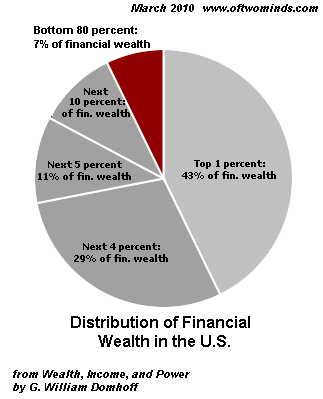

| You are subscribed to email updates from Save Your ASSets First To stop receiving these emails, you may unsubscribe now. | Email delivery powered by Google |
| Google Inc., 20 West Kinzie, Chicago IL USA 60610 | |


No comments:
Post a Comment