


Gold World News Flash |

- Record Gold & Silver Prices, Traffic and 3 Gold Stocks: Gold Resource, Timberline Resources and Nevada Sunrise Gold
- Keiser Report: Episode 93
- James Turk - Gold to Rise Over $100 In a Matter of Days
- Richard Russell - US Bankrupt, Gold Rocketing Higher
- The Currency War - Good For Gold
- Thanks for the Silver: An Open Letter to JPMorgan and HSBC
- Cowardly Old World
- Asian Metals Market Update
- The Boiling Frog: Effects of QE2 On The Bottom 80% of the U.S. Population
- Ecstasy of Gold
- BOILING FROGS
- In The News Today
- Hyperinflation Geopolitics
- Jim's Mailbox
- Guest Post: Money Is Not A Tangible “Thing”, It Is A Concept
- Gold reverts to record high, breezes past $1,400
- The Gold Price Revolting Against ALL Fiat Currencies, Not Only Against The Declining US Dollar
- Bad News for Emerging Markets
- “DVO1” which is market jargon for the dollar value of 1 basis point. This is a measure of how much a bond goes down in price in response to a 1 basis point increase in interest rates.”
- Gold, Central Planning & QEII
- Gold Bull vs. Bearish Bull
- MONDAY Market Excerpts
- A Third Type of Bank Account
- Casino Inflation in Junior Stocks
- Is GLD Overdue To Buy Two Hundred Tons Of Actual Gold?
- Gold Testing 1400
- Inflation Expectation Tuesday: Obama, Please Earmark $200 in the Budget for “Fed Research” so Bernanke Can Get a StockCharts Account
- How President Obama Might Have Stoked a Currency War
- Dollar Breakdown, America Has Lost its Imagination, Its Population Brainwashed to Do the Elites Bidding
- Your Taxpayer Dollars At Work: San Fran Fed Asks If Structural Unemployment Is On The Rise, Discovers It Isn't
- Gold and Silver Confiscation
- Stumbling Into a Trade War?
- Gold Seeker Closing Report: Gold and Silver Rise To New Highs
- Avis Budget Group (NYSE:CAR) — Peaking Revenue, Margins Likely to Collapse
- As Fed Allows Red Close, And All Time Record High Close In Gold, Is JPM's Commodity Trading Desk In Need Of A Bailout?
- Hourly Action In Gold From Trader Dan
- Jim?s Mailbox
- Watch The MOPE
- And they complain that gold doesn't pay any interest
- And they complain that gold doesn't pay any interest
- More Bernanke Bashing From Kevin Warsh
- Regarding Gold and Silver – meet Mr. Consistency.
- This past week in gold - Nov 08, 2010
- How to Save America In One Week
- Gold extends record rally on demand for currency alternative
- For the week ending Nov 05, 2010
- Gold breaks through the $1,400 barrier
- Watch Inside Job - The Movie
- China Calls Out the US for Reverting to a “Planned Economy”
| Posted: 09 Nov 2010 04:30 PM PST Are we now entering the hyperinflationary stage? It is estimated that in 2011 alone, the TOP 15 developed countries (US, Japan, UK, Spain, Greece, etc) will need to raise some $10,200,000,000,000 ($10.2 trillion!) to finance their growing debts. That is 27% of their combined economic output. Not 2.7% but 27%! The consequences will be felt through further monetary devaluations. In essence a big part of the overhanging debt burden is being paid off through an inflation tax for paper currency holders. How much longer will $ or € holders go without having real monetary insurance and protection against this inflation? Plus: Gold Resource Corp. – Ultra Low Cost Producer, Soon to be the highest dividend paying gold stock? Timberline (Gold) Resources Corp. – 2011 Gold Producer; Vertically Integrated Mining Company Nevada Sunrise Gold Corp. – Nevada's Next Big Gold Discovery? Drill Results Soon.
| ||
| Posted: 09 Nov 2010 07:46 AM PST Every week Max Keiser looks at all the scandal behind the financial news headlines. This week Max Keiser and co-host Stacy Herbert look at the scandals of shameless Britain and Wall Street's cash cow. In the second half of the show, Max talks to David Morgan about the silver market.
| ||
| James Turk - Gold to Rise Over $100 In a Matter of Days Posted: 08 Nov 2010 08:47 PM PST If we use the 50 level as the gold/silver ratio target, at $30 silver that projects $1,500 gold. We should see gold move over $100 in a matter of days."
| ||
| Richard Russell - US Bankrupt, Gold Rocketing Higher Posted: 08 Nov 2010 08:43 PM PST With gold hitting new all-time highs, in his latest commentary, the Godfather of newsletter writers Richard Russell stated, "By the end of the second quarter of 2011 the Fed will have created $2.5 trillion dollars out of the blue. This is monetization of the debt, pure and simple. Bernanke is creating oceans of fiat money out of thin air as the Fed moves to cover the enormous debts that a profligate Congress has approved of.”
| ||
| The Currency War - Good For Gold Posted: 08 Nov 2010 06:09 PM PST As the world awaits another $600 billion flood from Bernanke's printing press, central bank governors from Brasília to Tokyo are preparing to respond in kind. This is the monetary equivalent of a nuclear war, except instead of radiation, bombs of inflation threaten to make the world economy uninhabitable for saving and productive enterprise.
| ||
| Thanks for the Silver: An Open Letter to JPMorgan and HSBC Posted: 08 Nov 2010 06:02 PM PST Ted Butler, famous silver analyst and the guy who kept up the pressure about the corruption in the silver futures market for the last 15 years, is in the InvestmentRarities.com newsletter recently talking about silver, and notes dryly that "world silver inventories are at their lowest point in 200 years."
| ||
| Posted: 08 Nov 2010 06:00 PM PST In today's guest commentary, Rick's Picks forum regular Doug Graham sounds a note of deep despair over the political economy. There are too many incentives, he says, for our corrupt and deeply dysfunctional system to stay just the way it is. And even if we possessed the fortitude and resolve to put things back on track, the looming inflation of the dollar to the point of worthlessness will render any such efforts moot.
| ||
| Posted: 08 Nov 2010 05:04 PM PST Nothing Official about it. This is happening. Why are global central bankers increasing their gold holdings. They are not fools. Central banks portray a long term view of global economy and their increasing of gold reserves since 2007 is a reflection of the total breakdown in currency markets. Gold should rise to a minimum of $1700 by March 2011. We do not foresee gold falling below $1230 by March 2011 with every possibility of $1700 and $1900 by March 2011.
| ||
| The Boiling Frog: Effects of QE2 On The Bottom 80% of the U.S. Population Posted: 08 Nov 2010 04:48 PM PST "The recently announced Quantitative Easing 2 policy of the Federal Reserve has had and will have a profound effect on the dollar—and a profound effect on the American people: Especially the bottom 80%. In a word, QE2 will make four fifths of the American people poorer. Bernanke's stated purpose in QE2 is to spark consumer spending, and thereby reignite the economy. But QE2 will have the paradoxical effect of making basic necessities—food, housing, clothing, transportation—more expensive for everyone. This will mean that basic necessities will take a bigger bite out of household incomes, reducing consumption, rather than stimulating it. So like a frog dropped in a pot of cold water that's had the heat turned up, the American people—especially the bottome 60% to 80% of the population—will slowly be boiled to death in the stew of QE2. —Gonzalo Lira"
| ||
| Posted: 08 Nov 2010 02:00 PM PST
This posting includes an audio/video/photo media file: Download Now | ||
| Posted: 08 Nov 2010 01:35 PM PST Gonzalo Lira http://gonzalolira.blogspot.com/ has figured out that Bennie's QE2 will destroy everyone except the rich ruling elite. What a surprise. Monday, November 8, 2010 An old metaphor: If you take a frog and drop it into a roiling pot of boiling water, it'll jump right out, unscathed. But if you put that same frog in a pot of cold water, and then slowly raise the heat, that frog won't move. It'll stay in that pot of water, calm as can be, right up until it is boiled to death. | I've been arguing that the unpayable Federal government debt, coupled with irresponsible Federal Reserve policies, will inevitably lead to a hyperinflationary event and currency collapse. In order to prepare for a web seminar on hyperinflation in America, I've been looking at the issue of how to safeguard assets before a currency collapse, and how to identify opportunities in the midst of a hyperinflationary crisis. But along the way—inevitably—it's led me to consider the issue of the effects of hyperinflation on the American people. Not even hyperinflation—just regular old rising consumer prices: How will they affect the average household. It's disturbing. Even if you don't buy my hyperinflation call in the least—and a lot of very smart people don't—the recently announced Quantitative Easing 2 policy of the Federal Reserve has had and will have a profound effect on the dollar. And a profound effect on the American people—especially the bottom 80%. Bernanke's stated purpose in QE2 is to spark consumer spending, and thereby reignite the economy. To do this, Bernanke and the Fed will pump $600 billion into the Treasury bond market, in monthly $75 billion increments—at minimum. According to the Fed's statement, if more "liquidity" is needed, then by golly, more liquidity will be pumped into the economy. QE2 is really the official start of a race-to-the-bottom debasement of the U.S. dollar. No one doubts this—and no one would dispute that such a currency debasement will bring about upward pressures on consumer prices across the board. Indeed, this is the explicit purpose of QE2: The Fed is trying to induce inflation, as it believes that inflation will bring about a reignition of the stagnant American economy. A lot of commentators have been discussing what QE2 will mean for equities and the various bond markets. People are talking about the Treauries' yield curve—but not much about what QE2 will mean for the rest of the American population: The middle class, the working poor, the poor, and even the upper-middle class. | Now, it's no trick to see that rising prices of basic necessities—as a result of plain vanilla Fed-induced inflation, and not the hyperinflation I am positing—will affect everyone: But especially the middle class, the working poor and the poor. It would be nice if we could quantify that effect. But we can't just input a hypothetical inflation rate, apply it to the data, and come out with a number expressing how much each percentage point of inflation will affect each quintile of the population. We can't because, as prices rise, people buy less of a necessity: Higher gas prices means people drive less. Higher food prices means people eat less, or less quality of food. Higher heating oil prices means people heat their homes at a lower temperature—or in some cases not at all. The first claim I would venture to make—and one that I don't think will be particularly controversial—is this: Any household spending more than two-thirds of their after-tax income on food, housing, clothing and transportation will suffer an immediate, negative impact from the Fed's efforts at induced inflation. That covers pretty much the bottom three quintiles of American households. So 60% of the U.S. population will suffer an immediate effect of rising prices—the stated policy goal of Ben Bernanke's QE2. QE2 is having the immediate intended effect of pushing up asset prices, bouying up the financial sector—but it's also pushing up commodity prices, which have been rising ever since QE2 was first toyed with as a policy option back in the spring. Lag times may vary, but rising commodity prices inevitably translate into rising consumer prices for basic necessities on Main Street. QE2 is directly responsible for the rise in the last few weeks of all commodities. This will inevitably lead to higher consumer prices. This inevitable effect of rising prices for the basic necessities gives lie to the stated goal that the Fed has of helping the American people by way of QE2. The policy is not helping—on the contrary: A minimum of 60% of the population will feel immediate, unavoidable pain directly as a result of QE2. They will spend more for basic necessities than they spent previously for them. The key assumption that I am making, of course, and which has to be made in any analysis of the effects of rising consumer prices across socio-economic groups, is that wages and salaries will either not rise, or will rise with a lag time of no less than six months. This is an easy assumption for me to make: Even in the best of economic times, wages and salaries do not rise in lockstep with an expanding economy. And we are currently not in an expanding economy. It is reasonable to assume that, during a period of steadily rising prices coupled with stagnant economic growth, wages and salaries will not rise for at least six months, if not longer. And of course, if unemployment were to rise above the current U-6 rate of 17%, then obviously aggregate wages and salaries would contract further—which would further aggravate the effects of the rising prices of basic necessities on the bottom 60% of the population for sure. If unemployment continues to rise, then that bottom 60% would begin to grow into the bottom 70% or 80%—maybe even hit the top quintile as well. Wages are key. If inflation hit consumer prices as well as wages in equal measure, the net effect would be zero—which is more or less what you see in ordinary expansion-driven inflation, the kind prevalent in healthy economies: There are price pressures on commodities, which eventually translate into higher prices at the supermarket—but there are also price pressures on wages, as the economy in toto is expanding, and therefore bidding up scarce labor as it grows. In an expanding economy, prices might be rising—but wages are rising too, so no complaints. However, in a stagnating or contracting environment—such as what we are experiencing now in the American economy—there are obviously no pressures on wages: If anything, there are downward pressures on wages and salaries. So if commodity prices rise, people—especially the poor, the working poor, and the middle-class, but maybe even the upper-middle class—are really going to take a hit, as more of their after-tax income goes to paying for basic necessities. Some people might think that the debasing of the dollar via QE2 will mean that the real cost of housing will fall, as rents and fixed mortgages will be undermined by inflation. They might think this is a good thing. But this only makes sense if your earnings are absolute: If you're boss is paying you in gold coins, or silver lingots. But if you live on a dollar income, especially a fixed income—as so many seniors do, let alone the average wage earner—even if your housing costs remain nominally static, rising food, transportation and clothing prices will still take bigger and bigger bites out of that dollar-based income. Please look at the last line of the above table—"Food, Clothing, Transportation as % of Income"—which I calculated precisely for this objection. The only ones who won't feel the pain of rising prices of basic necessities that bad is the top quintile—maybe. If they're income comes predominantly from equities, maybe. If not, then they're going to take the hit as well. Way to go, Benny! Your QE2 is going to hit all five quintiles! Be proud! As I have discussed in detail elsewhere, and which ought to be clear from my discussion in this post, Ben Bernanke and the fucking idiots at the Fed committed the post hoc ergo propter hoc fallacy with regards inflation: They seem to genuinely think that inflation begets growth, rather than understanding that growth begets inflation. (I don't buy conspiracy theories that claim Benny and the Fed Fucktards are deliberately creating inflation to save the elite's bacon—I think Benny and his Lollipop Gang are simply and genuinely stupid.) So he and his minions have started up QE2, hell bent on creating inflation in the American economy. He seems to be succeeding, too. According to Producer Price Index numbers, grains have risen 33% year over year, oil 20% year over year (both figures September-to-September, link is here). Ever since the idea of QE2 was floated back in May/June, commodities of all kinds have been steadily rising. And as of last week, when Quantitative Easing 2 was officially unleashed, commodity prices have surged even more—and will continue to rise for the foreseeable future. Not just precious metals but grains, sugar, coffee, not to mention oil—they are all rising. Anecdotally, there is increasing evidence that food prices at the supermarkets have been rising for some time. I do not live in the United States, but I'm in close contact with literally dozens of people, both friends and business associates. From casual conversations and long discussions, I've been hearing that supermarket prices are rising across the board, and have been rising since at least mid-spring—yet the price rises do not seem to be reflected in the CPI. That's because of how the CPI—the Consumer Price Index, the traditional (and official) metric of U.S. inflation—is calculated. It uses data from past years—currently the 2007 and 2008 consumer survey—to create a basket of products, goods and services, which it uses to calculate monthly price changes. However, the CPI doesn't slice the baloney fine: If a product-x that was sold in a 20 ounce package for $3.99 back in 2007 is now being sold in an 18 oz. package at the same price, CPI does not compute that there was an 11.1% inflation in the price of product-x. Rather, according to the CPI, there was zero price inflation in product-x—because it sold for the same price, regardless of whether the package was 10% smaller. But this is exactly what seems to be happening in food, as well as in other categories of what one would consider basic necessities: Foodstuffs are being sold in smaller units, cotton clothing is now being sold for the same price, only made of synthetic materials, and so on. A recent blog post on Zero Hedge highlighted the specific case of coffee at WalMart, previously sold in a package of 39 oz. for $9.88, now being sold for $10.48—in a 33.9 oz package. This represents a 22% jump in price. Cases such as this are common, and cropping up like mushrooms on the web—enough to confirm that stealth inflation is happening, without needing to stop by John Williams' Shadow Government Statistics. This brings the obvious question: If food, transportation, clothing and housing prices rise, but the CPI doesn't measure it—was there inflation? This isn't a Zen koan or Berkeley's tree falling in the woods—this is real. So my answer is obvious: Yes. But according to the Fed and to most of the economic commentariat (except for a few notable and distinguished exceptions), since the CPI is not rising, there is no inflation. At least not in theory. In practice? That's something else. So! What does this all mean? It means that Americans are the frog in the metaphor. Between 60% and 80% of them—to be precise—are slowly being boiled alive. The bottom 60% to 80%, to be even more precise. Because of QE2 in all its iterations—its rumor back in the spring, its announcement last week, its forthcoming implementation—prices for food, housing, clothing and transportation are rising, and will continue to rise as Bernanke's policy works its magic on commodity prices, and eventually reaches the supermarkets. The financial sectors might be pleased that their assets are being bouyed by this flood of money coming from the Eccles Building—but the rest of the population will be drowning. It won't be just the bottom two-thirds of the population that will feel the pain of QE2: The upper-middle class and even the top quintile will inevitably see more and more of their income going to pay for basic necessities, while their wages and salaries remain stagnant—assuming, of course, that they're lucky enough to still have a job.  All the while, since the Consumer Price Index will be lagging or flat, the mainstream economists and the Fed drones will keep up a steady chant of, "There is no inflation! There is no inflation!"—even as a majority of the population feels the squeeze of rising prices for the basic necessities. It'll be a lot like a bunch of cooks, standing around the boiling pot, saying to the poor frog, "It's only cold water! Don't worry! It's still cold! Trust us!" So like the frog in the metaphor, the bottom 60% of American households will be slowly boiled alive by rising prices— As I said, you don't have to buy my hyperinflation call and currency collapse scenario to realize this effect of QE2. This effect of Bernanke's policy is immediate, undeniable, and inevitable: QE2 will hurt a vast majority of the American population, while helping only a very, very few. To this, I say: Yeay, Benny—way to help the American people. Way to fucking go.
|
| Posted: 08 Nov 2010 12:35 PM PST Dear CIGAs, Is this the winter of discontent? It is dark here in CT at 4PM. We had snow and sleet today. It looks like how it is financially
Jim Sinclair's Commentary Has the economic world ended? The American Icon has moved to India. This is a dark day for the Harley Guys. Will they have to fly the Indian flag along with the American flag when they come to Sturgis this year? Instead of the low wave Harley guys are going to Namaste each other. Not a bad return for $200 million a day. I bet you will be able to buy some cheap Harleys soon. I am turning mine in for a Rice Rocket. Harley-Davidson to build bikes in India The iconic American motorcycle brand, Harley-Davidson, has announced plans to build an assembly plant in India. Harley-Davidson, the iconic American motorcycle brand with a cult-like following, has announced it has chosen to build its second assembly plant ever outside the United States in India. The "complete knock down" plant or CKD is expected to be up and running in the northern Indian state of Haryana in first half of 2011. Parts made in America will be put together for the Indian market in Haryana. "What we are doing is made in USA, assembled in India, which will have a positive job effect back home which is why we are driving this investment as quickly as we are," Anoop Prakash managing director for Harley Davidson India told CNN.
Jim Sinclair's Commentary My prediction is fifty dollars richer, on or before Jan 14, 2011, and much better looking. Gold's 7 Parabolic C Waves – Projection $1,600 I believe that gold has traded in a repetitive ABCD pattern since the inception of its secular bull market in late 2001. The C wave of the pattern has characteristically concluded with a parabolic, near vertical ascent of price. We are currently in a C wave and I expect that our immediate future will witness a truly exciting and hair raising parabolic advance that will likely take gold to $1,600. This study will show you each of the C waves since 2001, and conclude with our current situation. One of the fascinating aspects of gold's progress from $260 in December 2001 to today's near $1,400 level is not only this repetitive ABCD pattern (7 times so far), but also the use of the 50% Fibonacci measurement to define the half way point of each parabolic C wave. The earliest ABCD patterns were relatively small, both in terms of time frame and size, and relatively simple. They were essentially straight line 'near vertical' moves. As the pattern has evolved, the C wave morphed into larger and more complicated structures while maintaining its fundamental and well defined mold. Following the near vertical straight line, C waves introduced a double top structure, followed by the use of bull flags and then the consolidation pennant. The present C wave appears to have morphed into a gigantic 3 phase super structure, surpassing all previous C waves in complexity and size.
Jim Sinclair's Commentary This is getting hotter. With Rico attached the suit will be settled. The defendants will swear not to settle, then they will try to increase the cost of the suit for the claimant by papering them to death in order to get the claimant's attorney to scream settle. This is especially true if the suit is a class action. If the suit is a class action the claimant's attorney will settle on behalf of the class litigants Whistleblower accuses HSBC and JP Morgan of silver futures scam In a lawsuit filed in New York last week, trader Eric Nalven has launched a class action suit against the two banks, claiming they "artificially depressed the price of silver dramatically downward" in a scheme that netted the banks "substantial illegal profits". This follows two suits filed at the end of October against both banking groups, one of which claimed the "defendants reaped hundreds of millions of dollars, if not billions of dollars in profits" from the conspiracy. The ex-Goldman Sachs employee, a veteran of 40 years, reported the two banks activities to the US derivatives regulator, the Commodity Futures Trading Commission (CFTC), which has been conducting an investigation into the manipulation of the silver market. The whistleblower claims he was told about the conspiracy and scheme by traders. A spokesman for JP Morgan declined to comment.
Jim Sinclair's Commentary The World Bank thinks there is merit in gold. This should be no surprise to you, nor should you be surprised when the Euro zone announced QE2. Consider Gold in Overhaul of Bretton Woods, World Bank Head Writes in FT The development of a monetary system to follow on from 1971's Bretton Woods II will take time, but it's time to start, World Bank President Robert Zoellick writes in the Financial Times. This week's summit of the Group of 20 leading economies in Seoul presents a test of international cooperation offering an opportunity for a key group of G20 countries to agree on parallel agendas of structural reform, Zoellick writes. For instance, the U.S. and China could reach agreement on mutually reinforcing moves to stimulate further growth, such as a course for yuan appreciation, or a move to wide bands for exchange rates, the World Bank chief writes. Other major economies should agree to forgo currency intervention, except in rare situations agreed to by others, Zoellick says. These moves would help emerging economies to deal with asymmetries in recoveries by applying flexible exchange rates and independent monetary policies, he writes. The system should evaluate using gold as a reference point of market expectations about inflation, deflation and future currency values, Zoellick writes, noting that while textbooks may view gold as "old money," markets use it today as an alternative monetary asset.
Jim Sinclair's Commentary Sir Richard the Great has it nailed. Not just inflation fears boosting gold NEW YORK (MarketWatch) — Gold goes onwards and upwards. And key letters say there are reasons beyond looming inflation. The metal's friends must be wondering if it gets any better. The CME December gold contract rose $50.10 (2.95%) last week to close at a record high of $1,397.70. Silver, which many old precious-metals hands consider to be a purer reflection of U.S. speculative sentiment, was up even more. What's more, gold expressed in euros managed to get above the early-September high. Gold expressed in U.S. dollars had risen substantially since then, and gold bears were pointing at the lack of progress in gold in other major currencies as evidence that the move was vulnerable. That argument has now failed. Even the long-sluggish gold shares behaved. The ARCA Gold Bugs managed (at last!) to get above the 2008 high, achieved when gold was first briefly over $1,000; it managed a 5.3% appreciation for the week. It closed at an all-time high. Dow Theory Letters' Richard Russell points out that the major-gold-share exchange-traded fund Market Vectors Gold Miners ETF is now being outpaced by the junior-share vehicle Market Vectors Junior Gold Miners.
Jim Sinclair's Commentary Yell and scream they will. QE2-Euro is on the menu. Interview With German Finance Minister Schäuble In an interview with SPIEGEL, German Finance Minister Wolfgang Schäuble, 68, criticizes US calls for Germany to reduce exports, outlines his plans for an insolvency framework for indebted European nations and the emphasizes the significance of the German-French axis for Europe. SPIEGEL: Minister Schäuble, how well do you get along with your American counterpart, Treasury Secretary Timothy Geithner? Schäuble: Mr. Geithner is an excellent minister. We have a good personal relationship. SPIEGEL: Nevertheless, he constantly criticizes government officials in countries that are achieving high export surpluses and not doing enough to stimulate their domestic economies. He's referring to you, isn't he? Schäuble: It would appear that way. That's why I tell him again and again that I think his point of view is incorrect in this regard. SPIEGEL: All the same, the value of goods Germany sold to the United States exceeded imports from that country by almost €14 billion ($19.8 billion) last year. Can't you understand that the American treasury secretary is concerned about this?
Jim Sinclair's Commentary Here is an entirely fresh method of MOPE. Hold a stop watch in your hand and time the duration of items in their news tape. This event lasts for 0.7 seconds versus 7 seconds for a good earnings report of a middle line corporation. It happen this way regularly. Ohio GMAC Foreclosure Case May Set Anti-Wall Street Precedent When James Renfro had to stop making payments on his two-story fixer-upper in Parma, Ohio, a suburb of Cleveland, he triggered events that were supposed to result in the forced sale of his home. That Nov. 15 auction has been canceled because of defects in documents submitted by his loan servicer, Ally Financial Inc.'s GMAC Mortgage unit. Two affidavits about Renfro's home were signed by Jeffrey Stephan, a GMAC employee who said in sworn depositions in Florida and Maine that he hadn't read thousands of affidavits he'd signed. Renfro's case has created a showdown between GMAC and Ohio's Attorney General Richard Cordray. Cordray has asked Cuyahoga County Court of Common Pleas Judge Nancy Russo not to let GMAC simply submit new documents to cure defects without consequences. He's taken the same stand against Wells Fargo & Co., which has said it found defects in 55,000 foreclosures. "This is just the first," said Cordray, who has filed an amicus or friend-of-the-court brief in the Renfro case. The judge will consider Cordray's views today in Cleveland at 1 p.m. Cordray will ask Russo to punish GMAC, the fourth-largest U.S. mortgage lender, for its conduct, he said in an interview.
| ||
| Posted: 08 Nov 2010 12:31 PM PST There has been a lot of heavy Paranoia being tossed around the blogosphere by some Economic Pundits with predictions of incipient Hyperinflation (Can-U-Spell G-O-N-Z-A-L-O L-I-R-A? LOL. Are you out there reading this Gonzalo?), particularly in the most essential of all currently Monetized Commodities, Food. Water is even more essential, but at least in most places it hasn't been as thoroughly monetized as the food resource has been. Not to say this will not come to pass in the future, it probably will but only after this destructive phase of the 4 Turnings has run its course. Before continuing on with this article, I want to reiterate for those who do not know that I am a Deflationato, not an Inflationista, so along with folks like Nicole Foss (Stoneleigh of Automatic Earth) I argue the opposite side of the debate with Inflationistas like Gonzalo. It is my belief right now that all the money Helicopter Ben is Printing and distributing out to the TBTF Banks to keep the Stock Market floating and to bid Commodities up into the Stratosphere is all going to burn up rapidly as all these markets come crashing back downward, in the Greatest Bonfire of Paper Wealth in All of Recorded History. The only way a Hyperinflationary scenario can really take off is if at some point Da Goobermint starts distributing out currency to J6P to buy the products at these inflated prices. As of yet, that is not happening. It may happen in the future if Da Goobermint reacts to a Price Spike by indexing wages and printing money to cover that, but I don't see that in the cards yet either. However, on the assumption I am WRONG here, I am going to look at some outcomes relating to Hyperinflationary scenarios, and how they might play out Geopolitically. First, I want to focus on the paranoia that in the near future Hyperinflation of the Dollar will price most Amerikans out of the Food Market. To experiment with this on the practical level, I ventured out today to purchase enough Food for the coming week, at the current prices which in theory are supposed to be on average something like 30% higher than they were last year at this time according to the COMEX, but in actual practice at the retail level are nowhere near that level of inflationary pricing. I did not even buy what are some of the cheapest sources of calories, like the 50lb bags of Rice which make up most of my calorie content for long term food storage, rather I bought "On Sale" processed and packaged foods that I can easily cook up in the Microwave, or heat up on my BBQ if the power goes out, or just eat right outta da can or box once the frozen stuff is allowed to thaw since it is precooked. What did I buy? 1 36 oz Package Stouffers Cheddar Potatoes with Bacon 1800 Calories $6.00 1 36 oz Package Stouffers Broccoli Au Gratin 1500 calories $6.00 14 15 oz Cans Nalle Thick Chili Con Carne 7560 calories $14.00 18 count Large WA State Eggs 1260 calories $3.00 This is a total of for the week around 13,380 calories for $29, slightly under 2000 cal/day which if I don't go overboard exercising I will gradually get fat on. I could actually have done this quite a bit cheaper by using bulk staples, but for an Amerikan, $29 for the week in food is minimal right now. This menu has plenty of Animal Protein along with the fat and carb calories, though like all diets weighted with processed foods is a bit short on vitamins. The only "fresh food" in this week's purchase were the eggs. I have Vitamin supplements to make up for that shortage, a One a Day + Vitamin C supplement costs me about $1 a day but I didn't buy a 500 package this week, since I have just tons of them already. LOL. However, add $7 for the week in Vitamins, now we are at $36 for the week. I actually WILL live on JUST this food for the next week, much as it pains me to do so, given I also bought a couple of nice Ecuadorian Lobster Tails that were Price Cut and I am freezing for future use, not to mention all those Rib Eye Steaks I buy whenever I catch a sale. I will let you guys know if I feel Hungry at the end of the week. I doubt it. Note the preponderance of Calories comes from those Cans of Cheap Chile con Carne, which will last for at least a couple of YEARS on the shelf. If I do NOT eat all 14 this week (and I seriously doubt I will), a few cans go into SHTF Storage. Remember ALSO that on any given day/week/month that I see actual retail food prices hyperinflating I can go out and basically empty the shelf of the cans of Nalle Chile even at twice the current price of $1/can and buy 1000 of them. The only limiting factor on that is my being somewhat ahead of the curve relative to everyone else in my neighborhood and making it to the supermarket before them to empty the shelf. I make it my PRACTICE to go every day into the supermarket and observe what is available on the shelves and what the prices are, not to mention my daily reading of the blogosphere. Trust me, if/when this thing goes ballistic, I am going to be way ahead of my local community as a shelf emptier. LOL. After that, my main problem would be protecting and defending my supply of preps from the people who were AFTER me in waking up and smelling the coffee, but my plan for that is to SHARE everything I buy up with my friends and protect the whole larder TOGETHER in a Central Food Bank. I already have 2 years of long lasting food supplies for myself, I figure I can double that at least in the last month or two before final collapse. When I see it occurring, I will of course also let my friends know the TIME has COME to divest of your Toilet Paper and buy what hard goods you can. With luck, together we can all grab hold of 2-3 years worth of food off the shelves at Walmart, Carr's, Fred Meyer and Three Bears, the main industrial food distribution outlets up here. Protecting and defending it is the more difficult task than actually getting hold of it as the spin down accelerates in pace, at least if you get in early and are at the front of the line. My paradigm is to establish a Food Bank among the 1000 or so families we serve here in the Mat Valley. Needless to say, many of them are State Troopers and Military Personnel. This is ALASKA. Its already a freaking Military compound. The main danger with setting up such a Food Bank here would be the Military taking direct control over our food bank, this is an outcome we cannot do anything about. However, my guess is that at least for a while the Military will actually be the ones pretty well stocked themselves and distributing out "Gooberment Cheese" to the population. At any rate, we stand a better chance as a group maintaining control over this food supply than any individual would. Individuals with such supplies will be labeled as "hoarders", which in fact is what everyone who saves is. LOL. I am not concerned we will not have enough firepower to defend the food bank locally from the Zombie threat, EVERYBODY has weapons here. I mean EVERYBODY, and LOTS of them per capita. Its an OBSESSION of people in Alaska to own a LOT of GUNS, even more than Texans. A very close friend of mine collects AR-15s, every time he sees a good deal on one he buys it. He has a fucking ARMORY in the basement, at least 10 or so of this particular weapon and assorted others and lord only knows how much Ammo. This is his Hedge, and its not atypical up here. I am not such a big gun freak as that, but I do have my AR-50BMG. This is my Hunting Rifle, it is Overkill but I like to practice long range shooting in the 500-1000 yard range and this rifle is very good for such long ranges. For personal Defense I have my Smith & Wesson .45 Revolver for knocking down a Brown Bear at close range if need be and a 9mm Glock Semi Automatic for Close Quarters Zombie Defense. Then I have my "Primitive Weapons" array including a Crossbow and two Compound Bows, 2 Wrist Rocket Slingshots and even a really old fashioned Sling like David used on Goliath, but I am not terrifically accurate with it as of yet. In fact, I am probably the only person reasonably safe when I start swinging the thing around, since there is no telling in a 360 degree radius around me where the damn steel shot will fly. LOL. Boy does it ever fly fast though and go POW when it hits something, although I never know exactly what I will hit. LOL. There is no DOUBT you could knock down and out and possibly even outright kill an NFL Middle Linebacker or NBA Center or Power Forward (modern day Goliaths) at 20-30 feet if you were accurate enough to bean him right between the eyes or better yet a direct hit on one of his eye sockets with only soft tissue between the steel shot and his Brain. OK, really I have it down to about 20 degrees now toward the intended target so behind me is sorta safe, but HTF you can get more accurate than that so far escapes my limits. Practice, practice, practice I suppose. My next experiment in primitive Weapons is going to be an Atlatl, though I have been told they are even harder to master than a Sling. I also hope to build a scale model Trebuchet this year in the spring with my students. Then count the Machete, Hatchet (aka Battle Axe), Bowie Knife with Brass Knuckles Handle, Ninja Throwing Stars, 4' PVC Pipe Blowgun (made it myself and the darts also. Very accurate and EZ to use weapon for knocking down small critters like birds and squirrels. For knocking down people, you would have to poison the darts unless of course you get one of those direct Eye Socket hits), Diving Spearguns (elastic and compressed air), and of course the Tire Thumper from my Trucking Days (aka Billy Club, Zombie Defense Weapon of last resort) and its larger cousin, the Louisville Slugger. ALL of that is probably fewer in number than most folks I know in total weapons, though the Primitive Weapons collection is more varied than anyone I know. Though few have my obsession with primitive weapons right now, I feel confident that eventually knowing and understanding how to use primitive weapons will be a game changer for many small Tribes, so I am trying to gain some proficiency to pass on to younger members of the Tribe when the Ammo runs out. Ammo for Guns is going to be increasingly expensive and difficult to acquire. You won't want to waste it on Hunting if possible. The more you can rely on primitive weapons, the better you can conserve your Ammo. I am unfortunately somewhat late in the game for learning this stuff, it would have been better if I had trained since youth, but better late than never. This being said, I am a freaking PACIFIST compared to many Alaskans. Of course, my Military friends have the BEST weapons, the Automatic Assault Rifles, the RPGS etc, but they are just part of the community here so at the moment they don't worry me. The main thing is not the weapons, but the TRUST you have in the other members of the Food Bank in the community, and I trust my friends. Without that trust, we are ALL lost, so I can only hope it holds up. Everyone who contributes to this Food Bank has Credits in that Bank. I will be Depositing at LEAST 2 years worth of Credits for myself based on just what I have right NOW, and I am pretty sure to at least double that before TSHTF completely. In the future, we will have to grow/fish/hunt/harvest food to keep it replenished, but I think it is not outside the realm of possibility that in the final days of the Fiat System we can consolidate 2 years worth of easily stored food to stay operational and fed while we Transition to local sustainability. I expect I'll do a good deal more fishing than I do now in the future, though really I expect to earn most of my food credits in the future by Teaching, just as I earn most of my "money" now. Regardless, I'll be damn happy if I just make it to 12/21/2012.to witness TEOTWAWKI before I walk into the Great Beyond. Go Mayans! LOL. Now, beyond those of us with the money and foresight to empty the shelves, there will of course be many hapless individuals who don't stock up in time, although at least up here that is fewer all the time. People up here always stock up for the winter anyhow, but with the current instability more people are beginning to sense trouble coming, and more are stocking up. Inevitably though, we will get hungry people knocking at the door, and we would have to set up a Soup Kitchen, which would run us through the collective preps faster, but it's the only moral choice here. You can't let other people starve if your belly is full and you still have some extra food around. This is why it would be imperative to get local Food Production and restocking started ASAP. For this, we have to work with our local Commercial Fishermen and our local Farmers in Palmer, as well as encourage everyone to be growing their own produce in Greenhouses. I am working on developing a Greenhouse building project and actually will be filing in the next month for a 501C3 Non-Profit to get this ball rolling in earnest here in our community. We should be able to keep electricity running pretty well since we have our own local supplies of NG, though some new ones will need to be tapped. Statewide the thing to do would be to build an NG pipeline along the route of the current Oil pipeline, because the NG on the slope is enough to keep Alaska going for decades, and still have plenty to sell via LNG Tankers. We also have plenty of local Coal, but we would have to build Coal fired plants, and that takes some lead time. Now, even assuming a Hyperinflationary rate of say 10%/mo its going to take at least 8 months or so with compounding for the price of all these things to double, and that would assume a price doubling of the commodities that went into them would automatically translate to a doubling price of the finished food product, but of course it does not, because a big part of the price is the labor cost, the packaging, the transportation, etc. Remember here, the Baltic Dry Index which tracks the cost of transporting bulk over water is near all time lows here still and wages are undergoing RAPID deflation. Commerce is getting thinner, which means a lot of slack in available ships, which means the Pigman Ship Owners have to cut their shipping prices to get any bizness. However, let us ignore for a moment the fact that retail prices of food on the shelves of Walmart are not precisely correlated to the price paid for wholesale inputs of food purchased by Pigman Speculators on the COMEX, and postulate a Doubling in the Retail price of my One Week food supply over the coming year. For a Still Employed person in the FSofA like myself, this remains Chump Change, even though I do not make Pigman Bonus money. Even at minimum wage of around $7 (I make a good deal more than that), you would only need to find about 11 hours work per WEEK to afford this food bill for yourself. Even if you do NOT find work though, the SNAP Card program will keep you floating on a food level for quite some time to come, as long as Da Goobermint keeps issuing and filling up SNAP Cards with digimoney on a monthly basis anyhow. They most certainly WILL do that, because the moment they stop doing that is the moment the FSA of the entire country EXPLODES in riots. Cheaper to provide the free food than to employ enough Gestapo to quell the riots. This is straightforward economics even the Illuminati can figure out, and its WHY they paid the price to buy off the original Free Shit Army with the Great Society program of Lyndon Johnson back in the 1960s to stop the Riots of that time. Right now I think the SNAP card program is costing around $40B, so even if the cost of that program TRIPLES over the next year to $120B with additional folks falling off the economic cliff AND prices doubling, that is barely a month's worth of Printing for Helicopter Ben. So many $Trillions are being issued out each year to Bankster Welfare Pigmen that you cannot possibly catch up here to those costs feeding the FSA. LOL. Of course, if you are feeding a family of 4 and you are the only Breadwinner, it is more difficult than for a Lone Ranger like myself. To feed your family it would take 44 hours of work if prices of these finished food products doubles over the course of the next year. Even if you are fortunate enough to find a Full Time job at Mickey Ds flipping burgers, all you can do here is feed your family, you can't pay rent or buy gas to get to the Mickey Ds workplace either. Fortunately however, if you are only making an annual salary of $7x40hrsx52wks=$14560, you are well under the Poverty level and probably qualify for a SNAP Card that way anyhow, though admittedly I am not completely conversant with what the actual rules for qualification are. Remember also, while most Clothing and Toys and Cars are produced in Factories over in China, India and Mejico these days, for the most part the Industrialized Food Apparatus remains intact here in the FSofA. We do NOT have to import food, so even if the Dollar goes into the crapper on the FOREX market relative to other currencies or Gold, Food prices don't have to change much at all here as long as you pull a Ruskie and stop shipping out what food you do produce, regardless of what price anybody will pay for it. The ONLY limiting factor on maintaining Food Production in the FSofA Industrial Food Apparatus is the availability of Oil and our ability to either Pay for it, Barter Food for it or STEAL it. In the short term here, while our ability to pay for it in ever more Worthless Dollars is in Doubt, our ability to STEAL Oil is beyond compare! We pay through the nose to keep a massive military force surrounding the Oil producing nations who will use any excuse whatsoever (even a manufactured False Flag excuse) to attempt to commandeer all the production facilities for Oil in all of Saudi Arabia, Iraq and Iran. That is an EZ one for sure in Saudi Arabia, because the Sheiks in charge of the House of Saud have kindly provided the FSofA Military with HUGE military bases from which to operate. Exactly what would the House of Saud DO here if we turned the military force on them and forced the export of their Oil to FSofA refineries? Beg for help from the Chinese? LOL. Bottom line here? Right now, I do not see food disappearing off the shelves of my local Walmart or Three Bears in the near future, even though the prices might rise quite rapidly, though also not past my ability to pay those prices for some time. The only caveat to that is not a hyperinflationary event rendering the dollar worthless over time in the international markets, it would be a Sudden Stop event and lockup of the financial markets happening over an exceedingly short period of time, like over a weekend. Even that can be overcome pretty easily by dropping down a Command Economy and wage and price fixing for the short term, which probably could work for at least 6 months, and possibly a good deal longer than that. Worked for a good long time in the old Soviet Union anyhow. Recall please that during the worst phase of Inflation under the Nixon Administration, Wage and Price controls were instituted, so we already have experience with a Command Economy. The option of dropping down wage and price controls through a Command Economy is what really stops the hyperinflationary scenario dead in the water, and with sufficient volatility, this is the option that will be taken. The PPT have already shown themselves capable of manipulating the markets as they see fit, it's a very small jump from there to institute a Command Economy. Such a thing is not possible for small economies like Argentina or Weimar back in the day, they don't have any influence over the economies of the world surrounding them. The value of the FSofA Dollar DOES have tremendous influence, because of course the dollar is the World Reserve Currency. Hyperinflation is a RELATIVE event, it's the value of your currency with respect to somebody else's. Thing here is, all the major Fiat currencies are tied to the dollar, all have similar problems, and all will devalue in lock step with the dollar, one way or the other. If they don't do this, they will be flooded with dollars seeking yield and they will have no export markets. With respect to GOLD, all these currencies will devalue, and so $10K/oz Gold is possible, but the Gold coin not going to buy you any more of anything, all you have done here is changed the numbers and dropped on a few extra zeros on the Fiat. For the most part that does not even resolve the Debt questions either, because creation of all this new money is just a creation of bigger debt numbers overall. It can shift the debt around some, but it cannot eliminate the debt. If we use $2T in funny money to pay off the Chinese with worthless Toilet Paper, first off the Chinese won't consider the debt paid and second we would then just owe the same debt to the Fed Owners, who graciously printed up this money to loan us to pay off the Chinese, but dropped the debt onto the other side of the Balance shee when they do this. Of course then, we can Default on our obligations to the Fed, and they go BK and outta biz and the Dollar disappears from the face of the Earth. Then we are back to chaos and anarchy as nobody knows who owns what or who owes what to who and how much of what it is they owe. LOL. At this point, it becomes a waiting game of Chicken and a hold out period to see who flinches first here. If/When the FSofA pulls a Ruskie and STOPS exporting food, I think it would be a very short time indeed before we brought the Chinese to their KNEES. They would be left with 2 choices. Choice 1: Forgive the Debt Choice 2: Attempt to Ramp Up their Military to enforce their Debt Claims and "Kneecap" us into paying it off. In the short term, no chance whatsoever of Choice 2 being successful other than choosing the Global Thermonuclear War Option. Even with a 4:1 Population advantage, in any kind of Conventional Warfare scenario you can imagine, the current hardware advantage held by the FSofA military makes up for the population numbers the Chinese have. They simply could not ramp up production of high tech weaponry faster than it would be destroyed once ALL of Elmendorf sorties out and Bombs China back to the Stone Age. An EMP set off by the Chinese could level the playing field, but bringing EVERYBODY back down to WWI level technology would make it extraordinarily difficult to run any kind of Global Warfare for very long for either side. (Paranthetically, I wonder what would happen to our Aircraft Carrier Groups in the event of an EMP? Would the Nuclear Reactors on the Carriers themselves cease to function (controlled as they are by microprocessors)? Dead in the Water immediately? Speculation by readers is welcome on this topic.) In the end, based on their History as the perennial Slaves of the World who arrived a Day Late and a Yuan Short in the Industrialization Ponzi, I think the Chinese will FOLD. They will forgive the debt rather than trying to collect from a way better armed military force. Their ONLY other choice is to go ALL IN on Global Thermonuclear War, and not even the Ruskies who had a WAY more developed Thermonuclear ICBM system chose that option as opposed to going under when they were economically defeated. Rather, the Oligarchs in charge of the old Soviet Union let their system collapse and descended into a period of Die Off and internal Corruption. I suspect the Chinese Overlords will choose the same option, as will our Bankster Plutocracy here in the FSofA. Nobody, not even MUSLIMS are ready for MAD and being the ones to initiate the Extinction of the Human Race via Global Thermonuclear War. Face it folks, this isn't a question of Monetary Debt anymore, the worldwide system of Debt is TOAST. EVERYBODY, including the Chinese are functionally BK. The Chinese because even though they hold an account surplus they are functionally BK because the debts are not collectible and their export market is crashing. Now the question resolves to a Military one, and for so long as it is possible to maintain the kind of military superiority the FSofA has utilizing high tech weaponry and the thermodynamic energy of Oil, the FSofA stays on top of the collapsing world economy. As things spin down here, regardless of the fact Helicopter Ben prints endless quantities of ever more worthless funny money, there will be a Flight to Safety as Big Money bets on the Biggest Bully on the Block with the Big Ass Military. This keeps the dollar operating for a
| ||
| Posted: 08 Nov 2010 12:26 PM PST Jim, What are the chances of an anti dollar slap out of the G20 this weekend? I am getting a real vibe ala 1987 baker non dollar support – not the same thing obviously, but an anti dollar item nonetheless. CIGA Ken Ken, It probably won't happen publicly. It would work against what they want. Slamming the dollar lower is not what they wish to see so they will not publicly bring it about. QE will slam the dollar on simple a supply/demand basis. That is enough to know Jim
Eric, You are too kind. Even thinking such a thing qualifies one as a moron. Jim To Save America We Need To Put 50% Tariffs On All Chinese Imports, Says Tonelson Wow, my response to that is Smoot Hawley and try it once. The unintended consequences of such a decision have not be thoroughly discussed here. But if the US ever wants to dig itself out of its economic hole, says Alan Tonelson, a fellow at the United States Business and Industry Council and author of "The Race to the Bottom," we need to fix our enormous trade deficit with China and other countries. And the way to fix it, says Tonelson, is to put high tariffs on all goods imported from China, thus increasing the price-competitiveness of those produced domestically. Source: finance.yahoo.com
Greetings Jim, In September, gold broke out to a new long-term high, but our Gold Currency Index (GCI) lagged, creating a slight negative divergence that signaled caution. Since then, the negative divergence has been cleared and a positive divergence has begun to develop since the Federal Reserve announced the next quantitative easing program last week. While both daily charts are bullish, the GCI is strengthening even faster than gold in US dollar terms.
While gold is up 1.2% during the past two sessions, the GCI is up 2.1% as strength in the US dollar has not caused accompanying weakness in the gold market. Granted, this is only the beginning of a positive divergence, but we will continue to monitor its development closely as the GCI has a long history of leading the US gold market into powerful moves. Best, CIGA Erik
Mr Sinclair, What was once ridiculed is now not only being considered but is becoming an accepted solution (just like you said)!! Your friend Dear Bruno, That is directly out of my playbook and all set in cement in the Compendiums. Regards, Click here to read the article…
Jim, Does this mean the return of the Gold Standard? CIGA Snapperman Dear Snapperman, Not a gold standard, but I suspect what I have been writing about which is gold tied to a virtual reserve currency by a broad measure of world liquidity. Jim World Bank chief surprises with gold proposal LONDON/WASHINGTON (Reuters) – The world's largest economies should consider gold as an indicator to help set foreign exchange rates, the head of the World Bank said on Monday in a proposal that threw open the acrimonious currency debate days before a summit of G20 nations. Writing in the Financial Times, World Bank President Robert Zoellick called for a new monetary system to replace the floating rates adopted in 1971 known as Bretton Woods II. In typical Zoellick style, the proposal before the G20 leaders' summit in Seoul is aimed at fueling a broader debate on currencies that goes beyond competitive devaluation wars.
Mr Sinclair, What was once ridiculed is now not only being considered but is becoming an accepted solution (just like you said)!! Your friend, Bruno, It will all happen as we have anticipated. Chances are good it will happen when we anticipated. Jim World Bank says gold is good anchor World Bank president Robert Zoellick has called on bickering G20 nations to bring gold back into the global monetary system as an anchor to guide currency movements. Ahead of a Group of 20 summit this week in Seoul, Zoellick said an updated gold standard could help retool the world economy at a time of serious tensions over currencies and US monetary policy. He said the world needed a new regime to succeed the "Bretton Woods II" system of floating currencies, which has been in place since the fixed-rate currency system linked to gold broke down in 1971. The new system "is likely to need to involve the dollar, the euro, the yen, the pound and a renminbi (Chinese yuan) that moves towards internationalisation and then an open capital account", he wrote in Monday's Financial Times.
Jim, I'm starting to think you can tell the future. In all seriousness the CIGAs heard this years ago by our humble teacher at JSMineset. CIGA Marc World Bank chief surprises with gold standard idea LONDON, Nov 8 (Reuters) – Leading economies should consider adopting a modified global gold standard to guide currency rates, World Bank president Robert Zoellick said on Monday in a surprise proposal before a potentially acrimonious G20 summit. Writing in the Financial Times, Zoellick called for a new system of floating currencies as a successor to the Bretton Woods fixed-exchange rate regime, which broke down in the early 1970s and involved measuring currency rates against gold. The former U.S. trade representative, who served in several Republican administrations, said the new system "is likely to need to involve the dollar, the euro, the yen, the pound and (a Chinese yuan) that moves towards internationalisation and then an open capital account.
Dear Jim, This guy uses Elliott Wave Theory to come up with gold at $1600 by December. Where was he in 2004? CIGA Dr. Vino Gold's 7 Parabolic C Waves – Projection $1600 I believe that gold has traded in a repetitive ABCD pattern since the inception of its secular bull market in late 2001. The C wave of the pattern has characteristically concluded with a parabolic, near vertical ascent of price. We are currently in a C wave and I expect that our immediate future will witness a truly exciting and hair raising parabolic advance that will likely take gold to $1,600. This study will show you each of the C waves since 2001, and conclude with our current situation. One of the fascinating aspects of gold's progress from $260 in December 2001 to today's near $1,400 level is not only this repetitive ABCD pattern (7 times so far), but also the use of the 50% Fibonacci measurement to define the half way point of each parabolic C wave. The earliest ABCD patterns were relatively small, both in terms of time frame and size, and relatively simple. They were essentially straight line 'near vertical' moves. As the pattern has evolved, the C wave morphed into larger and more complicated structures while maintaining its fundamental and well defined mold. Following the near vertical straight line, C waves introduced a double top structure, followed by the use of bull flags and then the consolidation pennant. The present C wave appears to have morphed into a gigantic 3 phase super structure, surpassing all previous C waves in complexity and size.
Dear Jim, I believe you once said they would start feeding on each other! CIGA Pabste Dear Pabste, As we plod on through this, the darkest age of finance in human history, all the sharks will be eating all others until only one fat shark is left. "Our Crowd" will have to change its name to the "Great Singularity." That "Great Singularity" is a major member of "Our Crowd." Jim Ackermann's Deutsche Bank Follies: Chickens Come Home to Roost The earlier filing of fraud charges against Wall Street banking titan Goldman Sachs by the US Government Securities and Exchange Commission (SEC) was only the tip of a huge fraud iceberg. Now a US mortgage insurer has charged one of the most aggressive banks involved in the US subprime mortgage scam of fraud. The bank is none other than Deutsche Bank. This case is also likely to be just the "tip of a very big iceberg." Since he left his post as president of the Swiss-US Credit Suisse bank to go to Deutsche Bank, Swiss banker Josef Ackermann has focused on making the premier German bank into an imitation of the major Wall Street banks. It seems he has succeeded only too well. Assured Guaranty Ltd., owner of Assured Guaranty Mortgage Insurance Company of New York has sued affiliates of Deutsche Bank AG over $312 million of mortgage-backed securities (MBS), the controversial bonds that the bond insurer guaranteed and says were "plagued by rampant fraud and misrepresentations." Assured Guaranty is asking a judge to force Deutsche Bank to repurchase the loans, on which the insurer has already paid almost $60 million in loss claims with potential for tens of millions of dollars more. The suit was filed in New York State Supreme Court against DB Structured Products Inc. and ACE Securities Corp. The bond insurer, backed by billionaire Wilbur Ross, is also seeking reimbursement for the claims paid and for future losses. This is major.
Another Look At Uranium Uranium participation (TSX listed) showed bullish accumulation in July 2010. REV(E)'s recent breach of the 2009 swing high suggests a continuation of this accumulation. The positive divergence of trend energy with price tends to foreshadow mark up phases*. The building trend energy implies a retest of Fibonacci resistance and likely a break to the next Fibo resistance zone. Uranium Participation (Toronto) * Richard Wyckoff characterized three phases of the trend: (1) Accumulation or Distribution, (2) Mark up or Mark Down, and (3) Distribution and Accumulation.
| ||
| Guest Post: Money Is Not A Tangible “Thing”, It Is A Concept Posted: 08 Nov 2010 12:22 PM PST
Submitted by FOFOFOA Money is not a tangible “thing”, it is a concept
All three functions are separate mental processes to which we ascribe different mediums, depending upon circumstance. Money is not one or another of these things, nor anything else. Money is the sum total of these three functions.
The chart above shows clearly that the market has not corrected this loss of real monetary value for the last 80 years. Another way to visualize what this chart is demonstrating is to see that the medium of exchange is regularly required to deflate against the store of value, to bring real monetary value back into balance. In the chart this was the destruction of excess claims (gold-backed dollars) on the physical gold. Medium of exchange deflates against store of value.
It is the self interest of all of us which will force the change of monetary function, as the only viable option. The very biggest and most influential market participants already hold gold reserves for just this eventuality, for their own recapitalization in this event. Some of the Central Banks, such as the ECB, India and Russia, already mark their gold reserves to market. For them, this recapitalizing is already underway, as the value of their gold reserves grow in response to the diminishing value of their FX reserves. "There is nothing more powerful than an idea whose time has come." If you are still with me, you are now part of The Butterfly Effect.
| ||
| Gold reverts to record high, breezes past $1,400 Posted: 08 Nov 2010 12:19 PM PST SAN FRANCISCO (MarketWatch) -- Gold futures turned positive Monday, hitting a fresh record and soaring beyond $1,400 an ounce in the process.
| ||
| The Gold Price Revolting Against ALL Fiat Currencies, Not Only Against The Declining US Dollar Posted: 08 Nov 2010 11:40 AM PST Gold Price Close Today : 1402.80 Change : 5.50 or 0.4% Silver Price Close Today : 27.428 Change : 0.684 cents or 2.6% Gold Silver Ratio Today : 51.14 Change : -1.102 or -2.1% Silver Gold Ratio Today : 0.01955 Change : 0.000413 or 2.2% Platinum Price Close Today : 1772.00 Change : 4.50 or 0.3% Palladium Price Close Today : 712.00 Change : 27.55 or 4.0% S&P 500 : 1,223.25 Change : -2.60 or -0.2% Dow In GOLD$ : $168.09 Change : $ (1.20) or -0.7% Dow in GOLD oz : 8.131 Change : -0.058 or -0.7% Dow in SILVER oz : 411.35 Change : -5.99 or -1.4% Dow Industrial : 11,406.84 Change : -37.24 or -0.3% US Dollar Index : 77.03 Change : 0.588 or 0.8% The GOLD PRICE and the SILVER PRICE are rising not only on dollar terms, but also in yen and euros, therefore it cannot be the US dollar decline alone that is driving metals, but a revulsion against ALL fiat currencies. Finally, the US dollar rose today, about 3/4 of 1%, yet silver and gold climbed madly. Now here's the question everybody has to answer: Is it a bubble, or a bull market? A hint: Bull markets always climb a wall of worry. Bull markets (primary up trends) run 15 - 20 years. The silver and gold bull market began in 2001; 2010 less 2001 equals nine years, not fifteen years. Let's be clear: SILVER is way, way overbought. The RSI is at 81.04, and anything above 70 is overbought. Yet the MACD indicator, overextended as it is, shows a clear uptrend, a determined uptrend. Just as silver shot through the 2500s in one day, today it cleared half of the 2700s. The Comex close came at 2742.8c, up 68.4c but in the aftermarket silver kept on shooting up to its present 2773c. Brace yourself: I believe it will go even higher tomorrow. Today at 9:00 when I came in silver was 2675c. At 11:00 it reached 2720c, and by 1:00 2760c. Y'all remember that I said there was no resistance on the chart (looking back at 1980 and 1981) between 2500c and 3400c, and then between there and 3950c. What you saw today is what happens to a market on fire when no resistance stands in its way. GOLD/SILVER RATIO today fell nearabout to 51. I am trying to get time to study its progress to decide whether we ought to move our swap target down from 47.50. The GOLD PRICE behaved almost as spectacularly as silver. On Comex it gained only 5.50 to close at $1,402.80, but that tells a truncated story. In the aftermarket gold is now trading at $1,409.60. Higher prices are coming still. Tomorrow will inform us what to expect of silver and gold against a more persistently rising dollar. Clearly, though, the Federal Reserve and the Obama regime have taken the monumentally stupid (and ideologically Keynesian) decision to try to rescue the US economy by devaluing the dollar, maybe by 25% in six months. Remember that Roosevelt devalued the dollar from $20.6718/oz to $35/oz by 41%, but he did that over the course of a year. Then the economy REALLY tanked, and the stock market plunge of 1937-38 was even worse than the 1929 crash. Ahhh, but the builders of this Maginot line still believe that what failed in the 1930s will work today, if we only do MORE of it. The US DOLLAR INDEX today scratched and scrabbled over 77, stuffing its pockets with 58.8 basis points to the present 77.032. The 5l-day chart clearly demonstrates that the US dollar made at least an interim bottom at 75.65 on Thursday. Climbing above 76.90 resistance and closing above 77 are the first confirmation of a dollar rally. There's more about this, too: the Euro has been falling since that island pop I pointed out last Thursday. Euro gapped down both Thursday and today, closing below the 20 DMA, first sign of a trend change. Yen appears to be rolling over, too, tugged by gravity. All these argue that the US dollar has turned up, at least for a short time. STOCKS spent the whole day underwater and no mystery buyers flew in at the last moment to pull them up. Dow lost 37.24 to end at 11,406.84. S&P lost 2.60 to 1,223.25. Stay out of stocks. Don't buy them, don't short them. It's a rattlesnake market locked in a bear trend. And on this day in 1967 silver hit an all-time record high of $1.951 an ounce in London. Argentum et aurum comparenda sunt -- -- Gold and silver must be bought. - Franklin Sanders, The Moneychanger The-MoneyChanger.com © 2010, The Moneychanger. May not be republished in any form, including electronically, without our express permission. To avoid confusion, please remember that the comments above have a very short time horizon. Always invest with the primary trend. Gold's primary trend is up, targeting at least $3,130.00; silver's primary is up targeting 16:1 gold/silver ratio or $195.66; stocks' primary trend is down, targeting Dow under 2,900 and worth only one ounce of gold; US$ or US$-denominated assets, primary trend down; real estate in a bubble, primary trend way down. Whenever I write "Stay out of stocks" readers inevitably ask, "Do you mean precious metals mining stocks, too?" No, I don't. 
| ||
| Posted: 08 Nov 2010 11:00 AM PST Hey… What's wrong with the foreigners? They don't seem to appreciate America's magic tricks. "US feels backlash over Fed initiative" says Friday's Financial Times. It may be our dollar…but it's THEIR problem. The Fed's new money doesn't really do anything for the US economy. The banks take it. They hold it. If it goes anywhere at all it goes into the hedge funds and the banks' own trading departments. Then, what are they going to do with it? US businesses don't want to borrow. Consumers are reluctant to spend. Who wants to build a new shopping mall? Who wants to hire a new employee? The Fed is printing money like there was no tomorrow…who's going to invest for the long term…when even tomorrow is in doubt? The speculators borrow dollars at the lowest rates in three generations. What do they do with them? They invest them where they see growth – in the emerging markets. Bloomberg explains: Emerging-Market Stocks Advance on "Super-Goldilocks" Nov. 5 (Bloomberg) – Emerging-market stocks climbed for a seventh day as Citigroup Inc. predicted a "super-Goldilocks" economy will send shares to record highs next year and investor Mark Mobius said the rally faces no risks any time soon. The MSCI Emerging Markets Index will jump 30 percent to an all-time high in 2011, Citigroup strategist Geoffrey Dennis wrote in a Nov. 4 report. The Federal Reserve's bond-purchase plan will fuel a global stock rally and emerging markets are the "bright spot," Mobius, who oversees about $34 billion at Templeton Asset Management Ltd., said in an interview. The MSCI emerging-markets index increased 0.5 percent to 1,156.32 at 8:50 a.m. in New York, bringing its gain this week to 4.6 percent. The 21-country benchmark gauge has advanced 17 percent this year, extending a record 75 percent rally in 2009. This is not exactly good news. Consumer prices in these emerging economies go up…their currencies go up…their stock and other asset prices go up. This has several effects that the emerging economies don't like. It creates bubble-like conditions, raising their costs and making their products less competitive. Plus, it risks causing sell-offs and crashes when the foreign money leaves suddenly or over-capacity becomes a problem. "China, Brazil and Germany criticized the Fed's action," reports the FT, "and a string of East Asian central banks said they were preparing measures to defend their economies…" Then…in this morning's Financial Times: "Zoellick [head of the World Bank] seeks gold standard debate." It's coming, dear reader… Bill Bonner Bad News for Emerging Markets originally appeared in the Daily Reckoning. The Daily Reckoning, offers a uniquely refreshing, perspective on the global economy, investing, gold, stocks and today's markets. Its been called "the most entertaining read of the day."
| ||
| Posted: 08 Nov 2010 10:18 AM PST | ||
| Posted: 08 Nov 2010 10:04 AM PST | ||
| Gold, Central Planning & QEII Posted: 08 Nov 2010 09:49 AM PST Absurdities. Monstrosities. Imbecilities. Coming soon...to your neighborhood... SO WAS THE FEDERAL RESERVE'S action already fully priced in the marketplace? asks Bill Bonner in his Daily Reckoning. Had investors anticipated the Fed's latest move and already bid up stocks and gold? No! The New York Times explains more of the Feds' action: "The [Fed's] action was the second time in a year that the Fed had ventured into new territory as it struggles to push down long-term interest rates to encourage borrowing and economic growth. In a statement, the Fed said it was acting because the recovery was 'disappointingly slow', and it left the door open to even more purchases of government securities next year.So, what did investors make of it? The Dow shot up 216 points on Thursday, after investors had time to consider what the Fed had done. As for Gold Bullion, it gained more in a single day than the entire price in 1971. That year you could buy an ounce of gold for $41. Last Thursday, the price of an ounce GAINED $45. Gold market investors figure they know what happens next. The Fed will pump in nearly $1 trillion more in this go-'round. If that doesn't revive the economy and lower the unemployment rate, they'll pump in some more. And they'll keep pumping until they can't go on. When will that be? Nobody knows exactly. But if they keep this up, eventually the Dollar will collapse and gold will soar. Maybe to $3,000 an ounce. Maybe to $5,000. The point is this: the Fed has set its course. It has no reliable maps. Its captain doesn't know where he is going. As for the navigator, first mate and other hands, they are a bunch of misfits, malcontents, and meddlers who have given no indication that they know what they are doing. Do you think they will arrive at their destination? We don't. But we're sure they'll end up where they ought to go. That's the great beauty of a real economy! It rarely takes you where you want to go...especially if you're an activist central planner or an interventionist finance minister. But no matter how much you struggle with it...no matter how badly you manipulate it...no matter how much you try to stitch it up with rules and regulations...it ALWAYS takes you where you deserve to go. Look at what happened back in '71. Nixon's move to take the US entirely off the gold standard was hardly noticed. Because he announced something even stupider that day. He told the world that henceforth prices and wages would be controlled by the feds. No kidding. His wage-price controls were designed to put a brake on inflation. Did they work? Ha...ha...do you have to ask? If you could control inflation by executive decree...well, it would be a lot different world than the one we live in. You can't do that. And when you try to do that, you don't get a world of stable prices, growth and prosperity. What you get is what they got in the Soviet Union, when they controlled the price of everything. They got a lot of nothing...nothing on the shelves...and nothing worth buying. We remember visiting Poland in 1977. It was a delightful place for a driving holiday because there were no cars on the roads. People didn't have cars. And the trucks were usually off the roads too. They were broken down...usually alongside the road with their hoods up. There were no hotels either. And no restaurants worthy of the name. You just had to make do. You'd go into a shop. It was drab. Empty. There were usually two or three dozy clerks...but nothing to sell. Just a few cans. What was in the cans? It was hard to tell. But since that was all there was, you bought it and ate whatever dreadful thing was inside. Later, in the '80s, we took a trip to the Soviet Union. On the plane with us, on a flight from Moscow to Minsk was a woman with a toilet seat in her lap. It turned out that she had been raised in Tennessee and had a twang to her English. "What are you doing with a toilet seat," we wanted to know. "Oh... I just bought it in Moscow," she explained. "There aren't any toilet seats for sale in Minsk." "But isn't that an expensive way to get a toilet seat? I mean, this is a three-hour flight." "No...The flight is priced in Rubles. And the Ruble isn't worth anything. It actually cost me more to buy the toilet seat than the roundtrip ticket." See what central planning produces? Absurdities. Monstrosities. Imbecilities. Coming soon...to your neighborhood. Buy Gold and physical Silver Investment bullion at the lowest costs, and store them in the safest locations at the lowest fees anywhere by using BullionVault...
| ||
| Posted: 08 Nov 2010 09:45 AM PST Seconds out! Because here's one fight that will draw no blood... THESE INTERVIEWS previously appeared in the Exchange-Traded Funds Report, writes Lara Crigger at Hard Assets Investor. Jason Toussaint, managing director of investment at the World Gold Council in New York reckons "Gold Has Higher To Go." Dennis Gartman, publisher of the Gartman Letter, believes "Gold Is Ready For A Pullback" from these current levels... Lara Crigger: Jason, right now, the gold market is, shall we say, "enthusiastic," due to fears of a double dip and uncertainty about the economy. Is gold nearing bubble territory? Jason Toussaint: No, it's not. Look at where we are now versus when this gold market began, literally a decade ago. It's not as if this market came out of nowhere and grew asymptotically. This has been a sustained, gradual increase in the Gold Price over the past decade. In terms of the actions of investors, as measured by their investments in the gold market, we're far from what I'd refer to as a frenzy. Crigger: Do the fundamentals behind gold's current rise support a further price rise? Toussaint: Of late there's been a bit more volatility than, say, over the past year. Having said that, it's important to note that demand for gold is not led by the investment sector. We had only one quarter where investment surpassed jewelry demand. People aren't Buying Gold simply as a Dollar hedge or inflation hedge, or for double-dip fears. Some cultures around the world – like India and China, which are the largest gold demand markets – will purchase gold, most often in the form of jewelry, as a matter of lifestyle, religious beliefs, cultural beliefs, etc. So yes, gold is a good inflation hedge. But if you look at the buyer of jewelry at a gold market in Chennai, India, they're not asking, "Well, wait a minute, what's the CPI estimate coming out of the US tomorrow?" They don't care. Crigger: Do the traditional reasons people invest in gold – that is, for wealth preservation – still hold? Or is it now more about speculation? Toussaint: Well, every efficient market has its blend of speculators, investors, long-term and short-term holders. Just like any other asset, it's the relative balance of supply and demand that determines the price in any given point in time. But I think the traditional uses of gold in the investment portfolio have changed. The modern approach to gold investment is: Instead of isolating risk factors like Dollar worries or inflation worries in my portfolio and hedging those, let's instead add gold to the portfolio and see what happens. Gold is the ultimate diversifying asset class. The correlation between gold and the S&P 500 is statistically zero. In fact, the highest correlation between gold and any major asset class is with emerging market sovereign debt. A lot of emerging market countries rely heavily on gold and other mining activities for their income. Crigger: What makes gold different from other commodities? Toussaint: There's hugely different drivers at work. How many people do you know who wear corn necklaces? How many iPads have their semiconductors wired with corn? I'm being flippant, of course, but it comes back to the nature of demand. Gold is not like other commodities. Is it fair to lump gold into the rest of the commodities baskets? Or, should it be pulled out as a separate asset class? I think what's occurring now is very similar to what occurred in emerging markets equities. If you look back to the mid-'90s, most US institutional investors did not have segregated allocations to emerging markets. Fast-forward to where we are now. Virtually every diversified and global institutional investor has at least some dedicated allocation to emerging markets. The same is occurring in commodities. Look at, specifically, commodity baskets, whether it's GSCI or any of the other commodity indices: Gold had a very positive return in 2008, but everything else – the entire energy complex, platinum, palladium, all of the other metals except silver and gold – had vastly negative returns. That's because many other commodities are hugely correlated to the global business cycle, whereas gold is not. So when things go completely off the rails, as they did in 2008, gold is there to preserve wealth. Crigger: When you look at the future potential trajectory for gold, do you foresee a pullback in the Gold Price soon? Toussaint: As a matter of policy, we as an organization don't predict the Gold Price. But we do look at the fundamentals supporting both today's Gold Price and where it may go in the future. So we can absolutely talk about trajectory. Gold Mining supply is fairly steady, although it's slowing down and becoming more difficult to find new minable gold. New discoveries of gold, even with dramatically increased exploration budgets, are decreasing. Crigger: Is that because there are gold deposits out there that we just don't have the technology to access in a cost-effective manner? Or are we simply running out of new gold deposits altogether? Toussaint: It's a combo of the two. Let's not forget the technology to mine gold is pretty advanced. There are mines in South Africa that are 3 1/2 miles into the earth. The easy gold is gone. Is more gold left to be found? Yeah. But they're not finding it at the rate that the industry would hope. Crigger: How does central bank buying and selling play into that? Toussaint: Typically another source of supply has been central bank selling. But gold is increasingly being recognized as a reserve asset among the world central banks. So the Western central banks have slowed down selling. Conversely, in accumulation mode, you have the Eastern central banks; places like Russia, India, Maldives, China, etc. Crigger: How should investors get their gold exposure? Through bullion, ETFs, futures, stocks or a mix of the above? Toussaint: It depends on the allocation size. A lot of wealth advisers we're speaking to now recommend a 5 percent allocation to bullion; that is, to gold. And with a fairly modest allocation of that size, it could be done with all GLD or physical. But when you buy physical – and there's certainly merit for doing physical vs. GLD – periodic portfolio rebalancing becomes a pain. It's not really a liquid rebalancing activity. Crigger: Dennis Gartman, in your newsletter, you recently wrote that gold was "hyper overbought" and "hyper overextended". That's quite a contrarian view right now. Dennis Gartman: It's possible that Gold Prices will still go violently higher, but if past is prelude to the future, one has to be skeptical of gold's ability to launch much higher than where it is right now. Does that mean that this is the end of the great bull market in gold? No, just as the decline last December from $1220 per ounce back to $1100 was not the end of the great bull market, either. But it was enough to shake late buyers and trend-following individuals. The skeptics who finally threw in and bought gold? Last December washed them out and made the market healthy again. My bet is that we get another washout, which will make the market healthy again. And we will go to even higher levels a year from now. But is gold, in the short term, preposterously, egregiously, exaggeratedly, shockingly, surprisingly over-bought? Oh, you bet it is. Crigger: Has gold caught on among mainstream investors? Gartman: There's no question Gold Investment is catching on in the mainstream. Gold is also catching on in the sophisticated stream. We have institutional buyers of gold that five years ago would never have touched gold. And they are. You also have an interesting interplay where sophisticated sellers of gold, the central banks, who had been selling gold for years – and doing it very badly – have suddenly stopped selling gold. In fact, they have turned to being buyers of gold. Gold has caught on. And when things catch on, they get a little exuberant, a little exaggerated. And then they have to catch "off" for a little bit. Crigger: Are we nearing a bubble in gold, then? Gartman: No, I don't think gold is nearing a bubble yet. I've lived through enough bubbles to know that bubbles are stunning in their exuberance. And I believe the gold bull market will end in a true bubble. There will be some time in the future when gold is trading $150 in a day higher, and then that day it will end $120 lower. Right now people are probably squeezing their bread money to buy a little bit of gold. Nobody has hocked the house yet. But bubbles end when people get so excited and they get so exuberant that you have price movements that we would just find mind-numbingly severe. And my guess is that some time in the future that's how the gold market, which is now a reasonably adept, reasonably sane market, will end – in an insane, irrational, violent bubble. Crigger: It used to be that gold's role was as a store of value only, and many people do still invest in it for that reason. But do you think that investors are increasingly trying to cash in on these higher Gold Prices? Gartman: Yeah, now it is becoming a momentum play. Anybody who's Buying Gold now because they think they're getting a rationally priced store of value, no, I say [they]'re probably wrong. What you do have are momentum players hoping to cash in on the next $10 movement higher. Crigger: So when will we see a pullback? Gartman: Markets are fundamentally driven, technically driven and psychologically driven. At times, one of those three becomes the dominant factor, and right now the psychology is overwhelmingly the dominant factor. And when psychology becomes the dominant factor, you're usually getting close to the time when a correction of some magnitude is not only warranted, it's bloody necessary. I will reiterate: I'm long gold. I'm still bullish in the gold market. I'm just demonstrably less bullish than I was, which of course will make me a disdainful, hated bear on gold. Hard to imagine that you can be bearish on something of which you are long. Crigger: How much gold should investors have in their portfolios right now? Gartman: No more than 10%. No more. Crigger: How should that be allocated? Is Gold Bullion the way to go, or miners, or ETFs or a mixture of all three? Gartman: I avoid the miners. Let's take that in a hierarchy. I will avoid at all costs, always and everywhere under pain of death, owning junior gold miners. I won't own them. It's just amazing to me how many junior gold miners are dens of thievery. They're just one hype after another. So just avoid them. Does one out of 100 work? Probably. But it's not worth the 99. After that, the next group is the large miners – the Barricks and the Newmonts, et al. I don't mind owning them as much. They're leveraged to the price of gold. If you have to own equities, own them. It's just safer and wiser. Now, if you have to own bullion – if you're a true dyed-in-the-wool gold bug who disbelieves in everything and thinks that we are all going to hell and that the only thing you need is gold, some distilled water, dry food and some ammunition – go ahead, buy yourself some bullion. And if you're that much of a disbeliever in the system, store it at home. But I think that's a silly thing to do. The best methodology of all is the purest methodology, and that's to own the Gold ETF, GLD. It tracks the price of gold tick for tick, less the very, very small cost of owning it. You do, in fact, own bullion stored in a vault. It's there. You may not be able to go pick it up, but it's there. Crigger: You just name-checked GLD. Do you prefer that gold ETF over all of the other ones? Gartman: To be bluntly honest, GLD is the only one I've looked at. GLD has served its purpose quite admirably, and if somebody can prove to me that there's a better, simpler, purer gold ETF, please bring it to my attention. Well, how about slashing your storage costs by two-thirds...and actually owning your Gold Bullion outright – rather than being mediated through a trust structure – with the London wholesale market's deep liquidity on tap, plus live 24/7 dealing online and direct access to the spread? Start with a free gram of gold at BullionVault now...
| ||
| Posted: 08 Nov 2010 09:45 AM PST Sovereign risk, currency worries lift gold higher The COMEX December gold futures contract closed up $5.50 Monday at $1403.20, trading between $1386.60 and $1407.20 November 8, p.m. excerpts: see full news, 24-hr newswire…
| ||
| Posted: 08 Nov 2010 09:43 AM PST Better than "100% backed" for interest, better than instant access for banks... COME THE Revolution, in a free banking world, where there is at least no lender of last resort, commodity backed money with no possibility of over issuing above that commodity in reserve and no deposit insurance, it would be possible for safe deposit accounts and savings accounts where money is lent to borrowers to exist, writes Toby Baxendale at the Cobden Centre. Both 100% Reserve-Free Bankers and Fractional Reserve-Free Bankers would be happy thus far. If an instant access demand deposit is offered that is fractional in nature, we get heated debate within the free banking community; the arguments will be familiar to readers of this site. So I am going to throw in a left field ball and see what comes out in debate about what I see as a potential solution to this. The Third Type of Account is not yet named, and we'll not use 100% or Fractional in the title due to fear of the verbal abuse that will come forth! But consider that a depositor goes into his bank, and he is offered a safe-deposit account that is safe, but gives no interest. His time preference is such that he wants to earn some interest. The bank worker shows him to his colleague who offers him a savings account. Our depositor loves the rate of interest offered, but notes that he has to put his money away for at least a month, or three...six...nine or X number of years to get a proceedingly better rate of interest. This does not satisfy our depositor as he wants to have instant access and interest. He wants to have his cake and eat it. He gets taken to see the Third Type of Account Manager. This manager says his account can be a timed deposit account in nature (i.e. your money is locked away for at least a month, or three, or whatever), but the bank will allow instant access, by exception for the liquidity that it keeps in reserve all the time. Should there be too much call on liquidity, the bank reserves the right to point out that you the depositor are actually a de jure timed depositor (i.e. creditor to the bank) for at least a month, three months or X number of years, and so you are going to he held to the time period you freely signed up to. This third type of account always allows the bank to be reliant on no legal privilege and no accounting standard that is different to those rules applying to any other commercial organizations. It must keep its current and long-term creditors whole at all points in time, as the creditor in question is in fact a timed depositor who has instant liquidity by exception and not by demand. The reality is this liquidity would be there at almost all times, bar the period of bank runs. In fact, dare I say it (I can feel the avalanche of invective building up already) that this is a robust 100% reserve type account from an accounting an legal point of view, with all the benefits of a fractional reserve account of instant access, with none of the inflationary business cycle inducing consequences hotly alleged by the 100% Reserve Bankers. Buy Gold and own it outright – with full property and withdrawal rights – at secure, low-cost market leader BullionVault...
| ||
| Casino Inflation in Junior Stocks Posted: 08 Nov 2010 09:41 AM PST QEII makes a casino of investing. Place your bets...! SO WHAT IF the Fed pushes short-term yields so low on US notes and bonds that it forces everyone else to takes heaps of risks and buy stocks and commodities? asks Dan Denning in his Daily Reckoning Australia. That is the question that kept us tossing and turning Sunday night. By monetizing so much of the debt at the shorter end of the US yield curve (note and bonds that mature in 10 years or less) the Fed makes those instruments extremely unattractive to anyone who wants a return that beats inflation. And in point of fact, yields on two-, five- and 10-year notes are all at or near record lows. Prices go up a bit, but not really enough to make buying US debt a winning trade. That means investors have to go out and buy junk bonds, or corporate bonds, or emerging market bonds. Or equities. Ahh, yes. Equities. Perhaps that is why the stock market went up on the QE announcement last week. The size of the Fed's move wasn't a big surprise. But perhaps the dynamics of its movement – crowding everyone else out of the short-end of the bond market – is setting off the hunt for other assets...and stocks are an easy option. This is why stocks could make new nominal highs without any real improvement in the earnings prospects for major companies (ex financial). Meanwhile, in the derivatives market, Gold Futures were knocking on the door of US$1400 per ounce, about to kick down the door. We're here in Sydney to talk about gold to the Gold Symposium on Tuesday. The easy thing to do now is make a price forecast. Goldman Sachs did that last week, setting a price target of $1,650 for gold in the medium term. But all the action in the precious metals is pretty bullish right now, including silver, platinum, and palladium. And we mentioned on Friday that some analysts are even saying the base metals will thrive in the QE II trade, with some copper forecasts hitting $12,000 per tonne. Reuters reported on Friday that copper hit a 27-month high, just a couple of hundred Dollars off its all-time high on the London Metals Exchange. It was a kind of delayed reaction to Wednesday's Fed news. First, a possible strike at a major mine in Chile clouded the supply picture. But really, it's as if everyone started to think the same thing at exactly the same time: Inflation! The fact is that each phase of global financial crisis has been met with a money flood from the authorities. That money usually (and first) finds its way into the share market, and it takes the small fry up fastest. To me, this is the definition of financial gambling. That is, the Fed is turning the entire global stock market into a casino. It's also probably accelerating the flow of capital out of Dollar denominated assets and into other markets with less destructive central bankers and politicians. That said, it could be bullish for tangible assets and thus, junior resources. Says Barron's magazine: "This year, for the first time ever, China has been investing more overseas in assets like iron, oil and copper than it puts into US government bonds. China in this year's first half spent $31 billion on hard assets, compared with $23 billion on Treasuries and other US government bonds. Experts say China's investments in each of these asset classes will total about $55 billion for the full year. But even a tie marks a major turnaround from China's previous practices."So yes. That seems all very bullish and favorable for Aussie stocks. Almost too good to be true, though. The devaluation of the Dollar isn't likely to be so easy to profit from. And it's probably going to get a lot more political. Buying Gold or physical Silver Bullion today...?
| ||
| Is GLD Overdue To Buy Two Hundred Tons Of Actual Gold? Posted: 08 Nov 2010 09:31 AM PST
One of the completely unmentioned side effects of the recent surge in gold prices, has been the fact that one of the biggest holders of gold, the GLD ETF (presumably physical, even though it is kept in the cellars of HSBC in London, one of the two banks recently charged with a RICO suit for precious metal price manipulation) which as of close today held 1,294 tonnes, has not really bought any gold in over 5 months. The issue is that GLD's gold actual holdings, which feed right into its NAV, have been flat since June, peaking at 1,320.44 tonnes on June 29, and flat-lining and even declining through today. Since then, however, gold spot has risen by 14%. As the chart below shows, GLD tends to reindex its NAV in spurts, buying up gold during specific periods when gold goes up, notably in March of 2009, and between May and June of 2010. As of today, the trust's NAV per GLD in gold is at an all time low of 97.67. The bottom line is that GLD is now long overdue to replenish its actual gold holdings. Assuming that GLD will increase its holdings in line with prior accumulations, when gold price surged, the ETF may soon be due to buy about 200 tonnes of gold. Should that happen, GLD will further increase its distance to 6th sovereign holder of gold, China, which as of September 2010 held "just" 1,040 tonnes. As to what would happen to the price gold if it is made known that there is a buyer for 200 tonnes of gold, we leave to our readers' imagination.
| ||
| Posted: 08 Nov 2010 09:30 AM PST courtesy of DailyFX.com November 08, 2010 07:26 AM Daily Bars Prepared by Jamie Saettele A long hanging man candle on Friday combined with RSI divergence on the daily warns of a reversal but price needs to break Friday’s low in order to confirm. 1400 may prove to be a psychological barrier as well....
| ||
| Posted: 08 Nov 2010 08:59 AM PST
Growing up, I always assumed that people in a position of power or authority got there based on merit. It never crossed my mind that someone might actually be in charge of something VERY important like, say, the monetary system, and NOT know what he or she was doing.
After all, the US has created a system for verifying if you’re an expert or not, hasn’t it? If you have an advanced degree, especially from a prestigious school, then you should know what you’re talking about, right? And if you not only graduated from a prestigious school but actually TAUGHT at one for decades… well then you’ve GOT to be an expert, right?
After all, you literally have been PAID to study and think for your entire adult life.
I only ask all of this, because according to Fed Chairman Ben Bernanke, the Fed sees little risk of inflation occurring in the US at this time. This is rather staggering given that ANYONE with access to the Internet (forget the education and degree) could gain access to charts that clearly show the US is heading towards, if not ALREADY IN, an inflationary storm.
Below is a chart of the US Dollar. I got this chart from a research tool called stockcharts.com. It costs about $180 ($15 per month). However, this same image can be culled from numerous free sources. So if budgetary restraints forbid ear-marking $200 for “research” at the Fed, a quick visit to Bigcharts.com or Yahoo! Finance should do the trick.
As you can see, the US Dollar has fallen from about 88 to 76 in the last six months. That’s a 13% decline… in six months. I realize this might be hard for those who don’t look at charts too often so I’ve annotated things so it’s easy to grasp.
Now, I DON’T have a PhD in Economics from Harvard, but it seems pretty obvious to me that when the currency in which assets are priced loses value, the prices of assets denominated in that currency will rise… which is inflation.
Now if only there were a tool for visualizing the price of various assets…
Surprise! Stockcharts has this one too! The below chart is for the Jeffries Commodities index (a basket of commodities or hard assets). As you can see, while the US Dollar has fallen, these prices have RISEN.
Of course, this means that when you lump together ALL commodities, their prices are generally rising. I realize this is pretty out there as far as economic research goes. So let’s try to make things more concrete and “close to home.”
The below chart shows the price of agricultural commodities over the last year. Agricultural commodities are things like wheat, soybeans, cotton, orange juice, and coffee. Human beings use these materials to create things like food and clothing, which they need to survive on Earth.
As you can see, the prices of agricultural commodities are rising. Because of this, the cost of food will… RIIIIIISE. So will the cost of making clothing. This means humans will have to spend MORE money to buy the SAME amount of FOOD and CLOTHING... which is innnnnflation.
We’ve already covered a lot of ground in this research, but I’ve saved the best for last.
You see, there’s one commodity which is VERY important for the US economy. It’s called oil and it’s used to make our cars go VROOM! Just as importantly, oil is used by truck companies to ship food and other goods around the US.
I mention all of this because the price of oil is also… going up!
In closing, I know this research isn’t presented in the usual academic format. As such it may not be ivy-league material. However, on planet earth, the cost of commodities is an important gauge for inflation. The same goes for the value of the US Dollar. If the US Dollar falls and prices rise, then you are experiencing inflation.
Which, as the above charts show, we are experiencing NOW. Forget risk of it happening. It is happening right now. Today.
On a closing note, I know I’ve been as vocal a critic of the Government’s spending as anyone, but I personally would not mind if Obama and pals want to earmark an additional $200 in the 2011 National Budget for “Fed Research.” I assume once Ben Bernanke and the rest of the folks at the Fed get ahold of this incredible charting technology, they’ll be better able to monitor how the world operates and make better forecasts.
After all, that’s how research works, right?
Good Investing!
Graham Summers
PS. If you’re worried about the future of the stock market and have yet to take steps to prepare for the Second Round of the Financial Crisis… I highly suggest you download my FREE Special Report specifying exactly how to prepare for what’s to come. I call it The Financial Crisis “Round Two” Survival Kit. And its 17 pages contain a wealth of information about portfolio protection, which investments to own and how to take out Catastrophe Insurance on the stock market (this “insurance” paid out triple digit gains in the Autumn of 2008). Again, this is all 100% FREE. To pick up your copy today, got to http://www.gainspainscapital.com and click on FREE REPORTS.
| ||
| How President Obama Might Have Stoked a Currency War Posted: 08 Nov 2010 08:45 AM PST President Obama faces a choice going into the G-20 meetings starting Thursday in Seoul: He can seek ways to avoid a currency and/or trade war with China…or he can purposely seek one out in a bid to stoke up anti-China fervor and boost his re-election chances. He may be sincerely seeking the former…but this morning, he appears to be stumbling into the latter. For starters, he stood next to India's prime minister in New Delhi and declared he supports India getting permanent membership on the UN Security Council. Of course, that's guaranteed to anger Pakistan, India's nuclear-armed archrival, whose support the president needs for his war in Afghanistan. But it's also guaranteed to anger China – which has had a smoldering border dispute with India for some 50 years.
India has long been freaked out by China's bases high up in Tibet, looming above India's plains; decades ago, India's leader Jawaharlal Nehru complained about it to Mao Zedong's right-hand man, Chou Enlai. "If I wanted to destroy India," Chou was said to reply, "I would march 100 million Chinese to the edge of the Tibetan plateau and order them to piss downhill. We would wash you into the Indian Ocean." Old hatreds die hard; is anyone in the White House clued in to this? Probably not, judging by other developments… "We can't continue situations," declared the president, "where some countries maintain massive [trade] surpluses, other countries have massive deficits and never is there an adjustment with respect to currency that would lead to a more balanced growth pattern." So… That sounds as if Obama is going to make a full-court press at G-20 for Tim Geithner's harebrained scheme to have everyone limit their trade surpluses and deficits to 4% of GDP – the scheme the Chinese dismissed last week as a relic of "planned economies." But even as the president spoke those words in New Delhi, Geithner was backing down in Tokyo. At a meeting of Asia-Pacific finance ministers, he said the concept is still sound, but "it's not something that can reduce easily to a single number." Is it too much to ask that these guys get on the same page? The president also went to bat for the Federal Reserve's latest round of quantitative easing – in a roundabout way, since in theory the Fed and the White House operate independently. (Nixon-era Fed chief Arthur Burns gave away the game when he once said, "If we exerted our 'independence,' we'd certainly lose our independence.") "The Fed's mandate, my mandate, is to grow our economy," said Obama, "and that's not just good for the US. That's good for the world as a whole." The Chinese aren't buying it. "[The US] does not recognize, as a country that issues one of the world's major reserve currencies, its obligation to stabilize capital markets," said vice finance minister Zhu Guangyao. Ouch. Brazil's president-elect Dilma Rousseff put it even more bluntly late last week: "The last time there was a competitive devaluation of currencies, it ended up where it did, in the second World War." Dave Gonigam How President Obama Might Have Stoked a Currency War originally appeared in the Daily Reckoning. The Daily Reckoning, offers a uniquely refreshing, perspective on the global economy, investing, gold, stocks and today's markets. Its been called "the most entertaining read of the day."
| ||
| Posted: 08 Nov 2010 08:39 AM PST “Imagination has brought mankind through the dark ages to its present state of civilization. Imagination led Columbus to discover America. Imagination led Franklin to discover electricity.” -L. Frank Baum In my opinion America has lost its imagination. The populace has been brainwashed into letting a select group of individuals do all the thinking for them. In the best of all possible worlds it will produce a population that is dull and capable of only doing menial tasks for a menial wage, even if the people in charge have the best of intentions.
| ||
| Posted: 08 Nov 2010 08:37 AM PST
With unemployment stuck at 10% for about a year now, and with the real unemployment rate probably well over 20% if one removes all the BLS gimmicks, by now it is rather clear even to 2 year olds, that the New Abnormal is one where unemployment of 5% is merely a pipe dream, and that the Fed's attempt to revert to an abnormal mean, and blow the biggest bubble ever in the process, will do nothing to fix what is now a new structural baseline unemployment level. And yet, just to prove that the Fed will take taxpayer money and spend it on the most Captain Obvious topics ever, has just released a paper titled "Is Structural Unemployment on the Rise?" Adding insult to monetary injury, paper authors Rob Valetta and Katherine Kuang conclude that not only are worries about a "new normal" misplaced, but that jobs will promptly revert back to old levels. Sure, why not - as we showed previously, it will only take the creation of over 230,000 jobs a month for about 6 years straight to get back to the old unemployment level. It will also mean that luckily, at some point California will not have to borrow $40 million a day to fund its unemployment insurance payments. Lastly, with one brief paper the San Fran Fed has proven that all is good in the world, and those traitors responsible for 26 weeks of constant equity outflows, just like the 42 million Americans subsisting on food stamps, are complete morons for being "timid" in light of these stunning results. We expect as this paper's findings are broadly disseminated for world peace to finally break out, FX wars to end, consumer confidence to jump by 100%, and gold to drop to its Fed mandated price of $35/ounce. From the paper's conclusion:
So let's get this straight: 4% of unemployment is due to "unemployed construction workers unable to find houses to build." Well, there you have it. The Fed has officially made the purpose of Zero Hedge's existence moot. Little did we know that all was in fact, well, and all it takes is the realization that Obama merely need to start building homes on the moon. Full piece of research brilliance, funded by your taxes, can be found here.
| ||
| Posted: 08 Nov 2010 08:32 AM PST | ||
| Posted: 08 Nov 2010 08:30 AM PST The 5 min. Forecast November 08, 2010 11:52 AM by Addison Wiggin [LIST] [*] How Obama hopes to avert a fight with China… but is stumbling into one anyway [*] Dan Amoss on QE2: Bankers as bullies, Bernanke as nerd [*] World Bank chief calls for gold standard… sort of [*] Don’t fight the free market: Chart reveals the utter failure of the homebuyer tax credit [*] Turning skin into blood: Medical news that’s old news to some of our readers [/LIST] President Obama faces a choice going into the G-20 meetings starting Thursday in Seoul: He can seek ways to avoid a currency and/or trade war with China… or he can purposely seek one out in a bid to stoke up anti-China fervor and boost his re-election chances. He may be sincerely seeking the former… but this morning, he appears to be stumbling into the latter. For starters, he stood next to India’s prime minister in New Delhi and declared he ...
| ||
| Gold Seeker Closing Report: Gold and Silver Rise To New Highs Posted: 08 Nov 2010 08:27 AM PST Gold rose to a new all-time high of $1398.45 in early Australian trade before it fell back to $1386.73 at around 4AM EST, but it then shot back higher in late New York trade and ended near its early afternoon high of $1407.15 with a gain of 0.44%. Silver fell to as low as $26.505 before it also surged back higher in late trade and ended near its new 30-year high of $27.632 with a gain of 2.47%. Both metals have also risen to new highs in after hours access trade.
| ||
| Avis Budget Group (NYSE:CAR) — Peaking Revenue, Margins Likely to Collapse Posted: 08 Nov 2010 08:15 AM PST Avis Budget Group (NYSE:CAR), the New Jersey-based international car and truck rental company, announced its Q3 earnings and it appears to be headed toward weaker revenue and margins. Dan Amoss, editor of Agora Financial's Strategic Short Report, peels apart the latest numbers to find out where the company is headed. From his recent reader update: "In the wake of an unimpressive third quarter earnings report, Avis Budget (NYSE:CAR) stock is rallying inexplicably. As we've expected for over a year now, it's a myth that there is sustained pricing power in the car rental business.
"The industry wide rental fleet shrunk and lowered its cost structure. But will these benefits accrue to CAR shareholders? No. Not over the long term, anyway. The industry is too competitive, pricing is too transparent, and rental demand will remain too weak to allow for sustained high pricing. This environment is similar to the one that plagues the airline business. "Avis Budget's average daily rate declined 2% year-over-year in the third quarter. Management blames this on difficult comparisons to last year's price increases. Management also warned that it 'expects year-over-year pricing comparisons to remain challenging in the fourth quarter due to the substantial leisure price increases achieved last year.' "The U.S. vacation season drives Avis Budget's revenues to a seasonal peak in the third quarter. Pricing was weak, but revenue grew 3.2% year-over-year thanks to fleet expansion. This weakness in pricing indicates that management expanded the fleet a bit beyond its optimal size:
1. It would consume lots of cash flow; and "By pricing CAR stock at $14, the market is clearly downplaying the capital intensity of maintaining a rental fleet. History shows that all of CAR's operating cash flows typically go right back into capital expenditures and refinancing its towering liabilities. And this window of history includes the free wheeling credit bubble years with 3-5% real GDP growth:
"The key question remains: will the Fed's new inflation-promoting program boost CAR stock? I doubt it. The Fed's inflation will do more to boost Avis Budget's cost structure than it will to boost daily rental rates. Those cheap Korean cars it's been adding to its fleet will become more expensive after QE2; one of the results of QE2 will likely be a shift to higher exchange rates among our Asian trading partners. A 'mercantilist' economic policy so popular in Asia for decades will lose its popularity as the key export market (the U.S.) behaves more like a banana republic. There are other export markets with stronger currencies, and Asian exporters will expand trade relationships with them. This trend will make both commodities and manufactured imports more expensive for the likes of Avis Budget — even as the quantity of goods demanded falls. This describes a 'stagflationary' environment. "To find good 'QE2 plays,' portfolio managers will have to look closer at sectors closer to the raw material end of the production process. QE2 will further inflate the banking system and bond markets in emerging markets, which in turn will boost demand for commodities (even if U.S. demand for commodities remains stagnant). "Management and sell side analysts like to point to EBITDA in arguments for valuing CAR stock. Analysts calculate ridiculous price targets for CAR by applying an arbitrary multiple to '2011 EBITDA estimates.' But EBITDA multiples should only apply to different types of companies — companies that generate consistent free cash flow and are private equity targets. "I argue that CAR should be valued more like a financial stock. Book value should be the anchor of the analysis. After all, it operates with a highly leveraged balance sheet, and provides what amounts to very short-term lease financing to its customers. Well, at 3.8 times book value, CAR would be one of the most expensive financial stocks in the entire market. Such a valuation would apply to a rapidly growing company with a consistently high ROE. But Avis Budget revenue has flat lined and ROE hasn't been positive on an annual basis since 2005." Dan Amoss goes on to explain how some analysts might argue that book value understates the market value of CAR's fleet, but it's a tough case to make in the current environment and even more so in times as recent as 2008, when Avis Budget would have found it nearly impossible to liquidate its rental car fleet under pressure. Keep in mind, though, all the thoughts above come by way of just a quick email dispatch from Amoss. To receive his full-fledged and actionable recommendations you'll have to sign up for his newsletter, the Strategic Short Report, which is available from the Agora Financial reports website and can be found here. Best, Rocky Vega, [Nothing in this post should be considered personalized investment advice. Agora Financial employees do not receive any type of compensation from companies covered. Investment decisions should be made in consultation with a financial advisor and only after reviewing relevant financial statements.] Avis Budget Group (NYSE:CAR) — Peaking Revenue, Margins Likely to Collapse originally appeared in the Daily Reckoning. The Daily Reckoning, offers a uniquely refreshing, perspective on the global economy, investing, gold, stocks and today's markets. Its been called "the most entertaining read of the day."
| ||
| Posted: 08 Nov 2010 08:11 AM PST
Since it is now obvious that the Federal Reserve treats the market as its plaything, it is refreshing that even Brian Sack's henchmen throw stocks a bone. Today it was in the form of a triple whammy: i) a red close (yes, imagine that), ii) on a POMO day, iii) as gold surged to fresh all time record highs. And while it is unclear or not if this was an orchestrated red close (as the Fed has now confirmed it does all it can to push stocks higher, various "conspiracy theories" as to why the market may ever go lower may emerge), the short covering squeeze that the LBMA is undergoing right about now as margin calls flood, are all too real. Forget Bank of America. Pretty soon the real bail out target will be JP Morgan's commodity "trading" desk.
| ||
| Hourly Action In Gold From Trader Dan Posted: 08 Nov 2010 07:52 AM PST View the original post at jsmineset.com... November 08, 2010 11:34 AM Dear CIGAs, It is fascinating watching the transition occurring in the gold market from purely a dollar related phenomenon to one in which it is moving as a currency in its own right. Early in the session, the Euro was under strong pressure that brought in a general wave of selling into both gold and silver, even as silver was making a fresh 30 year high. That selling took both metals down on the day, with gold in particular seeing more weakness than silver. About mid-morning however, buyers showed up in size and brought about an abrupt about-face in both markets with silver roaring above $27.50 and gold clearing $1400 with relative ease. To see these markets shrug off Dollar strength is just one more indication that they are moving on their own merits and that those buying them in such quantity are looking well past any short term blips in the Dollar. What we are seeing is further evidence that the current global...
| ||
| Posted: 08 Nov 2010 07:52 AM PST View the original post at jsmineset.com... November 08, 2010 10:20 AM Jim, Does this mean the return of the Gold Standard? CIGA Snapperman Dear Snapperman, Not a gold standard, but I suspect what I have been writing about which is gold tied to a virtual reserve currency by a broad measure of world liquidity. Jim World Bank chief surprises with gold proposal On Monday November 8, 2010, 2:54 pm LONDON/WASHINGTON (Reuters) – The world’s largest economies should consider gold as an indicator to help set foreign exchange rates, the head of the World Bank said on Monday in a proposal that threw open the acrimonious currency debate days before a summit of G20 nations. Writing in the Financial Times, World Bank President Robert Zoellick called for a new monetary system to replace the floating rates adopted in 1971 known as Bretton Woods II. In typical Zoellick style, the proposal before the G20 leaders’ summit in Seoul is aimed at fueling a broader debate on c...
| ||
| Posted: 08 Nov 2010 07:52 AM PST View the original post at jsmineset.com... November 08, 2010 09:15 AM Dear Friends, The US media is now focusing on the financial problems of Ireland. Financial TV this AM said that without any doubt the euro must go lower. With the criticism before Bernanke announced QE2 and all the talking heads trying to continue it, it would be best if the dollar did not here and now fall totally out of bed. Watch the MOPE turn violently against the euro. As the illustration posted above says, "In this circumstance we will have a violent euro, but also, on balance, a much weaker dollar." Regards, Jim...
| ||
| And they complain that gold doesn't pay any interest Posted: 08 Nov 2010 07:42 AM PST ... It's just up 28 percent in the last year. * * * CDs Fall Below 1% First Time Since '50s By Tiernan Ray http://blogs.barrons.com/stockstowatchtoday/2010/11/08/cds-fall-below-1-... Fewer people are taking out loans, and banks are just delighted to offer them less and less for the privilege: Even as consumer debt continues to wind down, banks are showing less inclination to ease terms of loans, and the payoff they're offering for various consumer deposits just keeps going lower. Dow Jones Newswires' Katy Burne this afternoon reports that rates on certificates of deposit, considered the "pillow" among U.S. consumer deposit products, fell below 1% for the first time since the 1950s, according to data by Market Rates Insight. The average CD yield today is 0.98%, the firm notes, having fallen below 1% on average last month. Market rates tracks data back on 20 years, but using Fed Reserve data, they tell Burne the rate is lower than it was in the early '50s. Savings accounts and other products had already fallen below 1% this summer, CDs were the last to go. This comes as the latest Fed Reserve survey notes consumers continued to pare their debts overall in Q3, with total credit of $11.6 trillion falling almost 1% from Q2, according to the writeup by the Journal's Deborah Lynn Blumberg. That sounds about consistent with the Fed's survey of loan officers at 57 domestic banks in October showed that fewer banks were increasing their willingness to loan than was the case in previous surveys, and "small net fractions of banks reported having tightened spreads of interest rates on credit cards over their cost of funds and reduced the size of credit lines on existing credit card accounts." While large banks saw an increase in demand for consumer loans, other banks were saying demand fell. ADVERTISEMENT Prophecy to Become Coal Producer This Year Prophecy Resource Corp. (TSX.V: PCY) announced on May 11 that it has entered into a mine services agreement with Leighton Asia Ltd. to begin coal production this year. Production will begin with a 250,000-tonne starter pit as planned in August, with production advancing to 2 million tonnes per year in 2011. Prophecy is fully funded to production and its management team includes John Morganti, Arnold Armstrong, and Rob McEwen. For Prophecy's complete press release about its production plans, please visit: http://www.prophecyresource.com/news_2010_may11.php Support GATA by purchasing a colorful GATA T-shirt: Or a colorful poster of GATA's full-page ad in The Wall Street Journal on January 31, 2009: http://gata.org/node/wallstreetjournal Or a video disc of GATA's 2005 Gold Rush 21 conference in the Yukon: * * * Help keep GATA going GATA is a civil rights and educational organization based in the United States and tax-exempt under the U.S. Internal Revenue Code. Its e-mail dispatches are free, and you can subscribe at: To contribute to GATA, please visit:
| ||
| And they complain that gold doesn't pay any interest Posted: 08 Nov 2010 07:42 AM PST ... It's just up 28 percent in the last year. * * * CDs Fall Below 1% First Time Since '50s By Tiernan Ray http://blogs.barrons.com/stockstowatchtoday/2010/11/08/cds-fall-below-1-... Fewer people are taking out loans, and banks are just delighted to offer them less and less for the privilege: Even as consumer debt continues to wind down, banks are showing less inclination to ease terms of loans, and the payoff they're offering for various consumer deposits just keeps going lower. Dow Jones Newswires' Katy Burne this afternoon reports that rates on certificates of deposit, considered the "pillow" among U.S. consumer deposit products, fell below 1% for the first time since the 1950s, according to data by Market Rates Insight. The average CD yield today is 0.98%, the firm notes, having fallen below 1% on average last month. Market rates tracks data back on 20 years, but using Fed Reserve data, they tell Burne the rate is lower than it was in the early '50s. Savings accounts and other products had already fallen below 1% this summer, CDs were the last to go. This comes as the latest Fed Reserve survey notes consumers continued to pare their debts overall in Q3, with total credit of $11.6 trillion falling almost 1% from Q2, according to the writeup by the Journal's Deborah Lynn Blumberg. That sounds about consistent with the Fed's survey of loan officers at 57 domestic banks in October showed that fewer banks were increasing their willingness to loan than was the case in previous surveys, and "small net fractions of banks reported having tightened spreads of interest rates on credit cards over their cost of funds and reduced the size of credit lines on existing credit card accounts." While large banks saw an increase in demand for consumer loans, other banks were saying demand fell. ADVERTISEMENT Prophecy to Become Coal Producer This Year Prophecy Resource Corp. (TSX.V: PCY) announced on May 11 that it has entered into a mine services agreement with Leighton Asia Ltd. to begin coal production this year. Production will begin with a 250,000-tonne starter pit as planned in August, with production advancing to 2 million tonnes per year in 2011. Prophecy is fully funded to production and its management team includes John Morganti, Arnold Armstrong, and Rob McEwen. For Prophecy's complete press release about its production plans, please visit: http://www.prophecyresource.com/news_2010_may11.php Support GATA by purchasing a colorful GATA T-shirt: Or a colorful poster of GATA's full-page ad in The Wall Street Journal on January 31, 2009: http://gata.org/node/wallstreetjournal Or a video disc of GATA's 2005 Gold Rush 21 conference in the Yukon: * * * Help keep GATA going GATA is a civil rights and educational organization based in the United States and tax-exempt under the U.S. Internal Revenue Code. Its e-mail dispatches are free, and you can subscribe at: To contribute to GATA, please visit:
| ||
| More Bernanke Bashing From Kevin Warsh Posted: 08 Nov 2010 07:41 AM PST
Just crossing the tape are the following comments from Kevin Warsh at the 2010 SIFMA conference, which reaffirm what the youngest Fed member said last night in the now endlessly discussed Op-Ed.
In a word: Fed mutiny in the making... or some damn good acting. h/t London Dude Trader
| ||
| Regarding Gold and Silver – meet Mr. Consistency. Posted: 08 Nov 2010 07:38 AM PST During the past 10 trading days gold has risen 5%, while silver rose 15%. During the past 72 trading days (going back to July 27/10), gold rose 20%, while silver added on 53%. On July 30th I wrote an article titled: “Meet someone who is 90% invested in gold and silver.” Gold was trading at $1181 on that day along with silver at 17.98. My advice to my subscribers was: “Hold onto core positions and add on during pullbacks.” The blue arrow points to the day the article was published. On Aug 23rd I wrote an article: “Trading gold using Kitco traffic as a guide.” Gold had risen to $1227 by then but silver was virtually unchanged at 17.99. Silver was still being suppressed by the cartel (consisting of a number of bullion banks with large short positions). My advice to subscribers remained the same: “Hold onto core positions and a...
| ||
| This past week in gold - Nov 08, 2010 Posted: 08 Nov 2010 07:29 AM PST This past week in gold Jack Chan JACK CHAN's Simply Profits. Precision sector timing for gold, energy, and technology. Nov 8, 2010 GLD – buy signal this week. *** SLV – buy signal this week. *** GDX – buy signal this week. *** XGD.TO – buy signal this week. Summary Long term – on major buy signal. Short term – on buy signals. We continue to hold our core positions, and wait for new set ups. ### Disclosure We do not offer predictions or forecasts for the markets. What you see here is our simple trading model which provides us the signals and set ups to be either long, short, or in cash at any given time. Entry points and stops are provided in real time to subscribers, therefore, this update may not reflect our current positions in the markets. Trade at yo...
| ||
| How to Save America In One Week Posted: 08 Nov 2010 07:28 AM PST
Many people think we just have to sit here and take it. Many others are starting to call for revolution. See this, this, this, this and this. But there may be a third way. As I wrote a year ago:
Similarly, conservative financial writer Karl Denninger writes today:
Denninger wrote last week:
How can both liberals and conservatives be calling for the same thing - massive protests against the banking elites and their water-carriers in D.C.? Because that's what all Americans want. While the elites have tried to divide and conquer America into a false left-versus-right dichotomy, all Americans want the rule of law to be enforced. All Americans want the big boys to be held accountable to the same laws that we have to follow. All Americans want there to be a level playing field so that the little guy has a chance to compete fairly. For liberals, remember Martin Luther King Jr. and Gandhi. For conservatives, this is what Jesus would do: kick the moneychangers out of the temple. You know it ... now act. We can save America in a week if we follow the call ...
| ||
| Gold extends record rally on demand for currency alternative Posted: 08 Nov 2010 07:21 AM PST By Pham-Duy Nguyen … "No one wants to hold currencies now," said Adam Klopfenstein, a senior market strategist at Lind-Waldock in Chicago. "The big money is looking at gold as an alternative asset." … "Gold will benefit from any sovereign-debt fallout," said Matthew Zeman, a metal trader at LaSalle Futures Group in Chicago. "Gold is going to continue to be bought on dips because no one believes the dollar can stage a significant rally." [source] RS View: It all really just boils down to choosing the most reliable international economic scorekeeper as the basis for all subsequent "rules of the game". The choice is between tokens that are easily fabricated digitally on a bank balance sheet and on a printing press, versus tangible wealth such as gold that cannot be so easily conjured forth like endless rabbits from an empty hat.
| ||
| For the week ending Nov 05, 2010 Posted: 08 Nov 2010 07:21 AM PST We're just nudging up against the $1400 mark, can $1600 be far away? That still seems to be the most talked about target although $2600 is not all that impossible. Let's see where we are at the present time, technically speaking. GOLD VERY LONG TERM With gold once more on the move and on everyone's mind let's take a look at the very long term point and figure (P&F) chart and see how we get some of our projections as to where we think gold might go, technically speaking. For those who may not be familiar with my very simple P&F technique, the red down trend lines are bear market moves while the blue up trend lines are bull market moves. The thicker the line the more important is the line. For a bull market signal I need the Xs to break above the primary down trend line AND above two previous X highs. For a bear signal I need the Os to break below the primary up trend line AND below two previous lows. There, that's almost a complete point and figur...
| ||
| Gold breaks through the $1,400 barrier Posted: 08 Nov 2010 07:06 AM PST By Simon Lambert and Lee Boyce Bullion investors delivered a new push to the price after World Bank president Robert Zoellick said … that leading economies should consider readopting a modified global gold standard to guide currency movements. … He said: 'The system should also consider employing gold as an international reference point of market expectations about inflation, deflation and future currency values.' This followed a major move up last Thursday as the US announced a further programme of Quantitative Easing. The gold spot price rocketed by $45 that day, closing at $1,393.55 after opening at $1,348. [source] RS View: I've seen today where the narrow-minded staff at the Petersen Institute for International Economics have balked at the idea on the grounds that, in the words of director Fred Bergsten himself, "I happen to think that gold is a very poor reference point because it fluctuates so widely." What Fred Bergsten is failing to comprehend is that gold's underlying physical basis of supply is stable. And, frankly, what better foundation could one ask for as a starting point for a reference? Alternatively, anything that would currently be meeting his litmus test for stability as a reference point in this present environment would be doing so only as a result of active management of an artificial/mathematical benchmark. Such a disconnection from tangible reality does NOT provide good grounds for any reliable future stability upon which to build. And to be sure, the fluctuations (upward bias) being currently witnessed in gold's price is merely a consequence of the period of transition that we are in. After gold's price moves through its necessary one-off phase transition by more than an order of magnitude, it will indeed reach a stage of relative stability from which point all future floating market price adjustments will be a simple reflection of all that is transpiring in the international currency markets — thus making it a true barometer and reference point as is being somewhat sloppily advocated lately by Zoellick.
| ||
| Posted: 08 Nov 2010 07:05 AM PST
We take a few minutes from our readers' busy time, to recommend they watch the movie Inside Job, which is probably one of the best documentaries on the market crash (this is a completely unsolicited and unpaid recommendation). If nothing else (and there is much else) the key redeeming feature of the movie is the complete obliteration of any credibility that former Fed director Fred Mishkin (and rumored Larry Summers replacement) and current Columbia business school dean Glenn Hubbard may have had. Below is the official trailer:
Many more clips can be found at the official website. The movie synposis:
And below is the Director's Statement:
Full press kit disclosing the key actors in the movie: Must watch film.
| ||
| China Calls Out the US for Reverting to a “Planned Economy” Posted: 08 Nov 2010 07:00 AM PST You knew the day would come, Fellow Reckoner …but did you think you'd see it so soon? "China tees up G20 showdown with US" reads a headline in The Financial Times. Apparently the Chinese aren't too thrilled over Chairman Bernanke's plan to destroy the value of the US currency. And why would they be? Next to retiring Americans – who remain, for the most part, vaguely hopeful they'll see some of their Social Security confiscations paid back in kind – China is the largest holder of dollar-denominated debt in the world. "Many countries are worried about the impact of the policy on their economies," commented the Middle Kingdom's Vice Foreign Minister Cui Tiankai on Friday, before going on to say that the US "owes us some explanation on their decision on quantitative easing." Mr. Tiankai, who will be one of China's lead negotiators at next week's G20 meeting, also remarked that the US plan for limiting nations' current account surpluses and deficits to 4% of gross domestic product harked back "to the days of planned economies." Ha! Did you read that? The Chinese are accusing the Americans of economic devolution, of reverting to "planned economies." And it's not as if the Chinese don't know what a planned economy looks like, having, along with her Ruskie comrades to the north, suffered the disastrous experiment for the better part of last century. By some estimates, Mao's reds starved, killed, purged or otherwise "lost" 70 million citizens during such unmitigated disasters as the Great Leap Forward and the Cultural Revolution. And still his all-seeing portrait festoons the gates of Tiananmen Square. The truth, of course, is that all world economies suffer, to some extent, under the blunt hand and dead weight of their own central planners…including "Chi-merica." A pot here, a kettle there, in other words. Once upon a time, Americans would look with disdain at those "pinkos" overseas. Their ludicrous economic policies and matching grey jumpsuits were the fodder of spy movies and Get Smart episodes. Once, Americans laughed at them. Now, if she is honest with herself, the best she can muster is a half-hearted, "It takes one to know one." Behind the bread and circuses in the political arena, the markets are on the march…the march away from dollars and toward "tangible" assets – things like precious and non-precious metals, energy and agricultural products. Gold looks poised to crack $1,400 per ounce any day now. Meanwhile, silver is tickling $27 and, last Friday, copper rallied to a 27-month high. Some analysts are calling for $12,000 per tonne, based on strong demand from emerging markets and, no doubt, further dollar devaluation. And, as if they needed another reason to rally, China is betting on "stuff" over "paper." Reports Barron's: "This year, for the first time ever, China has been investing more overseas in assets like iron, oil and copper than it puts into US government bonds. "China in this year's first half spent $31 billion on hard assets," the journal continues, "compared with $23 billion on Treasuries and other US government bonds. Experts say China's investments in each of these asset classes will total about $55 billion for the full year. But even a tie marks a major turnaround from China's previous practices. For many years, the mainland spent next to nothing on hard assets abroad, while its purchases of US government debt ranged as high as $100 billion a year." Joel Bowman China Calls Out the US for Reverting to a "Planned Economy" originally appeared in the Daily Reckoning. The Daily Reckoning, offers a uniquely refreshing, perspective on the global economy, investing, gold, stocks and today's markets. Its been called "the most entertaining read of the day."
|




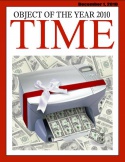
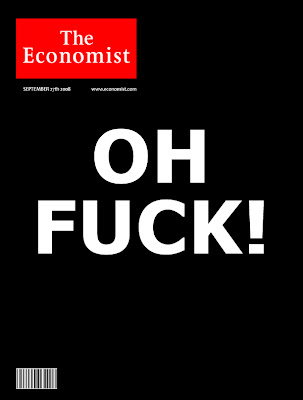
 Although the Irish government is funded until early 2011, a report questioned its ability to cut spending next year, casting doubt on future demand for government debt. "The bond situation in Ireland was worse than expected, so investors looked to move money into a safe haven, which is gold," said Michael Daly, gold specialist at PFGBest. "People have gotten to the point that they have lost confidence in fiat currencies and they are choosing gold as their currency of choice."…


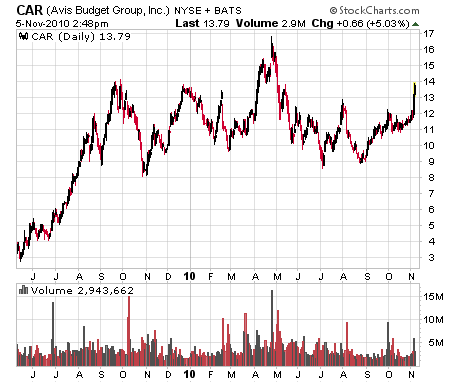
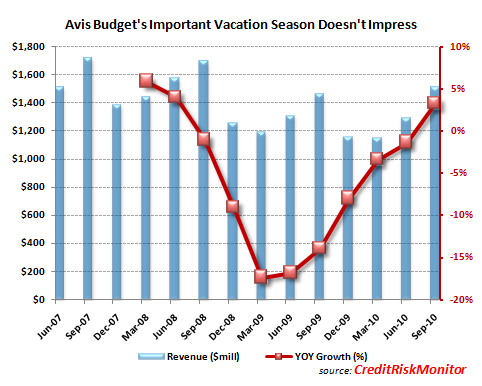 "The way I see it, Avis is approaching a peak in terms of its revenue and margins. If management keeps rebuilding its fleet size in order to capture additional revenue, the following two results would follow:
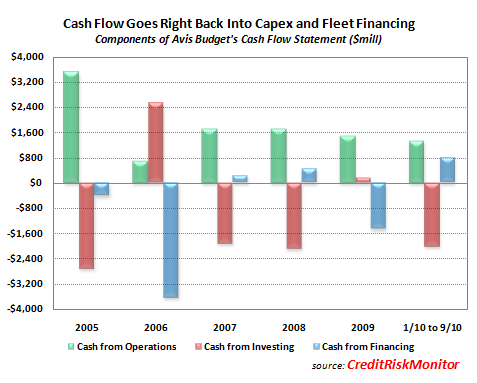 "Furthermore, if Avis Budget acquires Dollar Thrifty's fleet (if it manages to get FTC approval), this acquisition would consume even more cash in the near term in exchange for a very risky, uncertain payback. On the conference call, the CFO hinted that he's considering tapping the bond markets again in order to finance a potential DTG acquisition.
| You are subscribed to email updates from Gold World News Flash To stop receiving these emails, you may unsubscribe now. | Email delivery powered by Google |
| Google Inc., 20 West Kinzie, Chicago IL USA 60610 | |

No comments:
Post a Comment