


Gold World News Flash |

- Why Only Gold Can Rebalance the World Economy
- Crude Oil Digests Recent Gains Near 25-Month Highs, Gold Tries to Hold on Despite Dol
- Good morning Asia!
- On QE & Supply-A Dated Perspective
- Betting On An Infinite Bernanke Put? Not So Fast, Says Fed Governor Kevin Warsh
- World Bank President Robert Zoellick Calls For Return To "Old Money" Gold Standard
- SPX’s Running Correction, Gold’s Setup, Oil Explodes!
- An Economic Certainty: Gold to Rise as Fiat Currencies Fall
- Oligarchs Collude On Foreclosure Fraud
- A Bale in the Wind
- Currency Crisis Already Here
- A Busy Week!
- Tombstone of Sound Money
- Silver Prices Near $27, Surge 8.9% in Week and 58.8% in 2010
- Gene Arensberg analyzes the big banks in silver futures
- QE2 to Dilute the US Dollar and Boost Precious Metals
- Graham Summers’ Weekly Market Forecast (inflation mania)
- STRONG DOLLAR?
- Gold Market Update
- Silver Market Update
- In The News Today
- Jim?s Mailbox
- Jim's Mailbox
- US Banks in Silver Futures
- Mobile Cell Phone Radiation The Health Hazards
- Sean Corrigan Butchers The Chairman's Inversion Of Cause And Effect, Discusses The Fed's Brand New "Unbridled Imperial Arrogance"
- 100-Years of the Ever-Disintegrating Dollar
- Gold - Break Out or Fake Out?
- Gold Price Break Out or Fake Out?
- SPX's Running Correction, Gold Shines, Cup of Oil Breaks Out!
- Commodities on Steroids
- Gold Nudging $1400, $1600 Not Far Away, $2,600 is Not Impossible
- 5 Easy Steps to Saving the Economy
- Bank Holiday?
- Junior Miners: A Way to Play China's Diversification
- Detour and Osisko: Meet The Next Generation Of Mid-Tier Gold Miners
- Kinross Gold CEO Discusses Q3 2010 Results – Earnings Call Transcript
- Stock Market Extrreme Bullish Sentiment, Oil Breakout and Gold Rocket
- Bernanke Delivers QE2 Last Rites for Dollar as Worlds Reserve Currency
- The Charts Say It’s Time For Gold To Pullback
- Crude Oil and Silver Curious Market Actions Warrant CFTC Investigation
- Swimming In Crude Oil? Record High Inventory Will Continue To Build
- Uranium and Nuclear Power Investing Mega-trend For the Next Decade
- Platinum: Profiting From the Metal That's More Precious Than Gold
- More Opportunities in Silver Than Other Metals
- GoLD, BLiNG and PiRaTE THiNGS
- BaNZai7 GoLD, BLiNG and PiRaTE THiNGS
- Gold's 7 Parabolic C Waves - Projection $1600
- New Auction Site: ONE OVER SPOT
- Goldman Sachs' $1650 Gold Ceiling Sounds Reasonable (Much as I Hate to Agree With Them)
| Why Only Gold Can Rebalance the World Economy Posted: 07 Nov 2010 07:19 PM PST From the Wall Street Journal: $10.2 trillion: The amount of money advanced-nation governments will need to borrow in 2011Full Article HERE. The Article continues to address how this funding will likely be accomplished. But the article does not draw a dangerous conclusion. You know what that conclusion is? That each additional dollar of debt added to the global system is returning a disproportionately lower dollar of gdp. It's called the law of diminishing returns. Debt is no longer fueling the global economy at the amount it use to. And more importantly, it is growing along with interest payments on the back of a global economy that may not be able to continue to service it. Interesting chart from the Wall Street Journal article:  See Ireland above? That is severe austerity in action. My opinion is that an Irish IMF style bailout is unavoidable. Whereas Ireland was compared favorably to Greece's treatment, the results are still not in. Those that championed Ireland were speaking to soon, and now even the New York Times believes that Ireland may need an IMF bailout. They say that Ireland's debt is massive. It is. But you know what else? By introducing austerity during a debt deflation episode, Ireland was cut down at the knees which is hinderering its ability to pay its debts down. You can't manage a debt by withdrawing "blood" from the economy. The economy gets weak. It can no longer handle the public and private debt. And as for increasing total debt to GDP, the US is a prime example, from The Marketoracle:  Now let's put the above in perspective. The sharp increase in total debt to GDP that took place after 1930 was not just due to FDR's spending, but it was due to the equally sharp drop in GDP that occurred during the Great Depression. Thus, the GDP figure collapsed, making the debt, as a percentage, higher. But this is the most troubling chart, to me, from Nathan's Economic Edge: .jpg) I fear that although this chart shows the diminishing impact to GDP of each additional dollar of debt in the US Economy, the same holds true for just about every other advanced nation. And what I really fear is that much of the wealth we have enjoyed the past few decades was illusory. No one knows how much of the wealth was illusory, but with the unavoidable debt collapse that is underway, I'm afraid it's a lot. Now imagine this: what if every advanced nation balanced its budget next year, as the "Austeritists" would like to see? What if no one borrowed the 10.2 Trillion the advanced nations would need next year? Well, to describe it's impact to the global economy, I'll use a picture:  It would be catastrophic. I want to make something clear: I am no neo-Keynesian. But if an economic/monetary system collapse is unavoidable, why should any individual nation accelerate its impact if other nations are preferring to print to delay the inevitable? Why be the first to commit suicide? We have a dilemma here. My opinion is the only solution is a revaluation of gold and a return to a gold standard. And I mean a strong revaluation. The only way to balance the world economy, and pay down debts, is with a gold valuation in the tens of thousands of dollars an ounce. Right now, the debtor nations have a disproportionate amount of gold compared to the surplus nations. There are exceptions, but overall, that holds true. A revaluation of gold, with a gold monetary system of sorts, is the only way to rebalance world trade, and to start anew. There is one more option: Global War and the victor dictates to the rest of the world the repayment terms. Those are our only two choices. Monetarism and Keynesianism are merely choices that delay the inevitable - temporary bandages. The inevitable is a rebalancing of the world economic system, either we can control it through gold, or we will be forced to allow the unavoidable slip of the dogs of war to decide for us. 
|
| Crude Oil Digests Recent Gains Near 25-Month Highs, Gold Tries to Hold on Despite Dol Posted: 07 Nov 2010 04:50 PM PST courtesy of DailyFX.com November 07, 2010 10:51 PM This week in commodities looks to be dominated by the push-pull between the bullish momentum from last week and profit taking considerations after some huge gains. Commodities – Energy Crude Oil Digests Recent Gains Near 25-Month Highs Crude Oil (WTI) - $86.92 // $0.07 // 0.08% Commentary: Crude oil is close to unchanged as prices consolidate following five straight days of gains last week. After rising 6.7% last week, prices hit a new 25-month high in overnight trade, but so far crude has been unable to decisively break the May highs near $87.15, which is the top of a 13-month range. The U.S. nonfarm payrolls numbers we got last week were unequivocally bullish, and just add to an already bullish picture for the global economy. It is probable that crude oil continues higher in the coming weeks to levels over $90 as demand continues to increase. This coming week’s economic calendar looks to be extremely light...
|
| Posted: 07 Nov 2010 04:00 PM PST
|
| On QE & Supply-A Dated Perspective Posted: 07 Nov 2010 01:49 PM PST
In December of 1974 I was kid on an FX desk for a Swiss Bank in NYC. History gave me a lucky break. The dollar was in the crapper at the time. Too much debt and no plan to deal with it was the problem then. To stabilize the dollar and shore up a weak international balance sheet president Ford announced that Treasury would auction off gold. Because Switzerland was a big player in the gold biz my bank was involved. I ended up having a role in the process. Along the way I made some observations that have stuck with me. I look at QE and what lies before us and wonder if history might repeat itself. 

|
| Betting On An Infinite Bernanke Put? Not So Fast, Says Fed Governor Kevin Warsh Posted: 07 Nov 2010 01:37 PM PST
Last week's Op-Ed du semaine was Ben Bernanke's WaPo glowing endorsement of the Fed market put, whose sole purpose was to remind stocks, which ended up drooping on the day QE2 was announced, that Bernanke will stop at nothing to achieve his now primary goal (as loosely interpreted under the Fed's broad, and unsupervisable, mandate) - surging stock prices. This week, however, may likely belong to Fed Board Governor, and former member of the President's working group on capital markets, Kevin Warsh. In an Op-ed just released in the WSJ, Warsh, whose series of accomplishments include being the youngest ever appointee to the Fed BOD at 35, and being married to Jane Lauder of Estee Lauder fame, writes "Lower risk-free rates and higher equity prices—if sustained—could strengthen household and business balance sheets, and raise confidence in the strength of the economy. But if the recent weakness in the dollar, run-up in commodity prices, and other forward-looking indicators are sustained and passed along into final prices, the Fed's price stability objective might no longer be a compelling policy rationale. In such a case—even with the unemployment rate still high—we would have cause to consider the path of policy. This is truer still if inflation expectations increase materially." Translation: if gold continues to exhibit a beta > 1 w/r/t ES, then we are screwed, and all Fed policies will have failed. Elsewhere, look for most commodities to open limit up again tomorrow for the nth day in a row as inflation expectations continue to "increase materially" and more and more Fed members understand just what Warsh is saying. Much more in this surprisingly austere statement by one of the fresher voices at the Fed: On focusing on the "seller" in the critical economic equation which the Fed now believes is only defined by end consumer demand, a premise that was thoroughly destroyed earlier by Sean Corrigan:
On austerity: look for Krugman and fluffer DeLong to go apeshit over this:
On consumer deleveraging:
Stunningly insightful words for a Fed member. They beg the question, however, why was consensual restructuring not on the table when TARP was being proposed? As we have said so many times, the US banks would not have collapsed had their balance sheets been reorganized, even as their operations continued (totally separate from bank liabilities). Now it is too late, which is why a reversion will necessarily require a complete financial reset, and all those who are calling for a methodological process to go back to where we were in the days of late September 2008, when there still was hope, are naive idealists. In this context a return to a gold standard would not make sense at the current price of gold... It would, however make sense, were gold to be priced at around $5,000, or more. Yet the most stunning tidbit of clarity and lucidity by Warsh is the following:
The last sentence is the ultimate kicker as it captures precisely what will happen when the realization that things are slipping outside of the Fed's control spill over to Wall Street (and then to MainStreet). As Warsh says: "The Fed can lose its hard-earned credibility—and monetary policy can lose its considerable sway—if its policies overpromise or under deliver." As the bulk of the world, and the vast majority of the population already have no faith in the Fed, the acknowledgement that this process can capture everyone, including a ponzified Wall Street, whose fortunes are embedded in the proper functioning of the Fed, should be cause for huge alarm. Since if even the Fed realizes that the risk that the world will look beyond the fake price facade created by Bernanke exists, it is only a matter of time before the transition from hypothetical to real is completed. As Warsh's words resound with more members of the FOMC and Fed BOD, and especially as 3 new hawks join the voting ranks next year, not to mention Ron Paul's new role, all those betting that "EVERYTHING" will go up under QE2/3/4/etc, may want to promptly reevaluate their thesis...
|
| World Bank President Robert Zoellick Calls For Return To "Old Money" Gold Standard Posted: 07 Nov 2010 12:26 PM PST
One of the most serious condemnations of the race to the currency bottom to date comes not come from some peripheral media, but from the head of the World Bank itself, who in a just released Op-Ed in the Financial Times says that since the system of floating currencies established by the 1971 Bretton Woods II system, has broken down, it is time to look to a new international system of commerce, one which "should also consider employing gold as an international reference point of market expectations about inflation, deflation and future currency values." In other words, welcome back gold standard 2. Of course, this proposal will never attain more than a casual academic reference, as even a partial gold standard will immediately establish a lower bound on how much any given monetary authority can debase its (and, by retaliation, others') currencies. What, however, if very curious, is why this proposal is being floated precisely 3 short days after the Fed has launched its most ambitious attempt to reflate global asset prices and devalue fiat paper. And as is well-known, the IMF has also been quietly proposing a return to an ven more powerful version of the SDR.... Just what will take for the scales to tip, and for the dollar to remain a reserve currency just in retrospect. From the FT:
Of course, with a market primed to discount every inflationary possibility, it would not be surprising to see precious metals to continue their near parabolic move higher over the past few days. Silver is already flirting with the $27 in the spot market tonight. Full comments by Zoellick:
Little can be added here except for one recent popular quote, which explains why we eagerly welcome more and more high level individuals condemning the fiat system, and petitioning to a reversion the system that actually worked without creating quadrillions in imaginary debt-money (and the inevitable fiat devaluation that always follows): "What is the most resilient parasite? Bacteria? A virus? An intestinal worm? An idea. Resilient... highly contagious. Once an idea has taken hold of the brain it's almost impossible to eradicate. An idea that is fully formed - fully understood - that sticks; right in there somewhere."
|
| SPX’s Running Correction, Gold’s Setup, Oil Explodes! Posted: 07 Nov 2010 12:15 PM PST By Chris Vermeulen, TheGoldAndOilGuy The financial markets continue to climb the wall of worry on the back of more Fed Quantitative Easing. Those trying to pick a top in this choppy bull market may prove to be correct for a couple hours but over time the shorts continue to get clobbered. Quantitative easing was enough to turn gold back up and gave oil just enough of a nudge to breakout of its cup and handle pattern explained later. The past few weeks the number of emails I receive on a daily basis about what individuals should do about short positions they took on their own has growing quickly. Usually when my inbox starts to fill up with traders holding heavy losses trying to pick a top I know something big is about to happen and its not going to be in the favor of the herd (everyone shorting). In the past couple week there have been some great entry points for the broad market whether its to buy the SP500, Dow, NASDAQ or Russell 2K. I focus on trading with the trend and entering on extreme sentiment readings as shown in the chart below. Extreme Trend Trading AnalysisBelow are my main market sentiment indicators for helping to time short term tops and bottoms. That being said I don't pick short term tops in hopes to profit on the down side. Rather I wait for a extreme sentiment bottom to be put in place, then enter long with the up trend (Buy Low). Once there is a 1-2% surge in price and sentiment indicators are showing a short term top I like to pull a little money off the table to lock in some profits while still holding a core position (Sell High). This is exactly what I/subscribers have done over the last couple weeks. This is a simple yet highly effective strategy and works just as well in a down trend except I focus on shorting extreme sentiment bounces. Subscribers know what these indicators are as I cover them each week in my daily pre-market trading videos as we prepare for the day ahead.
SPX Running CorrectionSince early September the equities market has been on fire. In late September the market was extremely toppy looking and trading at key resistance levels from prior highs convincing a lot of traders to take a short position. But instead of a correction the market surged and has since continued to grind its way up week after week. This rising choppy price action can be seen two ways: The running consolidation happens when buyers are abundant picking up more shares on every little dip. Overall looking at the intraday price action you will see market shakeouts as it tries to buck traders out before it continues higher. This choppy looking market action if not read correctly looks extremely bearish to the novice trader and the fact the market is so overbought it easily convinces them to take short positions. This choppy action is just enough to wash the market of weak positions before starting another run up. All that said, both a blow off rising wedge and a running correction are very bullish patterns for a period of time. Again I cannot state it enough, trade with the trend and the key moving averages.
Gold Shines On The Daily ChartThe gold story is straight forward really… Trend is up, quantitative easing is back in action and that is helping to list gold and silver prices. Key moving averages have turned back up and gold closed at a new high which shows strength.
Golden RocketWith another round of quantitative easing just starting and gold making another new high last week there is a very good chance gold stocks will rocket higher in the coming 8 months. I have been following Millrock Resources Inc. because of the team involved with this company. A breakout to the upside here could post some exciting gains if you take a look at the chart and see where the majority of volume has traded over the years along with the bullish chart patterns (Cup & Handle/Rising Wedge) with strong confirming volume. From 84 cents to the $3.50 area there should not be many sellers other than traders slowing taking profits on the way up.
Crude Oil Breaks Out Of CupCrude oil has been dormant the past few weeks even though the US Dollar has plummeted. But last week's news on more QE was enough to send oil higher. The surge took oil prices straight to the 2010 highs as expected and blew past my first target of $86.00 per barrel. I figure it will consolidate here for a while until we see if the dollar bottomed last week or is just testing the breakdown level.
Weekend Trading Conclusion:In short, the market has played out exactly as we planned and all four of our positions are deep in the money. As we all know the market goes in waves in both price and for trade setups. The past couple weeks were great for getting into trades and now the market is running in our direction. It will take a few days for the market to stabilize (pullback or pause) before we could get anther round of trade setups. Keep position sizes small as the market remains overbought and a sharp correction could happen at any time. Until then, keep trading with the trend. Disclaimer: I own shares of SPY and MRO.V Get My Daily Pre-Market Trading Videos, Daily Updates & Trade Alerts Here: www.TheGoldAndOilGuy.comChris Vermeulen
|
| An Economic Certainty: Gold to Rise as Fiat Currencies Fall Posted: 07 Nov 2010 12:15 PM PST I was casually eating a burrito while having lunch at my desk, and was surprised to see some guy, writing on a "Feedback" blog of TheDailyBell.com, taking exception to David Morgan of The Morgan Report saying that "On a longer term basis silver and gold are going far higher in paper terms in any currency you wish to name." Idly, I was chewing a rather tasty bite of burrito and thinking to myself, "This is undoubtedly true!" as precious metals are nowadays priced in fiat currencies, and it has certainly been true for every paper currency that has ever, ever existed, including a list of 600-odd fiat currencies compiled by Addison Wiggin of Agora Financial in a research project a few years ago, undertaken to list all known fiat currencies, past and present, and their fate. He gave up, he says, after listing all those fiat currencies beginning with the letter A and half of those beginning with the letter B. This tiny section of the alphabet contained 600 fiat currencies, most all of which are gone, gone forever, disappeared long, ago, thus undoubtedly taking a lot of wealth with them. The total worthlessness of fiat currencies does not tell you about what is known in professional economics as The Great Wiping Out (TGWO), a scientific term first discovered, you may be surprised to know, when a new parent was caught with a baby that desperately needed changing, but was without any fresh diapers, and who decided to just "wipe out" the used-diaper in the host's bathroom enough to get home, with the disastrous result that there was stinking baby-poop all over everything, including my pants and my shoes, and I think I got some in my mouth but I don't want to think about it because it is so disgusting and I have been repressing even thinking about it until now, thanks for asking, damn it, and everything was ruined, and I never got promoted before I got fired, which I think was because of what happened in that poor bathroom, but my boss said no, but that I was being fired for being lazy and incompetent, but we both knew the truth. Nowadays, The Great Wiping Out (TGWO) is a scientific term of absolute precision used by professional economists like me, after being cleverly invented by me in the previous paragraph, to describe the horrific enormity of the total amount of wealth lost by an economy as a result of another fiat currency literally biting the dust due to its over-creation, and making a big, big stinking mess that has serious, catastrophic long-term ramifications. The beauty of TGWO is that it is easy to calculate, as it is the sum total of everything, as in "Every Freaking Thing (EFT)" leading to the phenomenon known as Total Freaking Loss (TFL). The amazing thing was that this reader laughably does not mention TGWO, perhaps because I just made it up, or perhaps because it has nothing to do with anything. Instead, he said, "Nobody, not Mr. Morgan, not you [the reader], nor I, nor economists [even 'Austrians'], central bankers, investment 'gurus', tea leaf readers etc. etc., can reliably, consistently predict future economic events!" At this, I jump to my feet and shout, with a tone of haughty victory in my voice, "Wrong, moron! I can predict some futures! Nothing is more reliably, more predictably, or more uniquely guaranteed than that silver and gold will go up in price over the long-term when priced in a fiat currency that is being created to excess!" In response to my compelling argument, you can almost hear the desperation in his voice as he weakly persists, "The unacknowledged fact is that the economic future is unknowable," which is so outrageous, in light of what I had just said, that I again jump up, this time onto my chair, adding a certain dramatic flair to my outburst, and again I scornfully say, "Wrong, dork-face! And the fact that every person owning gold and silver over the entire last decade made lots and lots of money as their prices went predictably up, while you, with your stupid investments in common equities and ridiculous belief in the stability of the buying power of a fiat currency, made nothing as the major indices have not gone up in 10 years! Nothing! "And," I mercilessly continued, "after adjusting your zero gains for the inflation in prices over the last decade, even using the mild inflation statistics of the Bureau of Labor Statistics, you have lost 27%! Hahaha! Moron!" Of course, if he had read anything about the Austrian business cycle theory by merely going to mises.org once or twice in his whole life, he would know that wild, constant expansions of a fiat currency always lead to ruinous inflation in prices, which leads to social instability and upheavals when people get tired of deprivation because their pitiful little bit of money cannot buy enough food or heat because their prices are rising so high and so quickly. And, then, if he had, he would know that Mr. Morgan was right, and that "On a longer term basis, silver and gold are going far higher in paper terms in any currency you wish to name." And it is that kind of certainty, especially in terms of the dollar that the Federal Reserve is destroying with more multi-trillion dollar creations of money, that makes buying gold, silver and oil such compelling investments so that you thank your lucky stars that "Whee! This investing stuff is easy!" The Mogambo Guru An Economic Certainty: Gold to Rise as Fiat Currencies Fall originally appeared in the Daily Reckoning. The Daily Reckoning, offers a uniquely refreshing, perspective on the global economy, investing, gold, stocks and today's markets. Its been called "the most entertaining read of the day." More articles from The Daily Reckoning….
|
| Oligarchs Collude On Foreclosure Fraud Posted: 07 Nov 2010 12:15 PM PST By Jeff Nielson, Bullion Bulls Canada A regular theme in my writing is that we have known for more than 200 years that oligopolies and monopolies are economic abominations, which must be prevented from coming into existence. Our bought-and-paid-for political leaders have ignored the two centuries of capitalist theory which warns us of these parasitic behemoths, and in doing so have unleashed their destructive forces on our economies. Nowhere is this failure more visible than in the U.S., with the inherently evil Wall Street Oligarchs having scammed the world for more trillions of dollars over the last decade than all "white-collar crime" in all the rest of the world, throughout history, combined. What has been the response of the U.S. government to this unprecedented crime-wave? It has handed the Oligarchs roughly $15 trillion in direct hand-outs, 0% "loans" (i.e. more hand-outs), infinite guarantees of banker "assets", and huge tax-breaks – in order to allow these Oligarchs to grow much bigger. The mechanism for Wall Street being able to blackmail the U.S. government for $15 trillion is already well-known: the argument (spawned by the Oligarchs themselves) that these predatory entities are "too big to fail". In fact, that argument has always been inherently nonsensical. Refusing to exterminate parasites because one is worried that they may "kill the host" (i.e. the U.S. economy) is an irrelevant concern when refusing to exterminate these parasites guarantees the death of the host. Specifically, with the U.S. economy already insolvent before the Oligarch blackmail began, bailing out the bankers has resulted in the U.S. more than tripling its "official" annual deficits, keeping in mind that the official deficits only record about half of the actual direct debt taken on by the federal government. More importantly, for less than 1/3 of what the government committed to the Oligarchs, the U.S. could have funded a brand-new, well-capitalized financial system unencumbered by the infinite $trillions of Wall Street's debts-and-bets. When the banksters' $1.5 quadrillion derivatives-bubble blows, that alone will instantly vaporize the puny, U.S. economy which is less than 1% as large as the nominal value of the derivatives market. However, there is an even more important reason why the Wall Street oligarchies have to be smashed into little pieces: the creation of a fatal precedent. The moment that the U.S. government limply capitulated to the banksters' claim that they were "too big to fail", this sent Wall Street a clear message: if all of the Oligarchs pile-into the same markets, or engage in the same risky/illegal behavior, the cowardly U.S. government has demonstrated that it will meekly submit to any/all future bankster blackmail – and protect rather than punish the Oligarchs. We now see this behavior manifesting itself in the most despicable manner possible: the "epidemic" of foreclosure-fraud committed by these same banks. Indeed, it is exactly this sort of economic "collusion" which two centuries of capitalist theorists had warned us would occur if we allowed these parasitic entities to come into existence. Of even greater interest, we can go back in time, and see this clear pattern of collusion going back ten years. MERS ("Mortgage Electronic Registration Systems") was created a decade ago, and one glance at all the bankers comprising its founders, officers, and board of directors instantly reveals that this was a "community" project on the part of the Oligarchs. And the 60 million mortgages stuffed into that database in just a decade obviously point to collusion rather than "coincidence". Understand that the bankers would have had their own lawyers advising them about MERS – and its highly questionable validity/legality. You don't make 60 million individual bets that the courts might uphold the legality of this Wall Street scheme. Rather, by doing this 60 million times you send a message to the U.S. government: "you can't stop us, because we're all doing it." Similarly, when the Oligarchs colluded to all simultaneously leverage their balance-sheets by (an utterly insane) average of 30:1 prior to their collapse in 2008, the message was "you have to bail us out, because we all engaged in this reckless gambling." More articles from Bullion Bulls Canada….
|
| Posted: 07 Nov 2010 12:14 PM PST Bullion Vault YOU CAN BLAME speculators, poor weather, global demand, or the Federal Reserve if you like, writes Adrian Ash at BullionVault. Either way, sugar's up, wheat's up, and cotton's new record highs are starting to hurt Chinese textile makers. Hence this bale in the wind. Clothing and footwear prices to UK consumers rose year-on-year in September for the first time since March 1992, hitting a two-year high in absolute terms. "The longevity of what appears to be a speculative bubble in cotton prices," will determine 2011 profits at UK clothes retailer Next, it warned this week, adding that rising costs will force it to raise shop prices. Over in China – which uses some 40% of the world's raw cotton output…and accounts for one-third of global textile exports – textile manufacturers face a "shortage of raw material", said industry group the China Federation of Logistics and Purchasing meantime, with last month's record-high prices "endangering" their survival. For our money here at BullionVault, we'll blame loose monetary policy…and not just from force of habit, either. The Pound Sterling, like the US Dollar, looks further than ever from paying a positive real rate of interest – leaving both savers and merchants to price scarce resources in ever-depreciating, ever-more generously supplied currencies. Short of an about-turn in monetary policy, the near-halving of UK clothing and footwear prices since 1989 appears finished. Shop – and invest – accordingly.
|
| Posted: 07 Nov 2010 12:14 PM PST Bullion Vault A currency crisis is under way. It's not a matter of if we'll have one or not. It's here… Porter's latest claim might be his "craziest" yet… In late 2006, Porter predicted GM would go bankrupt. He looked at GM's debts and determined there was no way the automaker could avoid bankruptcy. He received stacks of hate mail calling him crazy and anti-American. In 2007, Porter came out with another "crazy" prediction. He told a packed investment conference that government agencies Fannie Mae and Freddie Mac would go bankrupt. Porter claimed a small decrease in home prices could crush the leveraged home lenders.
You know how the stories of Fannie, Freddie, and GM played out. All three were disasters. All three went bankrupt. I respect Porter for doing his research and not being afraid to take an unpopular stance…no matter what people will say about it. Which is why it's worth noting Porter's latest claim. He says the US isn't just headed for a currency crisis. We're in one right now. In a recent conference call with subscribers of Off the Record, Porter said this:
Porter goes on to note how these debts are crushing the value of the Dollar…
Just this week, silver skyrocketed to a 30-year high… and gold is now closing in on $1400 an ounce. The Dollar is at its lowest low in more than a year. This is the market telling us that "crazy" is here. Despite these big price rises, Porter says it's not too late to protect your wealth with gold and silver, if you don't own any already.
|
| Posted: 07 Nov 2010 12:14 PM PST Bullion Vault AS WE WRITE, late Friday afternoon here in South Africa on 5 Nov. 2010, the Gold Price is making an assault on the $1400 level having been $1332 on Wednesday, the day of the Fed announcement, writes Julian Phillips of the GoldForecaster. In the days ahead of that announcement the Dollar had been wavering between $1.38 and $1.40 against the Euro. After the announcement the US Dollar fell quickly down to $1.42 per Euro. Against the Pound Sterling, the Yen, the Swiss Franc and most other currencies, the Dollar has weakened too. But then the Dollar recovered and is sitting at $1.41. Recently gold has again moved in the opposite direction to the Dollar, until it ran up in the Euro vigorously, but has this now changed again? Can there be more to the rise in gold than just the fall in the Dollar? We believe so, because far more than QE2 happened this week. In the run-up to and after the announcements of the results of the US mid-term elections the Gold Price barely moved. On the surface we can therefore conclude that the mid-term US elections did not affect the Gold Price. But whether the Republicans or the Democrats won is not an issue for the gold market. What is an issue for precious metals is whether the US government direct the monetary area sufficiently to invigorate the US economy and – should they wish to do so – strengthen the US Dollar? On the contrary. We found the mid-term result pointed to an emasculation of the government's power on the monetary front. Far too much of a burden has fallen on the shoulders of the Federal Reserve, an institution with only limited powers to resuscitate the US economy. Government should shoulder that role, supported in this by the Fed. Government does not appear to now have the capacity to resolve the economic problems of the US This tells us that the enormous steps needed to be taken to strengthen the US Dollar are not going to be taken, so a fall in the US Dollar is widely expected. The difference for the Dollar now is that its fall can be precipitous and not simply a repeat of the fall in the last two years. Control over the Dollar's value for the next two years appears to have slipped from the grasp of the US monetary authorities. This is extremely positive for the Gold Price. Ahead of the Fed's QE2 announcement, a 'bear raid' on gold was mounted that had the Gold Price drop from $1358 down to $1332 in a steep dive that shook the weak holders and triggered more than a few 'stop loss' positions. Ordinarily, this would have been enough to deter investors, but it happened when the market was seeing thin volumes of trade, hence the size of the fall. On the announcement, these bears received a very sharp, silver-coated golden horn in the sensitive parts. The Gold Price rose like a space shuttle, breaking up through the fifties and sixties and on through resistance at $1370. Right now we are tapping $1400 per ounce. Undoubtedly the activity of buyers looking for physical Gold Bullion from most gold markets in the world was the primary driver. But add to this the scramble of short covering in New York's derivative Comex Gold Futures market that is also going on. The short covering comes not only from those who went short ahead of the announcement, but from longer-term shorts, realizing that the break-out to new levels is well founded on fundamental factors. The announcement from the Fed re-established those fundamentals. However, a greater and greater proportion of Gold Investment buying globally is due to a growing fear of the global currency system itself. What are the ramifications of the Fed's announcement? The entire financial world had been waiting for weeks for the Fed to make this announcement. It was important because it directly affects the value of the Dollar inside and outside the US While the US does not intend to cause a devaluation that will enhance the international competitiveness of the US, that is what is happening. That is how the rest of the world will see it. They will take action in their own interests to protect themselves. Foreign competitors have to act, or see themselves suffer as the US has been doing for some time now. This will have three primary effects on the global economy:
Buy Gold at the lowest prices, store it in the safest locations – start with this free gram at BullionVault now…
|
| Posted: 07 Nov 2010 12:14 PM PST Bullion Vault Monetization on this scale will mean that Tim Geithner (or whoever may end up replacing him in the aftermath of the mid-term massacre) can look forward to sending the entire bill for the Federal deficit straight to the Marriner Eccles building and not having to fret about finding a real investor to cover any part of that monstrous shortfall. Nor will he have to worry any further about being overly polite to those hectoring foreign central bankers to whom he could otherwise have expected to flog another $400 billion or so, over the same period. Now, backed by the might of the domestic printing press, he can affect a posture of unbridled imperial arrogance in his dealings with his fractious creditors, secure in the knowledge that he can henceforth dispense with their services as committed takers of Uncle Sam's prolific IOUs. But never fear, as Chairman Bernanke rushed straight from the inner sanctum to assure us via a Washington Post op-ed, none of this carries any danger of sparking 'significant' increases in inflation – a weasel-worded categorization which, one presumes, is to be set against the judiciously-measured increases nakedly intended as part of his contrivance to lower real interest rates. Even more brazenly, Blackhawk Ben used his allotted column inches to enshrine the infamous 'Greenspan Put' explicitly into official policy by writing that:
Underpinning this apotheosis of moral hazard (you know, the thing that got us into this mess in the first place), Bernanke further emphasized the Fed's determination to keep Wall Street in bonuses by avowing that:
The madness has indeed progressed greatly from a passive observance of the false precepts of the Jackson Hole doctrine – whereby the FRB should play the role of Three Wise Monkeys in the face of a burgeoning asset bubble – to more of a Jackson Hose approach, whereby it judges policy to be successful only when it has created just such a bubble in the course of its own deliberate actions! So the cycle of error is perpetuated, with cause and effect both being confounded and wrongly assumed to form an easily reversible reaction. The fact that rising real asset prices are a result of increasing prosperity no more guarantees that their prior, artificial inflation will subsequently augment that same prosperity than does the act of spraying your driver with champagne while he still sits on the grid make him a certainty for a podium place at the race's conclusion. As Sir Dudley North wrote, as long ago as 1691, in his 'Discourse upon Trade':
Not that we expect such tested wisdom to carry much weight in the rarefied, DSGE Councils of the Mighty today. Consequently, not the least of Bernanke's many mistakes in implementing this shallow conjuror's trick is the conflation of a higher nominal price for some claims to goods with that greater command over valuable, real resources to which the claims pertain which is actually the only true measure of 'wealth'. Simply to pump in money in order to swell the price of a parcel of farmland is not to generate any greater cultivable acreage, nor to boost the yield of the land already in existence and, hence, is not to enhance its ability to better nourish its owners or their customers. If that were only the case, we could end Man's long battle with poverty at a stroke, simply by pencilling in a few extra, terminal zeros on the denominations of all our banknotes – a palpable fantasy by which ex-Bank of England MPC member Willem Buiter, for one, seems to be deliriously and incurably gripped. Assets, after all, are claims upon actual or potential streams of an income which must never be judged solely in pecuniary terms but rather on the basis of what it contributes to the satisfaction of material human wants. If that stream of income is unaltered, the price of the asset can only make a difference to the owner's standard of living if parts of it are broken off and sold to another, so realising an otherwise entirely notional increase. Even then, the asset-seller's immediate material gain must come at the cost of the buyer's deferred benefit, unless this latter avoids such a temporary sacrifice by borrowing some newly-created, 'fictional capital' with which to make the purchase. Should he do this, however, it must be seen that he is only helping transfer the inflation from one involving the asset which he buys to one concerning the real goods which his seller wishes to acquire in its place. The seller may not realise it, under the confusion of money illusion, but what he has, in fact consumed is some of his hard-won real capital. The buyer, too, seduced by the allures of a bull market, is helping to drive down the real translatable value of his own purchase in the same measure as he is pushing up its nominal cost. Though this process may take some time to come to fruition – and though winners and losers may not be so easily disentangled, especially where the process is protracted and where titles changes hands many times at escalating prices – herein lies the essential truth of the Austrian contention that while we may be forced to take our losses in the Bust, we actually make them in the preceding Boom. Unchallenged here goes the usual canard that in some strange way, 'wealth' is about destruction, not generation; i.e., that what the world is lacking is an orgy of consumption of the most final, exhaustive kind and so, if we can once inveigle or coerce people into burning, rather than building, things by fooling them as to how well off they are, economic 'recovery' will at last be assured. Perhaps we should just impose candlelight and thatched roofs, ban fire insurance, and outlaw smoke alarms by way of a 'stimulus package'. What Bernanke and the other Nomenklatura fail to appreciate is that what must be facilitated is the selling, not the buying, of valued goods and services at a price others are willing to pay: that this is the key to wealth creation for, by this means, the vendor furnishes himself with the wherewithal to buy any of the myriad non-competing goods available to him through the efforts of all his possible counterparties while allowing him to secure whatever inputs are necessary for him to repeat this mutually enriching process in the future. Sometimes this, perforce, must include selling at a lower price than before – a necessity utterly abjured by the mainstream as comprising a maelstrom of 'deflation', a condition erroneously presumed to be coterminous with a self-aggravating depression. The truth is that no amount of a macromancy aimed at shifting the monetary valuations of asset holdings can have more than a passing influence on such a continually evolving, but also continually renewing, dynamic of want-satisfactions – of the earning and enjoyment of an income. One further unanswered question is whether the FRB moves can increase the value of US assets in anything other than the chronically depreciating Dollars to which they are giving rise. If not, we are only adding another inflationary veil of illusion over a loss of, not a gain in, the value of financial capital. The undeniable fact that record low yields have done nothing to move T-Note futures beyond a trade-weighted-index-adjusted, 28-year mean, while the TWI-adjusted S&P500 labours where it was back in the mid-90s, suggests this is no trivial challenge to overcome. We might also ask whether higher asset prices will help the poor, huddled masses who have so few savings to begin with or whether lowered mortgage rates can do much to help those suffering a deficit of collateral value (i.e., negative equity) against which to refinance. Yes, it may allow some fixed-value debts to be discharged through the surrender of such newly-inflated claims as one may hold, but this is nothing which a direct renegotiation between borrow and lender could not achieve with far less risk of further distorting the overall capital structure of the economy. If we are to place any credence in the various surveys of owners and executives at the nation's businesses, large and small, they are sending a clear message that it is not so much the availability or the pricing of credit (or, by extension, of equity) funding that is holding them back, as much as their pervading sense of uncertainty as to what stunt their rulers and regulators will pull next and what the effect of such manoeuvres will be on them and their customers and so on their own chances of turning a profit on the capital they put at risk. The fact that the Fed has made its programme so blatantly open-ended and expediency-driven has already triggered talk of an eventual QEIII and, moreover, has so far dispelled fears that the market impact would be one of ennui shading into disappointment, replacing this with what Mohamed El-Erian called "turbo-charging the direct policy impact before those purchases have even been specified." But while fine and dandy for the wealth shufflers on Wall St., for the wealth creators on Main, this could be counterproductive for the very reason alluded to in the preceding paragraph: viz., that in an economy suffering from that widespread disco-ordination of means and ends, prices and costs, which has been engendered in the Boom and then made dispiritingly concrete by the application of so many ill-advised anti-recession measures taken in its aftermath, only greater disco-ordination lies in store – not least through the pestilential effects of wild foreign exchange swings which are being disseminated across the global trading network like a Genoese hold full of black rats, or the surge in input costs which the incipient Flucht in die Sachwerte and out of the Greenback is everywhere now provoking. Whatever our deeper misgivings, by its own rather perverted lights, the announcement has, however, enjoyed an undeniable initial success…
In defiance of the injunction, 'de mortuis nil nisi bonum', we can only recall the words of then-retired BOE Governor Eddie George to the Treasury Select Committee in March of 2007 – four years after he had handed the baton seamlessly onto his willing deputy Mervyn King and just as the first cracks were appearing in the precarious CDO-sub-prime-LBO superstructure he and Alan Greenspan had helped to put in place after the Tech Bubble in which they were also instrumental:
If you listen closely, you can hear the stonemasons, already chiselling out Ben Bernanke's legacy on the tombstone of sound money – and possibly on the mausoleum of Dollar hegemony. It will be left to all of us to mourn the inheritance he has bequeathed us in his lunatic's charter of 'quantitative easing' and Keynesianism à outrance. What is left to be said? Markets are pricing on a rush from Dollars first and on a response to specifics second. The ballistic nature of what this has wrought can be seen in the fact that even the Silver-to-Gold Price ratio has risen at an annualised rate of 223% since Bernanke lit the blue touchpaper under the rocket of Risk in mid-August. Since the end of June, Agriculture is up an annualized 187%, a climb exactly matched by Base Metals and lagged (147% annualized) by a still impressive Energy sub-component since his incendiary speech. For their part, no longer the star turn, but still impressive, Precious Metals have surged at a 110% rate so far in the second-half of 2010, with commodity equities (as per the TR/Jeffries index) topping them with gains at a 140% pace. Obviously, these and many other markets are in a bubble – although its highly generalized nature tells us that this is the result not of any segmented outbreak of insanity as in 2008′s oil market, but rather of an anti-bubble in the world's main medium of exchange, the USD – an anti-bubble being knowingly and intentionally fomented by those charged with its stewardship. In such a world, it is difficult to know how far beyond the bounds of rationality things can run, particularly when far too many professional investors have been late to the party and when there may be a reckoning orders of magnitude greater of those who are desperate to restore their depleted fortunes by gambling that the blind Tyche can be cajoled by the central bank into favouring them, just this one last time, please. The only thing of which we can be certain is that the malign, unintended consequences of this latest assault on property rights and market pricing will far outweigh any purported good its perpetrators can ever suppose it will achieve.
|
| Silver Prices Near $27, Surge 8.9% in Week and 58.8% in 2010 Posted: 07 Nov 2010 12:13 PM PST U.S. silver prices surged 8.9 percent this week and settled at a fresh 30-year high for a second straight Friday.
|
| Gene Arensberg analyzes the big banks in silver futures Posted: 07 Nov 2010 12:12 PM PST 4:36p ET Sunday, November 7, 2010 Dear Friend of GATA and Gold (and Silver): Gene Arensberg of the Got Gold Report today published a detailed analysis of the U.S. silver futures market and concluded that the two biggest commercial traders are so big that they indeed are likely manipulating the market at strategic moments, even as he doubts that they are "naked short" silver. Rather, Arensberg thinks the commercial traders that are short in the U.S. futures market are hedged in some way, with "offsetting corresponding net long derivatives in other markets or inventory, or future production/cash flows, or hedging more complex financial derivatives, or perhaps hedging something we have not thought of." Of course hedging with derivatives might be a form a naked shorting, depending on the derivatives and their issuer. Maybe all this will be illuminated by the recent class-action lawsuits filed in U.S. District Court for the Southern District of New York accusing J.P. Morgan Chase and HSBC of manipulating the silver market. Arensberg's analysis is titled "U.S. Banks in Silver Futures" and you can find it at the Got Gold Report's Internet site here: http://www.gotgoldreport.com/2010/11/us-banks-in-silver-futures.html CHRIS POWELL, Secretary/Treasurer * * * Help keep GATA going GATA is a civil rights and educational organization based in the United States and tax-exempt under the U.S. Internal Revenue Code. Its e-mail dispatches are free, and you can subscribe at: To contribute to GATA, please visit:
|
| QE2 to Dilute the US Dollar and Boost Precious Metals Posted: 07 Nov 2010 12:07 PM PST Overall the world of paper money appears to have little going for it and the world of hard assets appears to be the place to be. The choice of just which hard asset offers the best protection is for you to make, we have made this choice ... Read More...
|
| Graham Summers’ Weekly Market Forecast (inflation mania) Posted: 07 Nov 2010 11:28 AM PST
We are officially in an inflation trade melt-up.
Everything that is an inflation hedge has exploded since late August. Gold is up 15%. Silver is up 48% (courtesy of the manipulators finally getting taken to court). Agricultural commodities are up 25%. Oil is up 20%.
Against this backdrop, stocks’ 17% rally becomes slightly less insane. That’s right, stocks are up 17% since late August. What happened in late August?
The Fed announced QE lite and promised QE 2 was coming. Almost to the day of this announcement, the US Dollar rolled over and dropped some 8% (it’s down nearly 15% since June).
In plain terms, we are entering an environment in which a US Dollar collapse has fueled inflation trade mania. By launching additional QE measures at a time other central banks have renounced additional easing measures (the ECB and Bank of England) or are actively raising interest rates (China and Australia), Fed Chairman Ben Bernanke has made it clear he is willing to trash the US currency.
Consequently, money is pulling out of Dollars and flowing into hard assets and other inflation hedges. The below chart plots the US Dollar (green) against Gold (yellow), stocks (black), and commodities in general (blue). This picture, details in stark terms the overall trend for markets today.
The most concerning thing is that there doesn’t appear to be any sign of this stopping. Emerging markets, which have lead the S&P 500 ever since the Financial Crisis began (during this recent rally, they bottomed in May while the S&P 500 didn’t bottom until July) are not only back to pre-Crisis levels but are a mere 8% off from their 2007 highs. It’s almost as though 2008 never happened.
Part of this is better fundamentals, but a lot of it is money flowing out of US equities and piling abroad. This is causing many emerging markets like China and Brazil to impose capital controls and other efforts meant to slow the inflows of funds.
Will this trend continue? It’s very hard to tell. I cannot believe China is going to let Bernanke get away with QE 2. However, until China issues a response in the form of policy, we’ll have to go by the US Dollar for signs of what’s to come.
The below chart shows the greenback’s multi-year uptrend line (black) and support lines (green).
As you can see, the US Dollar is literally sitting on its multi-year trend-line. If we break below this, then we have support at 74. If we break below that, we have FINAL support at 72. Below that… well, we’ve NEVER been below that before. So PRAY we don’t go there now.
Indeed, if QE 2 succeeds in devaluing the Dollar below 72, then this triggers a MASSIVE Head & Shoulders pattern that forecasts a 50% devaluation in the greenback over the coming years.
If this neckline is violated, we’re in uncharted waters for the greenback and the US is in for a very, VERY rough time (think Argentina or even Weimar Germany). As I write the US Dollar is at 76. Going from 76 to 71 won’t take much so keep your eyes here for signs of what’s to come.
In the meantime, the inflation trades dominates everything. So the best place for money is in commodities, especially precious metals (make sure it’s bullion, NOT etfs) and agricultural commodities, as well as emerging markets.
On that note, if you have not already taken steps to prepare yourself for the inflationary storm that is coming, PLEASE DO SO NOW.
Good Investing!
Graham Summers
PS. If you’re worried about the future of the stock market and have yet to take steps to prepare for the Second Round of the Financial Crisis… I highly suggest you download my FREE Special Report specifying exactly how to prepare for what’s to come.
I call it The Financial Crisis “Round Two” Survival Kit. And its 17 pages contain a wealth of information about portfolio protection, which investments to own and how to take out Catastrophe Insurance on the stock market (this “insurance” paid out triple digit gains in the Autumn of 2008).
Again, this is all 100% FREE. To pick up your copy today, got to http://www.gainspainscapital.com and click on FREE REPORTS.
|
| Posted: 07 Nov 2010 11:21 AM PST Since September 1985 the dollar has declined by 53% versus a basket of other major currencies. Inflation,according to the CPI, has risen by 102% since September 1985. The price of gold has gone up 450% since September 1985. The Federal Reserve sure has done a bang up job.
|
| Posted: 07 Nov 2010 08:49 AM PST The Fed crossed the Rubicon last week with its announcement of another massive tranche of QE, known as QE2. It is thus clear that what is now known as QE1, which was portrayed at the time as "one off rescue of the financial system" ... Read More...
|
| Posted: 07 Nov 2010 08:47 AM PST Silver's corrective phase turned out to be very short-lived - it only lasted a week before it turned higher again, and then blasted out to new highs on the inflation friendly news from the Fed last week. Read More...
|
| Posted: 07 Nov 2010 07:42 AM PST View the original post at jsmineset.com... November 07, 2010 12:24 PM Jim Sinclair's Commentary There is a real possibility that this article is spot on. This would give us a gold price of $1650 in a heartbeat. Citi: Central Banks Are Going To Start Dumping Dollars In The Coming Weeks Joe Weisenthal | Nov. 5, 2010, 6:33 AM QE2 is likely to serve as a reminder to central bank reserve managers that they still have way too many dollars, and that they need to diversify away. That’s the argument from Citi’s Steven Englander: With FOMC out of the way and largely meeting expectations, investors are looking for what comes next. We think that reserve managers will contribute to the next stage of USD weakness as QE2 confirms their worst fears about the Fed's intentions and the quality of their reserves portfolios. To exacerbate their concerns, Global reserves have been growing very rapidly, on a headline basis about 11% over the last year and now are close to USD9tr...
|
| Posted: 07 Nov 2010 07:42 AM PST View the original post at jsmineset.com... November 07, 2010 12:22 PM Dear Jim, What a few years ago was considered impossible, is now in the mainstream. Truth is at first ridiculed, then considered, then obvious. We are morphing from stage 2 to 3 right now. CIGA Yahn Investments Dear CIGA Y, The only weak point in this article is that this situation is so close you can touch it. Regards, Jim The age of the dollar is drawing to a close Currency competition is the only way to fix the world economy, says Jeremy Warner. By Jeremy Warner Published: 7:04AM GMT 05 Nov 2010 Right from the start of the financial crisis, it was apparent that one of its biggest long-term casualties would be the mighty dollar, and with it, very possibly, American economic hegemony. The process would take time – possibly a decade or more – but the starting gun had been fired. At next week’s meeting in Seoul of the G20’s leaders, there will be no last rites – this h...
|
| Posted: 07 Nov 2010 07:22 AM PST Dear Jim, What a few years ago was considered impossible, is now in the mainstream. Truth is at first ridiculed, then considered, then obvious. We are morphing from stage 2 to 3 right now. CIGA Yahn Investments Dear CIGA Y, The only weak point in this article is that this situation is so close you can touch it. Regards, The age of the dollar is drawing to a close Right from the start of the financial crisis, it was apparent that one of its biggest long-term casualties would be the mighty dollar, and with it, very possibly, American economic hegemony. The process would take time – possibly a decade or more – but the starting gun had been fired. At next week's meeting in Seoul of the G20's leaders, there will be no last rites – this hopelessly unwieldy exercise in global government wouldn't recognise a corpse if stood before it in a coffin – but it seems clear that this tragedy is already approaching its denouement. To understand why, you have to go back to the origins of the credit crunch, which lay in the giant trade and capital imbalances that have long ruled the world economy. Over the past 20 years, the globe has become divided in highly dangerous ways into surplus and deficit nations: those that produced a surplus of goods and savings, and those that borrowed the savings to buy the goods.
Dear Eric, $1650 is definitely still in play with major resistance at $1400 and $1444. Get them down soon (on or before the first week of December) and January 14th 2011 called many years ago is still also in play. Regardless of all that, it is only is a game since gold will trade at $1650 and higher. Regards, Gold and Silver Approaching Critical Zones A close and test as support of upper trading channel resistance will mark the onset of another plateau move (higher order function acceleration) for gold and silver. Upper channel resistance for gold and silver sit around $1,400 and 30, respectively. Gold London PM Fixed: Silver London PM Fixed: The "normal" money flow footprint, shorting strength and buying weakness to control price, has short-circuited once again in 2010. Connected money is uncharacteristically buying rather than selling strength (to contain the advance). These flows, at first limited to the silver market, have spilled over into the gold market. These unusual money flows are illustrated in the follow charts: Gold London P.M Fixed and the Commercial Traders COT Futures and Options Stochastic Weighted Average of Net Long As A % of Open Interest: Silver London P.M Fixed and the Commercial Traders COT Futures and Options Stochastic Weighted Average of Net Long As A % of Open Interest: Ignore the flapping lips and spoon-feed analysis. Observe the markets and follow the money.
Eric, Be happy that we have food at any price. Currency induced cost push inflation has a direct and immediate impact on the mechanics of product distribution. Such an event will last no less than 90 days. Regards, Food Sellers Grit Teeth, Raise Prices The cost of nearly everything we consume (food and energy) are soaring. Yet, despite this reality, the headlines and numerous experts continue to cite the fear of deflation and relatively tame year-over-year consumer price index changes as means to justify further quantitative easing (currency devaluation). Since the market is always right, it's easy to figure who's got it wrong. Expect the food sellers, in other words food consumers (us!), to continue gritting their teeth as long as spot commodity prices are surging to new highs. Spot Commodity Prices: CRB Spot Index (1947 – Present); Soon the experts will be out in force recommending reallocation towards "hot" commodities despite the direction of the secular trends illustrated below. Spot Commodity Price Index (CRBSPOT) to Gold Ratio: West Texas Intermediate Crude Oil to Gold Ratio (Oil/Gold): An inflationary tide is beginning to ripple through America's supermarkets and restaurants, threatening to end the tamest year of food pricing in nearly two decades. Prices of staples including milk, beef, coffee, cocoa and sugar have risen sharply in recent months. And food makers and retailers including McDonald's Corp., Kellogg Co. and Kroger Co. have begun to signal that they'll try to make consumers shoulder more of the higher costs for ingredients. Source: online.wsj.com
|
| Posted: 07 Nov 2010 06:49 AM PST Some people believe there are sinister forces at work that have kept the price of silver suppressed for years. We believe that such notions, while sometimes well delivered and compelling, are just not borne out by the trading data. As long-time readers know, we also don't believe the price of silver is dependent on the "defeat" of those "bad guys," real or imagined. The price of silver is being driven by something else entirely. … However, we do still find the data useful and interesting, even if aggravating from time to time. The graph just below shows the positioning of probably two U.S. banks in silver futures as of the most recent Bank Participation in Futures Report (BPR) compiled by the Commodities Futures Trading Commission (CFTC) as reported by the U.S. banks. It won't come as a shock that the two banks in the BPR, likely JP Morgan Chase and HSBC (although they are not identified by name by the CFTC, which hides the identities of traders), are singled out by some analysts (and at least three new lawsuits alleging silver manipulation) as heading up the "forces of evil" in the silver market. ...
|
| Mobile Cell Phone Radiation The Health Hazards Posted: 07 Nov 2010 06:03 AM PST It is now inconceivable that our world could function without the 5 billion cell phones used globally. The new book by Devra Davis “Disconnect” deserves your attention. Indeed, if you use a cell phone a lot it should be mandatory reading. It also seems inconceivable that the trillion dollar cell phone industry and governments worldwide could have pushed this technology without ever having solid research results proving the safety of cell phones. If true that would be deadly frightening. But that is exactly the reality.
|
| Posted: 07 Nov 2010 05:12 AM PST
Diapason's Sean Corrigan is out in full force for the second week in a row, this time looking at the consequences of a QE2, in which as he explains, the very premise of cause and effect has been inverted by the Federal Reserve, and which will result in even more dire consequences bequeathed by the launch of the HFRBS QE2. Yet in the last ditch effort to preserve a crumbling system, Bernanke is willing to sacrifice it all: the middle class, the dollar, and now logic. Here is how... and why.
Yet, where Corrigan's ire really shines through (and we don't blame him as we had the same reaction), is in his reponse to the Chairman's soon to be legendary WaPo Op-Ed, which basically confirmed the Bernanke Put will never go away, and only those who believe the Fed may be wrong (which it, of course, is and laughably so - when has central planning ever worked?), should not be buying stocks.
And here we come to the core of the argument: that in his pursuit of reflation at all costs, Bernanke has inextricably inverted cause and effect, and that the whole premise behind wealth effect as generated on artificial basis is flawed at its core, which in turn means that the logic behind QE2, as defined by Bernanke, does not exist!
Continuing to debunk the very premise underlying QE2, Corrigan goes back over 300 years to a text by Dudley North, which our most revered chairman-cum-historian has handily ignored in his deliberations to flood the world with worthless pieces of paper:
And here is where Krugman, who ridicules Jim Rogers' understanding of assets and liabilities, should pay particularly close attention, as it is none other than his own master, Ben Shalom, who appears to have a fundamental misunderstanding of how assets are appraised, and that their true worth is not based on a ever more dilutable piece of monetary equivalency, but something much more intrinsic.
Not content with destroying the fundamental fallacy behind monetary intervention, Corrigan then goes on to ridicule the primal flaw behind that other core precept of Keynesian economics: fiscal stimulus.
And the final nail that obliterates the any last trace of credibility behind (the lack of) Bernanke's logic:
Having destroyed the premise behind the QE2 argument, Corrigan then goes on to imply that the effects of this action are also broadly misunderstood, and that there isn't really any true appreciate in assets values in non-dollar denominated terms. The underlined text is what everyone who is participating in this "bull rally" is so blatantly missing.
Another side effect of QE2 is what we discussed will soon become evident to the poorest segment of society, who will soo see their food and energy prices skyrocket, despite what the core CPI is telling them about prevalent deflation.
One group that is sure not to complain about any aspect of QE2 is Wall Street, as the past 48 hours of non-stop punditry on CNBC demonstrates:
The final word belongs not to Corrigan, but to BOE Governor Eddie George who 3 years ago stated why QEX is irrelevant and doomed to failure:
The entire world has now daringly embarked on the most doomed from the beginning voyage of the HFRBS QE. The inevitable collision with an iceberg of reality and common sense is inevitable. In the meantime as nothing can be really done, is to sit back and listen to the wonderful music and watch as the deck chairs are rearranged ever faster by those who delude themselves there are lifeboats available for them somewhere on deck.
(credit: WilliamBanzai7)
|
| 100-Years of the Ever-Disintegrating Dollar Posted: 07 Nov 2010 05:00 AM PST Ben Bernanke, Alan Greenspan, a Goldman Sachs Managing Director – a fitting invitee — and others descended upon Jekyll Island, Georgia, for the weekend to celebrate the Fed's founding. The immensely powerful and secretive institution, which has the exclusive reins on the US money supply, is coincidentally recognizing the occasion with another round of quantitative easing to the tune of $600 billion. Is the election going to help change things? Well… you can form your own opinion on that as you take a look at the clip below, which came to our attention via a Daily Bail post on the Fed celebrating a century of domination. 100-Years of the Ever-Disintegrating Dollar originally appeared in the Daily Reckoning. The Daily Reckoning, offers a uniquely refreshing, perspective on the global economy, investing, gold, stocks and today's markets. Its been called "the most entertaining read of the day."
|
| Posted: 07 Nov 2010 04:27 AM PST This week in a dramatic effort to rev up a "disappointingly slow" economic recovery, the Fed said it will buy $600 billion of U.S. government bonds over the next eight months to drive down interest rates and encourage more borrowing and growth. Read More...
|
| Gold Price Break Out or Fake Out? Posted: 07 Nov 2010 04:25 AM PST In a now-infamous 2002 speech, Ben Bernanke said: (…) The U.S. government has a technology, called a printing press (or, today, its electronic equivalent), that allows it to produce as many U.S. dollars as it wishes at essentially no cost… Under a paper-money system, a determined government can always generate higher spending and hence positive inflation…
|
| SPX's Running Correction, Gold Shines, Cup of Oil Breaks Out! Posted: 07 Nov 2010 04:24 AM PST The financial markets continue to climb the wall of worry on the back of more Fed Quantitative Easing. Those trying to pick a top in this choppy bull market may prove to be correct for a couple hours but over time the shorts continue to get ... Read More...
|
| Posted: 07 Nov 2010 04:22 AM PST Gold remains in a strong uptrend ... Buying power is rising again after a small dip ... MACD is heading towards previous top levels ... STO is at very high levels, but can stay here for a while ... Read More...
|
| Gold Nudging $1400, $1600 Not Far Away, $2,600 is Not Impossible Posted: 07 Nov 2010 04:20 AM PST We’re just nudging up against the $1400 mark, can $1600 be far away? That still seems to be the most talked about target although $2600 is not all that impossible. Let’s see where we are at the present time, technically speaking.
|
| 5 Easy Steps to Saving the Economy Posted: 07 Nov 2010 04:06 AM PST
Earlier this week, the Federal Reserve, in the second part of their two-part series entitled 'Fatal Conceit: The Return of QE', announced that they would be enacting a tax of $600 billion on each and every U.S. citizen in order to appease Wall Street and the newly commissioned QE Czar in Washington (rumour is this will be Paul Krugman). The money "raised" from this de facto tax would be spent as any reasonable-minded central planner would advocate: by temporarily propping up asset markets for 6 months through monetizing the federal debt. This will effectively kill two birds with one stone for the Fed, allowing Wall Street to engage in their pursuit of massive bonuses in a hyper-liquid environment, and allowing Obama to go merrily on his way creating new jobs (WANTED: WINDOW-BREAKER (night shift) / WINDOW-FIXER (day shift)). Although these policies will undoubtedly, somehow, possibly rescue the ailing U.S. economy from the precipice of the hyperinflationary Japanese-style deflationary spiral awaiting it, I have decided to come up with a set of policy perscriptions that the U.S. government may want to consider in the event of the surfacing of unintended consequences . Now, instead of the typical Austrian perscription (i.e., cut all spending and allow everything - including the U.S. middle/lower class - to be liquidated even though there is a massive debt overhang), my policies attempt to find balance between maintaining economic sustainability and preventing the chaos and various negative externalities that 100% austerity measures would cause. Also, my policies recognize that income and wealth inequality has been on the rise in America for decades now as a result of federal reserve inflationary policies and a system of legislation that allows the people or corporations with the most expensive lawyers to set up very high barriers of entry to the American Dream.
5 Easy Steps to Rescuing the U.S. Economy (in a Politically Feasible Manner) 1) Allow Ron Paul to have a go at cutting out all pork in the budget. The Department of (Mis)Education, at least half of all military spending, entitlements directed at anyone beyond the poverty line, any subsidies for anything (including but not limited to college students majoring in sociology, the sugar industry, farmers), the criminalization of marijuana, social security (which is nothing but a transfer payment system anyways), all need to go. If anyone complains about not helping the weakest among us, respond by saying that unemployment programs (i.e., people are given benefits depending on their willingness to learn a new trade and prove their ongoing learning of said trade), as well as welfare and food stamp programs will either be untouched or improved. It also would not hurt to raise taxes somewhat on the very wealthy (i.e., incomes above $1,000,000) since taxes are going to have to be raised eventually anyways. 2) Declare a one-time jubilee of $X on all personal debts, with half coming from forcing the lenders to eat the losses and the remaining half coming from printing money to pay off the banks. For the rare American that is debt-free, they would get the entire amount in cold hard cash. Where $X is the amount needed to make the average mortgage LTV ratio for the bottom 1/3 of American homeowners equal to 90% instead of the 130% it's at now. All of the ancient civilizations had to enact a jubilee at one point and it's the only way for the U.S. to maintain any semblance of a non-feudal society at this point. There is no question that the balance sheet of the average American is in dire straits. Rampant speculation in the housing market fuelled by low interest rates and a sad ignorance of how house prices work resulted in a severe disequilibrium. Either we let all the "irresponsible" banks and homeowners go under, or we recognize two unfortunate-but-true facts. 1) The fragile banking system that exists today is mainly a product of government influence and the entire TBTF system could be torn down once at least some of the banks are sufficiently capitalized, and 2) Many Americans were forced to go into too much debt as a result of their jobs being offshored thanks to record low artifical interest rates and the slave-type conditions the Chinese are willing to accept - they deserve at least some compensation for these phenomena. Sure, the amount of money printing and debt forgiveness required here will be very inflationary and painful, but since actual people (and not corporations or banks) will be getting the initial infusion of cash, they will benefit the most. Net creditors (i.e., mainly banks, China and Japan) and pension funds will be hurt the most, but hell, the banks deserve it and China and Japan had it coming anyways (default or money-printing, pick your poison). To avoid a complete dollar collapse, the U.S. gov would have to a) commit to never money printing like this again for the foreseeable future, and b) drastically cut all spending. Seeing as how politicians always pledge to cut spending and never do, the only way to avoid dollar collapse may be to take a year or two actually cutting spending (i.e., see policy (1) above) before enacting the jubilee. Sure, banks and some corporations will take a lot of the pain here, but these are precisely the parties that have unduly gained for decades at the expense of the American worker, thanks to government intervention, and who are sitting on record cash balances or will rapidly see higher sales anyways. 3) Eliminate any tax that dissuades the hiring of Americans (e.g., payroll tax, social security, etc.), introduce tax credit and deductions for hiring Americans, and tax firms for every worker they hire that is not American. Labor-arbitrage must be stopped, even if it means making American corporations less competitve. An eroding middle class is not sustainable and will only lead to feudalism, given the quantity of impoverished workers in the world willing to work for peanuts. Americans simply cannot compete with poorer foreign workers, and every nation needs to look after its own populace first and foremost before considering charity. Of course, the other (and better, albeit not as politically feasible) alternative is to allow free trade but to make the income tax system significantly more progressive or to even consider equalization payments between tax brackets. Severe levels of wealth inequality are simply unfair. Even if you believe that people deserve what they work for, it is a fact of life that money is made not only through creating value, but also through cheating, being lucky and inheritance. Given that these cannot possibly be measured reliably, they must be estimated and applied uniformly (through a progressive taxation system, for example). The level of "acceptable" wealth inequality is of course determined by the electorate in any democracy, through their voting. To the extent that the electorate is willing to forego economic growth in exchange for fairness of result, a progressive tax system is ideal. People must understand that this depression did not happen overnight for most Americans, but has been in place for decades and only hidden by increasing levels of unsustainable leverage. 4) Declare that no bank is too big to fail. Set up a government-run and free electronic money system whereby depositers no longer have to rely on the banking system to receive money or make payments/write cheques. The whole concept that the government must insure the deposits of banks and that a massively leveraged banking system is required for capitalism to function efficiently is absurd. As Nassim Taleb likes to say, nature gave human beings two lungs and two kidneys for a reason. In any free society, people should be allowed to deposit their money somewhere and money should function as a store of wealth, free from the effects of a banking system that is prone to over and malinvestment during times of euphoria, as any group of investors is apt. Thus, the government should set up the electronic infrastrure required for people to deposit money in accounts and use their money as they wish, without the money being borrowed or used surreptiously. Sure, lots of banks will fail, and some may need to be taken into receivorship if the crises escalates. But at least a lot of parasitic banks/bankers/executives will be purged from the system and unable to gain access to an almost cost-free source of funds (God knows the FDIC underprices their insurance...) 5) Once the effects from the jubilee, budget cutbacks, labor arb tariffs and banking system remodelling policies are observed, and the financial system and American people are on somewhat solid ground, bring back the Gold Standard and alter the mandate of the Federal Reserve such that it solely engages in macroprudential supervision/research and must seek the permission of congress, the President and more than 50% of the U.S. population prior to printing any money - money that will be given to each and every American in equal instalments (see Policy 2 above). Then, allow interest rates to rise and be determined by market forces. Let the chips fall where they may. Any questions?
|
| Posted: 07 Nov 2010 03:26 AM PST There were many frustrated bank customers in the valley on Saturday. If you were having problems accessing your banking information or even getting to your money, you weren't the only one. Several Wells Fargo, Chase and Bank of America customers were saying they had problems. Both Chase and Wells Fargo said they had computer issues earlier Saturday which shut down their systems. They said banking operations should be back to normal Saturday night. More Here.. Is the USA having a Bank Holiday to Devalue the Dollar?Computer glitch hits Wells Fargo customersEmergency Request For Additional Verification From Those In The Banking World On Rumored Bank ShutdownsComputer glitches hit several banks Saturday
|
| Junior Miners: A Way to Play China's Diversification Posted: 07 Nov 2010 03:18 AM PST Marco G. submits: On November 3, 2010, Bloomberg featured this article: "China to Sell 50,000 Tons of Zinc From Reserves as Power Cuts Lift Prices". From that report, we get a glimpse of what China has been stockpiling:
Complete Story »
|
| Detour and Osisko: Meet The Next Generation Of Mid-Tier Gold Miners Posted: 07 Nov 2010 03:17 AM PST As Gold continues to reach record new highs, mining projects are being taken on that otherwise would be left for dead. Not to say the two following projects belong to this category. However, due to the large capital outlays these mines require to bring them into production, the internal rates of return are now becoming lucrative enough for mining companies to develop them. In this case I’m referring to Detour Gold’s (DRGDF.PK) project (Detour Lake) and Osisko's (OSKFF.PK) Canadian Malartic & Hammond Reef. Detour Lake will soon become the largest producing gold mine in Canada, reaching a peak production level of 840k ounces annually and an average of 800k ounces over an estimated 18-year mine life. Detour also recently acquired the adjacent property claim to the south of the Detour Lake Property (Aurora ), providing additional upside potential for this operation. Detour could easily become a 1m ounce producer, just from its Detour Lake project, if the Aurora property displays the same type of potential that the rest of the property has. Though Detour Lake isn't expected to commence commercial production until 2013, the company has accomplished a lot in a rather short period of time. This includes: Complete Story »
|
| Kinross Gold CEO Discusses Q3 2010 Results – Earnings Call Transcript Posted: 07 Nov 2010 03:17 AM PST Kinross Gold Corporation (KGC) Q3 2010 Earnings Conference Call November 4, 2010 8:00 AM ET Complete Story »
|
| Stock Market Extrreme Bullish Sentiment, Oil Breakout and Gold Rocket Posted: 07 Nov 2010 01:57 AM PST The financial markets continue to climb the wall of worry on the back of more Fed Quantitative Easing. Those trying to pick a top in this choppy bull market may prove to be correct for a couple hours but over time the shorts continue to get clobbered. Quantitative easing was enough to turn gold back up and gave oil just enough of a nudge to breakout of its cup and handle pattern explained later.
|
| Bernanke Delivers QE2 Last Rites for Dollar as Worlds Reserve Currency Posted: 07 Nov 2010 12:51 AM PDT Millions of Americans have no idea what Quantitative Easing is or how it will effect them personally. That's why Wednesday's announcement that the Fed will purchase another $600 billion in US Treasuries merely reinforced feelings of helplessness and a sense that government spending is out-of-control. Unfortunately, Ben Bernanke's rambling explanation of QE2 in a Washington Post op-ed on Thursday only added to the confusion. The article is loaded with half-truths and omissions that are meant to mislead the public about how the program works and what the Fed's real objectives are. It's another missed opportunity by Bernanke to come clean with the people and let them know what policies are being enacted in their name. Here's an excerpt from the article:
|
| The Charts Say It’s Time For Gold To Pullback Posted: 07 Nov 2010 12:48 AM PDT Below are the charts of GLD and the USD and their correlation says to expect a pullback to at least relieve the overbought nature in the indexes and gold as well.
|
| Crude Oil and Silver Curious Market Actions Warrant CFTC Investigation Posted: 07 Nov 2010 12:44 AM PDT Once again we find some strange activity occurring in these markets from a trading perspective, and it is time that the increased staff and resources of the CFTC enforcement division look into these two markets in particular.
|
| Swimming In Crude Oil? Record High Inventory Will Continue To Build Posted: 07 Nov 2010 12:38 AM PDT Despite the recent price surge in crude oil this week, basically going from $81.50 to $87 a barrel within this week--thanks to a Fed's QE2-induced weak dollar-- oil inventories actually added another 2 million barrels build to the current stockpiles. These are the highest inventory levels for crude in 2010 and are just shy of the 370 million mark, which will be punctuated next week with another build in crude stockpiles. (See Stocks Chart from the U.S. EIA)
|
| Uranium and Nuclear Power Investing Mega-trend For the Next Decade Posted: 07 Nov 2010 12:32 AM PDT Ten years ago the investment mega-trends to get on board where the emerging markets and commodities such as Gold, all clear in hindsight you might say, so what about the mega-trends for the next decade ?
|
| Platinum: Profiting From the Metal That's More Precious Than Gold Posted: 06 Nov 2010 11:49 PM PDT Martin Hutchinson submits: Gold set another new record recently closing above $1,300 an ounce for the second-straight day. The London Bullion Market Association - at its annual conference this week - projected that the "yellow metal" would advance to $1,450 in the next year. With the U.S. Federal Reserve, the Bank of England (BOE) and the Bank of Japan (BOJ) all having near-zero interest rates and moving toward more "quantitative easing" - pumping money into the global economy - the case for gold looks more convincing than ever. Complete Story »
|
| More Opportunities in Silver Than Other Metals Posted: 06 Nov 2010 11:48 PM PDT Marco G. submits: The markets have certainly responded well to the FOMC statement on Wednesday, November 3rd afternoon. As reported by Seeking Alpha's Jason Kelly - Markets Climb to 2-Year High:
Complete Story »
|
| Posted: 06 Nov 2010 11:34 PM PDT
,
Solid Gold Several readers have asked me to address the topic of gold. I was very surprised to see there is very little parody work done on the subject. Consider this collection my humble contribution, which includes a few images which I liked (Mr T and "First Blinger", which I titled). The rest I photoshopped. Have a Good as Gold Sunday! WB7
|
| BaNZai7 GoLD, BLiNG and PiRaTE THiNGS Posted: 06 Nov 2010 11:34 PM PDT |
| Gold's 7 Parabolic C Waves - Projection $1600 Posted: 06 Nov 2010 09:42 PM PDT * I believe that gold has traded in a repetitive ABCD pattern since the inception of its secular bull market in late 2001. The C wave of the pattern has characteristically concluded with a parabolic, near vertical ascent of price. We are currently in a C wave and I expect that our immediate future will witness a truly exciting and hair raising parabolic advance that will likely take gold to $1,600. * This study will show you each of the C waves since 2001, and conclude with our current situation. * One of the fascinating aspects of gold's progress from $260 in December 2001 to today's near $1,400 level is not only this repetitive ABCD pattern (7 times so far), but also the use of the 50% Fibonacci measurement to define the half way point of each parabolic C wave. * The earliest ABCD patterns were relatively small, both in terms of time frame and size, and relatively simple. They were essentially straight line ‘near vertical’ moves. As the pattern has evolve...
|
| New Auction Site: ONE OVER SPOT Posted: 06 Nov 2010 09:31 PM PDT (www.OneOverSpot.com) Silver Stock Report by Jason Hommel, November 4th, 2010 The Silver Market Manipulation on COMEX became so obvious two years ago, that it inspired the creation of a new silver & gold market platform, "One Over Spot", opening on November 5th at 6PM (EDT). The new auction site for precious metals is called "One Over Spot" www.oneoverspot.com That's the name, because they charge listers only 1% over the final auction price for the listing. Unlike any other auction site I've seen thus far (except for ebay), "One Over Spot" is open to all potential sellers. But Ebay is becoming increasingly hostile to bullion transactions, given the trouble with chargebacks on credit cards, and the high transaction fees that range from 5 to 15%. Who are the developers behind One Over Spot? I helped inspire it, and helped with consulting, and received shares. One ...
|
| Goldman Sachs' $1650 Gold Ceiling Sounds Reasonable (Much as I Hate to Agree With Them) Posted: 06 Nov 2010 08:32 PM PDT David Goldman submits: Gold has no natural price ceiling, and Goldman Sachs’ estimate is as good as any. Remember: the reason that Asian central banks keep eating the dollars that the Fed prints is political. America, despite Barack Obama’s best efforts to shrink our strategic footprint, remains the world’s superpower. China and Japan, the dominant regional economies and the biggest dollar holders, hate each other much more than either of them hates us. Complete Story »
|






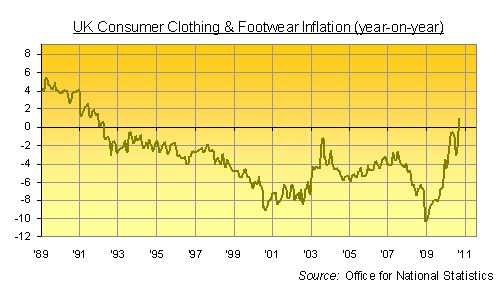


 .
.


| You are subscribed to email updates from Gold World News Flash To stop receiving these emails, you may unsubscribe now. | Email delivery powered by Google |
| Google Inc., 20 West Kinzie, Chicago IL USA 60610 | |

No comments:
Post a Comment