


Gold World News Flash |

- Here Come the Seventies Again
- Confusion Continues As Spec Dollar Longs Jump, While Investors Bet On Commodity Inflation And Treasury Price Increases
- Jim Rickards - Fed May Go Bankrupt
- Is The Rise In The Gold Price Just A Fall In The Dollar?
- The Gold Price Will Move Higher, Higher Than You Can Think or Imagine Right Now. Near Term Target is $1,600
- WSJ: PRECIOUS METALS: Comex Gold Erases Losses On Buying Momentum
- The Absurdity of Central Planning
- Marshall Berol and Kevin Puil: Takeover Talk
- What’s Holding Americans Back?
- Gold Stocks - Major GDX Breakout
- How Ben Bernanke Sentenced The Poorest 20% Of The Population To A Cold, Hungry Winter
- Guest Post: Bernanke’s ‘Cash For Spelunkers’
- Dollar at Risk of Crashing, Triggering Inflation: Strategist
- European Banks Under Pressure As Investors Celebrate QE2, Gold And Silver At Crucial Juncture
- Hourly Action In Gold From Trader Dan
- Gold Smells Blood
- The World Reacts to QE2
- Things
- An Economic Certainty: Gold to Rise as Fiat Currencies Fall
- COT Gold, Silver and US Dollar Index Report - November 5, 2010
- Plumbers Crack
- Gold Hits New Record High as IMF Economist Calls Inflation a Very Good Thing
- LGMR: Gold Hits Fresh Record, Sales to India "Booming"
- Why the Price of Gold Soared After the QE2 Announcement
- PIIGS Return to the Slaughter
- Profiting As the Fed Creates More Money
- Debating Silver Manipulation
- Gold and (Only) 11 Zeroes, Part Two
- Silver, Silver, Silver
- Was Gold Priced for QEII…?
- Après le Fed, the Deluge
- How Americans Gave Up Their Gold
- Gold: another record high
- Federally Funded Friday
- ONE OF THE GREATEST BLUNDERS IN HISTORY
- HUI More Convincing Cup with Handle Breakout
- Guest Post: Let Them Eat Mud Pie
- Street to Treasury on QE
- Gold - It's Real, This Time
- Guest Post: Requiem For America
- Rosenberg Update On NFP, Market Action, Gridlock, And QE
- BEN “BLUTO” BERNANKE
- Three Strategic Portfolios for Profit & Protection in the Q.E. Era
- 10. Why Gold & Silver? 'Investment Advisors' - Mike Maloney
- Gold, Silver Surge After Goldman Recommends Buying Gold... Again
- Fed Wants Higher Prices
- Fed Quantitative Easing 2, One of the Greatest Blunders in History
- Labor Force Participation Rate Drops To 25 Year Low, At 64.5%
- Still Interested in Getting Physical With Gold?
| Posted: 05 Nov 2010 05:42 PM PDT
Better drag your leisure suits, bell bottoms, and Bee Gee’s records out of the attic. The seventies are about to enjoy a comeback.
| ||||
| Posted: 05 Nov 2010 03:26 PM PDT
Nothing makes sense anymore. At least that is the conclusion one would reach from looking at today's CFTC update (and keeping track of the market for the past two years). In today's CFTC Commitment of traders update, the most notable feature was that net non-commercial spec positions increased for the fourth week in a row as ever more dollar shorts are getting spooked that the dollar is due for a violent pullback (of course, only if the most honorable chairman allows it). Other currencies were relatively flat, with the CHF unchanged, EUR longs declining minimally, while net contracts betting on a rise in the GBP jumping to their highest level in 2010. Elsewhere, a sample of commodities (Wheat, Soybeans, Coffee and Corn) all saw a non-commercial increase W/W: expect these push-pull feedback loops to result in a surge in all food products by the time the holidays roll in. Lastly, the indicative Treasurys (2,5, 10Y) after seeing a substantial drop last week, once again resumed their move higher (the 5 and 10 Y), except for the 2 Year, which non-commercial speculators are now believing will drop. It would be funny to see a square root shaped curve: the 5 Year at 0%, while the near and long ends taper off ever higher. Net non-commercial spec USTs:
Net non-commercial spec Commodities:
Net non-commercial spec FX:
And here is the traditional CFTC report courtesy of Libanman futures.
This posting includes an audio/video/photo media file: Download Now | ||||
| Jim Rickards - Fed May Go Bankrupt Posted: 05 Nov 2010 01:09 PM PDT November 5 (King World News) - Disasters sometimes sneak up in small steps, each of which appears unthreatening at the time but which cumulatively spell collapse. The Fed is leading the United States to ruin in ways that are claimed to be well intentioned and benign viewed in isolation but which take us finally into a locked room reminiscent of the Sartre play "No Exit."So, here's the bottom line on money printing, or QE if you prefer. If nothing happens, the whole thing was a waste of time. If inflation takes off, the Fed will have to choose between holding bonds and letting inflation get worse or selling bonds and going bankrupt in the process. Since no entity goes down without a fight, the Fed will naturally hold the bonds and let inflation take off. Do not ask about the exit strategy from QE; there is no exit.
| ||||
| Is The Rise In The Gold Price Just A Fall In The Dollar? Posted: 05 Nov 2010 01:00 PM PDT As we write, the gold price is about to assault the $1,400 level having been $1,332 on Wednesday of this week, a day ahead of the Fed announcement. Against the pound sterling, the yen the Swiss franc and most other currencies the dollar has weakened too.
| ||||
| Posted: 05 Nov 2010 10:53 AM PDT Gold Price Close Today : 1,397.30 Gold Price Close 29-Oct : 1,357.10 Change : 40.20 or 3.0% Silver Price Close Today : 2674.4 Silver Price Close 29-Oct : 2456 Change : 218.40 or 8.9% Gold... This is a summary only. Visit GOLDPRICE.ORG for the full article, gold price charts in ounces grams and kilos in 23 national currencies, and more!
| ||||
| WSJ: PRECIOUS METALS: Comex Gold Erases Losses On Buying Momentum Posted: 05 Nov 2010 10:47 AM PDT "We're clearly in an uptrend," said Scott Meyers, senior trading analyst with the Pioneer Futures division of MF Global. "I think you're going to see $1,400 if not today then early next week."
| ||||
| The Absurdity of Central Planning Posted: 05 Nov 2010 10:00 AM PDT That's the great beauty of a real economy! It rarely takes you where you want to go…especially if you're an activist central planner or an interventionist finance minister. But no matter how much you struggle with it…no matter how badly you manipulate it…no matter how much you try to stitch it up with rules and regulations… …it ALWAYS takes you where you deserve to go. Look at what happened back in '71. Nixon's move to take the US entirely off the gold standard was hardly noticed. Because he announced something even stupider that day. He told the world that henceforth prices and wages would be controlled by the feds. No kidding. His wage-price controls were designed to put a brake on inflation. Did they work? Ha…ha…do you have to ask? If you could control inflation by executive decree…well, it would be a lot different world than the one we live in. You can't do that. And when you try to do that, you don't get a world of stable prices, growth and prosperity. What you get is what they got in the Soviet Union, when they controlled the price of everything. They got a lot of nothing… …nothing on the shelves…and nothing worth buying. We remember visiting Poland in 1977. It was a delightful place for a driving holiday because there were no cars on the roads. People didn't have cars. And the trucks were usually off the roads too. They were broken down…usually alongside the road with their hoods up. There were no hotels either. And no restaurants worthy of the name. You just had to make do. You'd go into a shop. It was drab. Empty. There were usually two or three dozy clerks…but nothing to sell. Just a few cans. What was in the cans? It was hard to tell. But since that was all there was, you bought it and ate whatever dreadful thing was inside. Later, in the '80s, we took a trip to the Soviet Union. On the plane with us, on a flight from Moscow to Minsk was a woman with a toilet seat in her lap. It turned out that she had been raised in Tennessee and had a twang to her English. "What are you doing with a toilet seat," we wanted to know. "Oh… I just bought it in Moscow," she explained. "There aren't any toilet seats for sale in Minsk." "But isn't that an expensive way to get a toilet seat? I mean, this is a three-hour flight." "No… The flight is priced in rubles. And the ruble isn't worth anything. It actually cost me more to buy the toilet seat than the roundtrip ticket." See what central planning produces? Absurdities. Monstrosities. Imbecilities. Coming soon…to your neighborhood. Enjoy your weekend, Bill Bonner The Absurdity of Central Planning originally appeared in the Daily Reckoning. The Daily Reckoning, offers a uniquely refreshing, perspective on the global economy, investing, gold, stocks and today's markets. Its been called "the most entertaining read of the day."
| ||||
| Marshall Berol and Kevin Puil: Takeover Talk Posted: 05 Nov 2010 09:47 AM PDT Source: Brian Sylvester of The Gold Report 11/05/2010 Encompass Funds Portfolio Manager Marshall Berol and Analyst Kevin Puil spend a lot of time examining junior mining companies for investment opportunities and they're pretty good at it. The Encompass Fund was up 139% in 2009 and it's up another 21% so far this year. In this exclusive interview with The Gold Report, we talk to Marshall and Kevin about how they choose junior gold stocks and whether or not the growing number of takeovers is influencing their decisions. The Gold Report: This year we've seen quite a few takeovers. In the gold space, Kinross Gold Corp. (TSX:K; NYSE:KGC) bought Red Back Mining and Underworld Resources. Goldcorp Inc. (NYSE:GG; TSX:G) bought Canplats Resources and Andean Resources. And Argonaut Gold Ltd. (TSX:AR) has an offer on the table for Pediment Gold Corp. (TSX:PEZ; OTCBB:PEZGF; FSE:P5E). Is the rise in the gold price solely responsible for this quickening pace of takeovers, or are there o...
| ||||
| What’s Holding Americans Back? Posted: 05 Nov 2010 09:45 AM PDT What had happened to that rebellious Yankee spirit and the American mind? Could it have been the food that overstuffed and immobilized them? The Pop-Tarts® and Egg McMuffins® washed down with Coke® for breakfast? The Baconator® Triple, The Whoppers®, The Big Macs®, the $5 Foot-Long Subs, the bucket-of-chicken and 32oz. Big Gulp®? Too many trips to the All-You-Can-Eat-Buffet or The Never Ending Pasta Bowl®? Or was it the Slurpees, tubs of ice cream, or boxes of donuts grabbed at the convenience store? Could it have been the factory-farmed, battery-raised, hormone implanted, antibiotic-laced, pesticide sprayed, genetically modified beef, fish, chicken, eggs, dairy, vegetables, grains that were used in the highly processed, synthetic, ultra pasteurized, artificially sweetened, colored and flavored "product" passed off as food? What drove a nation with a relatively well-off and well-educated population to inflict such suicidal behavior upon itself? It was easy to point to the poor for buying cheap and eating stupid. But what excused the smartest of the smart and the richest of the rich from buying cheap and eating stupid? A case in point: celebrated for "powering his way through the day with a punishing Diet Coke regimen," even Obama's chief economic advisor – the always "brilliant" Larry Summers (who brilliantly jumped the sinking ship of state when his "brilliant" economic strategy to rescue America failed brilliantly) – was too stupid to eat smart. A look around the cabinet, survey of Capital Hill, AMA, ABA, PTA or pow wow of American Indian chiefs proved he was not alone. America had become one big "Mike & Molly" sitcom. Yet, even though just about everybody knew better, just about everybody made the same excuse for abusing the body and deadening the mind: it was cheap and/or it was convenient. Sure, money was tight and time was precious, but plenty of people were still going to the malls and spending big on hi-tech, high-end running shoes, taking vacations, eating out and buying new cars. Even low-end shoppers at Dollar Stores – while saving a buck – were filling their carts with junk snacks, junk soft drinks and junk "Made in China" bric-a-brac. Or was it something in the polluted air and fluoride-treated water that deadened individual pride, courage, passion and self respect? Could it have been the quadzillions of tons of chemical mix poisoning the planet that made everyone susceptible? Or could it have been the medicine chests full of Lipitor®, Oxycontin®, Xanax®, Celebrex®, Paxil® … or the Ritalin® force-fed to kids and gobbled down like M&Ms® that deadened heir minds or whacked them out? Whether prescribed indiscriminately as quick fix, symptom-relief solutions by legal "pushers" (a.k.a. doctors) or unwittingly washed down with a glass of municipally doctored "pharma-water," voluntarily or involuntarily, a large segment of the populace was doing drugs. Drugs Found in Drinking Water A vast array of pharmaceuticals — including antibiotics, anti-convulsants, mood stabilizers and sex hormones — have been found in the drinking water supplies of at least 41 million Americans, an Associated Press investigation shows. (AP, 10 March 2008) Or was it the "food for thought"? Could it have been the mind-numbing news served 24/7 by networks, cable and radio? All those know-it-alls — anchors, big mouths, blow-hards, clowns, pundits, experts, strategists, think tank wankers — telling audiences what to think, how to think and what to believe? Food, pharmaceuticals, movies, music, TV, literature, art, fashion — down the line, across the board, from top to bottom, every sector was monopolized by the unholy trinity of Big Government, Big Business and Big Media. The "American Century" — an age of opportunity characterized by the entrepreneur — had passed into history. America had been corporatized, homogenized, dumbed down and chained to the chains … and by the chains … restaurant chains, retail chains, movie chains, funeral home chains, auto-parts chains. They had cornered the market on everything they could get their hands on: tires, eye glasses, mufflers, dental care, banks, brokerages, drug stores, hardware, pet supplies. Even in the mad rush of the monopolistic, oligopolistic, mega-maniacals to control the market place, there was room for the individual entrepreneur to flourish. In certain sectors, particularly retail and food, the quality conscious "Davids" — providing gourmet/unique products, tasteful ambience, impeccable service — could operate among the Goliaths. If you were chained to a chain, you were chained. Working for a chain or patronizing a chain, there would be no real freedom until the chains were boycotted and finally broken. It would take a mass awakening; a quality revolution across the socioeconomic spectrum to bring down the gluttonous Goliaths. Yet, in 2010, it was still neither welcome nor "politically correct" (itself an oxymoron since nothing "political" is "correct") to tell Americans to look in the mirror to see what they had become; overweight, overstressed, overmedicated, under-motivated, slovenly dressed. A trip to Wal-Mart spoke a thousand words. The American psyche was reflected in the American physique. Of all the Renaissance-related trends forecast by Gerald Celente and The Trends Research Institute, few could play a more powerful role in the creation of a new society than the upcoming Agrarian Revolution. From titillating the taste buds and nourishing the body, to providing the satisfaction of getting fit by working the land and living with — and from — nature, the trend would revivify Americans. Besides providing millions of jobs and new entrepreneurial opportunities (especially for the young unemployed and the many unemployables) the Agrarian Revolution was a unique feature of the "American Renaissance." "Renaissance"! The word conjures up an image of the artistic and cultural ferment that began in 14th and 15th century Italy and subsequently spread across Europe. When asked what to do with his excesses of wealth, Cosimo de Medici's answer was "create beauty." The "American Renaissance" that begins in the 21st century will not be initiated by excess wealth, but rather by pressing need. And it will have different distinguishing features, among them: the rebirth of food. For, finally, both the man in the street and the man in the ghetto would realize the life and death consequences of eating well; that, yes, "you are what you eat." Already in 2010, the seeds of change could be seen in the farmers' markets, "buy local" movements, urban gardens and roof gardens that were sprouting up around the nation. Backyards and lawns that once grew nothing but grass were now growing food. Regards, Gerald Celente [Editor's Note: The above essay is excerpted from The Trends Journal, which is published by Gerald Celente. The Trends Journal distills the ongoing research of The Trends Research Institute into a concise, readily accessible form. Click here to learn more about and subscribe to The Trends Journal.] What's Holding Americans Back? originally appeared in the Daily Reckoning. The Daily Reckoning, offers a uniquely refreshing, perspective on the global economy, investing, gold, stocks and today's markets. Its been called "the most entertaining read of the day."
| ||||
| Gold Stocks - Major GDX Breakout Posted: 05 Nov 2010 09:44 AM PDT A Leading Market Timing Service We Take Every Trade Ourselves! Email: [EMAIL="trading@superforcesignals.com"]trading@superforcesignals.com[/EMAIL] [EMAIL="trading@superforce60.com"]trading@superforce60.com[/EMAIL] Weekly Market Update Excerpt Nov 5, 2010 Gold and Precious Metals KEY CHART #1: GOLD VIA SGOL-NYSE Buy and Sell recommendations should be added at the recommended price. The Surge Index System Buys Weakness and Sells Strength Super Force Gold Bullion Analysis: [LIST] [*]Gold has a Super Force Buy Signal as of Wednesday Oct. 27. [/LIST] [LIST] [*]Buy Price: 131.70 via SGOL. [/LIST] [LIST] [*]The “bullion equivalent” buy price: $1317. [/LIST] [LIST] [*]Wednesday and Thursday’s action was explosive. A government that simply prints money is going to get exploding asset prices. When the largest economy in the World does this, it creates serious price movement in the gold market. [/LIST] [LIST] [*] This action is now spreading, bigtime,...
| ||||
| How Ben Bernanke Sentenced The Poorest 20% Of The Population To A Cold, Hungry Winter Posted: 05 Nov 2010 09:40 AM PDT
The following chart prepared recently by JPMorgan demonstrates something rather scary, and makes it all too clear how the Chairman's plan to "assist" the US population via some imaginary "wealth effect" due to QE2, is about to backfire. As is now becoming all too clear, the prices of energy and food products are about to surge, and in many cases have already done so, but courtesy of some clever gimmicks (Wal Mart selling what was formerly 39 oz of coffee as a 33.9 oz product for example) the end consumers haven't quite felt it yet. They will soon. There is a limit to how much every commodity can open limit up before it appears on the SKU price at one's local grocer. And while a marginally declining "core CPI" is irrelevant for this exercise as it measures only items that are completely outside of the scope of everyday life, what will be far more important to end consumers will be the push higher in food and energy costs. The problem, however, is that for the lowest 20% of Americans, as per the BLS, food and energy purchases represent over 50% of their after-tax income (a number which drops to 10% for the wealthiest twenty percentile). In other words should rampant liquidity end up pushing food and energy prices to double (something that is a distinct possibility currently), Ben Bernanke may have very well sentenced about 60 million Americans to a hungry and very cold winter, let alone having any resources to buy trinkets with the imaginary wealth effect which for over 80% of the US population will never come.
Here is how JPM explains the phenomenon:
Since nothing else appears to have jarred America from its prime time TV/iPad hypnosis yet, perhaps this is for the best, and a few hungry months in subzero temperatures is precisely what several tens of millions of Americans need to finally march on Constitution avenue.
| ||||
| Guest Post: Bernanke’s ‘Cash For Spelunkers’ Posted: 05 Nov 2010 09:06 AM PDT
Submitted by Jed Graham of Investor's Business Daily Bernanke’s ‘Cash For Spelunkers’ Like “cash for clunkers,” the housing tax credit and other attempts to provide short-term fuel, the Federal Reserve’s second round of quantitative easing can only buy a little time to fix what ails the economy. Unfortunately, in the prior instances, the short-term fuel led to short-term complacency about the economic trajectory, leading policymakers to let down their guard. In the end, all that resulted was a letdown for the economy. What’s different about quantitative easing — an effort to lower market interest rates by bidding up Treasury debt — is that the Fed has no ability to direct its fire. What’s likely is that much of the investment capital freed up by Fed purchases of Treasury debt will overshoot its target — the U.S. economy — and flow to emerging markets and especially into commodities that serve as a hedge against a falling dollar. Hence the “cash for spelunkers” label: The only thing certain to be stimulated by quantitative easing is mining and, perhaps, other underground exploration. Already precious metals have seen a big run-up in prices in advance of further Fed easing, as have industrial metals, crude oil and agricultural inputs — anything that can hold value as the Fed prints money. The downside is that the squeeze from higher commodities prices, both on businesses facing higher input prices and households seeing little income growth, is likely to dampen the positive impact of quantitative easing. And if the net impact is quite small, then the Fed’s success in inflating asset prices will prove fleeting. The reason that the Fed is expected to move aggressively is because Congress is letting its stimulus spending gradually begin to wind down, even as the economy grows too slowly to keep the jobless rate from rising further. But the Fed’s ability to move independently from the political sphere, even when there’s gridlock in Congress, is a mixed blessing. The risk is that Fed intervention will take pressure off of the incoming divided Congress to reach difficult agreements that will address some of the underlying ills that could sap the recovery. Not least, of course, is the need to agree on a difficult but carefully mapped out path back to fiscal sustainability as the recovery strengthens. Without such a path, Fed money printing could undermine confidence in the dollar and Congress may hit the fiscal brakes too abruptly. It’s no coincidence that the economy began to slow in the spring as the Fed ended its first round of asset purchases and federal stimulus hit a peak from which it began to descend. Hopefully we are not headed for an eventual second round of QE-letdown.
| ||||
| Dollar at Risk of Crashing, Triggering Inflation: Strategist Posted: 05 Nov 2010 09:05 AM PDT Federal Reserve policies have put the US dollar the risk of crashing, which will hammer consumers through higher prices, strategist Axel Merk told CNBC.
| ||||
| European Banks Under Pressure As Investors Celebrate QE2, Gold And Silver At Crucial Juncture Posted: 05 Nov 2010 08:36 AM PDT Ben Bernanke has officially announced quantitative easing and the markets are reacting with rising prices amongst all asset classes. "QE2" is practically an economic tool to artificially raise asset prices to prevent deflationary forces. Read More...
| ||||
| Hourly Action In Gold From Trader Dan Posted: 05 Nov 2010 08:21 AM PDT View the original post at jsmineset.com... November 05, 2010 10:04 AM Dear CIGAs, "Strong resilience", is the phrase that comes to mind when observing the price action in gold this morning. The Euro was clocked for a significant loss but that could not derail the dip buying in gold. This type of price action speaks volumes as it is indicative of strong investment demand that is obviously anticipating much higher prices ahead. Buyers are in control of gold; it is that simple. Silver is experiencing the kind of demand that marks historic bull markets. Gains of the extent that it is displaying are evidence of distressed shorts being mercilessly attacked by strong handed bulls. Keep in mind that these shorts are not weak-handed, having had their way with this market for many years but it is clear from the extent of the gains being produced that large, well-funded and determined buyers have come into the silver pit with a steely determination to engage their enemies. A large contingent...
| ||||
| Posted: 05 Nov 2010 08:21 AM PDT View the original post at jsmineset.com... November 05, 2010 08:30 AM Courtesy of Greg Hunter's USAWatchdog.com Dear CIGAs, One day after the Federal Reserve announced a $600-$900 billion second round of Quantitative Easing (QE2), gold and silver hit fresh all-time highs. Yesterday, the yellow metal surged more than $40 an ounce to well over $1,390 before falling back a few dollars in after hours trading. Silver, also, had a monster move! It was up more than a $1.50 per ounce. It, too, retracted slightly in after hours trading. That surge in precious metals is a debilitating rebuke of the Federal Reserve's wild and unprecedented money printing policies. How bad is it, really, for the Fed to feel this is a good idea? Gold is acting like a predator that smells the blood of wounded prey. In this case, the prey is a much weakened Fed that seems desperate to keep its banking cartel afloat from the undertow of a sea of red ink. It ...
| ||||
| Posted: 05 Nov 2010 08:00 AM PDT Markets everywhere are taking a breather today after yesterday's epic run-up, induced by the Federal Reserve's announcement of Quantitative Easing 2.0. Meanwhile, leaders in other countries are delivering scathing reviews of QE2…
"With all due respect," Schäuble added, "US policy is clueless." Just a wild guess here…but this doesn't bode well for President Obama at the G20 summit next week. He might want to dial back on Treasury Secretary Tim Geithner's scheme to have everyone limit their trade surpluses and deficits to 4% of GDP. On that subject, China just issued its first official comment: "We believe a discussion about a current account target misses the whole point," says deputy foreign minister Cui Tiankai. "If you look at the global economy, there are many issues that merit more attention – for example, the question of quantitative easing." (Just an example, of course.) More choice words from Cui: "The artificial setting of a numerical target cannot but remind us of the days of planned economies." Ouch. The summit is next Thursday and Friday in Seoul, Korea. Usually these gatherings are the stuff of mealy-mouthed joint communiqués and awkward photo ops. But for this one, we might want to grab the popcorn… Even as the rest of the world savages the Fed's actions this week, Fed leaders are gathering today for a celebration…at the scene of the original crime. "A Return to Jekyll Island: The Origins, History and Future of the Federal Reserve" is the official name of the two-day conclave at the Georgia resort where plans to form the Fed were first hatched in secret this very month 100 years ago. (The Morgan and Rockefeller men in attendance were on a duck-hunting trip, it was claimed at the time.) This affair promises to be more public. The final panel discussion tomorrow, featuring Ben Bernanke, Alan Greenspan and Goldman Sachs managing director Gerald Corrigan – will be webcast live. Of course, real Fed transparency would come in the form of a full audit. Rep. Ron Paul, for what it's worth, is promising to press again next year…and he's sounding confident that unlike 2003 and 2005, the Republican leadership will actually let him chair the subcommittee on domestic monetary policy. "I will approach that committee like no one has ever approached it because we're living in times like no one has ever seen," he said yesterday. Better stock up on that popcorn… Dave Gonigam The World Reacts to QE2 originally appeared in the Daily Reckoning. The Daily Reckoning, offers a uniquely refreshing, perspective on the global economy, investing, gold, stocks and today's markets. Its been called "the most entertaining read of the day."
| ||||
| Posted: 05 Nov 2010 08:00 AM PDT The following is automatically syndicated from Grandich's blog. You can view the original post here. Stay up to date on his model portfolio! November 05, 2010 10:18 AM [LIST] [*]Liar, liar pants on fire! [*]Clueless [*]15 biggest States now milking the sham [*]Sianara Dollar [*]Fire the manager [/LIST] [url]http://www.grandich.com/[/url] grandich.com...
| ||||
| An Economic Certainty: Gold to Rise as Fiat Currencies Fall Posted: 05 Nov 2010 08:00 AM PDT I was casually eating a burrito while having lunch at my desk, and was surprised to see some guy, writing on a "Feedback" blog of TheDailyBell.com, taking exception to David Morgan of The Morgan Report saying that "On a longer term basis silver and gold are going far higher in paper terms in any currency you wish to name." Idly, I was chewing a rather tasty bite of burrito and thinking to myself, "This is undoubtedly true!" as precious metals are nowadays priced in fiat currencies, and it has certainly been true for every paper currency that has ever, ever existed, including a list of 600-odd fiat currencies compiled by Addison Wiggin of Agora Financial in a research project a few years ago, undertaken to list all known fiat currencies, past and present, and their fate. He gave up, he says, after listing all those fiat currencies beginning with the letter A and half of those beginning with the letter B. This tiny section of the alphabet contained 600 fiat currencies, most all of whic...
| ||||
| COT Gold, Silver and US Dollar Index Report - November 5, 2010 Posted: 05 Nov 2010 07:32 AM PDT COT Gold, Silver and US Dollar Index Report - November 5, 2010
| ||||
| Posted: 05 Nov 2010 07:00 AM PDT Poor Ben Bernanke. There was a strange glow on his face as it appeared in Monday's Financial Times…like a bearded St. Joan of Arc; his hands were clasped together as if in prayer, and his eyes seemed to reach up to the gods, if not beyond. He made his reputation as a master plumber in Princeton, New Jersey, interpreting drippy money supply faucets and deconstructing clogged fiscal drains. And now, he has become the hope of all mankind. Or at least that part of mankind that hopes to get something for nothing. How came this to be? The answer is simple. The plumbers who came before him botched the job. Applying their wrenches to the recession of '01, they let too much liquidity into the system. Everything bubbled up. The subprime basement overflowed in '07…Ben Bernanke has been on the job ever since. And this week the financial world held its breath. It waited. It watched. Ben Bernanke was hunched over…sweat on his brow…easing on his mind. Commentators, economists, and the public wondered if he could really create new money…new wealth…out of thin air? If this were true, it was a giant step forward for humanity, at least equal to discovering fire, creating Facebook or blowing up Nagasaki. Jesus Christ multiplied loaves and fishes. But He had something to work with. The Federal Reserve multiplies zeros…creating money – out of nothing at all. If it can really do the trick, we are saved. The legislature can go home. It no longer needs to worry about raising taxes or allocating public resources. Government can now buy all the loaves and fishes it wants. And give every voter a quart of whiskey on Election Day. During the course of the last three years, the plumbers have spent hundreds of billions of dollars. It's hard to know what the final bill will be, since so much money – more than $10 trillion – is in the form of guarantees and asset purchases. They've pumped. They've bailed. They've squeezed and turned. They scraped their knuckles and cursed the gods. You'd expect they might think twice before spending so much money. But on the evidence, they haven't even thought once. Quantitative easing has been tried before. Has it ever worked? Nope. Never. Do you dispute it? Give us an example. Japan announced its QE program in the spring of 2001. The Nikkei 225 was around 12,000 at the time. It quickly rose to 14,000 as investors anticipated a payoff from the easy money. Then, stocks sold off again. Two years later the index was at 8,000. Today, it is still about 25% below its 2001 level. Did printing money cause an up-tick in inflation? Not even. Core CPI was negative 1% when the program began. It rose – to zero – briefly…and then fell again and now stands at minus 1.1% after going down 19 months in a row. America's own experience with quantitative easing is similarly discouraging. Between the beginning of 2009 and March of 2010, the Fed bought $1.7 trillion worth of mortgage-backed securities, creating new money specifically for that purpose. Where did the new money go? Into the coffers of the banks. Did it stimulate the economy? Not so's you'd notice. The unemployment rate today is 200 basis points higher than it was when the program began. And despite the flood of cash and credit, core CPI in the US is still only a third of its level in 2008. Of course, there are other examples where central banks printed money with more gusto. In Germany, during and after WWI, the nation's real money – gold – was used to pay for the war and the reparations following. The central bank felt it had to create additional money – like the Fed – without gold backing. It added about 75% annually to the money supply, from the end of the war until 1922. By late 1923, the US dollar was worth 4 trillion German Marks. Still other examples – from Argentina, Hungary, Zimbabwe and elsewhere – are fun to read about. But they are not exactly the sort of thing you'd want to try at home either. Even if Quantitative Easing were a precision tool in the hands of a skilled mechanic, it might be little more than a wooden club in Ben Bernanke's dorky grip. This is the same man who missed the biggest credit bubble of all time! There is no evidence that he could fix a bicycle let alone the world's largest economy. But there you have a more interesting question. What if economists were duped by their own silly metaphor? What if an economy were not like a bicycle? What if the gods were laughing at them? Central planning and cheap fixes have been tried before. When have they ever worked? Give us an example. Perhaps an economy is too complex…like love or the weather…unfathomable…and largely uncontrollable, something you can make a mess of but not something you can improve. We have no more information as to the fundamental nature of things than anyone else. A toaster oven is designed and built for a purpose. When it doesn't work, it can be fixed. But an economy? Who built it? Who can fix it? It is an organic, evolving system…whose purpose and methods are infinitely nuanced. Does it let banks go broke? Does it back up once in a while? Does it permit falling house prices…high unemployment…and deflation? Yes…so what? Does it always do what politicians and economists want? No? So what? It has a sense of humor too. Wait until it turns around and kicks the clumsy mechanic in the derriere! Bill Bonner Plumbers Crack originally appeared in the Daily Reckoning. The Daily Reckoning, offers a uniquely refreshing, perspective on the global economy, investing, gold, stocks and today's markets. Its been called "the most entertaining read of the day."
| ||||
| Gold Hits New Record High as IMF Economist Calls Inflation a Very Good Thing Posted: 05 Nov 2010 06:14 AM PDT THE PRICE OF WHOLESALE gold bullion ticked back from a new US Dollar record in morning trade in London on Friday, setting a new all-time-high London Fix of $1384.20 per ounce after what one trader called Thursday's "phenomenal" gains. European and US stock markets stalled after new data showed a surprise rise in US payrolls, but no change in the 9.6% jobless rate.
| ||||
| LGMR: Gold Hits Fresh Record, Sales to India "Booming" Posted: 05 Nov 2010 05:40 AM PDT London Gold Market Report from Adrian Ash BullionVault 10:10 ET, Fri 5 Nov. Gold Hits Fresh Record, Sales to India "Booming", as IMF Economist Calls Inflation a "Very Good Thing" THE PRICE OF WHOLESALE gold bullion ticked back from a new US Dollar record in morning trade in London on Friday, setting a new all-time-high London Fix of $1384.20 per ounce after what one trader called Thursday's "phenomenal" gains. European and US stock markets stalled after new data showed a surprise rise in US payrolls, but no change in the 9.6% jobless rate. The Euro and Sterling both fell back from fresh 2010 highs vs. the Dollar, but oil rose and London copper prices came within 2.5% of 2008's pre-Lehmans' collapse peak. Priced in British Pounds Sterling, Diapason Commodities index of commodities rose above its 2007 record, says the FT's Alpha blog. Silver bullion this morning jumped above $26 per ounce – its 14th new 30-year high of the last 33 trading days. "The bear trend is now so stro...
| ||||
| Why the Price of Gold Soared After the QE2 Announcement Posted: 05 Nov 2010 05:14 AM PDT Was the Fed action already fully priced in the marketplace? Had investors anticipated the Fed's latest move and already bid up stocks and gold? No! The New York Times explains more of the Feds' action: The [Fed's] action was the second time in a year that the Fed had ventured into new territory as it struggles to push down long-term interest rates to encourage borrowing and economic growth. In a statement, the Fed said it was acting because the recovery was "disappointingly slow," and it left the door open to even more purchases of government securities next year. The Fed is an independent body, its policy decisions separated from the political pressures of the day. But it acted with a clear understanding that the United States, like many other Western countries, seems to have taken off the table many of the options governments traditionally use to give their economies a kick, particularly deficit spending. The Republicans regained control of the House for the first time in four years in part by attacking the stimulus plan – begun by the Bush administration and accelerated by President Obama – as a symbol of government spinning out of control, contributing to a dangerously escalating national debt. This political reality has left Washington increasingly reliant on the Fed to take action, though its chairman, Ben S. Bernanke, has said the Fed cannot fix the problem alone. Ordinarily the Fed's main tool for spurring economic growth is to lower short-term interest rates. But those rates are already near zero. With no more room to go, it has to find another route to stimulate demand. While the Fed step was telegraphed to the markets in recent weeks, most experts had expected $300 billion to $500 billion in purchases of Treasury debt. Still, the pace – $75 billion a month for eight months – disappointed some investors. …in total, the Fed will buy $850 billion to $900 billion, just about doubling the amount of Treasury debt it currently holds. So, what did investors make of it? The Dow shot up 216 points yesterday, after investors had time to consider what the Fed had done. As for gold, it gained more in a single day than the entire price in 1971. That year you could buy an ounce of gold for $41. Yesterday, the price of an ounce GAINED $45. Gold market investors figure they know what happens next. The Fed will pump in nearly $1 trillion more in this go-'round. If that doesn't revive the economy and lower the unemployment rate, they'll pump in some more. And they'll keep pumping until they can't go on. When will that be? Nobody knows exactly. But if they keep this up, eventually the dollar will collapse and gold will soar. Maybe to $3,000 an ounce. Maybe to $5,000. The point is this: the Fed has set its course. It has no reliable maps. Its captain doesn't know where he is going. As for the navigator, first mate and other hands, they are a bunch of misfits, malcontents, and meddlers who have given no indication that they know what they are doing. Do you think they will arrive at their destination? We don't. But we're sure they'll end up where they ought to go. Bill Bonner Why the Price of Gold Soared After the QE2 Announcement originally appeared in the Daily Reckoning. The Daily Reckoning, offers a uniquely refreshing, perspective on the global economy, investing, gold, stocks and today's markets. Its been called "the most entertaining read of the day." More articles from The Daily Reckoning….
| ||||
| Posted: 05 Nov 2010 05:14 AM PDT Friday is finally here… The end of what has been an exhausting week here on the trade desk. The dollar continued to get beat down through most of the trading day but started to rally back a bit in the afternoon. Overnight the dollar actually gained with the highflying Nordic currencies falling almost 1% versus the greenback. The euro (EUR) and commodity-based currencies also sold off a bit, and the sharp rally in both gold and silver stalled. A break in all of the price action was to be expected, but it may not last long as we will get the October US jobs report later this morning. The report due out at 7:30 CST is expected to show the unemployment rate stayed dangerously close to 10% during last month. If the jobless rate comes in at 9.6% as expected, it would be a record 15 straight months that the rate stayed above 9.5%. The FOMC has tied future QE bond purchases to the performance of the US economy, so a poor payroll number will probably lead to another dollar sell-off. On the other hand, if the employment numbers come in stronger than expected, we could see some traders shift to thinking the Fed won't have to continue the stimulus for as long as they have announced. But this is wishful thinking, as we all know the Fed is like a 17 year-old teenager whose parents just gave them $100 to go to the mall; the $600 billion is all but spent already, and there will probably be more to follow!! Chuck sent me a note regarding the weekly jobs numbers during a break in his busy schedule down in Los Cabos: I participated on a panel discussion Thursday morning at 7:30 am! My colleagues on the panel were all complaining the night before, while I, being the early bird, was sitting there on the podium a half-hour early waiting for it to start! What I want to talk to you about today is the news yesterday that caught my eye… Here's the title: US initial jobless claims rise more than expected in latest week. Now, some of you might recall that the week before was the exact opposite and jobs claims fell… So what gives with the back and forth? It's all due to the manual way the US bureau of labor statistics receives the files… I'm sure there are "cut offs" and such, so that's what causes one week up and the next week down… The best thing to do is look at the data on a monthly basis, or… The continuing claims… And don't forget the 99er's… those are the people that have received their 99 weeks of unemployment, and now are getting nothing… They've been dropped from the "unemployed ranks" by the BLS, and things just don't look great for them… The Consumer Confidence survey would have a different number if they only surveyed the 99er's… So… I guess the point I'm making in the end, is that the labor picture is a mess, and will remain a mess until small businesses understand what kind of tax burden they are going to have to deal with in the coming years… Health Care, included… The stimulus was supposed to deal with creating jobs… Didn't happen… QE was supposed to give cash to banks for them to lend… Didn't happen… It's one vicious circle, folks… And I'm reminded of the Nitty Gritty Dirt Band playing the song, Will the Circle be unbroken? It's all sad, that the country has run off into a ditch, but at some point we need to stop attempting to dig out of this hole, as we're only making the hole deeper! Thanks Chuck, great stuff for a Friday morning… Well, as I reported yesterday morning, the BOE decided not to follow the Fed, and the ECB also diverged from the FOMC's path. The ECB signaled they would stick with their planned stimulus exit strategy in spite of the fresh round of stimulus announced by the Fed. ECB President Trichet announced that the bank intends to begin pulling back some of the liquidity it injected into its banking system as early as next month. Policymakers left Europe's benchmark interest rate at 1% yesterday. "The non-standard measures are by definition temporary in nature," Trichet said at the press conference following the rate announcement. The euro rallied yesterday on confirmation the ECB would not be pumping any additional stimulus into their economies. The announcement would probably have had an even greater impact on the euro if not for a flurry of stories about the possibility of future debt problems among the PIIGS. Yes, as if on cue, stories on the PIIGS hit the newswires. Problems do still exist in the "peripheral" European countries, but it sure looks like the ECB is using the press to "jawbone" the value of the euro, capping any appreciation by reminding investors that Ireland, Portugal, and Spain still need to refinance some huge debt issues. The most prominent story out of Europe this morning concerns the Irish government's delay in announcing its 4-year plan to narrow their fiscal deficit. Ireland's finance minister announced savings and tax increases for next year worth 6 billion euros or 3.6% of GDP. A further 9 billion euros will be cut in the following 3 years. But the government will push back its publication of the details of the plan until early December. There is a lot riding on the details, as Ireland needs to impress global investors with these austerity measures. Ireland's budget shortfall will be reduced to between 9.25 and 9.5% of GDP next year. The deficit this year will be closer to 12%, and Ireland wants to put measures in place to cut this all the way down to 3% of GDP by the end of 2014. But the bond markets are convinced the moves will be enough to keep Ireland from having to tap the European Financial Stability Fund, which is the last "backstop" for European economies not able to find appropriate financing alternatives. Spreads have widened dramatically over the past few weeks, with the Irish government debt following the same path taken by Greek bonds in the weeks prior to the EU bailout. It worries many that the bond dealers have begun to take Irish debt down a similar path to the debt of Greece, and it really doesn't matter what the Irish government does or announces. Credit swaps on Portugal debt climbed 9 points overnight, and contracts insuring against a Greek default jumped 13.5 points. Default swaps for Spain and Italy also rose double digits, increasing these countries' costs of financing their debt. Bond dealers look to be forcing the hand of the EU again, and the euro will continue to have a cap placed on any appreciation until this Irish bond crisis passes. One of our favorite investors, Jim Rogers, was on the news wires last evening sharing his opinions of this week's QE2 announcement by the Fed. A story that appeared on Bloomberg contained some great quotes by Rogers regarding the Fed head, and round two of QE. "Dr. Bernanke unfortunately does not understand economics, he does not understand currencies, he does not understand finance," Rogers said in a lecture at Oxford University yesterday. "All he understands is printing money." "His whole intellectual career has been based on the study of printing money," said Rogers, who predicted the start of the global commodities rally in 1999. "Give the guy a printing press, he's going to run it as fast as he can." Jim had lunch with all of us on the trading desk about 5 years ago, and was adamant at that time about the coming commodity boom. He has consistently been ahead of the curve, and unlike our current Fed head, Rogers has booked the profits to prove he knows what he is doing in the financial markets. Mark Mobius, another big name successful investor, had a different look on QE2. Mobius was excited by the prospects of a rally for global stocks and commodities, which he believes will come after the FOMC announcement. Mobius, who oversees about $34 billion, said the cash inflow should push commodity prices higher. "Commodities are the big area for us. We are great believers in higher commodity prices and therefore are investing in commodity companies." Mr. Mobius obviously focuses on stocks, but I'm sure if he were a currency investor he would suggest the currencies that are commodity-based, including the Aussie dollar (AUD), Canadian dollar (CAD), Brazilian real (BRL), South African rand (ZAR), Norwegian krone (NOK), and New Zealand dollar (NZD). These currencies have all had a tremendous couple of weeks, as investors look at both higher yields and the possibility of higher commodity prices. We have had a number of callers to the desk asking whether it is the right time to buy, with all of the currencies and metals rallying so fast versus the US dollar. Chuck apparently has been fielding the same calls at the conference in Los Cabos: I had a lot of people stop by to ask me my opinion on whether or not it was a good idea to buy currencies and gold at this point, with them being so high versus the dollar… Well… Maybe there's a pullback… But, come on, if there's a pull back, it will be strictly technical in nature, and short-lived… The US has made its bed with the dollar, and now it has to lay in it! There are all kinds of resistance levels that the currencies are going through right now versus the dollar… And I would say, that it certainly seems risky to enter into these markets right now… But I think back, and I told a customer this today, and that's that customers told me that $800 gold seemed to be too high to buy… Then $900 gold… Then $1,000 gold… And it goes on and on… So, if you're wanting to diversify out of the dollar right now, then to wait for a pullback that never comes, might not be the best plan… And that's all from me this week from Los Cabos, Mexico… It's absolutely beautiful here, I had a massage therapist put my back right, and it's warm, what else can I say? You know me, I always say… I've gotta go where it's warm! I hope you have a great weekend, good luck to my beloved Tigers who play down in Lubbock Texas on Saturday night! Chuck has always told all of us, if you want to invest, go ahead and buy it!! Gold has moved back from the record-high that it hit in after hours trading last night. Yes, gold traded at $1,393.40 last night, just a hair away from $1,400. The Fed has basically given the green light for currency and metals investors. And silver has been outperforming, doubling gold's performance this year. I think there are a few reasons for silver's recent performance. First, silver had been lagging gold over the past few years, so it had some room to make up. Second, I believe there is a bit of psychology at work. Investors can either buy one ounce of gold, or 50 ounces of silver. I think they feel better making a 50-ounce purchase rather than just buying one. Finally, for those investors looking to protect against an "Armageddon," one ounce of silver is much easier to barter with than one ounce of gold! Not that I believe it will come to this, but it does illustrate another reason silver has been out performing gold. To recap: Jobless claims for October will dominate the markets today. Look for a positive number to possibly give the US dollar a bit of a break. Worries on the PIIGS debt crisis have been raised right on cue to cap the rapid ascent of the euro. Ireland definitely is swimming against the tide in trying to convince markets they will be able to get a handle on their debt issues. Jim Rogers gives his unabashed opinion on our Fed Head. And finally, Chuck suggests that it is always a good time to get invested. Chris Gaffney PIIGS Return to the Slaughter originally appeared in the Daily Reckoning. The Daily Reckoning, offers a uniquely refreshing, perspective on the global economy, investing, gold, stocks and today's markets. Its been called "the most entertaining read of the day." More articles from The Daily Reckoning….
| ||||
| Profiting As the Fed Creates More Money Posted: 05 Nov 2010 05:14 AM PDT The latest news to depress me is that incomes were reported down 0.1%, and the latest news about spending is that spending is up 0.2%. The reason that it was extraordinarily depressing for me is that I was trying, in vain, to explain to the drooling half-witted pinhead idiot seated next to me at the bar that I think that "spending" is actually waaAAAaaay down, because, while total spending is up, it is mostly because prices have risen so much that people buy fewer things overall, but pay more per item that they do still buy, which they do because of the rapid decline of their standards of living caused by the loss of buying power of the dollar as a result of the Federal Reserve creating so many more of them. Until now, the inflation in prices was disguised by the slimy trickery of the government's/Fed's distortion of reality by their hedonically-adjusting downwards actual price increases to account for "quality" improvements and other un-quantifiable tangible and intangible benefits. I told him, as a way of impressing him so that he would not think I was not as stupid as I look or sound, that I was entrepreneurially-inspired by such government arrogance that this was when I first threw a packet of vitamin C tablets into the file marked "Mogambo's Wonderful Investment Portfolio (MWIP)." In doing so, I completely changed my whole marketing thrust. Previously, I had gone with the slogan, "Profit by the stupidities of the Federal Reserve creating excess money, and the deficit-spending madness of the federal government, by buying gold, silver and oil stocks today, using the wisdom of the Mogambo's Wonderful Investment Portfolio (MWIP), which is to buy gold, silver and oil, ya moron!" The fabulous new marketing slogan that I came up with was, "Be wealthier and be healthier! Invest with Mogambo's Wonderful Investment Portfolio (MWIP) and be both!" which still recommends that investors buy gold, silver and oil to make them wealthier – guaranteed! – by profiting from the stupidity of the Federal Reserve creating too much money, but now with a recommendation to take vitamin C to make them healthier, too! Finally, this drunken barfly turns to me and says, "Huh? You talkin' to me?" which lets me instantly know that he is an idiot, because I have been talking to him for over ten minutes about how the evil Federal Reserve is destroying us by creating so much new money, so freaking much new money, so terrifyingly much new money so that the government can borrow and spend that it creates terrible inflation in prices! "Yikes!" I said. Well, actually I only claim that I said, "Yikes!" but I was pretty smashed by this time, and what I really said was a lot of obscene cursing at the Federal Reserve for creating so much new money and loud burst of Mogambo Bellow Of Outrage (MBOO) at that arrogant socialist Obama monster for borrowing all that money to spend on socialist dreams and schemes that are doomed to failure. Indeed, it started out as a long and loud disparagement of the Federal Reserve, but was soon replaced with hushed and obscene-yet-gratuitously-lewd comments about a bunch of hot young ladies seated over there by the pool table, who think they are so hot, and who had previously laughed at me and said, "Go away, grandpa! We're looking for hot, handsome hunky men, and you are blocking the view! Hahaha!" Well, as punishment for their insults, I decided to let them suffer by not telling them, as I ordinarily would, to buy gold, silver and oil, and that We're Freaking Doomed (WFD) because the Federal Reserve, under the horrible Alan Greenspan from 1987-2006, created so much money and distorted the economy into a giant, bloated, disgusting, government-centric economic monstrosity, where the government is sucking the life out of the economy through over-taxation and over-regulation, and then spitting it (if that is the correct orifice) back into the economy via huge budgets and deficit-spending oceans of new money created by the Federal Reserve and that, tragically, even Greenspan's horrifying monetary excesses pale to seeming insignificance compared to the unbelievable infamy of the new chairman of the Federal Reserve, Ben Bernanke, and all his unbelievable inflationary intent, because inflation is, of course, the One Big Freaking Thing (OBFT) that you do NOT want to happen, and this insane monster is trying to make it happen! Gaaahhh! So, I laugh in scorn while I am screaming in outrage, which is harder to do than it looks, as I think to myself, "Let the young ladies have their fun, blissfully ignorant about how having the Federal Reserve monstrously creating $2 trillion, or maybe $4 trillion, or more in a year, year after year, all in a lousy $14 trillion economy, so as to allow the federal government to borrow it and spend it, is what we professional economists call Absolutely Freaking Insane (AFI)!" I'm not sure I could impress upon these nubile little temptresses that this is a stunningly huge clot of new spending-money that is appearing, literally, out of nowhere, to join other money coming out of nowhere, such The Wall Street Journal reporting that a lot of people are defaulting (i.e. haven't made a payment in 16 months or more) on their mortgages, but are managing to still live in the house without paying a dime, giving them a "free" place to live, which is (you gotta admit!) a pretty sweet deal for them! The moral and ethical ramifications aside, and the banker's desire to keep the house occupied so as to prevent vandalism and looting of an empty dwelling, this brings up, as it does, the moral and ethical ramifications of these defaulting squatters perhaps routinely vandalizing surrounding vacant dwellings so as to make a few bucks selling the appliances and wiring, thus actually increasing the desire of petrified bankers to let these defaulting deadbeats stay in the houses – and maybe even pay them! – un-molested. And then (pause), as there always is (pause), there is the subject of (pause) money. And the money that I am talking about is, of course, "How come the rest of us, who do not have a mortgage to default upon, can't get in on some of this 'free housing' gravy? It's justice denied and unequal protection of the laws, I tells ya!" And what about the people who rent their homes and apartments? Don't they equally deserve to live someplace for free, too, since all it takes to be able to do so is creditors and landlords to voluntarily not throw them out? And what about Lefty and Pinhead, the two thieving, lying, cheating, filthy, worthless, lazy, dropout, alcoholic, drug-addicted mental defectives and personal friends of mine who currently live in a storm culvert, and who get to smoke all the cigarettes they want, drink all the booze they want, eat all the crappy fast-food they want, any time they want, and who don't have to always worry about remembering to pull up their stupid zippers after they take a whiz? Shouldn't they get some of that "free housing" gravy, too? And gravy it is, too! "Defaulters living in the homes" is calculated to be "a subsidy worth about $2.6 billion a month," which is a lot of money that would otherwise flow to creditors, who would otherwise pay tax on the money, but who are now looking at tax-deductible losses which, in the case of the USA, means more deficit-spending to continue bailing out Fannie Mae and Freddie Mac, the two gigantic, laughably incompetent, loss-producing, loser organizations which together own almost all the mortgages in the Whole Freaking Country (WFC) so that, as the loathsome and disgraceful Christopher Dodd of Connecticut once said, home ownership would not be limited "only to those who can afford it." So Fannie and Freddie operate with a $2.6 billion monthly deficit, a loss which is paid by the federal government deficit-spending another $2.6 billion a month, which it borrows when the money is created by the Federal Reserve, which increases the money supply, which makes prices go up. That's the theory, and it has always held, sort of like the theory of gravitation, the practical application of which is to simply make the sensible decision to invest following a regimen of frantically buying gold, silver and oil to capitalize on the inflationary horror about to befall us, which is So Freaking Obvious (SFO) and so easy that you shout huzzahs of thankful happiness to the beautiful blue skies and shout, "Whee! This investing stuff is easy!" The Mogambo Guru Profiting As the Fed Creates More Money originally appeared in the Daily Reckoning. The Daily Reckoning, offers a uniquely refreshing, perspective on the global economy, investing, gold, stocks and today's markets. Its been called "the most entertaining read of the day." More articles from The Daily Reckoning….
| ||||
| Posted: 05 Nov 2010 05:14 AM PDT By Jeff Nielson, Bullion Bulls Canada Last week, I wrote a piece about the purported "debate" which took place on BNN earlier that week – on the subject of silver manipulation. This event was in response to the stunning remarks of CFTC Commissioner, Bart Chilton: that he had observed enough evidence of such manipulation in the public domain to conclude that U.S. bankers had "fraudulently" and "deviously" sought to manipulate the silver market via the U.S.'s "Comex" exchange. Presumably, such a debate would have attempted to piece-together such evidence with one side arguing in favor of such evidence, and the other side arguing against it. In fact, during this 9-minute sham, no significant evidence of any kind supporting "manipulation" was raised (by either side), but rather the whole point of this exercise seemed to be not about "debating" silver manipulation, but rather simply discrediting Commissioner Chilton, following his courageous and unprecedented remarks. To support my conclusion, let me briefly introduce a small portion of the evidence which could have been argued in a serious debate. Previously, when the subject of "silver manipulation" was raised, the response of people such as Jeffery Christian (who argued against manipulation on BNN) would be to ask the rhetorical question: "if there is widespread manipulation of the silver market, why haven't we seen some 'whistle-blower' step forward to acknowledge these illegal acts?" Christian never made that remark on BNN's "debate". Why? Because earlier this year, veteran metals-trader Andrew Maguire did emerge as a whistle-blower. Indeed, he attempted to testify at the CFTC's spring hearings on the issue of precious metals manipulation. He told the CFTC (privately) that not only had he heard traders for the bullion-banks personally bragging about repeatedly manipulating the silver market, but he said he was familiar enough with their practices to not only detail a major, previous episode of manipulation, but also to describe to the CFTC a manipulation that was in progress while he was in direct contact with CFTC officials. The response of the CFTC? They would not allow Maguire to testify. Let's be clear on what this signifies. It was always open to the CFTC to "hear" Maguire's evidence (officially), and then to conclude they didn't find it persuasive. However, in simply refusing to give Maguire the opportunity to present his evidence – as the whistle-blower that (presumably) CFTC investigators wanted to hear from – the CFTC completely discredited itself, as the personification of the "see no evil, hear no evil, speak no evil" monkeys (Commissioner Chilton, aside). Indeed, were it not for the efforts of GATA to publicize Maguire's efforts to alert the CFTC, we might have never become aware of this whistle-blower. If we needed any further evidence of the lack of good faith exhibited by this so-called "regulator", the CFTC has provided it, or rather a soon-to-be-retired judge who presides over CFTC investigations has provided it. Judge George Painter is one of the two administrative law judges who presided over CFTC investigations/complaints (for the last two decades). Judge Painter recently announced his own plans to retire. Here is what he had to say about the CFTC's other Judge: Bruce Levine: On Judge Levine's first week on the job, nearly twenty years ago, he came into my office and stated that he had promised Wendy Gramm, then Chairwoman of the Commission, that he would never rule in a complainant's favor. A review of his rulings will confirm that he has fulfilled his vow… Judge Painter had even more to say about his colleague for the last twenty years, but let me interrupt that to make fully explicit what Judge Painter implied. This is not simply an accusation of "bias", but one of corruption. It was "good for business" (i.e. the large U.S. corporations getting fat off of these markets) for plaintiff's to never win – since who wants to invest in (get "fleeced" in) markets where those doing the trading are regularly found to have been engaging in various forms of fraud? And since it was "good for business", Judge Painter was going to ignore his own, professional duty and all the principles of "justice" which he had sworn to uphold. Judge Levine has made no public attempt to refute Judge Painter's criticism. As badly as this reflects on Judge Levine, it paints an even more disturbing image of the former Chairman. When Wendy Gramm received the purported "pledge" from Judge Levine, she should have instantly revoked his appointment. The fact that this did not happen, implies that Ms. Gramm either condoned Judge Levine's attitude or had made that a condition of his appointment. How did Judge Levine's corruption manifest itself on the bench? Judge Painter had this to say: Judge Levine, in the cynical guise of enforcing the rules, forces pro se complainants to run a hostile procedural gauntlet until they lose hope, and either withdraw their complaint or settle for a pittance, regardless of the merits of the case. More articles from Bullion Bulls Canada….
| ||||
| Gold and (Only) 11 Zeroes, Part Two Posted: 05 Nov 2010 05:12 AM PDT Bullion Vault Let's say that – rather than actually ending a two-decade deflation – the price of clothing to Western consumers is only now set to turn lower. Let's agree that the doubling of central-bank foreign reserves since 2005…plus the worst sub-zero real rates of interest since the mid-70s…will count for nothing in global energy or food prices. Let's also say, despite all experience since the credit crunch bit in 2007, that the "output gap" theory – those "low rates of resource utilization" as the Fed put it on Wednesday – finally comes good, and so excess capacity conspires with slack demand to pull costs lower. Let's imagine, in short, that money actually starts to gain value. What then? All told, 80% of respondents in 2002 said they felt some level of deflation in prices. A little over 25% felt deflation "very strongly", in fact. And only 1% said there had there been no deflation in their experience. Yet Gold Prices in both the Tocom futures market and in Tokyo's Ginza shopping district had risen 37% regardless. That gave early buyers of the ultimate (and apparently one-trick) "inflation hedge" a better than 40% gain in real terms. Sure, the price of gold globally had also been rising. And Japan's gold-friendly deflation came as the Yen fell on the forex market, extending the Dollar-price rise by 16% for Japanese buyers. But throughout its long, soft depression – and until 2009 – Japan was the world's second-largest economy, with the world's second-largest stock market. Thanks to Tokyo's swollen government spending since consumer prices peaked in 1998, it's since gone from the second-largest to No.1 bond market, too. So we shouldn't dismiss Japan's experience as a mere footnote or outlier. It certainly suffered deflation in domestic risk-asset prices and credit supplies too, if not in the actual volume of money supplied to the economy. (As in the US and UK, base money grew fat and squatted on bank balance-sheets thanks to quantitative easing; it failed to pile new debt on top of the then-record total.) While government bonds rose in price, yielding just-about real returns thanks to those gently slipping consumer prices, the Nikkei index of stocks fell by more than a quarter. Real estate, having already lost one fifth over the previous decade nationally – and after more than halving in the 6 biggest cities – lost another fifth again. The only major economy to hit deflation since before the Second World War, Japan thus offers our only template for what a modern deflation might look and smell like. Hence its obsessive hold on central-bank chiefs and would-be policy-makers (Ben Bernanke at the Fed, Adam Posen at the Bank of England, Paul Krugman everywhere). Hence BullionVault's quick survey of Japan's investment landscape since 1998. Because it looks remarkably like the ground opening up before US and UK investors tonight.
"Domestic uncertainties spur Japanese investment," the World Gold Council's quarterly Gold Demand Trends reported at the close of 2001. Physical gold demand from private Japanese citizens then rose another 24% in 2002, swelling again in 2003 only to rise by 26% by physical volume in 2004. That year, and for the second time since 2002, the Bank of Japan announced a cut in its ceiling for bank-deposit cover (equivalent to the FDIC), capping insurance at ¥10 million ($90,000). That really meant something, as the WGC noted, in a nation of "occasional bank failures" where "56% of household investments are held in bank accounts." And spooked by the fear of a truly deflationary uninsured bank failure, retail Gold Investment demand surged by 42% in tonnage terms in 2004, rising by nearly 50% by Yen value from 2003 to ¥103 billion ($1bn at the time). And right alongside, four years of ZIRP had forced a far greater quantity of Japan's famous cash-savings to seek better-than-zip elsewhere as well. The initial period of Japanese deflation – marked by sinking interest rates and gently falling consumer prices – brought a series of mis-selling scandals in high-yield foreign bonds. Well, they were only scandals after Russia and then Argentina defaulted, of course. No-one much minded when they were paying (and the lesson went unlearned too, of course). Average daily volumes in the Tokyo foreign exchange market meantime rose 18% between 2003 and 2006 according to Bank of Japan data, but the Watanabes didn't really get hooked until the finance industry spotted the trend, and created retail-friendly products for leveraged currency speculation. The Tokyo Financial Exchange, for instance, launched its Click365 forex platform in 2005… A consumer survey run by the Bank of Japan found people felt inflation was running above 3.0% per year in Sept. 2009. After reporting a slight dip this spring, the 4,000 adults responding to Oct. 2010′s survey pegged the true rate of consumer-price inflation at 1.3% per year…eating almost all of the 15-year Japanese government bond's current yield (5-year debt yields 0.3%) and delivering negative real-returns-to-cash almost as bad as those now suffered by US and UK savers. To repeat – two things happen to Gold Investment when the returns paid to cash fall to zero:
Anyway, thought experiment over. Because that brings us full circle…back to positive inflation and negative real rates…but with 600 billion extra dollars about to pumped into global asset and commodity prices by today's deflation-fearing Federal Reserve. Buying Gold today…?
| ||||
| Posted: 05 Nov 2010 05:12 AM PDT Bullion Vault LAST MONTH gold broke into new record territory – reaching an all-time high of $1387 per ounce on October 14, writes David Galland, managing director of Casey Research…just before gold broke to new highs above $1390 at the start of November. A new record in nominal terms, that is. To top the previous high in inflation-adjusted Dollars, gold will have to approximately double from there. Silver, however, has barely made it halfway back to its prior nominal high of $49.45 an ounce, achieved on January 21, 1980. In order to break into new territory in inflation-adjusted Dollars (using the same CPI calculation methodology used in 1980), silver would have to rise to over $250 an ounce – more than ten times where it is today. Here are some other useful facts about silver:
Kicking off his presentation at our recent Gold & Resource Summit, Bob Quartermain, the powerhouse behind Silver Standard (SSO), stated that if the audience took nothing else away from his talk, it should be that the demand for silver well exceeds new mine supply, and has for some time. For instance, in 2009 total silver demand topped 889 million ounces, outstripping new mine supplies of 710 million ounces. The difference was made up by scrap recycling. Of course, the real pressure going forward is from Silver Investment demand, which has been a fraction of that for gold. If history is any guide, however, as gold becomes viewed as being too expensive for the "common man", silver sales will soar. The following chart from Quartermain's presentation helps put things into perspective. Of the total new mine supply, fully 57% is associated with base metals production. As it, too, has industrial applications, demand for silver from manufacturers will also falter, but given the existing deficit in supplies, the surge in investor demand, and silver's growing use as a "green" metal (50 to 60 million ounces used up in solar energy applications in 2010 alone) and as an antibacterial agent, the overall supply/demand picture remains favorable. The truly miniscule amount of silver available above ground and its relatively modest price gains over the course of the precious metals bull market so far are what set the stage for it to play a quick game of catch-up to gold in the months just ahead. And when Silver Prices do a runner, the handful of pure play silver mining companies – producers and juniors that have identified large deposits – will do the equivalent of a moon shot. Just a heads up on something to pay attention to, especially on days when the precious metals take a breather from their steady ascent. Buying Silver today…?
| ||||
| Was Gold Priced for QEII…? Posted: 05 Nov 2010 05:12 AM PDT Bullion Vault There's been a lot of jawboning about a bubble in Gold Prices lately. And yesterday, just ahead of the Federal Reserve's much-anticipated statement on QEII, bullion prices sank. But did they pop? Judging from Thursday morning's price action, you'd hardly think so. Financial advisers often caution investors about the volatility of commodities. That advice certainly seemed prescient with respect to gold over the past two trading sessions. After a tension-filled week awaiting a Fed announcement outlining the scope of QE2II, metal prices broke $19 lower per ounce on Wednesday, bringing Spot Gold bullion down to the $1337 level. With the second round of quantitative easing defined – more or less as anticipated, actually – traders and investors adjusted their positions. In fact, some – the very bullish and the undercapitalized – had their positions adjusted for them, thanks to margin calls. A lot of the recently long were tossed from the ranks yesterday, helped by traders anticipating further weakening in bullion. And along with a surge in New York's Comex volume – more than double the previous day's turnover – open interest spiked, the telltale tracks of new short-sellers. Speaking of open interest, speculative long interest at Comex had actually been waning well ahead of this week's events. Net speculative length in Gold Futures had been shrinking for a month. The total of money managers' net exposure to gold, together with large and small non-institutional traders' positions, fell by more than 26,500 futures contract equivalents, or 8%, after 10 weeks of constant building. That, coupled with negative money flows in the SPDRs Gold Shares Trust (NYSE Arca: GLD) and some pullout from the trust's vault assets, gave bearish traders ideas. That made some longs very nervous, too. In October, the trust's Money Flow Index – a volume-weighted metric of capital commitment – peaked and began a precipitous fall even as share prices continued to rise for another two weeks. All that is prologue to this morning's market, where bullion, Gold Futures and trust-fund GLD prices have roared back to the upside. At Thursday's Comex open, spot contract prices were $31 higher and traded bullishly from there. GLD shares opened $3 higher, again knocking on the door of the $135 level. All this seems to be additional justification for the old trading adage, "Sell on the rumor, buy on the fact" and grist for financial advisers' mill. Ultimately, quantitative easing is bearish for the Dollar, ipso facto bullish for gold. The only question, really, was how much of that notion was baked into Spot Gold bullion and gold proxy prices. Apparently not enough. A look at the option market, however, rendered a clue that something was afoot, at least for hedge-savvy investors. The cost of gold insurance – that is, GLD put options – spiked in November, even as the CBOE Gold Volatility Index (CBOE: GVZ) fell. Put buying jumped ahead of Wednesday's QEII news, so somebody was covering their near-term risk. It now seems the insurance was needed for just one trading session, however. Again, "sell – or proxy sell – on the rumor; buy on the fact." So, was yesterday's market action the long-awaited pop in the gold bubble? Is that all there is? Well, yes and no. Clearly, Wednesday's price decline washed out a lot of weak longs. Then there's the speculative outflow from long Comex Gold Futures and GLD trust shares over the past month. Don't kid yourself, though: Gold still heavily saturates the speculative landscape. Money managers are still moving to Gold Investing. Heavily investing. At last count, more than 95% of funds' gold positions leaned to the long side. That's a little bit off their peak near 100% in September 2009, but well-recovered from an 89% low in July. Pullbacks in the strength of money managers' bullish tilt is, in fact, healthy for specs. After all, when saturation is 100%, there's little, if any, buying room left. Nobody, of course, complains when highly correlated asset prices rise; it's a price tumble that generates calls to brokers and advisors. Gold's supposed to provide a hedge for Dollar-denominated assets. That effectiveness, measured on a 30-day rolling basis, can vary significantly, though. Over the past two years, the average correlation between bullion and blue-chip stocks has actually been positive. The best risk diversification is afforded by assets that can maintain a negative correlation. And earlier this year, gold's correlation to the S&P index actually exceeded 80%…
| ||||
| Posted: 05 Nov 2010 05:09 AM PDT Bullion Vault That's right – that gushing, gurgling, sputtering, splurging sound you hear is the sound of hundreds of billions of new US Dollars flooding into the economy and the stock market. Over the next eight months, the Federal Reserve will spend an additional $600 billion it doesn't have buying US bonds in the name of "price stability". If Kris is right, price stability is the last thing you'll see at the small-cap end of town in resource-rich Australia. For a variety of reasons, Fed policy doesn't seem to just trickle down into the small caps and junior Gold Mining and resource sectors. It rages on through like Old Man River. All up, the Fed is going to chuck in about $100 billion a month into the market. It said more large-scale asset purchases were possible if inflation was too low or unemployment too high. Remember, the Fed has a dual mandate of price stability and full employment. These days, price stability apparently means creating enough money to support asset prices, lest they crash. Even though we've said it before, it's worth repeating: Everything the Fed does these days is designed to support US banks. Monetizing US government debt doesn't do a lick of a good to improve the quality of the assets on US bank balance sheets. The Fed is merely trying to keep interest rates from spiking; an event which would send even more banks into terminal decline because of its affect on the housing market (which is already in serious trouble) and would put households in further defensive mode. As far as the stock market is concerned, there are a lot of green numbers on the screen this morning. Because this $600 billion announcement was in the Goldilocks spot – not too large, not too small…just big enough to please the market without being so big it scared anyone about how inflationary it really is. Please note that the Aussie Dollar moved above parity on the Fed move and stayed there. Is parity the new normal for the Aussie? Maybe. Speaking for ourselves, we've been waiting for a big correction in silver and gold to add to our precious metals holdings. But it just hasn't come yet. What could this mean? It could mean that the inter-market relationships that seemed to govern the movement of the Aussie Dollar, the US Dollar, and precious metals prices are breaking down. The greenback is getting weaker relative to everything else. The Fed contributes to this with its march to restore monetary insanity. Two years of grid-locked Washington dealing with a fiscal nightmare probably add fuel to the Dollar's fire. By the way, the real amount of QE, when you add in the Fed rolling over mortgage purchases, is closer to $900 billion. That's almost enough to start a new war. But what's a few hundred billion here and there when it's not real money anyway? Want to Buy Gold today? Start with this free gram of fine gold…vaulted for you right now in dedicated, secure storage in Zurich, Switzerland by BullionVault…
| ||||
| How Americans Gave Up Their Gold Posted: 05 Nov 2010 05:00 AM PDT Have you ever wondered how the American people could surrender their one means of keeping government at bay?
| ||||
| Posted: 05 Nov 2010 04:56 AM PDT Gold hit a record high on Friday, defying a dollar rebound on stronger-than-expected US jobs data.
| ||||
| Posted: 05 Nov 2010 04:32 AM PDT
I also remain skeptical, adds Steve Cortes. The unanimous opinion sees to be the market can not go lower and I find it reminiscent of the rhetoric we heard right before the tech bubble burst. I want to know what the Fed sees that’s so dire that it’s required them to take drastic steps, muses Guy Adami. I guess it doesn’t matter because the market just wants to go higher. But the market action has the feeling to me of a blow-off top. I don’t know when it ends, but I suspect it ends extraordinarily badly. [Pic (left), credit: Elaine Supkis Culture of Life News] David Stockman sums things up very nicely, saying:
I know that the trade was designed to make 1,334% but that was if we wait until January - after making 100% on day one and 100% on day too - forgive us if waiting 90 more days just to make 1,100% more seems a little tedious and we are still preferring to get back to cash early and often (per the above remarks!). Of course there are many other great leveraged trades, that was just an example, as I do still try to play Robin Hood and throw out the occasional trade or two to the masses but we've already moved on to XLF and UYG spreads in Member Chat and we will be making other plays next week to keep us ahead of the inflation game. I said yesterday, I feel much less bad about taking advantage of our dysfunctional markets after the election - the little people obviously WANT to be screwed over, they want to the top 1% to own 70% of the nation's wealth while they go home to watch Fox news tell them what a great country this is. As I wrote several years ago, it's the opposite of Robin Hood, it's the Dooh Nibor Economy but it apparently the economy the American people are comfortable with so who am I to fight the will of the people?
The big joke of the day is, clearly all this emergency Quantitative Easing was not necessary. We've been saying this for months but how else can the Fed tax the poor of this nation 10% of their total wealth in order for us to make 200% in 2 days trading on the banking sector? 151,000 jobs were added in today's Non-Farm Payroll Report vs 60,000 predicted by the economists Bernanke used to justify his debasement of our currency. I already pointed out yesterday that inflation is out of control and the CPI is a total joke, also used by Ben to justify his extraordinary actions. "With all due respect, U.S. policy is clueless," Germany's finance minister said this morning. Pleading with the U.S. to take a global leadership role, Wolfgang Schaeuble believes there is no shortage of liquidity: "To say let's pump more into the market is not going to solve their problems." Clueless, reckless, dangerous, damning, doomed, fatally flawed... Whatever. Our job as investors is simply to survive and thrive on the chaos. In chat yesterday, we were discussing some simple hedges to make 200% a year if we have 20% inflation and trades like that are good as we don't need to over-commit our assets because we are still wary of currency-led shocks to the system as we expect the dollar to bounce off that 76 mark (and we still like UUP at $22 with the November $22 calls at just .18 at yesterday's close as NO ONE believes the dollar will bounce, so a good contrarian play). Despite crude supplies at 14% over the 5-year average, oil hit our Fed-induced $87.50 upside target yesterday and that puts the USO November $36 puts in play at .35, also a play on a dollar recovery as well as a sell-off of crude into the contract rollover period in 2 weeks. “The markets have taken off like bottle rockets,” said Richard Soultanian, co-president of NUS Consulting Group, a Park Ridge, New Jersey-based energy procurement adviser. “The Fed action is going to create commodity inflation. A weak dollar is providing impetus to all the commodity trades.” Aside from our own Federal Reserve screwing over the people by ramping up commodity prices, the oil industry is back in business (since we just voted out the possibility of more regulatory oversight) and the reason we had a draw in gasoline inventories the past two weeks had nothing to do with demand (still at 5-year lows) and everything to do with a 70% drop in gasoline imports for October. Actual consumption last week was just 9.03Mb per day, the lowest level in 3 weeks as prices squeeze those poor bastards in the bottom 90% off the roads entirely... Things are certainly getting interesting. China said the U.S. Federal Reserve needs to explain this week’s decision to purchase bonds to pump money into the world’s biggest economy or risk undermining the global recovery. “Many countries are worried about the impact of the policy on their economies,” Vice Foreign Minister Cui Tiankai said at a press briefing in Beijing today. “It would be appropriate for someone to step forward and give us an explanation, otherwise international confidence in the recovery and growth of the global economy might be hurt.” Cui’s remarks echo concerns raised across Asia as countries brace themselves for stronger currencies and possible asset- price inflation. German Finance Minister Wolfgang Schaeuble yesterday said the U.S. was creating problems for the world and the subject would be raised during next week’s Group of 20 leaders’ summit in Seoul. We should be testing that critical 1,220 mark on the S&P and the percentage play is to short them into the weekend but we'll have to play that by ear in Member Chat as we still have Pending Home Sales at 12:30 and Bernanke Speaks in Jacksonville at 2pm and at 3pm we get the Consumer Credit numbers, which begin to matter as holiday shopping season is upon us. Have a great weekend, - Phil
20% Discount to Phil's Stock World newsletters here.>
| ||||
| ONE OF THE GREATEST BLUNDERS IN HISTORY Posted: 05 Nov 2010 04:25 AM PDT Many years from now when we look back at history I think yesterday will be seen as one of the greatest blunders ever made by a central banker. The dollar was already headed down into a major 3 year cycle low.  I think history will come to view yesterday as the beginning of the end for the dollar as the worlds reserve currency and unless the Federal Reserve comes to their senses soon the dollar is doomed to follow every other fiat currency in history into an eventual hyperinflation and total devaluation. One has to protect their purchasing power from the depredations of central bankers bent on destroying the dollar. That means one has to exchange their paper dollars for real assets. It's no longer safe to hold cash. One can buy stocks but soaring inflation will destroy profit margins and the stock market is going struggle more and more to rise in the face of soaring input costs. There is one and only one sector that is positioned to protect one's wealth from the Fed. That sector is of course precious metals. The more the Fed devalues the better the fundamentals become. Gold is now entering the parabolic phase of this particular leg of the ongoing C-wave advance. More Here.. 
This posting includes an audio/video/photo media file: Download Now | ||||
| HUI More Convincing Cup with Handle Breakout Posted: 05 Nov 2010 04:22 AM PDT What have we here? Is that a more convincing breakout of the longer term cup with handle formation for the Big Miners in the HUI index? ...
| ||||
| Guest Post: Let Them Eat Mud Pie Posted: 05 Nov 2010 03:59 AM PDT
Submitted by Mike Krieger of Kam LP Bankers own the earth. Take it away from them, but leave them the power to create money and control credit, and with a flick of a pen they will create enough to buy it back. – Sir Josiah Stamp, former President, Bank of England – Jim Rogers at Oxford University yesterday
The monetary and financial system that we are enslaved under at the current moment in human history has recently transformed itself into one of the most immoral and destructive forces the world has ever seen. The reason many citizens in America cannot see the extent of it at this time is because the Federal Reserve in coordination with Washington D.C. and the money center banks are doing everything in their power to keep you blind and complacent while they rob you blind. Many of the people in these institutions are not cognizant of the theft they are engaging in as they are either useful idiots or so wrapped up in their ego and false belief that they are making the paycheck they are based on some useful skill rather than simply working at the institutions that are instrumental in carrying out the ponzi scheme. You see, at the highest levels the elite must understand that the U.S. is flat broke; however, an admission of this would mean loss of power and possibly criminal prosecution. As a result, they have zero, I mean ZERO interest in the outcome for the general public and will do “whatever it takes” to quote Ben Bernanke to cover up their economically fatal mistakes and keep the mirage alive. As I mentioned above, there are two main segments that are crucial to keeping the ponzi scheme going, Washington D.C. and the big money center banks. This is why the Federal Reserve is quite purposefully directing all of the new money they are creating out of thin air into these two already bloated and corrupt cancers on the American landscape. Another development that came to light yesterday was the following reported in the Wall Street Journal: “The Federal Reserve is poised to allow healthy banks to increase dividend payments for the first time since the financial crisis, an anxiously awaited set of instructions that could provide a boost to bank stocks.” The banks still do not account for their assets appropriately and they are going to start paying dividends? WAKE UP AMERICA. If they get away with this they will just push harder and harder. If you are outraged by any of this, buy physical gold and silver. Do not buy stocks unless they are in the commodity sectors, especially precious metals mining. If you buy financial shares you will be fleeced. It is guaranteed. Ever since they started to be rolled out immediately after the highly suspicious “underwear bomber” incident, I made it clear that I will never enter one of these things. Everyone draws a line somewhere and this is mine. The government is not going to take a picture of my naked body to get on an airplane. At the moment, you are able to refuse the scanner and opt for an “enhanced pat down” but guess what? The government wants you to the go through these machines so badly that they are now making the enhanced pat down procedure more intrusive. If you have a wife and kids and you don’t want to subject them to a radiation shower this is what is in store for them: In parting, I just want people to take a step back and think about the government and then think about the fact they are going to treat you like an animal and a slave at the airport. This is a sad joke. Everyone needs to draw a line somewhere. I have drawn mine. Where do you draw yours?
| ||||
| Posted: 05 Nov 2010 03:48 AM PDT
The Treasury Borrowing Advisory Committee met on November 3, the same day at the Fed’s QE announcement. I’m not sure who the “presenting member” is who made the following comments. They are all fat cat bankers and big hedge fund types. Here’s the list: I thought the minutes of the meeting had some interesting thoughts on the Fed’s move. The most significant observation is that QE just shortens the average life of the public debt: The member noted that from an economic perspective, the Fed's purchase of longer-dated coupons via increasing reserves was economically equivalent to Treasury reducing longer-dated coupons and issuing more bills. Okay, let’s put this issue to bed. Whatever benefits (if any) QE may bring us could have been accomplished without the Fed. Treasury could have just changed the mix of its debt issuance and substantially eliminated sales of 10+ year coupons for a year or so. Changing the mix would have had the impact of starving the long end of supply and therefore have kept long-term rates low. The problem: The Fed and the Treasury are independent institutions, with two different mandates that might sometimes appear to be in conflict. Yeah, Fed and Treasury are different. But this is a case where we need to elevate the debate to a level above both of those organizations. This is not going to end up being bad for the Fed or bad for Treasury. It is going to end badly for the country as a whole and for all its citizens. So there is no conflict between Treasury and the Fed. The conflict is with the Fed and the people. I was struck by this comment: Members noted that the Fed was essentially a "large investor" in Treasuries. The Fed is an investor? That’s a funny use of the word. The Fed electronically creates money and then uses it to buy bonds. But this is equivalent to buying something with 100% leverage. When you buy something with 100% debt you don’t really own it and you are not an investor. You are just a short-term player. The conclusion: The Fed's behavior was probably transitory. I doubt there is anything “transitory” about the Fed’s move. What they are doing will end up being a permanent increase in their holdings. There will be nothing transitory about it. But the advisory committee sees it different and thinks they should not alter their debt issuance as a result of Fed POMO: Treasury should not modify its regular and predictable issuance paradigm to accommodate a single large investor. A “Big Investor” sounds like a good thing. But really it is a pain in the ass. The big players have a seat at the table and often dictate policy. Ask Carl Icahn. Or better yet, ask the Chinese. They were big investors in Agency Bonds. So big, they forced Treasury to functionally guaranty $6T of paper. The Fed being a big investor is a significant disadvantage to the country as a whole. That will especially be true when the bonds come due and they have their hands out and saying “Sorry Charlie, no roll over”. Don’t expect the Fed to be benevolent when inflation comes roaring back. When the Fed is forced to tighten, it is Treasury (AKA the taxpayer) who will pay the biggest price. The presenting member thought that over the medium term (one to two years), QE2 would force Treasury yields lower and would likely lead the curve to flatten in the five- to ten-year sector. Meanwhile, the risk premium in 30-year bonds would likely increase given concerns about inflation and the value of the U.S. dollar. The risk premium on the 30-year has been widening ever since QE was announced. As the program unfolds there will be more weakness. The 30-year is, and will be, the ultimate measure of the success of QE, not the S&P. I think it is headed into the crapper. The presenter further noted that rate volatility will decline as market rates approach zero, with realized volatility in the long-end remaining higher as uncertainty and re-inflation fears increase. Traders only trade things that are volatile. If they don’t move you can’t make money. So future market angst will be taken out on the long-bond. A consequence of QE is going to be some wild price action in the long end. Good for traders, bad for confidence. Speaking of confidence how about this warning of things to come. The member noted that there was the potential for an extreme market reaction associated with the Fed's exit from potential purchases. Extreme market reaction? It will be a blowout that will take 30% off the equity indexes in a short period of time. Rates will back-up so quick the economy will tank. It’s likely that when this happens we will suck down a good portion of the rest of the world too. The foreign CB’s already hate QE-2. Wait till Bernanke tries to reverse direction. There will be a hell of a howl.  
| ||||
| Posted: 05 Nov 2010 03:32 AM PDT We last visited Indonesia last November after a twelve year absence. Then General Suharto had ruled the country and Bre-X had somehow found 200 million ounces of gold. Of course, it all came to an end. Today, Indonesia is home to the ... Read More...
| ||||
| Posted: 05 Nov 2010 03:29 AM PDT | ||||
| Guest Post: Requiem For America Posted: 05 Nov 2010 03:08 AM PDT
Submitted by a reader Requiem for America America was always, until its demise, a work in progress, but that progress stopped. The country lost its way, forgot where it was headed, and fell prey to a host of enemies, all of them coming from within. We took on debts we could not pay, merely to accumulate things we did not need. We found money where it did not really exist, such as in the delusional value of our homes. We lost patience. We had no discipline. We suspended logic. We rationalized that it was all okay because everyone else was doing it. We made no friends either way, leaving destruction most everywhere we tread. We did to others as we would never want nor allow others to do to us. These two men, along with those who appointed or confirmed them, had the audacity---or stupidity---to tell us that the solution is the problem is the solution. A collapse resulting from excess debt was to be solved…with more debt. A country suffering from excess spending was to…spend more. The people whose actions had been the prime cause of the collapse…were to be made more than whole again with someone else’s money. The existence of institutions whose enormous size afforded them a finger on the financial nuclear trigger…were not only to be allowed to remain too big to fail, but they actually were encouraged to become even larger.
| ||||
| Rosenberg Update On NFP, Market Action, Gridlock, And QE Posted: 05 Nov 2010 03:04 AM PDT
As usual, those who want the truth behind the cheery, and misleading, headlines don't have many options. David Rosenberg continues to be one of the best options. Here is his take on today's NFP, recent market action, impact of D.C. gridlock (bad for fiscal policy, no impact, we believe on monetary - all hail emperor Ben), and why $5 trillion in total QE means Goldman's estimate for $1,650 gold may need to soon add an extra zero to it. On NFP:
On Market Action views:
On what gridlock means for Emperor Ben (sorry, but there is no way even three objectors can stop the Bernanke juggernaut):
And on why $600 billion QE is a drop in the bucket compared to the $5 trillion (as we have been saying for a long time) that is actually needed... and will transpire. Got gold?
| ||||
| BEN “BLUTO” BERNANKE Posted: 05 Nov 2010 03:02 AM PDT Bluto: See if you can guess what I am now. You may be wondering why I've called Ben Bernanke "Bluto Blutarsky" from Animal House. It is pretty simple. When Bluto put the mash potatoes in his mouth and spit them all over the frat boys and girls, he basically did what Ben did to the rest of the world on Wednesday afternoon. He told the rest of the countries in the world to fuck off. He is going to devalue his way out of America's debt crisis, no matter what others think. He's a zit and he doesn't care if the puss gets on everyone else when he pops it. Now that he has popped the zit, the food fight will commence. The other countries in the world are not going to stand idly by while Ben and America screw them. They will devalue their currencies, put up trade barriers and invoke tariffs. This is why Paul Brodsky's presentation below will prove correct. Gold is headed much higher. How high is uncertain, but the direction is clear. "'Over'? Did you say 'over'? Nothing is over until we decide it is! Was it over when the Germans bombed Pearl Harbor? Hell, no!"Brodsky on GoldPaul Brodsky's comments delivered to: Frame 1: Thank you, David (Abramson). I'm honored and delighted to be here. I'm going to take what many in this room may see as a radical point of view — that our almost 40 year-old global monetary system has already been irreparably harmed, and that it's well on its way to being replaced. For those that saw Barry Ritholtz this morning, I assure you I'm not just back from Roswell searching for UFOs. I don't think the world will end after the current monetary system does. We won't wake up one morning to find our property has been taken away, at least not in nominal terms. But I do think there will be a major transfer of wealth – manifest through unimaginable inflation — and that investors that begin to view asset values in real, inflation-adjusted terms today will benefit at the great expense of those that don't. My argument is grounded in history and macroeconomic fundamentals that my partner Lee Quaintance and I find very compelling. For the record, prior to opening a macro fund we spent twenty-odd years apiece as bond traders, running government and credit trading desks for one of the world's largest banks and on the buy-side running fixed income investment funds. We went off the ranch only when we began to follow the money, or to be more precise, when we began to define and count it. Frame 2: This graph shows how the US economy levered itself through what we term "unreserved credit". The green line is the growth in M3 and the blue line is output growth. As you know M3 was the only monetary aggregate that included overnight repurchase agreements Wall Street banks use to finance their balance sheets. We can see that from '94 through March 2006, (when the Fed stopped reporting it), M3 grew almost 12% annually. The point here is that Wall Street consistently tapped into an ever-increasing supply of overnight credit and then helped distribute term-funded debt throughout the system. From this systemic debt mismatch the entire global economy ultimately became dependent on the US Fed. At first this term credit flowed broadly into financial asset markets. When equity markets blew up in 2000, it flowed into housing. When that credit finally blew in 2007 there was nowhere for it to go except back to the Fed. This is what we're seeing today. So while it may seem that great wealth was created from '94 to 2006, we would argue the majority of it was not wealth at all. It wasn't capital either. It wasn't even money in the real sense. Ultimately it was overnight, unreserved credit.
Frame 3: Let's take a look at how far over our skis we currently are. The top row in this table shows the US Monetary Base, which is basically all outstanding currency and electronic bank reserves held at the Fed. We can see it almost doubled from '94 to 2006 and then it really took off in the last few years from Quantitative Easing. Yet despite this enormous growth in base money, there still isn't nearly enough money in the system to repay our debts. You can see total Treasury obligations in the second row. The Fed would have to manufacture about 7 times more dollars than exist today for the Treasury to be able to meet its obligations. That's an obvious problem both fundamentally and for the global perception of dollar hegemony, which of course we see playing out today in FX markets. The seventy trillion dollar figure in the fourth row is an estimate of total dollar-denominated claims. This includes Treasury debt and unfunded federal obligations, as well as mortgage, auto, consumer, corporate, state and municipal debt. Think about this: 70 trillion in dollar denominated claims on top of 2 trillion in currency and bank reserves with which to repay it! The US economy is levered roughly 35 to 1 today. Certainly the gap doesn't need to close completely – there will likely always be credit balances larger than the base money stock. But given the sheer size and maturity of the US economy, it seems obvious this gap is biased to widen. Frame 4: We've found that in the current environment it's best to ignore what policy makers say — or even what they may intend to do — and better to rely on logic and history. There are only two ways economies can de-lever. Either the value of credit can deflate naturally, or the stock of base money can be expanded to an amount that would let debtors meet their obligations. Pick your poison. Credit deflation implies shrinking output and rising bankruptcies, unemployment, and maybe even social unrest. Monetary inflation, on the other hand, implies a general cheapening of the currency's relative purchasing power. In the end we think there's only one outcome. Monetary inflation is the only politically practical answer because most voters are debtors, and most debtors would greatly benefit from having the burden of repaying their debts inflated away. We expect politicians to be politicians and policymakers to execute policy. We don't expect familiar post-War monetary policies, or true austerity measures, or a strategy of waiting over time for everyone to accept their fate. Frame 5: The facts are that Western economies are now too big in nominal terms to sustain real production value. As a result, our public markets are financing very few capital-producing enterprises. More than ever we are funding speculation rather than production. In a fiat system there is no formal capacity constraint on money creation, and so in Western economies, where policy is dominated by Keynesian political economists mandated to actively solve economic problems, there is literally no mechanism to limit money creation. In such policy-centric economies we can have debt deflation and monetary base inflation at the same time. This odd combination challenges modern economic orthodoxy at its core, yet it describes precisely the current economic environment. Most contemporary economists and investors see "disequilibrium" today because their models have broken down. We think in reality they are mis-diagnosing inflation's pathology. For example, they call price increases "inflation", which of course is wrong. Money growth itself is inflation, as Von Mises, Hayek and Friedman showed. Most Western economists also model increasing demand versus supply as necessarily inflationary, which is wrong too. In a fiat system the supply of goods and services may overwhelm the demand for them, however price levels may be kept constant or even rise as demand falls — simply because central banks can decide to digitize more money. The point here is that money growth ultimately leads to price increases that may then show up in price baskets. Want proof? Most everyone didn't see the runaway inflation of the seventies until it was too late. The CPI, interest rates and capacity utilization were falling in 1972, much as they are today. But just two years later US CPI had risen from about 3% to 12%. Why did prices suddenly jump? Not because there were bad guys in the Middle East hiking oil prices or because there was bad weather in the US Midwest. Prices rose in the seventies because Washington started printing money in the sixties. This drove down confidence in the Dollar. Frame 6: Most investors today are not prepared for inflation. The pervasiveness of debt has shortened investment horizons. The almost universal objective is to seek relative-nominal, not absolute-real returns. Have you asked yourself why interest rates are near historic lows in the face of open-ended Quantitative Easing? Clearly it's because most bond buyers are generally unconcerned with positive real returns. As a result, today's low nominal rates are very negative when adjusted for the substantial base money inflation already experienced and the further inflation needed to de-lever the system. As in the seventies, the majority of capital won't position assets that promise to maintain purchasing power over time. So yes! We think bonds are in a bubble, but only when we view them in real terms. Even though they may send all money back at par, investors will get back bad money. Frame 7: Policy makers across economies are now actively targeting lower interest rates so their exports are more attractive. It's a Whack-A-Mole world. Today's competitive currency devaluations are tantamount to a high-brow food fight among governments, each having the primary goal of keeping their domestic economies going. Against this backdrop, Secretary Geithner wants to persuade surplus economies to sacrifice themselves so the US can maintain control over the global system. Clearly, this is a silly and dangerous state of affairs for global investors. Are we supposed to protect our future purchasing power by picking the currency managed by the politicians most willing to disappoint their home constituents? We don't think any fiat currency provides safe harbor because all will be inflated. What we're living through today is a textbook case of rotating debasement occurring just prior to the fall of a global monetary regime. No paper currency has survived in the history of man. They've all gone away. Frame 8: Solving for real returns narrows the list of acceptable investments. We like anything scarce and unlevered and precious metals and scarce consumable resources fit the bill. In periods of high inflation, wealth holders – wherever they are — don't confuse nominal price for real value. It's pretty straightforward: the supply of unencumbered necessities drops at low price levels, while the demand for them stays constant or rises. Prices must increase. Frame 9: We think the greatest upside and least risk is in precious metals, specifically gold. Why? Because gold is a currency, not a capital asset, that does not rely on output growth for appreciation. Its appreciation depends on the dilution of paper money vis-à-vis goods and services with inelastic demand properties. Gold is not an investment in the normal sense. It is cash in a scarcer currency. It has no more or less intrinsic value than the Dollars, Euros or Loonies in our wallets but it will maintain its relative scarcity to them. So then – the bubble we're seeing today is not in gold but in paper money, which has grown in the US by 130% in the last two years and is about to double again. Gold's so called "exchange rate" versus paper money will continually be re-priced higher. Frame 10: Have you asked yourself how the gold price has climbed for 10 years when consensus has been there's been no price inflation? We think it's because confidence in paper currencies has been dropping as their supplies have been increasing. Individual investors, hedge funds and now central banks have begun to dabble. Institutional investors are sure to follow. Goods and service providers and wage earners across the globe will continue to demand increasingly more paper for their goods and services. Frame 11: So how preposterous is it to expect a new global monetary system backed by inert rocks? Actually, it's not preposterous at all. Paul Volcker, as Undersecretary of the Treasury in 1971, was an influential voice when President Nixon broke the dollar/gold exchange standard — an idea that just a couple years before had seemed preposterous itself. Unsurprisingly, prices rose significantly in the following decade, even as output stagnated. Economists hadn't seen such disequilibrium before and called it "stagflation". Ten years later the same Paul Volcker as Fed Chairman had to raise overnight rates to a "preposterous" level at which paper money would again generate positive real returns. Yes, he whipped inflation but what he really did was save the dollar. By raising short rates to 20% he lowered the supply and stopped the ballooning velocity of money. Can higher interest rates save the day this time? We don't think so. The difference between 1980 and today is the pervasiveness of debt. Ben Bernanke can't raise rates even if he and the markets wanted to because it would trigger wide spread systemic defaults. We would have a substantial contraction in US economic output that wouldn't be shared by surplus economies (not to mention Western banks would be annihilated in the process). In practical terms, we can't lower rates below zero and we can't raise them. What about debt-focused quantitative easing? That won't work either. An economy can't be de-levered by issuing new debt or by transferring existing debt to government balance sheets. And consider this: in the last two years the US monetary base grew over 130% and yet output grew a total of only 7.5%. This compares to 88% growth in overall output over the previous twelve years on a 95% growth rate in base money. The point here is that the efficacy of monetary inflation on output growth has diminished substantially. So we think there has to be an unconventional way for policy makers to press the economic reset button — something as "preposterous" as breaking the gold exchange standard in 1971. Frame 12: We think we know what to expect: ultimately the Fed will formally devalue the dollar to gold and then it will conduct monetary policy on the much higher dollar/gold exchange rate, just as it has conducted credit policy with interest rates over the last generation. A few years ago, Lee and I modeled gold using the old Bretton Woods formula and we came up with a "Shadow Gold Price". When we divide today's US Monetary Base by official US gold holdings we arrive at a dollar value of about $8,000 an ounce. A big number to be sure, but math is math. An $8,000 gold price would represent the magnitude of dollar devaluation necessary to reconcile all past monetary base inflation. It is a price based on fundamentals, modeled using post-War experience. Is $8,000 a realistic target for gold? Why not? In fact we could see it rising even higher given the ongoing political imperative for monetary inflation. We shouldn't be price anchored. At its speculative peak in 1980, spot gold traded at a premium to the Shadow Gold Price. Today, it trades at an 80% discount. When gold was trading at $50 back in the seventies, who thought it would peak at $850, or who thought the NASDAQ would peak at 5000, or, for that matter, that 2-year Treasury notes would trade at 35 basis points today? As with all other multi-year bull markets, we think gold will go parabolic at some point before its bull run is over. Maybe it'll look like this blue line? Frame 13: And finally, despite all the chatter the data show that financial asset investors simply don't own gold yet. Gold ETFs total about 67 million ounces, which is only about $90 billion. The aggregate market cap of gold and silver miners is less than Google's. Only $2.6 billion flowed into all resource mutual funds in the third quarter. These small figures compare to about $26 trillion in pension money alone – a sector that has dedicated only about 56 basis points to precious metals. If we include all investment portfolios, we get a gold commitment of just 15 basis points. If you want to round that it would be 0%! Physical bullion is held in strong hands. Financial asset investors holding derivatives like Comex futures won't be able to take gold's price down for any length of time because fundamentals are not on their side and because they have no staying power in their positions. Besides, we know several central banks holding billions and trillions in paper dollar reserves that would have a bid for all they own – and more.
Frame 14: So it is with great humility and rationality that I admit to you today: my name is Paul Brodsky and I am a gold bug…at least until the ratio of debt to base money contracts to the point where we can get positive real returns in financial assets again. Thanks for your time and I look forward to our discussion.
| ||||
| Three Strategic Portfolios for Profit & Protection in the Q.E. Era Posted: 05 Nov 2010 03:00 AM PDT Not since The Great Depression have there been such Formidable Challenges to those who wish to Profit and Protect their Wealth. If it was not clear before 2008, the Fall, 2008 Markets Crash, Credit Freeze, and Financial Institutions Collapse made it clear, that we have entered into an Entirely New High Risk Era in the Economy and Markets.
| ||||
| 10. Why Gold & Silver? 'Investment Advisors' - Mike Maloney Posted: 05 Nov 2010 02:55 AM PDT
| ||||
| Gold, Silver Surge After Goldman Recommends Buying Gold... Again Posted: 05 Nov 2010 02:39 AM PDT
Gold continues its push to $1,400. The catalyst: Goldman's David Greely has just released a report on gold saying that: "we expect that gold prices will continue to rise over the next 12 months to our $1650/toz target as US monetary policy remains accommodative and US real interest rates remain low. Further, the Federal Reserve’s return to quantitative easing and the movement of gold prices to these new record highs could spark renewed investor demand for gold, which has been remarkably subdued in recent months. This represents upside risk to both our forecasts and to gold prices." As Goldman's last call on gold marked a temporary peak in the appreciation, as we expected, this time the top ticking effect will likely be lost. We believe that $1,400 gold to be breached as soon as today. Some other perspectives from Goldman:
Greely's specific recommendations are as follows:
While we agree, we see no mention of the RICO lawsuit on gold and silver prices, which even CNBC acknowledged is a factor in PM prices courtesy of the LBMA short squeeze we discussed yesterday, which has sent silver into the stratosphere. Full report (pdf).
This posting includes an audio/video/photo media file: Download Now | ||||
| Posted: 05 Nov 2010 01:13 AM PDT Fed Chairman Ben S. Bernanke intends to inflate asset prices by deflating the dollar, apparently. Perhaps he is relying on the "wealth effect" that comes from rising stock markets and asset prices to shock the economy's heart like a defibrillator – to get it pumping again fast enough and long enough to get people feeling better about the future. We'll leave to others the argument as to whether that is right or proper. To us it just means a very large pool of liquidity shall be force fed into markets one way or another. We can expect higher asset prices so long as the Fed retains its credibility. The last part of that sentence is the key.
| ||||
| Fed Quantitative Easing 2, One of the Greatest Blunders in History Posted: 05 Nov 2010 01:04 AM PDT Many years from now when we look back at history I think yesterday will be seen as one of the greatest blunders ever made by a central banker. The dollar was already headed down into a major 3 year cycle low.
| ||||
| Labor Force Participation Rate Drops To 25 Year Low, At 64.5% Posted: 05 Nov 2010 01:03 AM PDT
The inverse silver lining to today's jobs report that will be lost in the shuffle of what is perceived as a good NFP (despite consistent initial jobless claims of around 450K, which means that either there is a massive data error, or the rate of job creation has somehow surged) is that labor force participation has now dropped to the lowest rate it has been since 1984, at 64.5%. Assuming a reversion to the long-term average participation rate of 66%, means that the civilian labor force is in reality 157.4 million as opposed to the disclosed 153.9 million, a delta of 3.5 million currently unaccounted for. Maybe someone can ask the president during his imminent press conference what happened to the unemployed population, which would have been 18.3 if this labor force delta was incorporated, resulting in an unemployment rate of 11.6%.
| ||||
| Still Interested in Getting Physical With Gold? Posted: 05 Nov 2010 12:32 AM PDT Zecco submits: By Richard Bloch There are several funds available that track the price of gold (at least somewhat closely), but most don’t allow you to actually cash in your shares for actual gold. That’s why some investors prefer to buy gold bullion. Complete Story »
|


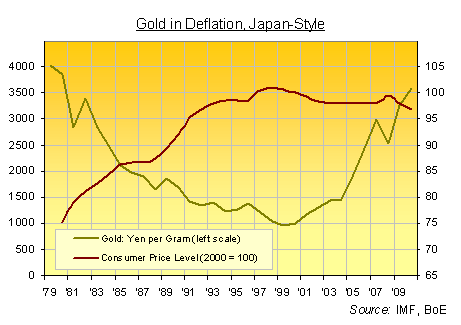
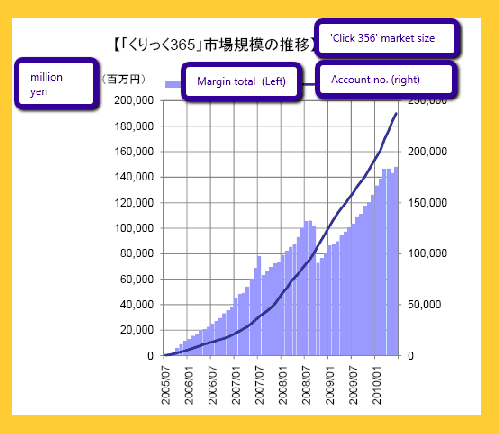
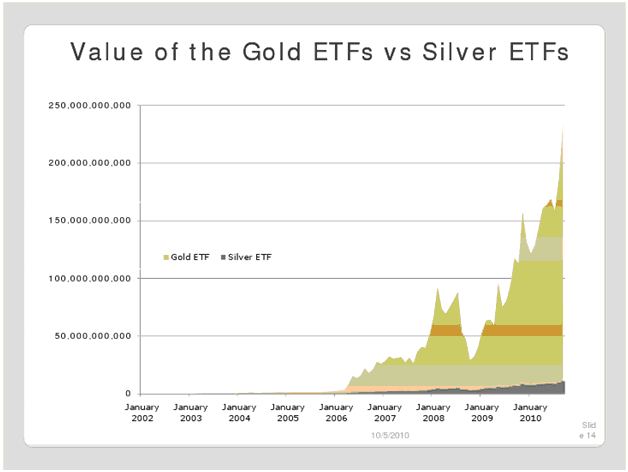
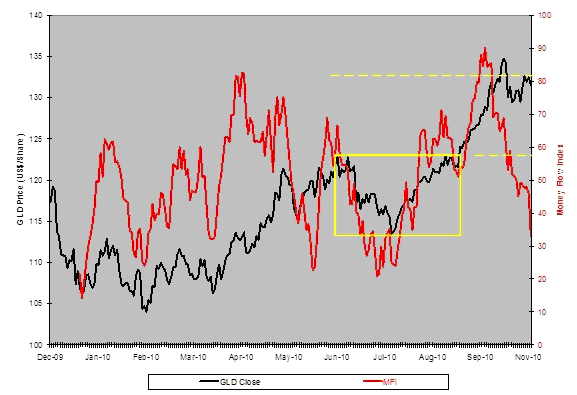
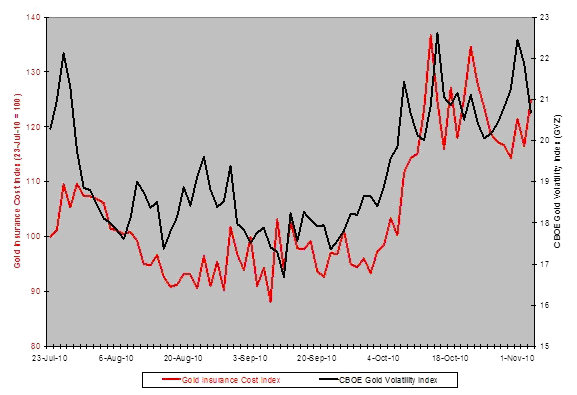
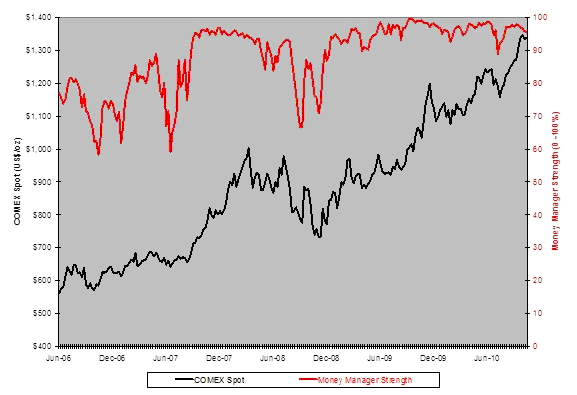
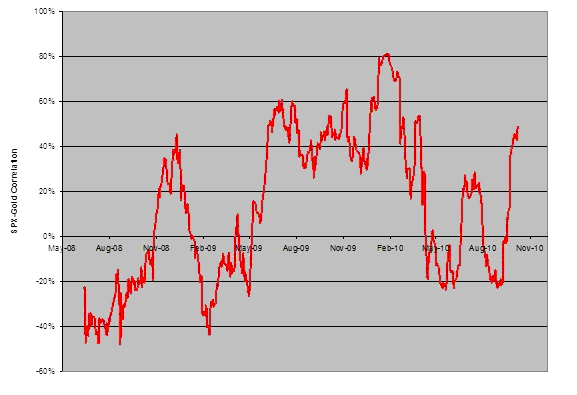
 Well, one thing we know about betting on a junkie that just got some heroin - they are going to get high! That's the easy bet and we took that earlier in the week for a quick 200% on the FAS spread and we're done with that as XLF hit $15 yesterday and FAS went over $25,
  We're gearing up to play the inflation game at PSW and it's a very exciting game to play (as you can see from that little FAS spread). We can magnify relatively small moves in the market to create great trading opportunities almost daily and inflation is like putting a gigantic safety net under everything we do - it's just fantastic. On behalf of the top 1%, I want to thank the bottom 99% for voting to "extend and pretend " rather than stopping the ongoing transfer of wealth that has now far eclipsed even the economic atrocities that led up to the Great Depression.



| You are subscribed to email updates from Gold World News Flash To stop receiving these emails, you may unsubscribe now. | Email delivery powered by Google |
| Google Inc., 20 West Kinzie, Chicago IL USA 60610 | |


No comments:
Post a Comment