


Gold World News Flash |

- The Goldsmiths, Part CLXVI
- Chris Powell: Piercing the mystery of the gold market
- Gold Seeker Closing Report: Gold Ends At A New All-Time High While Silver Surges To A New 30-Year High
- Another class-action silver manipulation suit hits Morgan, HSBC
- KWN Source Confirms Goldman Sachs Long Gold for Years
- Quote Of The Month (So Far)
- See what happens when you go off the gold standard?
- Ambrose Evans-Pritchard: Doubts grow about Bernanke's 'super put'
- Jesse Ventura's 'Conspiracy Theory' features GATA chairman on Friday
- The Gold Price and Silver Price Are Acting Like a Basketball Held Under Water, I Bought Gold and Silver Today
- Paul vows renewed push next year to audit Fed and gold reserves
- Gold and (Only) 11 Zeroes, Part Two
- Silver, Silver, Silver
- Was Gold Priced for QEII...?
- Après le Fed, the Deluge
- Vampire Squid Long Gold
- THURSDAY Market Excerpts
- Two More Nails In The Dollar’s Coffin—the Republican “Victory”, and the Fed’s QE2
- Politicians Cannot Stop the Gold Bull Market
- Do As I Say, No Matter What I Do
- U.S. dollar printing is huge risk -China c.bank adviser
- Profiting As the Fed Creates More Money
- Gold Daily and Silver Weekly Charts
- Buying U.S. Junior Gold Miners During A Dollar Debasing
- Euro Zone Will Join Fed In QE
- Jim's Mailbox
- Gold leaps to fresh record
- Market Down Only 1.5% Priced In Gold
- All Treasuries All the Time: The Impact of QE2
- The Silver Alpha
- Max gets ready to sing to Mike/Liverpool
- Christine Lagarde On The Federal Reserve's QE2: "The Euro Bears The Brunt of the Move"
- Ira Epstein's Weekly Metal Report
- Market Commentary From Monty Guild
- Debating Silver Manipulation
- QE2 - The Day After: Entire World Blasts Deranged Madman's Uncheckable Insanity
- The QE2 Binge — inflation on the horizon
- As The New "Zimbabwe Stock Market" Soars: They're Already Talking About QE3
- Silver: The Trade That Was Easy to See
- China’s Leg Up in the Rare Earths Market
- CLSA's Chris Wood Says Bernanke Will Continue "Mad Experiment" Until He Kills US Dollar Paper Standard, Looks Toward QE3
- Hourly Action In Gold From Trader Dan
- Fed's Attempt To Bloat Curve Belly Is Successful As 5s30s Goes Ballistic
- Why Printing Money Won’t Correct the Correction
- From Stagnation to Stagflation
- Gold’s Toxic Noose Is Untied: Next Crude Oil $150
- Silver Breaks $26; Shows What A Little RICO Lawsuit Can Do To The Price Of A Manipulated Commodity
- Guest Post: A Minskian Explanation Of The Causes Of The Current Crisis
- The Rare Earth Bonanza
- EASY AL & HELICOPTER BEN CELEBRATE ON JEKYLL ISLAND
| Posted: 04 Nov 2010 06:03 PM PDT The past few months has seen some strange, volatile moves in the gold, silver and agricultural grain markets. All of their associated futures markets have been in an undeniable bull run. Yet, despite the power and strength of the bull, all of a sudden, out of the blue, these markets have had some unusually large down days for a day or so and then they will almost immediately bump back up with equally large, seemingly uncalled-for gains to offset the declines. There has to be some explanation for this strange reaction in the futures' markets. This Goldsmiths will broach that theme now.
|
| Chris Powell: Piercing the mystery of the gold market Posted: 04 Nov 2010 04:44 PM PDT Remarks by Chris Powell The precious metals markets have tremendous potential for investors. But they are also wrapped up in great mystery -- deliberately so. Gold is the worst understood financial market. Most official data about gold is actually disinformation. Years ago GATA disclosed that the International Monetary Fund, the leading compiler of official gold reserve data, allowed its member nations to count gold they had leased, gold that had left their vaults, as if it was still in their vaults. The effect of this accounting fraud was to deceive the gold market into thinking that central banks had much more gold left to bomb the market with than they really did. But that's only the start of the false data. In April 2009 China caused a bit of a sensation by announcing that its gold reserves had increased by 76 percent, from 600 tonnes to 1,054 tonnes. For the previous six years China had been reporting to the IMF only 600 tonnes. Had China acquired those 454 new tonnes only in the last year? Very unlikely. Experts now believe that China acquired those 454 new tonnes over at least several years, largely by purchasing the production of China's own fast-growing gold mining industry. So for as many as six years the official gold reserve data about China was way off. ... Dispatch continues below ... ADVERTISEMENT Prophecy Resource Goes Into Production A commission appointed by Mongolia's Ministry of Mineral Resources and Energy has conducted the final permit inspection at Prophecy Resource Corp.'s Ulaan Ovoo mine site and has instructed the company to begin coal production. Prophecy Resource (TSX.V: PCY) has begun production of its first 10,000 tonnes of coal as a trial run of supply to be taken by rail to electric power stations in Darkhan and Erdenet, Mongolia's second and third largest cities after the capital, Ulaanbaatar. The company is the second-ever Canadian mining company to get a permit to mine in Mongolia and start production there. For the company's complete announcement, please visit: http://www.prophecyresource.com/news_2010_oct14.php This June the World Gold Council reported that Saudi Arabia's gold reserves had increased by 126 percent, from 143 to 323 tonnes, just since 2008. That the world's oil-exporting superpower had made such a new commitment to gold in its foreign exchange reserves also caused a brief sensation. But a few weeks later the governor o
|
| Posted: 04 Nov 2010 04:00 PM PDT After an initial hiccup immediately following the fed's announcement in after hours access trade yesterday, gold pretty much steadily rose throughout trade in Asia, London, and New York and ended near its late session high of $1383.90 with a gain of 3.41% at a new all-time closing high. Gold's intraday record high of $1386.93 was set this past October 14th (and has already been surpassed in today's after hours access session). Silver climbed to a new 30 year high of $26.075 in the last minutes of trade and ended with an impressive gain of 6.44%.
|
| Another class-action silver manipulation suit hits Morgan, HSBC Posted: 04 Nov 2010 02:35 PM PDT As Jimmy Durante used to say, "Everybody wants to get into the act." And why not? The deepest of deep pockets are here. * * * Press Release via Marketwire Kaplan Fox Sues JP Morgan and HSBC on Behalf of Investors http://www.marketwire.com/press-release/Kaplan-Fox-Sues-JP-Morgan-HSBC-o... NEW YORK -- On November 2, 2010, Kaplan Fox & Kilsheimer LLP (www.kaplanfox.com), a leading plaintiffs' firm, filed a class-action complaint in the U.S. District Court for the Southern District of New York on behalf of an individual investor against JP Morgan Chase and HSBC in connection with their alleged conspiracy and manipulation of the market for silver futures and options contracts traded on COMEX. To view a copy of the complaint: http://www.kaplanfox.com/templates/kaplanfox/images/content/pdfs/silver%... The complaint alleges that around June 2008, when JP Morgan acquired Bear Stearns, including Bear Stearns' short positions in silver futures, JP Morgan and HSBC commenced a conspiracy to manipulate, and did manipulate, the market for silver futures and options contracts on COMEX. Specifically, the complaint alleges that around this time, JP Morgan and HSBC, pursuant to their conspiracy, acquired massive short positions on silver futures contracts in an effort to artificially depress the price of the silver futures market. The defendants realized substantial illegal profits in connection with their scheme, while investors who had no knowledge of the scheme, lost substantial amounts of money because of the defendants' conduct. The complaint further alleges that the defendants' illegal scheme continued until around March 2010, when a metals trader based in London, publicly exposed the scheme. This trader has reported the scheme to the Commodity Futures Trading Commission ("CFTC"), and both the CFTC and the Antitrust Division of the United States Department of Justice are investigating the alleged conspiratorial and manipulative activities of the defendants. If you have any information concerning any of the defendants' conduct, or wish to learn more about the litigation, please contact Kaplan Fox attorneys Robert N. Kaplan or Jason A. Zweig at 800-290-1952. ADVERTISEMENT Prophecy to Become Coal Producer This Year Prophecy Resource Corp. (TSX.V: PCY) announced on May 11 that it has entered into a mine services agreement with Leighton Asia Ltd. to begin coal production this year. Production will begin with a 250,000-tonne starter pit as planned in August, with production advancing to 2 million tonnes per year in 2011. Prophecy is fully funded to production and its management team includes John Morganti, Arnold Armstrong, and Rob McEwen. For Prophecy's complete press release about its production plans, please visit: http://www.prophecyresource.com/news_2010_may11.php Support GATA by purchasing a colorful GATA T-shirt: Or a colorful poster of GATA's full-page ad in The Wall Street Journal on January 31, 2009: http://gata.org/node/wallstreetjournal Or a video disc of GATA's 2005 Gold Rush 21 conference in the Yukon: * * * Help keep GATA going GATA is a civil rights and educational organization based in the United States and tax-exempt under the U.S. Internal Revenue Code. Its e-mail dispatches are free, and you can subscribe at: To contribute to GATA, please visit:
|
| KWN Source Confirms Goldman Sachs Long Gold for Years Posted: 04 Nov 2010 02:35 PM PDT A King World News source out of London has confirmed that Goldman Sachs has been long gold for years. The source stated, "Goldman Sachs has been getting long the metals for years. Goldman Sachs has essentially been acting as their own central bank, buying on dips for years to hedge their currency...
|
| Posted: 04 Nov 2010 01:26 PM PDT Bill Murphy in tonight's Midas at http://www.lemetropolecafe.com/:. Something is going to have to give big time down the road re deflation/inflation in the US, and it is not going to be the precious metals … meaning either gold/silver are telling the real story or bonds are … and it's not bonds 
|
| See what happens when you go off the gold standard? Posted: 04 Nov 2010 01:00 PM PDT |
| Ambrose Evans-Pritchard: Doubts grow about Bernanke's 'super put' Posted: 04 Nov 2010 12:46 PM PDT By Ambrose Evans-Pritchard http://www.telegraph.co.uk/finance/economics/8111153/Doubts-grow-over-wi... The early verdict is in on the US Federal Reserve's $600 billion of fresh money through quantitative easing. Yields on 30-year Treasury bonds jumped 20 basis points to 4.07 percent. It is the clearest warning shot to date that global investors will not tolerate Ben Bernanke's openly-declared policy of generating inflation for much longer. Soaring bourses may have stolen the headlines, but equities are rising for an unhealthy reason: because they are a safer asset class than bonds at the start of an inflationary credit cycle. Meanwhile, the price of US crude oil jumped $2.5 a barrel to $87. It is up 20 percent since markets first concluded in early September that "QE2" was a done deal. ... Dispatch continues below ... ADVERTISEMENT Prophecy to Become Coal Producer This Year Prophecy Resource Corp. (TSX.V: PCY) announced on May 11 that it has entered into a mine services agreement with Leighton Asia Ltd. to begin coal production this year. Production will begin with a 250,000-tonne starter pit as planned in August, with production advancing to 2 million tonnes per year in 2011. Prophecy is fully funded to production and its management team includes John Morganti, Arnold Armstrong, and Rob McEwen. For Prophecy's complete press release about its production plans, please visit: http://www.prophecyresource.com/news_2010_may11.php This amounts to a tax on US consumers, transferring US income to Mid-East petro-powers. Copper has behaved in much the same way. So have sugar, soya, and cotton. The dollar plunged yet again. That may have been the Fed's the unstated purpose. If so, Washington has angered the world's rising powers and prompted a reaction with far-reaching strategic consequences. Li Deshui from Beijing's Economic Commission said a string of Asian states share China's "deep bitterness" over dollar debasement and are examining ways of teaming up to insulate themselves from the tsunami of US liquidity. Thailand said its central bank is already in talks with neighbours to devise a joint protection policy. Brazil's central bank chief Henrique Mereilles said the US move had created "excessive dollar liquidity which we are absorbing," forcing his country to restrict inflows. Mexico's finance minister warned of "more bubbles." These countries cannot easily shield themselves from the inflationary effect of QE2 by raising interest rates since this leads to further "carry trade" inflows in search of yield. They are being forced to eye capital controls, with ominous implications for the interwoven global system. In London and Frankfurt the verdict was just as harsh. "In our view this is one of the greatest policy mistakes in the Fed's history," said Toby Nangle from Baring Asset Management. "The Fed is gambling that the so-called 'portfolio balance channel effect' -- pushing money out of government bonds and into other assets -- will lift risk asset prices. The gamble is that this boosts profits and wages, rather than simply prices. We remain unconvinced. How will a liquidity solution correct a solvency problem?" he said. "A policy error," said Ulrich Leuchtmann from Commerzbank. The wording of the Fed statement is "dangerous" because it leaves the door open to a further flood of Treasury purchases if unemployment stays high. "It is a bottomless pit," he said. Of course it is precisely this open door that has so juiced risk trades, from Australian dollar futures to silver contracts and junk bonds. Goldman Sachs thinks QE2 will ultimately reach $2 trillion, with no exit until 2015. Such moral hazard is irresistible. It is the Bernanke "super put." Yet the reluctance of investors to leap back into the US Treasury market as they did after QE1 is revealing. The 30-year segment of the Treasury market is too small to matter, but symbolism does matter. Vigilantes sniff stealth default. "If long bond investors continue to throw their collective toys out of the cot, it risks upending the Fed's policy," said Michael Derk from FXPro. Mr Bernanke is targeting maturities of five to 10 years with purchases of Treasuries. These bonds have behaved better: 10-year yields fell 14 points on Thursday to 2.48 percent. However, Mark Ostwald from Monument Securities said foreign funds may take advantage of QE2 to dump their holdings on the Fed, rotating the money emerging markets rather than US assets. Bond funds are already restive. Pimco's Bill Gross says the great bull market in bonds is over, denigrating Fed policy as the greatest "ponzi scheme" in history. Warren Buffett has chimed in too, warning that anybody buying bonds at this stage is "making a big mistake." Fed chair Ben Bernanke uses the term "credit easing" to describe his strategy because the goal is to lower borrowing costs. If he fails to achieve this over coming months -- because investors balk -- the policy will backfire. No clear rationale for fresh QE can be found in orthodox monetarism. Data from the St. Louis Federal Reserve show that M2 money supply stopped contracting in the early summer and has since been expanding at an accelerating rate, topping 9 percent over the last four-week bloc. The Fed has used the "Taylor Rule" on output gaps as a theoretical justification for QE, but Stanford Professor John Taylor has more or less said his theories have been hijacked. "I don't think (QE) will do much good, and I worry about the harm down the road," he said. It has not been lost on markets that the Fed's purchases of $900 billion of Treasuries by June (with reinvested funds from mortgage debt) covers the Treasury's deficit over the same period. The slipperly slope towards "monetization" of public debt beckons. Global investors mostly accepted that the motive for QE1 was emergency liquidity, and that stimulus would later be withdrawn. But there are growing suspicions that QE2 is Treasury funding in disguise. If they start to act on this suspicion, they could push rates higher instead of lower, and overwhelm the Bernanke stimulus. That would precipitate an ugly chain of events for the US. Support GATA by purchasing a colorful GATA T-shirt: Or a colorful poster of GATA's full-page ad in The Wall Street Journal on January 31, 2009: http://gata.org/node/wallstreetjournal Or a video disc of GATA's 2005 Gold Rush 21 conference in the Yukon: * * * Help keep GATA going GATA is a civil rights and educational organization based in the United States and tax-exempt under the U.S. Internal Revenue Code. Its e-mail dispatches are free, and you can subscribe at: To contribute to GATA, please visit:
|
| Jesse Ventura's 'Conspiracy Theory' features GATA chairman on Friday Posted: 04 Nov 2010 12:35 PM PDT 8:30p ET Thursday, November 4, 2010 Dear Friend of GATA and Gold (and Silver): GATA is a public records organization, not a promoter of conspiracy theories, but that didn't stop GATA Chairman Bill Murphy from accepting a recent invitation to be interviewed by former Minnesota Gov. Jesse Ventura for an episode of his new TruTV network program, "Conspiracy Theory." Looks like that episode will air Friday night, for its promotional summary says: "Jesse goes inside the secret billionaire's boys club to find out what caused the financial meltdown and how the group allegedly continues to manipulate and control the stock market and oil, gold, and silver prices. From Wall Street to Washington, the governor barges in on the rich and powerful to demand answers." "Conspiracy Theory" will be broadcast on the TruTV network Friday at 10 p.m. Eastern time. If TruTV isn't available in your area, it's probably because J.P. Morgan Chase & Co., HSBC Bank, and the Federal Reserve have cut the cables. But don't worry -- some of the episode may be posted on the TruTV Internet site here: http://www.trutv.com/shows/conspiracy_theory/index.html We'll let you know -- if they don't come for us first. CHRIS POWELL, Secretary/Treasurer ADVERTISEMENT Prophecy to Become Coal Producer This Year Prophecy Resource Corp. (TSX.V: PCY) announced on May 11 that it has entered into a mine services agreement with Leighton Asia Ltd. to begin coal production this year. Production will begin with a 250,000-tonne starter pit as planned in August, with production advancing to 2 million tonnes per year in 2011. Prophecy is fully funded to production and its management team includes John Morganti, Arnold Armstrong, and Rob McEwen. For Prophecy's complete press release about its production plans, please visit: http://www.prophecyresource.com/news_2010_may11.php Support GATA by purchasing a colorful GATA T-shirt: Or a colorful poster of GATA's full-page ad in The Wall Street Journal on January 31, 2009: http://gata.org/node/wallstreetjournal Or a video disc of GATA's 2005 Gold Rush 21 conference in the Yukon: * * * Help keep GATA going GATA is a civil rights and educational organization based in the United States and tax-exempt under the U.S. Internal Revenue Code. Its e-mail dispatches are free, and you can subscribe at: To contribute to GATA, please visit:
|
| Posted: 04 Nov 2010 12:26 PM PDT Gold Price Close Today : 1382.20 Change : 45.60 or 3.4% Silver Price Close Today : 26.039 Change : 1.607 cents or 6.6% Gold Silver Ratio Today : 53.08 Change : -1.625 or... This is a summary only. Visit GOLDPRICE.ORG for the full article, gold price charts in ounces grams and kilos in 23 national currencies, and more!
|
| Paul vows renewed push next year to audit Fed and gold reserves Posted: 04 Nov 2010 11:57 AM PDT Let's hope that he asks Bernanke about the gold swaps GATA is suing the Fed about. * * * By Andy Sullivan http://www.reuters.com/article/idUSN0422739520101104 WASHINGTON -- U.S. Rep. Ron Paul on Thursday said he will push to examine the Federal Reserve's monetary policy decisions if, as expected, he takes control of the congressional subcommittee that oversees the central bank in January. "I think they're way too independent. They just shouldn't have this power," Paul, a longtime Fed critic, said in an interview with Reuters. "Up until recently it has been modest but now it's totally out of control." Paul is currently the top Republican on the House of Representatives subcommittee that oversees domestic monetary policy and is likely to head the panel when Republicans take control of the chamber in January. ... Dispatch continues below ... ADVERTISEMENT Prophecy to Become Coal Producer This Year Prophecy Resource Corp. (TSX.V: PCY) announced on May 11 that it has entered into a mine services agreement with Leighton Asia Ltd. to begin coal production this year. Production will begin with a 250,000-tonne starter pit as planned in August, with production advancing to 2 million tonnes per year in 2011. Prophecy is fully funded to production and its management team includes John Morganti, Arnold Armstrong, and Rob McEwen. For Prophecy's complete press release about its production plans, please visit: http://www.prophecyresource.com/news_2010_may11.php That could create a giant headache for the Fed, which earlier this year fended off an effort headed by Paul to open up its internal deliberations on interest rates and monetary easing to congressional scrutiny. Paul, who has written a book called "End the Fed," has been a fierce critic of the central bank's efforts to boost the economy through monetary policy. "It's an outrage, what is happening, and the Congress more or less has not said much about it," he said. Paul said his subcommittee would also push to examine the country's gold reserves and highlight the views of economists who believe that economic downturns are caused by bad monetary policy, not the vagaries of the free market. Global organizations like the International Monetary Fund also will come under scrutiny, he said. "Eventually we're going to have monetary reform. I do not believe the dollar can be the reserve standard of the world," said Paul, who has called for returning the United States to a currency backed by gold or silver. Many economists say that the Fed's decisive actions during the 2008 financial crisis prevented the deep recession that followed from turning into a depression. But grassroots outrage over the bank bailouts and other Fed actions helped propel many Republican candidates to victory in Tuesday's congressional elections -- including Paul's son, Rand Paul, who will represent Kentucky in the Senate. "With a lot of new members coming and the problems getting worse rather better, there's going to be a lot more people who are going to be looking for answers," Paul said. Support GATA by purchasing a colorful GATA T-shirt: Or a colorful poster of GATA's full-page ad in The Wall Street Journal on January 31, 2009: http://gata.org/node/wallstreetjournal Or a video disc of GATA's 2005 Gold Rush 21 conference in the Yukon: * * * Help keep GATA going GATA is a civil rights and educational organization based in the United States and tax-exempt under the U.S. Internal Revenue Code. Its e-mail dispatches are free, and you can subscribe at: To contribute to GATA, please visit:
|
| Gold and (Only) 11 Zeroes, Part Two Posted: 04 Nov 2010 11:43 AM PDT How gold's one-trick "inflation hedge" more than trebled amid the modern world's template deflation... LET'S IMAGINE the central bankers are right, says Adrian Ash at BullionVault. Let's say that – rather than actually ending a two-decade deflation – the price of clothing to Western consumers is only now set to turn lower. Let's agree that the doubling of central-bank foreign reserves since 2005...plus the worst sub-zero real rates of interest since the mid-70s...will count for nothing in global energy or food prices. Let's also say, despite all experience since the credit crunch bit in 2007, that the "output gap" theory – those "low rates of resource utilization" as the Fed put it on Wednesday – finally comes good, and so excess capacity conspires with slack demand to pull costs lower. Let's imagine, in short, that money actually starts to gain value. What then?  Back in 2002, three years after Japanese consumer prices began falling and one year after the Bank of Japan first embarked on quantitative easing to try and reverse that trend, Tokyo's Economic & Industrial Policy Bureau organized a survey of consumer experiences. (A big thank-you to Atsuko Whitehouse of Bullion-Vault-Japan for this research, by the way...) All told, 80% of respondents in 2002 said they felt some level of deflation in prices. A little over 25% felt deflation "very strongly", in fact. And only 1% said there had there been no deflation in their experience. Yet Gold Prices in both the Tocom futures market and in Tokyo's Ginza shopping district had risen 37% regardless. That gave early buyers of the ultimate (and apparently one-trick) "inflation hedge" a better than 40% gain in real terms. Sure, the price of gold globally had also been rising. And Japan's gold-friendly deflation came as the Yen fell on the forex market, extending the Dollar-price rise by 16% for Japanese buyers. But throughout its long, soft depression – and until 2009 – Japan was the world's second-largest economy, with the world's second-largest stock market. Thanks to Tokyo's swollen government spending since consumer prices peaked in 1998, it's since gone from the second-largest to No.1 bond market, too. So we shouldn't dismiss Japan's experience as a mere footnote or outlier. It certainly suffered deflation in domestic risk-asset prices and credit supplies too, if not in the actual volume of money supplied to the economy. (As in the US and UK, base money grew fat and squatted on bank balance-sheets thanks to quantitative easing; it failed to pile new debt on top of the then-record total.) While government bonds rose in price, yielding just-about real returns thanks to those gently slipping consumer prices, the Nikkei index of stocks fell by more than a quarter. Real estate, having already lost one fifth over the previous decade nationally – and after more than halving in the 6 biggest cities – lost another fifth again. The only major economy to hit deflation since before the Second World War, Japan thus offers our only template for what a modern deflation might look and smell like. Hence its obsessive hold on central-bank chiefs and would-be policy-makers (Ben Bernanke at the Fed, Adam Posen at the Bank of England, Paul Krugman everywhere). Hence BullionVault's quick survey of Japan's investment landscape since 1998. Because it looks remarkably like the ground opening up before US and UK investors tonight.
That year, and for the second time since 2002, the Bank of Japan announced a cut in its ceiling for bank-deposit cover (equivalent to the FDIC), capping insurance at ¥10 million ($90,000). That really meant something, as the WGC noted, in a nation of "occasional bank failures" where "56% of household investments are held in bank accounts." And spooked by the fear of a truly deflationary uninsured bank failure, retail Gold Investment demand surged by 42% in tonnage terms in 2004, rising by nearly 50% by Yen value from 2003 to ¥103 billion ($1bn at the time). And right alongside, four years of ZIRP had forced a far greater quantity of Japan's famous cash-savings to seek better-than-zip elsewhere as well. The initial period of Japanese deflation – marked by sinking interest rates and gently falling consumer prices – brought a series of mis-selling scandals in high-yield foreign bonds. Well, they were only scandals after Russia and then Argentina defaulted, of course. No-one much minded when they were paying (and the lesson went unlearned too, of course). Average daily volumes in the Tokyo foreign exchange market meantime rose 18% between 2003 and 2006 according to Bank of Japan data, but the Watanabes didn't really get hooked until the finance industry spotted the trend, and created retail-friendly products for leveraged currency speculation. The Tokyo Financial Exchange, for instance, launched its Click365 forex platform in 2005...  Sound at all familiar? It isn't just Gold Bullion that catches a bid when the returns paid to cash fall to zero. And absent a sharp decline in consumer prices – rather than the low single-digit declines seen year-on-year in Japan over the last decade – it isn't just US consumers who might doubt the official cost-of-living data either. A consumer survey run by the Bank of Japan found people felt inflation was running above 3.0% per year in Sept. 2009. After reporting a slight dip this spring, the 4,000 adults responding to Oct. 2010's survey pegged the true rate of consumer-price inflation at 1.3% per year...eating almost all of the 15-year Japanese government bond's current yield (5-year debt yields 0.3%) and delivering negative real-returns-to-cash almost as bad as those now suffered by US and UK savers. To repeat – two things happen to Gold Investment when the returns paid to cash fall to zero:
Buying Gold today...?
|
| Posted: 04 Nov 2010 11:27 AM PDT Silver Prices just keep on rising. But how much further could they go to catch gold...? LAST MONTH gold broke into new record territory – reaching an all-time high of $1387 per ounce on October 14, writes David Galland, managing director of Casey Research...just before gold broke to new highs above $1390 at the start of November. A new record in nominal terms, that is. To top the previous high in inflation-adjusted Dollars, gold will have to approximately double from there. Silver, however, has barely made it halfway back to its prior nominal high of $49.45 an ounce, achieved on January 21, 1980. In order to break into new territory in inflation-adjusted Dollars (using the same CPI calculation methodology used in 1980), silver would have to rise to over $250 an ounce – more than ten times where it is today. Here are some other useful facts about silver:
For instance, in 2009 total silver demand topped 889 million ounces, outstripping new mine supplies of 710 million ounces. The difference was made up by scrap recycling. Of course, the real pressure going forward is from Silver Investment demand, which has been a fraction of that for gold. If history is any guide, however, as gold becomes viewed as being too expensive for the "common man", silver sales will soar. The following chart from Quartermain's presentation helps put things into perspective.  Furthermore, if you agree with our contention that the economic crisis will continue, and that China's propped-up manufacturing sector will come under serious pressure, it's also logical to assume that demand for industrial metals such as lead, zinc, and copper will fall. That's important in the discussion of silver, because only 30% of silver's production comes from primary producers (i.e., silver mines), with the balance produced only as a byproduct of other minerals. Of the total new mine supply, fully 57% is associated with base metals production. As it, too, has industrial applications, demand for silver from manufacturers will also falter, but given the existing deficit in supplies, the surge in investor demand, and silver's growing use as a "green" metal (50 to 60 million ounces used up in solar energy applications in 2010 alone) and as an antibacterial agent, the overall supply/demand picture remains favorable. The truly miniscule amount of silver available above ground and its relatively modest price gains over the course of the precious metals bull market so far are what set the stage for it to play a quick game of catch-up to gold in the months just ahead. And when Silver Prices do a runner, the handful of pure play silver mining companies – producers and juniors that have identified large deposits – will do the equivalent of a moon shot. Just a heads up on something to pay attention to, especially on days when the precious metals take a breather from their steady ascent. Buying Silver today...?
|
| Posted: 04 Nov 2010 11:23 AM PDT Apparently not. But the volatile action threw out some recently long players... SO DID YOU hear a "pop" yesterday? asks Brad Zigler at Hard Assets Investor. There's been a lot of jawboning about a bubble in Gold Prices lately. And yesterday, just ahead of the Federal Reserve's much-anticipated statement on QEII, bullion prices sank. But did they pop? Judging from Thursday morning's price action, you'd hardly think so. Financial advisers often caution investors about the volatility of commodities. That advice certainly seemed prescient with respect to gold over the past two trading sessions. After a tension-filled week awaiting a Fed announcement outlining the scope of QE2II, metal prices broke $19 lower per ounce on Wednesday, bringing Spot Gold bullion down to the $1337 level. With the second round of quantitative easing defined – more or less as anticipated, actually – traders and investors adjusted their positions. In fact, some – the very bullish and the undercapitalized – had their positions adjusted for them, thanks to margin calls. A lot of the recently long were tossed from the ranks yesterday, helped by traders anticipating further weakening in bullion. And along with a surge in New York's Comex volume – more than double the previous day's turnover – open interest spiked, the telltale tracks of new short-sellers. Speaking of open interest, speculative long interest at Comex had actually been waning well ahead of this week's events. Net speculative length in Gold Futures had been shrinking for a month. The total of money managers' net exposure to gold, together with large and small non-institutional traders' positions, fell by more than 26,500 futures contract equivalents, or 8%, after 10 weeks of constant building. That, coupled with negative money flows in the SPDRs Gold Shares Trust (NYSE Arca: GLD) and some pullout from the trust's vault assets, gave bearish traders ideas. That made some longs very nervous, too. In October, the trust's Money Flow Index – a volume-weighted metric of capital commitment – peaked and began a precipitous fall even as share prices continued to rise for another two weeks.  GLD's smart money saw the rise in share prices above the $132 level as overextension, given the depth of the pivot-point turnaround in July. The trust's price, which mimics gold's trajectory, peaked near $135 in mid-October, after a 30% overshoot. All that is prologue to this morning's market, where bullion, Gold Futures and trust-fund GLD prices have roared back to the upside. At Thursday's Comex open, spot contract prices were $31 higher and traded bullishly from there. GLD shares opened $3 higher, again knocking on the door of the $135 level. All this seems to be additional justification for the old trading adage, "Sell on the rumor, buy on the fact" and grist for financial advisers' mill. Ultimately, quantitative easing is bearish for the Dollar, ipso facto bullish for gold. The only question, really, was how much of that notion was baked into Spot Gold bullion and gold proxy prices. Apparently not enough. A look at the option market, however, rendered a clue that something was afoot, at least for hedge-savvy investors. The cost of gold insurance – that is, GLD put options – spiked in November, even as the CBOE Gold Volatility Index (CBOE: GVZ) fell.  A put purchase affords an asset owner short-term catastrophic price insurance that can be quickly bought and sold. It gives you the right, but not the obligation, to sell at a pre-agreed price in the future if prices fall. Put buying jumped ahead of Wednesday's QEII news, so somebody was covering their near-term risk. It now seems the insurance was needed for just one trading session, however. Again, "sell – or proxy sell – on the rumor; buy on the fact." So, was yesterday's market action the long-awaited pop in the gold bubble? Is that all there is? Well, yes and no. Clearly, Wednesday's price decline washed out a lot of weak longs. Then there's the speculative outflow from long Comex Gold Futures and GLD trust shares over the past month. Don't kid yourself, though: Gold still heavily saturates the speculative landscape. Money managers are still moving to Gold Investing. Heavily investing. At last count, more than 95% of funds' gold positions leaned to the long side. That's a little bit off their peak near 100% in September 2009, but well-recovered from an 89% low in July. Pullbacks in the strength of money managers' bullish tilt is, in fact, healthy for specs. After all, when saturation is 100%, there's little, if any, buying room left.  Gold's current price action hasn't removed all the risk from Buying Gold or gold proxies at these levels, though. Investors holding gold in a portfolio with other assets aren't getting as much risk diversification from bullion now. The correlation between gold and S&P 500 stocks, in fact, has been rising – from negative 20% to positive 49% – since late September. Nobody, of course, complains when highly correlated asset prices rise; it's a price tumble that generates calls to brokers and advisors. Gold's supposed to provide a hedge for Dollar-denominated assets. That effectiveness, measured on a 30-day rolling basis, can vary significantly, though. Over the past two years, the average correlation between bullion and blue-chip stocks has actually been positive. The best risk diversification is afforded by assets that can maintain a negative correlation. And earlier this year, gold's correlation to the S&P index actually exceeded 80%...  The bottom line is, for gold, that there's not just one big bubble to pop. In fact, there are likely to be a lot of mini-bubbles that'll burst along the route through our current economic morass. Get the safest Gold Bullion at the lowest Spot Gold prices that private investors can access using world No.1 BullionVault today...
|
| Posted: 04 Nov 2010 11:21 AM PDT $100 billion here...$900 billion there...and none of it real money... AND NOW, the deluge. Or should we call it the Torrent Signal that our mate Kris Sayce has been banging on about for the last week? asks Dan Denning in his Daily Reckoning Australia. That's right – that gushing, gurgling, sputtering, splurging sound you hear is the sound of hundreds of billions of new US Dollars flooding into the economy and the stock market. Over the next eight months, the Federal Reserve will spend an additional $600 billion it doesn't have buying US bonds in the name of "price stability". If Kris is right, price stability is the last thing you'll see at the small-cap end of town in resource-rich Australia. For a variety of reasons, Fed policy doesn't seem to just trickle down into the small caps and junior Gold Mining and resource sectors. It rages on through like Old Man River. All up, the Fed is going to chuck in about $100 billion a month into the market. It said more large-scale asset purchases were possible if inflation was too low or unemployment too high. Remember, the Fed has a dual mandate of price stability and full employment. These days, price stability apparently means creating enough money to support asset prices, lest they crash. Even though we've said it before, it's worth repeating: Everything the Fed does these days is designed to support US banks. Monetizing US government debt doesn't do a lick of a good to improve the quality of the assets on US bank balance sheets. The Fed is merely trying to keep interest rates from spiking; an event which would send even more banks into terminal decline because of its affect on the housing market (which is already in serious trouble) and would put households in further defensive mode. As far as the stock market is concerned, there are a lot of green numbers on the screen this morning. Because this $600 billion announcement was in the Goldilocks spot – not too large, not too small...just big enough to please the market without being so big it scared anyone about how inflationary it really is. Please note that the Aussie Dollar moved above parity on the Fed move and stayed there. Is parity the new normal for the Aussie? Maybe. Speaking for ourselves, we've been waiting for a big correction in silver and gold to add to our precious metals holdings. But it just hasn't come yet. What could this mean? It could mean that the inter-market relationships that seemed to govern the movement of the Aussie Dollar, the US Dollar, and precious metals prices are breaking down. The greenback is getting weaker relative to everything else. The Fed contributes to this with its march to restore monetary insanity. Two years of grid-locked Washington dealing with a fiscal nightmare probably add fuel to the Dollar's fire. By the way, the real amount of QE, when you add in the Fed rolling over mortgage purchases, is closer to $900 billion. That's almost enough to start a new war. But what's a few hundred billion here and there when it's not real money anyway? Want to Buy Gold today? Start with this free gram of fine gold...vaulted for you right now in dedicated, secure storage in Zurich, Switzerland by BullionVault...
|
| Posted: 04 Nov 2010 10:50 AM PDT |
| Posted: 04 Nov 2010 10:18 AM PDT Gold futures soar to new highs The COMEX December gold futures contract closed up $45.50 Thursday at $1383.10, trading between $1346.70 and $1384.80 November 4, p.m. excerpts: see full news, 24-hr newswire…
|
| Two More Nails In The Dollar’s Coffin—the Republican “Victory”, and the Fed’s QE2 Posted: 04 Nov 2010 10:13 AM PDT "On Wednesday, two things happened that spell the near-certain end to the dollar: The Republicans had a mid-term election "victory", and the Federal Reserve unleashed Quantitative Easing 2. In this essay, Gonzalo Lira discusses both issue, arguing that Republicans are really the "spend-and-cut-taxes" party, which will only increase the deficit—putting even more pressure on the dollar. Meanwhile, Lira argues that the Fed's foolish QE2 strategy—expanding the Fed balance sheet by 25% over eight months by monetizing $600 billion in Treasury bonds—will eventually knock the legs out from under the dollar. Current trends in commodity prices seem to be bearing out Lira's predictions."
|
| Politicians Cannot Stop the Gold Bull Market Posted: 04 Nov 2010 09:52 AM PDT I can guess the bear argument before they begin to make it. The republicans win congress and there will be a new mandate. Spending will be cut. Money printing may cease. We may have austerity in the US. The US Dollar will rally.
|
| Do As I Say, No Matter What I Do Posted: 04 Nov 2010 09:52 AM PDT On Thursday, the markets acted as if they were surprised by the Fed's action yesterday. Stocks leapt higher, along with bonds and (especially) commodities as the dollar declined to an 11-month low. Oil rose to nearly a 2-year high in response ...
|
| U.S. dollar printing is huge risk -China c.bank adviser Posted: 04 Nov 2010 09:01 AM PDT Nov 4 (Reuters) - Unbridled printing of dollars is the biggest risk to the global economy, an adviser to the Chinese central bank said in comments published on Thursday, a day after the Federal Reserve unveiled a new round of monetary easing.
|
| Profiting As the Fed Creates More Money Posted: 04 Nov 2010 09:00 AM PDT The latest news to depress me is that incomes were reported down 0.1%, and the latest news about spending is that spending is up 0.2%. The reason that it was extraordinarily depressing for me is that I was trying, in vain, to explain to the drooling half-witted pinhead idiot seated next to me at the bar that I think that "spending" is actually waaAAAaaay down, because, while total spending is up, it is mostly because prices have risen so much that people buy fewer things overall, but pay more per item that they do still buy, which they do because of the rapid decline of their standards of living caused by the loss of buying power of the dollar as a result of the Federal Reserve creating so many more of them. Until now, the inflation in prices was disguised by the slimy trickery of the government's/Fed's distortion of reality by their hedonically-adjusting downwards actual price increases to account for "quality" improvements and other un-quantifiable tangible and intangible benefits. I told him, as a way of impressing him so that he would not think I was not as stupid as I look or sound, that I was entrepreneurially-inspired by such government arrogance that this was when I first threw a packet of vitamin C tablets into the file marked "Mogambo's Wonderful Investment Portfolio (MWIP)." In doing so, I completely changed my whole marketing thrust. Previously, I had gone with the slogan, "Profit by the stupidities of the Federal Reserve creating excess money, and the deficit-spending madness of the federal government, by buying gold, silver and oil stocks today, using the wisdom of the Mogambo's Wonderful Investment Portfolio (MWIP), which is to buy gold, silver and oil, ya moron!" The fabulous new marketing slogan that I came up with was, "Be wealthier and be healthier! Invest with Mogambo's Wonderful Investment Portfolio (MWIP) and be both!" which still recommends that investors buy gold, silver and oil to make them wealthier – guaranteed! – by profiting from the stupidity of the Federal Reserve creating too much money, but now with a recommendation to take vitamin C to make them healthier, too! Finally, this drunken barfly turns to me and says, "Huh? You talkin' to me?" which lets me instantly know that he is an idiot, because I have been talking to him for over ten minutes about how the evil Federal Reserve is destroying us by creating so much new money, so freaking much new money, so terrifyingly much new money so that the government can borrow and spend that it creates terrible inflation in prices! "Yikes!" I said. Well, actually I only claim that I said, "Yikes!" but I was pretty smashed by this time, and what I really said was a lot of obscene cursing at the Federal Reserve for creating so much new money and loud burst of Mogambo Bellow Of Outrage (MBOO) at that arrogant socialist Obama monster for borrowing all that money to spend on socialist dreams and schemes that are doomed to failure. Indeed, it started out as a long and loud disparagement of the Federal Reserve, but was soon replaced with hushed and obscene-yet-gratuitously-lewd comments about a bunch of hot young ladies seated over there by the pool table, who think they are so hot, and who had previously laughed at me and said, "Go away, grandpa! We're looking for hot, handsome hunky men, and you are blocking the view! Hahaha!" Well, as punishment for their insults, I decided to let them suffer by not telling them, as I ordinarily would, to buy gold, silver and oil, and that We're Freaking Doomed (WFD) because the Federal Reserve, under the horrible Alan Greenspan from 1987-2006, created so much money and distorted the economy into a giant, bloated, disgusting, government-centric economic monstrosity, where the government is sucking the life out of the economy through over-taxation and over-regulation, and then spitting it (if that is the correct orifice) back into the economy via huge budgets and deficit-spending oceans of new money created by the Federal Reserve and that, tragically, even Greenspan's horrifying monetary excesses pale to seeming insignificance compared to the unbelievable infamy of the new chairman of the Federal Reserve, Ben Bernanke, and all his unbelievable inflationary intent, because inflation is, of course, the One Big Freaking Thing (OBFT) that you do NOT want to happen, and this insane monster is trying to make it happen! Gaaahhh! So, I laugh in scorn while I am screaming in outrage, which is harder to do than it looks, as I think to myself, "Let the young ladies have their fun, blissfully ignorant about how having the Federal Reserve monstrously creating $2 trillion, or maybe $4 trillion, or more in a year, year after year, all in a lousy $14 trillion economy, so as to allow the federal government to borrow it and spend it, is what we professional economists call Absolutely Freaking Insane (AFI)!" I'm not sure I could impress upon these nubile little temptresses that this is a stunningly huge clot of new spending-money that is appearing, literally, out of nowhere, to join other money coming out of nowhere, such The Wall Street Journal reporting that a lot of people are defaulting (i.e. haven't made a payment in 16 months or more) on their mortgages, but are managing to still live in the house without paying a dime, giving them a "free" place to live, which is (you gotta admit!) a pretty sweet deal for them! The moral and ethical ramifications aside, and the banker's desire to keep the house occupied so as to prevent vandalism and looting of an empty dwelling, this brings up, as it does, the moral and ethical ramifications of these defaulting squatters perhaps routinely vandalizing surrounding vacant dwellings so as to make a few bucks selling the appliances and wiring, thus actually increasing the desire of petrified bankers to let these defaulting deadbeats stay in the houses – and maybe even pay them! – un-molested. And then (pause), as there always is (pause), there is the subject of (pause) money. And the money that I am talking about is, of course, "How come the rest of us, who do not have a mortgage to default upon, can't get in on some of this 'free housing' gravy? It's justice denied and unequal protection of the laws, I tells ya!" And what about the people who rent their homes and apartments? Don't they equally deserve to live someplace for free, too, since all it takes to be able to do so is creditors and landlords to voluntarily not throw them out? And what about Lefty and Pinhead, the two thieving, lying, cheating, filthy, worthless, lazy, dropout, alcoholic, drug-addicted mental defectives and personal friends of mine who currently live in a storm culvert, and who get to smoke all the cigarettes they want, drink all the booze they want, eat all the crappy fast-food they want, any time they want, and who don't have to always worry about remembering to pull up their stupid zippers after they take a whiz? Shouldn't they get some of that "free housing" gravy, too? And gravy it is, too! "Defaulters living in the homes" is calculated to be "a subsidy worth about $2.6 billion a month," which is a lot of money that would otherwise flow to creditors, who would otherwise pay tax on the money, but who are now looking at tax-deductible losses which, in the case of the USA, means more deficit-spending to continue bailing out Fannie Mae and Freddie Mac, the two gigantic, laughably incompetent, loss-producing, loser organizations which together own almost all the mortgages in the Whole Freaking Country (WFC) so that, as the loathsome and disgraceful Christopher Dodd of Connecticut once said, home ownership would not be limited "only to those who can afford it." So Fannie and Freddie operate with a $2.6 billion monthly deficit, a loss which is paid by the federal government deficit-spending another $2.6 billion a month, which it borrows when the money is created by the Federal Reserve, which increases the money supply, which makes prices go up. That's the theory, and it has always held, sort of like the theory of gravitation, the practical application of which is to simply make the sensible decision to invest following a regimen of frantically buying gold, silver and oil to capitalize on the inflationary horror about to befall us, which is So Freaking Obvious (SFO) and so easy that you shout huzzahs of thankful happiness to the beautiful blue skies and shout, "Whee! This investing stuff is easy!" The Mogambo Guru Profiting As the Fed Creates More Money originally appeared in the Daily Reckoning. The Daily Reckoning, offers a uniquely refreshing, perspective on the global economy, investing, gold, stocks and today's markets. Its been called "the most entertaining read of the day."
|
| Gold Daily and Silver Weekly Charts Posted: 04 Nov 2010 08:53 AM PDT |
| Buying U.S. Junior Gold Miners During A Dollar Debasing Posted: 04 Nov 2010 08:51 AM PDT There have been some exciting mergers and acquisitions (M&As) within the junior mining sector over the past few months. As gold and silver settle from the previous move, many projects will be re-rated and acquired by majors that are struggling with decreasing resources. I believe the industry is undergoing consolidation and we're seeing the beginning of a major international race to control future gold and silver ounces in the ground. The bull market in gold and silver is intact, and though we may see some short-term pullbacks in bullion prices, the junior mining sector will continue to outperform.
Investors are aware that the sector is ripe with takeover candidates as the junior miners outperformed bullion since the late-July rally began; not until mid-September did they underperform. Now it seems like the previous uptrend is continuing after finding support at the 50-day moving average. Junior explorers are gaining interest as investors transfer their strategically devalued fiat currencies into valuable precious metals resources in the ground. As the dollar collapses to three-year lows, I expect more companies to acquire projects or consolidate to gain control of and leverage their exploration assets. The Federal Reserve has been quite vociferous about its goal of pumping the economy with more cash. And it appears the US is leading the race to devaluation, as many emerging markets have been critical of the Fed's dovish actions. This is creating a domino effect wherein other countries are now forced to devalue their currencies in order to prevent the collapse of their own economies. A devalued currency helps an economy by making its products cheaper domestically and increasing exports. The recent surge in M&A activity suggests the mining industry is predicting the price of gold will continue to appreciate for the foreseeable future. High-quality projects with high-grade mineralization and low cash costs are receiving a premium. As the price of gold rises, high-grade deposits with good assets will be accelerated into development and production. I expect aggressive miners to buy out partners to gain 100% control of projects in order to expedite resource and reserve growth. When a miner controls the project completely, it can be more aggressive with resource expansion and development of a discovery. It also has leverage to the expansion of the resource. Particularly in an industry that's interested in growth stories, companies are hungry for large open discoveries to replenish their reserves.
One company that's taken a 100% control of a discovery is Fronteer Gold Inc. (FRG). The company bought out AuEx Ventures, Inc. for a premium due to the upside leverage to the expansion of the Long Canyon Project. The Long Canyon Project in Nevada has great potential for expansion because it's completely open in all directions, is high-grade, and has exceptionally low cash costs. The cost to get this project into production is very low because it's a heap-leach operation. The $100 million cost is well within Fronteer's ability to finance the development completely. With its asset base in Nevada, Labrador, and Northwestern Turkey and its current cash position of over $140 million, there should be no dilution to shareholders. This is a rare situation in the junior mining sector where investors constantly face share-dilution risk when companies need to raise capital to fund exploration or develop projects. Long Canyon has been compared to an early stage version of Newmont Mining's (NEM) Midas Gold Mine, which is a huge Carlin deposit. Carlin deposits continue to expand because they usually have deep, underground sulfide roots. Fronteer has not yet discovered these at Long Canyon. Both Fronteer and AuEx believe Long Canyon and West Pequop may be connected by a huge sulfide root system. And both believe what's been found to date on both sides of the mountain is on the periphery of the main deposit. The closer the company gets to the center of the mountain, the higher the grades. Fronteer is now looking for the sulfide roots as it's expanding a near-surface, high-grade oxide and trying to fast-track the project into production. It seems Fronteer is getting a better view of where the high-grade stuff is located in Long Canyon. I believe the Pequop District could be Nevada's next major mine with multimillion ounces of high-grade gold. A new resource estimate, expected in early 2011, will take into account the progress of the 2010 drilling program, which has expanded the project's size and grade. I expect further drill results to continue to drive cash costs down and bring further recognition to this world-class discovery. One company that I'm convinced is catching the eye of majors is International Tower Hill Mines Ltd. (THM). The company has resources of more than 10 million ounces (Moz.) gold on its Livengood Project in Alaska. As gold has made a significant move in 2010, International Tower Hill Mines has consolidated. Now, with the recent volume surge and break of the upper resistance line, I believe International Tower Hill Mines could continue the 2009 price trend and outperform bullion as the company develops different mining options that drive down costs.
I believe the company has the best development project in Alaska. In my opinion, it has the greatest chance of becoming a successful and operational mine. International Tower Hill Mines has what many of its competitors are struggling for: a favorable permitting and infrastructure situation. The mine is close to infrastructure, right off a central highway, and doesn't have the same permitting issues as other major mines being developed in Alaska. After many years of investing in mining companies and seeing the downfall of many mining investments, I've realized these two features are key to success. The Livengood Project is on an all-weather highway in a major mining center. The state of Alaska is also proposing a natural gas line that would connect and provide power to the mine. And there are no native claim issues. In addition, the project is in the top 2% of gold discoveries with more than 10 Moz. gold. The big producers are looking for large deposits to expand their resource bases, but they don't want the risk associated with projects that have permitting issues or that lack infrastructure. Down the road from Livengood is Kinross Gold Corp.'s (KGC) Fort Knox mine, which produced more than 260,000 ounces of gold in 2009. It's only natural to assume that when a suitor comes to make an offer for Livengood, Kinross — with the infrastructure and labor force already there — will make a counter offer. The Fort Knox mine life will be nearing completion as Livengood begins. International Tower Hill Mines has come to long-term trend support and broken to the upside. Major volume is moving in, and the second uptrend may be beginning. As it moves closer to a prefeasibility study and improves the project economics, the share price should receive a premium. The global credit crisis and the low-interest-rate environment facilitated by central banks are causing more producers to find ways to utilize cash positions to gain resources with huge growth potential. This fiscal environment of currency devaluation and quantitative easing, which may continue for some time, will force the producers sitting on large cash positions to acquire more assets. There's a lack of major discoveries, and companies showing impressive, high-grade results have seen huge share appreciation.
|
| Posted: 04 Nov 2010 08:48 AM PDT My Dear Friends, Mark my words, the euro zone will join the US Fed in quantitative easing before this chapter of the darkest days of finance in human history draws to a close. The US Fed actually snagged the euro zone in what the Chairman sees as necessary. The FOMC vote was almost unanimous for QE. That alone carries a significant message. The austerity measures in the euro zone are, without any doubt, going to come back and bite them hard in the rear. Did you notice the condemnation of QE quieted today with only China standing tall? QE is wrong, but there is no other alternative to the powers that be. It is the lesser of immediate economic evils as compared to the austerity of balance sheets thanks to the FASB. It is the lesser of immediate economic evils as the cause of the entire problem, OTC derivatives, not only have not been addressed, but the damn things have actually gotten larger. This exact technical formation you see today took place just before the geometric rise to $887.50 in gold's price from mid 1979 to1980. The gold market has the power here to run to $1444 and even $1650. Respectfully,
European Central Bank Keeps Rates at Record Lows LONDON — The Bank of England and the European Central Bank left their key interest rates at record lows Thursday after recent data showed that the economic recovery was showing some resilience. A day after the U.S. Federal Reserve moved to pump another $600 billion into the banking system to strengthen the U.S. economy, the Bank of England decided against any new stimulus measures for Britain, leaving its bond purchasing program at £200 billion, or $322 billion. The main interest rate remains at 0.5 percent. At its meeting, the European Central Bank left its benchmark interest rate at 1 percent. Investor attention was focused instead on anything that E.C.B. President Jean-Claude Trichet might say later in the day about the bank's plans to tighten monetary policy — even as the Fed moves in the other direction. The Bank of England had considered expanding purchases of government debt, so-called quantitative easing, last month, but positive economic data released since then alleviated pressure for it to act. The services sector, including banks and airlines, and manufacturing reported an unexpected growth in October and growth of Britain's gross domestic product beat economists' forecasts in the third quarter. The Bank of England would find it "hard to justify further purchases without some evidence," Jens Larsen, chief European economist at RBC Capital Markets in London and a former Bank of England official, said. "The rebound has been pretty robust and inflation has surprised us on the upside. At the same time there are clearly some big risks facing the economy. Quantitative easing is not off the table."
|
| Posted: 04 Nov 2010 08:40 AM PDT Greetings Jim, As expected, gold surged higher today, extending yesterday's rally into the close following brief "sell the news" weakness earlier in the session. Price action has now moved slightly above the mid October all-time high at $1,381, and a confirmed breakout would reconfirm the secular uptrend and forecast additional gains.
It is also important to note that the Gold Currency Index (GCI) is now testing its previous all-time high as well.
Recall that a negative divergence existed between the GCI and gold in September when gold last broke out to a new all-time high. That negative divergence no longer exists and both daily charts are equally bullish at the moment. If the GCI and gold subsequently experience synchronized confirmed breakouts to new all-time highs that would be a major bullish signal forecasting substantial gains for the precious metal during the next several months. Best, CIGA Erik
Jim, The USDX – POG Mathematical Model indicates that Gold is about to break above resistance. CIGA Stefaan
No clear path for GOP on health care repeal Market forces will upset the apple cart of good (or bad) intentions long before the politicians. Americans, while no stranger to the fragility of paper currencies, have lived under the familiarity of dollar umbrella to long to assume that the economic lights can be turned off without warning. When socialism and/or centralize banking outstrips taxable capabilities on a nation, they must turn to debt. The ability to issue debt depends on confidence in the currency that denominates it. That's where markets forces come into play. Republicans say they'll repeal and replace President Barack Obama's health care law, but tinker and tweak is as far as they're likely to get. And that might not be a bad thing if you're a GOP strategist. It keeps the issue Senate Republican leader Mitch McConnell calls the "tipping point" in the midterm elections alive for 2012, when they'll try to unseat Obama himself. Source: news.yahoo.com
McRib, Fed Decision, and Price of Gold You'd think the introduction of at least $600 billion by the Federal Reserve would be a hot search topic for Americans trying to protect the currency in their pockets. A visual summary of yesterday's "hot" Google search trends suggests otherwise. The news that McDonalds will be reintroducing McRib generated massive search volume. The following charts illustrate how the McRib news dwarfed both the Fed's Decision and Price of Gold queries. The McRib Search Volume Index (SVI) surged above 40 yesterday. McRib SVI The Fed Decision search was lucky to register 5-10. Fed Decision SVI How about the price of gold? A reading below 2 can only be described completely off the public's radar screen. The Price of Gold SVI Fear always shakes out the weak hands. Ignorance is the ally of fear. Source: google.com
China Can Use More Copper Than World Has = Rising Prices Demand is skyrocketing. Headline: China Can Use More Copper Than World Has Now With Yang's Stove China is on pace to almost triple its annual use of copper to 20 million tons in 25 years, according to CRU, a London-based metals and mining consulting firm. That's more than the world produces today. Rising demand will create a potential global shortage of 11 million tons a year by 2035, CRU forecasts. New supply faces significant regulatory challenges. Promising copper projects such as Taseko's Prosperity project, already delayed numerous times, has been delayed once again. Regulatory approval of Prosperity has been a work in process for 17 years. Headline: UPDATE 3-Canada blocks development of Taseko mining project The government of Canada has decided to block the development of Taseko Mines' (TKO.TO) controversial copper-gold mine in British Columbia, Environment Minister Jim Prentice said on Tuesday. Ottawa's decision — based on "concerns about the significant adverse environmental effects" — overrules British Columbia's provincial government, which had granted permission for the Prosperity project to go ahead. Prices tend to rise when demand exceeds supply. Source: bloomberg.com
Jim Sinclair – Gold Bottomed, Dollar Index Headed to 56 -When asked about the US dollar Sinclair responded, "72 right now is the price objective, then I think some modest strength, and then into the sixties." -Jim Sinclair also mentioned the dollar index, "could eventually fall to 56." -Well there you have it from one of the greats, gold has bottomed. Assuming Sinclair is correct, for all of you dip buyers, if you blinked you missed it. Source: kingworldnews.com Jim is right, this is the real deal. Intense out performance of junior gold shares over the majors illustrates the power of this quiet breakout. The junior to major ratio showed almost no pullback during the latest round of top caller panic. Junior to Major Gold Share Ratio:
Jim Sinclair's Commentary This following answer by Joseph Kahama to Bernie and the gang of three brothers is quite thoughtful, absolutely relevant and spot on correct. Brother Bernie, Thank you for copying me in your communication with Jim regarding what is unfolding between China and Japan, and by extension China and the USA. The issue is more complex than that. It is about resistance by the World's only superpower against a formidable major power that is seemingly unstoppable. Japan lost its number two (2) spot to China in terms of World economic power by February 2010. This is Japan's attempt to win back its lost position. It is doing it the wrong way. The USA, on the other hand, is resisting China's unstoppable advance to catch up with it in its Superpower Status. Every advances by China are at the cost of US hegemony. China therefore sees Japan and the USA teaming up against its interest of 'peaceful rising'. In this equation, the USA is losing focus by not taking cognizance of the E.U. Europe can assist the USA in balancing China's rise, not Japan. The European Union is both a formidable military, political and economic power, but only acting as a whole and not individually. U.S. interests are safer in alliance with E.U. Love,
|
| Posted: 04 Nov 2010 08:31 AM PDT Thursday, Nov. 4, 2010 (Bloomberg) — Gold surged the most since March 2009, reaching a record closing price… Gold settled at US$1,383.10 an ounce, the highest ever, as the dollar fell to the lowest level in almost 11 months against a basket of major currencies. Gold futures for December delivery rose US$45.50, or 3.4%, to close at US$1,383.10 an ounce at 1:56 p.m. on the Comex in New York, the biggest gain for a most-active contract since March 19, 2009. The intraday high of US$1,388.10 was reached on Oct. 14. [source] RS View: In afterhours trading gold has suddenly extended these mid-day closing marks and intra-day records in the futures market, with the spot price just now breaching the $1,392 level even as I type…
|
| Market Down Only 1.5% Priced In Gold Posted: 04 Nov 2010 08:05 AM PDT
The market as we know it, is now finished. As of last night, stocks are nothing but a policy tool, controlled exclusively, and very much legally and with no legislative control, by Ben Bernanke. The Federal Reserve has rendered the economy irrelevant. We hope America enjoys paying $10 for a loaf of bread shortly. In the meantime, the market closed down 1.5% priced in gold, which closed $7 dollars short of $1,400. Next stop: $10,000.
|
| All Treasuries All the Time: The Impact of QE2 Posted: 04 Nov 2010 08:00 AM PDT So… This is what life after "QE2" looks like:
Everything is rallying…in terms of depreciating dollars. Mission accomplished. Ben Bernanke needs George W. Bush's ol' "shock and awe" flak jacket. In case mainstream media coverage made you glaze over, here's the quick and dirty of the Federal Reserve's fateful decision…
Hmmn… If the federal budget deficit is supposed to run $1.2 trillion during fiscal 2011 (that's the consensus guess)…and the Fed will purchase $875 billion in Treasuries over the next eight months (that's two-thirds of a year)… [Pause for back-of-the-envelope math] …then we quickly see the Fed plans to monetize all of all the debt that Treasury plans to spit out from now through the middle of next year, and then some. This is yet another reason we don't expect the House Republicans to convert to the gospel of fiscal responsibility any more than they did last time they were in the majority: They can indulge in demon spending unto oblivion…and the Fed will have their back. "If this were Greece or Ireland," Bill Bonner wrote yesterday before the announcement, "the government would be forced to cut back. With quantitative easing ready, there is no need to face the music. If bond buyers will not finance America's trip to bankruptcy, the Fed will provide as much brand-spanking-new money as necessary." The main difference between QE2 and its predecessor is this: The bulk of the junk the Fed put on its balance sheet during QE1 was mortgage securities, with about $300 billion of Treasuries thrown in for good measure. Now it's all Treasuries, all the time. And most of those Treasuries are of medium-term duration – very few 30-year bonds are in the mix. Thus, the yield on the long bond rocketed past 4% yesterday. It sits at 4.05% as we write. Still, what's really notable about QE2 is the form it did not take. In August, former Fed vice chair Alan Blinder wrote an Op-Ed in The Wall Street Journal. He tossed out a number of suggestions for QE2 that, for better or worse, would actually goose the economy and not just shore up the banks' balance sheets:
Yesterday, the Fed chose "none of the above." It didn't even take up Blinder on his suggestion to adopt new language hinting at an even-longer lasting commitment to near-zero rates. We just got the same old blather about "exceptionally low" rates "for an extended period." Yawn. Stretch. "Today," Fed chief Ben Bernanke wrote in this morning's Washington Post by way of explaining himself, "most measures of underlying inflation are running somewhat below 2%, or a bit lower than the rate most Fed policymakers see as being most consistent with healthy economic growth in the long run." Of course, that "underlying" inflation level does not take into account your need to eat, or heat your home or drive to work. And it's only going to get worse. Your neighborhood grocer is seeing his costs rising. "The big challenge," says the CEO of a California grocery chain to The Wall Street Journal, "will be how much can we swallow and how much can we pass along?" He's holding out as long as he can, but skimping on tires for your delivery trucks (seriously, that's one of his cost-cutting measures) only gets you so far. Yesterday, we discussed rising food, gold and commodities costs in the context of the Fed decision during this interview with Financial Survival Radio. Have a listen here: Addison Wiggin All Treasuries All the Time: The Impact of QE2 originally appeared in the Daily Reckoning. The Daily Reckoning, offers a uniquely refreshing, perspective on the global economy, investing, gold, stocks and today's markets. Its been called "the most entertaining read of the day."
|
| Posted: 04 Nov 2010 08:00 AM PDT A love affair with silver is so natural. The fundamentals are astoundingly positive and bullish in price prospects. My basic argument has been repeated many times. Industry has countless uses for silver, significant demand. But industry has only miniscule isolated uses for gold, in trivial demand. So silver wins on the Demand side of the equation. Central banks own a huge amount of gold. They frequently sell it, even through their slippery surrogate the Intl Monetary Fund. Central banks own zero silver. So silver wins on the Supply side of the equation. My motto is that gold fights the major political and financial war, but silver will ride in on a shiny white horse and take much larger spoils.
|
| Max gets ready to sing to Mike/Liverpool Posted: 04 Nov 2010 07:57 AM PDT
|
| Christine Lagarde On The Federal Reserve's QE2: "The Euro Bears The Brunt of the Move" Posted: 04 Nov 2010 07:57 AM PDT As I speculated yesterday, Europe would be hit hard by the Fed's recently announced QE2. Just in from the Wall Street Journal, emphasis mine:
Obviously, it looks like China and the US have found a sucker, the Euro, to devalue against. Not all major currencies can successfully devalue against each other at the same time. It's impossible because you need a strong currency to compare your currency to; it's a relative thing. That is, you need to find a large economy to export your inflation and products into. Who remains? Enter the EU. And what of Lagarde's comment: "I am not making a judgment on the US quantitative easing"? Does Europe have a spine?!!!! China, Brazil, South Korea, etc... all openly complain about dollar debasement, and the EU leadership does nothing?!!! Look, what Ben Bernanke is doing is creating the world's largest carry trade. One that will make Japan's carry trade look meager by comparison. It is a dangerous policy of exported inflation and bubble creation around the world that will end in economic tragedy. Europe needs a voice. Many of its member states are committing economic suicide by implementing austerity measures, while their currency, the Euro strengthens. How can the member states successfully export their way out of this mess? How can you pay back burdensome sovereign debt when your economy is experiencing debt deflation - the vaporization of money? I think that the Deauville Meeting between Germany, France, and Russia may have covered this topic. See my post: The Franco-German-Russian summit in Deauville. If France and Germany don't have something up their sleeve to combat this, than they will be sorely disappointed if they think they can create "cooperation" in the upcoming G20 French Presidency. Europe's members may work like that, but the world, at large, does not. The Euro could also be doomed because it does not have a central Treasury. Right now, any debt monetization done by the ECB is nation specific, meaning they don't buy EU debt, they buy Greek debt, or Irish debt, etc... so there isn't exactly one interest rate, but many. Here's an interesting view from the Business Insider: 
|
| Ira Epstein's Weekly Metal Report Posted: 04 Nov 2010 07:17 AM PDT I believe that today's rally in gold marks the end of the October selling correction. I now expect to see general upside momentum going into year end. Yes, there will be price breaks and somewhere along the way I expect consolidation to take place. But I don't expect to see the most recent low of 1315.6, made on October 22nd, to be penetrated in the near future. If it is, I will have to rethink my price objectives.
|
| Market Commentary From Monty Guild Posted: 04 Nov 2010 07:11 AM PDT Dear CIGAs, U.S. Election The election went according to prediction; gridlock is the most likely outcome for the next two years. President Obama is faced with a choice to either move more to the center on domestic issues, or focus on foreign policy. Let us consider the how a period of political gridlock will either support or hurt various legislation, and how gridlock will affect various industries over the next two years. With a large Republican majority in the House of Representatives, a three to four seat Democratic majority in the Senate, and a Democratic president, we expect the following:
Which U.S. Sectors benefit or are hurt by the election results?
Clearly, the U.S. is in a period of great economic turmoil, and the message voters are sending is one of frustration, dissatisfaction, and the desire to change things in Washington. It will be interesting to see how voters react to the plans of the new Congress. It is our opinion that the future plans selected by Congress will be popular only to the extent that they can produce rapid job growth. Jobs are the key issue for voters and they will be happy if jobs grow and incomes stabilize or rise, if this outcome does not develop, we look for voters to change the political landscape once again in 2 years. To create employment, we advocate tax incentives for businesses to hire and to grow, and the removal of regulations that stifle growth. We suggest lower taxes on capital gains and increased tax deductions for the research and development of new and improved products and technologies. High tech jobs are the wave of the future for the world. China China's economy continues to confound the pessimists with strong growth. Corporate profits rose at an impressive 38% in the third calendar quarter of 2010. China's 12th Five-Year Plan was recently released, and we note that it emphasizes the following:
All of these will be salutary for stock market investors in China, and we plan to invest clients' portfolios in accord with this plan. We will be investing in Chinese companies which produce raw materials, industrial machinery, and domestic consumer goods. India is Booming India is growing rapidly in almost all regions. The corrupt, combative, communist and socialist enclaves in Eastern India have kept the economic miracle from entering their domain, but the rest of India is booming. Unfortunately, much of the backward, obstructionist area is highly populated and desperately poor. Outside of Calcutta and Benares, India's major cities are booming, and its secondary cities in the West, South, and North are doing very well. Much of India is growing at a rate similar to the rate in China at close to 10%. India is also getting wiser with its resources. Recently, steel minister Vibhadra Singh made an important statement that the country is considering stopping or limiting iron ore exports to ensure that Indian steel mills have enough supply. This is a pattern we have seen in China and we expect to see more of in India as they choose to husband their resources for their own economic expansion. Brazilian Elections Produce No Surprises Dilma Rousseff won the Brazilian presidency and vows to carry on current President Lula's policies. The public believes that she will keep her word and concentrate on continuing Lula's infrastructure projects while gradually lifting citizens out of poverty. She said she would continue to spend on welfare programs and would not tolerate a government that spent beyond its means. She vowed to make public spending more efficient. If she is effective, the country will continue its trend of growth and economic success. We believe that infrastructure, housing, and education will be the three sectors that most benefit from her policies, unless inflation rises. High inflation would cause large interest rate increases and stifle housing and other industries. Oil Prices A detailed analysis of the trend in future oil prices reached many institutional investors this week. It was prepared by Morgan Stanley and represents their proprietary analysis of the long-term supply of oil from over 500 major fields of both OPEC and non-OPEC producers. The report expected "Spare capacity to fall to untenable levels. If global demand increases by a modeled 1.5 million barrels/day in 2011, and an arbitrary 1% thereafter, spare capacity will fall to 2.5 million barrels/day by end-2012, comparable to levels seen in 2007 and 2008. Tighter [impossible] levels of spare capacity are seen from 2013-15." In our opinion, the energy consumption increases modeled by Morgan Stanley are conservative. We believe that actual consumption increases may exceed those amounts. Demand for oil is inelastic in the intermediate term. Increases in the availability of alternatives to oil tend to take some time to develop, so oil prices will rise. Morgan Stanley predicts $100/barrel oil in 2011 and $105 in 2012. Our view is that this shortage mentality will be layered upon a situation where the pricing mechanism for oil (the U.S. dollar) is weakening; putting further upward pressure on oil prices. We concur with Morgan Stanley's conclusions, but our view also includes the obvious probability that continued weakening of the U.S. dollar will put further upward pressure on oil prices. Grains and Foods Agricultural weather experts are predicting very cold winters for Russia, Canada, and the United States; which is negative for winter wheat production. This is another element which supports our thesis that food prices are going to be stronger for longer. Even without weather-related issues global stockpiles of grain are shrinking due to increased food demand from emerging countries. Beneficiaries of this trend are farm equipment manufacturers and fertilizer producers, prices of grains such as wheat, corn, soybeans, rice, and the prices of meats themselves should continue to rise. Quantitative Easing (QE)—Good for Gold and Other Asset Prices As we have mentioned in these pages previously, the Federal Reserve will continue with quantitative easing for the foreseeable future. There will be many episodes of QE, often combined with other initiatives such as inflation targeting. QE frequency will depend upon the amount of economic growth or shrinkage that the U.S. economy experiences…and the recurring fear of many professional economists at the Federal Reserve that the U.S. is slipping into a Japanese-style deflation/stagnation. Among the determinants of how many more QE programs we can expect is whether or not the Bush tax-cuts are renewed. Non-renewal or expiration of the tax cuts means the Fed is on its own in stimulating the economy, and that means more QE. The amount of budget-cutting done by Congress (especially if it is rapidly implemented) could have deflationary consequences, prompting more QE from the Fed. The majority of the economists at the Federal Reserve believe that inflation targeting and QE is the only way to prevent millions more U.S. jobs from disappearing. The language in the Fed's announcements repeatedly states that they believe inflation is too low. In our opinion, it is very clear that they want to increase the inflation target for the United States. They want inflation at 2% not the current rate of less than 1%. It will be a longer-term focus of the Fed. They want to stimulate investment in real estate, commodities, and stocks by institutions and the public. Fed officials want the U.S. economy to grow and they want individuals to start new businesses to increase employment and salaries. A long-term policy of continuing QE will be part of that process. As our regular readers know, the side effects of QE are: a lower dollar, stronger commodity prices, and increased demand for stocks that can grow in the U.S. and abroad. Clearly the announcement yesterday of an expanded QE program over the next 8 months is another step in this direction. We again point out to our readers that QE is going on in many places. Every country engaged in printing money to buy dollars and thus keep their currency from rising too much is engaging in QE. Japan, Brazil, and many other Asian and Latin American countries are in this category. QE is everywhere and the additional liquidity from it is flowing into the markets of Asian and Latin countries with good growth prospects. It is also flowing into some non-U.S. currencies, gold, silver, oil, copper, food, cotton, rubber, and many other commodities, in addition to U.S. and European stocks. Money Flows into Equity Mutual Funds Recently, mutual fund flows have reversed the trends that had been in place for several months. About two weeks ago, money began to flow back into U.S. and European stock funds, while continuing to flow into emerging market funds. From where has this money come? Money markets, bonds, and bond funds had been attracting the large sums which had been moving out of stocks since May. Now they have begun to disgorge money, and it is flowing back into global stock markets. Why? Interest income returns are very low in bonds and wise investors see the upshot of all of the QE. They realize that increased inflation is the likely result of this behavior, so rather than let their money depreciate in value while earning a very low return they choose to own equities and accept some volatility for a return which may keep up with, or hopefully exceed inflation. Summary and Recommendations We still like the same themes and investments we have been discussing: Investors should continue to hold gold for long-term investment. We have been bullish on gold since June 25, 2002 when it was selling at about $325 per ounce. In our opinion, it will move to $1,500 and then higher. Traders, sell spikes and buy dips. Investors should continue to hold oil related investments. There has been some recent oil-related news that has driven oil to over $84.00 per barrel. The positive items are: U.S. onshore inventories are neutral and offshore inventories held in tankers have declined substantially. A negative news event is that there will be an increasing supply from Iraq. We have been bullish on oil since February 11, 2009, at which time oil was trading at $35.94 per barrel. Currencies: For long-term investment, we do not like the U.S. dollar, Japanese yen, British pound or the euro. We do like Canadian, Australian, and Singapore dollars, the Thai baht, Malaysian ringgit, and Indonesian rupiah. We would use any pull-backs in these currencies as an opportunity to establish long-term positions. Investors should continue to hold shares of growing companies in India, China, Singapore, Malaysia, Thailand, Indonesia, Colombia, Chile, and Peru. We have been recommending these markets in these commentaries since September 14, 2010, and we would use any pullbacks as an opportunity to add or initiate positions for long-term investors. We believe long-term investors should continue to hold food-related shares such as grains, wheat, corn, soybeans, and farm suppliers. Since we said the grains had bottomed on December 31, 2008, these have all appreciated substantially, we see more price rises ahead. Continue to hold U.S. stocks for a further rally. Our reason for becoming more bullish on U.S. stocks on September 9, 2010 is that over the longer term, liquidity formation through QE will create demand for many assets, including U.S. stocks. In the short-term, U.S. stock market indices could pull back as the indices are near resistance areas. Traders may want to take some profits, but stocks are assets that can grow, so liquidity finds its way into them. Thanks for listening. Monty Guild and Tony Danaher
|
| Posted: 04 Nov 2010 07:08 AM PDT Last week, I wrote a piece about the purported "debate" which took place on BNN earlier that week – on the subject of silver manipulation. This event was in response to the stunning remarks of CFTC Commissioner, Bart Chilton: that he had observed enough evidence of such manipulation in the public domain to conclude that U.S. bankers had "fraudulently" and "deviously" sought to manipulate the silver market via the U.S.'s "Comex" exchange. Presumably, such a debate would have attempted to piece-together such evidence with one side arguing in favor of such evidence, and the other side arguing against it. In fact, during this 9-minute sham, no significant evidence of any kind supporting "manipulation" was raised (by either side), but rather the whole point of this exercise seemed to be not about "debating" silver manipulation, but rather simply discrediting Commissioner Chilton, following his courageous and unprecedented remarks. To support my conclusion, let me briefly introduce a small portion of the evidence which could have been argued in a serious debate. Previously, when the subject of "silver manipulation" was raised, the response of people such as Jeffery Christian (who argued against manipulation on BNN) would be to ask the rhetorical question: "if there is widespread manipulation of the silver market, why haven't we seen some 'whistle-blower' step forward to acknowledge these illegal acts?" Christian never made that remark on BNN's "debate". Why? Because earlier this year, veteran metals-trader Andrew Maguire did emerge as a whistle-blower. Indeed, he attempted to testify at the CFTC's spring hearings on the issue of precious metals manipulation. He told the CFTC (privately) that not only had he heard traders for the bullion-banks personally bragging about repeatedly manipulating the silver market, but he said he was familiar enough with their practices to not only detail a major, previous episode of manipulation, but also to describe to the CFTC a manipulation that was in progress while he was in direct contact with CFTC officials. The response of the CFTC? They would not allow Maguire to testify. Let's be clear on what this signifies. It was always open to the CFTC to "hear" Maguire's evidence (officially), and then to conclude they didn't find it persuasive. However, in simply refusing to give Maguire the opportunity to present his evidence – as the whistle-blower that (presumably) CFTC investigators wanted to hear from – the CFTC completely discredited itself, as the personification of the "see no evil, hear no evil, speak no evil" monkeys (Commissioner Chilton, aside). Indeed, were it not for the efforts of GATA to publicize Maguire's efforts to alert the CFTC, we might have never become aware of this whistle-blower. If we needed any further evidence of the lack of good faith exhibited by this so-called "regulator", the CFTC has provided it, or rather a soon-to-be-retired judge who presides over CFTC investigations has provided it. Judge George Painter is one of the two administrative law judges who presided over CFTC investigations/complaints (for the last two decades). Judge Painter recently announced his own plans to retire. Here is what he had to say about the CFTC's other Judge: Bruce Levine: On Judge Levine's first week on the job, nearly twenty years ago, he came into my office and stated that he had promised Wendy Gramm, then Chairwoman of the Commission, that he would never rule in a complainant's favor. A review of his rulings will confirm that he has fulfilled his vow… Judge Painter had even more to say about his colleague for the last twenty years, but let me interrupt that to make fully explicit what Judge Painter implied. This is not simply an accusation of "bias", but one of corruption. It was "good for business" (i.e. the large U.S. corporations getting fat off of these markets) for plaintiff's to never win – since who wants to invest in (get "fleeced" in) markets where those doing the trading are regularly found to have been engaging in various forms of fraud? And since it was "good for business", Judge Painter was going to ignore his own, professional duty and all the principles of "justice" which he had sworn to uphold. Judge Levine has made no public attempt to refute Judge Painter's criticism. As badly as this reflects on Judge Levine, it paints an even more disturbing image of the former Chairman. When Wendy Gramm received the purported "pledge" from Judge Levine, she should have instantly revoked his appointment. The fact that this did not happen, implies that Ms. Gramm either condoned Judge Levine's attitude or had made that a condition of his appointment. How did Judge Levine's corruption manifest itself on the bench? Judge Painter had this to say: Judge Levine, in the cynical guise of enforcing the rules, forces pro se complainants to run a hostile procedural gauntlet until they lose hope, and either withdraw their complaint or settle for a pittance, regardless of the merits of the case. |
| QE2 - The Day After: Entire World Blasts Deranged Madman's Uncheckable Insanity Posted: 04 Nov 2010 07:08 AM PDT
Yesterday's Ben Bernanke penned an Op-Ed in which he essentially said: "I am doing whatever I interpret my mandate to be, which right now means only thing: Dow 36,000. I am only accountable to the private bank that is the Federal Reserve, a few Wall Street CEOs, and no one else. Congress has no power over me. Try to stop me." And while the stock market is so far in love with this exhibition of outright hubris which promises record bonuses even as a record number of Americans subsist on foodstamps and real, not BLS, unemployment is over 20%, putting the Chairman in a long-overdue strait jacket will ultimately require an outright clash between those who still believe in that piece paper called the constitution and the kleptocratic cartel to whom the trade-off between a senior bond impairment and their first born is never all that clear. And while more and more try to educate a hypnotized, strategically defaulting US society what QE2 means to their future, the rest of the world is already rising in a tidal wave of disapproval aimed at the Federal Reserve. As the FT reports, Brazil, China, German, and Thailand, and soon everyone else, have already voiced thighest criticism and their condemnation of this escalation in FX wars.
Everyone now realizes that the most benign outcome of this act is the symbolic isolation of the US by the rest of the world. The outright isolation will come the second China, Germany and Russia announces they have come up with their own, commodity-backed currency.
At some point all Americans, no matter how engrossed with their facebook profile, will have to ask themselves: is preventing a few multibillionaires from suffering debt writedown losses a sufficient compensation for the trillions in incremental debt, for the conversion of America to the laughing stock of the world and its subsequent insolvency, and to the collapse of the standard of living of those 81% of Americans who barely have any stock market holdings, and thus benefit exactly zero from this action. photo credit: William Banzai
|
| The QE2 Binge — inflation on the horizon Posted: 04 Nov 2010 07:07 AM PDT by Numerian Such is the bizarre state of monetary policy in the United States that the second round of Quantitative Easing by the Fed is already being feared and rejected by economists and financial analysts around the world before it is even implemented. It may be that the market has come to realize that QE1 did not perform as promised. Job creation remained anemic, economic growth declined, commodity inflation accelerated, and bubbles popped up in a variety of markets. A second matter of concern could be that Ben Bernanke this time around has pulled open the Fed's cloak of secrecy to reveal a dirty secret: the Fed has been actively targeting a higher stock market as one of its monetary policy goals. In an op-ed published yesterday in the Washington Post, Bernanke wrote that a higher stock market has resulted merely from the speculation that QE2 would be implemented (this is true), and that because consumers will feel wealthier, spending will pick up (this is highly dubious not least because consumers have been ditching the stock market all year). Then of course there is the fact that all this liquidity is supposed to wind up in the pockets of Americans, but it somehow does not. Through a mechanism called the carry trade, hedge funds and banks borrow super-cheap dollars and invest in Brazil, India, China, Australia and elsewhere because interest rates are so much higher in these countries. This is why Americans never see any of this money… Don't these men know the nasty history of central banks which monetize government deficits as the Fed is now doing? … Either one of two things is going on here: the people running the Fed are grossly incompetent to the point of malfeasance, or they are fully aware of the risks they are running but are going ahead for some unstated purpose, probably having to do with the need to continue to pour capital into the Big Four American banks which are closer to collapse than the public is allowed to know. These are the banks, after all, which have been making hundreds of millions of dollars off free money and the carry trade, and these are the banks which are at risk of insolvency as the foreclosure crisis grinds on. As of this moment, the markets continue to be schizophrenic now that QE2 is official. Some markets dread the inflationary potential of this policy, which is why gold is up, the dollar is down, and the US Treasury bond market is selling off… There are so many other unusual circumstances to this stock market that it is hard to pick out the most alarming, but one that everyone has noticed is that we have gone the longest period on record where the stock market is rising but the bond market is falling. Always in the past, the stock market could not advance if the bond market was expressing fear about inflation or the economy, which it has been for months now. These type of discrepancies always get rectified, and the longer they go on the worse the reaction for the stock market. We are very overdue for that reaction by almost every technical and sentiment indicator that is published…
|
| As The New "Zimbabwe Stock Market" Soars: They're Already Talking About QE3 Posted: 04 Nov 2010 07:06 AM PDT Now that the Federal Reserve has crossed the Rubicon into its next round of monetary stimulus, the only question for investors Thursday seemed to be what's next. Markets reacted jubilantly to the Wednesday announcement that the Fed would be adding another $600 billion to its $2.3 trillion balance sheet. Stocks in both US and foreign markets soared as did commodities, while Treasury prices, particularly in the five- and 10-year notes, also jumped. The action was all a result of what the Fed calls quantitative easing, a process in which the central bank designates a quantity of assets it will buy which hopefully eases credit conditions through lower rates. The program is known as QE, with the second round called QE2. So with QE2 out of the way and the market ready to ride the Fed's momentum, talk immediately switched to when the economy will see future QE implementations that some market pros think are little more than an inevitability. "They're already talking about QE3," said Dave Rovelli, managing director of US equity trading for Canaccord Adams. "Eventually we're going to be printing so much money the dollar is going to really go down and everybody's going to try to deflate their currency against us. I just don't know how this could end well." 
|
| Silver: The Trade That Was Easy to See Posted: 04 Nov 2010 07:05 AM PDT Ray submits: There have been lots of things happening in the silver market lately all of which reinforce my bull case for being long. Long time readers know I have been pounding the table of silver for the better part of 2 years now. The one aspect of the market that I have concentrated on is the supply/demand side of the equation. It stands to reason that with some 2 billion souls entering the middle class they will all want cell phones and other modern toys. All of these toys involve silver to some extent in their production. The supply of silver is not unlimited and very few miners solely look for the shiny metal, it is typically a byproduct of copper and gold mines. Silver is also not recycled the way many other metals are which means it is used once and never again and that is unlike many other metals that are usually recycled. I believe that the reason people believed silver had an unlimited supply is because it was so cheap, but now we find out, I have known for awhile, that the prices were manipulated by 2 big banks, HSBC and JPM. This is not conspiracy talk anymore as 2 lawsuits have been filed and Bart Chilton has admitted the manipulation. Complete Story »
|
| China’s Leg Up in the Rare Earths Market Posted: 04 Nov 2010 07:00 AM PDT Basically, rare earths are exotic elements that are critical to the future of high tech, clean energy, Big Science and – oh by the way – national defense. The list includes 17 elements like terbium, ytterbium, and yttrium. Back in chemistry class you may have heard of the "Lanthanide Series" of elements, which includes 15 of the 17 elements. Also back in chemistry class, somebody doubtless raised their hand and asked the teacher what you needed to know about the Lanthanides. If your chemistry class was like most chemistry classes, the teacher probably said, "Don't worry, they're not on the test."
Well, these elements are on the test now. Why? Because the Chinese control 97% of world output of rare earths, and have tight control over much else as well in the realm of technology metals. Recently the news is that the Chinese have been restricting exports of rare earths, and apparently some other metals. That's a problem. All of the rare earth elements have one or more excellent atomic properties. These include incomparable chemical, electrical, magnetic and/or optical properties. For example, neodymium (Nd) makes strong magnets even stronger. Europium (Eu) is necessary for television screens to show color images. Lanthanum (La) is useful in high energy-density batteries, as well as being critical in petroleum refining. Now think about all the rhetoric you've heard about how "we" are going to transition to a high tech/clean tech future of solar panels, windmills, electric cars, smart grid, wired-world. Oh yeah? Problem is, most of these technologies simply WILL NOT WORK without large amounts of rare earths. That is, the electric cars, wind turbines, solar panels, miniature electronics, smart grid, etc. will not get built in the US (or Canada, Japan, Europe, Australia, etc., for that matter) if industries cannot secure long-term supplies of rare earth minerals. And, oh by the way, that goes double for advanced defense technologies. For example, EVERY missile in the US arsenal uses some quantity of rare earths – every single one! What's the problem? In the past 15 years or so, the West closed down essentially all of its rare earths refining capability. The entire market (well, 97% of it) was conceded to the Chinese, for a lot of reasons – economic, wages, resource-base, environmental and much more. Now that the West wants to build out a different energy and technology future, the Chinese control critical substances from ore bodies through to final oxides and metals. It's as if somebody (the West) wants to set up a fancy, Napa Valley-style winery (new, clean, high tech), but doesn't have any grapes (rare earths). This vintner-wannabe will have to buy the grapes from a producer in China. Do you really think that the Chinese will sell the guy the best grapes, and help him create a world-class brand of wine? What do the Chinese say? They say that they're just acting rationally. They're closing down unsafe mines and controlling past environmental pollution. They're consolidating the industry, as most other industries consolidate over time. The Chinese say that they're just encountering natural issues of depletion, from mining their ore bodies over the years. They say that they just don't have "more" rare earths to export, because of natural economic and market forces. Of course, the Chinese also say that if you move your factory to China, they'll put you on an allocation for rare earths. You'll have enough to operate. That is, you'll have enough raw materials as long as you set up a joint venture with a Chinese firm and share all your technology. Of course. Byron King China's Leg Up in the Rare Earths Market originally appeared in the Daily Reckoning. The Daily Reckoning, offers a uniquely refreshing, perspective on the global economy, investing, gold, stocks and today's markets. Its been called "the most entertaining read of the day."
|
| Posted: 04 Nov 2010 06:41 AM PDT
CLSA's Chris Wood is in fine form today. From CLSA's Fear and Greed The announcement of QE2 has come in as expected, namely an incremental approach. Still, the approach is sufficiently gung-ho to continue to give the benefit of the doubt to the risk trade. Investors should remain overweight Asia and emerging markets which will again prove to be the major beneficiaries of quanto easing. Macro investors should also remain long Asian currencies against the US dollar, with the Singapore dollar remaining GREED & fear’s favourite currency on a risk-adjusted basis. GREED & fear’s view on QE2 remains that it will not precipitate releveraging of the American economy, just like the first version did not. But it will probably take some time for the equity market to work that out reflecting the natural bullish bias. Still when the releveraging hopes are dashed attention will then turn to QE3, which next time may include a formal inflation target and purchases of private sector debt. Billyboy will likely carry on with his mad experiment until he precipitates the collapse of the US dollar paper standard. The Fed’s attempt to combat the perceived problem of deflation will end up creating a far bigger problem. That is the systemic risk posed by the anticipated ratcheting up of QE. This is why the view here remains that America will turn out to be a case of “Japan-heavy” not “Japan-lite”. GREED & fear continues to be surprised that US financial markets are not more concerned about the continuing foreclosure mess. There is also the separate but related issue of faulty representations and warranties made by originators of non-agency mortgage loans in the mortgage-backed securitisation process. The issue is whether this is institution specific or system wide. There is a small but not zero risk that this securitisation-boomerang problem could turn out to be systemic in nature in terms of the losses it could impose on prominent commercial banks and investment banks in terms of billions of dollars of mortgage exposure being put back to them. One way US consumption has been boosted at the margin in the recent past is the growing practice of “strategic default” where people stop paying mortgages but continue to live “rent free” on the increasingly correct view that the banks will take an increasingly long time to foreclose on them. Such a trend can only serve to delay further a housing recovery. The US housing crisis is somewhat unique in the sense that it is a product of a home financing bubble rather than a house price bubble. This is why house prices can get ridiculously cheap in the US before there is a final bottom. The systemic risk posed by the socialisation of the mortgage market is growing not receding. With some politicians already calling for a nationwide moratorium on mortgage foreclosures, it is surely only a matter of time that the same sort of people will be calling for mandatory mortgage debt relief. This is a good reason for investors to sell exposure to US mortgage paper and US financial stocks. The fundamental reason why such a mess exists is clearly that the repeal of the 1933 Glass-Steagall Act occurred without a realisation that such deregulation only made sense in the area of financial services if there was a similar deregulation in terms of allowing bad banks to fail. The most likely end game of a foreclosure crisis that turns systemic is another wave of taxpayer funded bank bailouts. The renewed rise in PIGS spreads has not been accompanied by renewed euro weakness. This market action presumably reflects the news that the German efforts to impose some discipline on Euroland’s fiscal targets gives the euro more credibility. Still given the way both the Germans and the ECB blinked when the Greek crisis came to a head, it would be dangerous not to assume a similar reaction the time a crisis hits. The Indian central bank is about the only central bank in Asia fundamentally comfortable with tightening independently of the US. This reflects the longstanding domestic demand driven nature of its economy and the resulting almost total absence of the export-orientated mercantilist bias so deeply entrenched amongst East Asian central bankers.
|
| Hourly Action In Gold From Trader Dan Posted: 04 Nov 2010 06:26 AM PDT Dear CIGAs, Nervousness ahead of yesterday's FOMC announcement concerning its QE plans led to a mild sell off in both gold and silver in the past session but all that did was give buyers a chance at grabbing the metals at a lower level before they were jammed higher today in the commodity buying frenzy that resulted from the Fed's assault on the US Dollar. About the only commodity markets that were lower today were the feeder cattle and natural gas markets. Corn is back at levels last seen in August 2008. Soybeans are working at reaching the $13 level while wheat is above $7 once again. Cotton is once again limit up as it continues to trounce one record after another and is now well above levels last seen when Rhett Butler was running Yankee blockages during the era portrayed by "Gone with the Wind". (We are organizing a raid on neighborhood clothes lines where a rich stash of cotton underwear and T shirts has been sighted). Crude oil is gearing for a run towards $87 while sugar is well above $0.30. Copper is nearing $4.00, palladium is closing in on $700 and platinum is at $1750. Get the picture? The dollar is collapsing while commodities are surging stoking the fires of inflation which the nitwits at the Fed believe that they can somehow control once they let the genie out of the bottle. What they cannot control is the Foreign Exchange markets which are breaking the back of the green"back". Gold has not quite managed to take out its recent all time high but silver is surging into new 30 year highs. It was able to reach the gob of buy stops just above the $25.10 level which was all she wrote. Once those were taken out, the pain inflicted on the trapped shorts was too much for many of them and out they went. I am going to be extremely interested in seeing what the open interest readings look like tomorrow morning when the exchange releases them to see if we might be witnessing the beginning of a commercial signal failure. I think it goes without much saying – the markets have voted and rendered a verdict on the effect of the Fed's QE – inflation is coming – as such they are buying tangibles to protect themselves from its ravages on their wealth. The Dollar has been slammed lower and has crashed through support near 77 and looks headed for a test of critical support near 75. The HUI has put in a huge upside breakout on the weekly price charts as a result of today's performance. It is a bit tough for me to read what is happening because of the strength across so many markets but it looks like the hedge fund ratio trades involving the mining sector shares have now effectively blown up in their faces and some of them are finally getting out. I would once again counsel them to exit those trades and if they must insist on spreading something, then buy the mining shares and short the broader equity indices. See my notes on the bond chart as action in that venue holds great interest for all of us as citizens. What more can be said about the rally in equities than has already been said – you are witnessing a liquidity rally which is part of the Fed's gambit to stoke inflation. The money masters are hoping that a strong rally in the stock market will create an upbeat consumer confidence level which will lead to additional spending. People are not spending however because they are worried about jobs – until we see lasting job creation, the rally in stocks has no fundamental underpinning but that will not stop the equity markets from moving higher. The problem is stocks are not keeping up with gold so in real terms, they are going nowhere. Click chart to enlarge today's hourly action in Gold in PDF format with commentary from Trader Dan Norcini
|
| Fed's Attempt To Bloat Curve Belly Is Successful As 5s30s Goes Ballistic Posted: 04 Nov 2010 06:15 AM PDT
After a whole lot of people got caught flatfooted expecting the Fed to buy 30 Years as per Goldman's recent client recommendation, the long-end of the curve has gotten crushed, even as the belly was exploded. This is driven by the FRBNY's announcement that the bulk of purchases would be focused in the 4-10 year bucket and not further. Our take is that this is a bluff - the Fed will be forced to bid up the 10% of the marketable security portfolio that is beyond the 10 year point (as we demonstrated yesterday in the full maturity spread). As a reference we highlight the 35% SOMA limit which is most limiting to 10 Year plus issues. But for now, the Fed's attempt to bring back the bank carry trade is working, and as the table and chart below shows the yield change in the belly compared to the long end is simply stunning.
The 5s30s is at an all time record, as there is now almost no space for yield collapse to the left of the 5 year. Well, there is. But first it will make the curve flatter.
The question of how long this ploy will succeed will be answered by how long China is willing to see the trade off between its dollar indexed collapse in its holdings be offset by actual price appreciation. As recently Indirect Bidders have been most active in the 7 year and further area, China is certainly not seeing much love as a result of QE2 for now. Furthermore, very soon not even the 30 Year price rise will offset the dollar adjusted drop, especially if the dumping in the 30 Year persists. Also very soon, China, Europe and Russia will say enough, and offer a commodity backed SDR-alternative, which the regions will have an implicit understanding will be the next reserve currency. Until then, keep on frontrunning the Fed, as after that it is pretty much game over for the Chairman. h/t John Lohman and Credit Trader
|
| Why Printing Money Won’t Correct the Correction Posted: 04 Nov 2010 06:00 AM PDT Well, dear reader, you know the story as well as we do. "US Stocks Rise as Fed Announces Additional Treasury Purchases," says Bloomberg. US stocks advanced, with banks helping benchmark indexes erase losses, after the Federal Reserve announced an additional $600 billion of Treasury purchases through June in a bid to boost growth in the world's largest economy. The S&P 500 climbed 0.4 percent to 1,198.03 as of 3:16 p.m. in New York. The measure had fallen as much as 0.8 percent. The Dow Jones Industrial Average added 26.64 points, or 0.2 percent, to 11,215.36. "Nothing in here tells me that we should be selling stocks," said Paul Zemsky, the New York-based head of asset allocation for ING Investment Management, which oversees $550 billion. "The latest economic figures have been good. We have the Fed and the elections behind us. So there's less uncertainty." The S&P 500 surged 17 percent since July 2 through yesterday as odds increased that Republicans would take control of the House. The GOP, while falling short of winning the Senate, narrowed the chamber's Democratic majority yesterday in an election shaped by voter anxiety over jobs and the economy. Republicans gained at least 60 House seats across the country, capitalizing on concern that government spending has increased over the last two years and delivering a rebuke to the domestic agenda of President Barack Obama. The S&P 500 may rally as much as 16 percent in the next six months because the election will stymie legislative initiatives in Congress, billionaire investor Kenneth Fisher said. What? Does he just make this stuff up? Maybe stocks will go up. Maybe they'll go down. We don't know. And we don't care. Stocks aren't cheap. And the country is still at the beginning of a major adjustment…a Great Correction that will probably depress business profits for many years. Besides, the stock market never has completed its historic rendezvous with the garbage pile. Yes, every investment asset class goes from the trash heap to the penthouse – and then back. By our calculations, US stocks are on the downside of that slope. We'll wait 'til they reach the dump – that is, when they're at giveaway cheap prices – before we get excited about them again. We want to pick them out of the trash at pennies on the dollar. Of course, we could wait a long time. From trough to peak typically takes 16 to 20 years. If you take the peak as of January 2000…when the NASDAQ hit its high…we have another 6 or so years to wait. But if the peak was the peak in the Dow of 2008…heck, we could wait until 2028 until we finally hit bottom. And don't forget. Japan waited 20 years between its glory days of 1989 and its low of 2009. We could do the same. But so what? We can wait…. But let's talk about happier things. This year the voters – God bless 'em – threw out more bums than usual. The Republicans gained 60 house seats. That means Congress is gridlocked. Obama doesn't seem to understand what is happening. And Ben Bernanke is cranking up the presses. The Fed announced a $600 billion purchase program, from here until June. Even in dollars, that's a lot of money to throw into a market. The stated purpose is to lower interest rates even further…trying to coax business into hiring and consumers into spending. Will it work? Will it create real prosperity…growth…and wealth? Ha. Ha. Nope. No chance. How can we be so sure? Well, theory and practice. In theory, it makes no sense. Real jobs require real investment by real investors, entrepreneurs and businesspeople. It takes time. Skill. Luck. Giving the banks more money (which is what happens with QE) merely destabilizes serious producers. They don't know what to expect. Cheap money forever? Will inflation increase? What should interest rates be? They don't know. So, they wait…and watch…and the slump gets worse. Besides, the economy is correcting for a reason. Any interference is bound to be a mistake. The lessons from experience are even more damning. There is no instance in all of history when printing press money actually turned around a correction. And if you really could make people better off by printing money, Zimbabweans would be the world's richest and most prosperous citizens. Followed by the Argentines; they've got 25% inflation right now. Nope; it isn't going to work. And even if it seems to be working…it will actually be making people worse off. Bill Bonner Why Printing Money Won't Correct the Correction originally appeared in the Daily Reckoning. The Daily Reckoning, offers a uniquely refreshing, perspective on the global economy, investing, gold, stocks and today's markets. Its been called "the most entertaining read of the day."
|
| From Stagnation to Stagflation Posted: 04 Nov 2010 05:39 AM PDT With economic growth as measured by real final demand so weak, any increase in inflation which is not associated with a higher rate of real growth will represent a transition from the economic stagnation of the past few years to an even more unsatisfactory state of affairs, a dreaded "stagflation", which came to plague the US and, to a lesser extent, global economy in the late 1970s. But wait, some might object, US CPI reached double-digits in the late 1970s/early 1980s, surely this is not a fair comparison? To which we reply: Good point. Let's make certain that we are comparing like with like and adjust for changes that have been made to the CPI calculation methodology in the interim, as these have been substantial. A respected independent economist, Mr. John Williams, maintains an excellent website publishing what he has termed "Shadow Government Statistics", which show how the economy is performing today, using statistical methodologies from the 1970s for GDP, CPI and so on. These statistics allow for a proper comparison of contemporary and past US economic data. The results are illuminating, to say the least. Whereas the official, current rate of CPI is at a "59-year low" 1.1% y/y, when applying the same statistical methodology that prevailed in the 1970s–comparing like with like–in fact US CPI is currently 8% y/y! 8%! And there is a substantial food and import price inflation shock about to arrive! TIPS may not be pricing in 8% y/y inflation or higher, but why should they? They don't pay the old CPI as a coupon, they pay the current CPI. As such, TIPS implied inflation rates simply can't tell us that we are perhaps already deep into an economic stagflation comparable to the late 1970s! For those skeptical that this is a legitimate line of inquiry, consider some ominous parallels between current financial market developments and those of the late 1970s: • The dollar is weak nearly across the board; The evidence strongly suggests that US CPI is not 1.1% y/y but rather somewhat higher. But if US CPI is in fact somewhat higher then this implies that the real rate of GDP growth is commensurately lower, as real growth = nominal growth – price inflation. Yet with official GDP growth as weak as it is, then that would imply that, in fact, true real GDP growth is outright negative. Impossible? Well, consider some other interesting economic facts: • The economy is not adding jobs and, in fact, employment remains far below the peak reached in 2007; Isn't it far, far easier to understand the behavior of financial markets and the broader range of economic data hiding behind the headline figures, by assuming that CPI is somewhat higher, and real GDP growth somewhat lower, than official figures suggest? We leave it to the reader to decide. If the real state of economic affairs in indeed as bad as Mr. Williams' data imply, then we are, in fact, already deep into a stagflation which is only going to get worse. The financial market implications are significant. First of all, it is likely to become increasingly evident that current US bond yields are far too low to compensate investors for the increasingly rapid loss of purchasing power. As such, either yields are going to have to rise or, to the extent that the Fed stands in the way, the dollar decline. Second, corporate profits are going to suffer in a severe squeeze between sharply rising input prices on the one hand and poor real final demand on the other. This is likely to weigh on equity markets although equities are likely to outperform bonds as corporations, in particular those producing/providing relatively non-discretionary goods and services, are able to pass on some costs to consumers. Third, within equities, financial shares are likely to underperform, possibly dramatically. The more severe the stagflation becomes, the more likely that, eventually, interest rates are going to rise. While goods-producing firms able to export might benefit in time from a weaker dollar and lower relative wage costs, financials do not benefit directly from such developments. Rather, their valuations are a direct function of the level of interest rates. A glance at the relative performance of US financials during Fed Chairman Volcker's 1979-82 assault on inflation, via higher interest rates, is instructive in this regard. Fourth, commodities are likely to remain the best performing asset class. Gold and other precious metals may, or may not, lead the way, as their prices are already elevated relative to those for other commodities. Crucial here will be the perceived risk of the US financial system. If confidence in the financial system deteriorates substantially, precious metals are likely to be the best performers. If financial conditions are relatively stable, a more balanced and widespread outperformance of commodities becomes more likely. Needless to say, this is not a benign investment environment. Those living on fixed incomes are going to see their purchasing power substantially eroded over time. Those who think that stocks are cheap due to highly misleading comparisons with the unsustainable asset bubbles of the past are going to be disappointed. Adding to the misery for stock market investors will be the "green-tape" associated with new environmental and natural resource regulations; a more aggressive regulatory regime generally; tremendous political and hence tax policy uncertainty; and an astonishingly widespread culture of corporate fraud, which has no doubt been substantially facilitated by the complete lack of even basic enforcement of US contract and securities laws before, during and following the financial crisis of 2008. While the above comments are rather specific to the US, certain other developed economies, including parts of the euro-area, the UK and Japan, have issues which are in many cases similar and in some cases even worse. And while emerging markets are likely to continue to outperform on trend, at least in relative terms, investors should be cautious regardless of where they are looking for value around the world. For those readers who have been following the Amphora Report, no doubt this edition represents another rather depressing installment. We are long on criticism and rather short on proposed solutions. From time to time we do try to offer reasons for hope and, this time around, we close with a few. First, we note that alternative, non-Keynesian economic thinking is beginning to find its way into the mainstream press. Regular readers of the Wall Street Journal (US), Financial Times (UK) and Daily Telegraph (UK) have probably already noticed this. Policymakers are more likely to listen to these sorts of media sources than those of the blogosphere, however pertinent, sophisticated and credible the latter. Second, economic policymakers in a growing number of countries, in particular in Europe but also in certain emerging markets, are beginning to take proactive measures to place their economies on a more sustainable path, even if this places them in direct confrontation with the US. Germany is an important case in point, as are France, Brazil and India. We would even place the UK in this group. Third, some influential business leaders in the US are now speaking out against plans for additional stimulus, arguing instead that more fundamental economic restructuring is now necessary, however painful it might be in the near-term. This is a welcome contrast to the near universal acceptance of the business community back in 2008-09 that, without substantial fiscal and monetary stimulus, the US would somehow become an economic wasteland overnight. Fourth, while we are not partisan in our politics, we welcome the growing political activism in the US, Europe and elsewhere. In all cases, there is much more citizen engagement and fundamental debate taking place around all manner of economic issues. While in certain cases demonstrations are turning violent, it is important to understand that this is an unfortunate symptom of supposedly representative political systems not living up to the spirit of their specific constitutions or of their democratic traditions generally. Long may the activism continue. These are all important developments. The first step toward curing an addiction–in this case artificial, unsustainable and ultimately counterproductive economic stimulus–is to recognize it for what it is. As the media, policymakers, businessmen and all citizens wake up, the odds grow that we might just manage to avoid an even worse fate than that which already awaits us as the consequence of colossal past policy mistakes. No, there is no easy way out. There is no free lunch. Indeed, that lunch is going to get much more expensive before long. Regards, John Butler, [Editor's Note: The above essay is excerpted from The Amphora Report, which is dedicated to providing the defensive investor with practical ideas for protecting wealth and maintaining liquidity in a world in which currencies are no longer reliable stores of value.] From Stagnation to Stagflation originally appeared in the Daily Reckoning. The Daily Reckoning, offers a uniquely refreshing, perspective on the global economy, investing, gold, stocks and today's markets. Its been called "the most entertaining read of the day."
|
| Gold’s Toxic Noose Is Untied: Next Crude Oil $150 Posted: 04 Nov 2010 05:34 AM PDT Even a Gold Sceptic can go along with the idea that Ron Paul could buy a smart outfit with one ounce of gold in 1920 (including shoes), and that’s how much he would need in 2010. Although by that marker he would have needed four ounces in 2007, given that the sort of tailors that Ron frequents have slashed their prices in half; and the price of gold has doubled. But that’s just splitting hairs…Big Picture, it’s not a bad storyline, and the message is that gold holds value, regardless of how insane governments get.
|
| Silver Breaks $26; Shows What A Little RICO Lawsuit Can Do To The Price Of A Manipulated Commodity Posted: 04 Nov 2010 05:21 AM PDT
Silver hits a new all time record: $26.03 (except for that whole Hunt bros reverse manipulation thing). It is simply AMAZING what a little RICO lawsuit filed against JPM and HSBC will do. How about a 5% price increase in a day?
And for all those patting themselves on the back for what the Fed's dollar debasement is doing to their stock portfolios, perhaps the fact that the S&P is now down 29% YTD priced in silver should be a Zimbabwean wake up call.
And you ain't seen nothing yet. The LBMA (but mostly JPM and HSBC) are bracing for a tsunami of margin calls after the close.
|
| Guest Post: A Minskian Explanation Of The Causes Of The Current Crisis Posted: 04 Nov 2010 05:09 AM PDT
Submited by L. Randall Wray, Courtesy of Benzinga A Minskian Explanation of the Causes of the Current Crisis In recent weeks, the explanation for the financial and economic crisis that has gripped the world economy has shifted sharply from deregulation and lack of governmental oversight of financial institutions to fraud and criminal activity. In truth, the US Federal Bureau of Investigation began to warn of an “epidemic” of mortgage fraud back in 2004, and my colleague Bill Black has been pointing to the role played by fraud since the crisis began. (See our recent two part series at www.huffingtonpost.com.) To be sure, there was ample fraud in the “pump-and-dump” schemes during the dot-com bubble at the end of the 1990s, which was closely followed by the commodities market speculative boom and bust. (See my article at http://www.levyinstitute.org/publications/?docid=1094. ) And before those episodes we had in quick succession the developing country debt crisis of the early 1980s, the US Saving and Loan fiasco of mid 1980s (with bank crises in many other nations), the Japanese meltdown and the Asian crisis, the Mexican peso crisis, Long Term Capital Management and Russian default, and the Enron affair. Seemingly, the crises have become more frequent and increasingly severe until almost the whole world was infected. It is obvious that there must be some link among these crises and that while fraud played a role in most or even all of them, it is not sufficient to lay blame on “bad apples”, bad policy, insufficient foresight, and outright stupidity. We must find a more comprehensive explanation. When the crisis began in the US in 2007, many commentators called it a “Minsky moment” or even “Minsky crisis”, after the late economist Hyman Minsky who had developed what he called a “financial instability hypothesis” over the years after 1960 and to his death in 1996. Minsky was my PhD dissertation advisor and I had already used his approach to analyze the Saving and Loan crisis. Unlike the typical explanation that invokes Minsky's theories, I recognized that Minsky did not simply provide a “euphoric bubble” approach. Rather he argued that the transformation of the economy and especially its financial system from “robust” toward “fragility” took place over a very long span of time, indeed, over the entire postwar period. The increasingly frequent and severe crises, as well as the growth of fraud as practically normal business practice were a consequence of that transformation. Hence, we should not call this a Minsky moment or crisis but rather a Minsky half-century. Much of the world emerged from the Great Depression and World War II with a combination of institutions, regulations, financial practices, and memories that together encouraged relatively rapid economic growth, high employment, growing incomes, and growing confidence in our future. Private debt was low (mostly wiped out in the bankruptcies of the 1930s), government debt was high (war finance), and the financial system had been “simplified” (in Minsky's terminology). Big Corporations mostly used retained profits to finance expenditures; Big Unions kept wages growing so that workers could spend out of income rather than relying on debt; Big Government had filled portfolios of banks and savers with safe government bonds. Finance was kept small, constrained, and relatively irrelevant. Besides, memories of the Great Depression discouraged lending as well as borrowing. Strict regulation—especially in the US—kept risky financial practices segregated outside commercial banking. Over time a complex combination of factors changed all that—memories faded, regulations were relaxed or financial institutions defeated them with innovations (including new types of instruments and institutions that took market share away from highly regulated banks). Private debt grew. Risky practices emerged. Financial crises resumed. However, the crises were contained by swift intervention of Big Government and the Big Bank (central bank)—that bailed-out institutions and prevented recessions from becoming sufficiently severe to eliminate the risky behavior. Relatively robust growth combined with stronger labor led to growth of pension funds and other private saving—money that needed to be invested to get high returns to support a private retirement system. Clever managers of that money developed increasingly esoteric and complex ways to make—and to lose—money. The age of what Minsky called “money manager capitalism” had arrived—a form that put finance first. And, importantly, this new capitalism took a global form—a new globalization of finance developed. Again for complex reasons, the interests of money managers did not coincide with those of Big Corporations and Big Unions—the “leveraged buy-out” was used to strip firms of assets, load them with debt, and bust their unions. Wages stopped growing; consumers relied on debt to maintain living standards. Globalized finance also helped to globalize production—with low wage workers in developing nations helping to depress incomes in developed nations. Thus, “financialization” of the economies concurrently meant both “globalization” as well as rising inequality. The weight of finance moved away from institutions—that were guided by a culture of developing relations with customers—toward “markets” (the “originate to distribute” model of securitizing pools of mortgages is a good example). This virtually eliminated underwriting (assessing credit worthiness of customers) and also favored the “short view” (immediate profits) of traders (you are only as good as your last trade) over the long view of financial institutions that hold loans. In addition, the philosophy of “maximization of total shareholder returns” as well as the transition away from partnerships in investment banking toward public holdings promoted pump and dump schemes to increase the value of stock options that rewarded CEOs and traders. A “trader mentality” triumphed, that encouraged practices based on the “zero sum” approach: in every trade there is a winner and a loser. As practiced, the bank would be the winner and the customer would be duped. This transformation helps to explain why fraud became rampant as normal business practice. Competition among traders and top management to beat average returns led to ever lower underwriting standards to increase the volume of trades—with fees booked on each one—and with strong incentives to “cook the books” (record false accounting profits). Once accounting fraud is underway, there is a strong incentive to engage in ever more audacious fraud to cover the previous crimes. In the end, the US financial system (and perhaps many others) became nothing but a massive criminal conspiracy to defraud borrowers (through such instruments as “liar's loans”, NINJAS—no income, no job, no assets, no problem!—and “no doc” loans) as well as investors in securitized products (mortgage backed securities, collateralized debt obligations that were securities of the worst MBSs, and on to CDOs squared and cubed). All of this led to layering and leveraging of debt on debt and debt on income. At the peak, US indebtedness was five times national income—meaning each dollar of income was pre-committed to service five dollars of debt! This was, of course, impossible. The pyramid of debt collapsed like a house of cards. Where are we now? Many governments reacted with fiscal stimulus packages as well as bail-outs of financial systems. While many have proclaimed that the worst is behind, by all objective measures, nearing the end of 2010 the financial system is probably in worse shape than it was at the end of 2007 when it collapsed. Debt ratios have not come down appreciably. Defaults and delinquencies are up by huge amounts. In the US foreclosures have come to a virtual standstill as it has been recognized that many or perhaps most foreclosures that have taken place were almost certainly illegal. Holders of securitized products like MBSs and CDOs have begun to sue banks for fraud, demanding they take them back. While banks have reported strong earnings, almost all of these have been in trading activity or have resulted from reducing loss reserves (ironically, as defaults rise). In other words, none of the normal bank activity is generating revenue—all profits are accounting profits where it is easy to “cook the books”. Where it will all end is unknown but a complete collapse of the financial system is not out of the question. This time around, it is not clear that governments will save the banks--having been burned last time around, voters are not sympathetic. Especially in the US the feeling is that Main Street's needs have been ignored while Wall Street has been favored. And in most nations, government has adopted austerity policies to reduce spending and where possible to raise taxes. In some countries this appears to be necessary—such as the so-called “PIIGS” (Portugal, Ireland, Italy, Greece, Spain) that are heavily indebted with hands tied due to constraints imposed by the currency union. In others, such as the UK and the US it is mostly political—a reaction against the bail-outs of financial institutions. How this will all turn-out I do not know, but another crash and even deeper downturn seems likely. L. Randall Wray is a Professor of Economics, University of Missouri—Kansas City. A student of Hyman Minsky, his research focuses on monetary and fiscal policy as well as unemployment and job creation. He writes a weekly column for Benzinga every Tuesday. He also blogs at New Economic Perspectives, and is a BrainTruster at New Deal 2.0. He is a senior scholar at the Levy Economics Institute, and has been a visiting professor at the University of Rome (La Sapienza), UNAM (Mexico City), University of Paris (South), and the University of Bologna (Italy)
|
| Posted: 04 Nov 2010 05:00 AM PDT Rare earths have gotten a lot of attention lately. Deservedly so, as you'll see. And this creates some opportunity for nimble speculators. Let's take a look… Last month, China cut its shipments of rare earth exports to Japan. China and Japan have a maritime spat going on and this ban is probably fallout from that. In any event, the ban alarmed Japanese manufacturers who depend on China for rare earths. The term "rare earths" refers to a group of obscure minerals, such as cerium, rhodium and neodymium. They are critical to a host of cutting-edge technologies. We use them in everything from hybrid cars to low-energy light bulbs. They are also used in all kinds of electronics, from cell phones to laptops. You'll also find rare earths in batteries, polished glass, exhaust systems and more. Japan makes all these things. In fact, it is the world's largest consumer of rare earths. China is the world's largest producer of rare earths, with 97% of the market. So you can see this is a matchup of heavyweights. Japan has vowed to find new supplies. New supplies are out there, but there is not much production coming on line until a couple of years from now, if all goes according to plan. In the meantime, rare earths prices are up as much as fourfold this year. This has not had as dramatic an impact as, say, a fourfold increase in the price of oil would. That's because for most applications, rare earths are only a small percentage of the cost of the final product. The following is from Stratfor, an intelligence firm, which shows you that even now, rare earths often make up 1-2% of the total costs of a product.
Still, prices have gone up enough – and availability is tight enough – to cause some alarm in Japan. I think the situation is alarming not only for Japan, but for users of rare earths everywhere. This will stimulate the search for alternative suppliers. And China may want it that way anyway. The production of rare earths is tough on the environment. As the FT reports, commenting on China's approval to develop a new rare earths mine in Jiangxi province: For the industry as a whole…there are signs that the Beijing government does not wish it to get too big. The consolidation of China's rare earths sector is part of a broader national effort to shift away from this type of low value-added, high environmental impact products. To that end, China has raised export taxes on rare earths as high as 25%. Stratfor, too, points to the fact that China's rare earths industry was often not profitable. Stratfor mentions some the other things China is doing that impact both supply and demand: That its prolific, financially profitless and environmentally destructive production of REE [rare earths elements] has largely benefited foreign economies is not lost on China, so it is pushing a number of measures to alter this dynamic. On the supply side, China continues to curb output from small, unregulated mining outfits and to consolidate production into large, state-controlled enterprises, all while ratcheting down export quotas. On the demand side, Chinese industry's gradual movement up the supply chain toward more value-added goods means more demand will be sequestered in the domestic economy. So China's production of rare earths may fall…and it may consume more of what it produces at home. That means less for the rest of world. Most of the production went to China in the first place because it was cheaper. And miners didn't have to worry about the environmental damage they caused. Both those things are changing. The Japanese are out looking for rare earths outside of China. The FT reports Japanese firms checking out deposits in Vietnam, India, Canada and Brazil. Most of these projects are still in the early stages. And even the near-term projects need significant funding. But when they come online, they will be significant new sources of supply. Japanese firms are finding ways to use less rare earths in some cases. For instance, Japanese engineers found a way to use half the rhodium used to make catalytic converters. There are other experimental efforts ongoing that try different materials altogether. As Stratfor notes, the rare earths boom "means many industries are in a race against time to see if alternative REE supplies can be established before too much economic damage occurs." So there is a window of opportunity here. I agree with Junji Nomura, who is in charge of research and development at Panasonic. "Rare earths will be a big problem for two-three years, but in four-five years, the problem will be gone." That's a wide enough window to make good money speculating in rare earths. There are a handful of quality deposits out there that will begin production in the next few years. Regards, Chris Mayer The Rare Earth Bonanza originally appeared in the Daily Reckoning. The Daily Reckoning, offers a uniquely refreshing, perspective on the global economy, investing, gold, stocks and today's markets. Its been called "the most entertaining read of the day."
|
| EASY AL & HELICOPTER BEN CELEBRATE ON JEKYLL ISLAND Posted: 04 Nov 2010 04:52 AM PDT Hat tip to Davos for sending me this link. Party on fellas.
Fed To Celebrate 100-Year Anniversary: Should They Really Be Celebrating Their Accomplishments At A Time When The U.S. Economy Is Literally Falling To Pieces?By Michael Snyder on November 3, 2010 The Federal Reserve is going back to Jekyll Island to celebrate the 100 year anniversary of the infamous 1910 Jekyll Island meeting that spawned the draft legislation that would ultimately create the U.S. Federal Reserve. The title of this conference is "A Return to Jekyll Island: The Origins, History, and Future of the Federal Reserve", and it will be held on November 5th and 6th in the exact same building where the original 1910 meeting occurred. In November 1910, the original gathering at Jekyll Island included U.S. Senator Nelson W. Aldrich, Assistant Secretary of the Treasury Department A.P. Andrews and many representatives from the upper crust of the U.S. banking establishment. That meeting was held in an environment of absolute and total secrecy. 100 years later, Federal Reserve bureaucrats will return to Jekyll Island once again to "celebrate" the history and the future of the Federal Reserve.
Sadly, most Americans have no idea how the Federal Reserve came into being. Forbes magazine founder Bertie Charles Forbes was perhaps the first writer to describe the secretive nature of the original gathering on Jekyll Island in a national publication….
It was a system that was designed by the bankers and for the bankers. Now, the bureaucrats running the system are returning to Jekyll Island to congratulate themselves. Those attending the conference on November 5th and 6th include Federal Reserve Chairman Ben Bernanke, former Fed Chairman Alan Greenspan, Goldman Sachs (GS: 163.901 +1.271 +0.78%) managing director E. Gerald Corrigan and the heads of the various regional Federal Reserve banks. You can view the entire agenda of the conference right here. It looks like that there will be plenty of hors d'oeuvres to go around, but should the Federal Reserve really be celebrating their accomplishments at a time when the U.S. economy is literally falling to pieces? Today, 63 percent of Americans do not think that they will be able to maintain their current standard of living. 1.47 million Americans have been unemployed for more than 99 weeks. We are facing a complete and total economic disaster. Today, the Federal Reserve has more power over the economy than any other single institution in the United States. It is the Fed that primarily determines if we will see high inflation or low inflation, whether the money supply with expand or contract and whether we will have high interest rates or low interest rates. The President and the U.S. Congress have far less power to influence the economy than the Federal Reserve does. As this election has demonstrated, the American people are absolutely furious about the state of the U.S. economy, but American voters have been mostly blaming our politicians. They just don't understand that it is actually the Federal Reserve that has the most control over the performance of the economy. It would be hard to understate how powerful the U.S. Federal Reserve really is in 2010. U.S. Representative Ron Paul recently told MSNBC that he believes that the Federal Reserve is actually more powerful than Congress…..
So how has the Federal Reserve performed over the years? Well, since 1913 inflation has been on a relentless march upwards, U.S. government debt has increased exponentially and the U.S. dollar has lost over 96 percent of its value. That is not a record to be celebrating. The truth is that the Federal Reserve was created to enslave the United States government in an endlessly expanding spiral of debt from which it would never be able to escape. As I wrote about yesterday, that is exactly what has happened. The U.S. government debt is escalating at an exponential rate. It is a trap from which the U.S. government will never be able to get out of under our current system. Now many at the Federal Reserve are touting more "quantitative easing" as the solution to our economic problems. But anyone with a brain should be able to see that creating a gigantic pile of paper money out of thin air and dumping it into the economy is only going to make our long-term problems even worse. But the Federal Reserve system was never designed to benefit the American people. It was designed to make massive amounts of money for the banking establishment. As I wrote about in "11 Reasons Why The Federal Reserve Is Bad", the Federal Reserve was created to transfer wealth from the American people to the U.S. government and from the U.S. government to the super wealthy. The sad truth is that the Federal Reserve is at the very core of our economic and financial problems, and that is nothing to celebrate.
|

 Gold prices set a fresh record as investors flocked to the safety of the precious metal amid escalating inflation and currency worries. The Federal Reserve's $600 billion monetary stimulus, announced Wednesday afternoon, helped jump start gold's rally Thursday. The program aims to stimulate the economy by expanding the money supply, but market participants are concerned the excess liquidity will drive up inflation and depreciate the dollar without generating growth…


![clip_image002[1]](http://jsmineset.com/wp-content/uploads/2010/11/clip_image00211.jpg "clip_image002[1]")


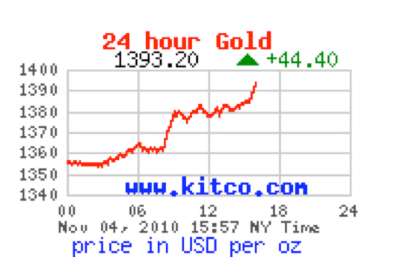
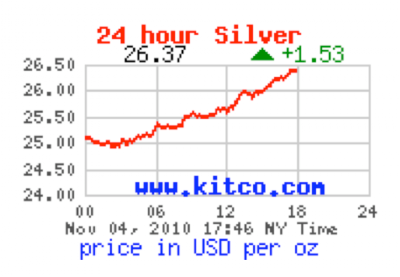
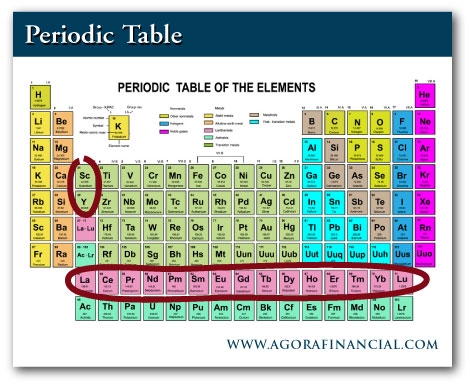


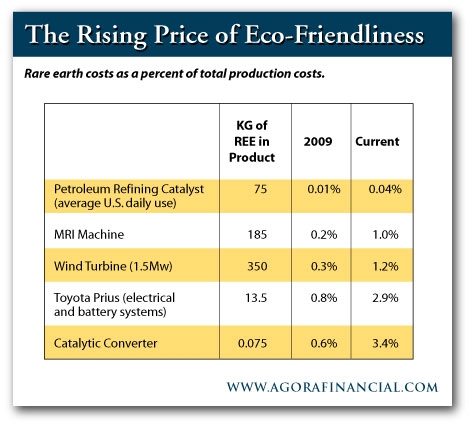



| You are subscribed to email updates from Gold World News Flash To stop receiving these emails, you may unsubscribe now. | Email delivery powered by Google |
| Google Inc., 20 West Kinzie, Chicago IL USA 60610 | |


No comments:
Post a Comment