


Gold World News Flash |

- On A Clear Day You Can See Inflation
- Jamie Dimon: Racketeer
- Gulf Businesses Near Total Collapse
- Gold and Twelve 11 Zeroes, Part Two
- The Gold Price, After all the Sharp Up and Down, Still Ended the Day Strong, Following Silver's Lead
- Will Bailing Out the States Tank the Dollar?
- Daily DXY Roundup: 11/03
- Gold Daily Chart
- Guest Post: More On The Case Of Silver
- Open Fire
- More on the Case of Silver
- When the Price of Silver Doubles in a Month
- It's The Endgame For The Dollar And Most Are Unaware
- RICO Suit Filed Against HSBC And JPMorgan For Silver Market Manipulation
- Gold was slapped down to avoid embarrassing Fed, Sinclair tells KWN
- The Election Results and Gridlock
- Voters Actually Concerned About US Federal Deficit
- Citi's Englander On The Dollar's Fate After QE2: "Further Drop" Coming
- GM Files 500 Page Paperweight-cum-Prospectus, Hopes To Sell $10 Billion In Stock To Hapless Lemmings
- U.S. “Quantitative Easing” is Fracturing the Global Economy
- New silver class action invokes RICO against Morgan, HSBC
- As VIX Plunges, Goldman Correct On First Leg Of FOMC Knee-Jerk Trade; Will Its Other Prediction Of SPX At 1,125 Also Hold?
- Politicians Cannot Stop the Gold Bull Market
- Where to Make Money in the Markets Today
- Reps take the House and QE Too! / Fed Statement
- To All Who Front-Ran The 35% SOMA Limit Elimination: Congratulations
- New COMEX Related Silver Manipulation Lawsuit Includes Charges of 'Racketeering'
- Investing in Gold Will Save Your Butt
- Hourly Action In Gold From Trader Dan
- Emerging Markets Walk a Fine Line
- Why Gold Is in a Bubble
- Key Technical Levels Ahead Of FOMC
- Keiser Report: Opt Out of Debt!
- Alasdair Macleod: Gold is part of the new economic order
- No Cutting Back: The Bernanke Money Printing Story
- Bill Gross: Fed Actions Could Lead to a 20% Weaker Dollar
- Back to Reality
- Jim's Mailbox
- The Silver Alpha
- Silver Price Correction
- IMF Gold: Nearly Sold Out
- Ruinous Inflation, Stunned Stupefaction
- The Gold and SP 500 Bull Markets Continue To Leave Investors Behind
- Net Asset Value of Precious Metals Trusts and Funds: Sprott Silver Trust Cash Position
- Anticipating the US Dollar’s Response to QE2
- More on the Casey of Silver
- U.S. “Quantitative Easing” is Fracturing the Global Economy: Prof. Michael Hudson
- Is Quantitative Easing Policy To Eliminate Or Devalue The Dollar?
- Zombie Nation
- Gold and Silver Trading Higher as Markets Await Concrete QE2 Data
| On A Clear Day You Can See Inflation Posted: 03 Nov 2010 05:05 PM PDT Food Sellers Grit Teeth, Raise Prices That's the headline from a Wall Street Journal article posted online tonight that you can read HERE Funny how the deflationistas conveniently overlook the issue of rapidly rising food prices when they spew out their reckless views. They also ignore the following (click on the charts to enlarge): Sugar up 114% since June  Corn up 79% since June  Wheat up 54% since June  A perusal of several other neccesitous consumption items like oil and healthcare insurance will reveal similar stories. And with the significantly weaker dollar, get used to paying more for your basket of general imported goods at Walmart going forward. Aside from the price behavior of gold and silver, there are plenty of other overt indicators which reflect a growing market perception of higher inflation ahead. Today, for instance, the long bond experienced a 3-point price reversal to the downside from this morning after the QE announcement. The yield on the long bond shot up to 4.07%. It was around 3.90% just a couple of days ago and was approaching 3.5% a few months ago. The long end of the yield curve typically reflects market expectations of both sovereign U.S. credit risk and inflation risk. Since it is now apparent to all that the Fed is willing to print enough money to prevent a U.S. Govt bond default, we have to assume that the higher yields on the long end of the Treasury curve are starting to reflect inflation expectations. The other rediculous deflationista argument is based on the absurd idea that there is some sort of debt contraction going on in the U.S. financial system. That is just plain wrong. For sure the level of private debt has declined somewhat. However this debt has been "shifted" from the private sector balance sheets to the Fed and the Taxpayer. In fact, the overall gross level of debt in our system is rapidly expanding. As of the end of this month, the Fed will supplant China as the largest holder of U.S. Treasury debt. In addition, the outstanding Treasury debt is increasing at nearly a geometric rate. In fact, by the last estimate I saw, the U.S. Treasury debt will exceed $14 trillion by March. By then the amount of outstanding Federal Debt explicitly reported (there is at least another $7-10 trillion "off balance sheet") will have increased 55% in the first 26 months of Obama's Presidency:  (click on chart to enlarge) It's going to start to get ugly. Please read this quick interview of Jim Sinclair posted today by King World News, which explains why gold/silver is the only way you can protect yourself from what is unfolding in this country: We are in unchartered waters with business folding over. We don't know what the name will be for this. One thing we do know is it's not dollar positive and that the only insurance out there that would react positively to things we can't control such as Fed decisions is goldHere's the link: Got Gold? The next time you run across some cybergarbage analysis of why we are entering into a deflationary death spiral, you only have yourself to blame if you decide to waste brain cells reading it... 
This posting includes an audio/video/photo media file: Download Now | ||||||||||||||||||||||||||||||||||||||||
| Posted: 03 Nov 2010 01:09 PM PDT | ||||||||||||||||||||||||||||||||||||||||
| Gulf Businesses Near Total Collapse Posted: 03 Nov 2010 12:52 PM PDT | ||||||||||||||||||||||||||||||||||||||||
| Gold and Twelve 11 Zeroes, Part Two Posted: 03 Nov 2010 12:41 PM PDT How the one-trick "inflation hedge" more than trebled amid the modern world's template deflation...
| ||||||||||||||||||||||||||||||||||||||||
| The Gold Price, After all the Sharp Up and Down, Still Ended the Day Strong, Following Silver's Lead Posted: 03 Nov 2010 11:20 AM PDT Gold Price Close Today : 1337.10 Change : (19.10) or -1.4% Silver Price Close Today : 24.432 Change : (0.400) cents or -1.6% Gold Silver Ratio Today : 54.73 Change : 0.112 or... This is a summary only. Visit GOLDPRICE.ORG for the full article, gold price charts in ounces grams and kilos in 23 national currencies, and more!
| ||||||||||||||||||||||||||||||||||||||||
| Will Bailing Out the States Tank the Dollar? Posted: 03 Nov 2010 11:18 AM PDT Back in 2006 Meredith Whitney was an obscure Wall Street analyst who bit the hand that fed her by declaring housing a bubble and the big banks a disaster. This took guts, both because analysts who dis their research universe tend to lose access ...
| ||||||||||||||||||||||||||||||||||||||||
| Posted: 03 Nov 2010 11:08 AM PDT The DXY's (US Dollar Index) rally faded after the FOMC (Federal Open Market Committee). Closing price-action confirmed follow-through from Tuesday's bearish engulfment pattern. The latest consolidation break-down has now directed dollar ...
| ||||||||||||||||||||||||||||||||||||||||
| Posted: 03 Nov 2010 10:51 AM PDT | ||||||||||||||||||||||||||||||||||||||||
| Guest Post: More On The Case Of Silver Posted: 03 Nov 2010 10:50 AM PDT
Submitted by David Galland of Casey Research More On The Case Of Silver Last month gold broke into new record territory – reaching an all-time high of $1,387 on October 14.
 Furthermore, if you agree with our contention that the economic crisis will continue, and that China’s propped-up manufacturing sector will come under serious pressure, it’s also logical to assume that demand for industrial metals such as lead, zinc, and copper will fall. That’s important in the discussion of silver, because only 30% of silver’s production comes from primary producers (i.e., silver mines), with the balance produced only as a byproduct of other minerals.
| ||||||||||||||||||||||||||||||||||||||||
| Posted: 03 Nov 2010 10:15 AM PDT | ||||||||||||||||||||||||||||||||||||||||
| Posted: 03 Nov 2010 10:11 AM PDT Last month gold broke into new record territory - reaching an all-time high of $1,387 on October 14. A new record in nominal terms, that is. To top the previous high in inflation-adjusted dollars, gold will have to approximately double ...
| ||||||||||||||||||||||||||||||||||||||||
| When the Price of Silver Doubles in a Month Posted: 03 Nov 2010 10:00 AM PDT Bill Bonner here at The Daily Reckoning writes, "In England, the government of David Cameron has announced the biggest cutbacks since WWII. He's going to lighten the UK government expense load by 81 billion pounds over the next 5 years. Nearly half a million government employees are to be given the heave-ho." In an odd sort of symmetry, it is sort of like that around here, too. Rumors fly like sparks that the company is losing money, and to save money, a lot of people are going to be fired, particularly me, along with a few other lazy incompetents who actually deserve to get fired, if you ask me, because they are so stupid that when I ask them a simple question like, "Are you buying gold, silver and oil in fearful response to the Federal Reserve creating so much money that the wholesale debasement of the purchasing power of the dollar, popularly perceived as inflation in prices, is going to cause the gigantic inflation in consumer prices that was actually predicted earlier in the same sentence, spooky and Nostradamus-like, thus proving everything I said?" Well, as you probably guessed, none of them has ever, ever purchased any gold or silver, despite my constantly advising them to do, and insulting their intelligence when they don't, which should make the choice clear as a bell, even for them. So, as I told my boss recently, I agree: Those people must be fired immediately, as the company needs people, like me, with the ability to see "the big picture," even when we gifted visionaries would prefer seeing pictures of naked people behaving shamelessly, but I am willing to make that sacrifice if it meant keeping my job for a little while longer, whereupon I will peacefully resign my job. You could hear the suspicion in her voice as she asks, "How much longer?" I replied, "It won't be long until the foul Federal Reserve has committed the monetary sin of creating another few trillions of dollars, which means prices will rise, which means gold and silver will rise so high in terms of dollars that I will, one wonderful, wonderful day, come in to work late, barge into your office without knocking, probably whistling a happy tune and disrupting the whole place, and tell you to take your stupid job and shove it!" Tonelessly, again she asked with a bored undertone to her voice, "How long will that take?" Feeling myself being squeezed into a making a precise prediction, I evasively said, "Well, James Turk of GoldMoney.com says that silver could double in price sometime this month! Within 28 days! Days!" She looks at me with a cold stare, and in a whispered monotone, asks, "So, are you saying that you will be gone in 18 days?" Suddenly, my instinct for survival kicks in, and I lash out like a cornered rat. I yell, "Not soon enough to suit either one of us, I'm sure! But soon!" Then, with a sudden flash of brilliance born of desperation and a complete lack of imagination, I abruptly shouted, "And now, Zorro away!" With that surprising Zorro-thing coming out of left field, I took advantage of her slack-jawed surprise by abruptly leaping to my feet and then reaching over her desk to scrawl a big "Z" across her blotter with my pen. Then, throwing open the door with a mighty theatrical flourish, I bounded, bounded, bounded out of her office, shouting, "Zorro says buy silver, silver, silver, you morons!" My seemingly strange, desperation-driven theatrics in response to the threat of financial annihilation due to cutbacks and my being given the "heave-ho" must seem extreme to the British, who are handling things with stoicism and their fabled "stiff upper lip," as Bill Bonner makes clear with a really funny metaphor. He says, "So far, the British public is taking the news like a donkey informed about original sin." Hahaha! Very clever! And illustrative! It was sort of like my boss getting the news about Zorro recommending silver! However resolutely staunch the British remain in the face of misery, she recovered pretty quickly, but I was out of the office all afternoon and missed her calls as I was taking a little "personal time" to buy more gold, silver and oil because, while it is difficult to pin down exactly when cataclysmic inflation and economic destruction will happen because the foul Federal Reserve is creating too much new money, the good idea to buy gold, silver and oil to capitalize on such absurd monetary insanity is so easy that I say, as I always do, "Whee! This investing stuff is easy!" The Mogambo Guru When the Price of Silver Doubles in a Month originally appeared in the Daily Reckoning. The Daily Reckoning, offers a uniquely refreshing, perspective on the global economy, investing, gold, stocks and today's markets. Its been called "the most entertaining read of the day."
| ||||||||||||||||||||||||||||||||||||||||
| It's The Endgame For The Dollar And Most Are Unaware Posted: 03 Nov 2010 09:50 AM PDT Gold Will Outlive Dollar Once Slaughter Comes ... The world's monetary system is in the process of melting down ... We have entered the endgame for the dollar as the dominant reserve currency, but most investors and policy makers are unaware of the implications. The only questions are how long the denouement of the dollar reserve system will last, and how much more damage will be inflicted by new rounds of quantitative easing or more radical monetary measures to prop up the system. Whether prolonged or sudden, the transition to a stable monetary system will become possible only when the shortcomings of the status quo become unbearable. Such a transition is, by definition, nonlinear. So central-bank soothsaying based on the extrapolation of historical data and the repetition of conventional wisdom offers no guidance on what lies ahead. – Bloomberg Dominant Social Theme: It's happening now. Look! Free-Market Analysis: Is the current doom and gloom regarding the dollar (versus gold and silver) a bit ... manufactured. We only point this out because as soon as the mainstream media starts banging the drums for a given point of view, we become a bit skeptical. To find an article in Bloomberg predicting the "endgame" of the dollar as the world's dominant currency is a bit surprising from our point of view. It makes us, well, itchy. We know the proper thing to do as an alternative, hard-money news source, of course. We should jump on the bandwagon. After all we've been predicting the unraveling of the larger Western economy for years now. That's the bottom-line thesis of the Bell. The power elite business cycle has been 15 years – and we are approximately two-thirds of the way through. manufacturers monetary, military and scarcity promotions and the free-market eventually un-does them. Given that we are in a long term metals bull market, we've expected gold to go very high and silver to follow. Our timeline for the larger bull market silver and gold... More Here.. 
| ||||||||||||||||||||||||||||||||||||||||
| RICO Suit Filed Against HSBC And JPMorgan For Silver Market Manipulation Posted: 03 Nov 2010 09:43 AM PDT
If JPM and HSBC hoped that the lawsuits filed a week ago by Brian Beatty and Peter Laskari, which we discussed previously, were going to be the end of their public exposure with regard to possible silver market manipulation, they are about to be disappointed. Today, in a separate lawsuit filed by Carl Loeb in the Southern District of New York, a new light on precious manipulation by the duo was shone, this time involving allegations of breach of the Racketeering Influenced and Corrupt Organizations (RICO) Act. And with the CFTC itself admitting of ongoing manipulation in the silver market, it appears this issue is not going to go away quietly any time soon. Per Steve Berman, co-counsel of plaintiff law firm Hagens Berman Sobol Shapiro: "The practice of naked short selling has long been a serious issue on Wall Street. What we know about the scope and intent of JP Morgan and HSBC's actions in this short-selling scheme dwarfs any other similar attempt to manipulate a commodities market." As this case is also seeking class action status for the class, readers who wish to join this particular case may apply to do so at the following link. Plaintiffs are seeking that the court enjoin JP Morgan and HSBC from continuing their alleged conspiracy and manipulation of the silver futures and options contracts market. More from PRNewswire:
What is more interesting, is that the man who has achieved something a cult standing in the PM community, whistleblower Andrew Maguire, is also involved.
Here is Hagens Berman internal statement on the case:
We hope that the two firms' alleged highly illegal ongoing manipulation and intervention activities in the Precious Metal market will finally be curbed as a result of what is now sure to be a very public outcry exposing their practices.
| ||||||||||||||||||||||||||||||||||||||||
| Gold was slapped down to avoid embarrassing Fed, Sinclair tells KWN Posted: 03 Nov 2010 09:25 AM PDT 5:21p ET Wednesday, November 3, 2010 Dear Friend of GATA and Gold: Gold entrepreneur Jim Sinclair tells King World News that the gold market was slapped down today so as not to embarrass the Federal Reserve during the introduction of its latest round of "quantitative easing." But, Sinclair adds, gold likely bottomed today. Excerpts from the interview are posted at the King World News Internet site here: http://kingworldnews.com/kingworldnews/KWN_DailyWeb/Entries/2010/11/3_Ji... Or try this abbreviated link: CHRIS POWELL, Secretary/Treasurer ADVERTISEMENT Prophecy to Become Coal Producer This Year Prophecy Resource Corp. (TSX.V: PCY) announced on May 11 that it has entered into a mine services agreement with Leighton Asia Ltd. to begin coal production this year. Production will begin with a 250,000-tonne starter pit as planned in August, with production advancing to 2 million tonnes per year in 2011. Prophecy is fully funded to production and its management team includes John Morganti, Arnold Armstrong, and Rob McEwen. For Prophecy's complete press release about its production plans, please visit: http://www.prophecyresource.com/news_2010_may11.php Support GATA by purchasing a colorful GATA T-shirt: Or a colorful poster of GATA's full-page ad in The Wall Street Journal on January 31, 2009: http://gata.org/node/wallstreetjournal Or a video disc of GATA's 2005 Gold Rush 21 conference in the Yukon: * * * Help keep GATA going GATA is a civil rights and educational organization based in the United States and tax-exempt under the U.S. Internal Revenue Code. Its e-mail dispatches are free, and you can subscribe at: To contribute to GATA, please visit:
| ||||||||||||||||||||||||||||||||||||||||
| The Election Results and Gridlock Posted: 03 Nov 2010 09:16 AM PDT
From The Daily Capitalist How is your day going so far? Mine is pretty good. The Republicans have taken the House. This will put up a roadblock for the Progressive train of the Democratic Party and the Obama Administration. The Senate race has the Republicans up to 47 seats, with 2 still not called. The Republicans won 239 seats in the House, which is more than the 210 needed for control. The other good news is that Slate (via Zero Hedge) is reporting that Ron Paul will be the new Chairperson of the U.S. House Financial Services Subcommittee on Domestic Monetary Policy and Technology:
This makes sense since Paul is the ranking minority member of the subcommittee. Paul is a hard money libertarian who has called for the Fed to be dismantled and that we go back on a gold standard. Before I am dismissed as some kind of antediluvian nut case, let me say that this idea has wide acceptance in the libertarian and Austrian theory end of the political spectrum. It apparently has some viability in the Tea Party movement as well. This isn't some off-the-wall idea, but a carefully thought out position based on solid economics to control inflation and to end the boom-bust cycles we've been having. I don't see us getting rid of the Fed any time soon, but Paul will be a formidable opponent of Ben Bernanke. I am not a big fan of the Republican Party. I view them as Mini Me Democrats. While all the talk this morning is about the great future, my faith in the Republican leadership is quite low. My cynicism tells me that the Republican victory is based solely on the failure of the Democrats to make the economy better. If the economy was fine, the Democrats would have won and would continue their Progressive steamroller. But that's not how the economy works and voters have expressed their frustration. As angry as the Tea Party is now, if things were just fine, I doubt they would have gotten off the ground. Which makes me suspicious of the ability of the Republicans to accomplish anything meaningful. Perhaps I underestimate them. If the Republicans continue their "as usual" economic policies, then we are in trouble. If they eschew monetary and fiscal stimulus, propose across-the-board spending cuts, and reverse some of the worst aspects of recent legislation, then we might get somewhere. I view "regime uncertainty" as a major factor now hindering the economy. This is the idea that businesses hold back expansion because they are uncertain about the impact of the new legislation and they fear that continued Progressive legislation will harm their future. This is another reason I believe gridlock isn't a bad thing. But I digress. Wait and watch.
| ||||||||||||||||||||||||||||||||||||||||
| Voters Actually Concerned About US Federal Deficit Posted: 03 Nov 2010 08:13 AM PDT We awaken to a bright new day, a spring in our step. For we stand at the dawn of a new era, in which fiscal responsibility is the primary objective of Congress again. Oh, hell – we haven't had enough coffee yet to keep up the pretense this morning. Last night on CNN, Wolf Blitzer tossed a softball question to Rep. Eric Cantor, the likely new House majority leader: Name one federal program Republicans will reduce. Cantor whiffed. Still, we won't dismiss the message that voters were trying to send yesterday, however much it will fall on deaf ears. It's worth revisiting a poll commissioned by the Peterson Foundation in March 2009 – when employers were shedding nearly 700,000 jobs a month and the S&P 500 stood at the ominous number of 666. The poll asked a simple question: What do you believe poses a major threat to the nation's future?
Respondents could say yes to more than one choice, but deficits and debt got the biggest response. This sentiment hasn't changed over the following 20 months… as we can see from yesterday's exit polling. Edison Research interviewed 18,132 voters. They were given three choices for reviving the economy, and asked which they preferred most:
Leave aside the peculiar either-or nature of the question: It's pretty remarkable that a plurality – four in 10 people – opted for cutting the deficit. Even self-identified Tea Party voters faced with this false choice chose cutting the deficit over cutting taxes. "I've had several opportunities in the last few months to visit cities in the Midwest," says demographer Neil Howe, who wrote several books with the late William Strauss on the interplay of generations in the United States. "In each of them, I ask my hosts, what issues really concern local voters in the midterms? And they say, the huge and growing federal deficit. And then I say, yes, of course, sure, but what do they really worry about? And then the hosts say, no, honestly, they are really worried about the country going bankrupt. "I found these conversations very ominous and very Fourth Turning." "Fourth Turning" is the term Howe and Strauss apply to the crises that recur in American society every 80 years or so – the Revolution, the Civil War, the Depression and World War II. All that underlying unease helps explain why this has become an Internet sensation… Citizens Against Government Waste – the outfit that puts out the annual "Pig Book" of pork-barrel spending outrages – produced this commercial last month. ABC deemed it "too controversial," but it's making the rounds on the 24-hour news and business channels. It portrays a Chinese lecture hall in 2030, the professor telling his students how major empires fell, including the United States. "Of course, we owned most of their debt," he says. "So now they work for us." Some oversensitive people interpret the ad as China-bashing, and the Chinese government issued a pro forma denunciation. But in "flyover country," people understand this isn't really about China. It's about "the country going bankrupt"…and the dollar losing whatever value it still has. Addison Wiggin Voters Actually Concerned About US Federal Deficit originally appeared in the Daily Reckoning. The Daily Reckoning, offers a uniquely refreshing, perspective on the global economy, investing, gold, stocks and today's markets. Its been called "the most entertaining read of the day."
| ||||||||||||||||||||||||||||||||||||||||
| Citi's Englander On The Dollar's Fate After QE2: "Further Drop" Coming Posted: 03 Nov 2010 08:08 AM PDT
Citi's Steven Englander has updated his view on what QE2 will mean for the dollar. In a nutshell: "Net, net we see this as allowing for further USD drop, but drift rather than precipitous." Basically this is precisely the stuff that will make the upcoming Ron Paul-Ben Bernanke hearings must watch TV. With the EURUSD now approaching the mid 1.41's, so far Bernanke is succeeding. The only question is whether the Fed's control over the ECB via currency swaps and asset guarantees will be sufficient leverage to allow it to destroy the dollar with impunity and send the EURUSD to a level of 1.6, as a helpless Europe sits and does absolutely nothing. Elsewhere, the USDCHF is back to a 0.96 handle. There is no question: if Europe allows the dollar to plunge here without any response it is signing off it entire export segment. And lastly, for the time being, the USDJPY has somehow not dropped below 80. It will shortly. One thing is certain: foreign banks will retaliate. Maybe not the gutless, toothless, and very much broke ECB, but everyone else, yes. From Steven Englander: FOMC meets expectations as ‘mandated’ For FX, there is little to suggest that the FOMC was out to derail the expectation of a significant purchase program despite the recent improvement in data. We continue to think that QE2, combined with other USD negatives related to external funding and central bank selling, will lead to a USD fall on trend. Implied volatility should drop, but we caution that payrolls surprises could heavily color how investors see the actual implementation. Net, net we see this as allowing for further USD drop, but drift rather than precipitous. Overall the Fed carefully sounded out market expectations on QE2 and largely met them. The "intends to purchase a further $600bn of longer-term Treasury securities" met market expectations on amount. The fact that the word "longer-term" was used may stir fixed income surprise, but shouldn't matter much for FX. The long-end of the Treasury curve is taking a beating, but the five-year tenor is rallying. The FX market was more focused on whether there would be a long-horizon program. The FOMC did in fact talk about a program extending until the end of Q211 at a pace of $75bn/month, which would by itself make the FX market want to dump the dollar. However, it is not a firm commitment or a rules-based approach tied to core inflation, nominal GDP or anything else. The FOMC said it will "regularly review the pace of its securities purchases and the overall size of the asset-purchase program in light of incoming information and will adjust the program as needed to best foster maximum employment and price stability." With lone hawk Hoenig slated to be replaced by a trio of hawkish regional Fed presidents in January, there is a very real chance that the Fed never gets to the $600bn. So in that sense, some would-be USD sellers have to come away disappointed. However the other side is that the Fed will be buying a lot of treasuries and seems very insistent that this is required by its ‘mandate’ and that these conditions will be in place for some time. So there is no absence of support for the Treasury market overall, even if it is concentrated at shorter tenors than thought.
| ||||||||||||||||||||||||||||||||||||||||
| GM Files 500 Page Paperweight-cum-Prospectus, Hopes To Sell $10 Billion In Stock To Hapless Lemmings Posted: 03 Nov 2010 07:55 AM PDT
GM has filed its IPO prospectus. At 276 pages, 240 F-pages, and 53-A pages, it is just slightly shorter than the entire text of healthcare reform. And since the fate of ponzi crony capitalism rest on the successful pricing of this dogshit, every single underwriter in the world (20 banks) is a participant, with Morgan Stanley lead left. In a nutshell, Government motors hopes to sell 365 million shares, with an expected price of $26-29/share. Now if only GM could focus on making good cars as much as they care about paying lawyers millions for writing the biggest paperweight in history, all would be well. And with no clear disclosed Uses of Funds, we are confident the government will take the proceeds to the Primary Dealers and compensate them for massive underwriter losses.
Summary terms: THE OFFERING
The number of shares of common stock that will be outstanding after this offering is based on 1,500,000,000 shares of our common stock outstanding as of November 2, 2010 and excludes:
Full Prospectus below (link):
| ||||||||||||||||||||||||||||||||||||||||
| U.S. “Quantitative Easing” is Fracturing the Global Economy Posted: 03 Nov 2010 07:37 AM PDT (snippet) Mr. Wolf cites New York Federal Reserve chairman William C. Dudley to the effect that Quantitative Easing is primarily an attempt to deal with the mortgage crisis that capped a decade of bad loans and financial gambles. Economic recovery, the banker explained on October 1, 2010, "has been delayed because households have been paying down their debt – a process known as deleveraging." In his view, the U.S. economy cannot recover without a renewed debt leveraging to re-inflate the housing market. By the "U.S. economy" and "recovery," to be sure, Mr. Dudley means his own constituency the banking system, and specifically the largest banks that gambled the most on the real estate bubble of 2003-08. He acknowledges that the bubble "was fueled by products and practices in the financial sector that led to a rapid and unsustainable buildup of leverage and an underpricing of risk during this period," and that household debt has risen "faster than income growth … since the 1950s." But this debt explosion was justified by the "surge in home prices [that] pushed up the ratio of household net worth to disposable personal income to nearly 640 percent." Instead of saving, most Americans borrowed as much as they could to buy property they expected to rise in price. For really the first time in history an entire population sought to get rich by running to debt (to buy real estate, stocks and bonds), not by staying out of it. But now that asset prices have plunged, people are left in debt. The problem is, what to do about it. Disagreeing with critics who "argue that the decline in the household debt-to-income ratio must go much further before the deleveraging process can be complete," or who even urge "that household debt-to-income ratios must fall back to the level of the 1980s," Mr. Dudley retorts that the economy must inflate its way out of the debt corner into which it has painted itself. "First, low and declining inflation makes it harder to accomplish needed balance sheet adjustments." In other words, credit (debt) is needed to bid real estate prices back up. A lower rather than higher inflation rate would mean "slower nominal income growth. Slower nominal income growth, in turn, means that less of the needed adjustment in household debt-to-income ratios will come from rising incomes. This puts more of the adjustment burden on paying down debt." And it is debt deflation that is plaguing the economy, so the problem is how to re-inflate (asset) prices. More Here..Metro-Goldwyn-Mayer Files for Bankruptcy Fed To Buy $600 Billion In U.S. Debt To Cut Rates From Jim Sinclair: Dear CIGAs, The real number is not $600 billion in QE but $900 billion when you add present in place programs. This is QE to infinity with the number larger and in the face of massive criticism . It is only logical to assume that after the Fed's announcement of QE to $900 billion by June 0f 2011 you would see intervention in the US dollar and Gold markets.This is QE to infinity. 
| ||||||||||||||||||||||||||||||||||||||||
| New silver class action invokes RICO against Morgan, HSBC Posted: 03 Nov 2010 07:24 AM PDT Banks Alleged to Have Used Naked Short Selling to Rig Market Press Release http://www.prnewswire.com/news-releases/hagens-berman-sobol-shapiro-jp-m... NEW YORK -- JP Morgan Chase & Co. and HSBC Securities Inc. face charges of manipulating the market for silver futures and options in violation of federal commodities and racketeering laws, according to a new lawsuit filed Tuesday in the U.S. District Court for the Southern District of New York. The suit -- which alleges violation of the Commodity Exchange Act and the Racketeering Influenced and Corrupt Organizations (RICO) Act -- alleges that the two banks colluded to manipulate the market for silver futures starting in the first half of 2008 by amassing huge short positions in silver futures contracts they had no intent to fill, but did so to force silver prices down to their benefit. ... Dispatch continues below ... ADVERTISEMENT Prophecy to Become Coal Producer This Year Prophecy Resource Corp. (TSX.V: PCY) announced on May 11 that it has entered into a mine services agreement with Leighton Asia Ltd. to begin coal production this year. Production will begin with a 250,000-tonne starter pit as planned in August, with production advancing to 2 million tonnes per year in 2011. Prophecy is fully funded to production and its management team includes John Morganti, Arnold Armstrong, and Rob McEwen. For Prophecy's complete press release about its production plans, please visit: http://www.prophecyresource.com/news_2010_may11.php The suit was filed on behalf of Carl Loeb, an independent investor in silver futures and options, by Seattle-based Hagens Berman Sobol Shapiro LLP, a class-action and complex litigation firm. "The practice of naked short selling has long been a serious issue on Wall Street," said Steve Berman, co-counsel and managing partner at Hagens Berman. "What we know about the scope and intent of JP Morgan and HSBC's actions in this short-selling scheme dwarfs any other similar attempt to manipulate a commodities market." According to the complaint, JP Morgan amassed a sizeable short position in silver futures and options in part through its March 2008 acquisition of investment bank Bear Stearns. By August 2008 JP Morgan and London-based HSBC controlled more than 85 percent of the commercial net short position in silver futures contracts. The suit alleges that, starting in early 2008, the two banks began manipulating the silver futures market by accumulating unusually large "short" positions and then secretly coordinating enormous sales of silver futures contracts on the Commodity Exchange, which is known as COMEX and is part of the New York Mercantile Exchange. According to the lawsuit, JP Morgan and HSBC used a variety of methods to coordinate their manipulation of the market for silver futures contracts, signaling when to flood the COMEX market with short positions, which caused the price of silver futures and options contracts to crash. The suit describes two "crash" events that were set in motion by JP Morgan and HSBC, one in March 2008 and the other in February 2010, after defendants had amassed large short positions. In the wake of both events, the suit alleges, COMEX silver futures prices collapsed. "We believe that JP Morgan and HSBC's scheme was carefully conceived and coordinated to maximize their profits at the expense of innocent investors who believed that they were trading in a market free from manipulation," Berman said. The complaint also contains allegations that in September 2008 the U.S. Commodity Futures Trading Commission launched an investigation that would eventually consider allegations made by a London-based independent metals trader named Andrew Maguire that the silver futures market was being manipulated. The complaint alleges that Maguire disclosed to the CFTC on Feb. 3, 2010, that he received a signal from the two banks of their intent to drive down the prices of silver futures two days later, on Feb. 5, 2010. Maguire's information was correct and the price of silver dropped dramatically between Feb. 3, 2010 and Feb. 5, 2010. In addition, the lawsuit states that both JP Morgan and HSBC still maintain highly concentrated holdings in short positions in silver futures and options, giving both banks the ability to continue manipulating the price of silver. Plaintiffs' attorneys have asked the court to certify the case as a class action and enjoin JP Morgan and HSBC from continuing their alleged conspiracy and manipulation of the silver futures and options contracts market. Attorneys also ask the court to award damages and attorneys' fees to the class. Seattle-based Hagens Berman Sobol Shapiro LLP represents whistleblowers, investors, and consumers in complex litigation. The firm has offices in Boston, Chicago, Colorado Springs, Los Angeles, Phoenix, San Francisco and Washington, D.C. Founded in 1993, HBSS continues to successfully fight for investor rights in large, complex litigation. More about the firm and its successes can be found at www.hbsslaw.com. Media Contact: Mark Firmani, Firmani & Associates Inc., 206.443.9357 or mark@firmani.com. Support GATA by purchasing a colorful GATA T-shirt: Or a colorful poster of GATA's full-page ad in The Wall Street Journal on January 31, 2009: http://gata.org/node/wallstreetjournal Or a video disc of GATA's 2005 Gold Rush 21 conference in the Yukon: * * * Help keep GATA going GATA is a civil rights and educational organization based in the United States and tax-exempt under the U.S. Internal Revenue Code. Its e-mail dispatches are free, and you can subscribe at: To contribute to GATA, please visit:
| ||||||||||||||||||||||||||||||||||||||||
| Posted: 03 Nov 2010 07:13 AM PDT
Yesterday Goldman recommended two trades on how to trade the post-FOMC trade: the first, was to sell vol. With the VIX plunging this trade is now solidly in the money. The second leg, the medium-term one, buying S&P November 1,125 puts, i.e., preparing for a subsequent market sell off, has yet to materialize. And with the euro now at nosebleed levels for Europe, expect to see some fireworks from Europe over the next few days designed exclusively to kill the EUR, send the dollar higher, and complete the Goldman trade. We are concerned what this may mean for the viability of Ireland and/or other peripheral countries. From yesterday's Goldman recommendation:
As for the subseqent reaction:
Keep an eye out on the S&P over the next few days as profit taking on In the Money VIX positions begins
| ||||||||||||||||||||||||||||||||||||||||
| Politicians Cannot Stop the Gold Bull Market Posted: 03 Nov 2010 07:01 AM PDT Wall Street Cheat Sheet submits: By Jordan Roy-Byrne I can guess the bear argument before they begin to make it. The Republicans win congress and there will be a new mandate. Spending will be cut. Money printing may cease. We may have austerity in the US. The US dollar will rally. This will crush the bull market in precious metals. Complete Story »
| ||||||||||||||||||||||||||||||||||||||||
| Where to Make Money in the Markets Today Posted: 03 Nov 2010 07:00 AM PDT So where to look to make money in today's market? What I often do is just look for extremes. I look for areas of the market where the rubber band seems stretched. These are usually good places to look for making money as you play the snapback of that rubber band. It doesn't always work. Sometimes the rubber band breaks. But it's a fairly reliable way to make good money in markets. Today I have a few extremes that I'd like to set up for you. Each of them leads to a potentially profitable idea. The First Extreme: Insider Sales. I always troll the insider buys and sells. It's a great place to get ideas. When I see a big insider lay down a big bet on his own stock, that usually makes me want to take a look at why. Insiders buy for only one reason: They think the stock is going to go up. Insider selling is not as reliable. There are always more insider sales than buys. Insiders sell stock for all kinds of reasons – diversification, for example. They also typically get a lot of stock options, which they naturally cash in from time to time. However, what we're interested in is the extremes. We're not interested in modest insider buys or modest insider sells. Today, we see extreme selling. In fact, the ratio of insider sales to insider buys is over 30 times. Normally, a ratio of over 20-to-1 is seen as a bearish sign. A ratio of under 12-to-1 is bullish. It's not a bad indicator – or at least it's been pretty good this year. Last time we had an insider sales ratio of over 30 times was in April, just before the markets went kaput for awhile. (The so-called "Flash Crash.") Then the ratio went under 12 for long stretches during June through September. During this time the market has generally been rising. In October, we had a spike in insider selling. This indicates that at least as far as insiders go, stocks look fully priced. I look over the insider sales and I see massive selling. At McDonald's, six insiders sold $40 million worth of stock. At Netflix, five insiders dumped $36 million worth of stock. Other big sellers include two at AutoZone ditching $35 million, three at Safeway selling $27 million and five at EMC letting $24 million go. I don't know how investors can feel good about these names with so many insiders selling with such gusto. On the other side of the ledger, we have a few insider buys. One that sticks out is Alfred Mann's $5 million buy at MannKind, a biotech firm. According to Yahoo, MannKind, "a biopharmaceutical company, focuses on the discovery, development and commercialization of therapeutic products for diabetes and cancer." The ticker is MNKD. Mann is its 84-year-old, founder, CEO and chairman. He must really like the stock. Biotech is a bit out of my bailiwick, but the stock is worth looking into. Mann paid an average of $7.15, above the stock's current price of $6.38. So you get a chance to buy at an even better price than Mann. These ideas, by the way, simply come from looking at the insider transactions as reported by Barron's every week. It's a simple way to build an interesting list of names, as I discuss in my book Invest Like a Dealmaker: Secrets From a Former Banking Insider. The Second Extreme: Volatility The second extreme is the low volatility. The VIX, often called the "fear gauge," is down 54% since May. This means investors are not very fearful. The VIX is a contrarian indicator – when it is low, that can mean investor complacency and foretell a bad spill. When it is high, investors are fearful and perhaps the market will rise. Again, we're interested in extremes. And it looks like volatility is very low. It hasn't been this low since April. When the Flash Crash hit, the VIX soared. It nearly tripled in May. So one way to play a rebound in the VIX is the through the iPath S&P 500 VIX Short-Term Futures ETN. The ticker is the VXX. And it is at all-time lows.
Last time I mentioned this trade – on April 12, actually – the VXX rose more than 50% the following week. If you are worried the market is going to crack, the VXX is a way to gain a little insurance. Third Extreme: Grain Prices A lot of people are now hopping on the bandwagon that grains are going higher. We've been on this for at least a year. And they have already moved a great deal. My mind runs counter to the consensus. I train myself to do so. There is no money in following the crowd. And so I am starting to think the best upside is not in the grains, but in the names that suffered the most while grains were rising. I'm talking about the producers of meat. In the short-term, say, for the rest of this year, I think the grains still have legs. There are already rumors that the USDA will have to revise downward (yet again!) its estimate for the corn harvest. The next report is due Nov. 9. We could see corn spike as it did on Oct. 8, the last time the USDA released its report. While I think the environment supports higher-than-average grain prices, I doubt the soaring corn and wheat prices are sustainable. The prices of both grains have soared about 50% since the summer. Prices like these will inspire a lot of planting for next year. Whether the crop actually hits the bins or not is beside the point. The news alone will drive grain prices down by the spring. That's my guess. The best bets to play the reversal are the meat producers, because grains such as corn, which they feed to their livestock, are one of their biggest expenses. Since peaking in April, the shares of some of the biggest meat producers are down pretty hard. Tyson (NYSE:TSN), one of the biggest, is down 20%, for instance. And Pilgrim's Pride (NYSE:PPC) is down 50%.
"While all of us are concerned about higher grain prices and the uncertain economy," CEO Don Jackson explains, "there are several encouraging signs heading into next year. Given the reduction in beef supply and the higher prices that are expected for beef and pork, chicken should be attractively positioned with consumers who are looking for the best value. As a result, many of our customers are planning to feature chicken more prominently on their menus or in their stores next year. We are already seeing an increase in food service demand for next year." Time will tell, but I like this play, and there's lots of upside. The stock was $13 in April. It's $6.70 today. Regards, Chris Mayer Where to Make Money in the Markets Today originally appeared in the Daily Reckoning. The Daily Reckoning, offers a uniquely refreshing, perspective on the global economy, investing, gold, stocks and today's markets. Its been called "the most entertaining read of the day."
| ||||||||||||||||||||||||||||||||||||||||
| Reps take the House and QE Too! / Fed Statement Posted: 03 Nov 2010 06:56 AM PDT
Reps take the House and QE Too! / Fed Statement
Back in the mid-1800's, the nation had another kind of Tea Party as the Whigs became a successful 3rd party, even going so far as to put two men in the White House - William Henry Harrison and Zachary Taylor plus Millard Fillmore, who succeeded "Old Rough and Ready" who died just after a year in office but that was a long term compared to Harrison, who caught pneumonia making a long inauguration speech in the freezing rain and died of it a month later despite attempts to cure him with opium, castor oil and leeches - treatments we are likely to see again as the Republicans vow to repeal Health Care legislation. I don't have to talk about what happened last night, Barry Ritholtz did a great job of it in "The Tragedy of the Obama Administration" so let's just focus on the repercussions of the changeover and, of course, today's upcoming Fed decision. The Board of Governors were meeting all day yesterday and will meet again this morning to discuss their policy decision and one would think they can't be so deaf as to see that our citizens are not interested in additional deficit spending, which is exactly what QE2 is when the Fed writes checks to paper over the Treasury's profligate spending. Look for new and improved ways of not taxing corporations. Like GM, which will not have to pay taxes on its next $45.4Bn of earnings despite the fact that the Government paid for their losses already and allowed the company to bust union contracts and trash benefits for the millions of retired and fired workers as they shut down and sold brands - permanently shipping US manufacturing jobs overseas. Of course, this tax break isn't about GM. GM just sets a good precedent for similar treatment of Banksters and others who received relief under TARP and, of course, whatever they decide to call the next emergency bailout of Big Business. If the market breaks our tops, we are going to be loving the XLF which already owns most of the people who got elected last night. With FAS at $22.44, we can sell the April $19 puts for $2.75 and buy the Jan $17/21.67 bull call spread for $3.10 and that's net .35 on the $4.67 spread that's starting out 100% in the money and makes 1,334% if FAS simply holds $21.67.
Do I feel bad about that? Not anymore, they are going to get the economy they just voted for and that's survival of the financially fittest and we'd better get serious about it because no prisoners will be taken in the next round of "Survivor, America." Already the commodities are flying in celebration of the return of control of the House to Republicans. There will be no legislation, there will be no investigation, there will be no restrictions at all and oil already jammed up to $85 in pre-market trading along with gold back over $1,360 and copper back at $3.85. Isn't that great? $5 more per barrel costs US consumers $100M a day and there's NOTHING they can do about it. They must spend it and that's more credit card transactions and more retail spending on gas, which we'll use as data to pretend the economy is improving - BRILLIANT! We have the MBA Mortgage Report this morning along with ADP Employment (+43,000 jobs - all service), Inventories and ISM manufacturing but nothing really matters other than the Fed, which has to ignore all the improvements in the underlying data and risk hyperinflation by jamming another Trillion dollars into the dead pool of the US Money Supply. We like XLF, UYG (see Member chat for our plays on them) as well as FAS to play the QE2 game because, eventually, all this money will flow through them at some point. Globally, the banking sector is just a shadow if it's former self, as illustrated in this chart (click to enlarge):
It's also interesting to note that just 4 of the World's top 50 banks are US banks - this probably does not fit into the average voters delusion of US economic superiority but we love our delusional voters because they are also delusional investors who pay us premiums, aren't they? Barry points out that the election means "Less Limits and Oversight of Banks." If we can't beat them, we may as well join them as we gear up for round 2 of "Grand Theft America." It's all about the Fed today and then it will be all about Jobs on Friday. Despite intervention on the Yen this morning that took the dollar back to 81 this morning, the overall dollars has stayed below the 77 line since yesterday morning. My comment to Members near yesterday's close was that the market move was very unimpressive on the heels of a 0.7% drop in the dollar as they market should AT LEAST gain enough to offset the currency it's priced in and then you have the magnification as the commodity pushers move up on the weak dollar as well. Not seeing good action makes us wonder, how low does the dollar have to go to get us back to April's highs, when the dollar was 7% stronger? All else being equal, we should be 7% ABOVE April's highs, not 7% below it and, if we can make 1,300% on a flat-line - imagine what we can do with a 14% pop! Here's looking forward to a very exciting final two months... - Phil Chart via The Banker, Thomson Reuters, H/tip Barry Ritholtz Photo courtesy of Jr. Deputy Accountant Addendum: Fed Statement Release Date: November 3, 2010 For immediate release
Phil: After housing starts, it had said: "Bank lending has continued to contract, but at a reduced rate in recent months. The Committee anticipates a gradual return to higher levels of resource utilization in a context of price stability, although the pace of economic recovery is likely to be modest in the near term." - So there is already more bank lending and they are mum on resource utilization and going ahead with QE anyway. VERY dangerous!
Phil: That last bit is disappointing as the market doesn't want the Fed to have any reason to back of over 6 months. Also, $75Bn a month is disappointing but it is IN ADDITION to rolling other securities so probably adds up to $100Bn or more. Still, as we expected, it's not enough to support the insane expectations the market has built into this statement and down we go.
Phil: OH NO!!!! Look what they removed: "and is prepared to provide additional accommodation if needed" - Ththththis is all folks!
Phil: Hoenig remains the sole voice of reason but he doesn't even get to vote next year! There's one more meeting on Dec 14th and then Jan 26th, March 15th... So, I think this was not enough and forget the local reaction - how is the World going to feel about a possible bottom to the dollar, which is zooming back over 77 and look at TBT fly. Why is TBT flying? Because the Fed will only buy $75Bn of Tim's trash each month and we need to sell A LOT more than that. Notice how this report was a disappointment and Bill Gross bolted from CNBC - when the statement goes his way he sits around pontificating for hours. Tonight would be a great night for the BOJ to intervene on the dollar but we'll have to wait and see. For a 20% discount for all PSW newsletter services, click here
| ||||||||||||||||||||||||||||||||||||||||
| To All Who Front-Ran The 35% SOMA Limit Elimination: Congratulations Posted: 03 Nov 2010 06:45 AM PDT
As Zero Hedge predicted, the 35% SOMA limit was removed. We hope readers managed to profit from this inevitable development. Our full post from October 29 recreated below. With the bogey of a minimum QE announcement of $100 billion a month, leading to an in kind purchase of Treasurys, in addition to $30 billion a month from MBS Refis courtesy of QE Lite, a very likely announcement during next week's FOMC meeting, that nobody is talking about, is that the Fed may raise the existing 35% SOMA limit, or abolish it altogether, due to the imminent ceiling hit of purchasable CUSIPs. As a result, as Morgan Stanley suggests, possibly the most profitable Fed frontrunning trade if one wishes to bet on consensus QE, is to buy SOMA excluded CUSIPs as these will be telegraphed to be next in line to be monetized. Of course, in the apocryphal scenario that the Fed disappoints the market and decides to announce a less than $100 billion a month, or, gasp, nothing at all, MS' Igor Cashyn expects a complete bloodbath in rates (and most certainly in risk assets). Then again, the probability of the Fed doing the right and/or prudent thing ever is nil, so we would focus on buying out of favor SOMA issues, because as Morgan Stanley reports: "Net, we like buying what the Fed is buying."And how could one not: after all Morgan Stanley announces that in 2011 net Treasury issuance net of Fed Purchases will be zero! In terms of looking at QE, Cashyn expects three scenarios: QE announcement of greater than $100 billion/month for 3-6 months; less than $100 billion, and no QE. Here are the three scenarios broken down.
And here is the key trade that is most profitable in case of scenario 1: buy "SOMA-excluded" Cusips:
We will compile a list of the most convex 2016-2020 SOMA excluded CUSIPs soon and present it to readers to determine which are the Treasuries most likely to benefit from Bernanke's insanity. Continuing on, here is Scenario 2, one which will see a major move down in assets from bonds to stocks, and everything inbetween. In a nutshell: expect the 10 Year to sell off to 2.75% if the Fed does not do monetize at a $1.2+ trillion a year runrate.
And now, for the last scenario, one that will cause untold destruction in stocks, and is thus impossible. But here it is anyway: Scenario 3: Fed Does Not Announce Treasury Purchase at This Time
Since this is the Fed we are talking about, whose only mandate is to keep artificial stock price levels as high as possible, you can forget about Scenarios 2 and 3. Which is why the SOMA trade appears most attractive. And don't forget to fund it by shorting the carry currency of choice these days... the dollar of course.
| ||||||||||||||||||||||||||||||||||||||||
| New COMEX Related Silver Manipulation Lawsuit Includes Charges of 'Racketeering' Posted: 03 Nov 2010 06:30 AM PDT | ||||||||||||||||||||||||||||||||||||||||
| Investing in Gold Will Save Your Butt Posted: 03 Nov 2010 06:20 AM PDT SafeHaven
| ||||||||||||||||||||||||||||||||||||||||
| Hourly Action In Gold From Trader Dan Posted: 03 Nov 2010 06:08 AM PDT Dear CIGAs, Click chart to enlarge today's hourly action in Gold in PDF format with commentary from Trader Dan Norcini
| ||||||||||||||||||||||||||||||||||||||||
| Emerging Markets Walk a Fine Line Posted: 03 Nov 2010 05:56 AM PDT Does the difference between a bull market and a bubble walk a razor's edge…or a five-lane freeway? The difference may simply be a matter of perspective. If you're long, it's a bull market; if you're short, it's a bubble. Back in the late 1990s, die-hard value investors like Jean-Marie Eveillard, Barton Biggs and Jeremy Grantham shunned the high-flying tech stock sector as a "bubble." This "mania" would end in tears, these insightful investors predicted. But for an uncomfortably lengthy period of time, the tech stock mania produced only smiles and riches. Eveillard, Biggs and Grantham had more reason to shed tears than their tech-stock-buying counterparts. Clients fled from both Eveillard and Grantham, while Biggs gained a reputation as a crotchety, has-been strategist. Eveillard famously defended his caution by declaring, "I would rather lose half my clients than half my clients' money." And he did…lose half his clients, that is. As the new millennium dawned, however, the tech stock bull market began to look increasingly bubblish…and Messrs. Eveillard, Biggs and Grantham began to look increasingly brilliant. In fact, they were dead-on correct. And since Eveillard and Grantham did not buy into the tech stock hype, they successfully avoided the tech stock bust. They stuck to their convictions – buying good stocks at good prices…or not at all – and compiled superior investment results for their clients. Fast-forward ten years; Eveillard has retired. But Biggs and Grantham are still in the game. The tech stock bubble is long gone, but bull-market/bubbles are still very much with us. Depending on one's point of view – i.e., whether one is long or short – Treasury bonds, gold and emerging market stocks are all in robust bull markets…or dangerous bubbles. But this time around, Biggs and Grantham are taking a different approach. Bubbles are a great place to make money, they say, as long as you don't hang around too long. "We're only halfway along the way to a gigantic eventual bubble in the emerging markets," says Biggs, "The emerging markets, particularly Asia, are a place where I want to have a really major representation." "Biggs's view is shared by Jeremy Grantham," Bloomberg News reports. "The chief strategist at Grantham Mayo Van Otterloo & Co. wrote on Oct. 26 that his forecast for an 'emerging emerging bubble' was in 'splendid shape' after the MSCI Emerging Markets Index soared 146 percent in the past two years." The nearby chart corroborates that assessment. Emerging Market stocks have never been more expensive than they are today, relative to stocks in the Developed Markets. Twelve years ago, the MSCI Emerging Market Index traded for only one fifth of the valuation of the S&P 500 Index and the MSCI World Index, based on price-to-book ratios. Today, however, the Emerging Markets are trading on parity with Developed World stocks.
This surprising data point does not necessarily mean that Emerging Market stocks are overpriced or bubble-ish, but it does mean that they are no longer cheap. "Everyone and his dog are now overweight emerging [market] equities," Grantham observes, "and most stated intentions are to go higher and higher." Despite these bubble-like conditions, Grantham believes Emerging Market stocks will continue running for a while longer. He recommends a "moderately overweight" position. "The headache posed by bubbles depends on the asset managers' perspective," writes Dylan Grice, a global strategist at Société Générale. "For skeptics the pain is on the way up, for true believers it's on the way down." True. Your editors here at The Daily Reckoning may be true believers, but they are not delusional. Your editors are fans of selective Emerging Markets like Brazil and India. But the current near-mania for Emerging Market stocks is probably not presenting the very best long-term investment opportunity. So keep some powder dry and don't forget to pull the trigger the next time these markets are tanking. Eric Fry Emerging Markets Walk a Fine Line originally appeared in the Daily Reckoning. The Daily Reckoning, offers a uniquely refreshing, perspective on the global economy, investing, gold, stocks and today's markets. Its been called "the most entertaining read of the day."
| ||||||||||||||||||||||||||||||||||||||||
| Posted: 03 Nov 2010 05:50 AM PDT Retired Aviator submits: Sources used in research for this article include reports of the World Gold Council (WGC) and the U.S. Geological Survey (USGS). WGC is a consortium of large, global gold mining companies, with the explicit mission statement "to stimulate and sustain the demand for gold and to create enduring value for its stakeholders." I therefore tend to favor the USGS reports as an organization with no particular bias for gold promotion. Both WGC and USGS prepare gold reports drawing on data from GFMS, the authoritative source for worldwide gold sector data. (www.gfms.co.uk/index.htm) As I wrote this in October 2010, gold was at a record high above $1350/oz. and silver was surging to a 30 year high of over $24/oz. Even good friends are now ribbing me that I must be wrong on the precious metals. But I'm not. First, I never predicted at what level (or when) gold or silver would peak. These are simply a function of how much foolish money pours into these metals markets and for how long. We know from the real estate bubble and the tech stock/dotcom bubbles that prices can snowball irrationally for years. Second, they are confused about the title of my book which is about inflation, not gold. Its title is "Debunking the Hyperinflation of Peter Schiff and the Gold Bugs." The book debunks the gold bugs' popular fallacy that runaway inflation must be coming. The gold bulls are dead wrong on hyperinflation (or even abnormally high inflation) and that's where they'll run into big trouble. Absent the high inflation they're expecting, sooner or later gold will fall. But regardless of how the inflation question ultimately plays out, let's take a step back from the excitement over gold's momentum and have a dispassionate look at gold's supply/demand and investment fundamentals in this two-part article. Part I addresses the gold/inflation question and gold's investment psychology, while Part II, to follow, will delve in detail into global gold supply and demand facts and trends to extrapolate the future. Shorter term, I admit that gold could go significantly higher, but five or ten years out I see gold at below $1,000 USD per ounce. I think a fair value today is actually $500-$700 an ounce. Complete Story »
| ||||||||||||||||||||||||||||||||||||||||
| Key Technical Levels Ahead Of FOMC Posted: 03 Nov 2010 05:46 AM PDT
T-minus 30 minutes and counting. Here are the key technical levels in advance of the most critical FOMC decision in history, from Goldman's John Noyce, focusing on USTs, the EURUSD, USDCHF, JPY crosses, and Gold. U.S. 10-year yields – Can the market close back below 2.61-2.57%? The most important pivot within this region being the 55-dma which stands at 2.57%. If the market can close back below this area it would make the bounce in yields from the 8th October low look similar to that from the 25th August low to the 13th September high - implying that fixed income has stabilised and that yields can begin to tick lower again. If we close significantly above, particularly above 2.64% (Tuesday’s high) to give a bullish key day in yields terms (price bearish) the concerns about how far away the 200-dma stands (3.17%) would come back into focus. Basically it looks like an extremely important close.
EURUSD – Bias is to buy dips in line with the completed triangle continuation pattern. This gives an upside target of 1.4423.
USDCHF – If there is disappointment, this now looks one of the most stretched USD/G10 pairs. Although the market has bounced over the last few weeks, it has so far held below the 55-dma on a close basis, enabling the market to make 98 consecutive daily closes below the 55-dma. This is the most since 1990. If there was a disappointing outcome today and the USD generally bounces, this cross looks particularly susceptible to an upside correction taking into account how stretched it is by historic standards.
Cross/JPY – In general the JPY is starting to look weak in the crosses (bullish-Cross/JPY). USDJPY levels are difficult, but there are a few notable pivots to watch on the Cross/JPY markets. EURJPY has already broken the downtrend across the highs of the corrective/overlapping down move it made during October. The big pivot looks to now be the downtrend from the August ’08 highs at 114.71. Above there and the story for a 120 move begins to build. The other one to watch is CADJPY. This cross more than any other, bar maybe MXNJPY, seems a pure play on the “outlook for the U.S.”. It’s currently sat just below the converged downtrend from the 30th April highs and the 55-dma; 80.79-80.82. A close above would start to increase confidence a base is in place and leave the next real level as the 17th September highs at 84.11. JPYKRW is also another one we’re watching closely as it appears to be forming an H&S top with a target of 12.5357 and fits with what we believe is a broadly constructive backdrop for KRW.
Gold – The drop over the last few hours has so far held good support centred on 1,331. The uptrend from the 28th July low and the 200-period moving average on the 4-hour chart being converged there. The same levels acted as support during last Wednesday’s correction. We would get concerned if the market can’t again hold this support on a close basis, as in Elliott terms you can argue that the drop from the 14th October high to the 22nd October low divided into a 5-wave sequence, i.e. an impulsive decline (potential trend turn) rather that a corrective 3-wave/ABC move.
| ||||||||||||||||||||||||||||||||||||||||
| Keiser Report: Opt Out of Debt! Posted: 03 Nov 2010 05:19 AM PDT Next Tuesday on the "Keiser Report" – David Morgan of silver-investor.com interview
This posting includes an audio/video/photo media file: Download Now | ||||||||||||||||||||||||||||||||||||||||
| Alasdair Macleod: Gold is part of the new economic order Posted: 03 Nov 2010 05:15 AM PDT 1:12p ET Wednesday, November 3, 2010 Dear Friend of GATA and Gold (and Silver): Economist and former banker Alasdair Macleod writes that the world's new economic order will be represented by the Shanghai Cooperation Organization, whose languages are Chinese and Russian and whose currency will be gold or have a major gold component. Macleod's commentary is headlined "Gold Is Part of the New Economic Order" and you can find it at his Internet site, Finance and Economics, here: http://www.financeandeconomics.org/Articles%20archive/2010.11.03%20Gold%... CHRIS POWELL, Secretary/Treasurer ADVERTISEMENT Prophecy to Become Coal Producer This Year Prophecy Resource Corp. (TSX.V: PCY) announced on May 11 that it has entered into a mine services agreement with Leighton Asia Ltd. to begin coal production this year. Production will begin with a 250,000-tonne starter pit as planned in August, with production advancing to 2 million tonnes per year in 2011. Prophecy is fully funded to production and its management team includes John Morganti, Arnold Armstrong, and Rob McEwen. For Prophecy's complete press release about its production plans, please visit: http://www.prophecyresource.com/news_2010_may11.php Support GATA by purchasing a colorful GATA T-shirt: Or a colorful poster of GATA's full-page ad in The Wall Street Journal on January 31, 2009: http://gata.org/node/wallstreetjournal Or a video disc of GATA's 2005 Gold Rush 21 conference in the Yukon: * * * Help keep GATA going GATA is a civil rights and educational organization based in the United States and tax-exempt under the U.S. Internal Revenue Code. Its e-mail dispatches are free, and you can subscribe at: To contribute to GATA, please visit:
| ||||||||||||||||||||||||||||||||||||||||
| No Cutting Back: The Bernanke Money Printing Story Posted: 03 Nov 2010 04:59 AM PDT We had a brush with democracy yesterday. Very unpleasant. Elizabeth went to vote. Her husband accompanied her. "Do you really think your vote will make a difference?" we asked as we headed for the polling station. "No, but if everyone took your point of view we couldn't have a democracy at all." "Wouldn't that be a good thing?" "I'm not going to get into a big discussion with you. I'm doing what I think I should as a good citizen. That's all there is to it." The polling station was manned by women. Old women. About 8 of them. There was one old man at the door. There were more attendants than voters when we went in at about 1PM. It was quiet. Still. Of course, this was Florida. But the geriatrics made us think that the whole thing was about to go into terminal care. American democracy, that is. There was no excitement. No energy. It was as if the election didn't really matter. As if the results had already been decided. Voters came in. They did what they saw as their civic duty – each one of them hoping to cast the decisive vote and turn the nation into the country he wanted it to be. One wanted prayer in the schools. Another wanted more free pills and drugs. Another wanted to cut spending and close the borders to new immigrants. In California, they want to legalize pot. "Yes we cannabis!" In Oklahoma, they want to forbid state courts from making reference to Islamic Sharia law. "I just voted for the Tea Party candidates…" Elizabeth reported. "And as for all the other initiatives…sometimes I couldn't understand what they were really up to. When in doubt, I voted no." Elizabeth does not seem to like that "hopey, changey thing" given to us by the Obama Administration. Whether she will like it when the Tea Party takes back America, we don't know…and we probably will never find out. And so Election Day passed. And no one got what he wanted. As the private interests, special claims and personal prejudices got put together, crossbred and propagated, one with another, they gave birth to a grotesque and ungainly monster – with a thousand heads…and countless thorny tails…a vast, incompetent, extravagant, ugly, lumbering government with something for everyone and no way to pay for it all. The voters got what none would have voted for – a gargantua with $200 trillion worth of unfunded liabilities. Congress is gridlocked. Obama is paralyzed. One party wants to cut social spending– rolling back Obama's health care initiatives, in particular. The other party won't let them. It wants to cut military spending, instead. Taxes are automatically going up next year. Everyone says it will be bad for the economy. Yet the two parties can't agree on how to stop the increases. One wants higher taxes on the rich. The other wants lower taxes for everyone. Here at The Daily Reckoning, we are usually in favor of gridlock in Washington. But not when a tax increase is on the way! If this were Greece or Ireland the government would be forced to cut back. The politicians would have no choice. The markets would speak. They would have to listen. For where else would they get more money to squander? But now…with quantitative easing ready…there is no need to face the music. The band has gone as silent as a polling station. If bond buyers will not finance America's trip to bankruptcy, the Fed will provide as much brand, spanking new money as necessary. Ben Bernanke is supposed to make the announcement later today. In a stroke, he will undermine the foundations of representative democracy all together. The peoples' representatives are supposed to decide how much money to raise in taxes. They are supposed to decide what the nation can afford and how it should spend its money. Now, Mr. Ben Bernanke pays the fiddler and calls the tune. Who can say the nation can't afford more health care? Another war? Free cannabis for everyone? Ben Bernanke can create the money – out of nothing! He'll probably announce a big enough number so as not to disappoint the markets. But he won't be too specific as to when or how…he'll need to leave the speculators guessing…and leave himself some room to maneuver. What the heck, the markets absorbed $1.7 trillion of this QE in the last go 'round. It didn't do any harm, did it? On the evidence, it didn't do much good either. The money went into the banks and didn't come out. They could probably take another $1 trillion or so without getting completely saturated. Who knows? If the Fed wanted, it could finance the entire US federal budget deficit…or eliminate the need for taxes completely. Now, if the economy improves…Bernanke will claim credit. If it doesn't, well…at least he tried! And so, investors played it cool yesterday, waiting to see what would happen at the polls and at the Fed. Gold rose $6. Stocks rose 64 points on the Dow. Bill Bonner No Cutting Back: The Bernanke Money Printing Story originally appeared in the Daily Reckoning. The Daily Reckoning, offers a uniquely refreshing, perspective on the global economy, investing, gold, stocks and today's markets. Its been called "the most entertaining read of the day."
| ||||||||||||||||||||||||||||||||||||||||
| Bill Gross: Fed Actions Could Lead to a 20% Weaker Dollar Posted: 03 Nov 2010 04:38 AM PDT The jitters continue as we near the Federal Reserve's announcement of its new stimulation policy… which is likely to pump another half billion or so into the nation's zombie economy through Treasury bond purchases. Perpetually influential Bill Gross, co-CIO & founder of PIMCO, which manages over $1 trillion in assets, is anticipating that Bernanke's upcoming moves could lead to a precipitous 20 percent drop in the dollar's value. According to Moneycontrol.com: "'I think a 20% decline in the dollar is possible,' Gross said, adding the pace of the currency's decline was also an important consideration for investors. 'When a central bank prints trillions of dollars of checks, which is not necessarily what (a second round of quantitative easing) will do in terms of the amount, but if it gets into that territory — that is a debasement of the dollar in terms of the supply of dollars on a global basis,' Gross told Reuters in an interview at his PIMCO headquarters. "The Fed will probably begin a new round of monetary easing this week by announcing a plan to buy at least USD 500 billion of long-term securities, what investors and traders refer to as QE II, according to a Reuters poll of primary dealers. "'QEII not only produces more dollars but it also lowers the yield that investors earn on them and makes foreigners, which is the key link to the currencies, it makes foreigners less willing to hold dollars in current form or at current prices,' Gross added. To a certain extent, that is what the Treasury Department and Fed 'in combination' want, said Gross, who runs the USD 252 billion Total Return Fund and oversees more than USD 1.1 trillion as co-chief investment officer." The Fed is of course aware fully aware of the adverse consequences of its actions and seems to welcome them, with no remorse given the damage it will inflict upon the nest eggs of diligent savers. In light of the weak dollar policy, Gross' main suggestion is to look into investing abroad, where at least some ongoing growth stories can still be found. You can read the details of his perspective by visiting Moneycontrol.com's coverage of how Fed easing may mean 20% dollar drop. Best, Rocky Vega, Bill Gross: Fed Actions Could Lead to a 20% Weaker Dollar originally appeared in the Daily Reckoning. The Daily Reckoning, offers a uniquely refreshing, perspective on the global economy, investing, gold, stocks and today's markets. Its been called "the most entertaining read of the day."
| ||||||||||||||||||||||||||||||||||||||||
| Posted: 03 Nov 2010 04:13 AM PDT Courtesy of Greg Hunter's USAWatchdog.com Dear CIGAs, Now that the mid-term elections are over, it is time to get back to reality. Just because House Minority Leader John Boehner is taking over for Nancy Pelosi as Speaker of the House doesn't mean the economy will get better. Yes, the Republicans can now, pretty much, put the kibosh on the Obama agenda with big victories in the House and Senate, but is that enough to turn things around? In a word–no. The economy is functioning so poorly the Federal Reserve has widely telegraphed it will start another round of Quantitative Easing. It has been jokingly called "QE2" by the financial press. What is QE2? It is more Fed money printing to finance the country and revive the economy. This kind of QE has never been done before in human history on this scale. How much money will the Fed print? The consensus among many economists is $500 billion, but that is just a start. Yesterday, Reuters warned, "Fed Chairman Ben Bernanke has said long-term asset purchases are an effective way to lower borrowing costs when rates are near zero, but a program of this size and scope is untested and many worry further expansion of the Fed's balance sheet sets the stage for inflation or another asset bubble." (Click here for the complete Reuters story.) The Fed will start small but leave its plan of action open-ended. In other words, it will commit to print as much as needed to buy treasuries and mortgage-backed securities to get the economy going again. One senior currency trader at HSBC, Daniel Hui, said on Bloomberg last week, "We think the eventual expansion of QE could be as large as $2 trillion if the Fed is serious about preventing deflation." (Click here for the entire Bloomberg interview.) Citywire, a British publication, is one of many media outlets reporting that Goldman Sachs wants twice that amount of QE. It reports, "The bank said that based on its own analysis the Fed ought to pump in a further $4 trillion in order to achieve the monetary easing the economy needs. . . " (Click here for the complete Citywire story.) Former Bush economic advisor Marc Sumerlin talked about the upcoming Fed QE about a month ago on CNBC, "To me, it starts to get interesting at six to seven trillion dollars," Sumerlin said. (Click here for the CNBC interview and my post called "Could a Dollar Crash Be Coming Soon?")
| ||||||||||||||||||||||||||||||||||||||||
| Posted: 03 Nov 2010 04:11 AM PDT Technical Look At Silver Silver is battling with Fibonacci (Fibo) resistance around $25. Clearly a breach of $25 would suggest a sharp surge to the upper trading channel between $28 and $30. Expect the advance to slow at the next Fibo resistance level within the upper band. Any break and retest of the upper trading channel would support the onset of plateau move or higher-order trend acceleration to the all time highs over the short-term. The unusual money flows in the silver market reflect a game in which the stakes have increased substantially. As the stakes of the game increase, expect volatility within the trend to increase as well. The increased volatility is certain to transfer more ownership from weak to strong hands. Silver London PM Fixed:
Dear Lt, It looks like the banks are squirming as this gets worse and worse by the minute. No amount of QE will help these Main Street folks service their debt. Best, Challenges await on document woes LOS ANGELES | Lenders seized more U.S. homes this summer than in any three-month stretch since the housing market began to bust in 2006. But many of the foreclosures may be challenged in court later because of allegations that banks evicted people without reading the documents. A total of 288,345 properties were lost to foreclosure in the July-September quarter, according to data released Thursday by RealtyTrac Inc., a foreclosure listing service. That's up from nearly 270,000 in the second quarter, the previous high point in the firm's records dating back to 2005. Banks have seized more than 816,000 homes through the first nine months of the year and had been on pace to seize 1.2 million by the end of 2010. But fewer are expected now that several major lenders have suspended foreclosures and sales of repossessed homes until they can sort out the foreclosure-documents mess. On Wednesday, officials in 50 states and the District of Columbia launched a joint investigation into the matter.
| ||||||||||||||||||||||||||||||||||||||||
| Posted: 03 Nov 2010 04:00 AM PDT A love affair with silver is so natural. The fundamentals are astoundingly positive and bullish in price prospects. My basic argument has been repeated many times. Industry has countless uses for silver, significant demand. But industry has only...
| ||||||||||||||||||||||||||||||||||||||||
| Posted: 03 Nov 2010 03:53 AM PDT A correction in gold and especially Silver Prices has been long overdue... LAST TIME I saw a precious metals correction reaching its end was about two years ago, writes Chris Weber of the Weber Global Opportunities Report in Daily Wealth. At that time, the Gold Price hit a low of $693 and silver $9.63. Since then, gold has risen over 40%, but silver has soared 158%. This is an extraordinary occurrence in just two years. Two weeks ago, I thought both metals, and especially silver, were due for a rest, and perhaps a correction. Silver reached $24.75 on October 14. I expected a back-off to begin. But so far, we've had very little. Silver briefly touched as low as $23. That is a 7% fall. In the universe of silver, this is nothing. And then the rise resumed. As I write this, silver reached a new high of $24.91, surpassing October 14th's $24.75 per ounce. This all feels unprecedented to me. Gold has not been giving people an advantageous entry point for a long time now. But silver is supposed to crash at certain times. It can almost be relied upon to do this. Not this time – at least, not so far. Given an opportunity to correct or even consolidate its prior gains, the Silver Price barely takes a breath and then reaches new highs. Why? Some say silver shorts are covering. But why now? Why this time? Silver Prices refused to fall, and then rose. So of course, under these circumstances, anyone selling the metal short will cover their position, Buying Silver to close out their trade before their losses grow. But no answer I've heard is satisfying. I just take the price action as the news. And the news is that this is bullish behavior the likes of which I don't think I even saw back in the last bull market of the 1970s. Of course, over the life of that bull market, silver soared from $1.29 to $48 per ounce – a rise of 3,600%. So far this time, silver has only risen from $4.03 to $24.91. That's "just" 518% during a similar time period. But the feeling this time is different. Silver has only had one typical correction: from $23 to just under $10 in mid-2008. But while the percentage correction was typical (over 50%), it was all over in just seven months. A huge and powerful bull then quickly returned silver to new highs. And so far, this time, when I expected a real rest, silver isn't having it at all. It is possible that average investors now think that gold is too expensive for them and see silver as something they should have. For a few hundred Dollars or the equivalent in other currencies, silver is regarded as within the budgets of all investors, be they from India or Indiana, from China or Chinon. Can you imagine what would happen if every investor on earth became convinced that they needed to Buy Silver? My old forecast of $187 per ounce may start to not look so wild. One other thing has happened recently that I haven't seen mentioned. Silver has now clearly overtaken gold as the best-performing asset class since 2000. Gold has risen from $256 to $1,365. That is a rise of 433%. Silver has risen from $4.02 to $24.91. That is a rise of 520%. As important, those advising silver accumulation have been few in number, and remain so. For those who have been waiting to Buy Silver or add to their holdings, there is no guarantee we'll have any big correction, or even a consolidation. I'm forced to advise people to simply buy or add without trying to time their purchases. In general, this is what you should do in a bull market, but I had until now thought I was clever enough to attempt to time purchases a little. I no longer consider myself so clever. So my advice is to bite the bullet and accumulate at least some physical silver. Buy Physical Silver at the lowest prices – live online – by using BullionVault...
| ||||||||||||||||||||||||||||||||||||||||
| Posted: 03 Nov 2010 03:51 AM PDT Why did emerging Asian central banks Buy Gold from the IMF...? The INTERNATIONAL MONETARY FUND just announced that it sold 32 tonnes of Gold Bullion in September, writes Julian Phillips of GoldForecaster. This included the 10 tonnes of Gold Bullion sold to Bangladesh, leaving around 71 tonnes left to go from the IMF's total 403 tonnes first slated for sale in early 2009. We have passed October now, so if the IMF sold a similar amount of gold last month, then we are down to just below 40 tonnes remaining. If they continue this pace of selling in November, the IMF will only be left with less than 10 tonnes to sell in December and will complete their sales before the end of this year. We have no reason to believe that central banks in the emerging world will then cease buying, so where will they get future stock from? These buyers are not price sensitive, so will have to attempt to Buy Gold in the open market, where they cannot buy their own local production. If more central banks than are present now in the open market arrive, they will not be able to use the 'limit' order system to Buy Gold only when offered. The bullion banks will be able to ask for better offers simply by placing it in the gold Fixing and waiting for the best offer to arrive. This will turn central bank buyers from 'passive' buyers into 'active' ones. It would be easy to assume that East Asian central banks will not buy more gold once the IMF completes its sales. Central banks have been the main buyers of this gold, with three central banks taking 222 tonnes between them and unknown buyers taking the balance in unannounced deals. We have to ask, did the central banks take this gold because it was just there, presented in a way that they could acquire it without disturbing the Gold Price? Or did their belief in a future time when gold would help them in dark days influence their decision? Alternatively, these central banks bought the IMF's gold because it is a good investment and counters the decline in currency values they fear might happen. All these motives are good ones, and together they justify conservative central banks Buying Gold again in 2011 and beyond. However, there is one aspect that has not really been considered. You will note that the central banks that bought this gold were from the Asian emerging nations. Primarily they were nations stemming from or part of the Indian sub-continent. These nations have always respected gold and considered it money without wavering over the centuries. They have never been totally convinced that paper money is 'as good as gold', as the West has. These rising Asian powers are all part of the emerging east and are fully aware that wealth and power is moving eastward. It is a completely logical step to believe that the power that the US Dollar now holds will move eastwards to some extent. With the stresses and strains this process will entail, it is likely that eastern currencies, to some extent will rise in importance, as the Dollar declines. It makes sound investment sense now to lower their dependence on the US Dollar and diversify into other currencies. But which ones? The future is so uncertain one cannot be sure of the value of any other currencies. It makes good sense to turn to gold, which history has shown rises in value and usefulness in such days. Will central banks cease Buying Gold after the IMF sales are complete? Even now that they have these amounts in their reserves, we think not, but any desire to buy more will have to be tempered by the effect their buying in the open market will have on prices. As we discussed above, the concept of 'limit' buying will have to give way to a more direct and active approach if gold is to be bought successfully. If there are several central banks present in the market at the same time (we hear that Bangladesh is in the open market still)] they will never chase Gold Prices, but will lift the limits on their buying so as to cause a slightly faster rise. This will allow other investors to come into the market but they will have to chase what remaining stock there is with higher prices. Start building your own private gold reserves with a free gram at world No.1 BullionVault now...
| ||||||||||||||||||||||||||||||||||||||||
| Ruinous Inflation, Stunned Stupefaction Posted: 03 Nov 2010 03:49 AM PDT EFT she needs to SHB, the MSOI rings loud and clear. But who's listening...? SO WHEN I got back to the office, the place was abuzz, all stemming from how my boss wanted to "see me" as soon as I got back from wherever the hell I was, writes the Mogambo Guru from Tampa, Florida for The Daily Reckoning. I knew what it was about. It was about old man Sanderson and the stupid Sanderson account. The problem was that I had just seen the Britebart.tv video of the megalomaniacal and totally incompetent Harry Reid, Congressional Representative from Nevada and doofus extraordinaire, saying, "But for me, we'd be in a worldwide depression." So, inspired, I told Sanderson to stick his problems, and that, "But for me, you would be sued into bankruptcy after using all the defective parts we sold you, ya moron!" Seeing how she'd found out, I grudgingly went up to the boss's office, and the first thing I see is her stupid secretary, who hates my guts because I once told her to Buy Gold, silver and oil against the terrible inflation that will result from the traitorous neo-Keynesian econometric nitwits at the Federal Reserve creating so much excess money, especially when the corrupt federal government was monstrously deficit-spending us into bankruptcy. A few days later, I saw the secretary in the hallway, and being a friendly, collegial type of guy, I casually asked her if she had bought any gold, Silver Bullion, or oil so that she could Save Her Butt (SHB) when the devastating inflation and economic collapse hits, which has happened to every lowlife, dirtbag deficit-spending government who tried this stupid crap Every Freaking Time (EFT) in the last 4,500 years. She admitted that she hadn't, so I said to her, in a delicate way, like a kindly uncle gently instructing a wayward and ignorant child: "Then you're a moron! Instead of gold, silver and oil saving your butt, which, by the way, looks big in those pants, it is going to get chewed up by ruinous inflation and economic collapse!"Well, I figured that she would say, "Thanks for the important information!" since she has beneficially learned – at absolutely no cost to her! – that she is a moron, plus she now knows that those pants make her butt look big. A two-fer! But the secretary had not, as I supposed she would, thanked me. Instead, she's hated me ever since, and every time I get summoned to my boss's office, I always ask her stupid secretary, "Have you bought any gold, silver or oil to save that big butt of yours from the raging inflation in prices that will be caused by the Federal Reserve creating so much money?" and she says, "No," and I say, "Then you're a moron!" and she replies, "No, YOU'RE the moron!" and I will cleverly reply, "No, YOU'RE the moron!" and she's yelling back at me, "No, YOU'RE the moron!" which is about when my boss usually comes out of her office and tells us to immediately stop acting like children. I say, "It's her that is acting like a child with a big butt! I tell her to Buy Gold, silver and oil, which is the only intelligent, time-tested, guaranteed thing to do when the loathsome Federal Reserve is creating so much money, but she never does! So she's the childish idiot, not me!" Well, my boss, with an angry look on her face, hisses at me through clenched teeth to "Get into my office this instant!" Anyhow, it turns out that she had found out that somebody (meaning me) had screwed up the big order from old man Sanderson, and now the Sanderson account was in danger, because he was really angry. She says, "What did you do to him to make him angrily cancel his account, threaten to have his lawyers sue us, and make a lot of vague death threats against you personally?" I tell her that the problem was caused by the Washington Post breaking the story that the Commodity Futures Trading Commission is, as was always suspected, corrupt. The headline was "Commodity Futures Trading Commission judge says colleague biased against complainants." It turns out that George H. Painter is "one of two administrative law judges presiding over investor complaints at the Commodity Futures Trading Commission," and he writes that the other CFTC judge, Judge Bruce Levine, had "a secret agreement with a former Republican chairwoman of the agency to stand in the way of investors filing complaints with the agency." The seamy corruption was a permanent bias against investors in disputes "as a favor to Wendy Gramm, then Chairwoman of the Commission" to "never rule in a complainant's favor." Damningly, Mr. Painter wrote, "A review of his rulings will confirm that he fulfilled his vow," and that in the last 10 years, "Levine had never ruled in favor of an investor." Never! The important part, for me, was when her husband, the laughable former senator from Texas, Phil Gramm, said he would "pass along a message" but added, "I doubt she's going to want to get involved in this." My boss, by this time, is looking at me with this look of unbelieving incredulousness on her stupid face, her mouth actually falling open in stunned stupefaction. Then she says to me, "What has that got to do with the Sanderson account?" So, I says – as will probably Ms.Gramm – "I don't want to get involved in this!" Then I gets up, leave her office in a huff, and go out to have a few drinks to steady my nerves, figuring that by the time I get to work tomorrow, she will have smoothed things over with Sanderson and we can all start some crapola "healing process" of forgiving and forgetting. And her secretary? She's still a moron who has not bought any gold, silver or oil. Just between you and me, maybe that explains her fat butt! Hahaha! If so, then my new Mogambo Slogan Of Inspiration (MSOI) is, "Whee! Buying Gold, silver and oil is an easy investment, and in doing so, I got a great-looking butt for free, too!" Buying Gold for investment – not health reasons – today...?
| ||||||||||||||||||||||||||||||||||||||||
| The Gold and SP 500 Bull Markets Continue To Leave Investors Behind Posted: 03 Nov 2010 03:37 AM PDT In my recent forecast updates for my subscribers and also in my free articles online, I have expounded on the virtues of Elliott Wave Theory, which I use as my linchpin for my short and long term views.
| ||||||||||||||||||||||||||||||||||||||||
| Net Asset Value of Precious Metals Trusts and Funds: Sprott Silver Trust Cash Position Posted: 03 Nov 2010 03:26 AM PDT | ||||||||||||||||||||||||||||||||||||||||
| Anticipating the US Dollar’s Response to QE2 Posted: 03 Nov 2010 03:16 AM PDT Another election day has come and gone, and I for one am happy to see it over with, as I hate all of the political ads and phone calls during the heat of the election cycle. My wife and I went to the polling place together after dinner last night and the workers said the turnout was a bit better than usual for a mid-term election. The currency markets were a bit mixed yesterday, as the higher yielding currencies did well versus the US dollar ahead of today's FOMC announcement. The euro (EUR) also moved up a bit in spite of renewed worries about sovereign debt. More on the currency markets in a bit, but I will start today's Pfennig with the two big stories of the day. The elections held little surprises with Republicans taking back control of the house and narrowing the Democratic majority in the Senate. The election results will put some pressure on President Obama to work across the aisle, as he will now have to compromise in order to get anything passed. The elections definitely showed the dissatisfaction with the job the President and Congress have done to put us back on a growth path The Tea Party definitely shook things up in the primaries, but the results in the general election were a bit more mixed. Rand Paul was the most notable Tea Party winner, and he had a lot to say after his election. "Tonight, there's a Tea Party tidal wave and we're sending a message to lawmakers in Washington," Paul said in his victory speech. "It's a message on fiscal sanity, it's a message on limited constitutional government and balanced budgets." I don't think the new Senator is going to get along too well with our Fed Head as the FOMC prepares to announce another round of stimulus spending. The Kentucky Senator elect has been a very vocal critic of the Fed and recently called them out on imposing what is the sneakiest tax of all – INFLATION. The elections will certainly dominate the news for a while, but the currency markets have already shifted their focus on the FOMC announcement later this morning. Traders aren't looking at what the Fed will do with interest rates, as there is little room for Ben to lower them any further. No, instead they will be focused on an expected announcement of a second round of stimulus (QE II). Bernanke and his compatriots feel the need to push more liquidity into the markets in order to try and stimulate some growth. But many economists question just how much of an impact another $500 billion will have. After all, how much lower can bond yields go? So what do they want to accomplish with all of this new stimulus? Will another 0.25% drop in interest rates really cause companies and individuals to decide to go out and borrow and spend again? On an individual level, I think anyone who can qualify for a loan has probably already taken advantage of these record low rates. And businesses are not going to borrow and expand until they feel more confident about the future direction of the economy. Does another $500 billion of government spending increase confidence in the US economic recovery? Certainly not for the longer term, and again I even question the short-term impact. But the FOMC seems to have made their decision already, and the markets are looking for $500 billion of additional bond buying this afternoon. If the announcement is less than the $500 billion everyone is counting on we could see a bit of a rally in the dollar. The dollar could also find support if more than one Federal Reserve policy maker objects to resuming the asset purchases. The announcement will also be studied to see if it leaves the door open for future increases or decreases of the stimulus amount. It could be a rather exciting afternoon in the currency markets. The Fed announcement was definitely on the mind of Bond Guru Bill Gross of PIMCO who had this to say yesterday in a Reuters interview: I think a 20 percent decline in the dollar is possible, and the pace of the currency's decline is also an important consideration for investors. When a central bank prints trillions of dollars of checks, which is not necessarily what (a second round of quantitative easing) will do in terms of the amount, but if it gets into that territory – that is a debasement of the dollar in terms of the supply of dollars on a global basis. QE II not only produces more dollars but it also lowers the yield that investors earn on them and makes foreigners, which is the key link to the currencies, it makes foreigners less willing to hold dollars in currency form or at current prices. Sounds like Bill read my Pfennig yesterday! Or more likely this is the logical conclusion you have to make with a government who is set on introducing what will likely be another trillion dollars of liquidity into the markets. QE2 will not be good for the dollar, not in the short-term or even the longer term. Gross went on during the interview to suggest US investors look outside our borders for investments, as the US economy will continue to show sluggish growth in relation to many of the developing countries across the globe. Chuck sent me an article yesterday from Ambrose Evans-Pritchard writing in the UK Telegraph. He was talking about the longer-term impacts of QE2 on the future of the dollar as the global reserve currency: The Fed's "QE2" risks accelerating the demise of the dollar-based currency system, perhaps leading to an unstable tripod with the euro and yuan, or a hybrid gold standard, or a multi-metal "bancor" along lines proposed by John Maynard Keynes in the 1940s. China's commerce ministry fired an irate broadside against Washington on Monday. "The continued and drastic US dollar depreciation recently has led countries including Japan, South Korea, and Thailand to intervene in the currency market, intensifying a 'currency war'. In the mid-term, the US dollar will continue to weaken and gaming between major currencies will escalate," it said. David Bloom, currency chief at HSBC, said the root problem is lack of underlying demand in the global economy, leaving Western economies trapped near stalling speed. "There are no policy levers left. Countries are having to tighten fiscal policy, and interest rates are already near zero. The last resort is a weaker currency, so everybody is trying to do it," he said. Again, I make the point that I've made a couple of times now… David Bloom says, "So everybody is trying to do it"… I beg to differ! If you want to make your currency weaker, you don't raise the interest rate! Countries like: Australia, Brazil, Norway, Sweden, Canada, China and India, have raised rates this year… Sure doesn't look like they want weaker currencies now does it? Chuck is right… If Australia, India, Canada, and Brazil were looking for weaker currencies they sure aren't doing a very good job! Aussie (AUD) and Canada (CAD) both moved back to trade at parity versus the US dollar overnight and the Brazilian real (BRL) and Indian rupee (INR) continue to move higher versus the US dollar. So while the US, Japan – and to a lesser extent Europe – are all in a race to weaken their currencies, you can't say that everyone is doing it. The pound sterling (GBP) was surprisingly one of the best performing currencies versus the US dollar overnight with a more than 1-cent move. The Bank of England will make their interest rate announcement tomorrow morning, and recent data suggests they will not announce additional stimulus measures. The UK economy expanded 0.8% in the third quarter, twice the pace predicted by economists, and September's inflation rate of 3.1% exceeded the government's upper limit. Data released earlier this morning showed that UK services growth unexpectedly rose in October to the highest level in four months. This stronger data has some economists now predicting an interest rate increase by the BOE, but I believe they will hold off until 2011. The recent dollar weakness, and the rising likelihood of a protracted slide for the greenback has caught the attention of German Chancellor Angela Merkel. The German economy is dependent on exports, and a stronger euro threatens the nascent recovery in Europe; so Merkel is doing what she can to remind the markets of all of the sovereign debt problems that still exist. Europe's manufacturing industries expanded at a faster pace in October than initially estimated, and this manufacturing strength was led as always by Germany. Merkel has been pushing the EU to reshape the debt and deficit rules for the euro, as she tries to assure German taxpayers that they will not be on the hook for bailing out other European countries. This tough talk by Merkel regarding the weaker EU members has the intended consequence of weakening the euro, which is helpful to the German economic recovery. But the FOMC will not help Merkel's effort to push the euro lower, as their expected QE2 announcement this afternoon will probably cause a rally in the euro. But the ECB will have the last word as they will make their interest rate decision 16 hours after the FOMC announcement. And the ECB could try to quash any euro rally with a stimulus announcement of their own. Merkel and the ECB might be successful in shifting the focus of the currency markets away from the QE2, but technical analysis suggests the euro will continue to extend its gains. The euro is predicted to rise to a high of $1.44 should the currency close above major resistance at 1.4004 according to technical analysts at Forecast Pte. The Canadian dollar gained for a fourth day and is again trading near parity with the US dollar. The Canadian dollar is benefiting from their commodity-based economy as oil and precious metals continue to appreciate. The Bank of Canada Governor Mark Carney is not going to follow Ben Bernanke in a second attempt at stimulus. In fact, Canada's central bank will reduce the amount of bonds available to securities dealers, pulling back some of the liquidity it pushed into the markets during 2008 and 2009. Canada's central bank has, in my opinion, handled the financial crisis much better than our FOMC. Granted, they have the additional advantage of a wealth of commodities, but their leaders did a great job of pushing liquidity into the markets when they needed it, and are now pulling that liquidity back out. Strong commodity prices and the possibility of an increase in interest rates should keep the loonie well bid versus the US dollar. The unexpected increase by the RBA pushed the Aussie dollar to one of the best performances of the week. And Governor Glenn Stevens isn't doing anything to try and stop the Australian dollar's appreciation. The "risk of inflation rising" remains, according to Stevens. It is clear that the RBA will continue to push interest rates higher, and with the BOJ and the FOMC keeping rates near zero, the Australian dollar should continue to be a good performer. Recap: Elections in the US put the Republicans in control of the House, and narrowed the Democrats' advantage in the Senate. Ben Bernanke will likely announce another round of stimulus, and that has Bill Gross joining us in warning investors of the results: a weaker dollar! Pound sterling rallied versus the US dollar as the BOE is likely to hold off from announcing additional stimulus, and the ECB may be forced to join the US in order to keep the euro from rising too quickly. And finally, the Canadian and Australian dollars look to hold their strength versus the US dollar. Chris Gaffney Anticipating the US Dollar's Response to QE2 originally appeared in the Daily Reckoning. The Daily Reckoning, offers a uniquely refreshing, perspective on the global economy, investing, gold, stocks and today's markets. Its been called "the most entertaining read of the day."
| ||||||||||||||||||||||||||||||||||||||||
| Posted: 03 Nov 2010 03:09 AM PDT Last month gold broke into new record territory – reaching an all-time high of $1,387 on October 14. A new record in nominal terms, that is. To top the previous high in inflation-adjusted dollars, gold will have to approximately double from there.
| ||||||||||||||||||||||||||||||||||||||||
| U.S. “Quantitative Easing” is Fracturing the Global Economy: Prof. Michael Hudson Posted: 03 Nov 2010 03:05 AM PDT The dollar's exchange rate is plunging, and U.S. money managers themselves are leading a capital flight out of the domestic economy to buy up foreign currencies and bonds, gold and other raw materials, stocks and entire companies with cheap dollar credit.
| ||||||||||||||||||||||||||||||||||||||||
| Is Quantitative Easing Policy To Eliminate Or Devalue The Dollar? Posted: 03 Nov 2010 02:50 AM PDT As the Federal Reserve Board gets ready for yet another round of quantitative easing (i.e. printing more money), one may well ask: Why? If previous quantitative easing hasn't spurred domestic spending, why does the Fed believe that more of the same will suddenly produce results? It's not domestic spending that the Fed really hopes to stimulate by printing more money, but, rather, exports. While the Fed's zero-interest rate policy has yet to lever much in the way of a domestic spending rebound, no one can doubt its ability to drop the value of its currency. With the U.S. Treasury depleted and interest rates already at zero, that's about all that's left in the policy tool kit. Lurking behind the Fed's official concerns for deflation lies its real agenda—the old standby, the "beggar thy neighbor" policy of trying to export your unemployment to your trading partners via a falling currency. And no one can say it isn't working. The greenback has already fallen to a 15-year low against the yen. It's down over 20 per cent against the euro, while the junior dollars of Canada and Australia have rallied to within parity. More Here.. Woman Sells Written Letter from Obama to pay for her house and medical bills 
| ||||||||||||||||||||||||||||||||||||||||
| Posted: 03 Nov 2010 02:32 AM PDT
ONLY A SILVER SPIKE CAN KILL THE BANKING ZOMBIES
This posting includes an audio/video/photo media file: Download Now | ||||||||||||||||||||||||||||||||||||||||
| Gold and Silver Trading Higher as Markets Await Concrete QE2 Data Posted: 03 Nov 2010 02:19 AM PDT Mark O'Byrne submits: Gold Gold and silver rose again yesterday with silver reaching a new nominal 30 year high. Both are higher in trading today as markets await concrete data regarding the scale of the second phase of quantitative easing. QE2 may already be priced into the markets but a smaller than expected figure could see money come off the table. A higher than expected figure could see further gains in all markets and further increase the risk of asset bubbles. Complete Story »
|

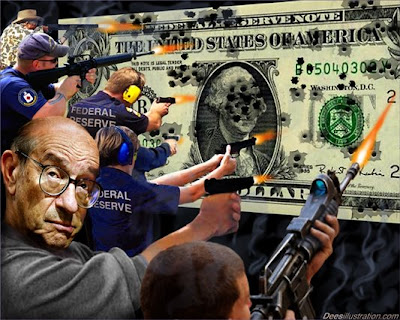


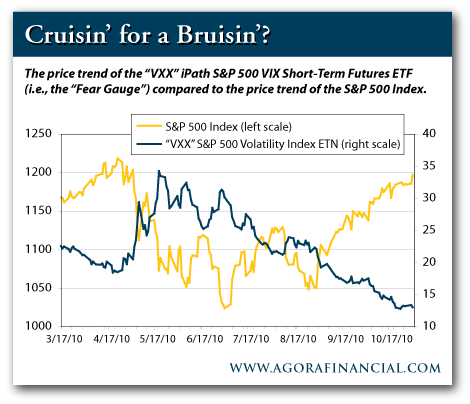
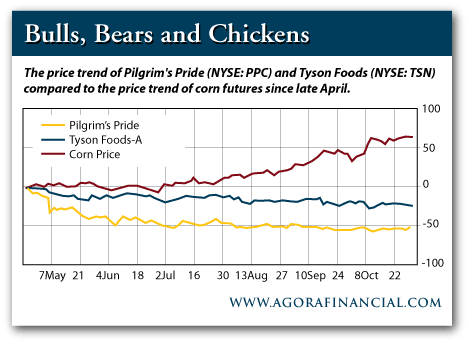
 See, that's why we don't fear the upside. If the market is going to have a mindless rally, we can find dozens of trade ideas that can keep us ahead of inflation like that. This is why we can PATIENTLY wait for the market to PROVE it can move forward - our job is to preserve cash so we can participate in these mindless opportunities to make ridiculous returns while the life savings and futures of the bottom 95% is ground into dust.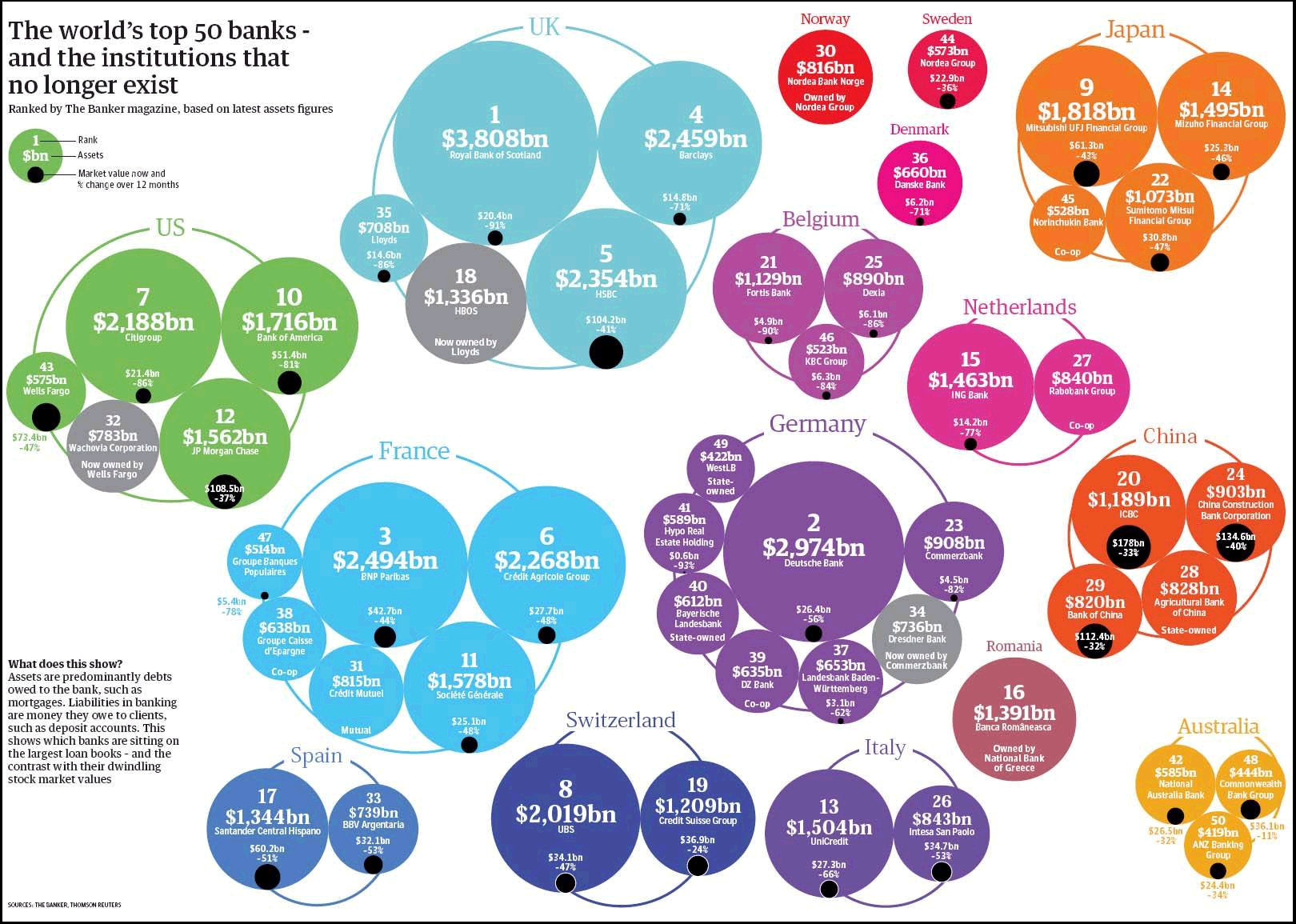


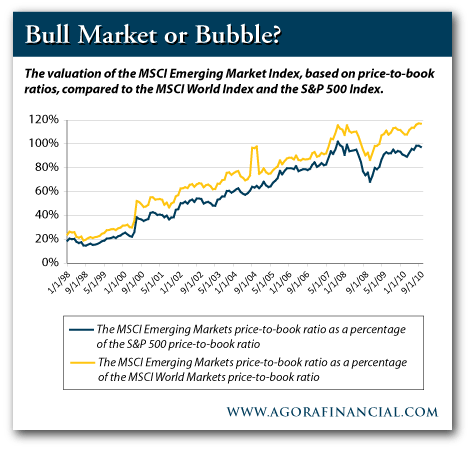


| You are subscribed to email updates from Gold World News Flash To stop receiving these emails, you may unsubscribe now. | Email delivery powered by Google |
| Google Inc., 20 West Kinzie, Chicago IL USA 60610 | |


No comments:
Post a Comment