


Gold World News Flash |

- Junior Miners Becoming Attractive Takeover Targets
- Crude Oil Touches Multi-Month Highs Ahead of QE2, Gold Rises but Lags as the Dollar D
- Gold is Primed and Oil Makes a Relief Breakout Ahead of FOMC Decision
- Robin Griffiths - Exponential Move in Gold & Silver
- They're baaaaaaaaaaack!
- James Turk - Gold & Silver Shorts to Experience Pain
- Gold Seeker Closing Report: Gold Gains Over $5 And Silver Climbs to A New 30-year High
- Of (Economic) Myths And (Central Banking) Heretics
- Completion of I.M.F. Sales Will Lower Supplies of Gold
- Investing in Gold Will Save Your Butt
- With A Five Year Delay, Banks Are Finally Hiring Foreclosure Experts, As Major AG Changes Guarantee To Delay Any Foreclosure Settlements
- The Gold Price Rising Regardless of What They Do Tomorrow or This Week, Gold is Relentlessly Pursuing $1,600 and Silver 3400c
- From Quantitative Easing To Stagflation?
- Gold Little Changed
- Sell Signal?
- Gold and SP 500 December Futures Daily Charts
- As Irrelevant Election Results Start To Trickle In, A Visualization Of 100 Years Of Government Lies And Their Impact On (What's Left Of) The Economy
- QE2 risks currency wars and the end of dollar hegemony
- GOLD COULD DROP BELOW $500!!!
- Suicide Is Painless
- 19 Reasons Why The Real Bubble Is In Inflating Bubbles
- John Taylor Is Negative On Gold's Monetary Equivalent: The Swiss Franc
- Four Weeks of Range Bound Activity is About to Ignite!
- Financial Apocalypse: Planned or Random?
- Gold Juniors Tactics: The Golden River!
- In The News Today
- Aussie dollar breaks the buck as Australia, India fight Fed with 'quantitative tighte
- Stockopedia speaks to Jeremy Martin of nickel and gold explorer Horizonte Minerals
- The Changing Landscape in Gold and Silver
- Graceland Updates 4am-7am
- Speaking of Risk Trades...
- Spanish Mountain, Likely BC's Premier Gold Discovery
- The Golden Promotion?.. Libertarian Wave?
- Bank Failures in Slow Motion, Part II
- Justice Litle: Is the unrigged silver market set to explode?
- Gold ETF Demand Flat-lining?
- LGMR: Gold Slips Amid Critical Week, Investors Fear Reckless Fed
- Good Money and The Fall of Bankers
- Gold, silver not exponential ... yet, Robin Griffiths tells KWN
- Real Bills and Gold
- One Pension-Fund Manager’s Estimate: Gold to Hit $10,000 an Ounce
- Gold Mining Risk
- Inflation Is Coming! Inflation Is Coming!
- Dhanteras: Smart Ways to Buy Gold
- Belief, Not Science
- White Metal Outlook
- Health Care Costs Go Up, Up and Away
- Featured Coin News and Articles for October 31 – November 6, 2010
- The Legacy of the Swiss Helvetia Gold Coin
- Election Day Advice: Vote With Your Feet
| Junior Miners Becoming Attractive Takeover Targets Posted: 02 Nov 2010 08:00 PM PDT There have been some exciting mergers and acquisitions (M&As) the junior mining sector over the past few months. As gold and silver settle from the previous move, many projects will be rerated and acquired by majors that are struggling with decreasing resources. I believe the industry is undergoing consolidation and we are seeing the beginning of a major international race to control future gold and silver ounces in the ground. The bull market in gold and silver is intact and, though we may see some short-term pullbacks in bullion prices, the junior mining sector will continue to outperform.
|
| Crude Oil Touches Multi-Month Highs Ahead of QE2, Gold Rises but Lags as the Dollar D Posted: 02 Nov 2010 05:53 PM PDT courtesy of DailyFX.com November 02, 2010 10:51 PM The usual government inventory report on petroleum inventories may be overshadowed on Wednesday by the highly-anticipated Federal Reserve policy decision. Commodities – Energy Crude Oil Touches Multi-Month Highs Ahead of QE2 Crude Oil (WTI) - $84.25 // $0.35 // 0.42% Commentary: Oil rallied for a second day on Tuesday, gaining $0.95, or 1.15%, to settle at $83.90. While crude did hit the highest level since May, prices are still hanging within the recent consolidation band between $79.50 and $84.50, though just barely. Tomorrow we will see if crude can break free of this band decisively after the Fed policy meeting and decision. If financial markets interpret the Fed’s action as supportive and oil is able to breakout, prices will make a run at the $87.15 May highs, which is the very top of crude’s more significant 13-month range between the high-$60’s and mid-$80’s. A break of those May highs wou...
|
| Gold is Primed and Oil Makes a Relief Breakout Ahead of FOMC Decision Posted: 02 Nov 2010 05:53 PM PDT courtesy of DailyFX.com November 02, 2010 04:16 PM There is notable event risk on the docket over the coming 24 hours; but the market’s interest will be completely consumed by one indicator in particular – the FOMC’s rate decision. Both gold and oil have moved from technical levels but are still volatility-prone. North American Commodity Update Commodities - Energy A Six-Month High From Crude Denotes a Clear Expectation for Fed Stimulus Crude Oil (LS Nymex) - $83.90 // $0.95 // 1.15% US oil put in for a second consecutive rally Tuesday; and subsequently cleared significant levels of technical resistance. The levels surpassed alone are remarkable. Not only did the benchmark commodity break the ceiling on its descending trend channel; but the swell would actually push crude to its highest intraday level and close in six months. However, this progress is even more incredible when we set it against the backdrop of impending event risk. The presence o...
|
| Robin Griffiths - Exponential Move in Gold & Silver Posted: 02 Nov 2010 04:21 PM PDT Ahead of the Fed announcement on QE, King World News interviewed one of the top strategists in the world, Robin Griffiths of Cazenove Capital. When asked about QE 2, Robin stated, "The fed would appear not to be going to blink, it's going to keep printing dollars, and almost all of the cross rates on the currency markets are saying, 'The dollar is toast, the dollar is really toast.' There's no sign of a reversal there."
|
| Posted: 02 Nov 2010 04:20 PM PDT
The market rallied today as election booths underflowed with discontented voters, unemployed workers looking for a warm place to hang out during the day, and douchey hipsters who thought the lines were for the Apple store.
Apparently the Republicans are going to win back the House and thus have 1/4 of the decision making bodies in the US (the others of course being the Senate, the Executive Office, and Marisa Miller because Money McBags would do whatever her body decides) which is somehow a good thing even though their policies are what got us to where we are in the first place. So hoooooooooooofuckingray. Instead of the party who can't get us out of this mess having all of the power, they can now share part of it with the party who got us in to this mess as the clusterfuck of bad ideas and incompetence will continue. So Rally fucking on.
To use a terrible analogy, it's like when Bo and Luke Duke came back to the Dukes of Hazzard after their contract dispute led their gay cousins to take over for a season. While it might have been a marginal improvement, the show still fucking sucked and all anyone wanted to see was Daisy Duke anyway, so who fucking cared whose turn it was to drive the racist car. And that is like this election because no matter who wins, the economy will still suck and all anyone wants to see is real economic growth (and Daisy Duke), so who fucking cares which unoriginal, solution-less dickbag drives the figurative legislative car.
Hopefully you all did the sensible thing and voted for "None of The Above" and wrote in Money McBags of the BOGUS party (Bail Outs Get Us Savings) who will finally take this farce of an economic non-strategy all the way. Money McBags spent at least half the day writing his acceptance address (and the other half googling Cintia Dicker's address) and promises to return this country to fiscal prosperity through destroying it and building it back up with more bail outs, more TARP, and especially more PPIP (though what else would one pee?).
As for macro news, it was more non-existent than people who have read all of Middlemarch or Art Laffer's credibility. The story remains QE2 and it will be very interesting to see how the market digests the size of it (perhaps they will ask Peter North's co-stars for advice) because there still remains a lack of consensus as to how much the Fed will ease. Of course the silliest part of all of this (even sillier than this trend of giving up showering and deodorant and way the fuck sillier than suing Mcdonald's for being fat), is that the prospect of QE2 has rallied the market when the whole reason for QE2 is that the economy is more fucked than Capri Anderson after an eight ball in Charlie Sheen's hotel room. So while QE2 is somehow the panacea for the dying economy (just like QE1 was, and TARP was, and everything else that has led to cyclically low 2% GDP growth (until the 2% is revised lower) was), the market is acting like that panacea has already cured the disease when in fact it may exacerbate the disease like Mentos in a Diet Coke bottle. This is as confusing to Money McBags as men who look like lesbians and ergodic theory so as the market rallies, he is left scratching his head in amazement (or perhaps it just scabies).
Internationally, Australia and India both raised rates as their economies continue to be healthier than Gabourey Sidibe's appetite after skipping both first and second breakfasts. China's unquenchable thirst (perhaps caused by too much soy sauce) for natural resources has helped drive Australia's economy higher and as a result of the rate increase and Bernanke's folly, the AUD reached its 28 year high last night achieving parity with the US dollar. Money McBags is now counting down the days until the dollar is no longer worth even a dong, which will be bad news for the Key West Vietnamese population.
Also, something to be aware of as your EPV etf drops faster than Abe Vigoda's balls in a steam room and that is that Spain's 2nd largest bank is looking to Turkey for growth by buying a 25% stake in Turkish bank Garanti. Now look, Money McBags is well aware of the benefits of Turkey's growing population, its youthful demographics, the the way it perfectly complements cranberry sauce, but something strikes Money McBags as being a bit fucked up when that is where Spain is turning to for growth. First of all, it means Spain realizes it is fucked for a long time and that is about as good for Europe as Lillian McEwen's memoir will be for Clarence Thomas. But secondly, BBVA stretching for growth here opens up all kinds of risks because whenever Money McBags hears of a financial services company trying to buy growth, so many red flags go flying up that you would think he was part of a semaphorist circle jerk. So while Europe is running right now, be very very careful.
In the market today, PFE had what Money McBags calls a a Jennifer Lopez Q as they put up a good bottom line but a weak top line. The company sold off ~1% as their revenue was below analyst guesses thanks to a stronger dollar and Lipitor sales falling by 11% due to increased competition from generics and fat people being unable to afford to eat as much. Also in the health care space, MHS put up a good Q and rose ~9% as they were able to grow their business and maintain margins which the Street thought would be less likely than Paul Krugman exhibiting modesty (or common sense) or Money McBags caring which of the Bernaola twins was tickling his taint.
Elsewhere, MA put up a nice Q and rose ~5% as eps of $3.94 grew 15% and beat analyst guesses of $3.54 as consumers max out their 1% cash back credit cards in order to earn income (like that is any stupider than continually borrowing from China?). ADM got cropped on as profits dropped due to weak grain merchandising margins and CLX tumbled by ~4% after the conglomerate posted disappointing earnings and lowered full year numbers as apparently all 800 of their categories sucked.
Money McBags also breaks down some small cap stocks today at the award winning When Genius Prevailed.
|
| James Turk - Gold & Silver Shorts to Experience Pain Posted: 02 Nov 2010 04:01 PM PDT  With gold and silver near the highs, King World News interviewed James Turk out of the United States. When asked about a short squeeze in gold and silver Turk responded, "The Asian buying that you mentioned in your recent blog is more fuel to the fireworks Eric. The last big squeeze that we had in silver was in March and April of 1987. Over that six week period in 1987 the price of silver literally doubled. The 1987 experience illustrates the kind of pain that shorts can suffer, and that just goes to show that you never want to mess with the bull." With gold and silver near the highs, King World News interviewed James Turk out of the United States. When asked about a short squeeze in gold and silver Turk responded, "The Asian buying that you mentioned in your recent blog is more fuel to the fireworks Eric. The last big squeeze that we had in silver was in March and April of 1987. Over that six week period in 1987 the price of silver literally doubled. The 1987 experience illustrates the kind of pain that shorts can suffer, and that just goes to show that you never want to mess with the bull."
This posting includes an audio/video/photo media file: Download Now |
| Gold Seeker Closing Report: Gold Gains Over $5 And Silver Climbs to A New 30-year High Posted: 02 Nov 2010 04:00 PM PDT Gold rose as much as $8.58 to $1359.68 in early New York trade before it fell to see a $1 loss at $1350.10 at around 11AM EST, but it then bounced back higher in late trade and ended with a gain of 0.44%. Silver fell to $24.62 at around 8AM EST before it jumped up to $24.92 in the next half hour of trade and then fell back to around $24.70 by late morning in New York, but it also rallied back higher in late trade and ended with a gain of 1.26% at a new 30-year high.
|
| Of (Economic) Myths And (Central Banking) Heretics Posted: 02 Nov 2010 02:56 PM PDT
Now that a revisionist political backlash against a system that failed its constituency in every possible way is in full force judging by the sea of red almost visible on the metaphoric CNBC heatmap (and literally so, after a casual glance at the turn in the AUDJPY pair derivative known as the futures), it is time for today's little political diversion to end, and for everyone to redirect their attention to where it belongs: namely the Marriner Eccles building located ironically enough on Constitution Avenue in D.C. With just over 12 hours left until what some consider the most important decision in the history of Keynesian economics, and of the fiat monetary regime, we wish to bring to you an extract from William Buckler's recent edition of his most excellent Privateer newsletter. In it he talks about myths and heretics, about dogma and revolution, about ignorance and abuse thereof, but mostly, he talks about the Federal Reserve, and its imminent end. Since pretty much everything else about what may happen tomorrow has been said, here is an essayistic view about what may happen the day after tomorrow. Of Myths And Heretics Around 250 BC, the Greek mathematician Eratosthenes proved that the earth was round and calculated its circumference with remarkable accuracy. Almost 1800 years later in 1519, 237 men under Ferdinand Magellan set out in five ships from Seville in Spain. Three years later, 18 men in one ship returned, having completed the first widely known historical circumnavigation of the earth. Even after this proof, many clung to the myth that the earth was flat. Some still do to this day. In the 15th century, Copernicus displaced the Earth from the centre of the universe, holding that it revolved around the sun - which was the centre of a universe of fixed bodies. In the 16th century, Galileo discovered the moons of Jupiter, proving that not all “heavenly objects” orbit around the earth or the Sun. Giordano Bruno went still further, maintaining that the universe was infinite and therefore had no “centre”. Copernicus got away with it, not having the instruments to prove his contention. Galileo was forced to recant. Bruno refused to recant and was burned at the stake. The reaction to these discoveries by the “powers that be” is typical and reverberates throughout history. In 1654, Bishop Usher published a work in which he solemnly calculated the age of the earth to be 5659 years. According to the learned gentleman, “Creation” took place at nightfall on the “day” preceding October 23, 4004 BC. Both the Egyptians and the Babylonians had calendar systems which went back further than that. No matter, the “age” of the earth was still hotly contested in the “developed” world in the late 19th century during the debate over Darwin’s theory of evolution. The Great Modern Myth - Orthodox Economics: You can unearth long lasting “debates” in every branch of human knowledge. There is a very old and very tenacious tendency to never let the facts intrude on a good theory. In this regard, the study of economics and finance is not immune. The problem is that it is more destructive than any other modern controversy - as the world is just now beginning to discover. All forward steps in any field of knowledge are made by those who do NOT conform to the orthodox. The problem is that once a particular set of rules and theories does become orthodox, a huge vested interest is quickly built up, all of whom are united in their desire to ridicule, suppress or shun those who do not conform. Religious controversies are the best known example of this, but the practice is rampant in any field of endeavour. It reaches its most virulent level in areas which impinge directly on politics in general and the pursuit of political power in particular. The 20th century had the sad distinction of being the era when government and economics became (seemingly) inextricably intertwined - an even more dangerous development than the previous marriage of church and state. One of the great achievements of the Founding Fathers in the US was their constitutional separation of church and state. This absolute separation has since been sadly eroded but it still stands as one of the laws which governments must obey and thus as an impediment to the pursuit of power. With economics in general and money in particular, the opposite is the case. Here, there is no constitutional or any other kind of barrier to keep the government out of the lives and the pockets of its citizens. The justification for this has evolved into modern orthodox economics. It is taught by (almost) all institutions of “higher” learning and practised by (almost) all economic decision makers both inside and outside government. The “Sanctum Sanctorum”: Translated from the Latin, this means “holy of holies”, the most sacred place within a sacred building. The same is true with a set of ideas which seeks to justify the conduct of human beings. At the base of these ideas, there is a core which cannot be talked about, let alone debated, without incurring the wrath of those who rule. At the heart of government power today lies their complete control over money. In an article in the UK Telegraph newspaper on October 27, Mr Ambrose Evans-Pritchard talks about “the New Keynesian priesthood that rules our money and our lives”. The metaphor is an apt one. We can only hope that this “priesthood” will fall without the Reformation” that hit the Catholic Church in the 16th and 17th centuries. We can also hope that the “revolt” won’t take as long this time. The “Reformation” lasted over a century and ended - in 1648 - after 30 years of one of the bloodiest wars in Western history. The Fed is, however, nearing its century and there has been no shortage of wars. Orthodox Fed Policy: Read any press release put out after any Federal Open Market Committee (FOMC) meeting over the past 20 plus years. You will find two statements (or reasonable facsimiles) contained in it. One is that the policy aims of the Fed are and will remain the maintenance of “sustainable economic growth and price stability”. The other is the perpetual affirmation by the Fed that “longer-term inflation expectations remain contained”. These two pieces of monetary “holy writ” were a constant right through the long “reign” of Alan Greenspan which began way back in August 1987. They remained a constant under Ben Bernanke - who ascended the US monetary throne in February 2006 - until very recently. In the nearly 70 years since the US Dollar officially became the world’s reserve currency in 1944, the Fed has always held as financial “holy writ” its ability to produce both economic “growth” and price “stability” through its monopoly over the US currency. Even the “inflationary 1970s” and a short period of 20 percent plus US interest rates did not shake that belief. The Fed has never wavered in its belief that no matter how many of them they created out of thin air, the US Dollar would NEVER be rejected. Economic Growth And Price Stability?: Economic growth and price stability are the stated aims of the Fed. In orthodox (read Keynesian) economics, the two are mutually exclusive. You can have one or the other but you can’t have both. To understand this, it is only necessary to realise that Keynesians measure “economic growth” by means of statistics, notably the Gross Domestic Product or GDP. According to the Wikipedia, the orthodox definition of the GDP is: “the market value of all final goods and services made within the borders of a country in a year”. A “market value” is a price. If prices are “stable”, market values cannot increase (or decrease). And if this is the case, then economic growth cannot take place. According to the Wikipedia again: “Economic growth is the increase of per capita gross domestic product (GDP). It is often measured as the rate of change in real GDP”. If there is no change, there can be no growth. In the real world, prices are exchange ratios between goods and services on one side and money (the medium of exchange) on the other. In that same real world, the only constant is change. That being the case, stable prices are not only undesirable, they are impossible. There is one, and only one, stable item which can be introduced into the process of production and exchange. That one stable item is the physical dimension of what is used as a medium of exchange. We are not talking about the number of units of money, we are talking about the composition of the individual monetary unit. A defined weight and fineness of monetary metal is and has always been the ONLY way to produce this “stability”. Given the use of such money and a completely unhampered market, prices are free to fluctuate as much or as little as circumstances dictate. In an economy which is truly “growing”, the supply of goods and services available in exchange for money is increasing. New wealth is being produced faster than existing wealth is being consumed. In such an economy, prices are not stable, they are FALLING! Falling prices are what the Fed and every other central bank fears more than anything else. The reason for this becomes obvious when one considers the nature of the “money” these central banks produce. “The Difficult We Do Immediately”: “... The impossible takes a little longer.” This motto has been used by many organisations, the original being the US Army Service Forces in WWII. Actually, it is a perfect motto for Ben Bernanke and will hopefully stand in future as an epitaph of the Fed and every other central bank. The “difficult” part of what the Fed and every other central bank does is not actually very difficult at all for them, but it most certainly would be for you and me. Today, one of the accepted and primary roles of governments everywhere is to “run” the economy. It is true that they spend all their time passing new rules and regulations into law in order to do the “running”, but their primary means has been and remains their total control over the money in the nation they govern. The institution which justifies and facilitates this is the central bank. It actually produces the money, both physically and as computer entries. The “impossible” part is the one which Ben Bernanke is just starting to suspect now. For almost forty years, the Fed has maintained the facade that a purely paper fiat money can function in a market economy just as well as an objective REAL money can. Central to this task is their contention that they can control the economy and prices by manipulating the amount of “money” they issue. This is the impossible. It has never been successfully done in the entire history of paper fiat money. When the Fed talks about “stable prices”, it is not actually serious, it just wants to be taken seriously. The last thing in the world which the Fed or any other central bank wants is stable prices for the paper assets which form the ultimate “collateral” for the paper money they emit in such vast torrents. Any lowering of these prices puts the Fed’s “mandate” of economic growth into danger. From there it is a short step to the collapse of the money itself which has absolutely NOTHING else behind it. To forestall that step being taken, Mr Bernanke is now poised to defy the impossible on a scale never before attempted. Jettisoning “Stable Prices”: Ben Bernanke started warning us all about the perils of what he called “deflation” long before he became Fed Chairman in 2006. He gave what is probably still his best known speech way back in November 2001. His title was: “Deflation - Making Sure “It” Doesn’t Happen Here”. He proceeded into the meat of his speech in the following manner: “So, is deflation a threat to the economic health of the United States? Not to leave you in suspense, I believe that the chance of significant deflation in the United States in the foreseeable future is extremely small.” Almost nine years and some hair raising experiences - most of which had to do with very “significant deflation” in the paper asset markets later - Mr Bernanke has changed his tune. Not only has he decided that “deflation” (falling prices in his jargon) is a significant threat, he has decided that it is an imminent threat. Sadly, the direct means at the disposal of the Fed with which to deal with this threat have already been deployed to their fullest extent. Official US interest rates have been non existent for almost two years. The Fed’s balance sheet - paper “assets” which still retain a “value” only because the Fed owns them - exceeds $US 2 TRILLION. The Fed spent most of 2009 monetising Treasury debt with no benefit to either the real US economy or to the still uncomfortably high official US unemployment rate. So now, the whole world awaits the Fed’s announcement of a second attempt to pump up the US economy by means of creating US Dollars and using them to buy US government (Treasury) debt. As the “decision date” of November 3 draws closer, the focus of global markets discards almost all other considerations. But what is it, precisely, that the Fed hopes to accomplish? Encouraging Inflationary Expectations: When, not if, the Fed and Mr Bernanke do announce their second program of US government debt monetisation, they will have admitted in public that the first (March to October 2009) program has failed them. Further, they will have confirmed for a second time in about a year and a half that the ultimate job of all central banks is to act as a “lender of last resort” to the governments which control them. Third, they will have demonstrated for all that have eyes to see that the “full faith and credit” of government which is the only underpinning for modern fiat money is an illusion. It is no more credible in the light of FACTS than contentions that the earth is flat, that the universe is fixed in place or that “creation” took place well over a million years after the first recognised human beings walked the earth. Modern governments and their central banks cling to the tenets of orthodoxy in the economic and financial realm with fanatical zeal. They have no choice, their power depends upon them. The situation has now reached a level where the US political and financial establishment have decided that to retain power they have no choice but to risk losing it altogether. The surest evidence of this is Mr Bernanke’s stated intention to encourage “inflationary expectations” amongst the American people. The Eye Of The Tiger: Like most organisations whose main aim is to accumulate power in the hands of the government, the Fed has always relied on what Elihu Root (see the quote earlier in this section) described as “optimism”. Another word for this is ignorance. Ignorance is not a pejorative term, it simply means a lack of knowledge in a given field of human endeavour. No human being has ever lived who is not totally ignorant about many vitally important areas of knowledge. But no VALID field of human knowledge has ever relied upon ignorance as its prime justification. This is what the Fed now proposes to do. The fact is that inflation - an increase in the total stock of money - is the modus operandi of every central bank which has ever existed. Central banks still exist only because the vast majority of the people they rule do not equate what they do with inflation. Mr Bernanke now proposes to change that. In doing this, he is placing the biggest bet in history on economic and financial ignorance. All such bets lose.
|
| Completion of I.M.F. Sales Will Lower Supplies of Gold Posted: 02 Nov 2010 01:00 PM PDT The I.M.F. announced that 32 tonnes of gold was sold by them in September. This included the 10 tonnes to Bangladesh. This leaves around 71 tonnes left to go and we have passed October now. If they sold a similar amount in October then we are down to just below 40 tonnes remaining for sale by the I.M.F. If they continue this pace of selling they will only be left with less than 10 tonnes to sell in December and will complete their sales before the end of this year.
|
| Investing in Gold Will Save Your Butt Posted: 02 Nov 2010 11:52 AM PDT When I got back to the office, the place was abuzz, all stemming from how my boss wanted to "see me" as soon as I got back from wherever the hell I was. I knew what it was about. It was about old man Sanderson and the stupid Sanderson account. The problem was that I had just seen the Britebart.tv video of the megalomaniacal and totally incompetent Harry Reid, Congressional Representative from Nevada and doofus extraordinaire, saying, "But for me, we'd be in a worldwide depression." So, inspired, I told Sanderson to stick his problems, and that, "But for me, you would be sued into bankruptcy after using our defective parts, ya moron!" So I grudgingly went up to her office, and the first thing I see is her stupid secretary, who hates my guts because I once told her to buy gold, silver and oil against the terrible inflation that will result from the traitorous neo-Keynesian econometric nitwits at the Federal Reserve creating so much excess money, especially when the corrupt federal gov...
|
| Posted: 02 Nov 2010 11:30 AM PDT
This is just too ironic: after possibly sinking the entire mortgage-backed industry in a moronic attempt to maximize fees and minimize expenses, and hiring any carbon based lifeform that knows 5 words of English to engage in rampant robosigning, the banks are finally seeking to recruit foreclosure experts. Um, isn't that about five years too late? And isn't it also an acknowledgement that banks were in essence lying when they testified under oath that they were sufficiently well equipped to handle millions of foreclosures? The FT reports: "Recent job postings on Monster.com and other employment websites indicate that banks are recruiting “foreclosure specialists” and “bankruptcy documentation” experts. Adecco, the world’s largest temporary staffing company, said the number of such job openings was 25 per cent higher than a year ago. Monster.com says it has seen a 16 per cent rise in recruitment for such positions in the past two months." We would be most amused to discover just how many such job postings the seemingly error-proof Wells Fargo has submitted in the past month. Luckily for Wells, the new recruits will fit right at home: "Most of these jobs are lower level and require no more than high school diploma, according to advertised listings." In other words, few if any will notice the new additions. From FT:
For readers who believe they may be qualified to walk and breathe at the same time, here are some typical prerequsites:
Great. Now if only these requirements had been submitted in 2008 when the bulk of the foreclosure wave was starting, perhaps funds such as Iridian wouldn't be betting the farm on the complete collapse of the MBS system. Luckily, it won't be too difficult to fill the required positions:
Which is why very few are actually willing to discuss what their hiring needs are:
And while understaffing is one reason why banks are scrambling to get back on the foreclosure track, Charlie Gasparino reports that another big question for banks is the imminent landslide change in political composition of numerous states, which will certainly be a major set back to reaching a prompt settlement with the ongoing attorney general investigation.
One thing is sure: the new batch of AG will not immediately bend over to Wall Street's whims, knowing full well they will have signed their own career death sentence off the bat should they pursue that course, especially with every blog exposing their actions to the broader population for all to see.
|
| Posted: 02 Nov 2010 11:10 AM PDT Gold Price Close Today : 1356.40 Change : 6.20 or 0.5% Silver Price Close Today : 24.832 Change : 0.284 cents or 1.2% Gold Silver Ratio Today : 54.62 Change : -0.379 or -0.7% Silver Gold Ratio Today : 0.01831 Change : 0.000126 or 0.7% Platinum Price Close Today : 1718.00 Change : 9.90 or 0.6% Palladium Price Close Today : 645.50 Change : -4.80 or -0.7% S&P 500 : 1,193.57 Change : 9.19 or 0.8% Dow In GOLD$ : $170.52 Change : $ 0.22 or 0.1% Dow in GOLD oz : 8.249 Change : 0.010 or 0.1% Dow in SILVER oz : 448.72 Change : 0.67 or 0.1% Dow Industrial : 11,188.72 Change : 64.10 or 0.6% US Dollar Index : 76.69 Change : 0.609 or 0.8% I'm staring at the SILVER PRICE and GOLD PRICE and trying to figure out whether there are surprises in the world -- or not. Gainsaying my yesterday's expectation, silver rose a respectable 28.4c today to 2483.2c and gold rose $6.20 to $1,356.04. So much for a quiet day awaiting election results. SILVER is so strong it startles even me. That's good. On Comex it rose 28.4c to close at 2483.2c, but in the aftermarket silver bested its old 2490c high and touched 2505c. Right now at 2495c. Only caution I have to thrown on this party is that if this were a B-up corrective wave, it would look every bit this strong and it might exceed the previous high. Silver really won't confirm that it is resuming a rally until it closes above 2540c. We might see that tomorrow, or silver and gold might sag in the wake of elections. No mind can parse the heart of democracy, the voice of the people, or how frequently another sucker is born. Crawling out of these bushes, let me point to the horizon, where shortly you will see the SILVER PRICE and the GOLD PRICE rising (I doubt not), regardless what they do tomorrow or this week. Gold is relentlessly pursuing $1,600 and silver 3400c. Don't let them leave without you. The US DOLLAR INDEX is leading the race to the bottom, yet even there only squishy ambiguity meets us. Existing support is around 76.70, and the buck dropped 60.5 basis points (0.78%) to trade at 76.687. That equals the low of 25 October, but -- watch, now! -- doesn't exceed it. Therefore, it might follow through tomorrow and fall like your stock with your girlfriend's Mama when she catches you eating peas with a knife, or that might be the final kiss good-bye where the dollar touches back to support and shoots up. Honestly, I don't know which, and markets are goofy, and not logical. About all I know is that the dollar won't remain here. . . I don't think. STOCKS must be driven by the dopiest bunch of optimists on earth. The Dow rose today 64.10 to 11,188.72. S&P500 kept it company with a 9.19 point rise to 1,193.57. Dow looks like a double top, but if it rises tomorrow through 11,250, then obviously it won't be a double top. Stay out of stocks. The bear is hungry for more victims: don't become one by investing in stocks. Argentum et aurum comparenda sunt -- -- Gold and silver must be bought. - Franklin Sanders, The Moneychanger The-MoneyChanger.com © 2010, The Moneychanger. May not be republished in any form, including electronically, without our express permission. To avoid confusion, please remember that the comments above have a very short time horizon. Always invest with the primary trend. Gold's primary trend is up, targeting at least $3,130.00; silver's primary is up targeting 16:1 gold/silver ratio or $195.66; stocks' primary trend is down, targeting Dow under 2,900 and worth only one ounce of gold; US$ or US$-denominated assets, primary trend down; real estate in a bubble, primary trend way down. Whenever I write "Stay out of stocks" readers inevitably ask, "Do you mean precious metals mining stocks, too?" No, I don't. 
|
| From Quantitative Easing To Stagflation? Posted: 02 Nov 2010 10:13 AM PDT
By Dian L. Chu, Economic Forecasts & Opinions
In addition, as describe in the previous “credit crunch” section, there’s a lot of the cash being held at banks to shore up their balance sheet, and corporations are also hoarding cash as ‘safety net” due to the gloomy and uncertain business climate.
And since dollar is still the major global reserve currency, QE2 could also decrease value of other countries’ foreign reserves. Dian L. Chu, Nov. 1, 2010
|
| Posted: 02 Nov 2010 09:51 AM PDT courtesy of DailyFX.com November 02, 2010 06:35 AM 60 Minute Bars Prepared by Jamie Saettele “An impulsive decline from the high indicates that the larger trend has reversed.” The corrective rally has taken a bit longer than expected but is corrective nonetheless. Expectations are for a top and reversal, although a push through 1366 may be needed first....
|
| Posted: 02 Nov 2010 09:37 AM PDT
“Last time we had an insider sales ratio of over 30 times was in April, just before the markets went kaput for awhile. The so-called ‘Flash Crash.’ Then the ratio went under 12 for long stretches during June through September. During this time, the market has generally been rising.
Indeed, at 108.7, the ATA’s index of truck tonnage remains below levels two years ago as the Panic of 2008 was setting in -- to say nothing of pre-recession levels. “This is a reflection of an economy that is barely growing,” says ATA chief economist Bob Costello.
Rail volumes as measured by Atlantic Systems Inc. are down 5% compared to October 2008. Digging into the internals is pretty interesting. Compared to two years ago, grain shipments are up 10%. Shipments of food and chemicals are essentially flat. Coal, metals and auto shipments are down 10%… and lumber shipments down 20%.
|
| Gold and SP 500 December Futures Daily Charts Posted: 02 Nov 2010 09:23 AM PDT |
| Posted: 02 Nov 2010 09:18 AM PDT
As election results gradually trickle in, the following chart from John Palmer presents one of the best compilations of how the government and the economy have coexisted over the past 100 years. To say that there has been much of a difference under either regime would be an overstatement: the end goal has always been the debasement of the dollar, the incurrence of more debt, the expansion of the economy courtesy of ever cheaper debt-created money, all the while nothing has actually changed. As Palmer notes, "this historical perspective visualizes economic trends and spending patterns, during good times and bad. Present-day assumptions regarding core party values have had major shifts over time, and the ridiculous extremes in voter alignment, lobbying, and legislative action are due for revision. As a basis for future shift, this data can educate a presumptive public, empowering citizens to make an informed decision on each and every election day." It appears that with broad hatred for the Fed gradually eclipsing party allegiances, that the presumptive public is finally waking up. Full interactive graphic after the jump:
|
| QE2 risks currency wars and the end of dollar hegemony Posted: 02 Nov 2010 08:57 AM PDT As the US Federal Reserve meets today to decide whether its next blast of quantitative easing should be $1 trillion or a more cautious $500bn, it does so knowing that China and the emerging world view the policy as an attempt to drive down the dollar. The Fed's "QE2" risks accelerating the demise of the dollar-based currency system, perhaps leading to an unstable tripod with the euro and yuan, or a hybrid gold standard, or a multi-metal "bancor" along lines proposed by John Maynard Keynes in the 1940s.
|
| Posted: 02 Nov 2010 08:43 AM PDT Here is an article that challenges the unrelenting bullishness for gold that is a mainstay of this site. I would beg to differ on his analysis. Anyone care to comment? Tampa Gold maybe? Warning! Gold Could Drop Below $500By Alex Dumortier | Gold has performed very strongly over the past decade, trouncing equities and bonds in the process and handing investors who own the SPDR Gold Shares (NYSE: GLD) or the iShares Gold Trust (NYSE: IAU) handsome gains. Amid a heated debate about whether gold is in a bubble, it's worth taking a historical view to examine the risk investors are taking by paying more than $1,300 for an ounce of gold. Gold's real return: zero That shouldn't be surprising: There is no reason to expect that an inert asset that produces no cash flows and has few industrial applications to accrete value. By stating that gold has returned nothing, I'm not disparaging the yellow metal; rather, it shows that the precious metal has acted as a store of value — over the very long term (for practical purposes, however, gold's price volatility makes it unsuitable as a store of value). That's consistent with the notion that it is an alternative currency that no government can debase. Still, this alternative currency could be in for a big devaluation. To see why, look at the following graph of 10-year trailing real returns for gold since 1861 (based on average annual gold prices):
Sources: World Gold Council, Kitco. Recent gains could reverse
Putting one and two together suggests gold returns going forward will be lower than the ones we have become accustomed to during the past decade. Just how severe could a reversal be? Let's take a look at the current price of gold in context. The following chart shows the average annual price of gold expressed in constant 2010 dollars (i.e., inflation-adjusted):
Sources: World Gold Council, Kitco. Gold could fall by two-thirds! Don't let the gold hucksters fool you Let me emphasize that point: At these prices gold is no safe haven; it's an active bet on a specific scenario for the U.S. economy. Super-investor John Paulson owns gold because he believes the U.S. will experience double-digit inflation, but if that doesn't pan out, the bet could prove costly. Major gold miners that have closed out their hedges, including AngloGold Ashanti (NYSE: AU), Barrick Gold (NYSE: ABX) and Gold Fields (NYSE: GFI) would share in the pain. Gold is now a bubble
|
| Posted: 02 Nov 2010 08:37 AM PDT The fact that the US currently spends 7 times as much on Defense as the next nearest country is proof that the military industrial complex has gained unwarranted influence and a disastrous rise of misplaced power has occurred. U.S. DEFENSE SPENDINGWhen you critically analyze why we would need to spend 7 times as much as China on military when there is no country on earth that can challenge us, the answer can only be OIL. Our own military came to the following chilling conclusion in their Joint Operating Environment report, issued earlier this year: By 2012, surplus oil production capacity could entirely disappear, and as early as 2015, the shortfall in output could reach nearly 10 MBD. A severe energy crunch is inevitable without a massive expansion of production and refining capacity. While it is difficult to predict precisely what economic, political, and strategic effects such a shortfall might produce, it surely would reduce the prospects for growth in both the developing and developed worlds. Such an economic slowdown would exacerbate other unresolved tensions, push fragile and failing states further down the path toward collapse, and perhaps have serious economic impact on both China and India. At best, it would lead to periods of harsh economic adjustment. To what extent conservation measures, investments in alternative energy production, and efforts to expand petroleum production from tar sands and shale would mitigate such a period of adjustment is difficult to predict. One should not forget that the Great Depression spawned a number of totalitarian regimes that sought economic prosperity for their nations by ruthless conquest. More Here.. 
|
| 19 Reasons Why The Real Bubble Is In Inflating Bubbles Posted: 02 Nov 2010 08:32 AM PDT
From BNP, courtesy of Leo Kolivakis
|
| John Taylor Is Negative On Gold's Monetary Equivalent: The Swiss Franc Posted: 02 Nov 2010 08:26 AM PDT
From John Taylor of FX Concepts The Swiss Franc Should Be Relatively Weak into Late November
The EUR/CHF role as a risk gauge is mainly focused towards Europe. This is why there is a close relationship between EUR/CHF and the inverse of movements in bond spreads between Bunds and Greek or Irish Bonds. The widest point in both bond spreads was in September and then they started to narrow, which is when euro/Swiss began an upmove. However, spreads have started to widen again and are close to their highs between the 10-year Bunds and Irish Bonds. Although problems in Europe have subsided, these spreads tell us they are far from over. Optimists might say that Ireland is an isolated example and the Irish government is positive as it decided to suspend debt sales for four months in hopes that the problem will pass. If the other credit spreads start to move toward new highs as well then this will trigger a downtrend in the European countries. Our cycles say that this is more likely to begin late in the month. Trading will be choppy and erratic this week with the US mid-term elections today and the FOMC announcement on QE expected on Wednesday. The cycles call for the dollar to decline into Wednesday and then rally into early next week. We favor buying USD/CHF on weakness and if seen .9850 should be a good place. The cycles then call for the dollar to turn higher and rally into early next week and a break of .9975 signals it will trade to the 1.0050 area early next week before beginning a decline lasting into late November.
|
| Four Weeks of Range Bound Activity is About to Ignite! Posted: 02 Nov 2010 08:24 AM PDT Although the dollar has been sliding and stock markets and are flirting with yearly highs, how are markets shaping up over the past four weeks? We start with the Dow Jones which is virtually at the 2010 high but the past four weeks of ...
|
| Financial Apocalypse: Planned or Random? Posted: 02 Nov 2010 08:00 AM PDT For as long as the financial crash has been in progress in earnest (dated for me a few months before Bear Stearns went under), on just about every message board I have been part of there is a Cadre of "Conspiracy Theorists" aka the Tinfoil Hat crowd. All sorts of different Conspiracies get dragged into the discussions, including but not limited to the Assassination of Lincoln, the Attack on Pearl Harbor, the Assassination of the Kennedies and Martin Luther King, the Apollo Moon Landing and of course Topping the Charts, 9-11. Just to let you guys know, before this financial crisis got seriously underway, I never gave a whole lot of thought to Conspiracy Theory, and I had only a passing knowledge of the Trilateral Commission, the Bilderberg Group and the history of Banking from my college years. I did come away from my short stint working on Wall Street as a Pigman convinced the entire system was a corrupt shell game, but I never thought of it as a Planned System specifically benefiting a few people at the expense of the rest of the world, just as a bad system with a whole lot of flaws that could be exploited by the corrupt and greedy. What all the aforementioned Conspiracies in the opening paragraph have in Common is the Postulate of a Shadow Goobermint of a few extremely powerful people pulling strings to effect some very important historical events. Put that together with tracing the History of Money back to the Medici, and you come up with the Umbrella of the "Illuminati". For me this terminology is a rubric and catch all for those who have controlled the flow of money through the course of history. As a result of reading some pretty persuasive arguments by a few Conspiracy Theorists on more than a few websites over these last 3 years, I developed a New Interest which never intrigued me in my Collegiate years, World History. I was in those years a Blackboard Wizard, a Math Nerd who spent his free time in the basement of Havermeyer Hall smoking grass and doing abstract mathematical proofs with a few other similarly slightly screwball individuals. OK, granted, I was probably the MOST screwball among them all, but I was ALSO faster to the end of a proof than anybody else. I am NUTS beyond belief if you haven't grasped that yet, but its just a result of being on overdrive all the time thinking about stuff. Can't help it, its my nature, and why these freaking posts get so LONG. Consider yourselves LUCKY. A few unfortunate Psychologists had to listen to me spout off for hours at a time when I was a preteen, and I made NO SENSE to them then since it was all abstract and jumbled collections of thought. I am downright SANE now compared to when I was 9. Took a while to get it under control. If you can call this controlled anyhow. LOL. Anyhow, I got out of college knowing a whole lot about Math, but really very little about World History, despite the required courses in Contemporary Civilizations and Humanities that were part of the Core Curriculum at Columbia that forced me to read the "Classics". Including of course Adam Smith, Nicolo Machiavelli, Karl Marx, Hobbes, Locke, Descartes, Freud…blah blah blah. Sadly, I didn't read them for comprehension at the time, I read them as fast as I could and spit out the required Papers as fast as I could to get BACK down to the basement in Havermeyer, smoke some more dope and play more games with abstract symbols. So anyhow, watching the massive Shell Game begin to fall apart in the months prior to Bear Stearns getting Toasted back in 07-08 finally awakened in me an interest in how the whole thing got itself rolling, and I have been picking up all sorts of new information (for me) here all through the period since, around 3 years of study on the topic now. A real Eye Opener was Carroll Quigley's "Tragedy & Hope: A History of the World in Our Time". Together with some fairly obvious things you can elucidate watching the financial spin down and then pondering on the nature of Human Civilizations since Roman Times (though these days I have worked my way back further than that), Patterns emerge that are not so obvious if you take a parochial view and just look at what is happening here in THIS time. Fancy way of saying most folks do not see the Forest for the Trees. The first thing you have do is pitch out of your head the idea that as far as Politics and the movement of Money goes we are more "advanced" than they were in the time of Rome or Egypt or Mesopotamia. These civilizations lasted quite a long time, they used Money for commerce and they had all the same problems insofar as Interest is concerned in a Money Supply. They MUST have had all the same problems of Boom-Bust cycles, and this is evidenced by the existence of "Jubilee" as a means to reboot an economic system once debt levels became too great for the system to remain operational. Anyhow, you can be pretty sure that by the time the Roman Empire was winding down, Banksters had a real good understanding of how to manipulate Money Supplies and the Boom Bust cycle inherent in a system with compounding interest, as WELL as knowing how to use this to indebt both the general population of J6P as WELL as Rulers of Kingdoms, and how to use money to Corrupt the Political Class, essentially Buying Favors and conferring Political Power through the manipulation of Money. Put this together with the rise of Venice around 1200 or so along with the expansion of the Catholic Church, and you begin to see that while Rome collapsed, the Banking system never did, it just changed locations and Power Centers. Venice was extremely powerful through the Middle Ages, and by the end of that time moving into the Enlightenment period they had metasticized their Banking system to Amsterdam and London. Consolidated in Switzerland somewhere in this period as well. The Catholic Church was as well of course through the period a MEGA powerful bank, and remains so today. The Vatican controls a vast amount of wealth, its close to incalculable since their Books are not open for Auditors to examine, they are even more Opaque than Da Fed. Gold and Silver were used throughout this period as the Money of the time for most of the population, but even going back to Roman times the real Wealth was calculated in terms of Credits and Debits in many commodities as well as Porperty Rights and Ownership. Through any number of financial means, taxation at Da Goobermint level and Speculation at the Market level it has always been possible to manipulate the money supply and impoverish whole populations just by running up debt levels to unsustainable levels, then pulling liquidity from the market and making Credit unavailable. To do that of course, you have to be in control of the main Bank or Banks that can push around the most money/credit and manipulate markets at will. You see that very same effect right now as Da Fed makes the market jump basically on Command, really with just a few abstract Pronouncements about what they might or might not do as far as increasing or decreasing the money supply and issuing Credit. That is not ALL they are doing of course, as the system drops into catastrophic failure mode they have to do a whole lot MORE than that to insure that as it crashes, most of the money gets moved into the private hands of the few people who really pull the strings at the Fed, and its NOT Helicopter Ben and CERTAINLY not CONgress Critters, so anyone who places the BLAME for our problems on them is short a few IQ points, possibly dipping into the Negative Imaginary Numbers. Its people who by virtue of their ownership of Banks that own Da Fed are able to get Helicopter Ben to Jump on Command. He even probably thinks he is "Independent", but really he was SELECTED for his position based on the theories he wrote at Universities like Princeton designed to find people who would serve a good use at given times in an economic cycle. Alan Greenspan, acolyte of Ayn Rand also fulfilled a similar role. Ayn Rand herself was an AWESOME philosophical tool of the Illuminati seeking to maintain power through the period of battle between Communism and Capitalism in the 1950-60s, but that is a subject for another post. Politicians like CONgress Critters and even Presidents? They are just Dupes, and the Dumber they are, the better as far as the Banksters are concerned. Why do you think folks like Sara Palin get promoted up to the point they are Viable candidates for President? Sara has NO CLUE even about basic History and less about Mathematical principles. A bunch of really Rich guys who fund her campaign will tell her what they want done, and she will do it. Really, on the Political Leadership level, our Political Leaders have been getting DUMBER in every generation. The dumber they are, the easier it is for the Illuminati to control the Political Process. There is no DOUBT that the "Illuminati" exist, nor really even that they can and do purposefully manipulate the financial edifice or Geopolitical events at any given historical time to serve their needs. Exactly who they really ARE is a more difficult question to answer, and what some of the finer mechanisms that are used to manipulate events also are difficult to ferret out, but you KNOW they are there by observing the macroscopic effects of those manipulations. Put it this way: When a Nuclear Bomb goes off, I don't have to SEE the Neutron that whacked the next Plutonium Atom down the line, I KNOW it did so because the damn thing went Critical and BLEW everything in its path to Kingdom Come. Nor do I need to know exactly who the Illuminati was that set off a Chain Reaction of Events, but I can deduce from the end result that most certainly there WAS a very powerful person who got the Chain Reaction going. A little guy simply could not have started such a chain of events. Such Fingerprints are there to see ALL through history, and ignoring or qualifying the analysis as "Tinfoil" merely shows you unable to grasp patterns and coordinate them in your mind. I can't deal with people like this, they are just too STUPID to reach. Lots of them out there though, and one can only HOPE that with a Massive Die Off most if not all of them will suffer the consequences of being so incredibly STUPID, and exit quickly for the Great Beyond. LOL The preponderance of such people are "Conservatives" although lord only knows there are plenty of INCREDIBLY stupid Liberals also. You would however be hard pressed to find a Liberal quite as Stupid as Sara Palin or Rush Limbaugh is though. LOL. Once you understand that Commerce is controlled by DEBT and not "Sound Money", you should be able to grasp the point that actually having some Gold is not that important. What you really need to hold control of is the monopoly on creating Debt in your society. Even after a whole society goes BK, as long as you hold the monopoly on creating NEW Debt for commerce to be restarted, you are NEVER going to be impoverished. So the big banking systems always return a few years after a crash with basically the same group of people at the helm, because THEY are the ones with all the MECHANISMS in place to control the flow of credit and how the markets operate. I will give you a simple example of using the Hilton chain of Hotels. As a result of the 1929 crash, Hilton lost ALL his hotels save one in TX, and he would have lost that one also if he had not been able to fly to Wall Street and get Credit extended to keep him floating through that crash. Hilton would be an example of Small Fry Illuminati, he was beholden to Bigger Fish of the time, but he was sufficiently well connected to be kept afloat. So you can identify Hilton as Small Fry Illuminati, but you cannot identify specifically who the Bigger Fish were who kept him floating. Only a few of the real Big Fish are known by their geneaology, folks like the Rothschilds, the Rockefellers, the Duponts, the Kuhns, Astors et al. In fact most of THEM are really a level or two below the TRUE Illuminati, because to start up, they were funded by a prior level in the Ponzi, which really goes back in history BEFORE the Medici, and back to at least Roman Times. Ferreting out these people and identifying them is the Numero Uno GOAL of the coming Inquisition. A good Start on this process would be a complete Audit of the Books at the BIS and in the Vatican, a level or two ABOVE Da Fed. That is only necessary in order to exact Retribution though, it is NOT necessary to remove their Power. The way to remove their power is quite Simple really, its just to take away the Monopoly on the control of and issuance of Credit for Trade. This is WHY going back to our own American Revolution the most important thing done was to establish the First Bank of the US in the Hamilton era. Ever since, through periodic crashes in the Boom Bust cycle, the Iluminati have been able to further prey on the people. Anybody who even TRIED to get another Credit system going didn't last very long. To retain power, the Bankster cartel MUST hold a monopoly over the creation of credit and the operation of the Markets, and they have held a very tight grip on that control for centuries, nay MILLENIA. Sadly, due to the potential for growth all through the period beginning with the development of Agriculture and the beginnings of a Monetary system to account for the production; and due to a general Ignorance of how monetary system work among the J6Ps of every generation, it has always been possible through history for the VERY SAME people and families to reboot up the system again, ever expanding and becoming ever more wealthy regardless of the periodic credit contractions and crashes. Doesn't matter to them, AFTER the crash, they are the SAME people to reissue NEW Credit! This Crash is the Game Changer. All room for Growth has been expunged. Monetary systems based on Credit, Interest and Return on Investment cannot work in a contracting system. This is a mathematical impossibility on an aggregate level, and that is VERY easy to prove. A reboot along these lines is not possible anymore. What surviving communities have to do now is take away the Monopoly, and issue their own Credit inside small cells where Growth may be possible as others Contract. Its equivalent to the Devolution of the One to the Many on a Monetary level. The other Alternative would be to dispense with money altogether and work towards a Potlatch or "Gift Economy". It worked quite well for the Tribes of the Pacific Northwest, although granted that was in a time where resources were plentiful. It will be hard to make such an economy work in an environment of Scarce resources, though not impossible if there are at least enough resources to keep the community going. If not, in a shrinkage mode then you are faced with the unalterable outcome of some of the population having to walk into the Great Beyond so the rest can survive. That will be the case in most highly populated places, and no monetary system OR Gift Economy will solve THAT problem. Only many Dead People will bring such economies into balance again. Anyhow, to try to give a specific answer to Goldy's question of whether this crash was "Planned" by the Illuminati or a random event, my answer would be "Both and Neither". Many if not all of the economic crashes since the Fall of the Roman Empire were in some sense "Planned" by the Illuminati. Banksters at the very center always know in advance when they will remove liquidity from a market. You also can track pretty easily when Debt levels become unsustainable in any system, so that is when you would crash it, deleveraging yourself first of course. After that, exactly how it crashes or what the outcomes are really is not that important as long as you are well enough set up to ride out the storm, and then position yourself to reissue Credit once the storm abates. Also based on declations by such notables as David Rockefeller going back to the 70s along with Carroll Quigley's historical analysis, you know that there has always been a plan in place for a "New World Order". None of this is Conjecture or "Conspiracy Theory" or Tinfoil, its all in the Public Record. Far as the specific Geopolitical Events are concerned that manifested themselves through the time period, its up to you try and Connect the Dots and decide if it was a Planned Event or a Random one, but no matter what it is NOT random on a long term historical timeline, anymore than Earthquakes are random along a Fault Line. You can't know EXACTLY when a Big Quake is going to hit the San Andreas Fault, and the timing of such a quake may seem pretty random. Look at it on a long enough timeline though, and you can predict with certitude that a Quake WILL occur, and within at least a general timeline period. Same thing holds true for Economics and Geopolitics. The Illuminati ARE the Fault line. You don't know exactly where or when it will rupture, but you know it will somewhere, and periodically the effects will be DEVASTATING. We are on the CUSP of such a time now, but sadly for the Illuminati, this is really the BIG ONE, and they won't be rebuilding San Francisco this time. The society based first on Agriculture, then on Money to account for it, then on Fossil fuels and Industrialization to ramp all Growth into the Stratosphere is coming to a close here, and it will reshape History as at NO TIME in the past since the advent of Agriculture itself. Nor will that reshaping proceed as deliberately as it did with the development of Agriculture. It took Millenia to work our way UP the ladder, it will not take NEAR so long to work our way back DOWN the ladder. Centuries at the MOST, and it could happen within Decades, or in a real St Matthews Island analogue, the whole fucking edifice collapses in a year. No controlling such a collapse by ANYONE who walks the Earth, certainly NOT the Illuminati, only GOD can make a difference at that level. He might very well just do that here. Read the Book of Revelation. RE
|
| Gold Juniors Tactics: The Golden River! Posted: 02 Nov 2010 07:54 AM PDT Stewart Thomson email: [EMAIL="stewart@gracelandupdates.com"]stewart@gracelandupdates.com[/EMAIL] email: [EMAIL="stewart@gracelandjuniors.com"]stewart@gracelandjuniors.com[/EMAIL] Nov 2, 2010 1. The "Gold Gauntlet". Over the past few months I have become somewhat vocal in asking you, the gold community, to choose sides in the Gold stocks versus Gold bullion battle. 2. The battle for ultimate upside reward for your accounts. 3. Yesterday, I mentioned my views on the slingshot effect that continued modest increases in the gold price from here, could have on Gold stock price appreciation. 4. Have you noticed that star fund manager Eric Sprott has stated his view that gold stocks are trading, relatively, at valuations where they were when Gold bullion was approx. just $300 an ounce? 5. Unlike Eric, most are unfortunately focused on bullion, because it's been in the news and most bought gold juniors in 2006 that are still underwater. This is t...
|
| Posted: 02 Nov 2010 07:50 AM PDT View the original post at jsmineset.com... November 02, 2010 09:44 AM Thought For The Morning Our markets of interest are all freeze frame as we await the outcome of the mid-term elections and the statement from the Fed on QE. The bonds are peaking out of a downtrend line. Gold is fighting with a downtrend line. The dollar is under .7700 looking as bearish as it can. In gold this type of market stand aside gives advantage to the bears and weak longs. In my opinion it will not be for very much time. All other news is a total side show and not market relevant....
|
| Aussie dollar breaks the buck as Australia, India fight Fed with 'quantitative tighte Posted: 02 Nov 2010 07:50 AM PDT November 02, 2010 08:03 AM - Australian dollar blasts through parity against US dollar after the country - along with India - raises interest rates to fight inflation. Read the full article at the Telegraph......
|
| Stockopedia speaks to Jeremy Martin of nickel and gold explorer Horizonte Minerals Posted: 02 Nov 2010 07:50 AM PDT View the original article at Stockopedia November 02, 2010 05:04 AM For many junior mining companies, winning over the financial and technical support of a major industry player is the moment when the transition from exploration to production becomes a real prospect. For AIM listed Horizonte Minerals (LON:HZM) , securing the backing of two mining majors in the last year has transformed the company and offered up significant potential for a major nickel project and multiple gold opportunities in the Carajás region of Brazil.Horizonte has been active in Brazil for four years under the leadership of CEO Jeremy Martin, chairman David Hall and operations director Nick Winer, all of whom have wide experience of working in the region. Like Hall's other AIM listed mining interest Stratex International (LON:STI) , Horizonte set out to identify exploration targets and then bring in mining partners to drive them through to production. Earlier this year that strategy was rewarded with a ma...
|
| The Changing Landscape in Gold and Silver Posted: 02 Nov 2010 07:50 AM PDT By James West November 2, 2010 MidasLetter.com Whereas the apparent robust performance of major indices around the world suggests the world is returning to something approaching normal, what we’re really seeing is a long line of traps being set to snag a fresh round of suckers who fall for the mainstream smokescreen. With another US$1 Trillion on the way from the Fed to further devalue the dollar, and with other nations thereby comforted sufficiently to follow suit, gold and silver prices can do naught but rise. Our chart below of the 1 year performance of the mining-dominant TSX Venture Exchange in Canada tells the tale. An increase of nearly 31% since July demonstrates the intense demand for mining stocks that is driving the index towards pre-2008 levels. If the United States Federal Reserve is going to continue to rig the appearance of market health through what has become the annual injection of a trillion dollars worth of growth curve, the only rational outc...
|
| Posted: 02 Nov 2010 07:40 AM PDT The "Gold Gauntlet". Over the past few months I have become somewhat vocal in asking you, the gold community, to choose sides in the Gold stocks versus Gold bullion battle. The battle for ultimate upside reward for your accounts.
|
| Posted: 02 Nov 2010 07:32 AM PDT Hard Assets Investor submits: By Brad Zigler Yesterday's Desktop ("Risk ‘ON' For Gold Stocks") highlighted investors' sharpening appetite for risk made manifest by a boom in junior mining stocks. Complete Story »
|
| Spanish Mountain, Likely BC's Premier Gold Discovery Posted: 02 Nov 2010 07:32 AM PDT In this article I'm going to re-introduce an exceptionally well managed junior. I believe it is truly undervalued at today's gold price. It offers exceptional blue sky exploration upside and has to be, in my opinion, on the radar screens of ...
|
| The Golden Promotion?.. Libertarian Wave? Posted: 02 Nov 2010 07:16 AM PDT The Golden Promotion? Tuesday, November 02, 2010 – by Staff Report Gold Will Outlive Dollar Once Slaughter Comes ... The world's monetary system is in the process of melting down ... We have entered the endgame for the dollar as the dominant reserve currency, but most investors and policy makers are unaware of the implications. The only questions are how long the denouement of the dollar reserve system will last, and how much more damage will be inflicted by new rounds of quantitative easing or more radical monetary measures to prop up the system. Whether prolonged or sudden, the transition to a stable monetary system will become possible only when the shortcomings of the status quo become unbearable. Such a transition is, by definition, nonlinear. So central-bank soothsaying based on the extrapolation of historical data and the repetition of conventional wisdom offers no guidance on what lies ahead. – Bloomberg Dominant Social Theme: It's ...
|
| Bank Failures in Slow Motion, Part II Posted: 02 Nov 2010 07:00 AM PDT [Speech given at The Economic Recovery: Washington's Big Lie, the Supporters Summit for the Ludwig von Mises Institute, October 8, 2010 (Cont'd from yesterday). Click here to view Part I, "Bank Failures in Slow Motion".] "'Deposit insurance' is simply a fraudulent racket." – Murray Rothbard Sheila Bair, the Chairman of the US Federal Deposit Insurance Corporation (FDIC), has said many times that the peak in bank failures would not occur until the latter part of this year. What's the holdup? Why aren't more banks being closed more quickly? 1. Maybe there's nobody left at the FDIC who knows how to make a deal. After all, the FDIC's main dealmaker, Joe Jiampietro, left suddenly in August. Jiampietro came to work at the deposit insurer after working at JP Morgan Chase and UBS. He and his partner Jim Wigand sold more than $508 billion in assets including WaMu and Corus. The New York Times reported that Wigand and Jiampietro did good work for the government, "by acting like bankers, not bureaucrats." Wigand worked at the FDIC for a couple decades. The fresh blood was Jiampietro. He was the eyes and ears in the markets and advised on the biggest and most complex deals, meeting with bank execs, hedge-fund managers and other big investors to get their feedback on deal terms and other agency policies. These two started hatching deals with companies like Rialto (a division of homebuilder Lennar). Rialto bought a 40 percent share of $1.2 billion in loans from failed banks for 40 cents on the dollar, with the FDIC carrying a loan for $1 billion at zero interest for seven years. They also came up with the FDIC's Securitization Pilot Program. Barron's reported that the FDIC has $37 billion of bad bank assets to sell, but that the loans would only fetch 10 to 50 cents on the dollar. But US-guaranteed FDIC senior certificates enable "the FDIC to push much of the losses off its books, thanks to the US guarantee of principal and interest." The notes are backed by loans (remember the ones worth 10 to 50 cents on the dollar) but ultimately the losses could be absorbed by Uncle Sam. Ex-Federal Savings and Loan Insurance Corporation regulator William Black says the FDIC is selling the equivalent of Treasury bonds without Congressional approval while the deposit insurer should instead be selling off its bad assets. "[This program] hides the economic substance of what's really happening – an unlimited taxpayer bailout," Black contends. The FDIC disagrees. 2. Maybe it's politics. Bill Bartmann, publisher of the Bartmann Bank Monitor Report, says the FDIC isn't closing banks faster because of politics. "The FDIC is waiting until November to drop the other shoe," Bartmann claims. He says 500 banks will be closed in 2011 after the mid-term elections have been completed. Are bank failures political? Shorebank in Chicago was kept alive for months: "Senior Obama adviser Valerie Jarrett served on a Chicago civic organization with a director of the bank, and President Obama himself has singled out the bank for praise in lending to low-income communities." But the politically connected bank was finally seized on August 20th, when the FDIC finally found a single buyer for the failed bank – Urban Partnership, which includes "American Express Co., Bank of America Corp., Citigroup, Ford Foundation, GE Capital's equity investments arm, JPMorgan Chase & Co., Key Community Development Corp., Morgan Stanley, Northern Trust Corp., PNC Investment Corp., Goldman Sachs Group Inc., and Wells Fargo & Co. Former First Chicago executives who joined ShoreBank in recent months will run the bank." 3. Maybe the number of bidders for bad banks has dried up. The juicy deals Jiampietro and Wigand were making last year are over, The Wall Street Journal reports. According to Keefe Bruyette & Woods (KBW), acquiring banks were booking 4.5 percent capital gains on deals done in 2009. That is now down to 2.5 percent. Investors are halting efforts to bid on the failed banks, saying the economics no longer make sense. A group led by former FDIC Chairman William Isaac recently ended a push to raise $1 billion for bidding on failed banks in the US Southeast, in part because of lower returns on potential deals. Likewise, a group of former Wachovia Corp. executives hoping to launch Charlotte, N.C.-based Union National Bank, recently pulled its federal charter application because bank-failure bargains are becoming tougher to find. "In the current environment our view is that FDIC-assisted transactions are not really attractive entry points," the Union National spokesman added. Meanwhile, many of the early investors who were able to grab bargain deals in the beginning of the crisis say they are done for now. Sunwest Bank in Tustin, Calif., for example, snapped up assets from three failed institutions with discounts as high as 44%. The deals doubled the bank's assets to $658 million and increased its head count from 68 to 140. Chief Executive, Glenn Gray, said he doesn't expect to be a bidder again anytime soon, acknowledging how the pricing has changed. 4. Or maybe the FDIC just doesn't have the money to close banks. The FDIC Deposit Insurance Fund has already spent over $19 billion this year, which is well above the $15.33 billion prepaid assessments that it collected from banks for all of 2010. The situation is probably worse than the FDIC is letting on, according to ex-regulator William Black, author of The Best Way to Rob a Bank Is to Own One. "The FDIC is sitting there knowing that it has both the residential disaster and the commercial real estate disaster [and] knowing it doesn't have remotely enough funds to pay for it." Black is not surprised there aren't more failures, but he says that we should be upset there are not more bank failures. The industry has used its political muscle to get Congress to extort the financial accounting standards board to gimmick the accounting rules so that banks do not have to recognize their losses. Recent FASB rule changes allow banks to value assets at inflated bubble values that have nothing to do with their real value. As a result, reported bank capital is greatly inflated. According to Black, even insolvent banks are reporting lots of capital. Furthermore, he contends that the FDIC is "intentionally keeping foreclosures down because it knows it does not have enough money to pay off depositors who are insured by the FDIC." Maybe that's why suddenly the expected losses on some of the bank closures in the third quarter were considerably below historical norms. The FDIC estimated the expected losses as a percentage of assets for three banks that were seized on August 20th – Sonoma Valley bank, Los Padres Bank and Butte Community Bank – to be 3 percent, 1 percent and 3.5 percent respectively – a fraction of the average expected percentage loss for 2009 closures, which was 22 percent, and for 2010 closures, which was 23 percent. Black believes that delaying the seizure and liquidation of insolvent banks will make ultimate losses grow. It's a "Japanese-type strategy of hiding the losses," which will result in a lost decade or two. The FDIC is required to maintain a Deposit Insurance Fund (DIF) of 1.25 percent of insured deposits. As of June 30 of this year, the DIF held negative $15.2 billion, standing behind $5.4 trillion in insured deposits. That's negative 0.28 percent. In its second-quarter banking profile, the FDIC noted the 10 basis-point improvement in the DIF from the first quarter, when the DIF was at negative 0.38 percent. However ValuEngine's Richard Suttmeier calculates that the DIF is currently $33.66 billion in the hole or negative 0.62 percent But don't be afraid, Chris Dodd and Barney Frank have taken care of everything. The Dodd-Frank Wall Street Reform and Consumer Protection Act not only made the increase in deposit insurance of $250,000 permanent, but it requires the FDIC "to take steps necessary to attain a 1.35 percent reserve ratio by September 30, 2020." So, in a decade, the FDIC will have $1.35 standing behind every $100 you have in the bank – promise – you have Chris' and Barney's word on it. Regards, Doug French Bank Failures in Slow Motion, Part II originally appeared in the Daily Reckoning. The Daily Reckoning, offers a uniquely refreshing, perspective on the global economy, investing, gold, stocks and today's markets. Its been called "the most entertaining read of the day."
|
| Justice Litle: Is the unrigged silver market set to explode? Posted: 02 Nov 2010 06:57 AM PDT 3p ET Tuesday, November 2, 2010 Dear Friend of GATA and Gold (and Silver): Over at Taipan Daily, Justice Litle writes that it was widely believed a decade ago, when he was a commodities trader, that the silver market was rigged. So he earns his very own tin-foil hat with his commentary today, "Is the Unrigged Silver Market Set to Explode?" You can find it at the Taipan Internet site here: http://www.taipanpublishinggroup.com/tpg/taipan-daily/taipan-daily-11011... CHRIS POWELL, Secretary/Treasurer ADVERTISEMENT Prophecy to Become Coal Producer This Year Prophecy Resource Corp. (TSX.V: PCY) announced on May 11 that it has entered into a mine services agreement with Leighton Asia Ltd. to begin coal production this year. Production will begin with a 250,000-tonne starter pit as planned in August, with production advancing to 2 million tonnes per year in 2011. Prophecy is fully funded to production and its management team includes John Morganti, Arnold Armstrong, and Rob McEwen. For Prophecy's complete press release about its production plans, please visit: http://www.prophecyresource.com/news_2010_may11.php Support GATA by purchasing a colorful GATA T-shirt: Or a colorful poster of GATA's full-page ad in The Wall Street Journal on January 31, 2009: http://gata.org/node/wallstreetjournal Or a video disc of GATA's 2005 Gold Rush 21 conference in the Yukon: * * * Help keep GATA going GATA is a civil rights and educational organization based in the United States and tax-exempt under the U.S. Internal Revenue Code. Its e-mail dispatches are free, and you can subscribe at: To contribute to GATA, please visit:
|
| Posted: 02 Nov 2010 06:55 AM PDT "To see how gold demand has evolved from last quarter, a natural first step is to look at exchange-traded trust-fund demand, as precious metals ETFs (like GLTR, the new precious metals basket from ETF Securities) make it easier than ever to access the physical space." – BullionVault.com
|
| LGMR: Gold Slips Amid Critical Week, Investors Fear Reckless Fed Posted: 02 Nov 2010 06:51 AM PDT London Gold Market Report from Adrian Ash BullionVault 09:25 ET, Tues 2 Nov. Gold Slips Amid Critical Week as Emerging Markets & US Investors Fear "Credibly Reckless" Fed THE PRICE OF GOLD retreated from an overnight rally to $1360 an ounce in London on Tuesday lunchtime, slipping back as European stock markets rose for the second day running. The Euro jumped above $1.40 on the currency market following stronger-than-expected German manufacturing data. Sterling fell hard on weak UK construction figures, however – taking the gold price in British Pounds back to Monday's 1-week high of £851 an ounce – while crude oil rose together with major-economy government bonds. Silver prices sat tight around $24.80 an ounce. "Since seasonality points towards a higher gold price during November," says technical analyst Axel Rudolph at Commerzbank today, "we believe that any corrections will be shallow." Shorter-term, he expects spot gold "to fizzle out" near last month's all-time h...
|
| Good Money and The Fall of Bankers Posted: 02 Nov 2010 06:37 AM PDT Last week I wrote a piece titled "The Return to Good Money", based upon the practical and innovative proposal from Hugo Salinas Price for the United States to return to a quasi-silver based monetary system, where silver "money" would be circulated parallel to the bankers' paper-dollars. This is totally different from the current, gold and silver coins minted by the U.S. (and Canadian) government. These coins are given an arbitrary (and ridiculously undervalued) denomination by our governments, to punish those Canadians and Americans who try to protect their wealth from the ravages of banker-induced "inflation" – which is nothing more than the rate at which our paper money is being destroyed through dilutive money-printing. In contrast, in the monetary system envisioned by Price, silver coins would be introduced as a parallel form of currency, giving citizens a free and direct choice between securing their wealth with precious metals, or holding paper-dollars , which are fully exposed to the bankers' monetary debauchery. Naturally such a system represents a grave threat to the world of paper-currencies created by bankers, where scamming and stealing from people has been made incredibly simple through forcing everyone to hold the bankers' ever more diluted paper. Before getting into today's topic, I want to spend a moment briefly expanding upon how our current, paper monetary systems make it so easy for the bankers to take advantage of us, for those who are still unfamiliar with this centuries-old scam. To begin with, we must take note of the rabid desire by the Federal Reserve to "create more inflation". This comes in the context where real U.S. inflation (using the same methodology the government used to use) has been averaging between 8.5% and 9.5% all year. Since inflation is literally the speed with which our currencies are plunging toward zero, the higher the inflation-rate, the greater the need for people to "invest" their wealth (with bankers) – to prevent that one form of banker-stealing. However, the higher the rate of inflation, the more that ordinary people are forced to invest in high-risk "investments" – which these same bankers are trying to sell to us. This gives us a "choice" of investing directly in their (rigged) equity markets, or buying-into the "innovative financial products" (i.e. scams) created by Wall Street bankers in their own, private casino (the derivatives market). This is the reason why bankers have a pathological hatred for any "money" (i.e. gold and silver) which they cannot dilute or debauch with a printing press. If people are not perpetually having their wealth confiscated by inflation, then they are not forced to hand that wealth to the bankers to be "invested". Obviously the bankers can't scam people if they can't debauch their money and can never get their hands on their wealth. But Price goes even further in his own proposal. Price suggests that our currency laws be intentionally designed so that if anyone chooses to "deposit" their silver money with banks that those banks would not be obligated to provide the holder with their (original) silver (plus interest) upon withdrawal, but rather that the banks would be free to give silver depositors their own paper when the depositor sought to make a withdrawal. I had to read this twice (thinking it a misprint) before the beauty of Price's idea took hold. If people who deposit their "good" (i.e. inflation-proof) silver money with banks are almost certain to get only paper back from their banker when they make a withdrawal, the obvious question is who would ever deposit their silver with a bank? The answer, of course, is no one. We would have a monetary system where more and more currency-holders will choose to hold silver currency instead of paper currency – as people quickly see how silver-holders are protected from the ravages of inflation – and where none of that silver would ever fall into the hands of the bankers. The trend is obvious: bankers would only have access to a permanently and rapidly-shrinking pool of paper capital, and the worse that bankers robbed the paper-holders with the inflation induced by their incessant money-printing, the more rapidly that pool of wealth would shrink (as people fled to the safety of silver money). Conversely, the bankers would be presented with an obvious choice for themselves: they could stop diluting their paper – which would be all it would take for people to stop the inexorable process of switching their banker-paper for good money. Keep in mind that the official legislative mandate of all central banks is "price stability" (i.e. zero inflation). This was the "promise" which the bankers made to our societies when our governments allowed these private bankers to own our nations' printing-presses. Instead of honouring that commitment, the bankers have cynically and shamelessly sought to do the exact opposite of what they promised: they try to create as much inflation as possible – to steal from people once through diluting their money, and then steal from them a second time as people are forced to "invest" in the bankers' high-risk scams. |
| Gold, silver not exponential ... yet, Robin Griffiths tells KWN Posted: 02 Nov 2010 06:22 AM PDT 2:19p ET Tuesday, November 2, 2010 Dear Friend of GATA and Gold (and Silver): Robin Griffiths of Cazenove Capital today tells King World News that gold and silver have not "gone exponential," but more "quantitative easing" by the Federal Reserve might send them on their way. Excerpts from the interview can be found at the KWN blog here: http://kingworldnews.com/kingworldnews/KWN_DailyWeb/Entries/2010/11/2_Ro... Or try this abbreviated link: CHRIS POWELL, Secretary/Treasurer ADVERTISEMENT Prophecy to Become Coal Producer This Year Prophecy Resource Corp. (TSX.V: PCY) announced on May 11 that it has entered into a mine services agreement with Leighton Asia Ltd. to begin coal production this year. Production will begin with a 250,000-tonne starter pit as planned in August, with production advancing to 2 million tonnes per year in 2011. Prophecy is fully funded to production and its management team includes John Morganti, Arnold Armstrong, and Rob McEwen. For Prophecy's complete press release about its production plans, please visit: http://www.prophecyresource.com/news_2010_may11.php Support GATA by purchasing a colorful GATA T-shirt: Or a colorful poster of GATA's full-page ad in The Wall Street Journal on January 31, 2009: http://gata.org/node/wallstreetjournal Or a video disc of GATA's 2005 Gold Rush 21 conference in the Yukon: * * * Help keep GATA going GATA is a civil rights and educational organization based in the United States and tax-exempt under the U.S. Internal Revenue Code. Its e-mail dispatches are free, and you can subscribe at: To contribute to GATA, please visit:
|
| Posted: 02 Nov 2010 06:14 AM PDT The Daily Bell published an interview with Dr. Lawrence H. White, Professor of Economics, George Mason University, on October 24, 2010. One of the questions the interviewer asked was this: "Please comment on real bills and how they work."
|
| One Pension-Fund Manager’s Estimate: Gold to Hit $10,000 an Ounce Posted: 02 Nov 2010 06:04 AM PDT Shayne McGuire, pension-fund manager for a $330 million gold portfolio that supports the Teacher Retirement System of Texas, has written a new book entitled, "Hard Money: Taking Gold to a Higher Investment Level." He's boldly predicting gold will soon reach $10,000 an ounce in value. According to The Wall Street Journal: "Mr. McGuire was early to the gold trade. In 2007, he and a colleague persuaded the $100 billion Texas fund, the nation's eighth largest, to move into the metal. It was a novel strategy that made it one of the few large U.S. pension funds to have a fund solely devoted to gold. At the time, gold was trading at around $650, less than half its current price. "In his 2007 pitch, Mr. McGuire argued that gold was 'the most underowned major asset, widely seen as an eccentric, anachronistic leftover from the pre-information age that is best for 'end of world' types.' Not everyone at the Texas fund felt the same way. In one meeting, a pension executive sarcastically asked if anyone else in the room thought 'the world was going to end?' "Indeed, most pension funds still steer clear of gold, investing just a fraction of 1% on average of their assets in the yellow metal, according to Alan Kosan, of Rogerscasey, an investment-consulting firm. Most pension funds consider gold too volatile and therefore too risky. "So far, however, Mr. McGuire is in the money. With gold prices surging this year, his fund is up about 25% since its inception a year ago. For its fiscal year ended in June, the Texas pension fund was up 15.6% overall. The gold fund has half its assets invested in a gold exchange-traded fund, SPDR Gold Trust, and the rest invested in gold stocks." McGuire is bullish on gold, but considers rising inflation — above other factors which also include a series of fiscal crises and accelerated buying by China — as the main catalyst that will make gold "go hyperbolic." As the dollar weakens, he anticipates the world's biggest investors to quickly shift about 1 percent of their holdings into yellow metal and, from that back-of-the-envelope estimate, he reaches his $10,000 price point. You can read more details in The Wall Street Journal's coverage of a gold bull and his prediction. Best, Rocky Vega, One Pension-Fund Manager's Estimate: Gold to Hit $10,000 an Ounce originally appeared in the Daily Reckoning. The Daily Reckoning, offers a uniquely refreshing, perspective on the global economy, investing, gold, stocks and today's markets. Its been called "the most entertaining read of the day." More articles from The Daily Reckoning….
|
| Posted: 02 Nov 2010 06:03 AM PDT Bullion Vault The training mantra for the hero of the eponymous flick could well be adapted to the 2010 market as "Risk on. Risk off". Judging from the Gold Miners Ratio – the price multiple of the Market Vectors Gold Miners ETF (NYSE Arca:) over the Market Vectors Junior Gold Miners ETF (NYSE Arca: GDXJ) – investors flipped the risk switch to the "On" position in July and have kept the light burning ever since. The price of the larger-cap producers' funds was once twice that of the junior portfolio, but that premium's been chipped away as buyers bid up GDXJ. The ratio's chalking up a new low at 1.58, signaling a new high in mining aficionados' risk appetite. Think of an investment in GDX as an analog to a blue-chip stock purchase, while GDXJ is akin to a venture capital play. Since the beginning of the year, the GDXJ portfolio's gained 41%, while the GDX fund's appreciation has paced that of gold at 24%. That's an important distinction. GDXJ's relative strength to gold shot up this summer after being whittled away by the senior stocks in the spring. GDXJ is now trying to regain the high ground reached at $36.77 in mid-October. Last week's price action was constructive after a rebound from the $34 level. Shares were worth $36.18 as Friday's trading wound up. There was a bullish crossover in the fund's RSI indicator last week, but its momentum oscillator weakened along with Friday's 1.8% gain. The wobble in market momentum has got some traders worried, especially in light of the capital outflows seen in September. The fund's Money Flow Index fell precipitously then as prices reached their present plateau. Wednesday, when the Fed announces its QEII decision, ought to be fun.
|
| Inflation Is Coming! Inflation Is Coming! Posted: 02 Nov 2010 06:03 AM PDT Bullion Vault I think it is coming. In fact, in many ways, it's already here, just not yet widely recognized. For now, the deflationists still hold sway in the bond market, where investors happily accept puny yields. The deflationists argue that the Dollar will buy more tomorrow than it does today. It is inflation's opposite. When most people talk about inflation and deflation, this is what they mean. This definition would pain the old economists who were more careful in their use of language. Be that as it may, deflation today is an argument facing death by a thousand cuts. Every day, evidence rolls showing that the Dollar is buying less. Today's Wall Street Journal points to the whale in the aquarium. One headline reads, "From Cereal to Helicopters, Commodity Costs Exert Pressure." The article goes on to point out what is painfully obvious to anyone who follows commodities and companies. The cost of nearly everything is going up. General Mills will boost the price of a quarter of its cereals to reflect rising prices for grains. Kraft is raising prices. Domino's Pizza hasn't said it will yet, but it did say the price of cheese is up 29% from a year ago. Profit margins are suffering in the meantime. There is a long list of companies battling rising costs of the commodities. As the Journal notes:
Still, the Journal's article had no discernible effect on the optimistic bondholders. (Or I should I write "bag holders"? For soon, they will be left holding the bag.) The bond market seemed bored and yields inched up just a touch today, such that the 10-year note pays a whopping 2.506%. By the time the bond market says inflation is here, it will be too late – too late for bondholders. In the meantime, the prices of gold and Silver Bullion are up too. All of these things point to the obvious: The Dollar is buying less. Why? Let us the count the ways…
I was at Grant's Fall Conference in NYC this week. Jim Grant, the host and editor of the excellent newsletter Grant's Interest Rate Observer, said:
That is a good way to think about it. More Dollar printing simply dilutes the buying power of all Dollars. And so we see today the beginnings, the mere sprouts, of a fully fledged inflation. It can and will get much worse. Don't pay attention to that thing called the Consumer Price Index, or CPI. It is running at about 2%. It is an engineered figure and not to be trusted. Oskar Morgenstern, who along with John von Neumann contributed so much to game theory, once described it as a "mere index of doubtful validity," as Grant relayed. Nonetheless, on the basis of this suspect fluff, the Fed tells us inflation is under control. In fact, it is complaining that the inflation rate may be too low. As Grant quipped, "That's like the New York Police Department complaining about the lack of crimes." Bernanke would have us believe the Fed can calibrate inflation within tolerances of 100 basis points. But it way overestimates its powers. Once the inflation train gets going, it will be very hard to slow down. One day, the Fed will wish inflation were only 2%. Gold Investing made cheap, simple and ultra-secure at BullionVault…
|
| Dhanteras: Smart Ways to Buy Gold Posted: 02 Nov 2010 06:03 AM PDT Bullion Vault The yellow metal is a sign of prosperity in India, the world's largest consumer, and people buy it during these festivals. Banks and jewelry shops are now decorated with marigolds for the festival season, and typically remain open till late evening on Dhanteras and Diwali, when such establishments witness the highest footfall. Gold sales this week (Oct. 31-Nov. 6) may rise by 40% from last year, supporting the outlook for record imports to India in 2010, says the World Gold Council's local office. In normal circumstances, Hindus buy the most gold at this time. However, this year it seems buyers are shying away from jewelry shops. Some jewelers have said that retail sales are slowly picking up before Diwali – the festival of lights, falling on Nov. 5th – but they are sure that the sales will not set any new record. Jewelry is the most common gift during religious events such as Dhanteras and Diwali, and it's an essential wedding present. But buyers are becoming increasingly aware of the benefits of holding gold in other, more efficient forms – like Gold Bars, coins and even exchange-traded trust funds (Gold ETFs). More and more people are buying small-denomination Gold Coins for instance. Some banks have offered a discount on coins. Because in this time of festivities and weddings, consumers can be found doling out a fortune for buying jewelry and ornaments. But industry experts believe the right mix of fashion and investment gold can potentially bring better profits. That's why market-development organization the World Gold Council has provided some tips to help buyers get a little extra from their Gold Investments this year.
However you Buy Gold, the World Gold Council says it remains a great investment, because it is the only investment that has consistently given strong returns, now up 23% year on year for Indian buyers. It ranks over real estate or the equity market. Also, it is a pseudo currency that retains its value and helps balance other investments too. It protects against inflation too. Buy Gold at the lowest prices, and store it – ready to sell the instant you choose – in the very safest locations using world No.1, BullionVault…
|
| Posted: 02 Nov 2010 06:03 AM PDT Bullion Vault
The FEDERAL RESERVE is in disarray, writes Fred Sheehan from North Weymouth, Massachusetts, for The Daily Reckoning. Unsure of whether its QE2 strategy (quantitative easing – second round) should be tabled (see speeches of Thomas Hoenig, president of the Kansas City Federal Reserve Bank) or if it should pump $10 trillion into the economy (the unsolicited advice from economic columnist Paul Krugman), the New York Federal Reserve Bank has now asked bond dealers what it should decide at its upcoming November 3 meeting. Since it is the belief in the integrity and competence of the Fed that backs the Dollar, asking Wall Street what it wants is another reason to sell Dollars. Two recent speeches by Federal Reserve officials clarify the dishonesty and paranoia of this debauched institution. Both were delivered on October 25, 2010. Speech number one is a fabricated history of the housing crisis, delivered by Chairman Ben S. Bernanke in Arlington, Virginia. He gave it at the Federal Reserve System and Federal Deposit Insurance Corporation Conference on Mortgage Foreclosures and the Future of Housing. The conference title alone is enough to know that no good will come from this boondoggle…
You may note, not a word of the Federal Reserve's complicity – not its mad money expansion, not its one% interest rate (the fed funds rate) that turned susceptible mortgage-buyers into highly leveraged speculators, not the Fed's decade-long enticement of Americans out of savings and into "risk assets," not its terrorist tactics at frightening the American people into saving the parasite banks, and then, having successfully terrorized itself, cutting the fed funds rate to zero, a condition that is suffocating the lower 99%. In Bernanke's final sentence ("In response…), he claims the Fed saved the mortgage market and restored the American dream, or whatever the imposter is trying to sell. It would be more accurate to confess that if the Federal Reserve did not exist, there is a good chance there would have been no need to stabilize anything. There are moments when Federal Reserve officials speak the truth. In 1934, Eugene H. Stevens, chairman of the board of the Federal Reserve Bank of Chicago, spoke clearly about ridding ourselves of zombie banks. Quoting the October 24, 1934, New York Times:
Two years after the United States missed its opportunity to clean house, the banking system is in a weak position of instability and bad management. Speech number two, by New York Federal Reserve President William C. Dudley, is an insult to anyone not getting rich within the parasitic Washington-Wall Street nexus: In response to a question from his audience at Cornell University, Dudley asserted:
In his speech, Dudley, a former managing director at Goldman, Sachs & Co., described how the Federal Reserve has amortized this debt to the American people:
In other words: the Fed has cornered markets in an attempt to induce overextended households to spend money again and restore an economy the Federal Reserve has hollowed out. Again, this is a warning to investors: any substantive rationale for holding assets that trade on markets needs to be weighed against the knowledge that prices are not real. There are consequences – intended now, unintended later – to trillion Dollar experiments dreamt up by academic economists. Dudley said what is demanded of Federal Reserve officials when they discuss the bank bailouts:
Why does he use the word "firms" instead of "banks?" There is probably no Federal Reserve official who knows better the disorderly fashion in which the Too-Big-To-Fail banks collapsed. His then-current employer, Goldman, Sachs, an investment bank, had failed. It was saved by the dubious Federal Reserve maneuver of turning the investment bank into a commercial bank. Dudley told his audience to leverage its portfolios:
Dudley avoids typical Federal Reserve euphemisms here. He states the Fed controls short-term interest rates, is supporting long-term interest rates (is preventing them from rising), and is supporting the mortgage market (is preventing mortgage securities and house prices from falling). Not in this speech, but elsewhere, Dudley and other Fed officials have indicated they are propping up the stock market. It is doing more than that: US stocks have risen 10% since this latest Federal Reserve, carpe diem, open-mouth policy debuted last month. Federal Reserve ringmasters do not discuss how their capricious manipulations disturb the Dollar's relationship with other currencies. When foreign buyers have decided it is time, the Dollar, the stock market, the mortgage market, house prices, long-term interest rates and short-term interest rates will respond to the Bernanke "puts" just as they did to the Greenspan "puts" (the Nasdaq in 2000, houses in 2006). They will explode. Ready to Buy Gold today…?
|
| Posted: 02 Nov 2010 06:03 AM PDT Bullion Vault But how much longer can the greater precious metals rally last? For that, we turned to Philip Klapwijk, executive chairman of GFMS Ltd., the independent London-based precious metals research firm. It specializes in silver, platinum, palladium, and gold. Philip Klapwijk is also editor of The Outlook for Gold Investment, and helps oversee production of GFMS's annual Gold Survey, which sets the gold market's tone for the year to come. Here he speaks to Hard Assets Investor about the fundamentals of the so-called "white metals" – including how sensitive they are to Gold Prices, whether the highs can be sustained, and which matters more in the market: price manipulation, or the perception of price manipulation… Hard Assets Investor: Earlier last week, ETF Securities launched a precious metals basket ETF that includes gold, silver, platinum and palladium. Do you see benefits to diversifying your precious metals exposure in this one-stop-shop sort of way? Or is it better to hold the metals individually, so you can customize your exposure as needed? Philip Klapwijk: I'm sure ETF Securities wouldn't have launched a product like this without first making sure there was interest in a precious metals basket ETF. But on the other hand, I think there are investors who prefer a more bespoke-type investment, and are looking for ways to spread out their exposure. One reason for that is that the drivers – although they're frequently common – are not identical for the four precious metals. And we've seen recently that you can get very different reactions to external phenomenon, or internal market-driven, factors. That may argue against treating these metals as fungible assets. HAI: Just how connected are these four precious metals, anyway? Philip Klapwijk: I think you need to look at the demand side for these metals, and there are some fairly large differences between the white metals and gold. Those differences stem from the fact that the white metals – platinum, palladium and silver – have more industrial uses, while gold's main use is in jewelry, which I would argue has a different set of drivers behind its demand. The fabrication demand for the white metals is, generally speaking, a lot less price sensitive. Gold demand in the form of jewelry reacts relatively quickly to price stimuli. But if you think of autocatalysts at the other extreme, to re-engineer your autocatalysts is quite a massive task, and that means price sensitivity will be slow in the bulk of the platinum group metals. For silver, perhaps it's even more so. If you look at the electronic demand for silver, the short-term price sensitivities there are virtually absent. But if we look at safe-haven investment demand, the very large bulk of that is going to gold, which is traditionally viewed as that protection in times of trouble. Silver, to some extent, is riding on gold's coattails, and in the US in particular, there is a tradition of investing in silver as a hard asset. But it's only the case to a very limited extent for platinum and palladium. We've seen that, for example, over the summer just past, where the sovereign debt crisis that we have in Europe stimulated significant purchases of gold for safe-haven purposes, and to a lesser extent, silver bullion – but we really didn't see any significant pickup in platinum or palladium bars and coins. HAI: So it's not that these metals are inherently magnets for safe-haven investors, but just that the interest from gold tends to spill over a little. Philip Klapwijk: Exactly. Perhaps people look at the fundamentals of those metals and draw their own conclusions; if gold's going to go for a ride, then we quite like the idea of platinum given the spread or given South African mine production or so on. And that might influence their choice for platinum as a metal to go into. Because the platinum group metals – and this is true for silver, too – are relatively small markets, investment demand coming in at the margin tends to have a substantial impact on prices. That's what we've seen with platinum, palladium and silver in recent months. HAI: Platinum and palladium have similar applications – they're both used in catalytic converters – but in terms of supply and demand fundamentals, which of these two metals do you think has more upside left? Philip Klapwijk: Palladium, on a straight supply/demand analysis. I say that because if we look at the gross market deficits – and here we're looking at fabrication demand versus mine production supply and scrap recycling – you have, in palladium's case, a fairly substantial gross deficit this year. In other words, there's apparently insufficient supply to meet the size of demand. Obviously that's not entirely the case, because there are stockpile movements to satisfy this deficit, but at a very basic level, the palladium market is tight. If those stocks holders – like the Russian state – are not forthcoming, then this market is a bit like a coiled spring. Prices can and have moved much higher. If we contrast that with platinum, the situation is much different. The platinum market is in a sizable gross surplus this year, and that gross surplus has come about because the demand side for platinum has not picked up nearly as well as that for palladium in 2010, compared to 2009′s depressed levels. There has been some increase in platinum fabrication demand, but it's relatively minor. Philip Klapwijk: That's for several reasons. First, the autocatalyst demand for platinum is geared toward diesel vehicles, and those diesel vehicle sales are concentrated in Europe, the car market of which has been depressed this year, partly because of the underlying weak economic situation but also the scrappage schemes that have encouraged demand for new vehicles in the past. The other reason is because of the actual absolute decline of platinum jewelry sales in 2010 compared to 2009. That's very much a China story, where prices in China for platinum jewelry have hit such levels. Palladium is increasingly used in diesel applications. A certain amount of palladium can be applied in autocatalysts for diesel vehicles; the technology now permits up to about 30% use of palladium. So not only is platinum tied to the increase of gasoline-powered car sales, but palladium's winning a bit of market share from platinum within diesel prices. HAI: Let's talk about silver – we've seen crazy Silver Prices lately. What's going on here? Philip Klapwijk: A number of things are happening. Part of it is that silver's benefited from the move in gold – that almost goes without saying. But I think it's also benefiting because some of the money that would've gone into gold is going into silver instead, as kind of a leveraged alternative, from speculators banking on the fact that silver is likely to outperform gold on any major move higher. That type of thinking is also encouraged by the fact that even though silver's at 30-year highs, it's still well below its all-time highs of $50 per ounce in 1980. On the other hand, we kissed goodbye to $850 gold a long time ago. Another factor at work here is the very good rebound in industrial demand we've seen for silver this year. It's been quite impressive from 2009. We don't think the market will get back to 2008 levels, but the strength of the demand has been surprisingly vigorous. Another factor that's perhaps worth mentioning – although I don't think it plays with all investors – is the noise coming out of the CFTC investigation into alleged silver futures market manipulation. I think there are some people who believe this, and believe that the alleged shorts will be forced to cover, and the price will go to the moon. I happen not to agree with that, because I don't think there is any manipulation of the silver market going on. If so, these shorts really would've taken it on the chin, given how prices have more than doubled since the low in 2008. I don't believe there's manipulation, but some people do, and that might encourage a little more buy-side interest from those who believe prices will be unleashed once the manipulation is forced to end. Philip Klapwijk: I think, to some extent, yes. There's been a racheting-up process with Silver Prices over the past several years, with higher floors and higher highs. I think you look at the price today, and people may say there's still plenty of scope for a fairly serious correction, even prior to the end of the year; but that correction may see silver still trading above $20 per ounce after all the dust has settled. That's pretty exciting, if you compare to where silver has come from. There has been a sort of re-rating of sorts in silver, and perhaps part of that has got to do with the fact that a lot of silver demand isn't terribly price sensitive. You don't have a price-sensitive scrap supply – you don't get this wave of scrap supply entering the market if prices move to interesting levels. HAI: Right, you don't really see a lot of Cash For Silver operations advertised on late-night TV. Philip Klapwijk: Maybe you would at $50 per ounce. Certainly not at $23-24 an ounce. The other factor here which I think we have to mention is that this is a relatively small market. You basically have a market size of about 900 million ounces for silver's total demand per annum. And if you multiply that by even $20 per ounce, that's about $1.8 billion. So that's a relatively small market in the overall scheme of things. So more money coming into that market can have a big swing on prices. HAI: You've said that silver will remain in surplus for the remainder of 2010. Will it stay in surplus into 2011? Philip Klapwijk: It will. Silver's been in surplus since the beginning of the bull market, and the same is true about gold. But when it comes to surplus, what this tends to tell you is that these are markets which investors are buying into, and those investors will drive prices higher. It's not quite the same in the PGMs, where surplus tends to mean a bit more and has a certain weight on the market.
|
| Health Care Costs Go Up, Up and Away Posted: 02 Nov 2010 06:03 AM PDT A lot of the "news" lately is about the upcoming election and how the absurd, childish Democrats are expected to be ousted by the voters, replaced by the evil, adult Republicans. As a disclaimer, I, with great relief, now happily identify with the Tea Party, although I seem to be one of the few whose Screaming Tea Party Outrage (STPO) is directed at the politicians because they allowed the Federal Reserve to create so much money – so, so much money, for so, so long – that the monstrous monetary inflation spilled over into inflations in stock prices, and inflations in bond prices, and inflations in house prices, inflations in the massive, cancerous growth of government itself, and the financing of the immeasurably-massive derivatives market, which is, basically, astronomical levels of money placed in highly-leveraged bets! One of the topics of conversation is, of course, the ObamaCare health insurance takeover, with the unintended consequence of forcing the Supreme Court to decide if Congress has the authority under the Constitution to force everyone to buy a private-sector insurance product, or else pay a fine, which is another whole issue. One of the things not usually mentioned is the total projected costs of the new health insurance monstrosity. Some people have written to me about this, and I have read the few emails that start out with the expected fawning and groveling, like the one that read "Dear Handsome And Fabulous Mogambo (HAFM), How come you don't do some actual work for a change, and maybe get a handle on the true costs of this health insurance boondoggle, instead of just sitting around doing nothing except whining and complaining about how the damnable Federal Reserve is creating so much money that 'We're Freaking Doomed (WFD)' to suffer an economic collapse and a giant inflation in the prices of things demanded around the world (like food and fuel), and a giant deflation in paper assets and properties that are of no use to the rest of the world (like overpriced, low-quality homes, businesses and fixed assets)? Or are you really just a lazy, worthless bum like everyone says? I heard a rumor that your own mother noticed it from the start, and I can still remember when you were growing up that I said to your dad, 'Our son is one stupid, lazy kid.'" It was signed "Total Stranger" but from the tone of it, I suspect that is not quite true. I can't put my finger on who it could be, though. Nevertheless, my Official Mogambo Reply (OMR) was, "Dear Stranger, If you heard I was lazy, then what in the hell do you expect from me, ya moron? "Furthermore, the work of how much ObamaCare if going to cost has been done by Michael Tanner of the Cato Institute, who notes (by way of introduction) that the bill was initially 477,920 words, or about $1.2 million per word." Of course, this was before the "reconciliation package, which added 153 pages and 34,000 words" and all to establish the staggering horror of "99 new boards and commissions and agencies," although this is just a simplistic, low-ball underestimate, as a report from the Congressional Research Service "found that it is impossible to estimate how many boards, commissions, and agencies will be created, because in many places they're authorized to create more agencies and commissions and boards; a sort of infinitely expanding federal bureaucracy"! Yikes! Mr. Tanner's calculations of the cost of ObamaCare take up in 2014, when the actual program gets started, which calculates out that ten years of implementation of the economic disaster popularly known as ObamaCare will cost a stunning $2.7 trillion over the period, which is a staggering, terrifying amount of money! This is (I gulp to say) $270 billion a year, and which will (and easy-as-pie to predict) rise, rise, rise in cost from this "modest" level, more than the rise in consumer-staples inflation, which itself will be blazing exponentially upwards, rocketing like (as the Simpsons say) "a rocket with a rocket up its butt," sizzling up and up towards the eventual hyperinflation and total destruction of buying power of the currency and the economy that is always, always, always the tragic end-result of constantly creating too much money. Interestingly, Mr. Tanner also says that Medicare is scheduled to get cut by $600 billion, which is a lot of money, in one regard, but a 0.6% pittance in another, which is that, as he says, Medicare is "$100 trillion in debt"! Already! Right now! While the $600 billion cut, even if implemented, is spread over 10 years? Hahaha! We're freaking doomed! And when I mean "doomed," I mean it in a relative sense, of course, as most people will be disastrously wiped out, of course, and they will glumly refer to this period of time with some clever variant of the Great Depression, while the people who buy gold, silver and oil now, at these cheap prices, will refer forever refer to it as, "When the family fortune was made!" You gotta agree: Whee! This investing stuff is easy! The Mogambo Guru Health Care Costs Go Up, Up and Away originally appeared in the Daily Reckoning. The Daily Reckoning, offers a uniquely refreshing, perspective on the global economy, investing, gold, stocks and today's markets. Its been called "the most entertaining read of the day."
|
| Featured Coin News and Articles for October 31 – November 6, 2010 Posted: 02 Nov 2010 06:02 AM PDT What's New This Week……….
Wayne Sayles discusses preserving the cultural record. "If none of the items listed above are ever destroyed, nor preserved in private hands, and each year the 100 year rolling window adds another layer of qualifying objects, then global warming will quickly become a very small issue in comparison to the space problem at institutional repositories." A coin profile on the Norweb Specimen of the 1796 15 Stars Small Eagle Half Dollar, a Highlight of the B&M Sale in Baltimore. "The Half Dollars that the United States Mint delivered in 1797 differed from the previous issues for this denomination from 1794 and 1795." The newest resource for paper money collectors is now available online. PCGS Currency has expanded the PCGS Currency Population Report, a report by grade of more than 250,000 notes authenticated and certified by PCGS Currency, to include population by serial number block. NEW & UPDATED – Our coverage of rare coin and currency news has expanded with Austin Purvis taking over as Editor of Coin News Daily. This is a special section of CoinLink where we scour the web for items of interest related to numismatics and post a short excerpt and link to these "off site" resources. We have also made changes to The Bullion Report with daily news and article updates, and a monthly analysis of the "Premiums Over Spot" for Gold and Silver Bullion products. View all the latest rare coin news here
|
| The Legacy of the Swiss Helvetia Gold Coin Posted: 02 Nov 2010 06:02 AM PDT The Swiss Helvetia (1897 – 1949) embodies Switzerland's status as a financial center of the world. The coin's long standing reputation among investors and collectors illustrates its outstanding beauty and quality. The Swiss Helvetia, like other European gold coins, has a rich and lengthy heritage. Ancient Origins
The Helvetic Republic lasted from 1798 to 1803. Its goal was the unification of the numerous cantons of Switzerland. During that period the government introduced a normalized currency based on the Berne thaler. These francs were equal to 1.5 French francs. Although the Helvetic Republic soon ended, the new monetary system served as a model for various cantons in the newly formed Swiss Confederacy. Currency in Transition The country's regions readopted their individual currency systems, with some modifications. Between 1803 and 1850, approximately 22 cantons minted coins, but less than 15% of the circulating currency was local. The remaining 85% was foreign, acquired during Swiss mercenaries' exploits. Private banks started printing currencies to supplement coinage. By 1848 the Swiss monetary system included over 8000 different currency types. This trend of accepting foreign money has endured to this day; many businesses in Switzerland still accept international denominations as payment.
Since 1850, the Swiss Helvetia has undergone only one devaluation, in 1936. The coin's value dropped 30%, along with that of the US dollar, the British pound, and the French franc. Like the rest of the industrialized world, Switzerland chose to abandon the gold standard that year. The value of the Swiss Helvetia has remained strong ever since. Swiss Helvetias as Investments Sometimes called "Vrenelis" after their obverse design, Swiss Helvetias minted in the late nineteenth and mid-twentieth century have gained popularity among investors. Their exquisite design and outstanding condition make them a natural choice. On the coin's obverse is a portrait of "Vreneli" the fabled "Swiss Miss" of the Alps. The reverse features the Swiss Coat of Arms and the wreath of the Republic. They are generally available in brilliant uncirculated quality. The excellent luster and engraving of the Swiss Helvetia supplement the coin's intrinsic value. Investors who seek a unique and historical precious metal will find the Swiss Helvetia a wise and interesting addition to their portfolios. Specifications: Available from Gainesville Coins. Click here for current pricing Related posts:
|
| Election Day Advice: Vote With Your Feet Posted: 02 Nov 2010 06:00 AM PDT We begin this Election Day issue of The Daily Reckoning with a reminder to all those trigger-happy voters out there: Remember, a vote of no confidence is still a vote and, for true freedom lovers, perhaps the most important one of all. To this editor's mind, the only way to avoid being complicit in the crimes the victorious party will inevitably commit is to wash your hands of the whole affair today. Vote with your feet, in other words…by walking away from the ballot box and tending instead, as Voltaire might say, to your own garden. That way the next time the Republocrats decide to dip into your kiddies' savings account to prop up this or that corrupt financial institution or to start a greasy war to "win hearts and minds" in some far off land, at least you'll know they didn't do it with your implicit backing. As Doug Casey pointed out recently, "I think it's like they said during the war with Viet Nam: suppose they had a war, and nobody came? I also like to say: suppose they levied a tax, and nobody paid? And at this time of year: suppose they gave an election, and nobody voted? "The only way to truly de-legitimize unethical rulers," the International Man went on to say, "is by not voting. When tin-plated dictators around the world have their rigged elections, and people stay home in droves, even today's 'we love governments of all sorts' international community won't recognize the results of the election." Those looking to affect real change in the system, therefore, might wish to start by refusing to support the existing one. Just a thought… But by wading into politics we've digressed from our non-stated mandate; strayed from our usual beat. Wait! No we haven't! More and more these days do the spheres of politics and economics overlap. Both can and do seriously impact your money. And that's what these pages are about: your money and, at least of equal importance, your money as a means to achieve your personal freedom. Welfare/warfare states aren't cheap to run, Fellow Reckoner. There are bombs to make, bases to build and banks to bail out. Then think of all the people the government pays not to work…the 42 million mouths-worth of food stamps…the money to bribe people to trade in their old cars for new ones…and, of course, the cash to hand directly to the auto companies themselves! This is by no means an exhaustive list, of course. A "good" politician is never short of something to sell. A new scheme, scam or the like. Let this racket run long enough and pretty soon plasma television ownership becomes a "basic human right" and the overreaching arm of the state takes to telling you what you can and can't watch on the thing. Society is full of busybody do-gooders and naval-gazing morons who are happily eating up a larger and larger share of the nation's once-productive capital. And, as this group grows and grows, they eventually shift from a disheartened minority down on their luck to taking full control of Congress. That's when the taxpayer checkbooks really come out. "Just look at what has happened in the last three years," observed Bill Bonner recently, "total US government spending has gone from $2.5 trillion to $3.4 trillion. Take out this extra government spending and you see that the real economy is smaller today than it was in 2004. All the increases in GDP since then have been increases in government spending – most of which are completely unproductive. The longer this trend continues, the less able the economy is to 'grow its way out' of its debt hole…and the closer it gets to final insolvency." Initiatives that begin as "state services" invariably end up making us servants to the state. And, in the end, voters only have themselves to blame. Election Day Advice: Vote With Your Feet originally appeared in the Daily Reckoning. The Daily Reckoning, offers a uniquely refreshing, perspective on the global economy, investing, gold, stocks and today's markets. Its been called "the most entertaining read of the day."
|
 On a morning where broadcast airwaves and Internet bandwidth alike are clogged with sound and fury, signifying nothing, we choose to pause… take a breath… step back… and try to gain some useful perspective.
 “The ratio of insider sales to insider buys is over 30 times,” says Chris Mayer. “Normally, a ratio of over 20-to-1 is seen as a bearish sign. A ratio of under 12-to-1 is bullish.
 At McDonald’s, six insiders sold $40 million worth of stock. At Netflix, five insiders dumped $36 million worth of stock. Other big sellers include two at AutoZone ditching $35 million, three at Safeway selling $27 million and five at EMC letting $24 million go.
 After a failed run at its April high yesterday, the Dow is huffing and puffing to get there again today.
 The euro is up slightly this morning to $1.404, with traders unconcerned about the latest rumblings from Ireland. The yield on a 10-year Irish bond shot past 7.1% today, and the spread over comparable German bonds has hit a record.
 Gold is holding firm at $1,358.
 “The Fed is playing with fire,” says our stock market vigilante Dan Amoss as Fed governors begin their fateful two-day meeting this morning.
 “I think a 20% decline in the dollar is possible” over the next several years, says PIMCO’s Bill Gross, extending the thought.
 “What PIMCO does matters,” says Dan. “It is the largest bond manager in the world.
 Oil is approaching $84 a barrel this morning… which suits the world’s number-one producer just fine.
 The data gods have nothing to move markets today, so we turn to some real-world economic data that can’t be fudged by government statisticians.
 Meanwhile, rail traffic appears to be leveling off, too.
 And while we’re on the subject of moving stuff from Point A to Point B, here’s what might be the most telling indicator of all: UPS is jacking up both its ground and air freight rates by 4.9% come the New Year.
 “It is very irresponsible for you to suggest that people don’t exercise their important right to vote,” kicking off a flurry of e-mails in response to
  “You amaze me,” writes another, more, um, forcefully. “I can only guess that you arrive at your lofty pinnacle of superiority and omniscience by way of your wealth. How can you tell people not to vote? We need people like you in this country like we need Obama in the White House.
 “I fail to see the benefit of not voting,” writes another, getting our suggestion ass-backwards, “or moving to another country to escape the financial catastrophe to come. How do you think you’ll avoid it by ‘sitting this one out’? The economic world is global now, and the only answer is to stand our ground and demand better government.
 “Addison, for the last 20 years I have been working to hold up the right wing of the Republican Party as a volunteer. All of a sudden the Tea Party folks have discovered we have a problem with debt and our leaders have disregarded the protections afforded by our Constitution. They rail and carp against the ‘Republicans’ when in fact the Republican Party is made up of those who show up! Where have they been the last 20-plus years!
 “An interesting idea I recently heard proposed,” suggests another reader. “We should include a vote for


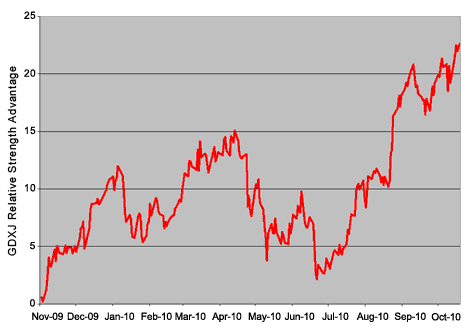
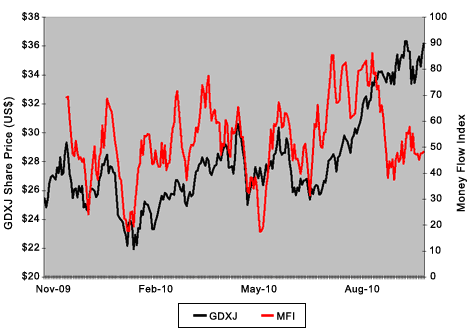
 The Swiss Helvetia (1897 – 1949) embodies Switzerland's status as a financial center of the world.
  The Swiss federal governments sought to end this complication with a new Federal Constitution of 1848, which specified that only the federal government could produce and issue money. Two years later the first Federal Coinage Act made the franc the official monetary unit for Switzerland. The franc would replace any other currency used by the various cantons. The term "Helvetia" resurfaced as a name for the franc, recalling the country's ancient origins.
| You are subscribed to email updates from Gold World News Flash To stop receiving these emails, you may unsubscribe now. | Email delivery powered by Google |
| Google Inc., 20 West Kinzie, Chicago IL USA 60610 | |


No comments:
Post a Comment