


Gold World News Flash |

- GoldSeek.com Radio Gold Nugget Interview: Fire River Gold Corp.'s CEO Harry Barr [TSX: fau.v]
- The Faith-Based Metal
- The Best Way to Participate in Long-Term Gold Bull Market
- The Calm Before The (Shit) Storm
- Gold Seeker Closing Report: Gold Falls Slightly While Silver Climbs To A New 30-year High
- RBA Rises Policy Rate By 0.25% Bps To 4.75%, With Consensus Calling For Unchanged, AUD Surges Across The Board, Futures Follow
- Nicholas Colas On Why The "Keith Richards" Stock Market May Presage A Return To Old School Investing
- December 7 Is The Unofficial Pan-European Bank Mutiny Day
- KWN Source Says Asians to Squeeze Silver Shorts
- CHINA’S CREATIVE ACCOUNTING: USING DEBT AS A TOOL FOR ECONOMIC DEVELOPMENT
- METASTASIS 9/12
- Dilemma
- Don’t Encourage Them!
- Gold Daily and Silver Weekly Charts
- Top 25 Most Shorted NYSE Stocks As Of October 15
- ‘Hobbit' blamed for rise in dollar
- QE2 risks currency wars and the end of dollar hegemony
- MONDAY Market Excerpts
- Gold Secondary Top Expected
- USS KOBAYASHI MARU: Erection Day Simulation (Scam Trek)
- Don’t Encourage Them!
- A 91% Return Is the Norm Here… Our Gains Could Be Much Higher
- Health Care Costs Go Up, Up and Away
- Monday's Markets – More Monetary Madness
- Treasury Anticipates $700 Billion Gross Borrowing Need By End Of March 2011, To Bust Debt Ceiling In Q1
- Hourly Action In Gold From Trader Dan
- In The News Today
- Gold could reach $10,000/oz, says pension fund mgr
- IMF speeds gold sales amid soaring prices
- Military Strategists Have Known for 2,500 Years that Prolonged Wars Are Disastrous
- Bank Failures in Slow Motion
- Q3 Gold Demand: ETFs vs. Jewelry
- SEC Investigating JPM, Magnetar Deal
- Housing Will Not Recover For Years
- When Consumer Sentiment Declines in a Consumer-Based Economy
- Mainstream Money Manager Sees $10,000 Gold
- LGMR: Gold Slips as Silver & Oil Rise with Stocks
- Gold, Oil, SPX Trading Around the Election
- It's All About The Dollar
- New era for gold…
- US Debt Crisis: What NOT to Do When Your Country is Broke
- One Pension-Fund Manager’s Estimate: Gold to Hit $10,000 an Ounce
- The Morning Gold Report
- Risk ‘ON' for Gold Stocks
- Central Banks Buying Gold: A Look at the Effects
- It’s All About The Dollar
- PROFIT IN SILVER
- How to Make Money From Both Sides of a Trade
- Gold pulls back on profit taking ahead of Fed meeting, elections
- Ambac Bond Default
| GoldSeek.com Radio Gold Nugget Interview: Fire River Gold Corp.'s CEO Harry Barr [TSX: fau.v] Posted: 01 Nov 2010 07:00 PM PDT Fire River Gold Corp. is a near term production company with an experienced technical team focused on bringing its flagship project, the Nixon Fork Gold Mine, back into production within the next 12 months. The Nixon Fork Gold Mine is a fully permitted and bonded mine with past production values averaging 39 g/t (1.14 opt). Facilities at the Nixon Fork Gold Mine include a 200 tpd flotation plant with a gravity gold separation circuit and a sulphide flotation circuit.
| |
| Posted: 01 Nov 2010 06:12 PM PDT We agree that gold is a faith-based metal, although we don't like the term "faith-based". It is more appropriate to say that gold's value is not primarily determined by how much of it gets consumed in industrial, commercial or digestive processes. Gold is not "mostly used for nothing more useful than jewelry", as Grantham claims. It is mostly used as a store of purchasing power.
| |
| The Best Way to Participate in Long-Term Gold Bull Market Posted: 01 Nov 2010 06:06 PM PDT The gold price recently made a new high amid widespread concern over weakness in the U.S. dollar. The gold rally has been driven by strong global demand among investors seeking a safe haven. Demand has been driven mainly by uncertainty over the economic outlook, as investors continue to recover from the fallout of the financial crisis two years ago.
| |
| The Calm Before The (Shit) Storm Posted: 01 Nov 2010 04:27 PM PDT
The market ran in the morning today on the strength of China manufacturing the fuck out of some shit before falling in the afternoon after realizing that most Americans can no longer afford to buy the fuck out of that same shit (except of course for iPhones, because no matter how poor people get, they still want to be able to masturbate on chatroulette in the comfort of their local Unemployment Office bathrooms to help dull the pain).
That said, the next two days promise to be almost as exciting as Teddy Roosevelt's charge up San Juan Hill or the build up to Karissa Shannon's sex tape as the mid-term elections are tomorrow followed by the Fed's QE2 announcement on Wednesday where the entire market will be able to sell the news faster than any Rupert Murdoch entity. As for the elections, Money McBags gives them a big fucking yawn since a bunch of douchey white guys will either be reelected or replaced by a different bunch of douchey white guys who all propose to be for different things and yet all will do the same fucking thing (and yes, Money McBags is more jaded than an ancient chinese artifact or a clapper).
So kind readers, when you go to the polls tomorrow, remember you have a third option and that option is to vote "None of the above" and write in Money McBags from the Bail Outs Get Us Savings party (BOGUS for short). Money McBags laid out his platform the other week but it involves being 100% up front about ruining the economy and destroying fiat currency. As we learned the other week, not counting moral hazard, GM/Ford, AIG, and the dollar, bail outs have had solid returns for the US of A and with debt piling up faster than Paris Hilton's DUIs, social security dwindling like Alan Greenspan's reputation, and state and local governments getting ready to disappear like manners or as if they had crossed the great Woland, we need those returns. So in the most counter intuitive, yet highly logical way, the BOGUS party will destroy the economy in short order and then bail it out to bring back prosperity. It may not work, but you got anything better?
As for macro news today, personal spending rose less than guessed as apparently people can only buy one Netflix membership at a time. While spending was up .2% (vs. .4% guesses) incomes dropped for the first time in a year which means the savings rate declined to 5.3%. Luckily, that isn't anything about which to worry because in America, saving is for big pussies. Plus it's not like 401ks are being tapped at record rates so why wait to pay rent in the future (when it will still likely be too damn high) when you can buy 42 inch rims for your Escalade now? Wait, what's that, 401k withdrawals are at record highs and the 16%+ unemployed people are no longer contributing to any type of retirement funds? Well, at least we'll have Marisa Miller.
In other macro news, the ISM's manufacturing Index rose to 56.9, which was better than guessed and was above the 54.4 in September as apparently the manufacturing sector is now producing broken dreams and taint tickles. Finally, construction spending rose 0.5%, which was better than guessed and was driven by a 1.3% increase in spending on public projects such as building schools, erecting bridges, and filling in man holes (or as it is called in San Francisco, Friday night).
Internationally, the big news was that China's PMI manufacturing survey rose to a 6 month high after licking one too many of their own lead paint produced toys. The index registered 54.7 in October which was up from 53.8 September and 51.7 in August and has now signaled expansion for 20 consecutive months (though after expanding for that many months, Money McBags believes they were supposed to call their doctor to seek immediate help or simply take the Asa Akira posters off of their walls). Either way, the reading was not just higher than consensus guesses of 52.9, but it was higher than every single analyst guess which shows that heteroskedascity is a more universal language than love or signing.
In the market, ABK may be going bankrupt in this week's edition of "no shit?" ABK defaulted on their interest payment and may have to file Chapter 11 as they have not been able to raise adequate capital since investors apparently hate shitty companies with broken business models and more liabilities than on Travis Henry's tax return.
Also, WL was down ~45% in a take under by M&T Bank which once again proves Money McBags' long standing hypothesis (soon to be fact) that it is impossible to value financial service companies as their balance sheets are more full of shit than a hippopotamus with no asshole and suffering from Prader-Willi syndrome. Honestly, Money McBags has gone on this rant before as he actually spent two long years of his life as a financial services equity analyst, but one has a better chance of solving P vs. NP using only an abacus and one of Gregori Perelman's nut hairs than one does of properly valuing any public financial services company using only publicly available information.
Money McBags has plenty more, in fact he even got his fundamental analysis on earlier today on the award winning When Genius Prevailed.
| |
| Gold Seeker Closing Report: Gold Falls Slightly While Silver Climbs To A New 30-year High Posted: 01 Nov 2010 04:00 PM PDT Gold rose as much as $8.90 to as high as $1365.40 in early London trade, but it then fell back off for most of the rest of the day and ended near its late morning low of $1348.70 with a loss of 0.4%. Silver climbed to as high as $25.04 in Asia before it also fell back off for most of trade in New York, but it still ended with a gain of 0.12% and made a new 30-year closing high.
| |
| Posted: 01 Nov 2010 03:45 PM PDT
The Reserve Bank of Australia has raised rates to 4.75%, more than the consensus expected, and the result is a surge in all AUD, crosses, especially the critical AUDJPY which is the primary recipient of the USD funding largese, and is the primary correlation to the ES, meaning futures are likely to follow suit, especially since there will be no monetary tightening in the dollar in this lifetime under the current Fed syndicate. It appears the RBA has bought the decoupling theory hook, line and sinker, and with China refusing to combat inflationary forces domestically, it is up to its derivative economies (AUD, BRL, etc) to do so. Nonetheless, one must respect the RBA's concern about what inflation may do to its economy: "the economy is now subject to a large expansionary shock from the high terms of trade and has relatively modest amounts of spare capacity. Looking ahead, notwithstanding recent good results on inflation, the risk of inflation rising again over the medium term remains. At today's meeting, the Board concluded that the balance of risks had shifted to the point where an early, modest tightening of monetary policy was prudent." The result: whooooosh.
At its meeting today, the Board decided to raise the cash rate by 25 basis points to 4.75 per cent, effective 3 November 2010. The global economy grew faster than trend over the year to mid 2010. Global growth will probably ease back to about trend pace over the coming year as strong recoveries in the emerging world give way to a more sustainable pace of expansion and growth remains subdued in the United States and Europe. At the same time, concerns about the possibility of a larger than expected slowing in Chinese growth have lessened recently and most commodity prices have firmed, after a fall earlier in the year. The prices most important to Australia remain at very high levels, with the result that the terms of trade are at their highest since the early 1950s. The turmoil in financial markets earlier in the year has abated, though sentiment remains fragile. Information on the Australian economy indicates growth around trend over the past year. Public spending was prominent in driving aggregate demand for several quarters but this impact is now lessening. While there has been a degree of caution in private spending behaviour thus far, the rise in the terms of trade, which is now boosting national income very substantially, is likely to lead to stronger private spending over the next couple of years, especially in business investment. Asset values are not moving notably in either direction, and overall credit growth remains quite subdued at this stage notwithstanding evidence of some greater willingness to lend. The exchange rate has risen significantly this year, reflecting the high level of commodity prices and the respective outlooks for monetary policy in Australia and the major countries. This will assist, at the margin, in containing pressure on inflation. The demand for labour has continued to firm. While the labour market is not as tight as in 2007 and 2008, some further strengthening would appear to be in prospect, judging by the trends in job vacancies. After the significant decline last year, growth in wages has picked up somewhat, as had been expected. Some further increase is likely over the coming year. Given these conditions, the moderation in inflation that has been under way for the past two years is probably now close to ending. Recent information suggests underlying inflation running at about 2½ per cent, with the CPI inflation rate a little higher due mainly to increases in tobacco taxes. Both results were helped somewhat in the latest quarter by unusual softness in food prices. Inflation is likely to rise over the next few years. This outlook, which is largely unchanged from the Bank's earlier forecasts, assumes some tightening in monetary policy. For some time, the Board has held the stance of monetary policy steady, which has resulted in interest rates to borrowers being close to their average of the past decade. This allowed some time to observe the early effects of previous policy changes and to monitor the uncertain global outlook. The Board is also cognisant of differences in the degree of economic strength by industry and by region. However, the economy is now subject to a large expansionary shock from the high terms of trade and has relatively modest amounts of spare capacity. Looking ahead, notwithstanding recent good results on inflation, the risk of inflation rising again over the medium term remains. At today's meeting, the Board concluded that the balance of risks had shifted to the point where an early, modest tightening of monetary policy was prudent.
| |
| Nicholas Colas On Why The "Keith Richards" Stock Market May Presage A Return To Old School Investing Posted: 01 Nov 2010 03:35 PM PDT
From BNY ConvergEx: Keith Richards and the "Death" of Stock Trading Summary: U.S. equity volumes have been in decline since the volatile days of the 2008 financial crisis and October saw some of the slowest days of the year. That’s an outcome, we argue in today’s note, of the slow growth U.S. economy and monetary policies put in place to dampen economic volatility. Yes, segments of the market still create trading volumes higher than a few years ago – high frequency trading and exchange traded funds lead the charge here. But to reignite interest in fundamentally driven trading we’ll either need to see much better economic growth (unlikely) or a significant change in the way money managers operate. There’s plenty of opportunity on that front and such changes would also make for a better functioning capital market. Back in 1973, the British music magazine New Music Express put Keith Richards on their annual list of “Rockers Most Likely to Die” in the next year. Keith (or “Keef”, as the British press and fans like to call him) remained on the list for ten years straight. During that time he did pretty much everything possible to make that prediction come true, but despite a decade’s epic consumption of heroin, acid, and alcohol as well as sleeping with a loaded pistol, Richards managed to stay above ground. NME eventually gave up and retired his name from consideration, which pretty much means that Keith Richards is immortal. That’s about right, in my book. Lately it’s felt like U.S. equity trading might replace Keith Richards on that “Likely to Die Soon” list. Consider the following data points:
There are many root causes for this phenomenon. Here are a few of the major ones:
But, like Keith Richards, it is too soon to put U.S. stock trading on the endangered species list.
Where things get more problematic is when you consider the future of “old school” single stock trading, where the investment decision to buy or sell is fundamentally based. It is worth remembering that capital markets have two functions:
Changes to market structure in the last decade mean that liquidity now comes with lots of high frequency trading – up to 70% of all trades according to a variety of sources. At the same time it is hard to argue that HFT brings anything to the party on the other function of capital markets: fundamental price discovery. Even if there are fundamental inputs into certain HFT strategies – high speed reading of news headlines, for example – their seconds/minutes long holding periods don’t reflect any confidence that these decisions have lasting value. To close out this note I will offer up a list of short list of factors I think will reignite interest in that “old school” model of stock picking and, by extension, fundamentally based stock trading.
There is nothing, aside from preexisting investment policies, preventing fundamental managers from incorporating HFT techniques into their own approaches to investment. The cost to trade U.S. equities has fallen close to zero, so trading around existing positions with HFT strategies is a viable area of incremental alpha to traditional managers. Yes, it will up their turnover dramatically, but that is a small price to pay for increased performance in a sluggish market. Keith and the rest of The Rolling Stones are alive and touring today because they adapted. Fewer drugs, more antioxidants, and a savvy tax strategy (more on that in another note) all contributed to that success story. Better returns through creativity are a hallmark of capital markets as well. Traditional managers will adapt, since it is hard to see how the economic backdrop will change any time soon. Adapt, or as the Stones sang, “Fade away.”
| |
| December 7 Is The Unofficial Pan-European Bank Mutiny Day Posted: 01 Nov 2010 02:07 PM PDT
After German blog "All is Smoke and Mirrors" floated an idea of an organized bank run (something attempted previously in the US without much success) in France in response to French austerity protests (which have resulted in no gains), the effort has since expanded to a pan-European organized bank run day on December 7, 2010, and has metastasized to Italy, Germany, the Netherlands, the UK and Greece. We are confident that very soon the rest of Europe, which is currently gripped in a climate of extremely unpopular austerity, will join in this symbolic protest against banking, which unlike the US, may just succeed, considering the European banking system is in total shambles, and in far worse shape than its American counterpart. Since virtually all actions in 2010 by the global central banking cartel have been geared toward stabilizing the European banking system which continues to wobble on the edge of a complete systemic collapse, perhaps the marginal withdrawal of a few billion in deposits could be just the straw that forces a reset first in Europe, and shortly thereafter in the rest of the globalized developed (and then developing, proving what a joke the whole concept of decoupling is) world. As America has demonstrated so very well, 25 weeks of consistent withdrawals from domestic funds (sorry CNBC, there have not been inflows yet, confirming yet again that fact and propaganda don't mix yet) have resulted in a quarter in which bank earnings were simply said crushed. Had Americans followed through and withdrawn their deposits from banks it would have been the final straw. Luckily, the lack of organization among the US population gave the US banking system a reprieve. In Europe things are different: banks are not as reliant on trading, however, they are far more reliant on a stable deposit base to sustain the Ponzi. Therefore, even a partially successful withdrawal campaign could have far more dire consequences to the continent's banking system, and bring the financial system to its proverbial knees. And before some accuse the blog's activism of some vile form of megalomaniacal quackery, we should highlight that the action has already been noted by such reputable newspapers as Suddeutsche Zeitung. Furthermore, in just 24 hours 1,500 readers have pledge their support to the action's various Facebook support sites, and another 48,000 are on the waitlist. We hope that more alternative media (the mainstream will unlikely support such a radical venture) catches on, and more Europeans realize they have all to gain and little to lose from forcing the balance of power to shift away from the banks, and into the hands of the people. As for those who wonder why Europe's banking is much more fragile from a deposit base perspective, we present the graphic below comparing asset bases of American and various European banks: since both Europe and the US have roughly comparable GDPs, one would assume that the two regions' banking systes would have the same asset bases. That, however, is completely wrong. In fact Europe's asset base is roughly ten times, if not more, as great, even as it supports an economy the same size as that of the US. Which is also why it is far more unstable as the marginal utility of every deposit dollar goes that much further via the fractional reserve banking model, and supports that many more assets. In other words, every dollar withdrawn in Europe would have roughly the same impact as 10 in the US.
Which is why this action actually has a chance of success. And even more so that when it comes to political activism, Europeans tend to be far more ready to participate in joint causes, unlike their apathetic US brethren, who are perfectly content to watch the world series and collect their unemployment checks (soon expiring). Perhaps in a jesture of poetic irony, some two hundred years after America showed the "Old World" what miracles an emancipated and ambitious population can do when it revolts, it will be the Old World's turn to return the favor, and rebel against that most destructive of concepts ultimately created by this splinter experiment from across the Atlantic: Central Banking and a fiat system in which money literally grows on trees. For our European readers who wish to participate in this experiment, below are the various facebook support pages: h/t Kyle
| |
| KWN Source Says Asians to Squeeze Silver Shorts Posted: 01 Nov 2010 01:26 PM PDT A King World News contact out of London has confirmed that, "Massive Asian buying is going to squeeze the shorts in the silver market. Any reactions in the price of silver will be heavily purchased, and these buyers will take delivery of physical silver." The source who wishes to remain anonymous agreed with Eric Sprott that this squeeze could take the price of silver to $50 in a matter of months.
| |
| CHINA’S CREATIVE ACCOUNTING: USING DEBT AS A TOOL FOR ECONOMIC DEVELOPMENT Posted: 01 Nov 2010 01:23 PM PDT
It's not so much the "creative accounting" that distinguishes the U.S. from the Chinese government; it's who benefits and who pays. - IleneCHINA’S CREATIVE ACCOUNTING: USING DEBT AS A TOOL FOR ECONOMIC DEVELOPMENT
China may be as heavily in debt as we are. It just has a different way of keeping its books -- which makes a high-profile political ad sponsored by Citizens Against Government Waste, a fiscally conservative think tank, particularly ironic. Set in a lecture hall in China in 2030, the controversial ad shows a Chinese professor lecturing on the fall of empires: Greece, Rome, Great Britain, the United States . . . . "They all make the same mistakes," he says. "Turning their backs on the principles that made them great. America tried to spend and tax itself out of a great recession. Enormous so-called stimulus spending, massive changes to health care, government takeover of private industries, and crushing debt." Of course, he says, because the Chinese owned the debt, they are now masters of the Americans. The students laugh. The ad concludes, "You can change the future. You have to." James Fallows, writing in the Atlantic, remarks:
That is one anomaly. Another is that China has managed to keep its debt remarkably low despite decades of massive government spending. According to the IMF, China’s cumulative gross debt is only about 22% of 2010 GDP, compared to a U.S. gross debt that is 94% of 2010 GDP. What is China’s secret? According to financial commentator Jim Jubak, it may just be “creative accounting” -- the sort of accounting for which Wall Street is notorious, in which debts are swept off the books and turned into “assets.” China is able to pull this off because it does not owe its debts to foreign creditors. The banks doing the funding are state-owned, and the state can write off its own debts. Jubak observes:
The majority of bank loans, says Jubak, went to state-owned companies -- about 70% of the total. The collapse of China’s export trade following the crisis meant that its banks were suddenly sitting on billions in debts that were clearly never going to be paid. But that was when China’s largest banks were trying to raise capital by selling stock in Hong Kong and New York, and no bank could go public with that much bad debt on its books. The creative solution? The Beijing government set up special-purpose asset management companies for the four largest state-owned banks, the equivalent of the “special purpose vehicles” designed by Wall Street to funnel real estate loans off U.S. bank books. The Chinese entities ultimately bought $287 billion in bad loans from state-owned banks. To pay for the loans, they issued bonds to the banks, on which they paid interest. The state-owned banks thus got $287 billion in toxic debt off their books and turned the bad loans into an income stream from the bonds. Sound familiar? Wall Street did the same thing in the 2008 bailout, with the U.S. government underwriting the deal. The difference was that China’s largest banks were owned by the government, so the government rather than a private banking cartel got the benefit of the arrangement. According to British economist Samah El-Shahat, writing in Al Jazeera in August 2009: “China hasn’t allowed its banking sector to become so powerful, so influential, and so big that it can call the shots or highjack the bailout. In simple terms, the government preferred to answer to its people and put their interests first before that of any vested interest or group. And that is why Chinese banks are lending to the people and their businesses in record numbers.” In the US and UK, by contrast:
Today, Jubak continues, China's debt problem is the thousands of investment companies set up by local governments to borrow money from banks and lend it to local companies, a policy that has produced thousands of jobs but has left an off-balance-sheet debt overhang. He cites economist Victor Shih, who says local-government investment companies had a total of $1.7 trillion in outstanding debt at the end of 2009, or about 35% of China's GDP. Banks have extended $1.9 trillion in credit lines to local investment companies on top of that. Collectively, the debt plus the credit lines come to $3.8 trillion. That is about 75% of China's GDP, which is proportionately quite a bit smaller than U.S. GDP. None of this is included in the IMF’s calculation of a gross-debt-to-GDP figure of 22%, says Shih. If it were, the number would be closer to 100% of GDP. Proportionately, then, China may be more heavily in debt than we are. Yet it is still managing to invest heavily in infrastructure, local businesses and local jobs. Its creative accounting scheme seems to be working for the Chinese. It may be sleight of hand, but it was a necessary ploy to harmonize their economic realities with Western banking standards. For China to join the World Trade Organization in 2001, it had to revise its accounting methods to conform to Western requirements; but before it joined, it did not consider grants to its state-owned enterprises to be “non-performing loans.” They were what the IMF calls “contingent grants.” If they paid off, great; if they didn’t, they were written off. There were no creditors demanding payment from the state-owned banks. The creditor was the state; and the state, at least in theory, was the people. In any case, the state owned the banks. It was lending to itself, and it could write off its loans at will. It was better to sweep the “NPLs” into “SPVs” than to cut back on services and impose heavier taxes on the people. The Chinese government did cut back on services and raise taxes, to the detriment of the struggling masses, but not to the extent that would otherwise have been necessary to balance their books by Western standards. While the rest of the world suffers from an unrelenting credit crunch, today China’s banks are on a lending binge. The rush to make new loans is a direct response to the government’s economic stimulus policy, which emphasizes infrastructure and internal development. The Chinese government was able to get its banks to open their lending windows when U.S. banks were being tight-fisted with their funds, because the government owns the banks. The Chinese banking system has been partially privatized, but the government is still the controlling shareholder of the Big Four commercial banks, which were split off from the People’s Bank of China in the 1980s. We might take a lesson from the Chinese and put our own banks to work for the people, rather than making the people work for the banks. We need to get our dollars out of Wall Street and back on Main Street, and we can do that only by breaking up Wall Street’s out-of-control private banking monopoly and returning control over money and credit to the people themselves. We could also take a lesson from the Chinese and dispose of our debt with a little creative accounting: when the bonds come due, we could pay them with dollars issued by the Treasury, in the same way that the Federal Reserve has issued Federal Reserve Notes to save Wall Street with its “Quantitative Easing” program. The mechanics of that process were revealed in a remarkable segment on National Public Radio on August 26, 2010, describing how a team of Fed employees bought $1.25 trillion in mortgage bonds beginning in late 2008. According to NPR:
If the Fed can do it to save the banks, the Treasury can do it to save the taxpayers. In a paper presented at the American Monetary Institute in September 2010, Prof. Kaoru Yamaguchi showed with sophisticated mathematical models that if done right, paying off the federal debt with debt-free Treasury notes would have a beneficial stimulatory effect on the economy without inflating prices. The CAGW ad is correct: we have turned our backs on the principles that made us great. But those principles are not rooted in “fiscal austerity.” The abundance that made the American colonies great stemmed from a monetary system in which the government had the power to issue its own money – unlike today, when the only money the government issues are coins. Dollar bills are issued by the Federal Reserve, a privately owned central bank; and the government has to borrow them like everyone else. But as Thomas Edison famously said:
China’s government can direct its banks to advance credit in the national currency as needed, because it owns the banks. Ironically, the Chinese evidently got that idea from us. Sun Yat-sen was a great admirer of Abraham Lincoln, who avoided a crippling national debt by issuing debt-free Treasury notes during the Civil War; and Lincoln was following the lead of the American colonists, our forebears. We need to reclaim our sovereign right to fund the common wealth without getting entangled in debt to foreign creditors, through the use of our own government-issued currency and publicly-owned banks. Ellen Brown is an attorney and the author of eleven books. In Web of Debt: The Shocking Truth About Our Money System and How We Can Break Free, she shows how the Federal Reserve and "the money trust" have usurped the power to create money from the people themselves, and how we the people can get it back. Her websites are webofdebt.com, ellenbrown.com, and public-banking.com.
| |
| Posted: 01 Nov 2010 12:13 PM PDT
METASTASIS 9/12 Added The policies of the Giovani, propagandized by Sarpi and Doge Leonardo Dona’ during the struggle around the Interdict, corresponded to a metastasis of Venice’s power and influence through the world. The Venetians and their Genoese Doria-faction associates were busily shifting their family fortunes into more profitable locations, not tied to the fate of what was rapidly becoming a third-rate naval power.
The Venice-Genoa partnership is in evidence first of all in the banking side of the Spanish looting of the New World. Venice got control of the silver coming from the Americas, shifting to a silver standard from the previous gold standard in the middle of the sixteenth century. This silver was used to pay for the spices and other products from the East.
Venice was extremely liquid at this time, with about 14 million ducats in coins in reserve around 1600. At about the same time, incredibly, the Venetian regime had completed the process of paying off its entire public debt, leaving the state with no outstanding obligations of any type. This overall highly liquid situation is a sure sign that flights of capital are underway, in the direction of the countries singled out by the Giovani as future partners or victims: France, England, and the Netherlands.
The Genoese around the St. George’s Bank received virtually the entire world’s circulating gold stocks. The two cities teamed up starting around 1579 at the Piacenza Fair, a prototype of a clearing house for European banks, which soon had a turnover of 20 million ducats a year. This fair was a precursor of the post-Versailles Bank for International Settlements.
In 1603, Venice and Genoa assumed direction of the finances of Stuart England, and imparted their characteristic method to the British East India Company. It is also this tandem that was present at the creation of the great Amsterdam Bank, the financial hinge of the seventeenth century, and of the Dutch East India Company. Venice and Genoa were also the midwives for the great financial power growing up in Geneva, which specialized in controlling the French public debt and in fostering the delphic spirits of the Enlightenment.
The Venetians, in cooperation with the restored – that is, degenerated – Medici interests, began a major move into maritime and other types of insurance. These ventures live on today in the biggest business enterprise associated with Venice, the Assicurazioni Generali Venezia, one of the biggest if not the biggest insurance and real estate holdings in the world.
On May 12, 1797, the Gran Consiglio obeyed Napoleon’s ultimatum and voted itself out of existence. Four thousand French infantrymen paraded on St. Mark’s Square, where foreign troops had never before in history been seen. The golden Bucentoro was burned and the gold carted off. The Venetian “Republic” was finished, but it continued most emphatically to exist in less visible but highly effective forms.
One particular of the last years of Venice is of special interest to us: During the American Revolution about 3000 Venetian naval personnel, corresponding to about one-third of the total available strength, were serving with the British Royal Navy.
Commenting on the liquidation of Venice, the great Neapolitan Neoplatonic Giuseppe Cuoco wrote:
“I don’t know what will happen to Italy, but the fulfillment of the Florentine secretary’s prophecy in the destruction of the old, imbecilic Venetian oligarchy will be a great boon for Italy always.”
The reference, of course, is to Machiavelli.
On the other side, William Wordsworth lamented the demise of “a maiden city,” the “eldest child of liberty.”
| |
| Posted: 01 Nov 2010 11:12 AM PDT As the global reserve currency, the dollar finds itself in the position of being a global "network good." A "network good" derives its utility to the user (its value) from the "network effect," the number of other people also using it. A "network effect" is normally a self-reinforcing positive feedback loop. The more people that use a "network good," the more valuable it becomes and then more
| |
| Posted: 01 Nov 2010 10:50 AM PDT The 5 min. Forecast November 01, 2010 01:02 PM by Addison Wiggin [LIST] [*]How this "historic" election will cut the deficit $200 billion, max [*]IMF sells off more gold, Iran acquires more gold [*]Oil zooms past $83.50... Alan Knuckman on why $90 is in sight [*]Rare earth row is over... but the underlying opportunity remains [*]Eyes "glazing with ambivalence" and other debt-and-deficit reader mail [/LIST] On this day before a "historic" midterm election, we find ourselves amused once again by P.J. O'Rourke, who entitled his latest book thus: "The argument that the two parties should represent opposed ideals and policies," Carroll Quigley wrote in Tragedy and Hope nearly half a century ago "is a foolish idea acceptable only to doctrinaire and academic thinkers. "Instead, the two parties should be almost identical so that the American people can 'throw the rascals out' at any election..." Since we only have 5 Min., let's examine two promises made in this campaign seaso...
| |
| Gold Daily and Silver Weekly Charts Posted: 01 Nov 2010 10:27 AM PDT | |
| Top 25 Most Shorted NYSE Stocks As Of October 15 Posted: 01 Nov 2010 10:18 AM PDT
The most recent short interest report by stock indicates that the most hated name on the NYSE by a large margin continues to be Citigroup, whose 404 million shares short as of October 15 were an 0.8% increase from two weeks earlier. Not surprisingly, two of the top five names in the top 5 are ETFs, which are broadly used by hedge funds for nothing else but to hedge long book positions. The SPY and the IWM were at the 2nd and 4th position, respectively, although both saw a decline in their short interest which was to be expected in a time when the overall market was continuing to surge (it is of course unclear whether the offsetting single names that made up the hedge were sold off as well, and what the delta on the trade would have been, and, most importantly, how profitable it may have been). Ford and Qwest round out the top 5 names. Other notable names in the top 25 include XLF at 6th, Paulson darlings BAC and MGM at 7 and 9 (both of which saw their short interest collapse by 19.5% and 11.9%, respectively, even as maintaining a BAC short would have paid off more than handsomely into the EOM). The two names which saw the biggest increase in short interest were Alcoa and the VXX. And while some have made an issue over XRT's SI being more than 5 times its shares outstanding and float, check out the KRE Regiona Banking ETF: it has a short interest of 50 million which happens to be over 15 times its daily volume, and about 7 times it outstanding stock. Gotta love the logic of ETF share creation. Full list below:
Source: NYSE
| |
| ‘Hobbit' blamed for rise in dollar Posted: 01 Nov 2010 10:16 AM PDT Monday Nov 1, 2010 (New Zealand Herald) — The New Zealand dollar has shot up against the US and some are blaming Hobbits. Business correspondent Roger Kerr says the move started on Friday night when it moved up one and a half cents to 76.65, which could be due to Warner Brothers hedging its New Zealand dollar film costs. [source] RS View, part 1: Spoiler alert… what 'The Hobbit' has done to the NZ dollar is nothing compared to what it'll do to the gold market by the time Bilbo & Co. finish their quest in December 2013. It will likely escalate a cultural affinity for gold as a desirable savings asset in the Western world to join that level of affinity already present in the East, thus putting an unrelenting wind behind the sails of a market from which their will be no turning back. Of course, in case you haven't noticed these past ten years the golden ship is already sailing along beautifully, and this will be (to suddenly mix my metaphors) the icing on the cake. Also… They won't have to wait long. This week the Fed is expected to announce plans to print up to US$1 trillion to buy US government bonds in an effort to boost the US economy. … Some commentators are saying the Federal Reserve may have to print up to US$8 trillion or 50 per cent of GDP. That is equivalent to 53 times the size of New Zealand's GDP created out of thin air. The prospect of the world's biggest economy printing that much of the world's reserve currency is freaking out currency markets. Thursday's announcement by the Federal Reserve will be the official first shot in what many describe as the 'Currency Wars'. Emerging economies and commodity-based developed economies with free-floating currencies (such as New Zealand, Australia, Brazil, India, Russia and South Africa) are being hammered as the US dollar falls in anticipation of this money printing. … The world of currencies and trade is descending into a street fight where it's every man, woman and Prime Minister for himself and their countries. The Hobbit and the collection of creative industries built around Peter Jackson are in effect another part of our manufacturing export sector. We have to fight for these highly skilled and often highly paid jobs. They are the jobs we point to when we say to our children that there is a future in this country. We can't give them up without a fight, whatever it takes. John Key was right to roll up his sleeves and do the 'impure' thing by offering ad-hoc subsidies to Warner Bros, regardless of the niceties of it all. … The government should add more to that arsenal too to protect our capital and avoid a damaging surge in our currency towards parity vs the US dollar. [source] RS View, part 2: Rather than speaking of the NZ dollar surging toward parity with the US dollar, in light of the earlier comments it would be better to be speaking in terms of the US dollar plunging below the level of the NZ dollar. And given the toll this depreciation will take upon U.S. dollar-denominated reserve assets (U.S. dollar bills, notes, and bonds), the concluding advice should be specifically for adding some gold to that arsenal, too. It bears up well even under the weight of dragons, and it's worth going "There and Back Again" as an undertaking, even without such comforts as a pocket handkerchief. [Readers will no doubt know what I'm talking about.]
| |
| QE2 risks currency wars and the end of dollar hegemony Posted: 01 Nov 2010 09:56 AM PDT As the Federal Reserve meets to decide the size of its next blast of QE, it does so knowing that China and the emerging world view the policy as an attempt to drive down the dollar.
This posting includes an audio/video/photo media file: Download Now | |
| Posted: 01 Nov 2010 09:51 AM PDT Gold pauses rally as dollar firms; FOMC meeting looms The COMEX December gold futures contract closed down $7.00 Monday at $1350.60, trading between $1349.10 and $1366.40 November 1, p.m. excerpts: see full news, 24-hr newswire…
| |
| Posted: 01 Nov 2010 09:30 AM PDT courtesy of DailyFX.com November 01, 2010 06:54 AM 60 Minute Bars Prepared by Jamie Saettele “An impulsive decline from the high indicates that the larger trend has reversed.” The corrective rally has taken a bit longer than expected but is corrective nonetheless. Expectations are for a top and reversal....
| |
| USS KOBAYASHI MARU: Erection Day Simulation (Scam Trek) Posted: 01 Nov 2010 09:06 AM PDT
THE KOBAYASHI MARU SIMULATION: ERECTION DAY 2010 STAR DATE NOVEMBER 1, 2010: Here is the latest poll result from Reuters: Americans unhappy with the economy are poised to hand control of the House of Representatives to Republicans in Tuesday elections that are shaping up as a rebuke of President Barack Obama, a Reuters/Ipsos poll found on Monday. Fifty percent of likely voters said they will choose a Republican candidate when they vote while 44 percent said they will pick a Democrat, the national survey showed. Republicans are likely to win some 231 seats in the House and take control of the chamber, the poll projected. Ipsos pollster Cliff Young predicted Democrats would hang on to control of the Senate with either a margin of 52 seats to 48 for Republicans or 53-47. Obama has enjoyed one-party rule in Washington since taking power nearly two years ago. The election result, if it plays out the way the pollsters say it will, would mark a stark reversal of fortunes for him. WB7: I know what many of you are thinking....this sucks!!! Tomorrow is election day, and you are caught between a rock and a hard place. Obama's hope and change parade, turned out to be one big hopeless mirage. Now his party will be suitably punished for their collective transgressions. Meanwhile, the alternative is equally as ugly. Those who had a mighty hand in creating our Titanic economy during the Bush years are preparing to re-enter the political stage in a state of delusional triumph! This is their reward following two years of political obstructionism, in many instances paid for by their lobbyist masters on K Street. What do you do, vote for the feckless "bought" Democrat, the feckless bought Republican or the Tea Party unknown unknown? You are in a proverbial "no win" situation. Tonight, millions of Americans will ask themselves the same questions: Should I stay home or should I lodge a protest vote against the incumbents even though it means voting for yet another political hack or nut job? In the rare rare case, you will actually be able to walk in and vote for someone who is competent, qualified and off the Wall Street payroll. Dream on... As a reader of Zero Hedge, you know better than to believe we are a nation of two distinct political parties. For all practical purposes there is only one party, the "Party of the Payroll". Here is the Banzai7 ten cents worth. Whatever you do, make sure it sends a strong message. Strong message usually means voting against Mr In by voting for Mr Out. If you have to do it. Hold your nose, then do it. But please make sure you make the effort to send a communication of some kind to your newly elected representative telling him or her in no uncertain words, that he or she is on probation. It is really the only way to handle this. Keep your message brief and to the point please. Longer than a page is far too long for your average Capital Hill ADS inflicted politico. Remember, if you are a disaffected voter, not voting is what they, the anointed ones, want you to do. Better to throw a monkey wrench into the works. Every election is obviously unique. It is up to you good citizen, to decide what kind of monkey wrench you want to throw. But if you vote without throwing one, you are really squandering your most valuable asset. The dilemma is yours to resolve. Which brings me to the Kobayashi Maru. If you are a Star trek fan, you know what I am talking about. If not, this will bring you up to speed: "The Kobayashi Maru is a test in the fictional universe of Star Trek. It is a Starfleet training exercise designed to test the character of cadets in the command track at Starfleet Academy. The Kobayashi Maru test was first depicted in the opening scene of the film Star Trek II: The Wrath of Khan and also appears in the 2009 film Star Trek. The test's name is occasionally used among Star Trek fans or those familiar with the series to describe a no-win scenario. Rescuing the civilian vessel Kobayashi Maru is the notional primary goal in a simulated battle with the Klingons. The ship is disabled and the approaching cadet crew must decide whether or not to attempt rescue of the Kobayashi Maru crew – potentially endangering their own ship and lives – or leave the Kobayashi Maru to certain destruction. The difficult decision to assist the Kobayashi Maru revolves around the issue of the disabled ship's location being in the Klingon Neutral Zone, as entering the zone would be in violation of the Organian Peace Treaty. The cadet is faced with a decision: Attempt to rescue the Kobayashi Maru's crew and passengers, which involves violating the Neutral Zone and potentially provoking the Klingons into hostile action or an all-out war; or Abandon the Kobayashi Maru, potentially preventing war but leaving the crew and passengers to die. If the cadet chooses to save the Kobayashi Maru, the scenario progresses quickly. The bridge officers notify the cadet that they are in violation of the treaty. As the starship enters the Neutral Zone, the communications officer loses contact with the crippled vessel. Klingon starships then appear on an intercept course. Attempts to contact them are met with radio silence; indeed, their only response is to open fire with devastating results. There is no way to win the resulting battle, especially since the computer is allowed to "cheat" to guarantee defeat; the simulation ends with the understanding that the cadet's ship has been lost with all hands. The objective of the test is not for the cadet to outfight the opponent but rather to test the cadet's reaction to a no-win situation...." [Source: Wikipedia] The following images will aid you in your Election Day Kobayashi Maru simulation...
I said it before and I will say it again. Your most precious asset as an American is not gold, it is your right to vote. HAPPY ELECTION/ERECTION DAY 2010 WB7 PS: Captain James T. Kirk took the test three times while at Starfleet Academy. Prior to his third attempt, Kirk surreptitiously reprogrammed the simulator so that it was possible for him to rescue the freighter.
| |
| Posted: 01 Nov 2010 09:02 AM PDT
 On this day before a "historic" midterm election, we find ourselves amused once again by P.J. O'Rourke, who entitled his latest book thus: On this day before a "historic" midterm election, we find ourselves amused once again by P.J. O'Rourke, who entitled his latest book thus:
 "The argument that the two parties should represent opposed ideals and policies," Carroll Quigley wrote in Tragedy and Hope nearly half a century ago "is a foolish idea acceptable only to doctrinaire and academic thinkers. "The argument that the two parties should represent opposed ideals and policies," Carroll Quigley wrote in Tragedy and Hope nearly half a century ago "is a foolish idea acceptable only to doctrinaire and academic thinkers."Instead, the two parties should be almost identical so that the American people can 'throw the rascals out' at any election..."  Since we only have 5 Min., let's examine two promises made in this campaign season; one a proxy for the "cut spending" crowd... the other for those who wish to "raise taxes." Since we only have 5 Min., let's examine two promises made in this campaign season; one a proxy for the "cut spending" crowd... the other for those who wish to "raise taxes."  John Boehner, whom many believe will be the new Speaker of the House on Wednesday morning, boldly proposes a return to pre-2008 levels of "nonsecurity" discretionary spending. John Boehner, whom many believe will be the new Speaker of the House on Wednesday morning, boldly proposes a return to pre-2008 levels of "nonsecurity" discretionary spending.Why 2008? Why because obviously the deficit spending engaged by the previous administration was OK, at least politically on his side of the aisle. Fair enough. By one estimate, that would eliminate about $105 billion of this year's deficit.  For his part, President Obama wants to raise taxes on families making more than $250,000 a year. That's another $70 billion. He also wants to reinstate the estate tax on estates of $3.5 million or more. For his part, President Obama wants to raise taxes on families making more than $250,000 a year. That's another $70 billion. He also wants to reinstate the estate tax on estates of $3.5 million or more. That's good for another $25 billion a year. Of course, both tax hike provisions assume those families will stay put, maintain their current income and/or fail to make alternative plans. But we can leave that discussion for another 5.  "Deficit hawks" -- those policy wonks who believe there is an appropriate level of promises politicians can make using the public purse to get elected -- would probably take cheer from each of these proposals: cut spending, raise taxes, bring the budget closer into balance. "Deficit hawks" -- those policy wonks who believe there is an appropriate level of promises politicians can make using the public purse to get elected -- would probably take cheer from each of these proposals: cut spending, raise taxes, bring the budget closer into balance.Better these ideas than nothing, right? But if you take just two of these hot-button proposals, strip them of the emotion with which they seem to enflame in the electorate -- that is to say when you add up Mr. Boehner's spending cuts and Mr. Obama's tax increases -- you get a grand total of $200 billion. Assuming that both plans were kept intact through the committee and lobbying process, that's a mere 15% of the deficit for 2010. What of the rest?  Who cares, really? Stocks are rallying this morning. Today could be the day the Dow eclipses its April 26 high of 11,205. Traders are reacting to the following data points... Who cares, really? Stocks are rallying this morning. Today could be the day the Dow eclipses its April 26 high of 11,205. Traders are reacting to the following data points...
 The dollar is up slightly too, to 77.2. Gold is down slightly, to $1,352. The dollar is up slightly too, to 77.2. Gold is down slightly, to $1,352. The International Monetary Fund (IMF) says it sold 32.3 tons of gold during September -- about 8% of the total 403.3 tons it started selling last year. India picked up about half of the entire stash a year ago this week. The International Monetary Fund (IMF) says it sold 32.3 tons of gold during September -- about 8% of the total 403.3 tons it started selling last year. India picked up about half of the entire stash a year ago this week.True to form, there's been little transparency from the IMF about who's been buying, or how much, as these sales are announced in dribs and drabs. All we're told is that the September total was "well above" the previous month's.  Iran says it's converted about 15% of its foreign exchange reserves into gold. According to the state-run news agency, the central bank governor says Iran's gold stash "multiplied several times" over the last two years. Iran says it's converted about 15% of its foreign exchange reserves into gold. According to the state-run news agency, the central bank governor says Iran's gold stash "multiplied several times" over the last two years.If we take President Mahmoud Ahmadinejad at his word that Iran's forex reserves total $100 billion, that means Iran now holds $15 billion in gold -- placing it among the top 15 gold holders in the world.  Oil is up sharply this morning, zooming past $83.50 -- another in a series of seesaw moves that Alan Knuckman says is bullish. Oil is up sharply this morning, zooming past $83.50 -- another in a series of seesaw moves that Alan Knuckman says is bullish."Sideways crude oil prices are staged for a breakout above the $84/85 channel," he says. Crude has traded in a $5 range that sets up for a run to $90 a barrel and new yearly highs. "A simple 50% retracement of the crude highs at $147 to the recent lows at $33 places a modest target at $90 a barrel." If you'd like to turn small market moves into big profits, Alan can show you the way. On Friday, his readers closed out a silver position - - tripling their money. That's nine winners in a row, going back to late July. For access to Alan's next winning trade, look here.  The tug of war between the United States and China over rare earth elements appears to be over... for now. The makers of everything from mobile phones to catalytic converters can rest a little easier. The tug of war between the United States and China over rare earth elements appears to be over... for now. The makers of everything from mobile phones to catalytic converters can rest a little easier.An embargo of shipments to the United States that began on October 18 - with no fanfare - ended last Thursday, again with no fanfare. But four anonymous industry officials tell the New York Times that shipments have resumed. As if to confirm these developments, Secretary of State Hillary Clinton met with her Chinese counterpart during a conference in Vietnam on Saturday, after which she said, "Foreign Minister Yang clarified that China has no intention of withholding these minerals" from the world market. Of course, when one country controls 97% of world production, it doesn't have to "withhold" supplies to cause disruption; it just needs to start using more of them domestically. Which is exactly what's been happening the last two years. With the immediate crisis over, shares of rare earth producers are down this morning... which should help provide a nicer entry point on the basket of rare earth stocks Chris Mayer is recommending.  Here are some promising numbers to ponder just before Election Day: A record number of independent and third-party candidates are running for Congress. Here are some promising numbers to ponder just before Election Day: A record number of independent and third-party candidates are running for Congress.Researchers at the University of Minnesota have studied midterm elections going back to 1934... and they find 443 such candidates this year -- up 57% from 2006. Libertarians lead the way, making up 35% of the candidates, followed by Greens with 13% and Constitution Party candidates, 9%. Still, while we quietly cheer any trend that bucks the bipartisan bigger-government consensus, we're still more inclined to agree with P.J. O'Rourke.  "I agree," another writes leaving out the 'not really,' "that both parties are responsible for the massive national debt that we now must find a way to manage. "I agree," another writes leaving out the 'not really,' "that both parties are responsible for the massive national debt that we now must find a way to manage. "However, you are misreading the pending election results if you think that we are returning 'Bush Republicans,' those whom you have stated helped create this mess. "As a brief reminder, the Pelosi-led Congress has added $5 trillion in debt since they regained control back in 2006 -- that's four years of controlling the purse strings, not two. This amount of red ink is incomparable to any other time in world history -- ever! "Our nation is shrinking quickly. Opportunity is disappearing amid a barrage of progressive policies from the 'socialist Democrats.' Please stop dismissing this election as a 'nothing' -- it is historic, and could be the only event that restores this country to greatness." The 5: What, exactly, is any more historic about this election... than, say, the midterm election in 1994? Semantics, maybe. In 1994, we had the Contract on America, this year, the Pledge to America. Neither party is any more committed to fiscal restraint than they were then. What they really want is for you to send their guy/gal to Washington tomorrow, so on Wednesday they can continue to divide up the spoils. You can call it restoring the country to greatness if you like.  "Yes, Bush was president," still another reader chimes in, "but wasn't the Congress controlled by the Democratic Party beginning in 2006. This is not to say that Bush, like most of the Washington elect, overspent, but the president doesn't dictate a budget. Congress has control. "Yes, Bush was president," still another reader chimes in, "but wasn't the Congress controlled by the Democratic Party beginning in 2006. This is not to say that Bush, like most of the Washington elect, overspent, but the president doesn't dictate a budget. Congress has control."In this case, the idiotic spending was initiated by the same party that is bankrupting us now. If the Republicans win next week, I hope they will begin to reverse this trend, but I have my doubts." The 5: We have our doubts, too. Bush was also president in 2003 when both the House and Senate were in Republican hands. They passed the Medicare Part D drug benefit, which was projected to cost some $1 trillion but is now expected to cost 8 times that much.  "As one of the teeming unwashed masses," another reader writes, with something much closer to the truth, "I have to say that any discussion of public debt causes eyes to glaze in ambivalence. "As one of the teeming unwashed masses," another reader writes, with something much closer to the truth, "I have to say that any discussion of public debt causes eyes to glaze in ambivalence."The reason," our reader suggests, "is simply that we cannot believe our leaders, because we know they use dishonest accounting practices. "Why should anyone, for example, believe a central bank that refuses to be audited? We don't know how much the Fed makes or spends, so we cannot know what, if anything, we owe." The 5: Indeed, with so much quibbling over who is to blame, voters will go to the polls tomorrow to execute "the most important duty we as Americans have"; most of them will do so without a clue. Most have steeled their minds over the past several weeks after ingesting a slew of 30-second TV-spots - full of baseless lies from both parties - aired in between law enforcement dramas and sports spectaculars. Political spending alone will account for 11% of local TV station revenue nationwide this year. And yet, the real debate... the one the British just had the cojones to begin... the one the U.S. political class has yet to be honest enough to admit needs to take place... is over the very role of government itself. Can its representatives promise to be all things for all its people all the time... and never pay for those promises? Really?! We suspect in the end, economics will force the issue. But until, if ever, there are actual differences in the political philosophy of the parties, you'd be better off working than taking the time to vote... or at least spending your time doing something that will actually improve your life, rather than expecting 'change' to come by way of the ballot you cast. Cheers, Addison Wiggin The 5 Min. Forecast P.S. In fact, instead of voting, we recommend you buy and read this book: The Pledge. We received a review copy this week. And on first glance, we suggest it will lead to a life far more productive and richer, far more quickly, than anything you'll get out of the election tomorrow. But don't tell our wives; when we tell people not to vote, we're expressing an opinion our wives don't even agree with. Heh. P.P.S. For further useful musings on tomorrow's elections, please read "An Honest Capitalist On the Tea Party Movement" in today's Whiskey & Gunpowder.
| |
| A 91% Return Is the Norm Here… Our Gains Could Be Much Higher Posted: 01 Nov 2010 09:00 AM PDT By Dr. Steve Sjuggerud Monday, November 1, 2010 In 1973-74, stocks fell in half, peak-to-trough. At the time, it was the worst stock market bust since the Great Depression. The 1973-74 bust has a lot in common with today's bust. So what worked in investing after the bust back then? One area of the stock market soared 20-fold back then… and right now, it's completely ignored. Today, I'm going to show you what that is and a few ways to buy it. But first, let's take a quick look back at 1973-74… Back then, we hit a long recession – just two months shorter than the current one. Stock prices dropped in half back then, just like in today's Great Recession. The dollar was crashing, having just come off the gold standard. The price of gold soared threefold in 1973-74. And commodity prices nearly doubled. What happened next? What happened starting in 1975 as we exited the recession? You'd be surprised… Gold crashed nearly in half, bottoming out i...
| |
| Health Care Costs Go Up, Up and Away Posted: 01 Nov 2010 08:40 AM PDT A lot of the "news" lately is about the upcoming election and how the absurd, childish Democrats are expected to be ousted by the voters, replaced by the evil, adult Republicans. As a disclaimer, I, with great relief, now happily identify with the Tea Party, although I seem to be one of the few whose Screaming Tea Party Outrage (STPO) is directed at the politicians because they allowed the Federal Reserve to create so much money – so, so much money, for so, so long – that the monstrous monetary inflation spilled over into inflations in stock prices, and inflations in bond prices, and inflations in house prices, inflations in the massive, cancerous growth of government itself, and the financing of the immeasurably-massive derivatives market, which is, basically, astronomical levels of money placed in highly-leveraged bets! One of the topics of conversation is, of course, the ObamaCare health insurance takeover, with the unintended consequence of forcing the Supreme Court to decide if Congress has the authority under the Constitution to force everyone to buy a private-sector insurance product, or else pay a fine, which is another whole issue. One of the things not usually mentioned is the total projected costs of the new health insurance monstrosity. Some people have written to me about this, and I have read the few emails that start out with the expected fawning and groveling, like the one that read "Dear Handsome And Fabulous Mogambo (HAFM), How come you don't do some actual work for a change, and maybe get a handle on the true costs of this health insurance boondoggle, instead of just sitting around doing nothing except whining and complaining about how the damnable Federal Reserve is creating so much money that 'We're Freaking Doomed (WFD)' to suffer an economic collapse and a giant inflation in the prices of things demanded around the world (like food and fuel), and a giant deflation in paper assets and properties that are of no use to the rest of the world (like overpriced, low-quality homes, businesses and fixed assets)? Or are you really just a lazy, worthless bum like everyone says? I heard a rumor that your own mother noticed it from the start, and I can still remember when you were growing up that I said to your dad, 'Our son is one stupid, lazy kid.'" It was signed "Total Stranger" but from the tone of it, I suspect that is not quite true. I can't put my finger on who it could be, though. Nevertheless, my Official Mogambo Reply (OMR) was, "Dear Stranger, If you heard I was lazy, then what in the hell do you expect from me, ya moron? "Furthermore, the work of how much ObamaCare if going to cost has been done by Michael Tanner of the Cato Institute, who notes (by way of introduction) that the bill was initially 477,920 words, or about $1.2 million per word." Of course, this was before the "reconciliation package, which added 153 pages and 34,000 words" and all to establish the staggering horror of "99 new boards and commissions and agencies," although this is just a simplistic, low-ball underestimate, as a report from the Congressional Research Service "found that it is impossible to estimate how many boards, commissions, and agencies will be created, because in many places they're authorized to create more agencies and commissions and boards; a sort of infinitely expanding federal bureaucracy"! Yikes! Mr. Tanner's calculations of the cost of ObamaCare take up in 2014, when the actual program gets started, which calculates out that ten years of implementation of the economic disaster popularly known as ObamaCare will cost a stunning $2.7 trillion over the period, which is a staggering, terrifying amount of money! This is (I gulp to say) $270 billion a year, and which will (and easy-as-pie to predict) rise, rise, rise in cost from this "modest" level, more than the rise in consumer-staples inflation, which itself will be blazing exponentially upwards, rocketing like (as the Simpsons say) "a rocket with a rocket up its butt," sizzling up and up towards the eventual hyperinflation and total destruction of buying power of the currency and the economy that is always, always, always the tragic end-result of constantly creating too much money. Interestingly, Mr. Tanner also says that Medicare is scheduled to get cut by $600 billion, which is a lot of money, in one regard, but a 0.6% pittance in another, which is that, as he says, Medicare is "$100 trillion in debt"! Already! Right now! While the $600 billion cut, even if implemented, is spread over 10 years? Hahaha! We're freaking doomed! And when I mean "doomed," I mean it in a relative sense, of course, as most people will be disastrously wiped out, of course, and they will glumly refer to this period of time with some clever variant of the Great Depression, while the people who buy gold, silver and oil now, at these cheap prices, will refer forever refer to it as, "When the family fortune was made!" You gotta agree: Whee! This investing stuff is easy! The Mogambo Guru Health Care Costs Go Up, Up and Away originally appeared in the Daily Reckoning. The Daily Reckoning, offers a uniquely refreshing, perspective on the global economy, investing, gold, stocks and today's markets. Its been called "the most entertaining read of the day."
| |
| Monday's Markets – More Monetary Madness Posted: 01 Nov 2010 08:09 AM PDT
Monday's Markets – More Monetary MadnessGet ready for a crazy week! We have data this week, we have the Fed and we have elections and yes, we have a worthless currency that’s worth less and less every day. This morning, China’s PMI hit 54.7 for October, up from September’s 53.8 and indicating that China’s decision to raise rates had no impact on growth. India found this thrilling and went up 1.4% (as of midnight) but the Nikkei flat-lined because China’s gains are Japan’s losses at the moment as the Dollar failed to maintain an early pop to just 81.2 and fell back more than half a point in Asian trading. The yen’s moves have been "excessive" recently, a Japanese government official said Monday, but he declined to comment on whether Tokyo authorities intervened in the foreign exchange market earlier in the day to knock the currency lower. Exporters remained under selling pressure, with Canon off 0.6% and Toyota Motor down 1.1%. Honda Motor lost 3.4% despite reporting solid second-quarter earnings as the automaker cut its fiscal second-half net profit outlook. Sony shares fell 2.2% as news that the electronics giant had returned a net profit in the July-September was offset by concerns over pressure on earnings at its television division. "The soft U.S. dollar suggests that the market is still gearing up for a sizable QE this week," said Greg Gibbs, currency strategist at RBS in Sydney. In Seoul, the market was modestly higher but investors were cautious ahead of the Fed meeting this week. Net selling by foreigners also tempered demand. "Some investors appear concerned that the Fed’s meeting this week may not take enough quantitative easing measures to satisfy market demands," said Lee Kyoung-min at Woori Investment & Securities in Seoul. QE2, QE2 and more QE2 – this is the basis for the global rally. How much QE2 will be enough to satisfy a global market that is now counting on AT LEAST $1Tn to be handed out by the Fed in 2011? It’s not just QE2, of course, the Fed continues to hand out money to Wall Street on an almost daily basis through their Permanent Open Market Operations or "POMO" and that trade has become as reliable as our "3am Trade" on the Yen as we at PSW have now begun to follow the POMO schedule (as Goldman Sachs has been advising their own clients) to give us an advance look at how each day will trade. See Zero Hedge's "Goldman Advises Clients To Front Run The Fed Via POMO." (And there are other ways of giving money to Wall Street, for example read "Treasury Confirms That The Definitive Treasury-AIG-Fed Shell Game Will Proceed As Planned.") Just like our 3am trade, it is amazing when you can tell all 6Bn people on the planet earth about a trade yet it STILL continues to work like a charm. How can there be a bet where EVERYONE wins? There can’t. Someone has to lose but, in this case, the loser is the Federal Reserve Bank of the United States of America – who play the part of the perennial sucker as they are willing to sit down at the table and be taken for all they have two or three days a week. And why are they willing to be so generous? BECAUSE IT’S NOT THEIR MONEY! Wake up America – the Fed is giving away YOUR money in what seems like "just" Billions but, as I said on Friday, is actually TRILLIONS of your dollars being used to support top 1%’ers on the GS Client Distribution List, who got this note in mid-October:
Goldman actually understates the situation because, as we have been pointing out over at PSW, the difference between performance on Fed Free Money days vs Non is about 10:1 to the bull side with the S&P up 10.5% since August 27th on 20 POMO days vs up 0.91% on 24 non-POMO days. Since late September’s Fed meeting, the moves have gotten more extreme and your would think, at first, that GS may have poisoned the well with their October note to clients but, quite the opposite, now the fat-cat money is rolling in and MAGNIFYING the move on POMO days, driving the market into a frothy frenzy:
[chart via James Bianco writing Barry Ritholtz's The Big Picture] Today, is of course, a POMO day. Sadly, this knowledge does not do you any good unless you knew this on Friday so I will tell you today that Thursday is another one and so is next Monday – we’ll have to wait and see if the pattern holds up post-election but that will depend on the election results and what the Fed does on Wednesday (2pm), when they make their statement. It would be kind of strange to see the Fed jack the stock market up over 10% in 60 days only to disappoint us at their next meeting, don’t you think? Still we remain concerned and leaning towards cash until we get through this wild week and THEN we can jump on board for the next 10% move in the markets.
McGuire has an interesting logic here – he’s a fund manager who is telling other fund managers that his math shows that if they all put 1% of their holdings into gold, it will go up to $10,000 an ounce – a self-fulfilling prophesy that can be very lucrative, especially for McGuire – whose Texas Capitol PENSION Fund is 100% invested in gold already. Is this blatant market manipulation with an open request for collusion among fellow fund managers to manipulate global commodities markets or just good Capitalism? Zombie voters cannot tell the difference and will prove their indifference on Tuesday! Of course, I could make the argument that if every fund manager put 1% of their holdings into CROX, that we could get that stock up over $1,000 too. The total current holdings of GLD is now $50Bn and other gold ETFs have about $30Bn, representing 59M ounces of virtual gold or about 1,850 tons, close to an entire year’s Global gold production although, at current prices, that production is on pace to pass 3,000 tons next year. This does not, of course, deter gold bugs, who continue to bid up the price of this metal, which becomes less precious as they drive up prices and encourage miners to dig deeper. Just like buying $70Bn worth of CROX stock doesn’t actually make the stock "worth" $1,000 a share, neither is gold worth $10,000 if global funds dump another $1Tn into gold ETFs but supply and insane demand will push the price as long as McGuire can keep lining up new suckers. Just like Bill Gross did with his bonds – talking up the US Bonds while he was actually dumping them as fast as the buyers showed up, McGuire can divest himself with a very nice profit as long as he keeps reeling the suckers in. Fortunately, there was one born every minute when PT Barnum made the observation in the late 1800&rime;s and the population of the planet was just over 1Bn which means now, there are over 6 suckers born every minute or 8,640 each day! So kudos to Mr. McGuire for continuing the tradition of the great Barnum, who once said "Every crowd has a silver lining" and both the gold trade and the bull market trade, are getting very crowded indeed!
CMG has outperformed the S&P 500 by 4 to 1 since the 2008 crash – that must be one yummy burrito! It’s a great example of my CROX theory as CMG has outperformed the Euro, the Yen, gold, oil, wheat, cotton, corn – you name it, they’ve outperformed it as earnings rose from $78M in ’08 to $126M in ’09 and it looks like they are on track for $182M this year – very impressive growth but does that make them worth $6.5Bn? Even if they add 50% in 2011 ($273M), which no one is predicting (20% is estimated) – that’s still a p/e of 23.8, which is a bit high in the restaurant category. We are short on CMG at $210, as well as several other ridiculously priced stocks but then there’s are some we still like. For example, last weekend’s Dividend Plays, as we can’t afford to be in all cash if it’s inflating away from us. As we discussed in Member Chat over the weekend and in the weekly newsletter, it’s the worst kind of inflation because the top-down, Quantitative Easing style of inflation is aimed at driving rates lower even as the Fed floods the markets with easy money. This means that Joe 6-pack can’t even put his cash in the bank to keep up with inflation. Savings becomes pointless as anything that is saved in cash is, as I’ve been noting for months now, losing 2.5% of it’s value each month. This is an all-out effort to force US consumers to spend and spend like there is no tomorrow because, if they don’t, there probably won’t be one. The Fed uses top-down inflation to force the upper middle class to play the markets too and top 1% guys like Shayne McGuire can scare all the top 5%’ers into gold or CROX or CMG or whatever else seems less scary than cash (and we’ve already scared EVERYONE out of real estate, haven’t we?) in what is nothing more than a fear-driven market rally. Video here > That video is from this weekend’s "Rally to Restore Sanity" with Jon Stewart and Stephen Colbert in Washington, that drew over 200,000 people, almost 3 times what Glenn Beck drew a few weeks ago so there is still hope for America – slim though it may seem. Generally, people are fearful – so fearful that they are afraid of cash – how sick is that when you think about it? Warren Buffett tells us to "Be greedy when others are fearful" and there is little harm in sitting out this week with the cash no one seems to want, watching and waiting for the results of the election and the reaction to the results and the FOMC statement and the reaction to the FOMC statement and that brings us to Thursday and then we have Non-Farm Payrolls on Friday, which is the Big Kahuna of economic data so we shall see what action we get off this exciting week but my bet is still on the blow-off top between our 10 and 12.5% lines – we’ll have to see what sticks!
For a 20% discount for all PSW newsletter services, click here
| |
| Posted: 01 Nov 2010 07:51 AM PDT
The US Treasury has just released its revised debt issuance/funding schedule for the Q4 as well its fresh estimates for Q1 2011 borrowing needs. While much of this will certainly be re-revised as it will likely soon become a function of massive QE2 driven demand than supply, as of today, the Treasury is expecting that it will have $362 billion in net marketable issuance in the current quarter (as cash balances decline by $10 billion), although the kicker is next quarter, where the Treasury now anticipates the issuance of $431 billion, in addition to a cash decline of $30 billion, implying over a $460 billion change in net debt levels. Now for some back of the envelope math: with the UST having already issued $97 billion in debt in October (per DTS), it means that Geithner anticipates issuing $265 billion in November and December. It also means that $431 billion has to be issued in January through March of 2011. Furthermore, as the most recent cash balance was $18.4 billion (ex SFP), this number will need to be replenished to $70 billion by March 2011, implying the need of another ~$52 billion in incremental debt funding. Altogether this means that roughly $750 billion in additional debt will have to be issued over the next 5 months. And since the most recent number of total debt subject to the ceiling was $13.609 trillion, adding $748 billion to this number results in $14.357 trillion. Which just happens to be $63 billion more than the recently revised debt ceiling of $14.294 trillion. Thus the US debt ceiling will have to be revised higher one more time, most likely in February or March of 2011. We say likely, because as QE2 will suck up about $100 billion in Treasury issuance per month, and thus result in virtually zero net new issuance, the Treasury will likely be forced to emit even more Treasuries to make sure the entire curve does not pancake and lead to a collapse for the banks whose 6 Month - 30 Year funding carry trade goes extinct. The full revised debt issuance schedule is presented below:
To say that the UST's Q1 issuance was greater than expectations, is an understatement. Even Goldman was surprised by the funding needs in Q1, and has some interesting reads on what it may mean for taxation assumptions:
In other words, as we have been saying all along, Geithner will be forced to come up with greater issuance sources soon, due to both the funding needs, and the QE2 demand pull. As for the debt ceiling, it may soon be the case that raising it will not be the trivial formality for Congress it has traditionally been, especially once Republicans retake Congress which is now a given. We read the following in Dow Jones:
Ah, the sad reality of just how pathetic debt ceiling raise-to-debt ceiling raise US financial existence has become...
| |
| Hourly Action In Gold From Trader Dan Posted: 01 Nov 2010 07:40 AM PDT View the original post at jsmineset.com... November 01, 2010 10:44 AM Dear CIGAs, Last Friday's action in the metals was a surprise to me considering it was the end of the trading month and the fact that it was only three business days ahead of a major announcement by the Fed in regards to the upcoming QE. I would not expect to see traders getting so aggressive due to the timing of that FOMC meeting not to mention the fact that a major US election is tomorrow. Today seems to be a case of some guys have a few second thoughts about getting too overextended. If you have money on the table, it is wise to take some of it off at times. There is nothing worse than watching a profitable trade turn into a losing trade; nothing! Personally I am always suspect of traders who make the mistake of getting a dose of bravado in front of a major expected development. They end up either being "heroes" or "zeroes". I have been burned way too often to get reckless and now leave that to others who are...
| |
| Posted: 01 Nov 2010 07:40 AM PDT View the original post at jsmineset.com... November 01, 2010 07:10 AM Jim Sinclair's Commentary The predictor must be under the assumption that there is no QE this week. ‘The World Does Not Need to End’ A Gold Bull and His Prediction: $10,000 an Ounce By SUSAN PULLIAM There are gold bulls. And then there is Shayne McGuire. The 44-year-old pension-fund manager from Texas, who spoke recently at a gold conference in Berlin, caused a stir among the roomful of gold aficionados. His provocation: A book that predicts the price of the precious metal could soar to $10,000 an ounce, more than seven times its current price. Like those who once boldly predicted $1,000 Internet stocks and a 36000 Dow Jones Industrial Average, Mr. McGuire is a lone voice among mainstream investors suggesting such an outsize price jump in gold’s price. Mr. McGuire’s view isn’t idle prognostication. He runs a $330 million gold portfolio at the Teacher Retirement ...
| |
| Gold could reach $10,000/oz, says pension fund mgr Posted: 01 Nov 2010 07:28 AM PDT By Palash R. Ghosh McGuire, who manages a $330-million gold portfolio at the Teacher Retirement System of Texas, makes the outsize forecast in his newly-released book, "Hard Money." McGuire believes gold prices will skyrocket amid rising inflation, among other factors. He proposes that if other pension funds and large institutions start buying gold — demand for the metal would overwhelm supply, even if only 1 percent of global fund assets were shifted to gold. "Now that the value of modern money is becoming highly questionable, more and more people are turning to gold. It's not the new thing; it's a return to normal," McGuire was quoted as saying. [source]
| |
| IMF speeds gold sales amid soaring prices Posted: 01 Nov 2010 07:21 AM PDT by Jack Farchy … Most analysts and advisers to central banks believe that buying will continue next year. Without the IMF's sales as a counterbalance, the official sector could become a large net buyer. "Barring something unexpected, central banks are going to be net buyers," said Tom Kendall, precious metals analyst at Credit Suisse. "Net purchases could be quite significant next year: 100-120 tonnes or more." Between March and July, the IMF's sales were fairly consistent, averaging about 25,000 ounces (0.8 tonnes) per trading day, according to a Financial Times analysis of the IMF's monthly data. But in August and September the rate of on-market sales rose substantially. Moreover, the IMF sold a further 10 tonnes of gold in an off-market deal with the central bank of Bangladesh. The acceleration came as gold prices rose sharply from about $1,180 at the start of August to a new nominal high of $1,387.10 in mid-October. "The appetite for gold was such that the market could happily absorb more than what they were selling over the summer," Mr Kendall said. As of the end of September, the IMF had just 52.2 tonnes of gold left to sell. [source] RS View: Due to the lag in reporting, we are now a full month down the road from that old 52 tonne figure, and a reasonable assumption will be that the IMF's program of sales is significantly nearer to completion. With outright sales from the official sector winding down on the one hand, and with Vietnam providing an early demonstration that commercial sector gold lending is likely to dry up as well, an accurate balance of tight physical supply against solid and growing demand will be reflected in higher prices — a prognosis that will continue to propel gold favorably against the dollar as the world's new favorite reserve asset. Stake your claim on the cheap while the situation is still relatively in its developmental infancy.
| |
| Military Strategists Have Known for 2,500 Years that Prolonged Wars Are Disastrous Posted: 01 Nov 2010 07:03 AM PDT
2,500 hundred years ago, one of the greatest military strategists ever - Sun Tzu - said:
"A thousand pieces of gold" is a metaphorical, not set, amount. The costs of today's wars are actually much higher than a ton of gold per day.
| |
| Posted: 01 Nov 2010 07:00 AM PDT [Speech given at The Economic Recovery: Washington's Big Lie, the Supporters Summit for the Ludwig von Mises Institute, October 8, 2010.] Every Friday evening a few more banks are closed – seized by the various state banking regulators and handed over to the Federal Deposit Insurance Corporation (FDIC) for liquidation. This all happens rather quietly, barely making the news. We're told these bank failures are no big deal. No reason to panic. The names of the banks change over the weekend and many customers don't notice the difference. We've only had 294 failures this cycle, but it is a big deal: adjusted to current dollars, the Depression banking crisis was $100 billion, the S&L crisis was $923 billion, and the current crisis is nearly $8 trillion. So while FDIC chairwoman Sheila Bair said the current crisis would be "nothing compared with previous cycles, such as the savings-and-loan days," it's actually much bigger, because the financial sector had grown to be nearly half the economy by 2006 – as measured by the earnings of the S&P 500. But the question is; why haven't there been more bank failures? In 2008, there were 25 failures, last year there were 140, and so far this year 129 have been seized on Friday nights. The greatest real-estate bubble in history has popped – first residential and now commercial – and we only have 294 failures? It takes easy credit to make a real-estate bubble and it was America's commercial banks that provided most of it. It's estimated that "half the community banks in America remain overleveraged to commercial real estate, and the possible losses that remain are about $1.5 trillion," according to bank-stock analyst Richard Suttmeier. The Moody's Commercial Property Price Index (CPPI) has fallen 43.2 percent since its peak in October 2007. Raw-land and residential-lot values have fallen even further. Almost 3,000 of the 7,830 banks in the United States are loaded with real-estate loans where the collateral value has fallen over 40 percent, and yet less than 300 banks have failed? We all know what's happened to the residential-property market, but to illustrate how bad the situation is for the commercial market, over 8 percent of commercial mortgages that have been packaged into bonds are delinquent; more than $51.5 billion of such loans are at least 60 days late on payments compared with $22 billion a year ago. If anything the commercial property market would seem to be getting worse. Losses on loans packaged into US commercial-mortgage-backed securities totaled $501 million in August – more than double the $245 million in April, and over 10 times the $41 million in losses of a year ago. Past-due loans and leases at the nation's banks and S&Ls increased 16.2 percent from second quarter 2009 to the second quarter of this year. Restructured loans and leases increased nearly 54 percent. The delinquency numbers are bad anyway you look at it. So, they must be reflected in bank's profit numbers, right? Well, no. Second-quarter earnings by the nation's banks were the highest in 3 years – nearly $22 billion. Based on these numbers, FDIC chair Sheila Bair claims, "The banking sector is gaining strength. Earnings have grown, and most asset quality indicators are moving in the right direction, putting banks in a stronger position to lend." And bankers must figure the coast is clear: they are cutting their provisions for bad debts. Yes, at a time when one out of four Americans has a sub-600 FICO score, a quarter of all homeowners are underwater on their mortgages, and commercial real estate is hitting the ditch, banks are dipping into their loan-loss reserves to report profits. To illustrate, bankers have cut their ratio of loans to reserve coverage almost in half – that is the amount reserved divided by noncurrent loans (90 days past due or more and loans on nonaccrual). This ratio has declined from 120 percent in March of 2007 to 65.1 percent at June 30 of this year. Banks added a total of $40.3 billion in provisions to their loan-loss allowances in the second quarter: that is the smallest total since the first quarter of 2008 and is $27.1 billion less than the industry's provisions in the second quarter of 2009. So, the banking industry made $21.6 billion in Q2 by not putting as much away for loan losses. By the way, of the $21.6 billion in second-quarter profits, $19.9 billion was earned by the 105 largest banks in the country. The other $1.7 billion in profits was spread between the other 7,725 banks. So the big banks are backing off on putting money in reserve and booking big profits only months after being rescued by government TARP moneys (by the way, 91 banks are behind on making their TARP payments to the government). More importantly, these banks were the primary beneficiaries of accounting-rule changes in April of 2009 – amendments to FASB rules 157, 115, and 124, allowing banks greater discretion in determining at what price to carry certain types of securities on their balance sheets and recognition of other-than-temporary impairments. "The new rules were sought by the American Bankers Association, and not surprisingly will allow banks to increase their reported profits and strengthen their balance sheets by allowing them to increase the reported values of their toxic assets," according to James Kwak, coauthor of 13 Bankers: The Wall Street Takeover and the next Financial Meltdown. So the banks get some accounting breaks and are aggressively reporting profits at the expense of putting money in loan-loss reserves; still, why haven't there been more failures? Earlier this year, Elizabeth Warren and her Congressional Oversight Panel did a report that indicated 2,988 banks were in trouble because of real-estate concentration in their loan portfolios. Ms. Warren noted that office vacancies had increased 25 percent since 2006-2007, apartment vacancy was up 35 percent, industrial was up 45 percent, and retail vacancy had increased 70 percent since 2006-2007. The report said the recovery rate for defaulted real-estate loans was 63 percent last year. Land-loan recoveries were only 50 percent. Development-loan recoveries were even worse at 46 percent. Another banking expert who sounded a warning signal about the banking industry was bank analyst Chris Whalen, who, a year ago, estimated the number of troubled banks to be 1,900. The FDIC itself said there were 829 problem institutions on its top-secret radar by June 30, 2010 – almost exactly double the 416 announced by the FDIC a year ago at midyear. In other words, problem loans are still causing problems. To be continued tomorrow… Regards, Doug French Bank Failures in Slow Motion originally appeared in the Daily Reckoning. The Daily Reckoning, offers a uniquely refreshing, perspective on the global economy, investing, gold, stocks and today's markets. Its been called "the most entertaining read of the day."
| |
| Q3 Gold Demand: ETFs vs. Jewelry Posted: 01 Nov 2010 06:34 AM PDT Hard Assets Investor submits: By Julian Murdoch When we last covered the fundamentals of gold supply and demand back in August, we commented that "the third quarter is traditionally (minus 2009) a good one for gold demand ... Perhaps higher demand—and higher prices—lie ahead." Complete Story »
| |
| SEC Investigating JPM, Magnetar Deal Posted: 01 Nov 2010 06:32 AM PDT
ProPublica reports that the Securities and Exchange Commission is investigating whether JPMorgan Chase allowed a hedge fund to improperly select assets for a $1.1 billion deal backed by subprime mortgages, according to people familiar with the probe. Goldman Deja vu. Settlement due next? Or will money diverted from gold shorts to pay for legal fees mean the short squeeze onslaught in paper PM shorts is about to begin? Stay tuned to find out.
From Propublica: SEC Investigating Deal Between JPMorgan and Hedge Fund Magnetar The Securities and Exchange Commission is investigating whether JPMorgan Chase allowed a hedge fund to improperly select assets for a $1.1 billion deal backed by subprime mortgages, according to people familiar with the probe. As we reported in April [1], together with Chicago Public Radio’s This American Life [2] and NPR's Planet Money [3], Magnetar often purchased the riskiest portion of CDOs, enabling the banks to complete the deals. Magnetar also frequently bet against those same CDOs, using side bets. Magnetar's purchases ultimately spawned at least $40 billion worth of risky CDOs in 2006 and 2007. While Magnetar bought the riskiest slices, the CDOs were created and marketed by investment banks. In the case of Squared, the SEC is examining whether JPMorgan adequately disclosed to the investors it marketed Squared to that Magnetar had a role in picking the securities that went into the deal while also betting against segments of the deal. The 294-page Squared prospectus [4], which was created by JPMorgan, has generic language warning that some investors and the CDO manager might have investments that conflict with the interests of other holders of the CDO. (Read the prospectus [4].)
| |
| Housing Will Not Recover For Years Posted: 01 Nov 2010 06:04 AM PDT Note: Read the comment section of this article, showing the public rage of this collapse. The robo-signing controversy is just another issue that the already sluggish housing market didn't need -- but most analysts do not think it will have far-reaching impact. Nevertheless, the housing market still faces many problems: a weak economy, sluggish hiring, tight mortgage underwriting, falling home prices, and slowing sales. Then there's the potentially disastrous number of foreclosures that may occur over the coming years. "The market faces much bigger problems than the robo-signing issue," said Mike Larson, a housing market analyst for Weiss Research. Prime among them are declines in home prices. And while cheaper homes are good for buyers, they also speak to a housing market that won't stabilize. Fiserv, a market analytics company, has scaled back its home price projections considerably. In February, it forecast national price gains of about 4% through the end of 2011. The company's latest prediction is for a 7.1% drop in prices between June 30, 2010 and June 30, 2011. In fact, after five months of gains, prices in the 20 largest metro areas fell 0.2% in August, according to the latest S&P/Case-Shiller report. 
| |
| When Consumer Sentiment Declines in a Consumer-Based Economy Posted: 01 Nov 2010 06:00 AM PDT Your editor's father passed through town last weekend to share a few moments with his son, and to take a shift at the front door dispensing Halloween candy to trick-or-treaters. During the course of the visit, your editor's father also dispensed an amusing array of anecdotes and old jokes. One of those old jokes described the difference between an optimist and a pessimist: "A team of psychologists placed two little boys in two separate rooms. They placed the first boy in a room full of brand new toys and the second boy in a room full of horse manure. The first boy refused to play with all the toys. Instead, he pouted and whined about being stuck in a room by himself. "'Ah yes, he is certainly a pessimist,' the psychologists remarked. 'Let's check on the optimist.' So they strolled across the hall to the room with the second boy and the horse manure. The boy had a big smile on his face and was furiously shoveling aside the manure. "'What are you doing?' the bewildered psychologists asked. The boy replied, 'There's gotta be a pony in here somewhere!'" US investors are exhibiting a similar optimism – the kind that borders on self-delusion. The Dow Jones Industrial Average is levitating near two-year highs and threatening to move higher. The robust stock market action is justified, say the optimists, because the economy is improving. Curiously, the improving economy never seems to produce much economic improvement. Last Friday, for example, we learned that US GDP increased 2% in the third quarter. Digging deeper inside this number, we learned that consumer spending contributed fully 90% of the total. Something is wrong with this picture. For starters, consumer spending cannot sustain economic growth. At some point, someone has to build something. Additionally, even if consumers could sustain the economy all by themselves, they are of no mind to do so. Austerity and caution are still the attitudes of the moment. On the very same day that the Commerce Department credited US consumers for boosting GDP growth, the University of Michigan reported that consumer sentiment fell to 67.7 in October from 68.2 in September – its weakest reading in nearly a year. So here's our question: If the economy relies on consumer spending, and consumers are losing their appetite to spend, what happens to the economic recovery? The optimists hope and believe that the economy will begin firing on more than one cylinder. They continue looking for a pony. The rest of us are simply trying to maintain a safe distance from the manure that passes for "recovery." Your editor is not a pessimist, but the facts are the facts. Jobs are still very hard to find, houses are still very tough to sell and the federal government is still very dedicated to "stimulating" the economy by borrowing money and/or printing dollars. As long as these conditions persist, there will be no real recovery. Recovery can only begin when the game-playing and the debt-financed governmental meddling end. Eric Fry When Consumer Sentiment Declines in a Consumer-Based Economy originally appeared in the Daily Reckoning. The Daily Reckoning, offers a uniquely refreshing, perspective on the global economy, investing, gold, stocks and today's markets. Its been called "the most entertaining read of the day."
| |
| Mainstream Money Manager Sees $10,000 Gold Posted: 01 Nov 2010 05:56 AM PDT I've been planning to post a review of Shayne McGuire's new book, Hard Money. It's coming, but in the meantime, here's a profile from today's Wall Street Journal.
| |
| LGMR: Gold Slips as Silver & Oil Rise with Stocks Posted: 01 Nov 2010 05:37 AM PDT London Gold Market Report from Adrian Ash BullionVault 10:35 ET, Mon 1 November Gold Slips as Silver & Oil Rise with Stocks, Athens Says "Debt Exists to Be Restructured" THE PRICE OF GOLD gave back an overnight rise to 8-session highs at $1365 per ounce in London trade on Monday morning, falling back as US stock markets opened strongly higher following better-than-expected manufacturing data. Crude oil prices jumped almost 2.5%, and silver prices touched new three-decade highs above $25 an ounce. A sudden spike in the US Dollar's exchange-rate with the Japanese Yen failed to hold, keeping it at 15-year lows. The Euro struggled below $1.40, however. "The gold physical market is now providing support rather than resistance," says Walter de Wet at Standard Bank. "Overall, we believe that should [continue] until the end of January. However, post-Diwali (5 November), this support may be situated at a lower price level – possibly below $1300 per ounce, depending on [the...
| |
| Gold, Oil, SPX Trading Around the Election Posted: 01 Nov 2010 05:35 AM PDT This week we have a major wild card (Election) happening on Tuesday. Most of you know I don’t get involved with political discussion for several reasons… one of them being that I am Canadian “an outsider” looking in. That being said, it looks and feels as though the market has been propped up and oil has been held down from an invisible force. Lots of theories going around saying higher stock and lower/stable oil prices will give voters the warm fuzzies to keep the current leaders elected… I prefer trading the charts and not getting caught in the Wall St. hype. Let’s take a quick look at some charts SPY – SP500 ETF Trading Vehicle The broad market has been finding buyers as the beginning of each month and it looks as though it’s ready for another bounce. I do want to note that Tuesday or Wednesday we could see a very sharp move in the market as investors around the world digest the outcome. It is very important to keep...
| |
| Posted: 01 Nov 2010 05:23 AM PDT That's right folks, it's all about the dollar ($) in the financial markets these days, and the $ is all about its accelerating debasement at the hands of the Fed. This of course must be rubber stamped by the politicians to be considered 'legal' ...
| |
| Posted: 01 Nov 2010 05:19 AM PDT by David Levenstein Gold is an international currency and it is among the most liquid assets in the world. It can be readily bought or sold 24 hours a day in one or more markets around the world. And, the price is very transparent and can be seen anytime no matter where you are. … if the current currency system collapses, no matter how much "paper" money you have in your bank, it can all become worthless. But, gold has an intrinsic value, and in the last 5000 years, it has never become worthless. … We live in times of tumultuous change. We have seen huge financial institutions collapse, equity markets soar and plummet, oil prices sky-rocket and fall, geopolitical instability, sovereign debt, government budget deficits as well as government invasion into the privacy of individuals. As I have stated on numerous occasions, a quarter century of uninterrupted and unprecedented credit expansion begun by the US in the 1980s, came to an abrupt halt years later in August 2007 when global credit markets froze, precipitating an economic crisis the severity of which surprised all except those who expected it. And, in order to prevent a collapse of our financial system, central banks were forced to bail out numerous financial institutions. The consequence of this is going to be further monetary expansion on behalf of many central banks and this in turn will lead to more currency turmoil. In a fiat monetary system, as long as the balance between credit and debt is properly maintained, the system has a good chance of survival. As long as you can service the debt on outstanding credit, you can extend even more credit. But, when the accrued debt becomes so large that it overwhelms the capacity of credit to contain and service it, then the system will falter and if the problem is not addressed, the system could even collapse. We are at that time now. … Perhaps a new round of "quantitative easing" will give the economy a very small boost but, the problem of sovereign debt will not be resolved. … The US could pay down its massive debt obligations by debasing their currency, a strategy wherein the US would pay its creditors with increasingly worthless US dollars. And, as the reserve currency of the world continues to lose value, gold as well as a range of other commodities are going to become more expensive. Former Fed chief Alan Greenspan said the U.S. fiscal deficit is "scary" and the federal government needs to cut spending on entitlements. "We're involved in a dangerous game," Greenspan said Oct. 6. "We're increasing the debt held by the public at a pace that is closing" the gap between our debt and "any measure of borrowing capacity," Greenspan said. "That cushion is growing very narrow." … With two months left in this year, there is a good chance of gold going to $1400 an ounce. But, this is not the point. The price of gold is set to go much higher over the coming years and right now, while it is relatively easy to buy gold, I strongly urge all individuals to have some in their investment portfolios. If the dollar does collapse you could find yourself standing in a very long line at your local coin shop or bullion dealer. I have seen this happen before and in 2008 there were serious shortages and unexpected delays of bullion products in the US which led to soaring premiums. [source] RS View: Yet another rock solid commentary by David Levenstein.
| |
| US Debt Crisis: What NOT to Do When Your Country is Broke Posted: 01 Nov 2010 05:00 AM PDT Another month gone by. Another month closer to bankruptcy. Not you, dear reader. We're talking about the US government. But hold that thought… Let's turn to the markets. Hmmm… Not much action. The Dow rose a piddly 4 points on Friday. Gold went up $15. Not much to talk about there… Investors are waiting to see what happens next week. They're sitting on the edge of their chairs. Will Ben Bernanke play it cool? Or will he want to do something really big, bold, and bumbling? We're not as curious as most investors. We doubt that he will want to go too far in either direction. Most likely, he'll do what investors expect…announcing more quantitative easing – money printing, in other words – but being a little cagey about how much, and when. So, let's turn back to the biggest bankruptcy of all time. Many are the ways the facts are interpreted, distorted and bearded. But the numbers keep going up. The red numbers, that is. The US press barely reports the story. They know Americans aren't interested. In the US, people figure we'll muddle through…we'll work our way out of debt… Or, hey, maybe there will be a miracle! In the US, we believe in all sorts of things that are miraculous…unbelievable…and preposterous. Got too much debt? We'll fix it by giving you more debt! People short of real money? We'll fix that by giving them make-believe money. Did the authorities miss the biggest financial blow up of all time? Did they fail to stop the biggest Ponzi schemer in history – even after they were tipped off? Did they completely "blow it" when it came to controlling the bubble and the damage it caused? Yes? Well, let's give them $10 trillion of the taxpayers' cash and credit and see if they can do better the next time! Fantasies, hallucinations, delusions – and don't forget the "war on terror"…the first war on nobody in particular in history. But let's get back to who owes what to whom. We're talking about the US government. And Canada's Globe and Mail has the story: The scary actual US government debt Boston University economist Laurence Kotlikoff says US government debt is not $13.5-trillion (US), which is 60 per cent of current gross domestic product, as global investors and American taxpayers think, but rather 14-fold higher: $200-trillion – 840 per cent of current GDP. "Let's get real," Prof. Kotlikoff says. "The US is bankrupt." Writing in the September issue of Finance and Development, a journal of the International Monetary Fund, Prof. Kotlikoff says the IMF itself has quietly confirmed that the US is in terrible fiscal trouble – far worse than the Washington-based lender of last resort has previously acknowledged. "The US fiscal gap is huge," the IMF asserted in a June report. "Closing the fiscal gap requires a permanent annual fiscal adjustment equal to about 14 per cent of US GDP." This sum is equal to all current US federal taxes combined. The consequences of the IMF's fiscal fix, a doubling of federal taxes in perpetuity, would be appalling – and possibly worse than appalling. Prof. Kotlikoff says: "The IMF is saying that, to close this fiscal gap [by taxation], would require an immediate and permanent doubling of our personal income taxes, our corporate taxes and all other federal taxes. "America's fiscal gap is enormous – so massive that closing it appears impossible without immediate and radical reforms to its health care, tax and Social Security systems – as well as military and other discretionary spending cuts." He cites earlier calculations by the Congressional Budget Office (CBO) that concluded that the United States would need to increase tax revenue by 12 percentage points of GDP to bring revenue into line with spending commitments. But the CBO calculations assumed that the growth of government programs (including Medicare) would be cut by one-third in the short term and by two-thirds in the long term. This assumption, Prof. Kotlikoff notes, is politically implausible – if not politically impossible. One way or another, the fiscal gap must be closed. If not, the country's spending will forever exceed its revenue growth, and no one's real debt can increase faster than his real income forever. Prof. Kotlikoff uses "fiscal gap," not the accumulation of deficits, to define public debt. The fiscal gap is the difference between a government's projected revenue (expressed in today's dollar value) and its projected spending (also expressed in today's dollar value). By this measure, the United States is in worse shape than Greece. Prof. Kotlikoff is a noted economist. He is a research associate at the US National Bureau of Economic Research. He is a former senior economist with then-president Ronald Reagan's Council of Economic Advisers. He says the US cannot end its fiscal crisis by increasing taxes. He opposes further stimulus spending because it will simply increase the debt. But he does suggest reforms that would help – most of which would require a significant withering away of the state. He proposes that the government give every person an annual voucher for health care, provided that the total cost not exceed 10 per cent of GDP. (US health care now consumes 16 per cent of GDP.) He suggests the replacement of all current federal taxes with a single consumption tax of 18 per cent. He calls for government-sponsored personal retirement accounts, with the government making contributions only for the poor, the unemployed and people with disabilities. Without drastic reform, Prof. Kotlikoff says, the only alternative would be a massive printing of money by the US Treasury – and hyperinflation. Wait a minute, says our old friend Jim Davidson. Professor Kotlikoff is wrong. He "unaccountably overstates the solvency of the US," he says. Jim makes a good point. It's not total GDP output that supports the government. It's just the private sector part. The government part is a cost…not a source of financing. The total fiscal gap – unfunded government obligations – is over $200 trillion. It's about 14 times GDP. But compared to the real output of the private sector, it's 20 times as great. If this were a more traditional debt burden, it would have to be financed. Interest rates are at a 60-year low. But they could easily be back up at 5% in short order. At that rate, it would take 100% of private sector output just to keep up with it. Professor Kotlikoff is right. The US is already broke. Busted. Bankrupt. It cannot possibly honor its commitments. One way or another, it must default on them. But how? That's what we're going to find out. Bill Bonner US Debt Crisis: What NOT to Do When Your Country is Broke originally appeared in the Daily Reckoning. The Daily Reckoning, offers a uniquely refreshing, perspective on the global economy, investing, gold, stocks and today's markets. Its been called "the most entertaining read of the day."
| |
| One Pension-Fund Manager’s Estimate: Gold to Hit $10,000 an Ounce Posted: 01 Nov 2010 05:00 AM PDT Shayne McGuire, pension-fund manager for a $330 million gold portfolio that supports the Teacher Retirement System of Texas, has written a new book entitled, "Hard Money: Taking Gold to a Higher Investment Level." He's boldly predicting gold will soon reach $10,000 an ounce in value. According to The Wall Street Journal: "Mr. McGuire was early to the gold trade. In 2007, he and a colleague persuaded the $100 billion Texas fund, the nation's eighth largest, to move into the metal. It was a novel strategy that made it one of the few large U.S. pension funds to have a fund solely devoted to gold. At the time, gold was trading at around $650, less than half its current price. "In his 2007 pitch, Mr. McGuire argued that gold was 'the most underowned major asset, widely seen as an eccentric, anachronistic leftover from the pre-information age that is best for 'end of world' types.' Not everyone at the Texas fund felt the same way. In one meeting, a pension executive sarcastically asked if anyone else in the room thought 'the world was going to end?' "Indeed, most pension funds still steer clear of gold, investing just a fraction of 1% on average of their assets in the yellow metal, according to Alan Kosan, of Rogerscasey, an investment-consulting firm. Most pension funds consider gold too volatile and therefore too risky. "So far, however, Mr. McGuire is in the money. With gold prices surging this year, his fund is up about 25% since its inception a year ago. For its fiscal year ended in June, the Texas pension fund was up 15.6% overall. The gold fund has half its assets invested in a gold exchange-traded fund, SPDR Gold Trust, and the rest invested in gold stocks." McGuire is bullish on gold, but considers rising inflation — above other factors which also include a series of fiscal crises and accelerated buying by China — as the main catalyst that will make gold "go hyperbolic." As the dollar weakens, he anticipates the world's biggest investors to quickly shift about 1 percent of their holdings into yellow metal and, from that back-of-the-envelope estimate, he reaches his $10,000 price point. You can read more details in The Wall Street Journal's coverage of a gold bull and his prediction. Best, Rocky Vega, One Pension-Fund Manager's Estimate: Gold to Hit $10,000 an Ounce originally appeared in the Daily Reckoning. The Daily Reckoning, offers a uniquely refreshing, perspective on the global economy, investing, gold, stocks and today's markets. Its been called "the most entertaining read of the day."
| |
| Posted: 01 Nov 2010 04:57 AM PDT Gold Softens Within Range as Dollar Holds Support Gold has pulled back into the range, but the magnitude of gains recently realized has already returned a measure of confidence to the dominant uptrend. That assessment gains further credence given the strong performance of silver, which traded briefly above 25.00 overseas, establishing new 30-year high. Gains in the metal have paused as the market still looks to position ahead of tomorrow's US midterm elections, and more importantly Wednesday's Fed policy statement. How big will the Fed go with its revival of QE? If they go open-ended, what does that mean? It is my sense that an open-ended QE plan is tantamount to the Fed saying, 'we will print as much money as is necessary to generate the inflation that we desire.' As the money supply grows and grows, the risk of unintended consequences grows and grows as well. Additionally, plans to drain excess liquidity, if any of those unintended consequences rear their ugly heads, become increasingly difficult to implement. I think open-ended QE is an acknowledgement from the Fed that they don't know how much money creation it's going to take to manufacture inflation, stimulate the economy and create some jobs. It is also an acknowledgement that the $1.7 trillion QE1 campaign was clearly not enough. Forgive me for assuming the worst, but we're talking about an entity that can create money ex nihilo ("out of nothing") and they're contemplating doing it without even the pretense of a budget. Whatever the Fed's final decision, it is unlikely to bode well for the dollar. In fact, Goldman Sachs analyst Robin Brook said last week that "the Dollar needs to fall a lot further from here." Brooks recently doubled her QE2 expectations from $1 trillion to $2 trillion. Nonetheless, the dollar has found a little support within its range, which weighed on gold. The greenback was helped by a so called "fat finger" trade in USD-JPY that helped to protect the record low in that rate. The BoJ is desperate to defend that record high in the yen and intervened directly in the market in Sep to that end. However, Japan now finds itself hamstrung in the weeks leading up to the G20 summit in Seoul, where currencies are likely to be a hot topic of discussion. Isn't it 'fortuitous' that USD-JPY of all the currency pairs benefits from the proverbial "fat finger?"
| |
| Risk ‘ON' for Gold Stocks Posted: 01 Nov 2010 04:46 AM PDT Hard Assets Investor submits: By Brad Zigler Back in 1984, Mr. Miyagi famously intoned "Wax on. Wax off," to his Karate Kid pupil. The training mantra for the hero of the eponymous flick could well be adapted to the 2010 market as "Risk on. Risk off." Complete Story »
| |
| Central Banks Buying Gold: A Look at the Effects Posted: 01 Nov 2010 04:41 AM PDT Irfan Chaudhry submits: World central banks attempting to diversify their reserves along with other demand factors like investment demand, access to investments (provided by ETFs) and hedging by institutional players like pension funds have been a cause of the current gold price spike. It was reported by Bloomberg on October 31, 2010, that Iran has changed some 15 percent of its foreign exchange reserves into gold and will not need to import the metal for the next ten years (citing Central Bank Governor Mahmoud Bahmani). Further, a state-run news agency also reported that Iran’s gold reserves have multiplied several times in the past two years. From calculated numbers it seems that Iran may have around 300 tons of gold reserves at around 12% of estimated foreign exchange reserves of $100 billion. This is only the tip of the iceberg as many other central banks have also been trying to diversify their reserves. From “World Gold Council” and IMF reported data, it appears that: Complete Story »
| |
| Posted: 01 Nov 2010 04:38 AM PDT By Captain Hook, Treasure Chests That's right folks, it's all about the dollar ($) in the financial markets these days, and the $ is all about its accelerating debasement at the hands of the Fed. This of course must be rubber stamped by the politicians to be considered 'legal', however it should be understood there's nothing legal about this as the destruction of the $ via fiat declaration is fundamentally unconstitutional. Fiat currencies all fail in the end due to corruption and deceit, and the $ will be no exception, first loosing it's purchasing power, now well underway, and then its status as the world's reserve currency, now coming into focus, which will collapse the US into a banana republic. So, for these reasons the $ is falling. And with foreclosuregate now on deck to provide justification, acceleration in the $'s debasement rate can be justified by the plutocrats, meaning the $'s future is fait accompli. This is of course why gold and silver keep pushing higher, as alternate currencies and a store of wealth. The timing associated with all this is always a wildcard, however as per our excitement the other day, it appears our system remains in tact, with gold continuing to tick higher along with the open interest put / call ratio for GLD into expiry tomorrow. The thinking here is the squeeze will expire with ETF and precious metal share index options tomorrow, which are at elevated levels enabling the squeeze, and then prices will correct beginning next week. Of course it's also possible gold could keep on trucking next week as well, which would be post ETF and precious metal share index (and the shares) options expiry this Friday. This is possible because speculators are gaming a QE2 announcement on November 3rd, which is looking very much like a 'buy the rumor sell the news' set-up if you ever saw one. What's more, this would also be a perfect sell point for a November high off a May low, which is a common trading pattern for the sector. For this reason then, I would consider such an outcome the outside date for an intermediate degree high within the secular bull. And while such a top might not last long all things considered, if the Republicans / Tea Partiers change the political landscape in just a few short weeks from now, then thoughts of austerity might be entertained as well, which could send the equity complex reeling, including precious metals. In terms of volatility, if the chart of the CBOE Volatility Index (VIX) featured below is any indication, it's oversold condition will need to be worked off at some point, putting options expiry tomorrow in view considering open interest put / call ratios for both the VIX and VXX were low and falling. (See Figure 1)
The good part about the Republicans regaining control of the government again however is it will be easier for Ron Paul to audit the Fed and the US gold reserve, assuming one still exists. In fact, it might be this that sparks the next rally after we have a little correction possibly running into December. And if it's not this that sparks the next phase of the rally in precious metals, don't worry, the threat of a systemic meltdown because of the foreclosure halt will do it, no matter who is in power. Why? Because no matter what the Republicans or Tea Partiers say, the money to bail out the banks and keep the economy's wheels greased will need to be printed, and it will be you can count on that. This is of course why the $ has been falling. And you should know that past a bounce off shorter-term support indicated below, long-term the $ is poised for collapse not only from a fundamental perspective (discussed above), but also technically. The chart below tells the story. I cannot remember seeing a more bearish chart pattern, with indicators poised to plunge, in quite some time. So again, past a technical bounce off of support possibly beginning as early as today or tomorrow, the $ appears doomed, with an ultimate Fibonacci resonance and head & shoulders pattern target of approximately 30, believe it or not. (See Figure 2)
Unfortunately we cannot carry on past this point, as the remainder of this analysis is reserved for our subscribers. Of course if the above is the kind of analysis you are looking for this is easily remedied by visiting our web site to discover more about how our service can help you in not only this regard, but also in achieving your financial goals. As you will find, our recently reconstructed site includes such improvements as automated subscriptions, improvements to trend identifying / professionally annotated charts, to the more detailed quote pages exclusively designed for independent investors who like to stay on top of things. Here, in addition to improving our advisory service, our aim is to also provide a resource center, one where you have access to well presented 'key' information concerning the markets we cover. And if you are interested in finding out more about how our advisory service would have kept you on the right side of the equity and precious metals markets these past years, please take some time to review a publicly available and extensive archive located here, where you will find our track record speaks for itself. Naturally if you have any questions, comments, or criticisms regarding the above, please feel free to drop us a line. We very much enjoy hearing from you on these matters. Good investing all. Captain Hook The following is commentary that originally appeared at Treasure Chests for the benefit of subscribers on Thursday, October 14th, 2010. Copyright © 2010 treasurechests.info Inc. All rights reserved. Treasure Chests is a market timing service specializing in value-based position trading in the precious metals and equity markets with an orientation geared to identifying intermediate-term swing trading opportunities. Specific opportunities are identified utilizing a combination of fundamental, technical, and inter-market analysis. This style of investing has proven very successful for wealthy and sophisticated investors, as it reduces risk and enhances returns when the methodology is applied effectively. Those interested in discovering more about how the strategies described above can enhance your wealth should visit our web site at Treasure Chests. Disclaimer: The above is a matter of opinion and is not intended as investment advice. Information and analysis above are derived from sources and utilizing methods believed reliable, but we cannot accept responsibility for any trading losses you may incur as a result of this analysis. Comments within the text should not be construed as specific recommendations to buy or sell securities. Individuals should consult with their broker and personal financial advisors before engaging in any trading activities. We are not registered brokers or advisors. Certain statements included herein may constitute "forward-looking statements" with the meaning of certain securities legislative measures. Such forward-looking statements involve known and unknown risks, uncertainties and other factors that may cause the actual results, performance or achievements of the above mentioned companies, and / or industry results, to be materially different from any future results, performance or achievements expressed or implied by such forward-looking statements. Do your own due diligence.
| |
| Posted: 01 Nov 2010 04:26 AM PDT By Howard S. Katz, The Gold Speculator
Above we see the last two month's price action for silver. I recommended that subscribers switch from gold contracts (on the Comex) to silver contracts on Sept. 17. Since that time, silver is up 18%. Over the same period, gold advanced by 6%.
What is going on here? Evidently some of the precious metals are more precious than others. Let us look at the charts of gold (above) and silver (below) over the past 2½ years.
Starting from the March 2008 high to Friday's close gold advanced 29%. Starting from the same point to Friday's close silver advanced 12%. If we end the period at Labor Day, then gold is up almost 25%, and silver is flat. There is a general sense among gold bugs that gold and silver move together. This is true in the very long term, but it is perhaps more accurate to say that they take turns. When the mood of the precious metals community is conservative, they favor gold, and gold outperforms silver. But when the mood becomes more speculative, they favor silver, and it outperforms gold. Because of the 25% move in gold from March '08 to Labor Day '10, then silver has become undervalued. After Labor Day, silver began to move aggressively indicating that it was beginning to correct its undervaluation and move to a more traditional relationship to gold. It is well known that silver is more volatile than gold. You can make more, but you can lose more. The key is to know when silver is playing possum and when it is waking up. I express this relationship by saying that silver is gold's little brother. First the big brother moves ahead, and the little brother lags behind. But then the little brother says, "Wait for me," and runs to catch up. For example, from mid-1970 to year-end 1974 gold made a steady advance (from $35/oz. to just under $200/oz.). Instead of silver tracking this move it went sideways until the end of 1973 and then exploded (from $2/oz. to almost $6½/oz.) by early 1974. Silver's move up was much more rapid and occupied a much shorter period of time. From mid-1976 to January 1980, gold moved up from slightly above $100/oz. to $875/oz., again in a gradual pattern. Silver, however, moved sideways until 1978 when it began its incredible move, known as the Hunt silver bubble, from $5/oz. to over $50/oz. Bunker Hunt tried to corner the world's supply of silver and wound up virtually broke. He learned the economic lesson that one cannot manipulate a free market. This gives us a good picture of the character of silver. Silver is the volatile precious metal. It spends much less time going up than gold, but it goes up much more rapidly. As noted above, we have recently spent a 2½ year period during which gold has been up nicely while silver has been essentially flat. Then around Labor Day silver broke out from a giant (almost) ascending triangle and from a smaller (exactly) ascending triangle. I spotted these two technical signals as telling us that silver was ready to move. It is true that silver can be dangerous, but if you also follow gold and keep in mind that the two goods move in sympathy with each other, this gives you a check and balance. Gold is not dangerous. It moves conservatively and moderately, and it obeys the technical signals very nicely. When a move in silver is confirmed by a technical signal in gold, this gives added confidence. Furthermore, the safest thing about the financial markets is profits under the belt. There is nothing which quite protects you so well as a profit that you have just made because now you can make a big whopper of a mistake and still come out with no net loss. Therefore, while safety must always be kept in mind, one must not be afraid to take a reasonable risk in pursuit of a good profit. This is an area where the technicals are very helpful. For example, take the recent breakout in silver above $21. Using the 3rd chart above, the people who believe in the fallacy of the fair price have assumed that the fair price for silver was between $9 and $21. Now that $21 has been penetrated, their assumption shifts, and the "fair" price becomes $21. Therefore, if silver returns to $20-21, then these people will come in to buy. They represent support for us. Thus the buy signal for silver issued by the One-handed Economist on Sept. 17 was protected as soon as silver broke above $21. This tactic of buying a little above support is very valuable for two reasons. First, it sharply decreases the chances that the good will go down. Second, in the worst case it gives you a point where you know to cut your losses short. Thus you increase your chance of a profit and cut your losses short. At the present time, many of the precious metal indexes are showing giant ascending triangles complete with breakouts. And of course, we have just heard Ben Bernanke say that he is; about to make another massive increase in the U.S. money supply over the next 6 months (bringing the total U.S. money supply since mid-2008 up to approximately a triple). This is the economic fundamental which gold and silver and other commodities are forecasting by racing for the moon.
Above is a chart comparing my performance (in the One-handed Economist's Model Conservative Portfolio) with U.S. Diversified Equity Funds (representing what an investor would have today if he had started with $100,000 at the beginning of the century). Equity Funds is $113,000. Katz's Model Conservative Portfolio is $251,000. As you can see, if you had put your money with me, it would now have multiplied by 2½ times. Furthermore, the big sell-off in late 2008 cost most people quite a bit of money. Regular readers of the One-handed Economist know that this was the fake-out move whereby the paper aristocracy creates a fictitious "deflation" in the public mind precisely to gather political support for a policy of "inflation" (of which QE2 is the latest aspect). It is the "inflation which is the real policy and lasts the longest time, and if you get caught by the fictitious "deflation," you have to hang tough and wait for things to go the other way. This past month we completed most of the recovery from the late 2008 decline, and we are now in good position to leave the rest of the field in the dust. If you want to join us and leave the field in the dust, then you may subscribe to the One-handed Economist by going to my web site, www.thegoldspeculator.com, and pushing the Pay Pal button ($300). Or you may send $290 ($10 cash discount) to: The One-handed Economist, 614 Nashua St. #122, Milford, N.H. 03055 Thank you for your interest.
| |
| How to Make Money From Both Sides of a Trade Posted: 01 Nov 2010 04:24 AM PDT
It's called Barbarians of Wealth: Protecting Yourself from Today's Financial Attilas, and in it we outline four defensive strategies to help you protect your wealth from modern-day financial barbarians. I told our conference attendees that defensive strategies aren't the only ways to play the market -- even in these tumultuous times. I gave out three new ways in my presentation last month. One was to play the market itself. In a way, that means making money from both sides of a trade. For example, we could be talking about exchanges... You see, money flows through these companies. Exchanges make money from each and every trade that's made on them... and they charge companies fees to list -- kind of like dues. Consider the volume of trades just on the New York Stock Exchange on Friday alone: 3.538 BILLION! The NYSE Euronext, Inc. (NYX:NYSE), the company that owns the NYSE, makes a cut off of every single one of those trades. Stop Buying Physical Gold! In 2012, you could see your ability to freely and quietly buy physical gold severely limited. If you buy this one "safe" investment, you could make as much as 12 times more than physical gold. Learn about this gold investment. Today, there are a number of exchanges that are publicly traded:
(By the way, investing doesn't have to be complicated. Let me and my fellow editor Jared Levy simplify the market with out easy-to-understand articles.) And here's some interesting news: On Oct. 24, the Singapore Exchange Ltd. bid $8.3 billion for the ASX Ltd. (ASX:ASX). The deal constituted 3.473 shares of the Singapore Exchange and 22 Australian dollars per share in cash. This combined for an ASX share value of A$48.00, a 37% premium to what shares were trading for on Friday, Oct. 22. In response, ASX shares skyrocketed 25% on Monday, Oct. 25. Combined, the companies would make the world's fifth largest exchange. The deal still needs to be approved by both sides, but this type of consolidation will actually make markets more accessible. And Singapore is at the heart of making other investment areas more accessible, too. Last week, the Singapore Exchange started trading 19 Chinese ADRs, and will soon be adding Indian, South Korean and Taiwanese ADRs to its lineup. This move is the third ADR partnership it's made with the Nasdaq OMX Group. The two exchange companies share technology and are working on getting companies to dually list on both exchanges. Singapore is on the move... It has to be in order to compete with the likes of Tokyo and Hong Kong. That's why it's adding all these listings, because -- as I noted earlier -- exchanges make money from each and every trade. Even if it's a losing one. On Friday, the Singapore exchange saw 1.085 billion trades. And Singapore is a fully developed exchange, offering a complete range of securities and derivatives -- including commodities. The company is only listed on its own exchange, so to buy this exchange, you'd have to do so on the Singapore Exchange or as a pink sheet that has relatively low volume. But it is also included in the iShares MSCI Singapore Index ETF (EWS:NYSE). And take a look at what the EWS has been up to over the past year: This rise is half again more than what the iShares MSCI Hong Kong Index ETF has done in the last 52 weeks. That shows you just how much Singapore is pushing higher... and the changes at the Singapore Exchange (which is 23% owned by the state-controlled Financial Sector Development Fund) are just going to amplify this leap forward. In the first quarter of 2011, the company will be instituting a faster trading system, and the company's CEO Magnus Bocker, who has also worked for the Nasdaq OMX Group, is really pushing a lot of new initiatives that will help the Singapore Exchange compete with Hong Kong and Tokyo. The latest bid for the Australian exchange would be mutually beneficial, even if some think the bid was too high, and others are concerned about the state-controlled aspect of the Singapore Exchange. If you can, it might be more worth it to grab some shares of the exchange itself, rather than take a position in EWS, of which the exchange represents less than 3.25% of its holdings. A warning: Near-term dips are nearly a given with the Singapore Exchange as it's going through the acquisition process. Traditionally, the company doing the acquiring takes a hit in share prices, but this deal will bring more investors and more fees to the exchange -- and that's good for the long-term bottom line. Start your million-dollar winning streak right NOW! The currency market is poised for unprecedented gains in the coming year but you must get in position now to make the profits of a lifetime. The trades of the decade are lining up to make monstrous payoffs. Learn how to secure your own financial future in the Forex currency market. P.S. Now, this news is just a week old, so I didn't get to talk about Singapore in this detail at the 2010 Global Summit we held for our subscribers in Las Vegas. But I did tell folks about three other ways to play the market that make money from both sides of the aisle, just like the Singapore Exchange. Taipan Publishing Group recorded my presentation -- along with all our other editors' presentations that weekend. These recordings are now available to all those who couldn't make it to Las Vegas. And even if you did, and you weren't able to make it to every editor's speech, or you missed that key bit of information, everything is "caught on tape" so to speak... every presentation, and both panel discussions, which generated some really good questions and investment ideas. If you'd like to pick up a copy of our 2010 Global Summit in Las Vegas, follow this link. Don't forget to follow us on Facebook and Twitter for the latest in financial market news, investment commentary and exclusive special promotions. Article brought to you by Taipan Publishing Group. Additional valuable content can be syndicated via our News RSS feed. Republish without charge. Required: Author attribution, links back to original content or www.taipanpublishinggroup.com. {jtagstpg} {authorstpg} Other Related Sources:
| |
| Gold pulls back on profit taking ahead of Fed meeting, elections Posted: 01 Nov 2010 04:22 AM PDT by Sergei Balashov … Traders will also be closely following tomorrow's midterm elections in the US, which are widely expected to result in a decisive Republican victory, allowing GOP to recapture control of the House of Representatives and loosen the Democratic Party's grip on the Senate, where it currently holds 59 seats. Analysts from Barclays said that a Republican majority in the Senate would be supportive for gold prices in the long term as it would make it harder for the government to pass further stimulus measures. [source]
| |
| Posted: 01 Nov 2010 04:17 AM PDT Anyone besides me find it fascinating that the market is ignoring the Ambac bond default announcement? This could have significant ramifications in the financial derivatives and fixed income structured finance markets. Problems with Ambac and MBIA helped precipitate the first leg of the U.S. financial nuclear meltdown back in 2008. Ambac/AIG/MBIA et al were quickly "papered over" by the Fed and the U.S. Taxpayer. It was merely kicking the can down the road. The can in the road is now back in sight and it's named "Ambac." This morning Ambac announced that it would not make the interest payment on some of its bonds today. It also announced that if it can not agree to a pre-pack restructuring, that it will file Chapter 11. Here's the press release: LINK This is not good. Ambac provides credit default insurance to the structured finance markets. We know a large portion of this is riddled with extreme fraud. Ambac has payment liabilities to the extent that investors experience losses on their structured finance investments. All these transactions are entangled with derivatives. From the above link: Hedge funds that say they own more than $1 billion of residential mortgage debt insured by Ambac Assurance are suing Ambac to prevent it from siphoning assets from that unit.Ambac also provides credit insurance to the municipal bond industry. This situation with Ambac could well cause big problems with Ambac's ability to fulfill, not only its structured finance obligations, but its municipal bond market obligations as well. From the same article: Fabian said Ambac can "at least for now" still cover most claims in the municipal market, but may have trouble in the longer term. A Chapter 11 filing will create complete legal and financial chaos that will ripple throughout the market. It will hammer the housing market again. Possibly the proverbial "straw/camel's back" that we all know is coming. I would pay close attention to this Ambac development. I have said for quite some time now that anyone who has a lot of their wealth tied up on muni paper is taking on a massive amount of risk that is impossible assess. This stiuation will hasten the capital flow out of paper and into gold/silver/mining stocks. 
|

 BNY's always informative and entertaining Nicholas Colas has a habit of seeing the silver lining, when others only see a putrid and radioactive mushroom cloud. And in this case, we do tend to agree with him... somewhat: when looking at the transformation currently gripping stock markets, instead of taking either extreme, Colas takes the Keith Richards path: adapt and survive (instead of fading away). And in surviving, the market may just return to that “old school” model of stock picking, and thus, fundamentally based stock trading, something which all investors and market participants lament and remember fondly as a bygone era before the Fed decided to take control of the entire capital market. However, where we are far less sanguine, is that for Colas' prediction to come true, it would necessarily (and sufficiently) require the removal of the Fed and its tentacular influence on stocks. And thus the question: can the existing stock market model survive an overhaul in which the underlying economic model reverts back from a central banking primed fiat system, to some "other" form of sound monetary decision making. That, we do not know.
 Courtesy of



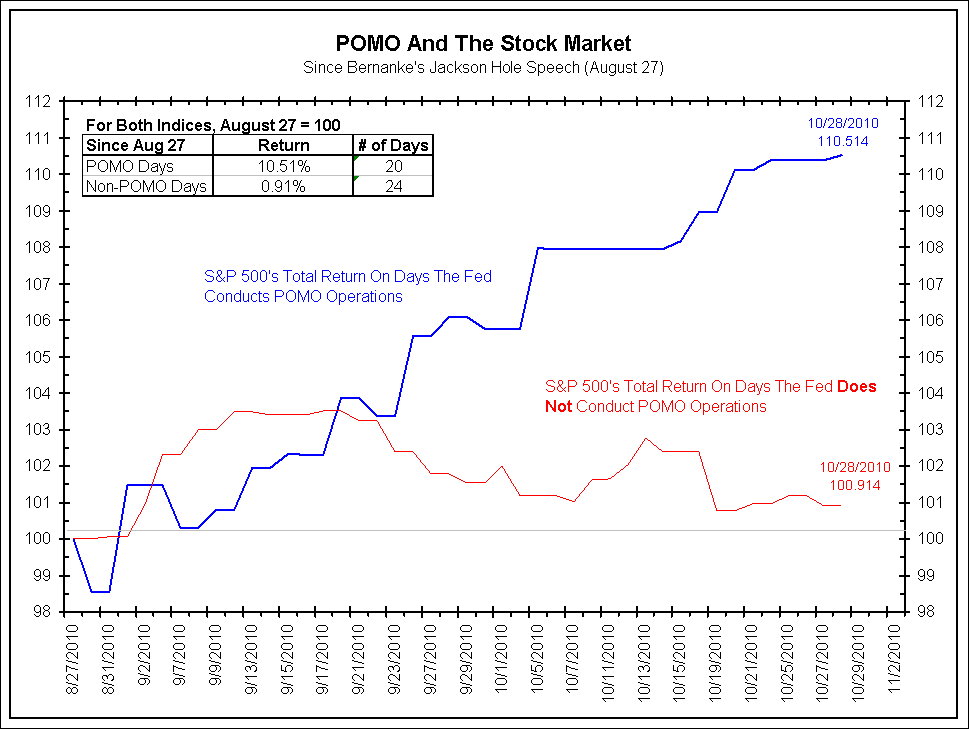
![[TENGRAND]](http://sg.wsj.net/public/resources/images/BF-AA135A_TENGR_NS_20101029181217.gif) For the moment, we are watching our lines of resistance but upside resistance if futile if the dollar continues to head south and it’s already been driven back to the 77 line in early morning trading, down from 78 on Friday morning so your stocks better gain at least 1% today or they are losing ground to Yen and Euros and, of course, gold, which is up 2.5% on the same move. Gaining 2.5% in a day is one of the reasons owning gold can be such fun. In fact, pension fund manager
For the moment, we are watching our lines of resistance but upside resistance if futile if the dollar continues to head south and it’s already been driven back to the 77 line in early morning trading, down from 78 on Friday morning so your stocks better gain at least 1% today or they are losing ground to Yen and Euros and, of course, gold, which is up 2.5% on the same move. Gaining 2.5% in a day is one of the reasons owning gold can be such fun. In fact, pension fund manager 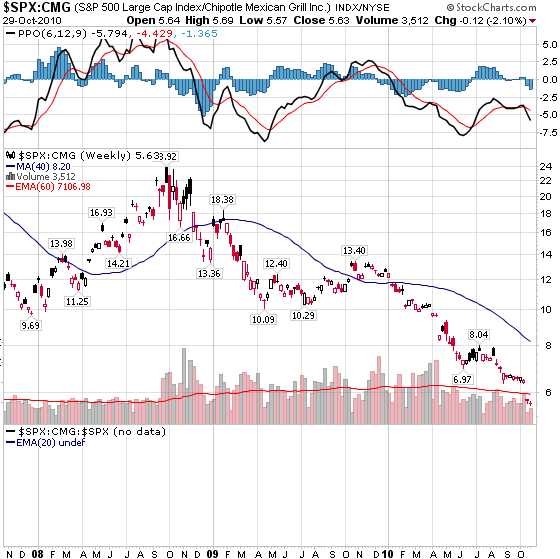 Our winning pattern last week was to stay generally in cash and short the markets with hit and run plays. It’s a little tricky playing POMO as you have to wait for the dip and then buy as there is an operation date and a settlement date (the next day) to consider. As a rule of thumb – take short profits quickly and take long profits quickly and we play the moves in either direction for a turn as we’ve been trapped in a pretty tight range since early October as


 About a month ago, I was speaking in a conference room at the Venetian in Las Vegas. We were presenting our
| You are subscribed to email updates from Gold World News Flash To stop receiving these emails, you may unsubscribe now. | Email delivery powered by Google |
| Google Inc., 20 West Kinzie, Chicago IL USA 60610 | |


No comments:
Post a Comment