


Gold World News Flash |

- Nana Sangmuah: African Takeouts on the Menu
- Chris Powell: Piercing the mystery of the gold market
- John Hathaway: Gold will outlive dollar once slaughter comes
- Sprott Physical Silver Trust: PSLV
- Stop waiting - Time to buy Gold and Silver, Assuming Silver and Gold Prices Follow Through Tomorrow
- Snitching in the Name of National Security
- Loss of Purchasing Power: The True Inflation-Target Bullseye
- At last GATA makes it into Forbes. What's next -- Field & Stream?
- What Percentage of U.S. Equity Trades Are High Frequency Trades?
- Guest Post: The Tipping Point has Arrived
- NY Fed overstated gold depositors and their holdings, FT discovers
- Currency Wars: Debase, Default and Deny!
- Potential Impact of U.S. Pension Funds Asset Allocation Change on Gold Price
- The “Fifth BRIC”
- Silver manipulation lawsuit posted at GATA's Internet site
- Silver to $30 in 18 days, Turk tells King World News
- In The News Today
- Guest Post: Currency Wars: Debase, Default, Deny!
- Divvying Up Blame for Economic Ignorance
- Foreclosure Crisis Is Spreading Nationwide
- Altair Ventures Inc. TSX.V – AVX
- Are Banks Lending Again?
- Jim's Mailbox
- Imminent Big Bank Death Spiral
- The U.S. Election and Gold
- New Reasons to Buy Silver
- Silver “Manipulation” NOT Driving Prices
- Gold Prices Post-G20
- Food Crisis '08 Returns
- Silver vs. Gold: Industry vs. Investment
- Why Creating Money Won’t Shock the Economy Back to Life
- Lexmark Intl (NYSE:LXK) — Revenue Expectation Missed, Stock Slammed
- Hourly Action In Gold From Trader Dan
- JPMorgan, HSBC Sued For Alleged Silver Conspiracy
- California Marijuana Dreams May Go Up In Smoke.
- The Silver Sleuth
- Conversations with John Hathaway and Ian McAvity
- Tan Khandaker: Hedging Strategies to Underpin Rising Gold Price
- LGMR: Gold Rallies on Dollar-Correlation, Irish & Greek Bonds Hit by Deficit Fears
- Please Baby, One More Chance.
- When Fear Takes Over: The Prospect of Hyperinflation
- James Turk - Silver $30 in Less Than 18 Days
- William Black Tears Larry Summers Apart, Again Calls Out Obama To Place Bank Of America In Receivership
- Palladium Rises on Supply and Demand Concerns
- World Gold Council Q3 Update
- More Reasons to Be Bullish on Silver
- European Confidence the Highest Since 2007
- Guest Post: The Tipping Point has Arrived
- Gold vs Bonds
- The Next "Precious" Metal
| Nana Sangmuah: African Takeouts on the Menu Posted: 28 Oct 2010 08:00 PM PDT Clarus Securities Analyst Nana Sangmuah was born in Ghana, West Africa—a growing hot spot for gold exploration. He believes several gold juniors operating in West Africa are prime takeover targets and expects merger and acquisition (M&A) activity to heat up as the major gold producers seek to replenish their diminishing project pipelines. In this exclusive interview with The Gold Report, Nana reveals a few juniors on both sides of the Atlantic that could fall prey to larger predators.
| ||||
| Chris Powell: Piercing the mystery of the gold market Posted: 28 Oct 2010 04:51 PM PDT Remarks by Chris Powell The precious metals markets have tremendous potential for investors. But they are also wrapped up in great mystery -- deliberately so. Gold is the worst understood financial market. Most official data about gold is actually disinformation. Years ago GATA disclosed that the International Monetary Fund, the leading compiler of official gold reserve data, allowed its member nations to count gold they had leased, gold that had left their vaults, as if it was still in their vaults. The effect of this accounting fraud was to deceive the gold market into thinking that central banks had much more gold left to bomb the market with than they really did. But that's only the start of the false data. In April 2009 China caused a bit of a sensation by announcing that its gold reserves had increased by 76 percent, from 600 tonnes to 1,054 tonnes. For the previous six years China had been reporting to the IMF only 600 tonnes. Had China acquired those 454 new tonnes only in the last year? Very unlikely. Experts now believe that China acquired those 454 new tonnes over at least several years, largely by purchasing the production of China's own fast-growing gold mining industry. So for as many as six years the official gold reserve data about China was way off. ... Dispatch continues below ... ADVERTISEMENT Prophecy Resource Goes Into Production A commission appointed by Mongolia's Ministry of Mineral Resources and Energy has conducted the final permit inspection at Prophecy Resource Corp.'s Ulaan Ovoo mine site and has instructed the company to begin coal production. Prophecy Resource (TSX.V: PCY) has begun production of its first 10,000 tonnes of coal as a trial run of supply to be taken by rail to electric power stations in Darkhan and Erdenet, Mongolia's second and third largest cities after the capital, Ulaanbaatar. The company is the second-ever Canadian mining company to get a permit to mine in Mongolia and start production there. For the company's complete announcement, please visit: http://www.prophecyresource.com/news_2010_oct14.php This June the World Gold Council reported that Saudi Arabia's gold reserves had increased by 126 percent, from 143 to 323 tonnes, just since 2008. That the world's oil-exporting superpower had made such a new commitment to gold in its foreign exchange reserves also caused a brief sensation. But a few weeks later the governor of the Saudi Arabia Monetary Authority, Muhammad al Jasser, insisted to news reporters in Kuwait that Saudi Arabia had not purchased the gold cited in the June reports but rather had that extra gold all along in what he called "other accounts" -- that is, in accounts not reported officially, just as the true status of China's gold accounts was not reported officially for six years, if the true status is being reported even now. Some analysts think that China and Saudi Arabia have accumulated far more gold than they're reporting and are accumulating still more gold surreptitiously -- China to hedge its dollar foreign exchange surplus, Saudi Arabia to hedge both its dollar surplus and the depletion of its oil reserves -- but that China and Saudi Arabia can't acknowledge this accumulation lest they spook the currency markets and devalue their dollar surpluses before those surpluses are fully hedged. In August 2009 GATA consultant Rob Kirby of Kirby Analytics in Toronto obtained from Germany's central bank, the Bundesbank, a written admission that much of Germany's national gold is held outside the country at "trading centers" at which the Bundesbank may "conduct its gold activities." Without explicitly confirming that the Federal Reserve Bank of New York was one of those "trading centers," the Bundesbank noted to Kirby that the New York Fed holds gold for 60 nations and international organizations. But exactly how much German gold is where and for what purpose, particularly trading purposes? How much German gold been leased or otherwise encumbered? The Bundesbank wouldn't say. In September 2009, in the course of seeking access to gold records from the Federal Reserve and then suing the Fed in U.S. District Court for the District of Columbia, GATA obtained a sensational written admission from the Fed, signed by Fed Board of Governors member Kevin M. Warsh, a former member of the President's Working Group on Financial Markets -- the so-called "Plunge Protection Team." Warsh wrote that the Fed has secret gold swap arrangements with foreign banks and that these arrangements must be kept secret. So has gold from the U.S. reserve been swapped? Does the United States really have 8,200 tonnes of gold in its reserve, as it long has claimed to have? Fed Governor Warsh didn't quite say that U.S. gold had been swapped, only that the Fed has gold swap arrangements. But the U.S. gold reserve hasn't been audited in more than half a century, and the last audit wasn't really complete. So in the next session of Congress U.S. Rep. Ron Paul hopes to introduce legislation requiring an audit of the gold reserve, including specifically any encumbrances like swaps and leases. Then there are the major gold and silver exchange-traded funds, which were established in the last few years supposedly to help ordinary investors invest conveniently in gold and silver. How much metal do the ETFs have? While the major gold and silver ETFs frequently report their metal holdings, studies by GoldMoney founder James Turk and GATA board member Catherine Austin Fitts and her lawyer, Carolyn Betts, suggest that this data is unreliable too. For the major ETFs won't disclose exactly where their metal is, and indeed their prospectuses say it's OK for the ETFs not even to know where their metal is kept among custodians and sub-custodians. And the custodians for the major gold and silver ETFs are, perhaps not so coincidentally, also the two major international banks that report having the biggest short positions in gold and silver, short positions that give these banks and metal custodians a powerful interest in suppressing the price of the assets they supposedly are holding for investors who want those assets to rise in value. How much gold do the major gold and silver ETFs really have in their vaults? How much of it is encumbered in some way? ETF investors themselves will never be permitted to know. The biggest so-called "physical" gold market in the world is the one run by the London Bullion Market Association. The LBMA publishes statistics on how much gold and silver are traded by its members. But these statistics show spectacular volumes, more metal than could possibly exist. Of course much of this metal could be sold and resold back and forth many times every day. But an expert in that market, Jeffrey Christian of the CPM Group, acknowledged at the March 25 hearing of the U.S. Commodity Futures Trading Commission, as he had acknowledged in an explanatory report published in 2000, that the London bullion market is actually a fractional-reserve gold banking system built on the presumption that most gold buyers will never take delivery of their metal but rather leave it on deposit with the LBMA members from whom they bought it. GATA board member Adrian Douglas has studied the LBMA statistics and Christian's work and estimates that the great majority of gold sold by LBMA members doesn't exist -- that most gold sales by LBMA members are highly leveraged. How leveraged? How much gold is due from LBMA members that doesn't really exist? The LBMA doesn't report that. Like the Fed's gold swap arrangements, the world mustn't be permitted to know. The consequences might be catastrophic for the banking interests that run the world. For then the world might understand why even at its recent price above $1,300 per ounce gold has not come close to keeping up with the inflation, the currency debasement, of the last few decades, why gold has not fulfilled its function of hedging against inflation. That is, gold's enemies figured out how to increase its supply by vast amounts without going through the trouble of digging it out of the ground. They invented "paper gold" -- gold that doesn't exist but that many buyers accepted, never suspecting that major financial institutions might deceive or defraud them. * * * The misunderstanding of the gold market continues with the awful journalism about it. The falsity of the data about the gold market practically screams at financial journalists: -- There's the omission by official gold reserve reports of leased and swapped gold. -- There are the sudden huge changes in official gold reserve totals. -- There are the deception and conflicts of interest built into ETF prospectuses. The valid documentation about the gold market also practically screams at financial journalists: -- There are the huge and disproportionate gold, silver, and interest rate derivative positions built up at just two or three international banks, positions that never could be undertaken without the express or implicit underwriting of the U.S. government. -- And there are the dozens of official records, records collected and publicized by GATA over the years, demonstrating the plans and desire of the U.S. government to suppress and control the price of gold. But financial journalists just don't ask about these things. After all, who are the major advertisers in the financial news media? The market manipulators and governments themselves. Here are a couple of examples of this grotesque failure of journalism just from this year. In June the Bank for International Settlements, the central bank of the central banks, disclosed, via a footnote in its annual report, that it had undertaken a gold swap of unprecedented size, 346 tonnes. But the BIS provided no explanation. A newsletter writer was the first to come upon the information; only then did it leach into the major financial news media. What was going on here? The reporters for the major financial news media didn't bother going to the source, didn't bother asking the BIS itself. It was simply assumed that central banks never give serious answers about what they do. Instead the reporters called various gold market analysts for what they hoped would be informed speculation. A few days after GATA ridiculed the Reuters news agency for not demanding answers from the source, the BIS, Reuters did try putting some questions to the bank, and on July 16 Reuters reported: "The BIS said the gold in question was used for 'pure swap operations with commercial banks' but declined to respond to further questions from Reuters on the transaction." For a year I have been urging financial journalists to call the Federal Reserve to ask for an explanation of the secret gold swap arrangements admitted by Fed Governor Warsh. As far as I know, no news organization has put such questions to the Fed officially. But, a bit intrigued, a reporter for another major news agency, having failed to get her editor's authorization to pursue a story about gold, called the Fed on her own and did ask about the gold swap arrangements. She told me that a Fed spokesman had told her: "Oh, we never talk about those things." GATA has been gaining publicity over the last year, if with great difficulty. A few months ago the Financial Times did a big story about gold that was half about GATA's complaints about gold price manipulation by central banks and their associated bullion banks. But the FT reporter failed to put any of our complaints and questions to any central bank or government official. How can you report complaints of central bank gold price manipulation without questioning central banks themselves? Again, it's just taken for granted that central banks operate in secret and there's no point in questioning them. * * * Maybe this journalistic negligence will change a little because of the remarkable event yesterday in Washington. A member of the U.S. Commodity Futures Trading Commission, Bart Chilton, to whom GATA Chairman Bill Murphy, in a meeting at CFTC headquarters in Washington in December 2008, delivered evidence of the manipulation of the gold and silver markets, made a statement that had a noticeable effect on those markets. At a CFTC hearing yesterday Chilton issued a formal statement urging his commission to answer to the public for the commission's seemingly interminable investigation of the silver market. Chilton added: "I believe that there have been repeated attempts to influence prices in the silver markets. There have been fraudulent efforts to persuade and deviously control that price. Based on what I have been told by members of the public and reviewed in publicly available documents, I believe violations to the Commodity Exchange Act have taken place in silver markets and that any such violation of the law in this regard should be prosecuted." Within hours Chilton's statement had become international news. Of course that doesn't mean that financial news organizations will press the precious metals market manipulation story vigorously now. But the story just became a lot harder to ignore. Indeed, just a few hours ago a lawsuit complaining of silver price manipulation by J.P. Morgan Chase & Co. and HSBC was filed in U.S. District Court for the Southern District of New York. * * * Why is gold such a mystery? Why is it, along with silver, kept such a mystery? It's because the two precious metals are not only money but, from the point of view of free individuals, the best sort of money, less susceptible to what governments see as the most desirable quality of money -- the susceptibility to control by government and particularly its susceptibility to devaluation. You can print or otherwise issue gold and silver derivatives to infinity, but not the metals themselves. Gold particularly is kept such a mystery because it is the key to unlocking the currency markets, which long have been the most efficient mechanisms of imperialism. Many of you have heard about the looting of Europe that was undertaken by the Nazi German occupation during World War II. But most of that looting did not take place at the point of a gun. No, it took place through the currency markets. This looting through the currency markets was spelled out by the November 1943 issue of a military intelligence letter published by the U.S. War Department, a letter called Tactical and Technical Trends. Of course the Nazi occupation seized whatever central bank gold reserves had not been sent out of the occupied countries in time. But then the Nazi occupation either issued special occupation currency that could not be used in Germany itself or, in countries that had fairly sophisticated banking systems, took over the domestic central bank and enforced an exchange rate much more favorable to the reichsmark. Or else the Nazi occupation simply printed for itself and spent huge new amounts of the regular currency of the occupied country. This control of the currency markets drafted every resident of the occupied countries into the service of the occupation and achieved a one-way flow of production -- a flow out of the occupied countries and into Germany. For a few years Nazi Germany had one hell of a trade deficit. But being in the position to print the currencies for occupied Europe, Nazi Germany never had to cover that deficit. Since the United States now issues the reserve currency for the world, the dollar, the United States now more or less occupies most countries economically, even those countries that have their own currencies, since even those countries hold most of their foreign exchange reserves in dollars. Free-trading and widely accessible gold always has been and always will be a threat to the rigging of the currency markets, always will be the escape from overbearing government generally and from any overbearing government in particular. That is why so many U.S. government records compiled by GATA over the years candidly discuss or advocate or describe controlling and suppressing the gold market. A declassified cable from the U.S. Embassy in Paris to the State Department in Washington, written in March 1968, even talks about the necessity for U.S. monetary officials to remain what the cable calls "the masters of gold." This is also why U.S. government agencies like the Federal Reserve are trying desperately to prevent other such documents from being disclosed. That is, gold is the secret knowledge of the financial universe and its true value relative to currencies is vastly greater than its nominal price today, since much of the gold that investors think they own doesn't exist. GATA's work is to bust this secret open. Russia, China, and other Asian countries have figured out that the dollar reserve system is the mechanism of their economic enslavement and have started to prepare their liberation by accumulating gold in a big way before gold is formally reinstated as the world reserve currency or as a big part of that new reserve currency. Now you're in on the secret too. This wonderful conference will give you many good ideas for preparing yourselves profitably. But just make sure that whenever you buy precious metal, you're getting metal, not paper. Otherwise you'll just be sabotaging yourself. Join GATA here: New Orleans Investment Conference * * * Support GATA by purchasing a colorful GATA T-shirt: Or a colorful poster of GATA's full-page ad in The Wall Street Journal on http://gata.org/node/wallstreetjournal Or a video disc of GATA's 2005 Gold Rush 21 conference in the Yukon: * * * Help keep GATA going GATA is a civil rights and educational organization based in the United States and tax-exempt under the U.S. Internal Revenue Code. Its e-mail dispatches are free, and you can subscribe at: To contribute to GATA, please visit:
| ||||
| John Hathaway: Gold will outlive dollar once slaughter comes Posted: 28 Oct 2010 04:47 PM PDT By John Hathaway http://www.bloomberg.com/news/2010-10-29/gold-will-outlive-dollar-once-s... The world's monetary system is in the process of melting down. We have entered the endgame for the dollar as the dominant reserve currency, but most investors and policy makers are unaware of the implications. The only questions are how long the denouement of the dollar reserve system will last, and how much more damage will be inflicted by new rounds of quantitative easing or more radical monetary measures to prop up the system. Whether prolonged or sudden, the transition to a stable monetary system will become possible only when the shortcomings of the status quo become unbearable. Such a transition is, by definition, nonlinear. So central-bank soothsaying based on the extrapolation of historical data and the repetition of conventional wisdom offers no guidance on what lies ahead. ... Dispatch continues below ... ADVERTISEMENT Prophecy Resource Goes Into Production A commission appointed by Mongolia's Ministry of Mineral Resources and Energy has conducted the final permit inspection at Prophecy Resource Corp.'s Ulaan Ovoo mine site and has instructed the company to begin coal production. Prophecy Resource (TSX.V: PCY) has begun production of its first 10,000 tonnes of coal as a trial run of supply to be taken by rail to electric power stations in Darkhan and Erdenet, Mongolia's second and third largest cities after the capital, Ulaanbaatar. The company is the second-ever Canadian mining company to get a permit to mine in Mongolia and start production there. For the company's complete announcement, please visit: http://www.prophecyresource.com/news_2010_oct14.php It's amazing that there is no intelligent discourse among policy leaders on the subject of monetary rot and its implications for the future economic and political landscape. Until there is fundamental monetary reform on an international scale, most economic forecasts aren't worth the paper on which they are written. Telltale signs of future trouble aren't hard to spot. Only a few months ago, Federal Reserve Chairman Ben Bernanke and a chorus of other high-ranking Fed officials were talking about exit strategies from the U.S. central bank's bloated balance sheet and the financial system's unprecedented excess liquidity. Now those same officials are talking about pumping more money into the system to stimulate growth. And they're not alone: Six months ago the chief economist of the International Monetary Fund, Olivier Blanchard, suggested that raising inflation targets to 4 percent from 2 percent wouldn't be too risky. This sort of talk must grate on the nerves of our trading partners, China, India, Russia, and others, who have accumulated pyramids of non-yielding Treasury debt. No haven there. Return-free risk may be a better way to put it. And bickering among central bankers over currency manipulation and rising trade tensions doesn't exactly reinforce one's confidence in a scenario of sustained economic growth and a return to prosperity. The prospects for an orderly unwinding of the extreme posture of global monetary policy are zero. Bernanke, Jean-Claude Trichet, and Mervyn King, his counterparts in Europe and the U.K. respectively, are huddling en masse upon the most precarious perch in the history of monetary affairs. These alleged guardians of monetary stability, in their attempts to shore up the system, have simply created the incinerator for paper money. We are past the point of no return. Quantitative easing may well become a way of life. The consensus investment view seems to be that the credit crisis of 2008 was a freak occurrence, unlikely to repeat. That is wishful thinking. Monetary policy has painted itself into a corner. Based on our present course, there will be more bubbles and more meltdowns. Financial markets and institutions sense trouble, as reflected in the flight to supposedly safe assets such as Treasuries and corporate-debt instruments with paltry yields, as well as the reluctance to lend by commercial banks. We are stuck in an epic liquidity trap. The irony is that if global central banks succeed in creating inflation, the value of these safe assets will be destroyed. It is a slaughter waiting to happen. In the pedantic mentality of central bankers, their playbook creates just the right amount of inflation. As inflation accelerates, consumers will spend to get rid of their dollars of diminishing value and spur the economy. Once consumers start spending, it will be time to raise interest rates because a solid foundation for prosperity will have been established, they say. But whatever the playbook promises, the capacity of financial markets to overshoot can't be overestimated. The belief among policy makers and financial markets in the possibility of this sort of fine-tuning is preposterous, but it is the slender thread on which remaining investment and business confidence rests. The breakdown of the monetary system will be chaotic. When inflation commences, it will be highly disruptive. The damage to fixed-income assets will seem instantaneous. Foreign-exchange markets will become dysfunctional. The economy will become even more fragile and unpredictable. Gold is an imperfect but comparatively reliable market gauge for the extent of current and future monetary destruction. The recent acceleration in the dollar price of the metal to $1,381, a record high in nominal terms, coincided with talk of a new round of quantitative easing and highly visible discord among major nations on trade and currency-valuation issues. Naysayers point to gold's price and see a bubble, without understanding that the only acceleration that is taking place is in the rate of decline of paper currency. The Fed is organizing an attack on the dollar's value, believing that this is the most expedient way to defuse deflationary market forces. The man in the street is unaware, a perfect setup. Inflation can be successful only when the public doesn't see it coming. The sudden torrent of commentary on gold isn't the sign of a bubble. Anti-gold pundits provide a great service to those who grasp this historical moment: They facilitate the advantageous positioning of the one asset most likely to be left standing when the dust settles. ----- John Hathaway is a managing director of Tocqueville Asset Management LP in New York. The opinions expressed are his own. Join GATA here: New Orleans Investment Conference * * * Support GATA by purchasing a colorful GATA T-shirt: Or a colorful poster of GATA's full-page ad in The Wall Street Journal on http://gata.org/node/wallstreetjournal Or a video disc of GATA's 2005 Gold Rush 21 conference in the Yukon: * * * Help keep GATA going GATA is a civil rights and educational organization based in the United States and tax-exempt under the U.S. Internal Revenue Code. Its e-mail dispatches are free, and you can subscribe at: To contribute to GATA, please visit:
| ||||
| Sprott Physical Silver Trust: PSLV Posted: 28 Oct 2010 01:50 PM PDT
| ||||
| Stop waiting - Time to buy Gold and Silver, Assuming Silver and Gold Prices Follow Through Tomorrow Posted: 28 Oct 2010 11:10 AM PDT Gold Price Close Today : 1342.10 Change : 19.90 or 1.5% Silver Price Close Today : 23.871 Change : 0.471 cents or 2.0% Gold Silver Ratio Today : 56.22 Change : -0.281 or... This is a summary only. Visit GOLDPRICE.ORG for the full article, gold price charts in ounces grams and kilos in 23 national currencies, and more!
| ||||
| Snitching in the Name of National Security Posted: 28 Oct 2010 11:00 AM PDT "Report Suspicious Activity. 1-800-XXX-XXXX" "Terror Tips. Call 1-800-XXX-XXXX" Hmmm… What to make of it? The War on Terror has been pushed out of the headlines by the war on the financial crisis. Besides, everyone was beginning to see that the war on terror was a fraud. You're never going to win a war against a tactic. And spending beaucoup money trying to win the hearts and minds of fanatics is a losing proposition. But the war lives on. We have seen these signs at least 10 times in the last three days. They are up over 1-95 and US495 around Washington. What purpose do they serve? Has anyone ever called? We would have called ourselves…and asked for a tip. But we were afraid of getting on a suspect list. It is hard to imagine that we will see anything that looks suspicious. First, because terrorists in the Washington area are rarer than honest Congressmen. Second, because they would hardly drive along in pickup trucks wearing Arab headdresses and carrying 55 gallon drums of gasoline in the back. In other words, we wouldn't see them because they don't exist and if they did exist they would be the last people to make us suspicious. We conclude that the advertising is merely to keep the lumpen voters hyped up for war…imagining that they are under attack and that they must pay big money for someone to protect them…and accustomed to snitching on their neighbors in the name of national security. Bill Bonner Snitching in the Name of National Security originally appeared in the Daily Reckoning. The Daily Reckoning, offers a uniquely refreshing, perspective on the global economy, investing, gold, stocks and today's markets. Its been called "the most entertaining read of the day."
| ||||
| Loss of Purchasing Power: The True Inflation-Target Bullseye Posted: 28 Oct 2010 10:00 AM PDT When it comes time to put the current crop of economic blowhards and lunatics on trial for the disaster their insanely-bad advice caused, this quote from Frederic Mishkin, former Fed governor and who is directly responsible for the mess we are in, may come in handy. He says, in The Financial Times newspaper, that there is a lot of talk going around that "a numerical inflation target is under consideration inside America's central bank. And if there ever was a time to establish such a transparent and credible commitment to a specific target, it is now." Gaaahhhhh! Is there any doubt as to why we are in the economic trouble we are in? This is one of the guys who was at the Federal Reserve who inflicted this on us! Gaaaahhhh! I had hoped that the little screaming episodes at the end of the previous two paragraphs would be the end of such behavior, I would take a few pills, and/or chug down something alcoholic, and then I would be ready for WHY it is that "it is now," apparently a place unique in American history, that we must agree to accepting a deliberate 2% inflation in prices when the Whole Freaking Purpose (WFP) of the Federal Reserve, as even this ridiculous chump admits, is "price stability," which means "zero inflation" to everybody except these academic twerps who laughably slosh around in the fetid, stinking cesspool of their arrogant, neo-Keynesian econometric stupidity that has turned into a complete (pause for effect) and (pause) utter (pause) failure. Surprisingly, even though I was prepared, he did not say why such a crazy thing as this is needed "now"! Instead, he just blithely went on that "The Fed has a dual mandate, to achieve price stability and maximum sustainable employment. But at the moment it is missing both objectives. Inflation is well below 2 per cent. A slugging economy means unemployment is likely only to decline slowly from its current level of about 10 per cent." I can't believe that this Fed weenie is admitting that he is a failure! And then he goes on to imply that he never heard that inflation in prices was a matter of monetary policy, and instead says something as stupid as, "This combination of economic slack and low inflation raises the possibility that inflation expectations will drift downwards." Hahaha! The federal government is deficit-spending almost $2 trillion a year, the Federal Reserve is going to create enough new money to "target" 2% inflation, and he thinks that "inflation expectations will drift downwards"? Hahahaha! I have to admit that I quit reading right there, and I ran home to make plans to put this fabulous technique to my advantage! After some reflection and research, I figured that I needed a nice chunk of money to enable me to quit my stupid job, get out of this stupid town and get away from all these stupid people, and that $750,000 would suffice as a beginning target. Firstly, I gathered up all the employees and told them, echoing Mr. Mishkin, "I am going to take 2% out of everyone's pay towards meeting a $750,000 target, and if ever there was a time for such a transparent and credible commitment to a specific target, it is now!" Unfortunately, instead of bleating ineffectually like sheep, like I expected, they all started complaining and yelling in protest. Deftly I deflect their anger by again taking the lead of Mr. Mishkin, and I say, "The amount that I already steal from you people is less than 2%! What did you think the "HBMC" deduction was on your stupid pay-stubs, you idiots? HBMC means "Happy Birthday Mogambo Contribution! Hahaha! And it is less – much less! – than 2% of your stupid checks! Now, it will be a Mishkin-approved 'transparent and credible' 2% on-the-nose! Now, aren't you happy, you stupid proletariat workers?" I immediately realized that, for some reason, they aren't happy with any of this. So I told them, "Don't tell me your stupid problems, you ungrateful whiners and slackers! I'm only taking a lousy 2% of your stupid paychecks. Go tell Frederic Mishkin that you don't want him deliberately taking 2% out of your stupid paychecks, and then another 2% out of the buying power of every other dollar you own, you morons!" As I stalked off the stage, I was met by my assistant who rushed up breathlessly to tell me that the news about my little embezzlement had flashed like wildfire through the company, up to my boss, to her boss, to the executive director and the whole accounting staff. Unsurprisingly, I was "summoned." The meeting was a long one, and I kept trying to explain to these bozos that "The Federal Reserve creating more money creates inflation in prices, which is the One Freaking Thing (OFT) that you don't ever want to happen or, well, just look around you, morons!" Finally, it boiled down to two main arguments. One disagreement was concerning who was the moron around here (another "them against me" plot), and the other argument pitting the theft of the employee's buying power by the outrage of inflation in prices deliberately caused by the Federal Reserve creating extra money, which is an outrage of monstrous proportions, against my piddly little misdeed of doing the same thing by just taking a little money out of their paychecks, which is just a little ordinary embezzlement. At last, backed into a corner, I cried out in my best Shakespearian anguish, "Which, indeed, is the greater crime, whether to bid surcease to my suffering the slings and arrows of outrageous fortune by purloining a few paltry pence, or watch with fevered brow the ever-princely prices paid for a crust of bread by peasants as inflation cuts them down, inflation slicing through their real, after-inflation incomes like a razor-edged scythe mowing down a harvest of green wheat to rot in the fields, destroyed through the foul, hellish machinations of the Federal Reserve to continually increase prices, condemning all to a gnashing of teeth and to wail anew with each dawning in the east, where Juliet is the sun!" The only good news is that I have been buying gold, silver and oil against a lot of potential calamities, this fiasco being one of them. Fortunately, the strategy has worked out again, just like buying gold and silver has always worked out when the government was borrowing and spending to the point of its bankruptcy, and always when a central bank like the foul Federal Reserve keeps creating excess amounts of new money. The strategy to buy gold, silver and oil would have worked just as well for an invasion of space ships or large radioactive monsters rising from the depths of the sea, a universal utility that makes you giddy with delight and you say, "Whee! This investing stuff is easy!" The Mogambo Guru Loss of Purchasing Power: The True Inflation-Target Bullseye originally appeared in the Daily Reckoning. The Daily Reckoning, offers a uniquely refreshing, perspective on the global economy, investing, gold, stocks and today's markets. Its been called "the most entertaining read of the day."
| ||||
| At last GATA makes it into Forbes. What's next -- Field & Stream? Posted: 28 Oct 2010 09:06 AM PDT Traders Accuse HSBC, JPMorgan Of Silver Manipulation Lawsuits Allege Banks Manipulated Futures Trading by Amassing 'Enormous Short Positions By Parmy Olson http://www.forbes.com/2010/10/28/hsbc-jpmorgan-silver-markets-commoditie... LONDON -- Two traders have accused HSBC and JPMorgan Chase of manipulating the price of gold's smaller cousin, silver, in separate lawsuits filed in a Manhattan federal court Wednesday. The suits allege that the two banking giants amassed "enormous short positions," and follow an investigation by the Commodity Futures Trading Commission (CFTC) ongoing since 2008. Filed by U.S. traders Peter Laskaris and Brian Beatty, the lawsuits also date back to 2008, according to press reports. Laskaris alleges that the banks colluded on the silver futures market and let each other know about large trades, placing "spoof" trading orders. ... Dispatch continues below ... ADVERTISEMENT Prophecy Resource Goes Into Production A commission appointed by Mongolia's Ministry of Mineral Resources and Energy has conducted the final permit inspection at Prophecy Resource Corp.'s Ulaan Ovoo mine site and has instructed the company to begin coal production. Prophecy Resource (TSX.V: PCY) has begun production of its first 10,000 tonnes of coal as a trial run of supply to be taken by rail to electric power stations in Darkhan and Erdenet, Mongolia's second and third largest cities after the capital, Ulaanbaatar. The company is the second-ever Canadian mining company to get a permit to mine in Mongolia and start production there. For the company's complete announcement, please visit: http://www.prophecyresource.com/news_2010_oct14.php By working together to suppress silver futures, their call options, which represent the right to buy, would decline, making their short positions more lucrative, according to Laskaris' suit. Beatty claims to have been hurt by anti-competitive acts and market manipulation. HSBC's press office in London could not be reached for comment. Silver, known as "the devil's metal" among traders, has seen futures prices rise dramatically from $10 an ounce two years ago to about $24 this month. Forbes' Great Speculations blog recently quoted HSBC's managing director of Global Metals and Trading, John Levin, as saying that hedge funds love silver's volatility, but then "get carried out on a stretcher" when they try to trade it. CFTC's own reports of November 2009 showed HSBC and JPMorgan Chase held 43% of the commercial net short position in gold and 68% of the commercial net short position in silver, according to a letter to the Commission from William Murphy, chairman of the Gold Anti-Trust Action Committee. He adds that in gold the two banks were short 123,331 contracts but long only 523 contracts, and in silver they were short 41,318 contracts and long only 1,426 contracts. He added: "It has been possible to extrapolate that the two banks that hold these large manipulative short positions on the Comex are JPMorgan Chase and HSBC because of their huge positions in the OTC derivatives market, whose regulator, the U.S. Office of the Comptroller of the Currency, does not provide anonymity when it publishes market data." Shares of HSBC were up by 1.3% at the open in New York while JPMorgan Chase was up 0.8%. Global X Silver Miners, an ETF that tracks the stocks of silver miners, was up by 1.1%. Miners Pan American Silver and Silver Wheaton were up by 1.1% and 1% respectively, in New York on Thursday morning. Join GATA here: New Orleans Investment Conference * * * Support GATA by purchasing a colorful GATA T-shirt: Or a colorful poster of GATA's full-page ad in The Wall Street Journal on http://gata.org/node/wallstreetjournal Or a video disc of GATA's 2005 Gold Rush 21 conference in the Yukon: * * * Help keep GATA going GATA is a civil rights and educational organization based in the United States and tax-exempt under the U.S. Internal Revenue Code. Its e-mail dispatches are free, and you can subscribe at: To contribute to GATA, please visit:
| ||||
| What Percentage of U.S. Equity Trades Are High Frequency Trades? Posted: 28 Oct 2010 08:50 AM PDT
Several financial analysts have said that 70% of American stock trades are high frequency trading. But the exact figure is difficult to ascertain. One of the leading companies trying to estimate the percentage of HFT trades is the TABB Group. TABB's research director, Adam Sussman, wrote in October 2009:
As of last October, Sussman estimated HFT to account for 61% of trades:
Sussman provided the following chart showing that its not just stocks, but that futures, options, bonds and currency are also traded using HFT:
However, earlier in the year, TABB released a 32-page report with 22 exhibits entitled "US Equity High-Frequency Trading: Strategies, Sizing and Market Structure", which placed the figure at 70% (revising the figure down from 73%):
So is it 70% or 61%? As Cristina McEachern Gibbs notes, its both:
But a September 13 article from CNBC shows that that figure has declined since last year:
Gibbs notes that not everyone agrees with TABB's numbers:
The bottom line is that unless the government forces reporting by traders, it will be difficult to shine a light into the high frequency trading world bright enough to determine what the exact numbers are. Hat tip Tyler Durden.
| ||||
| Guest Post: The Tipping Point has Arrived Posted: 28 Oct 2010 08:46 AM PDT Our age is retrospective. It builds the sepulchres of the fathers. It writes biographies, histories, and criticism. The foregoing generations beheld God and nature face to face; we, through their eyes. Why should not we also enjoy an original relation to the universe? Why should not we have the a poetry and philosophy of insight and not of tradition, and a religion by revelation to us, and not the history of theirs? Embosomed for a season in nature, whose floods of life stream around and through us, and invite us, by the powers they supply, to action proportioned to nature, why should we grope among the dry bones of the past, or put the living generation into masquerade out of its faded wardrobe? The sun shines today also. There is more wool and flax in the fields. There are new lands, new men, new thoughts. Let us demand our own works and laws and worship. - Ralph Waldo Emerson, Nature I believe we have finally breached the tipping point in the socio-political landscape of the United States of America. There will be no going back from here. Everyone on all levels of society including the elites must make a choice. Will you stand for real reform and an end of the feudalistic rule of the oligarchs and their paid-off puppets that line the streets of Washington D.C., or will you keep your mouth shut and play the old and dying game in the context of a completely different cultural environment? While many will disagree with what I am about to say, I believe the oligarchs and the Federal Reserve have already lost. This will not be clear to the vast majority at this time because the powerful institutions that dominate and rob us will continue to fight for survival but the wind is already blowing in a different direction and cannot be reversed. The smart elites are starting to see this and are hedging their bets. The dumb or stubborn ones may want to start looking at countries with non-extradition treaties or start blowing the whistle on someone above them and fast. The window of opportunity to make the choice is closely quickly. "I was just following orders" will not cut it when the dollar collapses and Disneyland shuts down. There have not been any major arrests and people have seemingly gotten away with all their frauds and crimes. This too will change and 2011 will represent a change in trend in this regard. We have entered the terminal phase of this ponzi scheme economy and those responsible for its creation and its continued support at the expense of the vast majority of the populace will see their foul deeds rise to the surface. Earlier this year I wrote two piece that I think are worth re-reading and I have attached links to them. The first was "A Time to Speak Out" and the second was the "The Elites Have Lost the Right to Rule." When I wrote these articles many of the themes addressed were completely out of the mainstream, yet in an amazingly brief period of time many of the frustrations I voiced are now popping up everywhere I look. It's strange and rewarding to see the topics I and countless others have been discussing on the "fringe" break into the light of day. Now that these concepts are out there is no stopping the avalanche that is about to hit the oligarchs smack in the face. As Gandhi said "An error does not become truth by reason of multiplied propagation, nor does truth become error because nobody sees it." This brings me to discuss what I think is one of the most important letters from an elite I have seen in 2010. I am referring to Bill Gross' most recent piece. Now when I say he is an "elite" I am not saying he is part of some vast conspiracy to turn us further into serfs. What I mean is he is one of the most fabulously wealthy people in America. He also happens to have made his fortune in the financial services industry and runs the country's largest bond fund. This is a person that has every reason and incentive to play nice with the other elites and their corrupt institutions at the top of which lies the Federal Reserve banking cartel. What he did in his latest letter was far from "playing ball." Here are some of the notable quotes and the entire letter can be found here. "Was it relevant in 2004 that John Kerry was or was not an admirable "swift boat" commander? Will the absence of a mosque within several hundred yards of Ground Zero solve our deficit crisis? Is Christine O'Donnell really a witch? Did Meg Whitman employ an illegal maid? Who cares! We are being conned, folks; Democrats and Republicans alike." "Perhaps, as a vocal contingent suggests, our paper-based foundation of wealth deserves to be buried, making a fresh start from admittedly lower levels. The Fed, on Wednesday, however, will decide that it is better to keep the patient on life support with an adrenaline injection and a following morphine drip than to risk its demise and ultimate rebirth in another form." "Check writing in the trillions is not a bondholder's friend; it is in fact inflationary, and, if truth be told, somewhat of a Ponzi scheme. Public debt, actually, has always had a Ponzi-like characteristic." "The Fed, in effect, is telling the markets not to worry about our fiscal deficits, it will be the buyer of first and perhaps last resort. There is no need – as with Charles Ponzi – to find an increasing amount of future gullibles, they will just write the check themselves. I ask you: Has there ever been a Ponzi scheme so brazen? There has not." Ok, so what is Bill Gross up to you ask? I will give you my two cents. This guy is not as fabulously wealthy as he is for being a dope (although this cannot be said for a lot of people in this industry that are merely financial engineers that would become extinct overnight without 0% interest rates but that's another story). Bill Gross sees the writing on the wall. He see the winds of change and is hedging his bets. He is throwing out a carrot to those that criticize the completely corrupt and ponzi scheme economy and financial system we have today which benefits only those that speculate on the taxpayers dime. We could end this fake and destructive economy by ending the Fed in its current form (at the very least everything they do must be transparent) and restoring the rule of law. He attacks the false left/right paradigm and rightly points out that both the Democrat and Republican establishment have sold out the people to line their own pockets. In the second quote he actually explores the notion that "our paper-based foundation of wealth deserves to be buried." Then finally he points out what many others have but almost no one is the mainstream ever admits. The U.S. government is running a giant ponzi scheme with regard to its debt. Hmmm do you want to own gold or treasuries? Truth be told, what Bill Gross did in this letter is to create the ultimate hedge for himself. He didn't say these things earlier when they were just as true as they are today and certainly must have been clear to someone of his intelligence. He said it now. He said it now because he can see the writing on the wall. The important thing is not that he ultimately defends what the Fed is doing (which he unfortunately does) but that he felt the need to hedge himself and distance himself from the system. As he writes in the final paragraph, "We haven't been around for 35+ years and not figured out a way to avoid the November axe. We are a survivor and our clients are not going to be Turkeys on a platter." Indeed, the axe is going to fall on the oligarchs and if you don't want to be a turkey on a platter you had better choose sides and fast. As the great Ralph Waldo Emerson wrote in his 1836 essay Nature, "There are new lands, new men, new thoughts. Let us demand out own works and laws and worship." Well said sir, well said. All the best, Mike
| ||||
| NY Fed overstated gold depositors and their holdings, FT discovers Posted: 28 Oct 2010 08:30 AM PDT Once again official gold data of long standing is shown to be no good. And suddenly the Financial Times is demonstrating a little curiosity. * * * Chink of Light Shed on New York Fed Gold By Jack Farchy http://www.ft.com/cms/s/0/15bc74ea-e2b0-11df-8a58-00144feabdc0.html The world's largest storer of gold, the Federal Reserve Bank of New York, has said it holds bullion from far fewer countries than it had previously reported, shedding a rare chink of light on the opaque activities of central banks in the gold market. Central banks have helped drive prices to all-time nominal highs by becoming net buyers of bullion this year for the first time in 22 years. But trades by central banks are often secret -- as is where they store their vast gold reserves. The New York Fed revised down the number of countries whose gold it stores by 40 per cent to 36, from a 2004 statement in which it said it held about 60 nations' gold. ... Dispatch continues below ... ADVERTISEMENT Prophecy Resource Goes Into Production A commission appointed by Mongolia's Ministry of Mineral Resources and Energy has conducted the final permit inspection at Prophecy Resource Corp.'s Ulaan Ovoo mine site and has instructed the company to begin coal production. Prophecy Resource (TSX.V: PCY) has begun production of its first 10,000 tonnes of coal as a trial run of supply to be taken by rail to electric power stations in Darkhan and Erdenet, Mongolia's second and third largest cities after the capital, Ulaanbaatar. The company is the second-ever Canadian mining company to get a permit to mine in Mongolia and start production there. For the company's complete announcement, please visit: http://www.prophecyresource.com/news_2010_oct14.php The revision is significant because the New York Fed's historic vault, built on the bedrock of Manhattan Island, is the world's largest repository of bullion with holdings worth about $290 billion, but very little is known about which countries store their gold there. Individual vaults have numbers so any visitors cannot tell which gold reserves belong to which central bank. The New York Fed said the revision was the result of a change in the way it counts the countries that use its services to store gold. Its previous claim of "approximately 60" countries referred to the number of foreign central banks with accounts at the New York Fed, including those that did not hold any gold. Its revised figure of 36 refers only to those foreign central banks that actually have gold stored at the US central bank's Manhattan vault, the New York Fed said. "There has been no change in the number of accounts with active gold holdings in recent years," a spokesperson said. The different statements are laid out in two versions of the same brochure about the New York Fed's gold, dated 2004 and 2008, which are the only known information about the vault. The 2004 brochure stated that "the gold you see in the vault of the Federal Reserve Bank of New York [...] belongs to approximately 60 foreign governments and central banks and international monetary organisations." The New York Fed has never explained in the past that that number included 24 countries that held no gold at its vault. After the Financial Times contacted the Fed about the differences between the documents, the central bank removed the old brochure from its website. The New York Fed added that its vault had contained 226 million ounces of gold in mid-2004, rather than 266 million, as claimed in the earlier version of the brochure. The vault, opened in 1924, holds nearly a quarter of all the gold belonging to governments and central banks. Other major depositories of official sector gold are at the Bank of England in London and the Bank for International Settlements in Switzerland. The gold market is often in the dark about the activities of central banks and other official institutions in the gold market as some of the largest buyers and sellers do not regularly release information about their trading. Saudi Arabia this year said its gold reserves have almost doubled. Riyadh attributed the increase, disclosed in a quarterly financial statement from the central bank, to an accounting change. Earlier, China surprised the bullion market when it revealed that its gold holdings had almost doubled without any explanation. Investors are scrutinising central banks' purchases and sales of gold as the official sector is set to buy 15 tonnes of bullion this year, according to estimates from GFMS, the precious metal consultancy -- a sea-change from the past decade, when on average central banks sold more than 400 tonnes a year. Join GATA here: New Orleans Investment Conference * * * Support GATA by purchasing a colorful GATA T-shirt: Or a colorful poster of GATA's full-page ad in The Wall Street Journal on http://gata.org/node/wallstreetjournal Or a video disc of GATA's 2005 Gold Rush 21 conference in the Yukon: * * * Help keep GATA going GATA is a civil rights and educational organization based in the United States and tax-exempt under the U.S. Internal Revenue Code. Its e-mail dispatches are free, and you can subscribe at: To contribute to GATA, please visit:
| ||||
| Currency Wars: Debase, Default and Deny! Posted: 28 Oct 2010 08:29 AM PDT By lowering interest rates and effectively guaranteeing a weak dollar through undisciplined fiscal policy, the US ignited an almost riskless global US$ Carry Trade and triggered an uncontrolled Currency War with the mercantilist, export driven ... Read More...
| ||||
| Potential Impact of U.S. Pension Funds Asset Allocation Change on Gold Price Posted: 28 Oct 2010 08:06 AM PDT Irfan Chaudhry submits: Most of the US pension funds can't stick to their typical asset allocations of equities and fixed income because of their inability to meet pension expenses as per assumed 8% ROA. According to a “Stateline July 2010 review” – 2010 required return on assets for most of US funds is quite high (higher than typical assumption of 8%) – which creates a large shortfall risk. Major public plans in at least 21 US states were below the 80-percent funded status at the end of 2009 (Stateline’s parent organization). The funding ratio (assets to liabilities) of majority of US state employee retirement funds is around 65%, while teachers retirement funds is around 41% percent. Complete Story »
| ||||
| Posted: 28 Oct 2010 08:03 AM PDT This place isn't on most investors' radars…yet. But that will change soon. This country:
The place I'm talking about is Indonesia. You've heard of the BRIC economies – Brazil, Russia, India and China. These are the "big guns" in the emerging markets world. Jim O'Neil, a well-known Goldman Sachs analyst came up with the term back in 2001 in a paper titled "The World Needs Better Economic BRICs." O'Neil's point: The BRICs would become the world's four dominant economies by 2050. Think of Indonesia as the "fifth BRIC." Indonesia is slightly smaller than Mexico. Or about three times the size of Texas. The bulk of the population lives on just five major islands: Sumatra, Java (the location of the capital city Jakarta), Sulawesi, Borneo and New Guinea. But the country's land mass is spread over an archipelago of 17,508 islands, of which about 6,000 are inhabited. This string of islands is on a strategic location slap bang in the middle of major sea-lanes linking the Indian and Pacific oceans. With a GDP of $521 billion, its economy is less than half the size of its nearest BRIC cousin. But it's certainly big enough to invest in. It's a well-diversified economy with sizable incomes from agriculture, natural resources and manufacturing. It's also well situated between India and China. This means its exports should grow as these larger neighbors grow. Indonesia also has a relatively stable government under Susilo Bambang Yudhoyono. And although levels of corruption are still too high for comfort, it is recognized to be less corrupt than BRIC member Russia. In general the trend is for less corruption over time. According to The Economist, Indonesian GDP will grow by 5.9% next year. That's almost three times the World Bank's 2.4% estimate for the developed economies. And nearly three times the 2.5% forecast for the US (which by the way, looks optimistic). More important, this growth is being driven by the private sector, not by government spending. In Indonesia, the private sector accounts for roughly 90% GDP. Also, Indonesia is well isolated from the weak economies of the US and Europe. Only 11% of its exports go to the US. The bulk of the other 89% go to Asian nations. This is another reason to have confidence in the country's future prospects. There's more good news on the consumer-spending front, too. Over the past five years, the average income has doubled to $2,350 a year. And a report by Deutsche Bank predicts that figure can rise another 50% by the end of next year. Despite this income growth, Indonesia still has the lowest unit labor costs in the Asia- Pacific region. This has attracted manufacturing activities from China. Employment growth is critical, because half of Indonesia's population is 25 years old or younger. This means the workforce as a portion of total population will rise over the next 20 years. This should further increase the country's consumption levels and fuel further economic growth. But before we move on, I want to flag three risks associated with Indonesia. First, there will be a change of president in 2014. A shift away from the reforming agenda of the current administration would be negative for investments. Second, if big international investors get spooked by emerging markets, Indonesia could suffer badly. But it's important to remember that any turning away from the emerging markets usually only lasts for a short time. A good example of investors getting spooked (big time) is the recent financial crisis following the subprime mortgage meltdown. Between February and November 2008, the MSCI Indonesia Index fell 72%, measured in US dollars. Of course, the crisis had nothing to do with Indonesia. Investors everywhere were simply panicking and selling indiscriminately. But (and this is a big but) the index then came roaring back. It's now up 319% from its lows in November 2008. If you'd bought at the pre-crisis peak and held on, you'd still have made 17% on your investment, measured in US dollars. Serious investors shouldn't worry too much about this kind of illogical, short-term market volatility. In fact, if this kind of panicked selling happens again, I'd be recommending you invest more into Indonesia (plus a lot of other places). Third, Indonesia runs along an active fault in the Earth's crust. There are quite regular earthquakes and volcanic activity. From time to time this activity can produce major natural disasters. The most infamous recent example was the 2004 tsunami, when a huge undersea earthquake off the west coast of Sumatra triggered the massive waves that pounded parts of Thailand and other countries in the region. However, despite the omnipresent risks of investing in Indonesia, the country's stock market has been performing brilliantly. The MSCI Indonesia Index has gained 26% a year over the past 10 years, measured in dollars. This investment performance means that the Indonesian stock market has been one of the strongest in the world over the past decade, considerably outperforming all of the BRICs, as well as the loss-making US stock market. You would have gained 893% if you'd invested in Indonesia over the last 10 years, measured in dollars. In and of itself, that's a remarkable run…all the more so when compared to the S&P 500's 15% decline over the same period. Investors looking to capture the upside of the emerging market megatrend, therefore, would do well to look toward the "Fifth BRIC." Regards, Rob Marstrand The "Fifth BRIC" originally appeared in the Daily Reckoning. The Daily Reckoning, offers a uniquely refreshing, perspective on the global economy, investing, gold, stocks and today's markets. Its been called "the most entertaining read of the day."
| ||||
| Silver manipulation lawsuit posted at GATA's Internet site Posted: 28 Oct 2010 07:51 AM PDT 2:41p CT Thursday, October 28, 2010 Dear Friend of GATA and Gold (and Silver): A copy of the silver market manipulation lawsuit filed yesterday in U.S. District Court for the Southern District of New York against J.P. Morgan Chase & Co. and HSBC Bank has been posted at GATA's Internet site here: http://www.gata.org/files/SilverManipulationLawsuit-10-27-2010.pdf GATA board member Adrian Douglas, who helped publicize London silver trader Andrew Maguire's disregarded silver market manipulation complaint to the U.S. Commodity Futures Trading Commission, said of the lawsuit: "The Gold Anti-Trust Action Committee has worked tirelessly for more than 10 years to expose the suppression of gold and silver prices. The filing of this lawsuit is a milestone in stopping the fraud that has been occurring in these markets and punishing the bullion banks responsible. The suppression of the monetary metals has facilitated an overvalued dollar and mispriced debt that in turn have caused the massive imbalances at the root of the worldwide financial crisis. This fraud has hurt everyone except those on the inside who have profited at the expense of the public. I applaud the integrity of Andrew Maguire, whose whistleblower testimony has made this lawsuit possible, and the dedication of CFTC Commissioner Bart Chilton, who has had the courage to fight systemic corruption." CHRIS POWELL, Secretary/Treasurer ADVERTISEMENT Prophecy Resource Goes Into Production A commission appointed by Mongolia's Ministry of Mineral Resources and Energy has conducted the final permit inspection at Prophecy Resource Corp.'s Ulaan Ovoo mine site and has instructed the company to begin coal production. Prophecy Resource (TSX.V: PCY) has begun production of its first 10,000 tonnes of coal as a trial run of supply to be taken by rail to electric power stations in Darkhan and Erdenet, Mongolia's second and third largest cities after the capital, Ulaanbaatar. The company is the second-ever Canadian mining company to get a permit to mine in Mongolia and start production there. For the company's complete announcement, please visit: http://www.prophecyresource.com/news_2010_oct14.php Join GATA here: New Orleans Investment Conference * * * Support GATA by purchasing a colorful GATA T-shirt: Or a colorful poster of GATA's full-page ad in The Wall Street Journal on http://gata.org/node/wallstreetjournal Or a video disc of GATA's 2005 Gold Rush 21 conference in the Yukon: * * * Help keep GATA going GATA is a civil rights and educational organization based in the United States and tax-exempt under the U.S. Internal Revenue Code. Its e-mail dispatches are free, and you can subscribe at: To contribute to GATA, please visit:
This posting includes an audio/video/photo media file: Download Now | ||||
| Silver to $30 in 18 days, Turk tells King World News Posted: 28 Oct 2010 07:28 AM PDT 3:22p ET Thursday, October 28, 2010 Dear Friend of GATA and Gold (and Silver): In an interview today with Eric King of King World News, GoldMoney founder and GATA consultant James Turk does some chart work and predicts that silver will be at $30 in 18 days. The last time Turk made such a specific prediction about a precious metals price explosion he was off by 48 hours. His friends forgave him that much and maybe he'll do better this time. In any case, from Turk's lips to the Great Market Manipulator's ear -- and we don't mean Bernanke's. You can find excerpts from the interview with Turk at the King World News Internet site here: http://kingworldnews.com/kingworldnews/KWN_DailyWeb/Entries/2010/10/28_J... Or try this abbreviated link: CHRIS POWELL, Secretary/Treasurer ADVERTISEMENT Prophecy Resource Goes Into Production A commission appointed by Mongolia's Ministry of Mineral Resources and Energy has conducted the final permit inspection at Prophecy Resource Corp.'s Ulaan Ovoo mine site and has instructed the company to begin coal production. Prophecy Resource (TSX.V: PCY) has begun production of its first 10,000 tonnes of coal as a trial run of supply to be taken by rail to electric power stations in Darkhan and Erdenet, Mongolia's second and third largest cities after the capital, Ulaanbaatar. The company is the second-ever Canadian mining company to get a permit to mine in Mongolia and start production there. For the company's complete announcement, please visit: http://www.prophecyresource.com/news_2010_oct14.php Join GATA here: New Orleans Investment Conference * * * Support GATA by purchasing a colorful GATA T-shirt: Or a colorful poster of GATA's full-page ad in The Wall Street Journal on http://gata.org/node/wallstreetjournal Or a video disc of GATA's 2005 Gold Rush 21 conference in the Yukon: * * * Help keep GATA going GATA is a civil rights and educational organization based in the United States and tax-exempt under the U.S. Internal Revenue Code. Its e-mail dispatches are free, and you can subscribe at: To contribute to GATA, please visit:
| ||||
| Posted: 28 Oct 2010 07:15 AM PDT Dear CIGAs, This illustration was done by our own CIGA Eric. Please note where the Federal Statisticians are.
Jim Sinclair's Commentary Will he continue with QE? Will he not continue with QE? How much QE will he do? The answer is simple, he will do QE. Whatever amount is announced, he will do more. In fact he will do whatever is required to attempt to paper over the fraud in the OTC derivative securitized mortgage debt market. He will do whatever is required in his mind to paper over the awful condition of the FASB massaged phony asset values carried by the financial industry. It matters little what he does or says on any single day because QE is going to infinity. Yesterday the crazy market had the opinion that QE was not going to happen at all. Today it is on again.
Dollar falls as Fed credibility questioned The dollar lost ground on Thursday as the recent rally in the currency faltered. The dollar has performed strongly over the past week as investors have covered short positions in the currency, on speculation that the Federal Reserve would take a less aggressive approach to quantitative easing than previously anticipated in its policy meeting next week. But the dollar fell on Thursday as news that the Fed had sent out a survey asking primary Treasury dealers of their expectations of the size and impact of further asset purchases. Maurice Pomery at Strategic Alpha said the credibility of the Fed might come into question as the news suggested the central bank had no idea of how much, or how, to throw additional quantitative easing into the market. "The faith in the dollar is likely to be tested and the credibility of the Fed may be as well," he said. "Holding US assets might just become as fashionable as kipper ties and large collared shirts." The dollar fell 0.5 per cent to $1.3836 against the euro, lost 0.4 per cent to $1.5841 against the pound and was 0.5 per cent weaker at $0.9857 against the Swiss franc.
Jim Sinclair's Commentary The blatant lies will never end in this most degraded financial group that has ever existed in human history.
Jim Sinclair's Commentary Here is a very interesting interview that I suggest you review. Click here to watch the interview… Jim Sinclair's Commentary Gold rallies and the dollar falls because he used the QE words. What a crock. QE to Infinity will come, serialized, but it will come. NY Fed solicits QE2 opinions.
| ||||
| Guest Post: Currency Wars: Debase, Default, Deny! Posted: 28 Oct 2010 07:09 AM PDT
Submitted by Gordon T Long of Tipping Points Currency Wars: Debase, Default, Deny! In September 2008 the US came to a fork in the road. The Public Policy decision to not seize the banks, to not place them in bankruptcy court with the government acting as the Debtor-in-Possession (DIP), to not split them up by selling off the assets to successful and solvent entities, set the world on the path to global currency wars. It’s called debase, default and deny. Though prior to the 2008 financial crisis our largest banks had become casino like speculators with public money lacking in fiduciary responsibility, our elected officials bailed them out. Our leadership placed America and the world unknowingly (knowingly?) on a preordained destructive path because it was politically expedient and the easiest way out of a difficult predicament. By kicking the can down the road our political leadership, like the banks, avoided their fiduciary responsibility. Similar to a parent wanting to be liked and a friend to their children they avoided the difficult discipline that is required at certain critical moments in life. The discipline to make America swallow a needed pill. The discipline to ask Americans to accept a period of intense adjustment. A period that by now would be starting to show signs of success versus the abyss we now find ourselves staring into. A future that is now significantly worse and with potentially fatal pain still to come.
Unemployed Americans, the casualties of the financial crisis wrought by the banks, witness the same banks declaring record earnings while these banks refuse to lend. When the banks once more are caught with their fingers in the cookie jar with falsified robo-signing mortgage title fraud, they again look for the compliant parent to look the other way. Meanwhile the US debt levels and spending associated with protecting these failed (and still insolvent institutions) are so out of touch with US de-industrialized productive capability that the US dollar is falling and forcing countries around the world to devalue their currencies in a desperate attempt to maintain competitive advantage. So much for the “strong dollar” mantra we heard endlessly for years from every US Secretary of the Treasury that needed foreign investment to fund our deficits. Like second rate powers, our word is no longer our bond. The fork in the road which we chose has resulted in:
I think most would agree that massive public, private and consumer debt levels are a central problem to the current global predicament. We also however need to appreciate that these massive debt build ups have also allowed the over-building of production capacity. We have global supply that is now outstripping demand. The output gap in the US alone would require a theoretical -7% Fed Funds Rate according to the Taylor Rule (6)
The chart to the right was published in early spring of this year specifically spelling out that a ‘Beggar-thy-Neighbor’ roadmap lay ahead.
If we examine the latest raft of new weaponry, we can easily see where this is headed, how the money will flow, who wins and unfortunately who loses. 2- CURRENCY MISSILES - US$ Carry Trade
ARTICLES: SULTANS OF SWAP: Smoking Guns!, SULTANS OF SWAP: The Sting! , SULTANS OF SWAP: The Get Away!
4- PUBLIC PRIVATE PARTNERSHIPS / PRIVATE FINANCE INITIATIVES – PPP/PFI
5- AN UNREGULATED $615 TRILLION – Derivative Swaps ARTICLES: SULTANS OF SWAP: Explaining $605 Trillion in Derivatives!
REAL WEALTH
Paper money is simply a tool for the trading of wealth. When money is backed by a hard asset then it also becomes a store of that wealth. However that is not the case with fiat currencies. Though Gold is real wealth it does not grow wealth, but rather stores it or protects it from the debasement of paper ‘trading’ instruments. Ideal real wealth is wealth that continues to grow and yet maintains its inherent value. Over the longer term it is usually better to own well managed, unencumbered agricultural producing land, producing mines and production facilities than just the wealth product they output. The Rothschild banking family learned this hundreds of years ago and is the reason why they moved from solely owning gold to energy, mining, agriculture and selective base materials process production. FLAWED PUBLIC POLICY DECISIONS ASSURE THE OUTCOME
CONCLUSION
| ||||
| Divvying Up Blame for Economic Ignorance Posted: 28 Oct 2010 06:57 AM PDT By Rick Ackerman, Rick's Picks We weren't really trying to defend Helicopter Ben here yesterday for his handling of the economy, we were only trying to provoke a discussion by suggesting he did only as much as was politically necessary. Could he have done more – or perhaps less – to put the economy back on track? We doubt it. In retrospect, less – much less – would have been the right course to have followed. But since when has the Fed ever been allowed by the tide of popular opinion, let alone by the whim of political desperation, to do nothing while the economy sank into deepest recession? Some readers said that if they'd been in Bernanke's shoes, they'd have had the courage to do the right thing anyway: letting the banks fail — and with them the entire financial system. But it is naïve to think that mere courage would have sufficed to carry the day politically for laissez faire's version of the nuclear option. Indeed, many a courageous leader has wound up in front of a firing squad. Bernanke, and more than a few of his colleagues, would have found themselves in front of one too if, arguably, just one more company, AIG, had been allowed to fail.
The fact that Bernanke's egregiously misguided efforts have set the U.S. economy inexorably on course for a Second Great Depression is as much an indictment of our political system as it is of one man. Some would say he deserves all the blame anyway because, as chairman of the Federal Reserve, he is The Most Powerful Banker in the World. But we never bought that line to begin with. As far as we were concerned, it was just a bunch of hype – like calling Mel Gibson the Sexiest Man Alive. Especially Greenspan… In truth, most of the men who have held the reins at the Fed have gotten much better press than they deserved, and none so much took charge of the economy as go through the motions, with each in his turn helping to cause fatal quantities of debt to accumulate from one recession to the next. Alan Greenspan must be singled out as the very worst of them all. The news media seemed to hold him in awe, but in reality they merely propped him up with stupid headlines: "When Alan Greenspan Speaks, People Listen". What hogwash! If anyone had actually been listening, they'd have realized Greenspan was just a real-life version of Chauncey Gardiner, the empty-headed advisor to Presidents in the satirical movie Being There. Need we remind you yet again that Greenspan encouraged us all, and more than once, to think of inflated home values as real wealth? He also spoke of a capital investment boom in the U.S. at a time when household savings growth was negative. How this guy passed Econ 101 will always be a mystery to us. Lest we heap all the blame on just a few eggheads with friends in high places, we should mention the news media's disgraceful complicity and dumbfounding ignorance, which seem to be growing more blatant with each new day. How else to characterize this opener from a Wall Street Journal stock-market wrap-up yesterday: "U.S. stocks snapped back Wednesday as investors reined in their expectations for a major bout of easing by the Federal Reserve to stimulate the economy." Where to begin? The sentence is a nightmare to deconstruct, but we'll give it a try. For starters, there is the question of who actually believes more "stimulus" will achieve anything. There is also the matter of whether the mere purchase of Treasury debt by the Fed constitutes "stimulus" at all. And, pray tell, what caused investors to all of a sudden "rein in their expectations" when, just a few days earlier, stocks were flying, supposedly on expectations that QEII of at least $1 trillion was on its way? Come Again? Usually, when impossible-to-answer questions like these threaten the narrative arc of a news story, the reporter will find someone he can quote to pull things together. Instead, we get an explanation from a money manager that somehow manages to encrypt the facts-at-hand: "The Fed will probably indicate that easing will be open-ended — they'll want to see how that first round plays out," said David Katz, principal at Weiser Capital Management, who says that any attempt at "shock and awe" by the Fed could spook the markets. "If there was a perception that the Fed needed to drop $2 trillion into the economy on day one, then perhaps things are a lot worse under the rug than we think they are." So, let's see if we've got this straight: If the Fed were to quietly dribble another $2 trillion onto the economy on days two, three and four, maybe we won't think things are so bad? (If you'd like to have Rick's Picks commentary delivered free each day to your e-mail box, click here.) Rick's Picks is a trading newsletter for stock, gold, silver and mini-indexes. All trades are based on the proprietaryHidden Pivot technical analysis method.
| ||||
| Foreclosure Crisis Is Spreading Nationwide Posted: 28 Oct 2010 06:57 AM PDT  And a backlog of foreclosed properties may chill the housing market for years to come. Rick Sharga of RealtyTrac, which released the data, said he expects home prices to remain fairly stagnant until 2014. Everyone is being touched by this now. Eleven out of the nation's 20 largest metropolitan areas saw increased foreclosure activity in the third quarter compared with the same period last year, according to the foreclosure listing firm. The top eight metro areas for foreclosures were in Nevada, California and Arizona, said Sharga, a senior vice president. 
This posting includes an audio/video/photo media file: Download Now | ||||
| Altair Ventures Inc. TSX.V – AVX Posted: 28 Oct 2010 06:53 AM PDT By Richard (Rick) Mills, Ahead Of The Herd As a general rule, the most successful man in life is the man who has the best information Medley Global Advisors said October 19th that the US Federal Reserve will create $500 billion over the next 6 months. "Whenever you print money, people look for a refuge – gold." Jim Rogers, author and famed money manager Using history as our guide we know that the greatest leverage to rising precious metal prices, the most profitable rewarding way to get involved in precious metals, is to own the shares of junior precious metal companies. And in this authors opinion the best time to get involved with a junior resource company is when it's in the post discovery resource definition stage. My favorite stage junior is a junior in the post discovery resource definition stage (also known as brown field stage companies). These companies have all ready found something, money's being raised and the company is going to go in to see what they have – and hopefully produce a 43-101 compliant resource estimate and build upon it. The risk has been greatly reduced and the waiting time for a discovery non-existent. Altair Ventures Inc. TSX.V – AVX is what this author would consider a classic post discovery resource definition stock. AVX has a new gold discovery, the company is in the process of raising money, and they are working on their property getting ready for the next drill program. AVX has:
Altair is developing a new gold deposit on its Prospect Valley Project (108 square kilometers) in a world class mining district near Merritt, British Columbia, Canada. This mining district, which includes Teck's Highland Valley Mine (copper/moly) and the Craigmont Mine (copper) has never been explored for low grade, high tonnage gold deposits. These types of targets – geological models – were not recognized in BC until recently. With the recent success at the following two projects: Spanish Mountain: • 4 million oz Au M&I resource at 0.58g/t Au • Deposit is approx. 1,500m X 600m • Sediment hosted in regional-scale structural setting • SPA has $75 million market cap Blackwater: • No resource yet; Average grade probably ~1.0g/t Au • Deposit is approx. 1,100m X 600m • Hosted in silicified felsic volcanic rocks within large Porphyry Cu-Au Belt • RVC has $103 million market cap Exploration companies, and investors, are starting to realize the potential for discoveries and increased share price valuations as these deposits are found, explored and developed. Prospect Valley Project The 107.9 sq km, Prospect Valley Property is 3 hours driving time from Vancouver BC and is within theSpences Bridge Gold Belt just a short distance from the town of Merritt. Prospect Valley hosts a low sulphidation epithermal gold system with quartz vein stockwork type mineralization. Over 13 target areas have been identified in the claim block to date. The majority of the targets are located in the centre of the claim block along a prominent north-northeast trending linear zone. Initial work on the property started in 2005 – mapping, soil sampling, trenching and Induced Polarization (IP). The initial target was high grade gold mineralization, but after 3,734 meters of drilling – 90 percent of holes drilled were mineralized – and analyzing the results the model was changed to a bulk tonnage low grade gold target with average grades of .8 grams per tonne (gpt) to 1 gpt. "Detailed geological mapping, surface trenching, soil sampling and airborne magnetic surveys have been completed, and 33 diamond drill holes in 2006/2007 confirmed an elongated NNE-trending gold mineralized belt, designated the North and South Discovery Zones. The mineralized belt is silicified with stringers and veinlets of quartz and fine grained disseminated pyrite. Geological data shows that the mineralization is confined within the hanging wall of a normal fault zone that trends NNE for several kilometers." Altair News Release July 21st 2009 Recent field work extended the strike length of gold mineralization to roughly three kilometers. A prospecting team working northeast of the North and South Discovery zones discovered gold mineralization. This newly discovered zone lies within the Northeast Extension, extends for 135 meters along strike, is exposed over a width of up to 32 meters and disappears under overburden in all directions.
This newly discovered gold mineralization is approximately 300 meters topographically lower than the South Discovery Zone (SDZ) and may represent a deeper part of the mineralizing system. Altair's 2010 drilling program seems to indicate that gold grades increase with depth. The location and intense alteration in the Northeast Extension correlates with a moderately dipping slope that might be related to the structure that appears to control the gold mineralization in the SDZ. This structure continues to the northeast for at least another two kilometers perhaps adding another two kilometers to the already three kilometer long trend. "This is a really exciting development for the Prospect Valley Property. The extension of the gold-bearing structure to at least three kilometers along strike indicates that a very large mineralizing system was in place and that there is excellent potential for the discovery of a new gold deposit here."Robert Archer, Altair's Chairman
Gold Recovery Thirty gold-mineralized samples consisting of core reject materials were sent for cyanide leach tests.Results show that of the 30 mineralized samples 17 samples returned gold recoveries above 72%. The positive gold recoveries from these tests are significant – gold recoveries are within industry requirements for this type of mineralization. The Deal Altair can earn a 70 percent interest in Prospect Valley by spending $6,000,000.00 and giving the vendor 7 million shares over five years. Roughly $600,00.00 has been spent by Altair and two million shares have been issued. Altair can earn another twenty percent, taking their total ownership of the project to 90 percent, by doing a bankable feasibility study. Management Fayyaz Alimohamed, President, Chief Executive Officer & Director Mr. Alimohamed has a B.Sc. (Hons.) degree in Economics from the London School of Economics (University of London) and is a Certified General Accountant (CGA). He has over 20 years experience in investment management, finance and consultancy. He previously worked at the Aga Khan University Hospital, Financial and Management Services Ltd. (a management consultancy set up by Morgan Grenfell & Co. Limited and Booz Allen Hamilton, Inc.) and as the Chief Financial Officer of the Key Capital Group. He then moved to Dubai where he became Director of Investments for the Cupola Group, a large operating and investment conglomerate. He is also the President of Acamar Advisors, which provides management consultancy and corporate communications services. Robert A. Archer, P.Geo., Chairman of the Board of Directors A career explorationist, Mr. Archer has a B.Sc. (Hons.) degree in Geology from Laurentian University in Ontario and is a registered Professional Geologist. He spent more than 15 years with major mining companies including Newmont Exploration Canada Ltd., Rio Algom Exploration Inc., Placer Dome Canada Ltd., and Noranda Exploration Inc. During that time he specialized in generative exploration and participated in 3 positive feasibility studies at Canadian gold mines, including the 14 million ounce Dome Mine in Timmins. In the past 14 years he has held various positions at the senior management level of junior exploration companies. He is currently President and Chief Executive Officer of Great Panther Silver Ltd, the company he co-founded in 2004. During this time he has been instrumental in raising approximately $85 million for junior resource companies. Shehzad Bharmal, Director Mr. Bharmal has a B.Sc. in Mechanical Engineering from the University of British Columbia. He has over 15 years of experience in the mining industry with operating experience at mines and smelters. Currently Director, Business Improvement, at Teck Resources Limited, Shehzad was Manager, Operations, at Teck Cominco's $ 1.8 billion Trail smelter, where he was responsible for managing plant operations, capital projects and infrastructure construction and maintenance. Previously he was responsible for Energy and Commercial Services at Teck Cominco, which involved concentrate purchasing for the Trail smelter, chemical and industrial sales, and surplus energy sales. Warner Gruenwald, P. Geo., Vice-President Exploration Mr. Gruenwald has 35 years exploration experience ranging from the management of grassroots to advanced stage exploration programs focused on precious and base metals. Mr. Gruenwald has operated as an independent consultant since 1985 and is the president of Geoquest Consulting Ltd. He is a Qualified Person (QP) as defined by National Instrument 43-101. Share Structure Shares Outstanding: 34,231,210 Warrants Outstanding: 3,075,500 Options Outstanding: 2,250,000 (weighted average $0.19) Shares in Escrow: 2,130,000 (9.3% of shares outstanding) Fully Diluted: 41,686,710 Treasury: $200,000.00 Debt: Nil Closely Held: 25 percent Abraaj Capital owns just under 10% of the Company. Abraaj is a $ 6 billion Dubai based fund, one of the largest in the Middle East. Altair is presently undertaking a non-brokered private placement financing of up to $1,120,000.00 It will consist of up to 2.45 million in Flow-Through Units (FTU) at $0.16 per FTU for gross proceeds of up to $392,000. The hard dollar part of the financing will consist of up to 5.6 million non-flow-through Units at $0.13 per Unit for gross proceeds of up to $728,000,000. Each FTU and each Unit will consist of one common share and one-half of a common share purchase warrant. Conclusion Altair is currently preparing for another drill program by acquiring road construction and timber felling permits, improving the properties road system and conducting further exploration on its Prospect Valley Project. When looking for a junior company to invest in the most important criteria for this investor is management, Altair management is experienced, well regarded in the industry and definitely capable of exploring, developing and promoting this project. And it's the right project for the times – gold in what appears to be a massive footprint with excellent potential for further discovery. Altair Ventures TSX.V – AVX and its Prospect Valley Gold Project in the Spences Bridge Gold Belt should be on every investors radar screen. Is it on yours? Richard (Rick) Mills If you're interested in learning more about the junior resource market please come and visit us at www.aheadoftheherd.com. Membership is free, no credit card or personal information is asked for. *** Richard is host of aheadoftheherd.com and invests in the junior resource sector. His articles have been published on over 200 websites, including: Wall Street Journal, SafeHaven, Market Oracle, USAToday, National Post, Stockhouse, Lewrockwell.com, Casey Research, 24hgold, Vancouver Sun, SilverBearCafe, Infomine, Huffington Post, Mineweb, 321Gold, Kitco, Gold-Eagle, The Gold/Energy Reports, Calgary Herald, Resource Investor and Financial Sense.
| ||||
| Posted: 28 Oct 2010 06:39 AM PDT
This article originally appeared in The Daily Capitalist. I want to follow up on several things I mentioned yesterday, mainly the state of banks and credit in America. In Tuesday's article, "Goldman Says Fed May Need To Print $4 Trillion To Start Inflation," I said:
Based on the data I am seeing, it appears that banks, especially the regional and local banks, are starting to solve their nonperforming loan problems. This is very relevant to the credit crunch we are having. There are two aspects to it. First is that banks have tightened credit because they are unsure of the future with a ton of problem commercial and residential real estate loans on their books. They would rather hold on to their capital until they see a recovery in the economy. Second is that businesses aren't borrowing, at least not as much as they would if we were in a recovery. Business owners also see uncertainty ahead because of a lack of consumer demand and because of the impact of Obama's legislation and the political future (regime uncertainty). There are two bits of data that are actually encouraging in the face of a lot of bad data. I will describe them and then put them in perspective. First, regional and local banks are reducing their problem RE loans, mainly CRE loans. Instead of extend and pretend, they are starting to foreclose and sell off the properties, as noted above. Since these banks are the source of loan capital for most small businesses (under 500 employees) who create half of the jobs in America, it is important for a recovery that they clean up their balance sheets, raise new capital, and prepare for the future. They have a lot of incentive to do this since the large banks see a promising business strategy by poaching on their territories. This fact is showing up in the following nonperforming loan data:
As you can see these nonperforming loans of small banks ($1B to $10B) are starting to flatten out for the latter part of 2010. Also, as evidence that they are disposing of the loans or the foreclosed properties, their loan loss reserves are also declining. What this means, as noted in the above quote, as loan are dealt with, banks can remove capital from reserves and that shows up as revenue for them. See this chart which shows a reduction in loan loss reserves starting in about Q2 2010 -- the first time since Q4 2009:
Don't get too excited because consumer loans are still way down:
But there is a change in business loans from all banks. This chart shows YoY percentage change in business loans:
This chart is a bit exaggerated to show the change in percentage terms, and it is significant, but it distorts the data. Here is a chart showing loans of large commercial banks:
It is flattening out, a good sign as it has stopped declining. You would think that if banks are making loans to some businesses, then it should show up in a reduction of banks' excess reserves, and it does:
Another look (from Bloomberg):
As you can see, there is about a $100 billion reduction which has found its way into loans. Not huge, but not insignificant. The major banks are all reporting very modest loan gains from mid-size companies. This is significant because it is the first time since the crash in 2008. Note that the big 500 don't need banks as much since they have access to the commercial paper and debt markets. This is starting to show up in money supply. The True (Austrian) Money Supply has been rising, some from lending activity and some from QE1. Michael Pollaro, who collects this data says:
Is there a trend? I think it is with regard to banks cleaning up their nonperforming loan portfolios. Word on the street is that investors are taking these projects off the banks' hands after hard bargaining. While one could say that these investors are suckers, real estate investors take a longer term view of the world and cycle after cycle, the money is made at the bottom, buy-low-sell-high conditions. It take a certain amount of guts to do this. With the nonperforming loans at a ratio of 2.5% of all loans, normal being about 1.0%, we seem to have quite a way to go. But the important thing to keep in mind is that it is finally happening. Will loan demand improve? This is the big question. A lot depends on political conditions and the ability of the government to keep its hands off businesses. If the Democrats lose the Senate and/or shave down their House majority, legislative gridlock will be good for business. Perhaps even some of the more egregious aspects of Obamacare can be delayed or stopped. Perhaps the wasteful fiscal stimulus can be stopped. Watch and see. A lot of it also depends on how much inflation the Fed will generate through QE2. If we have 2% price inflation, then demand will pick up temporarily and we'll see a mini-boom from the new QE2 money. It will be another fake boom, but I'm not sure most businesses or consumers will understand that. How long it will last is anyone's guess, but, because I believe we haven't created enough real capital to sustain a real recovery, I don't think it will last long. If inflation really takes off, then loan demand will fall as high inflation ruins capital investment, and the economy will stagnate and unemployment will stay high (stagflation). It all depends what the government does to us.
| ||||
| Posted: 28 Oct 2010 06:39 AM PDT GM says to cut $11B in debt, pension obligations If the government buys the initial stock offering, does that complete the final transfer of the shell game? The stock offering is expected next month. Expect the market to be jumping with QE2 injections with so many billions and the government's reputation as the buyer of last resort at stake. General Motors Co. says it will cut its debt and pension obligations by $11 billion. The announcement comes as GM prepares for an initial public sale of company stock. GM says it will reduce its obligations by buying $2.1 billion worth of preferred stock from the U.S. government. The automaker says it will buy the preferred shares after the initial public offering, which is expected next month. Source: news.yahoo.com
Unemployment claims drop sharply to 434K Hopeful Sign? I can't help but think of the following quote from The Shawshank Redemption (1994): Red – Let me tell you something my friend. Hope is a dangerous thing. Hope can drive a man insane. Hope is a dangerous thing from an economic and investing standpoint. It can make you recognize trends or inflection points that do not exist. There was a lot of "hope" between 1976 and 1978 that the employment situation had turned the corner. Unfortunately, the power of the economic cycle smashed this misplaced hope and investors positioned to profit from it. Average Weekly Initial Claims State Unemployment (AWIC) And YOY Change: Fewer people applied for unemployment benefits last week, the second drop in a row and a hopeful sign the job market could be improving. The Labor Department said Thursday that initial claims for jobless benefits dropped by 21,000 to a seasonally adjusted 434,000 in the week that ended Oct. 23. Source: news.yahoo.com
Durable goods orders rise, business spending cools Ignore the headline spin, CPI-adjusted and gold-adjusted new orders of durable goods (ex defense and aircraft) continue to loss momentum. This suggests an economy struggling to sell big ticket items which tends to be associated with weak economic growth. Real Business Core Capital Spending: Real or CPI-Adjusted New Orders of Durable Goods ex. defense and aircraft (RBCCS) and YOY Change: Gold-Adjusted New Orders of Durable Goods ex. defense and aircraft (BCCSGLDR) and YOY Change: A surge in demand for commercial aircraft lifted orders for big-ticket manufactured goods in September, but businesses spent less on products that would signal expansion. The Commerce Department says orders for durable goods rose 3.3 percent last month. Overall, it was the best showing since January. But excluding transportation, orders fell 0.8 percent after having risen 1.9 percent in August. Source: finance.yahoo.com
| ||||
| Imminent Big Bank Death Spiral Posted: 28 Oct 2010 06:38 AM PDT By Jim Willie CB, Golden Jackass Subscribe: Hat Trick Letter The mortgage & foreclosure scandal runs so deep that ordinary observers can conclude the US financial foundation is laced with a cancer detectable by ordinary people. The metastasis is visible from the distribution of mortgage bonds into the commercial paper market, money market funds, the bank balance sheets, pension funds under management, foreign central banks, and countless financial funds across the globe. Some primary features of the cancerous tissue material are mortgage bond fraud, major securities violations, absent linkage to property title, income tax evasion, forged foreclosure documents, duplicate property linkage to single mortgage bonds, NINJA (no income, no job or assets) loans to unqualified buyers, and more. In fact, more is revealed it seeems each passing week toward additional facie to high level and systemic fraud. The world is watching. The growing international reaction will be amplified demand for Gold, from recognition that the USDollar & USEconomy have RICO racketeering components extending to Wall Street banks and Fannie Mae mortgage repositories. The centerpiece question, when the US bond fraud is coupled with European sovereign debt distress, comes down to WHAT IS MONEY? The answer is Gold & Silver and not much of anything else. Other assets like crude oil or farmland are effective hedges against tainted money, but when they contain debt tethers, they too are vulnerable. Huge flows of funds are fleeing traditional asset groups. Some mistakenly still believe the USTreasurys to be a safe haven. A shock of cold water comes to them when that bubble goes into reverse perhaps several months later after reaching 2% yields. The big magnificent epiphany in the last couple years has been that a house is not a hard asset, but rather a debt instrument extension. Important questions have arisen as to what assets are free from counter-party debt risk. The grand demands for physical gold prove that the futures gold contracts are not money either, but tainted Wall Street and London securities contracts that keep the system going. The big banks have been called too big to fail. What a ruse! They are too big to plow under without removal from power of the bankers themselves. They are too big to permit their balance sheets to be liquidated without a US banking system seizure together, and a 30% to 50% additional housing market price decline. They are too big to send into receivership without igniting a credit derivative sequence of explosions. They are too big to block the widespread practice of fraud and enforcement of law of regulations. However, a wondrous spectacle has begun to shine light. The mortgage & foreclosure scandal could turn out to be the big US Bank tombstone epitaph, as bank revenues from mortgages halt, as home owners refuse to make mortgage payments, as court cases unfold in full view, as class action lawsuits prove racketeering at a systemic level, as MERS and REMICs are frozen by the courts from further activity. Time will tell. Time will reveal extraordinary efforts by the USCongress to pass ex-post facto laws that legalize the bond fraud and contract violations from the past. Remember back in July 2007 when Bernanke claimed this was just a subprime mortgage problem. The Jackass called it an absolute bond crisis. THE GIGANTIC ACHILLES HEEL EXPOSED Two critical elements have been identified. The MERS electronic title registry system was designed to facilitate recording of property titles as associated mortgage bonds traded freely and changed ownership hands. Unfortunately, the title database has no legal standing, as declared by several state courts, including some supreme courts. Banks or financial firms holding the mortgage notes cannot team with the title database and force eviction during the home foreclosure process. That is the first gaping flaw. The second is the REMIC funding facility. The Real Estate Mortgage Investment Conduit was designed to facilitate funding mortgages, in particular Fannie Mae mortgages. Unfortunately, the conduit funding vehicle intentionally omitted citation of the mortgage income stream owner, so as to avoid income taxes. The lack of identification means that the Fannie Mae asset backed securities might lack any legal tie to the mortgage loan income stream. If the casual observer concludes that Fannie Mae mortgage bonds have no value, then that observer matches the same thought pattern of the Jackass, and the same as an increasing number of financial experts. The mortgage finance boom was more a racketeering scheme to send financial products through the pipeline, earn fees, set up arbitrage, enable leveraged schemes, and justify executive bonuses. At the same time, the scheme had the perceived benefit of putting money in people's hands to spend when their jobs were shanghaied on a ship to China. It concealed the destruction of the USEconomy. It made homes very convenient piggy banks to abuse in consumer binges, as people eagerly burned their furniture. Harken back to the Great Macro Asset Economy, a slippery chapter scripted by Greenspan, one of several heretical chapters. Many citizens were turned into paupers who lost all their home equity, while 22% of the nation today lives in homes bearing negative equity overhead. To claim an elaborate Ponzi Scheme seems a fair characterization. The USGovt hands are dirty. The reflection on USTreasurys is filled with risk of a popped bubble. The reflection on the USDollar is filled with risk of downdrafts since a corrosive currency. The Europeans have their damaged sovereign debt, but the Americans can boast twin beasts in the USTreasury Bond bubble and the USAgency Mortgage Bond scam. The scam involves mortgage bond fraud from improper perfection of property title that ensures revenue stream. The scam involves securities violations from usage of the MERS title database, duplicate properties in multiple bonds, and forged documents. The scam involves faulty finance vehicles (REMIC) with deep intractible flaws in the structure of funding the loans, whose remedy would come with a $1 trillion tax bill due (estimated by bank analysts). Just last weekend, the state of Californiademanded as part of a class action lawsuit, with MERS at the center, between $60 and $120 billion in unpaid property title recording fees. One might wonder if any potential criminal fraud was avoided in the mortgage industry during the last decade that saved a few bucks and added to bank profit. The MERS & REMIC twins represent the two unfixable banking Achilles Heels. Can the USCongress forgive the fraud with a fresh piece of supercharged legislation?? If they do, then civil disobedience will blossom across the land, in the form of public demonstrations, marches on Washington, non-payment of monthly mortgage bills, and demands to prove property title. The global response will be to sell any bonds with a US$ denomination. The fallout comes as shattered integrity of the USDollar after broken credibility of the USFed and ruined prestige of Wall Street, all while a sanctioned USTreasury Bond bubble puffs. The full USGovt guarantee of the Fannie Mae clearinghouse cesspool contents bridges the gap between USTBonds and USAgency Mortgage Bonds. One might argue that Agency Bonds differ from USTBonds only in the claim of linkage to mortgage income and ultimately home seizure, except that linkage is being removed in plain view to the public. The USDollar will suffer. Rather than fall versus other major currencies, the wrecked monetary system will take down all major currencies. Each fiat paper currency is being exposed as illegitimate in different ways. The consequences will be:
The vast monetization schemes are set to come into motion for the bond market in general. The objects are hardly just USGovt debt securities, not even just Fannie Mae mortgage securities, but big bank Corporate Bonds as well. The scheme will paint the USDollar in a light with a RICO tint, as in racketeering, sanctioned by the US finance ministry and shielded from prosecution by US legal authorities and regulatory bodies. Worse still, the Financial Accounting Standards Board has permitted accounting fraud to the big dead US banks. Since April 2009, they have been permitted to declare any value they wish on their toxic balance sheets. That has enabled them to take advantage of USGovt largesse, direct USFed redemption of toxic bonds, called widely banker welfare. That has enabled them to tap the 0% money tree that produces carry trade profits. The only stipulation was the banks were required to place their excess cash at the USFed itself, which thereby hid the central bank's insolvency, and distracted attention from the absence of Loan Loss Reserves for the banks. Details on the USFed balance sheet, and big bank vulnerability to further losses, are provided in the October Hat Trick Letter. Toss in the High Frequency Trading schemes, and the US financial markets look to contain more crooked venues than the Las Vegas casinos. The USDollar lies at great risk in the process. BIG BANK VULNERABLES AGAIN The next QE2 is a done deal but with the details missing. The next TARP-2 bailout package is having its justification and foundation fashioned from the building blocks of need and desperation, along with the cement provided by banking lobbies. The two initiatives will likely meld paths. A disorderly condition comes. An armada of lawyers is on the job ready to challenge mortgage securities, foreclosure orders, and much more. Class action lawsuits are on the docket. The US financial platforms are unraveling. The USDollar will follow a path to oblivion, locked in a destructive spiral. The Competing Currency War assures that other major nations will undermine, debase, and devalue their currencies rather than seek out, plan, and establish a new monetary system. The investment in a broken system will soon be realized as infinite, with unchecked aid, even $trillions tossed in Black Holes. The sound money experts have always argued that accelerated funds are required to maintain a bubble. Gold will therefore skyrocket in price, as the monetary system will be actively ruined from unchecked money creation. The silver price gains will be at least double the gold gains. Markets are beginning to take control, and kick aside the corrupt control levers. The horizon features a big US bank on death watch. The ripple effects will be shocking even to those who expect it. Other big banks will be dragged down in a chain reaction, while illicit control in certain key markets will be stripped away. Control will be lost by the Powerz. Confusion will rein. The bank stock index BKX signals an imminent breakdown. The dustbin awaits!!
The pressured bank stock index breakdown will be led by Bank of America, HSBC, and Wells Fargo. The Wall Street firms remain protected bastions. The comprehensive fraud in a chain link, from home loan origination to bond securitization to debt ratings to ultimate foreclosure, reveals a corrupt protected broken bankrupt system. Its financial status will be clearly broken soon in full view. Further accounting fraud sanctioned by the FASB might come about, but the date with the destiny of failure is assured. My best source from the banking world believes the wheels come completely off the renegade wagon train that blocks the free market for determining a fair gold price when HSBC fails, and that event is imminent. That renegade wagon train has trademarks bearing the name USGovt and Wall Street nameplates, a merged enterprise. A chain reaction will follow. HSBC manages the SPDR gold exchange traded fund for its gold bullion inventory (symbol GLD). To those who were shocked by the mortgage fraud, wait until they witness the broken suppression levers and devices holding down the gold market. An estimated 50 to 60 thousand tonnes of gold bullion have been naked shorted by the biggest banks. Its value is worth between $2.16 and $2.60 trillion. Wait until the GLD fund lawsuits line up, since most of their gold has been leased by the COMEX and LBMA, since many of its shares have been used to cover short gold contracts. PERHAPS JUST LAUNCH QE2 AT NIGHT The USFed is showing some reluctance, remorse, or second thoughts about launching a gigantic second Quantitative Easing ship loaded with acid into icy waters. John Hilsenrath has reported the hesitation in the Wall Street Journal, claiming only a few hundred $100 billion of bond debt might be monetized. The prevailing sentiment is that QE2 might not succeed in reviving the USEconomy and not might succeed in clearing the sclerotic condition in the banks. Whether wrenching constipation or multiple sclerosis in the banking channels and arteries, what difference!! My main question is WHEN DID 'QE1′ EVER END?? The grand bond monetization is mostly hidden from view for USTreasurys, since almost every auction is a failure. The grand bond monetization is mostly hidden from view for USAgency Bonds, since mammoth activity in Fannie Mae basements keeps the lid on evidence that their bonds have gone worthless, and contains the acidic spillover. Watch the backdoor bank welfare in a TARP-2 package soon to be tossed into QE2. Watch the overall debt monetization be kept much more hidden from view, a new national priority. The USDept Treasury and the USFed do care what the world thinks, when the threat of them pulling the global plug on the United States seems a viable option to stop the cancer from spreading even more on a global scale. A cancer has been exposed in the global reserve currency. Reaction should be much more evident in the Gold price than in currency exchange rates. They move relative to each other. An enormous pressure point in the legal process right here, right now is the threat of Put-Backs. A mortgage security is put back to the bank that packaged the securities from a portfolio neatly arranged in tranches of loans, when the mortgage backed bond is forced by the courts to be bought back by the bank, after fraud or negligence or contractual defects were demonstrated. A fiduciary responsibility is enforced in the bond securitization process. Estimates wildly have come forth that $2 trillion, give or take a few hundred $billion, in mortgage bonds will be put back to the big banks. They are scrambling to win support from the USCongress for quick action. The TARP-1 package worth almost $800 billion was motivated by declines in the housing market. To be sure, plenty of Bait & Switch was evident, but leave that aside. The TARP-2 package might be required at least $1.5 trillion, motivated this time by securities violations, defective fraudulent MERS & REMIC devices, and contract fraud, when the specter of class action lawsuits, even with RICO claims, hangs overhead. These are felony crimes, a far cry from a declining market. The second round of big bank TARP bailouts certainly has come in a vastly different light. To solve the challenge, look for the USDept Treasury (controlled by Goldman Sachs) and the USFed (controlled by godfathers to Wall Street banks) to conduct a more secretive monetization of the big bank bond exposure. THEY WILL MONETIZE THE PUTBACKS IN THE DEAD OF NIGHT, DONE IN SECRET, WITHOUT FANFARE, IN A MORE DIRECT CABAL EXERCISE. They will use Fannie Mae as a bad bank, a bond garbage can, its reason for being, its raison d'être. When caught, they will claim they did it to avoid a USEconomic Depression. The truth is more that they will conceal their activity in order to retain power, to enable much more banker welfare courtesy of the captured USGovt, even to prevent a collapse on US soil. GLOBAL BANKERS ANGRY & FEISTY & DEMANDING The G-20 ministers have come forth with a vacant pledge as a working theme. Regard it as the billboard message of crisis. Ignore the words, but take serious note of the theme, since it wraps words around the alarm. The competitive currency devaluations will be devastating, even as fast moving trade deficits will be the visible outcome. National trade gaps will go out of control. The G-20 finance ministers issued an opening preliminary statement, a working theme. They will pledge to refrain from competitive devaluations and endorse market based exchange rates, whatever that means. Of course, the silent vote is not made by nations that shun attendance, like Brazil. They decided not to attend, due to stated concerns over growing hostility in competitive currency policy. China might have pulled that cord, as Brazil earned a favor. A US proposal was evaluated to set targets for current account gaps on the pathway to rebalancing global growth and realigning exchange rates. The United States will surely be kept exempt, causing more friction. The G-20 Meeting is telling of the crippling devastation coming in the Competing Currency War, which will take down the entire monetary system. And furthermore, the evidence will be seen in the trade deficits. For instance, even Turkey is setting record deficits. Large deficits will be unavoidable. The obvious outcome of the G-20 Meeting was a sharp pullback in the US monetization project planning, but it will be temporary. Talk of a Plaza-2 Accord has begun, but it will find zero traction. Unfortunately, any such accord requires nations to take the lead in sacrificing their domestic economies and banking systems. Such nations would have to agree to higher currencies, which harm their economies. Not gonna happen!! Instead, expect conflict, disruption, and chaos to grow. What is needed is consensus and order to depreciate the USDollar in relation to the other major world currencies by direct intervention. The present day environment has no maturity, no cooperation, and no order. It is loaded with resentment, animosity, and a desire to topple the horribly corrupt and recognized villains in Wall Street and London, where power is wielded without respect and thefts are perpetrated without conscience. In fact, a spirit of retribution and deserved vengeance permeates the FOREX winds. Witness the Competing Currency Wars soon in full glory, which have moved past first gear, and are well into second gear. USFed Chairman Bernanke has in essence threatened to inflate with QE2 to infinity in order to support a system that cannot any longer be supported, a rickety US$-centric system. Commodity prices are surging, and emerging economies are battling against fast rising price inflation. The USEconomy operates under 7% to 8% annual price inflation, but emerging nations have it a bit worse. Currency appreciation is a necessary tool to keep prices under control for other nations. The BIG problem here is that they are reluctant to allow significant currency appreciation as long as the Chinese Yuan remains static and fixed. The key is China. No nation will agree to a currency rise without China doing so first, and doing so with some magnitude to matter. Emerging nations are cutting deals, even with non-Anglo industrial nations, to avoid usage of the USDollar in trade settlement. If Plaza-2 happens, it will have China as its champion. The Yen Carry Trade has a vast hidden doorway. Japan has revealed a hidden pressure point. It is the unwind of the great Yen Carry Trade. It was the greatest financial engineering project in modern history. The Jackass found it utterly amazing that the venerable Kurt Richebacher had no idea what it was, and his popular acclaimed newsletter had a moniker devoted to credit and currency markets. Its unwind is coming to an end finally with a climax upward thrust in the Yen, amidst clouding factors like the rise of China. In fact, China is diversifying its FOREX reserves to some extent by using USTreasurys to purchase Japanese Govt Bonds, which has drawn great anger from Tokyo. Witness more currency war battles, bigger than skirmishes. The climax chapter of the USTreasury Bond bubble, with its benchmark 0% label, removes the Yen Carry Trade since both sovereign bonds offer near 0% yield. The yield differential is eliminated. The end of the great carry trade signals a monetary system breakdown and finally a USGovt debt default. The carry trade provided tremendous demand for the USTreasurys, which has been replaced by the Printing Pre$$. The Yen currency is the quiet litmus index of the competing currency war, its turbo-charge. It remains hidden from view and free from discussion. Details are provided on it in the October issue of the Hat Trick Letter, along with many implications of the bank condition on the gold price. GOLD CONSOLIDATES BIG GAINS The gold price rose almost 200 points from the beginning of August to the first week of October. It is consolidating the gains, a digestion process. The resistance was broken. More importantly, the big US bank chokehold of the gold market was somewhat broken. A bull market remains, and the strong seasonal months of December and January lie around the corner. The effect of a seasonally strong September has been seen. The Competing Currency War, the deadly round robin exercise to devaluate currencies, feeds the gold bull in magnificent style. The G-20 platitudes will be brushed aside. The gold bull is given a rich diet in huge volumes of fiat money from strained monetary presses, justified to protect export trade, committed to serve the broken banks. In the middle of the sovereign debt crisis and the mortgage bond eruption and the insolvent bank condition, GOLD IS REGARDED AS THE SAFER HAVEN, since not tied to debt and not associated with counter-party risk. Gold has emerged as a global reserve asset, a competing currency!!
Expect a consolidation in the gold price while the USDollar attempts to bounce up. The Euro currency defense is only beginning. The Euro hit 140 per US$, and has come down with a mild selloff. The damage to be done to the European Economy is being evaluated. The 78 level on the US$ DX index was not defended. A bounce was made possible at 77 instead, a firmer support level. The monetary system is crumbling. All attention is on the USDollar, especially after the mortgage foreclosure scandal erupted. Pay note to the bearish crossover of the 20-week MA below the 50-week MA. It signals a test of the 75 critical support, which will bring about a thrust move in Gold past $1400. Notice how the bullish MA crossover in March signaled a test of the upside resistance. A full 800 basis point run-up followed the reliable sentinel signal. My expected 78 to 84 range was blown out. An eerie calm does not seem likely, not with the mortgage bond fraud and home foreclosure scandal in full blossom. The United States financial structures have never looked more corrupt or broken in t
| ||||
| Posted: 28 Oct 2010 06:23 AM PDT By Jeff Nielson, Bullion Bulls Canada Well, here we are on the eve of another U.S. election, with U.S. voters faced with a "plethora" of choices. Do they vote for the Red banker-servants or the Blue banker-servants? Some may argue that the American people deserve another option – a "third party", so to speak. Defenders of the status quo (most of whom reside on Wall Street) will argue that there's absolutely no need to start confusing Americans voters by offering them the option of a candidate who doesn't serve bankers. What would such "radicals" do if they ever got elected? Would they seek to ruin the "Goldilocks economy", created by Ben Bernanke, Tim Geithner, and the Red and Blue politicians who appointed them? Fortunately, Americans won't be forced to think about who to vote for – in this or any other election. With typical American ingenuity, the U.S. political system compensates for not giving the American voter any choice, by letting them choose twice as often as in all those other "lesser democracies". American politics can be thought of as a tennis match. First, George Bush Jr. graciously serves-up an election-victory to the Democrats, and now Barack Obama politely volleys a win back to the Republicans. Oh sure, the votes haven't been counted yet – in fact they haven't even been cast – but we already know who is going to win. It will be the same party that always wins U.S. elections: the one which receives the most "donations" from Corporate America, in general, and Wall Street in particular. We can say a lot of nasty things about Wall Street bankers, but one thing we must give them credit for is that they sure know how to bribe their politicians. Very rarely will they waste their politician-buying dollars by giving the biggest "cut" of their bribes to a mere runner-up. This is why the U.S. media spends almost as much time talking about which party has netted the largest amount of corporate bribes as it does in talking about those other…things. What are they called again? Oh yeah – "issues". Indeed, with both parties talking about "the need to cut the deficit", a good place to start would be to eliminate all of this unnecessary (and expensive) "voting". The U.S. media (that trusted defender of the interests of the American people) can record how much money each party raises in "campaign contributions" – and then allow the two parties to buy-up their allotted share of political seats, proportionately. There's very little likelihood of the American voter noticing any difference in this more "streamlined" process, while being saved the wearying task of pressing a button to vote. Having dealt with the U.S.'s redundant political process, I can now get to the only thing that really matters to Americans: what will Republicans do with their power? The answer is: take care of "unfinished business". After those eight, short years of the Bush regime, there was still one group of middle-class Americans who had not been robbed of their prosperity by the Republicans: government workers. Do you know that many U.S. government workers are so over-paid that one worker takes home enough money to support an entire family – just like their parents, or (in the case of younger workers) their grandparents? And as any U.S. senior citizen can tell you (who all vote "Republican"), those previous generations of Americans were grossly over-paid. But no more! By the time this latest, greatest generation of Republicans is finished, public sector workers will be just as impoverished as their private-sector counterparts. Many of these workers will be "freed" of their government employment – and able to move on to glorious careers as Wal-Mart "greeters" (at 1/3 the pay). Those that remain will see their wages slashed, their benefits slashed, and their job-security ended: the same "formula" that made the private sector such a roaring "success" during the Bush Years. Talk about "stimulating the economy"! More articles from Bullion Bulls Canada….
| ||||
| Posted: 28 Oct 2010 06:23 AM PDT Bullion Vault The idea was that there were so many valid reasons to own the metal, I wanted to track and report on them all. And if you're now invested in the precious metals arena, you will also know there have been a myriad of bullish indicators for silver this year as well. Here's a couple new reasons to own silver that a lot of mainstream investors probably aren't aware of… Due to increased demand from industry and investors, silver exports from China are expected to drop about 40% this year. And that's actually an improvement; customs data show exports plunged almost 60% through the first eight months. China exported about 3,500 metric tonnes of silver in 2009, but has exported only 970 tonnes through August of this year. What a lot of Westerners don't know is that China ended export "rebates" two years ago to stem the shipment of natural resources leaving the country. As a result of the regulation, silver exports decreased in 2009 but are nothing like what they're experiencing this year. In other words, the large drop in exports is a direct result of a huge increase in demand within China itself. According to one Chinese banker, the spike in silver demand is coming from all areas – jewelry, investment, and industrial. In his words, it's led to a "physical market shortage in the Far East." How important is this? China is the world's third largest producer of silver (after Peru and Mexico), so the amount of silver coming to the global marketplace this year will drop by more than 74 million ounces. This represents roughly 8.3% of total annual global supply from 2009. If worldwide demand continues at its current pace, where is the extra metal going to come from? This alone tells us the price of silver will move higher. The next item I sleuthed out was that the US Mint is expected to release a new five-ounce Silver Bullion coin this year, the first ever. The coin will be three inches in diameter and have a composition of .999 fine silver. I've read the five-ounce bullion coins will be near-exact replicas of the America the Beautiful quarters. There will reportedly be five different designs, and the mint plans to produce 100,000 of each. I can't wait to see them. The coins will be classified as bullion, meaning they should be available to the same dealers already authorized by the mint. This will likely create excitement in the silver market, especially when you consider its affordability. At $23 silver, the five-ounce Silver Bullion coin will cost $115, plus premium. One ounce of gold runs $1340 as I write, while five ounces will cost you $6,700 plus commission. Perhaps most bullish is the fact that silver is vastly underpriced when compared to gold. Look at it this way: gold is currently priced 57% above its 1980 nominal high of $850; silver would have to more than double to reach its 1980 nominal high of $48.70. And that's excluding any inflation-adjusted calculation. Yes, silver's spike was partly a direct result of hoarding by the Hunt Brothers, but my question to the skeptics is this: what's keeping us from seeing similar stockpiling today? What if there are several Hunt Brothers out there? It's true that central banks don't buy and store physical Silver Bars anymore, so one source of demand that's common for gold isn't present for silver. But let's keep things in perspective: demand for all forms of silver is rising, and we see no reason the trend won't continue. And with indicators like decreasing supply from China and increased attention from a new bullion coin, I say the big picture on the Silver Price is extremely bullish. This silver sleuth says, Buy Silver on the next dip. There's lots of reasons, I believe, you won't regret it. Buy Silver at the lowest costs possible, live online, using BullionVault…
| ||||
| Silver “Manipulation” NOT Driving Prices Posted: 28 Oct 2010 06:23 AM PDT Bullion Vault Silver Prices have challenged new 30-year nominal highs, yet the largest commercial traders in silver futures are apparently not willing to take on much higher net short positioning. Perhaps not coincidentally, this week saw Bart Chilton of the Commodity Futures Trading Commission (CFTC) issue a statement regarding the silver market. Commissioner Chilton said:
The CFTC regulator's full statement is available here. And has Commissioner Chilton opened a window for us? Could it be that silver is not being hammered in the futures markets on the short side because traders that have used their ability to game the system in the past are now under a CFTC microscope? In which case, the futures game may have changed. But…
In truth we do not know with certainty which (if any) of the scenarios above are in play, but we do know that silver has not been trading anything like it "normally" does since at least the end of September. Just below is our own chart, which we shared with subscribers in our COT Flash Report on Sunday, October 24. It shows the relative net short positioning for silver for the traders the CFTC classes as "commercial" in the legacy commitments of traders (COT) reports. Notice that the relative net short positioning (the commercial net short positioning compared to the total open interest) actually fell as silver has been rising sharply in price. In other words, the industry-side of the market went from being net short 327 million ounces to net short of 290.8 million ounces – a reduction in net short positioning of 11%. Why is that not "normal" comparatively speaking? Because it occurred as the price of silver advanced from $21.74 to as high as $24.90, then settled Tuesday, October 19 at $23.36. So all told, over the past seven trading weeks, the relative net short positioning of the largest commercial hedgers and short sellers has actually declined from 45.4% of all contracts open to 38.5%. The unusual part is that the commercial hedgers and short sellers reduced their net short positioning on a material increase in the price of silver. In the past that would be considered strongly unusual. Hedgers in retreat? Hedgers NOT selling into a 30-year price high? A historic change is underway in the futures markets, friends. We are witness to it right now. But the idea that silver is now rising merely because of increased scrutiny by regulators on the short sellers is neither comforting, nor appealing, but we sincerely doubt that is solely the reason that silver has found a bid of late. We are of the firm opinion that silver is not rising merely because of regulator's newly found desire to promote "fair" futures markets. Indeed we believe that if there is any influence from the CFTC investigation into the silver futures markets, or increased scrutiny, or whatever, that influence is at best minimal, and more likely coincident to what is happening in the much larger and much less regulated physical markets. To be sure, we here at GotGoldReport lament the unfair advantage in the futures markets enjoyed by traders to whom the CFTC grants "bona fide hedger" status. This allows a few elite traders access to larger positioning than their long-side opponents. Nor does it take ownership of a tin-foil hat to have noticed multiple bone-crunching sell raids by those "usual suspects" in the past. All long-time traders are certainly aware of them. All long-timers have learned to survive them using one or another money management method (stops, options, nimble trading, etc.). However, as we have said so many times in the past, one can manipulate the price of something temporarily for short periods of time – if given enough firepower, and given the "right" execution of the trading, But nothing and no one can manipulate the global market price of something – not bullion banks, nor even central banks can argue with the supply/demand/liquidity equilibrium of a global market for any length of time and certainly not indefinitely. Our view: We believe there is a tectonic shift underway for silver. A shift of historic and generational proportions that is only just now starting to surface in a material way. We believe that global public demand for precious silver is once again returning the metal to its historic role as money – alongside its rarer cousin gold. We believe that the recent absence of concerted short selling is more likely a logical market reaction by hedgers and short sellers to the reality of much higher demand and the realization that existing and available supplies may not be sufficient to satisfy that burgeoning demand at current pricing. If our view is correct, then it really doesn't matter if the CFTC or any other regulator is looking harder at the positioning of futures traders. If our view is correct, then the market price of silver will find its own supply/demand/liquidity equilibrium, whether or not hedgers and short sellers sell a few hundred million more ounces of the stuff in paper contracts in New York. Would it be better if the futures markets were played on a more level playing field? One where both sides of the battlefield had the exact same rules and size limits? Where one side of the action didn't have access to many times the number of contracts – access to more "ammunition" than the other side does? Sure, certainly it would. No question about it. It might cut down on the short-term blood lettings from time to time. Maybe. But, will that make any difference in the long-term Silver Price…? No, not really. Futures contracts answer to real demand by the population for silver, not the opposite. We believe the story has been considerably different for gold, which is held by governments as a reserve-asset and thus has been subject to an unseen hand of "currency management" from time to time in the past, but that is another story for another time. Governments no longer hold silver – and they have all but stopped dishoarding the silver they did have. Governments have stopped supplying the silver that artificially kept the price unreasonably low for decades – and the markets are discovering that now.
| ||||
| Posted: 28 Oct 2010 06:23 AM PDT Bullion Vault At best, press reports highlight the emptiness of the G20′s concluding resolutions. Nor should investors continue to look to them for real change or commitment. But this weekend's meeting produced more than expected in the statement that was made on Saturday – that the attending nations had agreed to avoid "competitive devaluations" in currencies. The only nation admitting to such practices is Japan. China was not party to such statements, as it has a Yuan level that it considers right at the moment (after putting national interests ahead of international ones). The meeting didn't let the US get away with it either, and pointed out that quantitative easing is an indirect means of devaluing an exchange rate. And so it is. With US citizens in difficult financial straits buying the cheaper adequate imported goods, much of the new money to be printed will flow out of the Dollar to other parts of the world, not least to earn more interest than charged sitting in emerging nation's government bonds. So here we are at the same place as last week, but with a few more good intentions. What has come out since that meeting is that the US and China are appearing confrontational. The gold market expressed its disdain of the intentions issued by the G20 by moving back up to $1345 at Monday morning's London Gold Fix. We'd previously seen $1380 per ounce, and the drop off last week was sudden. Gold then resumed that drop, however, as the G20 communique was digested by traders. So what next? To remove currency crises from our future the global currency markets need global cooperation sufficient to overrule national interests. That's not happening and won't happen in our opinion, so we expect more falls in the US Dollar once QEII kicks in. We look around the world for reasons to change the fundamental picture for gold and can't find any. We do see some saying it is time to sell gold. We know of one fund that has shorted gold. So our search for reasons to sell is sincere. With that in mind, these are some of the questions we are asking:
If your answers are 'yes' to these then it is time to sell your gold. One of the dangers in today's world is that emotion can replace reason very easily. Our own troubles can engender such hopes that we lose balance and decide based on our emotions, to our cost. That's why we prefer to use the process called extrapolation. This is where your take the values, trends and activities of today and project them forward to paint the investment scene of tomorrow. What are these? The G20 meeting was useful, in that it showed how any real desire between governments to agree with each other just isn't there. The US is understandably clinging to its leverage over world affairs, wanting to change other nations rather than its own behavior, being unable to change its own economic and currency situation. There are efforts there, but these have proved inadequate to date. The Fed has expressed its fear that more QE is needed to bring about not just a real recovery, but to prevent a slide into deflation that will make it nigh on impossible to get out of once it gains momentum. On the political front the US is approaching an emasculation of power so that it won't be able to take sufficiently strong action to pull itself out of its hole. And if the mid-term elections do result in this it will be so for two more years. It's these next two years in which the developed world needs to take strong action to stay sound, as Asia rises in economic power and importance. As it stands now the developed world can't take such actions. It's not just about the Dollar and the currency world becoming stable again, it's about huge readjustments being made as wealth and power move east. The currency system is facing major strains and changes of interests and exchange rates during this time. Without cooperative action by the world's governments only friction will ensue. And that is what lies ahead if we extend today to tomorrow. As to a sound global currency system ahead we find it difficult to see that in today's events. The Yuan and perhaps the Rupee have to gain greater positions in the world money system. It is clear that China should be able to raise its leverage inside the IMF to at least the same level of voting power as Europe. The US should relinquish its deciding vote and be capable of being overruled. Is that likely? Unless the IMF sees such changes, there will be no effective body that can arbitrate the structural changes that have begun already in the world economy and world monetary system. And that is what lies ahead if we extend today to tomorrow. Have the nations of the world accepted that the changes that lie ahead of us all are so large that international interests must take first place in such a way that overall all national interests can be protected and no individual nation establish precedence? Unfortunately not! The world's political systems are designed to cater for national interests irrespective of the impact on international ones. It is the nature of democracy and the nature of holding onto power even where no democracy exists. That won't change. So we see a picture of nations bumping into each other's interests rather like musical chairs, where some nations just can't find a chair. As to growth, with China and other poorer nations able to supply goods at far cheaper levels than the developed world, either wages must drop to Asia's levels or the developed world must put up blocks to their entrance into their world. Unless they do, developed world currencies will sag even as Asia's want to rise. China is gaining so much from holding the Yuan down and building surpluses that it won't change until it is ready to promote the Yuan to a global reserve currency that it controls and price its goods in the Yuan only. That process is well along now and could be tomorrow's reality in 2011. Currency crises will proliferate then, with the Dollar and the Euro in the spotlight. And that is what lies ahead if we extend today to tomorrow. Have the austerity measures been sufficient to resolve Sovereign Debt crises? Giving the Eurozone nations the benefit of the doubt we accept that they may succeed (despite the belief in some quarters that Greece will default in three years time and the UK looks like tipping back into recession). It may be at the cost of more double-dip recessions in other countries or worse, but that's not the point. The point is that the US is just about at the top of the list of nations that are over-borrowed. What austerity measure have they undertaken or will undertake? We have to wait and see if such measure will be successful where applied. What of nations that are over-borrowed and are doing nothing about it. We need strong actions alongside strong growth world-wide before we can gain confidence that such crises will go away. We can't see it. And that is what lies ahead if we extend today to tomorrow. Have central banks reaffirmed their confidence in the currency system we now have and continued to sell gold reserves, completely reliant of currencies? What we have seen are central banks turning from selling 500 tonnes a year to buying 500 tonnes per year or moe, as they realize that Gold Bullion is badly needed when currencies fail. And more of that is what lies ahead if we extend today to tomorrow. Clearly then we see no reason to believe that gold has peaked. It's not about a technical picture dictating supports and resistances; it's about a globally changing and broadening market that is altering the parameters of the technical picture. With investors like central banks acquiring gold at any price, how can the technical picture dominate? Get the safest gold at the lowest prices using BullionVault…
| ||||
| Posted: 28 Oct 2010 06:23 AM PDT Bullion Vault The task? To compare the prices of 31 items. In July, the firm's personal shopper came back with a stunning report: Wal-Mart had raised its prices 5.8% during the previous month. More significantly, its prices were approaching the levels of competing stores run by Kroger and Safeway. The "low-price leader" still holds its title, but by a noticeably slimmer margin. And within this tale lie several lessons you can put to work to make money. It's best to get started soon…because if you think your grocery bill is already high, you ain't seen nothing yet. In fact, we could be just one supply shock away from a full-blown food crisis that would make the price spikes of 2008 look like a happy memory. Fact is; the food crisis of 2008 never really went away. True, food riots didn't break out in poor countries during 2009. Warehouse stores like Costco didn't ration 20-pound bags of rice…but supply remained tight. Prices for basic foodstuffs like corn and wheat remain below their 2008 highs today. But they're a lot higher than they were before "the food crisis of 2008" took hold. Here's what's happened to some key farm commodities so far in 2010…
What was a slow and steady increase much of the year has gone into overdrive since late summer. Blame it on two factors…
America's been blessed with year after year of "record harvests," depending on how you measure it. So when crisis hits elsewhere in the world, the burden of keeping the world fed falls on America's shoulders. According to Soren Schroder, CEO of the food conglomerate Bunge North America, US grain production has filled critical gaps in world supply three times in the last five years, including this summer…
So what happens when those "record harvests" no longer materialize? In September, the US Department of Agriculture estimated that global grain "carryover stocks" – the amount in the world's silos and stockpiles when the next harvest begins – totaled 432 million tons. That translates to 70 days of consumption. A month earlier, it was 71 days. The month before that, 72. At this rate, come next spring, we'll be down to just 64 days – the figure reached in 2007 that touched off the food crisis of 2008.
Coxe has studied the sector for more than 35 years as a strategist for BMO Financial Group. He says it didn't have to come to this.
A recent report from HSBC isn't quite so alarming…unless you read between the lines. "World agricultural markets," it says, "have become so finely balanced between supply and demand that local disruptions can have a major impact on the global prices of the affected commodities and then reverberate throughout the entire food chain." That was the story in 2008. It's becoming the story again now. It may go away in a few weeks or a few months. But it won't go away for good. It'll keep coming back…for decades. There's nothing you or I can do to change it. So we might as well "hedge" our rising food costs by investing in the very commodities whose prices are rising now…and will keep rising for years to come.
So how do you do it? As recently as 2006, the only way Main Street investors could play the trend was to buy commodity futures. It was complicated. It involved swimming in the same pool with the trading desks of the big commercial banks. And it usually involved buying on margin – that is, borrowing money from the brokerage. If the market went against you, you'd lose even more than your initial investment. Nowadays, an exchange-traded fund can do the heavy lifting for you, no margin required. There are at least a half-dozen ETFs that aim to profit when grain prices rise. Deutsche Bank's offering, for instance, DBA, is also easy to understand. It's based on the performance of the Deutsche Bank Agriculture Index, which is composed of the following:
So you have a mix here of 50% America's staple crops of corn, beans, wheat and sugar…25% beef and pork…and 25% cocoa, coffee and cotton. It might not be a balanced diet (especially the cotton), but it could make for a good balance of assets if you're making your first foray into "ag" investing. The meat weighting in here looks especially interesting compared to some of DBA's competitors, which are more geared to the grains. It takes about six months for higher grain prices to translate to higher cattle and hog prices. You might be glad you captured that upside when you sit down to a good steak dinner a few months down the line. After all, it's going to cost you more.
| ||||
| Silver vs. Gold: Industry vs. Investment Posted: 28 Oct 2010 06:23 AM PDT Bullion Vault Silver Investment, however, isn't as crucial as industrial use – now growing strongly, he says. Here Miguel Perez-Santalla talks to Mike Norman at Hard Assets Investor about what he's starting to see silver now that prices have shot to 30-year highs… Hard Assets Investor: Putting gold to one side for a moment, what's your overall outlook on the other precious metals? Miguel Perez-Santalla: Well, first off, all the precious metals are following along with Gold Prices, and the weakness of the Dollar, which is another thing holding up the precious metals markets. But there are some very strong fundamentals behind silver. Silver consumption has gone up greatly. And there's some tightness in the physical market, though the mines are delivering more. And it takes time for it to hit the marketplace. And that's because a lot of the electronics industry and the jewelry market are growing tremendously, and because of the price of gold being so high. HAI: As a substitute…? Miguel Perez-Santalla: Yes, as a substitute. So there's a lot of demand for silver. It has a very strong fundamental [outlook]. And I think that even if gold drops percentagewise, silver should hold on to more of its gains. HAI: Now silver's trading around $23 an ounce, but was $50 at one time back in 1980. Miguel Perez-Santalla: But that was market manipulation. The Hunts' cornering of the silver – or attempted cornering. It didn't work out so well once the CFTC got involved. HAI: Wouldn't you think there would now be pressure or desire to see more controls put on the market? The commercials in the market, who have to deal in this, and the jewelry industry, for them it's hurting… Miguel Perez-Santalla: Well, what's interesting about that is being someone who believes in the free market. At the same time, there have to be rules and boundaries set in place to protect industry, and to protect the individuals. And for instance, when investment money is going in large quantities into these metals, who's paying for it in the end is the consumer. For instance, palladium too is also reaching all-time highs. Well, it hasn't reached all-time highs; it reached $1000 in 2000. But it's very high right now. And why? Because of the investment money. Otherwise, it wouldn't be as high because the primary consumption of palladium is the automobile. HAI: So that speculative element pushes up the price, and that's passed along to consumers. Miguel Perez-Santalla: There have to be rules. Just like a football game. You and I – I'm a short little guy and you're a tall, big guy. If we were playing football together, you'd cream me. It wouldn't be fair. HAI: You'd probably run right past me. Miguel Perez-Santalla: But that's what happens in the marketplace. Now we have big bullies playing in the market, which are the banks and the funds with their investment capacity. They could just outrun the small guys, and the small guys get crushed if they don't join the herd. HAI: Well, that's the thing. And they have been joining the herd in quantities that continue to grow. So you're feeling is that they're going to end up being disappointed. Miguel Perez-Santalla: Well, at a certain point it's going to turn. It's going to turn. Just like the tulip scare in Holland back in the 16th century or whatever it was. HAI: Right, which devastated the whole Dutch economy. Miguel Perez-Santalla: Right. When a house sold for one tulip bulb, that was insanity. And that's the kind of thing we're seeing now. Because really, what do you do with gold? If the jewelers can't sell it, and it's getting too expensive to use… HAI: You're saying there's no intrinsic value to it? Miguel Perez-Santalla: Well, there is…It's beautiful. Gold is beautiful. But before King Croesus decided one day that gold was worth 15 head of sheep, no one picked up on gold. But that day when gold became a currency is when it got its value. Unless the government empowered decrees that it has to be money, and exchangeable in the public hemisphere, it's not money. HAI: What do you think about the fact that the production of gold – and we just kind of agreed that at least right now it has no intrinsic value – the production of gold uses up real resources… Miguel Perez-Santalla: Well, there's a flip side to that. Obviously, it's producing and consuming all those things, and creating jobs at the same time. There are jobs created around any industry. So I'm not going to knock the entire Gold Mining industry. And there is a demand for gold and jewelry and whatnot. But now the demand has created a bubble, and it's not being used for its primary, core fundamentals. So that, in a way, is true. Yes, it's driving away resources from other areas where we should be exploring and investing our monies. HAI: Very interesting. Thank you, Miguel. Get the safest gold at the lowest prices using world No.1, BullionVault…
| ||||
| Why Creating Money Won’t Shock the Economy Back to Life Posted: 28 Oct 2010 06:23 AM PDT Being a paranoid gold-bug conspiracy-theorist whack-job lunatic halfwit like I am, I am always monitoring the perimeter for new things, strange things, things that have never happened before, the theory being that if things that have never happened before keep happening, then one day everything will have happened, meaning, of course, that I will finally find real happiness, true love and a good frozen pizza. Alas, there is nothing to report on the "happiness, love and pizza" front, but Bloomberg reported that "The Treasury sold $10 billion of five-year Treasury Inflation Protected Securities at a negative yield for the first time at a US debt auction." Naturally, not being very bright, I am not sure that I could be talked into investing money into a debt instrument to get a negative yield, but it could be one of the idiosyncrasies of the TIPS security, or the tax ramifications thereof, or something else that I wouldn't understand even if you explained it to me, even if I cared, which I don't, except as regards a Loud Mogambo Outburst Of Indignant Outrage (LMOOIO) of, "What in the hell is going on here?" which I do because this kind of negative-yield crap Just Ain't Right (JAR) in a normal world! Well, the reason Bloomberg gave was that the people buying these TIPS bonds "bet the Federal Reserve [would] be successful in sparking inflation," when suddenly it makes sense, since the TIPS has additional principal added according to how much commodities go up! This is probably very clever, of course, but since I am too dull-witted to appreciate it, I will just stick to buying gold and silver when the Federal Reserve is creating so much money, as the metals are guaranteed to go up by dint of 4,500 years of history. Instead, let us look for signs of inflation in the money supply, which will lead to inflation in prices, which will make gold and silver soar in price, as guaranteed by 4,500 years of history. Fortunately for lazy people like me, if I am looking for signs of inflation, I don't have far to look, as right in my email is Agora Financial's 5-Minute Forecast reporting that "Goldman Sachs says the Federal Reserve may have to buy up to $4 trillion in Treasuries and other 'assets' to shock the US economy's failing heart back to something approximating a normal pulse." At the mention of pulse, I instinctively check my own pulse, which I notice is racing at the mention of the Federal Reserve creating 4 trillion more dollars, a horror perhaps made more understandable when compared to the entire GDP of the whole country, which is only $14 trillion! This $4 trillion is 27% of everything good and service this country produces in an Entire Freaking Year (EFY)! And, even more horrific, the Federal Reserve is creating this immense $4 trillion mountain of money so that the federal government can borrow it and spend it, thus "shocking" the economy with untold trillions of dollars pouring into the economy. Gaaahhh! I understand that you have never seen me impersonate a doctor before, especially one that is screaming and screaming about the inflationary horror that is being created by the Federal Reserve creating so much money. But my clever use of a physician's white smock and stethoscope enables me to continue unchallenged with the "patient" analogy, which is that this Federal Reserve intervention will, I assume, supposedly, they hope, result in the grotesquely fat, bloated, misshapen, cancerous, mal-invested, overly-indebted monstrosity of a "patient" suddenly sitting up, springing out of bed, briskly walking home and living a long, normal life. Hahahaha! The reason I am laughing is that it sure ain't a-gonna happen, which I know for a Stone Cold Fact (SCF) because if there WAS something that could be done to stop the catastrophe that is unfolding because of a dirtbag government borrowing and spending itself into bankruptcy, it would have worked some other time in the last 4,500 years of the constant, sickening worldwide parade of corrupt dirtbag governments borrowing and spending themselves into bankruptcy, all of which proves the ultimate, utter uselessness of all their tragic, terrifying throes of desperation. In short, nothing has ever, ever worked. Ever! Nothing! And that – that! – is why it is so important that you NOT get into this kind of bankrupting mess to start with! This is why the Founding Fathers wrote into the Constitution that money "shall only" be of gold and silver, which automatically prevents big expansions of the money supply, which prevents all of this kind of mess. Sadly, the reality is that inflation in prices will begin soaring soon, as Jan Hatzius, Goldman Sachs' chief US economist, says that the Federal Reserve is going to create "$500 billion, or perhaps slightly more, over a period of about six months." As a snide way of referencing How Freaking Much (HFM) money this is, the federal government deficit-spent $1.7 trillion in the fiscal year which just ended, which is $850 billion over a period of about six months. $500 billion ain't a-gonna do it. And thus, things are going to get worse and worse, except for those lucky people who buy gold, silver and oil, for whom things will paradoxically get better and better, which makes it all so doubly nice because it is so easy! Just buy them! Whee! This investing stuff is easy! The Mogambo Guru Why Creating Money Won't Shock the Economy Back to Life originally appeared in the Daily Reckoning. The Daily Reckoning, offers a uniquely refreshing, perspective on the global economy, investing, gold, stocks and today's markets. Its been called "the most entertaining read of the day."
| ||||
| Lexmark Intl (NYSE:LXK) — Revenue Expectation Missed, Stock Slammed Posted: 28 Oct 2010 06:00 AM PDT Lexmark International (NYSE:LXK), the Lexington, Kentucky-based printer manufacturer, revealed third quarter revenue that fell far short of expectations and, not surprisingly, the stock was slammed. Many of the company missteps and problems that Strategic Short Report editor Dan Amoss has been busily bringing to our attention are finally coming home to roost. This week, he explained to his readers exactly happened and where we go from here: "Lexmark (NYSE:LXK) missed its revenue expectations for the third quarter. The market hated the report. So much for the 'efficient market hypothesis':
"Considering Lexmark's long-run track record, the stock's moon shot in September and October was totally unjustifiable. It seems the market was extrapolating Lexmark's recent (temporary) market share gains far into the future. "But Lexmark's profit margins and earnings are likely peaking right now, and HP is preparing to compete more aggressively. "Revenue wasn't the only disappointment in the third quarter report. Inventories also surprised on the upside. Management described on today's conference call what it considers an 'inventory overshoot' — one that's expected to be worked off quickly. That may be the case, but working off excess inventory typically depresses gross margins. "Lexmark's earnings quality has deteriorated. On a year-over-year basis, inventories and accruals (prepaid expenses) are now both growing faster than sales. You can see this in the chart below:
"Finally, in another shock to the market, CEO Paul Curlander announced his retirement, effective next spring. There doesn't appear to be any nefarious reasons for the management change. Curlander said he's fulfilling a career goal of retiring 'early.' "Many negative factors are at work here. The U.S. stock market is extremely overbought and complacent, and I suspect the market is also misreading how the Fed's QE2 will impact the U.S. economy. GDP growth is still decelerating, and soaring commodities will crimp margins at many companies. "Further, we could easily see a return of bearish sentiment after next week's U.S. election and Fed meeting. "With no sell-side analyst wanting to be the last one to 'downgrade' Lexmark stock, we're also likely to see a more negative tone from the stock cheerleading community going forward." LXK's share price has been crippled by the revenue announcement, but, as described above, the bad news continues to pile on. The profit margins and earnings are already peaking, competition is heating up, the executive office is in transition, and then there's, of course, the weak state of the broader economy. In this environment, Lexmark's future looks bleak. How can you benefit from the situation? Well, you can catch the opportunity to profit despite Lexmark's impending downtrend by signing up for Dan Amoss' newsletter, the Strategic Short Report. It's available through the Agora Financial reports page, which can be found here. Best, Rocky Vega, [Nothing in this post should be considered personalized investment advice. Agora Financial employees do not receive any type of compensation from companies covered. Investment decisions should be made in consultation with a financial advisor and only after reviewing relevant financial statements.] Lexmark Intl (NYSE:LXK) — Revenue Expectation Missed, Stock Slammed originally appeared in the Daily Reckoning. The Daily Reckoning, offers a uniquely refreshing, perspective on the global economy, investing, gold, stocks and today's markets. Its been called "the most entertaining read of the day."
| ||||
| Hourly Action In Gold From Trader Dan Posted: 28 Oct 2010 05:57 AM PDT Dear CIGAs, If yesterday was "the Fed is going to take our expected punch bowl away from us" day, today was, "the Fed is going to not only bring the punch bowl, but spike it with white lightning". Word from a Bloomberg story that the Fed is consulting with the primary dealers was enough to dispel the doubts from yesterday. "She loves me; she loves me not; she loves me; she loves me not". And thus the waiting game goes on…. Seriously, the markets are moving back and forth based on the changing expectations and psyche of the speculative trading community. Expect this to continue until we get more definitive amounts when the FOMC makes it announcement next week. The phrase of this week, and until then, is "range trade". Gold bounced from $1320 on the bottom of the range and is running towards $1,350 at the top of the range. To repeat myself ad infinitum, ad nauseum, a break out of this range on decent volume that closes either above $1,350 or below $1,320 on two consecutive trading days, will give us the direction of the next trend. The reason – The Dollar will either rise or fall depending on that announcement next week. Make no mistake – QE is coming. The only question is the amount and the timing. The Dollar was of course beaten with an ugly stick today as the giddiness surrounding the Bloomberg story motivated Forex traders to unload on it. That it has fallen so sharply is evidence of the dangers inherent in the Fed's policy. As I said yesterday, the Fed can either save the Dollar or the stock market; they cannot do both. The HUI bounced off the bottom of its range, following the metals, and moved back towards 520. Until it takes that out and follows through, it will be trapped in a consolidation mode. Wheat is slowly grinding higher on dryness fears in the winter wheat growing areas here in the US. The entire grain complex continues to experience supply concerns which is working to push food prices inexorably higher, notwithstanding the load of BS being dished out by the official government agencies that tell us food inflation is tame. I guess they think that we are too damn dumb to believe our own eyes. Corn is slowly closing in on the $6.00 mark while wheat is back above $7.00. Soybeans are over $12. If that were not enough, Sugar is now up near $0.30 pound, an incredible price. Coffee, while weaker today, is at levels last seen in September 1997! Nope – no rising food costs anywhere in sight…. Once again the saving grace for the beleaguered consumer is the energy sector, especially natural gas, which is mired in an oversupply glut that has kept it subdued for some time now. Crude oil also cannot seem to get much going as it struggles with the region near $83 – $84. Until it can push past there, consumers will be able to enjoy relatively cheaper energy costs even as they dig deeper into their wallets for grocery money. Bonds remain rather lackluster. They are however perched rather precariously above an important chart support level near 129 ^10. If they are going to bounce and move back within the rather broad range they have carved out over the last two months, they had better do so quickly or we could see them drop towards 126. At some point the multi decade bull market in bonds is going to come to a rather inglorious end but I am not ready to make that call just yet; not with the probability of massive Fed buying of Treasuries waiting in the wings. At least they are buying them because if the Dollar drops through 77 and especially 76, no one else is going to want them. Until we get past next week's FOMC announcement and the upcoming election, there really isn't a whole lot more worth saying. Click chart to enlarge today's hourly action in Gold in PDF format with commentary from Trader Dan Norcini
| ||||
| JPMorgan, HSBC Sued For Alleged Silver Conspiracy Posted: 28 Oct 2010 05:50 AM PDT "Piercing the mystery of the gold market.China minister says dollar printing "out of control". German industry feels rare earth metals squeeze. John Embry says hyperinflation is certain. The bonfire of the currencies... and much, much more. " Yesterday in Gold and Silver Gold's price action on Wednesday was pretty much a reflection of what the world's reserve currency was doing... almost to the tick. Gold's high price of the day [around $1,343 spot] was in Globex trading before any of the Far East markets were even open... and it's low [$1,318.20 spot] came around 1:15 p.m. in New York when the dollar hit its zenith. As the dollar declined from there, gold rebounded to finish well off its low. The same thing applied to the silver market, with the high tick of the day [around $24.30 spot] coming at the same moment as gold's... shortly after Globex trading began on Tuesday night in New York. From there, the decline pattern was the same as gold, with the l...
| ||||
| California Marijuana Dreams May Go Up In Smoke. Posted: 28 Oct 2010 05:43 AM PDT
One issue to be decided on November 2 will be proposition 19, the latest effort to legalize marijuana in California. This is another one of those “Be careful what you wish for” stories. Advocates claim that passage of such a measure would solve the state’s budget crisis, as it would bring in tens of billions of dollars of tax revenue while cutting the cost of our prison budget by billions more. Up to a third of the state’s 170,000 prison population are there for possession of small quantities of drugs. Proponents are right on the second point, but miss on the first one by a mile. In 1933, the 21st amendment to the constitution repealed the 18th amendment, rendering the Volstead Act unconstitutional, ending prohibition. Tens of thousands of small time backyard distillers, basement breweries, and bathtub gin makers rejoiced at the prospects of a larger market. Instead, legalization caused the price of their products to collapse, driving them out of business. Today, the industry for alcoholic spirits is dominated by a handful of globally integrated marketing giants running volume driven businesses on razor thin margins, like Anheuser Bush (BUD) and Diageo (DEO). The same would happen to the pot industry. An Internet search reveals that potent Mary Jane today sells for $200 an ounce wholesale, or $400 retail. Legalize it, and that price might drop to the $20 that I heard prevailed during my college days. Your typical Mendocino underground farm or Oakland grow house with its $3,000 monthly electricity bill, doesn’t fit anywhere in this picture. The same would happen to anticipated state tax revenues. Right now, California smokers pay $1.05 in federal taxes per pack, and 87 cents in state taxes, bringing the average retail cost of cigarettes to $5.05 a pack. I doubt actual marijuana tax revenues would exceed what it currently earns from cigarette taxes, or $839 million a year. There is another matter proponents aren’t focusing on. US Attorney General Eric Holder last week said that his Justice Department would continue to prosecute pot dealers, even if the proposition passes, as federal law trumps state law. Federal prisons are already full of former growers who were deluded into thinking they were growing pot legally because they had licenses from the state. My guess is that the state’s pot industry lobbyists have been smoking too much of their own product when preparing their budget forecasts.
| ||||
| Posted: 28 Oct 2010 05:38 AM PDT By Jeff Clark, Senior Editor, BIG GOLD We once had an ongoing series in BIG GOLD called, "1001 Reasons to Own Gold." The idea was that there were so many valid reasons to own the metal that I wanted to track and report on them. If you've been invested in the precious metals arena, you know there have been a myriad of bullish indicators for silver this year as well. Here's a couple new reasons to own silver that a lot of mainstream investors probably aren't aware of… Due to increased demand from industry and investors, silver exports from China are expected to drop about 40% this year. And that's actually an improvement; customs data show exports plunged almost 60% through the first eight months. China exported about 3,500 metric tons of silver in 2009, but has exported only 970 tons through August of this year. What a lot of Westerners don't know is that China ended export "rebates" two years ago to stem the shipment of natural resources leaving t...
| ||||
| Conversations with John Hathaway and Ian McAvity Posted: 28 Oct 2010 05:36 AM PDT “[Gold] stocks and metals will be selling at prices that, if you said it today, nobody would think you’re sane.” Gold nearing $1,400/oz doesn’t mean it’s at the top, says John Hathaway, renowned manager of the $1.3 billion Tocqueville Gold Fund. In his view, we’re only in the “third quarter” of the gold bull market, which still has years to go… and might rise to truly “insane” heights. And big gold companies, John postulates, will at some point realize they should give dividends to shareholders – which could make them core holdings for trust departments. In the second half of the interview, Jim Puplava of Financial Sense Newshour talks to Ian McAvity, technical analyst and editor of the Deliberations advisory. Ian, having crunched all the numbers, predicts gold will go substantially higher: “[If] we replicated what happened from the currency crisis in 1971 – the e...
| ||||
| Tan Khandaker: Hedging Strategies to Underpin Rising Gold Price Posted: 28 Oct 2010 05:33 AM PDT Source: Brian Sylvester of The Gold Report 10/27/2010 Managing Director Tan Khandaker, of New York-based Khandaker Morgan, thinks gold hedging strategies by large funds will underpin a rising gold price at least for the next few years and perhaps beyond. Tan also sees junior gold companies as the best way to leverage rising gold prices. Khandaker Morgan has built an index of junior miners with near-term catalysts for growth, and it's up about 15% since March. In this exclusive interview with The Gold Report, Tan presents some of his favorite names from his exclusive index. The Gold Report: Tan, please give our readers a brief overview of your company. Tan Khandaker: Khandaker Morgan basically specializes in small-cap global equities. Within the small-cap sector, we focus on metals and mining, oil and gas (O&G) and healthcare; but we also have some interest in the cleantech sector. Over the last eight years, we have focused on companies whose market capitalization is as...
| ||||
| LGMR: Gold Rallies on Dollar-Correlation, Irish & Greek Bonds Hit by Deficit Fears Posted: 28 Oct 2010 05:28 AM PDT London Gold Market Report from Adrian Ash BullionVault 08:40 ET, Thurs 28 Oct. Gold Rallies, Dollar-Correlation Eyed as Irish & Greek Bonds Hit by Deficit Fears Ahead of Diwali and US QEII INTERNATIONAL WHOLESALE prices for gold bullion rallied almost 1% from yesterday's four-session low in London on Thursday, reaching $1333.50 per ounce as European stock markets rose – along with the Euro – despite a fresh plunge in "peripheral" Eurozone bond prices. Crude oil ticked back above $82 per barrel. Silver prices held steady around $23.75 per ounce after an "extremely volatile" session on Wednesday in the words of one London trader. "Last week's low of $1316 [in gold bullion] appears pivotal considering the three-month [rising] trend line comes in today at $1319," says Scotia Mocatta strategist Russell Browne. "Gold managed [on Wednesday] to hold trend-line support at $1319," agrees a London dealer, and "with gold falling below $1330," says Walter de Wet at Standard Bank, "phy...
| ||||
| Posted: 28 Oct 2010 05:25 AM PDT
Please Baby, One More Chance.Sgt. Pepper Artwork credit - thanks to WilliamBanzai7! Please Baby, One More Chance" is how Jon Stewart summed up the Democrats' strategy for the President last night. I won't rehash it but it's well worth watching. At this point, it's very likely the Democrats keep the Senate, and the President made several mentions of the Senate rules that have allowed the Republicans to filibuster over 90% of legislation brought before the Senate in the past two years, which has ground the Government to a virtual halt and prevented the Democrats from advancing their agenda. If you are a Conservative you may think that's great, but it's not Democracy. The Dems hope to change the rules of the Senate when the Senate disbands for the elections after which point it will only take a simple majority vote to pass the laws.  So, to say a lot is riding on this election is an understatement. If you are a GOP supporter, you face, once again, a crushing defeat snatched out of the jaws of victory as Conservatives have already been celebrating their "new mandate" all month. For the Democrats - two years and out would be a disheartening blow and America is likely to head down the austerity path of Europe, only with a lot more military spending and less taxes for the rich. Will EU-style rioting in the streets be far behind? All very exciting things to look out for in the weeks ahead. Meanwhile the Fed meeting next Tuesday and Wednesday with the 2pm release of what most investors expect to be a statement that indicates the Fed's commitment to $100Bn PER MONTH of Quantitative Easing (ie. money printing) that will be handed out to banks in exchange for their toxic assets and handed out to the Treasury in exchange for their toxic notes - notes that Bill Gross calls "the mother of all ponzi schemes." According to Gross:
Sadly, when a group like Pimpco controls over $1,000,000,000,000 in assets, they can do pretty much whatever they want. People will now follow them into foreign markets and that will trash the prices of US Bonds but that's OK for Gross, whose 2 Foreign Bonds double in value to 4 while his one US Bond Ratio drops from 1 to 1/2 and that leaves Bill and Mohammed with net 4.5, a 50% gain from the 3 (2:1) they started with and, just when there's a frenzy to buy foreign bonds to chase Pimco's 50% gains - Bill will begin selling foreign bonds and buying American ones until, about 3 months later when he's at 2:1 US Bonds - he will finally get on TV and say the rally in foreign bonds is over and the US looks like a good deal. What's the moral of this story? Give Bill Gross your money to manage! It's evil, it's immoral but it's not illegal to do what he does and he is only doing the same thing with bonds that Lloyd Blankfein and others do with stocks - they use their tremendous wealth and positions of power to manipulate the markets and to buy the politicians who write the laws that contain the loopholes that allow them to do what any 5 year-old child can clearly see is cheating. You can't beat them - so you may as well join them because we all gave up the moral high ground decades ago when we voted this generation of crooks into office.
Speaking of things we are tracking - Copper is back over our $3.80 line and we'll see if oil can make $82.50 to confirm the commodity rally despite a 5Mb build in inventory yesterday. Hey, it doesn't matter if no one actually wants the stuff as long as da boyz at the NYMEX can continue their own little shell game right under the noses of the regulators while our politicians keep accepting 50% of their total contributions from the same energy and financial interests that run this little scheme.
We are just trying to make our 2.5% per month to stay even with real inflation but hyperinflation will make that useless too and, while we already have our lists to keep ourselves ahead of that game - what will happen to the bottom 99% of this country - the people who can't afford to buy options or commodity contracts or take 5:1 margin at the broker? "Better to rule in Hell than to serve in Heaven" was not stamped on the back of our currency by the founding fathers but it is the path that the top 1% of this country has taken... Speaking of those who rule in Hell - XOM's profits surged 55% this Q to $7.35Bn on a 16% increase in revenues. That's right, it's all gravy once oil gets over $75 a barrel and XOM bought another $3.3Bn worth of their stock (more than 1%) this quarter to keep those earnings "in the family." I was going to make a point about all the politicians that own stock in XOM, BP and others but the link has been redacted and can only partially be viewed in Google's cache (which I am sure will be redacted now that I've pointed it out). This is the problem with doing research into a lot of these things, they bury it as fast as you can dig it up...
Asia was flat this morning despite our "amazing" recovery yesterday afternoon but Europe is up a whole point with their thriving auto industry with yet another trucker, MAN, reporting great earnings and Royal Dutch Shell also reporting an earnings beat thanks to higher prices being charged to global consumers. Invest in businesses that profit from the suffering of others - it's going to be a booming market in 2011!
For a 20% discount for all PSW newsletter services, click here
| ||||
| When Fear Takes Over: The Prospect of Hyperinflation Posted: 28 Oct 2010 05:00 AM PDT What's the big news? Every headline you read implies the same thing. All eyes are on Ben Bernanke. "Bernanke expected to announce hundreds of billions in new QE," says one headline. "Investors counting on support from the Fed," says another. "Fed easing could push stocks higher," says a third. The man is supposed to announce a program of quantitative easing. He's supposed to do it next week. And if he announces too little of it, investors are going to sell risky investments – including stocks and commodities. In the meantime, investors are guessing. Yesterday, the betting went against a big push into QE. Investors figured that maybe they'd over-estimated Ben Bernanke's commitment to chicanery. They worried that the announcement next week might fall short of expectations. The Dow retreated 43 points yesterday. Gold dropped back $16. What will it do tomorrow? Who knows? The whole investment world has gone a little crazy. It's all speculation now…speculation on how much new money the Fed will add to the system. Investors aren't buying in anticipation of higher earnings or looking forward to a healthier economy. They're not padding their retirement nests with great stocks at great prices, or participating in the growth and prosperity of 21st century America by buying equities. Instead, they're gambling that the economy will get worse…and that Bernanke will be forced to go boldly where only fools and morons have gone before…. …that is, on the road to hyperinflation. Remember. There's inflation. And there's hyperinflation. Normal inflation is caused when people have more money to spend and less to spend it on. They bid up prices. Hyperinflation is different. It comes not from an increase in demand for things…not from greed, that is…but from FEAR…raw, naked, unadulterated fear that paper money is losing its value. What touches off hyperinflation? Sometimes the cause is obvious. Central banks print up bills with lots of zeros on them. Everyone knows the currency has become "funny money." Everyone rushes to get rid of it. Typically, this causes a collapse in the economy…which convinces the central bank to add more zeros! The US central bank is not adding zeros – not yet. It is just threatening to add more currency. Will this new currency lead to inflation? Probably not much. The money will get into the hands of speculators at the big banks – those that can borrow from the Fed. It won't get into the hands of small businesses and householders. So, most people will not really feel richer; they will not want to borrow. They will not want to spend. Demand will not increase. Prices won't go up appreciably. But while this new money probably will not create inflation, it could well create hyperinflation. We don't know how it works…not exactly. There are so few examples in history that we have no sure model to show us. But speculators could suddenly lose faith in the US dollar. They could sell it off – in favor of land, stocks, collectibles or gold. Dollar-holders – large, institutional holders – might panic, realizing that their dollars are losing value fast. Householders might follow…desperate to get rid of dollars before the next nightly news report tells them that they have lost another 10% of their value. All Hell could break loose. But that is still in the future. Maybe 6 months ahead. Maybe a year ahead. In the meantime, we are still at the beginning of a Great Correction. We have a long way to go. And we should expect high unemployment, low or negative growth, bankruptcies, bear markets, foreclosures… The big trend is still biased in favor of generally low consumer and asset prices…maybe even deflating prices. Until Bernanke gets his cash machine running hot…that is… Then, who knows what will happen? Bill Bonner When Fear Takes Over: The Prospect of Hyperinflation originally appeared in the Daily Reckoning. The Daily Reckoning, offers a uniquely refreshing, perspective on the global economy, investing, gold, stocks and today's markets. Its been called "the most entertaining read of the day."
| ||||
| James Turk - Silver $30 in Less Than 18 Days Posted: 28 Oct 2010 04:40 AM PDT  With gold and silver strong today, King World News interviewed James Turk out of London. When asked about silver specifically Turk commented, "I like this flag pattern because when you breakout to the upside you reach your target in half the time it takes the flagpole to form. The flagpole formed over 36 trading days, so the next leg up to $30 will be over in less than 18 trading days." With gold and silver strong today, King World News interviewed James Turk out of London. When asked about silver specifically Turk commented, "I like this flag pattern because when you breakout to the upside you reach your target in half the time it takes the flagpole to form. The flagpole formed over 36 trading days, so the next leg up to $30 will be over in less than 18 trading days."
This posting includes an audio/video/photo media file: Download Now | ||||
| Posted: 28 Oct 2010 04:36 AM PDT
William Black continues with his campaign to not only bring sanity and transparency to an administration wrapped in secrecy, legacy cover ups and fraud, but to finally do what had to be down two years ago: bring down the big banks, force a balance sheet restructuring at the TBTFs, and force a systemic reset which is the only thing that could bring the much promised "change for good" to this country. " Don't talk about doing the right thing -- do it -- and do it to a major contributor. Don't do it because it's a contributor, but because a bank that commits tens of thousands of frauds should immediately be placed in receivership." We once again hope that more people like Bill Black (if not he himself) will decide to run for president, and make the difficult choices necessary to begin the impossible task of truly fixing the mess this country finds itself in. No Mr. President, Larry Summers Did Not Resolve the Financial Crisis for a Pittance, He Just Papered Over the Problem, originally appearing in Huffington Post I passed up the obvious title: "Heckuva Job Larry!" That was the moment of President Obama's appearance on The Daily Show with Jon Stewart that set all Americans cringing. Yes, he really said that Summers "did a heckuva job." The candidate that was gifted the opportunity to run against the legacy of one of the worst presidents in U.S. history has, as president, used Bush as his role model to continue many disastrous policies. It was strangely fitting that he would channel Bush's infamous praise ("Heckuva job Brownie") for the FEMA chief who failed New Orleans so badly in the hurricane. President Obama understandably wishes to focus attention on the economic disaster he inherited from President Bush. But Jon Stewart's question to him, which led to the president's gaffe, correctly asked about the message that Summers' appointment sent about the administration's commitment to fundamental change. Summers had financial red ink on his hands at the time he was appointed. He was Rubin's chief minion in the successful effort to defeat effective financial regulation and supervision. (Yes, the effort was bipartisan and the Republican leadership shares in the guilt.) Summers was not simply wrong, but also arrogant and brutal, in blocking effective regulation at the SEC and the Commodity Futures Trading Commission. Summers was made rich by Wall Street in one of those sordid consulting arrangements designed to buy influence and reward past and future favors. President Obama's appointment of Summers as his chief economic advisor made the administration's overall response to the crisis predictable. (Robert Kuttner gives a detailed explanation of the policies that Rubin's protégés championed in his new book, A Presidency in Peril.) The response would follow the disastrous Japanese model that has harmed their economy and damaged their integrity. The dominant characteristics can be summarized quickly: (1) the government would act for the benefit of the largest financial firms and their CEOs, even when they directed massive frauds, by (2) engineering a cover up of the banks' losses and the CEO's misconduct; (3) the administration would use the fictional reports generated to conduct the cover up to declare victory (due to their brilliance); and (4) the same strategy would impair the recovery. (For more on the cover up, see here and here.) The strategy was also an assault on integrity, the rule of law, and the core precepts of the Obama campaign for president. This is why we warned from the beginning that the cover up could enrage the nation and make him a one-term president. ******** President Obama on Wednesday night told Jon Stewart that the administration had resolved the crisis for a pittance -- vastly less than their measure of the costs of resolution in early 2009. He also claimed that the administration deserved credit for preventing a second Great Depression. The first claim is too good to be true. Ask yourself the key analytical question: Does the administration claim that the crisis proved far worse or far better than its original estimates? Look at the administration's initial estimates about employment or its initial views about how deep the fall in housing values, and how quick their recovery, would be? The administration has repeatedly emphasized that the housing and employment crises are significantly worse than initially forecast. That means that their initial loss estimates should have proven significantly too low. The losses should be much greater than their initial estimates. Losses on homes are not driven only by employment and housing values. Mortgage fraud causes dramatically greater losses. How much mortgage fraud did the administration initially estimate? That's almost a trick question, for the administration rarely uses the "F" word (fraud) and gave no evidence at the time of its initial estimates that they took into account fraud losses. Since the time of the administration's initial loss estimates it has become indisputable that fraud was endemic in liar's loans and that liar's loans were not simply enormous, but also far more common than was originally reported. We have discovered since the administration's initial loss estimates that it was common for the SDIs to lie about the liar's loans they originated, sold, and purchased. Fannie, Freddie, Lehman and many others falsely called their liar's loans "prime." What else could affect losses on liar's loans and CDOs backed by liar's loans? The failure of the secondary market meant that sales of CDOs and packages of liar's loans had to be individually arranged. Has the secondary market in nonprime mortgages been restored since the administration's initial cost estimates? No. That is important because the administration initially claimed that the secondary market's collapse was a temporary liquidity problem. The administration anticipated that the secondary market would soon reemerge. It died more than three years ago. With any luck it will never be resurrected. Once more, the changes since the time of the initial loss estimate should have led to greater losses than the administration's initial estimate. This leaves us with two analytical puzzles. First, since the administration's anti-regulators have spent nearly two years carefully not looking at the liar's loans and determining their true value and the true incidence of fraud, how is the administration estimating losses without the facts necessary to make estimates? Second, ignoring the first problem for the moment, what miracle made virtually all the losses disappear -- at virtually no cost to the public -- even though every aspect of the administration's initial loss estimates proved too optimistic? Logically, the losses should be far greater. For the administration's claim to have any merit they must have discovered the ultimate "silver bullet" that slays $2 trillion in losses. So what is it -- and how did it save $2 trillion? It certainly wasn't their brilliant negotiation of the TARP terms. Any commercial lender that provided such an unlimited guarantee would have cut a far better deal. There was no silver bullet. The administration made the losses disappear the old-fashioned way -- with fictional accounting. I have already explained how the administration allowed the Chamber of Commerce, American Bankers Association, and the Fed to enlist the Congress to extort FASB to pervert the accounting rules so that most of the SDIs' losses disappeared. The Fed also took over a trillion dollars in toxic, largely fraudulent collateral -- and carefully avoided conducting due diligence to discover either the value or the fraud incidence of the collateral. In essence, the Fed took the toxic stuff off the balance sheets. Creating fictional numbers and hiding losses at the Fed doesn't reduce losses. Unfortunately, it increases real losses. First, it leaves the looters in charge, lets them pay themselves enormous bonuses, and lets them cause greater losses. Recall George Akerlof's and Paul Romer's title -- Looting: the Economic Underworld of Bankruptcy for Profit. They showed that even without a bailout the fraudulent CEO could grow wealthy by destroying "his" bank. With a bailout -- and the Bush and Obama administration's de facto grant of impunity and an unlimited guarantee to the SDIs -- the CEOs can loot without it leading inevitably to bankruptcy. This has made banking an even more criminogenic environment for accounting control fraud and will cause recurrent, intensifying crises. Second, accounting cover ups prevent markets from clearing. That prolongs the recession. Japan shows how severe this problem can become. Third, integrity is important. I really shouldn't have to explain this. It depresses me that I have to argue that it is wrong to lie. Our democracy, our economy, our society, and our souls depend on restoring our integrity and the rule of law. Randy Wray and I have proposed a step that would demonstrate the president's complete repudiation of Summers' strategy and a return to the rule of law: Place Bank of America in receivership for its tens of billions of dollars in fraudulent loans and its multitude of foreclosure frauds. Don't talk about doing the right thing -- do it -- and do it to a major contributor. Don't do it because it's a contributor, but because a bank that commits tens of thousands of frauds should immediately be placed in receivership. The president told Jon Stewart he was hamstrung by tradeoffs. He said he could not place an SDI in receivership because it could cause 100 banks to fail. Randy and I explained the absurdity of this claim in our two-part essay. Receiverships do not cause one hundred banks to fail. The receiver would continue the bank's operation and pay the checks. Why are 100 banks supposed to fail when their correspondent bank ties remain functional, the checks clear, and the ATMs work? This parade of horribles has never happened. The administration claimed that it was vital that the Dodd-Frank bill provide it with receivership powers so that it could close a future Lehman without causing cascade failures. Now, the president tells us that he refused to follow the Prompt Corrective Action law and close insolvent SDIs because some official lied to him and told him that operating (not closing) a bank through a receivership would cause 100 banks to fail? That's why Obama has allowed the SDIs to operate with impunity and provided them with an unlimited federal guarantee? And he, a skilled lawyer, cannot see the contradiction in Treasury -- his Treasury -- claiming that the Dodd-Frank bill's grant of receivership powers would prevent such cascade failures? h/t Mike
| ||||
| Palladium Rises on Supply and Demand Concerns Posted: 28 Oct 2010 04:27 AM PDT Mark O'Byrne submits: Gold Gold fell 1.1% yesterday and silver by 1.5% as expectations regarding the scale of QE2 were eased back to the $1 trillion to $2 trillion mark and assertions that the money printing would be done on a more gradual basis eased concerns. The dollar's weakness today is leading to tentative strength in the precious metal markets. Complete Story »
| ||||
| Posted: 28 Oct 2010 04:20 AM PDT
Key highlights from the World Gold Council Q3 report: Price trends The gold price continued its upward trend during Q3 2010, ending the quarter at US$1,307.00/oz, on the London PM fi x, 5.1% higher quarter-on-quarter. Gold’s average volatility of 13.2% in Q3 was not only lower than previous quarters but remained below that of equity and commodity indices. Concerns over the health of economic growth in the developed world, quantitative easing, continued purchases from central banks in emerging markets, healthy jewellery consumption in regions like China and usage in technological applications have all ensured that gold remains a sought after asset Investment trends Investors bought 28 tonnes of gold in the ETFs we monitor in Q3 2010, bringing their total holdings to a new high of 2,070 tonnes, worth $87 billion. In the futures market, COMEX gold net long positions remained strong throughout the quarter as many investors continued to see value in the long gold trade. Similarly, investment demand in bars and coins in North America, Europe, China, India and the Middle East during Q3 2010, while lower than the second quarter estimates, remains historically high. Market and economic influences Economic performance in the third quarter of 2010 was mixed. Many equity markets rebounded from the low levels seen during Q2, but economic growth and labour markets in many developed countries remain constrained. Conversely, emerging markets have seen upward revisions to their economic growth and inflation estimates. In all, this continues to be supportive of gold investment. In recent research reports, the WGC has found that gold does not appear overvalued and that even modest allocations to gold in a portfolio can help investors mitigate losses and hedge against tail risks without sacrificing long-term returns. Gold market trends Preliminary reports in India suggest the fi rst half of Q3 2010 witnessed robust jewellery sales, supported by a normal monsoon season. The WGC expects demand to pick-up further in Q4 on the back of the main festive season. In China and Hong Kong, the gold market appears to have maintained its strong momentum, suggesting continued positive growth during Q3 2010 relative to year-earlier levels. Sales by European central banks remained negligible while their counterparts in emerging markets continued to increase their gold reserves. Key data Our key data table provides you with a concise summary of gold returns, supply and demand statistics, price volatility and a correlation matrix covering gold, silver, commodities, equities and bonds. Full report (pdf)
This posting includes an audio/video/photo media file: Download Now | ||||
| More Reasons to Be Bullish on Silver Posted: 28 Oct 2010 03:33 AM PDT We once had an ongoing series in BIG GOLD called, "1001 Reasons to Own Gold." The idea was that there were so many valid reasons to own the metal that I wanted to track and report on them. If you've been invested in the precious metals arena, you know there have been a myriad of bullish indicators for silver this year as well. Here's a couple new reasons to own silver that a lot of mainstream investors probably aren't aware of… Complete Story »
| ||||
| European Confidence the Highest Since 2007 Posted: 28 Oct 2010 03:31 AM PDT As we draw closer and closer to the FOMC meeting next week, the clearer the markets believe they are to figuring out what the FOMC might do with regards to quantitative easing (QE)… So, I found some quotes from bond king, Bill Gross, and analyst, Mark Gilbert, regarding what they see. You won't want to miss their quotes! The currencies and precious metals are seeing some healing this morning. The US traders haven't been kind to these risk assets lately, so it's certainly possible that the US traders remove the tourniquets, and halt the healing. The big news this morning surrounds QE… Apparently the Fed Heads are asking dealers to estimate the scale and impact of QE… Hmmm… Yes siree Bob! Bloomberg got a hold of the survey given to NY bond dealers… Actually, I like the idea of surveying bond dealers, but five days before your meeting? Shouldn't this have been done a couple of weeks ago when the FOMC first indicated they would be implementing QE once again? Oh well… I gave an interview to US News & World Report yesterday, and told the writer there that each $500 billion of QE would be equivalent to a 50 or 75 BPS Fed Funds Rate Cut… Fed Head, William Dudley, who is vice chairman of the Fed, said he expects the FOMC to announce $500 billion in "initial buying"… Here's the problem I see with doing the QE in smaller pieces… The FOMC would do this in an attempt to pull the wool over the markets' eyes… But, for the last couple of weeks, the markets have believed the amount would be $1 trillion (I think $2 trillion, and Goldman thinks $4 trillion)… So, if the FOMC comes out next week and says something less than $1 trillion, the markets will be disappointed, and begin to wonder just how deep this QE is going to be when it's all said and done! Here's Mark Gilbert from Bloomberg last night on QE… Albert Einstein defined insanity as doing the same thing repeatedly and expecting different outcomes. The crazy gang at the Federal Reserve should heed those words when debating how much more market manipulation to inflict on the world of fixed income. The worrisome thing about so-called quantitative easing – a concept still novel enough to mean whatever the Humpty-Dumpty's in central banking want it to – is that its consequences remain unquantifiable, and the perceived need for more central-bank purchases of securities should make investors uneasy. And here's Bond King, Bill Gross on QE… We are, as even some Fed Governors now publicly admit, in a "liquidity trap", where interest rates or trillions of QEII asset purchases may not stimulate borrowing or lending because consumer demand is just not there. Escaping from a liquidity trap may be impossible, much like light trapped in a black hole. Bill Gross then went on to say, "Check writing in the trillions is not a bondholder's friend, and, if truth be told, somewhat of a Ponzi scheme." WOW! Both Bill Gross and Mark Gilbert doing their best Aaron Neville, and telling it like it is! OK… How about we stop with the QE talk for today? It's beginning to give me a rash! Yesterday, we saw both Norway's Norges Bank and the Reserve Bank of New Zealand keep their powder dry, and pass at this meeting at a chance to raise rates. First, the Norges Bank left rates unchanged, but the Norges Bank Governor said at a press conference that "Norway's normal rate is 5%." So, if that's what he truly believes, he has some work cut out for him! The Reserve Bank of New Zealand (RBNZ), Governor Alan Bollard said, "Despite some data turning out weaker than projected, the medium-term outlook for the New Zealand economy remains broadly in line with that assumed at the time of the September Monetary Policy Statement." You might recall that the September MPS in New Zealand was the thing that got me all lathered up about another rate hike… So, something is keeping Bollard from hiking rates, and I think I know what it is… In fact, I think Bollard took a swipe at the US/FOMC and their plans for QE… Let's listen in, and see if you hear what I hear… "Downside risks to the outlook for global growth continue, with high public and private debt inhibiting recovery in many developed economies. Moreover, it is unclear how further policy support would impact on the outlook for growth in our Western trading partners. Offsetting this weakness, strong growth continues in China, Australia and emerging Asia." You tell 'em, Allan! Well… I saw this yesterday, and just shook my head in disgust… Finance chiefs from South Korea & South Africa signaled that they may act to slow gains in their currencies… Hmmm, didn't the G-20 just agree, no pledge, to NOT do this? I guess if you're not a part of G-20, then you've got no problem selling your currency to keep it weak! OK… the euro (EUR) is a bit stronger this morning, actually, very near where it was yesterday morning, when I came in, but then saw it lose ground all day… The single unit received some wind for its sails this morning when the latest Business Confidence, as reported by the think tank IFO, printed, and showed a rise to a 12-month high (index # .98, with the consensus at .79)… And overall for the Eurozone, the outlook is feeling like it's getting better, according to the latest European Confidence and Economic Outlook reports. Eurozone manufacturing, led by Germany, was very strong in October, which is a good thing, given that the euro was inching higher all month. The European Confidence Index rose to 104.1 from 103.2… That's the highest this index has been since December of 2007! I know, and realize that confidence doesn't exactly feed into economic activity, but Shoot Rudy, if you're not confident, how are you going to spur activity? So… I like this number from the Eurozone… And in Japan… The land of QE and stimulus… The Bank of Japan (BOJ) left rates unchanged last night, and set out details of their next attempt to stimulate their economy with 5 trillion yen QE… You may recall me telling you that they had approved this at their last meeting… I would have to think that Mark Gilbert's comment above about Einstein's definition of insanity would apply to the BOJ, eh? I mean, come on… the BOJ has been implementing QE for over a decade… Sure has worked out well for them, eh? Gold really took it on the chin yesterday, with silver following… But, as I said at the top, they are seeing some healing today. I have to say that I truly believe that the weakness we've seen in the currencies and metals this past week is directly tied to investors, traders, hedge fund managers, etc., taking off their dollar short positions ahead of the QE announcement next week, for they just don't know what to expect from the FOMC… So… What that does is give everyone that was on the sidelines a chance to pick up their fave currency or metal at cheaper prices! For the negativity toward the dollar has backed off… For now… Of course that's just my opinion of what's going on, as I view it from the cheap seats… I could be wrong… My beautiful bride of 34 years will tell you that she can't believe I would say that "I could be wrong"… HA! Today's data cupboard only has the Weekly Initial Jobless Claims on its shelves… Tomorrow, we get to see the first estimate of third quarter GDP, which the experts are forecasting to be right at 2%… I'm of the thought that it will be south of that number… Then there was this… Ahhh… you knew this would happen, right? Here's the skinny… Yesterday, I told you that CFTC member, Bart Chilton, said that, "there have been repeated attempts to influence prices. There have been fraudulent efforts to persuade and deviously control that price." So, knowing this… The lawsuits against the banks many feel are to blame for these allegations are beginning… Two large banks (I won't mention their names) were sued by an investor claiming they manipulated silver futures and options prices in violation of US antitrust law by placing "spoof" trading orders. For those of you who have never heard of "spoof" trading orders… They are "the submission of a large order which is not executed but influences prices and is then withdrawn before it reasonably can be executed." It's just beginning folks… Bart Chilton opened Pandora's Box of law suits… Not his fault, he was only stating the facts as he found them! In fact, I think that Bart Chilton should get a medal for his bravery, for it couldn't have been easy to make those statements… To recap… The currencies and precious metals are seeing some healing this morning, knowing all too well that the US traders have not been kind to these two risk assets lately. The Fed has passes around a survey to NY bond dealers, regarding QE… Chuck did a long interview with US News & World Report yesterday on QE and currencies, for it's all about QE these days… 24/7! Chuck Butler European Confidence the Highest Since 2007 originally appeared in the Daily Reckoning. The Daily Reckoning, offers a uniquely refreshing, perspective on the global economy, investing, gold, stocks and today's markets. Its been called "the most entertaining read of the day."
| ||||
| Guest Post: The Tipping Point has Arrived Posted: 28 Oct 2010 03:24 AM PDT
Submitted by Mike Krieger of KAM LP The Tipping Point has Arrived Our age is retrospective. It builds the sepulchres of the fathers. It writes biographies, histories, and criticism. The foregoing generations beheld God and nature face to face; we, through their eyes. Why should not we also enjoy an original relation to the universe? Why should not we have the a poetry and philosophy of insight and not of tradition, and a religion by revelation to us, and not the history of theirs? Embosomed for a season in nature, whose floods of life stream around and through us, and invite us, by the powers they supply, to action proportioned to nature, why should we grope among the dry bones of the past, or put the living generation into masquerade out of its faded wardrobe? The sun shines today also. There is more wool and flax in the fields. There are new lands, new men, new thoughts. Let us demand out own works and laws and worship. - Ralph Waldo Emerson, Nature I believe we have finally breached the tipping point in the socio-political landscape of the United States of America. There will be no going back from here. Everyone on all levels of society including the elites must make a choice. Will you stand for real reform and an end of the feudalistic rule of the oligarchs and their paid-off puppets that line the streets of Washington D.C., or will you keep your mouth shut and play the old and dying game in the context of a completely different cultural environment? While many will disagree with what I am about to say, I believe the oligarchs and the Federal Reserve have already lost. This will not be clear to the vast majority at this time because the powerful institutions that dominate and rob us will continue to fight for survival but the wind is already blowing in a different direction and cannot be reversed. The smart elites are starting to see this and are hedging their bets. The dumb or stubborn ones may want to start looking at countries with non-extradition treaties or start blowing the whistle on someone above them and fast. The window of opportunity to make the choice is closely quickly. “I was just following orders” will not cut it when the dollar collapses and Disneyland shuts down. There have not been any major arrests and people have seemingly gotten away with all their frauds and crimes. This too will change and 2011 will represent a change in trend in this regard. We have entered the terminal phase of this ponzi scheme economy and those responsible for its creation and its continued support at the expense of the vast majority of the populace will see their foul deeds rise to the surface. “Perhaps, as a vocal contingent suggests, our paper-based foundation of wealth deserves to be buried, making a fresh start from admittedly lower levels. The Fed, on Wednesday, however, will decide that it is better to keep the patient on life support with an adrenaline injection and a following morphine drip than to risk its demise and ultimate rebirth in another form.” Ok, so what is Bill Gross up to you ask? I will give you my two cents. This guy is not as fabulously wealthy as he is for being a dope (although this cannot be said for a lot of people in this industry that are merely financial engineers that would become extinct overnight without 0% interest rates but that’s another story). Bill Gross sees the writing on the wall. He see the winds of change and is hedging his bets. He is throwing out a carrot to those that criticize the completely corrupt and ponzi scheme economy and financial system we have today which benefits only those that speculate on the taxpayers dime. We could end this fake and destructive economy by ending the Fed in its current form (at the very least everything they do must be transparent) and restoring the rule of law. He attacks the false left/right paradigm and rightly points out that both the Democrat and Republican establishment have sold out the people to line their own pockets. In the second quote he actually explores the notion that “our paper-based foundation of wealth deserves to be buried.” Then finally he points out what many others have but almost no one is the mainstream ever admits. The U.S. government is running a giant ponzi scheme with regard to its debt. Hmmm do you want to own gold or treasuries? Truth be told, what Bill Gross did in this letter is to create the ultimate hedge for himself. He didn’t say these things earlier when they were just as true as they are today and certainly must have been clear to someone of his intelligence. He said it now. He said it now because he can see the writing on the wall. The important thing is not that he ultimately defends what the Fed is doing (which he unfortunately does) but that he felt the need to hedge himself and distance himself from the system. As he writes in the final paragraph, “We haven’t been around for 35+ years and not figured out a way to avoid the November axe. We are a survivor and our clients are not going to be Turkeys on a platter.” Indeed, the axe is going to fall on the oligarchs and if you don’t want to be a turkey on a platter you had better choose sides and fast. As the great Ralph Waldo Emerson wrote in his 1836 essay Nature, “There are new lands, new men, new thoughts. Let us demand out own works and laws and worship.” Well said sir, well said. All the best, Mike
| ||||
| Posted: 28 Oct 2010 03:23 AM PDT Most investors have a deep-seated belief that bonds are a safe investment while gold is risky and volatile. If we explore this belief with an open mind, however, we will find that gold, not bonds, offers vastly superior wealth protection. Read More...
| ||||
| Posted: 28 Oct 2010 03:23 AM PDT
We're getting closer and closer to that Fed meeting in early November, so we can expect a lot more fluctuation in gold prices at this level. I told you a while ago about two bearish chart patterns to be wary of: the Bump and Run Reversal, and the Head and Shoulders Top. Gold's run-up could be exhibiting signs of both, but would need to see prices break down below that bottom green line... which it nearly did a couple days ago. Whether this movement is a consolidation of gains before the Fed meeting, or something more bearish that could take gold prices down into the $1,260 an ounce range, any predictions about the price of gold now would be pure speculation. So let's take a look at another commodity. One that I'm calling the next "precious" metal. Back in late September, the Taipan Publishing Group invited subscribers to our Annual Summit. This time, we met in Las Vegas. During a panel discussion on the last day of the conference, there was a lot of talk about metals. Of course, folks asked about gold, but we also fielded questions about rare earth metals and lithium. In my opinion, lithium is the next "precious" metal. Gold Went Up 76%... But This Made 975% In every gold bull market of the past century, this investment class has outperformed physical gold. Over the past two years, one member of this class made 12 times more than physical gold. Learn about this gold investment. Here's some background. Lithium is the lightest metal known, and is never found on its own. It's always paired in some kind of compound. That's because lithium is not a strong, stable metal in and of itself. It can, however, be used in alloys to make lightweight, stronger metals, such as those used for aircrafts. It also has the highest specific heat of any solid element on the periodic table... That means that lithium can withstand a high amount of heat without breaking down. Sorry for the science lesson, but all these characteristics I've listed are reasons why lithium is the next precious metal. Right now, lithium is used in about 60% of all cell phones, and lithium ion batteries are expected to take the market by storm, with lithium ion batteries for the transportation industry jumping from $878 million this year to $8 billion in 2015. Lithium only represents about 0.0007% of the Earth's crust, and current production weighs in at just under 19,000 tons, or about 100,000 tons of lithium carbonate. (Investing doesn't have to be complicated. Sign up for Smart Investing Daily and let me and my fellow editor Jared Levy simplify the market for you with our easy-to-understand articles.) In the meantime, according to Roskill Information Services' "The Economics of Lithium," demand between 2010 and 2020 is expected to grow at an annual rate of 6.4% just from existing applications alone... Throw in a huge bump from the transportation sector and lithium demand could see annual growth rates as high as 9.5%! That means prices could increase drastically, too. Most pricing for lithium is done in long-term contracts for specific lithium compound -- of which a multitude abounds. Earlier this year, lithium carbonate (one of the most popular compounds) imports to the U.S. averaged $4,500 per metric ton. That's up from $1,500 in 1999. Currently, lithium represents about 3% of a hybrid or electric car battery's cost. According to Roskill, hybrid batteries use between 0.5 kg and 2 kg of lithium. Plug-in hybrid batteries use between 1.8 kg and 4.2 kg, and fully electric vehicles use between 10 kg and 20 kg of lithium. With interest in hybrid and electric vehicles growing so sharply, a 10% market penetration would mean demand for lithium would more than double current production. Just look at this chart: Of course, that won't happen all at once. Rather, lithium demand is expected to grow 11% this year and 13.4% in 2011. Then demand from hybrid and electric vehicles will start to kick in. Now, there are a number of ways to take advantage of this trend, both in lithium demand and in hybrid vehicle growth. U.S. Mint Halts Production of Silver Coins - "Silver Shots" Soar 900% in 1 Day! Now you can use $1 government-regulated "silver shots" to turn $10,000 into a potential $1.3 million. Learn how in this financial investment report. Last Friday, we launched our latest free webinar titled "Green Power Metals: How to Cash In on the Clean Energy Future," and in that video I outline three different investment solutions -- battery makers, auto-efficiency management, and "Green Power Metals" mining companies... including this next "precious" metal, lithium. You can sign up for this free video now, and get my free special report about Green Power Metals detailing one of the biggest lithium producers in the world. The next "precious" metal is the start of a massive trend that will sweep through a number of industries, like personal electronics, auto-manufacturing, and mineral mining. We're just seeing the tip of this trend with new electric vehicles coming to market. More are coming down the pipe... And profits with them. P.S. We're also providing a chance to "retro-tend" our conference in Las Vegas in September. If you weren't able to make it out to see us, we have a way for you to still "attend." We've compiled a CD of every editor's presentation and the two exclusive panel discussions from our three-day Global Opportunities Summit. In all, you get more than 10 hours of investment insight, including my comments on lithium during the second panel discussion. Find out how to get your copy of our Las Vegas investment conference. Don't forget to follow us on Facebook and Twitter for the latest in financial market news, investment commentary and exclusive special promotions. Article brought to you by Taipan Publishing Group. Additional valuable content can be syndicated via our News RSS feed. Republish without charge. Required: Author attribution, links back to original content or www.taipanpublishinggroup.com. {jtagstpg} {authorstpg} Other Related Sources:
|


 computer keyboards to buy up all the bonds and stocks in the world, along with all the land and other assets for sale in the hope of making capital gains and pocketing the arbitrage spreads by debt leveraging at less than 1 per cent interest cost? This is the game that is being played today.”




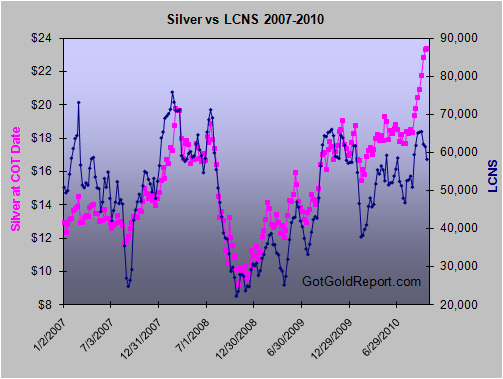
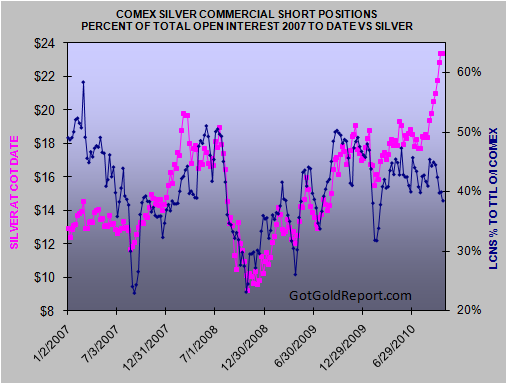

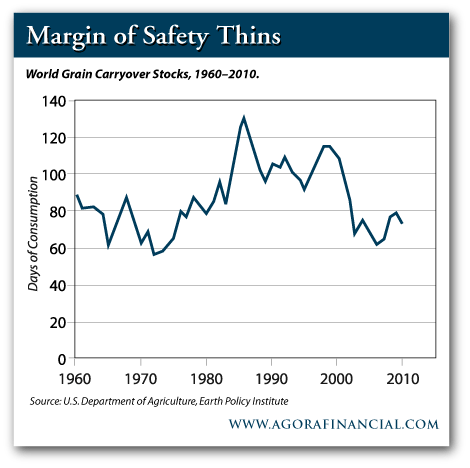
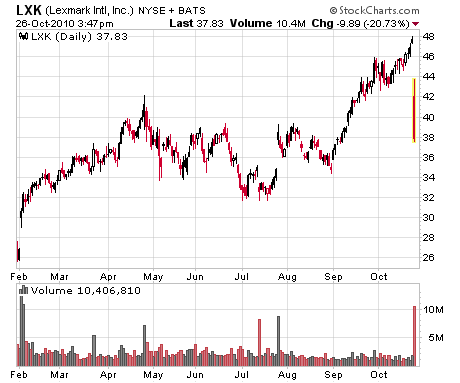


 Pimpco has slashed their holding of US Government bonds from 63% of the fund in June to 33% in September and now, finally, Mr. Gross is telling all the suckers he dumped his paper onto over the past 3 months that the party is over in the bond market. Why would he do this? Well, aside from being an evil, manipulative, amoral bastard - it makes good business sense. Pimco has to hedge - they are not going to be more than 2:1 invested in foreign funds so, now that they have their 2:1 ratio, they WANT the US bonds to die and so, Mr. Gross makes statements like "the 30-year bond rally in the US is over" because he's already got all the foreign bonds he wants and now he wants to chase you into them as well.
 Meanwhile, the Ponzi scheme Bill Gross points to is very real and very ongoing as was demonstrated yesterday and will be again this morning as statements made by Gross and others were timed perfectly to knock the dollar off it's first rally in a week as it tested the 78.50 line mid-day. A guy with a Trillion Dollar bond fund who HAS $400Bn in US Bonds calling the paper a Ponzi scheme does tend to shake investor confidence and that sent the dollar back to the 78 line this morning (a 0.6% drop that tremendously boosted the value of Bill Gross's $800Bn of foreign notes into the close of the month), which acts like yet another 0.6% tax ON EVERYTHING YOU OWN in order to boost the apparent value of the markets by 1.2% (
 We are having a great time in cash, taking simple hit and run plays in both directions while the sheeple participate in this joke of a game. Good luck to all you "stock pickers" out there - the market is now a currency game and nothing more.
  Let's forget XOM though, and talk about Chrysler. We couldn't wait to get rid of our auto industry despite the 3M Americans they still employ - down from 15M Americans when it was first decided that it would be Socialist to defend what was, just 30 years ago, America's largest industry. Now Daimler AG is reporting a $2.2Bn net profit making those same cars we gave up on with $250M of those profits coming from health care and benefit reductions in North America (none in Germany). Sales were $35Bn, for the quarter, on track to hit $170Bn for the year or about 1.7M $100,000 jobs - thank goodness we didn't do something stupid like saving the US Auto Industry, right?
 We've been spot-on about the price of gold over the past three weeks. Take a look at this Kitco.com chart showing the top, and the subsequent drop back into the uptrend.

| You are subscribed to email updates from Gold World News Flash To stop receiving these emails, you may unsubscribe now. | Email delivery powered by Google |
| Google Inc., 20 West Kinzie, Chicago IL USA 60610 | |

No comments:
Post a Comment