


Gold World News Flash |

- The Best Way to Participate in Long-Term Gold Bull Market
- GDP is the trick for Bernanke's QE2 treat
- [Video & Text] Marc Faber: Bullish on gold, silver
- Gold Seeker Weekly Wrap-Up: Gold and Silver Gain Over 2% and 6% on the Week
- Repeated, fraudulent efforts at and deviously controlling silver prices – What next?
- Real Inflation vs. Obama Nation Inflation
- This Gold Price Should Reach $1,600 in January, February or March
- Eldorado Gold CEO Discusses Q3 2010 Results - Earnings Call Transcript
- South African Krugerrand
- Gold Will Outlive Dollar Once Slaughter Comes: John Hathaway
- FRIDAY Market Excerpts
- Commitment Of Traders: The Speculative Treasury Bubble Pops As Dollar Longs Continue Rising
- The National Debt Recalculated
- Timberline Intercepts Bonanza Gold Grades: 7.88 ounces per ton (269.9 g/t) and 15.24 opt (521.9 g/t)
- Guest Post: Trigger Points, Black Swans, And Other Unpleasant Realities
- Gold Daily and Silver Weekly Charts
- Short-Term Rallies to Follow Short-Term Memories
- Dollar-Yen Closes At All Time Low
- General Moly (GMO) and Thompson Creek (TC) Breakout On Supply Concerns
- Philip Klapwijk: More Upside in All Precious Metals, Not Just Gold
- Tale of Two Cities
- Gold and 12 Zeroes, Part I
- John Taylor: "November Will See The Flash Point That Begins The Market's Reversal"
- ALL THE SIGNS ARE IN PLACE
- COT Gold, Silver and US Dollar Index Report - October 29, 2010
- Live SP500 Trading Video & Analysis
- Why the Value of Paper Money Declines as the Quantity Rises
- The Great(?) Silver Debate
- Loss of Purchasing Power: The True Inflation-Target Bullseye
- Do you want to join the class-action lawsuit on silver price manipulation?
- Vietnam orders banks to stop acting like LBMA members
- Sprott Physical Silver Trust lists in New York and Toronto
- Agnico-Eagle Mines Limited: Record Quarterly Net Income of $121.5 million
- Gold Soars as the Fed Contemplates More QE
- Gold Mining M&A
- Hourly Action In Gold and Silver From Trader Dan
- The Fed Bought Fraud
- Inflation Is Already Here with Lots More to Come
- Silver To $30 In 18 Days: James Turk
- US Debt: A Recipe for Economic Disaster?
- Funny Money and the Banks that Make Us Laugh
- Fear And Greed's Chris Wood Discounts The Fed Fetish
- Roubini: … heading for a fiscal train wreck
- Keep Your Head Above Dollar
- Schmidt's Gold Thoughts
- The Trillion Dollar LIE? Housing Activity and Prices, Lending, Credit and Charge-offs Are All Getting Worse SINCE the Bailout!
- Treasury Technicals: Case For "Significantly Higher" Yields On The 10 Year
- Gold Mining M and A
- Gold will outlast dollar…
- Vulture Bargain Roundup for October/November
| The Best Way to Participate in Long-Term Gold Bull Market Posted: 31 Oct 2010 08:00 PM PDT The gold price recently made a new high amid widespread concern over weakness in the U.S. dollar. The gold rally has been driven by strong global demand among investors seeking a safe haven. Demand has been driven mainly by uncertainty over the economic outlook, as investors continue to recover from the fallout of the financial crisis two years ago.
| ||||
| GDP is the trick for Bernanke's QE2 treat Posted: 29 Oct 2010 04:12 PM PDT
The Commerce Department's Bureau of Economic Analysis (the uglier, less douchey stepsister to the B(L)S) released their first take on Q3 GDP this morning and it was unsurprisingly relatively more benign than a testicular mole or even Henry the IV of France. With both the mid-term elections and Fed meetings slated for next week, every single BEA model was likely hardcoded to produce a number just unfucked enough (to use a technical term) so the administration can have their elections and QE2.
The report showed the economy grew by 2% in the Q, was up slightly from Q2's 1.7% growth, and most bizarrely matched consensus analyst guesses proving that even a broken regression model in a non-gaussian environment is right at least once a decade.
On the surface, the GDP number seemed relatively decent since any growth right now is good, especially as time is the only thing that is going to heal the economy's gaping wound so the longer we can try to stall for that to happen, the better. That said, there were a few issues below the surface of the GDP headlines and Money McBags is here to peel away the onion on them (or unlatch the push-up bra if you will) to better understand the data.
1. Much of the growth seems to have been driven by a huge uptick in business inventories which ramped up to $115B. This is likely the result of businesses stocking up on cardboard boxes and cans of lysol to properly dispose of laid off workers' personal effects when the next round of lay offs comes.
2. Consumer spending increased at a 2.6% rate which is above last Q's 2.2% rate and the biggest gain since 2006. This would normally be a good sign, but it was more likely a result of the back to school shopping season featuring items cheaper than on a five finger discount as retailers strove to push inventory and hit top line numbers. To be frank (though if Money McBags is going to be frank, hopefully it's not this Frank), Money McBags is a bit perplexed by consumer spend as we saw strong Qs from high end companies like COH and yet the unemployment rate remains more shittastic than a Four Loko hangover. The best explanation is that we truly live in a bifurcated economy where rich people are STILL FUCKING RICH and poor people (and I'm talking about you middle class) are GETTING FUCKING POORER, which is all fine and good for right now, but eventually everyone is going to want to eat cake again and that may lead to things getting a bit ugly. Either way, the consumer spend number was more than likely driven by discounts, promotions, and "buy this and we won't lay you off" Fridays, so it is hard to get too jazzed, or jizzed, about it.
3. As the NY Times reminds us (and yes, Money McBags is going to use something in a New York Times article as factual, so buyer beware) Friday’s number is merely the Commerce Department's first estimate based on a reading of many sectors of the economy, bags and bags of tea leaves, and their fortune by a nice lady on the Psychic Friends hotline for only $2.99 a minute. Given that, the final number can be substantially different when it is re-released AFTER THE UPCOMING ELECTIONS. Seriously, there was more of a chance of Stevie Wonder paying the extra $5 to attend a 3D movie or Ashley Dupre not agreeing to do Playboy than there was of the GDP number making any kind of waves right before the midterm-elections, just wasn't going to happen. Last Q GDP dropped from initial estimates of 2.4% to 1.7% and the "hold the shock and hope for no awe" is still in full effect as a viable government strategy, so who the fuck knows what the final GDP is going to be but Money McBags will taker the under (especially if it is under Kelly Brook).
4. Even if the BEA's estimate of GDP doesn't change, even if consumer spend wasn't a result of deep discounts, and even if Chewbacca was a wookie, the number was still way too fucking low. 2% growth simply won't sustain any kind of economic growth where a healthy unemployment number is achieved so while we can all jump up and down (and by we all, Money McBags especially means Sofia Vergara) about GDP not being negative or being relatively ok, we have to remember the absolute and right now the economy absolutely sucks like Sasha Grey in the climactic scene of Face Invaders 4.
Most importantly, the GDP print does nothing to waylay QE2 and its attack on the dollar. CNBC had a prescient quote from some guy named Hugh Johnson, chief investment officer at Hugh Johnson Advisors (because apparently Dick Fitzwell, Howie Feltersnatch, and Art Laffer weren't available) and Mr. Johnson spewed forth that: "The economy is recovering, but recovering at an anemic pace, and this certainly will help the Fed in its deliberations on Tuesday." Not in Money McBags wildest dreams did he ever believe he would be quoting some guy named Hugh Johnson with a straight face (especially because the only huge johnson in Money McBags' wildest dreams is his own), but Mr. Johnson absolutely nailed this one. The GDP number did nothing to stop the FED from unleashing QE2 which was really the only scenario for today.
In other macro news, consumer sentiment fell to its weakest level since last November as apparently the survey spoke with real consumers and not the algorithms that have been moving the markets. Sentiment registered 67.7 which was .3 below analyst guesses, .5 below last month's reading, and 1.3 below a good fucking time. Also, the Chicago purchasing managers index came in at 60.6, above the 60.4 of last month, and above the 58 guess by analysts as Chicago increases their spend on neck braces for Jay Cutler and lap-bands for gastric bypass surgery because those people really love to eat.
In the market today, MSFT put up a good Q with revenue up 25% and net income up 50% to $.62 per share which beat guesses of $.55 per share. However, that growth was driven by the deferral of $1.47B of revenue for business customers who had paid in advance for Windows 7 finally hitting the income statement and also driven by a circular reference in their accounting system about which that fucking pop up paper clip kept warning them. Without that one-timer (and one timers on the award winning When Genius Prevailed may now always be referred to as "Christine O'Donnells") MSFT's revenue would have increased 13% and net income would have increased 16%, which isn't terrible for a company that has a virutal monopoly on something people use every fucking day and is coming off of a product refresh.
Elsewhere, MRK missed topline guesses and traded down but they promised to try to find a way to make people sicker next quarter in order to boost sales. GNW ate a big fat dick with a Q that missed all kinds of guesses as a result of too many people in Florida defaulting on mortgages of condos they bought with $0 down and no savings that they intended to flip to the next sucker before the music stopped. And FSLR had its light turned off when they warned of shrinking margins and that their energy source will only be around for another 4.5B years.
On the positive side, monsters were the story a couple of days ahead of Halloween as Monster Worldwide rose from the grave and shot up ~25% thanks to a strong quarter and a flurry of upgrades. People need jobs so MWW (which Money McBags believes is also what you call an MFF film with two MILFs) is not surprisingly growing but it looks like they may have fixed any operational issues as well. And Estee Lauder made up some ground today with a solid Q where earnings grew 36% as all of the wanna be reality show stars can no longer afford botox so must over do it on cosmetics to try to hide their lack of talent.
If you're bored, Money McBags has a whole site filled with stock analysis, market commentary, and plenty of dick jokes. So visit him at the award winning When Genius Prevailed.
| ||||
| [Video & Text] Marc Faber: Bullish on gold, silver Posted: 29 Oct 2010 04:01 PM PDT Marc Faber, managing director of Marc Faber Ltd., says that gold and silver should continue to shine.
| ||||
| Gold Seeker Weekly Wrap-Up: Gold and Silver Gain Over 2% and 6% on the Week Posted: 29 Oct 2010 04:00 PM PDT Gold fell about 0.5% to $1335.23 in early London trade before it jumped up to $1352.62 a little after 8AM EST and then fell back to see a $0.62 loss at $1341.78 a little before 10AM EST, but it ultimately climbed back higher in early afternoon trade and ended near its late session high of $1359.30 with a gain of 1.05%. Silver fell to $23.72 in overnight trade before it rallied back higher for most of trade in London and New York and ended near its late session high of $24.567 with a gain of 2.85%.
| ||||
| Repeated, fraudulent efforts at and deviously controlling silver prices – What next? Posted: 29 Oct 2010 01:00 PM PDT Since we received reports from the CFTC that market players have made "repeated" and "fraudulent efforts to persuade and deviously control" silver prices, we have heard that HSBC Holdings Plc and JPMorgan Chase & Co. are facing an investor's lawsuit of placing "spoof" trading orders to manipulate silver futures and options prices in violation of U.S. antitrust law.
| ||||
| Real Inflation vs. Obama Nation Inflation Posted: 29 Oct 2010 11:52 AM PDT Not much explaining necessary here. The prices of all commodities are skyrocketing. The rapidly devaluing U.S. dollar vs. everything will soon reverberate through to your check-out tab at Walmart and Nordstrom's. Of course, as our system descends into Randian/Orwellian Governmental depravity, expect even less truth and more b.s. coming from all corners of D.C. I thought Obama's main campaign promise was to make Government more transparent and truthful.  (source: Casey Research. Edits in red/black are mine) The only thing that is transparent about our Government is that is has become even less transparent and more dishonest under Obama. As this fact becomes more apparent to the hoi polloi, and as the hoi polloi finds it more difficult to provide a comfortable living environment for their families, we can expect to see even more distrust of fiat money and more people willing to pay a higher price to move what paper they have left into gold and silver. This is why gold/silver have resumed an inexorable move higher this week. 
This posting includes an audio/video/photo media file: Download Now | ||||
| This Gold Price Should Reach $1,600 in January, February or March Posted: 29 Oct 2010 11:17 AM PDT Gold Price Close Today : 1,357.10 Gold Price Close 22-Oct : 1,324.40 Change : 32.70 or 2.5% Silver Price Close Today : 2456 Silver Price Close 22-Oct : 2312.5 Change : 143.50 or 6.2% Gold Silver... This is a summary only. Visit GOLDPRICE.ORG for the full article, gold price charts in ounces grams and kilos in 23 national currencies, and more!
| ||||
| Eldorado Gold CEO Discusses Q3 2010 Results - Earnings Call Transcript Posted: 29 Oct 2010 10:57 AM PDT | ||||
| Posted: 29 Oct 2010 10:49 AM PDT By David Liechty The South African Krugerrand is an excellent choice for investors looking to maximize the value of their gold investment purchase. As one of the most common coins on the market, it is in relatively plentiful supply, and with a relatively lower overall demand for this coin compared to certain others, it trades [...]
| ||||
| Gold Will Outlive Dollar Once Slaughter Comes: John Hathaway Posted: 29 Oct 2010 10:33 AM PDT Oct. 29 (Bloomberg) -- The world's monetary system is in the process of melting down. We have entered the endgame for the dollar as the dominant reserve currency, but most investors and policy makers are unaware of the implications.
| ||||
| Posted: 29 Oct 2010 10:19 AM PDT Gold tops $1350 again, ends October up 3.7% The COMEX December gold futures contract closed up $15.10 Friday at $1357.60, trading between $1335.20 and $1359.70 October 29, p.m. excerpts: see full news, 24-hr newswire…
| ||||
| Commitment Of Traders: The Speculative Treasury Bubble Pops As Dollar Longs Continue Rising Posted: 29 Oct 2010 10:04 AM PDT
Today's CFTC Commitment of Trader data confirms that the dollar strengthening trend from last week continues: net spec commercial positions in the USD are now well off their lows from three weeks ago and are up to 5,850, after hitting a 2010 low of -1,580. At the same time, both JPY and EUR spec positions declined (by -2,727 and -6,243 positions, respectively) as the rotation into the dollar, as brief as it may end up being, accelerated. Whether this was merely momentum chasing or an expectation of a less efficient QE2 can be answered by looking at select commodity positions. A quick glance at wheat, soybeans, coffee, corn and oats shows that pretty much all 5 representative commodities saw their net long spec positions increase again. So QE2 is definitely going to manifest itself in more inflation, or so at least claim the speculators. Yet not is as it seems: a look at Treasury specs shows a combined drop across the 2, 5 and 10Y space of 123,835 contracts to 186,892, only the second largest drop in 2010, which occurred after the cumulative total hit a 2010 record of 310,727 the week prior! In other words, even as specs were discounting an increase in inflation and a potential increase in the value of the dollar, the bond bubble officially popped. Treasury Net Specs:
Commodity Net Specs:
FX Net Specs:
And, as usual, a full CFTC COT report, courtesy of Libanman Futures - link
This posting includes an audio/video/photo media file: Download Now | ||||
| The National Debt Recalculated Posted: 29 Oct 2010 09:44 AM PDT
Some of the highlights…
Against all odds, consumers are going into hock again. How else can they spend if their incomes are stagnant? Businesses, for their part, are still too scared to loosen their money belts for new products, new marketing... or new hires.
Our video team is assembling this into a polished and professional report, ready for you to act just in time for Election Day. Watch your inbox tonight for details on how to access it.
The manager says he felt compelled to sample the food daily to maintain quality standards. And the free lunches the company offered also added to his girth, he said. The publisher expressly forbids its writers or consultants from having a financial interest in any security recommended to its readers. Furthermore, all other Agora Financial LLC (and its affiliate companies’) employees and agents must wait 24 hours prior to following an initial recommendation published on the Internet, or 72 hours after a printed publication is mailed. It’s also in our employee manual. Everyone, to the best of our knowledge, abides by the rules. Otherwise, they’re in breach of contract and subject to penalty under the law.
| ||||
| Timberline Intercepts Bonanza Gold Grades: 7.88 ounces per ton (269.9 g/t) and 15.24 opt (521.9 g/t) Posted: 29 Oct 2010 09:20 AM PDT Drill hole BHDDH10-07 returned a significant intercept of 43.2 feet averaging 0.82 ounces per ton (opt) (13.2 metres at 28.1 grams per tonne (g/t)) gold including 2.2 feet grading 15.24 opt (0.7 metres of 521.9 g/t) gold. This hole indicates a bonanza grade zone within the current mineralized area and could represent some of the initial production, which is expected to commence in Q3/Q4 2011.
| ||||
| Guest Post: Trigger Points, Black Swans, And Other Unpleasant Realities Posted: 29 Oct 2010 09:11 AM PDT
By Giordano Bruno of Neithercorp Press Trigger Points, Black Swans, And Other Unpleasant Realities An avalanche is not an “event”, it is an epic; a series of smaller events drifting and compacting one after another until the contained potential energy reaches an apex, a point at which it can no longer be managed or inhibited. A single tremor, an inopportune echo, an unexpected shift in the winds, and the entire icy edifice, the product of countless layered storms, is sent crashing down the valley like a great and terrible hand. In this way, avalanches in nature are quite similar to avalanches in economies; both events accumulate over the long span of seasons, and finally end in the bewildering flash of a single moment. The problem that most people have today is being unable to tell the difference between a smaller storm in our economy, and an avalanche. Very few Americans have ever personally witnessed a financial collapse, and so, when confronted with an initiating event, like the stock market plunge of 2008, they have no point of reference with which to compare the experience. They misinterpret the crash as a finale. Untouched, they breathe a sigh of relief, unaware that this is merely the beginning of something much more complex and threatening. So, without personal experience on our side to help us recognize a trigger point incident; the catalyst that brings down our meticulously constructed house of cards, how will we stand watch? Will we miss the danger parading right in front of our faces? Will we be caught completely off-guard? The key in avoiding such a scenario is in identifying the primary pillars of our particular financial system, and tracking them carefully. Once we are able to cut through the haze of distractions and minor events promoted mostly by the mainstream media, and focus on that which is truly important, our ability to foresee danger greatly increases. But what are the crucial mainstays of our economy, and what kind of disastrous occurrence could possibly bring them tumbling down? Mortgage Crisis Redux The health of property markets is a vital indicator of the stability of almost any country, but most especially in the United States. The reason why the bust in mortgage values is so dangerous to our particular economy is because Americans allowed themselves to become completely dependent on debt in order to sustain their consumption. We have been surviving on mortgage loans and Visa cards for nearly two decades! The fantastical boost in stocks and retail during the late 90’s and early 2000’s was an illusion built on artificially low interest rates and easy credit. Of course, it doesn’t help that corporate interests outsourced most of our industrial foundation to the third world leaving us with an emaciated jobs market utterly reliant on the service sector. Many people were given few options besides taking loan after loan using homes they couldn’t afford in the first place as collateral. Regardless, without the support of solid industry and innovation in a system to supply employment opportunities and create true wealth (not debt), we have only “derivatives” and toxic securities, worthless bits of paper representing liabilities that will never be repaid. Now that these contracts are known to be worthless, there is only one thing left to prop up the economy; fiat printing of the U.S. dollar. Back in 2008, I called the bailout of Fannie Mae and Freddie Mac a “black hole” of debt which would siphon the last remaining vestiges of wealth from the American taxpayer, and this is exactly what has happened. Every quarter, MSM analysts claim the housing market has “bottomed” and is ready for a rebound, yet, every quarter the mortgage crisis gets just a little bit worse. It is now projected that Fannie and Freddie could end up costing taxpayers over $1 Trillion: http://www.cnbc.com/id/37982580/Fannie_Freddie_Bailout_Could_Cost_Taxpayers_1_Trillion This is a conservative estimate in my opinion, considering both firms comprise about $5 Trillion of the U.S. housing market, and mortgage defaults have continued unabated for nearly three years now. Until this past month, banks had accelerated their foreclosure rates by 25%: http://www.foxnews.com/us/2010/09/16/homes-lost-foreclosure-percent/ The more homeowners declare bankruptcy, the more money U.S. citizens will have to pay to bailout banks and mortgage companies to keep them afloat, and the more the private Federal Reserve will create fiat dollars to continue this process. However, a new development has made this bad situation even more volatile. In any major economic collapse, there is always another Jack-in-the-box. This time, it’s in the home foreclosure process itself. The Attorney General’s office in every state is now investigating banks like JP Morgan, Citigroup, Well’s Fargo, Bank Of America, etc, for flawed foreclosure documents, “automated” foreclosures, and the signing of foreclosure papers without properly ensuring their accuracy: These four banks control over 55% of the billing and collections market in U.S. home loans, while Fannie Mae and Freddie Mac usually own a piece of every mortgage these companies are involved in. Any sign of malfeasance on the part of these corporations may indicate widespread imbalances and fraud. Such news could trigger a flight of investors away from companies tied to this relapse in mortgage uncertainty, along with renewed bank failures in the vein of Lehman Bros. In response, some states have completely frozen home foreclosures. Florida, site of the third highest foreclosure rates in the country, will continue it’s freezing of home seizures for at least another month: http://www.bloomberg.com/news/2010-10-25/florida-foreclosures-still-on-hold-as-banks-say-they-ve-resumed-seizures.html Second, foreclosures now make up over 30% of all home sales in this country. In some states, including California, foreclosures make up nearly half of all home sales: http://www.sacbee.com/2010/09/30/3069035/foreclosures-make-up-nearly-half.html If you think home sales are in trouble now, imagine what will happen if all foreclosure sales stopped in their tracks for several months or more! Poof! 30% to 40% of the housing market gone, just like that! I have no doubt that this would inspire considerable outflows of investment from the U.S. economy, especially by foreign nations. This is already happening in certain sectors. Central Banks across the world recently dumped a record $57 billion in U.S. Agency bonds. These bonds support such entities as Fannie and Freddie, and an expanded property market disaster would greatly damage their value: http://jsmineset.com/2010/09/16/central-banks-dump-57-billion-of-us-agency-debt/ Interestingly, this dump began almost right before the “foreclosure-gate” issue arose, which suggests that some central banks were aware that the mortgage crisis in the U.S. would hit a new stage before it even happened. Essentially, any announcement of an extended foreclosure freeze would set in motion a domino effect that is likely to contribute to systematic failure in our economy, and most especially, in the now precarious health of the dollar. News of a nation-wide freeze without an announcement of a time-frame should be considered by those in the Liberty Movement as a neon red warning sign that the situation is about to get ugly. Stock Market Bubble Burst So much fiat is being pumped into banks and the Dow by the Treasury and the Federal Reserve it is difficult to tell what is truly going on in the stock market. There are, though, certain signs we can look for to gage when a stock bubble implosion could take place. One method is to track the cash holdings of mutual funds. When mutual funds have a lot of cash on hand, it often means they ready to funnel new capital into markets when the time is right. When mutual funds are very low on cash, this might signal that the market is ready to begin an extensive sell off. Currently, mutual fund cash levels have hit an all-time record low:
This shows one of two things; either the stock market is inflated to its peak, and mutual funds have invested as much as they can to support it, or, mutual fund participants are beginning to pull their money out of their portfolios, in which case, the stock rally is built almost entirely on infusions from other sources (the Federal Reserve). The latter is supported by reports of an exodus of investors from mutual funds since August of this year: Both problems reveal a severe weakness in stocks, one that could instigate an eventual Dow drop on par with the consecutive market dives of the Great Depression. Another signal of a stock collapse is the “net short positions” of Commercial (corporate) traders in the market. When commercials short stocks heavily, it means they are betting on a substantial fall in market value. Being that many of these larger banks and hedge funds have an “inside track” on market information, they are usually correct in their predictions. Current net short positions of commercial traders have hit levels higher than any in the past 5 years: http://pragcap.com/is-the-smart-money-getting-short In my view, the next extended market drop we see is liable to be the last. Today’s economy is so unstable, and based on so much faith rather that fundamentals, any uncertainty in the Dow will pull the rug out from under us. A sudden 20% to 30% loss in stock values would be more than enough to create a trigger point in the destabilization of the rest of our financial system and should be taken very seriously by those in the Liberty Movement. This could happen over a period of months, or in a series of flash crashes lasting a matter of days. Escalation Of Currency Conflict Recently, Treasury Secretary Timothy Geithner announced that the U.S. had no intention of devaluing the dollar for export advantage over the rest of the world, and that the G20 should work on “aligning” their Forex positions to avoid wars over currency devaluation. This is fascinating, mainly because this statement is completely counter to what Geithner has been saying for the past couple years. Did ‘Tiny Tim’ grow a heart, or a brain, and realize the currency war rhetoric is a disaster waiting to happen for the United States? I really doubt it. Such talk is typical in the midst of G20 conferences, but rarely if ever does this translate into any positive action by globalists. Currency devaluations, including that of the dollar, are well underway, and lip service paid by Geithner is not going to change anything. I’m sure he’s well aware of this. The manner in which the currency war plays out hinges on a few key events. First, legislation put forward in Congress to institute trade duties on China is awaiting approval before the end of this year. The passage of this legislation WILL bring on the full force of a currency fight, and probably the dumping of U.S. T-bonds by China. Second, the Treasury Department trade report on China, which is expected to label the country as a currency manipulator, has been delayed even though it is required by law to be posted every 15th of October. The delay will probably last until after the November elections: http://www.chron.com/disp/story.mpl/business/7249676.html If this report is released with the intention of accusing China of manipulation, expect escalation. Finally, a further loss in the value of the dollar index, perhaps below the 74 point resistance level, could also result in an increased dumping of U.S. T-bonds by foreign central banks. Those looking for preemptive warning of collapse should keep a close eye on the dollar index as well as foreign liquidations of T-bond reserves. Escalation Of Resource Conflict Most people are aware of the import and export implications of a global trade war. Tariffs and duties are put in place, prices on foreign goods skyrocket, international investment tanks, and everyone becomes generally miffed with everyone else. It’s a perfect recipe for a full scale financial meltdown. However, one factor that is particularly detrimental to the U.S. is the use of vital resources by other nations as leverage to initiate a breakdown in the foundations of our domestic trade. The U.S. imports everything and produces almost nothing. Trade duties on China would cause swelling prices on nearly all products, being that most items we buy are made in China, but this is nothing compared to the resource and commodity valuations that will follow, along with the scarcity of materials withheld by governments out of spite. Oil, for instance, will obviously be the first resource used as a trade weapon. For now, crude oil is holding at around $80 a barrel, but this will not last much longer. The dollar’s world reserve currency status is intact for the moment, and oil is traded across the planet almost exclusively in dollars. A dollar devaluation, even in the face of commodity market manipulation, would eventually lead to an oil spike. A trade war would exacerbate this scenario by reducing the steady flow of oil into the U.S. OPEC members are now calling for oil to rise to $100 a barrel to counter weakness in the dollar. This would bring us back to $3 to $3.50 a gallon gas, if crude values and supplies remain at that level: I suspect with added currency instability, $150 a barrel oil is conceivable within the next 6 months. Two years ago, high gas prices frustrated Americans, but were still bearable. Today, after two years of static 20% real unemployment and trillions in lost savings, $150 oil would crush what’s left of this economy. Another good example of resource control would be China’s domination of “rare earth”, a metals material necessary for the manufacture of most electronics and some military defense products. China regulates about 97% of the rare earth market, and is beginning to hoard the needed ore (while claiming they will not) in response to economic collapse and trade decoupling: China’s exports of rare earth fell by 72% in July. The price of rare earth metals has increased seven-fold in the past six months. Considering the fact that one of the few industries left in the U.S., computer chips, relies entirely on this resource, its use as a trade weapon is evident. While mushrooming commodity prices are a good sign of inflation in the dollar, in some cases they can also reflect the first stages of trade combat. Tracking them can give you precious insight into more insidious hazards just over the horizon. Quantitative Easing To The Max How many bailouts does it take to get to the center of a hyperinflationary collapse? Three? Or maybe just one continuous undefined fiat injection… Federal Reserve officials meeting on November 2-3 will decide yet again how much money they will create out of thin air to prop up the economy. Some estimate that the Fed will pour around $300 billion into the system, while others are predicting around $2 trillion. I should mention, though, that whatever sum the Fed openly announces it will be irrelevant to those who understand how the central bank operates. The bailouts begun in 2008 never really stopped, and it’s impossible to say how much currency exactly the Fed has Xeroxed into circulation without taking a look at their books, which they won’t let anyone do. The announcement will matter psychologically to those investors who don’t understand the shadowy nature of the Fed, and blindly believe whatever they are told. A statement by Ben Bernanke of $300 billion or less in quantitative easing will probably have a calming effect on the fall of the dollar, at least for a short time, and a minor drop in the value of gold. An announcement of $1 trillion or more in easing will cause greater dollar instability, and a spike in gold. What mainstream investors will not comprehend is that ANY stimulus announcement is a very bad sign for the coming year. The Fed has been tossing dollars into the financial system at will without oversight and without public approval. Why would they now decide to make their program public? I believe the easing is meant to preempt a trigger point event in the markets yet to take place, as well as set the stage for further global currency tensions. The money creation that starts in early November will be an extension of that which has been going on unabated since 2008, but it will also herald a new phase, one which brings a frightening velocity to matters. Austerity In A Land Of Excess A society which has lived for a long time in a state of economic uncertainty and then faced with austerity measures is going to have to hurdle some serious obstacles to survive. On the other hand, a society that has grown used to a luxurious standard of living by comparison, and then forced into austerity, is liable to freak out padded-room style and make an unprecedented mess of things. I honestly cannot imagine the full extent of an American reaction to austerity. Cuts in social security, medical care, unemployment welfare, food stamps, education, police, military spending, government jobs, etc, would at the very least result in rioting, not to mention leave a lot of starving, homeless people in its wake. This is, of course, what happens when you encourage dependency on government and a lack of self sufficiency in a culture. The life of the nanny state is often assumed eternal, even when its debts and currency are blatantly unsustainable. According to Citigroup’s chief economist, “savage austerity” is already in the making for the U.S.: A proclamation of austerity measures would be a high profile trigger point, sending shockwaves throughout our economy. Austerity would likely be preceded by defaults in municipal debts in cities across the country, as well as confiscation of employee pension funds. The government may try to use greater fiat injections to avoid having to cut certain services to the public, but some austerity will take place, seeds that will grow over time as the dollar loses its reserve status and its perceived value. Any sign of austerity in the U.S. is a sign of total collapse, period. Black Swans Come Home To Roost A “Black Swan” is an event which defies predictability and affects the very nature of a system in unexpected ways. A terrorist attack (or false flag), which causes investor sentiment to falter and stocks to disintegrate, would be an example of a Black Swan. Surprise cataclysms are in most cases only possible when there are already acute imbalances in a system (which have been ignored by the public) present to act as tinder for the fire. Like a twisted game of Jenga, global banks have pulled numerous supports from our financial structure, causing it to teeter on the brink of oblivion. It is indeed extremely vulnerable to unanticipated incidents. There is absolutely no guarantee that life tomorrow will be anything like life today. Expectations of continuity and safety are a crutch for those who lack the ability to adapt to changing circumstances. Accepting the reality of possible upheaval is the first step in preparing one’s self to weather unfortunate circumstances, or even to prevent them. By recognizing trigger points in our economy, we can remove the shock factor, and thus th
| ||||
| Gold Daily and Silver Weekly Charts Posted: 29 Oct 2010 09:02 AM PDT | ||||
| Short-Term Rallies to Follow Short-Term Memories Posted: 29 Oct 2010 09:00 AM PDT "Let's get real," says Boston University economist Laurence Kotlikoff. "The US is bankrupt." This isn't breaking news to our readers. And Kotlikoff issued his estimate of the real national debt – $200 trillion – months ago. But after it was spotlighted this week in Canada's Globe & Mail newspaper, it's become an Internet sensation. $200 trillion is a rather higher estimate than even the $67 trillion of our friend David Walker, the former US comptroller general. But when you're trying to project the future costs of Social Security, Medicare and Medicaid (especially the last two), and you're talking tens of trillions, the numbers are bound to get fuzzy. "To close this fiscal gap [without cutting spending] would require an immediate and permanent doubling of our personal income taxes, our corporate taxes and all other federal taxes," says Kotlikoff. "America's fiscal gap is enormous – so massive that closing it appears impossible without immediate and radical reforms to its health care, tax and Social Security systems – as well as military and other discretionary spending cuts." When we began making I.O.U.S.A. in 2006, no one cared about the ballooning national debt…nor even the historically high deficits posted by the Bush administration. Now in 2010, there's fear and anger over debts and deficits like they were created in November 2008. The "outrage" many predict will likely return the US Congress to the party who'd gotten the whole ball rolling in the first place. How soon people forget, eh? Still, it's not surprising Kotlikoff's warning is catching fire now. It underscores what a dicey time this is for the economy and your investments: What would a new Congress actually accomplish after the election on Tuesday? Not much is our guess. And what will the Federal Reserve do when it decides next Wednesday what the next round of quantitative easing will look like? Whatever euphoria is created by the announcement is bound to be short-lived. We may get, as Marc Faber predicts, a short "crack up" boom, but then we suspect the holidays will be over and Congress will be back to business as usual, no matter the outcome of Tuesday's election. And the economy will still be suffering the effects of debt deflation. In the short term, "the whole investment world has gone a little crazy," says our friend Bill Bonner. "It's all speculation now… speculation on how much new money the Fed will add to the system." Everything that happens is evaluated in light of how it will affect the election, and the Fed's decision-making. Addison Wiggin Short-Term Rallies to Follow Short-Term Memories originally appeared in the Daily Reckoning. The Daily Reckoning, offers a uniquely refreshing, perspective on the global economy, investing, gold, stocks and today's markets. Its been called "the most entertaining read of the day."
| ||||
| Dollar-Yen Closes At All Time Low Posted: 29 Oct 2010 08:52 AM PDT
Technically, the USDJPY still has about an hour left of trading, but we will call it early: the dollar yen has closed at the all time lowest level in history. Next week the USDJPY will likely be well beneath 80, especially after the QE2 announcement on Wednesday. At least Japanese exporters are happy that in FX adjusted terms US importers now have the least incentive to buy Japanese TVs and other irrelevant stuff soon to be found all over US landfills.
| ||||
| General Moly (GMO) and Thompson Creek (TC) Breakout On Supply Concerns Posted: 29 Oct 2010 08:31 AM PDT On September 27, I wrote an article mentioning that uranium and molybdenum miners were poised for a breakout. See Finally Time for Caution in Precious Metals. The primary molybdenum miners, such as Thompson Creek (TC) and General Moly (GMO), are up today on speculation that China will curb molybdenum production as it classifies the metal as a natural resource. General Moly released its earnings today and mentioned that China remains a net importer of 5.5 million pounds year to date. This development will have a huge impact on the global supply of molybdenum as China is the largest producer and supplier of more than one-third of the global supply. These primarily molybdenum producers will receive a premium as molybdenum is usually a byproduct of copper production, which is usually fixed. Primary molybdenum producers will receive a premium for their assets as demand accelerates. The price of molybdenum is more than 50% off pre-credit crisis highs, yet demand is seriously exceeding supply. China has imposed mining quotas in the past and is expected to curb exports again in 2011. Even though it produces 50% of the world's steel, China only consumes 30% of the global supply. If it consumes more molybdenum similar to other producers it will demand a much higher amount of imports. It has a need for high-strength steel, which requires molybdenum. China's recent stimulus, which focussed on infrastructure, requires a large supply of molybdenum as it's needed for bridges, power plants, and pipelines. This trend has a huge impact on many emerging markets that were relying on the Chinese supply. Korea and Japan are under pressure to find supply for their own needs. Other growing economies that require high-performance steel are going to look for ways to control future supply. Recently, the Chinese government accelerated and approved funding through Hanlong Investments for General Moly's Mt. Hope project, accelerating the funding and showing its commitment to the project. Mt. Hope is the largest and highest-grade primarily molybdenum project in development. Shares have soared on the news and the enthusiasm from the government.
I expect to see more transactions to occur in natural resource stocks in 2011, especially in molybdenum and uranium. Buying these assets provide investors with a hedge against currency devaluation and leverage to emerging-market growth. As many nations will be forced to devalue their currency to increase economic growth, major natural resource assets will gain interest from countries experiencing economic growth. Shareholders in these key junior mining companies that control these world class assets may receive a premium in 2011 and beyond.
| ||||
| Philip Klapwijk: More Upside in All Precious Metals, Not Just Gold Posted: 29 Oct 2010 08:29 AM PDT Hard Assets Investor submits: By Lara Crigger Gold's rise might get all the ink, but so far this year, silver, platinum and palladium have also experienced sustained rallies, driven upward on the back of economic recovery and emerging market demand. As Julian Murdoch covered earlier this week, platinum's up 23 percent, palladium has risen 75 percent and silver recently struck its highest level in 30 years. Complete Story »
| ||||
| Posted: 29 Oct 2010 08:00 AM PDT It was the best of times. It was the worst of times. It is certainly the best of times for economists with a sense of humor. Absurdity and cupidity are right out in the open where you can laugh at them. Today's financial events – predictable consequences of clownish meddling and currency debasement – are funny enough. The official reactions practically double us up. Central bankers and finance ministers are proudly doing things that they used to be punished for. Henry II brought his bankers together in 1124. Those found guilty of debasing the coinage – an earlier form of quantitative easing – were either castrated or they had their right hands cut off. What can you say about that kind of monetary policy? It worked. But as for today's monetary system…it is the worst of times. Not in 3,000 years, says Nobel prize winner Robert Mundell, have we experienced such "monetary instability." What? What about when a German Mark lost nearly all its value in a single day? What about when the French replaced the old francs for new francs at 100 to one? What about the Hungarian pengo hyperinflation of 1947? Currency crises come around much more frequently than Mundell, the "father of the euro," thinks. In England, the government of David Cameron has announced the biggest cutbacks since WWII. He's going to lighten the UK government expense load by 81 billion pounds over the next 5 years. Nearly half a million government employees are to be given the heave-ho. So far, the British public is taking the news like a donkey informed about original sin. "Carry on!" they said to each other as if it were the Blitz, as if there were something vaguely noble at stake. In France, the government is implementing pension reforms, the highlight of which is to increase the retirement age for government employees from 60 to 62. This seems like such a timid reform. Anglo Saxons wonder what the frogs are so upset about. But they've taken to the streets. Early this week, one out of four French gas stations were out of fuel. Hundreds of autos were torched. Even schoolchildren were on the barricades. At least most of the manifestants were in it for a good reason – to get money. The deluded students thought they were upholding a matter of principle. On the surface, the two nations seem to be taking two very different approaches to solving a problem. The English buckle down. The French rise up. The English submit to reality. The French stick to fantasy. In London it is the season of Light. In Paris, Darkness descends before noon. "What separates civilized man from the wild beasts?" they ask in The City. "The English Channel," comes the reply, followed by a good chuckle. On one side of the water, it is the spring of hope, or so they believe. On the other, it is winter of despair. And yet, they all hope to go to Heaven and sit on the right hand of God. That they are headed in another direction is the point of today's reflection. The real problem in both countries is the same. The welfare democracies made promises they can't keep. "Government can have only two legitimate purposes," said William Godwin, "the suppression of injustice against individuals…and the common defense against external invasion." Beyond that the decline in marginal productivity of government spending is remarkably steep. The courts and police protection have real and immediate payoffs. Retirement, unemployment, bailouts, payoffs, tariffs, subsidies, free food and lodging, committees, councils, regulations – all quickly have perverse outcomes. More and more people switch from producing to conniving and chiseling. The more something for nothing is available from the government, the more people do nothing useful to get it – including getting control over the government itself. In both England and France, the spending cuts on the table so far are too little, too late. A three percent deficit was regarded as such a serious threat to the financial integrity of the European Union that member states who surpassed that level were supposed to lose their right to vote. France runs a budget deficit of nearly 8% of GDP. Its public expenses are about $1.5 trillion per year. Even if the projected savings of $96 billion by 2018 (when the pension cuts kick in) were realized, the amount is trivial. But so are the savings to be realized by the Cameron government – also trivial, and likewise programmed so the presumed benefits are realized sooner while the costs are suffered later. But at least give them credit for pretending. Over in the USA, the Obama government shows no interest in jettisoning any of the accumulated ballast of the last half a century of boondoggles, bailouts and bunkum. Instead, with new health care and regulatory programs, it is adding to them. The current budget deficit is close to 10% of GDP, with no plausible plans to reduce it significantly. Instead, the political elite dream that they will "grow their way out" of their financial problems. They count on stimulus to rev up their economy. But what do they have to "stimulate" with? Only the same quack elixirs that got them into trouble in the first place. The government either spends more money…or creates more of it to spend. More fiscal stimulus is off the table in Britain, and probably in America too. Instead, they both aim to get by with a little help with their friends at their central banks. Ben Bernanke has made it clear that he is ready to provide more unconventional stimulus – via money printing. The smart money is betting that Mervyn King will do the same. And the really smart money is getting out of town. Regards, Bill Bonner Tale of Two Cities originally appeared in the Daily Reckoning. The Daily Reckoning, offers a uniquely refreshing, perspective on the global economy, investing, gold, stocks and today's markets. Its been called "the most entertaining read of the day."
| ||||
| Posted: 29 Oct 2010 07:55 AM PDT As we never tire of boring anyone who'll listen, it's not inflation alone that makes gold prices rise. If it were, the last decade's four-fold rise would be missing, and gold wouldn't have dropped by three-quarters during the 1980s and '90s. Read More...
| ||||
| John Taylor: "November Will See The Flash Point That Begins The Market's Reversal" Posted: 29 Oct 2010 07:46 AM PDT
John Taylor, who has not made any friends at the administration with his recent comparison of Ben Bernanke to Hitler, has released his latest letter whose purpose is to disabuse what Traxis flip flopper extraordinaire Barton Biggs (or rather is praying, due to his high single digit negative YTD P&L), as well as many others believe, will be a 10% boom in stocks prices following November 3. Wrong. As this whole rally has been liquidity driven, all that will take to reverse it, is for someone to step between the Chairman and his favorite Hewlett Packard. That someone: anti-Fed crusader Ron Paul, who will see this as his last mandate (and chance) to leave a memorable mark on the Fed's modus operandi: "After the Republican victory things will change. The Fed will be hamstrung, as Ron Paul, a conservative standard-bearer and harsh critic of the Fed, will head the sub-committee overseeing its actions. Liquidity expansion or new programs will probably drop sharply under his watch. Paul would argue that the Fed’s unfettered ability to “debase” the currency is about to come to an end" Which is why all those who believe "more of the same" will continue indefinitely, may be wise to hedge their bets. Taylor also looks at the game theory between the Fed and the ECB: "As the US authorities turn to a tighter monetary and fiscal policy, driving the country into a recession, causing the US and its banking system to withdraw liquidity forcing the dollar higher, the ECB will be forced to be more accommodative. Our analysis argues that the month of November will see the flash point that begins to reverse the markets’ optimistic course." A Major Risk Reversal Is Coming Soon Two important elections occur during this next month, one in Greece and one in the US. In both we should see a swing to the right and this move, if large enough, could just be the event that kicks off the next global recession. Although the newswires have hardly mentioned Greece during the past four months, the situation in Athens remains difficult. Even though most of the drastic measures have yet to be implemented the PASOK government is being roasted in the opinion polls, where 67% say that it is doing a bad job. Municipal elections occur in two weeks and it seems clear that the Socialists will lose in all parts of the country, defeated both by the right and in some cases by splinter groups of all types. Although one could pass this off as nothing more than an unimportant popularity contest, Prime Minister Papandreou stated this week, ”the citizens will give a clear signal where they want the country to go.” If his party loses this support, he would call a general election as a referendum on the “Memorandum” with the EU, ECB, and IMF. Despite what the opposition calls his “blackmail,” the PASOK will lose next weekend and the Greek crisis will pop onto our radar again. If Papandreou does call a general election, the risks will be enormous as the entire program will be placed under the looking glass once again – and the government will probably be defeated at the conclusion of the debate. Across the ocean, the American mid-term elections will not unseat Obama, but will further limit his very limited freedom of action. The House of Representatives should be comfortably controlled by the Republicans while the Senate should be split within one or two votes of 50–50. In the US this means certain gridlock at a time when fiscal tightening is already programmed into the next few years. If any fiscal stimulus is applied, it will be through tax relief rather than through targeted government programs. The euro has been strong and dollar has been weak for the past two months, but these two elections should have a big impact, most likely reversing these trends. Currently, the US Fed has anticipated the economic slowdown resulting from the withdrawal of the fiscal stimulus by trumpeting its new round of quantitative easing. The expectation of this dollar-creating process is resulting in a very weak dollar. After the Republican victory things will change. The Fed will be hamstrung, as Ron Paul, a conservative standard-bearer and harsh critic of the Fed, will head the sub-committee overseeing its actions. Liquidity expansion or new programs will probably drop sharply under his watch. Paul would argue that the Fed’s unfettered ability to “debase” the currency is about to come to an end. The leading indicators call for a US recession next year – and Bernanke is acting as though he believes this – but with the Republican dominance, fiscal and monetary support will not be quickly supplied, which implies a stronger dollar. Fiscal stimulus is being withdrawn dramatically in Europe and the Eurozone is on its ways to a recession as well. Although the mean GDP for the Eurozone has been impressive lately, arguing that Europe is doing well is like arguing that Dallas, Texas has a balmy Mediterranean climate as the yearly mean temperature is 19oC, but in the summer the mean high is 36oC and in the winter the low is 2oC. The average obscures a lot if information and never more so than in Europe: Germany is in the summer while Ireland and the other PIIGS, roughly 30% of the populace, are in the winter. Although the Euro-authorities will be reluctant to act until a crisis rattles them, Greece could do it again. As the fiscal austerity begins to bite, the ECB will eventually be forced to further inject liquidity into the banking systems and support them too. As the US authorities turn to a tighter monetary and fiscal policy, driving the country into a recession, causing the US and its banking system to withdraw liquidity forcing the dollar higher, the ECB will be forced to be more accommodative. Our analysis argues that the month of November will see the flash point that begins to reverse the markets’ optimistic course. Also, here is Taylor's recent, and just slightly less pessimistic interview with Erik Schatzker.
| ||||
| Posted: 29 Oct 2010 07:34 AM PDT By Toby Connor, Gold Scents The current cycle is already stretched to 45 days. Usually this cycle bottoms between 35 and 40 days so you can see we are now overdue for a top. That covers the cycles part of the equation. Sentiment has now reached bullish levels (contrary sign) that should be enough to force at least a daily cycle correction. We haven't yet reached the extreme level that is normally required to turn the larger intermediate cycle. In bull markets it usually takes a push to new highs to get to that kind of extreme sentiment level. Finally I like to see some sign that smart money is exiting the market in preparation for a correction. For me that sign comes when we see a large selling on strength day in the SPYDER's ETF. Today we got that final sign. Not surprisingly we now have a volatility coil forming on the S&P chart.  As most of you probably remember the initial move out of a coil is often a false move even though it is usually very aggressive. Typically the initial move will run 3 to 5 days and then reverse leading to a much more powerful and more durable move in the opposite direction. Since we are 45 days into the current cycle and we now have all three signs for a correction lined up I think the odds are strong this coil will break to the downside. There are implications for the dollar and gold if this unfolds. I went over them along with a game plan in tonight's report so I won't repeat it here but I think we will likely see a correction soon and since we still haven't eclipsed Monday's intraday high it may have already begun.        Toby Connor A financial blog primarily focused on the analysis of the secular gold bull market. If you would like to be added to the email list that receives notice of new posts to GoldScents, or have questions, email Toby.
| ||||
| COT Gold, Silver and US Dollar Index Report - October 29, 2010 Posted: 29 Oct 2010 07:33 AM PDT COT Gold, Silver and US Dollar Index Report - October 29, 2010
| ||||
| Live SP500 Trading Video & Analysis Posted: 29 Oct 2010 07:30 AM PDT By Chris Vermeulen, TheGoldAndOilGuy Many have been wondering what the newly upgraded service TheGoldAndOilGuy.com provides so I have put together this report so you can see the pre-market morning video, updates, charts and trades. View Trading Video and Anaylsis Here: http://www.thegoldandoilguy.com/downloads/ETF-Trading-Newsletter.pdfChris Vermeulen
| ||||
| Why the Value of Paper Money Declines as the Quantity Rises Posted: 29 Oct 2010 07:29 AM PDT Not much action yesterday. The Dow fell 12 points. Gold rose $19. What else do you need to know? Nothing much has changed. US stocks are up about 6% so far this year. Gold has gone up three times as much. The Wall Street Journal: "Gold vs. the Fed: the Record is Clear." Yeah, the record is clear. The Fed's money has been losing ground against nature's money for the last 10 years. Roughly, if you'd stuck with gold you'd have 5 times the purchasing power you got from the US dollar. That's pretty clear, isn't it? But you could go back and look at the history of every pure paper money. Look at how it did against the yellow stuff. Same story every time. No exceptions. Once you let human beings print "money" at will, they will print a lot of it. And unless they repeal the laws of diminishing returns, marginal utility and supply and demand, the paper money will lose out. The law of diminishing returns says the more you do something the less good it does you. We're not sure that's true of everything… Mae West had a slight twist on the concept. "Too much of a good thing is wonderful," or something like that. But for almost everything but THAT thing, the more you do it, the less you get out of it. It applies to printing up $100 bills too. The law of marginal utility is just another way of looking at the same concept. It tells you that when you get more and more of something, each additional unit has less value than the one that came before it. You can see how that works in the case of dessert, for example. The first chocolate pudding tastes great. The 10th one makes you sick. At that point, you're getting not only diminished marginal utility, you're getting negative marginal utility – which is what you get from bank credit too, but that's another story. We once knew a very rich man. He ran for governor of New York. We asked him why he bothered. He didn't need to steal from the taxpayers; he already had enough money. "Yes," he replied. "But that's just it. I've reached the point where the marginal utility of more money is extremely low. I need to do something else." He didn't win the race. But the point is, the fed's gazillionth dollar is going to be worth a whole lot less than its first dollar. The more they print, the more you wish you had gold. And you know the law of supply and demand already. There is a certain amount of goods and services available. This amount can be increased. But not overnight. It takes time, investment, expertise…and so forth. By contrast, the feds can increase the supply of dollars almost instantly. It can just add zeros and multiply the supply by 10. These new dollars compete with the old ones for the available goods and services. Pretty soon, prices are rising – fast. Oh…if it were only that simple. Trouble is, there's the velocity of money too. When the economy takes a cold shower, the velocity of money slows to a crawl. Then, the feds can add as much new money as they want. It doesn't necessarily get around the way the old money used to. Everybody holds onto it. The banks just keep it in their vaults. Householders keep it in their wallets and mattresses. Everyone figures he might need it. When trouble hit in 2007, the banking sector had just $2.3 billion in excess reserves (money they held beyond the legal requirement) – barely enough to buy a drink in a good bar. Now they're swimming in it. They're got $976 billion in excess reserves. So how come consumer prices aren't going wild? By the way, where'd that money come from? The Fed already gave the economy a BIG dose of paper money. The feds were afraid that the banks were failing. They were right to be afraid. They were wrong to try to do something about it. It would have been much better to let the chips fall where they may…maintain the integrity of the government's own finances and protect the dollar. There were plenty of sensible, well-funded bankers to pick up the pieces of the broken ones and make something good of them. And by the way, again. This is not just our opinion. Mexico and Chile went through a similar crisis in the early '80s. Mexico did what the US would do a quarter century later. It "allowed [its] archaic bankruptcy system to perpetuate the lives of money-losing businesses and allocated credit by government direction," says Grant's Interest Rate Observer. And Chile? It let companies fail and allowed its markets to clear. And what was the difference in outcome? Chile was back on track a decade later, soon surpassing its pre-crisis growth trendline. Mexico, on the other hand, never fully recovered. It's still 30% below trend. Just what you'd expect, in other words. Bill Bonner Why the Value of Paper Money Declines as the Quantity Rises originally appeared in the Daily Reckoning. The Daily Reckoning, offers a uniquely refreshing, perspective on the global economy, investing, gold, stocks and today's markets. Its been called "the most entertaining read of the day." More articles from The Daily Reckoning….
| ||||
| Posted: 29 Oct 2010 07:26 AM PDT By Jeff Nielson, Bullion Bulls Canada Following the stunning remarks of CFTC Commissioner, Bart Chilton, who bluntly stated that Wall Street bankers had been attempting to "deviously" and "fraudulently" manipulate the silver market, Canada's BNN made its own attempt to mimic "The Great Gold Debate". In that previous event, veteran broadcaster Jim Puplava invited Jeffrey Christian of The CPM Group, and Bill Murphy of GATA (the "Gold Anti-Trust Action" committee) to "debate" whether the gold market was being manipulated. Before I go on to discuss "The Great Silver Debate", it's worth taking a moment to review the prior debate on gold-market manipulation. Regular readers, and anyone who simply likes "good theater" will vividly recall that previous debate. In between all the scathing and demeaning remarks where Christian was allowed to ridicule Bill Murphy, Christian managed to supply listeners with confirmation of virtually everything that Murphy, and the dedicated crew of GATA had spent so many years attempting to establish. Given GATA's obvious "credentials" for such a debate, as soon as I heard about BNN's exercise, I immediately contacted GATA – to ask them if BNN had invited them to participate in this event. With all of the insulting remarks which Christian had directed at Bill Murphy in the last debate, I certainly wouldn't have faulted GATA if they had declined to participate – and be subjected to more of Christian's abuse. Chris Powell of GATA assured me that no one from his organization had been invited. "Strike one" for BNN's attempt(?) to have a meaningful debate. Of course, GATA isn't the only place where one could find someone with the experience, the expertise, and the credibility to ably argue the existence of manipulation in the silver market. After hearing that GATA had been deliberately excluded, I next contacted Ted Butler. As anyone and everyone who understands the silver sector is aware of, Ted Butler is THE leading authority on manipulation of the silver market – along with a great deal of other detailed research into this market, which he has compiled in his decades of exemplary work. Mr. Butler assured me that he, too, had also been shunned as a "debate partner" for Christian. "Strike two" against BNN. Before I go any further, let me inform my American readers, and those Canadians who are unaware of this that BNN is part of the Thompson/Reuters media oligopoly – which dominates the reporting of business news in Canada in much the same way that a handful of Oligarchs are able to dominate the U.S. media. Regular readers will be very familiar with my views on these oligopolies: they exclusively serve the "corporate agenda", and with supporting our big-banks being a part of that agenda, I was skeptical about the authenticity of this BNN exercise, even before I learned of their choice of an "opponent" for Christian. I ask readers to keep that thought in mind – and see if it is justified once they read this analysis of the "debate". In fact, the foe for Christian selected by BNN was David Morgan. David Morgan is certainly a well-known name in the silver sector – as one of the most conservative "silver bulls" in the entire sector, and someone who has never been viewed as an "authority" on silver manipulation. Indeed, Morgan's recent work has centered on calling a "top" in the silver market at $22/ounce, and prior to that arguing that silver "inventories" are much greater than most people think – directly contradicting my own analysis into this market: that silver inventories have been grossly and fraudulently exaggerated. Given this background, it seems quite clear that BNN has resorted to the same, devious tactic used by the unscrupulous "promoters" of professional boxing: selecting an "opponent" (i.e. a "stiff") to go up against their own "fighter" – so that they could be assured of a glorious victory. Given Christian's previous, public performances (first at the CFTC hearings, and then in his debate against GATA), "Loose-lips" has clearly demonstrated that he can use all the help he can get in trying to get a "win". "Strike three" against BNN, and now on to the debate. More articles from Bullion Bulls Canada….
This posting includes an audio/video/photo media file: Download Now | ||||
| Loss of Purchasing Power: The True Inflation-Target Bullseye Posted: 29 Oct 2010 07:22 AM PDT When it comes time to put the current crop of economic blowhards and lunatics on trial for the disaster their insanely-bad advice caused, this quote from Frederic Mishkin, former Fed governor and who is directly responsible for the mess we are in, may come in handy. He says, in The Financial Times newspaper, that there is a lot of talk going around that "a numerical inflation target is under consideration inside America's central bank. And if there ever was a time to establish such a transparent and credible commitment to a specific target, it is now." Gaaahhhhh! Is there any doubt as to why we are in the economic trouble we are in? This is one of the guys who was at the Federal Reserve who inflicted this on us! Gaaaahhhh! I had hoped that the little screaming episodes at the end of the previous two paragraphs would be the end of such behavior, I would take a few pills, and/or chug down something alcoholic, and then I would be ready for WHY it is that "it is now," apparently a place unique in American history, that we must agree to accepting a deliberate 2% inflation in prices when the Whole Freaking Purpose (WFP) of the Federal Reserve, as even this ridiculous chump admits, is "price stability," which means "zero inflation" to everybody except these academic twerps who laughably slosh around in the fetid, stinking cesspool of their arrogant, neo-Keynesian econometric stupidity that has turned into a complete (pause for effect) and (pause) utter (pause) failure. Surprisingly, even though I was prepared, he did not say why such a crazy thing as this is needed "now"! Instead, he just blithely went on that "The Fed has a dual mandate, to achieve price stability and maximum sustainable employment. But at the moment it is missing both objectives. Inflation is well below 2 per cent. A slugging economy means unemployment is likely only to decline slowly from its current level of about 10 per cent." I can't believe that this Fed weenie is admitting that he is a failure! And then he goes on to imply that he never heard that inflation in prices was a matter of monetary policy, and instead says something as stupid as, "This combination of economic slack and low inflation raises the possibility that inflation expectations will drift downwards." Hahaha! The federal government is deficit-spending almost $2 trillion a year, the Federal Reserve is going to create enough new money to "target" 2% inflation, and he thinks that "inflation expectations will drift downwards"? Hahahaha! I have to admit that I quit reading right there, and I ran home to make plans to put this fabulous technique to my advantage! After some reflection and research, I figured that I needed a nice chunk of money to enable me to quit my stupid job, get out of this stupid town and get away from all these stupid people, and that $750,000 would suffice as a beginning target. Firstly, I gathered up all the employees and told them, echoing Mr. Mishkin, "I am going to take 2% out of everyone's pay towards meeting a $750,000 target, and if ever there was a time for such a transparent and credible commitment to a specific target, it is now!" Unfortunately, instead of bleating ineffectually like sheep, like I expected, they all started complaining and yelling in protest. Deftly I deflect their anger by again taking the lead of Mr. Mishkin, and I say, "The amount that I already steal from you people is less than 2%! What did you think the "HBMC" deduction was on your stupid pay-stubs, you idiots? HBMC means "Happy Birthday Mogambo Contribution! Hahaha! And it is less – much less! – than 2% of your stupid checks! Now, it will be a Mishkin-approved 'transparent and credible' 2% on-the-nose! Now, aren't you happy, you stupid proletariat workers?" I immediately realized that, for some reason, they aren't happy with any of this. So I told them, "Don't tell me your stupid problems, you ungrateful whiners and slackers! I'm only taking a lousy 2% of your stupid paychecks. Go tell Frederic Mishkin that you don't want him deliberately taking 2% out of your stupid paychecks, and then another 2% out of the buying power of every other dollar you own, you morons!" As I stalked off the stage, I was met by my assistant who rushed up breathlessly to tell me that the news about my little embezzlement had flashed like wildfire through the company, up to my boss, to her boss, to the executive director and the whole accounting staff. Unsurprisingly, I was "summoned." The meeting was a long one, and I kept trying to explain to these bozos that "The Federal Reserve creating more money creates inflation in prices, which is the One Freaking Thing (OFT) that you don't ever want to happen or, well, just look around you, morons!" Finally, it boiled down to two main arguments. One disagreement was concerning who was the moron around here (another "them against me" plot), and the other argument pitting the theft of the employee's buying power by the outrage of inflation in prices deliberately caused by the Federal Reserve creating extra money, which is an outrage of monstrous proportions, against my piddly little misdeed of doing the same thing by just taking a little money out of their paychecks, which is just a little ordinary embezzlement. At last, backed into a corner, I cried out in my best Shakespearian anguish, "Which, indeed, is the greater crime, whether to bid surcease to my suffering the slings and arrows of outrageous fortune by purloining a few paltry pence, or watch with fevered brow the ever-princely prices paid for a crust of bread by peasants as inflation cuts them down, inflation slicing through their real, after-inflation incomes like a razor-edged scythe mowing down a harvest of green wheat to rot in the fields, destroyed through the foul, hellish machinations of the Federal Reserve to continually increase prices, condemning all to a gnashing of teeth and to wail anew with each dawning in the east, where Juliet is the sun!" The only good news is that I have been buying gold, silver and oil against a lot of potential calamities, this fiasco being one of them. Fortunately, the strategy has worked out again, just like buying gold and silver has always worked out when the government was borrowing and spending to the point of its bankruptcy, and always when a central bank like the foul Federal Reserve keeps creating excess amounts of new money. The strategy to buy gold, silver and oil would have worked just as well for an invasion of space ships or large radioactive monsters rising from the depths of the sea, a universal utility that makes you giddy with delight and you say, "Whee! This investing stuff is easy!" The Mogambo Guru Loss of Purchasing Power: The True Inflation-Target Bullseye originally appeared in the Daily Reckoning. The Daily Reckoning, offers a uniquely refreshing, perspective on the global economy, investing, gold, stocks and today's markets. Its been called "the most entertaining read of the day."
| ||||
| Do you want to join the class-action lawsuit on silver price manipulation? Posted: 29 Oct 2010 07:20 AM PDT 10:30a CT Friday, October 29, 2010 Dear Friend of GATA and Gold (and Silver): People who lost money trading silver futures or options on the New York Commodity Exchange since 2008 are eligible to join the class-action price-manipulation lawsuit brought this week against J.P. Morgan Chase & Co. and HSBC Bank in U.S. District Court for the Southern District of New York. To express interest in becoming a member of the class of plaintiffs, contact: Kellie Lerner CHRIS POWELL, Secretary/Treasurer * * * Help keep GATA going GATA is a civil rights and educational organization based in the United States and tax-exempt under the U.S. Internal Revenue Code. Its e-mail dispatches are free, and you can subscribe at: To contribute to GATA, please visit:
| ||||
| Vietnam orders banks to stop acting like LBMA members Posted: 29 Oct 2010 07:20 AM PDT Vietnam Stops Banks from Using Gold Deposits to Fund Loans By John Ruwitch and Ho Binh Minh http://www.reuters.com/article/idUSHAN46777220101029 Vietnam's central bank has stopped banks from selling gold deposited by customers and using the funds for loans or for converting into foreign currencies, partly to help take downward pressure off the dong. It is also concerned that, if the value of gold continues to soar, banks could suffer heavy losses when they have to buy gold back to repay depositors. A State Bank of Vietnam circular issued on Friday also bans banks from lending gold for producing and trading small gold bars, Nguyen Ngoc Bao, head of the central bank's Monetary Policy Department, said in an interview. As of Friday, banks can lend gold only for producing and trading jewellery, he said in the interview, published on the central bank's website (www.sbv.gov.vn). Bao said that banks had until now been allowed to convert a maximum 30 percent of their gold deposits into dong. A recent surge in the gold price has led to increased smuggling of the metal into Vietnam, fueling demand for dollars to buy it and thus pushing the value of the dong down on the black market. The authorities effectively banned gold imports in mid-2008 to help tackle the trade deficit and take pressure off the dong, although they have granted import quotas occasionally since then, most recently in early October. That has done little to reduce speculation the dong could be devalued for the fourth time since last November. However, dealers said gold prices in Vietnam had softened in recent days and activity in the gold market had also subsided in anticipation of central bank measures to curb banks' use of gold. Small gold bars, sold by banks and private gold shops, are used widely in Vietnam instead of the dong as a savings vehicle and for real estate payments, for example. The central bank's Bao said an increase in gold deposits and lending had fueled the dollarisation of the economy. Bao said the new ruling was intended to limit the circulation of gold in the economy. It would also help curb gold smuggling and speculation, thus "contributing to stabilising the foreign exchange and currency markets," he said. At the end of September, 23 out of 44 Vietnamese banks had gold deposits totaling 92.6 tonnes, 60 percent of which had been lent on, central bank data shows. The central bank has devalued the dong three times since November and speculation about another devaluation has been putting pressure on the currency, making businesses reluctant to sell dollars. Governor Nguyen Van Giau was quoted on Oct. 19 in a state media report as saying the central bank had no plans to adjust the exchange rate. * * * Help keep GATA going GATA is a civil rights and educational organization based in the United States and tax-exempt under the U.S. Internal Revenue Code. Its e-mail dispatches are free, and you can subscribe at: To contribute to GATA, please visit:
| ||||
| Sprott Physical Silver Trust lists in New York and Toronto Posted: 29 Oct 2010 07:20 AM PDT By John McCrank http://www.reuters.com/article/idUSN2920728520101029 Sprott Inc., the Canadian fund manager specializing in resource investments, said on Friday that it planned to raise $500 million in the initial public offering of the Sprott Physical Silver Trust. The offering will consist of 50 million units priced at $10 each. The trust, which will be managed by Sprott Asset Management, will invest and hold nearly all its assets in silver bullion. It will be listed on the NYSE Arca and the Toronto Stock Exchange under the symbols "PSLV" and "PHS.U," respectively. The offering was made simultaneously in the United States and Canada through a syndicate of underwriters led by Morgan Stanley and RBC Capital Markets. As part of the offering, the underwriters have been granted an overallotment option to purchase up to an additional 7,500,000 units at $10 each. The Canadian syndicate includes TD Securities Inc., Canaccord Genuity Corp., National Bank Financial Inc., BMO Capital Markets, HSBC Securities (Canada) Inc., GMP Securities LP, Wellington West Capital Markets Inc., and Mackie Research Capital Corp. Sprott did an initial public offering of the Sprott Physical Gold Trust in March, which raised $400 million. The value of that trust crossed the $1 billion mark at the end of last month as gold prices soared. * * * Help keep GATA going GATA is a civil rights and educational organization based in the United States and tax-exempt under the U.S. Internal Revenue Code. Its e-mail dispatches are free, and you can subscribe at: To contribute to GATA, please visit:
| ||||
| Agnico-Eagle Mines Limited: Record Quarterly Net Income of $121.5 million Posted: 29 Oct 2010 07:20 AM PDT Another record performance by Agnico-Eagle Mines Limited (AEM) on the back of high gold prices along with the completion of a number of quality projects should render the Eagle more than desirable in this sector of the market. And as the trend is to acquire more ounces on Bay Street through merger and acquisition activity, its a surprise to us that this company has not been the target of a take over move by one of the large caps.
| ||||
| Gold Soars as the Fed Contemplates More QE Posted: 29 Oct 2010 07:20 AM PDT It's obvious after looking at yesterday's trade that the market is obsessed with the Fed's QE2. The market violently responded to Wednesday night's news that the Fed was asking the primary dealers about what they feel the demand for treasuries will be moving forward. The market responded to the news by crushing the dollar thinking that a larger QE2 is now on the table.
| ||||
| Posted: 29 Oct 2010 07:11 AM PDT Scott Wright October 29, 2010 2569 Words If you are at all attuned to the gold-stock sector, you’ve likely noticed a pickup in activity on the deal-making front this year. And indeed the gold miners are doing some moving and shaking. In fact, this industry is undergoing a consolidation unlike anything we’ve seen in this entire bull market. And for a variety of reasons, this may only be just the beginning. Many investors have seen some of their own stocks directly affected by this consolidation, and it has been quite intriguing watching things unfold across the industry. With so many deals, I was curious as to how 2010 is stacking up to other years. And thanks to a recent report put out by PricewaterhouseCoopers (PwC), my eyes ...
| ||||
| Hourly Action In Gold and Silver From Trader Dan Posted: 29 Oct 2010 07:11 AM PDT View the original post at jsmineset.com... October 29, 2010 09:58 AM Dear CIGAs, Click chart to enlarge today's hourly action in Gold and Silver in PDF format with commentary from Trader Dan Norcini ...
| ||||
| Posted: 29 Oct 2010 07:11 AM PDT View the original post at jsmineset.com... October 29, 2010 05:39 AM Courtesy of Greg Hunter's USAWatchdog.com Dear CIGAs, In the wake of the financial meltdown of 2008, the Federal Reserve announced it would buy mortgage-backed securities, or MBS. The January announcement by the Fed said it would buy MBS from failed mortgage giants Fannie Mae and Freddie Mac in the amount of $1.25 trillion. At the time, the Fed said in a press release, "The goal of the program was to provide support to mortgage and housing markets and to foster improved conditions in financial markets more generally." (Click here for the full Fed statement.) It did provide "support" to the mortgage market, but did it also buy fraud and cover the banks that sold it? The evidence shows, at the very least, it bought massive amounts of fraud. We now know the Fed definitely bought valueless MBS because it has joined other ripped-off investors to demand Bank of America buy back billions in sou...
| ||||
| Inflation Is Already Here with Lots More to Come Posted: 29 Oct 2010 07:11 AM PDT If Paul Revere were around, maybe he'd get on his horse and start yelling, "Inflation is coming! Inflation is coming!" I think it is coming. In fact, in many ways, it's already here, just not yet widely recognized. The deflationists still hold sway in the bond market, where investors happily accept puny yields. The deflationists argue that the dollar will buy more tomorrow than it does today. It is inflation's opposite. When most people talk about inflation and deflation, this is what they mean. This definition would pain the old economists who were more careful in their use of language. Be that as it may, deflation today is an argument facing death by a thousand cuts. Every day, evidence rolls showing that the dollar is buying less. Today's Wall Street Journal points to the whale in the aquarium. One headline reads, "From Cereal to Helicopters, Commodity Costs Exert Pressure." The article goes on to point out what is painfully obvious to anyone who follows commodities and comp...
| ||||
| Silver To $30 In 18 Days: James Turk Posted: 29 Oct 2010 07:08 AM PDT "Gold Will Outlive Dollar Once Slaughter Comes: John Hathaway. Pimco likens U.S. to 'Ponzi' scheme. Insider stock selling at highest levels ever tracked. Gold vs. Bonds. Gold vs. the Fed: The Record is Clear... and much, much more. " Yesterday in Gold and Silver Gold was basically flat all during Far East trading on Thursday, despite the fact that dollar continued to slide from its 1:30 p.m. Eastern time high tick on Wednesday. Gold's low of the day [around $1,323 spot] occurred around 9:00 a.m. in London... and from there gold rose about $15 until 9:00 a.m. in New York. Then the gold price sold off a few bucks before launching vertically to its high of the day at $1,346.90 spot. This price spike occurred at the dollar's exact low of the day... which was shortly before 11:30 a.m. Eastern time. After declining a few dollars off its peak price, gold price basically traded sideways for the rest of the New York session. Compared to gold, the silver price w...
| ||||
| US Debt: A Recipe for Economic Disaster? Posted: 29 Oct 2010 07:06 AM PDT The United States has dug the biggest economic hole in human history. It has become so severe that if you listen carefully, you'll hear the Chinese – the biggest holders of American debt, wondering if they'll ever get their money back. The foundation of the US dollar is already under threat. If it does collapse, it will take down other economies and currencies down with it.
| ||||
| Funny Money and the Banks that Make Us Laugh Posted: 29 Oct 2010 07:06 AM PDT In my long life, I have learned many things. Important things. One Important Mogambo Lesson (IML) is that "responsibility is a cruel taskmaster," and that one should accept as little responsibility as possible, especially if it concerns taking responsibility for a wife and family, who not only seem to exist for the sole purpose of bankrupting me and driving me absolutely insane with their silly Earthling antics, but are also so stupid that they cannot be made to understand the Vital Freaking Importance (VFI) of investing every dime into gold, silver and oil when the Federal Reserve is creating so much money that it causes inflation in prices to rise above zero. This is, (as horrific as it is), the "good old days," whereas now the horrible Ben Bernanke and the Federal Reserve are now actually admitting to "targeting" monetary policy to deliberately, purposefully, disastrously achieve at least 2% inflation in prices, which is so criminally insane that it would be irresponsible of me to spend our family's money on anything other than gold, silver and oil! Another lesson learned "the hard way" is that a person cannot escape the facts unless you are like O. J. Simpson pulling a fast one with that latex-glove trick to make the leather glove appear to not fit. The Ugly Reality (UR) is that there is only about $986 billion in actual dollar bills and coins in circulation, the M2 money supply is around $9 trillion, and total indebtedness of Americans is about $60 trillion. From whence came the $60 trillion to loan, when there is less than $1 trillion in cash in existence? Where did the other $59 trillion to loan come from? "Easy one!" I think to myself! Quickly, I raised my hand to answer the question, proudly being able to finally answer a question after all those frustrating times of not raising my hand, then being called upon, then having to admit my ignorance and shrug my shoulders in defeat! But not now! This was going to be fun! Imagine my embarrassment to discover that it was I who asked the question! Oops! Hahaha! My mistake! This, of course, explains why I knew the answer as to how less than $1 trillion of Currency In Circulation can become enough money to finance all of that silliness, and more beyond that, and then much, much more beyond that when including the surreal amounts of derivatives that have been created! So how is it possible for less than $1 trillion do all of that? The answer is: It's the banks! In fact, it's always the damned banks! It's the damnable Federal Reserve creating the excessive amounts of credit, unrestrained by any relationship to gold, and the corrupt banks in the banking system creating the excessive amounts of money by loaning it out! And the banks loan out the money in gigantic multiples via a bizarrely elastic fractional-reserve banking regime that, at times, literally reached infinity – infinity! – when reserves did not increase along with higher deposits and higher loans! By the look of disgust on many of your faces, and the way many of you are checking for messages and looking around for an exit, I can see that you are expecting that it is going to be yet another hysterical Mogambo Bellow Of Outrage (MBOO) about how the despicable Federal Reserve is full of moronic neo-Keynesian econometric wankers, ridiculously playing with their laughable systems of equations and convoluted mathematical models, absurdly deriving three-decimal place precision in solutions to vague economic estimates and dubious economic correlations in a hideously complex, unwholesome, computerized cesspool of incestuous mathematics where all the tragic errors inherent of bad theory, poor data and erroneous correlation spread their mutant DNA throughout the entire incomprehensible system, the tiny error in each variable grotesquely feeding upon one another and evolving into monstrous, twisted equations and insane computer models leading us to (pause) utter, (pause) utter (pause) disaster. Well, if that is what you were expecting, then you were wrong! Instead, I will completely refrain from even mentioning how much I despise the Federal Reserve, and the load of lowlife leeches in academia, government and the media that suckle at its poisonous teats, for their smug arrogance despite their total, complete, cataclysmic failure, and for their steadfast obstinacy in refusing to comprehend anything about Austrian economics because, as Junior Mogambo Ranger (JMR) Phil S. reminded me, "It is hard to get a man to consider the facts when his income depends on him not doing so." Instead, since Christmas is coming, and I want a few good things to say about me when Santa gets around to making up that "naughty and nice" list, I will only say that Ben Bernanke is not the first government-lackey, useful-fool, egghead scapegoat in history charged with destroying the economy to try and protect the government and the status quo. And personally, I could not care less about Ben Bernanke, and at this point all I care about is what has happened all the other times in history when things got like this and how I can make a gigantic profit on it without working. It turns out that gold and silver were the only things that always went up in value (due to the enhancement of their innate qualities by the perilous economic and financial climate), and thus went up in price. And because I am just a stupid, self-absorbed little man who is naturally lazy, unable to learn from experience, and who is still wondering what happened, about so many things, for so long, concerning so many people, I know that no matter what I do to solve a problem, some new problem will immediately take its place. That is why I always take the Easy Way Out (EWO). And the easiest thing I know to do, and the thing that has worked 100% of the time in the last 4,500 years when a corrupt bankrupt government reaches Desperation Time (DT), is to buy gold and silver, which is so easy that you find yourself leaping joyously to your feet and happily shouting, "Whee! This investing stuff is easy!" The Mogambo Guru Funny Money and the Banks that Make Us Laugh originally appeared in the Daily Reckoning. The Daily Reckoning, offers a uniquely refreshing, perspective on the global economy, investing, gold, stocks and today's markets. Its been called "the most entertaining read of the day."
| ||||
| Fear And Greed's Chris Wood Discounts The Fed Fetish Posted: 29 Oct 2010 06:58 AM PDT
Somehow, CLSA's Chris Wood is always correct in the end. The only prediction where he has been wrong, for now, is in his $3,400 gold price target by the end of 2010 (which was set back in 2002). But have no fear: as he explains "There is some surprise here that gold has not already gone higher given everything that has been going on and given Billyboy’s evident willingness to keep interest rates at zero for a long period. That gold is not higher shows that the consensus has not yet appreciated that the real reason to own gold is not “inflation” but rather the growing risk that the endgame of the present policy response is the collapse of the Western fiat paper system." And considering that there is a trader meme going around that every fake bomb is equal to $100 billion in QE, and we are up to something like 8 or 9, not to mention that the T(eleprompter)OTUS is about to make a speech post market close, the dollar is almost certainly about to get the Friendo treatment by the chairman. Greed and Fear - The Fed Fetish All attention remains focused on what the Fed will decide next week. With talk in the market that the Fed could do up to US$2tn in terms of purchases of fixed income securities, there is clearly room for a further rally in risk assets as well as major disappointment for risk seekers if the Fed does not live up to expectations. GREED & fear’s view would still be on a disappointment in terms of the action announced. h/t arnaud
| ||||
| Roubini: … heading for a fiscal train wreck Posted: 29 Oct 2010 06:47 AM PDT By Nouriel Roubini … Given the likely path of fiscal policy after next Tuesday's election – with the expiration of existing stimulus and transfer payments, and even with most of the 2001-03 tax cuts being kept – the US economy will soon experience serious fiscal drag just when it needs a further boost. Problematically, the administration's failures leave it relying on the Fed, which is bent on further QE, likely to be announced next Wednesday. But studies show this will have little effect on US growth in 2011, so fiscal policy should be doing some of the lifting to prevent a double dip recession. … Sadly, this has not happened. In fact the opposite will now take place. The term stimulus is already a dirty word, even within the Obama administration. After the Republicans make significant electoral gains further stimulus is even less likely. Medium-term consolidation, meanwhile, will be all but impossible as the 2012 presidential election begins to loom large. … The coming stalemate will only be made worse by the lack of a reason to act on the deficit. The bond vigilantes are asleep, while borrowing rates remain unusually low. Near zero rates will continue as long as growth and inflation are low (and getting lower) and repeated bouts of global risk aversion – as with this spring's Greek crisis – will push more investors to safe dollars and US debt. China's massive interventions to stop renminbi appreciation will mean purchasing yet more treasuries too. In short, kicking the can down the road will be the political path of least resistance. The risk, however, is that something on the fiscal side will snap, and the bond vigilantes will wake up. The trigger could be a debt rollover crisis in a major US state government, or perhaps even the realisation that congressional gridlock means bipartisan solutions to our medium-term fiscal crisis is mission impossible. Only then will our politicians suddenly remember that, on top of our federal debt, the US suffers from unfunded social security and Medicare liabilities, state and local government debt, and public pension bills that add up to many multiples of US GDP. A bond market shock is thus the only thing likely to break the impasse… [source] RS View: It should go without saying (but I will, anyway) that everyone who settled upon bonds as their preferred choice for a 'safe harbor' asset will come to rue that decision. When the fate of the dollar is seriously in doubt it is madness to think that a bond, which is essentially an unsecured low-interest promise to pay back dollars at some time in the future, offers any real semblance of protection from a dollar washout. For that you need true diversification into a completely independent asset — and that's why the gold market has been and continues to be buoyant beyond the expectations of all who fail to grasp the logic and merit of True Independence — of floating freely when all else is attached and being pulled down with the sinking ship.
| ||||
| Posted: 29 Oct 2010 06:39 AM PDT The intent of QE 2 is to lower interest rates to promote job growth and avoid the apparently growing threat of deflation. But the very idea that the economy is weak because interest rates are too high is laughable. Read More...
| ||||
| Posted: 29 Oct 2010 06:30 AM PDT Some market participants may be treating 3 November, next Wednesday, as if it will just be another day. However, that day will reveal the results of the U.S. election, and may be the first day of a new era. For the first time in 78 years ... Read More...
| ||||
| Posted: 29 Oct 2010 06:28 AM PDT
Here is a presentation using readily available data from the Federal Reserve and BoomBustBlog illustrating what clearly shows we have not come anywhere near the peak of the economic downturn IF you believe that real asset prices, economic housing activity and bank lending and available credit are gauges of, and effect, economic health. Since the loan peak of 7.3227 trillion for week ending 10-22-08, total loans and leases at banks have dropped over 500 billion dollars. That big spike on April 1st was due to an FASB rule change that forced some 452 or so billion in off-balance sheet stuff back on their books. Basically, this was not new lending, it was lending that was held off balance sheet. Despite the stimulus that was supposed to increase lending, the current total loans and leases is now at 6.7889 trillion. This is a drop of $533.8 billion. Not counting the +452 to 515 billion resulting from that rule change, the drop is ~1,000 billion. In other words, we’ve had total loan retraction in the amount of nearly a trillion dollars since the bailout – green shoots, end of the recession, no chance of a double dip (because we never left the first one) and all. Unbelievable.
Let’s put this in context by referencing “Are We In a “Banking” Depression?” Friday, October 1st, 2010
Next, we take a look at the REAL housing situation… Those Who Blindly Follow Housing Prices Without Taking Other Metrics Into Consideration Are Missing the Housing Depression of the New Millennium. Monday, October 4th, 2010
Enough of the free stuff. Subscribers (click here to subscribe), be sure to go through my housing models and bank analysis from the past month. Morgan Stanley, Wells Fargo and Sun Trust are up on tap. I will be releasing out proprietary foreclosure and shadow inventory report for professional and institutional subscribers by Monday, possibly over the weekend, as well advanced views of GS and JPM from a balance sheet perspective. This is very valuable information and analysis to plug into your bank assumptions.
| ||||
| Treasury Technicals: Case For "Significantly Higher" Yields On The 10 Year Posted: 29 Oct 2010 06:16 AM PDT
One of Goldman's better technical analysts, John Noyce, has released his latest edition of the Charts that Matter. Among these, the most interesting one is that of the 10 Year, which is relevant since in about 48 hours the entire treasury curve could either flatten and tighten by 50+ bps... or widen by double that. Noyce's prediction that based on the break in the 10 Year yield channel, one could "make a case for significantly higher levels", will certainly be put to the test next week. It is Zero Hedge's conviction that the 10 Year will, unfortunately, tighten aggressively post any QE overtures, once it is made clear that the Fed will not allow rates to go up... ever... dollar be damned. Here is the recent channel break in the 10 Year:
As Noyce says: U.S. yields have bounced, and you can make a case for significantly higher levels mainly due to 10-year yields breaking above the 55-dma after 128 consecutive daily closes below – the most in history."
In terms of near-term targets (which we, unfortunately, do not think are attainable as that would means normality may, just may, be returning), Noyce sees an immediate target of 2.72%-2.76%:
Three target/yield resistance levels are converged 2.72-2.76% on the intraday chart
The problem is that while technical analysis may be relevant in a normal market, that of a centrally planned banana republic is anything but. Nonetheless, keep an eye on these levels. Who knows, they may be relevant,
| ||||
| Posted: 29 Oct 2010 06:05 AM PDT If you are at all attuned to the gold-stock sector, you've likely noticed a pickup in activity on the deal-making front this year. And indeed the gold miners are doing some moving and shaking. In fact, this industry is undergoing a ... Read More...
| ||||
| Gold will outlast dollar… Posted: 29 Oct 2010 05:46 AM PDT By John Hathaway The only questions are how long the denouement of the dollar reserve system will last, and how much more damage will be inflicted by new rounds of quantitative easing or more radical monetary measures to prop up the system. Whether prolonged or sudden, the transition to a stable monetary system will become possible only when the shortcomings of the status quo become unbearable. Such a transition is, by definition, nonlinear. So central-bank soothsaying based on the extrapolation of historical data and the repetition of conventional wisdom offers no guidance on what lies ahead. It's amazing that there is no intelligent discourse among policy leaders on the subject of monetary rot and its implications for the future economic and political landscape. [RS View: I think in making that last remark John is failing to take into account the very delicate (hyper-market-sensitive) nature of the topic at hand, and that these talks must therefore be conducted behind closed doors rather than on a public stage. It isn't that there is no intelligent discourse, but rather that it isn't happening where anyone can observe and report on it. It might not be the ideal approach for a so-call open and democratic society, but it's the grim reality nonetheless. This is where we need to keep our eyes open and use unclouded judgement -- as John typically does better than most, exemplified here in the remainder of his commentary...] Telltale signs of future trouble aren't hard to spot. Only a few months ago, Federal Reserve Chairman Ben Bernanke and a chorus of other high-ranking Fed officials were talking about exit strategies…. Now, those same officials are talking about pumping more money into the system to stimulate growth. … The prospects for an orderly unwinding of the extreme posture of global monetary policy are zero. Bernanke, Jean- Claude Trichet and Mervyn King, his counterparts in Europe and the U.K. respectively, are huddling en masse upon the most precarious perch in the history of monetary affairs. These alleged guardians of monetary stability, in their attempts to shore up the system, have simply created the incinerator for paper money. We are past the point of no return. Quantitative easing may well become a way of life. … Financial markets and institutions sense trouble, as reflected in the flight to supposedly safe assets such as Treasuries and corporate-debt instruments with paltry yields, as well as the reluctance to lend by commercial banks. We are stuck in an epic liquidity trap. The irony is, if global central banks succeed in creating inflation, the value of these safe assets will be destroyed. It is a slaughter waiting to happen. … The breakdown of the monetary system will be chaotic. When inflation commences, it will be highly disruptive. The damage to fixed-income assets will seem instantaneous. Foreign-exchange markets will become dysfunctional. The economy will become even more fragile and unpredictable. … Naysayers point to gold's price and see a bubble, without understanding that the only acceleration that is taking place is in the rate of decline of paper currency. …… The sudden torrent of commentary on gold isn't the sign of a bubble. Anti-gold pundits provide a great service to those who grasp this historical moment: They facilitate the advantageous positioning of the one asset most likely to be left standing when the dust settles. [source]
| ||||
| Vulture Bargain Roundup for October/November Posted: 29 Oct 2010 05:35 AM PDT Here's a quick roundup of the Vulture Bargain "herd" on this Halloween weekend. A soon to be recurring service of the private, password protected pages of Got Gold Report. In order of their selection as Vulture Bargains, here are the six short-term trading charts, with a very few brief comments. All charts are as of the close on Thursday, October 28, 2010. To continue reading, login or click here to subscribe to a Got Gold Report Membership.
|
 Gold prices rose to the highest level in nearly two weeks, posting their third successive monthly gain, even as the greenback gained modest strength. Gold prices advanced 3.7% in October, following a 4.7% gain in the prior month and a 5.5% rise in August. Besides, gold prices logged their eleventh weekly increase in the last thirteen weeks. Downward revision of US consumer sentiment today helped attract some buying in bullion…


 “Let’s get real,” says Boston University economist Laurence Kotlikoff. “The U.S. is bankrupt.”
 When we began making
  The Commerce Department is out with its first read on GDP in the third quarter -- up an annualized 2.0%. That’s about what the Street was counting on, and an improvement on the 1.7% pace in the previous quarter.
 This morning, the markets have no idea what to make of the GDP data or, should we say, what the Fed is going to make of the GDP data.
 So what’s an investor to do right now… with stocks close to their April highs, gold within $25 of its record and the dollar bouncing around with every statement of every Fed governor?
 Foreclosures are gathering pace in places beyond the “sand states” of Florida, Arizona, Nevada and California. According to RealtyTrac, foreclosure “actions” -- everything from notices of default to outright repossession -- accelerated during the third quarter by 71% in Boise, Idaho; 63% in Seattle; and 38% in Philadelphia. And those are just examples.
 Sales of foreclosed properties in the “sand states” are beginning to slow, thanks to the growing scandal over who actually holds title on securitized mortgages. According to ForeclosureRadar, foreclosure sales on courthouse steps are down 42% since Sept. 20 in Arizona, California and Nevada.
 Even oil traders appear to be holding their breaths for the Fed and the election. A barrel of crude trades for a little under $82.
 Silver just pushed back above $24 an ounce. Resource Trader Alert editor Alan Knuckman told his readers this morning to close out the remainder of a position for 206% gains in 4½ months. The first half of that trade delivered a 100% gain last month.
 From the “Is this what the world’s coming to?” file: A judge in Brazil has awarded a McDonald’s franchise manager $17,500… because the manager gained 65 pounds eating McDonald’s food across a 12-year span.
 “I’m catching up on old email,” says a reader, “and just saw your Sept. 21 edition with responses to your question: ‘“Is the prospect of higher tax rates (or just the uncertainty about them) enough to make you think about picking up stakes”‘ and moving to another country?’
 “Great work guys (and gals, no doubt)” writes another, who then adds, “Say what you will about the French and their
  “With all of you there at The 5 speaking out against the bank cronies etc,” a reader writes, “it all seems ridiculously hypocritical. Your newsletter scam of recommending micro cap stocks and then front running before the subscribers send the price soaring is something that should be investigated by the SEC.
 “I found it very amusing,” another writes, who also seems to be a Breakthrough Technology Alert subscriber and ISCO shareholder. ”I have never seen an analyst issue a sell recommendation but don’t want you to sell.

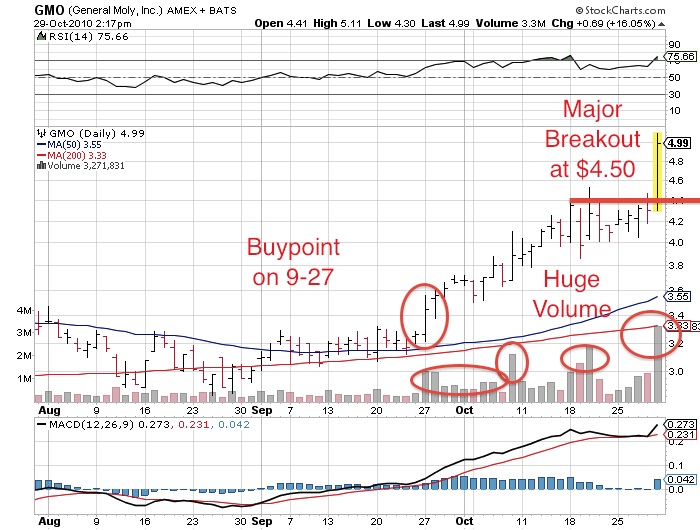
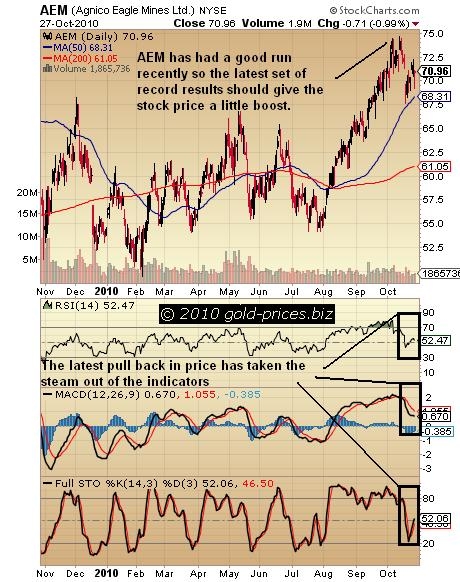


 GS 3rd Quarter 2010 Update
 Delinquency and foreclosure inventory – blog edition 10-2010
 House price data, 2nd Quarter 2010

| You are subscribed to email updates from Gold World News Flash To stop receiving these emails, you may unsubscribe now. | Email delivery powered by Google |
| Google Inc., 20 West Kinzie, Chicago IL USA 60610 | |






No comments:
Post a Comment