


Gold World News Flash |

- John Embry - “I Guarantee Hyperinflation”
- Piercing the mystery of the gold market
- [Video] BNN News Interview with Dave Morgan: Silver market manipulation?
- The Silver Sleuth
- Gold Breakout vs. Corporate Bonds
- Why Creating Money Won’t Shock the Economy Back to Life
- A Paralyzed Fed Defers Decision On Monetary Policy To Primary Dealers In An Act That Can Only Be Classified As Treason
- Gold Seeker Closing Report: Gold and Silver Fall Over 1%
- Why the West is Losing
- Of Course He Will
- Reappearance of Huge Plumes of Oil is Making It Hard to Pretend that the Problem Has Disappeared
- DESTRUCTION OF THE RENAISSANCE
- "Imminent Big Bank Death Spiral"
- Silver "Conspiracy" Coming True?
- Guest Post: The Silver Sleuth
- VENETIAN INTELLIGENCE
- Chris Powell: Piercing the mystery of the gold market
- JPM and HSBC Sued for Silver Market Manipulation
- Gold Daily Chart
- Morgan, HSBC sued over silver price suppression
- Unlike the Gold Price, the Silver Price Has Traced out a Clear Uptrend off Last Friday's Low
- JPM, HSBC Sued For Silver Market Manipulation, Reaping Billions In Illegal Profits
- Fannie, Freddie and the Never-Ending Homing Crisis
- Why Creating Money Won’t Shock the Economy Back to Life
- Gold Looking Heavy
- China Commerce Ministry Says Country Should Buy More Gold, Diversify Dollar Holdings
- What’s the US Gold Stash Game Plan Anyway?
- A Few TIPS on Inflation Protection
- More Asian Recognition of Out of Control US Money Printing, Skyrocketing Gold Price
- The Return to Good Money
- Gold Investing in a Low-Inflation Environment, Part II
- Pummeled by the Strong Arm of the Financial Ruin
- US Mint Sales: Silver Eagles Coins and Silver Sets Near Milestones
- Featured Coin News and Articles for October 24-30, 2010
- Hyperinflation is certain, John Embry tells King World News
- WEDNESDAY Market Excerpts
- The Six Trillion Dollar Problem
- Dollar Bounces Higher On Fear of Fed's Next Move
- China minister says dollar printing “out of control”
- The 40-Year Food Outlook
- Jim's Mailbox
- Market Commentary From Monty Guild
- “You Have Fire Drills”
- Silver market manipulation gets 9 minutes on BNN in Canada
- Markets React to the Death of Néstor Kirchner
- 7. ILLEGAL Gold Accounting By US Government! - Mike Maloney
- Hedging Strategies to Underpin Rising Gold Price
- 20 Million More Ounces of Silver Needed!
- Alternative Investments - Gold vs Silver
- Stronger Dollar Puts Pressure On Equity Markets, Gold, Silver and Base Metals
| John Embry - “I Guarantee Hyperinflation” Posted: 27 Oct 2010 06:16 PM PDT "What it's really going to collapse against is hard assets...I really don't think people have any idea the extent to which the standard of living can fall in North America, particularly in the United States. I mean when a currency collapses against everything else, basically that is saying that the standard of living is going to fall. In fact, it could fall by 30, 40 or 50% just to pick some wild numbers, is not out of the question. Things have been pretty good for the last 60, 70 years in North America, and they think they'll be good forever. It isn't going to happen that way."
| ||
| Piercing the mystery of the gold market Posted: 27 Oct 2010 06:13 PM PDT Why is gold such a mystery? Why is it, along with silver, kept such a mystery? It's because the two precious metals are not only money but, from the point of view of free individuals, the best sort of money, less susceptible to what governments see as the most desirable quality of money -- the susceptibility to control by government and particularly its susceptibility to devaluation. You can print or otherwise issue gold and silver derivatives to infinity, but not the metals themselves.
| ||
| [Video] BNN News Interview with Dave Morgan: Silver market manipulation? Posted: 27 Oct 2010 06:11 PM PDT A commissioner on the U.S. Commodity Futures Trading Commission believes there have been repeated attempts to manipulate the silver market. BNN gets into the debate with Jeffrey Christian, managing director of CPM Group; and David Morgan, editor and founder of Silverinvestor.com.
| ||
| Posted: 27 Oct 2010 06:07 PM PDT We once had an ongoing series in BIG GOLD called, "1001 Reasons to Own Gold." The idea was that there were so many valid reasons to own the metal that I wanted to track and report on them. If you've been invested in the precious metals arena, you know there have been a myriad of bullish indicators for silver this year as well.
| ||
| Gold Breakout vs. Corporate Bonds Posted: 27 Oct 2010 06:06 PM PDT Since the financial crisis in 2008, it is undeniable that precious metals have been the best performer. One would assume that market participants have been piling into Precious Metals. Certainly some money has moved into the sector, smartly anticipating the continuance of a major bull market and looming severe inflation in the next several years. Yet, most funds have moved into fixed income (corporate bonds and treasuries) as the chart shows.
| ||
| Why Creating Money Won’t Shock the Economy Back to Life Posted: 27 Oct 2010 06:02 PM PDT Being a paranoid gold-bug conspiracy-theorist whack-job lunatic halfwit like I am, I am always monitoring the perimeter for new things, strange things, things that have never happened before, the theory being that if things that have never happened before keep happening, then one day everything will have happened, meaning, of course, that I will finally find real happiness, true love and a good frozen pizza.
| ||
| Posted: 27 Oct 2010 04:23 PM PDT
As if there was any doubt before which way the arrow of control, and particularly causality, points in America's financial system, the following stunner just released from Bloomberg confirms it once and for all. According to Rebecca Christie and Craig Torres, the New York Fed has issued a survey to Primary Dealers, which asks for suggestions on the size of QE2 as well as the time over which it would be completed. It also asks firms how often they anticipate the Fed will re-evaluate the program, and to estimate its ultimate size. This is nothing short of a stunning indication of three things: i) that the Fed is most likely completely paralyzed due to the escalating confrontation between the Hawks and the Doves, and that not even Bernanke believes has has sufficient clout to prevent what Time magazine has dubbed a potential opening salvo into a chain of events that could lead to civil war: in effect Bernanke will use the PD's decision as a trump card to the Hawks and say the market will plunge unless at least this much money is printed, ii) that the Fed is effectively asking the Primary Dealers to act as underwriters on whatever announcement the Fed will come up with, and thus prop the market, and, most importantly, iii) that the PDs will most likely demand the highest possible amount, using Goldman's $2-4 trillion as a benchmark, and not only frontrun the ultimate issuance knowing full well what the syndicate of 18 will decide in advance of what the final amount will be, but will also ramp stocks on November 3 to make the actual QE announcement seem like a surprise. This also means that the Primary Dealers of America, which include among them such hedge funds as Goldman Sachs, such mortgage frauds as Bank of America, such insolvent foreign banks as Deutsche, RBS, UBS and RBS, and such middle-market excuses for banks as Jefferies, are now in control of US monetary, and as we explain below fiscal, policy. It also means that the Fed has absolutely no confidence in its actions, and, more importantly, no confidence in how its actions will be perceived by the market which is why it is not only telegraphing its decision to the bankers, but is having its decision be dictated by them, an act so unconstitutional it would be seen as treason in any non-Banana republic! This is the last straw confirming that the only ones left trading the market are the Fed and the PDs, passing hot potatoes to each other, and the HFTs, churning the shit out of everything else to pretend someone is still trading. And the saddest conclusion is that this is the definitive end of US capital markets: not only is the Fed's political subordination a moot point, but the Fed, and the middle class' purchasing power via the imminent dollar destruction that is sure to follow as the PDs seek to obliterate their underwater assets by raging inflation, is now effectively confirmed to be a bitch of Lloyd Blankfein and his posse. The official explanation for this unprecedented incursion by the banking crime syndicate in US monetary policy is as follows:
Fill in the blank: the Fed has essentially given PDs the option of $250BN, $500BN or $1 trillion in monetization over six months. It is now absolutely clear that the PDs will pick the biggest number possible... which incidentally amounts to $2 trillion per year, and is precisely what Goldman's downside case was, as we presented previously.
Of course, since a $2 trillion purchase over 1 year means the Fed will have to monetize every single bond issued, the SOMA limit will have to be raised, another prediction we made months ago:
How about $500 billion? And, incidentally, since the "independent" Treasury will be forced to issue more debt to fill all the demand for $2 trillion over the next 12 months, as there is not enough debt in the pipeline to fill $2TN worth of demand and prevent the entire curve pancaking at zero (i.e., the 30 year yielding precisely 0.001%) it also means that the government will be forced to come up with more deficit programs, which also means that primary dealers will now also determine US fiscal policy. Which begs the question, why is anyone pretending that the political vote on November 3 matters at all? Below are the 18 banks that, in a completely separate vote, will henceforth rule America, regardless of what particular puppets end up in the Congress and Senate: BNP Paribas Securities Corp.
| ||
| Gold Seeker Closing Report: Gold and Silver Fall Over 1% Posted: 27 Oct 2010 04:00 PM PDT Gold traded around $10 lower in London before it extended its losses in New York and ended near its late morning low of $1319.03 with a loss of 1.18%. Silver fell to as low as $23.343 in the last minutes of trade and ended with a loss of 1.51%.
| ||
| Posted: 27 Oct 2010 03:29 PM PDT Conclusion: We have maintained for a decade (and now for more than two years on these modest pages) that the world's Pax Americana might simply degrade over time. At some point, China or Russia could decide to start to back their currencies with gold or gold and silver. The movement could spread, a defacto gold standard eventually evolving. It's not something the increasingly desperate elites of the West would seek, of course.
| ||
| Posted: 27 Oct 2010 03:20 PM PDT Dear CIGAs, How can anyone be so silly as to be riveted on "Will he QE" next week? Of course he will QE to infinity. The date he announced however does not mean a damn thing. To throw away good gold anything on the madness of the trading crowd and algorithms is just plain STUPID. Gold is going to $1650 and likely a great deal more. Don't join the Lemming Society. The scary actual U.S. government debt Boston University economist Laurence Kotlikoff says U.S. government debt is not $13.5-trillion (U.S.), which is 60 per cent of current gross domestic product, as global investors and American taxpayers think, but rather 14-fold higher: $200-trillion – 840 per cent of current GDP. "Let's get real," Prof. Kotlikoff says. "The U.S. is banrupt." Writing in the September issue of Finance and Development, a journal of the International Monetary Fund, Prof. Kotlikoff says the IMF itself has quietly confirmed that the U.S. is in terrible fiscal trouble – far worse than the Washington-based lender of last resort has previously acknowledged. "The U.S. fiscal gap is huge," the IMF asserted in a June report. "Closing the fiscal gap requires a permanent annual fiscal adjustment equal to about 14 per cent of U.S. GDP." This sum is equal to all current U.S. federal taxes combined. The consequences of the IMF's fiscal fix, a doubling of federal taxes in perpetuity, would be appalling – and possibly worse than appalling. Prof. Kotlikoff says: "The IMF is saying that, to close this fiscal gap [by taxation], would require an immediate and permanent doubling of our personal income taxes, our corporate taxes and all other federal taxes. "America's fiscal gap is enormous – so massive that closing it appears impossible without immediate and radical reforms to its health care, tax and Social Security systems – as well as military and other discretionary spending cuts." He cites earlier calculations by the Congressional Budget Office (CBO) that concluded that the United States would need to increase tax revenue by 12 percentage points of GDP to bring revenue into line with spending commitments. But the CBO calculations assumed that the growth of government programs (including Medicare) would be cut by one-third in the short term and by two-thirds in the long term. This assumption, Prof. Kotlikoff notes, is politically implausible – if not politically impossible. One way or another, the fiscal gap must be closed. If not, the country's spending will forever exceed its revenue growth, and no one's real debt can increase faster than his real income forever. Prof. Kotlikoff uses "fiscal gap," not the accumulation of deficits, to define public debt. The fiscal gap is the difference between a government's projected revenue (expressed in today's dollar value) and its projected spending (also expressed in today's dollar value). By this measure, the United States is in worse shape than Greece. Prof. Kotlikoff is a noted economist. He is a research associate at the U.S. National Bureau of Economic Research. He is a former senior economist with then-president Ronald Reagan's Council of Economic Advisers. He has served as a consultant with governments around the world. He is the author (or co-author) of 14 books: Jimmy Stewart Is Dead (2010), his most recent book, explains his recommendations for reform.
| ||
| Reappearance of Huge Plumes of Oil is Making It Hard to Pretend that the Problem Has Disappeared Posted: 27 Oct 2010 03:06 PM PDT
There is a flood of information coming out on the Gulf oil spill. Why? The reappearance of huge plumes of oil is making it hard to pretend that it has all gone away. Here's a roundup of some of the Gulf oil headlines from just the last 4 days:
And Frontline and ProPublica released a new documentary called The Spill which says:
But as Greg Palast notes, The Spill is a whitewash sponsored by Chevron, rehashing information which Palast and others reported on years ago, and falsely implying that other oil companies have stellar safety records.
| ||
| DESTRUCTION OF THE RENAISSANCE Posted: 27 Oct 2010 01:10 PM PDT
Webster G. Tarpley
Since the Venetian oligarchy relied for its survival on the secret weapon of political intelligence manipulation, its primary strategic targets were first and foremost dictated by epistemological rather than military criteria. Fleets and armies, even in the hands of a powerful and aggressive enemy state, could well redound to Venetian advantage. The real danger was a hostile power that developed epistemological defenses against manipulation and deceit. In the face of such a threat Venice did – and does – kill.
The Italian Renaissance of the fifteenth and sixteenth centuries, perhaps the greatest outpouring of human creativity in history, represented such a threat to the Serene Republic, and in a more concentrated form than it had ever faced before. The threat arose from the epistemological warfare and alliance system of the great Cosimo de’ Medici of Florence and his successors. Venice mobilized every resource at its disposal to destroy the Renaissance. After decades of sabotage, going so far as to arrange the ravaging of Italy by foreign armies, Venice succeeded.
The potential political and epistemological power of the Italian Renaissance are best identified in the ecumenical council of the Church convened in Florence in the year 1438. The council, first convened in Ferrara, was moved to Florence at the urging of Cosimo de’ Medici, who held power from 1434 to 1464. Cosimo was the major financial and political sponsor of the proceedings.
Cosimo was a self-declared enemy of Venice. On one occasion he wrote, “Association with the Venetians brings two things which have always been rejected by men of wisdom: certain perdition and disgrace.”
The council had to deal with the ongoing crisis in the western church, which had been exacerbated by the struggle between the Council of Basel and Pope Eugene IV, who had been driven out of Rome by a revolt. In the East, the Ottoman Turks were beginning to recover from the crushing defeat that the Turkish Emperor Bajazet had suffered in 1402 at the battle of Ankara at the hand of Tamerlane the Great. The first, unsuccessful, Turkish siege of Constantinople had already been mounted in 1422.
The hope held out by the Council of Florence was to implement Nicolas of Cusa’s program of the Concordantia Catholica – a community of principle among humanist sovereign states for cultural and economic development, against Venetians, Turks, and all enemies of natural law. To Florence came the Emperor of Byzantium, John VIII Paleologue, accompanied by his advisor Gemisthos Plethon and Plethon’s student, Archbishop Bessarion of Nicea. The Latin delegation was titularly headed by Pope Eugene IV, heavily dependent upon the support of Cosimo de’ Medici at that time. This delegation was dominated in outlook by men like Nicolas of Cusa, Leon Battista Alberti, Leonardo Bruni, Cardinal Capranica, and Aeneas Piccolomini of Siena, later Pope Pius II. The Greek and Latin delegations were each profoundly vitiated by powerful Aristotelian factions, but this was still one of the most impressive assemblies in history.
The culmination of the council was an impassioned oration by Plethon on the antithesis between Plato and Aristotle, a speech which went far beyond anything ever heard in the West. Marsilio Ficino, himself a participant at the council, tells the story of how Cosimo de’ Medici, while listening to Plethon, made up his mind to create the Platonic Academy in Florence.
The most immediate question to be addressed was the reunification of the Roman and Greek churches, abrogating the mutual excommunications issued by the pope and the patriarch of Constantinople in 1054. The contending theologians debated the question of the “filioque” in the Latin credo, attempting to resolve the question of whether the Holy Spirit proceeds only from the Father, as the Greeks argued, or from the Son as well, according to the Roman view. The Greeks eventually agreed to recognize the correctness of the Latin position, although they declined to modify their own credo accordingly. The Paleologue emperor intervened repeatedly in these discussions, stressing that there were no real differences in doctrine, and that anyone who let nonexistent divergences stand in the way of common action against the Turks was a worse traitor than Judas. In the end a purely formal reunification of the two churches was attained, but it remained a dead letter.
Even so, Cosimo and his cothinkers came close several times to welding an alliance capable of dominating the world, and the first to pay the price of their success would have been the Venetians. Medici Florence was at the center of a network of trade and finance that was beginning to rival Venice, with the crucial difference that the Florentines were the producers, thanks to Cosimo’s dirigism, of the textile products they offered for sale. The Duchy of Milan would shortly come under the domination of the condottiero (mercenary commander) Francesco Sforza, installed in power with the help of the Medici, and an enemy of Venice. In 1461 the humanist Louis XI would take the throne of France. This new king was determined to apply the concepts of statecraft developed in Italy, and considered the Venetians “insolent merchants.” In 1460, the humanist Aeneas Silvius Piccolomini would be elected Pope Pius II; in the meantime he was in a position to influence Frederick III of Hapsburg, the Holy Roman Emperor.
The Venetian reaction to this potential for the implementation of an ecumenical Grand Design on the platform of the Italian Renaissance humanists was, predictably, to bring on the Turks once again. During all these years the Turks possessed a combined warehouse- residence- safehouse in Venice, the Fondaco dei Turchi, which facilitated dealings between the doge and the sultan. Spurred on by Venetian financing and Venetian- procured artillery, the Sultan Mohammed the Conqueror laid siege to Constantinople and captured it in 1453. The Turks were aided by the Greek patriarch, who had pronounced the defense of the Paleologue dynasty a heretical cause. Finally, it was the Genoese troops who opened the gates of the city to the forces of the sultan. Hardly a coincidence was the burning of the library of Constantinople with its matchless collection of Ionian and Platonic codices, most unavailable anywhere else since the library of Alexandria had been destroyed some fifteen centuries earlier. In their own sack of Constantinople in 1204, the Venetians had declined to appropriate these manuscripts.
The destruction of Byzantium by the Turks gave the Venetians a slogan with which to organize their war against the Renaissance. Since the Roman Empire had finally ended, it was left to the Venetians to arrogate to themselves the task of building a new Roman Empire. The foundation of a new Roman Empire became, in Venice, from the middle of the fifteenth century on, the leading obsession of the oligarchs.
“The Venetians are called new Romans,” confided the patrician Bernardo Bembo to his diary. Francesco Sforza of Milan wrote that the Venetians were:
“obstinate and hardened, always keeping their mouths open to be able to bite off power and usurp the state of all their neighbors to fulfill the appetite of their souls to conquer Italy and then beyond, as did the Romans, thinking to compare themselves to the Romans when their power was at its apex.”
Machiavelli wrote that the Venetians had “fixed in their souls the intention of creating a monarchy on the Roman model.” This is corroborated by a dispatch of the ambassador of Louis XII of France at the court of the Emperor Maximilian I some years later, which described the Venetians as:
“traders in human blood, traitors to the Christian faith who have tacitly divided up the world with the Turks, and who are already planning to throw bridgeheads across the Danube, the Rhine, the Seine, and Tagus, and the Ebro, attempting to reduce Europe to a province and to keep it subjugated to their armies.”
These megalomaniac plans of the Venetians were no secret. In 1423, the Doge Tommaso Mocenigo had urged upon his fellow oligarchs a policy of expansionism which would make them the overlords “of all the gold and of Christendom.”
The most penetrating indictments of the Venetians during this period were issued by Pope Pius II Piccolomino, who tried in vain to force Venice into joining a crusade against the Turks. A Venetian saying of this period was Prima son Vinizian, poi son Cristian. (I am a Venetian first, then a Christian.”) In his Commentaries, Pius II excoriates the Venetians for their duplicitous treachery, and establishes the fact that they are a pagan, totalitarian state. The Venetians, he says, have acted in their diplomacy:
“with the good faith characteristics of barbarians, or after the manner of traders whose nature it is to weigh everything by utility, paying no attention to honor. But what do fish care about law? As among the brute beasts aquatic creatures have the least intelligence, so among human beings the Venetians are the least just and the least capable of humanity, and naturally so, for they live on the sea and pass their lives in the water; they use ships instead of horses; they are not so much companions of men as of fish and comrades of marine monsters. They please only themselves, and while they talk they listen to and admire themselves…. They are hypocrites. They wish to appear as Christians before the world, but in reality they never think of God and, except for the state, which they regard as a deity, they hold nothing sacred, nothing holy. To a Venetian, that is just which is for the good of the state; that is pious which increases the empire…. What the senate approves is holy even though it is opposed to the gospel…. They are allowed to do anything that will bring them to supreme power. All law and right may be violated for the sake of power.”
During many of these years Venetians were in a tacit alliance with the Turks. When, for example, a revolt against Venetian rule in Albania was started, threatening the Venetian naval base at Durazzo, the Venetians made a deal with the Turks to crush the revolt. On one occasion Pius II received the Venetian ambassador to the Roman court and condemned Venetian policy with these words:
“Your cause is one with thieves and robbers…. No power was ever greater than the Roman empire and yet God overthrew it because it was impious, and He put in its place the priesthood because it respected divine law…. You think [your] republic will last forever. It will not last long. Your population so wickedly gathered together will soon be scattered abroad. The offscourings of fishermen will be exterminated. A mad state cannot long stand.”
In 1464 Pius II, despite a serious illness, traveled from Rome to Ancona to personally lead a crusade against the Turks. He wished to force the hand of the Venetians, who had promised him a battle fleet. He died shortly after the Venetian warships arrived, and Venice thereupon pulled out of any serious fighting against the Turks. But his attack on “the mad state” was on target, then and now.
During the first half of the fifteenth century, much Venetian energy was devoted to a rapid expansion up the Po Valley toward Milan. They seized Padua, Vicenza, Verona, Brescia, and Bergamo, reaching the Adda River, just a few miles from Milan. With Milan under Venetian control, the “new Romans” could bid fair to dominate northern Italy and then the entire peninsula.
Cosimo de’ Medici, as we have seen, secured a Florence-Milan alliance by supporting the claims of Francesco Sforza, fighting a was against Venice to do it. Basing himself on this Florence-Milan axis, Cosimo then proceeded to create an uneasy peace in Italy that was to last forty years. This was the Italian League, formed at the Peace of Lodi in 1453, which united the leading powers of Italy, the pope, Naples, Milan, Florence, and Venice, ostensibly in an alliance against the Turks, who had for a time held a toe-hold in Apulia. In reality, the Italian League was a Florence- Milan- Naples combination designed to check Venetian expansionism. In this it proved effective, giving the Renaissance almost half a century of time to develop under the longa pax of the Medici.
During these years, stymied in Italy, the Venetians concentrated on overseas expansion, including the conquest of Cyprus. But on the death of Cosimo’s successor, Lorenzo the Magnificent, they began their systematic campaign to destroy the civilization of the high renaissance. Their basic premise was that, given their own inability to devastate the centers of Renaissance culture and economic development, they must concentrate on duping the overwhelming military forces of European states like France, Spain, and the other Hapsburg dominions into accomplishing this task for them.
The most competent contemporary observer of these matters was Niccolo Machiavelli, active somewhat later in the post-Medici Florentine diplomatic service, and a factional ally of Cesare Borgia, Duke of Valentino. Machiavelli noted that the two most dangerous forces in Italy around the turn of the century were the Venetians and the pope. His own hatred was directed especially against Venice, firstly because of the stated Venetian intention to subjugate Italy in a new Roman Empire. Secondly, Venice more than any other state relied on armies of mercenaries, and thus embodied precisely that practice which Machiavelli knew had to be extirpated, in favor of citizen-soldiers, if Italy was to be saved from humiliating subjugation to the likes of the Hapsburgs.
Machiavelli pointed out that the disintegration of Italy began when the Venetians succeeded in turning Lodovico il Moro, successor of Francesco as Duke of Milan, making him their agent of influence. Lodovico was responsible for the first major invasion of Italy in many years when he agreed to support the claims of Charles VIII of France to the Kingdom of Naples. This was the French king whom his father, the great Louis XI, considered a hopeless imbecile. In 1494 the French army crossed the Alps, accompanied by a Genoese advisor we will meet again later: Giuliano della Rovere.
This was enough to bring about the fall of the Medici regime in Florence, to the advantage of the Pazzi, Albizi, and related oligarchs of that city. These oligarchs immediately sought to crush the Florentine Renaissance using the regime of the demented Dominican monk Girolamo Savonarola, who set up a theocracy a la Khomeini. Savonarola proudly trumpeted that his rule was based on sound Venetian principles; his family was closely related to the Padua Aristotelian community. As for Charles VIII, he went on to establish a tenuous hold on Naples.
Several years later, in 1498, the Venetians repeated this maneuver, with the variation that this time it was they who blatantly invited the French to cross the Alps. This time the pretext was the French claim to the Milanese dukedom, and the dupe was a new French king, Louis XII. The French army knocked out Milan in 1500, a fatal blow to the Renaissance cultural ferment associated there with Leonardo da Vinci. Shortly thereafter, Louis XII decided to compensate the Hapsburgs with Naples. Naples accordingly became the first beachhead of what would shortly become a totally destructive Hapsburg hegemony in Italy.
| ||
| "Imminent Big Bank Death Spiral" Posted: 27 Oct 2010 12:59 PM PDT
This post has been generated by Page2RSS
| ||
| Silver "Conspiracy" Coming True? Posted: 27 Oct 2010 12:32 PM PDT NEW YORK, Oct 27 (Reuters) - JPMorgan Chase & Co (JPM.N) and HSBC Holdings Plc (HSBA.L) were hit with two lawsuits on Wednesday by investors who accused them of conspiring to drive down silver prices, and reaping an estimated hundreds of millions of dollars of illegal profits. The banks, among the world's largest, were accused of manipulating the market for COMEX silver futures and options contracts from the first half of 2008 by amassing huge short positions in silver futures contracts that are designed to profit when prices fall. "Defendants reaped hundreds of millions of dollars, if not billions of dollars in profits" from the conspiracy, one of the complaints said. The respective plaintiffs, Brian Beatty and Peter Laskaris, each said they traded COMEX silver futures and options and contracts, and lost money because of the alleged manipulation. Beatty lives in Connecticut and Laskaris in New York, court records showed. The lawsuits seek class-action status, damages that may be tripled and other remedies. The defendant banks are major participants in the silver market. 
| ||
| Posted: 27 Oct 2010 12:14 PM PDT
Submitted by Jeff Clark of The Casey Report The Silver Sleuth We once had an ongoing series in BIG GOLD called, "1001 Reasons to Own Gold." The idea was that there were so many valid reasons to own the metal that I wanted to track and report on them. If you've been invested in the precious metals arena, you know there have been a myriad of bullish indicators for silver this year as well.
| ||
| Posted: 27 Oct 2010 12:11 PM PDT
What was the Venetian political intelligence method? The classical Venetian predicament is that of the weaker power attempting to play off two or more major empires. This was the case when the Venetian power was in its very infancy, and survival depended upon playing off the Langobard Kingdom of Italy against the Byzantines. This ploy was later replaced by the attempt to play the Byzantines off against the Carolingian Empire in the West, an attempt that almost misfired when the army of Charlemagne under Pippin laid siege to Venice inside its lagoons. That siege, however, was not successful.
In the eleventh century, the Venetians successfully incited the Norman barons operating out of Sicily under Robert Guiscard to attack Byzantium, and then moved in to offer the desperate Byzantines protection. The price for that protection was indicated by the famous Golden Bull of 1082, a decree of the Byzantine Emperor by which Venice acquired tax customs-free access to the whole of the eastern empire, where the Greeks themselves had to pay a tax of 10 percent on their own transactions. Thus began a hatred for Venice among the Greek population which persists down to the present day.
In the sixteenth century, Venetian strategic doctrine was to play the Ottoman Turks against the Spanish and Austrian Hapsburgs, and then to correct any residual strategic imbalance by playing the Hapsburgs off in their turn against the French. Sometimes Venice attempted to play the Portuguese rival power off against the Dutch. Later this was expanded to include playing the Dutch against the English, and the English against the French.
The Venetians also goaded forces out of the East to attack Christendom. Venice was the manipulator of Saracens, Mongols, and Turks, and got along with the slave-trading factions in each of these groups about as well as a power like Venice could get along with anybody. In particular, the Venetians were more willing to see territory – excepting Venetian territory – be occupied by the Turks than any other power. Venice was thus the past master of the more exotic permutations of the stolid old British dividi et impera, “divide and conquer.”
But the essence of their strategic doctrine was something more abstruse, something sometimes described as the “collapse of empires” scenario. Venice parasitized the decline of much larger states, a decline that Venice itself strove to organize, sometimes in a long and gradual descending curve, but sometimes in a quick bonanza of looting.
Venice was repeatedly confronted with the problem posed by a triumphant enemy, at the height of his power, who would be perfectly capable of crushing the Serenissima in short order. This enemy had to be manipulated into self-destruction, not in any old way, but in the precise and specific way that served the Venetian interest. Does this sound impossible? What is astounding is how often it has succeeded. In fact, it is succeeding in a very real sense in the world today.
The most spectacular example of Venetian manipulation of the dumb giants of this world has gone down in history as the Fourth Crusade. At a tournament in the Champagne in 1201, the Duke of Champagne and numerous feudal barons collectively vowed to make a fighting pilgrimage to the sepulcher of Our Lord in Jerusalem. Here they were to reinforce a French garrison hard-pressed by the Turk Saladin. For many of them, this involved penance for certain misdeeds, not the least of which was a plot against their own sovereign liege, the king.
Reaching the Holy Land required transportation, and the French knights sent Geoffrey of Villehardouin to Venice to negotiate a convoy of merchant galleys with an appropriate escort of warships. Geoffrey closed the deal with the Doge Enrico Dandolo, blind and over eighty years old. Dandolo drove a hard bargain: for the convoy with escort to Jerusalem and back, the French knights would have to fork over the sum of 85,000 silver marks, equal to 20,000 kilograms of silver, or about double the yearly income of the King of England or of France at that time.
When 10,000 French knights and infantry gathered on the Lido of Venice in the summer of 1202, it was found that the French, after pawning everything down to the family silver, still owed the Venetians 35,000 marks. The cunning Dandolo proposed that this debt could easily be canceled if the crusaders would join the Venetians in subjugating Zara, a Christian city in Dalmatia, across the Adriatic from Venice. To this the knights readily agreed, and the feudal army forced the capitulation of Zara, which had been in revolt against Venice.
At this point Dandolo made the crusaders a “geopolitical” proposal, pointing out that the emperor of Byzantium was suspected of being in alliance with the Saracens, and that an advance to the Holy Land would be foolhardy unless this problem were first dealt with. As it happened, the Venetians were supporting a pretender to the Byzantine throne, since the current emperor was seeking to deny them their trading privileges. The pretender was the young Alexios, who promised the knights that if they helped him gain power, he would join them on the crusade with an army of 10,000 Greek soldiers.
Thus, from 1203 to 1204, Constantinople was besieged by the joint Franco-Venetian expeditionary force, which finally succeeded in breaking through the fortifications along the Golden Horn, the bay on the north side of the city.
Byzantium was sacked in an orgy of violence and destruction, from which the Venetians brought back as booty the four bronze horses which generally stand on the Basilica of St. Mark, but which are often exhibited in other cities. Count Baudoin of Flanders was place on the throne of a new concoction titled the Latin Empire of Constantinople. The doge of Venice received a piece of the action in the form of the title Lord of Three Eighths of the Latin Empire. Venice took over three-eighths of Constantinople, a permanent Venetian colony with its own battle fleet. Lemnos and Gallipoli came into Venetian hands. Crete was annexed, and were Naxos and related islands, and the large island of Euboa, which the Venetians called Negroponte. On the Ionian side, the Venetians appropriated Modon and Koron and several islands up to and including Corfu. All Venetian trading privileges in Greece were restored.
The loot brought back from the sack of Constantinople was greater than anything Europe would see until the Spanish treasure fleets from the New World several centuries later. Venice had acquired a colonial empire of naval bases, and was hegemonic in the eastern Mediterranean. To top it all off, the sultan of Egypt had paid a substantial bribe to Dandolo to keep the Crusaders out of Palestine in the first place.
For the human race, the Fourth Crusade was an unmitigated tragedy. The hypertrophy of Venetian power in the Mediterranean was one of the decisive factors ensuring the later defeat of Emperor Federigo II of Hohenstaufen, King of Sicily. The Venetian puppet “Latin Empire” was overthrown by the Paleologues in 1261, but by that time Federigo was gone. By 1266-68, Federigo’s two sons and their Ghibelline supporters were defeated by Charles of Anjou, and the last representative of the Hohenstaufen dynasty was beheaded in the public square of Naples. The triumph of the Black Guelphs had become irreversible.
A further contributing factor in this tragedy was doubtless the Mongol hordes. At about the time the Venetians were sacking Constantinople, Ghengis Khan ruled over an empire that extended from Korea all the way to Iran, and which was rapidly advancing to the West. Batu, a nephew of Ghengis, defeated the Bulgarians in 1236, captured Kiev in the Ukraine in 1240, and swept into Poland. In Silesia in 1241 the German and Polish feudal army, including the Teutonic Knights, was annihilated. Later in the same year the Mongols defeated the Hungarians. The Mongols did not, for reasons that are not clear, advance further westward, but the Mongol Golden Horde that imposed its hegemony over Russia was the beginning of Russia’s economic and cultural backwardness. For some loosening of the Mongol yoke, the Russians would have to fight the titanic battle of Kulokovo Field on the Don in 1380.
In these Mongol victories, there was something more than mere numerical superiority at work. as one historian sums up the case:
The Mongols did not sweep in wildly and suddenly, like reckless barbarians. No indeed, they advanced according to careful plan. At every stage, the Mongol generals informed themselves ahead of time about the state of European courts, and learned what feuds and disorders would be advantageous to their conquests. This valuable knowledge they obtained from Venetian merchants, men like Marco Polo’s father. It was thus not without reason that Polo himself was made welcome at the court of Kublai, and became for a time administrator of the Great Khan.
So the great Marco Polo, and the Venetian family from which he came, was responsible for directing the destruction of Ghengis Khan against Europe. The omnipresent Venetian intelligence was also a factor in the Mongol destruction of the Arab cultural center of Baghdad in 1258.
Friedrich Schiller and William Shakespeare both analyze the manipulative methods employed by the Venetian secret intelligence establishment; both considered Venetian intelligence one of their most formidable enemies. Much of Schiller’s writing is dedicated in various ways to fighting the Venice- Genoa- Geneva combination that had held the financial reins of King Philip II of Spain.
Schiller’s direct treatment of Venice is a fragment of a novel titled Der Geisterseher (”The Ghost Seer”). Its central character is a Sicilian charlatan, expert at bringing the spirits of the departed back into the world for the thrill-seeking nobility at seances. This Sicilian charlatan is a figure for a whole class of Venetian intelligence operatives, like Count Cagliostro, the mountebank who claimed to be the reincarnation of the leading Mason of ancient Egypt. Another of this breed was Emanuel Swedenborg. After Schiller’s time, this category swelled considerably with theosophists like Madame Blavatsky, Annie Besant, Henry Steel Olcott, and with that archapparitionist Rudolph Steiner, founder of the Anthroposophy movement and the Waldorf schools.
In Schiller’s tale, a young German prince in Venice for the grand tour is subjected to a series of manipulations by a sinister, masked Armenian, who informs him, before the fact, of the death of a close relative hundreds of miles away. At a gambling den, a young Venetian patrician picks a quarrel with the prince, who fears for his life until he is ushered into one of the chambers of the Council of Ten, where the offending patrician is strangled before his eyes. He comes into contact with the Sicilian mountebank, and then spends weeks attempting to ascertain the identity of a mysterious beauty he has seen at church.
He begins to frequent a semi-secret free-thinking club, called the Bucentoro after the golden ship used by the doge on occasions of state. At least one cardinal is also a member of the Bucentoro. He takes to gambling, loses heavily, and contracts immense debts. In the meantime, rumors are spread at his Protestant court that he has become a Catholic, which leads to his repudiation by his entire family. At the end of the fragment, his life has been ruined, and his death is imminent.
Shakespeare’s “Othello, The Moor of Venice” is a more finished analysis of the same technique. It was written and performed shortly after 1603, when the Venetians and Genoese had acquired vast powers in England through the accession of their puppet James I to the throne.
Othello is a Moor, hired out to Venice as a mercenary, and at the apex of his power, having just won a victory over the Turkish fleet attacking Cyprus. He enjoys the full confidence of the Senate, and has just married Desdemona, the daughter of a patrician. Othello, the “erring barbarian,” is however something of a dumb giant: his proficiency in the arts of war is unmatched, but his emotional makeup tends decidedly toward the naive and infantile. He has no real insight into affairs of state, or into psychology. Above all, he is superstitious and has a propensity for jealousy.
All of these weaknesses are systematically exploited by “honest Iago,” a member of Othello’s staff who is determined to destroy him. Iago is the figure of the Venetian intelligence officer, an expert in what he calls “double knavery” – the art of manipulation. He sets out to destroy Othello using an accurate psychological profile of the Moor, and exploiting above all Othello’s naive willingness to trust his “honest Iago.” Iago’s modus operandi is to:
Make the Moor thank me, love me, and reward me, For making him egregiously an ass And practicing upon his peace and quit Even to madness.
Iago uses his throwaway agent, the dupe Roderigo, for financing and services. He sets up scenes where he cons one participant with one story, briefs another participant with a different story, brings them together in a controlled environment, and exploits the resulting fireworks for his overall strategy. He sets up a fight between Roderigo and the drunken Cassio that leads to the wounding of Montano by Cassio, who is ousted as chief lieutenant by Othello. After this, he manipulates Desdemona’s naive desire to help Cassio regain his post into prima facie evidence that Desdemona is an adulteress. Iago is then able to goad Othello all the way to killing Desdemona and, finally, himself.
At the center of the play are epistemological questions of truth and proof. In Act 3, Iago drives Othello wild with innuendoes about Desdemona’s alleged adultery, and makes him commit to the murder of Cassio, all without the slightest shred of proof. What Othello then regards as definitive proof of adultery, sufficient to motivate the murder of Desdemona, is a handkerchief which Iago obtains and plants on Cassio. This handkerchief is an object of deep emotional and superstitious importance for Othello, as it had been given by his father to his mother. It had been his first love token for Desdemona. When he sees it in the hands of Cassio, he is ready to kill.
Iago is well aware of Othello’s epistemological weakness. When he first obtains the handkerchief, he gloats:
I will in Cassio’s lodging lose this napkin, And let him find it. Trifles light as air Are to the jealous confirmations strong As proofs of holy writ; this may do something.
Shortly thereafter, Othello demands certainty that Desdemona is betraying him. What would be definitive proof, Iago asks?
Would you, the supervisor, grossly gape upon - Behold her tupp’d?
This kind of certainty, he says, is impossible to obtain, but he offers an inductive- deductive substitute:
But yet, I say, If imputation and strong circumstances, Which lead directly to the door of truth, Will give you satisfaction, you might have’t.
In the final scene, we can agree with Iago’s wife Emilia that Othello is a gull and a dolt, a “murderous coxcomb … as ignorant as dirt.” But the lesson is that not only Othello, but all those who love not wisely but too well, who, “being wrought” and “perplexed in the extreme,” are potential victims of Venetian intelligence.
| ||
| Chris Powell: Piercing the mystery of the gold market Posted: 27 Oct 2010 11:59 AM PDT Remarks by Chris Powell The precious metals markets have tremendous potential for investors. But they are also wrapped up in great mystery -- deliberately so Gold is the worst understood financial market. Most official data about gold is actually disinformation. Years ago GATA disclosed that the International Monetary Fund, the leading compiler of official gold reserve data, allowed its member nations to count gold they had leased, gold that had left their vaults, as if it was still in their vaults. The effect of this accounting fraud was to deceive the gold market into thinking that central banks had much more gold left to bomb the market with than they really did. But that's only the start of the false data. In April 2009 China caused a bit of a sensation by announcing that its gold reserves had increased by 76 percent, from 600 tonnes to 1,054 tonnes. For the previous six years China had been reporting to the IMF only 600 tonnes. Had China acquired those 454 new tonnes only in the last year? Very unlikely. Experts now believe that China acquired those 454 new tonnes over at least several years, largely by purchasing the production of China's own fast-growing gold mining industry. So for as many as six years the official gold reserve data about China was way off. ... Dispatch continues below ... ADVERTISEMENT Prophecy Resource Goes Into Production A commission appointed by Mongolia's Ministry of Mineral Resources and Energy has conducted the final permit inspection at Prophecy Resource Corp.'s Ulaan Ovoo mine site and has instructed the company to begin coal production. Prophecy Resource (TSX.V: PCY) has begun production of its first 10,000 tonnes of coal as a trial run of supply to be taken by rail to electric power stations in Darkhan and Erdenet, Mongolia's second and third largest cities after the capital, Ulaanbaatar. The company is the second-ever Canadian mining company to get a permit to mine in Mongolia and start production there. For the company's complete announcement, please visit: http://www.prophecyresource.com/news_2010_oct14.php This June the World Gold Council reported that Saudi Arabia's gold reserves had increased by 126 percent, from 143 to 323 tonnes, just since 2008. That the world's oil-exporting superpower had made such a new commitment to gold in its foreign exchange reserves also caused a brief sensation. But a few weeks later the governor of the Saudi Arabia Monetary Authority, Muhammad al Jasser, insisted to news reporters in Kuwait that Saudi Arabia had not purchased the gold cited in the June reports but rather had that extra gold all along in what he called "other accounts" -- that is, in accounts not reported officially, just as the true status of China's gold accounts was not reported officially for six years, if the true status is being reported even now. Some analysts think that China and Saudi Arabia have accumulated far more gold than they're reporting and are accumulating still more gold surreptitiously -- China to hedge its dollar foreign exchange surplus, Saudi Arabia to hedge both its dollar surplus and the depletion of its oil reserves -- but that China and Saudi Arabia can't acknowledge this accumulation lest they spook the currency markets and devalue their dollar surpluses before those surpluses are fully hedged. In August 2009 GATA consultant Rob Kirby of Kirby Analytics in Toronto obtained from Germany's central bank, the Bundesbank, a written admission that much of Germany's national gold is held outside the country at "trading centers" at which the Bundesbank may "conduct its gold activities." Without explicitly confirming that the Federal Reserve Bank of New York was one of those "trading centers," the Bundesbank noted to Kirby that the New York Fed holds gold for 60 nations and international organizations. But exactly how much German gold is where and for what purpose, particularly trading purposes? How much German gold been leased or otherwise encumbered? The Bundesbank wouldn't say. In September 2009, in the course of seeking access to gold records from the Federal Reserve and then suing the Fed in U.S. District Court for the District of Columbia, GATA obtained a sensational written admission from the Fed, signed by Fed Board of Governors member Kevin M. Warsh, a former member of the President's Working Group on Financial Markets -- the so-called "Plunge Protection Team." Warsh wrote that the Fed has secret gold swap arrangements with foreign banks and that these arrangements must be kept secret. So has gold from the U.S. reserve been swapped? Does the United States really have 8,200 tonnes of gold in its reserve, as it long has claimed to have? Fed Governor Warsh didn't quite say that U.S. gold had been swapped, only that the Fed has gold swap arrangements. But the U.S. gold reserve hasn't been audited in more than half a century, and the last audit wasn't really complete. So in the next session of Congress U.S. Rep. Ron Paul hopes to introduce legislation requiring an audit of the gold reserve, including specifically any encumbrances like swaps and leases. Then there are the major gold and silver exchange-traded funds, which were established in the last few years supposedly to help ordinary investors invest conveniently in gold and silver. How much metal do the ETFs have? While the major gold and silver ETFs frequently report their metal holdings, studies by GoldMoney founder James Turk and GATA board member Catherine Austin Fitts and her lawyer, Carolyn Betts, suggest that this data is unreliable too. For the major ETFs won't disclose exactly where their metal is, and indeed their prospectuses say it's OK for the ETFs not even to know where their metal is kept among custodians and sub-custodians. And the custodians for the major gold and silver ETFs are, perhaps not so coincidentally, also the two major international banks that report having the biggest short positions in gold and silver, short positions that give these banks and metal custodians a powerful interest in suppressing the price of the assets they supposedly are holding for investors who want those assets to rise in value. How much gold do the major gold and silver ETFs really have in their vaults? How much of it is encumbered in some way? ETF investors themselves will never be permitted to know. The biggest so-called "physical" gold market in the world is the one run by the London Bullion Market Association. The LBMA publishes statistics on how much gold and silver are traded by its members. But these statistics show spectacular volumes, more metal than could possibly exist. Of course much of this metal could be sold and resold back and forth many times every day. But an expert in that market, Jeffrey Christian of the CPM Group, acknowledged at the March 25 hearing of the U.S. Commodity Futures Trading Commission, as he had acknowledged in an explanatory report published in 2000, that the London bullion market is actually a fractional-reserve gold banking system built on the presumption that most gold buyers will never take delivery of their metal but rather leave it on deposit with the LBMA members from whom they bought it. GATA board member Adrian Douglas has studied the LBMA statistics and Christian's work and estimates that the great majority of gold sold by LBMA members doesn't exist -- that most gold sales by LBMA members are highly leveraged. How leveraged? How much gold is due from LBMA members that doesn't really exist? The LBMA doesn't report that. Like the Fed's gold swap arrangements, the world mustn't be permitted to know. The consequences might be catastrophic for the banking interests that run the world. For then the world might understand why even at its recent price above $1,300 per ounce gold has not come close to keeping up with the inflation, the currency debasement, of the last few decades, why gold has not fulfilled its function of hedging against inflation. That is, gold's enemies figured out how to increase its supply by vast amounts without going through the trouble of digging it out of the ground. They invented "paper gold" -- gold that doesn't exist but that many buyers accepted, never suspecting that major financial institutions might deceive or defraud them. * * * The misunderstanding of the gold market continues with the awful journalism about it. The falsity of the data about the gold market practically screams at financial journalists: -- There's the omission by official gold reserve reports of leased and swapped gold. -- There are the sudden huge changes in official gold reserve totals. -- There are the deception and conflicts of interest built into ETF prospectuses. The valid documentation about the gold market also practically screams at financial journalists: -- There are the huge and disproportionate gold, silver, and interest rate derivative positions built up at just two or three international banks, positions that never could be undertaken without the express or implicit underwriting of the U.S. government. -- And there are the dozens of official records, records collected and publicized by GATA over the years, demonstrating the plans and desire of the U.S. government to suppress and control the price of gold. But financial journalists just don't ask about these things. After all, who are the major advertisers in the financial news media? The market manipulators and governments themselves. Here are a couple of examples of this grotesque failure of journalism just from this year. In June the Bank for International Settlements, the central bank of the central banks, disclosed, via a footnote in its annual report, that it had undertaken a gold swap of unprecedented size, 346 tonnes. But the BIS provided no explanation. A newsletter writer was the first to come upon the information; only then did it leach into the major financial news media. What was going on here? The reporters for the major financial news media didn't bother going to the source, didn't bother asking the BIS itself. It was simply assumed that central banks never give serious answers about what they do. Instead the reporters called various gold market analysts for what they hoped would be informed speculation. A few days after GATA ridiculed the Reuters news agency for not demanding answers from the source, the BIS, Reuters did try putting some questions to the bank, and on July 16 Reuters reported: "The BIS said the gold in question was used for 'pure swap operations with commercial banks' but declined to respond to further questions from Reuters on the transaction." For a year I have been urging financial journalists to call the Federal Reserve to ask for an explanation of the secret gold swap arrangements admitted by Fed Governor Warsh. As far as I know, no news organization has put such questions to the Fed officially. But, a bit intrigued, a reporter for another major news agency, having failed to get her editor's authorization to pursue a story about gold, called the Fed on her own and did ask about the gold swap arrangements. She told me that a Fed spokesman had told her: "Oh, we never talk about those things." GATA has been gaining publicity over the last year, if with great difficulty. A few months ago the Financial Times did a big story about gold that was half about GATA's complaints about gold price manipulation by central banks and their associated bullion banks. But the FT reporter failed to put any of our complaints and questions to any central bank or government official. How can you report complaints of central bank gold price manipulation without questioning central banks themselves? Again, it's just taken for granted that central banks operate in secret and there's no point in questioning them. * * * Maybe this journalistic negligence will change a little because of the remarkable event yesterday in Washington. A member of the U.S. Commodity Futures Trading Commission, Bart Chilton, to whom GATA Chairman Bill Murphy, in a meeting at CFTC headquarters in Washington in December 2008, delivered evidence of the manipulation of the gold and silver markets, made a statement that had a noticeable effect on those markets. At a CFTC hearing yesterday Chilton issued a formal statement urging his commission to answer to the public for the commission's seemingly interminable investigation of the silver market. Chilton added: "I believe that there have been repeated attempts to influence prices in the silver markets. There have been fraudulent efforts to persuade and deviously control that price. Based on what I have been told by members of the public and reviewed in publicly available documents, I believe violations to the Commodity Exchange Act have taken place in silver markets and that any such violation of the law in this regard should be prosecuted." Within hours Chilton's statement had become international news. Of course that doesn't mean that financial news organizations will press the precious metals market manipulation story vigorously now. But the story just became a lot harder to ignore. Indeed, just a few hours ago a lawsuit complaining of silver price manipulation by J.P. Morgan Chase & Co. and HSBC was filed in U.S. District Court for the Southern District of New York. * * * Why is gold such a mystery? Why is it, along with silver, kept such a mystery? It's because the two precious metals are not only money but, from the point of view of free individuals, the best sort of money, less susceptible to what governments see as the most desirable quality of money -- the susceptibility to control by government and particularly its susceptibility to devaluation. You can print or otherwise issue gold and silver derivatives to infinity, but not the metals themselves. Gold particularly is kept such a mystery because it is the key to unlocking the currency markets, which long have been the most efficient mechanisms of imperialism. Many of you have heard about the looting of Europe that was undertaken by the Nazi German occupation during World War II. But most of that looting did not take place at the point of a gun. No, it took place through the currency markets. This looting through the currency markets was spelled out by the November 1943 issue of a military intelligence letter published by the U.S. War Department, a letter called Tactical and Technical Trends. Of course the Nazi occupation seized whatever central bank gold reserves had not been sent out of the occupied countries in time. But then the Nazi occupation either issued special occupation currency that could not be used in Germany itself or, in countries that had fairly sophisticated banking systems, took over the domestic central bank and enforced an exchange rate much more favorable to the reichsmark. Or else the Nazi occupation simply printed for itself and spent huge new amounts of the regular currency of the occupied country. This control of the currency markets drafted every resident of the occupied countries into the service of the occupation and achieved a one-way flow of production -- a flow out of the occupied countries and into Germany. For a few years Nazi Germany had one hell of a trade deficit. But being in the position to print the currencies for occupied Europe, Nazi Germany never had to cover that deficit. Since the United States now issues the reserve currency for the world, the dollar, the United States now more or less occupies most countries economically, even those countries that have their own currencies, since even those countries hold most of their foreign exchange reserves in dollars. Free-trading and widely accessible gold always has been and always will be a threat to the rigging of the currency markets, always will be the escape from overbearing government generally and from any overbearing government in particular. That is why so many U.S. government records compiled by GATA over the years candidly discuss or advocate or describe controlling and suppressing the gold market. A declassified cable from the U.S. Embassy in Paris to the State Department in Washington, written in March 1968, even talks about the necessity for U.S. monetary officials to remain what the cable calls "the masters of gold." This is also why U.S. government agencies like the Federal Reserve are trying desperately to prevent other such documents from being disclosed. That is, gold is the secret knowledge of the financial universe and its true value relative to currencies is vastly greater than its nominal price today, since much of the gold that investors think they own doesn't exist. GATA's work is to bust this secret open. Russia, China, and other Asian countries have figured out that the dollar reserve system is the mechanism of their economic enslavement and have started to prepare their liberation by accumulating gold in a big way before gold is formally reinstated as the world reserve currency or as a big part of that new reserve currency. Now you're in on the secret too. This wonderful conference will give you many good ideas for preparing yourselves profitably. But just make sure that whenever you buy precious metal, you're getting metal, not paper. Otherwise you'll just be sabotaging yourself. Join GATA here: New Orleans Investment Conference * * * Support GATA by purchasing a colorful GATA T-shirt: Or a colorful poster of GATA's full-page ad in The Wall Street Journal on http://gata.org/node/wallstreetjournal Or a video disc of GATA's 2005 Gold Rush 21 conference in the Yukon: * * * Help keep GATA going GATA is a civil rights and educational organization based in the United States and tax-exempt under the U.S. Internal Revenue Code. Its e-mail dispatches are free, and you can subscribe at: To contribute to GATA, please visit:
| ||
| JPM and HSBC Sued for Silver Market Manipulation Posted: 27 Oct 2010 11:44 AM PDT | ||
| Posted: 27 Oct 2010 11:35 AM PDT | ||
| Morgan, HSBC sued over silver price suppression Posted: 27 Oct 2010 11:29 AM PDT By Jonathan Stempel http://www.reuters.com/article/idAFN2725907120101027 NEW YORK -- JPMorgan Chase & Co. and HSBC Holdings Plc were hit with two lawsuits on Wednesday by investors who accused them of conspiring to drive down silver prices and reaping an estimated hundreds of millions of dollars of illegal profits. The banks, among the world's largest, were accused of manipulating the market for COMEX silver futures and options contracts from the first half of 2008 by amassing huge short positions in silver futures contracts that are designed to profit when prices fall. "Defendants reaped hundreds of millions of dollars if not billions of dollars in profits" from the conspiracy, one of the complaints said. The respective plaintiffs, Brian Beatty and Peter Laskaris, each said they traded COMEX silver futures and options and contracts and lost money because of the alleged manipulation. ... Dispatch continues below ... ADVERTISEMENT Prophecy Resource Goes Into Production A commission appointed by Mongolia's Ministry of Mineral Resources and Energy has conducted the final permit inspection at Prophecy Resource Corp.'s Ulaan Ovoo mine site and has instructed the company to begin coal production. Prophecy Resource (TSX.V: PCY) has begun production of its first 10,000 tonnes of coal as a trial run of supply to be taken by rail to electric power stations in Darkhan and Erdenet, Mongolia's second and third largest cities after the capital, Ulaanbaatar. The company is the second-ever Canadian mining company to get a permit to mine in Mongolia and start production there. For the company's complete announcement, please visit: http://www.prophecyresource.com/news_2010_oct14.php Beatty lives in Connecticut and Laskaris in New York, court records showed. The lawsuits seek class-action status, damages that may be tripled, and other remedies. The defendant banks are major participants in the silver market. JPMorgan declined to comment. An HSBC spokeswoman had no immediate comment. The lawsuits were filed one day after the Commodity Futures Trading Commission proposed regulations to give it greater power to thwart traders who try to manipulate prices. The CFTC began probing allegations of silver price manipulation in September 2008. "Going back to the early 1980s, silver has been an extremely volatile market," said Bill O'Neill, managing partner at Logic Advisors, an Upper Saddle River, New Jersey, investment firm specializing in commodities. "I often describe it as a speculative playground. You have to be a big boy to play." Only once in its 36-year history has the CFTC successfully concluded a manipulation prosecution, in a 1998 proceeding concerning prices for electricity futures. Speaking on Tuesday, Chairman Gary Gensler said the proposed regulations would give the regulator greater power to police "fraud-based manipulation." Commissioner Bart Chilton added that there had been "fraudulent efforts to persuade and deviously control" silver prices. A CFTC spokesman said the regulator does not comment on investigations and would not discuss the investor lawsuits. Earlier this year the CFTC began looking into allegations by a London trader that JPMorgan was involved in manipulative silver trading, Rhe Wall Street Journal said on Wednesday, citing a person close to the situation. Silver prices have faced regulatory scrutiny in the past, perhaps most prominently after the Hunt brothers in Texas in 1980 attempted to corner the market, driving prices above $50 an ounce. The price later plunged. Since the CFTC began its probe, spot silver prices have ranged between $8.42 and $24.90 an ounce, Reuters data show. They traded Wednesday at roughly $23.53. Silver futures prices SIc1 are up 39.1 percent this year. The cases are Beatty v. JPMorgan Chase & Co et al, U.S. District Court, Southern District of New York, No. 10-08146, and Laskaris v. JPMorgan Chase & Co. et al in the same court, No. 10-08157. Join GATA here: New Orleans Investment Conference * * * Support GATA by purchasing a colorful GATA T-shirt: Or a colorful poster of GATA's full-page ad in The Wall Street Journal on http://gata.org/node/wallstreetjournal Or a video disc of GATA's 2005 Gold Rush 21 conference in the Yukon: * * * Help keep GATA going GATA is a civil rights and educational organization based in the United States and tax-exempt under the U.S. Internal Revenue Code. Its e-mail dispatches are free, and you can subscribe at: To contribute to GATA, please visit:
| ||
| Unlike the Gold Price, the Silver Price Has Traced out a Clear Uptrend off Last Friday's Low Posted: 27 Oct 2010 11:19 AM PDT Gold Price Close Today : 1322.20 Change : (15.80) or -1.2% Silver Price Close Today : 23.398 Change : (0.426) cents or -1.8% Gold Silver Ratio Today : 56.51 Change : 0.347 or... This is a summary only. Visit GOLDPRICE.ORG for the full article, gold price charts in ounces grams and kilos in 23 national currencies, and more!
| ||
| JPM, HSBC Sued For Silver Market Manipulation, Reaping Billions In Illegal Profits Posted: 27 Oct 2010 11:05 AM PDT
The lawsuit alleges that the means by which JPM and HSBC manipulated the market is as follows:
In the suit, the plaintiff allege that JPM and HSBC in August 2008 held 85% of the net short position in silver and by the first quarter 2009 held $7.9 billion in precious metal derivatives. Some amusing observations from the plaintiffs:
Laskaris and Beatty further allege that Defendants reaped hundreds of millions if not billions of dollars in profits from the conspiracy. Damages sought by plaintiffs include damages that may be tripled, and various other remedies. In the meantime, as this lawsuit seeks class status, we are confident many readers will enjoin the plaintiffs. Especially since, as is suddenly all too well known, the CFTC's bias to perpetually rule in favor of the commission has been exposed for all to see. Will the be the watershed case that finds two of the biggest market manipulators finally guilty? Oh, and, with one more "conspiracy theory" about to be proven for fact, can the tin foil hat be taken off now? Full filing:
| ||
| Fannie, Freddie and the Never-Ending Homing Crisis Posted: 27 Oct 2010 11:00 AM PDT A zombie alert. Bloomberg has the report: Chris Whalen is famous lately for predicting a return of the subprime crisis in 2011. His thoughts on the greater mortgage system are also interesting, as discussed in an interview with King World News. Whalen says GSEs [Fannie Mae and Freddie Mac] don't help homeowners. Rather they promote a system that locks marginal borrowers into costly interest payments, helping their own bottom line. The zombies at Fannie and Freddie prey on house buyers. We interrupt the normally crisp flow of ideas in these daily reckonings with a parenthetical remark. Looking through the newspapers and magazines this weekend we were offered thousands of "homes" for sale. We thought a home was something you lived in. But the ads offer "new homes" – empty houses that no one has ever lived in. It doesn't make any sense to us. But we conclude that the word "house" has been withdrawn from the dictionary. Yes, dear reader, the homing crisis in America only seems to get worse and worse. We remind readers too that this was a crisis created largely by the government – which subsidized mortgage rates (sponsoring Fannie and Freddie), provided a tax break for mortgage interest, and told banks that they had to lend to poor credit risks in bad neighborhoods. And now, true to form…the government is making it worse. How? By bailing out failed lenders – Fannie and Freddie. The last estimate we saw put the cost of keeping these incompetents alive at more than a quarter of a trillion dollars. That is bad money after bad money, in our opinion. The Feds are also threatening to slow down the foreclosure process…which would further delay the correction in the homing market. Now…Chris Whalen continues: "If you're a wealthy American you can [refinance], but if you've got a seven-something FICO score and you're in a so-so neighborhood so the collateral doesn't have a big score in the equation, you're screwed," Whalen says. "These are the people Fannie and Freddie doesn't want to see prepay, so they can keep the income on their portfolio. It's horrible! People don't realize how predatory these government agencies are. "Everything Orwell ever wrote was true and it's proven by the way people like Barney Frank and Chris Dodd have personally benefited from this housing mess, while they're actually hurting the poor people most." Regards, Bill Bonner Fannie, Freddie and the Never-Ending Homing Crisis originally appeared in the Daily Reckoning. The Daily Reckoning, offers a uniquely refreshing, perspective on the global economy, investing, gold, stocks and today's markets. Its been called "the most entertaining read of the day."
| ||
| Why Creating Money Won’t Shock the Economy Back to Life Posted: 27 Oct 2010 10:30 AM PDT Being a paranoid gold-bug conspiracy-theorist whack-job lunatic halfwit like I am, I am always monitoring the perimeter for new things, strange things, things that have never happened before, the theory being that if things that have never happened before keep happening, then one day everything will have happened, meaning, of course, that I will finally find real happiness, true love and a good frozen pizza. Alas, there is nothing to report on the "happiness, love and pizza" front, but Bloomberg reported that "The Treasury sold $10 billion of five-year Treasury Inflation Protected Securities at a negative yield for the first time at a US debt auction." Naturally, not being very bright, I am not sure that I could be talked into investing money into a debt instrument to get a negative yield, but it could be one of the idiosyncrasies of the TIPS security, or the tax ramifications thereof, or something else that I wouldn't understand even if you explained it to me, even if I cared, whi...
| ||
| Posted: 27 Oct 2010 10:22 AM PDT courtesy of DailyFX.com October 27, 2010 06:53 AM 60 Minute Bars Prepared by Jamie Saettele No change: “An impulsive decline from the high indicates that the larger trend has reversed. I wrote last week on Friday that “near term expectations are for a corrective advance back to 1350 before the decline accelerates.” A 3rd wave may be underway from 1350. Initial support on a break would be 1280 (100% extension).”...
| ||
| China Commerce Ministry Says Country Should Buy More Gold, Diversify Dollar Holdings Posted: 27 Oct 2010 09:54 AM PDT
As we wrote recently, in what may become a rerun of the Rare Minerals export cut, after an abnormally long silence, China is finally starting to make noises in the gold market. As Bloomberg reported earlier, according to an article appearing on the website of the Chinese Ministry of Commerce, Meng Qingfa, researcher as the China Chamber of International Commerce said that China should buy more gold to diversify its foreign exchange reserves. "China should increase its gold holdings if the country aspires to “internationalize” its currency. China has $2.6 trillion of foreign-exchange reserves, mostly in dollar assets, Meng said. Such holdings will put China at a disadvantage when the U.S. dollar depreciates, as is inevitable amid a worsening U.S. debt problem, he said." While this is not an outright endorsement that the PBoC will begin to warehouse the precious metal, it is certainly an escalation in the war on words that the US and China have been engaging in for quite some time. The bigger problem is what may happen to the world gold market should China, which is now the world's largest producer of gold, decide to internalize its gold product output. Already the country's gold demand is surging. Should roughly 340 tons, or the amount of gold China makes each year, be withdrawn from supply, no amount of Goldman contemplation on the matter of physical ETFs will prevent a spike in the metal price. More from Bloomberg:
At this point the only variable is the position of China's State Administration of Foreign Exchange or the custodian of all foreign reserves. In July, SAFE announced that U.S. government debt has the benefits of “relatively good” safety, liquidity, low trading costs and market capacity.
Is it time for an update on SAFE's opinion on US Bonds... and on gold? h/t Robert
| ||
| What’s the US Gold Stash Game Plan Anyway? Posted: 27 Oct 2010 09:46 AM PDT In November's new issue of The Atlantic, James Picerno poses the question of why, given such lean times, "is $300 billion worth of government treasure simply sitting in vaults?" He's referring to the US stash of gold reserves. Although there are a number of good reasons for the status, it's interesting to consider what reasons the federal government is willing to offer publicly. From The Atlantic: "Getting straight answers (or any answers at all) from Washington about our hoard of gold is weirdly difficult. Yes, the government can downsize its holdings, said Congressman Brad Sherman, a member of the Subcommittee on Domestic Monetary Policy and Technology, through a spokesman. No, it's not a good idea, he added, offering no elaboration. When I called to interview the subcommittee's chairman, Representative Mel Watt, his office begged off in an e-mail, advising only that he 'hadn't studied this particular issue as of yet.' "Repeated calls and e-mails to the White House press office went unanswered. The Treasury Department referred me to the section on gold in the U.S. Code. When I pressed for more information, a public-affairs official e-mailed back: 'Gold? Don't you have anything better to write about[?]' "…Under current law, income from the sale of gold must be used to reduce the national debt. But nothing would stop Congress from rewriting the regulation to permit other uses. By Washington's corpulent spending standards, $300 billion may seem modest, but it's hardly trivial: it could, for example, reduce our $1.3 trillion budget deficit by more than 20 percent; finance Social Security for nearly six months; or fund unemployment benefits for several years—in effect, create a stimulus package without pushing us further into debt." It seems rather obvious the last thing the feds would do is spend the cash on paying down the national debt while failing to consider any austerity measures. Instead, the recommendations above for simply spending gold – especially rather than cutting expenses — are of dubious value. Alongside the US military, the gold reserve is probably one of the nation's not-yet diminishing assets that still insulate the US' dwindling credibility as home of the world's reserve currency. You can read the full details in The Atlantic's coverage of Uncle Sam's mysterious hoard. Best, Rocky Vega, What's the US Gold Stash Game Plan Anyway? originally appeared in the Daily Reckoning. The Daily Reckoning, offers a uniquely refreshing, perspective on the global economy, investing, gold, stocks and today's markets. Its been called "the most entertaining read of the day." More articles from The Daily Reckoning….
| ||
| A Few TIPS on Inflation Protection Posted: 27 Oct 2010 09:46 AM PDT What a whacky, whacky world… "Debt sales highlight abnormal conditions," says the headline in yesterday's Financial Times. Abnormal? Freaky. Bizarre. Strange. The latest auction of TIPS – US Treasury debt with inflation protection – produced a curiosity. Investors were willing to pay $105 for every $100 worth of inflation-protected notes. Go figure. What does it mean? What are investors worried about? On the surface of it, they are setting themselves up for a built-in loss. TIPS always offer less interest than regular bonds. You give up some yield to pay for the inflation protection. But TIPS buyers are now buying them with negative yields. Which is to say, they pay for the privilege of owning the bonds. Inflation has to beat expectations…and then some…before they are even at breakeven. All very weird. If they are so afraid of inflation, why not buy gold? No negative yield. You pay $100…you get $100 worth of gold. And you won't have to worry about the people who are making the calculations. In the case of TIPS, the people who sell the notes are the same people who determine how much they're worth – because they're the people who figure out the CPI. Besides, we haven't studied the matter, but when we last looked into it, we found that there was a delay in making the adjustments. So, in a period of hyperinflation the adjustment process would be overrun by events. When Hungary had its hyperinflation of 1947, for example, the pengo lost half its value every 13 hours. No adjustment in the world can keep up with that rate of loss… A TIPS holder would be wiped out. A gold buyer, on the other hand, would be, well, golden…. The other strange thing about protecting oneself from inflation via TIPS is that there isn't any inflation to speak of. According to the people who keep the statistics, the rate of consumer price inflation is barely 1%. And according to the people who buy regular non-adjusted Treasury debt, there is no inflation on the horizon either. All of which makes the TIPS auction curiouser and curiouser… Stock market investors didn't seem to know what to make of it either. The Dow ended yesterday essentially unchanged. Gold didn't know what to think. It didn't move yesterday. And that's not all…how's this for weird? From Bloomberg: "Dollar Gains Against Euro on Speculation Fed Easing Will Spark Inflation" Huh? Investors worried about inflation in the dollar. They buy dollars? Yep. The dollar strengthened against the euro for the first time in three days on speculation an increase in debt purchases by the Federal Reserve will cause inflation to accelerate. Sterling rallied against all of its major counterparts as a report showed the UK's economy grew in the third quarter at double the pace forecast by economists and Standard & Poor's raised the nation's credit outlook. The yen dropped versus the dollar on the prospects of Japan renewing intervention to weaken the currency and protect exporters. "Inflation expectations have been lifted because people think the Federal Reserve will be successful," said Marc Chandler, global head of currency strategy at Brown Brothers Harriman & Co. in New York. The US currency appreciated 0.8 percent to $1.3859 per euro at 5 p.m. in New York, from $1.3965 yesterday. The dollar gained 0.8 percent to 81.43 yen, from 80.81 yesterday, when it reached 80.41 yen, the lowest level since April 1995. The euro was little changed at 112.86 yen, compared with 112.85. The Dollar Index, which IntercontinentalExchange Inc. uses to track the greenback against the currencies of six major US trading partners including the euro, yen and pound, increased 0.7 percent to 77.6533. The gauge has fallen 1.4 percent in October on speculation a boost in debt purchases, also known as quantitative easing, will erode the value of the greenback. The Fed is next due to decide on policy at its Nov. 2-3 meeting. The markets are seriously confused. Inflation? Deflation? Well, what are we going to do? We'll hold our gold. We'll sit. We'll laugh. And we'll wait for this whole shebang to go ka-plouey. How's that? Bill Bonner A Few TIPS on Inflation Protection originally appeared in the Daily Reckoning. The Daily Reckoning, offers a uniquely refreshing, perspective on the global economy, investing, gold, stocks and today's markets. Its been called "the most entertaining read of the day." More articles from The Daily Reckoning….
| ||
| More Asian Recognition of Out of Control US Money Printing, Skyrocketing Gold Price Posted: 27 Oct 2010 09:45 AM PDT Next Media Animation, based in Taipei, Taiwan, has recently produced the animated news segment below on how a "gold rush sweeps the markets." Probably the most interesting part is what they highlight as the cause… Ben Bernanke, evil villain-style, is running the dollar printing press and the Fed building is spewing forth cash on celebrating people (likely bailout recipients) dancing in the streets. The increase in gold value is likened in several scenes to winning big money in a casino, which is not at all what the situation resembles for longtime suffers of the DR, who would have had a sense of what was coming at the beginning of the decade. Perhaps though, for investors piling in at record highs, the big win at the slot machine is basically their hope. Clearly, it's difficult to describe this bizarre, but fascinating, video. It's better to simply watch it… and it's worth viewing for Bernanke's animated evil-genius cackle alone. You can see the full clip below, which came to our attention via a post on The Daily Bail. More Asian Recognition of Out of Control US Money Printing, Skyrocketing Gold Price originally appeared in the Daily Reckoning. The Daily Reckoning, offers a uniquely refreshing, perspective on the global economy, investing, gold, stocks and today's markets. Its been called "the most entertaining read of the day." More articles from The Daily Reckoning….
| ||
| Posted: 27 Oct 2010 09:43 AM PDT By Jeff Nielson, Bullion Bulls Canada Once again I'm indebted to a reader for passing along a superlative concept and essay on a practical means of returning to "good money" (i.e. some sort of precious metals-based currency). While most precious metals commentators (including myself) strongly advocate the return to some sort of "gold standard", devising a plausible process for moving away from the worthless paper we carry in our wallets today has proven problematic. If we follow the path of "converting" fiat paper-currencies back to precious metals-backed money, we immediately see only two options. Either we get all of the world's major currencies to simultaneously convert their paper-currencies (an extremely unlikely event), or we must do this in some step-by-step process – which must begin with the world's "reserve currency" (currently the U.S. dollar). In my own attempt to reconcile this enormous logistical issue, I previously proposed a two-stage process: first switching from the U.S. dollar to China's renminbi as the new reserve-currency, and then backing the renminbi with gold. My reasoning was that if the two changes were insituted (more or less) simultaneously that there would be an horrific plunge in the U.S. dollar – as a world full of U.S. dollar-holders all sought to rid themselves of their inferior paper in favor of gold-backed renminbi at the same time. The only alternative to that approach for converting fiat-paper to gold- or silver-backed money would be to attempt to 're-back' the U.S. dollar with gold. There are even worse problems confronting this idea. To begin with, most people now believe that the U.S. only has a tiny fraction of the gold reserves it pretends to have. This is the only rational conclusion with respect to any person/entity who claims to hold much more of something than anyone else in the world – but refuses to ever let anyone see it! With no official audit of the U.S. "gold reserves" having been conducted for more than fifty years (despite the relentless efforts of groups like GATA, and the indefatigable Ron Paul), the question has now become not "does the U.S. have as much gold as it claims?" but rather "does the U.S. own any gold, at all?" Compound that problem with the near-infinite trillions of dollars of debts and liabilities amassed by the U.S. government, and it is obvious that the only possible way that the U.S. paper-dollar could ever be converted back to good money would be after the inevitable national default of the U.S. government. With no especially attractive ideas before us, this is what got me so excited when I read the thoughtful proposal of Hugo Salinas Price, the President of the Mexican Civic Association Pro Silver. Readers may recall that Price spearheaded a drive within Mexico to return their own currency to a silver standard. That movement eventually fizzled-out – undoubtedly in part due to the enormous pressure which the U.S. government would have applied to prevent this change. With the U.S.'s large population of Mexican migrants, there would immediately have been a massive influx of that silver money into the U.S. This would be followed by first the U.S.'s Latino population, and soon most Americans ditching their U.S. dollars in favor of Mexican silver-pesos. Not only would such a development be incredibly embarrassing to the U.S. government, but it would have accelerated the paper dollar's devolution toward zero – through being rejected by the U.S.'s own, domestic population. Price solves this problem with the innovative concept of having parallel currencies. To be fair, we can't give Price all of the credit for this idea – since a similar concept has already been implemented in Indonesia. While the official paper-currency remains the "rupiah", along-side the paper, government-minted gold "dinar" and silver "dirham" now also circulate in that economy. A clip reporting on this development provided an anecdote from a middle-class Indonesian man, who opened his first bank-account in 2000, got himself a credit card and debit card – and then noticed how as soon as he allowed his wealth to be held by bankers that the purchasing-power of his paper-currency began rapidly declining. In 2004, the man closed his bank account, and converted all his paper currency to gold and silver money. He reported that Indonesia's inflation-rate soared to 20% shortly thereafter – and not only did his gold and silver money not lose any of its wealth (i.e. purchasing-power), but he earned a gain on his money (net of inflation) versus the value of the official paper. It is in looking at how this Indonesian man (and his fellow-citizens) were completely shielded from the ravages of banker-produced inflation that we see the key to Price's proposal. In order for gold and silver to function as parallel currencies, they must not be assigned some (arbitrary) "legal tender" denomination, but rather must be valued strictly according to the weight of the metal. More articles from Bullion Bulls Canada….
| ||
| Gold Investing in a Low-Inflation Environment, Part II Posted: 27 Oct 2010 09:43 AM PDT Bullion Vault
SO the US CENTRAL BANK, the Federal Reserve, remains dead-set on creating inflation, and it's plain to see why, writes Adrian Ash at BullionVault. (Catch up with Part I here…) Household debt in the US now stands so large, paying it down to 2001 levels – as a proportion of income – would require a drop in consumer spending of $2.7 trillion, some 18% of this year's gross domestic product. Deleveraging to 1990 levels of gearing (again, a then-record at the time) would cost US households $3.5 trillion, well over a quarter of their 2010 incomes. It ain't gonna happen, in other words. Not this side of Paul Krugman joining John Maynard Keynes in that eternal "long run" in the sky. So what's needed, or so the theory runs, is inflation in prices. It would make deleveraging very much easier, as happened during the last retrenchment, back in the early 1980s. Consumers got to pay down debt without…well, without paying it down! And that gave households enough confidence (and rope) to start expanding their debts again. Y'know, like the corporate sector is already doing today…
But while all the money spat out since late 2008 by the Federal Reserve and its friends in London, Tokyo, Frankfurt and Zurich has indeed found a home – and a home where it's fast multiplying, too – it hasn't yet reached the "economy". Not the "economy" that you, me and Mervyn King at the Bank of England think of when we use the word – meaning our neighbors' pockets. Because although central banks can raise asset prices, as well as the cost of living, by nakedly slashing the value of cash…and even though they can do it with greater success than the Japanese beta-test of 2001-2006 – when the Nikkei-225 just about got back to break-even, rather than adding two-thirds as the S&P 500 has done since early 2009…they have yet to reverse unemployment or raise household incomes. So even with debt falling in real terms, households lack the inflated incomes they need to take advantage. But inflation in prices is only making things worse – not better – for consumers, because inflation in wages is entirely absent. That's unlikely to change with unemployment running at either 10% (official), 17% (the old U-6 measure) or perhaps 22% (Shadowstats, again). The top of the debt cycle – now three years since – therefore remains structural, because households cannot and will not raise their borrowing. The recent past – and likely future – of the US economy, therefore, really is another country. Japan, in fact, as this chart from PragCap so neatly shows… Let's call it the "Krugman Trap" – the belief that, when an idiotic policy fails, it must be repeated and raised to the power of, say, the number of idiotic things you can say in one column for the New York Times. Step #2 – once this super-sized idiocy fails to work, again – we'll likely see the Fed stop buying Treasury bonds, and try instead to jivvy up corporate spending and bank lending by buying commercial debt, equity funds, or even real-estate investment trusts direct. Never mind that debt issuance and equity prices have had all the help they might need; it's what Japan is about to try, 20 years after its bubble blew. So why not steal a march on Tokyo, and apply its latest ideas right now?
If only inflation in prices would spark inflation in wages – or consumers just did what they should and got back to borrowing and spending – then the recovery would be upon us! Even though, as noted above, the household sector in aggregate has lost all appetite for extending its debts without retrenching first. So finally, and unless sanity breaks out at the next Jackson Hole summit of central bankers…and barring the intervention of hyperinflation, a hot war with China, or the Democrats winning Utah…we move to Step #3 – outright gifts of cash to US households, personally delivered by the Fed chairman in a Santa outfit, if not buried in disused coalmines. Because that's what it will take to get US households spending more than they earn again any time soon. And it's a trick the Bank of Japan has yet to try…so hey – it might just work!
You can lead a horse to water, and you can drown the bloody thing if you want. But you can't make people borrow when they've barely begun to pay down the greatest credit bubble in history. The problem for retained wealth, therefore, is trying to second-guess what Dr.Ben's patented deflation cure – the one he urged on Japan's central bankers around a decade ago – will do to your money while you're waiting for inflation to show up. Buying Gold today…?
| ||
| Pummeled by the Strong Arm of the Financial Ruin Posted: 27 Oct 2010 09:43 AM PDT Casey's Gold & Resource Summit reports that "Casey Research's own resident economic genius Bud Conrad" is the "nonpareil whirling dervish of data points," which is an odd descriptor, and I interpret it as meaning a guy who knows how to send you into cardiac arrest with "a mind-boggling sequence of charts and graphs covering virtually every aspect of the economy." As informative as it is, I actually discourage watching this kind of thing, because when it is all over, my boss always wants to "de-brief" me on the thrilling presentation, starting out with her usual "We're freaking doomed!" with me responding with, "That's what I have been talking about for years and years! Hell, you're the person who threatened to fire me if I didn't shut up about how we are freaking doomed from a gigantic boom-bust cycle and persistent, grinding, terrifying inflation caused by the Federal Reserve creating so, so, so much money and the federal government spending that selfsame so, so, so much money!" I can still recall the first time I saw that look of incredulous befuddlement on her face as she said to me, looking me right in the eye, "How could I believe you? You are an idiot!" Of course, I protested that I was certainly not an idiot, and she comes back with, "Then how come you do such a lousy job at work all the time?" to which there is (I'm sure you will agree) no good comeback. Indeed, long experience has shown me that there is no adequate response to being told I am an incompetent and lazy employee, except to suddenly burst into tears and run crying and/or hysterically sobbing from her office so that she will be so embarrassed for me that she will avoid me for months. Hahaha! "Arrgghh! There's method in me madness, matey!" Casey's summation is that Mr. Conrad "succinctly spelled out the overall message for us: we are in the eye of the storm. That little bit of blue sky Washington is pumping up is no different from the patch of blue at the eye of a hurricane. The next arm of the storm is on the way." And I will note with alarm that "arm of the storm" has a 38-inch bicep and enough punch to stop a runaway Mack truck, meaning that it will hit you so, so, so very hard that you will only have enough strength left to mumble, through a mouth full of blood and broken teeth before you are financially killed by inflation, "Get the license number of that Mack truck that just hit me!" Such a gruesome outcome is why you must be buying gold and silver, which are the only things that 4,500 years of history says will Save Your Butt (SYB). And it's so easy that you can only say, "SMB? Whee! This investing stuff is easy!" The Mogambo Guru Pummeled by the Strong Arm of the Financial Ruin originally appeared in the Daily Reckoning. The Daily Reckoning, offers a uniquely refreshing, perspective on the global economy, investing, gold, stocks and today's markets. Its been called "the most entertaining read of the day."
| ||
| US Mint Sales: Silver Eagles Coins and Silver Sets Near Milestones Posted: 27 Oct 2010 09:42 AM PDT Silver coins went for a spin in the latest round of United States Mint figures. What was up went down and vice versa: weekly silver sales of bullion coins curbed slightly while numismatic items exceeded prior gains.
| ||
| Featured Coin News and Articles for October 24-30, 2010 Posted: 27 Oct 2010 09:42 AM PDT What's New This Week………. Greg Reynolds' weekly column: "The purpose this week is to put forth clear, constructive points regarding the collecting of modern U.S. coins. Readers who are already familiar with modern coins may wish to skip to section three, where John Albanese, Jeff Ambio and I provide advice and guidelines for collecting modern coins."
Steve Roach explains the minimal gains of generic coins as opposed to gold & silver. "Some of the coins that one would expect to rise such as generic Mint State Morgan silver dollars and Coronet and Saint-Gaudens gold $20 double eagles are showing only minimal gains, although they are trading at high volumes." A coin profile on the roman finish 1909 Half Eagle gold coin. "The proof five dollar coinage of 1907 through 1909 provides quite an object lesson in the evolution of Mint technology and consumer tastes."
Bowers and Merena will conduct the official auction of the November 2010 Whitman Coin & Collectibles Baltimore Expo. Scheduled for November 4-5 at the Baltimore Convention Center, the sale will present more than 3,500 lots of important United States coins and currency. Locked in a Pennsylvania vault for 43 years, one of the most comprehensive collections of colonial and early American coins ever to reach public auction, The W. Philip Keller Collection of U.S. Colonials, is the principle highlight of the upcoming Rare U.S. Coin auction, Oct. 28-31 in conjunction with COINFEST in Stamford, CT. NEW & UPDATED – Our coverage of rare coin and currency news has expanded with Austin Purvis taking over as Editor of Coin News Daily. This is a special section of CoinLink where we scour the web for items of interest related to numismatics and post a short excerpt and link to these "off site" resources. We have also made changes to The Bullion Report with daily news and article updates, and a monthly analysis of the "Premiums Over Spot" for Gold and Silver Bullion products. View all the latest rare coin news here
| ||
| Hyperinflation is certain, John Embry tells King World News Posted: 27 Oct 2010 09:42 AM PDT 3:25p CT Wednesday, October 27, 2010 Dear Friend of GATA and Gold: Interviewed today by Eric King of King World News, Sprott Asset Management's chief investment strategist, John Embry, says he's certain that hyperinflation is coming as the U.S. dollar collapses against hard assets. Excerpts from the interview are posted at the King World News Internet site here: http://kingworldnews.com/kingworldnews/KWN_DailyWeb/Entries/2010/10/27_J… Or try this abbreviated link: CHRIS POWELL, Secretary/Treasurer * * * Help keep GATA going GATA is a civil rights and educational organization based in the United States and tax-exempt under the U.S. Internal Revenue Code. Its e-mail dispatches are free, and you can subscribe at: To contribute to GATA, please visit:
| ||
| Posted: 27 Oct 2010 09:35 AM PDT Gold dips as QE2 expectations soften The COMEX December gold futures contract closed down $16.00 Wednesday at $1322.60, trading between $1318.60 and $1343.70 October 27, p.m. excerpts: see full news, 24-hr newswire…
| ||
| The Six Trillion Dollar Problem Posted: 27 Oct 2010 09:28 AM PDT Courtesy of Greg Hunter's USAWatchdog.com Dear CIGAs, When I was an investigative reporter at the networks, the first question we would ask when trying to decide if we wanted to do a story was: How many? How many people have been hurt by a defective product? How many defective products of a certain kind were in use? How many dollars will it take to fix the problem? In the case of the recent mortgage crisis – "Foreclosuregate," the question of how many has been answered.It has been widely reported that there are a little more than 60 million home mortgages in the Mortgage Electronic Registry System (MERS). If every one of the 60 million mortgages are worth $100,000, that would mean a total of at least $6 trillion in home mortgages that are electronically filed. In MERS, there is no physical written record of a "Promissory Note." In almost all states, you need that original "Note" to prove ownership of a home. That means in almost every single state, the banks cannot legally foreclose on your home without this document. Some say the loan documents were lost on purpose because the bankers did not want their massive fraud to see the light of day. Whether or not the "Notes" were lost on purpose or accident, the fact is the original "Notes" are nowhere to be found. That is what the "Robo Signing" part of the story is all about. It has been widely reported that "foreclosure mills" were creating massive amounts of counterfeit Promissory Notes so banks could legally foreclose on homeowners. In the post I did earlier this week called "The Perfect No-Prosecution Crime," I laid out several layers of fraud and white collar crime of mortgage and foreclosure fraud. The lack of the Promissory Note is the biggest of all the problems in this chain of chicanery. Here's why. A Promissory Note is a financial instrument. It is in the same family as a Federal Reserve Note. For example, if you copied a $100 bill and then tried to spend that copy in a store, because you lost the original, is it still money?–Of course not. You need the original financial instrument (in this case, $100 Federal Reserve Note) to make a legal transaction in a store. The same is true for a Promissory Note. You need the original Promissory Note to legally complete a foreclosure. A counterfeit, or copy, of a Promissory Note is not a financial instrument, just like a counterfeit or copy of a $100 bill is not a financial instrument! Can you see how big this problem really is for the banks? This is $6 trillion in real estate that fat cat bankers cannot legally prove they own. Likewise, that means trillions of mortgage-backed securities HAVE NO BACKING. I think this is the biggest financial fraud in history. This was not an accident made by someone pressing the wrong button or a few documents that weren't handled properly, but fraud on a massive scale that took years and tens of thousands of people to pull off. Ironically, this is all playing out against a backdrop of outrageous Wall Street pay. This year the big banks are going to pay a record $144 billion! (Click here for more on that story.) One of my regular readers thinks Congress can simply pass a law and make all the crimes retroactively legal. To that I said, "So Congress is going to change hundreds of years of real estate document law in each and every state? Along with IRS tax laws broken, trust laws broken, security laws broken and on top of that, make crimes retroactively not crimes anymore? That's a lot even for Congress. I think the path of least resistance is more likely printing money to paper over the problem. . . . I hope you are wrong on Congress because if they do change all of these laws to comfort the criminal banksters, we might as well change the name of the country to the United States of Crime."
| ||
| Dollar Bounces Higher On Fear of Fed's Next Move Posted: 27 Oct 2010 09:21 AM PDT On October 7, my technical indicators were signaling a major reversal about to occur in gold and silver. Seeing that one-day outside bar reversal in gold and silver on huge volume right before the jobs report raised huge red flags. It indicated to me that some of the smart money was hedging their long gold and silver bullion positions for a correction and a possible dollar manipulation from Washington. I warned to beware of getting caught up in the gold and silver hysteria. That day was a signal to take profits after the major move as gold and silver are now correcting on fears that the next round of quantitative easing will be significantly less than expected. On October 13 I wrote:
Now we're seeing a huge sentiment change in precious metals as the dollar is being supported by a report that expects the quantitative easing to be significantly less than expected come the next meeting on November 3. I warned readers at the end of July to purchase gold when it was oversold and to take profits as the precious metals market was getting overheated. Sentiment on gold was way too bullish. Many noted analysts from major Wall Street firms were raising targets right before the gap down in gold. Usually, that signals exhaustion of the trend. A gap then followed by an outside bar reversal was very bearish and increased the probability of a pullback. Selling pressure has returned to the precious metals market as investors may not have the stimulus that was expected. Treasuries are also declining even with the major purchases from the Fed. What will occur when the Fed needs to exit these purchases? And what if foreign governments refuse to buy our debt? This could send interest rates soaring, which could put a lot of pressure on the housing recovery and the economy. Yesterday, the commerce minister from China, and even voting members of the Fed, came out with very strong words about the consequences of a rapid devaluation. This less-than-expected quantitative easing may present another buying opportunity for long-term precious metals buyers as the manipulation to support the dollar continues. This is only temporary as sovereign debt issues continue to plague the world's economy and central banks will be forced to inflate. Eventually the Fed will have to pump, but right now, with the markets close to all-time highs and the dollar bouncing off lows, is not the time. The financials and housing are showing the foreclosure crisis isn't over. Bank of America (BAC), JPMorgan (JPM), and American Express (AXP) are showing relative strength weakness as the markets are close to new highs. This signals we may have more defaults and foreclosures. I don't expect the Fed to act as expected until the markets correct and we see more credit issues, bank failures, and sovereign debt issues. Banks are in a serious downtrend unable to regain the 200-day moving average while copper (JJC) and the S&P 500 (SPY) are near or above new 52-week highs. Recovery hopes seem to be weakening, evidenced by the banking ETF (KBE) unable to hold support or break through the 200-day moving average. High volume distribution signals we could be in for a major decline in financials and housing. When we see a major downturn in the market or in the financials, look for another round in quantitative easing to resurface and a buy signal to be generated for gold and silver. A stronger dollar will put pressure on the equity markets, which have been driven largely by sectors that benefit with reflation such as miners and basic commodity producers. This short-term pullback in the gold and silver miners that has been expected with this dollar bounce will produce new buy signals in the next few weeks.
| ||
| China minister says dollar printing “out of control” Posted: 27 Oct 2010 09:18 AM PDT 10/26/10 (Reuters) – … "Because the United States' issuance of dollars is out of control and international commodity prices are continuing to rise, China is being attacked by imported inflation. The uncertainties of this are causing firms big problems," Chen [Deming, Chinese commerce minister] was quoted as saying by the official Xinhua news agency. Chinese officials have criticized U.S. monetary policy as being too loose before, but rarely in such explicit language. At the G20 meeting in South Korea which ended on Saturday, Chinese Finance Minister Xie Xuren said that issuers of major reserve currencies — code for the United States — must follow responsible economic policies. [source] RS View: Regarding the topic of rampant monetary output, the famous line by Tony 'Iron Man' Stark could be easily applied as well — "That's how Dad did it, that's how America does it… and it's worked out pretty well so far." In this case, the operative phrase is "so far", and to be sure, it's been done because recourse to the printing press is the nearest thing to a magical "Easy Button" that the government has at hand for solving any given problem that crops up. If a steadier hand on the production facility is generally desired for the purposes of doling out a responsible quantity of international reserve assets, then you should instead be taking a close look at how Mother Nature does it. Our planet has its total allotment that has been firm since day one. The rest of the issue is just a matter of gathering up what we will and using it as the inviolable basis for our international reserve accounting. In this way nations can't harp at each other so much about each other's reckless printing tendencies — at least, not from a standpoint that it is adversely affecting their reserves. Amen.
| ||
| Posted: 27 Oct 2010 09:07 AM PDT The short-term (1-3 year) outlook for agricultural commodities is bullish enough. When you start looking out decades, the picture becomes one of an epic bull market. Feast on the following highlights from an August report by the United Nations Food and Agriculture Organization, working with the Organization for Economic Cooperation and Development…
And if you break out the details, that $209 billion figure is just the private investment required if the percentage of the world that goes hungry stays static.
If hunger is to be eliminated in the next 15 years, that investment figure jumps to $359 billion. Is it any wonder the FAO expects grain prices over the next 10 years to remain 15-40% above their levels of 1997-2006? Oh, and that's before you adjust for inflation over the next ten years. So who stands to profit from that annual investment of $209 billion to boost crop production? Hint: It won't be food manufacturers. They're going to be hit hard. Instead, you'll want to be investing in the suppliers of fertilizer and/or farm equipment. Every month, the Institute for Supply Management releases its Chicago-region Purchasing Managers Index – a gauge of manufacturing activity. The numbers are rarely as interesting as the comments from real businesspeople who respond to the survey. In the survey released Sept. 30, one comment read: "Look for consumer food prices to rise soon. Food manufacturers simply cannot continue to absorb commodity increases." The market is just now waking up to this reality. On Oct. 8, when the Agriculture Department cut its forecast for the US corn crop, shares of Tyson, the chicken producer, dropped 6%. Smithfield, the pork giant, also took a hit. In contrast, seed giant Monsanto rose 3.5% and fertilizer maker CF Industries jumped 6%.
So again, who benefits from that $209 billion annual stream? Richard Feltes, an analyst at the RJ O'Brien brokerage in Chicago, perhaps puts it best: "Buy farm equipment stocks and sell food company stocks." There aren't many ETFs that focus on the kind of stocks that went up on this chart. But the Market Vectors Agribusiness ETF (MOO) is one that does. MOO's top 10 holdings make up nearly 60% of the entire fund. No. 1 on the list, making up 8.5% of the holdings, is Deere & Co. – the quintessential farm equipment stock. Nos. 2 and 3 are PotashCorp and Mosaic, the leading producers of fertilizer. Potash is the subject of a buyout battle right now, and its outcome is uncertain. Mosaic could well become a takeover target. So it's a volatile, but also exciting, time for the sector. MOO also gives you access to stocks you can't buy on US exchanges, like Wilmar Intl., an Asian agribusiness giant. It's the world's largest producer of palm oil and the second-largest company ranked by market cap on the Singapore stock exchange. It's a simple call. Buy MOO and hold it. We don't know if you'll be able to ride it all the way to when world population reaches 9 billion in 2050…but it'll have staying power. Farmland, itself, is another very compelling way to capitalize on the coming bull market in agricultural commodities. But buying farmland is, obviously, much more difficult than buying a share of stock. "Productive agricultural land with water on-site will be very valuable in the future," says Michael Burry, the hedge fund manager who bet against the housing bubble and the principal character in Michael Lewis' best-selling book The Big Short. "I've put a good amount of money into that." Farmland has had a remarkably consistent return. A farmland index compiled by the National Council of Real Estate Investment Fiduciaries has risen an average 11.2% annually since 1992. There hasn't been a single losing year. And only one losing quarter. Within the United States, the average price of farm real estate has doubled over the last decade, to $2,140 an acre, according to the US Department of Agriculture.
Elsewhere in the world, the farmland rush is on. High-net-worth individuals like George Soros and Ted Turner are buying farmland in Argentina, for example. But the biggest buyers are the sovereign wealth funds of governments in countries where farmland is at a premium – think China, India and the sandy Middle Eastern countries. They're finding willing sellers in developing countries. Figures are hard to come by, but the World Bank estimates foreign investors of all stripes bought 111 million acres in the developing world in 2009 – a 10-fold increase in 10 years. Two-thirds of those deals have been struck in Africa. The iconic example is a deal that fell through. In 2008, South Korea's Daewoo Logistics signed a lease on farmland in Madagascar, the large island nation off Africa's southeast coast. The company planned to plant corn on territory larger than the state of Connecticut. Angry voters promptly ousted the government that leased the land. The new president revoked the lease, saying, "Madagascar's land is neither for sale nor for rent." But Sudan's is. Nearly 10 million acres of Sudanese farmland have been sold to foreign buyers between 2004-09. More than 6 million acres in Mozambique have also changed hands. Liberia, Ethiopia and Nigeria have likewise sold sizeable tracts. For investors, it's a high-risk proposition. Many of these governments are selling the land from underneath the peasants who tended it for generations and kicking them out. They're not very happy about that. If they can't get redress, they might well seek revenge. Even in countries where the rule of law and property rights has a stronger history, the rules can change in an instant. Brazil just passed a decree limiting acreage held by foreign-owned companies. So the best opportunities for US investors may be close to home. But that presents a problem for just about anyone who doesn't know the farming business: How do you capitalize if you want to buy farmland, but you don't know a combine from a cultipacker? That's where a growing number of specialized funds are stepping in. Boston-based Hancock Agricultural Investment Group has 210,000 acres of holdings, almost all in the United States. Agcapita, a Calgary-based firm, has acquired more than 30,000 acres, mostly in Saskatchewan. But beware…You can't dabble in these funds the way you can a mutual fund or an ETF. The typical minimum investment is $25,000…and the typical minimum commitment is six years. Still, if you have the cash and the patience, farmland could provide the biggest payout of all as the agriculture sector booms over the next decade. We're talking about long-term trends here. Growing populations. More affluent populations seeking a better diet. A world farm system stretched to the max. But make no mistake – agriculture is volatile, and there will be shakeout periods. How patient are you? When the grains and the ag stocks pull back, will you still believe in the long-term story strongly enough to hold on? I hope so, because the opportunity is enormous. Regards, Addison Wiggin The 40-Year Food Outlook originally appeared in the Daily Reckoning. The Daily Reckoning, offers a uniquely refreshing, perspective on the global economy, investing, gold, stocks and today's markets. Its been called "the most entertaining read of the day."
| ||
| Posted: 27 Oct 2010 08:53 AM PDT Eric, 336 French representatives and one Sarkozy will be looking for jobs in the not too distant future. Regards, France's parliament approves pension reform Austerity – balancing the budget during a depression when a large chunk of the workforce is dependent on jobs and benefits from the public sector is certain to bring more social discord. France is not the only nation struggling with these trends. The United States is looking straight down a similar gun barrel. There are no easy solutions to a problem that requires time and further reductions in the overall standard of living. France's parliament granted final approval Wednesday to a bill raising the retirement age from 60 to 62, a reform that has infuriated the country's powerful unions and touched off weeks of protests and strikes. The 336-233 vote in the National Assembly was a victory for conservative President Nicolas Sarkozy, who has stood firm despite the protests — a stance that has resulted in his lowest approval ratings since he took office in 2007. Source: news.yahoo.com
Stocks fall amid questions about Fed plan While investors fret about the size of the announced program, they ignore the fact that quantitative easing has been ongoing since 2000. Have absolutely no doubt that second round of quantitative easing is coming. When market begin reflect its waning effects, have no doubt another round will be initiated. The election rhetoric may talk of austerity and balanced budgets to win votes, but it largely ignores the economic reality at hand. The growing sovereign debt implosion and rising unemployment will quickly turn austerity into the need for visible "actions" based largely on more currency devaluation. In time, the public will realize that the economic solutions provided by both political parties differ only in MOPE and presentation. The consequences of the solutions, which will do little to improve the employment picture, will always be the same. At some point, the public is certain to seek answers beyond the solution provide by a binary political structure. Stocks slid Wednesday as concerns grew over whether the Federal Reserve's plans to buy Treasury bonds might be smaller and slower than anticipated. Source: finance.yahoo.com
Dear Eric, Now there is one hell of a Christmas Gift. Regards, H. R. 4646 – Cite As The "Debt Free America Act" Taxation without (proper) representation was the slogan used by the original thirteen colonies gave birth to the ideas of constitution rights and was a major driver behind the American Revolution. H. R. 4646 I have gone into THOMAS (Library of Congress) and printed out and read all 15 pages of this bill which has been given the "Short Title" of "Debt Free America Act." Just think, if you deposit $5,000.00 into your checking account or savings account the bank has to take out 1% or $50.00 of that money and send it to Washington . Then, any checks or cash you take out of your bank they will deduct 1% from what is still in the bank and send it to Washington . Total put in the Bank $5,000.00. $100.00 of that you give to Washington . This bill, spells it out that everyone will pay the Government 1% of their gross income. Page 9 states the House and Senate shall convene not later than November 23, 2010 and Page 11 states the vote on passage shall occur not later than December 23, 2010. Jeffrey Source: govtrack.us
Dollar Gains on Prospects Fed Will Succeed in Sparking Inflation Hello Scott, That's MOPE. It often raises suspicion from one's common sense. Still, if the headline (or variant of it) is repeated often, suspicion can quickly turn into acceptance as human instinct to join the group is strong. This is why the fear of deflation is pushed so hard. If deflation is to be feared, then inflation, a byproduct of currency devaluation, must be good. Currency devaluation as a solution to mitigate the debt burden of the previous economic expansion is never good for a currency. Your common sense instincts are correct. RY, Eric, Thanks for all you do! If you have time, would like to get your comment on what I thought was a bizarre headline from bloomberg/businessweek: Headline: Dollar Gains on Prospects Fed Will Succeed in Sparking Inflation I don't really get this… sounds like saying "Home sales surge on expectation of falling prices." Source: businessweek.com -Scott
China official: dollar printing causing inflation Dollar printing causes inflation? The rhetoric has convinced many that dollar printing (quantitative easing) produces economic growth. History sides with the former. Out-of-control printing of the U.S. dollar is forcing inflation on China, pushing up prices for commodities and labor, trade minister Chen Deming says in an escalation of rhetoric over currency and other tensions ahead of key international meetings. Source: finance.yahoo.com
| ||
| Market Commentary From Monty Guild Posted: 27 Oct 2010 08:51 AM PDT Dear CIGAs, Where inflation is higher than interest rates, liquidity will flow In the world of stock, commodities, and real estate investing, it is common knowledge that capital flows to where inflation exceeds the cost of borrowing. Clearly, if you can borrow at 4% and inflation is 6% it pays to borrow money and speculate in the appreciating stocks, commodities, and real estate. This is the situation in many developing nations today, especially in China, India, and some other countries in Southeast Asia and Latin America; borrowing costs are less than the commonly accepted "true" rate of inflation. Additionally, companies and industries are growing, and this makes stocks in those countries doubly attractive. In much of the world, investors have learned that government inflation statistics are inaccurate, almost always erring on the side of understating inflation. Thus, it is no surprise that China, India, Malaysia, Singapore, Thailand, Indonesia, and the Latin American countries that we favor may be recipients of substantial capital inflows in coming months. Their growth is creating inflation and their central banks, for the most part, are being too cautious about raising interest rates to reign in this inflation. This is a green light for investors who are pouring money into the stock and currency markets for these countries. In many cases, the countries have no choice but watch their currency rise and watch their stock market rise as large inflows augment the local capital. The capital ends up in commodity or growth-related stocks as investors try to preserve or grow the buying power of their money. It is not hard to see the course of action that these markets will take if you just put yourself in the shoes of the local investor with money. In many cases, they cannot get money out of the country easily. They can buy gold, real estate or stocks, and some bonds may be available from their bank. For example, if you are a Chinese citizen, and local inflation is 5% but your bank account is only earning 3%, you will buy some stocks so that your money can keep up with the cost of living. You have already been buying real estate to do the same thing, but that is getting harder, especially after you get beyond your 2nd home. Therefore, you are looking elsewhere and are considering buying gold bullion and Chinese stocks. World commodity prices reach highs in U.S. dollar terms Corn, wheat, soybeans, sugar, cotton, gold, silver, and copper are all doing well, as are some other commodity prices, especially meats. The prospect of money printing (QE) by the U.S. and other nations along with tight supplies, are both responsible for the price moves. However, can we not say that tight physical supplies exist because many investors have purchased and stockpiled commodities to hedge against the inflation they believe is approaching, thus precipitating such an eventuality? The shortages are occurring as industrial and commercial users increase their stockpiles. This is one reason that we have long argued that commodity prices, especially food and precious metals would move higher. They have been moving, and we believe we are in the middle stages of their moves. In the press you will undoubtedly hear shouts of 'bubbles' from those who have missed the price moves or who have been short. Continuous Commodity Index (Last Five Years)
(Commodities included in the Continuous Commodity Index are: Energies 17.64%, Grains 17.64%, Livestock 11.76%, Softs 29.40%, Metals 23.52%.) The long process of China's ascent to an economic power continues as more bonds denominated in the renminbi are being floated China has dropped some of its exchange controls with Hong Kong, thus the flotation of Chinese renminbi denominated bonds is moving ahead in Hong Kong. This is creating more of a Chinese bond market. It also allows other non-Chinese organizations to float bonds in the Chinese currency and tap the Chinese market for investors. The Asian Development Bank and McDonalds Corporation are two recent issuers of these bonds, and more will be coming. As Chinese capital controls are being loosened, bond floatations that would previously have occurred in U.S. dollars, euros, or Japanese yen will be more frequently issued in renminbi. Key players at the U.S. Federal Reserve begin to promote higher inflation target Ben Bernanke and Charles Evans are both prominent figures at the U.S. Federal Reserve, and they along with other Fed members have been arguing in recent weeks that while printing money will be helpful, what will be much more helpful is inflation targeting. Specifically, they want to target inflation at a rate in excess of the current inflation rate. This is a change of policy that bears close watching. For decades, the Fed has worked to keep inflation down and to keep inflationary psychology under control. Now that deflation is a potential problem in the U.S., a serious problem in Japan, and possibly other parts of the developed world, the Fed want to do the opposite. They are actually going to try to convince people to believe there is some inflation, so that they will invest as if they needed growth, spend rather than save, and pay down debt. Although the nation is over-levered and needs to cut spending, the Fed's hope is that companies and families begin to invest more to create economic growth and more jobs. They have created a new jargon for the plan to increase inflation. They call it the mandate consistent inflation rate and they will set it initially at 2%. If inflation exceeds 2% they will tolerate this as long as it is providing a pick-up in economic activity. Selling to the public the concept that inflation will be rising is the technique that they are using in an attempt to avoid the stagnation and deflation that Japan has suffered over the last 20 years. This is positive for gold There may be no wiser person about global economic and financial events than Jim Sinclair who runs the JSMineset.com web site and is a well known gold mining CEO and entrepreneur. Jim and I spoke about this issue and he points out that the Fed and its principle officials will have to make a lot of speeches about this plan and try to sell the concept of inflation to the U.S. population, and to the world. The more they sell it, the more the public will see the need for targeting inflation at a rate higher than the current rate and the more the public will shift into a program of protecting their assets from inflation by purchasing gold, commodities, stocks, and income earning real estate. This is also positive for stocks, commodities and other investments, but is bad for bonds. While cost-cutting is needed, it is deflationary; Business and employment growth should also be incentivized In the U.S., many voters are notifying their representatives to push an agenda of cost cutting. In Europe cost are being cut and retirement ages increased. People have been slashing costs and trying to balance their personal budgets and they want their government to do the same. We agree that cost-cutting and waste reduction are important and needed on a national scale in many developed countries. Yet it is important to also realize that these actions are deflationary. If costs are cut, some benfits are realized. For best results, changes to spending patterns must also be made by businesses. Businesses must be incentivized to grow and to create jobs; without such emphasis on increasing employment by incentivizing growth, the economy will head into a prolonged depression/deflation in the developed world. In order to avoid such an outcome, it is necessary to encourage the spread of the psychology that more inflation, let's say 2% or 3% will be tolerated (and in fact encouraged) in developed countries. It is also important to reinstitute some kind of incentive, tax incentive, reduction of bureaucratic obstacles or otherwise for new industries to be created and encouraged to grow; much like the changes in regulation and taxation for investment promulgated by the Reagan administration in the early 1980's in the U.S. These eventually gave rise to many technological, medical, and associated industries… which eventually provided the government with huge tax receipts. Summary and Recommendations We still like the same themes and investments we have been discussing. Our current recommendations are: Investors should continue to hold gold for long-term investment. It will move to $1500 and then higher. Traders sell spikes and buy dips. Gold-related news: South Korea decided this week to increase the percentage of gold in their investment portfolio. Investors should continue to hold oil. Oil-related news: positive, U.S. onshore inventories are neutral and offshore inventories held in tankers have declined substantially. A negative news event is that there will be an increasing supply from Iraq. Currencies: For long-term investment, we do not like the U.S. dollar, Japanese yen, British pound or the euro. We do like Canadian, Australian, and Singapore dollars, the Thai baht, Malaysian ringgit, and Indonesian rupiah. We would use the current pull-back in these currencies as an opportunity to establish long-term positions. Investors should continue to hold shares in India, China, Singapore, Malaysia, Thailand, Indonesia, Colombia, Chile, and Peru. We would use any pull-backs as an opportunity to add or initiate positions for long-term investors. Investors should continue to hold food-related shares such as grains, wheat, corn, soybeans, and farm suppliers. Continue to hold U.S. stocks for a further rally. Long-term U.S. liquidity formation through QE will create demand for many assets, including U.S. stocks. Short-term U.S. stock market indices are near resistance areas, traders can consider taking profits. Thanks for listening. Monty Guild and Tony Danaher
| ||
| Posted: 27 Oct 2010 08:51 AM PDT
No, no such luck. It’s just a publicity stunt to promote The Walking Dead, a new series on AMC. Moving right along…
We’ll have cameras rolling for this Emergency Summit… and then we’ll go right into the editing booth to make it available just in time for Election Day and the Fed announcement. Keep an eye on your inbox to learn how you can access this essential briefing.
| ||
| Silver market manipulation gets 9 minutes on BNN in Canada Posted: 27 Oct 2010 08:22 AM PDT 3:17p CT Wednesday, October 27, 2010 Dear Friend of GATA and Gold (and Silver): Business News Network in Canada today devoted nine minutes to the silver market manipulation issue raised again yesterday by CFTC Commissioner Bart Chilton. Arguing that there's nothing to see here was Jeff Christian of CPM Group, while Silver-Investor.com's David Morgan argued that there is something to see. You can watch the program at the BNN Internet site here: http://www.bnn.ca/News/2010/10/27/Silver-market-manipulation.aspx CHRIS POWELL, Secretary/Treasurer ADVERTISEMENT Prophecy Resource Goes Into Production A commission appointed by Mongolia's Ministry of Mineral Resources and Energy has conducted the final permit inspection at Prophecy Resource Corp.'s Ulaan Ovoo mine site and has instructed the company to begin coal production. Prophecy Resource (TSX.V: PCY) has begun production of its first 10,000 tonnes of coal as a trial run of supply to be taken by rail to electric power stations in Darkhan and Erdenet, Mongolia's second and third largest cities after the capital, Ulaanbaatar. The company is the second-ever Canadian mining company to get a permit to mine in Mongolia and start production there. For the company's complete announcement, please visit: http://www.prophecyresource.com/news_2010_oct14.php Join GATA here: New Orleans Investment Conference * * * Support GATA by purchasing a colorful GATA T-shirt: Or a colorful poster of GATA's full-page ad in The Wall Street Journal on http://gata.org/node/wallstreetjournal Or a video disc of GATA's 2005 Gold Rush 21 conference in the Yukon: * * * Help keep GATA going GATA is a civil rights and educational organization based in the United States and tax-exempt under the U.S. Internal Revenue Code. Its e-mail dispatches are free, and you can subscribe at: To contribute to GATA, please visit:
| ||
| Markets React to the Death of Néstor Kirchner Posted: 27 Oct 2010 08:22 AM PDT The city is deserted. Shops are closed. Cafés are empty. Parks and playgrounds stand idle, their trees and swings blowing gently in the soft spring breeze. Today is census day in Argentina, when 650,000 professional counters hit the pavement to tally up the "whats," "whens" and "wheres" of their fellow Argentines. Folks have been ordered to stay home between 8 AM and 8 PM and to cooperate fully, as is their "civic duty," with the busy little tab-keepers. Of course, there are a few ne'er-do-wells flouting authority…a handful of no-good dog-walkers, the odd roller-skater and even a couple of rogue octogenarians we saw walking arm in arm along the street below our window…the usual riff-raff. For the most part, however, the Argentines seem pleased enough with an excuse to stay in for the day. Many were out late last night celebrating the fact. But there is a pall hanging over the city, too; a somber mood weighing on her great shoulders. It began to spread in the early morning, from the Rio del Plata in the east, out over the slow, rolling Pampas and, by now, up into the highest reaches of the Andes and to the loneliest Patagonian outpost. The headline in today's Buenos Aires Herald delivers the blow: "Former President Kirchner Dies" The passing of the nation's most powerful – and controversial – politician since the Peróns was, of course, deeply felt by his leftist comrades. Venezuelan President Hugo Chávez was so touched he sent President Cristina Fernández de Kirchner (Néstor Kirchner's wife) his regards via his Twitter account. Tweeted Chávez: "Oh, my dear Cristina… So much pain! What a great loss Argentina and America are suffering! Kirchner forever!" According to the Herald, "Chávez and Fernández de Kirchner share a friendly and cordial relationship via Twitter. Both heads of state tend to communicate with each other to report on any type of news event." How sweet. Unlike the rest of us, a politician needn't be possessed of any useful talent or skill in order to induce a tone of national mourning when their death finally comes due. It seems even the vilest of busybodies become immortalized on point of departure. Witness Chairman Mao's grinning banner atop the gates of Tiananmen Square for proof…or the sorry, ever-prostrating state of North Korea, where the dearly departed father of Kim Jong-il (Kim Il-sung) is still held to be the official and supreme leader. We recall, too, when former Prime Minister Benazir Bhutto found eternal glory at the tip of an assassin's bullet during the tumultuous run up to Pakistan's elections in late 2007. Twice during the 1990s the since-apotheosized figure was removed from office on grounds of corruption. It had further been alleged that Bhutto's government had provided military and financial support for the Taliban, even sending a small unit of the Pakistani army into Afghanistan to help the group, seeing them, as one author later wrote, as a group that could "stabilize Afghanistan and enable trade access to the Central Asian republics." In '98 Bhutto fled to Dubai, where she remained in self-imposed exile until 2007. Then, when her time came to depart from life and politics together, all debts were forgiven in the eyes of the public. Such was the outpouring of grief and emotion in the country that Bilawal Bhutto Zardari, Benazir's 19-year old son, was even appointed head of her Pakistan Peoples Party…which then went on to win the election! The year following Bhutto's death she was named one of seven winners of the United Nations Prize in the Field of Human Rights. Néstor Kirchner, too, was no saint on earth. Politics is a grubby game after all. Few escape its arena without at least a little dirt on their mitts. But perhaps it is not polite to cast judgment on the dead. And of what use is it anyway? They're not going to change their ways now. In any case, our beat her is money. And besides, the weighing of vice and virtue is a job better left to mightier hands. Fortunately, Mr. Market cares not for such flippant bouts of human sentimentality. Following news of Kirchner's death this morning, Argentine assets skipped the mourning period to stage a hefty rally on foreign markets. (Argentine markets are closed due to the people counting project.) The nation's bonds rose in New York as investors' fears over Kirchner standing again for top job in 2011 were allayed…forever. Grupo Financiero Galicia (ADR), Argentina's largest consumer lender, surged as much as 26% on the NASDAQ this morning as investors applauded what they hope will be a new and prosperous era for business in the country. Roberto Sanchez-Dahl, an emerging market debt manager, summed up the situation in an article posted by Reuters. "For Argentina, as a credit and a country that is the recipient of investors' money, there is no better scenario than having Kirchner out of the political arena." We will have to wait and see what this event portends for South America's second largest economy. For now, the streets and parks are empty, spring is in the air…and tomorrow is another day. Joel Bowman Markets React to the Death of Néstor Kirchner originally appeared in the Daily Reckoning. The Daily Reckoning, offers a uniquely refreshing, perspective on the global economy, investing, gold, stocks and today's markets. Its been called "the most entertaining read of the day."
| ||
| 7. ILLEGAL Gold Accounting By US Government! - Mike Maloney Posted: 27 Oct 2010 08:18 AM PDT
| ||
| Hedging Strategies to Underpin Rising Gold Price Posted: 27 Oct 2010 07:44 AM PDT The Gold Report submits: Managing Director Tan Khandaker, of New York-based Khandaker Morgan, thinks gold hedging strategies by large funds will underpin a rising gold price at least for the next few years and perhaps beyond. Tan also sees junior gold companies as the best way to leverage rising gold prices. Khandaker Morgan has built an index of junior miners with near-term catalysts for growth, and it's up about 15% since March. In this exclusive interview with The Gold Report, Tan presents some of his favorite names from his exclusive index. The Gold Report: Tan, please give our readers a brief overview of your company. Tan Khandaker: Khandaker Morgan basically specializes in small-cap global equities. Within the small-cap sector, we focus on metals and mining, oil and gas (O&G) and healthcare; but we also have some interest in the cleantech sector. Complete Story »
| ||
| 20 Million More Ounces of Silver Needed! Posted: 27 Oct 2010 07:36 AM PDT Earlier in the week King World News quoted one of the most respected and level-headed individuals in the resource world as saying, "We are seeing huge inflows into physical silver, and that may create a shortfall of available physical silver."
| ||
| Alternative Investments - Gold vs Silver Posted: 27 Oct 2010 07:30 AM PDT
| ||
| Stronger Dollar Puts Pressure On Equity Markets, Gold, Silver and Base Metals Posted: 27 Oct 2010 07:20 AM PDT On October 7th, 2010 my technical indicators were signaling a major reversal about to occur in gold and silver. Seeing that one day outside bar reversal in gold and silver on huge volume right before the jobs report raised huge red flags ... Read More...
|
%7Cutmcsr%3Dhttp%3A%2F%2Fwww%2Egoldenjackass%2Ecom%2Fmain5%2Ehtml%7Cutmcmd%3Drss%3B%2B)


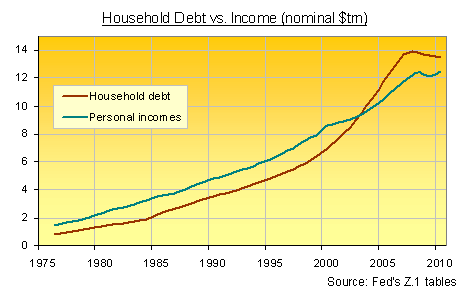
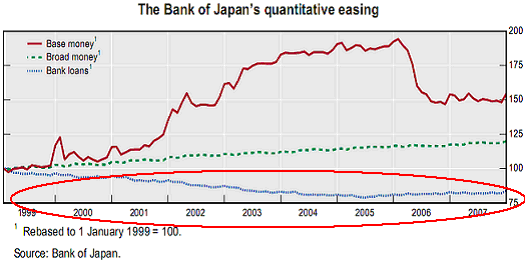
 Gainesville Coins provides
 Gold futures fell 1.2% as the dollar strengthened amid dimmed expectations for a Federal Reserve monetary stimulus. The dollar was hammered earlier this month on expectations the Fed will announce a second round of asset purchases in November that would flood the financial system with new dollars, but a Wall Street Journal report Wednesday said that the Fed over several months will purchase only a few hundred billion dollars worth of Treasurys, far from the more than $1 trillion some had expected…
 Earlier, bullion received a boost after a newspaper run by China's Ministry of Commerce said the country should significantly boost state gold reserves to a level equal to that held by the United States, citing a local researcher. UBS said in a note that "while the implications of potential QE and its size have monopolized market attention, the China report reminds us that the current mood amongst central banks, particularly in Asia, is to increase exposures to gold."…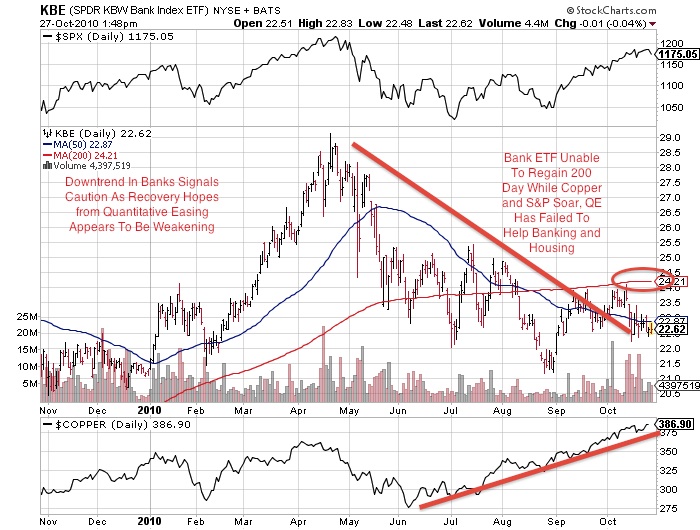
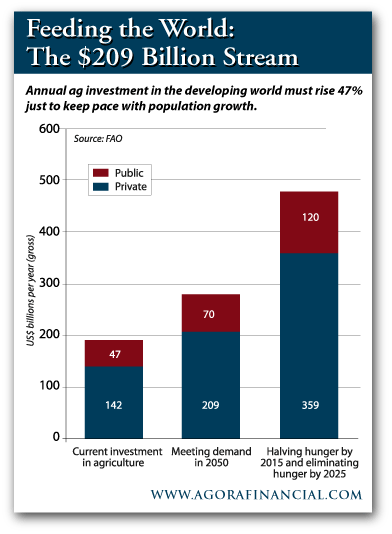

 When we first saw headlines about “zombies” disrupting the morning commute in New York and Washington, D.C., we did a double-take: Had the persistent warnings of our founder Bill Bonner about the perils of becoming
 We keep one nervous eye on the markets today… while casting another toward the Middle East.
 It turns out Israel woke up the next morning to the news that Iran had loaded fuel into the core of its first nuclear power plant.
 But Iran hawks in the White House worry the sanctions won’t deter Iran from pursuing nuclear weapons.
 Back in the markets, we see another rise in the dollar… and another fall in everything else.
 Thus, traders are in a tizzy: The dollar index has rallied to within spitting distance of 78. Gold has tanked $16, to $1,325. And the Dow has fallen below 11,100.
 Over the next seven days, barring the unforeseeable, every development in the markets -- major and minor -- will be gauged against how it will affect the Fed’s decision-making process, or lack thereof. Thus, this morning, we see two factors contributing to The Great QE2 Letdown:
 “By our count,” says Eric Sprott, of Toronto-based Sprott Asset Management, “no less than 23 separate countries have now intervened in the foreign exchange market in some way since Sept. 21, 2010. The goal for all is to increase the supply of their respective paper currencies in order to drive them down in value.”
 The former president of Argentina died this morning, an email from our globe-roaming editor Joel Bowman tells us. The event curiously drew “tweets” from our favorite South American dictator.
 For a class of assets that’s likely to put even a race car driver at a strip club to sleep, “rare earths” just won’t give up the headlines this week.
 The lawsuit trying to force the Federal Reserve to open its bailout books is headed to the Supreme Court.
 In a synchronistic development, the group Transparency International just released its annual ranking of nations based on how corrupt their governments are. For the first time, the United States has fallen out of the list of 20 least-corrupt nations, coming in at No. 22.
 Yikes… what a time this is: Currency markets on fire, traders on pins and needles for the Fed announcement and a midterm election that’ll change the shape of the Congress the next two years. This is exactly why we’re convening our Emergency Summit tomorrow.
 “I appreciate such knowledgeable opinion,” writes a reader getting off to a good start. She was pleased with yesterday’s reader reaction to the China rare earths controversy... but then takes a turn for the worse, from which our inbox never recovered this morning, as you shall see...
 “I would just like to know,” writes a reader who identifies himself as a disabled veteran, “the meaning of your writer who says, ‘There is going to be a change in this country that will be unbelievable to most, but in a perverse way. I can’t wait.’”
 And for the reader who said, “America has become a land of toddlers... let’s hope it doesn’t get to the tantrums stage,” we got this reply:
| You are subscribed to email updates from Gold World News Flash To stop receiving these emails, you may unsubscribe now. | Email delivery powered by Google |
| Google Inc., 20 West Kinzie, Chicago IL USA 60610 | |


No comments:
Post a Comment