


Gold World News Flash |
- Valentin Schmid reviews Jim Rickards' 'The New Case for Gold'
- Covert US Operations Undermine Brazil Olympics
- New Federal Budget Calls For Bank Bail Ins
- Hugh Hendry: "If China Devalues By 20% The World Is Over, Everything Hits A Wall"
- Five Years That Changed Silver Forever
- GERALD CELENTE: ASSESSING THE 2016 GLOBAL THREAT MATRIX
- Fiscal and Monetary Madness
- Another Volcker Moment? Guessing The Future Without Say's Law
- Brussels False Flag, Web Bot Predictions, Gold Silver & Bitcoin - Joe Tampa Interview Mar 26
- All Forms Of Government Is Slavery -- Mark Passio
- Michael Savage Trashes Ted Cruz Teaming Up with Glenn Beck on Border Relief
- JSMineset Gold About To Go Live!
- Macro Changes and Future Inflation Problems
- Market Price Discovery is Essential, It is The Nucleus of Capitalism and We Haven't Had it in Decades
- What to Watch For in Gold Price and Gold Stocks
- Warning: The US Economy Is Projected To Crash In The Next 2-3 Months: Jeff Nielson
- Who Sets the Gold Price?
- John Stossel ~ Lessons From Cuba
- Dangers of a Death Cult -- Frosty Wooldridge
- Jim Rickards New Case For Gold At the Foreign Correspondents Club of Japan
- International Silver IRA / Gold IRA
- Ted Butler: Five years that changed silver forever
- Gold Stocks Spring Rally
| Valentin Schmid reviews Jim Rickards' 'The New Case for Gold' Posted: 26 Mar 2016 09:23 PM PDT By Valentin Schmid Whether it's up or down today, gold is always a hot topic. If you say it has value or that it is money, you may even get ridiculed. This is a completely unedited excerpt of an email I received this morning from an undisclosed commentator on my recent interview with James Grant. Grant is in favor of a gold standard. "Mr. Grant would prefer a monetary system tied to the amount of gold dug out of the ground to one based on the untrammeled discretion of Ph.Ds. Thus comes his ascertaining 'failure of central bankers on the Ph.D. standard.' Grant wants gold rather than dollars to take to bed at nights ... something that the whole world's financial experts agree will never come to pass." Will it really never come to pass, though? To find out, we need some more solid logic and deliberation than baseless ad-hominem attacks, which also featured in this email but have no place in this article. The good news is that the author of international best-sellers "Currency Wars" and "The Death of Money," James Rickards, recently wrote a book that uses sound logic and historic precedent to refute the arguments against gold as money and present: "The New Case for Gold" (Portfolio Penguin, 2016). The other good news is that the book is easy to understand for the layman and relatively short. ... ... For the remainder of the commentary: http://www.theepochtimes.com/n3/2001426-book-review-the-new-case-for-gol... ADVERTISEMENT Buy metals at GoldMoney and enjoy international storage GoldMoney was established in 2001 by James and Geoff Turk and is safeguarding more than $1.7 billion in metals and currencies. Buy gold, silver, platinum, and palladium from GoldMoney over the Internet and store them in vaults in Canada, Hong Kong, Singapore, Switzerland, and the United Kingdom, taking advantage of GoldMoney's low storage rates, among the most competitive in the industry. GoldMoney also offers delivery of 100-gram and 1-kilogram gold bars and 1-kilogram silver bars. To learn more, please visit: http://www.goldmoney.com/?gmrefcode=gata Join GATA here: Mines and Money Asia http://asia.minesandmoney.com/ Mining Investment Asia http://www.mininginvestmentasia.com/ Support GATA by purchasing recordings of the proceedings of the 2014 New Orleans Investment Conference: https://jeffersoncompanies.com/landing/2014-av-powell Or by purchasing DVDs of GATA's London conference in August 2011 or GATA's Dawson City conference in August 2006: http://www.goldrush21.com/order.html Or a colorful poster of GATA's full-page ad in The Wall Street Journal on January 31, 2009: http://gata.org/node/wallstreetjournal Help keep GATA going GATA is a civil rights and educational organization based in the United States and tax-exempt under the U.S. Internal Revenue Code. Its e-mail dispatches are free, and you can subscribe at: To contribute to GATA, please visit: |
| Covert US Operations Undermine Brazil Olympics Posted: 26 Mar 2016 07:00 PM PDT from The Daily Bell:
Brazil is under covert attack from global elites using the US as a regional proxy, and now its upcoming Rio Olympics may be injured as a result. The results: possibly a reduced Olympics, even one where certain events are delayed or cancelled. Increasingly, the Olympics are being used to make political points. Russia, for instance, is currently banned from competing in Rio. A November 2015 World Anti Doping Agency (WADA) report that accused Russian sports authorities of institutional cheating generated the suspension. The region where the massive corruption scheme has been unearthed is the home of the upcoming summer Olympics and also includes a huge Trump project. However TIME magazine claims there is no evidence so far that the Trump project is part of the corruption. We've already written about the ever-growing Brazilian political and economic scandal HERE. Our conclusion is the scandal is being artificially expanded and elongated. Without overt and covert US involvement, the scandal would long since have died away – as it seems to touch virtually every major politician on either side of the aisle. |
| New Federal Budget Calls For Bank Bail Ins Posted: 26 Mar 2016 06:54 PM PDT The new budget that was introduced recently by the Liberal government in Canada is a complete failure and it paints a not so pretty picture of the future. Get ready for bank bail ins. The Financial Armageddon Economic Collapse Blog tracks trends and forecasts , futurists , visionaries ,... [[ This is a content summary only. Visit http://www.newsbooze.com or http://www.figanews.com for full links, other content, and more! ]]  |
| Hugh Hendry: "If China Devalues By 20% The World Is Over, Everything Hits A Wall" Posted: 26 Mar 2016 06:27 PM PDT Once upon a time Hugh Hendry was one of the world's most prominent financial skeptics, arguing with anyone who would listen that the status quo is doomed and that central planning will never work. Most famously, back in 2010 during a BBC round table discussion with Jeffrey Sachs and Gillian Tett when discussing Europe's crashing experiment with the single currency, he said that we should "purge this system of its rottenness. Let's take on a recession. It's going to be tough, people are gonna lose their jobs. They are going to lose their jobs anyway. We can spread this over 20 years, or we can get rid of it over 3 years" before concluding "I recommend you panic." Ultimately everyone did panic, which led to the single biggest episode of global QE and negative rates ever seen, resulting in ever louder speculation even among the most "serious" people that central bankers are now powerless. But perhaps most notably, Hendry was one of the biggest China bears, certain that the country's massive overcapacity, insolvency and bad debt problems will result in disaster (back then China only had about 200% debt/GDP, it has since risen to over 350%). His Chinese skepticism led to his fund generating a 40% profit by late 2011. And then after a poor two year performance spell, Hendry had a historic burnout and threw in the towel on bearishness, infamously saying he can no longer "look at himself in the mirror":
He proceeded to buy momentum stocks and 3D printer companies. Fast forward to the present, when countless hedge funds - key among them Kyle Bass' Hayman Capital and Mark Hart's Corriente - have become China megabears, expecting the country's financial collapse and trading it by shorting the Yuan expecting a massive Yuan devaluation. It is here that Hugh Hendry has once again proven contrarian, even if it means agreeing with the dominant textbook meme of the day, namely that China can contain its economic hard landing, and in his most recent interview with RealVision's Raoul Pal, he cautions against a Chinese devaluation saying that "tomorrow we wake up, I mean, I would jump out the hotel window if this was the scenario, but we wake up and China has devalued 20%. The world is over. The world is over." What makes this interview doubly ironic is not just that Hendry is wildly contradicting everything he himself believed in a few short years ago, but disagrees with his interview host himself - recall that one month ago, we showed an excerpt from a Raoul Pal interview in which he previewed "the Big Reset" and laid out how the Kondratieff Winter would unwind, one in which China would play a prominent part. Whether Hendry is right or wrong remains to be seen: for now he has the powerful People's Bank of China at his back which has been especially active recently especially after the PBOC stated recently it intends to crush all hedge funds who have shorted the Yuan even if it means slamming Chinese trade and the economy once again (as a reminder, one of the biggest reasons why China needs a weaker Yuan is not just the stronger dollar to which it is pegged but because its exports have been crashing against all of its trading partners making the need for a weak currency paramount). For now, as we showed just ten days ago, those short the Yuan have swung to wildly profitable to losing money as both the USD has slid and the Yuan has spiked, although both of these trades appear to be reversing now. Needless to say, Hendry disagrees with the China contrarians and believes that the way to fix the Chinese economy is through a stronger currency, even if there is no logical way how that could possibly work when China's debt load is 350% of GDP while its NPLs are over 10% and rising. So, borrowing form a favorite Keynesian trope, one where when the countrfactual to his prevailling - if incorrect - view of the world finally emerges, Hendry is convinced that a 20% devaluation would lead to global devastation; the same way if Paulson did not get Congress to sign off on his three page term sheet that would lead to the "apocalypse." Only unlike Paulson who only hinted at a Mad Max world, for Hendry the alternative to him being right is a very explicit doomsday scenario, as he explains in the following excerpt from his RealVision interview:
And while it is clear on which side of the Yuan Hugh is currently positioned (Hendry's Eclectica is down 2.1% through March 18 and -5.9% YTD) either directly or synthetically, we can't wait to see who is right in the end: China and its central bank (as well as Hugh Hendry) or reason and common sense (as well as some of the smartest hedge funds in the world). The RealVisionTV interview excerpt is below:
To view the full interview, subscribe to Real Vision Television, which offers Zero Hedge readers a 7-day free trial. |
| Five Years That Changed Silver Forever Posted: 26 Mar 2016 06:01 PM PDT How did JPMorgan come to acquire hundreds of millions of ounces of physical silver? by Ted Butler, Silver Seek:
What you will not hear is how a specific development has transpired over the past five years that ensures a coming explosion in the future price of silver beyond the most bullish predictions and optimistic upside targets. You're also not likely to hear that the stunning decline in the price of silver over the past five years was a deliberate feature of an unusually bullish development that promises to change forever the future price landscape.
While I have closely researched the silver market for more than 30 years, uncovering more original findings (including silver's price manipulation) than anyone, I fully admit that I did not immediately see the monumental change that began to occur five years ago. This astonishing development that had begun in 2011 did not come clear to me until late 2013. I discovered that the largest U.S. bank, JPMorgan Chase, began to accumulate massive amounts of physical silver starting in 2011 and has continued that accumulation to this day. All told, I believe JPMorgan has acquired somewhere between 400 and 500 million ounces, the largest privately held stockpile of silver in history. What this means is that the future price of silver is now destined to move far higher in price than anyone can imagine. I wasn't looking for something to come along that would supersede my already ultra-bullish outlook on silver, but that is what occurred. That's because the obvious motive JPMorgan has whenever it acquires a large investment position is to profit on that position to the greatest degree possible. And since JPMorgan is now in position to profit enormously when silver prices soar, that means anyone holding silver will profit as well. How did JPMorgan come to acquire hundreds of millions of ounces of physical silver? It was a circuitous route, beginning in the financial crisis of 2008 when JPMorgan took over a failing Bear Stearns, then the largest short seller in COMEX gold and silver futures contracts. JPMorgan stepped smoothly into Bear Stearns' role as the main silver and gold price manipulator and proceeded to drive the price of silver from $21 in March 2008 to under $9 through massive short sales on the COMEX. In the years that followed, JPMorgan continued its new role as the largest short seller in COMEX silver and reaped billions of dollars in ongoing profits by shorting silver on price rallies and buying back those short positions after it rigged the prices lower. With manipulative intent and practice, JPMorgan continued to make illicit profits on the short side of COMEX silver until late 2010. Then a developing physical shortage in silver drove prices to almost $50 by the end of April 2011. JPMorgan was not prepared for the developing physical shortage and the price run up nearly crippled the bank. That's when it dawned on JPM that it was on the wrong side (the short side) of silver and the bank resolved to get on the right side – the long side. But first, JPMorgan had to get off the short side. JPM did this by causing silver futures prices to plummet with the full consent of the COMEX and government regulators at the CFTC, a process that has continued to this day. JPM regained control of silver prices on May 1, 2011 and by driving prices sharply lower killed off the developing investment demand that was causing the physical shortage. But while JPMorgan regained control of silver prices on the COMEX, it could not buy as many futures contracts as it desired without causing prices to soar – it needed another angle. That other angle was for the bank to begin to buy physical silver while it continued to sell short COMEX paper futures contracts. This way, JPMorgan could have its cake and eat it too – continuing to profit on paper short sales while acquiring physical silver at the depressed prices it had created. I labeled JPMorgan's actions as the perfect crime in a public article in December 2014. image: oroyfinanzas.com |
| GERALD CELENTE: ASSESSING THE 2016 GLOBAL THREAT MATRIX Posted: 26 Mar 2016 05:20 PM PDT Gerald Celente joins Gary Franchi for an extended interview to decrypt the 2016 global threat matrix and how you and your family can navigate the madness. Strap in. The Financial Armageddon Economic Collapse Blog tracks trends and forecasts , futurists , visionaries , free... [[ This is a content summary only. Visit http://www.newsbooze.com or http://www.figanews.com for full links, other content, and more! ]]  |
| Posted: 26 Mar 2016 05:00 PM PDT by Gary Christenson, GoldSeek:
When central banks and politicians "manage" global currencies, we can expect: Exponentially increasing debt and currency devaluations
It has happened before and it will happen again… Last Century Madness:
Current Monetary Madness: Japan has created a national debt that exceeds 1,000 Trillion yen, about 250% of their GDP. According to the IMF, Japan's debt is "unsustainable." The US national debt (official only) currently exceeds $19 Trillion, up from $398 Billion in 1971, $5.6 Trillion in 2000, and $10.1 Trillion in October 2008. National debt has increased at a compounded (exponential) annual rate of about 9% per year since 1971. |
| Another Volcker Moment? Guessing The Future Without Say's Law Posted: 26 Mar 2016 04:05 PM PDT Submitted by Alasdair Macleod via GoldMoney.com, Some reflections to read over the Easter holidaysWith Japanese and Eurozone interest rates becoming increasingly negative, and the Fed backing off from at least some of the planned increases in the Fed funds rate this year, economists are reassessing the interest rate outlook. Economists lack consensus, with some expecting yet more easing, based on the apparent collapse in cross-border trade last year. The fact that the Bank of Japan and the European Central Bank see fit to pursue increasingly aggressive monetary reflation is taken as evidence of underlying difficulties faced in these key economies. And lingering doubts about the sustainability of China’s credit bubble point to a high risk of a credit-induced slump in the world’s growth engine. Other economists, citing official US data and relying on the Fed’s statements, point out that unemployment levels have more than satisfied the Fed’s target, and that core inflation has picked up to the point where the Fed would be fully justified to increase interest rates over the course of this year, or risk overheating in 2017. These two opposite camps conflict in their forecasts, but where they fundamentally differ is in expectations of future economic growth. Far from displaying the highest levels of macroeconomic discipline, their diversity of opinion should alert us that their forecasts may lack sound theoretical foundation. The purpose of reasoned theory is to reduce uncertainty, not promote it. And the explanation for most of the failures behind modern macroeconomic thinking is the substitution of market-based economics by economic planning. The fact that today’s macroeconomics dismisses the laws of the markets, commonly referred to by economists as Say’s law, explains all. Subsequent errors confirm. The many errors are a vast subject, but they boil down to that one fateful step, and that is denying the universal truth of Say’s law. Say’s law is about the division of labour. People earn money and make profits from deploying their individual skills in the production of goods and services for the benefit of others. Despite the best attempts of Marxism and Keynesianism along with all the other isms, attempts to override this reality have always failed. The failure is not adequately reflected in government statistics, which have evolved to the point where they actually conceal it. So when an economist talks of economic growth being above or below trend, he is talking about a measure that has no place in sound economic reasoning, and that is gross domestic product. GDPGross domestic product in its current form is a relatively recent invention, dating from the 1930s. It was a gift to state-sponsored economists, needing a statistical justification for perfecting their theories of management of the economy. At last, here was a means of measuring the effects of economic policy, and therefore to adjust its future implementation based on evidence. The inconvenience of having to pander to markets had been dealt its final blow. Or so it was thought. GDP comes in various guises, but for our purposes, we can define it as the total monetary value of recorded and eligible transactions between two points in time. It tells you nothing more. It does not tell you anything about the reasons for those transactions. It tells you nothing about the future. Economists, politicians and laymen who talk of economic growth miss this point entirely. What GDP does tell you, and only tells you, is how much money has been spent on new products included in the statistics. And, assuming there is no change in the allocation of total spending between qualifying and non-qualifying items, the limitation is simply the total earnings and profits of individuals and businesses applied to the purchase of those products. This is not to be confused with economic progress, which is an entirely different thing. So ingrained is the belief that growth in GDP is a desirable objective, that it is akin to heresy to point out its utter meaninglessness. Assume for a moment that the GDP statistic captures all economic activity in a community, conventionally a nation state. Let us also assume that the quantity of money and credit is fixed, neither expanding nor contracting. And let us also assume that the trade balance is always zero. Therefore, all money earned, or made through profits, is spent or saved. Savings are deferred consumption, and through financial intermediaries, invested by businesses in capital goods and working capital. Logically therefore, the following must all be true:
It is now be obvious that GDP cannot change from one period to the next. An economy under these conditions is free to evolve, respond to consumer and investment demands, to progress, all with zero “growth”. Therefore, growth in GDP can only be an increase in the quantity of money deployed, and it cannot be anything else. This was broadly the situation when gold was money. Broadly, because there was also the cyclical effect of bank credit, which was formalised by the UK’s Bank Charter Act of 1844. At least it evened out over the cycle, and despite the ups and downs of bank credit, the British, European and American economies progressed, as consumers were offered and acquired improved goods throughout the industrial revolution, at least until the disruption of the First World War. This empirical example, which is fully explained by sound economic theory, confirms that the substantial leaps in economic progress at that time could not be quantified by GDP. This is not to say that disruption in the rate of economic progress does not cause changes in GDP in a fiat currency environment. But the relationship between changes in GDP and true progress is not predictable and is wholly unsuited as an economic indicator. Having established that GDP is simply a measure of the quantity of money spent on goods and services specified in the statistic, and nothing more, the basic goal of modern economists in a world of unlimited fiat currency is exposed as meaningless. This mistake is a source of considerable error, not only among policy-makers, but commentators as well. The Fed has accepted this by default, because it does not target GDP. Instead, it operates a dual mandate of price inflation and unemployment, as proxy indications for advance warning of when monetary stimulus should be moderated. And here again, the use of these statistics is no substitute for a proper understanding of price formation and the forces that drive employment. So we shall look at these in turn. InflationThis term is abused to the point where it is commonly assumed to mean a rise in prices. Rising prices may or may not be a symptom of inflation, which was originally defined by economists as a monetary phenomenon. To point out this confusion is important, because an expansion in the quantity of money and credit in fiat currencies is only one of three main factors that affect the overall price level:
In all three cases, the change in prices comes from the money side of transactions and not that of goods. This is the exact opposite of the common belief that money is an unchanging constant behind all transactions, having a valid objective-exchange value, and that inflation is rising prices of goods. We have collectively taken the past attributes of gold as money, and applied them without modification to modern fiat currencies. It is illogical to regard the declining purchasing power of a fiat currency as only a long-term effect. The Fed’s open market committee is targeting an inflation rate of 2%, by which the members mean that they will attempt to achieve an outcome, through monetary policy, whereby prices expressed in dollars will rise by that amount. The correct description of their objective is they seek to reduce the dollar’s purchasing power in a controlled fashion. In pursuing this objective, they rely on the quantity theory of money, which was devised when gold was money, and is applied without modification for current fiat monies. In other words, ignoring inter-temporal factors, they assume there is sufficient correlation between changes in the quantity of money and credit, and the overall price level for the purposes of monetary policy. The relationship was broadly true in the days when gold was money, because its common role as money extended beyond national boundaries. Any tendency for changes in preference for or against it, varying its purchasing power in any one location, were therefore restricted by arbitrage. This cannot be true of a fiat currency, whose value as money is contained by national boundaries. In this case, changes in the relative preference expressed by consumers between money and goods are potentially the most important variable affecting the purchasing power of money, as described above. Attempts to manage the decline in a currency’s purchasing power are sure to fail, if only because it is not consumer preferences that are being targeted. If central bankers have missed this point, so have all the economists and commentators employed by the investment banks and by the media. Central bankers and economists fail to appreciate how changes in the general price level arise from the money side. The use of a statistic, such as the consumer price index, for inflation targeting is deceiving, misleading policy makers into believing that they can override Say’s law. UnemploymentSo far, we have addressed fallacies behind the concept of GDP, the real objective of monetary policy, and also inflation statistics, which are one of the two proxies for GDP targeting the Fed uses. That leaves unemployment. Unemployment is an unnatural condition, because in accordance with the indisputable theory of the division of labour, people work to acquire from others their needs and wants. This is why without government intervention the unemployment problem tends to resolve itself. In the US, even a cursory analysis of the composition of unemployment statistics and the application of seasonal adjustments show them to be wholly unfit for purpose. But to complain about the veracity of unemployment statistics is to miss the more important point, that it is the contribution of the labour force to economic progress that really matters. When intelligent, skilled individuals are working as waiters and barmen, we can say the economy is in transition, because an increase in employment of this nature is probably temporary. When it has a sense of permanency about it and people are not retraining for newly-demanded skills, the economy is not evolving as it should, and progress is being blocked. Unemployment, being an unnatural condition, is fundamentally a problem created by the state. The state sets employment legislation, favouring the employee, with the consequence that employers are deterred from taking on staff they would otherwise freely employ. Many states tax employment, raising the cost of it above its use-value. France’s experience is a good example, where high employment taxes and restrictive regulation has resulted in permanently high unemployment rates. Central banks seek to counter these disadvantages by reducing the purchasing power of the currency, in an effort to encourage employers to employ, which has become the basic justification for monetary intervention. It amounts to beating everyone with a stick, then offering a monetary carrot while continuing to weald the stick. If the state stopped interfering with the labour market, unemployment would not be anything other than a short-term problem. Even if the state only desisted from further intervention, unemployment would tend to fall, because of the need and desire for people to work. It is natural for the unemployment rate to drift lower over time, so the fact that unemployment statistics, imperfect though they are, have reached the Fed’s target after eight years of zero interest rates, should not be a surprise. ConclusionThe likelihood that some economists will be right about the future course of interest rates should not be taken as evidence of their grasp of economic theory. However, we can conclude that the recent fall in the dollar’s purchasing power, expressed in energy and commodity prices, has reduced the likelihood of negative interest rates. If the dollar’s purchasing power falls much further, the market will expect higher interest rates, so this then becomes the likely outcome. The question will then arise as to whether or not the Fed will dare to raise interest rates sufficiently to stabilise the dollar's purchasing power. If the Fed delays, it could find itself facing a difficult choice. The level of interest rates required to stabilise the dollar’s purchasing power would not be consistent with maintaining the record levels of debt in both government and private sectors. Thirty-six years on it could be another Volker moment. It would surely be a mistake to think that Fed officials are unaware of this danger, and would recommend early action to avoid this outcome. Alternatively, if the dollar’s purchasing power begins to rise over the rest of this year, the Fed can defer interest rate rises, and perhaps introduce negative rates. It would be the most desired outcome for the Fed, being a continuation of indefinite economic suppression with a lower likelihood of financial crisis. It is changes in the dollar’s purchasing power that really matter, and forecasting interest rates based on GDP, consumer prices, or employment levels not only relies on bad, incomplete and misleading statistics, it has no basis in sound economic theory. It’s the course of markets, encapsulated in Say’s law, that should guide economists and commentators alike. |
| Brussels False Flag, Web Bot Predictions, Gold Silver & Bitcoin - Joe Tampa Interview Mar 26 Posted: 26 Mar 2016 03:29 PM PDT TOPICS IN THIS INTERVIEW:01:50 Brussels Attack a False Flag?08:00 Immigration Crisis, Europe then US08:40 Chicago Potential False Flag Involving COMEX10:30 Gold & Silver in 2016, Rally & Price Manipulation13:35 Web Bot Predictions in Gold/Silver19:00 Derivatives Collapse, Interest Rates to... [[ This is a content summary only. Visit http://www.newsbooze.com or http://www.figanews.com for full links, other content, and more! ]]  |
| All Forms Of Government Is Slavery -- Mark Passio Posted: 26 Mar 2016 01:21 PM PDT problem is, no contingency plans, for like minded people to band together for resistance. The Financial Armageddon Economic Collapse Blog tracks trends and forecasts , futurists , visionaries , free investigative journalists , researchers , Whistelblowers , truthers and many more [[ This is a content summary only. Visit http://www.newsbooze.com or http://www.figanews.com for full links, other content, and more! ]]  |
| Michael Savage Trashes Ted Cruz Teaming Up with Glenn Beck on Border Relief Posted: 26 Mar 2016 10:00 AM PDT Aired on July 21, 2014 - Michael Savage Trashes Ted Cruz Teaming Up with Glenn Beck on Border Relief The Financial Armageddon Economic Collapse Blog tracks trends and forecasts , futurists , visionaries , free investigative journalists , researchers , Whistelblowers , truthers and many... [[ This is a content summary only. Visit http://www.newsbooze.com or http://www.figanews.com for full links, other content, and more! ]]  |
| JSMineset Gold About To Go Live! Posted: 26 Mar 2016 09:35 AM PDT Dear Friends, Bill Holter and I have decided to officially launch our new premium website. This deluxe version of JSMineset will be known as JSMineset Gold. By subscribing, you will have access to additional content and up to the minute interviews and Q&A sessions. The premium version of JSMineset is advertisement free and will include... Read more » The post JSMineset Gold About To Go Live! appeared first on Jim Sinclair's Mineset. |
| Macro Changes and Future Inflation Problems Posted: 26 Mar 2016 09:13 AM PDT Ever since beginning the ‘Macrosom‘ theme in July (and updating it here), NFTRH has been managing macro changes that would positively affect the gold sector, and quite possibly have a negative effect on broad stock markets. Early on in the precious metals bear market we noted they were “in the mirror” and opposite the stock market, which on the post-2011 cycle has been the beneficiary of the Fed’s inflation, instilling confidence in their policies by conventional market participants (after all, the right assets were going up on this cycle). In August, it appeared that the first real thrust in the direction of our macro theme kicked in as the stock market cracked. |
| Posted: 26 Mar 2016 09:09 AM PDT FRA Co-founder Gordon T. Long is joined by Michael Pento in discussing topics from the government debt problem, the current boom in gold and the outlook of the dollar. Mr. Pento is the President and Founder of Pento Portfolio Strategies (PPS). PPS is a Registered Investment Advisory Firm that provides money management services and research for individual and institutional clients. Mr. Pento is a well-established specialist in the Austrian School of economics and a regular guest on CNBC, Bloomberg, FOX Business News and other national media outlets. His market analysis can also be read in most major financial publications, including the Wall Street Journal. He also acts as a Financial Columnist for Forbes, Contributor to thestreet.com and is a blogger at the Huffington Post. |
| What to Watch For in Gold Price and Gold Stocks Posted: 26 Mar 2016 09:04 AM PDT Gold and gold stocks finally showed a bit of weakness during the holiday shortened week. Gold had its biggest weekly loss in months, losing 3% to $1217/oz while the miners (GDX, GDXJ) declined about 5%. Silver lost 4%. If weakness in Gold and gold stocks continues then we should turn our attention to technical support and see if it will hold. Gold and gold stocks are trading above the 400-day moving average which has been key resistance since 2011. Holding that support in the days or weeks ahead would offer confirmation that a new bull has started. |
| Warning: The US Economy Is Projected To Crash In The Next 2-3 Months: Jeff Nielson Posted: 26 Mar 2016 09:03 AM PDT Today's Guest: Jeff Nielson Jeff Nielson is co-founder and managing partner of Bullion Bulls Canada; a website which provides precious metals commentary, economic analysis, and mining information to readers/investors. Jeff originally came to the precious metals sector as an investor around the... [[ This is a content summary only. Visit http://www.newsbooze.com or http://www.figanews.com for full links, other content, and more! ]]  |
| Posted: 26 Mar 2016 09:00 AM PDT How is the price of gold established? Scratching the surface, the answer seems obvious: it is a result of a free interplay of market forces. However, there is no single gold market; the yellow metal is traded in many places. Who then sets the price of gold? London or New York? Which of them shapes the price discovery process? What is the relationship between the LBMA Gold Price and Comex futures and spot prices? As the chart below shows, there is an almost perfect correlation between London and New York prices; but which leads the dance? |
| John Stossel ~ Lessons From Cuba Posted: 26 Mar 2016 08:52 AM PDT Ron Paul 'Constitutionally Correct' 2012. The Financial Armageddon Economic Collapse Blog tracks trends and forecasts , futurists , visionaries , free investigative journalists , researchers , Whistelblowers , truthers and many more [[ This is a content summary only. Visit http://www.newsbooze.com or http://www.figanews.com for full links, other content, and more! ]]  |
| Dangers of a Death Cult -- Frosty Wooldridge Posted: 26 Mar 2016 07:42 AM PDT Jeff Rense & Frosty Wooldridge - Dangers of a Death Cult Clip from March 22, 2016 - guest Frosty Wooldridge on the Jeff Rense Program. The Financial Armageddon Economic Collapse Blog tracks trends and forecasts , futurists , visionaries , free investigative journalists , researchers... [[ This is a content summary only. Visit http://www.newsbooze.com or http://www.figanews.com for full links, other content, and more! ]]  |
| Jim Rickards New Case For Gold At the Foreign Correspondents Club of Japan Posted: 26 Mar 2016 07:00 AM PDT Le Cafe Américain |
| International Silver IRA / Gold IRA Posted: 26 Mar 2016 06:00 AM PDT Goldsilver |
| Ted Butler: Five years that changed silver forever Posted: 26 Mar 2016 12:39 AM PDT 2:40p ICT Saturday, March 26, 2016 Dear Friend of GATA and Gold: Silver market analyst, Ted Butler, who got to the rigging of the silver market even before GATA got to the rigging of the gold market, writes this week that JPMorganChase's long position in silver guarantees a price explosion eventually. Butler's commentary is headlined "Five Years That Changed Silver Forever" and it's posted at GoldSeek's companion site, SilverSeek, here: http://www.silverseek.com/commentary/five-years-changed-silver-forever-1... CHRIS POWELL, Secretary/Treasurer ADVERTISEMENT Buy precious metals free of value-added tax throughout Europe Europe Silver Bullion is a fast-growing dealer sourcing its products from renowned mints, refiners, and distributors. Because of a legal loophole that will close soon, you can acquire the world's most popular bullion coins free of value-added tax throughout the European Union. You can collect your order in person at our headquarters in Tallinn, Estonia, or have it delivered in any of the 28 EU countries. Europe Silver Bullion is owned and operated by North American and European experts in selling, storing, and transporting precious metals. We have an extensive product inventory of silver, gold, platinum, and palladium, and our network spans the world. Visit us at www.europesilverbullion.com. Join GATA here: Mines and Money Asia http://asia.minesandmoney.com/ Mining Investment Asia http://www.mininginvestmentasia.com/ Support GATA by purchasing DVDs of GATA's London conference in August 2011 or GATA's Dawson City conference in August 2006: http://www.goldrush21.com/order.html Or a colorful poster of GATA's full-page ad in The Wall Street Journal on January 31, 2009: http://gata.org/node/wallstreetjournal Help keep GATA going GATA is a civil rights and educational organization based in the United States and tax-exempt under the U.S. Internal Revenue Code. Its e-mail dispatches are free, and you can subscribe at: To contribute to GATA, please visit: |
| Posted: 25 Mar 2016 09:16 AM PDT The red-hot gold stocks have spent most of March in consolidation mode, grinding sideways near their 2016 highs. Interestingly this month’s rally pause is par for the course seasonally in gold-stock bull markets. Like gold itself, this sector tends to slump to a seasonal low in mid-March before embarking on a strong spring rally in April and May. With gold stocks back in a bull, their seasonality warrants consideration. Seasonality is the tendency for prices to exhibit recurring patterns at certain times during the calendar year. While seasonality doesn’t drive price action, it quantifies annually-repeating behavior driven by sentiment, technicals, and fundamentals. We humans are creatures of habit and herd, which naturally colors our trading decisions. The calendar year’s passage affects the timing and intensity of buying and selling. |
 The Rio Olympics Could Be the Next Victim of Brazil's Corruption Scandal … A massive corruption investigation is reaching into construction deals done for the already troubled Rio 2016 … Two multibillion dollar projects linked to the troubled Rio 2016 Olympic Games have been drawn into Brazil's ever-growing corruption scandal. -TIME
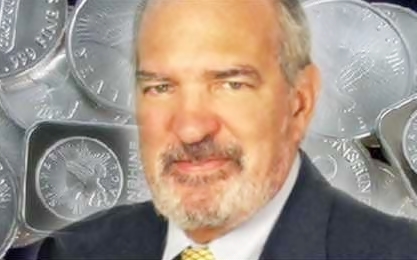 Ask any casual observer of the silver market what happened to the metal over the past five years and you're likely to hear how the price fell from nearly $50 in April 2011 to under $14 at recent lows – a stunning decline of 70%. If you inquire further, you'll likely hear a number of reasons for the decline, ranging from an oversupply of the metal, a strengthening dollar, falling inflation rates, and the collapse of the commodities markets.

| You are subscribed to email updates from Save Your ASSets First. To stop receiving these emails, you may unsubscribe now. | Email delivery powered by Google |
| Google Inc., 1600 Amphitheatre Parkway, Mountain View, CA 94043, United States | |

No comments:
Post a Comment