


Gold World News Flash |
- The Divergence Between Debt and Gold
- More Imaginary ‘Terrorism’
- Nigel Farage On The Chilling Truth About Putin, Europe & Gold
- The Collapse of the Concept of Fiat Currency
- FX Markets In Turmoil On Scottish Vote & Japan Economic Downgrade
- DOLLAR COLLAPSE: Largest Event in Human History | Duane & Hoffman
- When War Erupts Patriots Will Be Accused Of Aiding "The Enemy"
- FX Markets In Turmoil On Scottish Vote & Japan Economic Downgrade
- BofA Says Bearish Bonds Means Bullish Greenback
- Why Global Growth Is So Disappointing
- The Next Crisis - Part 1
- Gold Price Bounced Smartly Up Off the Low
- Monetary Policy Weighs on Precious Metals
- Gold Daily and Silver Weekly Charts - Making Room for Alibaba - For All That
- A Comprehensive View On Europe’s Geopolitical Situation
- Elliott Wave Projection For Gold Price And US Dollar
- Bad News for Gold from the Strong Dollar
- Global Leaders Lying About The State Of The Economy, As Gold Is On Sale
- US Dollar Index Still Rising
- What The Next Crisis Will Look Like
- A Major War Is Now Raging In The Gold Market
- Silver Price: A Collapse and a Rally
- Silver Buyers Keep Stacking And Demand Higher Despite Falling Prices
- Monetary Policy Weighs on Gold and Silver
- Gold Price Hammered by Strong U.S. Dollar
- Gold Prices Erase All 2014 Gains on US Fed Outlook, Asian Demand "Good" as Shanghai Launches FTZ Trading
- China opens gold market to foreigners amid price ambition
- Gold and silver end game is here, Embry tells USA Watchdog
- Super-rich rush to buy 'Italian Job'-style gold bars
- Miner raises funds to dig for gold in Ireland
- Super-rich rush to buy 'Italian Job' style gold bars
- "Gradual" Gold Bull Market to Start 2015, "Next Floor at $1200" Says GFMS
- It’s Not the Fed Taking Gold Down, but the Vote in Scotland
- Apples to Apples in Mining Analysis
- All Hail the US "Petro-Dollar"
- Silver: A Collapse and a Rally
- The Hottest Trend in Technology Today
- Jim Bianco on Gold, Oil, and Why the Market Doesn't Care About Geopolitical Events
| The Divergence Between Debt and Gold Posted: 19 Sep 2014 12:00 AM PDT Le Cafe Américain | ||||||||||||||||||||||||||||||||||||||||||||||||||||||||||||||
| Posted: 18 Sep 2014 11:00 PM PDT by Jeff Nielson, Bullion Bulls Canada:
Note one thing which the Liars of the Corporate media are NEVER able to supply as they fabricate these imaginary “terrorist plots”: a rational MOTIVE. Exactly how does “beheading” some anonymous, Australian do ANYTHING to remove the Puppet Tyrants which the West has planted throughout the Muslim world…??? PLEASE: think when you read this nonsense. Because if you think, you will immediately reject these absurd “plots” — because they make absolutely no sense at all. | ||||||||||||||||||||||||||||||||||||||||||||||||||||||||||||||
| Nigel Farage On The Chilling Truth About Putin, Europe & Gold Posted: 18 Sep 2014 09:02 PM PDT  On the heels of the Scottish vote, today MEP Nigel Farage spoke with King World News about the chilling truth regarding Europe, Putin, Russia and the Ukraine crisis. Farage also discussed what is happening with the gold market and his speech in the European Parliament. On the heels of the Scottish vote, today MEP Nigel Farage spoke with King World News about the chilling truth regarding Europe, Putin, Russia and the Ukraine crisis. Farage also discussed what is happening with the gold market and his speech in the European Parliament.This posting includes an audio/video/photo media file: Download Now | ||||||||||||||||||||||||||||||||||||||||||||||||||||||||||||||
| The Collapse of the Concept of Fiat Currency Posted: 18 Sep 2014 08:40 PM PDT from perpetualassets: | ||||||||||||||||||||||||||||||||||||||||||||||||||||||||||||||
| FX Markets In Turmoil On Scottish Vote & Japan Economic Downgrade Posted: 18 Sep 2014 08:10 PM PDT from ZeroHedge:
| ||||||||||||||||||||||||||||||||||||||||||||||||||||||||||||||
| DOLLAR COLLAPSE: Largest Event in Human History | Duane & Hoffman Posted: 18 Sep 2014 07:55 PM PDT IN THIS INTERVIEW:- Silver market below $19 ►0:54- Gold sentiment nearly as low as the beginning of the gold bull market ►4:45- State secessions coming? ►8:19- "The largest event in human history" ►15:11- Retirement account vs physical precious metals? ►19:15 [[ This is a content summary only. Visit http://www.GoldSilverNewsBlog.com or http://www.newsbooze.com or http://www.figanews.com for full links, other content, and more! ]]  | ||||||||||||||||||||||||||||||||||||||||||||||||||||||||||||||
| When War Erupts Patriots Will Be Accused Of Aiding "The Enemy" Posted: 18 Sep 2014 07:17 PM PDT Submitted by Brandon Smith via Alt-Market blog, In modern times, war is never what it seems. Mainstream historians preach endlessly about grand conflicts over territory, resources, political impasse, and revenge, but the cold hard reality is that all of these “motivations” are actually secondary, if they are relevant at all. As I and many analysts have covered in great detail in the past, most wars are engineered wars. International elites have long seen advantages in pitting two seemingly opposed societies or ideologies against each other while playing both sides of the chessboard to direct events towards a predetermined and desired outcome. This is undeniable historical fact. If you really want to understand the past, or the intricacies of war, you will be lost unless you accept that most conflicts are designed; they are not random or natural. They are not extensions of man's mere greed or ignorance. They are not products of resource scarcity (a common and overly simplistic misconception used to mislead activists). They are not inevitable developments of “overcomplexity” according to the Rand Corporation's “linchpin theory” propaganda. They are not the product of too much national sovereignty or individual liberty. No; traditional war is a tool for the organized ruling class. It always has been and always will be. This tool is used to turn the world into a vast petri dish, a bubbling beaker in a laboratory where social engineers hope to destroy the “old” to create something “new”. At its most paramount of purposes, the despair and terror of war is intended to change the fundamental collective unconscious of nations and populations. It is meant to change our beliefs, our morals, our principles. It is meant to mutate us into something else, something malleable and terrible, something we would not normally recognize. As we continue into the latter quarter of 2014, exactly 100 years after the first world war, I see much evidence to suggest we are headed for yet another engineered conflagration. It may be a war of terrorism and attrition between the U.S. and ISIS (an insurgency funded and trained by Western covert agencies). It may be a war of economic escalation between the West and the East (even though Russia is just as much a pawn of international banks like Goldman Sachs as any country in the West). Or, we may see all out global holocaust depending on the level of desperation and insecurity amongst the elites. What each liberty movement proponent, constitutionalist, and freedom fighter around the world needs to understand is that while we will be told that the enemy is Muslim extremism, or Russian aggression, or eastern economic subversion, the real target will be YOU. The advantages of war at this time would be immense to the globalist establishment, but the primary function will be the ability to co-opt, demonize, and/or wipe out legitimate opposition during the fog and confusion. If you have ever noticed that each consecutive presidential administration seems progressively more hell-bent than the last to sabotage our infrastructure and push us towards endless confrontation, you might want to ponder the possibility that the New World Order does not end with the fall of the American empire - it BEGINS with the fall of the American empire. Imagine a war in which a tangible and immediate threat is presented against the U.S. Not a CNN covered carpet bombing campaign in some poverty stricken hole on the other side of the world, but a real war right on our very own doorstep. Now, consider how this would psychologically affect the general public, and twist the principles of the average person. Imagine the kinds of morally relative impasses people would be willing to accept when they are truly afraid. Imagine what they would sacrifice to quell that fear. Imagine who they would sacrifice. In such an environment, the concepts of free speech and personal dissent are rarely respected. In war, dissent is often labeled treason, and free speech is labeled a peacetime privilege. The truth becomes a nuisance, or even a threat to the endurance of the state and by extension the collective. The same argument always arises – the argument that the survival of the group outweighs any disagreement the individual may have with the objectives of the group's leadership. In turn, calls for “unification” reach a religious fervor, regardless of whose benefit this unification ultimately serves. In the meantime, those who were tolerated as activists now become enemies of the state simply for doing what they have always done. The propaganda is already being put in place to assure the liberty movement is caught in the crossfire between the East and West. For years I have been warning readers about the false East/West paradigm and the directed build up to conflict with Russia and China with the goal of creating a rational historical narrative by which the dollar could be supplanted as the world reserve currency to make way for a long planned basket currency system under the control of the IMF and the Bank of International Settlements. During the crisis, Americans blame the East for the implosion of the dollar system rather than international and central bankers (the true culprits), and chaos ensues as the masses turn on each other while the elites sit back in relative comfort, letting us destroy each other. Another aspect of this plan, I believe, involves the hijacking of the image of the liberty movement. The liberty movement is essentially the most dangerous unknown element on the elite's global chessboard. In fact, because we understand that international financiers and central bankers are the real enemy, we have the ability to leave the chessboard entirely and play by our own rules. Widespread economic or military conflict provides an opportunity to neutralize liberty activists who might turn revolutionary. Recently, I came across an article from 'The Atlantic' titled 'Russia And The Menace Of Unreality'. Now, some alternative analysts would read this article and immediately shrug it off as yet another attempt by the Western media machine to propagandize against Russia. Though their motivations are genuine, these analysts would be cementing the delusion that Russia is the “good guy” and the U.S. is the ever present “bad guy”. The Atlantic piece is a far more intricate manipulation than they would be giving credit for. In the past I have pointed out that Russian government funded media outlet RT in particular is in fact an ingenious psy-op, not only run by the Russian government as The Atlantic asserts, but influenced by the globalist establishment. It is effective mainly because most of what it reports is absolutely true. What it does NOT report is where we must focus. This might be confusing unless you grasp how false paradigms work. The conflict dynamic between the U.S. and Russia is no more real than the conflict dynamic between Democrats and Republicans. If you understand that this time around, America is scripted to lose its pro-wrestling match with Russia, everything else comes into focus. As far as RT is concerned, here's the problem: 1) First, RT is relentless in its coverage of corruption within Western governments, but rarely if ever reports anything negative on the Russian establishment. I'm sorry, but Russia's economic policy is dominated by central bankers who are advised directly by Goldman Sachs and who are avid members of the IMF and the BIS. The RDIF (Russian Direct Investment Fund), manages billions in investments in Russia, works closely with Goldman Sachs, and the managing director of this institution is former IMF head and SDR advocate Dominique Strauss-Kahn. Vladimir Putin has openly called for the IMF's Special Drawing Rights basket currency to replace the dollar, demanded that Ukraine take loans from the IMF denominated in SDR's, and has a long time friendship with Mr. NWO himself, Henry Kissinger. The only “conflict” Russia has expressed with the globalists at the IMF is that it wishes to be more fully included in the SDR basket system, which has been the planned intention of the IMF anyway. All of this, and RT doesn't have any hard questions about the loyalties of its own government? 2) Second, the fact based reporting of RT, at least when it comes to the Western side of the globalist establishment, mimics the alternative journalism growing in popularity in the the U.S. At bottom, RT is a newcomer to the world of independent news analysis, but it is ultimately NOT independent, and most of what they do amounts to little more than regurgitated content from more original and insightful Western independent media sources. The Atlantic article above, very cleverly, makes it sound as if it is we witless writers in America who are getting all our info and inspiration from RT. And this is where we begin to see the true nature of the psy-op... 3) Third, because RT mimics our independent media so well, it appeals greatly to a large percentage of liberty movement activists, who tend to forget or are simply unaware that Russia is as much a part of the problem as our own government. There are many liberty proponents who will angrily defend Russia and RT without question simply because RT “speaks their language”, so Russia must be on their side. This was not as pressing an issue two years ago, when conflict with Russia was a ridiculous notion for many people. But today, conflict with Russia, at the very least on an economic scale, is an inevitability. If you read in full the linked Atlantic article, the narrative that is being constructed is clear – the establishment hopes to rewrite the history and image of the liberty movement by painting us as dupes radicalized by Russian propaganda, rather than being the originators of our own grassroots movement with our own philosophy and methodology. Through this, they take away our ownership of our own cause. Also, by blindly supporting Russia or the Russian government without considering their participation in the globalist run crisis, liberty activists help reinforce the soon-to-be manufactured lie that we are nothing but puppets of the Putin regime. If we publicly question the intentions of the Russian government as much as we question our own government, we can help to defuse this lie before it can take hold. How the mainstream views us or portrays us is not as important as how we view and present ourselves. If we become starry-eyed cheerleaders for Russia, we will lose our sovereign identity as a self motivated counter-movement to the NWO. If you believe like I do that a second American revolution is coming, identity means everything, and it should not be cast aside lightly. Mark my words, one day our activism will be deemed treason, and our rebellion will be marginalized as a servant satellite astro-turf movement organized by Russian interests. We can't prevent how they will label us, but we can make it clear now that we work for NO government, by refusing to disregard the trespasses of any government, even those who appear to support our position. Tied closely to the Russian issue, the liberty movement also has the return of the “White Al-Qaeda” meme to look forward to. I have seen a tidal wave of mainstream news stories lately preaching the horrors of a white middle-class America secretly swarming to the Syrian border to join ISIS. The narrative is setting the stage for false flag terrorism, to be sure, but it is also injecting the theme that anyone who is anti-establishment could be a terrorist. Not an American bred “terrorist” with his own American-centric ideology fighting against what he sees as a despotic government, but a mercenary extremist desperate for any cause, latching onto the concept of Muslim caliphate because he is bewildered, angry, or insane. In this way, the elites hope to kidnap the liberty culture's identity, rewriting us into their theater not even as “misguided” freedom fighters, but rather, as pawns of a foreign cabal. Many people could be convinced to join a fight by Americans for Americans, no matter how the mainstream portrays our character. But, no one wants to join a group of traitors and sellouts fighting for theocratic Muslim monsters, or covert Russian agencies after the East is blamed for the collapse of the dollar. The complete erasing and rewriting of a movement's identity through false association is advanced 4th generation warfare, and it can only be accomplished in the midst of overwhelming catastrophe. The masses have to be so afraid they begin to lose memory of what life was like before, let alone who stood for what cause. The public is already quite familiar with the idea that governments buy revolutionaries and create rebellions, just as our government has done in Syria. Why wouldn't they believe that the Liberty Movement's rebellion is also actually bought and paid for by some outside enemy, rather than real Americans battling for real freedom? This examination is not meant to undermine the positive accomplishments made so far by liberty advocates. We have come a long way. However, if we underestimate or oversimplify the task we have ahead of us, or the well calculated strategies of the internationalists, then we are destined to fall into the trap of becoming yet another element of another false paradigm ourselves, and we will lose. This is a war on all fronts; informational, emotional, intellectual, psychological, spiritual, and physical. It goes well beyond any war ever fought in generations past. If individuals and the activist movement at large do not have the insight and courage to commit fully to combat on every level, they should throw in their bug-out bags and give up now. If they do have the courage, then it is surely time to begin... | ||||||||||||||||||||||||||||||||||||||||||||||||||||||||||||||
| FX Markets In Turmoil On Scottish Vote & Japan Economic Downgrade Posted: 18 Sep 2014 06:36 PM PDT Cable (GBPUSD) is surging as the first results from the Scottish Referendum hit and a resounding "No" to independence appears confirmed. Almost back to pre-Scottish-Vote-fears level (1.66), cable is up 250 pips in the last 24 hours (its biggest move in over a year). GBP is also strengthening notably against EUR (2-year highs), CHF (2 year highs) and of course the JPY (6 year highs) as the Japanese government admits defeat and downgrades its economic assessment for the first time in 5 months (hence sell JPY as they 'must' do more money printing (despite Japanese businesses all pushing for a stronger JPY). FX markets are extremely volatile this evening and implicitly, equity futures are clanging around cluelessly. The USD Index is flat (gaving retraced all FOMC gains). Chaos in FX tonight...
GBPUSD is retracing all the Scottish vote fears...
And GBPJPY punched through 180 (as USDJPY broke 109)
As USDJPY is up 2 big figures from pre-FOMC...
After Japan downgraded its economic assessment for the first time in 5 months...
Abe, you have a problem (as the Sont CEO recently explained)
Because nothing says Buy The F##king Parabolic Meltup in today's new normal like an economic downgrade...
Gold is also sliding (except in JPY terms of course) - driven more by Japan than Scotland
Charts: Bloomberg | ||||||||||||||||||||||||||||||||||||||||||||||||||||||||||||||
| BofA Says Bearish Bonds Means Bullish Greenback Posted: 18 Sep 2014 06:24 PM PDT US Treasuries are breaking out, according to BofAML's Macneil Curry, which is very supportive of the US dollar (especially against the JPY and EM FX). The only caveat, he warns, keep a close eye on fixed income volatility...
Via BofAML, 5yr Treasuries are breaking out. This is supportive of the US $ against ¥ US Treasuries yields are on the move, resuming their long term uptrend.
Our focal point for this move is 5yr yields which have broken out from a 1yr range trade and resumed their long term bear trend, targeting 2.025%/2.055% and eventually 2.18%/2.25%. This should help propel the US $ higher and maintain its long term bull trend.
Looking at a weekly chart of the US $ Index, the trend is on track for long term targets between 89/91, particularly as the weekly ADX is breaking out through 6yr trendline resistance (meaning the trend has further room to run). In the very short term, however, we could see a period of pause in both the US $ bull trend and the advance in treasury yields as 2yr yields are testing a confluence of l/term support at 58.9bps/61.1bps and the US $ Index is testing the Jul'13 highs at 84.75. But we must stress that this should be a temporary pause and ultimately a buying opportunity. In particular we think that the next bout of US $ strength is likely to come against EM FX.
$/¥ should also continue to appreciate, with a break of 108.95/109.00 exposing 12yr trendline resistance at 109.31 ahead of 110.67 and eventually beyond. One CAVEAT keep a close eye on FI Vol.
A spike in the MOVE Index could lead to a nasty corrective snap back, albeit a snap back to buy $/¥; especially if 107.49/50 holds. | ||||||||||||||||||||||||||||||||||||||||||||||||||||||||||||||
| Why Global Growth Is So Disappointing Posted: 18 Sep 2014 05:49 PM PDT Submitted by Salient Partners' Epsilon Theory blog, Take your instinct by the reins The politics of dancing The fault, dear Brutus, is not in our stars, but in ourselves. In theory there is no difference between theory and practice. In practice there is. 

Year after year we have had to explain from mid-year on why the global growth rate has been lower than predicted as little as two quarters back. … Indeed, the IMF's expectation for long-run global growth is now a full percentage point below what it was immediately before the Global Financial Crisis. … But it is also possible that the underperformance reflects a more structural, longer-term, shift in the global economy, with less growth in underlying supply factors. There is one great mystery in the high falutin’ circles of the Fed, ECB, and IMF today. Why is global growth so disappointing? There are different variations on this theme – why aren’t businesses investing more? why aren’t banks lending more? – but it’s all one basic question. First the Fed, then the BOJ, and now the ECB have taken superheroic efforts to inflate financial asset prices in order to bridge the gap between the output shock of 2008 and a resumption of normal economic growth. They’ve done their part. Why hasn’t the rest of the world joined the party? The thinking was that leaving capital markets to their own devices in the aftermath of the Great Recession could result in a deflationary equilibrium, which is macroeconomic-speak for falling into a well, breaking your leg, at night, alone. It’s the worst possible outcome. So the decision was made to buy trillions of dollars in assets, forcing all of us to take on more risk with our money than we would otherwise prefer, and to jawbone the markets (excuse me … “employ communication policy”) to leverage those trillions still further. All this in order to buy time for the global economic engine to rev back up and allow private investment activity to take over for temporary government investment activity. It was a brilliant plan, and as emergency intervention it worked like a charm. QE1 (and even more importantly TLGP) saved the world. The intended behavioral effect on markets and market participants succeeded beyond Bernanke et al’s wildest dreams, such that now the Fed finds itself in the odd position of trying to talk down the dominant Narrative of Central Bank Omnipotence. But for some reason the global economic engine never kicked back in. The answer? We must do more. We must try harder. And so we got QE2. And QE3. And Abenomics. And now Draghinomics. We got what we always get in the aftermath of a global economic crisis – a temporary government policy intervention transformed into a permanent government social insurance program. But the engine still hasn’t kicked in. So now villains must be found. Now we must root out the counter-revolutionaries and Trotskyites and Lin Biao-ists and assorted enemies of progress. Because if the plan is brilliant but it’s not working, then obviously someone is blocking the plan. The structural villains per Stanley Fischer (who is rapidly becoming a more powerful Narrative voice and Missionary than Janet Yellen): housing, fiscal policy, and the European economic slow-down. Or if you’ll allow me to translate the Fed-speak: consumers, Republicans, and Germany. These are the counter-revolutionaries per the central bank apparatchiks. If only everyone would just spend more, why then our theories would succeed grandly. Hmm. Maybe. Or maybe what we want and what we need has been confused. Maybe the thin veneer of ebullient hollow markets has been confused for the real activity of real companies. Maybe the theatre of a Wise Man with an Answer has been confused for intellectually honest leadership. Maybe theoretical certainty has been confused for practical humility. Maybe the fault, dear Brutus, is not in external forces like Republicans or Germans (or Democrats or Central Bankers), but in ourselves. Let me suggest a different answer to the mystery of missing global growth, a political answer, an answer that puts hyper-accommodative monetary policy in its proper place: a nice-to-have for vibrant global growth rather than a must-have. The problem with sparking renewed economic growth in the West is that domestic politics in the West do not depend on economic growth. What we have in the US today, and even more so in Europe (ex-Germany), are not the politics of growth but rather the politics of identity. At the turn of the 20th century the meaning of being a Democrat or a Republican was all about specific economic policies … monetary policies, believe it or not. You could vote for Republican McKinley and ride on a golden coin to Prosperity for all, or you could vote for Democrat Bryan and support silver coinage to avoid being “crucified on a cross of gold.” 
Today’s elections almost never hinge on any specific policy, much less anything to do with something as arcane as monetary policy. No, today’s elections are all about social identification with like-minded citizens around amorphous concepts like “justice” or “freedom” … words that communicate aspirational values and speak in code about a wide range of social issues. Don’t get me wrong. There’s nothing inherently bad or underhanded about all this. I think Shepard Fairey’s “HOPE” poster is absolute genius, rivaled only by the Obama campaign’s genius in recognizing its power. Nor am I saying that economic issues are unimportant in elections. On the contrary, James Carville is mostly right when he says, “It’s the economy, stupid.” What I am saying is that modern political communications use neither the language nor the substance of economic policy in any meaningful way. Words like “taxes” and “jobs” are bandied about, but only as totems, as signifiers useful in assuming or accusing an identity. Candidates seek to be identified as a “job creator” or a “tax cutter” (or accuse their opponent of being a “job destroyer” or a “tax raiser”) because these are powerful linguistic themes that connect on an emotional level with well-defined subsets of voters on a range of dimensions, not because they want to actually campaign on issues of economic growth. Candidates have learned that while voters certainly care about the economy and their economic situation, the only time they make a voting decision based primarily on specific economic policy rather than shared identity is when the decision is explicitly framed as a binary policy outcome – a referendum. Even there, if you look at the ballot referendums over the past several decades (Howard Jarvis and Proposition 13 happened almost 40 years ago! how’s that for making you feel old?), the shift from economic to social issues is obvious. 
Both the Republican and the Democratic Party have entirely embraced identity politics, because it works. It works to maintain two status quo political parties that have gerrymandered their respective identity bases into a wonderfully stable equilibrium. The last thing either party wants is a defining economic policy question that would cut across identity lines. But until the terms of debate change such that an electoral mandate emerges around macroeconomic policy … until voters care enough about Growth Policy A vs. Growth Policy B to vote the pertinent rascals in or out, despite the inertia of value affinity … we’re going to be stuck in a low-growth economy despite all the Fed’s yeoman work. I know, I know … what blasphemy to suggest that monetary policy is not the end-all and be-all for creating economic growth! But there you go. At the very moment that elections hinge on the question of economic growth, we will get it. But until that moment, we won’t, no matter what the Fed does or doesn’t do. What reshapes the electoral landscape such that an over-riding policy issue takes over? Historically speaking, it’s a huge external shock, like a war or a natural disaster, accompanied by a huge political shock, like the emergence of a new political party or charismatic leader that triggers an electoral realignment. In the US I think that the emerging appeal of national Libertarian candidates (all of whom, so far anyway, have the last name Paul) is pretty interesting. The 2016 election has the potential to be a watershed event and set up a realignment, if not in 2016 then in 2020, which hasn’t happened in the US since Ronald Reagan transformed the US electoral map in 1980. And yes, I know that the conventional wisdom is that a viable Libertarian candidate is wonderful news for the Democratic party, and maybe that will be the case, but both status quo parties today are so dynastic, so ossified, that I think everyone could be in for a rude awakening. It’s a long shot, to be sure, mainly because the US economy isn’t doing so poorly as to plant the seeds for a reshuffling of the electoral deck, but definitely interesting to watch. What’s not a long shot – and why I think Draghi’s recently announced ABS purchase is a bridge too far – is a realigning election in Italy. I like to look at aggregate GDP when I’m thinking about the strategic interactions of international politics, but for questions of domestic politics I think per capita GDP gives more insight into what’s going on. Per capita GDP gives a sense of what the economy “feels like” to the average citizen. It addresses Reagan’s famous question in the 1980 campaign with Jimmy Carter: are you better off today than you were four years ago? It’s a very blunt indicator to be sure, as it completely ignores the distribution of economic goodies (something I’m going to write a lot about in future notes), but it’s a good first cut at the data all the same. Here’s a chart of per capita GDP levels for the three big Western economies: the US, Europe, and Japan. The Great Recession hit everyone like a ton of bricks, creating an output shock roughly equal to the impact of losing a medium-sized war, but the US and Japan have rebounded to set new highs. Europe … not so much. Let’s look at Europe more closely. Here’s a chart of the big three continental European economies: Germany, France, and Italy. Germany off to the races, France moribund, and Italy looking like it just lost World War III. I mean … wow. More than any other chart, this one shows why I think the Euro is structurally challenged. First, why in the world would Germany change anything about the current Euro system? The system works for Germany, and how. Alone among major Western powers, the politics of growth are alive and well in Germany. “But Germany, unless you lighten up and embrace your common European identity, maybe this sweet deal for you evaporates.” Ummm … yeah, right. The history books are just chock-full of self-interested creditors with sweet deals that unilaterally made large concessions before the very last second (and often not even then). Second, why in the world would Italy accept anything about the current Euro system? The system fails Italy, and how. The system fails other countries, too, like Spain, Portugal, and Greece, but these countries are in the Euro by necessity. Their economies are far too small to go it alone. Italy, on the other hand, is in the Euro by choice. Its economy is plenty big enough to stand on its own, and with a vibrant export potential, an independent and devalued lira is just what the doctor ordered to get the economic growth engine revved up. Short term pain, long term gain. Why doesn’t Italy bolt? Lots of reasons, most of them identity related. Also, let’s not underestimate the power of cheap money to keep the puppet-masters of the Italian State in a Germany-centric system. The system may fail Italy as a whole, but if you’re pulling the strings of the State and can borrow 10-year money at 2.5% to keep your vita nice and dolce … well, let’s keep dancing. Still, nothing focuses the electoral mind like the economic equivalent of losing a major war. At some point in the not so distant future there will be an anti-Euro realigning election in Italy. And that will wake the Red King.
In the meantime, Draghi will go forward with his ABS purchase scheme, a brilliant theory that will deliver frustratingly slim results quarter after quarter after quarter. Until the politics of growth are embraced outside of Germany, European banks will remain reticent to lend growth capital to small and medium enterprises. Until the politics of growth are embraced outside of Germany, large enterprises with plenty of cash and access to cheap loans will remain reticent to invest growth capital. Maybe a little M&A, sure, but no new factories, no organic expansion, no grand hiring plans. The thing is, Draghi knows that he’s pushing on a string with the ABS program and that growth won’t return until the fundamental political dynamic changes in France in Italy, which is why he is calling both countries out by name to institute “structural reforms”. But in typical European fashion this entire debate is Mandarin vs. Mandarin, with almost all of the proposals focused on regulatory reform rather than something that must be hashed out through popular legislation. So long as economic policy reform is imposed from above … so long as we are engaged in modern-day analogs of Soviet Five-Year Plans … I believe we will remain stuck in what I call the Entropic Ending – a long gray slog of disappointing but not catastrophic aggregate economic growth. That’s not a terrible environment for stocks, certainly not for bonds, and the alternative – economic reform based on the hurly-burly of popular politics, is almost certain to be a wild ride that markets hate. But to get back to what we need (real growth) rather than what we want (higher stock prices) this is what it’s going to take. Elections always matter, but in the Golden Age of the Central Banker they matter even more. | ||||||||||||||||||||||||||||||||||||||||||||||||||||||||||||||
| Posted: 18 Sep 2014 04:45 PM PDT The present global financial ‘crisis’ began in 2007-8. It is not nearly over. And that simple fact is a problem. Not because of the life-choking misery it inflicts on the lives of millions who had no part in its creation, but because the chances of another crisis beginning before this one ends, is increasing. What ‘tools’ - those famous tools the central bankers are always telling us they have – will our dear leaders use to tackle a new crisis when all those tools are already being used to little or no positive effect on this one? I think it is worth remembering how many financial crises we have had since the economy became globally interconnected and since we began the deregulation of finance and the roll back of all Great Depression safeguards under Reagan and Clinton. It’s also worth noticing that the causes and pattern of the various crises have an unpleasant ring of familiarity about them – as in – the bank lobbyists making sure nothing gets learned and nothing gets changed. In the 80′s there were four financial crises: The Latin American crisis caused by those countries borrowing and the global banks agreeing to lend them far too much (too much lending to people who couldn’t afford it – check), the American Savings and Loan (S&L) crisis when American S&L’s made too many bad, long-term and leveraged loans relying on rolling over and over short-term loans to fund it all (reliance on short-term liquidity to cover massive loan books of dodgy loans – check) , and the 1987 Stock market crash when the system of global debt had its first major modern global paroxysm (systemic contagion – check) . And before the dust had even settled from that we had the Junk Bond collapse ( Too much junk – check. $400 billion in junk bonds were issued in 2013 alone). In the 90s there were two more crises (if one ignores the Mexican currency devaluation): The Asia currency crisis (a replay of the Latin Crisis with the same global banks doing the same lending to different corrupt or stupid leaders who agreed to loans on behalf of people who couldn’t afford to pay back – ie nothing learned at all - check) and the Dot Com bubble (valuations way above reality fueled by cheap money and lax lending – check). I think that’s most of the kinds of greed fueled idiocy accounted for. If you line up the S&L, the Junk Bond and the Dot Com bubble, America has had a major home-brewed financial crisis every ten years. If you consider that none of these events happened in isolation nor limited their effects to the country of origin then we have to conclude that the global financial system is prone to crises. You can, if you see the world through resolutely libertarian glasses, blame everything on interfering governments – it matters little. The fact remains that the system as is, is unstable and run by the myopic, the greedy and the corrupt. Where they draw their salary, which side of the revolving door they happen to be on, on any day seems to me irrelevant. The worst of them don’t understand and are easily bought. The best have no concern for anyone or anything beyond their next bonus. And here we are being led by them. Of course saying another crisis is coming is like saying we are due a large earthquake in Southern California. True, but it doesn’t mean one is going to happen tomorrow. What I think it does mean is that we should be thinking what our leaders, what the people they work for – the global overclass – might already have in mind or have already put in place, for what they want done next time. I think it would be foolish to imagine they have not thought about it and are not putting in place the things which will close off some futures and force us into others that they prefer. They have so very much to lose and so very much more they want to gain. The next crisis. To know what the next crisis might look like we first have to look at the conditions today that will form its starting point. Necessarily everything from here on is speculation, nevertheless even when we can’t know what people will do and what ‘events’ will overtake us, we can, I think, discern quite a bit of the general topography, the landscape, of the future. The first thing we should bear in mind is that however it starts, the next crisis will be another debt-crisis like the current one. This is because debt is now the global currency and global financing mechanism. Once it starts, however, one thing will be very different from the last time – this time nearly all nations are already heavily indebted. Last time they were not. And this is what changes everything for the over-class. Contrary to the endless misinformation repeated at every juncture by austerity politicians and bankers alike, the debt load of most nations at the beginning of the present crisis was not already out of control before the banks blew up.
The green bars are debt as percentage of GDP before the bank bail outs and the blue bars are after. These are official Eurostat figures. Notice Ireland. Its debt to GDP was down at 27%. The ONLY thing that altered between 2007 and 2010 was the bank bails outs. Ireland’s ENTIRE debt problem is due to bailing out private banks and their bond holders. Britain’s debt almost doubled and again the ONLY thing that happened was bailing out the banks. The government claims that UK public debt was out of control due to spending on public services is just WRONG. UK government debt against GDP had not gone up in 7 years. Then when we bailed out the banks it nearly doubled. That is the fact as opposed to the propaganda of what happened and why. If you look a little more closely into the figures for government debt levels in Europe between 2000 and 2010 the fact is that all European nations apart from Portugal were either reducing their debt-to-GDP level or at least not allowing it to grow. Most of Europe was reducing government debt to quite manageable and historically low levels. Ireland’s debt was very low (27%). Take a good long look at those two bars for Ireland. Even Spain was bringing in more in tax than it was spending. Don’t take my word for it look at the figures yourself. Almost every European country was keeping debt to GDP even or going down – before the banks were bailed out that is. The exceptions, of course, were Greece and Italy whose debt was already very high even before they bailed out their banks. The sudden explosion of European sovereign debt is the direct and indisputable result of all our political parties deciding they would safeguard their mates’ and their own personal wealth (it is the top 10% who hold the bulk of their wealth in the financial products which would be destroyed in a bank collapse. NOT the rest of us!) by bailing out the private banks and piling their unpaid debts on to the public purse. So whatever the trigger of the next crisis may be, they know any solution which saves the wealth and power of the over-class will have to involve piling new, private-bank bad-debts on to already indebted sovereigns and that, our leaders must be keenly aware, will not be easy to force on an already angry public. They know a whole range of the assurances they might like to give us about what must be done when the next crisis hits and how those things will undoubtably save us, will not be so easy to shove down people’s throats. “So what,” I can hear the 1% saying, “can we do?” Here are some thoughts on what I think they can do, will do, are already begining to do and WHY they are doing them. The over-arching thought that I have, which shapes everything from here on, is that this crisis is no longer primarily financial; it is now political. Any solution, no matter for whose benefit, is beyond the scope of financial ‘reform’ but will depend on radical political change. In my opinion, the era of reformist politics is over. The questions are: radical change in which political direction? in whose hands? and for whose benefit? At the moment, I believe the radical thinking is almost all being done on the 1%’s side. They may talk about fixing, but what I think they mean is changing. When Obama spoke of change, he meant it. Just not primarily for you. The 1% are not stupid. They see the need for change and intend to control it. I think one of the cleverset things the 1% have done over the last few years is the way they have created a relentlless public discourse, via their paid political front-men and women and their media empires, to insist on the need to ‘fix’ and protect the system, and the extreme danger to us all should the system not be ‘saved’. This has served as a perfect cover for making sure that not enough people have noticed that the system is, in fact, being gutted and replaced by something that better serves the interests of the 1%. We have not been fixing the banks, we have been feeding them. So while the 1% are thinking ahead, too many of the 99% are still like rabbits in the headlights, mesmerized and paralysed. They have been told over and over that any radical change to our present financial and political system is impossible, and if tried, would only bring disaster upon us. The 1%, on the other hand, see clearly that the present system will bring disaster upon them if it is not changed radically. They can see that it must be almost done away with entirely – in all but name. The important thing for them is that the direction of radical change benefit them and that the 99% not even realise that it is happening. And so far it’s working – just. Just enough people continue, if grudgingly, to take refuge in a moribund political system made of parties and theories which date back to the Victorian age. The temporary triumph of the 1% is that despite the fact that no one would drive a Victorian car, nor wear Victorian shoes or clothes, they somehow feel there’s no choice but to rely on Victorian political institutions, parties and ideas. The good news is that the number who really believe this is dwindling and most of those who do, do so out of fear not faith. Which is why our present, 1% controlled politics, is increasingly about engendering fear rather than inspiring faith. Luckily truth has a wonderfully cleansing effect upon lies and fear. | ||||||||||||||||||||||||||||||||||||||||||||||||||||||||||||||
| Gold Price Bounced Smartly Up Off the Low Posted: 18 Sep 2014 04:14 PM PDT

The GOLD PRICE three day chart shows a bottom yesterday about $1,217 and another today about $1,216. Today the gold price bounced smartly up off that low at 9:30 to its high at noon. Traded above $1,225 rest of the day. Since human beings are social animals on a par with lemmings, it's monumentally tough to run contrary to the herd. However, it's precisely moments like this when most everybody is dead-dog sure things will continue forever that they turn and go the other way. Wouldn't surprise me if gold did that tomorrow. The SILVER PRICE plunge didn't come until today, when it hit a $18.30 low. But that low was a clean V-bottom. Both silver and gold prices are powerfully oversold, but have to snap back hard before anybody but me will pay attention. Silver needs to climb above $18.75 and gold over $1,250. Otherwise the erosion will continue. Call me crazy, but I'll still take gold and silver with 6,000 years to the fiat US dollar's four decades. Continuing our lesson in not panicking today, the markets beat us with a small stick. Stocks rose, still drunk on the FOMC's non-statement, while the dollar index backed off and silver and gold fell. I'm gonna tell y'all one thing: the wonder workers and magicians at the Fed have NOT repealed the law of gravity,. This will end badly for the US dollar and for stocks. The US dollar has been a completely unbacked fiat currency since August 1971; gold and silver have been money since memory runneth not to the contrary. Those who bet against history or gravity lose.
US dollar index gave back 36 of the 53 basis points it had gained yesterday, closing at 84.39. That changes nothing, initiates no corrections. Must fall below 84.20 to talk about such things. Remains painfully overbought. Euro rose 0.43% to $1.2919. Yen fell another 0.33% after gapping down. That looks like an exhaustion gap. Closed at 92c/Y100. 10 Year Treasury note yield rose 1.12% to 2.629% and nearly touched its 200 DMA above at 2.648%. Odd. Markets really think that Janet Yellum can simply begin raising rates when the Zero Interest Rate Policy is the linchpin of all wickedness the Fed has worked since 2008? Or, maybe they're just computer jockeys following momentum. I'm too big a hick to know the difference. Aurum et argentum comparenda sunt -- -- Gold and silver must be bought. - Franklin Sanders, The Moneychanger The-MoneyChanger.com © 2014, The Moneychanger. May not be republished in any form, including electronically, without our express permission. To avoid confusion, please remember that the comments above have a very short time horizon. Always invest with the primary trend. Gold's primary trend is up, targeting at least $3,130.00; silver's primary is up targeting 16:1 gold/silver ratio or $195.66; stocks' primary trend is down, targeting Dow under 2,900 and worth only one ounce of gold or 18 ounces of silver. or 18 ounces of silver. US $ and US$-denominated assets, primary trend down; real estate bubble has burst, primary trend down. WARNING AND DISCLAIMER. Be advised and warned: Do NOT use these commentaries to trade futures contracts. I don't intend them for that or write them with that short term trading outlook. I write them for long-term investors in physical metals. Take them as entertainment, but not as a timing service for futures. NOR do I recommend investing in gold or silver Exchange Trade Funds (ETFs). Those are NOT physical metal and I fear one day one or another may go up in smoke. Unless you can breathe smoke, stay away. Call me paranoid, but the surviving rabbit is wary of traps. NOR do I recommend trading futures options or other leveraged paper gold and silver products. These are not for the inexperienced. NOR do I recommend buying gold and silver on margin or with debt. What DO I recommend? Physical gold and silver coins and bars in your own hands. One final warning: NEVER insert a 747 Jumbo Jet up your nose. | ||||||||||||||||||||||||||||||||||||||||||||||||||||||||||||||
| Monetary Policy Weighs on Precious Metals Posted: 18 Sep 2014 02:51 PM PDT Background Gold has an inverse relationship with the US Dollar so when the dollar declines gold rises. The dollar is affected by monetary policy as decided by the various central bankers across the planet. We recently covered the effect of the European version of QE with an article entitled; ‘Why ECB QE Is Bearish For Gold Prices’ so today we will take a quick look at the ramifications for the precious metals sector emanating from the monetary policy meeting of the Federal Reserve held today. A brief overview of the Feds actions The two most important points to come out of today’s meeting were.... | ||||||||||||||||||||||||||||||||||||||||||||||||||||||||||||||
| Gold Daily and Silver Weekly Charts - Making Room for Alibaba - For All That Posted: 18 Sep 2014 01:35 PM PDT | ||||||||||||||||||||||||||||||||||||||||||||||||||||||||||||||
| A Comprehensive View On Europe’s Geopolitical Situation Posted: 18 Sep 2014 12:55 PM PDT This an excerpt from the latest Global Gold Outlook Report (full paper). Take a free subscription to receive similar updates in the future via e-mail: www.globalgold.ch. After the end of the cold war, the United States dominated world affairs for nearly twenty years. However, the situation of a unipolar world has changed since the financial crisis of 2008 to a now multipolar world that includes China, Russia, India, Brazil and South Africa. These powers are influencing and manipulating the conflict zones we have today to their advantage. By analysing and dissecting the issues concerning the major conflict zones on our world map, as well as illustrating the parties involved, this article will explain what political and strategic interests are at play and how the development in major hotspots shape the big picture. This will identify the geopolitical forces that affect our European continent and what future concerns and worries await us. Conflict zones in the world There are now five conflict zones that affect the geopolitical situation of Europe:
Gaza, Syria, Iraq and Afghanistan all belong to a region, which the former security advisor Zbigniew Brzezinski had named the Eurasian Balkans, which included the Middle East and Central Asia. So in fact, our world incorporates two big conflict zones. One is the crumbling structure of different states in the Eurasian Balkans. The second one is Eastern Europe, in which we now have Russia struggling to be recognized as a world power. The world's conflict zones in detail Let's start with Gaza. The conflict between Israel and Hamas is a direct function of the creation of the Jewish state in 1948 and the stateless status of the Palestinians. Hamas fired rockets of different ranges, mostly coming from Iran, against Israel. By firing these rockets, Hamas demonstrated its willingness to inflict damage on Israel. By responding with air and ground attacks against Gaza, Israel was pursuing the following objectives:
After the retreat of the Israeli army from Gaza, Hamas reactivated its launching of rockets against Israel. Now there is a truce, but how long will it be observed? The war in Syria has two origins: the geopolitical rivalries between Iran, Turkey and Saudi Arabia, and the dictatorship of the religious minority of the Alawites under the leadership of the al-Assad family ruling a Sunni majority. The ayatollahs of Tehran want to extend the country's sphere of influence. For this reason, they support the regime of the Alawites, an offshoot of the Seventh Shiite branch, in Syria. Turkey and Saudi Arabia feel threatened by such influence. They therefore seek to overthrow the Shiite regime in Syria and replace it with a Sunni one. This is also why Turkey is now supporting the opposition oriented towards the Muslim Brotherhood with weapons. Because of this situation, the Salafist jihadist Islamic State (of Iraq and the Levant), ISIS, could grow to the best-organized group in Syria. The situation in Iraq is similar: Under the leadership of their Caliph al-Baghdadi, ISIS has conquered the western part of Iraq! The Iraqi army now controls only the southern region of Iraq. The Peschmergas, the army of the Kurdish Republic, are fighting ISIS from their territory in the northeastern part of Iraq with the support of American airstrikes. The fighting between ISIS and the Iraqi army is mostly around Baghdad. ISIS' main objective appears to be to destroy the Iraqi government and its army. Like in Syria, there is no longer an identity of a state of Iraq. With the creation of the Caliphate, ISIS has changed the whole structure of Iraq and Syria that was built by the British and the French after 1918 and the partitioning of the Ottoman Empire. This leads us to question what the future holds, whether other states like Turkey, Iran and Saudi Arabia could fall and new states could be created based on different religions and ethnicities. It is expected that the USA and its allies will mostly retreat from Afghanistan by the end of this year. This will create a vacuum in large parts of Afghanistan, which the Taliban who mostly belong to the ethnicity of the Pashtuns and the Tajiks of the former Northern Alliance could fill up with their combatants. The security forces of Afghanistan are still too weak to control the whole country. Obama had previously announced the Americans would definitely leave by the end of 2016. If the Taliban could occupy the South of Afghanistan, the North and the West would belong to the Tajiks. Such a development could also destabilize Pakistan. With these ambitions in mind, the Pashtuns of Afghanistan and Pakistan could erect a new country, Great Pashtunistan. The Tajiks of Afghanistan and Tajikistan could unite, creating a Great Tajikistan. Closer to home, the territory of today's Ukraine had belonged to different larger countries. Until the middle of the 18thcentury, the Tatars, who were controlled by the Ottoman Empire, ruled the southern part. Western and northern Ukraine were part of the Confederation of Poland and Lithuania. Since Empress Catherine the Great, the East had belonged to Russia. With the definitive dissolution of the Confederation in 1795, the Hapsburgs could annex the western part and Russia the northern part. After the First World War, Poland annexed the West of Ukraine, which was a Hapsburg territory at the time. When Hitler and Stalin destroyed Poland in 1939, the West of Ukraine became attached to the Soviet Republic of Ukraine. Finally, Chruschtschow added the Krim. So in fact, today we have a country that is mostly divided between the West, which is Ukrainian and the East, which is Russian. The southern region belongs to Ukrainians, who in the past were greatly influenced by Russian culture. The struggle we see today could in fact end in the partition of Ukraine, which is certainly one of the strategic objectives of the Russian President Putin. The role of regional powers All these conflict zones are dominated by the rivalries and ambitions of different regional powers. In the Middle East the key players are Turkey, Iran and Saudi Arabia. In Gaza, Turkey and Iran are struggling to influence the military actions of Hamas. Iran is delivering long-range missiles to Hamas to target the southern part of Israel. Turkey and Qatar together have contact with the political wing of Hamas. Both countries are politically oriented towards the Muslim Brotherhood, which was crushed last year by the new regime in Egypt led by former Field Marshal al-Sisi. Meanwhile, al-Sisi's regime found strong political and financial support by Saudi Arabia and other Gulf states. In Syria, the al-Assad regime receives Iranian support. While Iran is allegedly sending Hezbollah combatants from Lebanon (Hezbollah belongs to the same Shiite sect as the Iranians), Turkey is providing military support to the moderate opposition of the Syrian Free Army against the regime. It is said, yet unconfirmed, that until last year Saudi Arabia was helping the Salafist opposition. Whether this includes ISIS is questionable. The Saudis face a challenge in that they seek both an anti-Assad Syria and an anti-Shiite regime in Iraq, and at the same time want more moderate Sunni regimes gaining ground by fighting jihadist forces such as al-Qaeda, ISIS included. However, the situation in Syria has changed. The moderates are controlling only a small part of the country, the regime is surviving and the Salafists like ISIS are in a strong position. If ISIS can really consolidate the Caliphate with part of Iraq and Syria, then ISIS will pose a great threat to the kingdoms of Jordan and Saudi Arabia. Meanwhile, Iran extends its support to the regime and army in Iraq, who also belong to the same Shiite sect, as Turkey promotes the interests of the Kurds in Northern Iraq. By so doing, Turkey serves the interests of the Kurdish population within its own borders and secures the supply of crude oil from the fields of Northern Iraq. Afghanistan is the focus of the regional powers Iran and Pakistan. On one hand, Iran is influencing and helping the Tajiks of the former Northern Alliance. On the other hand, Pakistan is doing the same with the Taliban who, as we said earlier, mostly belong to the ethnicity of the Pashtuns. However, both have different futures when it comes to the possible partitioning of Afghanistan. While Iran stands to benefit, this is not the case for Pakistan. The identity of Pakistan could be threatened by the creation of a Great Pashtunistan by the Taliban. Therefore, the regime and existence of the Pakistani Republic is at stake. The case of Ukraine is more complicated. Here we have the global powers struggling for influence in Europe. Smaller states like Poland and Lithuania are mostly interested in Ukraine's membership in the EU and NATO. The region's history and the geopolitical situation are motivating these two countries to play a bigger role in the region's political developments. On the other end we have Germany which still favours maintaining a good relationship with Russia. The role of Russia and the USA in these conflict zones In addition to the regional powers Iran and Turkey, Russia and the United States are in direct competition on having the farthest-extending and strongest political influence on the states of the Middle East, particularly since 2008, the year of the war in Georgia. If in the Middle East the USA is helping one side, Russia is supporting the other – it is a matter of balance of powers. At the same time, both have developed opposing blocs of regional powers. Syria is now the best example, which embodies the rivalries between the two superpowers in the Middle East. The USA is supporting Turkey and Saudi Arabia for their influence on the outcome of the war in Syria. Through its (indirect) support of the Syrian Free Army, the USA not only seeks to destroy the regime of Bashar al-Assad, but also to get Russia out of Syria altogether. By so doing, Russia will lose its foothold in the region. The most important difference between the politics and strategies of Russia and the USA are their geopolitical interests. Both seek to extend their own regional influence while diminishing that of the other. Iran is a pivotal issue. As Russia seeks to help Iran gain further regional power, the USA seeks to end this perspective. In Iraq we have a similar situation. Russia is sustaining Iran and the Shiite government in Baghdad. Because of Russia's involvement in this conflict, the USA is still reluctant to send fighter aircrafts and weapons to the government of Iraq. Now we find them supporting the Peschmergas (and in this way also the army of Iraq) by launching airstrikes against ISIS. Realizing the increasing geopolitical importance of the Middle East, Russia has high ambitions for greater influence on the region. Therefore, the USA's actions in the civil war in Iraq must come with great caution. Any wrong step could cause the loss of a critical Sunni partner, such as Saudi Arabia, to the Russian camp. Although it may be very unlikely to happen, the risk remains. In Afghanistan, however, the two superpowers see eye to eye on what is at stake. The Russians fear the takeover of the Taliban in the future. Therefore, they were willing to sell combat helicopters to the USA for the army of Afghanistan to fight the Taliban. Similarly, a year ago, Russia was supporting the Americans with the use of Russian territory for American logistics in Afghanistan. However, this phase of collaboration is now over. Ukraine set the scene of direct confrontation between Russia and the USA. While Russia supports the separatist movements with weapons and fighters, American Special Forces are advising the Ukrainian army in their engagement against the separatists. The USA has an interest in the membership of Ukraine in NATO and the EU, but Russia cannot accept such a possibility and is therefore destabilizing the country. With the war in Ukraine President Putin probably has the following strategic objectives:
The role of the EU Today, the EU is still only a political and economic union as it lacks a military instrument. Because of this situation, NATO is the military protection to the EU. Without NATO, the EU has no military power. In this sense, the foreign policy of the EU is not credible without NATO. That credibility is based on the military capacity to respond to an act of aggression against Europe. Because of the disarmament of different states in Europe like Germany after the end of the cold war, this capacity no longer exists. In the last 6 years Russia has expanded and modernized the conventional forces by increasing its defence budget. Therefore, what we have in Europe is a rather unique situation as NATO's deterrence capacity in relation to Russia diminished over time. NATO can no longer protect the small states in the Baltic region. For this reason the foreign policy of the EU has lost credibility. Social unrest On another level, the sanctions of the EU and the USA on Russia could lead to a recession of the economies in Europe. Such a recession will drive up unemployment rates in the EU, which will mainly affect the population under 25. In turn, the result could be social unrest, a danger that the mainstream media fails to address. At the same time, the sanctions of the EU still have very little influence on the strategy and politics of Russia. The breakdown of the limes and the jihadists In retrospect of the potential crisis in Europe, many of the Arab states in Northern Africa and the Middle East, which the British and the French created after 1918, are now breaking down. These states were the limes, which gave the European states the possibility to control and to influence the migration process from Africa and Asia to Europe for many years. Now the limes have broken down. In the next ten to twenty years the social, economic and demographic structure of Germany, France, Britain and other European countries will be affected by the influx of migrating Africans and Asians and therefore could completely change the social structure of Europe. The fact that the majority of this migrant population is coming from Muslim countries suggests there is a great probability that the next twenty years will witness the emergence of a Muslim majority in many European countries. The past decades of constant war and struggles in the Middle East region along with the accelerating religious war between the Sunni and the Shiite has and will lead to further radicalization of the masses. Europeans are becoming increasingly fearful of Muslims because of the negative and bad image of Muslims presented in the mainstream media. Moreover, the economic environment, which has already led to a staggering 30-60% youth unemployment rate in European nations, is further deteriorating. Negativity can only bring out more negativity and this will lead to additional tension in the Eurozone. While some are concerned that at some point many jihadists of European origins will come back from the battlefields in Syria and Iraq and be ready for action in Europe, one should never forget the factors that created this situation in the first place. The future of Europe will be determined by the ongoing conflicts in the Middle East and in Ukraine, by the migration of millions of people and by the threat of force by European jihadists. Because of all these factors, there is a possibility that the conflict in Ukraine and the future migration process could destabilize Europe. In fact, I believe that the Caucasian race, which has dominated the world since the 17th century, could disappear in Europe. In twenty years, there could be a new Europe with a strong relationship with Africa and Asia. The tradition of Europe, which was built up by Emperor Charlemagne, will no longer exist. This an excerpt from the latest Global Gold Outlook Report (full paper). Take a free subscription to receive similar updates in the future via e-mail: www.globalgold.ch. | ||||||||||||||||||||||||||||||||||||||||||||||||||||||||||||||
| Elliott Wave Projection For Gold Price And US Dollar Posted: 18 Sep 2014 12:34 PM PDT In this excellent market analysis, Trader MC points out that the current gold price, between $1192 and $1240, is trading at key levels. Patterns change with the psychology of the market and it is important to adjust in real time. He concludes that “the gold market structure should reveal itself very soon, we just have to be patient and let the market come to us.” The analysis is based on Elliott Wave patterns and market cycles. By Trader MC: Gold is now at a key juncture and it should reveal its price action structure in the coming weeks. The first chart is my main Elliott Wave count and shows a Double Three Corrective Pattern (W)-(X)-(Y) in process from the top in 2011. You can see that Gold is currently in a corrective channel and should end soon a Wave (ii) which is also composed of a Double Three Corrective Pattern. If that scenario plays out Gold should enter a Wave (iii) that should send it to around $1550 which would be the minimum target.
The next chart is a closer view of Gold that shows the projection of the corrective Wave (Y) within the Wave (ii). In case Wave (X) equals Wave (Y) Gold could reach $1192. Wave (Y) is also composed of three corrective subwaves a-b-c and if wave c has a Fibonacci connection with wave a (c = 1.618 x a) then Gold could reach $1217 which would be the extreme of Wave (ii).
The Elliott Wave Principle prepares us psychologically for the highest probable outcome but also alerts quickly when something is wrong in case we need to change our strategy. $1178 is a key level for my main count to play out but if this level is broken I will switch to the following bear count which shows an impulsive downmove in progress since 2011 top. An impulsive downmove is composed of 5 waves and Gold could currently be in the final Wave 5 as it broke down of a corrective Triangle Pattern which is characteristic of a Wave (4) (price action just broke down below point d at $1240).
If $1178 is broken we should see an acceleration move to the downside for Wave 5. On the following chart you can see different targets for Wave (5) using a Fibonacci projection of Wave (1) and Wave (3) from the top of Wave (4) as Wave (5) has usually a Fibonacci relationship with these waves. If this scenario plays out, the first possible target would be $1150-$1155 as it corresponds to 0.618 Fibonacci level from the low in 2008 to the top in 2011 and it also matches with 0.50 Fibonacci level of Wave (1). The second possible target would be around $1104-$1109 as it matches with the Fibonacci numbers 0.382 of Wave (3) and 0.618 of Wave (1). Lastly you can see that the next Fibonacci convergence zone targets are $1036-$1039 (0.50 of Wave (3) and 0.786 of Wave (1)) and $947-$964 (0.618 of Wave (3) and Wave (5) equals Wave (1)). US Dollar analysis It is also important to keep an eye on the Dollar structure as the Dollar Index has usually an inverse relationship with Gold (except in the 80′s when central planners did not create trillions of free dollars). On the long term US Dollar chart, readers can see that the Dollar is in a 30 years Wedge Pattern and has been forming a Triangle Pattern these last 5 years. This Triangle Pattern should be completed soon and a breakout either to the upside or to the downside should be very telling for the Gold Market structure. The current Wave (E) or d of the Triangle Pattern is composed of 3 corrective waves A-B-C and the Dollar Index should make soon a final Wave 5 up before reversing to the downside. The Dollar is also approaching key levels for its market structure. Check the two detailed Elliott Wave charts of the US Dollar here.
Cycles and market timing research > more info.
| ||||||||||||||||||||||||||||||||||||||||||||||||||||||||||||||
| Bad News for Gold from the Strong Dollar Posted: 18 Sep 2014 12:01 PM PDT Expect a drop to $1200 near-term, says a man who called the bull market in 2001... ERIC COFFIN is the editor of the HRA (Hard Rock Analyst) family of publications. With a degree in corporate and investment finance, plus extensive experience in merger and acquisitions and small-company financing and promotion, Coffin has for many years tracked the financial performance and funding of all exchange-listed Canadian mining companies, and has helped with the formation of several successful exploration ventures. One of the first analysts to point out the disastrous effects of gold hedging and gold loan-capital financing in 1997, he also predicted the start of the current secular bull market in commodities based on the movement of the US Dollar in 2001 and the acceleration of growth in Asia and India. Now Coffin tells The Gold Report how the continuing strength of the US Dollar is bad news for the price of gold, and believes that in the short term a price of $1200 per ounce is possible, though there is room now for an oversold bounce... The Gold Report: You told us last year you were "neutral" on the state of the US economy. Since then, the headline unemployment number has improved. Even so, as David Stockman, former director of the Office of Management and Budget, says, there have been no net new jobs created since July 2000, and jobs paying over $50,000 per year have disappeared by 18,000 per month since 2000. What is your view of the health of the US economy? Eric Coffin: I'm more positive than neutral these days, but I do agree somewhat with Stockman. As unemployment falls toward 6%, we would expect an increase in wage gains. But we're just not seeing that. And five years into the latest expansion, we're not seeing the economic growth spurts that tend to occur coming out of a really bad recession. I don't see how the US economy keeps reproducing the 4% growth of Q2 2014 if we don't see higher wage gains and higher paying jobs created. TGR: You've used the term "smack down" with regard to the recent falls in the gold price. What do you mean by this? Eric Coffin: It's a wrestling term and means being thrown to the mat. This is what has happened to gold time after time, after every uptrend. The current smack down is due more to strength in the US Dollar than anything else. Gold does trade as a currency sometimes and for the past few weeks it has held a strong inverse correlation to the US Dollar. I think physical demand will ultimately determine the price level, but ultimately it can be a long time when you're trading. TGR: Why isn't physical demand determining the price now? Eric Coffin: It's because of trading in the futures market. When somebody dumps 500 tons there, gold has to drop $200 per ounce. The futures market can overwhelm the physical market in terms of volume and often does. Most traders in the futures market (NYMEX or COMEX) are not buying gold and taking delivery. They are trading as a hedge, or just trading. The physical market, the place where people actually buy bullion, coins and bars, is not predominantly in London or New York but rather in China and India. And because of the smuggling that has arisen in India to circumvent increased tariffs, and imports moving to cities that do not release import statistics in China, it is difficult to know how much bullion Asia is buying right now. TGR: Large short-term trades in paper gold could be used to manipulate the market, and an increasing number of people believe gold is being manipulated downward in this manner. Do you agree? Eric Coffin: I'm not really a conspiracy guy. That said, when we see things like the sale in August of 400 tons in about 10 minutes, we have to wonder what's going on. Again, when Germany requests its gold from the US and is told delivery will take seven years, it makes you wonder how much of that gold has been hedged or lent already. TGR: Where do you see gold going for the rest of the year? Eric Coffin: I think we are going to be trapped in this currency trade cycle for a little while. The European Central Bank (ECB) cut its rates. One of its deposit rates is now negative. Mario Draghi, the president of the ECB, is talking about starting up quantitative easing. If that happens, or if traders believe it will, the Euro, which has already fallen from $1.40 to about $1.28 to the Dollar, could fall to $1.20 or $1.10. And this strengthening of the Dollar is not good for gold. The other factor of gold being traded on a currency basis is the possibility of Scottish independence, fear of which has already resulted in a significant decline in the British Pound. TGR: Will $1250 per ounce gold lead to gold miners suspending production? Eric Coffin: If gold stays at $1200-1250 per ounce for an extended period, there will be mine closures. Obviously, not all mines have the same costs, but the average all-in cost per ounce for gold miners is about $1200 per ounce. Already, some mines are high-grading to keep profit margins up. Most of the large miners have already cut exploration budgets pretty significantly. We can assume that the pipeline is going to get smaller and smaller when it comes to new projects, even high-quality projects. TGR: How badly will this gold price decline hurt the junior explorers? Eric Coffin: It's hurt a lot of them already. It's much more difficult to raise money than it was two or three years ago, although it's probably slightly better now than early this year. That could change on a dime, of course, if the gold price falls to $1200 per ounce or rises back through $1300 per ounce. Already, quite a few companies are keeping the lights on but not much else. We desperately need a few good discoveries – companies going from $0.20 to $5/share and getting taken out. TGR: You've been visiting mine sites in the Yukon. What do you like about this jurisdiction? Eric Coffin: It's a great area geologically, but it has some challenges. It can be an expensive place to work, so being close to infrastructure or designing an operation that doesn't require a huge amount of nearby infrastructure is critical. Power costs are a big item. There's no end of places in the Yukon where hydropower could be generated fairly cheaply, but that is not going to happen on a large scale unless the federal government steps up, and that would be nice to see. TGR: How does Alaska compare to the Yukon as a mining jurisdiction? Eric Coffin: They're similar in many ways. Alaska, like the Yukon, is not low-cost, but it is mining friendly and even farther down the road when it comes to settling aboriginal issues. The key to success in Alaska is being close to the coast or major population centers or infrastructure. TGR: How do you rate copper's prospects? Eric Coffin: There are several large producers that have either recently come onstream or will come onstream in the next few months. So copper is probably going to be in at least a small surplus for the next year or two. The price could fall back to $2.50-2.75/pound ($2.50-2.75/lb). I'm not terribly concerned about that. Copper should be fine in the long term and a good copper operation can make plenty of money at those prices. TGR: The bear market in the juniors is now 3.5 years old. Should investors expect a general upturn any time soon? Eric Coffin: I doubt it if you mean a broad market rise that lifts all boats. My expectation at the start of this year, which is looking fairly dodgy right now admittedly, was for a 30% TSX Venture Exchange gain for 2014. That is possible with only a small subset of companies doing very well, which is my expectation. Investors always want to look for the tenbaggers. It doesn't matter what the market is like and, obviously, potential tenbaggers often turn into actual one and a half or two baggers, which is just fine. You want to find the projects with the highest potential for resource growth or new discovery and management teams that know how to explore them and finance them on the best possible terms. That is the combination that gives you the potential biggest wins. TGR: Eric, thank you for your time and your insights. | ||||||||||||||||||||||||||||||||||||||||||||||||||||||||||||||
| Global Leaders Lying About The State Of The Economy, As Gold Is On Sale Posted: 18 Sep 2014 11:54 AM PDT Gold prices have begun this week on a slightly firmer note, reversing the trend of the previous six days, after physical buying emerged in Asia as well as some short covering ahead of a meeting of the U.S. Federal Open Market Committee meeting this week. Last week, gold came under selling pressure as prices fell below certain key technical levels triggering sell-stop orders which caused prices to fall to the $1230 an ounce handle in relatively thin volumes. By the end of the week, the price of the yellow metal settled at $1228.30 per ounce. The recent price drop can be attributed to traders on Comex who have a bearish view on gold due to the current U.S. dollar strength. And, the strength in the greenback has nothing to do with a vibrant economy and instead has everything to do with the weakness in the euro and the yen as economies in Europe and Japan plunge. Geopolitical tensions have now also become a distant second to central bank policies and the latest economic news. And, almost all the articles as well as radio and TV interviews about the gold market have nothing positive to say. After the ECB announced another round of stimulative monetary policies, the euro tumbled, and the U.S. dollar rallied to a 14 month highs. The U.S. Dollar Index has shot up 6% from its May low, an uncharacteristically strong move for a currency. This has weakened the gold price, since the two generally have an inverse relationship. And if the dollar is strong, maybe we should expect gold to be weak. As investors flock to the U.S. dollar on the premise that the U.S. Federal Reserve will raise interest rates earlier than expected, many other fiat currencies in addition to the euro and yen, got hammered last week. While the dollar index trades near the highest level since 2010, many emerging market currencies, for the most part having held their own, have now begun to show fragility. So far in September, the Brazilian real is down 4.4%, the Colombian peso 3.8%, the South African rand 3.2%, the Turkish lira 2.7% and South Korean won 2.1%. The rouble tumbled to a record low of 37.7265 per dollar and Russia threatened retaliation against the new round of sanctions imposed on it by the EU and U.S. Also, the Australian dollar has dropped 3.6%, the New Zealand dollar 2.1% and the Canadian dollar 1.9%. And, Brent crude fell to a two-year low, wheat to a 50-week low and gold to an eight-month low. Not only has gold come under pressure from the strengthening U.S. dollar, geopolitical tension surrounding Ukraine, which has been buoying up gold prices, appears to be easing. Prices spiked in July when a Malaysian passenger airplane was shot down in Eastern Ukraine, with that country accusing Russia of causing the crash. However, a ceasefire between the countries seems to be holding well, and the situation appears stable. In a new act of madness, and despite the ceasefire in Ukraine, the U.S and its Western counterparts have imposed another round of sanctions against Russia. Without presenting any convincing evidence, NATO and the US have repeatedly accused Russia of directly controlling the separatists and intervening in eastern Ukraine, recklessly raising the possibility of war between nuclear armed powers. Recently, the U.S Treasury Secretary said the following: Given Russia's direct military intervention and blatant efforts to destabilize Ukraine, we have deepened our sanctions against Russia today, in concert with our European allies. These steps underscore the continued resolve of the international community against Russia's aggression. What aggression is he referring to? In simple language what he means is that Russia isn't doing what the US and its Western European allies want it to do, and they are upset about it. So until Putin and Russia comply with their demands, more sanctions will come. While all these lies continue, the one thing that cannot be disputed is that Russia is the only country that has supplied any humanitarian aid to the innocent victims of this crisis. Maybe the U.S and its western allies are confusing this with military aid. After roughly five months of bitter fighting between Ukrainian government forces and pro-Russian rebel groups, the question is whether the ceasefire will last. Ukrainian forces and pro-Russian rebels have battled in eastern Ukraine since April, leaving more than 2,200 people dead, according to the United Nations. And, more than 330,000 people have now been displaced. While Ukraine together with the U.S. and its European allies continue to blame Russia for this crisis, the only country who has provided humanitarian aid is Russia. Something is amiss here, and it is obvious that the U.S. and Europe have a hidden agenda regarding Ukraine. (How come apart from RTV, no mainstream media is mentioning anything about this humanitarian aid provide by Russia?). While they try to make Russia look like the aggressor, they back Ukrainian President, Petro Poroshenko, who appears delusional or a good liar like most other politicians. On August 28, Poroshenko told members of the now G-7 that Russian forces had entered his country, and the conflict was worsening. He also accused Russia of using humanitarian aid as pretext for sending in the army. As to be expected when the Russian aid did finally arrived and no weapons or troops were found, Western media did not have another thing to say about this. Now, Ukraine's Prime Minister has accused Vladimir Putin of wanting to "restore" the Soviet Union and claimed both sides were “still in a state of war”. Speaking at a conference in Kiev, Arseniy Yatsenyuk claimed the Russian President wanted to "take the entire Ukraine", despite a cease-fire agreement existing between them. "He [Putin] cannot cope with the idea that Ukraine would be a part of a big EU family," Mr Yatsenyuk told the assembled politicians and business leaders on Saturday. "He wants to restore the Soviet Union." The Ukraine premier’s speech came shortly after a second convoy of Russian trucks rolled into rebel-held territory in the east of the country, reportedly filled with almost 2,000 tons of humanitarian aid. According to reports from one news agency about 250 trucks headed for the city of Luhansk, though numbers have not been officially confirmed. I wonder what government officials in Ukraine, Europe and the U.S are going to say about this latest convoy of aid. Maybe they will claim its carrying Bin Laden's armed cousins! Until I see Russian tanks cross over into Ukraine, I can't believe a word of this nonsense. But, more importantly it just goes to show how desperate governments have become when they propagate misinformation trying to beguile you into their way of thinking. The real enemy of the world is not Russia. And, the actions of these misinformed politicians in the U.S. and in Europe will only turn a potentially powerful friend into a very powerful enemy. And, the way I see things, it will hasten a move away from the dollar that's been stirring since the global financial crisis and be the catalyst to developing a more multicurrency world, or at least one that is not solely dependent on the U.S. dollar. Clearly, US dollar dominance is on the way out. As the dollar grows less and less crucial for trade, its value will fall. In recent developments China signed a bilateral currency swap agreement worth 150 billion yuan ($24.17 billion) with the Swiss central bank, which can invest up to 15 billion yuan in China's bond market. Last month, Russia announced that oil company Gazprom will accept roubles and yuan for crude oil deliveries. This will directly reduce dollar usage. And Gazprom isn't a small company—it made $2.4 billion last year, and production is growing. As more countries opt to use an alternative to the U.S. dollar, and as deflationary pressures persist in most Western economies, we will see further rounds of competitive currency devaluations by the leading central banks. This can only end in disaster for fiat currencies. The Shanghai Gold Exchange will launch its international board on Sep. 29 in the financial hub’s new free-trade zone; a widely anticipated move to open China’s tightly controlled gold market to foreign capital. The board is China’s bid to deepen its influence over the global gold market, where China is the biggest producer and consumer but sees itself as lacking clout in pricing. “This is our window to the world,” Shen Gang, the bourse’s deputy chief executive, said at an industry conference. Traders expect the international board will broaden the global use of the yuan and help to simplify how gold is brought into the country, though it is not likely to drastically loosen state control over gold trade flows. China exercises strict control over the amount of gold that can be brought into the country, and the Shanghai Gold Exchange is a unit of the People’s Bank of China, the country’s central bank. The exchange is also setting up a warehouse in Shanghai’s free-trade zone that can hold up to 1,000 tons of the yellow metal. It is hoping that regional countries, including those in Southeast Asia, will use the warehouse as a storage facility for gold trade flows. Meanwhile, the Singapore Exchange is planning to launch a gold contract for wholesalers in the next 1-2 months to meet demand in Asia. The contract will allow physical delivery within 2 days. In June the Singapore Exchange (SGX) indicated that their 1kg gold contract would probably be launched by September, but the launch date has now been pushed back to either October or November. The SGX is Singapore's securities and derivatives exchange and clearing and depository provider. The Singapore contract will be in lots of 25 kilograms, denominated in US dollars, and it will trade for three hours in the Singapore morning time. Singapore is 7 hours ahead of London and 12 hours ahead of New York, and 2.5 hours ahead of the Indian market, but is in the same time zone as both Hong Kong and Shanghai. Physical settlement is two days after trade date and consists of 99.99 purity 1kg gold bars that meet the approval of the Singapore Bullion Market Association (SBMA) good delivery list. This means that wholesalers will be able to gauge demand and supply of 1kg bars over the following week. China and India account for more than half of global gold consumption, but Asia still largely relies on the London fix for reference. Meanwhile, as long as the markets continue to believe that the world, specifically the US, is in full economic recovery and higher interest rates are just around the corner, gold will remain under pressure. Personally, I think the downside is limited and we are getting close to a bottom of this cycle. My message here is that while you have many reasons to sell your gold, don't. Gold is now on sale, and everyone wants to buy valuable assets when they're cheap. Bullion's current dip is a golden opportunity to buy low in order to sell high later. Technical analysis
The weekly charts show a major support level at around $1210/0z. – $1200/oz. I expect to see this support hold and then more consolidation before the next move upwards. | ||||||||||||||||||||||||||||||||||||||||||||||||||||||||||||||
| Posted: 18 Sep 2014 11:49 AM PDT When the you-know-what hits the you-know-where, people buy what the...? "WE CONTINUE to believe that we are moving into a 'strong US Dollar world'," wrote Louis-Vincent Gave, the investment strategist, in a recent note to his investors, says Chris Mayer in The Daily Reckoning.
I think there is a good case for a strong US Dollar for the rest of this year and into next. We'll look into the argument here and what its chief effect is likely to be. Gave's comments inspired me to set down my own. In his note, Gave shared a chart showing the Dollar Index since circa 1985. The Dollar Index measures the value of the Dollar against a basket of foreign currencies. The Euro makes up more than half the index (and European currencies did before the creation of the Euro). The Yen, Pound and Canadian Dollar fill out the bulk of the rest of the basket. I share the chart because I think the pattern shown might surprise you. After all, didn't the US government run widening deficits after the crisis? Didn't the central bank engage in "money printing"? And wouldn't you expect these would drive the Dollar lower? You might've. Plenty of people did. And they were (and are still) wrong. "As things stand," Gave wrote, "we are basically trading roughly at the same levels that have prevailed for most of the post-2008 crisis period."  I think there is a good case for a strong US Dollar for the rest of this year and into next. In fact, the US Dollar Index recently put in an 11-month high. There are a few reasons I'd point to for that strength against foreign currencies to continue. First, the US trade deficit continues to shrink. According to the latest readings in June, the deficit shrank by 7%. When the trade deficit shrinks, that means fewer net Dollars flow overseas. Hold that thought. Second, the federal deficit is also shrinking. For the fiscal year ending September 2014, the deficit will be around $500 billion. That's less than one-third of what it was in 2009 – the recent peak. Lower deficits means fewer Dollars injected into the system. Now put the two together. You know basic economics. What happens when the supply of something gets tighter? Its value rises, assuming demand stays the same. Aye, what about Dollar demand? There is steady demand for US Dollars from abroad, because it is the world's reserve currency. Meaning just about everyone uses it to settle up international trade. As Gave writes in his book, Too Different for Comfort, it's not easy to unseat a reserve currency. After running through some history, Gave concludes:
Of course, the Dollar's standing won't last forever. But I think we can safely say the US will remain the standard for years yet. There is simply no competitor on the near horizon. Not even one that's close. True, a variety of emerging markets and other countries have learned to use other currencies to settle transactions. That's just good sense. They've been caught short of Dollars before and had to endure a crisis of some sort as a result. But these transactions are small in the scheme of things. Meanwhile, those foreign markets are growing and the demand for Dollars ought to remain at least stable. Thus, the Dollar Index is putting in that 11-month high. Part of the US Dollar strength also comes from the fact that there are lots of attractive assets in the US that foreigners like to buy and own. They have to pay for them in Dollars. Gave makes this point in his book, too. When the US Dollar gets cheap, Brazilians rush in to buy condos in Miami. Canadians pick up second properties in Arizona. Russians buy New York condos. Foreign pension funds buy up US debt, stocks and real estate. And whenever there is a crisis, what do people do? They go to cash, and that means US Dollars. They buy US T-bills. When the you-know-what hits the fan, it is still the Dollar they retreat to. They're not buying Chinese Yuan. Gold is another asset seen as a safe haven, but the gold market is tiny and off the radar of the big pools of money out there. When a big fund wants safety, it turns to cash – US Dollars. So let's say the Dollar stays strong. What effect could it have? It could drive US interest rates even lower. If you look at the 10-year securities of the big EU countries, Japan, Canada and other developed nations, you find that interest rates are all lower than in the US But as Gave asks, "Why own 10-year bonds yielding 1%, or Japanese government bonds yielding 0.5% in falling currencies, when you can own 10-year US Treasuries denominated in a rising Dollar yielding 2.5%?" This is the question the market will be asking itself soon, especially as/if that Dollar Index continues to make highs. Then you can expect to see US Treasury yields falling to levels where these other developed markets already sit. All is to say that if you are looking to get out of the US Dollar, cool your jets. As long as the trends above are in place, the Dollar Index might be on the verge of a bigger rally. | ||||||||||||||||||||||||||||||||||||||||||||||||||||||||||||||
| What The Next Crisis Will Look Like Posted: 18 Sep 2014 11:43 AM PDT Those that did not learn from the 2008 crisis, will lose everything in the next crisis.Get ready for a collapse lady's and gentlemen. Be ready to help your community when needed. Things seem to be moving pretty rapidly, any guesses on how long we got? Not that it matters. [[ This is a content summary only. Visit http://www.GoldSilverNewsBlog.com or http://www.newsbooze.com or http://www.figanews.com for full links, other content, and more! ]]  | ||||||||||||||||||||||||||||||||||||||||||||||||||||||||||||||
| A Major War Is Now Raging In The Gold Market Posted: 18 Sep 2014 08:57 AM PDT  Today KWN is putting out a special piece which features three fantastic gold charts that show the war that is now raging in the gold market near key levels. These are the type of charts that the big banks follow closely, as well as big money and savvy professionals. David P. out of Europe sent us the key charts that all KWN readers around the world need to see. Today KWN is putting out a special piece which features three fantastic gold charts that show the war that is now raging in the gold market near key levels. These are the type of charts that the big banks follow closely, as well as big money and savvy professionals. David P. out of Europe sent us the key charts that all KWN readers around the world need to see.This posting includes an audio/video/photo media file: Download Now | ||||||||||||||||||||||||||||||||||||||||||||||||||||||||||||||
| Silver Price: A Collapse and a Rally Posted: 18 Sep 2014 08:09 AM PDT Complaint From A Silver Bull The last 3 plus years have been difficult. My faith in the silver bull market and my fear of fiat currencies has been shattered. There is no joy in "Silverville" - nothing but worry and despair! | ||||||||||||||||||||||||||||||||||||||||||||||||||||||||||||||
| Silver Buyers Keep Stacking And Demand Higher Despite Falling Prices Posted: 18 Sep 2014 07:39 AM PDT The silver price has remained subdued this year, falling just less than 5% year-to-date, and is now near a 14 month low. Naturally, investor psychology has been affected by the price weakness. Quoted today in Bloomberg News, Mark O’Byrne, director of GoldCore said that “sentiment remains quite bad in the silver market.” | ||||||||||||||||||||||||||||||||||||||||||||||||||||||||||||||
| Monetary Policy Weighs on Gold and Silver Posted: 18 Sep 2014 06:26 AM PDT Background Gold has an inverse relationship with the US Dollar so when the dollar declines gold rises. The dollar is affected by monetary policy as decided by the various central bankers across the planet. We recently covered the effect of the European version of QE with an article entitled; ‘Why ECB QE Is Bearish For Gold Prices’ so today we will take a quick look at the ramifications for the precious metals sector emanating from the monetary policy meeting of the Federal Reserve held today. | ||||||||||||||||||||||||||||||||||||||||||||||||||||||||||||||
| Gold Price Hammered by Strong U.S. Dollar Posted: 18 Sep 2014 06:06 AM PDT The Pope just observed that the situation in the world today amounts to a Third World War - he's right and although he didn't point the finger, we know what it's all about - the maintenance and imposition of the dollar as the dominant world currency, by diplomacy or by force as deemed necessary. We will come to these geopolitical considerations later as they of course have huge implications for the dollar and thus for Precious Metals. As you probably know we had expected gold and silver to start picking up in the last update, for various reasons, the most important of which was that they are at important support at the most bullish time of year, seasonally, for the Precious Metals, but the dollar rally accelerated even more, driving gold and silver still lower and deeper into key support which is now being severely tested. If the dollar continues higher then gold and silver could crash key support, but this doesn't look likely short-term because the dollar is now critically overbought and needs to take a breather. | ||||||||||||||||||||||||||||||||||||||||||||||||||||||||||||||
| Posted: 18 Sep 2014 05:52 AM PDT GOLD PRICES fell to new 2014 lows Thursday lunchtime in London, extending their drop since yesterday's US Federal Reserve policy decision to more than $20 per ounce. Trading down to $1216 per ounce, gold prices earlier recorded their lowest London Fix since 2nd January – the first trading day of the year – at $1223. Asian dealers reported "good physical demand on the move lower", with premiums above London quotes on the Shanghai Gold Exchange rising to $6 per ounce. Visited today by Chinese premier Li Keqiang, the SGE today launched its new free-trade zone gold contracts, aimed at foreign institutions wanting to deal for Yuan held off-shore. Gold inflows to India – overtaken by China as the world's No.1 gold buying nation on a raft of anti-import measures in 2013 – are expected to rise as Hindu wedding and festival season demand peaks with Diwali, says Prithviraj Kothari, vice-president of the India Bullion & Jewellers' Association, reaching "about 70-75 tonnes per month in the coming months as against a monthly average of 50-60 tonnes." "The US Fed," Bloomberg quotes analyst Abhishek Chinchalkar at AnandRathi Commodities in Mumbai, "seems to be slowly preparing the markets to gear up towards an eventual monetary-tightening cycle." "Any rallies [in gold prices] are unlikely to be sustained as we head closer." Silver extended the drop in gold prices today, hitting $18.31 per ounce as New York markets opened – less than 10c above June 2013's near 3-year low. "The markets decided that [the Fed news] was good for the Dollar and therefore bad for precious," says David Govett at brokers Marex Spectron in London. As expected, Wednesday's Fed statement tapered next month's quantitative easing asset purchases to $15 billion, and repeated that the US central bank will then wait a "considerable time" after ending that program before raising rates from zero. New forecasts of likely rates in 2016 and 2017, however, showed Fed policymakers targeting higher rates than in their June projections. Meantime in Frankfurt, and launching its latest long-term lending program with $106 billion in cheap loans to 255 banks across the Eurozone, the European Central Bank today changed its policy-making schedule such that Germany – a staunch opponent of QE money creation – will not vote in two meetings in 2015. Gold prices for Eurozone investors retreated to Monday's 3-month low at €945 per ounce. UK gold investors saw the price in Sterling also hit 3-month lows beneath £745 as the Pound rose on expectations of a "No" vote in today's Scottish independence referendum. "Expectations of higher policy interest rates," says a note from London market-making bank HSBC, "is gold-bearish." | ||||||||||||||||||||||||||||||||||||||||||||||||||||||||||||||
| China opens gold market to foreigners amid price ambition Posted: 18 Sep 2014 05:19 AM PDT From Bloomberg News China will give foreign investors direct access to its gold market for the first time today as the biggest-consuming nation seeks to exert more influence over prices while boosting the yuan's global use. The Shanghai Gold Exchange will start trading contracts in the city's free-trade zone that will be linked to its domestic spot market and available to about 40 international members including Goldman Sachs Group and UBS. Access was previously limited to some Chinese subsidiaries. Gold in China this year cost as much as $31 an ounce more and $42 less than the London spot price, according to data compiled by Bloomberg. ... ... For the remainder of the report: http://www.bloomberg.com/news/2014-09-18/china-opens-gold-market-to-fore... ADVERTISEMENT Buy metals at GoldMoney and enjoy international storage GoldMoney was established in 2001 by James and Geoff Turk and is safeguarding more than $1.7 billion in metals and currencies. Buy gold, silver, platinum, and palladium from GoldMoney over the Internet and store them in vaults in Canada, Hong Kong, Singapore, Switzerland, and the United Kingdom, taking advantage of GoldMoney's low storage rates, among the most competitive in the industry. GoldMoney also offers delivery of 100-gram and 1-kilogram gold bars and 1-kilogram silver bars. To learn more, please visit: http://www.goldmoney.com/?gmrefcode=gata Join GATA here: Casey Research 2014 Summit http://www.caseyresearch.com/summit/2014-fall Canadian Investor Conference http://cambridgehouse.com/event/31/canadian-investor-conference-toronto-... New Orleans Investment Conference https://jeffersoncompanies.com/landing/noic2014?IDPromotion=614011014520... Mines and Money London http://www.minesandmoney.com/london/ * * * Support GATA by purchasing DVDs of our London conference in August 2011 or our Dawson City conference in August 2006: http://www.goldrush21.com/order.html Or by purchasing a colorful GATA T-shirt: Or a colorful poster of GATA's full-page ad in The Wall Street Journal on January 31, 2009: http://gata.org/node/wallstreetjournal Help keep GATA going GATA is a civil rights and educational organization based in the United States and tax-exempt under the U.S. Internal Revenue Code. Its e-mail dispatches are free, and you can subscribe at: To contribute to GATA, please visit: | ||||||||||||||||||||||||||||||||||||||||||||||||||||||||||||||
| Gold and silver end game is here, Embry tells USA Watchdog Posted: 18 Sep 2014 05:16 AM PDT 8:14a ET Thursday, September 18, 2014 Dear Friend of GATA and Gold: USA Watchdog's Greg Hunter this week interviewed Sprott Asset Management's John Embry about manpulation of the monetary metals markets. "I have never seen it any more intense in terms of pressure in the paper market, which indicates we are near the end and there is something seriously wrong with the system," Embry says. The interview is headlined "Gold and Silver End Game Here: John Embry" and can be read and watched at USAWatchdog here: http://usawatchdog.com/gold-and-silver-end-game-here-john-embry/ CHRIS POWELL, Secretary/Treasurer ADVERTISEMENT Free Storage with BullionStar in Singapore Until 2016 BullionStar is a Singapore-registered company with a one-stop bullion shop, showroom, and vault at 45 New Bridge Road in Singapore. BullionStar's solution for storing bullion in Singapore is called My Vault Storage. With My Vault Storage you can store bullion in BullionStar's bullion vault, which is integrated with BullionStar's shop and showroom, making it a convenient one-stop-shop for precious metals in Singapore. Customers can buy, store, sell, or request physical withdrawal of their bullion through My Vault Storage® online around the clock. Storage is FREE until 2016 and will have the most competitive rates in the industry thereafter. For more information, please visit Bullion Star here: Join GATA here: Casey Research 2014 Summit http://www.caseyresearch.com/summit/2014-fall Canadian Investor Conference http://cambridgehouse.com/event/31/canadian-investor-conference-toronto-... New Orleans Investment Conference https://jeffersoncompanies.com/landing/noic2014?IDPromotion=614011014520... Mines and Money London http://www.minesandmoney.com/london/ * * * Support GATA by purchasing DVDs of our London conference in August 2011 or our Dawson City conference in August 2006: http://www.goldrush21.com/order.html Or by purchasing a colorful GATA T-shirt: Or a colorful poster of GATA's full-page ad in The Wall Street Journal on January 31, 2009: http://gata.org/node/wallstreetjournal Help keep GATA going GATA is a civil rights and educational organization based in the United States and tax-exempt under the U.S. Internal Revenue Code. Its e-mail dispatches are free, and you can subscribe at: To contribute to GATA, please visit: | ||||||||||||||||||||||||||||||||||||||||||||||||||||||||||||||
| Super-rich rush to buy 'Italian Job'-style gold bars Posted: 18 Sep 2014 05:10 AM PDT By John Ficenec The super-rich are looking to protect their wealth through buying record numbers of "Italian job" style gold bars, according to bullion experts. The number of 12.5-kilogram gold bars being bought by wealthy customers has increased 243 percent so far this year when compared to the same period last year, said Rob Halliday-Stein founder of BullionByPost. "These gold bars are usually stored in the vaults of central banks and are the same ones you see in the film 'The Italian Job,'" added David Cousins, bullion executive from London based ATS Bullion. ... ... For the remainder of the report: http://www.telegraph.co.uk/finance/commodities/11104055/Super-rich-rush-... ADVERTISEMENT Buy precious metals free of value-added tax throughout Europe Europe Silver Bullion is a fast-growing dealer sourcing its products from renowned mints, refiners, and distributors. Because of a legal loophole that will close soon, you can acquire the world's most popular bullion coins free of value-added tax throughout the European Union. You can collect your order in person at our headquarters in Tallinn, Estonia, or have it delivered in any of the 28 EU countries. Europe Silver Bullion is owned and operated by North American and European experts in selling, storing, and transporting precious metals. We have an extensive product inventory of silver, gold, platinum, and palladium, and our network spans the world. Visit us at www.europesilverbullion.com. Join GATA here: Casey Research 2014 Summit http://www.caseyresearch.com/summit/2014-fall Canadian Investor Conference http://cambridgehouse.com/event/31/canadian-investor-conference-toronto-... New Orleans Investment Conference https://jeffersoncompanies.com/landing/noic2014?IDPromotion=614011014520... Mines and Money London http://www.minesandmoney.com/london/ * * * Support GATA by purchasing DVDs of our London conference in August 2011 or our Dawson City conference in August 2006: http://www.goldrush21.com/order.html Or by purchasing a colorful GATA T-shirt: Or a colorful poster of GATA's full-page ad in The Wall Street Journal on January 31, 2009: http://gata.org/node/wallstreetjournal Help keep GATA going GATA is a civil rights and educational organization based in the United States and tax-exempt under the U.S. Internal Revenue Code. Its e-mail dispatches are free, and you can subscribe at: To contribute to GATA, please visit: | ||||||||||||||||||||||||||||||||||||||||||||||||||||||||||||||
| Miner raises funds to dig for gold in Ireland Posted: 18 Sep 2014 02:47 AM PDT Connemara Mining Company hopes to unearth gold in the Wicklow-Wexford border, just south of Dublin  This posting includes an audio/video/photo media file: Download Now | ||||||||||||||||||||||||||||||||||||||||||||||||||||||||||||||
| Super-rich rush to buy 'Italian Job' style gold bars Posted: 18 Sep 2014 02:45 AM PDT Economic uncertainties trigger rush for 12.5kg gold bars, worth about £300,000 each  This posting includes an audio/video/photo media file: Download Now | ||||||||||||||||||||||||||||||||||||||||||||||||||||||||||||||
| "Gradual" Gold Bull Market to Start 2015, "Next Floor at $1200" Says GFMS Posted: 18 Sep 2014 02:22 AM PDT Further gold price falls seen before flatter mine output meets new inflation concerns... GOLD's decade-long bull market is set to resume in 2015, albeit "gradually" from a new bottom according to a new forecast from the market's leading data analysts, Thomson Reuters GFMS. Thanks to gold's rally over the first half of 2014 from $1200 to $1400, the consultancy says today in the first Update to its Gold Survey 2014, "Price sensitive [consumer] markets have seen sales slow. "We believe it will take prices in a $1200-1250 range in order for physical buying from Middle Eastern, East and South East Asian markets to begin to increase." Low volatility and gold's tightening price range form "the other defining feature" of the 2014 market to date, GFMS adds, noting that volatility on a 100-day basis has fallen to its second-lowest level since 2005, "undermin[ing] trade volumes." Launching the Update on Thursday, "The lack of a clear price direction," said Rhona O'Connell, the London-based consultancy's head of metals research and forecasts, "[plus] the expectation of lower prices have been key drivers in deterring purchases among private buyers and a similar mentality has prevailed in the professional sector." A recovery in European economic growth is "pivotal" to GFMS's longer-term gold price forecast, because only then will investor attention focus on the "inflationary pressures" built up by what it calls "the massive injections of liquidity into the financial system" from central banks worldwide over the last 7 years of financial crisis. China's central bank reportedly injected $81 billion of cash into the country 5 largest banks this week. The European Central Bank is scheduled to begin a new round of cheap, open-ended bank lending today. "There has been a whiff of professional investor interest [in gold] this year," Thomson Reuters GFMS says, "but this is still very tentative" thanks to US tapering of the Federal Reserve's quantitative easing program, plus the perceived risk of rising interest rates once tapering ends. Noting the problems facing Middle Eastern gold demand thanks to political and military strife, "Any price fall towards $1200 is expected to see a strong resurgence in physical interest" from price-sensitive consumer markets, says O'Connell. Demand from China in particular has been stifled so far in 2014 by consumers' bargain-hunting on last year's price crash, plus huge stockpiling by wholesalers. Year on year, the first half of 2014 saw gold bar investment demand fall 50% globally, with a greater drop in both China and India – the world's top 2 consumer nations. Gold prices at $1200 now mark "the next big level to watch on the downside," says GFMS – a level likely to be seen "in the coming months". But with central banks in emerging economies "continu[ing] a sustained strong buying policy," GFMS also forecasts global gold mining output will peak and then plateau from 2014. Coupled with a likely return of inflation concerns, this should see "the fundamental position" of the gold market's supply and demand balance "start to tighten during 2015 as underlying demand strengthens, taking the market into a deficit. "The price is therefore expected to bottom out during 2015 before embarking on a gradual bull market." | ||||||||||||||||||||||||||||||||||||||||||||||||||||||||||||||
| It’s Not the Fed Taking Gold Down, but the Vote in Scotland Posted: 18 Sep 2014 02:13 AM PDT Some of you might be wondering what happened to gold at the 4pm (MDT) open, particularly in light of the rather benign, steady-as-she-goes Fed announcement. This looks like it might have to do with the Scotland independence vote in the UK tomorrow. [One man's opinion] A late poll has the vote closing to 51% (No) – 49% (Yes). In other words a complete toss-up with the Yes vote gaining momentum going into tomorrow’s proceedings. | ||||||||||||||||||||||||||||||||||||||||||||||||||||||||||||||
| Apples to Apples in Mining Analysis Posted: 18 Sep 2014 02:05 AM PDT Tickerscore's stock rating method explained... JEFF DESJARDINS founded Tickerscores.com as a universal, independent and comprehensive stock scoring system that gives investors access to investment research on mining stocks. With mining analyst James Fraser, Tickerscores covers over 450 precious metals companies on the Toronto exchanges, and compares them head-to-head to make due diligence easier. Here Desjardins and Fraser explain their methodology to The Gold Report's sister title, The Mining Report... The Mining Report: A recent article on Tickerscores.com, "The Great Divide: Inequality in Gold Juniors Means Opportunity", said: "It's clear we've reached a new level of separation between the wheat and the chaff." What does that mean for investors? Jeff Desjardins: As the bear market has progressed, many companies have struggled to raise the necessary funds to advance their projects. Even for those that have been more fortunate, it has often come in the form of dilutive financings. On the other hand, quality management teams have found ways to continue to move projects forward. We're starting to see a big separation in metrics such as cash, general and administrative expenses (G&A), news flow and, ultimately, the creation of shareholder value. For example, we cover 22 exploration companies working in Ontario and 82% of those had less than $400,000 in cash in Q1 2014, up from 65% in Q3 '13. Our top three exploration companies in Ontario hold an average cash position of $2.2 million each. The other 19 average only a mere $150,000 per company. Furthermore, the G&A expense ratio for the bottom 19 companies is a hefty 76%, which means that $0.76 of every Dollar is not going into the ground. We are looking at a great divide between the rich and the poor. The funny thing is that even though the rich companies have great management teams and cash to continue to develop their projects – key things that you want in a junior name – they are still trading at great valuations. TMR: In which mining subsector – producer, developer, explorer – is an investor likely to get the most bang for the buck? Jeff Desjardins: All those types of companies have their advantages. It depends on an investor's portfolio, strategy and risk tolerance. Right now, we're focusing on developers. We published a report in early September that lists some promising companies in this stage. We believe developers with high-quality assets will be subject to merger and acquisition (M&A) activity once they are sufficiently derisked because larger companies want to buy proven resources at rock-bottom prices. Investors should look for developers with a resource of at least 3 million ounces with high grade and in a safe jurisdiction. A takeover offer is rarely made before a company publishes a preliminary economic assessment (PEA) so investors should look for a PEA or feasibility study with a high net present value (NPV), low capital costs (sub-$700m) and a high internal rate of return (IRR). TMR: What jurisdictions should investors be taking a closer look at right now? James Fraser: Certainly anything in North America – Mexico, Nevada, British Columbia and Ontario. TMR: Are companies in those jurisdictions trading at a premium to the companies that aren't? James Fraser: Yes. Assets in certain countries in Africa and other places like Russia trade at a significant discount to a similarly sized asset in a safe jurisdiction. TMR: Tickerscores.com maintains a database of 450 companies that is constantly updated based on financials, management, stock performance and mining projects. What are the weightings for each of those elements and do those weightings change over time? Jeff Desjardins: They definitely change over time because the weightings are based on macro market conditions. In November 2013, the weightings of those factors were: financials, 54%; management, 20%; stock performance, 4%; and the project, 22%. Right now exploration companies are 43% for financials, 17% for management, 4% for stock performance and 36% for the project. TMR: What accounts for the greater weighting in projects? Jeff Desjardins: The biggest reason for the jump in the project weighting is based on an improvement we have made over the last year, which is adding in a drill score economic analysis. We're looking at the economics of all drill holes for each exploration company, and comparing them against other companies in the same jurisdiction. We didn't do that before. TMR: How do you go about analyzing drill results? James Fraser: In the drill hole analysis, we always compare companies in similar regions to each other. In British Columbia, for example, we would be comparing companies that are typically exploring for gold and copper together. We look at how many holes a company has drilled on the property and then take a company's best drill results to date and calculate a "gram meter" score. If an interval is 200 meters of 1 gram per ton, that's a score of 200. Or if it's 100 g/t over 2m, that's also 200. Once we have the results for a region, we will then rank them. TMR: So as much as possible you are trying to compare apples to apples? Jeff Desjardins: By keeping as many variables as possible the same, it makes it easier to understand the key differences between two companies. We also provide "Power Rankings" to help investors sift through companies. If something jumps out to us, we make note of it there. TMR: What are the top three or four catalysts that move the score for explorers, developers and producers? James Fraser: It's still a tough climate for exploration companies. The first thing we look at is cash position. A company needs money to do work. A significant financing or a well-funded joint venture partner would dramatically move a Tickerscore right now. As Jeff said, the higher quality names are outperforming while the majority of other companies are running very low on working capital. We don't expect the latter ones to survive the next 6 to 12 months. After cash, solid exploration drill results will certainly move a stock's Tickerscore. We see the most change in developers as they advance to the next stage, such as moving from an NI 43-101 to a PEA, or when a resource gets significantly bigger. If a company receives an important environmental certificate or mining permit, that will really move a Tickerscore. For producers it all comes down to making money. Were they profitable at the end of the quarter? Are their all-in cash costs increasing or decreasing? How do these metrics compare to previous quarters? TMR: Traditional mining equity analysts use discounted cash flow (DCF) models or other proven metrics like NAV or enterprise value to determine how companies ought to be valued. How do you think your methodology stacks up? James Fraser: The higher-scoring companies in our database – the companies scoring over 60 – are consistently outperforming the Toronto Stock Exchange and the Market Vectors Junior Gold Miners ETF (NYSEArca:GDXJ). It's also worth mentioning that in the Tickerscores Top 10 list we published in January, our top picks for the year are up 34% year-to-date. Discounted cash flow models are generally used for producers and have limitations. The DCF model is static and does not account well for changing metal prices, increasing or declining production, or grade variability. We update our producers at least once each quarter based on their latest quarterly reports. We determine if the mine is high-grading (a process by which higher-grade ore is mined first); we also look at all-in cash costs and other variables. We use 20 different metrics to determine a Tickerscore for each company. TMR: What should mining investors expect in the final quarter of 2014? Jeff Desjardins: As we move into the fall, we expect to see more separation between the better companies and the weaker ones, or what we call "The Great Divide". It's all about the capacity to create shareholder value. The companies with no cash have severely limited capabilities to do this – and the quality names with world-class assets are going to be sought out by majors that need to replenish gold reserves. TMR: Thank you for talking with us today, Jeff and James. | ||||||||||||||||||||||||||||||||||||||||||||||||||||||||||||||
| All Hail the US "Petro-Dollar" Posted: 18 Sep 2014 01:36 AM PDT Yes, the Fed's tapering helps. But here are the real reasons for the strong US Dollar... TRYING to pick a profitable trade in the foreign exchange market is similar to judging a "reverse beauty" contest, writes Gary Dorsch, editor of the Global Money Trends newsletter. That is to say, the winner is the least ugly currency at any given moment in time. All paper currencies are ugly, because central bankers print vast quantities of fiat currency, to varying degrees, at the behest of the ruling political elite that appointed them to run the printing presses.
In the arcane world of foreign exchange, the axiom "the trend is your friend" is a reliable piece of advice, since trends in currency pairs can extend for many months, or even years, and often lead to double-digit returns. As such, the US Dollar Index, which measures the US currency's value against a basket of six major currencies, has suddenly risen 5% higher over the past nine weeks, to above the 84-level, marking its longest streak of weekly gains in 17 years. Many traders are beginning to wager that the US$'s recent bout of volatility is harbinger of a longer term rally that can extend into 2015. If the US$ index can manage to break through key horizontal resistance at the 84.50-level in the days or weeks ahead, it would signal a technical breakout to higher ground. Already, the US$ has rolled up its biggest gains against Japan's Yen, climbing 40% higher from above its all-time lows around ¥76 in the summer of 2013, to a six-year high above ¥107 in Sept '14. The other currencies in the pack, the Euro, British Pound, Australian Dollar, Swedish Krona and Swiss Franc are also looking uglier these days, but are still gyrating within their trading ranges of the past 2 years. Many analysts and traders were caught off guard by the US$'s recent bout of strength, but as George Orwell observed, "To see what is in front of one's nose requires a constant struggle." The most obvious explanation for the US$'s resiliency in recent months is the Federal Reserve's gradual withdrawal from its Quantitative Easing (QE) scheme. Last year, the Fed pumped $1 trillion of excess US$ liquidity into the money markets, through its QE-3 scheme. However, at its Dec '13 meeting, the Fed switched gears, saying it would gradually withdraw from supplying monetary heroin to QE addicted markets. The Fed has now reduced its QE-injections by $10 billion per month at each scheduled board meeting this year, to a pace of $25 billion in Sept '14. The Fed is now entering the homestretch of "Tapering" QE, and will turn-off the money spigot at the end of October, and thereby removing a major headwind for the US$.  Yet there's another less cited reason behind the recent strength of the US$ index, one which could auger the beginning of a multi-year advance for the greenback. The US's production of crude oil has reversed years of decline thanks to the development of shale resources, which have boosted output by more than 65% in the past six years. The US's shale boom has allowed producers to unlock thousands of barrels of reserves, putting the US on course to become the largest producer of oil globally, which would dramatically reduce its dependence on imports from abroad. US oil output averaged 8.6 million bpd in August, the highest level since July 1986. "US crude oil production will approach 10 million barrels a day (bpd) in late 2015, and will help cut US imports of fuel next year to just 21% of domestic demand, the lowest level since 1968," the EIA said. In Q1 of 2014, the US passed Saudi Arabia to become the world's largest producer of petroleum liquids, with daily output exceeding 11 million bpd, including crude oil, hydrocarbon gas liquids, and biofuels. In fact, the US would account for 91% of the 1.3 million bpd increase in global oil output next year. The shale revolution has enabled the US to reduce its imports of crude oil to 7.2 million bpd, or roughly -34% less from its peak in June 2005. Over the past decade, the US has reduced its imports of crude oil from Saudi Arabia, Mexico, and Venezuela, by a combined 2.9-million bpd, while increasing imports from Canada to 2.6 million bpd. With OPEC as a whole, the US's oil import bill has dropped dramatically, to $5.5 billion per month, on average, compared with its peak outlay of $24 billion in July 2008. Until recently, the Saudi oil kingdom was able to maintain a steady flow of 1.3 million bpd to the US, even as total US oil imports fell by a third. However, Saudi Arabia is now losing market share as the shale boom leaves US-refiners with ample supplies of inexpensive domestic oil. Saudi exports of Arab light have fallen by 452,000 bpd since April to 878,000-bpd in August, the least since 2009.  Since hitting a record of almost 21 million bpd in 2005, US oil demand has fallen 10% to 18.5 million bpd in 2013, the EIA says. Fuel efficiency continues to slice away at demand, and an aging population is expected to drive less in the long run. Gasoline demand had been steadily declining since 2007 as motorists drove less and car fuel efficiency improved. New US vehicles available in showrooms are 20% more fuel-efficient on average, than vehicles introduced five years ago, according to AutoNation. The US's shale oil revolution has helped to narrow the overall US trade deficit to $42 billion per month, on average. That's far less than the average deficit of $62 billion per month from 2005 thru mid-2008, when the US trade balance was at its worst. The narrowing of the US trade deficit is adding an estimated +0.6% to the US's annual economic growth rate, compared with a few years ago. And looking towards the future, with the growth in world energy demand expected to increase of as much as +35% by 2030, the US economy could find itself at close to self sufficiency in energy. So the story line for the US Petro Dollar is bound to get better in the years ahead. The US has more recoverable natural gas than any other country, the EIA says. This represents a century's worth of output and can support peak production at more than twice the 2013 level. As such, the EIA forecasts natural gas prices will average below $5 through 2023 and less than $6 until 2030. | ||||||||||||||||||||||||||||||||||||||||||||||||||||||||||||||
| Silver: A Collapse and a Rally Posted: 17 Sep 2014 11:01 PM PDT COMPLAINT FROM A SILVER BULL: The last 3 plus years have been difficult. My faith in the silver bull market and my fear of fiat currencies has been shattered. There is no joy in "Silverville" –... {This is a content summary only. Click on the blog title to continue reading this post, share your comments, browse the website, and more!} | ||||||||||||||||||||||||||||||||||||||||||||||||||||||||||||||
| The Hottest Trend in Technology Today Posted: 17 Sep 2014 11:01 PM PDT “C’mon Sis, quit crumpling my computer!” It may seem unlikely that those words might soon issue from a young fellow’s mouth. Yet they could, in the not-too-distant future. And it’s because of the hottest trend in consumer products today: Flexible electronics. Some stunning advances in materials technology have made possible a lot of things we never expected to see (or maybe only dreamed of). They are about to lead to a flood of everyday electronic items that you can bend, stretch, crumple, and fold (but not spindle or mutilate). This is a big, big business. One analysis projects that the global flexible electronics market will reach $13.23 billion by 2020, at an estimated CAGR of around 22%. And that’s probably conservative. There’s so much going on in this sector that it’s hard to decide where to begin. But that crumply computer is as good a jumping-off point as any. Remember the old days, when people read newspapers on the train to work, then rolled them up and stuffed the parts they weren’t finished with into their back pockets? The newspaper of the future is going to be kinda like that. Neatly rollable, adaptable to a back pocket. It’s just not going to be made of paper. A September 2013 article from Science Daily asks us to envision “an electronic display nearly as clear as a window, or a curtain that illuminates a room, or a smartphone screen that doubles in size, stretching like rubber.” At UCLA, for example, scientists have fabricated “an elastomeric polymer light-emitting device (EPLED)” that can be repeatedly stretched, folded, and twisted at room temperature while still remaining lit and holding its original shape. The material has a single layer of electro-luminescent polymer sandwiched between a pair of transparent elastic composite electrodes that are made of a network of silver nanowires inlaid into a rubbery polymer. (The EPLED is a type of polymer light-emitting electrochemical cell [PLEC] device. Research is also ongoing in the development of flexible versions of organic light-emitting diode [OLED] displays commonly found in today’s smartphones, but the UCLA team chose PLECs instead because they’re easier to fabricate and simpler to work with.) The developers stretched and re-stretched their PLEC display 1,000 times, extending it 30% beyond its original shape and size, and it still continued to work at a high efficiency. In another test to determine the material’s maximum stretch, the researchers found it could be stretched to more than twice its original size while still functioning. It can also be folded 180° and twisted in multiple directions. Qibing Pei, UCLA’s principal investigator on the project says confidently that “[W]e believe that fully stretchable interactive displays that are as thin as wallpaper will be achieved in the near future.” Roll up the news and take it with you? That may not be far off. Samsung is also working on a flexible screen. The company is mounting its display on silicone that can be bent in half 100,000 times (Samsung claims), yet suffer a loss of light intensity in the crease zone of just 6%—all but undetectable by the human eye. Think of a smartphone whose screen size could be doubled by simply unfolding it. And the technology can be adapted to simple lighting, too. Is this your next desk lamp? Of course, as our electronics become flexible, so must their power supplies, especially in the case of mobile devices. How that power is delivered will depend on how the war between batteries and supercapacitors is ultimately resolved. But scientists are currently working on flexible versions of both. In early 2013, collaborating researchers from Northwestern and the University of Illinois unveiled the first stretchable lithium-ion battery. Courtesy Northwestern University The battery will continue to work—illuminating that LED—even when stretched, folded, twisted, or mounted on a human elbow. Power and voltage are similar to a conventional lithium-ion battery of the same size. It will stretch up to 300% of its original size with no loss of efficiency and can function for eight to nine hours before it needs recharging, which can be done wirelessly. So far, batteries—which presently power nearly all portable devices—have maintained their edge over supercapacitors for a couple of reasons. One, they’re way cheaper. And two, supercapacitors have low energy density, meaning that the amount of energy they can store per unit weight is relatively small. On the plus side, supercapacitors can be charged quickly and don’t lose their storage capabilities over time. They can literally last for millions of charge/discharge cycles without losing energy-storage capability, whereas the same process in batteries is slow and degrades their internal chemical compounds over time. Should supercapacitors overcome their deficiencies, however, they could be the wave of the future… in which case, we will need flexible ones. A group at the University of Delaware is experimenting with just such a device, using carbon nanotube macrofilms, polyurethane membranes, and organic electrolytes. Research is in the early stages, but the group says that the supercapacitor it’s developed in the lab has achieved excellent stability in preliminary testing. Meanwhile, a team of researchers at the Leibniz Institute for Solid State and Materials Research in Dresden announced last year that they have created a powerful micro-supercapacitor, just nanometers thick and less than half a centimeter across. And it’s bendable. Tests on the new device showed that the tiny power supply can store more energy and provide more power per unit volume than state-of-the-art supercapacitors. Team members are now working on ways to bring down its cost. Another power source that can be harnessed is the sun, through a flexible, transparent, photosensitive device developed at the University of Exeter in England. The device converts light into electrical signals by exploiting the unique properties of two “miracle” carbon-based materials: graphene and graphExeter (developed at the eponymous university). Carbon is a unique element in that its atoms can arrange themselves in many different ways (tubes, spheres, sheets, cubes, meshes), known as allotropes. Each of them, from graphite to diamonds, has distinctive properties. As depicted below, graphene is a carbon allotrope in which the atoms are arranged in a single layer in one plane. It is the thinnest known conductive material. GraphExeter—the best-known room-temperature transparent conductor—is a material built up of several graphene sheets with a layer of ferric chloride molecules in between each sheet. Exeter’s device converts light into electrical signals by exploiting the unique attributes of this material. Says Exeter physics professor Saverio Russo, “This new flexible and transparent photosensitive device uses graphene and graphExeter to convert light into electrical signals with efficiency comparable to that found in opaque devices based on graphene and metals.” At just a few atoms thick, it is ultra-lightweight and portable. Applications? How about photovoltaic textiles that enable your clothes to act as solar panels and charge your mobile phone while you’re walking down the street? Or an intelligent window that can both harvest electricity and display images, all while remaining transparent to the outside? “Smart clothing”—that can monitor a wide range of our functions as we go about our daily lives—is another recent development. Normally, it’s created by weaving conductive materials into fabrics. But that results in flexibility limitations, and it can only be achieved when the conductors are integrated into the design of the clothing from the start. But now, scientists at the UK’s National Physical Laboratory (NPL) have come up with a way to print silver directly onto fibers. The technique involves chemically bonding a nano‐silver layer onto individual fibers to a thickness of 20 nanometers, so that the conductive layer fully encapsulates fibers and has good adhesion and excellent conductivity. Chris Hunt, NPL’s lead researcher on the project, says: “The technique has many potential applications. One particularly exciting area is wearable sensors and antennas which could be used for monitoring, for example checking on patients and vulnerable people; data capture and feedback for soldiers in the field; and performance monitoring in sports. It offers particular benefits over the ‘weaving in’ approach, as the conductive pattern and flexibility ensures that sensors are always positioned in the same location on the body.” Or, how about having a touchscreen on your shirt sleeve? Further possibilities for printed metal inks are being pursued. Scientists at the American Chemical society have employed copper nanosheets, which are inexpensive and highly conductive, as a flexible circuit ink. They took the copper nanosheets, coated them with silver nanoparticles, and incorporated this material into an ink pen, using it to draw patterns of lines, words, and flowers on regular printer paper. Then, to show that the ink could conduct electricity, they connected a battery and lit up an LED at the drawing’s center. American Chemical Society To test the ink’s flexibility, the researchers folded the paper 1,000 times, even crumpling it up, and demonstrated that the ink maintained 80-90% of its conductivity. But perhaps the most exciting roles flexible electronics will be playing in the years to come are in the realm of medicine. Because the human body is always in motion, the design of wearable health monitors and implants must take that into account. Yong Xu of Wayne State University has pushed the research forward by inventing a method for fabricating high-performance and high-density semiconductor circuits, and bonding them to flexible substrates. “The ultimate goal is to develop flexible and stretchable systems integrated with electronics, sensors, microfluidics, and power sources, which will have a profound impact on personalized medicine, telemedicine, and health care delivery,” Xu says. Surgery could be transformed. Consider what happens today after a doctor operates to remove a tumor from a patient’s liver. Even after following up with radiation and/or chemotherapy, the surgeon can never be positive that the treatment was successful. “But,” says Tom Jackson, an engineering professor at Penn State, “suppose I could apply a flexible circuit to the liver and image the tissue. If we see a new malignancy, it could release a drug directly onto that spot, or heat up a section of the circuit to kill the remaining cancerous cells. And when we were done, the body would resorb the material. “What I want is something that matches the flexibility and thermal conductivity of the body,” and conventional silicon technology is too rigid and thermally conductive for work like that. Jackson is going to get what he wants. Yes, conventional silicon tech is inappropriate for many uses in and on the body. But might there be a new form of silicon that captures its stability, efficiency, and low cost, yet bends and stretches? Indeed there is, says John Rogers, a cutting-edge materials scientist at the University of Illinois Urbana-Champaign. Rogers’ team has found a way to trick silicon into a more malleable form. Rather than making transistors from conventional wafers, they slice the material into sheets several times thinner than a human hair. “At this scale,” Rogers says, “something that would otherwise be brittle is completely floppy … [in the way that] a 2-by-4 is rigid, but a sheet of paper is not—similar materials, just different thicknesses.” The applications he’s working on are truly mind-blowing. Here are just a few: Imagine a sensor array that can precisely mold to the shape of an organ. Start with the heart. Sensors made of a stretchable, lightweight material and embedded with electronics could wrap around a beating heart like a glove, providing real-time measurements of cardiac activity. The goal, Rogers says, is to detect early signs of arrhythmia and deliver coordinated voltages across the entire organ, rather than administering massive shocks at a few points, as current defibrillators do. Collaborators at Washington University in St. Louis have tested the device, which he calls an “artificial pericardium,” on rabbits and on human hearts removed from transplant recipients. Trials in live patients could be just around the corner. He and his colleagues have also created an electronic “second skin.” It’s a wireless circuit board less than a micron thick that can be stamped directly onto the skin and sealed with a spray-on bandage. The device could enable doctors to monitor a wide range of biological functions, including heart rate, skin temperature, muscle activity, and hydration, for starters—and it conforms so well to the shifting creases and troughs of human skin that it can stay on for up to two weeks before it is sloughed off. It can also send small electric currents to stimulate muscles as part of a physical therapy regimen. And its noninvasiveness makes it especially useful in neonatal care. Finally, Rogers is well on the way to developing Prof. Jackson’s desired resorbable devices. These “transient electronics,” as he calls them, could monitor and prevent infection at surgical sites, then melt away according to a set schedule of days or weeks. And—made up of ingredients found in antacids and vitamin pills—they’re harmless to the human body. During a talk at an electrical engineering conference, a skeptical colleague bet Rogers that he wouldn’t dare swallow one of his transient devices on stage. Rogers won that bet. The shift to flexible electronics is a trend that means a financial windfall for companies poised to cash in on it. One of them—our July recommendation—presently sits in the BIG TECH portfolio. This company makes equipment used to encapsulate organic light-emitting diodes, part of the process that enables electronics to be folded or rolled. As demand for flexible devices takes off, so too will demand for this company’s equipment. For access to this recommendation, simply sign up for a risk-free 90-day trial of BIG TECH. | ||||||||||||||||||||||||||||||||||||||||||||||||||||||||||||||
| Jim Bianco on Gold, Oil, and Why the Market Doesn't Care About Geopolitical Events Posted: 17 Sep 2014 05:00 PM PDT Between Ukraine and ISIS, 2014 has been a year marked by geopolitical tension. Yet, contrary to intuition, market volatility has continued to trend downward along with the price of gold and oil, while stocks continue to hit new all-time highs. Why? |
 In the first phase of the (imaginary) “War on Terror”; our benign/vigilant governments (lol!!) were regularly uncovering (imaginary) “bomb plots”. But apparently the West’s fascists have decided that they have (over)used that lie so often that it no longer has any impact on the Sheep. So they have invented more gruesome (imaginary) “terrorism”. Now the terrorist Boogeymen are supposedly “plotting” to behead people.
 Cable (GBPUSD) is surging as the first results from the Scottish Referendum hit and a resounding “No” to independence appears confirmed. Almost back to pre-Scottish-Vote-fears level (1.66), cable is up 250 pips in the last 24 hours (its biggest move in over a year). GBP is also strengthening notably against EUR (2-year highs), CHF (2 year highs) and of course the JPY (6 year highs) as the Japanese government admits defeat and downgrades its economic assessment for the first time in 5 months (hence sell JPY as they ‘must’ do more money printing (despite Japanese businesses all pushing for a stronger JPY). FX markets are extremely volatile this evening and implicitly, equity futures are clanging around cluelessly. The USD Index is flat (having retraced all FOMC gains). Gold is down on the Japan news (below $1220).


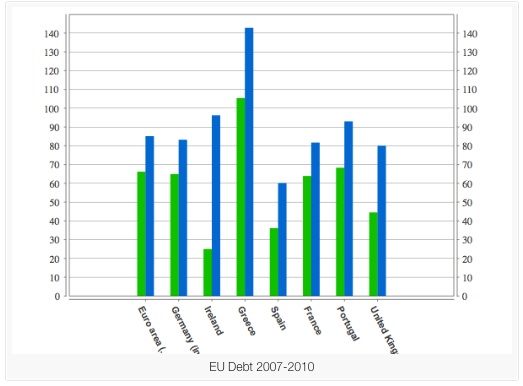


| You are subscribed to email updates from Save Your ASSets First To stop receiving these emails, you may unsubscribe now. | Email delivery powered by Google |
| Google Inc., 20 West Kinzie, Chicago IL USA 60610 | |


No comments:
Post a Comment