


Gold World News Flash |

- GoldSeek.com Radio Gold Nugget: Harry S. Dent Jr. & Chris Waltzek
- Grant Williams: Gold market manipulation is more than plausible
- Gold Convertibility and Reserve Currencies
- The Curse of the Reserve Currency
- The Giant Currency Superstorm That Is Coming To The Shores Of America When The Dollar Dies
- Dominic Frisby: Developed Countries Stuck in Stagflation, Gold To Benefit
- Commodity Technical Analysis: Gold Struggles at 61.8% Retracement
- International Breakout!
- Silver Update 11/27/12 Silver Saga
- Turk - Current Financial System To Implode Within 24 Months
- The Silver and Gold Price are Still Offering a Rare Opportunity to Buy at Low Risk
- Bob Bishop to speak at GATA fundraiser at Vancouver conference
- America's Lost Decade In One Simple Chart
- Constitution in Peril
- Guest Post: We're Heading For Economic Dictatorship
- Turk – Gold Shortage Forcing Drastic Steps By Central Planners
- Crunching The Numbers
- How to Play Your Gold Stocks Now
- Penny and Nickel Coins to be Phased Out in 2013
- The Dollar Collapse Revisited and a Bull Market in US Treasuries w/Peter Schiff!
- The Incredible Collapse of the Value of Silver Coins in the 19th Century
- Gold and silver hit/the December silver OI standing is very high/JPMorgan now has 34% short position in the silver comex complex/Details on the Greek bailout
- Report Sees Record 2013 for Silver, Gold Trends into Fiscal Cliff
- Shock Video: Cop Protects First Amendment
- Head Of The Fed's Trading Desk Speaks On Role Of Fed's "Interactions With Financial Markets"
- Mr Market, how are those debt-ceiling promises looking now?
- Commodities: Crude Oil, Gold at Risk as S&P 500 Setup Hints at Weakness
- Leeb – Gold, Silver & Natural Gas Are Going To Soar
- Must Watch Presentation: Bankers, Bradburys & The Carnage On The Western Front
- The Madness Of a Lost Society: “One Last Fair Warning For Those With the Eyes to See and the Ears to Hear.”
| GoldSeek.com Radio Gold Nugget: Harry S. Dent Jr. & Chris Waltzek Posted: 28 Nov 2012 08:29 AM PST GoldSeek.com Radio Gold Nugget: Harry S. Dent Jr. & Chris Waltzek
|
| Grant Williams: Gold market manipulation is more than plausible Posted: 28 Nov 2012 08:09 AM PST Grant Williams, editor of the "Things That Make You Go Hmmm" letter, suggests in his letter published today that he follows GATA's work closely and gives it some credence, insofar as he notes in detail the growing demands for repatriation of central bank gold reserves held in vaults other than the owner's own.
|
| Gold Convertibility and Reserve Currencies Posted: 28 Nov 2012 08:05 AM PST What we are seeing now, with short term fluctuations in the price of gold is just market noise and short term trading opportunities created by the gold market high frequency traders and bullion banks. This will come to pass as the price of gold gets smoothed out and then slowly advances higher with a two steps forward one step back dance along a rising trend. All this talk about gold by mainstream media is just market noise to try and explain very short term movements in price. They have very little understanding of gold and the role it will play in the future as a store of value.
|
| The Curse of the Reserve Currency Posted: 28 Nov 2012 12:00 AM PST by John Butler, Financial Sense:
Read More @ FinancialSense.com
|
| The Giant Currency Superstorm That Is Coming To The Shores Of America When The Dollar Dies Posted: 27 Nov 2012 11:40 PM PST from The Economic Collapse Blog:
Read More @ TheEconomicCollpaseBlog.com
|
| Dominic Frisby: Developed Countries Stuck in Stagflation, Gold To Benefit Posted: 27 Nov 2012 11:28 PM PST from WallStForMainSt:
|
| Commodity Technical Analysis: Gold Struggles at 61.8% Retracement Posted: 27 Nov 2012 11:00 PM PST courtesy of DailyFX.com November 27, 2012 05:51 PM Daily Bars Chart Prepared by Jamie Saettele, CMT Commodity Analysis: “Gold bounced from the 50% retracement of the rally from 1672.50 Thursday but what bothers me about being bullish is the corrective nature of the rally from the low (3 waves). However, the low on day 3 of the month and emotional trade at the low (11/2 was a JS Thrust day) suggests that price is likely to stay above 1672.50 for the remainder of November. Perhaps a complex correction is underway (series of 3 wave movements) throughout November.” Weakness off of the 61.8% retracement demands respect but a drop below 11/20 high (1735.51) would create overlap and suggest that an important top is in place. Commodity Trading Strategy: “I’m on the lookout for a wave 2 or B top below the October high at higher levels. 1770/80 is of interest as a reversal zone.” Weakness below 1735.51 would turn me bearish against 1755. ...
|
| Posted: 27 Nov 2012 10:56 PM PST by Andy Hoffman, MilesFranklin.com:
In other words, one must realize gold is a universal currency – recognized as having equal utility and wealth-preserving functions – WORLDWIDE! When one grasps this simple concept – it becomes crystal clear that SIX BILLION people are competing for rare PHYSICAL gold and silver resources; NOT just 300 million Americans. Also, that PMs are priced in dozens of other currencies, so one cannot just look to "DOLLAR-PRICED GOLD" to determine global trends.
|
| Silver Update 11/27/12 Silver Saga Posted: 27 Nov 2012 10:19 PM PST from BrotherJohnF:
|
| Turk - Current Financial System To Implode Within 24 Months Posted: 27 Nov 2012 10:01 PM PST  Today James Turk spoke with King World News about steps which are being taken by the LBMA and Western central planners to cover up the corruption and manipulation in the gold and silver markets. This is the third and final in a series of interviews with James Turk which reveals what is going on behind the scenes of the desperate Western central bank gold and silver price suppression scheme. Today James Turk spoke with King World News about steps which are being taken by the LBMA and Western central planners to cover up the corruption and manipulation in the gold and silver markets. This is the third and final in a series of interviews with James Turk which reveals what is going on behind the scenes of the desperate Western central bank gold and silver price suppression scheme.
This posting includes an audio/video/photo media file: Download Now |
| The Silver and Gold Price are Still Offering a Rare Opportunity to Buy at Low Risk Posted: 27 Nov 2012 09:24 PM PST Gold Price Close Today : 1742.30 Change : -7.30 or -0.42% Silver Price Close Today : 33.98 Change : -0.16 or 0.46% Gold Silver Ratio Today : 51.27 Change : 0.02 or 0.04% The silver & GOLD PRICE spent another day digesting Friday's gains. Gold backed off $7.30 to $1,742.30 and silver gave back 15.6 cents to 3398.1c. Filter out the noise: for the GOLD PRICE that amounted to nothing more than touching back to the 50 DMA ($1,741.96). Low at $1,739.86 handily defended that $1,740 support. For the SILVER PRICE, it was merely a touchback to support, with a low at 3389c. Here's a Tennessee fool's guess: next little move will be stout, probably taping on 3550c for silver & $1,800 for gold. But what do I know? I spend all my nights huntin' possum & days sitting on the front porch. Won't be able to do that much longer. Armadillos are replacing the possums, & not even a buzzard will eat an armadillo & a dog won't track one. Back to the point: today made no change to the technical outlook for the SILVER & GOLD PRICE. Gold needs to remain above $1,738 and silver above 3389c. And of course, they ought to keep steadily advancing. I still believe this breakout offers a rare opportunity to buy silver & gold at low risk. Watching markets is liable to make you feel bi-polar: one day king, next day pauper. That's why it's so important to filter the noise out of the symphony playing underneath. Today the scrofulous US dollar index rose 21.8 basis points (0.28%) to 80.346. Filter out the noise, & you'll see it doesn't amount to a hill of beans. Dollar index bounced today after careening through its 200 (80.76) and 20 (80.67) day moving averages on Friday. It hit the 50 DMA, 80.03, & today bounced. Even a flat basketball will bounce a little, but that ain't buoyancy. The theme playing beneath this began 7 days ago when the Dollar hit 81.46, then failed, and hath failed ever since. Can't repair that. Headed for 78.60 & lower. Oh, the Nice Government Men may slow it down, even engineer a tiny rally-ette or two to shake off, confuse, and demoralize the short sellers, but down it will go, or axheads start floating. A reader in the UK asked me about the British Pound, but I am loath to deliver such bad news: y'all a pretty much sunk. I don't keep up with British economic statistics, but what I read puts your situation somewhat lower than Europe's & somewhat higher than Japan's. Don't brag, the zloty's status is higher than Japan's, too. Looking at a two year four month chart plainly shows the Nice Government men managing the pound sterling in a range from $1.63 on the top to $1.525 on the bottom. Yes, it poked its head above that line in 2011, only to be soundly slapped back. In October it (nearly) hit $1.63 again, but has since dived for the ocean depths to close today at $1.6026. The pound has formed an even sided triangle, & once it punctures that bottom boundary, today about $1.59, it will sink toward $1,53 again. Nothing encouraging in that chart. If I were y'all in the UK, I'd be swapping paper pounds for silver & gold so fast the onlookers would think I was a threshing mill about to blow up. Of course, I would be doing the same with yen, euros, or US dollars, so don't take it personal, you folks in Great Britain. They're doing it to all of us. By the way, silver & gold look ready to turn up strongly against the pound sterling. Yen closed at 121.78 cents/Y100, like a barbell dropped off the Queen Mary looking for the bottom. Euro fell 0.35% to $1.2945. Might be headed higher against the US dollar, but not confirmed yet. US$1=Y82.12=E0.7725=0.029428 oz Au = 0.000574 oz Au. Stocks worked hard at disappointing their partisans again today,. Dow lost 89.24 (0.69%) to 12,878.13. S&P500 followed right along, losing 7,.35 (0.52%) to 1,398.94. No wonder, as stocks have run plumb up against the steep downtrend line their fall since early October hath drawn. They also bumped their noggin against the 200 DMA (12,993.03). Even if they punch through, they will hit strong resistance 13,300. Argentum et aurum comparenda sunt -- -- Gold and silver must be bought. - Franklin Sanders, The Moneychanger The-MoneyChanger.com 1-888-218-9226 10:00am-5:00pm CST, Monday-Friday © 2012, The Moneychanger. May not be republished in any form, including electronically, without our express permission. To avoid confusion, please remember that the comments above have a very short time horizon. Always invest with the primary trend. Gold's primary trend is up, targeting at least $3,130.00; silver's primary is up targeting 16:1 gold/silver ratio or $195.66; stocks' primary trend is down, targeting Dow under 2,900 and worth only one ounce of gold; US$ or US$-denominated assets, primary trend down; real estate bubble has burst, primary trend down. WARNING AND DISCLAIMER. Be advised and warned: Do NOT use these commentaries to trade futures contracts. I don't intend them for that or write them with that short term trading outlook. I write them for long-term investors in physical metals. Take them as entertainment, but not as a timing service for futures. NOR do I recommend investing in gold or silver Exchange Trade Funds (ETFs). Those are NOT physical metal and I fear one day one or another may go up in smoke. Unless you can breathe smoke, stay away. Call me paranoid, but the surviving rabbit is wary of traps. NOR do I recommend trading futures options or other leveraged paper gold and silver products. These are not for the inexperienced. NOR do I recommend buying gold and silver on margin or with debt. What DO I recommend? Physical gold and silver coins and bars in your own hands. One final warning: NEVER insert a 747 Jumbo Jet up your nose. No, I don't. 
|
| Bob Bishop to speak at GATA fundraiser at Vancouver conference Posted: 27 Nov 2012 08:46 PM PST 10:48p ET Tuesday, November 27, 2012 Dear Friend of GATA and Gold: There are already hundreds of reasons to come to the Vancouver Resource Investment Conference on January 20 and 21, 2013 -- expert speakers (many of them GATA-friendly), hundreds of exhibitors, and the spectacular beauty and excitement of the city (maybe the only one in Canada that will be above freezing at that time) -- but here's another one for you. Bob Bishop, recently retired editor of what was the premier monetary metals mining newsleter, Gold Mining Stock Report, will speak at a fundraising cocktail party for GATA at the conclusion of the conference. The party will be held in the Cypress Room at the Pan Pacific hotel (a block from the Vancouver Convention Centre West, where the conference is being held) from 5 to 7:30 p.m. on Monday, January 21. There will be free snacks (if you get there before GATA's board does) and a cash bar (ditto), and while there will be no admission charge for the first 10,000 people to show up, please feel free to fill your secretary/treasurer's pockets with depreciating, soon-to-be-valueless fiat currency or bank checks drawn on the same. We'll know how to give it value, as by undertaking new freedom-of-information lawsuits against the U.S. Federal Reserve, Federal Open Market Committee, Treasury Department, and State Department -- http://www.gata.org/node/11606 -- providing, of course, that there's enough to pay the hotel first. ADVERTISEMENT Prophecy Platinum Intercepts Best Pt+Pd+Au Grades Yet Company Press Release VANCOUVER, British Columbia -- Prophecy Platinum Corp. (TSX-V: NKL, OTC-QX: PNIKF, Frankfurt: P94P) announces more results of its 2012 drill program on the company's fully-owned Wellgreen platinum group metals, nickel, and copper project in southwestern Yukon Territory, Canada. Four surface holes and four underground holes all intercepted significant mineralized widths, ranging from 28.5 meters (WS12-201) and up to 459.5 metres (WS12-193). Highlights include WU12-540, which returned 8.9 metres of 5.36 grams per tonne platinum, palladium, and gold; 1.73 percent copper; and 1.01 percent nickel within 304.5 meters of 0.66 g/t platinum-palladium-gold, 0.20 percent copper, and 0.27 percent nickel. The surface drill program started in June and has completed 16 holes (assays pending for 12 holes) with two rigs now on site. The surface program continues to progress at a steady pace. Prophecy Chairman John Lee commented: "Wellgreen is a very large nickel, copper, and platinum group metals project with near-surface high-grade zones. High-grade intercepts will be incorporated into resource modeling and mine planning in the pre-feasibility study. We expect further positive drill results from Wellgreen shortly." Wellgreen features a low 2.59-to-1 strip ratio, is situated at an altitude of 1,300 meters, and is only 15 kilometers from the two-lane paved Alaska Highway. Those factors significantly minimize the project's indirect costs. For the complete company statement with full tabulation of the drilling results, please visit: http://prophecyplat.com/news_2012_sep11_prophecy_platinum_drill_results.... Those who attended GATA's "Anybody Seen Our Gold?" conference in Washington in April 2008 may remember that Bishop was recruited on the spot to substitute for a speaker who had to cancel at the last minute and that, without notes, he both enthralled the crowd and subdued it by predicting that the immediate future would not be good for gold and silver mining shares. This wasn't what everyone was hoping for but it was the truth, for within a few months the HUI gold mining share index had fallen from 450 to 150: http://finance.yahoo.com/q/bc?s=%5EHUI&t=5y&l=on&z=l&q=l&c= As a result, whatever Bishop has to say now, we need to hear it. Admission to the conference itself is free for those who register in advance, and the conference has arranged discount rates for attendees at two beautiful hotels next to the convention center, the aforementioned Pan Pacific and the Fairmont Waterfront. The conference's Internet site is here: http://www.cambridgehouse.com/event/vancouver-resource-investment-confer... So please join us and Bob Bishop in Vancouver in January and help us keep our organization going -- and secretive, market-rigging central banking on the run. CHRIS POWELL, Secretary/Treasurer Join GATA here: Vancouver Resource Investment Conference * * * Support GATA by purchasing DVDs of our London conference in August 2011 or our Dawson City conference in August 2006: http://www.goldrush21.com/order.html Or by purchasing a colorful GATA T-shirt: Or a colorful poster of GATA's full-page ad in The Wall Street Journal on January 31, 2009: http://gata.org/node/wallstreetjournal Help keep GATA going GATA is a civil rights and educational organization based in the United States and tax-exempt under the U.S. Internal Revenue Code. Its e-mail dispatches are free, and you can subscribe at: To contribute to GATA, please visit: ADVERTISEMENT GoldMoney adds Toronto vaulting option In addition to its precious metals storage facilities in Hong Kong, Switzerland, and the United Kingdom, GoldMoney customers now can store their gold and silver in a high-security vault operated by Brink's in Toronto, Ontario, Canada. GoldMoney also has recently partnered with Rhenus Freight Logistics to offer another gold storage option in Switzerland. The Rhenus vault is in the secured zone of Zurich Airport and offers customers superb security as well as the ability to inspect their gold. Storage at the new vaults in Canada and Switzerland is available at GoldMoney's lowest fees. Customers can select their storage location when placing their buy order. GoldMoney customers can take delivery of any number of gold, silver, platinum, and palladium bars from any GoldMoney vault, as well as personally collect their bars stored in the Hong Kong, Switzerland, and U.K. vaults. It's easy to open an account, add funds, and liquidate your investment. For more information, visit: http://www.goldmoney.com/?gmrefcode=gata
|
| America's Lost Decade In One Simple Chart Posted: 27 Nov 2012 08:09 PM PST Forget the stock market's dismal decade of much-ado-about-nothing and ignore the USD Dollar's declination; when it comes to reflection on what this once great nation has 'created' since 2001, the following chart from Pennsylvania's Department of Public Welfare sums it up better than most.
|
| Posted: 27 Nov 2012 07:40 PM PST by Gordon T. Long, Gold Seek:
The Austrian Economist Ludwig von Mises wrote in 1912 in 'THE THEORY OF MONEY & CREDIT", the year prior to the creation of the Federal Reserve that: "It is impossible to grasp the meaning of the idea of sound money if one does not realize that it was devised as an instrument for the protection of civil liberties against despotic inroads on the part of governments. Ideologically, it belongs in the same class with political constitutions and bills of rights."
|
| Guest Post: We're Heading For Economic Dictatorship Posted: 27 Nov 2012 07:26 PM PST Authored by Janet Daley via the Ludwig von Mises Institute of Canada (originally posted on The Telegraph), Forget about that dead parrot of a question – should we join the eurozone? The eurozone has officially joined us in a newly emerging international organisation: we are all now members of the Permanent No-growth Club. And the United States has just re-elected a president who seems determined to sign up too. No government in what used to be called "the free world" seems prepared to take the steps that can stop this inexorable decline. They are all busily telling their electorates that austerity is for other people (France), or that the piddling attempts they have made at it will solve the problem (Britain), or that taxing "the rich" will make it unnecessary for government to cut back its own spending (America). So here we all are. Like us, the member nations of the European single currency have embarked on their very own double (or is it triple?) dip recession. This is the future: the long, meandering "zig-zag" recovery to which the politicians and heads of central banks allude is just a euphemism for the end of economic life as we have known it. Now there are some people for whom this will not sound like bad news. Many on the Left will finally have got the economy of their dreams – or, rather, the one they have always believed in. At last, we will be living with that fixed, unchanging pie which must be divided up "fairly" if social justice is to be achieved. Instead of a dynamic, growing pot of wealth and ever-increasing resources, which can enable larger and larger proportions of the population to become prosperous without taking anything away from any other group, there will indeed be an absolute limit on the amount of capital circulating within the society. The only decisions to be made will involve how that given, unalterable sum is to be shared out – and those judgments will, of course, have to be made by the state since there will be no dynamic economic force outside of government to enter the equation. Wealth distribution will be the principal – virtually the only – significant function of political life. Is this Left-wing heaven? Well, not quite. The total absence of economic growth would mean that the limitations on that distribution would be so severe as to require draconian legal enforcement: rationing, limits on the amount of currency that can be taken abroad, import restrictions and the kinds of penalties for economic crimes (undercutting, or "black market" selling practices) which have been unknown in the West since the end of the Second World War. In this dystopian future there would have to be permanent austerity programmes. This would not only mean cutting government spending, which is what "austerity" means now, but the real kind: genuine falls in the standard of living of most working people, caused not just by frozen wages and the collapse in the value of savings (due to repeated bouts of money-printing), but also by the shortages of goods that will result from lack of investment and business expansion, not to mention the absence of cheaper goods from abroad due to import controls. And it is not just day-to-day life that would be affected by the absence of growth in the economy. In the longer term, we can say good-bye to the technological innovations which have been spurred by competitive entrepreneurial activity, the medical advances funded by investment which an expanding economy can afford, and most poignantly perhaps, the social mobility that is made possible by increasing the reach of prosperity so that it includes ever-growing numbers of people. In short, almost everything we have come to understand as progress. Farewell to all that. But this is not the end of it. When the economy of a country is dead, and its political life is consumed by artificial mechanisms of forced distribution, its wealth does not remain static: it actually contracts and diminishes in value. If capital cannot grow – if there is no possibility of it growing – it becomes worthless in international exchange. This is what happened to the currencies of the Eastern bloc: they became phoney constructs with no value outside their own closed, recycled system. When Germany was reunified, the Western half, in an act of almost superhuman political goodwill, arbitrarily declared the currency of the Eastern half to be equal in value to that of its own hugely successful one. The exercise nearly bankrupted the country, so great was the disparity between the vital, expanding Deutschemark and the risibly meaningless Ostmark which, like the Soviet ruble, had no economic legitimacy in the outside world. At least then, there was a thriving West that could rescue the peoples of the East from the endless poverty of economies that were forbidden to grow by ideological edict. It remains to be seen what the consequences will be of the whole of the West, America included, falling into the economic black hole of permanent no-growth. Presumably, it will eventually have to move towards precisely the social and political structures that the East employed. As the fixed pot of national wealth loses ever more value, and resources shrink, the measures to enforce "fair" distribution must become more totalitarian: there will have to be confiscatory taxation on assets and property, collectivisation of the production of goods, and directed labour. Democratic socialism with its "soft redistribution" and exponential growth of government spending will have paved the way for the hard redistribution of diminished resources under economic dictatorship. You think this sounds fanciful? It is just the logical conclusion of what will seem like enlightened social policy in a zero-growth society where hardship will need to be minimised by rigorously enforced equality. Then what? The rioting we see now in Italy and Greece – countries that had to have their democratic governments surgically removed in order to impose the uniform levels of poverty that are made necessary by dead economies – will spread throughout the West, and have to be contained by hard-fisted governments with or without democratic mandates. Political parties of all complexions talk of "balanced solutions", which they think will sound more politically palatable than drastic cuts in public spending: tax rises on "the better-off" (the only people in a position to create real wealth) are put on the moral scale alongside "welfare cuts" on the unproductive. This is not even a recipe for standing still: tax rises prevent growth and job creation, as well as reducing tax revenue. It is a formula for permanent decline in the private sector and endless austerity in the public one. But reduced government spending accompanied by tax cuts (particularly on employment – what the Americans call "payroll taxes") could stimulate the growth of new wealth and begin a recovery. Most politicians on the Right understand this. They have about five minutes left to make the argument for it.
|
| Turk – Gold Shortage Forcing Drastic Steps By Central Planners Posted: 27 Nov 2012 07:20 PM PST from KingWorldNews:
Today James Turk spoke with King World News about steps which are being taken by the LBMA and Western central planners to cover up the corruption and manipulation in the gold and silver markets. This is the second in a series of interviews with James Turk that will be released today which reveals what is going on behind the scenes of the increasingly desperate Western central bank gold and silver price suppression scheme. This interview brings up the recent announcement of a move to dematerialize gold in India. This move is almost definitely being forced on India by Western central planners in an effort to stop the hemorrhaging of physical gold out of Western central bank vaults. James Turk continues @ KingWorldNews.com
|
| Posted: 27 Nov 2012 06:19 PM PST from TF Metals Report:
Lately, it seems that a day doesn't go by without me receiving a comment or an email from somebody complaining about how they're "still getting their butt kicked in silver because they bought in April of 2011″. Since I've consistently advocated the regular stockpiling of physical metal for over two years now, I thought it might be fun, and worth the time, to crunch some numbers to see just how bad it could be for some folks. First of all, I don't think that anyone whose only purchases of silver came in April of 2011 is still a regular reader of this site. Additionally, that this disgruntled, non-reader of the site would then take the time to email me seems a little far-fetched. Nonetheless, let's roll with it. Below is the hard data. I began this blog/site on 11/11/10, so, let's measure two things:
Read More @ TF Metals Report.com
|
| How to Play Your Gold Stocks Now Posted: 27 Nov 2012 06:17 PM PST After a year or more of depressed prices, gold and silver stocks reversed with a vengeance. GDX (the ETF proxy for the Gold Miners Index) was up in just two months (August and September). Those who followed our lead and bought or averaged down this summer have profited handsomely. It's been a fun ride, and I'm convinced we'll see many more surges like this before it's all over. What was perhaps more important about the surge in gold stocks, though, was the leverage they demonstrated, which is one of the primary reasons we invest in them. Here's a comparison of GDX to GLD from August 1 to November 1.
This chart shows the advantage of building your position on dips. It lowers your cost basis and takes leverage to a higher gear. So, what now? First, stocks ran far and fast, no doubt, and nothing goes up in a straight line, even in a bull market. That's why the October lull wasn't concerning to us. Second, we also should consider seasonality. Here's the updated monthly performance of gold stocks since the bull market started in 2001, along with their year-to-date performance.
You'll see that October is typically the weakest month of the year for gold stocks. It wasn't surprising that the dip wasn't big this year, since stocks had been weak most of the year. It's the big picture, of course, that we're most interested in. With the Fed, ECB, and BOJ pulling stimulus rabbits out of the printing hat, and the UK, Switzerland, and China all adding to their balance sheets, gold is headed a lot higher and will subsequently pull the stocks with it. Further, the seasonal pattern in stocks does not apply to gold.
On balance, October is a strong month for our favorite metal, though that wasn't the case this year. This is a good reminder that shopping season could strike at any time. For now…
Navigating the bumpy waters of precious-metals investing is especially challenging right now. With the right guidance, your investments can be positioned to help keep economic trends from robbing your savings and investments. Learn more here.
|
| Penny and Nickel Coins to be Phased Out in 2013 Posted: 27 Nov 2012 05:20 PM PST from Silver Doctors:
Timothy Geithner reportedly has announced plans by the US Treasury to completely remove both the penny and the nickel from circulation beginning in January 2013, with plans to potentially also remove the dime from circulation in 2014. Will the American people finally wake up to the currency debasement of the US dollar when 3 of the 4 main US coins in circulation are no longer minted due to currency devaluation?
|
| The Dollar Collapse Revisited and a Bull Market in US Treasuries w/Peter Schiff! Posted: 27 Nov 2012 04:42 PM PST from Capital Account: US Cyber Monday sales broke records as online shoppers shelled out 30 percent more on web deals compared to 2011. Is this good for an economy on the edge of recession or is it inconsequential, as many of the purchases were for items manufactured abroad? We talk to Peter Schiff about the future of the US economy and the strength of the US dollar. Plus, this week President Obama plans to hit the road to sell his Fiscal Cliff proposals, according to CNN. Meanwhile Senate Majority Leader Harry Reid said he is "disappointed" with the "little progress" made in the recent debt talks, according to CNBC. We know that US public debt has been growing, but where is the dollar collapse Peter Schiff has publically predicted? The US dollar index, instead of collapsing, has gained value since 2011, so where is the hyperinflation? It's true that base money has increased over the past four years, and that the Fed's balance sheet has more than tripled in size since the onset of the financial crisis and rather than seeing interest rates spike, we have seen US treasury yields collapse by over 60% since the collapse of Lehman Brothers. Could it be that Peter Schiff and others who have been calling for high or hyperinflation are underestimating the role of the financial system in affecting the money supply through loan growth and other forms of financial engineering?
|
| The Incredible Collapse of the Value of Silver Coins in the 19th Century Posted: 27 Nov 2012 04:40 PM PST by Antal E. Fekete, Silver Seek:
China has been on the silver standard since time immemorial. The Chinese did not use coins for monetary purposes such as bank reserves until the end of the 19th century; they used the sycee, a shoe-shaped ingot of approximate size 5>3 inches, weighing approximately 50 taels or about 5 pounds (avoirdupois). No one can pretend to know, however approximately, how much monetary silver has gone into hiding in China and in India, these two most populous countries also known as the world's sink for silver, over the millennia. In comparison estimates of monetary gold having gone into hiding over the same period of time are far more reliable. Be that as it may, the amount of monetary silver unaccounted for is probably greater than any estimate ever made.
|
| Posted: 27 Nov 2012 04:16 PM PST by Harvey Organ, HarveyOrgan.Blogspot.ca:
Gold closed down today to the tune of $7.30 to finish the comex session at $1742.20. Silver fell by 16 cents down to $33.98. Now that options have expired, expect to have huge volatility in gold and silver as the crooked bankers try desperately to prevent longs from taking delivery this Friday. In the access market at 5: 00 pm here is how gold and silver are trading at this time; gold; $1741.80 In physical news, the COT report was released late last night and in the silver COT, we witnessed a massive increase in short positions held by JPMorgan. They are now up to 34% of the entire comex future short positions held. Read More @ HarveyOrgan.Blogspot.ca
|
| Report Sees Record 2013 for Silver, Gold Trends into Fiscal Cliff Posted: 27 Nov 2012 04:00 PM PST by JON C. OGG, 247WallSt.com:
This morning's refers back to last week's report from the Silver Institute that industrial demand for silver, aka The Devil's Metal, is now expected to rise by 7% in 2013 to a new record. The report also highlights that investment demand will remain a key issue in 2013. Effectively, the report is calling for a rebound in 2013 after silver lost ground in 2012.
|
| Shock Video: Cop Protects First Amendment Posted: 27 Nov 2012 03:57 PM PST Sheriff defends free speech rights against airport official during opt out campaign by Paul Joseph Watson, InfoWars: A shocking video has emerged of a police officer who abides by the oath he swore to uphold the constitution by defending the free speech rights of activists who were targeted by airport officials during the opt out and film campaign. The clip shows activists Ashley Jessica and Jason Bermas handing out flyers warning travelers about the dangers of x-ray body scanners at Albany International Airport in New York. Almost as soon as the activists begin to hand out the flyers, they are confronted by an aggressive airport official later named as Douglas I. Myers, the airport's Director of Public Affairs. Myers orders the activists to leave the top floor and later takes the unprecedented step of closing off the entire level and preventing family from meeting their loved ones. He subsequently claims the activists need a permit and a $1 million dollar insurance liability merely to film inside the airport, despite the fact that the TSA's own website clearly states that TSA checkpoints can be filmed at any airport.
|
| Posted: 27 Nov 2012 03:46 PM PST In what is the first formal speech of Simon "Harry" Potter since taking over the magic ALL-LIFTvander wand from one Brian Sack, and who is best known for launching the Levitatus spell just when the market is about to plunge and end the insolvent S&P500-supported status quo as we know it, as well as hiring such sturdy understudies as Kevin Henry, the former UCLA economist in charge of the S&P discuss the "role of central bank interactions with financial markets." He describes the fed "Desk" of which he is in charge of as follows: "The Markets Group interacts with financial markets in several important capacities... As most of you probably know, in an OMO the central bank purchases or sells securities in the market in order to influence the level of central bank reserves available to the banking system... The Markets Group also provides important payment, custody and investment services for the dollar holdings of foreign central banks and international institutions." In other words: if the SPX plunging, send trade ticket to Citadel to buy tons of SPOOSs, levered ETFs and ES outright. That the Fed manipulates all markets: equities most certainly included, is well-known, and largely priced in by most, especially by the shorts, who have been all but annihilated by the Fed. But where it gets hilarious, is the section titled "Lessons Learned on Market Interactions through Prism of an Economist" and in which he explains why the Efficient Market Hypothesis is applicable to the market. If anyone wanted to know why the US equity, and overall capital markets, are doomed, now that they have a central planning economist in charge of trading, read only that and weep... Remarks on the Role of Central Bank Interactions with Financial Markets (link) Remarks at New York University's Stern School of Business, New York City As prepared for delivery It is a pleasure to have the opportunity to speak to you today. Having taught classes at New York University (NYU), I know firsthand the quality and analytical rigor of the students and faculty. You should all be proud of the excellent curriculum and education you are receiving here at NYU. I would like to thank Kim for giving me the opportunity to speak this evening and the public service he is providing through his leadership of the center. My remarks today will focus on the role of central bank interactions with financial markets. Because of the New York Fed's position within the us financial system, our staff is in continuous contact with financial market participants, including investors, intermediaries, financial market utilities and analysts. Much of this contact occurs through the Markets Group at the New York Fed. For most of my professional life prior to becoming head of the Markets Group earlier this year, I had been a research economist working at the New York Fed. Like many research economists, I was trained to understand the economy with mathematical models that contain at best a rudimentary description of a financial system. But even in the capacity of a research economist at a central bank, my understanding of financial markets and the economy was greatly informed by the many types of interactions central banks have with financial markets. Today I will first reflect briefly on the nature and purposes of central bank interactions with financial markets. I will highlight the operational and market monitoring responsibilities of the New York Fed Markets Group and how these responsibilities evolved since the onset of the financial crisis in 2007. Next, I will share some of my personal experience as a research economist at the time trying to make sense of the unprecedented events of the financial crisis through the prism of economic theory, and the lessons I learned. Let me emphasize that my remarks represent my personal views and do not necessarily represent the views of the Federal Reserve Bank of New York or the Federal Reserve System. Pre-Crisis Central Bank Interaction with Financial Markets The Markets Group interacts with financial markets in several important capacities. It is perhaps best known for the role it plays in the implementation of monetary policy by conducting open market operations (OMOs) at the direction of the Federal Open Market Committee (FOMC). As most of you probably know, in an OMO the central bank purchases or sells securities in the market in order to influence the level of central bank reserves available to the banking system. The Federal Reserve Act limits the types of securities the Federal Reserve may purchase in its OMOs, and under its Authorization for Domestic OMOs the FOMC only authorizes transactions in us government securities, which includes Treasury and agency securities.1 The staffs that have direct responsibility for executing OMOs are known as "the Desk." Until late 2008, the primary role of the Desk was to influence the daily federal funds rate by adjusting the aggregate level of reserves in the banking system through transactions in Treasury securities arranged with designated primary dealers–counterparties operating in the government securities market. OMOs typically employ an auction format to ensure competitive bidding and are structured in a manner that minimizes disruptions to market functioning. The Markets Group has several other critical transactional responsibilities as well. It is responsible for lender of last resort activities in the New York Federal Reserve District, operating the discount window as a source of short-term loans for banks in sound financial condition but otherwise in need of funding. As fiscal agent of the U.S. Treasury, the Markets Group plays a role in conducting Treasury auctions and facilitates payments and other financial services for the Treasury. The Markets Group also provides important payment, custody and investment services for the dollar holdings of foreign central banks and international institutions. In addition and as a crucial complement to its operational responsibilities, the Markets Group has responsibility for monitoring and analyzing financial markets. These activities serve to support existing operations and provide vital knowledge as new types of operations are contemplated. They also supply an important source of unique market intelligence for policymakers on developments in an array of financial markets that could affect the economy or have policy implications. These efforts tend to focus on understanding broad financial market conditions, expectations for monetary policy and the real economy, and financial stability risks. My use of the phrase "market monitoring" is intended to capture much more than following prices and trading activity in asset markets and conversing with market participants globally about the causes behind market developments, as important as that is. It includes broader responsibility for analyzing both immediate and longer-term trends in global financial markets and linkages among financial institutions, and it rests upon a deep understanding of the microstructure of financial instruments and markets and of the motivations of market participants.2 By maintaining deep expertise in particular asset classes and detailed knowledge of market behavior and infrastructure, the Desk is able to structure and execute operations to achieve the objectives of policymakers. This deep expertise also enhances the quality of the information and staff assessments about current market developments that is communicated to policymakers throughout the Federal Reserve System through a variety of briefings, conversations and written products. Crisis Response: Change in Central Bank Interactions with Markets The Markets Group's monitoring responsibilities and broad array of contacts across different market segments were critical to identifying underlying causes of the increased volatility and sharp repricing observed across a wide range of financial markets in 2007 and 2008. This information contributed to policymakers' understanding of where and how to target liquidity support measures beyond the traditional form of discount window lending to depository institutions. The temporary liquidity facilities were designed by drawing upon skills across the Federal Reserve System including market and operational experts, lawyers, economists and accountants. Given the unprecedented shocks to the market and the economy more broadly, the facilities had to be set up very quickly—in a matter of days or weeks. These included facilities designed to lend to banks and primary dealers to ensure adequate access to short-term credit, such as the primary dealer credit facility (PDCF) and the Term Securities Lending Facility (TSLF). Other programs were designed to lend directly to borrowers and investors in critical nonbank markets, such as the Commercial Paper Funding Facility (CPFF) and the Term Asset-Backed Securities Loan Facility (TALF).3 Since the federal funds rate target reached its effective lower bound late in 2008, the FOMC has considered additional ways of providing further policy accommodation. At the direction of the FOMC, the Desk has designed and implemented asset purchase programs that have greatly expanded the balance sheet of the Federal Reserve and changed the composition of the types of assets it holds. Market monitoring and the knowledge of market functioning has been crucial for the effective translation of broad policy directives for these purchase programs into concrete operational plans. In the case of agency mortgage-backed securities (MBS) purchases, initially the Federal Reserve used external investment managers, acting at the direction of the Desk, as a means of implementing MBS purchases. This was necessary because the Desk had not transacted in MBS prior to the crisis and thus did not have either the systems or the market knowledge needed to execute purchases efficiently. As the Markets Group staff developed the operational capacity and analytical expertise, partly by working closely with the investment managers, it began to execute MBS purchases and assumed full trading responsibility in March 2010. Prior to assuming their trading role, staff gained an in-depth understanding of the fundamental aspects of the MBS market and technical trading conventions. This expertise allowed the staff to effectively synthesize numerous market indicators and apply them to its trading. For example, understanding supply and demand factors affecting the MBS market is essential in helping to ensure that operations can be executed smoothly. In addition, MBS have an embedded prepayment option, which affects the risk and prepayment characteristics of these securities, and consequently the way in which purchases of these securities influence policy objectives and the Federal Reserve's balance sheet over time. The scope of the Desk's market expertise has had to expand in ways beyond supporting new modes of operation. As the financial crisis revealed the importance of maintaining a wide range of financial market knowledge, Desk staff covered a broader set of financial markets and instruments compared to the pre-crisis period. We also more explicitly focused on linkages between markets and underlying, longer-term trends that could present financial stability risks in the future. With the expansion of monetary policy into less conventional territory, our analysis of monetary policy expectations had to evolve as well, as evidenced by an increasingly comprehensive survey of primary dealer economists each FOMC cycle. Lastly, our own internal analytical capabilities have also deepened, for instance with the creation of a portfolio analytics unit to better assess the risks and outlook associated with the Federal Reserve's expanded asset holdings.5 I anticipate that as the economic and policy environment changes, the Desk's interactions with the market will continue to evolve, both in terms of its operational capabilities and the focus of its market monitoring and analytical responsibilities needed to support Federal Reserve operations and the information needs of policymakers. Lessons Learned on Market Interactions through Prism of an Economist From the onset of the financial crisis until earlier this year, I acted in the capacity of a research economist at the New York Fed. I want to turn to some of the lessons learned as an economist trying to make sense of the crisis through economic theory and how it could be easy to misdiagnose the crisis without the multitude of interactions with financial markets that I have described. I will also apply these lessons to the current controversy about how economics should move forward after the crisis. In order to illustrate some of the lessons learned from the crisis, I offer two different perspectives: first as a research economist trying to make sense out of the initial phases of the crisis in real time and mostly failing; and second as a central banker directly observing and trying to counteract the panic that took hold of global financial markets in September 2008. My observations will further underscore the absolute criticality of a central bank's interactions with financial markets as a basis for properly diagnosing financial disruptions that threaten the economy and developing effective remedies. In an immediate response to the onset of the crisis in August 2007, the New York Fed began to hold an in-depth discussion every afternoon about the day's developments. These discussions involved staff from all parts of the Bank and were usually led by Tim Geithner, the president of the New York Fed at that time. In addition to a summary of market developments, prices and liquidity conditions, staff would bring information from across a spectrum of financial institutions and market participants, the kind of information that throughout the crisis period would prove to be invaluable to policy makers. In addition to sharing information from across the Bank, discussions at these meetings would aim to synthesize diverse information gleaned from markets or if no synthesis was available generate new questions for the staff to gain intelligence on. The basic skills that economists can bring to such meetings are a framing of developments based on the efficient markets hypothesis, which holds that financial markets will quickly incorporate all relevant information in asset prices, along with an understanding of economic fundamentals. Many commentators have associated a blind faith in efficient markets by market participants and regulators as one of the main underlying causes of the crisis.6 This seems an overly simplistic and mostly incorrect characterization. A partially correct aspect of this critique is that market discipline failed in the period before the crisis. However, this is not a true rejection of the efficient markets hypothesis, as expounded by Gene Fama, but rather a failure for incentives to be appropriately aligned.7 An efficient markets explanation usually involves a great deal of the Monday morning quarterbacking: after observing market moves that prove an analysis incorrect, there is usually a tweak to this previous analysis prompted by the market move, which does not require any substantial changes to an underlying view. To outsiders this might sound like cheating, but if the efficient markets hypothesis has validity, then unexpected market moves always contain new information over the original analysis. Indeed, the ability of individual markets to efficiently aggregate diverse sources of information most of the time is why the efficient markets hypothesis gained empirical support.8 In normal times, the tension between efficient markets and actual developments is relieved by a series of these tweaked explanations without any substantial changes to underlying views. But as markets came under increasing stress it made the arbitrage and liquidity assumptions underlying efficient market explanations less tenable.9 Further, the signals generated in different markets started to disagree markedly. One of the basic quandaries at the start of the crisis was the differing perspectives from price developments in equity and fixed income markets. The fixed income and equity markets were giving very different signals about the outlook for the economy. Fixed income markets were indicating an abrupt slowdown in economic activity and through derivatives such as the ABX indices substantial credit losses on some of the newly issued structured products related to residential mortgages. The equity market in contrast reached a peak in October 2007 indicating little evidence of such a slowdown. Of course, fixed income and equity markets have different characteristics but perhaps a more important distinction is the role of heterogeneous beliefs and how this might be reflected in asset prices. The economics profession has made great strides in its use of expectations in models but one of the short cuts required to produce these great strides was the simplification to homogenous beliefs. For much of the period leading up to the crisis this simplification was of no consequence. However, as we now understand from sophisticated analysis of models with heterogeneous beliefs, it can produce high valuations for certain set of assets and large abrupt moves in certain market prices when leveraged positions are unwound. 10 How does this unwind express itself in real time in the views and actions of market participants? First, the views tend to become even more dispersed, as do the views regarding what the central bank should do about it. Second, market participants become more suspicious of each other and rumors can spread like wildfires. Many participants take defensive actions which if one is tracking market prices at a daily frequency add tremendously to the inherent noise in high frequency market moves.11 More importantly, when the probability of a failure of a counterparty starts to increase the signal in market prices becomes a mixture of fundamentals and assessments of the likelihood of government intervention. Elements of all this can be found in classic books such as Kindleberger's "Manias, Panics and Crashes"12 but one would be hard pressed to predict from reading such "classics" the importance of novations of a derivative trade or additional collateral calls from a clearing bank to an investment bank for its tri-party book. Yet these were just the kinds of detailed market developments, often associated with the plumbing of financial systems that economists at the New York Fed were hearing at the afternoon meetings from New York Fed staff interacting with market participants in real time as the crisis progressed. However, since financial crises are almost impossible to fit into the standard framework of efficient markets, it was only after the near failure of Bear Stearns that we as economists were more able to piece a more accurate story together. One can find a clear and comprehensive description of these issues in Darrell Duffie's book, "How Big Banks Fail."13 My experiences as a central banker directly observing and trying to think of ways to counteract the panic that took hold of global financial markets in September 2008 also underscore that published statistics and market prices may at best tell part of the story of developments in financial markets and how they might be affecting the economy as a whole. These experiences highlight the need of policymakers for real time market intelligence and having staffs with operational experience and a solid grasp of market functioning to develop appropriate policy responses.14 Recall that in just over four weeks following the failure of Lehman Brothers the global financial system experienced a panic of unprecedented speed and destructive power. Observing the panic up close was a sobering lesson about how quickly a complex financial system can freeze up. Like the study of economic history, knowledge of nonlinear and complex dynamics is important to diagnose potential risks in the financial system. However, even more so than economic history, the study of complex biological or physical systems do not offer actual detailed prescriptions about how best to understand and regulate the current global financial system. For economists who did not have the opportunity to observe the panic up close as I and most of my colleagues had, the developments in this four week period must have been bewildering given how widely events on the ground and theory diverged.15 At the time and at times since, some academic economists have questioned whether bank lending to nonfinancial corporations and individuals was really declining during this period in ways that posed a threat to the real economy. It is a fact that weekly measures of the stock of bank loans were increasing in this panic period. But for those following financial markets closely there was a keen awareness of the importance of securitization prior to 2007 and its collapse in 2008. More revealing than the stock of bank loans was the amount of loans being securitized, which with the exception of mortgages eligible for securitization by Fannie and Freddie fell effectively to zero. The TALF was designed to support the return of new securitization in certain markets. Two facilities created earlier in 2008, the TSLF and PDCF, were set up to deal with the unwind of repo and other trades between private counterparties as doubts about the underlying collateral had increased.16 As discussed by Gary Gorton this unwind was similar to a traditional bank run.17 Since much of the credit boom leading up to 2007 was financed by repo-like trades, not only was the unwind affecting the health of broker-dealers, it was also restricting the provision of new credit to the real economy. These events were not observable in traditional banking statistics. Indeed as banks brought assets back onto their balance sheets to provide more traditional forms of funding, it appeared that lending was increasing. The decline in interbank lending was also questioned. Again one can find statistical releases that show that volumes in the interbank market were high. But such statistics ignored the significant decline in term lending and most importantly did not capture one of the most important stresses in unsecured lending, the difficulty of foreign banks in obtaining dollar funding. This was fully appreciated by the staff within the Federal Reserve monitoring interbank activity on a real time basis. And the policy response to this decline was to open up dollar swap lines with a number of major central banks in conjunction with the TAF in late 2007.18 The daily peak for the amount of dollars swapped was $586 billion on December 4th of 2008 giving the swap lines the distinction of being the most heavily used facility. As a third example, some economists using statistics on the stock of outstanding commercial paper, argued that commercial paper issuance by nonfinancial corporations was not declining sharply at the time nor were rates rising to unprecedented levels. But this type of data contains little information about the ability of firms to issue new paper. Moreover, as the economy slowed abruptly the need to raise additional funds through new issuance increased. It was clear from our market contacts that the commercial paper market was rapidly grinding to a halt as both financial and non-financial institutions felt the need to build liquidity. The policy response was the CPFF which served as a liquidity backstop to facilitate issuance of commercial paper by highly rated firms. In addition to showing how publicly available financial statistics in the absence of real time market intelligence can sometimes lead to incorrect diagnoses, these three examples demonstrate the importance of detailed information about markets in articulating the precise market failure that might justify a government intervention and the form the intervention should take given the failure. As noted above, many of the emergency liquidity facilities rolled out in the crisis were developed in a very short period of time by experts with years of experience in these various markets. All of the new facilities were designed to price the emergency liquidity such that as market stresses eased, their use would decline. This is exactly what happened. Furthermore, the most convincing evidence that the facilities correctly addressed market failures related to liquidity is the fact that none of them lost any money.19 Conclusion The past few years have seen important changes in the role of central bank interactions with financial markets. Some of the main lessons I take away are: published statistics and market prices only tell part of the story of developments in financial markets, at best; beliefs of market participants and the distribution across markets matter, and information on them needs to be collected and analyzed on a frequent basis; active operations in financial markets allow central banks to flexibly respond to unexpected events and understand market functioning issues and changes in market infrastructure. Most importantly, the global financial system is constantly evolving and it requires constant monitoring and analysis since it is not a self-regulating system. The main message I hope to leave you with is while economic and finance education may need to be supplemented, the analytical rigor of such an education is indispensible for coming to grips with the complexity and ever changing structure of the global financial and economic system. Analytic rigor is not sufficient by itself, however, since it needs to be combined with practical experience of the actual workings of the financial system. The Center for Global Economy and Business gives you many opportunities to start to gain this practical experience. Thank you.
|
| Mr Market, how are those debt-ceiling promises looking now? Posted: 27 Nov 2012 03:20 PM PST from Gold Money:
The Budget Control Act of 2011 was signed into law by President Obama as part of the resolution to last year's debt ceiling increase. The bill called for a "super committee" to produce legislation that would identify $1.5 trillion of cuts by last November. But, surprise surprise, it failed to do. However, there was a provision in the bill that if the super committee failed to identify cuts, then $1.2 trillion of cuts (spread over 10 years) would start coming into effect as of January 2013.
|
| Commodities: Crude Oil, Gold at Risk as S&P 500 Setup Hints at Weakness Posted: 27 Nov 2012 03:00 PM PST courtesy of DailyFX.com November 27, 2012 06:08 AM Crude oil and gold prices may decline as S&P 500 positioning warns of risk aversion ahead that sinks growth-linked assets and boosts the US Dollar. Crude oil and gold prices may decline as S&P 500 positioning warns of risk aversion ahead that sinks growth-linked assets and boosts the US Dollar. Talking Points [LIST] [*]Commodities Adrift as Risk Trends Weigh Euro FinMin Summit, US Data [*]Crude Oil, Copper Vulnerable as S&P 500 Chart Points to Risk Aversion [*]Gold and Silver to Decline if Risk-Off Mood to Boost US Dollar Demand [/LIST] Yesterday’s Eurozone finance ministers’ summit on Greek bailout funding ended in disappointment, failing to stamp out skepticism of policymakers’ crisis management efforts. Meanwhile, October’s Durable Goods report registered better than economists expected. The gauge printed unchanged compared with expectations calling for a 0.7 percent decline. This has left commoditi...
|
| Leeb – Gold, Silver & Natural Gas Are Going To Soar Posted: 27 Nov 2012 03:00 PM PST from KingWorldNews:
That's when we started seeing this huge pickup in natural gas. We have had all of this talk about all of these additional gas supplies, and yet you still have natural gas sitting at $3.75. We also still have every dedicated fracker, whether you are talking oil or natural gas, basically losing money once you subtract out capital expenditures." James Turk continues @ KingWorldNews.com
|
| Must Watch Presentation: Bankers, Bradburys & The Carnage On The Western Front Posted: 27 Nov 2012 02:30 PM PST from ukcolumn: Justin Walker tells the British Constitution Group annual conference on the 24th November 2012 of a little known historical fact which will collapse even further the reputation of the City of London.
|
| Posted: 27 Nov 2012 02:19 PM PST  Another 'Black Friday' has come and gone. And it has left us with further evidence of the complete madness of the populace of our nation. America has been dealt a fatal blow by corporate greed, Bankster malfeasance and the insidious nature of collectivism – and it's all been done to us by design. This is the Madness of a Lost Society, one last 'fair warning' for those with the eyes to see and the ears to hear. November 23, 2012… Black Friday… revealed yet further evidence of the complete madness of the populace of our lost society. The underlying principles of modern consumerism as designed by Edward Bernays, the father of modern propaganda, is to create demand where there is no real need. These people are victims of Bernays, and most of them cannot be reached. They cannot be helped. They will be among the tens of millions of Americans who will fall victim to unimaginable hardship, suffering and hunger during the coming collapse. This micro-doc is not for them. Most of them do not possess the intellectual curiosity to seek it out. Read more.... 
This posting includes an audio/video/photo media file: Download Now |
 Is
Is  By recklessly printing, borrowing and spending money, our authorities are absolutely shredding confidence in the U.S. dollar. The rest of the world is watching this nonsense, and at some point they are going to give up on the U.S. dollar and throw their hands up in the air. When that happens, it is going to be absolutely catastrophic for the U.S. economy. Right now, we export a lot of our inflation. Each year, we buy far more from the rest of the world
  In many ways, my September 5th RANT – "
 It can not be overstated the importance SOUND MONEY plays in protecting the public's Constitutional Rights, the control of relentless government spending and the limitation of political 'reach' and growth of socialist programs. This fact was well understood even before the founding of the US Federal Reserve.


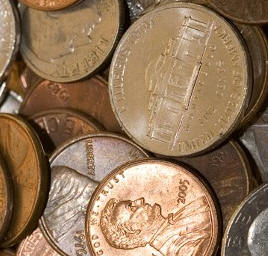 Is it time to stack copper and nickel as well as silver?
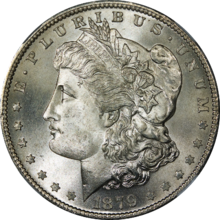 The silver standard did not die a natural death. It was deliberately killed. A proper search for the assassins was never carried out. There was never a post-mortem. In this paper we focus on the conspiracy as it might have unfolded between the two dates: April 9, 1865 (the day General Lee of the Confederacy surrendered at Appomattox to General Grant of the Union marking the end of the War Between the States) and January 1, 1879 (Resumption Day, when payment of the victorious Union's currency, the greenback was resumed in gold specie
 Good evening Ladies and Gentlemen:
 As 2013 approaches, the market continues to wait and see how Washington will handle the impending fiscal cliff. The cliff refers to a combination of tax hikes and spending cuts that are scheduled to go into effect in the United States next year. There is pressure coming from Democrats, Republicans, and various interest groups for Congress to take action to prevent the changes from occurring. The feeling is that given the fragile nature of the economy, the fiscal cliff could send America back into recession. But one problem with avoiding the spending cuts and tax hikes is that the US government will essentially be breaking the promises made during last year's debt ceiling debate, just a few months before they seek to raise that ceiling yet again.
 Today acclaimed money manager Stephen Leeb spoke with King World News about gold, silver and natural gas. Here is what Leeb had to say: "I noticed that natural gas is trading somewhere around $3.75. What's significant is that the price of natural gas today is about what it has averaged over the past four years. The reason four years is important is because it marks the time when unconventional or fracking gas came into its own.
| You are subscribed to email updates from Save Your ASSets First To stop receiving these emails, you may unsubscribe now. | Email delivery powered by Google |
| Google Inc., 20 West Kinzie, Chicago IL USA 60610 | |


No comments:
Post a Comment