


saveyourassetsfirst3 |

- Is Cancer Research The New Gold Rush?
- 5 Resource Companies With Insider Buying During October 2012
- Welcome to the Currency War, Part 4: Corporate Revenues Plunge
- What is the Sunshine Mint up to?
- Gold Bullion Flowing from West to East
- Keiser Report: Goodbye, German Gold?
- What if Recovery is Actually Bearish?
- Investors are shifting from paper to physical.
- Central Planners Greatest Fear, Possible Surprises & Gold
- Nigel Farage – We Are Headed To A ‘One World Government’
- Currency Wars Continue To Rage & This Is Positive For Gold
- And now the Dutch are getting nervous about their gold
- Update on Bernie von NotHaus
- Chris Powell: Gold and silver are crucial to the liberation of all markets
- Bundesbank slashed London gold holdings in mystery move
- 3....2....1... we have liftoff
- Rick Rule: The Market Isn't as Bad as You Think
- Silver Demand In China For Wealth Protection To Climb to Record 7,700 Tons
- Max Keiser interviews Lars Schall about Germanys gold reserve
- Diwali 'Could See Last Minute Rush' for Gold
- Silver Demand in China to Climb to Record 7,700 Tons
- Pause in Monetary Policy sees Gold Below $1,710
- Technical Charts for Gold, HUI Index & the US Dollar
- Links 10/25/12
- The Telegraph Notes Mystery German Gold Withdrawal and GATA's Clamor About It
- Why Did The Bundesbank Secretly Withdraw Two-Thirds Of Its London Gold?
| Is Cancer Research The New Gold Rush? Posted: 25 Oct 2012 12:02 PM PDT By Back in 1849, California experienced one of the wildest and most lucrative discoveries of the century: Gold deposits. Thousands of people from different states and continents flocked the area in hopes of striking gold and making a fortune. The early gold miners became filthy really rich as the combination of very high demand for gold and very limited supply available made gold really expensive. Nowadays, most of us think that it is quite rare to spot opportunities like this, but is it really that rare? Enter Cancer Research As the effect of globalization spread throughout all regions around the world, business competition and our fast-paced lifestyle continues, the ever-increasing trend of cancer incidents will continue to rise due to factors such as work-related stress, junk food and lack of exercise. According to the World Health Organization's projection, by 2030, new cancer cases will increase by 75%. With just a few Complete Story » | ||
| 5 Resource Companies With Insider Buying During October 2012 Posted: 25 Oct 2012 11:59 AM PDT By Markus Aarnio: When insiders buy shares on the open market, their companies are usually undervalued. Corporate insiders often have the inside track on their companies' prospects. Insiders probably wouldn't risk investing too much of their own money into their own companies unless they thought the stock might rise. A study titled "Predictive and Statistical Properties of Insider Trading" by James H. Lorie and Victor Niederhoffer reached the following conclusion:
It is also important to note that Gold (GLD) prices have made their highest monthly Complete Story » | ||
| Welcome to the Currency War, Part 4: Corporate Revenues Plunge Posted: 25 Oct 2012 11:19 AM PDT The Eurozone meltdown sent capital pouring into (temporarily) safe haven currencies like the Swiss franc, Brazilian real, and the US dollar. As the chart below illustrates the dollar spiked by 12% between October 2011 and August 2012. This sounds like a good thing for the US but it's not, because US multinationals lose big when the dollar pops. Assume, for example, that you're making computers in California and selling them to Germany, and the dollar goes up by 10%. Suddenly your computers are 10% more expensive, which makes it hard to sell as many as you expected. And those that you do sell are paid for with euros, which are now worth 10% less than they were a few months ago. When you convert those euros to dollars in order to pay your bills, your revenues are 10% lower than they should be. Your costs, meanwhile, are mostly in dollars, so your profit ends up being far lower than you expected. Now combine this margin squeeze with an order slowdown in Europe and China, and extend it to the whole S&P 500 and you get the following:
Falling corporate profits and mass layoffs combine to lower federal tax revenues, which puts pressure on Washington to fix its strong dollar problem. As yesterday's Wall Street Journal explained it:
Some thoughts So the dollar has to fall, thus shifting the strong currency burden to our trading partners. Quantitative easing, of course, is designed partly as a currency war weapon. But we've already fired that gun for three years: Federal debt is rising by about $1.5 trillion a year, bank reserves are soaring, historically low mortgage rates have produced a tsunami of refis…and it's not working. The dollar, though off a bit this month, remains too high for corporate comfort. But QE is pretty much all that's left (unless you count capital controls, which are generally a disaster for multinational profits, and mass debt liquidation, which is another word for capital "d" depression). So the next administration will be left with no alternative to more of the same on an even bigger scale. If $10 trillion doesn't do it, try $20 trillion. This is crazy of course. But when you're staring into the abyss, crazy becomes a relative concept.
| ||
| What is the Sunshine Mint up to? Posted: 25 Oct 2012 09:30 AM PDT I couldn't help but notice that the Sunshine Mint is rolling out V2 of their bars and rounds. A new security feature is being implemented which will require a decoder to verify authenticity. Is this a beta test in preparation for PM currency roll out after things go south in fiat land? | ||
| Gold Bullion Flowing from West to East Posted: 25 Oct 2012 09:02 AM PDT Gold Bullion Flowing from West to East By Alasdair Macleod October 22, 2012 • Reprints Earlier this month Eric Sprott circulated a paper, co-authored by him, which concluded that Western central banks have considerably less physical gold than they claim. It shows that since the year 2000 there has been a net increase in identifiable annual demand of 2,268 tonnes, and concludes that some supply, apart from mine output from the "free" world, must come from Western central banks – because there can be no other source. This supply amounts to price suppression in the name of demonetizing gold. Therefore, while minimal investment interest is shown in precious metals in the West, central bank selling and net jewelry liquidation (currently running at about 1,000 tonnes annually) are effectively supplying Asia with gold at artificially low prices in what amounts to a transfer of wealth. We do not know precisely the extent to which this has happened, because available statistics only tell part of the story. The World Gold Council (WGC) has demand data going back only to 1992, and some of this is defined as actually measured (e.g. import statistics, mint and hallmarking data); otherwise it is only "indicated" on a trade-sample basis. Importantly, no statistics can capture change of ownership for vaulted gold. But we can get a feel for gold ownership shifts by recounting events since the US dollar finally dropped all links with gold in 1971. In 1971 bullion investment was still effectively banned in the US (except for foreign coins), and investment in the UK and a number of other countries was also more or less coins only. It is estimated that all existing coins today amount to about 3,500 tonnes. The oil crisis of the 1970s led to substantial bullion-buying by the enriched Middle Eastern states. This continued through the 1980s and into the 1990s. Meanwhile conservative Swiss investment managers, who collectively were the largest holders of bullion, were replaced by a new generation of managers who by 2000 had disposed of nearly all of it, as had investment managers everywhere in the West. Even today very few investment managers have bullion in their clients' portfolios. This gold quietly disappeared into Arab and Asian hands, and into jewelry fabrication boosted by low prices. However, even in 1992 when the WGC statistics started, Asian demand ex-Japan dominated markets, absorbing 1,650 tonnes – over twice that of the developed markets. At that time private gold ownership in developed markets was predominantly in jewelry form. This accumulation is reversing as a consequence of higher prices and financial stress in some nations. Bullion investment remains unfashionable, and remarkably few people have even seen a gold coin, let alone possessed one. But the last decade has seen the growth of securitized gold in the form of exchange-traded funds and other listed vehicles, amounting to about 2,800 tonnes. While the deteriorating outlook for paper currencies has sparked a partial move into gold, much of this is in unallocated accounts with bullion banks or in synthetic derivatives. The message behind the shift of wealth from advanced nations to Asia is that we are left with no "Plan B" in the event of a monetary crisis. A global collapse of paper money, which is inevitable if current monetary policies are not reversed, will give Asians considerable wealth relative to the rest of us. History will surely judge the central banker's promotion of ephemeral paper at the expense of gold in the harshest terms. http://www.resourceinvestor.com/2012/10/22/gold-bullion-flowing-from-west-to-east?ref=hp | ||
| Keiser Report: Goodbye, German Gold? Posted: 25 Oct 2012 09:00 AM PDT In this episode, Max Keiser and Stacy Herbert discuss how it is that Gordon Brown's Bottom turned into an audit the gold movement in Germany. They also discuss the mother of all bond bubbles getting set to burst and all that will be left in the Bank of England 'gold' vaults are a big pile of gilts. In the second half of the show, Max Keiser talks to Dominic Frisby, author of Life After the State, about Germany's gold quest, the future of relations between the US and Germany if the gold is not there and about 'life after the state.' from russiatoday: ~TVR | ||
| What if Recovery is Actually Bearish? Posted: 25 Oct 2012 08:58 AM PDT
The twinkie manufacturers, of course, are the world's central banks. Whenever things have looked terrible, the CBs stepped in with stimulus and jawboning. (Hence the 'artificial ingredients.') The routine intervention of the Central Banks, plus the Greenspan Put transitioning to the Bernanke Put, have further led to an underscoring of the "bad news is good news" phenomenon, which in recent years has worked like this:
As the senior Rothschild once said, "Permit me to issue and control the money of a nation, and I care not who makes its laws." Those who recognized that the most powerful market and currency manipulator in all of human history (the Federal Reserve) was on their side, have used that knowledge to make a mint.
But who pays for all this? Can the twinkie markets go on forever? Isaac Asimov once had a science fiction story (don't recall the name) about the discovery of a seemingly limitless energy source. Eventually it was revealed that, in keeping with the laws of physics, this seemingly limitless energy was actually being sucked out of an alternate universe (causing the inhabitants of that universe to die). The theory of yours truly is that the seemingly magical gains created by twinkie markets, in keeping with the laws of market physics, are actually being sucked out of the "alternate universe" of the beleaguered middle class, through stealth inflation, increased debt leverage, and other long-term stagnation costs Joe Sixpack can't even see. Kind of like using a wormhole to steal pennies and nickels, and eventually dimes and quarters and dollars, from the bank accounts of hundreds of millions, in such a way that they not only fail to notice, they have no way to comprehend what is happening even when explained to them. A shift in the current landscape could have surprising consequences. What if a recovery is actually bearish for equities (and even more so for gold)? Re, recovery prospects, let's begin with some feel-good news stories. First there is this, via Reuters:
"Not enough to counter the slowdown in manufacturing," eh? Well then how about this, via WSJ, "Cheap Natural Gas Gives New Hope to the Rust Belt:"
 click to enlarge Well how about that… some actual, genuine good news, rooted in the cheap energy possibilities of a manufacturing renaissance. Tapping good old American know how, on home American soil, via Uncle Sam's emergence as the "Saudia Arabia" of shale plays. Side note — last month there was a great article in Businesweek, 'The Oil Hub Where Traders Are Making Millions." The gist of the piece is that savvy energy traders with access to logistics are making a killing on the big spread between Brent crude and cheaper domestically produced WTIC crude. The lackluster price action in crude oil (see chart) is partially due to global slowdown, but also due to America's surprise emergence as a heavy duty oil & gas producer (to a potentially far greater degree than ever before). Back to the original idea though. Why would a recovery be bearish?
My buddy and his friend were taking a break from college. They had both been on more or less a junk food diet (what do you expect from college students) for six to nine months. And so, when they spent two weeks in Oregon eating the "good stuff" — food that was preservative and chemical free, nutritious, and healthy — guess what happened… it actually made them feel sick! There is a reason why this occurs. When your body is hit with a barrage of grease, chemicals and other junk, it adjusts to the siege. The levels of garbage in your system are allowed to build up. You might not feel the greatest on a day-to-day basis, but your body adjusts and you feel "normal." Then, when you decide to get your dietary act together, something happens. Your body says "Great! Now we can flush out all this garbage!" And so the poisons you had collected over months or even years start getting flushed out… and for a window of time, you actually go from "normal" to feeling like crap, as part of the adjustment process to a healthier state. Similarly, if the market outlook for the U.S. economy is bright enough to warrant optimism, markets will have to "detox" from their current artificial-ingredient-laden, stimulus-sugar-addicted, central-bank-junk food state. Just consider the follow-on implications, for example, in the event of a real (as opposed to central bank induced) recovery taking hold:
If it sounds absurdly counter-intuitive that a recovery could be bearish equities, just consider the impact of central banks as a counterbalance. Losing that counterbalance could tip the scales lower (in terms of equity prices) to a greater degree than organic improvement tips them higher. For the past few years, the threat of economic stagnation (and deflationary downward spiral) was so severe, central banks overcompensated as a form of safety measure. But if we get signs of real recovery, they stop doing that. And there is more… In the depths of the crisis, and the immediate aftermath, corporate America overcompensated on the fat-trimming and cost-cutting side, using the financial crisis as political cover to make bone-deep cuts and ruthlessly pursue efficiencies they had never really tackled or previously put off. That intense regime of corporate cost-cutting and efficiency maximization, coupled with the overcompensating stimulative impact of central banks acting on precaution, combined to produce record-level corporate profit margins. But now those record profit margins are under threat… and a recovery could result in greater pain for corporate America — through central bank artificial stimulus withdrawal — than pleasure produced by consumer recovery. Another analogy: After a serious accident, a patient spends two years in physical therapy, accompanied by some really good drugs. As a result of the drugs, and the intense PT, he is progressing nicely. Then one day the doc says "Great news! As of 2013, we're taking you off the drugs." How is the guy going to feel? Well, he will still be recovering… the removal of the drugs is a positive marker for his recovering health… but for a time he is going to feel a lot worse… Not only do markets have to contend with a "law of diminishing returns" as far as stimulus goes, they have to contend with the possibility that seeds of true recovery equal "stimulus never coming back"… true domestic economy resilience feeding rising long-term rates… and all this even as record corporate profit margins contract in an "off the drugs" environment where things are still improving, albeit slowly, as wages and costs start to uptick…  click to enlarge And by the way: If a real recovery counts as bad news for equities, it could be downright terrible news for gold (and silver). Again, signs of genuine recovery would lead to a "wall of worry" type environment — for the economy, not for stocks — with central bank stimulus withdrawal and anxiety over contracting corporate profit margins keeping irrational exuberance in check. That isn't the kind of backdrop against which gold and silver shine. If anything, it's the kind of environment in which precious metals get stone-cold kicked to the curb. We don't mean to be overly down on precious metals. But signs of US recovery are completely antithetical to the precious metals bull case. The last big upshot in gold came on the Federal Reserve's "infinite QE" announcement. The follow-on implications of "infinite QE" were two-way bullish for gold — but door #3 not so much:
In event of door #3, not only does gold look like a terrible investment, it starts to look like a massive short! (Silver too for that matter.) Look, major league game changers don't come along every day. In fact they come along almost never. But the sheer size and scope of America's shale potential (for oil and gas alike) counts as such a potential game changer… via foundation for manufacturing renaissance… as does the possibility that the asset side of America's balance sheet (which we have discussed repeatedly) is hefty enough to comfortably withstand all the leverage demands placed upon it these past few years. (Attention debt doomers: You cannot look at debt — particularly long-term debt held by a global player of great strategic importance — in an asset vacuum!) Nothing is guaranteed, of course. It's wholly possible that America's nascent recovery hits the skids… that the world falls into global recession in 2013… and that gold and secondarily equities are the place to be, once again, as central bankers panic into super-stimulus infinity and beyond, fueling some kind of mini-Zimbabwe scenario (in which paper assets go vertical as everything else turns to crap). But given the potential sea changes we are seeing in housing, U.S. energy independence. consumer spending, and comparatively lackluster Europe / China outlook, it also remains quite possible that America's energy-led recovery and Lazarus-like manufacturing rebound continue apace — developments which would be counterintuitively bearish equities, bearish treasuries and bearish gold, as the twinkie makers (central banks) steadily withdraw their heavy-handed artificial influence presence on all three… In trading, mental flexibility is a foremost virtue. We humbly suggest that, as an alternative to getting locked in to a fixed view, one openly considers all plausible scenarios… thus demonstrating the fluid flexibility to surf the wave that presents itself (as opposed to one that never comes). JS (jack@mercenarytrader.com) p.s. Like this article? For more, visit our Knowledge Center!p.p.s. Sign up for our Hedge Fund Regulatory Alerts!  Similar articles you might like: | ||
| Investors are shifting from paper to physical. Posted: 25 Oct 2012 08:57 AM PDT The New Trend in Gold By Jeff Clark, Senior Precious Metals Analyst It's not too often that you see a major shift within the gold market. The last such recalibration in sentiment for gold investors was the introduction of the first gold-backed ETF in 2004, and the subsequent explosion in exchange-traded products (ETPs) for bullion and precious-metals equities. Today, another tidal change is under way, as the flow of funds into structured bullion products ebbs. I think this shift – as you'll read about in a moment – signals two things. First, it confirms that growing numbers of investors are increasingly nervous about the reckless monetary and fiscal paths being pursued on a global scale. Identifying this trend early on will let investors position themselves accordingly. Second, it tells me that acting now – securing the gold you want and need – is critical to withstanding the likely fallout ahead from... http://www.caseyresearch.com/cdd/new-trend-gold | ||
| Central Planners Greatest Fear, Possible Surprises & Gold Posted: 25 Oct 2012 08:47 AM PDT
from kingworldnews.com: Today Rick Rule warned King World News that the central planners' greatest fear may be coming true, that their money printing is no longer having any economic impact and they are now pushing on a string. Rule also discussed possible surprises going forward, Germany's gold, and why he remains a strong buyer of gold. Here is what Rule had to say: "The action here in gold is not unexpected with the stronger dollar. You will note that the major markets are off the last couple of days, as well as commodities and most peripheral assets. But I continue to believe that buying bullion on weakness is a prudent thing to do, and probably a profitable thing to do as well in the one-, two-, and three-year time frames." Keep on reading @ kingworldnews.com | ||
| Nigel Farage – We Are Headed To A ‘One World Government’ Posted: 25 Oct 2012 08:45 AM PDT
from kingworldnews.com: In an incredibly powerful interview, today MEP (Member European Parliament) Nigel Farage told King World News, "They even want to get eurozone countries to change their constitutions, to write in their constitutions that they will obey all orders from Brussels." Farage also warned "So it is very, very difficult to ignore those voices who have been telling me for 20 years that behind all of this there are a group of people that want to create a one world government … it's beginning to stare us in the face." Farage also discussed gold, but first, here is what he had to say about the ongoing crisis: "We've reached a point in this where, despite the massive economic the massive economic, political, and social problems that exist within the eurozone, and indeed an argument that the North and the South of Europe are diverging by the day, despite all of that, the political class have got so much the upper hand in Brussels, that, actually, they are moving to more and more extreme tactics." Keep on reading @ kingworldnews.com | ||
| Currency Wars Continue To Rage & This Is Positive For Gold Posted: 25 Oct 2012 08:44 AM PDT
from kingworldnews.com: Today 25-year veteran Caesar Bryan told King World News that "Currencies wars are continuing to rage, and the reality is this is a very positive environment for the gold price." Bryan, from Gabelli & Company, also said, "…the bullish case for gold has never been stronger." Here is what Caesar had to say: "When we last spoke, Eric, I outlined the fundamental bullish case for gold. I believe the gold price is going to go significantly higher over the next six months. The gold market had reached a point of being overbought when it was up at the $1,800 level." Keep on reading @ kingworldnews.com | ||
| And now the Dutch are getting nervous about their gold Posted: 25 Oct 2012 08:05 AM PDT Original article: http://www.nd.nl/artikelen/2012/okto...j-goudvoorraad Translation courtesy of GATA. 
 Submitted by cpowell on 07:32AM ET Thursday, October 25, 2012. Section: Daily Dispatches Thanks to our friend Louis Boer for the translation of this report from Dutch to English. * * * From Nederlands Dageblad Barneveld, Netherlands Wednesday, October 24, 2012 http://www.nd.nl/artikelen/2012/oktober/24/vraagtekens-burgers-bij-goudv... Almost 300 "concerned Netherlands citizens" have joined the German initiative for insight about the gold reserves. In a petition the citizens committee demands "full openness on the quantity and storage location of the Netherlands' physical gold, and on the extent and nature of the gold claims." In Germany a lot of uneasiness has risen about the quantity, value, and quality of the gold reserves, which have not been audited in many years at various storage locations. Led by the tabloid newspaper Bild, German news media are wondering whether the 3.4-million kilograms of ingots are really there (valued at about E150 billion). Under pressure from the German federal audit office, part of the gold stock will be repatriated from the United States to Frankfurt. The Netherlands faces similar uneasiness about the position of its gold treasure -- 612,000 kilograms with of a value of about E25 billion. The gold, in part located at De Nederlandse Bank in Amsterdam (about 10 percent), is also located at the Federal Reserve Bank of New York, in Ottawa, and London. The Netherlands comes tenth on the list of gold reserves. The United States leads with 8.1 million kilograms. Germany comes second. Tom Lassing, one of the signers of the petition and owner of the website beursbox.nl, says central banks are unjustly mysterious with gold reserves. "The last years have seen a loss of trust in the financial system and we have been fooled a lot," Lassing says. "So I say: Just let the central banks like DNB show the gold is really there." According his fellow signer Harm van Wijk of beursbulletin.nl there is every reason for an audit. "The reliability of politicians appeared not very great on the Greek issue, so rather than being ostriches we should seek certainty on the gold reserves." One of the concerns is that the gold reserves of central banks has been pledged repeatedly through negotiable title deeds. Experts like commodities dealer Eric Sprott maintain that there is much more "paper" gold in circulation than there are ingots in the bank vaults. Since 1990 the Netherlands has sold almost 1.1 million kilograms of its gold reserves. | ||
| Posted: 25 Oct 2012 07:51 AM PDT From the NY Times no less. Long article here: Prison May Be the Next Stop on a Gold Currency Journey http://www.nytimes.com/2012/10/25/us...bars.html?_r=1 | ||
| Chris Powell: Gold and silver are crucial to the liberation of all markets Posted: 25 Oct 2012 07:48 AM PDT Chris Powell always nails it. Transcript of his latest speech, at the N.O. Investment Confrerence. Gold and silver are crucial to the liberation of all markets Submitted by cpowell on Wed, 2012-10-24 17:33. Section: Documentation Remarks by Chris Powell Secretary/Treasurer Gold Anti-Trust Action Committee Inc. New Orleans Investment Conference Wednesday, October 24, 2012 The first thing to understand when you're investing in the resource sector is that all major markets are now manipulated, mostly surreptitiously, by governments. There are a few reasons for this explosion of manipulation but the big ones are that the world economy has grown terribly unstable in recent years (in large part because of smaller manipulations by governments) and because an international currency war has broken out. The gold and silver markets are the most manipulated of all because they involve currencies that compete with government currencies and because gold is a primary determinant not just of the value of currencies but also of interest rates and the value of government bonds. The gold market particularly is the key to all other markets. This market rigging isn't farfetched or wild conspiracy theory stuff. For starters, in the United States it's the law. In 1934 the United States enacted the Gold Reserve Act specifically to create the Exchange Stabilization Fund within the Treasury Department and authorize it to trade in gold and related financial instruments. As it has been amended, the Gold Reserve Act now allows the ESF to trade not just in gold but in any financial instruments and to do so entirely in secret, exempt from answering to Congress or anyone else. You can confirm this at the page of the Treasury Department's Internet site describing the Exchange Stabilization Fund: http://www.treasury.gov/resource-center/international/ESF/Pages/esf-inde... As for silver, in 1965, as he signed the legislation removing silver from United States coinage, President Johnson warned investors not to buy silver in the hope of a rising price, because, he said, the government would dishoard as much silver as necessary from its silver stockpile to keep the price down. Whether and how the government has manipulated the silver market since then is arguable, but the government's interest in manipulating the price of silver, a monetary metal, is a matter of longstanding public record. President Johnson's statement committing the government to rigging the price of silver even after its demonetization is posted at the presidential archives section of the Internet site of the University of California at Santa Barbara: http://www.presidency.ucsb.edu/ws/?pid=27108 In fact, documentation of the manipulation of the gold and silver markets is all over the place. For many years GATA has been compiling and publishing it in the "documentation" section of our Internet site: http://www.gata.org/taxonomy/term/21 Indeed, more documentation of it came out just Monday this week when the German government's auditors office issued a report criticizing the German central bank, the Bundesbank, for negligence in its custodianship of Germany's national gold reserves: http://www.gata.org/node/11851 http://www.gata.org/node/11855 http://www.gata.org/node/11853 http://www.gata.org/node/11854 http://www.gata.org/node/11856 The auditors report disclosed that the Bundesbank had secretly sold some of the German gold reserves vaulted at the Bank of England in London. But since the sale of Germany's gold in London apparently did not reduce the total official holdings in Germany's gold reserve, the sale was probably part of a gold swap with another central bank. That is, it probably was a transaction in which Germany sold its gold in London on behalf of that other central bank and in exchange took title to gold owned by the other central bank and vaulted elsewhere. This would fit exactly what GATA learned when, in 2009, it sued the Federal Reserve in U.S. District Court for the District of Columbia to gain access to the Fed's records involving gold swaps. Last year GATA more or less won that lawsuit. While most of the Fed's records involving gold swaps were still denied to us by the court, one very telling record was ordered disclosed, the minutes of the April 1997 meeting of the G-10 Gold and Foreign Exchange Committee. And, as a result of all the questioning of Fed officials we did during the court case, we extracted a spectacular admission from a member of the Fed's Board of Governors, Kevin M. Warsh. Fed Governor Warsh admitted in writing that the Fed has secret gold swap arrangements with foreign banks.: http://www.gata.org/files/GATAFedResponse-09-17-2009.pdf The only purpose of secret gold swap arrangements is secret intervention in the gold market. Emboldened by the success of our informational lawsuit against the Fed, a few weeks ago GATA undertook an amazing new method of learning what other Western central banks are doing in the gold market, a method never attempted before by academic scholarship or mainstream financial journalism: That is, we asked them. One by one, we put some very specific questions to a few of them. Questioning central banks about gold has never been attempted by financial market academics, analysts, and newsletter writers, nor by mainstream financial journalists because they simply take for granted that central banks operate in secret. Central banks control the value of all capital, labor, goods, and services in the world -- that is, central banks exercise nearly absolute power -- but financial market academics, analysts, and newsletter writers and mainstream financial journalists seem to believe that central banks are somehow exempt from the ancient principle that power corrupts and absolute power corrupts absolutely. GATA's questions were posed through the German freelance journalist Lars Schall to the Bank of England, the Bundesbank, and the Bank for International Settlements, as well as to the Fed and Treasury Department and JPMorganChase & Co., that investment bank being in effect an agency of the U.S. government. The Fed, Treasury Department, Bank of England, and JPMorganChase refused to answer our questions about involvement in the gold market. The Bank for International Settlements, headquartered in Basel, Switzerland, also refused to answer but did acknowledge that it trades secretly in the gold market on behalf of its member central banks. Of course the BIS refused to explain the purposes of that trading, but then in 2006 GATA obtained and published a speech delivered in 2005 by the head of the monetary and economic department of the BIS, William White, who said that a primary purpose of international central bank cooperation is to influence asset prices, especially the price of gold: http://www.gata.org/node/4279 Lars Schall's account of his attempt to question the central banks and JPMorganChase & Co., including their evasions, has been published today at GATA's Internet site here: http://www.gata.org/node/11862 Evasive as it was with Schall, the BIS remains a wonderful source of documentation of central bank manipulation of the gold market. In April this year the Internet site Zero Hedge disclosed that a trader for the BIS, Mikael Charoze, identified himself in his Internet biography as the BIS' "foreign exchange and gold senior dealer" handling "management of liquidity for big amounts," including "interventions," and adding that he "holds and manages proprietary positions on all currencies including gold." A few days after Zero Hedge called attention to his biography, Charoze removed the references to interventions and gold: http://www.gata.org/node/11257 In February this year one of GATA's European researchers discovered and we published the PowerPoint presentation made in 2008 by the BIS to prospective central bank members at a meeting at BIS headquarters in Switzerland. The presentation advertised the BIS' services to its members. Among the BIS services advertised were interventions in the foreign exchange and gold markets: http://www.gata.org/files/GATA-BISPresentation-2008.pdf The complete presentation is here: http://www.gata.org/files/BISAdverti...erventions.pdf GATA's dispatch about it from February is here: http://www.gata.org/node/11012 This week our researcher discovered that, two years later, in 2010, the BIS made a virtually identical presentation about its services, a presentation made to oil industry executives meeting in East Timor. But the BIS' 2010 presentation removed the reference to foreign exchange and gold market interventions. That's because the 2010 presentation was for outsiders and the public isn't supposed to know about market interventions by central banks. The modified page of the 2010 presentation is here: http://www.gata.org/files/GATA-BISPresentation-2010.pdf Also this year GATA obtained official confirmations of gold price suppression from two former Western central bankers. In April our friend the Dutch economist Jaco Schipper discovered the memoirs of the late Netherlands central bank president Jelle Zijlstra, who for some years was also president of the Bank for International Settlements. Zijlstra, who sat at the pinnacle of Western central banking and thus is pretty good authority, wrote that the gold price is suppressed by Western central banks at the instigation of the United States: http://www.gata.org/node/11304 And in January this year our journalist friend Lars Schall reached former Fed Chairman Paul Volcker to ask him about a passage in Volcker's memoirs, which, strangely, seem to have been published only in Japan. Recounting a currency revaluation in 1973, Volcker says in those memoirs that he regrets that intervention against the price of gold was not undertaken by central banks. Corresponding about this with Schall in April, Volcker confirmed his reflection about intervention against gold and said such intervention is necessary to "counter exchange rate instability at a critical point": http://www.gata.org/node/10923 I'm sorry if all this manipulation of markets by government is getting pretty obvious to you -- it certainly is to me -- but in fact in polite company in the financial markets it is still either denied or ignored because it is too politically incorrect and explosive to acknowledge. For if you acknowledge this stuff, you realize that we don't have any markets at all anymore, just command economies in disguise. If you're going to get into or stay into gold and silver you have to know what you're up against -- which is to say you're up against all the money and power in the world. This is how GATA sees things: The great disparagement about gold is that even with its huge rise in price over the last decade it has not kept up with inflation. Somehow the obvious question is never asked: Why hasn't gold kept up with inflation? GATA's research has concluded that gold has not kept up with inflation because, first, Western central banks did a lot of dishoarding and leasing of their gold reserves in the 1990s and, second, because Western central banks and their agents the bullion banks have created a vast imaginary supply of "paper gold." This vast imaginary supply is essentially a monstrous naked short position in gold. That is, much gold has been sold that doesn't exist because the Western central banks and their bullion bank agents have created a fractional-reserve gold banking system, a system that has worked because most big buyers of gold have not taken possession of their purchases but rather have left them on deposit with the bullion bank sellers. Since most buyers don't take delivery of their gold, the bullion banks know that they can sell more gold than they have, confident that Western central banks will rescue them in the emergency of a short squeeze. Such a rescue was promised by Fed Chairman Alan Greenspan in his testimony to Congress in July 1998 when he said central banks "stand ready to lease gold in increasing quantities should the price rise": http://www.gata.org/node/9545 That's what the Western central bank gold leasing and supposed gold sales of the last decade were about -- covering a short position that could not be covered from ordinary mine production. Ask yourself: If Western central banks were, as they said, constantly selling gold from 2000 to 2010, how could the price have gone up steadily, pretty much at a 45-degree angle, throughout that decade? The gold price rose steadily during that time because those Western central bank gold sales almost certainly were not really sales at all but cash settlements of leased gold that could not be recovered without exploding the price. That is, the gold in those supposed Western central bank sales had actually hit the market many years earlier and was not hitting the market when the sales were announced. Upon the announcement of the sales the gold was actually just being written off and surrendered as the Western central banks staged a controlled retreat with the gold price. This still leaves this huge naked short position in gold in the bullion banking system and in the futures markets around the world, a naked short position that is starting to get squeezed as Eastern and developing-world central banks figure out the gold price suppression scheme and strive to hedge their U.S. dollar reserves. We know from the U.S. State Department cables obtained and published by Wikileaks last year that the government of China knows all about the Western gold price suppression scheme because government-operated news organizations in China have repeatedly reported about it and translations of those reports were sent to the U.S. State Department in Washington from the U.S. embassy in Beijing. You can read those reports and U.S. embassy cables at GATA's Internet site here: http://www.gata.org/node/10380 http://www.gata.org/node/10416 That is, China knows all about the gold price suppression scheme, which may be why China is accumulating gold so furiously at a discount. And the U.S. government knows that China knows. GATA is betting that we can expose to the markets this naked short position in gold, bust the fractional-reserve gold banking system, and achieve a free and transparent market in gold and thereby help liberate all markets everywhere. As you can see from their clumsy evasions of our questions, Western central banks are still betting that they can conceal all this market rigging forever, gold being the secret knowledge of the financial universe, since the control of gold enables the control of the value of all capital, labor, goods, and services in the world. This Western central bank scheme is essentially totalitarian. The Western central banks can be beaten at it -- they are being beaten slowly and steadily -- but it's a struggle every day. It's GATA's struggle and we would welcome your support. A few weeks ago we made new informational requests of the Federal Reserve, Treasury Department, and State Department seeking access to all their records about gold, including international agreements to which the United States is a party. Of course the Fed and Treasury and State departments have not answered us, so we're now entitled to sue them again for access to their records. We have to raise some money for that. But GATA is recognized by the U.S. Internal Revenue Service as a tax-exempt educational and civil rights organization, so at least contributions to us are tax-deductible in the United States. If you're inclined to help, please visit our Internet site here: http://www.gata.org/node/16 This is a fascinating and, unfortunately, still mysterious field. Every investor should pursue it, and you can read the material we've collected at our Internet site: http://www.gata.org/ Thanks so much for your kind attention today. | ||
| Bundesbank slashed London gold holdings in mystery move Posted: 25 Oct 2012 07:39 AM PDT Hot off the presses, from IMHO the UK's best financial reporter: Ambrose Evans-Pritchard Bundesbank slashed London gold holdings in mystery move Germany withdrew two thirds of its vast holdings of gold from Bank of England vaults shortly after the launch of the euro more than a decade ago, according to a confidential report by German auditors.  Germany has 3,396 tons of gold worth €143bn (£116bn), the world's second-largest holding after the US. Nearly all of it was shifted to vaults abroad during the Cold War in case of a Soviet attack. Photo: ALAMY Germany has 3,396 tons of gold worth €143bn (£116bn), the world's second-largest holding after the US. Nearly all of it was shifted to vaults abroad during the Cold War in case of a Soviet attack. Photo: ALAMY By Ambrose Evans-Pritchard, International business editor 8:24PM BST 24 Oct 2012 The revelation came as Germany's budget watchdog demanded an on-site probe of the country's remaining gold reserves in London, Paris, and New York to verify whether the metal really exists. The country has 3,396 tons of gold worth €143bn (£116bn), the world's second-largest holding after the US. Nearly all of it was shifted to vaults abroad during the Cold War in case of a Soviet attack. Roughly 66pc is held at the New York Federal Reserve, 21pc at the Bank of England, and 8pc at the Bank of France. The German Court of Auditors told legislators in a redacted report that the gold had "never been verified physically" and ordered the Bundesbank to secure access to the storage sites. It called for repatriation of 150 tons over the next three years to test the quality and weight of the gold bars. It said Frankfurt has no register of numbered gold bars. The report also claimed that the Bundesbank had slashed its holdings in London from 1,440 tons to 500 tons in 2000 and 2001, allegedly because storage costs were too high. The metal was flown to Frankfurt by air freight. The revelation has baffled gold veterans. The shift came as the euro was at its weakest, slumping to $0.84 against the dollar. But it also came as the Bank of England was selling off most of Britain's gold reserves – at market lows – on orders from Gordon Brown. Peter Hambro, chair of the UK-listed gold miner Petropavlovsk, said the Bundesbank may have withdrawn its bullion in self-protection since it did not, apparently, have its own specifically allocated bars in London. "They may have decided that the Bank of England had lent out too much gold, and decided it was safer to bring theirs home. This is about the identification. Can you identify your own allocated gold, or are you just a general creditor with a metal account?" The watchdog report follows claims by the German civic campaign group "Bring Back our Gold" and its US allies in the Gold Anti-Trust Committee that official data cannot be trusted. They allege central banks have loaned out or "sold short" much of their gold. The refrain has been picked up by German legislators. "All the gold must come home: it is precisely in this crisis that we need certainty over our gold reserves," said Heinz-Peter Haustein from the Free Democrats (FDP). The Bundesbank said it had full trust in the "integrity and independence" of its custodians, and is given detailed accounts each year. Yet it hinted at further steps to secure its reserves. "This could also involve relocating part of the holdings," it said. http://www.telegraph.co.uk/finance/f...tery-move.html | ||
| 3....2....1... we have liftoff Posted: 25 Oct 2012 07:26 AM PDT  | ||
| Rick Rule: The Market Isn't as Bad as You Think Posted: 25 Oct 2012 06:53 AM PDT Louis James, Casey International Speculator interviews Rick Rule in Carlsbad, California, at the Casey Research Summit on "Navigating the Politicized Economy." "The market's not as bad as you think. What it points out to me is that a market is merely a facility for buying and selling fractional ownership in businesses, and you need to pay attention to the businesses, not the market. My hope is that this bear market lasts for another two years, and that this financing cycle lasts for another two years. We have a lot of cash to deploy, and we haven't been able to deploy that cash in this market yet on terms that resemble the terms that we enjoyed in the 1998-2002 bear market. So maybe I'm talking my book, but I'm hoping that this bad market continues for at least eighteen months."
October 24, 2012 (Source: Conversations with Casey) | ||
| Silver Demand In China For Wealth Protection To Climb to Record 7,700 Tons Posted: 25 Oct 2012 05:48 AM PDT Interesting post on zero hedge. The Chinese have allways had an affinity twords silver. Bring it on China... http://www.zerohedge.com/news/2012-1...cord-7700-tons Quote: Bloomberg reports that Chinese silver demand is set to climb nearly 10% next year as investors look to preserve their wealth. Although China as the 2nd largest world economy may be in an economic slump, investors are seeking out silver as a value alternative investment. Silver climbed 15% this year and ETF's holding silver have gained 6.5%. Research from Beijing Antaike said that 33% of the country's demand comes from jewellery and coins, the rest for use in photography, solar panels electrical appliances. XAU/USD 3 Year – (Bloomberg) "Many producers and investors have hoarded the precious metal in the form of ingots or unwrought silver." After the US Fed's QE1, (December 2008-March 2010) silver rocketed 53%, almost twice the jump as gold, and for QE2, (ending June 2011) silver rose 24%. Morgan Stanley predicts that silver will again return more than gold after QE3 was announced this September. Chinese national statistics show that jewellery sales rose 19.3% for the first eight months compared to last year. "I'm bullish on silver, so I personally have stockpiled 3 tons of it at home," Yang Guohui, president at Hunan Yishui Rare & Precious Metals Recycling Co., said in Xiamen on Oct. 17. Yishui is based in Yongxing County, Hunan province, where about 20 percent of China's silver is from, according to Huang Xiaoming, head of the local precious metals management bureau. The spread that Chinese investors pay to the overseas prices is $40/kilogram which is due to government tax and transportation costs. In May 2011, this grew to over $200/kilogram on the Shanghai Gold Exchange amid mass speculation. Chinese solar power may increase demand. The government is growing the number of installations from 2.6 gigawatts in 2011 to 21 gigawatts by 2015. Metal output from China who is the 3rd leading producer could reach 13,000 tons this year from mining, smelting, refining and recycling, according to Wang Jian, deputy head of the China Nonferrous (1258) Metals Industry Association. | ||
| Max Keiser interviews Lars Schall about Germanys gold reserve Posted: 25 Oct 2012 05:47 AM PDT | ||
| Diwali 'Could See Last Minute Rush' for Gold Posted: 25 Oct 2012 05:41 AM PDT Wholesale gold bullion prices rallied to $1,718 an ounce Thursday morning in London, less than 24 hours after dipping below the $1,700 mark for the first time since the US Federal Reserve announced a third round of quantitative easing last month. | ||
| Silver Demand in China to Climb to Record 7,700 Tons Posted: 25 Oct 2012 05:22 AM PDT Although China as the second largest world economy may be in an economic slump, investors are seeking out silver as a value alternative investment. Silver climbed 15% this year and ETF's holding silver have gained 6.5%. | ||
| Pause in Monetary Policy sees Gold Below $1,710 Posted: 25 Oct 2012 04:30 AM PDT | ||
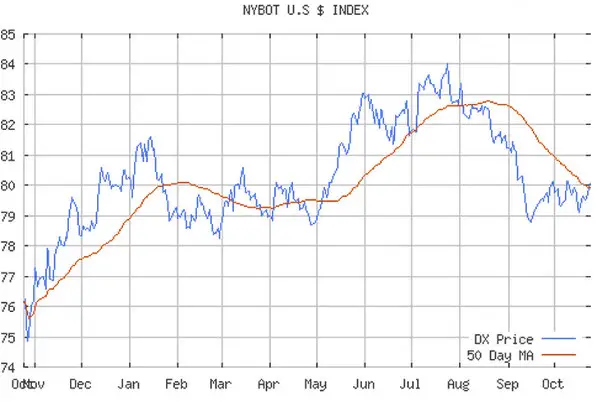
| Technical Charts for Gold, HUI Index & the US Dollar Posted: 25 Oct 2012 04:20 AM PDT The best hope for the US dollar is for it to sit in a channel between 78 and 81.50 which is where I think it could trade sideways for some time until we clear the elections. If the dollar goes sideways, gold and silver will also trade in a... | ||
| Posted: 25 Oct 2012 03:25 AM PDT Shark Falls from Sky Onto Golf Course? LiveScience and Fish Out of Water: Live Shark Found at San Juan Hills Golf Course Capistrano Dispatch (furzy mouse). Cue the frog scene from Magnolia. A Tech Geek on Why We Need the Humanities Big Think Peak Australia MacroBusiness Austerity Grinch steals Europe's Xmas MacroBusiness In Greece, Without a Job or Health Care New York Times How Profligate was the Greek Government? Multiplier Effect Desperate to keep the police on side, is the Greek government overlooking violent abuses? New Statesman (Niki) Speech given by Mervyn King, Governor of the Bank of England To the South Wales Chamber of Commerce at The Millennium Centre, Cardiff (FT Alphaville, courtesy Vlad) US rejects calls to scrap Libor Financial Times Occupy Goldman Sachs. They have a sense of humor. Scroll down to the donation box. Gupta Sentenced to Two Years in Prison for Insider Trading; $5 Million Fine Wall Street Journal. More on this later. U.S. Files $1 Billion Suit Against Bank of America for Fraud New York Times. More on this later as well…. The Central Fact that Folks Don't Get about Fannie and Freddie's Role in the Crisis Bill Black, New Economic Perspectives Social Security a Far Better Deal for Workers Than Modern Retirement Plans Dave Dayen, Firedoglake Banks Mark Up Costs For Bounced Checks By As Much As 470,000 Percent Clusterstock Deposit Insurance – Who is it for really? Golem XIV Ritholtz Sees "Major Cyclical Correction" Barry Ritholtz. Similar to our musings yesterday. US Shale Gas Bubble is Set to Burst OilPrice Shapley Nobel Resurrects Von Neumann Versus Nash Debate Econospeak * * * Mission elapsed time: T + 47 and counting* For mine own good, CA. Charters: "Six weeks into the school year a charter school in Rocklin is closing its doors. Four hundred kids were told Friday that their school would close, and Tuesday was their last day." FL. Foreclosures: "FL has the highest percentage of home loans in foreclosure in the country. So why is more than $300 million [in settlement money] that could help homeowners sitting unused?" … Foreclosures: "State Rep. Michelle Rehwinkle Vasilinda, D-Tallahassee, had proposed Monday that some of the [settlement] money go to state employee pay raises." … Grayson/Long: " 'I want to try to redirect our economic policies toward the greater good instead of what's good for Wall Street [and] redirect foreign policy toward peace instead of what's good for the military industrial complex,' said Grayson, who points to his efforts to 'save' Social Security and Medicare, as well as tax the rich, regulate banks and come to the aid of foreclosed homeowners." Refreshing, but "trying is lying" (AA). … Charters: "The principal of a failed Orange County charter school took home a check for more than $500,000 as the school closed down in June and is still being paid thousands of dollars a month to wrap up the school's affairs." … Voting: "The FBI confirmed Wednesday it is investigating fraudulent letters that falsely tell eligible FL voters they may no longer be U.S. citizens and that they could go to prison if they cast a ballot in the Nov. 6 election. The hoax is a puzzling one. If the letters were meant to intimidate people from voting, why were they sent to leaders of the R Party, where they're easier to detect?" False flag? IA. Food: "About 50,000 IA families will have less help paying for groceries come Nov. 1, after the federal government changed how they calculate the food assistance program, or food stamps." … Permitting: "Supervisors voted 4-1 to send a letter to recommend the Department of Natural Resources turn down Ditch's application for a 5,661-hog confinement. The supervisors' letter carries no weight with the DNR unless they also take points off Ditch's 'master matrix,' scoring his application. If the county sends a passing score to the DNR, the agency is prohibited under state law from further review of the matrix." Home rule? IL. Chicago way: [A] heartfelt thanks to the City Club for giving the great Diane Ravitch a high-profile venue to be so prominently heard. If you get a visit from city building inspectors, you'll know the mayor was not pleased." Ha ha? LA. Pipelines: "Cherri Foytlin, an indigenous South Louisiana mother of six and wife of a Gulf Coast oilfield worker, chained herself to the gate of a Keystone XL pipeyard." … That sinkhole: " If you're planning to participate in the big 'Thank You' march where we carry giant photos of President Obama from downtown Lafayette all the way to Port Fouchon (which I'm sure will be organized any minute now) all we ask is that you take care not to step in any sinkholes along the way." NY. Banksters: "Under the Responsible Banking Act, which took effect June 28, Quinn and Bloomberg had 60 days to appoint representatives to a board that would examine the mortgage and lending practices of the banks that hold the city's money. Quinn has only appointed one of her two representatives, while it does not appear that Bloomberg has named his selection." … Food trucks: "[A]ccording to the Department of Homeland Security, 'a food cart can be used as an excellent surveillance platform due to their access and long duration stays.'" (hmm). … Taxes: "In a 4-3 decision, the Court of Appeals said lap dances are subject to sales tax, rejecting an argument by the owner of a Colonie strip club that the sensual gyrations are on equal footing, taxwise, with the ballet." OH. GOTV: "Heard from Team Obama in Ohio? 36% [of "voters"] Heard from Team Romney in Ohio? 29%." TX. Pipelines: "Today it appears TransCanada is planning to circumvent its original easement contract and build its toxic pipeline around the west side of the tree blockade." A kink in the pipeline? … Cronyism: "The collapse of bioenergy producer Terrabon Inc., which was awarded $2.75 million in 2010 and was backed by large Perry political donors, raises questions about whether the state's Emerging Technology Fund launched in 2006 could now be worth less than what taxpayers have put into it." UT. Thugs: "Great Old Broads for Wilderness, and it is primarily composed of "old and gray" women. Its mission is to encourage elders to advocate on behalf of the environment–in particular, our public lands–and to hike on them whenever possible. Because of their advocacy for wilderness, greater protection for public lands and closing unauthorized all-terrain vehicle trails, the Broads have become controversial in some rural western areas. On Sunday morning a member of the group found the exit gate padlocked shut and an old-hag Halloween mask, doused in fake blood, hanging in effigy. Underneath the mask was a milk jug with the inked threat: "Stay out of San Juan County. No last chance." Nice! Outside baseball. Real estate: "As for farmland prices continuing their rapid increase in value, these are still relatively safe at today's levels so long as policy continues to ensure returns by way of mandated corn use for ethanol as planned, the existing crop insurance program, and quantitative easing by our central bank." … Top two voting: "Elections in a democracy are supposed to be about choice. Proposition 14 and the Legislature reduced voters' choice and made California elections less democratic." … Orwellian language: "Over the past two years, the Obama administration has been secretly developing a new blueprint for pursuing terrorists, a next-generation targeting list called the 'disposition matrix'" (more; more). Because "thoughtful" and "nuanced"! … Police state: "A portable device known as an IMSI catcher, also known by the generic term stingray, acts like a fake cell tower and tricks your mobile device into connecting to it even if you are not on a call." … Political blogs: "[MARKOS:] That chaotic cacophony of amateur online voices was beautiful while it lasted, though." Oh, please. … Econoblogs: " By my count, 40 are going strong, if you include blogs like my own which simply moved house, while 12 have died. Which over a five-year period is amazing." … Pensions: "Generations of teachers, city, county and state government workers agreed in good faith to forgo immediate wage increases now in favor of benefits in their retirements. Cities, states and school districts took the money out of workers checks [but] never felt obliged to keep their promise and pay their part of those pensions. Pension managers mostly said not funding the pensions was OK because they could make smart enough investments to compensate. The crash of 2007 and 2008 made lots of their smart investments worthless. [Big city mayors, governors and school district execs] they have to recast their broken promises as 'unfunded liabilities' and the retirement benefits previously agreed upon as excessive, greedy, and unsustainable." Grand Bargain™-brand Catfood Watch. Interview: "Initially, the White House had asked that the conversation [with the Des Moines Register] be considered off-the-record and its details not shared with readers. … Interview: "[OBAMA:] I am absolutely confident that we can get what is the equivalent of the grand bargain that essentially I've been offering to the Republicans for a very long time, which is $2.50 worth of cuts for every dollar in spending, and work to reduce the costs of our health care programs. And we can easily meet — "easily" is the wrong word — we can credibly [to whom?] meet the target that the Bowles-Simpson Commission established of $4 trillion in deficit reduction, and even more in the out-years, and we can stabilize our deficit-to-GDP ratio in a way that is really going to be a good foundation for long-term growth [yeah, like FDR in 1937]. Now, once we get that done, that takes a huge piece of business off the table." … The deal (2011): "But the major elements of a bargain seemed to be falling into place: $1.2 trillion in agency cuts, smaller cost-of-living increases for Social Security recipients, nearly $250 billion in Medicare savings achieved in part by raising the eligibility age. And $800 billion in new taxes" (via Digby). … Interview: "After paging it through it, one question is obvious: Why would the White House seek to suppress something so innocuous? It's little more than boilerplate stump speech yada-yada-yada." Well, only if throwing elders and the sick under the bus for the sake of arbitrary financial ratios that having nothing to do with the real economy is "innocuous." … Betrayal: "Major labor unions and dozens of liberal groups working to elect Obama are worried he could 'betray' them in the lame-duck session by agreeing to a deal to cut safety-net programs. The liberal groups are planning to launch an aggressive campaign immediately after Election Day to pressure Obama and Senate Ds not to endorse any deal that cuts Medicare and/or Social Security benefits." Typical liberals. Try for leverage only when you don't have it. The gays and hispanics did better, earlier. The trail. Voting machines: "[T]hese [H.I.G. Capital] voting machines could be rigged in Romney's favor" (BradBlog). … Voting: "The rigged machines myth is not only distracting, but harms the effort to get out the vote" (Think Progress). … Voting: "According to VerifiedVoting.org, there are more than 45 million registered voters in America whose electronic votes will not be backed up with a paper record. America [writes Victoria Collier] ought to look to Ireland and Germany for answers. Both countries dabbled with electronic-voting regimes, blanched at the inherent security concerns and susceptibility toward partisan abuse, and have chosen to do away with the use of such voting machines" (advantage, BradBlog). … Swing states: "[LYNN SWEET:] When I talked Plouffe on Monday after the debate, I asked him if he had a top tier of battlegrounds. Said Plouffe, 'I can't do that. They are like children. They are all special and we think we can win them all.'" Oh, please. … Models: "The probabilistic forecasts issued by FiveThirtyEight have been quite close to Intrade and those at other trading and betting markets over the course of the election" (Nate Silver). … Control of the house: "Rs are in a strong position to keep control of the House next year as political analysts predict that Ds will fall more than a dozen seats short of a majority in the Nov. 6 election." … Ground game: "These basic characteristics were repeated in all the offices I visited [in OH, CO, VA]: The Obama offices were devoted almost entirely to the president's reelection; the R offices were devoted almost entirely to local candidates, with little presence for Romney." …. Horse race: "The 'pros' tell us that Romney is catching up, the quants say he is falling behind" (James Fallows) Emergent parties. Candidate bios: Libertarian Party candidate Gary Johnson, Green Party candidate Jill Stein, Constitution Party candidate Virgil Goode, and Justice Party candidate Rocky Anderson. … Debate: "The people who are throwing away their votes are the ones who are so scared of the other side winning that they are willing to sacrifice everything they believe in to vote for a guy they don't really like. You don't have to settle." The Obama vs. The Romney III. Civil resistance: "The 15 young adults, part of a college-based group called the Dream Defenders were nonviolent, [and] arrested on charges of unlawful assembly. The group was formed in April after the Trayvon Martin killing. The organization's biggest issue with both Obama and Romney is that neither has addressed the problem of young kids being 'taken out of schools and put into criminal justice systems,' said [Cecilia O'Brien, a Florida State University student] of the group, which has about 100 members. "Everyone definitely feels it was worth it. We feel like this issue is so serious that we're all willing to put ourselves on the line for the issue." The Romney. Empathy: "Among political independents, 49% say Romney is the one who is more empathetic with ongoing economic woes; 45% say Obama is more in tune." Staggeing. The Obama. Memes: "And though they are generated and sustained by grassroots Internet users [oh, really?!], Obama has played a key role in popularizing many of them." … Data point: "Across the board [at Cafe Press] pro-Obama thongs are leading the underwear market, with a whopping 80% of purchases." …. Microtargeting: "These data are then used to create profiles for the purpose of 'microtargeting' — deciding which messages to pitch to whom, through emails, direct mail, phone calls and such. Katy Culver, a UW-Madison assistant professor of journalism, calls this approach "Big data, small targets." Some people are pursued as donors, others as potential converts, and still others as committed voters the campaign wants to keep engaged to ensure turnout" (sounds familiar). … Never behind: "[T]he narrative has never held that Obama is behind – due to all of his different paths to 270." * Slogan of the day: Enthusiastically welcome the victorious opening of the 113th Congress! Antidote du jour:
| ||
| The Telegraph Notes Mystery German Gold Withdrawal and GATA's Clamor About It Posted: 25 Oct 2012 03:18 AM PDT ¤ Yesterday in Gold and SilverIt was pretty quiet in the gold market yesterday. The price began to rally a bit as soon as Tokyo opened at 9:00 a.m. local time on Wednesday morning...which was 6:00 p.m. in New York on Tuesday evening. That state of affairs only lasted about four hours...and then the gold price traded in a very tight price range from there, right up until a few minutes after 9:00 a.m. in New York. At that point, gold was up about five bucks from Tuesday's close. Then 'da boyz' went to work...and by 2:00 p.m. they had sliced about fifteen bucks off the price...and that turned out to be the low of the day at $1,697.20 spot. The gold price recovered only by a few dollars into the 5:15 p.m. electronic close. Gold closed at $1,701.50 spot...down another $6.20 on the day. Volume wasn't overly heavy at 147,000 contracts.
Silver made several decent attempts to break above the $32 spot price mark, but got turned back every time. The last attempt came at the Comex open...and that 'failed' as well...and it was all down hill from that moment onwards. Silver's low price tick [$31.44 spot] came around 11:45 a.m. Eastern time. From there, silver rallied a decent amount and really looked like it was going to fly shortly after 2:00 p.m. in electronic trading, but a not-for-profit seller showed up at that point...and after several attempts, had the price situation well in hand. From 2:30 p.m., the price tailed off into the electronic close. Silver closed at $31.73 spot...up 6 cents on the day. Volume was around 43,500 contracts.
The dollar index opened at 79.91...and then traded sideways until just after the London open. It jumped quickly to its 80.14 high of the day...and then slowly slid into the New York close, finishing at 79.96...basically unchanged from Tuesday. But it was another 'failed' attempt to break above the 80.00 mark. It appears, at least to me, that the dollar index is being capped at this price. With a tight trading range of about 20 basis points or less, I'm hard pressed to pin the precious metal price activity on movements within the currency market.
The gold stocks opened in the black, but quickly slid into the red...and even though the gold price traded sideways from just before noon in New York until the electronic close, the stocks got sold off some more starting shortly after 2:00 p.m. Eastern time. It beats me what that was all about. The HUI closed on its absolute low tick...down 1.68%.
Even though the silver price fared much better than the gold price, the silver stocks didn't do particularly well...and Nick Laird's Silver Sentiment Index got beaten down by another 2.00%.
(Click on image to enlarge) The CME's Daily Delivery Report showed that 25 gold and zero silver contracts were posted for delivery tomorrow within the Comex-approved depositories. There were no reported changes in GLD...but surprisingly enough, an authorized participant added 968,384 troy ounces of silver to SLV. Over at Switzerland's Zürcher Kantonalbank, they updated their gold and silver ETFs as of October 22nd. They added 53,020 ounces of gold...and 359,284 troy ounces of silver to those respective ETFs. There was no sales report from the U.S. Mint. Tuesday was another quiet day over at the Comex-approved depositories. They didn't receive any silver...and only shipped out a smallish 25,714 troy ounces. The link to this 'action' is here. Here's a chart courtesy of Washington state reader...and it requires no further embellishment from me.
I have a fair number of stories...and the ones posted in the precious metals sections are more than worthy of your time today. It's only a matter of time before "conspiracy theory" becomes "conspiracy fact"...if it isn't already. Why Did The Bundesbank Secretly Withdraw Two-Thirds Of Its London Gold? Chris Powell: Gold and silver are crucial to the liberation of all markets. So just ask them: Western central banks have enormous secrets about gold. ¤ Critical ReadsSubscribeWith Bernanke On The Tight Rope, FOMC Will Expand QE3 In DecemberCentral bankers have been flying under the radar ever since the ECB's Mario Draghi offered Spain and Italy open-ended bond purchases and Fed Chairman Ben Bernanke unveiled a third round of quantitative easing. Working behind the scenes, Bernanke & Co. have been gathered in Washington for two days and on Wednesday delivered their latest policy decision. The FOMC statement revealed it decided to keep the monetary levers in their current position and is in wait-and-see mode until December, as I reported here. The real action will come in the December meeting, Goldman Sachs' chief economist Jan Hatzius believes, where he expects QE3 to be expanded to $85 billion a month to make up for the end of Operation Twist, and the possibility of outcome-based rate guidance. Also in Fed watchers' minds will be the future of Bernanke. A report suggested the Chairman will end his tenure in January 2014, not seeking a third mandate if Barack Obama wins and, would be replaced if Mitt Romney is victorious. This story showed up in Forbes yesterday afternoon Eastern time...and I thank Washington state reader S.A. for our first story of the day. I found the page slow to load...and the link is here.  Firings Highest Since 2010 as Ford to Dow Face SlumpFord Motor Co. and Dow Chemical Co. joined a growing number of companies firing thousands of workers as sluggish U.S. growth and Europe's deepening recession lead to a persisting slump in sales. North American companies have announced plans to eliminate 62,600 positions at home and abroad since Sept. 1, the biggest two-month drop since the start of 2010, according to data compiled by Bloomberg. Firings total 158,100 so far this year, more than the 129,000 job cuts in the same period in 2011. Ford is closing its first European car-assembly factories in 10 years, adding to more than 5,500 cuts announced by Dow Chemical, DuPont Co. and Advanced Micro Devices Inc. in the past week. The reductions coincide with a majority of U.S. companies missing analysts' third-quarter revenue estimates and a focus on jobs in the final weeks of the U.S. presidential campaign. This Bloomberg story from yesterday was something that I borrowed from this morning's edition of the King Report....and the link is here.  Federal Prosecutors Sue Bank of America Over Mortgage ProgramFive years after the housing market crumbled, government officials are still trying to assign blame for the problems that fueled the mortgage boom and bust. On Wednesday, federal prosecutors in New York took aim at Bank of America. They accused it of carrying out a scheme, started by its Countrywide Financial unit, that had defrauded government-backed mortgage agencies by churning out loans at a rapid pace without proper checks. In a civil suit, prosecutors seek to collect at least $1 billion in penalties from the bank as compensation for the behavior that they say forced taxpayers to guarantee billions in bad loans. Financial firms have been battling chaotic — and at times redundant — litigation related to the mortgage mess. The cases have come from a patchwork of federal agencies, state officials and shareholder suits, some of which have been resolved in multibillion-dollar settlements. Nobody will go to jail. There will be a big fine...and it will be 'business as usual' after that. This story showed up on The New York Times website during the lunch hour in New York yesterday...and I thank Phil Barlett for sending it. The link is here.  From the Desk of Donald Trump: Major AnnouncementNot being a big fan of Mr. Trump, I must admit that I nearly deleted this youtube.com video without watching it. Now I'm glad I didn't. Donald tells Obama that if he comes up with certain documentation, such as a passport and a registration form from his university, Donald will donate a BIG cheque/check to the charity of the president's choice. The video runs 2:45 minutes...and is worth watching. I thank reader Brad Robertson for sending it...and the link is here.  Ex-Goldman Director to Serve 2 Years in Prison on Insider Trading CaseRajat K. Gupta, the former Goldman Sachs director, was sentenced to two years in prison on Wednesday for leaking boardroom secrets to the former hedge fund manager Raj Rajaratnam. Mr. Gupta, 63, who ran the consulting firm McKinsey & Company and served as a major adviser to the philanthropic efforts of Bill Gates and Bill Clinton, is the most prominent figure to face prison in the government's sweeping crackdown on insider trading. The court also ordered Mr. Gupta to pay a $5 million fine. "He is a good man," Judge Jed S. Rakoff said of Mr. Gupta on Wednesday. "But the history of this country and the history of the world is full of examples of good men who did bad things." This story was posted in The New York Times just after the markets closed in New York yesterday...and I thank Roy Stephens for sharing it with us. The link is here.  Argentina's Cristina Fernandez triggers further uncertainty and fears to markets and investorsThe Argentine stock market Merval index fell the most in eleven months following on President Cristina Fernandez plans to overhaul securities rules and force insurers to spend more on industrial and infrastructure projects. The benchmark dropped 3.6% to 2.368.96 at the close of Tuesday trading in Buenos Aires, its steepest decline since November 2011. A bill will be sent to Congress that replaces self- regulation of issuers and brokers with a greater role for the regulatory agency known as CNV. The proposal would also make trading cheaper, interconnect markets and eliminate the requirement for brokers to be stakeholders in exchanges, Economy Minister Hernan Lorenzino said Monday in televised comments, next to President Cristina Fernandez. "We want to generate a big change in line with major global markets and the expansion of channels that the general public can access," the minister said. "We are going to propose that the markets themselves operate as corporations and have the obligation to propagate their activities". This story showed up on the mercopress.com Internet site early yesterday morning...and I thank Casey Research's own Louis James for bringing it to my attention. The link is here.  Debt crisis: Europe ratchets up grip on MadridThe EU-IMF Troika in charge of Spain's €60bn (£48bn) bank rescue is to demand much tougher action by the country's authorities to clean up toxic debts, risking a clash that could deter Madrid from requesting a full sovereign bail-out. BNM Mare Nostrum, and other mid-tier "Group 2" banks such as Popular, Caja 3, and Liberbank, have little chance of tapping the markets to cover most of their capital deficits, according to Troika officials. They are also losing patience with the glacial pace of cuts at Bankia and other nationalised lenders such as Catalunya-Caixa and Banco Valencia, according to the Spanish newspaper El Confidencial. Brussels fears a repeat of the fiasco at Bankia, which had to be rescued just weeks after its recapitalisation plans had been approved. "We have had too many bad experiences with financial restructuring in Spain to be sure the plans will work this time," said one official. This Ambrose Evans-Pritchard offering was posted on The Telegraph's website late on Tuesday evening BST...and I thank Roy Stephens for his second story in today's column. The link is here.  Two More Years for Athens? - Report Says Greece Will Get More TimeWhen it comes to Greece's future in the euro zone, both sides in the dispute over additional austerity measures -- both Athens and Brussels -- have done their best to appear unbending. Brussels has insisted that the Greek government under Prime Minister Antonis Samaras pass additional billions in belt-tightening measures to qualify for further aid, while Samaras has said that his country needs more time to get its budget in order. But lately there have been signs that Europe might soften its position. Most recently, German Finance Minister Wolfgang Schäuble said on Tuesday that he considered it likely "that we can come to agreement on a policy that makes sense for Greece." Now, German daily Süddeutsche Zeitung is reporting that Greece's international creditors have agreed to grant the heavily indebted country two more years to reduce its budget deficit below the 3 percent maximum allowed by European Union rules. While not citing sources beyond a draft version of a "Memorandum of Understanding," the paper also reports that Athens will additionally be given a breather on deadlines for labor market reform, energy policy reform and privatization efforts. This story was posted on the German website spiegel.de yesterday...and it's Roy's second offering in a row...and his third in today's column. The link is here. Why Did The Bundesbank Secretly Withdraw Two-Thirds Of Its London Gold? Posted: 25 Oct 2012 03:18 AM PDT  Two days ago we reported that the German Court of Auditors demanded that the German Central Bank, the Bundesbank, verify and audit its official gold holdings consisting of 3,396 tonnes, held mostly offshore, namely New York, London and Paris, at least according to official documents. It also called for repatriation of 150 tonnes in the next three years to perform a quality inspection of the |

 A few years back, top value investor Seth Klarman called this a "Twinkie" market — an unnatural concoction stuffed with artificial ingredients.


| You are subscribed to email updates from Gold World News Flash 2 To stop receiving these emails, you may unsubscribe now. | Email delivery powered by Google |
| Google Inc., 20 West Kinzie, Chicago IL USA 60610 | |

No comments:
Post a Comment