


saveyourassetsfirst3 |

- 2012-10-22 HSBC Gold Price Forecast 2013, 2014
- GOLD: Germany Tells Fed, “Send Ours Back”
- 2 Gold Stocks To Buy
- German Parliament members denied access to German gold reserves
- Reinvigorated AIG, An Insurance Leader Trading At About 50 Cents On The Dollar
- S7: Silver, Not selling any snake-oil
- Silver “Bear Market” Move
- Gold Bullion Flowing from West to East
- Brian Booth's Weekly Gold Report
- IMF’s Paper on The Chicago Plan Continues to Stir Opinions
- James Turk talks with King World News
- Rick Rule talks with King World News
- Incredibly Key Chart, This One Worries The Gold & Silver Bears
- Turks chart shows gold going exponential against four major currencies
- Gold-US Dollar Link in Question & Technical Setup
- Dude, Where’s My Revenue?
- IMF’s Paper on Chicago Plan Stirring Metal Opinions
- Charts 'Pointing to Downward Move' for Gold
- Platinum May Outperform as South Africa Intensifies
- Gold and silver take a beating
- Gold and Silver Market morning, October 22, 2012
- Silver 'Stackin' Like a B****!'
- Project S.H.A.M.E.: Recovered History: How Wall Street-Funded Self Help Propaganda Greased the Real Estate Bubble
- Sinclair: Bank Move to Send Gold to $3,500-$12,400
- Is a Debt Jubilee the Next Big Meme?
- Examining the Case For (And Against) Gold
| 2012-10-22 HSBC Gold Price Forecast 2013, 2014 Posted: 22 Oct 2012 05:46 PM PDT HSBC's analysts James Steel and Howard Wen just released their gold price predictions for 2013 and 2014: Gold's price range in 2013: $1,550 to $2,000 Key factors:
| ||||
| GOLD: Germany Tells Fed, “Send Ours Back” Posted: 22 Oct 2012 11:16 AM PDT
from zerohedge.com: The German court of auditors (Bundesrechnungshof) has demanded that the Bundesbank undertake an audit of its gold reserves. In an 'audit-the-fed' style effort, the court wants to ensure that the nearly 3400 tons of gold is in fact in existence – 'because stocks have never been checked for authenticity and weight'. Furthermore, the Bundesbank's gold is stored in three other vaults around the world: The Bank of England, The Bank of France, and the US Federal Reserve. The court questions the practice of relying on a written confirmation from the custodians (foreign central banks). The decision means negotiating with the three foreign central banks for physical verification but in anticipation, the Bundesbank has begun the process of shipping 50 tons per year from the Fed back to Germany for the next three years. Germany's apparent (unchecked and unverified) gold holdings are second only to the USA's (just as unaudited levels)…
Keep on reading @ zerohedge.com | ||||
| Posted: 22 Oct 2012 10:50 AM PDT By Qineqt: This is the second part of our coverage on gold. In part 1, we discussed the key drivers of gold. In this part, we will discuss two gold stocks we have a long stance on. These companies have underperformed due to their cost structure, relative to the recent rally in gold prices. However, Barrick Gold Corporation's (ABX) costs are expected to reduce significantly as they sell their African operations. Yamana Gold has a very attractive dividend yield and has shown significant growth in dividends over the past years. Barrick Gold Corporation : Barrick Gold is the largest producer of gold in the world, and has 26 operating mines in North and South America, and the Australia Pacific regions. With almost 75 per cent equity interest in African Barrick Gold plc, it is also the major shareholder in ABG. ABX holds the largest amount of gold reserves in the world, with 139.9 Complete Story » | ||||
| German Parliament members denied access to German gold reserves Posted: 22 Oct 2012 10:17 AM PDT
| ||||
| Reinvigorated AIG, An Insurance Leader Trading At About 50 Cents On The Dollar Posted: 22 Oct 2012 09:58 AM PDT By Mark Gottlieb: AIG (AIG) is a world leader in insurance and financial services, and is the leading international insurance organization with operations in more than 130 countries and jurisdictions. Its companies serve commercial, institutional, and individual customers through the most extensive worldwide property-casualty and life insurance networks of any insurer. In addition, AIG companies are leading providers of retirement services, financial services, and asset management around the world. At the current share price of about $35.70, down from a 52-week high of $37.67 hit last Thursday, AIG sells for about 50 cents on the dollar with a book value approaching $70.00. AIG has a current market cap of approximately one-third of the amount of money it required to be bailed out by the U.S. government in 2008. Top-performing fund managers come and go, but few have the guts to invest 35% of their fund assets in their best stock idea. Bruce Berkowitz Complete Story » | ||||
| S7: Silver, Not selling any snake-oil Posted: 22 Oct 2012 09:25 AM PDT Silver, Not selling any snake-oil. Common sense reason why silver will Not pull back below $30. from syyenergy7: ~TVR | ||||
| Silver “Bear Market” Move Posted: 22 Oct 2012 08:19 AM PDT | ||||
| Gold Bullion Flowing from West to East Posted: 22 Oct 2012 08:05 AM PDT The message behind the shift of wealth from advanced nations to Asia is that we are left with no "Plan B" in the event of a monetary crisis. A global collapse of paper money will give Asians considerable wealth relative to the rest of us. | ||||
| Brian Booth's Weekly Gold Report Posted: 22 Oct 2012 08:00 AM PDT
by Brian Booth Last week concluded another five days of mixed data that continues the keep everyone guessing. When it comes to the fundamental side of the current market, traders are left scratching their heads fairly regularly. Each week we have to keep in mind that the US FED has made it clear that they will continue to print US Dollars and purchase debt (QE) which should help global markets avoid total disaster. Much of the sharp rally in Gold prices from late September into early October were in anticipation of this announcement.But it should be noted that the FED's balance sheet is at the lowest level since June 2011 which means the $40B per month in easing has not yet begun. Last week reported less than favorable earnings for quite a few big names in the US markets, which prompted a hefty correction in equities that wiped out a three day rally in one session. Lastly, China reported very important economic numbers last week, including GDP figures that suggested China's economy was not as bad as some had expected. In fact the numbers were quite the opposite. But this turn of events also had very little, if any effect on global markets. Last week's fundamentals were very difficult to trade. I expect that this week traders will be closely watching this months FOMC announcement on Wednesday in the US. The question will be whether the FED will bring a supportive announcement to the market to offset last Fridays drubbing, or whether they will deliver a lukewarm statement while we wait for the Presidential elections to conclude. There is no telling what to expect. Aggressive traders will be positioning today and tomorrow, while the less aggressive will trade the news following the report. Keep on reading @ gotgoldreport.com | ||||
| IMF’s Paper on The Chicago Plan Continues to Stir Opinions Posted: 22 Oct 2012 07:50 AM PDT gold.ie | ||||
| James Turk talks with King World News Posted: 22 Oct 2012 07:36 AM PDT James Turk talks with King World News
James Turk: Founder & Chairman of GoldMoney – James has written "The Freemarket Gold & Money Report," an investment newsletter since 1987. James has specialized in international banking, finance and investments since 1969. His business career began at The Chase Manhattan Bank (now JP Morgan Chase Bank). He subsequently joined the investment and trading company of a prominent precious metals trader based in Greenwich, Connecticut then moved to the United Arab Emirates to be appointed Manager of the Commodity Department of the Abu Dhabi Investment Authority, until resigning in 1987. Listen to the Interview Now @ kingworldnews.com | ||||
| Rick Rule talks with King World News Posted: 22 Oct 2012 07:34 AM PDT Rick Rule talks with King World News
Rick Rule: Chairman/Founder of Sprott Global Resource Investments Ltd. – Global manages over a billion and through recent acquisition is now part of the $10 billion Sprott Asset Management. Rick is known as one of the most "street-smart" people in the natural resource sector and gold world with nearly 40 years of experience. Global provides investment advice and brokerage services to high net worth individuals, institutional investors and corporate entities worldwide. Rick and his team are also successfully involved in agriculture, alternative energy, conventional energy, forestry, infrastructure, mining and water resources investing on a world wide basis. Listen to the Interview Now @ kingworldnews.com | ||||
| Incredibly Key Chart, This One Worries The Gold & Silver Bears Posted: 22 Oct 2012 07:30 AM PDT
from kingworldnews.com: With the smash which took place in the gold and silver markets on Friday, below is one more incredibly important chart for the gold and silver bulls. King World News spoke with acclaimed trader Dan Norcini, who provided this chart exclusively to KWN. Along with this chart there are some extremely interesting points to note regarding the action. On Friday we saw the jobs number in the US accompanied by the usual smash in gold and silver. This was also accompanied by a plunge in stocks….. Keep on reading @ kingworldnews.com | ||||
| Turks chart shows gold going exponential against four major currencies Posted: 22 Oct 2012 07:18 AM PDT | ||||
| Gold-US Dollar Link in Question & Technical Setup Posted: 22 Oct 2012 07:02 AM PDT The $1800 per ounce level continues to be a major technical resistance area for gold. After hovering near $1800 recently, gold moved sharply away from that level last week to close at $1735 an ounce. Despite that, more fund managers and analysts continue to point to a bright long-term future for gold prices. John Hathaway of the Tocqueville Gold Fund says gold will reach new highs within a year. He based his forecast, like many others, on the fact that negative real interest rates look likely to persist as Ben Bernanke and the Federal Reserve continue to print money. Believe it or not, some mainstream analysts are also touting gold's potential. Merrill Lynch analysts point to the correlation (discussed in a previous article) between the price of gold and the expansion of the Federal Reserve's balance sheet since the start of QE1 in early 2009. Based on the current path of the Fed's balance sheet expansion, Merrill Lynch came up with two longer-term targets for the price of gold. They project gold to hit $2,000 an ounce next summer and to hit $2,400 an ounce by the end of 2014. Another way to look at gold and the Fed is the so-called gold coverage ratio. That is the amount of gold on deposit at the Federal Reserve versus the total money supply. According to Guggenheim Partners, the gold coverage ratio is at an all-time low of 17%. The historical average is about 40%, meaning that gold would to more than double to reach the average. Looking at the Fed's balance sheet is a new and interesting way to look at and forecast gold prices. In the past, the conventional wisdom was that gold was merely an anti-dollar play: U.S. dollar down, gold up and vice versa. But that seems to be changing….. Reuters had some interesting data. The value of the U.S. dollar net short position fell to $6.43 billion for the week ended October 9. This is substantially down from the previous week's net short position of $16.3 billion. At the same time, the "managed money" net long gold position in gold futures rose to its highest level since August 2011. That was the time when gold hit its record high of $1,920 an ounce. So much for conventional wisdom. Both currency and gold traders are seeing this long-term relationship between gold and the U.S. dollar breaking down into a "new normal" of direct central bank intervention into financial markets. Gold seems increasingly to be turning into more of a safe haven play than an anti-dollar one. It seems that more investors are worried about all fiat currencies that are burdened by huge debt loads.
The Technical Take… Below is a daily chart of gold futures. Looking at the price levels and analysis you can see that a bounce or bottom could form at any time now. Price of gold has pulled back in a mini five wave correction touching both our first Fibonacci retracement level of 38% and the 50 day simple moving average. This is the type of pullback that longer term investors like to add to their long gold position. While gold does have the potential to fall all the way down to $1625, in the long run it should continue to rise for the long term investor. From a trader point of view, it may be worth a stab to get long gold with a very tight stop, but until we see a real panic selling day in gold where volume is high I don't think the final bottom is in yet.
You can get my weekly trading analysis and trade ideas here: www.TheGoldAndOilGuy.com Chris Vermeulen | ||||
| Posted: 22 Oct 2012 06:54 AM PDT
There is nothing magical about the 50 — or any other moving average for that matter — other than broad popularity (which fulfills aspects of self-fulfilling importance) and the 50 EMA's utility as a decent statistical proxy for bullish / bearish transitions. In a Global Macro Notes from October 15th we noted the two major indices — Dow and S&P — would have to hold the "Maginot Line" of their respective 50 day EMAs. They did that, which was market-positive, even managing to surge off the line thanks to uber-bullish housing starts.But what macro data giveth, macro data taketh away…  click to enlarge
When you head right back to the support level you just left, it ain't a good sign… this action has left a nasty gravestone doji on the S&P and Dow weekly charts. (A gravestone doji is a long candle upmove, completely retraced, to close on or near starting lows — perhaps termed gravestone because you see them when optimism dies…)  click to enlarge
The dollar and treasuries, two usual harbingers of "risk off" sentiment, were relatively subdued in Friday's "Crash Anniversay" sell off. (Friday was the 25th anniversary of the 1987 market crash, for those with restricted access to the outside world.) But crushing that piece of good news was swift decline in previously strong areas of the market, fueling the increased likelihood of new downtrends.  click to enlarge
When fundamental conditions are favorable, or at least receptive to 'wall of worry' buying, investors can ignore shallow market pullbacks and even see them as buying opportunities. (This is one reason the 50 is so popular… fundamental bulls can use it as a comfort zone line in the sand.) There are limits, however, to the extend of decline this "buy the dips" mentality can withstand. When the decline turns from a "dip" into a vicious drop, acid reflux starts to kick in.
Still, though, the games played in copper usually have a bullish tilt. Chinese authorities have a vested interest in seeing copper stay strong, as there are so many leveraged real estate obligations tracing back to dodgy shadow banking uses of warehoused copper as illegal collateral. And on top of that, we are supposed to be in a housing market recovery, with home builders storming the heights and new construction on the upswing. Said in Eddie Murphy yiddish rabbi voice: "With THIS backdrop, copper falls? Oy!"
In the Mercenary portfolios we now have two large bets on, one bullish and the other bearish. On the bullish side, we maintain our aggressively long energy footing, which was highlighted in previous notes.  On the bearish side, we put on substantial size (4x normal position) shorts in tech and transports, via QQQ and IYT, triggered roughly on Friday's market open. On the bearish side, we put on substantial size (4x normal position) shorts in tech and transports, via QQQ and IYT, triggered roughly on Friday's market open. The questions now are where to from here and when to bag profits? We like short technology at this point as the move could have legs. The internals of Google's earnings miss were bad, bad, bad. T'was as if GOOG were a shiny, juicy looking apple, revealed to have a worm inside.
Amusing side note: We tried to use Apple Maps in Las Vegas this week to give us walking directions to Yellowtail, a sushi restaurant in the Bellagio. Of course, the damn thing sent us in the wrong direction…
Even with the endless asshattery that is Europe taking a hiatus — and for how long one wonders — you just have a whole bunch of bad juju either sitting on the horizon or getting baked into the cake here and now: Bellwether IBM's poor showing (which reflects poorly on global government spending)… weakness from additional bellwethers GE, MCD, CAT… top line whiffage left and right… the 'fiscal cliff' freaking out corporate bosses… whispers of trade war… the post-stimulus law of diminishing returns… Republicans' stated intent to fire Bernanke (and presumably replace him with a hawk)… the Middle East mess and its threat to escalate (Syria, Iran etc)…
JS (jack@mercenarytrader.com)   p.s. Like this article? For more, visit our Knowledge Center! p.s. Like this article? For more, visit our Knowledge Center! p.p.s. Sign up for our Hedge Fund Regulatory Alerts! | ||||
| IMF’s Paper on Chicago Plan Stirring Metal Opinions Posted: 22 Oct 2012 05:21 AM PDT Gold edged down on Monday, as pressure from speculators exiting long positions and continued concern about the health of the global economy dampened interest. US commodities long bets have decreased to their lowest levels since the end of August. | ||||
| Charts 'Pointing to Downward Move' for Gold Posted: 22 Oct 2012 05:01 AM PDT After Monday's Asian session saw new six-week lows, the dollar gold price recovered some ground to trade near $1,725 an ounce Monday morning in London, while stocks and commodities were broadly flat and US Treasury bonds fell. | ||||
| Platinum May Outperform as South Africa Intensifies Posted: 22 Oct 2012 04:22 AM PDT Platinum is still 20% below pre-credit crisis highs while gold and silver is approximately 80% higher. This deviation from historical means will not last forever. Platinum has been significantly overlooked and undervalued. | ||||
| Gold and silver take a beating Posted: 22 Oct 2012 04:15 AM PDT Gold and silver struggled again on Friday, with a pickup in the US dollar versus the euro hurting bullion prices. December delivery Comex gold fell 1.2% to settle at $1,724 per troy ounce. The two-day ... | ||||
| Gold and Silver Market morning, October 22, 2012 Posted: 22 Oct 2012 03:00 AM PDT | ||||
| Silver 'Stackin' Like a B****!' Posted: 22 Oct 2012 02:13 AM PDT The cat's out of the bag, folks. The blatant price manipulation is over for silver, and that means one very important thing to silver investors. Higher prices. And price manipulation is just one reason why silver prices are headed north. | ||||
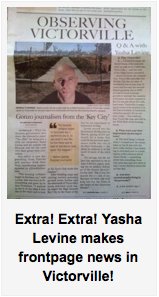
| Posted: 22 Oct 2012 01:30 AM PDT By Yasha Levine, an editor of The eXiled and co-founder of Project S.H.A.M.E., a media transparency initiative led by Yasha Levine and Mark Ames.
I was passing through the Mojave Desert and by chance stopped by a local thrift store in Joshua Tree. I'm glad I did, because I spotted a book that I just had to own. At $0.50, it was priced to sell. And as you can tell from the title above, the book's a classic. It's bound to remain fresh and relevant through the ages—not as a useful guide to homeownership, but as a fossil record of the biggest real estate scam in the history of the United States. A lot of people still wonder how and why so many millions of people bought such ridiculously overpriced homes and took out mortgages and loans they clearly could not afford?
Well, this book provides a part of the answer: people were explicitly instructed to do so. The Automatic Millionaire Homeowner hit the front bookcase displays at Barnes and Noble in March 2006, at the very top of the real estate market and just a few months before the whole thing crashed and burned. Its main message was simple: If you take out a mortgage to buy a home, you will always make money. There is no way you can lose—no matter when you buy, how much you pay or what type of loan you get. And the kicker is: both the book and finance expert who wrote it were bankrolled by Wells Fargo and Bank of America. This book is just one of dozens—if not hundreds—of similar self-help snake oil guides promising a sure bet system to get rich in real estate. But it's a good example of the massive propaganda effort financed by Wall Street that was designed to funnel as many people as possible into the mortgage meat grinder. The book was packed with blatant lies that seem so obvious and even comic in retrospect. The book was not put out by some shady fly by night operation, but by a supposedly credible financial expert who had the backing of the most well-known and respected banks, TV networks and newspapers. But the whole thing was a fraud, shamelessly boosted by some of the biggest names in news media—none of whom have been held accountable for their role in defrauding millions of Americans. So let's take a look…Crack open the book and turn to the introduction, it begins like this:
Interested? Intrigued? Want to know more? Well, turn a couple of pages and you get this:
What's this sure-fire system? Well, it's so simple it fits on the inside flap! Here's how you do it:
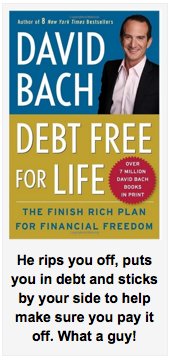
Just a few months after the book came out, the real estate market went into a death-spiral. Victorville and other Mojave Desert exurbs like Palmdale and Lancaster were packed to the brim with people who followed this book's advice to the letter. They took out no down payment adjustable rate mortgages, bought at the peak of bubble, had horrible credit scores, were struggling to make ends meet and were probably up the hilt in credit card debt. Over the next year and a half, home prices collapsed by 30% and just kept falling. By the time that I packed my bags and fled West towards the Pacific Ocean in 2010, homes that had sold for nearly $400,000 at the top of the market in 2006 couldn't find a buyer at $50,000 or $75,000. People were kicked out of their homes, lost all the "investment" payments they had made on the loan and had to find other places to live—rental homes if they were lucky; their cars or tents at the hobo camp down on the banks of the Mojave River if they weren't. So the Automatic Millionaire was a bust—well, at least as far as the now-former homeowners were concerned. But as we now know, the latest homeownership craze was never meant to benefit the homeowners. The only Automatic Millionaires created by this book were David Bach and the financial oligarchy he served. See, before David Bach began his bright career as a New York Times bestselling author dedicated to spreading the gospel of homeownership, he was a senior vice president of Morgan Stanley and a partner of The Bach Group, a wealth management outfit started by his father. Yep, he was born into it. Finance runs through his veins! So it's no surprise that both Bank of America and Wells Fargo sponsored David Bach and his revolutionary Automatic Millionaire Homeowner wealth creation system.
Here's an excerpt from Wells Fargo's press release:
Yep, Wells Fargo is only interested in educating homeowners for the greater good. And the bank is not alone. Just look at all the smart people who praise and recommend his work. They wouldn't lie, not with their reputations on the line! Jean Chatzky, Financial Editor of NBC's Today, blurbed: "The Automatic Millionaire gives you, step-by-step, everything you need to secure your financial future. When you do it David Bach's way, failure is not an option." Fox's Bill O'Reilly also endorsed the Automatic Millionaire wealth creation system: "David Bach's no-spin financial advice is beautiful because it's so simple. If becoming self-sufficient is important to you, then this book is a must." Yep, this is the same O'Reilly who bashed homeowner "losers" who took out loans that they weren't able to pay, and yet here he is endorsing a plan that says there's no such thing homeowner who loses money. Wonder what kind of cut Bill gets off Bach's loot? So what's up with David Bach today? The man's still doing regular TV gigs and giving financial advice to unsuspecting victims, including a weekly appearance on NBC's Today Show. But he's changed his racket: Bach's no longer out to make automatic millionaires; these days he's motivating debtors to get second/third jobs and convincing them to adopt austerity measures in their own personal lives. He'll help you pare down your consumption footprint to the bare minimum necessary for physical survival. Yep, Bach's our debt handler. His job is to make sure we peons keep making those monthly payments to Wells Fargo and Bank of America! The day that degenerate shysters like David Bach are afraid to show their faces in public and feel the need to flee across the border is the day that we'll know that we as a country are making progress towards a brighter future. Read Yasha Levine's book: The Corruption of Malcolm Gladwell. Click the cover, buy the book!
| ||||
| Sinclair: Bank Move to Send Gold to $3,500-$12,400 Posted: 21 Oct 2012 11:57 PM PDT What Mr. Sinclair foretells is an upcoming move by the bullion banks to dump their short positions and go fully long, remembering how it worked for him at the top of the 70s' bull market. | ||||
| Is a Debt Jubilee the Next Big Meme? Posted: 21 Oct 2012 11:52 PM PDT Dollar Collapse | ||||
| Examining the Case For (And Against) Gold Posted: 21 Oct 2012 11:37 PM PDT |




| You are subscribed to email updates from Gold World News Flash 2 To stop receiving these emails, you may unsubscribe now. | Email delivery powered by Google |
| Google Inc., 20 West Kinzie, Chicago IL USA 60610 | |


No comments:
Post a Comment