


Gold World News Flash |

- London Olympics Threaten to Worsen Summer Doldrums
- Fiat Dollar Is The Real Reason For High Gas Prices
- This Is Why Central Banks Continue To Scramble For Gold
- EXCLUSIVE – Bill Murphy's London Source: “BIG, BIG Gold & Silver Moves Are Coming in August”
- Allocated Bullion Storage: Do You Really Own the Bullion?
- Guest Post: Explaining Wage Stagnation
- Jim Sinclair: A call for an international real investors spring
- Nick Barisheff: Allocated bullion storage -- Do you really own the bullion?
- Forget Libor-gate, Oil Market Manipulation Is Far Worse
- The Silver and Gold Price are Holding Their Own Fundamentals Unchanged Prices Sure to Rise
- Copper: The Nervous System of Our Society ? Here?s Why
- This Is The Government: Your Legal Right To Redeem Your Money Market Account Has Been Denied - The Sequel
- Why Gold will Erupt
- GOLD & Hyperinflation ?
- Deja Food: Will Social Unrest Surge As Corn Prices Soar?
- Spot Uranium Sleeping Beauties Before the Market Wakes Up: Jeb Handwerger
- Guest Post: Market-Top Economics
- Ray Dalio's Bridgewater On The "Self Re-Inforcing Global Decline"
- VIX Implodes As Low Range, Low Volume, Low Average Trade Size Market Fails At Three Month Highs
- Gold Daily and Silver Weekly Charts - More Coiling
- Gold Seeker Closing Report: Gold and Silver End Slightly Higher
- Innovate or Die
- Slow Burning Financial Crisis To Force More Central Bank Action
- Gold Range Tightening Before Eventual Break
- Market-Rigging and Price-Fixing
- Buy Undervalued Uranium Miners Before Market Awakens To New Nuclear Reality
- New Gold (NGD): Delivering On Promises At El Morro, New Afton and Blackwater
- Gold's Convergring Trading Range as "Summer Doldrums" Worsen
- World War Two Shipwreck Yields $38 Million of Silver From the Atlantic
- Can gold’s luster be restored this summer?
| London Olympics Threaten to Worsen Summer Doldrums Posted: 19 Jul 2012 11:56 PM PDT Bullion Vault
| ||
| Fiat Dollar Is The Real Reason For High Gas Prices Posted: 19 Jul 2012 10:30 PM PDT from BenSwannRealityCheck: Ben Swann Reality Check responds to a Washington Times column which fact checks Ben's assertion that the declining dollar is the reason for high gas prices
| ||
| This Is Why Central Banks Continue To Scramble For Gold Posted: 19 Jul 2012 10:01 PM PDT  Today 40 year veteran, Robert Fitzwilson, wrote the following piece exclusively for King World News. Fitzwilson is founder of The Portola Group, one of the premier boutique firms in the United States. Here are Fitzwilson's observations: "Scylla and Charbydis were mythical sea monsters. Lying off the coast of Italy, Scylla faced across the Strait of Messina, at Charybdis, lying along the Sicilian coastline. Scylla took the form of a rocky shoal, and the Charybdis a whirlpool. According to Homer, as Odysseus passed through the Strait, he faced one of two unpleasant fates while trying to navigate down the middle. It is the equivalent of the phrase 'choosing between a rock and a hard place.'" Today 40 year veteran, Robert Fitzwilson, wrote the following piece exclusively for King World News. Fitzwilson is founder of The Portola Group, one of the premier boutique firms in the United States. Here are Fitzwilson's observations: "Scylla and Charbydis were mythical sea monsters. Lying off the coast of Italy, Scylla faced across the Strait of Messina, at Charybdis, lying along the Sicilian coastline. Scylla took the form of a rocky shoal, and the Charybdis a whirlpool. According to Homer, as Odysseus passed through the Strait, he faced one of two unpleasant fates while trying to navigate down the middle. It is the equivalent of the phrase 'choosing between a rock and a hard place.'"
This posting includes an audio/video/photo media file: Download Now | ||
| Posted: 19 Jul 2012 08:55 PM PDT
Hey gang, this is a breaking report with GATA's Bill Murphy: Bill's source in London, one of the wealthiest men in Europe, is telling him that JP Morgan is having a hard time extricating themselves from their silver short position. The source also claims that big, big gold and silver moves are coming this August.
| ||
| Allocated Bullion Storage: Do You Really Own the Bullion? Posted: 19 Jul 2012 07:57 PM PDT By Nick Barisheff | Bullion Management Group Worldwide economic uncertainty has created a growing interest in precious metals as a way to preserve wealth. Today, global risks for investors include currency devaluation, sovereign debt defaults, bond market collapses and stock market losses, all underpinned by ever-increasing government debt. For protection from impending economic Armageddon, investors are [...] 
This posting includes an audio/video/photo media file: Download Now | ||
| Guest Post: Explaining Wage Stagnation Posted: 19 Jul 2012 07:40 PM PDT Submitted by John Aziz of Azizonomics, Why?
Well, my intuition says one thing — the change in trajectory correlates very precisely with the end of the Bretton Woods system. My intuition says that that event was a seismic shift for wages, for gold, for oil, for trade. The data seems to support that — the end of the Bretton Woods system correlates beautifully to a rise in income inequality, a downward shift in total factor productivity, a huge upward swing in credit creation, the beginning of financialisation, the beginning of a new stage in globalisation, and a myriad of other things. Some, including Peter Thiel and James Hamilton, have suggested that there is data to suggest that an oil shock may have been the catalyst that put us into a new trajectory. Oil prices:
And that this spike may be related to a fall in oil prices discoveries:
I certainly think that the drop-off in oil discoveries was a huge psychological factor in the huge oil price spike we saw in 1980. But the reality is that although production did fall, it has recovered:
The point becomes clearer when we take the dollar out of the equation and just look at oil priced in wages:
Oil prices in terms of US wages ended up lower than they had been before the oil shock. What happened in the late 70s and early 80s was a blip caused by the (very real) drop-off in American reserves, and the (in my view, psychological — considering that global proven oil reserves continue to rise to the present day) drop-off in global production. But while oil production recovered and prices fell, wages continued to stagnate. This suggests very strongly to me that the long-term issue was not an oil shock, but the fundamental change in the nature of the global trade system and the nature of money that took place in 1971 when Richard Nixon ended Bretton Woods.
| ||
| Jim Sinclair: A call for an international real investors spring Posted: 19 Jul 2012 07:26 PM PDT 9:23p ET Thursday, July 19, 2012 Dear Friend of GATA and Gold: Gold market analyst and mining entrepreneur Jim Sinclair is on the warpath against market manipulators, naked shorters, and the other criminals lately having the run of the world financial system, and, like GATA, he's asking for your help -- your involvement, your activism. It's a matter of making yourself heard by the executives of the companies you invest in, the government regulatory agencies, and your elected officials. Sinclair's appeal is headlined "A Call for an International Real Investors Spring" and it's posted at JSMineSet here: http://www.jsmineset.com/2012/07/19/a-call-for-an-international-real-inv... CHRIS POWELL, Secretary/Treasurer ADVERTISEMENT Sona Discovers Potential High-Grade Gold Mineralization From a Company Press Release VANCOUVER, British Columbia -- With its latest surface diamond drilling program at its 100-percent-owned, formerly producing Blackdome gold mine in southern British Columbia, Sona Resources Corp. has discovered a potentially high-grade gold-mineralized area, with one hole intersecting 13.6 grams of gold in 1.5 meters of core drilling. "We intersected a promising new mineralized zone, and we feel optimistic about the assay results," says Sona's president and CEO, John P. Thompson. "We have undertaken an aggressive exploration program that has tested a number of target zones. Our discovery of this new gold-bearing structure is significant, and it represents a positive development for the company." Sona aims to bring its permitted Blackdome mill back into production over the next year and a half, at a rate of 200 tonnes per day, with feed from the formerly producing Blackdome mine and the nearby Elizabeth gold deposit property. A positive preliminary economic assessment by Micon International Ltd., based on a gold price of $950 per ounce over eight years, has estimated a cash cost of $208 per tonne milled, or $686 per gold ounce recovered. For the company's complete press release, please visit: http://www.sonaresources.com/_resources/news/SONA_NR18_2011-opt.pdf Join GATA here: Toronto Resource Investment Conference New Orleans Investment Conference * * * Support GATA by purchasing DVDs of our London conference in August 2011 or our Dawson City conference in August 2006: http://www.goldrush21.com/order.html Or by purchasing a colorful GATA T-shirt: Or a colorful poster of GATA's full-page ad in The Wall Street Journal on January 31, 2009: http://gata.org/node/wallstreetjournal Help keep GATA going GATA is a civil rights and educational organization based in the United States and tax-exempt under the U.S. Internal Revenue Code. Its e-mail dispatches are free, and you can subscribe at: To contribute to GATA, please visit: ADVERTISEMENT Prophecy Platinum Announces Wellgreen Preliminary Economic Assessment: Company Press Release VANCOUVER, British Columbia, Canada -- Prophecy Platinum Corp. (TSX-V: NKL, OTC-QX: PNIKF, Frankfurt: P94P) reports the results of an independent NI 43-101-compliant preliminary economic assessment for its fully owned Wellgreen nickel-copper-platinum group metals project in the Yukon Territory. The independent assessment, prepared by Tetra Tech, evaluated a base case of an open-pit mine (with a mining rate of 111,500 tonnes per day), an on-site concentrator (with a milling rate of 32,000 tonnes per day), and an initial capital cost of $863 million. The project is expected to produce (in concentrate) 1.959 billion pounds of nickel, 2.058 billion pounds of copper, and 7.119 million ounces of platinum, palladium, and gold during a mine life of 37 years with an average strip ratio of 2.57. The financial highlights of the preliminary economic assessment, shown in U.S. dollars, are as follows: Payback period: 3.55 years Prophecy Chairman John Lee says: "We are pleased with the preliminary economic assessment results. The numbers indicate that Wellgreen is one of most exciting mineral projects in the Yukon. The company is drilling to upgrade and expand the resource base. The infrastructure is excellent as the project is only 1,400 meters in altitude and 14 kilometers from the paved Alaska Highway, which leads to the Haines deep seaport. Discussions are under way with support from local stakeholders regarding permitting and logistics." For the complete press release, please visit: http://prophecyplat.com/news_2012_june18_prophecy_platinum_announces_res...
| ||
| Nick Barisheff: Allocated bullion storage -- Do you really own the bullion? Posted: 19 Jul 2012 07:21 PM PDT 9:15p ET Thursday, July 19, 2012 Dear Friend of GATA and Gold: Bullion dealer Nick Barisheff today earns his tinfoil hat with commentary acknowledging that precious metals exchange-traded funds likely contain assets that have been borrowed and that could fall into dispute during episodes of extreme market stress -- just when precious metals investors will want secure access to their metal. Barisheff's commentary is headlined "Allocated Bullion Storage: Do You Really Own the Bullion?" and it's posted at 24hGold here: http://www.24hgold.com/english/news-gold-silver-allocated-bullion-storag... CHRIS POWELL, Secretary/Treasurer ADVERTISEMENT Sona Discovers Potential High-Grade Gold Mineralization From a Company Press Release VANCOUVER, British Columbia -- With its latest surface diamond drilling program at its 100-percent-owned, formerly producing Blackdome gold mine in southern British Columbia, Sona Resources Corp. has discovered a potentially high-grade gold-mineralized area, with one hole intersecting 13.6 grams of gold in 1.5 meters of core drilling. "We intersected a promising new mineralized zone, and we feel optimistic about the assay results," says Sona's president and CEO, John P. Thompson. "We have undertaken an aggressive exploration program that has tested a number of target zones. Our discovery of this new gold-bearing structure is significant, and it represents a positive development for the company." Sona aims to bring its permitted Blackdome mill back into production over the next year and a half, at a rate of 200 tonnes per day, with feed from the formerly producing Blackdome mine and the nearby Elizabeth gold deposit property. A positive preliminary economic assessment by Micon International Ltd., based on a gold price of $950 per ounce over eight years, has estimated a cash cost of $208 per tonne milled, or $686 per gold ounce recovered. For the company's complete press release, please visit: http://www.sonaresources.com/_resources/news/SONA_NR18_2011-opt.pdf Join GATA here: Toronto Resource Investment Conference New Orleans Investment Conference * * * Support GATA by purchasing DVDs of our London conference in August 2011 or our Dawson City conference in August 2006: http://www.goldrush21.com/order.html Or by purchasing a colorful GATA T-shirt: Or a colorful poster of GATA's full-page ad in The Wall Street Journal on January 31, 2009: http://gata.org/node/wallstreetjournal Help keep GATA going GATA is a civil rights and educational organization based in the United States and tax-exempt under the U.S. Internal Revenue Code. Its e-mail dispatches are free, and you can subscribe at: To contribute to GATA, please visit: ADVERTISEMENT Prophecy Platinum Announces Wellgreen Preliminary Economic Assessment: Company Press Release VANCOUVER, British Columbia, Canada -- Prophecy Platinum Corp. (TSX-V: NKL, OTC-QX: PNIKF, Frankfurt: P94P) reports the results of an independent NI 43-101-compliant preliminary economic assessment for its fully owned Wellgreen nickel-copper-platinum group metals project in the Yukon Territory. The independent assessment, prepared by Tetra Tech, evaluated a base case of an open-pit mine (with a mining rate of 111,500 tonnes per day), an on-site concentrator (with a milling rate of 32,000 tonnes per day), and an initial capital cost of $863 million. The project is expected to produce (in concentrate) 1.959 billion pounds of nickel, 2.058 billion pounds of copper, and 7.119 million ounces of platinum, palladium, and gold during a mine life of 37 years with an average strip ratio of 2.57. The financial highlights of the preliminary economic assessment, shown in U.S. dollars, are as follows: Payback period: 3.55 years Prophecy Chairman John Lee says: "We are pleased with the preliminary economic assessment results. The numbers indicate that Wellgreen is one of most exciting mineral projects in the Yukon. The company is drilling to upgrade and expand the resource base. The infrastructure is excellent as the project is only 1,400 meters in altitude and 14 kilometers from the paved Alaska Highway, which leads to the Haines deep seaport. Discussions are under way with support from local stakeholders regarding permitting and logistics." For the complete press release, please visit: http://prophecyplat.com/news_2012_june18_prophecy_platinum_announces_res...
| ||
| Forget Libor-gate, Oil Market Manipulation Is Far Worse Posted: 19 Jul 2012 07:03 PM PDT By EconMatters Since the Global Community all the sudden seems to be preoccupied with Market manipulation even though the authorities knew it was a problem for over 5 years with Libor Rate Fixing. It is high time authorities look at the Crude Oil market which has been manipulated for the last decade and all the sophisticated participants know it is rigged or artificially higher than the fundamentals of the economy dictate. Consumers are paying an easy $35 dollars per barrel over what they would otherwise doll out for a barrel of oil if fund managers didn`t use the benchmark futures contracts as their own personal ATMs.
Just a month ago Crude Oil WTI was $78 a barrel and today it is $93. Do you think the fundamentals changed one bit to merit this price swing? Nope! Supply levels are all at record highs around the world. Is it Iran? Please!! It is all about the money flows, nobody takes delivery anymore. Assets have become one big correlated risk trade. Risk On, Risk Off. If the Dow is up a hundred, you can bet crude is up at least a dollar! It has nothing to do with fundamentals, inventory levels, supply disruptions, etc. It is all about fund flows.
So how this affects the average Joe is that if Wall Street is having a good day, i.e., fund flows are going in, then Average Joe is having a bad day and paying more for Gas. Yes, it is that simple. A good day for Wall Street is a bad day for consumers at the pump these days as Capital flows into one big Asset Trade: Risk On!
It should be separate in that equities respond to stock valuations, and energy responds to the market conditions of supply and demand. But that isn`t the case in the investing world today, it is all about Capital Flows in and out of Assets. The economy could be doing really poorly, Oil inventories can be extremely high, the economic data very bleak but Oil will go up and consumers will pay more at the pump just because some Fund Manager pours capital into a futures contract.The Fund Managers goals are in direct opposition to the consumerswho actually uses the product. Funds flows and not supply and demand ultimately carry the day in the energy markets, and that needs to change!
The key is equities, crude oil (both Brent and WTI) are essentially equities for Fund Managers to trade in and out of and they make a fortune in these instruments. When I refer to Fund Managers this includes Hedge Funds, Oil Majors, Pension Funds, Investment Banks etc. This is part of the reason that the price of oil can be so varied in value within a 3 month span. WTI can literally be $110 one month and $80 the next because of pure funds going in or coming out of the futures contracts.
The volatility really is where they make their money, they have deep pockets and they make a fortune moving crude oil around like a puppet on a string. If you think in terms of each dollar price move in the commodity being equal to $1,000 and the size that these players employ on a monthly and quarterly basis you start to see the value of buying thousands and thousands of futures contracts and capitalizing on these huge moves in the commodity.
Start out a quarter at $80 a barrel , buy a bunch of futures contracts and put them in the portfolio along with your other holdings like Apple, IBM, and Johnson and Johnson and run them up just like any other asset class in the first quarter to hit your numbers. Use the media to hype Iran or any other potential supply disruption scenario and Voila you end the quarter at $110 and you have made far more gains in your Crude Oil asset class than lowly Apple by comparison. It's the biggest game on Wall Street!
Notice how European equities are at 11 week highs and look at the Spike in the Brent contract. Fund managers pump money into these asset classes and once earnings are over, they will pull their money out so they are not left holding the bag when the damage to the economy ensues as consumers and the economy slows due to the burden of artificially high Oil prices on discretionary income.
The economic downturn has a lot of negative effects, and consumers should be benefitting from lower fuel costs as a result of slower economic conditions. However, Fund Managers will not let the Fundamental Oil Price take hold in the market place, their gain is consumer`s loss. Right now Oil prices should be at least $75 a barrel based on current supply levels, and the facts regarding near recessionary levels of unemployment, weak manufacturing, and constrained housing production taking place in the economic landscape. Gas prices are not matching the GDP numbers or the capacity utilization rate of business activity in the economy.
But Fund managers are laughing all the way to their Hamptons and Connecticut mansions while average "Joe Blow Consumer" has to pawn household items or charge up their credit cards to fill up their gas tanks each week. This Oil manipulation is really putting a crimp on consumers and makes it extremely difficult to get this recovery off the ground because just as the economy starts recovering fund managers slap it back down with their run up of oil prices. This leads to growth being constrained and even sputtering, consumers start reeling, and the entire supply chain is negatively affected because of these artificially high energy prices. The fund managers then dump their holdings and short the market, and the entire cycle starts over every three to six months or so. The volatility is great for them, but really hurts economic stability.
Also, this is one major reason why a QE3 program will neverwork because it just adds fuel to this process. And any benefits to the economy are quickly offset by even more inflated energy prices. The Fed giveth on one hand, and the Economy suffers on the other hand. A no win situation which Ben Bernanke is well aware of from the last failed attempt in QE2 which just plays right in line with the ideal Fund Manager strategy of manipulating price by creating artificial demand through paper trading of markets. The last thing they need is more paper to artificially accumulate positions and distort market prices to an even greater extent.
Hopefully, Ben Bernanke and crew have learned their lesson is this regard, which it is hard to target a QE Program without artificially inflating all assets, even those that are essential to everyday living, and end up hurting the very people that you are trying to help. In this case, Fed Policy would be a contributing factor towards the same Market Price Distortion of Fund Managers that ultimately needs to be fixed.
So what is the solution to all this madness? Everybody in the market knows the culprits, so why doesn`t this practice ever get addressed? The same reason Libor manipulation went on for so long, all the watchdogs are completely incompetent or lobbied to death on these financial matters. Obama tried to squash the fund managers with the SPR release, but even then word got out long before the actual lever was pulled, and it took 2 months to coordinate. Can you say too little too late? Consumers were already paying $4 gas for months before any action was carried out.
Day Trading isn`t even the problem here it is the buy and holders who accumulate large positions for swing trading that ultimately do the real damage and price distortion in the Oil Markets. Legitimate regulation on Fund Managers who accumulate and hold these large positions in the form of enforcing delivery obligations would clear up this malfeasance real fast. I guarantee you if it was a requirement for any Fund Participant to take delivery of any Futures contract held more than 3 days that there would be a significant re-pricing in the Oil market, as well as adding price stability as true market conditions would dictate price.
And based upon actual inventory levels over the last 5 years, this suggests price should have been very stable as inventories have not fluctuated much during this era. Even with all the turbulence here and there, actual supply has never been an issue with inventory levels all near the highs of the 5 year range for this period.
Day Traders can continue to practice their craft in the Oil markets because it can be argued that they don`t move price significantly, and actually create better pricing by adding liquidity to the market for participants if they actually did need to hedge production or set up physical delivery of the commodity. An example would be an Airline getting a fair price when they enter the market to hedge price due to an active Day Trading market.
So the next time you fill up your gas tank, just realize that this price is an artificially high fixed, manipulated pricedue to the Position Trading of the Fund Managers. Libor Gate pales in comparison to the actual pass through effects of price manipulation in the Oil Markets. If you think Consumers are being screwed by artificially fixed Libor Rates, and Politicians have finally stepped forward after years of abuse and neglect, then you should really be outraged by the Oil Price Manipulation.
Consumers have been paying on average for the last five years by conservative estimates a good 35% over fair market prices for Oil related products due to this Manipulation on behalf of Position Traders. Again, I label the group with the catch all term "Fund Managers" defined earlier in this piece, but I am not referring to just the standard definition of Fund Manger. Any Market participant who accumulates a large position and holds over time which results in the distortion of market mechanism price discovery due to not actually taking physical delivery of the commodity is inclusive of this label "Fund Manager" and part of the problem that needs to be addressed.
So how long will it take politicians and the CFTC to address this manipulative practice that is a decade in the making in the Oil Markets? My guess is it will just continue as usual because regulators and politicians are either corrupt or incompetent to address the issue and consumers are too busy working their ass off to even have the time or energy to revolt against this practice.
There isn`t a "Gotcha" moment like Libor Gate, rather just a slow steady business practice that drains consumers of their resources like just another societal Tax on their consumption. A repugnant tax I am calling attention to: the "Gotcha Bells" should start resonating in policy holders' ears, and they should finally start addressing this seedy Oil Market and its blatant Market Manipulation of Price.
© EconMatters All Rights Reserved | Facebook | Twitter | Post Alert | Kindle
| ||
| The Silver and Gold Price are Holding Their Own Fundamentals Unchanged Prices Sure to Rise Posted: 19 Jul 2012 05:53 PM PDT Gold Price Close Today : 1580.10 Change : 9.70 or 0.62% Silver Price Close Today : 2719.4 Change : 12.3 or 0.45% Gold Silver Ratio Today : 58.105 Change : 0.094 or 0.16% Silver Gold Ratio Today : 0.01721 Change : -0.000028 or -0.16% Platinum Price Close Today : 1420.70 Change : 3.50 or 0.25% Palladium Price Close Today : 583.60 Change : 5.55 or 0.96% S&P 500 : 1,376.51 Change : 3.73 or 0.27% Dow In GOLD$ : $169.33 Change : $ (0.57) or -0.34% Dow in GOLD oz : 8.191 Change : -0.028 or -0.34% Dow in SILVER oz : 475.96 Change : -0.88 or -0.18% Dow Industrial : 12,943.36 Change : 34.68 or 0.27% US Dollar Index : 82.89 Change : -0.110 or -0.13% The GOLD PRICE augmented (that's for you engineers) by $9.70 to close at $1,580.10. Silver added 12.3 cents to close Comex at 2719.4c. Oh, it's tough grinding through these vibrations! GOLD PRICE 5 day chart shows a rounded bottom yesterday with a surge today to $1,591.50, and of course the Invisible Hand was up early this morning, right at the open, but when gold shrugged that slapping off, the Hand showed up again about 1:00 to make sure gold didn't reveal the game by closing a lot higher, driving it down to $1,576.20 right before the close. Yeah, sure. The SILVER PRICE chart moves across five days in a range from 2680c to 2760c, and it reached that high again today at the open but -- What a surprise! -- came the invisible hand to slap it down. Doesn't matter a pile of beans, the SILVER and GOLD PRICE are both holding their own, biding their time. Just wait patiently, holding your cards, till silver and gold start slapping those Nice Government Men back. Whenever we have to trudge and wallow through long corrections fatigue eventually dulls us. We have a long term strategy, it is working, it has thrilled us with new, un-heard of highs, but then it corrects, as anyone could foretell, and we descend into despair and self-doubt. Awww, cut it out! No fundamental has changed. All those factors sure to drive silver and gold up -- more inflation from government and central banks -- continues unabated. Unabated?! Mercy, they've had SIX YEARS to clean up their act, and they only piled the mistakes, inflations, and bailouts higher and deeper. The never learn, they never help, they never apologize. Governments, central banks, banks, and Wall Street face the same imperative: INFLATE OR DIE. They will inflate, even if all the rest of us die. I have to share a lesson with y'all that I learned in 1980, and it cost me about $100,000 -- and those were 1980 dollars. Here 'tis: "Every rise in a market doesn't necessarily show strength." This becomes diabolically deceptive when you are long a market past the time you should have exited, and want your opinion confirmed. Best way to get anybody to believe a lie is, as Lenin told his secret police chief Felix Dzerzhinsky when he asked how he would get people to believe in the phony opposition he was creating, is to "Tell them what they want to hear." We lie to ourselves the same way, picking and choosing the facts that agree with us, and pitching out those bothersome facts that gainsay our bent. It's a VERY expensive habit. Strength in markets does not necessarily reveal true underlying strength, anymore than strength in a fever victim fighting off nurses reveals his healthful state. So I watched today with interest as stocks rose, the Dow by 34.68 (0.27%) and the S&P500 by 3.37 (0.27%). My, O, my, they are a-blowin' and a-goin, except that they ain't. Both have merely rallied to the neckline of a topping head and shoulders formation, a neckline they punctured in May. This "strength" is merely a market touching back to the breakdown line, a typical "final kiss good-bye." Worse, both have formed deadly rising wedges, promising much lower prices. But, shucks! What do I know? I'm just a natural born ridge-running fool and I ain't even been wearing shoes but a year and a half, let alone even seed a pair of them pointy-toed Eyetalian shoes them Wall Street fellers wear. How could I know Sic 'em from Come Here? Let that alone and let's look at currencies. Hey! Don't make that face! I don't want to do it either, but I have to., US dollar index eroded today, down 11 measly basis points to 82.89, not much above the 82.734 low and down only 0.14%. This strikes me as the same Invisible Hand of the Nice Government Men we always see. In any other market, breaking crucial support would knock it a long ways lower, but not the dollar index -- only so low and no lower. Well, let drop my conspiratorialism -- well founded as it is in history and government policy -- and look at the chart. 20 day moving average lurketh at 82.78, and a break through that SHOULD take the dollar lower. Uptrend line today strikes about 81.70, but the loud confirmation of the dollar's earthward intention would come with a close below the last low, 81.52. Trend remains up until that happens. Yen gapped up today and gained 0.27% to 128.77c (Y77.66/US$1). It's almost touching the downtrend line overhead, and last high came at 128.77. I mention that because it must exceed that last high in order to confirm even the SUSPICION of an uptrend. Other indicators favor higher yen. Not joining in the general jubilation today was the euro, closing unchanged at 122.79. Slight chance the MACD might be turning up. Slight. Expect to see 1.2000 or 1.1800 before you see that. GOOD THINGS GOING ON HERE: Sometime in September, at last, I hope to publish volume one of AT HOME IN DOGWOOD MUDHOLE, the tale of my family's move to the farm. I have to admit, it makes me laugh and cry. I hope it does the same for y'all. Another thing: Labor Day Saturday we always throw a big party here at the farm, our Bodacious Hoedown. It includes games and an Old Time band, dance caller, and big dinner with all trimmings, featuring our mean grown here on the farm. Details on that tomorrow. Argentum et aurum comparenda sunt -- -- Gold and silver must be bought. - Franklin Sanders, The Moneychanger The-MoneyChanger.com 1-888-218-9226 10:00am-5:00pm CST, Monday-Friday © 2012, The Moneychanger. May not be republished in any form, including electronically, without our express permission. To avoid confusion, please remember that the comments above have a very short time horizon. Always invest with the primary trend. Gold's primary trend is up, targeting at least $3,130.00; silver's primary is up targeting 16:1 gold/silver ratio or $195.66; stocks' primary trend is down, targeting Dow under 2,900 and worth only one ounce of gold; US$ or US$-denominated assets, primary trend down; real estate bubble has burst, primary trend down. WARNING AND DISCLAIMER. Be advised and warned: Do NOT use these commentaries to trade futures contracts. I don't intend them for that or write them with that short term trading outlook. I write them for long-term investors in physical metals. Take them as entertainment, but not as a timing service for futures. NOR do I recommend investing in gold or silver Exchange Trade Funds (ETFs). Those are NOT physical metal and I fear one day one or another may go up in smoke. Unless you can breathe smoke, stay away. Call me paranoid, but the surviving rabbit is wary of traps. NOR do I recommend trading futures options or other leveraged paper gold and silver products. These are not for the inexperienced. NOR do I recommend buying gold and silver on margin or with debt. What DO I recommend? Physical gold and silver coins and bars in your own hands. One final warning: NEVER insert a 747 Jumbo Jet up your nose. No, I don't. 
| ||
| Copper: The Nervous System of Our Society ? Here?s Why Posted: 19 Jul 2012 05:24 PM PDT Copper is one of the most widely used metals on the planet, and has been for more than 10,000 years. Today, it’s the nervous system of our society – of our cities, homes, tools and toys. The simple truth is that the western lifestyle is completely dependent on copper. Here’s why as depicted in the infographic below. so says an*infographic from www.visualcapitalist.com which is made available by Lorimer Wilson, editor of www.munKNEE.com (Your Key to Making Money!) and www.FinancialArticleSummariesToday.com (A site for sore eyes and inquisitive minds). What Makes Copper Different? [LIST] [*]Ductile – it can be easily stretched and shaped into different forms [*]Highly conductive – copper conducts heat and electricity more effectively than all other metals save one: silver. [*]100% Recyclable – 80% of copper ever mined is still in use today. [*]Highly Alloyable – there are currently more than 570 different known copper alloys, and 350 have been acknowledged as antimic...
| ||
| Posted: 19 Jul 2012 05:05 PM PDT Two years ago, in January 2010, Zero Hedge wrote "This Is The Government: Your Legal Right To Redeem Your Money Market Account Has Been Denied" which became one of our most read stories of the year. The reason? Perhaps something to do with an implicit attempt at capital controls by the government on one of the primary forms of cash aggregation available: $2.7 trillion in US money market funds. The proximal catalyst back then were new proposed regulations seeking to pull one of these three core pillars (these being no volatility, instantaneous liquidity, and redeemability) from the foundation of the entire money market industry, by changing the primary assumptions of the key Money Market Rule 2a-7. A key proposal would give money market fund managers the option to "suspend redemptions to allow for the orderly liquidation of fund assets." In other words: an attempt to prevent money market runs (the same thing that crushed Lehman when the Reserve Fund broke the buck). This idea, which previously had been implicitly backed by the all important Group of 30 which is basically the shadow central planners of the world (don't believe us? check out the roster of current members), did not get too far, and was quickly forgotten. Until today, when the New York Fed decided to bring it back from the dead by publishing "The Minimum Balance At Risk: A Proposal to Mitigate the Systemic Risks Posed by Money Market FUnds". Now it is well known that any attempt to prevent a bank runs achieves nothing but merely accelerating just that (as Europe recently learned). But this coming from central planners - who never can accurately predict a rational response - is not surprising. What is surprising is that this proposal is reincarnated now. The question becomes: why now? What does the Fed know about market liquidity conditions that it does not want to share, and more importantly, is the Fed seeing a rapid deterioration in liquidity conditions in the future, that may and/or will prompt retail investors to pull their money in another Lehman-like bank run repeat? Here is how the Fed frames the problem in the abstract:
And further:
Basically, according to the Fed, the minimum balance would make the financial system more fair, reduce systemic risk and protect smaller investors who can be left with losses if larger investors in their fund withdraw cash first. The proposal would require a "small fraction" of each fund investor's recent balances to be segregated into a sinking fund to absorb losses if the fund is liquidated. Subsequently redemptions of these minimum balances at risk would be delayed for 30 days, "creating a disincentive to redeem if the fund is likely to have losses." In other words: socialized losses. Where have we seen this before? But the real definition of what the Fed is suggesting is: capital controls. Once this proposal is implemented, the Fed, or some other regulator, will effectively have full control over how much money market cash is withdrawable from the system at any given moment. At $2.7 trillion in total, one can see why the Fed is suddenly concerned about this critical liquidity and capital buffer. The problem is that just as we said over two years ago, a brute force attempt to preserve a liquidity buffer is guaranteed to fail, as MMF participants will simply quietly pull their money out at the convenience when they can, not when they have to. Europe had to learn this the hard way - only after Draghi cut the deposit rates to 0% did virtually every European money market fund become irrelevant overnight, resulting in a massive pull of cash from the MMF industry. However, instead of going into equities as the Group of 30 and other central planners had hoped, the hundreds of billions of euros merely shifted into already negative nominal rate fixed income instruments. And who can blame them: money market capital does not seek return on capital but return of capital, to borrow Bill Gross' favorite line. Another clue as to why the Fed is once again suddenly interested in money markets comes from an article we wrote back in September 2009: "Rumored Source Of Reverse Repo Liquidity: Not Bank Reserves But Money Market Funds" in which we said that, "the Chairman is rumored to be considering money market funds as a liquidity source. Reuters points out that the Fed would thus have recourse to around $4-500 billion, and maybe more, of the $3.5 trillion sloshing in "money on the sidelines", roughly the same amount as MMs had just before the Lehman implosion." In a nutshell, money market funds (much more on this below), have always been one of the most hated liquidity intermediaries by the central planners: they don't go into stocks, they don't go into bonds, they just sit there, collecting no interest, but more importantly, are inert, and can not be incorporated into the rehypothecation architecture of shadow banking. And perhaps that is precisely why the Fed is pulling the scab off an old sore. Recall that for the past year, our primary contention has been that the core reason for all developed world problems is the gradual disappearance of good collateral and money good assets. Even if the MMF cash were to shift, preemptively, into bonds, or any other "safe" investments, the assets backing the cash can them enter the traditional-shadow liquidity system and buy time: the only real goal at this point. In the process, the cash itself would be "securitized" and provide at least a year or so in additional breathing room for a system that has essentially run out of good liquidity, and in Europe, out of any collateral. Expect more and more efforts to disgorge the $2.7 triliion in money market funds as the world gets closer and closer to D-Day. And what happens with MMF, will then progress to all other real asset classes as the government truly spreads out its capital controls wings. * * * For a more nuanced read through of the implications of money market redemption denials, we suggest rereading our analysis of precisely this topic from January 2010. Just keep in mind: in the interim we have had two and a half years of ZIRP and NIRP based asset depletion, which means that the marginal requirement to get MMF cash "back" into the system is now higher than ever. This Is The Government: Your Legal Right To Redeem Your Money Market Account Has Been Denied When Henry Paulson publishes his long-awaited memoirs, the one section that will be of most interest to readers, will be the former Goldmanite and Secretary of the Treasury's recollection of what, in his opinion, was the most unpredictable and dire consequence of letting Lehman fail (letting his former employer become the number one undisputed Fixed Income trading entity in the world was quite predictable... plus we doubt it will be a major topic of discussion in Hank's book). We would venture to guess that the Reserve money market fund breaking the buck will be at the very top of the list, as the ensuing "run on the electronic bank" was precisely the 21st century equivalent of what happened to banks in physical form, during the early days of the Geat Depression. Had the lack of confidence in the system persisted for a few more hours, the entire financial world would have likely collapsed, as was so vividly recalled by Rep. Paul Kanjorski, once a barrage of electronic cash withdrawal requests depleted this primary spoke of the entire shadow economy. Ironically, money market funds are supposed to be the stalwart of safety and security among the plethora of global investment alternatives: one need only to look at their returns to see what the presumed composition of their investments is. A case in point, Fidelity's $137 billion Cash Reserves fund has a return of 0.61% YTD, truly nothing to write home about, and a return that would have been easily beaten putting one's money in Treasury Bonds. This is not surprising, as the primary purpose of money markets is to provide virtually instantaneous access to a portfolio of practically risk-free investment alternatives: a typical investor in a money market seeks minute investment risk, no volatility, and instantaneous liquidity, or redeemability. These are the three pillars upon which the entire $3.3 trillion money market industry is based. Yet new regulations proposed by the administration, and specifically by the ever-incompetent Securities and Exchange Commission, seek to pull one of these three core pillars from the foundation of the entire money market industry, by changing the primary assumptions of the key Money Market Rule 2a-7. A key proposal in the overhaul of money market regulation suggests that money market fund managers will have the option to "suspend redemptions to allow for the orderly liquidation of fund assets." You read that right: this does not refer to the charter of procyclical, leveraged, risk-ridden, transsexual (allegedly) portfolio manager-infested hedge funds like SAC, Citadel, Glenview or even Bridgewater (which in light of ADIA's latest batch of problems, may well be wishing this was in fact the case), but the heart of heretofore assumed safest and most liquid of investment options: Money Market funds, which account for nearly 40% of all investment company assets. The next time there is a market crash, and you try to withdraw what you thought was "absolutely" safe money, a back office person will get back to you saying, "Sorry - your money is now frozen. Bank runs have become illegal." This is precisely the regulation now proposed by the administration. In essence, the entire US capital market is now a hedge fund, where even presumably the safest investment tranche can be locked out from within your control when the ubiquitous "extraordinary circumstances" arise. The second the game of constant offer-lifting ends, and money markets are exposed for the ponzi investment proxies they are, courtesy of their massive holdings of Treasury Bills, Reverse Repos, Commercial Paper, Agency Paper, CD, finance company MTNs and, of course, other money markets, and you decide to take your money out, well - sorry, you are out of luck. It's the law. A brief primer on money markets A very succinct explanation of what money markets are was provided by none other than SEC's Luis Aguilar on June 24, 2009, when he was presenting the case for making even the possibility of money market runs a thing of the past. To wit:
When the Reserve fund broke the buck, and it seemed like an all-out rout of money markets was inevitable, the result would have been a virtual elimination of capital access by everyone: from households to companies. This reverberated for months, as the also presumably extremely safe Commercial Paper market was the next to freeze up, side by side with all traditional forms of credit. Only after the Fed stepped in an guaranteed money markets, and turned on the liquidity stabilization first, then quantitative easing spigot second, did things go back to some sort of new normal. However, it is only a matter of time before the patchwork of band aids holding the dam together is once again exposed, and a new, stronger and, well, "improved" run on the electronic bank materializes. It is precisely this contingency that the SEC and the administration are preparing for by "empowering money market fund boards of directors to suspend redemptions in extraordinary circumstances to protect the interests of fund shareholders." A little more on money markets:
Ironically, the proposed change to Rule 2a-7 seeks to make dramatic changes to the composition of MMs: from 90 days, the WAM would get shortened to 60 days. And this is occurring at a time when the government is desperately seeking to find ways of extending maturities and durations of short-term debt instruments: by reverse rolling the $3.2 trillion industry, the impetus will be precisely the reverse of what should be happening, as more ultra-short maturity instruments are horded up, leaving a dead zone in the 60-90 day maturity window. Some other proposed changes to 2a-7 include "prohibiting the funds from investing in Second Tier securities, as defined in Rule 2a-7. Eligible securities would be redefined as securities receiving only the highest, rather than the highest two, short-term debt ratings from a requisite nationally recognized securities rating organization. Further, money market funds would be permitted to acquire long-term unrated securities only if they have received long-term ratings in the highest two, rather than the highest three, ratings categories." In other words, let's make them so safe, that when the time comes, nobody will have access to them. Brilliant. The utility of money market funds has long been questioned by such systemically-embedded financial luminaries as Paul Volcker (more on this in a minute). After all, what are money markets if merely an easy, and 401(k)-eligible option to not invest in equity or bonds, but in "paper" which is cash in all but name (maybe not so much after the proposed Rule change passes). And as money markets account for a huge portion of the $11 trillion of mutual fund assets as of November (per ICI, whose opinion, incidentally, was instrumental in shaping future money market policy), $3.3 trillion to be precise, and second only to stock funds at $4.8 trillion, one can see why an administration, hell bent on recreating a stock-price bubble, would do all it can to make money markets extremely unattractive. In fact, the current administration has been on a roll on this regard: i) keeping money market rates at record lows, ii) removing money market fund guarantees and iii) and even allowing reverse repos to use money markets as sources of liquidity (because we all know that the collateral behind the banks shadow banking arrangement with the Fed are literally crap; as we have noted before, we will continue claiming this until the Fed disproves us by opening up their books for full inspection. Until then, yes, the Fed has lent out hundreds of billions against bankrupt company equity, as we have pointed out in the past). Money Markets are the easiest recourse that idiotic class of Americans known as "savers" has to give the big bank oligarchs, the Fed and the bubble-inflating Administration the middle finger. As you will recall, recently Arianna Huffington has been soliciting all Americans do just that: to move their money out of the tentacles of the TBTFs. In essence, the money market optionality is precisely the equivalent of moving physical money from TBTFs to community banks in the "shadow economy." Because where there is $3.3 trillion out of $11, there could easily be $11 trillion out of $11, which would destroy the whole concept of Fed-spearheaded asset-price inflation, and would destroy overnight the TBTFs, as equities would once again find their fair value. It is no surprise then, that the current financial system, and its political cronies loathe the concept of Money Markets, and have done all they could to make them as unattractive as possible. Below is a chart of the Net Assets held by all US money market funds and the number of money market mutual funds since January 2008:
Obviously, attempts to push capital out of MMs have succeeded: after peaking at $3.9 trillion, currently money markets hold a two year low of $3.27 trillion. Furthermore, the number of actual money market fund operations has been substantially hit: from 2,078 in the days after the Lehman implosion, this is now down to 1,828, a 12% reduction. At this rate soon there won't be all that many money market funds to chose from. While the AUM reduction is explicable through the previously mentioned three factors, the actual reduction in number of funds is on the surface not quite a straightforward, and will likely be the topic a future Zero Hedge post. Although, the impetus of managing money when one can return at most 0.6% annually, and charge fees on this "return" may be missing - the answer may be far simpler than we think. Why run a money market, when the Fed will be happy to issue you a bank charter, and you can collect much more, risk free, courtesy of the vertical yield curve. Yet what is strange is that even with all the adverse consequences of holding cash in Money Markets, the total AUM of this "safest" investment option is still substantial, at nearly $3.3 trillion as of December 30, a big decline yes, but a decline that should have been much greater considering even the president since March 3 has been beckoning his daily viewership to invest in cheap stocks courtesy of low "profit and earning ratios" (that, and the specter of President's Working Group on Financial Markets). Could this action, whereby investors will no longer have access to money that historically has been sacrosanct and reachable and disposable on a moment's notice, be the last nail in the coffin of money markets? We believe so, however, we are not sure if it will attain the desired effect. With an aging baby boomer population, which would rather burn their money than invest in the stock market again and relive the roller-coaster days of late 2008 and early 2009, the plan may well backfire, and result in even more money leaving the shadow system and entering such tangible objects as deposit accounts (at community banks, of course), mattresses and socks. And speaking of the President's Working Group... The Group of Thirty When discussing the shadow economy, it is only fitting to discuss the shadow decision-makers. In this regard, the Group of 30, is to the traditional economic decision-making process as the President's Working Group is to capital markets. Taken from the website, the self-description reads innocently enough:
Sounds like any old D.C.-based think tank... until one looks at the roster of members:
| ||
| Posted: 19 Jul 2012 04:06 PM PDT Gold Switzerland
| ||
| Posted: 19 Jul 2012 04:03 PM PDT Aubie Baltin
| ||
| Deja Food: Will Social Unrest Surge As Corn Prices Soar? Posted: 19 Jul 2012 03:51 PM PDT With Corn hitting its highs again, we are reminded that global food production has been hitting constraints as rising populations and changing diets hit against flattening productivity, water and fertility constraints, and the likely early effects of climate change. As was described in the recent all-encompassing theory of global-collapse, there is general agreement that one of the contributing factors to the rolling revolutions beginning at the end of 2010 was increasing food prices eating into already strained incomes. It is unclear how much impact easing has had on food prices this time, weather has very much made its presence felt (as we noted here). From one omnipotent force (central bankers) to another (hand of god), the fear is that more broadly, food is likely to be a more persistent problem than oil supply. This is because we require almost continual replenishment of food to stay alive and avoid severe social and behavioral stress - food is the most inelastic part of consumption. This says nothing of the pernicious inflationary impact that will likely quell the kind of free-flowing printing so many hope to see from China et al. The FAO food price index and outbreaks of social unrest. (Lagi et. al.)
Global food production has been hitting constraints as rising populations and changing diets hit against flattening productivity, water and fertility constraints, and the likely early effects of climate change. One of the main effects of the Green Revolution of the 1950's, 60's and 70's was to put food production onto a fossil fuel platform. Modern food production relies on pesticides, fertilisers, machinery, drying systems, long-haul transport, packaging, freezing and so on, all fossil fuel dependent. Modern seed varieties require more water, which requires more complex irrigation and aquifer pumping, again requiring more fossil fuel input, and putting more strain on already stressed water supplies. By various estimates, between six and ten fossil fuel calories are used to produce every calorie of food. More directly, food is now being converted into fuel, adding further pressure to already strained supplies. Today, 40% of the US corn crop is used to produce biofuels, and globally, biofuels consume 6.5% of grains and 8% of vegetable oil production. The rise and fall in oil prices has been matched by food prices. Food is the most inelastic part of consumption. Like oil, rising prices drive out other consumption, which can lead to job losses, unemployment, and defaults. The most developed countries spend about 10% of their disposable income on food, however in many parts of the world it is over 50%. At this point it is illustrative to look at how the interactions between the financial, oil and food economies can have major unexpected repercussions. When major stresses are transmitted along complex and increasingly vulnerable inter-dependencies, there is a greater risk of system wide contagion and instability. While food prices remained high, they received a further stimulus and increased volatility via massive quantitative easing in the US. The two rounds of QE were to support battered financial institutions. This injection helped drive a global commodity bubble, affecting an already stressed global food market. Pressure was displaced from the US onto the plates of citizens in the Middle-East and North Africa. There is general agreement that one of the contributing factors to the rolling revolutions beginning at the end of 2010 was increasing food prices eating into already strained incomes. Food is, and always has been a mainstay of welfare and social peace. Figure:9 shows the recent correlation between the FAO index and outbreaks of political and social unrest. One outcome was the revolution in Libya, a result of which was the loss of nearly two million barrels of high quality oil a day to the global economy. Thus oil prices remained high, averaging well over $100 even as fears for the global economy increased and growth in many major economies began to stall. From this perspective, QE temporally displaced risk to banks that returned as higher oil and food prices, via the real economy and a distant revolution. More broadly, food is likely to be a more persistent problem than oil supply. Firstly, this is because we require almost continual replenishment of food to stay alive and avoid severe social and behavioral stress. Secondly, the loss of food in society had a far deeper impact than oil. Finally, the implications of evolving systemic risk means food production, access and affordability would be undermined.
| ||
| Spot Uranium Sleeping Beauties Before the Market Wakes Up: Jeb Handwerger Posted: 19 Jul 2012 03:23 PM PDT The Energy Report: Jeb, at the turn of 2012 you were bullish on junior uranium mining stocks. It's halfway through the year and a lot of these stocks have still underperformed. Is this the result of continued economic fallout after the Fukushima nuclear disaster, or perhaps a consequence of the availability of cheap natural gas? Jeb Handwerger: We had a really difficult year for uranium equities in the aftermath of both Fukushima and the end of QE2. The whole resource sector went, and uranium was hit extra hard. Cameco Corp. (CCO:TSX; CCJ:NYSE) and Uranium One Inc. (UUU:TSX) declined more than 50%. However, we are beginning to see a notable improvement in the supply-and-demand fundamentals with more institutional investor interest in uranium. Year-to-date, Cameco is up close to 21%, making a higher low than in late 2011 and holding the 200-day moving average. It seems that the bottom we predicted in uranium miners in late 2011 is still holding. Compare that to the gold miners' ETF ...
| ||
| Guest Post: Market-Top Economics Posted: 19 Jul 2012 03:22 PM PDT Submitted by Nicholas Bucheleres of NJB Deflator blog, Market-top economics could be an entire university course, if people cared enough about such phenomena. Most only consider the signs of a market top months or years after a crash when some unyielding economics researcher puts the pieces together. As human-beings we have developed an uncanny ability to rationalize what we know to be bad news and convince ourselves, "This time is different," despite the fact that it usually never is. In a previous article I provided analysis on economic/equity decoupling (cognitive dissonance) and showed that the economy as we know it cannot persist--we are either due for a literal gap-up in leading economic conditions, or we are due for a serious correction in US equities. With today's 5.4% slip in existing home-sales, let's go with the latter. Velocity of M2 Money Stock (blue) and the S&P500 (red): Inversion in the velocity & SPX correlation led to a market crash in 2000 and 2007. No evidence suggests that we should break that trend this time.
Market tops are classically defined by:
Where there is smoke, there is fire; where there is coordinated financial fraud, there are systemic issues. In this case, it seems that the banks involved in LIBOR rigging were attempting to manipulate short-term interest rates in order to literally engineer the price of derivatives contracts. This is a scary notion, and I believe that it is apt to infer that these banks have trillions in losses on shadow derivative contracts that they have been attempting to cover up with interest rate manipulation. It seems that the gaping balance sheet holes are immune to filling and that bank executives have decided to fraudulently cover them up rather than mark them to market (assuming a market exists).
S&P500 (white) and $VIX (blue): True market bottoms are put in place after significant volatility driven capitulation--something that has not happened this summer. We may be gearing up for a 2007-esque double-top sell-off driven by higher-trending volatility coupled with lower lows in the equity markets. Markets are choosing to hold-off on pricing this negative news and are instead bottling it up to be released in what will surely be a "pop." Uncle Ben, will you tuck me in and read me a bedtime story?
| ||
| Ray Dalio's Bridgewater On The "Self Re-Inforcing Global Decline" Posted: 19 Jul 2012 02:53 PM PDT The world's largest hedge fund is not as sanguine about the hope that remains in the markets today. The firm's founder, Ray Dalio, who has written extensively on the good, bad, and ugly of deleveragings, sounds a rather concerned note in his latest quarterly letter to investors as the "developed world remains mired in the deleveraging phase of the long-term debt cycle" and has spread to the emerging world "through diminished capital flows which have weakened their growth rates and undermined asset prices". Between China, Europe, and the US, which he discusses in detail, he sees the lack of global private sector credit creation leaving the world's economies highly reliant on government support through monetary and fiscal stimulation. The breadth of this slowdown creates a dangerous dynamic because, given the inter-connectedness of economies and capital flows, one country's decline tends to reinforce another's, making a self-reinforcing global decline more likely and a reversal more difficult to produce. After discounting a relatively imminent return to normalcy in early 2011, markets are now pricing in a meaningful deleveraging for an extended period of time, including negative real earnings growth, negative real yields, high defaults and sustained lower levels of commodity prices. Lastly he believes the common-wisdom - that the Germans and the ECB will save the day - is misplaced.
Bridgewater Q2 Letter: Outlook and Markets Discussion The developed world remains mired in the deleveraging phase of the long-term debt cycle. The European deleveraging has been badly managed and is escalating, bringing Europe closer to either a debt implosion or a monetization and currency collapse. The impact of the European deleveraging has spread to the emerging world through diminished capital flows which have weakened their growth rates and undermined their asset prices. In the US, the deleveraging is progressing in a more orderly fashion but continues to weigh on the economy's ability to grow without the monetary support of the Fed. Our studies of deleveragings have proven to be invaluable through this period (let us know if you would like a copy of the expanding library). Because the dynamics of deleveragings are understandable and observable throughout history, one can reasonably assess the nature of their outcomes over time. But because highly-indebted systems that are in deleveragings are also inherently unstable, the timing of discrete events is always highly uncertain (e.g., the shift from austerity to monetization, an exit from the euro, etc.). Through these studies we have continued to refine the indicators we use to measure how the forces of deleveraging are impacting various economies and markets, and we continue to make the relevant adjustments to our investment process that both allow us to anticipate these shifts and to control our risks through the unpredictable twists and turns. At this point in time Europe is in the most critical stage of the deleveraging process, without a credible plan that will allow a transition from an "ugly" deleveraging, where incomes fall faster than debts decline, to a "beautiful" one, where income grows faster than debts. A transition from an "ugly" to a "beautiful" deleveraging requires an acceptable mix of default, redistribution and monetization. Steps have been taken in this direction, but they remain well short of what is necessary. The range of potential outcomes for Europe and the impacts on the global financial system are wide, so navigating this environment will require flexibility and an understanding of how new policy decisions will affect the path of the deleveraging. The unresolved European imbalances and the differences in their impacts on each country have produced widening differences in the self-interests of these countries, which have led to political divergences that have magnified the risks. Unlike a year ago, Germany and France no longer stand in solidarity as backstops behind the euro system, but have been divided in their self-interest by divergent financial conditions which are leading to conflicting rather than unified political orientations. France's deteriorating finances and economy have shifted its self-interest toward alliances with "recipient" (lower credit rated) countries like Italy and Spain and away from "contributor" (higher credit rated) countries like Germany and the Netherlands, leaving Germany more isolated as a guarantor of the risks in the euro system and in its views about how to manage the imbalances. Given these shifts in the alliances between contributor and recipient countries we think that the popular assumption that the Germans and the ECB (which requires agreement of the key factions within it) will come through with money to make all of these debts good should not be taken for granted. Said differently, we think that there are good reasons to doubt that European bank and sovereign deleveragings will be prevented from progressing to the next stage in a disorderly way, without a viable Plan B in place. This fat tail event must be considered a significant possibility. Given the lack of global private sector credit creation, the world's economies remain highly reliant on government support through monetary and fiscal stimulation. Now that the most recent round of global monetary stimulation has ended, world economic growth has slowed and central bankers are in the process of stimulating again. We estimate that in the past few months, global growth has slowed from about 3.3% to 1.9% and that 80% of the world's economies have slowed, including all of the largest. The breadth of this slowdown creates a dangerous dynamic because, given the inter-connectedness of economies and capital flows, one country's decline tends to reinforce another's, making a self-reinforcing global decline more likely and a reversal more difficult to produce. And at this point, while actions have been taken, none of the world's largest economies are stimulating aggressively via either monetary or fiscal policy, further reducing the odds of a reversal. About half of the global slowdown has been due to slower growth in China. In recent years, China has been the locomotive of world growth and its recent sharp slowdown has had knock-on impacts on numerous countries and markets. China itself now makes up 12% of world GDP and its interactions with the rest of the world add to its impact. China is a large export destination for many countries and is the largest marginal consumer of raw materials in the world, so its slowdown has disproportionately hurt the economies which export to China, and its weaker commodity consumption has hurt the commodity producers. In response to this slowdown, China has begun to ease monetary policy and is contemplating more aggressive fiscal stimulation, but the actions have so far been gradual and have not yet been sufficient to produce a notable economic response. US conditions have slipped with the rest of the world and the Fed has decided to extend its Twist operation; to end it would have been an inappropriate tightening. Last year's hump in growth has passed as numerous temporary forces have faded, and private sector credit growth remains weak, so growth is converging on the growth of income of around 1.5%. Besides the drag from Europe and the potential for a contagious debt blowup there, numerous US federal programs will expire in the fourth quarter, and given the likely political divisions after the election it will be a challenge for the new Congress to deal with these in a timely manner. Without action, the expiration of these programs represents a fiscal drag on growth of about 2.5%. Given the lack of new aggressive Fed stimulation, the threat from Europe, the simultaneous decline in major country growth rates and the fiscal cliff, the risks to US growth are skewed to the downside. Over the past 18 months what markets are discounting has changed radically, with a clear bias toward discounting much weaker growth for a longer period of time. This shift is reflected in the rise in credit spreads, fall in bond yields, much lower discounted future earnings growth, flattening of the yield curve, currency moves and shifts in commodity prices. But such price changes simply reflect a transition from the discounting of one set of future economic conditions to the discounting of another set of future economic conditions. After discounting a relatively imminent return to normalcy in early 2011, markets are now pricing in a meaningful deleveraging for an extended period of time, including negative real earnings growth, negative real yields, high defaults and sustained lower levels of commodity prices. This pricing is the midpoint of discounted expectations and each market has an equal probability of outperforming or underperforming. By balancing the portfolio's exposure to discounted growth and inflation, a disappointment in one asset class will be offset by gains in another, without the necessity of predicting which it will be.
| ||
| VIX Implodes As Low Range, Low Volume, Low Average Trade Size Market Fails At Three Month Highs Posted: 19 Jul 2012 02:24 PM PDT Is it us? Today felt very nervous. The equal narrowest range in S&P 500 e-mini futures (ES) in over 3 months along with dismally low volume and even worse average trade size as we peaked over July 5th's swing high and fell back. Aside from the farcical trading in the big Dow supporting stocks that we just noted, most asset classes traded along with stocks - in a very narrow range. The big movers were oil - up over $92 - on Israel-Iran tensions (among other things) and the major financials - which in general have retraced all of their post-EU Summit euphoria now (with MS breaking down 6% today). EURUSD did its by no standard dip and rip through the US open to EU close and ended the day unchanged. Treasuries limped a little higher in yield (~1-2bps). VIX plummeted to 15.45% (zero premium to realized vol), down 0.75vols - its lowest close in over 3 months - but this was not enough to provide any more juice for stocks which meandered, ending fractionally higher. Gold and Silver slithered sideways - with a very modest upward bias as Copper was helplessly led a little higher by Oil's exuberance and a slight limp lower in the USD on the day as the AUD extends its gain to 2% on the week against the greenback. We can't help but reflect on this chart as we see a retest on low volume and low average trade size following the very same path as last year. Gold, Stocks, Treasuries, and the USD all stayed generally in sync and trod water all day...
as ES meandered around VWAP all day...
And Oil stands out as the big mover...
and while the term structure of volatility continues to collapse, VIX remains in a world of its own as far as complacency...
For clarity, as we noted this a few days ago, while VIX has plummeted, it has reverted to its historical vol here - which given the forward-looking events - FOMC/Jackson Hole/German ESM judgement etc. seems a little overdone to the complacent side one way or the other...
but based on our preferred measure of realized vol (Rogers & Satchell - which accounts not just for close to close manipulated vol but the potential for intraday swings and therefore gamma), this is the lowest premium to realized vol in 8 months - pre globally coordinated awesomeness...
and the major financials are separating into the ugly, the bad, the good, and the incredible - new normal...
charts: Bloomberg
| ||
| Gold Daily and Silver Weekly Charts - More Coiling Posted: 19 Jul 2012 02:19 PM PDT | ||
| Gold Seeker Closing Report: Gold and Silver End Slightly Higher Posted: 19 Jul 2012 02:17 PM PDT Gold climbed up to $1591.49 at about 8:30AM EST before it fell back to as low as $1577.15 in early afternoon New York trade, but it then bounced back higher into the close and ended with a gain of 0.23%. Silver rose to $27.60 before it dropped back to $27.13, but it still ended with a gain of 0.07%.
| ||
| Posted: 19 Jul 2012 01:46 PM PDT Dave Gonigam – July 19, 2012
The good doctor was in a reflective mood yesterday. Barring an unexpected event, it was the final time he would face off against Federal Reserve Chairman Ben Bernanke. Bernanke's next scheduled testimony to Congress isn't until February… and Dr. Paul isn't running for another term.
 "The bankers, the government, the politicians — they all love this. It is the fact that the Federal Reserve is the facilitator. If you like big government, love the Fed. They can finance the wars and all the welfare you want… but your country ends up in a crisis. It's a solvency crisis, and it can't be solved by printing a whole lot of money."
"The founder of economics, Adam Smith, had a term for this. He called it 'the stationary state.' In his day, it was China that looked stationary: a once 'opulent' country that had simply ceased to grow. Smith blamed China's unfavorable institutions — including its bureaucracy — for the stasis. He also noticed how the stationary state favored the super-rich and civil servants, leaving poor laborers to slide toward subsistence wages." How to escape the stationary state? "Smith made it clear that he thought imperial China's sclerotic 'laws and institutions' were the root of the problem. More free trade, more encouragement for small business, less bureaucracy and less crony capitalism: These were his prescriptions." If, at this point, you're on the verge of giving up all hope, the good professor implores you not to.
"One man who seems to have declared war on stasis is Elon Musk, the South African-born engineer-entrepreneur who, in the space of just a few weeks, has celebrated both the docking of his spaceship, Dragon, at the International Space Station and the launch of his electric car, the Tesla Model S. "I met Musk for the first time earlier this summer and was captivated by his energy and vision. Whenever the prevailing mood of economic gloom gets me down, I remind myself that it was men like Musk who — for fully two centuries after Adam Smith published The Wealth of Nations — propelled the West onward and upward simply by doing things that their contemporaries considered impossible."
Patrick's talk next week at the Agora Financial Investment Symposium in Vancouver is titled "Shorting the Apocalypse." Heh… "By this point in history, given that we've suffered through far more serious injuries to our economic system, and more than recovered every time, it should be obvious that human nature is not 'repairable.' There's not ever going to be some sort of global — or even societal — awakening, in which the vast majority of people suddenly realize that government is basically incapable of improving on free markets to any significant degree." "Societies do, however, respond to the pain caused by government-induced failures, just as B.F. Skinner's pigeons learned complex behaviors without ever understanding them. We are, in fact, well on the road to recovery, though I admit that more people are going to have to suffer negative reinforcement (pain) before we are ready to make up for lost time. But we will." "We've seen financial cycles since… forever. We know they happen. We know that the best time to buy is when markets are depressed."
"This idea will change the way you think about your portfolio. It may well change the way you think about business. And if you follow it to its logical conclusion, it should inspire you to invest in the kinds of ideas best fitted for this new age." Gone are the days, says Chris, when you could park your money in the likes of Ford or Standard Oil and do well across a span of decades. "The greatest value-creation stories going forward won't be in these giants. They will be in small companies led by talented entrepreneurs." "It is here that their ideas will have the greatest impact and the conditions for the creation of new ideas are most fertile. The most-talented people won't stand working in bureaucracies of companies worth hundreds of billions of dollars." Author Charles Handy called these people "alchemists" — "people who create something out of nothing, or turn base metal into gold. The word sounded less brash and thrusting than 'entrepreneur'; it captured some of the idealism we saw in these people." For Chris, the "alchemist" idea brings to mind the CEO of a smallish energy firm that's turned every $1 invested since inception in 1999 into $7.50 today. "How hard is it for Exxon Mobil's stock to double? It would have to be worth $800 billion to do so. How hard is it for this small firm, worth only $869 million, to double? It is much easier. One big find and it could double." [Ed. note: Chris, Patrick and professor Ferguson will expand on these ideas next week when we gather in Vancouver for the Agora Financial Investment Symposium. The theme this year is "Innovate or Die: Empire at a Turning Point." Our aim is to help people break out of a funk that Patrick describes thus: "They complain and complain about the stupid things that governments do and the fact that stupid people enable those stupid things... stupidly." "So what? If you can't change it, accept it. And profit from it." If you can't join us in person, there's always the next best thing: the high-quality audio recordings we make available, usually only seven days after the Symposium comes to a close. This year, we're responding to popular demand... and offering a video component. Now you can see the slides the speakers show to accompany their talks. And that's not the only new attraction we're offering. Follow this link to learn what's available. As always, now's the time to pounce; the price goes up the moment the curtain opens on the Symposium next Tuesday. Act here.]
Traders are shrugging off a raft of rotten numbers:
Shares of the tech giant Qualcomm have been among the week's big performers — delivering another "multiplier" for Options Hotline readers. Editor Steve Sarnoff advised readers to close their positions this morning after an impressive 100% option gain in three days. More where that came from here.
"This will cause a ripple in food prices," writes Matt Insley at Daily Resource Hunter, "but as it looks now, won't create 'crazy' high prices. (When you add it all in, corn is only a small percentage of our overall food prices.)" "The real bugaboo is that corm prices were already artificially high due to a more-sinister trend — the government's 'corn to fuel' ethanol mandate. What a frickin joke. We're going to hear so much boo-hoo-ing in the next few months about corn and corn prices, yet behind the curtain, we're still going to allow at least 40% of the corn crop to go toward ethanol production?" "Ethanol is highly inefficient. Heck, just think about the lengthy logistics of the whole process — farming costs, irrigation costs, transportation costs, the natural gas-intensive conversion of corn-to-fuel — and you'll realize the energy you use to make it doesn't even add up to the energy you get out of it! In the business, that's called "negative ROEI" — negative return on energy invested." "But that's only half of the story. Maybe ethanol production would hold some weight had America NOT unlocked massive amounts of oil and gas in the past five years, thanks to new technology like horizontal drilling and 'fracking.'" "So here we are, flush with homegrown oil and natural gas (more of the latter), and we're turning corn into fuel. It'll be interesting to see how this all turns out…"
The bid on gold, at last check, was $1,587. Silver's at $27.38.
The wreckage of the SS Gairsoppa — a British cargo ship sunk by the Nazis in 1941 — is believed to contain the largest stash of underwater precious metals, ever. The haul so far could be only one-fifth of what lies three miles beneath the Atlantic's surface:  Odyssey announced the discovery last fall. There are no worries that this could turn into another Black Swan fiasco. The company cut a deal with the British government, guaranteeing Odyssey can retain 80% of the net silver value recovered.
"His capitalistic view of the way things should be is so far out of touch with reality that one wonders if he associates with anyone than others who share his viewpoint. The photo of him attired like someone from 100 years ago just reinforces that perspective."
"Reading the transcript does not mean you are reading it in context, and your inference that it does is just plain deceptive. In print, I can see how someone with a desire to spin the truth could glean that interpretation, but if you watch the actual speech, you will see its actual meaning. President Obama said":
"Now, President Obama used the indefinite reference 'that' in his speech, but it's clear from hearing the words that the 'that' in 'you didn't build that' refers to the 'roads and bridges,' not your 'business.' Using an indefinite reference is a natural thing in the spoken word, but can be read very different in a written transcript." "I've read your publications for years because of your commitment to truth in the face of the mainstream financial media's spin. But your repeating a lie for political gain is reprehensible and makes you no better than those you accuse of false spin." "You can do better." The 5: Sheesh, all we do is have a little fun with an Internet meme and we're "running with prevaricators." It matters not whether "that" referred to one's "business" or to "roads and bridges." What does matter is the tacit assumption that nothing good happens without the highly visible hand of government as a guiding force. "Obama also did not seem to understand," a perceptive reader adds, "that all that infrastructure was built with tax dollars — or debt that will have to be ultimately paid for with tax dollars. And tax dollars are created by successful capitalism." We've come to wince at the word "capitalism" around here, given how it's been corrupted in the era of "late degenerate capitalism," as the late Dr. Kurt Richebacher called it… but the man has a point.
"I wonder how he feels about the Federal Reserve and himself, and I would put them at the top, for keeping interest rates so low that the majority of the retirees in this country can no longer count on receiving a fair interest rate on their savings and are now using up those savings just to pay for necessities."
"How can an enterprise like somebodyelse have been so instrumental in the success of our exceptional free market system and still not have a Web presence — got me. Must be a stealth operation, one that operates below the radar of us working-class types. Nevertheless, I will continue my search, perhaps behind the Oz Curtain. "It is probably related to the prescience of somebodyelse that envisioned cars before the discovery of oil and refinement into gasoline, and of paving roads before the development of motor vehicles; that somebodyelse sure has been an inspiration to us all — thank goodness that our president has the intellect, experience and general goodwill to bring all of this out at this time. He definitely will get somebodyelse's vote — for sure!" The 5: Heh… We see "somebody" has now parked that domain. Wonder how much they want for it… Cheers, Dave Gonigam P.S. "We're in deep doldrums, and we never change policy," said Rep. Ron Paul during the Bernanke testimony yesterday. "We never challenge anything. We just keep doing the same thing. Congress keeps spending the money, welfare expands exponentially, wars never end and deficits don't matter." Sounds like a compelling case to hold precious metals… or add to your existing stash. That's why we've been so pleased to announce the Hard Assets Alliance this week — the easiest way to buy, sell, store or take delivery of bullion. Opening an account takes only minutes, and it's absolutely free. Once you do, send along your confirmation email to our customer service team at this link… and they'll send you a free PDF of Ron Paul's indispensable 1982 volume, The Case for Gold.
| ||
| Slow Burning Financial Crisis To Force More Central Bank Action Posted: 19 Jul 2012 01:24 PM PDT  With continued uncertainty in global markets, today King World News interviewed 25 year veteran Caesar Bryan. Gabelli & Company has over $31 billion under management and Caesar Bryan has managed the gold fund since its inception in 1994. Here is what Ceasar had to say regarding the ongoing financial crisis: "This has been sort of a slow-burn crisis. There are going to be times when it flares up, and other times, strangely, it is relatively quiet. I should mention there was a major downgrade of Italy last Friday, and there are rumors in the market that Spain could be downgraded next." With continued uncertainty in global markets, today King World News interviewed 25 year veteran Caesar Bryan. Gabelli & Company has over $31 billion under management and Caesar Bryan has managed the gold fund since its inception in 1994. Here is what Ceasar had to say regarding the ongoing financial crisis: "This has been sort of a slow-burn crisis. There are going to be times when it flares up, and other times, strangely, it is relatively quiet. I should mention there was a major downgrade of Italy last Friday, and there are rumors in the market that Spain could be downgraded next."
This posting includes an audio/video/photo media file: Download Now | ||
| Gold Range Tightening Before Eventual Break Posted: 19 Jul 2012 01:20 PM PDT courtesy of DailyFX.com July 19, 2012 11:01 AM Daily Bars Prepared by Jamie Saettele, CMT If a triangle is unfolding from the May low, then the range will tighten for perhaps another few weeks or more before the break. “Gold has oscillated on both sides on 1600 since May 2011. This length of consolidation will probably fuel an impressive break…eventually. The sideways trading from the May 2012 low is taking on the form of a head and shoulders continuation pattern (bearish) but a break below 1548 is needed to confirm. Exceeding 1641 would shift focus to 1671 (May high).” LEVELS: 1526 1548 1554 1600 1611 1625...
| ||
| Market-Rigging and Price-Fixing Posted: 19 Jul 2012 01:17 PM PDT "Markets are so rigged by policymakers that I have no meaningful insights to offer." That's what Nomura International's Investment Strategist, Bob Janjuah, griped five months ago. Since then, policymakers have stepped up their market-rigging, while new revelations of past market-rigging have also come to light. It's starting to feel like the financial markets are all rigging and no ship. "I am simply stunned that our policymakers seem so one-dimensional, so short-termist, and so utterly bereft of courage or ideas," Janjuah remarked last February. "It now seems obvious that in response to the financial crisis that has been with us for five years and counting, we are being told to double up on these same policy decisions [that have failed]. The crisis was caused by central bankers mispricing the cost of capital, which forced a misallocation of capital, driven by debt/leverage, which was ultimately exposed as a hideous asset bubble which then collapsed, destroying the lives and livelihoods of tens of millions of relatively innocent people." When Mr. Janjuah voiced these concerns a few months back, the European Central Bank (ECB) had barely started rigging the sovereign credit markets of Europe by providing hundred-billion-euro bailouts to the central banks of Spain, Italy and others.
And when Janjuah sulked that he had no meaningful insights to offer, the ECB had not yet announced that it would also rig the private eurozone credit markets by extending loans directly to European financial institutions, rather than lending money only to eurozone governments. And, of course, when Janjuah griped that markets were "so rigged by policymakers" he had no idea that policymakers had already been rigging LIBOR rates — the very foundation of the global credit markets. LIBOR, which stands for London Interbank Offered Rate, may seem like a meaningless financial obscurity to most folks. But this particular obscurity happens to determine the pricing of trillions of dollars' worth of credit lines and credit derivatives. Therefore, rigging LIBOR is a little like rigging magnetic north…or its modern-day equivalent, the Global Positioning System (GPS). Every compass in the world would point to a deception. More importantly, your Paris-bound jet might touch down in Tripoli. And even if your Paris-bound jet touched down in nearby Lyon, you'd still be a little annoyed. The point is that you could never be certain where you would land. And if you can't be certain where you would land, why would you ever take off in the first place? Or to rephrase the question: who would ever buy a plane ticket to "Somewhere"? That's right; no one. And that's roughly the same number of folks who would willingly participate in a rigged financial market. Rigging markets is a destructive fraud. Rigging a market as influential as LIBOR is fraud on an epic scale. According to recent press reports, only three of the 16 banks that establish the LIBOR rate have admitted — or sort of admitted — to posting fraudulent LIBOR rates between 2005 and 2008. But very few filthy kitchens contain just three cockroaches. Chances are, as the various investigations proceed, we will discover that the number of banks that participated in the LIBOR-rigging totaled more than three, but probably not more than 16…unless we were also to include central banks like the Federal Reserve and the Bank of England. That's right — Are you sitting down? — some central banks may have sanctioned LIBOR-rigging. According to recent press reports, a few of the 16 LIBOR-setting banks engaged in LIBOR-rigging from 2005 to 2008. The motive for their fraud seems to have been nothing more elaborate than pure greed. But during the 2008 crisis, government market-riggers — i.e., central banks — may have gotten in on the act. Earlier this week, Jerry del Missier, a former executive of Barclays Bank, admitted to manipulating his firm's LIBOR postings during the 2008 crisis. But he said he did so because "at the time it did not seem an inappropriate action, given that this [directive] was coming from the Bank of England." Not surprisingly, the Bank of England refutes del Missier's assertion. Apparently, market-riggers prefer to do their rigging privately. Despite this preference for anonymity, however, the policymakers who are rigging various market riggers probably believe their treachery to be in the best interests of Queen and country…and maybe Goldman Sachs. The policymakers seem to genuinely believe that the free markets need them — that free markets would stumble around in the darkness unless policymakers switched the lights on. But the reality, of course, is that free markets don't stumble around unless some government agency blindfolds them with "policy measures." Price-fixing and market-rigging are a perversion — destructive corruptions of the market-based signals that facilitate capitalistic enterprise. The more the market-riggers and price-fixers have their way, the less the free markets can nurture entrepreneurial dynamism. And yet, tragically, the more the riggers have their way, the more they argue the need for even more pervasive and extreme market-rigging. "Politicians hold key to recovery: IMF," a Globe and Mail headline declared earlier this week. Yes; it's true! The IMF asserted that the biggest threat to the financial markets is a lack of rigging. "Downside risks continue to loom large," the meddlesome agency declared, "importantly reflecting the risks of delayed or insufficient policy action." "If you listen to the [policymakers in the US and Europe]," Janjuah griped in February, "it seems that the only solution they can offer up is to yet again misprice the cost of capital, in the hope that, yet again, through increased leverage/debt, we are yet again greedy enough to misallocate capital, which in turn will lead to yet another round of asset bubbles. Such asset bubbles are meant to delude us into believing that we are now 'richer.' When — as they do by definition — these bubbles burst, those who have been suckered in will realize that their 'wealth' is instead an illusion, which in turn will be replaced by default risk…" Indeed, our illusory wealth is already vaporizing. As reported previously in this space, "The median net worth of families plunged by 39% in just three years from $126,400 in 2007 to $77,000 in 2010. According to the Fed, the financial crisis, which began in 2007, wiped out nearly two decades of wealth — with middle class families bearing the brunt of the decline. This puts Americans roughly in the financial position they were in 1992." In other words, the heavy hand of government meddling is a failure. It is a failure built upon the delusion that free markets require more attention and medication than a nursing home patient. It is a failure built upon the fraud that rigging markets enables them to function more efficiently. And this fraud rests upon the conceit that policymakers know which markets to rig, when to rig them and by how much. Just look around you…the Western World's politicians and "policy makers" are literally bludgeoning free-market prices into extinction. The endangered species list includes the free market prices of:
And the list continues to grow. Here in the US, the Fed and Treasury have stalked almost every facet of the credit markets, clubbing any one of them that tries to discover prices without assistance from the proper authorities. The Treasury market is one prominent example. For many years, the Federal Reserve dabbled from time to time in the Treasury market. But almost never in large size or for very long. After the 2008 crisis, the game changed. The Fed aggressively ramped up its purchases of Treasurys — initially in an effort to provide liquidity to the financial sector and later to suppress interest rates [i.e. fix prices]. The Fed conducted these purchases via its infamous "Quantitative Easing" initiatives, followed up by "Operation Twist." At the end of all this easing and twisting, the Fed became the largest single holder of Treasury Securities — even larger than China, the former #1.
Clearly, the Fed is not buying Treasurys as a mere participant in the free market; it is buying Treasurys to rig the cost of credit on the "free" markets. Janjuah feels very certain that this story will end badly. He continues to reiterate this February warning: "When looking for where the bubbles may be, realize this: in this current cycle, where central bank balance sheets are at the core, the bubble is everywhere — in stocks, in bonds, in growth expectation, in credit spreads, in currencies, in commodity prices, in most real asset prices — you name it! This is why I think that this current bubble, if it is allowed to fester and develop into 2013, will have such widespread consequences when it bursts that it will make 2008 feel, relatively speaking, like a bull market… When this bubble bursts, I don't think there is an easy way out. Who will be the bailout provider?" "The longer we have to wait for the final resolution to the global financial crisis," he concluded, "the bigger and more devastating the final leg lower will be. I have an extremely high level of conviction on this point… My personal recommendation is to sit in gold and non-financial high quality corporate credit and blue-chip big cap non-financial global equities. Bond and currency markets are now so rigged by policy makers that I have no meaningful insights to offer, other than my bubble fears." Don't be so hard on yourself, Bob. Fear is a "meaningful insight." Regards, Eric Fry Market-Rigging and Price-Fixing originally appeared in the Daily Reckoning. The Daily Reckoning, published by Agora Financial provides over 400,000 global readers economic news, market analysis, and contrarian investment ideas. Recently Agora Financial released a video titled "What Causes Gas Price to Increase?".
| ||
| Buy Undervalued Uranium Miners Before Market Awakens To New Nuclear Reality Posted: 19 Jul 2012 12:56 PM PDT Interview with The Energy Report
The Energy Report: Jeb, at the turn of 2012 you were bullish on junior uranium mining stocks. It's halfway through the year and a lot of these stocks have still underperformed. Is this the result of continued economic fallout after the Fukushima nuclear disaster, or perhaps a consequence of the availability of cheap natural gas? Jeb Handwerger: We had a really difficult year for uranium equities in the aftermath of both Fukushima and the end of QE2. The whole resource sector went, and uranium was hit extra hard. Cameco Corp. (CCO:TSX; CCJ:NYSE) and Uranium One Inc. (UUU:TSX) declined more than 50%. However, we are beginning to see a notable improvement in the supply-and-demand fundamentals with more institutional investor interest in uranium. Year-to-date, Cameco is up close to 21%, making a higher low than in late 2011 and holding the 200-day moving average. It seems that the bottom we predicted in uranium miners in late 2011 is still holding. Compare that to the gold miners' ETF (GDX:NYSE), which is down 17% and to the rare earths ETF (REMX), which is down about 12%. The uranium ETF is down only 10%. That shows me that uranium miners are relatively strong in a weak, panic-driven natural resource market where investors are hoarding cash and treasuries.
TER: So what's breathing life into the uranium sector now? JH: In 2011, nuclear energy had a lot of competitors from alternative energy sources such as solar, wind and natural gas. Since then, the challenges for each of these sources have become more apparent and the entire energy sector has undergone an outright selloff. A lot of articles have talked about cheap natural gas taking the place of nuclear. What the pundits don't say is that natural gas has plenty of its own issues, ranging from the environmental downsides of hydraulic fracturing to greenhouse gas emissions. Furthermore, service stations and natural gas liquefaction plants must be set up along the chain of supply from mine to consumer. Major costs are involved and there is no assurance that the price of natural gas will remain at these low levels. Plus, some parts of the world don't have abundant natural gas. The cost of liquefying it and shipping it can be extravagant. Japan, for instance, tried importing natural gas, but eventually gave up and recently reactivated nuclear plants amid growing fears of power outages affecting industry. The short position in nuclear miners has increased even as money is being directed toward construction of new nuclear power plants globally. The shorts use the stories of cheap natural gas to depress the uranium sector. This means uranium miners may even have additional upside because of the large short position that may soon have to run for cover in the event of a turnaround. We have seen short covering rallies before in the uranium miners. In the summer of 2010, after QE2 was announced, the sector experienced major gains. The same was true in 2007/2008 before the credit crisis. We saw a huge exponential move. These moves came out of nowhere and were very powerful, with miners moving up 10–20% a day. We must not tar nuclear energy with the broad brush of the entire resource sector malaise. Construction of new nuclear plants proceeds steadily and the media is not emphasizing that. The U.S., for the first time in three decades, announced the approval of plans for nuclear reactors in Georgia and South Carolina. Even Japan is reactivating nuclear reactors. India and China are moving full speed ahead, and this alone will require an additional 40 million pounds (40 Mlb) of uranium annually by the end of this decade. We must remember that the underperformance right now in junior uranium miners is transient. Nuclear power is here to stay. All energy sources have their own sets of cost and environmental issues. No one source can fulfill everyone's needs for the next 30 years. Nuclear will always be part of the long-term energy mix, and when the market turns, long-term uranium investors have the potential to experience exponential profits. TER: Japan's Fukushima Nuclear Accident Independent Investigation Commission published its report on the 2011 accident. It largely blamed the Tokyo Electric Power Co. operators for administration and operational failures. What did these findings mean for the future of nuclear power in Japan and around the world? JH: Many countries are still stuck with the old, 40-year-old nuclear reactors, which is what Fukushima was. A renaissance has since occurred in nuclear engineering. The next generation of reactors has a fraction of the risks involved with the old reactors. That is what is being built in China, India and Russia. Even Saudi Arabia has 16 plants under serious consideration. Four are in the works in the United States. TER: Given that more than 500 new reactors are in some phase of the building pipeline right now, how attractive are investments in the engineering and contracting firms that design and build reactors? JH: Investors are looking into the companies that build the reactors. The Shaw Group Inc. (SHAW:NYSE)is building the South Carolina reactors. Babcock & Wilcox Co. (BWC:NYSE) used to build nuclear submarines, but has also moved into small modular nuclear reactors. Fluor Corp. (FLR:NYSE) and General Electric Co. (GE:NYSE) are other names with exposure to nuclear power. One can also look at utilities likeExelon Corp. (EXC:NYSE) who are major players in nuclear power generation in the United States. TER: If this is where the increased demand for uranium will come from, what about the supply? The large producers will probably deliver, but will the explorers eventually benefit as they find the fuel for the future? From an investment point of view, what is the best way to capitalize on this coming trend? Is it through the big companies or the juniors? JH: To answer that, I think we need to take a look at what happened in 2011. One of the biggest deals was that Hathor Exploration, which owned the Roughrider deposit up in the Athabasca Basin, was bought up for multiples by the giant Rio Tinto Plc (RIO:NYSE; RIO:ASX; RIO:LSE; RTPPF:OTCPK). Rio Tinto's stock price did not move nearly as much as Hathor's price. Hathor received over $11/lb uranium. If you are looking to leverage the sector, a good way to play it might be to find a suitable candidate for the major uranium miners, many of which are trading at one-tenth of that value right now. Cameco and Rio Tinto have expressed ongoing interest in further acquisitions of juniors. That is why we are specifically looking at areas that are in mining-friendly jurisdictions where the majors are going to be looking to develop economic resources. The undervaluation of quality uranium miners is creating a possible once-in-a-lifetime buying opportunity. TER: Do you see other buying opportunities in the Athabasca Basin? JH: Following the Hathor buyout, we expect even more consolidation in the Athabasca Basin. When a company that large sinks $650 million into an area, we don't think that's the end. It is just the beginning. Rio Tinto will want to build resources and consolidate its position. We also think Cameco and possibly BHP Billiton Ltd. (BHP:NYSE; BHPLF:OTCPK) is going to try to build a larger position in the basin. Target candidates include Denison Mines Corp. (DML:TSX; DNN:NYSE.A). It has the Wheeler River deposit, which is one of the best undeveloped projects in the basin. UEX Corp. (UEX:TSX) has a large resource base in the basin and is already 22% owned by Cameco. Fission Energy Corp. (FIS:TSX.V; FSSIF:OTCQX) has the J Zone, which is pretty much a continuation of the Roughrider deposit. Athabasca Uranium Inc. (UAX:TSX.V; ATURF:OTCQX) is an early-stage company in the area, but it has some great prospects at Keefe Lake. Athabasca has an interesting team with Dr. Zoltan Hajnal from the University of Saskatchewan, who is an expert at using seismic data for uranium exploration. He did this successfully for Hathor. He is a world-class seismic expert and he has joined Athabasca's advisory board, along with Kim Goheen, who recently retired as CFO for Cameco. The company also came out with spring drilling program results that showed some very promising early-stage success using that seismic data. The second half of 2012/2013 may be interesting. TER: Could Athabasca Uranium or any of these be standalone projects, or are they mainly acquisitions targets? JH: In time, there won't be many juniors in the Athabasca Basin. The high-quality ones will be a part of Rio Tinto or Cameco. The same thing will happen in the U.S., where we follow three juniors who are currently very active. Uranium Energy Corp. (UEC:NYSE.A), Ur-Energy Inc. (URE:TSX; URG:NYSE.A) and Uranerz Energy Corp. (URZ:TSX; URZ:NYSE.A) are going to be U.S. producers who are part of the solution to the U.S. supply crisis. Just under 20% of U.S power comes from nuclear reactors, however more than 95% of the uranium is imported. The U.S. used to be one of the largest uranium exporters. Now it produces less than 4 Mlb of uranium. As part of a plan to meet that demand, in the near term Uranerz, could be a takeover target for Cameco or Uranium One. It already has a processing agreement with Cameco and an off-take agreement with Exelon Corp. Uranerz has an incredible land package right between the two majors in the Powder River Basin, which has been producing uranium for five decades. The company employs in-situ mining, which also has many benefits over conventional mining when it comes to environmental issues and costs. TER: How soon might a takeover happen? Is there some catalyst in the wings? JH: You just never know when it's going to happen, although I do know it will be sooner rather than later. I think as we get closer to 2013 there's going to be more pressure. Over the next 6-18 months a huge amount of consolidation could come to the industry. TER: Has the market already priced in these takeovers? JH: No, no, no. Uranerz is trading near three-year lows. Investors have a chance to get into these companies on historic lows. In South America, a company I like is U3O8 Corp. (UWE:TSX.V; OTCQX:UWEFF) in Colombia, Guyana and Argentina. The main project is Berlin in Colombia. The company has shown incredible resource growth during the past year. It has increased the Indicated and Inferred resource sevenfold, from 7.1 Mlb to 47.6 Mlb, and it has only documented the three southern kilometers (km) of a 10.5 km mineralized trend. The Berlin deposit is also home to phosphate and vanadium and has shown some very positive metallurgical recoveries. U3O8 is rapidly growing and derisking its resources in South American countries that are mining friendly. I understand the company will be completing a PEA in the second half of 2012. The company thinks it can potentially grow this asset in the near term to 40–50 Mlb uranium. U308 already has a strong cash position with institutional support. What is really interesting is that the phosphate, vanadium and rare earths may pay the way with the uranium as pure profit. That is what we are looking for in the second half of the year from this company. TER: U308 Corp is trading at $0.33 right now. How much could it go up from there? JH: Right now, U3O8 is priced at about $0.77/lb uranium; Hathor was bought out for $11/lb and Mantra for $10/lb. That is almost a potential tenfold increase. As the project is derisked in the second half of the year, the stock should get to at least a comparable value to some of its current competitors, at over $1/lb. TER: Are you looking at any uranium companies in Europe? JH: Yes. We have one that we really like in Slovakia called European Uranium Resources Ltd. (EUU:TSX.V; TGP:FSE). First of all, it has a great management team. Plus, Europe is the largest user of nuclear power per capita. There is only one operating uranium mine in Slovakia at the moment and that is rapidly depleting. European Uranium Resources is really Europe's next answer for uranium production. The deposit may be one of the lowest-cost uranium mines in the world. The prefeasibility study is very impressive from an environmental and economic perspective. The real momentous catalyst is if the company can sign an off-take agreement with the Slovakian government, with a surplus going to other EU nations. AREVA (AREVA:EPA), the third-largest uranium producer in the world, already took a 10% position at approximately $0.35 a share and is on the European Uranium board giving technical expertise. The company is now trading at three-year lows of $0.22 per share. This may be a real undervalued situation in Europe. Overall, Europe and the Americas are much better mining pictures than Africa and Australia right now. Rising resource nationalism in Africa and rising costs in Australia make these other stories much more attractive. TER: So, is the overarching story mergers and acquisitions? JH: I think so. There is going to be a dramatic change of landscape in the uranium sector. As the high-quality juniors come closer to production, they'll be taken over by the majors. We saw the beginnings of that in 2011 and we will see it continue. One needs patience and fortitude and the ability to go against the consensus. TER: Thank you for your time and your insights, Jeb. JH: Thank you. DISCLOSURE:
| ||
| New Gold (NGD): Delivering On Promises At El Morro, New Afton and Blackwater Posted: 19 Jul 2012 12:30 PM PDT The gold mining stocks have recently underperformed the overall equity market since the ending of QE2 in 2011 and the introduction of Operation Twist. Since the 2008 credit crisis, one company New Gold has delivered on its stated promises and has rewarded original GST subscribers of more than a 1,000% gain since highlighting it in May of 2009 outperforming the gold mining index and gold bullion by a wide margin. See our original alert on NGD from 2009. In an exclusive interview with Randall Oliphant, Executive Chairman of New Gold (NGD), we discuss why the company has outperformed its peers and why it has one of the best resource growth profiles in the business with El Morro, New Afton and their recently acquired Blackwater Project in British Colombia where they just announced a measured and indicated resource of 7.1 million ounces of gold up 30%. In addition, the company met its June 2012 target of commencing production at its New Afton Mine in British Columbia. Finally, the Ontario Superior Court has ruled in favor of New Gold and Goldcorp continuing its partnership on one of the best undeveloped gold/copper projects in the world El Morro in Chile. New Gold owns 30% and is in a great position to benefit from this mine which is fully funded by their other cash flow positive operations. Management has consistently delivered on stated goals. As the majors deal with declining production and reserves New Gold may be an ideal takeover target with its excellent portfolio of growing assets. "We are pleased that the Court's decision affirms our position that we validly exercised our right of first refusal," stated Randall Oliphant, Executive Chairman. "El Morro's significant gold and copper mineral resources, continued exploration potential and strategic location make it one of the best undeveloped projects in our industry. As it was our company that originally discovered El Morro, we believe we are in a great position with a significant, fully funded interest in this world class project." New Gold's 30% share is expected to be over 90,000 ounces of and 85 million pounds of copper per year over an initial 17 year mine life with life of mine cash costs of $700 per ounce gold. See the interview with Executive Chairman Randall Oliphant below: New Gold is testing resistance and the 200 day moving average at $10.25. It appears to be forming a reverse head and shoulder pattern after declining 50% from its all time high. Look for New Gold to break its downtrend and regain its long term uptrend from 2009. Make sure to sign up for my premium trial as we begin a new bull market in precious metals, uranium, rare earths and graphite. Gut wrenching hyper-inflation is about to begin. Disclosure: Long NGD
| ||
| Gold's Convergring Trading Range as "Summer Doldrums" Worsen Posted: 19 Jul 2012 11:58 AM PDT WHOLESALE LONDON prices to buy gold rose 1.3% Thursday morning in London, briefly rising above $1590 per ounce as world stock markets also rallied. Silver prices rose faster still, gaining 2.2% from Wednesday's low to reach $27.55 per ounce.
| ||
| World War Two Shipwreck Yields $38 Million of Silver From the Atlantic Posted: 19 Jul 2012 11:57 AM PDT "As each day and week passes, the rot that permeates the entire economic, financial and monetary system on Planet Earth is becoming more visible." ...
| ||
| Can gold’s luster be restored this summer? Posted: 19 Jul 2012 11:53 AM PDT The summer has been a dizzying one for commodities. The last four weeks have witnessed the price of corn soaring toward an all-time high due to withering heat in the Corn Belt states. At the same time, this weather-driven bull market in the grain market, as well as the recent oil price rally, has left investors wondering if this summer might finally be gold’s time to shine. [FONT=Arial]In the same period that the CRB Commodity Index has rallied off a 52-week low, the price of gold hasn’t made much headway at all. Gold remains stuck in neutral as both professional and retail traders have shown little inclination to bid up prices. The high frequency speculative crowd had its wings clipped last summer when CME Group initiated a series of margin requirement increases. Since then the momentum crowd has been conspicuously absent from the gold arena. Small retail investors have also been missing in recent months. Gold purchases have fallen to levels n...
|


 "It's the destruction of the currency that destroys the middle class," said Rep. Ron Paul.
 "There's a principle of free market thinking," the congressman continued, "that says by destroying the value of the currency through inflation, you transfer wealth from the middle class and it gravitates to the very wealthy":
 "Much of the developed world, including the United States, is stagnating," the historian Niall Ferguson writes in Newsweek, circling to a similar conclusion.
 "The alternative," professor Ferguson goes on, "is to escape stagnation through technological innovation."
 "This moment of financial uncertainty, like all those before it, is a golden opportunity for investors with vision to buy emerging disruptive technologies at truly bargain prices," says our tech/biotech maven, Patrick Cox, picking up where the professor leaves off.
 "The age of the entrepreneur is here," adds Chris Mayer, emboldened by such talk. "The age of giant corporations is over."
 Stocks are generally up this morning, although large-cap issues are doing better than smaller ones. At 1,377, the S&P 500 is at a level last seen in early May.
 Corn prices are up 49% in a month, thanks to the drought that's overspread much of the nation.
 Precious metals are perking up… although they remain, as the saying goes, "rangebound."
 Forty-eight tons of silver worth $38 million at today's prices: That's the haul — so far — from Odyssey Marine's huge find off the coast of Ireland.
 "I don't know where you dug up Jeffrey Tucker," reads one of several hostile reactions to our take on the president's you-didn't-build-that speech, "but it would be a service to your readers to put him back where you found him."
 "I can't believe you are running with the prevaricators who accuse President Obama of saying people who have built a business didn't actually build it," writes a reader who at least formulates an argument.
 "That's a sorry explanation," a reader writes of the president's attempt to backtrack by saying he only wants everyone to follow "the same rules."
 "I checked Google for somebodyelse.com," writes a reader tongue-in-cheek, "but inexplicably, no link."

 Pundits may have closed the book on the so-called nuclear renaissance, but the story is far from over. In this exclusive interview with The Energy Report, Gold Stock Trades Editor Jeb Handwerger names the "sleeping beauties" quietly proving their worth. A new generation of nuclear energy must be part of a diversified happy ending, Handwerger says, but by that time, merger and acquisition activity may have already rewarded the investors who believed in a brighter future. Read on.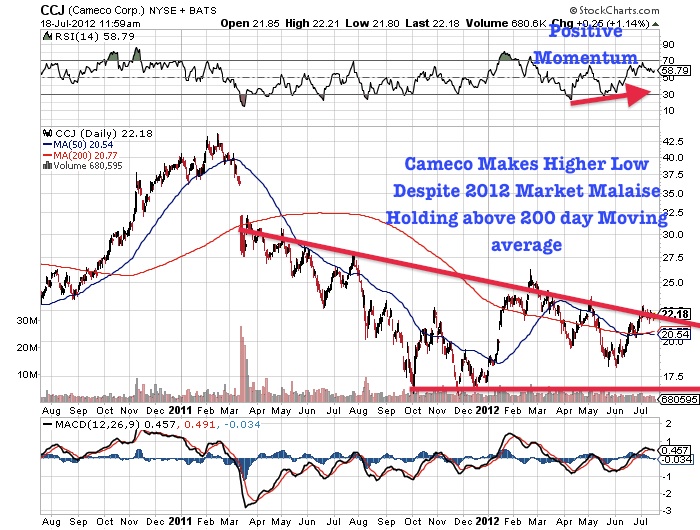

| You are subscribed to email updates from Save Your ASSets First To stop receiving these emails, you may unsubscribe now. | Email delivery powered by Google |
| Google Inc., 20 West Kinzie, Chicago IL USA 60610 | |


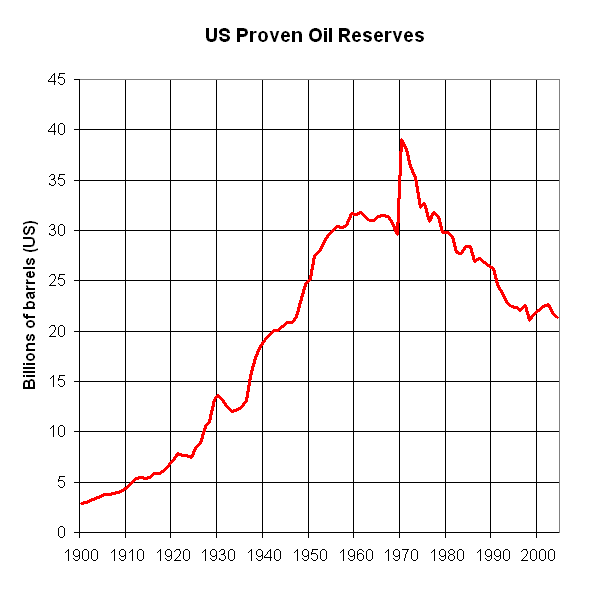


No comments:
Post a Comment