


Gold World News Flash |

- Rally Day
- Are You A Slave Of The System?
- CRB Index Spike Lifts Gold
- Live or Die by the QE Sword
- Citi’s Fitzpatrick - 2 Key Markets: The Euro vs Dollar & Stocks
- Supreme Errors
- Why mine production has little influence on the gold price
- The rig is up, Sinclair says; and Embry cautions gold, silver rig deniers
- The “European Monster State”
- Jim Sinclair Says $3500 Gold Is 1 – 3 Years Out
- 'Massive short-covering rally' likely in silver, GGR's Arensberg says
- The Many Ways Banks Commit Criminal Fraud
- Most Important Message Since 2001: The Rig Is Up, Gold Will Go To $3500
- The Rig Is Up
- The Gold Price Up $24.10 Closing Comex $1,621.30
- Icelandic Miracle or Mirage? Round 2
- On The Inevitability Of EU-thanasia
- Silver Market Manipulation Taken For Granted by CNBC Host and Panelists
- How the Race for Resources Is Shaking Up Companies' and Countries' Strategies
- Ronald Reagan’s First Inaugural Address
- Gold Headed for $2,500/oz says David Morgan
- The US and EU Are Desperately Seeking Heavy Rare Earths: Jeb Handwerger
- Falling Oil Prices Offer Great Stock Buying Opportunities: Byron King
- Gold Range Break above 1640 Would Expose 1670
- How the Race for Resources Is Shaking Up Companies' and Countries' Strategies
- "QE3 Probability" Could Boost Gold Price
- Did the EU Summit Affect Gold?
- Mogambo Bunker Of Solitude (MBOS),
- LGMR: "QE3 Probability" Could Boost Gold, No Need for Gold Standard "Until Money Collapses Completely"
| Posted: 04 Jul 2012 01:19 AM PDT by George Ure, UrbanSurvival.com:
On the other hand, when I looked at Yahoo Finance this morning, I'm sure this was a misprint: "06:26 am : [BRIEFING.COM] S&P futures vs. fair value: +1356.80. Nasdaq futures vs fair value: +2616.20." That would put the Dow over 22,000 this morning… Still more people weighing sin on the LIBOR shenanigans laid to Barclay's feet. Anyone who had a loan, credit card, or mortgage tied to LIBOR rates may have been used in this. Meantime, I wonder if the US Fed will back off its recent long-term (2014) commitments on rates now that this LIBOR (and whatever the knock-on's are) is falling apart?
| ||||||
| Are You A Slave Of The System? Posted: 04 Jul 2012 01:18 AM PDT from The Economic Collapse Blog:
Read More @ TheEconomicCollpaseBlog.com
| ||||||
| Posted: 04 Jul 2012 12:06 AM PDT Graceland Update
| ||||||
| Posted: 04 Jul 2012 12:00 AM PDT [url]http://www.traderdannorcini.blogspot.com/[/url] [url]http://www.fortwealth.com/[/url] Today's rally in gold (and in silver for that matter) was completely based on expectations for additional liquidity measures forthcoming from the Central Banks of the world. First there was chatter than China would be easing. Then came expectations of a rate cut from the ECB. If that were not enough, talk surfaced that the Bank of England would be restarting its bond purchasing program (England's QE) and of course, the non-stop, near religious belief that the Federal Reserve is going to start round 3 of QE "anyday now". I do not know about you readers but I am more and more disgusted with what is happening to the trading/investing community in this modern financial system. They seem to have lost their collective minds and their ability to reason. In a most perverse manner, (perverse is about the only word that I can find to express the sickness that pervades the financial system), the worse th...
| ||||||
| Citi’s Fitzpatrick - 2 Key Markets: The Euro vs Dollar & Stocks Posted: 03 Jul 2012 10:01 PM PDT  Today King World News wanted to share with its global readers a portion of top Citibank analyst, Tom Fitzpatrick's latest report. Fitzpatrick, a 28 year veteran and top analyst at Citibank, which has $1.3 trillion in assets, covered the two key markets, the euro vs the dollar and stocks. Below were his comments with two important charts: Today King World News wanted to share with its global readers a portion of top Citibank analyst, Tom Fitzpatrick's latest report. Fitzpatrick, a 28 year veteran and top analyst at Citibank, which has $1.3 trillion in assets, covered the two key markets, the euro vs the dollar and stocks. Below were his comments with two important charts:
This posting includes an audio/video/photo media file: Download Now | ||||||
| Posted: 03 Jul 2012 09:30 PM PDT by Peter Schiff, Gold Seek:
In the 1895 Pollock v. Farmers' Loan and Trust case, the Supreme Court declared the original Income Tax of 1894 unconstitutional because it imposed a direct tax on individuals that was not apportioned to the states according to the taxing provisions of the Constitution. For example it said that a tax on rental income is the same as a direct tax on the property that produced the income. In other words, a tax on income was tantamount to a tax on its source. To get around this, in 1913 Congress passed, and the state governments ratified, the 16th Amendment that authorized a tax on income from whatever source derived without regard to apportionment. However, in 1916 the Supreme Court ruled in Brushaber v. Union Pacific Rail Road that the Amendment "conferred no new taxing power to the Federal government," and that it "contained nothing challenging or repudiated its ruling in the Pollock case."
| ||||||
| Why mine production has little influence on the gold price Posted: 03 Jul 2012 08:00 PM PDT 8:51a ICT Wednesday, July 4, 2012 Dear Friend of GATA and Gold: GoldMoney founder and GATA consultant James Turk interviews financial writer Robert Blumen about a crucial difference gold has from commodities -- that it is produced for hoarding as money and is not consumed and that nearly all gold ever produced remains available to the market. As a result annual gold production from mines has relatively little influence on the metal's price. The interview is 20 minutes long and it's posted in audio format at GoldMoney here: http://www.goldmoney.com/podcast/robert-blumen-talks-to-james-turk-about... CHRIS POWELL, Secretary/Treasurer ADVERTISEMENT Prophecy Platinum Announces Wellgreen Preliminary Economic Assessment: Company Press Release VANCOUVER, British Columbia, Canada -- Prophecy Platinum Corp. (TSX-V: NKL, OTC-QX: PNIKF, Frankfurt: P94P) reports the results of an independent NI 43-101-compliant preliminary economic assessment for its fully owned Wellgreen nickel-copper-platinum group metals project in the Yukon Territory. The independent assessment, prepared by Tetra Tech, evaluated a base case of an open-pit mine (with a mining rate of 111,500 tonnes per day), an on-site concentrator (with a milling rate of 32,000 tonnes per day), and an initial capital cost of $863 million. The project is expected to produce (in concentrate) 1.959 billion pounds of nickel, 2.058 billion pounds of copper, and 7.119 million ounces of platinum, palladium, and gold during a mine life of 37 years with an average strip ratio of 2.57. The financial highlights of the preliminary economic assessment, shown in U.S. dollars, are as follows: Payback period: 3.55 years Prophecy Chairman John Lee says: "We are pleased with the preliminary economic assessment results. The numbers indicate that Wellgreen is one of most exciting mineral projects in the Yukon. The company is drilling to upgrade and expand the resource base. The infrastructure is excellent as the project is only 1,400 meters in altitude and 14 kilometers from the paved Alaska Highway, which leads to the Haines deep seaport. Discussions are under way with support from local stakeholders regarding permitting and logistics." For the complete press release, please visit: http://prophecyplat.com/news_2012_june18_prophecy_platinum_announces_res... Join GATA here: Toronto Resource Investment Conference New Orleans Investment Conference * * * Support GATA by purchasing DVDs of our London conference in August 2011 or our Dawson City conference in August 2006: http://www.goldrush21.com/order.html Or by purchasing a colorful GATA T-shirt: Or a colorful poster of GATA's full-page ad in The Wall Street Journal on January 31, 2009: http://gata.org/node/wallstreetjournal Help keep GATA going GATA is a civil rights and educational organization based in the United States and tax-exempt under the U.S. Internal Revenue Code. Its e-mail dispatches are free, and you can subscribe at: To contribute to GATA, please visit: ADVERTISEMENT Sona Discovers Potential High-Grade Gold Mineralization From a Company Press Release VANCOUVER, British Columbia -- With its latest surface diamond drilling program at its 100-percent-owned, formerly producing Blackdome gold mine in southern British Columbia, Sona Resources Corp. has discovered a potentially high-grade gold-mineralized area, with one hole intersecting 13.6 grams of gold in 1.5 meters of core drilling. "We intersected a promising new mineralized zone, and we feel optimistic about the assay results," says Sona's president and CEO, John P. Thompson. "We have undertaken an aggressive exploration program that has tested a number of target zones. Our discovery of this new gold-bearing structure is significant, and it represents a positive development for the company." Sona aims to bring its permitted Blackdome mill back into production over the next year and a half, at a rate of 200 tonnes per day, with feed from the formerly producing Blackdome mine and the nearby Elizabeth gold deposit property. A positive preliminary economic assessment by Micon International Ltd., based on a gold price of $950 per ounce over eight years, has estimated a cash cost of $208 per tonne milled, or $686 per gold ounce recovered. For the company's complete press release, please visit: http://www.sonaresources.com/_resources/news/SONA_NR18_2011-opt.pdf
| ||||||
| The rig is up, Sinclair says; and Embry cautions gold, silver rig deniers Posted: 03 Jul 2012 07:48 PM PDT 8:40a ICT Wednesday, July 4, 2012 Dear Friend of GATA and Gold: Gold mining entrepreneur and market analyst Jim Sinclair says the falling out of Barclays and the Bank of England over the rigging of the LIBOR interest rate market reports will change the markets and "the battle to stop gold has been lost." Sinclair's commentary is headlined "The Rig Is Up" and it's posted at JSMineSet here: http://www.jsmineset.com/2012/07/03/the-rig-is-up/ Meanwhile, citing the LIBOR scandal, Sprott Asset Management's John Embry tells King World News, "People who don't think that gold and silver are manipulated really better give their heads a shake." Embry adds that the major economies are so weak that the interest-rate increases of the inflationary 1970s are no longer available to stop the inflation that will result from money printing, as they would cause a deflationary collapse. An excerpt from Embry's interview is posted at the King World News blog here: http://kingworldnews.com/kingworldnews/KWN_DailyWeb/Entries/2012/7/3_Joh... CHRIS POWELL, Secretary/Treasurer ADVERTISEMENT Sona Discovers Potential High-Grade Gold Mineralization From a Company Press Release VANCOUVER, British Columbia -- With its latest surface diamond drilling program at its 100-percent-owned, formerly producing Blackdome gold mine in southern British Columbia, Sona Resources Corp. has discovered a potentially high-grade gold-mineralized area, with one hole intersecting 13.6 grams of gold in 1.5 meters of core drilling. "We intersected a promising new mineralized zone, and we feel optimistic about the assay results," says Sona's president and CEO, John P. Thompson. "We have undertaken an aggressive exploration program that has tested a number of target zones. Our discovery of this new gold-bearing structure is significant, and it represents a positive development for the company." Sona aims to bring its permitted Blackdome mill back into production over the next year and a half, at a rate of 200 tonnes per day, with feed from the formerly producing Blackdome mine and the nearby Elizabeth gold deposit property. A positive preliminary economic assessment by Micon International Ltd., based on a gold price of $950 per ounce over eight years, has estimated a cash cost of $208 per tonne milled, or $686 per gold ounce recovered. For the company's complete press release, please visit: http://www.sonaresources.com/_resources/news/SONA_NR18_2011-opt.pdf Join GATA here: Toronto Resource Investment Conference New Orleans Investment Conference * * * Support GATA by purchasing DVDs of our London conference in August 2011 or our Dawson City conference in August 2006: http://www.goldrush21.com/order.html Or by purchasing a colorful GATA T-shirt: Or a colorful poster of GATA's full-page ad in The Wall Street Journal on January 31, 2009: http://gata.org/node/wallstreetjournal Help keep GATA going GATA is a civil rights and educational organization based in the United States and tax-exempt under the U.S. Internal Revenue Code. Its e-mail dispatches are free, and you can subscribe at: To contribute to GATA, please visit: ADVERTISEMENT Prophecy Platinum Announces Wellgreen Preliminary Economic Assessment: Company Press Release VANCOUVER, British Columbia, Canada -- Prophecy Platinum Corp. (TSX-V: NKL, OTC-QX: PNIKF, Frankfurt: P94P) reports the results of an independent NI 43-101-compliant preliminary economic assessment for its fully owned Wellgreen nickel-copper-platinum group metals project in the Yukon Territory. The independent assessment, prepared by Tetra Tech, evaluated a base case of an open-pit mine (with a mining rate of 111,500 tonnes per day), an on-site concentrator (with a milling rate of 32,000 tonnes per day), and an initial capital cost of $863 million. The project is expected to produce (in concentrate) 1.959 billion pounds of nickel, 2.058 billion pounds of copper, and 7.119 million ounces of platinum, palladium, and gold during a mine life of 37 years with an average strip ratio of 2.57. The financial highlights of the preliminary economic assessment, shown in U.S. dollars, are as follows: Payback period: 3.55 years Prophecy Chairman John Lee says: "We are pleased with the preliminary economic assessment results. The numbers indicate that Wellgreen is one of most exciting mineral projects in the Yukon. The company is drilling to upgrade and expand the resource base. The infrastructure is excellent as the project is only 1,400 meters in altitude and 14 kilometers from the paved Alaska Highway, which leads to the Haines deep seaport. Discussions are under way with support from local stakeholders regarding permitting and logistics." For the complete press release, please visit: http://prophecyplat.com/news_2012_june18_prophecy_platinum_announces_res...
| ||||||
| Posted: 03 Jul 2012 07:46 PM PDT Wolf Richter www.testosteronepit.com Rather than solving the Eurozone debt crisis once and for all, the EU summit last week gummed up the bailout process with controversy in the very country that everyone is counting on to save the Eurozone, Germany—but also elsewhere—and nothing has been resolved. There is Greece, inexorably tottering towards its exit from the Eurozone. Once again, the despised Troika inspectors have arrived in Athens. Based on their findings, they’ll decide if Greece should get the next tranche of the bailout billions—default and/or conversion to the drachma being the alternatives. Horst Reichenbach, the German head of the Troika inspectors, took one look at the numbers, and while he didn’t end up in the hospital nauseated and with knots in his gut—the fate that had befallen Finance Minister Vassilis Rapanos a couple of days after being appointed—he did see that Greeks have stopped paying their bills. Which is logical. They’re hanging on to their euros under mattresses or in foreign accounts, assuming that they will soon be able to pay their bills with devalued drachmas. The deal of a lifetime. At least €6.5 billion is past due, owed to Greek industry, Reichenbach said. Everyone is doing it. Hospitals stopped paying for medication, individuals stopped paying for electricity, the government stopped paying for construction work. “The patience of the public has been exhausted,” said Robert Fico, Prime Minister of Eurozone member Slovakia. His country would no longer be willing to help if recipients didn’t implement sufficient reforms. And the number of bailout candidates continues to grow: in addition to the five that have already requested aid—Greece, Portugal, Ireland, Spain, and Cyprus—Slovenia is now discussing it. And Italy is at the brink. Seven. Out of seventeen. They’re all going to get bailed out by the temporary EFSF, which has a limit of €250 billion, and later by the permanent ESM, which has a limit of €700 billion. Of course, there is the old ESM that doesn’t exist yet, the one that was passed Friday by the German parliament after it had already been obviated by the new ESM that emerged from the EU summit, the one that everyone interpreted differently, the one that has run into a wall of opposition in Northern Europe. And it doesn’t exist either. Finland and the Netherlands quickly expressed their opposition to an essential feature of the new ESM—buying sovereign bonds to force down yields and make borrowing cheaper. They could torpedo it; decisions must be made unanimously. But there would be a way around: if the ECB and the EU Commission decide that this is an emergency, only 85% of the votes, as determined by capital contributions, would be required. But no one can override Germany which contributed 27% of the capital. And there was a veritable tsunami of actions at the German Constitutional Court. They came from all sides: from the left, from conservative Peter Gauweiler (CSU), and from the association More Democracy, which was joined by 12,000 citizens and by the Association of Tax Payers. They want a rush decision to stop President Joachim Gauck from signing the ESM and fiscal union laws until the court hands down its final decision. According to the plaintiffs, the Bundestag, in passing the ESM, gave up its parliamentary “budget autonomy”—its rights to create and control the national budget. These rights would be transferred to organizations that were not democratically legitimized, thereby limiting the rights of voters to participate democratically in budget decisions. The fiscal union pact similarly violates German democratic fundamentals, they claim. However, Justice Minister Sabine Leutheusser-Schnarrenberger, believed that the court wouldn’t stop the ESM and the fiscal union pact. In prior challenges, the justices reigned in certain planks of the law, she said, “but fundamentally they had no problem with the aid measures.” And Chancellor Angela Merkel caught a broadside from her coalition partner. Horst Seehofer, chairman of the conservative CSU, lashed out at her concessions and threatened to let the coalition government collapse if further concessions were made. “My greatest fear is that the financial markets ask: can Germany support all that?” He was worried that the markets would attack Germany and put it in the same spot as Spain. He wouldn’t tolerate the transfer of any additional power to the “European monster state” and promised he’d turn the next elections into an election on Europe. “We will put this question to the people,” he said, which so far, amazingly, no one has done in Germany. The onslaught of criticism put Merkel on the defensive about the summit decisions. The fundamental principles of German policies had been confirmed in Brussels, said Merkel’s spokesman Steffen Seibert, and the assertion that money would flow freely and without conditions was “completely wrong.” After the EU summit, markets soared in Asia, Europe, the US, everywhere. The euro jumped. Yields on Spanish bonds fell to the lowest level of the week. A miracle had happened. Or had it? Read.... The Big Blink? And to put some humor into that dogged Eurozone drama, here is “Merkel at Wimbledon 2012,” a funny video by down-under comedians Clarke & Dawe.
| ||||||
| Jim Sinclair Says $3500 Gold Is 1 – 3 Years Out Posted: 03 Jul 2012 07:35 PM PDT Sinclair says he has an important message that gold will hit $3500 in no less than 1 year and a maximum of 3 years. See full posting here.
| ||||||
| 'Massive short-covering rally' likely in silver, GGR's Arensberg says Posted: 03 Jul 2012 07:29 PM PDT 8:20a ICT Wednesday, July 4, 2012 Dear Friend of GATA and Gold (and Silver): Analyzing futures trading data and finding the big commercial traders the least short in silver in a decade, Gene Arensberg of the Got Gold Report expects a "massive short-covering rally." Arensberg's commentary is a 27-minute video presentation here: http://www.gotgoldreport.com/2012/07/comex-silver-futures-skewed-short-p... CHRIS POWELL, Secretary/Treasurer ADVERTISEMENT Sona Discovers Potential High-Grade Gold Mineralization From a Company Press Release VANCOUVER, British Columbia -- With its latest surface diamond drilling program at its 100-percent-owned, formerly producing Blackdome gold mine in southern British Columbia, Sona Resources Corp. has discovered a potentially high-grade gold-mineralized area, with one hole intersecting 13.6 grams of gold in 1.5 meters of core drilling. "We intersected a promising new mineralized zone, and we feel optimistic about the assay results," says Sona's president and CEO, John P. Thompson. "We have undertaken an aggressive exploration program that has tested a number of target zones. Our discovery of this new gold-bearing structure is significant, and it represents a positive development for the company." Sona aims to bring its permitted Blackdome mill back into production over the next year and a half, at a rate of 200 tonnes per day, with feed from the formerly producing Blackdome mine and the nearby Elizabeth gold deposit property. A positive preliminary economic assessment by Micon International Ltd., based on a gold price of $950 per ounce over eight years, has estimated a cash cost of $208 per tonne milled, or $686 per gold ounce recovered. For the company's complete press release, please visit: http://www.sonaresources.com/_resources/news/SONA_NR18_2011-opt.pdf Join GATA here: Toronto Resource Investment Conference New Orleans Investment Conference * * * Support GATA by purchasing DVDs of our London conference in August 2011 or our Dawson City conference in August 2006: http://www.goldrush21.com/order.html Or by purchasing a colorful GATA T-shirt: Or a colorful poster of GATA's full-page ad in The Wall Street Journal on January 31, 2009: http://gata.org/node/wallstreetjournal Help keep GATA going GATA is a civil rights and educational organization based in the United States and tax-exempt under the U.S. Internal Revenue Code. Its e-mail dispatches are free, and you can subscribe at: To contribute to GATA, please visit: ADVERTISEMENT Prophecy Platinum Announces Wellgreen Preliminary Economic Assessment: Company Press Release VANCOUVER, British Columbia, Canada -- Prophecy Platinum Corp. (TSX-V: NKL, OTC-QX: PNIKF, Frankfurt: P94P) reports the results of an independent NI 43-101-compliant preliminary economic assessment for its fully owned Wellgreen nickel-copper-platinum group metals project in the Yukon Territory. The independent assessment, prepared by Tetra Tech, evaluated a base case of an open-pit mine (with a mining rate of 111,500 tonnes per day), an on-site concentrator (with a milling rate of 32,000 tonnes per day), and an initial capital cost of $863 million. The project is expected to produce (in concentrate) 1.959 billion pounds of nickel, 2.058 billion pounds of copper, and 7.119 million ounces of platinum, palladium, and gold during a mine life of 37 years with an average strip ratio of 2.57. The financial highlights of the preliminary economic assessment, shown in U.S. dollars, are as follows: Payback period: 3.55 years Prophecy Chairman John Lee says: "We are pleased with the preliminary economic assessment results. The numbers indicate that Wellgreen is one of most exciting mineral projects in the Yukon. The company is drilling to upgrade and expand the resource base. The infrastructure is excellent as the project is only 1,400 meters in altitude and 14 kilometers from the paved Alaska Highway, which leads to the Haines deep seaport. Discussions are under way with support from local stakeholders regarding permitting and logistics." For the complete press release, please visit: http://prophecyplat.com/news_2012_june18_prophecy_platinum_announces_res...
| ||||||
| The Many Ways Banks Commit Criminal Fraud Posted: 03 Jul 2012 06:57 PM PDT The Libor scandal seems to be waking people up to manipulation and fraud by the big banks. There are many other types of fraud they've engaged in as well ... Here is a partial list:
But at least the big banks do good things for society, like loaning money to Main Street, right? Actually:
| ||||||
| Most Important Message Since 2001: The Rig Is Up, Gold Will Go To $3500 Posted: 03 Jul 2012 06:13 PM PDT Jim Sinclair's Mineset My Dear Extended Family, Gold will go to and above $3500. This is the most important message I have sent you since 2001. There are very few of us dynamic thinkers that see everything as a trend constantly in motion. Anyone can be a static thinker, quoting recent economic figures or news headline (MSM), and coming up with a usually wrong opinion. The change today is that the "Rig Is Up." The Bank of England turning their backs on Barclays, the company who did their bidding, will be the event in time marking the trend change. Many of us in our areas of activity will successfully fight the Riggers. The many complaints that so many of you kindly sent in to fight manipulation released the Kraken in me. The Kraken is back in its cage where it belongs. The paper trail is there. The worm has turned. Even more importantly is that this fight in the $1540 gold price area was not for regaining the old high in gold. The six at...
| ||||||
| Posted: 03 Jul 2012 05:16 PM PDT My Dear Friends, Gold will go to and above $3500. This is the most important message I have sent you since 2001. There are very few of us dynamic thinkers that see everything as a trend constantly in motion. Anyone can be a static thinker, quoting recent economic figures or news headline (MSM), and Continue reading The Rig Is Up
| ||||||
| The Gold Price Up $24.10 Closing Comex $1,621.30 Posted: 03 Jul 2012 04:36 PM PDT Gold Price Close Today : 1621.30 Change : 24.10 or 1.51% Silver Price Close Today : 2824.30 Change : 0.775 or 2.82% Gold Silver Ratio Today : 57.405 Change : -0.742 or -1.28% Silver Gold Ratio Today : 0.01742 Change : 0.000222 or 1.29% Platinum Price Close Today : 1488.70 Change : -23.40 or -1.55% Palladium Price Close Today : 597.40 Change : -15.35 or -2.51% S&P 500 : 1,374.02 Change : 1.62 or 0.12% Dow In GOLD$ : $165.04 Change : $ (2.79) or -1.66% Dow in GOLD oz : 7.984 Change : -0.135 or -1.66% Dow in SILVER oz : 458.30 Change : -13.82 or -2.93% Dow Industrial : 12,943.82 Change : -24.44 or -0.19% US Dollar Index : 81.81 Change : -0.070 or -0.09% Franklin will not be publishing commentary today as he is nursing his wife who is recovering from heart surgery. Argentum et aurum comparenda sunt -- -- Gold and silver must be bought. - Franklin Sanders, The Moneychanger The-MoneyChanger.com 1-888-218-9226 10:00am-5:00pm CST, Monday-Friday © 2012, The Moneychanger. May not be republished in any form, including electronically, without our express permission. To avoid confusion, please remember that the comments above have a very short time horizon. Always invest with the primary trend. Gold's primary trend is up, targeting at least $3,130.00; silver's primary is up targeting 16:1 gold/silver ratio or $195.66; stocks' primary trend is down, targeting Dow under 2,900 and worth only one ounce of gold; US$ or US$-denominated assets, primary trend down; real estate bubble has burst, primary trend down. WARNING AND DISCLAIMER. Be advised and warned: Do NOT use these commentaries to trade futures contracts. I don't intend them for that or write them with that short term trading outlook. I write them for long-term investors in physical metals. Take them as entertainment, but not as a timing service for futures. NOR do I recommend investing in gold or silver Exchange Trade Funds (ETFs). Those are NOT physical metal and I fear one day one or another may go up in smoke. Unless you can breathe smoke, stay away. Call me paranoid, but the surviving rabbit is wary of traps. NOR do I recommend trading futures options or other leveraged paper gold and silver products. These are not for the inexperienced. NOR do I recommend buying gold and silver on margin or with debt. What DO I recommend? Physical gold and silver coins and bars in your own hands. One final warning: NEVER insert a 747 Jumbo Jet up your nose. No, I don't. 
| ||||||
| Icelandic Miracle or Mirage? Round 2 Posted: 03 Jul 2012 04:19 PM PDT By EconMatters Paul Krugman has long been an advocate of Keynesian economics, and a proponent of aggressive and expansionary fiscal policy drawing parallels between Japan's decade-long deflation and the current Great Recession. Krugman also has also been writing quite extensively using Iceland as the poster child on the benefits of currency devaluation. Krugman's latest endeavor on the so-called 'Icelandic Miracle' was when he posted on his NYT blog last month with the following chart showing the seemingly much better GDP growth from Iceland compared to Ireland, Estonia, Lativa, and Lithuania, the countries either in Euro or has a currency pegged to the Euro. He then rhetorically remarked:
That was quickly rebuffed by the CFR (Council on Foreign Relations) with Washington Post and The Economist also weighing in and stirred up a debate on twitter. The following are the two key charts in the CFR rebuff--the main point is that Iceland looks a lot less impressive than Krugman claims if one shifts the chart starting period around:
This actually is the second round of the 'Icelandic Miracle' debate between Krugman and CFR. Round one took place in June 2010. Two years ago, Krugman used a similar chart showing a much higher GDP growth of Iceland relative to Ireland, Latvia, and Estonia since the 4th quarter of 2007 to support his declaration that Iceland is a "Post-Crisis Miracle." (We are not quite sure why Krugman dragged Lithuania in his 2012 post except the country has the Euro-pegged currency and fits Krugman's story.)
Meanwhile, Washington Post completely endorsed Krugman, and in a somewhat self-contradictory post, The Economist, on one hand, seems to support Krugman's view that [emphasis ours]
On the other hand, The Economist also appears to say it was all but a number's game depending on the comparative elements involved with the following conclusion [emphasis ours]
We say the bottom line is that regardless which country or starting year you pick to compare and chart, fundamentally, Iceland is definitely NOT the "fiscal role model" that Krugman intends for people to believe. You might recall, Iceland suffered the biggest banking collapse in history by any country relative to its economic size in 2008 when its highly leverage banks lost access to the funding market. The tiny Nordic nation was eventually bailed out by the IMF and other Nordic countries, partly because too many Europeans had deposits into Icesave.
Afterwards, the value of the Icelandic króna currency plummeted (down 80% against the Euro since 2008), and does not even have a regular official exchange rate any more. Inflation soared (41% in about four years), while people's savings and pensions got wiped out, and real wage and home value fell off a cliff. The country has been held together mostly by IMF loans, "technical defaults" and capital control ever since. [Check #000000;">here for more of the economic horror story of Iceland.] Now, four years after the banking collapse, Iceland was able to wipe the slate clean, and has now revived its economy at 4.5% growth rate in Q1 of this year, while inflation was at an elevated level of 5.4% in June. Iceland had to raise interest rate five times since last August to contain inflation, which could get even worse as króna could depreciate even more with the current Euro crisis, and the country is still years away from fully removing capital controls, according to the Finance Minister. Back in 2010, Krugman concluded in his post that [emphasis ours]:
Sure, if a country could technically default on a significant portion of its debt, trash its currency, impose capital control, then there's no where else to go but up with a heck of a price to pay in terms of internal turmoil (Zimbawe is an extreme example, but yes.). Furthermore, Iceland is of relatively little significance in the global grand scheme of things, but due to the dominance of the US dollar in the global currency system, the size of the economy and population, the "Iceland model" is not even an option for the United States, which Krugman seems to intimate.
One last tibit for those preaching "the advantage of adjustment via devaluation," Iceland, in a bid to gain stability in its currency system, now is considering ditching the króna, and adopt either Euro or the Canadian Loonie instead. Poll says 70% of the Icelanders want to get rid of the króna. The Icelandic government believes an EU membership would be the best option since Europe is the largest market for Iceland.
© EconMatters All Rights Reserved | Facebook | Twitter | Post Alert | Kindle
| ||||||
| On The Inevitability Of EU-thanasia Posted: 03 Jul 2012 04:13 PM PDT Starting from the level of global savings and forecasts by the IMF, Lombard Street Research's Charles Dumas explains to the FT's John Authers how this 'glut' of global savings exacerbated by 'accounting' of negative economic policies is choking economic growth. This fiscal responsibility versus growth (saving vs. investment) argument is nowhere more evident (for now) than in Europe, where the two chaps progress, in this worthwhile clip, to the extremely dispersed (and not at all united) unit labor costs of European nations as the crux of where Europe goes next. In Dumas' words: "people have got to make up their minds how much they are prepared to pay and for how long" and the longer the time where these relative costs diverge the greater the inevitable costs, leaving only two EU solutions: either the 'Irish' mass-emigration/devalue/economic-collapse in the hopes of improving competitiveness; or 'inflation in Germany' - which is abhorrent to the people of that country. The only possible route back to growth in the short-term is an 'amicable' break-up of the Euro - which as Dumas points out is attractive politically to Ms. Merkel heading into next year's election (as opposed to her keep having to back-down again and again). This is in line with our view that when push comes to a big shove, Germany will be the optimal defection from the game-theoretical game of chicken being played in Europe (and anyone who feels the technical measures from the last summit solve the problems, in Auther's words "is being very 'hopeful' indeed").
| ||||||
| Silver Market Manipulation Taken For Granted by CNBC Host and Panelists Posted: 03 Jul 2012 03:37 PM PDT "This video clip probably got a fair amount of playing time with the JPMorgan et al crowd, the CFTC, the CME Group...and beyond." ...
| ||||||
| How the Race for Resources Is Shaking Up Companies' and Countries' Strategies Posted: 03 Jul 2012 03:34 PM PDT Synopsis: A bold bet by Malaysia's state-owned oil and gas company highlights just how serious the global competition to secure natural resources is. A note to our subscribers: We will not be publishing a Daily Dispatch tomorrow, as the Casey Research office will be closed to celebrate Independence Day. On Thursday we will be back in action. We hope all our American readers enjoy the holiday! By Marin Katusa, Chief Energy Investment Strategist Malaysia's state-owned oil and gas company just made a multibillion-dollar bet that Canada will choose to export its shale gas riches. Even though the odds of securing permission to export liquefied natural gas (LNG) from the Canadian west coast are still pretty poor, the costs of such an endeavor immense, and the timeline in question very long, Petronas is putting $5.5 billion on the table – far more than it has ever spent on an acquisition before – to secure a large foothold in the ...
| ||||||
| Ronald Reagan’s First Inaugural Address Posted: 03 Jul 2012 02:11 PM PDT Second in a series, Ronald Reagan's first inaugural address, delivered January 20, 1981.
Memorable quotes:
"If we look to the answer as to why for so many years we achieved so much, prospered as no other people on Earth, it was because here in this land we unleashed the energy and individual genius of man to a greater extent than has ever been done before. Freedom and the dignity of the individual have been more available and assured here than in any other place on Earth. The price for this freedom at times has been high, but we have never been unwilling to pay that price."
Happy Birthday America
| ||||||
| Gold Headed for $2,500/oz says David Morgan Posted: 03 Jul 2012 01:55 PM PDT David Morgan : it's both , the global currency... [[ This is a content summary only. Visit my website http://goldbasics.blogspot.com for full Content ]] 
| ||||||
| The US and EU Are Desperately Seeking Heavy Rare Earths: Jeb Handwerger Posted: 03 Jul 2012 01:32 PM PDT The Critical Metals Report: Jeb, you successfully forecasted the mining mini-boom from 2009 to early 2011. Now we find ourselves in a protracted down period in the junior mining space, which is even affecting the seniors and producing companies. What market forces are at work here? Jeb Handwerger: There was a lot of speculative interest in rare earth elements (REEs) in 2011. The REE story was just hitting the mainstream. Then we got hit with the nuclear disaster at Fukushima, the expiration of QE2 in spring 2011, the Euro problems and fear of global contagion of the debt crisis. REE prices have started to come down and now REE equity valuations have reached rock bottom. This has been accelerated by the overall macroeconomic downturn. Investors are panicking and trying to preserve capital by searching for safe havens. They've exited the resource sector and turned to cash and treasuries. There are record-low yields. Investors are buying treasuries for negative returns. The dollar is e...
| ||||||
| Falling Oil Prices Offer Great Stock Buying Opportunities: Byron King Posted: 03 Jul 2012 01:32 PM PDT The Energy Report: Things have been pretty hectic on the global economic and financial fronts lately and the energy markets seem to be defying the expectations and predictions of many analysts. What's your take on where we are and where things are headed? Byron King: We're living with volatility, most of which is due to international currency and exchange rates. The dramatic decline in the euro has caused a capital flight to the U.S. and a strengthening of the dollar, which results in lower oil prices. The other big macro-type issues include the looming economic slowdown in China. More news stories are coming out about negative demand indicators in China, which will definitely be bad for Chinese consumption growth. The country may use less oil than people forecast. The Saudis are producing at least 1 million barrels per day (MMbbl/d) in excess of what they normally would. So, between the rising dollar, slowing growth and excess production in Saudi Arabia, we're seeing these gyrating ...
| ||||||
| Gold Range Break above 1640 Would Expose 1670 Posted: 03 Jul 2012 01:22 PM PDT courtesy of DailyFX.com July 03, 2012 09:35 AM Daily Bars Prepared by Jamie Saettele, CMT No change…I’m looking lower as long as gold is below 1641. There is very little to say as gold is in its 8th week of consolidation. The sideways trading is taking on the form of a head and shoulders continuation pattern (bearish) but a break below 1548 is needed to confirm. Exceeding 1641 would shift focus to 1671 (May high) LEVELS: 1547 1588 1607 1641 1672 1700...
| ||||||
| How the Race for Resources Is Shaking Up Companies' and Countries' Strategies Posted: 03 Jul 2012 01:03 PM PDT Synopsis: A bold bet by Malaysia's state-owned oil and gas company highlights just how serious the global competition to secure natural resources is. A note to our subscribers: We will not be publishing a Daily Dispatch tomorrow, as the Casey Research office will be closed to celebrate Independence Day. On Thursday we will be back in action. We hope all our American readers enjoy the holiday! By Marin Katusa, Chief Energy Investment Strategist Malaysia's state-owned oil and gas company just made a multibillion-dollar bet that Canada will choose to export its shale gas riches. Even though the odds of securing permission to export liquefied natural gas (LNG) from the Canadian west coast are still pretty poor, the costs of such an endeavor immense, and the timeline in question very long, Petronas is putting $5.5 billion on the table – far more than it has ever spent on an acquisition before – to secure a large foothold in the British Columbia shale gas scene. It's yet another sign that things are getting serious in the global race for resources. The race for resources drives much of our thinking within the Casey Research energy group. It's more than a common theme – we believe that it is one of the strongest forces at work in our world today, and that it plays a role in determining the tone of many international relationships and domestic policies. Countries that have resources, from Russia to Australia, are altering fiscal structures and ownership rules so as to glean as much benefit as possible from their riches, while still reserving sufficient supplies to fuel their futures. Countries that lack natural-resource wealth, such as Japan and South Korea, are racing to lock up projects and partnerships abroad that can supply their future resource needs. And a race it is, because they are not alone. There are few countries in this world with natural supplies of all the energy commodities they need – Australia, Russia, and Canada are among the few that do – and everyone else has to constantly wheel and deal to secure imports. Now the easy deposits of many energy resources are disappearing, but global demand continues to rise. The result: stiffer competition. Petronas' deal is a perfect example. Petronas is buying Calgary-based Progress Energy Resources (T.PRQ) for C$4.8 billion in cash. Including convertible debt the deal is valued at about C$5.5 billion. In announcing the deal, Petronas also said it has chosen Prince Rupert, BC, as the home of its planned LNG export terminal. So the company is spending billions of dollars to acquire 1.9 trillion cubic feet of proven and probable gas reserves… but there is no guarantee that they will be able to export any of that gas in the foreseeable future. Pipelines have become a highly contentious issue in North America – just as US citizens are embroiled in a debate over the Keystone XL pipeline which would transport oil sands crude south, Canadians are arguing the merits and liabilities of the Northern Gateway pipeline, which would move oil sands crude to the west coast for transport to Asia. One of the big arguments against Northern Gateway is the danger of sending tanker traffic through the coastal waters of northern BC, where an oil spill would be near impossible to clean and would irreparably damage a pristine ecosystem. The same arguments will surface with natural gas. The LNG terminal that Petronas envisions in Prince Rupert would send loaded tankers through those same sensitive waters, an idea that is far from accepted in the region at this point. The pipelines ferrying natural gas to that terminal would cross mountainous terrain burdened with heavy winter snowpack and dramatic summer melts that regularly cause hillsides to slide and rivers to swell their banks and take out bridges – all points that opponents will use to argue that the potential risks outweigh the benefits. In short: Petronas and its peers face a steep, uphill battle in their quest to permit pipelines and LNG terminals on the west coast. But as we wrote last week, the potential for big profits will also play a role. Remember, natural gas in its gaseous state is a landlocked commodity. Its low energy-to-volume ratio renders it uneconomic to ship, which means pipelines are the only option. To move natural gas over oceans it has to be condensed into LNG, increasing the energy-to-volume ratio dramatically and making it economic to load onto tankers and send around the world. Many major global economies rely on LNG to meet their natural gas needs; and demand is on the rise. In 2011, global LNG trade grew by 9.4% compared to 2010, with Asia generating most of the demand increase. Japan is the world's top LNG importer, having bought 79.1 million tonnes in 2011; South Korea is in second place with imports near 36 million tonnes. India, China, and Taiwan are all also major LNG buyers, helping to lift Asia into top spot as a regional LNG import market: Asian LNG buyers accounted for 63.6% of the global market in 2011. That level of demand from a part of the world fairly short on supply means high prices. LNG in Asia is currently worth between $17 and $18 per million British Thermal Units (MMBtu) – six to seven times the price of natural gas in North America. That price difference is precisely why Petronas is maneuvering to buy reserves in North America. The gamble is simply worth its while – if Petronas is able to build pipelines and an LNG terminal on the west coast, the company will be able to take a commodity worth a few dollars here and sell it for many times more in Asia. The lure of that payout has drawn many players to this expensive, drawn out, and highly uncertain game. With this deal, Petronas joins a growing list of international energy companies including PetroChina, Mitsubishi, and CNOOC that are spending billions on remote natural gas plays in Alberta and BC, all of which share the same dream of selling the gas in Asian markets. While these Asian energy giants take on the risk, Canadian gas explorers pretty much get to just enjoy the benefits. Depressed North American gas prices have brought most gas explorers to a standstill – investors and banks alike are not interested in funding projects where the cost of production is almost the same as the value of the product. But being bought out or finding a partner with deep pockets is a perfect solution. As Progress' CEO said, "Our asset base requires extensive capital to develop its large potential and ultimately access international LNG markets. Petronas offers the size and scale that will enable our company to continue to grow and not be limited by the same cash flow challenges faced by many producers in the North American natural gas market today." Since Canada's gas explorers are stuck in neutral, you might think that Asian energy firms would be making minimal offers, trying to acquire these resources on the cheap. Instead, Petronas offered C$22.45 a share for Progress, 77% more than Progress' closing price the previous day. Are they trying to earn goodwill with Canadians? Perhaps, but there's a more likely explanation for their generosity: pressure from behind. If they made a stink bid and Progress voiced displeasure, the dispute could draw attention from Petronas' peers, which are also on the lookout for good natural gas deals. One of these peers might then swoop in and make a better offer, leaving Petronas empty-handed. This is the impact of the race for resources. These Asian energy giants are racing with each other to secure resources for the future. The constant pressure to stay ahead in the race means companies will offer whatever it takes to secure a deal quickly, before anyone else trips up their efforts. No country has been more aggressive in snapping up worldwide energy resources than China. In the last five years, it's spent approximately $75 billion on oil acquisitions alone. It has even taken a 33% stake in a massive drilling project in southwest Texas. Shale gas riches have positioned North Americans as beneficiaries in the global race to secure natural gas supplies. However, complacency is a dangerous thing. Just because North America has gas doesn't mean it has all of the energy resources it needs for the future. President Obama's recent executive order on Russian uranium was a reminder that the US relies on imports to feed its nuclear reactors, and with the Megatons deal coming to an end, the United States is being thrust into the global race for uranium just as that race is heating up. Scarcity is a powerful force and it leaves those in control of limited resources wielding great power. We think a scarcity of uranium will increase Russia's power; control over some of the last big, easy oil deposits has earned Saudi Arabia great global influence. Petronas' deal with Progress is a sign that shale gas could generate similar prowess for North America, and is a strong reminder that the global race for resources will provide some with money and power while leaving others in the dust.
| ||||||
| "QE3 Probability" Could Boost Gold Price Posted: 03 Jul 2012 12:27 PM PDT SPOT MARKET gold prices traded close to $1610 an ounce for most of Tuesday morning in London, after breaking through the $1600 mark during the earlier Asian session. Silver prices touched $28 an ounce for the first time in nearly two weeks, while stocks and commodities also gained after disappointing US manufacturing data led to renewed speculation that the Federal Reserve might launch a third round of quantitative easing, known as QE3.
| ||||||
| Did the EU Summit Affect Gold? Posted: 03 Jul 2012 12:25 PM PDT The markets rallied last week as European leaders made progress at a two-day summit in Brussels. European Union participants said they would speed up plans to create a single supervisor to regulate the region’s banking system, and also agreed that EU bailout funds should be used to directly increase capital of struggling banks. The news was a surprise to traders, but little has changed in the big picture.
| ||||||
| Mogambo Bunker Of Solitude (MBOS), Posted: 03 Jul 2012 12:14 PM PDT Alone in the Mogambo Bunker Of Solitude (MBOS), I crouch like a cornered rat in, as expected, the corner of the darkened room, hunched over a pizza-stained keyboard nestled behind crates of ammo, where I peck out my usual Hysterical Mogambo Tirade (HMT), which I have to do because when I confront people face-to-face at the stupid mall or at the stupid grocery store -- to give them the exact same information! -- they get all huffy! Cops are suddenly everywhere! Guns! Tazers! Pepper spray! Lawyers! Pretty soon you are thinking "Just don't taze me, bro'!", and it is at that moment that you are no longer productively using your time preaching The Gospel Of The Mogambo (TGOTM), quoting such investment gems as "Behold my words, halfwitted loser morons! Verily should thee buy gold, silver and oil as a prosperous line of defense against the destructive evils and travails of unfettered money creation, which forsooth leads to roaring, demonic inflation in prices, which will destroy us all in its murderous flames, as fearlessly proclaimed by The Mighty Mogambo (TMM) himself when he said 'We're Freaking Doomed (WFD) you halfwitted loser morons'!" But now, writing my typical Stupid Mogambo Crap (SMC) instead of directly haranguing and pestering people with it, I constantly have the overwhelming urge to read what I have just written ("Bah! Rubbish!") and quote from the Declaration of Independence about how the evil British government, against which the American colonists were rebelling at the time, "has erected a multitude of new offices, and sent hither swarms of officers to harass our people, and eat out their substance." As an aside, I always thought that "swarms" of parasites that "eat out the substance" of people would make a good sci-fi movie, especially if it had beautiful ladies prancing around in short skirts and who have devilish gleams in their eyes that unmistakably say "I want you, my Hot Mogambo Stud (HMS)! Who? This guy? He's just an actor! It's you that I really want! Take me, Mogambo! I'm yours!" But it was actually an informative email from a Canadian Junior Mogambo Ranger (JMR) named Phil S. that got me thinking of it this time, and although the actual content of his email eludes me now, I distinctly remember that I thought I was being quite clever and, you know, like, dude, so erudite when I responded to his message with -- you guessed it! --that very quote! With your razor-sharp brain already galvanized to action by adrenaline to fight-or-flight alertness by the preceding terrifying statistics, you have undoubtedly noticed that all the references to the government's "multitude of new offices" from which is "sent hither swarms of officers to harass our people, and eat out their substance" have occurred three times in the last four paragraphs! Three times! And the only paragraph that didn't was, instead, a terrific movie plot and deadly-accurate description of the government sucking the life out of you like some huge, glistening maggot, disgustingly slurping and gobbling you up, bit by slimy bit. Three times! I mean, what are the chances of that? Astronomical! And yet, there it is! Proof! Or perhaps it is just a replay of the last 4,500 years of history when innumerable, unremembered governments and kings despicably borrowed themselves into bankruptcy, and the awful things they did while uselessly flailing about in despicable desperation and panic. So it's, sadly, again coming down to a stark choice between being eaten alive by price inflation and huge, mutant maggots, or, instead, prospering like royalty of old when gold and silver skyrocket in price because of all the price inflation from all the new money and credit created by the foul Federal Reserve to feed the gaping, deficit-spending maw of the ravenous, bankrupt government, (i.e. huge, mutant maggots), and bankrupt cities, and bankrupt banks, and bankrupt businesses, and bankrupt people. Suddenly, you realize it's a no-brainer! Gimme that old-time gold and silver! Whee! This investing stuff is easy! 
| ||||||
| Posted: 03 Jul 2012 12:13 PM PDT London Gold Market Report from Ben Traynor BullionVault Tuesday 3 July 2012, 07:30 EDT SPOT MARKET gold prices traded close to $1610 an ounce for most of Tuesday morning in London, after breaking through the $1600 mark during the earlier Asian session. Silver prices touched $28 an ounce for the first time in nearly two weeks, while stocks and commodities also gained after disappointing US manufacturing data led to renewed speculation that the Federal Reserve might launch a third round of quantitative easing, known as QE3. US manufacturing activity fell last month, according to the June ISM purchasing managers index published Monday. The ISM PMI was 49.7 – down from 53.5 in May and below analysts' consensus forecast, which was around 52. A PMI score of less than 50 indicates contraction. "The dimmed economic outlook leads to expectations of more stimulus, which will weaken the Dollar and help metals," says one trader in Shanghai, adding that "silver will be relatively...
|
 The nice thing about holidays is that they are predictable from a market standpoint. Not saying the market will go up, but the price of gold is up $12 when I looked and there's a normal trend to see an upward spike in the market the day or three before a holiday and that's tomorrow. So a hundred points up shouldn't be surprising.
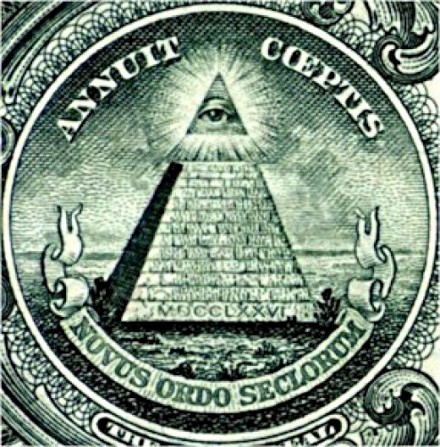 If you went out and took a poll of the American people on July 4th (Independence Day) and asked them if they are free, what would the results look like? Of course the results would be overwhelmingly lopsided. Most Americans believe that they live in "the land of the free" and that they are not enslaved to anyone. But is that really the case? Slavery does not always have to involve whips and shackles. There are many other forms of slavery. One dictionary definition of a slave is "one that is completely subservient to a dominating influence". I really like that definition. Today, millions of Americans are slaves of the system and they don't even realize it. Debt is a form of slavery, and millions of Americans having become deeply enslaved to our debt-based financial system. When someone enslaves someone else, the goal of the master is to reap a benefit out of the slave. You don't want the slave to just sit there and collect dust. Today, most Americans have willingly shackled themselves to a system that systematically drains their wealth and transfers it to the very wealthy. Most of them don't even realize that they have been enslaved even as the system sucks them dry.
 In the wake of my last commentary on the horrendous Supreme Court decision upholding Obama's health care plan, several people have pointed out that I erred in saying that the income tax is a "direct tax." While it is technically correct that the Court ultimately declared it to be an excise, not a direct tax, it is important to understand how it arrived at that opinion and why the decision has no practical relevance to the way the tax has been enforced. Just as it appears to have done with Obamacare, the Court came up with a technically constitutional pathway to allow the government to collect a tax in a blatantly unconstitutional manner.


| You are subscribed to email updates from Save Your ASSets First To stop receiving these emails, you may unsubscribe now. | Email delivery powered by Google |
| Google Inc., 20 West Kinzie, Chicago IL USA 60610 | |

No comments:
Post a Comment