


Gold World News Flash |

- News That Matters
- Richard Russell: Gold & When the Bear Market in Stocks Will End
- Gold bushwhacks bears, again
- Pimco and JP Morgan halt vacations to prepare for economic crash?
- Gold 100 off of Low and Into Resistance
- Gold Is At Imporant Intermediate Term Resistance – Long Term GATA Has It Right
- Warning: COLLAPSE AGENDA UNDERWAY !
- Guest Post: David Versus Goliath – The SNB Against Everybody Else
- The Most Important Article of the Day – Is the UK About to Engage in a Stealth Default?
- European Union Will Collapse Before the End of 2012: This is NOT Doom & Gloom ? This IS Reality!
- FreedomFest 2012: A World In Turmoil ? Will America be Next?
- Gold and Dow Flash the Same Warning Signal
- Capital Destruction in Natural Gas
- Jesse's Cafe Americain: Only GATA gets gold right
- The Central Banks Will Save You! – and other Hooks to Avoid
- With 'fear event,' gold will need no QE, Turk tells King World News
- The Silver and Gold Price Have Unambiguously Posted their Lows Don't Waste this Opportunity to Buy
- HUI Outperforms Gold
- And Then There Were Three...
- When the IRS Wants Your Travel Plans
- Turk - Bank & Government Collapses, Gold Spike Coming
- Gold Seeker Closing Report: Gold and Silver End Slightly Lower; Miners Gain
- Gold Daily and Silver Weekly Charts - Egan Jones Downgrades the UK
- Golden Days Ahead
- Hong Kong-China gold flow jumps 62 pct in April
- Dominoes Don't Always Fall in a Straight Line-Martin Armstrong--04.June.12
- Precious Metals: The Plain Truth About Physical Supply
- DLITG-Don't Let It (Gold and Silver) Turn Green-Andrew Hoffman --04.June.12
- The Subprime Student Loan Bubble
- Gold taking center stage, Leeb tells King World News
| Posted: 04 Jun 2012 05:47 PM PDT Ft.com The Reserve Bank of India has "elbow room" to cut interest rates to boost the country's waning growth, said Subir Gokarn, deputy central bank governor. His comments came days after India became the latest emerging market to see its once buoyant growth suffer a sharp slowdown, sparking fears that the country could face an economic crisis. The slowdown and rising inflation had lead many analysts to believe there was little room for manoeuvre from the RBI. http://www.ft.com/intl/cms/s/0/8179a5ce-ae1d-11e1-94a7-00144feabdc0.html#axzz1wnSfNRli The Portuguese government will inject €6.6bn into three of the country's largest banks, becoming the latest eurozone country to tap international bailout funding for an undercapitalised financial sector. Vítor Gaspar, Portuguese finance minister, said the funds would ensure that Banco Commercial Portugues, Banco BPI and state-owned Caixa Geral de Depósitos met tough new capital requirements set by the European Banking Authority. http://www.ft.com/intl/cms/s/0/a24af554-ae37-11e1-94a7-00144feabdc0.html#axzz1wnSfNRli Wsj.com
German Chancellor Angela Merkel on Monday suggested that European Union leaders consider putting the largest banks in the 27-nation bloc under direct European supervision, opening the door to more centralized oversight of the region's financial sector. The German proposal, which echoes a similar call from European Central Bank President Mario Draghi last week, comes as the region's leaders are trying to rebuild confidence in Europe's battered banking sector. http://online.wsj.com/article/SB10001424052702303918204577446703449650304.html?mod=WSJEurope_hpp_LEFTTopStories Late payments have soared in Greece since the crisis began in 2010 and have become endemic over the past six months.Between 400,000 and 500,000 of the country's two million private-sector employees working under contract haven't been paid in three months or more, according to the Greek government's labor-market inspector. While the agency recently started collecting these statistics—a response to evidence that nonpayment was a widespread problem—officials said late payment of salaries is up sharply over the past year.http://online.wsj.com/article/SB10001424052702303506404577446862029155018.html?mod=WSJEUROPE_hpp_MIDDLESecondNews Marketwatch.com Australia is vulnerable to a global downturn and the government's pledge to return the budget to surplus will be challenged but the Australian dollar will still be partly supported by its emerging "safe haven" status, said Steven Hess, senior credit officer and the chief sovereign analyst for Australia at Moody's Investors Service. "Clearly, external developments are worsening the environment for Australia and other countries. In addition, the domestic non-resource sector has been experiencing rather slow growth," said Mr Hess in an emailed response to questions Tuesday. "The adjustment of the exchange rate that would normally be expected under such circumstances is being partly limited by the position of the Australian dollar, which has taken on at least some of the characteristics of a haven currency," said Mr. Hess. http://www.marketwatch.com/story/moodys-australia-vulnerable-to-external-shocks-2012-06-04 The Chinese government is drafting plans to address the impact of a potential Greek exit from the euro-zone to avoid a scenario that economists say could plunge the global economy into a new recession, state-run newspaper China Daily reported Tuesday, citing government researchers. "The government is working on plans for the worst-case scenario of Greece leaving the euro-zone later this year," the report said, citing Wang Haifeng, director of international economics at the Institute for International Economic Research, under the National Development and Reform Commission.http://www.marketwatch.com/story/china-plans-for-potential-greek-euro-exit-report-2012-06-04 Reuters.com Bloomberg.com The weakest U.S. hiring in 12 months erased the Dow Jones Industrial Average's advance for 2012 and pushed valuations in the Standard & Poor's 500 Index 19 percent below last year's level. he increase in the American jobless rate to 8.2 percent in May compounded signs that the economic recovery is stalling and sent the benchmark gauge for U.S. equities down 2.5 percent to 1,278.04 on June 1, almost 37 points below its level a year earlier. The S&P 500 is trading at 12.9 times profits in the last 12 months, compared with 15.9 times in February 2011, data compiled by Bloomberg show.http://www.bloomberg.com/news/2012-06-03/s-p-500-valuation-slips-19-below-11-as-shaoul-advises-patience.html The U.S. economy looks set to deliver a repeat performance in 2012: for the third straight year, it may suffer a swoon yet not slip into a recession. "I don't think the slowdown will be any more consequential than the past two years," said John Ryding, a former Federal Reserve researcher who is chief economist at RDQ Economics LLC in New York. "There are positives out there in the economy. We'll avoid a recession." Household balance sheets are in better shape, with indebtedness down about $100 billion in the first quarter, according to the New York Fed. Banks are more profitable: Earnings have risen for 11 straight quarters, based on data compiled by the Federal Deposit Insurance Corp. Even the housing market is reviving, with starts through the first four months of this year 24 percent higher than the comparable 2011 period. http://www.bloomberg.com/news/2012-06-04/growth-slowdown-seen-for-third-year-in-u-s-dodging-a-recession.html Open interest in India's S&P CNX Nifty Index futures declined to a five-year low as investors held off taking new bets after government data showed Asia's third-biggest economy is slowing. Open interest, or the number of contracts outstanding, in the Nifty futures on the National Stock Exchange of India Ltd. totaled 321,725 on June 1, the lowest since Feb. 2, 2007, data compiled by Bloomberg show. It was at 338,313 yesterday. The index rose 0.5 percent to 4,869.85 at 9:38 a.m. in Mumbai. A private survey showed on June 1 that manufacturing in India slowed, a day after the government saideconomic growthslowed to a nine-year low in the March quarter. Foreign funds turned net sellers of domestic shares for a second month in May, reducing their holdings by $273 million, data from the market regulator show.http://www.bloomberg.com/news/2012-06-04/india-s-nifty-open-interest-at-five-year-low-on-economic.html Cnbc.com Rating agency Egan-Jones cut the credit rating for the United Kingdom by one notch to "AA-" with a negative outlook from "AA," the latest in a string of European sovereign downgrades from the agency. "The overriding concern is whether the country will be able to continue to cut its deficit in the face of weaker economic conditions and a possible deterioration in the country's financial sector," Egan-Jones said in a statement. "Unfortunately, we expect that the UK's debt/GDP (ratio) will continue to rise and the country will remain pressed." The United Kingdom currently has a "AAA" rating from both Standard and Poor's and Fitch Ratings and an "Aaa" rating from Moody's Investors Service. http://www.cnbc.com/id/47680596 Nytimes.com Cnn.com Foxbusiness.com Australia's seasonally adjusted current-account deficit widened by 5.25 billion Australian dollars ($5.1 billion) to A$14.89 billion in the three months to March 30, the government reported Tuesday. Exports fell 7%, while imports fell 1%. Economists had been expecting a deficit of A$14.7 billion in the quarter, according to a survey compiled by Dow Jones Newswireshttp://www.foxbusiness.com/markets/2012/06/04/australia-current-account-deficit-widens-in-q1/#ixzz1wtQXTNBZ Fitch Ratings said Chinese credit growth is slowing but still outpacing the expansion in the nation's gross domestic product. The ratings agency said in a report that the amount of new loans made in China was on course to fall below the level seen in the previous year for the first time since 2008, and that the "slowdown in credit is being met with an equivalent moderation in GDP growth, suggesting that the economic return on credit remains weak." The report estimated that every 1 yuan (15.8 U.S. cents) in new financing will yield only 0.39 yuan in new GDP in 2012, compared with a contribution of 0.73 yuan to the economy before the financial crisis. http://www.foxbusiness.com/markets/2012/06/04/china-loan-growth-slowing-but-outpacing-gdpfitch/#ixzz1wtQbM3M2 USAtoday.com Washingtonpost.com BBC.co.uk Telegraph.co.uk Argentina to 'immediately launch' criminal proceedings against UK oil firms operating off Falklands Islands. The UK Government said it would support the country's oil companies operating around the Falkland Islands after Argentina announced it is taking steps to sue five British firms. The Argentine foreign ministry on Monday declared "illegal and clandestine" the activities of Desire Petroleum, Falkland Oil and Gas, Rockhopper Exploration, Borders and Southern Petroleum, and Argos Resources on the grounds that they are drilling in Argentine waters. President Cristina Fernandez de Kirchner said the companies were operating "in a sovereign area of the Argentine nation and as such fall within its specified laws and rules". The companies "are not authorised by the Argentine government under law 17.319 on hydrocarbons", she added. http://www.telegraph.co.uk/finance/newsbysector/energy/oilandgas/9311204/Argentina-to-immediately-launch-criminal-proceedings-against-UK-oil-firms-operating-off-Falklands-Islands.html Asia's $6.4 trillion in foreign reserves a threat to stability. The relentless build-up of foreign reserves by China and Asia's export Tigers has become a threat to financial stability and risks setting off inflation across the region, the Bank for International Settlements has warned. "The expansion of the central banks' balance sheets has created dangers that require attention," the BIS said in its quarterly report. "Serious consideration should be given to capping and then shrinking the size of central bank balance sheets." The "bank of central bankers" said the rising powers of Asia – excluding Japan – have boosted their holdings of foreign bonds and gold from $1.1 trillion (£715bn) to $6.4 trillion over the last decade. http://www.telegraph.co.uk/finance/financialcrisis/9310489/Asias-6.4-trillion-in-foreign-reserves-a-threat-to-stability.html Smh.com.au Oil rose for the first time in five days as the euro strengthened against the dollar after European leaders agreed to discuss closer banking cooperation among the nations that use the euro. Prices climbed 0.9 per cent as the euro rebounded from the lowest level in almost two years. German Chancellor Angela Merkel said systemic banks may need supervision at the European level as the European Union weighs steps toward "political union." Prices fell earlier today and tumbled 8.4 per cent last week on economic data from the US and China. http://www.smh.com.au/business/markets/oil-rises-first-time-in-five-days-20120605-1zsnl.html#ixzz1wtRj4PGI Gold futures for August delivery slid 0.5 per cent to settle $US1,613.90 an ounce at 2:01 p.m. on the Comex in New York, the biggest drop since May 29. Prices slumped 10 per cent in the four months ended May 31 as a stronger dollar curbed the appeal of the precious metal as an alternative investment. |
| Richard Russell: Gold & When the Bear Market in Stocks Will End Posted: 04 Jun 2012 04:25 PM PDT  With continued volatility in global markets, the Godfather of newsletter writers, Richard Russell, warned his readers to ultimately expect a nasty decline in stocks because "bear markets operate within a background of naked fear." Russell also stated, "I no longer see a BIG correction ahead for gold." Here is what Russell had to say: "How far will the bear market carry? No one knows. Already all of 2012's gains have been wiped out. There's a number down there to where the bear market is heading. I don't know what that number is. Dow 8,000? Dow 6,000? Dow 4,000? Dow 2,500?" With continued volatility in global markets, the Godfather of newsletter writers, Richard Russell, warned his readers to ultimately expect a nasty decline in stocks because "bear markets operate within a background of naked fear." Russell also stated, "I no longer see a BIG correction ahead for gold." Here is what Russell had to say: "How far will the bear market carry? No one knows. Already all of 2012's gains have been wiped out. There's a number down there to where the bear market is heading. I don't know what that number is. Dow 8,000? Dow 6,000? Dow 4,000? Dow 2,500?"
This posting includes an audio/video/photo media file: Download Now |
| Posted: 04 Jun 2012 03:00 PM PDT by Peter Brimelow, MarketWatch:
Last Friday saw an even more violent reversal. Gold for August delivery GCQ2 +0.58% saw a gain of 3.6%, and there was a gain in the NYSE Arca Gold Bugs Index XX:HUI +1.44% of 6.74%. In contrast, two weeks ago, gold and shares gained only 2.41% and 4.45%, respectively. Last time, gold subsequently lost momentum as May wore on. But gold shares did not. "Trader Dan Norcini" points out on his website: "The last time we had THREE CONSECUTIVE WEEKS during which the mining shares outperformed the broader U.S. equity markets was in late October/early November of 2011. While the month of May this year has been atrocious for the S&P 500 SPX +0.01% , it has been an excellent month for the miners. June is starting out on a good note to say the least. …"
|
| Pimco and JP Morgan halt vacations to prepare for economic crash? Posted: 04 Jun 2012 02:50 PM PDT by Kenneth Schortgen Jr, Examiner.com:
Pimco and JP Morgan Chase are not the only financial institutions worried about a potential repeat of the 2008 credit crisis. On May 31, one day before Pinco rumors began to spread around the markets, World Bank President Robert Zoellick issued the same warnings of a potential 'rerun of the great panic of 2008′.
|
| Gold 100 off of Low and Into Resistance Posted: 04 Jun 2012 02:32 PM PDT courtesy of DailyFX.com June 04, 2012 02:22 PM Daily Bars Prepared by Jamie Saettele, CMT Gold went crazy Friday but has run into resistance from former support. Notice that RSI has exceeded previous peaks yet the series of lower highs in price is still in place. This is exactly what you should be looking for in the EURUSD, AUDUSD, etc. as the correction unfolds. Additional resistance comes in at 1644. A pop into there may complete a flat correction from the 5/16 low. LEVELS: 1522.50 1545 1585 1630 1645 1671...
|
| Gold Is At Imporant Intermediate Term Resistance – Long Term GATA Has It Right Posted: 04 Jun 2012 02:30 PM PDT from Jesse's Café Américain:
However, I wanted to make sure you could see the position of the gold price with regard to the intermediate trend. This is the key resistance which I referred to last week, clearly visible in the chart below. The hedge funds were leaning very hard on the short side as we had shown in some of the indicators, and as several others had shown in the market structure through the Commitments of Traders Reports. And the bears had 'gotten smoked' by the commercials who hit them with a stiff short squeeze last week. As Ted Butler remarked, 'manipulation goes both ways.' Yes it does, but not in this case, because Ted does not understand even yet it appears the basic underlying reality of the long term gold market, perhaps because he is so focused on silver. I think that the downward pressure, or bearish manipulation if you will, was greatly exaggerated by the trading desks because of the key market dates including option expiration. The ferocity of the rally was due to that pressure being relieved and turned back. It perhaps then could be better described as 'the end to the manipulation' than an active manipulation itself. Read More @ Jesse's Café Américain:
|
| Warning: COLLAPSE AGENDA UNDERWAY ! Posted: 04 Jun 2012 02:30 PM PDT |
| Guest Post: David Versus Goliath – The SNB Against Everybody Else Posted: 04 Jun 2012 02:27 PM PDT Submitted by Alexander Gloy of Lighthouse Investment Management David Versus Goliath – The SNB Against Everybody Else A picture says more than a hundred words, so I wanted to present in graphical terms what happened at the Swiss National Bank over the last few quarters. Unfortunately, the SNB does not provide foreign currency positions including derivatives on an absolute basis, but here are the unhedged figures:

 From a Dollar-perspective the Swiss Franc and/or Swiss assets (real estate) might look attractive at current exchange rates and attract buyers. CONCLUSION: Central banks have tried to "manage" currencies in the past. Sooner or later, market forces win. As all other major central banks keep printing additional Euros, Dollars, Yen etc., the SNB looks prone to lose this game. A run on the Swiss Franc could lead to a further increase in prices of Swiss government bonds. Swiss equities however would decline, at least measured in Swiss Francs.
|
| The Most Important Article of the Day – Is the UK About to Engage in a Stealth Default? Posted: 04 Jun 2012 02:00 PM PDT from Liberty Blitzkrieg
If there was ever an article that should spark every British citizen to immediately shift their savings into physical gold this is it. Basically, proposals are on the table to change the way inflation is calculated for bonds that payout based on the rate of change in prices. Unsurprisingly, they are purposely attempting to use an alternative measure of inflation that allows substitution (so when people can no longer buy a steak and must spend the same amount of money on spam this shows up as no inflation)! If this goes through, it is blatant theft. This is why owning TIPS in the U.S. is a total fool's game. They will mark inflation to whatever level they want at the end of the day. To whatever is most convenient at the moment. You know, just like the banks mark their balance sheets. But don't take my word for it… Key quotes from the FT article: Read More @ LibertyBlitzkrieg.com
|
| European Union Will Collapse Before the End of 2012: This is NOT Doom & Gloom ? This IS Reality! Posted: 04 Jun 2012 12:41 PM PDT [The European Union]*will collapse before the end of the year and very likely before the end of the summer. When this crisis hits it will be worse than 2008 and the world Central Banks will not be able to control the damage. What makes this time different are several items: [Let me explain]. Words: 1400 So says Graham Summers ([url]www.gainspainscapital.com[/url]) in edited excerpts from his original article*. [INDENT]Lorimer Wilson, editor of [B]www.munKNEE.com (Your Key to Making Money!), has edited the article below for length and clarity – see Editor's Note at the bottom of the page. This paragraph must be included in any article re-posting to avoid copyright infringement.[/B] [/INDENT]Summers goes on to say, in part [*]The crisis coming from Europe will be far, far larger in scope than anything the Fed has dealt with before. [*]The Fed is now politically toxic and cannot engage in aggressive monetary policy without experiencing severe political backlash (this is an election y...
|
| FreedomFest 2012: A World In Turmoil ? Will America be Next? Posted: 04 Jun 2012 12:41 PM PDT *Will America be next? Here at the Daily Bell we believe the West is facing payback time for the forced, non-democratic and now failing EU experiment as well as the central banking cartel inspired fiat money and sovereign debt collapse now wrecking economies and impoverishing the citizens of most nations. [We think] the solution to preserving your wealth, sovereignty and liberty can be found at FreedomFest this July. [Let me tell you more about what issues*this emergency meeting will be addressing and who the organizations and*major attendees will be.*They are*very impressive lists.] Words: 516 So says Ron Holland in edited excerpts from an article* posted on [url]www.thedailybell.com[/url]*which is presented below for your information. [INDENT]*Lorimer Wilson, editor of [COLOR=#0000ff]www.munKNEE.com (Your Key to Making Money!), has edited the article below for length and clarity – see Editor's Note at the bottom of the page. This paragraph must be included in any article re-postin...
|
| Gold and Dow Flash the Same Warning Signal Posted: 04 Jun 2012 12:40 PM PDT by Greg Hunter, USAWatchdog:
On Friday, both gold and the Dow flashed the same warning signal—the economy is in deep trouble. The Dow plunged nearly 275 points on the news of a weak jobs report, and gold rocketed higher by $66 on speculation global bankers are going to print money to resuscitate a dying financial system. You do not get this kind of tandem move in opposite directions by coincident. Last week, both the stock and gold markets appeared to stop pretending and acknowledged the vortex of debt and insolvency that could suck us all into a black hole. Renowned gold expert Jim Sinclair of JSMineset.com said Friday, "Those popular gold writers calling for much lower gold prices are simply out of their mind and disconnected from reality." Sinclair has been calling for "QE to infinity" (money printing) for years now, and he's been right. Of course, money printing masked the recession/depression since 2008; and now, it looks like more of the same bad medicine is on the way—only a much higher dose. My only question is when does the money printing stop working and turn the currency into confetti? It appears we will find out sooner than later.
|
| Capital Destruction in Natural Gas Posted: 04 Jun 2012 12:27 PM PDT Wolf Richter www.testosteronepit.com Dirt cheap natural gas over the last few years has done wonders for America—and it’s not just cheap compared to oil and coal but cheap compared to history: the April 19 low of $1.90 per million Btu was a level natural gas hadn’t seen in a decade. Beneficiaries are scattered across the country: households with lower heating bills, industrial users, utilities, even companies dreaming of building Liquefied Natural Gas export terminals to benefit from prices that are several times as high in the international markets. Dirt cheap natural gas is spurring innovation and manufacturing and hopes for a brighter future. And yet, it’s tearing up the very industry that is producing it, and capital destruction—mostly borrowed money—has reached epic proportions. The travails of Chesapeake Energy and other drillers have been well documented. Their problem: a debt-fueled binge in horizontal drilling and hydraulic fracturing (fracking) unlocked vast reserves—how vast is being disputed—of natural gas in shale formations across much of the US. And the very success of that binge ended in a supply glut that drove the price of natural gas from a peak of $13 per million Btu years ago into the historic basement. The economics of fracking are horrid. All wells have decline rates where production drops over time. But instead of decades for traditional wells, decline rates in horizontal fracking are measured in weeks and months: production falls off a cliff from day one and continues for a year or so until it levels out at about 10% of initial production. To be in the black over its life under these circumstances, a well in the Barnett Shale would have to sell its production for about $8 per million Btu, pricing models have shown. At today’s price of $2.43 per million Btu at the Henry Hub—though up 28% from the April low—drilling is destroying capital at an astonishing rate, and drillers are left with a mountain of debt just when decline rates are starting to wreak their havoc. To keep the decline rates from mucking up income statements, companies had to drill more and more, with new wells making up for the declining production of old wells. Alas, the scheme hit a wall, namely reality. For that whole fiasco, read.... The Natural Gas Massacre Gets Bloodier. The beleaguered drillers finally reacted, cutting whenever feasible their operations in dry shales (fields that produce only methane) and concentrating on wet shales that produce oil—still a profitable activity—and gas liquids like propane, butane, and pentane that are priced more like oil. Result: a collapse in the number of rigs drilling for gas. From 936 on October 14 last year to 588 last week. A 37% nosedive in seven months. The lowest count since October 15, 1999. The rout appears to be far from over:
The natural gas business is brutal. The peak in drilling occurred in September 2008 with 1,606 rigs. Then the financial crisis threw it into a vertigo-inducing plunge. After last year’s mini-peak, the plunge continued. Meanwhile, drilling for oil has picked up the slack in the most spectacular manner. Drill baby drill. Production lags behind rig count, and while rig count for gas wells has been setting new decade lows, production has been rising month after month to new record highs. But lagging doesn’t mean decoupled. And someday.... Oops, it already happened. It has started. Production has turned the corner, and not just in one field, but across the US:
It’s still just a little notch in the curve. But it’s a sign that the collapse in rig count is translating into lower production numbers. And when the steep decline rates are beginning to overlap the drop in rig count, production will head south in a dizzying trajectory. While drillers are getting slaughtered, power generators are laughing all the way to the bank. They have switched massively from coal to natural gas. According to the EIA’s just released Electric Power Monthly May 2012, net generation of electricity from coal-fired power plants fell 21.3% in March and 21.4% in the first quarter; but from gas-fired power plants it skyrocketed 40.2% in March and 33.3% in the first quarter. The confluence of sharply rising demand from power generators and declining production has started to burn through the gas in storage—though still at a record for this time of the year. Fears were being mongered earlier that storage would soon be at capacity and that gas would have to be flared, thus making it worthless and available for free, bringing its price effectively to zero. This scenario now appears silly. But there will be turmoil. Drillers continue to bleed. A cool summer could prolong the pain. It may drag out long enough to where some highly leveraged drillers that haven’t sufficiently diversified away from dry gas won’t make it. Their pain will continue until the price of gas rises to a point where fracking is profitable. Maybe $8 per million Btu for certain fields. And drillers, the survivors, will jump back into the game. But production can’t be turned on overnight. It will take time. Coal will become an alternative again for generators. And imports of LNG can pick up some slack, but with Japan paying north of $15 per million Btu, it’s hard to imagine that the US could buy it for a fraction of that. And oil? Has it established a floor that will stick? Or is it getting ready to crash, given that drillers use the same technologies that brought on the glut of natural gas. For an excellent discussion, read.... Drilling Down into Oil & Gas Prices.
|
| Jesse's Cafe Americain: Only GATA gets gold right Posted: 04 Jun 2012 12:09 PM PDT 5p PT Monday, June 4, 2012 Dear Friend of GATA and Gold: GATA gets a compliment today from Jesse's Cafe Americain, which remarks that central banks "are still fighting the rally in gold every step of the way, not so that they can stop it, but because they want to control it, make sure it is 'orderly.' This is the underlying fundamental message of the market, and you will not find it in the commitment of traders reports. But you will find it in the kind of analysis and information being promoted by GATA, for example. For the last 15 years they are the only group, as far as I can see, who have 'gotten it right.'" The commentary is headlined "Gold Is at Imporant Intermediate-Term Resistance -- Long-Term GATA Has It Right" and it's posted here: http://jessescrossroadscafe.blogspot.ca/2012/06/gold-is-at-imporant-inte... CHRIS POWELL, Secretary/Treasurer ADVERTISEMENT Prophecy Platinum (TSXV:NKL) Announces Encouraging Rhodium, Ruthenium, Osmium, Company Press Release VANCOUVER, British Columbia, Canada -- Prophecy Platinum Corp. (TSX-V: NKL; OTC-QX: PNIKF; Frankfurt: P94P) is pleased to provide results of full spectrum 6E (Platinum, Palladian, Rhodium, Ruthenium, Osmium, and Iridium) analysis of platinum group elements on the first batch of samples from the company's wholly-owned Wellgreen PGM-Ni-Cu project in the Yukon Territory, Canada. The company enlisted Activation Laboratories (Actlabs) of Ancaster, Ontario, to conduct a full-spectrum 6E analysis of samples taken from the 2011 drill hole WS11-188. Adding Rh, Ru, Os, and Ir to Pt and Pd increased the total PGE content (6E) by an average of 28 percent, based on a population of 90 samples, most of which are from disseminated sulphide-type mineralization. Assay results with 6E exceeding 0.50 ppm (0.5 g/t) (excluding copper and gold assays) are tabulated at Prophecy's Internet site and are available with assay results from the entire batch of 90 samples here: http://prophecyplat.com/news_2012_may25_prophecy_platinum_announces_rare... Join GATA here: Standard Chartered's Earth Resources Conference Hong Kong Gold Investment Forum Toronto Resource Investment Conference New Orleans Investment Conference * * * Support GATA by purchasing DVDs of our London conference in August 2011 or our Dawson City conference in August 2006: http://www.goldrush21.com/order.html Or by purchasing a colorful GATA T-shirt: Or a colorful poster of GATA's full-page ad in The Wall Street Journal on January 31, 2009: http://gata.org/node/wallstreetjournal Help keep GATA going GATA is a civil rights and educational organization based in the United States and tax-exempt under the U.S. Internal Revenue Code. Its e-mail dispatches are free, and you can subscribe at: To contribute to GATA, please visit: ADVERTISEMENT Sona Discovers Potential High-Grade Gold Mineralization From a Company Press Release VANCOUVER, British Columbia -- With its latest surface diamond drilling program at its 100-percent-owned, formerly producing Blackdome gold mine in southern British Columbia, Sona Resources Corp. has discovered a potentially high-grade gold-mineralized area, with one hole intersecting 13.6 grams of gold in 1.5 meters of core drilling. "We intersected a promising new mineralized zone, and we feel optimistic about the assay results," says Sona's president and CEO, John P. Thompson. "We have undertaken an aggressive exploration program that has tested a number of target zones. Our discovery of this new gold-bearing structure is significant, and it represents a positive development for the company." Sona aims to bring its permitted Blackdome mill back into production over the next year and a half, at a rate of 200 tonnes per day, with feed from the formerly producing Blackdome mine and the nearby Elizabeth gold deposit property. A positive preliminary economic assessment by Micon International Ltd., based on a gold price of $950 per ounce over eight years, has estimated a cash cost of $208 per tonne milled, or $686 per gold ounce recovered. For the company's complete press release, please visit: http://www.sonaresources.com/_resources/news/SONA_NR18_2011-opt.pdf
|
| The Central Banks Will Save You! – and other Hooks to Avoid Posted: 04 Jun 2012 12:05 PM PDT The Central Banks Will Save You! – and other Hooks to AvoidCourtesy of Russ Winter of Winter Watch at Wall Street Examiner Over the last few days, I have noticed increasing chatter about QE and other Wizard-of -Oz (the Fed) and Ministry-of-Truth (MoT) mucky muck, a Winterism or disparaging term for central bank policies. Although governments' central-bank-crisis mucky muckisms can't just be ignored, keying on it can lead you to peril. "Mother of All Hooks" is a must-read article. Rereading it reminds me that waiting for "Weekend at Bennies" Bernanke to get out of his bathrobe and "take action" is fraught with danger. Bennie has a speech (aka "a hook") coming up on Thursday that will likely lather up the markets. Rumors from the sistema, a descriptive term I picked up in Rio de Janerio for "the criminal kleptocratic powers that be," will be disseminated soon enough. Some have pulled the curtain back and seen the game for what it is. Other investors will continue to chase the sistema's carefully crafted merda, even though others in their congregation have had their head handed to them lately. Regardless, we will no doubt get a test once again as to the effectiveness of the central bank/MoT confidence game. Rather than give real people a little break on their essentials, like fuel costs, the Wizards will pull indicators out of their ass, such as the 2-year TIPs forwards, to give them an excuse to start using meaningless terms like "deflation" as cover to hide and then add to all the maladjustments, economic distortions and baguncas, or messes, they have caused.
Image source: TheSoberLook My hunch is that short of something massive and coordinated from all the central banks, QE will have little effect. Anything less, such as Operation Twist tweaks, will be met with disappointment. Zero Hedge argues that the Fed has already implemented a large measure of Operation Twist II. These markets are addicted more and more to heroin-like interventions. There are massive maladjustments to fiddle with and inflated fictitious capital to support. Interventions can result in large losses to the official sectors involved [Official Sector Losses from the Greek Re-default]. Plus, in a political year, there is opposition to big mucky-muck operations [John Galt Moment on the Fed]. In a CNBC interview last week, Mitt Romney clearly expressed doubts and opposition to big QE, and questioned Fed policy and dependency on Wizards generally. So barring another big leg down, I feel the Fed will engage in "policy" tweets, although there is some chance they might do some distortive mucky muck with the MBS housing markets, which just piles more risk on its balance sheet. What I find intriguing is that sectors other than housing are coming unraveled [Three Critical Industries in Capital Destruction Mode], and the Fed seems clueless once again. From a practical trading perspective, there is support in the 1240-1260 area. If the sistema can't come up with at least a great rumor or something other than retreads on old rumors, we may see that level next week. The U.S., Japan, Germany, and U.K., the key sistema operators, still have free money to borrow to support their Ponzi schemes. Having already bankrupted our children's generation, they're now hard at work on trashing our grandchildren and the voiceless unborn. About half a future generation a year is being thrown under a bus all just to maintain the sistema. On my actionables, I don't want to be short much with McClellan readings of negative 225 or more. Right now, it's -128, so a quick follow through to 1260 next week would take the reading into the -200 handle. Such a move decisively takes out the 200-day MA, and often that is a short-term head fake, as the sistema will use more resources and rumors to reverse and screw with the bears. Then the bulls who chased the rumor are clipped. Short interest for the end of the month is not out yet, but we can extrapolate that it is up substantially. Shorts are cannon fodder for sistema market manipulations, so I am now hesitate to get carried away. Accordingly, late Friday, I sold my SCC (retail inverse). Since splitting, SCC hasn't been tracking that well, and I would prefer to later use selling naked calls on XRT as the implied volatility premiums are up. I'm only short WFM and long the REIT inverse SRS at the moment. My primary interest in shorting is going to be focused on the discretionary consumer sector (XRT, XLY and higher-end luxury stocks), as opposed to broader indexes. Even before the fiscal cliff, there is also an immediate austerity crack in the government transfer payment scheme developing, as 700,000 are losing extended unemployment benefits. That's a lot of fresh protesters, too. If the Fed invokes more QE, Joe Six Pack will be hurt even more.
I don't see the energy sector, or even some parts of the material sectors, as exploitable shorts right now. IT IS VERY IMPORTANT TO DIFFERENTIATE within the commodities and resources sector because there is definitely a very hard landing and liquidation cycle under way in China. Longs of industrial metals in general should be avoided; however, some commodities, such as oil and grains, are less influenced by China. In commodities like uranium and solar, China is just getting started. Then there is a question as to whether a Chinese panic and capital flight will benefit precious metals [China and Silver].
Other heavily used Chinese commodities, such as iron ore (see chart) and steel, still have serious maladjusted inventory reductions ahead. Any benefit consumers could get from lower fuel prices would evaporate quickly once the Fed does its mucky muck routine. The Fed can't just hope and pray that China's hard landing lets them off the hook on energy prices specifically. The Iran premium has also been taken out of the price and that risk is all too real.
In terms of actionables, I'm comfortable holding about 5% in some carefully selected, deep-value names in the resources area: silver miner Pan American Silver [post on PAAS], strategic rare earth producer Molycorp [post on MCP], solar pick and shovel company GTAT (see A New Industrial Revolution) *also see PWER in mentioned in the IR post, insider buying, uranium companies Cameco (CCJ) and Dennison Mines (DNN), and an uranium ETF (URA) [see "Opportunities in Uranium"]. I'm not looking for home runs here and am perfectly content with selling high implied volatility options against those that are optionable. These stocks are discounted enough to reduce risk. If the market trades further down, I may add to these types of positions. Don't use these as central bank hook trades but more as distortion trades that reflect the real economic impact resulting from Wizard policy. My focus is to recast investing and speculating using a different type of template. It's bottom-up stock picking and micro-analysis, which seems to be a lost art in today's quant/algo days. I don't use baskets of material ETFs or the tired risk-on, risk-off correlation hooks, but rather differentiate and think outside the box. For instance, keep tracking names like CHK [the CHK Turd Box], as that collapse will open up distressed mezzanine plays. That explains why I would defer on oil services outfits at the moment and proceed on uranium. Euro exits, debt restructuring and devaluations in places like Spain, Portugal and Ireland will present opportunities. This was discussed in the last half of this post. The experience of Argentina was posted, but here are the stories of six currency devaluations. We should develop more of a community on this and put more eyes on it, but using these concepts. That is more my goal on this site. To quote Tom Cruise in Jerry McGuire, "Help me to help you". The main indicator to follow is the Treasury Bubble. I'm convinced China is a critical risk here ["Risk of Hot Money Flight in China"], and the U.S.' "AAA"-safe-haven scam and perp is beyond extreme. Once again, this Bubble seems largely supported by expectations of massive Fed support and not real money. If that's not enough, now we have a big commercial short lining up against the 30-year (see chart below) and also the 5-year treasuries. At such extraordinarily low yields, there is extraordinarily high risk in holding such AAA-safe-havens. Accordingly, I doubled down on my 5-year Treasury futures short in the 15 minutes after the jobs number, hitting it at about 0.59% yield. The other trade is long Swiss Francs in forex [see "Out of their Tiny Little Minds"]. The peg to the Euro is unsustainable and both the Swiss Franc (COT) and the Euro (COT) have extreme offside spec trades. CNBC late last week was running contrary indicator lead-ins about how to short the Euro. There's nothing special about the USD versus the Euro and most certainly not against the Swiss franc at 50% debt-to-GDP versus 105% for the U.S. I haven't bought yet, but I'm going to move money into Swedish Krona (32% debt-to-GDP) via FXS starting Monday, if the currency is still quiet. There are countries around the world that don't carry out-of-control, excessive debt-to-GDP of 100+% like the U.S.: Switzerland 51%, Norway 55%, Czech Republic 44% and even Russia 12%. Eyeballing the commodity currencies and oil, I'm not convinced the liquidation is finished. Once it is, I will consider STO of Norway (more later). There's still USD carry trade out there [COT- Cdn Dollar].
For additional analysis on this topic and related trades subscribe to Russ Winter's Actionable - risk free for 30 days.The subscription fee is $69 per quarter and helps support Russ.s work on your behalf. Click here for more information. Copyright © 2012 The Wall Street Examiner. All Rights Reserved. The above may be reposted with attribution and a prominent link to The Wall Street Examiner.
|
| With 'fear event,' gold will need no QE, Turk tells King World News Posted: 04 Jun 2012 11:40 AM PDT 3:36p PT Monday, June 4, 2012 Dear Friend of GATA and Gold: GoldMoney founder and GATA consultant James Turk tells King World News that the world financial system is heading into a "fear event," which will plainly identify gold as the best sort of money. In such circumstances, Turk adds, there will be no need for more "quantitative easing" for the monetary metals to rise. It may take silver a while to catch up to gold, Turk says, but he thinks it will as investors realize silver's undervaluation. An excerpt from the interview is posted at the King World News blog here: http://kingworldnews.com/kingworldnews/KWN_DailyWeb/Entries/2012/6/4_Tur... CHRIS POWELL, Secretary/Treasurer ADVERTISEMENT Sona Discovers Potential High-Grade Gold Mineralization From a Company Press Release VANCOUVER, British Columbia -- With its latest surface diamond drilling program at its 100-percent-owned, formerly producing Blackdome gold mine in southern British Columbia, Sona Resources Corp. has discovered a potentially high-grade gold-mineralized area, with one hole intersecting 13.6 grams of gold in 1.5 meters of core drilling. "We intersected a promising new mineralized zone, and we feel optimistic about the assay results," says Sona's president and CEO, John P. Thompson. "We have undertaken an aggressive exploration program that has tested a number of target zones. Our discovery of this new gold-bearing structure is significant, and it represents a positive development for the company." Sona aims to bring its permitted Blackdome mill back into production over the next year and a half, at a rate of 200 tonnes per day, with feed from the formerly producing Blackdome mine and the nearby Elizabeth gold deposit property. A positive preliminary economic assessment by Micon International Ltd., based on a gold price of $950 per ounce over eight years, has estimated a cash cost of $208 per tonne milled, or $686 per gold ounce recovered. For the company's complete press release, please visit: http://www.sonaresources.com/_resources/news/SONA_NR18_2011-opt.pdf Join GATA here: Standard Chartered's Earth Resources Conference Hong Kong Gold Investment Forum Toronto Resource Investment Conference New Orleans Investment Conference * * * Support GATA by purchasing DVDs of our London conference in August 2011 or our Dawson City conference in August 2006: http://www.goldrush21.com/order.html Or by purchasing a colorful GATA T-shirt: Or a colorful poster of GATA's full-page ad in The Wall Street Journal on January 31, 2009: http://gata.org/node/wallstreetjournal Help keep GATA going GATA is a civil rights and educational organization based in the United States and tax-exempt under the U.S. Internal Revenue Code. Its e-mail dispatches are free, and you can subscribe at: To contribute to GATA, please visit: ADVERTISEMENT Prophecy Platinum (TSXV:NKL) Announces Encouraging Rhodium, Ruthenium, Osmium, Company Press Release VANCOUVER, British Columbia, Canada -- Prophecy Platinum Corp. (TSX-V: NKL; OTC-QX: PNIKF; Frankfurt: P94P) is pleased to provide results of full spectrum 6E (Platinum, Palladian, Rhodium, Ruthenium, Osmium, and Iridium) analysis of platinum group elements on the first batch of samples from the company's wholly-owned Wellgreen PGM-Ni-Cu project in the Yukon Territory, Canada. The company enlisted Activation Laboratories (Actlabs) of Ancaster, Ontario, to conduct a full-spectrum 6E analysis of samples taken from the 2011 drill hole WS11-188. Adding Rh, Ru, Os, and Ir to Pt and Pd increased the total PGE content (6E) by an average of 28 percent, based on a population of 90 samples, most of which are from disseminated sulphide-type mineralization. Assay results with 6E exceeding 0.50 ppm (0.5 g/t) (excluding copper and gold assays) are tabulated at Prophecy's Internet site and are available with assay results from the entire batch of 90 samples here: http://prophecyplat.com/news_2012_may25_prophecy_platinum_announces_rare...
|
| The Silver and Gold Price Have Unambiguously Posted their Lows Don't Waste this Opportunity to Buy Posted: 04 Jun 2012 11:39 AM PDT Gold Price Close Today : 1,612.20 Change : - 8.30 or -0.01% Silver Price Close Today : 2799.2 Change : -50.5 or -0.02% Platinum Price Close Today : 1427.2 Change : -4.5 or -0.00% Palladium Price Close Today : 612.25 Change : -0.05 or -8.17% Gold Silver Ratio Today : 57.6 Change : 0.73 or 0.01% Dow Industrial : 12101.46 Change : -17.11 or -0.00% US Dollar Index : 82.552 Change : 0.338 or 0.004% The silver and GOLD PRICE gave back something today. Big deal. Look closer and it doesn't look bad. Gold lost $8.30 to end at $1,612.20. Low came at $1,608.82, so gold handily defended all that support from $1,600 to $1,605. However, it stumbled at $1,633.66, unable to break through $1,625 - $1,630 resistance. No matter, tomorrow the GOLD PRICE will return to batter on that gate once more. Count on it. Whoops. Did I forget to tell y'all that my friend Bob the Technical Genius reminded me today that gold in Euros has climbed above its 200 day moving average? SILVER PRICE closed a symbolic 0.8c below the 2800c round number: 2799.2 cents, down 50.5 cents. Again, no matter. Silver has climbed above the downtrend line stretching back to the August high. It has left behind a thrice tested slow uptrend line. Looks like a rock-solid bottom. SILVER must meet resistance at 2900c, then 3000c, but the big goal is a higher fan line that crosses today about 3080. Silver Friday closed above its 20 DMA (2839c), today fell a bit below, but rally it will. You've been given a dramatic and unusually unambiguous signal that silver & gold have posted their lows. Don't waste your opportunity: Buy! I've been struggling to describe in a single sentence the global financial crisis unravelling around us. Talking to a friend today, I came close. We are watching the death of a system that bases national income on government money (borrowed from fractional reserve banks that create it out of thin air) rather than production and of the dogma that prosperity arises from debt and speculation rather than production and of the silly delusion that an economy can infinitely support usury & usurers. All of which is merely a long way of saying, "The free ride is over for everybody." Of course, I'm just a natural born fool from Tennessee, & all them pointy-toed shoe wearing Wall Streeters & chrome-domed central bankers & their blinking economists must surely know more than I do, because SHOOT! If I'm right, then their whole system is wrong! The tale of today's markets is quickly told. US dollar index continued its slide, gold & silver gave back some of Friday's massive gains, & stocks broke their plunge in the same way somebody jumping off the Empire State Building might be buoyed up by a breeze: it slows briefly, but does not stop the descent. In more detail: US dollar index lost 33.8 basis points (0.43%) to end at 82.552. It reached the September 2010 high, but it's a leetle too soon to guess whether the dollar's rally has been broken. All the signs point that direction, but we need more confirmation. Dollar below 81.75 (the January 2011 high) would confirm that the rally has ended. Euro gained 0.54% today to $1.2497, but it's all so pitiful I don't even feel like making a joke out of it -- so many people are being wounded so badly for the benefit of a few. It is inexpressibly cruel. Japanese yen today lost 0.48% to 127.64 cents (Y78.35/US$1). Still rallying, though. Stocks were mixed. S&P500 rose a bare 0.14 points, NASDAQ rose half a percent, but the Potemkin Dow Industrials lost 17.11 (0.14%) to 12,101.46. Maybe stocks can stage a dead cat bounce from her, but having broken that 12,250 support, the Dow is doomed. Argentum et aurum comparenda sunt -- -- Gold and silver must be bought. - Franklin Sanders, The Moneychanger The-MoneyChanger.com 1-888-218-9226 10:00am-5:00pm CST, Monday-Friday © 2012, The Moneychanger. May not be republished in any form, including electronically, without our express permission. To avoid confusion, please remember that the comments above have a very short time horizon. Always invest with the primary trend. Gold's primary trend is up, targeting at least $3,130.00; silver's primary is up targeting 16:1 gold/silver ratio or $195.66; stocks' primary trend is down, targeting Dow under 2,900 and worth only one ounce of gold; US$ or US$-denominated assets, primary trend down; real estate bubble has burst, primary trend down. WARNING AND DISCLAIMER. Be advised and warned: Do NOT use these commentaries to trade futures contracts. I don't intend them for that or write them with that short term trading outlook. I write them for long-term investors in physical metals. Take them as entertainment, but not as a timing service for futures. NOR do I recommend investing in gold or silver Exchange Trade Funds (ETFs). Those are NOT physical metal and I fear one day one or another may go up in smoke. Unless you can breathe smoke, stay away. Call me paranoid, but the surviving rabbit is wary of traps. NOR do I recommend trading futures options or other leveraged paper gold and silver products. These are not for the inexperienced. NOR do I recommend buying gold and silver on margin or with debt. What DO I recommend? Physical gold and silver coins and bars in your own hands. One final warning: NEVER insert a 747 Jumbo Jet up your nose. No, I don't. 
|
| Posted: 04 Jun 2012 10:51 AM PDT HOUSTON – With so much angst about Europe and fears of capital flight from southern European banks reportedly accelerating, threatening to turn into a disorderly bank run, it is no surprise that safe harbor seeking wealth is trying to find a home anywhere but where it is leaving. Some of that wealth is finding its way into gold, finally. We saw a good hint of that in Friday's $64 pop higher for gold. Interestingly, for the first time since arguably 2009 we seem to be seeing the large, well capitalized mining stocks outperforming gold metal. As BMO's Don Coxe mentioned in a recent King World News interview, the fact that mining shares are outperforming gold is a strong sign that this current upward reversal underway for gold is "real." Coxe reasons that when gold is set to rally capital flows into the miners because people seek exposure to their "unhedged reserves of gold in the ground." Buying the miners, he posits, is a way to get leveraged exposure to more gold for the same money – more exposure than gold ETFs, for example. After mining shares have been so beaten up, the fact some of the best of the Big Miners pay dividends doesn't hurt their cause.
Gold down, Miners up – not a particularly good sign for mining share or gold bears. Perhaps even more importantly, today's "green close" for the Big Miners occurred toward the end of the day after being weaker in the early going. Recall that one of the indications we look for to confirm positive money flow (more buying than selling pressure) into an issue or market is "early weakness, late strength." The reason for that is simple and straightforward. Larger players tend to do the bulk of their trading toward the end of the day. If Big Money is buying, we tend to see the issue or market stronger as we near the close and very often right up to the last trade. When we see consistent, consecutive days of that pattern it definitely adds to our confidence when long.
Today's action in the HUI is a confirmation, but it was not alone. Gold showed a similar pattern, although not quite enough of it to finish the day in the green. Gold also began the day weaker, but did indeed firm toward the close as evidenced in the short term GLD chart below as a proxy for the yellow metal.
This is not the kind of action we would expect to see if gold or the Big Miners were still in their bear modes. Keep an eye on the late day trading just ahead. Help is on the way.
|
| Posted: 04 Jun 2012 10:08 AM PDT Last September we were delighted to bring you the following great news:
Now, we are even more delighted to bring you the following breaking news:
And then there were three...
Recall the permaclown gathering from January 2011, USA Today: Experts agree: Get over your fear and get back into stocks Five Wall Street heavyweights say it's time for individual investors to shun the perceived safety of bonds — and get over their fear of the U.S. stock market — so they can take advantage of what they predict will be a third straight year of solid gains for stocks in 2011. The major theme from USA TODAY's 15th annual Investment Roundtable is that the bond market is looking riskier amid signs the economy is gaining traction. The five panelists say stocks, which get a boost from stronger growth, will post better returns than bonds in 2011. They are advising investors, many still leery two years after the financial crisis, to start shifting some investment dollars out of bonds and back into stocks. "If you don't believe in a depression, and I don't," says BlackRock's chief equity strategist Bob Doll, "stocks will go up and bonds will go down in the next few years." Adds David Bianco, chief U.S. equity strategist at Bank of America Merrill Lynch: "We're broadly bullish on U.S. equities. It's important for investors to get back into the asset class. Go buy mutual funds. Go buy index funds." With the odds of a double-dip recession fading, assets perceived as safe, such as bonds, may be riskier than investors think. And "risk assets" like stocks may be better priced than they appear, says Abby Joseph Cohen, senior investment strategist for Goldman Sachs' Global Markets Institute. Each panelist predicted double-digit gains in 2011. Dan Chung, CEO and chief investment officer at Alger Funds, was the most optimistic, saying stocks could rise more than 20% sometime in 2011. Earnings will surprise to the upside, he says. Richard Bernstein, CEO and chief investment officer of Richard Bernstein Advisors, says U.S. stocks "sort of have the wind at their back right now." MARKET OUTLOOK Is it time for Main Street investors to sell bonds and buy U.S. stocks? Since the start of 2009, individual investors spooked by the financial crisis have poured more than $664 billion into bond funds and fled stocks. They have yanked more money out of U.S. stock funds than they have put in for 32 straight weeks. Are they making a mistake by being too risk-averse at this time? Abby Joseph Cohen, Goldman Sachs: The relevant part of your question is "at this time." My answer is yes, they are making a mistake. One can certainly understand why investors are so concerned. We have gone through an extraordinary experience between the credit crisis, very severe recession and extremely volatile markets. But now that we're seeing that the U.S. economy has some traction, and the likelihood of a double-dip recession is remote, it's time to look again, not just at so-called risky securities like stocks, but to do the really hard work on valuation. Because a security that seems safe, if it is priced too high, is not safe. I would put quite a few bonds in that category. To be buying a bond at record low yields makes one think that there is now risk there. Investors have to recognize that there may be risk in the so-called safe securities, but there's also the opportunity cost of not participating in some other securities. When the economy does better, things like stocks and commodities tend to rise in price. U.S. equities are now trading between 13 and 14 times earnings, and that is significantly below the historical average. That suggests that there's good value there. Our 12-month market forecast for the S&P is 1450, (a 17% jump from Thursday's close of 1243). Bob, what's your take on bonds vs. stocks? Bob Doll, BlackRock: I echo everything Abby said. Let me add a couple of things. First, why are individuals shunning stocks? We cut them in half in 2000. We cut them in half again from 2007-2009. They're scared. That's to be expected. You have to ask, OK, what are the alternatives? And where have they been putting their money? We all know they've been selling stocks and buying bonds. You look at the big gap that's opened up in the valuation of stocks vs. bonds, and you've got to believe, unless the world is going to end and we are going to have a depression, that the gap is going to close. If you don't believe in depression, and I don't, in the next few years stocks will go up and bonds down. And we all know that the public tends to buy after things are moving up. So maybe what we've seen in the last few weeks is the beginning of the reversal. What kind of stock market returns do you expect next year? Doll: Low double-digit returns, including dividends. The difference is, in 2010 the risks were more to the downside. In 2011, in my view, the risk is more to the upside. So if we're wrong, I think our forecast is too low. Will higher stock prices boost confidence among consumers and investors? Doll: We've been through a period of very low confidence: consumer confidence, CEO confidence. And there's nothing like a slightly better economy, a slightly better stock market to argue that confidence will beget more confidence. CEOs are never more confident than when their stock price is going up. They will be more willing to do some positive things with the $2 trillion-plus in excess cash sitting on their balance sheets: raise their dividend; buy back their stock; engage in M&A; re-invest in their business; hire a worker or two; or maybe put up a new plant. I think that's what's in front of us. David, do you agree that investors should consider taking more risk next year? David Bianco, Bank of America Merrill Lynch: Yes. We have just a little bit more of an optimistic outlook, about 15%, in total returns. And from the perspective of someone whose firm is the world's largest wealth adviser, with 16,000 financial advisors, to Abby and Bob's point, the past two years have been about return of capital rather than return on capital. But when we talk to clients and we look at portfolios that are largely cash, Treasuries, municipal bonds and gold, we point out that that's just not a balanced portfolio. It's a portfolio with its own kind of risks, and a portfolio that, over time, is not going to keep up with your wants and desires for funding your long-term financial needs. So you're recommending investors ratchet up their stock exposure? Bianco: We are broadly bullish on U.S. equities. It's important for investors to get back into the asset class. Go buy mutual funds. Go buy index funds. Within the S&P 500, our advice is to stick with strength in 2011. And strength in the world is the emerging economies. But we want to point out that there are lots of plays on emerging economy growth within the S&P 500, particularly the technology, energy, industrial and materials sectors. Rich, should people still fear stocks? Richard Bernstein, Richard Bernstein Advisors: With individual investors, it's understandable what their attitude is, and it's been accentuated by the amplitude of the cycle. We've had such a big downturn that they've been very scared. But the important thing that they've forgotten is that there is still a cycle! What they've done is, they've seen a big downdraft and they've just extrapolated a trend down and down and down. That's not atypical. So it's not unusual? Bernstein: Markets go through four phases. The first phase is a period of denial, where people say, it can't happen (stocks rising despite risks), it won't happen, and if it's happening it can't continue. That's where we are in the U.S. The second phase is acceptance, like OK, I should probably be (buying stocks). The third is what I call the brave new world, things are never going to change, everything is wonderful. The fourth phase is the bear market. What phase of the cycle are we in now? Bernstein: In the U.S. we're in phase one. The fact that the stock market is up more than 80% from its trough, and people refuse to believe that there's actually a bull market underway, reflects that we are in the denial phase. Where I think there is more risk, and where we're closer to the brave new world and bear market scenario is in the emerging markets, where people do believe that there is something completely different going on, the world has changed and this is never-ending. There's clearly something going on there which is vastly different in terms of where we are in the stock market cycle in the U.S. Investors are a little bit mispositioned in that they're probably in equity markets where they are taking more risk than they think they are. And they refuse to look at stock markets where the wind is at their back right now, and I would put the U.S. in that category. We've been telling clients to expect about a 15% rise on the S&P 500 in the next 12 months. Dan, from a stock-picker's perspective, where are you on 2011? Dan Chung, Alger Funds: In some ways I'm more bullish than anyone here. This year was characterized by three double-digit swings in the S&P 500. I think that volatility continues; it's a reflection of the uncertainty among investors. But I think the volatility continues on the upside, and we're going to hit 1500-plus at some point in the S&P 500 next year. We're going to see investors come back into U.S. equities next year, and we're going to see that U.S. returns are actually surprisingly good. My only concern is I'm not so sure we hold it for very long, because the market is very volatile. Why don't you think the gains will hold? Chung: There are a lot of things that concern me about next year. In contrast to this year, where I was sort of cautious in the first half and bullish on the second, I'm a little bit on the reverse for next year. Why is that? Chung: China policy, which has been the topic of almost every conversation that affects macro issues, is going to be very tricky next year. The Chinese government is clearly not happy with their efforts to slow what they believe is a rising property bubble. We are going to see some more (policy tightening) action there. Finally, the rest of the world, including China, isn't that happy with what the U.S. Federal Reserve has been doing with (its easy-money policies). There are risks related to policy responses by emerging markets. Everyone seems bullish. What are key tail winds? Will the deal to extend the Bush-era tax cuts and reduce payroll taxes give stocks a lift? Chung: It's a very positive tail wind for accelerating something that's been occurring, which is increasing capital expenditures by business. The payroll tax cut is not insignificant in terms of putting more money in the pockets of working Americans. So, both of those are very pro growth. Is the government turning more investor-friendly? Doll: We've been through a couple years where capital has been a bad thing, and people that had capital were bad people. This tax bill is saying returns on capital are good things. Bianco: There's a positive signal that the Obama administration's No. 1 focus is now the economy and that they are treating investors a little more investor-friendly, at least for now. Is the Federal Reserve, which announced plans to inject an additional $600 billion of stimulus into markets, going to be a positive or negative driver? Bernstein: We can argue to great length as to whether all this monetary and fiscal policy is good for the long-term health of the U.S. economy. But it's hard to fight the fact that in the next 12 to 18 to 24 months, this is going to put the wind in the sails of the U.S. economy. How can companies generate such big profits with so many people out of work? Bianco: About 40% of the S&P 500's revenue comes from abroad, where many countries are growing at a faster clip than the U.S. The S&P has a lot of powerful indirect exposures to the world economy, via emerging market and commodity demand. Commodity prices are very important to the energy, industrial and material companies. Business spending also has a lot of connections to global growth. And that's what drives S&P earnings. WHY SO BULLISH ON THE U.S.? What else is driving corporate earnings? Chung: Earnings are likely to be better than expectations for a while. Retail investors need to remind themselves that public companies represent some of the most dynamic innovation in our country. Netflix was recently added to the S&P 500. This is a company we invested in many years ago at $5 (Thursday's close: $181.65). Everyone knows it now. It's an example of zero international exposure, but pure innovation. Most of what it does is an old business of watching movies delivered by mail. Now they're moving to the Internet. This type of innovation is why U.S. stocks are very attractive now. What are investors missing? Doll: One of the big mistakes investors are making is using the U.S. economy and U.S. stock market in the same sentence, and they're increasingly unrelated. We've touched on companies getting 40% of revenue abroad. Our guess is over the next five years, 60% to 70% of incremental profits to the S&P 500 will come from outside the U.S. And while the consumer is not in as bad shape as a lot of people think, they're still two-thirds of the U.S. economy. But discretionary consumer earnings are only 15% of the S&P 500. They're very different numbers. Cohen: Let me put some numbers on that. If you go back to the bottom of the bear market that ended in 2002, early 2003, S&P stock prices were up 35%, but S&P earnings were up 75%. And while that's sort of a gross measure, there are very few valuation approaches which suggest anything other than the U.S. stock market being inexpensive. Companies have also piled up tons of cash on their balance sheets. Is that bullish? Cohen: When publicly traded equities are inexpensively priced and corporations have cash sitting on the sidelines, they can do several things with that cash. They might pursue M&A activity. They may take a look at one of their competitors, or another company that they think might add to their business. They could return capital to shareholders in the form of a tax-advantaged share repurchase. They can also increase the dividend. We expect all of this to happen. All of this is positive for the stock market. The numbers involved are probably larger than that of individuals coming into the market. Bianco: Good point. Even if the retail client base doesn't come back to the stock market, you'll see corporations buying their shares. We also think asset-allocation funds will be moving into equities. How can stocks go up if the economy remains sluggish, compared to prior recoveries? Bernstein: Individual investors are very scared of the equity market. Part of that is because they hear a lot of economists talk. There's a big difference in the way an economist looks at the world and the way an investor does. I don't think most people realize that the stock market does not move on good or bad economic numbers. It moves on better or worse. If you're an individual investor, when you look at the data, most people would have to say there's a pretty good probability the U.S. economy will be better a year from now than it is today. Therefore, you should be at least reasonably bullish. Shouldn't investors worry about interest rates soaring and hurting their bond holdings? Bernstein: I don't even think you have to be really wigged out about inflation to say that there's a little more risk in bonds than people think. Not that we're going to have massive inflation from printing dollars and that we're going to turn into Argentina. But the economy is simply going to get better, and as the economy gets better, you're going to have normal upward pressure on long-term interest rates. I don't think individuals can conceive that we could actually have a normal increase in long-term interest rates. It's not on their radar screen. But, in my opinion, that's where the risk really lies right now. Does anyone consider the third year of the presidential cycle, which has historically been bullish for stocks, as a tail wind? Chung: I happen to think that the first half of 2011 will actually be somewhat positively biased, because I think that the new Congress is indicating that they want to get things done, as opposed to nothing. The risk is gridlock, and the market would be unhappy with gridlock. Both President Obama and Congress are well aware of that sentiment in the public. I think that's what the election results really mean, that we don't want to see gridlock, we want to see some compromises. And we're seeing that. It's very positive, in that sense. I don't think it's so much tied to the third-year cycle necessarily. Isn't the typical reasoning that stocks do well in the third year of the cycle because the politicians are already worrying about re-election and, therefore, taking steps to prime the pump to get the economy firing on all cylinders? Doll: Well, look at the tax-cut package that's in the process of going through. We talked about why it's a positive for growth, and part of the reason is these guys are saying, if I want to get re-elected in 2012, I'd better do something good for the economy. If the tax-cut deal is passed, how will it boost markets? Doll: A lot of economists are using the potential passage to raise their economic growth expectations. In September, October, November, almost every statistic was a little better than the last one. I think they're realizing that their numbers weren't high enough. A lot of economists are boosting their GDP growth expectations from around 2% to 3%. What about the impact of the U.S. dollar? It's showing strength after months of weakness. Bernstein: Normally people say a weak dollar means your exports are going to go up, and there's something to that, although I don't think we're a big manufacturing economy. We export services and agricultural things, and that type of stuff. But a stronger dollar will be a positive because it will reflect renewed confidence in the U.S. If there's one theme that transcends every bearish view — whether it's inflation, deflation, economic malaise — the general consensus is: You should not invest in the U.S.; there's no future in the U.S.; we're on our way down to some new low in global society. It's quite dramatic. My point is that in 2011 into 2012, people will be surprised by the growth in the U.S., and you will see investment flows come towards the U.S., and that will be a big support for the dollar. Bianco: A stronger dollar will be a bit of a head wind to earnings growth, but there will still be strong earnings growth. The focus is going to shift to interest rates: How far can they go up? A stronger dollar is going to help keep interests rates from going up a whole lot. It's also going to attract foreign investors to things like the U.S. equity markets. Will higher stock prices create a wealth effect and boost the economy and stocks? Chung: Where the wealth effect tends to play out very directly is in upper-end consumers that have a lot of discretionary income. We're watching very carefully how the luxury goods manufacturers, or companies that service higher-end consumers, are doing. They've seen some of the strongest comebacks. It seems very unlikely that that gets derailed in 2011. I think sentiment improves, as does spending on higher-end luxury items, and more actual investing in U.S. stocks, something that even high-end consumers have been shy of in the last couple years. Cohen: The wealth effect impact will be very different on middle-income investors than on others. For many middle-income families, their most significant asset is still their home. Middle-income families and lower are skewed much more towards fixed income. So even if we were to see a meaningful rally in stocks, the impact would be very uneven in terms of which families would benefit.
|
| When the IRS Wants Your Travel Plans Posted: 04 Jun 2012 08:45 AM PDT June 4, 2012 [LIST] [*]A new type of airport interrogation, courtesy of the IRS: The country where it's already happening... and the reason it could happen here sooner than you think [*]Why central banks might have been the source of gold's big rise on Friday [*]Two ways China is out to undermine the dollar's reserve currency status... and a two-week window in which you can take protective steps [*]Early opportunity: Famed dissident now pleads for foreign investment in the country that held her captive [*]The reality of a "transfer plan"... a reader who expects to "spark much righteous fury"... a "classic contrarian signal" from the eurozone... and more! [/LIST] Imagine a day when you plan a trip abroad... and you exchange some dollars for the currency of your destination country before you depart. At the airport, uniformed agents ask whether you have any foreign currency. You are then asked to prove you obtained the currency legally... and inform the IRS about where...
|
| Turk - Bank & Government Collapses, Gold Spike Coming Posted: 04 Jun 2012 08:37 AM PDT  With continued volatility in major markets, as well as gold and silver, today King World News interviewed James Turk out of Europe. Turk told KWN, "if the central planners try to paper over the insolvency of governments and many of the big banks with more money printing, then gold, silver and the mining shares will rocket even higher than I can imagine." Here is what Turk had to say about the recent action: "The significance of the big jump on Friday in gold, silver and the mining shares cannot be overstated, Eric. It was very important for a number of reasons. First, it was a continuation of the trend we spoke about on Thursday. The precious metals and the mining shares are showing clear, independent strength." With continued volatility in major markets, as well as gold and silver, today King World News interviewed James Turk out of Europe. Turk told KWN, "if the central planners try to paper over the insolvency of governments and many of the big banks with more money printing, then gold, silver and the mining shares will rocket even higher than I can imagine." Here is what Turk had to say about the recent action: "The significance of the big jump on Friday in gold, silver and the mining shares cannot be overstated, Eric. It was very important for a number of reasons. First, it was a continuation of the trend we spoke about on Thursday. The precious metals and the mining shares are showing clear, independent strength."
This posting includes an audio/video/photo media file: Download Now |
| Gold Seeker Closing Report: Gold and Silver End Slightly Lower; Miners Gain Posted: 04 Jun 2012 08:25 AM PDT Gold saw slight gains in Asia and waffled near unchanged in London before it fell $13.21 to as low as $1608.99 by late morning in New York, but in then bounced back higher in late trade and ended with a loss of just 0.11% Silver slipped to as low as $27.99 and ended with a loss of 0.74%.
|
| Gold Daily and Silver Weekly Charts - Egan Jones Downgrades the UK Posted: 04 Jun 2012 08:05 AM PDT |
| Posted: 04 Jun 2012 08:00 AM PDT Savvy investors and central banks in Asia are accumulating physical gold, the most stable form of value. In an exclusive interview with The Gold Report, Dave Kranzler, founder of Golden Returns Capital, contrarian gold investor and newsletter writer, shares his investment outlook and explains what he looks for when investing in gold miners poised to profit from economic turbulence.
|
| Hong Kong-China gold flow jumps 62 pct in April Posted: 04 Jun 2012 07:34 AM PDT 04-Jun (Reuters) – Hong Kong shipped 101,768 kilograms of gold to mainland China in April, up 62 percent on the month and marking the second-highest monthly exports, the Hong Kong Census and Statistics Department said on Monday. [source]
|
| Dominoes Don't Always Fall in a Straight Line-Martin Armstrong--04.June.12 Posted: 04 Jun 2012 07:16 AM PDT www.FinancialSurvivalNetwork.com presents: Martin Armstrong, noted market analyst extraordinaire, joined FSN for a far reaching interview about the current direction of the economic system and the future of the Euro, Gold and the Dollar. His new book is due out just before the election and it promises to be a real bombshell. Martin's done what few people have had the desire or commitment to: he went back to the Great Depression and analyzed the sovereign debt defaults and the true underlying causes.While this time is definitely different, there are many striking parallels. Sovereign debt defaults are the rule, not the exception, this time as well as last. The politician's inability, lack of desire and incomprehension are the same this time as well. The attempt to print the world's way out of the jam is another recurring theme. Which just proves that the more things change, the more they stay the same. Try telling that to Congress! Go to www.FinancialSurvivalNetwork.com for the latest info on the Economy, Markets and Precious Metals.
This posting includes an audio/video/photo media file: Download Now |
| Precious Metals: The Plain Truth About Physical Supply Posted: 04 Jun 2012 07:08 AM PDT Jeff Nielson, at Bullion Bulls Canada , has got to be one the most underrated and under appreciated writers in the Precious Metals space. His recent series of essays, "The Three Trends Which Rule The Precious Metals Market", for those interested in understanding the true disconnect between the CRIMEX futures market in New York and the REAL supply and demand fundamentals of "physical" Gold and Silver, are an absolute MUST READ. The Three Trends Which Rule The Precious Metals Market, Part IWritten by Jeff Nielson Sunday, 27 May 2012 13:41 Understand that in normal markets (and normal market conditions) that there would/should be a host of variables which influence the precious metals market – as with any other market. However, what has been completely lost in all the white-noise coming out from the mainstream media is that conditions have literally never been less normal. Specifically, not only our markets but our entire economies have been perversely warped through pursuing (or simply allowing) the most extreme policies, and the most extreme behavior in our markets in all of history. These extreme policies, and the extreme behavior they have spawned now totally drown-out all other factors, even many of the most basic elements of supply and demand. Indeed, the ultimate proof of the cluelessness of media drones (and the mainstream "experts" who feed those drones) is the fact that none of them have even the slightest awareness of how economic fundamentals have been skewed in such an extreme and flagrant manner. The purpose of this piece is to identify the three policy/behavior trends in our economies and markets today which either subsume any other factors, or simply render them (at the moment) irrelevant with respect to gold and silver. Understand that because the second and third trends are derivatives/consequences of the first trend that there will be considerable overlap here, so readers are encouraged not to become side-tracked by issues of semantics. Those three trends are: 1) Excessive money-printing 2) Gross misallocation of capital 3) Long-term destruction of the supply chain Excessive Money-Printing: There is simply no other single dynamic in the global economy today (and specifically Western economies) which comes anywhere close to the significance of the utterly insane monetary policies which Western governments have allowed to take place. Indeed, so dominant have these forces become that no one (not even our governments themselves) find it the slightest bit noteworthy that the Money-Printers (i.e. the privately-owned cabal of Central Banks) now absolutely dictate economic policies to our (supposedly) sovereign democracies. The most current and extreme example is Greece. Here the bankers (and their political servants) have made it clear that they are going to force one election after another unless/until the Greek people "elect" a government who will do exactly what the Bankers tell them to do: inflict more savage/suicidal "austerity" on that economy in order that the Bond Parasites can continue to receive their interest payments. Understand there is no long-term economic "plan" of any kind for Greece, not even any theoretical hope for solvency. Instead, the entire purpose of forcing more austerity on the Greek people is to allow the Bankers to print even more money – which they will then lend to this totally insolvent economy. None of the media drones or their "experts" consider this at all unusual or inconsistent either. However we can be much more general here. Currently, every significant economic policy being pursued by all of the West's largest economies either directly involves more money-printing or indirectly involves more money-printing. Indeed, this has forced the bankers to continue to invent new euphemisms and double-talk on a near-daily basis – so that they have jargon they can use to describe these policies without simply saying "print more money" again and again and again and again. Here the media descends into sheer stupidity. We have the media reporting on our governments (not just in the West but around the world) explicitly engaged in "competitive devaluation" – which literally means racing to see which government can drive the value of their currency toward zero the fastest (through printing more money). Meanwhile out of the other sides of their mouths we have these drones referring to one of those currencies (the U.S. dollar) as a "safe haven". Let me see if I can construct an analogy simple enough for the media to understand. Suppose all of their favorite Wall Street fraud-factories announced that they were going to engage in "competitive devaluation": printing up more and more shares for the sole purpose of diluting the value of those shares. Would the media drones and their experts search around for the "best" of those Wall Street banks, and then call it a "safe haven" to investors? Hopefully not. Hopefully even the mediocre minds of the media would grasp the complex principle involved here: you never own an asset where the producers of that asset are deliberately trying to destroy its value. If the media ever became sane/competent, then as long as our governments kept talking about "competitive devaluation" the media's automatic response would be "hold none of this paper". Yet instead of getting sanity/competency from the media, what do we hear instead? We're told that investors should shun the 5,000-year safe haven represented by gold and silver because "in a weakening economy demand for the metals will fall". Here it's necessary to introduce the media to another concept: proportionality. Any slight changes in demand for gold and/or silver (higher or lower) have now been rendered totally irrelevant with respect to being determinative of prices. In other words, the relative "value" of gold and silver due to changes in demand is being drowned-out by money-printing on a scale at least an order of magnitude greater. The problem is attempting to quantify the size of that differential. Here the strategy of the bankers is simple. They have created so many different definitions for both "money creation" and "money supply" that they can now totally confuse any debate on this subject by throwing out several different definitions – some of which are literally contradictory. Crucial here is that the bankers have managed to include wealth destruction within their definition of "money creation". Thus while the reckless gambling of the bankers is destroying wealth (with their failed bets) on a scale literally a thousand times greater than at any other time in history, this simply allows them to more easily hide the obscene magnitude of all this new (theoretical) "money" being electronically created by these financial pirates. Currency-dilution is the dominant economic trend of our era. The destruction in the value of these currencies (at the most rapid rate in history) means that any sane investment strategy must revolve around holding "hard assets" (beginning with gold and silver), since their value cannot be destroyed/debased as the underlying currencies are being (deliberately) destroyed by our governments. The obvious example here is Western bonds. The "prices" for Western bonds become totally irrelevant nominal numbers – as our paper currencies are driven closer and closer to zero. Indeed, if we received any competent analysis of the bond market by the mainstream media their coverage would begin with the latest news on more Western currency dilution, with the nominal bond prices themselves (rightfully) being treated a distant second in terms of importance. Sadly, readers are strongly advised not to "hold their breath" waiting for sanity/competence to return to the mainstream media. Instead, their only recourse is to simply tune-out roughly 95% of all mainstream reporting on our economies and markets, reflecting the fact that (being charitable) only about 5% of what is put out on a daily basis by the mainstream media has any relevance at all. In particular, the moment that readers see the words "economic fundamentals" this is their cue to stop reading since (as I just finished demonstrating), the mainstream media doesn't have the slightest comprehension of the nature of the real fundamentals in our markets and economies today. Their mis-reporting, along with the extreme distortions that all of this excessive money-printing has produced have directly led to the other two, dominant economic trends of our current era. In Parts II and III, I will explain and explore the two trends in the precious metals sector which have become the consequences of living in the Era of Money-Printing. ____________________________ The Three Trends Which Rule The Precious Metals Market, Part IIWritten by Jeff Nielson Tuesday, 29 May 2012 11:08 Through elementary logic, we established that no rational investor would choose to hold these worthless paper currencies, rather than opt for humanity's 5,000-year old safe havens: gold and silver. Specifically, with all our governments explicitly engaged in the monetary policy known as "competitive devaluation", only an idiot would hold an asset where the producers of that asset are trying to drive its value to zero as rapidly as possible. As I discussed in the first installment, the other two dominant trends are directly and/or indirectly derived from the first trend: the gross misallocation of capital, and the long-term destruction of the supply chain. I will focus on the second of these trends in Part II. Here it is important that readers are aware that we are discussing two separate-and-opposite dimensions to this misallocation of capital. On the one hand, Western investors currently hold only roughly 1/10th the amount of gold and silver that they have normally held on an historical basis. In other words, at the point in time where Western investors should be choosing to hold more gold and silver than at any time in history they are instead holding less gold and silver than at any time in history. Then there is the second and opposite misallocation. These zombie investors are not only loaded up with $trillions of our (worthless) paper currencies; they are also holding $10's of trillions in bonds, issued by hopelessly insolvent Western debtors – and denominated in those same, dying fiat currencies. Here clueless paper-holders must step back and take a look at history. In the 1,000 years since China began humanity's experiments with these worthless, paper ("fiat") currencies; the paper has a perfect record: it always goes to zero. Meanwhile, we are equally well-advanced along the road to another regular, economic event in our collective history: what I call a "bond-burning party" – where insolvent debtor governments simply erase all of those bond debts, leaving bond-holders with a big, fat nothing. These bond-burning parties have more commonly been known throughout history as "debt jubilees": one or more governments collectively or unilaterally decreeing that their bond debts no longer exist, and thus the "bonds" themselves become nothing but an inferior brand of toilet paper. They are regular events in history, but naturally most Western readers are totally unfamiliar with this common (and inevitable) historical trend. Our paper-pushing bankers have made sure that their servants in government and the media never let the Sheep know that both the bankers' paper currencies and the bankers' paper bonds always end up as worthless paper. In fact, "debt jubilee" is a concept which literally dates back to Biblical times. Back then they didn't wait for the bankers to officially bankrupt nations before declaring a debt-jubilee. Rather, they were scheduled events – every 25 or 50 years. So we have our bankers telling us that both their paper bonds and paper currencies are "safe havens". Meanwhile, 1,000+ years of our own history tells us that both forms of paper are certain to end up totally worthless. Obviously treating $10's of trillions in worthless (Western) banker-paper as a "safe haven" represents a misallocation of capital on a scale at least an order of magnitude greater than anything else in our history. For those deluded paper-holders who scoff at the idea of their precious paper becoming worthless "during their lifetime": open your eyes. In little more than 40 years since the gold standard was abolished and our currencies fully became "fiat currencies" they have already lost more than 75% of their value. With "competitive devaluation" now our official monetary policy, that rate of dilution/destruction is increasing exponentially. As for these equally worthless Western bonds, Debt Jubilee has already started. What do readers think just happened in Greece? One minute there was a stack of paper with a (nominal) value of $400 billion. The next minute the stack of paper was worthless. What happened in between? Debt Jubilee. Understand that Debt Jubilee is now a mathematical certainty in the West. Nearly three years of Europe's "austerity" has shown that none of these debtors is even capable of reducing the size of their deficits – let alone ever approaching a balanced budget. Absolute, empirical evidence that all of these Deadbeat Debtors are past the point of no return. Across the Atlantic, it is common knowledge that the U.S. is even more fundamentally insolvent than Europe's debtors. Meanwhile Canada's new Conservative government has now made this nation even less solvent than we were when the last Conservative government mismanaged the economy into an official "debt crisis". Indeed, Canada is the perfect Illustration of both the level of Western insolvency and the degree of denial concerning that insolvency. As Canada again plummets toward insolvency, instead of being castigated for being in another debt-crisis, it is hailed by the duplicitous Western media as a paragon of fiscal prudence. The day after (or maybe the same day?) our governments and media finally acknowledge that the entire Western bloc is effectively bankrupt we will have Debt Jubilee. By then it will be much, much too late for investors to rid themselves of all their $trillions in officially worthless bonds. As for our paper currencies, if they haven't already been rendered worthless by the excessive money-printing of our governments when Debt Jubilee occurs then the destruction of the bond market will complete that process. At that point, deluded paper-holders will finally realize the intrinsic value of ink on paper, just as the Dutch painfully came to the realization that the tulip was merely a flower – at the end of Tulipmania over 400 years ago. Today we are all "Dutch". The financial stampede out of the bankers' two equally worthless paper instruments will mark an exodus of capital totally unprecedented in our history, assuming that our governments don't simply decree all that paper to be worthless before the stampede even begins. Just as the money-printing of the bankers dwarfs all economic fundamentals today, the Flight out of Paper will dwarf all other fundamentals tomorrow. Then there are the tiny, grossly under-owned financial Lifeboats in which our species has sought refuge in times of crisis for nearly 5,000 years: gold and silver. On an average historical basis, investors have held between 5% and 10% of their financial assets in gold or silver, with that ratio tending to rise dramatically in times of crisis. Yet today, as the clueless paper-lemmings charge toward the looming financial chasm ahead; gold and silver represent only about 1% of the average (lemming) portfolio. What happens on the day when even the lowly lemming realizes that their precious paper is worthless – and only gold and silver remain as "safe havens"? Picture a million elephants trying to squeeze through the eye of a needle, simultaneously. The creators of all this worthless paper (our central banks) aren't waiting for that stampede to begin. They are already dumping their worthless paper for gold at the fastest rate in 50 years, and by the end of this year that will likely have escalated to the fastest rate in history, as the gold-buying by central banks continues to accelerate. We have our governments, the official owners of these paper currencies openly stating that they are trying to drive their value to zero as quickly as possible. We have the creators of that paper, the central banks, swapping paper for gold as fast as they can (without spooking the herd into a premature stampede). Then we have the Corporate Media duping the hordes of lemmings into continuing to hold this worthless, obsolete paper – so that the bankers can buy their gold first (and cheaper). Indeed, the malevolent media propaganda machine has gone much further. It has fraudulently referred to gold and silver as "bubbles", despite never being so under-owned by Western investors in all of history. The only evidence offered by the media to justify this lie are the (nominal) prices of gold and silver – priced in relation to worthless paper. If I was under the delusion that sand was a "currency", and I tried to buy some gold or silver with a truck-load of sand then using the media's logic I would have even more "evidence" of a gold bubble. Apart from shattering the lies of the media about a gold bubble with simple and obvious logic, the behavior of our central banks is an irrefutable rebuttal to the media's propaganda. It is this same media which hails these central bankers as the ultimate sages of our financial system, and their message is clear: dump your paper and buy gold (or silver). In Part III, we will explore the third dominant trend, and the reason why there is so little gold and silver available to global investors: the long-term destruction of the supply chain. ____________________________ The Three Trends Which Rule The Precious Metals Market, Part IIIWritten by Jeff Nielson Friday, 01 June 2012 11:18 Similarly, in Part III we will see how the long-term destruction of the supply chain for the gold and silver markets is also a consequence of excessive money-printing. However, while the Flight out of Paper will be a direct consequence of excessive money-printing, the destruction of the precious metals supply-chain is an indirect consequence of excessive money-printing – along with price suppression. The dynamic here is as simple as it is irrefutable: low prices cause high prices. What has caused the 10+ year bull-market for gold and silver, where prices have begun to move toward their fair market value? It was the 20-year bear market, where both the price of gold and the price of silver were driven well below the cost of production for approximately 90% of the world's gold and silver mines. Obviously the lower prices went, the fewer miners would/could choose to remain in production. So at precisely the same time that extreme/artificially low prices for gold and silver were stimulating more demand, those low prices were also destroying supply. The inevitable result was the collapse of inventories. In the typical short-sighted manner in which the banking cabal operates, they had an "answer" for the collapse in mine-supply: dump their bullion onto the market. Thus to temporarily shore-up inventories (i.e. the metal immediately available for sale) the central banks emptied out their stockpiles of bullion, dumping thousands of tons of gold and silver onto the market over those years. This brings us to the year 2000, and the turning point in the bullion-manipulation game. The supply/demand fundamentals for gold and silver had been warped to such an extreme that the price of gold and silver began rising even while the bankers were continuing to dump 500 tons of gold per year onto the market – the most extreme gold-dumping in all of human history. Indeed, to illustrate how radical that gold-dumping campaign was we need only look at the media propaganda which accompanied the one-time sale of 400 tons of gold by the IMF in 2009. For a year and a half (as the banksters struggled to have the sale approved) we were subjected to endless media fear-mongering that this one gold-dump of 400 tons would 'tank' the whole market. As informed investors know, the reason why the banking cabal was so desperate to get hold of some of the IMF's gold is because the gold-dumping by the Western banking cabal screeched to a halt in an incredibly abrupt manner at precisely the same time. One minute these central banks were continuing to dump hundreds of tons per year onto the market, the next minute they were refusing to sell a single ounce. There are only two possible explanations for this extremely abrupt collapse in the bankers' gold-dumping. One explanation is that Western central banks have completely exhausted their gold reserves (despite the unaudited reserves these banks claim to hold). Supporting that explanation we have the tireless efforts of GATA in drawing attention to the massive "gold leasing" campaign in which the banksters have simultaneously been engaged. The central banks love to "lease"gold. Why? Because they can deliver gold into the hands of their minions to be shorted onto the market (and gone forever), while the fraudulent bankers are allowed to pretend they still "own the gold", even though all they now hold is a (paper) "gold IOU" which could never possibly be redeemed. The central banks are not even required to keep formal records of this leasing activity, so in all the years they were (officially) dumping 500 tons of gold per year onto the market with their sales they could have been dumping even more bullion than that via leasing. The other explanation is that the central banks decided that their remaining gold was so grossly undervalued (versus their overvalued paper) that these greedy bankers simply refused to part with any more of their gold at the "cheap" price of $1000/oz (at that time). Indeed, if that theory holds then the bankers were also unwilling to sell their gold at $1500 or $1600 or $1700 or $1800 or even $1900/oz – because it was too undervalued versus their own paper. Why would the bankers be willing to sell their gold for less than $300/oz in 2000, but unwilling to sell their gold at $1900/oz in 2011? Because the extreme/exponential money-printing of the bankers in the 11 years in between has diluted the value of their paper to that extreme. Thus the only two possible conclusions are either that all Western gold reserves have been exhausted, or the bankers themselves believe that the paper they are printing has lost at least 85% of its value in just 11 years. As noted in the previous installment, today central bank gold-buying has already accelerated to the fastest rate in 50 years, and (at the current rate) will reach the fastest rate of gold-buying in history some time this year. In a span of less than 10 years, we have central banks flip-flopping from dumping their gold for paper at the fastest rate in history to dumping their own paper for gold at the fastest rate in history. This brings us (at last) to the miners. With the price of gold at $1600/oz and the price of silver near $30/oz, we see the miners in their second (severe) depression in less than 5 years. Again there are only two
|
| DLITG-Don't Let It (Gold and Silver) Turn Green-Andrew Hoffman --04.June.12 Posted: 04 Jun 2012 07:07 AM PDT www.FinancialSurvivalNetwork.com presents: Andy Hoffman was ecstatic, almost euphoric today. Gold went up over $66 per ounce last Friday, and the NY Mets won their first no-hitter in the team's history. Meanwhile, back at the ranch, gold and silver are under attack today, but they're holding up extremely well. But this week promises to be an extremely volatile one. The Bernanke is appearing before Congress, the EU has a major meeting coming up, and there's, as always, lots of opportunity for mayhem. So breaking out the Champagne might be a little premature, but don't start hitting the hard stuff yet to flush away your sorrow. We may not have turned the corner quite yet, but it's starting to look like the bottom is behind us. Go to www.FinancialSurvivalNetwork.com for the latest info on the Economy, Markets and Precious Metals.
This posting includes an audio/video/photo media file: Download Now |
| The Subprime Student Loan Bubble Posted: 04 Jun 2012 06:30 AM PDT Bill Bonner View the original article. June 04, 2012 09:09 AM Yes, dear reader, the market seems to have turned. Friday was a disaster… "Grim Job Report Sinks Markets," reported The Wall Street Journal. We've had our 'Crash Alert' flag up for the last two weeks. Hope it helped. Day after day stocks have been falling. And day after day has brought more bad news. Greece was on the verge of collapse. US growth figures revised downward. Consumer sentiment fell. House prices are still going down. Unemployment is going up. The whole world is 'turning Japanese.' And then, oil closed at $83 on Friday. The Dow fell 274 points. The 10-year T-note must have thought it was already in Tokyo; the yield dropped to an unbelievable 1.45%. Was that a typo on the Bloomberg line? And get this, gold rose $57. Whew! What's happening? The Great Correction is getting greater. And the odds that the feds will panic…in the US or in Euroland…are increasing. Remember, the Fed works for...
|
| Gold taking center stage, Leeb tells King World News Posted: 04 Jun 2012 06:24 AM PDT 11:20a ET Monday, June 4, 2012 Dear Friend of GATA and Gold: Fund manager Stephen Leeb today tells King World News that saving the euro and the European Union will require much money creation, that the U.S. Federal Reserve will have to follow, that the designation of gold as a "Tier 1" asset for banks strongly implies a big revaluation of gold, and that China's big gold imports likely signify that China recognizes all this. "Gold is taking center stage," Leeb says. An excerpt from the interview is posted at the King World News blog here: http://kingworldnews.com/kingworldnews/KWN_DailyWeb/Entries/2012/6/4_Chi... CHRIS POWELL, Secretary/Treasurer ADVERTISEMENT Prophecy Platinum (TSXV:NKL) Announces Encouraging Rhodium, Ruthenium, Osmium, Company Press Release VANCOUVER, British Columbia, Canada -- Prophecy Platinum Corp. (TSX-V: NKL; OTC-QX: PNIKF; Frankfurt: P94P) is pleased to provide results of full spectrum 6E (Platinum, Palladian, Rhodium, Ruthenium, Osmium, and Iridium) analysis of platinum group elements on the first batch of samples from the company's wholly-owned Wellgreen PGM-Ni-Cu project in the Yukon Territory, Canada. The company enlisted Activation Laboratories (Actlabs) of Ancaster, Ontario, to conduct a full-spectrum 6E analysis of samples taken from the 2011 drill hole WS11-188. Adding Rh, Ru, Os, and Ir to Pt and Pd increased the total PGE content (6E) by an average of 28 percent, based on a population of 90 samples, most of which are from disseminated sulphide-type mineralization. Assay results with 6E exceeding 0.50 ppm (0.5 g/t) (excluding copper and gold assays) are tabulated at Prophecy's Internet site and are available with assay results from the entire batch of 90 samples here: http://prophecyplat.com/news_2012_may25_prophecy_platinum_announces_rare... Join GATA here: Standard Chartered's Earth Resources Conference Hong Kong Gold Investment Forum Toronto Resource Investment Conference New Orleans Investment Conference * * * Support GATA by purchasing DVDs of our London conference in August 2011 or our Dawson City conference in August 2006: http://www.goldrush21.com/order.html Or by purchasing a colorful GATA T-shirt: Or a colorful poster of GATA's full-page ad in The Wall Street Journal on January 31, 2009: http://gata.org/node/wallstreetjournal Help keep GATA going GATA is a civil rights and educational organization based in the United States and tax-exempt under the U.S. Internal Revenue Code. Its e-mail dispatches are free, and you can subscribe at: To contribute to GATA, please visit: ADVERTISEMENT Sona Discovers Potential High-Grade Gold Mineralization From a Company Press Release VANCOUVER, British Columbia -- With its latest surface diamond drilling program at its 100-percent-owned, formerly producing Blackdome gold mine in southern British Columbia, Sona Resources Corp. has discovered a potentially high-grade gold-mineralized area, with one hole intersecting 13.6 grams of gold in 1.5 meters of core drilling. "We intersected a promising new mineralized zone, and we feel optimistic about the assay results," says Sona's president and CEO, John P. Thompson. "We have undertaken an aggressive exploration program that has tested a number of target zones. Our discovery of this new gold-bearing structure is significant, and it represents a positive development for the company." Sona aims to bring its permitted Blackdome mill back into production over the next year and a half, at a rate of 200 tonnes per day, with feed from the formerly producing Blackdome mine and the nearby Elizabeth gold deposit property. A positive preliminary economic assessment by Micon International Ltd., based on a gold price of $950 per ounce over eight years, has estimated a cash cost of $208 per tonne milled, or $686 per gold ounce recovered. For the company's complete press release, please visit: http://www.sonaresources.com/_resources/news/SONA_NR18_2011-opt.pdf
|
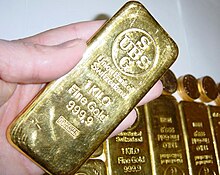 Two weeks ago, after making a new low for the year, gold violently reversed. (
  On June 1, market rumors were coming out of a hedge fund luncheon stating that Pimco, JP Morgan, and other financial companies were cancelling summer vacations for employees so they could prepare for a major 'Lehman type' economic crash projected for the coming months. These rumors came on a day when the markets nearly came to capitulation, with the DOW falling more than 274 points, and gold soaring over $63 as traders across the board fled stocks and moved into safer investments.
 After the spectacular rally of last Friday it is natural for gold to pause and consolidate here.





| You are subscribed to email updates from Save Your ASSets First To stop receiving these emails, you may unsubscribe now. | Email delivery powered by Google |
| Google Inc., 20 West Kinzie, Chicago IL USA 60610 | |


No comments:
Post a Comment