


Gold World News Flash |

- WalMart CEO Says Prices are SKYROCKETING!!
- Rick Rule - Gold, Silver, Takeovers & 2,000% Gains
- Gold Seeker Closing Report: Gold and Silver End Modestly Lower
- Gold Consolidates above 1700
- Secular Trends
- Super Bowl Sentiment - Inflation And The High-End Consumer
- SilverSeek.com 2012 Virtual Silver Investment Conference Tomorrow!
- What Made Gold Break Out?
- Making Money On Poverty: JP Morgan Makes Bigger Profits When The Number Of Americans On Food Stamps Goes Up
- MFGlobal and Our Vaporizing 1.2 Billion Dollars / Greece and Portugal / Gold and Silver Raid Prior To First Day Notice
- Leeb: Gold Going to $3,000 Before the End of 2012!
- Guest Post: The Price of Growth
- A Very Disturbing Chart and a MUST READ Article on Silver Written by Steve Angelo
- If the Gold Price Violates Today's Low it Might Fall to $1,680 on the Other Hand it Could Rise to $1,805
- Trading Gold and the HUI Index Breakout
- More about the Vancouver conference from Thom Calandra
- How to Search for Gold with Yukon Dan
- Biderman's Daily Edge 1/30/2012: Keep Buying Gold, US Stocks in Bear Market Priced in Gold
- A Quick Look at the Markets
- Trends that Won’t End
- Notes from the Field: Vancouver Resource Investment Conference
- Gold Daily and Silver Weekly Charts
- Credit And Financials Underperform As S&P Holds 1300
- Turk expects imminent launch for monetary metals
- Jim Rogers : Gold a protection against inflation
- America’s New “Stress” Dynamic
- Turk - Gold Ready to Smash Through $2,000, Exploding Higher
- Sprott, Turk, Morgan, and Phillips speak at SilverSeek's online conference Tuesday
- Underpriced Precious Metals Juniors Due to Move in 2012: Matthew Zylstra
| WalMart CEO Says Prices are SKYROCKETING!! Posted: 30 Jan 2012 04:36 PM PST [Ed. Note: Many have laughed off the warnings from Pastor Lindsey Williams, but we'd like to remind you of two very pertinent things he has stated repeatedly : 1.) There will be food on grocery store shelves, you'll just be too poor to buy it. 2.) Physical gold and silver is all you can rely on. Lastly, remember too that John Williams has repeatedly warned of hyperinflation no later than 2014.] From RestoreConstitution8 :
| ||||||||||||||||||||||||||||||||||||||||
| Rick Rule - Gold, Silver, Takeovers & 2,000% Gains Posted: 30 Jan 2012 04:02 PM PST  With continued volatility in gold, silver and global stock markets, today King World News interviewed Rick Rule, Founder of Global Resource Investments and one of the most street smart pros in the resource sector. KWN reached out to Rick, who is currently in New Zealand, to find out what his thoughts were on how investors can make money in 2012. First, here is what Rule had to say about the action in gold and silver: "I continue to believe that when rational people are confronted with the choice between owning dollars or euros or owning gold, increasingly people are owning gold. I continue to believe the intermediate and longer-term move in the gold price is higher. I think the gold price, in US dollar terms, moves inexorably higher." With continued volatility in gold, silver and global stock markets, today King World News interviewed Rick Rule, Founder of Global Resource Investments and one of the most street smart pros in the resource sector. KWN reached out to Rick, who is currently in New Zealand, to find out what his thoughts were on how investors can make money in 2012. First, here is what Rule had to say about the action in gold and silver: "I continue to believe that when rational people are confronted with the choice between owning dollars or euros or owning gold, increasingly people are owning gold. I continue to believe the intermediate and longer-term move in the gold price is higher. I think the gold price, in US dollar terms, moves inexorably higher."
This posting includes an audio/video/photo media file: Download Now | ||||||||||||||||||||||||||||||||||||||||
| Gold Seeker Closing Report: Gold and Silver End Modestly Lower Posted: 30 Jan 2012 04:00 PM PST Gold fell $21.40 to $1716.50 by a little after 4AM EST before it climbed back higher in London and New York, but it still ended with a loss of 0.53%. Silver slipped to as low as $33.051 before it also climbed back higher, but it still ended with a loss of 1.18%.
| ||||||||||||||||||||||||||||||||||||||||
| Posted: 30 Jan 2012 03:31 PM PST courtesy of DailyFX.com January 30, 2012 02:55 PM Daily Bars Prepared by Jamie Saettele, CMT Gold closed close to unchanged from Friday and is up nearly 10% for the month. The performance in January puts gold on track for its best month since August (12.25%). Of course, the metal plunged in September. Further, one has to go back to November 2009 to find the next best month (13.21%). Guess what? Gold plunged in December 2009. Yesterday’s comments apply – “While today’s incredible rally may be exhaustive, attempting to short is not smart as studies show that trends tend to persist until month end.” Supports are now1700 and 1680. The next potential resistance is from a steep trendline at 1762.50 (December high is 1767.10). Bottom Line – flat...
| ||||||||||||||||||||||||||||||||||||||||
| Posted: 30 Jan 2012 02:53 PM PST Considering the hugely different interest-rate backdrops and the other important differences between the past 12 years and the first 12 years of the previous secular decline, the Dow's similar performance in gold terms during the ... Read More...
| ||||||||||||||||||||||||||||||||||||||||
| Super Bowl Sentiment - Inflation And The High-End Consumer Posted: 30 Jan 2012 02:45 PM PST ConvergEx's annual analysis of Super Bowl economics shows that, when the time and place is right, prices can soar like a Hail Mary pass to clinch the playoffs. Yes, the face value for tickets is unchanged in the last year - $800 to $1,200. But the street price for a ticket to the big game will set you back at least $2,000, and the average ticket is running closer to $4,000. The good news, sort of, is that there has been no inflation for the "Cheapest" seats since last year, when they were also two grand. And that is despite a smaller stadium this time around (68,000 versus +80,000). A signal about the stagnating confidence of the high end consumer? Perhaps. But anyone wanting to attend had better be ready to pony up for hotels, airfare and rental cars that run 3-10x the usual prices for this time of year. In Indianapolis. The good news – next year's game is in New Orleans. So even if street prices don't pick up this week, we're pretty sure next year will set new records. Via Nic Colas, ConvergEx Group: All My Rowdy Friends Are Coming Over Tonight What percent of football fans would take a free ticket to the Super Bowl this Sunday? You'd think it would be close to 100%, but you'd be off by about 90%. The real answer is 10%. That surprising fact comes courtesy of the Indianapolis Star, which reported that only 246 of the 3,200 people who were accidently shut out of last year Super Bowl and got replacement tickets actually decided to cash them in for this year. The rest either took the cash offered by the league ($5,000) or are clearly hoping that their team (Green Bay or Pittsburgh) makes it back to the big game in a future year. The Super Bowl is, of course, the most important game of the year in America's most popular sport. But it is also a useful economics lab that allows us to study both the confidence of high end consumers as well as the pricing of resources that are temporarily scarce. The "Big Game" occurs every year at the same time, give or take a week, so any given year's data is roughly comparable to other periods. And, of course, the content is the same. Let's start with the price of a ticket to the game, because to get into Super Bowl #1 would have cost you all of $12. That was in Los Angeles in 1967. And the best seat in the house. From there stated ticket prices went to $50 in 1984, $100 in 1988 and $500 in 2003. Now, the prices printed on the ticket for the Indianapolis game this Sunday are between $800 and $1,200. As the accompanying chart shows, this is an inflation rate of around 8,900% for the period, versus 687% for the Consumer Price Index.
We all know, however, that very few people pay the sticker price. No – if you want to go to the game, you'd better find a large crowbar for your wallet. The cheapest seats we found online run about $2,000 currently. The average is closer to $4,000, although prices appear to be softening a few hundred dollars in recent days. We've kept track of "street prices" for Super Bowl tickets the last three years running, thinking of this as an indicator of high-end consumer confidence. Not every fan can go to the game with the prices noted above, after all. As the economy recovered in early 2011 from the same period in 2010, the market for Super Bowl tickers strengthened right along with stocks or gold bullion. The scalper's price for a 2010 Super Bowl ticket - $1,300. In 2011, this jumped to $2,000, a 50% increase.
In 2012, however, there has been no further advance in the market price of a Super Bowl ticket. Yes, this measures only the price to physically get into the stadium - the rock bottom cheapest seat. This is puzzling, because by all rights it should have advanced this year. Here's the logic:
So what gives? Well, it could be the amazing prices for seemingly every ancillary support service required to actually attend the game. Consider the following:
I think it is probably a stretch to extrapolate that flat street prices are indicative of a turn for the worse when it comes to the high end consumer. It may well be that buyers are holding out to see if prices soften in the coming days. And if they don't, then Super Bowl XLVI will set records for street prices, just as they have in prior years. And if they don't, it may be more telling that the venue and the price gouging for basic services and accommodations are beginning to offset the appeal of attending the game. One thing I know – next year it won't be a problem to set a new street price for the Super Bowl, regardless of whatever the economy may bring. It is in New Orleans.
| ||||||||||||||||||||||||||||||||||||||||
| SilverSeek.com 2012 Virtual Silver Investment Conference Tomorrow! Posted: 30 Jan 2012 02:00 PM PST SilverSeek.com's 2012 Virtual Silver Investment Conference, an online, one-day event showcasing silver industry experts and top tier silver companies will begin at 10am Eastern on Tuesday, January 31st.
| ||||||||||||||||||||||||||||||||||||||||
| Posted: 30 Jan 2012 01:00 PM PST Last week, gold broke through heavy overhead resistance, as did silver, to look very positive for the days ahead. Many technical analysts didn't feel that gold had that kind of momentum but then came the break. It wasn't a struggling break; it was robust sweeping resistance aside as though it wasn't even there.
| ||||||||||||||||||||||||||||||||||||||||
| Posted: 30 Jan 2012 12:28 PM PST from The Economic Collapse Blog:
Read More @ TheEconomicCollapseBlog.com
| ||||||||||||||||||||||||||||||||||||||||
| Posted: 30 Jan 2012 11:50 AM PST by Harvey Organ: Good evening Ladies and Gentlemen: I guess our boys decided that a raid on silver and gold was necessary prior to first day notice. The object of the exercise was to dampen the spirits of the long holders into taking cash and depositing it into the brokerage account in order to take delivery of gold and silver. Gold closed down by 3.00 dollars to $1729.80 whereas silver fell by 25 cents to $33.50. I would have to say that the raid was a total wipe out for our bankers. Let us head over to the comex and assess trading. First day notice is tomorrow. However I still do not have delivery notices going into tomorrow. This will be important so I will post it tonight in my comments sections. Read More @ HarveyOrgan.Blogspot.com
| ||||||||||||||||||||||||||||||||||||||||
| Leeb: Gold Going to $3,000 Before the End of 2012! Posted: 30 Jan 2012 11:31 AM PST The Fed is [going to]*keep interest rates at zero until the end of 2014 [and that] is as aggressive as it gets and as bullish as it gets for gold. Inflation will be let out of the bag, maybe for the next three to four years. In this environment gold and silver are the best investments around…We are really talking about the next leg higher in this bull market…This is the leg I expect to take gold to $3,000 before the end of 2012. So says Stephen Leeb* ([url]www.leeb.net[/url]) in edited excerpts from an interview he had recently with King World News entitled “Leeb – Fed Game Changer Sparks 2nd Leg of Gold & Silver Bulls”*where it can be read in its entirety. [INDENT]*Lorimer Wilson, editor of www.FinancialArticleSummariesToday.com (A site for sore eyes and inquisitive minds) and www.munKNEE.com (Your Key to Making Money!) edited ([ ]) and*abridged (…) the*opening paragraph*for the sake of clarity and brevity. Please note that this paragraph must be includ...
| ||||||||||||||||||||||||||||||||||||||||
| Guest Post: The Price of Growth Posted: 30 Jan 2012 11:15 AM PST Submitted by ChrisMartenson.com contributing editor Gregor Macdonald The Price of Growth
There is growing evidence that a major US policy shift is underway to boost growth. Growth that will create millions of new jobs and raise real GDP. While that's welcome news to just about everyone, the story is much less appealing when one understands the cost at which such growth comes. Are we better off if a near-term recovery comes at the expense of our future security? The prudent among us would disagree. Resurrecting American Export StrengthIt's easy to be skeptical that America could once again be a titan of global exports. For a very long time, that role has mostly been relegated to countries in the developing world. America as an export economy? Somewhere along the 50-year transition from industrial manufacturer to voracious consumer, Americans have lost touch with such a remote possibility. Indeed, this phase of America's economic history is now quite settled. A multi-decade outsourcing wave has left US workers to concentrate in the financial sector -- an over-weighting of talent we would come to regret after the crisis year, 2008. Since 2009, though not well advertised, Washington has been pursuing a quiet policy to boost exports in nearly every sector, throwing investment capital at port and rail infrastructure, and getting the message out to regulators and state government. Now, after some very notable gains in which exports have advanced to nearly 14% of GDP, the President in his State of the Union Speech made it clear: The US would no longer cede a labor and manufacturing advantage to the rest of the world. With that declaration, notice was served. It was perhaps not a coincidence when, the following day, the Federal Reserve articulated a zero-interest-rate policy that would be sustained for years. The US dollar reacted immediately and promptly returned to its downtrend. Has a new industrial policy now been unveiled?
Rivers of CoalThe small city of St. Helens, Oregon sits astride the Columbia River, 25 miles closer to the Pacific Ocean than Portland. Over the past two years, a consortium of coal shippers and coal producers has been searching along the Pacific Northwest coast for a place to construct new export terminals. Coal, which is mined in the Powder River Basin of Wyoming and which often travels long distances to power stations in the American South, would also find easy rail routes to Asian markets through the ports of the West Coast. Rebuffed already by Bellingham, WA, north of Seattle, and then rebuffed again by Longview, WA, north of Portland, the industry is trying once more -- this time at St. Helens. To understand this persistence, one has to appreciate the current juncture in world coal markets. Global oil supply has been coming up against a ceiling for seven years now, since 2005. As a result, much of the world is trying to access increasingly more BTUs through natural gas and coal. Asia, which has built tremendous coal capacity, is a relentless user of coal. And US coal mines, older and with much higher extraction costs, are able to take advantage of rising world coal prices. Moreover, as the US has been transitioning to natural gas for over 30 years to create electricity, that trend is only accelerating as its own coal plants age and retire. (see Regulation and the Decline of Coal, Smart Planet, January 2012, by Chris Nelder). The combined effect has caused a reversal in the long decline of US coal exports, which began to turn higher in 2002:
From a low of 40 million short tons at the start of the last decade, US coal exports have recovered and doubled to 80 million short tons as of 2010. One of the fastest growing subsets of our coal exports has been metallurgical coal, which has soared since 2008, climbing 60% alone in 2011, over the prior year. More broadly, the US is already in position to become an exporter, not only of refined oil products, but of other energy products, too. For example, much of the additional refining capacity that was added to existing infrastructure last decade now serves as spare industrial capacity to export US oil products, such as gasoline, diesel, and other fuel oil. The deep and sustained cut that Americans have made to their own oil product consumption is thus being converted to exports. And with such high levels of structural unemployment, it does not appear Americans will account for any new call on their own energy resources anytime soon. Unless of course, we use those energy resources -- not for idle consumption, but for production. New Energy EquationsAs many are aware, the most gaping, yawning price discount found in the world today is in the comically cheap BTU found in North American natural gas. At less than $3.00 per million BTU, the energy content in natural gas can be purchased now at an 85% discount to the BTU content of oil. That is a value proposition and a pricing vacuum that -- save for the typically long time frame of energy transitions -- simply cannot stand. Even if it takes 20 years to wean automobile-dependent economies off oil and back to electrified transport, someone, somehow, will find a way to perform physical tasks with natural gas that were previously completed using oil. As we know from history, it took Europe quite some time to transition from the Age of Wood to the Age of Coal, but the first country out of the gate was Britain, and the results were transformative. Something "like" this transition is happening today in the United States, because US demand for electrical power, produced from natural gas, coal, wind, and solar, is rising on a relative basis to our previous oil consumption. For now, let's leave aside some of the problems we will eventually run into as we hit the natural gas resource base harder. There will be environmental pressures, and constraints on water usage and water safety. And though it seems unlikely today, with natural gas trading at decade lows of $2.75/million BTU, there will eventually be a move higher in price. After all, North America is also gearing up to export natural gas, with proposed terminals in British Columbia and the US Gulf Coast. The question is: should the US use this incredibly cheap BTU for export, to catch the much higher world price for LNG -- or should the US use this cheap energy as a competitive advantage, to make cheap electricity as a manufacturing input? It appears the US is going to do both. Already a certain virtuous circle is developing. Increased natural gas extraction is driving the need for more drilling equipment and energy infrastructure. This has induced global companies to revive metalcraft and steel operations in the depressed American Midwest. An intriguing story in this regard is the investment Vallourec of France is making in Youngstown, Ohio, which will produce specialized steel tubing for the oil and gas industry. Surely the fact that the US has some of the lowest electricity rates in the developed world is part of the attraction. Getting the Government on BoardBoosting the extraction of natural resources will not be without deleterious effects. As I explained in the January 3, 2012 report A Punch to the Mouth: Food Volatility Hits the World, the massive increase in US exports of food is wonderful economic news for the US farmer. But it also means a greatly expanded use of fertilizers, and smooths the delivery of a world price for food -- which American consumers must begin to pay. In food prices, and now in oil prices and coal prices, Americans must now bid for their own natural resources in a booming world market for commodities. Equally, many communities are discovering that natural gas extraction, oil and coal shipments, and the prospect of new export infrastructure are either dangerous to the environment or simply not an industry wanted by local communities. Despite public perception, Washington is hardly antagonistic towards increased energy production, except in the most superficial, rhetorical way. Meanwhile, many of the agencies in Washington have directed their attention towards a re-industrialization of the US, and exports in particular. The Department of Transportation (DOT) has directed a lot of its spending towards rail and port infrastructure in the past several years. A review of the DOT's Tiger Grants since 2009 reveals wave after wave of targeted investments in the national ports of Miami, Los Angeles, Providence, Vancouver/Portland, and many others, with special attention to rail connectivity. The upsurge in port infrastructure investment is not lost on the shipping industry either, which began in early 2010 to note the rapid growth from the first round of TIGER grants from the previous year. When President Obama originally announced the administration's goal to double exports by 2015, it was not taken very seriously. In a New York Times piece in January 2010, a former head of the Council on Foreign Relations was quoted as saying, "How will he perform this miracle? It really is a mystery." Indeed, if you attended university anytime since 1980, and studied economics while there, you learned that America's industrial era was mostly over. The 1990s put a fine point on that lesson: The US would create products conceptually at home, and have the products manufactured abroad, pocketing the arbitrage of cheap labor. That equation only accelerated in the past decade as cheap coal powered foreign manufacturing centers, primarily in Shenzhen China, while oil costs rose. But this past week, President Obama laid bare the country's new intentions:
No doubt a good portion of this rhetoric is election-year posturing. That said, the data shows us that exports as a percentage of GDP have soared since Obama came to office. And while part of that ratio is due to punk GDP growth, the US is stepping up its export of industrial machines, medical equipment, telecommunications and transportation equipment, civilian aircraft, and engines. However, from its current hollowed out position, the US is still seeing its greatest growth in commodity exports. That is, in everything from grains such as corn and wheat, to cotton, and even gold. For example, by value, the petroleum products discussed earlier are now America's largest export. This points to a constraint: If the US is going to export mainly commodities during its long road back to the export of finished goods, then it will be even more important to cap any rise in the US dollar. In Part II: Prepare for the Collapse of the Dollar, we discuss the growing clarity around the big changes that are afoot to create an exports-driving jobs 'recovery'. But it comes at the cost of drastically weakening our currency and sending increasingly strategic and depleting domestic resources overseas. Essentially, inflation and scarcity will increasingly become the themes of the future. We address the key questions concerned readers should be asking: is this a price worth paying? What does this future look like and how should I be positioning for it? Click here to access Part II of this report (free executive summary; enrollment required for full access).
| ||||||||||||||||||||||||||||||||||||||||
| A Very Disturbing Chart and a MUST READ Article on Silver Written by Steve Angelo Posted: 30 Jan 2012 11:03 AM PST | ||||||||||||||||||||||||||||||||||||||||
| Posted: 30 Jan 2012 11:02 AM PST Gold Price Close Today : 1731.00 Change : (1.20) or -0.07% Silver Price Close Today : 3349.70 Change : 26.20 cents or -0.78% Gold Silver Ratio Today : 51.676 Change : 0.366 or 0.71% Silver Gold Ratio Today : 0.01935 Change : -0.000138 or -0.71% Platinum Price Close Today : 1610.70 Change : -11.10 or -0.68% Palladium Price Close Today : 686.75 Change : -1.75 or -0.25% S&P 500 : 1,313.01 Change : -3.32 or -0.25% Dow In GOLD$ : $151.11 Change : $ 0.04 or 0.03% Dow in GOLD oz : 7.310 Change : 0.002 or 0.03% Dow in SILVER oz : 377.76 Change : 2.73 or 0.73% Dow Industrial : 12,653.72 Change : -6.74 or -0.05% US Dollar Index : 79.11 Change : 0.131 or 0.17% Not surprising the socks off anybody but the unshod, the GOLD PRICE and SILVER PRICE both backed away from big resistance today. Gold lost $1.20 to end at $1,731.00 on Comex while silver gave back 26.2c to settle at 3349.7c. For three days the GOLD PRICE has moved sideways across the chart bounded by roughly $1,715 and $1,740. Friday marked the high, so this line is rounding over downward. Today's low came at $1,716.26. If gold violates that low tomorrow, then it might unravel all the way to $1,680. On the other hand, once it breaks through $1,740, next stop will be $1,805. Might as well steel yourselves for it, a correction will come some time, and fairly soon given the strong rise. Won't be the end of the world, or even the end of the larger rally. SILVER PRICE three day range has carried it from 3300c all the way to 3400c. The silver chart shows (as does the gold chart) what might with equal justification be called a continuation pattern or a topping pattern. All we can do is watch the boundaries of the range -- 3400c to 3300c and see what happens. Once again today I have been examining the GOLD/SILVER RATIO chart, and again I have to confess that I expect it to make one final push above 57.5. If I'm wrong, y'all can string me up. If you can catch me. Scariest thing about writing a daily commentary is that buzzard that sits on your shoulder squawking, "What happens when you run out of things to say? Or on the day nothing happens?" One of the advantages of being a natural born fool is that you never have enough sense to admit that you have nothing to say worth hearing, so that solves the first. But today was one of those days when not much happened. Oh, everybody showed up for work and went through the motions, but nothing much changed. The US DOLLAR INDEX rallied a mite, up 13.1 basis points (0.17%) to 79.107. This changes nothing, however. Five day chart might have bottomed late Friday, but dollar will have to burst through 79.50 to prove that. 50 day moving average stands above the Dollar Index at 79.67, and other indicators point unanimously down. Not nearly enough enthusiasm to move much higher. Greek debt talks are foundering -- come to think of it, they've been foundering since they began -- and the euro, having hit 132.34 Friday and its 62 DMA, backed off today to 1.3130, losing 0.68%. This doesn't near about turn the trend down. Look for higher euro still. Something's going on with the yen, but I don't know what. It's the sorriest of the three big fiat currencies, worst debt, etc., but it's rising. Monday of last week it gapped down horribly in a move that screamed, Government Manipulation. Stayed down one day, traded back up through the 50 DMA, then Friday gapped UP above the 20 DMA and through internal resistance about 130.5c. This points to another trip back to the top of the trading range above 132c. Against both the euro and the yen gold is breaking out toward the sky. Not quite confirmed yet in the euro, but clearly in an uptrend. Against the other Loser Fiat Currencies, silver also offers a bright outlook. Silver in Euros has broken out of a down trend and traded up to its 200 DMA, standing above its 20 and 50 DMAs. The 20 has just crossed above the 50. Once silver crosses through 26 euros, it will be bye-bye earth. Silver in yen shows a similar set-up, but not quite as fully unfolded. STOCKS had another sickly day. Dow only fell about 0.5% to 12,653.72, down 6.75 points, far less than the andSP500 that lost 3.32 points or 0.25%. Other indices lost more than the Dow, too, sending the smell of ripe mackerel into the air. A drop through 12,530 will push the Dow's head underwater. RSI and MACD are ripe to drop. STOCKS -- they may be YOUR chance to buy a ticket on the Titanic this year. Argentum et aurum comparenda sunt -- -- Gold and silver must be bought. - Franklin Sanders, The Moneychanger The-MoneyChanger.com © 2012, The Moneychanger. May not be republished in any form, including electronically, without our express permission. To avoid confusion, please remember that the comments above have a very short time horizon. Always invest with the primary trend. Gold's primary trend is up, targeting at least $3,130.00; silver's primary is up targeting 16:1 gold/silver ratio or $195.66; stocks' primary trend is down, targeting Dow under 2,900 and worth only one ounce of gold; US$ or US$-denominated assets, primary trend down; real estate bubble has burst, primary trend down. WARNING AND DISCLAIMER. Be advised and warned: Do NOT use these commentaries to trade futures contracts. I don't intend them for that or write them with that short term trading outlook. I write them for long-term investors in physical metals. Take them as entertainment, but not as a timing service for futures. NOR do I recommend investing in gold or silver Exchange Trade Funds (ETFs). Those are NOT physical metal and I fear one day one or another may go up in smoke. Unless you can breathe smoke, stay away. Call me paranoid, but the surviving rabbit is wary of traps. NOR do I recommend trading futures options or other leveraged paper gold and silver products. These are not for the inexperienced. NOR do I recommend buying gold and silver on margin or with debt. What DO I recommend? Physical gold and silver coins and bars in your own hands. One final warning: NEVER insert a 747 Jumbo Jet up your nose. 
| ||||||||||||||||||||||||||||||||||||||||
| Trading Gold and the HUI Index Breakout Posted: 30 Jan 2012 10:58 AM PST Ben Bernanke and the Federal Reserve finally did the expected and are providing the fuel to fire up the next leg of this gold bull market. The last few months were choppy and it was an open question as to whether they were going to ... Read More...
| ||||||||||||||||||||||||||||||||||||||||
| More about the Vancouver conference from Thom Calandra Posted: 30 Jan 2012 10:48 AM PST 6:45p ET Monday, January 30, 2012 Dear Friend of GATA and Gold: Financial writer and mining stock promoter Thom Calandra tonight writes again about the just-concluded Vancouver Resource Investment Conference, which he nicknames "The Joe Show" after the CEO of conference organizer Cambridge House, Joe Martin: http://blog.cambridgehouse.com/2012/01/30/they-came-asked-bought-thom-la... Calandra will speak at the next Cambridge House conference, the California Resource Conference, to be held Saturday and Sunday, February 11 and 12, along with Sprott Asset Management's chief investment strategist, John Embry, GATA Chairman Bill Murphy, and your secretary/treasurer. Information about the California conference is below. CHRIS POWELL, Secretary/Treasurer ADVERTISEMENT Prophecy Coal (TSX: PCY) Wins Positive Feasibility Study Company Press Release VANCOUVER, British Columbia, Canada -- Prophecy Coal Corp. (TSX: PCY, OTCQX: PRPCF, Frankfurt: 1P2) has received a positive feasibility study for the company's 600-megawatt Chandgana Mine-Mouth Power Project in central Mongolia. The report was independently prepared by Ralf Thomsen, project manager at Steag, a German firm specializing in the planning, financing, construction, and operation of highly efficient thermal power plants for fossil fuels. The study covers technical specifications, deployment, and financial analysis of a 4x150-mw thermal power plant to be built adjacent to Prophecy's Chandgana Tal coal deposit, which contains 140 million tonnes of measured coal. Last year the power plant received a construction license and the coal deposit received a mining license. Engineering, procurement, and construction management selection and project financing discussion have begun and are expected to be concluded this year. Construction is planned to start in April 2013, with the first 150-mw unit being commissioned in October 2015 and subsequent units to start in April 2016, October 2016, and April 2017. With proper maintenance the project will have 30 years of commercial operation. For the complete statement from the company, including maps and charts, please visit: http://www.prophecycoal.com/news_2011_jan17_prophecy_receives_power_plan... Join GATA here: California Investment Conference http://cambridgehouse.com/conference-details/california-investment-confe... Support GATA by purchasing gold and silver commemorative coins: https://www.amsterdamgold.eu/gata/index.asp?BiD=12 Or by purchasing a colorful GATA T-shirt: Or a colorful poster of GATA's full-page ad in The Wall Street Journal on January 31, 2009: http://gata.org/node/wallstreetjournal Or a video disc of GATA's 2005 Gold Rush 21 conference in the Yukon: Help keep GATA going GATA is a civil rights and educational organization based in the United States and tax-exempt under the U.S. Internal Revenue Code. Its e-mail dispatches are free, and you can subscribe at: To contribute to GATA, please visit: ADVERTISEMENT Sona Discovers Potential High-Grade Gold Mineralization From a Company Press Release VANCOUVER, British Columbia -- With its latest surface diamond drilling program at its 100-percent-owned, formerly producing Blackdome gold mine in southern British Columbia, Sona Resources Corp. has discovered a potentially high-grade gold-mineralized area, with one hole intersecting 13.6 grams of gold in 1.5 meters of core drilling. "We intersected a promising new mineralized zone, and we feel optimistic about the assay results," says Sona's president and CEO, John P. Thompson. "We have undertaken an aggressive exploration program that has tested a number of target zones. Our discovery of this new gold-bearing structure is significant, and it represents a positive development for the company." Sona aims to bring its permitted Blackdome mill back into production over the next year and a half, at a rate of 200 tonnes per day, with feed from the formerly producing Blackdome mine and the nearby Elizabeth gold deposit property. A positive preliminary economic assessment by Micon International Ltd., based on a gold price of $950 per ounce over eight years, has estimated a cash cost of $208 per tonne milled, or $686 per gold ounce recovered. For the company's complete press release, please visit: http://www.sonaresources.com/_resources/news/SONA_NR18_2011-opt.pdf
| ||||||||||||||||||||||||||||||||||||||||
| How to Search for Gold with Yukon Dan Posted: 30 Jan 2012 10:18 AM PST How to Pan for Gold explained by Yukon Dan , a... [[ This is a content summary only. Visit my website http://goldbasics.blogspot.com for full Content ]] 
This posting includes an audio/video/photo media file: Download Now | ||||||||||||||||||||||||||||||||||||||||
| Biderman's Daily Edge 1/30/2012: Keep Buying Gold, US Stocks in Bear Market Priced in Gold Posted: 30 Jan 2012 09:58 AM PST | ||||||||||||||||||||||||||||||||||||||||
| Posted: 30 Jan 2012 09:12 AM PST Mark J. Lundeen [EMAIL="Mlundeen2@Comcast.net"]Mlundeen2@Comcast.net[/EMAIL] 27 January 2012 Here are several Bear's Eye View, and step sum charts for the weekend. The first is a BEV chart for Gold from its 1999 Bear Market low to present. Seems hard to believe that only last month, gold's 18.47% decline had the gold-bull suicide hot-lines ringing off the hook; but that was a very long time ago, eighteen trading days to be exact. The bulls have wasted no time since then, taking back 10% of gold's 18.47% loss. I'm not surprised, as gold corrections of less than 20% are not major events in the grand scheme of things. We could easily be seeing new all-time highs by end of February. So, why were so many people in a state of panic last month? The problem with the latest correction is that it was also the largest DOLLAR DECLINE in the price of gold since 1999, a drop of $349 from late August to December. That certainly got CNBC's attention. However, August's la...
| ||||||||||||||||||||||||||||||||||||||||
| Posted: 30 Jan 2012 09:01 AM PST U.S. taxpayers have lost $133 billion from TARP — the abominable acronym inflicted on us by former Treasury Secretary Hank Paulson — a new report out this morning shows. We begin another week pulled in two directions: In one direction lie unresolved failures in policy… and the mayhem it has wrought in the financial system. In the other lie breakthroughs in energy and biotechnology. There's no real point in wagering on which of these trends will ultimately "win out." It's entirely possible the system can fly apart even as scientists and entrepreneurs stick to their knitting and achieve great new things. The stress we alluded to last week is borne of the fear that the former — i.e., Hellish Financial Crisis Is on Its Way — will prevent the benefits of the latter from ever seeing the light of day. If that happens, well… then… in the immortal words of the Mogambo Guru: "We're all freakin' doomed!" Until such an event, however, we're left to our own devices. We'll continue to do what we do each day. We'll follow the breadcrumbs. Let's get started and see where they lead today… "TARP is not over," Christy Romero, acting inspector general of the Troubled Asset Relief Program, reminds folks of the program through which she derives her own power, prestige and paycheck (PPP). Congress authorized $700 billion. $413.4 billion was paid out. Only $318 billion's been paid back, according to a new report from Ms. Romero. So much for the shrill lecture delivered last fall by CNN's Erin Burnett to an Occupy Wall Street protester: "Taxpayers actually made money on the Wall Street bailout." But what would you expect from someone engaged to an executive at Citigroup? Getting the rest back will be no easy task: For starters, General Motors stock would have to more than double from $24.28 to $53.98. Another trend that's "not over," we note, is bank shutdowns. The FDIC swooped in and closed four banks Friday night. (Yes, it's the return of our own watch list for failed banks and the feds' attempts to save them…) Two of Friday's victims are in Tennessee, where the last bank failure took place in 2002. The others are in Florida and Minnesota. That makes seven banks for the month of January — an annual pace of 84. Close to last year's total of 92, but lagging 2010's peak of 157. (Who knows, maybe things will pick up in the spring!) There is one notable increase: the FDIC's "loss ratio." Of the 92 bank failures last year, FDIC losses totaled 20% of the failed banks' assets. So far this year, it's 32.9%… nearing TARP territory. The deleveraging of the U.S. consumer is "not over" either. The monthly "income-and-spend" figures from the Commerce Department reveal consumer spending was ruler-flat between November and December. Consumers, indeed, got their shopping done early. Personal income, on the other hand, grew 0.5%. Gee, what a bunch of tightwads Americans have become. "The capacity for households to carry on to be the engine of growth that they have been in past recoveries is simply not there," says economist Carmen Reinhart of the Peterson Institute. She points to figures showing that in the third quarter of last year, household debt totaled 86% of GDP. That compares with 47% as Americans climbed out of the "double dip" recessions in the early '80s. By the way, that same Commerce Department report features the "core personal consumption expenditures," the Fed's favorite measure of inflation. Last week, you may recall, the 2% "inflation target" ceased being an "unspoken agreement" and became "official policy." According to the numbers, the year-over-year increase in December was 1.8%. So in the estimation of the monetary mandarins, there's still not enough inflation in the system. Addison Wiggin Trends that Won't End originally appeared in the Daily Reckoning. The Daily Reckoning, published by Agora Financial provides over 400,000 global readers economic news, market analysis, and contrarian investment ideas.
| ||||||||||||||||||||||||||||||||||||||||
| Notes from the Field: Vancouver Resource Investment Conference Posted: 30 Jan 2012 08:36 AM PST Synopsis: No matter the economic perspective, things look bullish for precious metals in the year ahead.
I'm back at my desk after a busy week in Vancouver, attending both the Vancouver World Resource Investment Conference and the BC Roundup, the latter being mostly for geologists and people in the industry. Both conferences were very well attended – I haven't seen official numbers yet, so I don't know if any records were broken, but both events were madhouses, swarming with people. It was more like the shows that I've attended when the market has been manic than the quieter ones we usually see when the market is fear-driven, as it has been recently.
That's interesting in and of itself. The market has been down, and many of our stocks are down from recent highs, even though gold has held up very well. People have been puzzling over the disconnect between precious metals prices and the lack of performance in the relevant mining stocks. And yet, here we are in a standing-room-only zoo of people looking for investment opportunities.
There was standing room only at the talk I gave on The Top 10 Things to Look for in a Gold Company – | ||||||||||||||||||||||||||||||||||||||||
| Gold Daily and Silver Weekly Charts Posted: 30 Jan 2012 08:33 AM PST | ||||||||||||||||||||||||||||||||||||||||
| Credit And Financials Underperform As S&P Holds 1300 Posted: 30 Jan 2012 08:31 AM PST US equity markets went sideways to higher after the European close on low volumes and minimal support from broad risk drivers in general (with SPX bouncing off 1300). HYG tracked ES (the e-mini S&P 500 futures contract) higher as it tried to get back to unchanged (during an afternoon of notably smaller average trade size until the close which suggests covering by bigger players). HY and IG credit markets were not as ebullient as stocks and into the close HYG sold off relatively well to catch back down with HY's weakness on the day. Treasuries, credit, FX, and commodities all closed near the middle of the day's range while ES managed to get back near its highs (with volumes down 15% from Friday and near the lowest of the year so far). Financials underperformed once again (as Tech was the only sector in the green by the close). Treasury yields helped support some of the rally in the afternoon in US equities as 30Y shifted from -11bps to -5bps by the close but overall Treasuries outperformed (stocks should be down more on a beta basis given bonds move). JPY was the outlier today, stronger vs USD by 0.46% from Friday while elsewhere in FX, the USD (+0.4% from Friday) lost some of its gains against the majors after the European close with EURUSD back above 1.31 by the close. Gold (with its pending death cross to match SPX's golden cross) just outperformed its commodity peers (with oil close behind) though they all lost ground as USD strengthened with Copper and Silver underperforming. VIX gained about 1 vol from Friday but leaked lower by around 1 vol from its opening peak above 20.
Stocks (blue) outperformed with the late day volumeless surge the key once again. HYG rather notably (green) sold off into the close (and has been an interesting tell when it has done that recently for risk appetite).
Treasuries managed to sell back (yields increase) after the European close and were the main driver (correlation-wise) of stock strength - though FX's move kept CONTEXT more anchored. The curve flattened with 30Y outperforming but managing to get back above the 3% yield mark right at the close.
A small rally in oil (-0.6% from Friday) and slow leak in FX carry (AUDJPY more than EURJPY) did help CONTEXT a little but the correlation between 10Y and its curve balanced CONTEXT while helping ES rally. Correlations dropped off precipitously into the close.
The USD strength seemed to put a little high beta juice into the sell off in commodities today with only a small comeback in the afternoon as the USD limped lower. Gold outperformed (holding around $1730) as everyone anxiously awaits the Death Cross to occur (with whimper not a bang we suspect) later this week.
Charts: Bloomberg and Capital Context
| ||||||||||||||||||||||||||||||||||||||||
| Turk expects imminent launch for monetary metals Posted: 30 Jan 2012 08:29 AM PST 4:25p ET Monday, January 30, 2012 Dear Friend of GATA and Gold: GoldMoney founder and GATA consultant James Turk long has been bullish but in an interview with King World News today he sounds like he's anticipating imminent launch for the monetary metals as Western economies stumble and central banks destroy currencies. An excerpt from the interview is posted at the King World News blog here: CHRIS POWELL, Secretary/Treasurer ADVERTISEMENT Free Month Subscription to Market Force Analysis for GATA Supporters Market Force Analysis is a unique, patent-pending approach to commodity market analysis. An algorithm has been developed to extract supply and demand weightings from futures market data. The difference between supply and demand is the market imbalance that is called "market force," so named because it is what drives price. It brings clarity to past market action and predicts market trends. Because it is derived from accurate futures market data it is not subject to the errors inherent in macro-level estimates of supply and demand. Learn more here: https://marketforceanalysis.com/About_MFA.html Market Force Analysis focuses on short-term (15 days) and medium-term price predictions to help both short-term traders and long-term investors understand market moves and benefit from the generated prediction of prices. To read subscriber comments that show how much the service is appreciated, visit: https://marketforceanalysis.com/Testimonials.html The MFA service has been pioneered by market analyst and Gold Anti-Trust Action board member and researcher Adrian Douglas. The Market Force Analysis premium service provides: -- A bi-weekly report. -- Access to the MFA hot list of junior mining stocks derived from analysis of more than 800 mining stocks. The MFA hot list consistently outperforms well-known mining share indices like the HUI, GDX, and GDXJ. -- E-mail alerts about actionable trades. -- E-mail updates with important information. To obtain your 1-month free trial subscription to the Market Force Analysis letter, e-mail info@marketforceanalysis.com and put "MFA Free Trial" in the subject field. Join GATA here: California Investment Conference http://cambridgehouse.com/conference-details/california-investment-confe... Support GATA by purchasing a silver commemorative coin: https://www.amsterdamgold.eu/gata/index.asp?BiD=12 Or by purchasing a colorful GATA T-shirt: Or a colorful poster of GATA's full-page ad in The Wall Street Journal on January 31, 2009: http://gata.org/node/wallstreetjournal Or a video disc of GATA's 2005 Gold Rush 21 conference in the Yukon: Help keep GATA going GATA is a civil rights and educational organization based in the United States and tax-exempt under the U.S. Internal Revenue Code. Its e-mail dispatches are free, and you can subscribe at: To contribute to GATA, please visit:
| ||||||||||||||||||||||||||||||||||||||||
| Jim Rogers : Gold a protection against inflation Posted: 30 Jan 2012 08:20 AM PST Jim Rogers : "Some of the factors that determine... [[ This is a content summary only. Visit my website http://goldbasics.blogspot.com for full Content ]] 
| ||||||||||||||||||||||||||||||||||||||||
| America’s New “Stress” Dynamic Posted: 30 Jan 2012 08:07 AM PST Addison Wiggin – January 30, 2012
We begin another week pulled in two directions: In one direction lie unresolved failures in policy… and the mayhem it has wrought in the financial system. In the other lie breakthroughs in energy and biotechnology. There's no real point in wagering on which of these trends will ultimately "win out." It's entirely possible the system can fly apart even as scientists and entrepreneurs stick to their knitting and achieve great new things. The stress we alluded to last week is borne of the fear that the former — i.e., Hellish Financial Crisis Is on Its Way — will prevent the benefits of the latter from ever seeing the light of day. If that happens, well… then… in the immortal words of the Mogambo Guru: "We're all freakin' doomed!" Until such an event, however, we're left to our own devices. We'll continue to do what we do each day. We'll follow the breadcrumbs. Let's get started and see where they lead today…
Congress authorized $700 billion. $413.4 billion was paid out. Only $318 billion's been paid back, according to a new report from Ms. Romero. So much for the shrill lecture delivered last fall by CNN's Erin Burnett to an Occupy Wall Street protester: "Taxpayers actually made money on the Wall Street bailout." But what would you expect from someone engaged to an executive at Citigroup? Getting the rest back will be no easy task: For starters, General Motors stock would have to more than double from $24.28 to $53.98.
Two of Friday's victims are in Tennessee, where the last bank failure took place in 2002. The others are in Florida and Minnesota. That makes seven banks for the month of January — an annual pace of 84. Close to last year's total of 92, but lagging 2010's peak of 157. (Who knows, maybe things will pick up in the spring!)
Of the 92 bank failures last year, FDIC losses totaled 20% of the failed banks' assets. So far this year, it's 32.9%… nearing TARP territory.
The monthly "income-and-spend" figures from the Commerce Department reveal consumer spending was ruler-flat between November and December. Consumers, indeed, got their shopping done early. Personal income, on the other hand, grew 0.5%. Gee, what a bunch of tightwads Americans have become. "The capacity for households to carry on to be the engine of growth that they have been in past recoveries is simply not there," says economist Carmen Reinhart of the Peterson Institute. She points to figures showing that in the third quarter of last year, household debt totaled 86% of GDP. That compares with 47% as Americans climbed out of the "double dip" recessions in the early '80s.
Last week, you may recall, the 2% "inflation target" ceased being an "unspoken agreement" and became "official policy." According to the numbers, the year-over-year increase in December was 1.8%. So in the estimation of the monetary mandarins, there's still not enough inflation in the system.
In lieu of any other handy explanation, the major finance sites have settled on… the euro. Gasp! No! Boring.
 In Ireland — where the government is choking on debt and the housing market has collapsed — an unemployed artist has taken $1.82 billion of shredded euro currency and built a house. Originally, he was going to take the money and create an artwork called "Expressions of Recession," but in the end, he decided to build a house instead, using 50,000 money bricks. The quarters are modest — living room, bedroom, bathroom. In time, he'll add a kitchen, shower and patio. Paper currency might not be useful as a store of value, but it can keep you warm, artist Frank Buckley says: "Whatever you say about the euro, it's a great insulator."
"Leaders place the emphasis on growth and 'smart' budget discipline," says an account from the BBC, not even attempting to translate the bureaucratese into plain English, knowing the exercise is pointless. On the sidelines of the talks, the Germans are proposing that Greece's government budget be subject to review by European Union bureaucrats as a condition of further bailouts. The Greeks aren't taking very kindly to that. Meanwhile, yields on Portuguese government debt are quickly going vertical. This is the chart of 10-year notes.  No obvious reason, other than rumors that Portugal might follow Greece's lead in asking bondholders to take a haircut.
Silver's taken more of a hit, retreating to $33.52.
The results are in from a human clinical trial of a "nutraceutical" Patrick has had his eye on it for months. And they're stunning. This simple dietary supplement is now proven to lower the levels of C-reactive protein in your bloodstream. CRP is a molecule generated by the liver anytime inflammation is present in the body. And inflammation is associated with nearly every disease of aging — Alzheimer's, cancer, heart disease. What's more, CRP is a major indicator of heart disease; indeed, some doctors consider it a more reliable marker than more common ones like cholesterol. The trial involved 105 people — all of them smokers, and nearly 80% of them overweight or obese. The people using this supplement ended up with CRP levels 30% lower than those who didn't. "I'm convinced that this is one of the most important breakthrough technologies of our time," Patrick wrote when he first recommended the company producing this supplement 10 months go. Imagine — a supplement that can help prevent the onset of a host of diseases. With this new research, he's more convinced than ever. "I also believe," he adds, "that equity in this company will yield truly transformational returns." Patrick makes a compelling case here.
"Chesapeake Energy, for example, is cutting its drilling program by two-thirds," says Byron. "Another major player, EQT, is withdrawing from the 'Huron Shale' play in the lower Appalachians. Other companies have similar stories." Is the shale boom ending as quickly as it began? Hardly. "Operators," Byron explains, "are de-emphasizing drilling for 'dry' natural gas — meaning plain old methane, which sells for $3 per thousand cubic feet (mcf) in the U.S." "Instead, they'll focus more on drilling for 'wet' gas — meaning gas with high fractions of natural gas liquid (NGL) and oil." "It's pure economics. Instead of producing only natural gas and selling it (actually, giving it away!) for $3 per mcf, the idea is to produce gas plus NGL plus oil and sell the NGL and oil for $100 per barrel. It vastly improves the economics of the business. You can go from $3 per mcf to near $10 per mcf equivalent with the NGLs and oil."
"This next industrial revolution is not, and has NEVER been, founded only on super-cheap energy, such that it'll work only as long as we have a money-losing 'drilling bubble.'" "Actually, the coming American revival needs to work with all parts of the system in general economic balance. The hydrocarbon producers need to obtain a good price for their output. Price and availability of energy and raw materials and feedstock have to be such that other industries can establish themselves based on sustainable economics." With sources of oil and gas close to home, it pays for U.S. industry to build new plant and equipment at home… instead of paying for expensive bunker fuel to ship their product from a factory in China. Byron's convinced this boom is just around the corner. In fact, he makes a powerful case for the boom getting under way no later than this May.
"After almost losing my sign business in 2009, I diversified by moving into the safety realm. Since making that decision, my business grew by 63% in 2010 and 238% in 2011. I went from one full-time employee to eight, and added an outside salesperson, as well. If January is any indication, 2012 will beat 2011." "It's all oil field," he goes on. "It's all because of the shale. We are also making sales in North Dakota and Oklahoma through locally based companies, and we will be adding Ohio to the list soon." "The local economy appears to be recession-proof for now. Skilled oil field labor and management can write their own tickets. There is a new attitude, and safety is at the top of the list. I never thought my client list would look like your stock recommendations." "Keep up the great work… I always find time to read The 5." The 5: Thanks. Byron will be happy to number you among the living as proof that the shale boom really is helping to fuel new fortunes. (Learn more here.)
"Perhaps Byron missed the idea they came up with about allowing the industry a 'reasonable return' on their investment. Anything the government feels is 'reasonable' for business to make is zero. All should be given to people who 'deserve it' by being unemployable due to drug use or laziness or possibly busy having enough kids to support them." "If I were a company in the oil or natural gas business, I would be looking for another country to use my knowledge and equipment. One where they would be eager to have me and allow me and my shareholders to reap the benefit of these assets." "Why would anyone want to put millions at risk to make a 'reasonable' return when you can just take the money and invest it in another part of the world and get better returns and keep them?" The 5: Indeed. Yet to Byron's own surprise, the renaissance appears to be under way.
The 5: As the cliche goes, you just can't make this stuff up. Mrs. Clinton said as much to her husband's former adviser George Stephanopoulos on ABC's This Week in 2009. "Really?" adds another. "Last I checked, you generally 'dig' when you are trying to make a bigger hole. Maybe she should go back to making those miraculous cattle futures trades, swapping swampland for dollars or simply dodging imaginary bullets in Bosnia, rather than engaging in any more 'shovel ready' metaphors." Cheers, Addison Wiggin P.S. While our editors often write about moving a portion of their portfolios into assets outside of the U.S., it's easier said than done. In fact, you might find it daunting. In case you missed Friday's big announcement… We are now accepting registration for The Rancho Santana Sessions — the very first event of its kind in Rancho Santana, Nicaragua. I've invited a small group of analysts to join me in March 21-25 to explore, in depth, the many ways to diversify in assets outside the U.S. Big picture macro perspectives, the how-to mechanics of diversifying retirement funds, estate planning, tax benefits, real estate, even unique Central America-specific resource and alternative energy ideas, one of which is going on right on-site at Rancho Santana. Click here for more details on this event. This elite event is only open to the first 30 people, and going fast. You'll need to register immediately.
| ||||||||||||||||||||||||||||||||||||||||
| Turk - Gold Ready to Smash Through $2,000, Exploding Higher Posted: 30 Jan 2012 07:47 AM PST  Today James Turk told King World News that gold is very close to beginning a move that will take the 'Metal of King' smashing through the $2,000 level. Turk was even more outspoken on where silver is headed and included a chart. Turk, who was interviewed out of Spain, had this to say about where gold and silver are headed in coming weeks: "The logical question here, Eric, is after the big week we had last week, will silver drop back to give buyers one more chance to buy the dip? A dip is logical given silver's 6.5% gain last week. On the other hand, as we noted in the last blog we did, sometimes the dips can be very shallow." Today James Turk told King World News that gold is very close to beginning a move that will take the 'Metal of King' smashing through the $2,000 level. Turk was even more outspoken on where silver is headed and included a chart. Turk, who was interviewed out of Spain, had this to say about where gold and silver are headed in coming weeks: "The logical question here, Eric, is after the big week we had last week, will silver drop back to give buyers one more chance to buy the dip? A dip is logical given silver's 6.5% gain last week. On the other hand, as we noted in the last blog we did, sometimes the dips can be very shallow."
This posting includes an audio/video/photo media file: Download Now | ||||||||||||||||||||||||||||||||||||||||
| Sprott, Turk, Morgan, and Phillips speak at SilverSeek's online conference Tuesday Posted: 30 Jan 2012 07:32 AM PST 3:30p ET Monday, January 30, 2012 Dear Friend of GATA and Gold (and Silver): GATA favorites Eric Sprott of Sprott Asset Management, James Turk of GoldMoney, David Morgan of Silver-Investor.com, and Julian Phillips of Gold Forecaster will speak at SilverSeek's Virtual Silver Investment Conference, to be held via the Internet starting at 10 a.m. ET tomorrow, Tuesday, January 31. Admission is free for those registering in advance, and registration is open now. To learn more or sign up, please visit the conference site at SilverSeek here: http://www.silverseek.com/article/silverseekcom-2012-virtual-silver-inve... CHRIS POWELL, Secretary/Treasurer ADVERTISEMENT Golden Phoenix Receives Inferred Gold Resource Estimate Company Press Release Golden Phoenix Minerals Inc. (OTC: GPXM) reports that on behalf of Golden Phoenix Panama S.A., the joint venture entity that owns and operates the Santa Rosa gold mine in Panama, it has received from SRK Consulting (U.S.) an initial resource estimate for Mina Santa Rosa. The Santa Rosa project is a volcanic-hosted epithermal gold-silver deposit previously operated as an open pit-heap leach operation. Production ceased in 1999 in part because of low gold prices. SRK Consulting reports an in-situ inferred resource at the former Santa Rosa and ADLM pits totaling 23.1 million metric tonnes at 0.90 grams/tonne gold, for a contained 669,000 ounces of gold at a 0.30 g/t gold cutoff. The resource also contains an average grade of 2.87 g/t silver for a contained 2.1 million ounces of silver. John Bolanos, Golden Phoenix's vice president of exploration, remarks: "In addition to SRK's inferred resource estimate of 669,000 contained ounces of For the company's full statement, including a table detailing the resources at Santa Rose, please visit: http://goldenphoenix.us/press-release/golden-phoenix-receives-initial-ni... Join GATA here: California Investment Conference http://cambridgehouse.com/conference-details/california-investment-confe... Support GATA by purchasing a silver commemorative coin: https://www.amsterdamgold.eu/gata/index.asp?BiD=12 Or by purchasing a colorful GATA T-shirt: Or a colorful poster of GATA's full-page ad in The Wall Street Journal on January 31, 2009: http://gata.org/node/wallstreetjournal Or a video disc of GATA's 2005 Gold Rush 21 conference in the Yukon: Help keep GATA going GATA is a civil rights and educational organization based in the United States and tax-exempt under the U.S. Internal Revenue Code. Its e-mail dispatches are free, and you can subscribe at: To contribute to GATA, please visit: ADVERTISEMENT Be Part of a Chance to Discover Northaven Resources Corp. (TSX-V:NTV) is advancing five gold and silver projects in highly prospective and politically stable British Columbia, Canada. Check out the exploration program on our Allco gold/silver project : -- A large (13,000 hectare) property, covering more than 15 square kilometers of a regional mineralized trend just 3km from a recently announced 1.2-million-ounce gold and 15-million-ounce silver deposit. -- The property hosts historic high-grade silver workings and many mineral showings as well as former mines at the property's northern and southern boundaries. -- A deep-penetrating airborne geophysics survey has just been completed on the entire property and neighboring deposits and its results are eagerly awaited. To learn more about the Allco property or Northaven's other gold and silver projects, please visit: http://www.northavenresources.com Or call Northaven CEO Allen Leschert at 604-696-3600.
| ||||||||||||||||||||||||||||||||||||||||
| Underpriced Precious Metals Juniors Due to Move in 2012: Matthew Zylstra Posted: 30 Jan 2012 07:30 AM PST The Gold Report: When you last spoke with The Gold Report in early March of last year, gold was trading around $1,420/ounce (oz) and silver was around $36/oz. Silver peaked about $49/oz in late April and then gold hit around $1,900/oz in September. Now we're back up above $1,700/oz on gold and about $33/oz on silver. Where do you see these prices going this year, after it appears that they have likely bottomed out? Matthew Zylstra: We're long-term bulls on both metals. Gold has been correcting since September and it looks like it bottomed out around $1,500/oz. We believe the recent decline is a normal pullback in a longer-term uptrend where nothing has really changed to the outlook. We see a perfect environment for the metal—concerns over our currency debasement, negative real interest rates, geopolitical friction, etc. I expect gold will reclaim the 2011 highs and could reach $2,000/oz. For silver, the picture is less clear. Silver is, in part, an industrial metal accounting for aro...
|


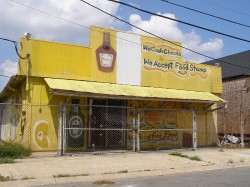 How would you feel if someone told you that one of the largest banks on Wall Street makes more money whenever the number of Americans on food stamps goes up? Unfortunately, this is something that is actually true. In the United States today, one out of every seven Americans is on food stamps. In fact, the number of Americans on food stamps has increased by a whopping 14 million since Barack Obama entered the White House. All of this makes JP Morgan very happy, because JP Morgan has been making money by the boatload on food stamps. Right now, JP Morgan Chase issues food stamp debit cards in 26 U.S. states and the District of Columbia. The division of JP Morgan Chase that issues these debit cards made an eye-popping


 International Speculator


 U.S. taxpayers have lost $133 billion from TARP — the abominable acronym inflicted on us by former Treasury Secretary Hank Paulson — a new report out this morning shows.
 "TARP is not over," Christy Romero, acting inspector general of the Troubled Asset Relief Program, reminds folks of the program through which she derives her own power, prestige and paycheck (PPP).
 Another trend that's "not over," we note, is bank shutdowns. The FDIC swooped in and closed four banks Friday night. (Yes, it's the return of our own watch list for failed banks and the feds' attempts to save them… a request for updates of which often lands in The 5's mail bin.)
 There is one notable increase: the FDIC's "loss ratio."
 The deleveraging of the U.S. consumer is "not over" either.
 By the way, that same Commerce Department report features the "core personal consumption expenditures," the Fed's favorite measure of inflation.
 U.S. stocks are generally down today, the Dow and the S&P both slumping about two-thirds of a percent.
 But lest you think we're not doing our homework this morning, we did find somebody who has come up with a valuable use for the euro:
 Eurozone leaders are holding their first summit of the year in Frankfurt, where they've decided on… not much.
 Gold is holding its own in the face of euro-woes propping up the dollar. An ounce of the yellow metal is down, but not much, to $1,730.
 "Now," reads an email this morning from Patrick Cox, who, as we've mentioned, is determined to read the breadcrumbs as a net positive, "we can watch as the exponential curve of average life spans approaches vertical."
 "What's going on?" asks Byron King rhetorically about the retrenchment in the shale gas business. Byron's new forecast of abundant
  "This is all part and parcel of the new U.S. industrial revolution that's coming down the road at us," Byron goes on.
 "Thought it might be time for an update," writes a Texas reader who wrote in a while back when we solicited on-the-ground reports from small-business owners.
 "It looks to me," writes a reader, "like the government is well on the way to stopping the oil and natural gas revival in its tracks."
 "If Secretary of State Hillary Clinton actually made the statement, 'I looked around our world and I thought we are in just so many deep holes that everybody had better grab a shovel and start digging out,' it now makes sense why we are in such a mess."
| You are subscribed to email updates from Save Your ASSets First To stop receiving these emails, you may unsubscribe now. | Email delivery powered by Google |
| Google Inc., 20 West Kinzie, Chicago IL USA 60610 | |



No comments:
Post a Comment