


saveyourassetsfirst3 |

- What Would Happen if Goldman Sachs Disappeared?
- Gold Market Update: The Impact Of CFTC Position Limits On Silver
- 'The Way Forward' - Telling China What To Do
- WATCH: Gregor Hochreiter talks with James Turk
- Why $2,600 Gold is Coming
- How to Trade Oil and Gold Prices This Coming Week
- The Eurozone Wags the Gold and Silver Dog
- New Orleans Investment Conference Week Schedule
- 1 in 10 Brits Have Gold Stash Worth More Than Savings in Bank
- Clive Maund: Silver Market Update – 10.24.11
- Gold Price Bounces On Talk Of More Fed Asset Purchases
- The Gold Money Index
- Silver Price To Regain Bullish Momentum
- The Not-So-Great Silver Debate
- FTs Tett Says "Foolish Simply to Deride or Ignore GATA" - GATA Debate CPM re Silver
- The Ron Paul "Meet the Press" interview you shouldn't miss
- Silver Market Update
- Extorre to Ring the Opening Bell on the NYSE-Monday October 24th, 2011
- LISTEN: Jeff Diest on Money Printing
- View From the Turret: Above the Fold
- Gold & Silver Market Morning, October 24, 2011
- The Five Myths of Silver Investing
- Why Gold Will Go Above $11,000
- Marshall Auerback and Rob Parenteau: The Myth of Greek Profligacy & the Faith Based Economics of the ‘Troika’
- The Eurobanks’ Latest Scheme to Escape the Pain of Recapitalization: Pull More Financial Firms into the TBTF Complex
- Jeff Wright: $1,900 Gold Average Predicted
- Silver Summit Report: Three Investment Approaches to the Volatile Metal
- Restructure Your Portfolio: Part III
- Perth Mint profiting from high gold price
- Gold Market Update
| What Would Happen if Goldman Sachs Disappeared? Posted: 24 Oct 2011 05:24 AM PDT As Europe grinds out yet another doomed banking system rescue plan, it might be helpful to examine the underlying assumption, which is that we need these big banks. Do we really? If Goldman Sachs, JP Morgan Chase, Deutsche Bank, Crédit Lyonnais and five or six of their peers ceased to exist tonight, what would happen? Would their absence change the number of factories, hospitals, farms, biotech research labs, oil wells, or gold mines? Would there be fewer houses or cars? Would computers get slower or TVs lower-def? No. The world of tomorrow morning would have exactly the same amount of real wealth and productive capacity as it does today. The main thing it wouldn't have is a lot of arcane financial instruments that don't produce anything edible, and a hundred thousand or so bankers making inordinate amounts of money moving this paper around. To the extent that those bankers would have to take jobs making real things, the post-Goldman world would arguably be richer and more productive. The big banks' disappearance might, admittedly, leave some ripples in the pond. Interest rates might rise and stock prices fall as governments like the US and Japan have to suddenly live within their means. Military budgets, public services and pensions would shrink dramatically. But there would be compensations. Where today's low interest rate regime is devastating to retirees living on the proceeds of bank CDs and Treasury bonds, higher interest rates would give them back their personal incomes, probably more than offsetting lower Social Security and Medicare benefits. For young families, falling real estate prices (also due to higher interest rates) would bring starter homes within closer reach. And all those soldiers now occupying foreign countries, or training to, would be freed up to take real jobs alongside the ex-bankers. People who have leveraged themselves to the hilt to buy various assets would have to sell, of course, but savers — especially those with a lot of precious metals — would snap up those assets and put them to productive use. Apple and Warren Buffett's Berkshire Hathaway between them have over $100 billion of ready cash, which they'll use to acquire and deploy busted assets, without missing a beat. Community banks that focus on mortgages, business loans, and customer service(!) will thrive as depositors abandon Bank of America for local institutions. Farmers markets and local farms will grow to replace a disrupted global agribusiness supply chain. Freed from all those financial sector campaign contributions, politics might even get a little cleaner. Viewed this way, the process looks a lot less threatening, and might even be a path to the kind of world most rational people would prefer. So relax, let the big banks go, and let's see what happens. |
| Gold Market Update: The Impact Of CFTC Position Limits On Silver Posted: 24 Oct 2011 04:55 AM PDT  By Tim Iacono: By Tim Iacono: Central banks continue to be buyers of gold and trading of the metal in Chinese yuan is off to a fast start in Hong Kong while demand remains strong in India where the festival buying season is now well underway. But, the most important development for precious metals markets last week might not be felt for some time to come after the CFTC (Commodity Futures Trading Commission) finally enacted position limits in futures trading. For the week, the gold price fell 2.3%, from $1,679.80 an ounce to $1,641.90, and the silver price dropped 2.4%, from $32.16 an ounce to $31.39. Gold is now down 14.6% from its peak of over $1,900 an ounce this summer but maintains a gain of 15.5% for the year, while silver is down 36.6% from its high, now up just 1.6% in 2011. Gold trading in yuan began on Monday at Hong Kong's Chinese Gold Complete Story » |
| 'The Way Forward' - Telling China What To Do Posted: 24 Oct 2011 04:26 AM PDT By Elliott R. Morss: In my last article, I wondered how the authors of "The Way Forward" could completely ignore the role of banks as contributors to our global economic malaise. In this piece, I will look at their recommendations on what needs to be done globally to rectify the situation. Capital Flows The authors of the study - Daniel Alpert, Robert Hockett, and Nouriel Roubini (AHR) argue that capital inflows from emerging market countries contributed significantly to the US housing/spending bubble that burst in late 2008. They assert further that a significant portion of those capital inflows came from emerging market governments (primarily China) trying to keep the US dollar strong to give their exporters a competitive advantage. They are critical of "China's continuing policy of pegging the yuan to the dollar." There are several problems with these assertions.
Table 1 gives data on foreign government and private investments in Complete Story » |
| WATCH: Gregor Hochreiter talks with James Turk Posted: 24 Oct 2011 03:45 AM PDT Gregor Hochreiter, Author of "Krankes Geld, Kranke Welt", and James Turk, Director of the GoldMoney Foundation, talk about his book and how it explains that the lack of hard money not only impacts economics but also morality and values. Gregor explains that institutions impact individual behaviour and that fiat money encouraged debt and provokes short term mentality and speculation throughout society. Gregor uses the term "inflation" in the strict and original definition: an increase in the money supply. Rising prices are a consequence of inflation, a mere symptom. They discuss how to transition from sick money to sound money, highlighting the importance of ideas in ensuring the sustainability of any reform. They discuss Austrian economics and how they are not even taught in Vienna. Gregor explains that academic economics at university level are very mathematics focused and debates are very narrow. However there is a growing interest among the general population in alternative schools of economic thought. Gregor sees a role for gold and silver coins in the solution to our monetary system. They talk about how under the classical gold standard the negative feedback disciplinary mechanism was imposed automatically by gold, without the need for political discretion. They talk about the importance of gold to human liberty. This interview was recorded on September 30th 2011 in Vienna. ~TVR |
| Posted: 24 Oct 2011 03:31 AM PDT Debt and Gold continue to rise together. |
| How to Trade Oil and Gold Prices This Coming Week Posted: 24 Oct 2011 03:25 AM PDT |
| The Eurozone Wags the Gold and Silver Dog Posted: 24 Oct 2011 03:21 AM PDT From Marketoracle: Some market pundits would argue that gold and silver would likely benefit and I would not necessarily argue with that logic. However, the physical gold and silver markets are not that large and depending on the breadth of the situation, vast sums of money would be looking for a home. The two most logical places for hot money to target in search of safety would be the U.S. Dollar and U.S. Treasury's. The U.S. Dollar and U.S. Treasury obligations are both large, liquid markets that could facilitate the kind of demand that would be fostered by an economic event taking place in the Eurozone. My contention is that the U.S. Dollar would rally sharply along with U.S. Treasury's and risk assets would likely selloff as the flight to safety would be in full swing. If I am right about the U.S. Dollar rallying higher, the impact the rally would have on gold and silver could be extreme. While I think gold would show relative strength during that type of economic scenario, I think both metals would be under pressure if the U.S. Dollar started to surge. In fact, if the Dollar really took off to the upside I think both gold and silver could potentially selloff sharply. As I am keenly aware, anytime I write something negative about gold and silver my inbox fills up with hate mail. However, if my expectations play out there will be some short term pain in the metals, but the selloff may offer the last buying opportunity before gold goes into its final parabolic stage of this bull market. The weekly chart of gold below illustrates the key support levels that may get tested should the Dollar rally. CLICK IMAGE FOR LARGER VIEW For quite some time silver has been showing relative weakness to gold. It is important to consider that should the U.S. Dollar rally, silver will likely underperform gold considerably. The weekly chart of silver is illustrated below with key support areas that may get tested should the Dollar rally: CLICK IMAGE FOR LARGER VIEW Clearly there is a significant amount of uncertainty surrounding the future of the Eurozone and the Euro currency. While I do not know for sure when the situation in Europe will come to a head, I think the U.S. Dollar will be a great proxy for traders and investors to monitor regarding the ongoing European debacle. If the Dollar breaks down below the key support level discussed above, gold and silver will likely start the next leg of the precious metals bull market. However, as long as the U.S. Dollar can hold that key level it is quite possible for gold and silver to probe below recent lows. Both gold and silver have been rallying for quite some time, but the recent pullback is the most severe drawdown so far. It should not be that difficult to surmise that gold and silver may have more downside ahead of them as a function of working off the long term overbought conditions which occurred during the recent precious metals bull market. Make no mistake, if the Dollar does rally in coming months risk assets will be under significant selling pressure. While the price action will be painful, those prepared and flush with cash will have an amazing buying opportunity in gold, silver, and the mining complex. Right now, risk remains excruciatingly high as the European bureaucrats wag the market's dog. Read more @ MarketOracle.co.uk |
| New Orleans Investment Conference Week Schedule Posted: 24 Oct 2011 03:05 AM PDT HOUSTON -- We are about to become very scarce for a short while as we head over to New Orleans and to our good friend Brien's Lundin's annual conference. The New Orleans Investment Conference is the one can't-miss conference of the year in our humble opinion. It has been around since the 1970s, back in the Jim Blanchard days, started even before gold bullion was legal to own in the U.S. and people had to make due by owning Mexican gold coins or older U.S. coinage. We've come a very long way since then. Our own conference schedule is below and here's the opening page of our first talk: New Orleans Here We Come Brien always seems to provide a blockbuster lineup and this year is no exception. Past conferences have featured powerful and influential speakers sharing their ideas and insights with attendees in a setting that is both intimate and grand at the same time. Brien noted some of the past speakers in a recent offering: "Lady Margaret Thatcher, former President Gerald Ford, novelist Ayn Rand, General H. Norman Schwarzkopf, Nobel Prize-winning economists Milton Friedman and F.A. Hayek, Dr. Henry Kissinger, Senator Barry Goldwater, Admiral Hyman Rickover, Louis Rukeyser, Sir John Templeton, Lord William Rees-Mogg, Charlton Heston, Jeane Kirkpatrick, Robert Bleiberg, Jack Kemp, William F. Buckley, General Colin Powell and J. Peter Grace, among hundreds of other notables. Speakers this year include: Glenn Beck - Host and star of the nationally syndicated radio talk show "The Glenn Beck Show" and now "GBTV," he daily attracts millions of viewers and listeners. Known for his quick wit, candid opinions and engaging personality, his daily controversial discussions are focused on the news of the day -- politics, society and current affairs. Dr. Marc Faber - An icon in the world of investments, Dr. Faber's typically controversial and contrarian views have earned him the label of "Dr. Doom." But even his harshest critics admit that he's been unerringly correct in his market forecasts over the past three decades. Dennis Gartman - Mr. Gartman is a frequent guest on leading investment television programs and his daily publication, The Gartman Letter, is read by many of the world's leading banks, brokerage firms, hedge funds, mutual funds and commodity trading companies. At the New Orleans Conference, he'll share his most powerful tips and forecasts with attendees. Peter Schiff - After dead-on accurate predictions on the U.S. stock market, economy, real estate, the mortgage meltdown, credit crunch, subprime debacle, commodities, gold and the dollar, all of the nation's major financial media are flocking to hear Mr. Schiff's latest views. Dr. Stephen Leeb - The senior editor of The Complete Investor and one of the most successful and highly respected investment newsletter editors in history, Dr. Leeb will provide attendees with his forecasts for the tumultuous days ahead, but also the specific stocks and strategies needed. P.J. O'Rourke - American political satirist, journalist, writer, and author, his persona is that of a hard-bitten, cigar smoking conservative and named by Vogue Magazine as "one of the five men you'd most want to sit next to at a dinner party." In addition to these speakers, the 2011 New Orleans Conference will feature dozens more of the most respected advisors in every area of economics and investments, including Brien Lundin, Rick Rule, John Kaiser, Lawrence Roulston, Brent Cook, Gene Arensberg, Thom Calandra, Adrian Day, Mickey Fulp, Mary Anne and Pamela Aden, Ross Beaty, Frank Holmes, Ian McAvity, Bill Murphy, Chris Powell and more. The New Orleans Investment Conference has been called "the world's greatest investment show" by Money Magazine, which noted the Conference's impressive exhibit hall and roster of top speakers. Our Schedule Wednesday Oct 26 We are scheduled to present a 20-minute talk, "Vulture Bargain Hunting, Right after that, from 3:20 – 3:30 we are scheduled to answer questions in Ballroom C. From 6:45 – 7:25 we are scheduled to participate in a panel discussion in Grand Ballrooms A&B. 7:30 – 8:10 – Our Workshop. "High-Stakes Tactical Technicals for Gaming Resource Company Guru Road Kill." Thursday Oct 27 Private meetings with resource companies. 3:45 – 4:15 Speaker Table in the Conference Hall. Friday Oct 28 Private meetings with resource companies. 7:50 – 8:50 pm Special Subscriber Meeting – Jasperwood Room, 3rd Floor. We are looking forward to meeting with as many of you as possible then, but if that time is not convenient, we do plan to be at the Speaker Table events noted as well. Saturday Private meetings with resource companies. 3:55 – 4:05 pm Speaker Table #3 in the Exhibit Hall *** VB Update delayed to November 7 As of now we believe the NOIC is still taking reservations, but obviously time is short to pre-register. For last minute updates and for registration information for the NOIC, click on the link provided on the right side of the Home Page. Since we intend to concentrate on our conference duties and a full slate of private meetings, we shall be postponing the next VB Update until after we have had time to assimilate the new information gathered at the conference. As of now, we expect to send that important update out no later than Monday, November 7. Not incidentally, over the past while we have added shares of a number of our VBCI issues, as a play for 2012, and we have tried to post notations in the various VBCI graphs available to Vultures (Got Gold Report Subscribers) in a timely manner, although we have some catching up to do in that department. We do plan, in our NOIC workshop, to share with all attendees the issues we have high hopes for in the coming year, and to discuss some of the "tactical technicals" we employ. We can cover a lot of ground in a very short while, so bring a note pad and an open mind! On another housekeeping matter, we have received feedback that "some of the technical charts were not showing the new annotations," over the weekend. The new annotated comments were not posted until Sunday at 15:00 CT. If for some reason your system still shows the comments from last week, please hit the refresh button on your browser. Thank you for the feedback. That is all for now. We very much hope to meet with as many of you as possible in "Nawlins," and please do not hesitate to make yourself known to anyone in the GGR crew, most especially me. Don't be a stranger! |
| 1 in 10 Brits Have Gold Stash Worth More Than Savings in Bank Posted: 24 Oct 2011 02:57 AM PDT from Mining.Com: According to the survey, more than 38% of Britons also say investing in gold is better than keeping cash savings. As gold vending machines pop up in shopping malls and physical gold retailers like London-based Bullionvault surpass some central banks in gold holdings, 14% of Britons bought an item of gold as an investment in the past year. Immediately bank-friendly Savings.co.uk tried to poke holes in the gold as savings argument saying gold doesn't produce an income like interest or dividends, it's illiquid and if you buy physical gold you're unlikely to be covered by any financial compensation scheme if things go wrong. MINING.com reported in July gold vending machines are to be placed in every major city in Britain after the country's first Gold to Go ATM (pictured) was switched on in a West London shopping centre on Friday. The company behind the machines that vend a 1g bar the size of a cellphone sim card aimed at ordinary shoppers plans to install 50 across Britain over the next few years. Read more @ Mining.Com |
| Clive Maund: Silver Market Update – 10.24.11 Posted: 24 Oct 2011 02:21 AM PDT From Clive Maund: CLICK IMAGE TO ENLARGE
The times of greatest opportunity are usually masked by danger, and there is certainly great danger at this time of Europe failing and thus a lot of associated fear in the markets. Could things get even worse and tank the markets, possibly including gold and silver? – yes, of course they could and we looked at this blood curdling scenario last week, but whether or not this occurs one thing is clear – the normally right Commercials are banking on a resolution of this crisis and soon, and if things do get even worse it is safe to assume that their positions will become even more lopsided. The silver COT charts remain at their most bullish ever, and Commercial short positions dropped even more last week to a record, which just by itself suggests that silver is bottoming. CLICK IMAGE TO ENLARGE
Read more @ CliveMaund.com |
| Gold Price Bounces On Talk Of More Fed Asset Purchases Posted: 24 Oct 2011 02:16 AM PDT from GoldMoney: At the European Council meeting in Brussels, European leaders are trying to reach a compromise on the extent to which banks should take a "haircut" on their Greek loans. German chancellor Angela Merkel continues to favour tougher love for the banks, while French president Nicolas Sarkozy taking a more bank-friendly approach. (Not coincidentally, French banks have the heaviest exposure to Greek debt of any major euro economy). Write-downs on Greek debt in the range of 40-60% were under discussion, with France favouring 40% and Germany erring towards 60%. Under new proposals, 90 significant lenders would be expected to raise their capital ratios to 9%, with government help for those who cannot raise the funds on the private market. Europe's leaders are also discussing plans to leverage the European Financial Stability Facility in order to increase its lending capacity. The US dollar dropped to a post-Second World War record low against the Japanese yen on Friday, on suggestions from Fed officials that more MBS purchases may be necessary in order to provide further "stimulus" for the US economy. Dan Tarullo, a member of the Fed's Board of Governors, spoke out in favour of this measure last Thursday, while Fed chairman Ben Bernanke also remarked the same day that the Fed may need to do more to aid recovery in the US housing market. However, inflation statistics for the US are hotting up, with new data showing that the Producer Price Index rose from 6.5% in August to 6.9% in September. In addition, the M2 measure of money supply continues to surge. This suggests that contrary to the continual warnings about "the risk of deflation" from the Washington economics establishment, accelerating inflation could turn into a serious problem for the Fed. Thus, given these growing inflationary pressures, it seems unlikely that the Fed will pour more petrol on the fire and agree to further money printing just yet – though this possibility cannot be entirely ruled out: after all, in the UK inflation is running well-above the Bank of England's supposed "target" of 2%, yet the BoE has just agreed to more quantitative easing. Jim Sinclair's MineSet links to analysis from Richard Belfanti, who thinks that weakness in the US banking sector caused by the continuing over-valuation of banks' assets will guarantee continued quantitative easing/money printing from the Fed. more @ GoldMoney.com |
| Posted: 24 Oct 2011 02:15 AM PDT James Turk has a new article at the King World News Blog that looks at how people should decide whether or not gold is overvalued or undervalued. As mentioned in previous Analysis articles on the ... |
| Silver Price To Regain Bullish Momentum Posted: 24 Oct 2011 02:12 AM PDT from GoldMoney: The debasement of currencies by central banks, combined with continuing problems in the banking sector have led to mounting fears of sovereign defaults among from industrialised countries. These fears have been the driving forces behind gold and silver's strong price gains. Silver's sharp price decline of around 40% has led to frantic buying from those eager to "buy the dips". This is especially true in the USA, Canada and many European countries – and last but not least China and India. Indian metals experts and bullion dealers estimate that sales of the white metal will jump by 30% in the course of this year's festival season. Many analysts are also expecting China's silver consumption to rise further as well. The affordability of silver versus gold or platinum on a per-ounce basis is making the white metal even more attractive for many investors who have up until this point not been involved in the gold and silver markets. However, Shreekant Jha, managing director of the company PJ Commodity Ventures, said that he would sell gold as he expects the yellow metal to continue trading in a sideways direction over the short-term. N Prasad, CEO of Safe Trade Advisors, believes that investors should currently favour silver over gold. His opinion is shared by other analysts and renowned market experts such as Eric Sprott and Jim Rogers, who both think that silver will outperform gold over the next decade; Sprott thinks that silver will be "the investment of the decade". more @ GoldMoney.com |
| The Not-So-Great Silver Debate Posted: 24 Oct 2011 01:47 AM PDT |
| FTs Tett Says "Foolish Simply to Deride or Ignore GATA" - GATA Debate CPM re Silver Posted: 24 Oct 2011 01:38 AM PDT |
| The Ron Paul "Meet the Press" interview you shouldn't miss Posted: 24 Oct 2011 01:21 AM PDT From Economic Policy Journal: Awesome stuff, David Gregory gives Ron Paul a chance to talk. When you give an Austrian/libertarian the chance to explain his case, it's a beautiful thing. Spread the word on this one. Let's take it viral. Watch the video here... More form Ron Paul: Ron Paul reveals his favorite gold stocks Ron Paul reveals the real cause of the financial crisis The Ron Paul op-ed everyone will be talking about this weekend |
| Posted: 24 Oct 2011 12:34 AM PDT Over the past week silver has behaved as predicted in the last update, breaking down from its potential Pennant pattern and dropping gently back towards support in the $29 - $30 area, to enter our "accumulation zone" shown on its 4-month chart which turned it higher on Friday, and while the pattern could still be a bear Pennant with an amended lower boundary this is looking considerably less likely - it looks like the Pennant has aborted. It is thus thought that we are late in the base building process. |
| Extorre to Ring the Opening Bell on the NYSE-Monday October 24th, 2011 Posted: 24 Oct 2011 12:32 AM PDT Extorre Gold Mines Limited (NYSE-AMEX:XG; TSX:XG; Frankfurt: E1R, "Extorre" or the "Company") is pleased to announce that it will ring the opening bell on the New York Stock Exchange today, October 24, 2011. A week of marketing the Company in eastern USA and Canada will follow. |
| LISTEN: Jeff Diest on Money Printing Posted: 23 Oct 2011 11:59 PM PDT
Jeff Diest speaks with Al Korelin about money printing. More @ KEReport
|
| View From the Turret: Above the Fold Posted: 23 Oct 2011 11:14 PM PDT
Friday's action featured higher volume, which is typically associated with institutional buying. But since Friday was options expiration, the high volume is less of an indication. Up to this point, we've been approaching the market from more of a bearish perspective – not necessarily predicting that stocks will fall, but realizing that our best reward to risk setups were geared for negative price action. Now that resistance levels have been breached, the outlook for bullish setups becomes much more attractive. Investor's Business Daily has now classified this market as a "confirmed bull trend" which will likely encourage a number of growth investors to begin building positions. There are still very few "black and white" situations – and today's overall environment is still anything but certain. But with the price action giving bullish signals, we need to be scanning for more opportunities to put capital to work on the long side. Rather than chase a market that has already begun to print higher prices, we will be selective in which opportunities we pursue. We're still in a relatively dangerous environment for traditional breakout plays. Stocks (and broad indices) have a tendency to break to new highs and then reverse course – trapping the breakout buyers. Instead of traditional momentum entries, we are more interested in buying patterns that have shown a move through resistance, some countertrend action, and then buy when price action shows a "bullish follow-through" We'll be discussing these setups in real-time as part of the Mercenary Live Feed, but in the meantime, here are some of the opportunities we are watching right now…
Sign Up For the Mercenary Dispatch Get our best content delivered FREE to your inbox! Check out the Mercenary Dispatch page to learn more. Gold Finding Support As the market sold of in August, portfolio contagion kicked in. Managers were desperate to lay off risk – which meant selling anything liquid enough to get out of quickly. After a spectacular run, gold spot prices experienced a significant pullback. The action discouraged some of the "johnny-come-lately" gold buyers, and at least partially vindicated the academics who said that gold "served no useful purpose" and shouldn't be a valuable asset to begin with. Now that gold has pulled back significantly, the pattern is beginning to look much more constructive. The metal is still above the 200 day EMA, and sits directly on a trend line both on the daily and weekly chart. The potential for more asset purchases from Washington, and a bank / sovereign debt rescue package in Europe continues to weigh on fiat currencies and should drive long-term demand for precious metals. At this point, the gold miners are still in a difficult price pattern, but the underlying metal could offer an attractive risk/reward scenario for trading constructively and challenging the September highs.
 Consumer Staples Report Strong Earnings In last week's turret, we noted the strength of consumer staples such as Philip Morris (PM) which typically offer more stability than more aggressive growth stocks. PM announced earnings last week that were well received by the market, and the stock continued to push higher – now within striking distance of an all-time high. If the broad market is going to follow through on last week's push through resistance, I want to be involved in names that offer both growth potential AND stability. There have been too many false signals and reversals this year, and an aggressive jump into long exposure could jeopardize the trading gains we have built so far this year. Stable consumer staples names that are outperforming and trading with low volatility may turn out to be one of the best ways to add trading profits without assuming too much risk. Lorillard Inc. (LO) is a well-established cigarette manufacturer which is generating earnings growth quarter after quarter. The stock hit a new high earlier in the month, and for the past two weeks has pulled back slightly. A continuation push higher could offer a nice reward to risk setup with a risk point near $110, and plenty of room for an advance in price before becoming too expensive. LO pays a 4.5% dividend yield which should help to support the stock price and attract yield-hungry capital. Of course, if rates rise in the near future it could present a challenge. Competing yields on "safer" assets such as treasuries could become more attractive. But for today's environment, this looks like an attractive spot for conservative but bullish managers to park capital.
Financials Find Support Sometimes the most hated sectors actually represent the most attractive opportunities…
But while these challenges are very REAL issues, there is plenty of evidence that the current prices of banking stocks already incorporate these risks – and may be vulnerable to an optimistic shift in sentiment. Last week Barron's featured an article which explored the value case for major US banks, and while some major firms like Goldman Sachs (GS) announced disappointing earnings this quarter, the response to the earnings announcements has been relatively positive. The Mercenary Live Feed took a long position in the S&P Sel Financial (XLF) late last week as the ETF pushed above the 50 EMA and traded through overhead resistance. This week, traders should keep a close eye on the SPDR Series KBW Bank Index (KBE) which is trading in a similar pattern. A new push higher would indicate that there is enough support to generate some healthy momentum, and risk points could be kept relatively tight considering the consolidation range from the last several trading sessions.
An hour before the open, equities look set for a stable open. Base metals are strong after positive growth reports from China and Japan, and while conferences in Europe have left much to be desired, investors appear somewhat optimistic that progress will be made. We've still got plenty of earnings reports to sift through as we approach the end of a historically volatile October period. This week, the key theme is balancing increasing opportunity with a still very important concept of risk management. Trade 'em well…
|
| Gold & Silver Market Morning, October 24, 2011 Posted: 23 Oct 2011 09:00 PM PDT |
| The Five Myths of Silver Investing Posted: 23 Oct 2011 08:19 PM PDT by Ryan Jordan:
But there is an even more important point here. I bet most people who claim to follow the precious metals don't realize that as of 2010, we had yet to see more silver recycled than during 1980. That is thirty years of silver recycling more or less going nowhere, even as the price of silver spent more time above 20 dollars an ounce in 2010 than in 1980. I am going to be optimistic and guess that we will finally best the old recycling high this year in silver (at over 300 million ounces). But in a world where 300 million ounces of silver is only 10 billion dollars, and in a world where investors are slated to purchase nearly that much silver in physical form over the next couple of years, you really have to wonder why anyone would think there is all of this silver just lying around ready to be brought to the market to cool off silver's price. And given what I said about how impervious industrial demand is to silver price increases, a lot of whatever silver jewelry gets recycled will be used and consumed by industry (even assuming that preservation techniques get better as the price goes higher.) I also would not expect mine increases to somehow meet demand: few industry experts believe silver can increase more than 4 or 5 percent a year (roughly 50 million ounces, or less than 2 billion dollars), especially when nearly 80% of silver is a byproduct of metals like copper, lead, and zinc.
But in recent years, I am struck by how many proposals there are like the one from Hugo Salinas Price in Mexico attempting to bring back silver coins into the market in his country. Then we have all of the state legislation in the United States aiming to bring back both gold and silver into economic transactions. Remember, silver is perceived to be the money of average people (even as it is rarer than gold) so any grassroots effort to bring back precious metals into everyday transactions will dramatically increase silver's value. We have already seen the amazing turnaround in silver retail investment buying over the past few years (hundreds of millions of new ounces) and I think some people are slowly waking up to how undervalued silver is. But believe it or not, many, many more have yet to do so. As I said above, I understand that fundamentals often have no place in markets. This is why so many traders focus on chart patterns, or volume indicators, or anything other than the underlying, real-world reasons for an asset to move up or down in price. You can also see the lack of interest in fundamentals from those large speculators who believe that rumor-mongering is a safer way to make money than actually focusing on legitimate distortions in the market. You might be surprised how much money you can make from simply playing games, or from manipulating others' emotions—at least in the short term. However, every day we see more evidence of the need for retail investors to truly diversify their portfolios with an asset that is set apart from the stock/bond market or banking system. The world is not going to end, but gradually, perception will come around to the cold, hard facts that currency debasement, financial repression (artificially low interest rates), combined with fiscal austerity are here to stay. In an environment where measures such as quantitative easing are really only easing the transition to a downsized economy (at best), people will be looking for those assets that never took part in the bubbles associated with the world before 2007 in the first place. Those assets which don't need leverage to move higher (even though leverage is a part of the silver market), or those assets which don't rely on endless consumption or indebtedness on the part of the consumer in order to become more valuable. You may think silver will keep getting cheaper, and you might be right in the short term. But in the long term, this price correction really will be a blip on a screen, and when silver's price one day explodes higher again, you will kick yourself for having bought into misconceptions like the five myths regarding silver. More @ RyanPJordan.com |
| Why Gold Will Go Above $11,000 Posted: 23 Oct 2011 07:52 PM PDT
The Gold Money Index Continue reading @ King World News |
| Posted: 23 Oct 2011 07:15 PM PDT By Marshall Auerback, a portfolio strategist and hedge fund manager, and Rob Parenteau, CFA, sole proprietor of MacroStrategy Edge and a research associate of The Levy Economics Institute Historically, Greeks have been very good at constructing myths. The rest of the world? Not so great, if the current burst of commentary on the country is anything to go by. Reading the press, one gets the impression of a bunch of lazy Mediterranean scroungers, enjoying one of the highest standards of living in Europe while making the frugal Germans pick up the tab. This is a nonsensical propaganda. As if Greece is the only country ever to cook its books in the European Union! Rather, the heart of the problem is in the antiquated revenue system that supports that state, which results in a budget shortfall consistently about 10% of GDP. The top 20% of the income distribution in Greece pay virtually no taxes at all, the product of a corrupt bargain reached during the days of the junta between the military and Greece's wealthiest plutocrats. No wonder there is a fiscal crisis! So it's not a problem of Greek profligates, or an overly generous welfare state, both of which suggest that the standard IMF style remedies being proposed here are bound to fail, as they are doing right now. In fact, given the non-stop austerity being imposed on Athens (which simply has the effect of deflating the economy further and thereby reducing the ability of the Greeks to hit the fiscal targets imposed on them), the Greeks really are getting close to the point where they may well default and shift the problem back to those imposing the austerity. This surely can't be much worse than the slow execution they are facing today. In reality, the Greeks have one of the lowest per capita incomes in Europe (€21,100), much lower than the Eurozone 12 (€27,600) or the German level (€29,400). Further, the Greek social safety nets might seem very generous by US standards but are truly modest compared to the rest of the Europe. On average, for 1998-2007 Greece spent only €3530.47 per capita on social protection benefits–slightly less than Spain's spending and about €700 more than Portugal's, which has one of the lowest levels in all of the Eurozone. By contrast, Germany and France spent more than double the Greek level, while the original Eurozone 12 level averaged €6251.78. Even Ireland, which has one of the most neoliberal economies in the euro area, spent more on social protection than the supposedly profligate Greeks. One would think that if the Greek welfare system was as generous and inefficient as it is usually described, then administrative costs would be higher than that of more disciplined governments such as the German and French. But this is obviously not the case, as Professors Dimitri Papadimitriou, Randy Wray and Yeva Nersisyan illustrate. Even spending on pensions, which is the main target of the neoliberals, is lower than in other European countries. Furthermore, if one looks at total social spending of select Eurozone countries as a per cent of GDP through 2005 (based on OECD statistics), Greece's spending lagged behind that of all euro countries except for Ireland, and was below the OECD average. Note also that in spite of all the commentary on early retirement in Greece, its spending on old age programs was in line with the spending in Germany and France. In fact, Greece has one of the most unequal distributions of income in Europe, and a very high level of poverty, as the following table shows (source: OECD and Papadimitriou, Wray and Nersisyan). The evidence is not consistent with the picture presented in the media of an overly generous welfare state—unless the comparison is made against the situation in the US, which is akin to comparing a French impressionist's skills with that of a 5 year old finger-painter.
Of course, these facts don't matter. The prevailing narrative is that Greece is, in the words of the FT's John Authers, "a country that was truly profligate", with little in the way of data to support that assertion. The country, however, is truly stuck: they can't devalue, they can't pay their own way because they do not have a sovereign currency, and nobody will voluntarily finance them. So they must exit and devalue or drop their domestic prices. The massive default, though inevitable, is just a step along the way. To make the problem worse, export earnings also seem to face their own structural cap that is consistently exceeded by import spending, which means that the debt that finances the government shortfall is increasingly held abroad. The debt is issued under Greek law, but now it is payable in Euros which Greece, as a user of euros, can't create, given the surrender of its currency and consequent fiscal sovereignty. In this sense, ironically, the fiscal crisis is a consequence of Greece's success, after a long preparation, in joining the European Union, and hence giving up its own currency, as Professor Perry Mehrling has noted. The point is that, if this analysis of the source of the problem is correct, then standard IMF austerity policy is unlikely to do much to help. And, as the increasingly intensifying riots on the streets are vividly demonstrating, the patient might not willingly accept the medicine. Despite attempts to turn the country into an economic colony of the EU, Greece is still, after all, a democracy and if one is to judge from the growing unrest in the country, it is far from clear whether Greece (or any other euro zone member for that matter) is really willing to cut spending and raise taxes rates to any degree which will satisfy the Fiscal Austerians dominating economic policy in the euro zone today without at the same time provoking an ungovernable failed state, right in the middle of the euro zone. As J.M. Keynes noted a lifetime ago in a still widely ignored footnote to Chapter 23 of his General Theory:
Of course, Keynes was not a "Keynesian" and in any case, what did he know that the mathematically "elegant", well-calibrated, dynamic stochastic general equilibrium models of contemporary Nobel Laureates of today cannot tell us? Even the "Troika" – the European Commission (EC), the International Monetary Fund (IMF), and the European Central Bank (ECB) – conceded that there might be a slight problem with their Austerian approaches: In a leaked report, from the currently underway EU Summit, and this document will likely form a part of the deliberations in the Greek debt restructuring proposals to be hammered out by Oct. 26th. On the first page of the document is not only a pretty open and blatant admission that expansionary fiscal consolidation (EFC) has proven to be a contradiction in terms, at least in Greece, but there is also a serious policy incompatibility problem, at least over the intermediate term horizon, with efforts at internal devaluation (ID) – that is, attempting nominal domestic private income deflation in order to improve trade prospects when one has a fixed exchange rate constraint. While they stop short of recognizing that their demands and the actions they have imposed on Greek policymakers are setting off a Fisher debt deflation implosion of the Greek economy (never mind rupturing any semblance of a social contract, and ripping the social fabric to shreds as well – this is, after all, the jackboot version of neoliberal "reform" designed to stamp out any last vestige of social democracy and organized labor in the eurozone). This is a very large concession for the Troika to have made before the EU itself has taken a "final decision". Admitting that EFC is not working, and that pursuing ID will only aggravate matters further, including the ability of Greece to hit fiscal targets, is a fairly large step by the Troika in the recognition of the reality of the situation. This is not something the faith based neoliberal economists in the Troika organizations are often prone to do. It is not what their incentive structures, formal and informal, tend to encourage them to do. So why pursue it? Well, let's face it: this has far less at this stage to do with Greece (even as the prevailing mainstream narrative continues to perpetuate the picture of a lazy, unproductive country full of profligates and scroungers), than punishing other potential fiscal deviants and recalcitrants. Angela Merkel clearly has Italy in her sights. She, and the Troika are scapegoating the Greeks – in order to make sure that should Greece take the rumored "hair cut" on its debt and restructure, the other peripheral countries – especially Italy – won't get any ideas and be tempted down the same path of forced debt restructuring, but rather will redouble their efforts to achieve arbitrary fiscal targets on an equally arbitrary timeline (and how's that worked out for Greece?), and learn to "live within their means", as the Germans always piously lecture the world. This is the strategy to prevent what is euphemistically called the "contagion impact". In reality, it is also called the principle of collective guilt – destroying the livelihoods of thirteen million people for political or ideological or faith based reasons, which is frankly disgusting and unacceptable. Given their own history, German policy makers should understand this phenomenon. Indeed in many respects, this all too eerily resembles the tangled, twisted mess left by the demands of WWI reparation on Germany – except this time around, Germany is one of the creditor nations imposing their will on the crushed debtors. If the prevailing mix of fiscal austerity policies continues, there will be spill-over effects to nations that export to Greece. To be sure, Greece is a tiny market in Euroland, but its fiscal problems are by no means unique. As the bigger economies like Spain and Italy also adopt austerity measures, the entire continent can find government revenue collapsing – even Germany, where economic deceleration has become markedly more noticeable in the past few months. As an illustration, consider the ZEW survey results on six month forward expectations for the economy to get a glimpse of where German export momentum may be going. If the historical eight month lead times continue to hold up – and it is certainly tracking right on schedule to date – then the contagion effects on German exports will be utterly devastating by early 2012. Finally, if austerity succeeds in lowering wages and prices in one nation it can lead to competitive deflation, only compounding the problem as each country tries to gain advantage in order to promote growth through exports. If private debt to GDP ratios did not well exceed public debt to GDP ratios in most eurozone nations, this might not be such a dangerous dynamic to set in motion. And here we must ask the painfully obvious question: why, pray tell, do all the Fiscal Austerians make a point of ignoring the private debt overhang built up over years of serial asset bubbles in the eurozone? Could it be the faith-based economics that they practice, where fiscal balances express a sort of moral purity, and private decisions are always and everywhere deemed to be optimal and sustainable by definition, a la the magical passes of the Invisible Hand? What is most remarkable to us is that the largest net exporter, Germany, does not appear to recognize that its insistence on fiscal austerity for all of its neighbors will cook its own golden egg-laying goose. If Germany wants to run a perpetual current account surplus in order to pursue their Asian-like mercantilist, export-led growth strategy, then some other nation, or group of nations must be prepared to run current account deficits ad infinitum. Which means issuing liabilities ad infinitum to the current account surplus nation in order for the current account deficit nations to spend more than they earn on tradeable goods and services. What this means is that default is inevitable unless there is a policy or price mechanism that encourages the current account surplus nation to reinvest the reserves they earn in foreign trade back into productive, income generating capital equipment in the trade deficit nations. This much is elementary international economics, but somehow it completely eludes Berlin. The German Chancellor and her Finance Minister like to say that no real economic union is possible if one party to the union (Greece) works shorter hours and takes longer holidays than another (Germany). What she should say is that no real economic union is possible if the governing plutocrats of ALL nations (not just the billionaire Greek ship-owners who probably have already moved their money offshore, but also wealthy bankers who have suffered no consequences for their own fraudulent and willfully destructive lending practices) consistently evade their fair share of the cost of that party's own state expenditure, expecting the union either to pay the bill itself, or to force the bottom 90% to pay it. And there is no real economic union (or any hope of a future political union) if current account surpluses are not properly and sustainably recycled into the trade deficit nations. It would be as absurd as Texas perpetually insisting on running trade surpluses with the other 49 American states. Greece is not a special case, but rather a case in point of exactly what happens when you impose fiscal consolidation on countries with high private debt to GDP ratios, high desired private net saving rates, and large, stubborn current account deficits. What is needed is a way to redistribute demand toward the trade deficit nations—for example, by having the trade surplus nations spending euros on direct investment in the trade deficit nations. Germany did this with East Germany. Such a mechanism could be set up under the aegis of the European Investment Bank very quickly. Effective incentives to "recycle" current account surpluses in this manner via foreign direct investment, equity flows, foreign aid, or purchases of imports could be easily crafted. If it could be accomplished, it will be a way Greece and the others could become competitive enough to secure their future through higher exports. Failure to embrace this kind of coordinated, mutually beneficial growth option will ultimately give the Greeks little alternative but to default, leaving the euro zone's policy makers with an even bigger and costlier mess on their hands. Admittedly, this will not fully solve Greece's problems as they would like have to leave the euro zone as well and reintroduce the drachma. They would need to reverse fiscal consolidation and place government bonds in their banks as part of their recapitalization efforts. An independent central bank would also have to become a buyer of government bond issuance as foreign demand would likely evaporate for some time. This would entail capital controls, which will cause people to head for the exits (this is, after all, a country with lots of boats) and will require an active mobilization of real resources into public/private initiatives and export enhancement (improved labor productivity, faster product innovation, more R&D, etc. It would not be pretty, it would undoubtedly be painful, but as Iceland is demonstrating today, it is possible to survive and grow and, in any case, is far better than the alternative of starving to death under the guide of the Troika for a decade or more. In a more dire scenario, a Greek default, would be more akin to a "Sampson moment" for the entire euro zone. Like Sampson in his last days, blinded and beaten by the Philistines, Greece is weakened, blind and bound. Default would represent one last defiant burst of strength with which it "wrecks the temple" (in this case the euro zone) via default and in doing so, it may also take down everybody else. Myth-making at the expense of the Greeks does not serve anybody's interests, as there will be a cascade of defaults everywhere, and a Soviet style collapse in incomes, hardly an enticing prospect for the global economy. Not an attractive ending, but this is the kind of outcome which the troika's self-serving, immoral and cruel policies could lead to before long. The Greeks, and the vast majority of Europe's citizens, can surely do better than this. The existing policy path is literally bankrupt and bankrupting, and this game of chicken cannot go on for much longer.
|
| Posted: 23 Oct 2011 07:10 PM PDT As much as I like to think I have a reasonably active imagination, it never ceases to amaze me how a bad situation can easily become worse. Readers probably know the European authorities have been stunningly late to wake up to the fact that EU banks are undercapitalized, apparently being the only ones to believe their PR exercise known as a stress test. The banks' options would seem to be limited. One is to raise more equity, which is kinda difficult now since no one is terribly keen about banks in general, and the ones in most need of more capital are the least attractive. Second is to let existing loans roll off. The authorities don't like that idea, since less lending will increase downward economic pressures. And since bank CEO pay is correlated with size of institution, the banksters aren't too keen about that either. Third is to cut pay to help accelerate earning their way out. You can guess how likely that is to happen. Last is to suffer state-assisted recapitalization, which under EU rules, would be a draconian exercise. But never fear, the financiers have an "innovative" way around this problem. And this innovation is a remarkably destructive idea. From the Financial Times: Banks are striking deals with private equity groups, hedge funds and insurance companies in an effort to preserve their precious regulatory capital.
The Japanese had an interesting attitude toward regulation, which is that they'd tolerate all sorts of things on small scale, but reserved the right to stop any activity cold if it got big enough to warrant scrutiny and they concluded they didn't like it. Here, the "difference in degree is a difference in kind" logic is even more operative. Regulatory capital relief is a gimmick that never should have been tolerated in the first place. The lesson of the crisis just past is that the biggest cause was the widespread selling of underpriced insurance by financial firms that were already highly geared. Eurobanks and US investment banks hedged AAA rated CDOs with credit default swaps where the guarantee failed or similarly bought AAA tranches that were synthetic (meaning made of CDS) where the protection writer failed to perform. This is a basic risk management error, called wrong way risk: buying a hedge from a counterparty that it pretty likely to be impaired if the bad event you are worried about comes to pass. Any regulator that tolerated regulatory capital relief is an idiot. Banks rarely get trouble in isolation; the pattern more often is that multiple banks have fallen victim to the same bad exposures or economic risks. A lot of hedge funds were pummeled in the crisis and quite a few liquidated. Quite a few insurance companies suffered as well. So some, perhaps many, of these guarantees are likely to prove worthless if they are ever put to the test. And its impact on a larger scale is even worse. The biggest failing of our financial system is its tight coupling. In tightly coupled systems, there are not enough firebreaks and events propagate across the system unchecked. It's like a badly designed electrical system, where a lightening bolt hitting a single transformer will take down the entire East Coast. One of the dangers of tightly coupled systems is that actions that are intended to reduce risk actually increase them. We discussed on the blog risk reduction efforts in the pre-Lehman phase of the crisis that made matters worse. For instance, efforts in January 2008 by Congress to use Fannie and Freddie to help deal with the mortgage crisis led Fannie and Freddie spreads to blow out, setting off a chain of events that led to the collapse of Bear Stearns. The most important thing that needed to happen in the crisis and didn't was reducing the tight coupling of the system. The stymied Bank of England effort to separate retail from wholesale/investment banks would have been a step in the right direction. This regulatory capital relief effort gimmick is a massive step in the wrong direction. It enmeshes other financial players into the already-too-tightly connected grid of major financial firms, particularly the big dealer banks at the core of the global debt/over the counter trading markets. It has the effect of enlarging the "too big to fail" complex, so that if any large player gets in trouble, the damage done by its unraveling are greater and even more difficult to analyze in advance. And it creates more points of failure. Recall how the downgrading of comparatively small monolines led to losses at banks as they had to write down the instruments they guaranteed. If key providers of regulatory capital relief were to come into doubt, banks considered to be adequately capitalized would also come up short. The very fact that this device will apparently be tolerated on a large scale is proof that the officialdom is completely unwilling to stand up to continued banking industry looting and will allow schemes almost certain to create the need for even bigger bailouts to be foisted on ordinary citizens. This is neofeudalism wrapped in the mantle of modern financial technology. I can only hope things blow up quickly enough that the authorities who cast a blind eye on these practices are held to account.
|
| Jeff Wright: $1,900 Gold Average Predicted Posted: 23 Oct 2011 07:00 PM PDT With investors and hedge fund managers taking flight toward cash and larger-cap equities, and the European sovereign debt crisis still hanging fire, the market is in for a bumpy ride, but in this... Visit the aureport.com for more information and for a free newsletter |
| Silver Summit Report: Three Investment Approaches to the Volatile Metal Posted: 23 Oct 2011 05:59 PM PDT |
| Restructure Your Portfolio: Part III Posted: 23 Oct 2011 05:44 PM PDT Gold Forecaster |
| Perth Mint profiting from high gold price Posted: 23 Oct 2011 05:42 PM PDT |
| Posted: 23 Oct 2011 05:37 PM PDT |


 ten in the United Kingdom now own a stash of gold valued above any cash savings.

 Gold, silver, stocks and commodities bounced on Friday, with talk in America of further mortgage-back securities (MBS) purchases by the US Federal Reserve igniting hopes among traders of more easy money. In addition, hopes are growing that European politicians are at last arriving at some sort of plan to address the continent's sovereign debt problems. This is encouraging equity and commodity buying, and has led to US dollar selling – as traders leave this so-called "safe haven". The Dollar Index (USDX) settled right on its 50-day moving average on Friday, around 76.3. Further dollar selling would once again tip the greenback into a bearish trend that should be bullish for gold and silver.
 While the gold price lost around 15% after topping above $1,920 per troy ounce in early September, the price of silver is currently trading at a discount of nearly 40% compared to its record high of $50 per ounce (which it came close to reaching in late April). However, investors are well-advised not to judge the current market situation too quickly, since the fundamentals underpinning the rise in gold and silver prices remain intact. James Turk discusses some of these fundamentals – and a key formula for determining whether or not gold is overvalued – in a


 1. Silver is an "economically sensitive" metal
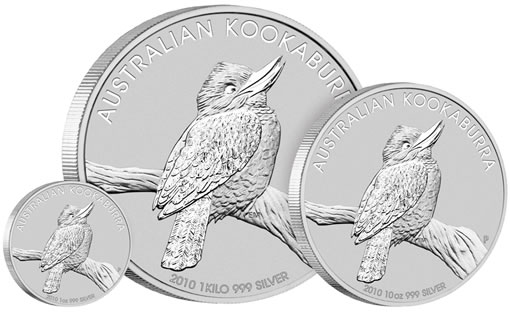 2. Silver coins and bullion are more plentiful than gold
 3. The high price of silver will drive down demand from industry
 4. At the right price, billions of ounces of silver will get recycled
 5. Retail silver investors are fickle/ there is no plan to remonetize silver
 From
From 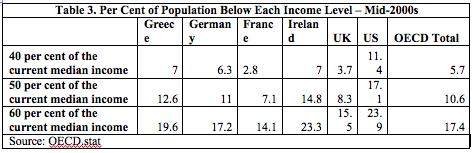
| You are subscribed to email updates from Gold World News Flash 2 To stop receiving these emails, you may unsubscribe now. | Email delivery powered by Google |
| Google Inc., 20 West Kinzie, Chicago IL USA 60610 | |

No comments:
Post a Comment