


saveyourassetsfirst3 |

- The Precious Metals Tsunami
- A Relief Rally For The U.S. Dollar As 'Safe' Alternatives Get Expensive
- 4 Buy And 4 Sell Ideas By Cramer
- 10 Undervalued, Oversold Financial Stocks Offering Good Value
- Never Be Fooled By A Price Pause In Precious Metals Prices
- Central banks and the gold price
- The Decline of Manufacturing in America: The Role of Government Neglect
- China's Gold Reserves
- Wikileaks – China's Shadow Gold Buying Spree
- Ron Paul: Federal Reserve admits they have no gold
- Silver Futurist – Warning for silver investors
- Bob Chapman – Economic Pain For Upholding A Broken System
- WATCH – Precious Metals vs. The Dow Jones
- Sky's the limit for precious metals now, Eric Sprott tells King World News
| Posted: 11 Sep 2011 05:41 AM PDT
By: Goldrunner www.GoldrunnerFractalAnalysis.com A tsunami doesn't start with a bang, but with a whimper. The first sign is a little hump in the water way out in the distance that is barely notable. Anyone who catches a glimpse of it simply continues to expect the day to be the same as the last many days – calm and beautiful waters along the shore. This is the point where we are, today in the Precious Metals (PM) sector. Many have seen the little roll of water out in the distance as Gold edged up in the first move of a more parabolic slope, yet most investors are mired in the same expectations of yesterday – a return for Gold to correct down into a lower base. REVIEW OF OUR EXPECATIONS TO DATE
Summary
To keep abreast of daily developments in what is happening with physical gold and silver, various PM indices and specific gold and silver mining and royalty stocks please subscribe to our service here. To read more of public access articles please go here.
| ||||||||||||||||||||||||||||||||||||||||||||
| A Relief Rally For The U.S. Dollar As 'Safe' Alternatives Get Expensive Posted: 11 Sep 2011 02:14 AM PDT By Dr. Duru: It took a whole month before the dollar finally launched into the relief rally I thought would soon follow the S&P's downgrade of U.S. government debt. Even after the Swiss franc's rein as a "safety" currency ended a few days later – first with a threat and then the implementation of a currency peg – the dollar continued to drift lower. A fresh run on the euro that has sent currency traders scurrying for the dollar instead of the franc has sent the dollar index soaring nearly straight up. In just eight days, the dollar index has gone from scratching at three-year lows to an important breakout. [Click all images to enlarge] The U.S. dollar index breaks out As I have stated before, the 200-day moving average (DMA) has been an important line of support and resistance for the dollar index for year. During its steady descent from 2002 to Complete Story » | ||||||||||||||||||||||||||||||||||||||||||||
| 4 Buy And 4 Sell Ideas By Cramer Posted: 11 Sep 2011 12:17 AM PDT By Osman Gulseven: Jim Cramer is one of the most entertaining and respectable stock pickers in the market. While I enjoy the way he presents his shows, I hardly catch up with him as he makes his suggestions so fast. In the week's last Lightning Round program, he made eight calls, four of them bullish and the other four bearish. I have investigated all of these stock mentions from a fundamental perspective, adding my O-Metrix Grading System where applicable. Here is a fundamental analysis of these stocks from Cramer's Lightning Round :
Complete Story » | ||||||||||||||||||||||||||||||||||||||||||||
| 10 Undervalued, Oversold Financial Stocks Offering Good Value Posted: 11 Sep 2011 12:07 AM PDT By Follow My Alpha: The Price/Sales Ratio is a well known price-multiple valuation metric. This ratio shows investors how much the investment world values every dollar of a firm's sales. A lower ratio signifies more potential investment opportunity. Given the market uncertainty related to financial companies we thought that this would be an interesting metric to use when looking for potential opportunities within the space. We ran a screen for Financial Stocks with a P/S Ratio of 1 or less. From this narrowed pool we then screened for firms that were at least 20% below their 52-Week High. The Forward P/BV Ratio ranks the firms highest to lowest: 1. Citigroup Inc. (C)
The company offers consumer and corporate financial services around the world. The firm's P/S Ratio is 1. C is 48.08% below its 52-Week High. The short interest was 1.90% as Complete Story » | ||||||||||||||||||||||||||||||||||||||||||||
| Never Be Fooled By A Price Pause In Precious Metals Prices Posted: 10 Sep 2011 11:00 PM PDT "The gold currency broke down because one country after another began to disregard the rules. At the same time, the international order crumbled because the prevailing liberal economic order of the last century and the beginning of the 20thcentury began to give way to a more and more socialist, interventionist, or even collectivist order. The new politics killed a currency order which was based on free markets and personal freedom." -Ferdinand Lips from Golden Insights complied by James U. Blanchard lll. The very long trend remains intact. Current stalling is just a Labor Day pause. Next week the metals will rock. "Gold steadied "in limbo" above $1,800 an ounce in New York as investors speculated over whether economic growth is stalling. Reports yesterday showed U.S. business activity and factory orders expanded at a faster pace than economists forecast, while data this week may show U.S. manufacturing contracted for the first time in two years and employment slowed in August. The metal fell today as the dollar climbed to the highest level in almost two weeks versus the euro on concern that Europe's sovereign-debt crisis may worsen." "Market participants continue to struggle for direction" and trading volumes are subdued, Edel Tully, a London-based analyst at UBS AG, wrote in a report. "If the vacuum in data and news persists, gold is likely to remain in limbo for the rest of the week. We view the consolidation in gold, which is forming a base in the low $1,800s, as very healthy and necessary after recent violent price action." About 166,000 bullion contracts were traded on the Comex yesterday, down from about 441,000 on August 24, data on Bloomberg show. The stronger dollar may be pressuring gold today, Daniel Briesemann, an analyst at Commerzbank AG, said today by phone from Frankfurt. Bullion is in the 11th year of a bull market, the longest winning streak since at least 1920 in London, as investors seek to diversify away from equities and some currencies. The metal is up +28% this year, outperforming global stocks, commodities and Treasuries. Exchange-traded-product holdings were little changed at 2,144.5 metric tons yesterday, data compiled by Bloomberg show. Assets reached a record 2,216.8 tons on August 8. The U.S. Mint sold 112,000 ounces of American Eagle gold coins last month, up +74% from July and the most since January, its website showed. Silver coin sales advanced +24% to 3.68 million ounces. Silver for December delivery in New York fell -0.2% to $41.665 an ounce. Platinum for October delivery was down -0.5% at $1,847.50 an ounce. Palladium for December delivery slipped -1.7% to $777 an ounce. -Nicholas Larkin 9-1-11 Bloomberg.net         This posting includes an audio/video/photo media file: Download Now | ||||||||||||||||||||||||||||||||||||||||||||
| Central banks and the gold price Posted: 10 Sep 2011 10:15 PM PDT Last week the Swiss National Bank suddenly announced that it was "no longer going to tolerate a EUR/CHF exchange rate below the minimum rate of CHF1.20". Just before the announcement the ... | ||||||||||||||||||||||||||||||||||||||||||||
| The Decline of Manufacturing in America: The Role of Government Neglect Posted: 10 Sep 2011 06:00 PM PDT As I mentioned in a Labor Day post, I grew up in an America where manufacturing was still the backbone of the economy. I may be more aware of that than most in my age group by virtue of spending much of my childhood in small towns where the local paper mill was the biggest employer. Similarly, when I went to business school, many of my classmates had worked for major manufacturing firms, and the ones who had been in finance (for the most part, two year credit officer programs at major banks) weren't seen as having better backgrounds than their classmates. While as other economies developed, the US share of global production was bound to decline, I'm disturbed by the assumption that labor costs are the sole determinant of success. My contacts is that it is an article of faith in Washington is that the US can be competitive only in finance (and presumably in commodities businesses like agriculture). This story line is terribly convenient, since it gives diseased, greedy, and incompetent American managers and policymakers a free pass. The reason that the attitudes of policymakers matter is that, contrary to popular belief, we do not live in a mythical world of "free trade" but one of managed trade. Other advanced economies have either a formal or informal trade/economic strategy and seem to do better with it than we do? Australia, for instance, has had one of the best growth stories in the new millennium, and that was true even before it got an extra boost from the commodities boom. It also has a more clearly articulated competitive priorities than the US does. For instance, Australia's Commonwealth Scientific and Industrial Research Organisation funds applied research in ten areas, such as Climate Adaptation, Energy, Preventative Health, and Sustainable Agriculture. It's hard to say definitively how much of a difference these efforts make, but I'd hazard that they are meaningful. Australia's position in global wine production has been won on its wine technology, where it is a world leader, and not its terrior. Another example comes today in a story in the New York Times by Louis Uchitelle "Is Manufacturing Falling Off the Radar?" I have to say, it's late to be asking this question. The story is framed around the Veneer Corporation, a company that makes industrial machinery. Verneer would prefer to manufacture in the US, but its owners have had to move some of their production to China. The reason? Not cheaper labor, but government subsidies (and formal or informal local content requirements):
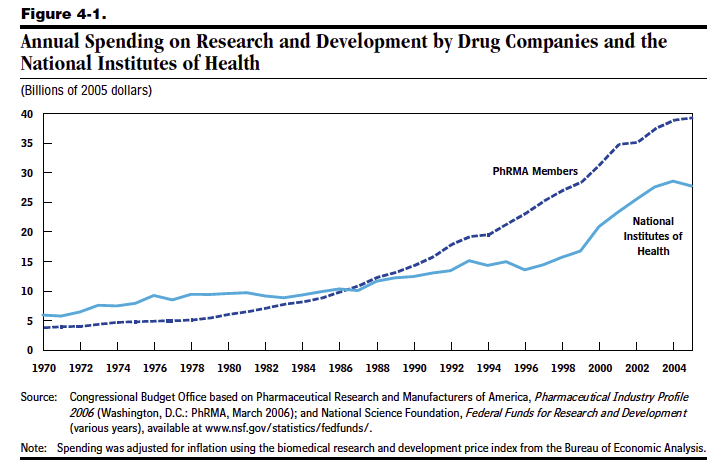
Why do those at the top of the food chain not like manufacturing? Let us count the reasons. It's physical. Plants are located where land is cheap. That usually means in the boonies. Powerful people do not hang out in the boonies. Production facilities are noisy, and often dirty and dangerous (my father knew people who were killed or had limbs ripped off in paper mills). Most of the employees are blue collar workers, while to get in the door at McKinsey, you had to be smart and well educated (even the secretarial jobs required high caliber types). Some readers may react viscerally to the idea of having what amounts to industrial policy. Wake up and smell the coffee, we have it now, by default. As we have discussed, the financial services industry is so heavily subsidized as to not be credibly called private enterprise, save for its governance and compensation structures. Arms merchants benefit not only from government funded research and development, but also from the very long product lives assured by government contracts. Look at the subsidies big Pharma enjoys (and consider: the NIH is the biggest but far from the only source of government R&D dollars. The other big players are National Science Foundation, the National Aeronautics and Space Administration, the Environmental Protection Agency, the Veterans Administration, and other units in the Departments of Energy, Commerce, Defense, and Health and Human Services). While the chart is a tad dated, the basic picture has not changed since then:
The US has hesitated to push back within the WTO framework. It filed cases against China in certain areas (such as tires) only to have China file tit for tat cases against the US (such as poultry). There was a careful effort to keep the dollar amounts at issue in rough correspondence. The Department of Commerce at first seemed interested in, then declined to file cases against Chinese and Indonesian coated paper manufacturers (the particulars were different in each country, but the program was the same: large scale subsidies). Before Commerce made its decision, some source speculated that Obama would turn his back on the unions who were backing this suit rather than ruffle Wen Jiabao, who he was due to see at an upcoming G20 meeting. There are no easy solutions to over 20 years of abandoning manufacturing to pursue a "knowledge economy" when there was no reason to treat this as an either/or decision. But misdiagnosis, via blaming the foot soldiers for the failings of the generals, is certain to keep the US from coming up with better courses of action.
| ||||||||||||||||||||||||||||||||||||||||||||
| Posted: 10 Sep 2011 12:58 PM PDT
Read More @ cables.mrkva.eu ~TVR | ||||||||||||||||||||||||||||||||||||||||||||
| Wikileaks – China's Shadow Gold Buying Spree Posted: 10 Sep 2011 12:47 PM PDT
Read more @ Zerohedge | ||||||||||||||||||||||||||||||||||||||||||||
| Ron Paul: Federal Reserve admits they have no gold Posted: 10 Sep 2011 12:41 PM PDT "The distrust out here by the American people is as deep and severe as I've ever seen… Right now the Federal Reserve is not held in high esteem by many people in this country." – Rep. Walter Jones ~TVR | ||||||||||||||||||||||||||||||||||||||||||||
| Silver Futurist – Warning for silver investors Posted: 10 Sep 2011 12:38 PM PDT I reckon what the message Silver Futurist (SF) is trying to say here is hmm.. what is he trying to say. | ||||||||||||||||||||||||||||||||||||||||||||
| Bob Chapman – Economic Pain For Upholding A Broken System Posted: 10 Sep 2011 12:31 PM PDT From Infowars: Part One Part Two Part Three ~TVR | ||||||||||||||||||||||||||||||||||||||||||||
| WATCH – Precious Metals vs. The Dow Jones Posted: 10 Sep 2011 06:17 AM PDT An illistration of the bull market in metals and bear market in equities.
| ||||||||||||||||||||||||||||||||||||||||||||
| Sky's the limit for precious metals now, Eric Sprott tells King World News Posted: 10 Sep 2011 12:40 AM PDT  Fund manager Eric Sprott today told King World News that the precious metals mining shares have separated from the general equity markets, going up while the rest are going down, and that the sky is the limit for gold and silver, what with currencies, government debt, and banks causing problem after problem. The link to the KWN interview entitled 'Eric Sprott - from Here Silver is a 30 Bagger to $1,200' is here...and I thank Chris Powell for providing the introduction. |
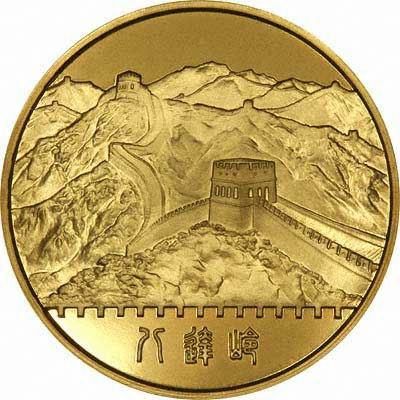 China increases its gold reserves in order to kill two birds with one stone. The China Radio International sponsored newspaper World News Journal (Shijie Xinwenbao)(04/28): "According to China's National Foreign Exchanges Administration China 's gold reserves have recently increased. Currently, the majority of its gold reserves have been located in the U.S. and European countries. The U.S. and Europe have always suppressed the rising price of gold. They intend to weaken gold's function as an international reserve currency. They don't want to see other countries turning to gold reserves instead of the U.S. dollar or Euro. Therefore, suppressing the price of gold is very beneficial for the U.S. in maintaining the U.S. dollar's role as the international reserve currency. China's increased gold reserves will thus act as a model and lead other countries towards reserving more gold. Large gold reserves are also beneficial in promoting the internationalization of the RMB."
 Wondering why gold at $1850 is cheap, or why gold at double that price will also be cheap, or frankly at any price? Because, as the following leaked cable explains, gold is, to China at least, nothing but the opportunity cost of destroying the dollar's reserve status. Putting that into dollar terms is, therefore, impractical at best, and illogical at worst. We have a suspicion that the following cable from the US embassy in China is about to go not viral but very much global, and prompt all those mutual fund managers who are on the golden sidelines to dip a toe in the 24 karat pool. The only thing that matters from China's perspective is that "suppressing the price of gold is very beneficial for the U.S. in maintaining the U.S. dollar's role as the international reserve currency. China's increased gold reserves will thus act as a model and lead other countries towards reserving more gold. Large gold reserves are also beneficial in promoting the internationalization of the RMB." Now, what would happen if mutual and pension funds finally comprehend they are massively underinvested in the one asset which China is without a trace of doubt massively accumulating behind the scenes is nothing short of a worldwide scramble, not so much for paper, but every last ounce of physical gold…
| You are subscribed to email updates from Gold World News Flash 2 To stop receiving these emails, you may unsubscribe now. | Email delivery powered by Google |
| Google Inc., 20 West Kinzie, Chicago IL USA 60610 | |

No comments:
Post a Comment