


Gold World News Flash |

- The whole story behind Nixon closing the ‘gold window.’ Plus; $7,000 gold?
- The idea is simply to re-introduce an additional gold-coin currency in Switzerland on the constitutional level
- Rickards - KWN Special Release, US Will Revalue Gold to $7,000
- Gene Arensberg: Comex swap dealers cover gold shorts like a big dog
- Gold Mining in Peru
- 1K Challenge
- Thomas Jacob on the New Swiss Gold Franc, Why the EU Is a Bad Idea
- The Sun Chairman, What's Future Is Prologue, And Why The Second French Revolution Is Coming To America
- The Sun Chairman, What's Future Is Prologue, And Why The Second French Revolution Is Coming To America
- Casino-Gulag: Zynga dollars and online gambling to replace US dollar reserve notes and ‘jobs’ in America
- Guest Post: Bernanke Pledges To Screw Your Grandmother For At Least Two More Years
- Jump in Gold Price –What Did It Really Say?
- The seasonality for Silver Futures (SI) Continuous Contract for the past 20 years.
- Silver Gold Calculator Available at iTunes! Are You Ready for “JUST DO IT” Currency?
- At 50x Leverage And 2% Tier 1 Capital, Is SocGen Truly A Paragon Of Balance Sheet Invincibility?
- BERNANKE PLEDGES TO SCREW YOUR GRANDMOTHER FOR AT LEAST TWO MORE YEARS
- Guest Post: The Market From The Eyes Of An 8 Year Old
- 5 Reasons Why American Riots Will Be the Worst in the World
- COMEX Swap Dealers Cover Gold Shorts like a Big Dog
- Italy Is The New Greece, As Strikes Shift From Syntagma Square To Rome
- Debt Collapse – The Case For $20,000oz Gold (Coming August 17th)
- “You Can’t Print Gold”: Credit Agencies Still Giving Central Bankers Too Much Credit. “China never threatened to default!”
- Global Stock and Financial Market Confidence Meltdown
- Muddling As The Economy Sinks
- John Embry interview with James Turk at GATA's Gold Rush 2011
- Dorothy's silver shoes or the re-monetization of the silver currency of the United States of America
- Murray Pollitt: Glue factory
- Eric Sprott will keynote Silver Summit Oct. 20-21 in Spokane, Wash.
- Gold and silver currency calculator offered by Sanders and Fitts
- Was the Fed move really QE3?
| The whole story behind Nixon closing the ‘gold window.’ Plus; $7,000 gold? Posted: 14 Aug 2011 07:38 PM PDT Rickards – KWN Special Release, US Will Revalue Gold to $7,000
| ||||
| Posted: 14 Aug 2011 04:14 PM PDT Thomas Jacob on the New Swiss Gold Franc, Why the EU Is a Bad Idea and Why an IMF Managed Currency Would Be Tragic
| ||||
| Rickards - KWN Special Release, US Will Revalue Gold to $7,000 Posted: 14 Aug 2011 04:05 PM PDT  With today being the 40th Anniversary of Nixon taking the US off of the gold standard, today King World News interviewed KWN Resident Expert Jim Rickards, Senior Managing Director at Tangent Capital Markets, to get his take on that historic event and where the US is headed forty years later. When asked about Nixon's move in 1971 Rickards stated, "It is indeed a very significant date in the history of the international monetary system. August 15th, 1971, was the day that Nixon closed the gold window. By the way that's a very technical term, I mean everyone says Nixon took us off the gold standard, it's not exactly what he did. With today being the 40th Anniversary of Nixon taking the US off of the gold standard, today King World News interviewed KWN Resident Expert Jim Rickards, Senior Managing Director at Tangent Capital Markets, to get his take on that historic event and where the US is headed forty years later. When asked about Nixon's move in 1971 Rickards stated, "It is indeed a very significant date in the history of the international monetary system. August 15th, 1971, was the day that Nixon closed the gold window. By the way that's a very technical term, I mean everyone says Nixon took us off the gold standard, it's not exactly what he did. What was going on at the time was that the official price of gold was $35 an ounce. When you were a country and you cashed in dollars at the US Treasury that's how much gold you got, you got your gold at $35 an ounce. That was how countries settled up with each other."
This posting includes an audio/video/photo media file: Download Now | ||||
| Gene Arensberg: Comex swap dealers cover gold shorts like a big dog Posted: 14 Aug 2011 03:48 PM PDT 11:50p ET Sunday, August 14, 2011 Dear Friend of GATA and Gold (and Silver): Gene Arensberg's update at the Got Gold Report tells of a great amount of short covering in gold. It's headlined "Comex Swap Dealers Cover Gold Shorts Like a Big Dog" and you can find it here: http://www.gotgoldreport.com/2011/08/comex-swap-dealers-cover-gold-short... CHRIS POWELL, Secretary/Treasurer ADVERTISEMENT Lewis E. Lehrman on How to Solve the U.S. Debt Problem Lewis E. Lehrman, chairman of the Lehrman Institute, sponsor of The Gold Standard Now project, advises that to reduce the $1 1/2 trillion U.S. deficit, the Republican Party must initiate an investment program. Working Americans are not saving, which enables the banks to lead the country into a cycle of debt, leverage, boom, panic, and bust. Lehrman says: Eliminating the budget deficit of a trillion and a half dollars cannot be done overnight. The proposal by U.S. Rep. Paul Ryan was very dramatic -- one Republican called it radical -- but it was not happily received. The solution, of course, is to design an American program for prosperity, because you can solve these entitlement problems with a growing economy. We need a tremendous program of investment, and investment comes from savings. When you pay savers, middle-income professionals, and working people 0 percent at the bank, you are not going to encourage them to save. Then we are left with a bank cycle of debt, leverage, boom, panic, and bust." To read more and to sign up for The Gold Standard Now's free, noncommercial, weekly report, "Prosperity through Gold," please visit: http://www.thegoldstandardnow.org/gata Join GATA here: Toronto Resource Investment Conference http://cambridgehouse.com/conference-details/toronto-resource-investment... The Silver Summit http://cambridgehouse.com/conference-details/the-silver-summit-2011/48 New Orleans Investment Conference http://www.neworleansconference.com/ Support GATA by purchasing gold and silver commemorative coins: https://www.amsterdamgold.eu/gata/index.asp?BiD=12 Or by purchasing a colorful GATA T-shirt: Or a colorful poster of GATA's full-page ad in The Wall Street Journal on January 31, 2009: http://gata.org/node/wallstreetjournal Or a video disc of GATA's 2005 Gold Rush 21 conference in the Yukon: Help keep GATA going GATA is a civil rights and educational organization based in the United States and tax-exempt under the U.S. Internal Revenue Code. Its e-mail dispatches are free, and you can subscribe at: To contribute to GATA, please visit: ADVERTISEMENT Sona Drills 85.4g Gold/Ton Over 4 Metres at Elizabeth Gold Deposit, Company Press Release, October 27, 2010 VANCOUVER, British Columbia -- Sona Resources Corp. reports on five drillling holes in the third round of assay results from the recently completed drill program at its 100 percent-owned Elizabeth Gold Deposit Property in the Lillooet Mining District of southern British Columbia. Highlights from the diamond drilling include: -- Hole E10-66 intersected 17.4g gold/ton over 1.54 metres. -- Hole E10-67 intersected 96.4g gold/ton over 2.5 metres, including one assay interval of 383g of gold/ton over 0.5 metres. -- Hole E10-69 intersected 85.4g gold/ton over 4.03 metres, including one assay interval of 230g gold/ton over 1 metre. Four drill holes, E10-66 to E10-69, targeted the southwestern end of the Southwest Vein, and three of the holes have expanded the mineralized zone in that direction. The Southwest Vein gold mineralization has now been intersected over a strike length of 325 metres, with the deepest hole drilled less than 200 metres from surface. "The assay results from the Southwest Zone quartz vein continue to be extremely positive," says John P. Thompson, Sona's president and CEO. "We are expanding the Southwest Vein, and this high-grade gold mineralization remains wide open down dip and along strike to the southwest." For the company's full press release, please visit: http://sonaresources.com/_resources/news/SONA_NR19_2010.pdf
| ||||
| Posted: 14 Aug 2011 03:37 PM PDT Gold has been making headlines again recently, soaring past $1,800 an ounce before falling back at mid-week, but the news isn't all good in some parts of the world such as Peru. Go to a place like Elko, Nevada and you'll see a similar gold mining boom that seems to be benefiting nearly everyone in the community. Given the state of the rest of the labor market, you're not likely to see any protests there, most workers just being happy to have a job that pays a decent wage, not really minding too much that they're out in the middle of nowhere.
| ||||
| Posted: 14 Aug 2011 03:22 PM PDT [U]www.preciousmetalstockreview.com August 13, 2011[/U] To say it was a volatile week would be an understatement. Wild, fast swings of 400 points or more in the Dow is something we rarely see. In this type of market avoidance is the goal for most including us. While our dividend paying stocks are holding up well and our mining portfolio is also doing well for the most part with a few soaring with the rise in gold. We’ve been in cash the whole week in our swing trading portfolio and we’re bidding our time letting the game come to us. We like to take on trades that will last at least a few days or weeks, not minutes. That being said, with the volatility and lack of action I’ve decided to take on a challenge. The 1k Challenge. The idea is that I’ll be using Twitter to send out real time buys and sells that I am doing with an initial 1k. I’m not advocating anyone else try to follow me, rather observe...
| ||||
| Thomas Jacob on the New Swiss Gold Franc, Why the EU Is a Bad Idea Posted: 14 Aug 2011 03:18 PM PDT ... and Why an IMF Managed Currency Would Be Tragic Sunday, August 14, 2011 – with Anthony Wile Thomas Jacob The Daily Bell is pleased to present this exclusive interview with Thomas Jacob (left) . Introduction: Mr. Jacob studied economics at Zurich University and spent a year as an exchange student in Indianapolis. Afterward, Mr. Jacob attended Swissair pilot school and spent 15 years as an airline pilot flying the DC10, DC9, B747 and A320. During his time as a pilot, Mr. Jacob had time to “indulge extensively” in his interests in free-market economics, libertarianism and people worldwide. As he says, “It all began with Ayn Rand.” Thomas Jacob attended several Mises University courses and many ISIL conferences during this time of intensive study of Austrian economics, all of whi...
| ||||
| Posted: 14 Aug 2011 02:40 PM PDT
It may come as a surprise to some that the very same type of central planning that Bernanke, and his central banking brethren, are trying to inflict (and failing) upon the world, was the same that was attempted on so many occasions in history, most poignantly, and catastrophically in the late stages of the French monarchy. Needless to say the attempts by one man to control a far simpler French economy well over two centuries ago failed, yet ironically, not even then did the economy reach our current level of collapse. Which begs the question: how long until our own "Sun Chairman" finally forces the hundreds of millions of great unwashed out of their hypontic trance following the realization that their "equity" in the great American experiment, their pensions, lifetime accrued benefits, retirement funds, and of course savings, have been completely wipde out, and another historic 'storming', only this time not of the Bastille, but of the Marriner Eccles building, the focal point of all that is broken with not only America but the world, finally ensues. Just as over 200 years ago, the longer the wait, the greater the ultimate loss for the working class... and the blooder the ultimate outcome for the modern day iteration of the clergy and aristocracy, also known as contemporary politicians and bankers. And to those saying we are getting ahead of ourselves, we borrow a phrase from the lexicon of unconventional wisdom: "this time is never different." From Sean Corrigan: If It's Broke, Don't Fix It In Elgin Groseclose's magisterial 'Money and Man', the following, eerily contemporary quote appears in his chapter on paper money:-
So, we are told, wrote Albert Despaux of the practices of the French regime under Louis XIV during the final, disastrous twenty-five years of his reign. Indeed, upon first examining the accounts, after seven decades of chronic warfare and costly ritual, the incoming administration was to discover that matters were even more dire than they had originally been led to believe – even without a helpful Wall St. broker-dealer to help anyone cook the books beforehand. As the Duc de Noailles – the new chief of the Council of Finance– wrote to the dead king's chief concubine, in the autumn of 1715:
Plus ça change, one cannot refrain from remarking. Though we must factor a larger margin of error into his accounts than we must apply to even our own governments' dubious estimates, it seems that the sunset of le Roi Soleil was accompanied by an annual expenditure of the order of 236 million livres – of which some 86 million was interest payable on the debt – against which revenues of only some 150 million livres could be found. Total debt amounted to perhaps 3 billion livres, implying an average interest rate just south of 3% which is, ironically, much the same as that enjoyed by Uncle Sam today. The annual deficit, therefore, amounted to some 43% of revenue, or 30% of outlays – still below the Bernholz accelerating inflation threshold of 66% and 40%, respectively, even if not exactly a testimony of rude fiscal health. Things had been deteriorating for quite some time before this, so that, overall, the grand Bourbon's debt rose twentyfold in thirty years. By way of comparison, the imperial presidency in Washington has allowed its own count of obligations to climb a not wholly incomparable fifteenfold in a like period of time. It is of note, then, that the abject financial state to which Louis' vainglory had reduced his realm compares fairly favourably with that produced by a similar threescore years-and-ten of military welfarism in his successors' populist republic, where the latest €150bln deficit represents 54% of receipts and 35% of expenditures – and the old satyr's performance looks even more attractive beside the newly ex-AAA United States' tally of 60% and 38%. Moreover, whereas the currency doctoring of which Despaux so disapproved was the culmination of a 66-year process during which the livre was devalued 40% in terms of gold and 35% in terms of silver (for a mean inflation rate of 0.8%!), that same proportionate loss of gold value has occurred to the livre's paper descendants in just the last sixteen-eighteen months – much less the last six-seven decades. Moreover, in the same, two-generation period up to the present, the US dollar has lost 98% of its gold and over 99% of its silver value, with the franc putting up an even poorer showing beside it. Even in CPI terms, the US dollar buys only 8% of what it did in 1945, a 3.8% annualized drop whose overall extent it has taken successive French governments something of the order of fifty years to accomplish at the compounded 4.7% rate prevailing in l'Hexagone. The consequences of the penury of the early eighteenth-century French state are well known to students of human folly, for these were the all-too familiar circumstances in which the regent, the personally extravagant Duc d'Orleans - eschewing both politically unpalatable alternatives of swingeing austerity or outright default - turned to the twisted, Scots genius of John Law, that patron saint of underconsumptionist currency quacks and the honorary founding-father of latter-day central banking. The broad thrust of the insanity and wastefulness unleashed by this pecuniary Pandora are perhaps too well known to bear overmuch repetition here, but what should be emphasised is that Law – like Bernanke – at first tried to argue that he was not some crude inflationist, but merely arranging an asset-swap of paper money for mortgages. He also held, like all of his ilk who have succeeded him, that the panacea for a nation groaning under an insupportable burden of debt and famished for a lack of productive capital was the emission of more and more money. This age old error of confusing the medium of exchange with the object of exchange is one we continue to commit. It as if a man's thirst can be slaked by giving him a box of drinking straws or his appetite sated by kitting him out with a shopping basket. Soon, enough, for all his astuteness, the malign side-effects of Law's scheme made themselves felt, not the least of them, the distress occasioned to the ordinary household by the rising price of necessities in a world simultaneously subject to the blatant vulgarities of the rising mob of instant, speculative 'millionaires' (as the new phrase had it). Just as we have learned all over again, such disadvantages came rapidly to overwhelm the largely incidental fillip the inflation accorded to genuine economic activity. Unabashed, our Caledonian conjuror could only plunge ever further into a maze of bewildering – and often contradictory – expedients of his own construction, blurring the lines between state debt and public equity, between common stock and bank money; banning, then re-instating the use of gold and silver and altering their official parities with mind-numbing speed until all trust in his System – its specious virtues so recently extolled to the heavens – collapsed and France lay broken alongside it. So, too, do we – the voluntary legatees of John Law – face a world which is seemingly broken, in its turn. Sauve qui peut! With the PR-man's trained ear for a catchy phrase, that emptiest of empty suits, UK PM David Cameron declared, in the aftermath of this week's appalling display of mass barbarism, that society in the unhappy land over which he shakily exercises power was 'broken' – to the ill-concealed schadenfreude of much of the continental press, many of whose own cities still bear the scars of similar irruptions of the Noble Savages whom their Provider States have so successfully reared in the moral wasteland of their sprawling favelas and seething bainlieues. Painted in oscillating shades of red and green on our dealing screens, we can also see the full, epileptic frenzy of our broken financial markets, no longer evidence of the rational allocation of hard-spared capital to the enriching process of patient and diligent entrepreneurship, but a wild, computer-driven video arena where countless billions swarm into and out of the sea of tickers from one micro-second to the next, with each successive ebb and flow of this leveraged flood further reducing the informational content of the associated prices and so defeating the very purpose of the capital market itself. Many disparate classes of 'assets' had spent eight months trading ever more closely bound to one another on the wave of Bernanke's last, fatuous, Rooseveltian 'experiment' of QEII. So it was that the expiry of that nakedly cynical programme, at a time when the underlying macro-data had rather predictably started to turn sour, left a vacuum behind the broken-record promises of the stock promoters. Unfortunately, the milling Herd to whose members they exist to whisper their blandishments – much like Nature herself – absolutely abhors a vacuum. A long time ago, we first wrote about what we had come to recognise as the bipolar tendency of financial orthodoxy to undergo opposing, Kuhnian revolutions of its Groupthink every six to twelve months, or so. Typically, the players first persuade themselves of the validity of an often arbitrary, but usually bullish, scenario which, by dint of constant repetition and uncritical mimicry comes not only to serve as a dogma, but one which each believer professes to have discovered for himself. Along the way, all objective data and governmental statistics which can possibly be construed to support this scenario are talked up and re-transmitted in confirmation of the first idea: those which cannot be so re-interpreted are simply ignored as 'outliers' by all except the small cluster of much-derided contrarians and habitual Cassandras. Eventually, as the trend matures and its espousal becomes near universal, it begins to lose its onward momentum. Now, for the first time, the dissonant evidence, which has long been accumulating, begins to excite a certain uneasiness in the Jungian mass consciousness. Finally, the trend turns – sometimes to, but often absent, the accompaniment of some unanimously-recognised trigger event – and the first losses start to be taken by those latecomers caught in the reversal. As each successively lesser, Greater Fool sells out, cursing himself that he always buys the top, as he does, he encourages another of this time's Smart(er) Money men to quit while he's ahead, too. So, each initial trickle dislodges more and more of those clinging precariously to the edges of a now-vertiginous slope below, until the first, trivial setback snowballs its way into a screaming avalanche of head-in-the-hands liquidation. Now, at this point of maximum dislocation and mental discomfort, all those inconvenient developments which should have long since called the move into question are suddenly rediscovered and - lo! – they crystallise instantly into the foundational themes of a counter-trend of equal and opposite conviction. Sadly for them, the earlier naysayers will find no belated applause for being right, being despised for their pusillanimous refusal to play the game if they say, 'I told you so' and being anyway doomed to seeing their premature insights co-opted shamelessly – and without the slightest attribution - by the post hoc rationalisations of a consensus-hugging crowd soon avidly blowing themselves an anti-bubble to replace the inflated soapskin of ill-starred hope which has just imploded all around them. So it has been here, too, with the Shock! Horror! Hoocoodanode? of the downwardly-revised US GDP numbers; the farce of the WWF grand slam which was the Federal budget dispute; and the ritual slaying of the sacred cow of that nation's undeserved prime credit rating. Up until that point even the yawning cracks opening up around the foundations of the Eurozone could largely be ignored in the eagerness to buy a small section of Blue Sky, but, once sufficient self-doubt was ignited in some corner of that Gordian tangle of correlated and cross-margined trade in which the near-free leverage of QE-II had enmeshed everyone, that ongoing turmoil also became one of the defining features of the new bearishness and its expression in market pricing became violently intensified as a result. So the first sparks of panic were struck to find a ready kindling among the garish paraphernalia of illusion piled high behind the flats and tableaus which comprised the backstage clutter in the Theatre of the Absurd where the 'Great Global Recovery' play had been enjoying its unbroken, 15-month run. In time-honoured fashion, a mad rush for the exits soon followed.
| ||||
| Posted: 14 Aug 2011 02:40 PM PDT
It may come as a surprise to some that the very same type of central planning that Bernanke, and his central banking brethren, are trying to inflict (and failing) upon the world, was the same that was attempted on so many occasions in history, most poignantly, and catastrophically in the late stages of the French monarchy. Needless to say the attempts by one man to control a far simpler French economy well over two centuries ago failed, yet ironically, not even then did the economy reach our current level of collapse. Which begs the question: how long until our own "Sun Chairman" finally forces the hundreds of millions of great unwashed out of their hypnotic trance following the realization that their "equity" in the great American experiment, their pensions, lifetime accrued benefits, retirement funds, and of course savings, have been completely wiped out, and another historic 'storming', only this time not of the Bastille, but of the Marriner Eccles building, the focal point of all that is broken with not only America but the world, finally ensues. Just as over 200 years ago, the longer the wait, the greater the ultimate loss for the working class... and the bloodier the ultimate outcome for the modern day iteration of the clergy and aristocracy, also known as contemporary politicians and bankers. And to those saying we are getting ahead of ourselves, we borrow a phrase from the lexicon of unconventional wisdom: "this time is never different." From Sean Corrigan: If It's Broke, Don't Fix It In Elgin Groseclose's magisterial 'Money and Man', the following, eerily contemporary quote appears in his chapter on paper money:-
So, we are told, wrote Albert Despaux of the practices of the French regime under Louis XIV during the final, disastrous twenty-five years of his reign. Indeed, upon first examining the accounts, after seven decades of chronic warfare and costly ritual, the incoming administration was to discover that matters were even more dire than they had originally been led to believe – even without a helpful Wall St. broker-dealer to help anyone cook the books beforehand. As the Duc de Noailles – the new chief of the Council of Finance– wrote to the dead king's chief concubine, in the autumn of 1715:
Plus ça change, one cannot refrain from remarking. Though we must factor a larger margin of error into his accounts than we must apply to even our own governments' dubious estimates, it seems that the sunset of le Roi Soleil was accompanied by an annual expenditure of the order of 236 million livres – of which some 86 million was interest payable on the debt – against which revenues of only some 150 million livres could be found. Total debt amounted to perhaps 3 billion livres, implying an average interest rate just south of 3% which is, ironically, much the same as that enjoyed by Uncle Sam today. The annual deficit, therefore, amounted to some 43% of revenue, or 30% of outlays – still below the Bernholz accelerating inflation threshold of 66% and 40%, respectively, even if not exactly a testimony of rude fiscal health. Things had been deteriorating for quite some time before this, so that, overall, the grand Bourbon's debt rose twentyfold in thirty years. By way of comparison, the imperial presidency in Washington has allowed its own count of obligations to climb a not wholly incomparable fifteenfold in a like period of time. It is of note, then, that the abject financial state to which Louis' vainglory had reduced his realm compares fairly favourably with that produced by a similar threescore years-and-ten of military welfarism in his successors' populist republic, where the latest €150bln deficit represents 54% of receipts and 35% of expenditures – and the old satyr's performance looks even more attractive beside the newly ex-AAA United States' tally of 60% and 38%. Moreover, whereas the currency doctoring of which Despaux so disapproved was the culmination of a 66-year process during which the livre was devalued 40% in terms of gold and 35% in terms of silver (for a mean inflation rate of 0.8%!), that same proportionate loss of gold value has occurred to the livre's paper descendants in just the last sixteen-eighteen months – much less the last six-seven decades. Moreover, in the same, two-generation period up to the present, the US dollar has lost 98% of its gold and over 99% of its silver value, with the franc putting up an even poorer showing beside it. Even in CPI terms, the US dollar buys only 8% of what it did in 1945, a 3.8% annualized drop whose overall extent it has taken successive French governments something of the order of fifty years to accomplish at the compounded 4.7% rate prevailing in l'Hexagone. The consequences of the penury of the early eighteenth-century French state are well known to students of human folly, for these were the all-too familiar circumstances in which the regent, the personally extravagant Duc d'Orleans - eschewing both politically unpalatable alternatives of swingeing austerity or outright default - turned to the twisted, Scots genius of John Law, that patron saint of underconsumptionist currency quacks and the honorary founding-father of latter-day central banking. The broad thrust of the insanity and wastefulness unleashed by this pecuniary Pandora are perhaps too well known to bear overmuch repetition here, but what should be emphasised is that Law – like Bernanke – at first tried to argue that he was not some crude inflationist, but merely arranging an asset-swap of paper money for mortgages. He also held, like all of his ilk who have succeeded him, that the panacea for a nation groaning under an insupportable burden of debt and famished for a lack of productive capital was the emission of more and more money. This age old error of confusing the medium of exchange with the object of exchange is one we continue to commit. It as if a man's thirst can be slaked by giving him a box of drinking straws or his appetite sated by kitting him out with a shopping basket. Soon, enough, for all his astuteness, the malign side-effects of Law's scheme made themselves felt, not the least of them, the distress occasioned to the ordinary household by the rising price of necessities in a world simultaneously subject to the blatant vulgarities of the rising mob of instant, speculative 'millionaires' (as the new phrase had it). Just as we have learned all over again, such disadvantages came rapidly to overwhelm the largely incidental fillip the inflation accorded to genuine economic activity. Unabashed, our Caledonian conjuror could only plunge ever further into a maze of bewildering – and often contradictory – expedients of his own construction, blurring the lines between state debt and public equity, between common stock and bank money; banning, then re-instating the use of gold and silver and altering their official parities with mind-numbing speed until all trust in his System – its specious virtues so recently extolled to the heavens – collapsed and France lay broken alongside it. So, too, do we – the voluntary legatees of John Law – face a world which is seemingly broken, in its turn. Sauve qui peut! With the PR-man's trained ear for a catchy phrase, that emptiest of empty suits, UK PM David Cameron declared, in the aftermath of this week's appalling display of mass barbarism, that society in the unhappy land over which he shakily exercises power was 'broken' – to the ill-concealed schadenfreude of much of the continental press, many of whose own cities still bear the scars of similar irruptions of the Noble Savages whom their Provider States have so successfully reared in the moral wasteland of their sprawling favelas and seething bainlieues. Painted in oscillating shades of red and green on our dealing screens, we can also see the full, epileptic frenzy of our broken financial markets, no longer evidence of the rational allocation of hard-spared capital to the enriching process of patient and diligent entrepreneurship, but a wild, computer-driven video arena where countless billions swarm into and out of the sea of tickers from one micro-second to the next, with each successive ebb and flow of this leveraged flood further reducing the informational content of the associated prices and so defeating the very purpose of the capital market itself. Many disparate classes of 'assets' had spent eight months trading ever more closely bound to one another on the wave of Bernanke's last, fatuous, Rooseveltian 'experiment' of QEII. So it was that the expiry of that nakedly cynical programme, at a time when the underlying macro-data had rather predictably started to turn sour, left a vacuum behind the broken-record promises of the stock promoters. Unfortunately, the milling Herd to whose members they exist to whisper their blandishments – much like Nature herself – absolutely abhors a vacuum. A long time ago, we first wrote about what we had come to recognise as the bipolar tendency of financial orthodoxy to undergo opposing, Kuhnian revolutions of its Groupthink every six to twelve months, or so. Typically, the players first persuade themselves of the validity of an often arbitrary, but usually bullish, scenario which, by dint of constant repetition and uncritical mimicry comes not only to serve as a dogma, but one which each believer professes to have discovered for himself. Along the way, all objective data and governmental statistics which can possibly be construed to support this scenario are talked up and re-transmitted in confirmation of the first idea: those which cannot be so re-interpreted are simply ignored as 'outliers' by all except the small cluster of much-derided contrarians and habitual Cassandras. Eventually, as the trend matures and its espousal becomes near universal, it begins to lose its onward momentum. Now, for the first time, the dissonant evidence, which has long been accumulating, begins to excite a certain uneasiness in the Jungian mass consciousness. Finally, the trend turns – sometimes to, but often absent, the accompaniment of some unanimously-recognised trigger event – and the first losses start to be taken by those latecomers caught in the reversal. As each successively lesser, Greater Fool sells out, cursing himself that he always buys the top, as he does, he encourages another of this time's Smart(er) Money men to quit while he's ahead, too. So, each initial trickle dislodges more and more of those clinging precariously to the edges of a now-vertiginous slope below, until the first, trivial setback snowballs its way into a screaming avalanche of head-in-the-hands liquidation. Now, at this point of maximum dislocation and mental discomfort, all those inconvenient developments which should have long since called the move into question are suddenly rediscovered and - lo! – they crystallise instantly into the foundational themes of a counter-trend of equal and opposite conviction. Sadly for them, the earlier naysayers will find no belated applause for being right, being despised for their pusillanimous refusal to play the game if they say, 'I told you so' and being anyway doomed to seeing their premature insights co-opted shamelessly – and without the slightest attribution - by the post hoc rationalisations of a consensus-hugging crowd soon avidly blowing themselves an anti-bubble to replace the inflated soapskin of ill-starred hope which has just imploded all around them. So it has been here, too, with the Shock! Horror! Hoocoodanode? of the downwardly-revised US GDP numbers; the farce of the WWF grand slam which was the Federal budget dispute; and the ritual slaying of the sacred cow of that nation's undeserved prime credit rating. Up until that point even the yawning cracks opening up around the foundations of the Eurozone could largely be ignored in the eagerness to buy a small section of Blue Sky, but, once sufficient self-doubt was ignited in some corner of that Gordian tangle of correlated and cross-margined trade in which the near-free leverage of QE-II had enmeshed everyone, that ongoing turmoil also became one of the defining features of the new bearishness and its expression in market pricing became violently intensified as a result. So the first sparks of panic were struck to find a ready kindling among the garish paraphernalia of illusion piled high behind the flats and tableaus which comprised the backstage clutter in the Theatre of the Absurd where the 'Great Global Recovery' play had been enjoying its unbroken, 15-month run. In time-honoured fashion, a mad rush for the exits soon followed.
| ||||
| Posted: 14 Aug 2011 02:03 PM PDT Escape into the cloud. Gambling and Zynga dollars for all. Upload your soul to Disney and R.I.P. Starved Budgets Inspire New Look at Web Gambling
| ||||
| Guest Post: Bernanke Pledges To Screw Your Grandmother For At Least Two More Years Posted: 14 Aug 2011 01:54 PM PDT Submitted by Jim Quinn of The Burning Platform Bernanke Pledges To Screw Your Grandmother For At Least Two More Years "A system of capitalism presumes sound money, not fiat money manipulated by a central bank. Capitalism cherishes voluntary contracts and interest rates that are determined by savings, not credit creation by a central bank." - Ron Paul I wonder what goes through Ben Bernanke's mind as he sits in his gold plated boardroom in the majestic Marriner Eccles building in Washington DC and decides to screw grandmothers in order to further enrich Wall Street bankers. He just pledged to keep interest rates at zero percent for two more years. Ben is a supposedly book smart man. Does he have no guilt or shame for what he has wrought? How does he sleep at night knowing he has created bloody revolutions around the globe due to his inflationary zero interest policy? People are dying because he has decided that an elite group of Wall Street bankers who recklessly brought down the worldwide financial system in 2008 deserve to be kept alive and enriched at the expense of the many. He uses words like transitory to describe inflation. Even as the price of gold reveals his lies he continues to promote policies that will lead to the demise of the USD and our economic system. There is only one way to counter his lies – truth. With a corporate fascist government run by the few for the benefit of the few, telling the truth is treason as stated by Ron Paul: "Truth is treason in the empire of lies." The storyline being sold to you by Bernanke, his Wall Street masters, and their captured puppets in Washington DC is that deflation is the great bogeyman they must slay. They make these statements from their ivory jewel encrusted towers as the real people in the real world deal with reality. The reality since Ben Bernanke announced his QE2 policy in August 2010 is:
These are the facts and they fly in the face of the lies being spouted by Bernanke and his Federal Reserve cronies. Words like transitory, quantitative easing, extended period, and liquidity are used by Professor Bernanke to obscure what he is doing to the average American. He lives in a world of theories and models, while the rest of us live in the real world, where theories kill and impoverish millions. There are 40 million Americans over the age of 65 today. You might even know a few of them. There will be 10,000 people per day joining their ranks for the next nineteen years as the Baby Boomers retire en masse. The vast majority of these senior citizens are risk averse. Some disturbing facts reveal the true picture for seniors today:
This data sets the scene for the crime of the century committed by Ben Bernanke and his co-conspirators on the Federal Reserve Board. The easiest way to understand how Ben has screwed seniors and savers to pay off his Wall Street and K Street benefactors is to use a real life example. A seventy five year old widow living in her paid off row home, bought in 1955, gets by on her annual social security income of $17,000 and the income generated from the $125,000 in retirement savings left from her husband's forty years working as a truck driver. She is a child of the Depression, financially unsophisticated and risk averse. This describes most senior citizens. The widow and her late husband were only comfortable investing their money in CDs and money market funds. In 2007, before the Wall Street created financial collapse, savers and risk averse senior citizens could earn 5% in a money market fund, 5.5% in a 2 year CD and 6% in a 5 year CD. The widow could supplement her meager social security income with an additional $6,000 of interest income. This money was used to pay the ever increasing real estate taxes, medical insurance premiums, upkeep on the old house, and necessities like food, fuel, insurance and heating. Fast forward four years to 2011. Savers and seniors are getting average interest rates on 6-month CDs this week of 0.58% nationwide, according to Bankrate.com. Rates on one-year CDs fell this week to 0.86%, while 5- year CDs fetched 2.04%. Money market funds are paying a pitiful 0.16% on average. The widow that was able to generate a risk free $6,000 only four years ago has only been able to generate less than $500 per year for the last three years. In addition, the government manipulated CPI, as calculated by the drones at the Bureau of Labor Statistics, was used to deny senior citizens an increase in their Social Security payments for the last two years. Meanwhile, the prices of food, fuel, clothing, insurance, medical care, and local taxes have been skyrocketing due to Federal Reserve created inflation. Do you think the number of Americans on food stamps surging from 26.3 million in 2007 to 45.8 million today has anything to do with Bernanke's zero interest rate, inflationary policies? This is not a theoretical hypothesis. Ben Bernanke has purposely sacrificed the savers and seniors in this country at the satanic altar of his Wall Street high priests of debt. According to the BEA data on personal income, in the 3rd quarter of 2008 savers and seniors were able to earn $1.42 trillion of interest income. By the 3rd quarter of 2010 these same people were only able to earn $984 billion of interest income due to Ben Bernanke's zero interest rate policy. Make no mistake about it, the $436 billion difference was taken out of the pockets of senior citizens and Americans trying to save for their futures and deposited into the accounts of the mega-Wall Street banks that destroyed our financial system with their reckless greed induced debt toga party. The beneficiaries of zero interest rates, QE1, QE2, and all future QEs are Wall Street bankers and heavily indebted entities – namely our profligate Federal Government, who make drunken sailors, seem fiscally responsible. The victims of zero interest rates and quantitative easing are savers and risk averse senior citizens as their income has plummeted and inflation has ravaged their everyday existence. Meanwhile, the Wall Street fat cats have paid themselves over $70 billion in bonuses since 2008. The fantasy world of moderate inflation is a myth created by the Federal Reserve in conjunction with the government bureaucrats in Washington DC. These people have tortured the CPI calculation worse than a Muslim being water boarded at Guantanamo Bay. Alan Greenspan, bubble blower extraordinaire, began the process of systematically screwing grandmothers in the 1980s. As a way to hide and obscure the true level of inflation caused by running endless deficits supporting a welfare/warfare empire, Greenspan and Clinton implemented devious adjustments to the CPI in order to screw senior citizens and allow Big Government to get bigger while stealthily impoverishing the middle class. One man has pulled back the curtain on the Wizards of Inflation to reveal the truth. John Williams at www.shadowstats.com publishes the true rate of inflation as measured in 1980, prior to the fraudulent manipulation of the CPI. The reality is that inflation has not dropped below 5% since 1987 and currently exceeds 10%.
John Williams described the Greenspan/Clinton conspiracy to defraud Americans: "The Greenspan argument was that when steak got too expensive, the consumer would substitute hamburger for the steak, and that the inflation measure should reflect the costs tied to buying hamburger versus steak, instead of steak versus steak. Of course, replacing hamburger for steak in the calculations would reduce the inflation rate, but it represented the rate of inflation in terms of maintaining a declining standard of living. Cost of living was being replaced by the cost of survival. The old system told you how much you had to increase your income in order to keep buying steak. The new system promised you hamburger, and then dog food, perhaps, after that. Over a period of several years, straight arithmetic weighting of the CPI components was shifted to a geometric weighting. The Greenspan benefit of a geometric weighting was that it automatically gave a lower weighting to CPI components that were rising in price, and a higher weighting to those items dropping in price." Now we hear the latest bipartisan plan to "save" Social Security is to alter the CPI again and further defraud Americans by pretending inflation does not exist. Why address a problem when you can obfuscate, misinform and lie? Anyone with critical thinking skills can clearly see that since 2007 real inflation for our widow has ranged between 5% and 10%, while her subsistence level income has been slashed by 26% due to Ben Bernanke's zero interest rate policy. The good news is our widow will have the peace of mind knowing the price of steak and hamburger hasn't really risen as she decides on whether to dine on dog food or cat food tonight.
"Government spending is always a "tax" burden on the American people and is never equally or fairly distributed. The poor and low-middle income workers always suffer the most from the deceitful tax of inflation and borrowing." – Ron Paul
The Road to Impoverishment & AuthoritarianismThere is a direct connection between Federal Reserve policies and the impoverishment of the middle class and seniors. The average American does not appreciate the disastrous consequences of deficit spending and currency devaluation by the Federal Reserve. Ron Paul has been sounding the warning for over a decade, but no one has been listening: "The greatest threat facing America today is the disastrous fiscal policies of our own government, marked by shameless deficit spending and Federal Reserve currency devaluation. It is this one-two punch– Congress spending more than it can tax or borrow, and the Fed printing money to make up the difference– that threatens to impoverish us by further destroying the value of our dollars." It is no longer a threat. It is reality. The chart below tells the story. The Federal Funds rate was 6.5% when George W. Bush assumed the presidency in 2000. The economy was booming, unemployment was 4.2%, the country was running fiscal surpluses, and the National Debt stood at $5.7 trillion. Alan Greenspan was the Federal Reserve Chairman and had been in that position since 1987. The Federal Funds Rate averaged 5.25% from 1990 through 2000 as the country grew strongly and America came the closest to full employment in its history. In 2001 Greenspan set in motion the creation of a tsunami of debt that swept over the entire country in 2008. The short shallow 2001 recession convinced Greenspan to reduce rates to 1% and keep them below 3% until the middle of 2005. He did this with the full support of his right hand man at the Fed – Ben Bernanke. "The failure of Chairman Greenspan and other FOMC members to address the fiscal and monetary problems of the United States during his almost two decades at the Fed has left the United States on a trajectory for economic stagnation, hyperinflation, and the attendant political and social costs of such policies." – Chris Whalen - Inflated – How Money & Debt Built the American Dream Greenspan kept interest rates excessively low three years into an economic recovery, creating the largest bubble in world history. He handed the inflation baton to Bernanke in February 2006 and Ben has been sprinting at top speed for the last five years printing money faster than a Japanese bullet train. With a true rate of inflation running between 5% and 10% during the 2000 through 2011 time frame, market driven interest rates should have been in that same range. But Alan and Ben have kept the Federal Funds rate at an average level of 2.25% over this period. The result has been a consumer debt bubble, housing bubble and now a government debt bubble. Instead of accepting the consequences of excessive liquidity, excessive debt and mal-investment by the Wall Street banks and liquidating the toxic poison from our economic system with the resulting economic depression and losses borne by the stockholders and bondholders of the criminal Wall Street enterprises, Ben Bernanke and Tim Geithner chose to sacrifice the American taxpayer, savers, and seniors to keep their Wall Street masters in their NYC penthouses and Hamptons estates. The shrieking liberal left blames capitalism and demands more social welfare benefits for their entitled constituents. The fact is we have not had true capitalism in this country since 1913. "Capitalism should not be condemned, since we haven't had capitalism. A system of capitalism presumes sound money, not fiat money manipulated by a central bank. Capitalism cherishes voluntary contracts and interest rates that are determined by savings, not credit creation by a central bank." – Ron Paul
The Day the Dollar Died – August 15, 1971"With the exception only of the period of the gold standard, practically all governments of history have used their exclusive power to issue money to defraud and plunder the people." - F.A. von Hayak "The road paved with inflation and debt is also the road to authoritarianism." – Chris Whalen - Inflated – How Money & Debt Built the American Dream On August 15, 1971, exactly forty years ago this week, Richard Nixon closed the gold window and removed the last vestiges of restraint on politicians and central bankers. Politicians were free to make promises that couldn't be kept to buy votes and central bankers were free to print fiat dollars and create inflation to support an ever growing warfare/welfare state. On that date the non-manipulated CPI was 40.8. Today, forty years later, the highly manipulated CPI is 225.7, a 553% increase. In reality, true inflation has risen more than 700% since August 1971. Some other facts put this relentless inflation into perspective:
These facts prove how twisted and warped our economic system and society have become. Real wages are lower than they were in 1971 as families were forced to put two parents into the workforce forcing children to be raised by strangers, with the resultant social consequences. The corporate media, financial industrial complex and housing industrial complex convinced Americans they had to keep up with the Joneses with new luxury automobiles, extravagant McMansions, and the expensive accoutrements that went along with these representations of fake wealth. The financial plundering of the country by the peddlers of debt on Wall Street could not have happened without the easy money, no regulation policies of the Federal Reserve for the last decade. The National Debt is increasing at a rate of 10% per year while GDP is increasing at a rate of less than 2% per year. Anyone with even the most basic math skills can see this train is going to go off the tracks. Our spending on social welfare benefits has grown at a rate twice as high as our GDP growth for the last forty years and the establishment in Washington has no resolve to address these un-payable promises. The liberals squealed like stuck pigs over the horrific non-cuts in the recent joke debt ceiling compromise. The neo-cons who control the Republican agenda think $1 trillion per year for their war machine is far too little and endangers our very existence. Consumers refuse to accept the reality of their precarious existence balanced on the edge of their 13 credit cards. Americans of all parties, ages, races, persuasions, education and beliefs have shirked their civic and moral responsibility to future generations. The rampant greed on Wall Street, corruption in Washington DC, shallowness of the American people and cowardice of all in not accepting responsibility for their actions will lead to the end of this country as we know it. There is no courage among the political class in Washington DC to truly take the steps required to save this country from the most predictable cataclysm in history. The politicians and citizens they represent have decided to delegate their civic responsibility to Ben Bernanke. He has tripled the Federal Reserve's balance sheet by acquiring the toxic mortgage "assets" of the Wall Street banks and buying $600 billion of U.S. Treasuries. The Federal Funds Rate is .07%. His announcement of zero interest rates for two more years proves he has run out of theories and ammo. Jim Rickards, in 2010, pointed out the danger in Bernanke's reckless policies: "Fed Chairman Bernanke wakes up every morning and tries to trash the dollar with quantitative easing, zero interest rates and swap lines with the central banks. But it has not been working. The Fed has never taken it to the next step and asked what happens when quantitative easing does not work." The utter failure of QE2, hollow Congressional spending "cuts" that will keep the National Debt on track towards $23 trillion by 2021, S&P downgrade and recent plunge in the stock market are the first cracks in the façade of the great American Empire. We have entered a period of institutional crisis and this fiscal spiral will lead us further into the clutches of a more centralized authoritarian form of government unless the people stand up to the junta of mercantilist oligarchs that control this country. Do we want to relinquish our remaining freedoms and liberties for the cloak of corporate fascist authoritarian central planning disguised as safety and security? The Romans chose security over freedom. The time has come to make a choice about what we will become. Ben Franklin stated the obvious two centuries ago: Those who would give up Essential Liberty - Ben Franklin
| ||||
| Jump in Gold Price –What Did It Really Say? Posted: 14 Aug 2011 01:00 PM PDT In the last weeks we have seen the gold price jump from the price we alerted our subscribers of $1,555, to reach just over $1,800. Contrary to the view of many analysts, we do not see this as a frothy overrun from which it will pull back. On the contrary, this rise in the gold price has said so much more than simply, trading peak.
| ||||
| The seasonality for Silver Futures (SI) Continuous Contract for the past 20 years. Posted: 14 Aug 2011 12:51 PM PDT The above chart represents the seasonality for Silver Futures (SI) Continuous Contract for the past 20 years. Date range: January 1, 1990 to December 31, 2009 Type: Commodity Futures – US Symbol: SI Silver Futures Continuous Contract Seasonality Analysis has revealed that with a buy date of September 16 and a sell date of April [...] 
This posting includes an audio/video/photo media file: Download Now | ||||
| Silver Gold Calculator Available at iTunes! Are You Ready for “JUST DO IT” Currency? Posted: 14 Aug 2011 12:01 PM PDT Announcing the Silver Gold Calculator from Solari and The Moneychanger now available at the iTunes store! It's been a while in coming, but it's available now. Solari and The Moneychanger's Silver and Gold Calculator can be installed on your mobile device, iPhone, iPod, iPad or [...]
| ||||
| At 50x Leverage And 2% Tier 1 Capital, Is SocGen Truly A Paragon Of Balance Sheet Invincibility? Posted: 14 Aug 2011 11:19 AM PDT The fact that European banks have just a tad more leverage compared to their US cousins has been well-known for quite some time. One need merely to look at the chart from our February 2010 post to see how American financial institutions stack up relative to European ones as a %-age of host country GDP. This issue came to a very violent head last week when market participants finally realized the painfully obvous, namely that even without direct Greek exposure (and there certainly is a lot of that), SocGen is simply not a viable business model for the long-run courtesy precisely of its tremendous leverage. And unfortunately, while SocGen's CEO was quick to appear on any TV station that would have him and deny rumors of the bank's viability, he had little if anything to say about the bank's actual solvency and leverage. Alas, therein lies the rub. As the attached table created by Jean-Piette Chevalier demonstrates, SocGen is back at the leverage it had back in 2007 at just over 50x. As a reminder, not even Lehman was this bad when it blew up (and that excludes the beneficial boost from Repo 105). In other words, SocGen has a Tier ratio of 2.0%... a number which the bureaucrats at Basel will have no choice but tell the bank must go up. And go up it will... assuming SocGen can issue €84 billion in new capital to pad its equity (on €19 billion of market cap... mmhmmm). Of course, in order to raise capital, SocGen would have to admit that the market was, in fact, correct in its assessment that the bank was undercapitalized, which would then send the stock even lower, and so forth, chicken or egg style. While we doubt any of this is new to the market, we doubt the response will be one of buying euphoria. Luckily, the only thing that can send the price tumbling now is actual selling, as opposed to shorting. And as we all know, nobody could possibly sell stocks: after all it is simply the evil shorters who are responsible for every market collapse in history, never the long idiot money which never did its homework, and suddenly becomes the last bagholder standing and first to bail from what is obviously a disastrously bad investment. From Chevalier:
What would SocGen need to do to fix this minor problem: "To be well-leveraged, it should increase the equity until 84 billion of euros!" Uh, problem is SocGen currently has a market cap of €19 billion. Somehow we don't think an 80% equity dilution is very feasible without the bank being partially nationalized by the state. Chevalier agrees:
So unless the much anticipated deux ex machina finally arrives, and Bernanke has been waiting for 3 years now, so far unsuccessfully, we eagerly await the announcement out of ISDA that a partial government take over is actually perfectly normal and won't trigger any and all associated CDS.
| ||||
| BERNANKE PLEDGES TO SCREW YOUR GRANDMOTHER FOR AT LEAST TWO MORE YEARS Posted: 14 Aug 2011 10:29 AM PDT "A system of capitalism presumes sound money, not fiat money manipulated by a central bank. Capitalism cherishes voluntary contracts and interest rates that are determined by savings, not credit creation by a central bank." - Ron Paul I wonder what goes through Ben Bernanke's mind as he sits in his gold plated boardroom [...]
| ||||
| Guest Post: The Market From The Eyes Of An 8 Year Old Posted: 14 Aug 2011 09:52 AM PDT From Peter Tchir of TF Capital Markets The Market From The Eyes Of An 8 Year Old After two incredibly volatile weeks, where more Americans now know the ticker symbol for Gold (GLD) than its Periodic Table Symbol (AU), I'm just not sure what to write. Trying to make sense of it all is hard enough, and by this time on a Sunday, what hasn't already been written? I guess I could have tried to write something title "Circular reasoning and cognitive dissidence in the markets" , but that seemed fairly complex. Instead, maybe looking at the past couple of weeks through the eyes of a child, is a better idea. Son: Dad, do you FINALLY have time to go fishing? Me: Sure, sorry about this week, but it's been just crazy in the markets. Son: Sure, but you always say that. Me: No, really, it has been crazy ever since the debt ceiling weekend. Son: Debt ceiling weekend? /raises eyebrows/ What is a debt ceiling? Me: It is a limit on how much the government can borrow, and the market was really concerned about it. Son: Ah, the market was worried we were borrowing too much? Me: No, that we couldn't borrow more to pay our debts. Son: How is borrowing more the same as paying debts? Me: It's complicated, but we needed to borrow more or else we might have been downgraded. Son: What's a downgrade? Me: Its something the rating agencies do, you don't need to worry about it, since its complicated. But anyways we raised the limit and could borrow more, so everyone should have been happy. Son: Don't you tell me to save and not borrow? That borrowing for stuff you don't need is bad. Me: Well, yes, but some people think that it's different for governments than people or families. Son: But why is it good for me to save, but bad for the government to save? Me: You wouldn't understand. Son: Okay, so what happened. Me: Well, one of the rating agencies downgraded us. Son: For taking on more debt? Me: No, because our politicians can't agree. Son: Don't you always say politicians never agree? And what does that have to do with debt? Me: It's all complicated, someday maybe you will understand, but then it got worse. Son: What got worse? No one wanted our debt after this downgrade? Me: Well, actually the debt did even better. Son: The debt did better after a downgrade? So what was the big deal? Me: People started to worry that Italy couldn't pay its debts. Son: Couldn't they borrow more like us, so they could pay their debts? Me: No, not really, they have too much debt, so they can't borrow more to pay their debt. Son: But you said it was good if we borrow more to pay debt, why isn't it good for them? Me: It's just different for them, you wouldn't understand. And if that wasn't enough, people started to worry about France and they would get downgraded. Son: Because they didn't raise their debt ceiling? /hopeful face that he has figured it out/ Me: Nah, only we have a debt ceiling. Son: So they need to borrow more to pay their debt, but they can't? Me: Not really, they could borrow more. Son: So you were just worried they might get downgraded, but didn't have a reason? Me: Well, it's complicated, but even though the rating agencies said they wouldn't downgrade, people got worried they aren't better than us, so were still nervous. Son: That whole thing sounds stupid. Me: Yes, but it ended ok. Son: How come? Me: Well after people got worried about banks /interrupted/ Son: You never mentioned banks! /annoyed tone of voice/ Me: Well, after all the stuff on the countries people got really worried about whether banks can pay their debt. Son: Can they? Me: So they say, but by the end of the week people were cool with it, because France and Italy sound like they will help their banks. Son: But didn't you say that you were worried about the countries? Son: But how does that help the countries. Me: You wouldn't understand, it is all very complicated Son: Maybe you don't understand, it doesn't make any sense! /exasperated voice/ Long pause for thought. Me: Hey, let's go catch some fish. Son: You sure, or is that going to be too hard for me to understand too? /dripping with sarcasm/ It has been a long couple of weeks. By the end of it, there have been so many twists and turns it is hard to figure out what is priced in and what isn't. Guessing at positioning is more of a guess than usual. People were reacting and putting on trades that made sense at the time. Current direction of the market was the single biggest investment factor last week. All else was secondary. Investors got so hedged and wedged, it is going to take time to get themselves positioned as they want. I don't think the data is priced in. There were so many contradictory reactions, that even an 8 year old could spot them, that it is going to take time for the market to truly digest them. So, although it is hard to figure out what is priced in, I do believe we have not seen the lows. Unless the governments enter a "Print it and they will come" mentality across the globe, we will test the lows. There may be enough bad hedges on and enough hints at printing that we can regain some ground, but much above 1200 on SPX would be a surprise, and without new massive government intervention, 1230 would seem extremely hard to get to. On the downside, 1100 seems easy to reach, and if it breaks, 1050 or lower is a real possibility. The short selling ban will once again cause problems on the way down as you remove the short covering bid.
| ||||
| 5 Reasons Why American Riots Will Be the Worst in the World Posted: 14 Aug 2011 07:47 AM PDT Silver Shield While the dollar has not even collapsed yet, the strain in these areas is becoming more apparent. England is number 3 on the list has had 4 days of violent riots as people start to lose it. Israel is number 1 on that list has had massive protests. There is revolution in the air all over the world except in the US.…... This denial will be wiped away when the dollar collapses. For now the economy is still functioning with food and fuel available. Americans still have the illusion of wealth and normalcy.…….. When the dollar collapses, all American illusions will collapse with it. Deep denial will turn into deep anger. The violence I expect in the other 3 areas on the listand all urban areas in the US, will make all other global riots pale in comparison…….. For those that aren't arrogant, they are in denial that somehow they are okay because they are good people. They believe that the America will recover and that the American Dream is still alive. They believe this because they either lack the ability to logically see through the lies or they believe that the people ruling them have the same morals as they do. …… When the dollar collapses, we not only have to worry about the 7 to 10 day supply of food and fuel in the system, we really need to worry about the 1 in 10 Americans who are not going to be medicated while their world paradigm collapses. I can see it now, humanitarian airlifts dropping Zoloft and Lexapro from the sky……. The American riots will be the worst the word has seen because of the amount of will be of arrogance, denial, narcissism, drugs and violence in our society.These factors are systemic and infect every level of society. I do fear that our nation is sick enough to unleash a series of false flag events to spread our violence even further... 
| ||||
| COMEX Swap Dealers Cover Gold Shorts like a Big Dog Posted: 14 Aug 2011 07:24 AM PDT Largest one-week short covering by the veteran traders in our records. HOUSTON – The CFTC commitments of traders (COT) report for this week shows significant COMEX commercial short covering in both gold and silver futures. Part of that short covering includes the largest short-cover by traders the CFTC classes as Swap Dealers in our records for gold futures.
The corrected closing table is reprinted below for reference.
Moving on as quickly as possible, notice the unusual action in the graph just below.
The graph is of the gold futures positioning for the large commercial traders as of Tuesday, August 9. Why is it unusual? Because as the price of gold was rising sharply (up $81 or 4.9% Tues/Tues) the largest, best funded and presumably the best informed traders of futures on the planet – the traders the CFTC classes as 'commercial' – were in the process of reducing their collective net short positioning, that's why. Gold higher, Big Shorts less net short. As gold rose nearly 5% to the $1,740s the commercials got the heck out of 38,428 contracts or 13.4% of their net short bets. One way to describe it is that the Big Sellers of gold futures were in full retreat as of the Tuesday cutoff.
The Swap Dealer traders decreased their collective net short gold positioning by 28,331 lots or 30.9% in one week. That's the largest one-week reduction in net short positioning for the mercenary Swap Dealers in our records. They did that by adding 5,469 contracts long and covering 22,862 short contracts, by the way. CME to the Rescue? It should not come as any surprise then that just two days after that we learn of a 22% margin increase by the CME. The exchange does what it can to assist its hedgers in our view, but it couches margin increases in terms of 'answering higher volatility,' which is, of course, half true ... as if people can't make the connection that they seem to only answer 'high volatility' when it is to the upside. That is all for now, but there is more to come.
| ||||
| Italy Is The New Greece, As Strikes Shift From Syntagma Square To Rome Posted: 14 Aug 2011 06:56 AM PDT Remember when on Friday, following the summary of the proposed Italian austerity measures, we said that "within a few weeks we expect the strike (and riot)-cam to be planted firmly in the Piazza Navona and across the streets ot the Trastevere in capturing the latest round of European indignation" and some assumed this was yet more sarcasm? Nope. As the AP reports, "the leader of Italy's largest union is threatening a general strike against an austerity package that Premier Silvio Berlusconi's government hastily pushed through to balance the budget by 2013 and avoid financial collapse. The threat came amid mounting criticism Sunday of the euro45.5 billion ($64.8 billion) package passed Friday in response to demands by the European Central Bank." Incidentally, $64.8 billion in cuts... out of $1.8 trillion in debt....that makes even the farcical $2.1 trillion deficit cut plan passed by the muppets in DC appear gargantuan in context. What happens when S&P tells Italy it has to increase the cuts fivefold to avoid more downgrades? At that point the strikes in Italy will be 24/7/365. And what happens when S&P wakes up and realizes that the same is applicable for France, and that any realistic cuts will force French GDP, which on Friday came at a very disappointing 0.0%, to turn wildly negative, as strikes next shift from Rome to Paris... Just how stable will that vaunted AAA rating of France be at that point? But of course, nobody will have been able to see it coming. From the AP:
In keeping with the scapegoating times, "it is all Germany's fault":
Ah yes, Germany whose average citizen is far more sophisticated when it comes to matters of failed monetary (and fiscal) policy, than Joe Sixpack, and which now bears the bailout of Europe on its shoulders has indicated that it will agree to a Eurobond idea over its dead body, is now the target of a full blown media campaign orchestrated by the Springer Group, affiliated closely with the CDU/CSU, via its publication Die Welt, whose headline article seeks to promote the idea of Eurobonds as can be read in "Germany becomes the paymaster of Europe" - to wit: "The federal government is now willing, if necessary, to accept a Eurobond transfer union." Lovely. Too bad such strawmen don't really work out when your population is actually 'quote unquote' smart and can see beyond headline propaganda. We are fairly confident that in having to resort to such blatant last resort media manipulation, it only makes the Eurobond idea even more unrealistic at the grass roots level, and with Merkel facing election defeat after election defeat, even the attempt to pass Eurobonds will have to wait until the next popular vote. However, we are also confident, that headline scanning vacuum tubes will certainly view this latest attempt to kick the can for the insolvent eurozone by a few days, as one meriting a 100 pip surge in the EURUSD, and a corresponding spike in risk assets, until naturally, German authorities deny the whole story. For those who have not figured it out yet, baffling robots with bullshit has proven to be the most successful central planning strategy of 2011. Anyway, back to Italy, where we read that even Golum has voiced his appreciation over this latest non-event:
And when all the "amendments" are said and done (following the requisite vacation breaks of course), the end result will be a whole lot of nothing, especially after the locals raise hell for a day or two over fears what a solidarity tax may mean for the common entitlement good. In the meantime, stability has returned to the markets... where the ECB is now the sole buyer of Italian debt, and the Consob has made shorting illegal. We are only waiting for Italy's vacationing parliamentarians to make strikes illegal as well, and then all shall truly be well.
| ||||
| Debt Collapse – The Case For $20,000oz Gold (Coming August 17th) Posted: 14 Aug 2011 06:56 AM PDT | ||||
| Posted: 14 Aug 2011 06:41 AM PDT
| ||||
| Global Stock and Financial Market Confidence Meltdown Posted: 14 Aug 2011 06:29 AM PDT I have never been big advocate of conspiracy theories. Most of these theories are information that is reported in the media circus to incite anger towards one group of people. Meanwhile the real stealth culprits go unnoticed.
| ||||
| Posted: 14 Aug 2011 06:29 AM PDT User submitted - Article The Japan Times The margin of error for the world's economic managers is shrinking. The United States is on the cusp of a double-dip recession, the Eurozone flirts with collapse, Japan continues to struggle with deflation — a task made harder by the triple catastrophe of March 2011 — and global stock markets are on a roller-coaster ride. Unemployment is mounting, debt is growing, and politicians seem unable to get the situation under control. Those leaders recognize the scope of the problem, but they do not seem able to act. Future historians are unlikely to judge them well..…. There is no single prescription: Stimulating demand makes sense in Japan and the U.S., but much of the problem is a shortage of demand. In Europe the problem is governments living beyond their means. A real recovery demands tough decisions — we have yet to see any of those…….. 
| ||||
| John Embry interview with James Turk at GATA's Gold Rush 2011 Posted: 14 Aug 2011 06:21 AM PDT John Embry (www.sprott.com) and James Turk, Director of the GoldMoney Foundation, talk about the price of gold and the US debt downgrade. They discuss Sinclair's $1,764 level and how the majority of observers still disparage gold, even if perception is slowly changing. They explain how the physical gold market is taking charge of gold price discovery and how strong physical demand will drive the price much higher.
| ||||
| Dorothy's silver shoes or the re-monetization of the silver currency of the United States of America Posted: 14 Aug 2011 06:17 AM PDT Why not re-monetize the silver dollar? Re-monetization could put the silver dollar and its subsidiary silver coinage into circulation in parallel with FRNs – "Federal Reserve Notes". There are several reasons that make this action possible, and only one that might be considered as an unimportant material obstacle.
| ||||
| Posted: 14 Aug 2011 05:08 AM PDT 1p ET Sunday, August 14, 2011 Dear Friend of GATA and Gold: In his latest market letter, mining finance veteran Murray Pollitt of Pollitt & Co. in Toronto surveys the investment world and concludes that the biggest bubble is in depreciating cash and government bonds, and when that bubble bursts, money will rush out of it into the stock market. Pollitt's commentary is headlined "Glue Factory" and you can find it here: http://www.gata.org/files/MurrayPollitt-08-05-2011.pdf CHRIS POWELL, Secretary/Treasurer ADVERTISEMENT Sona Drills 85.4g Gold/Ton Over 4 Metres at Elizabeth Gold Deposit, Company Press Release, October 27, 2010 VANCOUVER, British Columbia -- Sona Resources Corp. reports on five drillling holes in the third round of assay results from the recently completed drill program at its 100 percent-owned Elizabeth Gold Deposit Property in the Lillooet Mining District of southern British Columbia. Highlights from the diamond drilling include: -- Hole E10-66 intersected 17.4g gold/ton over 1.54 metres. -- Hole E10-67 intersected 96.4g gold/ton over 2.5 metres, including one assay interval of 383g of gold/ton over 0.5 metres. -- Hole E10-69 intersected 85.4g gold/ton over 4.03 metres, including one assay interval of 230g gold/ton over 1 metre. Four drill holes, E10-66 to E10-69, targeted the southwestern end of the Southwest Vein, and three of the holes have expanded the mineralized zone in that direction. The Southwest Vein gold mineralization has now been intersected over a strike length of 325 metres, with the deepest hole drilled less than 200 metres from surface. "The assay results from the Southwest Zone quartz vein continue to be extremely positive," says John P. Thompson, Sona's president and CEO. "We are expanding the Southwest Vein, and this high-grade gold mineralization remains wide open down dip and along strike to the southwest." For the company's full press release, please visit: http://sonaresources.com/_resources/news/SONA_NR19_2010.pdf Join GATA here: Toronto Resource Investment Conference http://cambridgehouse.com/conference-details/toronto-resource-investment... The Silver Summit http://cambridgehouse.com/conference-details/the-silver-summit-2011/48 New Orleans Investment Conference http://www.neworleansconference.com/ Support GATA by purchasing gold and silver commemorative coins: https://www.amsterdamgold.eu/gata/index.asp?BiD=12 Or by purchasing a colorful GATA T-shirt: Or a colorful poster of GATA's full-page ad in The Wall Street Journal on January 31, 2009: http://gata.org/node/wallstreetjournal Or a video disc of GATA's 2005 Gold Rush 21 conference in the Yukon: Help keep GATA going GATA is a civil rights and educational organization based in the United States and tax-exempt under the U.S. Internal Revenue Code. Its e-mail dispatches are free, and you can subscribe at: To contribute to GATA, please visit: ADVERTISEMENT Lewis E. Lehrman on How to Solve the U.S. Debt Problem Lewis E. Lehrman, chairman of the Lehrman Institute, sponsor of The Gold Standard Now project, advises that to reduce the $1 1/2 trillion U.S. deficit, the Republican Party must initiate an investment program. Working Americans are not saving, which enables the banks to lead the country into a cycle of debt, leverage, boom, panic, and bust. To read more and to sign up for The Gold Standard Now's free, noncommercial, weekly report, "Prosperity through Gold," please visit: http://www.thegoldstandardnow.org/gata
This posting includes an audio/video/photo media file: Download Now | ||||
| Eric Sprott will keynote Silver Summit Oct. 20-21 in Spokane, Wash. Posted: 14 Aug 2011 04:53 AM PDT 12:56p ET Sunday, August 14, 2011 Dear Friend of GATA and Gold (and Silver): Sprott Asset Management CEO Eric Sprott will be the keynote speaker at Cambridge House International's Silver Summit 2011 conference, to be held Thursday and Friday, October 20 and 21, at the Davenport Hotel in Spokane, Washington. Also speaking will be GATA Chairman Bill Murphy; David Morgan of Silver-Investor.com; Jeff Berwick, founder of Stockhouse.com and publisher of the Dollar Vigilante; CPM Group founder Jeff Christian; Kitco.com market analyst Jon Nadler of Kitco; Louis James of Casey Research; James West of the Midas Letter; Greg McCoach of the Mining Speculator; Roger Wiegand of the Trader Tracks letter; Bottom Fishing Report editor John Kaiser; Bix Weir, publisher of the Road to Roota letter; and acclaimed winemaker Gordon Holmes. Moderating the discussion panels will be Al Korelin of the Korelin Economics Report. Dozens of resource companies will be exhibiting. Admission will be $40 or 1 ounce of silver. A great short video about the conference has been posted at the Silver Miners Internet site here: http://www.silverminers.com/_resources/videos/SilverSummit2009FinalQT.ht... To register and learn more about the conference, please visit: http://cambridgehouse.com/conference-details/the-silver-summit-2011/48 CHRIS POWELL, Secretary/Treasurer ADVERTISEMENT Prophecy Platinum Reports 10.97 Million Ounces Inferred An independent resource report on the Wellgreen project in the Yukon Territory in Canada has just confirmed that it as one of the largest platinum group metals projects in Canada and one of the few outside South Africa, Prophecy Platinum Corp. Chairman John Lee says. The report, compliant with Canadian National Instrument 43-101, was written by geologist Todd McCracken of Wardrop Engineering Inc., a Tetra Tech company. It incorporated drill data from 701 diamond drill holes (182 surface and 519 underground) totaling more than 53,222 metres. Using a 0.4 percent nickel equivalent cutoff grade, the Wellgreen deposit now contains a total inferred resource of 289.2 million tonnes at an average grade of 0.53 g/t platinum, 0.42 g/t palladium, 0.23 g/t gold (1.18 g/t PGM and gold), 0.38 percent nickel, and 0.35 percent copper. Separately, the deposit also contains an indicated resource of 14.3 million tonnes at an average grade of 0.99 g/t platinum, 0.74 g/t palladium, 0.52 g/t gold (2.25 g/t PGM and gold), 0.69 percent nickel, and 0.69 percent copper. Prophecy Platinum Corp. trades on the Toronto Venture Exchange under the symbol NKL, on the pink sheets in the United States as PNIKD, and in Frankfurt as P94P. For the complete press release on the Wellgreen report, please visit: http://prophecyplat.com/news_2011_july14_prophecy_platinum_new_resource_... Join GATA here: Toronto Resource Investment Conference http://cambridgehouse.com/conference-details/toronto-resource-investment... The Silver Summit http://cambridgehouse.com/conference-details/the-silver-summit-2011/48 New Orleans Investment Conference http://www.neworleansconference.com/ Support GATA by purchasing gold and silver commemorative coins: https://www.amsterdamgold.eu/gata/index.asp?BiD=12 Or by purchasing a colorful GATA T-shirt: Or a colorful poster of GATA's full-page ad in The Wall Street Journal on January 31, 2009: http://gata.org/node/wallstreetjournal Or a video disc of GATA's 2005 Gold Rush 21 conference in the Yukon: Help keep GATA going GATA is a civil rights and educational organization based in the United States and tax-exempt under the U.S. Internal Revenue Code. Its e-mail dispatches are free, and you can subscribe at: To contribute to GATA, please visit: ADVERTISEMENT Golden Phoenix Q2 2011 Conference Call Posted at Company Internet Site The second quarter 2011 conference call of Golden Phoenix Minerals Inc. (GPXM) has been posted at the company Internet site for immediate playback. The call includes updates on the start of gold production at the company's Mineral Ridge gold project in Nevada, the letter of intent to acquire the Santa Rosa gold mine in Panama, and the company's due-diligence efforts to secure a senior stock exchange listing. The conference call is 18 minutes long and you download an mp3 of it here: http://www.goldenphoenix.us/audio/GPXMCC071211.mp3 Or play back the call here: http://goldenphoenix.us/conferencecalls/ Golden Phoenix is a U.S. mining company with international exposure to gold, silver, and strategic metals. The company's business model combines project generation and royalty mining that offers the potential for exploration upside, coupled with the backing of production and future royalty streams. View company videos here:
| ||||
| Gold and silver currency calculator offered by Sanders and Fitts Posted: 14 Aug 2011 04:36 AM PDT 12:31p ET Sunday, August 14, 2011 Dear Friend of GATA and Gold (and Silver): Coin and bullion dealer Franklin Sanders and Catherine Austin Fitts of Solari Investment Advisory Services have announced the availability of a computer and mobile device application for calculating gold and silver values in 20 currencies. The application seems likely to facilitate the use of the metals in ordinary daily commerce -- something bound to surprise Federal Reserve Chairman Ben Bernanke, who told Congress the other day that gold couldn't possibly be money. You can learn about the application at the Solari Internet site here: http://solari.com/blog/?p=13875 CHRIS POWELL, Secretary/Treasurer ADVERTISEMENT Golden Phoenix Q2 2011 Conference Call Posted at Company Internet Site The second quarter 2011 conference call of Golden Phoenix Minerals Inc. (GPXM) has been posted at the company Internet site for immediate playback. The call includes updates on the start of gold production at the company's Mineral Ridge gold project in Nevada, the letter of intent to acquire the Santa Rosa gold mine in Panama, and the company's due-diligence efforts to secure a senior stock exchange listing. The conference call is 18 minutes long and you download an mp3 of it here: http://www.goldenphoenix.us/audio/GPXMCC071211.mp3 Or play back the call here: http://goldenphoenix.us/conferencecalls/ Golden Phoenix is a U.S. mining company with international exposure to gold, silver, and strategic metals. The company's business model combines project generation and royalty mining that offers the potential for exploration upside, coupled with the backing of production and future royalty streams. View company videos here: Join GATA here: Toronto Resource Investment Conference http://cambridgehouse.com/conference-details/toronto-resource-investment... The Silver Summit http://cambridgehouse.com/conference-details/the-silver-summit-2011/48 New Orleans Investment Conference http://www.neworleansconference.com/ Support GATA by purchasing gold and silver commemorative coins: https://www.amsterdamgold.eu/gata/index.asp?BiD=12 Or by purchasing a colorful GATA T-shirt: Or a colorful poster of GATA's full-page ad in The Wall Street Journal on January 31, 2009: http://gata.org/node/wallstreetjournal Or a video disc of GATA's 2005 Gold Rush 21 conference in the Yukon: Help keep GATA going GATA is a civil rights and educational organization based in the United States and tax-exempt under the U.S. Internal Revenue Code. Its e-mail dispatches are free, and you can subscribe at: To contribute to GATA, please visit: ADVERTISEMENT Prophecy Platinum Reports 10.97 Million Ounces Inferred An independent resource report on the Wellgreen project in the Yukon Territory in Canada has just confirmed that it as one of the largest platinum group metals projects in Canada and one of the few outside South Africa, Prophecy Platinum Corp. Chairman John Lee says. The report, compliant with Canadian National Instrument 43-101, was written by geologist Todd McCracken of Wardrop Engineering Inc., a Tetra Tech company. It incorporated drill data from 701 diamond drill holes (182 surface and 519 underground) totaling more than 53,222 metres. Using a 0.4 percent nickel equivalent cutoff grade, the Wellgreen deposit now contains a total inferred resource of 289.2 million tonnes at an average grade of 0.53 g/t platinum, 0.42 g/t palladium, 0.23 g/t gold (1.18 g/t PGM and gold), 0.38 percent nickel, and 0.35 percent copper. Separately, the deposit also contains an indicated resource of 14.3 million tonnes at an average grade of 0.99 g/t platinum, 0.74 g/t palladium, 0.52 g/t gold (2.25 g/t PGM and gold), 0.69 percent nickel, and 0.69 percent copper. Prophecy Platinum Corp. trades on the Toronto Venture Exchange under the symbol NKL, on the pink sheets in the United States as PNIKD, and in Frankfurt as P94P. For the complete press release on the Wellgreen report, please visit: http://prophecyplat.com/news_2011_july14_prophecy_platinum_new_resource_...
| ||||
| Posted: 14 Aug 2011 04:32 AM PDT In all the discussion and debate about the Fed's announcement about targeting interest rates into 2013 at these very low levels, it was overlooked that Bernanke & Company might have given Wall Street what it wanted — QE3. By targeting rates, or better put by pegging rates, the Fed was sending a message: If the world's markets intend to drive U.S. interest rates higher, the Fed stands ready to drive them back down. It then buttressed that position by stating it was ready to use whatever "tools" it has at its disposal to stave off a recession. The two components need to be viewed as part of the same policy — a double barreled approach the main feature of which, as time goes by, will likely be renewed, or continued, purchases of U.S. Treasuries across the maturity range. How else would the Fed presume to hold down interest rates over the next two years? And, if so, how is this approach different from the previous versions of quantitative easing? Many hoped that the markets would get an announcement of QE3 at the most recent Fed meeting. I think they got it and it explains why gold prices jumped over the $1800 level and the stock market to bounced back after looking like it was ready to go over the cliff. The Swiss central bank's announcement that it would consider pegging the franc to the euro got all the publicity toward the end of last week, but America's pegging interest rates is the bigger news for the world economy. No Federal Reserve has ever tied its hands behind its back like this one did last week. It's unprecedented and it's dangerous — the kind of policy that could lead in the short run to a greatly weakened external market for U.S. Treasuries, and in the longer run, an exacerbation of the already building inflationary pressures. Michael J. Kosares
|


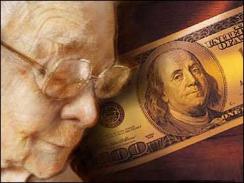


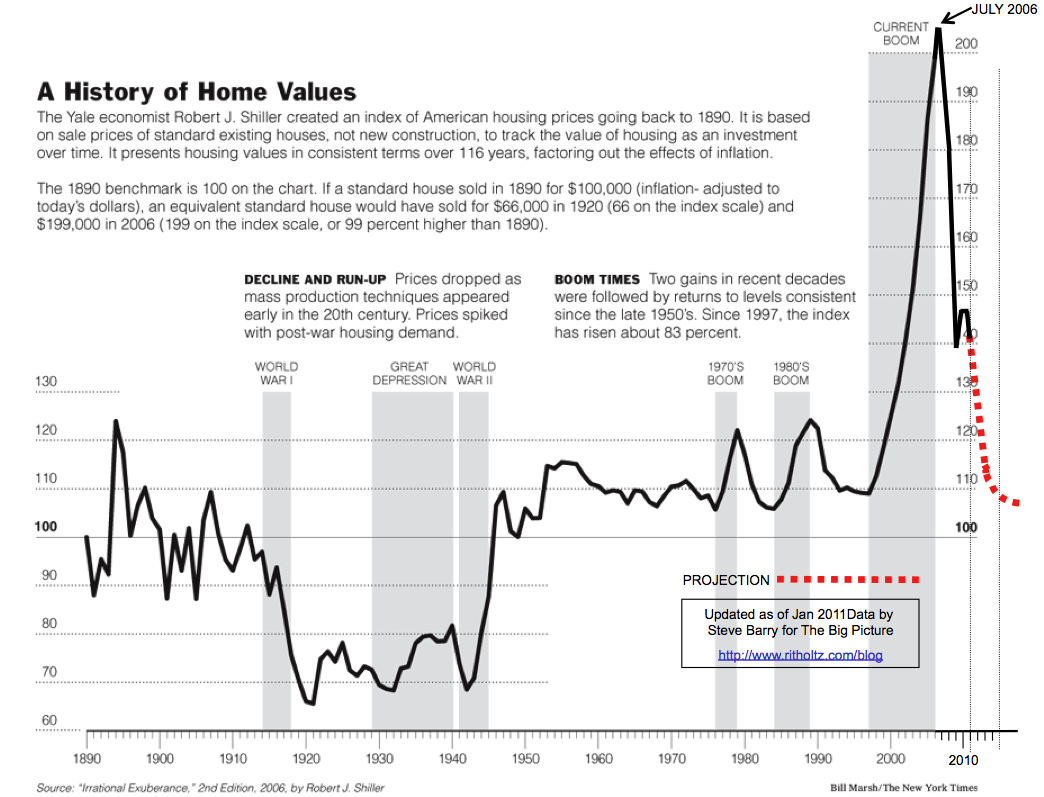


| You are subscribed to email updates from Save Your ASSets First To stop receiving these emails, you may unsubscribe now. | Email delivery powered by Google |
| Google Inc., 20 West Kinzie, Chicago IL USA 60610 | |


No comments:
Post a Comment