


Gold World News Flash |

- Dylan Ratigan comments on New York commodity traders' BLUE DOLLAR TRADE where they buy ...
- Geithner Squares Off With Greenspan On The Strength Of The Dollar
- Golden Opportunities & Threats from The Debt Bomb
- Why Some Think a Gold Standard Wouldn’t Work
- Chinese rate hike rumors overnight
- The Dollar: Every Man For Himself
- Nuthin' but a G-20 Thang
- Gold Seeker Closing Report: Gold and Silver Climb Back Higher
- Gold and Silver
- Bank of America Is in Deep Trouble, and There May Be Financial Disaster on the Horizon
- The Next Key Major Market Moves, Uncovered!
- BUSH THE DUMBASS
- CLUELESS, ABUSIVE, ABSURD
- Gold Daily Chart
- The Golden Calf
- Why Some Think a Gold Standard Wouldn’t Work
- The Fed’s Got POMO Fever!
- Guest Post: When To Sell Gold
- GoldMoney's James Turk interviews David Morgan on the new silver market
- What Trips Gold Up? - November 11, 2010
- Law firm Girard Gibbs wants to join silver manipulation class action pig pile
- What to Do With 5 Precious Metal Royalties
- Midas Letter's James West cites GATA in BNN interview
- The November 11, 2010 edition of Casey's Daily Dispatch, now available
- Free Money, Free People
- Warren Buffett Is Wrong on Gold
- Gold Price Bubble?
- Move Over Vampire Squid, Enter Rocket Docket - Matt Taibbi Takes Fraudclosure Mainstream
- The Gold Price Would Be Strengthened By a Few Days Correction and Lower Prices, Gold's Primary Trend Is Up, Targeting At Least $3,130
- ICE Boosts Sugar Margins By 65%
- Government Spending: A Lesson in How to Go Bankrupt
- Money & Markets Charts ~ 11.11.10
- Freeport McMoRan: Taking Advantage of Rising Metal Prices
- Twist on the Silver Market: Are Banks Significantly Short?
- Silver Margins Should Be Higher
- Hourly Action In Gold From Trader Dan
- Jim?s Mailbox
- Max Keiser on Alex Jones: GOOGLE SEARCH – CRASH JPMORGAN BUY SILVER
- Why I Prefer Gold Miner ETFs to Gold
- Doug Casey on Gold’s New High, the Fed, and the Greater Depression
- Welcome Eurasian Minerals to the GGR Stable
- Hold On A Second!
- Max Keiser will be a guest on Alex Jones Thursday, November 11th
- ETF Spotlight: Market Vectors Junior Gold Miners
- When to Sell Gold
- 1,125,000,300 = The Number Of Pages Needed To Be Read For Every CDO Squared Purchase
- Frontier Investing
- The Declining Gold to GDP Ratio
- Guest Post: Alert: QE II Has Lit the Fuse
- Of Missiles, Costa Rican Beaches and Silver Bars...
| Dylan Ratigan comments on New York commodity traders' BLUE DOLLAR TRADE where they buy ... Posted: 11 Nov 2010 06:25 PM PST
|
| Geithner Squares Off With Greenspan On The Strength Of The Dollar Posted: 11 Nov 2010 06:14 PM PST As FT's Alan Beattie notes, Greenspan in his op-ed does not specify which U.S. policies are weakening the dollar. But, Beattie says, Greenspan's words will likely be used to criticize the Fed's quantitative easing policy, which lately has taken heat from all sides, particularly over concerns that it could spur harmful inflation.
|
| Golden Opportunities & Threats from The Debt Bomb Posted: 11 Nov 2010 06:04 PM PST It is becoming ever more widely understood, correctly in our view, that the National Debt of the USA (and that of certain other Major Nations as well) can never be repaid without further dramatic Debasement of the Purchasing Power of the U.S. Dollar (and those other Fiat Currencies).
|
| Why Some Think a Gold Standard Wouldn’t Work Posted: 11 Nov 2010 06:02 PM PST There is a lot of wailing and gnashing of teeth from Moron Keynesian Trash (MKT) about the brave Robert Zoellick, president of the World Bank, saying that what the world needs is a modified gold standard for currencies, which it does, in spades.
|
| Chinese rate hike rumors overnight Posted: 11 Nov 2010 05:33 PM PST
Just a quick post updating my thoughts from earlier, spurred by overnight action last couple hours. Rumors of a PBoC rate hike (after another 50bp RRR hike and 4.4% CPI both announced this week) is selling risk off, as Shanghai is down over 4%. AUD/USD is down almost a big fig from session close, breaking below parity as well as the support represented by October's breakout through around parity. Copper is posting a bearish engulfing, down 2.4% and back to pre-QE2 levels. US equity is also following suit, with the S&P down a percent and sitting precariously on the all-important 1200 level, although not breaking down in any sustained way as of yet. EUR/USD also down, selling off a good 60 pips to extend its 700 pip selloff since Nov 4, showing the "sell-the-news" trade post-Nov 2 FOMC meeting was a huge winner. Interestingly, USD/SGD is up a big fig as well, signifying the NJA/Chinese reval trade might be up, as hot money inflows and inflation risk become concerns to be addressed. CAD and NZD are positioned well to pick up some relative appreciation, especially as crude prices rally and the new hikers early in their hike cycle see some relative demand to the EM players hiking to stratospheric levels to stem the hot money tide. Long CAD & NZD vs AUD & SGD look like great plays if you want to stay out of being long USD. But with DXY breaking out through 78.35, the next theme in FX for the following few months may be long dollar once again, especially as Eurozone periphery concerns heat back up. And the reflexivity of this issue is vital to its understanding; Ireland is not Greece in that it has no acute liquidity crisis (fully funded through July 2011, unlike Greece's situation in April of this year), but it still faces acute bailout risk because of its banks and the potential for them to be locked out of overnight/money market funding. This is why Irish govy yields are above the EFSF 800bps rate, but the reflexivity issue comes into play because of the USD rallying. USD TWI has a very strong inverse correlation with foreign financial commercial paper outstanding, so as USD rises, it makes interbank conditionals tighter globally, exacerbating the Irish bank liquidity crisis, and soon extending it into the sovereign. More Irish bank issues = more EUR selling = more USD rallying = more Irish bank issues. And of course, being funded through next summer is not at all sustainable and is "acute" as far as any long-term investor is concerned. But the theme tonight is in the China-Australia risk complex. Australia has clearly hit trough inflation and although it's hiked quite a bit, the RBA still has a ways to go; meanwhile PBoC will be forced to start its rate hike cycle soon, and beyond just RRR hikes into actual benchmark rates. Both of these developments will be very bearish for their respective property markets, particularly Australia's, which is characterized by a 1.7x household debt/disposable income and a mortgage debt/GDP higher than even USA's at the height of its housing bubble. Australia's Commonwealth Bank responded to the RBA's 25bp hike earlier this month by hiking mortgage rates by 40bps. Banks are pressed for ways to keep margins high and the more the RBA tightens liquidity to fight inflation, the higher proportionate drag is felt on Aussie households with their mortgage payments. As per China's property market, which Andy Xie (who predicted/identified the 1980s Japanese asset bubble, 1990s SE Asia debt bubble, 1990s tech bubble, and 2000s US housing bubble, but has yet to cry wolf on any bubble calls) just claimed topped out this quarter and will begin declining sizably in mid-2011, its growth fueled the large copper demand from China that fueled the huge miner growth in Australia. The positive feedbacks and financial contagion are obvious. The real economy effects (and even in asset prices) are likely not going to be significant until mid-2011, but the new shift in policy trend and sentiment as a whole is very significant and important to watch for investors. Short AUD/CAD is probably the best risk/reward trade in the FX market right now. Short AUD/CHF and long NZD/SGD aren't far behind. -Naufal
|
| The Dollar: Every Man For Himself Posted: 11 Nov 2010 05:22 PM PST Axel Merk, Portfolio Manager, Merk Mutual Funds The Federal Reserve’s (Fed’s) strategy of firing up its printing press may have the debasement of the U.S. dollar as its goal (see Fed Targets Weaker Dollar), but it’s important to note that the Fed does not act in a vacuum. In our humble opinion, Fed Chair Bernanke is wrong both on substance and politics – a potentially explosive mix. On substance, the Fed recently stated in the Federal Open Market Committee (FOMC) Minutes that businesses were holding back investments because of fiscal and regulatory uncertainties. In the FOMC’s own analysis, the economic recovery should strengthen in 2011, even without additional stimulus. Additionally, commonly followed metrics used to measure the market’s inflation expectations are, and have been, approximately 2%. Even if inflation expectations were to drop lower, the lone dissenting voice on the Fed, Thomas Hoenig, rightfully argues a little deflati...
|
| Posted: 11 Nov 2010 04:07 PM PST
The market slid today as Cisco spooked investors with a bad Q as they are still struggling to come up with a hit after the Thong Song, the G20 meetings proved to be less positive than a Helen Thomas pregnancy test, and macro news was more non-existent than dark matter (for now), as bond markets, banks, and government offices were closed for Veterans Day.
Given the lack of macro data, allow Money McBags to take a paragraph or two for a rant. You see, the 17%+ U16 unemployment rate, the continued devaluation of the dollar, and inability of anyone to work together to want to fix the stumbling (stumbled? Fucking stumbled?) economy is more mind boggling to Money McBags than super string theory or the concept behind this show called Bridalplasty (and Money McBags only hopes that the show's winner chooses "brain transplant" as her elective surgery).
Look, Money McBags believes that there are smart people in the world and finding a solution really shouldn't be this hard. For fucksake, humans have been able to send a man to the Moon (and if you haven't noticed, the Moon is really fucking far away) just so he could hit a golf ball and even made him gourmet food for the next trip up, they have been able to create a mobile phone that tests for STDs (so now putting your phone on vibrate and shoving it up your ass will be both enjoyable and diagnostic), and they have been able to pretty much recreate the Big Bang which happened so long ago, Joan Rivers was still on her first sphincter (and by Big Bang, Money McBags is not talking about Desiree Devine). Honestly, these are all amazing achievements and proof of real human ingenuity so why is our only strategy for fixing the economy the same strategy that has consistently not worked? It's like everyone just keeps hoping someone will waive their magic wand, say Beetlejuice three times, and everything will be better. But that just isn't going to happen.
Money McBags has thought long and hard about this (and long and hard about this too, but thats just being crude for crude's sake, so feel free to ignore it) and he certainly doesn't have all of the answers (though for a start he recommends filling in C all the way down as that seemed to work all on all three levels of the CFA exam. Or is it more correct to say the exam to get one's CFA Charter?), but come on people, doing the same fucking thing of putting more money into the system so rich people might increase their marginal spend by a nut hair isn't going to do it.
So ladies and gentlemen, for the love of Gracie Glam can we all just agree to put partisan bullshit aside, tell the Art Laffers and Robert Reichs of the world to shut the fuck up (while remembering not to feed them after midnight), and forget about all of the money Goldman piled in to your campaign funds, and talk through the issues logically and figure out how to get people back to work? It's assbackwards thinking to assume that printing money will somehow lead to real recovery and not hypervention and the even worse hyperinflation, so lets all throw away our Principles of Macro Economics (which by the way, if you read the fine print says none of it works in the real world and yet we are, um, trying it in the real fucking world) and figure shit out. Seriously a man hit a fucking golf ball on the Moon, if we can do that, we can get people producing shit again. It shouldn't be this hard (and yes, that is what she said). Rant over.
As for news today, the G20 Summit continues to dominate headlines with G20 members all trying to find the right spot to make their currencies come together. At the meetings, China and the US keep going back and forth about whose currency devaluation is fucking the global economy worse in the least interesting game of "He Said-She Said" since any of those awful Meg Ryan-Tom Hanks movies. China claims that QE2 will have dire implications not just on their economy but the economies of other developing countries as well and will be disruptive enough to potentially cause their citizens to be forced to dine on three helpings of cock soup a day for sustenance. Meanwhile, the US claims that China is just being a bunch of fucking asshats by artificially keeping their currency low enough to make US products uncompetitive. Money McBags is sure nothing will come out of this, like a euthanized penis, but he fully expects the end of the G20 to feature many hand shakes, smiles, and pats on the back because hey, free weekend vacation.
Aside from playing currency chicken with China (and Money McBags believes "currency chicken" is also #84 on your local Chinese restaurant's menu), the US and South Korea failed to work out a free trade pact. The biggest sticking point involves auto imports where South Korea continues to insist on stringent emissions standards for vehicles and the US continues to insist that South Korea shut the fuck up. Also up for negotiation are tariffs and restrictions on US beef exports to South Korea which were raised a few years ago after an outbreak of Mad Cow disease (from the Latin "Pissedoffious RoseanneBarrium"). Failing to seal the deal with South Korea may keep Obama from the cool kid's table at the G20 meeting.
Internationally, the cost of debt in Ireland continues to soar with five-year credit default swaps on Irish government debt rising by 29 bps to 607 bps, as the Irish economy sputters worse than the Statutes of Kilkenny in the late Middle Ages. Money McBags keeps saying it but Europe is nowhere near as solvent as people who shout really loudly might think it is so be very very careful about getting involved in anything European, unless it is Veronica Varekova.
As said earlier, CSCO tumbled ~15% today after announcing a quarter that missed all kinds of guesses as apparently CEO John Chambers has moved from being "unusually uncertain" to pretty fucking certain that the economy remains shitty. Chambers warned of short-term challenges in Europe, in public sector spending, and in the marketing plans for Phillip R. Greaves' opus. CSCO also saw weakness among its most important customer segment of service providers which is about as good for their business as shotgunning cans of Four Loko is for college students' memories of where they left their pants the night before.
2011 revenue growth guidance was 9%-12%, below analyst guesses of 13% and guidance for Q2 earnings per share was $.32 to $.35 well below analyst guesses of $.42. According to CEO Chambers: “We got a couple of air pockets here that surprised us, and I wish we were smarter on that," though Money McBags is sure Chambers prefers that it was air pockets and not Alabama hot pockets causing the problems (and Money McBags does not recommend you click on that link. It's safe for work, but probably not safe for your common decency, just don't blame the messenger).
In other market news, after taking off their figurative Jimmy hats, Siemens spewed upward after forecasting growth and raising their dividend. The company is increasing its dividend from 1.60 euro to 2.70 euro which is the first increase since 2007 and has investors receiving bigger shots of money from their Siemens shares.
Viacom was up after better than expected results thanks to their MTV unit led by "Jersey Shore" which simply breathed on competition and gave them all fiscal herpes. Wal*Mart said they will be offering free shipping on 60k items this holiday season including cardboard boxes to smaller competitors who will likely be put out of business by this move. An analyst from Cleveland Research warned that WMT is struggling to hit their topline and this free shipping move reeks more of desperation than an overweight single 30 year old woman flying solo at a wedding. Finally, LVLT won a multi year deal with NFLX and rocketed up because anything that touches Netflix turns to whatever is more expensive than gold (such as Bar Rafaeli's vagina). That said, there are over 1.3B people in China and if all of them sign up for at least two Netflix memberships, then NFLX will be properly valued.
Money McBags alwas has more at the award winning When Genius Prevailed and all he currently charges is your dignity.
|
| Gold Seeker Closing Report: Gold and Silver Climb Back Higher Posted: 11 Nov 2010 04:00 PM PST Gold rose over 1% to as high as $1417.65 by midday in London before it fell to see a $2.90 loss at $1397.60 by late morning in New York, but it then rallied back higher in the last couple of hours of trade and ended with a gain of 0.26%. Silver climbed to $27.827 and dropped to $26.913 before it also rallied back higher and ended with a gain of 1.6%.
|
| Posted: 11 Nov 2010 03:43 PM PST The following is automatically syndicated from Grandich's blog. You can view the original post here. Stay up to date on his model portfolio! November 11, 2010 07:28 PM While most surprises should continue to be to the upside, a pause that refreshes for a few days or even a few weeks is much preferred by yours truly versus a return to a parabolic-like climb. Such a pause IMHO would actually set us up for higher numbers in 2011 so relax; allow the perma-bears to wipe off the blood stains and let the media go back to giving us market top and bubble calls. A pullback to $1360 – $1380 or even a test of the 50-Day M.A. would all be constructive longer-term. Silver is overbought and a pullback to $25 would be healthy. Again, this is not a correction call like a few weeks ago but rather a “time-out” in the “mother” of all precious metals bull markets. [url]http://www.grandich.com/[/url] grandich.com...
|
| Bank of America Is in Deep Trouble, and There May Be Financial Disaster on the Horizon Posted: 11 Nov 2010 02:43 PM PST Will Bank of America be the first Wall Street giant to once again point a gun to its own head, telling us it'll crash and burn and take down the financial system if we don't pony up for another massive bailout? When former Treasury Secretary Hank Paulson was handing out trillions to Wall Street, BofA collected $45 billion from the Troubled Asset Relief Program (TARP) to stabilize its balance sheet. It was spun as a success story -- a rebuke of those who urged the banks be put into receivership -- when the behemoth "paid back" the cash last December. But the bank's stock price has fallen by more than 40 percent since mid-April, and the value of its outstanding stock is currently at around half of what it should be based on its "book value" -- what the company says its holdings are worth. "The problem for anyone trying to analyze Bank of America's $2.3 trillion balance sheet," wrote Bloomberg columnist Jonathan Weil, "is that it's largely impenetrable." Nobody really knows the true values of the assets these companies are holding, which has been the case ever since the collapse. But according to Weil, some of BofA's financial statements "are so delusional that they invite laughter." Weil points to the firm's accounting of its purchase of Countrywide Financial -- the criminal enterprise at the center of the sub-prime securitization market. Bank of America, Weil notes, hasn't written off Countrywide's entire value. "In its latest quarterly report with the SEC," he wrote, "Bank of America said it had determined the asset wasn't impaired. It might as well be telling the public not to believe any of the numbers on its financial statements." More Here..
|
| The Next Key Major Market Moves, Uncovered! Posted: 11 Nov 2010 01:29 PM PST The situation at present is fairly simple. Gold is being supported by the green line and the next big move will likely occur from a breakout of our yellow triangle that we have marked out! We would favour downside but nothing is ... Read More...
|
| Posted: 11 Nov 2010 01:23 PM PST Sometimes I wonder whether Bush is really as stupid as he sounds. Could he purposely be lying to try and make himself look good? I've concluded that he is as dumb as he sounds. This country somehow elected a blithering idiot to lead our country for 8 years. Then we elected a pompous, socialist, community organizing, blithering idiot to replace Bush. No wonder we are in this situation. Will we be stupid enough to replace Obama with an Alaskan redneck, religious zealot, blithering idiot?Probably. The Life and Times of Bush the Cluelesshttp://www.truthdig.com/report/item/the_life_and_times_of_bush_the_clueless_20101109/Posted on Nov 10, 2010By Robert Scheer It takes a Harvard MBA to raze an economy. Perhaps that is too narrow a judgment given that a law degree from that institution or from Yale University seems to serve as well. But the Harvard MBA is the degree that George W. Bush and his last treasury secretary, Henry Paulson, had in common, and their shared ignorance as they presided over the collapse of the U.S. economy is on full display in the former president's newly published memoir. Bush makes clear that the economic crisis came late to his attention and that it was not until March of 2008, as the Wall Street investment firm Bear Stearns was tottering, that it dawned on him that something was seriously amiss: "I was surprised by the sudden crisis. My focus had been kitchen-table economic issues like jobs and inflation. I assumed any major credit troubles would have been flagged by the regulators or rating agencies." He assumed that because he had signed off on the Sarbanes-Oxley Act " … in response to the Enron accounting fraud and other corporate scandals." It is instructive that this is the only reference in the memoir to Enron, a company headed by his old friend Ken "Kenny Boy" Lay, who chaired Bush's presidential campaign finance committee the year before Enron collapsed. The grief caused by Enron's contrived electrical blackouts and the lost jobs and savings following its collapse did not make for one of the "Decision Points" worthy of examination by Bush in his book of that title. Had he done so he might have discovered that the primary problem with Enron was not its fraudulent accounting but rather the wild trading practices in derivatives and other suspect financial gimmicks that had brought the company to its knees and which the accounting trickery was designed to conceal. Enron was the dead canary, ignored by Bush, that predicted the banking meltdown. The "Enron loophole" in the Commodity Futures Modernization Act that Republicans pushed through the Congress and Bill Clinton signed into law in the last months of his administration opened the door to the collateralized debt obligations and other financial devices that proved so toxic to Wall Street. The securitization of housing debt in such packages spiraled out of control throughout Bush's watch, but he was clearly unaware of the problem until that market collapsed. Even then he did not have the foggiest idea of what the crisis was all about, any more than did Treasury Secretary Paulson, who admits in his own memoir that he did not know that mortgages were at the heart of the derivatives causing all of the trouble. Of course he should have known since Goldman Sachs, the company he headed earlier, had been in the forefront of packaging and selling the assets that turned out to be malignant. In his book, Bush indicates similar denial when he writes of Bear Stearns' impending collapse that "the problem was not a lack of regulation by government; it was a lack of judgment by Bear executives." But the problem in finding a buyer for Bear Stearns was those unregulated derivatives, as Bush writes: "Executives at JPMorgan Chase were interested in acquiring Bear Stearns, but were concerned about inheriting Bear's portfolio of risky mortgage-backed securities." Bush goes on to justify the deal he and Hank Paulson concocted with Fed Chair Ben Bernanke, whom he had appointed, to guarantee the sale of Bear Stearns: "With Ben's approval, Hank and Tim Geithner, the President of the New York Fed [currently President Barack Obama's treasury secretary], devised a plan to address JPMorgan's concerns. The Fed would lend $30 billion against Bear's undesirable mortgage holdings," a development that cleared the way for the sale. That was just a warm-up for the much larger deal to bail out AIG that the same cast of characters hatched when, as Bush writes, the firm with its tentacles spread wide in pension funds, municipal bonds and 401(k)s "was somehow on the brink of implosion," and had to be saved through a $180 billion infusion of government funds, leaving U.S. taxpayers today with 92 percent ownership of the company. "It was basically a nationalization of America's largest insurance company," writes the former leader of the political party that routinely labels the current occupant of the White House as a socialist. "My friends back home in Midland [Texas] are going to ask what happened to the free-market guy they knew," Bush laments. "They're going to wonder why we're spending their money to save the firms that created the crisis in the first place." The answer to that question, raised far beyond the confines of Midland, is evidently the main thing Bush learned in the Harvard MBA program: "The well-being of Main Street was directly linked to the fate of Wall Street." Not exactly. They are linked—but inversely.
|
| Posted: 11 Nov 2010 01:03 PM PST Chris Martenson with excellent piece on the Fed and the rest of the world's reaction to QE2. Thursday, November 11, 2010, 1:41 pm, by cmartenson  For a very long time I have been calling for, expecting and otherwise anticipating the day that the Federal Reserve would begin openly monetizing government debt. I knew the day would come intellectually, but in my heart I hoped it wouldn't. But with the Fed's recent decision to directly monetize the next 8 months of federal deficit spending, that day has finally arrived. I have to confess, while my prediction has proven accurate, I'm still stunned the Fed actually did it. In this report I examine the risks that this new path presents, what match(es) may finally ignite the decades-old pile of dry fuel, what the outcomes are likely to be, and what we can and should be doing in preparation. How is this Quantitative Easing (QE) different from the prior QE?There are two main points of departure between the two QE programs:
Let's take the second point first. QE I consisted of all sorts of liquidity efforts that went by various acronyms, but the main act was the accumulation of some $1.25 trillion in MBS and agency debt. Some might note that taking MBS paper off the hands of financial institutions, which then bought treasuries with the cash, is little different than the recently announced QE II program because at the end of the day, money was printed and Treasuries were bought. In this regard, they're right. But let's be clear about something: the first QE effort had the specific aim of repairing damaged bank balance sheets. That is, banks and other financial institutions had made some colossally poor and risky financial moves that didn't work out for them. They needed some help, and the Fed was more than happy to oblige by handing them free money to patch up their losses. Of course they didn't do this outright by saying, "Here take this money!"; they did it somewhat sneakily. But when the Fed hands you huge piles of money (for your dodgy debt) and then let's you park that very same money in an interest bearing account at the Fed, there's really no difference between that and just handing you free money. No difference at all. If the Fed ever offers you free money that you can then park in an interest bearing account with the Fed, you should take them up on it, and you should do it as much as they will allow. Indeed, that's exactly what happened. These parked funds are called "excess reserves" and this chart clearly displays the massive program undertaken by the banks and the Fed:
Now, it's also true that the Fed does not pay a lot of interest on this money, just 0.25%, but on a trillion dollars that pencils out to some $2.5 billion a year, handed straight over to the banks. I call this program "stealth QE" because it is nothing more than printing money and handing it over to the banks with a slight bit of complexity thrown in just to put the dogs off the scent. A couple of billion may not sound like much these days, but I raise it to illustrate the many and creative ways that QE I was about getting the banks back to health, and not much else. So QE I (and the 'stealth QE' program) was directly aimed at banks to help them repair their balance sheets and make them whole on their terrible decisions and losses. It turned out, though, that fixing the banks did absolutely nothing for Main Street. The rest of the economy remained mired in a rut, with banks either unable or unwilling to make additional loans. They kept their QE lotto winnings and parked them with the Fed. QE II, then is about getting thin-air money to the government which, the Fed rightly assumes, will immediately spend and push out into the economy. Here's how the head of the Dallas Fed, Richard Fisher put it in a recent talk he gave:
There it is in black and white. You might want to read it a couple of times to let it sink in. The Fed is directly monetizing the next eight months of excess(ive) spending by the federal government and is doing it despite being perfectly aware of the extent to which history is littered with the remains of those who have traveled this path before. Presumably we are supposed to console ourselves with the idea that the Fed will be successful where others have failed, and sometimes failed miserably. Yes, we are talking about the same Fed that fueled that last two destructive bubbles by keeping interest rates too low for too long; failed to see the housing bubble as late as 2007 for what it was, and apparently entirely lacked the capability to foresee any of the current mess. That Fed. The one run by the gentleman who said this to the House Budget Committee on June 3, 2009,
In summary, the difference between QE I and QE II is that QE I went primarily to the banks and QE II is going directly to the government. While this may be something of a semantic difference, it shows that the Fed is changing its strategy again. We might ask: why this shift and why now? How is QE II being viewed outside of the US?In a word, poorly. The German finance minster called the Fed's application of US monetary policy "clueless" and argued that the Fed decision would "increase the insecurity in the world economy." China was predictably unhappy too, but initially used more diplomatic language:
All of the above is loosely coded diplomatic speak for "The US really bummed us out here, they should have stuck to the agreements we thought we had after the Pittsburg meeting. Going off-script like this was really not appreciated. We think an intervention is needed here." Later, an advisor to the Chinese central bank went further and called the US actions "absurd."
Here are a few other selected expressions of dismay from around the world:
In summary, QE II has been described by several major trading partners as "clueless," "abusive," "absurd," and even resulted in a lecture from Greece on the subject of printing. By the time you are getting lectured by Greece on monetary actions it might be time for a bit of self-reflection. It is not too strong to suggest that something of a tipping point has been reached in regards to how the US is perceived as a leader on financial and monetary matters. Why this is importantOkay, so the US's international friends are a little upset with the US for deciding to print up the better part of a trillion dollars out of thin air. What's the big deal? The big deal here is that the OECD countries have a monster borrowing bill set for next year. There needs to be some level of cooperation and fair play is going to be required in order to pull this off:
Just ponder those numbers for a bit. The average borrowing across 15 major developed countries is 27 percent of GDP(!) Ask yourself how dependent the entire OECD world is on a smoothly operating financial system in order to merely function next year. Having the perception out there that the US is being run by clueless (or 'abusive') individuals is not going to help the situation much. In order for the requisite levels of borrowing to be pulled off in a smooth and uninterrupted fashion, there can't be any hits to confidence and no major disruptions can happen. Everything has to run with clockwork precision. It is against this backdrop that I view the profoundly undiplomatic statements directed at the US as quite a bit more serious than some other observers. ConclusionBy choosing the path of money printing (instead of austerity like the UK), the Fed has decidedly placed the US on a very risky course. I see the outcomes are almost binary: either this works or it doesn't. If this gamble works, business will pick up, unemployment will drop, tax revenues will flow again to the states and federal government, the sun will continue to rise in the east and roses will bloom in the spring. If the gamble fails? There we can envision an enormous devaluation event for the US dollar and the Fed having to choose between defending the dollar (via rising interest rates) or preventing the federal government from a fiscal emergency brought about as a consequence of rising interest rates. And by "fiscal emergency" I mean being forced to slash expenditures by as much as 50% in order to service rapidly escalating interest carrying costs on the short term portion of the fiscal debt load. But that's a death spiral because cutting government spending is the same as cutting GDP (it's practically 1:1) and every cut to GDP leads to lower revenues which will necessitate more expenditure cutting, et cetera and so on until 'the bottom' is reached. I wish there was some sort of middle ground on this one, but I can't quite see it. Either the Fed's efforts work or they don't. Let's hope for success. In truth, I've long predicted that the day would arrive when the Fed would monetize government debt, but I hoped that it would never come. Because hope alone is a terrible investment strategy, I prepared for this event years ago by accumulating gold and silver as the core of my portfolio. But now the rules have changed again, we are on a slippery slope, and gold and silver were always meant to be my "transition elements" put there to help shepherd my wealth through the transition period as the world's fascination shifted from "paper" to "things." Now that we're "almost there" in terms of the required shift in perception necessary to call an end to one period (the "king dollar" period) and mark the beginning of another, it's time to begin considering the places, timing and ways that these transition elements can be redeployed to take advantage of the second part of this story.
|
| Posted: 11 Nov 2010 01:01 PM PST |
| Posted: 11 Nov 2010 12:55 PM PST Now despite the fact PMs are bouncing around quite a bit lately the highly vocal Sound Money crowd who hope to replace Fiat with Metal continue to beat the Gold Money Drum, as they will right up until the day all the Fiat goes up in Flames. If they haven't managed to get it going before fiat collapses, they'll hope that having a pile of Gold in the basement safe will enable purchase of any new paper or digital money issued later. What I would like to examine here are the practical problems involved in trying to use Gold and Silver as the exchange medium again once the dollar collapses. Now first off, who makes up the constituency of people who would like to see Gold and Silver as Money? Well duh, it is of course the people who HAVE some Gold and Silver in the basement safe. If these metals are used as money again and these folks are allowed to KEEP the piles they have accumulated, isn't life just GRAND for them? They get to start up in the reboot LOADED, while everyone who does not have a pile of metal in the basement starts out BROKE. Now answer this question: What fraction of people here in the FSofA do you think currently has any decent size pile of gold/silver in the basement safe? Let us call a "decent amount" say 20 Gold Eagles and 100lbs of Silver Bars. Is it 1:10, 1:100, 1:1000, 1:10000, 1:100000 or 1:1000000 people? I would guess the fraction to be one of last 3 choices there, but let us be very generous and assume 1:100 people has some decent amount of possessible "precious metals". Now let us take a random sample of 100 people and ask them to Vote on what we should use for money. Certainly the 1 who has some Gold will Vote for it, but how many of the other 99 people would? Why would you vote for using Gold as money if you have none? If I was in the room voting, I would say "OK, if you want to use Gold as money, lets distribute out the Gold we have here and then start using it." Raised as they are under English Common Law and the concepts of Private Property the reply from the other 98 people in the room would be "Oh no, we can't do that, it would be 'theft' from the Pigman with the Gold coins!" (unless he is a real smart Pigman and volunteers to give it away, or at least lend it out at Zero Interest). Iconoclast Tribalist that I am, I then reply, "Well, I wouldn't want to steal it, so I won't vote for using it as money. Let Lloyd Blankfein keep it and make a Big Paperweight out of it in the shape of a Golden Calf. He can use it to decorate his front lawn in place of the Pink Flamingos. Now let's decide on what the REST of us will use for money." LOL. This is obviously reducto ad absurdum of a much more complex problem, but in reality, people who have no Gold aren't going to "vote" for using it, since it is utterly unavailable to them to use in the first place! Once somebody starts PAYING people in Gold perhaps they would use it, but exactly how many people would the folks who have some gold be able to pay out here to do some work for them and be Productive? Well in theory, they can pay an infinite number of people if they break up the pile into small enough chunks. "Here is your Day's Wages J6P, 1 Picogram of Gold!", which the Paymaster picks up with some Tweezers using a Microscope and drops in your Pay Envelope. LOL. That is of course another reducto ad absurdum argument, and the general response to this I have been given by most Gold Bugs is that you use "Digital Gold" instead of moving around picograms with tweezers, which then in theory is tied to some absolute supply of Gold somewhere which they also claim is not going to be Centralized. Rooster over on Raging Debate used to make this argument all the time. It is "infinitely divisible" by digitizing it, which makes it infinitely available to do commerce with, regardless of a fixed supply of the absolute quantity. If you cannot see the flaw in that argument, you are hopelessly stupid and/or hopelessly attached to the idea that even the TINIEST quantities of Gold could hold value for J6P. At the point you cannot make a Gold Coin that is at least big enough to pick up with your fingers, the whole concept of valuing gold as money is thoroughly worthless. Call that number maybe a 1/8 oz coin., I cannot see how you could actually transact with a smaller amount of metal than that. Reminds me a bit of Cocaine transactions in my college dormitory, where Gram weights were weighed out and my fellow Ivy Leaguers would drop $100 for a Gram of Coke measured on a pocket Gram Scale Balance with an error margin of +-.1grams. In any given transaction, just on the error of the scale by itself you could lose 10%. Then given the fact the dealer could stuff in another 10% of lactose (milk sugar) the value of cocaine you could get for the $100 of fiat was again reduced. Imagine everybody having to weigh out the coins they do their transactions with, and checking for purity. THAT is metal transaction, and its ridiculously inefficient as a means to do commerce, which is why it did not last. Frankly cocaine is EASIER than metals to determine quality and composition. If we ever did go back to using Metals, EVERYBODY would be melting them down and alloying with cheaper metals. Counterfeiting would be rampant. Not to say this won't occur, but it sure would slow down the velocity of commerce. Well anyhow, fool me once, fool me twice and all that stuff, but WTF in their right mind is going to believe those Gold Digibits exist anywhere if they can't get the real thing? If you want to pay me in Gold fine, but I am not going to take a Gold Digibit registered in a database accessed with a Plastic Card and Password as Gold. Please hand over a Picogram to me NOW! And then another and another, and all the people working ask for the real thing and POOF, there is no more Gold left in the safe because everybody wants REAL gold, not digibits. Not to mention the fact that not even Chinese Slaves will take a Picogram of Gold and consider that to be worth a day's wages. Anyhow, this problem is an old one already, and it got resolved back in 1692 when the Illuminati had most of the Gold already centralized and the brilliant mind of Sir Isaac Newton applied it to the problem of Money as Master of the Mint in Jolly Old England. His Illuminati Compadres locked up most of the Gold in Vaults in Switzerland and in the City of London and in the basement of the NY Federal Reserve Bank a few years down the line, and when Nation State size economies or the Illuminati with accounts just as large would resolve their trade deficits/surpluses, a bunch of Gold Jockeys down in the basement safe of the NY Fed would move a ton of Gold from one pile belonging to one country over to another pile belonging to some Illuminati Pigman, thus saving the cost of transporting a ton of gold across the high seas and the loss coming from ships being hijacked or lost in storms. Why do all that transportation of metal when you can much more easily move numbers from one side of a Balance Sheet to another and accomplish the same task? The physical act of moving one pile of Gold over to another pile of Gold in the basement safe of the NY Fed was merely a mirror of the same act occurring on the Balance Sheet at the BIS, where the REAL wealth was being manipulated, by the NUMBERS. The bulk of all Gold ever mined up became centralized over time in this way and went OUT of circulation, plopping itself down in some very large piles held by Sovereign Wealth funds and nearly invisible Illuminati. If you did chop it up and decentralize it, it first off would recentralize again for the same reasons it did the first time, and second of all those who control those big piles are NOT going to chop them up and hand them out as Coins to J6P to pay for a day's labor. It is a totally impractical idea to start paying people with chunks of metal and expect we will have any kind of global commerce going on, frankly even the level of commerce we do inside a State-sized geographic area wouldn't work this way anymore, not with the number of people who inhabit those areas now anyhow. When the original 13 Colonies were formed, there was some Gold and Silver circulating, but not all that much and so these folks began using their own Bills and accounting system to do commerce. Then the Crown over in England made it law that you could only pay your Taxes with Gold or Silver, which gradually pulled out of circulation whatever there was of these metals circulating at the time in the Colonies. If you cannot make your own Bills Legal Tender and you have no Gold or Silver, WTF do you USE for money? This is just a little deflationary, no? You can see why our Founding Fathers who had been raised to use money for commerce, who were themselves Property "Owners" got just a little irritated here and revolted. LOL. Even Gold Bugs like Antal Fekete don't think we can actually use metals as currency by themselves, he thinks they could coexist with Real Bills, a Fiat type of system of course. I will also bet that as our current Fiat system goes into the crapper, there will be attempts made to do all sorts of things, like creating Gold Digibit Cards and LETS systems to keep the money driven commerce paradigm continuing onward here. However, they will not WORK, not with the population we have on the planet now and not when immersed in a civilization being ever more starved of the lifeblood it depends on, OIL. Death of this Fiat system will for the most part result in Anarchy The Illuminati who hold MOST of the strings of Power will try to organize up another Bretton Woods Meeting and now that Cap & Trade hasn't gained much traction, perhaps try to establish some Global Currency system once again based on Metals, but mixed with other Commodities they control through the Conduits. The problem here is that Have Not Nation-States aren't a whole lot different than Have Not J6P who has no Gold in the Basement Safe. Why would they agree to participate in a monetary system where they got NOTHING? Just like after WWII, they will have to be FORCED into using whatever money the Illuminati decide on at the Point of a Gun. This is why Capitalism has always been run at the Point of a Gun and was never a decentralized system in any era. It has ALWAYS been a force fed system of the Haves upon the Have Nots using military force, going back to the Medici and their alliance with the Mongol Horde of Ghenghis Khan, the British East India company on top of India, the FSofA Calvalry on top of the Mexicans in the Sapnish American War, I could go on and on here, but you would be better served reading the original material General Smedley Butler wrote. I defy ANYONE here to show otherwise. I await the day any Capitalist Pigman on this board actually TAKES ME ON arguing the history I present (granted, I do some WICKED spinning of history, but what historian doesn't? LOL.), rather than doing ad hom trashing and purposeful misdirection as a response. It will never happen of course, but it would be nice to have a real argument on the merits of the case for a change. So, we roll right back around here to the War Solution, which should tell you that there is simply no way that any kind of monetary regime is going to be instituted by anyone without a major War being fought here. Then comes the question of whether in the aftermath of such a war, there will be One Winner as strong as the FSofA was at the end of WWII to force through an agreement like Bretton Woods? It is unlikely under any scenario that you get one winner like that at the end of WWIII. So you can pretty much forget about the possibility of a Global Currency working for any great length of time here. Meanwhile, for the near term future, we look to be immersed in a period of extreme Volatility where various parts of the current economic system keep dropping into Failure Mode and the Illuminati run around like Headless Chickens trying to prop the system up and use it to sieve off the last remaining wealth they can from it that they do not already control in some way. I can't see that letting EITHER the Dollar or the Euro experience a complete collapse in the short term serves that purpose. Rather it seems more likely that one currency will be played against the other for as long as possible, with money sloshing back and forth between the various players here, one week one currency getting hit hard, the next week another one getting hit. Besides the Dollar and the Euro, certainly money will slosh as well over to Swiss Francs or Japanese Yen or Chinese Yuan as well. For most of us Plebes, you negotiate this period of Volatility not by shoveling vast quantities of your money from one currency to another as the Big Boys do, but by having a "Buffer" of food preps and fuel preps. Here is how this works. Most of you who read my rants know I have about 2 years worth of Preps for food. For Fuel (as in Gas for the Mazda & the Bugout Machine), much less, only around 2 months worth at "full driving". However, here is what happens each time there is a price spike in either food or fuel in RE's little world. When Gas goes UP in price, I drive far less. I ride the bike to work or I carpool with friends. Instead of cruising the Grocery stores every day, I go every other day, a 50% reduction which withstands up to a doubling in price. My fuel usage is extremely elastic. I can go from using a lot to very little without too much discomfort. For food, it has not yet occurred that EVERYTHING goes up in price at the same time. There is always a SALE on some type of industrialized food product. I just always buy whatever is overstocked and on sale. If it DID occur that EVERYTHING went up in price simultaneously, I would cut back on my purchases and use some of my preps to make up the difference in nutrition content. All that happens every time Commodity speculators raise the food prices is I buy less of them. They cannot keep raising the prices indefinitely because this simply causes people to buy less of the products. This is the "margin compression issue KD has been focusing on over on Ticker. Remember, MOST Americans, even poor ones are for the most part overfed and can substitute cheaper products into their diet. So in the FSofA, food remains an ELASTIC commodity. Not true in impoverished countries of course where they are already living on minimal amounts of the cheapest food available, but very true here where the biggest profit margins are for selling premium food. If premium food producers want to keep their products on the shelves, they have to cut their margins, not raise prices. KD illustrated this problem recently with respect to Krafft and Dean Foods, and again with Campbells Soup. The result of this right now is not Hyperinflation, its Price Cutting in many premium foods that once had a large profit margin. To keep market share, these producers are cutting their prices by shaving their margins on premium foods. So they go On Sale. So while raw bags of Rice go UP in price, Calorie Laden Frozen Foods from Stouffers go DOWN in price. What do I buy during such a period? Obviously, I buy the stuff that drops in price. Over a period of a few months with high prices, because of the way the industrial food apparatus works, Inventories increase in the inputs of raw foods because people aren't buying the processed ones as fast as the raw food is produced. When the inventory increases enough, the price on the Comex for the raw foods will crash again. This is just like what happens with Oil as it spikes up and down. Only once enough producers and distributors of food go under as a result of this kind of volatility will there not be affordable foods on the shelves. Runaway Hyperinflation is still a ways off, since there is no indication whatsoever that J6P will have more purchasing power in the near future. Prices probably will work on an upward trajectory overall, but you will have a volatile market with price spikes followed by crashes. Speculators can raise the prices using Funny Money Helicopter Ben prints, but a couple of months down the line if they hold that or take delivery, they'll be stuck with a warehouse of food they cannot sell. This is a classic Liquidity Trap/Asset Class Sinkhole. Anyhow, what this results in is a kind of topsy turvy version of "the market can remain irrational longer than you can remain solvent". In this case, J6P RE can remain solvent longer than Krafft Foods can. All it takes for Krafft to be forced into selling at a loss is a few weeks or at most months dealing with a price spike. If they price upward to match their input costs, they will lose market share. So they don't price up past a certain point, what they do instead is to cut their margins to keep selling the food product. You don't have to believe me, Denninger will show you the graphs. This clearly cannot persist in perpetuity, so the paradigm has to change. Demand for the inputs will drop as inventories rise, and at some point the market will correct. The only way you would get runaway hyperinflation is if somehow people kept paying the ever higher prices being paid by speculators loaded with hot money from Helicopter Ben. J6P cannot do that, he is already tapped out. J6P isn't part of the money pipeline from Helicopter Ben, but he IS the end consumer of all the products. If the end consumer does not have ever increasing quantities of money, a hyperinflationary spiral cannot occur. Just as $147/bl Oil had a few months run before crashing, high food commodity prices have about the same window before they also will come back to earth. Nothing Helicopter Ben can do will change this, only CONgress could change it by somehow shoveling money out the door to J6P. This may happen when J6P shows up with the pitchforks, but until then no Free Money will be handed out to him, or a least it will only be doled out in a trickle through SNAP Cards keeping him fed. Right now, the only people holding a Gun to the head of our Elected Representatives are the BANKSTERS, who promise Mad Max if they don't get Bailed Out, so they can keep running those great parties in the Hamptons stuffing the noses of Ford Models full of Coke and their other orifices full with Bankster Tube Steak. Only when/IF J6P gets off his Fat Ass and threatens his OWN version of Mad Max will he be on equal footing with the Banksters. Here in the FSofA, this appears to be a ways off still, but across the Pond in Europe and Jolly Old England, this game is already afoot. One suspects here in the FSofA it will NOT be Fat Assed Aging White Tea Partiers who will cause the Mayhem necessary, but rather the FSA and the fairly large and well armed bunch of Gang Bangers and assorted imported Drug Traffickers from South of the Border. LOL. Would using metals as currency fix any of the problems listed above? No, because even under a gold based system you still end up with the problem of hoarders and speculators who will bet on the value of money and commodities and occasionally call in markers and pull all the money out of circulation, bankrupting everybody. This is how it was always done from the time of the Medici onward (and probably back in Babylon also), so why anyone thinks it would be different now is beyond me. As Einstein said, the definition of stupidity is doing the same thing over and over again and expecting a different result. There is no more protection from predatory financial practices using a metals based economy than a fiat one. It might function to keep runaway Goobermin Spending in check, if you could somehow avoid having Da Goobermint corrupted by Banksters who have a lot of Gold loaning it out to them, but there isn't a Goobermint in all of recorded History that hasn't fallen into this trap, regardless of its ideological persuasion. Communist and Socialist Goobermints fall into the same trap just as Democracies and Republics do. So, what do we have to look forward to as the Collapse progresses here, and more Dominoes fall? About everyone here considers the current levels of debt held throughout the world to be unsustainable. Also about nobody here thinks that printing more Fiat will solve anything, just probably make the crash even worse when it finally does occur. The only real disagreements revolve around exactly how long it will take and how some new system might evolve to replace this one. Some folks believe our Illuminati Masters have this ALL figured out already and will sit tight in their bunkers while the Big Shitties go up in flames, ready to establish a New Feudalism once this system goes the way of the Dinosaur. Others believe they will be able to take the Gold in their Basement Safes and negotiate the spin down using their Maple Leafs to transact Bizness when the Fiat goes worthless. Some others figure they can sit tight also on their remote Doomstead Permaculture Farms, growing Veggies and Chickens Peacefully, occasionally picking off the raiding Zombies with their vast Armories of Guns and Ammo. NEWZFLASH! When this system does collapse, as it must, nobody is gonna be far enough out to ride the storm out in complete peace. Just the outcomes will be somewhat different in different locations, but ALL will be affected significantly. As far as what sort of Monetary sytem will drop down to replace the failing Dollar, that also will depend on exactly where you are, and how Da Goobermint in your neighborhood reorganizes. Unless your neighborhood is absolutely SWIMMING in precious metals, my best guess is that they will not be used as money. However, if you have enough and are otherwise well prepped, taking your excess and buying metals with it might have some benefits, so I don't advise against burying some Yellow Metal for the Future. In the shorter term, make Connections inside your community, and develop a PLAN for local sustainability. Stay away from highly populated Big Shitties and have at least 6mo worth of Food Preps to buffer against price spikes. Have Cash available and be ready to divest yourself of it into hard goods if/when things get really ugly in your neighborhood. If/when the society reboots, whether under the control of the Illuminati or your own Local Goobermint, if there is some Peace in the society, all the traditional forms of Work will become available to do again. Farmers, Fishermen, Toolmakers, Protectors, Teachers, Prostitutes, Leaders, Medicine Men and Holy Men will all still be in Demand. If you can do more than one of those jobs, you should be OK. The one traditional Job I would NOT recommend would be Banking or Financing. Just a Hunch, but I suspect folks trying to use their supplies of Gold in the Basement safe and Loaning Money at interest won't be very well liked, so unless you like a Tar & Feather overcoat, this is not a good choice for the future. The Clock is Ticking here. The Collapse has been Extended and Pretended for a long time here already, starting at least as far back as Nixon closing the Gold Window, but really further back than that. The half-life of the Can Kicks gets shorter all the time here. What we have going cannot last in perpetutity, there will be a Tipping Point. When it comes, as it inevitably must, be as ready as you can be and then "GET READY LITTLE LADY, HELL IS COMING TO BREAKFAST." RE
|
| Why Some Think a Gold Standard Wouldn’t Work Posted: 11 Nov 2010 12:22 PM PST There is a lot of wailing and gnashing of teeth from Moron Keynesian Trash (MKT) about the brave Robert Zoellick, president of the World Bank, saying that what the world needs is a modified gold standard for currencies, which it does, in spades. The Financial Times, long a champion for Keynesian stupidity despite constant inflation in prices, had an editorial from one of these MKT, who opines, "Could a gold standard help international currency co-ordination? In theory it could, if the state were willing to accept the restrictions on national monetary policy and the currency account adjustments that a gold standard entails." Did they say, "Willing to accept restrictions on national monetary policy"? Hahaha! What kind of crack is that? Is this guy actually saying that the only reasons that a gold standard would not work is because governments want no restrictions on creating and spending a lot of money, consequences be damned? Hahaha! Who knew? Not content with that, the editorial ...
|
| Posted: 11 Nov 2010 12:06 PM PST
The Fed’s Got POMO Fever!
Ben’s got POMO Fever, Tim’s got POMO Fever They’ve got POMO fever, what a scam Ben’s gone buying crazy, Tim’s budget plan is hazy Debasing Dollars baby, that’s the plan! Actually, what this whole thing reminds me of it more of a scene from Jungle Fever where Samuel Jackson (Timmy), who is a proud crackhead needing a fix, corners his successful brother (Ben) in a park and says:
And of course Ben chooses the lesser of two evils and gives his brother enough money to get another fix but he knows he’ll be back tomorrow to do his little dance again. That’s exactly what’s going on in America these days as the Fed issues debt at a rate (as of October) of $140Bn PER MONTH and Ben does his best to match it by buying up notes and other toxic assets at a rate of $110Bn PER MONTH. We’ve discussed POMO a great deal on the site so I won’t get into it here. Suffice to say it’s very much like when Wesley Snipes hands Sam Jackson money except, in this case Bernanke (Snipes) doesn’t have any money either – he’s just writing checks and backing them with the crack that his brother Timmy (Jackson) buys. Unfortunately, just like the Treasury debt, Sam Jackson consumes the crack and there’s not really an asset there at all – just another day and the need for another handout that will never be repaid. Very much unlike Wesley Snipes (who, ironically, was convicted for tax evasion), Bernanke does not cut his brother Timmy off. In fact, yesterday, Brother Ben rolled out the new POMO schedule and, rather than $2.5Bn twice a week that has been handed out for the last 90 days, the new schedule takes the game to a whole new level as the Fed is now offering as much as $9Bn per session and the schedule for those sessions is (and I kid you not):
That’s right kids. Pretty much EVERY SINGLE DAY the market is open and twice on the 29th, the Fed will hand out Billions to "fix" the economy. Keep in mind they have no intention of stopping on the 9th, that’s just the end of month one! I know that we have all gotten comfortably numb with regards to large numbers but let’s consider for a moment how much money EACH $8Bn is as this is OUR money the Fed is spending:
Does that seem just a little bit insane to you? Hopefully, I have gotten the point across that $8,000,000,000 per day is A LOT OF MONEY. Our friends at Goldman Sachs, who belly up to the POMO window on a daily basis, sent a note out to clients in late October saying (Zero Hedge):
In other words: "Buy on POMO days, you dummies!" But what happens when EVERY DAY is a POMO day? Will the markets get sick of it, like a kid who ate too much Halloween candy or, like Sam Jackson’s crack-head, will they just get higher and higher every day? For now, we can expect the markets to get REALLY HIGH. Like any crack addict, the fixes will only work for so long and then we will need bigger doses. The Fed has so far been accommodating, stepping up POMO by a factor of 5, which will be a real test of our "Dead Parrot Economy" theory as Bernanke seeks to apply that million-volt shock. Unfortunately, the actual global FUNDAMENTALS I’ve been yammering on about for the last couple of weeks indicate that $1,000Bn of indirect stimulus is nowhere near enough to really fix our problems and the real flaw in this plan is that the rest of the World may not be willing to sit back and relax while we inflate our way out of trouble. As I said, Ben is writing checks with money he doesn’t really have and that’s fine as long as he’s handing them out to crack-heads like Timmy and the Banksters, who are Jonesing for their next fix so badly they can’t tell good money from bad anyway. But, the minute they try to spend it on hookers and blow – they may find there are not to many foreign dealers who are willing to accept their funny money. In fact, just yesterday we had a TERRIBLE 30-year note auction on just $16Bn worth of notes. Already Ben is pretty much the only buyer of Tim’s trash paper and, as that bid to cover ratio drops below 2:1, you’ll see rates begin to tick up dramatically, despite the Fed’s best efforts to contain them and that will put pressure on houses, corporate debt, government debt, municipal debt etc and suddenly we’re Greece. So let’s not get too happy about POMO, it’s nothing but a band-aide for an amputation and, despite our leaders’ strong protests – this is NOT "just a flesh wound."
This is a great way to ride out a choppy move down – using defensive long plays to lock in profits at certain key bounce points (the Dow was at our 11,250 target zone and, not surprisingly, it retraced 50% of it’s drop for the week on the POMO announcement). Of course, think how pathetic that is – just retracing 50% of the week’s drop after Brother Ben pre-announces an endless supply of fixes over the next 30 days? That kind of sucks! Something is very rotten in Denmark – and by Denmark I mean America and by rotten I mean the economy and by something I mean I’m not sure that $110Bn a month is enough to stop the bleeding. It’s a very tough market to bet against because, as I’ve been pointing out lately, there are now 6 suckers born every minute and that’s 8,640 new Cramericans every day who are willing to swallow this market fantasy and lay their life savings on the line in what are probably the most uncertain market conditions we’ve had since the fall of 2008 when EVERYONE was betting we’d go up and, instead, we went horribly, relentlessly down, down, down. We can bet on inflation with our gold plays with potentials for 923%, 309%, 3,900%, 567%, 276% and 46% (for you boring stock people) trade ideas so it’s not like we have to commit a lot of money to make sure we don’t miss an inflationary rally but we’ve already inflated the indexes 20% since last quarter and it seems to me that all the Fed is doing now is paying off their Bankster buddies by cashing out all those shares their TradeBots bought on the way up so this is no time to go long in the market as long as we haven’t hit our breakout levels (and volume would be nice too!). So let’s be very careful out there, please! - Phil For a 20% discount for all PSW newsletter services, click here.
|
| Posted: 11 Nov 2010 11:39 AM PST
By Terry Cozon Of Casey Research When to Sell Gold By now you have plenty of reason to congratulate yourself for having boarded the gold bandwagon. The early tickets are the cheap ones, and you’ve already had quite a ride. The best of the ride, I believe, is yet to come, and it should be very good indeed. It should be so much fun that your wallet may start to feel a bit giddy – which can be dangerous. So it would be wise to consider, now, how things will be and how they will feel when the current bull market in gold reaches its “end of days.” Because it will end.
And foreign holdings of U.S. debt operate as a second vector feeding the political attractiveness of dollar price inflation. Depreciation of the dollar can be framed as a clever way to shortchange foreign creditors. "It hurts THEM, not US" would be the slogan. All those factors are working to make price inflation distinctly more severe than it was in the 1970s, which argues for a higher peak price for gold. When the metal does surpass its 1980 peak in purchasing power, the event is likely to be widely reported in the press. I suggest that you not attach any significance to the event. It won't be time to sell.
|
| GoldMoney's James Turk interviews David Morgan on the new silver market Posted: 11 Nov 2010 11:34 AM PST 7:30p ET Thursday, November 11, 2010 Dear Friend of GATA and Gold (and Silver): At the Edelmetallmesse precious metals conference in Munich last week, GoldMoney founder and GATA consultant James Turk interviewed Silver-Investor.com's David Morgan about the transformation of the silver market over the last year. The interview is about 18 minutes long and you can both watch it and read a transcript of it at the GoldMoney Internet site here: http://goldmoney.com/morgan-turk-silver.html CHRIS POWELL, Secretary/Treasurer ADVERTISEMENT Sona Drills 85.4g Gold/Ton Over 4 Metres at Elizabeth Gold Deposit, Company Press Release, October 27, 2010 VANCOUVER, British Columbia -- Sona Resources Corp. reports on five drillling holes in the third round of assay results from the recently completed drill program at its 100 percent-owned Elizabeth Gold Deposit Property in the Lillooet Mining District of southern British Columbia. Highlights from the diamond drilling include: -- Hole E10-66 intersected 17.4g gold/ton over 1.54 metres. -- Hole E10-67 intersected 96.4g gold/ton over 2.5 metres, including one assay interval of 383g of gold/ton over 0.5 metres. -- Hole E10-69 intersected 85.4g gold/ton over 4.03 metres, including one assay interval of 230g gold/ton over 1 metre. Four drill holes, E10-66 to E10-69, targeted the southwestern end of the Southwest Vein, and three of the holes have expanded the mineralized zone in that direction. The Southwest Vein gold mineralization has now been intersected over a strike length of 325 metres, with the deepest hole drilled less than 200 metres from surface. "The assay results from the Southwest Zone quartz vein continue to be extremely positive," says John P. Thompson, Sona's president and CEO. "We are expanding the Southwest Vein, and this high-grade gold mineralization remains wide open down dip and along strike to the southwest." For the company's full press release, please visit: http://sonaresources.com/_resources/news/SONA_NR19_2010.pdf Support GATA by purchasing a colorful GATA T-shirt: Or a colorful poster of GATA's full-page ad in The Wall Street Journal on January 31, 2009: http://gata.org/node/wallstreetjournal Or a video disc of GATA's 2005 Gold Rush 21 conference in the Yukon: * * * Help keep GATA going GATA is a civil rights and educational organization based in the United States and tax-exempt under the U.S. Internal Revenue Code. Its e-mail dispatches are free, and you can subscribe at: To contribute to GATA, please visit: ADVERTISEMENT Prophecy Receives Permit To Mine at Ulaan Ovoo in Mongolia VANCOUVER, British Columbia -- Prophecy Resource Corp. (TSX-V:PCY, OTCQX: PRPCF, Frankfurt: 1P2) announces that on November 9, 2010, it received the final permit to commence mining operations at its Ulaan Ovoo coal project in Mongolia. Prophecy is one of few international mining companies to achieve such a milestone. The mine is production-ready, with a mine opening ceremony scheduled for November 20. Prophecy CEO John Lee said: "I thank the government of Mongolia for the expeditious way this permit was issued. The opening of Ulaan Ovoo is a testament to the industrious and skilled workforce in Mongolia. Prophecy directly and indirectly (through Leighton Asia) employs more than 65 competent Mongolian nationals and four expatriots. The company also reaffirms its commitment to deliver coal to the local Edernet and Darkhan powerplants in Mongolia." The Ulaan Ovoo open pit mine is 10 kilometers from the Russian border and within 120km of the Nauski TransSiberian railway station, enabling transportation of coal to Russia and its eastern seaports. Thermal coal prices are trading at two-year highs at Russian seaports due to strong demand from Asian economies. For the complete press release, please visit: http://prophecyresource.com/news_2010_nov11.php
|
| What Trips Gold Up? - November 11, 2010 Posted: 11 Nov 2010 11:30 AM PST What Trips Gold Up? - Casey's Daily Dispatch [LIST] [*]Sign Up Now! [*]| [*]RSS Feed [*]| [*]Print this [*]| [*]Visit the Archives [*]| [*]Email to a Friend [*]| [*]Back to All Publications [/LIST] November 11, 2010 | [url]www.CaseyResearch.com[/url] Dear Reader, In today's edition of these musings, I'm going to ask that you help us visualize the possible scenarios that, if one were to come to pass, could put a sudden end to the secular rise now underway in gold and silver. I selected this topic because of a conference call yesterday with the research team of The Casey Report, in which we ...
|
| Law firm Girard Gibbs wants to join silver manipulation class action pig pile Posted: 11 Nov 2010 11:21 AM PST Company Press Release via Business Wire Girard Gibbs LLP Investigates J.P. Morgan, HSBC for Violations of Antitrust Laws in Silver Futures Trading Lawsuits Allege that the Banks Manipulated Prices of Silver on the COMEX Exchange http://www.businesswire.com/news/home/20101111006211/en/Girard-Gibbs-LLP... SAN FRANCISCO -- Girard Gibbs LLP (www.GirardGibbs.com) is investigating allegations that J.P. Morgan Chase & Co. and HSBC violated federal laws by conspiring to lower the price of silver futures and options contracts. The banks are accused of accumulating heavily concentrated positions in silver futures and options on the Commodity Exchange Inc. (COMEX), beginning in early 2008. Lawsuits have been filed against HSBC and J.P. Morgan Chase & Co, alleging that the banks manipulated the prices of COMEX silver futures by building up large short positions in silver futures contracts they had no intent to fill, in order to force silver prices down at a time when silver should have been trading at higher levels. ... Dispatch continues below ... ADVERTISEMENT Prophecy Receives Permit To Mine at Ulaan Ovoo in Mongolia VANCOUVER, British Columbia -- Prophecy Resource Corp. (TSX-V:PCY, OTCQX: PRPCF, Frankfurt: 1P2) announces that on November 9, 2010, it received the final permit to commence mining operations at its Ulaan Ovoo coal project in Mongolia. Prophecy is one of few international mining companies to achieve such a milestone. The mine is production-ready, with a mine opening ceremony scheduled for November 20. Prophecy CEO John Lee said: "I thank the government of Mongolia for the expeditious way this permit was issued. The opening of Ulaan Ovoo is a testament to the industrious and skilled workforce in Mongolia. Prophecy directly and indirectly (through Leighton Asia) employs more than 65 competent Mongolian nationals and four expatriots. The company also reaffirms its commitment to deliver coal to the local Edernet and Darkhan power plants in Mongolia." The Ulaan Ovoo open pit mine is 10 kilometers from the Russian border and within 120km of the Nauski TransSiberian railway station, enabling transportation of coal to Russia and its eastern seaports. Thermal coal prices are trading at two-year highs at Russian seaports due to strong demand from Asian economies. For the complete press release, please visit: http://prophecyresource.com/news_2010_nov11.php The banks' actions are being investigated by the U.S. Department of Justice as well as the U.S. Commodity Futures Trading Commission (CFTC). On October 26, 2010, CFTC Commissioner Bart Chilton issued a statement, saying: "[I] believe violations to the Commodity Exchange Act have taken place in silver markets and that any such violation of the law in this regard should be prosecuted." If you bought or sold COMEX silver futures since March 1, 2008, Girard Gibbs is interested in speaking to you. If you wish to discuss our investigation or have any questions concerning your rights in this case, please contact attorney Elizabeth Pritzker (ecp@girardgibbs.com) at Girard Gibbs LLP or call us at 866-981-4800. Girard Gibbs LLP, with offices in San Francisco and New York, is one of the nation's leading law firms in prosecuting class actions and other lawsuits on behalf of consumers and investors. Support GATA by purchasing a colorful GATA T-shirt: Or a colorful poster of GATA's full-page ad in The Wall Street Journal on January 31, 2009: http://gata.org/node/wallstreetjournal Or a video disc of GATA's 2005 Gold Rush 21 conference in the Yukon: * * * Help keep GATA going GATA is a civil rights and educational organization based in the United States and tax-exempt under the U.S. Internal Revenue Code. Its e-mail dispatches are free, and you can subscribe at: To contribute to GATA, please visit: ADVERTISEMENT Sona Drills 85.4g Gold/Ton Over 4 Metres at Elizabeth Gold Deposit, Company Press Release, October 27, 2010 VANCOUVER, British Columbia -- Sona Resources Corp. reports on five drillling holes in the third round of assay results from the recently completed drill program at its 100 percent-owned Elizabeth Gold Deposit Property in the Lillooet Mining District of southern British Columbia. Highlights from the diamond drilling include: -- Hole E10-66 intersected 17.4g gold/ton over 1.54 metres. -- Hole E10-67 intersected 96.4g gold/ton over 2.5 metres, including one assay interval of 383g of gold/ton over 0.5 metres. -- Hole E10-69 intersected 85.4g gold/ton over 4.03 metres, including one assay interval of 230g gold/ton over 1 metre. Four drill holes, E10-66 to E10-69, targeted the southwestern end of the Southwest Vein, and three of the holes have expanded the mineralized zone in that direction. The Southwest Vein gold mineralization has now been intersected over a strike length of 325 metres, with the deepest hole drilled less than 200 metres from surface. "The assay results from the Southwest Zone quartz vein continue to be extremely positive," says John P. Thompson, Sona's president and CEO. "We are expanding the Southwest Vein, and this high-grade gold mineralization remains wide open down dip and along strike to the southwest." For the company's full press release, please visit: http://sonaresources.com/_resources/news/SONA_NR19_2010.pdf
|
| What to Do With 5 Precious Metal Royalties Posted: 11 Nov 2010 11:19 AM PST Since I first wrote an article regarding the streamers/royalties among the precious metal companies, a lot has changed, notably with Royal Gold (RGLD) and Sandstorm Resources. I will go over all the royalty companies once again, but this time a bit more in depth and not all for the best (Franco-Nevada). Complete Story »
|
| Midas Letter's James West cites GATA in BNN interview Posted: 11 Nov 2010 11:07 AM PST 7:05p ET Thursday, November 11, 2010 Dear Friend of GATA and Gold (and Silver): Midas Letter editor James West, interviewed today on Canada's Business News Network by reporter Andrew Bell, discussed silver market manipulation and GATA's work as well as the Midas Letter's recommended resource companies. The interview is about 13 minutes long in two parts and you can watch it at the BNN archive here: http://watch.bnn.ca/#clip373709 And here: http://watch.bnn.ca/#clip373710 CHRIS POWELL, Secretary/Treasurer ADVERTISEMENT Sona Drills 85.4g Gold/Ton Over 4 Metres at Elizabeth Gold Deposit, Company Press Release, October 27, 2010 VANCOUVER, British Columbia -- Sona Resources Corp. reports on five drillling holes in the third round of assay results from the recently completed drill program at its 100 percent-owned Elizabeth Gold Deposit Property in the Lillooet Mining District of southern British Columbia. Highlights from the diamond drilling include: -- Hole E10-66 intersected 17.4g gold/ton over 1.54 metres. -- Hole E10-67 intersected 96.4g gold/ton over 2.5 metres, including one assay interval of 383g of gold/ton over 0.5 metres. -- Hole E10-69 intersected 85.4g gold/ton over 4.03 metres, including one assay interval of 230g gold/ton over 1 metre. Four drill holes, E10-66 to E10-69, targeted the southwestern end of the Southwest Vein, and three of the holes have expanded the mineralized zone in that direction. The Southwest Vein gold mineralization has now been intersected over a strike length of 325 metres, with the deepest hole drilled less than 200 metres from surface. "The assay results from the Southwest Zone quartz vein continue to be extremely positive," says John P. Thompson, Sona's president and CEO. "We are expanding the Southwest Vein, and this high-grade gold mineralization remains wide open down dip and along strike to the southwest." For the company's full press release, please visit: http://sonaresources.com/_resources/news/SONA_NR19_2010.pdf Support GATA by purchasing a colorful GATA T-shirt: Or a colorful poster of GATA's full-page ad in The Wall Street Journal on January 31, 2009: http://gata.org/node/wallstreetjournal Or a video disc of GATA's 2005 Gold Rush 21 conference in the Yukon: * * * Help keep GATA going GATA is a civil rights and educational organization based in the United States and tax-exempt under the U.S. Internal Revenue Code. Its e-mail dispatches are free, and you can subscribe at: To contribute to GATA, please visit: ADVERTISEMENT Prophecy to Become Coal Producer This Year Prophecy Resource Corp. (TSX.V: PCY) announced on May 11 that it has entered into a mine services agreement with Leighton Asia Ltd. to begin coal production this year. Production will begin with a 250,000-tonne starter pit as planned in August, with production advancing to 2 million tonnes per year in 2011. Prophecy is fully funded to production and its management team includes John Morganti, Arnold Armstrong, and Rob McEwen. For Prophecy's complete press release about its production plans, please visit: http://www.prophecyresource.com/news_2010_may11.php
|
| The November 11, 2010 edition of Casey's Daily Dispatch, now available Posted: 11 Nov 2010 10:40 AM PST What Trips Gold Up?
|
| Posted: 11 Nov 2010 10:34 AM PST A "mad" Austrian-economics fool calls for private money, coined from gold and Silver Bullion... EVENTS ARE moving at such a dizzying speed in the economic waters in which the Cobden Centre swims, that it is hard to take a breath and to take stock of the implications, writes Andy Duncan at the Cobden Centre for monetary reform. I remember having a conversation with some bankers five years ago in a City bar in which I dared to mention that I believed money should be based upon gold or silver and the laughter could be heard around the whole of Finsbury Square; the echoes took some time to die down and still rattle around my mind today. It was interesting, however, to witness how this scenario evolved. Because sticking to my guns with that same conversation over the years, when pressed, has led to less laughter, and to more in the way of stony silences. The rejoinders when they come have changed from "Come and have a drink, you mad Austrian fool" through to "It will never happen" and now to "The Bank of England have it all under control and it would be too difficult to implement anyway." Steeped in Keynesianism though many are, what do bankers say now when the head of the World Bank, the laird of their clan, is daring to broadcast these same heresies? What if the Bank of England really has failed to keep everything under control? What happens to their world view when they wake up one day and find that the barbarous relic has returned? Last week, of course, Ben Bernanke slipped $600 billion dollars into existence with a click on his word processor, and investors responded by rushing into the silver and gold markets, waving their paper dollars in the air, and got rid of them as fast as they could. Now Robert Zoellick, the president of the World Bank, has called for gold to be brought back into the world monetary system. But is he leading events or is he being led by events? For me, it is very much the latter. The world power elites love paper money, because the ability to print infinite amounts of money seemingly brings infinite power. Yes, it was only a forty year dream, since Nixon shredded the final tatters of Bretton Woods I, but what fun they've had in those forty years, until reality finally took hold again, in the same way that the Soviet nightmare in Russia lasted seventy years before reality eventually managed to kick down the Gulag. The power elites will be brought back to commodity money kicking and screaming, in the same manner of Gordon Brown being dragged out of Downing Street by the men in white coats, his bitten-down fingernails clawing desperately into the tarmac. And here lies our danger. Because the power elites are smart people. Although they have lost control of the ship's wheel, they can see which way the wind is blowing and they will now try to take control of the sails and the mast. We must keep up the pressure on honest money, keep up the fight, and never relax, because the kind of gold standard that Zoellick and his friends suggest will be a long way from what we need, and will ultimately break down to leave us in the grip of even worse government. Here is one dark path I think they might try to take us down, before they mug us again:
Assuming Galland's vision bears a greater semblance to reality than mine, once developments shove aside the usual naysayers such as Edmund Conway, I see a return to some form of precious metallic standard as almost inevitable, though not in the historicist Marxist sense. There are many bumps in the road between here and there and much that could go wrong from our point of view, especially if my dystopian vision above starts to become reality and Galland's optimistic alternative fades. Strangely enough, Edmund Conway does actually make a few good points in his latest Telegraph piece decrying the return of the gold standard, the main one being that all of these schemes managed by government, including Bretton Woods I, have always failed in the past, so why should we believe that a new one will work now? He is right. Bretton Woods II will fail too, if government bodies such as the World Bank control it. As Richard Ebeling said in a response to Martin Wolf, we need to get money back in the hands of the people and out of the dead hands of government. As Ron Paul said yesterday, we can even let governments keep their central banks if they want to keep them. But we must allow the free reintroduction of competing private currencies, probably based upon either a gold or silver coin standard, or both, and the settling and enforcement of private contracts using these private monies. All taxes upon the transactions of precious metals must also be removed to facilitate this, such as the ridiculous Value Added Tax (VAT) upon silver in the European Union, with some regarding silver as a better monetary metal than gold, because silver enables day-to-day transactions. The most pernicious tax to remove is of course the capital gains tax, because if you regard silver and gold as money, how can your metallic capital increase merely because there are a lot more printed paper notes around today than there were yesterday, increasing the ratio of fiat paper against commodity metal? We must get rid of all of these laws and tax treatments protecting paper money and crippling commodity money. Given free unencumbered currencies, unmolested by government and supported by contract law, fiat currencies will die in short order as everyone switches to these new honest monies. In the successful post-socialist age of the future, we therefore do not need monetary socialism and a fractional gold reserve standard managed by a world bank and an unsuccessful world government. We need free money created and managed by free people. Meantime, why not Buy Gold for your own private reserves...slashing your costs to get the safest metal...and starting with a free gram at world No.1 BullionVault now...
|
| Warren Buffett Is Wrong on Gold Posted: 11 Nov 2010 10:32 AM PST "Extreme value" still to be found in Gold Bullion, whatever Warren Buffett says... FOR ALL THE gold that's ever been mined, you could buy every acre of farmland in the United States and 10 companies the size of ExxonMobil, writes Dan Ferris, editor of Extreme Value, in Steve Sjuggerud's Daily Wealth. And you'd still have $1 trillion left over. Would you rather have a shiny cube of metal, 67 feet on a side...or trillions of dollars of assets that actually produce wealth? That's essentially what Warren Buffett, the world's most successful and famous investor, wondered in a recent interview with Fortune. Buffett doesn't like gold because it's got no intrinsic value. In a way, he's right. Most of the gold in the world just sits around collecting dust. Very little of it is used for industrial purposes. With the price near $1400 an ounce, industrial gold users will likely use as little of the stuff as possible. But here's what Warren Buffett – the Sage of Omaha – is not seeing. A year ago, in an Extreme Value update, I wrote: "Never forget what's at the bottom of the banking system: the Federal Reserve as lender of last resort, with its unique ability to print as much money as it wants in order to have enough to lend into the banking system."The money-printing I worried about is well underway...and it'll continue until at least next summer. Last week, the Federal Reserve issued a press release in which it said it would buy $75 billion of Treasury bills per month until June 2011. That's in addition to another $35 billion of mortgage bonds to replace maturing mortgage bonds. The Fed pretends it's a sophisticated operation with an array of complex, surgical-grade financial tools. But it's really an imbecile with a hammer. The hammer is money-printing, and every economic problem is a nail. So you should always own gold. I'm not saying gold and Silver Bullion are cheap, although – relative to dollars – I believe they are. I'm saying the world's most well-known, well-liked, and widely held standard of value (the US Dollar) is a poor standard of value. In fact, it's a phony standard of value. The Dollar is easily created – at the touch of a button nowadays. Does that make sense to you? Have you ever in your life created anything of value without putting effort into it? Value isn't created easily, on a whim. Value is created by employing capital productively… the way gold and silver are made. You should own gold and silver, because they're the ultimate standard of value. Gold is the asset that can't be inflated, yields nothing, and is no one's liability. It's real wealth...pure wealth...the most enduring form of wealth in history. Let's be clear. I'm not talking about exchange-traded funds, precious metals mutual funds, Gold Mining stocks, silver mining stocks, gold- or silver-indexed preferreds, or paper certificates of any kind. They have their place, but that's not what I want you to buy. I'm talking about physical gold, in the form of Gold Bullion coins. I'm not talking about speculating on the price of the commodity. I'm talking about exiting paper dollars and putting your savings in real money. For gold bullion coins, I buy and recommend Krugerrands. The premiums are usually low. There's plenty of supply. And it's the most widely circulated Gold Bullion coin in the world. For silver bullion, I buy whatever one-ounce, 0.999 fine silver rounds my coin dealer suggests. I've been going to the same guy for years. He knows me when I come in, and he knows I like the coins with low premiums. I've occasionally recommended putting 5% of your investable assets in gold bullion. I'm raising that to 10% and recommending both gold and silver bullion. Buy it. Hide it somewhere you'll always have access. Buy physical gold and silver to preserve the purchasing power of the wealth you've created. Do it to protect yourself from the Fed's war against the dollar. Do it because gold is the ultimate standard of value. The only reason most value investors don't like gold is that Warren Buffett doesn't like gold. And believe me, I'm only human. I've fallen under the spell of a big name money manager a time or two. But if Buffett and his followers want me to believe that paper makes better money than gold, that paper keeps mischievous men from degrading my wealth better than gold, that gold isn't a more enduring standard of value than anything else that's ever been tried...they're going to have to keep talking, because I'm not anywhere near convinced. Why is the safest gold also the cheapest? Save a further 10% compared with Krugerrands by using world No.1 online, BullionVault, today...
|
| Posted: 11 Nov 2010 10:29 AM PST Maybe, but not yet... EVER SINCE the mid-term election results were tallied and the dimensions of the Federal Reserve's second round of Quantitative Easing were laid out, Gold Prices have gyrated wildly, says Brad Zigler at Hard Assets Investor. A precipitous plunge, followed by a screaming ascent to new nominal highs, left traders reeling. The moves in the Gold Price prompted analysts to wonder anew if the gold market was staging another run-up, or was in fact stumbling about in the terminal stages of a decade-long bull run. Talk of a bubble burst in Gold Prices also resurfaced. The bubble question's been debated for some time now. Analysts often compare bullion's run to the dot-com mania of the 1990s, and, as we'll see, there are some startling similarities. The endgame for the tech stock bubble featured extremes in the magnitude and the velocity of stock price changes. In early 2000, prices ran up fast and, just as quickly, collapsed. In the wake of the recent QE2 announcement, the Gold Price certainly spiked sharply higher, but bullion's path hasn't yet traced the pattern that usually precedes a blow-off top. Emphasis on the word "yet". Look back at gold's bull run, starting in 2001, and compare it with that of the Nasdaq Composite in the 1990s...  Presently, gold's bull market is 118 months old and, based on the London morning fix at October's end, has bestowed a 501% gain on bullion holders. Some 118 months into its run-up, meantime, the technology-laden Nasdaq Composite had appreciated 713%. At that point, the Nasdaq was just four months shy of its ultimate top – a gain of 1,130% from its January 1990 base. And those last four months were some of the Nasdaq's most volatile. The index exhibited an annualized volatility of 19.3% over the preceding decade, but its standard deviation ballooned to 34.5% in the terminal trimester of its bull run. Gold's volatility over the past decade has remained a relatively quiescent 17.0% per annum, less than that of the contemporaneous equity market. The new highs scored by gold, too, aren't running far ahead of bullion's average price. When a market reaches toward a frothy apex, prices will typically advance faster than average, but the recent highs in the Gold Price have fallen well within the metal's normal volatility pattern. Over the past decade, Gold Prices have notched new highs when bullion has traded 17% above its 10-month moving average. New highs in September and October were just 12% and 15%, respectively, above the metal's average price. So history suggests that gold will need an even steeper price climb to form a proper bubble – the final inflation before the inevitable pop. And November's trading action to date certainly seems to be setting the stage for such drama. Spot gold spiked 3.1% higher in the first third of the month, as volatility rose to 23.2%. That Gold Prices will eventually fall is a pretty much a given. The question is when, and from what level. Let's deal with the "level" part first. A large contingent of gold aficionados believes that gold will converge upon its inflation-adjusted high set back in January 1980. A London fix of $850 projected through 30 years of a rising Consumer Price Index would make that target at $2,253 presently. Now, go back to the Nasdaq model. The rise in the last four months of the index's 2000 run-up was a whopping 58%. Bullion would need to notch a 69% gain to hit its inflation-adjusted high by the 122nd month of its bull run. Doable? One can't say it isn't. How probable, though? Well, to significantly dull gold's luster, the fundamentals that set gold on its present course – namely the debasement of the US Dollar, together with the uncertainty and fear precipitated by global terrorism –must be mitigated. Bullion's run isn't being fueled by a dearth of metal, but rather out of a lack of faith in the greenback. That faith isn't likely to be restored in four months' time. The evidence of gold's utility as the "anti-dollar" is scribed by its price trail in the world's other reserve currency, the Euro. Since the common currency launched in 1999, gold's price has climbed at a compound annual rate of 14.6% in Dollars. Gold's appreciation in Euro terms has been just 12.9% per annum since 1999. The new highs bullion is now lodging in dollars just aren't being matched by new Euro records. Gold's scored a new high in the Eurozone currency back in June and hasn't yet exceeded it. Now let's consider the "when" part. There will likely be early warning signs of a shift in gold market dynamics before a blow-off occurs. The so-called "smart money" – the hedge funds and institutional accounts that have been driving investment demand for bullion – may ditch gold, out of fear of diminishing returns or simply to exploit better opportunities in other markets. When the hedgies leave, the gold market will be left to smaller speculators. In fact, we've seen a bit of that already. The net speculative length of the Comex gold futures market fell in October, after weeks of unabated expansion. Long positions held by all speculators – large together with small – dipped by 9% in time for Halloween. Parsing the trader commitment data reveals the outflow was actually an exodus of money managers from the gold market. The number of funds holding long positions in gold futures fell 9%, while the fund runners lightened their net long contract commitments by 12%. But while institutions and hedge funds exited the market, small speculators increased their long gold exposure. There was a 5% uptick in the size of small speculators' net long position in October. So the influx of small speculators filling a vacuum left by large traders typically speaks of a late-stage bull market. It's the "little guy" that gets in last. We ought to see even more dramatic evidence of retail Johnny-come-latelys in the marketplace near the ultimate top of the gold market. That's not to say funds have lost all their interest in gold, though. Of the extant positions held by money managers, 94% are still long.  At one point earlier this year, virtually all gold positions held by funds were purchases, but now other opportunities beckon to fund capital. This exodus of capital also showed up in the SPDR Gold Shares Trust – the world's largest Gold ETF – where we've seen a dissonance between prices and recent capital flows into the trust. As Gold Prices climbed in early October, GLD's Money Flow Index dropped precipitously – a harbinger of the price break that came at midmonth.  The Money Flow Index is a volume-weighted measure of the capital flows into and out of a security, and indicates the strength or weakness of a current price trend. When the MFI moves in the same direction as prices, it confirms trends and indicates they're likely to continue. Divergence signals a likely change in the price trend. In the week following Oct. 15, Gold Prices slumped nearly 4%. While prices have since recovered, the SPDR Gold trust's MFI still remains relatively weak. We'll see more divergence in GLD's Money Flow Index when gold's ready to top out. So what next? Taking into account the forgoing, odds are there's still some time left in gold's run. And, as the Nasdaq bubble demonstrated, gold's biggest gains are likely to be made in the immediate run-up to the market top. This knowledge is likely to tempt more adventurous investors to jump aboard the gold train for the last leg of its bullish journey – however long that may run. The cautious among them will monitor early warning indicators for signs of topping. There's still money to be made from gold in the near term, I believe. Just how "near" is "near" is anybody's guess, however. Buying Gold today? Make it simple, secure and cost-effective by using the award-winning, mining-industry backed world No.1, BullionVault...
|
| Move Over Vampire Squid, Enter Rocket Docket - Matt Taibbi Takes Fraudclosure Mainstream Posted: 11 Nov 2010 10:07 AM PST
The man who made Goldman Sachs a household name (using some very helpful and lurid imagery), has found a new target: Bank of America, JP Morgan, Wells Fargo and Citi.... And the "Rocket Docket." Quote Taibbi: "The Rocket Docket exists to launder the crime and bury the evidence by speeding thousands of fraudulent and predatory loans to the ends of their life cycles, so that the houses attached to them can be sold again with clean paperwork. The judges, in fact, openly admit that their primary mission is not justice but speed." And here comes the trademark Taibbi visual: "the foreclosure crisis is Too Big for Fraud. Think of the Bernie Madoff scam, only replicated tens of thousands of times over, infecting every corner of the financial universe. The underlying crime is so pervasive, we simply can't admit to it — and so we are working feverishly to rubber-stamp the problem away, in sordid little backrooms in cities like Jacksonville, behind doors that shouldn't be, but often are, closed." Pure genius. From Courts Helping Banks Screw Over Homeowners: Retired judges are rushing through complex cases to speed foreclosures in Florida, from Rolling Stone Magazine Th The rocket docket wasn't created to investigate any of that. It exists to launder the crime and bury the evidence by speeding thousands of fraudulent and predatory loans to the ends of their life cycles, so that the houses attached to them can be sold again with clean paperwork. The judges, in fact, openly admit that their primary mission is not justice but speed. One Jacksonville judge, the Honorable A.C. Soud, even told a local newspaper that his goal is to resolve 25 cases per hour. Given the way the system is rigged, that means His Honor could well be throwing one ass on the street every 2.4 minutes. Foreclosure lawyers told me one other thing about the rocket docket. The hearings, they said, aren't exactly public. "The judges might give you a hard time about watching," one lawyer warned. "They're not exactly anxious for people to know about this stuff." Inwardly, I laughed at this — it sounded like typical activist paranoia. The notion that a judge would try to prevent any citizen, much less a member of the media, from watching an open civil hearing sounded ridiculous. Fucked-up as everyone knows the state of Florida is, it couldn't be that bad. It isn't Indonesia. Right? Well, not quite. When I went to sit in on Judge Soud's courtroom in downtown Jacksonville, I was treated to an intimate, and at times breathtaking, education in the horror of the foreclosure crisis, which is rapidly emerging as the even scarier sequel to the financial meltdown of 2008: Invasion of the Home Snatchers II. In Las Vegas, one in 25 homes is now in foreclosure. In Fort Myers, Florida, one in 35. In September, lenders nationwide took over a record 102,134 properties; that same month, more than a third of all home sales were distressed properties. All told, some 820,000 Americans have already lost their homes this year, and another 1 million currently face foreclosure. Throughout the mounting catastrophe, however, many Americans have been slow to comprehend the true nature of the mortgage disaster. They seemed to have grasped just two things about the crisis: One, a lot of people are getting their houses foreclosed on. Two, some of the banks doing the foreclosing seem to have misplaced their paperwork. For most people, the former bit about homeowners not paying their damn bills is the important part, while the latter, about the sudden and strange inability of the world's biggest and wealthiest banks to keep proper records, is incidental. Just a little office sloppiness, and who cares? Those deadbeat homeowners still owe the money, right? "They had it coming to them," is how a bartender at the Jacksonville airport put it to me. But in reality, it's the unpaid bills that are incidental and the lost paperwork that matters. It turns out that underneath that little iceberg tip of exposed evidence lies a fraud so gigantic that it literally cannot be contemplated by our leaders, for fear of admitting that our entire financial system is corrupted to its core — with our great banks and even our government coffers backed not by real wealth but by vast landfills of deceptively generated and essentially worthless mortgage-backed assets. You've heard of Too Big to Fail — the foreclosure crisis is Too Big for Fraud. Think of the Bernie Madoff scam, only replicated tens of thousands of times over, infecting every corner of the financial universe. The underlying crime is so pervasive, we simply can't admit to it — and so we are working feverishly to rubber-stamp the problem away, in sordid little backrooms in cities like Jacksonville, behind doors that shouldn't be, but often are, closed. And that's just the economic side of the story. The moral angle to the foreclosure crisis — and, of course, in capitalism we're not supposed to be concerned with the moral stuff, but let's mention it anyway — shows a culture that is slowly giving in to a futuristic nightmare ideology of computerized greed and unchecked financial violence. The monster in the foreclosure crisis has no face and no brain. The mortgages that are being foreclosed upon have no real owners. The lawyers bringing the cases to evict the humans have no real clients. It is complete and absolute legal and economic chaos. No single limb of this vast man-eating thing knows what the other is doing, which makes it nearly impossible to combat — and scary as hell to watch. What follows is an account of a single hour of Judge A.C. Soud's rocket docket in Jacksonville. Like everything else related to the modern economy, these foreclosure hearings are conducted in what is essentially a foreign language, heavy on jargon and impenetrable to the casual observer. It took days of interviews with experts before and after this hearing to make sense of this single hour of courtroom drama. And though the permutations of small-time scammery and grift in the foreclosure world are virtually endless — your average foreclosure case involves homeowners or investors being screwed at least five or six creative ways — a single hour of court and a few cases is enough to tell the main story. Because if you see one of these scams, you see them all.
|
| Posted: 11 Nov 2010 09:59 AM PST Gold Price Close Today : 1403.10 Change : 4.00 or 0.3% Silver Price Close Today : 27.401 Change : 0.540 cents or 2.0% Gold Silver Ratio Today : 51.21 Change : -0.881 or -1.7% Silver Gold Ratio Today : 0.01953 Change : 0.000330 or 1.7% Platinum Price Close Today : 1751.30 Change : -36.50 or -2.0% Palladium Price Close Today : 710.00 Change : 0.00 or 0.0% S&P 500 : 1,218.71 Change : -5.17 or -0.4% Dow In GOLD$ : $166.23 Change : $ (1.55) or -0.9% Dow in GOLD oz : 8.042 Change : -0.075 or -0.9% Dow in SILVER oz : 411.78 Change : -2.78 or -0.7% Dow Industrial : 11,283.10 Change : -73.94 or -0.7% US Dollar Index : 78.16 Change : 0.529 or 0.7% The GOLD PRICE eased up to a high today at $1,416.60 in spikey up and down trading. Low came at 1396.95, a $20 range high to low. Since yesterday gold has traded out an uptrend, for as much as two days' trading means. Today painted a more attractive chart since gold bested yesterday's $1,410 high. However, I will remain spooked and flinched for further downside moves until gold betters that last high around $1,425. That's just a reality of life. On Comex today gold settled up $4.00 at $1,403.10. The SILVER PRICE chart equivocates much louder than gold's (yes, that was a joke, in case y'all missed it.) Rather than tracing out an uptrend the past two days, silver has traced out a long, narrow even-sided triangle that hints not even a nod which way it will resolve, up or down. Bottom of that triangle is at 2650c, top is at 2800c. Whichever direction it breaks first will carry a good distance the same way. Today silver closed on Comex at 2740c, up 54 cents. Both SILVER and GOLD would be strengthened by a few days correction and lower prices, to shake out some of those weak hands who have been buying in on rising prices. However, it's for the market to speak, not me. Another hint at coming events comes from availability of gold and silver physicals. Suddenly wholesalers are quoting me delays on silver products and the less expensive gold items. It's not much, but it does perk up my ears. I need to address a couple of questions y'all keep emailing me about. First, no, raising the margin limit on silver futures contracts did NOT kill the silver market. That happened around the close on the day silver and gold fell, but it really was nothing more than a catalyst. Remember this: futures markets are run for benefit of the market makers, not the customers. Whenever they get their toe in the wringer, they are going to stick it to the public. They always raise margin requirements in hot markets to drive away the interest, or at least to up the ante on the players. The fundamental reason the market fell is found in its overbought condition; the margin-raising was merely the catalyst. It it hadn't been that, it would have been stray dogs. Second, the millennium has not arrived and the world is not about to adopt gold-backed money, never mind what World Bank apparatchik and Commissar Robert Zoellick said on 7 November in his Financial Times article. He wrote verbatim, "The system should also consider employing gold as an international reference point of market expectations about inflation, deflation, and future currency values. Although textbooks may view gold as the old money, markets are using gold as an alternative monetary asset today." 'Twas a single paragraph out of 13, and peering thru the cloud of annoying and sytlistically disgusting bureaucratic smoke-blowing, he says, "The international monetary system and its players might as well adopt gold in some remote way, because it is the measuring stick markets are already using." Yes, his next paragraph stated broadly that the era of floating exchange rates had become an unworkable embarassment (my paraphrase), but it will take a long time to develop something else. Any way you read this, nothing will happen soon. This is merely a very early bird trial balloon, like Bill Clinton's statement a year or so ago, showing that some voices in the Establishment want gold adopted back into the system, probably because they have already loaded up their own boats with it. Somebody, after all, was buying in the late 1990s and early 2000s when governments were selling under the table, and you can bet it was those with what the Spanish call enchufe, connections. In any event, action is years away. Besides, adopting gold into the system is worse than meaningless, it will only gold plate the corrupt, fraudulent monetary system to keep it alive a bit longer. No reform will answer except a return to gold and silver money along with full and complete abolition of central banks, fiat money, and fractional reserve banking, because those are the thieves of our liberty and our prosperity. Whew! Feels better to get that bone out of my craw. These government-bureaucrat-and-central-banking weasels make we want to puke. The US DOLLAR INDEX blew through 78 resistance today, bouncing off a 78.28 high and now at 78.163, rising 52.9 basis points (0.68%). Yes, that is another fleshy rise, fifth day running. Meanwhile the Euro continues to fall. Dollar's six month chart has traced out a W or double bottom pattern with points at 76.14 and 75.63. Resistance at 78.28 has been tapped thrice, so next time -- tomorrow, maybe? -- should hammer through. 50 DMA stands at 78.77, and certainly is one target for this move. Will it be the ultimate target? Not judging from the dollar's recent strength. Soon the shorts will panic. Above the 50 DMA the dollar takes aim on 80, then 82. Failing at the 50 DMA will have grim implications for the dollar, and send it plunging. For now, though, that dollar chart looks strong. Nothing could make STOCKS float today. Dow closed at 11,283.10 losing 73.94 points. S&P gave up 5.17 to close 1,213.54. Beginning to feel like stocks have topped for this move. However, the stock market turns very slowly, so that may take awhile. Dow has worked its way down to its 20 DMA at 11,203.28, tripwire for lower prices. Lots of air thereunder. Argentum et aurum comparenda sunt -- -- Gold and silver must be bought. - Franklin Sanders, The Moneychanger The-MoneyChanger.com © 2010, The Moneychanger. May not be republished in any form, including electronically, without our express permission. To avoid confusion, please remember that the comments above have a very short time horizon. Always invest with the primary trend. Gold's primary trend is up, targeting at least $3,130.00; silver's primary is up targeting 16:1 gold/silver ratio or $195.66; stocks' primary trend is down, targeting Dow under 2,900 and worth only one ounce of gold; US$ or US$-denominated assets, primary trend down; real estate in a bubble, primary trend way down. Whenever I write "Stay out of stocks" readers inevitably ask, "Do you mean precious metals mining stocks, too?" No, I don't. 
|
| ICE Boosts Sugar Margins By 65% Posted: 11 Nov 2010 09:45 AM PST
Prepare for another staple pricing readjustment courtesy of central clearing "risk management": minutes ago the ICE hiked its Clearing Member outright margin for Sugar (SB and SBC) from $2,150 to $3,550, a substantial 65% increase in margin requirements. Little by little more exchanges refuse to take on liquidity risk. In essence what the CME, the ICE, LCH and everyone else is doing by hiking margins (in addition to forcing a brief period of selling) is to offset liquidity risk, although not risk of more rounds of liquidity, but of the Fed's withdrawal of liquidity. If tomorrow Bernanke were to announce QE is over, all those who have so far enjoyed massive unbooked profits in their options accounts on margin, will see their NAV collapse and margin calls will provide the double whammy to a complete asset liquidation wipeout. Yet unlike in the case of silver, where the margin requirement was modest, here the jump is very material. That said, now that silver margins have been tightened, gold should follow shortly - surely, that is the prudent thing to do. On the other hand, ongoing delays in gold margin increase will make the whole recent margin readjustment somewhat odd - after all, what better way to keep another buying surge in check then not announcing how much gold margins will go up by. Once the news is out there, buyers will be able to process and adjust accordingly. As long as this information is merely anticipated, it will continue to be a far bigger brake to a parabolic move higher in gold than if it had been already disclosed and processed. And gold is not the only thing. Here are other agirulctulra products that will soon see their margins demands surge as well.
h/t John
|
| Government Spending: A Lesson in How to Go Bankrupt Posted: 11 Nov 2010 09:00 AM PST As an institution matures, more people get a good grip on it. And take advantage of it. Typically, it is corrupted by its own custodians. Instead of serving its original purpose, it serves to enrich its managers and employees. The wage slaves become the masters. The zombies take over. USA Today has the report: The number of federal workers earning $150,000 or more a year has soared tenfold in the past five years and doubled since President Obama took office, a USA TODAY analysis finds. FEDERAL WORKERS: Earning double their private counterparts Federal salaries have grown robustly in recent years, according to a USA TODAY analysis of Office of Personnel Management data. Key findings:
Federal workers earning $150,000 or more make up 3.9% of the workforce, up from 0.4% in 2005. Since 2000, federal pay and benefits have increased 3% annually above inflation compared with 0.8% for private workers, according to the Bureau of Economic Analysis. Some government employees provide good and useful service. Most probably work hard at jobs that aren't worth doing. In either case, if bailed-out bank chiefs get to pay themselves million-dollar bonuses, the feds should keep their money too. They all stole it fair and square. Of course, paying people a lot of money to do things that aren't worth doing is not exactly good business. That's how you go broke. So it shouldn't be a surprise that the US is headed for bankruptcy. Last month the US government posted a $140 billion deficit. The newspapers reported it as good news, because it was down from $176 billion the year before. But this is like saying that the airplane managed to slow to only 300 miles an hour before it crashed. Bloomberg has more details: While the economic recovery that started in June last year has helped generate more revenue for the Treasury, the Congressional Budget Office estimates the deficit this fiscal year will exceed $1 trillion for a third time. Cutting the budget shortfall may prove challenging with a newly elected Republican majority in the House of Representatives and President Barack Obama, a Democrat, in the White House. The CBO said Aug. 19 that the budget shortfall this fiscal year will be almost $1.1 trillion. The deficit will amount to 7 percent of the nation's gross domestic product, the nonpartisan agency's semi-annual budget report projected. Let's see. A trillion here. A trillion there. It starts to add up. And pretty soon, your political system is corrupted by it. You can't correct the situation. Too many zombies on the payroll. And the zombies vote. So, what happens when you spend more than you can afford? First, your credit rating goes down. Then you go broke. And here, we turn to The Telegraph, in London: "Leading Chinese credit rating agency downgrades USA government bonds." Many of the world's leading economies have condemned America's money printing. Brazil, Germany, China – all think the US is headed in the wrong direction. Here's more of the report in the Telegraph: If China, now the second biggest economy in the world, stops buying US government bonds this could have a very negative effect on the global recovery. The Dagong Global Credit Rating Company analysis is highly critical of American attempts to borrow their way out of debt. It criticises competitive currency devaluation and predicts a "long-term recession". Dagong Global Credit says: "In order to rescue the national crisis, the US government resorted to the extreme economic policy of depreciating the US dollar at all costs and this fully exposes the deep-rooted problem in the development and the management model of national economy. "It would be difficult for the US to find the correct path to revive the US economy should the US government fail to understand the source of the credit crunch and the development law of a modern credit economy, and stick to the mindset of traditional economic management model, which indicates that the US economic and social development will enter a long-term recession phase." The analysis concludes: "The potential overall crisis in the world resulting from the US dollar depreciation will increase the uncertainty of the US economic recovery. Under the circumstances that none of the economic factors influencing the US economy has turned better explicitly it is possible that the US will continue to expand the use of its loose monetary policy, damaging the interests the creditors." We can't quite understand the language of some of Dagong's report. But what the Chinese don't know about mismanaging an economy is probably not worth knowing. They did some amazingly stupid things during their pre-capitalist days. Backyard steel making, Great Leaps forward, price controls – they know what kind of mischief you can get up to with central planning. And they see the US headed for trouble. So do we… Bill Bonner Government Spending: A Lesson in How to Go Bankrupt originally appeared in the Daily Reckoning. The Daily Reckoning, offers a uniquely refreshing, perspective on the global economy, investing, gold, stocks and today's markets. Its been called "the most entertaining read of the day."
|
| Money & Markets Charts ~ 11.11.10 Posted: 11 Nov 2010 08:55 AM PST View this week's chart comparisons of gold against fiat currencies, oil and the Dow. Stay tuned for our next Money & Markets segment of The Solari Report tonight, Thursday, November 11, 2010. Click here to view all charts as a pdf file. See previous Money & Markets Charts blog posts here. Currency charts are from StockCharts.com. Gold vs Oil Gold [...]
|
| Freeport McMoRan: Taking Advantage of Rising Metal Prices Posted: 11 Nov 2010 08:44 AM PST seekinGold submits: Precious metals, especially gold, have dominated the attention of the investors and media recently. But metal producers are also benefiting from increase in industrial demand of another metal thanks to the emerging markets, especially China. Copper prices, currently at about $4/lb, are trending up are lifting the shares of the copper producing mining companies. The demand outlook remains strong and some analysts predict as much as 50% increase in price of copper next year. Complete Story »
|
| Twist on the Silver Market: Are Banks Significantly Short? Posted: 11 Nov 2010 08:36 AM PST Ananthan Thangavel submits: The silver market is extremely hyped right now. Looking at the 10 year chart below confirms that this year's moves in silver are anything but ordinary.
Complete Story »
|
| Silver Margins Should Be Higher Posted: 11 Nov 2010 08:21 AM PST Chris Mack submits: There has been a lot of confusion over the announcement by the CME to increase the margin on silver futures contracts by 30 percent. Several articles have claimed that it was the cause of the recent selloff in silver because it forced buyers to cover their positions. This notion is completely false, and in fact the market would be better off with higher margins. While a 30 percent increase in margin requirements sounds like a lot, the truth is that the increases was $1500 per contract where each contract is currently valued at $136,500. On the day that the price of silver was up over $1, the margin maintenance was increased by 30 cents. This means that no long holder would have had to put up any more money (until the selloff) and any investor that was holding long positions from before September is still holding gains of $8 per contract. If anything, raising margin requirements should have squeezed short positions more since the price has increased substantially in recent weeks. Complete Story »
|
| Hourly Action In Gold From Trader Dan Posted: 11 Nov 2010 08:20 AM PST View the original post at jsmineset.com... November 11, 2010 10:58 AM Dear CIGAs, Click chart to enlarge today's hourly action in Gold in PDF format with commentary from Trader Dan Norcini [URL="http://jsmineset.com/wp-content/uploads/2010/11/November1110Gold.pdf"][/URL]...
|
| Posted: 11 Nov 2010 08:20 AM PST View the original post at jsmineset.com... November 11, 2010 08:54 AM Hi Jim, In today’s KITCO Market Nuggets, Swedish bank SEB joins the $1600 gold group. Better late than never. You were the only one willing to stick his neck out and put his money where his mouth is. Regards, CIGA Sharree Market Nuggets: SEB Commodity Research Looks For $1,600 Gold In First Quarter 11 November 2010, 9:20 a.m. By Allen Sykora Of Kitco News (Kitco News) –SEB Commodity Research says it now looks for gold to hit $1,600 a troy ounce in the first quarter of 2011. The Swiss bank notes gold has tended to be strong lately even as the dollar also firmed. This occurred as worries about sovereign debt in Europe picked up again, SEB says. Borrowing costs for some nations are rising after European leaders agreed to revise the Lisbon treaty to devise a permanent debt-crisis mechanism, SEB says. Meanwhile, the consequences of another round of quantitative easing in the U.S....
|
| Max Keiser on Alex Jones: GOOGLE SEARCH – CRASH JPMORGAN BUY SILVER Posted: 11 Nov 2010 08:10 AM PST I come in at 2:55 with the ultimate strategy to crash JPMorgan, the biggest financial terrorist on Wall St. GOOGLE SEARCH – CRASH JPMORGAN BUY SILVER $50 per ounce silver would mean approximately $4 billion in losses to JP Morgan. “Let’s tear JPMorgan a new one. Crash JPMorgan, buy silver” RICO Suit Filed Against HSBC [...]
|
| Why I Prefer Gold Miner ETFs to Gold Posted: 11 Nov 2010 08:10 AM PST Brian Rezny submits: Last Thursday was a good day: the Dow closed at 11,434.84…a level we haven’t seen since before Lehman Brothers collapsed in the fall of 2008 (the Dow then rose .08% on Friday). And not to be left out, gold finished the week breathing on $1,400.00 an ounce, at $1,397.30. And in concert, SPDR Gold Shares (GLD) hit a high $136.82, resulting in a year-to-date return of 27%. In spite of that, I don’t think GLD is necessarily the best play on the metal. Complete Story »
|
| Doug Casey on Gold’s New High, the Fed, and the Greater Depression Posted: 11 Nov 2010 07:58 AM PST Just to redeem the approximately $7 trillion owned by foreigners would need gold at about $25,000 an ounce. But if you take the U.S. national debt – say $14 trillion, which is a gross understatement – and divide it by the 262 million ounces of gold thought to remain in Fort Knox – you get a number in excess of $50,000 per ounce.
|
| Welcome Eurasian Minerals to the GGR Stable Posted: 11 Nov 2010 07:56 AM PST Both gold and silver seem to have regained their footing this afternoon. The small uptick in the gold/silver ratio yesterday seems to be corrective in nature rather than a reversal, if we are reading the signs correctly. The huge influx of positive money flow into the silver ETF speaks very loudly to us here at Got Gold Report. What we think it says is that investors had been remorseful that they didn't have a large enough position in silver and then took the sell-down opportunity to correct that. In the past heavy inflows into SLV seemed to us to be more indicative of a near-top than the opposite, but we don't get that impression this time. Not yet. Accordingly, we are not going to make a mid-week change to trading stops in our now very profitable short-term gold and silver positions. Welcome EMX!
|
| Posted: 11 Nov 2010 07:51 AM PST It was only a week ago that I was looking at the Dollar and saying ... prices have reversed rather dramatically, and in all likelihood, the Dollar will end the week with the down trend reversed and the intermediate term trend looking up. Read More...
|
| Max Keiser will be a guest on Alex Jones Thursday, November 11th Posted: 11 Nov 2010 07:50 AM PST GOOGLE SEARCH: CRASH JPMORGAN BUY SILVER GOOGLE SEARCH: CRASH JPMORGAN BUY SILVER GOOGLE SEARCH: CRASH JPMORGAN BUY SILVER GOOGLE SEARCH: CRASH JPMORGAN BUY SILVER GOOGLE SEARCH: CRASH JPMORGAN BUY SILVER GOOGLE SEARCH: CRASH JPMORGAN BUY SILVER GOOGLE SEARCH: CRASH JPMORGAN BUY SILVER GOOGLE SEARCH: CRASH JPMORGAN BUY SILVER GOOGLE SEARCH: CRASH JPMORGAN BUY SILVER Listen [...]
|
| ETF Spotlight: Market Vectors Junior Gold Miners Posted: 11 Nov 2010 07:49 AM PST Tom Lydon submits: ETF Spotlight on Market Vectors Junior Gold Miners (NYSEArca: GDXJ), part of a weekly series. Assets: $2 billion Complete Story »
|
| Posted: 11 Nov 2010 07:32 AM PST Buying at the right time is the key to building profits. Selling at the right time is the key to collecting them. Read More...
|
| 1,125,000,300 = The Number Of Pages Needed To Be Read For Every CDO Squared Purchase Posted: 11 Nov 2010 07:30 AM PST
One of Zero Hedge's all time favorite charts is the following, which demonstrates the full breadth of Wall Street "complexity" ingenuity, and highlights the incremental layering upon layering of hollow synthetic securities in the form of "leverage" that allowed the housing boom to explode to unprecedented levels, and to create artificial money flooding the shadow banking system which among other things was used to pad ridiculous banker bonuses over the past decade.
Today, Citi's Matt King has taken a humorous approach on this topic, and has concluded that in order for investors in a CDO2 to have a complete understanding of all the nuances in their investment (based on filed information), they would need to read precisely 1,125,000,300 pages worth of information for every CDO2 purchased to be aware of everything that was being acquired. And this even ignores the fact that recent robosigning revelations may have rendered the entire reading process moot as the entire RMBS foundation may have been built upon a complete sham.
Has anyone ever done this? Of course not. In fact, buysiders would be lucky if anyone even read 1 page when they bought something. This is precisely the reason why Goldman et al relied on the "sophisticated investor" myth to peddle toxic products which eventually imploded and nearly took down the financial system with them. It also explains why everyone relied in the rating agencies which were nothing more than an aggregator of group think, allowing this 1 billion plus pages to be trickled down into a simple phrase, most usually AAA. We now know how Wall Street's laziness ended up impacting the entire world, and with tens of trillions of dollars pledged by global central bankers to prop up the collapse of the shadow system, and effectively being the sole and only reason for the existence of QE1, 2, etc, the most simple explanation of what quantitative easing is simply Ben Bernanke's way to atone, using taxpayer money, for the laziness of aan entire generation, which confused staring at a Bloomberg screen with work, and assumed that gargantuan pay offs are an equitable trade off for making the worst and most uninformed bet in history. Instead of hiring an army of RoboSigners, BofA et al should have instead hired millions of RoboReaders. Perhaps then, and only then, would someone know just how far up the creek we are currently, with absolutely no paddles.
|
| Posted: 11 Nov 2010 07:29 AM PST [Ed. Note: The following is an excerpt from the November edition of Dr. Faber's indispensable monthly newsletter, The Gloom, Doom & Boom Report.] I think there may be a window of opportunity left in frontier markets. Let me explain. In last month's report, I noted that we should think of the US as a "huge money-printing machine that produces an unlimited quantity of dollars". Most of these dollars flow to the corporate sector, wealthy individuals, and financial institutions. A large proportion of these dollars is then transferred to emerging economies through the US trade deficit and investment flows, where it boosts those economies' economic activity and increases wealth relative to the US. I also warned that potentially spectacular bubbles could develop in emerging stock markets, as well as in selected hard assets (i.e. in precious metals, art prices, and prestigious properties). I am now beginning to think that even more spectacular bubbles could develop in frontier markets. How so? I mentioned that the US transfers dollars to emerging economies through its trade deficit and investment flows. Emerging economies are then faced with the decision of what to do about the dollar inflows. If they let the currency appreciate, a temporary loss of competitiveness may result. (This is not my view, however.) If they do nothing, spectacular asset bubbles can occur that are accompanied by high consumer price increases. In either case, the price level (especially of assets) in traditional emerging economies initially increases compared to the level in frontier markets. What happens next? International investors, sovereign funds, and wealthy individuals who live in more advanced neighboring emerging economies become aware of the huge differences in price (for everything, including all kinds of assets and services) between their own economy and that of the frontier region. As an example, wealthy Hong Kong, Singaporean, Korean, Taiwanese, and Japanese businessmen and investors (and their sovereign funds) won't fail to recognize the enormous difference between real estate prices in their own relatively advanced economies and those in countries such as Cambodia, Vietnam, Myanmar, Mongolia, and Laos. Now let us go back to the huge money-printing machine in the US, which transfers economic activity (including employment) and wealth to foreign countries. First, US dollars flow to the countries with the highest current account surpluses and, as explained earlier, push these countries' asset prices up either through appreciation of the currency or through high domestic price increases – or a combination of the two. In a second instance, this "additional liquidity", which created enormous wealth in Asia, will flow to the least developed countries. I believe that in this context, Vietnam is currently an attractive investment destination. I was recently in Vietnam and, as on previous visits since 1989, I was immensely impressed by the dynamism of its population and the ongoing economic growth. This is not to say that Vietnam is problem free (witness the struggle between the reformists and the hard liners in the government, the large trade deficit, high inflation of between 12% and 15%, a weakening currency, etc.), but for the first time in years the valuation of the equity market has become compelling. For a modest exposure to Vietnam, investors may consider the purchase of the Market Vectors Vietnam ETF (VNM), which is listed on the NYSE. Other stock markets that have failed to participate meaningfully in the global "asset reflation" since early 2009 include those in the Middle East, about which I have written before. Obviously, as in the case of investments in Russia and Central Asia, the performance of the Middle Eastern markets will depend largely on stable or rising oil prices. However, oil and oil-related equities have begun to show favorable relative strength based on several technical indicators, which gives me some comfort when making these recommendations. Stable or rising oil prices should also have a positive impact on US oil stocks, and on Canadian oil stocks that have exposure to oil sands. The Market Vectors Gulf States ETF (MES) offers an exposure to the Middle East. Regards, Dr. Marc Faber Frontier Investing originally appeared in the Daily Reckoning. The Daily Reckoning, offers a uniquely refreshing, perspective on the global economy, investing, gold, stocks and today's markets. Its been called "the most entertaining read of the day."
|
| The Declining Gold to GDP Ratio Posted: 11 Nov 2010 06:45 AM PST Ricard submits: In response to this article, I've posted data I've collected on gold-to-GDP.
See more here, here and here (.pdf). Complete Story »
|
| Guest Post: Alert: QE II Has Lit the Fuse Posted: 11 Nov 2010 06:29 AM PST
From Chris Martenson Alert: QE II Has Lit the Fuse For a very long time I have been calling for, expecting and otherwise anticipating the day that the Federal Reserve would begin openly monetizing government debt. I knew the day would come intellectually, but in my heart I hoped it wouldn't. But with the Fed's recent decision to directly monetize the next 8 months of federal deficit spending, that day has finally arrived. I have to confess, while my prediction has proven accurate, I’m still stunned the Fed actually did it. In this report I examine the risks that this new path presents, what match(es) may finally ignite the decades-old pile of dry fuel, what the outcomes are likely to be, and what we can and should be doing in preparation. How is this Quantitative Easing (QE) different from the prior QE?There are two main points of departure between the two QE programs:
Let's take the second point first. QE I consisted of all sorts of liquidity efforts that went by various acronyms, but the main act was the accumulation of some $1.25 trillion in MBS and agency debt. Some might note that taking MBS paper off the hands of financial institutions, which then bought treasuries with the cash, is little different than the recently announced QE II program because at the end of the day, money was printed and Treasuries were bought. In this regard, they're right. But let's be clear about something: the first QE effort had the specific aim of repairing damaged bank balance sheets. That is, banks and other financial institutions had made some colossally poor and risky financial moves that didn't work out for them and needed some help, and the Fed was more than happy to oblige by handing them free money to patch up their losses. Of course they didn't do this outright by saying, "Here take this money!"; they did it somewhat sneakily. But when the Fed hands you huge piles of money (for your dodgy debt) and then let's you park that very same money in an interest bearing account at the Fed, there's really no difference between that and just handing banks free money. No difference at all. If the Fed ever offers you free money that you can then park in an interest bearing account with the Fed, you should take them up on it, and you should do it as much as they will allow. Indeed, that's exactly what happened. These parked funds are called "excess reserves" and this chart clearly displays the massive program undertaken by the banks and the Fed:
Now, it's also true that the Fed does not pay a lot of interest on this money, just 0.25%, but on a trillion dollars that pencils out to some $2.5 billion a year, handed straight over to the banks. I call this program "stealth QE" because it is nothing more than printing money and handing it over to the banks with a slight bit of complexity thrown in just to put the dogs off the scent. A couple of billion may not sound like much these days, but I raise it to illustrate the many and creative ways that QE I was about getting the banks back to health, and not much else. So QE I (and the ‘stealth QE’ program) was directly aimed at banks to help them repair their balance sheets and make them whole on their terrible decisions and losses. It turned out, though, that fixing the banks did absolutely nothing for Main Street. The rest of the economy remained mired in a rut, with banks either unable or unwilling to make additional loans. They kept their QE lotto winnings and parked them with the Fed. QE II, then is about getting thin-air money to the government which, the Fed rightly assumes, will immediately spend that money and push it out into the economy. Here's how the head of the Dallas Fed, Richard Fisher put it in a recent talk he gave:
There it is in black and white. You might want to read it a couple of times to let it sink in. The Fed is directly monetizing the next eight months of excess(ive) spending by the federal government and is doing it despite being perfectly aware of the extent to which history is littered with the economic carcasses of those who have traveled this path before. Presumably we are supposed to console ourselves with the idea that the Fed will be successful where others have failed, and sometimes failed miserably. Yes, we are talking about the same Fed that fueled that last two destructive bubbles by keeping interest rates too low for too long, failed to see the housing bubble as late as 2007 for what it was, and which apparently entirely lacked the capability to foresee any of the current mess. That Fed. The one run by the gentleman who said this to the House Budget Committee on June 3, 2009,
In summary, the difference between QE I and QE II is that QE I went primarily to the banks and QE II is going directly to the government. While this may be something of a semantic difference, it shows that the Fed is changing its strategy again. We might ask: why this shift and why now? How is QE II being viewed outside of the US?In a word, poorly. The German finance minster called the Fed's application of US monetary policy "clueless" and argued that the Fed decision would "increase the insecurity in the world economy." China was predictably unhappy too, but initially used more diplomatic language:
All of the above is loosely coded diplomatic speak for "The US really bummed us out here, they should have stuck to the agreements we thought we had after the Pittsburg meeting. Going off-script like this was really not appreciated. We think an intervention is needed here." Later, an advisor to the Chinese central bank went further and called the US actions "absurd."
Here are a few other selected expressions of dismay from around the world:
In summary, QE II has been described by several major trading partners as "clueless," "abusive," "absurd," and even resulted in a lecture from Greece on the subject of printing. By the time you are getting lectured by Greece on monetary actions it might be time for a bit of self-reflection. It is not too strong to suggest that something of a tipping point has been reached in regards to how the US is perceived as a leader on financial and monetary matters. Why this is importantOkay, so the US's international friends are a little upset with the US for deciding to print up the better part of a trillion dollars out of thin air. What's the big deal? The big deal here is that the OECD countries have a monster borrowing bill set for next year. There needs to be some level of cooperation and fair play is going to be required in order to pull this off:
Just ponder those numbers for a bit. The average borrowing across 15 major developed countries is 27 percent of GDP(!). Ask yourself how dependent the entire OECD world is on a smoothly operating financial system in order to merely function next year. Having the perception out there that the US is being run by clueless (or 'abusive') individuals is not going to help the situation much. In order for the requisite levels of borrowing to be pulled off in a smooth and uninterrupted fashion, there can't be any hits to confidence and no major disruptions can happen. Everything has to run with clockwork precision. It is against this backdrop that I view the profoundly undiplomatic statements directed at the US as quite a bit more serious than some other observers. ConclusionBy choosing the path of money printing (instead of austerity like the UK), the Fed has decidedly placed the US on a very risky course. I see the outcomes are almost binary: either this works or it doesn't. If this gamble works, business will pick up, unemployment will drop, tax revenues will flow again to the states and federal government, the sun will continue to rise in the east and roses will bloom in the spring. If the gamble fails? There we can envision an enormous devaluation event for the US dollar and the Fed having to choose between defending the dollar (via rising interest rates) or preventing the federal government from a fiscal emergency brought about as a consequence of rising interest rates. And by "fiscal emergency" I mean being forced to slash expenditures by as much as 50% in order to service rapidly escalating interest carrying costs on the short term portion of the fiscal debt load. But that's a death spiral because cutting government spending is the same as cutting GDP (it's practically 1:1) and every cut to GDP leads to lower revenues which will necessitate more expenditure cutting, etc. and so forth until 'the bottom' is reached. I wish there was some sort of middle ground on this one, but I can't quite see it. Either the Fed's efforts work or they don't. Let's hope for success. In truth, I‘ve long predicted that the day would arrive when the Fed would monetize government debt, but I hoped that it would never come. Because hope alone is a terrible investment strategy, I prepared for this event years ago by accumulating gold and silver as the core of my portfolio. But now the rules have changed again, we are on a slippery slope, and gold and silver were always meant to be my "transition elements" put there to help shepherd my wealth through the transition period as the world's fascination shifted from "paper" to "things." Now that we're "almost there" in terms of the required shift in perception necessary to call an end to one period (the "king dollar" period) and mark the beginning of another, it's time to begin considering the places, timing and ways that these transition elements can be redeployed to take advantage of the second part of this story. In particular, concerned minds are looking for answers to questions about what might happen next and how to insulate oneself from monetary madness. These questions are explored in detail in Part 2 of this article (free executive summary, enrollment required to access).
|
| Of Missiles, Costa Rican Beaches and Silver Bars... Posted: 11 Nov 2010 06:28 AM PST
Googling Missiles As you are no doubt aware, the Pentagon now says the condensation trail videotaped off the Southern California coast this week was probably caused by a non-military aircraft. "There's no evidence to suggest that it was other than an aircraft," Colonel David Lapan said yesterday. "We have looked at lots of data sources." Well now that they have put that to rest, I thought I would share with you an interesting series of Google Earth images that I came across this morning. The images, taken over Utah, demonstrate just how easy it can be to mistake a civilian aircraft for a cruise missile (or visa versa). The final explanation is self explanatory. Will we ever see a similar concrete explanation for this week's contrail event? There are internet folk who spend all of their free time crowd sourcing these sorts of questions, so stay tuned.
See: GOOGLE EARTH LINK The all seeing Google knows all, does it not? Apparently not according to one side of the next segment of this post... Costa Rica and Nicaragua (the "Mouse" that Roars?) Earlier this week the ubiquitous Tyler Durden sent me a heads up message regarding an interesting scenario developing between Costa Rica and Nicaragua. Here is the latest from the Guardian UK: "Nicaragua has refused to withdraw troops from a disputed parcel of land along its border with Costa Rica, despite conceding that it occupied the area only because Google Maps had wrongly labelled it Nicaraguan territory. The Nicaraguan vice president, Jaime Morales Carazo, rejected Costa Rican demands that the country remove around 50 soldiers from Calero Island, a small section of land on the Atlantic coast by the San Juan river. "We cannot invade our own territory," he said. The Central American nations have disputed the ownership of Calero for two centuries, and Costa Rica has asked the Organisation of American States to intervene. The regional body's secretary general, José Miguel Insulza, visited both countries at the weekend and took a flight over the disputed area. The dispute began when Nicaragua began dredging around Calero – a move condemned by Costa Rica, which said the dredging was causing environmental damage. Nicaragua stationed troops in the area, while its neighbour has sent around 70 police officers to a nearby town. Costa Rica abolished its military in 1948, but its police force is well armed. The dispute took an unusual twist when the Nicaraguan official in charge of the dredging project told a Costa Rican newspaper he used Google Maps to decide where the work should be done. The internet giant has since acknowledged that it made a mistake. Daniel Helft, the director of public policies for Google Latin America, said the company had found "an inaccuracy in the shaping of the border between Costa Rica and Nicaragua and is working to update the information as quickly as possible". Helft criticised Nicaragua for relying on Google Maps to make such sensitive territorial decision. The Costa Rican president, Laura Chinchilla, said: "This is not a border problem, it is the invasion of one nation to another." Her country has said it will now not attend a meeting it was due to have held with Nicaragua later this month to discuss the border dispute." Ladies and Gentlemen, we live in a day and age when nations rely on Google to determine their borders and to provide coordinates for tactical military maneuvers. I don't have to tell you the significance of this profound cartographical development in the evolution of human technology. Apparently it is not unique. As the Guardian further reports: Google Maps became accidentally embroiled in another bitter territorial dispute this week after it emerged that it had inadvertently handed a tiny Spanish island to Morocco. Despite being only a couple of hundred metres off the Moroccan coast, Isla de Perejil, or Parsley Island, has been claimed by Spain for centuries. In 2002, Spain staged a military landing on the island to remove Moroccan navy cadets who had set up a base there. A spokesman for Google Spain said the company's maps had wrongly put the island as part of Morocco. "We have confirmation that a mistake was made, and the correction will follow," he told Spain's Europa Press. Rather than providing you with a deep summation of these intriguing developments, I will label them examples of the "Mouse that Roars" and provide you with the following visual aids:
The area of dispute is in the Google O. The area of great interest is within in the zone designated beach O-O. Mouse That Roars...
Now that we have covered the international boundary dispute, there is one other interesting piece of boundary news trivia that I came across today. Silver Bars and Black Mayonnaise This interesting item involves the boundary between the State of New York and the State of New Jersey, or more specifically the odiferous river of toxic muck also known as the Arthur Kill. Here is the AP story from September 2007: NEW YORK - In 1903, a barge carrying about 8,000 silver bars belonging to the Guggenheim family spilled the precious cargo in the Arthur Kill, a busy shipping channel between Staten Island and New Jersey. Most of the silver bars were recovered, but it's believed about 1,400 _ worth $6,000 to $7,000 each _ are still beneath the water. Now Aqua Survey, a company in Hunterdon County, N.J., which specializes in environmental research, is trying to locate them, using advanced technology to map the waters. The silver bars were being taken from the Port of New York to the Guggenheims' smelting facility in Perth Amboy, N.J., when the cargo went overboard. A five-member team was out last week in a small boat in the harbor's Story's Flats, just north of the Outerbridge Crossing and south of the Arthur Kill landfill on Staten Island. It probed the murky bottom, usually coming up with thick mud and sediment nicknamed "black mayonnaise." Ken Hayes, president of the Kingwood-based company, said they do not fancy themselves treasure hunters but rather scientists with curiosity. The team has used advanced global positioning software, electromagnets and sonar equipment to locate about 270 potential targets. The software is designed to locate silver but not iron, making the search easier - "though we could also just find a car battery," Hayes said...." Well, it appears those silver bars, along with Jimmy Hoffa's body, have not been found yet. But as you ZH readers all know, those bars are worth substantially more than Jimmy Hoffa's body and the $6,000-7,000 they would have fetched in 2006. If Nicaraguans and Costa Ricans are busy fighting over a wet sand bar, imagine the tax battle that will break out if those silver bars are located somewhere in the murky depths of the the boundary between New York and the shores of New Bimbo.
Pixilating the News, WB7
|


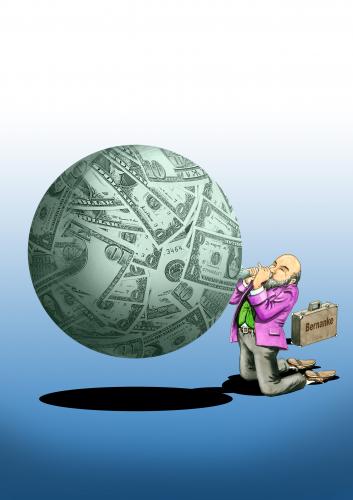 On the interplay between the FED and STOCKS: Since Sept 1 – when QE was becoming a mainstream focus – if you only owned S&P on days when the Fed conducted Open Market Operations (in US Treasuries), your cumulative return is over 11%. in addition, 6 of the 7 times when S&P rallied 1% or more, OMO was conducted that day. this compares to a YTD return of 5.8%. the point: you would have outperformed the market 2x by being long on just the 16 days when – this is the important part – you knew in advance that OMO was to be conducted. The market’s performance on the 19 non-OMO days: +70bps.
 While we are still angling for cash into the holidays, we are far more bearish than bullish due to the underlying fundamentals (and if you think 10% stops will save you, check out CSCO’s near-20% drop overnight) but we are protecting our bearish bets with upside plays like yesterday’s very well-timed
  e foreclosure lawyers down in Jacksonville had warned me, but I was skeptical. They told me the state of Florida had created a special super-high-speed housing court with a specific mandate to rubber-stamp the legally dicey foreclosures by corporate mortgage pushers like Deutsche Bank and JP Morgan Chase. This "rocket docket," as it is called in town, is presided over by retired judges who seem to have no clue about the insanely complex financial instruments they are ruling on — securitized mortgages and labyrinthine derivative deals of a type that didn't even exist when most of them were active members of the bench. Their stated mission isn't to decide right and wrong, but to clear cases and blast human beings out of their homes with ultimate velocity. They certainly have no incentive to penetrate the profound criminal mysteries of the great American mortgage bubble of the 2000s, perhaps the most complex Ponzi scheme in human history — an epic mountain range of corporate fraud in which Wall Street megabanks conspired first to collect huge numbers of subprime mortgages, then to unload them on unsuspecting third parties like pensions, trade unions and insurance companies (and, ultimately, you and me, as taxpayers) in the guise of AAA-rated investments. Selling lead as gold, shit as Chanel No. 5, was the essence of the booming international fraud scheme that created most all of these now-failing home mortgages.
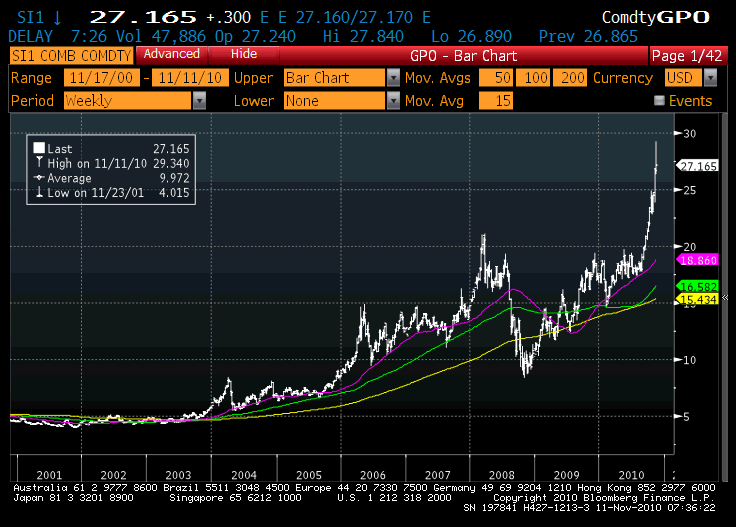


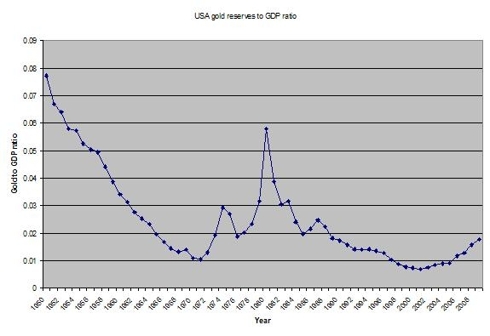


| You are subscribed to email updates from Save Your ASSets First To stop receiving these emails, you may unsubscribe now. | Email delivery powered by Google |
| Google Inc., 20 West Kinzie, Chicago IL USA 60610 | |




No comments:
Post a Comment