


Gold World News Flash |

- Gold, Get it While You Can
- Turkey, China Shun the Dollar in Conducting Trade
- It's Time for a 21st Century Gold Standard
- James Turk - Big Buyers Continuing to Come Into Gold
- AT IMF MEETING, FINANCE MINISTERS MAY PLOT COMPREHENSIVE CURRENCY MARKET RIG
- Safeguard Against the Dollar with ZERO Downside Risk... Guaranteed
- Hourly Action In Gold From Trader Dan
- John Kaiser: Best Leverage in Ounces-in-the-Ground Plays
- Gold-Stock Record Highs
- Return of the Century Bond
- Great Panther Silver
- LGMR: Gold Spikes on Same Old Story Fed Accused of Spurring "Currecy War"
- Gold Key Reversal Day
- After China, the Fed’s Now the Largest Owner of US Treasuries
- Gold Seeker Weekly Wrap-Up: Gold and Silver Gain Over 2% and 5% on the Week
- Perth Mint Blog
- I Told You to Buy Mongolia!
- ‘Bernanke Put’ Risk for Shareholders?
- The Mogambo Golden-Real Estate Project
- FRIDAY Market Excerpts
- In The News Today
- Jim's Mailbox
- GOLD IRA advice.
- Gold & Silver: This Time it IS Different
- Dollar set for sharp decline, Goldman forecasts
- Trashed Real Estate, Soaring Gold
| Posted: 08 Oct 2010 09:14 PM PDT Given the fragile state of global affairs and the waiting-in-the-wings crisis for the U.S. dollar, I'll be surprised if we don't see another panic into physical gold. And the question is, will there be enough metal to go around when the public – 95% of which own none – wakes up and wants to buy it? Answer: No.
|
| Turkey, China Shun the Dollar in Conducting Trade Posted: 08 Oct 2010 09:02 PM PDT ISTANBUL (Dow Jones)--Turkish Prime Minister Recep Tayyip Erdogan and China Premier Wen Jiabao said Friday their two countries would from now on trade using their own currencies, effectively excluding the U.S. dollar.
|
| It's Time for a 21st Century Gold Standard Posted: 08 Oct 2010 06:03 PM PDT The evidence of the shift in the elite opinion stream is clear: the gold standard is returning to respectability.
|
| James Turk - Big Buyers Continuing to Come Into Gold Posted: 08 Oct 2010 06:01 PM PDT With gold and silver recovering and heading higher today, King World News interviewed James Turk, this time from the United States. When asked about the tumble in the metals yesterday Turk commented, "When you are in stage II like we are in with gold, you are going to see a lot more volatility like yesterday. But, nothing that happened yesterday violated any of the short-term trends."
|
| AT IMF MEETING, FINANCE MINISTERS MAY PLOT COMPREHENSIVE CURRENCY MARKET RIG Posted: 08 Oct 2010 05:57 PM PDT "Finance ministers all understand that the dollar's going to be weakening," he says, and the best way to handle that is through a coordinated effort.
|
| Safeguard Against the Dollar with ZERO Downside Risk... Guaranteed Posted: 08 Oct 2010 05:31 PM PDT By Dr. Steve Sjuggerud Friday, October 8, 2010 Heads we win. Tails, the government loses. Hey, if the government is willing to create investment guarantees for us (through virtual banks, for example), we'd be foolish not to take advantage of 'em. If we can get the full upside potential of the investment… and we can legally hand off all the risks to the government… then let's do it! Of course, we'll never invest just because of a government guarantee. The investment idea has to be great in its own right… The guarantee is just the icing on the cake. In the case of today's idea, it's a great way to profit on what might be a risky bet against shaky currencies… without risking a penny. This investment has nothing to do with bonds, gold, real estate, or stocks. When the stock market was nose-diving in 2000, 2001, and 2002, this investment returned about 2%, 5%, and 7%, respectively. In 2008, when every investment on the planet lost money (...
|
| Hourly Action In Gold From Trader Dan Posted: 08 Oct 2010 05:31 PM PDT View the original post at jsmineset.com... October 08, 2010 10:04 AM Dear CIGAs, So much for the anxiously anticipated payrolls report – it turned out to be an absolute dud with the economy shedding yet more jobs (try to think of this in human terms). Another 95,000 jobs disappeared. While private sector hiring did show a mild increase, government jobs (state, local and federal – census workers) showed another drop. Further distressing news was that July and August numbers were revised DOWNWARD. If that were not depressing enough, preliminary estimates for the yearly benchmark revisions reveal that the government underestimated the overall number of job losses for the year and may erase another 366,000 off its books. Keep in mind that these are all "official" government numbers. The reality is even worse. By the way, the underemployment number is closer to 17.1%. Nearly 1 out of 5 are either out of work or working part time being unable to secure full time employment. Obviou...
|
| John Kaiser: Best Leverage in Ounces-in-the-Ground Plays Posted: 08 Oct 2010 05:31 PM PDT Source: Brian Sylvester of The Gold Report 10/08/2010 Kaiser Bottom-Fish Report Writer John Kaiser sees the gold price reaching well into thousands—one of a series of events that, ultimately, could result in the kind of area-play fever not witnessed on the junior board since the mid-1990s. John believes all it would take is a "holy mackerel"-type gold discovery in the right area. In this exclusive interview with The Gold Report, John reveals a Carlin-type gold discovery in the Yukon and a few others you'll want to know about. The Gold Report: John, you were recently at a mining conference in Toronto where you told the audience you could see gold spiraling well into the thousands/oz. without worldwide financial Armageddon. Other gold pundits think such prices can be attained only with global financial ruin. Tell us how gold investors can have their cake and eat it too. John Kaiser: I regard gold as a special asset class, whose specialness is derived from the fac...
|
| Posted: 08 Oct 2010 05:31 PM PDT Adam Hamilton October 8, 2010 2397 Words Inspired by gold’s relentless momentum, investors drove the flagship HUI gold-stock index to new all-time highs this week. While great fun for all of us with capital deployed in this sector, seeing the best levels in history often spawns anxiety in those with a contrarian bent. Following gold stocks’ run into record territory, are they in danger of an imminent correction? Interestingly, the history of today’s secular gold-stock bull suggests the answer is they’re not. The manner in which the HUI achieved its new record highs this week has always led to big surges historically. And if today’s upleg holds true to this extensive precedent, the gold stocks have a ...
|
| Posted: 08 Oct 2010 05:31 PM PDT The 5 min. Forecast October 08, 2010 10:51 AM by Addison Wiggin [LIST] [*] Two signs investors are losing their minds…the return of the “century” bond [*] How “Dividend Aristocrats” spank the S&P… and the best income opportunity right now [*] One million people give up looking for work… The 5 picks apart September jobs report [*] Alan Knuckman with a short-term and long-term outlook for gold [*] “Valueless tripe”… and other bilge… in the mailbag [/LIST] The jobs report was -- drumroll, please -- “worse than expected.” The Street was counting on a loss of 5,000 jobs. What they got was a big fat negative 95,000. Not to worry, however. In the debt-addled world of stock market investing circa 2010, this is excellent news. It means the Fed will be more inclined to pursue the storied second round of quantitative easing (“QE2”)… thus propping...
|
| Posted: 08 Oct 2010 05:31 PM PDT Richard (Rick) Mills Ahead of the Herd As a general rule, the most successful man in life is the man who has the best information The silver/gold vein systems of the Veta Madre at Guanajuato were discovered as early as 1548. At their peak of production in the 18th century these systems were responsible for one third of the world’s silver output. Today the Guanajuato area and its prolific, high grade silver/gold vein systems are still one of the most prolific silver producing regions of the world. According to a survey conducted by The Fraser Institute, Mexico is among the top 20 most attractive regions in the world for exploration and mining. A strong mining culture, excellent geology, political stability and favorable tax and permitting structures all combine to create major appeal for mining companies. Non-Mexican companies can maintain 100% ownership of their properties and reap the full benefits of successful exploration and project development...
|
| LGMR: Gold Spikes on Same Old Story Fed Accused of Spurring "Currecy War" Posted: 08 Oct 2010 05:31 PM PDT London Gold Market Report from Adrian Ash BullionVault 09:20 ET, Fri 8 Oct. Gold Spikes on "Same Old Story" as US Sheds Jobs, Fed Accused of Spurring "Currency War" THE PRICE OF GOLD in wholesale dealing jumped against the Dollar at the start of New York trade on Friday after the Bureau for Labor Studies said US payrolls shed 95,000 jobs in September. Earlier hitting a 3-session low beneath $1326 per ounce, the gold price had already recovered to $1335 before spiking – briefly – above $1340 on the news. "The daily chart shows $1320 is an important pivot," reckons Russell Browne at Scotia Mocatta, "followed by this week's low of $1312."A lower close [on Friday] will trigger selling of the metal from shorter-term traders.""Consolidation is coming," a Hong Kong dealer agreed to Reuters earlier."We've been expecting some correction for some time...But the bullish trend [in gold] is still here. We still have low interest rates, and the economy is not stable – the old sto...
|
| Posted: 08 Oct 2010 05:31 PM PDT courtesy of DailyFX.com October 08, 2010 06:03 AM Daily Bars Prepared by Jamie Saettele Daily RSI has tested the November 2009 extreme and gold has also traded above its multi month channel line today. An objective going forward remains 1405, which is the 100% extension of the 1048-1270 advance. A setback could find support at 1322. Only sustained weakness below there would indicate a trend change. Yesterday’s key reversal day warns of a pullback....
|
| After China, the Fed’s Now the Largest Owner of US Treasuries Posted: 08 Oct 2010 05:00 PM PDT Just this week an inevitable milestone came to pass, the Federal Reserve surged ahead of Japan as the second largest owner in the world of US debt… second only to China. Of course, the funds used to generate that massive debt position have only been made possible through the smoke and mirrors of quantitative easing. Zero Hedge notes this, and two other generally under-reported US debt facts, in a recent post. Here's the short version: "#1: The US Fed is now the second largest owner of US Treasuries… Setting aside the fact that this is abject lunacy, this policy is trashing our currency which has fallen 13% since June… as in four months ago… "#2: 'There are only about $550 billion of Treasuries outstanding with a remaining maturity of greater than 10 years.' [...] the US has entered a debt spiral: a time in which fewer and fewer investors are willing to lend to us for any long period of time… at the exact same time that we must roll over trillions in old debt and issue an additional $100-150 billion in NEW debt per month in order to finance our massive deficit… So we're talking about TRILLIONS of old debt coming due in the next decade… "#3: The US will Default on its Debt… either that or experience hyperinflation. There is simply no other option. We can NEVER pay off our debts. To do so would require every US family to pay $31,000 a year for 75 years… Obviously that ain't going to happen…" The last point should be no surprise to any regular Daily Reckoning reader… but the extent to which the Fed has been purchasing Treasuries is appalling, as is the maturity of the Treasuries. You can read a more detailed description of these three issues in Zero Hedge's coverage of three horrifying facts about US debt. Best, Rocky Vega, After China, the Fed's Now the Largest Owner of US Treasuries originally appeared in the Daily Reckoning. The Daily Reckoning, offers a uniquely refreshing, perspective on the global economy, investing, gold, stocks and today's markets. Its been called "the most entertaining read of the day."
|
| Gold Seeker Weekly Wrap-Up: Gold and Silver Gain Over 2% and 5% on the Week Posted: 08 Oct 2010 04:00 PM PDT Gold fell over $10 to $1324.60 in London before it spiked up to $1345.25 after the release of the jobs report and then dropped back down to $1329.55 by about 9AM EST, but it then rallied back higher for most of the rest of trade and ended near its late morning high of $1379.52 with a gain of 0.67%. Silver fell to as low as $22.28 in London before it rallied back higher for most of trade in New York and ended near its late morning high of $23.295 with a gain of 2.48% at a new 30-year closing high.
|
| Posted: 08 Oct 2010 03:45 PM PDT Perth Mint has launched an online bullion selling website and to go with it a corporate blog. After 2.5 years of blogging privately I'm finally going to be able to go legit! The change in role means I will have more time to put into posts and be able to formally draw on our internal data. I'll keep this blog up for posts that aren't suitable for a corporate blog. For the moment I'll be dual posting as it is a soft launch before they go for a proper launch and marketing campaign. What I'm aiming to cover with the corporate blog can be found here and is pretty much the same as what I've tried to do with this blog. 
|
| Posted: 08 Oct 2010 03:32 PM PDT
I have been pounding the table on Mongolia for over a year now, as the fundamentals were stacking up nicely for it to become a high growth pioneer market (click here for the call at http://www.madhedgefundtrader.com/september_2__2009.html ). Never mind that you can’t buy it unless you become a resident of Ulan Bator and pay with local currency. But the indirect plays I recommended are doing extremely well, including Ivanhoe Mines (IVN), up 93% in a year, and Rio Tinto (RTP), up 53%. Government officials were in New York this week negotiating with NASDAQ to take over the management of their nascent exchange, which even after the double, has only 300 listed companies with a total market capitalization of only $1 billion. There’s nowhere I won’t go to make a buck, so I had to sit up and pay attention when friends in Tokyo told me that the next big Asian equity play will be in Mongolia. Genghis Khan’s ancestral land has enormous mineral resources which make it a natural commodity play (did he know?), and it has one of the world’s most GDP friendly population pyramids. But incompetent government administrators with antiquated Soviet era sentiments managed to kill every development opportunity in the crib with onerous windfall taxes and harsh joint venture restrictions. The resources stayed in the ground. National elections finally turned over the regressive administration in 2008, and the anti growth tax regime was dumped last week. Mongolia has inked a deal with Ivanhoe Mines and Rio Tinto to develop the massive Oyu Tolgoi mine, the world’s largest undeveloped copper resource, which could lead to a doubling of the GDP in five years. We’re talking a gigantic 450,000 tons of copper and 330,000 ounces of gold a year. Friends have been e-mailing in the results of core drillings from Oyu Tolgoi, and it is clear that this is one of the richest ores ever discovered. Also on tap is the development of huge coking coal and uranium deposits. The spillover benefits for the rest of the economy would be substantial. Now that visas are no longer impossible to get, as they were in my day, my Japanese and Chinese speaking trilingual son tells me that Ulan Bator has become the trendy place for American college grads fleeing unemployment at home. Who knows? Give me a low enough PE multiple and I might even develop a taste for the country’s national dishes, sheep brains and fermented mare’s milk. To see the data, charts, and graphs that support this research piece, as well as more iconoclastic and out-of-consensus analysis, please visit me at www.madhedgefundtrader.com . There, you will find the conventional wisdom mercilessly flailed and tortured daily, and my last two years of research reports available for free. You can also listen to me on Hedge Fund Radio by clicking on “This Week on Hedge Fund Radio” in the upper right corner of my home page.
|
| ‘Bernanke Put’ Risk for Shareholders? Posted: 08 Oct 2010 02:24 PM PDT
Michael Mackenzie and David Oakley of the FT report, ‘Bernanke put’ risk for shareholders:
There are no guarantees that QE2 will work, but as Vicki Schmelzer reports in MarketNews.com, as more come on board with QE2, risk appetite is rising:
Rodrigo Campos of Reuters reports, Fed to run the show despite big earnings:
Finally, today I got to speak with one of my favorite senior pension fund officers who manages a sizable bond and hedge fund portfolio. I leave you with some of his thoughts, in point form:
|
| The Mogambo Golden-Real Estate Project Posted: 08 Oct 2010 01:49 PM PDT Japan has taken an interesting approach to preventing people from accumulating so much debt that they default; The Wall Street Journal reports that Japan has a new law "restricting total loans from all lenders to one-third of a borrower's income. Read More...
|
| Posted: 08 Oct 2010 10:30 AM PDT Gold reverses higher after disappointing jobs data The COMEX December gold futures contract closed up $10.30 Friday at $1345.30, trading between $1325.60 and $1350.80 October 8, p.m. excerpts: see full news, 24-hr newswire…
|
| Posted: 08 Oct 2010 10:25 AM PDT Jim Sinclair's Commentary If jobs grew at 50,000 per month it would only take 13 years to regain the jobs lost. Where is the recovery on Main Street?
Jim Sinclair's Commentary The important figure is not the rise in spending, but what the revenue is. The Formula of 2006 grinds on. The downward spiral, not having had intervention at the point of cause (OTC derivatives), guarantees the double dip will be a single flop. Government spending rises 9% Basic government spending rose by 9 percent in fiscal 2010, driving the country to a $1.291 trillion deficit down $125 billion from 2009, but still the second-largest hole on record, the Congressional Budget Office said Thursday. CBO said the 9 percent rise in spending for defense, social programs, entitlements and interest on the debt was "somewhat faster than in recent years" a stark evaluation at a time when President Obama and Congress are working to convince voters they are pursuing a fiscally frugal course in Washington. Still, the nearly $1.3 trillion deficit for fiscal 2010, which ended Sept. 30, is lower than prior projections, thanks in large part to expiring tax breaks, higher corporate tax receipts and the winding-down of the Troubled Asset Relief Program and payments to Fannie Mae and Freddie Mac. "While the CBO deficit number is lower than expected, the fact that we are still in a very serious fiscal situation remains unchanged and the president is committed to getting us back on a sustainable fiscal path," said Meg Reilly, a spokeswoman for the Office of Management and Budget. She said the rise in non-bailout spending is largely a result of last year's $814 billion Recovery Act, whose outlays peaked in the middle of this year and which was supporting between 1.4 million and 3.3 million jobs.
Jim Sinclair's Commentary I might add ounces in the ground, how deep down the ounces are, and what is the cost of extracting those ounces. That all factors into price when, and only when, you proceed to extract those ounces. John Kaiser: Best Leverage in Ounces-in-the-Ground Plays Kaiser Bottom-Fish Report Writer John Kaiser sees the gold price reaching well into thousands—one of a series of events that, ultimately, could result in the kind of area-play fever not witnessed on the junior board since the mid-1990s. John believes all it would take is a "holy mackerel"-type gold discovery in the right area. In this exclusive interview with The Gold Report, John reveals a Carlin-type gold discovery in the Yukon and a few others you'll want to know about. The Gold Report: John, you were recently at a mining conference in Toronto where you told the audience you could see gold spiraling well into the thousands/oz. without worldwide financial Armageddon. Other gold pundits think such prices can be attained only with global financial ruin. Tell us how gold investors can have their cake and eat it too. John Kaiser: I regard gold as a special asset class, whose specialness is derived from the fact that gold is very rare, hard to bring above ground and generally useless due to its high cost, unlike silver, which is more abundant than cheap and gets fabricated into all sorts of industrial applications. Gold would be a wonderful conductor for electronics, too, but it's just too expensive. We have just over 5 billion oz. (Boz.) scattered around the world in safes, vaults and jewelry boxes not doing much at all. Because gold has limited utility, its price is irrelevant to ongoing economic activity. As a comparison, if oil shoots to $500/barrel that means that your paycheck would allow you to drive just one-fifth the distance it allows you to drive now. Such a move in oil would have drastic implications for the global economy. But if gold shoots to $5,000, what happens? Well, the gold stays in my teeth. Jewelry demand goes down even more, but nobody makes any decisions to substitute out of gold because it really isn't being used for much. In other words, it really should not affect the economy.
Jim Sinclair's Commentary Gold will re-enter the monetary system in a way few anticipate. It will be as I have been communicating to you for years. This time it will be attached to a virtual currency basket and a measure of international liquidity. It's Time for a 21st Century Gold Standard Columnist Michael Kinsley is looking exceptionally prescient. Last May, in an article titled, "My Inflation Nightmare" in The Atlantic Monthly, he asked "Am I crazy or is the commentariat ignoring our biggest economic threat?" Kinsley's piece in The Atlantic Monthly anticipated a flood of articles in the world press exemplified by this UK Telegraph July 20 headline: "Gold reclaims its currency status as the global system unravels." The evidence of the shift in the elite opinion stream is clear: the gold standard is returning to respectability. Just 5 months later, the dollar is in a relentless decline, falling below $1,300/oz of gold, sinking against the Euro, hitting a record low against the Swiss franc. For those of us who lived through the Nixon/Ford/Carter inflation of the 70s, this sure looks like a precursor, a dramatic one. Kinsley may be playing Cassandra here. It wouldn't be the first time for him. Kinsley pondering gold: Kinsley: The only reason to buy gold is fear that the currency may collapse. Paper currency used to represent claims on a share of the gold in Fort Knox. Now it is just "fiat money," backed only by the "full faith and credit" of the United States government. Thirty years ago, we peered into this abyss and pulled back just in time. A stable currency is firm ground on which you can build a life. These days everyone is disenchanted with civic institutions and government. They hate the press, they loathe Congress, and so on. Studies by foundations puzzle over why. Was it the '60s? No, it was the late '70s and early '80s, when government failed to deliver on its obligation to provide a stable currency. Kinsley's voice changes the public conversation. Until recently, there were three main critiques of gold, all relying more upon ridicule than reason:
Jim Sinclair's Commentary It chills some much larger. Bank of America's Big Freeze Chills Housing Recovery It was bound to happen, and it did. Bank of America extended its foreclosure freeze to all 50 states as it continues internal "assessments" of its foreclosure practices. "Our ongoing assessment shows the basis for our past foreclosure decisions is accurate," reads their statement. Bank of America (NYSE: bac) is one of the highest volume loan liquidators. This means we're going to see a huge slowdown in sales of bank owned properties in the coming months, which have been running at roughly one third of all home sales. It also says something about what happens next. "It's really only a matter of time before there is effectively a national foreclosure moratorium," notes Guy Cecala of Inside Mortgage Finance. "We already have moved way beyond having foreclosure concerns in just certain circumstances in certain states. There are concerns/challenges being raised about all foreclosures." I put in the call to JP Morgan Chase (NYSE: jpm) to see if they will follow. "No comment at this point," answered spokesman Thomas Kelly. While some see today's announcement as something of an admission: "The national moratorium is what would be expected if they are truly concerned about the legality of their internal policy, procedures and processes. This is because in non-judicial states it is even easier to commit fraud, or act irresponsibly with respect to the quality of legal documents, than in the 23 judicial states in question because there is no judge involved," says mortgage consultant Mark Hanson.
Jim Sinclair's Commentary 23 states have made cease and desist orders on all foreclosures. There is a call for a national cease and desist order on all foreclosure. If the order on all foreclosures goes national, all securitized debt on mortgages is therefore of questionable value as that would mean they cannot source the collateral. Look out for G20 BS coming this weekend. Remember there is a huge difference between coordination and accord. Be prepared for a comparison to the Plaza Agreement of 1985 and the MOPE coming out of G20 this weekend. There is zero chance that major currencies will coordinate, let alone 20 currencies. Jim Sinclair's Commentary Here is a clip from The Daily Show on securitized debt. Jim Sinclair's Commentary Nat and Al, famous Comex gold bears, meet QE to infinity.
Jim Sinclair's Commentary Quantitative easing to where?
Jim Sinclair's Commentary Bank of America today ceased foreclosures in 50 states. There is clearly a media blackout on connecting the dots to securitized debt on mortgages. BofA halts foreclosures in 50 states WASHINGTON – A mushrooming crisis over potential flaws in foreclosure documents is threatening to throw the real estate industry into chaos, as Bank of America on Friday became the first bank to stop taking back tens of thousands of foreclosed homes in all 50 states. The move, along with another decision on foreclosures by PNC Financial Services Inc., adds to growing concerns that mortgage lenders have been evicting homeowners using flawed court papers. Charlotte, N.C.-based Bank of America Corp., the nation's largest bank, said Friday it would no longer complete foreclosures in all 50 states as it reviews documents used to process foreclosures. That applies to homes that the bank takes back itself and those that it transfers to investors such as mortgage giants Fannie Mae and Freddie Mac. A week earlier, the company had said it would only do so in the 23 states where foreclosures must be approved by a judge. The bank did so in reaction to mounting pressure from public officials inquiring about the accuracy of foreclosure documents. A company spokesman, Dan Frahm, said the bank still believes its documents are correct but wants to satisfy officials' concerns. Jim Sinclair's Commentary Here is John William's take on today. I find his for payment subscription extremely valuable. - Outright Contraction in September Payrolls Net of Temporary Census Workers
Jim Sinclair's Commentary Peanuts in today world! Japan cabinet approves $61.3 bln stimulus TOKYO (AFP) – Japan's cabinet on Friday approved a new emergency stimulus package worth 61.3 billion dollars to help shore up an economy hit hard by deflation and the impact of a strong yen. The 5.05 trillion yen plan will be financed by an extra budget, which the government is trying to finalise by the end of this month. But the fate of the package and the budget will hang on Prime Minister Naoto Kan's ability to muster the support of opposition lawmakers to pass them through parliament, given the ruling party's lack of a clear majority. The stimulus is the Kan administration's second since it came to power in June and includes job programmes, welfare spending and programmes for small businesses and infrastructure. Kan came to power pledging to slash spending and work towards cutting the world's biggest industrialised debt running close to 200 percent of gross domestic product, but Japan's malaise has complicated those ambitions.
Jim Sinclair's Commentary The recovery on Main Street. 27 Signs That The Standard Of Living For America's Middle Class Is If you still have a job and you can put food on the table and you still have a warm house to come home to, then you should consider yourself to be very fortunate. The truth is that every single month hundreds of thousands more Americans fall out of the middle class and into poverty. The statistics that you are about to read are incredibly sobering. Household incomes are down from coast to coast. Enrollment in government anti-poverty programs sets new records month after month after month. Home ownership is down, personal bankruptcies are way up and there are not nearly enough jobs to go around. Meanwhile, the price of basics such as food and health care continue to skyrocket. Don't be fooled by a rising stock market or by record bonuses on Wall Street. The U.S. economy is not getting better. After World War II, the great American economic machine built the largest and most vigorous middle class in the history of the world, but now America's middle class is disintegrating at a blinding pace. Most of those who write about the plight of the American middle class believe that things can be turned around and that the middle class will eventually be stronger than it ever has been. But unfortunately, that is just not the case. As a society, we have lived far, far beyond our means for decades. Now the bills are coming due and none of our leaders seem to know what to do. Meanwhile, the U.S. economy is being rapidly assimilated into the emerging one world economy. Middle class American workers now find themselves in direct competition for jobs with the cheapest labor on the other side of the globe. Of course many multinational corporations have taken advantage of this by moving factories and jobs to countries like China where blue collar workers make about a dollar an hour. This has helped raise the standard of living for workers in those nations by a nominal amount, but it has been absolutely devastating for the standard of living of America's middle class.
Jim Sinclair's Commentary 42,000,000 Americans are on food stamps as of today. That is one out of every eight US citizens. There is no precedent for this kind of growth over time. Where is the recovery on Main Street? Jim Sinclair's Commentary What is the value of a debt instrument that cannot access its collateral and does not yield? The answer is a heck of a lot less than what the FASB sold their soul to Wall Street for. They have allowed financial organizations to book these instruments at asset value. That is what this means to many securitized debt instruments. Chairman Towns Requests Top Banks to Temporarily Halt Foreclosures Nationwide WASHINGTON – (LoanSafe.org) – Rep. Edolphus "Ed" Towns (D-NY), Chairman of the House Committee on Oversight and Government Reform, today called on top U.S. mortgage lenders and banks to voluntarily suspend foreclosure proceedings in all 50 states and the District of Columbia until the banks complete internal investigations into their company's mortgage servicing and foreclosure practices. The banks and lending institutions include CitiMortgage, JP Morgan Chase, Wells Fargo Home Mortgage, Bank of America, One West Bank, PHH Corporation, U.S. Bank Home Mortgage, Ally Financial (GMAC), PNC Financial Services Group, and Sun Trust Mortgage. Recent news reports have surfaced detailing a variety of suspect practices related to lenders' handling of delinquent mortgages and home foreclosures, including allegations of incorrect information, unverified documentation, false certifications, and forged signatures. Although three major lenders already announced they are suspending home foreclosures in 23 states, including New York State, Chairman Towns is concerned that other large mortgage lenders continue to process foreclosures as usual. "Without a doubt, losing a home can be one of the most traumatic experiences faced by an American family," said Chairman Towns. "Anyone forced to go through this process should be treated fairly. Sadly, it appears this may not have been the case for some borrowers."
Jim Sinclair's Commentary I will give you three guesses to figure out who is short up to the gizzo. They may be short, but they are also right. Dollar set for sharp decline, Goldman forecasts The investment bank expects the dollar to drop to $1.79 against the pound in six months and $1.85 in 12 months. Sterling closed at $1.5891 in London yesterday. The euro won't be spared either, with the dollar's slump forcing it to $1.50 six months from now and $1.55 in a year's time. Powered by President Obama's stimulus package and a rebound in inventories, the US recovery peaked in the final three months of last year and has been slowing ever since. As the summer delivered a diet of weak economic data, the conviction has strengthened among a growing number of officials at the Federal Reserve that it should risk another bout of quantitative easing – printing money to inject into the economy. "More QE is seen as a co-ordinated effort to get the dollar lower," said Thomas Stolper of Goldman Sachs. "It makes sense for the US." Separately, Goldman's chief economist, Jan Hatzius, warned that the world's biggest economy faces a "fairly bad" or a "very bad" scenario over the next six to nine months.
Jim Sinclair's Commentary I don't think you can trust this security force. This is a Wall Street type strategy in war. Report: US Contractors Hired Iranian Spies, Taliban, Warlords To Guard US Troops In Afghanistan A scathing Senate report says US contractors in Afghanistan have hired warlords, "thugs," Taliban commanders and even Iranian spies to provide security at vulnerable US military outposts in Afghanistan. The report, published by the Senate Armed Services Committee, says lax oversight and "systemic failures" have led to "grave risks' to US forces, including instances where contractors have employed Afghan subcontractors who were "linked to murder, kidnapping and bribery, as well as Taliban and anti-coalition activities." The chairman of the committee, Sen. Carl Levin, D.-Michigan, said the report was evidence that the US needs to reduce its reliance on contractors. "We need to shut off the spigot of US dollars flowing into the pockets of warlords and power brokers who act contrary to our interests," said Sen. Levin. The committee reviewed roughly 125 unclassified Department of Defense security contracts between 2007 and 2009, and found that there are some 26,000 private security contractors operating in Afghanistan, the majority of whom are Afghan nationals. The review found "systemic failures" of the military oversight for contracts, including the hiring of what Levin called "many too many" security contractors who had been improperly vetted, improperly trained or were not provided weapons. In some cases, companies were awarded contracts though they had no ability to provide the services needed. In those cases, companies then quickly hired local nationals without proper vetting or security checks. The chaotic system left US facilities and personnel vulnerable to attack. The report found that some Afghan security guards simply walked off their posts at remote forward operating bases.
Jim Sinclair's Commentary This is the most resignations for an Administration in history since all of Carter's cabinet threatened to resign. National Security Adviser to Resign, Officials Say President Obama will announce on Friday that Gen. James Jones, the national security adviser, is resigning and will be replaced by his deputy, Thomas E. Donilon, senior administration officials said. General Jones's departure had been long rumored, and he had previously indicated to his staff that he intended to leave by t |
| Posted: 08 Oct 2010 10:24 AM PDT Where is the recovery on Main Street? If jobs grew at 50,000 per month it would only take 13 years to regain the jobs lost. Jim Jim, The job creation histogram, mathematically smoothed to reduce volatility, is beginning to roll over again. This suggests that annual job creation (or destruction) will soon be unable to meet the labor force growth (or contraction) rate. In other words, if jobs are being created, the growth rate will be slower than the labor force expansion. Or, if jobs are being destroyed, they are doing so at a faster rate than the labor force contraction. Either way, it leaves Main Street fighting over a shrinking pool of jobs despite the best efforts of heavily spun, the liquidity driven recovery. Eric Job Creation Histogram (JCH): Net Nonfarm Payrolls Added/(Lost) less Civilian Labor Force Added/(Lost), 12 Month Average:
Dear Jim, This comes on the heels of a similar deal with Russia. The US dollar was dog meat when it was at 89 and is today. CIGA Keith The demise of the dollar In the most profound financial change in recent Middle East history, Gulf Arabs are planning – along with China, Russia, Japan and France – to end dollar dealings for oil, moving instead to a basket of currencies including the Japanese yen and Chinese yuan, the euro, gold and a new, unified currency planned for nations in the Gulf Co-operation Council, including Saudi Arabia, Abu Dhabi, Kuwait and Qatar. Secret meetings have already been held by finance ministers and central bank governors in Russia, China, Japan and Brazil to work on the scheme, which will mean that oil will no longer be priced in dollars. The plans, confirmed to The Independent by both Gulf Arab and Chinese banking sources in Hong Kong, may help to explain the sudden rise in gold prices, but it also augurs an extraordinary transition from dollar markets within nine years. Turkey, China to shun dollar in trade with each other ISTANBUL, Turkey — Turkish Prime Minister Recep Tayyip Erdogan and China Premier Wen Jiabao said Friday their two countries would from now on trade using their own currencies, effectively excluding the U.S. dollar. The two leaders also pledged to triple trade between China and Turkey to $50 billion within five years, and to $100 billion by 2020, speaking at a joint news conference in Ankara that marked the final stop of Mr. Wen's European tour. "We are forming an economic strategic partnership. … In all of our relations, we have agreed to use the lira and yuan," Mr. Erdogan said.
Jim Sinclair's Commentary Skip the mope and hearken to Eric the Red. Employers in U.S. Cut More Jobs Than Forecast in September Job creation in the initial phase of 2010 remains exceptional weak in comparison to a similar stage of the previous cycle in 2004. Not only is total job creation sluggish but also dependence on the birth/death model (mathematical algorithm) to create those jobs has increased significantly. 1.5 million jobs were created from January to September in 2004. 44% of those jobs were assumed by the birth/death model. By comparison, 613 thousand jobs, about 60% less than 2004, have been created from January to September in 2010. Over 70% of 613 thousand jobs were assumed by the birth/death model. In other words, statistical techniques or 'modeling' have played a far greater role in job creation in 2010 than 2004. This is always a troubling sign. Birth/Death Model (BDM) Contribution to Nonfarm Net Payrolls (NFP) Added/(Lost): The U.S. lost more jobs than forecast in September, reflecting a decline in government payrolls that shows the damage being done by rising fiscal deficits. Employers cut staffing by 95,000 workers after a revised 57,000 decrease in August, Labor Department figures in Washington showed today. The median estimate of economists surveyed by Bloomberg News called for a 5,000 drop. The unemployment rate unexpectedly held at 9.6 percent. Source: finance.yahoo.com
|
| Posted: 08 Oct 2010 10:14 AM PDT I was hoping someone could offer up suggestions for moving a small IRA. I'm looking to rollover to a gold IRA. I'm a simpleton on such subjects and any advice would be a godsend.
|
| Gold & Silver: This Time it IS Different Posted: 08 Oct 2010 10:09 AM PDT Today, many people still do not understand what I mean when I state that the monetary system is a complete sham designed by bankers to rob wealth from the people upon whom they impose this illegitimate system. Sometimes simplicity helps to bang home a complex concept. So to explain the fraudulent, immoral nature of our present monetary system in as simplistic a visual manner as possible, I have produced the following short-video below, which also explains why gold/silver, after it likely corrects sometime before the end of the year, will soar to many multiples of its present price in future years.
|
| Dollar set for sharp decline, Goldman forecasts Posted: 08 Oct 2010 10:02 AM PDT The dollar will embark on a sharp decline over the next 12 months, Goldman Sachs forecast on Wednesday, as policy makers in Washington look poised to press the trigger on another round of printing money.
|
| Trashed Real Estate, Soaring Gold Posted: 08 Oct 2010 10:00 AM PDT Bruce Vanderveen submits:
Three years ago a typical Florida house (Tampa area) sold for $240,000 and gold was around $450/oz. Now the house value has been cut in half to $120,000 while Gold has tripled and is closing in on $1,350/oz. It took 535 ounces of gold to buy the house in 2006, today it only takes 90 ounces. Why such a large about face? Complete Story »
|

 December gold rose 0.8% on the Comex, gaining 2.1% on the week. Earlier, futures fell as much as 0.7%, mirroring swings in the dollar. The greenback headed for its fourth straight weekly decline against a basket of major currencies. "The uptrend in gold continues because the dollar just continues to lose ground," said Matthew Zeman, metal trader at LaSalle Futures Group. "There's more downside in the dollar. The jobs number just reinforces the fact that we'll see more quantitative easing."…
![clip_image001[1]](https://blogger.googleusercontent.com/img/b/R29vZ2xl/AVvXsEiI1afL048WiqkfNsvJereoczgHZbME_T-i9NAOzgizxfDilWV-Sv10fPSs9N4zxgvFb1c5WuKouX_dk3sY4aOsAYPeRAC45YbAYS0x2Q2L5JAlg6A9qrfGNPOHkKn0HquBizwNjd911YM/s1600/JCH.JPG "clip_image001[1]")

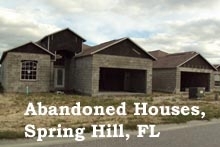 The prop wash from Ben Bernanke's helicopters has yet to spread dollars on the struggling U.S. real estate market. Gold, though, up over 30% in the last year, is a major beneficiary,
| You are subscribed to email updates from Gold World News Flash To stop receiving these emails, you may unsubscribe now. | Email delivery powered by Google |
| Google Inc., 20 West Kinzie, Chicago IL USA 60610 | |

No comments:
Post a Comment