


Gold World News Flash |
- Puerto Rico passes bill allowing halt to debt payments
- The gold miner excavating nothing but 13 years of red tape
- BREAKING: IT WAS DELIBERATE! Yellowstone Public Seismographs Taken OFF-line – WAIT ‘TIL YOU SEE WHY.
- INSIDERS WARN: “SOMETHING SINISTER IS HAPPENING” — UK COLLAPSE BEING PUSHED TO USHER IN NEW “BEAST” SYSTEM
- Gold Price Testing Key Technical Support – Is There More Downside Ahead?
- Are “Panama Papers” An Act Of Destabilization By Western Powers?
- Enemies Foreign & Domestic -- Matthew Bracken
- The Fed Has $300 Billion in Gold Rickard’s Latest Book Reveals
- Gold and Silver 'Owners Per Ounce' Stress and Leverage
- Shanghai Gold and Silver Deliveries
- Gold Price Lost $5.90 or -0.48% Today
- Sins of the World - Apr. 2016 (Part 1) End Times Signs
- Buying Dollar Bills For $1.10
- Full Speech: Donald Trump MASSIVE Rally in Bethpage, NY (4-6-16)
- "Rotten To The Core"
- The Terrifying Future of The United States
- Where One Swiss Bank Will Be Buying Gold
- Gold: Still the Best Insurance
- Gold Daily and Silver Weekly Charts - Grifters, Conmen, and Grafters
- RBI Cuts Internal Rate for 5th Time in 17 Months
- Central Bank Demand & Emerging Market Demand Are, To Me, The Bit Under The Gold Market!
- Top Global Gold Mining Companies
- Gerald Celente Speaks Out on Election-Year, Middle East, and European Chaos -- and GOLD!
- Gold & Silver Trading Alert: Gold’s Inconsequential Rally
- Perth Mint Silver Coins Have Second Highest Monthly Demand
- Big Banks, Hedge Funds Key Factors in 2016 Gold Price Surge
| Puerto Rico passes bill allowing halt to debt payments Posted: 06 Apr 2016 11:07 PM PDT Is Illinois next? * * * By Mary Williams Walsh Gov. Alejandro García Padilla of Puerto Rico on Wednesday signed a bill that would allow him to declare an emergency and give him authority to halt payments on the island's crushing $72 billion debt. The measures capped two days and nights of marathon debate in Puerto Rico's legislature, where lawmakers from the main opposition party called any unilateral debt moratorium dangerous and members of the governor's party insisted that doing nothing would be even worse. In Washington, House Republicans seeking to rescue Puerto Rico prepared to release a revised plan that includes a federal oversight panel. The proposal has been contentious on the island, where the governor and his top advisers are increasingly at odds with investors over how to restructure the debt, most of it in the form of municipal bonds. ... ... For the remainder of the report: http://www.nytimes.com/2016/04/07/business/dealbook/puerto-rico-passes-b... ADVERTISEMENT Buy precious metals free of value-added tax throughout Europe Europe Silver Bullion is a fast-growing dealer sourcing its products from renowned mints, refiners, and distributors. Because of a legal loophole that will close soon, you can acquire the world's most popular bullion coins free of value-added tax throughout the European Union. You can collect your order in person at our headquarters in Tallinn, Estonia, or have it delivered in any of the 28 EU countries. Europe Silver Bullion is owned and operated by North American and European experts in selling, storing, and transporting precious metals. We have an extensive product inventory of silver, gold, platinum, and palladium, and our network spans the world. Visit us at www.europesilverbullion.com. Join GATA here: Mines and Money Asia http://asia.minesandmoney.com/ Mining Investment Asia http://www.mininginvestmentasia.com/ Support GATA by purchasing DVDs of GATA's London conference in August 2011 or GATA's Dawson City conference in August 2006: http://www.goldrush21.com/order.html Or a colorful poster of GATA's full-page ad in The Wall Street Journal on January 31, 2009: http://gata.org/node/wallstreetjournal Help keep GATA going GATA is a civil rights and educational organization based in the United States and tax-exempt under the U.S. Internal Revenue Code. Its e-mail dispatches are free, and you can subscribe at: To contribute to GATA, please visit: | ||||||||||||||||||||||||||||||||||||||||||||||||||||
| The gold miner excavating nothing but 13 years of red tape Posted: 06 Apr 2016 10:59 PM PDT By Swansy Afonso, Rajesh Kumar Singh, and Archana Chaudhary After more than a decade struggling to cut through red tape to mine gold in India, Sandeep Lakhwara could be forgiven for thinking things couldn't get much worse. Then they did. Following a policy change last year, explorers such as Lakhwara's Deccan Gold Mines Ltd. now have to bid in auctions for the right to mine deposits they find. He argued that leaves little incentive to scour the world's seventh-largest land mass for minerals and metals. "You could go and look for the deposits and once you identify the deposits the government will auction them off to anybody else," Lakhwara said. "Why would anyone be going to do exploration then?" ... ... For the remainder of the report: http://www.bloomberg.com/news/articles/2016-04-06/the-gold-miner-excavat... ADVERTISEMENT Silver mining stock report comes with 1-ounce silver round Future Money Trends is offering a special 18-page silver mining stock report about how to profit with the monetary and industrial metal, and it comes with a free 1-ounce silver round. Proceeds from the report's sales are shared with the Gold Anti-Trust Action Committee to support its efforts to expose manipulation in the monetary metals markets. To learn about this report, please visit: Join GATA here: Mines and Money Asia http://asia.minesandmoney.com/ Mining Investment Asia http://www.mininginvestmentasia.com/ Support GATA by purchasing DVDs of GATA's London conference in August 2011 or GATA's Dawson City conference in August 2006: http://www.goldrush21.com/order.html Or a colorful poster of GATA's full-page ad in The Wall Street Journal on January 31, 2009: http://gata.org/node/wallstreetjournal Help keep GATA going GATA is a civil rights and educational organization based in the United States and tax-exempt under the U.S. Internal Revenue Code. Its e-mail dispatches are free, and you can subscribe at: To contribute to GATA, please visit: | ||||||||||||||||||||||||||||||||||||||||||||||||||||
| BREAKING: IT WAS DELIBERATE! Yellowstone Public Seismographs Taken OFF-line – WAIT ‘TIL YOU SEE WHY. Posted: 06 Apr 2016 10:35 PM PDT from Superstation 95:
Being able to see what is taking place in and around Yellowstone is of great interest to many people because if there is a sudden flurry of earthquake activity, it COULD — but not necessarily — signal a pending eruption. Since Yellowstone is the only “super volcano” on the North American continent, and is VERY geologically active, if an eruption were to actually take place, the western two-thirds of the United States would POTENTIALLY be hit with volcanic ash and a severe disruption of life.
So why were the public taken OFFLINE for the public? No one is providing any answers. Even more peculiar, the privately-funded seismographs from the University of Utah . . . are also OFFLINE to the public. WE NOW HAVE AN ANSWER: The images of seismograms that appeared on SuperStation95 have always come from from the University of Utah, a.k.a. the UUSS. Sometime on the evening of April 4th, 2016, they suddenly got rid of those images. No one is able to archive them anymore or present them to you in the efficient fashion you’ve come to know and love. From what we can tell so far about their changes, seismographic images have now become just “seismographic image.” Every seismogram now shows only and exactly the past 24 hours of its life, as if they don’t want anyone having the ability to look at its history even two days later. The filenames don’t even have anything in them anymore but the station’s ID. The only way for anyone to compensate for this is to manually download each station’s image once a day and then stick it in the archives. That means they’d never be live again. You’d have to go use their site to get live images. They couldn’t have invented a better way to break third-party sites if they tried. After poking around to various folks involved in the University of Utah Seismic Center, one person at that facility “quietly” e-mailed us a single graphic image which gave us pause: In the image below, the Green Colored line represents the border of Yellowstone National Park. The (barely visible) gold line represents the mouth of the super-volcano, known as the Caldera. The red dots in the image below show all the earthquakes that have recently taken place at the Yellowstone super-volcano. This is why the public seismographs are suddenly OFFLINE to the general public: | ||||||||||||||||||||||||||||||||||||||||||||||||||||
| Posted: 06 Apr 2016 08:45 PM PDT from UK Column, via The Phaser:
According to the UK Column, "The basic story that is coming out from these individuals is the same. There is an agenda to collapse society in this country with a view to helping to install a new system of government." As total collapse of the current system unfolds, people would be appointed into power in the new system, instead of being elected. The UK Column reports, "Something very nasty and subversive is at work within the political system within the UK… and it's clear that Beast is emerging and the intention is to utterly destroy the normal order and behavior of the country." | ||||||||||||||||||||||||||||||||||||||||||||||||||||
| Gold Price Testing Key Technical Support – Is There More Downside Ahead? Posted: 06 Apr 2016 07:35 PM PDT The gold price advanced sharply during the first three months of 2016 (+16%), marking its best quarter in 30 years. However, it corrected from a high around $1,287 to $1,200 over the past few weeks. There was a nice bounce yesterday, but gold has once gain dropped today, back below $1,220. With this latest pullback in the gold price, many investors are wondering if the 2016 rally was a false breakout or if the new gold bull market is just getting started. | ||||||||||||||||||||||||||||||||||||||||||||||||||||
| Are “Panama Papers” An Act Of Destabilization By Western Powers? Posted: 06 Apr 2016 07:00 PM PDT by Brandon Turbeville, Activist Post:
Mossack Fonseca is considered one of the world's biggest creators of "shell companies," corporate formations that can be used to hide the true owners of various assets. The data that was released by Mossack Fonseca includes contracts, emails, bank records, property deeds, passport copies and a host of other collections of sensitive information going as far back as 1977 to as recent as December, 2015. As media outlet Zero Hedge describes the leak, "It allows a never-before-seen view inside the offshore world — providing a day-to-day, decade-by-decade look at how dark money flows through the global financial system, breeding crime and stripping national treasuries of tax revenues." As Sueddeutsche Zeitung, the outlet that received the leaks, summarized the new revelations:
Zero Hedge also described a number of high-profile revelations coming from the leaks. The website writes:
The International Consortium of Investigative Journalists also took part in the "investigation" of the leaked data and revealed a summary of its findings. ICIJ suggests the leaks expose:
The Targets of the Release Out of all this data, however, there are several curious aspects that no mainstream media outlet has yet to adequately explain – the apparent absence of any relevant American or Israeli names as well as any high-profile and realistically relevant European names, particularly those of the active NATO countries. In fact, despite the fact that the Russians, Syrians, Chinese, and Icelandics have been revealed for the offshore dealers that they are – we are being led to believe that the oligarchs in the United States, England, Israel, and Germany are squeaky clean. Three points must be made in this regard. First, many of the targets of the Panama Papers leaks are being "exposed" only by means of guilt by association. For instance, a full on public relations assault has been launched against Russian President Vladmir Putin, suggesting that Putin himself is responsible for using offshore accounts for personal gain. However, Putin's guilt is simply being associated with an individual who is holding money in offshore accounts. Putin himself has not been revealed as one of the individuals laundering money. The Guardian video entitled "How To Hide A Billion Dollars: The Panama Papers," is perhaps one of the most obvious examples of how "guilt by association" is used to implicate Putin himself in offshore accounts and tax evasion. Yet there is no evidence of Putin himself doing anything of the sort, only evidence of a "close friend" of Putin who has maintained offshore accounts. The reports out of Western mainstream media even go so far as to associate Putin with the accounts because the leaks revealed that his "childhood friends" were also engaged in offshore accounting. Similarly, a character assassination attempt has been launched against Syrian President Bashar al-Assad despite no evidence that Assad has been maintaining offshore accounts. The only evidence provided that comes anywhere close to pointing at Assad is that which exposes his cousins who are maintaining the accounts. Likewise, reports are pointing toward Chinese President Xi Jinping as a tax evader, despite the fact that only his brother-in-law was fingered in the leak. Other heads of state targeted by the leaks (but not necessarily directly point to) are former Egyptian President Hosni Mubarak (overthrown by the Western-backed Arab Spring), Petro Poroshenko (President of Ukraine), and the current Prime Minister of Iceland. Palestinian leaders or, rather, a "confidant" to the Palestinian Authority President were also mentioned. 3 Things You Need to Save $2600 In Taxes This Year (Ad) While there are many more individuals and countries listed in the leaks, the lists themselves are a curious representation of countries and world leaders whom the United States and the NATO powers view as targets and/or enemies. Putin, Assad, Mubarak, and Orban as well as their host countries of Hungary, Venezuela, Russia, Syria, Palestine, and China are all listed as violators of tax evasion, money laundering, and more but without sufficient evidence to prove most of the claims made against them. The second point that must be made is the curious lack of high-profile American names as well as the lack of NATO leaders, leaders of major European countries, and Israelis. Being the most massive leak in journalistic history, to be sure, citizens of one of the largest economies on the face of the earth would turn up in an investigation of offshore accounts. Certainly, Western European oligarchs are as corrupt as any other nationality of oligarch. After all, American oligarchs often have a much higher tax rate (at least publicly) so it would stand to reason that they would be taking part in offshore accounting as much if not more than any other oligarch. Likewise, with the Israelis. Are we truly to believe that no Israelis are using offshore accounts? Thus, it is curious indeed that such massive leaks seem directed at target nations and target individuals of the Anglo-American/NATO powers with little or no mention of nations or individuals belonging to the Anglo-American/NATO powers themselves. For these reasons, the Panama Papers release has all the hallmarks of what might be considered a "limited hangout" operation. In other words, these leaks may very well be nothing more than an Anglo-American attack on geopolitical rivals and an exercise in a massive propaganda blitz against target nations and individuals. Lastly, while some revelations do contain NATO allies like the Ukrainian President, the Saudis, United Arab Emirates, and Qataris, one must keep in mind the necessity of the "hangout" aspect of the "limited hangout," i.e., the necessity to reveal something negative about the institution or nations actually releasing the "leaks" in order to provide authenticity of the documents and claims made therein but, at the same time, never revealing anything that would actually be practically damaging to the entity that originally provided the leak. A limited hangout is thus a type of data leak false flag, requiring a certain amount of incriminating data aimed back at the perpetrator so as to provide credibility but never enough to bring the heat back to the one who created and committed the leak to begin with. There is also the possibility that the leaks implicating individuals and countries allied with the NATO powers are centered around a desire to weaken these allies who may have either outlived their usefulness or are, for whatever reason, refusing to comply fully with the NATO agenda. Who Supports The Leaks? With a leak of this magnitude containing such massive amounts of information, particularly when signs point to the possibility of the leak having been the product of a "limited hangout" operation, it is important to investigate those who produced, investigated, and reported the leak to begin with. In addition to over 100 mainstream news organizations (themselves a questionable lot), an investigation into the leaks was undertaken by the International Consortium Of Investigative Journalists (ICIJ). In regards to the Panama Papers, this may be all one really needs to know to understand the nature and purpose of the leak. The ICIJ is a non-profit organization that describes itself by stating that it is a"global network of more than 190 investigative journalists in more than 65 countries who collaborate on in-depth investigative stories." Yet the ICIJ is anything but independent. One need only take a look at the ICIJ's sponsors and "funding supporters" to see a list of a number of powerful Foundations and color revolution organizations that have worked closely with the U.S. State Department in the past (and continue to do so today) for the purposes of overthrowing and destabilizing foreign governments for the geopolitical benefits of the United States government and those of the NATO bloc. The ICIJ website itself lists the following organizations as "funding supporters:" | ||||||||||||||||||||||||||||||||||||||||||||||||||||
| Enemies Foreign & Domestic -- Matthew Bracken Posted: 06 Apr 2016 07:00 PM PDT Jeff Rense & Matthew Bracken - Enemies Foreign & Domestic Clip from April 4, 2016 - guest Mathew Bracken on the Jeff Rense Program. The Financial Armageddon Economic Collapse Blog tracks trends and forecasts , futurists , visionaries , free investigative journalists ,... [[ This is a content summary only. Visit http://www.newsbooze.com or http://www.figanews.com for full links, other content, and more! ]]  | ||||||||||||||||||||||||||||||||||||||||||||||||||||
| The Fed Has $300 Billion in Gold Rickard’s Latest Book Reveals Posted: 06 Apr 2016 06:40 PM PDT from Kitco News: Best-selling author Jim Rickards joins Kitco News to discuss his latest book, The New Case for Gold which looks at the role of the metal in today's monetary system. Rickards makes the case for the metal and comes to its defense against well-known critics such as Warren Buffet often referring to gold as a relic. The author also discusses his discovery in the Federal Reserve's balance sheet, revealing massive amounts of gold at Fort Knox and West Point worth $300 billion. The best-selling author of Currency Wars and The Death of Money, explains that the Fed does not want to be audited to avoid drawing attention to gold and to downplay the role of the metal. | ||||||||||||||||||||||||||||||||||||||||||||||||||||
| Gold and Silver 'Owners Per Ounce' Stress and Leverage Posted: 06 Apr 2016 06:39 PM PDT | ||||||||||||||||||||||||||||||||||||||||||||||||||||
| Shanghai Gold and Silver Deliveries Posted: 06 Apr 2016 06:30 PM PDT | ||||||||||||||||||||||||||||||||||||||||||||||||||||
| Gold Price Lost $5.90 or -0.48% Today Posted: 06 Apr 2016 06:04 PM PDT
Federal Reserve published FOMC minutes today & after the market read the guts of the rats (much like the ancient Roman haruspex would read the guts of a sheep or cow to tell the future, but not as edifying) it decided it was good news & the Fed wouldn't raise rates any time soon. Dow rose 112.73 (0.64%) to 17,716.05. S&P500 added 21.49 or 1.05% for a 2,066.66 close. Changes nothing in the technical picture. Lower high with lower low. Defines a downtrend. Shortly, shortly the wailing & tooth-gnashing will pierce the skies over Wall Street. US dollar index, also thanks to FOMC minutes, stumbled 17 basis points (0.18%) to end at 94.46. Minutely that puts the dollar index below the downtrend line from March 2015. Too minute to count as a breakdown. Important point in any event, point below which the dollar index must not fall, is 92.50. Yen today shot up 0.51% to 91.11. Rallying. Euro lost 0.11% to $1.1397. Gold lost $5.90 to close Comex at $1,222.50. Silver eased back 6.2¢ to 1505.2¢. Gold/silver ratio at Comex close was 81.218:1. I am unrepentant: I would still swap gold for silver at this high ratio, targeting a fall below 32:1 within the next three years. Look at a different gold chart, this one: http://schrts.co/RngcC9 Gold has traded in a range (bounded by the blue lines) since the July 2013 low and the August 2013 high. This February's breakout took told through that upper boundary. Now gold has come back ot the line for a final kiss good-bye. That explains its stubbornness holding on above $1,220. It would look an awfully lot better for gold not to break that line. Awfully. Remember that uptrend line from the January low and the 50 day moving average are practically running together right now. Laggard silver has little to say to us, except that it continues to hold on above its 200 DMA (now 1489¢). A drop to 1460¢ remains possible. I am looking for this correction to end by this Friday or the next, latest. Aurum et argentum comparenda sunt -- -- Gold and silver must be bought. - Franklin Sanders, The Moneychanger The-MoneyChanger.com © 2016, The Moneychanger. May not be republished in any form, including electronically, without our express permission. To avoid confusion, please remember that the comments above have a very short time horizon. Always invest with the primary trend. Gold's primary trend is up, targeting at least $3,130.00; silver's primary is up targeting 16:1 gold/silver ratio or $195.66; stocks' primary trend is down, targeting Dow under 2,900 and worth only one ounce of gold or 18 ounces of silver. US $ and US$-denominated assets, primary trend down; real estate bubble has burst, primary trend down. WARNING AND DISCLAIMER. Be advised and warned: Do NOT use these commentaries to trade futures contracts. I don't intend them for that or write them with that short term trading outlook. I write them for long-term investors in physical metals. Take them as entertainment, but not as a timing service for futures. NOR do I recommend investing in gold or silver Exchange Trade Funds (ETFs). Those are NOT physical metal and I fear one day one or another may go up in smoke. Unless you can breathe smoke, stay away. Call me paranoid, but the surviving rabbit is wary of traps. NOR do I recommend trading futures options or other leveraged paper gold and silver products. These are not for the inexperienced. NOR do I recommend buying gold and silver on margin or with debt. What DO I recommend? Physical gold and silver coins and bars in your own hands. One final warning: NEVER insert a 747 Jumbo Jet up your nose. | ||||||||||||||||||||||||||||||||||||||||||||||||||||
| Sins of the World - Apr. 2016 (Part 1) End Times Signs Posted: 06 Apr 2016 05:47 PM PDT .keep banging the truth out at a thousand decibels and don't every stop...you said....."I Will Not Compromise...I Will Not Comply", and I concur with your statement. God Bless. The Financial Armageddon Economic Collapse Blog tracks trends and forecasts , futurists , visionaries , free... [[ This is a content summary only. Visit http://www.newsbooze.com or http://www.figanews.com for full links, other content, and more! ]]  | ||||||||||||||||||||||||||||||||||||||||||||||||||||
| Posted: 06 Apr 2016 05:30 PM PDT The following research was jointly produced by: J. Brett Freeze, CFA of Global Technical Analysis and 720 Global Buying Dollar Bills For $1.10 720 Global has written four articles to date on stock buybacks and the harm these actions will likely have on future corporate growth rates and the economy. To better gauge the effect of buybacks we join forces with Brett Freeze to present a unique analysis on the S&P 100. As we have previously noted, a large majority of companies, including 94 of the S&P 100, have actively repurchased shares since 2011. These companies often announce and execute share repurchases without providing a rationale to shareholders. As a fiduciary of shareholder's capital, managements' core responsibility is to act in the best interest of its shareholders. Unfortunately, we believe the majority of current repurchase activity is dictated by management's self-serving desire - temporarily inflating the current market-value of company stock, while enriching themselves through the exercise and sale of equity-based incentive compensation. There are two conditions that should be met when a company engages in a stock buyback. 1) The shares should be trading below intrinsic value 2) there are no investment opportunities available that would allow the company to continue to grow at a desirable rate. If both conditions can be met a case may be made for share buybacks. This article solely focuses on the first aforementioned condition– intrinsic value. For more information on the second condition, please read "In Yahoo, Another Example of the Buyback Mirage" by Gretchen Morgenson of the New York Times. In her recent article, which quoted 720 Global, she demonstrates how Yahoo weakened future earnings growth rates and corporate value through questionable stock buybacks. Intrinsic value is not the market price or market capitalization of a company or its stock, but a theoretical value formulated through analysis of the balance sheet and income statement of the company. Conceptually, investors should seek companies whose share prices trade below intrinsic value and shun those trading above intrinsic value. This logic equally applies to corporate management executing buybacks. When shares are purchased below intrinsic value, the company has added value. It is equivalent to buying a dollar bill for fifty cents. Conversely, share repurchases executed at a premium to intrinsic value destroy intrinsic value. Existing shareholders who sell are rewarded by the share-repurchase program, but those who hold are irreparably damaged. In the words of Warren Buffett from his assault on buybacks - "Buying dollar bills for $1.10 is not good business for those who stick around." For this analysis we evaluate share repurchase activity and intrinsic values for the companies in the S&P 100 Index. Our measure of intrinsic value for non-financial companies was calculated using Global Technical Analysis's proprietary discounted cash-flow model. For each non-financial company, 20-years of estimated forward cash flows were discounted by the weighted-average cost of capital (energy company data was normalized, when necessary). For financial companies, our measure of intrinsic value was calculated using Global Technical Analysis's proprietary residual income model. The following table provides a glimpse of the value being reduced by share buybacks of five widely-held companies. The entire analysis is presented below by S&P Sector. Within each sector, companies are ranked by cumulative share repurchases relative to Q1 2011 outstanding shares. The final column of data shows the effect of share repurchase activity on intrinsic value. This column reveals the positive or negative effect that buybacks have had on the intrinsic value of each respective company. The results of our analysis confirm our beliefs regarding share repurchases. Approximately two-thirds of the S&P 100 destroyed intrinsic value, by an average amount of 12.03%, as a result of their share-repurchase programs.
***Corporate names have been withheld from this presentation. A full analysis can be acquired by contacting the authors.
| ||||||||||||||||||||||||||||||||||||||||||||||||||||
| Full Speech: Donald Trump MASSIVE Rally in Bethpage, NY (4-6-16) Posted: 06 Apr 2016 05:27 PM PDT Wednesday, April 6, 2016: GOP Presidential candidate Donald Trump held a campaign rally in Bethpage, NY and spoke to an overflow crowd at Grumman Studios. Full Speech: Donald Trump MASSIVE Rally in Bethpage, NY (4-6-16) The Financial Armageddon Economic Collapse Blog tracks trends and... [[ This is a content summary only. Visit http://www.newsbooze.com or http://www.figanews.com for full links, other content, and more! ]]  | ||||||||||||||||||||||||||||||||||||||||||||||||||||
| Posted: 06 Apr 2016 04:31 PM PDT Submitted by Bill Bonner, courtesy of Acting-Man We live in a world of sin and sorrow, infected by a fraudulent democracy, Facebook, and a corrupt money system. Wheezing, weak, and weary from the exertion of trying to appear "normal," the economy staggers on.
Staggering on…., Image credit: David Sidmond Last week, we gained some insight into the ailment. Something in the diagnosis has puzzled us for years: How is it possible for the most advanced economy in the history of the world to make such a mess of its most basic bodily functions – getting and spending? By our calculations – backed by studies, hunches, and deep research – the typical American man (it is less true for women) earns less in real, disposable income per hour today than he did 30 years ago. He goes to buy a car or a house, and he finds he must work longer to pay the bill than he would have in the last years of the Reagan administration. How is that possible? What kind of economic quackery do you need to stop capitalism from increasing the value of workers' time? What kind of policies and circumstances are required to stiffen its joints… clog up its innards… and rot its brain? Globalization? Financialization? Bad trade deals? Too much red tape? Too many cronies? Too many zombies?
We can identify at least one source of the quackery… All of those things played a role. But our answer is simpler: poison money. The bigger the dose… the sicker it got. When you say you "have some money," you usually believe that there is, somewhere, an electronic database in which it is recorded that you are the owner of some amount of currency. You have $100,000 in your account, right? Does it mean that there is a little cubbyhole somewhere, with your name on it, in which you will find a stack of 1,000 Ben Franklins? Nope. Not even close. No cubbyhole. No stack of money. No nothing. Does it mean the bank is carefully guarding some 1s and 0s, digital information proving that it at least "stores" your money in its database? Nope again! What it means is there is a financial institution of uncertain integrity… with a complex electronic balance sheet of uncertain accuracy… listing alleged financial claims and contracts of uncertain quality… …and that you are one of the many thousands of entries on the debit side… with a claim to a certain number of dollars… which the institution may or may not have, each of uncertain value.
When prolific American bank robber Willie Sutton was asked why he robbed banks, he reportedly said "Because that's where the money is". Not anymore, not really, Photo credit: Allan Grant Today, banks – and this could be said of the entire financial system – no longer have "money." They have credits and debits. Your deposit is your bank's liability and your asset. But look at the balance sheet. You don't know how many of the claims shown on the left are right… or whether, when the other creditors get finished with it, any of the assets shown on the right are left. All you know is that the system works. Until it doesn't. System Seizure For many months, we have urged readers to prepare themselves for problems. One day, the accumulation of contradictions, misinformation, and plain old "trash" in the system will cause a seizure. You will go to the ATM, and it won't work. That day, your life could take a big turn to the downside… depending on how widespread the problem is… the cause of it… and how you prepared for it. Of course, we don't know for sure that that day will ever come. We are always in doubt, especially about our own forecasts.
And then, one morning…, Photo credit: sxc Still, the potential problem seems likely enough… and grave enough… to justify some minimal precautions. You might cross the street blindfolded without getting run down, but it is still a good idea to look both ways. Usually, we look to the right… where we see the problems inherent in a credit-based money system. The feds can create all the credit they want. But real people can't pay an infinite amount of debt service. Like a junkyard dog reaching the limit of his chain, the credit cycle has a way of jerking people back to reality. Real Money But there are other potential problems coming from the left. An electronic, credit-based money system is fragile. It can be hacked by thieves. It can be attacked by terrorists. It can be shut down by accident. Even a "bug" could bring it to its knees. And then what? How will you get money? How will you spend it? How will you buy gasoline or food? Our advice: Keep some cash on hand. Make sure you own some gold, too – real gold, coins that you can hold in your hand and you can flip to your grandchildren. "Hey kid," you say with a knowing and superior air, "take a look at this. This is real money. You don't have to plug it in." By the way… Gold just had its best quarter in 30 years. Do buyers know something? Maybe.
| ||||||||||||||||||||||||||||||||||||||||||||||||||||
| The Terrifying Future of The United States Posted: 06 Apr 2016 04:05 PM PDT The Truth is that We can handle the Truth. We are dealing with it right now. The Truth is that they can't handle us knowing the Truth. The Financial Armageddon Economic Collapse Blog tracks trends and forecasts , futurists , visionaries , free investigative journalists , researchers ,... [[ This is a content summary only. Visit http://www.newsbooze.com or http://www.figanews.com for full links, other content, and more! ]]  | ||||||||||||||||||||||||||||||||||||||||||||||||||||
| Where One Swiss Bank Will Be Buying Gold Posted: 06 Apr 2016 04:01 PM PDT While the furious rally that proppeled gold higher in the first quarter - by the most in 25 years - appears to have fizzled, it is hardly over. So for those wondering when they should add to their position, or start a new one, here is some advice from Geneva Swiss Bank, which believes that $1,180-$1,190 "may be a good level to buy gold." The bull case is known to everyone by now, but here it is again, from the source:
The result: the following chart.
| ||||||||||||||||||||||||||||||||||||||||||||||||||||
| Gold: Still the Best Insurance Posted: 06 Apr 2016 01:42 PM PDT This post Gold: Still the Best Insurance appeared first on Daily Reckoning. Thank you to George Melloan for his thoughtful review of my new book in today’s Wall Street Journal. Read on…
Gold: Still the Best Insuranceby George Melloan Gold bullion's dollar price soared 20% from mid-December 2015 to mid-March of this So what was going on? Anyone puzzled by such riddles should read James Rickards' "The New Case for Gold." To hedge against the possibility of such a dollar plunge, he recommends that Mr. Rickards is a portfolio manager at West Shore Group in Haddonfield, N.J., and the Like other gold proponents, he notes that gold is unique among all the natural elements. Although governments seldom talk about gold as money, they still treat it as such. They At one point during the Fed's quantitative-easing experiments in 2013, Mr. Rickards The Fed, he argued, would be technically insolvent. Unlike private banks, the Fed is not required to mark to market, so this was only a theoretical exercise. It turned out to be wrong, but as Mr. Rickards wryly notes, his error ended up making his point about gold, especially when a Fed official offered a critique of Rickards' reasoning. The Fed official pointed out that when Franklin Roosevelt called in the nation's monetary gold in 1934, the Treasury gave the Fed, in return for the bullion, gold certificates last marked to market at slightly more than $42 an ounce. If you marked those certificates to the 2013 market price of around $1,200, their value would exceed $315 billion, far more than enough to keep the Fed fully capitalized. From this riposte Mr. Rickards infers that, in a dollar crisis, the Fed itself still believes that the dollar is backed up by Treasury gold. "Another name for an implied obligation to support the Fed with gold is a gold standard," he asserts. Even so, Fed officials past and present often disparage gold. Mr. Rickards asks: "If gold is His assertion may come as a shock to economists who thought the dollar-gold exchange standard was ended by Richard Nixon in August 1971. China publicly reports ownership of only 1,658 tons of gold. But Mr. Rickards scoured purchase and shipping records and estimates that the real amount is much higher, perhaps more than 4,000 tons. That's a large share of the 35,000 tons officially held by all central banks. Why? Mr. Rickards believes that China wants a hedge against a price drop in its huge holdings of U.S. Treasurys. If the world monetary system threatens to collapse and has to be reformed, China will thus "have a prime seat at the table." How likely is such a collapse? Dangerously so, Mr. Rickards thinks. He is highly critical of the Fed's experiments with zero-bound interest rates and quantitative easing. The Fed, he says, is trying to maintain "equilibrium" in the sense that a pilot maintains an airplane's equilibrium by manipulating the engine thrust, ailerons and tailfins. Crises keep happening because the "Fed is sitting there in the cockpit trying to fly the airplane, but it's not an airplane—it's something far more complex." The great economic philosopher Friedrich Hayek, among others, has explained how trying to "manage" complex systems, rather than allowing markets to work, invariably brings woe. The Excess debt exerts strong deflationary pressures, and major central banks are now fighting those pressures with such measures as negative interest rates. Mr. Rickards likens such moves to a tug of war between inflation and deflation. If inflation wins, as the Fed wishes it to, the dollar may cheapen dramatically. And its role as the world's dominant reserve and trading currency will weaken. Gold is good insurance, whichever way things go, writes Mr. Rickards. Inflation will send the gold price up, if not to $10,000 then to a level that reflects gold's historical role as a stable measure of value. If deflation wins, the dollar price of gold will go down, but its constant real value means that other asset prices will likely fall more. "The New Case for Gold" reminds us that wayward policies bring about a search for money that is good as gold. What better than gold itself? The post Gold: Still the Best Insurance appeared first on Daily Reckoning. | ||||||||||||||||||||||||||||||||||||||||||||||||||||
| Gold Daily and Silver Weekly Charts - Grifters, Conmen, and Grafters Posted: 06 Apr 2016 01:25 PM PDT | ||||||||||||||||||||||||||||||||||||||||||||||||||||
| RBI Cuts Internal Rate for 5th Time in 17 Months Posted: 06 Apr 2016 09:20 AM PDT This post RBI Cuts Internal Rate for 5th Time in 17 Months appeared first on Daily Reckoning. And now… today's Pfennig for your thoughts… Good day, and a wonderful Wednesday to you! Just when it appeared to be safe to get back into the water, along came the BLS. That’s how I view the goings on since last Friday. Fed Chair Janet Yellen had set the table for the currencies to fill up on whatever they wanted, and what they wanted was to eat away at the dollar’s strength. That was going along just fine and dandy, until the BLS decided to crash the party and take away the punch bowl. And it’s been the aftermath of a crashed party since. The dollar is still holding the conn again today, and today the dollar has even beaten back the Japanese yen. And gold is down $5. So once again, we are looking at an all-out assault by the dollar on the currencies and metals. The Aussie dollar (A$), Hong Kong dollar, Polish zloty, Hungarian forint, and Singapore dollar are at least flat to up so small I would consider them flat on the day so far. The Reserve Bank of India (RBI) Gov. Rajan, brought yet another rate cut to the party last night, cutting rates 25 Basis Points from the repo rate bringing the internal rate to 6.50%. This marks the fifth rate cut from Rajan in the past 17-months, that has seen 150 Basis Points taken from the internal rate. Rajan also lowered the Reserve Ratio Requirement, and told the markets that he would buy bonds if needed. Rajan has done a lot to keep the Indian economy going and this latest move to inject more liquidity into the Indian economy will go a long way toward achieving that goal. But Rajan has a lesson to learn. And that is you can lead a horse to water, but you can’t make it drink. You can lead banks to lend more money, but if consumers aren’t borrowing, you’ve wasted a lot of monetary policies. One would think that just by watching the U.S. go through this leading the horse to water thing, that it would be the last thing on your list to try. But, I get it. Every country thinks “they are different” and “that what happened in the U.S. can’t happen to us”. The rupee traders aren’t buying it, and sold rupees after the rate announcement. The price of oil jumped higher by $2 in the last 24 hours. Bouncing off the $35 handle to a $37 handle this morning. But I once again, I don’t think anyone is impressed, especially the petrol currencies. And even though the oil price did drop below the recent trading range, it only lasted about ½-day there. So, to me, the trading range for oil remains in place, and these bumps higher or drops lower don’t mean much, and that’s why no one is impressed. There are still those sages out there that remain steadfast in their calls that the price of oil will fall to $20. I have stayed away from the whole “call the oil price” game. I just don’t see how the industry survives with all the supply, and the price below the cost to produce. I was going through Bloomberg this morning and came across an article that certainly had my attention, let’s see if it piques yours. Here’s the title: Currency Traders Brace for Wild Ride as Volatility Curves Invert. The article refers to how the for the first time since 2010, Traders of all five of the world’s most transacted currency pairs are more wary of price swings in the next three months than over the next year. That’s an anomaly in that usually longer-term measures of volatility are higher than short term. Hmmm, what does all this mean? Basically it means that traders feel that there’s just too much stuff including fundamentals, Central Bank moves, geopolitical tensions, and other fears going on right now, that could provide wild swings in the currency prices. I’ve always been one to shrug off short-term moves in currencies and instead focus on the trend, which was put in place by fundamentals. But stuff like this always catches my attention, because I think when traders publicize their thoughts, it becomes a self-fulfilling prophecy. The Chinese renminbi saw another depreciation at the fixing last night. Last week it was “appreciation week” and this week it’s “depreciation week”. Keep ’em guessing, right, China? And to think I was doubting myself last week, thinking that my call that the Chinese would continue to depreciate the renminbi! Come on Chuck, why would you doubt yourself? You’ve always been a man of conviction, what you believe in is what you believe in, no wavering, no wishy-washy thoughts. Well, in my defense, I did think that the Yellen effect had carried over to the Chinese. And maybe it did, and maybe it didn’t. Oh, stop with the excuses! You, stumbled, fumbled, and went head first into this, just stand up and admit you were wrong last week! OK. OK. I was wrong, thinking the Yellen effect had come to China. There! Satisfied now? Well, yes. That’s much better. I mentioned above that even the Japanese yen, which had been on a tear, was losing ground to the dollar this morning. At this point, I don’t know if this is profit taking, regular trading, or even Bank of Japan (BOJ) intervention. These things usually get sorted out later. Where yen goes from here will be interesting to watch. I believe that the fundamentals of Japan warrant a much weaker currency, but fundamentals haven’t been in play for some times now. So, will traders challenge the BOJ and keep pushing the currency appreciation envelope further and further with yen, or will the BOJ fight back? The Aussie dollar (A$) sure hasn’t gotten its bang for the buck from the RBA leaving rates unchanged, and not bashing A$ strength. I’m surprised by this, but maybe the A$ has gone too fast with its rise. I know this, that the A$ has the Sword of Damocles hanging over it, and that sword is represented by the U.S. Fed. Will the Fed continue to tighten interest rates, or have they truly run out of steam? With the Aussie economy drifting along, it wouldn’t take much to reverse recent A$ strength. And that includes a potential narrowing of the rate advantage that Australia enjoys over the U.S. and Europe, and Japan, and the former mothership the U.K. I used to say that the A$ was so dependent on China, but now it appears that the markets are focused on what the Fed might do to narrow the rate advantage that Australia enjoys. Hey! At least rate differentials are fundamentals! You don’t know how happy that makes me to see currencies trading on fundamentals! The U.S. Data Cupboard yesterday had the Feb. Trade Balance, which always makes me laugh, because the world “balance” should be replaced with “deficit”, because that’s what it has been as long as I can remember. A deficit! Well, that Feb. Trade Deficit widened by a larger margin than what was expected growing to $47.1 billion, greater than $46.2 billion that was expected, and much larger than even an upward revised by $200 million, January Deficit was at $45.9 billion. The Trade Deficit is a drag on GDP folks, and this widening of the deficit has put my GDP tracker at a very low number for first QTR GDP. 0.4% right now, folks. Hey! I don’t make this stuff up! Of course the 1st QTR just ended, so it will be some time before we see the preliminary prints of GDP. Just mark that down that I say that first QTR GDP will be less than 1% (at this time) and if that is what prints, then we’ll all know why it was easy for Janet Yellen to keep rates unchanged in the 1st QTR. Today’s Data Cupboard just has the Fed’s FOMC Meeting Minutes (FMM) from their meeting a couple of weeks ago. I think the markets are going to be quite interested in these minutes in that they’ll want to see if the fed members were showing signs of dovish thoughts before the Janet Yellen speech confirmed the dovish stance of the Fed about 10 days later.. Well, as I stated above, gold is down $5 this morning after posting a nearly $16 gain ($15.90) yesterday. Did you see or hear that two traders have been fined $1.3 million each in civil penalties for “spoofing gold and silver futures markets”. I’ve explained this before, but for those that are new to class: spoofing is a trading act where large orders are entered and can be buys or sells, to influence the markets that a large buyer or seller is entering the markets, thus getting them to follow, but at the last minute the large order is cancelled. Thus removing the reason the markets followed. That’s called “spoofing.” I know you probably didn’t see this, so that’s what I’m here for! But the World Gold Council (WGC) sent out a new report last week, which was basically their market update, and in the update the WGC talked about the effect that negative interest rate policies have had on gold, and said the following (please take note that this is the WGC speaking); “Negative interest rates double gold returns, and Investors should consider doubling their gold allocations amid negative rates.” Well, those Panama Papers sure are getting a lot of air time on TV and print space in papers around the world! Yesterday I brought this to your attention and today I have an article from the NY Times that I found in Ed Steer’s letter this morning that talks about the Icelandic PM resigning because of what’s in those Panama Papers. Here’s the link to the story, and here’s your snippet:
Chuck again. Oh, this is just the tip of the iceberg folks. Just the tip of the iceberg. I wonder who will be next to be signaled out? That’s it for today. And with that I’ll send you out to start your own wonderful Wednesday. Be good to yourself! Regards, Chuck Butler P.S. Be sure to sign up for The Daily Reckoning — a free and entertaining look at the world of finance and politics. The articles you find here on our website are only a snippet of what you receive in The Daily Reckoning email edition. Click here now to sign up for FREE to see what you're missing. The post RBI Cuts Internal Rate for 5th Time in 17 Months appeared first on Daily Reckoning. | ||||||||||||||||||||||||||||||||||||||||||||||||||||
| Central Bank Demand & Emerging Market Demand Are, To Me, The Bit Under The Gold Market! Posted: 06 Apr 2016 09:17 AM PDT FRA Co-founder Gordon T. Long is joined by Jordan Eliseo in discussing the value of precious metals as an investment. Jordan Eliseo is a much sought-after and respected financial commentator and economic analyst with close to 20 years experience in the financial sector. After working for some of the biggest names in the global financial marketplace including Deutsche Bank, JP Morgan and AMP Capital, Jordan has amassed a wealth of experience analyzing investment markets. | ||||||||||||||||||||||||||||||||||||||||||||||||||||
| Top Global Gold Mining Companies Posted: 06 Apr 2016 08:08 AM PDT | ||||||||||||||||||||||||||||||||||||||||||||||||||||
| Gerald Celente Speaks Out on Election-Year, Middle East, and European Chaos -- and GOLD! Posted: 06 Apr 2016 08:03 AM PDT Mike Gleason: It is my privilege to speak with Gerald Celente, published of the renowned Trends Journal. Mr. Celente is a frequent and highly sought after guest on news programs throughout the world, and has been forecasting some of the biggest and most important trends before they happen for more than 30 years now, and it's a real honor to have him speak to our listeners and readers today. Mr. Celente, welcome back and thank you for joining us again. | ||||||||||||||||||||||||||||||||||||||||||||||||||||
| Gold & Silver Trading Alert: Gold’s Inconsequential Rally Posted: 06 Apr 2016 05:43 AM PDT Gold moved higher yesterday, but it doesn’t seem that it had a major impact on even the short-term outlook as even the short-term resistance line wasn’t broken. Consequently, the previous trends remain in place. Let’s take a look at the details, starting with the long-term gold chart (charts courtesy of http://stockcharts.com). | ||||||||||||||||||||||||||||||||||||||||||||||||||||
| Perth Mint Silver Coins Have Second Highest Monthly Demand Posted: 06 Apr 2016 05:31 AM PDT The Perth Mint’s sales of silver coins and especially Silver Kangaroos surged again in March and saw the second highest levels of silver coin demand on record as silver buyers in the western world continue to accumulate silver at what they believe to be depressed silver prices. | ||||||||||||||||||||||||||||||||||||||||||||||||||||
| Big Banks, Hedge Funds Key Factors in 2016 Gold Price Surge Posted: 06 Apr 2016 02:07 AM PDT Quietly though the advantage goes to private investors I can remember only one other time when market factors lined up as favorably for gold as they do now and that was in the spring of 2008. There are a great many similarities to gold market dynamics between now and then, but there are also great differences. One of those differences is the huge influx of interest from institutional investors led by hedge funds and big banks. In 2008, institutional interest was light. |
 The seismographs monitoring earthquakes around the Yellowstone super-volcano have been deliberately taken OFFLINE from public view. This is a confirmed deliberate act and will stay this way so the public is not able to see seismic activity there. (This story has been UPDATED as of 10:14 AM EDT on April 6, 2016)
 The UK Column has just released a frightening report which indicates that senior government, police, intelligence and military officials in the UK are warning through back channels that "something very sinister is going on in the UK", and that a total collapse of the system is being pushed in order to usher in a "new system".
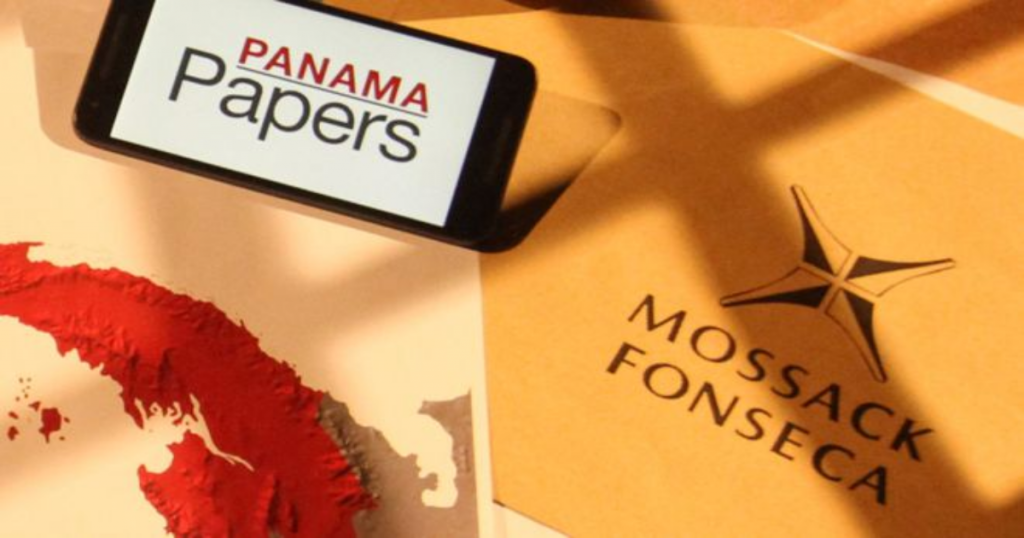 World media is now alight with reports surrounding the largest data leak in the history of journalism known as the Panama Papers. The 2.6 terabytes worth of information has apparently revealed dirty deals, money laundering operations, and tax avoidance schemes by some of the world's most powerful people including celebrities, athletes, world leaders, politicians, and their relatives. In addition, over 200,000 companies, trusts, and foundations are mentioned and exposed in the leak coming from Mossack Fonseca, a Panamanian "law firm" that contains files with information such as "holdings of drug dealers, Mafia members, corrupt politicians and tax evaders – and wrongdoing galore."


| You are subscribed to email updates from Save Your ASSets First. To stop receiving these emails, you may unsubscribe now. | Email delivery powered by Google |
| Google Inc., 1600 Amphitheatre Parkway, Mountain View, CA 94043, United States | |

No comments:
Post a Comment