


Gold World News Flash |
- Iceland PM Refuses To Resign, Faces No Confidence Vote Following "Panama Papers" Scandal
- Martin Armstrong – A COLLAPSE IN GOVERNMENT IS INCOMING
- The Pitfalls Of Buying Gold And Silver Online, And How To Avoid Them
- Donald Trump Is Starting To Sound Just Like The Economic Collapse Blog (And That Is A Good Thing)
- New York Sun: The Gilder
- Frontrunning: April 4
- Truth can take a long time to get out but cycles do turn, von Greyerz tells KWN
- Ronan Manly: Singapore Exchange's gold kilobar contract flops
- Global Stocks Rise, Europe Rebounds As Oil Halts Decline
- Hiding from Opportunity
- The Pitfalls Of Buying Gold And Silver Online, And How To Avoid Them
- The Dire Consequences of California’s $15 Minimum Wage
- Obama Video: President Has His Facts Seriously Wrong on Financial Reform
- GATA secretary covers gold and commodity market rigging on CNBC Asia
- "Unprecedented Leak" Exposes The Criminal Financial Dealings Of Some Of The World's Wealthiest People
- Gold rush by Russia makes up for billions lost in currency rout
- Zimbabwe urged to set up a gold reserve bank
- What Is A Contract Worth That Cannot Perform (Gold Premium)
- A COLLAPSE IN GOVERNMENT IS INCOMING -- Martin Armstrong
- SEC investigates ex-JPMorgan debt traders
- 2016: Signs of the Anti-Christ
- Norway Warns Sweden Will Collapse
- Canadians Switch Out of Canadian Dollars Into U.S. Dollars Now!!...
- The Pitfalls Of Buying Gold And Silver Online, And How To Avoid Them
- Why Donald Trump Is Winning (2016 Documentary)
- Rickards: 'Unallocated Gold Is a Euphemism for No Gold.'
- 'Unallocated gold' means 'no gold,' Rickards says
- Gold Getting Stale? – Charts and COTs
- What New Economic Recovery?
| Iceland PM Refuses To Resign, Faces No Confidence Vote Following "Panama Papers" Scandal Posted: 04 Apr 2016 05:42 AM PDT As reported last night, one of the first politicians to suffer a career casualty will probably be Iceland's prime minister Sigmundur David Gunnlaugsson, who was exposed by the Panama Papers as secretly owning a company called Wintris set up in 2007 on the Caribbean island of Tortola in the British Virgin Islands, to hold investments with his wealthy partner, later wife, Anna Sigurlaug Pálsdóttir. The moment when he realized the data had been made public was revealed in this striking interview, during which the PM walked out, saying "What are you trying to make up here? This is totally inappropriate."
The Iceland public appears to agree with at least the second part of his assessment, if only as pertains to his secret financial dealings and as Bloomberg reports, the PM now faces a no confidence vote. "The opposition has called for a vote against the government as parliament begins its session at 3 p.m. local time, though it's still unclear whether the vote can be held on Monday. Protests in Reykjavik organized by a Facebook group calling for "Elections Now!" are due to start two hours after the opening of the assembly." The outcome of the vote appears almost certain: "I hope that Sigmundur David realizes the seriousness of this matter and has the decency to resign before parliament convenes today," Birgitta Jonsdottir, a lawmaker for the Pirate Party, said on her Facebook page on Monday. He has so far not resigned, and to the contrary the premier has tried to defend himself, writing on his website that "It's been clear since before I began participating in politics that my wife had a considerable amount of money. Some people find that in itself very negative. I can't do much about that because I'm neither going to divorce my wife nor demand that she relinquish her family inheritance." Bloomberg adds that his wife's holdings also included bonds in the three failed banks, whose collapse in 2008 brought the country to its knees and triggered the imposition of capital controls. Gunnlaugsson's judgment is now being questioned since he had been in charge of negotiations with the creditors as part of an effort to exit capital controls. What is curious is that in this particular case there may be no actual wrongdoing: according to the ICIJ report, Palsdottir says she has always paid all her taxes owed on the Wintris account, which was confirmed by her tax firm, KPMG. That, of course, assumes the auditing firm is telling the truth. "As has been explained publicly, in establishing this company, the Prime Minister and his wife have adhered to Icelandic law, including declaring all assets, securities and income in Icelandic tax returns since 2008," a Gunnlaugsson spokesman said in a statement to the ICIJ. Which goes to the fundamental question behind tax havens: is one guilty until proven innocent simply for having an offshore shell, whether disclosed or not. As Bloomberg notes, "offshore holdings can be legal, though documents show some banks and law firms failed to follow requirements to check their clients are not involved in crimes." A breakdown of all uses, from the legitimate to the illegal is shown below (courtesy of Fusion).
In the case of Iceland's prime minister, we may get the answer as soon as this afternoon. |
| Martin Armstrong – A COLLAPSE IN GOVERNMENT IS INCOMING Posted: 04 Apr 2016 05:40 AM PDT |
| The Pitfalls Of Buying Gold And Silver Online, And How To Avoid Them Posted: 04 Apr 2016 05:34 AM PDT Back in 2014, online bullion dealer Tulving shocked its many customers by suddenly failing. See Coinweek’s story: How does $40M of Gold and Silver Disappear: The Collapse of Tulving Company Last week another one bit the dust: |
| Donald Trump Is Starting To Sound Just Like The Economic Collapse Blog (And That Is A Good Thing) Posted: 04 Apr 2016 05:00 AM PDT by Michael Snyder, The Economic Collapse Blog:
Guess what Donald Trump is saying now? Last week, I discussed how Robert Kiyosaki and Harry Dent are warning that a major crisis is inevitable, but I didn't expect Donald Trump to come out and say essentially the exact same thing. On Saturday, the Washington Post released a stunning interview with Donald Trump in which he boldly declared that we heading for a "very massive recession". He also warned that we are currently in "a financial bubble" and that "it's a terrible time right now" to be investing in stocks. These are things that you may be accustomed to hearing on The Economic Collapse Blog, but to hear them from the frontrunner for the Republican nomination is another thing altogether.
Whether you plan to vote for Donald Trump or not, at least we can all appreciate that he doesn't talk like a politician. He tells it like he sees it, and he told the Washington Post that he considers the official unemployment rate that is put out by the Obama administration to be completely fraudulent…
And before you dismiss this, perhaps you should consider that the Federal Reserve also considers the government unemployment number to be so inaccurate that they secretly have been calculating the unemployment rate on their own…
Of course if truly honest numbers were being used, the unemployment rate would not be anywhere close to this range. According to John Williams of shadowstats.com, the broadest measure of unemployment is currently sitting at 22.9 percent. |
| Posted: 04 Apr 2016 04:50 AM PDT From the New York Sun George Gilder's brilliant new book -- "The Scandal of Money" -- underscores an odd fact. There's an expanding list of newspapermen and writers who, having reached a certain age and covered the intellectual and political wars, have turned late in their careers and at the peak of their powers to the problem of money. They are riveted by the recognition that our abandonment of a system of honest money is at the root of our national travail. James Grant does this in his famed bi-weekly, the Interest Rate Observer (the latest number opens with an essay on what he calls the "inflation cheering section"). Steve Forbes has brought out two late-career books on this head, including "Money," which is a call for a restoration of the gold standard. The dean of American editorial writers, George Melloan, who spent a long career at the Wall Street Journal, has brought out "The Great Money Binge." What is so special about Mr. Gilder's contribution is its radicality. He opens with a quote from Friedrich Hayek asserting that the "source and root of all monetary evil" is "the government monopoly on the issue and control of money." He brings to the question an almost Supermanly X-ray vision that enables him to see through orthodoxy, and he opens by brushing aside the Federal Reserve, on which so many focus for its role in our long travail. ... ... For the remainder of the commentary: http://www.nysun.com/editorials/the-gilder/89521/ ADVERTISEMENT Buy metals at GoldMoney and enjoy international storage GoldMoney was established in 2001 by James and Geoff Turk and is safeguarding more than $1.7 billion in metals and currencies. Buy gold, silver, platinum, and palladium from GoldMoney over the Internet and store them in vaults in Canada, Hong Kong, Singapore, Switzerland, and the United Kingdom, taking advantage of GoldMoney's low storage rates, among the most competitive in the industry. GoldMoney also offers delivery of 100-gram and 1-kilogram gold bars and 1-kilogram silver bars. To learn more, please visit: http://www.goldmoney.com/?gmrefcode=gata Join GATA here: Mines and Money Asia http://asia.minesandmoney.com/ Mining Investment Asia http://www.mininginvestmentasia.com/ Support GATA by purchasing recordings of the proceedings of the 2014 New Orleans Investment Conference: https://jeffersoncompanies.com/landing/2014-av-powell Or by purchasing DVDs of GATA's London conference in August 2011 or GATA's Dawson City conference in August 2006: http://www.goldrush21.com/order.html Or a colorful poster of GATA's full-page ad in The Wall Street Journal on January 31, 2009: http://gata.org/node/wallstreetjournal Help keep GATA going GATA is a civil rights and educational organization based in the United States and tax-exempt under the U.S. Internal Revenue Code. Its e-mail dispatches are free, and you can subscribe at: To contribute to GATA, please visit: |
| Posted: 04 Apr 2016 04:39 AM PDT
Overnight Media Digest WSJ - Alaska Air Group Inc is expected to announce on Monday that it won the auction for Virgin America Inc, beating rival JetBlue Airways Corp in a frenzied bidding process that culminated in a cash price of about $2.5 billion, according to people familiar with the matter. (http://on.wsj.com/239acWy) - Reservations for Tesla Motors Inc's Model 3 electric car have now topped 276,000 since the company began taking deposits on March 31. Tesla CEO Elon Musk gave an update on reservations through Twitter late Saturday evening, after updating the figure several times since Thursday evening's unveiling of the prototype Model 3, due to be out in late 2017. (http://on.wsj.com/224gRin) - Former Secretary of State Hillary Clinton said Sunday that the Federal Bureau of Investigation hasn't yet contacted her about her use of a private email server and some of her most sensitive emails. (http://on.wsj.com/239Qf1J) - Hain Celestial Group, maker of natural shampoos and soaps, said it was reformulating dozens of products and dropping claims that they don't contain sodium lauryl sulfate, a cleaning agent often used in mainstream products. (http://on.wsj.com/1SLTTdq)
FT Five former traders from Barclays are set to stand trial this week on charges of fraud related to Libor. (http://on.ft.com/1N4pK4u) The U.S. Securities Exchange Commission has launched an investigation into government debt trades made by two former JPMorgan Chase and Co employees. (http://on.ft.com/1N4pRgC) A catalogue of failings led to the collapse of an NHS contract seven months after it began, an official report concluded. (http://on.ft.com/1N4q0Rf) Pre-orders for Tesla Model 3 continued over the weekend, raising questions about the carmaker's ability to meet demand. (http://on.ft.com/1N4q1Vk)
NYT - One of Wall Street's top deal makers Scott Barshay is moving to Paul, Weiss, Rifkind, Wharton & Garrison after a 25-year career at the white-shoe law firm Cravath, Swaine and Moore. (nyti.ms/239Q3Qd) - In an article, the International Consortium of investigative Journalists said leaked documents from a Panama law firm Mossack Fonseca revealed the offshore accounts of 140 politicians and public officials, including a dozen current and former world leaders and several individuals with close ties to President Vladimir Putin of Russia.(nyti.ms/1RyTU5p) - When Andrew Caspersen sought money for an investment that federal authorities said duped investors out of tens of millions of dollars, one of the people he turned to was a college classmate at Princeton University, James McIntyre. McIntyre managing director at the hedge fund Moore Capital Management, is the previously unidentified individual who federal prosecutors said last week invested - and lost - $400,000 in Caspersen's scheme. (nyti.ms/1ZY7p0A)
Canada THE GLOBE AND MAIL ** Prime Minister Justin Trudeau wants to transform the Liberal Party from a members-only club into a more inclusive - and free - political movement. A proposal, adopted at a meeting of the party's national board over the weekend, would do away with the long-standing policy that only dues-paying, card-carrying Liberals can get involved in party activities. (http://bit.ly/1W4XxSo) ** A massive leak of millions of confidential documents from a Panamanian law firm has drawn back the curtain on the world of offshore tax evasion and money laundering, and allegedly includes a $2-billion money trail linked to associates of Russian President Vladimir Putin. (http://bit.ly/1RIdHfm) NATIONAL POST ** Starbucks Canada to start selling wine, craft beer and cider in Toronto as it hones in on customer base (http://bit.ly/1V3GOPW)
Britain The Times Tens of thousands of steelworkers in the UK could have their pensions cut under plans by Tata Steel to wash its hands of the 15 billion pounds British Steel retirement scheme.(http://bit.ly/1RW1SYv) In order to give its staff in the UK "a balanced view", JP Morgan has drafted in former EU commissioner Peter Mandelson and two pro-Brussels business leaders to warn staff against Brexit.(http://bit.ly/1Y98NMk) The Guardian Police have warned people in Lancashire and Wilmslow, Cheshire, not to use Santander cash machines, following reports of suspicious devices being found on the bank's machines across Lancashire last week. (http://bit.ly/1RGv00f) Though Beijing is optimistic about its plans to help build new reactors at Hinkley in Somerset and Bradwell in Essex, an agreement between Chinese nuclear firm CGN and its partner EDF of France to develop the first new reactors in Britain for 20 years has still not been signed.(http://bit.ly/25EjhJ0) The Telegraph Britain's exit from the European Union would lead to the "implosion" of the continental bloc and force the United States to intervene to put "Humpty Dumpty back together again", Xavier Rolet, head of the London Stock Exchange said. (http://bit.ly/1RW39P6) Britain's steel industry is set to be saved from collapse by two little-known financiers who hope to revive the "British Steel" name. (http://bit.ly/1qhju51) Sky News Millions of documents leaked to a number of media organisations across Europe apparently show the ways the rich and famous leaders, politicians including three former Tory MPs and six peers, can exploit secretive offshore tax regimes. (http://bit.ly/1RVOvYe) Billionaire Investor Wilbur Ross is among a pack of possible buyers who are likely to be contacted in the coming days, to rescue Tata Steel's UK operations.(http://bit.ly/1W3x0Vy) The Independent A multibillion pound move to save Britain's steel industry from collapse by underwriting some of its pension liabilities, cutting its energy bills and modernising its largest plant is being prepared by the British Government.(http://ind.pn/1RZKV98) |
| Truth can take a long time to get out but cycles do turn, von Greyerz tells KWN Posted: 04 Apr 2016 04:27 AM PDT 7:25p HKT Monday, April 4, 2016 Dear Friend of GATA and Gold: Gold fund manager Egon von Greyerz, in commentary for King World News, draws on the experience of a long career to observe that all economic cycles have a season and turn eventually, even as realization of the truth is getting harder as governments increasingly commit themselves to disinformation. Von Greyerz's commentary is posted at KWN here: http://kingworldnews.com/in-a-time-of-universal-deceit-telling-the-truth... CHRIS POWELL, Secretary/Treasurer ADVERTISEMENT Buy precious metals free of value-added tax throughout Europe Europe Silver Bullion is a fast-growing dealer sourcing its products from renowned mints, refiners, and distributors. Because of a legal loophole that will close soon, you can acquire the world's most popular bullion coins free of value-added tax throughout the European Union. You can collect your order in person at our headquarters in Tallinn, Estonia, or have it delivered in any of the 28 EU countries. Europe Silver Bullion is owned and operated by North American and European experts in selling, storing, and transporting precious metals. We have an extensive product inventory of silver, gold, platinum, and palladium, and our network spans the world. Visit us at www.europesilverbullion.com. Join GATA here: Mines and Money Asia http://asia.minesandmoney.com/ Mining Investment Asia http://www.mininginvestmentasia.com/ Support GATA by purchasing DVDs of GATA's London conference in August 2011 or GATA's Dawson City conference in August 2006: http://www.goldrush21.com/order.html Or a colorful poster of GATA's full-page ad in The Wall Street Journal on January 31, 2009: http://gata.org/node/wallstreetjournal Help keep GATA going GATA is a civil rights and educational organization based in the United States and tax-exempt under the U.S. Internal Revenue Code. Its e-mail dispatches are free, and you can subscribe at: To contribute to GATA, please visit: |
| Ronan Manly: Singapore Exchange's gold kilobar contract flops Posted: 04 Apr 2016 04:17 AM PDT 7:16p HKT Monday, April 4, 2016 Dear Friend of GATA and Gold: Gold researcher Ronan Manly reports today that the Singapore Exchange's touted gold kilobar contract has failed utterly, with trading volume practically zero. Manly's report is headlined "SGX Kilobar Gold Contract vs. Trading with BullionStar" and it's posted at Bullion Star here: https://www.bullionstar.com/blogs/ronan-manly/singapore-gold-kilobar/ CHRIS POWELL, Secretary/Treasurer ADVERTISEMENT Silver mining stock report comes with 1-ounce silver round Future Money Trends is offering a special 18-page silver mining stock report about how to profit with the monetary and industrial metal, and it comes with a free 1-ounce silver round. Proceeds from the report's sales are shared with the Gold Anti-Trust Action Committee to support its efforts to expose manipulation in the monetary metals markets. To learn about this report, please visit: Join GATA here: Mines and Money Asia http://asia.minesandmoney.com/ Mining Investment Asia http://www.mininginvestmentasia.com/ Support GATA by purchasing DVDs of GATA's London conference in August 2011 or GATA's Dawson City conference in August 2006: http://www.goldrush21.com/order.html Or a colorful poster of GATA's full-page ad in The Wall Street Journal on January 31, 2009: http://gata.org/node/wallstreetjournal Help keep GATA going GATA is a civil rights and educational organization based in the United States and tax-exempt under the U.S. Internal Revenue Code. Its e-mail dispatches are free, and you can subscribe at: To contribute to GATA, please visit: |
| Global Stocks Rise, Europe Rebounds As Oil Halts Decline Posted: 04 Apr 2016 03:39 AM PDT In a quiet start to the week following last week's surprisingly strong rebound which followed a stronger than expected jobs report (perhaps to demonstrate that good news is once again good news), Japan stocks continued to sink as the USDJPY dropped to fresh lows, while commodities declined for a fifth day as the supply glut from crude to copper weighed on prices, dragging down commodity currencies. European equities rose, rebounding from a one-month low. Crude fell in early trading after Saudi Arabia's deputy crown prince said last week the kingdom will only arrest production if Iran does, although it has since posted a modest rebound, while copper dropped to a one-month low. European stocks advanced after trading at their lowest valuations in more than a year relative to U.S. equities, even as France's phone companies tumbled after a deal to consolidate the nation's telecommunications industry fell apart. "Three of the major commodities oil, gold and copper have all retraced in recent days," said Ole Hansen, head of commodity strategy at Saxo Bank A/S told Bloomberg. "Saudi Arabia caused a major upset on Friday by saying that a freeze deal was conditional of Iran joining which will not happen at this stage." Copper and industrial metals have been hurt on concern China's investment-led economic boom won't be enough to avoid more cutbacks, he said. In key macro news, Euro-area unemployment dropped to 10.3% in February down from an upwardly revised 10.4%, and the lowest level since 2011, in line with estimates. "I see this number as a movement sideways," said Aline Schuiling, senior economist at ABN Amro Bank NV in Amsterdam. "This is a reflection of what is happening in the economy. Growth has clearly weakened in the second half of last year and the first quarter of this year will also probably be a bit weaker."
Youth unemployment remained disturbingly high, with 21.6% of Europeans under 25 unemployed, just modestly lower than the 22.7% a year ago. In other news, Eurozone producer price inflation also dropped, this time by -0.7%, and down -4.2%, to the most negative annual increase since the financial crisis.
The Stoxx Europe 600 Index added 0.8%, after being in the red earlier, while futures on the Standard & Poor's 500 Index gained 0.2% despite the GAAP PE multiple on the S&P hitting approaching 24, the highest level since the dot com era. While U.S. stocks erased annual losses and closed at their highest level of the year on Friday, the rebound in European shares has stalled for more than two weeks. With a valuation of about 14.7 times estimated earnings, the Stoxx 600 traded at its lowest level since January 2015 relative to the S&P 500 on Friday. This is where markets stood as of this moment:
Top News:
Looking at regional markets, we find that Asian stocks trade mostly positive following last Friday's gains on Wall St. where stronger than expected NFP and Average Hourly Earnings data lifted sentiment, despite weakness across the commodities complex. This saw the ASX 200 (+0.05%) underpinned from the open with participants also short-covering following last week's declines. Nikkei 225 (-0.25%) saw indecisive price action as a firmer JPY weighed on sentiment, while trade in the region was also thin with China, Hong Kong and Taiwan markets closed for Ching Ming festival. 10 year JGBs traded higher amid indecisiveness in riskier assets while the BoJ also entered the market to purchase about JPY 1.2trl of government debt. Top Asian News
European equities have seen a downbeat start to the week in terms of newsflow, despite modest upside in Euro Stoxx (+0.2%), with significant underperformance seen in French telecom names after collapse of the potential deal between Orange (-5.5%) and Bouygues (-14.6%), with the likes of Iliad (-14.3%) and Numericable (-14.1%) also suffering as a consequence. The German curve has reversed some of the initial flattening bias, with Bunds consequently moving off the best levels to trade near unchanged levels even as peripheral bond yield spreads remained broadly wider. GR/GE lOy spread widened by over 10bps even as the head of the IMF dismissed reports that the body is trying to push Greece towards default as "simply nonsense". At the same time, market participants had to contend with a large slate of EUR denominated corporate supply, with the likes of Fedex and Credit Suisse due to price. Dovish rhetoric from ECB's Praet who said that the central bank will act forcefully to low inflation if conditions warrant did little to drive Bunds, with GE/UK spread widening amid the release of better than expected UK construction PMI data Top European News
In currencies, the USD has seen modest gains today, notably against the commodity currencies and the JPY. The Aussie weakened 0.8 percent to 76.17 U.S. cents, after climbing 2.3 percent last week. Retail sales were little changed in February from a month earlier, a report showed, missing economists' forecast for a 0.4 percent gain. The nation's central bank reviews monetary policy on Tuesday, when it's expected to hold borrowing costs at a record low. The yen added 0.1 percent to 111.54 per dollar after jumping 0.8 percent on Friday amid the greenback's retreat. The won strengthened 0.7 percent. The ruble sank 1.5 percent, falling for a second day and South Africa's rand slid 0.5 percent, leading declines in developing-nation currencies. India's rupee climbed to the highest this year before foreign investors bid for quotas on the country's bonds. In commodities, WTI and Brent have both seen positive trade in mid European trade with WTI finding support at USD 38.20/bbl with the next level in focus on the upside being USD 37.00/bbl. Gold has also seen an uptick in prices after falling earlier in the session and gapping down at the open. Silver also has recovered slightly after falling in the Asian and Early Eu session but there is a key resistance level higher a USD 15.2020/oz. Meanwhile Copper prices were subdued and remained near a monthly low with a lack buyers due to holidays in the Asia including largest consumer China on a technical note there is a key support level for Copper at around the 214.90 level which also coincides with an upward trendline on the daily chart where prices first made its lower highs. In base metals Zinc, Tin and Lead are all following in the same direction with prices edging lower. Bulletin Headline Summary from RanSquawk and Bloomberg
US Event Calendar
DB's Jim Reid completes the overnight wrap This week we've got the usual post-payrolls lull in the data but there are still a couple of events which will have some bearing on the near-term direction for markets. The first is on Wednesday evening where we'll get the March FOMC minutes to comb through. Given the range of dovish (mainly Yellen) and hawkish (Bullard, Lacker, Lockhart, Williams) Fedspeak of late it'll be interesting to see what clues the minutes throw up. Also potentially interesting this week is a panel interview on Thursday evening which will see current Fed Chair Yellen participate along with former Chairs Bernanke, Volcker and Greenspan. With that to look forward to, this morning in Asia, with China and Hong Kong closed for holidays it's been a bit of slow start with most of the price action relatively benign. In Japan we've seen the Nikkei (-0.18%) and Topix (+0.10%) trade between gains and losses for the most part, while elsewhere the Kospi is +0.14% and the ASX +0.19%. Credit markets are a touch tighter generally. In the FX space the Aussie Dollar is slightly weaker post some softer than expected retail sales numbers in Australia. Moving on. News flow over the weekend and this morning has been fairly light but one story which has attracted some attention is coming out of the talks between Greece and its Creditors. Greek PM Tsipras is said to have questioned the credibility of the negotiations following the release of a leaked transcript in which negotiations were said to be 'difficult'. In an FT article this morning IMF Chief Lagarde is said to have responded to claims that the Fund was looking to push Greece towards default as a negotiating tactic as being false. Lagarde did however say that in her view a coherent program for Greece was 'still a good distance away' and the weekend's incident 'has made me concerned as to whether we can indeed achieve progress in a climate of extreme sensitivity to statements of either side'. Reversing gear now and quickly recapping that data from Friday. In terms of the March employment report in the US, headline non-farm payrolls printed at a slightly higher than expected 215k (vs. 205k expected). That follows a 245k reading in February which was revised marginally higher on Friday. That takes the Q1 average to 209k which compares to the average monthly reading of 229k in 2015. There was good news also in the average hourly earnings numbers which rose a greater than expected +0.3% mom (vs. +0.2% expected) last month, which has had the effect of lifting the YoY rate one-tenth to +2.3%. Meanwhile, the labour force participation rate edged up one-tenth to 63.0% (highest in two years) which was seen as causing the U-3 unemployment rate to nudge up one-tenth to 5.0%. There was also no change in average weekly hours worked at 34.4hrs after expectations had been for a slight increase. Away from the employment numbers, the March ISM manufacturing print rose a better than expected 2.3pts last month to 51.8 (vs. 51.0 expected) which is the first reading greater than 50 since August last year. New orders (+6.8pts to 58.3) were a big standout in the data with that index alone at the highest level since November 2014. That said there was a slightly softer employment component in the data which was also evident in the payrolls data for the sector. It's worth noting that tomorrow will see the confirmation of the March non-manufacturing index reading which is expected to rise to 54.1. Should that be the case, then the spread between the two last month of 2.3pts would be the least since December 2014 (when the spread was 2pts). Meanwhile, also of note on Friday was an upward revision to the final University of Michigan consumer sentiment print last month by 1pt to 91.0. The manufacturing PMI was also nudged up 0.1pts in the final read to 51.5, however there was less good news in the construction spending numbers in February when spending was said to have decreased -0.5% mom (vs. +0.1% expected). Finally, towards to the end of Friday we also saw some disappointment in the latest US vehicle sales numbers where sales were said to have fallen back to 16.5m saar in March from 17.4m in the prior month (expectations had been for little change). While the early Easter holiday period played a part, vehicle sales have now been in a downward trend since the recent high in October last year. In terms of the price action, risk markets had initially weakened post the flow of economic data on Friday but that was quickly reversed and markets traded firmer right up until the closing the bell. The S&P 500 eventually finished with a +0.63% gain to kick off the new month which means the index gained +1.81% over the past week. Credit markets also had a strong session on Friday with CDX IG closing 3bps tighter. The Dollar was volatile but ultimately ended up flat on Friday which means the Dollar index was down a steep 1.72% last week, the second worst week this year. US Treasuries also chopped around but the end result being little change with the benchmark 10y currently sitting at 1.765% this morning. Comments from the Fed's Mester added little to the recent debate with the Cleveland Fed President suggesting that she sees the US economy as evolving in a way that would mean rate hikes are appropriate this year, but refusing to comment on her thoughts on potential timing. Interestingly, the moves for risk assets in the US on Friday came despite the backdrop of a steep leg lower for Oil markets. WTI ended the week with a -4.04% loss on Friday to close at $36.79/bbl (and is down further this morning) which is the lowest closing price since March 3rd. In fact prices are now down close to 15% from their highs of last month and ahead of the upcoming meeting between producers in Doha on the 17th of April, for which expectations of a positive outcome appear to diminishing quickly. Friday's move seemingly came about on the back of comments from Saudi Arabia's deputy Crown Prince who said that the nation will only freeze output should Iran follow suit. This of course comes following the remarks from Iran's oil minister who downplayed the possibility of the nation freezing current production levels. Those declines for Oil on Friday weighed most heavily on European equity markets where we saw the Stoxx 600 tumble -1.30%, despite a late effort to bounceback into the close. That concluded a third consecutive weekly decline for the index. Prior to that we had seen some supportive manufacturing PMI numbers in the region with the Euro area print in particular revised up 0.2pts at the final read to 51.6. As usual we'll also be keeping a close eye on the latest chatter out of Fed officials. Kashkari and Evans are due to speak on Tuesday with Mester on Wednesday. We then hear from Kaplan early on Thursday before Fed Chair Yellen is scheduled to speak in a discussion with Bernanke, Greenspan and Volcker on Thursday evening. The Fed's George will speak on Friday. Over at the ECB we'll hear from Praet and Constancio during the week, as well as ECB President Draghi on Thursday at a presentation in Lisbon. |
| Posted: 04 Apr 2016 02:58 AM PDT
Hiding from OpportunityPosted with permission and written by Jeff Thomas (CLICK FOR ORIGINAL)
"Birds born in a cage think flying is an illness." - Alejandro Jodorowsky As a consultant on internationalisation, I regularly have occasion to advise people on the finer points of safeguarding their wealth and themselves from becoming casualties of declining governments. It's no secret that such governments have a decided inclination to legislate rapacious controls over their citizens, in the form of taxation, capital controls, confiscation and limitation over expatriation to less Orwellian jurisdictions. In most cases, those seeking consultation have either already begun expatriating their wealth and/or themselves, or have made the decision to do so and are in the process of identifying those jurisdictions that may benefit them most. As such, they're taking positive action to avail themselves of opportunitiesoutside their home jurisdictions. However far along in the process one of them might be when they come to me, they've already gotten over the greatest obstacle – their own reluctance to decide to take action. Having done so, they're already on the road to an improved life. Some will make better choices than others; some will succeed better than others; however, all will fare better than they would have, had they simply ignored the need to internationalise. But, then we have the fellow in the photo above. He represents those who (often vehemently) claim that internationalisation is a useless pursuit, for one reason or another. I regret to comment that he and others like him far outnumber those who choose to take internationalisation action. Introducing Homo Struthio The Latin name for humans is Homo sapiens, which means, "man intelligent." Since this may not be an appropriate appellation for the fellow above, we might instead call him, "Homo struthio", the Latin for "man ostrich". And, in fact, I encounter Homo struthio often, but not as people who are already internationalising themselves. Usually their contact is in the form of emails, after having read my writings. Almost invariably, they take strong exception to any possibility that internationalisation effort might be beneficial. In reading their comments, I've gleaned some common attributes in them. Homo struthio rarely ventures far from home. If he goes abroad at all, it's likely that he does so as a tourist. You may have seen him at one time or another – staying at the American Marriott in Hong Kong, or ordering a viertel pfunder mit Käse (quarter pounder with cheese) in a McDonalds in Munich. Homo struthio does his best to remain within the confines of the familiar. This may be out of habit, or fear that he'll have a negative experience, but, in many cases, he'll actually believe that his home country is the best one and that deviation from his home-country standard is almost certain to be a mistake.
We may see him as an English cruise-shipper in Majorca, complaining that there's no Fullers London Pride on tap at the local cantina. Or he might be an American in Jamaica, receiving a bill for JMD $600 for a rum punch and asking, "How much is that in real money?" (This choice of phrasing not only occurs, but is common.)
But the point here is not to pick on either the UK or the US, or their people. The point is that, there are those countries where people have commonly become more insulated than in others – more likely to assume that anything outside of their home country is likely to be suspect, if not downright undesirable.
Returning to those responses mentioned above, here are a few of the most common reasons given by those who have either not travelled, or whose travels have been limited and they've concluded that internationalisation is folly:
"Yes, our economy is teetering on the edge of collapse, but what can you do? It's the same all over."
This is definitively incorrect. Many countries operate almost entirely independently from the EU, US, etc. and will be unaffected if crashes occur in those jurisdictions, just as they're unaffected by present developments.
Further, there are other countries that do better each time the EU or US worsens. The reason is that, every time more money, industry or brainpower leaves those jurisdictions, it goes elsewhere, enriching the target country. (Historically, whenever some countries decline, others invariably rise.)
"My country is the most powerful one on earth. There's no point in escaping to another country, since our military could squash that country like a bug."
This is a common comment from people in the US, and Americans are indeed taught by their government and media that the US is all-powerful. But, the US has shown that it cannot seem to win in any of the countries it has invaded in recent decades, let alone take on more warfare successfully. (In Afghanistan, America's longest war ever, the US has achieved virtually no progress against rag-tag groups of poorly-armed, poorly-trained sheepherders after some fifteen years and nearly one trillion dollars spent.)
Further, many of the countries that are doing well are allies of the US and the US is unlikely to invade them for the crime of being freer and more prosperous than the US.
"We're very worried about the loss of rights we're experiencing, but what if we try to leave and we're not allowed to go?"
This question is becoming increasingly common. It's also quite disturbing, as it suggests that the home country is increasingly threatening the freedom of movement of its people in an effort to trap them in. Whenever a country does this, it's a sure sign that it would be better to exit sooner, rather than to attempt it later and possibly fail to escape.
"I'd never leave here. This is still the best country in the world."
This observation, of course, is subjective. If someone perceives his home county to be the best one in the world, he most certainly should remain there. However, this comment is most often received from those who have not travelled much and therefore have no real understanding of the many opportunities that exist outside their home countries. In most cases, it's a blind assumption, rather than an informed appraisal.
All the above arguments (and many more), which ensure a greater risk of loss of wealth and freedom at the hands of your home country, are flimsy at best, yet countless people throughout the EU, US, Canada and other declining countries stand firmly behind them, when the alternative of internationalisation is offered.
Not long ago, a friend of mind died of cancer. For years, whenever mutual friends would mention that they'd had a recent check-up, he would say, "I never go to doctors. Whatever they say is going to be bad news and I don't want to hear it." That position cost him his life. It could be said that this is another example of Homo Struthio logic, since he, too, avoided the pursuit of a solution to a problem until it became insurmountable.
Whenever we find ourselves taking a stubborn stand against the pursuit of opportunity, it's likely to be because we simply don't want to face the fact that we may well be facing a significant problem in the future. We don't wish to say to ourselves, "I know I'm wrong, but I'm just going to shove my head in the sand." We don't want to have to admit that we may be being extremely foolish and short-sighted, so we justify our decision to ourselves by off-handedly discrediting the solution, and then, try not to think of it any further.
Whether it's a question of saving our lives from a dreaded disease, or saving our wealth and freedom, the outcome will likely be better if we behave as Homo sapiens, rather than Homo Struthio.
Please email with any questions about this article or precious metals HERE
Hiding from OpportunityPosted with permission and written by Jeff Thomas (CLICK FOR ORIGINAL)
Jeff Thomas is British and resides in the Caribbean. The son of an economist and historian, he learned early to be distrustful of governments as a general principle. Although he spent his career creating and developing businesses, for eight years, he penned a weekly newspaper column on the theme of limiting government. He began his study of economics around 1990, learning initially from Sir John Templeton, then Harry Schulz and Doug Casey and later others of an Austrian persuasion. He is now a regular feature writer for Casey Research's International Man and Strategic Wealth Preservation in the Cayman Islands.
& |
| The Pitfalls Of Buying Gold And Silver Online, And How To Avoid Them Posted: 04 Apr 2016 02:30 AM PDT by John Rubino, Dollar Collapse:
Last week another one bit the dust: NW Territorial Mint seeks bankruptcy protection
This morning a DollarCollapse.com reader (and disappointed NTM customer) sent the the following:
Presumably a lot of other people are in the same boat. So here's how to keep something similar from happening to you: First and foremost, don't binge; dollar-cost-average. Customers who did all their metals buying with one big order, only to see the whole thing disappear, were devastated by NTM's failure. But customers who placed small, regular orders were out considerably less. This is yet another reason (along with the extreme volatility of metal prices) to enter this market gradually and steadily rather than all at once. While your money is at risk, watch for emerging problems. From the previously-referenced Coinweek article:
|
| The Dire Consequences of California’s $15 Minimum Wage Posted: 04 Apr 2016 01:30 AM PDT by Preston Cooper, CNSNews:
According to the agreement, California's current minimum wage of $10 per hour will rise to $10.50 next year. It will rise to $11 in 2018, and then by one dollar every year thereafter until it reaches $15 in 2022. Many advocates of raising the minimum wage, such as Professor Arindrajit Dube of the University of Massachusetts-Amherst, still believe that the level can be set too high. Dube proposes a rule of thumb that the minimum wage not be set above 50 percent of the median wage in any locality. I believe the 50 percent threshold is too high, but it serves as a useful benchmark to determine which minimum wages go too far, even for minimum wage proponents. California's current minimum wage of $10 is now at 52 percent of the state's median wage, roughly in line with the 50 percent rule (but probably still too high). However, wages vary widely across the state. Fresno, a mid-sized interior city, has a median wage of $15.02. Wealthy San Jose, by comparison, has a median wage of $27.61, nearly twice Fresno's level. Such differences are not difficult to explain. California includes both Silicon Valley and large agricultural zones in the interior, two regions where wages are hardly comparable. Moreover, as anyone whose jaw has dropped at sky-high San Francisco property prices can attest, cost of living is not constant across the state, meaning wages must be higher or lower to remain concomitant with prices. Therefore, a universal minimum wage affects various cities in different ways. A $15 wage floor will take a large "bite" out of the earnings distributions of low-wage interior cities, making many low-skilled workers unemployable, while the effects on high-wage coastal cities might be more limited. To demonstrate this, I projected what each California city's median wage will be in 2022, when the $15 minimum wage is fully phased in. For this calculation, I assumed 1.5 percent average annual median wage growth, which is generous given that median wage growth has averaged just 1 percent over the past three years. Then, I divided the new $15 minimum by each projected median wage to yield the expected "minimum-median" ratio for each city.
In wealthy cities such as San Jose and San Francisco, the ratio of the minimum wage to the median is about 50 percent—in line with the rule of thumb. However, poorer inland cities such as Bakersfield and Fresno will see minimum-median ratios of up to 89 percent—far higher than any ratio we have yet seen in the rest of the country. Even Puerto Rico, where economists generally accept that a too-high minimum wage has significantly damaged the economy, has a minimum-median ratio of "just" 77 percent. |
| Obama Video: President Has His Facts Seriously Wrong on Financial Reform Posted: 03 Apr 2016 10:30 PM PDT by Pam Martens and Russ Martens, Wall Street on Parade:
Immediately following his meeting with F-SOC on March 7, President Obama held a press conference (see video below) with the F-SOC members sitting around him at a large conference table. Sitting two seats away from the President was Mary Jo White, Chair of the Securities and Exchange Commission. Directly across the table was Thomas Curry, head of the Office of the Comptroller of the Currency (OCC) that oversees national banks, and Jack Lew, U.S. Treasury Secretary who Chairs F-SOC. All three of these individuals (and likely everyone else around the table with the possible exception of President Obama) is intimately aware that the vast majority of derivatives today are not traded in central clearinghouses as was promised under the 2010 Dodd-Frank legislation almost six years ago.
And yet, President Obama boldly stated to the press in attendance on March 7 that when it comes to derivatives "you have clearinghouses that account for the vast majority of trades taking place." The derivatives issue was a critical component of Dodd-Frank because opaque derivative trades led to the largest failure in U.S. history of an insurance company during the 2008 crash. It was discovered that major Wall Street banks had made the sprawling insurer, AIG, its insurer (counterparty) on derivatives called credit default swaps — effectively gambles by Wall Street banks that sectors and companies were going to blow up. Because AIG did not have the funds to make good on those bets, the U.S. government took over AIG with a $185 billion taxpayer backstop, which was correctly viewed by Main Street as another back door bailout of Wall Street. It was later revealed that major Wall Street and foreign banks and hedge funds received more than half of that money ($93.2 billion) for the derivatives bets they had made with AIG and securities loan transactions. The firms were paid 100 cents on the dollar even though AIG was using taxpayer money. Public pressure eventually forced AIG to release a chart of these payments, showing just a narrow window of disbursements from September to December 2008. The chart shows that Goldman Sachs received $12.9 billion of the funds; Societe Generale received $11.9 billion; and Merrill Lynch and its new parent, Bank of America, received a combined $11.5 billion – to name just three of the banking recipients. |
| GATA secretary covers gold and commodity market rigging on CNBC Asia Posted: 03 Apr 2016 07:36 PM PDT 10:34a HKT Monday, April 4, 2016 Dear Friend of GATA and Gold: Your secretary/treasurer was interviewed today on CNBC Asia's "Squawk Box" program with Bernie Lo in Hong Kong, discussing admissions and documents showing that governments and central banks are intervening surreptitiously and comprehensively in the gold and commodity markets and that as a result there are no markets anymore, just interventions. Lo volunteered that he follows GATA's work and that the evidence of such surreptitious interventions is "through the ceiling," and he disparaged the "mainstream, lamestream media" for failing to pursue the issue. A five-minute excerpt from the interview is posted at the CNBC Internet site here: http://video.cnbc.com/gallery/?video=3000506576 CHRIS POWELL, Secretary/Treasurer ADVERTISEMENT USAGold: Coins and bullion since 1973 USAGold, well known for its Internet site, USAGold.com, offers contemporary bullion coins and bullion-related historic gold coins for delivery to private investors in the United States, Europe, Canada, Australia, and New Zealand. It is one of the oldest and most respected names in the gold industry, with thousands of clients and an approach to investment that emphasizes guidance and individual needs over high-pressure sales tactics. The firm's zero-complaint record at the Better Business Bureau makes it an ideal match for the conservative, long-term investor looking for a reliable contact in the gold business. Please call 1-800-869-5115x100 and ask for the trading desk, or visit: USAGold: Great prices, quick delivery -- all the time. Join GATA here: Mines and Money Asia http://asia.minesandmoney.com/ Mining Investment Asia http://www.mininginvestmentasia.com/ Support GATA by purchasing DVDs of GATA's London conference in August 2011 or GATA's Dawson City conference in August 2006: http://www.goldrush21.com/order.html Or a colorful poster of GATA's full-page ad in The Wall Street Journal on January 31, 2009: http://gata.org/node/wallstreetjournal Help keep GATA going GATA is a civil rights and educational organization based in the United States and tax-exempt under the U.S. Internal Revenue Code. Its e-mail dispatches are free, and you can subscribe at: To contribute to GATA, please visit: |
| Posted: 03 Apr 2016 07:35 PM PDT An unprecedented leak of more than 11 million documents, called the "Panama Papers", has revealed the hidden financial dealings of some of the world's wealthiest people, as well as 12 current and former world leaders and 128 more politicians and public officials around the world. More than 200,000 companies, foundations and trusts are contained in the leak of information which came from a little-known but powerful law firm based in Panama called Mossack Fonseca, whose files include the offshore holdings of drug dealers, Mafia members, corrupt politicians and tax evaders – and wrongdoing galore. The law firm is one of the world's top creators of shell companies, which can be legally used to hide the ownership of assets. The data includes emails, contracts, bank records, property deeds, passport copies and other sensitive information dating from 1977 to as recently as December 2015. It allows a never-before-seen view inside the offshore world — providing a day-to-day, decade-by-decade look at how dark money flows through the global financial system, breeding crime and stripping national treasuries of tax revenues. Here is the brief summary of how these documents have been revealed, via the Sueddeutsche Zeitung:
A quick snapshot of the scale of the leak in context:
* * * Mossack Fonseca's fingers are in Africa's diamond trade, the international art market and other businesses that thrive on secrecy. The firm has serviced enough Middle East royalty to fill a palace. It's helped two kings, Mohammed VI of Morocco and King Salman of Saudi Arabia, take to the sea on luxury yachts. In Iceland, the leaked files show how Prime Minister Sigmundur David Gunnlaugsson and his wife secretly owned an offshore firm that held millions of dollars in Icelandic bank bonds during that country's financial crisis. In the video clip below, PM Gunnlaugsson walks out of an interview with Swedish television company SVT. Gunnlaugsson is asked about a company called Wintris, which he says has been fully declared to the Icelandic tax authority. Gunnlaugsson says he is not prepared to answer such questions and decides to discontinue the interview, saying: 'What are you trying to make up here? This is totally inappropriate'
The ICIJ records show Sergey Roldugin, a long-time friend of Vladimir Putin, as a behind-the-scenes player in a clandestine network operated by Putin associates that has shuffled at least $2 billion through banks and offshore companies, German daily Süddeutsche Zeitung and other media partners has found. In the documents, Roldugin is listed as the owner of offshore companies that have obtained payments from other companies worth tens of millions of dollars. The files include a convicted money launderer who claimed he'd arranged a $50,000 illegal campaign contribution used to pay the Watergate burglars, 29 billionaires featured in Forbes Magazine's list of the world's 500 richest people and movie star Jackie Chan, who has at least six companies managed through the law firm. The files contain new details about major scandals ranging from England's most infamous gold heist to the bribery allegations convulsing FIFA, the body that rules international soccer. In the "Operation Car Wash" case in Brazil, prosecutors allege that Mossack Fonseca employees destroyed and hid documents to mask the law firm's involvement in money laundering. A police document says that, in one instance, an employee of the firm's Brazil branch sent an email instructing co-workers to hide records involving a client who may have been the target of a police investigation: "Do not leave anything. I will save them in my car or at my house." In Nevada, the leaked files show, Mossack Fonseca employees worked in late 2014 to obscure the links between the law firm's Las Vegas branch and its headquarters in Panama in anticipation of a U.S. court order requiring it to turn over information on 123 companies incorporated by the law firm. Argentine prosecutors had linked those Nevada-based companies to a corruption scandal involving an associate of former presidents Néstor Kirchner and Cristina Fernández de Kirchner. Today, Mossack Fonseca is considered one of the world's five biggest wholesalers of offshore secrecy. It has more than more than 500 employees and collaborators in more than 40 offices around the world, including three in Switzerland and eight in China, and in 2013 had billings of more than $42 million. An interactive summary of some of the most prominent individuals named:
The leak also provides details of the hidden financial dealings of 128 more politicians and public officials around the world. The cache of 11.5 million records shows how a global industry of law firms and big banks sells financial secrecy to politicians, fraudsters and drug traffickers as well as billionaires, celebrities and sports stars. These are among the findings of a yearlong investigation by the International Consortium of Investigative Journalists, German newspaper Süddeutsche Zeitung and more than 100 other news organizations. The files expose offshore companies controlled by the prime ministers of Iceland and Pakistan, the king of Saudi Arabia and the children of the president of Azerbaijan. They also include at least 33 people and companies blacklisted by the U.S. government because of evidence that they'd been involved in wrongdoing, such as doing business with Mexican drug lords, terrorist organizations like Hezbollah or rogue nations like North Korea and Iran. "These findings show how deeply ingrained harmful practices and criminality are in the offshore world," said Gabriel Zucman, an economist at the University of California, Berkeley and author of "The Hidden Wealth of Nations: The Scourge of Tax Havens." Zucman, who was briefed on the media partners' investigation, said the release of the leaked documents should prompt governments to seek "concrete sanctions" against jurisdictions and institutions that peddle offshore secrecy. The documents make it clear that major banks are big drivers behind the creation of hard-to-trace companies in the British Virgin Islands, Panama and other offshore havens. The files list nearly 15,600 paper companies that banks set up for clients who want keep their finances under wraps, including thousands created by international giants UBS and HSBC. An ICIJ analysis of the leaked files found that more than 500 banks, their subsidiaries and branches have worked with Mossack Fonseca since the 1970s to help clients manage offshore companies. UBS set up more than 1,100 offshore companies through Mossack Fonseca. HSBC and its affiliates created more than 2,300. Some of the key findings summarized via AFR:
* * * In the largest media collaboration ever undertaken, journalists working in more than 25 languages dug into Mossack Fonseca's inner workings and traced the secret dealings of the law firm's customers around the world. They shared information and hunted down leads generated by the leaked files using corporate filings, property records, financial disclosures, court documents and interviews with money laundering experts and law-enforcement officials. Reporters at Süddeutsche Zeitung obtained millions of records from a confidential source and shared them with ICIJ and other media partners. The news outlets involved in the collaboration did not pay for the documents. Before Süddeutsche Zeitung obtained the leak, German tax authorities bought a smaller set of Mossack Fonseca documents from a whistleblower, a move that triggered the raids in Germany in early 2015. This smaller set of files has since been offered to tax authorities in the United Kingdom, the United States and other countries, according to sources with knowledge of the matter. The larger set of files obtained by the news organizations offers more than a snapshot of one law firm's business methods or a catalog of its more unsavory customers. It allows a far-reaching view into an industry that has worked to keep its practices hidden — and offers clues as to why efforts to reform the system have faltered. * * * The year-long investigation was coordinated by the International Consortium of Investigative Journalists (ICIJ), who worked with hundreds of journalists from the world's top media organisations including the ABC's Four Corners program. What the documents reveal is the inner workings of a global industry of law firms and big banks who sell financial secrecy to those who can afford it. The ICIJ findings include evidence that:
The leaked data allows a never-before-seen view inside the offshore world — providing a day-to-day, decade-by-decade look at how dark money flows through the global financial system, breeding crime and stripping national treasuries of tax revenues. Most of the services the offshore industry provides are legal if used by the law-abiding. But the documents show the extraordinary lengths individuals will go to in order to hide the true owners of companies. Mossack Fonseca offers extra services to provide "front people" known as nominees to act as shareholders, directors or even the owners of your company. This can make it extremely difficult for authorities trying to investigate money laundering or follow the money through complex networks of offshore accounts. Firm worked with more than 14,000 'middlemen' on clients' behalf An ICIJ analysis of the leaked files found that more than 500 banks, their subsidiaries and branches had worked with Mossack Fonseca since the early 1970s to help clients manage offshore companies. In all, the files indicate Mossack Fonseca worked with more than 14,000 banks, law firms, company incorporators and other middlemen to set up companies, foundations and trusts for customers. The documents reveal that these offshore players often failed to follow legal requirements to ensure their clients were not involved in criminal enterprises, tax dodging or political corruption. Mossack Fonseca says the middlemen are its true clients, not the eventual customers who use offshore companies. The firm says these middlemen provide additional layers of oversight for reviewing new customers. As for its own procedures, Mossack Fonseca says they often exceed "the existing rules and standards to which we and others are bound". Mossack Fonseca offers backdating of documents The leaked files also show the firm regularly offered to backdate documents to help its clients gain advantage in their financial affairs. It was so common that an email exchange from 2007 showed firm employees talking about establishing a price structure — clients would pay $8.75 for each month farther back in time that a corporate document would be backdated. In a written response to questions from ICIJ and its media partners, the firm said it "does not foster or promote illegal acts". "Your allegations that we provide shareholders with structures supposedly designed to hide the identity of the real owners are completely unsupported and false," the firm said. The firm added that the backdating of documents "is a well-founded and accepted practice" that is "common in our industry and its aim is not to cover up or hide unlawful acts". The firm said it could not answer questions about specific customers because of its obligation to maintain client confidentiality. * * * There is much more in the full set of releases covered in the ICIJ's website, however we wonder what if any action will be taken against any of these criminals who also happen to be some of the world's wealthiest people and most powerful politicians: after all, it is they who make the rules. * * * Finally, for those curious why not a single prominent US name features in the list above, the reason may be found within the snapshot of the non-profit ICIJ's "funding supporters":
And then, at the bottom of the Panama Papers disclosure site we again find Open Society which, as everyone knows, is another name for George Soros.
Finally, let's recall that as Bloomberg reported earlier this year, the world's biggest and "favorite" new tax haven as of this moment, is... the United States itself. |
| Gold rush by Russia makes up for billions lost in currency rout Posted: 03 Apr 2016 07:30 PM PDT By Andrey Biryukov Here's why Governor Elvira Nabiullina is in no haste to resume foreign-currency purchases after an eight-month pause: Gold's biggest quarterly surge since 1986 has all but erased losses the Bank of Russia suffered by mounting a rescue of the ruble more than a year ago. While the ruble's 9-percent rally this year has raised the prospects that the central bank will start buying currency again, policy makers have instead used 13 months of gold purchases to take reserves over $380 billion for the first time since January 2015. The central bank will wait for the ruble to gain more than 12 percent to 60 against the dollar before it steps back into the foreign-exchange market, according to a Bloomberg survey of economists. ... ... For the remainder of the report: http://www.bloomberg.com/news/articles/2016-04-03/gold-rush-by-russia-ma... ADVERTISEMENT Direct Ownership and Storage of Precious Metals Goldbroker.com is a precious metals investment company that enables investors to own and store gold directly in their own name (no mutualized ownership) in Zurich and Singapore. Goldbroker's clients are not exposed to any counterparty risks. They own gold and silver in their own names (the ownership certificate cites the name of the investor and serial number of his bars) and they have storage accounts opened in their own name as well. So Goldbroker.com's storage partner knows the exact identity of each investor. Goldbroker.com doesn't store in the name of its clients; rather, Goldbroker's clients store personally. All investors have direct access to their gold and silver bars. Goldbroker.com was launched in 2011 so that investors would avoid any counterparty risk when investing in physical gold and silver. Goldbroker.com is listed among GATA's recommended monetary metals dealers: To invest or learn more, please visit: Join GATA here: Mines and Money Asia http://asia.minesandmoney.com/ Mining Investment Asia http://www.mininginvestmentasia.com/ Support GATA by purchasing DVDs of GATA's London conference in August 2011 or GATA's Dawson City conference in August 2006: http://www.goldrush21.com/order.html Or a colorful poster of GATA's full-page ad in The Wall Street Journal on January 31, 2009: http://gata.org/node/wallstreetjournal Help keep GATA going GATA is a civil rights and educational organization based in the United States and tax-exempt under the U.S. Internal Revenue Code. Its e-mail dispatches are free, and you can subscribe at: To contribute to GATA, please visit: |
| Zimbabwe urged to set up a gold reserve bank Posted: 03 Apr 2016 06:08 PM PDT Good advice from Doug Casey to another resource-rich country insisting on being poor. * * * Zimbabwe Urged to Set Up a Gold Reserve Bank By Conrad Mwanawashe http://www.herald.co.zw/set-up-gold-reserve-bank/ Visiting investment consultants from the United States and Canada have implored Zimbabwe to consider setting up a gold reserve bank and introduce a gold currency with a view to attracting international capital. Under the initiatives, Zimbabwe could link the gold bank and currency to a gold debit card and finance it through economic citizenship. Economic citizenship is when an individual goes through the process of naturalisation in a second country on account of his financial investment into that country's economy. In interactions with the business community and government officials at a breakfast meeting on Friday, New York Times bestselling author and chairman of Casey Research Doug Casey and Casey Research senior editor Nick Giambruno pointed out areas government could target with a view of turning around the economy. ... Dispatch continues below ... ADVERTISEMENT Silver Coins and Rounds with Employee Pricing and Free Shipping Grab your Silver Starter Kit at cost from Money Metals Exchange, the company named "Precious Metals Dealer of the Year" by industry ratings group Bullion Directory. Simply go to MoneyMetals.com and type "GATA" in the radio box at the top of the page. This special silver offer contains 4 ounces of silver coins and rounds in the most popular 1-ounce, half-ounce, and 10th-ounce forms. Claim yours now, because GATA readers get employee pricing and free shipping. So go to -- -- and type "GATA" in the radio box at the top of the page. The breakfast meeting was organised by the Ministry of Macro-Economic Planning and Investment Promotion. Apart from setting up a gold reserve bank and introducing a gold currency, they said government could also consider the economic citizenship concept. The gold reserve bank could become an international gold bank attracting deposits from all over the world in any currency from depositors who prefer to hedge in gold. The bank would then convert the amounts deposited into gold using prevailing market rates. Mr. Casey, who is also an investor and international business consultant, said setting up or converting the Reserve Bank of Zimbabwe into a gold bank could be necessary to raise capital. "If you set up a gold bank in this country, all the people (Zimbabweans) become shareholders and it will be possible to raise maybe as little as $100 million on the world market and that will capitalise the bank," Mr. Casey said. "People could deposit their euros and dollars into the gold bank and the bank will buy gold and convert the currency into gold. This is how the gold bank is built. As more and more people deposit their savings into the bank, it is transferred and converted into gold, and when it grows it can be converted into notes or coins and it will be growing," he said. He reckons that this way there will be billions deposited into the bank by African countries and even the whole world converting money into gold. Apart from bringing money into the country, the use of gold as a currency could also increase confidence in Zimbabwe's currency and financial system and ultimately the economy as it attracts international capital. "The gold bank can be implemented with technological aspects because the country can introduce gold bank debt cards and there are many ways to do this. This can make Zimbabwe a free country in Africa and the bank will create good public relations for the country," said Mr. Giambruno. A number of countries, including China, are accumulating gold reserves because gold is fungible. "If you did that, Zimbabwe will be the first country in the world to have gold currency and this will improve the life of Zimbabwean business people and citizens," Giambruno said. Local economists, however, said that although the idea sounds noble, the challenge is that Zimbabwe is not aware of the quantum of minerals it possesses because there has not been enough exploration. The director responsible for mining promotion and development in the Ministry of Mines and Mining Development, Mr. Den Makandwa, confirmed that opportunities are available in exploration. "You will realise that Zimbabwe is yet to experience extensive mineral exploration as well as application of modern technology. You will also realise that most of our minerals deposits at the moment are by global standards, except for platinum group metals, because they still need to be investigated further. This presents opportunities in exploration both in brownfield and greenfield projects. We would welcome interventions in exploration," said Mr. Makandwa. The lack of reliable information from exploration makes it difficult to use gold to back currency. Another challenge would be the value of the gold, which is determined on the world market, which may make the gold-backed currency volatile. "It is very vulnerable to speculation. In other words they (the visiting investors) are simply suggesting introduction of a local currency to improve liquidity," said Mr. Thomas Masese, an economist with the Africa University. Introduction of a gold bank and gold currency "is feasible but it still needs discipline. It is the same as when you are able to seigniorage your own currency. The amount in circulation has to be correctly linked to the level of output or production in the economy. You must also have enough reserves of gold to prop up the currency when it is under speculative attack. You do not necessarily need a gold bank because the reserve bank through Fidelity Printers and Refiners are the legal custodians of the country's gold," said Mr. Masese. But the economist feels that instead of a gold bank to resuscitate or grow the economy, Zimbabwe needs to work on economic hygiene issues such as the cost of doing business, boost production, increase competitiveness of local products, attract investment, policy consistency, fighting corruption, and sorting out the indigenisation issues. Join GATA here: Mines and Money Asia http://asia.minesandmoney.com/ Mining Investment Asia http://www.mininginvestmentasia.com/ Support GATA by purchasing recordings of the proceedings of the 2014 New Orleans Investment Conference: https://jeffersoncompanies.com/landing/2014-av-powell Or by purchasing DVDs of GATA's London conference in August 2011 or GATA's Dawson City conference in August 2006: http://www.goldrush21.com/order.html Or a colorful poster of GATA's full-page ad in The Wall Street Journal on January 31, 2009: http://gata.org/node/wallstreetjournal Help keep GATA going GATA is a civil rights and educational organization based in the United States and tax-exempt under the U.S. Internal Revenue Code. Its e-mail dispatches are free, and you can subscribe at: To contribute to GATA, please visit: |
| What Is A Contract Worth That Cannot Perform (Gold Premium) Posted: 03 Apr 2016 04:56 PM PDT Dear CIGAs, What is a contract worth that cannot perform? This may seem like a dumb question or even one where the answer is just too obvious. I will tell you it is the most important and cornerstone question in the world today! Why, you ask? Because we live in a world where the rule... Read more » The post What Is A Contract Worth That Cannot Perform (Gold Premium) appeared first on Jim Sinclair's Mineset. |
| A COLLAPSE IN GOVERNMENT IS INCOMING -- Martin Armstrong Posted: 03 Apr 2016 04:04 PM PDT 03 25 16 - Martin Armstrong - A COLLAPSE IN GOVERNMENT IS INCOMING The Financial Armageddon Economic Collapse Blog tracks trends and forecasts , futurists , visionaries , free investigative journalists , researchers , Whistelblowers , truthers and many more [[ This is a content summary only. Visit http://www.newsbooze.com or http://www.figanews.com for full links, other content, and more! ]]  |
| SEC investigates ex-JPMorgan debt traders Posted: 03 Apr 2016 03:03 PM PDT Kara Scannell and Joe Rennison NEW YORK -- The top US securities watchdog has launched an investigation into government debt trades made by two former JPMorgan Chase employees who left the bank earlier this year after a dispute over compliance procedures. The Securities and Exchange Commission inquiry, which is in its early stages, steps up the pressure on JPMorgan and comes amid greater regulatory scrutiny of the opaque $13-trillion Treasury market. The Financial Industry Regulatory Authority, the industry watchdog, has already said that it was looking into the traders' termination. Finra is also investigating the circumstances of the disclosures JPMorgan made when explaining the traders' exit, a person familiar with the matter said. ... ... For the remainder of the report: http://www.ft.com/intl/cms/s/0/6b0616e4-f854-11e5-803c-d27c7117d132.html ADVERTISEMENT Free Storage with BullionStar in Singapore Until 2016 Bullion Star is a Singapore-registered company with a one-stop bullion shop, showroom, and vault at 45 New Bridge Road in Singapore. Bullion Star's solution for storing bullion in Singapore is called My Vault Storage. With My Vault Storage you can store bullion in Bullion Star's bullion vault, which is integrated with Bullion Star's shop and showroom, making it a convenient one-stop-shop for precious metals in Singapore. Customers can buy, store, sell, or request physical withdrawal of their bullion through My Vault Storage® online around the clock. Storage is FREE until 2016 and will have the most competitive rates in the industry thereafter. For more information, please visit Bullion Star here: Join GATA here: Mines and Money Asia http://asia.minesandmoney.com/ Mining Investment Asia http://www.mininginvestmentasia.com/ Support GATA by purchasing DVDs of GATA's London conference in August 2011 or GATA's Dawson City conference in August 2006: http://www.goldrush21.com/order.html Or a colorful poster of GATA's full-page ad in The Wall Street Journal on January 31, 2009: http://gata.org/node/wallstreetjournal Help keep GATA going GATA is a civil rights and educational organization based in the United States and tax-exempt under the U.S. Internal Revenue Code. Its e-mail dispatches are free, and you can subscribe at: To contribute to GATA, please visit: |
| 2016: Signs of the Anti-Christ Posted: 03 Apr 2016 02:37 PM PDT The signs of the End Times are arising round the world. The anti-Christ deception in the hearts of man brought to you primarily via the vehicle of the mainstream media. The Financial Armageddon Economic Collapse Blog tracks trends and forecasts , futurists , visionaries , free... [[ This is a content summary only. Visit http://www.newsbooze.com or http://www.figanews.com for full links, other content, and more! ]]  |
| Norway Warns Sweden Will Collapse Posted: 03 Apr 2016 02:00 PM PDT Norway Warns Sweden Will Collapse, PM Will Defy Geneva Convention To Protect Border. If you heard of Sweden has a refugee problem. We've spent quite a bit of time documenting the country's trials and travails over the course of the last 12 months during which time Sweden has taken on more than... [[ This is a content summary only. Visit http://www.newsbooze.com or http://www.figanews.com for full links, other content, and more! ]]  |
| Canadians Switch Out of Canadian Dollars Into U.S. Dollars Now!!... Posted: 03 Apr 2016 01:05 PM PDT As a Brit I well understand the deep admiration the Canadians have for their powerful neighbors south of the border, even if it is not always expressed. The good news in this update is that now is the time to "put your money where your mouth is" when it comes to admiring the Yanks, by changing your Canadian dollars immediately into US dollars, the prime reason being that the Canadian looks set to drop after a big rally from mid-January, while the US dollar looks set to surprise by rallying away from the danger zone of the support around 93 on the dollar index. |
| The Pitfalls Of Buying Gold And Silver Online, And How To Avoid Them Posted: 03 Apr 2016 12:43 PM PDT Back in 2014, online bullion dealer Tulving shocked its many customers by suddenly failing. See Coinweek’s story: How does $40M of Gold and Silver Disappear: The Collapse of Tulving Company Last week another one bit the dust:
This morning a DollarCollapse.com reader (and disappointed NTM customer) sent the the following:
Presumably a lot of other people are in the same boat. So here’s how to keep something similar from happening to you:
|
| Why Donald Trump Is Winning (2016 Documentary) Posted: 03 Apr 2016 11:11 AM PDT The secret to Donald Trump's success in a recent documentary analysing his run for President of the United States in 2016. The Financial Armageddon Economic Collapse Blog tracks trends and forecasts , futurists , visionaries , free investigative journalists , researchers , Whistelblowers... [[ This is a content summary only. Visit http://www.newsbooze.com or http://www.figanews.com for full links, other content, and more! ]]  |
| Rickards: 'Unallocated Gold Is a Euphemism for No Gold.' Posted: 03 Apr 2016 09:32 AM PDT |
| 'Unallocated gold' means 'no gold,' Rickards says Posted: 03 Apr 2016 07:55 AM PDT 10:58p HKT Sunday, April 3, 2016 Dear Friend of GATA and Gold: Another day, another interview with fund manager, newsletter writer, and geopolitical strategist James G. Rickards about his new book, "The New Case for Gold," but anyone who has had U.S. government security clearance as Rickards has had is worth listening to about the monetary metal, and in this new interview, with Collin Kettrell of Palisade Radio, Rickards continues to make interesting points and arguments. Among them: -- The U.S. Treasury Department and Federal Reserve refuse to audit the U.S. gold reserve lest they confirm gold's continuing importance in the world financial system. (Your secretary/treasurer suspects that the refusal to audit the gold arises more from the fear that an audit would disclose gold swapping and leasing, surreptitious U.S. intervention in the gold market, which would really confirm gold's importance.) ... Dispatch continues below ... ADVERTISEMENT We Are Amid the Biggest Financial Bubble in History; With GoldCore you can own allocated -- and most importantly -- segregated coins and bars in Switzerland, Singapore, and Hong Kong. Switzerland, Singapore, and Hong Kong remain extremely safe jurisdictions for storing bullion. Avoid exchange-traded funds and digital gold providers where you are a price taker. Ensure that you are outright legal owner of your bullion. If you do not own segregated bullion that you can visit, inspect, and take delivery of, you are exposed. Crucial guides to storage in Singapore and Switzerland can be read here: http://info.goldcore.com/essential-guide-to-storing-gold-in-singapore http://info.goldcore.com/essential-guide-to-storing-gold-in-switzerland GoldCore does not report transactions to any authority. Safety, privacy, and confidentiality are paramount when we are entrusted with storage of our clients' precious metals. Email the GoldCore team at info@goldcore.com or call our trading desk: UK: +44(0)203-086-9200. U.S.: +1-302-635-1160. International: +353(0)1-632-5010. Visit us at: http://www.goldcore.com -- The Fed's balance sheet would look normal if it was credited for the value of the gold for which the Treasury Department has given the Fed a certificate. -- The Bank for International Settlements operates to mask the activity of its member central banks in the gold market. -- The U.S. gold reserve well may have been leased but that would not require the metal to leave the U.S. government vaults at Fort Knox and West Point. Indeed, Rickards says, the U.S. government's gold remains in U.S. government vaults because leasing is just a paper operation allowing issuance by bullion banks of a hundred claims to every ounce of real metal. "'Unallocated gold,'" Rickards adds, "means 'no gold.'" -- "The evidence for manipulation" of the gold market "is overwhelming." -- China and the United States are suppressing the gold price through trading on the Comex to facilitate China's acquisition of gold and diversification away from U.S. debt instruments, and the United States thinks that's good. -- There is a severe shortage of physical gold at refineries, which are starting to process gold bars that are 30 years old, an indication that supplies are nearing the bottom of the barrel, since vaults operate on a last-in-first-out basis. -- The gold price could explode rather than rise gradually and so it might not be good to delay purchases. The interview is 36 minutes long but the audio is accompanied by a transcript. It's posted at Seeking Alpha here: http://seekingalpha.com/article/3962761-jim-rickards-u-s-dollar-shadow-g... CHRIS POWELL, Secretary/Treasurer Join GATA here: Mines and Money Asia http://asia.minesandmoney.com/ Mining Investment Asia http://www.mininginvestmentasia.com/ Support GATA by purchasing recordings of the proceedings of the 2014 New Orleans Investment Conference: https://jeffersoncompanies.com/landing/2014-av-powell Or by purchasing DVDs of GATA's London conference in August 2011 or GATA's Dawson City conference in August 2006: http://www.goldrush21.com/order.html Or a colorful poster of GATA's full-page ad in The Wall Street Journal on January 31, 2009: http://gata.org/node/wallstreetjournal Help keep GATA going GATA is a civil rights and educational organization based in the United States and tax-exempt under the U.S. Internal Revenue Code. Its e-mail dispatches are free, and you can subscribe at: To contribute to GATA, please visit: |
| Gold Getting Stale? – Charts and COTs Posted: 03 Apr 2016 05:27 AM PDT Notice on the very short term chart, a 2 hour run, gold has been in a steady decline since the middle of last month with rallies attracting selling at the key resistance levels noted on the chart. Price is currently holding below $1212 – $1210. Initial resistance begins near $1225 and extends higher towards $1228. Above that lies $1237-$1240. |
| Posted: 03 Apr 2016 05:02 AM PDT The rise of the ‘dollar store business model’ caters to a disappearing ‘middle class’ who are incurring shrinking incomes. This has made ‘dollar stores’ prosper, in the last decade. Dollar stores, for most Americans, have carried an odd sort of stigma. In the past, these stores were seen as shopping for the poor, only. We are all now aware that many people who were in the once strong American ‘middle class’ were thrown off of the prosperity path and into ‘lower income’ brackets from business layoffs, downsizing, and salary reduction. While regular product companies struggle the expanding ‘dollar stores’ have found a niche in this economic climate. The shrinking ‘middle class’ means more customers for ‘dollar stores’. |


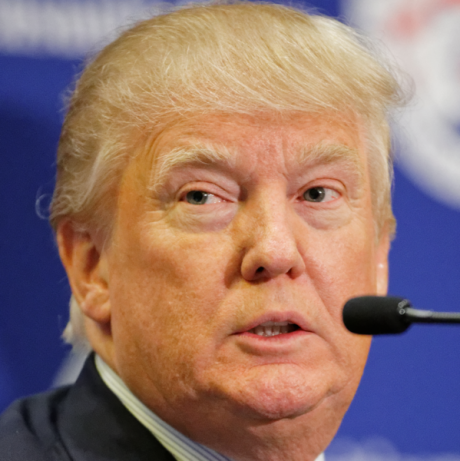


 Back in 2014, online bullion dealer Tulving shocked its many customers by suddenly failing. See Coinweek's story: How does $40M of Gold and Silver Disappear: The Collapse of Tulving Company
 California Governor Jerry Brown just announced an agreement between lawmakers and unions to raise his state's minimum wage to $15 per hour. When passed by the legislature and signed into law, as is expected, it will be the first such statewide minimum in the country and a victory for the "Fight for $15" movement. While workers who keep their jobs will be happy to receive a $15 hourly wage, such regulations come at a cost—more expensive labor means fewer jobs, particularly for the young and low-skilled.
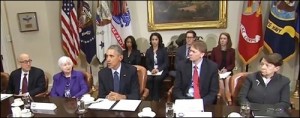 On March 7 of this year, President Obama called the full Financial Stability Oversight Council (F-SOC) to the White House for a meeting. F-SOC was created under the 2010 financial reform legislation known as Dodd-Frank to monitor systemic risks building up in the financial system and, ideally, nip them in the bud before they got out of hand. Every major Wall Street bank regulator sits on F-SOC.


| You are subscribed to email updates from Save Your ASSets First. To stop receiving these emails, you may unsubscribe now. | Email delivery powered by Google |
| Google Inc., 1600 Amphitheatre Parkway, Mountain View, CA 94043, United States | |

No comments:
Post a Comment