


Gold World News Flash |
- Imploding Pensions Take The Rest Of US Down With Them
- Alasdair Macleod: A tale of two currencies
- Ronan Manly: A big role for the monetary metals at the World Money Fair
- Gold Newsletter's Lundin chides market manipulation by big commercial shorts
- How Brazil is in Crisis Mode Just Four Months Before Start of Rio Olympics
- SO, WHERE IS THE COLLAPSE? — Bill Holter
- The Collapse Continues, US Companies Announced The Most 1Q Layoffs Since 2009
- 2016: The End Of The Global Debt Super Cycle
- Stock Market Crash: Is The Top In? Mike Maloney
- Economic Collapse Warning USA Crisis 2016 Financial Dollar Crash Coming!
- Worst Case Scenario: 73% Down From Here
- Olympics In Doubt As Brazil Sports Minister Quits, Rio Governor Says "This Is The Worst Situation I've Ever Seen"
- Price of Gold Closed at $1234.20 up $7.30 or 0.59%
- John McCain Linked Nonprofit Received Million Dollar Donation From Saudi Arabia
- We’re Near a Major Turning Point in the Currency Wars
- Gold Daily and Silver Weekly Charts - You Ain't Seen Nothing Yet
- Silver Lows – Silver Ratios
- Imploding Pensions Take The Rest Of US Down With Them
- Adrian Salbuchi -- Pentagon knows China will be US enemy No 1 starting in 2017
- TRUTH BEHIND THE CENTRAL BANKS RUN ON GOLD REVEALED BY CIA ADVISOR JIM RICKARDS
- JSMineset Gold Is Now Live! No PayPal Account Required
- Did the Dollar Get Shanghaied?
- China's forex regulator buys $4.2 billion in stocks via new platform
- Trump won't rule out using nukes in Europe?
- ‘$5 Million Coin’ Now On Sale – One of Largest, Purest and Rarest Gold Coins In World
- Gold Firms Up On Dovish Yellen Commentary
- Reasons Why This Gold Move May Be For Real
- The Gold-to-Silver Ratio: A Truly Generational Opportunity
- Gold Royalty Companies Continue to Progress
- Martin Armstrong: â€Collapse In Government Is Incoming, Markets Are Going To Start Responding!â€
| Imploding Pensions Take The Rest Of US Down With Them Posted: 01 Apr 2016 12:00 AM PDT by John Rubino, Dollar Collapse:
Oregon PERS unfunded liability swells to $21 billion
This combination of worse-than-expected investment returns and legal barriers to cost savings is playing out across the country. See Fitch downgrades Chicago after "worst possible outcome" in state supreme court pension reform bid. What follows — "…forcing school districts to lay off teachers, reduce school days, increase class sizes, and cut programs like art and PE. Local governments will also have to make cuts to public safety and other critical services" — is also playing out in most states and cities. And this, remember, is at the tail end of an epic bull market in financial assets. If pension plans aren't fully funded now, they'll fall into an abyss in the coming correction. The result: everyone gets poorer. Or more accurately, everyone discovers that they were never as rich as they thought they were, and that the down escalator they're on has a long way to go. | ||||||||||||||||||||||||||||||||||||||||||||||||||||
| Alasdair Macleod: A tale of two currencies Posted: 31 Mar 2016 11:10 PM PDT By Alasdair Macleod There is a widespread and growing feeling that financial markets are slipping toward another crisis of some sort. In this article I argue that we are in the eye of a financial storm, that it will blow again from the direction of the advanced economies, and that this time it will uproot the purchasing power of major currencies. The problems we face have been created by the major central banks. I shall assume, for the purpose of this article, that a second financial and monetary crisis will not have its origin in the collapse of China's credit bubble, nor that Japan's situation destabilises. These are additional risks, the first of which in particular is widely expected, but they are subject to the control of a command economy. They obscure problems closer to home. Instead I shall concentrate on two old-school economies, that of the United States and the Eurozone, where I believe the real dangers lie. ... For the remainder of the commentary: https://www.goldmoney.com/research/goldmoney-insights/a-tale-of-two-curr... ADVERTISEMENT Direct Ownership and Storage of Precious Metals Goldbroker.com is a precious metals investment company that enables investors to own and store gold directly in their own name (no mutualized ownership) in Zurich and Singapore. Goldbroker's clients are not exposed to any counterparty risks. They own gold and silver in their own names (the ownership certificate cites the name of the investor and serial number of his bars) and they have storage accounts opened in their own name as well. So Goldbroker.com's storage partner knows the exact identity of each investor. Goldbroker.com doesn't store in the name of its clients; rather, Goldbroker's clients store personally. All investors have direct access to their gold and silver bars. Goldbroker.com was launched in 2011 so that investors would avoid any counterparty risk when investing in physical gold and silver. Goldbroker.com is listed among GATA's recommended monetary metals dealers: To invest or learn more, please visit: Join GATA here: Mines and Money Asia http://asia.minesandmoney.com/ Mining Investment Asia http://www.mininginvestmentasia.com/ Support GATA by purchasing DVDs of GATA's London conference in August 2011 or GATA's Dawson City conference in August 2006: http://www.goldrush21.com/order.html Or a colorful poster of GATA's full-page ad in The Wall Street Journal on January 31, 2009: http://gata.org/node/wallstreetjournal Help keep GATA going GATA is a civil rights and educational organization based in the United States and tax-exempt under the U.S. Internal Revenue Code. Its e-mail dispatches are free, and you can subscribe at: To contribute to GATA, please visit: | ||||||||||||||||||||||||||||||||||||||||||||||||||||
| Ronan Manly: A big role for the monetary metals at the World Money Fair Posted: 31 Mar 2016 10:38 PM PDT 12:35p ICT Friday, April 1, 2016 Dear Friend of GATA and Gold: The monetary metals had a big place at the World Money Fair in Berlin in February, and gold researcher Ronan Manly attended with Bullion Star executives. His report is posted at Bullion Star here: https://www.bullionstar.com/blogs/bullionstar/bullionstars-visit-to-the-... CHRIS POWELL, Secretary/Treasurer ADVERTISEMENT Silver Coins and Rounds with Employee Pricing and Free Shipping Grab your Silver Starter Kit at cost from Money Metals Exchange, the company named "Precious Metals Dealer of the Year" by industry ratings group Bullion Directory. Simply go to MoneyMetals.com and type "GATA" in the radio box at the top of the page. This special silver offer contains 4 ounces of silver coins and rounds in the most popular 1-ounce, half-ounce, and 10th-ounce forms. Claim yours now, because GATA readers get employee pricing and free shipping. So go to -- -- and type "GATA" in the radio box at the top of the page. Join GATA here: Mines and Money Asia http://asia.minesandmoney.com/ Mining Investment Asia http://www.mininginvestmentasia.com/ Support GATA by purchasing recordings of the proceedings of the 2014 New Orleans Investment Conference: https://jeffersoncompanies.com/landing/2014-av-powell Or by purchasing DVDs of GATA's London conference in August 2011 or GATA's Dawson City conference in August 2006: http://www.goldrush21.com/order.html Or a colorful poster of GATA's full-page ad in The Wall Street Journal on January 31, 2009: http://gata.org/node/wallstreetjournal Help keep GATA going GATA is a civil rights and educational organization based in the United States and tax-exempt under the U.S. Internal Revenue Code. Its e-mail dispatches are free, and you can subscribe at: To contribute to GATA, please visit: | ||||||||||||||||||||||||||||||||||||||||||||||||||||
| Gold Newsletter's Lundin chides market manipulation by big commercial shorts Posted: 31 Mar 2016 10:28 PM PDT Gold Scores Biggest Quarterly Gain in Nearly 30 Years By Myra P. Saefong Gold futures settled higher Thursday, scoring their best quarterly performance since 1986 -- a year when "Top Gun" was the most popular movie. Bullion has benefited as the Federal Reserve's dovish stance on policy has softened the highflying U.S. dollar. ... "Gold's early-year rally began to lose momentum as March wore on, primarily due to profit-taking and a very large accumulation of short positions by the large commercials segment of paper-gold traders on Comex," said Brien Lundin, editor of Gold Newsletter. That "massive" commercial short position -- a wager that prices will fall -- is currently the "primary impediment" for the gold market, he said. Commercial traders use futures to hedge price against risk tied to their businesses. "If past form holds true, some of the large entities in the commercial category will hit the market hard with sell orders to drive the price down and collect on their short positions," said Lundin. ... ... For the remainder of the report: http://www.marketwatch.com/story/gold-headed-for-best-quarter-in-nearly-... ADVERTISEMENT Free Storage with BullionStar in Singapore Until 2016 Bullion Star is a Singapore-registered company with a one-stop bullion shop, showroom, and vault at 45 New Bridge Road in Singapore. Bullion Star's solution for storing bullion in Singapore is called My Vault Storage. With My Vault Storage you can store bullion in Bullion Star's bullion vault, which is integrated with Bullion Star's shop and showroom, making it a convenient one-stop-shop for precious metals in Singapore. Customers can buy, store, sell, or request physical withdrawal of their bullion through My Vault Storage® online around the clock. Storage is FREE until 2016 and will have the most competitive rates in the industry thereafter. For more information, please visit Bullion Star here: Join GATA here: Mines and Money Asia http://asia.minesandmoney.com/ Mining Investment Asia http://www.mininginvestmentasia.com/ Support GATA by purchasing DVDs of GATA's London conference in August 2011 or GATA's Dawson City conference in August 2006: http://www.goldrush21.com/order.html Or a colorful poster of GATA's full-page ad in The Wall Street Journal on January 31, 2009: http://gata.org/node/wallstreetjournal Help keep GATA going GATA is a civil rights and educational organization based in the United States and tax-exempt under the U.S. Internal Revenue Code. Its e-mail dispatches are free, and you can subscribe at: To contribute to GATA, please visit: | ||||||||||||||||||||||||||||||||||||||||||||||||||||
| How Brazil is in Crisis Mode Just Four Months Before Start of Rio Olympics Posted: 31 Mar 2016 09:20 PM PDT by Jim White, The Telegraph:
But in a briefing given by members of the Games Organising Committee to the British media last week, the mood remained strikingly bullish. "Everything will be ready on time," insisted Mario Andrade, the director of communications for Rio 2016. The Games are being sold on the premise that they will represent "the greatest party in the history of sport". And talking to a couple of locals who auditioned for roles in an opening ceremony that is being directed by Fernando Mereilles, the man behind the brilliant Rio movie City of God, the suggestion is that from the off the city may well sing. But just over four months from the grand opening junket in the Maracana stadium, there remain several significant issues that could yet compromise such bold intention. Politics When the Games begin, Brazil's last two presidents could be facing criminal charges. Three million people took to the streets last month to demand the impeachment of Rousseff over her involvement in a corruption scandal involving the Petrobras oil company. The demonstration against her rule filling Rio's Copacabana Beach was the largest in Brazilian history, with hundreds of thousands marching to show their anger at graft in high places. The sense of crisis has not been eased by Rousseff's decision to appoint former president, Lula da Silva, as her chief of staff, a move characterised as a flagrant attempt to gift him the immunity from prosecution that comes with high office. The appointment was quashed by Brazil's supreme court, a decision against which Rousseff is appealing.
As yet there has been no connection made between the Olympics and the wider corruption issues, but Rio's Mayor, Eduardo Paes – the Games' chief architect – has been linked to ex-President Lula. And a recently leaked recording of a telephone conversation between the two men exposed how much the mayor is banking on the event for personal advancement: he had hoped a successful staging would propel him into the presidency. More significantly, the crisis has meant a temporary freeze on new government spending, thus curtailing the emergency central funding Paes was hoping to call on for last-minute infrastructure improvements. Transport Rio's Achilles heel. The city's metro system is decades behind that in London. On the roads the rocky spine of hills that splits downtown from the Barra area, where the Olympic Park is sited, creates a natural bottleneck; last week it took 90 minutes to drive from the athletes' village to the Joao Havelange athletics stadium. Since the road link is in places single carriageway, even Olympic lanes are unlikely to speed the flow. But the worst news involves the new subway line, which was intended to whisk spectators to and from the park. The deadline for completion is July 1; test trains were due to be running on the track late last month. But since the rails have not yet been laid along much of the route, and several bridges remain in a state of half-completion, that seems unfeasible. More than 10,000 workers are engaged on the project. Pictures posted on social media of a group of them having a mid-morning nap under an as-yet unfinished viaduct, however, did not communicate a gathering sense of urgency. Pollution For the past 150 years much of Rio's sewage – and a good proportion of its rubbish – has been daily dumped into Guanabara Bay. The first initiative to clean up the mess dates from 1866. But it was the decision to site the Olympic sailing in the Bay, with its photogenic backdrop of Sugar Loaf mountain, that finally concentrated minds. | ||||||||||||||||||||||||||||||||||||||||||||||||||||
| SO, WHERE IS THE COLLAPSE? — Bill Holter Posted: 31 Mar 2016 09:15 PM PDT by SGT, SGT Report.com: Bill Holter from JS Mineset is back to discuss the current state of global economic affairs, and I have one simple question for him. Where is the collapse!? To sign up for premium content at JS Mineset. Click HERE. | ||||||||||||||||||||||||||||||||||||||||||||||||||||
| The Collapse Continues, US Companies Announced The Most 1Q Layoffs Since 2009 Posted: 31 Mar 2016 06:00 PM PDT Euro zone economy is flying on one engine. Jobless claims surge the most in 2 years. US companies layoff the most in the first quarter since 2009. Chicago PMI jumped back but still way below January highs. JPM has recalculated GDP lower because of the deteriorating economy. The... [[ This is a content summary only. Visit http://www.newsbooze.com or http://www.figanews.com for full links, other content, and more! ]]  | ||||||||||||||||||||||||||||||||||||||||||||||||||||
| 2016: The End Of The Global Debt Super Cycle Posted: 31 Mar 2016 06:00 PM PDT Submitted by Etai Friedman via Palisade-Research.com, After the stock market crash of 1987, The Federal Reserve embarked on a path that led to the biggest debt bubble in the history of the world. The day after the 1987 crash (Oct. 20, 1987) Alan Greenspan, Chairman of the Fed, announced to the world that The Fed stood ready to provide whatever liquidity was needed by the banking system to prevent the crash from turning into a systemic financial crisis. That was the day the Fed “put” was born.
A put is an option that allows its owner to sell a specified amount of a particular asset at a predetermined price by a specific date. As an example, if an investor had a February 90 put on Apple’s stock that investor would have the right to sell 100 shares at 90 a share until the third Friday in February when the option expired. An investor would only exercise that put if Apple’s stock price dropped below 90 a share before expiration. As it stands Apple’s stock price is 94.02 as of Friday’s close so no rational investor would exercise that put. But if on Monday Apple’s stock crashed and was trading 60 a share than the investor would exercise his put and gladly sell his stock at 90 a share to the person who sold him the put. So in effect after 1987 The Fed was acting as a giant put for the financial markets, a role it had heretofore not played. In September of 1998 Long Term Capital Management, a highly leveraged high profile hedge fund, sustained losses that threatened its solvency. The fund with a few billion in equity had $80 billion in assets and all of its trades were going against the firm. LTCM’s equity was going to be wiped out within days. Warren Buffet and a consortium of investors offered to bail out the fund by paying fire sale prices for the assets and shutting down the fund. LTCM’s management balked and looked to The Fed for a better solution. The Fed engineered a bailout by numerous banks that left LTCM’s management in place with some of their wealth to spare. Once again, The Fed intervened in a market calamity and this time bailed out an extremely reckless hedge fund that should have been allowed to fail. The Fed’s put engendered moral hazard in the hedge fund community by allowing reckless and destabilizing behavior to go unpunished. In December of 1999, The Fed injected enormous amounts of liquidity into the banking system to fend off any potential problems from the Y2K problem. If you recall, The Fed was worried that banking computer systems might erroneously register 1900 as the year on January 1, 2000 due to perceived deficiencies in banking software. To avert any panic, The Fed stuffed money into the banking system to make sure no calamities ensued. The stock market which was already in the midst of a mania in the tech sector effectively had kerosene poured on the fire. The extra banking liquidity found its way into the stock market and sent the tech bubble into overdrive. After the new year passed without so much as a hiccup The Fed withdrew the excess liquidity and the tech bubble peaked in March 2000 and then collapsed. This is where the story of the debt bubble begins. Prior interventions by The Fed promoted moral hazard and rampant speculation but up to this point they did not need to employ debt to prop up the U.S. economy. That all changed after the internet stock mania collapsed, trillions in wealth was destroyed, and the U.S. economy went into recession. The Fed was once again worried that the crash in technology stocks would cause a systemic financial crisis so they embarked on an interest rate cutting program that saw the Fed Funds Rate drop from 6.5% to 1% from 2000 to 2003. This in effect morphed the tech stock bubble into a housing bubble. Adjustable rate mortgage yields plunged in value and accelerated a housing boom already in progress. The public, encouraged by low rates and lax underwriting standards stampeded into housing sending prices through the roof. Mortgage debt exploded and home equity values skyrocketed buffeting the tech collapse induced recession. The average American increased their leverage to all-time highs. Figure 1 shows that by the fourth quarter of 2007 household debt payments as a percentage of disposable income hit a record 13.2% up from 10.5% just 15 years earlier. Figure 1
The Fed meanwhile did not normalize rates until 2005 when the Fed Funds Rate was back up to 4% on its way to 5.25% by 2006, the year the housing boom peaked. Total debt in the U.S. went from $18 trillion in 2001 to $30 trillion by 2007. Comparatively speaking it took 35 years for total debt in the U.S. to go from under $1 trillion to $4 trillion. As we all know the collapse in housing prices revealed that trillions in mortgage backed securities were not actually AAA rated and the collapse in value of these securities almost took the financial system with them. Large investment banks, like Bear Stearns and Merrill Lynch, became insolvent and were forced to merge with better capitalized banks. Lehman Bros. was allowed to fail and brought the global financial system to its knees. The Fed, now headed by Ben Bernanke, went into overdrive slashing the Fed Funds rate to zero percent and essentially backstopping all financial institutions and depositors’ cash and near cash investments. A new tool was introduced by The Fed, called Quantitative Easing, which allowed The Fed to purchase mortgage backed securities and other long dated debt to push down long term interest rates and encourage lending. Rates at both the front end and the back end of the yield curve plunged to historic lows with the hope that people and businesses would begin to borrow again and get the economy growing. These extreme measures stopped the free fall in financial assets and began a six-year expansion that was both meager and debt fueled. During and following The Global Financial Crisis consumers in some developed countries deleveraged but the rest of the economy, namely governments and businesses, leveraged up. From the first quarter of 2008 to the second quarter of 2015 total debt in the U.S. increased from $30 trillion to $40 trillion. Globally, total debt grew from $142 trillion in the fourth quarter of 2007 to $200 trillion in the second quarter of 2014, an increase of $58 trillion. Total global debt as a percentage of global GDP grew from 269% in 2007 to 286% in 2014. The massive central bank intervention during The Global Financial Crisis prevented a deleveraging of the global economy and actually encouraged more leverage to stimulate growth. Once again the planet was borrowing from future growth to propel current growth. This was indeed a short sighted solution to an existential crisis faced by the world. Kicking the can down to 2016 has now come to its logical end. During 2015 the strength of the global economy began to be questioned as commodity prices collapsed, Chinese economic growth slowed, and global trade slowed. For the first time since the European Sovereign Debt Crisis credit spreads began to widen and low rated corporate debt and leveraged loans began declining in value. As seen by Figure 2 Corporate Net Debt to Ebitda rose to record levels while Ebitda began to decline. Figure 2
Declining oil prices crushed low rated high yield energy debt. Figure 3 shows that prices of CCC rated debt collapsed in the fourth quarter of 2015. Figure 3
Also in the first quarter of 2016 low rated commercial real estate debt plunged in value as seen in Figure 4. Figure 4
The credit markets are signaling that the debt fueled expansion that began in 2010 is turning to bust. This is the most precarious moment in financial market history because as the world slides into recession global central banks have no ability to soften the oncoming recession with debt creation. Globally interest rates are close to zero and even negative in Europe and Japan. Long term government bond yields are also extremely low. This is sending a very clear and ominous signal that the world cannot service more debt and in fact needs to deleverage and get on more solid financial footing. The last time the world deleveraged was during The Great Depression. The defining quality of The Great Depression was the destructive deflation that gripped the economy. Deflation destroys financial asset values like stocks and corporate bonds and hard assets like real estate. It also lowers incomes while making debt more expensive to service as debt to income ratios rise. The world economy is on the precipice of another Great Depression. This state of affairs demands a dramatic repositioning of investment portfolios. Investors who choose to remain passive but want to preserve their wealth need to liquidate their investments in stocks and corporate bonds and hold cash only. Investors who are more opportunistic can hold a combination of cash and U.S. government bonds. U.S. government bonds have already begun to rally so buying at current levels is not quite as attractive as it was a month ago but we expect negative interest rates to eventually visit America so there is still considerable upside. Figure 5 shows that inflation expectations continue to plunge even as The Fed erroneously is raising interest rates. Figure 5
The more aggressive investor can find opportunities to earn high returns employing strategies that will benefit from a financial collapse and a severe, deflationary recession. These strategies include shorting stock index futures, getting long VIX futures, etfs, and options, getting long stock index option volatility via index etfs, and on a limited basis shorting individual company stocks whose business plans will be acutely affected by economic developments. We would not simply be short financial assets every day because we recognize that the markets will initially be quite volatile which means sharp bear market rallies in between dramatic declines in financial assets. We would initially be positioned to benefit from this two-way volatility and as the declines become more severe and investors begin to throw in the towel the fund will be more short oriented. We recognize that The Fed will not sit idly by as this bear market intensifies. However limited their options they will employ them and they may provide brief respite from the bear market. We believe The Fed will stop raising interest rates and begin cutting them in 2016 taking them into negative territory. We also believe The Fed will embark on QE4, although it is not clear what assets they will purchase. What is clear is that rate cuts and QE4 will offer brief pauses in financial asset declines but will not ultimately arrest those declines. Major fiscal policy adjustments will be needed and this will depend on who takes the White House in 2017. A Democratic win would be a negative while a Republican win by certain candidates may pave the way for major fiscal policy changes. For instance, Ted Cruz’s flat tax would be particularly beneficial and soften the blow of the economic contraction as more money will be directly put into Americans’ hands. We also believe the next President needs to strip The Fed of their dual mandate of price stability and full employment. The Fed should no longer be tasked with ensuring full employment and debt creation should be disincentivized through changes to the tax code. Lastly, we would like to highlight we take no pleasure in what we see coming to pass in the financial markets and simply wants to offer investors the opportunity to earn high returns in what otherwise will be an environment devoid of financial opportunities and of declining employment. | ||||||||||||||||||||||||||||||||||||||||||||||||||||
| Stock Market Crash: Is The Top In? Mike Maloney Posted: 31 Mar 2016 05:33 PM PDT In this week's video I present several charts that indicate to me that the stock markets are severely overvalued. Be sure to watch the video to hear my analysis and find out how much stocks have to fall to be fairly priced. The Financial Armageddon Economic Collapse Blog tracks trends... [[ This is a content summary only. Visit http://www.newsbooze.com or http://www.figanews.com for full links, other content, and more! ]]  | ||||||||||||||||||||||||||||||||||||||||||||||||||||
| Economic Collapse Warning USA Crisis 2016 Financial Dollar Crash Coming! Posted: 31 Mar 2016 05:17 PM PDT The Financial Armageddon Economic Collapse Blog tracks trends and forecasts , futurists , visionaries , free investigative journalists , researchers , Whistelblowers , truthers and many more [[ This is a content summary only. Visit http://www.newsbooze.com or http://www.figanews.com for full links, other content, and more! ]]  | ||||||||||||||||||||||||||||||||||||||||||||||||||||
| Worst Case Scenario: 73% Down From Here Posted: 31 Mar 2016 05:00 PM PDT Submitted by Jim Quinn via The Burning Platform blog, As the stock market gyrates higher and lower in a fairly narrow range, the spokesmodels and talking heads on CNBC breathlessly regurgitate the standard bullish mantra designed to keep the muppets in the market. They are employees of a massive corporation whose bottom line and stock price depend upon advertising revenues reaped from Wall Street and K Street. They aren’t journalists. They are propagandists disguised as journalists. Their job is to keep you confused, misinformed, and ignorant of the true facts. Based on the never ending happy talk and buy now gibberish spouted by the pundit lackeys, you would think we are experiencing a bull market of epic proportions and anyone who hasn’t been in the market has missed out on tremendous gains. There’s one little problem with that bit of propaganda. It’s completely false. The Fed turned off the QE spigot at the end of October 2014 and the market has gone nowhere ever since. QE1 began in September 2008, taking the Fed balance sheet from $900 billion to $2.3 trillion by June 2010. This helped halt the stock market crash and drove the S&P 500 up by 50% from its March 2009 lows. QE2 was implemented in November 2010 and increased the Fed balance sheet to $2.9 trillion by the end of 2011. This resulted in an unacceptable 10% increase in the S&P 500, so the Fed cranked up their printing presses to hyper-speed and launched the mother of all quantitative easings, with QE3 pushing their balance sheet to $4.5 trillion by October 2014, when they ceased their “Save a Wall Street Banker” campaign.
As Main Street dies, Wall Street has been paved in gold.
The S&P 500 soared to all-time highs, with 40% gains from the September 2012 QE3 launch until its cessation in October 2014. Like a heroine addict, Wall Street has experienced withdrawal symptoms ever since, and begs for more monetary easing injections. Yellen and her gang of central bank drug dealers keep the patient from dying by continuing doses of ZIRP and psychologically comforting dialogue designed to cheer up Wall Street bankers. QE3 ended 17 months ago and shockingly the S&P 500 is exactly where it was 17 months ago. How many bull markets go flat for 17 months? As John Hussman accurately points out, we are experiencing a topping formation in the third and biggest bubble of the last 16 years. It’s a long way down from here. With the S&P 500 Index at the same level it set in early-November 2014, and the broad NYSE Composite Index unchanged since October 2013, the stock market continues to trace out a massive arc that is likely to be recognized, in hindsight, as the top formation of the third financial bubble in 16 years. The chart below shows monthly bars for the S&P 500 since 1995. It’s difficult to imagine that the current situation will end well, but it’s quite easy to lose a full-cycle perspective when so much focus is placed on day-to-day fluctuations. The repeated speculative episodes since 2000 have taken historically-reliable valuation measures to extremes seen previously only at the 1929 peak and to a lesser extent, the 1937 peak (which was also followed by a market loss of 50%). Throughout history, at each valuation extreme – certainly in 2000, 2007 and today – investors have openly embraced rich valuations in the belief that they represent some new, modern and acceptable “norm”, failing to recognize the virtually one-to-one correspondence between elevated valuations and depressed subsequent investment outcomes.
So we’ve had the stock market going nowhere for 17 months, with valuations at obscene levels based on all historical precedents, corporate profits falling for three straight quarters, real wages of working people stagnant at 1988 levels, and home prices soaring to unreachable heights due to hot money from China, Wall Street hedge funds, and the ever resilient and late flipper class. Consumer spending, which accounts for 67% of our economy, is dead in the water as Obamacare, soaring rents, rising food costs and 0% interest on savings accounts drain the life out of middle class households. The average person (not Wall Street bankers, government apparatchiks, or other parasites of the establishment) is experiencing and has been experiencing a recession for years. Low interest rates and double talk from clueless academic Federal Reserve lackeys cannot and will not prop up the stock market forever. Corporate buybacks, financed with cheap debt, by insanely greedy CEOs is the last leg in this wobbly stool. This will come to a screeching halt as profits collapse and the market goes south. Stocks always fall during a recession and we have entered a recession, whether it is broadcast by the corporate controlled media or not. The last 17 months have offered the public an opportunity to exit near the top. Anyone who hasn’t taken advantage of this opportunity will be regretful in the not too distant future. With valuations twice historical norms, there is no place to go but down. Hussman understands history better than the brainless twits on CNBC. Wall Street analysts talk endlessly on financial television about low interest rates “justifying” current valuations, without completing the story that even if this were true, these rich valuations still imply predictably dismal future returns on stocks, particularly on a 10-12 year horizon. Every bear market in history, including those that completed recent cycles, has taken valuations to the point where expected long-term returns approached or exceeded 10% annually. This is also true for bear markets prior to the 1960’s when interest rates regularly hovered at levels similar to the present. On a combined set of historically-reliable measures, we presently estimate that valuations are more than twice their historical norms; twice the level that has routinely been pierced to the downside in even the most run-of-the-mill market cycle completions across a century of history, regardless of the level of interest rates. Warren Buffett’s favorite valuation method for the market (Market Cap/GDP), which he has disregarded now that he has sold out to the crony capitalist establishment, is at extreme levels only seen at historic market tops (1929, 2000, 2007). Based upon basic mathematical equations and history, according to Hussman, the S&P 500 will be no higher in 2028 than it is today. I wonder how many financial advisors have put that in their neat little investment models? How many Boomers and Gen Xers can handle a 0% return over the next 12 years? With the S&P 500 still within a few percent of its record 2015 high, investors have a critical opportunity here to understand the difference between a run-of-the-mill outcome and a worst-case scenario. The present ratio of MarketCap/GDP is about 1.2, which we fully expect to be followed by nominal total returns in the S&P 500 of about 2% annually over the coming 12 years. Given the current dividend yield on the S&P 500 actually exceeds 2%, the historically run-of-the-mill expectation from current valuations is that the S&P 500 Index itself will be below current levels 12 years from today, in 2028. The arrogant ego maniacal pricks, who inhabit the upper echelons of the Wall Street towers of babel, confidently disregard facts, history, and basic risk management concepts as they are about to inflict the third market collapse in sixteen years upon the unsuspecting public. Hussman‘s projections in 2000 were right and his projections today will be proven right. I realize that a projection like this seems preposterous. Unfortunately, this just reflects objective evidence that has remained reliable over a century of market cycles. Recall that our real-time projection for 10-year S&P 500 total returns in 2000 was correctly negative even on the basis of optimistic assumptions. The basic arithmetic was the same. Now for the kicker. Throughout history the stock market has experienced secular bull and bear markets where valuations go from extremely overvalued to extremely undervalued. The secular bear market from 1966 until 1982 was followed by a secular bull market from 1982 until 2000. In 2008/2009 we were headed towards a secular low, but the Fed intervened in order to save their Wall Street owners from bankruptcy. The system was not purged of its excesses. The chaff was not separated from the wheat. Therefore, the secular lows have not happened yet. Using basic mathematical relationships which have held for over 100 years of stock market performance, Hussman concludes a run of the mill reversion to the mean will result in a 50% stock market loss. In order to reach a secular low in valuations, we would experience a 73% loss from here. That seems inconceivable to a population of normalcy bias blinded, iGadget distracted, math challenged CNBC believers. Will you let cognitive dissonance rule your decision making or will you use reason to understand the peril directly ahead? Notice that expected market returns of about 6% have historically been associated with a MarketCap/GDP ratio of 0.8. The historical norm associated with 10% equity returns has been about 0.6. The secular lows of 1949 and 1982 hit ratios about 0.33. So a rather minimal completion of the current cycle would take the market down by about -33% from here (=0.8/1.2-1), a run-of-the-mill cycle completion would be about -50%, and a truly worst-case scenario would take the market down by about -73% to a secular valuation low in the current market cycle. One can’t rule anything out given reckless monetary policy, fragile European banks, excessive covenant-lite lending and so forth, but I don’t expect more than a run-of-the-mill cycle completion here. I’m afraid the lesson of history is that people never learn from the lessons of history. It’s always different this time. People will ignore the facts until it is too late. Every historically accurate statistical valuation method proves we are in the mother of all bubbles, created by Federal Reserve sociopaths. Every reliable economic indicator is flashing red for recession. There is absolutely no doubt this market is going to crash. It’s just a matter of when and by how much. If you think you can get out in time, be my guest and buy some more Amazon, Google, and Facebook on margin. Or you can heed the lessons of history as laid out by John Hussman. Your choice. The central lesson to be learned from market history – and particularly from yield-seeking bubbles – is not that valuations are irrelevant, nor that central bank intervention is capable of sustaining bubbles permanently. Rather, the lessons are: 1) market internals, and the investor risk-preferences they convey, are the hinge between overvalued markets that remain elevated and those that collapse, and 2) unlike prior market cycles, even extreme “overvalued, overbought, overbullish” conditions were insufficient to derail speculation in the face of reckless monetary policy since 2009 – one had to wait until market internals deteriorated explicitly before adopting a hard-negative market outlook. If one learns those hard-won lessons about the importance of investor risk-preferences and market internals over portions of the market cycle, one need not fall prey to the delusion that easy money can support stocks once risk-aversion sets in (recall 2000-2002 and 2007-2009), and one need not make the mistake of discarding the essential lessons that valuations have taught in complete market cycles across a century of history. | ||||||||||||||||||||||||||||||||||||||||||||||||||||
| Posted: 31 Mar 2016 04:31 PM PDT In less than five months, Brazil is expected to host the Summer Olympics. If you follow LatAm politics, you know that that is an absolute joke. Last summer, the country descended into political turmoil and the economy sank into what might as well be a depression. Nine months later, inflation is running in the double digits, output is in freefall, and unemployment is soaring. On Wednesday, the government reported its widest primary budget deficit in history and less than 24 hours later, the central bank delivered a dire outlook for growth and inflation. Meanwhile, VP Michel Temer's PMDB has split with Dilma Rousseff's governing coalition, paving the way for her impeachment and casting considerable doubt on the future of the President's cabinet. On Thursday, we learn that sports minister George Hilton has become the latest casualty of the political upheaval that will likely drive Rousseff from office in less than two months. "Brazil's sports minister is resigning four months before the country hosts the Olympics, amid continuing uncertainty over the fate of six other cabinet ministers," The Guardian wrote this afternoon, before noting that earlier this month, "Hilton left his party in an apparent bid to hold onto his job."
Hilton had been sports minister for just over a year and although we're sure any and all Brazilian cabinet positions come with lucrative graft opportunities, we imagine Hilton won't end up regretting his decision to distance himself from the government and from this year's Summer Olympics. After all, there are quite a few very serious questions swirling around the Rio games. For instance: Will the water be clean enough for athletes to compete in? Will there be enough auxiliary power to keep the lights on? And, most importantly, will the games take place at all? Millions of Brazilian citizens have recently taken to the streets to call for Rousseff's ouster and to protest the return of former President Luiz Inacio Lula da Silva to government. It's exceedingly possible that if House Speaker Eduardo Cunha can't manage to get the impeachment job done, the populace will simply march on the Presidential palace. How any of the above is compatible with hosting the largest sporting event in the history of the world is beyond us and George Hilton apparently has reservations himself. As does Francisco Dornelles, acting governor of Rio de Janeiro. "This is the worst situation I've seen in my political career," Dornelles said this week, referencing the state's finances. "I've never seen anything like it." Here's more from AP:
Yes, it will take "a large effort" for Rio to get back on track. Which probably means it's going to take a similarly "large effort" for Brazil to figure out how to fund the already over budget Olympic Games in August amid an outright economic collapse. Indeed, the country doesn't even have any idea who the President is going to be when the Olympic torch is lit in August. At this juncture, the only thing we can say is that we hope the lawyers for all of the advertising partners who just spent a total of $1 billion with NBC's executive vice president of advertising sales Seth Winter took a good look at the fine print before signing on the dotted line and cutting the checks. | ||||||||||||||||||||||||||||||||||||||||||||||||||||
| Price of Gold Closed at $1234.20 up $7.30 or 0.59% Posted: 31 Mar 2016 04:29 PM PDT
I have to make this quick because a big storm with tornadoes is closing on me across Wayne County. Having accomplished its largesse to Wall Street, Janet Yellen's spell evaporated today, just like Cinderella's coach and four returning to pumpkin & mice at midnight. Poof! Dow hit 17,790 at yesterday's high, but early this morning its skin started turning orange. Lo, as the day waxed later, the Dow began to sprout a green stem. About 12:30 it turned down and skidded to the curbside, almost shot at 17,663, but it bounced off that curb up to only 31.57 (0.18%) lower than yesterday. S&P500 was like those lizards turned into Cinderella's coachmen. As the day wore on and the clock struck 12:30, its skin started turning green. By 2:30 it had a long tail, and claws. Ended the day 4.21 (0.2%) lower & looking right wizardly. Both the Dow in Gold & Dow in silver turned zagged down today. Last 2 days the DiS had been above its 200 DMA, but no mo. http://schrts.co/ohwLZP Dow in Gold at 14.463 yesterday came close to the 50% correction (14.71 oz), & turned down today, closing at 14.33 oz. http://schrts.co/8Sv0tc But Janet's spell didn't fall off the US dollar index. It trashed another 21 basis points (0.23%) to 94.61. http://schrts.co/fOyfqb The world still holds some foolish people who believe the criminals at the Fed & the world's central banks have the people's best interest at heart. Right, like Cinderella's sweet stepmother was hunting her a husband. Euro rose 0.38% to $1.1380 while the yen fell 01.2% to 88.85. Euro's rally is propelled only by the dollars woe. Gold rose $7.30 (0.6%) to $1,234.20 on Comex. Silver rose 25.4¢ (1.67%) to 1546¢. I feel like a tick hanging on the tip of a Labrador Retriever's tail. I'm thrown first one way, then t'other so fast my eyes can't focus. One minute I believe silver & gold are headed up, then I think about it another way or read something & think that correction is still lurking. Here's a gold chart, http://schrts.co/cXRPsq I have added a green line to mark the uptrend from the December/January low. Tomorrow that line crosses $1,214, so a close below that would clinch the arrival of a correction. I will box it closer than that. Gold must also climb ABOVE the 20 DMA now at $1,246.62 to prove it means to climb. Silver came within a hair of closing above its 20 DMA at 1549¢. Tomorrow boxed in between 1518¢ (uptrend line) and 20 dma at 1549¢. Got to run. I can hear the thunder & am headed for my basement at home. - Franklin Sanders, The Moneychanger The-MoneyChanger.com © 2016, The Moneychanger. May not be republished in any form, including electronically, without our express permission. To avoid confusion, please remember that the comments above have a very short time horizon. Always invest with the primary trend. Gold's primary trend is up, targeting at least $3,130.00; silver's primary is up targeting 16:1 gold/silver ratio or $195.66; stocks' primary trend is down, targeting Dow under 2,900 and worth only one ounce of gold or 18 ounces of silver. US $ and US$-denominated assets, primary trend down; real estate bubble has burst, primary trend down. WARNING AND DISCLAIMER. Be advised and warned: Do NOT use these commentaries to trade futures contracts. I don't intend them for that or write them with that short term trading outlook. I write them for long-term investors in physical metals. Take them as entertainment, but not as a timing service for futures. NOR do I recommend investing in gold or silver Exchange Trade Funds (ETFs). Those are NOT physical metal and I fear one day one or another may go up in smoke. Unless you can breathe smoke, stay away. Call me paranoid, but the surviving rabbit is wary of traps. NOR do I recommend trading futures options or other leveraged paper gold and silver products. These are not for the inexperienced. NOR do I recommend buying gold and silver on margin or with debt. What DO I recommend? Physical gold and silver coins and bars in your own hands. One final warning: NEVER insert a 747 Jumbo Jet up your nose. | ||||||||||||||||||||||||||||||||||||||||||||||||||||
| John McCain Linked Nonprofit Received Million Dollar Donation From Saudi Arabia Posted: 31 Mar 2016 04:00 PM PDT Submitted by Mike Krieger via Liberty Blitzkrieg blog,
For just and obvious reasons, it’s illegal under U.S. law for foreign governments to finance individual candidates or political parties. Unfortunately, this doesn’t stop them from bribing politicians and bureaucrats using other opaque channels. A perfect example is the shady, influence peddling slush fund known as The Clinton Foundation, which entered the public consciousness last year and was the central topic of multiple posts here at Liberty Blitzkrieg. Although they remain the reining champions of cronyism, being a shameless, corrupt fraud isn’t limited to the Clintons. It shouldn’t surprise anyone that a John McCain linked nonprofit has been found accepting million dollar contributions from the most barbaric, backwards nation on planet earth: Saudi Arabia. Naturally, the absolute monarchy remains a very close ally of the U.S. government. Bloomberg reports:
Forget John McCain for a moment. How appropriate is it for so-called “institutions of higher learning” to be accepting million dollars contributions from an absolute monarchy where women can’t drive and with obvious ties to 9/11?
This law/loophole obviously needs to be changed.
While it’s commendable that the McCain Institute Foundation came clean in this instance, the law should definitely be changed to make disclosure a requirement. The last thing this country needs are additional channels for special interests to bribe politicians.
“Guided by the values that have animated the career of McCain and his family?” Let’s take a look at a few of these “values.” Video of the Day – John McCain Threatens Protesters with Arrest, Calls them “Low-Life Scum” Incredible Tweets from John McCain on Libya and Syria from 2009 and 2011 Saudi Arabia Sentences Journalist to Five Years in Prison for Insulting the Kingdom’s Rulers The New York Post Reports – FBI is Covering Up Saudi Links to 9/11 Attack Saudi Arabia Sentences Poet to Death for “Renouncing Islam” Saudi Arabia Prepares to Execute Teenager via “Crucifixion” for Political Dissent
It’s starting to make sense now isn’t it.
Nothing to see here. Move along peasants.
Paul Singer, John McCain and the Saudis. Sure makes you feel all warm and fuzzy. | ||||||||||||||||||||||||||||||||||||||||||||||||||||
| We’re Near a Major Turning Point in the Currency Wars Posted: 31 Mar 2016 01:54 PM PDT This post We're Near a Major Turning Point in the Currency Wars appeared first on Daily Reckoning. Currency wars are like real wars in more ways than one. They can last longer than the combatants expect, and produce unexpected victories and losses. Real wars do not involve all fighting, all the time. There are quiet periods, punctuated by major battles, followed by new quiet periods as the armies rest and regroup. In the currency wars, it looks like a recent quiet period is over and war is entering a new major battle. The U.S. dollar went from an all-time low in August 2011 to a 10-year high in mid-2015. This dollar rally was fueled by the Fed's tightening policy that began in May 2013 with Bernanke's "taper talk" and continued through December 2015 with Yellen's "liftoff." But the strong dollar finally caught up with the U.S. economy, which has been slowing down precipitously. After the "weak yen" of 2013 and the "weak euro" of 2015, it looks like it's time for a weak dollar again. The currency wars have returned to U.S. shores with the Fed's dovish posture in its statements on March 16. Janet Yellen reinforced that dovish posture this Tuesday in her speech to the Economic Club of New York. There are critical turning points where a long-term directional trend is set to reverse. Today's "winners" (the strong currencies) suddenly become "losers" (the weak currencies), contrary to most expectations and Wall Street forecasts. These trend reversals are not unusual in currency markets; they are to be expected. Major currencies exhibit equilibrating characteristics not seen in securities markets. Stocks and bonds can go to zero (in the event of default or bankruptcy) and seemingly go to infinity (when a tech startup becomes the next Facebook or Uber). But such extremes are highly unusual in currencies, the exceptions being hyperinflationary episodes such as Zimbabwe or Venezuela. Major currency cross-rates will exhibit strong trends (up or down), but eventually, the trend reverses. In the past five years, the euro has traded as high as $1.48 (April 29, 2011) and as low as $1.05 (March 15, 2015). That's a wide range, but it's still a range. Lately, the euro has trended up toward $1.13. But no analyst seriously expects the euro to hit $2.00 or $0.50 in the foreseeable future. The point is currencies trade in a range, which means they exhibit critical turning points at the range-bound highs and lows. In a world without a currency anchor, whether gold, dollars or Special Drawing Rights (SDRs), currency cross-rates are highly volatile. On a day-to-day basis, currencies are notoriously difficult to forecast or trade. Still, there are longer-term dynamics at play that are useful for making directional forecasts. You can make large profits by getting the direction right and giving a trade enough time to work in your favor. We are getting close to one of those turning points for the U.S. dollar now. In order to forecast such turning points, I use my proprietary IMPACT method. This method involves the use of complexity theory to spot "emergent properties." An emergent property is a systemic occurrence that seems to come out of nowhere and cannot be inferred from complete knowledge of the system elements. Others refer to emergent properties as "black swans." We prefer the term "emergent property" because it fits within an established body of physics and applied mathematics, while black swan is more of a pop concept with no rigorous science behind it. Right now, the most powerful indication and warning is coming from what I call "Yellen's Conundrum." Simply stated, the conundrum is this: Janet Yellen and the Federal Reserve want higher inflation; they have said so many times. Their inflation target is 2% using the core personal consumption expenditure (PCE) price deflator on a year-over-year basis. Janet Yellen and the Federal Reserve also want higher interest rates. Last December, the Fed laid out a course of interest rate increases of 300 basis points over three years, which averages out to a 25 basis point increase every other FOMC meeting. They of course allow for some deviations based on "data dependence" and actual economic performance. But the conundrum is that raising interest rates makes the dollar stronger, which is deflationary. When your stated policy is inflationary, how can you pursue a path that is deflationary? You can't. The Fed's contradictory policies make no sense. Something has to give. Understanding the Fed's path and how that path must reverse course is your key to making outsized profits. The chart below shows the Fed's conundrum in one graphic:
This is a chart of a leading dollar index for the past 10 years. The dollar rallied in 2008–09 (on a fear trade during the panic) and then collapsed from 2009–2011 (on easing under QE1, QE2 and "Operation Twist"). In August 2011, the dollar hit an all-time low and, not coincidentally, the dollar price of gold hit an all-time high. The dollar rallied in late-2011 after the end of QE2 and Twist but then dropped again and leveled off with the advent of QE3 in September 2012. The turning point was the Fed tightening that began in May 2013 with Ben Bernanke's "taper talk." The Fed did not actually begin the taper of QE3 at that time, but the mere mention was enough to send the dollar soaring. It also started an emerging markets (EMs) meltdown as hot money capital flows unwound carry trades and fled the EMs for U.S. Treasuries. This massive dollar rally from the Fed tightening continued through the start of the actual taper (December 2013), the removal of forward guidance (March 2015) and the Fed's "liftoff" of interest rate hikes (December 2015). The entire cycle from low to high represents a 33% increase in the index value of the dollar in 52 months. Gains of 33% are not unusual in stocks, but they are highly unusual in currencies. Even in a world of floating exchange rates, major trading partners are supposed to maintain some stability in their cross-rates. Terms of trade, based on factor inputs, natural resources, demographics, technology, etc., do change over time. But they do not change that quickly. This dollar gain is better understood as a dollar shock based on the Fed's desire to "normalize" interest rates and end its zero interest rate policy (ZIRP). But interest rate normalization comes at a high cost. The cost is measured in disinflation bordering on deflation. The strong dollar hurts U.S. corporate earnings and stock prices two ways: by crimping exports and hurting U.S. overseas earnings that are translated back into dollars. This deflationary trend resulting from the strong dollar also pushes the Fed further away from its goal of 2% inflation. This dynamic can be seen in the chart below, using the same 10-year time series as the chart above:
The red horizontal line shows the Fed's inflation target. The blue line is a measure of core PCE, the Fed's preferred inflation gauge. The Fed has not hit their inflation target in eight years. For the past four years, since just after the dollar low of 2011, the inflation index has been moving away from the Fed's goal. The Fed does not understand this conundrum of higher rates, stronger dollar and more deflation because they are using obsolete models. In the Fed's view, continued job growth creates labor shortages that allow workers to demand higher real wages. Those wages then exert inflationary pressures on the economy, albeit with a lag. In this view, the Fed's easy money ZIRP from 2008–2015 will produce inflation any minute now. But there is no robust consistent evidence to support the Fed's models (called "NAIRU," the "Phillips Curve" and "FRB/US"). Jobs are, in fact, being created, but the wage pressures and inflation are nowhere in sight. What is visible are higher rates, a stronger dollar and continued deflationary pressure. The dollar declined in value slightly in late February and early March as it became clear that the Fed would not raise interest rates in March, which was originally expected based on the December 2015 FOMC statement. But the decline turned on a dime in late March as the Fed began to signal that it would get back on the rate hike warpath by June or perhaps as early as April. Now Janet Yellen herself seems to have backed off an April rate hike, and the dollar has softened for the time being. But at what point will the Fed lose faith in its models entirely and try to get inflation the old-fashioned way with more ease and a cheaper dollar? What does my IMPACT system tell us about the next turning point in this never-ending currency war? The short answer is the turning point is growing near but is not quite here yet. We look for the Fed to raise rates in June (possibly, but unlikely in April) and continue to make hawkish statements about future rate hikes, despite Tuesday's speech. This will put upward pressure on the dollar, partially offsetting recent developments. But sooner than later, the weakness in the U.S. economy and stock markets will become obvious even to the Fed. At that point, probably late in 2016, a major turning point in the currency wars will be upon us. Look for the Fed to reverse course, take easing steps (forward guidance, rate cuts, "helicopter money," QE4 or even negative interest rates) and trash the dollar. When the dollar goes down, the Fed will finally get the inflation it wants. But it may be too little, too late. These turning points and Fed flip-flopping require investors to be nimble to reap huge profits. The ideal trade in this environment would be a short-dated put option on a U.S.-based global company with leveraged exposure to FX translation losses and a cyclical slowdown. Regards, Jim Rickards P.S. Be sure to sign up for The Daily Reckoning — a free and entertaining look at the world of finance and politics. The articles you find here on our website are only a snippet of what you receive in The Daily Reckoning email edition. Click here now to sign up for FREE to see what you're missing. The post We're Near a Major Turning Point in the Currency Wars appeared first on Daily Reckoning. | ||||||||||||||||||||||||||||||||||||||||||||||||||||
| Gold Daily and Silver Weekly Charts - You Ain't Seen Nothing Yet Posted: 31 Mar 2016 01:36 PM PDT | ||||||||||||||||||||||||||||||||||||||||||||||||||||
| Posted: 31 Mar 2016 12:43 PM PDT Silver prices as this is written (March 23) are down 60 cents on the day. Scary … no, probably a normal correction. Yes, paper silver prices on the COMEX are “managed” for the benefit of traders, banks and others large enough to manipulate the prices. It makes sense that if a bank, which owns the regulators and can “work” the prices to their advantage … will do so. | ||||||||||||||||||||||||||||||||||||||||||||||||||||
| Imploding Pensions Take The Rest Of US Down With Them Posted: 31 Mar 2016 12:30 PM PDT It’s the same story pretty much everywhere: Cities and states promised ridiculously generous (by today’s standards) pensions to teachers, cops and firefighters, failed to sufficiently fund the plans and invested the money they did have very badly. And now the weight of the resulting unfunded obligations are crushing not just plan recipients but entire communities. Here’s a representative case:
This combination of worse-than-expected investment returns and legal barriers to cost savings is playing out across the country. See Fitch downgrades Chicago after “worst possible outcome” in state supreme court pension reform bid. What follows — “…forcing school districts to lay off teachers, reduce school days, increase class sizes, and cut programs like art and PE. Local governments will also have to make cuts to public safety and other critical services” — is also playing out in most states and cities. And this, remember, is at the tail end of an epic bull market in financial assets. If pension plans aren’t fully funded now, they’ll fall into an abyss in the coming correction. The result: everyone gets poorer. Or more accurately, everyone discovers that they were never as rich as they thought they were, and that the down escalator they’re on has a long way to go. At the risk of belaboring the point, imploding pensions, like most other modern problems, can be traced back to easy money. Put a monetary printing press in the hands of government and the resulting corruption flows from Washington outward to every state capital and mayor’s office. With interest rates artificially low and inflation artificially high, generating 8% returns as far as the eye can see looks not just possible, but easy. So promising benefits based on high rates of return seems reasonable to elected officials anxious to buy labor peace. And once the Ponzi scheme is in place, there’s no way to turn it off without creating chaos. The only solution (again at the risk of repetition) is to take the easy money program to its logical extreme and devalue the dollar by an amount large enough to make nominal pension benefits affordable. That’s functionally the same as honestly cutting benefits and will impoverish everyone who doesn’t own lots of real assets, but it will be easier to hide. | ||||||||||||||||||||||||||||||||||||||||||||||||||||
| Adrian Salbuchi -- Pentagon knows China will be US enemy No 1 starting in 2017 Posted: 31 Mar 2016 12:00 PM PDT Projections of Chinese Growth are not just an economic matter, but more so a Geopolitical Process. The Financial Armageddon Economic Collapse Blog tracks trends and forecasts , futurists , visionaries , free investigative journalists , researchers , Whistelblowers , truthers and many more [[ This is a content summary only. Visit http://www.newsbooze.com or http://www.figanews.com for full links, other content, and more! ]]  | ||||||||||||||||||||||||||||||||||||||||||||||||||||
| TRUTH BEHIND THE CENTRAL BANKS RUN ON GOLD REVEALED BY CIA ADVISOR JIM RICKARDS Posted: 31 Mar 2016 11:37 AM PDT im Rickards, Financial Threat and Asymmetric Warfare Advisor and best selling author joins Gary Franchi to disclose the truth behind the global central banks run on gold and what it means for you. The Financial Armageddon Economic Collapse Blog tracks trends and forecasts , futurists ,... [[ This is a content summary only. Visit http://www.newsbooze.com or http://www.figanews.com for full links, other content, and more! ]]  | ||||||||||||||||||||||||||||||||||||||||||||||||||||
| JSMineset Gold Is Now Live! No PayPal Account Required Posted: 31 Mar 2016 10:45 AM PDT Dear CIGAs, JSMineset Gold is now live! Click the yellow banner on the top right to sign up. $119.00/year will get you exclusive access to Bill Holter's up to the minute articles, Q&A videos from Jim and Bill, and a number of other postings only available on JSMineset Gold. You also won't have to view... Read more » The post JSMineset Gold Is Now Live! No PayPal Account Required appeared first on Jim Sinclair's Mineset. | ||||||||||||||||||||||||||||||||||||||||||||||||||||
| Did the Dollar Get Shanghaied? Posted: 31 Mar 2016 08:51 AM PDT This post Did the Dollar Get Shanghaied? appeared first on Daily Reckoning. And now… today's Pfennig for your thoughts… Good day, and a tub thumpin’ Thursday to you! The Janet Yellen effect on the dollar continues this morning, and has brought out some very interesting opinions and ideas as to why this sudden change of heart has occurred with Janet Yellen. And I’m going to spend some time on the main idea sweeping through the markets these days. But first, let’s review what happened yesterday, and in the overnight markets. The dollar attempted to rebound overnight, but that rebound has quickly faded, and the currencies are back on top of the dollar this morning. The turnarounds in Aussie dollars (A$) and New Zealand dollars/kiwi, were quite impressive, as these two currencies saw the brunt of the green/peachback’ s attempt to rebound. But the U.S. dollar rebound couldn’t hold, and these two currencies, A$ and kiwi, came storming back! The U.S. dollar was up about 1/3-cent at one point overnight, but not any longer! And gold has decided to join the currencies in their rally vs. the dollar, with the shiny metal up $9 this morning. There are some things going on around the world today and tonight, but in reality, the markets are all setting up for tomorrow’s Jobs Jamboree. I really don’t care about what the BLS puts out as a jobs creation report any longer, it’s all hedonic adjustments and surveys that can be altered. But the markets are still allowing the BLS to pull the wool over their collective eyes. It’s not that I think I’m smarter than anyone else, but can’t the markets see what the BLS is doing here? And if they can’t, why can’t they? Do they refuse to believe that they would be buffaloed? Ahhh, that’s it! The markets can’t believe that anyone or any institution would be smarter than the markets that they could fool them. That’s it, that’s the ticket! The Eurozone aggregate Flash CPI for March printed this morning at -0.1% vs. -0.2% in February, and the annual CPI printed at 1.0%. Still very weak, data especially given the bump up in CPI that we saw yesterday that printed in Germany, the Eurozone’s largest economy. But has this slowed down the euro from making advances against the dollar? Hardly! European Central Bank (ECB) President, Mario Draghi, has to be spending his night counting flowers on the wall, and pretending that the euro strength doesn’t bother him at all. Playing solitaire until dawn with a deck of 51, smoking cigarettes and watching Captain Kangaroo. And all the while the euro refuses to stumble like Draghi would love to see. You see, these Central Bankers have all gone down this rabbit hole, of believing that a weak currency promotes growth. The problem for this thinking is that when everybody is doing the same thing, there are no gains in the economy, because it’s a wash. So, as I used to tell me kids when they would tell me that everyone else was doing something that sounded risky to me, “but don’t you want to be better than everyone else?” I would love for a Central Banker to go against the tide and say, “yes! I do want my currency to be better than everyone else’s.” Now THAT would be news! Has Canada decided that it wants to be the country that says they no longer want to be with the “weaken your currency crowd”? I don’t think so. But rather, I believe they’ve just decided to stop fighting loonie strength. I talked to you yesterday about how the loonie had enjoyed a very strong month of March. And yesterday, the Canadian Finance Minister, Morneau, told an audience that the loonie was at an “appropriate” level after the bump higher in oil prices. The price of oil has slipped again, but remains in the range that we talked about earlier this week, so no real panic in the markets from this slippage at this point, which is a good thing! The Chinese will see both the Manufacturing and Services components of the PMI tonight, and I expect the manufacturing sector to see a bump higher in the Index number. No great shakes here, nothing to really see, so just move along, for these are not the droids we’re looking for. And the renminbi saw another larger than the average bear appreciation in the fixing overnight, marking two consecutive large appreciations that has taken the renminbi to a level it hasn’t seen in over three months having last been around 6.46 on 12/16/15. Of course that was prior to the devaluation that the Chinese threw at the renminbi in January of this year. But looky there, the renminbi has recovered back to a level it held before the devaluation. Patience is a virtue, they say… After the Chinese devaluation in January I was really downtrodden on the where I thought the Chinese were taking the renminbi, but at that time I also told you that I thought the Chinese did that in response to the U.S. Fed’s rate hike in December. And since then the rate hike talk in the U.S. has dissipated, thus allowing the Chinese to back of the depreciations that were taking place daily. Of course since I just said all this, the Chinese will probably announce a devaluation tonight of the renminbi! HA! That would be my luck! I also pointed out back in January that the Singapore dollar (S$) had depreciated faster than the renminbi, and that these two had historically (since 7/05) traded in tandem. So, I said then that the S$ either needed to catch up with the renminbi, or the renminbi needed to fade to the S$’s level for them to get back in tandem. I thought at that time that with the devaluation, that the Chinese would probably allow the renminbi to fade to the S$’s value and then they would get back in tandem. But since January the S$ is up over 5% (5.30%) and the renminbi is flat, now that it has recovered the ground lost in the devaluation. So, it appears that the S$ is playing catch up. Interesting, eh? The U.S. Data Cupboard only had the ADP Employment Change for March, the precursor to the Jobs Jamboree tomorrow, yesterday, and it printed with a 200,000 jobs created in March, and revised downward their Feb number from 215,000 to 204,000. I’ve said this before but between the ADP report and the BLS report, I would rather the markets watched the ADP report. In our special world, tax filings would be counted. But that’s another story… Today’s Data Cupboard just has some fluff of two regional PMI’s (Milwaukee and Chicago), the usual Initial Jobless Claims that print weekly, and the Bloomberg Consumer Comfort index, nothing here that would move the markets away from taking liberties on the dollar today. I mentioned gold above, so I won’t go back over that but instead let me talk to you about Platinum. Yesterday I talked about how platinum had risen by $30 in a day, while gold gained $20. A dear reader sent me a note letting me know that he has personally followed platinum for many years, and reminded me that historically Platinum has traded 30% higher than gold, because the supply of platinum is 1/10th of gold. I wasn’t aware of that, and see, even your Pfennig scribe learns something new every day! I’m going to talk about the ideas that are spreading around the currency markets right now, and this will be my FWIW today. First, my friend, and huge Cub fan, Dennis Miller sent me a link to a story that he thought was interesting that was in the Business insider, that talked about a “deal” that the G20 countries made in Shanghai a few weeks ago, to weaken the dollar. I told him that I had heard some rumblings about this, but wasn’t going to get into it unless more people began talking about it. And then later in the day, MarketWatch sent me their daily email and in it was an article about the dollar getting Shanghaied. So, did the G20 countries come to an agreement to weaken the dollar, a la the Plaza Accord in 1985? We might not ever know, but a little voice is telling me that this is exactly what happened, and the proof is in the pudding, for since then, the Fed left rates unchanged, when they had pretty much told us prior to March that they would hike rates at their March meeting. Then we’ve seen Janet Yellen go all dovish on us, after being so upbeat about the economy a month ago. And the dollar since Feb 26-27 G20 meeting in Shanghai the dollar has lost over 4% to the euro (which certainly has its own set of problems!) , over 7% to the A$, and rand, over 11% to the real, and so on. And the renminbi? It has gained back 1.78%.. So for all you that love to think about back room deals and stuff like that here are the links to the Business Insider article and the MarketWatch article. So, what do you think? Well, here’s what I think. I think they did agree on something, was it an all-out attack of the dollar? Probably not, just an adjustment in the dollar strength, to get the rest of the world feeling better about things. The problem with these things is that how do you stop them once traders are on board with getting the dollar weaker? I don’t think the old Robert Rubin trick of repeating a phrase will work any longer. For those of you who didn’t follow this stuff back in the 90’s. Robert Rubin was the Treasury Sec. that used the phrase, “a strong dollar is in the best interests of the U.S.” as a way to put the fear in traders’ minds that the U.S. could intervene and cause them to take huge losses should they continue to short the dollar. If this is all true, then the dollar’s five-year reign will have come to an end. Hmmm… I wrote in the world famous Review & Focus which can now be found and read by everyone on the EverBank website by clicking here, that I believed the strong dollar trend would end this year, but I never imagined that it would happen this quickly. So, I would tread water carefully here, for we’re not sure that this “deal” is the real McCoy, nor do we know that it has staying power. And with that thought, I’ll let you go today, and hope you have a tub thumpin’ Thursday, and be good to yourself! Regards, Chuck Butler P.S. Be sure to sign up for The Daily Reckoning — a free and entertaining look at the world of finance and politics. The articles you find here on our website are only a snippet of what you receive in The Daily Reckoning email edition. Click here now to sign up for FREE to see what you're missing. The post Did the Dollar Get Shanghaied? appeared first on Daily Reckoning. | ||||||||||||||||||||||||||||||||||||||||||||||||||||
| China's forex regulator buys $4.2 billion in stocks via new platform Posted: 31 Mar 2016 08:16 AM PDT By Samuel Shen and Pete Sweeney SHANGHAI, China -- China's foreign exchange regulator has bought mainland stocks worth over 27 billion yuan ($4.18 billion) via three low-profile investment firms it controls, the official Shanghai Securities News reported today. Buttonwood Investment Platform Ltd, 100-percent owned by the State Administration of Foreign Exchange (SAFE), and Buttonwood's two fully-owned subsidiaries, have bought shares in a total of 13 listed companies, the newspaper reported, citing top 10 shareholder lists in the companies latest earnings reports. Shanghai Securities News said the investments are part of SAFE's strategy to diversify investment channels for the country's massive foreign exchange reserves. Recent earnings filings show Buttonwood is among the top 10 shareholders of Bank of China, Bank of Communications, Shanghai Pudong Development Bank, Everbright Securities, and Industrial and Commercial Bank of China. Calls to SAFE were not answered. ... ... For the remainder of the report: http://www.reuters.com/article/china-markets-regulator-stocks-idUSL3N173... ADVERTISEMENT We Are Amid the Biggest Financial Bubble in History; With GoldCore you can own allocated -- and most importantly -- segregated coins and bars in Switzerland, Singapore, and Hong Kong. Switzerland, Singapore, and Hong Kong remain extremely safe jurisdictions for storing bullion. Avoid exchange-traded funds and digital gold providers where you are a price taker. Ensure that you are outright legal owner of your bullion. If you do not own segregated bullion that you can visit, inspect, and take delivery of, you are exposed. Crucial guides to storage in Singapore and Switzerland can be read here: http://info.goldcore.com/essential-guide-to-storing-gold-in-singapore http://info.goldcore.com/essential-guide-to-storing-gold-in-switzerland GoldCore does not report transactions to any authority. Safety, privacy, and confidentiality are paramount when we are entrusted with storage of our clients' precious metals. Email the GoldCore team at info@goldcore.com or call our trading desk: UK: +44(0)203-086-9200. U.S.: +1-302-635-1160. International: +353(0)1-632-5010. Visit us at: http://www.goldcore.com Join GATA here: Mines and Money Asia http://asia.minesandmoney.com/ Mining Investment Asia http://www.mininginvestmentasia.com/ Support GATA by purchasing recordings of the proceedings of the 2014 New Orleans Investment Conference: https://jeffersoncompanies.com/landing/2014-av-powell Or by purchasing DVDs of GATA's London conference in August 2011 or GATA's Dawson City conference in August 2006: http://www.goldrush21.com/order.html Or a colorful poster of GATA's full-page ad in The Wall Street Journal on January 31, 2009: http://gata.org/node/wallstreetjournal Help keep GATA going GATA is a civil rights and educational organization based in the United States and tax-exempt under the U.S. Internal Revenue Code. Its e-mail dispatches are free, and you can subscribe at: To contribute to GATA, please visit: | ||||||||||||||||||||||||||||||||||||||||||||||||||||
| Trump won't rule out using nukes in Europe? Posted: 31 Mar 2016 07:21 AM PDT Washington Times Political Columnist Tammy Bruce on Donald Trump's nuclear plan and the investigation into Hillary Clinton's email scandal. The Financial Armageddon Economic Collapse Blog tracks trends and forecasts , futurists , visionaries , free investigative journalists ,... [[ This is a content summary only. Visit http://www.newsbooze.com or http://www.figanews.com for full links, other content, and more! ]]  | ||||||||||||||||||||||||||||||||||||||||||||||||||||
| ‘$5 Million Coin’ Now On Sale – One of Largest, Purest and Rarest Gold Coins In World Posted: 31 Mar 2016 05:01 AM PDT gold.ie | ||||||||||||||||||||||||||||||||||||||||||||||||||||
| Gold Firms Up On Dovish Yellen Commentary Posted: 31 Mar 2016 03:36 AM PDT Precious metals prices have been on a tear higher since the outset of 2016 as concerns about the pace of US policy tightening combined with growing global uncertainty sent gold to the highest levels since February of 2015. Although commentary from more hawkish Federal Reserve members in the previous few weeks raised speculation that another US rate hike could come as soon as April, Chairwoman Janet Yellen extinguished those expectations with her more dovish tone. Citing the downside risks to the current pace of global economic expansion combined with reduced confidence in the outlook for monetary policy normalization, Yellen sent the US dollar tumbling with investors embracing gold, driving the precious metal nearly 1.65% higher over the session. A crumbling outlook combined with a drive towards data dependency in decision-making has seen hawkish sentiment shift more neutral, benefiting precious metals near-term. | ||||||||||||||||||||||||||||||||||||||||||||||||||||
| Reasons Why This Gold Move May Be For Real Posted: 31 Mar 2016 01:30 AM PDT Kitco | ||||||||||||||||||||||||||||||||||||||||||||||||||||
| The Gold-to-Silver Ratio: A Truly Generational Opportunity Posted: 31 Mar 2016 01:00 AM PDT This week's Gong Show in the global financial markets reminds me of the early 1980s before the advent of the Internet or online trading or blogs and especially before 30-something financial "advisors" were allowed to go on the national (and international) airwaves or Internet websites and babble on for what seem like days how "The Fed has our back!" as an excuse for buying stocks at 23 times forward earnings. | ||||||||||||||||||||||||||||||||||||||||||||||||||||
| Gold Royalty Companies Continue to Progress Posted: 30 Mar 2016 10:56 PM PDT The large gold royalty companies remain among our top holdings, notwithstanding the high valuations and our comments on the overall gold market and short-term concern on the gold stocks. Osisko Gold Royalties Ltd. (OR:TSX, $12.90) is all cashed up, as its two core royalties proceed well. It has about CA$650 million available for investments (of which CA$260 million is cash), after spending about CA$220 million in the last year on several royalties. | ||||||||||||||||||||||||||||||||||||||||||||||||||||
| Martin Armstrong: â€Collapse In Government Is Incoming, Markets Are Going To Start Responding!†Posted: 30 Mar 2016 09:31 AM PDT FRA Co-founder Gordon T. Long delineates political developments and their consequences on the global economy with Martin Armstrong, founder of Armstrong Economics. Martin Armstrong began his studies into market behavior when first becoming fascinated by the events during the Crash of 1966. He pursued his studies of economics searching for answers behind the cycle of boom and busts that plagued society both in Princeton and in London. He began to do forecasting as a service to institutional cash market players in gold that included Swiss banks.Armstronghad the unusual background in computer science in hardware and software and was perhaps the first to begin to apply his diverse knowledge from two fields together. He began creating a global model in the mid-70s and was publishing the results from about 1972. |
 t's the same story pretty much everywhere: Cities and states promised ridiculously generous (by today's standards) pensions to teachers, cops and firefighters, failed to sufficiently fund the plans and invested the money they did have very badly. And now the weight of the resulting unfunded obligations are crushing not just plan recipients but entire communities. Here's a representative case:
 Brazil is in crisis. The government of President Dilma Rousseff is teetering on the brink of collapse, barely mourned by a population who equate her term in office with widespread corruption and economic mismanagement. Rousseff's coalition partners recently pulled out of the government, pushing her ruling party closer to the exit door. Ministerial resignations have become commonplace: last week the Brazilian Sports Minister, George Hilton, departed. Suddenly the preparedness of Rio for the opening of the Olympic Games on Aug 5 has been put into stark perspective. The country appears to be in chaos.


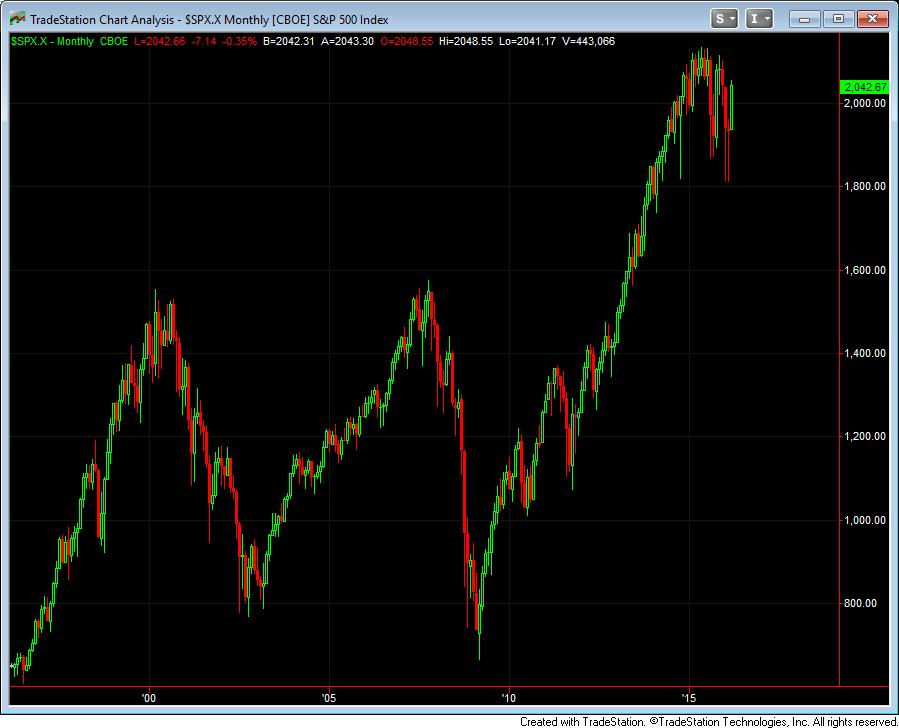


| You are subscribed to email updates from Save Your ASSets First. To stop receiving these emails, you may unsubscribe now. | Email delivery powered by Google |
| Google Inc., 1600 Amphitheatre Parkway, Mountain View, CA 94043, United States | |

No comments:
Post a Comment