


Gold World News Flash |

- Congress, Are You Listening?
- Cost of War on Terror: 2,486,392,875 Ounces of Gold
- Germany Current Account Surplus a "Threat to the Continent" Says; Solution is Gold
- The Gold Price Closed Today at $1,616.30
- This Could Ignite The Gold Market On Monday
- Republicans Hope, but Don't Change
- By the Numbers for the Week Ending August 17
- Silver Quietly Sneaking Higher
- Central banks double last year's gold buys
- OK, HERE COMES THE DARK TYRANNY: DTOM Contributor Brandon Raub Arrested By FBI For Facebook Posts
- Big Changes Ahead: Gold Just Became Money Again
- African Barrick takeover talk cheers gold bulls
- Startling Evidence That Central Banks And Wall Street Insiders Are Rapidly Preparing For Something BIG
- Report: Soros Unloads All Investments in Major Financial Stocks; Invests Over $130 Million In Gold
- With The Yukon Exploration Season In Full Swing, Northern Tiger Has Discovered Its Second Zone Of High Grade Gold
- Expect Major Silver Price Spike As COMEX Inventories Decline
- $2,000 Gold Will Soon Kickstart Mining Shares: Michael Fowler
- Gold in Stock Bears
- Gold Seeker Weekly Wrap-Up: Gold and Silver Fall Slightly on the Week
- The 164% Tax Increase
- Gold Daily and Silver Weekly Charts - Cap and Coil
- Gold and Silver Disaggregated COT Report (DCOT) for August 17
- COT Gold, Silver and US Dollar Index Report - August 17, 2012
- US inflation fears hover in the wings
- Gold Could Soar When Canadian Housing Bubble Bursts
- You'll Need Good Equities… And Balls
- You'll Need Good Equities… And Balls
- James Turk on metals' prospects, govt. intervention, and need for diversification
- Can We Expect a Short-Term Rally in the Euro Index and Temporary Strength in Precious Metals?
- A Cordial Invitation: The Appalling Nature of the Politician-Bankster Relationship
| Posted: 18 Aug 2012 12:43 AM PDT Gold Scents
|
| Cost of War on Terror: 2,486,392,875 Ounces of Gold Posted: 17 Aug 2012 11:00 PM PDT from Silver Vigilante:
Seems like just yesterday… For those who have decided to stay awake for their fleecing, dealing with a trillion of anything is becoming normal in our daily lives. For others, it is hard to distinguish it from any other big numbers, be they millions, billions or quadrillions.
I got to wondering: How many ounces of gold has the War of Terror cost the US taxpayer? Well, the current price of gold is $1,616.80. The New York Times conservatively reported in 2008 that the cost of the Iraq War was approximately $5,000 per second or 3.2 ounces of gold. Basically one of these:
|
| Germany Current Account Surplus a "Threat to the Continent" Says; Solution is Gold Posted: 17 Aug 2012 11:00 PM PDT Global Economic Analysis
|
| The Gold Price Closed Today at $1,616.30 Posted: 17 Aug 2012 09:33 PM PDT Gold Price Close Today : 1,616.30 Gold Price Close 3-Aug : 1,619.70 Change : -3.40 or -0.21% Silver Price Close Today : 28.00 Silver Price Close 3-Aug : 28.06 Change : -6cents or -0.21% Gold Silver Ratio Today : 57.72 Gold Silver Ratio 3-Aug : 57.719 Change : 0.00 or 0.0% 
|
| This Could Ignite The Gold Market On Monday Posted: 17 Aug 2012 09:30 PM PDT from KingWorldNews:
With most of the European Parliament on holiday, there's been a bit of an impasse with regards to the eurozone situation, which has clearly been driving events of late. There are rumors today that Spain, over the weekend, will ask for a bailout. So that's going to be an interesting dynamic for the gold market on Monday. I would say that a bailout means more monies need to be provided in various guises…." Davies continues @ KingWorldNews.com
|
| Republicans Hope, but Don't Change Posted: 17 Aug 2012 08:30 PM PDT by Peter Schiff, Gold Seek:
It says a great deal about where we are that the symbolic budget plan proposed last year by Congressman Paul Ryan, the newly minted vice presidential nominee, has created such outrage among democrats and caution among republicans. The Obama campaign warns that the Ryan budget is a recipe for national disaster that will pad the coffers of the wealthy while damning the majority of Americans to perpetual poverty. The plan is apparently so radical that even the Romney campaign, while embracing the messenger, is distancing itself from the message (it appears that Romney wants to bathe himself in the aura of fresh thinking without actually offering any fresh thoughts). In interview after interview, both Romney and Ryan refuse to discuss the details of Ryan's budget while slamming Obama for his callous "cuts" in Medicare spending.
|
| By the Numbers for the Week Ending August 17 Posted: 17 Aug 2012 08:17 PM PDT This week's closing table is just below.
|
| Silver Quietly Sneaking Higher Posted: 17 Aug 2012 08:00 PM PDT by Dan Norcini:
I find this very interesting as it is occuring against the backdrop of rising Treasury yields and a rising equity market. Clearly, for whatever the reason, something seems to be occurring on this inflation front that is moving below the radar screen of many investors. Could silver be sniffing out the first whiff of an inflation play? Read More @ TraderDanNorcini.Blogspot.com
|
| Central banks double last year's gold buys Posted: 17 Aug 2012 06:30 PM PDT by Michael Allan McCrae, Mining.com:
Central banks demand for gold in the second quarter reached 157.2 tonnes, a record high and more than double last year's Q2, according to the World Gold Council, which released its gold survey on Thursday. Stand-outs—countries that had a yen for yellow metal—were the National Bank of Kazakhstan, and the central banks of the Philippines, Russia and Ukraine.
|
| OK, HERE COMES THE DARK TYRANNY: DTOM Contributor Brandon Raub Arrested By FBI For Facebook Posts Posted: 17 Aug 2012 06:14 PM PDT UPDATE: The ARREST video: "And how we burned in the camps later, thinking: What would things have been like if every Security operative, when he went out at night to make an arrest, had been uncertain whether he would return alive and had to say good-bye to his family? Or if, during periods of mass arrests, as for example in Leningrad, when they arrested a quarter of the entire city, people had not simply sat there in their lairs, paling with terror at every bang of the downstairs door and at every step on the staircase, but had understood they had nothing left to lose and had boldly set up in the downstairs hall an ambush of half a dozen people with axes, hammers, pokers, or whatever else was at hand?… The Organs would very quickly have suffered a shortage of officers and transport and, notwithstanding all of Stalin's thirst, the cursed machine would have ground to a halt! If…if…We didn't love freedom enough. And even more – we had no awareness of the real situation…. We purely and simply deserved everything that happened afterward." from Dont-Tread-On.Me : I just got word that apparently one of the contributors on this site has been arrested/detained over Facebook posts. The Police, FBI and Secret Service swarmed in and took Brandon Raub to John Randolph Metal Hospital. This patriotic Marine had posted 5 posts on the Dont-Tread-On.Me blog linked below. Just glancing over them they seem to be of the religious and patriotic fight for truth and justice. He used the blog to have people join his FaceBook group and even did and promoted a Richmond Liberty March. I looked through my email to see if there was any emails between the two of us and I did not find any, although I am sure there was as I would not have given him access to post on the blog if I did not. There are a couple of lessons I want everyone to know form what little information we have from this incident. 1. Delete Facebook. I did a video for The Greatest Truth Never Told series called Delete Facebook giving a non conspiracy reason why people should quit FaceBook as it is destroying our lives. Now you should all see the conspiracy reason why you should Delete Facebook. This incident proves that it is just a huge monitoring tool for the Elite to track and build a profile of you. You give willingly the details of your political leaning, friends, interests. The hidden influence of the CIA through In-Q-Tel is becoming more and more visible. 2. This is designed to create a chilling effect to people speaking out and more importantly to keep sheeple from look at us for the Truth. I stated in the 3 Coming False Flags that the Elite would eventually criminalize or restrict our freedom of speech of the Freedom Movement. The Elite know the economic collapse is going to bring about the Anger Phase of the Awakening. They are actively preparing for riots and civil war. The thing that I find amazing is that these .gov people don't ask why they are preparing for Civil War? What could make people so mad to want to go to war? Well since the Elite know the collapse of the dollar is coming they are conditioning their minions for that collapse. What these people should realize is that their paychecks are going to bounce and their entire life' savings are going to be robbed …
|
| Big Changes Ahead: Gold Just Became Money Again Posted: 17 Aug 2012 05:40 PM PDT By Doug Hornig, Casey Research On June 18, the Federal Reserve and FDIC circulated a letter to banks that proposes to harmonize US regulatory capital rules with Basel III. BASEL III is an accord that tells a bank how much capital it must hold to safeguard its solvency and overall economic stability. It's a global [...]
|
| African Barrick takeover talk cheers gold bulls Posted: 17 Aug 2012 05:30 PM PDT from Gold Money:
Inflation expectations are also rising, which should tempt speculators back into the commodities sector. This should have a notably bullish impact on silver; it won't take much in the way of speculative interest in the white metal to send it soaring higher again, as discussed by James Turk in his latest King World News interview. $50/oz by Christmas? Perhaps.
|
| Posted: 17 Aug 2012 04:42 PM PDT  If you want to figure out what is going to happen next in the financial markets, carefully watch what the insiders are doing. Those that are "connected" have access to far better sources of information than the rest of us have, and if they hear that something big is coming up they will often make very significant moves with their money in anticipation of what is about to happen. Right now, Wall Street insiders and central banks all around the globe are making some very unusual moves. In fact, they appear to be rapidly preparing for something really big. So exactly what are they up to? In a previous article entitled "Are The Government And The Big Banks Quietly Preparing For An Imminent Financial Collapse?", I speculated that they may be preparing for a financial meltdown of some sort. If you want to figure out what is going to happen next in the financial markets, carefully watch what the insiders are doing. Those that are "connected" have access to far better sources of information than the rest of us have, and if they hear that something big is coming up they will often make very significant moves with their money in anticipation of what is about to happen. Right now, Wall Street insiders and central banks all around the globe are making some very unusual moves. In fact, they appear to be rapidly preparing for something really big. So exactly what are they up to? In a previous article entitled "Are The Government And The Big Banks Quietly Preparing For An Imminent Financial Collapse?", I speculated that they may be preparing for a financial meltdown of some sort.As I noted in that article,more than 600 banking executives have resigned from their positions over the past 12 months, and I have been personally told that a substantial number of Wall Street bankers have been shopping for "prepper properties" this summer. But now even more evidence has emerged that quiet preparations are being made for an imminent financial collapse. That doesn't guarantee that something will happen or won't happen. Like any good detective, we are gathering clues and trying to figure out what the evidence is telling us. Why Is George Soros Selling So Much Stock And Buying So Much Gold? I am certainly not a fan of George Soros. He has funneled millions upon millions of dollars into organizations that are trying to take America in the exact wrong direction. However, I do recognize that he is extremely well connected in the financial world. Soros is almost always ahead of the curve on financial matters, and if something big is going to go down George Soros is probably going to know about it ahead of time. Read more...... 
This posting includes an audio/video/photo media file: Download Now |
| Report: Soros Unloads All Investments in Major Financial Stocks; Invests Over $130 Million In Gold Posted: 17 Aug 2012 04:35 PM PDT  In a harbinger of what may be coming our way in the Fall of 2012, billionaire financier George Soros has sold all of his equity positions in major financial stocks according to a 13-F report filed with the SEC for the quarter ending June 30, 2012. Soros, who manages funds through various accounts in the US and the Cayman Islands, has reportedly unloaded over one million shares of stock in financial companies and banks that include Citigroup (420,000 shares), JP Morgan (701,400 shares) and Goldman Sachs (120,000 shares). The total value of the stock sales amounts to nearly $50 million. What's equally as interesting as his sale of major financials is where Soros has shifted his money. At the same time he was selling bank stocks, he was acquiring some 884,000 shares (approx. $130 million) of Gold via the SPDR Gold Trust. When a major global player with direct ties to the White House, Wall Street, and the banking system starts off-loading stocks and starts stacking gold, it suggests a very serious market move is set to happen. Read more.... 
This posting includes an audio/video/photo media file: Download Now |
| Posted: 17 Aug 2012 03:46 PM PDT Ryan Jackson in Vancouver writes: But the exploration season is once more upon us, and Northern Tiger has hit the ground 3Ace is located in the southeastern Yukon, just along the border with the Northwest Very impressive grab samples returned up to 4,800 grams per tonne gold. What's more, the And after the initial success in 2010, last year the company spent C$6 million on exploration Highlights from last year's drilling include 53 metres grading 2.58 grams per tonne gold, 1.1 The company opted to get exploration started early by kicking things off with a silt sampling Now, four months later, thanks to a methodical and well engineered exploration program a Work has now begun to explore the discovery further. The new vein segment is now exposed Although the general area of the newly located mineralisation was drilled in 2010, with results As a result, a drill rig was redirected to the Sleeping Giant Zone, and seven holes, for a total If the theory holds, the Sleeping Giant Zone just might turn out to be a game changer for Meanwhile, after a slight delay due to a large snowpack and the subsequent rapid melt that Gold mineralization at the Main Zone currently has a drilled strike length of 220 metres, and is Hopefully, when the assays return, it'll be just the catalyst Northern Tiger needs to shine in August 14, 2012 (Source: Minesite.com) http://www.northern-tiger.com/i/pdf/Northern-Tiger-14th-August-2012.pdf Disclosure: Northern Tiger Resources is a Vulture Bargain Candidate of Interest (VBCI) and is our fully fledged Vulture Bargain #7. Members of the GGR team are actively accumulating and hold long positions in NTR.V or NTGSF.
|
| Expect Major Silver Price Spike As COMEX Inventories Decline Posted: 17 Aug 2012 03:29 PM PDT  Today Greg Weldon told King World News, "The silver inventories are declining in the exchange warehouse. This is deliverable silver from futures contracts." Weldon, Head of Weldon Financial, also warned "... changes in warehouse inventories have been a good indicator of changes in price." Today Greg Weldon told King World News, "The silver inventories are declining in the exchange warehouse. This is deliverable silver from futures contracts." Weldon, Head of Weldon Financial, also warned "... changes in warehouse inventories have been a good indicator of changes in price." Weldon has a global following of some of the wealthiest investors in the world including individuals, institutions and financial firms. He now believes gold and silver are poised for major upside moves: "It's interesting that we can finally start to look with some more favorable eyes at the gold and silver markets. Every time gold has dropped below $1,575, there have been 'tails.' We noticed this in the candlestick charts with long 'tail-like' reversals. Meaning there is demand being uncovered in that $50 band between $1,525 and $1,575."
This posting includes an audio/video/photo media file: Download Now |
| $2,000 Gold Will Soon Kickstart Mining Shares: Michael Fowler Posted: 17 Aug 2012 03:02 PM PDT The Gold Report: It seems that not much has happened in either the metals or mining shares markets since you last spoke with The Gold Report in March. What's it going to take to get people excited again? Michael Fowler: Talking about gold, the price has been churning sideways. In my opinion, what's really going to get people excited is that the gold price should actually go up quite strongly into 2013. The other point is a moderation of some of the current cost pressures in the mining business. On the metals side, we've seen a lot of softness in worldwide demand but I think that coming into 2013, we're going to get a better metals market as China continues easing its monetary policy. So I see a pickup in demand coming into 2013. TGR: We've experienced all sorts of conditions, events and expectations over the past couple of years that probably could or should have taken gold past $2,000/ounce (oz). What do you see on the horizon that will finally get some major money flowing into prec...
|
| Posted: 17 Aug 2012 03:01 PM PDT Zealllc
|
| Gold Seeker Weekly Wrap-Up: Gold and Silver Fall Slightly on the Week Posted: 17 Aug 2012 02:17 PM PDT Gold climbed up to $1619.56 in early New York trade before it chopped back lower midday, but it still ended with a gain of 0.12%. Silver climbed up to $28.336 at about 9AM EST, but it then drifted back lower into the close and ended with a loss of 0.43%.
|
| Posted: 17 Aug 2012 02:06 PM PDT August 17, 2012 [LIST] [*]While Congress fiddles, your dividend taxes might rise 164%: Jim Nelson lays out a plan to prepare [*]How Merkel moved the markets: saying "yes" to easy money (under strictly limited conditions, of course) [*]China's latest play for hard assets (via gold)... White House's latest play for votes (via oil) [*]Sponging airline passengers for gas money... mail about the mail in our mailbag... A "Beautiful Anarchy"... and more! [/LIST] "Congress is off till after Labor Day," says Jim Nelson of our income desk, bringing what should be excellent tidings. "So while its members take their kids to their million-dollar beach houses," he goes on, "the rest of us have to face facts." What? No summertime respite? Or a summertime respite for them, but not for us? Bummer. "Taxes may go up next year," Jim reminds us. "And for many, the hike could be significant." Ah yes, the proverbial "fiscal cliff"... which is a big deal if ...
|
| Gold Daily and Silver Weekly Charts - Cap and Coil Posted: 17 Aug 2012 02:04 PM PDT |
| Gold and Silver Disaggregated COT Report (DCOT) for August 17 Posted: 17 Aug 2012 01:48 PM PDT HOUSTON -- This week's Commodity Futures Trading Commission (CFTC) disaggregated commitments of traders (DCOT) report was released at 15:30 ET Friday. Our recap of the changes in weekly positioning by the disaggregated trader classes, as compiled by the CFTC, is just below. (DCOT Table for Friday, August 17, 2012, for data as of the close on Tuesday, August 14. Source CFTC for COT data, Cash Market for gold and silver.) In the DCOT table above a net short position shows as a negative figure in red. A net long position shows in black. In the Change column, a negative number indicates either an increase to an existing net short position or a reduction of a net long position. A black figure in the Change column indicates an increase to an existing long position or a reduction of an existing net short position. The way to think of it is that black figures in the Change column are traders getting "longer" and red figures are traders getting less long or shorter. All of the trader's positions are calculated net of spreading contracts as of the Tuesday disaggregated COT report. Vultures, (Got Gold Report Subscribers) please note that updates to our linked technical charts, including our comments about the COT reports and the week's technical changes, should be completed by the usual time on Sunday (18:00 ET). That is all for now.
|
| COT Gold, Silver and US Dollar Index Report - August 17, 2012 Posted: 17 Aug 2012 01:33 PM PDT COT Gold, Silver and US Dollar Index Report - August 17, 2012
|
| US inflation fears hover in the wings Posted: 17 Aug 2012 01:31 PM PDT 17-Aug (Financial Times) — Regulatory filings this week showed that John Paulson, billionaire investing hero of the financial crisis, remained committed to gold as he cut other holdings in his hedge funds given the uncertain effects of the eurozone debt crisis. The reason is that Mr Paulson, advised by former Federal Reserve chairman Alan Greenspan, is just one of a long list of investors, politicians and commentators who worry that the actions of central banks to stimulate the economy have set the stage for rapidly rising consumer prices. The fear is that inflation, while dormant for now, will not just accelerate but roar into life. [source]
|
| Gold Could Soar When Canadian Housing Bubble Bursts Posted: 17 Aug 2012 01:07 PM PDT By Vin Maru Bank of Canada may be ahead of all its peers in ensuring its banks meet the Basel capital requirements. And it may have done a better job in regulating the banking sector, but they are not innocent of allowing bubbles in Canada to form. Even Mark Carney feels that the housing market [...]
|
| You'll Need Good Equities… And Balls Posted: 17 Aug 2012 01:00 PM PDT Synopsis: While defensive stocks are a must for protecting your portfolio, you'll need something no broker can sell you if you're to survive the next market crash. Dear Reader, Vedran here, filling in for David Galland today. Lately, I've been working on an interesting project, looking at stocks which could weather the next market crash. The good news is that there are stocks out there with low betas that fluctuate less with market movements. For example, if a stock's beta is 0.5, one can expect it to lose only 0.5% when market loses 1% on the same day. In regular market conditions, these low-beta defensive stocks will do their job. However, in my research, I've come across some troubling facts. If the DJIA drops 100 or even 200 points tomorrow, defensive stocks won't get hammered as much as the market. With that said, in a full meltdown, no one is immune. The most defensive stocks will get sold off just as fast as an...
|
| You'll Need Good Equities… And Balls Posted: 17 Aug 2012 12:39 PM PDT Synopsis: While defensive stocks are a must for protecting your portfolio, you'll need something no broker can sell you if you're to survive the next market crash. Dear Reader, Vedran here, filling in for David Galland today. Lately, I've been working on an interesting project, looking at stocks which could weather the next market crash. The good news is that there are stocks out there with low betas that fluctuate less with market movements. For example, if a stock's beta is 0.5, one can expect it to lose only 0.5% when market loses 1% on the same day. In regular market conditions, these low-beta defensive stocks will do their job. However, in my research, I've come across some troubling facts. If the DJIA drops 100 or even 200 points tomorrow, defensive stocks won't get hammered as much as the market. With that said, in a full meltdown, no one is immune. The most defensive stocks will get sold off just as fast as any hot potato on the market. When all hell breaks loose, there will be no place to hide. If there were some magical stocks out there, which could go down no further than 10% or 15%, I would tell you about them. But unfortunately, even the most defensive stocks sold off 30% or more during height of the crisis. So what's the point of owning defensive stocks? They will still perform better than others in a crash. If it sounds like I'm contradicting myself, I'm not. Yes, they may tank 30% or more at the height of a crash, but what I kept noticing in case after case of defensive low-beta stocks was a sudden resurgence from the lows. I'm not talking about a period where the stock is doing a little better or where the stock chart has improved but still looks wobbly. I'm talking about stocks which hit a rock bottom, jumped back up, and didn't stop rising for the next four years. There's good news and bad news here. By choosing some good, defensive equities, you can fare better in the next crash and its aftermath. The bad news is that buying those equities isn't enough to guarantee a better result – you're also going to need some balls, figuratively speaking. When your defensive stocks are down 30% or 40% at the peak of a crash, you will have to resist selling. Unfortunately, many investors in the last crash couldn't fight that temptation to sell and missed the rebound. They had the right idea – just not the nerves to stick through the worst time. So, how do you know whether a stock will jump right back or not? Your analysis necessarily requires a lot of common sense. For example, right now for our portfolio I'm looking at a prospective company that's in the business of selling a grocery staple most of us regularly purchase. I can't tell you all the specifics, but I'll share some of the key facts about it. In the past five years, this company's revenues have remained flat (this is a defensive play not a growth play). Yet from the company's 2008 peak to its bottom, the stock fell around 45%. That just doesn't make sense. If a company is bringing in the same amount of money during the crisis as it was prior to it, then there's something clearly wrong with the 45% downward valuation. A lot of investors got spooked and sold the stock, but the firm's fundamentals remained unchanged. Despite the market turmoil, consumers kept purchasing this household grocery staple. The market quickly took notice of this discrepancy, and the stock price quickly began to rise. Within a year of its bottom, the stock had risen over 100% without ever looking back. Most of us don't have nerves of steel, but understanding your defensive stocks inside and out can help you keep your cool when the market turns chaotic. At Casey Research, we can provide you with the best picks available and the background knowledge for them. However, the emotional and psychological part of trading still rests on your shoulders. The defensive stocks are a necessity for your portfolio; however, they alone can't save you in a deep crash… only you can, by holding them until they bounce back to a rational price.
|
| James Turk on metals' prospects, govt. intervention, and need for diversification Posted: 17 Aug 2012 12:26 PM PDT 2:21p ET Friday, August 17, 2012 Dear Friend of GATA and Gold: Interviewed by GoldMoney's followers on Facebook and LinkedIn, GoldMoney founder and GATA consultant James Turk covers his outlook for the monetary metals markets, manipulation of those markets, and government intervention against gold and silver investors. He advises investors to diversify their gold and silver holdings in form and location. He also cites GATA's work. The interview is posted at GoldMoney's Internet site here: http://www.goldmoney.com/gold-research/newsdesk/q-and-a-with-james-turk.... CHRIS POWELL, Secretary/Treasurer ADVERTISEMENT Prophecy Platinum Announces Wellgreen Preliminary Economic Assessment: Company Press Release VANCOUVER, British Columbia, Canada -- Prophecy Platinum Corp. (TSX-V: NKL, OTC-QX: PNIKF, Frankfurt: P94P) reports the results of an independent NI 43-101-compliant preliminary economic assessment for its fully owned Wellgreen nickel-copper-platinum group metals project in the Yukon Territory. The independent assessment, prepared by Tetra Tech, evaluated a base case of an open-pit mine (with a mining rate of 111,500 tonnes per day), an on-site concentrator (with a milling rate of 32,000 tonnes per day), and an initial capital cost of $863 million. The project is expected to produce (in concentrate) 1.959 billion pounds of nickel, 2.058 billion pounds of copper, and 7.119 million ounces of platinum, palladium, and gold during a mine life of 37 years with an average strip ratio of 2.57. The financial highlights of the preliminary economic assessment, shown in U.S. dollars, are as follows: Payback period: 3.55 years Prophecy Chairman John Lee says: "We are pleased with the preliminary economic assessment results. The numbers indicate that Wellgreen is one of most exciting mineral projects in the Yukon. The company is drilling to upgrade and expand the resource base. The infrastructure is excellent as the project is only 1,400 meters in altitude and 14 kilometers from the paved Alaska Highway, which leads to the Haines deep seaport. Discussions are under way with support from local stakeholders regarding permitting and logistics." For the complete press release, please visit: http://prophecyplat.com/news_2012_june18_prophecy_platinum_announces_res... Join GATA here: Toronto Resource Investment Conference New Orleans Investment Conference * * * Support GATA by purchasing DVDs of our London conference in August 2011 or our Dawson City conference in August 2006: http://www.goldrush21.com/order.html Or by purchasing a colorful GATA T-shirt: Or a colorful poster of GATA's full-page ad in The Wall Street Journal on January 31, 2009: http://gata.org/node/wallstreetjournal Help keep GATA going GATA is a civil rights and educational organization based in the United States and tax-exempt under the U.S. Internal Revenue Code. Its e-mail dispatches are free, and you can subscribe at: To contribute to GATA, please visit: ADVERTISEMENT Fred Goldstein and Tim Murphy open All Pro Gold Longtime GATA supporters Fred Goldstein and Tim Murphy have brought their many years of experience in the precious metals and numismatic coins to All Pro Gold as metals brokers who specialize in the delivery of gold and silver bullion bars and coins as well as numismatic gold and silver coins. Fred and Tim follow these markets closely and are assisted by a team of consultants in monitoring market trends. All Pro Gold offers GATA supporters competitive pricing on all bullion products and welcomes inquiries. Tim can be reached at 602-299-2585 and Tim@allprogold.com, Fred at 602-799-8378 and Fred@allprogold.com. Ask about their ratio strategy and the relationship of generic $20 dollar gold pieces to 1-ounce gold bullion coins. Visit their Internet site at http://www.allprogold.com/.
|
| Can We Expect a Short-Term Rally in the Euro Index and Temporary Strength in Precious Metals? Posted: 17 Aug 2012 12:11 PM PDT The summer dog days are upon us leaving investors cooling off in the shade waiting for a refreshing breeze of market-moving news. They are anticipating something important that will energize the gold price for an upward move ... Read More...
|
| A Cordial Invitation: The Appalling Nature of the Politician-Bankster Relationship Posted: 17 Aug 2012 12:06 PM PDT "The common argument that crime is caused by poverty is a kind of slander on the poor." — H. L. Mencken —————————————————— Down here in Nicaragua, it is difficult to complain. Almost impossible to gripe. And if you find yourself doing either one, you shouldn't be here in the first place. This idyllic locale is kind of an organic, and highly concentrated, blood-pressure medication (perhaps blended with just a smidge of Lexapro). But a few thousand miles to the north, where Wall Streeters cheat and politicians protect them, legitimate complaints and gripes are easy to come by. There are plenty of obscene abuses of power and miscarriages of justice. You'd have to be comatose — or in Nicaragua — to miss them. Crony capitalism, and the injustices that flow from it, have become such a dominant force in American society that a return to "normal" feels like a low-probability bet. Epitomizing the injustices that have become all-too-normal in modern America, The New York Times reported yesterday that federal authorities are unlikely to bring any criminal charges whatsoever against any of the former executives of the bankrupt M.F. Global, despite the fact that $1.6 billion of clients' funds remains "missing." This latest travesty of justice would seem to confirm what we observed in this column just two days ago: Wow!…It's getting harder to hang a felony charge on a past or present Goldman exec than it is to hang panties on a porn star. The darn things just keep sliding off… Remember, the Justice Department is one of the same government agencies that can't bring itself to pose a single embarrassing question to Jon Corzine, former CEO of Goldman Sachs, former New Jersey Senator, former CEO of the fraudulently destroyed M.F. Global and perennial scumbag. In particular, the Justice Department can't bring itself to ask Corzine what happened to the $1.6 billion of customer funds that he (allegedly) "disappeared" while overseeing M.F. Global. Lamentably, your editor was not exaggerating. Despite a 10-month long investigation into the collapse of M.F. Global, the Times reports that federal investigators have not yet spoken to Jon Corzine! Says the Times: "[F]ederal authorities are seeking to interview the former chief of the firm, Jon S. Corzine, next month, according to the people involved in the case. Authorities hope that Mr. Corzine, who is expected to accept the invitation, will shed light on the actions of other employees at MF Global." How civilized! Federal authorities are extending an "invitation" to Mr. Corzine that they hope — breathlessly, we would imagine — he will accept. Something ain't right here, folks. When $1.6 billion disappears, someone took it. Maybe Corzine was not the guy, but someone took it…and that someone was not "lax and porous risk controls." In yesterday's edition of Capital Account, Barry Ritholtz, addressee the baffling indictment-lite investigation of M.F. Global…as only Barry Ritholtz can. Check out this 3-minute clip from Barry's half-hour segment: Barry blames injustices like the M.F. Global non-indictments on the fact that "politicians are in bed with the Banksters." And so it would appear. This dangerous liaison has been going on for so long that there would seem to be no hope in sight. Eric Fry A Cordial Invitation: The Appalling Nature of the Politician-Bankster Relationship originally appeared in the Daily Reckoning. The Daily Reckoning, published by Agora Financial provides over 400,000 global readers economic news, market analysis, and contrarian investment ideas. Recently Agora Financial released a video titled "What Causes Gas Price to Increase?".
|
 Remember not too long ago, back when the human mind hadn't begun its forced evolution of understanding really big numbers like trillions and quadrillions? Back before TARP handed out 16 trillion to domestic and offshore banks? Or before the War of Terror cost the US taxpayer $4 trillion?
 Today Ben Davies spoke with King World News about what he believes could light a fire under the gold market on Monday. Here is what the rising star had to say: "We're trend ready, Eric. I think this is a prescient time to be coming on the show. The market has been acquiescing over the summer months, which has been good because it gave us all a chance to enjoy the Olympics. Some people are a bit frustrated with the lack of performance, but I think this is all extremely healthy (action).
 For much of the past few generations, the debate over balancing the federal budget has been a central feature of every presidential campaign. But over time, the goalposts have moved. As the amount of red ink has grown steadily larger, the suggested time frames to restore balance have gotten increasingly longer, while the suggested cuts in government spending have gotten increasingly shallower. In recent years, talk of balancing the budget gave way to vague promises such as "cutting the deficit in half in five years." In the current campaign, however, it appears as if the goalposts have been moved so far that they are no longer in the field of play. I would argue that they are completely out of the stadium.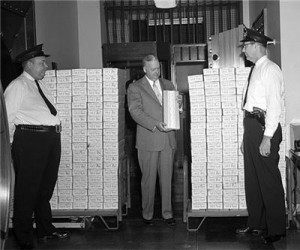
 Gold and silver have crept quietly higher over the course of the last week, with growing signs of a
| You are subscribed to email updates from Save Your ASSets First To stop receiving these emails, you may unsubscribe now. | Email delivery powered by Google |
| Google Inc., 20 West Kinzie, Chicago IL USA 60610 | |


No comments:
Post a Comment