


Gold World News Flash |

- The “Black Hole of Deflation” Turns into Runaway Inflation: What of Gold & Silver – Part 3
- Why Gordon Brown Sold England's Gold on the Cheap to the Bailout the Banks
- Weak U.S. Jobs May Mean More Money Printing and Higher Gold and Silver Prices
- By the Numbers for the Week Ending July 6
- Peru Declares State of Emergency As 5 Die in Protest Against Gold Mine Owned by U.S. Firm, Newmont
- Hathaway – The Lengthy 10 Month Correction In Gold Is Over
- The War Between Manipulation and Buying
- Jim Sinclair: The war between manipulation and buying
- Gold & Silver Market Update with James Turk July 2012 “Fear Event Coming”
- Rogers: Correction May Take Gold below $1,200
- Gold, Silver Knee Jerked Lower, COT Data Delayed, Gone Fishing
- Have Banks Been Manipulating Libor for DECADES?
- You've Seen It Before, And Here It Is Again: "The Chart That Tears Apart The Stimulus Package"
- The Gold Price Down $25.10 for the Week Closing Today at $1,578.40
- A Constitution-Free Zone
- Imagining a Universe Without Central Banks
- Weekly Bull/Bear Recap
- Taking Economic Forecasts at Face Value
- Gold Seeker Weekly Wrap-Up: Gold and Silver End Slightly Lower on the Week
- Equities Close Week Red Even As Hilsenrath Prevents Rout
- Weak Jobs May Mean More Printing and Higher Precious Metals Prices
- How Does Politics Affect Economies?
- Gold Daily and Silver Weekly Charts - Moral Hazard - With Liberty and Justice For Some
- The “Black Hole of Deflation” turns into runaway inflation. What of Gold & Silver - Part 3
- Miners Are Unlocking China's Gold: Noel White
- Steve Forbes interview: Bringing Back America
- Hathaway - The Lengthy 10 Month Correction In Gold Is Over
- Why Gordon Brown Sold Britain's Gold at a Knock-Down Price
- LGMR: Gold "May Be Preparing for Further Falls", But Central Banks Easing Implies "Upward Trend" for Bullion
| The “Black Hole of Deflation” Turns into Runaway Inflation: What of Gold & Silver – Part 3 Posted: 07 Jul 2012 12:49 AM PDT by Julian D. W. Phillips, Gold Seek:
Overall governments favor low inflation because it gives the appearance of rising wealth as prices rise, provided that these levels are restrained around, say 3%. Above that and savings are visibly damaged and consequently the economic power of a nation. But we are moving far away from such a concept now. In today's world the bulk of inflation has come from rising oil prices [an insidious, usually imported inflation] and the like. At the moment, we are at a time when inflation is at very low levels, so low they no longer represent a fear or concern.
|
| Why Gordon Brown Sold England's Gold on the Cheap to the Bailout the Banks Posted: 06 Jul 2012 11:41 PM PDT Although this is nothing new, as I and several others have reported this several times in the past, with a very nice documentary on it having been done by Max Keiser, this is still a very important article for two reasons. First, it lays out rather nicely the gold panic of 1999 and Brown's Bottom, which is the low in the price of gold achieved by the dumping of 400 tons of gold into the world market at an artificially low price by the British government.
|
| Weak U.S. Jobs May Mean More Money Printing and Higher Gold and Silver Prices Posted: 06 Jul 2012 11:36 PM PDT Gold (GLD) is consolidating after hitting a two-week high. Investors are witnessing renewed strength in precious metals after the Fed announced the expansion of Operation Twist until at least the end of the year.
|
| By the Numbers for the Week Ending July 6 Posted: 06 Jul 2012 09:29 PM PDT |
| Peru Declares State of Emergency As 5 Die in Protest Against Gold Mine Owned by U.S. Firm, Newmont Posted: 06 Jul 2012 08:00 PM PDT [Ed. Note: As proponents of owning physical gold and silver, do we have any culpability in these events? Full disclosure: I own NO Newmont Mining shares.] from Democracy Now! :
|
| Hathaway – The Lengthy 10 Month Correction In Gold Is Over Posted: 06 Jul 2012 07:45 PM PDT from KingWorldNews:
The immediate catalyst for Friday's rally was the conclusion of the summit of European leaders which signaled that Germany had relaxed its rigid stance against direct lending by the European Central Bank to recapitalize the European banking system. As noted by David Zervos of Jeffries in his 6/29/12 commentary, "The ESM, with access to the ECB balance sheet for leverage, is now a fiscal backstop (with a printing press) for the resolution of bad European banks…This is a huge step in the right direction for the global reflation trade." In short, when push comes to shove, political leadership in all Western democracies lean towards inflationary policies and back away from fiscal austerity. Hathaway continues @ KingWorldNews.com
|
| The War Between Manipulation and Buying Posted: 06 Jul 2012 07:31 PM PDT Jim Sinclair's Mineset My Dear Extended Family, Next week is the war between manipulation of gold by the West, and appetite for buying gold in the East, both from friendlies and enemies. Anyone that does not see today's gold market as a rig is blind or brain dead. There is a full blown crisis in Western world banking today, right here and now. There is a full blown crisis in sovereign debt of some weaker nations as in a very short while certain government will be out of money. The Eurosnobs hate each other which does not make for a fast reconciliation of a crisis. It is a myth that Western banks are strong enough to weather the storm of a full blown banking crisis in Europe. It is a myth that the Federal Reserve will stand as the one hawk in the Western world and fiddle while it's Rome burns. It is a myth that Obama could be re-elected if the Fed remains intransigent. It is a myth that Finland or Germany will strike a match to the euro that totally...
|
| Jim Sinclair: The war between manipulation and buying Posted: 06 Jul 2012 07:01 PM PDT 7:58a ICT Saturday, July 7, 2012 Dear Friend of GATA and Gold: "Anyone who does not see today's gold market as a rig is blind or brain-dead," mining entrepreneur, market analyst, and gold trader Jim Sinclair writes this week. "All the lying and conniving mean only that the price will go higher. Just as Morgan's 'whale' could not fight the market, the cartel cannot fight gold as we have a flight away from all fiat currencies." Sinclair's commentary is headlined "The War Between Manipulation and Buying" and it's posted at JSMineSet here: http://www.jsmineset.com/2012/07/06/the-war-between-manipulation-and-buy... CHRIS POWELL, Secretary/Treasurer ADVERTISEMENT Sona Discovers Potential High-Grade Gold Mineralization From a Company Press Release VANCOUVER, British Columbia -- With its latest surface diamond drilling program at its 100-percent-owned, formerly producing Blackdome gold mine in southern British Columbia, Sona Resources Corp. has discovered a potentially high-grade gold-mineralized area, with one hole intersecting 13.6 grams of gold in 1.5 meters of core drilling. "We intersected a promising new mineralized zone, and we feel optimistic about the assay results," says Sona's president and CEO, John P. Thompson. "We have undertaken an aggressive exploration program that has tested a number of target zones. Our discovery of this new gold-bearing structure is significant, and it represents a positive development for the company." Sona aims to bring its permitted Blackdome mill back into production over the next year and a half, at a rate of 200 tonnes per day, with feed from the formerly producing Blackdome mine and the nearby Elizabeth gold deposit property. A positive preliminary economic assessment by Micon International Ltd., based on a gold price of $950 per ounce over eight years, has estimated a cash cost of $208 per tonne milled, or $686 per gold ounce recovered. For the company's complete press release, please visit: http://www.sonaresources.com/_resources/news/SONA_NR18_2011-opt.pdf Join GATA here: Toronto Resource Investment Conference New Orleans Investment Conference * * * Support GATA by purchasing DVDs of our London conference in August 2011 or our Dawson City conference in August 2006: http://www.goldrush21.com/order.html Or by purchasing a colorful GATA T-shirt: Or a colorful poster of GATA's full-page ad in The Wall Street Journal on January 31, 2009: http://gata.org/node/wallstreetjournal Help keep GATA going GATA is a civil rights and educational organization based in the United States and tax-exempt under the U.S. Internal Revenue Code. Its e-mail dispatches are free, and you can subscribe at: To contribute to GATA, please visit: ADVERTISEMENT Prophecy Platinum Announces Wellgreen Preliminary Economic Assessment: Company Press Release VANCOUVER, British Columbia, Canada -- Prophecy Platinum Corp. (TSX-V: NKL, OTC-QX: PNIKF, Frankfurt: P94P) reports the results of an independent NI 43-101-compliant preliminary economic assessment for its fully owned Wellgreen nickel-copper-platinum group metals project in the Yukon Territory. The independent assessment, prepared by Tetra Tech, evaluated a base case of an open-pit mine (with a mining rate of 111,500 tonnes per day), an on-site concentrator (with a milling rate of 32,000 tonnes per day), and an initial capital cost of $863 million. The project is expected to produce (in concentrate) 1.959 billion pounds of nickel, 2.058 billion pounds of copper, and 7.119 million ounces of platinum, palladium, and gold during a mine life of 37 years with an average strip ratio of 2.57. The financial highlights of the preliminary economic assessment, shown in U.S. dollars, are as follows: Payback period: 3.55 years Prophecy Chairman John Lee says: "We are pleased with the preliminary economic assessment results. The numbers indicate that Wellgreen is one of most exciting mineral projects in the Yukon. The company is drilling to upgrade and expand the resource base. The infrastructure is excellent as the project is only 1,400 meters in altitude and 14 kilometers from the paved Alaska Highway, which leads to the Haines deep seaport. Discussions are under way with support from local stakeholders regarding permitting and logistics." For the complete press release, please visit: http://prophecyplat.com/news_2012_june18_prophecy_platinum_announces_res...
|
| Gold & Silver Market Update with James Turk July 2012 “Fear Event Coming” Posted: 06 Jul 2012 06:31 PM PDT |
| Rogers: Correction May Take Gold below $1,200 Posted: 06 Jul 2012 06:00 PM PDT from Dan Weil, MoneyNews:
Legendary investor Jim Rogers remains a long-term bull on gold, but thinks the precious metal's correction may still have a long way to go. At around $1,600 an ounce, gold is down about 17 percent from last year's record peak of $1,924. Gold has been in a bull market for the past 11 years, and Rogers, who has owned it for longer than that period, tells Oilprice.com, "I don't know of any asset in history that's gone up 11 years in a row without a correction."
|
| Gold, Silver Knee Jerked Lower, COT Data Delayed, Gone Fishing Posted: 06 Jul 2012 04:11 PM PDT HOUSTON – Gold and silver took it on the chin following the U.S. Non-farm Payroll release Friday, July 06, 2012. Apparently the skeleton crews manning trade desks on the last day of the Independence Day week (at the same time that European vacation season is getting underway), were of a mood to raise liquidity.
Traders we correspond with were exchanging emails with numerous question marks as the rather violent late holiday week moves seemed counter-intuitive in many cases.
The rapid rise in the U.S. dollar index (DXY) Thursday and Friday likely reflects funds moving out of other currencies and assets and into perceived "safety" ahead of the weekend, but if our read is right, the potency of the moves today had more to do with a lack of liquidity than a sustainable change in the gold and silver markets. Indeed, most of the data crossing on the weekly event calendar seemed more supportive of gold and silver than the opposite. A common view among traders is that the odds for more monetary stimuli (read more money printing) to be announced by central banks and policymakers are higher, not lower after this week. With a U.S. election looming in four months, some expect the Fed to announce some form of quantitative easing by the Jackson Hole gathering of the high priests of central banking, scheduled for late August. (Read an interesting history of the Jackson Hole meetings at this link, courtesy of the Kansas City Fed.)
When U.S. Independence Day falls in the middle of the week, some traders end up taking off Thursday and Friday (if not the whole week) in order to get a "five day" weekend. That leaves the markets in thinner trading conditions and subject to higher volatility. As we said in a memo to staff this morning, "be sure and take the trading today with a healthy dose of trading salt."
Consequently, our usual updates to the Disaggregated COT report and the weekly closing table will be postponed to next week. However, as of this moment it is our intention to at least partially update our technical charts for subscribers by the usual time on Sunday (18:00 ET), but we reserve the right to take an extra day or two, working on our 'personal development project.' (If the fish are being uncommonly cooperative.)
|
| Have Banks Been Manipulating Libor for DECADES? Posted: 06 Jul 2012 04:03 PM PDT We've previously noted that Libor manipulation has been going on since at least 2005 ... and continued long after the manipulation was first reported. James Bianco notes today that the Financial Times started reporting on the manipulation in 2007, and the Wall Street Journal in 2008 (see this, this, this and this). But as the Economist reports today, the manipulation probably goes back a lot further:
Given that homeowners, students, credit card holders, and other borrowers pay more when rates are higher, the banks appear to have fleeced consumers for 10 years during the entire bull run leading up to the financial crisis. We predict that lawyers can prevail in huge class action lawsuits based on that theory alone. As Yves Smith writes:
|
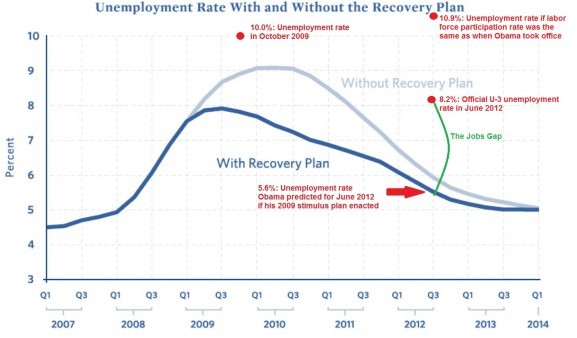
| Posted: 06 Jul 2012 04:00 PM PDT Over a year ago we penned "QE 2 Was A Disaster: Here Is Why US Fiscal "Stimulus" Was A Complete Failure As Well", because, well, QE2 was a disaster, which is important to remember as we are about to set off on the NEW QE as per Hilsenrath, because apparently creating 80,000 jobs per month (with the S&P a whopping 5% off multi-year highs) "Leaves Door For Fed Wide Open" even though the Fed has shown beyond a shadow of a doubt it is incapable of creating jobs and at best can ramp the Russell 2000 for a few months. But more importantly, a year later it is obvious that the ARRA just kept on being wronger and wronger with each passing month, until we get to today. We will spare readers our conclusion about ARRA architect Christina Romer's (long gone from the administration for obvious reasons) predictive powers, suffice it to say they are on par with those of the Fed itself. Simon Black, using AEI data, reminds us how the ARRA chart looks, one year later. The graph that tears appart the stimulus package After Obama was elected, one of his first initiatives was to enact a massive stimulus package in order to reduce the rising unemployment after the housing collapse and bailout all the failing banks. When promoting his plan, the President offered many promises about the success of his idea but very few have so far come to fruition. Below is a graph that was supposed to estimate the effects of the stimulus, however as you can see, it far from achieved the President's goals. AEI reports on the ineffectiveness of the program:
|
| The Gold Price Down $25.10 for the Week Closing Today at $1,578.40 Posted: 06 Jul 2012 03:50 PM PDT Gold Price Close Today : 1,578.40 Gold Price Close 29-Jun : 1,603.50 Change : -25.10 or -1.6% Silver Price Close Today : 2688.9 Silver Price Close 29-Jun : 2758 Change : -69.10 or -2.5% Gold Silver Ratio Today : 58.701 Gold Silver Ratio 29-Jun : 58.140 Change : 0.56 or 1.0% Silver Gold Ratio : 0.01704 Silver Gold Ratio 29-Jun : 0.01720 Change : -0.00016 or -1.0% Dow in Gold Dollars : $ 166.56 Dow in Gold Dollars 29-Jun : $ 166.05 Change : $ 0.51 or 0.3% Dow in Gold Ounces : 8.057 Dow in Gold Ounces 29-Jun : 8.032 Change : 0.02 or 0.3% Dow in Silver Ounces : 472.97 Dow in Silver Ounces 29-Jun : 467.01 Change : 5.96 or 1.3% Dow Industrial : 12,717.60 Dow Industrial 29-Jun : 12,880.09 Change : -162.49 or -1.3% S&P 500 : 1,348.79 S&P 500 29-Jun : 1,362.16 Change : -13.37 or -1.0% US Dollar Index : 83.410 US Dollar Index 29-Jun : 81.627 Change : 1.783 or 2.2% Platinum Price Close Today : 1,446.80 Platinum Price Close 29-Jun : 1,449.10 Change : -2.30 or -0.2% Palladium Price Close Today : 578.85 Palladium Price Close 29-Jun : 583.05 Change : -4.20 or -0.7% The Moneychanger is happy to report that his wife is recovering exceedingly speedily from her heart surgery on 3 July. She had her mitral valve replaced and her tricuspid valve repaired, so maybe that will hold her for another 20 years. While she was in the pre-operative suite just before surgery her surgeon came in and told us he would probably have to replace her mitral valve with a pig valve. Then he looked at me seriously and said, "There are just two problems with that." I braced myself, and he went on. "First, every time it rains she'll want to go outside and wallow in the mud. Second, if she gets loose in a cornfield you'll never get her back." I'll take that chance. The speed and strength of Susan's recovery astonishes everyone -- utterly like the last surgery 4 years ago. She was out of CVICU in about 24 hours, and if all goes well can go home Saturday. I credit her swift recovery to God's grace and your prayers, and I most heartily thank you for your generous concern. Please forgive me for not answering all your emails personally. Believe me, I have read them all with gratitude. God willing I will return Monday with a full commentary. Meantime, don't let today's decline rattle you. The SILVER and GOLD PRICE and silver remain well within bullish grounds, and are only building a platform for a rally later. paper gold and silver products. These are not for the inexperienced. Argentum et aurum comparenda sunt -- -- Gold and silver must be bought. - Franklin Sanders, The Moneychanger The-MoneyChanger.com 1-888-218-9226 10:00am-5:00pm CST, Monday-Friday © 2012, The Moneychanger. May not be republished in any form, including electronically, without our express permission. To avoid confusion, please remember that the comments above have a very short time horizon. Always invest with the primary trend. Gold's primary trend is up, targeting at least $3,130.00; silver's primary is up targeting 16:1 gold/silver ratio or $195.66; stocks' primary trend is down, targeting Dow under 2,900 and worth only one ounce of gold; US$ or US$-denominated assets, primary trend down; real estate bubble has burst, primary trend down. WARNING AND DISCLAIMER. Be advised and warned: Do NOT use these commentaries to trade futures contracts. I don't intend them for that or write them with that short term trading outlook. I write them for long-term investors in physical metals. Take them as entertainment, but not as a timing service for futures. NOR do I recommend investing in gold or silver Exchange Trade Funds (ETFs). Those are NOT physical metal and I fear one day one or another may go up in smoke. Unless you can breathe smoke, stay away. Call me paranoid, but the surviving rabbit is wary of traps. NOR do I recommend trading futures options or other leveraged paper gold and silver products. These are not for the inexperienced. NOR do I recommend buying gold and silver on margin or with debt. What DO I recommend? Physical gold and silver coins and bars in your own hands. One final warning: NEVER insert a 747 Jumbo Jet up your nose. No, I don't. 
|
| Posted: 06 Jul 2012 03:31 PM PDT The 5 min. Forecast July 06, 2012 12:54 PM Dave Gonigam – July 6, 2012 [LIST] [*]Life in a “Constitution-Free Zone”… where even ex-government officials are caught in a web [*]Is it, “Ooh, lousy economy” or “Ooh, gimme some QE3”? Market reacts to a(nother) lousy jobs report [*]China follows through on its rare earth stockpile plans… while exporting its infamous ghost towns to new continents [*]Reader reactions to the guilt-tripped parents whose kids never entered the military… reader challenges to the notion of “the 18-cent dollar”… a mystery dispatch from Byron King… and more! [/LIST] It’s the sort of story we’ve become sadly accustomed to in contemporary America: A frail old man harassed by government agents for no reason, forced to stand in the blazing heat for 45 minutes, and then sent on his way. But this didn’t happen at an airport. Nor did it happen at the border. And if it ...
|
| Imagining a Universe Without Central Banks Posted: 06 Jul 2012 03:30 PM PDT The God Particle has been discovered! Yesterday, the saints at central banks in China, Europe and the UK said they would perform what could only be a miracle. The world economy wheezes, rattles and shakes because it has been poisoned by too much debt. The central bankers offer a cure — more debt! "Central banks take action," is the headline in today's Financial Times. "Moves to stimulate global economy," the FT described them. But what really got our attention was the 'god particle' story. Without it, say the scientists who tracked it down, we wouldn't exist. Of course, you could say that about a lot of things. Without air, we wouldn't exist. Or water. Or sunlight. Could we exist without Homeland Security? Without Twitter? Without rap music? Apparently so. We did…for many thousands of years. Happily. Could we exist without a central bank? Many people would reply 'no'… Some would say so because they are ignorant. Others would say so because they are just stupid. But any sensible person would admit that human life could exist without a central bank. The US had no central bank before 1913. It had higher rates of GDP growth back then. It had a stronger currency too — the dollar of 1913 was worth about the same as a dollar of one hundred years earlier. Now, it's worth about 3 cents…and disappearing fast. On the surface of the argument, it would appear that America's central bank has actually made things worse. Maybe that is a coincidence; post hoc ergo propter hoc…and all that. But maybe there is a cause and effect relationship. Maybe a central bank CAUSES the economy to produce less wealth…and CAUSES the currency to lose value. But central bank apologists insist that times have changed. Modern economies can't exist without them, they claim. Maybe. All we can say for sure, without benefit of a giant particle collider, or a know-it-all economist, is that the Fed is not the same as the God Particle; the former is a fairly recent innovation…but the latter has always been with us. The Higgs-Boson particle is very small. And very short-lived. No one has ever actually seen it. However, the scientists who get paid to do this sort of thing assure us that it is a big deal, despite what The Financial Times may think. The FT put the 'god particle' below the Libor story yesterday, which perhaps shows that the paper has its priorities wrong…or that finance now IS actually more important than God. According to the reports, Higgs-Boson is the thing that gives mass to other things. For us, this just raises more questions than it answers. It does not explain why other things need mass…nor why they didn't have it in the past…nor where Higgs-Boson got it…nor what the recipients plan to do with it. The giving of mass, again…we suppose…based on what we read in the paper…and our experience of actually going to mass in the Catholic church…is what makes the particle godlike. Which merely deepens the mystery for us. God himself would not seem to require mass. He is not like a block of wood, after all. He is more a part of the spirit world…which sounds a bit like the world Higgs-Boson inhabits. And while we accept that He can do what he wants, we also feel justified in assuming that He's not out to get us with some nasty trick…or merely looking out for NUMERO UNO. Which makes this very different from the Libor story or the central bank story. In the Libor scandal we found Barclay's bank insiders setting interest rates to suit themselves…rather than letting willing buyers and sellers set rates for themselves. This is, of course, more or less what we'd expected them to be up to…manipulating interest rates, lower, for their own benefit. Both the Chairman of Barclay's and its chief executive have been forced out as a result. But wait…isn't manipulating interest rates lower exactly the subject of the central bank story too? The BoE, the BoC and the ECB are pushing down rates, just like the Barclay boys. They think they have the right. They say it will help stimulate growth. Could the universe still exist without these interest rate manipulators? We don't know; but we'd like to find out! Regards, Bill Bonner, Imagining a Universe Without Central Banks originally appeared in the Daily Reckoning. The Daily Reckoning, published by Agora Financial provides over 400,000 global readers economic news, market analysis, and contrarian investment ideas. Recently Agora Financial released a video titled "What Causes Gas Price to Increase?".
|
| Posted: 06 Jul 2012 03:18 PM PDT From Rodrigo Serrano of RCS Investments Weekly Bull/Bear Recap: Jul. 2-6, 2012 Bull + The U.S. economy continues to grow; recent data is only a pause that refreshens.
+ Gas prices have plunged over the past 3 months, while ISM Prices-Paid subcomponents are in deep contraction territory. Conditions are ripe for the Fed to initiate another QE and confirm that central banks are coordinating policy, causing a turn in sentiment and a powerful rally. + Meanwhile, China has plenty of ammunition for additional stimulus. However, the economy is stabilizing on its own as per China's non-manufacturing index, which rises to a 3-month high of 56.7. There will be no hardlanding in China. Monetary officials are loosening monetary policy, setting the stage for a strengthening recovery over the 2nd half of the year. + German factory orders come in better than expected and is good news for the exporting powerhouse. Global growth has weakened but will stabilize soon. Bear - Investors are giving the thumbs down towards solutions presented at the latest European summit . Spanish yields are back within striking distance of 7%, while Italian bonds are above 6%. Core-countries are reneging on providing unconditional help to the periphery. A crisis of confidence is set to fragment the Eurozone. We are at most weeks away from a negative worldwide financial shock, leading to a global recession. - Merkel is under increasing pressure from officials in her native Germany. The CSU, the Constitutional Court, and now the President of the Bundesbank are making it clear that political will in Germany has been exhausted. A referendum must take place. Meanwhile, the Greek government is set to collapse again soon. The ECB cut interest rates, but it isn't enough for the QE-addicted market. Finland says the "unthinkable." - U.S. economic data continues to point to increasing sluggishness and ultimately a recession. The ISM June's manufacturing index turns in its first contraction print in 35 months; important leading indicators — New Orders and Backlogs — are in solid negative territory. While ADP shows an improved labor market, the BLS has a different account of its health. Weekly consumer metrics are showing significant weakness and outlooks in the retail sector are getting slashed. - Global economic data continues to disappoint. Euro-area unemployment climbs to a record 11.1% in May. The bulls were wrong, Germany did not decouple from the rest of Europe, as May's PMI fell to a 3-year low and weighted on a gloomy Eurozone PMI. Slumping New-Orders for most PMIs signal global recession has arrived. Globally coordinated interest-rate cuts smell of panic. - "But trust is shattered at the very top of the financial system."
|
| Taking Economic Forecasts at Face Value Posted: 06 Jul 2012 03:01 PM PDT Markets in the US roared back to life last month; a clear sign, say the economically blind and the politically deaf, that all is well in the realm of mammon. The Dow stacked on 700+ points. In percentage terms, the broader S&P 500 index rose by even more. The dollar strengthened too, as worried European investors flew to the "safety" of the least-bad currency they could find. But what's this? US manufacturing, a "mainstay of the expansion," appears to be faltering. Reports out this week tell us that (what used to be) the backbone of the American economy "unexpectedly" contracted for the first time in three years. Bloomberg was on the case: The Institute for Supply Management's index fell to 49.7, worse than the most-pessimistic forecast in a Bloomberg News survey, from 53.5 in May, the Tempe, Arizona-based group's report showed today. Figures less than 50 signal contraction. Measures of orders, production and export demand dropped to three-year lows. Assembly lines may be slowing as consumers temper purchases of vehicles and other goods and companies limit investments in new equipment. At the same time, export markets for manufacturers like DuPont Co. (DD) and Steelcase Inc. (SCS) are finding it more difficult as Europe struggles with a debt crisis and Asian economies including China weaken. "Manufacturing is gearing down," said Neil Dutta, head of US economics at Renaissance Macro Research LLC in New York, whose 50.5 forecast was the lowest in the Bloomberg survey. "It's consistent with the idea that the uncertainty is weighing on businesses. Europe is taking a bite out of the export sector." Funny how bad news is always "unexpected" or "worse than expected." Economists are like boxers who always expect to land a punch…but never to receive one. Bad news seems to forever catch them off guard, knocking their quack models and pseudo-theories for six. Alas, it takes a brain to feel pain. Here bereft, the economist is always gingerly back to his feet…and always unprepared for the next uppercut. He should take our advice: Throw in the towel, hang up the gloves and call it a day. But hey, at least the US is not Europe. Not yet. Figures released this week showed Spain's manufacturing activity falling to its lowest level since May, 2009. "Economists had expected a weak figure," reported one paper, "but this is even worse than they forecast. It underlines the steady deterioration in Spain's economy, which is already in recession." The story was similar across the eurozone, where manufacturing activity continues to slow from the Thames to the Danube. Germany, France, Italy, Spain, the Netherlands and Greece all registered negative growth. As might be expected (by all non-economists), the employment situation worsened too, rising to 11.1% during the month of May…a euro-era record. As is the case elsewhere, total unemployment figures tell only part of the story. The devil is in the demographics, as they say, where an increasingly unsettled euro-youth continues to suffer inordinately high unemployment. Even in the least-bad Eurozone nations, unemployment for those considered "young" ranges between 8-10%. But in Spain and Greece, one in two people under 25-years of age are without work. What will these kids do with all that spare time on their hands? Will they accept their gloomy, jobless fate sitting down? Will they quietly inherit the debt to which their fathers have shackled them? Will they pay into mandatory welfare programs likely to be extinct long before their time to receive benefits comes due? Never mind all that, say those who created the necessary conditions for this mess…and who continue to throw (other people's) good money after bad. The Troika is coming! Yes, Fellow Reckoner, after more than a decade of intervention, meddling and knob-twiddling, the statists are back to make the situation worse. Reports MarketWatch: The heads of a delegation of European Commission, International Monetary Fund and European Central Bank officials — known as the troika — will begin a three-day visit to Athens Thursday to assess Greece's progress made in implementing its latest 173 billion euro ($219 billion) bailout program. "The troika visit will start Thursday and run through to Saturday," one senior Greek government official said. What havoc can these vapid neckties hope to wreak that they have not already wrought? Haven't the people had enough of their…involvement? This, from the sidelines of yesterday's meeting: Greece conceded on Thursday it had slipped "in some respects" in implementing the cuts and reforms demanded by lenders in exchange for saving Athens from bankruptcy, and tried to persuade them to cut the country some slack. Yes, just what the lazing Zorbas need…more "slack." And why not? "Give it to 'em!" we say. How much, exactly? At least enough to fashion a decent noose. Joel Bowman Taking Economic Forecasts at Face Value originally appeared in the Daily Reckoning. The Daily Reckoning, published by Agora Financial provides over 400,000 global readers economic news, market analysis, and contrarian investment ideas. Recently Agora Financial released a video titled "What Causes Gas Price to Increase?".
|
| Gold Seeker Weekly Wrap-Up: Gold and Silver End Slightly Lower on the Week Posted: 06 Jul 2012 02:31 PM PDT Gold fell $14.60 to $1589.80 in Asia before it shot up to $1609.37 right after the jobs report was released, but it then fell back off for most of the rest of trade and ended not all that far from its late session low of $1576.51 with a loss of 1.28%. Silver surged to as high as $27.742 before it fell back to as low as $26.93 and ended with a loss of 2.06%.
|
| Equities Close Week Red Even As Hilsenrath Prevents Rout Posted: 06 Jul 2012 02:31 PM PDT A 10 point rally off the lows, thanks to a well-timed Hilsenrath-rumor, dragged stocks up to their day-session opening levels (and unsurprisingly perfectly to VWAP) and while bonds/FX/spreads all limped along with stocks in the last hour, broad risk assets were not as excited by the rumors as the NASDAQ and S&P seemed to be. US equity indices are all lower from Friday's close (with NASDAQ least worst) but they remain +1.3% (S&P) to +3% (NASDAQ) from pre-EU-Summit levels. With the USD ripping higher (on EUR weakness as much as QE-hope fading) up over 2% on the week (with EURUSD -3% on the week and JPY the only 'major' stronger as carry unwinds hit), commodities plunged (growth questions and QE-less) ending the week at their lows (except for WTI - which traded lower on Monday) as Gold outperformed (down only 0.85% on the week). Treasury yields dropped 5bps or so today - leaking back higher into the close but ending the week down 7-9bps (notably less sanguine than stocks). Staples were th eonly green sector on the day as Tech lagged along with Industrials. While the Financials sector fell 0.8% (with a nasty leg down into the close), the majors did worse as MS and BofA caught-up with JPM's post-summit weakness. Most interestingly, the late-day surge in stocks (which saw decent volume and average trade size as we crossed VWAP) was accompanied by a collapse in volatility. VIX ended the day down 0.4 vols at 17.1% despite a 9pts loss in ES leaving it notably cheap relative to credit/equity fair-value. Shock-horror as equities close red two days in a row after a coordinated central bank easing... all indices ended the week lower (though NASDAQ marginally) but remain up from pre-summit.
S&P 500 e-mini futures ended the day just above their 50DMA on better volume than yesterday (just below average) and a decent rise in average trade size overall...
The morning session saw stocks catching-down to yesterday's less than exuberant behavior in vol/credit/rates (upper left) recoupling for much of the middle of the day - only to lose it again into the close as stocks had a mind of their own. Correlation across broad risk assets picked up notably (more systemically) as seen in the lower right chart but the late day surge in stocks was far less impactful on broad risk assets (upper right). VIX remains an enigma wrapped in a riddle as the ramp into VWAP - on whatever rumor there was - was clearly levered by selling vol hard as VIX cracked lower and notably away from fair-value given equity/credit perspectives (lower left)...
Stocks underperformed relative to high yield credit markets as they revert to bond's less exuberant levels...
Across the major QE-sensitive asset classes - aside from Gold's spike and dive at the NFP print - things moved generally in sync lower (yields lower and USD higher inverted on the chart) though the ES ramp is clearly a little on its own out there...
Commodities all ended the week lower (thanks as much to USD strength as growth weakness) with Gold losing the least...
VIX and the S&P 500 were very strange today as the ramp-fest into the close was all premium-selling love-ins driving VIX lower than yesterday's lows as stocks ended notably lower on the day... just look at the crashtastic drop in VIX from around 220ET!
but the picture gets a little clearer on a multi-day basis as it seems the immediate grab for protection into NFP drove Vol very rich to equity prices - especially yesterday - and today's late day ramp (and dump in Vol was probably those ST-levered VXX players coming undone and being squeezed out by the rumor or lack of real implosion)... VIX still looks a little cheap here to us...
Financials in general remain positive still from the mid-afternoon Thursday rumor-to-news EU Summit sugar-high (except JPM that is) but today saw them continue yesterday's trend of giving back more of those ill-gotten gains...
Charts: Bloomberg and Capital Context
Bonus Chart: Super-Long-Run CONTEXT comparing broad risk assets (as they were correlated in the first quarter) relative to US equities continues to send very different messages (since May's disappointing NFP print the equity market seems fixated on one thing only while broad risk assets have stumbled along the bottom). This is not a 'trade' suggestion but does offer some insight into the differences between cross-market relationships over the last few months as equities seem full-of-it.
|
| Weak Jobs May Mean More Printing and Higher Precious Metals Prices Posted: 06 Jul 2012 02:27 PM PDT Gold (GLD) is consolidating after hitting a two-week high. Investors are witnessing renewed strength in precious metals after the Fed announced the expansion of Operation Twist until at least the end of the year. Read More...
|
| How Does Politics Affect Economies? Posted: 06 Jul 2012 02:20 PM PDT Synopsis: Revealed – why Wall Street cares less about inflation than you do. Dear Reader, Vedran Vuk here, back at the helm filling in for David Galland. I've been away for a few weeks, visiting my grandparents in Croatia and spending a little bit of time on the Croatian coast. From the trip, it was apparent that the economic crisis was having a toll on the local tourism industry. It's not absolutely dismal, but I would hardly call the Adriatic coast packed for this time of year.
In the US, we seem to live in a strange dimension separate from our economic realities. The headlines report weak economic conditions, yet the restaurants and shopping malls are nearly always packed. In Croatia, this was not the case. The restaurants weren't completely empty, but it was certainly difficult to find one more than half full, even during the busiest hours. The picture above is one of the worse-case scenarios. Here I am visiting the Roman coliseum in Pula, Croatia. It's one of the only completely intact Roman coliseums from around the time of Christ. Besides myself, there is only one couple sitting all the way in the back to my right. When there are more people sipping cappuccinos at the local café than tourists visiting the 2,000-year old coliseum, you could say that tourism is slightly off.
From what I gathered from the locals on the coast, the main problem seems to be the meltdown in Italy. With Italy so nearby, many of the wealthy regularly take their yachts over to Croatia. During my visit, I made one trip to Italy via boat; from Porec in Croatia to Venice was about a 2.5-hour boat ride. Due to Italy's proximity, the large difference in prices between the two countries, and crystal-clear waters (such as those on the island Cres shown above, which I visited), Croatia is quite a hot spot for Italians. It wasn't so much other nationalities toning down the tourism; the locals specifically pointed out the lack of Italians. Perhaps things are worse in Italy than the media has revealed with its gaze focused on Spain and Greece. Then again, you don't want to read too much into the stories of locals, but you certainly don't want to ignore them altogether either. First up today, I'll have an article explaining who wins and who loses when inflation hits. I'll give you a hint: you and I are usually not among the winners. Then I'll discuss some tables sent by David Walker, the former Comptroller General of the United States. And finally, I'll touch on the subject of finance degrees. Is it really the worst possible major to study in this economic environment? As someone who just finished a master's in finance, I suppose that I should know.
|
| Gold Daily and Silver Weekly Charts - Moral Hazard - With Liberty and Justice For Some Posted: 06 Jul 2012 02:08 PM PDT |
| The “Black Hole of Deflation” turns into runaway inflation. What of Gold & Silver - Part 3 Posted: 06 Jul 2012 02:00 PM PDT In a Democratic world as well as in undemocratic nations the political and social consequences of deflation are considerably worse than those of inflation. But the concept of inflation is poorly understood. In today's world it is thought of as simply rising prices due to shortages. In economics there are several forms of inflation that appear in different circumstances.
|
| Miners Are Unlocking China's Gold: Noel White Posted: 06 Jul 2012 01:24 PM PDT The Gold Report: Noel, you're a geologist with about a 40-year history in mineral exploration. These days, public companies pay you for advice on how to run their exploration programs. What are some common mistakes junior mining companies make when it comes to exploration? Noel White: Junior companies have difficulty developing a clear and realistic strategy. TGR: You try to temper their enthusiasm? NW: Not at all. In fact, I try to encourage their enthusiasm. But I try to get what they do aligned with what their objectives are in a realistic way. TGR: Do they try to drill too quickly? Do they try to drill too much? NW: Junior companies commonly feel that there is an expectation to drill quickly, but they also need to do their homework properly. If they jump into drilling before doing the appropriate surface techniques, such as geological mapping, geochemical sampling and geophysical surveys, they can completely waste the very expensive drilling work. It is a serious mistake bec...
|
| Steve Forbes interview: Bringing Back America Posted: 06 Jul 2012 01:20 PM PDT We've just posted a new interview of Steve Forbes by Hera Research's Ron Hera at USAGOLD's Gilded Opinion page. In it he talks about sound money and the gold standard being the surest road to curbing the federal government's animal spirits and bringing back America. Enjoy.
|
| Hathaway - The Lengthy 10 Month Correction In Gold Is Over Posted: 06 Jul 2012 01:17 PM PDT  Four-decade veteran John Hathaway gave King World News exclusive distribution rights to the following piece. The prolific manager of the Tocqueville Gold Fund had extremely important news for holders of gold and silver around the world: "The good news is that the lengthy ten month correction in the metal and the shares appears to have reached a conclusion." This is a fantastic piece by the man who leads the five-star MorningStar rated fund. Four-decade veteran John Hathaway gave King World News exclusive distribution rights to the following piece. The prolific manager of the Tocqueville Gold Fund had extremely important news for holders of gold and silver around the world: "The good news is that the lengthy ten month correction in the metal and the shares appears to have reached a conclusion." This is a fantastic piece by the man who leads the five-star MorningStar rated fund.
This posting includes an audio/video/photo media file: Download Now |
| Why Gordon Brown Sold Britain's Gold at a Knock-Down Price Posted: 06 Jul 2012 11:48 AM PDT "Was yesterday's price action in the precious metals the free market at work...or was it something less savoury?" ...
|
| Posted: 06 Jul 2012 11:47 AM PDT London Gold Market Report from Ben Traynor BullionVault Friday 6 July 2012, 07:00 EDT U.S. DOLLAR gold bullion prices continued falling during Friday morning's London trading, extending losses from the previous day to hit $1592 an ounce by lunchtime, while stocks and commodities also traded lower and US Treasury bonds gained ahead of the release of June nonfarm payrolls data. Silver bullion fell to $27.42 an ounce – a few cents below where it started the week. "[Gold] has been in a three month consolidation range of $1528 to $1640," says the latest technical analysis note from bullion bank Scotia Mocatta. "We are either building a base, or preparing for another leg lower through $1500." Gold bullion fell 1.6% in less than two hours on Thursday, as monetary policy easing in Europe and China was shortly followed by a better-than-expected US jobs report. The Euro meantime fell more than 1% against the Dollar, dropping back towards two-year lows at less than $1.24. The US...
|
 The concept of inflation is poorly understood. In today's world it is thought of as simply rising prices due to shortages. In economics there are several forms of inflation that appear in different circumstances.
 During the second quarter, the gold price declined 4.3% from $1,668 to $1,597. On a year to date basis, gold has appreciated 2.2%. Gold mining shares as measured by the XAU Index (PHLX Gold/Silver Sector Index) declined 9.7% in the second quarter and 11.9% on a year to date basis. That is the bad news. The good news is that the lengthy ten month correction in the metal and the shares appears to have reached a conclusion. On Friday June 29th, gold rose $45/oz. and the XAU jumped 3.4%. While it might be premature to declare an end to the correction based on the action of one day, we believe that the weight of all evidence as discussed in the following paragraphs provides a substantial basis to suggest the stage has been set for a resumption of gold's multi year advance.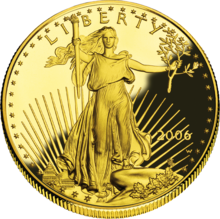


| You are subscribed to email updates from Save Your ASSets First To stop receiving these emails, you may unsubscribe now. | Email delivery powered by Google |
| Google Inc., 20 West Kinzie, Chicago IL USA 60610 | |


No comments:
Post a Comment