


saveyourassetsfirst3 |

- Bob Chapman - Continued Quantitative Easing Will Cause Hyperinflation of the US Dollar
- James Wesley Rawles: Impending Economic Collapse
- The Rime Of The Modern Fed Chairman
- Is Silver Currently Riskier Than Gold?
- European Debt Crisis Escalates Before Greek Election
- Joe Battaglia: This Week's Gold and Silver News
- Ted Butler: A Few Questions...One Answer
- James Turk: Fiat Currency in a Kondratieff Winter
- Former Assistant Treasury Secretary Paul Craig Roberts discusses gold price suppression
- Blaming the machines for Gold
- Cheap Gold Stocks 3
- Links 6/16/12
- Austerity Kills: How the EuroCrisis is Being Used to Break the Social Contract
- Silver Update: Butler & Bernanke – 6.15.12
- Silver Smackdown Ahead
- By the Numbers for the Week Ending June 15
- Why You Should Have Become a Property Investor
- A 'Cheap' Way To Buy Gold?
- What Are Investors Missing With Apple?
- The Silver Myth: Industrial Demand Isn't What's Driving Prices
- GUY - Friday Manipulation, Close Banging or What on Guyana Goldfields?
- EM: Silver, Gold, Nat Gas – Chart Update 6.15.12
- Buying Gold and Silver With Credit?
- Morgan: Silver to Gain Gradually in the Near-Term
- Walkback on Basel III Confirms Bank Victory on Regulation
- Gold and Silver Disaggregated COT Report (DCOT) for June 15
| Bob Chapman - Continued Quantitative Easing Will Cause Hyperinflation of the US Dollar Posted: 16 Jun 2012 04:37 AM PDT Bob Chapman - Continued Quantitative Easing Will Cause Hyperinflation of the US... [[ This is a content summary only. Visit my blog http://www.bobchapman.blogspot.com for the full Story ]] |
| James Wesley Rawles: Impending Economic Collapse Posted: 16 Jun 2012 02:44 AM PDT |
| The Rime Of The Modern Fed Chairman Posted: 16 Jun 2012 02:41 AM PDT By Eric Parnell: The Federal Open Market Committee sets sail once again this week to decide the future direction of monetary policy. And the Fed Chairman enters the meeting with an albatross still hung about his neck.
When Ben Bernanke first assumed the Chairmanship back in January 2006, it was certainly much cheerier times for the U.S. economy and its investment markets. And for the first two years afterwards, this general sense of prosperity continued. By the summer of 2007, the U.S. unemployment rate had fallen to cyclical lows at 4.4% and Real GDP growth was expanding at a healthy 3.7% annualized rate. In regards to financial markets, stocks (SPY) followed a rousing +15.8% return in 2006 with a respectable 5.5% gain in Complete Story » |
| Is Silver Currently Riskier Than Gold? Posted: 16 Jun 2012 01:00 AM PDT SunshineProfits |
| European Debt Crisis Escalates Before Greek Election Posted: 16 Jun 2012 12:27 AM PDT By Daryl Montgomery: As Greeks go to the polls in a pivotal election, trouble is escalating all over the EU. Spain is rapidly becoming the new trouble spot, with Italy not far behind. Ireland's debt problems have resurfaced and tiny Cyprus needs a bailout. Markets are confident though that the same people who have failed to solve the problem so far with their various money-printing schemes will now be successful solving it with new spinning straw into gold approaches. Interest rates in Spain and Italy continue to climb and in the case of Spain remain at destabilizing levels. The 10-year bond has gone over 7% in Spain and 6% in Italy. When rates stay above 6%, it creates the danger of a downward financial spiral because of the heavy debt burden of the countries involved. Things would be no different in the United States. Spain has suffered a number of credit downgrades recently. Complete Story » |
| Joe Battaglia: This Week's Gold and Silver News Posted: 15 Jun 2012 11:18 PM PDT Joe Battaglia discussed this week's precious metals and economic news including: this weekend's election in Greece and how it could affect the U.S.; key differences between the U.S. and the EU; Moody's downgrade of Spain's credit rating; Moody's announcement that it will likely downgrade 5 of the 6 largest U.S. banks; the Great Depression; the massive runs on Greek banks; China cutting interest rates; the possibility of a QE3 announcement at next week's FOMC meeting; Kazakhstan increasing its gold reserves; possible financial crisis in Italy; India's credit downgrade; problems with healthcare; why the dollar and stocks don't always have an inverse relationship with gold; analyst price targets for gold and silver. from goldlineint: ~TVR |
| Ted Butler: A Few Questions...One Answer Posted: 15 Jun 2012 11:16 PM PDT ¤ Yesterday in Gold and SilverIt was another very quiet trading day in the Far East and London yesterday. Most of the price action came during the Comex trading session, as it usually does. There were two serious rally attempts in gold...and both met the same fate. The first one came at the Comex open...and that one got squashed like a bug within 30 minutes. The subsequent rally from that point lasted until a few minutes before 11:00 a.m. Eastern time...and that proved to be the high of the day as well...at $1,635.60 spot. From the high, gold got sold down to almost the New York opening price, but then rallied a bit into the close of Comex trading at 1:30 p.m. Eastern...and traded mostly sideways from there. The Friday close for gold was $1,626.70...up $3.40 on the day. Obviously the metal would have done better if it had been left to its own devices, which it wasn't. Net volume was around 123,000 contracts. Note on the Kitco chart below that rallies have occurred at the Comex open every day for the last three days...and all have met the same fate. It was pretty much the same in silver as well.
Silver didn't do much at all yesterday anywhere on Planet Earth...and traded mostly in a twenty cent range between $28.60 and $28.80...safely under the $29 spot mark. Silver closed at $28.74 spot...up a dime. Net volume was an extremely light 22,000 contracts, give or take. Based on the wafer-thin volume, I wouldn't read much into the price action...or the lack thereof.
Except for a smallish eight hour rally between 1:30 p.m. Hong Kong time and 8:15 a.m. in New York, it was all down hill for the dollar index. It closed the Friday session at 81.63...down 24 basis points.
The gold stocks spent the entire trading session somewhere between unchanged...and down less than one percent. The HUI closed down 0.19%.
The silver stocks were definitely a mixed bag yesterday...and Nick Laird's Silver Sentiment Index closed down 0.93%.
(Click on image to enlarge) The CME's Daily Delivery Report showed that 170 gold and 27 silver contracts were posted for delivery on Tuesday. The big short/issuer was Merrill with 163 contracts...and Deutsche Bank, JPMorgan and the Bank of Nova Scotia were the long/stoppers of note, taking delivery of 169 of the 170 contracts issued. There were no reported changes in GLD yesterday...but a rather chunky 1,552,109 troy ounces of silver were deposited in SLV by an authorized participant. The U.S. Mint reported selling 3,500 ounces of gold eagles...1,000 one-ounce 24K gold buffaloes...along with 200,000 silver eagles. Month-to-date the mint has sold 22,000 ounces of gold eagles...4,500 one-ounce 24K gold buffaloes...and 1,361,500 silver eagles. For whatever reason, the CME did not update the Comex warehouse and depository stocks in any of the metals for the Thursday trading day. Well, my guess that there would be an improvement in the Commercial net short position in both gold and silver in Friday's Commitment of Traders Report turned out to be wrong on both counts, so it's a good job that I didn't 'bet the ranch'. The Commercial net short position in silver increased by 1,394 contracts...and now stands at 17,919 contracts, or 89.6 million ounces. The big surprise from Ted was that, once again, the four largest short holders increased their net short position over the reporting week. And, as he points in commentary further down, this entire net short position in silver is virtually all held by JPMorgan. The other surprise was that Ted Butler's 'raptors' are still holding a huge long position. This was confirmed by the COT charts that reader E.F. sent me late Friday afternoon. So as silver rallied over the reporting week, the big 4 traders [read JPMorgan] were forced into going shorter against the new longs coming into the market...as the raptors were keeping their powder dry by not selling their huge long positions as the technical funds and small traders bid the price up. This is not 'business as usual' in the COT internal structure for silver. It's madness. In gold, the Commercial net short position increased by a smallish 2,668 contracts...which now sits at 15.88 million ounces, as of the Tuesday cut-off. Most of that increase was the raptors selling their long positions to the Non-Commercial and Nonreportable traders as they bid up the price. There weren't big changes in yesterday's COT report, but there was deterioration to a certain extent...but the overall structure is still very bullish. Here's a chart that Nick Laird sent me late last night. It's his famous "Total PMs Pool"...and as he said in his covering e-mail..."Ounces are hitting new highs daily".
(Click on image to enlarge) I have the usual large number of stories for a Saturday, even though I was particularly vicious with my editing last night...so I hope you have time to run through them over the weekend. Here we all sit waiting for the events of the weekend to unfold...and then manifest themselves at the open of Far East trading Monday morning. Former Assistant Treasury Secretary Paul Craig Roberts discusses gold price suppression. The Shape and Future of Indian Gold Demand. GFMS - Gold Hedge Book Reviewed. ¤ Critical ReadsSubscribeJamie Dimon's Presidential Cufflinks A Gift From A White House ResidentFor as many questions as JPMorgan Chase CEO Jamie Dimon's recent testimony answered, there was one that it raised: What's with the presidential cufflinks? Several sources have now reported that the prominent cufflinks Dimon wore during the hearing bore the seal of the President of the United States, with John Carney reporting them to be "a gift from a resident of the White House," though just who specifically remains unknown. Dimon has been known to sport government seals, including the FBI's, on his cuffs as part of his "best-dressed CEO" ensembles. Reports that Dimon wore the cufflinks because they are his most "patriotic" may be the simplest explanation, but other theories abound. Is Dimon insinuating that he himself is the boss, CNBC's John Carney asks? I would bet that Mr. Dimon scores high on the scale that one would rank sociopaths...as I doubt very much that this man has any conscience at all. The closer you get to the top of the management heap at most any company, the more sociopathic the tendencies of that person becomes...especially in an organization like JPMorgan. This story appeared in The Huffington Post yesterday...and I thank West Virginia reader Elliot Simon for sending it. The link is here.  Matt Taibbi: Senators Grovel, Embarrass Themselves at Dimon HearingI was unable to watch J.P. Morgan Chase CEO Jamie Dimon's Senate testimony live the other day, so I had to get up yesterday morning and check it out on the Banking Committee's web site. I had an inkling, from the generally slavish news reports about the hearing that started to come out Wednesday night, that it would be a hard thing to watch. But I wasn't prepared for just how bad it was. If not for Oregon's Jeff Merkley, who was the only senator who understood the importance of taking the right tone with Dimon, the hearing would have been a total fiasco. Most of the rest of the senators not only supplicated before the blow-dried banker like love-struck schoolgirls or hotel bellhops, they also almost all revealed themselves to be total ignoramuses with no grasp of the material they were supposed to be investigating. What was most disturbing was the tone of the hearing. The senators treated Dimon like a visiting dignitary and a teacher of great wisdom, not like a man who, after growing very rich off of public money, had put the whole economy at risk by engaging in wildly unsafe financial sex on a grand scale. Matt, in his usual pithy prose, doesn't take any prisoners in this blog posted over at Rolling Stone magazine yesterday. It's a bit of a read, but worth your time if you have it. I thank Roy Stephens for his first offering of the day...and the link is here.  JAMIE DIMON IS NOT ALONE: These Fed-Connected Banks Got More Than $4 Trillion in Loans After The CrisisThis week U.S. Senator Bernard Sanders (I-Vt.) and the Government Accountability Office (GAO) released a pithy report titled "Jamie Dimon Is Not Alone" that states: "During the financial crisis, at least 18 former and current directors from Federal Reserve Banks worked in banks and corporations that collectively received over $4 trillion in low-interest loans from the Federal Reserve." Then it goes on the lists 18 of them, starting with Dimon. Well, hello...the Federal Reserve is a private banking cartel owned by these very same banks that got bailed out...and they look after each other very well. They're neither Federal nor a Reserve bank. They are a private company like Ford or IBM. It's one of the many reasons that Ron Paul wants to "End the Fed". This story was posted over at the businessinsider.com website late on Friday afternoon, just so that it wouldn't get noticed. Roy Stephens found it...and the link is here.  ML-Implode Gets "Wikileaks Treatment" as Wells Fargo Freezes, Closes Business AccountML-Implode.com discovered yesterday (2012-06-12) in the course of its normal banking activities that Wells Fargo had frozen its bank account with no warning. Upon inquiring at the local branch (which had no direct knowledge of the incident), it was discovered the account had been flagged "credit risk", and slated to be immediately closed. These actions are more than slightly unusual because ML-Implode's account was a plain checking account and was not an underwritten account. In fact, ML-Implode paid a monthly fee for the account, so Wells Fargo was certainly doing it no favors. In fact, as part of the freeze, Wells Fargo made a $3500 deposit from ML-Implode's merchant account processor "disappear", leaving a short-term advance of $1500 from an affiliate un-covered, and a similar $1500 obligation to another affiliate unpaid. The whereabouts of the monies are unknown. My friend Aaron Krowne has certainly has had his share of woes since he initially exposed the goings-on inside the mortgage writing business for the fraud that it really was many years ago...and his problems with the banking system since then, still haven't gone away. The link to this story, posted over at the ml-implode.com website, is here.  UK economy is so depressed there could be little demand for creditThe devil is always in the detail, but on the face of it, news of an extra £140bn of cheap funding for the banks – worth close on 10pc of annual GDP – comes in the nick of time. Little detail is yet known about the £80bn of "funding for lending", but in some respects it seems to mirror the £200bn "special liquidity scheme" (SLS) put in place during the last credit crunch but finally wound up earlier this year. However, there are key differences; this one is dependent on the money being used for increased lending, and it also allows the use of much poorer quality collateral than the SLS. One possible flaw is that the economy is so depressed that there may in fact be little demand for increased credit, making the scheme largely redundant before it even begins. This story appeared in The Telegraph late on Thursday night...and I thank Roy Stephens for bringing it to my attention. The link is here.  Germany sounds crisis alarm as Italy, France demand progressGermany warned it could not save the eurozone alone and borrowing costs left Spain on the ropes as Italy and France held crisis talks aimed at tackling the debt crisis on Thursday. Meeting in Rome, Italian Premier Mario Monti and France's President Francois Hollande stressed more needed to be done to ease market pressures amid black news for Spain, worrying signs in Italy and concern over the upcoming Greek election. "The progress made, including in the governance of the eurozone, is not sufficient and we need to strengthen the weak parts of the system," Monti said, adding that the views of Italy and France on the crisis were closely linked. This AFP story was picked up by the ca.news.yahoo.com Internet site yesterday...and I borrowed it from yesterday's edition of the King Report. The link is here.  Traders Are Betting That These 14 Banks Will DefaultAs Italian and Spanish sovereign borrowing costs shoot higher, corporate credit default swaps (CDS) have remained remarkably high. CDS is essentially insurance on a security that pays in the event of a default. Business Insider analyzed CDS prices on more than 100 publicly traded banks across the U.S., Europe, Middle East, Asia-Pacific, and Latin America. What we found: for at least 14 banks, the cost to insure debt remains above 500 basis points. This is a very interesting read...and also linked at the bottom of the story is a list of the twenty most likely countries that will eventually have to declare bankruptcy for the same reasons as the banks. This piece was posted on the businessinsider.com Internet site late yesterday evening...and is well worth reading. The link is here...and I thank Roy Stephens for bringing it to our attention.  |
| James Turk: Fiat Currency in a Kondratieff Winter Posted: 15 Jun 2012 11:16 PM PDT  Given the prevailing poor economic conditions and gold deflation, we are in what might be called a Kondratieff Winter, but to be more accurate, I prefer to call our present circumstances a "Fiat Currency Bubble". It has been ballooning for 40 years, during which time people lost sight of gold's essential nature and put undue reliance upon currency backed by nothing. |
| Former Assistant Treasury Secretary Paul Craig Roberts discusses gold price suppression Posted: 15 Jun 2012 11:16 PM PDT  Former assistant U.S. treasury secretary Paul Craig Roberts, an economist and newspaper columnist, discusses gold and silver price suppression at some length in a video interview with Greg Hunter at usawatchdog.com Internet site. I borrowed the title and the preamble from a GATA release in the wee hours of this morning. The interview is 22 minutes long...and the link is here. |
| Posted: 15 Jun 2012 06:00 PM PDT |
| Posted: 15 Jun 2012 05:56 PM PDT |
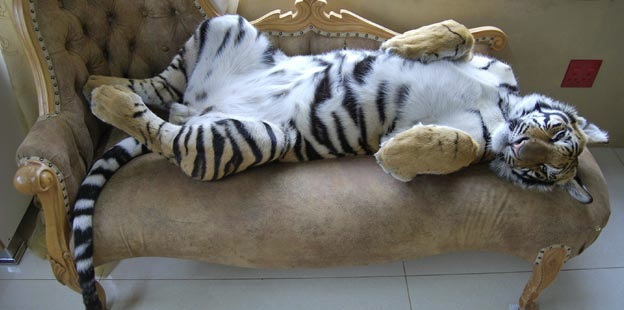
| Posted: 15 Jun 2012 05:32 PM PDT 'Scary' toilet paper coming soon to a stall near you Asahi Shimbun. I think I prefer the Yes Project's politically incorrect toilet paper…. Brazilian farmers win $2 billion judgment against Monsanto Times of India (Aquifer). Natch, the leading listings on Google are non-MSM. Girl banned from taking photos of school meals for hit blog Guardian. Martha r says the ban was overtuned. Never mess with someone who got 100,000 unique visitors in a week. Scientists theorize neutrons may be escaping into mirror universe Raw Story Study finds fracking can cause earthquakes Raw Story CHART OF THE DAY: This Chart Destroys The Idea Of Peak Oil Clusterstock (furzy mouse) IMF Pressures Spain to Lower Salaries, Raise the VAT, Eliminate Housing Deduction Michael Shedlock. So much for "Spain will be spared further demands." Spanish coal miners clash with police Aljazeera Troubled Greek Economy Is Being Left to Fend for Itself New York Times Greek Election Live Blog ekathimerini (Lambert) ECB decides now is not the time for complexity A Fistful of Euros Banks' Fire Drill for Greece Election New York Times. Major efforts devoted to being more convincing in telling customers to stand pat. Egypt Moves Towards Outright Dictatorship Real News Network (Aquifer). You need to watch this. The reporters were detained by the police and were threatened with being disappeared which is legal as a result of the latest Supreme Court decision. Egypt Live Blog Aljazeera. Not quite as live as during Tarhir Square, but still useful. Iraq and Iran form alliance within Opec Financial Times The Lessons of Watergate Do Not Belong to Us Charles Pierce, Esquire (Chuck L) What restaurants should you eat in if you care about workers? Daily Kos (Carol B) California Hospitals, with Help From UHW-SEIU Local, Launch New Attack on Life-Saving Ratio Law PRNewswire Trans-Pacific Partnership Documents Show Trade Treaty Could Grow Much Larger Than NAFTA Dave Dayen, Firedoglake (Carol B) American consumers turn pessimistic Financial Times. Jobs (lack thereof) trumps stock market. There is only so much central banks can do Mohamed El-Erian, Financial Times America's slowdown is not about Europe, it's about the debt Ed Harrison Obama's Fannie Mae failure Andrew Leonard, Salon Insider Case Lands Big Catch Wall Street Journal. Wow. A verdict in 10 hours, and that with a sort-of holdout. SEC taps Thomas J. Butler, Wall Street veteran, to oversee ratings agencies McClatchy. Wealth management? This should be a joke, except it isn't. * * * Lambert here: D – 84 and counting* "If we're going to be cynics, we'd like to do it spontaneously and without malice aforethought." — Paul-Emile Borduas Montreal. Huge: "A discussion over the future course of the social struggle in Quebec took place at a session of a day-long political conference hosted by the Quebec media ngo Alternatives on June 9. It was attended by several hundred activists. There, co-leader of CLASSE, Gabriel Nadeau-Dubois, made a forceful argument in favor of the group's proposal for a "social strike" against the government by the entire working class movement, including its trade union component. "A common front should not be centered on the issues in the student strike alone. It should be focused on a broad range of social issues-education, health care, privatization of government enterprises. This would appeal to the majority of the population and it would also counter the false impression that the student and the trade union organizations are only interested in their narrow, respective interests." Summer planning: "FECQ will hold rallies across Quebec in smaller centers leading up to June 22 and will host a rally in Quebec City on the same day. This decision continues the solid unity that student associations have been able to maintain." Apps: "[Veniard] decided to create an app that allows users to anonymously upload the location of certain casseroles marches. The idea is, if at 8 p.m., you find yourself outside with a pot and a wooden spoon and are looking for an appropriate place to bang them together, you simply bring the app up on your phone and go to the nearest demonstration to you." Red square: "Getting a tattoo with other people is a real rush. Usually, most people don't want others to have tattoos similar to theirs. But in a group effort for a project or issue like this, there's some sort of very tribal feeling of solidarity. I've never done it before but for a cause this good, I'd do it again in a heartbeat." Legacy parties: "The PQ is broadly supported by leadership circles in the trade union movement. During the 18 years of the last 35 that it governed the province, it applied variants of the same pro-capitalist policies as the Liberals. In the current struggle, it has refused to commit to a freeze in post-secondary tuition fees, the issue that lies at the origin of the conflict between the student movement and the government." CA. "[O]fficials estimated that repairing the the lawn and irrigation system [after OccupyLA] could cost up to $400,000. They have since revised that estimate: $76,000." CO. Fracking: "Anti-fracking group Erie Rising announced Thursday that it is teaming up with nonprofit group Global Community Monitor to provide residents in town with their own air monitoring equipment, in a program known as the Bucket Brigades." Alert reader MR comments: "This is great because now they'll be able to prove the presence of off gassing from the condensate tanks and the wells." "[HICKENLOOPER:] You can eat this–the CEO of Halliburton took a big swig of [fracking fluids]. And not to be outdone, I took a swig of it myself." Alrighty then. FL. Corruption: "The frustrated [Ethics] panel, which penalizes public officials who break ethics laws, is unable to collect about $100,000 in unpaid fines due to a law that prevents it from enforcing fines after four years." ME. King to funders, paraphrased by D: "If you're a solid partisan and you need to know what caucus I'm going to be with, don't give to me now because I may not be with you. NC . Fracking: "The North Carolina House has approved a form of natural-gas well completion [!! i.e., fracking, and see here] that critics say could contaminate groundwater. One of the amendments dealt with the concept of forced pooling, which would mandate that a dissenting landowner resisting oil and gas drilling join with surrounding landowners in allowing the drilling." Wow. NY. Unions: "New York City-based teachers of English as a second language at the Washington Post Co.'s [NYSE: WPO] educational subsidiary, Kaplan Inc., voted today for workplace representation by the Newspaper Guild of NY, becoming the company's first employees to unionize." Fracking, Cuomo: "[I]f this proposal goes forward under regulations that look much like the previous round, then talk of "sacrifice zones" based on, as Sandra Steingraber put it, "partitioning our state into frack and no-frack zones based on economic desperation", is painfully appropriate." Permitting: "The state and developers are asking the court to dismiss a suit against them regarding the Adirondack Club and Resort proposed for the Big Tupper Ski Area." Free press: "Warren Buffett's Buffalo News to erect paywall." A one-day subscription to the online paper will cost $.99 [a la Press+]. I don't see how local news gets nationally aggregated under this model. Feature not bug? OR. "The future of jobs in Portland, OR." Keen pie chart. PA. Sandusky trial: "As the testimony has made clear, lots of people in positions of authority knew or clearly were in a position to know, including the coach's wife and colleagues, along with prosecutors and police. But nothing happened to Sandusky until a 52-count indictment came down in November. 'There's a simple answer: He was a winning coach.'" Corruption: "Only weeks after the indictment of State Supreme Court Justice Joan Orie Melvin on campaign-finance law violations, a legislative bid to end the partisan election of appellate judges has come to an abrupt halt because of opposition by trial lawyers, anti-abortion activists, and others." Fracking: "[A]bout two hours into the raid … another of the heroes of this story, Deb Eck, Riverdale resident and balls-of-steel leader came out to plead with the activists to stand down, in other words, to end our resistance to the police efforts to evacuate us from the premises." TX. Corruption: "While Energy Future Holdings, formerly TXU, of Dallas continues its downward spiral toward bankruptcy, it's handing out millions in bonuses to its executives." Shocker! WI. Capitol Occupation: "Joe Heim, a UW-La Crosse political science professor agrees there was a political disconnect between people who lived in Madison, who saw the protests first-hand, and residents in the rest of the state, who merely heard stories and anecdotes. He says people in La Crosse heard talk of unruly mobs and thugs." Inside Baseball. Data, Kevin Goldstein of Baseball (!) Prospectus: "There aren't any good databases. You would need like the last 50, 100 Senate campaigns. … You would need the full books. Like this was the money. This is what they spent it on. You have to create categories: mail, personal appearances, television ads. And then you need to break up the television ads: positive ads, negative ads. How valuable was it? How valuable is going to the local diner? How valuable is the ad that says my opponent is a nimrod? … I don't know anyone who is doing that." Obama campaign claims to be. Can they be? "[I]t's worth keeping in mind, as we look slack-jawed at the sums being tossed around, just how inefficient the ad onslaught typically is." " … a chance for the Kochs to show off their increasingly robust political machine, including a growing voter database project called Themis that played a major role in conservatives' recent efforts in WI and in which POLITICO has learned Koch operatives have discussed investing $20 million…" But if they think it's the software, they should think again. It's the data. Media: "The conservative evangelical 'party' that Fischer and Bachmann belong to is not a transient phenomenon. The 'parallel media universe' that party has created is not a transient phenomenon. [They are] institutional. They will withstand the ebb and flow of particular elections and administrations in the same way that the D and R parties do." Policy. Immigration/deportation: "Obama makes election-year change in deportation policy." Changing the subject. "[I]llegal immigrants will be immune from deportation if they were brought to the US before they turned 16 and are younger than 30, have been in the country for at least five continuous years, have no criminal history, graduated from a U.S. high school or earned a GED, or served in the military. They also can apply for a work permit that will be good for two years with no limits on how many times it can be renewed." Discretion: "[NAPOLITANO] It is not immunity, it is not amnesty. It is an exercise of discretion." "[SCALIA:] "To ameliorate a harsh and unjust outcome, the INS may decline to institute proceedings, terminate proceedings or decline to execute a final order of deportation." Pierce: "The president is simply acting as the head of the Executive Branch — the same principle under which John Yoo once assured us would allow C-Plus Augustus to crush a child's testicles if he saw the need to do so." So, Bush was right about Yoo, then? Dayen: "The fact that President Obama will speak before the National Association of Latino Elected and Appointed Officials next week surely played a role." Greenwald: "[D]emands, pressure, criticism, threats to withhold support, and confrontational tactics breed a healthy respect and even self-interested fear among political leaders, along with responsiveness." "He's essentially implemented the much-debated DREAM Act, only without the hassle of all that voting in Congress. He should have done this with health care!" Jonathon Bernstein: "I've been dead wrong about the public option: I thought Ds, particularly those in contested primaries, would universally support it in this election cycle." That's because you're an insider mistaking a bait and switch operation that career "progressives" ran to kill off single payer and support Obama for something with real popular support, like Medicare for All. Spitzer: "[There] should be the modern-day WPA: We will give you a job—it can be enlisting in the military if you choose. But we will pay you, give you skills, keep you off the streets and, by the way, cover your student debts for the time you are in the program." The economy. Romney vs. Obama economy speeches: "What the coverage here generally didn't note as clearly as it could is that neither man can implement that vision himself. " Yglesias: "The very depth of the divide between the parties that Obama highlighted at one point in the speech makes it extremely unlikely that the other stuff he was talking about will happen." First Read: "…selective amnesia. Romney's remarks never acknowledged the Bush years… Obama pretty much skipped over the relatively slow growth and the political stalemate that occurred over the past three years." Unemployment: "College students who graduated during the early 1980s economic downturn suffered wage losses of more than $100,000 during the next 15 years compared to those who came into the job market later in the decade." They should have chosen to get born at different time! Polling: "[I]f the election does turn out to be a referendum on which president's policies put the country in our current economic straits, these poll numbers may mean that the Obama campaign's message — that the economy is on the right track and President Obama just needs more time to turn things around — could 'fall on receptive ears, particularly those of independents'." "Forty-nine percent rate economic conditions in their local area as excellent or good, but that drops to 25% when rating the U.S. economy, and to 13% when assessing the world as a whole." Grand Bargain™-brand Catfood watch. AARP throws membership under the bus. It ain't broke. Don't fix it. Fix broken stuff. Milbank, Romney vs. Obama economy speeches: "[Obama's] right about the stalemate. But he's absolutely wrong that November offers an opportunity to break it. No scenario shows either party with a chance of amassing a solid governing majority of the sort Obama had when he took office. The way to break the stalemate is through compromise, not conquest. [wait for it] Undoubtedly, Obama would take heat from his base if he put forth a serious plan along the lines of Bowles-Simpson… But taking a stand on concrete fixes for the nation's fiscal problems would get Obama credit for strong leadership." All roads lead to Cat Food! Green Party. TX. Kat Smith: "People who I know who are progressive Democrats have been trying for 30 years to reform the party and they have failed time and time again. If you look at who they elect in their primaries, they're not the progressives, they're the other ones." Robama vs. Obomey watch. Wacky campaign hijinks: "[T]he aircraft trailed a banner behind it, [reading] "Romney's 'Every Millionaire Counts' Bus Tour". [Also, a truck] with a dog strapped to its roof." "[PAWLENTY:] "Barack Obama's campaign slogan is, 'It could be worse.' Mitt Romney's slogan is, 'It will be better.'" Both could be wrong! Bobo: "Is Obama oblivious to this historical moment or are Republicans overly radical, risky and impractical?" Both could be wrong! Romney. Adelman: "Senator and Romney presidential campaign surrogate John McCain (R-AZ) said Thursday that casino magnate Sheldon Adelson is indirectly injecting millions of dollar in Chinese 'foreign money' into Mitt Romney's presidential election effort." Bus tour: "Romney kicks off a six-state bus tour today. The tour begins in NH and will hit the battlegrounds states of PA, OH, WI, IA and MI. … They were all won by Obama in 2008." " … Romney's new bus, which earlier today [before Obama's deportation announcement] was going to make political news. …" Ouch! Obama. Obama to interrupter, on deportation: "'I didn't ask for an argument' — " No, and when have you ever? (Snicker) Obama economy speech: "[S]hould be enough to silence antsy supporters and donors, as well as the Chattering Class. Its effectiveness should be measured on whether it brings an end to what's been a rough couple of weeks." Obama at Sarah Jessica Parker fund-raiser: "[OBAMA] Ultimately you guys and the American people, you're the tie-breaker." We don't need a tie-breaker. We need a game-changer. And exactly what distinction is Obama drawing when he says "you guys" and "the American people"? * 84 days 'til the Democratic National Convention feasts on New York System hot dogs on the floor of the Bank of America Stadium, Charlotte, NC. 84 is the international direct dial code for Vietnam. * * * Antidote du jour (Scott). Headline: Pair tempts fate by keeping a 400-lb. Bengal tiger as a pet
Austerity Kills: How the EuroCrisis is Being Used to Break the Social Contract Posted: 15 Jun 2012 04:15 PM PDT One aspect of the Eurocrisis that has not gotten the attention it deserves is the way it is destroying not just jobs, but the very underpinnings of society. People who took actions that were prudent at the time are increasingly at the mercy of forces beyond their control. And this isn't a tsunami-type disaster but a man-made one whose severity is worsened by the callous attitudes of the European elites. We've featured stories from time to time on how Greece is unraveling. Suicides have increased sharply. Garbage is not being picked up. Public transportation is largely a thing of the past. Even though Greece always had a large black market, more people are resorting to barter, which shrinks the tax base. And in some ways worst of all, the health care system is on the verge of collapse. Critical medicines are not being imported and hospitals are short of basic supplies. Not only are people dying unnecessarily due to their inability to get drugs and operations, but worse, the breakdown of healthcare greatly increases the risk of a public health crisis. How many children are being vaccinated, for instance? What happens when curable but silent killers such as syphilis go untreated? Key excerpts from a Reuters story (hat tip Aquifer):
And the targeting of the health care system was no accident:
Greece has been told to reduce health care from its current 10% of GDP to below 6%. Imagine what would happen if the US were told to cut its medical expenditures by over 40% in a one or two year period. And if the IMF boot were put on the US neck, and we were told to get medical spending down to 6% of GDP, we'd need to reduce it by 2/3. In a Real News Network interview, Rob Johnson of the Roosevelt Institute describes further how the EuroCrisis has become a tool to break the social contract:
|
| Silver Update: Butler & Bernanke – 6.15.12 Posted: 15 Jun 2012 02:24 PM PDT Brother John answers a listener's question and comments on haircuts, Butler, and Bernanke. from brotherjohnf: ~TVR |
| Posted: 15 Jun 2012 02:12 PM PDT AltInvestors predicts action in the metals next week. Time will tell. from altinvestorshangout: (1) I discuss how silver is probably going to get smacked down next week because of the FOMC meeting. ~TVR |
| By the Numbers for the Week Ending June 15 Posted: 15 Jun 2012 02:06 PM PDT This week's closing table is just below.
|
| Why You Should Have Become a Property Investor Posted: 15 Jun 2012 10:00 AM PDT On a personal note... Thank you to readers for their feedback to Monday's Daily Reckoning. We were expecting some outraged hate mail at our scepticism. Instead it was only thoughtful and often sad stories from people who had to personally experience the issues we raved about. Now, on to more controversy... It's incredibly frustrating to watch stocks around the world mimicking each other. Where are the opportunities supposedly present in the Australian stock market if it does nothing more than copy every other stock market? Since when is every share deemed so similar that a Spanish bailout matters to all of them? If the synchronisation of asset markets bothers you, you should have become a property investor. With one very important caveat. Only property investors with an international scope are set to avoid the stock market's copycat antics. That's because property has defied its fellow asset classes. Around the world there are property bubbles forming, bursting and taking a breather. It's time to buy, hold, sell or investigate property somewhere in the world. Today's Daily Reckoning puts some names to each of those opportunities. But first, why is the synchronisation of stock markets happening in the first place? Well, those stock markets supposedly reflect the wider economy's performance. So the business cycle does matter to the stock market. Half of our speech at the After America conference in March was dedicated to the idea of synchronising business cycles. The reasoning went a little like this: Monetary policy causes the business cycle, and monetary policy around the world has synchronised. Therefore, the business cycles around the world have synchronised. This leads to the risk of a very severe collapse in the global economy. Usually, business cycles in different parts of the world offset each other. The booming countries get rich and buy the exports of the struggling countries. That's why business cycles are often called trade cycles. The imports and exports are a telltale sign of a country's economic boom or gloom, and they offset the extremes of the booms and busts. But this dampening effect is lost if business cycles synchronise. There's no booming country for the struggling country to export to. The booms get more awesome and the busts more destructive. The boom from 2003 to 2007 and the bust that has followed is a perfect example. The whole world boomed together and busted together. Except Australia of course. We didn't even get a recession. Not that our stock market didn't take a beating, which confirms that the synchronisation of stock markets outweighs even economic fundamentals! Anyway, what's ironic about this is that property - the key asset which boomed and then busted in 2007, causing mayhem - is in fact exempt from this synchronisation. There are still property bubbles forming and popping all around the world. Regardless of the wider synchronisation of stock markets, bond markets (of comparable risk) and commodity markets. Property, if you're a global investor, seems to be a haven of opportunities as well as a battlefield of disasters. The two go together of course. But it seems that all stock markets are either opportunities or disasters at the same time. Property markets seem to move a little more independently. So what are the opportunities and the disasters? Daily Reckoning readers will recall the boom in German property that's been going on. We wrote about it last month. Having missed out on the run up to 2007, the German property sector is now going bananas over absurdly low interest rates from the ECB. And the story has accelerated since we wrote about it. Several desirable places to live (if you limit yourself to living in Germany) are up 60% in the last three years according to the Financial Times. Berlin is up 300% on a per-square-meter basis since the beginning of the crisis. Sound familiar to anyone? Of course, Europe adds its own twists. Castles priced in the tens of thousands are available! As for buying in, this bubble looks to be well underway already. It's tough to pick how long it will continue to inflate, so we're going to put Germany's real estate market in the 'missed opportunity' bin. Here in Australia, the property boom is unravelling. There's a glut in apartment supply in Melbourne. And a glut in land supply is set to strike soon, according to Tuesday night's news stories. Our favourite part of the property segment featured a former government advisor. He chastised the government for opening up land corridors for development when prices and demand were falling. Doesn't that tell you a lot about the cozy relationship between government policy and house prices? Speaking of which, slack lending standards, it turns out, are commonplace in Australia. Dan wrote about how this was once denied by the powers that be, and how the truth got out, in his article about Australia's sub-prime mortgage market. This bubble has already popped. The question is how bad it will get. For a property investor, this is exciting to watch, as opportunities will be in the making. China is close behind Australia when it comes to property implosions. People will one day debate which bubble was more epic. What's surprising is that there are so many similarities. Debt and government meddling come in many forms, but they so often end in a property bubble. China's version of opening land corridors for development is to force land owners to begin building on their land. Soberlook blog quoted China Daily on the bizarre policy:
'The central government has issued a regulation requiring mainland property developers to pay a 20 percent land vacancy fee if they leave land vacant for over a year.' Isn't it weird how government policy once inflated the bubble with debt and is now bursting it by providing an oversupply of housing? America's real estate markets remain in the 'to do' folder for property investors. Which doesn't mean buy, it means investigate. There are some whopping rental yields and interest rate deals available, but prices may fall further. The government is still the major force in the mortgage market, which hints at instability. Peter Schiff of financial crisis predicting fame caused a bit of a ruckus at a congressional hearing on government involvement in the mortgage market. You can watch a video of how bizarre and Orwellian things got here. It's a perfect insight into Washington and what happens when it clashes with reality. It will probably make you realise why America's housing market isn't quite ripe for the plucking. So we've covered an inflating housing bubble, two popping housing bubbles and one market that is starting to look like an upcoming buy. But where are the current opportunities? Let us know at letters@dailyreckoning.com.au That's a bit cruel, but it's the most honest answer we could give with any degree of certainty. Daily Reckoning founder Bill Bonner keeps himself busy with several international property investments. Argentina, France and Nicaragua feature, as long time Daily Reckoning readers will know from Bill's stories of building with mud bricks, falling off roofs and dealing with French building regulations. We're not so sure about those three countries when it comes to buying property, but then again that's Bill's speciality when it comes to investing. He only buys into lost causes, because they end up being a pleasant surprise. How about investing in one of Europe's crisis stricken countries? According to The Age, Melbourne's Greeks are investing in Greek property (in Greece). What's funny is that such investment is described by the newspaper as 'aid' and some sort of patriotic duty. If only the government applied the same logic to investments in Australia when tax time comes. By the way, the section of the article with the subhead 'prices plunge' elaborates how Greek property has fallen 3.7%, 4.7% and 5.1% - all of which are less than the pace of Australia's house price correction and far less than Melbourne's. Anyway, investing in those countries would be a good idea if the problem facing them wasn't a sovereign debt crisis and a banking crisis. That makes things just a bit too risky, for the moment. Amidst all this talk about overseas property, don't forget currency risk. With massive money printing going on and the very existence of the Euro being questioned, currency risk is extremely real and relevant. For example, if the Eurozone breaks up, the stronger nations are likely to see their currencies appreciate. A German property denominated in Deutschmark might do better than the one next door denominated in Francs. Taxes and tax treaties are another factor you need to keep in mind. You will want to avoid double taxation and the like. All this can come with insurmountable paperwork and costs. So, long story short, here's the takeaway from today's Daily Reckoning (and it's not a prediction for where the next property bubble will form). If you're considering escaping Australia's high cost of living and rather scary investment outlook, why not take some of your money with you and invest in a property you plan to live in? We're working on a report on where you might like to consider at the moment. And our tentative top pick just happens to tick the boxes when it comes to property investing as well. Until next week, Nickolai Hubble. ALSO THIS WEEK in The Daily Reckoning Australia... Priming Your Investment Returns In 1996 John Bargh, a social psychologist, published a landmark study. He found that people who are primed with words related to old age walk more slowly down a corridor. The people were subtly exposed to the words related to old age during what they thought was the experiment. But the actual experiment, which timed them in the hallway, took place unbeknownst to the participants. The idea was that the subtle mention of words can affect your behaviour. How China Will Use the Yuan to End the US Dollar Standard However, the US dollar system is broken. And China is not stupid. It knows that as the global debt crisis burns its way from the periphery of the global system to the core, its dollar holdings are at risk. It can't hedge that risk now, but it can prepare the currency battle space for a new global monetary system...China wants to make it easier for the world to conduct transactions and engage in commerce through its currency. Last week's move was one small step toward that big goal. Spanish "Assistance" or "Bailout" On 11 April 2011, then Spanish Finance Minister Elena Salgado stated: "I do not see any risk of contagion. We are totally out of this." A little over a year later, Ms Salgado and her party are no longer in power and Spain is well and truly in it. After weeks of prevarication, Spain will now apply for a bailout for its banking system. Sorry, it's not a "bailout". As the Spanish Finance Minister clarified: "What is being requested is financial assistance. It has nothing to do with a rescue." Learning From the Best: Inflation Lessons from Argentina And, for the benefit of everyone, we cast our weary eyes down to the pampas. Is there any policy so foolish the Argentines have not had a go at it? Is there any financial disaster so catastrophic the gauchos haven't repeated it at least two or three times? Is there any trick so dishonest or so transparently fraudulent that the politicians south of the Rio de la Plata don't make a regular habit of it? Similar Posts:
|
| Posted: 15 Jun 2012 09:16 AM PDT By Shaun Connell: I've written probably a dozen articles here about why I love gold, and am even looking forward to a major correction so I can acquire more ounces for myself. But still, this doesn't mean I'm a blind gold investor. That's a horrible approach to pretty much anything. Only recently, I wrote about the worst gold-investing advice I've ever read, and it was from a reputable source. I've also written about why most gold forecasts fail, because too many people -- bears and bulls -- put faith in what is essentially voodoo science mixed with numerology. Just recently, someone commented that he had his clients replace bonds with gold mining stocks. That's just a bad deal. There's a place for both in a well-balanced portfolio. Are Gold Stocks a "Cheap" Way to "Buy Gold?" In this article, we're going to review a common argument that I've seen everywhere, including this website, Complete Story » |
| What Are Investors Missing With Apple? Posted: 15 Jun 2012 09:10 AM PDT By Qineqt: Investors are concerned if Apple (AAPL) will be successful in maintaining its competitive advantage. The company has a history of introducing innovative products that can create a new market. Investors have given its smartphone business too much focus while ignoring the Mac segment. The stock trades like a pure play on the smartphone market. However, investors are missing the growth opportunity in its computer segment. Have a look at the following facts:
Complete Story » |
| The Silver Myth: Industrial Demand Isn't What's Driving Prices Posted: 15 Jun 2012 08:59 AM PDT By Shaun Connell: Commodities and currencies are complicated because the supply and demand mechanisms aren't nearly as obvious as a dividend company. If Johnson & Johnson dropped by 50%, I'd buy it regardless of any worries about future stock prices -- that income alone would make me a happy camper. Not so for commodities which are pretty much based on when you unload the asset. There's nothing wrong with this, of course -- a savvy investor can do just fine, and those of us with silver and gold over the last several years don't have much to complain about. Complete Story » |
| GUY - Friday Manipulation, Close Banging or What on Guyana Goldfields? Posted: 15 Jun 2012 07:52 AM PDT HOUSTON -- Is the chart below a case of close banging, manipulation, a mistake, trading on non public information, or what? In any case it smells like day old dead fish. "Friday, June 15, 2012 … RBC apparently bangs the close. Someone trading through RBC fires a huge market order into the $2.50s bid, literally at the last minute of trading, smashing Guyana Goldfields (TSX:GUY.T) down to $2.18. Intrepid reporters ought to be asking, "Why wait till the close on Friday, a day when GUY was challenging its upper resistance earlier in the day, to blow out 1.5mm shares?"
Update-1 at 17:45: Vulture C.C. suggests that this story from Monday, June 11 and the removal of GUY from the S&P Canadian Index is a likely cause of the last minute dump by RBC. The effective date for the GUY removal is Monday, June 18. If true, then the large sell order was, at the very least, poorly handled by the seller ... or was it from RBC's point of view? Vulture C.C. also suggests that the action raises the possibility of a short-term opportunity, noting that RBC was on the buying end as well as the selling end of part of the last minute dump. That is all, carry on. |
| EM: Silver, Gold, Nat Gas – Chart Update 6.15.12 Posted: 15 Jun 2012 07:20 AM PDT endlessmountain: Silver-Gold-Natural Gas Chart Update 6.15.12 from endlessmountain: ~TVR |
| Buying Gold and Silver With Credit? Posted: 15 Jun 2012 07:18 AM PDT V: While this vid presents an interesting and apparently well thought out plan, it is important to remember that nothing is attained without price. Nothing is free and this scheme is not recommend by the editor. That said, it provides an interesting perspective and perhaps another way to "stick it" to the banksters. from gregvegas5909: In this video I attempt to answer a question I get all the time, and that question is: " Should people buy precious metals on credit?" ~TVR |
| Morgan: Silver to Gain Gradually in the Near-Term Posted: 15 Jun 2012 07:16 AM PDT |
| Walkback on Basel III Confirms Bank Victory on Regulation Posted: 15 Jun 2012 06:57 AM PDT The Wall Street Journal reports that a key element of Basel III rules, its provisions on liquidity buffers, are about to be watered down. Note that many, including this blog, deemed Basel III to be too weak and flawed in many critical regards (see here, here and here for some examples; among other things, its preservation of flawed risk weightings, delayed implementation and undue reliance on moving derivatives to exchanges rather than questioning their use).
Equities? Gold? This is deranged. Remember the S&P at 666? How gold would swoon with no proximate cause on bad market days? Volatile assets are to be treated as liquidity buffers? A liquidity buffer doesn't just mean you can sell it in a pinch, it also means you can sell it and have a fair degree of certainty as to what price it will fetch. As traders put it, in stress times, all correlations move to one. And we see a tendency toward that even now, with global markets exhibiting a "risk-on, risk-off" propensity. During the crisis, you see markets seemingly unrelated to whatever the bad news of the day was take sudden nose dives. Why? It looked to be hedge fund margin calls. When a trade is pressed to raise cash, he is probably not going to sell a position in market that it already roiled if he can avoid it. First, he may believe (correctly) that if he rides the panic out, he has a winner, or at least can exit at a better price. Second, he may not get a bid on a trade big enough to solve his problem. A trader will instead, if possible, sell a position in which he has a gain, and that could be anything. And this pattern was one big way that selling propagated across markets. What is the rationale for this barmy move? First, that a lot of banks may not be able to handle meeting this requirement by 2015, which is when the liquidity requirement kicks in (keep in mind Basel III is most germane for European and UK banks. The US never got around to implementing Basel II, although it did hew to some of its approaches, and US financial firms, led by Jamie Dimon, have made Basel III a political hot potato). Um, so tell me why regulators allowed banks to pay dividends and hand out handsome compensation to executives and staff? This is an admission of a gross failure of oversight, but of course, that's not how its being presented. Instead, we get this:
Translation: Because central banks will now do whatever it takes to prevent banks from falling over, why do they need to worry about liquidity? Of course, we'll put aside the fact that the ongoing "prop up the banks rather than fix them" is leading to a rerun of Japan, zombification of the underlying economies. And unlike the Japanese, the West lacks the social cohesion to share costs and take diminished living standards gracefully. King may think he's saying that Basel III should not be implemented now but he is smoking something very strong if he believes that. According to banks, there is never a good time to make life tough for them. When times are bad, like now, they claim it will hurt their ability to operate (the regulators also seem unwilling to accept that we need a smaller financial sector, and inflicting some pain on them while applying offsetting fiscal stimulus would be a much better approach). And when times are good, there's no problem, so why should they be asked to change behavior? The banks have learned that the trick when things bad is to engage in delaying tactics so that media and public attention move on. For instance, they managed to forestall regulation in the wake of a 1994 derivatives crisis that destroyed more value than the 1987 crash by running the clock out. The endgame has been clear. The banks learned that all they have to do is mutter darkly about armageddon when financial markets are rocky and the authorities will fold, pronto. As Richard Smith noted last year, when banks were pushing back against giving national regulators the authority to set bank capital standards higher than Basel III minimums:
|
| Gold and Silver Disaggregated COT Report (DCOT) for June 15 Posted: 15 Jun 2012 06:57 AM PDT HOUSTON -- This week's Commodity Futures Trading Commission (CFTC) disaggregated commitments of traders (DCOT) report was released at 15:30 ET Friday. Our recap of the changes in weekly positioning by the disaggregated trader classes, as compiled by the CFTC, is just below. (DCOT Table for Friday, June 15, 2012, for data as of the close on Tuesday, June 12. Source CFTC for COT data, Cash Market for gold and silver.) In the DCOT table above a net short position shows as a negative figure in red. A net long position shows in black. In the Change column, a negative number indicates either an increase to an existing net short position or a reduction of a net long position. A black figure in the Change column indicates an increase to an existing long position or a reduction of an existing net short position. The way to think of it is that black figures in the Change column are traders getting "longer" and red figures are traders getting less long or shorter. All of the trader's positions are calculated net of spreading contracts as of the Tuesday disaggregated COT report. As a reminder, the linked charts for gold, silver, mining shares indexes and important ratios are located in the subscriber pages. In addition Vultures have access anytime to all 30-something Vulture Bargain (VB) and Vulture Bargain Candidates of Interest (VBCI) tracking charts – the small resource-related companies that we attempt to game here at Got Gold Report. Continue to look for new commentary directly in the charts often. That is all for now. |


| You are subscribed to email updates from Gold World News Flash 2 To stop receiving these emails, you may unsubscribe now. | Email delivery powered by Google |
| Google Inc., 20 West Kinzie, Chicago IL USA 60610 | |

No comments:
Post a Comment