


Gold World News Flash |

- The Power of Relative Value & the Silver Market! WOW!
- Listen Carefully and You Can Hear the Crumbling Of The Sovereign Nation Formerly Known As JP Morgan
- Gold Resource Corporation Reports Record First Quarter Results; Increases Precious Metal Gold Equivalent Production by 308% Over Q1 2011
- China introduces silver futures contracts
- Demand factors driving gold – Part I
- Norcini - If This Happens, It Will Signal A Collapse
- To Jim Grant The World Of Finance Is Nothing But The "Truman Show"
- Gold Takes It On the Chin…What’s Next?
- GLD Custodian and Banking Giant HSBC is ‘a criminal enterprise'
- More Baby Steps For China…
- Dismal Metals Sentiment – Just What Bernanke Ordered
- Taxing the Rich to Fix the Economy
- Gold Resistance from 1615 to 1630
- Jamie Dimon's ‘Egregious Mistake' Is Underestimating Max Keiser's Silver Liberation Army!
- Philipp Bagus on The Insolvency of the Fed
- Eric Sprott on CNBC - Sees $2,000 Gold in 2012
- The Gold Price Closed Comex $1,595.10 Silver and Gold Ready to Rise
- Press Feeding Frenzy on JP Morgan Chase Following Surprise Conference Call
- Could This Be The Start Of "The Big One?"
- The "World's Largest Prop Trading Desk" Just Went Bust
- Profit Like the Privileged Class
- This 16 Year Old is Smarter Than Ben Bernanke-Elijah Johnson--10.May.2012
- Gold Seeker Closing Report: Gold and Silver End Mixed
- Gold Daily and Silver Weekly Charts
- Different Types of Demand Drive the Gold Price – Part II
- Time to Prepare - Updated
- Protecting Your Assets from an Out-of-Control Government, Part I
- Stocks to Crater 27%, Bonds to Rally & Gold to Remain Firm
- Gold inches higher as European concerns ease
| The Power of Relative Value & the Silver Market! WOW! Posted: 10 May 2012 08:02 PM PDT If this does not get your attention I do not know what will. Imagine buying a $400,000 furnished condo in 2011 with the proceeds of a $6,250 investment that was made in 2003. We know someone who has actually done this by using the power of relative value. Let us explain the concept and then we will explain how the relative value may apply to other great opportunities in our markets today.
| ||
| Listen Carefully and You Can Hear the Crumbling Of The Sovereign Nation Formerly Known As JP Morgan Posted: 10 May 2012 07:36 PM PDT
Of course, you know I'm going to say "I told you so!" Reference So, When Does 3+5=4? When You Aggregate A Bunch Of Risky Banks & Then Pretend That You Didn't? and then Hunting the Squid, Part2: Since When Is Enough Derivative Exposure To Blow Up The World Something To Be Ignored? You see, in said piece, ZeroHedge dutifully reported that Five Banks Account For 96% Of The $250 Trillion In Outstanding US Derivative Exposure- a very interesting refresh of what I called out two years ago through "The Next Step in the Bank Implosion Cycle???": The amount of bubbliciousness, overvaluation and risk in the market is outrageous, particularly considering the fact that we haven't even come close to deflating the bubble from earlier this year and last year! Even more alarming is some of the largest banks in the world, and some of the most respected (and disrespected) banks are heavily leveraged into this trade one way or the other. The alleged swap hedges that these guys allegedly have will be put to the test, and put to the test relatively soon. As I have alleged in previous posts (As the markets climb on top of one big, incestuous pool of concentrated risk... ), you cannot truly hedge multi-billion risks in a closed circle of only 4 counterparties, all of whom are in the same businesses taking the same risks. Click to expand!
Again, from ZeroHedge: ... and just for some clarity on how this occurred. We know the positions that Iksil held were in IG9 (more likely to be tranches) but this $2bn loss comes from a tiny 12bps decompression in the index - which means the DV01 must be huge...(as we already knew given the massive rise in net notional that we warned about)... This is the Investment Grade credit index series 9 - which is the most active tranche-related index and was the index that Iksil had driven massively rich to its fair-value...
Of course, there's more to this story. After all, there is NEVER just one roach. I will cover that in my next post on the topic, which will entail COUNTERPARTY RISK. That's right, do you really think this will effect just JP Morgan? In the meantime and in between time, here's a subscription dump of our archives for JPM to placate the insatiable thirst of the BoomBustBlog paid subscriber:  JPM Report (092209) Final - Professional09/24/2009 JPM Report (092209) Final - Professional09/24/2009
| ||
| Posted: 10 May 2012 07:00 PM PDT Gold Resource Corporation (GORO) today announced record results for its first quarter ending March 31, 2012, including an increase of 308% production of precious metal gold equivalent and an increase of 281% mine gross profit over the first quarter of 2011. Gold Resource Corporation is a low-cost gold producer with operations in the southern state of Oaxaca, Mexico.
| ||
| China introduces silver futures contracts Posted: 10 May 2012 06:00 PM PDT from ChinaDaily.com.cn:
On the first trading day, the benchmark listing price was 6,166 yuan ($979.77) per kg, according to statistics released by the SFE.
| ||
| Demand factors driving gold – Part I Posted: 10 May 2012 05:01 PM PDT by Julian Phillips, www.GoldForecaster.com / www.SilverForecaster.com
We have looked at central bank gold market demand and showed just what a dynamic force it's becoming, just below the surface of the gold market. It's a relatively price-insensitive force that's strong day-to-day, clearing the market of stock when available. It enters the market in a way that leaves the market relatively undisturbed. But the rest of demand is very different. It's this other demand that will drive the gold price. Some of it is price sensitive, some not. Some is price sensitive in a surprising way.
| ||
| Norcini - If This Happens, It Will Signal A Collapse Posted: 10 May 2012 04:01 PM PDT  With global investors concerned about key markets, today King World News interviewed legendary Jim Sinclair's colleague and fellow trader, Dan Norcini. Norcini told KWN that a decisive break below the 1.8% level on the US Ten-Year Note would signal that a tsunami of deflation could engulf the globe. Norcini said this could trigger "a collapse in tax revenue" and budget deficits would "blow out of control." Here is how Norcini described the precarious situation: "If we see the yield on the US 10-Year Note break below the 1.8% level, what it's to signal to bond traders around the world is that we have a deflationary wave coming. I think the reason the 1.8% level has been a floor so far is because most traders are convinced the Bernanke-led Fed will not allow deflation to occur." With global investors concerned about key markets, today King World News interviewed legendary Jim Sinclair's colleague and fellow trader, Dan Norcini. Norcini told KWN that a decisive break below the 1.8% level on the US Ten-Year Note would signal that a tsunami of deflation could engulf the globe. Norcini said this could trigger "a collapse in tax revenue" and budget deficits would "blow out of control." Here is how Norcini described the precarious situation: "If we see the yield on the US 10-Year Note break below the 1.8% level, what it's to signal to bond traders around the world is that we have a deflationary wave coming. I think the reason the 1.8% level has been a floor so far is because most traders are convinced the Bernanke-led Fed will not allow deflation to occur."
This posting includes an audio/video/photo media file: Download Now | ||
| To Jim Grant The World Of Finance Is Nothing But The "Truman Show" Posted: 10 May 2012 04:00 PM PDT While we have heard a lot from Jim Grant recently - all pointedly correct and substantial - today marked the pinnacle of propaganda-brinksmanship. Explaining to Maria B just why the world in which she lives, Bernanke-lovers-all, is nothing but a hall of mirrors - a fake mirage - of the true reality thanks to central bank repression of all that we know about risk and return. "By changing interest rates, central banks change the perception of every asset class - so what seems cheap may not be cheap" as Grant notes that when you can fund investment at 0%, we are collectively being manipulated and moreover should try to realize - as an investing public - that we are Jim Carrey in The Truman Show. Of course the 75% of professional investors who believe Bernanke is doing a great job would prefer to stay inside the fake reality where their bonuses get paid and leveraged tranche losses get soaked up by some account transfer from the fed or loan loss provisioning adjustment - for the rest of us - wake up and smell the unreality. The money-honey pulls the blame and deflect card - noting the ECB are just as bad - but Grant brings her back to the reality that we are facing as he suggests being in the crowd who own Treasuries and Bunds when the next risk flare occurs will not end as well as many hope, preferring gold (and gold stocks) as a hedge as "The Gold move is not over". Hi take on regulatory charges is interesting towards the end also - especially in light of this evening's news.
| ||
| Gold Takes It On the Chin…What’s Next? Posted: 10 May 2012 04:00 PM PDT By Frank Holmes, Gold Seek:
The markets generally overreact to negative news, however, investors should keep in mind gold's normal monthly historical volatility. Throughout the past 20 years of monthly returns, the precious metal generally increased only 0.5 percent in May, and has historically declined in June and July. Facts don't thwart the short-term pain, yet as contrarian investor Baron Rothschild said, "the time to buy is when there's blood in the streets." Here are five reasons we believe today's sell-off sets up a buying opportunity for gold:
| ||
| GLD Custodian and Banking Giant HSBC is ‘a criminal enterprise' Posted: 10 May 2012 03:35 PM PDT [Ed. Note: This isn't new news to SGTreport readers, this story was made public back in February, and HSBC is the world's dirtiest bank after all, that's just historical fact. But it is ironic to see JP Morgan & HSBC both imploding at the same time, no?] Whistleblower makes damning case in video interview by Jerome R. Corsi, WND
John Cruz, a former vice president and relationship manager, has turned over to WND more than 1,000 pages of documents, including customer account ledgers for dozens of companies through which, he charges, the financial institution was laundering money each month. Cruz told WND that as a relationship manager, it was his responsibility to look up various accounts in the HSBC computer system and visit the account holders in person to offer additional banking products and services. "I pulled these documents because I thought they were evidence of suspicious activity taking place," Cruz affirmed when presented by WND with various HSBC computer ledgers of customer accounts. "These same documents I brought to bank security and my managers in the bank." To his surprise, HSBC management and security did not welcome his reports of suspicious activity.
| ||
| Posted: 10 May 2012 03:00 PM PDT from Chuck Butler, Casey Research:
Like the Chinese buying Eurozone Gov't debt… I explained this all previously, but for those of you new to class… The Eurozone is China's largest export destination… Did that surprise you? I bet you thought it was the U.S…. But no, it's the Eurozone… Well, China is making progress with its attempt to switch from being a country that depends wholly on exports to drive its economic growth, to one that shares the load of driving the economy with domestic demand, but… they aren't there just yet, and therefore, exports remain very, very important to the Chinese… Therefore, they cannot afford to lose their biggest customer… And this is part of the plan, folks… China's plan to replace the dollar standard.
| ||
| Dismal Metals Sentiment – Just What Bernanke Ordered Posted: 10 May 2012 02:24 PM PDT by Jeff Lewis, SilverBearCafe.com:
Furthermore, although investors have continued to buy physical silver, the overall quantity being purchased has declined significantly, resulting in reduced support for the metal's price. Nevertheless, the supply of silver is naturally limited by the quantity existing in the Earth's crust, despite ever growing industrial applications for the metal and rising price inflation. This key combination of factors still provides a strong fundamental basis for continuing to hold silver over the long term. Read More @ SilverBearCafe.com
| ||
| Taxing the Rich to Fix the Economy Posted: 10 May 2012 02:01 PM PDT Bill Bonner View the original article. May 10, 2012 01:38 PM Gold down below $1,600! Is the bull market in gold finally over? Nah…let's change the subject. Today, our hearts go out to the poor 1%… Yes, dear reader, they're blamed for the crisis… They're reviled, calumnied, and criticized… They're hunted by the taxmen… And now they are being shunned by the very institutions they most wanted to get to know. Bloomberg: US Millionaires Told Go Away as Tax Evasion Rule Looms That's what some of the world's largest wealth-management firms are saying ahead of Washington's implementation of the Foreign Account Tax Compliance Act, known as Fatca, which seeks to prevent tax evasion by Americans with offshore accounts. HSBC Holdings Plc (HSBA), Deutsche Bank AG, Bank of Singapore Ltd. and DBS Group Holdings Ltd. (DBS) all say they have turned away business. Renato de Guzman, chief executive officer of Bank of Singapore Ltd., said in industry meetings of pri...
| ||
| Gold Resistance from 1615 to 1630 Posted: 10 May 2012 02:01 PM PDT courtesy of DailyFX.com May 10, 2012 01:03 PM Weekly Bars Prepared by Jamie Saettele, CMT Gold has broken below a major trendline that extends off of lows in 2008, 2010, and 2011. Focus is now on the December low at 1530 and then support from May 2011 and resistance from December 2010 at 1450/80. 1615/30 is resistance. The break is valid against the May high of 1675. Manage risk on shorts carefully down here as the probability of sharp spikes increases as price approaches the December low. Ideas: short, stop 1675, target 1530...
| ||
| Jamie Dimon's ‘Egregious Mistake' Is Underestimating Max Keiser's Silver Liberation Army! Posted: 10 May 2012 01:57 PM PDT "JPMorgan Is Tanking After Announcement Of Shock Losses Due To 'Egregious Mistakes' Jamie should have stopped the fraud while he still had a chance!
| ||
| Philipp Bagus on The Insolvency of the Fed Posted: 10 May 2012 01:24 PM PDT Philipp Bagus wrote a paper in 2009 which explains that the Fed will go insolvent, and sans a Treasury bailout (ie: borrowing more from the Fed than it needs, just to give the Fed more collateral assets at taxpayer expense), the asset of the uncivilized may be its only hope. This is something to keep in mind, as QE3 is now most certainly on order -----------------------
Since August 15, 1971 the US dollar has been an irredeemable paper currency. Every irredeemable paper currency in history has failed. Yet, the experiment of the US dollar and the rest of the fiat paper world continues. During the current crisis, however, financial systems all over the world are increasingly struggling, and the end of the experiment seems closer. In fact, the Federal Reserve System has used up much of its "ammunition" for monetary interventions in an attempt to keep the experiment going, lowering its target interest rate almost to zero. Other central banks are also quickly approaching the "zero limit" for interest rates. Figure 1:  Average of World Central-Bank Interest Rates (FED, BOJ, BOE, ECB, Switzerland) During these inflationary decades, economic structures have developed that can only survive with falling interest rates. As the world approaches a zero interest rate, it appears that finally there might be a full adaptation of the structure of production to the demands of consumers, and the experiment might come to an end. Yet, has the Fed really "run out of ammunition"? First of all: what is the Fed shooting at? It is trying to artificially stimulate the economy with its monetary policy, thereby it is also unwittingly shooting at the value of the currency. Through its monetary policy, the Fed is trying to bail out an insolvent and illiquid banking system to maintain an unsustainable structure of production. As long as the currency is not totally destroyed, the Fed will never run out of ammunition. In order to assess the ammunition left, one should have a look at the balance sheet of the Federal Reserve — especially at the assets the Fed can still obtain. The Fed's balance sheet also gives insights on the condition or quality of the dollar. Since the crisis broke out, the Fed has continuously weakened the quality of the dollar by weakening its balance sheet. In fact, the assets the Federal Reserve holds have deteriorated tremendously. These assets back the liability side of the balance sheet, which mainly represents the monetary base of the dollar. The assets of the Fed, thereby, hold up the value of the dollar. At the end of the day, it is these assets that the Fed can use to defend the dollar's value externally and internally. Thus, for example, it could sell its foreign exchange reserves to buy back dollars, reducing the amount of dollars outstanding. From the point of view of the buyer of the foreign exchange reserves, this transaction is a de facto redemption. In the first stage of the crisis that lasted until September 2008, the Federal Reserve did not increase its balance sheet. Instead, the Fed changed its balance sheet's structure. These changes are very important for the value of the currency. Imagine that the Fed announces tomorrow that is has sold all its gold and has bought Zimbabwean government bonds with the revenues. The Fed would explain this move by arguing that the stability of the Zimbabwean economy would be crucial for the US economy and the welfare of mankind. This action by itself would not change the quantity of money at all, which shows that concentrating exclusively on the quantity of money is not sufficient to evaluate the condition of a currency. Qualitative issues can be even more important than mere quantities. In fact, an asset swap from gold to Zimbabwean government bonds would mean a strong deterioration of the quality of the dollar. While this example might sound extreme, something similar happened during the first stage of the sub-prime crisis. The Fed weakened the composition of its balance sheet not in favor of the Zimbabwean economy but in favor of the US banking system. The Federal Reserve sold good assets in order to acquire bad assets. The good assets were not gold but mainly the still highly-liquid US treasury bonds in the category of "securities held outright." The bad assets were not Zimbabwean government bonds but loans given to troubled banks backed by problematic and illiquid assets. This weakened the dollar. Figure 2:  Fed Balance-Sheet Assets (6/28/2007–1/15/2009, in $US Million) Source: Fed (2009) As can be seen in the chart, starting in August 2007, the lower-quality assets increased. They grew especially in the form of repurchase agreements and, later, new types of credits such as term-auction credits — through the Term Auction Facility (TAF) — starting in December 2007. As the Federal Reserve did not want to increase its balance sheet, it sterilized the increasing amount of bad assets by selling good assets to the troubled banking system. Swapping good assets for bad assets can in fact be considered a bail out of the banking system on a gigantic scale. Moreover, the Federal Reserve started lending securities (good assets) to banks in the so-called Term Securities Lending Facility (TSLF). This measure provided the banks with high-quality assets they could pledge as collateral for loans. As a consequence, the amount of securities decreased via selling and lending, as can be seen in the following chart. Figure 3:  TSLF and SHO (1/03/2008–1/15/2009, in US$ Million) Source: Fed (2009) Thus, the average quality of the Federal Reserve balance sheet deteriorated in the first stage of the crisis and continues to do so as shown in the following compositional graph. Figure 4:  Fed Balance-Sheet Assets (6/28/2007–1/15/2009, in percent) Source: Fed (2009) In the second stage of the crisis, which started with the Lehman bankruptcy, it became clear that the policy of merely changing the balance-sheet structure was coming to an end. The Fed was running out of Treasury bonds. Moreover, this policy did not allow for the strong liquidity boosts that the Fed deemed appropriate in this situation. Hence, the Fed started to increase its balance sheet. It no longer "sterilized" the additional loans it granted with the sale of good assets. In fact, it would not have had enough good assets left to sell. In our imaginary example, the Fed would run out of gold. It would stop selling gold and keep on buying Zimbabwean government bonds. Of course, the Fed did not buy Zimbabwean government bonds but other assets of low quality, mainly loans to an insolvent banking system. As a consequence, the sum of the balance sheet has nearly tripled since June 2007. The increase of the balance sheet in favor of the financial system required some unconventional policies. Thus, the Fed has invented new credit programs with a tendency for longer terms, such as the aforementioned TAF. It has granted special loans to AIG and bought Bear Stearns assets that J.P. Morgan did not want. It has allowed primary dealers to borrow directly from the Federal Reserve in the Primary Dealer Credit Facility (PDCF). In addition, the Asset-Backed Commercial Paper Money Market Mutual Fund Liquidity Facility (AMLF) was created. This facility allows depository institutions to borrow from the Fed with collateral of asset-backed commercial paper. Later the Fed decided to supplement the AMLF with the Commercial Paper Funding Facility (CPFF). Now unsecured commercial paper is also eligible as collateral. (Unsecured commercial paper is not backed by specific assets but only by the name of a company.) Furthermore, the Fed has set up the Money Market Investor Funding Facility (MMIFF), which allows money market mutual funds to borrow from the Fed via special purpose vehicles. Three characteristics of these policies can be found:
Despite of all these efforts, credit markets still have not returned to normal. What will the Fed do next? Interest rates are already practically at zero. However, the dollar still has value that can be exploited to keep the experiment going. Bernanke's new tool is the so-called quantitative easing. Quantitative easing is when a central bank with interest rates already near zero continues to buy assets, thus injecting reserves into the banking system. In fact, quantitative easing is a subsection of qualitative easing. Qualitative easing can be defined as the sum of the policies that weaken the quality of a currency. But what new assets is the Fed acquiring? The Fed has already started buying the debts of Fannie Mae, Freddie Mae, and the Federal Home Loan Banks. It has also bought mortgage-backed securities issued by Fannie Mae, Ginnie Mae, and Freddie Mac. Bernanke is also considering buying other securities backed by consumer loans, credit card loans, or student loans. Long-term government debt is also on the list of assets that the Fed might buy. In the analysis of the Fed balance sheet and the condition of the dollar, another detail is extremely important. The equity ratio in the Fed balance has fallen from about 4.5 to 2%. Figure 5:  Fed Balance-Sheet Equity Ratio (6/28/2007–1/15/2009, in percent) This figure implies an increase of the Fed's leverage from 22 to 50. As we have seen there are large new positions of dubious quality on the Federal Reserve balance sheet. More specifically, should only 2% of the Fed's assets go into default — or if there is a loss in value of 2% — the Fed becomes insolvent. Only two things can save the Fed at this point. One is a bailout by the federal government. This recapitalization could be financed by taxes or by monetizing government debt in another blow to the value of the currency. The other possibility is concealed in the hidden reserves of the Fed's gold position, which is only valued at $42.44 per troy ounce on the balance sheet. A revaluation of the gold reserves would boost the equity ratio of the Fed to 12.35%.#0066cc;">[1] Figure 6:  Fed Balance-Sheet Equity Ratio (6/28/2007–1/15/2009, in percent, hidden reserve included) Source: Fed (2009) It is ironic that in troubled times a revaluation of the "barbarous relic" could save the Fed from insolvency. Yet, this would only be an accounting measure and would not change the fundamental problems of the paper dollar. While shooting its last bullets and weakening the dollar, the Fed is outmaneuvering itself. The end of the experiment is getting closer.
| ||
| Eric Sprott on CNBC - Sees $2,000 Gold in 2012 Posted: 10 May 2012 12:53 PM PDT Eric Sprott, Sprott Asset Management, speaking at the SALT Conference in Las Vegas, is looking for $2000 gold and over $50 silver by the end of this year. He points out the strange behavior lately of gold and posits a familiar explanation for it. Paper traders can influence gold in the short term, he says, but in the end the physical market will rule the gold kingdom. Note his comments regarding China buying "huge amounts" of gold since the LTRO facility was announced to help Europe deal with its credit and sovereign default mess, and his comments about non-G-6 central banks likely buying gold to reduce exposure to low-yielding, ever riskier government bonds. Worthy of sharing.
| ||
| The Gold Price Closed Comex $1,595.10 Silver and Gold Ready to Rise Posted: 10 May 2012 11:14 AM PDT Gold Price Close Today : 1595.10 Change : 1.40 or 0.09% Silver Price Close Today : 2913.6 Change : 6.1 cents or -0.21% Gold Silver Ratio Today : 54.747 Change : 0.162 or 0.30% Silver Gold Ratio Today : 0.01827 Change : -0.000054 or -0.30% Platinum Price Close Today : 1485.70 Change : -12.70 or -0.85% Palladium Price Close Today : 614.85 Change : 0.85 or 0.14% S&P 500 : 1,357.99 Change : 3.41 or 0.25% Dow In GOLD$ : $166.60 Change : $ 0.13 or 0.08% Dow in GOLD oz : 8.059 Change : 0.006 or 0.08% Dow in SILVER oz : 441.21 Change : 1.61 or 0.37% Dow Industrial : 12,855.04 Change : 19.98 or 0.16% US Dollar Index : 80.17 Change : 0.310 or 0.39% I the silver and GOLD PRICE with a better will and more gladsome mind than I've had in more than a week. I watched them trading this morning from early on. About 6:00 a.m. EDT the GOLD PRICE hit the trough of a fall from $1,596 to $1,585.90. From there it rose strongly until it peaked at $1,600.90 just before 10:00. Dropped back to $1,592, then oscillated between $1,597 and $1,592 the rest of the day. Comex closed up $1.40 at $1,595.10. That's all well and good, but that's not really what my eye was feeding on. Let me tell you about silver first. The SILVER PRICE ended the day 6.1c lower at 2913.6c. Silver's progress mirrored gold's, with a fall from 2935c about 4 a.m. to 2893c about 6:00 a.m. Climbed till 10 up to 2945c, then backed off to end the day spinning between 2910 and 2895c. Here's what I watched unfold on silver's 5-day chart that entranced me. Tuesday had traced out a mid day low about 2910c, an upside down left shoulder perhaps? Wednesday declined and drew out a head with a mid-day low about 2860c, then it climbed over 2920. Today it traced out the second (right) shoulder with a low at 2893c and a rise to that neckline at 2945c. More than that, the shoulder itself was formed as an upside down head and shoulder as I watched, like nesting Russian dolls. Gold's chart was not as pellucid, but followed the same pattern. Now all this will be moonbeams and gainsaid if silver breaks 2995 tomorrow. On the other hand, it could found a rally that would reach at least 3040c before it stops. If you are short silver, or intend to buy more, this constellation favors taking a chance. On gold, too. GOLD/SILVER RATIO today closed at 54.747, and I am really tiring of waiting for a higher ratio. Ratio can turn and savage you -- fall like a brick -- without warning. If you swapped silver for gold at 49.80 last year, you can swap back into silver today with a 12.6% profit. Best think hard about taking the profit and scooting. My, O, my, finally an interesting day! Nothing seen clearly yet, but the haze is beginning to dissipate. Maybe. US DOLLAR INDEX barely rose, 3 basis points to 80.169. That was enough room for all the markets battered for the last 8 days to lift their heads up for a breath. Dollar now at a crossroads where it will either advance toward 89, or fall away toward the 2008 low near 70. No, I don't know which, but lean toward the rally, which would last probably six months, although it hard to imagine that anybody would want to hold dollars if O'Bama is re-elected in the fall. Rally will blow a headwind against silver and gold, but they've already reached their bottoms, although it will be a long, painful climb back to their last highs and above. That could well eat up another six months. Euro bounced today, not high enough to change anything. Yen lost 0.46% to 125.02c (Y79.99/US$1). Still points toward the clouds. Like the famous cat dropped from a ten story building, STOCKS bounced today. Bounce took the S&P500 up for a (likely) kiss good-bye to the neckline it fractured two days ago on its way to meet gravity at the earth's core. Dow still has not reached the neckline with its final (right) shoulder, but it stands outside hailing distance of its 50 DMA (13,055) and 20 DMA (13,050), so inertia is pulling it down. Argentum et aurum comparenda sunt -- -- Gold and silver must be bought. - Franklin Sanders, The Moneychanger The-MoneyChanger.com 1-888-218-9226 10:00am-5:00pm CST, Monday-Friday © 2012, The Moneychanger. May not be republished in any form, including electronically, without our express permission. To avoid confusion, please remember that the comments above have a very short time horizon. Always invest with the primary trend. Gold's primary trend is up, targeting at least $3,130.00; silver's primary is up targeting 16:1 gold/silver ratio or $195.66; stocks' primary trend is down, targeting Dow under 2,900 and worth only one ounce of gold; US$ or US$-denominated assets, primary trend down; real estate bubble has burst, primary trend down. WARNING AND DISCLAIMER. Be advised and warned: Do NOT use these commentaries to trade futures contracts. I don't intend them for that or write them with that short term trading outlook. I write them for long-term investors in physical metals. Take them as entertainment, but not as a timing service for futures. NOR do I recommend investing in gold or silver Exchange Trade Funds (ETFs). Those are NOT physical metal and I fear one day one or another may go up in smoke. Unless you can breathe smoke, stay away. Call me paranoid, but the surviving rabbit is wary of traps. NOR do I recommend trading futures options or other leveraged paper gold and silver products. These are not for the inexperienced. NOR do I recommend buying gold and silver on margin or with debt. What DO I recommend? Physical gold and silver coins and bars in your own hands. One final warning: NEVER insert a 747 Jumbo Jet up your nose. No, I don't. 
| ||
| Press Feeding Frenzy on JP Morgan Chase Following Surprise Conference Call Posted: 10 May 2012 11:03 AM PDT J.P. Morgan Chase & Co., the nation's largest bank, surprised the market today, saying it has taken large losses stemming from derivatives bets gone wrong in the bank's Chief Investment Office. At 4:30, the bank sent out an unusual notice saying that it would be holding a call at 5 p.m. but included no details about what the call would be about. A person familiar with the matter said the call would include CEO Jamie Dimon and discuss the bank's quarterly filing. On the conference call, J.P. Morgan CEO Jamie Dimon said the bank had taken $2 billion in trading losses in the past six weeks and could face an additional $1 billion in second-quarter losses due to market volatility. The Wall Street Journal reported in April that hedge funds and other investors were making bets in the credit-default swap markets to take advantage of volatility that stemmed from the trades done by a London-based trader that named Bruno Michel Iksil who worked out of J.P. Morgan Chase & Co.'s Chief Investment Office. J.P. Morgan's shares are down 5.5% after hours to $38.50. Deal Journal live blogged the call, in case anything truly interesting comes up.- WSJ Online For ongoing, developing commentary follow the link below. Scroll down to new commentary. Source: Wall Street Journal Blog
| ||
| Could This Be The Start Of "The Big One?" Posted: 10 May 2012 10:12 AM PDT JAMIE DIMON'S TEMPEST IN A TEAPOT I wondered why the SPX futures crapped out right after the market closed. JP Morgan disclosed that it has lost $2 billion on synthetic credit derivative bets in its Chief Investment Office division. Not sure why JPM had to wait until the market closed. Surely they knew about this before the market closed. LINK Rest assured that the true magnitude of losses is several multiples of this "mark to fantasy" disclosure. Also note that the Chief Investment Office is the division in which JPM conducts its precious metals trading/manipulation activities. I have to believe, given that Wall Street is monkey see, monkey do, that several other Too Big To Fails have similar problems with their credit derivative portfolios. But don't lose sleep over this because the SEC, CFTC, FINRA, FASB and the Justice Department will see to it that Wall Street will never have to honestly disclose its true financial condition. The big collapse that eventually ensues will be used to cover the mess and they'll blame everything on Europe or Iran. This is what I envision: Jamie Dimon gets on tv and says "we didn't see this coming, but some rogue dressed in white Islamic rags wearing a Star of David around his neck, gold coins falling out of his pockets and speaking Italian came rushing onto our trading floor and detonated a bomb stuffed in his underwear. Our systems blew up and Wall Street collapsed - sorry dudes." 
| ||
| The "World's Largest Prop Trading Desk" Just Went Bust Posted: 10 May 2012 09:49 AM PDT A month ago we warned that JPM's CIO office is nothing short of the world's largest prop trading desk. Not only were we right, but what just transpired is just shy of our worst possible prediction. At the end of the day, the real question is why did JPM put in so much money at risk in a prop trade because we can dispense with the bullshit that his was a hedge, right? Simple: because it knew with 100% certainty that if things turn out very, very badly, that the taxpayer, via the Fed, would come to its rescue. Luckily, things turned out only 80% bad. Although it is not over yet: if credit spreads soar, assuming at $200 million DV01, and a 100 bps move, JPM could suffer a $20 billion loss when all is said and done. But hey: at least "net" is not "gross" and we know, just know, that the SEC will get involved and make sure something like this never happens again. As for what we said before, we will just repost the whole thing as we were, once again, right. From April13: Why JPM's "Chief Investment Office" Is The World's Largest Prop Trading Desk: Fact And Fiction For the fiction, we go to JPM's conference call transcript where we had the following disclosures.
For the facts, we go to Bloomberg again, which was the first to break the Bruno Iksil story, and which exposes without shadow of a doubt why the Chief Investment Office is nothing but the world's largest prop desk. But hey, just as Goldman named it frontrunning service the "Asmymetric Service Initiative" thereby magically not making it a frontrunning service, naming the world's largest prop desk the "Chief Investment Office" makes it no longer be the world's largest prop desk. Here are the highlights. First on the CIO group:
And far more importantly on the background of the guy behind it all. It kinda, sorta sounds like he is a... gasp.... prop trading kinda guy
Finally, the most damning evidence that JPM's World's Biggest Prop DeskTM, elsewhere known as the CIO, has to be dismantled lest it suffer the fate of all other massive prop desks, which promptly blew up in the days after the Lehman failure, is the following:
Hence: JPMs "Chief Investment Office" = World's largest prop trading desk. But hey, just repeat "Assymetric Service Initative" ... "Assymetric Service Initative" ... "Assymetric Service Initative" three times ... and it becomes truth.
| ||
| Profit Like the Privileged Class Posted: 10 May 2012 09:10 AM PDT May 10, 2012 [LIST] [*]Nice work if you can get it: But if you can't become a congressman — with a $1,285 a month car lease — you can still make money like one... [*]QE3 predictions start crawling out of the woodwork: Why Marc Faber isn't on board... and the event he says would set up a 1987-style crash [*]China bails on eurozone government debt: Chuck Butler on why this is bad news... for the dollar [*]Canceled fireworks... revived bake sales... the ultimate in arbitrary revenue-grabbing law enforcement... and more! [/LIST] There's no occupation like it: For starters, a salary more than three times the median household income. Plus benefits described in one media account like this: "A generous guaranteed pension, great health benefits, including on-site care, lots of free travel and an expense account that could make a corporate titan drool." A few people who've landed this cushy gig appear to have guilty consciences. Thus one of them proposed last w...
| ||
| This 16 Year Old is Smarter Than Ben Bernanke-Elijah Johnson--10.May.2012 Posted: 10 May 2012 08:29 AM PDT www.FinancialSurvivalNetwork.com presents: 16 year old Elijah Johnson, a home-schooled high school student from Ohio, recently had an epiphany. He realized the world's monetary system is totally corrupt, and every dollar has been borrowed into existence. How has this high-schooler learned more in his brief existence than most of the world's politicians and central bankers? Perhaps, we should allow only home schooled individuals into positions of political and economic power. We certainly couldn't do worse than we already have. When we see how young minds excel, once they've been freed from the chains of indoctrination and false teaching, we understand how young adults like Elijah truly are the hope of the world. It is unfortunate that by the time Elijah reaches an age where his wisdom could help lead the nation and the world, the current monetary and economic crisis will have long since played out. But perhaps there's someone a few years ahead of Elijah who's available now and can lead us in our moment of darkness. Go to www.FinancialSurvivalNetwork.com for the latest info on the Economy, Markets and Precious Metals.
This posting includes an audio/video/photo media file: Download Now | ||
| Gold Seeker Closing Report: Gold and Silver End Mixed Posted: 10 May 2012 08:16 AM PDT Gold fell another $5.30 to $1585.70 at about 6AM EST before it rebounded to $1601.42 at about 10AM EST and then pared it gains a bit, but it still ended with a gain of 0.19%. Silver slipped to $28.94 before it climbed back to $29.455, but it then fell back off into the close and ended with a loss of 0.48%.
| ||
| Gold Daily and Silver Weekly Charts Posted: 10 May 2012 08:11 AM PDT | ||
| Different Types of Demand Drive the Gold Price – Part II Posted: 10 May 2012 08:00 AM PDT We have looked at the motives behind jewelry demand in different parts of the world and in this second part we now look at Investment demand from different parts of the world and the motives behind that demand.
| ||
| Posted: 10 May 2012 07:50 AM PDT Nothing positive has occurred in a week since this article was first published. In fact, it has gotten worse. For example, the projected 146 level on the XAU noted here has now been reached. There is a lot of chatter about the bullish engulfing price pattern of yesterday, a potential bottom and other blue sky predictions. Time to buy? No! It is still time to prepare while waiting for hard evidence of a bottom which must reveal itself first in a positive daily trend. The Trend Directional Indicator (TDI) trends for gold, silver and the XAU continue down in all major time frames. The XAU daily chart below clearly demonstrates this point. Price performance is the key to profits. Hoping, wishing and praying for positive trend changes are not viable investment options. [CENTER]Summary of Current Conditions[/CENTER] Gold and silver bullion price performance continues to be weak. As indicated earlier, more work is required. The XAU had a major break down when it fell thru...
| ||
| Protecting Your Assets from an Out-of-Control Government, Part I Posted: 10 May 2012 07:24 AM PDT By keeping all your assets in the country where you live, you commit, ahead of time, to ratify whatever policy your home government might adopt, no matter how objectionable, unreasonable or pernicious that policy happens to be. If the next new mandate is "Register today to get a nail pounded into your head," you're already signed up. Americans, by and large, run all their affairs within the confines of the US. The US economy is so large and so varied that it's easy to assume that everything you want to do with your wealth can be done without crossing any borders. And people in the US, like people anywhere, live with the habits and attitudes developed over generations. They're only human. In the case of Americans, those habits grew out of long experience with a government that was small and that generally practiced the rare virtue of following its own laws. In a happy exception to mankind's experience with rulers, there was little to fear from it. Stay at home is still the norm for Americans, but it's a norm that is slowly fading. Every billion-dollar tick of the government debt clock, every expansion of the government's regulatory apparatus, every overreaching judicial decision made in the name of a compelling public need, every inversion of protection for citizens into license for the state and every intellectually tortured discovery of a new meaning in the Constitution's 4,400 old words leaves a few thousand more people wondering how prudent it is to consign all their eggs to a single national basket. Encounters with high-handed IRS agents and eager TSA gropers do nothing to ease that concern. And for those who listen thoughtfully, the messages from our designated leaders and their would-be replacements only hurry the dawning sense of unease. Specific worries include exposure to predatory lawsuits; fear of where income tax rates might climb; the prospect of losing a family business in a regulatory battle or simply through estate tax; the fragility of financial institutions that have operated for forty years with the assurance that the Federal Reserve would rescue them from any folly; the possibility that a government desperate to protect the dollar from collapse might impose foreign exchange controls or capital controls; the memory and precedent of the forced gold sales of 1933; and the thought that a government floundering in deficits might start pilfering from IRAs and other pension plans. But beyond those particular worries, and perhaps more important than any of them, is the sense that from here on, anything goes. The politicians will do whatever they find expedient, because there is no longer anything to stop them — not an electorate that is jealous of its freedoms and certainly not the Constitution, which is now just a playhouse for judicial imagineering. No one can know what's coming next from the government and the financial system it has fostered, but for many of us there is an awful suspicion that we are not going to like it. Most Americans still have yet to stick a single financial toe across the border, but more and more are considering it. Many, perhaps millions of toes are now twitching at the thought. Their owners want to end their absolute dependence on what happens in the US. They want to prepare for whatever is coming down the road, even though they don't know what it will be. They want to be as ready as possible, even though their worries can only guess at what's ahead. Because internationalizing your financial life means dealing with the unfamiliar, the project can seem more complex than it really is, so it's best to start with the simplest measures, even if by themselves they don't give you all the safety you're looking for. Even from a simple beginning, what you learn with each step will make the next step easier to plan. Start with the first rung on the ladder of internationalization. Then climb, at your own speed, to reach the right level of protection. Rung 1: Coins in Your Pocket Gold coins that you've stored personally give you something whose value doesn't depend on the health of the US economy, doesn't depend on any financial institution in the US and doesn't depend on any US government policy. Gold coins are portable and hold their value no matter where in the world you might take them. They're internationalization in a wafer. Safety cookies. It's best to buy the coins for cash, for maximum privacy. And there is a good reason to favor one-tenth-ounce gold Eagles. Gold coins mean readiness for troubled times; if you ever need to dispose of the gold in an informal market, it will be easier to do so with small-denomination coins that are widely recognizable and whose value matches the scale on which large numbers of people normally trade. The premium on one-tenth-ounce coins (the price compared with the value of the gold content) is higher than on the larger coins — usually about 15% for the small coins vs. 5% for one-ounce Eagles. But the premium isn't a dead cost, like a commission or bid-ask spread. The premium is a second investment; it's what you pay for the packaging, and you can expect to recover it when you sell or trade. And in the circumstances when you would have the strongest reasons for thanking yourself for having bought some gold, the premium you paid will look like a bargain. Rung 2: A Foreign Bank Account On its own initiative, the IRS can freeze any bank account in the US without warning. The action might arise from mistaken identity, from an erroneous filing by some other taxpayer, from your failure to respond to an IRS notice in time or even from a postal error. And that's what can happen without malice. Other government agencies have similar powers to act on their own, without giving you an opportunity to object in court. And any one of them might act against you for any of their specialized reasons — perhaps because someone resents your inattention to the needs of the migratory birds that visit your property or perhaps because someone thinks it would be fun to point to you as a terrorist, drug smuggler, arms dealer or child-porn merchant. In principle, there are legal avenues for undoing a freeze or a seizure. But you'd need a lawyer, and being suddenly penniless could get in the way of hiring one. A foreign bank account protects you from being trapped in such a nightmare. The US government can get to your foreign bank account eventually, because it can get to you. But a lightning seizure is very unlikely, because it would require a foreign government to override its own legal processes, which it generally wouldn't be willing to do except in a grave emergency. So if your liquid assets at home were frozen, you would have cash outside the US to fund the legal cost of untangling the problem. A foreign bank account is also a way to step back from the uncertainties of the US dollar, since the account could be denominated in another currency. The US government has seen to it that Americans are no longer welcome customers at foreign banks. So forget about opening a Swiss bank account in your own name. However, if you apply in person (not by mail), you still can open a bank account in Canada. Be prepared to show your passport and to give the bank an original utility bill that confirms your place of residence. Rung 3: Gold Abroad The forced gold sales of 1933 were the work of an executive order signed by President Roosevelt. The purported legal basis for the order was the Trading With The Enemy Act, a legislative artifact of World War I. I have yet to find an explanation of how the authority for an order requiring Americans to sell their gold to the government at the government's official price of $20 per ounce could be found in the Trading With The Enemy Act, but the fact that the enemy in question had gone out of business 15 years earlier didn't seem to interfere with the legal logic. The forced sale was a prelude to an increase in the official gold price to $35. The government's reason for wanting that price rise was to gain leeway for a substantial, though limited, inflation of the dollar while keeping the dollar on the international gold standard. The forced sale was a way for the government, which operated in a political environment that still disfavored deficit spending, to capture the profit from the price rise. That profit would be a kitty for more spending without more borrowing. Today there is no gold standard for the government to stay on. And deficit spending isn't something politicians especially want to avoid; they've promoted it as a civic duty, to stimulate the economy. So the depression-era motives for a gold grab don't seem to apply. Yet you can't listen to a conversation between two gold investors without hearing the seizure topic coming up. Are they just scaring each other? I don't believe so. There are two potential motives for the government to again treat gold differently from everything else. If the dollar's slide in foreign exchange markets threatens to turn into a panic, the government might want to use gold sales to foreigners to mop up foreign-held dollars — in which case it might see a need to mop up the gold owned by its own citizens. That's bad enough, but a second motive is a good bit nastier. At a visceral level, people who have centered their lives on government just don't like gold. It's an affront to the government's authority to command and control and an insult to government's supposed aptitude for solving economic problems. So disrespectful. From their point of view, every ounce purchased by an American is another tomato hurled at the political class. And the purchasers still constitute a tiny minority of the voting population. What could be more satisfying and convenient for the politicians than to kick sand in the face of gold investors for being such lousy citizens? A new attack on gold ownership probably wouldn't be a point-for-point reenactment of 1933. There are many weapons for mugging gold investors. It could be a prohibition on gold ownership coupled with a prohibition on sales of gold to foreigners. The only one left to buy would be the government, and being the only bidder, it would be a very low bidder. It could be a commandeering of privately owned gold, with token compensation like the $15 per day paid for jury duty. It could be a super tax, say 90%, on gold profits, which would get the job done slowly… or quickly if it were accompanied by a mark-to-market rule. Or it could be something none of us has thought of yet. Not only can't we know the shape of a future gold grab, we can't know whether or how the rules would touch foreign-held gold. Owners of gold stored outside the US would be a minority of a minority. Their gold wouldn't be the low-hanging fruit — it would be higher up in the tree and more trouble to get to. That's why, in a casino sense, gold overseas is a different bet and a better bet than gold at home. Maybe it will turn out that storing gold overseas won't matter at all, in which case a little effort will have been wasted. And maybe it will turn out to matter a great deal. To be continued tomorrow… Regards, Terry Coxon Protecting Your Assets from an Out-of-Control Government, Part I originally appeared in the Daily Reckoning. The Daily Reckoning, published by Agora Financial provides over 400,000 global readers economic news, market analysis, and contrarian investment ideas. Recently Agora Financial released a video titled "What Causes Gas Price to Increase?".
| ||
| Stocks to Crater 27%, Bonds to Rally & Gold to Remain Firm Posted: 10 May 2012 07:22 AM PDT  Today a top analyst at Citibank told King World News that global stock markets are set to plunge 27%. Fitzpatrick, a 28 year veteran and top analyst at Citibank, which has $1.3 trillion in assets, also said the panic will move global bond markets to extreme levels, but gold will remain firm. Here is what Fitzpatrick had to say: "Our bias, both in the shorter-term and in the medium-term is we will have more losses on the S&P. The setup is very similar to what we saw when we came off the peak last year. We formed a similar type of head and shoulders pattern and the initial down-move (at that time) took us to the 200 day moving average." Today a top analyst at Citibank told King World News that global stock markets are set to plunge 27%. Fitzpatrick, a 28 year veteran and top analyst at Citibank, which has $1.3 trillion in assets, also said the panic will move global bond markets to extreme levels, but gold will remain firm. Here is what Fitzpatrick had to say: "Our bias, both in the shorter-term and in the medium-term is we will have more losses on the S&P. The setup is very similar to what we saw when we came off the peak last year. We formed a similar type of head and shoulders pattern and the initial down-move (at that time) took us to the 200 day moving average."
This posting includes an audio/video/photo media file: Download Now | ||
| Gold inches higher as European concerns ease Posted: 10 May 2012 06:12 AM PDT 10-May (MarketWatch) — Gold futures edged higher Thursday, with some support from a round of U.S. economic data, a reprieve in concerns over Europe's banking, and a weaker dollar, but with lack of investor interest keeping gains subdued. Gold for June delivery advanced $1.20, or 0.2%, to $1,594.80 an ounce on the Comex division of the New York Mercantile Exchange. [source]
|

 JPM Public Excerpt of Forensic Analysis Subscription 2009-09-18 00:56:22 488.64 Kb

 SHANGHAI – Shanghai Futures Exchange (SFE) started the trading of China's first silver futures exchange on Thursday.
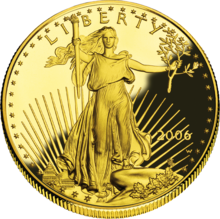 In the first of a two part series, Julian Phillips looks at the jewellery and technology segments of gold demand and their effect on prices.
 The global banking giant HSBC is a "criminal" operation, charges a former officer for the company's southern New York region in a video interview with WND.
 I don't know what the markets think when they flock to dollars and yen, the two big dogs when it comes to debt creation. But it is what it is… and so we carry on, and look for other things that make sense!
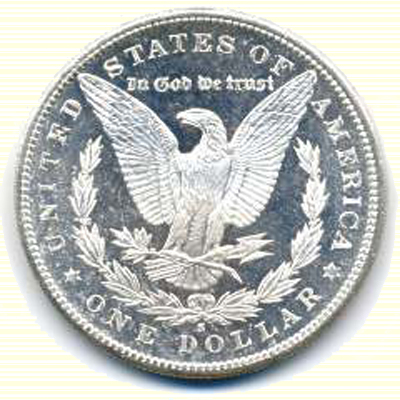 Since the dramatic drops the silver market saw in May and September of last year, prices in the precious metals market have been suffering from an excess of negative sentiment. This adverse perception is weighing on metal prices and keeping investor demand at bay.
| You are subscribed to email updates from Save Your ASSets First To stop receiving these emails, you may unsubscribe now. | Email delivery powered by Google |
| Google Inc., 20 West Kinzie, Chicago IL USA 60610 | |


No comments:
Post a Comment