


saveyourassetsfirst3 |

- Chinese & Indian Gold Demand Rising as Zero Rates “Distort” Investment Markets, “May Kill Credit”
- Are You Ready for Some Super Bowl Inflation?
- Denial of Service
- NFTRH172 Excerpt ‘Gold Stocks’
- Silver: Measuring Wealth In Ounces
- The Bernank is speaking LIVE so Gold is on the Rise!
- Alf Field calls for a target price of $158.34 for silver
- LISTEN: David Morgan and Chris Duane
- Gold Challenges Resistance at $1,750/oz – Technicals and Fundamentals Remain Very Positive
- Living in a Zero Percent World
- Chinese & Indian Gold Demand Rising as Zero Rates "Distort" Investment Markets…
- Do Tax & Regulatory Policies Pose a Threat to the Dollar?
- The Future with James Howard Kunstler
- Guess who's getting stuck with the bill for this week's Super Bowl?
- Silver Price Forecast And The Shift To Measuring Wealth In Gold Ounces Instead Of Dollars.
- Morning Outlook from the Trade Desk - 02/02/12
- Sell! Sell! Sell!
- Metals Looks to Bernanke Testimony for QE3 Clues
- Silver price at $158 in 12-18 months?
- Bill Gross Explains Why Gold Is Becoming The Default "Store Of Value"
- Bill Gross Explains Why "We Are Witnessing The Death Of Abundance" And Why Gold Is Becoming The Default "Store Of Value"
- Gold better for diversification than commodities, Hinde Capital says
- Gold & Silver Market Morning, February 02, 2012
- Why We Don’t Swing for the Fence Trading Gold
- Gold Proves Safest
- James Turk: Great Deals on Gold & Silver
- EADS Loses Massive Contract: India Opts For French Fighter Jets
- Next Target for Silver $158
- Bill Gross: on Gold as “Store Of Value”
- Biderman on Today's Gold Rush
| Posted: 02 Feb 2012 06:03 AM PST Thurs 2 Feb., 09:15 EST Chinese & Indian Gold Demand Rising as Zero Rates "Distort" Investment Markets, "May Kill Credit" The WHOLESALE-MARKET gold price slipped 0.5% from a new 8-week high in London Thursday morning, while global stock markets stalled after a 3-day rise and commodities also edged back. The Euro fell from $1.32 on the forex market for the third time this week after chief finance minister Jean-Claude Juncker said new proposals for stemming the currency zone's debt crisis – agreed at a summit on Monday – were "largely insufficient". The gold price in Euros touched €43,900 per kilo, a level breached only five times during the surge to all-time record highs of summer last year. Beijing meantime said China's full-year gold mining output in 2011 – all of which was bought domestically, since exports are banned – hit a record 361 tonnes, a rise of 5.9% on 2010. China's 2011 gold imports may have reached 490 tonnes, perhaps twice the 2010 level, according to Credit Suisse. So far in 2012, imports of Gold Bullion to India – the world's No.1 consumer – have been "significantly above average" reports UBS strategist Edel Tully, despite last month's doubling of import duties. The central bank of Vietnam said today it plans to "mobilize" private gold holdings via "credit institutions" which would effectively replace the private operations banned last year. "For now, gold may well remain volatile," says Dirk Wiedmann, head of investments at Rothschild Wealth Management, now running some €12 billion ($15.7bn) in client funds. "[But] it is increasingly attractive as the only truly hard currency…[Our] large positions in gold seek to preserve and grow the real value of our clients' wealth." "We can't put $100 trillion of credit in a system-wide mattress," says Bill Gross, founder and co-manager of the giant Pimco bond-funds group. "But [savers and creditors] can move in that direction by delevering and refusing to extend maturities and duration." Because interest rates cannot go down from zero, bond prices have little room to rise, says Gross, and so "Zero-bound money may kill as opposed to create credit. "It may, as well, induce inflationary distortions that give a rise to commodities and gold as store of value alternatives when there is little value left in paper." January's sharp rise in global stock markets, however, means that "Strategists at the biggest banks are capitulating on their bearish forecasts," reports Bloomberg today, citing a sharp reversal in predictions and recommendations after last month's 7% jump in emerging-economy equities. "We have been increasing exposure to risk assets over the past six weeks," says Andrew Cole, director of strategic policy for Baring Asset Management's £9 billion multi-asset portfolios. "We see a self-help cycle materialising" thanks to the European Central Bank's long-term banking loans, Cole tells Investment Week after buying £350m in Italian government bonds. "Italy is not going to go bust and this is our way of getting exposure to the improved liquidity." "We believe that the 'risk off' attitude of investors which took hold in the second-half of 2011 is largely over," agrees Angelos Demaskos, chief investment officer of the £35.6 million Junior Gold Fund ($56m) at Sector Investment Managers in London to Proactive Investors earlier this week. Anyone who "wanted to sell" junior gold mining stocks has already sold, Demaskos believes, "and there is a very strong possibility they will be re-rated to catch up with the underlying commodity." Over the last 12 months, Sector Investment's Junior Gold Fund has lost 9.0% of its value, according to TrustNet. The physical gold price has risen 29.7% in British Pound terms. Silver bullion has risen 11.9% over the last year. "It's been a good month" for US silver coin demand, says Michael Kramer of authorized US Mint distributor Manfra, Tordella & Brookes, quoted by Kitco News and pointing to January as the second-strongest monthly sales of silver bullion Eagle coins on record. Demand was "greatly" helped by the launch of new 2012 coins however, Kramer added., because "People always want the brand-new coins, so January sales are always pretty good." Adrian Ash Gold price chart, no delay | Buy gold online at live prices Adrian Ash is head of research at BullionVault, the secure, low-cost gold and silver market for private investors online, where you can buy gold today vaulted in Zurich on $3 spreads and 0.8% dealing fees. (c) BullionVault 2012 Please Note: This article is to inform your thinking, not lead it. Only you can decide the best place for your money, and any decision you make will put your money at risk. Information or data included here may have already been overtaken by events – and must be verified elsewhere – should you choose to act on it.
|
| Are You Ready for Some Super Bowl Inflation? Posted: 02 Feb 2012 05:49 AM PST January was was the biggest monthly gain for the major indexes since 1997. The real star performances in January, however, came from gold and silver, which gained 11% and 19% respectively in January. |
| Posted: 02 Feb 2012 05:16 AM PST For all who might be wondering, the site is currently being maliciously attacked by someone or something. The common term for this is a "Denial of Service" attack whereby the site is shut down by an overload of requests for access. The servers get overwhelmed and the result is a site shutdown. Who is doing this and why are the questions we are trying to answer. In the meantime, please keep checking the site to see if it has come back up. Hopefully, by later today, we'll get back to business. On a side note, you've surely noticed that silver has finally smashed through $34. With the BLSBS coming out tomorrow, I expect this rally to continue, probably all the way to heavy resistance between 35 and 35.50. Gold has broken out to and should continue rallying all the way to the major downtrend resistance line, somewhere near 1780. Thanks for your patience. TF  |
| NFTRH172 Excerpt ‘Gold Stocks’ Posted: 02 Feb 2012 04:57 AM PST
This is a snippet from NFTRH172 focusing on the writer's methods of viewing markets from a visual and psychological perspective. I just want readers to continually think about herds and about what it takes to be able to get contrary these herds at the appropriate times. NFTRH172 then proceeds on to actual intensive analysis of the precious metals sector and the macro market backdrop.  I learn by looking at pictures. When I was a kid I took a psychograph test on some machine that asked me to list my favorite colors and then spit this out, among other things: "You appreciate beauty in your surroundings… you are a visual learner", and damned if the machine was not right. I am not a 'facts and figures' learner, which by the way is why you do not pay me to analyze the bottom lines of your favorite individual stocks. No, here at the newsletter with the weird name, we are going to proceed within our comfort zone, and that means we are going to be bullish when it is appropriate on a risk vs. reward basis, per simple pictures that cannot be disputed (okay, along with a few facts and figures here and there). For instance, the picture above cannot be disputed in that gold stocks are in a decade long secular uptrend vs. the broad S&P 500. The HUI-SPX ratio broke upward out of an uptrend channel with the euro hysteria, and was simply hammered for having done so. As this process played out, risk management was employed to mitigate a particularly nasty phase for gold stock players, in anticipation of better things to come. This picture was created during the carnage to lend perspective to the proceedings. The perspective was that the HUI was simply coming back to the positive side of the risk vs. reward equation vs. broad equities, as the ratio settled at a strong support area. Everything else is just noise in my book. We know the generally supportive fundamentals of the sector and the 'in line' valuations of quality gold companies, but this view into the mechanics of a major macro theme playing out after the acute phase of the European debt meltdown, refines and distills the process into something understandable and actionable, for visual learners at least. Every step of the way the gold captains implored the troops as to why precious metals were a vital asset in the face of monetary crisis, and why gold stocks were a good play on the precious metals as they sported excellent valuations, not seen since 2008. Well, the market did not care about all of this egghead stuff for four – count 'em – FOUR months after the September high. But the picture above provided perspective that would prove important for people who ultimately would like to be on the right side of things, at least where the interplay between broad stocks and the gold sector is concerned. http://www.biiwii.blogspot.com
|
| Silver: Measuring Wealth In Ounces Posted: 02 Feb 2012 03:36 AM PST Silver And The Shift To Measuring Wealth In Ounces Instead Of Dollars from hubertmoolman: Got Physical ? ~TVR |
| The Bernank is speaking LIVE so Gold is on the Rise! Posted: 02 Feb 2012 02:09 AM PST Ben Berstanky is getting grilled on the Hill. So I guess is safe to say that's why PM's be rising still. |
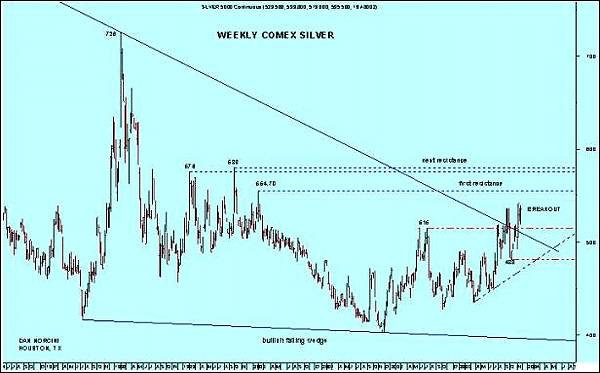
| Alf Field calls for a target price of $158.34 for silver Posted: 02 Feb 2012 02:08 AM PST Alf has earned respect with his earlier calls and Elliott Wave analysis, so this should not be dismissed easily. Snip: Quote: Thus the gain in wave 3 of Major THREE should be larger than +464%. It should be a gain of at least 500%. Starting from the $26.39 low, a gain of 500% would produce a target price of $158.34 for silver. That is the number which equates with the $4500 price forecast for gold and produces a silver to gold ratio of 28.4 ($4500 divided by 158.34). The gain in gold was forecast to be 200% for this move while the forecast rise in the silver price is 500%. Silver is again predicted to perform better than gold based on these EW calculations. |
| LISTEN: David Morgan and Chris Duane Posted: 02 Feb 2012 01:46 AM PST from SGT: Chris and I explore the 1/10th ounce silver payment for a hard day's labor which was the historical norm for centuries. And how that fractional payment will actually hold true in the future for millions of Americans once silver reaches its real all-time inflation adjusted high of $500 per ounce. David Morgan also joins us to explore the very real possibility of hyperinflation in the United States by the year 2014. So buckle up, this is a good one. ~TVR |
| Gold Challenges Resistance at $1,750/oz – Technicals and Fundamentals Remain Very Positive Posted: 02 Feb 2012 01:41 AM PST |
| Living in a Zero Percent World Posted: 02 Feb 2012 01:29 AM PST
So what are some of the consequences of living in a zero percent world? And what does it mean that it could last another three years?
Sign Up For the Mercenary Dispatch Get our best content delivered FREE to your inbox! Check out the Mercenary Dispatch page to learn more.
There are bound to be some curveballs in 2012 (and some big surprises too). Our game plan is to continue hunting for major trend possibilities, but to augment that process of "big game hunting" with an overlay of income generating mean reversion type strategies in this confused, government manipulated environment. JS  |
| Chinese & Indian Gold Demand Rising as Zero Rates "Distort" Investment Markets… Posted: 02 Feb 2012 01:29 AM PST |
| Do Tax & Regulatory Policies Pose a Threat to the Dollar? Posted: 02 Feb 2012 01:28 AM PST Merk Fund |
| The Future with James Howard Kunstler Posted: 02 Feb 2012 12:56 AM PST Warren Pollock interviews and has an open talk with leading author James Howard Kunstler. We are at a cultural moment where we are incapable or understanding reality. We are in a massive cultural denial. We must be sensitive to the hardships we are moving towards so we can make better choices. We are going to be dragged kicking and screaming to our destination. from wepollock: Technology Narcissism and Organizational Grandiosity are both movements of denial of what resides in the future paradigm. The hallmarks are denial the inability to tell the truth to ourselves are unfortunate symptoms of our times. We have a highly integrated economy with most of our activity reliant on cheap energy availability and inputs. The public has been bombarded by propaganda aimed at the voting public but biased to vested interests trying strenuously to loot and gather other peoples money for speculation. We are entering a period where we are going to have investment capital scarcities. Investment capital will be very scarce. Its going to become impossible to develop a technological solution set. Risk in our society has been wrongly priced.. I talk about oil being the collateral of the reserve currency which requires sea empire. We just don't want to know. There is a physical world and the monetary constructs are just a construct and esoteric layer. Complex systems we depend upon will break in the future and we see that process underway. Under these stresses all our systems are destabilizing at the same time with the money and banking system proving to be the most fragile complex system because its the most abstract. The Long Emergency and the Witches of Hebron talk about a world without a steady energy input. With MF Global we have a physical world effect due to monetary breakdown. I talk about the North Korean failed idea or Juche "Self Reliance in Depravation," comprehensive anticipatory design science and ephemeralization, or breakdown crisis. We debate the idea of technological advantage and disadvantage. What is a job? What is necessary for life support? How many people (and workers) are needed today? Will we see a great reset (the long emergency) which will kill off lots of people as we migrate into a low functioning society in the Witches of Hebron? There will be a great deal of human attrition with the Soviet Collapse being illustrative of the process. We talk about the reduction of population in Russia (and reduced life expectancy) as background noise in life. Disease starvation and a slow death will take the population down. Perhaps Dmitry Orlov is correct regarding the process of society collapse. James suggests that we will not see policy or protocol to correct the condition of earth being over its life-support capacity. ~TVR |
| Guess who's getting stuck with the bill for this week's Super Bowl? Posted: 02 Feb 2012 12:22 AM PST From Bloomberg: While Super Bowl fans are riding zip lines through downtown Indianapolis this week in the runup to the National Football League’s championship game, taxpayers are digging deeper in their pockets to pay for the stadium where the game will be played. The $720 million Lucas Oil Stadium, where the New York Giants meet the New England Patriots on Feb. 5, has prompted local officials to raise hotel, restaurant and rental car taxes, and make other payments on top of about $43 million in unexpected financing costs related to their sports and convention facilities. “They said, ‘We’re going to have one great fantastic party with an unbelievable advertisement for Indianapolis (8383MF) and it isn’t going to cost taxpayers a dime,’” said Pat Andrews, 60, a blogger and community activist who ran unsuccessfully for City Council last year. “Well, baloney.” Plans for the 63,000-seat stadium that opened in 2008 as the home of the Indianapolis Colts were unveiled almost a decade ago. Since then, the collapse of the auction-rate bond markethas led officials to restructure what grew to $666.5 million of public debt. The Capital Improvement Board of Managers of Marion County (69790MF), which operates the stadium, collects about $120.6 million in fees and other payments to cover running it and other venues, which is more than double the $58 million it would have received from taxes in place before work on the stadium began, according to financial statements. ‘Marginal’ Effect “The net effect of hosting the NFL Super Bowl is marginal,” said Brian Williams, a local resident and health-care consultant with PwC Consulting. “You should be very clear about the difference in financial cost and the lack of returns on the investment.” The added taxes and fees are on top of $7 million in costs to issue the bonds, undisclosed fees to restructure debt and annual loans from the state that have totaled $9 million. After credit markets collapsed in 2008, the Capital Improvement Board had to borrow $16.9 million from the state treasurer to end a swap agreement with KeyBank, according to minutes from a Jan. 27, 2009, meeting. The board also faced paying $26.3 million after it lost debt-insurance policies provided by Ambac Assurance Corp. (ABKFQ) and MBIA Insurance Corp. (MBI), according to the minutes. $250,000 a Year The Colts, meanwhile, financed two-thirds of their $100 million cost of the stadium through local-government issuers and now pay $250,000 a year to use the stadium -- about two-thirds of the league minimum salary for rookies. “When you’re talking about that much money, there’s better ways to spend it,” said Justin Ross, who teaches public finance at Indiana University. “Super Bowls, like Olympics, don’t seem to produce much economic benefit and probably have some significant costs.” Indianapolis isn’t alone. Scores of public officials fromPortland to Puerto Rico bought the same Wall Street pitch: Auction-rate bonds -- variable-rate securities with yields that reset at weekly or monthly auctions -- would lower municipal-financing costs by letting them pay short-term rates, and derivative agreements known as interest-rate swaps would protect them if markets moved in the wrong direction. The Giants and Patriots borrowed for their stadiums with those bonds and got stuck with interest rates as high as 20 percent. Exceeding Estimates As officials in Santa Clara, California; Minnesota; Atlanta; and San Diego debate paying for NFL stadiums, research by Judith Grant Long, who teaches urban planning at Harvard University in Cambridge, Massachusetts, has shown that costs often exceed expectations. Public subsidies for sports venues cost taxpayers an average of 40 percent more than the stated price for each of the 99 facilities built through 2001, according to her research. Dan Huge, the chief financial officer of the Capitol Improvement Board, said the organization was successful in raising the revenue it needed to continue operating. “We did that mostly with taxes on out-of-town guests,”Huge said in an interview. “We were able to keep our balance sheets at adequate reserve levels.” Indiana increased efforts to attract sports organizations and events in 1979 with the creation of the private, not-for-profit Indiana Sports Corp. The home of the Indianapolis 500 auto race attracted the Pan Am Games in 1987. In 1999, theNational Collegiate Athletic Association moved its headquarters to the city. Keeping Colts At about that time, Indianapolis began seeking a deal to keep the Colts, who had played in the RCA Dome, the league’s smallest venue, since departing Baltimore in 1984. The Colts’lease contained an escape clause allowing the club to move as soon as 2006 if revenue didn’t match the league median. A 2002 poll by the Indianapolis Star and WTHR-TV found 71 percent of residents disapproved of using tax money for a stadium. In December 2004, then-Mayor Bart Peterson and owner Jim Irsay announced they’d reached a deal that would keep the Colts in Indianapolis for at least 30 more years. The centerpiece of the agreement: The city would build a new stadium downtown as part of a renovation of the convention center. That plan included a venue that cost $600 million, paid for with gambling money. Legislators rejected Peterson’s finance plan, and the mayor lost control of the project to a state board controlled by the governor, said Ross, of Indiana University. Peterson didn’t return a telephone call seeking comment. Hotel Tax Raised The bill that eventually passed raised the hotel tax in Marion County, which encompasses Indianapolis, to 9 percent from 6 percent, on top of a 6 percent state tax. County rental car taxes doubled to 4 percent. Marion County doubled its food and beverage tax to 2 percent and surrounding counties added a 1 percent restaurant tax. John Livengood, president of the Indiana Restaurant Association, said the businesses he represents supported the 3 percentage point hotel tax increase to expand the convention center and build a stadium. At the last minute, the mayor and governor also endorsed increasing the 1 percent restaurant taxused to finance the old stadium, and the governor campaigned to get surrounding counties to go along. “We opposed the new taxes, as we had the first restaurant tax, but at that point it was too late to go in another direction,” Livengood said by e-mail. “No one wanted to lose the Colts.” ‘Crown Jewel’ Peterson applauded the legislation in a statement at the time, saying the project would add a combined $2.25 billion to Indianapolis’s economy, guarantee decades of hosting college basketball tournament games and make the city eligible to host Super Bowls, “the crown jewel of the sports world.” Peterson also said that while the plan included money to design and build the stadium, the law made no provision for the cost of operating and maintaining it. “Unless rectified by future legislative action, this situation will bankrupt the CIB shortly after the project is completed,” he said. To pay for construction of the stadium, the Indiana Finance Authority borrowed about $612 million from 2005 to 2007 using auction-rate bonds secured by state appropriations and insured by New York-based FGIC Corp. Kendra York, public finance director for the authority, didn’t respond to a telephone call and an e-mail seeking comment on the matter. Credit Freeze Credit markets began to freeze up during the sub-prime-mortgage market collapse in 2007, before the stadium opened. FGIC lost its AAA rating in January 2008 and buyers became less interested in the securities because the lower grade increased the risk that they wouldn’t get paid in the event of a default. The auction-rate market fell apart the next month. As a result, interest rates on some of the stadium bonds jumped to 15 percent on Feb. 13, 2008, from 3.4 percent seven days earlier, data compiled by Bloomberg show. The stadium, designed by Dallas-based HKS Inc., opened in August 2008. It has a peaked roof, gabled north-south down the length of the playing field, that can open and close in nine minutes. A 110-foot (34-meter) wide by 88-foot-high window looks north over downtown. Five months later, as Peterson had feared, the Capital Improvement Board began predicting a 2009 deficit of $25 million growing to more than $45 million in the next year. That included a $19.5 million shortfall for the stadium, new bond insurance, and the $16.9 million to unwind the unfavorable rate swap. Cost Cutting The board began saving money, cutting about $3.2 million in grants to groups including the Arts Council of Indianapolis. In July 2009, state lawmakers approved a plan that closed the agency’s budget gap by letting the city raise hotel taxes to 10 percent from 9 percent and loaning it about $9 million a year. The board’s budget for 2011 restored about $600,000 in arts and culture grants. NFL owners voted in 2008 to hold the 2012 Super Bowl in Indianapolis. The state’s website describes a potential economic impact of $286 million. A study from Ball State University in Muncie, Indiana, said the game may be worth $365 million in economic activity, noting that figure didn’t account for local public-sector expenditures. Those numbers may be three to 10 times higher than the game’s actual value, based on data such as employment, tax receipts and personal income, according to Victor Matheson, an economist at the College of the Holy Cross in Worcester, Massachusetts. He has studied impact estimates of the game. Move Decimal “A rule of thumb economists use is to take whatever the organizers tell you and move the decimal point one place to the left,” Matheson said. “There’s every reason to believe the Super Bowl will make Indianapolis residents happy. But there’s no reason to believe it will make them rich.” Mark Rosentraub, who teaches economics at the University of Michigan, said Indianapolis needed a subsidy to keep the team, because it’s one of the league’s smallest markets. The project was also the backbone of a downtown redevelopment effort that used about $2.5 billion in public investment. It helped companies including Marriott International Inc., which openedthe world’s-largest J.W. Marriott in 2011 as part of a $450 million downtown hotel complex, produce a total of about $8 billion in development. “It’s a large subsidy,” Rosentraub said. “The positive is if you take a look at downtown Indianapolis, it’s probably the most active downtown in the Midwest and it’s going to look spectacular at the Super Bowl.” Economic Development For Governor Mitch Daniels, a Republican, the state’s help for the area wasn’t just about the stadium or the Colts, according to Jane Jankowski, a spokeswoman. “It was about the expansion of the Indianapolis Convention Center and the economic development it would bring,” Jankowski said by e-mail. “Seven counties in central Indiana, which receive the greatest benefits from the project, worked together to make an investment in the future of the area and share the responsibility for financing the stadium through a regional food and beverage tax. No state tax dollars were used and no tax dollars are being collected outside of central Indiana.” This week, organizers set up an 800-foot zip line over part of the downtown, as part of what the city is calling “the Epicenter of Awesome.” Other attractions include a nightly light and pyrotechnics show, free concerts and ice sculptures. Andrews, the former Indianapolis City Council candidate, said the money spent on the stadium and game could have been used to better effect. She said there’s been insufficient accounting of the game’s public costs, such as forgiven taxes, or the proceeds from public parking lots turned over to the NFL. The CIB expects to lose about $800,000 hosting the game, after paying for things like extra workers, maintenance, legal services, utilities and snow removal, according to Huge. “The public still hasn’t had full disclosure of what it’s going to cost,” Andrews said. “It’s going to have to come out of services. And we don’t have any extra cash lying around.” To contact the reporters on this story: Aaron Kuriloff in New York at akuriloff@bloomberg.net; Darrell Preston in Dallas at dpreston@bloomberg.net. To contact the editors responsible for this story: Michael Sillup at msillup@bloomberg.net; Mark Tannenbaum at mtannen@bloomberg.net. More boondoggles: This income tax fact should make your blood boil Must-read take on Congress' outrageous new tax proposal This single government subsidy cost American consumers $3.86 billion last year |
| Silver Price Forecast And The Shift To Measuring Wealth In Gold Ounces Instead Of Dollars. Posted: 02 Feb 2012 12:19 AM PST Silver Price Forecast: The debt-based monetary system creates an illusion of wealth. It allows for claims on real goods to significantly exceed the actual amount of real goods. You then have a number of people believing they have wealth, since they have claims (pieces of paper or tokens) showing that they have these real assets, [...]  This posting includes an audio/video/photo media file: Download Now |
| Morning Outlook from the Trade Desk - 02/02/12 Posted: 02 Feb 2012 12:04 AM PST Not much to report from the front lines. Markets treading water. Tried to break up through minor resistance at $1,752 and met some selling. Next attempt should clear this level and push for the $1,775 test unless Europe has a bad headline. |
| Posted: 02 Feb 2012 12:02 AM PST Yeah,whatever.... Gold May Drop as Stronger Dollar Prompts Investors to Sell; Silver Falls....... Gold may decline for the first time in three days in New York as a stronger dollar spurs some investors to sell the metal after its rally to an eight-week high. The dollar climbed against the euro as Greece struggled to reach an agreement with bondholders on cutting the nation's debt burden. Demand for physical gold from India has been "significantly above average" so far this year, despite higher import duties, Edel Tully, an analyst at UBS AG, told a conference in London today. "After the strong rally, people are opting for a more cautious investment approach to gold," said Bayram Dincer, an analyst at LGT Management in Pfaeffikon, Switzerland. The stronger dollar is also "a factor which keeps the price of gold in check." Gold for April delivery fell 0.1 percent to $1,747.60 an ounce by 8 a.m. on the Comex in New York. Prices earlier today reached $1,756.70, the highest since Dec. 8. Bullion for immediate delivery was up 0.1 percent at $1,744.93 in London. The metal climbed 10 percent in 2011, an 11th consecutive annual gain, as investors sought to diversify from equities and some currencies. Gold reached a record $1,923.70 in September and holdings in bullion-backed exchange-traded products are within 1 percent of December's all-time high. Assets increased 4.4 metric tons to 2,376.2 tons yesterday, data compiled by Bloomberg show. Greece Discussions Greece and its creditors are locked in discussions over a debt-swap deal for the nation. The bondholders last week lowered their demands for an average coupon on the new 30-year debt they would receive to as little as 3.6 percent from 4.25 percent after European officials demanded they take steeper losses, people familiar with the matter said at the time. Silver for March delivery fell 0.6 percent to $33.59 an ounce. It's the best-performing precious metal this year with a gain of 20 percent. Palladium for March delivery was little changed at $696.55 an ounce. Platinum for April delivery was 0.1 percent lower at $1,621.80 an ounce. To contact the reporter for this story: Nicholas Larkin in London at nlarkin1@bloomberg.net; Glenys Sim at gsim4@bloomberg.net http://www.bloomberg.com/news/2012-0...-improves.html |
| Metals Looks to Bernanke Testimony for QE3 Clues Posted: 01 Feb 2012 10:15 PM PST Inflation expectations remain in focus for gold prices, with Fed Chairman Ben Bernanke's congressional testimony clearly the most significant item of concern. Prices are testing above resistance at $1,746.10. |
| Silver price at $158 in 12-18 months? Posted: 01 Feb 2012 09:30 PM PST The Facebook IPO and the $80 billion Glencore/Xstrata merger are the talk of the markets this morning, with both lending encouragement to equities. North American stock markets had another up day ... |
| Bill Gross Explains Why Gold Is Becoming The Default "Store Of Value" Posted: 01 Feb 2012 09:12 PM PST ¤ Yesterday in Gold and SilverGold was pretty flat through most of Far East trading...and Wednesday's low of the day came at 3:00 p.m. Hong Kong time...about an hour before London opened on their Wednesday morning. Gold's high of the day [about $1,750 spot] came at 12:30 p.m. in London...and it was then sold off into the London p.m. gold fix two and a half hours later. The ensuing rally was not allowed to get over the $1,750 mark once again...and after it regained that price about 11:30 a.m. in New York, the price got slowly sold off going into the close of electronic trading at 5:15 p.m. Eastern. The gold price closed in New York at $1,743.00 spot...up $6.30 on the day. Net volume was very decent at 120,000 contracts.
The silver price path was similar...and the rally that began at 3:00 p.m. in Hong Kong yesterday afternoon was far more substantial, but ran into a determined seller once the price got within a dime of the $34 price level. From that point, silver pretty much traded sideways...and the many attempts it made to rise about the $34 spot price mark were firmly sold off. Silver closed the New York trading session at $33.71 spot...up 58 cents. Net volume was 31,000 contracts...and I can tell from the closing CME volume numbers that the roll-overs out of the March silver delivery month is already underway.
The dollar index rose about 25 basis points earlier in the Far East on Wednesday...and topped out at precisely 2:00 a.m. in New York, which just happened to correspond with the low prices for gold and silver at 3:00 p.m. Hong Kong time during their Wednesday afternoon. Starting at the 2:00 a.m. high of 79.55...the dollar index spent the next nine hours declining all the ways down to 78.63...a fall of 92 basis points, or 1.16%. It's obvious, at least to me, that the original rallies in both gold and silver that began at 3:00 p.m. Hong Kong time...about an hour before London opened...got capped at 10:00 a.m. in London. If you look at the Kitco gold and silver charts above, it's easy to spot. Once the low was in about 11:05 a.m. Eastern time, the dollar index rose about 30 basis points going into the close of New York trading. Without the price management scheme in London and New York yesterday, the precious metals would have blasted off on this drop in the dollar. If you remember what happened to silver on Tuesday, silver got clocked for 4% on a dollar rally of only 55 basis points. [Here's the link to my column yesterday if you want to check it out.] The price management scheme pretty much attempts to negate the rise in precious metals prices as the dollar index falls...and then press their advantage when the dollar index rises.
The gold stocks more or less followed what the gold price did...and the HUI finished unchanged from Tuesday.
For the second day in a row the silver stocks finished mixed...but Nick Laird's Silver Sentiment Index closed up 1.90%.
(Click on image to enlarge) 'Day 3' of the February delivery month for gold showed that 241 gold and a chunky 146 silver contracts were posted for delivery on Friday. In gold, the biggest short/issuer was JPMorgan out of its house account, with 183 contracts to deliver. Jefferies was a distant second at 43 contracts. The biggest long/stopper...180 contracts...was Deutsche Bank out of its proprietary [house] trading account. In silver, it was Jefferies once again. They were the short/issuer for all 146 contracts. The lion's share of these deliveries were received/stopped by the Bank of Nova Scotia and JPMorgan. These two firms will take delivery of 134 silver contracts of the 146 issued. The link to yesterday's Issuers and Stoppers Report is here...and it's worth a quick peek. There were no reported changes in either GLD or SLV...and the U.S. Mint had nothing to say for itself, either. The Comex-approved depositories had another big day on Tuesday, as they reported receiving 999,973 troy ounces of silver...and shipped 687,566 ounces of the stuff out the door. The link to that action is here. Silver analyst Ted Butler posted his mid-week comments to clients yesterday...and I've had to steal three paragraphs from this report in order to make the point he makes about the short position in SLV. These three paragraphs are must reads. I hope he's still talking to me when I call him tomorrow. "What is very upsetting to me is when the SLV short sellers are not even trying to buy a few days' or weeks' worth of time in order to round up the physical silver to deposit, but instead have no intention of ever depositing silver into the SLV. Having no intention of ever depositing silver on shorted shares is pure fraud and manipulation. And that intention is easy to prove – all you have to look at short interest data for the past year. The short interest in SLV has averaged over 25 million shares for all of 2011 into today. That means 25 million ounces of silver have not been deposited and the buyers of those shorted shares do not have the metal backing their shares as dictated by the prospectus. This goes to the heart of my argument. Because the short sellers of these shares clearly have no intent to deposit the metal (otherwise they would have done so by now), they are defrauding whoever owns the shares with no metal backing (perhaps my wife). Further, if the 25 million ounces of silver that should be backing the shorted shares had actually been purchased and deposited into the SLV, the price of silver would be substantially higher. That's where the manipulation angle comes in." "Before the SLV started trading in 2006, the Silver Users Association petitioned the US Securities and Exchange Commission to prevent its introduction because the SUA claimed there was not enough silver to supply it without causing prices to surge. The SEC took the unusual action of formally reviewing the matter and decided that the SUA's fears were unfounded and approved trading in SLV. Despite the SEC's intense review (complete with a public comment period), the matter of short selling in the shares was hardly considered. The only reference to short selling in the final rule was on pages 13-14 under the topic of liquidity of the shares. An objective reading of that reference connotes an understanding that any short selling in shares of SLV would be temporary until the short sellers could quickly deposit silver. The link to that ruling is here." "No one, including me, contemplated the effects that a large and permanent short position in SLV might have on shareholders and the price of silver. Today, six years after the SEC's final ruling, the effects have become clear. In addition to potentially defrauding large numbers of SLV shareholders, the large and permanent short position has enabled two massive 35% takedowns in the price of silver in 2011. Make no mistake – these takedowns would not have occurred, in my opinion, had there been no excessive short position in SLV. Despite all this, I am still convinced that this fraudulent and manipulative short position in shares of SLV will be rectified in time and that shareholder and silver investors will be amply rewarded when that time of rectification comes." Nick Laird of sharelynx.com fame sent me a couple of charts that he thought might be of interest. The first is US Bond Yields for 5, 10 and 30 year bonds starting back in 2007. As you can see, the 5-year bond is at record low yields...and the 10 and 30 year are not that far behind.
(Click on image to enlarge) And here's the Total PMs Pool chart...the total physical ounces of all know repositories, ETFs, funds, etc...and all valued in US$. As you can see, we are back at record levels of metal held...and the big increase in value of all metals took a big jump in January. We're not back at record-high prices, but a new record high price is less than 5% away.
(Click on image to enlarge) Here's a 3-year chart of the CRB that has some interesting annotations on it. I thank Washington state reader S.A. for sharing it with us.
I have the usual number of stories today...and I hope you find most of them of interest. A run-away gold price would certainly be the end of the current fiat money system in very short order if the free market was allowed to operate unchecked. Gold better for diversification than commodities, Hinde Capital says. Italy's Top Gold Scrap Buyer Sees Booming Business. Doug Casey on the Coming War with Iran. ¤ Critical ReadsSubscribeAfter a Delay, MF Global's Missing Money Is TracedInvestigators have determined what happened to nearly all of the customer money that disappeared from MF Global around the time of its bankruptcy last Oct. 31, but have not publicly disclosed their progress, fearing that doing so might cripple efforts to recover the cash and pursue potential wrongdoing, people briefed on the investigation said. While authorities have traced hundreds of millions of dollars to banks, MF Global's trading partners and even the firm's securities customers, investigators remain uncertain about whether they can retrieve the money. Some recipients were entitled to payouts from MF Global, which could make clawing back the money difficult. For instance, securities customers withdrawing their money as MF Global began to collapse were paid from accounts that belonged to futures clients, according to other people briefed on the matter. This story was posted late Tuesday night in The New York Times...and I thank reader Phil Barlett for sending it along. The link is here.  Slow Start to 2012 Evident in January U.S. Rail TrafficFitch Ratings sees little evidence of a notable ramp up in U.S. economic activity in January freight volume trends, with shipments of major industrial commodities growing at a lackluster pace. Data provided by the Association of American Railroads points to generally sluggish demand growth across most commodity groups through Jan. 21, with a few notable exceptions where early 2012 expansion may outstrip growth in the broader economy. Management teams at the largest U.S. rail operators have painted a picture of relatively restrained volume growth for 2012, after rail carload growth slowed in the second half of 2011. Relatively strong operating fundamentals for Class I rail operators such as CSX Corp. and Union Pacific Corp. continue to be driven more by pricing than volume. Revenue per carload growth rates again outpaced volume growth in the fourth quarter, reflecting the strength of the rail pricing environment and higher fuel surcharges. Total carloads grew by only 1.1% year over year during the first three weeks of January, and robust growth is evident only in a few select commodity groups. Shipments of high-volume commodities such as coal and chemicals are flat or declining on a year-over-year basis. This story was posted over at the fitchratings.com website on Tuesday afternoon...and is one I borrowed from yesterday's edition of the King Report. It's worth skimming...and the link is here.  Dead Market Exhibit A: January VolumePresented with little comment except to say that the total lack of volume (and massive concentration of what volume there is at the close) is hardly reflective of a market that is anything other than broken and dying. Last January (2011) the average number of stocks traded on the NYSE per day was 891mm shares vs. 661mm for this January (a 26% drop YoY!) and this is down an incredible 59% from January 2008. This one-paragraph article, which you just read, was posted over at zerohedge.com late on January 31st...and the graph is worth the trip. This is another story that I borrowed from yesterday's King Report. The link is here.  Greece nears debt deal with banks but EU clash loomsGreece was on the brink of a deal with private creditors on Wednesday night after weeks of brinkmanship. But the simmering clash with EU officials and the International Monetary Fund has yet to be resolved and remains a larger threat. "We are just one step, just a formality, from completion," said Evangelos Venizelos, the Greek finance minister. The deal will slice €100bn off Greece's debt and leave banks, pension funds, and other bondholders nursing effective losses above 70pc, but it does not in itself avert the risk of a Greek default in March. This Ambrose Evans-Pritchard offering was posted in The Telegraph yesterday evening...and is Roy Stephens first offering of the day. The link is here. Posted: 01 Feb 2012 09:12 PM PST  While sounding just a tad preachy in his February newsletter, Bill Gross' latest summary piece on the economy, on the Fed's foray into infinite ZIRP, into maturity transformation and the lack thereof, on the Fed's massive blunder in treating the liquidity trap, but most importantly on what the transition from a levering to de-levering global economy means...is a must read. |
| Gold better for diversification than commodities, Hinde Capital says Posted: 01 Feb 2012 09:12 PM PST  Hinde Capital in London, whose CEO, Ben Davies, spoke at GATA's Gold Rush 2011 conference there in August, published analysis yesterday arguing that investment diversification into commodities generally is not much of a boon and is far surpassed by investment in gold. I extracted this story...and Chris Powell's introduction...from a GATA release yesterday. The Hinde letter is titled "The Myth of Commodity Diversification" and it's posted at the Hinde Capital Internet site...and the link is here. |
| Gold & Silver Market Morning, February 02, 2012 Posted: 01 Feb 2012 09:00 PM PST |
| Why We Don’t Swing for the Fence Trading Gold Posted: 01 Feb 2012 08:55 PM PST |
| Posted: 01 Feb 2012 08:38 PM PST "Gold provided the best returns of all commodities in the past five years when adjusted for volatility, and Goldman Sachs Group Inc. says the rally will continue as options traders signal no change in the metal's relatively low risk." "The BLOOMBERG RISKLESS RETURN RANKING shows the Standard & Poor's GSCI Gold Total Return Index produced a +6.5% risk- adjusted return in five years ended yesterday, the highest among 24 commodities tracked by S&P, data compiled by Bloomberg show. Silver, the next-best performer, yielded a risk-adjusted gain of +3.1%, while a total-return index for all raw materials slipped -0.2%." "Bullion, which has seen 11 years of gains as investors sought a haven amid two bear markets in stocks and a sovereign debt crisis, also posted the safest return in the past 12 months, even as it fell from a record high to a five-month low in the second half of last year and gold investors led by John Paulson suffered losses. Goldman Sachs forecasts gold will reach a record this year and a gauge of future price swings is near a five-month low." "Economic problems increased globally, and gold emerged as a safe-haven investment," Walter 'Bucky' Hellwig, who helps manage $17 billion of assets at BB&T Wealth Management in Birmingham, Alabama. "Monetary easing by China and quantitative easing in Europe and the U.S. will help it remain a store of value." "The risk-adjusted return is calculated by dividing total return by volatility, or the degree of daily price-swing variation, giving a measure of income per unit of risk. The returns are not annualized. A higher volatility means the price of an asset can swing dramatically in a short period of time, increasing the potential for unexpected losses compared with a security whose price moves at a steady rate." "Gold's longest rally since at least 1920 in London has attracted investors' worldwide seeking protection from some of the most violent market swings in stock markets on record. The Dow Jones Industrial Average posted four consecutive days of 400-point swings last year, the longest streak since data began in 1896. The S&P 500's average daily price move since its 2011 high in April was 1.8% points, compared with an average of 1.1% points in the five years before Lehman Brothers Holdings Inc. collapsed in September, 2008." "The risks that spurred market volatility last year will keep swaying asset prices and the global economy, Nouriel Roubini, the economist who predicted the 2008 financial crisis, said in a talk at Bloomberg's headquarters in New York on January 19. Rising commodity prices, uncertainty in the Middle East, the spreading European debt crisis, increased frequency of "extreme weather events" and U.S. fiscal issues are "persistent" problems."
        This posting includes an audio/video/photo media file: Download Now |
| James Turk: Great Deals on Gold & Silver Posted: 01 Feb 2012 08:09 PM PST The GoldMoney founder and chairman knows how to find great deals on gold and silver. He claims that the 2012 bottom for gold came during the first week in January. |
| EADS Loses Massive Contract: India Opts For French Fighter Jets Posted: 01 Feb 2012 07:10 PM PST French defense manufacturer Dassault has beaten EADS for the right to negotiate exclusively with the Indian government on the sale of 126 fighter jets. Still, the deal could ultimately collapse -- in the past, all other talks to sell Dassault's Rafale aircraft abroad have failed... Read |
| Posted: 01 Feb 2012 06:48 PM PST Alf Field Predicts $ 158 as Next Target for Silver WHAT ABOUT SILVER?
I have received numerous emails asking about silver. This article was prompted by a question enquiring what the silver price might be if my gold forecast of $4,500 proved to be correct. As I own some silver bullion and a number of silver mining shares, the question caused me to pause and take a closer look at silver. The reason why I have written very little about silver in the past was because the beautiful Elliott Wave (EW) symmetry and predictable relationships visible in gold were not to be found in silver. I first wrote about silver in December 2003 in an article titled "US Dollar Implosion – Part II". The link to this article is at: http://www.gold-eagle.com/editorials_03/field120503.html. The brief piece on silver was tacked onto the end of that article. In view of its brevity, the 2003 silver piece is reproduced in full below: Read More @ GoldSwitzerland.com |
| Bill Gross: on Gold as “Store Of Value” Posted: 01 Feb 2012 06:48 PM PST Bill Gross Explains Why "We Are Witnessing The Death Of Abundance" And Why Gold Is Becoming The Default "Store Of Value" from ZeroHedge:
Read More @ ZeroHedge.com |
| Posted: 01 Feb 2012 06:46 PM PST Gold & SIlver ETFs Getting New Money Again
|

 After last week's Federal Reserve announcement, investors are mentally adjusting to an extended ZIRP mentality — three more years of Zero Interest Rate Policy ('til the end of 2014). The jobless rate is near a three year low, but that's still too high for the powers that be.



| You are subscribed to email updates from Gold World News Flash 2 To stop receiving these emails, you may unsubscribe now. | Email delivery powered by Google |
| Google Inc., 20 West Kinzie, Chicago IL USA 60610 | |

No comments:
Post a Comment