


saveyourassetsfirst3 |

- Assessing Implications Fed Decision To Keep Rates Low Through 2014
- Eric Sprott on the PSLV Secondary Offering
- Indian Govt declines any comment on use of Gold to pay for Iranian Oil
- Bob Chapman - The art of being a Broker
- Continuing Negative Real Interest Rates Sees Gold Rise Above $1,700/oz
- Inconsistent nonsense
- Resource guru Sprott: Expect "serious fireworks" in gold
- BROKEN DOLLAR
- When the global housing bubbles collapse like a row of dominoes
- Morning Outlook from the Trade Desk 01/26/12
- Eric Sprott Talks About Chinese Demand, Fed's Free Money...and PSLV's New Buy
- Gold & Silver Market Morning, January 26, 2012
- Philip Pilkington: Is QE/ZIRP Killing Demand?
- LISTEN: Peter Grandich talks with Chris Waltzek
- LISTEN: Bob Chapman on Gold & Silver
- Bernanke lights a fire under gold and silver prices
- Silver Update: “Junk Silver”
- Doug Casey on the Collapse of the Euro and the EU
- Sprott talks about Chinese demand, Fed's free money, PSLV's new buy
- John Williams: Accelerating Great Collapse & Hyperinflation
- Fed Gives Green Light to Gold Stocks
- No More Safe Havens
- Bernanke’s Dog(ma)
- Yellow Flag Out for Stock and Gold Bulls
- Fed To Markets: Buy Gold And Silver
- Yes, Virginia, Servicers Lie to Investors Too: $175 Billion in Loan Losses Not Allocated to Mortgage Backed Securities (and Another $300 Billion on the Way)
- The Man Without A Plan
- Yellow Gold Looks Strong Again…
- Fed announces interest rates to remain near 0% through 2014
- Janet Tavakoli on Silver Price Manipulation
| Assessing Implications Fed Decision To Keep Rates Low Through 2014 Posted: 26 Jan 2012 05:59 AM PST By Simit Patel: The big news yesterday was the FOMC statement in which the Federal Reserve stated its intention of keeping the Fed Funds rate in the 0% - 0.25% range until at least late 2014. Gold rallied immediately on this news, while the dollar fell significantly across the board. That basically tells the story right there of what this means for the next two years -- dollar weakness will be the dominant trend -- but for good measure, let's talk a fuller look at things: The gold story is nothing new, it has been the same for the past 10 years. The world is transitioning away to a new reserve currency; the only way this process will be discontinued if the U.S. can negate its budget and trade deficits, and negotiate some form of debt cancellation with Treasury bondholders. This is becoming increasingly unlikely and as that becomes more accepted, the run Complete Story » |
| Eric Sprott on the PSLV Secondary Offering Posted: 26 Jan 2012 03:31 AM PST "We love you and what you have done for precious metals optionality, but a high premium is not a good thing, Mr. Sprott. You can fix that; please do so, sir." – Gene Arensberg HOUSTON -- In the linked audio interview below Sprott Asset Management's Eric Sprott tells Eric King of King World News that the recent secondary offering for the Sprott Physical Silver Trust (PSLV, a closed end fund, not an ETF) reached $349 million, including the over-allotment green shoe granted to the underwriters. Mr. Sprott confirmed they had already made buy commitments for the additional silver, but was uncertain when the metal would arrive. Unfortunately Mr. Sprott chose to focus his comments on the miniscule increase in the net asset value (NAV) the new silver purchase adds to PSLV rather than addressing or apologizing for the destructive collapse in the overly high (up to 30%) premium the trust had risen to just ahead of the offering. Recall that we reported on that premium collapse for PSLV on January 22 (article at this link), highlighting the danger to closed end fund investors of buying shares of the securities when their premiums have been bid up to unreasonable and unjustifiable levels.
Continued… We happen to love the idea behind the Sprott Physical Silver Trust, but we loathe the idea that people get hurt by it when they unknowingly pay too much for a silver trading vehicle. As we pointed out in the linked article above some PSLV holders were definitely harmed by the sudden evaporation of premium (from about 24% to about 9% on the day of the offering, clocking holders for about $1.30 per share). If the premium for PSLV "gets back up to where we were" then in our own view it means that Sprott actually encourages higher premiums which guarantees that some future holders of the silver-backed paper trading vehicle are bound to get hurt again. Mr. Sprott's curious reasoning that the PSLV premium had been driven up by "wise guy short sellers" leaves us scratching our head, wondering if we heard him right and wishing he had either not said that, or in the alternative, had explained why his silver fund is vulnerable to high premiums through wise guy short covering - the only way short sellers can drive up a premium. We'd also like to hear why there is no real time mechanism to warn innocent buyers that the premium has reached untenable levels. We believe that Mr. Sprott's instincts and statistics for silver and gold are spot on accurate. We could not agree more with his views on the likely trajectory for the second most popular precious metal. We have the highest respect for the Sprott Global and Sprott Asset Management family of companies, and do indeed believe beyond the slightest of doubt that every last ounce of silver the trust claims is exactly where it is supposed to be. However, until and unless the Sprott folks find a mechanism to insure that the premium for PSLV is no longer allowed to reach injurious levels; until and unless our beloved Mr. Sprott adopts a public stance against high premiums for the funds his empire manages (instead of apparently encouraging them), we will have to practice strict avoidance of PSLV as a paper silver trading vehicle – except for those brief periods of time when the premium collapses once again to reasonable, non-dangerous levels. We urge Mr. Sprott to reconsider his apparent intention to foster hazardously high premiums and instead seek to educate potential PSLV buyers to first check what the premium is before buying, every time. Indeed, that is the kind of responsible leadership we have all come to expect from Mr. Sprott. In short (no pun intended); We love you and what you have done for precious metals optionality, but a high premium is not a good thing, Mr. Sprott. You can fix that; please do so, sir. To listen to the interview with Mr. Sprott, follow the link below. Be sure to reflect on his views about the undervalued mining shares toward the end of the audio.
Disclosure: The author holds no position in PSLV, long or short. The author does hold a long position in SLV as previously disclosed as well as in leveraged securities, options and physical metal. |
| Indian Govt declines any comment on use of Gold to pay for Iranian Oil Posted: 26 Jan 2012 02:33 AM PST |
| Bob Chapman - The art of being a Broker Posted: 26 Jan 2012 01:54 AM PST Bob Chapman - Kerry Lutz 25 January 2012 : just buy gold and silver and be... [[ This is a content summary only. Visit my blog http://www.bobchapman.blogspot.com for the full Story ]] This posting includes an audio/video/photo media file: Download Now |
| Continuing Negative Real Interest Rates Sees Gold Rise Above $1,700/oz Posted: 26 Jan 2012 01:44 AM PST |
| Posted: 26 Jan 2012 12:51 AM PST Worth reading this response by Victor the Cleaner in FOFOA comments to this question: "At the moment, in order to influence the Gold price downwards, all that needs to be done by the authorities in LBMA and COMEX, is to raise the margin requirements." This is complete and utter nonsense. LBMA is a trade association and not an exchange and as such does not set any 'margin requirement'. The LBMA member firms are typically those banks and other financial institutions that trade gold and silver OTC in London, but non-members around the world also trade OTC with these institutions. When Newmont has some trucks on the road on the way to the refiner, they might want to sell that gold immediately to eliminate any further price volatility from their accounts, and so they might phone JPM and sell that stuff forward. None of the two counterparties is a speculator here. Newmont does have the real stuff, and JPM does have the cash. So even if they would require collateral, this would not influence the price. Yes, there are probably some raw recruits who follow websites such as TF and who trade COMEX futures in under-capitalized accounts. Yes, CME occasionally raises the margin. Yes, they may just be checking who is the under-capitalized novice and who really has the cash in order to purchase the gold for the contracts they hold. Yes, they may just rip off the clueless novice for fun (and money). But to think this would set the spot price of gold is quite a hubris. The OTC market is ten times bigger than COMEX, and so it pushes COMEX around in a way that most COMEX-fixated goldbugs don't understand. If you want to keep gold cheap in the long run, you need to create a huge volume of gold loans, expand the 'money supply'. If you want to manage the price of gold intra-day (and yes, there is indeed statistical evidence for this), you need to sell a lot of gold at spot in a short period of time. But you can do this only if you are a credible financial institution and only as long as you can hand over the allocated whenever your counterparties request it. So you need to understand extremely well what you are doing and how much physical per paper you need to be able to show. Hiking the COMEX margin is a side show. What I find rather disappointing is the extremely poor quality of the discussion that is presented on the typical precious metal websites. This is financial product pushing of the same quality as pre-1999 when they IPO'd the companies that sell dog-food online. Here are FOFOA, people discuss a very good reason for owning gold. For some reason, the mainstream goldbug websites totally ignore the good reason and push gold with inconsistent nonsense instead. Why is that? Want to scalp PSLV? Want to create a mania, sell them financial products (including GoldMoney which is no longer 'money' by the way) and then when the big blackout comes, grab the gold for cheap from those who sell in panic because they never understood why they owned it in the first place? Very sad. And when the Financial Times calls the goldbugs confused idiots, sadly, there is even some truth in this statement. If Victor keeps this up I'll be out of a blogging job.  |
| Resource guru Sprott: Expect "serious fireworks" in gold Posted: 26 Jan 2012 12:38 AM PST From King World News: Today, billionaire Eric Sprott told King World News the Chinese cannot continue to buy gold as aggressively as they have been without there being a dramatic increase in the price. Eric Sprott, chairman of Sprott Asset Management, had this to say about Chinese purchases of gold and the recent announcement that Iranian oil will be acquired using gold: "There are two things I think are important about that. One, it's a statement that gold is a currency. That is, by far, the most important thing. I think the other thing is, if it actually transpires that way, what does it mean for the demand for gold? Because now it's considered currency, it's, in essence, your working capital. You have to have it. It's like a store, you have to have money in the till." ... Sprott had this to say about the Fed's announcement that it will leave rates at zero until late 2014: "Obviously, it's dramatic what has happened. It would appear there will be no restraint whatsoever on the part of the Fed. Assuming this announcement causes gold to... Read full article... More on gold: This China gold story could literally change your life Shocking gold story suggests the "End of America" has begun Casey Research: It could be a great time to buy more gold and silver |
| Posted: 26 Jan 2012 12:15 AM PST It has been my theory that this year we would see one of the worst performances by the stock market since 2008. However that has always been dependent on Bernanke not being able to break the dollar's rally out of its three year cycle low. As of this morning the dollar has printed a failed daily cycle. More often than not a failed daily cycle is an indication that an intermediate degree decline has begun.  I have begged and pleaded with people not too short the stock market over the last several weeks. For one it's very hard to make money on the short side for the simple reason that markets move down differently than they move up. Now I'm going to give you another reason not to short the stock market. If the dollar has begun an intermediate degree decline then we should see it continue generally lower for the next 7 to 10 weeks. If this turns out to be the case then we are not going to see any meaningful declines in the stock market during this period. As a matter of fact the risk is great that the stock market could enter a runaway type rally if the dollar has begun the move down into an intermediate degree bottom. As you can see in the chart below the last runaway move in 2006 lasted almost 7 months.  Runaway moves are characterized by randomly spaced corrections, all of similar magnitude and duration. As you can see in the chart above the corrective magnitude in this particular runaway move was about 20-30 points. Keep in mind we don't have confirmation that a runaway move has begun yet. We would need to see how the first correction unfolds. If it is mild and brief, followed by the market moving back to new highs, then the odds would escalate that a runaway move has in fact begun. Another big clue will come when the dollar bounces out of its daily cycle low, which is now due at any time, and if that bounce fails to make new highs before rolling over. If that happens it will reverse the pattern of higher highs and higher lows and confirm that an intermediate decline has indeed begun. The scary part is that this may also signal the top of the three year cycle. If so then we are looking at an extremely left translated three year cycle that should generate huge inflationary pressures by the time the next three year cycle low is due in the fall of 2014.  It has been my expectation that we would see another deflationary period in 2012 before the cancer infected the global currency markets. As of this morning I'm not so sure that process hasn't already begun. Bernanke may have broken the dollar rally yesterday. If this scenario unfolds it has the possibility of generating the bubble phase of the gold bull market. I elaborated on this in last night's premium report.        This posting includes an audio/video/photo media file: Download Now |
| When the global housing bubbles collapse like a row of dominoes Posted: 25 Jan 2012 11:42 PM PST Never in the history of our modern economic system have we had coordinated housing bubbles rage across the world like some sort of financial plague. The proliferation of boiler plate media and the ubiquitous spreading of banking debt made the real estate religion spread quicker than any time in the past. The way real estate was being played up in the media was like some sort of spiritual revival. I remember a colleague showing me a clip of a real estate seminar in California at the peak of the bubble where people looked as if they were in some sort of glorified peyote induced trance... Read |
| Morning Outlook from the Trade Desk 01/26/12 Posted: 25 Jan 2012 11:38 PM PST Miscalled the QE 3. Although the Fed did not officially announce a QE3, its focus going forward left NO doubt that the US will not take the pain of re-adjusting their standard of living. They will continue to print money until the economy recovers. Hasn't worked so far. Bernancke hasn't just kicked the can down the road, he put it into a Washington Limo and drove it. The reaction from the metals was immediate, with gold slicing through the $1,700 mark and now approaching $1,725, which if cleared could present $1,800 in short order. They will do everything to kick this economy in gear and deal with inflation later. I was around in the late 70's. when inflation took hold, interest rates needed to go to 18% (that's per annum) to tame the beast. Money supply growth today and debt is many times the percentage of the 1970's, even on relative terms. In a commodity bull market the blowout stages are linked with inflationary spirals. The inflation issue is not here yet because of the deflationary crash which began in 2008. Markets value future expectations and the metals are reacting to what is to come, not today's reality. Lets see if the Germans forget their 1920's experience and ask for a ride in the Limo. If they get on, the party has just begun. Remember the fairy tale: the piper will always get paid. Might need to take an iou for awhile, but he will get his due, and it will be more than we are willing to pay. This break and the surrounding media coverage should create more volume than the last few days. The markets could be fast so please refresh your screens. |
| Eric Sprott Talks About Chinese Demand, Fed's Free Money...and PSLV's New Buy Posted: 25 Jan 2012 09:10 PM PST ¤ Yesterday in Gold and SilverThe gold price was up a few dollars about half an hour before London opened yesterday morning...and from there, gold slid about twelve bucks going into the London a.m. gold fix at 5:30 a.m. Eastern. From the a.m. fix, the price drifted slightly lower, with the low of the day coming at the London p.m. gold fix at 3:00 p.m. local time, which was 10:00 a.m. in New York. From that low, gold gained back about ten bucks...and just minutes before 12:30 p.m. Eastern time, gold was down about seven bucks from Tuesday's close in New York. Then a not-for-profit buyer showed up...and in just over an hour, the gold price rose forty-five bucks...and by the close of electronic trading, gold was up over sixty bucks from its low at the London p.m. fix. Gold closed at $1,710.80 spot...up a whopping $44.40 on the day. Gross volume was an immense 323,392 contracts. It's my understanding that yesterday was options expiry for the February gold contract. Well, if that's the case, then a whole boatload of out-of-the money call options all of a sudden expired in the money. It will be real interesting to see how many of these newly-minted [pardon the pun] in-the-money option holders will now convert to future contracts and stand for delivery next Tuesday.
Silver's price action was virtually identical to gold's, except the low in silver came about 9:50 a.m. Eastern time...about ten minutes before gold's low price tick. The silver price rose from there...and then blasted off at the same second that the gold price went ballistic, which was minutes before 12:30 p.m. in New York. Within an hour, silver was at $33.20 spot with just ten minutes left before the Comex closed...and electronic trading began. The silver price closed up $1.22 at $33.27 spot...but silver was up about $1.70 from it's 9:45 a.m. Eastern time low. It was quite a day...and net volume was a very heavy 47,000 contracts
Platinum and palladium also had big days yesterday as well, but their respective lows came much earlier...during afternoon trading in Zurich, long before New York opened. The dollar index didn't do much until 3:30 p.m. Hong Kong time, which was half and hour before the 8:00 a.m. London open yesterday. The rally peaked at 12:30 p.m. in London...and then drifted lower until about 12:20 p.m in New York, five hours later. At that point, the dollar index fell off the proverbial cliff, as the precious metals prices headed north at warp speed...and within an hour the index was down about 65 basis points From there it rallied about 30 basis points, before falling to its low of the day at 79.40 at 3:40 p.m. in New York. Of course the gain in the precious metals was out of all proportion to the dollar's decline, but we've seen the reverse of that so many times, that we'll happily take it the odd time that it actually does go in our favour.
The gold stocks opened down slightly when trading began at 9:30 a.m. Eastern time yesterday morning...but minutes before 12:30 pm...away went the gold price and their respective shares. The HUI didn't finish precisely on its high, but close enough, as the index closed up an eye-watering 6.62% on the day.
It's almost pointless to add that the silver shares put in a blistering performance yesterday as well...and Nick Laird's Silver Sentiment Index closed up a chunky 5.44%.
(Click on image to enlarge) The CME's Daily Delivery Report showed that 61 gold and 43 silver contracts were posted for delivery on Friday. And in silver it was the usual Jefferies/Bank of Nova Scotia/JPMorgan trio again...with Jefferies as the short/issuer...and the other two entities as the long/stoppers. Here's the link to the ongoing saga. So far in January...1,161 silver contracts have been delivered...which is an enormous number for what is traditionally a non-delivery month. One has to wonder what it means...and did yesterday's price action in silver have anything to do with that? Beats me. The GLD ETF added 291,605 troy ounce of gold yesterday...after having about 165,000 ounces withdrawn on Monday. There was no reported change in SLV. The U.S. Mint only reported selling 1,000 ounces of gold eagles yesterday...and nothing else. Tuesday was another busy one over at the Comex-approved depositories. They reported receiving 596,695 troy ounces of silver...and shipped 209,942 ounces out the door. The link to that action is here. Silver analyst Ted Butler has a few things to say about yesterday's trading action in his mid-week report to his paying clients...and here are two paragraphs. "If JPMorgan is not selling but is, in fact, buying, then a very different scenario could develop, similar to how I have speculated in the past. If JPMorgan is buying and not the technical funds, then a very different and bullish scenario emerges. If JPMorgan decides not to put its head back into the lion's mouth and withdraws from manipulating silver, then a new silver chapter may have begun. Let me be clear – there is no way of determining for sure who is buying and selling today and this past Friday; only future COTs will reveal that. If it turns out that JPMorgan is buying back more of its short position on these rallies that would suggest much higher prices to come and maybe real soon. This goes to the heart of the silver manipulation. Take away the big silver short and you should take away the manipulation itself. I'm not saying that is the case, just that it might be. I would play it, as I always do, like it may be the end of the manipulation, simply because if it is, there will be little likelihood of second chances to get on board easily." "That's not to say that the commercials will roll over and play dead. I sense a profound lack of true liquidity since the MF Global disaster, in which the HFT operators are now responsible for an even higher share of total volume than before. I think that the HFT share of silver volume has approached 100% at times recently, rendering the silver market to its most illiquid state in my experience. More than anything else, this low true liquidity environment is behind the price spikes of Friday and today. In such a low liquidity environment we must be prepared for more price volatility, not less. We must be prepared for whatever may come, but we must also hang on to silver positions like never before. Be prepared for volatility that will rattle your bones. But volatility is a two-way street and up is one of the ways. So is up big." Here's the silver equivalent to the gold charts that Nick Laird provided yesterday. This shows the 5-year charts for silver for six different world currencies as of the close of trading yesterday. The 'click to enlarge' feature is a must for these graphs.
(Click on image to enlarge) I have the usual number of stories for you today...and I hope you have the time to go through them all. Was yesterday's action the beginning of a major breakout...or just a one-day wonder? We'll find out pretty quick I would think. India mum on possible use of gold to pay for Iranian oil. Gold does best among commodities even when adjusted for volatility. Doug Casey on the Collapse of the Euro and the EU. ¤ Critical ReadsSubscribeTax Evaders Renounce U.S. CitizenshipRather than deal with the complexities of U.S. tax law, Americans living overseas are increasingly renouncing their citizenship in order to avoid paying their income taxes. According to National Taxpayer Advocate Nina E. Olson, approximately 4,000 people gave up their citizenship from fiscal year 2005 to FY 2010. Renunciations increased sharply within the past three years, from 146 in FY 2008 to 1,534 in FY 2010. And during the first two quarters of FY 2011 alone, 1,024 Americans ditched their citizenship. The advocate's report cites two reasons for the renunciations. First, many taxpayers abroad say they are confused "by the complex legal and reporting requirements they face and are overwhelmed by the prospect of having to comply with them." This story was posted over a the allgov.com website on Tuesday...and I thank reader Scott Pluschau for sending it along. The link is here.  Fed to maintain rates near zero through late 2014The Federal Reserve, declaring that the economy would need help for years to come, said Wednesday it would extend by 18 months the period that it plans to hold down interest rates in an effort to spur growth. The Fed said that it now planned to keep short-term interest rates near zero until late 2014, continuing the transformation of a policy that began as shock therapy in the winter of 2008 into a six-year campaign to increase spending by rewarding borrowers and punishing savers. It's my guess, dear reader, that we'll never have high interest rates again. We are at permanently low rates until the world's financial and monetary system breaths its last, as the world's sovereign debt can only get bigger. You can never borrow your way out of debt nor spend your way to prosperity. This story was in The New York Times yesterday...and is Roy Stephens first offering of the day. The link is here.  John Williams: Accelerating Great Collapse & Hyperinflation"The U.S. economic and systemic-solvency crises of the last five years continue to deteriorate. Yet they remain just the precursors to the coming Great Collapse: a hyperinflationary great depression. The unfolding circumstance will encompass a complete loss in the purchasing power of the U.S. dollar; a collapse in the normal stream of U.S. commercial and economic activity; a collapse in the U.S. financial system, as we know it; and a likely realignment of the U.S. political environment." Here's a King World News blog that Eric sent me last night. I haven't posted anything from John Williams for a while...and this is probably worth the read. The link is here.  Japan's first trade deficit since 1980 raises debt doubtsJapan's first annual trade deficit in more than 30 years calls into question how much longer the country can rely on exports to help finance a huge public debt without having to turn to fickle foreign investors. The aftermath of the March earthquake raised fuel import costs while slowing global growth and the yen's strength hit exports, data released on Wednesday showed, swinging the 2011 trade balance into deficit. Few analysts expect Japan to immediately run a deficit in the current account, which includes trade and returns on the country's huge portfolio of investments abroad. A steady inflow of profits and capital gains from overseas still outweighs the trade deficit. But the trade figures underscore a broader trend of Japan's declining global competitive edge and a rapidly ageing population, compounding the immediate problem of increased reliance on fuel imports due to the loss of nuclear power. I borrowed this short must read Reuters piece from yesterday's edition of the King Report...and the link is here.  Iran embargo may shut down 70 EU refineriesThe European Union's embargo on Iranian oil threatens to accelerate refinery closures in Europe, the head of Italy's refiners' lobby said. "Asian countries not applying the embargo could buy the Iranian oil at a discount and sell cheap refined products back to us," Piero De Simone, general manager of Unione Petrolifera, said in an interview in Rome . "Italy already risks the closure of five refineries and at a European level we're talking about 70 possible shut downs." This story showed up in the Tehran Times yesterday...and is Roy Stephens second offering of the day. The link is here.  |
| Gold & Silver Market Morning, January 26, 2012 Posted: 25 Jan 2012 09:00 PM PST |
| Philip Pilkington: Is QE/ZIRP Killing Demand? Posted: 25 Jan 2012 08:59 PM PST By Philip Pilkington, a journalist and writer living in Dublin, Ireland Warren Mosler recently ran a very succinct account of why the Fed/Bank of England's easy monetary policies – that is, the combination of Quantitative Easing and their Zero Interest Rate Programs – might actually be killing demand in the economy. Mosler's argument runs something like this: when interest rates hit the floor they suck interest income payments that might flow to rentiers and savers. And no, we're not just talking about Johnny Moneybags refusing to buy his daughter a new Prada handbag (which, say what you will, creates job opportunities). We're also talking about regular savers and, as the Fed recently noted, pension funds seeing their income fall – not to mention certain industries, like insurance, finding their profits lowered (and hence their premiums raised?). Mosler sums it up well:
He then goes on to make the point that we'd have to see borrowers spending more than savers to see any real stimulative effect on the real economy. But alas, such is probably not the case.
In her seminal book The Accumulation of Capital – truly a forgotten classic of 20th century economics, right up there with Keynes' General Theory – Joan Robinson trashes out the implications of falling interest rates. Of the investor she writes:
The point that Robinson is making is that investors have a peculiar morality – she calls it a 'peasant morality' – which leads them to separate in their own mind their capital and their income. Investors tend to prefer to spend based on income – that is: dividends, interest etc. – and preserve their capital intact. It's a bit like the drug dealer's street wisdom: "Never get high on your own supply". Spending out of capital – even if this capital has accumulated in the short-to-medium run – is seen by the investor as being somehow immoral. And for this reason investors tend not to dip into their outstanding capital lest their net worth fall as a result. Robinson then goes on to make a point that would certainly resonate with bond traders today who are, due in large part to the Fed and the Bank of England's easy monetary policies, seeing value increase and yields (which are essentially interest income) fall.
Robinson's point is that in the investor's mind his income has fallen. And such a fall in income leads him to retract consumption spending. This leads, as Mosler points out, to a dampening of effective demand in the economy. It also, I should think, affects investor psychology in that a lack of future income leads them to see the future as being all the more bleak. Their prospect of future income having fallen, this could well lead to a far greater propensity to hoard. It could also make investors more edgy as they try to preserve their capital in what has come to seem like a very uncertain environment. This could lead them to seek out what they think to be safe investments – such as gold and other commodities – thereby inflating bubbles that further exacerbate consumer spending power. Monetary policy is a slippery beast indeed. But it has become the mantra of the day. For many central bankers, whom I have no doubt go to bed at night dreaming that their governments would initiate stimulus programs, it is all they have. That said, they should really take a look at the facts and not assume simple causal relations that may hold good (to some extent) some of the time, but by no means hold good all of the time. Yet, the internet commentariat continue to call for more 'innovative' monetary policy. A good recent example of this is Clare Jones over at the FT:
Analysts need to drop their preconceptions. There are very few hard and fast causal relations in capitalist or any other economies. These economies are constantly changing and as they toss this way and that causal relations alter and break down. To try to come up with simple rules to understand the workings of an economy is to excuse oneself for giving up on actually thinking things through. In truth, negative real interest rates – which, I believe, is what Jones is alluding to – even if they could be implemented (which I don't believe they can), would be rather dangerous in the current environment. They would likely lead to more hoarding behaviour as investors became ever more nervous about the future. Its expansionary fiscal policy we need. Strong-armed expansionary fiscal policy. There is no alternative.
|
| LISTEN: Peter Grandich talks with Chris Waltzek Posted: 25 Jan 2012 08:49 PM PST
About Gold Seek Radio: More interviews @ radio.goldseek.com |
| LISTEN: Bob Chapman on Gold & Silver Posted: 25 Jan 2012 08:46 PM PST
Bob and I sat down for a brief chat about the economy, gold, silver and the mining shares. He explains that frugal management, especially in the early years, is extremely important. Management should be in it to make their profits from the eventual success of the project, rather than cashing in on high salaries and other compensation. Share structure is also quite important. When companies have hundreds of millions of shares outstanding, before producing one ounce , this will greatly lessen the potential future share appreciation. Focus is also extremely important. Concentration on a few or even just one project is very important for a junior minor. This will assure that management makes the most of every opportunity. But in the final analysis, the price of gold and silver is going to be the main factor. And here Bob is emphatic that it's going no where but up. 2012 could very well be the most important year in the history of modern finance. As we were talking, gold went up over $30 per ounce on news that the Fed would keep its foot on the monetary gas pedal and that the outlook for the economy was diminished. It is these kinds of economic fundamentals that have shown Bob to be right far more than he's been wrong. Much more @ KerryLutz.com or @ 347.460.LUTZ |
| Bernanke lights a fire under gold and silver prices Posted: 25 Jan 2012 08:45 PM PST "Party on!" was Federal Reserve Chairman Ben Bernanke's message to Wall Street yesterday, as he announced that the Fed will be keeping interest rates at "exceptionally ... |
| Silver Update: “Junk Silver” Posted: 25 Jan 2012 08:43 PM PST from BrotherJohnF: Got Physical ? ~TVR |
| Doug Casey on the Collapse of the Euro and the EU Posted: 25 Jan 2012 08:34 PM PST  Yesterday's Conversations With Casey took up the entire contents of Casey's Daily Dispatch yesterday. Louis James and Doug go at it...and it's today's absolute must read. So if you read nothing else in today's column...this would be it. It's a little on the long side, but worth every minute of your time...and the link is here. |
| Sprott talks about Chinese demand, Fed's free money, PSLV's new buy Posted: 25 Jan 2012 08:34 PM PST  As gold and silver spring to life again, King World News gets Sprott Asset Management CEO Eric Sprott to comment on powerful Chinese buying of gold, the Federal Reserve's dedication to free money, and the details of the latest bid of the Sprott silver fund (PSLV) for nearly $350 million in metal. I borrowed the above introductory title from a GATA release yesterday afternoon...and the link to the must read KWN blog, is here. |
| John Williams: Accelerating Great Collapse & Hyperinflation Posted: 25 Jan 2012 08:34 PM PST  "The U.S. economic and systemic-solvency crises of the last five years continue to deteriorate. Yet they remain just the precursors to the coming Great Collapse: a hyperinflationary great depression. The unfolding circumstance will encompass a complete loss in the purchasing power of the U.S. dollar; a collapse in the normal stream of U.S. commercial and economic activity; a collapse in the U.S. financial system, as we know it; and a likely realignment of the U.S. political environment." |
| Fed Gives Green Light to Gold Stocks Posted: 25 Jan 2012 08:02 PM PST
On Wednesday the Fed revealed plans to keep interest rates near zero well into 2014, and refused to rule out more bond purchases. (Einstein once defined insanity as doing the same thing over and over and expecting a different result. These guys must think they're smarter than Einstein.) As might be expected, the $USD took a dive on news of the Fed's actions. Ben Bernanke wants to remind us of something: He can beat the dollar like a redheaded step child, and he'll do so whenever we wants. Equities of course rallied — the Dow reversed to hit its strongest levels since May, up nearly 20% from its October low — and bonds strengthened too on the prospect of forever low interest rates. Gold stocks in particular got jiggy. There is an old familiar macro theme brewing here: Bad medicine hurting the many, while lining the pockets of a few. Europe is in crisis, unemployment remains bleak, and the global recovery on the whole is on shaky ground. But all that malaise becomes reason to rejoice when you have a Santa Claus central bank juicing paper assets (and ignoring inflation risk) with the promise of perpetual ZIRP (zero interest rate policy).
Other risk-friendly signs abound: Strong signals from the moneyed consumer class (note Apple's blowout earnings)… China shifting from brake back to gas pedal… and Europe looking down the barrel of a deflationary recession gun. (When is a printing press not a printing press? When you have to hide it from the Germans.) It's the classic policy circle, virtuous for some but vicious for the rest:
Again, the intriguing play here is gold stocks for a trade. Precious metals related ETFs saw a powerful surge on Wednesday — impressive in relative strength terms — and closed out the day at the top of their ranges.
Gold stocks also have the benefit of advancing from a state of undervaluation. Gold stocks in general have been lousy performers these past few quarters, badly lagging both the market and the yellow metal itself. Until recently, the weak performance of gold stocks made rough sense in light of a strengthening $USD, an optimistic recovery narrative led by the United States, and an investor taste for growth in a low inflation environment. Now, though, the dollar has once again been ambushed… the Fed has poured cold water on economic optimism projections, reminding us through their actions that the backdrop is ugly… the global recovery narrative is shifting back to one of globally coordinated loose monetary policy… and the backdrop of perpetual ZIRP warrants a fresh focus on inflation protection. (If the recovery picks up speed, monetary velocity picks up too, risking widespread inflation; if the recovery stalls, yet more stimulus will be applied, creating even bigger problems down the road.) There are a handful of individual gold (and possibly silver) names that have attractive basing patterns, coupled with constructive breakout action. Reward to risk is favorable here for a sentiment shift that sticks. We'll be looking to make some plays via the Mercenary Live Feed… JS  |
| Posted: 25 Jan 2012 07:41 PM PST
In this brief article about Safe Havens for investors we look at equities, bonds, and the current situation within the financial system, before asking whether gold bullion is being overlooked. We look at the degree of participation by institutional investors in the gold market and notice that they seldom invest in gold. John Plender writes in yesterday's FT that the pool of "super safe assets" is shrinking, whilst legal and advisory firms around the world scramble to prepare their clients for the implications of new currencies (or should I say old currencies returning in new guises). Mr Plender considers whether "investment performance this year will hinge even more than in 2011 on making the right judgement on the evolution of Europe's sovereign debt crisis… where a weak banking sector undermines the sovereign sector and vice versa". We are told that whilst the emerging markets have failed to perform as a haven, with the MSCI Emerging Markets Index falling 20.6% last year, only the highest quality bonds can be considered as insurance against the potential storm. The problem is that the range and depth of these potential high quality bond markets is shrinking. The non-financial sector is sitting on huge cash piles, but not issuing much debt to fund investment. Good quality corporate debt is not as available as institutional investors would like, and certainly not with the depth of market they require. Mr Plender informs us, "global triple-A rated corporate issuance was down to $218bn in 2011 compared with $450bn in 2006". Within this total, "US companies issued only $9bn compared with $140bn in 2006". All the while the apparent huddle of sovereign borrowers investors can bank on is being eroded by these financial tides; rather like the sea lapping at a group of sand castles. The debt pressures in Europe are still the proverbial tinder box within the global financial system, although other highly indebted entities, states, and municipalities might be enjoying a temporary respite from Mr Market's revealing spotlight. Whilst the UK gilt market and US treasury market are suggested for capital searching for a safe home, negative real yields abound. Things are still bad enough that many investors are willing to pay nations such as Germany to borrow from them, although Mr Plender urges that even Bunds cannot be regarded as safe. The US treasury market is also not currently as liquid as global investors need, with the Federal Reserve buying so many treasuries itself as part of QE (are we QE2, 3, or 'constant' now?). The problem is that market participants "are demanding more and higher quality collateral, which leads to further shrinkage in the pool of safe assets". This is occurring as Merkozy's policy of endless muddling is being put to its most severe test. Mr Plender is on the money with much of his analysis, which updates us on just how few corporate or sovereign bonds are really safe these days. However, one thing strikes us as peculiar within Mr Plender's analysis. In his discussion of super safe assets he only considers financial assets whose value depends on the performance of a counterparty. These assets only have any value if the other side does what they promised. Bonds and debt instruments are only of value when the borrower pays you interest, and eventually returns the principal. Otherwise investors suffer through default. As students of the Austrian school, and perceiving levels of significant and potentially unsolvable stress in the financial system, we find this notable. In an environment of negative real rates and heightened systemic risk, should investors not look to other financial assets that hold no default risk? When counterparties have little faith in each other, why not look to assets outside of the financial system? It seems imprudent to us not to even think about this. Gold and silver bullion have served as safe havens, and the ultimate form of money for millennia. Central banks are certainly discovering their allure once more, in what we perceive to be a great resetting of precious metals within the monetary system. Even now gold mostly makes up a pitiful percentage of central bank reserves. So why should institutional investors not look at gold or silver? Institutional investors could be deemed a herd of elephants within the global capital markets, yet they have not even dipped their toe into gold. Insurance firms and pension funds are not part of the gold market. Shayne McGuire of the Teacher Retirement System of Texas, found the typical pension fund holds about 0.15% of its assets in gold. He estimates another 0.15% is devoted to gold mining stocks, giving us a total of 0.30% – that is, less than one third of 1% of assets committed to the gold sector. This chimes with findings from one of our favourite research houses, Casey Research.
We suspect that some of this institutional money will come searching for gold over the next few years as more 'safe havens' fail to perform. Due to the gold market's relative size, this could have an outsized effect on the gold price. This is to be expected should large pools of capital try to squeeze into a small market. However, even if gold was to maintain a constant price level throughout this year, we would prefer to hold a significant part of our wealth in gold bullion, than lend to the sovereign and corporate debt addicts of the world. The lack of counterparty risk defines gold (and silver, gold's volatile and some say better looking little sister). This lack of default risk shines for us right now. We suspect it will continue shining for a good few years to come, even though there may be bumps in the road to test gold investors along the way. The Swiss banking tradition has always understood gold in this way, and advised its clients to always keep around 10% of their portfolios allocated to gold. Some Swiss advisers urge more, and in this case we listen to the bankers of the world. For an asset to be "super safe" surely having significant default risk is unacceptable?
Want to protect yourself from default and financial panics? Buy gold bullion safely and securely with The Real Asset Company.
   Posted JAN 17 2012 by WILL BANCROFT in GOLD BULLION, ORIGINAL COMMENTARY with 2 COMMENTS In this brief article about Safe Havens for investors we look at equities, bonds, and the current situation within the financial system, before asking whether gold bullion is being overlooked. We look at the degree of participation by institutional investors in the gold market and notice that they seldom invest in gold. John Plender writes in yesterday's FT that the pool of "super safe assets" is shrinking, whilst legal and advisory firms around the world scramble to prepare their clients for the implications of new currencies (or should I say old currencies returning in new guises). Mr Plender considers whether "investment performance this year will hinge even more than in 2011 on making the right judgement on the evolution of Europe's sovereign debt crisis… where a weak banking sector undermines the sovereign sector and vice versa". We are told that whilst the emerging markets have failed to perform as a haven, with the MSCI Emerging Markets Index falling 20.6% last year, only the highest quality bonds can be considered as insurance against the potential storm. The problem is that the range and depth of these potential high quality bond markets is shrinking. The non-financial sector is sitting on huge cash piles, but not issuing much debt to fund investment. Good quality corporate debt is not as available as institutional investors would like, and certainly not with the depth of market they require. Mr Plender informs us, "global triple-A rated corporate issuance was down to $218bn in 2011 compared with $450bn in 2006". Within this total, "US companies issued only $9bn compared with $140bn in 2006". All the while the apparent huddle of sovereign borrowers investors can bank on is being eroded by these financial tides; rather like the sea lapping at a group of sand castles. The debt pressures in Europe are still the proverbial tinder box within the global financial system, although other highly indebted entities, states, and municipalities might be enjoying a temporary respite from Mr Market's revealing spotlight. Whilst the UK gilt market and US treasury market are suggested for capital searching for a safe home, negative real yields abound. Things are still bad enough that many investors are willing to pay nations such as Germany to borrow from them, although Mr Plender urges that even Bunds cannot be regarded as safe. The US treasury market is also not currently as liquid as global investors need, with the Federal Reserve buying so many treasuries itself as part of QE (are we QE2, 3, or 'constant' now?). The problem is that market participants "are demanding more and higher quality collateral, which leads to further shrinkage in the pool of safe assets". This is occurring as Merkozy's policy of endless muddling is being put to its most severe test. Mr Plender is on the money with much of his analysis, which updates us on just how few corporate or sovereign bonds are really safe these days. However, one thing strikes us as peculiar within Mr Plender's analysis. In his discussion of super safe assets he only considers financial assets whose value depends on the performance of a counterparty. These assets only have any value if the other side does what they promised. Bonds and debt instruments are only of value when the borrower pays you interest, and eventually returns the principal. Otherwise investors suffer through default. As students of the Austrian school, and perceiving levels of significant and potentially unsolvable stress in the financial system, we find this notable. In an environment of negative real rates and heightened systemic risk, should investors not look to other financial assets that hold no default risk? When counterparties have little faith in each other, why not look to assets outside of the financial system? It seems imprudent to us not to even think about this. Gold and silver bullion have served as safe havens, and the ultimate form of money for millennia. Central banks are certainly discovering their allure once more, in what we perceive to be a great resetting of precious metals within the monetary system. Even now gold mostly makes up a pitiful percentage of central bank reserves. So why should institutional investors not look at gold or silver? Institutional investors could be deemed a herd of elephants within the global capital markets, yet they have not even dipped their toe into gold. Insurance firms and pension funds are not part of the gold market. Shayne McGuire of the Teacher Retirement System of Texas, found the typical pension fund holds about 0.15% of its assets in gold. He estimates another 0.15% is devoted to gold mining stocks, giving us a total of 0.30% – that is, less than one third of 1% of assets committed to the gold sector. This chimes with findings from one of our favourite research houses, Casey Research.
We suspect that some of this institutional money will come searching for gold over the next few years as more 'safe havens' fail to perform. Due to the gold market's relative size, this could have an outsized effect on the gold price. This is to be expected should large pools of capital try to squeeze into a small market. However, even if gold was to maintain a constant price level throughout this year, we would prefer to hold a significant part of our wealth in gold bullion, than lend to the sovereign and corporate debt addicts of the world. The lack of counterparty risk defines gold (and silver, gold's volatile and some say better looking little sister). This lack of default risk shines for us right now. We suspect it will continue shining for a good few years to come, even though there may be bumps in the road to test gold investors along the way. The Swiss banking tradition has always understood gold in this way, and advised its clients to always keep around 10% of their portfolios allocated to gold. Some Swiss advisers urge more, and in this case we listen to the bankers of the world. For an asset to be "super safe" surely having significant default risk is unacceptable?
Want to protect yourself from default and financial panics? Buy gold bullion safely and securely with The Real Asset Company. -OR- SIGN UP NOW to receive your FREE* oz of silver Please Note: Information published here is provided to aid your thinking and investment decisions, not lead them. You should independently decide the best place for your money, and any investment decision you make is done so at your own risk. Data included here within may already be out of date. TAGS: Eurozone crisis, Gold bullion, Gold prices, Silver bullion CATEGORIES: Gold bullion, Original commentary     Posted: 25 Jan 2012 07:24 PM PST
Will Bancroft takes a look at central banking, its intellectual foundations, and its most powerful agents today. What does it all mean for investors? We take a good look at the Bernanke Fed and the cartel of central banks, and wonder whether we are being well lead by our financial captains. Read on to learn more and see how these issues are linked to the gold price. As we enter another financial year of the 'new normal', where we see zero per cent rates, apparent stagflation and high unemployment, we sit here with continued doubts and concerns. We're worried. Who isn't? Electorates all over the world can feel that something isn't quite right. Do our political and economic captains have it as sussed as they think? Or even partly sussed? We suspect not. Reading James Rickards' recent book, Currency Wars, over the holidays reminded us of a thought provoking interview we listened to last year when Jim Grant appeared on King World News. Mr Grant is another of our favourite commentators, and publishes Grant's Interest Rate Observer. Mr Rickards and Mr Grant were sounding some similar tunes when it came to concerns about the actions of central banks today. Especially criticised is the Federal Reserve. Central banking has extended its remit in what is a mammoth example of 'mission creep'. Tumorous growth of central bankingMr Grant's observes how the Fed is involved in the stock market like never before because Governor Ben Bernanke has taken credit for rises in equity indices. Mr Grant feels this has backed the Fed up an apparent policy alley. But I wonder what does it do? What can it do? What is it morally bound to do? If the savers who have been driven out of non-yielding deposit accounts. What happens to those savers if their equity investments suddenly are shredded? Does the Fed stand idly by? I don't think it can. So I don't think one can absolutely predict QE III, but I think the Fed will think long and hard before standing aside and letting the chips fall, when, not if the market suffers the next down draft. – James GrantToday's world of negative real rates is ironic when you compare the conduct of the Fed today with the expressed intentions of the founders almost 100 years ago, and Mr Grant reckons that "it is as if the Fed were managed with the very purpose of negating every founding principle". The role of central bankingSo what are the intellectual foundations of central banking? Mr Grant suggests that the great British financial and political writer, Walter Bagehot, may be a good place to start. His book, Lombard Street, published in 1873, is one of the greatest intellectual contributions and justifications of central banking. However, Bagehot does believe that central banks are even needed at all. Bagehot laid out four express rules for crisis intervention:
Mr Grant is fair to point out that central bank actions recently do not meet such advised standards. The central banks have acted in accordance with point one, but paid little heed to the other three. The madness of bankersWhat concerns us is whether today's central bankers, and Bernanke has to take the spotlight because he manages the world's largest economy and the reserve currency privilege, are acting with considered thought or are intellectually wedded to policy responses which may not be all they're presented to be. We agree with Mr Grant when he offers that "there's certainly an intellectual cocksureness that has no grounding in the forecasting record of the Federal Open Markets Committee". This reminded us of a Bertrand Russell quote: "the trouble with the world is that the stupid are cocksure and the intelligent are full of doubt." We fear that Mr Bernanke's intellectual legacy will not be deemed as smart as the Princeton economics lab might have conceived it. However, it's what will happen to our economies and savers that we worry about more. After one of the best brief appraisals of the misuse of financial economics today, James Rickards, In Currency Wars, also offers some considered concerns about central banking and the potential mismanagement of the dollar today. Mr Rickards also refers his readers to Walter Bagehot, and had the following to say about the Fed recent performance: "This was central banking with the mask off. It was not the cool, rational, scientific pursuit of disinterested economists sitting in the Fed's marble temple in Washington. It was an exercise in deception and hoping for the best… America had become a nation of Guinea pigs in a grand monetary experiment, cooked up in the petri dish of the Princeton economics department. The Bernanke-Krugmann-Svensson theory makes it clear that the Fed's public policy efforts to separate monetary policy from currency wars are disingenuous… this is clear to the Chinese, the Arabs and other emerging markets in Asia and Latin America… the question is whether the collapse of the dollar is obvious to the American people". Gambling without understanding riskBernanke and his intellectual followers are playing a very high stakes game of poker. The play book for their hand in this game has a flawed appreciation for Monetarism and Keynesianism (we will discuss this in more detail another day) and has never worked before. One does not have to be an Ivy League economist to understand this. Much of the public understands deep down (whether they publically admit it or not) how a general and pervasive financial irresponsibility lead us to the start of the Credit Crunch in 2008. We were all guilty, even if some at the heart of the system benefitted to a proportionately far greater degree. This is why there is such widespread angst about the financial authorities and politicians who endorse them today. As Nassim Taleb muses in a must watch interview below: "Ben Bernanke is not only the man who crashed the plane, he is back in the pilot seat, and he is ignoring risks… he did not see the risk in the system before, why are you listening to him when he is talking about what to do?"
We know how debt works in our personal lives, yet we see the authorities piling up the debt burdens with their intellectual play book that seeks to rewrite the laws of economic gravity. More debt is used to solve a problem of debt. Easy money is thrown at every problem; just look at the ECB's actions recently. We are walking a tightropeWhen discussing the certainty and confidence of market participants, Mr Rickards offers the below: The danger is that the Fed does not accept these behavioural limitations and tries to control them anyway through communication tinged with deception and propaganda. Worse yet, when the public realises that it is being deceived, a feedback loops is created in which trust is broken and even the truth, if it can be found, is no longer believed. The United States is dangerously close to that point.Our indebted banking system and governments are now so over-extended, when assessed through the lenses of monetary economists such as Professors Peter Bernholz, Kenneth Rogoff and Carmen Reinhart, that risk levels are palpable. The loose monetary policy play book has now been dominating this game of financial poker for decades, has been most boldly played by Greenspan and Bernanke, yet we keep on seeing the same old policy responses. Barack Obama's court of economic advisers offers few promising solutions. Debts continue to build. Within this there are glimmers of hope. The Governor of the Bank of England, Mervyn King, the Chairman of the UK's Financial Services Authority, Lord Adair Turner, and The President of the World Bank, Dr Robert Zoellick, have made some helpful suggestions which suggest proper and philosophical consideration of the status quo. Sadly, no critical mass has built behind these individuals. The US president and the Chairman of the Fed still hold huge influence, and they continue to sail the good ship America with what appear intellectual blinkers. Will they end up colliding with an unforeseen object as the Titanic did? What few of the major political and financial actors propose is to shrink and simplify the financial system. The gold price barometerOur barometer for confidence in the financial and monetary system is the gold price. With fair consideration to potential bumps in the road, we don't see the needle of this barometer falling much anytime soon. The fundamentals that began to push it up the scales show no sign of dissipating. Until we get back to basics, cut deficits, pay down or default on debt, and generally return to a society where greater responsibility is encouraged, our present system of big government and funny money will persist. We will look at this in greater detail in a future article. Until such a future time, we continue to sit as worried observers to the financial system… Watching central bankers extend and pretend… Wondering what purposes central bankers exist for… Watching politicians fail to grasp the nettle… Watching electorates continue to vote for what cannot be delivered… Let's hope that Bernanke et al are not running us onto the rocks in catastrophic adherence to dogma. Protect yourself from bankers and politicians. Buy gold bullion safely and securely with The Real Asset Company. -OR- Sign up now to receive your FREE* oz of silver Please Note: Information published here is provided to aid your thinking and investment decisions, not lead them. You should independently decide the best place for your money, and any investment decision you make is done so at your own risk. Data included here within may already be out of date.
|
| Yellow Flag Out for Stock and Gold Bulls Posted: 25 Jan 2012 05:00 PM PST |
| Fed To Markets: Buy Gold And Silver Posted: 25 Jan 2012 04:47 PM PST Dollar Collapse |
| Posted: 25 Jan 2012 04:26 PM PST The structured credit analytics/research firm R&R Consulting released a bombshell today, and it strongly suggests that prevailing prices on non-GSE (non Freddie and Fannie) residential mortgage backed securities, which are typically referred to as "private label" are considerably overvalued. R&R Consulting described how the reports presented to RMBS investors show losses at the loan level (which is super eye-numbing detail in the investor reports) that have NOT been allocated to the bonds (boldface ours):
Now you might say, how can investors NOT know this is happening? Have you ever looked at an investor report on MBS? They are really really nerdy. Summary stuff up front, tons of pages of detail. Now bond fund managers are presumably paid to care about nerdy stuff like this, but I have spoken to some MBS lifers who have gone to the buy side, and they tell me that the level of expertise among MBS investors is not high. But, but, but….some of you are protesting….surely these errors are just innocent mistakes? That's a nice theory, but the numbers are huge, and the "mistakes" happen to line up with more profit for servicers:
Translation: when the servicers don't write down the bonds in a securitization to allow for ACTUAL and pretty certain losses, the effect is that junior tranches show artificially high balances (remember, as losses occur, the effect is to wipe out tranches from the bottom of the securitization up. The riskiest tranche fails first, then the next riskiest, and so on). Servicers ALSO advance principal and interest to bondholders when borrowers quit paying, in theory up to the mortgage balance (we've seen cases where advances exceeded the mortgage balance). Then when they foreclose and liquidate the loan, the servicer reimburses himself for the advances and his fees and foreclosure costs first. So, if they report artificially high balances in junior tranches, they are paying interest to investors who don't deserve it. The result, when the foreclosure occurs and the real estate is sold, is that the interest overpayment to the junior bondholders reduces the monies that should have gone to the senior bondholders. Oh, and those junior bondholders are more likely to be hedgies, and those senior bondholders are more likely to be pension funds, bond fund (the sort that you might hold in your 401 (k) and insurers. The costs to the insurance industry alone means that this is not a fat cat investor issue but affects all of us (losses to insurers eventually lead to higher insurance premiums to compensate for the shortfall in investment income). Reports like this are why I am cynical about talk of mortgage "investigations". The evidence of servicer misconduct is rife. I've gotten numerous reports about various types of servicer scams, not just ones that hurt borrowers, but tons that impact investors (for instance, it is common, and it may be pervasive, that servicers delay reporting the liquidation of a loan to the investors. Why? The longer a loan appears to be in the pool, the longer they can collect servicing fees). To my knowledge, the R&R report is the first effort to place a dollar figure on one type of mortgage-investor-related abuses. I'm not surprised it is so large. What I am surprised at is that no investor seems to have noticed this type of pilfering.
|
| Posted: 25 Jan 2012 03:17 PM PST 
And the American people are starting to clue in to the fact that Obama does not have a plan and does not have anything new to say. Just check out how the audiences for his State of the Union addresses have declined each year.... 2009: 52.3 million 2010: 48 million 2011: 42.8 million 2012: 37.8 million His ratings are falling almost as fast as the ratings for American Idol are. It is amazing how Barack Obama can use so many words to say so very little. He always tickles our ears but then he never delivers the goods. Toward the beginning of his speech the other night, he made the following statement....
Well, that sounds pretty good. Except for the fact that everything he has done for the past 3 years has been the exact opposite of that. It is almost as if he woke up that morning and decided that he would try the whole "do the opposite" thing once made famous by George Costanza on Seinfeld. Obama says that our employment situation is getting better, but that is not really true. The only way that the federal government can claim that there is an 8.5 percent unemployment rate is because they have decided that millions of Americans that have been unemployed for a long time should not be considered "part of the workforce" any longer. If the number of Americans that were considered to be part of the workforce was the same today as it was back in 2007, the "official" unemployment rate put out by the U.S. government would be up to approximately 11 percent. Sadly, the number of Americans that are dependent on the government continues to soar even higher. Since Barack Obama took office, the number of Americans on food stamps has actually increased by 14 million. Things have not gotten better for average Americans. They have gotten worse. In fact, 10 million more Americans have fallen below the poverty line since 2006. And in 2010, more Americans fell into poverty than ever before. A lot of people out there are really hurting, and the American people deserve some real answers. But instead, Obama was saying stuff like this the other night....
Oh really? What is Obama actually doing about the things that caused the last financial crisis? The "financial reform" bill was a complete and total joke. Obama has been shamefully soft on the big Wall Street banks that caused the last crisis. Today, the "too big to fail" banks are larger than ever. The total assets of the six largest U.S. banks increased by 39 percent between September 30, 2006 and September 30, 2011. So now they are more of a danger to the financial system than ever. And not a single Wall Street executive has gone to jail for what they did during the last financial crisis. Thanks Obama. But of course Obama was never going to seriously go after Wall Street. After all, they are the ones that fund his campaigns. Most Americans don't realize this, but 3 of the top 7 donors to Obama's campaign in 2008 were "too big to fail" banks. And the Obama administration has been absolutely packed with ex-Wall Street bankers. Last year, Michael Brenner wrote the following about the composition of the Obama administration....
During his State of the Union address, Obama also promised to bring manufacturing jobs back to America....
That sounds great, except for the fact that Obama has been doing everything he can to get more American jobs shipped out of the country. The Obama administration has been aggressively pushing new "free trade" agreements with Panama, South Korea and Colombia. The Obama administration has also made the Trans-Pacific Partnership ("the NAFTA of the Pacific") an extremely high priority. And of course we have all seen how wonderfully the first NAFTA worked out. Our "free trade" policies have been an absolute nightmare for the American worker. During 2010, an average of 23 manufacturing facilities a day shut down in the United States. Overall, more than 56,000 manufacturing facilities in the United States have shut down since 2001. We are bleeding jobs at a pace that is hard to believe. Amazingly, the United States has lost an average of 50,000 manufacturing jobs a month since China joined the World Trade Organization in 2001. Yet Obama promises more of the same and that is supposed to help? During his speech, Obama correctly noted that many foreign manufacturers are heavily subsidized....
So are we going to deeply penalize those that have been cheating? Are we going to warn them that we will stop trading with them unless they stop? Of course not. Obama is going to do next to nothing to stop what China and other predatory nations are doing to us. Today, the United States spends approximately 4 dollars on goods and services from China for every one dollar that China spends on goods and services from the United States, and the U.S. trade deficit with China in 2010 was 27 times larger than it was back in 1990. But the Obama administration doesn't seem to care much about these things. In fact, just check out what U.S. Trade Representative Ron Kirk told Tim Robertson of the Huffington Post about the Obama administration's attitude toward keeping manufacturing jobs in America....
Oh, but Obama now says that he is going to toughen up on trade....
Oh boy - "inspections" - yeah, that is really going to have the Chinese shaking in their boots. Meanwhile, the Chinese just keep hitting us with new tariffs. According to the New York Times, a Jeep Grand Cherokee that costs $27,490 in the United States will now cost about $85,000 in China thanks to these new tariffs. So is Obama going to hit China with tough new tariffs in return? Of course not. Meanwhile, our economy continues to bleed businesses and jobs. According to Professor Alan Blinder of Princeton University, 40 million more U.S. jobs could be sent offshore over the next two decades if current trends continue. But if you listen to Obama, he makes it seem like many of our industries are in better shape than ever....
Yes, the American auto industry is no longer on the brink of bankruptcy, but it is not "back". Just consider the following stats.... *In 1970, General Motors had about a 60 percent share of the U.S. automobile market. Today, that figure is down to about 20 percent. *Back in 2000, about 17 million new automobiles were sold in the United States. During 2011, less than 13 million new automobiles were sold in the United States. *Japan builds more cars than anyone else on the globe. Japan now manufactures about 5 million more automobiles than the United States does. *Since Alan Mulally became CEO of Ford, the company has reduced its North American workforce by nearly half. *In the year 2000, the U.S. auto industry employed more than 1.3 million Americans. Today, the U.S. auto industry employs about 698,000 people. Obama bailed out the auto industry, and they responded by sending even more of our jobs overseas. During his speech, Obama declared that there will be no more bailouts....
That is kind of funny because Obama is basically the all-time champion of handing out bailouts. If Barack Obama and John McCain had not aggressively pushed for the Wall Street bailouts back in 2008, they never would have happened. And once Obama became president, there was a seemingly endless parade of bailouts and "stimulus packages". So what do you honestly think he will do when the next financial crisis happens? Do you think he would actually be able to resist the temptation for more bailouts? Obama also says that he wants to spend more money on training for American workers....
But the American people already have enough training. There are tons of college-educated Americans that are among the ranks of the unemployed right now. What the American people need are jobs. Unfortunately, jobs are leaving this country at an unprecedented pace. Back in the year 2000, more than 20 percent of all jobs in America were manufacturing jobs. Today, about 5 percent of all jobs in America are manufacturing jobs. Not only that, but our incomes are also going down. Because U.S. workers now have to compete for jobs with workers that make slave labor wages on the other side of the globe, pay in this country continues to decline. A recent White House reported entitled "Investing in America: Building an Economy That Lasts" actually bragged that our trade policies have driven wages in America down. The following chart is from that report....
The Obama administration has been very good for the largest corporations. For the rest of us, not so much. But Obama now says that he wants America to be a place that encourages entrepreneurs and small businesses to thrive....
Unfortunately, the reality is that the federal government is strangling entrepreneurs and small businesses to death with taxes and crippling regulations. According to the Bureau of Labor Statistics, 16.6 million Americans were self-employed back in December 2006. Today, that number has shrunk to 14.5 million. That is not a good trend. And right now small businesses are extremely hesitant to bring on new workers. One recent survey found that 77 percent of all U.S. small businesses do not plan to hire any more workers in the coming year. So obviously what the Obama administration is doing is not working. During his speech, Obama also spoke of developing our own energy resources....
Hopefully most of those watching laughed when they heard this, because this had to have been a joke. America is absolutely swimming in oil and natural gas, and yet the Obama administration has blocked the development of those resources at every turn. Instead, Obama has been very busy trying to push green energy companies on us, but they have had a nasty habit of going bankrupt. During his speech, Obama also spoke of the need for "comprehensive immigration reform". But apparently Obama's idea of "immigration reform" is to grant "backdoor amnesty" to the vast majority of the illegal immigrants in the United States and to continue to leave our borders completely wide open. The consequences of such a policy are very serious. As I wrote about the other day, there are now 1.4 million gang members living inside the United States, and that number has risen by an astounding 40 percent since 2009. The last thing we need is more "immigration reform" from Barack Obama. Of course the "class warfare" part was the centerpiece of Obama's speech the other night. Referring to it as the "defining issue of our time", Obama said that now is the time to hit the wealthy with higher taxes....
This is going to be what Barack Obama is going to base his entire 2012 campaign on. He is going to try to tap into the economic frustrations of the poor and the middle class and he is going to try to get them to blame the rich and the "party of the rich" (the Republicans). But taxing the rich is not going to solve our problems. If Bill Gates donated his entire fortune to the U.S. government, it would only cover the U.S. budget deficit for about 15 days. The truth is that the ultra-wealthy are always several steps ahead of the U.S. government. The global elite are hiding 18 trillion dollars in offshore banks, and they are absolute experts at avoiding taxes. No, the people that always get hit when taxes are raised are small business owners that try to do things "by the book" and middle class families that are barely scraping by. What we need to do is to get rid of the income tax system entirely. It is deeply corrupt and it is full of thousands of loopholes. Trust me, I know. I used to study this stuff. But Obama seems to think that taxing the rich is the solution to all of our problems....
Oh really? If we just accept Obama's plan the deficit will be fixed? That worked out so well during his first term. During the first three years of the Obama administration, the U.S. government accumulated more debt than it did from the time that George Washington took office to the time that Bill Clinton took office. The truth is that Obama does not plan to fix anything. Barack Obama's proposed 2012 budget projects that the national debt will rise to 26 trillion dollars a decade from now. And his budget numbers are ridiculously optim |
| Yellow Gold Looks Strong Again… Posted: 25 Jan 2012 01:50 PM PST The stock markets had a very solid session. Most charts shot higher after Apple beat estimates Tuesday night surging over 10%. This set the tone for stocks Wednesday. Also the FOMC said they would keep interest rates low until mid 2014 and projected a 2% inflation rate which took the market by surprise. Looking at the 10 minute intraday charts of gold, silver, oil, and the SP500 you would think it was the 4rth of July with everything shooting higher. My gut feeling before the FOMC meeting was that there would be no QE3 announced. This I figured would trigger the dollar to rise which in turn would put pressure on stocks and commodities. But the low interest rates until mid 2014 was the wild card trumping that scenario. Trading around FOMC meetings always brings a heightened level of uncertainty to traders and investors. The news is unpredictable making that much more of beast to try and out smart. I personally do not trade on any news because of the added risk involved. Let's take a quick look at gold and silver… The Weekly Gold Chart:Gold has started to break out of its down trend and if it can hold up into Friday's close then it will be a very positive sign for the shiny metal. It is still mid week and a lot can happen, so let's see how it holds up and go from there.
The Weekly Silver Chart:Silver has some work to do before it's back in an uptrend on the weekly chart. I would not be surprised to see it catch up with gold and run toward the $35 resistance level in the next couple days.
Mid-Week Trend Conclusion:In short, gold is on the move and in the next few weeks I figure we will be getting involved. Silver I think will unfold a little different from a chart pattern point of view, but I do feel there will be a buying opportunity soon also. Looking more broad based we are seeing the stock market continue to make new highs with solid volume behind it while Crude oil continues to tread water. Get my free weekly reports and videos here: www.GoldAndOilGuy.com Chris Vermeulen |
| Fed announces interest rates to remain near 0% through 2014 Posted: 25 Jan 2012 01:26 PM PST |
| Janet Tavakoli on Silver Price Manipulation Posted: 25 Jan 2012 11:02 AM PST Janet Tavakoli on Silver Price Manipulation ~TVR |


 The old cliches stick around for a reason. "Don't fight the Fed" is back on traders' lips after yesterday's policy driven rally.

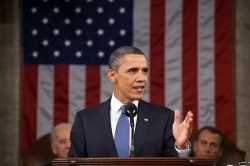


| You are subscribed to email updates from Gold World News Flash 2 To stop receiving these emails, you may unsubscribe now. | Email delivery powered by Google |
| Google Inc., 20 West Kinzie, Chicago IL USA 60610 | |


No comments:
Post a Comment