


Gold World News Flash |

- International Forecaster January 2012 (#8) - Gold, Silver, Economy + More
- US ECONOMIC COLLAPSE AND SCARY ECONOMIC NUMBERS ! RON PAUL ! OBAMA'S ECONOMIC
- Technically Perfect
- Williams STILL Believes a Hyperinflationary Great Depression is Coming! Here?s Why
- A Shrinking Trust Horizon — And Hard Times In The City
- 2.3 QUINTILLION DOLLARS
- Survivalist George Soros
- F.A. Hayek On "The Great Utopia"
- In The News Today
- How Did This “Stealth” Rise In Gold Happen?
- These Major U.S. Companies On Verge Of Collapse
- Mene, Mene, Tekel, Upharsin
- Alasdair Macleod: FEDging the figures
- Momentum is with gold's move up, Norcini tells KWN weekly review
- Registered Silver Ounces At the Comex
- Chris Martenson Interviews John Mauldin: "It's Time to Make the Hard Decisions"
- James Turk Gold Outlook for 2012
- The Silver Singularity Is Near
- Eurozone Will Collapse This Year, Says Nouriel Roubini
- Gold and Silver Rise Again / Greece-Italy-Portugal-Spain All In Turmoil as Fitch Downgrades
- Russell - Gold Threatening Dollar’s Reserve Currency Status
- Return To 'Normalcy'
- This Past Week in Gold
- Risk On Traders Just Can't Take Their Eyes Off The Aussie Dollar
- Latest article for GoldMoney
- It's Time to Get into Gold Junior Miners
- U.S. Economy Waist Deep in the Big Muddy
- Central Bank Gold Joining the Dots
| International Forecaster January 2012 (#8) - Gold, Silver, Economy + More Posted: 29 Jan 2012 03:30 AM PST We are trying to figure out the best way to describe the banking and oil sanctions against Iran, which are blatant acts of war. Just look back in history at similar situations and you will see what we are referring too. It is simple incompetence or is the allied plan a false flag feint in order to distract attention away from debt problems?
|
| US ECONOMIC COLLAPSE AND SCARY ECONOMIC NUMBERS ! RON PAUL ! OBAMA'S ECONOMIC Posted: 28 Jan 2012 06:16 PM PST  U.S. employment growth accelerated last month and the jobless rate dropped to a near three-year low of 8.5 percent, the strongest evidence yet the economic recovery is gaining steam. Nonfarm payrolls increased 200,000 in December, the Labor Department said on Friday. It was the biggest rise in three months and beat economists' expectations for a 150,000 gain. Read more..... 
This posting includes an audio/video/photo media file: Download Now |
| Posted: 28 Jan 2012 06:02 PM PST What a week it was. My head is still spinning. With gold and silver breaking out and following through and now coming into some resistance to the US markets holding up great then looking like they wanted a little consolidation then seeing many leading stocks rush higher later Friday afternoon.
|
| Williams STILL Believes a Hyperinflationary Great Depression is Coming! Here?s Why Posted: 28 Jan 2012 04:40 PM PST The U.S. economic and systemic-solvency crises of the last five years continue to deteriorate yet they remain just the precursors to the coming Great Collapse: a hyperinflationary great depression. The unfolding circumstance will encompass a complete loss in the purchasing power of the U.S. dollar; a collapse in the normal stream of U.S. commercial and economic activity; a collapse in the U.S. financial system, as we know it; and a likely realignment of the U.S. political environment. So says John Williams ([url]www.shadowstats.com[/url]) in a recent interview: Read More @ KingWorldNews.com*and in*his previous articles: [LIST] [*]“A Hyperinflationary Great Depression Is Coming to America by 2014! Here's Why“ [*]“Williams: U.S. Can Not Avoid Coming Financial Armageddon” and [*]“Williams: Expect Hyperinflation Within the Next 5 Years“ [*]as posted on www.munKNEE.com. [/LIST]Related Articles: 1. A Hyperinflationary Great Depression Is Coming to Ameri...
|
| A Shrinking Trust Horizon — And Hard Times In The City Posted: 28 Jan 2012 03:07 PM PST Nicole Foss, who under the pen name Stoneleigh co-edits the Automatic Earth website, just did a long-form interview with an Italian magazine where she she lays out her peak energy, societal collapse thesis in the coherent, accessible way that fans of her writing have come to expect. One part was especially interesting:
Some thoughts If you need an excuse to get to know your neighbors or generally get involved in the local community, this is it. Big modern cities are the 100-story windows in Foss' analogy. Life there is going to get very hard very fast if her systemic failure predictions come true. Conversely, small towns with thriving farmers markets and lots of roof-top solar panels will find the next couple of decades relatively less stressful. As Foss says later in the interview, "If you psychologically prepare for a much lower material standard of living in advance, it doesn't have to be anywhere nearly as painful." Here's the full interview:
|
| Posted: 28 Jan 2012 02:34 PM PST [Ed. Note: Happy Saturday from SGTreport and the King of satire Billy Joe, who I happen to know owns a ton of physical silver.] from houseofthemoon:
|
| Posted: 28 Jan 2012 11:33 AM PST ". . .'At times like these, survival is the most important thing,' he [George Soros] says, peering through his owlish glasses and brushing wisps of gray hair off his forehead. He doesn't just mean it's time to protect your assets. He means it's time to stave off disaster. As he sees it, the world faces one of the most dangerous periods of modern history—a period of 'evil.' Europe is confronting a descent into chaos and conflict. In America he predicts riots on the streets that will lead to a brutal clampdown that will dramatically curtail civil liberties. The global economic system could even collapse altogether." MK comment: It is difficult to understand how an individual thinking like this would ignore owning physical gold in the form of coins and bullion. Much ado was made of Soros comments on gold as "the ultimate asset bubble," and his alleged disposal of ETF gold holdings — something which has since been quantified as having occurred in the early months of 2011. If so, the legendary Soros left a good bit still on the table, since gold traded at the time in the $1300 to $1400 range. Since then, there has been speculation here and elsewhere that Soros may have sold his paper gold holdings to acquire something a bit more tangible than exchange traded paper. No one knows and Soros isn't saying. The article referenced above appeared at the Daily Beast website and is remarkable in its own right. Though its author surmises that Soros does not own gold, but is holding mainly cash, and recently purchased $2 billion in Italian bonds. Italian bonds? Go figure. The name of his upcoming book is "Financial Turmoil in Europe and the United States! There's something missing here. . . .He states that Greece is likely to default in 2012 and that China is unlikely to come to Europe's assistance. At any rate here is the link to the Daily Beast article. By the way he is predicting riots in the streets of the United States: If Soros isn't a gold owner, he certainly sounds like one. The rest of us do not have to walk on the West's broken glass, as Soros might because of his position. We can take the most direct route to "survival." George Soros, the survivalist — extraordinary. . . . "The situation in Europe and the United States," he says, "is about as serious and difficult as I've experienced in my career." Sometimes the constant drip of the news becomes background noise, until somebody says something that serves as a wake-up call.
|
| F.A. Hayek On "The Great Utopia" Posted: 28 Jan 2012 11:32 AM PST While it is hardly necessary to provide commentary to one of F.A. Hayek's timeless observations from his book, The Road To Serfdom, rereading the chapter titled The Great Utopia, in this year of what could possibly be the most important election in the history of the United States, in which the US public will be promised nothing short of utopia by virtually every candidate except the one who really knows that fixing America would require pain and sacrifice, is everyone's duty. Courtesy of the Center for Economic Liberty we recreate it below in its entirety, and urge all readers, regardless of political persuasion of economic beliefs to consider what F.A.Hayek was saying some 70 years earlier, and how very applicable it is to our current situation. The Great Utopia There can be no doubt that most of those in the democracies who demand a central direction of all economic activity still believe that socialism and individual freedom can be combined. Yet socialism was early recognized by many thinkers as the gravest threat to freedom. It is rarely remembered now that socialism in its beginnings was frankly authoritarian. It began quite openly as a reaction against the liberalism of the French Revolution. The French writers who laid its foundation had no doubt that their ideas could be put into practice only by a strong dictatorial government. The first of modern planners, Saint-Simon, predicted that those who did not obey his proposed planning boards would be "treated as cattle." Nobody saw more clearly than the great political thinker de Tocqueville that democracy stands in an irreconcilable conflict with socialism: "Democracy extends the sphere of individual freedom," he said. "Democracy attaches all possible value to each man," he said in 1848, "while socialism makes each man a mere agent, a mere number. Democracy and socialism have nothing in common but one word: equality. But notice the difference: while democracy seeks equality in liberty, socialism seeks equality in restraint and servitude." To allay these suspicions and to harness to its cart the strongest of all political motives—the craving for freedom — socialists began increasingly to make use of the promise of a "new freedom." Socialism was to bring "economic freedom," without which political freedom was "not worth having." To make this argument sound plausible, the word "freedom" was subjected to a subtle change in meaning. The word had formerly meant freedom from coercion, from the arbitrary power of other men. Now it was made to mean freedom from necessity, release from the compulsion of the circumstances which inevitably limit the range of choice of all of us. Freedom in this sense is, of course, merely another name for power or wealth. The demand for the new freedom was thus only another name for the old demand for a redistribution of wealth. The claim that a planned economy would produce a substantially larger output than the competitive system is being progressively abandoned by most students of the problem. Yet it is this false hope as much as anything which drives us along the road to planning. Although our modern socialists' promise of greater freedom is genuine and sincere, in recent years observer after observer has been impressed by the unforeseen consequences of socialism, the extraordinary similarity in many respects of the conditions under "communism" and "fascism." As the writer Peter Drucker expressed it in 1939, "the complete collapse of the belief in the attainability of freedom and equality through Marxism has forced Russia to travel the same road toward a totalitarian society of un-freedom and inequality which Germany has been following. Not that communism and fascism are essentially the same. Fascism is the stage reached after communism has proved an illusion, and it has proved as much an illusion in Russia as in pre-Hitler Germany." No less significant is the intellectual outlook of the rank and file in the communist and fascist movements in Germany before 1933. The relative ease with which a young communist could be converted into a Nazi or vice versa was well known, best of all to the propagandists of the two parties. The communists and Nazis clashed more frequently with each other than with other parties simply because they competed for the same type of mind and reserved for each other the hatred of the heretic. Their practice showed how closely they are related. To both, the real enemy, the man with whom they had nothing in common, was the liberal of the old type. While to the Nazi the communist and to the communist the Nazi, and to both the socialist, are potential recruits made of the right timber, they both know that there can be no compromise between them and those who really believe in individual freedom. What is promised to us as the Road to Freedom is in fact the Highroad to Servitude. For it is not difficult to see what must be the consequences when democracy embarks upon a course of planning. The goal of the planning will be described by some such vague term as "the general welfare." There will be no real agreement as to the ends to be attained, and the effect of the people's agreeing that there must be central planning, without agreeing on the ends, will be rather as if a group of people were to commit themselves to take a journey together without agreeing where they want to go: with the result that they may all have to make a journey which most of them do not want at all. Democratic assemblies cannot function as planning agencies. They cannot produce agreement on everything — the whole direction of the resources of the nation-for the number of possible courses of action will be legion. Even if a congress could, by proceeding step by step and compromising at each point, agree on some scheme, it would certainly in the end satisfy nobody. To draw up an economic plan in this fashion is even less possible than, for instance, successfully to plan a military campaign by democratic procedure. As in strategy it would become inevitable to delegate the task to experts. And even if, by this expedient, a democracy should succeed in planning every sector of economic activity, it would still have to face the problem of integrating these separate plans into a unitary whole. There will be a stronger and stronger demand that some board or some single individual should be given power to act on their own responsibility. The cry for an economic dictator is a characteristic stage in the movement toward planning. Thus the legislative body will be reduced to choosing the persons who are to have practically absolute power. The whole system will tend toward that kind of dictatorship in which the head of the government is position by popular vote, but where he has all the powers at his command to make certain that the vote will go in the direction he desires. Planning leads to dictatorship because dictatorship is the most effective instrument of coercion and, as such, essential if central planning on a large scale is to be possible. There is no justification for the widespread belief that, so long as power is conferred by democratic procedure, it cannot be arbitrary; it is not the source of power which prevents it from being arbitrary; to be free from dictatorial qualities, the power must also be limited. A true "dictatorship of the proletariat," even if democratic in form, if it undertook centrally to direct the economic system, would probably destroy personal freedom as completely as any autocracy has ever done. Individual freedom cannot be reconciled with the supremacy of one single purpose to which the whole of society is permanently subordinated. To a limited extent we ourselves experience this fact in wartime, when subordination of almost everything to the immediate and pressing need is the price at which we preserve our freedom in the long run. The fashionable phrases about doing for the purposes of peace what we have learned.to do for the purposes of war are completely misleading, for it is sensible temporarily to sacrifice freedom in order to make it more secure in the future, but it is quite a different thing to sacrifice liberty permanently in the interests of a planned economy. To those who have watched the transition from socialism to fascism at close quarters, the connection between the two systems is obvious. The realization of the socialist program means the destruction of freedom. Democratic socialism, the great utopia of the last few generations, is simply not achievable.
|
| Posted: 28 Jan 2012 11:22 AM PST Jim Sinclair's Commentary Friendship – it sure beats the alternative. CIGA Ed's Commentary Anonymous? What's he afraid of, getting kicked out of the club? Hedge Fund Guru Sees Gold Price Soarin By Jonathan Buck January 26, 2012, 1:15 PM ET DAVOS, Switzerland—In the current uncertain environment, one hedge fund Continue reading In The News Today
|
| How Did This “Stealth” Rise In Gold Happen? Posted: 28 Jan 2012 10:00 AM PST We are seeing a big turnaround in the gold market. Who's buying? It is not who you think…So what happened? How did this "stealth" rise in gold happen? Words: 1200 So asks Sara Nunnally ([url]www.insideinvestingdaily.com[/url]) in edited excerpts from her original article*. [INDENT]*Lorimer Wilson, editor of www.FinancialArticleSummariesToday.com (A site for sore eyes and inquisitive minds) and www.munKNEE.com (Your Key to Making Money!) has edited ([ ]), abridged (…) and reformatted (some sub-titles and bold/italics emphases) the article below for the sake of clarity and brevity to ensure a fast and easy read. The article’s views and conclusions are unaltered and no personal comments have been included to maintain the integrity of the original article. Please note that this paragraph must be included in any article re-posting to avoid copyright infringement. [/INDENT]Nunnally goes on to say, on part: Governments…[bought] five times more…gold bullion in 2011 ...
|
| These Major U.S. Companies On Verge Of Collapse Posted: 28 Jan 2012 10:00 AM PST So say Gus Lubin and Jana Kasperkevic ([url]www.businessinsider.com[/url]) in edited excerpts from their original article*. [INDENT]Lorimer Wilson, editor of www.FinancialArticleSummariesToday.com (A site for sore eyes and inquisitive minds) and www.munKNEE.com (Your Key to Making Money!) has edited ([ ]), abridged (…) and reformatted (some sub-titles and bold/italics emphases) the article below for the sake of clarity and brevity to ensure a fast and easy read. The article’s views and conclusions are unaltered and no personal comments have been included to maintain the integrity of the original article. Please note that this paragraph must be included in any article re-posting to avoid copyright infringement. [/INDENT]They go on to say, in part: 1. Caesars Entertainment - the world’s largest casino entertainment company * * Financial distress probability: 7.28% (calculation by GovernanceMetrics International); Total assets: $28.9 billion 2. Clearwire (CLWR) ̵...
|
| Posted: 28 Jan 2012 09:51 AM PST [FONT=Arial]From Wikipedia…"In the book of Daniel,[1] King Belshazzar of Babylon during a drunken feast takes sacred golden and silver vessels, which had been removed from Solomon's Temple in Jerusalem by his predecessor Nebuchadnezzar. Using these holy items, the King and his court praise 'the gods of gold and silver, brass, iron, wood, and stone' " in a degrading manner. [/FONT] Suddenly, words written by a mysterious hand appear on the wall of Belshazzar's palace and they were "Mene, Mene, Tekel, Upharsin". These are Aramaic names and measures of currency that only Daniel could interpret and provide their meaning which essentially was… · The days of your kingdom are numbered and will be brought to an end. · You have been weighed on the scales and found wanting. The empire ended that very night. [CENTER]The Handwriting is on the Wall[/CENTER] One does not have to be Daniel to interpret the current economic signs and symptoms of distress. One does not have to be an...
|
| Alasdair Macleod: FEDging the figures Posted: 28 Jan 2012 08:27 AM PST 4:27p ET Saturday, January 28, 2012 Dear Friend of GATA and Gold: Writing for GoldMoney, economist and former banker Alasdair Macleod today predicts that the U.S. Federal Reserve is aiming to increase the U.S. gross domestic product figure through inflation, mere higher prices, rather than any actual improvement in economic conditions, and that precious metals prices started to figure this out last week. Macleod's commentary is headlined "FEDging the Figures" and it's posted at GoldMoney here: http://www.goldmoney.com/gold-research/alasdair-macleod/fedging-the-figu... CHRIS POWELL, Secretary/Treasurer ADVERTISEMENT Sona Discovers Potential High-Grade Gold Mineralization From a Company Press Release VANCOUVER, British Columbia -- With its latest surface diamond drilling program at its 100-percent-owned, formerly producing Blackdome gold mine in southern British Columbia, Sona Resources Corp. has discovered a potentially high-grade gold-mineralized area, with one hole intersecting 13.6 grams of gold in 1.5 meters of core drilling. "We intersected a promising new mineralized zone, and we feel optimistic about the assay results," says Sona's president and CEO, John P. Thompson. "We have undertaken an aggressive exploration program that has tested a number of target zones. Our discovery of this new gold-bearing structure is significant, and it represents a positive development for the company." Sona aims to bring its permitted Blackdome mill back into production over the next year and a half, at a rate of 200 tonnes per day, with feed from the formerly producing Blackdome mine and the nearby Elizabeth gold deposit property. A positive preliminary economic assessment by Micon International Ltd., based on a gold price of $950 per ounce over eight years, has estimated a cash cost of $208 per tonne milled, or $686 per gold ounce recovered. For the company's complete press release, please visit: http://www.sonaresources.com/_resources/news/SONA_NR18_2011-opt.pdf Join GATA here: California Investment Conference http://cambridgehouse.com/conference-details/california-investment-confe... Support GATA by purchasing gold and silver commemorative coins: https://www.amsterdamgold.eu/gata/index.asp?BiD=12 Or by purchasing a colorful GATA T-shirt: Or a colorful poster of GATA's full-page ad in The Wall Street Journal on January 31, 2009: http://gata.org/node/wallstreetjournal Or a video disc of GATA's 2005 Gold Rush 21 conference in the Yukon: Help keep GATA going GATA is a civil rights and educational organization based in the United States and tax-exempt under the U.S. Internal Revenue Code. Its e-mail dispatches are free, and you can subscribe at: To contribute to GATA, please visit: ADVERTISEMENT Prophecy Coal (TSX: PCY) Wins Positive Feasibility Study Company Press Release VANCOUVER, British Columbia, Canada -- Prophecy Coal Corp. (TSX: PCY, OTCQX: PRPCF, Frankfurt: 1P2) has received a positive feasibility study for the company's 600-megawatt Chandgana Mine-Mouth Power Project in central Mongolia. The report was independently prepared by Ralf Thomsen, project manager at Steag, a German firm specializing in the planning, financing, construction, and operation of highly efficient thermal power plants for fossil fuels. The study covers technical specifications, deployment, and financial analysis of a 4x150-mw thermal power plant to be built adjacent to Prophecy's Chandgana Tal coal deposit, which contains 140 million tonnes of measured coal. Last year the power plant received a construction license and the coal deposit received a mining license. Engineering, procurement, and construction management selection and project financing discussion have begun and are expected to be concluded this year. Construction is planned to start in April 2013, with the first 150-mw unit being commissioned in October 2015 and subsequent units to start in April 2016, October 2016, and April 2017. With proper maintenance the project will have 30 years of commercial operation. For the complete statement from the company, including maps and charts, please visit: http://www.prophecycoal.com/news_2011_jan17_prophecy_receives_power_plan...
|
| Momentum is with gold's move up, Norcini tells KWN weekly review Posted: 28 Jan 2012 05:27 AM PST 1:27p ET Saturday, January 28, 2012 Dear Friend of GATA and Gold (and Silver): Futures market analyst Dan Norcini tells the King World News weekly precious metals review that gold's momentum is up and the dollar's down for the week ahead. CMI Gold & Silver's Bill Haynes reports no special public retail interest. The review is 20 minutes long and you can listen to it here: http://kingworldnews.com/kingworldnews/Broadcast/Entries/2012/1/28_KWN_W... Meanwhile, full audio of geopolitical analyst James G. Rickards' interview with King World News has been posted here: http://kingworldnews.com/kingworldnews/Broadcast/Entries/2012/1/28_Jim_R... CHRIS POWELL, Secretary/Treasurer ADVERTISEMENT Prophecy Coal (TSX: PCY) Wins Positive Feasibility Study Company Press Release VANCOUVER, British Columbia, Canada -- Prophecy Coal Corp. (TSX: PCY, OTCQX: PRPCF, Frankfurt: 1P2) has received a positive feasibility study for the company's 600-megawatt Chandgana Mine-Mouth Power Project in central Mongolia. The report was independently prepared by Ralf Thomsen, project manager at Steag, a German firm specializing in the planning, financing, construction, and operation of highly efficient thermal power plants for fossil fuels. The study covers technical specifications, deployment, and financial analysis of a 4x150-mw thermal power plant to be built adjacent to Prophecy's Chandgana Tal coal deposit, which contains 140 million tonnes of measured coal. Last year the power plant received a construction license and the coal deposit received a mining license. Engineering, procurement, and construction management selection and project financing discussion have begun and are expected to be concluded this year. Construction is planned to start in April 2013, with the first 150-mw unit being commissioned in October 2015 and subsequent units to start in April 2016, October 2016, and April 2017. With proper maintenance the project will have 30 years of commercial operation. For the complete statement from the company, including maps and charts, please visit: http://www.prophecycoal.com/news_2011_jan17_prophecy_receives_power_plan... Join GATA here: California Investment Conference http://cambridgehouse.com/conference-details/california-investment-confe... Support GATA by purchasing gold and silver commemorative coins: https://www.amsterdamgold.eu/gata/index.asp?BiD=12 Or by purchasing a colorful GATA T-shirt: Or a colorful poster of GATA's full-page ad in The Wall Street Journal on January 31, 2009: http://gata.org/node/wallstreetjournal Or a video disc of GATA's 2005 Gold Rush 21 conference in the Yukon: Help keep GATA going GATA is a civil rights and educational organization based in the United States and tax-exempt under the U.S. Internal Revenue Code. Its e-mail dispatches are free, and you can subscribe at: To contribute to GATA, please visit: ADVERTISEMENT Sona Discovers Potential High-Grade Gold Mineralization From a Company Press Release VANCOUVER, British Columbia -- With its latest surface diamond drilling program at its 100-percent-owned, formerly producing Blackdome gold mine in southern British Columbia, Sona Resources Corp. has discovered a potentially high-grade gold-mineralized area, with one hole intersecting 13.6 grams of gold in 1.5 meters of core drilling. "We intersected a promising new mineralized zone, and we feel optimistic about the assay results," says Sona's president and CEO, John P. Thompson. "We have undertaken an aggressive exploration program that has tested a number of target zones. Our discovery of this new gold-bearing structure is significant, and it represents a positive development for the company." Sona aims to bring its permitted Blackdome mill back into production over the next year and a half, at a rate of 200 tonnes per day, with feed from the formerly producing Blackdome mine and the nearby Elizabeth gold deposit property. A positive preliminary economic assessment by Micon International Ltd., based on a gold price of $950 per ounce over eight years, has estimated a cash cost of $208 per tonne milled, or $686 per gold ounce recovered. For the company's complete press release, please visit: http://www.sonaresources.com/_resources/news/SONA_NR18_2011-opt.pdf
|
| Registered Silver Ounces At the Comex Posted: 28 Jan 2012 04:12 AM PST |
| Chris Martenson Interviews John Mauldin: "It's Time to Make the Hard Decisions" Posted: 28 Jan 2012 04:05 AM PST Submitted by Chris Martenson
We are at that point in our economy, as are most other major economies around the world, claims John Maudlin, author of the popular Thoughts from the Frontline newsletter and the recent bestselling book Endgame: The End of the Debt Supercycle and How It Changes Everything. For the past several decades, excessive and increasing amounts of credit in the system have allowed us to live above our means as both individuals and nations. We've been able to have our cake and eat it, too. Now that the supercycle has ended and the inevitable de-leveraging cycle is staring us in the face, we will be forced to set priorities in a way that has been foreign to our society for over a generation. On The Debt Supercycle
On the Slow-to-No-Growth Future
On Confidence (or Lack Thereof) in Our Leadership
Click the play button below to listen to Chris' interview with John Mauldin (runtime 38m:34s): Download/Play the Podcast Or click here to read the full transcript.
|
| James Turk Gold Outlook for 2012 Posted: 28 Jan 2012 03:32 AM PST James Turk, Director of The GoldMoney Foundation,... [[ This is a content summary only. Visit my website http://goldbasics.blogspot.com for full Content ]] 
This posting includes an audio/video/photo media file: Download Now |
| The Silver Singularity Is Near Posted: 28 Jan 2012 03:28 AM PST by Mike Scully, SeekingAlpha.com:
Price, as they say, is determined on the margins. This is especially true for inelastic goods. If 100 Tickle Me Elmo dolls exist in Walmart on Christmas eve, and 100 people absolutely need to have them, you don't have a problem. The price will be some reasonable markup on the cost of production. However, if one more person walks in fearing the wrath of his child if there's no Elmo under the tree, Walmart (WMT) can quickly turn into a war zone. In Walmart, this supply shortage might be settled by shoving and hair pulling. In a civilized market, this supply, demand inequity is settled with price. In the case of Elmo in 1996, some dolls were reportedly sold in aftermarkets for $1500. This is an important concept to keep in mind when evaluating the silver market. Silver is interesting because it is actually two different markets. On one hand, silver is a physical commodity that is used in industry or warehoused as physical savings. This market is rather inelastic on the supply and demand side as I will discuss in a bit. On the other hand is the silver derivatives market, paper contracts for silver, that set the spot price on the margins. The paper market is elastic and depends more on investor psychology than underlying fundamentals.
|
| Eurozone Will Collapse This Year, Says Nouriel Roubini Posted: 28 Jan 2012 03:13 AM PST Nouriel Roubini, the economist credited with having foreseen the credit crunch, has warned that the eurozone will collapse within the year – with Greece and Portugal leaving. by Angela Monaghan, Telegraph.co.uk:
The New York University professor of economics was speaking at one of the final sessions of the World Economic Forum annual meeting in Davos. "There is a 50pc chance that the eurozone will break up in the next three to five years. This doesn't look like a G20 world it looks like a G-Zero world because there is no agreement on global imbalances, how to change the international monetary system, international trade, banking regulation, on all the fundamental issues." The economist also warned that if the US and Iran went to war, oil prices would spike 50pc and there'll be a global recession.
|
| Gold and Silver Rise Again / Greece-Italy-Portugal-Spain All In Turmoil as Fitch Downgrades Posted: 28 Jan 2012 03:02 AM PST by Harvey Organ: Good morning Ladies and Gentlemen: Before commencing my report, here our Friday's entrants to the banking morgue: 1. Bank East, Knoxville Tennessee The price of gold rose on Friday finishing the comex session at $1731.80 up $5.80 on the session. The price of silver rose by only 5 cents to close at $33.75. However in the access market both metals shot up considerably. Here is how they finished the evening: Gold: 41737.30 Read More @ HarveyOrgan.Blogspot.com
|
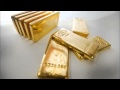
| Russell - Gold Threatening Dollar’s Reserve Currency Status Posted: 28 Jan 2012 02:38 AM PST  With the Fed announcement sending gold soaring more than 4% this week and silver almost 7%, Richard Russell is talking about gold replacing the dollar in international transactions, and taking over as the 'King of Currencies.' The Godfather of newsletter writers, had this to say in his latest commentary: "In a deal concluded in the 1970s, it was agreed that all transactions of oil would be done in US dollars. Thus the US dollar became the world's reserve currency, used for trading in most materials and commodities." With the Fed announcement sending gold soaring more than 4% this week and silver almost 7%, Richard Russell is talking about gold replacing the dollar in international transactions, and taking over as the 'King of Currencies.' The Godfather of newsletter writers, had this to say in his latest commentary: "In a deal concluded in the 1970s, it was agreed that all transactions of oil would be done in US dollars. Thus the US dollar became the world's reserve currency, used for trading in most materials and commodities."
This posting includes an audio/video/photo media file: Download Now |
| Posted: 28 Jan 2012 02:37 AM PST I like to remind myself every now and then why the analogy has worked so well between silver and the Nasdaq market - circa 2000 and now 2001. It's not just the charts that have great similarities - it's the overarching psychology of the ... Read More...
|
| Posted: 28 Jan 2012 02:36 AM PST Summary: Long term - on major buy signal. Short term - on buy signals. Gold cycle has bottomed and we began cost average buying last week. Read More...
|
| Risk On Traders Just Can't Take Their Eyes Off The Aussie Dollar Posted: 28 Jan 2012 02:33 AM PST We think the Aussie dollar (ETF FXA) is back up to levels that will attract sellers. It is due for another punch down. The risk on traders can't stop looking at this chart. Read More...
|
| Posted: 27 Jan 2012 09:08 PM PST The following article has been posted at GoldMoney, here. FEDging the figures2012-JAN-28
 The Fed has effectively extended its zero interest rate policy (ZIRP) for another 18 months. The reason stated is “low rates of resource utilisation and a subdued outlook for inflation in the medium run”. More important perhaps and unsaid is the presidential election due later this year and the need to finance a deficit that seems impossible to cut. The Fed is running huge risks with its extended ZIRP, principally with monetary inflation morphing into price inflation. To help achieve its low inflation target the Fed uses the Personal Consumption Expenditures Price Index (PCEPI), which assumes that consumers switch spending from higher priced goods to those that are stable or falling. The result is that this index rises at about one-third less than the Consumer Price Index, which itself rises at less than half the CPI calculated on the more honest methodology used before 1980. The upshot is that the Fed uses inflation targets that are so heavily adjusted that they are effectively meaningless. To the Keynesians at the Fed, subdued inflation is linked with a sluggish economy, and here the Fed is very selective in its approach. It admits that employment is picking up, and household spending “continues to advance”; but instead chooses to worry over slowing fixed investment and a depressed housing sector. Surely, whatever your views, there are enough signs of economic stabilisation to justify sitting on the fence, instead of committing to ZIRP for an extra 18 months. I take the view that Gross Domestic Product is likely to surprise on the upside, as I wrote in an article for GoldMoney on 10 January. In that article I gave concrete reasons why, and suggested that money will begin to flow from capital markets into the economy. This is important, because GDP is only a money quantity and can rise without any underlying economic progression – the difference being reflected in the prices of goods and services. So GDP can actually rise with no underlying improvement in economic activity, it merely reflecting higher prices. Changes in the prices of goods and services are actually impossible to measure and so cannot be quantified. Under-reporting price increases by using an index approximation such as the GDP deflator, which represents price inflation similarly to the PCEPI, artificially inflates real GDP. It will be interesting to hear what excuse the Fed comes up with then for the continuing for even longer with ZIRP. The reality is that the Fed and other central bankers are cornered and have only one tool left: issue as much paper money as it takes to prevent systemic financial calamity. This realisation is only just dawning on individuals with savings to protect, which is why precious metals were right to rise so sharply. Tags: central banks, ECB, Fed, inflation, USA Alasdair Macleod 
|
| It's Time to Get into Gold Junior Miners Posted: 27 Jan 2012 08:01 PM PST Philip Ker, a mining analyst for Canada-based Union Securities Ltd., says while current market conditions are affecting the junior mining space, they are also helping investors to identify low-risk opportunities and projects that may provide future value growth. In this exclusive interview for The Gold Report, Ker discusses how the industry will need to continue to see positive news, especially from senior and midtier producers, which should trickle down to the juniors.
|
| U.S. Economy Waist Deep in the Big Muddy Posted: 27 Jan 2012 07:50 PM PST With its announcement this week that it will keep interest rates near zero until at least late 2014, the Federal Reserve has put another large crack into the foundations underlying the US dollar. In a misguided attempt to provide clarity and transparency, Ben Bernanke has instead laid out a simple road map for economists and investors to follow. The signposts are easily understood: the Fed will stop at nothing in pursuing its goals of creating phantom GDP growth, holding down unemployment, propping up stock and housing prices, and monetizing government debt. To do so, it will continue to pursue a policy of negative interest rates, while ignoring the collateral damage of unsustainable debt, virulent inflation, misallocated resources and credit, suffering yield-dependent retirees, and a devalued U.S. currency.
|
| Central Bank Gold Joining the Dots Posted: 27 Jan 2012 07:46 PM PST Yes, central banks are holding more gold. But they're holding very much more wood-pulp on top... THE GOLD PRICE on Wednesday broke up through the downtrend starting at last summer's record high. Or so a technical analyst studying the price chart would tell you.
|
 Back in the 1930's, Irving Fisher introduced a concept called the 'debt supercycle.' Simply put, it posits that when there is a buildup of too much debt within an economy, there reaches a point where there simply is no other available solution but to let it rewind.

| You are subscribed to email updates from Save Your ASSets First To stop receiving these emails, you may unsubscribe now. | Email delivery powered by Google |
| Google Inc., 20 West Kinzie, Chicago IL USA 60610 | |


No comments:
Post a Comment