


Gold World News Flash |

- Gold Seeker Weekly Wrap-Up: Gold and Silver Gain Almost 2% on the Week
- By the Numbers for the Week Ending November11
- An Austrian Economic View
- givingThanks
- Don’t Be Distracted By Eurozone Drama
- New Gold Bugs are Young and Restless
- Out Of The Ashes Of The Collapse Of The Eurozone Will A “United States Of Europe” Arise?
- New Gold Target: $2330
- “All I’ve ever known, all my friends and family, even my parents really have ever known is this hegemonic United States that was the world power, and provided the world’s reserve currency.”
- Taking Your Power Back
- The Daily Market Report
- Gold and Silver Miners Lead Market Rebound
- The Gold Price Rose Again, Remember If Gold Closes Above $1,800 For Two Days Don't Wait Just Buy
- Turd Ferguson: The Inexorable March Higher For Precious Metals
- Gold Daily and Silver Weekly Charts - Rickards and Grant Discuss Money and Gold - Jack Kennedy
- Rickards on Fed Policy, U.S. Economy, Gold Standard
- Big Markets Refuse to Discount ‘The Abyss’
- 1000 DJIA Points In Past 5 Days And All We Got Was A 1.5% Move In The Market
- But remember there were Russian tanks on the outskirts of Berlin. So there was good reason to put the gold in New York in the first place.
- Germany probably can't get its gold back from U.S., Rickards tells King World News
- Gold traders most bullish since '04 on debt crisis
- Jim Rickards - The US Won’t Give Germany its Gold
- Gold Bull Seasonals 6
- LGMR: Bullishness Rises in Gold Derivatives, Analyst Survey, as Indian, Turkish Demand Jumps
- Bernanke Says That Any Criticism Of The Federal Reserve Is Based On “Misconceptions”
- Geordie Mark: Iron Ore Still Strong
- Beta Investing: How to Grow and Maintain Family Wealth
- 12 Hour Gold Chart
- King interviews Hathaway, Turk interviews Casey
- The Illusion of Capital
| Gold Seeker Weekly Wrap-Up: Gold and Silver Gain Almost 2% on the Week Posted: 11 Nov 2011 04:00 PM PST Gold saw slight gains in Asia and London, but it then accelerated higher in New York and ended near its early afternoon high of $1788.65 with a gain of 1.6%. Silver rose to as high as $34.826 and ended with a gain of 1.88%.
|
| By the Numbers for the Week Ending November11 Posted: 11 Nov 2011 03:40 PM PST HOUSTON -- Just below is this week's closing table for the week ending November 11, 2011.
Commitments of traders (COT) data from the Commodity Futures Trading Commission (CFTC) is delayed until Monday, November 14 this week due to the Veterans Day Holiday. Vultures, (Got Gold Report Subscribers) please note that partial updates to our linked technical charts should be completed by the usual time on Sunday (18:00 ET). Our notations on the COT data are obviously delayed until Monday evening or Tuesday. That is all for now, but there is more to come.
|
| Posted: 11 Nov 2011 03:05 PM PST by Alasdair Macleod, GoldMoney.com:
Keynesian and monetarists believed that the problems surfacing in the PIIGS would be resolved by economic growth, which would follow so long as governments maintained their deficit spending. As events are now proving, this analysis was flawed, which is why Keynesians are now confused. They should open their minds and absorb Austrian economic theory to gain a proper understanding of human actions and how people are affected by money and credit.
|
| Posted: 11 Nov 2011 01:27 PM PST via TVR:
In the summer of 2008, Freedom turned me on to King World News (KWN), thank you Eric King and guests. Within a few weeks of listening I began to reposition assets, gold was selling for around $950 an ounce, silver at about $15. I was so compelled by the story I not only began to move my money around, with the help of an old friend and now neighbor (chance relocated two guys who hadn't talked in years, from a small central Pennsylvania borough to the same block in the Philadelphia burbs) started The Victory Report (TVR). Thanks Marcus. TVR was intended to provide observations and raise awareness of the end of the great Keynesian experiment to a couple of close friends.
Thank You Since the end of April, TVR traffic has risen steadily and tonight topped 50K. Thanks to everyone who has appreciated my efforts and mania.
Currency Wars
Totally stoked, thank you Jim. Thanks to Tyler for granting me access, and special thanks to guys like Randy N., Paul Prentice, TheGoodDoctor, Hawkins, Freedom, my brother and wifey for inspiration.
~MV
|
| Don’t Be Distracted By Eurozone Drama Posted: 11 Nov 2011 11:01 AM PST from WealthCycles:
The headlines continue to be all about the European financial crisis, heads of governments falling on their swords in order to ensure passage of austerity packages and the looming threat of a debt-induced collapse. But many economists and analysts maintain that the real danger to the global economy is not the Eurozone, but the United States. Investor Jim Rogers has been warning for weeks that the U.S. economy is in worse shape than Europe's—despite U.S. Treasury Secretary Tim Geithner's penchant for scolding his Eurozone peers about their need to shape up.
|
| New Gold Bugs are Young and Restless Posted: 11 Nov 2011 10:54 AM PST Meet three investors who have been bullish about bullion by Claudia Assis, MarketWatch.com:
The allure of gold is thousands of years old, but nowadays the precious metal has a youthful look. Gold's spectacular, decade-long run, coupled with the sovereign-debt crisis in Europe, an uncertain outlook for the U.S. dollar, and worries of worldwide recession, has tapped a new vein of investors in their 20s and 30s. The popularity of gold among young investors speaks to the metal's impressive role as a storer of wealth — and says a great deal about a generation that has seen its share of stock market booms-and-busts, a housing market collapse, and, over the past few weeks, government debt of Greece and Italy trading at yields more akin to junk bonds. Original Source @ MarketWatch.com
|
| Out Of The Ashes Of The Collapse Of The Eurozone Will A “United States Of Europe” Arise? Posted: 11 Nov 2011 10:50 AM PST from End of The American Dream:
Read More @ EndOfTheAmericanDream.com
|
| Posted: 11 Nov 2011 10:09 AM PST Morris Hubbartt Weekly Market Update Excerpt posted Nov 11, 2011 US Dollar Against Gold Chart Analysis [LIST] [*]How safe is the dollar, really? Each social safety net program began the size of a mouse and grew over time, into what is now an elephant on growth hormones. Few of these programs have ever been phased out, so we rely on the printing press more and more, to keep the spending going. [*]There’s not enough tax revenue collected to pay all these bills. The budget deficit for 2011 already is $1.3 trillion. More big government “solutions” have been passed in the last couple of years, including nationalized health care. Rather than going away, these deficits may be just starting to greatly accelerate. [*]Four years ago, the deficit was less than $250 billion. Now it is $1.3 trillion, a fourfold rise. What will it be four years from now? [*]When considering gold to protect yourself from this madn...
|
| Posted: 11 Nov 2011 09:57 AM PST Turd Ferguson: The Inexorable March Higher For Precious Metals Turd sees the precious metals as a true barometer of the dollar’s devaluation as the Fed pursues its policy of negative real interest rates — which is challenging for the average … Continue reading
|
| Posted: 11 Nov 2011 09:35 AM PST Addison Wiggin – November 11, 2011
Recall Mr. Geithner, on his first visit to China as Treasury Secretary in June 2009, assured a roomful of students that their government's investment in U.S. Treasuries was rock solid. "Chinese assets are very safe," Geithner declared. The statement elicited "loud laughter" from the assembled crowd, according to accounts at the time. Ever since, he's been in a snit about China.
Then, Mr. Geithner stated his position: "This process of rebalancing will be aided by exchange rate policies in China and other Asian economies that allow their currencies to adjust in response to market forces," he asserted to reporters after the meeting. "China, in particular, must continue to allow its currency to strengthen, and China has acknowledged the importance of faster exchange rate adjustment."  The U.S. agency over which Mr. Geithner presides owes $1.137 trillion to China. His co-conspirators at the Federal Reserve have stated their target interest rates will remain near zero through mid-2013. And still… the Treasury Secretary is not above wagging his finger at the Chinese. They ought to allow their currency to "adjust in response to market forces" he says. Heh. You have to admire the man's hubris. [Ed note. We heard Mr. Geithner's comments on NPR this morning. They kicked off a range of ideas that we can only suggest to you today as "radical" in light of the political environment we're in. They're probably not appropriate for a 5 Min. Forecast... but what the heck, it's Friday. If you're pressed for time, you may skip time segments 00:27 through 01:32. But we don't advise it.]
Through his work with the American Principles Project, Mr. Benko recently outlined 13 avenues being pursued to restore some fiscal sanity to the global monetary system. One of them: a new improved gold standard, which "would be multilateral with all nations, or at least all major nations, defining their own currencies in terms of a fixed measure of gold. Thus, the currencies would be rock-solid stable between one another — just one part of the efficiency that gold brings to the trading and financial order."
While visiting our offices in Baltimore last week, he gave a 90-seoncd view of monetary history of the United States. This morning, we asked him to reproduce it quickly, by email over his smart phone. What he sent instead amounts to a manifesto you might call…
"Society can order itself as an outgrowth of the free choices of individuals." And so it goes among nations, with gold serving as an objective yardstick. There was no such thing as a forex market, for example, before Nixon closed the gold window in 1971. Yet the situation had shifted so dramatically in the following decade that by 1982, Rep. Ron Paul could write, "Trading in currencies can now be more rewarding to banks than the conventional business of brokering loans from savings." At the time, Dr. Paul foresaw the metastasizing of the financial sector and the derivatives time bomb from his lonesome outpost as one of only two dissenters on the U.S. Gold Commission. His "minority report" from that assignment is memorialized in a slim volume called The Case for Gold. You can get a copy for yourself free… and get the new issue of Apogee Advisory in your inbox on Monday… by signing up here.
At last check, the Dow was up 260 points and back toward the high end of the trading range where it's been stuck the last three months. According to MarketWatch, this rally is being aided by the fact the Italian senate approved a new round of austerity measures. This makes about as much sense as attributing the rally to the news that Billy Crystal is replacing Eddie Murphy as the host of the next Oscars telecast. But we've been here before. Three days ago, in fact.
 "But it doesn't really matter who is prime minister in Italy, because there is no way the PIIGS can get out of their debt problems with the current plan of more borrowing and budget austerity measures." "How can cutting government spending lead to a rebound in GDP when so much GDP is already driven by government spending? The false precision given by measures like 'debt to GDP' promotes the idea that technocrats can squeeze more tax receipts out of an overtaxed economy." "A more accurate measure (if there is one) on government debt sustainability would be to compare it with the size of the private sector…and in most of the PIIGS, the private sector is tiny relative to government debt." "This is why economies must never get addicted to the crack cocaine that is government spending and stimulus programs; eventually, the government runs out of resources to plunder, and the only choice at that point is default or destroying the currency." Dan's counting on the latter. Probably not tomorrow, but eventually: "more money printing from the ECB, because it will have no choice, as it's the only entity able to keep the Italian bond market from crashing."
Investors there also pulled money out of state-run savings plans. They offer a return of 8%… but official inflation in India is running 9.7%. The government in India, like the United States, is pursuing a policy of "financial repression" — where real interest rates are negative. As we've demonstrated before, gold performs especially well during such periods. If you're interested, we still have a small supply of Gold Buffaloes and Silver Eagles available for select readers. They're available as part of an extraordinary "bundle" we've never offered before — and may never offer again. Give it a look here.
That's his conclusion after attending meetings and visiting research sites in Toronto and Denver last week. "I was catching up on new — and utterly astonishing — developments in the mining industry." "Indeed, I was privy to new research that may blow the wheels off of some old — meaning 'current' — ways of doing things. I'm talking about 'leapfrog' concepts. I'm referring to new technology applications that use digital powers and miniaturization of components to do something akin to 'designer mining.' Think in terms of applying technology from the Jet Propulsion Laboratory to the mining industry." "On this last point, I can't get overly specific. Much of what I learned is proprietary in the details." "But if you can get in front of this trend, it won't really matter what the Europeans or anyone else do. Investmentwise, you'll be way ahead of that curve." We get jazzed when Byron starts talking about mineral development the way Patrick Cox talks about biotech. You'll learn about it first in Outstanding Investments.
"This poll reveals a generation that is enthusiastic about entrepreneurship, and that is good news for the U.S.," says Carl Schramm, president of the Kauffman Foundation, which commissioned the survey. "They recognize that entrepreneurship is the key to reviving the economy." Unfortunately, 38% of these potential young entrepreneurs say they've delayed starting a business because of the economy. Ugh.
On a 404-17 vote, the House overturned decades-old Securities and Exchange Commission (SEC) rules that all but ban small businesses from raising capital from their customers and neighbors. "Current SEC rules divide investors into two categories," explains the New Rules Project, which advocates for small business. "Wealthy people ('accredited' investors) are assumed to have a certain degree of financial sophistication. Businesses are free to approach them for funding. "The rest of us are covered by safeguards that bar businesses from soliciting our investments without registering a public offering of securities with the SEC, an arduous and expensive legal process that is well beyond the reach of a neighborhood restaurant or startup clothing maker." In other words, this will make it nearly as easy to invest in your local coffee shop as in shares of Starbucks. "Crowdfunding," this is called. The bill faces an uncertain future in the Senate. The SEC opposes it. Usually, lawmakers defer to the regulators, but with any luck, they'll remember this is the same bunch that turned a blind eye to Bernie Madoff.
According to the American Farm Bureau Federation, a meal for 10 people that cost $43.47 last year will cost $49.20 this year. That's a 13% increase, the biggest since 1990. Turkey led the way — up 22% from a year ago.  Sweet potatoes are the only "bargain," and those are up 2.2% from last year.
"I bought a good-quality gun safe and bolted it to the concrete floor in a closet. In the safe, I keep about $1,000 worth of firearms and ammunition. The real valuables are hidden in a hollow wall, where they are completely invisible, even if the house were empty." "The gun safe is a decoy. If someone invaded my house and forced me to open the safe, they would find only a few cheap guns and a few shells." "Several years ago, a friend of mine melted down a couple of pounds of used lead wheel weights and made several pieces in the shape of ingots. Next, he stamped some random numbers and other 'official' looking marks on them. Then they were painted with a mixture of bronze dust and epoxy resin." "He put the 'ingots' in his sock drawer and forgot about them. Sometime later, his house was burglarized. The thief assembled a bunch of stuff in various rooms that he/they planned to take, but left it all there. The only things missing were the ingots from the sock drawer." "You only need to be smarter than a thief to win!" Have a good weekend, Addison Wiggin P.S. "We have a remarkable company for you," Patrick Cox wrote his Breakthrough Technology Alert readers this week, "with a technology that dramatically increases power grid efficiency while reducing energy consumption and costs. "This is what private enterprise has been up to — solving problems by cutting energy usage and making money — while the current administration gives tax-funded loans to dodgy, crony-backed solar companies and tax breaks to wealthy smugsters who buy cars that run on batteries charged mostly by coal-fired electrical plants. "I'd love, by the way, to see bumper stickers on electrical cars that say, 'Powered by Coal.'" You can be on board when Patrick issues his new recommendation by joining Patrick's premium service. You'll also get a package of special reports with his favorite picks right now — including one that's prompted him to make an extraordinarily bold claim. P.P.S. "I just can't pretend anymore. I'm not a wine snob," writes Jeffrey Tucker, the newest addition to our editorial team. "I like it all. I like everything. I used to draw the line at the big jugs with the screw tops, but no longer. I like those too." Jeffrey may well qualify as a modern-day polymath — knowledgeable about economics, the arts, wine, and probably a few things we haven't yet discovered. While we were setting up the camera to conduct the interview you're about to enjoy, he broke into a Gregorian chant. Seriously. More on his role within the baroque arts community in future episodes of The 5… In the meantime, you may recognize Mr. Tucker from his work at the Ludwig von Mises Institute, where he served with distinction for more than two decades. This week, we're proud to announce his appointment as publisher and executive editor of Laissez Faire Books. "You can almost date the founding of the libertarian movement from the founding of Laissez Faire Books in 1972," he says in a video laying out what's in store for LFB as it enters its fifth decade next year. Please give it a look and help us give Mr. Tucker the warm welcome he deserves:  Please send your regards to Mr. Tucker, here.
|
| Posted: 11 Nov 2011 09:27 AM PST Don't Be Lulled Into a False Sense of Security
There seems to be a growing consensus that the ECB is going to cave to political pressures and start monetizing EU periphery sovereign debt. In other words, they'll print euros and use those euros to buy Greek, Italian and other bonds, much as the BoJ, Fed and BoE have already printed their respective currencies and bought assets. Of course the structure of the eurozone and its central bank pretty much precludes such measures; something that Bundesbank President and ECB council member Jens Weidmann has been shouting from the rooftops this week, suggesting there may indeed be a big push underway. I suppose it's ultimately easier to ask the Germans for forgiveness than permission. Not surprisingly, assets in general, seem to love the notion of even more liquidity flooding into the system. Estimates of what it will take to save Europe range broadly from €1.5 to €2.5 trillion. The mess that is Europe is certainly a driving force in the gold market of late, and the USAGOLD – Breaking Gold News page has been positively humming this week with plenty of reasons for gold investors to pick up the phone and call their brokers, Gold traders most bullish since '04 on debt crisis …just to name a few. Yet there is a distinct lack of urgency, reminiscent of the lull before the storm in 2008. I think this paragraph from an Ezra Klein column on Thursday sums it up nicely, although we here at the USAGOLD office had the exact same conversation earlier in the week:
Don't let yourself be lulled into a false sense of security simply because the DJIA remains buoyant on expectations of ever-more easy monetary policy. With gold more than $100 dollars off its all-time high, now is the time to prepare. Now is the time to act.
|
| Gold and Silver Miners Lead Market Rebound Posted: 11 Nov 2011 09:19 AM PST Bullets are flying in what has become the new warfare. In the old days wars were fought with Pearl Harbor surprises and outright takeovers of territorial assets. Previously the capital markets have been content to ... Read More...
|
| The Gold Price Rose Again, Remember If Gold Closes Above $1,800 For Two Days Don't Wait Just Buy Posted: 11 Nov 2011 09:08 AM PST Gold Price Close Today : 1,787.50 Gold Price Close 4-Nov : 1,755.30 Change : 32.20 or 1.8% Silver Price Close Today : 3467.1 Silver Price Close 4-Nov : 3407 Change : 60.10 or 1.8% Gold Silver Ratio Today : 51.556 Gold Silver Ratio 4-Nov : 51.520 Change : 0.04 or 0.1% Silver Gold Ratio : 0.01940 Silver Gold Ratio 4-Nov : 0.01941 Change : -0.00001 or -0.1% Dow in Gold Dollars : $ 140.54 Dow in Gold Dollars 4-Nov : $ 141.12 Change : $ (0.58) or -0.4% Dow in Gold Ounces : 6.799 Dow in Gold Ounces 4-Nov : 6.827 Change : -0.03 or -0.4% Dow in Silver Ounces : 350.52 Dow in Silver Ounces 4-Nov : 351.72 Change : -1.20 or -0.3% Dow Industrial : 12,152.93 Dow Industrial 4-Nov : 11,983.24 Change : 169.69 or 1.4% S&P 500 : 1,263.73 S&P 500 4-Nov : 1,258.23 Change : 5.50 or 0.4% US Dollar Index : 76.906 US Dollar Index 4-Nov : 76.937 Change : -0.031 or 0.0% Platinum Price Close Today : 1,643.20 Platinum Price Close 4-Nov : 1,633.50 Change : 9.70 or 0.6% Palladium Price Close Today : 660.95 Palladium Price Close 4-Nov : 656.65 Change : 4.30 or 0.7% The GOLD PRICE rose again, $28.60 or 1.6%, to close at $1,787.50. For the week it's up only 1.8%, after falling Wednesday and Thursday. Now the GOLD PRICE has come plumb back up to the real breaking point at $1,800. If gold can stay above that mark for two days, then plainly it is rallying again and y'all better buy it. A fall below $1,740 turns gold down. I'm watching just like y'all. It can go either way. If those two fixers in Greece and Italy fail to fix, the euro crisis will erupt again and pull gold skyward. Watch out for that. The SILVER PRICE worked out like gold this week, with highs Monday and Tuesday dropping off into Wednesday and a Thursday bottom. Once it climbed above 3400c again, it shot up today to a 3479.7c high. Comex SILVER PRICE kept most of that gain, closing up 57.6c at 3467.1c. Silver could rally to 3680c and still break down. Silver's Death Cross. A so-called death cross occurs when the 50 day moving average crosses below the 200 day moving average. Actually, in stocks at least, the death cross isn't as deadly as most people think. Certainly, the death cross turns the market's momentum down, but in silver it hasn't amounted to much during this bull market. Out of six death crosses, three began insignificant declines and one saw silver rise. In the last two cases (2007 and 2008) silver dropped 34 and 50 days respectively by 13% and 45%. There you have it, from the sublime to the ridiculous. Death cross MIGHT mean something, but probably not. Market has nearly changed my mind and persuaded me NOT to expect another leg down in SILVER and GOLD. Remember this: if gold stays above $1,800 for two days, stop waiting and BUY. Dollar index stayed flat, stocks edged up, as long as you ignore their performance during the week. Most markets remained range bound but terrorized by the European bank solvency crisis. Y'all ponder a moment Mr. Lucas Papadimos called in to fix Greece. Note that he walks onstage only for an "interim" gig, to get the fix passed and then has promised to exit, stage left or right. 'Tis always instructive to look at fixers' backgrounds and connexions. From 1994 through 2002 he was governor of the Bank of Greece, and from 2002 to 2010 VP of the European Central Bank. Wait? Doesn't that mean that he was the Greek central bank head EXACTLY when the Greek government and Goldman Sachs were jimmying the books so Greece could pass the test and get into the euro? Did he object at the time, trained economist as he is? I forget. Doesn't that also mean he was working at the ECB when he euro was beginning to unravel? Do y'all remember what solution he put forth? Trained at the Massachusetts Institute of Technology, and taught economics at Columbia University. Whoops! Looky here: he was also senior economist at the Boston Federal Reserve in 1980. From 2002 to 2010 he worked with ECB head Jean-Claude Trichet, who fouled the euro's nest, did nothing to clean it up, then retired. Whoa! What's this! What a coincidence! What a surprise! Since 1998 Papadimos has been a member of the Trilateral Commission. (What's that? A club that specializes in triangles? Trigonometry?) Creeping Conspiracy Theories! This fellow has enchufe -- connexions. Friends, this natural born fool throws an eye over all that and the words "Establishment Fixer and Hatchetman" spring unbidden to mind. Is this the Judas goat who will lead Greece into slavery to the banks for the next 100 years? It's a fix, all right. Shucks! Did I forget to mention the Italian fixer, Mario Monti? Economist, did graduate work at Yale, was a professor and chairman of a think-tank (where they put smart people into an oxygen-deprived tank to see what really stupid thoughts they come up with), and -- WHOOPS! I almost forgot to mention that he is European CHAIRMAN of the Trilateral Commission and a leading member of the Bilderberger Group. He tops off that foaming resume with stints as an international adviser to Goldman Sachs and The Coca-Cola Company. He is also a former European Commissioner for "Internal Market, Financial Services and Financial Integration, Customs, and Taxation." When he's not doing all that, he hobnobs with the likes of Jacques Delors and Daniel "Danny the Red" Cohn-Bendit in the Spinelli Group, founded to force further centralization on the European Union. "Fix" doesn't adequately describe this one. Lawsy mercy! The cosmopolites are sending in the Big Guns. They're scared One is tempted to conclude that this is all a "managed crisis," managed to murder the rest of EU member states sovereignty and independence. and to harvest their middle class. WHOA! Y'all don't tell anybody I said that. They're liable to put me in Bilderberger Jail for telling off on them. This is fun, but I need to talk about markets today. US dollar index took a mysterious hit -- no Nice Government Men involved in that, I'm sure -- dropping 83.7 basis points or 1.08% to 76.906. That doesn't really damage anything, just carried the dollar back to 76.80 for a final kiss good-bye before it takes off rallying. The Franken-currency, the euro, rose smartly today, up 1.05% (like the dollar fell 1.08%) to 1.3753. As yet that's a meaningless as a sidesaddle is to a hog. Still leaves the euro beneath the May-September trading channel, under the downtrend line, and under the 20 and 200 DMAs. Look for the euro at 1.2000. Japanese yen rose 0.7% to 129.69c/Y100 (Y77.11/$1). Altho the NGM sliced its legs off last week, the yen has grown them back and today closed above its 20 DMA. Stocks rose 2.18% today (259.14) to take the Dow to a 12,152.93 close. S&P500 ended at 1,263.73, up 24.03 (1.94%). I'll just go on and admit that 5 day Dow chart presents me with a deep mystery. It looks kind of like an upside down head and shoulders reversal pattern, but usually a market posts that only after a decline, not at a peak. Whoops! That might make it a DOUBLE TOP instead, with peaks at 12,150 on Tuesday and Friday. Misery, pain, wailing, moaning, and gnashing of teeth await stock investors. Flee while time remains! Y'all enjoy your weekend! Argentum et aurum comparenda sunt -- -- Gold and silver must be bought. - Franklin Sanders, The Moneychanger The-MoneyChanger.com © 2011, The Moneychanger. May not be republished in any form, including electronically, without our express permission. To avoid confusion, please remember that the comments above have a very short time horizon. Always invest with the primary trend. Gold's primary trend is up, targeting at least $3,130.00; silver's primary is up targeting 16:1 gold/silver ratio or $195.66; stocks' primary trend is down, targeting Dow under 2,900 and worth only one ounce of gold; US$ or US$-denominated assets, primary trend down; real estate bubble has burst, primary trend down. WARNING AND DISCLAIMER. Be advised and warned: Do NOT use these commentaries to trade futures contracts. I don't intend them for that or write them with that short term trading outlook. I write them for long-term investors in physical metals. Take them as entertainment, but not as a timing service for futures. NOR do I recommend investing in gold or silver Exchange Trade Funds (ETFs). Those are NOT physical metal and I fear one day one or another may go up in smoke. Unless you can breathe smoke, stay away. Call me paranoid, but the surviving rabbit is wary of traps. NOR do I recommend trading futures options or other leveraged paper gold and silver products. These are not for the inexperienced. NOR do I recommend buying gold and silver on margin or with debt. What DO I recommend? Physical gold and silver coins and bars in your own hands. One final warning: NEVER insert a 747 Jumbo Jet up your nose. 
|
| Turd Ferguson: The Inexorable March Higher For Precious Metals Posted: 11 Nov 2011 08:55 AM PST Submitted by Chris Martenson Turd Ferguson: The Inexorable March Higher For Precious Metals Turd Ferguson is a funny guy. But there's one thing this irreverent, acerbically goofball forecaster is stone-cold serious about: the need to build personal exposure to the precious metals. For him, it's a straightforward mathematical certainty that the global economy must collapse under the weight of the excessive (and exponentially compounding) credit amassed over the past several decades. The debt is simply too large to be serviced. As a growing number of analysts (including Chris) are predicting, Turd sees the replacement of the world's current monetary regimes as the endgame to this story. And he believes we are watching that endgame unfold in real-time now. In this interview with Chris, Turd discusses his reasons why gold and silver offer the best prospect for preserving wealth through the coming devaluation of world currencies, despite his strong conviction that the markets for these metals are heavily price-manipulated. In fact, it's precisely due to this manipulation that Turd is able to predict short-term price movements in gold and silver as confidently as he does:
Turd sees the precious metals as a true barometer of the dollar's devaluation as the Fed pursues its policy of negative real interest rates -- which is challenging for the average consumer to see, when the dollar may strengthen on a relative basis versus other fiat currencies and the government-published CPI is artificially low. In his opinion, the government is well aware of the signaling function of the PMs, and therefore feels it needs to manage their ascent in as drawn-out and orderly a process possible in order to prevent the frogs in the pot (i.e., the citizenry) from noticing that the water is getting a lot hotter. The important mission here, in Turd's mind, is to realize that the economic reality we have come to accept as "normal" is over, and to take protective action. And once you have done so, to try to help those around you wake up to that fact -- a major challenge, as most people don't want to think about it, and the entrenched status quo powers are aggressively marketing that 'return to normalcy' is just around the corner:
Click the play button below to listen to Chris' interview with Turd Ferguson (runtime 47m:19s):
iTunes: Play/Download/Subscribe to the Podcast Or click here to read the full transcript.
|
| Gold Daily and Silver Weekly Charts - Rickards and Grant Discuss Money and Gold - Jack Kennedy Posted: 11 Nov 2011 08:32 AM PST |
| Rickards on Fed Policy, U.S. Economy, Gold Standard Posted: 11 Nov 2011 08:28 AM PST 10-Nov (Bloomberg) — James Rickards, senior managing director of Tangent Capital Partners, talks about Federal Reserve monetary policy and the possible impact on the U.S. economy. Rickards also discusses the gold standard and his book "Currency Wars: The Making of the Next Global Crisis." He speaks with Deirdre Bolton on Bloomberg Television's "Money Moves." James Grant, publisher of Grant's Interest Rate Observer, also speaks. PG View: This is a great interview with two of the smartest guys in the financial business. Watch it!
|
| Big Markets Refuse to Discount ‘The Abyss’ Posted: 11 Nov 2011 08:15 AM PST HOUSTON – From the Chart Book. We keep hearing a recurring echo of something our friend and savvy investment Guru, Rick Rule (Global Resource Investments, now a proud part of the Sprott Asset Management group) said in his presentation to a gathering at the New Orleans Investment Conference. "I think we are going to continue to see enormous volatility for a long time," he said soberly. "Volatility on steroids." This, with the notion that very violent volatility is to many if not most investors the equivalent of kryptonite to Superman. Continued…
Hyper volatility is not a sign of a healthy, positive liquidity environment (PLE), and it takes a heavy toll on ordinary traders and investors – extreme volatility unnerves them. The current environment might be fabulous for techno traders and high frequency front-runners, but for the average Joe it is a source of worry and angst. While we are in such a mental sausage grinder the natural thing to expect is even lower liquidity, less capital coming into the markets, not more, right? If that is true, then how can we explain the Big Markets actually breaking out to the upside out of the fear and panic summer consolidation in the short-term SPX graph above? We find ourselves nodding in agreement when someone tells us that the volatility is still very high, but isn't that supposed to be bad for stocks? Well, is that just a short-term graph trick? Short term graphs can distort perceptions, that's true, so let's look at a longer term version.
How about that? There is a full-blown crisis underway, right? In Europe, and here in the U.S. – kind of like an "all debt all the time" Shadenfreude radio station without commercial interruption. And yet, despite the best efforts of the cable news networks to gin up a high-ratings collapse of western civilization, the persnickety S&P 500 has put in what looks like a higher low in 2011 than in 2010. As our Canadian friends might say, "go figure, eh?" (With the "eh" pronounced like "A"). Certainly this has not been the kind of "collapse" where someone could just park on the short side and become filthy rich on the despair and heartache of others. Short sellers have been cut to ribbons in this particular high volatility event. Just ask them and they will tell you if they are honest. So what's going on here anyway? Well, we would like to believe that the Big Markets are discounting something ahead. Something that we maybe can't quite get our minds wrapped around, but that the actions and positioning – the collective wisdom - of a vast number of players, each operating in their own self-interest, is now positioning for. If we had no access to news and only had the SPX chart above to view to tell us what to expect looking ahead, we would have to conclude that the future is not all that dire at the moment. If it was very dire, shouldn't we be seeing a repeat of the wicked 2008 signature? Heck, we aren't even seeing an echo of the 2008 signature. Go figure, eh? Looking "closer to the barn" as we say here in Texas, all the uncertainty ginned up in the media and embellished by countless thousands of folks in the blogosphere has definitely taken its toll on the smaller, less liquid and more speculative miners and explorers we love to 'game' here at Got Gold Report. We continue to see a lack of buying interest among most of the retail crowd, keeping the pressure on all but the most fortunate of small miners and explorers, like the issues represented by the Canadian Venture Exchange Index or CDNX - the companies we affectionately call "The Little Guys." We know because we track close to 60 of them on charts, about 30 of which we share with our Vultures (Got Gold Report Subscribers) in near real time. Having said that, when we look at the CDNX today, we can point to a possible "V Bottom" forming – right now. Indeed, there are a couple of important technical events possibly unfolding in the chart just below of the Little Guy proxy.
"V Bottoms" are some of the most important and reliable formations in charting and we are waiting now for a higher turning low to pronounce the one attempting to show as "confirmed." V-Bottoms only count, or rather, they are only "reliable" when confirmed with a higher turning low in our rule book. Note also that the CDNX is challenging the "gap" which occurred as the Fed announced Operation Twist and markets reacted harshly at the same time. A gap fill here would not only be impressive, it would send a signal to momentum traders that the CDNX is once again Game On. Depending on what the news is if that happens it could turn the tide, but we are getting ahead of the message… The steep angle of recovery on the CDNX gives us pause, if only because we have come to expect steeply rising moves to be just as steeply corrected since about February. The direction doesn't really matter all that much. Steep jumps and plunges correcting each other are a hallmark of lower liquidity and the higher volatility that goes with it – in the same way that much lower volume is. So until "Joe Average" and "Retail Rhoda" start breathing again and decide it's okay to take a chance on the more risky issues in the resource biz, we are going to still be in a negative liquidity sausage grinder of a market for the Little Guys. That's the same thing as paradise to bargain loving Vultures, but it won't last forever. Help is on the Way? If The Little Guys take their cues from the Big Miners, then perhaps help may yet be on the way. Just below is the AMEX Gold Bugs Index or HUI for reference. (HUI, 14-months, daily) Talk about volatility! But even during the latest very unsettling September/October period the HUI only hinted at a breakdown, it didn't break lower out of its range with any conviction and could not close beneath previous support. And, how about that? We are back once again to challenge known resistance. Let's review the "bidding." So far we have talked about the SPX breaking up and out of the summer fear consolidation despite harsh and very worrisome contemporary news, but on extreme volatility though. We have talked about the smaller miners and explorers possibly putting in a V-Bottom, as yet still unconfirmed, but not in danger of being negated so far and the CDNX is actually challenging an upside gap from below. Then we talked about the HUI back up to challenge its year-long resistance. Does any of that indicate that the world is about to plunge into another 2008-style panic abyss? Answer honestly now, no Nouriel Roubini or Marc Faber influence allowed. Who can say what is about to unfold just ahead? The future hasn't happened yet, so we can't know what it holds. What we can know is that the HUI takes its cues over the long haul from this next chart – gold, more than anything else.
A remarkably steady uptrend, is it not? You know, a monthly chart can be invaluable at times because they weed out almost all the noise of shorter term charts and allow long term trends to show and show well. The long-term trend for gold is obvious. Can anyone say they would be comfortable fading gold in this environment? And if gold's trend continues, shouldn't we also expect and look for the Big Miners to benefit? If the Big Miners were to break out to the upside, finally, shouldn't that be pretty good for The Little Guys? Here at Got Gold Report we do indeed believe that the bull market for gold is strong and in a bull market sooner or later there will come another positive liquidity event (PLE). Where instead of more liquidity leaving a sector there is the opposite. Maybe we cannot expect to see a PLE with so much negative news in real time. Maybe we cannot expect Joe Average and Rhoda Retail to be on the bid when they are constantly bombarded by every conceivable media outlet and their parrots predicting the end of the world as we know it. At some point they will grow weary of that message, especially if the indexes like the ones above continue to "argue" with the Armageddon tone of it. And over time a PLE will come to those patient enough to wait for and position for it. A rising tide PLE lifts all boats and it usually doesn't take all that much of a PLE to supercharge the thinly traded, but promising tiny juniors we 'game' around here. The beauty of highly volatile issues is that volatility is definitely a two-way avenue, given enough time and patience. As a final look into the Chart Book, let's look at the HUI as compared to gold and just let the chart do most of the talking.
How about that? The HUI is up there hanging tough in an otherwise rough market, and darn if it isn't challenging resistance again. Of course we are "pulling" for the HUI to break out and run, but until it does we are likely going to stay in one of the best of the best buying op conditions we have seen for The Little Guys in our 30-year career. We are adding shares in companies at 10% to 25% of what they sold for barely a year ago in this event (in some cases) – so much so that we have dipped into our precious capital reserves to do so. We are in the midst of a 4-for-one to 10-for-one sale of the Guru-chosen junior miners and explorers still for many an issue. … With gold in a sure-enough powerful bull market. Go figure, eh? As measured by just the number of shares (and not by value) we actually hold more shares than we ever have as we head into the holiday season of 2011. We have either gone mad or we are making one heck of a bet on this NLE morphing into a PLE. We don't think it is the former, but time only will tell. The thing is, that even the worst of negative liquidity events end and we know it. We may not get another chance to take positions so bloody cheaply in our Guru-chosen Faves like the one we have enjoyed since August – not once the HUI really gets going. Perhaps the best thing to do at this point, is to put the "port' in "park" and go fishing, before winter gets here in full force and takes some of the fun out of even that. Meanwhile we are going to stay focused on the charts. We think they are telling us the "real story" – not the story of the news today, but of the collective expectations of the market for three, six and nine months hence. *** Vultures look for our chart annotations by the usual time this weekend, by about 18:00 ET on Sunday. Have a good weekend everyone. That is all for now, but there is more to come.
|
| 1000 DJIA Points In Past 5 Days And All We Got Was A 1.5% Move In The Market Posted: 11 Nov 2011 08:05 AM PST With today's volume over 30% below average (and the lightest since July), the week ended on an up note as the Dow managed to gain just over 1% having meandered well over 1000pts to get there. EUR closed off its best levels of the day but was the outstanding achiever and with credit markets closed (cash and CDS), it seemed the last hour saw major demand for high yield corporates as HYG surged (dislocating from everything) as perhaps it was the lever to try a late day ramp. Commodities surged with copper best on the day and Oil easily best on the week as Gold and Silver added around 1.5-2% on the week. The USD ended the week practically unch despite all the excitement. Dowxtravaganza this week...
Ends with DXY almost perfectly unchanged.
In the CONTEXT of broad risk based drivers of equity movements we reverted quite astoundingly after extending too far up on Tuesday and too far down on Wednesday. We ended the week as we began - pretty much in sync.
But perhaps the best way to get some perspective on the day/week/month performance is to see where we have come from this year:
Gold is +16% YTD, The Long Bond +15% (plus carry), and the S&P 500 +0.5%. And where did all that equity underperformance come from? Not financials, Materials, or Industrials - that's for sure.
And while the last few months has felt incredible in terms of volatility (which it has), the moves are on par with 2008/9. It seems that 100+ moves in the Dow are standard now but we do note that the number of 300+ moves in the Dow are second only to 2008 - and we have 2 more months to go yet!
Chart: Bloomberg
|
| Posted: 11 Nov 2011 07:28 AM PST Jim Rickards – The US Won't Give Germany its Gold
|
| Germany probably can't get its gold back from U.S., Rickards tells King World News Posted: 11 Nov 2011 07:25 AM PST 3:23p ET Friday, November 11, 2011 Dear Friend of GATA and Gold: Interviewed by King World News, geopolitical analyst James G. Rickards takes note of the speculation about the disposition of Germany's gold reserves and doubts that Germany ever could retrieve the portion held in the United States. An excerpt from the interview has been posted at the King World News blog here: http://kingworldnews.com/kingworldnews/KWN_DailyWeb/Entries/2011/11/11_J... CHRIS POWELL, Secretary/Treasurer ADVERTISEMENT Be Part of a Chance to Discover Multi-Million-Ounce Gold and Silver Deposits in Canada Northaven Resources Corp. (TSX-V:NTV) is advancing five gold and silver projects in highly prospective and politically stable British Columbia, Canada. Check out the exploration program on our Allco gold/silver project : -- A large (13,000 hectare) property, covering more than 15 square kilometers of a regional mineralized trend just 3km from a recently announced 1.2-million-ounce gold and 15-million-ounce silver deposit. -- The property hosts historic high-grade silver workings and many mineral showings as well as former mines at the property's northern and southern boundaries. -- A deep-penetrating airborne geophysics survey has just been completed on the entire property and neighboring deposits and its results are eagerly awaited. To learn more about the Allco property or Northaven's other gold and silver projects, please visit: http://www.northavenresources.com Or call Northaven CEO Allen Leschert at 604-696-3600. Support GATA by purchasing a silver commemorative coin: https://www.amsterdamgold.eu/gata/index.asp?BiD=12 Or by purchasing a colorful GATA T-shirt: Or a colorful poster of GATA's full-page ad in The Wall Street Journal on January 31, 2009: http://gata.org/node/wallstreetjournal Or a video disc of GATA's 2005 Gold Rush 21 conference in the Yukon: Help keep GATA going GATA is a civil rights and educational organization based in the United States and tax-exempt under the U.S. Internal Revenue Code. Its e-mail dispatches are free, and you can subscribe at: To contribute to GATA, please visit: ADVERTISEMENT The United States Once Again Can Establish a Stable Dollar Worth Its Weight in Gold Lewis E. Lehrman, chairman of the Lehrman Institute, sponsor of The Gold Standard Now project, has released a plan to restore economic growth through a stable dollar. The plan, titled "The True Gold Standard: A Monetary Reform Plan Without Official Reserve Currencies," responds to the recurrent economic crises of the last century and outlines a detailed proposal for America's leadership on "how we get from here to there." That is, how we get from the present unstable paper dollar to a stable dollar as good as gold. James Grant, author and editor of Grant's Interest Rate Observer, says of the Lehrman plan: "If you have ever wondered how the world can get from here to there -- from the chaos of depreciating paper to a convertible currency worthy of our children and our grandchildren -- wonder no more. The answer, brilliantly expounded, is between these covers. America has long needed a modern Alexander Hamilton. In Lewis E. Lehrman the country has finally found him." To learn more and to sign up for The Gold Standard Now's free, noncommercial, weekly report, "Prosperity through Gold," please visit: http://www.thegoldstandardnow.org/gata
|
| Gold traders most bullish since '04 on debt crisis Posted: 11 Nov 2011 07:09 AM PST 11-Nov (Bloomberg) — "Gold traders and analysts are the most bullish in at least seven years as investors accumulate metal at the fastest pace since August to protect their wealth from a widening European debt crisis." MK View: This goes with the other two posts I made late yesterday about the demand undercurrent now at work in the gold market. To some extent, it may have surfaced today with the strong rallies in both gold and silver.
|
| Jim Rickards - The US Won’t Give Germany its Gold Posted: 11 Nov 2011 07:00 AM PST  With gold and silver surging higher along with stocks, today King World News interviewed KWN Resident Expert Jim Rickards, Senior Managing Director at Tangent Capital Markets. Recently, there has been speculation that Germany may want its gold back from the United States. When asked about the German gold stored in the US, Rickards responded, "Well that's a really good question and this is really clouded in obscurity. Germany has been completely non-transparent about that information. We do know that Germany has about 3,000 tons. We also know there are 6,000 tons in the Federal Reserve Bank of New York and that gold does not belong to the United States." With gold and silver surging higher along with stocks, today King World News interviewed KWN Resident Expert Jim Rickards, Senior Managing Director at Tangent Capital Markets. Recently, there has been speculation that Germany may want its gold back from the United States. When asked about the German gold stored in the US, Rickards responded, "Well that's a really good question and this is really clouded in obscurity. Germany has been completely non-transparent about that information. We do know that Germany has about 3,000 tons. We also know there are 6,000 tons in the Federal Reserve Bank of New York and that gold does not belong to the United States."
This posting includes an audio/video/photo media file: Download Now |
| Posted: 11 Nov 2011 06:50 AM PST Adam Hamilton November 11, 2011 2737 Words Gold has just entered its strongest time of the year, embarking on a major seasonal rally. Naturally this is very bullish for not only this metal, but the companies that wrest it from the bowels of the Earth. Gold’s well-established seasonality is important for speculators and investors to understand, as it offers many great insights to help fine-tune the timing of precious-metals-related trades. Seasonality is somewhat counterintuitive for gold. For a commodity like wheat that can only be grown and harvested in certain times of the year, seasonality is perfectly logical. Wheat supply fluctuates greatly based on celestial mechanics. But gold? Unlike the grown commodi...
|
| LGMR: Bullishness Rises in Gold Derivatives, Analyst Survey, as Indian, Turkish Demand Jumps Posted: 11 Nov 2011 06:47 AM PST London Gold Market Report from Adrian Ash BullionVault Fri 11 Nov, 14:20 EST Bullishness Rises in Gold Derivatives, Analyst Survey, as Indian, Turkish Demand Jumps WHOLESALE QUOTES of the gold price cut early gains in London trade today, heading into the weekend 0.6% higher from last Friday as world stock markets also rose together with industrial commodities and crude oil. The Euro pushed up though $1.3650 on the forex market, recovering half of this week's sharp drop, as policitians in Rome approved an "austerity" budget and Italian bond prices also rose, pulling 10-year interest rates slightly lower to 6.53%. French bond yields remained close to post-Euro highs vs. German Bund yields, however, and Spanish debt prices fell. "Foreseeable, unlimited" bond buying by the European Central Bank "would stop speculation, stop doubts," urged Portuguese president Anibal Cavaco Silva in a New York interview this morning. Silver prices were meantime just about flat for th...
|
| Bernanke Says That Any Criticism Of The Federal Reserve Is Based On “Misconceptions” Posted: 11 Nov 2011 06:44 AM PST
Nice summary of facts pertaining Federal Reserve's ongoing failures. Michael didn't mention the Fed's unauthorized "mandate" to keep stock prices up. But I guess Bernanke thinks he's done a good job with that. Although why the Fed, or even the government, should be involved with that "free market" manifestation of price discovery is beyond me. (I suppose one could argue that higher stock prices helps saves jobs??) ~ Ilene Bernanke Says That Any Criticism Of The Federal Reserve Is Based On "Misconceptions"Courtesy of Michael Snyder of Economy Collapse
At one point, Bernanke even made the following statement: "For a lot of people, I know, it doesn't feel like the recession ever ended." That probably helped a lot of people feel better. A few probably even had a good cry. But what Bernanke did not explain to the troops is that the Federal Reserve is very much responsible for the fact that unemployment is rampant, for the fact that the U.S. dollar is rapidly being devalued and for the fact that we have accumulated the largest national debt in the history of the world. Ben Bernanke keeps insisting that the Federal Reserve has two main jobs (fighting inflation and keeping unemployment low) and that it is working incredibly hard to accomplish that dual mandate. During his visit with the soldiers he told them that the Fed is very determined to create more jobs for the American people....
Well, if we are to judge the Federal Reserve by how well it has accomplished its "dual mandate", then the Federal Reserve has been an abysmal failure. Since the Federal Reserve was created, the U.S. dollar has lost well over 95 percent of its value to inflation. Is that something Bernanke should be proud of? Of course not. Okay, so the Fed has failed when it comes to keeping inflation under control. What about jobs? Well, the first decade of this century was the worst decade for job creation that the United States has seen since the Great Depression. The sad truth is that a total of zero jobs were created last decade. The following is a quote from a recent article in Washington Monthly....
So what kind of a grade should we give the Federal Reserve for the job that it has done? How about a big fat F? The Federal Reserve has been a failure of epic proportions. It greatly contributed to the Great Depression (even Bernanke admits this), it created the conditions for the financial bubbles that greatly contributed to the financial crisis of 2008, and it has brought us to the verge of yet another gigantic financial crisis. But Ben Bernanke believes that all of us that are criticizing the Fed are just ignorant. He thinks that we just don't understand the Fed properly. During a recent question and answer session, Bernanke stated the following....
Oh, if only the rest of us understood how the Fed works and how they really care about the American people. Then everything would be okay. Not. During that same session, Bernanke insisted that the Federal Reserve only has the purest motives....
According to Bernanke, those that work at the Fed are unselfish guardians of our monetary system who are fighting for truth, justice and the American way of life. Okay, perhaps I am exaggerating just a bit, but you get the point. Bernanke is trying very hard to convince all of us that the Federal Reserve is just misunderstood and that we should just trust what the "experts" are doing. So what will the plan be if the financial crisis in Europe blows up? Well, during his visit to Fort Bliss one of the soldiers actually asked him about that. The following is his answer....
Oh, he would keep monetary policy "as easy as necessary". Isn't that lovely - I bet that will be great for the value of the U.S. dollar. Bernanke also told the soldiers that he believes that happy days are ahead for the U.S. economy....
So we should just trust Bernanke, right? He has never been wrong before, right? Well, let's check the record.... In 2005, Bernanke said that we shouldn't worry because housing prices had never declined on a nationwide basis before and he said that he believed that the U.S. would continue to experience close to "full employment"....
In 2005, Bernanke also said that he believed that derivatives were perfectly safe and posed no danger to financial markets....
In 2006, Bernanke said that housing prices would probably keep rising....
In 2007, Bernanke insisted that there was not a problem with subprime mortgages....
In 2008, Bernanke said that a recession was not coming....
A few months before Fannie Mae and Freddie Mac collapsed, Bernanke insisted that they were totally secure....
For many more examples that demonstrate the absolutely nightmarish track record of Federal Reserve Chairman Ben Bernanke, please see the following articles.... *"Say What? 30 Ben Bernanke Quotes That Are So Stupid That You Won't Know Whether To Laugh Or Cry" *"Is Ben Bernanke A Liar, A Lunatic Or Is He Just Completely And Totally Incompetent?" But after being wrong over and over and over, Barack Obama still nominated Ben Bernanke for another term as Chairman of the Fed. It is hard to put how stupid that was into words. Look, if someone wrecked your car again and again would you keep handing that person your keys? Bernanke made another statement during his visit with the troops this week that was really bizarre....
He has got to be kidding, right? Of course there are no other alternatives for us to look at! Only a handful of nations on earth do not have a central bank at this point. Iran, North Korea and a handful of others don't have a central bank dominated by the international banking community but basically everyone else does. Just because nearly every nation on earth has a central bank does not mean that there are not alternatives to the Federal Reserve system. I detailed a plan the other day that would transition us away from the Federal Reserve system. It most certainly can be done. But right now, most of our politicians are standing up for a system that allows private central bankers to spend trillions of dollars bailing out their friends while the rest of us suffer. The other day, an article by U.S. Senator Bernie Sanders appeared in the Huffington Post that detailed what was learned during a very limited audit of transactions conducted by the Federal Reserve during the recent financial crisis. According to Senator Sanders, the Federal Reserve made 16 trillion dollars in secret loans to big corporations, Wall Street banks, foreign nations and wealthy individuals during the financial crisis....
Senator Sanders also says that the audit revealed that many of those running the Fed are from the same institutions that the Fed has been bailing out....
Wait - isn't there a huge conflict of interest problem there? Of course there is. But neither major political party is making a stink about it. Sadly, Senator Sanders says that the audit found that there was "instance after instance" where individuals used their positions at the Fed to benefit their own firms....
Wow - you would think that this scandal would have been reported on the front page of every major newspaper from coast to coast. But that didn't happen. Both major political parties continue to insist that there is nothing wrong with the Federal Reserve and that the Fed is doing a wonderful job. It really is sickening. Look, we need to educate the American people about the Federal Reserve and we need to make control over our currency a major issue in the 2012 campaign. The American people should demand that the issuing of all United States currency be immediately returned to Congress as the U.S. Constitution requires. The American people should demand that no more debt-based Federal Reserve Notes be issued and that from now on only debt-free United States money be issued. The Federal Reserve has a track record of nearly 100 years of failure. It is time for it to be shut down. The choice, America, is up to you.
|
| Geordie Mark: Iron Ore Still Strong Posted: 11 Nov 2011 06:33 AM PST The Gold Report: About 37% of the world's population is in China and India, countries in the early stages of their use of steel and, thus, iron ore. You've said their infrastructure requirements should trend up "for a number of years, if not decades." Yet, benchmark prices for steel are down 15% since March. Is this price weakness a short-term problem or is there cause for concern? Geordie Mark: I think we are looking at a shorter-term issue related to a tightening in money supply in China, particularly affecting the smaller mills. These smaller mills need to moderate output or get injections of commodities at lower prices. But we are still looking at underlying demand growth to meet the needs of increasing industrialization in the advancing economies, particularly in China and India. TGR: Even though iron ore stockpiles are within 3% or 4% of record levels? GM: We believe that stockpiles in ports and so forth are higher largely because steel demand is higher, and there is a coinc...
|
| Beta Investing: How to Grow and Maintain Family Wealth Posted: 11 Nov 2011 06:30 AM PST We agreed to write a book on "family money," that is, on how families get and keep their fortunes over generations. We are completely unqualified to write the book, because our family never had any money. Still, it is a fascinating subject…and the more we look into it, the more we write about it, the more we come to understand what it is all about. It is not about "safe, conservative" strategies. Instead, it is a manifesto for the most dynamic capitalism on the planet. The rich are not like everybody else. They shouldn't try to be. Most people don't have any money. People who have money are different. If you want to have money, it stands to reason that you have to do things differently. It's that simple. Especially if you want to have money for more than a single generation. For example, everybody is trying to find the stock that will go up. They all want to be an alpha investor — the big man on campus who puts his money into Google when it opened for business…or the guy who bought Berkshire Hathaway back in the '70s. That's the whole game, they believe…seeking alpha. Alpha is what they call the above-market gains you can get by selecting the right stocks. But the trouble with alpha is that it is as unreliable as a teenage employee. You think you've got him all set…and he doesn't show up for work. You choose one stock that goes up. Then, you choose two that don't. And then you get a real nightmare stock…and you're wiped out. Over the long run — by definition and observation — most alpha-seeking investors cannot beat the market averages. But what choice do you have? You're a typical investor. You've got 10 years to build up a small pile of savings into a retirement fund. You do your homework. You take your chances. You hope to get lucky. If you did that for a long time, your successes and your failures would about balance themselves out. Sometimes you'll beat the market. Sometimes the market will beat you. Provided you didn't make any major mistakes. But you don't have forever. You can't get average, long-term performance. You don't have long-term. You only get a piece of it…and you hope it will be the good piece. A serious family, with a serious long-term wealth strategy, on the other hand, has to do something different. It knows that chasing alpha will give it only average returns over time. It knows that average, long-term returns are very small. It wants to do better than that. And it has time on its side. So, how can it do better? Not by chasing alpha at all. Instead, it goes after 'beta.' A beta strategy is completely different. Instead of trying to beat the market you make the market your friend. You don't try to beat it; you just want to join it. And go along with it. But you need to be careful to choose which market you join. You want the market that will take you to your destination. And you need to get aboard at the right moment. We've explored this before…how you could have multiplied your money 150 times just by making three simple investment decisions in the last 40 years. And two of the decisions were exactly the same! Note that these are not alpha chasing decisions. These are beta decisions, choosing which market you want to be in…and waiting until the best possible time to get in. So let's go back. You know how Richard Nixon cut the dollar's link to gold in 1971? It didn't take much imagination to see what would happen next. Inflation rates would probably increase…and they would inevitably drive up the price of gold. So, imagine that you started with $10,000. And in the early '70s — you had years of opportunity — you bought gold. Just to keep the math simple, we'll say you paid about $50 an ounce. By the end of the '70s your gold was shooting over $500 an ounce. You made 10 times your money. You were not sure what would happen next, but you read the paper. Paul Volcker, head of the Federal Reserve, vowed to crush inflation. He seemed serious. And by the early '80s…it was beginning to look like he might win his battle against rising consumer prices. Again, you didn't have to have a Ph.D. in economics to realize that falling inflation rates wouldn't be good for gold. On the other hand, they'd be very good for stocks or bonds. So, you made your second decision. You sold the gold and put the money into the stock market. Gold rose over $800, but let's say you locked in your sale at $500…a "10 bagger," as they say. Again, you had plenty of time to make your move. The price of gold stayed over $500 from the end of 1979 until well into 1981. The stock market took its sweet time too. But that's the way beta investing goes. One decision. Lots of waiting. The Dow lollygagged around for five years after 1980 before it hit 1,500. So, let's say you waited 5 years and bought at 1,500. Then, you waited again. Gradually, the Dow rose. And rose. And rose. By the end of the '90s, the Dow rose over 10,000. By January, 2000, it was over 11,000. Then, there were so many warning bells ringing you would have had to be deaf not to hear them. The Dow was up 1,000%. People were starting dot.com businesses with nothing. No business plans. No sales. No profits. They were making millions selling them to investors. Something had to give. What should you have done? You should have made your third investment decision in 30 years. You should have sold stocks and bought gold again. Stocks were overbought. Gold was oversold. Adjusting for inflation, gold was down 80% to 90% from its '80 high. Stocks were up 5 times, inflation adjusted, from their '80 low. If you'd done that you would have multiplied your money another 6 times. Your original $10,000 would have become $300,000. Then, in gold since 2000, you would have multiplied your money another 5 times — for $1, 500,000. But let's say you missed the clanging bells in 2000s. You just held your stocks. In fact, after a brief drop, they continued to go up. The Dow eventually rose over 15,000 — giving you a total of about $500,000 at the top. Not too shabby, right? That's what beta investing can do for you. That's what the smart money, the old money, the family money does. In any event, that's what we try to do in our family office. Regards, Bill Bonner, Beta Investing: How to Grow and Maintain Family Wealth originally appeared in the Daily Reckoning. The Daily Reckoning provides over 400,000 readers economic news, market analysis, and contrarian investment ideas.
|
| Posted: 11 Nov 2011 06:21 AM PST [url]http://www.traderdannorcini.blogspot.com/[/url] [url]http://www.fortwealth.com/[/url] Risk trades were back on in several markets today with equities rallying, the US Dollar selling off and both gold and silver moving higher. Once again, copper was up and thus so was silver. The link between those two metals lately has been quite tight. Gold bounced from support near $1750 and is moving back to towards $1800 once again. You might recall from the other day that I mentioned a large number of fresh short positions were shoved on at $1800 and above. We will see how those new bears defend those fresh positions. Bulls can give them plenty of headaches if they can muster the strength to push price through that recent high. Failing that, the market will see some liquidation from both floor traders and shorter term oriented longs who will note the inability to better that level and take that as a signal to book some profits. Aiding the cause of the gold bulls is the very strong showing ...
|
| King interviews Hathaway, Turk interviews Casey Posted: 11 Nov 2011 05:56 AM PST 1:55p ET Friday, November 11, 2011 Dear Friend of GATA and Gold: Tocqueville Gold Fund manager John Hathaway today tells King World News that most brokerage houses view gold mining shares as if gold will be priced at only $1,300 in five years, even as Hathaway himself sees massive inflation as the only way out for central banks. An excerpt from the interview is posted at the King World News blog here: http://kingworldnews.com/kingworldnews/KWN_DailyWeb/Entries/2011/11/11_H... Meanwhile GoldMoney's James Turk interviews market analyst Doug Casey, who surveys the international economic scene doesn't even seem very glad that that big asteroid missed hitting Earth the other day. Turk's interview with Casey is 54 minutes long and you can watch it at GoldMoney here: http://www.goldmoney.com/video/casey-turk-interview.html CHRIS POWELL, Secretary/Treasurer ADVERTISEMENT The United States Once Again Can Establish Lewis E. Lehrman, chairman of the Lehrman Institute, sponsor of The Gold Standard Now project, has released a plan to restore economic growth through a stable dollar. The plan, titled "The True Gold Standard: A Monetary Reform Plan Without Official Reserve Currencies," responds to the recurrent economic crises of the last century and outlines a detailed proposal for America's leadership on "how we get from here to there." That is, how we get from the present unstable paper dollar to a stable dollar as good as gold. James Grant, author and editor of Grant's Interest Rate Observer, says of the Lehrman plan: "If you have ever wondered how the world can get from here to there -- from the chaos of depreciating paper to a convertible currency worthy of our children and our grandchildren -- wonder no more. The answer, brilliantly expounded, is between these covers. America has long needed a modern Alexander Hamilton. In Lewis E. Lehrman the country has finally found him." To learn more and to sign up for The Gold Standard Now's free, noncommercial, weekly report, "Prosperity through Gold," please visit: http://www.thegoldstandardnow.org/gata Support GATA by purchasing a silver commemorative coin: https://www.amsterdamgold.eu/gata/index.asp?BiD=12 Or by purchasing a colorful GATA T-shirt: Or a colorful poster of GATA's full-page ad in The Wall Street Journal on January 31, 2009: http://gata.org/node/wallstreetjournal Or a video disc of GATA's 2005 Gold Rush 21 conference in the Yukon: Help keep GATA going GATA is a civil rights and educational organization based in the United States and tax-exempt under the U.S. Internal Revenue Code. Its e-mail dispatches are free, and you can subscribe at: To contribute to GATA, please visit: ADVERTISEMENT Be Part of a Chance to Discover Northaven Resources Corp. (TSX-V:NTV) is advancing five gold and silver projects in highly prospective and politically stable British Columbia, Canada. Check out the exploration program on our Allco gold/silver project : -- A large (13,000 hectare) property, covering more than 15 square kilometers of a regional mineralized trend just 3km from a recently announced 1.2-million-ounce gold and 15-million-ounce silver deposit. -- The property hosts historic high-grade silver workings and many mineral showings as well as former mines at the property's northern and southern boundaries. -- A deep-penetrating airborne geophysics survey has just been completed on the entire property and neighboring deposits and its results are eagerly awaited. To learn more about the Allco property or Northaven's other gold and silver projects, please visit: http://www.northavenresources.com Or call Northaven CEO Allen Leschert at 604-696-3600.
|
| Posted: 11 Nov 2011 05:30 AM PST The world's "faith-based" monetary system is breaking down before our eyes. Don't be caught off guard. Last week's euphoria over the Euro bailout turned around sharply this week on news that the political situation in Greece is worsening. That's been the pattern for months. The grim reality is that "rescue plans" can't fix what's broken. The Western nations are suffocating under mountains of debt…and there are only two known "cures": default or inflation. The default option is quick, direct and painful…but very effective. The inflation option is slow, indirect and somewhat less painful…but very ineffective. Inflation is more an anesthetic than a genuine cure, which is the reason why politicians prefer it to an outright default. So it should be little surprise that the politicians of the euro zone have been signaling very clearly that they intend to "inflate away" the Greek-cum-Italy crisis. They will embark on a European version of Ben Bernanke's quantitative easing tactic — i.e. print money to buy the bonds of troubled PIIGS governments. Since the default option in not on the table, the PIIGS crisis won't be close to resolved until we see the ECB overtly or covertly monetize a lot more PIIGS debt. The math doesn't work without heavily diluting the wealth of eurozone savers via inflation. We will see much more debt monetization; this week's interest rate cut from the ECB was just the start of monetary easing in Europe. On this subject, I dug from my files a piece I wrote for Strategic Investment in March 2007. Here is an excerpt from this essay, which has become even more relevant today than when it first appeared three and a half years ago: I think more clearly on a train. The rumbling helps focus my mind… Passengers are very much a part of their landscape, yet detached — a perfect occasion to sit back and think about the world that flies past the window. Here in America, the world that flies past the window is one in which capitalism has become a wealth-transfer process instead of a wealth-creation process. Without genuine wealth-creation, however, the US dollar's value will become increasingly suspect. A few weeks ago, as I was rolling up the tracks from Baltimore to New York, my gaze landed on an oil refinery. A little while later, I spotted a casino. Then I started to think about these two very different forms of capitalism — one that relies on an intensive investment of physical capital and one that relies almost entirely on paper money. Is one of these forms of capitalism inherently better than the other? Does one of them produce a more enduring prosperity? Yes, to both questions. Passing by Sunoco's Marcus Hook Refinery, you can't help but admire this feat of engineering. Situated on the Delaware/Pennsylvania border, this 800-acre campus covered in miles of steel pipe has the capacity to crack 175,000 barrels of crude oil into refined products in a single day. Harrah's Chester Casino & Racetrack does not produce gasoline. It does not produce anything…except a transfer of wealth. It stands in stark contrast to the refinery. The only similarity between the two is that you wouldn't want either in your backyard. Yet in the all-important calculation of gross domestic product (GDP), a dollar pumped into Harrah's one-armed bandit is treated the same as a dollar Sunoco invests in maintaining its refinery. For those who only look at surface numbers, GDP can be a very misleading gauge of economic health. In itself, it tells you nothing about capital formation. Will America's capital formation process continue in a sustainable manner when investment dollars are constantly diverted away from refineries because they are too "capital-intensive?" The ability to cheaply unleash crude oil's chemical energy is made possible by intellectual capital that has compounded over the years, thanks to consistent investment in research. This intellectual capital translates into material wealth when it's combined with physical investment in steel, concrete, and the like. Productivity improves as this process of intellectual and physical investment is repeated and refined over time. Compare this with intellectual capital stored in the minds of mathematicians writing algorithms for Harrah's computerized slot machines. Casinos are good businesses because the house always wins. But aside from the entertainment value they provide, they do not add to the capital base of the US economy. Instead, casinos are a vehicle to transfer wealth from gamblers to Harrah's shareholders. While this casino's perpetual profits add to overall corporate earnings numbers, does it really create wealth? Who contributes more to the wealth creation process in the United States — the maintenance worker at Sunoco's refinery or the Ph.D. mathematician writing algorithms for Harrah's? As I consider this question, our train approaches the Philadelphia stop. The urban decay surrounding the University of Pennsylvania's ivy-draped buildings comes into focus. Ghosts of factories long dormant stand hollow. This landscape must represent the picture of progress to proponents of the "information economy." Most Penn students are trained for roles in finance, medicine, and law, while most residents of surrounding communities face a bleak future in this very same information economy. Someone in China is able to undercut entry-level manufacturing wages by 90% in order to earn a standard of living that approaches the US poverty level. This leaves non-information workers the option of working in un-exportable service industries. Not all of us can enjoy the privilege of thinking for a living. But all Americans do have the right to vote, and we have every reason to expect a louder populist voice at the ballot boxes as we head down the bumpy transition to an information economy. As most populist politicians have done in the past, they will make promises that can be paid only through newly printed paper money. Paper money is popular under democracies. Under the control of a central bank, paper money provides modern economies with the illusion of great flexibility and resilience. Without the rigidity of the gold standard, bad bank loans are easily swept under the rug. But what are the long-term costs of paper monetary systems? How can an economy develop in a healthy, sustainable manner when wealth's scale constantly changes? Contrary to popular opinion, paper money is not wealth. Paper money is a claim on wealth. It only has value to the extent that it can be exchanged for things — a bushel of corn, a gallon of gasoline, a dental cleaning, or an Intel microprocessor. When the government prints more money, it gives a public fixated on asset prices the illusion that they are growing wealthier, when, in fact, they are growing poorer. As paper money becomes more and more plentiful, the producers of valuable products will eventually demand more units of money in exchange for their product or service. Investors should expect the current momentum behind populist political movements in the US to grow stronger. This will be bad for the dollar, bad for longer-maturity bonds and bad for the stock market, but good for gold prices. The global economy now floats on a sea of paper money. This grand monetary experiment has been in place for only a few decades — a mere tick in the clock of civilization. We know how this show ends, having seen previews in Weimar Germany and several banana republics. Will the price of gold ultimately increase from its current $620 to $3,000 per ounce? I expect that it will. Investors who hold gold will be very reluctant to sell it when dollar-holders around the world anticipate the endgame of paper monetary systems. For its holders, gold will serve as a solid bridge on the journey from this monetary system to the next. Gold is no longer $620 an ounce, like it was when I wrote this essay. But neither is gold $3,000 an ounce, which is where it will likely be if I revisit this essay again in 2014. But however high the gold price may climb from here, one thing is clear: The faith-based monetary system is breaking down. Gold will not break down with it. Regards, Dan Amoss, The Illusion of Capital originally appeared in the Daily Reckoning. The Daily Reckoning provides over 400,000 readers economic news, market analysis, and contrarian investment ideas.
|
 In the last two weeks the headlines have switched from Greece to Italy. Financial and economic commentators who dismissed Greece as a small cog in the Euroland machine are now seriously alarmed and see no solution to Europe's sovereign debt crisis other than the short-term expedient of getting the European Central Bank to print lots of money. They castigate Germany's sound money approach, ignoring the fact that it has been central to Germany's economic success, preferring to commend the loose-money economics of the unsuccessful "PIIGS" (Portugal, Ireland, Italy, Greece and Spain). And when listening to them, just remember that none of them foresaw this crisis, when it was obvious to Austrian economists in the early days of the banking crisis.
 Awakening
 This also seems like a good opportunity to thank a new friend James Rickards. After listening to "Rick" for about a year on KWN, I emailed him to thank him for sharing his opinions. I was siked to get a quick reply back and began following him on

 All over Europe, headlines are declaring that the eurozone is on the verge of collapse. Many people falsely assume that this will mean the end of the euro and a return to national currencies. Unfortunately, that is not going to be the case at all. Instead, this is going to be yet another example of how the elite attempt to bring order out of chaos. The European elite have no intention on giving up on a united Europe. Rather, they hope to be able to bring to life a new "United States of Europe" out of the ashes of the existing eurozone. Over the coming months we will see widespread panic and fear all across Europe. The euro will likely sink like a rock and there will probably be huge financial problems in Europe and all around the globe. But for the European elite, a great crisis like this represents a golden opportunity to tear down the existing structures and build new ones. The solution that the European elite will be pushing will not be to go back to the way that Europe used to be. Instead, they will be pushing the idea of a much more tightly integrated Europe really hard.
 "It is better for China, it's better for the world and the United States if China allows its currency to appreciate more rapidly," thus spake Lord Treasurer, er, Secretary of the Treasury, the honorable Mr. Tim Geithner after a summit in Honolulu yesterday.
 In Honolulu yesterday, the 21 finance ministers whose nations make up the Asia-Pacific Economic Cooperation (APEC) gave appropriate lip service to goals like "strengthening economic growth" and "making growth more balanced."
 "A true classical gold standard," says Ralph Benko, whom we've recently befriended, would render all these political shenanigans unnecessary.
 Mr. Benko believes gold would restore the balance of power to the people… rather than allow it to reside with the "political class," as has been our wont since 1913 with the introduction of the income tax and the direct election of senators.
 "Society contains within itself the capacity for self-management," adds our newest colleague, the equally radical
  The bipolar U.S. stock market is in another manic phase today, aided by the fact it's a federal holiday and volume is thinner than the wares on display at Victoria's Secret.
 "Supposedly," writes
  Precious metals are recovering strongly from their low point barely 24 hours ago. Gold is up to $1,781 as the week winds down, while silver is up to $34.65.
 Investors in India are buying lots of gold. According to the Association of Mutual Funds, investors pulled $606 million out of funds that invest in sovereign debt and plowed $1.6 billion into funds that buy gold.
 "We're about to see explosive, revolutionary developments in an industry — likely, in several industries — that traditionally measures progress by decades and generations," says our resident rockhound Byron King."
 In another encouraging development, a survey of the "millennial" generation shows an entrepreneurial streak. Among the nation's 18-34 year olds, 54% want to start a business — if they haven't already.
 Maybe it'll become easier now that Congress has actually done something to get out of the way of business formation.
 Lest you begin to confuse us an outlet that strives to bring you only the good news, we're happy to report the price of Thanksgiving dinner is outpacing the cost of living… by a long shot.
 "I believe I have a solution," writes a reader who says he's been reading The 5 from the beginning, weighing in with this suggestion if you're trying to hide valuables.


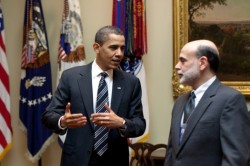
| You are subscribed to email updates from Save Your ASSets First To stop receiving these emails, you may unsubscribe now. | Email delivery powered by Google |
| Google Inc., 20 West Kinzie, Chicago IL USA 60610 | |


No comments:
Post a Comment