


saveyourassetsfirst3 |

- Dollar Store Scores Some Big Private Equity Loot
- Southern Cooper: A Good Buy In The Basic Materials Space
- Time To Nimble Into These 3 Chinese Internet Stocks
- Hedging The Nasdaq's Most Active Names
- 3 Gold Stocks That Could Make You Money, 2 That Won't
- The Well-Off Shop While the Peasants Grab Their Pitchforks
- India Gold Demand May Hit Record 1,000 Tons
- Gold Still Up More Than 23% in 2011
- Silver Futurist: “Globalism and Silver”
- Gold - September 2011 Month End Developments - Gold at $1624.70*
- Chinese Gold Demand “Extremely Strong”
- Own Treasuries or Gold and Silver
- Interim Peak in Bonds Coincides with Rebound in Mining Stocks
- What to do if you missed this rally in stocks
- Silver Summit 2011, 10 days out, promises excitement, information and entertainment
- Final Assays Received-NI43-101 Compliant Resource Estimate Proceeding for Zoe Discovery
- Dr. Copper is still pointing to a rough road ahead
- Gold Rush in India Has Now Become a Sprint
- Silver eagle bullion sales move into record territory
- Quantitative easing, or when there's nowhere left to run: Alasdair Macleod
- Global bank crisis will push gold over $2,000: Robin Griffiths
- Germany should end the secrecy and bring its gold home: Lars Schall
- Dutch government comes half clean on gold reserves
- Gold and silver prices run higher as dollar weakens
- Trading in a Bearish Triangle
- Gold & Silver Market Morning, October 11, 2011
- Peak Silver by SRSrocco
- Goldman Sachs is Bullish on Gold
- Has China Just Hit Stall Speed?
- Goldman bullish on gold price
| Dollar Store Scores Some Big Private Equity Loot Posted: 11 Oct 2011 07:07 AM PDT By Wall Street Strategies: By Brian Sozzi The bidding war for the little dollar store that could, 99 Cents Only (NDN), looks to finally be coming to a conclusion (and we say this as the review process ended up being quite thorough). All it took was a sweetened deal of $22.00 per share and the right group of partners. From the start, we have stated that the original $19.09 per share purchase price put forth by Leonard Green was too low given NDN's attractive store economics (sales per square foot; operating margins) and the potential for a future rollout of the California only chain to other parts of the country. Combining NDN's attractive store operating metrics and a technologically improved logistics system following years of plowing in capital with a sponsor's balance sheet that could take the model into new towns is the secret sauce for a winning private equity investment upon cashing out Complete Story » | ||||
| Southern Cooper: A Good Buy In The Basic Materials Space Posted: 11 Oct 2011 06:45 AM PDT By Jim Van Meerten: Most long-term conservative portfolios have basic material stocks in them and a great one is Southern Copper (SCCO). Basic material stocks have taken a big hit in this recession and long-term investors should look at these dips as a great buying opportunity: Right now the stock is 44.03% off its one-year high but still up for the long run as you can see by this five-year weekly price graph provided by Barchart: Click to enlarge Southern Copper Corporation engages in mining, exploring, smelting and refining copper ores in Peru, Mexico and Chile. It is involved in the production of copper and molybdenum concentrates; smelting of copper concentrates to produce anode copper; and refining of anode copper to produce copper cathodes, as well as refined silver and copper. The company operates the Toquepala and Cuajone mines in the Andes Mountains located southeast of the city of Lima, Peru, as well as Complete Story » | ||||
| Time To Nimble Into These 3 Chinese Internet Stocks Posted: 11 Oct 2011 06:29 AM PDT By BubbleBustInvesting.com: Major Chinese Internet companies haven ' t fared that well in the last three weeks, losing a big chunk of their value: (Click to enlarge) While part of the decline can be attributed to a worldwide stock market correction, Chinese Internet companies had their own country-specific problems: Tight monetary policy at home, a looming trade dispute between the U.S. and China, accounting irregularities among some of the U.S.-listed companies, and a momentum shift. So, what should investors do? As we wrote in previous pieces, investors should stay away from industries and companies that undergo a momentum shift. Yet long term investors may want to search for gold in the trash, trying to identify a 'Chinese Amazon.com' (AMZN). As indicated from the table below, Baidu, Sina, and Sohu.com are three good choices for such strategy. They display solid fundamentals and are trading at a reasonable price.
Complete Story » | ||||
| Hedging The Nasdaq's Most Active Names Posted: 11 Oct 2011 06:00 AM PDT By David Pinsen: With other major stock indexes advancing Monday on news of a Franco-German commitment to shore up European banks, the Nasdaq Composite Index rose 3.50%, to close at 2,556.05. The Chicago Options Exchange Market Volatility Index dropped 8.78% to close at 33.02. The VIX has closed above 30 every day since the market meltdown of August 5th. The table below shows the costs, as of Monday's close, of hedging 16 of the 20 most actively traded Nasdaq names against greater-than-20% declines over the next several months, using optimal puts. A Comparison For comparison purposes, I've also added the costs of hedging the SPDR S&P 500 Trust ETF (SPY) against a similar decline Complete Story » | ||||
| 3 Gold Stocks That Could Make You Money, 2 That Won't Posted: 11 Oct 2011 05:56 AM PDT By Vatalyst: Since the beginning of September, the prices of gold stocks have been getting slammed. This article will examine five gold stocks to determine if they now offer investors good buying opportunities. Here is my analysis: Goldcorp Inc. (GG) Goldcorp has a market cap of $36.26 billion with a price to earnings ratio of 19.28. The stock has traded in a 52 week range between $39.04 and $56.31. The stock is currently trading around $47. The company reported second quarter revenues of $1.28 billion compared to revenues of $897 million in the second quarter of 2010. Second quarter net income was $472 million compared to net income of $877 million in the second quarter of 2010. One of Goldcorp's competitors is Anglo Gold Asanti Ltd. (AU). AU shares are currently trading around $41 with a market cap of $15.99 billion and a price to earnings ratio of 15.99. Goldcorp is one Complete Story » | ||||
| The Well-Off Shop While the Peasants Grab Their Pitchforks Posted: 11 Oct 2011 04:33 AM PDT Times are tough…
… but not for everyone:
Cars, of course, are where the real action is:
Some thoughts: And let's not even get into the games public companies play with stock options. The other reason the "X-Fluents" feel richer is that they own most of the world's financial assets. The average American's retirement savings is tied up in their home, which is still falling in price, while top-5% Americans are diversified in stocks and bonds, which had nice runs in the past few years. So (recent volatility notwithstanding) they've been gradually feeling more and more flush as the markets have recovered from their 2009 lows. It seems completely reasonable, when your portfolio doubles, to reward yourself with a new toy. Still, you'd think, given the growing disparities of wealth and rapidly spreading angst among the have-nots, that the world's CEOs, investment bankers, hedge fund managers and trust fund babies would have the sense to dial back the conspicuous consumption. But they don't seem to notice the dynamic, and now the Tea Party and Occupy Wall Street movements, enraged by what looks like a rigged game, have entered the mainstream. The peasants have grabbed their pitchforks and headed for the castle. | ||||
| India Gold Demand May Hit Record 1,000 Tons Posted: 11 Oct 2011 04:12 AM PDT | ||||
| Gold Still Up More Than 23% in 2011 Posted: 11 Oct 2011 02:45 AM PDT Despite the recent correction... | ||||
| Silver Futurist: “Globalism and Silver” Posted: 11 Oct 2011 02:42 AM PDT Yet another episode from the gentleman who is our favorite "Silver Futurist". ~TVR | ||||
| Gold - September 2011 Month End Developments - Gold at $1624.70* Posted: 11 Oct 2011 02:36 AM PDT | ||||
| Chinese Gold Demand “Extremely Strong” Posted: 11 Oct 2011 02:13 AM PDT Due to China's announcement a while back (along with ALL Central Banks) they are buying gold off the market so as to not disrupt the price-defiance of the supply and demand principle.I maintain this PM market is and always will be "dirty"- even with the Chinese buying tonnes and world demand increasing how is the price "fixed" fairly when huge quantities are not accurately" counted"? ......Premiums for gold bars in Vietnam were at $22.21 to world gold of $1,648.70 on Monday. Premiums for gold bars in Hong Kong are at $3.00 an ounce over spot prices, their highest level since at least February. Shanghai gold closed at a very healthy premium of $21.81 to world gold of $1,656.60. Physical demand for gold in Shanghai has been "extremely strong" this week following the week-long Chinese holiday, Mitusi note in their morning report. UBS are more circumspect but note that physical demand in China appeared to be "quite decent" in the first trading day after the Golden Week holiday. They note that combined volumes for the SGE Au9999 and Au9995 contracts surged to the highest since February 14th. Year-to-date volumes are now 11% higher than 2010 levels. UBS "expect demand to remain strong until the Chinese New Year holidays in late January 2012." A further sign of the significant scale of demand from Asia and from China in particular is seen in the news today that China has installed its first gold vending machine. More importantly, China and Chinese banks are planning to roll out another 2,000 gold ATMs nationwide. Each ATM can hold up to 200 kilograms of gold bullion in varying denominations at once. The handful of ATM machines internationally selling gold bars have received much media attention and some have suggested that these few gold ATMs signal a top in the market...... http://www.zerohedge.com/news/gold-s...trong%E2%80%9D | ||||
| Own Treasuries or Gold and Silver Posted: 11 Oct 2011 02:06 AM PDT | ||||
| Interim Peak in Bonds Coincides with Rebound in Mining Stocks Posted: 11 Oct 2011 01:51 AM PDT The Daily Gold | ||||
| What to do if you missed this rally in stocks Posted: 11 Oct 2011 01:07 AM PDT From Jeff Clark in Growth Stock Wire: | ||||
| Silver Summit 2011, 10 days out, promises excitement, information and entertainment Posted: 11 Oct 2011 01:01 AM PDT With Cambridge House International's Silver Summit 2011 just 10 days away, excitement awaits this 9th annual event at the Davenport Hotel in Spokane, Wash. "Extracurricular" activities including reserved underground tours of working silver mines and the Sunshine silver refinery are slated for Wednesday, Oct. 19th. While the tours are sold out, some cancellations inevitably occur; to join the waiting list, please contact the Silver Summit office at 208.556.1621. | ||||
| Final Assays Received-NI43-101 Compliant Resource Estimate Proceeding for Zoe Discovery Posted: 11 Oct 2011 12:59 AM PDT Extorre Gold Mines Limited (AMEX:XG; TSX:XG; Frankfurt: E1R, "Extorre" or the "Company") is pleased to announce that all assays are in hand for the first National Instrument 43-101 compliant resource estimate for the Zoe zone at Cerro Moro, Santa Cruz Province, Argentina. Assays for the final 33 drill holes of the approximately 100 holes to be included in the initial resource estimate are reported in this release. | ||||
| Dr. Copper is still pointing to a rough road ahead Posted: 11 Oct 2011 12:57 AM PDT From Bloomberg: Copper fell the most in a week in New York on concern about the outlook for demand in top global consumer China, where figures due this week may show slower growth in exports. Chinese export growth weakened to 20.5 percent in September, according to economists' estimates compiled by Bloomberg. The data are due Oct. 13. A report the next day may show consumer-price inflation was at 6.1 percent, compared with the government target of about 4 percent every month. "Traders are probably a bit nervous over potentially weaker export data, decelerating construction figures and a stronger-than-expected CPI read," said Angus Staines, an analyst at UBS AG in London. Copper for December delivery fell 9.9 cents, or 2.9 percent, to $3.269 a pound by 7:49 a.m. on the Comex in New York. Prices dropped as much as 3 percent, the most since Oct. 4. Copper for three-month delivery slumped 3.3 percent to $7,245 a metric ton on the London Metal Exchange. All of the six main metals traded on the LME retreated. Copper slid 26 percent in the third quarter, the most since 2008, on concern slowing economies and a worsening European sovereign-finance crisis would crimp demand. The LME Index of the six main metals had its largest three-day gain in two years as of yesterday after the leaders of France and Germany pledged a plan for the European crisis in three weeks. Chinese Bank Loans "The complex is focused more on the goings-on in China, and less with the zigs and zags of the European debt crisis," Edward Meir, a senior commodity analyst at MF Global Holdings Ltd., wrote in a report today. "With respect to China, not only are there growing concerns about growth prospects, but renewed attention is being placed on the state of Chinese banks and the billions of dollars of nonperforming loans they are carrying." Aluminum for three-month delivery on the LME fell 1.4 percent to $2,227 a ton. Demand for the lightweight metal may climb 8 percent to 10 percent over the next three to five years on buying from Asia, led by China, Philip Martens, chief executive officer of Novelis Inc., said in an interview today. Prices may be "moderate" in a range between $2,300 and $2,500 a ton over the next six months, he said. Tin dropped 3.7 percent to $22,205 a ton. PT Timah, Indonesia's largest producer of the metal, is set to resume exports after prices gained to $23,000, President Director Wachid Usman said. The country is the biggest global tin shipper. Zinc, nickel, and lead declined on the LME. To contact the reporter on this story: Maria Kolesnikova in London at mkolesnikova@bloomberg.net. To contact the editor responsible for this story: Claudia Carpenter at ccarpenter2@bloomberg.net. More on copper: "Dr. Copper" could be sending an urgent warning Copper could be the "pin" that pops the China bubble Don't worry about the fall in gold... This is what you should be watching instead | ||||
| Gold Rush in India Has Now Become a Sprint Posted: 10 Oct 2011 09:21 PM PDT ¤ Yesterday in Gold and SilverGold was up a bit more than ten bucks by 9:00 a.m. Hong Kong time in their Monday morning trading session...and basically flat-lined until shortly after London opened for business. Then, it fits and starts, the gold price worked its way slowly higher...even during the New York Access Market after Comex trading had ended for the day. The gold price closed at $1,675.90 spot, just off its high [$1,679.00 spot] of the day, which came at precisely 4:00 p.m. Eastern time. Gold finished up $37.20 on extremely light volume...only 86,000 contracts...which is an occurrence I always like to see.
Silver rallied smartly until about 9:15 a.m. Hong Kong time, before getting sold off a bit going into the London open. Then, like gold, away it went to the upside. This happy state of affairs lasted until about 11:15 a.m. BST, which is about 6:15 a.m. Eastern time. Then the silver price more or less traded sideways for the rest of the Monday session. And, just like the gold price, silver's New York low came at the London p.m. gold fix, which was just a couple of minutes past 10:00 a.m. Eastern time...which is 3:00 p.m. in London. The silver price closed at $32.04 spot...up 77 cents from Friday. Net volume was also very light...around 22,000 contracts.
It appeared that the dollar had some influence on the gold price for part of the Monday trading day...although that theory sort of falls apart after 12 noon in New York. From the Sunday night open at 6:00 p.m. Eastern, until shortly after noon in New York, the dollar dropped about 135 basis points, which is a pretty chunky move. From that low, the dollar recovered about 20 basis points of that loss into the close of trading.
The gold stocks gapped up...and stayed up for the rest of the day...with the HUI closing virtually on its high of the day, up 3.47%.
The silver stocks did pretty well, too...with Nick Laird's Silver Sentiment Index up 3.03%.
(Click on image to enlarge) Toronto was closed yesterday for Canadian Thanksgiving...and that's why there were no quotes available on any of the juniors on the Venture exchange. The CME's Daily Delivery Report showed that 61 gold, along with 20 silver contracts, were posted for delivery tomorrow. The link to the action, such as it was, is here. There withdrawals from both GLD and SLV yesterday. In GLD there was a smallish withdrawal of 48,658 troy ounces, along with a far more substantial withdrawal of 1,654,794 from SLV. Whatever the reasons, it certainly didn't have anything to do with yesterday's price action in either metal. And, for the first time this month, the U.S. Mint did not have a sales report. There was both in and out movement at the Comex-approved depositories on Friday. They reported receiving 595,086 ounces of silver...and shipped 581,847 ounces out the door, for virtually no change on the day. The link to the action is here. It was no surprise to me that silver analyst Ted Butler's weekly review to his clients was a rather long one considering the fact there were a lot of records shattered in both the Commitment of Traders Report and the Bank Participation Report. Here's a free paragraph... "Over the past month, directly attributed to the deliberate 30% price smash, the commercials have reduced their net short position by a stunning 25,000 contracts, the equivalent of 125 million ounces. This is in line with the 150 million oz total reduction I estimated recently when factoring in other markets (SLV, etc.). To achieve such an historic reduction in the total commercial net short position, the reciprocal speculative net long positions were also reduced to historically low levels. The net long position in the managed money component of the disaggregated report was at the lowest level since the CFTC has reported those figures. Amazingly, the net long position of the non-reporting traders was the lowest it has been in my 30 years of studying the COTs. Clearly, the leveraged long speculators, both large and small, served as the cannon fodder for the commercials' collusive and successful activities. While it's always possible for there to be additional liquidation amid further manipulation to the downside, it's important to remember that you can't get blood from a stone. Given the extremely low level of speculative long positions remaining, it is hard for me to imagine further bloodletting." I have three days worth of stories for you today. It all adds up to lots to read, lots to listen to...and lots to watch. I hope you have the time...and I'll leave the final edit up to you. World-wide physical off-take is ferocious...and this situation can't last without gold and silver prices being bid substantially higher. Silver eagle sales move into record territory, Global bank crisis will push gold over $2,000: Robin Griffiths. Dutch government comes half clean on gold reserves. ¤ Critical ReadsSubscribeClamping Down on Rapid Trades in Stock MarketRegulators in the United States and overseas are cracking down on computerized high-speed trading that crowds today's stock exchanges, worried that as it spreads around the globe it is making market swings worse. The cost of these high-frequency traders, critics say, is the confidence of ordinary investors in the markets, and ultimately their belief in the fairness of the financial system. "There is something unholy about them," said Guy P. Wyser-Pratte, a prominent longtime Wall Street trader and investor. "That is what caused this tremendous volatility. They make a fortune whereas the public gets so whipsawed by this trading." And that's only part of it. HFT is also part of market rigging operations when it suits the powers that be. This story was in the Saturday edition of The New York Times...and I thank reader Phil Barlett for sending it along. The link is here.  We are looking at a total global financial collapse - Gerald Celente"It's like Bernie Madoff said, 'The US is one big Ponzi scheme.' From the King of Ponzi he knows what he's talking about. All they can say in the mainstream media is that it's a buying opportunity as they sucker people back into these markets. Did you ever here them say, 'It's a selling opportunity?' Not one of them, they're a bunch of whores." I think I've used that word the odd time myself in this column. This King World News blog was sent to me by Australian reader Wesley Legrand...and the link is here.  France, Belgium and Luxembourg agree on Dexia dealIf you weren't reading the European news websites on the weekend, you would never have known that a European bank went under on the weekend...got cut up and sold off as scrap before the markets opened in the Far East on Sunday night in North America. France, Belgium and Luxembourg said on Sunday that they had reached a deal to dismantle troubled bank Dexia, the first victim of the eurozone debt crisis. In a joint statement, the three countries said, "The proposed solution, which is the result of intensive consultations between all involved parties, will be submitted to the Dexia board, whose responsibility it is to approve the plan." French and Belgian prime ministers, Francois Fillon and Yves Leterme, held a lunch-time meeting to finalise the deal to dismantle the bank, which also had to be rescued in 2008 at the start of the global financial crisis. And believe it or not, dear reader, this bank passed the European bank 'stress test' back in the spring. This is your first must read of the day...and I thank Roy Stephens for digging it up for us. The link is here.  The Financial Crisis Returns: Europe's Attention Shifts to Its Ailing BanksSovereign bonds were once considered among the safest of all investments. Yet with Greece teetering and several more euro-zone countries on the watch list, the Continent's banks are in trouble. The European Union is struggling to come up with an antidote. The mood was decidedly somber last Thursday as Jean-Claude Trichet put in his last appearance as the president of the European Central Bank (ECB) following a meeting of the institution's governing council. There was no farewell gift and no bouquet of flowers -- only a few words of praise from Jens Weidmann, the president of Germany's central bank, the Bundesbank. Three years after the collapse of the Lehman Brothers investment bank in September 2008, the crisis is heading toward a new peak. The banks no longer trust each other and, during the past week, prices of insurance policies to protect investors in the event that credit institutions go bankrupt have soared to the highest levels ever observed. Only the central banks are considered safe havens and are flooded with money from financial institutions. This second offering from Roy Stephens showed up at the German website spiegel.de yesterday...and is well worth your time, if you have it. The link is here.  Banks parking more cash with European Central BankThis AP story showed up over at news.yahoo.com yesterday. The yahoo.com story was pulled...and it now appears on the Internet with the far-less-threatening new headline "ECB slows down government bond buying further". The meat of this story is in the last three paragraphs...and you can pretty much ignore everything that comes before that. This version of the story shows up posted over at the ctpost.com website...and I thank reader Craig Eubanks for bringing it to my attention. The link is here.  Slovaks Love and Hate Euro; Bailout May Lie in BetweenThe prospect of guaranteeing the debt of richer but more spendthrift countries like Greece, Portugal and even Italy has led to public outrage. So much so that tiny Slovakia now threatens to derail a collective European bailout fund to shore up the euro, which requires the approval of all 17 countries that use the currency. Once among the most enthusiastic new members of the European Union, and an early adopter of the euro in Eastern Europe, Slovakia is proud of its strong growth and eager to leave behind its reputation as the "other half" of Czechoslovakia. But it has also become a stark example of the love-hate relationship that many residents of the Continent have begun to feel toward a united Europe. This most excellent story appeared in the Friday edition of The New York Times...and I devoured it the moment I discovered this Roy Stephens offering in my in-box. It's time to bone up on Slovakia, because you're going to hear a lot more about this country in the coming days...and the link is here.  Walker's World: The real euro crisisSilver eagle bullion sales move into record territory Posted: 10 Oct 2011 09:21 PM PDT  Mike Zielinski reports at Coin Update that demand for U.S. Silver Eagle coins this year has already surpassed last year's demand with three months still to go this year. Zielinski's commentary is headlined "Silver Eagle Bullion Sales Move into Record Territory" and you can find it posted at the coinupdate.com website. I stole all of this from a GATA release on Saturday..and the link is here. | ||||
| Quantitative easing, or when there's nowhere left to run: Alasdair Macleod Posted: 10 Oct 2011 09:21 PM PDT  Writing at the GoldMoney.com website, economist and former banker Alasdair Macleod, who spoke at GATA's Gold Rush 2011 conference in London in August, reflects today on the "quantitative easing" that constitutes the rescue of Europe's insolvent banks and will do the same in the United Kingdom and United States. Macleod writes: | ||||
| Global bank crisis will push gold over $2,000: Robin Griffiths Posted: 10 Oct 2011 09:21 PM PDT  When asked about gold, Griffiths replied, "Nothing has gone wrong with the gold story. When gold fell to $1,550, the Financial Times, true to form, came out with an article about why it was a bubble and how the bubble had burst. Of course from that day on gold has never stopped rallying again. The likely bounce takes us through $2,000 before the end of this year, that's a very reasonable forecast. This King World News blog is well worth the read...and the link is here. | ||||
| Germany should end the secrecy and bring its gold home: Lars Schall Posted: 10 Oct 2011 09:21 PM PDT  Here's another GATA release. Chris Powell spent many hours copy/editing Schall's new essay, as English is not his first language. This is a fairly long read...and I was much surprised when I got to the end, that he had dug up an old essay of mine from way back when. That, and Dana Allen's related essay he mentions below mine, are very much worth your time as well. The link to 'all of the above' is here. | ||||
| Dutch government comes half clean on gold reserves Posted: 10 Oct 2011 09:21 PM PDT  Here's a GATA release from Saturday that's a must read. It contains a considerable preamble by Chris Powell, along with the link itself. So rather than have me re-invent the wheel...I'll just leave it up to Chris...and the link is here. | ||||
| Gold and silver prices run higher as dollar weakens Posted: 10 Oct 2011 09:15 PM PDT Gold and silver prices notched strong gains yesterday as hedge funds flooded back into "risk" trades. Stock markets all over the world recorded gains, with commodities also joining the ... | ||||
| Posted: 10 Oct 2011 09:04 PM PDT The charts suggest flat trading this week and the market results from the week ended October 7. Dow Jones Industrial Average: Closed at 11103.12 -20.21 on 95% of normal volume and flat momentum. Since the second week of August, the Dow has been trading down in a bearish triangle. Of late we are seeing better support at 10,700, a common magnet support and resistance number for the Dow. The negatives this Friday were bad news in rating downgrades of sovereign nations in Europe as well as in European and USA global banks. The Dexia bank is so close to the Belgian government one analyst said that failing bank was a proxy for the entire central government. It is also in the top 20 big boy banks in all of Europe. We think it will be recapitalized or they break it up and sell the pieces. Another choice is a split making a good bank and a bad bank. In any event pervasive slow growth over Europe with the dangers of outright nation failures is getting very scary and fallout is spreading world-wide. USA banks took hits today as well since they are big lenders to Europe and European bankers. Price is resisting at 11,250 near a trading range channel top. The close was negative on a down price bar. Stocks are normally a buy on Monday's but we think next week could open flat and sell-off based on charts. Support is the 20-day moving average at 11073.32. All eyes are on Europe. What they are doing is complicated and can take up to four more weeks to finish. Many are wondering if they can make it in time to avert a serious stock crash. S&P 500 Index: Closed at 1155.46 -9.51 with a similar chart pattern as the Dow. Volume was normal and skidding momentum has firmed. Resistance is the 20-day average at 1158.26 with support being 1150; a major stop and go number for the S&P's. Keep in mind that if Monday begins to sell with energy, the funds or PPT can step in a buy a few thousand S&P futures and kick-start stocks' buying in most categories. These markets are now directionless with almost no trend, wandering up and down on the latest hourly and daily news. Fund managers and traders do not like that kind of market as you can't follow it with trading. We see a flat to down open on Monday unless there is positive news over the weekend or near the open on Monday. S&P 100 Index: Closed at 523.36 -3.37 with a chart pattern replicating the Dow and S&P 500. Volume is normal and momentum is flat. Resistance is 525 and support is 520. The daily close almost hit the 20-day moving average, which is 523.42. Price is in the top of the trading channel like the other indexes. The problem is, there is so much up-side resistance on various prices, moving averages and a trading channel. A moving breakout up and through all this resistance will be a challenge. We see trading flat to down on Monday. Nasdaq 100 Index: Closed at 2202.76 -15.23 on 95% of normal volume and basing momentum that had been skidding lower. All three moving averages are within 26 points. A recent rally took price from 2050 to this higher close in October. The price of 2200 is major magnet trading price for this index. Overall, the chart is more positive than the other index charts. If price can breakout, and up and through 2240, the next higher resistance is 2250 and then 2300. Watch this index on Monday as it is the leading directional signal for the larger stocks' group. Price closed in the center of today's trading range. This means current direction is undecided. We would forecast a move sideways to lower on Monday barring any very positive news. 30-Year Bonds: Closed at 141.31 -0.75 on mildly falling momentum. Since the price made a bear double top in September and October, the signals are telling us bonds are ready to sell some more if stocks can regain their footing and move into the buying mode. Resistance is 141.50-142.50 and support is 140.00-138.17. On the cycles and time, bonds begin selling in October as stocks move into rallies later in this month. Some of the very large stock funds are buyers November 1. Price is a few ticks under the 20 day average at 141.76. If stocks rise next week, these bonds should go to 140.00 first, and then sell to 138.50 support. GDXJ Junior Gold Miners And XAU: The GDXJ double topped on the index in September near 39 and then sold down to chart low near 25.00. Since then, the price rallied back to 30.00 and then resisted at that number. The close today was 29.05 -0.49. The price bar closed in the center of the trading range saying undecided for Monday. Momentum is in the basement and now turning up mildly. Volume was normal as some of the juniors are beginning to buy slowly on rising gold and silver prices. First resistance is 30.00 and then 31.02 on the 20-day average. Last year at this time price went up from 32.50 to 42 in the first week of December. If this index is to rally, the broader stock markets need support and must lead the way higher. The XAU has basing momentum and a basing metal to shares ratio. The close was 187.44 -4.24. The close is in the lower third of our daily price bar signaling weakness and potential selling on Monday. Price could also do nothing and just trade sideways in a channel. Resistance is 195.00 just under the 20-day average at 195.02. Last year at this time price moved up from 200 to a high in December of over 230. Watch the GDXJ to lead the XAU for a better forecast. However, when the metal to shares ratio gets-up off the bottom, we are 90% certain a new rally has begun. For Monday, expect metal shares to be flat-sideways to mildly lower. However, I am seeing signals of positive basing and new support on both charts. Gold: Closed at 1639.20 -12.40 with price moving sideways in a tighter trading range. Momentum has hit the chart bottom and should go sideways to up next week. The new trading range for gold is 1607-1665. Price is under all moving averages. Gold needs to pass through and close solidly above 1675. Then, next higher resistance is the 20-day average at 1690.11. The following higher goal would be 1750 and then a new rally higher to 1923 that would produce a double top. Some analysts are saying $2,000 gold next year and we agree. Others think we can see $2,000 this year. Based upon where we are in our view, 1,923 would be a good start to complete 2011. We now have a new set of technical price-projections on gold from 1550 to over 2600 with no special dates except those previously mentioned. Silver: Closed at 31.16 -0.82 with solid support and basing at 30.00. Momentum hit the chart bottom and is now turning sideways. Resistance is 33.90 on the 20-day average. The 50 day and 200 day numbers are 36.63 and 35.04. If silver can pass through 35.04 we see next higher resistance at 38.85. Since silver was so beaten down at the end of April, we can safely forecast 38.85 resistance. After that, price resists at $40, 41.85, $42.48 followed by $45.00. There is going to be a hard road up the hill for silver but when we are past 35.04 on the 200-day, buying speed can pick-up. US Dollar: Closed at 78.71 +0.16 on rising but topping momentum and price resistance at 80.00. The dollar closed on Friday in the top of the price bar. This means more upside buying pressure on Monday. However, the dollar has hard resistance between 79.50 and 82.50. It will most likely have great difficulty breaking out, up and through 82.50 unless the Euro sells beneath 128.00, which is not all that far away. A nasty problem in Euro-land credit could sell the Euro hard and fast. The inverse trade, the US Dollar could then easily hit the hard 82.50 number and go right through it toward 84.50-85.00. This move would be stopped if and when the Euro-land central bankers get their ESFS bond plan signed and in place-that sells the dollar. Crude Oil: Closed at 82.55 +2.79 after selling down and producing a bull double bottom at 75.50-76.00. Resistance is the 20-day average at 82.71 and the 50-day at 86.28 and the 200-day at 91.07. The chart pattern of late has been weaker. There is hard resistance at those higher moving averages and a trading channel line near 87.50-88.50. We see oil rising to 85.50 and then trading sideways to down unless stock markets rise demanding crude oil. Price closed at the high telling us more buying next week to 85.00. CRB Index: Closed at 303.52 -1.23 after stabilizing above 300.00. Momentum has been selling since a peak last March. It finally hit the chart bottom and is now turning sideways to up. Price has been in a selling bear channel since a peak at the end of April. Of late, the price got worse and sold under the lower trading channel line but has come back up to it and stopped. The old selling trading range was 300 to 335; a 25 point in-channel spread. Price is under all moving averages. We can see a rise of plus 30 points taking us back up to the 200-day moving average at 329.17; call it a rounded 330.00. We are still in a commodity transition cycle. The hot ticket will be gold based upon all the international fundamentals. Central banks and large funds and traders and loading-up on physical precious metals, especially gold. -Traderrog         This posting includes an audio/video/photo media file: Download Now | ||||
| Gold & Silver Market Morning, October 11, 2011 Posted: 10 Oct 2011 09:00 PM PDT | ||||
| Posted: 10 Oct 2011 08:52 PM PDT Some highlights from another brilliant report compiled by SRSrocco: CLICK IMAGE FOR A LARGER VIEW
The world has entered a plateau of global oil production over the past 5-6 years. A higher oil price has not brought on more supply to offset depletion rates from existing fields. From the graphs above we see a correlation between global silver supply and oil production, especially in the latter part of the 20th century. Up until the late 1800's and early 1900's the majority of energy used in mining silver came from human and animal labor. It is truly amazing just how much silver was produced in the United States at this time without the use of oil and modern mining practices (information provided later in the article). This all changed as global oil production as well as the technique of open-pit mining increased. CLICK IMAGE FOR A LARGER VIEW
When the nails of the peak silver coffin are added up, the death of increasing future supply is close at hand. The CEO's and analysts in the mining industry are for the most part oblivious to these factors that will destroy their ability to make viable forecasts of future projects. It amazes me to see professionals plan a huge open-pit mine with a 25-45 year economic plan without any consideration of what the energy environment will be like at that time. Download The Entire Report PDF Here Questions/Comments: SRSRocco@gmail.com | ||||
| Goldman Sachs is Bullish on Gold Posted: 10 Oct 2011 08:37 PM PDT From Roman Baudzus of GoldMoney: Analysts at Goldman Sachs said in the past week that precious metal prices are likely to correlate strongly with record-low interest rates in western industrialised countries after their sharp price correction. The rally in gold prices is in their view primarily fueled by low interest rates worldwide. This dynamic remains unchanged, despite the recent selloff in the precious metals sector. Given all the problems afflicting the eurozone, many market participants are convinced that the ECB will lower its key interest rate for the eurozone by 25 basis points (0.25%) when its Council members next convene. ECB President Jean-Claude Trichet said last Thursday that commercial banks in the eurozone could expect generous liquidity injections by the ECB. To achieve this goal, the ECB restarted its tender procedure, which will provide regional commercial banks with unlimited loan facilities for refinancing purposes with a maturity of one year in October and December. Goldman also point to the significance of the current interest rate environment in the United States in encouraging gold buying. The US Federal Reserve kept its key interest rate constant at 0% to 0.25% over the last three years, but record-low interest rates have not led to a sustained revival of economic activity in the United States. Rising inflation has instead resulted in negative real interest rates in recent months, with investors on financial markets and small savers fleeing into gold and silver for investment purposes. This trend will likely continue, since central banks like the Fed, the BoE and the ECB are trying to devalue the currencies they issue in order to promote exports and lessen the real value of existing debt.
Goldman´s gold price target is at $1,860 per troy ounce for the next 12 months (a very conservative estimate given the factors it outlines as favourable to gold). The bank advises its customers to use the correction to build up long positions in the yellow metal. Read more @ GoldMoney.com | ||||
| Has China Just Hit Stall Speed? Posted: 10 Oct 2011 06:51 PM PDT The Financial Times reports that the Chinese sovereign wealth fund Huijin will buy shares in the four biggest banks in a move to goose the flagging stock market, which is at its lowest point since early 2009. This is the first time the fund has mad this sort of intervention since the onset of the crisis. The stock market is arguably even more important in China than in the US. With yields on bank deposits chronically well below inflation (and the spread between the two rates continues to be much worse than we are now experiencing in the US), investors are almost forced into risky assets. Since there is no domestic bond market to speak of, that means, for the most part, stocks or real estate (we have also heard of the stockpiling of commodities, such as base metals). But the stock market may well be sending an accurate signal that China's economic model is under duress. We've commented repeatedly that there has never been a large economy that has had 50% of its GDP consist of exports and investment. And before you say, "China is an emerging economy, it can absorb a lot of investment" the evidence is against that. The supposedly sclerotic US took $4 to $5 of debt to generate $1 of GDP growth on the eve of the crisis. As of 2009, it was taking $7 of debt to generate $1 of GDP growth. And China has been raising interest rates to dampen domestic inflation. We linked to a post last night from MacroBusiness we thought were even more troubling on this front but comments suggest most readers did not take notice. It suggested that Chinese real estate has just hit the wall:
MacroBusiness points out that retail spending is still up about 6% in real terms year to year, so the debt crisis hasn't yet hit the real economy. But the flip side is consumer spending is under 40% of GDP in China and higher interest rates will slow and potentially even halt growth in investments, which has been the biggest driver of GDP increases. Finally, recall the pattern in the US and other advanced economies: the financial crisis hit first, the real economy hit followed. While China, thanks to its command economy, may avoid a full bore financial crisis, it isn't at all clear how it can sustain the level of growth needed to preserve social stability (generally considered to be 7% to 8%) with the current stresses becoming more acute.
| ||||
| Posted: 10 Oct 2011 05:32 PM PDT |


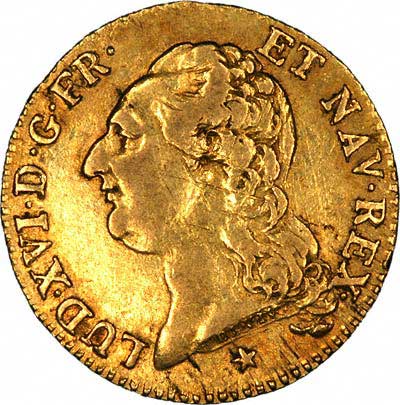 However, there is barely any alternative to the adoption of more QE measures by central banks, assuming that the goal is to prevent the existing global financial system from collapsing. The continued monetisation of outstanding debt in both private and public sectors is leading to turbulence at the currency markets. After the BoE´s announcement last week of more QE, sterling immediately came under strong selling pressure and fell by almost 1% against the US dollar. Owing to this instability and other reasons, Goldman Sachs expects the gold price to start moving higher again. The Fed will most likely not continue to watch current events from the sidelines, as the US economy remains weak. Investors should thus – in addition to Operation Twist – be prepared for the Fed to adopt additional liquidity measures.
| You are subscribed to email updates from Gold World News Flash 2 To stop receiving these emails, you may unsubscribe now. | Email delivery powered by Google |
| Google Inc., 20 West Kinzie, Chicago IL USA 60610 | |

No comments:
Post a Comment