


Gold World News Flash |

- Norcini, Leeb, Pento, and Turk at King World News
- Silver COT Most Bullish in Eight Years
- Stephen Leeb - World Money Supply Tied to $10,000 Gold Bow
- Gold Seeker Closing Report: Gold and Silver End Slightly Lower
- Ignore the CRIMEX...It Is A Lie, ...A Cornered Rat, ...Soon To Be Irrelevant
- As bunco artists go in the financial world, GATA is pretty small-time
- Guest Post: Houston, We've Got A Problem - Bevilacqua
- Guest Post: Houston, We've Got A Problem - Bevilacqua
- Financial Black Holes and Economic Stagnation
- Euro’s Demise Precedes Dollar’s Doom
- Silver futures data most bullish in 8 years, Arensberg says at GGR
- There are Competitive Advantages to Owning Silver vs. Gold ? Here are 10
- Gold Bullion: What’s the Difference Between 1 Troy Ounce and 1 Regular Ounce?
- Silver Bear Market Ends
- Bank Of America's $8.5 Billion Settlement Deal Falls Apart
- Bank Of America's $8.5 Billion Settlement Deal Falls Apart
- Stephen Leeb: World Money Supply Tied to $10,000 Gold Bow
- Gold Price Closed at $1,646 down 0.3%
- Japan, Gold and the Euro Crisis
- What Chinese Unemployment?
- U.S. Dollar and Euro - Review and Outlook
- Gold and Euro Politics
- Special GGR Excerpt – Silver COT Most Bullish in Eight Years
- The Bill You Just Got Stuck With
- Gold fails at the upper end of its trading range - moves lower
- “At some point the Fed will have to formally devalue the dollar vs gold and I think all central banks, economies and treasury ministries will have to fall in line.”
- Gold Daily and Silver Weekly Charts - Risk Off - Maneuvering Ahead of Position Limits
- Hong Kong Becomes First Centre For Gold Trading In Yuan
- Analyzing the Australian Dollar - Up, Down, and Under
- How Might the Kinder Morgan-El Paso Deal Affect the Energy Landscape?
| Norcini, Leeb, Pento, and Turk at King World News Posted: 19 Oct 2011 04:57 PM PDT 12:56a ET Thursday, October 20, 2011 Dear Friend of GATA and Gold: Futures market analyst Dan Norcini tonight tells King World News that volatility inspired by central banks and computer trading programs is overwhelming markets and perhaps heralding the collapse of the world financial system. An excerpt from the interview is posted at the King World News blog here: http://kingworldnews.com/kingworldnews/KWN_DailyWeb/Entries/2011/10/20_N... Also at King World News, fund manager Stephen Leeb predicts that the world's need for a lot more money will send gold toward $10,000 per ounce. An excerpt from that interview is at the King World News blog here: http://kingworldnews.com/kingworldnews/KWN_DailyWeb/Entries/2011/10/20_S... Market analyst Michael Pento elaborates on that likely money production, asserting that engineering inflation is now the Federal Reserve's objective: http://kingworldnews.com/kingworldnews/KWN_DailyWeb/Entries/2011/10/19_M... And the recent King World News with GoldMoney founder and GATA consultant James Turk has been posted in full audio here: http://kingworldnews.com/kingworldnews/Broadcast/Entries/2011/10/18_Jame... CHRIS POWELL, Secretary/Treasurer ADVERTISEMENT The United States Once Again Can Establish a Stable Dollar Worth Its Weight in Gold Lewis E. Lehrman, chairman of the Lehrman Institute, sponsor of The Gold Standard Now project, has released a plan to restore economic growth through a stable dollar. The plan, titled "The True Gold Standard: A Monetary Reform Plan Without Official Reserve Currencies," responds to the recurrent economic crises of the last century and outlines a detailed proposal for America's leadership on "how we get from here to there." That is, how we get from the present unstable paper dollar to a stable dollar as good as gold. James Grant, author and editor of Grant's Interest Rate Observer, says of the Lehrman plan: "If you have ever wondered how the world can get from here to there -- from the chaos of depreciating paper to a convertible currency worthy of our children and our grandchildren -- wonder no more. The answer, brilliantly expounded, is between these covers. America has long needed a modern Alexander Hamilton. In Lewis E. Lehrman the country has finally found him." To learn more and to sign up for The Gold Standard Now's free, noncommercial, weekly report, "Prosperity through Gold," please visit: http://www.thegoldstandardnow.org/gata Join GATA here: The Silver Summit http://cambridgehouse.com/conference-details/the-silver-summit-2011/48 New Orleans Investment Conference http://www.neworleansconference.com/ Support GATA by purchasing gold and silver commemorative coins: https://www.amsterdamgold.eu/gata/index.asp?BiD=12 Or by purchasing a colorful GATA T-shirt: Or a colorful poster of GATA's full-page ad in The Wall Street Journal on January 31, 2009: http://gata.org/node/wallstreetjournal Or a video disc of GATA's 2005 Gold Rush 21 conference in the Yukon: Help keep GATA going GATA is a civil rights and educational organization based in the United States and tax-exempt under the U.S. Internal Revenue Code. Its e-mail dispatches are free, and you can subscribe at: To contribute to GATA, please visit: ADVERTISEMENT Be Part of a Chance to Discover Multi-Million-Ounce Gold and Silver Deposits in Canada Northaven Resources Corp. (TSX-V:NTV) is advancing five gold and silver projects in highly prospective and politically stable British Columbia, Canada. Check out the exploration program on our Allco gold/silver project : -- A large (13,000 hectare) property, covering more than 15 square kilometers of a regional mineralized trend just 3km from a recently announced 1.2-million-ounce gold and 15-million-ounce silver deposit. -- The property hosts historic high-grade silver workings and many mineral showings as well as former mines at the property's northern and southern boundaries. -- A deep-penetrating airborne geophysics survey has just been completed on the entire property and neighboring deposits and its results are eagerly awaited. To learn more about the Allco property or Northaven's other gold and silver projects, please visit: http://www.northavenresources.com Or call Northaven CEO Allen Leschert at 604-696-3600.
|
| Silver COT Most Bullish in Eight Years Posted: 19 Oct 2011 04:21 PM PDT from GotGoldReport.com: In a moment we share an excerpt of the full Got Gold Report which was delivered to subscribers Sunday evening, October 16, and posted on the password protected subscriber pages by the intrepid staff of GGR, but first a brief comment. With the markets still kind of going through a giant sausage grinder; with a premium on uncertainty and a discount currently for confidence; with Greek people chunking rocks and Molotov cocktails at police in Athens – because they are "shocked, shocked" that their government can't continue to cook the books and get away with it.
|
| Stephen Leeb - World Money Supply Tied to $10,000 Gold Bow Posted: 19 Oct 2011 04:01 PM PDT  With gold and silver still consolidating, today King World News interviewed acclaimed money manager Stephen Leeb, Chairman & Chief Investment Officer of Leeb Capital Management. When asked what he is expecting going forward, Leeb responded, "The ratio of gold to the gross world's product (GWP) today is on the low side. If you look at gold relative to what it was at the peak in 1980 you get to $10,000 gold. No matter what metric you look at be it monetary base, S&P 500, gross world product, money supply, gold turns out to be remarkably undervalued." With gold and silver still consolidating, today King World News interviewed acclaimed money manager Stephen Leeb, Chairman & Chief Investment Officer of Leeb Capital Management. When asked what he is expecting going forward, Leeb responded, "The ratio of gold to the gross world's product (GWP) today is on the low side. If you look at gold relative to what it was at the peak in 1980 you get to $10,000 gold. No matter what metric you look at be it monetary base, S&P 500, gross world product, money supply, gold turns out to be remarkably undervalued."
This posting includes an audio/video/photo media file: Download Now |
| Gold Seeker Closing Report: Gold and Silver End Slightly Lower Posted: 19 Oct 2011 04:00 PM PDT Gold waffled within 1% of unchanged throughout most of world trade and ultimately ended near its noontime low of $1641.42 with a loss of 0.4%. Silver dropped to as low as $31.138 and ended with a loss of 2.04%.
|
| Ignore the CRIMEX...It Is A Lie, ...A Cornered Rat, ...Soon To Be Irrelevant Posted: 19 Oct 2011 03:45 PM PDT Please excuse my recent absence...I have been on my Fall Vacation. Suffice it to say there is little to comment on...other than the obvious: The Gold and Silver markets are a complete JOKE. They are rigged beyond any simple explanation. It is IMPERATIVE that our crooked bullion bankers and their masters at the US Federal Reserve not allow Gold and Silver to expose the truth about the collapsing global banking system. In today's world of financial travesty, with regards to Gold and Silver, ...black is white and white is black. The more financial news fundamentally supports the prices of Gold and Silver, the more their prices rise, the more their price rises must be disrupted. I have grown weary of the games the bankers are playing with paper representations of Gold and Silver. I have purposely chosen to ignore them and, like the Asians, have chosen to simply accumulate PHYSICAL metal as sales prices present themselves. Any effort to trade this pathetic example of a free market is not only foolish and stupid, it aids and abets the enemy. F*CK THE CRIMEX! If you have been patiently waiting for the CFTC to pass "position limit" rules to end this phony paper manipulation of the Gold and Silver markets...get comfortable, NOTHING will be changing with regards to position limits anytime soon: Its All in the Fine Print: CFTC Ruling Gives Exemptions for Prior Positions Established in Good Faith, Final Position Limits Won't Be Determined for 12 MONTHS! Before everyone gets too excited over today's 3-2 CFTC vote in favor of position limits in commodities, we need to examine WHEN the shorts will be forced to comply with the new rules, the size of the new position limits implemented, as well as what loopholes might be available to the cartel in order to continue business as usual. Those who have been skeptical of the CFTC should enjoy this as we examine the fine print of today's CFTC position limits regulations. Exemptions to be given for prior positions without describing how or who qualifies for exemptions: Check. No defined date for required compliance to short positions: Check. (60 days from the time the term "swap" is defined) No defined position limits to allow easy identification of whether an entity is in excess of said limits: and CheckNon-spot month position limits will be implemented AFTER ONE YEAR OF OPEN INTEREST DATA!?! Nice work guys! So what are your thoughts Blythe, sure not as bad as that could have gone, huh? Establishment of speculative limits on Referenced Contracts will occur in two phases: o Spot-month position limits. Spot-month limits will be effective sixty days after the term "swap" is further defined under the Dodd-Frank Act. The limits adopted at that time will be based on the spot-month position limit levels currently in place at DCMs. Thereafter, the spot-month limits will be adjusted biennially for agricultural contracts and annually for energy and metal contracts. These subsequent limits will be based on the Commission's determination of deliverable supply (developed in consultation with DCMs). o Non-spot-month position limits (i.e., limits applied to positions in all contract months combined or in a single contract month). For the nine "legacy" agricultural Referenced Contracts that currently are subject to Commission administered limits, the new non-spot-month limits will go into effect sixty days after the term "swap" is further defined under the Dodd-Frank Act. These limits will be set equal to the levels described in the final rulemaking. For all other Referenced Contracts (that currently are not subject to Commission administered limits), the limits will be made effective by Commission order after the Commission has received one year of open interest data on physical commodity cleared and uncleared swaps under the swaps large trader reporting rule. The non-spot-month limits will be adjusted biennially based on Referenced Contract open interest. Spot-month position limit levels will be set generally at 25% of estimated deliverable supply. These spot-month limits will be applied separately for physical-delivery Referenced Contracts and cash-settled Referenced Contracts in the same commodity. Non-spot-month position limits (i.e., limits applied to positions in all contract months combined or in a single contract month) will be set using the 10/2.5 percent formula: 10 percent of the contract's first 25,000 of open interest and 2.5 percent thereafter. These limits will be reset biennially based on two years open interest data. Open interest used in determining non-spot-month position limits will be the sum of futures open interest, cleared swaps open interest, and uncleared swaps open interest. Exemptions for bona fide hedging transactions based on the Dodd-Frank Act's new requirements for such transactions. These exemptions have been broadened to include certain anticipated merchandising transactions, royalties, and service contracts in the final rulemaking to reflect concerns by commercial firms. Exemptions for positions that are established in good faith prior to the effective date of the initial limits established by the regulations. Establishment of account aggregation standards consistent with the Commission's current position limits aggregation policy, including the Commission's long-standing independent account controller exemption. A position visibility reporting regime to assist the Commission in its surveillance program. Acceptable practices for DCMs and swap execution facilities for setting position limits for the 28 Referenced Contracts, as well as position limits or accountability rules in all other listed contracts, including excluded commodities. Full CFTC Decision can be found here: This is another example of abject failure by the CFTC to protect the US investing public from the crooked US banking system. Oh, I'm sorry...the CFTC is working with the banks to screw the public. Senator Bernie Sanders seems to believe so: Senator Bernie Sanders to the CFTC: Exemptions to Position Limits Are Unacceptable It is my understanding that your current proposal contains major loopholes to allow Goldman Sachs, Morgan Stanley, and other major financial institutions to receive bona-fide hedging exemptions so that they would not have to abide by the positions limit rule. This is simply unacceptable and has got to change... It is my understanding that under your current proposal, aggregate position limits would not go into effect until mid to late 2013 at the earliest to allow the CFTC to collect more data on the over the counter derivatives market. Paper raids on metals just drive them east faster, Embry tells King World News "We just had the PPI released today at .8%, that translates to roughly 10% inflation annually. This was a bit of a surprise because the mantra from the powers that be is that inflation is under control and if anything it's moderating. The fact that gold was down so much in the wake of that release just shows the degree that they kick the gold market around in a counter-intuitive sense. So much of this volatility has been created by this ridiculous paper trading on COMEX, I mean each time that this thing gets smashed, the premium on physical rises. So I think we are getting real close to this thing taking off. You can only take a credit cycle so far. Once you reach the point where you can't create credit productively you've got to stop. They (central planners) apparently have no intention of stopping. They seem to think that we can bail ourselves out by adding even more debt to a situation that is created by excessive debt that's not serviceable. I just don't think that's going to work.... "What will happen if they continue to go down this road, which I believe they will, is we will head towards some form of hyperinflation. That is worse than a depression for the simple reason that it's so corrosive to a society. I mean a depression is horrible, but the fact is that 75% of the people are still working and at least there's some sort of structure to the system. America made it through the depression in the 30's, Zimbabwe is having a little more trouble coming through their hyperinflation. The average German person [during the hyperinflation], he lost everything. In a depression you don't lose everything. A certain segment of society does, but that's the price that has to be paid for the excesses that went before. The founder of Austrian Economics, Ludwig von Mises said, 'You can either take the pain now and get it over with and start it up again or you can continue to kick the can down the road and what will result is a complete destruction of the currency system.' I think this is a tragedy unfolding for us Westerners. I'm a Westerner, I grew up in North America and I love North America and what I see happening is tragic. The vast majority of our gold, which is real wealth, is going to be transported to the East before this is over. These continued raids, these paper raids on gold that knock the price down, it just makes it that much easier for the Chinese to buy gold at a bargain price and they are doing it." Ignore the CRIMEX!!! Buy physical Gold and Silver, buy it now, buy it before it all disappears to Asia. ...back to my vacation. If anything, I urge everyone to take a vacation from the CRIMEX... 
|
| As bunco artists go in the financial world, GATA is pretty small-time Posted: 19 Oct 2011 03:30 PM PDT 11:24p ET Wednesday, October 19, 2011 Dear Friend of GATA and Gold (and Silver): If you listened to Kitco News reporter Daniela Cambone's interview last night with CPM Group founder Jeff Christian (http://www.gata.org/node/10578), you heard a heavy blow struck against GATA, as Christian called it "a group that makes money by basically bilking gold investors out of fees to support GATA so they don't have to get legitimate jobs." Well, it's true -- maybe Cambone herself told Christian -- insofar as your secretary/treasurer has been a newspaper editor for all his adult life and hasn't had a legitimate job since, during high school, he was busing tables and waiting on customers at a hamburger and ice cream joint. When I dropped out of college a few years later there wasn't much legitimacy available to me. As Oz explained to Dorothy about his acclamation as wizard upon his unscheduled landing in the Emerald City, "Times being what they were, I accepted the job": http://www.youtube.com/watch?v=ky7DMCHQJZY But it's never too late for aspiration. With a little more experience maybe someday we in GATA could become legit like Christian, an adviser to central banks, and then we could bilk not just gold investors but everybody. CHRIS POWELL, Secretary/Treasurer ADVERTISEMENT Prophecy Platinum Drills 120.9 Meters Company Press Release VANCOUVER, British Columbia, Canada -- Prophecy Platinum Corp. (TSX-V: NKL, OTC-QX: PNIKF, Frankfurt: P94P) has announced the drill results received from its 2011 drilling Wellgreen platinum group elements, nickel, and copper project in the Yukon Territory. Borehole WS11-188 encountered 457 meters of mineralization grading 0.47% nickel equivalent (including 0.72 grams per ton platinum, paladium, and gold) from surface to the footwall contact. Within this larger swath of mineralization, the hole encountered a high-grade section of 17.8 meters of 3.14 grams per ton platinum, palladium, and gold, 1.03% nickel, and 0.74% copper (1.77% nickel equivalent). The hole was drilled completely outside of current resource boundaries, between the East Zone resource and the West Zone resource that was reported in the company's press release no July 14, 2011. The high-grade intercept located between the two resources not only demonstrates that the East and West Zone resource form a single, geologically contiguous body but also indicates that the higher-grade material in the East Zone continues to the west and at depth at Wellgreen. For drill result tables and maps, please see the company's full press release here: http://www.prophecyplat.com/news_2011_sep26_prophecy_platinum_wellgreen_... Join GATA here: The Silver Summit http://cambridgehouse.com/conference-details/the-silver-summit-2011/48 New Orleans Investment Conference http://www.neworleansconference.com/ Support GATA by purchasing gold and silver commemorative coins: https://www.amsterdamgold.eu/gata/index.asp?BiD=12 Or by purchasing a colorful GATA T-shirt: Or a colorful poster of GATA's full-page ad in The Wall Street Journal on January 31, 2009: http://gata.org/node/wallstreetjournal Or a video disc of GATA's 2005 Gold Rush 21 conference in the Yukon: Help keep GATA going GATA is a civil rights and educational organization based in the United States and tax-exempt under the U.S. Internal Revenue Code. Its e-mail dispatches are free, and you can subscribe at: To contribute to GATA, please visit: ADVERTISEMENT Sona Drills 85.4g Gold/Ton Over 4 Metres at Elizabeth Gold Deposit, Company Press Release, October 27, 2010 VANCOUVER, British Columbia -- Sona Resources Corp. reports on five drillling holes in the third round of assay results from the recently completed drill program at its 100 percent-owned Elizabeth Gold Deposit Property in the Lillooet Mining District of southern British Columbia. Highlights from the diamond drilling include: -- Hole E10-66 intersected 17.4g gold/ton over 1.54 metres. -- Hole E10-67 intersected 96.4g gold/ton over 2.5 metres, including one assay interval of 383g of gold/ton over 0.5 metres. -- Hole E10-69 intersected 85.4g gold/ton over 4.03 metres, including one assay interval of 230g gold/ton over 1 metre. Four drill holes, E10-66 to E10-69, targeted the southwestern end of the Southwest Vein, and three of the holes have expanded the mineralized zone in that direction. The Southwest Vein gold mineralization has now been intersected over a strike length of 325 metres, with the deepest hole drilled less than 200 metres from surface. "The assay results from the Southwest Zone quartz vein continue to be extremely positive," says John P. Thompson, Sona's president and CEO. "We are expanding the Southwest Vein, and this high-grade gold mineralization remains wide open down dip and along strike to the southwest." For the company's full press release, please visit: http://sonaresources.com/_resources/news/SONA_NR19_2010.pdf
|
| Guest Post: Houston, We've Got A Problem - Bevilacqua Posted: 19 Oct 2011 03:25 PM PDT Submitted by Greg Lemelson of Amvona Houston, We've Got A Problem - Bevilacqua  On Oct. 18th, 2011 the Massachusetts Supreme Judicial Court handed down their decision in the FRANCIS J. BEVILACQUA, THIRD vs. PABLO RODRIGUEZ – and in a moment, essentially made foreclosure sales in the commonwealth over the last five years wholly void. However, some of the more polite headlines, undoubtedly in the interest of not causing wide spread panic simply put it "SJC puts foreclosure sales in doubt" or "Buyer Can't Sue After Bad Foreclosure Sale" On Oct. 18th, 2011 the Massachusetts Supreme Judicial Court handed down their decision in the FRANCIS J. BEVILACQUA, THIRD vs. PABLO RODRIGUEZ – and in a moment, essentially made foreclosure sales in the commonwealth over the last five years wholly void. However, some of the more polite headlines, undoubtedly in the interest of not causing wide spread panic simply put it "SJC puts foreclosure sales in doubt" or "Buyer Can't Sue After Bad Foreclosure Sale"In essence, the ruling upheld that those who had purchased foreclosure properties that had been illegally foreclosed upon (which is virtually all foreclosure sales in the last five years), did not in fact have title to those properties. Given the fact that more than two-thirds of all real estate transactions in the last five years have also been foreclosed properties, this creates a small problem. The Massachusetts SJC is one of the most respected high courts in the country, other supreme courts look to these decisions for guidance, and would find it difficult to rule any other way in their own states. It is a precedent. It's an important precedent. Here are the key components of the Bevilacqua case: 1. In holding that Bevilacqua could not make "something from nothing" (bring an action or even have standing to bring an action, when he had a title worth nothing) the lower land court applied and upheld long-standing principles of conveyance. 2. A foreclosure conducted by a non-mortgagee (which includes basically all of them over the last five years, including the landmark Ibanez case) is wholly void and passes no title to a subsequent transferee (purchasers of foreclosures will be especially pleased to learn of this) 3. Where (as in Bevilacqua) a non-mortgagee records a post-foreclosure assignment, any subsequent transferee has record notice that the foreclosure is simply void. 4. A wholly void foreclosure deed passes no title even to a supposed "bona fide purchaser" 5. The Grantee of an invalid (wholly void) foreclosure deed does not have record title, nor does any person claiming under a wholly void deed, and the decision of the lower land court properly dismissed Bevilacqua's petition. 6. The land court correctly reasoned that the remedy available to Bevilacqua was not against the wrongly foreclosed homeowner but rather against the wrongly foreclosing bank and/or perhaps the servicer (depending on who actually conducted the foreclosure) When thinking about the implications of Bevilacqua – the importance of point six cannot be overstated. The re-foreclosure suggestion is not valid Re-foreclosing on these properties in not likely as has been suggested by bank layers in light of the Bevilacqua ruling. We aren't talking about Donald Trump here and we have a funny feeling he won't be affected either. Mostly it's guys like Bevilacqua who bought single or multi units, in the "hundreds of thousands" range. It seem unlikely that the majority of these folks would have the capital to eat their existing loses, re-foreclose at great expense, and on top of all of that come out as the highest bidder on the very property they formerly thought was their own. In many cases, as was the case in Bevilacqua, the original purchaser of the foreclosure may have already resold the property and moved on, thus leaving in their wake an even more serious problem; the likelihood of a property owner, who had nothing directly to do with a foreclosure, but is left with all the fallout of a post-Bevilacqua world. Re-bidding on these properties in a re-foreclosure scenario would be done in what is soon to be a new inflationary environment (most originally bid in a deflationary environment for housing), thus making the "re-foreclosure" blank threat all the more unconvincing and unlikely. However, it should be easy enough for investors similarly situated to Bevilacqua to simply hire fee contingent attorneys who can sue the banks and servicers for conveying fraudulent deeds – that seems like a much easier and logical proposition. When the potentially millions of lawsuits are added to the complaints filed by investors in MBS, we think the banks will finally be revealed as wholly insolvent. The only other way it could happen faster, is if the average American home owner, realizing he may never obtain clear title to his home (short of an indemnity from his bank), finally stops making his monthly payments on his invalid note (which completely lacks a valid security instrument). In this way, the existing insolvency of banks would be recognized in a matter of days rather than months or years. The act of denial does not actually alter reality Ostriches are said to have discovered this the hard way. On November 12th, 2010 in our article "Tattoos, Pyramid Schemes and Social Justice" we advocated that home owners, with securitized mortgages, regardless of their ability to pay, consider suspending their mortgage payments, and place those funds into a private escrow account instead. We wrote: "Radical though it may seem, we believe the only way to stop the chaos of fraud and the breakdown of the rule of law in our courts, and most importantly to ensure that we ourselves are not participants in the fraud, is for homeowners who can afford their mortgage to stop paying it..." The article goes on to say: "For example, what is easier; to scorn those who are being foreclosed on because they can no longer afford their mortgage or to accept the possibility that our entire financial, and maybe justice system might be badly corrupted? Across all spectrums of crime, victims are often blamed, just ask attorneys who represent rape victims. This phenomenon is by no means unique to mortgage fraud, or those who have been raped by the institutions who carry out this trade. It has been made to appear as if those who have fallen on hard times are a matter of "incidental" inequalities in an otherwise procedurally just system. However, it is precisely the opposite which is true. Our financial institutions have created deliberate inequalities, through the use of procedurally unjust systems." We pointed out that suspending such payment might be done for the following reasons, which in light of the recent Bevilacqua decision, and the pending Eaton Decision, are increasingly being proven correct: "1. They are not sure where or if their payments are going to the true note holder. 2. They no longer know who the true note holder is. 3. They have a legitimate concern that they may not be able to ever obtain clear title and/or title insurance (in the event of a sale) given what we now know about improperly conveyed titles and the illegitimacy of "MERS". 4. They do not want to be an unwitting or passive participant in fraud. 5. They care about America, want our culture to be healed and recognize the dignity of every human being." Long before the Ibanez decision was handed down we wrote the following (taken from the same article): "If these legitimate reasons are the cause to suspend mortgage payments, then what attack on these "non-co-operators" character can be levelled? In these cases, Judge's will have to allow for proper civil procedure to take place in order for the legitimate inquiries of concerned Americans to come to light. Since banks virtually never produce adequate documentation (which appears to be by design), chances are things will escalate." We went on to discuss the unique risks of apathy and denial in the following: "...Americans have a duty to ask critical questions about the operations of their financial institutions, and if evidence has been presented that a deal was made, but not everyone was playing by the rules, than those deals need to be looked at again. It is not good enough any longer to say, if it doesn't affect "me" than, I'm not getting involved. We have a duty to one another as Americans, and more importantly as human beings, to care about truth and justice. What's more, apathy, so long as we are not affected, is a short lived consolation. Ultimately, this crisis will affect everyone sooner or later." Certainly when the SJC handed down their opinion affirming Bevilacqua, perhaps hundreds of thousands, and ultimately millions of people who previously thought they were not affected, were suddenly well, affected. That is because there has been about six million foreclosures since the current economic crisis began, and those foreclosures may have resulted in many more interested parties, as was the case in Bevilacqua, who sold the subject property to four new owners, thus multiplying the number of parties involved, and ultimately the number of legal actions which could be brought. It is not hard to see where six million voided foreclosures might well result in new lawsuits in excess of that number – and if the courts advice is taken, these complaints would be directed, and properly so, at banks and servicers. We expanded greatly on the themes of fraud, denial, and the likely economic consequences in our articles "Ibanez – Denying the Antecedent, Suppressing the Evidence and one big fat Red Herring" and "Eaton – Dividing the Mortgage Loan and Affirming the Consequent" which covered the other two recent landmark SJC cases - these may be worth reading in tandem with the present article in order to understand the full breadth of the problem. In the Ibanez article, which was written in January of this year we wrote the following: "If you live in Massachusetts and your mortgage has been securitized, or if you have purchased a foreclosure property, we think it would be wise to consider suspending your mortgage payments if you haven't already." We believe these particular words have become incredibly relevant given the implications of Bevilacqua. Finally, In our article "On the ethics of mortgage loan default" we tried to cover any outstanding inhibitions homeowners might have about the advice we were giving. A few phone calls opens a whole new world We decided to call a few title insurance companies to get their "take" on it all. We made the mistake of identifying ourselves as "bloggers" in the first phone call – that call may well have set a new land speed record for the fastest time from answering to hanging up. Thinking there might be a smarter approach, we decided to identify ourselves as homeowners (equally true) on the next call – the results were a little better, but only slightly. The underwriters and title examiners we spoke to kept asking if we were attorneys, or if we represented the home owner as "council". We thought this was curious because we kept pointing out that we were ourselves just homeowners. Then it hit us, they have never actually spoken to a real, live, breathing customer on the policy origination side, they had only ever spoken to lawyer-brokers. We thought; what an interesting confluence of incentives this must create, and why is the buyer of the policy necessarily so far removed from the seller?
So maybe there will be a happy ending after all, for once upon a time didn't the likes of AIG insure a whole lot of CDS's for Goldman Sachs who was then paid 100 cents on the dollar (in a 43 cents on the dollar world)? That worked out well – just think of the benefits of insurance - AIG is still around, Goldman's stock price went on to quadruple in the following 18 months. The cost was relatively low, and mostly out of sight - voluntary shareholders in AIG were emancipated from their money-investment in AIG stock, and were swiftly replaced with involuntary shareholders – also known as; tax payers. It's the bankrupt companies definition of "preferred" shareholder – although it veers slightly from the traditional one.
The insurance business is interesting, even if their actuaries aren't'. That's because it's really not about making money off writing policies, anyone who knows the insurance business (or has read a 10Q, an annual report or listened to a conference call of one) knows that insurance companies make their money from investing the "float", that is to say the funds held in trust between the time policy revenue is paid in, and the time claims are paid out. It's a good business, in fact it is so good – almost everyone wants in. this business has become so robust that it even supports its own cottage industry in off-shore jurisdictions where the return on the "float" can even go untaxed - or did you think those insurance executives jets just happened to have Bermuda, The British Virgin Islands, and the Caymans stuck in their GPS just because those places have nice beaches? Although we concede they also have very nice beaches. Needless to say it's an even better business, when you almost never have to pay out on a policy. Title insurance is unique in that way. Even the SJC conceded in Bevilacqua that this sort of "Try Title" action had not been presented before the SJC in over a hundred years. In fact, business is so good, that there is really no entry on the Profit and Loss statement of these firms for marketing expense – when was the last time you saw a TV ad, or an AD on the Internet for a title insurance company which had a better product at a better price? There is no Geico Gecko for the title insurance business. For that matter, don't hold your breath on finding a deal on title insurance through Groupon either. This piqued our interest. We were so drawn to the prospect that the answers to a multi-trillion dollar question may lie in this little known, little observed, obscure industry that we decided to pick up the phone and call a few title examiners, underwriters and brokers. What we learned was nothing short of fascinating. First they all clammed up and didn't want to talk SJC cases. Second, they affirmed, after a bit of cajoling, that they will write a policy if any servicer gives them a "pay off" letter – we're talking a one page letter from one perfect stranger to another – insuring ownership in hundreds of thousands if not millions of dollars in real property (per transaction), and of course trillions at the nation level. This one pager could then be recorded at any local registry with precisely zero oversight. In a world where you can't take hair conditioner on to a flight (even in all your barefoot glory), it turns out anybody can record title to a property worth large sums with absolutely no oversight or security checks. Frankly, we're beginning to feel like we've been in the wrong business all these years.
How hard would it be for the title examiners and underwriters to simply go deeper than one page, or contemplate the importance of the decisions coming out of the land court and the SJC? The failure to perform risk assessment in the insurance underwriting business really means a lapse in fiduciary responsibility. The Absence of fiduciary responsibility means the possibility of shareholder class action lawsuits. Conflict of Interest? You think? So if the insurance business isn't about making money on writing policies (predicated on sound actuarial work), and if an insurance company can even lose money on underwriting as many often do, and still make a profit by investing "the float", then there may be an incentive to write policies, that reflect less than prudent risk management – that is to say losses on the underwriting side of the business would be made up on the investment side. As long as this is successful, shares in these companies can be sold to investors. The best investors are large funds like mutual funds because they buy in large junks of shares, are run by investment managers who are generally not very shrewd, and they hold long enough for insiders to sell. Large mutual funds are also the ideal investors because they have a steady stream of cash from IRA's and 401k's. IRA's and 401k's are steady sources of cash to mutu
|
| Guest Post: Houston, We've Got A Problem - Bevilacqua Posted: 19 Oct 2011 03:25 PM PDT
Submitted by Greg Lemelson of Amvona Houston, We've Got A Problem - Bevilacqua On Oct. 18th, 2011 the Massachusetts Supreme Judicial Court handed down their decision in the FRANCIS J. BEVILACQUA, THIRD vs. PABLO RODRIGUEZ – and in a moment, essentially made foreclosure sales in the commonwealth over the last five years wholly void. However, some of the more polite headlines, undoubtedly in the interest of not causing wide spread panic simply put it "SJC puts foreclosure sales in doubt" or "Buyer Can't Sue After Bad Foreclosure Sale"In essence, the ruling upheld that those who had purchased foreclosure properties that had been illegally foreclosed upon (which is virtually all foreclosure sales in the last five years), did not in fact have title to those properties. Given the fact that more than two-thirds of all real estate transactions in the last five years have also been foreclosed properties, this creates a small problem. The Massachusetts SJC is one of the most respected high courts in the country, other supreme courts look to these decisions for guidance, and would find it difficult to rule any other way in their own states. It is a precedent. It's an important precedent. Here are the key components of the Bevilacqua case: 1. In holding that Bevilacqua could not make "something from nothing" (bring an action or even have standing to bring an action, when he had a title worth nothing) the lower land court applied and upheld long-standing principles of conveyance. 2. A foreclosure conducted by a non-mortgagee (which includes basically all of them over the last five years, including the landmark Ibanez case) is wholly void and passes no title to a subsequent transferee (purchasers of foreclosures will be especially pleased to learn of this) 3. Where (as in Bevilacqua) a non-mortgagee records a post-foreclosure assignment, any subsequent transferee has record notice that the foreclosure is simply void. 4. A wholly void foreclosure deed passes no title even to a supposed "bona fide purchaser" 5. The Grantee of an invalid (wholly void) foreclosure deed does not have record title, nor does any person claiming under a wholly void deed, and the decision of the lower land court properly dismissed Bevilacqua's petition. 6. The land court correctly reasoned that the remedy available to Bevilacqua was not against the wrongly foreclosed homeowner but rather against the wrongly foreclosing bank and/or perhaps the servicer (depending on who actually conducted the foreclosure) When thinking about the implications of Bevilacqua – the importance of point six cannot be overstated. The re-foreclosure suggestion is not valid Re-foreclosing on these properties in not likely as has been suggested by bank layers in light of the Bevilacqua ruling. We aren't talking about Donald Trump here and we have a funny feeling he won't be affected either. Mostly it's guys like Bevilacqua who bought single or multi units, in the "hundreds of thousands" range. It seem unlikely that the majority of these folks would have the capital to eat their existing loses, re-foreclose at great expense, and on top of all of that come out as the highest bidder on the very property they formerly thought was their own. In many cases, as was the case in Bevilacqua, the original purchaser of the foreclosure may have already resold the property and moved on, thus leaving in their wake an even more serious problem; the likelihood of a property owner, who had nothing directly to do with a foreclosure, but is left with all the fallout of a post-Bevilacqua world. Re-bidding on these properties in a re-foreclosure scenario would be done in what is soon to be a new inflationary environment (most originally bid in a deflationary environment for housing), thus making the "re-foreclosure" blank threat all the more unconvincing and unlikely. However, it should be easy enough for investors similarly situated to Bevilacqua to simply hire fee contingent attorneys who can sue the banks and servicers for conveying fraudulent deeds – that seems like a much easier and logical proposition. When the potentially millions of lawsuits are added to the complaints filed by investors in MBS, we think the banks will finally be revealed as wholly insolvent. The only other way it could happen faster, is if the average American home owner, realizing he may never obtain clear title to his home (short of an indemnity from his bank), finally stops making his monthly payments on his invalid note (which completely lacks a valid security instrument). In this way, the existing insolvency of banks would be recognized in a matter of days rather than months or years. The act of denial does not actually alter reality Ostriches are said to have discovered this the hard way. On November 12th, 2010 in our article "Tattoos, Pyramid Schemes and Social Justice" we advocated that home owners, with securitized mortgages, regardless of their ability to pay, consider suspending their mortgage payments, and place those funds into a private escrow account instead. We wrote: "Radical though it may seem, we believe the only way to stop the chaos of fraud and the breakdown of the rule of law in our courts, and most importantly to ensure that we ourselves are not participants in the fraud, is for homeowners who can afford their mortgage to stop paying it..." The article goes on to say: "For example, what is easier; to scorn those who are being foreclosed on because they can no longer afford their mortgage or to accept the possibility that our entire financial, and maybe justice system might be badly corrupted? Across all spectrums of crime, victims are often blamed, just ask attorneys who represent rape victims. This phenomenon is by no means unique to mortgage fraud, or those who have been raped by the institutions who carry out this trade. It has been made to appear as if those who have fallen on hard times are a matter of "incidental" inequalities in an otherwise procedurally just system. However, it is precisely the opposite which is true. Our financial institutions have created deliberate inequalities, through the use of procedurally unjust systems." We pointed out that suspending such payment might be done for the following reasons, which in light of the recent Bevilacqua decision, and the pending Eaton Decision, are increasingly being proven correct: "1. They are not sure where or if their payments are going to the true note holder. 2. They no longer know who the true note holder is. 3. They have a legitimate concern that they may not be able to ever obtain clear title and/or title insurance (in the event of a sale) given what we now know about improperly conveyed titles and the illegitimacy of "MERS". 4. They do not want to be an unwitting or passive participant in fraud. 5. They care about America, want our culture to be healed and recognize the dignity of every human being." Long before the Ibanez decision was handed down we wrote the following (taken from the same article): "If these legitimate reasons are the cause to suspend mortgage payments, then what attack on these "non-co-operators" character can be levelled? In these cases, Judge's will have to allow for proper civil procedure to take place in order for the legitimate inquiries of concerned Americans to come to light. Since banks virtually never produce adequate documentation (which appears to be by design), chances are things will escalate." We went on to discuss the unique risks of apathy and denial in the following: "...Americans have a duty to ask critical questions about the operations of their financial institutions, and if evidence has been presented that a deal was made, but not everyone was playing by the rules, than those deals need to be looked at again. It is not good enough any longer to say, if it doesn't affect "me" than, I'm not getting involved. We have a duty to one another as Americans, and more importantly as human beings, to care about truth and justice. What's more, apathy, so long as we are not affected, is a short lived consolation. Ultimately, this crisis will affect everyone sooner or later." Certainly when the SJC handed down their opinion affirming Bevilacqua, perhaps hundreds of thousands, and ultimately millions of people who previously thought they were not affected, were suddenly well, affected. That is because there has been about six million foreclosures since the current economic crisis began, and those foreclosures may have resulted in many more interested parties, as was the case in Bevilacqua, who sold the subject property to four new owners, thus multiplying the number of parties involved, and ultimately the number of legal actions which could be brought. It is not hard to see where six million voided foreclosures might well result in new lawsuits in excess of that number – and if the courts advice is taken, these complaints would be directed, and properly so, at banks and servicers. We expanded greatly on the themes of fraud, denial, and the likely economic consequences in our articles "Ibanez – Denying the Antecedent, Suppressing the Evidence and one big fat Red Herring" and "Eaton – Dividing the Mortgage Loan and Affirming the Consequent" which covered the other two recent landmark SJC cases - these may be worth reading in tandem with the present article in order to understand the full breadth of the problem. In the Ibanez article, which was written in January of this year we wrote the following: "If you live in Massachusetts and your mortgage has been securitized, or if you have purchased a foreclosure property, we think it would be wise to consider suspending your mortgage payments if you haven't already." We believe these particular words have become incredibly relevant given the implications of Bevilacqua. Finally, In our article "On the ethics of mortgage loan default" we tried to cover any outstanding inhibitions homeowners might have about the advice we were giving. A few phone calls opens a whole new world We decided to call a few title insurance companies to get their "take" on it all. We made the mistake of identifying ourselves as "bloggers" in the first phone call – that call may well have set a new land speed record for the fastest time from answering to hanging up. Thinking there might be a smarter approach, we decided to identify ourselves as homeowners (equally true) on the next call – the results were a little better, but only slightly. The underwriters and title examiners we spoke to kept asking if we were attorneys, or if we represented the home owner as "council". We thought this was curious because we kept pointing out that we were ourselves just homeowners. Then it hit us, they have never actually spoken to a real, live, breathing customer on the policy origination side, they had only ever spoken to lawyer-brokers. We thought; what an interesting confluence of incentives this must create, and why is the buyer of the policy necessarily so far removed from the seller?
So maybe there will be a happy ending after all, for once upon a time didn't the likes of AIG insure a whole lot of CDS's for Goldman Sachs who was then paid 100 cents on the dollar (in a 43 cents on the dollar world)? That worked out well – just think of the benefits of insurance - AIG is still around, Goldman's stock price went on to quadruple in the following 18 months. The cost was relatively low, and mostly out of sight - voluntary shareholders in AIG were emancipated from their money-investment in AIG stock, and were swiftly replaced with involuntary shareholders – also known as; tax payers. It's the bankrupt companies definition of "preferred" shareholder – although it veers slightly from the traditional one.
The insurance business is interesting, even if their actuaries aren't'. That's because it's really not about making money off writing policies, anyone who knows the insurance business (or has read a 10Q, an annual report or listened to a conference call of one) knows that insurance companies make their money from investing the "float", that is to say the funds held in trust between the time policy revenue is paid in, and the time claims are paid out. It's a good business, in fact it is so good – almost everyone wants in. this business has become so robust that it even supports its own cottage industry in off-shore jurisdictions where the return on the "float" can even go untaxed - or did you think those insurance executives jets just happened to have Bermuda, The British Virgin Islands, and the Caymans stuck in their GPS just because those places have nice beaches? Although we concede they also have very nice beaches. Needless to say it's an even better business, when you almost never have to pay out on a policy. Title insurance is unique in that way. Even the SJC conceded in Bevilacqua that this sort of "Try Title" action had not been presented before the SJC in over a hundred years. In fact, business is so good, that there is really no entry on the Profit and Loss statement of these firms for marketing expense – when was the last time you saw a TV ad, or an AD on the Internet for a title insurance company which had a better product at a better price? There is no Geico Gecko for the title insurance business. For that matter, don't hold your breath on finding a deal on title insurance through Groupon either. This piqued our interest. We were so drawn to the prospect that the answers to a multi-trillion dollar question may lie in this little known, little observed, obscure industry that we decided to pick up the phone and call a few title examiners, underwriters and brokers. What we learned was nothing short of fascinating. First they all clammed up and didn't want to talk SJC cases. Second, they affirmed, after a bit of cajoling, that they will write a policy if any servicer gives them a "pay off" letter – we're talking a one page letter from one perfect stranger to another – insuring ownership in hundreds of thousands if not millions of dollars in real property (per transaction), and of course trillions at the nation level. This one pager could then be recorded at any local registry with precisely zero oversight. In a world where you can't take hair conditioner on to a flight (even in all your barefoot glory), it turns out anybody can record title to a property worth large sums with absolutely no oversight or security checks. Frankly, we're beginning to feel like we've been in the wrong business all these years.
How hard would it be for the title examiners and underwriters to simply go deeper than one page, or contemplate the importance of the decisions coming out of the land court and the SJC? The failure to perform risk assessment in the insurance underwriting business really means a lapse in fiduciary responsibility. The Absence of fiduciary responsibility means the possibility of shareholder class action lawsuits. Conflict of Interest? You think? So if the insurance business isn't about making money on writing policies (predicated on sound actuarial work), and if an insurance company can even lose money on underwriting as many often do, and still make a profit by investing "the float", then there may be an incentive to write policies, that reflect less than prudent risk management – that is to say losses on the underwriting side of the business would be made up on the investment side. As long as this is successful, shares in these companies can be sold to investors. The best investors are large funds like mutual funds because they buy in large junks of shares, are run by investment managers who are generally not very shrewd, and they hold long enough for insiders to sell. Large mutual funds are also the ideal investors because they have a steady stream of cash from IRA's and 401k's. IRA's and 401k's are steady sources of cash to mutual funds because most of those folks who were wise enough to envision saving, were also determined to buy and own a home (rather than rent one), thinking (perhaps wrongly), that it represented a sound investment. In this way, the loop from policy purchaser, to indirect title insurance company shareholder is complete. It's almost like a double tax on the unsuspecting home purchaser, which is subtle and goes almost entirely undetected. That's is why most homeowners have no clue who their title insurance company is, but can tell you in half a second who insures their car, their health care, or their home. So what sort of investments are the investment managers at insurance companies making? Well, we know the insurance culture isn't fond of extreme sports, and as it turns out their not very enterprising when it comes to their investments either – let's just say their passive, they like fixed income, you know, a few muni's, maybe some
|
| Financial Black Holes and Economic Stagnation Posted: 19 Oct 2011 03:05 PM PDT by Prof. Rodrigue Tremblay, GlobalResearch.ca:
Presently, one has the net impression that today's governments, both in Europe and in the United States, have their fingers plugging the holes in the financial dike, but fear that that the entire dam could collapse in the not too distant future with dire economic consequences. Let's see if we can make sense of it all. Let's say to begin that most financial crises are the direct result of unsustainable debt levels relative to income that need to be wrung out of the economic system. It has happened in the past (notably in 1873, in 1907 and in 1931, for example), and numerous times in developing countries, and it will undoubtedly happen again in the future. The process is more often than not always the same: some large banks, corporations, consumers or governments take on too much risky debt that becomes unsustainable when economic conditions change, thus launching the entire economy into a devastating process of debt deflation. Sometimes, it may take decades to overcome such a debt deflation and it usually creates an environment of economic stagnation [http://en.wikipedia.org/wiki/Economic_stagnation] when aggregate demand [http://en.wikipedia.org/wiki/Aggregate_demand] collapses.
|
| Euro’s Demise Precedes Dollar’s Doom Posted: 19 Oct 2011 02:47 PM PDT from WealthCycles:
While Europe's crisis over a united currency continues to boil over, it is well worth re-examining the situation going on across the pond. The basic problem that brewed over 10 years was that countries could borrow as they wanted—despite strict guidelines on debt limits delineated in the Maastricht Treaty, the treaty that eventually tied Europe together with the euro. Yesterday's Der Speigel pointed out that, absent France and Germany, the PIIGS (Portugal, Italy, Ireland, Greece, and Spain) would have long ago declared insolvency. But the debt situation has escalated quickly, as France and Germany have cranked up their debt levels in order to help their less responsible neighbors.
|
| Silver futures data most bullish in 8 years, Arensberg says at GGR Posted: 19 Oct 2011 02:45 PM PDT 10:40p ET Wednesday, October 19, 2011 Dear Friend of GATA and Gold (and Silver): Gene Arensberg of the Got Gold Report reports tonight that silver futures market data is the most bullish it has been in eight years, since silver was priced at about $4.40 per ounce. That is, the large commercial shorts have dramatically reduced their positions. An excerpt from the Got Gold Report is posted in the clear here: http://www.gotgoldreport.com/2011/10/special-ggr-excerpt-silver-cot-most... CHRIS POWELL, Secretary/Treasurer ADVERTISEMENT Sona Drills 85.4g Gold/Ton Over 4 Metres at Elizabeth Gold Deposit, Company Press Release, October 27, 2010 VANCOUVER, British Columbia -- Sona Resources Corp. reports on five drillling holes in the third round of assay results from the recently completed drill program at its 100 percent-owned Elizabeth Gold Deposit Property in the Lillooet Mining District of southern British Columbia. Highlights from the diamond drilling include: -- Hole E10-66 intersected 17.4g gold/ton over 1.54 metres. -- Hole E10-67 intersected 96.4g gold/ton over 2.5 metres, including one assay interval of 383g of gold/ton over 0.5 metres. -- Hole E10-69 intersected 85.4g gold/ton over 4.03 metres, including one assay interval of 230g gold/ton over 1 metre. Four drill holes, E10-66 to E10-69, targeted the southwestern end of the Southwest Vein, and three of the holes have expanded the mineralized zone in that direction. The Southwest Vein gold mineralization has now been intersected over a strike length of 325 metres, with the deepest hole drilled less than 200 metres from surface. "The assay results from the Southwest Zone quartz vein continue to be extremely positive," says John P. Thompson, Sona's president and CEO. "We are expanding the Southwest Vein, and this high-grade gold mineralization remains wide open down dip and along strike to the southwest." For the company's full press release, please visit: http://sonaresources.com/_resources/news/SONA_NR19_2010.pdf Join GATA here: The Silver Summit http://cambridgehouse.com/conference-details/the-silver-summit-2011/48 New Orleans Investment Conference http://www.neworleansconference.com/ Support GATA by purchasing gold and silver commemorative coins: https://www.amsterdamgold.eu/gata/index.asp?BiD=12 Or by purchasing a colorful GATA T-shirt: Or a colorful poster of GATA's full-page ad in The Wall Street Journal on January 31, 2009: http://gata.org/node/wallstreetjournal Or a video disc of GATA's 2005 Gold Rush 21 conference in the Yukon: Help keep GATA going GATA is a civil rights and educational organization based in the United States and tax-exempt under the U.S. Internal Revenue Code. Its e-mail dispatches are free, and you can subscribe at: To contribute to GATA, please visit: ADVERTISEMENT Prophecy Platinum Drills 120.9 Meters Company Press Release VANCOUVER, British Columbia, Canada -- Prophecy Platinum Corp. (TSX-V: NKL, OTC-QX: PNIKF, Frankfurt: P94P) has announced the drill results received from its 2011 drilling Wellgreen platinum group elements, nickel, and copper project in the Yukon Territory. Borehole WS11-188 encountered 457 meters of mineralization grading 0.47% nickel equivalent (including 0.72 grams per ton platinum, paladium, and gold) from surface to the footwall contact. Within this larger swath of mineralization, the hole encountered a high-grade section of 17.8 meters of 3.14 grams per ton platinum, palladium, and gold, 1.03% nickel, and 0.74% copper (1.77% nickel equivalent). The hole was drilled completely outside of current resource boundaries, between the East Zone resource and the West Zone resource that was reported in the company's press release no July 14, 2011. The high-grade intercept located between the two resources not only demonstrates that the East and West Zone resource form a single, geologically contiguous body but also indicates that the higher-grade material in the East Zone continues to the west and at depth at Wellgreen. For drill result tables and maps, please see the company's full press release here: http://www.prophecyplat.com/news_2011_sep26_prophecy_platinum_wellgreen_...
|
| There are Competitive Advantages to Owning Silver vs. Gold ? Here are 10 Posted: 19 Oct 2011 01:25 PM PDT Once you see that precious metals are the place to be, then you need to choose between the big 4 precious metals; gold, silver, platinum and palladium. Platinum and palladium have rarity and industrial use going for them but they have never been used as money in history. With a currency collapse, I want something that will have the most demand to drive up the price the most. I want my metal to have industrial, investment and monetary demand. This leaves us with gold and silver as the only two rational choices for investment in the face of a mathematically inevitable world-wide currency collapse. So let us go through the competitive advantages of silver over gold. Words: 2206 So says Silver Shield*in edited excerpts from an article* which Lorimer Wilson, editor of www.munKNEE.com (Your Key to Making Money!), has edited ([ ]), abridged (…) and reformatted below*for the sake of clarity and brevity to ensure a fast and easy read. The author's views and conclusions are unaltered and ...
|
| Gold Bullion: What’s the Difference Between 1 Troy Ounce and 1 Regular Ounce? Posted: 19 Oct 2011 01:25 PM PDT You have no doubt read countless articles on*the price of gold costing x dollars per “troy*ounce" or perhaps just*x dollars per “ounce” but the difference between the two measurements is significant. For that matter, what's the difference between a 24 karat gold ring and an 18 karat gold ring?*What’s the difference between a .75 and a 1.0 carat diamond? Let me explain.Words: 963 MunKNEE.com Editor-in-Chief Lorimer Wilson Holding a Gold Bar So*says*Lorimer Wilson, editor of both www.FinancialArticleSummariesToday.com *(A site for sore eyes and inquisitive minds) and*www.munKNEE.com*(Your Key to Making Money!).*Please note that this paragraph must be included in any article reposting with*a link* to the article source to avoid copyright infringement.*Wilson goes on to say: Definition of a*"Troy" Ounce A*”troy” ounce (ozt) is a unit of imperial measure for weight that dates back to the Middle Ages. Originally used in Troyes, France, it is most comm...
|
| Posted: 19 Oct 2011 01:24 PM PDT by Brittany Stepniak, WealthWire.com:
Silver has outperformed all other precious metals this year, all while experiencing some wild volatility throughout: between losses of 2.8 percent and gains greater than 104 percent. And, apparently, it's still got a lot of climbing to do… Based on predictions regarding the future of developing economies and the seemingly never-ending European debt crisis, silver has a strong potential to rebound from a bear market. By the final quarter of 2012, silver will likely average around a record-breaking $42 per ounce – at least according Bloomberg's median value produced from a group of 11 surveyed analysts. When this happens, silver producers Fresnill Plc (FRES) and Pan American Silver Corp. (PAA) will achieve record-high profits.
|
| Bank Of America's $8.5 Billion Settlement Deal Falls Apart Posted: 19 Oct 2011 01:23 PM PDT While Morgan Stanley only recently became a second derivative for everything European-related (thank you financial short selling ban in Europe, and also thank you Mr. Gorman for updating investors on your firm's $39 billion gross derivative exposure to French banks (not France the country). What's that? You didn't provide one? Oh, our bad, just as it is "anonymous bloggers" bad that your CDS blew out this quarter and generated over $3 billion in "income" for your firm - you are truly welcome), Bank of America has, for quite a while, been a proxy for all that is wrong with America's mortgage industry, courtesy of that most value-destroying purchase of the insolvent criminal entity that was Countrywide Financials. For a while the market was content that the proxy would not be in need of a shallow grave, unlike the US housing market (go ahead, ask where PrimeX closed today), after the bank managed to bribe enough "plaintiffs" and proceed with a quick and painless $8.5 billion settlement on all of its mortgage putback claims. A settlement that, however, had a very weak link: "Article 77", a critical provision enabling the deal in its current form. And as we first reported and explained back on August 26, said weakest link was attacked by David Grais of Walnut Place, who "filed a request to transfer the lawsuit from State Court to Federal Court where everything basically begins a new." Well, today Grais won, and Bank of America lost after US District Judge William Pauley ruled that "Bank of America Corp.'s proposed $8.5 billion settlement with Countrywide Financial Corp. mortgage-bond investors must be considered in federal court instead of the New York state court where it was first filed." Not content with making a factual statement, the Judge proceeded to skewer the bank which, on top of evertyhing, recently decided to stuff its depositors with a bill as large as $53 trillion should things turn sour, added "The settlement agreement at issue here implicates core federal interests in the integrity of nationally chartered banks and the vitality of the national securities markets." Integrity? From a bank which secretly, though with the Fed's blessing, has tried to put its client interests over those of depositors of over $1 trillion, and over the objections of the FDIC? Don't make us laugh. The good news is that yet another rating downgrade is imminent once the rating agencies realize that as a result of the Article 77 clause elimination, BofA is now on the hook for tens, if not hundreds of billions in putback liabilities and civil liability exposure, and potentially the forced bankruptcy of its Countrywide unit. In other words: the financial meltup over the past 2 weeks was fun while it lasted. While it is of secondary relevance, and interested readers can read more in the attached ruling, the specific reason for why Pauley demonstrated balls of brass is explained by Alison Frankel:
While the clear loser here is Bank of America, and those who are long the stock and short the CDS, the winners are once again all those monolines whose full putback claims are about to see multiple expansion. Especially those with massive short interest, and whose core investors are in dire need of any form of short squeeze to bring their overall P&L higher. Below is the full Pauley ruling blasting everything that is corrupt at Bank of America, and those collusive "plaintiff" who sought nothing less than to find a solution that barely dents Bank of America. You know who you are.
|
| Bank Of America's $8.5 Billion Settlement Deal Falls Apart Posted: 19 Oct 2011 01:23 PM PDT
While Morgan Stanley only recently became a second derivative for everything European-related (thank you financial short selling ban in Europe, and also thank you Mr. Gorman for updating investors on your firm's $39 billion gross derivative exposure to French banks (not France the country). What's that? You didn't provide one? Oh, our bad, just as it is "anonymous bloggers" bad that your CDS blew out this quarter and generated over $3 billion in "income" for your firm - you are truly welcome), Bank of America has, for quite a while, been a proxy for all that is wrong with America's mortgage industry, courtesy of that most value-destroying purchase of the insolvent criminal entity that was Countrywide Financials. For a while the market was content that the proxy would not be in need of a shallow grave, unlike the US housing market (go ahead, ask where PrimeX closed today), after the bank managed to bribe enough "plaintiffs" and proceed with a quick and painless $8.5 billion settlement on all of its mortgage putback claims. A settlement that, however, had a very weak link: "Article 77", a critical provision enabling the deal in its current form. And as we first reported and explained back on August 26, said weakest link was attacked by David Grais of Walnut Place, who "filed a request to transfer the lawsuit from State Court to Federal Court where everything basically begins a new." Well, today Grais won, and Bank of America lost after US District Judge William Pauley ruled that "Bank of America Corp.'s proposed $8.5 billion settlement with Countrywide Financial Corp. mortgage-bond investors must be considered in federal court instead of the New York state court where it was first filed." Not content with making a factual statement, the Judge proceeded to skewer the bank which, on top of evertyhing, recently decided to stuff its depositors with a bill as large as $53 trillion should things turn sour, added "The settlement agreement at issue here implicates core federal interests in the integrity of nationally chartered banks and the vitality of the national securities markets." Integrity? From a bank which secretly, though with the Fed's blessing, has tried to put its client interests over those of depositors of over $1 trillion, and over the objections of the FDIC? Don't make us laugh. The good news is that yet another rating downgrade is imminent once the rating agencies realize that as a result of the Article 77 clause elimination, BofA is now on the hook for tens, if not hundreds of billions in putback liabilities and civil liability exposure, and potentially the forced bankruptcy of its Countrywide unit. In other words: the financial meltup over the past 2 weeks was fun while it lasted. While it is of secondary relevance, and interested readers can read more in the attached ruling, the specific reason for why Pauley demonstrated balls of brass is explained by Alison Frankel:
While the clear loser here is Bank of America, and those who are long the stock and short the CDS, the winners are once again all those monolines whose full putback claims are about to see multiple expansion. Especially those with massive short interest, and whose core investors are in dire need of any form of short squeeze to bring their overall P&L higher. Below is the full Pauley ruling blasting everything that is corrupt at Bank of America, and those collusive "plaintiff" who sought nothing less than to find a solution that barely dents Bank of America. You know who you are.
|
| Stephen Leeb: World Money Supply Tied to $10,000 Gold Bow Posted: 19 Oct 2011 01:14 PM PDT from King World News:
Stephen Leeb continues: Read More @ KingWorldNews.com
|
| Gold Price Closed at $1,646 down 0.3% Posted: 19 Oct 2011 12:30 PM PDT Gold Price Close Today : 1,646.00 Change : -5.70 or -0.3% Silver Price Close Today : 31.25 Change : -.55 or -1.8% Platinum Price Close Today : 1,519.10 Change : -17.60 or -1.2% Palladium Price Close Today : 607.90 Change : -11.50 or -1.9% Gold Silver Ratio Today : 52.67 Change : 0.73 or 1.01% Dow Industrial : 11,577.05 Change : 180.05 or 1.6% US Dollar Index : 77.16 Change : -0.03 or 0.0% Franklin Sanders has not published any commentary today, if he publishes commentary later today it will be published here. 
|
| Japan, Gold and the Euro Crisis Posted: 19 Oct 2011 11:30 AM PDT At last week's Safety & Survival Summit, sponsored by Agora Financial, I discussed the great appeal of Japanese stocks. This next table below, from Symphony Financial Partners, which runs a Japan-focused fund, shows you the percentage of Japanese stocks that meet three tough valuation criteria: * However, as the Symphony guys point out, "low valuations and cash-rich balance sheets are all chants we have heard before." The common lament of an investor in Japanese stocks is that they are cheap and stay cheap, that the management teams do nothing to unlock the value in their companies, that they just sit on the cash or blow it on dumb projects. So what's different this time? "The real change," according to Symphony, "is the discernible increase in high premium M&A/MBO activity." (MBO stands for "management buyout" and is when a management team buys out a company, taking it private.) For the first nine months of 2011, there were more MBOs than in all of 2010. It looks like it wil...
|
| Posted: 19 Oct 2011 10:57 AM PDT Antal E. Fekete "There is gold in them thar hills!" Occasionally we read in various columns of mainstream journalists that the Chinese have shot themselves in the foot when they (in violence of Friedmanite precepts) failed to revalue their currency upwards. The world will retaliate by imposing punitive tariffs, creating horrible unemployment in China and causing civil unrest. These journalists should be careful to make wishes, because they may just get what they've wished for. One of these days China may open its Mint to gold and silver, setting the example to Asia and the Muslim world and, possibly, to South America. Other countries may follow suit. That will be the ultimate revaluation that restores trade relations to normalcy, at least in that part of the world that returns to the gold standard. There was a time when unemployment "insurance" and other forms of dole were unknown in the United States. That was the time when the country was on the gold sta...
|
| U.S. Dollar and Euro - Review and Outlook Posted: 19 Oct 2011 10:20 AM PDT With so many global dynamics playing out, and the world’s financial markets fixated on the political process (or lack thereof) in the Eurozone, driving market sentiment around the world, it may be a good time to take a deep breath, take a look back at where we’ve come from, and assess the likely implications going forward. Specifically, what are the implications for the U.S. dollar and currencies globally? Firstly, let’s look at what we’ve done this year. We made a number of macro investment decisions for our Merk Hard Currency Fund strategy, based on our assessment of how the global economy would play out. With deteriorating economic fundamentals in the U.S. and globally, we decided to reduce the strategy’s exposure to the Canadian dollar, given the high levels of interdependencies between the Canadian and U.S. economies. Furthermore, we have been d...
|
| Posted: 19 Oct 2011 09:08 AM PDT Dear CIGAs, There is a real possibility that Euroland could talk itself to death. Discussions of upcoming rescue plans, arguments against it and warnings serve to make nice opportunities for trading equity markets, but not settling the problem of debt gone wild. The movement in gold continues and is playing quite nicely to Kenny's Continue reading Gold and Euro Politics
|
| Special GGR Excerpt – Silver COT Most Bullish in Eight Years Posted: 19 Oct 2011 09:03 AM PDT HOUSTON – In a moment we share an excerpt of the full Got Gold Report which was delivered to subscribers Sunday evening, October 16, and posted on the password protected subscriber pages by the intrepid staff of GGR, but first a brief comment. With the markets still kind of going through a giant sausage grinder; with a premium on uncertainty and a discount currently for confidence; with Greek people chunking rocks and Molotov cocktails at police in Athens – because they are "shocked, shocked" that their government can't continue to cook the books and get away with it. Greek pols have been coddling Greek voters with an Aegean Sea of borrowed Euros. Instead of being "real" with the people, they have been "real sweet" to them for a very long time. Naturally the Greek people now want and demand to be kept in the "style to which they have become accustomed." Thus, a hissy-fit eruption in the land of Vesuvius - even though the government is broke and likely broken by their own hand. (Not unlike people everywhere that get sucked into the socialist model government dependency trap.) We hear of plans to expand the EFSF, and if the talk proves to be true, we are indeed talking about a new form of Q.E., another major expansion of liquidity, further debasement of fiat currencies and a guaranteed continuation of uncertainty for the foreseeable future. Continued… Confidence in Currencies or Metal?Very short term who knows what to expect from gold or silver as liquidity rushes to and fro in thin and thinning, very choppy markets. But longer term, and looking ahead into the coming U.S. election year it seems to us that the fundamental factors which have underpinned the precious metals markets are likely to remain as robustly bullish as they will be dangerous for anyone trading using leverage. As we have said so many times over the years, we shall remain bullish on gold and silver so long as these conditions prevail and until we see increasing confidence in fiat currencies generally (not just short-term capital flight into them) and a lessening of disdain for the governments that print them. If one believes that confidence in fiat currencies and in governments is or will be ascendant from now on, then the time to be involved with precious metals has passed and it is time to convert precious metals into the paper mediums of exchange or buy "stuff" with them. We don't believe that right now, how about you? Meanwhile, we remain in a nasty negative liquidity event where it is very difficult for any of our chosen mining or exploration companies to sustain advances and the Vulture Bargain battlefield is a very target rich environment. Difficult except for when our issues see takeover bids, such as our Vulture Bargain #9, Trade Winds Ventures recently did (thank you very much Ian, at Trade Winds!) or like our Vulture Bargain #2, Hathor Exploration, just announced this morning – a higher bid than the Cameco offer by none other than Rio Tinto (Thank you very much Tony, at Hathor!). By the way, Vultures (Got Gold Report Subscribers) please see the related note on Hathor in the VultureInReview section and our disclosure note at the bottom of it. We are out on the pop with all of our Trophy Shares.) We won't go on and on about the news today. Just remember that the markets are not really pricing in today's news. The markets are trying every moment of every day to discount the news we will be reading three, six and nine months hence. At times it is easy to forget that or to become morose and disenchanted by the news of the day, but that's why the majority of our time is spent tracking technical charts and consuming the data behind them rather than glued to a TV screen watching cable TV. Emphasis on the word "majority" in that last sentence as we admit to being CNBC and Bloomberg junkies too more than we'd like these days. Metals Also Uncertain Short Term Just below is an excerpt from Sunday's full Got Gold Report, the section that looks at the legacy commitments of traders report for silver as we hinted at earlier in the week. Since Sunday neither gold nor silver, which are consolidating after harsh corrections, have shown their hand definitively. Gold is currently, near the close on Wednesday, October 19, 2011, grinding through the $1,640s and silver is drifting lower in the $31 arena. Yesterday, as we reported here, the silver ETF gapped lower but recovered all the gap, which is anything but bearish. Today, however, silver shows us "bupkiss" and is a limp-wristed "sister kisser." We suspect that both will "show their hand" before long, if for no other reason than they don't usually go sideways very much longer than they already have and trend-following traders cannot participate until there is a trend to follow. We are personally in a strange, but okay place with regard to silver. Our attitude is that if it were to break lower here and retest the panic lows of September (near $26) that would be great, because we would feel comfortable adding to our own physical position there or below there. On the other hand, if silver were to break out of its $32.50 resistance and keep on trucking higher, that would be great too, because we have some. We think that's a good 'place' to be. But if we didn't own any silver at all, and knowing what we know and report just below, we'd just about have to be adding at least some physical silver on any significant to strong dips right here and right now – in tranches. The cheaper the better, of course. Excerpt from the October 16 Got Gold Report Silver COT Most Bullish in Eight Years The Commodity Futures Trading Commission (CFTC) issued its weekly commitments of traders (COT) report at 15:30 ET Friday, October 14. The report is for the close of trading as of Tuesday, October 11. GotGoldReport.com is focused on the changes in positioning of the largest futures traders in that report – the traders the CFTC classes as "commercial," including the bullion banks, large dealers and swap dealers combined. We refer to those commercial traders as "LCs" for "Large Commercials," or sometimes the "Big Sellers," because they are the largest sellers of gold and silver futures. Remember that the COT trading week is from Tuesday to Tuesday and for this COT week gold traded in a tighter band of between roughly $1,600 on the low side to about $1,680 at resistance, ending the COT week stronger, with a test of the $1,680s early Tuesday, near resistance, before settling in the $1,660s – down on the day, but still closer to the highs than the lows for the COT week. Silver COT Like gold, silver traded in a much narrower range this COT week, consolidating a bounce the previous week up from what may have proven itself as near-support in the $28s. Indeed, for all of this calendar week silver found consistent support above $31, with determined bidding showing up on Monday right after a faux 90-cent selloff Friday Oct 7 to $31.10.
Interesting to note that the weekly low for silver rose by $2.75 to $31.16 while the weekly high only rose 33-cents to $33.06, suggesting ample opposition just above, but also a sense of urgency on the part of bidders underneath. When we see the lows increasing quickly but the highs staying relatively steady it usually means we are in an ascending triangle (AT) or a similar formation. ATs are either continuation or reversal patterns. A break either way out of the formation is usually followed hard upon by significant follow-through. Our experience is that ATs are more often than not continuation patterns, which is to say that in silver's case (and very short term) our technical expectation would be for silver to break to the downside out of the current AT, say six or seven times out of ten tries (intuitively, we don't have the data to back it up). If we were looking at an AT following an upsurge, our expectation would be for the resolution to be a breakout, for silver to continue on higher. Having said that, when combined with the very, very bullish COT data we have to review just below, we just about have to expect this particular AT to resolve in the form of a near-term reversal - higher. Once the data is clear, see if you agree. For the COT week, as silver added $1.98 or 6.6% Tues/Tues, from $30.04 to $32.02, the combined COMEX large commercial traders added to their collective net short positioning (LCNS) for the first time in five weeks by a relatively small 1,905 contracts or 10.1% from a very low 18,923 to a still quite low 20,828 contracts net short. As shown in the chart below, we are at very low levels of commercial net short positioning in silver futures. Indeed we are at 8-year lows for the silver LCNS, meaning we have to go back to 2003 to find a period when the commercial traders were less confident in the price of silver moving lower. The opposite way to say that is that we have to go back to 2003 to find a period where the commercial traders of silver futures held so few downside bets on silver and then the price of silver was in the $4.40s (not a misprint). The open interest for silver actually declined again, for the sixth consecutive week, by 1,404 contracts to just 99,698 lots open. The COMEX open interest for silver futures has not been this low since August 4 of 2009 with silver then $14.63. Just below is the nominal LCNS graph for silver futures. Source CFTC for COT data, Cash Market for silver. Needless to say that now, with silver near the $32 mark, we are currently very near the lowest commercial net short position for silver futures since the bull market began in 2003. As of Tuesday (and as of the prior Tuesday), COMEX futures veterans the CFTC classes as "commercial," including the bullion banks and the Swap Dealers combined are not positioned as though they believe that silver has very much downside action left in it. Part of the reason for that is that the more mercenary Swap Dealers currently hold the largest net long position in silver futures they have held in our records as we will see in a moment. As we do with gold, we compare the nominal silver LCNS to the total open interest. We think that gives us a better idea of the relative positioning of the largest hedgers and short sellers – the Producer/Merchants and the Swap Dealers combined into a single category – compared to all the other traders on the COMEX. When compared to all contracts open, the relative commercial net short positioning (LCNS:TO) for silver rose for the first week in five, from an extremely low and very bullish 18.7% to a higher, but still extremely low and should be very bullish 20.9% of all COMEX contracts open. The silver LCNS:TO graph is just below. Source CFTC for COT data, Cash Market for silver. Amazingly, five reporting weeks ago the silver LCNS:TO reached 41.7%, the highest LCNS:TO of the year, with silver then in the $42 arena. We've wiped out roughly $10 or, call it 23.5% in price since then, but goodness, look at the huge, enormous, historic net 26,478-contract (56%) get-out of the short-side of silver futures by the Big Sellers as a group since then (no matter if part of that is because one class of commercial traders went net long in a big way – it counts, brothers and sisters). That has the LCNS:TO down to levels not seen since silver traded under $5.00 (actually under $4.50) the ounce eight years ago! However one wants to look at it, and regardless of what silver does very short term in the days and weeks just ahead, the graphs above are screaming at the top of their lungs like a bullish klaxon. The graphs tell a tale of longer-term opportunity with a high degree of confidence. There are never any guarantees in this business. The price of silver is governed by lots of factors, not the least of which is the much larger and more opaque physical and OTC markets in London, Zurich, Tokyo, Hong Kong, and lest we forget, New York, etc. The price of silver is affected by more than just the futures markets by themselves, in other words. But, friends and fellow Vultures now hear this: Under these extraordinary COT conditions, when so much of the bullish firepower has been swept out of the futures market (and is therefore at the ready to return at the first sign of a new uptrend) – when even after a huge exodus of speculators we can document the apparent reticence of the commercials to take on more downside bets - when indeed one class of commercial traders now holds the largest net LONG position in years – and after all that, with the price of silver still sporting a $30+ handle, it is most definitely a sign that the normal Big Sellers of silver futures are not, repeat not confident in the price of silver falling all that much farther. If their positioning in futures is any guide, we have to note that the Big Sellers have very strongly and decisively positioned for the opposite. Look closely at the charts above – both of them. Note the few times in the past when the LCNS and the LCNS.TO have reached even close to this low on the graphs and see if there is one and only one common occurrence following those spikes down so low (and continuing for quite some time thereafter in each and every case). And how about if we look farther back in time than just those two graphs? If we look back to the beginning of the bull market for silver, all the way back to the last time that the silver LCNS touched as low as it has this past two weeks, we see the same story, except it is reinforced by just how rare it is for the LCNS to travel under 25,000 contracts. Very simply, the market has sold out and is attempting to re-set very similar to the way it did after the 2008-Panic, but at a much higher starting level for the price, apparently. As we are wont to say at times like this, it would be arrogance of the first order to predict the very near term direction of the price of silver. The market is unsettled, finding its footing, potentially still hyper volatile and so on, but if pressed to wager, we'd give very high odds that the price of silver will be considerably higher in price two months and four months from now. The charts above suggest that we should expect that, so we do indeed. Naturally, if we were to short-term trade based on our confidence it would only be with the appropriate new-trade trading stops in place for peace of mind and for protection against unforeseen calamity, sudden exogenous events and our being dead wrong, of course! We can read the signs we can see pretty well, but it is never those signs, the signs we can see and understand, that end up biting us in the caboose. *** End of this excerpt. Original from Sunday, October 16, 2011. Thanks for investing your valuable time with us here at Got Gold Report. We hope to meet with and talk with as many of you as possible at the New Orleans Investment Conference next week. For last minute information, reservations and other information about the conference, please click on the ad link on the NOIC link on the right side of the Home Page. That is all for now, but there is more to come.
|
| The Bill You Just Got Stuck With Posted: 19 Oct 2011 08:59 AM PDT Dave Gonigam – October 19, 2011
 "In some ways," President Obama boldly stated to ABC newsmen yesterday, "they're not that different from some of the protests that we saw coming from the Tea Party. Both on the left and the right, I think people feel separated from their government. They feel that their institutions aren't looking out for them." Duh. Wait until they get a load of what Bank of America has just done.
Again, let's follow the bread crumbs: This morning's derivatives transfer announcement was initiated by a Moody's downgrade of Merrill Lynch on Sept. 21. Merrill customers got jittery, perhaps rightly so. Merrill Lynch can't borrow from the Fed's discount window. Nor is it backed by FDIC deposit insurance. But Bank of America's commercial banking unit has both of those benefits. Following a sketchy late-night deal on Sept. 14, 2007, covered in Andrew Sorkin's book Too Big to Fail (now an HBO film), Bank of America owns Merrill outright. Now with the transfer, derivative bets placed by formerly reckless Merrill traders are available for taxpayer bailout money… without all the nuisance of political debate in Congress. Easy, peasy. Government bailouts by design. Love it.
Here are some figures:
Recall that most of the big European banks are larded down with the sovereign debt of the nigh-insolvent PIIGS countries. Recall, too, that to guard against the possibility of default, those European banks took out credit default swaps as a sort of insurance policy. And recall thricely that U.S. banks happily wrote those policies, figuring the possibility of default was so remote it was like free money.
 A two-day general strike is under way. Police are fighting protesters outside parliament ahead of a vote tomorrow on still more "austerity measures." The outcome of the vote is almost beside the point. As of this morning, traders in the credit default swap market peg Greece's probability of default at 89.7%. At last check, the yield on a two-year Greek government bond is 76.6%. When yields get that high, they're not interest rates; they're the amount of principal you'll get back… if you're really lucky.
"During the Savings & Loan crisis," blogger Yves Smith recalls, "the FDIC did not have enough in deposit insurance receipts to pay for the Resolution Trust Corp. wind-down vehicle. It had to get more funding from Congress." The Bank of America's move, she says, "paves the way for another TARP-style shakedown of taxpayers, this time to save depositors. No congressman would dare vote against that. "This move is Machiavellian, and just plain evil."
"But I kept coming back to the thesis" that Bank of America has enough friends in high places to survive whatever scandals might beset it. Under normal circumstances — like 2008, when Dan booked 468% when Lehman took a dive — BAC would be a good bet to dive, too. No longer. BAC stock is up this morning.
Still, new building permits, a more reliable indicator of future activity, are down 5%.
The year-over-year increase in the cost of living now works out to 3.9%. But the "core" inflation rate for people who don't eat or consume energy is still 2% — right in the Federal Reserve's sweet spot.
"I did a study not too long ago," he followed up with radio host Eric King yesterday, "and I compared the change in CPI to the unemployment rate. So if you go back in history — I started in 1971 — every time we experienced a significant increase in inflation the country has seen a spike in unemployment." "For instance, in 1974, we had an inflation rate of 12% and then we saw a dramatic rise in unemployment up to 9%. Then in the late '70s and early '80s, we saw a huge spike in the CPI, all the way up to 15%, and with just a small lag in '82, '83, we saw the unemployment rate go up above 11%. "So here is the point: The Fed wants to create inflation because Bernanke believes inflation will bring about growth. He believes inflation and growth are synonymous." "However, for anyone who wants to view the official government information and data, what they will find by overlaying a chart of CPI on top of the unemployment rate, they will clearly see that there is a very high correlation between inflation and unemployment."
Alas, what Uncle Sam giveth with one hand, he taketh away with the other. Some portion of that 3.6% increase will be eaten up by higher Medicare premiums. How much higher, we won't find out till later this month. That's rubbing salt in the wounds of seniors who are already stuck with a pitiful return on their savings — 1.5% on a three-year CD, for instance. Far better for income seekers is the "10-86 plan" uncovered by our income specialist Jim Nelson… delivering yields in the high single digits. Learn all about them right here.
The bid on silver is off more sharply, to $31.38.
 "At least three hospitals in the Delaware Valley," reports Philadelphia's KYW radio, "are reporting recent thefts of scrap X-ray films that apparently have some cash value." Cops believe the thieves pose as workers for the companies that recycle old X-rays. Once they make off with the film, they can wash it in chemicals to recover the silver within.
"What," the reader goes on "is a 'MERS' member? What does 'MERS' do? Is it a big deal if deposits get switched to a non-MERS member? If the deposits stay in the banking system somewhere, it shouldn't be that bad, should it?" The 5: MERS is short for Mortgage Electronic Registration Systems. It's an electronic registry formed in 1995 by Fannie Mae, Freddie Mac and most of the big commercial banks. They did so to make it easier for your mortgage to get sold off and securitized. Your mortgage could be passed off from a bank to Fannie to a hedge fund to a pension plan and MERS is, hypothetically, the owner of record the whole time. Thus, MERS claims to hold title to 60 million loans, roughly half of all U.S. home mortgages. And MERS forecloses on people even though it never invests a penny in a loan. (If this sounds like a mockery of property rights, it is.) Would enough withdrawals from a giant MERS-affiliated bank take it down? Anything's possible. We'll know soon enough come "Bank Transfer Day" on Nov. 5.
"When I was a volunteer teacher with Junior Achievement, I taught a grade 8 class of upper-income kids about the basics of business and economics. Lessons were once per week for 12 weeks and involved basics about how a business works, supply and demand, what is a profit, how banks work, how the stock market works, where does government get money to pay for teachers and other things, etc." "One question I asked was how much profit does McDonald's make when they sell a hamburger for $1.49. Every single kid thought the profit per burger was $1.40-1.49! That works out to 94-100% profit margins! Of course, I explained the profit margin is just a few pennies per burger and they could erase that profit just by wasting napkins or ketchup." "They were all shocked to learn this, and wildly excited to learn more — about everything. In fact, the principal said my class was the first one that he knew of with 100% attendance plus all kids showing up early and staying late for every class. He wished all schools could integrate Junior Achievement lessons into their core teaching material, but felt that teacher's unions would never allow it." "So I would suggest that all schools should teach kids about how private business works, how the real economy works and how their quality of life depends on businesses growing and making a profit. Kids would love it and any country would be better off when their business-savvy kids become decision-making adults. "However, I fear that will never happen because teacher's unions will continue blocking it while indoctrinating kids with anti-business propaganda."
"To claim nonparticipants are to blame for the overt criminal and oath-breaking actions taken by politicians is to absolve the actual criminals of their actions." "In what universe is such an obvious baldfaced contradiction supported? None of this absolves 'the people' of being intellectually lazy morons, but excuse me, the person who takes criminal actions is the criminal."
"This 'rule' (it's just an accounting convention, after all) is unusual when seen from Europe and does not apply in many other countries. Please add this cost to get the true deficit. If I were you, I would be a bit worried by this lack of transparency: I suppose that the Congress can change this 'rule' …? But will they?" The 5: C'est vrai. We'll know the "true" total later this year when the Treasury Department issues its annual Financial Report of the United States Government. Last year, the "official" deficit was $1.294 trillion, but the real number using generally accepted accounting principles turned out to be $2.08 trillion. Usually this report comes out a couple of days before Christmas… the better to bury the numbers. Regards, Dave Gonigam, P.S. "The China story is slowing down," writes Byron King, taking stock of developments like the GDP numbers we mentioned yesterday. "The Chinese leadership has directed the central planners and bankers to choke it back. This affects the rest of the world, as well. We're seeing the China slowdown in the sense of weakness in the price of copper, the oft-mentioned industry bellwether." "At the same time, I don't want to overstate the magnitude of what's going on. If Chinese growth declines from, say, 9% per year to 6.5% per year? It's less than forecast, but still a big number. It's not going to cause a resource crash, let alone a global recession." Byron explains why it would actually be a good thing for China to cool its heels… and he shares his own thoughts about Occupy Wall Street… in a wide-ranging edition of Daily Resource Hunter. Give it a look here.
|
| Gold fails at the upper end of its trading range - moves lower Posted: 19 Oct 2011 08:50 AM PDT [url]http://www.traderdannorcini.blogspot.com/[/url] [url]http://www.fortwealth.com/[/url] Once again, the $1680 level has proved to be too high a mountain for the gold bulls to climb.Having failed there the previous trading session, it has now begun moving back down within the recent trading range testing support levels in the process. The first level that gave way was $1660. We are now challenging $1640. If that gives way, we then move towards $1625 - $1620, followed by the region near $1600. The HUI is absolutely no help once again as the ratio trades are back, due mainly to weakness in the broad equity markets and the dumping of risk trades. Traders who love changing their convictions on the markets every day, ought to be head over heels in love with these markets begun there simply is no "rhythm" to them. UP- DOWN; UP - DOWN, The entire world of the equity markets has gone Bi-Polar. Technically the HUI is still in a bearish posture as it cannot get back above the 50 day m...
|
| Posted: 19 Oct 2011 08:26 AM PDT KWN Special: Dollar Devaluation Coming, Gold to be Revalued
|
| Gold Daily and Silver Weekly Charts - Risk Off - Maneuvering Ahead of Position Limits Posted: 19 Oct 2011 08:16 AM PDT |
| Hong Kong Becomes First Centre For Gold Trading In Yuan Posted: 19 Oct 2011 08:10 AM PDT Hong Kong has become the world's first place to offer gold trading in yuan, cementing its status as an offshore hub for the Chinese currency. The Chinese Gold & Silver Exchange Society (CGSE) said it will offer offshore renminbi-denominated spot gold contracts to investors. The move comes amid a push by Chinese authorities for a more international role for its currency. Hong Kong is the world's third-largest gold trading centre. "By attracting both local and international investors, the Renminbi Kilobar Gold is a significant step towards internationalizing the renminbi," said Haywood Cheung, president of CGSE. Growing demand The growth of the Chinese economy coupled with a push by the authorities for a more global role for their currency has seen an increased demand for yuan-denominated investment products. At the same time Hong Kong has been trying to promote the city as the offshore trading hub for the yuan. The demand has grown further by the increasing amount of offshore deposits of the Chinese currency in the city which rose 6.4% in August to 609bn yuan ($95bn; £60bn). China's Vice Premier Li Keqiang has already announced plans to allow qualified foreign companies to buy up to 20bn yuan worth of Chinese stocks and bonds from Hong Kong. Earlier this year, the Hong Kong stock exchange became the first bourse outside China to list yuan-denominated shares after Hui Xian, a real estate investment trust controlled by Hong Kong tycoon Li Ka-shing, choose to sell its stock in the Chinese currency. CGSE's Mr Cheung said the latest move to allow gold trading in yuan will provide further boost to Hong Kong's profile as an offshore hub. "It also consolidates Hong Kong's position as an offshore renminbi centre by providing investors with a new alternative in leveraged trading of renminbi, which has until now been lacking," he said. Source: BBC
|
| Analyzing the Australian Dollar - Up, Down, and Under Posted: 19 Oct 2011 08:00 AM PDT With the Sword of Damocles hanging over the Euro currency by a thread, many speculators in the foreign exchange markets are flocking to the currency Down Under – the Australian dollar, attracted to its free wheeling and dealing, and its heightened volatility. The Aussie dollar offers much higher interest rates than other Asian currencies, such as the Hong Kong dollar and Japanese yen, whose exchange rates are essentially fixed by their governments though daily market intervention, making the Aussie a favorite target for carry traders.
|
| How Might the Kinder Morgan-El Paso Deal Affect the Energy Landscape? Posted: 19 Oct 2011 07:59 AM PDT Synopsis: The proposed purchase of El Paso Corp. by Kinder Morgan is big and complex. As the Casey Research energy team discusses, it could have far-reaching implications for oil and natural gas across North America. Dear Reader, Yesterday Doug Hornig touched on the proposed McCain-Hagan repatriation tax holiday that would allow companies to bring cash back to the US at a lower tax rate. Supposedly it would create two million jobs, since many large companies such as Cisco, Microsoft, Apple, and Pfizer hold enormous piles of cash overseas. Don't get me wrong; I'm not for higher taxes on anyone, but I just don't see two million jobs here. This whole cash repatriation idea assumes that major US companies are credit constrained. It assumes that they won't invest in a US project unless their cash is here. It seems to make sense: the cash is over there, and we're over here. To invest the money, the cash has to travel to the US, right? Wrong. Suppose I'm the CEO of Microsoft, and I want to start a new project stateside, but all my cash is in Japan. In fact, the company has $30 billion in Japan, but not a penny in the US. Why, I'm not even sure the company can make payroll this month. What can I do? Bringing the cash home and paying a high tax on it is one option. However, I can also borrow money in the US – at ridiculously low rates – to finance the project. If a company has $30 billion in a Japanese bank, US banks and bond investors are not going to turn the company down for a loan. The bankers and investors know if worse comes to worst that money is still on the balance sheet and will be repatriated from Japan. Looking at Microsoft's bonds, the company pays a 5.3% fixed rate on a 30-year bond and as low as a 0.875% fixed rate on a two-year bond. If a project can't be financed under those terms, it's probably not worth doing. Furthermore, is there a safer investment than loaning money to a company that doesn't need it? That would be like loaning your millionaire friend $40 for gas money because he forgot his wallet. In all likelihood, he's going to pay you back. As a result, these cash-heavy companies could get better rates than most. Okay, so it doesn't look like companies need the foreign cash to start projects, but couldn't they bring the cash home and increase dividends? Then the money trickles to everyone else in the economy – an alternative the supporters of this plan say won't happen. This could happen; but if it did, it wouldn't help the economy much. The net wealth of investors would not increase. Let's take a leap from discussing capital markets theory to equity valuation theory. Do dividends really matter? In a way, not really. Some enjoy them as a way to plan a fixed-income lifestyle, but other than that, they're not extremely important in valuing a company – except in a few cases. Here's the reason why: The shares of a company are supposed to represent the underlying value of the firm. If the company pays dividends, the cash balance of the company goes down. The shareholders get the cash, but their shares become slightly less valued at the same time. Equity analysts behave much like bankers. They've already considered the cash held in Japan in their company valuations. This cash is reflected in the market share price. As a result, US shareholders already benefit from this overseas cash. If they wish, they can sell their shares and go on a shopping spree. No one has to give them dividends to increase their total wealth. So, what would this plan actually do? It would have the same effect on major companies as any other temporary, lower tax cut (see my previous article on temporary tax cuts). It might give companies a short-lived earnings boost, but their long-term projects won't change as a result of a one-time tax holiday. The same effect could be accomplished with a temporary domestic tax break. Major corporations aren't waiting to start important projects until the money comes back to our shores. Those cash-heavy companies can easily finance themselves. Furthermore, domestic company accounts are also loaded with cash. This isn't an overseas-specific issue. The real problem is uncertainty in the economy – that's why new projects aren't being started. Of course, more money is a good thing, and this would show up in a positive way somewhere in the economy, but creating two million jobs? You gotta be kidding me. Next, the Casey Research energy team will discuss the Kinder Morgan-El Paso deal. I touched on this recently in the additional links, but this goes much deeper.
|

 So does it matter what lawyers, bankers, bloggers and judges think? This is America and America is all about business, and in this case, business cannot be transacted without title insurance companies, and the good thing about insurances companies is they have actuaries, and actuaries calculate risk, this is especially important since the banking community has proven that they either cannot calculate risk or are not interested in doing so. Actuaries are not exciting people, they are number crunchers, they don't do bridge jumping and they would never take inordinate risk, right?


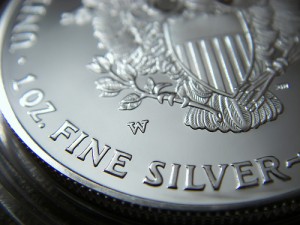
 With gold and silver still consolidating, today King World News interviewed acclaimed money manager Stephen Leeb, Chairman & Chief Investment Officer of Leeb Capital Management. When asked what he is expecting going forward, Leeb responded, "The ratio of gold to the gross world's product (GWP) today is on the low side. If you look at gold relative to what it was at the peak in 1980 you get to $10,000 gold. No matter what metric you look at be it monetary base, S&P 500, gross world product, money supply, gold turns out to be remarkably undervalued."
 One question surrounding the Occupy Wall Street (OWS) protest is "Why now?" In part, the "corruption" is complex and hard to articulate. Here's one valiant attempt:
 With the blessing of the Federal Reserve, Bank of America moved the derivatives book off the balance sheet of Merrill Lynch and put them on the books of its own commercial banking unit. The result means yet another increase in liabilities for the U.S. taxpayer.
 How much money are taxpayers on the hook for? Well, we don't know. What little we do know is courtesy of anonymous sources who leaked the news to Bloomberg.
 One assumes a sizeable portion of the derivatives are credit default swaps on eurozone government debt.
 That was then. This is now… today… in Greece:
 "If things get out of hand in the euro area," declared Citigroup chief economist Willem Buiter yesterday during testimony to the British parliament, "no bank in the financial integrated world will stand," trotting out the global version of Too Big to Fail.
 "I've taken a look at recommending a BAC short several times over the past year," our forensic short strategist Dan Amoss
  Major U.S. stock indexes are flat after yesterday's monster rally that overcame most of Monday's losses. Disappointing quarterly numbers from Apple are offset by news that housing starts rose 15% last month.
 Consumer prices rose 0.3% in September, according to the latest numerical contortions from the Bureau of Labor Statistics.
 "The higher inflation goes, the higher the unemployment rate goes," Michael Pento demonstrated to our Safety and Survival Summit audience on Friday.
 Within a few minutes of the inflation number's release, the Social Security administration announced this morning that recipients will get a 3.6% cost-of-living increase next year, their first since 2009… and almost enough to make up for the 3.9% "official" increase in the cost of living.
 Gold is adrift today, like nearly every other asset class except PIIGS government bonds. At last check, the spot price was $1,647.
 We know demand for physical silver is high despite a spot price nearly 40% off its April highs… but we didn't know it extended to this…
 "Please help me clear up something I see from an 'Occupy Banking' Facebook page," a reader pleads. "It says, 'people need to understand that the easiest way to get rid of these monster banks is to pull your money out of them and bank locally, with non-MERS-affiliated banks.'"
 "I would respectfully add one more thing to your reader's list of things he would do if his goal were to ruin a country and its economy. It's this: Ensure that schools do not teach anything to kids about how business and the economy really work."
 "The reader who blames 'the people' for political corruption is just plan nuts. Every single one of those politicians takes a (supposedly solemn) oath to support and defend the constitution. In fact, they all do the opposite."
 "Your numbers on the U.S. budget deficit," writes a reader from Belgium, "are misleading because the U.S. places the costs of wars off-budget."

| You are subscribed to email updates from Save Your ASSets First To stop receiving these emails, you may unsubscribe now. | Email delivery powered by Google |
| Google Inc., 20 West Kinzie, Chicago IL USA 60610 | |


No comments:
Post a Comment