


Gold World News Flash |

- Michael Pento - Own Gold, The Fed & ECB Have Gone Rogue
- Robert Prechter Explains The Fed, Part II
- History Says Silver Could Become the Next 10-Bagger Investment! Here?s Why
- Learn To Kiss Gold
- Bart Chilton: CFTC Planned Vote on Curbing Commodity Speculators
- The New Reality For U.S. Cities: No Money For Street Lights, Roving Packs Of Wild Dogs And Open-Air Drug Markets
- Michael Pento: Own Gold, The Fed & ECB Have Gone Rogue
- Triple Lutz Report
- The Silver Bull Market of 2012
- Harvey Organ's: The daily Gold & Silver Report
- Eric Sprott Setting Up A Gold Bank
- Richard Russell - This Market is One for the History Books
- Every Silver Pullback Is A Gift - Mike Maloney
- Gold Seeker Closing Report: Gold and Silver Erase Early Losses and End Mixed
- Three reasons why some analysts are predicting lower prices ahead for gold and silver. (Not me!)
- Silver Investment On Par With Gold
- John Embry - Gold & Silver Close to Taking Off
- Kitco interviews GATA's Murphy, CPM Group's Christian on eve of Silver Summit debate
- Chilton sees new position limits reducing market concentration
- Guest Post: Who’s Right About Commodities: Bears Or Bulls?
- The Most Important Decision Bernanke Will Ever Make
- The Gold Price Fell Down Out of a Flat Topped Rising Triangle Today, Did the Gold Price Turn Down?
- Eurozone crisis could cause collapse of global banking system, warns Citigroup's Willem Buiter
- Looking Ahead as Greece Prepares for the “Mother of All Strikes”
- Spending from an Empty Pocket
- Divided CFTC adopts position limits; court challenge likely
- Monetary Madness – Is the US Monetary System on the Verge of Collapse?
- Bring Profits Home and Create Jobs? Maybe Not
- Beware Of Debt Bubble, Hedge With Gold and Silver Miners
- Paper raids on metals just drive them east faster, Embry tells King World News
| Michael Pento - Own Gold, The Fed & ECB Have Gone Rogue Posted: 18 Oct 2011 07:48 PM PDT The truth is the money is going to come from the ECB. It will be the borrowing of printed money, that's the ultimate solution....
|
| Robert Prechter Explains The Fed, Part II Posted: 18 Oct 2011 07:41 PM PDT since the dollar is backed by debt, it is actually a credit, not money.
|
| History Says Silver Could Become the Next 10-Bagger Investment! Here?s Why Posted: 18 Oct 2011 06:42 PM PDT If you concur with the 159 analysts (see below) that maintain that physical gold is going to go parabolic in price in the next few years to $3,000, $5,000 or even*$10,000 or more then you should seriously consider buying physical silver. Why? Because the historical gold:silver ratio is so way out of*wack that silver should appreciate much more than gold as it goes parabolic in the years to come. Indeed, silver could easily reach $100 – $200*per troy ounce, maybe even*$300 and conceivably in excess of $400 depending on how high gold goes. The aforementioned may be hard to believe but an analysis below of the historical price relationship between silver and gold suggests that*such will most likely occur if gold does, indeed, go parabolic. Take a look. Words: 1423 So says Lorimer Wilson, editor of www.FinancialArticleSummariesToday.com*(A site for sore eyes and inquisitive minds) and *www.munKNEE.com, (It's all about Money!), in an article outlining the historical price correlation...
|
| Posted: 18 Oct 2011 05:55 PM PDT Graceland Update
|
| Bart Chilton: CFTC Planned Vote on Curbing Commodity Speculators Posted: 18 Oct 2011 05:13 PM PDT [Ed. note: Bart Chilton thinks they could be "more strict" on precious metals... Isn't that just extra special?] Oct. 18 (Bloomberg) — Bart Chilton, a commissioner at the U.S. Commodity Futures Trading Commission, talks about the CFTC's vote today on whether to curb trading in oil, wheat, gold and other commodities after a boom in raw-materials speculation, record-high prices and years of debate and delay. Chilton speaks with Stephanie Ruhle on Bloomberg Television's "InsideTrack." (Source: Bloomberg)
|
| Posted: 18 Oct 2011 05:02 PM PDT from The Economic Collapse Blog:
If you want to know what the early stages of an economic collapse look like, just walk around some of the downtown areas of our major cities. Today, nearly all large U.S. cities are either flat broke or they are on the way to being flat broke. Yes, New York City and Washington D.C. (and a few others) are still doing fairly well, but for most U.S. cities economic reality is catching up with them very quickly. Right now, there are a number of major cities that are so broke that they cannot keep the street lights operating. Down in St. Louis, parents in some areas are carrying golf clubs with them as they walk their kids to school in order to fend off roving packs of wild dogs. In other major U.S. cities, open-air drug markets conduct business without fear. All over the United States, cities that used to be clean and prosperous and full of hope are now being transformed into post-industrial wastelands. We are certainly not in "Mad Max" territory yet, but it doesn't take too much imagination to see where all of this is headed. Read More @ TheEconomicCollapseBlog.com
|
| Michael Pento: Own Gold, The Fed & ECB Have Gone Rogue Posted: 18 Oct 2011 04:59 PM PDT from King World News:
With news of the PPI already showing huge inflation, we now have Europe setting up a 2 trillion euro bailout fund, so today King World News interviewed Michael Pento, of Pento Portfolio Strategies, to get his take on the situation. Pento stated,"Here is why I am so bullish longer-term on the precious metals. You are going to go through these periods where the natural market forces take over and a deflationary depression is pulling down commodities and the markets like a black hole. But fighting that tooth and nail and riding to the rescue will be central bankers throughout the world." Michael Pento continues: Read More @ KingWorldNews.com
|
| Posted: 18 Oct 2011 04:45 PM PDT from The Financial Survival Network: In this episode of the new Triple Lutz Report, we talk about the proper way to purchase gold and silver. Where can you turn and who can you trust? Those are tough questions that need to be answered before you purchase your first ounce. Stay away from numismatics and commemoratives unless you are a knowledgeable collector. Buying in person your first few times is always a good idea. But if you can't get our free Financial Survival Toolkit and we'll tell you who we deal with and our experiences. You also need to think about shipping, sales tax and storage. Click Here to Listen to the Interview
This posting includes an audio/video/photo media file: Download Now |
| The Silver Bull Market of 2012 Posted: 18 Oct 2011 04:40 PM PDT from TFMetalsReport.com:
No sense in mincing words tonight. The CFTC has finally acted and silver is headed significantly higher. Maybe not tomorrow but soon. Very soon. Position limits in silver will soon be enforced. Yes, there will be delays. Yes, there may even be legal challenges brought by The Cartel. However, there is a very high likelihood that, on a beautiful day in 2012, JPM et al will finally cede control of the silver market back to legitimate investors, speculators, producers and hedgers. When this happens, silver will finally be freed of its EE-supplied shackles and price will move dramatically higher. But first, get ready for some craziness. Beginning tomorrow, all bets are off. As of the last Tuesday's CoT survey, the commercial short position in silver was still over 58,000 contracts. Though this is down from a peak of about 90,000 contracts back in April, there's still a long way to go before JPM is compliant with the new limits. At 58,000, the speculation is that the short position of JPM is still between 15,000 and 20,000 contracts. Clearly, they have a lot of work to do to bring themselves into compliance. Watch the Video @ TFMetalsReport.com
|
| Harvey Organ's: The daily Gold & Silver Report Posted: 18 Oct 2011 04:09 PM PDT CFTC imposes Position Limits and ends phony exemptions/gold and silver rebound from a massive raid
|
| Eric Sprott Setting Up A Gold Bank Posted: 18 Oct 2011 04:07 PM PDT Eric Sprott has decided to take over a currency trading company known as Continental Currency Exchange Corp and apply for a bank license that would likely be received next year. The very unique part is that it will be a gold based bank, meaning you can deposit gold and then turn around and write checks against it. You get the benefits of gold and the conveniences of fiat. See full article here.
|
| Richard Russell - This Market is One for the History Books Posted: 18 Oct 2011 04:02 PM PDT  With tremendous volatility across markets globally, including gold and silver, the Godfather of newsletter writers, Richard Russell, who has more than half a century of experience writing about the markets, had to say in his latest commentary, "I've never studied or worked with a market like this one. It's truly one for the history books. Gold -- Despite daily warnings from amateur experts, gold continues to climb above its 200-day moving average (see chart below). The last real correction occurred in 2009. So far, gold has ignored the call for another correction. Watch that 200-day MA, which stands at 1542." With tremendous volatility across markets globally, including gold and silver, the Godfather of newsletter writers, Richard Russell, who has more than half a century of experience writing about the markets, had to say in his latest commentary, "I've never studied or worked with a market like this one. It's truly one for the history books. Gold -- Despite daily warnings from amateur experts, gold continues to climb above its 200-day moving average (see chart below). The last real correction occurred in 2009. So far, gold has ignored the call for another correction. Watch that 200-day MA, which stands at 1542."
This posting includes an audio/video/photo media file: Download Now |
| Every Silver Pullback Is A Gift - Mike Maloney Posted: 18 Oct 2011 04:01 PM PDT Mike's thoughts on current price action in silver. It's no surprise that he sees this as short term noise, we are ultimately headed for far higher...
|
| Gold Seeker Closing Report: Gold and Silver Erase Early Losses and End Mixed Posted: 18 Oct 2011 04:00 PM PDT Gold dropped almost $50 all the way to $1626.84 by a little after 10AM EST, but it then rallied back higher in the next few hours of trade and ended with a loss of just 1.34%. Silver slumped over 4% to as low as $30.388 by a little after 8AM EST, but it then soared back higher in New York and ended near its late session high of $32.098 with a gain of 0.28%. Both metals are climbing even higher in afterhours access trade as well.
|
| Three reasons why some analysts are predicting lower prices ahead for gold and silver. (Not me!) Posted: 18 Oct 2011 03:52 PM PDT With all of the money printing that is going on worldwide, it beats me why a number of analysts are predicting that the price of gold and silver is going to fall, after gold has just corrected by 19% and silver by 40%. Here is a chart that they have obviously overlooked: Featured is the 'Bullish Percentage Index' from the GDM gold producers, with the price of gold bullion added for comparison at the top. The index is turning up at the most oversold point since the credit crisis of 2008. The gold price then rose from $760 to $1010 over the next 3 – 4 months. Since the credit crunch, every time this index has dropped below 30%, it has turned out to be a buying opportunity. Why would anyone expect the price of gold this time to produce a different outcome? Every minute of the day the central banks of the world put out 2 million dollars in new currency. At the...
|
| Silver Investment On Par With Gold Posted: 18 Oct 2011 03:45 PM PDT Silver & Rare Earth metals will experience extreme demand...
|
| John Embry - Gold & Silver Close to Taking Off Posted: 18 Oct 2011 03:16 PM PDT in the fullness of time, silver, from the bottom, may post a better return than Apple & that's really saying something - Apple has been fantastic.
|
| Kitco interviews GATA's Murphy, CPM Group's Christian on eve of Silver Summit debate Posted: 18 Oct 2011 02:23 PM PDT 10:20p ET Tuesday, October 18, 2011 Dear Friend of GATA and Gold (and Silver): Kitco's Daniela Cambone this week interviewed GATA Chairman Bill Murphy and CPM Group founder Jeff Christian about their forthcoming debate at the Silver Summit in Spokane, Washington, this Friday. You can watch the interviews at Kitco here: http://www.kitco.com/falltour2011/ CHRIS POWELL, Secretary/Treasurer ADVERTISEMENT For Continuous Wealth Creation, the Hera Research Newsletter The life cycles of companies that produce natural resources allow investors to allocate assets among companies at different stages of development and to profit from transitions between stages. Based on natural resource company life cycles, the Hera Research Newsletter maximizes profits through deep, fundamental analysis at each stage of development and by moving gains back to earlier-stage companies in a continuous wealth-creation process. Hera Research covers a pipeline of high-quality natural resource companies at different stages of development. The companies span discovery and production of gold, silver, and platinum group metals, select base metals, oil and gas, green energy, agriculture, rare earth elements, uranium, and more. Discover the unique value of the Hera Research Newsletter by visiting: http://www.heraresearch.com/newsletter.html Or call Ron Hera at 360-339-8541x101. Join GATA here: The Silver Summit http://cambridgehouse.com/conference-details/the-silver-summit-2011/48 New Orleans Investment Conference http://www.neworleansconference.com/ Support GATA by purchasing gold and silver commemorative coins: https://www.amsterdamgold.eu/gata/index.asp?BiD=12 Or by purchasing a colorful GATA T-shirt: Or a colorful poster of GATA's full-page ad in The Wall Street Journal on January 31, 2009: http://gata.org/node/wallstreetjournal Or a video disc of GATA's 2005 Gold Rush 21 conference in the Yukon: Help keep GATA going GATA is a civil rights and educational organization based in the United States and tax-exempt under the U.S. Internal Revenue Code. Its e-mail dispatches are free, and you can subscribe at: To contribute to GATA, please visit: ADVERTISEMENT Golden Phoenix Signs Definitive Agreement to Acquire and Reopen Santa Rosa Gold Mine in Panama Company Press Release SPARKS, Nevada -- Golden Phoenix Minerals Inc. (OTC Bulletin Board: GPXM) has signed a definitive agreement to acquire a 60 percent interest, with an option to buy an additional 20 percent interest, in the Santa Rosa gold mine in Panama, now owned by Silver Global S.A., a Panamanian corporation. Santa Rosa produced more than 100,000 ounces of gold from 1996 to 1998 before being closed in part to low gold prices, which are now more than five times higher. Golden Phoenix intends to acquire its initial 60 percent interest in Santa Rosa by acquiring 60 percent of the share capital of a recently created company under the name Golden Phoenix Panama S.A., formed to hold and operate the mine. Tom Klein, CEO of Golden Phoenix says: "The agreement establishes a solid framework from which we can advance Mina Santa Rosa to production-ready status." For Golden Phoenix's complete statement, please visit: http://goldenphoenix.us/press-release/golden-phoenix-signs-definitive-ac...
|
| Chilton sees new position limits reducing market concentration Posted: 18 Oct 2011 12:57 PM PDT Commodity-Speculation Limits Approved in 3-2 Vote by U.S. Regulator CFTC By Asjylyn Loder and Silla Brush http://www.bloomberg.com/news/2011-10-18/cftc-votes-3-2-to-approve-new-l... The top U.S. derivatives regulators voted 3 to 2 today to curb trading in oil, wheat, gold, and other commodities after a boom in raw-materials speculation, record-high prices and years of debate and delay. The rule has been among the most controversial provisions of the Dodd-Frank financial overhaul, enacted last year, which gave the Commodity Futures Trading Commission the authority to limit trading in over-the-counter commodity swaps as well as exchange-traded futures. The rule will limit the number of contracts a single firm can hold. "Our duty is to protect both market participants and the American public from fraud, manipulation, and other abuses," Chairman Gary Gensler said at the commission's meeting in Washington in support of the rule. "Position limits have served since the Commodity Exchange Act passed in 1936 as a tool to curb or prevent excessive speculation that may burden interstate commerce." The rule limits traders to 25 percent of deliverable supply in the month nearest to delivery. The spot-month limits apply separately to physically settled and cash-settled contracts. Deliverable supply will be determined by the CFTC in conjunction with the exchanges. ... Dispatch continues below ... ADVERTISEMENT Be Part of a Chance to Discover Multi-Million-Ounce Northaven Resources Corp. (TSX-V:NTV) is advancing five gold and silver projects in highly prospective and politically stable British Columbia, Canada. Check out the exploration program on our Allco gold/silver project : -- A large (13,000 hectare) property, covering more than 15 square kilometers of a regional mineralized trend just 3km from a recently announced 1.2-million-ounce gold and 15-million-ounce silver deposit. -- The property hosts historic high-grade silver workings and many mineral showings as well as former mines at the property's northern and southern boundaries. -- A deep-penetrating airborne geophysics survey has just been completed on the entire property and neighboring deposits and its results are eagerly awaited. To learn more about the Allco property or Northaven's other gold and silver projects, please visit: http://www.northavenresources.com Or call Northaven CEO Allen Leschert at 604-696-3600. Cash-settled natural gas contracts will be subject to a different regime. Traders will be permitted to hold contracts equal to five times deliverable supply in Henry Hub swaps, derivatives that settle in cash instead of the delivery of the underlying commodity. Henry Hub is a natural gas delivery point in Erath, Louisiana, and the benchmark for U.S. futures. Outside the spot month, the caps limit traders to 10 percent of the first 25,000 contracts of open interest and 2.5 percent thereafter. "You want speculation or you don't have any markets," said Commissioner Bart Chilton in an interview today on Bloomberg TV. "There's nothing wrong with speculators. It's when it begins to get excessive. We've seen where you can have 30, 35, 40 percent plus in some markets with just one trader holding onto that concentration. That can impact markets." The commission estimates that the limits will affect 85 energy traders, 12 metals traders, and 84 traders of certain agricultural contracts. The caps will go into effect 60 days after the agency defines the term "swap." The agency declined to estimate when that will be. Limits outside the spot month are likely to go into effect in late 2012. The limits will apply to 28 physical commodity futures and their financially equivalent swaps including contracts for corn, wheat, soybeans, oats, cotton, oil, heating oil, gasoline, cocoa, milk, sugar, silver, palladium, and platinum. The rule calls for traders to aggregate their positions, a change that may affect large firms with multiple strategies. It also would tighten an exemption allowing so-called bona-fide hedgers to exceed the caps. "Today is no doubt the single most significant vote I have taken since becoming a commissioner," said Commissioner Jill Sommers, who voted against the rule. "Not because imposing position limits will fundamentally change the way the U.S. markets operate, but because I believe this agency is setting itself up for an enormous failure." The close vote split along party lines, with the three Democrats, including Gensler, voting in favor and the two Republicans against. Commissioner Michael Dunn, a Democrat, said position limits are a "sideshow" and there's no proof that there is excessive speculation or that prices will drop once limits are in place. Dunn said he voted in favor of limits because Congress directed the commission to impose caps. "Things will remain relatively the same, except for those who use the markets we regulate to provide the very resources we all need," Dunn said. "For these farmers, producers, and manufacturers, position limits, and the rules that go along with them, may actually make it more difficult to hedge the risks they take on in order to provide the public with milk, bread, and gas." The Dodd-Frank legislation gave the commission jurisdiction over the estimated $300 trillion U.S. derivatives market and the CFTC has proposed more than 50 rules. The agency missed deadlines to impose position limits in energy and metals markets by mid-January and agricultural markets by April. "I recognize there are passionate views on both sides, especially with regard to position limits, but our role is to make decisions on policy in a dispassionate manner that is rooted in facts," Commissioner Scott O'Malia, a Republican, said. Parts of the rules are arbitrary and vulnerable to legal challenge and may have a substantial economic impact on market participants, he said. Senators Carl Levin, a Michigan Democrat, Maria Cantwell, a Washington Democrat, Bill Nelson, a Florida Democrat, and Bernie Sanders, a Vermont independent, have criticized the agency for the delay. Levin, chairman of the Permanent Subcommittee on Investigations, had scheduled a hearing on Oct. 6 to scrutinize the CFTC's compliance with the position limit requirement. He delayed the hearing to Nov. 3 after the agency said it would vote on the regulations as early as today. "The position limits rule approved today by the CFTC represents significant progress for middle-class families facing roller-coaster gasoline, electricity, and food prices," Levin said today. "Businesses that actually use commodities -- farmers, manufacturers, airlines -- will not be affected and will continue to operate free of position limits." Levin's committee has led inquiries into speculation in the past five years as raw-material investing gained in popularity. The first exchange-traded funds in 2003 allowed investors to bet on raw materials without the hassle of storing physical materials or managing a futures account. The SPDR Gold Trust, best known by its ticker GLD, went on the market in 2004 and has $66 billion in assets backed by physical gold. Investment in agricultural exchange-traded products reached a record in April, according to data compiled by Bloomberg. Derivatives made the boom possible. Unlike futures contracts, which trade on regulated exchanges and fall under CFTC jurisdiction, swaps trade on the over-the-counter market where the commission had no authority before Dodd-Frank, allowing traders to amass large unregulated positions. "The fund participants have been able to grow too big and trade the markets without regard to the underlying fundamental supply and demand factors," said Roy Huckabay, an executive vice president for the Linn Group, a research and brokerage firm in Chicago. "The market's job of price discovery had been forgotten or ignored." Off-exchange bets played a role in the September 2006 collapse of Amaranth Advisors LLC, a hedge fund that lost $6.6 billion on natural-gas bets. The Greenwich, Connecticut-based fund had sidestepped limits and built a large position on IntercontinentalExchange Inc. (ICE) after being told to reduce its futures position on the New York Mercantile Exchange. Amaranth's implosion triggered Senate scrutiny. In June 2007 the Senate Permanent Subcommittee on Investigations issued a report blaming Amaranth for distorting prices. Amaranth later paid $7.5 million to settle CFTC allegations of manipulation. Rising commodity prices kept Congress and consumers focused on market regulation and the role of speculators. Wheat reached a record of $13.495 a bushel in February 2008, and oil soared to $147.27 a barrel five months later. Gold futures hit an all-time high of $1,923.70 last month. "This is not going to affect prices, so I would call this a non-event," Frank McGhee, the head dealer at Integrated Brokerage Services LLC in Chicago, said in a telephone interview today. "But ultimately it's not good for the U.S. market as the people they are trying to regulate can selectively decide which market they want to trade in." The commission's decision also was criticized today by a leading Republican member of Congress. "I am concerned the rule will unnecessarily restrict hedging by our agricultural and energy producers, the very hedging that helps them stabilize the costs of food, fuel, and power, and may very well exacerbate price volatility rather than reduce it," said U.S. Rep. Frank Lucas, an Oklahoma representative who is chairman of the House Agriculture Committee. * * * CFTC Raises Bar on Betting In Split Vote, Agency Limits Commodity Speculation; 'Government Knows Best'? By Scott Patterson and Jamila Trindle http://online.wsj.com/article/SB1000142405297020434610457663897361795395... The Commodity Futures Trading Commission on Tuesday approved a much-debated, long-delayed rule designed to curb bets on oil, gold, sugar, and other commodities. The 3-2 vote -- cast along party lines -- illustrates how divided regulators remain over the role of government in the markets. The debate leading up to the vote also shows how even some CFTC commissioners supporting the rule think it may not have the desired effect. Opposed by Wall Street, the rule aims to cap the positions firms can take in certain commodity contracts in order to curb sharp price increases. The rule gained traction in Congress during an oil-price spike in 2008, which some attributed to excessive speculation by short-term traders. Along with a number of other rules, it was mandated by last year's Dodd-Frank financial-regulatory overhaul even though commodity trading had little to do with the financial crisis. In a series of phone calls, emails and meetings at the CFTC headquarters in Washington, commissioners and lobbyists haggled through the weekend over details of the rule. There were even conversations during the hearing Tuesday as the agency hammered out last-minute revisions. Both Republicans on the commission, Scott O'Malia and Jill Sommers, voted against the rule, saying it represented an overreach of government powers and went beyond the mandates of the Dodd-Frank law. Mr. O'Malia said the final rule assumes that "the government knows best." He also said the rule failed to adequately quantify the costs it will impose on the financial industry. The CFTC estimates it will cost the industry around $100 million in the first year of implementation. CFTC Commissioner Michael Dunn, a Democrat, called the limits a "sideshow" that distracts from the commission's work of preventing another financial crisis. "No one has proven that the looming specter of excessive speculation in the futures markets we regulate even exists," Mr. Dunn said in comments before voting for the rule Tuesday. Mr. Dunn said the rule could lead to higher prices because it could limit traders' ability to hedge positions. CFTC Chairman Gary Gensler, who also voted for the rule, said in his opening statement that position limits "protect the markets both in times of clear skies and when there is a storm on the horizon." But Bart Chilton, a Democratic commissioner and longtime advocate of position limits, said he would have preferred stricter caps. He said the agency would periodically reassess the limits, and they could be recalibrated as necessary. Congress mandated that the CFTC study the impact of the rules on the market 12 months after the limits are put into effect. The CFTC has long curbed the positions firms can take on certain agricultural commodities. The new rule extends position limits to 28 contracts covering commodities such as natural gas and silver. Limits on contracts for near-term delivery, as opposed to longer-dated futures, will restrict a firm from owning more than 25% of a commodity's estimated deliverable supply. Traders will be able to hold a smaller percentage of longer-term contracts, based on a formula. The new caps are likely to take effect in 2012 and possibly as late as 2013. The proposed rule inspired about 15,000 letters from interests varying from private citizens to giant oil and grain companies to U.S. senators. Supporters say it will keep large firms such as hedge funds and banks from piling into commodities and driving up prices. Critics say the rule will hamper traders and cause large compliance costs. Sen. Bernie Sanders (I., Vt.) wrote in a letter to Mr. Gensler on Monday that the spot-month limits are too weak and "will do little or nothing" to limit speculative traders in commodity markets. "At a time when the American people are experiencing extremely high oil and gas prices, this would be simply unacceptable," Mr. Sanders wrote. Tuesday's vote offered another illustration of how divided regulators remain over how to implement Dodd-Frank. Last week bank regulators and the Securities and Exchange Commission approved a new proposal for the so-called Volcker rule, which will curb proprietary trading at banks. The proposal was met with disapproval from Wall Street as well as from Democrats who said it was watered down. The position-limits rule met with similar complaints. Indeed, as they worked on this final version of the rule, commissioners struggled to come to consensus and canceled two recent votes on the issue. Ms. Sommers said the vote was the most important one she has made since she started at the agency in 2009. She worried the commission would be blamed for future high commodity prices if the limits don't curb prices. "This agency is setting itself up for an enormous failure," Ms. Sommers said. The CFTC also voted Tuesday to approve a rule laying out specifications for how organizations that clear derivatives trades will operate under the Dodd-Frank law. It also voted to push off the date that several derivatives requirements would take effect until July 16, 2012. Join GATA here: The Silver Summit http://cambridgehouse.com/conference-details/the-silver-summit-2011/48 New Orleans Investment Conference http://www.neworleansconference.com/ Support GATA by purchasing gold and silver commemorative coins: https://www.amsterdamgold.eu/gata/index.asp?BiD=12 Or by purchasing a colorful GATA T-shirt: Or a colorful poster of GATA's full-page ad in The Wall Street Journal on January 31, 2009: http://gata.org/node/wallstreetjournal Or a video disc of GATA's 2005 Gold Rush 21 conference in the Yukon: Help keep GATA going GATA is a civil rights and educational organization based in the United States and tax-exempt under the U.S. Internal Revenue Code. Its e-mail dispatches are free, and you can subscribe at: To contribute to GATA, please visit: ADVERTISEMENT The United States Once Again Can Establish Lewis E. Lehrman, chairman of the Lehrman Institute, sponsor of The Gold Standard Now project, has released a plan to restore economic growth through a stable dollar. The plan, titled "The True Gold Standard: A Monetary Reform Plan Without Official Reserve Currencies," responds to the recurrent economic crises of the last century and outlines a detailed proposal for America's leadership on "how we get from here to there." That is, how we get from the present unstable paper dollar to a stable dollar as good as gold. James Grant, author and editor of Grant's Interest Rate Observer, says of the Lehrman plan: "If you have ever wondered how the world can get from here to there -- from the chaos of depreciating paper to a convertible currency worthy of our children and our grandchildren -- wonder no more. The answer, brilliantly expounded, is between these covers. America has long needed a modern Alexander Hamilton. In Lewis E. Lehrman the country has finally found him." To learn more and to sign up for The Gold Standard Now's free, noncommercial, weekly report, "Prosperity through Gold," please visit: http://www.thegoldstandardnow.org/gata
|
| Guest Post: Who’s Right About Commodities: Bears Or Bulls? Posted: 18 Oct 2011 11:10 AM PDT Submitted by Marin Katusa of Casey Research Who's Right About Commodities: Bears or Bulls? In the last few weeks a slow slide in commodity prices – metals in particular – has turned into a full-scale nosedive. All through 2011 copper had remained essentially between US$4 and $4.50 a pound, but on September 11 it dropped below that range and didn't really stop falling until October 4, when it bottomed at $3.05. Aluminum gained ground in the first half of the year to reach $1.24 per lb. in April, but after losing 10% in the last 30 days it is back below that, at $0.96. The spot price of nickel lost 19% in the last month; zinc prices fell 17%. Precious metals were not spared either: The price of silver shed a whopping 33% in 30 days, while gold is currently down 15% compared to its price on September 6. Grouping the commodities together really shows how rough the last few months have been. The Standard & Poor's GSCI – an index of raw materials that tracks 24 commodity prices – is down 24% since April, when it hit a 32-month high. On October 4 it touched 572.92, its lowest level since November 26, 2010. Falling metal prices were the main culprit: Silver closed at its lowest price since February, and copper saw its cheapest settlement in 14 months. The slide in commodity prices ends a period of discord between a global economic story of frailty and impending doom and commodity prices that were holding their ground at or near record highs. The disparity stemmed in large part from opposite outlooks for the world's developed and emerging economies – Europe and the US are struggling to maintain any kind of economic momentum but emerging economies have continued to grow, led by China. Investment actions (encouraged by the printed money stemming from QE2) then heightened that difference, as investors turned to commodity prices to profit from emerging-market growth. The investments that fed the disparity came from a very broad base. It used to be that investing in commodities was only for institutional players and real market participants, but over the last decade a slew of retail investors have jumped on board the "good-times commodities train." Since the start of the current commodities supercycle in the early 2000s, investing in raw materials shifted from a risky, hard-to-access game to a commonplace portion of most portfolios. Before, most ordinary investors were only exposed to commodities by owning shares in oil or mining companies. Now, a broad range of commodity-based exchange-traded funds (ETFs) spanning agriculture, energy, and metals have given investors access to direct exposure to raw-material price swings… and the sector has provided such consistent rewards that many financial advisors and pension managers now believe that all ordinary investors should have some slice of their long-term money parked in commodities. The assets of ETFs and similar investment products that hold baskets of commodity futures have increased sixfold since 2007, reaching a value of $37 billion this summer. In recent months, however, the tide has turned in a major way. Investors and advisors are beating a hasty retreat from all risky holdings, and for many that includes commodities. Current global economic uncertainty is pushing investors toward very low-risk options, starting with US bonds and ending with dividend-paying utilities. Commodities, which were previously better-insulated from retail investor panics, are feeling the pain. Of course, retail investors abandoning ship only account for a small part of the pressure on commodity prices. Commodity prices are complex beasts, with annual variations relating to contract talks, stocking seasons, de-stocking seasons, currency ratios, and speculative action. Take copper as an example. China accounts for something like 40% of global copper demand, and its unceasing demand growth helped copper prices rebound quickly after the 2008 recession. Whether this demand growth will continue is a topic of much debate. The bears point to tightening monetary conditions and a global slowdown to argue that China's economy will grow just 5% this year – a sluggish rate, compared to its double-digit expansions over most years in the last decade. They also point to reports of very large speculative stockpiles in China, accumulated in part as a way to skirt bank lending restrictions imposed by the Chinese government. The copper bulls, on the other hand, argue that demand is holding up well. Volumes at most companies are still up year on year; even in Europe, Germany is still showing reasonable growth; and in the United States the copper rod market is expected to register 3% growth – that would be down from 6% last year, but it's still growth. As for China, the bulls expect 8% economic growth and say it is merely a matter of time before the Chinese return to the market and restock heavily. Minmetals stoked that fire somewhat last week with its C$1.3-billion bid for Anvil Mining (T.AVM), a copper company. In addition to all of those factors and arguments, the scrap market plays a role. The "urban mine" of recycled metals accounts for roughly one-third of global supply, but as prices fall scrap flows slow down significantly. That tightens the market even if demand also weakens. Many scrap dealers are holding on to their copper until prices recover; they did the same in 2008-'09, helping to push prices up. So commodity prices are complicated and difficult to forecast at the best of times, which is not exactly how we would describe things at present. Yes, that's our lead-in to saying that predicting where prices are going from here is a challenge, to say the least. Again, let's use copper as an example. Copper price forecasts now range from below US$6,000 per tonne (from the head of the copper department at Minmetals) all the way through to $10,075 (from Barclays Capital). Goldman Sachs, Credit Suisse, and Standard Bank are closely aligned in their outlooks, all expecting copper to sit just under $9,000 per tonne through 2012. Certainly, the fundamentals of the copper market remain very tight. Based on current demand predictions, the International Copper Study Group expects to see a deficit of 250,000 tonnes in the global refined copper market in 2012, before moving closer to balance in 2013. To put 250,000 tonnes into context, global demand for refined copper products in 2010 averaged 19.4 million tonnes. And it is important to remember that current and forecast copper prices all sit comfortably above the break-even point for producers. The marginal cost to produce a tonne of copper averages between $4,000-US$5,000, creating a solid floor for spot prices. But as one Credit Agricole analyst pointed out, "the fundamentals just won't matter in a financial panic." We've already seen some of that irrational movement: Copper's lowest point this week, of $6,635 per tonne, represented a 33% decrease over just two months. The metal boasted a spot price just below $10,000 at the start of August. Really, commodity prices from here will depend on whether Greece defaults in an orderly, supported manner or goes down in an uncontrolled inferno, torching Europe's books for years. Both are still options. A planned default has its downsides – as German Chancellor Angela Merkel puts it, "If we tell a country 'We cancel half of your debt,' that's a great deal. Then the next guy will immediately show up and say he wants the same." Nevertheless, the only way Greece can survive its suffocating debt levels is through some kind of default, and if the European Union can come up with a default management plan, then the other countries of the Union could be protected from the worst of the fallout. An unplanned, "oh-my-God-how-did-this-happen?!" style Greek default, on the other hand, could decimate numerous European banks and in doing so create exactly the same maelstrom that gave birth to the 2008 recession in America. Despite some bearish indicators and a lot of nervous investors, a recession is not necessarily in our future. Goldman Sachs, the permabull of commodity price forecasters, remained committed to its prediction that commodities will continue to outperform. While reducing its oil and copper forecasts for 2012, the bank reiterated an "overweight" recommendation on commodities over the next 12 months, explaining that the turmoil in Europe will take away "some of the upside" to commodity prices, but will not reverse prospects. "With recent GDP revisions by our economists falling hardest on Europe but with emerging market growth expectations still relatively solid, we continue to believe that demand growth in 2012 will be sufficient to tighten major commodity markets," lead analyst Jeffrey Currie wrote. The group sees potential for commodity prices to climb as much as 20% over the next year. Goldman did reduce its forecasts for oil and gas: The bank now expects Brent crude to average US$120 per barrel over 2012, down from an earlier prediction of $130, and expects copper to trade near $9,500 per ton, down from $11,000. Barclays Capital added its voice to the chorus that is trying to remind frantic investors that a recession is not guaranteed, agreeing with Goldman that emerging markets could still save the world from a significant recession while also limiting further commodity price slides. Many people are still hopeful that that chorus is singing the truth: These days any and every sign that we can avoid a recession sparks a bull market day. On October 5, the day after copper, oil, and silver all hit multimonth lows, commodity prices across the board gained ground after Federal Reserve Chairman Ben Bernanke said the central bank would take further measures to prevent a recession if necessary. Bernanke said the Fed could ease monetary conditions further, following the launch of Operation Twist in September. We think it is likely that the commodities which fell in September and early October were following the example set by oil in early August. Crude prices were too high, having failed to fall in response to increased stability in Libya and weakening demand. So they corrected: Brent crude fell about 8%, while WTI crude lost roughly 14% in late July and early August. Since then crude prices have been fairly stable; they dropped somewhat while other commodities were flailing in September, but not dramatically. So perhaps the metals realized they were overvalued, like oil had been given the global economic climate, and corrected. If they are following oil's footsteps, things should remain relatively stable from here. But, as mentioned, that would require an orderly Greek default. And given that the Greek debt "crisis" has now been going on for two whole years and Europe's leaders have continued to respond with solutions that are too little, too late, a significantly proactive step such as planning for Greece's default may be too much to ask. And in the case of a frantic and disorganized default, commodity prices could easily drop further.
|
| The Most Important Decision Bernanke Will Ever Make Posted: 18 Oct 2011 10:51 AM PDT As many of you know who have read my work in the past, the dollar put in a major three year cycle low back in May. It has been my expectation all along that the rally out of that major bottom would coincide with another deflationary period and the next leg down in the stock secular bear market. So far this has been the case as stocks topped in May at the same time the dollar bottomed. After a 15 week consolidation the dollar has initiated its first powerful thrust up out of that major bottom. As you can see in the chart below the rally out of a three year cycle low generally lasts at least a year and turns the 200 day moving average back up. I've also noted that once the rally out of a three year cycle low rises above the 200 day moving average, it shouldn't dip back below that level, at least not for the next year to year and a half. Sometime in the next few days the dollar will put in a daily cycle low and bounce. My expectation is that it ...
|
| The Gold Price Fell Down Out of a Flat Topped Rising Triangle Today, Did the Gold Price Turn Down? Posted: 18 Oct 2011 09:52 AM PDT Gold Price Close Today : 1651.70 Change : (23.80) or -1.4% Silver Price Close Today : 31.801 Change : 0.010 cents or 0.0% Gold Silver Ratio Today : 51.94 Change : -0.765 or -1.5% Silver Gold Ratio Today : 0.01925 Change : 0.000279 or 1.5% Platinum Price Close Today : 1539.50 Change : -16.00 or -1.0% Palladium Price Close Today : 624.15 Change : 6.85 or 1.1% S&P 500 : 1,225.31 Change : 24.45 or 2.0% Dow In GOLD$ : $144.89 Change : $ 4.29 or 3.1% Dow in GOLD oz : 7.009 Change : 0.208 or 3.1% Dow in SILVER oz : 364.04 Change : 5.54 or 1.5% Dow Industrial : 11,576.82 Change : 179.82 or 1.6% US Dollar Index : 77.00 Change : -0.062 or -0.1% Today the GOLD PRICE opened down over $40, bottomed about 10:00 a.m. at $1,626.75, then stubbornly climbed the rest of the day to recover half that loss. Comex found it down only $23.80 at $1,651.70. I just want to point out to y'all that you can do worse than what the engineers do, namely, just deal with the facts. It removes most of the guesswork. Call it what it is: the GOLD PRICE reached $1,695 on Monday, then hit $1,626.75 today, and closed beneath $1,655 support. That's a down trend, often beaten in the neighborhood of $1,680. Here's where it gets tricky: does it really mean what it says? If you were building a bridge, it would, but markets have that human tendency to blow hot and cold out of both sides of their mouth. Sometimes they break down or up, but only for one day, then reverse the next and break out and follow through the opposite direction! The GOLD PRICE had been building a flat-topped rising triangle. Usually that breaks out upwards, but gold fell down out of it today. Did gold turn down? MACD is losing its enthusiasm. Probably did, and 'twill make a trip home to the 150 dma ($1,599) soon, but closing tomorrow above $1,695 would gainsay that course. I remember a few days ago when the SILVER PRICE closed up one cent and gold dropped several dollars, then jumped up next day. Well, here we go again, but which way? Silver shuttered Comex at 3180.1c, up one cent. During the day it dropped as low at 3046c, but defended that level and rose again out of the mirey pit to close well above 3100c at 3180.1c. Facts: The SILVER PRICE must climb above, and remain above, 3250c to change the diagnosis from downtrend to uptrend. Silver, too fell out of its rising flat-topped triangle today, but remains in the range of 2843c to 3310c that has held it captive since September. Unless SILVER and GOLD showed false breakouts today, they will follow through tomorrow with lower prices. All this back and forth betrays great bewilderment and confusion in SILVER and GOLD. Blame lies largely with the European crisis and the Eurocrats dawdling and diddling and pitty-patting at the problem. Markets hate indecision. Stocks knee-jerked higher today on a report of a $2 trillion fix of the European sovereign debt crisis. Later it turned out the report didn't report that at all, only that Euro-crats had worked out a deal to make sure this doesn't happen again (count on THAT) by banning short sales of Credit Default Swaps and maybe bank stocks, and who knows, maybe striped stockings, too. Let us never forget, as we listen to the parrots on TV and Radio and the actors in politics and central banks, that there is NO sovereign debt crisis in Greece or Europe, just as there was NO mortgage debt crisis in the US. There is a BANK SOLVENCY CRISIS, and all this circles around saving the banks, not countries or homeowners. homeowners. The greedy banks - abetted by lap-dog governments - dug themselves into a hole, and now by means of their bought-and-paid-for politicians, they want to hand a shovel to taxpayers so they can fill it up. Debt crisis, my eye! It's a BANK crisis, of, by, and for the banks, Euro and US. Anyhow, Sarcophagus in France is whining and moaning about Europe breaking up, theatrics in preparation for this weekend's Euro-summit. He has to give Ferkel some cover for her selling the Germans down the river, since the German voter has not yet been successfully enlightened to the glory of bailing out banks or other countries, shameful troglodyte he is. At the bottom line, the Euro-crats have no deal yet, but they are barking for one strongly. Ain't y'all impressed? Lo, stocks opened the day dragging their itty feet, but about 10:30 picked up and surged toward's day's end. This handsome performance brings them up to only about 75 points below Friday and about 125 points below that death-dealing, I'll-raise-a-punk-knot-on-top-of-yore-head 11,700 resistance. Dow rose 179.82 points today, 1.58%, to 11,576.82. S&P500 also climbed 24.45, up 2.04%, to 1,225.31. Not clear yet that stocks can continue to rally, or for that matter have even started rallying, but they might. Need a close above 200 day moving average (now 11,967) to prove it, otherwise they're just pikers shaking dice and trying to rope you into their game. My rule is, never shoot craps with any man who pulls his own dice out of his pocket. Here late in the day the US dollar index, which had traded as high as 77.52 then taken a beating down to 76.80, is now trading 77.084, down a negligible 6.2 basis points (0.08%). Looks to me like the dollar made a double bottom Friday and Monday around 76.50, but who listens to me? I'm just a natural born fool from Tennessee, and no match for them Wall Street jeen-youses. For all the alleged good news perking out of Europe, the Franken-currency still rose only 0.18% to 137.66, trading back to fill the last gap it left. Probably will rise higher, although there is no reason in the world it ought to, other than moirchandizing. The Yen took the sidling path, losing 0.05% to 130.13c/Y100 (Y76.85/$1). No change, still range bound and flying heavy like an old hawk with a fat rabbit. Argentum et aurum comparenda sunt -- -- Gold and silver must be bought. - Franklin Sanders, The Moneychanger The-MoneyChanger.com © 2011, The Moneychanger. May not be republished in any form, including electronically, without our express permission. To avoid confusion, please remember that the comments above have a very short time horizon. Always invest with the primary trend. Gold's primary trend is up, targeting at least $3,130.00; silver's primary is up targeting 16:1 gold/silver ratio or $195.66; stocks' primary trend is down, targeting Dow under 2,900 and worth only one ounce of gold; US$ or US$-denominated assets, primary trend down; real estate bubble has burst, primary trend down. WARNING AND DISCLAIMER. Be advised and warned: Do NOT use these commentaries to trade futures contracts. I don't intend them for that or write them with that short term trading outlook. I write them for long-term investors in physical metals. Take them as entertainment, but not as a timing service for futures. NOR do I recommend investing in gold or silver Exchange Trade Funds (ETFs). Those are NOT physical metal and I fear one day one or another may go up in smoke. Unless you can breathe smoke, stay away. Call me paranoid, but the surviving rabbit is wary of traps. NOR do I recommend trading futures options or other leveraged paper gold and silver products. These are not for the inexperienced. NOR do I recommend buying gold and silver on margin or with debt. What DO I recommend? Physical gold and silver coins and bars in your own hands. One final warning: NEVER insert a 747 Jumbo Jet up your nose. 
|
| Eurozone crisis could cause collapse of global banking system, warns Citigroup's Willem Buiter Posted: 18 Oct 2011 09:31 AM PDT World banking system could collapse if eurozone leaders fail to curb the region's sovereign debt crisis, according Citigroup's chief economist Buiter.
|
| Looking Ahead as Greece Prepares for the “Mother of All Strikes” Posted: 18 Oct 2011 09:20 AM PDT After a spectacular showing last week, stock markets have once more succumbed to spasmodic bouts of deluded optimism punctuated by frightful moments of self-loathing. It's good to see them back to their old, bi-polar self again. Almost half of last week's 541-point gain was wiped out in yesterday's session alone when investors recalled, suddenly, that Europe is still broke; a cold, hard reality that had apparently slipped their minds. "Stocks worldwide were up big time yesterday," we wrote after one particularly showy single-day rally last week, "mostly buoyed by news that the politicos in Europe had 'renewed their commitment to talk about trying to eventually come to an agreement' about how to fix a problem they themselves caused and did not see coming. Or something like that. Bravo." Don't buy it, we cautioned, remembering Eric Fry's words of wisdom: "Bankrupt entities tend to go bankrupt," said he. "Greece will default…eventually." "And with it," your editor added, "will follow a few other chain-linked lemmings. Maybe that list will 'only' include an assortment of other PIIGS' rinds. Maybe it will include the euro itself. Time will tell." Well, what a difference a week can make. Time is telling, indeed. This morning we woke to learn of the predictably worsening situation in Greece, Europe's poster child for hopeless insolvency. Reported one newswire: "Greek ships were harbored and garbage rotted in the streets of Athens on Tuesday as angry workers built momentum for 'the mother of all strikes' expected to bring the country to a halt in protest against a new package of tax hikes and wage cuts." The "mother of all strikes" is due to begin, at the behest of unions representing roughly half of the country's 4 million workers, on Wednesday. It is scheduled to last just 48 hours, although we can hardly imagine protesters punching the time clock on Friday, right in the middle of what would otherwise be a sweet, 5-day weekend. Always keen to get on with the job of getting off the job, some workers have already begun downing tools; rubbish collectors, journalists and port hands among them. And can you believe this, Fellow Reckoner? Tax officials (tax officials!) are getting in on the inaction too. Some have even been spotted in recent days not stealing from people! Of course, without access to tax "revenue," there's no way the Greek government can make good on the many and varied welfare promises it made to all those people pretending to work. How can a state redistribute stolen property when the thieves themselves go on strike? Short answer: It can't. Ahh…Poor Prime Minister George Papandreou. He's caught between the rock of demands from international lenders on one side and the hard place of social unrest at home on the other. Tough luck, Georgie Boy. That's what politics is all about; promising more than you can deliver, breaking most or all of those promises and then dealing inadequately and inefficiently with the consequences. It was right there on the job application. It's part and parcel of the whole scheme, a scheme that leaves Greece — presently — and the rest of the welfare states — eventually — out of pocket and out of luck. It's easy to make fun of Greece, of course. That's why we do it. Plus, we're looking forward to seeing the market there collapse. We haven't had a cheap vacation to the islands in years. Too many cashed-up flashpackers from the other PIIGS pushing up prices. Thankfully, they'll get theirs too. Back when the euro was introduced, everybody thought they could skim a little off the top. Spanish shopkeepers larded their prices. Italian politicians promised their workers more benefits than they were worth. The Irish bought bigger houses then their budgets allowed for and the Portuguese…well, they were in on it too, spending their way to a combined debt (government plus corporate plus household) equal to 363% of GDP and quietly hoping their stronger euro cousins to the northeast wouldn't notice. The whole thing got out of hand, in other words. Now, the Mediterranean markets are begging for a correction…and we'll be happy to see it come to pass. For its part, Greece will likely be the tip of the iceberg. With a GDP of approximately $320 billion, the Greek economy is less than one quarter the size of Spain's ($1.4 trillion) which, in turn, is only about two-thirds the size of Italy's ($2.1 trillion). France weighs in at $2.65 trillion. Germany stands at $3.3 trillion. All are in trouble. Just this morning Standard & Poor's downgraded 25 major Italian banks and financial institutions, citing renewed "market tensions" and lower economic growth prospects. Meanwhile, Moody's yesterday warned it may "slap a negative outlook on France's Aaa credit rating in the next three months if the costs for helping to bail out banks and other euro zone members stretch its budget too much," according to Reuters. To where does this debt-sodden path lead us, Fellow Reckoner? "No man is an island, entire of itself," wrote the English poet, John Donne, "Each is a piece of the continent, a part of the main. If a clod be washed away by the sea, Europe is the less." The passage, of course, is taken from Donne's "For Whom The Bell Tolls"…and as we recall, it tolls for thee. Joel Bowman Looking Ahead as Greece Prepares for the "Mother of All Strikes" originally appeared in the Daily Reckoning. The Daily Reckoning provides over 400,000 readers economic news, market analysis, and contrarian investment ideas.
|
| Posted: 18 Oct 2011 09:02 AM PDT Dave Gonigam – October 18, 2011
So much for the "biggest domestic spending cut in U.S. history." Remember that? It was the result of a "hard-won" budget deal six months ago that averted a "government shutdown." But your editors knew that was a lost cause back in May. For every dollar Uncle Sam spent, he went another 36 cents into debt. Not as ugly a gap as in 2009, when it was 40 cents, but ugly enough. And as a percentage of GDP, we're still near postwar records.  You might also notice that revenues still haven't recovered to pre-recession levels. Not exactly a sign of "recovery" much less a "robust" one. For the record, the national debt totals $14,874,045,668,291.35 as of this morning. We could take the nation's entire economic output for the next year… and it still wouldn't be enough to pay off the debt.
Note the illustrious company Uncle Sam keeps…  The debt that's choking most of the developed world has wrought the following phenomena…
"But here's the truly amazing thing," Eric said. "The average dividend yield of the four remaining AAA-rated U.S. corporations is 3%, which is not only higher than a 10-year bond, but as recently as last week was higher than the yield on a 30-year Treasury note."
The Middle Kingdom's Treasury holdings slipped 3%… from $1.174 trillion in July to $1.137 trillion in August. That's the lowest level in a year. It's not as if they've yanked Uncle Sam's credit card… but they did just send a letter informing him his limit's been cut. Addison has long anticipated the day China stops adding to its Treasury stash. With today's numbers, that day is closer than ever. Prepare for the consequences here.
Sounds great, right? But remember, Chinese statisticians love to play with inflation rates, just as happens in the United States. Anecdotal evidence from longtime China watchers, including Marc Faber, is that inflation there is running 10% or more. Subtract that from GDP and… China is already contracting.
The producer price index as calculated by the Commerce Department jumped 0.8% in September. The year-over-year increase works out to 6.9%. That's for finished goods. Moving up the production chain, the numbers are even worse: up 10.5% year over year for intermediate goods, 20.9% for crude goods.
The earnings number that stands out is Goldman Sachs. For all its connections to the Treasury and the Federal Reserve, it registered a $393 million loss in the third quarter. Hmmm… It's only the second quarterly loss in 12 years, the other coming in Q4 2008.
The euro has weakened to $1.37 with no market-moving news about the interminable euro crisis. Not today, anyway.
"Many banks aren't prepared for a 'managed' Greek default with steep haircuts on Greek bonds (which would lower Greece's debt to a more sustainable level). Perhaps EU and IMF bureaucrats are telegraphing to banks to get ready for a managed Greek default by early 2012. "Whatever bailout is announced by German Chancellor Merkel and French President Sarkozy in November will ultimately include more money printing from the European Central Bank; if haircuts were imposed on Greek bonds, the ECB would likely step up its monetization of Italian and Portuguese bonds." "Merkel had better pull out a powerful 'bazooka,' as former Treasury Secretary Hank Paulson might put it. Paulson talked early on in the U.S. financial crisis about the bazooka of government bailouts for the banks, but he didn't have a plan ready that was powerful enough to satisfy the markets. "With the markets eagerly anticipating the November announcement from Merkel and Sarkozy about the future of the eurozone, they had better not disappoint. Just in case they disappoint, it's good to hold some short positions. "Ultimately, it all adds up to further pressure on natural resource prices and precious metals and continued pressure on corporate profit margins."
"I feel the same way about gold stocks. I don't plan to always recommend them, but they are attractive now. In 2011, they have only gotten cheaper." "Year to date, the GDXJ, which is an index of small gold miners, is down 22%. The S&P 500 is down only 2.6%. So even still, small gold stocks are sucking wind, even though the price of gold is up 18% on the year. Gold stock multiples, as I've pointed out before, are at lows we have not seen since the last great bottom in gold stocks in 1979." [Ed. Note: Chris and Dan both rattled off several favorite gold stocks at our Safety & Survival Summit last Friday. Across all sectors, Chris threw out nine names, many from his premium advisory Mayer's Special Situations. Patrick Cox made the case for several names from his high-end letter Breakthrough Technology Alert, and Byron King zeroed in on three microcap resource plays from Energy & Scarcity Investor. Mere hours remain in which you can get all the names our editors suggested to the Reserve members in attendance... for a tiny fraction of the price they paid to go in person. The information revealed is still as timely as it was on Friday... but the price of the recordings from these sessions goes up at midnight tonight. There's no better time to act than now.]
 "The Occupy Wall Street crowd represents the same flawed values that got our country into this economic mess," reads the homepage. "They possess a false sense of entitlement and think they should be receiving government handouts and run up the debt on an imaginary credit card by making hard-working Americans and future generations pay for the bill." It goes on to solicit signatures on a petition asking President Obama to "denounce the angry Occupy mob." The site, and the petition, turn out to be a vehicle to generate email addresses for the U.S. Senate campaign of former Dallas mayor Tom Leppert. Leppert's resume includes an entry that should interest Occupy and Tea Party types alike. He served on the board of Washington Mutual… and chaired its audit committee… at the very time the company was handing out mortgages like penny candy off a parade float. But he does have a good sense of timing: He managed to bail before WaMu became the biggest bank failure in U.S. history.
"For every dollar that is deposited into the bank I am given a generous 5.65% interest (on deposits over $5,000! So what does the bank do with my money? Simple.. they lend it out again up to nine times and for between 9% up to 27% on credit cards." "Well that is good business for them! If I were to do the same, it would be called fraud and I would go to jail. What would happen if everyone went to the bank and withdrew their money? The bank would collapse and we would be forced into a deep depression." "Look at history and this is what happened each time this happened! Inflation got so high people took their money out of the bank and the banks had no cash to support the loans they had approved and were unable to continue, so they reclaimed their assets by foreclosing on their debtors..is this what you want to happen??"
"However (go ahead, call me paranoid), if I were on a mission to enslave a country economically, I would take these steps:"
"The reckoning day isn't far off, and those that fail to acknowledge what is so obvious do, in fact, deserve what they get. There will be a culling of the herd."
"I am firmly embedded in 'middle-class America.' Before becoming a subscriber, I received news about my world via the standard newspaper and mainline Internet sites. Now I feel it is my social responsibility to pass on what I have learned to those within my circle of influence. However, I am met with a blank stare after attempting to discuss such topics as the failure of fiat money and the 'Too big to fail' fallacy. I have long since quit my attempts to explain derivatives!" "The point I am trying to make is that the world's financial problems that impact us as a people are mountainous in their depth and so very intricate in their nature. It is as if their origin were orchestrated with this thought in mind: 'Don't worry. The regular guy will never be able to wrap his mind around this, and by the time he does, the money will be in the bank.'" "We, the average man including the OWS and the TPs, may not be able to grasp many of the finite details involved in this global financial mess, but I assure you there exists a growing intuitiveness that puts us on the same page with each other. We need to break free from the zombie cocoon we have been living in and not be afraid to be misunderstood and derided as we seek answers and solutions. Viva la revolution!" Cheers, Dave Gonigam P.S. Last chance: Only a few hours remain before the price goes up on the recordings of our Safety & Survival Summit last Friday here in Baltimore. Act now, before midnight tonight, to secure the best available price.
|
| Divided CFTC adopts position limits; court challenge likely Posted: 18 Oct 2011 08:58 AM PDT CFTC Cracks Down on Commodity Traders; Will It Stick? By Christopher Doering and Jonathan Leff http://www.reuters.com/article/2011/10/18/us-financial-regulation-commod... WASHINGTON -- The United States pushed through its toughest measures yet to curtail speculation in commodity markets in a tight vote on Tuesday, likely shifting the focus of a fierce four-year debate from the regulators to the courts. In a measure decried by Wall Street and trading companies as a misguided political attempt to cap soaring oil and grain prices, the Commodity Futures Trading Commission voted 3-2 to approve "position limits" that will cap the number of futures and swaps contracts that any single speculator can hold. The rule offers some relief for the industry, relenting on several highly contentious provisions, as expected. But that will do little to temper frustration over a plan that could force banks like Morgan Stanley and traders including grains giant Cargill to scale back business, and could stanch the flow of financial capital into commodities. ... Dispatch continues below ... ADVERTISEMENT The United States Once Again Can Establish a Stable Dollar Worth Its Weight in Gold Lewis E. Lehrman, chairman of the Lehrman Institute, sponsor of The Gold Standard Now project, has released a plan to restore economic growth through a stable dollar. The plan, titled "The True Gold Standard: A Monetary Reform Plan Without Official Reserve Currencies," responds to the recurrent economic crises of the last century and outlines a detailed proposal for America's leadership on "how we get from here to there." That is, how we get from the present unstable paper dollar to a stable dollar as good as gold. James Grant, author and editor of Grant's Interest Rate Observer, says of the Lehrman plan: "If you have ever wondered how the world can get from here to there -- from the chaos of depreciating paper to a convertible currency worthy of our children and our grandchildren -- wonder no more. The answer, brilliantly expounded, is between these covers. America has long needed a modern Alexander Hamilton. In Lewis E. Lehrman the country has finally found him." To learn more and to sign up for The Gold Standard Now's free, noncommercial, weekly report, "Prosperity through Gold," please visit: http://www.thegoldstandardnow.org/gata The divisiveness was stark from the opening, making a legal challenge potentially more likely. That would be another hurdle for CFTC Chairman Gary Gensler, who is struggling against emboldened Republicans and a hostile Wall Street to put in place the rules required by recent financial reforms. Swing vote Michael Dunn, a Democrat whose term has already expired, said he would follow the Dodd-Frank financial reform law but blasted the limits as a dangerous distraction from bigger issues. "Position limits are a sideshow that has unnecessarily diverted human and fiscal resources away from actions to prevent another financial crisis," said Dunn, who is serving past his term until Congress confirms his successor. Markets may become riskier and hedging more difficult, he said. As expected, the commission's two Democrats, Dunn and Bart Chilton, voted with Gensler, while Republicans Jill Sommers and Scott O'Malia opposed the measure. O'Malia said the agency had overreached its mandate and echoed the industry's argument that there was no "empirical evidence" to substantiate the rule. The lack of proof that excessive speculation leads to high prices is at the heart of the issue. Without evidence of any damage wrought by failing to limit traders, it may be difficult to demonstrate the net benefit of the measure. Dozens of academic, government and bank studies on the subject have differed on whether speculators -- in particular the institutional investors who have poured some $300 billion into commodity markets over the past decade -- influence prices or whether prices simply respond to market conditions. The CFTC's own economists have yet to produce any economic evidence to connect speculators to price spikes. Some politicians, however, have clamored for the CFTC to clamp down since early 2008, as oil and grain prices were shooting toward historic peaks. This "will be subject to legal challenge," said Craig Pirrong, a professor and a director for the Global Energy Management Institute at the University of Houston and a long-time critic of the limits. "The lack of a finding that there has been excessive speculation will provide the basis." Other regulators are already facing the legal backlash. After an eight-month battle, the Securities and Exchange Commission in July had its first Dodd-Frank rule overturned when a federal appeals court found the SEC had conducted a flawed analysis to support a rule that would make it easier for shareholders to nominate directors to corporate boards. The position-limits rule may be challenged on similar grounds -- that the costs outweigh the benefits of a plan that many industry officials say will make markets riskier by driving trade to less-regulated overseas venues. The CFTC estimated the measure would cost the industry $100 million in the first year. "We need to be very careful, but I believe we're on very solid legal ground," Chilton told Reuters Insider on Tuesday. It was not immediately clear who might bring a lawsuit, but the limits will affect dozens of major commodity traders and exchanges. Normally there is a limited period of two or three months after a rule is published in which a suit can be filed, though some of the rules will not take effect until late 2012. One key question may be whether the parties seek an injunction to prevent the rules coming into force, said Michael Greenberger, a law professor at the University of Maryland and the CFTC's former director of trading and markets. "If a temporary stay is granted it will be a de facto death knell for the rules," he told Reuters. "If denied, the rules will have an immediate therapeutic impact that will as a practical matter save them from being permanently overturned." Gensler will also need to encourage overseas regulators to keep up with the CFTC to prevent the "regulatory arbitrage" many fear may ensue. A meeting of global regulators in London on Friday to discuss high-frequency trading will offer him a chance to encourage others to prevent loopholes. France failed at the weekend to force mandatory curbs on energy and food commodities at a global level. However, a draft European Union reform due on Thursday would give supervisors from the 27-country bloc powers to impose position limits temporarily during market turmoil. Britain's Financial Services Authority -- which oversees most of the major non-U.S. commodity exchanges -- has maintained a staunch opposition to mandated limits but could be overridden under the EU draft. "If the U.S. rules go into effect, expect the EU and other countries to reverse course and follow the CFTC lead in two years' time," Greenberger said. The rule covers 28 commodities from coffee to crude to copper, including nine crop markets that were already subject to limits, using a predetermined formula based on deliverable physical supply or open interest in the market. It includes for the first time contracts in the $600 trillion swaps market. All the rules will be phased in over time, with the final limits for all contract months set only after the agency has collected a year's worth of swaps data, a process likely to be finished late into 2012, officials said. The limits may temper investors who have poured over $300 billion into commodity markets, often via index swaps with banks. Under the new rules, banks will no longer be given an exemption for such speculative swaps, although they will be able to hedge on behalf of corporate customers. Several key provisions were eliminated from the CFTC's original proposal in January, as Reuters reported. One key change relaxed the requirement that big commodity players aggregate all the positions held by any hedge funds or subsidiaries in which they have a stake. Instead, it retains the "independent account controller" regime currently in place, which views separately run trading books independently. Another eliminates a proposed "conditional limits" measure that would have allowed speculators in commodity markets that are settled in cash to accumulate positions of five times the limit for similar physical delivery contracts. That rule had riled the CME Group, which feared losing business to rival cash-settled contracts, some of which are listed by the IntercontinentalExchange. The CFTC maintained this measure for the Henry Hub natural gas market, however, where cash contracts -- and in particular the ICE look-alike contract -- are already highly liquid. Join GATA here: The Silver Summit http://cambridgehouse.com/conference-details/the-silver-summit-2011/48 New Orleans Investment Conference http://www.neworleansconference.com/ Support GATA by purchasing gold and silver commemorative coins: https://www.amsterdamgold.eu/gata/index.asp?BiD=12 Or by purchasing a colorful GATA T-shirt: Or a colorful poster of GATA's full-page ad in The Wall Street Journal on January 31, 2009: http://gata.org/node/wallstreetjournal Or a video disc of GATA's 2005 Gold Rush 21 conference in the Yukon: Help keep GATA going GATA is a civil rights and educational organization based in the United States and tax-exempt under the U.S. Internal Revenue Code. Its e-mail dispatches are free, and you can subscribe at: To contribute to GATA, please visit: ADVERTISEMENT Be Part of a Chance to Discover Multi-Million-Ounce Gold and Silver Deposits in Canada Northaven Resources Corp. (TSX-V:NTV) is advancing five gold and silver projects in highly prospective and politically stable British Columbia, Canada. Check out the exploration program on our Allco gold/silver project : -- A large (13,000 hectare) property, covering more than 15 square kilometers of a regional mineralized trend just 3km from a recently announced 1.2-million-ounce gold and 15-million-ounce silver deposit. -- The property hosts historic high-grade silver workings and many mineral showings as well as former mines at the property's northern and southern boundaries. -- A deep-penetrating airborne geophysics survey has just been completed on the entire property and neighboring deposits and its results are eagerly awaited. To learn more about the Allco property or Northaven's other gold and silver projects, please visit: http://www.northavenresources.com Or call Northaven CEO Allen Leschert at 604-696-3600.
|
| Monetary Madness – Is the US Monetary System on the Verge of Collapse? Posted: 18 Oct 2011 08:55 AM PDT The US monetary system — and by extension, that of much of the developed world — may very well be on the verge of collapse. Falling back on metaphor, while the world's many financial experts and economists sit around arguing about the direction of the ship of state, most are missing the point that the ship has already hit an iceberg and is taking on water fast. Yet if you were to raise your hand to ask 99% of the financial intelligentsia whether we might be on the verge of a failure of the dollar-based world monetary system, the response would be thinly veiled derision. Because, as we all know, such a thing is unimaginable! Think again. Honestly describing the current monetary system of the United States in just a few words, you could do far worse than stating that it is "money from nothing, cash ex nihilo." That's because for the last 40 years — since Nixon canceled the dollar's gold convertibility in 1971 — the global monetary system has been based on nothing more tangible than politicians' promises not to print too much. Unconstrained, the politicians used the gift of being able to create money out of nothing to launch a parade of politically popular programs, each employing fresh brigades of bureaucrats, with no regard to affordability. Former VP Cheney, who fashions himself a fiscal conservative, let the mask drop when, in 2002, he stated that "Reagan proved deficits don't matter." Those words were echoed just a few weeks ago, when both former Fed Chairman Alan Greenspan and Obama economic advisor Larry Summers, in separate interviews, said almost the same, paraphrased as, "There is no chance of the US defaulting on its bonds, not when our government can borrow dollars and print new dollars to meet any future obligations." Of course, Greenspan and Summers were referring to an overt default — of just not paying — and not to a covert default engineered by inflation. Unfortunately, like virtually all of the power elite, both miss the point that the mountain of debt that has been heaped up since 1971 is fast reaching the point of collapsing like a too-big tailings pile and taking the monetary system down with it.
Importantly, the debt shown in this chart whistles past the government's unfunded liabilities, in particular for the Social Security and Medicare systems. Adding those would quintuple the US government's acknowledged obligations — to over $60 trillion. Given the role the US dollar plays as the world's de facto reserve currency — with all major commodities priced in dollars, and dollars forming the bulk of reserves held by foreign central banks — the dismal shape of the US monetary system spells trouble for the global monetary system. Making matters worse, following the lead of the United States, governments around the world long ago adopted similar fiat monetary systems. You can see the deficit contagion in this next chart. It is worth noting that the dire condition of the United States now leaves it in the same muddy wallow as Europe's desperate PIIGS.
In a recent article in The Telegraph, Ambrose Evans-Pritchard referenced a paper out of the BIS that paints the picture using appropriately stark terms. Stephen Cecchetti and his team at the Bank for International Settlements have written the definitive paper rebutting the pied pipers of ever-escalating credit. "The debt problems facing advanced economies are even worse than we thought." The basic facts are that combined debt in the rich club has risen from 165pc of GDP thirty years ago to 310pc today, led by Japan at 456pc and Portugal at 363pc. "Debt is rising to points that are above anything we have seen, except during major wars. Public debt ratios are currently on an explosive path in a number of countries. These countries will need to implement drastic policy changes. Stabilization might not be enough." Viewing the situation from another perspective, we turn to the work of Carmen Reinhart and Ken Rogoff, who studied the factors contributing to 29 past sovereign defaults. They found that default or debt restructuring occurred, on average, when external debt reached 73% of gross national product (GNP) and 239% of exports. Using the Reinhart/Rogoff findings, Casey Research Chief Economist Bud Conrad prepared the following chart showing that the US government is already far along on the path to bankruptcy.
It's hard to argue against the contention that the situation is, to be polite, precarious. Given that the obligations of the US government, as well as most of the world's other large economies, are now impossible to repay and that their reserves are just IOUs backed by nothing, the stage is set for a highly disruptive but entirely necessary do-over of the fiat monetary system. "Preposterous!" say the lords of finance and masters of all. Is it? Of course, these very same mavens completely missed the looming housing crash and the depth and duration of the subsequent crisis — a crisis that is still far from over. In other words, listen to them at your peril, because in our view it's essential in calibrating your financial affairs to understand that, if history is any guide, we are now well down the road to a collapse in the monetary system. Regards, David Galland, Monetary Madness – Is the US Monetary System on the Verge of Collapse? originally appeared in the Daily Reckoning. The Daily Reckoning provides over 400,000 readers economic news, market analysis, and contrarian investment ideas.
|
| Bring Profits Home and Create Jobs? Maybe Not Posted: 18 Oct 2011 08:39 AM PDT In a time of high unemployment, slow growth and record debt, there's been a renewed push by many on Capitol Hill to give companies a tax break if they bring their foreign profits home. The problem is there is very little agreement on whether a foreign profits tax break would help the economy. Just this week, a group of fiscally conservative House Democrats sent a letter to the congressional debt committee endorsing the idea, while Senate Democrats Carl Levin and Kent Conrad sent a letter urging the panel to reject it. And both sides are pointing to various studies of a repatriation tax holiday in 2004 to bolster their case. What the debate's all about: Bipartisan bills in the House and Senate would coax U.S.-based companies to bring home profits they made abroad by offering them a lower tax rate on those earnings than the 35% imposed on profits made on U.S. soil. Right now, earnings made abroad aren't subject to U.S. tax until they're "repatriated" through the distribution of dividends from the company's foreign subsidiary to the parent corporation. Hiring gains momentumAs a result, proponents of the tax break say, companies have more than $1 trillion "trapped" abroad in low-tax countries. That money, they argue, could be put to much better use in the U.S. economy. It sounds logical. But the truth is that the money is not really locked out of the United States at all, said corporate tax expert Edward Kleinbard, a former chief of staff for the Joint Committee on Taxation. "A large portion of these earnings is kept in liquid investments, and those in turn invariably are in U.S. dollar liabilities of U.S. borrowers, like U.S. bank deposits, commercial paper, and Treasuries. All those investments already are fully at work somewhere in the U.S. economy," Kleinbard said. What's more, Kleinbard said, the large multinational corporations that would benefit most from a repatriation holiday are not exactly hard up for cash. On the contrary, they have a lot of money sitting on the sidelines and have access to low-cost debt financing. So if they wanted to make more of an investment on U.S. soil they could, Kleinbard notes. The Joint Committee on Taxation estimates that a repatriation "holiday" could boost revenue by about $26 billion over the first three years — but lose as much as $80 billion over the next decade. And the Senate's permanent subcommittee on investigations, which Sen. Levin chairs, released a report this week that said the 2004 tax holiday resulted in a loss of nearly 21,000 jobs among the top 15 repatriating corporations, and cited other studies which found no evidence that the holiday increased overall employment. Proponents of the holiday challenge JCT's assumptions and assert that Levin's report is "one-sided." They point instead to a study done by economist Douglas Holtz-Eakin for the U.S. Chamber of Commerce. Holtz-Eakin, a former director of the Congressional Budget Office, estimates that a repatriation holiday could result in the creation of roughly 2.9 million jobs and a $360 billion boost to GDP. Source: CNN
|
| Beware Of Debt Bubble, Hedge With Gold and Silver Miners Posted: 18 Oct 2011 08:37 AM PDT We have alerted our subscribers on many occasions during the past two years that global credit downgrades of sovereign nations were inevitable. It does not take a prophet to have foreseen the turbulence in the global marketplace that we have witnessed since the expiration of QE2. Standard and Poor's cut the rating one level from AAA to AA+. This action sent shockwaves reverberating throughout the financial world as irrational investors sought U.S. treasuries for liquidity. These days of reckoning will be with us for a long time as investors flee from deteriorating paper after an artificially induced debt bubble to undervalued real wealth in the earth assets such as the gold and silver miners. Unfortunately, the American middle class is being rapidly disenfranchised. The economy has been pillaged by appointed officials who have received lavish bonuses from TARP monies instead of prison sentences. The very same miscreants who raided the hen house were appointed to reconstruct the chicken coop. The hard working Americans who pay the taxes and go to work every day have scant recourse but to accumulate miners and hopefully elect ethical representatives who will put a halt to ruinous printing of fiat money. It's about time that the American investor awakens to this fiscal insanity. We believe there is a great opportunity in this growing divergence to pick up overlooked and undervalued mining equities and bullion after the recent selloff. The G7 nations published a statement that they will take all needed measures to support stability in the global markets. Merkel and Sarkozy pulled out the big guns saying they would prop up shaky European Banks. Do not be surprised if Bernanke comes up with a similar quantitative easing approach to pay down American debts and avoid another crash. When Bernanke did this with QE2, in August of 2010, the markets took off and many of our selections in natural resources soared with doubles and triples. Subscribers must realize that what is going on is a version of pump priming of whatever means necessary. Our firm has continually stated that we are being programmed with weak economic data and fear mongering by the media for additional stimuli to revive the economy. Some readers are concerned that small miners may not be able to raise capital in these tight credit markets. Although there will be short term pullbacks and increased volatility like we have witnessed, the trend for Central Banks to stimulate the economy through whatever guises necessary should continue. Wealth in the earth assets and gold (GLD) and silver bullion (AGQ) will move higher over the long term. These healthy corrections are characteristic of mining stocks and the precious metal arena.
In conclusion, the recent upward reversal in the markets is an opportunity for subscribers to stay the course. It is only a matter of time before the upward move in bullion is reflected by the miners as they represent the source of bullion itself. Do not get caught up in the current panic and use this pullback as an opportunity to add or initiate positions in precious metals and natural resources mining equities. Click Here To Receive My Premium Bulletin For Free!
|
| Paper raids on metals just drive them east faster, Embry tells King World News Posted: 18 Oct 2011 08:37 AM PDT 4:30p Tuesday, October 18, 2011 Dear Friend of GATA and Gold: Sprott Asset Management's John Embry today tells King World News that the price-suppressing raids on the gold futures markets in the West are accomplishing only the transfer of Western gold to the East. Embry adds that it won't work forever and that he thinks the precious metals are close to taking off again. An excerpt from the interview is posted at the King World News blog here: http://kingworldnews.com/kingworldnews/KWN_DailyWeb/Entries/2011/10/18_J... CHRIS POWELL, Secretary/Treasurer ADVERTISEMENT Prophecy Platinum Drills 120.9 Meters Company Press Release VANCOUVER, British Columbia, Canada -- Prophecy Platinum Corp. (TSX-V: NKL, OTC-QX: PNIKF, Frankfurt: P94P) has announced the drill results received from its 2011 drilling Wellgreen platinum group elements, nickel, and copper project in the Yukon Territory. Borehole WS11-188 encountered 457 meters of mineralization grading 0.47% nickel equivalent (including 0.72 grams per ton platinum, paladium, and gold) from surface to the footwall contact. Within this larger swath of mineralization, the hole encountered a high-grade section of 17.8 meters of 3.14 grams per ton platinum, palladium, and gold, 1.03% nickel, and 0.74% copper (1.77% nickel equivalent). The hole was drilled completely outside of current resource boundaries, between the East Zone resource and the West Zone resource that was reported in the company's press release no July 14, 2011. The high-grade intercept located between the two resources not only demonstrates that the East and West Zone resource form a single, geologically contiguous body but also indicates that the higher-grade material in the East Zone continues to the west and at depth at Wellgreen. For drill result tables and maps, please see the company's full press release here: http://www.prophecyplat.com/news_2011_sep26_prophecy_platinum_wellgreen_... Join GATA here: The Silver Summit http://cambridgehouse.com/conference-details/the-silver-summit-2011/48 New Orleans Investment Conference http://www.neworleansconference.com/ Support GATA by purchasing gold and silver commemorative coins: https://www.amsterdamgold.eu/gata/index.asp?BiD=12 Or by purchasing a colorful GATA T-shirt: Or a colorful poster of GATA's full-page ad in The Wall Street Journal on January 31, 2009: http://gata.org/node/wallstreetjournal Or a video disc of GATA's 2005 Gold Rush 21 conference in the Yukon: Help keep GATA going GATA is a civil rights and educational organization based in the United States and tax-exempt under the U.S. Internal Revenue Code. Its e-mail dispatches are free, and you can subscribe at: To contribute to GATA, please visit: ADVERTISEMENT Sona Drills 85.4g Gold/Ton Over 4 Metres at Elizabeth Gold Deposit, Company Press Release, October 27, 2010 VANCOUVER, British Columbia -- Sona Resources Corp. reports on five drillling holes in the third round of assay results from the recently completed drill program at its 100 percent-owned Elizabeth Gold Deposit Property in the Lillooet Mining District of southern British Columbia. Highlights from the diamond drilling include: -- Hole E10-66 intersected 17.4g gold/ton over 1.54 metres. -- Hole E10-67 intersected 96.4g gold/ton over 2.5 metres, including one assay interval of 383g of gold/ton over 0.5 metres. -- Hole E10-69 intersected 85.4g gold/ton over 4.03 metres, including one assay interval of 230g gold/ton over 1 metre. Four drill holes, E10-66 to E10-69, targeted the southwestern end of the Southwest Vein, and three of the holes have expanded the mineralized zone in that direction. The Southwest Vein gold mineralization has now been intersected over a strike length of 325 metres, with the deepest hole drilled less than 200 metres from surface. "The assay results from the Southwest Zone quartz vein continue to be extremely positive," says John P. Thompson, Sona's president and CEO. "We are expanding the Southwest Vein, and this high-grade gold mineralization remains wide open down dip and along strike to the southwest." For the company's full press release, please visit: http://sonaresources.com/_resources/news/SONA_NR19_2010.pdf
|



 The final numbers are in for fiscal 2011… and federal spending set a record. $3.6 trillion.
 "Not surprisingly," observed Eric Fry at our
  Meanwhile, China dumped a whole lot of Treasuries in the weeks after Standard & Poor's downgraded the United States, according to figures out this morning from the Treasury Department.
 The China slowdown we've been eyeing for a couple of months appears to be gathering pace. Chinese GDP growth slowed to an annualized 9.1% in the third quarter.
 Someone failed to inform U.S. wholesalers that we're supposed to be experiencing another bout of deflation right now.
 Stocks are moving this week less on macro news and more on earnings numbers. The S&P 500 is up nearly 1%, recovering about half the losses it took during yesterday's thumping.
 The dollar is pushing higher again today relative to other fiat currencies. At last check, the dollar index was 77.3.
 "The parties to any PIIGS bailout are still far apart on many issues," advises
  In the meantime, sellers have come into the precious metals market today. Gold is down more than 2%, to $1,635, while silver is only pennies above $31.
 "I don't plan to always be a gold bull," declares Chris Mayer. "Gold is an asset like any other. It will go up… and it will go down. At some point, gold will be a sell again." But not now. Not by a long shot.
 We got a chuckle out of a campaign to push back against the Occupy Wall Street protests. It's a new website called EndOccupy.com.
 "OWS is a dangerous move that will bring catastrophic results to the people, not to the banks!" writes a reader from Australia.
 "I agree with the writer when he states, 'You are the guilty one.'"
 "I am very grateful to you folks at Agora Financial. The information you provide has opened my eyes to a much bigger world."


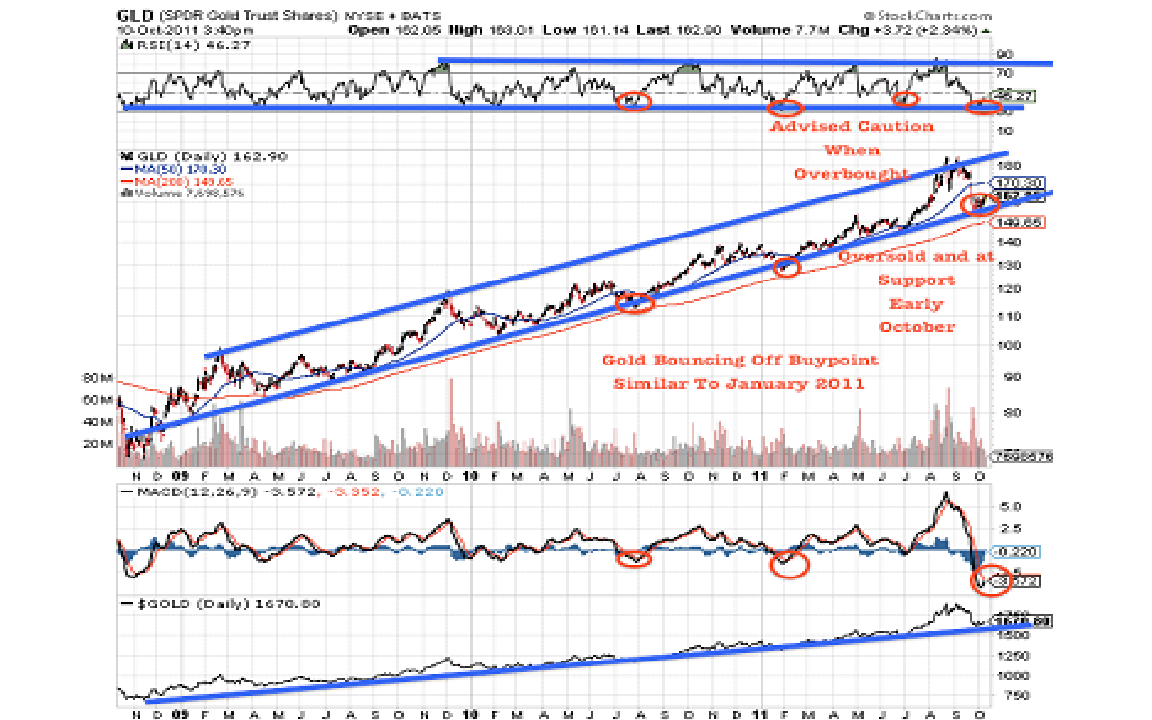
| You are subscribed to email updates from Save Your ASSets First To stop receiving these emails, you may unsubscribe now. | Email delivery powered by Google |
| Google Inc., 20 West Kinzie, Chicago IL USA 60610 | |

No comments:
Post a Comment