


Gold World News Flash |

- Harvey Organ's The Daily Gold & Silver Report
- Gold to Roubini: $21,500 Ker-Pow!
- Gold Sizzles
- Ben Davies - “We See Unprecedented Physical Gold Demand”
- Complete Chinese War Preparedness And Military Update
- Answering Your Questions: The Gold Market
- Gold Seeker Closing Report: Gold Tumbles Over $100 and Silver Slumps $3
- In The News Today
- The Risk-On Trades Are Back
- Money, Banksters and August 2011 – The Coming Silver Revolution
- Money, Banksters and August 2011 – The Coming Silver Revolution
- Massive Raid on Silver and Gold
- CME Margin Increase Exposes Desperation Of the Naked Banking Cartel
- Silver and Gold Prices are Correcting, but will Come Back
- 3, 2, 1: Global Debt Meltdown
- Charting The Biggest Structural Problem For US Banks, And What The Market Expects From Jackson Hole, Version N+1
- Gold, the Dollar and the Failure of Currencies
- Rob Kirby: Gold and interest rates -- more than joined at the hip
- Jesse's Cafe Americain: Gold Margin Hikes and a Pullback: Variations on a Theme
- James Turk interviews James McShirley on gold market intervention points
- Metal Versus Metal Stocks
- Gold Still A Better Idea Than Mainstream Asset Allocation
- Guest Post: Three Times Is Enemy Action
- Gold Daily and Silver Weekly Charts - CME Raises Gold Margin Requirements
- Transaction Volume Lifting Silver
- Biggest Gold Drop Since December 2008 Sends Metal To… Week Ago Levels
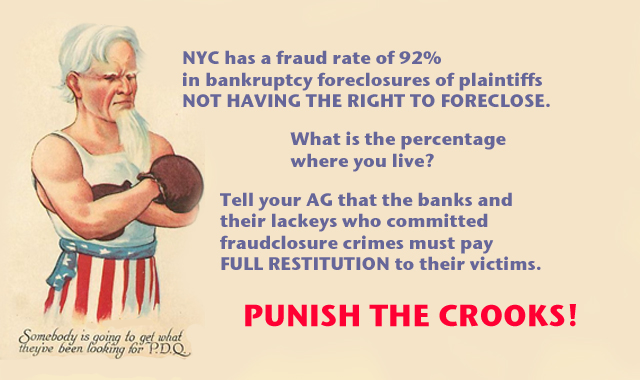
- Back Off Banksters! NY AG Eric Schneiderman Fights Back After Being Kicked Off 50 State Robo-signing Investigation
- Egon von Greyerz talks to James Turk
- The Market Giveth and the Market Taketh
- How Much Gold Do You Need?
| Harvey Organ's The Daily Gold & Silver Report Posted: 24 Aug 2011 07:22 PM PDT It is amazing how this news was leaked. Gold will now become a physical market like silver. The CME are the biggest set of crooks on the planet...
|
| Gold to Roubini: $21,500 Ker-Pow! Posted: 24 Aug 2011 06:50 PM PDT Bullion Vault
|
| Posted: 24 Aug 2011 06:45 PM PDT Nichols on Gold
|
| Ben Davies - “We See Unprecedented Physical Gold Demand” Posted: 24 Aug 2011 05:23 PM PDT  With tremendous volatility in gold and silver, today King World News interviewed Ben Davies, CEO of Hinde Capital, about the correction in the metals and where he sees the markets heading from here. Davies had this to say about the recent action, "Tuesday was the first day of what I would describe as a proper seller in the market, where the buyers were properly filled in Asia and in London. It was a mixture of speculative selling on the back of margin increases and I say speculative selling as in longs having to reduce. It was also from physical scrap that came into the markets and there was hedging of those positions." With tremendous volatility in gold and silver, today King World News interviewed Ben Davies, CEO of Hinde Capital, about the correction in the metals and where he sees the markets heading from here. Davies had this to say about the recent action, "Tuesday was the first day of what I would describe as a proper seller in the market, where the buyers were properly filled in Asia and in London. It was a mixture of speculative selling on the back of margin increases and I say speculative selling as in longs having to reduce. It was also from physical scrap that came into the markets and there was hedging of those positions."
This posting includes an audio/video/photo media file: Download Now |
| Complete Chinese War Preparedness And Military Update Posted: 24 Aug 2011 04:27 PM PDT Now that Keynesianism has failed (repeatedly and miserably, although certainly not during wartime - during those times it is curiously successful at 'stimulating'), and only those willfully blind refuse to see how this extended slow-motion collapse ends, below we present the latest, 2011 Edition, of the Annual report to Congress revealing "Military and Security Developments Involving the People's Republic of China" or, in short, everything that one needs to know to defend from and/or attack the world's most populous nation. For those short on time, here are the key charts. The only Org Chart that matters:
Chinese Ground Forces:
Chinese Navy:
Chinese Airforce:
Chinese ICBM reach capabilities:
Chinese Missile balance:
and most importantly, strategic Chinese choke points:
And for those with insomnia, the full report:
|
| Answering Your Questions: The Gold Market Posted: 24 Aug 2011 04:08 PM PDT GOLD Price Targets. Answering Your Questions. ...
|
| Gold Seeker Closing Report: Gold Tumbles Over $100 and Silver Slumps $3 Posted: 24 Aug 2011 04:00 PM PDT Gold fell $35.75 to $1823.05 in afterhours access trade late yesterday before it rebounded to back above $1850 in Asia, but it then fell to as low as $1753.14 by early afternoon in New York today and ended with a loss of 5.59%. Silver dropped to $41.34 before it climbed back above $42, but it then fell to as low as $39.07 in New York and ended with a loss of 7.05%.
|
| Posted: 24 Aug 2011 03:40 PM PDT Jim Sinclair's Commentary Gold Bull "Bill" at the office today taking solace from Angel during today's decline. We will make Angel available to those most seriously requiring paw holding.
The upside for gold and silver will knock your socks off – Embry With no easy solutions to the globe's debt problems visible, Continue reading In The News Today
|
| Posted: 24 Aug 2011 03:28 PM PDT The past month investors have been hit hard from the falling stock market. Those who owned gold and bonds have been rewarded. During times of economic fear which leads to selling of stock shares investors and traders find safety in gold and bonds. It was this surge of money coming out of stocks that propelled the price of gold and bonds sharply higher through-out this selloff. On Sunday I warned subscribers that any day now gold should start to correct and there is potential for it to drop all the way back down to the $1640 – $1670 area depending how much of the recent buying volume was investment versus speculative money which will quickly sell out if prices began to fall. Take a look at the intraday charts below to get a visual of how money is moving around the market and how economic fear plays a roll on investment decisions: After this shift the stock market sold off very strong for a couple weeks before finding a bottom. Three Day 10 Minute Chart Post-M...
|
| Money, Banksters and August 2011 – The Coming Silver Revolution Posted: 24 Aug 2011 03:21 PM PDT from PakAlertPress.com: STOP! WHAT IS MONEY? The money that the world uses today is created by private banks lending non-existent money called credit. This credit has never, does not, and will never exist, except in theory on computer screens. People starve and die all because they do not have enough digits on a computer screen. All of this credit, created by the private banks, is owed back to those same banks, plus interest. By design, there is never enough credit in circulation to pay back all the principal plus interest on the loans outstanding, which is why the concept of bankruptcy is built into the system. Using the simple system above, banksters are given the ability to manipulate the world's economies into 'boom and bust' cycles. In essence, the only difference between a boom and a bust is the amount of credit in circulation, or, rather, the net amount of numbers on people's computer screens. Initially, banksters create a boom by increasing the supply of credit in the economy. During this boom period, individuals and businesses are encouraged to take on more debt as they are more confident of increasing their income in the future. All this extra credit in the system leads to more activity, which in turn creates more confidence in the system, with many getting into more debt. This boom is akin to a fishing trawler; the bankster throws out a credit line and waits, once the bait has been taken the bankster begins to wind in the credit by taking credit out of circulation, it's gone. The economy then moves into a slump or recession, simply because there are not enough units of credit in circulation. The banksters are then able to trawl from people the wealth that does exist, in exchange for money that never existed in the first place.
|
| Money, Banksters and August 2011 – The Coming Silver Revolution Posted: 24 Aug 2011 02:50 PM PDT The money that the world uses today is created by private banks lending non-existent money called credit. This credit does not ever exist...
|
| Massive Raid on Silver and Gold Posted: 24 Aug 2011 02:35 PM PDT by Harvey Organ, The bankers again decided in their great wisdom that a raid was necessary to quell the demand for gold and silver. The world awaits Ben Bernanke's speech from Jackson Hole Wy. The market strongly believes that he will initiate QEIII. If he does not, then markets will tank. The fact that a monster raid on the precious metals with regulatory cover was orchestrated seems to indicate that that is where he is heading. I will deliver to you both sides of the story. The price of gold fell by an unbelievable $104.20 to $1751.10 at comex closing time. The silver price was also whacked to the tune of $1.12 to $39.16. Dennis Gartman liquidated another 1/3 of his positions early today along with yesterday's 1/3. I emailed the CFTC that maybe they should arrest Gartman for inside trading as he obviously knew that another raid was forthcoming today. I will remind everyone that you should not play at the comex. If you want gold or silver line up at the bank and get it. Do not play with paper gold or silver as these crooked bankers will fleece you time and time again. Please try not to use leverage as this is a big sin and again the bankers exploit your weaknesses. Read More @ HarveyOrgan.Blogspot.com
|
| CME Margin Increase Exposes Desperation Of the Naked Banking Cartel Posted: 24 Aug 2011 01:35 PM PDT  Gold futures fell more than $100 on Wednesday, one of the steepest falls ever, as strong U.S. economic data and expectations of more Federal Reserve stimulus accelerated profit taking from the safe-haven record high of a day ago. This is asinine! Strong economic data? What? More Fed stimulus is negative for Gold? Are you kidding me? And of course a headline with a 1980 reference to make "readers believe" that "the top is in" and Gold is going to collapse again. My sides hurt from laughing. The CME margin hike has EVERYTHING to do with Gold's "price drop" today. That, and tomorrow's September options expiration. NOTHING else! At worst this "sell-off in Gold can be chalked up to [forced] "profit taking" by traders. No "real" Gold was sold today. As a matter of fact, I would suspect that quite a bit of real gold was bought today at a very nice sale price? Does the Banking Cartel really believe that by knocking $100 off the price of Gold, the demand for it is going to wither and die? Good luck with that belief. Investors have been standing in line, waiting to buy "real" Gold at a lower price. Has the Banking Cartel just handed the Global Gold Investment Community a gift of lower prices on the eve of Gold's strongest buying season of the year? Does the banking cartel really believe that a margin increases on the cost of a "paper" Gold contract is going to stem the Global demand for "real" Gold? Not a chance, it will only make it cheaper for those seeking to buy "real" Gold, increase demand, and ultimately make it harder to get delivery of, as available supply of the Precious Metal is sucked up even faster a lower prices. [Ditto for Silver] Today's CME Gold margin increase might have been the worst kept secret in the history of CRIMEX shenanigans. This story was posted on The Street's web site at 8:24AM est this morning. A mere four minutes after the CRIMEX assault on Gold began in earnest. By Alix Steel NEW YORK (TheStreet ) -- High gold prices need to watch their backs because margin hikes could be right around the corner. With gold prices seeing $20-$50 swings daily, the CME could be tempted to increase the amount of money it takes to buy an 100 ounce gold futures contract -- a technique often employed to stem volatility. Silver was the latest victim of margin hikes and is still recovering. The CME raised margins five times between April 26th and May 9th a massive 68% which eventually resulted in silver losing almost 30% of its value in less than 3 weeks. If the same fate were to befall gold, prices could tank to $1,400 an ounce. The CME has raised margin requirements for gold twice this year, once in January and once in early August, by 11% and 22% respectively. The moves did little to stem gold's rally. A week after the margin hikes in January gold was down just 2% and a week after the August hike gold was up 1.5%. But this time may be different for gold. As shown in the chart above from MFGlobal, gold's average true range is 40, a level not seen since the end of 2008. The last time the CME underwent a series of margin hikes for gold was between December 2009 and February 2010 when it raised requirements 50% that was when gold's average range was in the mid to high 20s. The Shanghai Gold Exchange beat the CME to the punch and raised margins Tuesday by 1%. The last time the exchange increased rates was August 8th, three days later the CME hiked requirements by 22%.  Following today's plunge in Gold prices, the CME decides the Gold market is too volatile, and raise margin rates further. And just like with the May margin hikes in Silver, the CME waits until prices are falling to raise margin rates, and use "the volatility" as an excuse for doing so. This is patently absurd. Gold fell because of the threat of a margin hike by the CME following a margin hike by the Shanghai Gold Exchange. The exchanges create a "volatility issue" and then react to it? Where were the margin hikes when Gold was rising $50 a day? This margin increase today, and those in Silver back in May, are obviously for the purpose of protecting the Banking Cartel's massive short positions in the Precious Metals, and have absolutely nothing to do with "volatility". By Debarati Roy and Pham-Duy Nguyen CME Group Inc. raised the margin requirements on gold trading at its Comex unit for the second time this month, after prices surged to a record above $1,900 an ounce and then plunged today by the most since March 2008. The minimum cash deposit for borrowing from brokers to trade gold futures will rise 27 percent to $9,450 per 100-ounce contract in the speculative Tier 1 category at the close of trading tomorrow, Chicago-based CME said in a statement. On Aug. 11, the increase by the exchange was 22 percent to $7,425. The cost of one contract after today's close was $175,730. The maintenance margin will rise to $7,000 from $5,500. Comex is making it more expensive for speculators to trade the metal as open interest for gold options climbed to a record 1.263 million contracts on Aug. 18 and prices slumped more than 7 percent in two days, erasing the gain of the past two weeks that sent the metal to a record $1,917.90 yesterday. "It will add selling pressure, even after today," Frank McGhee, the head dealer at Integrated Brokerage Services said in a telephone interview from Chicago. "This is the exchange reacting to the volatility." The CME last raised margins on Aug. 11, when prices fell 1.8 percent, the biggest slump since June 23. Today, gold futures for December delivery plunged $104, or 5.6 percent, to settle at $1,757.30, the biggest decline for a most-active contract since March 19, 2008. "There will be a short-term impact on gold prices," Savneet Singh, the chief executive officer of New-York based Gold Bullion International, said in a telephone interview. "The long-term fundamentals are intact." "...the biggest decline for a most-active contract since March 19, 2008." That's odd, why did the headline above declare "Biggest Price Drop Since 1980"? To scare you out of your Gold so that the desperate banks can get it! This is all about the desperation of the banks to get Gold to cover their sorry asses. Think about it...if every ounce of Gold has 100 claims on it, where are the banks going to get the Gold to cover their promises to deliver to those claims without driving the price to the outer reaches of the galaxy? They are going to try and steal it! Is it just a coincidence that today's threat of a margin hike, an $80 drop in the price of Gold during ONLY the New York CRIMEX trading session, and a post-market margin ALL hike occur on the day BEFORE the expiration of September futures contracts on August 25, 2011? HELL NO! This is blatant theft in broad daylight as our CFTC regulators lie on their couches in their offices watching Looney Tunes. It is nothing we haven't seen before prior to a monthly options expiration. The timing of it, and the ferocity of the take down, only exposes further the desperation of the Banking Cartel's massive naked short position in Gold, AND the lack of physical supply available to the Banking Cartel to cover their asses as delivery demands on Gold that does not exist begin to rise exponentially. The criminal Banking Cartel was calling in more favors from the CME masters today, to bail out their sorry underwater asses because they have sold far, far, far more Gold than they own. Their hope was to drive enough contract holders to the sidelines and lessen their chances of default because of overwhelming delivery demands. This was clearly aimed at "speculators" that recently poured into Gold following Hugo Chavez'sunxpected demand that the Bank of England, Morgan, Barclays, Standard Chartered, and Scotia return Venezuela's sovereign Gold. The realization that the Gold central banks have leased out over the past 15 years to suppress the price of Gold, may not be "available" [at any price] to be returned to them, sent Gold traders into a feeding frenzy upon the Banking Cartel's naked Gold shorts. Since July 1st, the price of Gold has been rising, and accelerating higher as the shorts have been mercilessly squeezed. This bogus margin hike by the CME has less to do with claims of "market volatility" and a whole lot do with bailing out these pathetic criminal bankers whose crimes in the Gold [and Silver] futures markets are finally coming into view under a very bright light. Have the backs of the Banking Cartel finally been broken by the simple demand for the return of Gold leased to them by a small South American country? Venezuela may be small, but they possess the worlds 15th largest horde of Gold, 401.1 tonnes, half of which has been leased by Morgan, Barclays, Standard Chartered, and Scotia...and sold into the market to suppress the price of Gold. The CME thinks the Banking Cartel on the CRIMEX has a delivery problem and needs to raise margin rates to protect themselves from default by these banks. Global Gold investors think the Banking Cartel has a much bigger delivery problem than meeting futures contract demands. Could Venezuela's "delivery demand" be the start of a "run on the Banking Cartel"? The 21st Century Bank Run [exceptional reading] from FOFOA Today, the international need for long-term reliable money still exists. Only gold can play that role to satisfaction. Speculators aside, the paper gold trade (as largely explained in Aristotle's work) has functioned as a much needed currency of gold in a fashion very similar to that just described for the dollar during the Roaring Twenties...albeit with a floating dollar attachment rather than a fixed one. The paper gold is received and held as a contract that specifies a right to gold delivery, perhaps some as a lump sum, perhaps as installments. (Contracts can be written so many ways!) The key parallel, and purpose of this post is to show you that this works only as long as confidence is retained, and that excessive issues of claims has not jeopardized the real ability to get gold without being the one left holding the bag of paper gold when the bottom drops out.You see, when a Bullion Bank issues new paper gold, what we like to call a "naked short", it is constraining itself by making sure it has at least 10% reserves, according to Mr. Christian, in case someone decides to take delivery. Now in the case of a commercial bank, 10% reserves of physical cash may not be such a problem during a modern bank run because new cash can be printed relatively quickly. But with gold this is not the case. So even at 10% reserves, any bank run on the Bullion Banks would be a disaster. But the real problem comes from what these Bullion Banks consider reserves. You and I obviously realize that the only reserves that will suffice in a bank run are actual physical pieces of gold. But these banks are presently relying on certain "paper gold" items as their "physical reserves". During the CFTC hearing Mr. Christian admitted that the CPM group uses the term "physical" in a very loose way. That "physical" actually means paper claims and physical combined. So these Bullion Banks are holding paper liabilities from other Bullion Banks and mining operations and calling them "physical reserves". Very circular, don't you think? So under this loose definition of "physical gold", perhaps Mr. Christian was not lying. Perhaps the banks do constrain their naked shorting with at least 10% paper longs from "credible sources". And if so, I would guess that those credible sources also have 10% "reserves" behind their paper. And so on, and so forth. Well, I hope you can clearly see the problem here. When the bank run finally begins people and entities will want real physical gold, not paper longs, or liabilities from credible sources. It all comes down to gold, the actual physical stuff. That's what the people wanted during the bank runs of the 1930's. It is what brought down the London Gold Pool. It is what forced the closing of the Nixon gold window. And it will be what people want this time too. That's the real bank run... to actual physical gold in your own possession. "There will be a short-term impact on gold prices," Savneet Singh, the chief executive officer of New-York based Gold Bullion International, said in a telephone interview. "The long-term fundamentals are intact." Let's us then consider the modus operandi of today's Gold [and Silver] market take down. A margin increase on Wednesday morning in Shanghai gets the ball rolling down hill. The threat of another margin increase by the CME, hot on the heels of their August 11th increase, creates a profit taking panic in the Gold market. The CME comes out with a margin increase following an $80 drop in the price of Gold during the CRIMEX hours of operation, and declares that "volatility" in the Gold market forced them to raise margin rates. And all this took place within 72 hours of September options expiration at the CRIMEX on Thursday, August 25, 2011. If the "threat" [rumour] of a CME margin increase caused an $80 panic sell-off in Gold, and that sell-off was followed by and actual CME margin increase, would it be plausible to consider this a "buy the news" opportunity with "blood in the streets"? Considering the August 11 CME margin increase preceded a $190 run in the price of Gold, this panic move by the CME and the banking cartel should lead to an even bigger run-up in the price of Gold shortly. My hunch is though, that Silver is going to be the biggest beneficiary of this recent increase in Gold futures margins, much as Gold was the beneficiary following similar margin increases piled on Silver to halt its rise to $50 back in early May. September is an actual delivery month for Silver, and the Banking Cartel is in very serious trouble with supply in their Silver vaults. Much more so than with Gold. It might even be safe to say that today's Gold hit had more to do with shaking the longs from the Silver tree ahead of September delivery than it did in Gold. Keep a very close eye on the Gold/Silver ratio. Should it fall below 40, expect an accelerated rise in Silver to quickly follow. The banking Cartel is fast losing control of these two Precious Metals markets. Their desperation is there for the entire world to see. Their "shorts" are down around their ankles. If only the CFTC would open their eyes. Maybe gold isn't so safe after all. After months of setting record after record, the price of gold plunged $104, or 5.6 percent, Wednesday to finish at $1,757 per ounce. That was the biggest percentage drop in nearly 3 1/2 years and a blow to investors who thought the metal could go only one way -- up. Yeah, right. The mainstream financial media hasn't got a clue about what drives the Gold market. As I told you in my post yesterday, THERE IS NO BUBBLE IN GOLD! 
|
| Silver and Gold Prices are Correcting, but will Come Back Posted: 24 Aug 2011 01:23 PM PDT Gold Price Close Today : 1754.10 Change : (104.20) or -5.6% Silver Price Close Today : 39.157 Change : (3.124) or -7.4% Gold Silver Ratio Today : 44.80 Change : 0.845 or 1.9% Silver Gold Ratio Today : 0.02232 Change : -0.000429 or -1.9% Platinum Price Close Today : 1803.50 Change : -59.20 or -3.2% Palladium Price Close Today : 744.50 Change : -18.45 or -2.4% S&P 500 : 1,177.60 Change : 15.25 or 1.3% Dow In GOLD$ : $133.41 Change : $ 9.10 or 7.3% Dow in GOLD oz : 6.454 Change : 0.440 or 7.3% Dow in SILVER oz : 289.11 Change : 24.77 or 9.4% Dow Industrial : 11,320.71 Change : 143.95 or 1.3% US Dollar Index : 74.02 Change : 0.130 or 0.2% Sometimes markets speak with forkéd tongue. Sometimes they speak loud and clear. Today was one of those days. The GOLD PRICE put in that second part of a Key Reversal, loud and clear. It lost $104.20 today (5.6%) and closed Comex at $1,754.10. That's what happens when tinhorns and newcomers flock to a market because it's rising. When the heat turns up, they all stampede and yell, "Fire!" Okay by me, they only create buying opportunities. Gold's fall brought it to $1,750 support, BUT it still hasn't touched its 20 DMA ($1,740.74), first tripwire of a decline. Oh, it will, tomorrow probably, but our big question is answered, namely, has a correction begun. Looks like it hath. However, the GOLD PRICE must break support at $1,725, then there's a tiny gap about $1,675, so there's another target. 50 dma, a frequent correction target, awaits at $1,627.93. Above that is $1,650 support. If all else fails, GOLD can catch hold at $1,600. Be patient. The GOLD PRICE has a ways to fall, ASSUMING it confirms tomorrow by breaking that $1,750 support. Frankly, these volatile tergiversations in every market have left me punchdrunk. The way they're flopping from side to side, I want PROOF that GOLD will carry through to the downside. Y'all better be watching this correction like a hawk for a chance to buy more gold. Why? Because the turmoil of the last two months has given you a foretaste of trading to come. The GOLD PRICE will come ROARING back, whether this correction lasts a week or six months. If the whole world were a desktop, not all the politics of the last two months would have moved a pencil. The SILVER PRICE made one of its largest moves in a long time. It dropped 7.4% today, 312.4c, to 3915.7c. High was 4219c, low 3905c. SILVER, too, unequivocally confirmed a Key Reversal today. It WAS a lower close. And the SILVER PRICE broke thru its 20 dma (now 4008c). The SILVER PRICE will fall further, but 3900c caught it today. Weak support appears at 3850c, but 3800c is stronger. 50 DMA meets silver at 3821c, 200 at 3468c. Lots of lateral support at 3800c. Another little thing. Sometimes when a market traces out an equilateral triangle, then breaks out, after a long time it returns to the triangle's apex. Apex from the triangle SILVER formed May to mid-July falls just under 36. Gold/silver ratio jumped from 43.951 yesterday to 44.805 today, top of the range and on its second try to break out upside. That's not helpful for silver. Be patient, and lash yourself to the mast and stop your ears like Odysseus did to the Sirens whenever you hear parvenus and the hopelessly stock-addicted talk about the metals' "bubble" having ended. They're the same geniuses who told you to buy and hold stocks in 2001. Silver and gold are correcting, but will come back. Bull market has 3 - 10 years to run. It's just getting interesting. Stocks traded up and down raggedly today, but managed to add 143.95 (1.29%) to the Dow by day's end, taking the average to 11,320.71. S&P rose 1.31% (15.25 points) to 1,177.60. Dow turned up from the dreaded Death Cross today as the 50 day moving average (11,975) did not cross below the 200 DMA (11,989). Turns out it's not significant anyway in past historical performance, but as Prince Potemkin said to Catherine the Great, "Appearances are everything in the stock market" Stocks -- your intergenerational pipeline to poverty. Who could trade the US dollar index? One day up, next down, all in a tight range. Today it rose 13 basis points (0.17%), climbing over 74 to 74.024. Still locked in that 75.5 -73.4 range. Ben Bernancubus and the rest of the dolts managing the dollar couldn't manage a good-sized gas station successfully. A day's work would kill 'em. The Euro, only fiat currency in the world WORSE than the US Dollar (no, no, wait -- the yen might be worse, too) fell today to 1.4414, down 0.16% as the "water wings" the Nice Government Men are putting under it fail to inflate. Stinker. Smell of death is all over it. In the land of the blind the one-eyed man is king, and in a financial panic anything that even looks like it can see will attract money. Hence the yen's present exalted height. It fell a little today, 1/3% to 129.93c/Y100 (Y76.96/$). On Saturday, 3 September we will celebrate our annual Bodacious Hoedown again at the Top of the World farm. Starts at 1:00 p.m. with an afternoon of games like raw egg toss, dunking booth which my children have set up for me, and lots of others. Or you can sit bring a stringed instrument and sit under the trees jamming with others (do NOT bring a grand piano. It has strings, but won't fit in.) After that come supper with barbecued pork raised on our own farm, slaw, beans, tomatoes, and dessert. Then comes the fun: an Old Time Band and dance caller. This year we are not charging admission, as a thank-you to all our customers. If you're interested, email me with "Hoedown Directions" in the subject line and I'll send you directions and a list of local motels -- or you can camp out, if you like rustic camping. WARNING AND DISCLAIMER. Be advised and warned: Do NOT use these commentaries to trade futures contracts. I don't intend them for that or write them with that short term trading outlook. I write them for long-term investors in physical metals. Take them as entertainment, but not as a timing service for futures. NOR do I recommend investing in gold or silver Exchange Trade Funds (ETFs). Those are NOT physical metal & I fear one day one or another may go up in smoke. Unless you can breathe smoke, stay away. Call me paranoid, but the surviving rabbit is wary of traps. NOR do I recommend trading futures options or other leveraged paper gold and silver products. These are not for the inexperienced. NOR do I recommend buying gold & silver on margin or with debt. What DO I recommend? Physical gold and silver coins & bars in your own hands. One final warning: NEVER insert a 747 Jumbo Jet up your nose. Argentum et aurum comparenda sunt -- -- Gold and silver must be bought. - Franklin Sanders, The Moneychanger The-MoneyChanger.com © 2011, The Moneychanger. May not be republished in any form, including electronically, without our express permission. To avoid confusion, please remember that the comments above have a very short time horizon. Always invest with the primary trend. Gold's primary trend is up, targeting at least $3,130.00; silver's primary is up targeting 16:1 gold/silver ratio or $195.66; stocks' primary trend is down, targeting Dow under 2,900 and worth only one ounce of gold; US$ or US$-denominated assets, primary trend down; real estate in a bubble, primary trend way down. Whenever I write "Stay out of stocks" readers inevitably ask, "Do you mean precious metals mining stocks, too?" No, I don't. 
|
| Posted: 24 Aug 2011 01:07 PM PDT We have entered very frightening times. We are on the verge of a massive global debt meltdown, and nobody is sure what is going to happen next.
|
| Posted: 24 Aug 2011 01:05 PM PDT Sometimes the general public can get confused in attempting to explain the complexities and the inefficiency of the banking sector when one simple chart brings the message home. A chart like that comes from the latest "Eye on the Market" from JPM's Michael Cembalest, who compares total bank deposits ($8.4 trillion), or bank liabilities, and total bank loan (about $2 trillion less) assets, or sources of cash flows that are supposed to fund bank liabilities and generate retained earnings, while the bank performs credit, maturity and risk transformation: a bank's three key functions. As the chart below shows, perhaps the primary reason why the economy is in its current deplorable state, is that instead of lending dollar for dollar to catch up with deposit growth, banks now rely on roughly $1.7 trillion in excess reserves with the Fed, an amount roughly equal to the difference between total deposits and loans, to plug the credibility gap. This also explains why according to Cembalest one of the expectations by the market from Jackson Hole is that IOER will be cut to 0% to promote bank lending, and thus the conversion of reserves into loans (something which the inflationistas out there will tell you is a big risk to a sudden surge in out of control inflation). So how does the Fed's direct intervention in bank balance sheets look like? Here it is.
What this chart demonstrates is that banks, whose liabilities (deposits) are collateralized with IOER-interest bearing reserves, will sooner or later be forced to transform these holdings into risky loan-based assets. The question is whether there is enough cashflow-worthy collateral to absorb this transformation of about $1.7 trillion in fungible money. It also means that endogenous risk in the banking system will spike if and when the Fed weans banks to pull away from the safety of the IOER window, and into the far riskier, and far better paying real world. As for the 4 things which Cembalest believes the markets expect from the Fed, here they are:
As noted earlier, we believe the logic on Twist may be inverted, as further flattening on the 2s10s will perversely further impair the banking sector due to a complete collapse in net interest income, and with BAC already trading a dollar away from a toxic death spiral, this is not something the Fed would like to risk. That said, since we do not have an Economic Ph.D., and according to Dr. Nouriel Roubini, we represent the anti-intellectual, lumpenproletariat of the far too democratic blogosphere, and should just keep our mouth shut, we could well be wrong. Surely, however, even Bernanke realizes by now that there is far too much priced into his speech: should he disappoint the market and not announce even the possibility of one of these four, then the warning from BAC that flawed policy decisionmaking could result in the biggest crisis since 2008, may be about to come true.
|
| Gold, the Dollar and the Failure of Currencies Posted: 24 Aug 2011 01:00 PM PDT In the last two weeks we have seen the strongest and most respected currencies being purposely weakened by their own central banks. It is at times like these, when the going gets tough that national monetary priorities are fully exposed. There are major dangers in these policies because of the role that currencies have played since gold was written out of the monetary system in the early seventies.
|
| Rob Kirby: Gold and interest rates -- more than joined at the hip Posted: 24 Aug 2011 12:49 PM PDT 8:45p ET Wednesday, August 24, 2011 Dear Friend of GATA and Gold: GATA consultant Rob Kirby of Kirby Analytics in Toronto reminds us tonight that the gold price suppression scheme is just part of a bigger scheme, using derivatives, to control interest rates, government bond prices, and other markets. Kirby's commentary is headlined "Gold and Interest Rates: More than Joined at the Hip" and you can find it at GoldSeek here: http://news.goldseek.com/GoldSeek/1314194400.php And at 24hGold here: http://www.24hgold.com/english/news-gold-silver-gold-and-interest-rates-... CHRIS POWELL, Secretary/Treasurer ADVERTISEMENT Golden Phoenix Q2 2011 Conference Call Posted at Company Internet Site The second quarter 2011 conference call of Golden Phoenix Minerals Inc. (GPXM) has been posted at the company Internet site for immediate playback. The call includes updates on the start of gold production at the company's Mineral Ridge gold project in Nevada, the letter of intent to acquire the Santa Rosa gold mine in Panama, and the company's due-diligence efforts to secure a senior stock exchange listing. The conference call is 18 minutes long and you download an mp3 of it here: http://www.goldenphoenix.us/audio/GPXMCC071211.mp3 Or play back the call here: http://goldenphoenix.us/conferencecalls/ Golden Phoenix is a U.S. mining company with international exposure to gold, silver, and strategic metals. The company's business model combines project generation and royalty mining that offers the potential for exploration upside, coupled with the backing of production and future royalty streams. View company videos here: Join GATA here: Toronto Resource Investment Conference http://cambridgehouse.com/conference-details/toronto-resource-investment... The Silver Summit http://cambridgehouse.com/conference-details/the-silver-summit-2011/48 New Orleans Investment Conference http://www.neworleansconference.com/ Support GATA by purchasing gold and silver commemorative coins: https://www.amsterdamgold.eu/gata/index.asp?BiD=12 Or by purchasing a colorful GATA T-shirt: Or a colorful poster of GATA's full-page ad in The Wall Street Journal on January 31, 2009: http://gata.org/node/wallstreetjournal Or a video disc of GATA's 2005 Gold Rush 21 conference in the Yukon: Help keep GATA going GATA is a civil rights and educational organization based in the United States and tax-exempt under the U.S. Internal Revenue Code. Its e-mail dispatches are free, and you can subscribe at: To contribute to GATA, please visit: http://www.gata.org/node/16 ADVERTISEMENT Prophecy Platinum Drills 49.5 Meters Grading 1.27 g/t PGM+Au at Yukon Wellgreen Project Company Press Release Prophecy Platinum Corp. (TSX-V: NKL, OTC-QX: PNIKF, Frankfurt: P94P) announces results from its 2011 drilling program for its first completed hole on the Wellgreen Project in the Yukon Territory, Canada. Borehole WS11-184 encountered 472.6 meters of mineralization grading 0.43% The geology transitioned from blebby disseminated to net-textured to massive sulphide approaching the footwall contact grading 6.3% nickel, 1.7% copper, 2.7 grams per ton platinum, 1.6 grams per ton palladium, 0.17 grams per ton gold, and 3.4 grams per ton silver. The drilling zones and results are tabulated here, with more information: http://www.prophecyplat.com/news_2011_aug22_prophecy_platinum_wellgreen_...
|
| Jesse's Cafe Americain: Gold Margin Hikes and a Pullback: Variations on a Theme Posted: 24 Aug 2011 12:49 PM PDT Obviously in honor of September Comex options expiration this week & Jackson Hole speech with Bernanke regarding Fed's next steps...
|
| James Turk interviews James McShirley on gold market intervention points Posted: 24 Aug 2011 12:32 PM PDT 8:30p ET Wednesday, August 24, 2011 Dear Friend of GATA and Gold: Lumber merchant and futures market analyst James McShirley, the LeMetropoleCafe.com contributor who spoke at GATA's Gold Rush 2011 conference in London, was interviewed during the conference by GoldMoney founder and fellow speaker James Turk about McShirley's identification of intervention points in the gold futures market. The interview is not quite 10 minutes long and you can watch it at the GoldMoney Internet site here: http://www.goldmoney.com/video/mcshirley-turk-interview.html CHRIS POWELL, Secretary/Treasurer ADVERTISEMENT Sona Drills 85.4g Gold/Ton Over 4 Metres at Elizabeth Gold Deposit, Company Press Release, October 27, 2010 VANCOUVER, British Columbia -- Sona Resources Corp. reports on five drillling holes in the third round of assay results from the recently completed drill program at its 100 percent-owned Elizabeth Gold Deposit Property in the Lillooet Mining District of southern British Columbia. Highlights from the diamond drilling include: -- Hole E10-66 intersected 17.4g gold/ton over 1.54 metres. -- Hole E10-67 intersected 96.4g gold/ton over 2.5 metres, including one assay interval of 383g of gold/ton over 0.5 metres. -- Hole E10-69 intersected 85.4g gold/ton over 4.03 metres, including one assay interval of 230g gold/ton over 1 metre. Four drill holes, E10-66 to E10-69, targeted the southwestern end of the Southwest Vein, and three of the holes have expanded the mineralized zone in that direction. The Southwest Vein gold mineralization has now been intersected over a strike length of 325 metres, with the deepest hole drilled less than 200 metres from surface. "The assay results from the Southwest Zone quartz vein continue to be extremely positive," says John P. Thompson, Sona's president and CEO. "We are expanding the Southwest Vein, and this high-grade gold mineralization remains wide open down dip and along strike to the southwest." For the company's full press release, please visit: http://sonaresources.com/_resources/news/SONA_NR19_2010.pdf Join GATA here: Toronto Resource Investment Conference http://cambridgehouse.com/conference-details/toronto-resource-investment... The Silver Summit http://cambridgehouse.com/conference-details/the-silver-summit-2011/48 New Orleans Investment Conference http://www.neworleansconference.com/ Support GATA by purchasing gold and silver commemorative coins: https://www.amsterdamgold.eu/gata/index.asp?BiD=12 Or by purchasing a colorful GATA T-shirt: Or a colorful poster of GATA's full-page ad in The Wall Street Journal on January 31, 2009: http://gata.org/node/wallstreetjournal Or a video disc of GATA's 2005 Gold Rush 21 conference in the Yukon: Help keep GATA going GATA is a civil rights and educational organization based in the United States and tax-exempt under the U.S. Internal Revenue Code. Its e-mail dispatches are free, and you can subscribe at: To contribute to GATA, please visit: ADVERTISEMENT Lewis E. Lehrman on How to Solve the U.S. Debt Problem Lewis E. Lehrman, chairman of the Lehrman Institute, sponsor of The Gold Standard Now project, advises that to reduce the $1 1/2 trillion U.S. deficit, the Republican Party must initiate an investment program. Working Americans are not saving, which enables the banks to lead the country into a cycle of debt, leverage, boom, panic, and bust. To read more and to sign up for The Gold Standard Now's free, noncommercial, weekly report, "Prosperity through Gold," please visit: http://www.thegoldstandardnow.org/gata
|
| Posted: 24 Aug 2011 12:23 PM PDT
 Gold versus Gold stocks. A topic near and dear to my heart. One that I have studied relentlessly for the past several years. I am no mining expert. I am not the one that can point you to the next "ten bagger" in the junior mining sector. But I have been right in insisting that my subscribers favor Gold over Gold stocks and I continue to favor Gold (and silver) over the companies that dig these metals out of the ground. This is sector analysis, not an individual firm analysis. Gold stocks are undervalued say the Gold stock bulls. The fundamentals are improving thanks to a rising "real" price of Gold. These things are true. But a "value trap" is believing that things that are cheap can't get cheaper. They can. Now, I trade Gold stocks, I don't hold them for the long term. My long term investment for this secular precious metals bull market is physical Gold held outside the banking system, and a little bit of silver. Why? Because Gold stocks are not Gold, they are a paper derivative of Gold. And when the poop hits the fan, like it did briefly a few short weeks ago, Gold stocks get thrown out with other stocks. Sure, they may hold up better than base metal stocks or banking stocks, but a break even proposition when Gold is rocketing higher seems like a poor trade to me. I'd rather hold the GLD ETF and make some fiat money rather than be loyal to the Gold stock cause and not make any money. When the Gold sector is healthy and in "proper" alignment, the juniors should be leading the seniors higher. One can use a ratio of the GDX ETF (i.e. the senior miners) to the GDXJ ETF (i.e. the junior miners) to get a sense of whether the seniors or juniors are outperforming. Here's the data during one of the bigger bull runs of this secular Gold bull market (a GDX:GDXJ ratio chart over the past 6 months):  This is the opposite of what a strong Gold stock bull market looks like. Now, the flip side of this argument is that the senior Gold stocks can lead the move and the juniors follow later. Perhaps, but we are not exactly at the beginning of this move in Gold are we? Others would argue that Gold stocks were dragged down by the stock market and thus this is not a fair period to analyze. I would argue that we are headed for a full-on poop storm after this dead cat bounce in common equities completes and that Gold stocks better get used to it! Also, the junior mining sector, as represented by the GDXJ ETF, is clearly showing a big head and shoulders top here, which could of course be negated at any time. For now, though, caution is clearly warranted and hope is not a good strategy. Here's a chart of GDXJ over the past 18 months to show you what I mean:  And what of the micro-cap Gold stocks or the explorers? The GLDX ETF, a representation of this sector, looks terrible! Here's a chart of the daily action of GLDX since its inception in early November of 2010:  I am very bearish on the stock market once this bounce in general stock markets completes. I know that this is not 2008, but that is only because the problems are worse and the outcomes in financial markets should be even more severe. Gold is the premier asset class for this cycle. Gold stocks may be on sale again after the carnage is complete and I plan to have some dry powder to buy them if things work out as I think they will. I advise Gold stock bulls to use caution here. If the head and shoulders pattern in the GDXJ ETF reverses, I'll be there to notice and switch to a bullish posture. But for now, I still prefer Gold over Gold stocks. Few Gold stock bulls realize that some of the best gains in Gold stocks occurred AFTER the Dow to Gold ratio bottomed on a secular basis. It happened in the 1970s and in the 1930s. I am no permabull on the precious metals other than as a long-term buy and hold for the physical metal. Gold and silver stocks are a trade to me, not a religion. Gold, on the other hand, is the anchor of the international monetary system, whether it is officially declared to the sheeple or not. Cash is king during a bear market and there is no better form of cash than that which cannot be conjured up by decree. If you are crazy enough to try to trade in this market environment, I invite you to try my low-cost subscription service, which focuses on Gold, silver and Gold and silver mining stocks, but also trades opportunities that arise in other markets. My long-term investment advice is free and hasn't changed for years: buy and hold physical Gold until the Dow to Gold ratio gets to 2 (and this ratio may well get below one this cycle).  ![[Most Recent Charts from www.kitco.com]](http://www.kitconet.com/charts/metals/gold/t24_au_en_usoz_4.gif) 
|
| Gold Still A Better Idea Than Mainstream Asset Allocation Posted: 24 Aug 2011 12:00 PM PDT With gold making its expected pullback we needed a chuckle so we checked the New York Times and found this article from yesterday… No one I spoke to would venture a guess as to how high gold would rise before it hit its peak. But most stressed that people forgot that gold’s value was driven by sentiment. “Gold doesn’t have any intrinsic value,” said Larry M. Elkin, president of the Palisades Hudson Financial Group in Scarsdale, N.Y. “It’s this era’s wampum. At one point you could buy Manhattan for beads.” (Mr. Elkin said what bothered him the most about investing in gold was how irrational it was, unlike buying a blue-chip stock whose value rises and falls based on what the company produces.) That said, having gold in a portfolio is still a good buffer against swings in other markets. Mr. Fisher calculated that over a 43-year period ending in June 2011, the average annual increase for gold, accounting for inflation, was 3.82 per...
|
| Guest Post: Three Times Is Enemy Action Posted: 24 Aug 2011 11:46 AM PDT Submitted by Daniel Cloud Three Times is Enemy Action People seem surprised by the suddenness of the decline in the stock market. It keeps trying to rally, and the rallies keep getting sold. There's no shortage of worrying circumstances in the real world to explain a fall in prices, and it's normal for people to disagree about whether they should be going up or down. But the violence of this move has caught many of us by surprise. I don't think it should have. I think there are good theoretical reasons, very simple, orthodox economic ones, to expect more of the same, to expect equally dramatic, or even more dramatic moves down, going forward. Of course, given the fact that I presumably have some sort of bets on the table, anything I say about that belief, like anything any market participant says, should be taken with a very large grain of salt. On the other side, there's the danger that I'm merely stating the obvious, and wasting the reader's time. (But then why are so many of us still long?) Nevertheless, despite the fact that I clearly can't be trusted, and consequently won't persuade many people to change their views, and even if there's nothing startlingly original about what I'm going to say, I think it's worth laying out what I believe to be the correct explanation of the crash as it's still happening, so that later on, when we're tempted to blame various scapegoats – derivatives traders, European politicians, bankers, our neighbors, immigrants, the opposing political party, etc., etc. – we'll perhaps remember that one of these analyses was predictive of the timing and scale of the event at the time, while the others are invidious reconstructions after the fact. So let me just tell you why it seems obvious that this market should now continue to move down a lot in a fairly abrupt manner, should finish crashing. As a serendipitous benefit, you'll also get a rather interesting story about why the economy never really recovered after the crash of '08. What market is usually the way world markets are at the moment? If you've ever looked carefully at a very long-term chart of the Chinese markets – not Taiwan or Hong Kong, markets on the Mainland, Shanghai or Shenzhen, and a chart going all the way back to the early '90's – you'll notice that they tend to suddenly move straight up or straight down in what seems like a completely abnormal and un-technical way. The very long-term chart just doesn't look like any normal chart of any real stock market. Of course, I'm exaggerating a bit – it's a relative thing – but relative to most stock markets, it has the flavor I've described. That's because the Chinese government is still practically and ideologically committed to planning the Chinese economy, both in aggregate and in detail. When the market goes up, often it's not because of some subtle, gradual improvement in the earning power of companies, it's because everybody knows that it's the policy of the government that the market should go up now, or because the government is going to renew its commitment to endlessly printing RMB to sterilize its interventions in the foreign exchange market. When the market suddenly and abruptly goes down by fifty or seventy-five percent, it's because the government has decided it's too high, or is going to flood the market with IPO's of failing state enterprises, and everybody knows that. It's a largely policy-driven market, that's what they look like. Of course, this creates uncertainty (that's why it's necessary to order the banks to lend) and wouldn't work as a way of encouraging extensive growth, but when you're just installing equipment invented by someone else, you can get away with this sort of very aggressive management style for a while, until, as happened in Japan, your economy eventually gets too developed for it to work any more, gets to the point where further growth would only come from encouraging individuals to have their own differing points of view, to be creative. The Shanghai stock market isn't one that rewards being in the minority, and being right, the way a real capital market would. It's a market that rewards marching in lockstep with everyone else, but getting the tip-off just a little sooner, because everyone knows (in a society where the very idea of a level playing field is held to be seditious) that the beautiful people should get the beautiful breaks. Chinese people have had six decades of this sort of treatment, and they've gotten pretty good at doing things in unison. (The Cultural Revolution was very good training.) That's why their market tends to sometimes move up and down in relatively straight lines. By explicitly targeting our stock market, by adding themselves as a source of net new demand for financial assets with their two quantitative easing programs, the Federal Reserve Bank began the process of making it into that sort of market, they tried to make sheep-like obedience to government directives the new 'clever'. Trading days increasingly resembled rehearsals of synchronized swimming routines. For the time being, we, too, are a policy-driven market, though the current policy is now, unfortunately, suddenly RISK OFF. For the last two years, being in the majority, not trying to be too clever, not fighting the Fed, buying every dip, has been what's paid, but now the Fed has had to back away without accomplishing anything in particular for its money, besides pushing the prices of financial assets into unsustainable positions. In the short term, they really did manage to get market participants all doing what the government told them to do, all buying in unison, all fully long at once. But the market is like a Slinky or a rubber band; stretch it too far, in one direction, and then let go, and it will snap back in the other. Now some people are trying to sell, still in an atmosphere of only-slightly-perturbed calm, while very few people are still buying, since the Fed's monetary signal to do so has been switched off, and rallies keep getting sold. It's possible to identify technical support at various levels, but I'm not sure it matters, it seems to me that there will still be people who have to sell but nobody who has to buy, even at those levels, because people have been conditioned to buy when the Fed is buying, and won't know they ought to act without that coordinating signal. Policy-driven markets tend to go up and down in straight lines when policy changes, hence I expect a surprisingly savage sell off in this one. All of this could have been predicted by anyone who bothered to read Charles Kindleberger's Manias, Panics, and Crashes. If you don't own it, I suggest you buy a copy. His argument seems complicated, but it boils down to something very simple. Kindleberger argues that bubbles, in the modern world, are often caused by cross-border capital flows, and shows that we can explain much of the history of the last several decades with a very simple model. If we just assume that every dollar that is brought into a country by foreigners to buy some financial asset, say a bond, from a local, is used by that local to buy another financial asset, say a stock, instead of used to fund consumption (and why should the mere presence of a foreigner change the local's propensity to save?) then we can easily explain events like the Japan bubble of the late 1980's, or the American bull market of the three decades prior to 2000, and the series of bubbles since then, as the result of events like yen purchasing after its un-pegging, and the huge net flows of Asian savings into dollar-denominated US asset markets over the relevant period. Asian institutions may have mostly bought bonds, in the US, but the portfolio preferences of American investors weren't changed by that, or got skewed towards risky assets by the resulting bull market, so even though it was the bond market the inflows were coming into, and we did get a bull market in bonds, it was much riskier assets that went up most in price. Asia just eventually got too big, without much of a decline in savings rates, for this game to go on forever – by the end, they needed to lend us far more money than we had any actual use for, so we could buy far more gadgets than we had time to learn how to operate, and fight endless wars without any real political objectives. The whole thing fell apart by being reduced to an absurdity, to a system that would have required every American, even the ones working for minimum wage, to buy a mansion full of robots. That couldn't happen, so the system broke. All that should be fairly obvious by now. But if Kindleberger's is the correct analysis of the effects of natural sources of exogenous demand for financial assets, which come on stream gradually and ebb away gradually, what should be the consequence of an artificial source of exogenous demand for financial assets, which switches on like a light, and then switches off abruptly a year or two later? Well, presumably anyone the Fed bought a bond from, in the course of QE's 1 and 2, immediately took the money and bought stock, encouraged by the fact that the Fed was publicly putting its credibility behind the notion that stock markets should only go up and can be planned, successfully, in a manner that causes them to only go up, a theory I first heard from a Japanese speculator in the late 1980's. So you should get a big bubble in the stock market, just as you would if the source of exogenous demand for financial assets had been capital inflows. This also explains the rather pointless bubble in gold and other commodities. If the Fed really does succeed in manipulating expectations, everyone should become convinced that by getting long anything liquid they're doing the only safe thing, that people who still see risk are idiots and troublemakers. They'll all get two hundred percent leverage, and financial institutions will all gear themselves up sixty times again. The VIX will fall to 16. Banks and private savers will arrange their speculations in liquid assets on the assumption than the economy is very much better than their own internal data makes it seem to be, because how could the Fed and all those smart people in the market all be wrong? (Does any of this sound familiar?) At the same time, nobody will want to invest any money in any real productive activity, or to own anything they can't sell in a day or two, because the question of the Fed's exit strategy, and the Federal Government's exit strategy from a very stimulatory level of deficit spending, will always force them to stay liquid, the more so the more it looks like the economy might recover. (Because they know, from their past experience with this Fed, that any such exit will inevitably be accompanied by a severe financial crisis or market panic which will destroy anyone who isn't perfectly liquid, that if they get stuck in some productive investment they can't immediately sell, if they don't find a chair when the music stops, they may well, if recent history is any guide, end up in jail, or branded a public enemy.) And when the music finally stops, when the pied piper finally throws up his hands and says 'to heck with those ingrates in Hamelin town', there will be nobody who's not fully invested, or who's short, left to buy from them, nor any investment going on in the real economy, and the bubble will pop quickly and loudly. The thing that ought to be stressed, about this explanation of the pattern of events we now see unfolding, is its orthodoxy as economics. These are exactly the reasons that have always, in the past, dissuaded the Fed, or any other well-run central bank besides Japan's (they somehow don't seem to mind the fact that it has never worked and theoretically shouldn't work) from ever pursuing any such policy of directly targeting asset markets over long periods of time (other than the market for government bonds, which central banks must manage) and that will dissuade any other well-run central bank from ever emulating the Fed's current policy in the future. You see, in economics, they have this idea that prices depend on supply and demand. You economists, all you PhD's out there, you wise wizards and technocrats at the Fed who keep us safe from unscientific approaches to the management of the economy, may have heard of these things before, though of course they're mysteries to the rest of us. The Fed, in doing two, successive, large scale 'quantitative easing' programs which basically just amounted to buying lots of bonds, temporarily increased the demand for financial assets. Market participants' portfolio allocation preferences didn't change, or became less conservative, so even though they were buying bonds, it was risk assets, equities and commodities, that went up in price. (This is not rocket science.) Eventually, though, the buying would have to stop, when the program ended. That would remove a source of demand for financial assets; one market participants had grown accustomed to and reliant on. With less demand, the prices of financial assets would then fall, in the typical pattern, with equity market weakness and bond market strength. Since the monetary stimulus, by then, would have been huge, its sudden removal would create a huge hole under the market, into which it would ponderously collapse. Of course, since the stimulus was all fakery, and was the very least the participants in the rave expected from their DJ, while its removal shows us harsh reality, and comes as an unwelcome surprise, every single time you do this, the cost of the exit will be greater than the benefit of the free lunch you thought you were getting during the bubble period. (The Fed has now had two good opportunities to re-learn this – one in 2000, and one in 2008 – but seems to have learned nothing at all, seems even more committed to blowing up bubbles with printed money, though maybe the third time, which we're presently living through, will be the charm.) The asset market will go down by more than the amount you pushed it up each time, as everyone tries to exit at once. The decline in GDP from the crisis will be greater than the boost to GDP from the stimulus that caused the crisis to occur. The basic idea of economics is that there's no such thing as a 'money machine', that you can't get something for nothing, and the practical wisdom of any competent economist tells him that an attempt to try will always leave you worse off. (I shouldn't have to say any of this, all professional economists outside the United States know it, but somehow ours have lost their willingness to contemplate the possibility of perverse policy outcomes, though those are what real economics is all about.) This all seems blindingly obvious, and many other people have said more or less the same thing. The hardest thing to explain is how people could be fooled by the initial temporary increase in demand for financial assets, but the portfolio allocation effect seems adequate to explain that, and we have plenty of evidence that they were, the S&P 500 did double over the course of two years in the face of weak economic performance, a bad housing market and rapidly snowballing public debt. How much should prices fall now that the artificial demand for financial assets has been removed? With expectations disappointed, it would be reasonable to expect overshooting on the downside. All of market participants' 'ill-gotten' gains, ill-gotten not in a moral but a practical sense, precarious gains, resulting from just doing what the government told us to do instead of thinking for ourselves, should probably be wiped out before much of anyone has a chance to sell, and there should be some further penalty on top of that, because when the music stops there should be a disorderly scramble for chairs. (Given the number of people trying to delta-hedge, I would expect there might be gaps lower, once we really get going.) Most people, now, are still thinking that the worst thing that can happen to them is a decline, in the S&P 500, to 1020, the lows last year before QE2 was announced. But people always have modest expectations of the extent of a decline when it starts (otherwise they'd already have sold) and this analysis ignores the fact that there was another, more or less identical quantitative easing program before QE2. (Quite how people could forget that, given QE2's name, still strikes me as mysterious, but never mind.) Really, perhaps after some hideously destructive rally off of this forlorn hope of support, shouldn't we give back the ill-gotten gains from the first program as well? (I know we're used to having them by now, but the market doesn't care about that.) That would take us below 800. Actually, if we're going to overshoot where we should be, we should overshoot the 2008 low, which itself was an overshooting of the 2000 low. After all, now we've made a lower high, this whole move up from 666 to above 1300 is just a two year long rally in a secular bear market, and in bear markets, successive lows tend to be lower as well. (The Fed keeps doing this to us, blowing up bubbles and then backing away. Once could be happenstance, twice might be bad luck, but three times is enemy action, so it seems likely that people will recognize what's being done to them and act to protect themselves more quickly this time, leading to a more severe, or at least more sudden market event.) That would indicate an ultimate low somewhere below 650 on the S&P, perhaps 600? Anything that takes us below 800 will amount to an effectively complete claw-back of all the policy-driven gains, but it really seems possible that we could make a new low. This is a crazy-seeming prediction, but it's where reason seems to lead, and even if it's wrong, developing this sort of contrarian case is a good exercise. Think of it as a puzzle; please, knock yourself out, find a way to make me wrong, I'd love to be wrong. Well, that, anyway, was my general theory, a few months ago, we'll see if I was right, so to test it, I bought enough puts on the S&P 500 to hedge my own illiquid investments in real productive activity. I thought a crash was likely to occur, but I had no theory about the detailed mechanism of the panic, which makes me seem rather stupid, to myself, in retrospect. It should have been obvious that a lot of the money we were printing was actually ending up in Europe, that that was what was being endlessly shoveled into peripheral bond markets by the European banks, it should have been obvious that as soon as QE2 ended there would be a huge hole in the funding system for these quasi-parastatal monstrosities. Naturally that would lead to selling in peripheral bond markets, and naturally that would provoke a run on the same banks by depositors with an accurate conception of how much political interference there'd been with sound balance-sheet management, how much pressure there'd already been and would continue to be, on the banks, to bail out Greek and Italian politicians with the money of German and French depositors. And naturally this run would go all the way, since the sovereigns involved could hardly guarantee bank deposits if they were effectively bankrupt themselves. So of course, what we were always going to end up with, once QE2 stopped, was a classic 1930's style run on the European banking system, which policy-makers would react to by basically dropping out of sight because they knew the only plans worth articulating, now, were recovery plans for after the crash, that it was pointless to try to prevent it. I suppose if it really happens, the event I'm describing will leave Europe's banking system in collapse and the American and Asian ones, aside from a few very weak large institutions, largely intact. Europe's present regulatory and political institutions are the result of political compromises rather than the test of time, and simply aren't set up in a way that would permit a successful response to this sort of crisis. They're the weakest link, because their political system is the most utopian, the most unsustainable, the most fragile, so the destruction of the QE money, and the last decade's worth of excess Asian savings, is most easily accomplished there. Because of course, that's what this sort of event is largely about; a bunch of money corresponding to no existing goods and services has been created out of thin air, and if it can't be burned off through inflation, hard to do with productivity going up so quickly and so many people joining the global work-force, it has to evaporate in a crash. Someone, somewhere, has to lose that amount of money, has to find out that they can't actually get it and spend it when they need it, and that describes a stock market crash or a run on a banking system. And there's always collateral damage, more than the excess, purely imaginary wealth is always lost. We may have to recapitalize some of the American banks again – from tax receipts, this time, doing it with money borrowed from the banks themselves was never really going to work – but the event should at least scare us back onto the path of fiscal rectitude, and after all, the adjustments we really need to make still aren't horribly harsh ones. People like me have to pay a little more tax, people who are still fairly young have to get used to the idea of retiring a little later, etc. These aren't things that will tear our society apart, it's just that some parts of the existing political class will have to be replaced through elections. What's unfortunate is simply that the event is likely to be more damaging, to the world at large, than it would have been without QE2, and the event that would have occurred last summer if we'd had no QE2 would have been worse than what would have happened if we'd had no QE1, and what would have happened if we'd had no QE1 would have been worse than if there'd been no monetary stimulus after 9/11, and what would have happened if there'd been no monetary stimulus after 9/11 would have been worse than what would have happened if LTCM had not been rescued. That was our last real chance to avoid some kind of disaster, small or large. We've been in trouble for a long time, now. The very technical competence of the central bank, its ability to manage markets, is endangering the world economy, and is now apparently threatening to destroy Europe's banking system. It would be the worst thing in the world for the Fed to launch another iteration of this failed approach, in yet another attempt to avert the inevitable disaster brought on by its last targeting of asset markets. Of course the Fed needs to act as lender of last resort in a crisis, they're really good at doing that, but then they never stop acting as lender of last resort, they seem to make no conceptual distinction between the lender of the last resort role and really over-the-top kinds of Keynesian stimulus, and direct, explicit targeting of the stock market (a truly bizarre and self-contradictory policy in the context of the normal, sober behavior of the Federal Reserve Bank of the United States) or else they're just no good at leaving the limelight. Instead of backing away from the economy after the crisis and letting it equilibrate, they endlessly tease and torture it with their capricious antics, thinking they've saved the world by creating this or that new bubble, and then being comically surprised when they stop blowing air in and the air all comes back out. We don't really need this huge distorting signal; it's causing a gigantic flutter in the world economy that's getting faster and more violent with each cycle. Central banks should probably never target the stock market for any protracted period of time – that's central planning, not the management of a sound currency, or even protection of the long-term growth trend. After all our protection of full employment by managing marke
|
| Gold Daily and Silver Weekly Charts - CME Raises Gold Margin Requirements Posted: 24 Aug 2011 11:30 AM PDT |
| Transaction Volume Lifting Silver Posted: 24 Aug 2011 11:02 AM PDT Behind the meteoric rise in silver prices might be the European banking crisis, or it may be Ben Bernanke's next Federal Reserve meeting. Though the headlines promote one very basic idea—a catalyst necessarily drives prices in the financial markets—transactions must take place for silver prices to move. It now appears that the catalyst has a driving force: the American public. Last week, online auction site eBay confirmed an emerging trend: Main Street wants access to gold and silver. As the stock markets dipped through the early August days, Main Street reshuffled their portfolio at a rate not seen since the financial crisis. Brokers recorded record transaction figures, thus giving lift to at least one segment of the financial industry still one step removed from retail banking. Main Street running from stocks isn't much of a story, but where they found themselves after their risk-flight may prove to set a new trend. Main Street ran not to fixed-income, which...
|
| Biggest Gold Drop Since December 2008 Sends Metal To… Week Ago Levels Posted: 24 Aug 2011 10:59 AM PDT Courtesy of ZeroHedge Gold this morning is plunging by the most since December 2008. For those seeking the reason for the sell off, it once again appears that the market is about 24 hours late in processing news that has been out for over a day. One of the main catalysts for today's gold price [...] 
This posting includes an audio/video/photo media file: Download Now |
| Posted: 24 Aug 2011 10:44 AM PDT |
| Egon von Greyerz talks to James Turk Posted: 24 Aug 2011 10:44 AM PDT from GoldMoney.com: Egon von Greyerz, of Matterhorn Asset Management, and James Turk, Director of the GoldMoney Foundation, talk about the state of the global economy and gold's status as a safe haven. They discuss S&P's recent downgrade of US debt and also talk about the situation in the UK and in Switzerland. They discuss the Swiss franc and how its appreciation hurts the Swiss economy in the short term, however they make the point that strong currencies are always better for long-term growth and economic stability. James and Egon emphasise the importance of owning allocated physical gold outside the banking system.
|
| The Market Giveth and the Market Taketh Posted: 24 Aug 2011 10:43 AM PDT Today's shellacking in gold and Treasury bonds should remind investors that no trend goes on forever. Of course, determining when a price thrust will end is very difficult to do, and probably can only be determined in hindsight. Read More...
|
| Posted: 24 Aug 2011 10:40 AM PDT Author: Vedran Vuk Synopsis: When it comes to protecting yourself from inflation, a little gold can go a long way. Also in this edition: Water investing 101 – why H2O will become one of the most precious commodities in the near future Dear Reader, After yesterday's comments on baby boomers selling their stock, one of our readers made a good point about the future of equities. Perhaps equities won't decrease in value due to a major selloff, but rather due to lower expenditure by the baby boomers in retirement. If future cash flows are lower, then the price of the stock today should be lower too. The theory makes perfect sense. Now, the big question is whether boomer expenditures will dramatically decrease. Of course, people will spend less in retirement, but the conundrum is, how much less? In my opinion, future consumer spending isn't only a story of one generation...
|


| You are subscribed to email updates from Save Your ASSets First To stop receiving these emails, you may unsubscribe now. | Email delivery powered by Google |
| Google Inc., 20 West Kinzie, Chicago IL USA 60610 | |


No comments:
Post a Comment