


Gold World News Flash |

- The Quantifiable Problem With Private Sector Salaries
- The Bear’s Eye View on the Markets: A Look at Gold, Silver and the Dow Jones
- 4 Hour Silver Chart - update Midnight Central Time
- Global Financial Markets Plunge As The World Watches Japan Descend Into A Nuclear Nightmare
- UN: Radiation to Hit U.S. By Friday
- Gold Seeker Closing Report: Gold and Silver End Modestly Higher In Volatile Trade
- Yen Hits Record-high Against US Dollar
- The Great Japanese Unwind?
- Chinese Hungry for Purchases of All Kinds
- Today's Nikkei Plunge Protection Invoice: ¥5 Trillion (For Now)
- Short-Term Metals Concerns
- Silver Keisers: The Arrival
- Flight to Safety Keeps Silver Prices Strong
- Gold Price Dropped Through It's 20 and 50 DMA, How Far Can It Fall?
- Think Like a Thief
- Everybody Panic
- ECB Peripheral Divergence & EURUSD
- Surviving a Societal Breakdown
- “Based on our enthusiasm for where the gold price could go, the silver price could go ballistic.”
- Debunking the Gold Bubble Myth
- Yen surges to post war high against dollar
- Gold Daily and Silver Weekly Charts
- Why the Current Strength of US Bonds Will Be Short-Lived
- USDJPY Flash Crashes As All Support Taken Out - Record Collapse
- In The News Today
- “It is with a heavy heart that I am now issuing the highest level alert to my readers than I have to date.”
- Mining shares manipulated too, Embry tells King World News
- Bank of Japan Intervention Soon?
- Guest Post: Alert: Nuclear (And Economic) Meltdown In Progress
| The Quantifiable Problem With Private Sector Salaries Posted: 16 Mar 2011 06:02 PM PDT I was particularly interested in this week's ubiquitous newspaper insert, Parade magazine, as its cover featured the interesting article "What People Earn. Our Annual Salary Survey." Knowing that the average government worker makes an astounding twice as much in wages and benefits as the average private-sector worker, I was hoping that I could use something in the article to take to my boss, as part of my new Mogambo Income Enhancement Plan (MIEP), and say, "Hey! Look at all the money these people make! I deserve more money to work at this crappy job! And I deserve more because I am probably as good an employee as at least one of these guys! I want a raise! Big fat one!"
| |||||||||||||||
| The Bear’s Eye View on the Markets: A Look at Gold, Silver and the Dow Jones Posted: 16 Mar 2011 05:33 PM PDT Mark J. Lundeen [EMAIL="Mlundeen2@Comcast.net"]Mlundeen2@Comcast.net[/EMAIL] 15 March 2011 Note: this article was written in haste as I wanted to get it out before the end of trading for 16 March. Please excuse any errors in grammar. For personal reasons, the human tragedy in Japan touches my heart. For two years, Yokosuka, Japan was my homeport when I was stationed on the USS Midway, and over the years I 've had the opportunity to visit many other Japanese cities. I can honestly say that I've never seen another country where the people where so honest and kind to visitors. Seeing the Japanese people now struggling with the aftermath of a 9.0 earth-quake, massive tsunami, and now a nuclear nightmare is heart rending. They are in my prayers, and I hope their suffering will prove to be short lived. But I'm not optimistic that the events of the last week will be short lived, or that Japan's problems will be free of consequences elsewhere. Ten years before A...
| |||||||||||||||
| 4 Hour Silver Chart - update Midnight Central Time Posted: 16 Mar 2011 05:04 PM PDT [url]http://www.traderdannorcini.blogspot.com/[/url] [url]http://www.fortwealth.com/[/url] ...
| |||||||||||||||
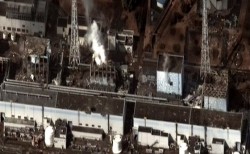
| Global Financial Markets Plunge As The World Watches Japan Descend Into A Nuclear Nightmare Posted: 16 Mar 2011 05:03 PM PDT
Global Financial Markets Plunge As The World Watches Japan Descend Into A Nuclear NightmareCourtesy of Michael Snyder of Economic Collapse
Right now there is a mass exodus out of the city of Tokyo. But not everyone can leave the city. There are over 30 million people living in and around Tokyo. So where in the world could you possibly put 30 million refugees? Sadly, the truth is that millions of Japanese are going to stay in Tokyo no matter how high the radiation gets. Let us hope that Japanese authorities can get the situation at the Fukushima Dai-ichi nuclear facility under control, but the fact that they have resorted to dropping water from helicopters and shooting water cannons at these nuclear reactors is not comforting. World financial markets are certainly not expressing a lot of confidence right now. This week alone, $300 billion in U.S. stock values have been wiped out. The Dow Jones industrial average lost about 2 percent of its total value on Wednesday. The Nikkei 225 stock index has lost about 10 percent of its total value since the beginning of this crisis. At one point it was down more than 16 percent, but a gigantic monetary injection from the Bank of Japan has helped to stabilize things at least for now. There are also some that believe that the Japanese government is now directly buying up stocks to keep them from falling even further. Stock markets across Europe have been plunging as well. An article posted on the USA Today website described some of the carnage on Wednesday....
The financial ripples from this crisis are going to be felt for a long, long time. In order to rebuild Japan, the Japanese government is somehow going to have to borrow massive amounts of money. But the Japanese national debt was already projected to reach 228 percent of GDP this year. The Japanese government has become an incredibly bad credit risk, but lowering their credit rating right now would seem to be in very bad taste. So far, all three major credit rating agencies are taking a "wait and see" approach when it comes to Japan. Unfortunately, the crisis in Japan is far from over. The situation at the Fukushima Dai-ichi nuclear facility just seems to grow more dire with each passing day. Right now, the primary concern is the 40 years of spent fuel rods that are stored throughout the complex. Ed Lyman, a physicist at the Union of Concerned Scientists, recently explained why the pools that store the spent fuel rods are the biggest problem at this point....
The phrase "spent fuel rods" may make it sound like they should no longer be a threat, but the truth is that these fuel rods remain extremely hot and extremely radioactive for years after they are done being used. For some reason, someone thought that it would be a good idea to store these spent fuel rods in huge pools of water near the top of each of the nuclear reactor buildings at the Fukushima Dai-ichi complex. These spent fuel rod pools are not housed in the same kind of containment vessels that the nuclear reactors are. Therefore there is a much greater danger that radiation from these spent fuel rods could be released into the surrounding environment. A recent article by Paul Joseph Watson did a great job of explaining just how big of a problem these spent fuel rods represent....
Each of these 600,000 spent fuel rods is a potential "dirty bomb". Are you starting to grasp just how serious this all is? It is absolutely critical that all of these spent fuel rods remain submerged in water. If the water drops in the spent fuel pools there will be nothing to keep the spent fuel rods cool and they will start to degrade very, very quickly. Unfortunately, things don't look good right now. U.S. authorities today expressed their belief that the spent fuel rods in unit 4 are now exposed and that a great deal of radiation is being released. In fact, Gregory Jaczko, the chairman of the Nuclear Regulatory Commission, stated during Congressional testimony today that he believes that an extremely high level of radiation is being released by exposed spent fuel rods at the Fukushima Dai-ichi nuclear facility at this point....
It would be hard to understate the courage of those that are working inside the Fukushima Dai-ichi nuclear facility right now. They all likely realize that they are all going to die very quickly. They are laying down their lives in an effort to save their countrymen. According to a recent report from CBS News these workers say that they are not afraid to die....
Would all of us respond the same way? Even the media that are reporting on this disaster in Japan are starting to be affected by this radiation. Lester Holt revealed this morning that his entire crew had tested positive for radiation after returning from an assignment. Meanwhile, Barack Obama is acting as if all of this stuff going on in Japan is no big deal. In fact, as Keith Koffler recently observed, Obama seems to be really enjoying himself in the midst of this crisis....
If you are curious about Obama's picks for the NCAA tourney, they are posted on the official White House website. This weekend, the Obamas are headed down to Brazil. According to an article in Forbes, the Obama plan to do a good bit of sightseeing while they are there....
Isn't it great to see Obama acting like a true leader in the midst of one of the greatest moments of crisis that the world has seen since World War 2? What in the world is Obama possibly thinking? One thing about a major crisis is that it reveals the true character of those affected by it. Many are responding to this crisis in Japan with great acts of courage and heroism. Others are not rising to the occasion. Let us just hope and pray that the Japanese figure out a way to get the situation at the Fukushima Dai-ichi nuclear complex under control. If a "worst case scenario" happens we could soon be facing an unprecedented nuclear nightmare.
| |||||||||||||||
| UN: Radiation to Hit U.S. By Friday Posted: 16 Mar 2011 04:16 PM PDT
The New York Times notes:
The Times provides a series of images to illustrate the projected path of radiation, ending with this one: Similarly, Yoichi Shimatsu - former editor of the Japan Times Weekly, who led the field research for an architectural report on structural design flaws that led to the tsunami death toll in Thailand - wrote a couple of days ago:
The timeline of the UN's forecast is suprising, given that the earthquake hit on March 11th, and Accuweather formerly estimated the following times for radiation - in a worst-case scenario - to reach the West Coast:
But it is vital to note that many experts are saying that only extremely low levels of radiation will hit Americans. As the New York Times reports:
It is also important to remember that this is likely not just a one-day freak-out kind of event. As the Times previously noted:
And keep in mind that iodide only protects against one particular radioactive element: radioactive iodine, technically known as iodine-131. Iodine-131 has a half life of only 8.02 days. That means that half of the iodine loses its radioactivity within 8 days. In contrast, plutonium has a half life of up to 80 million years, and is one of the most hazardous substances in the world. Fukushima reactor number 3 burned a plutonium-uranium mix, and has lost containment. However, as NPR points out:
Therefore, Americans will likely not be exposed to any plutonium. I will update this post with information about additional radioactive elements likely to travel to the United States.
| |||||||||||||||
| Gold Seeker Closing Report: Gold and Silver End Modestly Higher In Volatile Trade Posted: 16 Mar 2011 04:00 PM PDT Gold climbed $13.10 to as high as $1406.20 by late morning in New York before it fell back off in the last couple of hours of trade, but it still ended with a gain of 0.21%. Silver climbed to as high as $35.04 before it also fell back off a bit in late trade, but it still ended with a gain of 0.76%.
| |||||||||||||||
| Yen Hits Record-high Against US Dollar Posted: 16 Mar 2011 02:03 PM PDT The Japanese yen has risen against the US dollar hitting the highest level since the end of the Second World War. The yen climbed as high as 76.25 against the US dollar in US trading on Wednesday. In Asia on Thursday, it was close to 79.42. Japanese shares slid as investors worried about the impact of a [...]
| |||||||||||||||
| Posted: 16 Mar 2011 01:19 PM PDT
Bo Peng wrote a comment in Seeking Alpha, The Great Japanese Unwind and How It Will Play Out Globally:
Say that again Mr. Peng? A nuclear meltdown in the world's third largest economy will not trigger another global downturn? Can central bankers cushion the blow by printing potassium iodide laden paper currency? Let's get real here, if Japan implodes, the fallout will make 2008 look like a walk in the park! Having said this, there is a tremendous amount of hysteria going on right now and a lot of it is fueled by Japanese authorities who are not being transparent with the world on what is really going on at these nuclear plants. Along with mass hysteria comes crazy market volatility. And market participants are nervously watching the yen carry trade. Fox Money reports, Yen Hits Record High Versus US Dollar:
It's also worth noting that despite what Bill Gross of PIMCO said about dumping US government securities (Cough! Watch what Bill does not what he says!), US Treasuries have rallied sharply since the Japan crisis erupted last week as investors seek a flight to safety. And while my fellow bloggers over at Zero Hedge have called Wednesday "The Day The Yen Carry Trade Died," I think such calls are premature and feed more hysteria. The yen carry trade isn't dead. Far from it. Commodity currencies like the New Zealand kiwi are getting roiled but this isn't exactly a surprise as risk trades are off as traders assess the news coming out of Japan. But when I hear people warning that Japan will sell all their US bond and equity holdings, I just roll my eyes and ignore the nonsense. The question I've been getting the last few days is "should I buy the dips?". My answer to the people who ask me this question is "can you stomach gut wrenching volatility?" I can because I invest almost exclusively in Chinese solar stocks and have seen my personal portfolio go down 60% and come back up 80% over the last year. I just kept buying the dips and averaging down. If you can handle crazy volatility, keep buying the dips, the reflation trade is alive and kicking and we have not reached the absurd bubble phase yet (we will). If you can't handle crazy volatility, stick to cash and sleep well at night. Below, the latest on the Japanese crisis.
| |||||||||||||||
| Chinese Hungry for Purchases of All Kinds Posted: 16 Mar 2011 01:06 PM PDT Without having feet on the ground, it is nearly impossible to understand precisely what is happening in China. The middle class is exploding, but jobs for skilled workers are few. New cities are going up overnight, but the pictures show that no one is actually living there. In many cities, hundreds of buildings are erected, left to be ghost towns for many months or even a few years before the buildings are again destroyed and new buildings are erected in its place. Unlike much of the developed and developing world, China still has a government roadblock that impedes its progress. In light of the rapidly changing relationship between the people and their leaders in the Middle East, some worry that the Chinese government may have to increase internal consumption in order to maintain employment. However, there may be something that many are missing, especially silver buyers. It is commonly reported that China exists as the fastest growing market for silver, havin...
| |||||||||||||||
| Today's Nikkei Plunge Protection Invoice: ¥5 Trillion (For Now) Posted: 16 Mar 2011 12:30 PM PDT
It appears the earlier speculation by PTI that the BOJ would inject ¥13.8 Trillion in the market to preserve asset prices was a little premature. The BOJ just released the official number and it is a measly ¥5 trillion. And by measly we mean US$63 billion. Add this to the ¥28 trillion already deployed by the BOJ and get an even more modest ¥33 billion, or roughly $420 billion, which is the cost to preserve the Nikkei from plunging for a 4th consecutive day. Yet even with this latest injection, the Nikkei is down almost 4% as of this writing. Should headline newsflow from Fukushima deteriorate, we anticipate that the full PTI number will be not only reach by surpassed very promptly as no amount of taxpayer capital will be deemed too great to preserve the wealth of those invested in Japanese stocks. From Reuters:
| |||||||||||||||
| Posted: 16 Mar 2011 12:15 PM PDT The following is automatically syndicated from Grandich's blog. You can view the original post here. Stay up to date on his model portfolio! March 16, 2011 03:59 PM It’s been quite some time since my technical work triggered some concerns on the metals but gold and silver may see some near-term pressure. This doesn’t change my long-term outlook nor any reason to lower my exposure but rather simply suggest another pause that refreshes is underway in the mother of all bull markets. Even though gold made a marginal new high it weaken Relative Strength wise each time it tried to poke through the $1440 area. MACD also turned down and triggered a short-term sell signal. Silver’s RSI and MACD also has weaken and given a MACD sell but it’s the spread between its 200-DAY M.A. and its current price that gives me the most concern. Given the conditions of the markets, we could continue to see a sell what you can attitude that can impact the metals for the near...
| |||||||||||||||
| Posted: 16 Mar 2011 12:13 PM PDT Stacy Summary: A youtube version will be posted tomorrow if you want to wait for that; in the meantime, here is the arrival of some Silver Keisers on blip. Share this:
| |||||||||||||||
| Flight to Safety Keeps Silver Prices Strong Posted: 16 Mar 2011 11:20 AM PDT Ian Wyatt submits: Despite the correction in many stocks, precious metals continue to hold their own. The catastrophe in Japan has helped to accelerate stock selling, yet silver and gold are holding up well since precious metals are part of the flight to safety trade. Events like the earthquake in Japan can create opportunities for investors that are ready to jump on the right investment, and I'd suggest having silver stocks at the top of your list. Many are down 10% or more since the catastrophe. The spot price of silver in London rose nearly 80% in 2010, giving many mining companies the motivation to bring as much of the precious metal to market as possible in 2011. This year, silver is up more than 15%. Click to enlarge One Canadian miner just released exciting news about one of its projects that could go into production soon. If it does, and silver prices Complete Story »
| |||||||||||||||
| Gold Price Dropped Through It's 20 and 50 DMA, How Far Can It Fall? Posted: 16 Mar 2011 10:54 AM PDT Gold Price Close Today : 1396.00 Change : 3.40 or 0.2% Silver Price Close Today : 34.471 Change : 35.5 cents or 1.0% Gold Silver Ratio Today : 40.50 Change : -0.322 or -0.8% Silver Gold Ratio Today : 0.02469 Change : 0.000195 or 0.8% Platinum Price Close Today : 1696.00 Change : -10.50 or -0.6% Palladium Price Close Today : 696.90 Change : -6.40 or -0.9% S&P 500 : 1,256.86 Change : -25.01 or -2.0% Dow In GOLD$ : $171.99 Change : $ (3.98) or -2.3% Dow in GOLD oz : 8.320 Change : -0.192 or -2.3% Dow in SILVER oz : 336.93 Change : -7.03 or -2.0% Dow Industrial : 11,614.44 Change : -240.98 or -2.0% US Dollar Index : 76.65 Change : 0.324 or 0.4% Today was the day the metals markets practiced dribbling with dead cats the GOLD PRICE rose $3.40 to $1,396 on the Comex, and the SILVER PRICE re-captured 35.5c to end at 3447.1c. Focus on the GOLD/SILVER RATIO. High today at 41.76 pierced the 20 DMA (1st warning of a trend change), but closed at 40.79, not above the 20 DMA. All the momentum indicators say that the ratio has turned sharply up. For silver and for gold that can only mean a sharp reaction, "sharp" meaning it falls fast and quick. What jumps out of the gold chart? It dropped plumb thru its 20 DMA and to its 50 DMA in a single bound, single day. Today's $3.40 rise is a mere pause, nothing more. An aftershock will come. Lateral support at $1,380 lies near the 50 DMA at $1,378.92. The SILVER PRICE jostled with its 3416c 20 DMA today, and closed above it at 3447.1c. No lateral support intercedes until 3120c, maybe 3174c. Be patient, patient, patient. Loads of knowing goofs will begin spouting gleefully that the "bubble" in silver and gold has burst, they were right from the beginning not to buy, and other like drooling drivel. Ignore it all. Why should you listen to anyone who cannot tell a bubble from a bull market? Only reason I can think of is that you want to lose money like they will. The SILVER and GOLD PRICE remain in a primary uptrend. Corrections are normal. Task of wisdom, judgment, and discernment now is to abide patiently until a bottom cometh. I sure hope those folks are right about the Japanese Yen rising because of yen being repatriated to rebuild, because the Yen rose 2.2% today to close at 125.9 to the US dollar. Chart is ridiculous. If I were one of the honorable Japanese Nice Government Men, I would send housekeeping down to clean out the Bank of Japan's basement and throw onto that fire every yen I could get, then make up some more. A country with an export-driven economy can't afford a currency gaining 2% a day. Meanwhile the Euro dropped 2/3 of one percent today, giving the scrofulous US dollar room to rise 32.4 basis points to 76.652. Dollar is still in the "Maybe It Will Rally" game for one more round, but must not close below 76.37. Fiat currencies! Snort! They're every one sorry as gully dirt. STOCKS in the US are beginning to resemble their Japanese cousins, but lack the excuse of an earthquake. As I warned, this leg down will be blitz-fast for stocks. Dow today misplaced some 240.98 points or 2.903% to perch at last at 11,614.44. In other words, it fell from yesterday's 11,855 through 11,800 and 11,700 and nearly thru 11,600. In fact, the low touched 11,555.48. Hemorrhages, bandages, iodine, tourniquets: that's the stock investor's lot. (S&P fell 1.95%, 25.01 points to 1,256.86). This might carry as low at 10,900. Stocks remain the Edsel in the Great Investment Automobile Museum. Argentum et aurum comparenda sunt -- -- Gold and silver must be bought. - Franklin Sanders, The Moneychanger The-MoneyChanger.com Phone: (888) 218-9226 or (931) 766-6066 © 2011, The Moneychanger. May not be republished in any form, including electronically, without our express permission. To avoid confusion, please remember that the comments above have a very short time horizon. Always invest with the primary trend. Gold's primary trend is up, targeting at least $3,130.00; silver's primary is up targeting 16:1 gold/silver ratio or $195.66; stocks' primary trend is down, targeting Dow under 2,900 and worth only one ounce of gold; US$ or US$-denominated assets, primary trend down; real estate in a bubble, primary trend way down. Whenever I write "Stay out of stocks" readers inevitably ask, "Do you mean precious metals mining stocks, too?" No, I don't. 
| |||||||||||||||
| Posted: 16 Mar 2011 10:12 AM PDT Author: Vedran Vuk Synopsis: You bought gold and silver, but how do you keep it from being stolen? By popular demand, Jeff Clark again weighs in on this important question. Also in this edition: Why are politicians so inept at foreseeing probable events? Dear Reader, With the future of nuclear energy center stage, I'm once again reminded of the political arena's complete inability to understand risk and low-probability events. Since the Japanese crisis, politicians have been reconsidering nuclear energy as if the possibility of a meltdown were new information. Is there even one reader who can honestly say that they were clueless about the possible dangers of nuclear power? Perhaps most didn't imagine a gigantic earthquake as the catalyst for a disaster, but the average person understands that reruns of Chernobyl and Three-Mile Island are real possibilities....
| |||||||||||||||
| Posted: 16 Mar 2011 10:12 AM PDT The 5 min. Forecast March 16, 2011 12:08 PM by Addison Wiggin - March 16, 2011 [LIST] [*]Stocks hammered, again... Japan, nukes and reminiscences of the 'flash crash'... [*]The "nuclear renaissance" declared dead... and a viable candidate named to replace it... [*]Vancouver favorite Marc Faber on the one sure thing that will follow falling stock prices... how it will affect every decision you make this year... [*]Shiite hits the fan in Bahrain... the proxy war between Saudi Arabia and Iran heats up... [*]Gold and silver assume their natural role in the used car market... paranoia creeping in over Anonymous, the CIA and Martin Armstrong... the S&P reaches a critical low... and more... [/LIST] A second reactor at the Fukushima Daiichi nuclear plant in Japan may have ruptured. Plans to douse the reactors with water via helicopter had to be abandoned. Radiation levels are apparently too high. "The nuclear renaissance is dead," concludes Chris Mayer, after several days ...
| |||||||||||||||
| ECB Peripheral Divergence & EURUSD Posted: 16 Mar 2011 10:06 AM PDT The primary reason for the currency's stabilization earlier this year and the subsequent 10% rally from early Jan was the ECB's hawkish rhetoric in the face of rising inflation. 2.4% annual inflation was a sufficiently good reason for the ECB to make a hawkish twist, especially as it underwent the awkward task of having to buy Irish and Portuguese bonds, while preaching monetary discipline and price stability. Bernanke's constant reiterations to maintain QE2 into June did not help the US dollar and neither did the low-volume surge in global equities to fresh 2 ½ year highs. The argument that higher ECB rates would exacerbate rising bond yields in peripheral nations is partly rebutted by the persistent improvement in core-nation macro and business data, including the record-breaking IFO and PMI figures in Eurozone (as a whole) and Germany respectively. And this raises the next question; Will the ECB do one or two rate hikes and stand pat thereafter? The ECB has never started a ne...
| |||||||||||||||
| Surviving a Societal Breakdown Posted: 16 Mar 2011 10:00 AM PDT "…little electricity or gasoline…" reports an eyewitness from The Washington Post, visiting Sendai, Japan. "Nearly all restaurants and shops are closed…roads blocked…supplies depleted…the devastation is catastrophic." "Fuel almost non-existent…survivors will spend a fourth night in near freezing temperatures without food or water…" We were elaborating on the benefits of having a family stronghold…a retreat…a bolthole somewhere. When the going gets tough, you need a tough place to go to. Oh yes…dear reader…the world is a dangerous place. Just so far this year, we've seen two big blow-ups – one in the Arab countries…the other in Japan. Neither was expected. What's next? Obviously, we don't know. If it's a big, nasty surprise, we hope we're not here in Bethesda, Maryland, when it comes. Why? Because the supermarkets would be cleaned out in minutes…the gas stations would run dry…and we'd be trapped in a hostile environment. We're only here temporarily, while our youngest son finishes high school nearby. We have no family. Few friends. And none of the deep roots you need to survive a prolonged period of crisis and breakdown. Here, we are just anonymous passers-by… We would have to depend on the kindness of strangers and the competence of government officials. What do you need to survive a disaster? First, you need access to water. As we've seen in Japan, even the most developed and sophisticated infrastructure in the world can collapse when it is struck by an earthquake and a tsunami. Public water pipes break. It can take weeks or months to replace them – assuming the government and local utilities are still functioning. That's why it's a good idea to have your own private source of water – a spring, a well, a small, clean stream. Failing that, you should have enough water stocked up to last at least a couple weeks. Then, you need to worry about food. How long could you live on what is in your refrigerator? We could make it for about 24 hours. Then, it would be slim pickings. And what if the supermarket were closed? What if the 7-11 were stripped bare? What if trucks couldn't make deliveries? Well, surely the president would call out the National Guard. Yes, if everything is working as it should…and the National Guard doesn't have more important things to worry about. Just as a precaution, you should maintain a stock of canned goods and dried food. Enough to last two weeks is the minimum. A month is better. Then, rotate your stock – don't leave it untouched for so long it goes bad. Having an inventory of basic foodstuffs and water is essential. It will keep you calm. You won't be in desperate straits. It will give you time to carefully assess the situation and choose your best option. Option? Well, yes. What if the breakdown stays broken down for months? War…hyperinflation…a full collapse of the financial or political system – the crisis could take many months to run its course. In the meantime, supply and distribution systems may be severely or completely interrupted. You need a strategy. And that's where the family stronghold comes into play. First, you must be able to get there. When we were confronted with the Y2K crisis more than a decade ago, we lived in Paris. Maybe the French bureaucrats would be able to maintain order…and maybe they wouldn't. We just kept our tank full of gas, just in case. It only took one tank of gas to get out to our country house. We figured we'd wait for the desperate mobs to leave the streets. Then we'd drive out of the city and make our way to the country. Once there, we had food stockpiled in the pantry and firewood ricked up to the eves in the barn. There were cattle on-the-hoof in the fields and chickens in the henhouse. Your stronghold should be a place where you can live almost indefinitely – on local resources. It doesn't mean you have to have everything you need on your own property. But you have what it takes to trade with your friends and neighbors to get what you need. You may have to barter for a cow…or vegetables…with the local farmers, for example. You may have to improvise with tools and machinery. You will almost certainly get your hands dirty. And you should keep on hand some small gold and silver coins. They could be useful. Of course, your standard of living will surely go down – at least in money terms. But some people actually yearn for simpler, more "authentic" lives. Some find genuine satisfaction in small community life, with heavy emphasis on self-sufficiency and survival skills. As for us, we're never happier than when we're cutting firewood or planting a garden. Keep your laptops and your hard drives. Give us a wrench and a hammer! Dining "al fresco" on "dinde aux groseilles" at a fancy restaurant is fine…but we're just as happy eating a turkey sandwich outside in the yard. A breakdown in complex civilization? Bring it on! Well, maybe not… Regards, Bill Bonner Surviving a Societal Breakdown originally appeared in the Daily Reckoning. The Daily Reckoning now provides over half a million subscribers with literary economic perspective, global market analysis, and contrarian investment ideas.
| |||||||||||||||
| Posted: 16 Mar 2011 09:50 AM PDT John Embry – Silver Headed to $100, Gold Shares Manipulated Share this:
| |||||||||||||||
| Debunking the Gold Bubble Myth Posted: 16 Mar 2011 09:46 AM PDT Sprott Asset Management
| |||||||||||||||
| Yen surges to post war high against dollar Posted: 16 Mar 2011 09:32 AM PDT From Michael Krieger: Yen is absolutely SOARING versus the dollar. This is one of the scariest currency moves I have ever seen. It is up 5% right now versus dollar. I can't even imagine what this means for the open IF Japan's markets open at all. Share this:
| |||||||||||||||
| Gold Daily and Silver Weekly Charts Posted: 16 Mar 2011 09:22 AM PDT | |||||||||||||||
| Why the Current Strength of US Bonds Will Be Short-Lived Posted: 16 Mar 2011 09:17 AM PDT Stocks down…gold down…bond yields flattened…world markets roiled… And yet, all this pales in comparison to the very real world horror going on right now in a small group of islands in the Pacific Ocean. Tens of thousands of people in one of the world's most developed economies are without access to clean drinking water tonight and without power in sub zero temperatures. Families huddle together, not knowing if or when the next disaster might be visited upon them. Millions more around the world watch on with sorrow, horror, perhaps even guilt, at what they see unfolding across Japan. Some will point to the failings of man…others to the mystery of a god…and others still will simply sit and scratch their heads… "What's the reason?"…"What does it mean?"…"Why there and why now?" Before we begin to assess the financial implications of Japan's 9.0 monster earthquake, we first offer our heartfelt condolences to those who suffered this most recent expression of nature's blind wrath. Callous as it must surely seem, sometimes the only thing to do in these situations is to keep on keeping on. Carpenters keep building…engineers keep designing…scientists keep searching for cures…doctors keep administering them… And reckoners? Well, those of us with little better to offer than our thoughts and words…well, we keep on reckoning…crude and searching as our words must at this time appear… So we return to our post; to stocks, gold and bonds. Where to from here? To be frank, it's probably too early to comprehend the extent of the damage wrought by the quake in Japan with any measure of certainty. We'll have to see what comes of this in the weeks and months ahead. However, it's probably not too early to begin trying to understand what Japan's crisis might mean for long-term US bond yields. Dan Denning, the Daily Reckoning's "Man Down Under," pondered this very question in his Aussie DR musing this morning. "The Japanese are one of the largest holders of US Treasuries and continue to buy them," observed Dan, before adding, "That capital might be put to a lot better use in the coming years rebuilding from the quake and tsunami damage." Dan raises a very important point. We're seeing a flight to "safety" right now, no question. US Treasuries rallied yesterday, more or less in sync with the horrific images coming from the Fukushima and Sendai newsreels. The yield on the benchmark 10-year note briefly touched 3.2%, its lowest level this year, reflecting the "safe haven" appeal of bonds. (Bond prices and yields move in opposite directions.) But what happens when the dust settles a little and Uncle Sam wakes up to find one of the go-to buyers for his ever-accumulating debt has put in a no-show? What happens, in other words, when the second largest holder of US debt discovers he has his own, 9.0 earthquake-sized problem to deal with? According to data released by the Treasury on Tuesday, Japan held $886 billion worth of Treasuries at the end of January, the second largest foreign holder behind China. That's a big gap to fill…even by fractions. "Of course in the short term, the 'risk off' trade is bullish for US bonds and the US dollar," continues Dan. "People are cashing in their chips and storing up their cash. But longer term, the US may find it a lot harder to fund deficits without the help of at least one major foreign buyer. This will put more pressure on the Fed to monetize debt right away." What then will the Fed do? Well, exactly what the Fed always does, of course; precisely that which it shouldn't. The Fed will, as Dan points out, continue its attempt to "monetize" (read: print) away its debt. It goes without saying that this strategy is a complete non-starter, as far as any measure of logic is concerned. Academic types like to argue that a weaker currency and/or more liquidity are great ways to jump-start flailing economies. They argue that a flaccid currency gives exporters an edge abroad and that a blast of paper money stimulates spending back home. In reality, all this does is perpetuate a weakening confidence in that particular currency as a store of value and, thereby, discourage those with whom the offending government might wish to trade from wanting to accumulating them. Who, after all, wants a vault full of Zimbabwean dollars, Hungarian pengős or US Continentals? And lo! Always on the ball, Addison writes in this morning's edition of The 5, "Easy money is already having its affect in the US. Wholesale prices, which trotted upward in December and January, reached a full gallop in February." The upward-trot-to-record-gallop to which Mr. Wiggin is referring is, at least according to a story we saw coming across the wires this morning, the steepest rise in food prices in 36 years. Continues Addison, "The producer price index (PPI) rose 1.6%. Even after the usual statistical sleight of hand applied by the Bureau of Labor Statistics, the number is more than double what the Street expected. Annualized, it's 19.2%. "That's for finished goods. If you move further back in the production chain, prices for crude goods rose 3.4% last month. And February was no fluke. PPI for crude goods has risen 20.7% over the last six months. Of course, the Fed's own measure of inflation – that nebulous, periodically redefined, terminally elastic non-statistic – remains, according to the Fed itself, "subdued." Hooray! Alas, this news comes to us from an institution that actually admits – with a straight and serious face, no less – that it actively targets a 2% erosion in the value of your money per year. The Feds guarantee, in other words, that they will steal, or do their best to steal, via inflation, 2% of anything you earn or own every year for the rest of your life…or for its. That is its stated "sweet spot." It's enough to make one think of the term "greed" in a whole new light… Why the Current Strength of US Bonds Will Be Short-Lived originally appeared in the Daily Reckoning. The Daily Reckoning now provides over half a million subscribers with literary economic perspective, global market analysis, and contrarian investment ideas.
| |||||||||||||||
| USDJPY Flash Crashes As All Support Taken Out - Record Collapse Posted: 16 Mar 2011 09:04 AM PDT
Support broken as the dollar yen plunges to an all time record low. Everyone now watching the Nikkei to see if it opens. That the BOJ has not intervened yet is beyond ominous, and nothing short of a death sentence for the Yen carry traders.
| |||||||||||||||
| Posted: 16 Mar 2011 08:54 AM PDT "When plunder becomes a way of life for a group of men living together in society, they create for themselves in the course of time a legal system that authorizes it and a moral code that glorifies it." Jim Sinclair's Commentary My comment on the Swiss is you read it here 2 years ago. The deal is done. Worldwide QE to infinity is coming now. As long as the Japanese keep their US treasury sales to modest or none, the Fed will join in providing QE to Japan. This is not what I think, but rather what I hear. Financial Armageddon comes after the euro takes out $1.4050 twice and gold closes three times above $1444. We are close.
Jim Sinclair's Commentary QE to infinity in Japan and the EU.
Jim Sinclair's Commentary Gold will trade at $1650 and higher.
· U.S. February producer prices rose 1.6% – their most in about two years – on volatile increases in food and energy prices · Housing starts in U.S. fell 22.5% in February to the lowest since April 2009, while building permits dropped 8.2% to an all-time low. Jim Sinclair's Commentary Heroes and QE to infinity. Compare people risking their lives to Wall Street taking them. 'We're not afraid to die': Extraordinary courage of the Fukushima Fifty as they return to stricken power plant to fight nuclear disaster Japanese emergency teams say they are 'not afraid to die' as they face dangerous levels of radiation in the fight to stop catastrophe at the tsunami-hit Fukushima nuclear plant. The stricken power station was abandoned for hours today, as soaring radiation forced the emergency workers to flee for their lives and authorities were reduced to spraying reactors with police water cannons. But 180 workers this afternoon bravely headed back towards the plant to pump water on to the over-heating reactors. Some experts speculated that they were on a 'suicide mission' as options to control radiation leaks rapidly run out. Scroll down for video
'Out of control': This dramatic pictures shows radioactive steam pouring from the Fukushima reactor number three after it was damaged in an explosion
| |||||||||||||||
| Posted: 16 Mar 2011 08:50 AM PDT Alert: Nuclear (And Economic) Meltdown In Progress Share this:
| |||||||||||||||
| Mining shares manipulated too, Embry tells King World News Posted: 16 Mar 2011 08:45 AM PDT 4:45p ET Wednesday, March 16, 2011 Dear Friend of GATA and Gold: Eric King of King World News today interviewed Sprott Asset Management's John Embry and got him to remark that gold and silver market manipulation seems to extend to gold and silver mining company shares. But Embry noted that the disaster in Japan has not goosed the U.S. dollar and he expects the precious metals to break upward. Excerpts of the interview are headlined "Silver Headed to $100, Gold Shares Manipulated" and you can find them at the King World News blog here: http://kingworldnews.com/kingworldnews/KWN_DailyWeb/Entries/2011/3/16_Jo... Or try this abbreviated link: CHRIS POWELL, Secretary/Treasurer ADVERTISEMENT Prophecy Resource Spins Off Platinum/Palladium Venture: Company Press Release, January 18, 2011 VANCOUVER, British Columbia -- Prophecy Resource Corp. (TSX-V:PCY)and Pacific Coast Nickel Corp. announce that they have agreed that PCNC will acquire Prophecy's Nickel PGM projects by issuing common shares to Prophecy. PCNC will acquire the Wellgreen PGM Ni-Cu and Lynn Lake nickel projects in the Yukon Territory and Manitoba respectively by issuing up to 550 million common shares of PCNC to Prophecy. PCNC has 55.7 million shares outstanding. Following the transaction: -- Prophecy will own approximately 90 percent of PCNC. -- PCNC will consolidate its share capital on a 10 old for one new basis. -- Prophecy will change its name to Prophecy Coal Corp. and PCNC will be renamed Prophecy Platinum Corp. -- Prophecy intends to distribute half of its PCNC shares to shareholders pro-rata in accordance with their holdings. Based on the closing price of the common shares of PCNC on January 17, $0.195 per share, the gross value of the transaction is $107,250,000. For the complete announcement, please visit: http://prophecyresource.com/news_2011_jan18.php Support GATA by purchasing a colorful GATA T-shirt: Or a colorful poster of GATA's full-page ad in The Wall Street Journal on January 31, 2009: http://gata.org/node/wallstreetjournal Or a video disc of GATA's 2005 Gold Rush 21 conference in the Yukon: Help keep GATA going GATA is a civil rights and educational organization based in the United States and tax-exempt under the U.S. Internal Revenue Code. Its e-mail dispatches are free, and you can subscribe at: To contribute to GATA, please visit: http://www.gata.org/node/16 ADVERTISEMENT The Gold Standard Now: It Can Work On March 17 former Reagan Gold Commission member Lewis E. Lehrman, journalist James Grant, and Prof. James Salerno will testify before U.S. Rep. Ron Paul's Subcommittee on Domestic Monetary Policy. This is the most significant monetary policy hearing in at least a generation, probably in 40 years, possibly in our lifetimes. Today a dollar is worth 80 percent less than it was 40 years ago, and less than 5 percent of its value a hundred years ago. We deserve a dollar that is as good as gold, a dollar that will hold its value from year to year so we can be financially secure and our economy can generate more and better jobs. For most of America's history, our dollar was literally as good as gold. But on August 15, 1971, our politicians destroyed the link between gold and the dollar. They destroyed the foundations of our economic system. A new Internet site, TheGoldStandardNow.org, provides news and cutting-edge analysis about this most important issue and explains how the gold standard worked in the past and how it can work in the future. Visit us today: http://www.thegoldstandardnow.org/about/137-welcome-newsmax
| |||||||||||||||
| Bank of Japan Intervention Soon? Posted: 16 Mar 2011 08:44 AM PDT Dear CIGAs, Bank of Japan Intervention Soon? That is the big question weighing on the minds of currency traders. The initial knee jerk move higher in the Yen, due mainly to repatriation of funds by Japanese companies and citizens to the mainland, can explain the rally in the Yen during the early part of this crisis. However what now appears to be happening is a potential unwind of the Yen carry trade which has been blowing up due to the massive move away from risk. The price action in the Yen compared to the price action of the US equity markets is evidence that many hedge funds were borrowing Yen and then using the cheap money to leverage up on US stocks. While the carry trade using this particular currency is nowhere near the size it was back in 2008, it is still very large. Back in 2008 when the credit crisis erupted in the US and spread around the globe, the Yen staged an enormous rally. Hedge funds, which had acquired massive leveraged positions using the Yen as the funding currency, commenced a headlong rush to the exits en masse. In effect they had acquired a massive short Yen position which the Japanese monetary authorities were more than happy to condone. When the Yen began moving higher, suddenly the trade began souring as gains in the leveraged positions were being dragged underwater by losses on the currency front due to gains in the funding currency. As commodities and stocks were sold off, the trade because to collapse. Their panic to deleverage forced the Yen sharply higher even as the stock markets and commodity markets were obliterated to the downside. Once again we can see what appears to be an exact repeat of late 2008. Given the fact that the Japanese economy has been devastated by recent events, the last thing that the Japanese monetary authorities want to see is a soaring yen, which will effectively cut off their export markets at the knees by hurting their price competitiveness on the global markets. What we might see begin to happen is the BOJ coming in and beating the fire out of the speculators by selling enormous amounts of Yen on the foreign exchange markets this evening or very soon. One wonders what they might do with all the US Dollars that such action would accumulate in their coffers. In the past they would sterilize the intervention effort by purchasing US Treasuries. If that were to happen this time around, the Fed could sit back and watch the BOJ do its QE work for it. Again, this situation is very fluid and can turn on a dime but it is highly unlikely that the BOJ and the Japanese Ministry of Finance are not keenly watching what the hedge funds are doing to its currency. The difference between what happened to commodities and other assets in 2008 was that the Fed was not engaging in any form of QE at the inception of the crisis. It could well be that we now have QE3 set in stone. Click chart to enlarge in PDF format with commentary from Trader Dan Norcini For further market analysis and commentary, please see Trader Dan's website at www.traderdan.net
| |||||||||||||||
| Guest Post: Alert: Nuclear (And Economic) Meltdown In Progress Posted: 16 Mar 2011 08:30 AM PDT
Submitted by Chris Martenson Important note:It is with a heavy heart that I am now issuing the highest level alert to my readers than I have to date. The threshold for an alert is one or more world events that personally cause me to take action. I'm making this alert publicly available less than 36 hours after releasing it to my enrolled subscribers given its importance and the speed at which events are accelerating. The substance of this alert centers on the unknown aftershocks that may result from the world's third largest economy, Japan, rapidly shifting from an exporter of funding to a consumer of it. In situations like these, we are by definition operating with incomplete and often confusing information, and events are developing more rapidly than they can be fully analyzed and internalized. We regret in advance any mistakes that we might make due to making calls and decisions in this highly fluid environment. This alert warns you that major world-changing events are now underway and that your personal preparations for an uncertain future should either be completed or take on a new sense of urgency. On the basis of the information contained here and in the past two days of posts, I am personally ratcheting up my preparations, making purchases, and topping off what needs to be topped off. Important caveat: At this point in time, I cannot fully support 100% of my concerns with hard data and evidence. Some of what has tipped me into this state of urgency is data, evidence, and stories that I can point to. Some is due to the absence of data or information, the remainder results from watching market gyrations and correlations shift into new patterns, which tell me something is afoot. I have not been this concerned since October of 2008. Some BackgroundWithin hours of learning of the event at Reactor 1 in Japan, I had looked at the evidence available, drawn a few conclusions, and then checked to see what the experts were saying. Never quite sure of what sort of personal and/or professional limitations are in play, I rarely start with anyone's assessment but my own. It's part of trusting myself and it has worked remarkably well for me and my subscribers over the years. Here's what I wrote in the blog on the morning of Saturday, March 12, 2011 on Japan's nuclear incident:
My expertise involves making sense of the world in relatively short order. It also helps me smell B.S. remarkably quickly, especially from official sources. The nuclear situation in Japan struck me from the outset as being rather more serious than described, and this has proven true. I take no pride in this particular 'victory,' and instead feel the burden of having to be the bearer of bad news. The nature of this alert is to let you know that I consider the chance of a renewed round of economic and fiscal crises to result from the chaos that is currently engulfing Japan and the MENA region to be extremely high. A Global MeltdownFor decades, the world has been running its own nuclear-style reaction, only in the currency and debt markets, where exponentially-accelerating piles of debt and money have spun about faster and faster in a gigantic, complex, coordinated reaction, the core of which is, and always has been, the United States. At the very center of this ungainly money reactor is the main fuel pile itself, the US Treasury market. With any interruption to smooth flow of money through this pile, it will immediately become unstable. The threat I see goes like this: Stage 1: The world watches, riveted, as Japan suffers a tragic and horrible earthquake and tsunami, but as horrifying as these are, they are localized phenomenon affecting a relatively small percentage of the country. The real trouble lurks within damaged nuclear plants, which are now ruined and will never again produce electricity for Japan, creating instant shortages that will take years to remedy. Worse, a dangerous plume of radioactivity is carried south by winds. Tokyo partially empties and shuts down for all practical purposes. Stage 2: The abrupt slow down of the world's third largest economy alters the smooth flow of cash around the globe, and even causes reversals of some other long-standing flows. Chaotic eddies emerge in a decades-old pattern of ever-increasing flows of money into and out of the money centers, and various carry-trade and other interest-rate-sensitive strategies blow up. Manufacturing in Japan screeches to a halt, disrupting just-in-time manufacturing strategies both internally and across the globe. Stage 3: In order to fund the rebuilding effort, Japan has to buy a lot of items from foreign suppliers at the same time that its exports plunge precipitously. At first Japan simply does not participate in US Treasury auctions, leading to a shortage of buyers. But eventually Japan has to sell some of its vast hoard of US bonds in order to pay for external items needed for its reconstruction. Further, insurance companies, huge holders of US bonds, face stiff liability claims in the wake of the worst natural disaster to hit a heavily industrialized center and are forced to redeem enormous amounts of Treasury paper. US Treasury yields begin to climb. Stage 4: Continuing unrest in the MENA region serves to keep oil elevated and local funding needs high, while Europe's weaker players (the PIIGS) continue to slip under the waves. Money continues to ebb away from the US Treasury market. Forced by circumstance, the Federal Reserve reverses its linguistic course and opens the monetary floodgates once again. There's nothing like a crisis to justify more money printing, especially to a one-trick pony (the Fed) that only knows how to stamp its hoof on the 'print' button. Stage 5: An increasingly chaotic monetary and fiscal situation spills over into the derivatives arena, creating a number of financial accidents. Stressed governments find themselves in more of an arguing mood than a pull-together-and-sing-Kumbaya mood, and agreements are hard to come by. Banks begin to fail again, global trade falls off, unrest continues to build, and then it happens - a currency crisis. Stage 6: Everything changes. Faster than you think. I wish I could completely quantify and justify the reason for this assessment, but I cannot at this time. Yes, we've got some very serious market turbulence to point to:
From ZeroHedge:
The nuclear meltdown has led to a market meltdown. Market breaks can quickly lead to supply shortages and other unpleasant realities. Shifting BaselinesThe problem with these fast-moving situations is that everything shifts from beneath your feet and events fundamentally change so quickly that you do not have time to adjust properly before the next insult arrives. For example, I pride myself on ingesting massive amounts of information and processing it logically and relatively completely. But right now I am overwhelmed by too many situations. I should know who the opposition leaders are in Bahrain, how many troops have crossed from Saudi Arabia, what sorts of equipment they brought (as an indication of whether they plan to stay for a little while or a long while), and so forth. But I only know that troops have crossed the border; I consider this to be a bad sign for global oil price stability, but know very little else. And I am not entirely clear on the inner machinations of the European debt crisis any more. I am completely consumed by following the developing nuclear crisis in Japan and trying to determine how that could, will, should impact our readers in Japan, and the world economic landscape. The problem is captured perfectly in this post by Debu:
One name for this process of only very slowly coming to grips with an enormous change when it happens at a slow enough pace is "shifting baselines." It means that if you had put these same people to sleep a week ago and woke them up today, the shock of the reality of today's situation would immediately jar them into action. But somehow, as things change seemingly gradually from hour to hour and day to day, the change itself can prove oddly paralyzing, and this is because our baselines shift. What would have been abnormal yesterday is normal today. Last week the residents of Tokyo were sympathizing with the plight of their neighbors to the north, and then they were hearing about some controllable problems with some nuclear plants, and then they were hearing about maybe some more serious difficulties, and today they find themselves scrambling to empty store shelves and get out of Dodge, so to speak.
Time to PrepareOkay, folks, this is not a drill. Events have now sped up to the point that we cannot predict what will happen next. At this point a systemic banking crisis, complete political upheaval in one or more countries, a currency crisis, or a debt crisis are all within the realm of the possible. This is the most difficult Alert I've ever had to write, because I know I have not yet processed all the necessary information to truly assess the risks. I am operating on gut instinct here, and several of you have already reminded me to trust myself. Thank you. That's what I am doing now. The risks I am most concerned about striking outside of Japan are:
The main story line here is that Japan is a critical and embedded player in both the financial and productive economies, and it has suddenly, almost instantly, been taken off-line. We don't know what might happen next, but we should be prepared for anything. My AdviceRecently I had advised readers to be ready for a big downturn linked to the idea of a QE cessation. I am going to retract that somewhat (almost entirely), because this Japan crisis will provide all the political cover necessary for more printing. Nonetheless, a market rout is on, but for entirely different reasons than I first projected. At any rate, the time to move to cash from stocks is slipping quickly past, if not already gone, but if you haven't made that move yet, you should consider waiting for the next "Bernanke bounce" in which a few hundred billion are tossed into the kitty to stabilize the markets. This alert is going to be a living document in the sense that I will be constantly updating it as time goes on and events unfold. The first stage of my advice centers on the basics. You need to have all of your basic preparations completed at this time. Food, water, medical kits, shelter, cash out of the bank, and all the rest should absolutely be in place at this time. Get the basics done. Now.
I am still holding onto all of my gold and silver holdings as I cannot imagine any possible policy responses that will bolster anyone's faith in fiat currencies. That said, I am expecting short-term declines, possibly significant, in the US paper price for these metals on the basis of a liquidity crisis skimming the speculative component of their price off the top. I really don't know how much this will be, but it's certainly not insignificant. When you stock up on things at the store(s), think also about friends family, neighbors, and all the other assorted people you care about who have almost certainly done little or nothing to prepare. What would they like? Don't overlook comfort and luxury items that command a mental premium in a time of crisis. Chocolate comes to mind. TimingAs always, I have no idea if anything is going to transpire or not, or when. How's that for indecisive? But I can tell you that the pressures are larger than they’ve ever been throughout this long emergency and that conditions are ripe for an avalanche. My sincerest hope is that this will all blow over. But hope alone is a terrible strategy, and so we prepare. My best guess is that the situation in Japan will unfold over the next two weeks, with a full blown funding and fiscal crisis (of confidence) blossoming there over that time. Already we are seeing credit spreads on Japan's sovereign debt begin to skyrocket, meaning that an increasing chance of a sovereign default is being priced into the debt markets. This is the same dynamic we saw with Greece, then Ireland, Iceland, too, and so on. Only this time it is happening to the world's third largest economy. Two weeks after that, I expect that the first real product shortages and associated work stoppages will begin to hit the US and European economies. I expect the difficulties to surface first in Europe followed by the US. Somewhere in this zone we will get the next solid commitment to print, print, print, probably as a joint exercise of both continents. Taken together, I think we've got at least a month until things have shifted enough that preparations will become either difficult or irresponsible. Use this next month very wisely. Remember, it's better to be a year early than a day late. So get out there and prepare responsibly. Above all, it is our duty to remain calm, focused, and helpful to those around us. We are all experiencing anxiety and fear to greater and lesser degrees. It is my hope that we can use the privacy of the comment thread below to work through whatever issues arise for each other, whatever those may be, and to help each other make the best decisions we can in an increasingly chaotic and uncertain environment. Welcome to the nexus of multiple exponential curves. We always knew things would speed up along the way, and so they have. Let's do the best we can. Events are unfolding in a manner entirely consistent with the framework I laid out in my recent Guide to Navigating the Coming Crisis. As the report predicts: things are speeding up, events are progressing from the outside in, and soon enough everything will be substantially different than you remember and
|


| You are subscribed to email updates from Save Your ASSets First To stop receiving these emails, you may unsubscribe now. | Email delivery powered by Google |
| Google Inc., 20 West Kinzie, Chicago IL USA 60610 | |


No comments:
Post a Comment