


Gold World News Flash |

- 6. SCANDAL! Gold and Silver Manipulation Exposed by GATA
- The US Dollar Is Doomed
- Setting Up a Grid to Buy The Silver Dips
- The Goldsmiths—Part CLXIV
- An Economic Standoff to Save the Neighborhood
- Stocks Primed to Plunge, Says Our Man Chuck
- [EXCELLENT READ] Gold Will Soar as the U.S. Dollar Bubble Bursts: Via, Tyler Durden
- 10/21/10 Midnight Report: The market weebles and it wobbles but the Fed won't let it fall down
- Copper Being Remilitarised
- Run Over by the Grain Train
- Gold Seeker Closing Report: Gold and Silver Fall Roughly 2%
- The (Warren) Buffett Correction in Gold
- Gold - FOREX Correlations Point Toward NZD/USD for Precious Metals Exposure
- Both Gold and Oil are Invested in Chinese GDP, Risk Appetite
- Quote of the Day - October 21, 2010
- Quote of the Day - October 19, 2010
- Quote of the Day - October 20, 2010
- Quote of the Day - October 16, 2010
- Quote of the Day - October 15, 2010
- Quote of the Day - October 11, 2010
- Quote of the Day - October 14, 2010
- Quote of the Day - October 02, 2010
- Quote of the Day - October 13, 2010
- Quote of the Day - October 12, 2010
- Gold Price Calls for Shallow Correction then Rise to $1,600 Early Next Year
- Another Cartel Raid...Fundamentals still very sound for gold and silver
- In The News Today
- Jim's Mailbox
- THURSDAY Market Excerpts
- Richard Russell - Gold Action Knocks Out Weak Hands
- Inflation Expectations and Gold Prices
- Where can we find 20,000 tonnes of gold?
- Orwell Targets Bernanke: An Unteachable Hole in the Air (Part One of Two)
- Gold Daily and Miners and Silver Weekly Charts
- SELLOFF: The gold correction is here
- Japan, Germany Make Their Move
- Freeport-McMoRan: Q3 Profits Jump, Annual Dividend Increased
- The No. 1 emerging market you're ignoring right now
- Don't be fooled... Inflation is coming
- Art of the Collapse
- Time to Buy Uranium Miners In Wyoming?
| 6. SCANDAL! Gold and Silver Manipulation Exposed by GATA Posted: 21 Oct 2010 06:28 PM PDT
|
| Posted: 21 Oct 2010 06:06 PM PDT Austerity be damned, at this rate Mr. Bernanke will go down in the history books as one of the greatest money creators ever to have walked this planet! Never mind sky-high deficits and a crushing debt overhang, at its most recent FOMC meeting, the Federal Reserve all but guaranteed another round of quantitative easing.
|
| Setting Up a Grid to Buy The Silver Dips Posted: 21 Oct 2010 06:04 PM PDT Currency traders have long used a grid system as a way to systematically buy into a currency at differing points and average in their positions. With silver emerging as a currency of choice among ordinary investors and even institutional hedge funds, it's high time silver investors do the same.
|
| Posted: 21 Oct 2010 06:03 PM PDT There is a belief among some persons that the Rothschild Cabal somehow hates gold and doesn't want it at all. I disagree on this premise. The Cabal loves gold but wants it in quantity only if and when the Cabal can own it all or almost all.
|
| An Economic Standoff to Save the Neighborhood Posted: 21 Oct 2010 06:02 PM PDT You can see that it is difficult to get the message out about buying gold, silver and oil as a defense against the government and Federal Reserve destroying us with overspending and over-creation of money, respectively. But you will be happy to know that buying gold, silver and oil stocks is so easy that you will say, "Whee! This investing stuff is easy!"
|
| Stocks Primed to Plunge, Says Our Man Chuck Posted: 21 Oct 2010 06:01 PM PDT Our friend Chuck Cohen, a New York-based financial consultant and a raging bull on bullion, recently turned cautious on precious metals – but extremely cautious on stocks, which he says are setting up for a crash that could be worse than last May's. The report below was prepared by him more than a week ago, but Chuck notes that sentiment extremes in gold and silver have corrected nicely since.
|
| [EXCELLENT READ] Gold Will Soar as the U.S. Dollar Bubble Bursts: Via, Tyler Durden Posted: 21 Oct 2010 05:27 PM PDT For when you truly comprehend this notion you stop thinking about gold in terms of its price and you can then make a rational decision about where it is going. Gold is not up 23% this year to $1,345/oz, rather the U.S. dollar has depreciated by 23% versus the world's neutral money supply, gold. As we all know by now, there is no limit to the amount of money Banana Ben Bernanke can or will print. Thus, gold's theoretical upside is infinite in a purely paper money world. Once you understand this, you recognize that gold is not the bubble but rather the biggest bubble on planet earth today is the U.S. dollar itself.
|
| 10/21/10 Midnight Report: The market weebles and it wobbles but the Fed won't let it fall down Posted: 21 Oct 2010 04:22 PM PDT
A funny thing happened on the way to the frontrun today as after a huge opening driven by slightly positive relative macro data and NFLX's jizztacular earnings, the market dove on no real discernible news other than maybe investors waking up to just about EVERY FUCKING PIECE OF ECONOMIC DATA released in the last few years (though highly unlikely). As for the real cause, well Money McBags would like to say it was common sense or gravity (that is if gravity existed) but he's less sure why the rapid sell-off occurred than he is why people hire economists or who killed the bees (though it looks like it was a fungus tag-teaming with a virus that did it).
News sources all say the jump in the dollar caused by traders getting their panties in a bunch about currency wars was the reason, but that is stale news and would have hit at the open if anyone really gave a shit. The most interesting reason Money McBags could find was laid out nicely by zerohedge as they postulated that the dip was triggered by the Fed's reverse repo (which is kind of like a reverse rodeo, only a bit less romantic) which sucked liquidity out of the market like Taylor Rain on a payday. Whatever the answer, something is rotten with the state of Ben's market and with real structural problems, one needs to remain more careful than Justin Beiber at a NAMBLA convention.
As for macro news, it was Money McBags favorite day which of course was "New Claims for Unemployment Thursday" where the (No) Labor Department gets to perfect the government's "hold the shock and hope for no awe" strategy. This week, new claims were down by a headline number of a whopping 23k to 452k which sounds fan-fuckingtastic if:
1. The 23k wasn't off of an UPWARDLY REVISED 475k from 462k. But hey, what is 13k among friends?
2. 452k wasn't still an absolute fuckawful number of new claims. The again, with 64k private sector jobs being added a month and only ~160k government jobs being lost a month, at the pace of ~450k new jobs lost weekly, we should be out of this recession sometime between now and when Rosie O'Donnell flies.
3. JWOWW had not turned down playboy. And yes this has nothing to do with the number, but we can all agree it was also not fan-fuckingtastic.
So the 452k beat analyst guesses of 455k and would have beat guesses by more if analysts had put the upwardly revised 475k in to their broken regression models as last week's data point rather than the 462k. So while the headline number seems like a positive, remember it will be revised upwards to ~460k next week after (No) Labor Department's analysts get through massaging the data and finishing it off with the least happy ending since Old Yeller.
In other macro news, US leading economic indicators increased for the third straight month (and the month was so straight it refused to even look at other months of the same gender). The New York-based Conference Board’s index of leading economic indicators climbed 0.3% which shockingly matched analysts guesses for the first time since analysts were asked to guess a whole number between 1 and 3 (but to be fair, they were allowed to use their fingers). Also, manufacturing expanded in the Philadelphia region in October as the index rose to 1 from -.7 but was still below analyst guesses of 2. That said, it was the first time since July that factory payrolls grew and the fact that the index wasn't negative is the second most positive thing about Philadalphia after "not having to live there."
Internationally, China's GDP growth slowed to 9.6% though that growth rate still makes it more bubblicious than Gonzo Grape with only slightly fewer cavities. The most interesting part is that China's CPI jumped up 3.6% to a 2 year high as a result an 8% jump in food prices. However, many witch doctors (Money McBags means economists) think food prices are really up ~30% as the market weighted basket of goods used to calculate inflation in China's CPI model has not been updated since 1993 and thus real inflation is being distorted by the calculation using old weights and outdated goods such as McDLT's, and Zima.
In the market, as mentioned before NFLX soared after a slight topline beat ($553MM vs. $551MM guesses), a bottom line miss ($.70 vs $.71 guesses) and a 52% fucking gain in new subscribers y/y which is amazing considering they still refuse to stream porn. These results drove their valuation from ridiculously overpriced to ridonkuously overpriced (and the difference between those two is like the difference between Nikki Hilton hot and Hanna Hilton hot, so it is quite stark).
That said, an astute reader of the award winning When Genius Prevailed pointed out that without the 300% growth in unpaid subscribers thanks to extending their free two week sign-up promotion to a free month, they would have missed the consensus guess at new subs. But that is just a detail as they only have ~17MM subscribers and there are still 1.5B people in China and once inflation ceases there and those people can afford food again and thus have $ to waste on TVs and then NFLX subscriptions, the valuation will finally make sense. But if you're going to invest in the market and want to hang with the cool kids, just buy AAPL and NFLX and watch your portfolio grow faster than the Crystal Church's debt (but don't forget to have a quick trigger finger because if/when it breaks, these stocks will lead the way down).
In other earnings news, MCD served up a 10% growth in profits which beat analyst guesses thanks to smoothies and people being poor and thus not being able to eat at restaurants that serve actual food. The company had 6% global same store sales growth and said they see this momentum carrying over to Q4. As loyal readers know, Money McBags believes this is a company you should own (if you want to gamble) as global aspirational brands that sell cheap products should continue to do well when mature markets develop dementia since brand equity matters in emerging markets. Finally, EBAY went to the highest bidder today as it shot up ~7% thanks to a strong Q from Paypal as users continue to send money online to free that pesky Nigerian prince.
As always, Money McBags has small stock analysis and even some Christina Hendricks at the award winning When Genius Prevailed.
|
| Posted: 21 Oct 2010 04:02 PM PDT Good news everyone! NASA researchers say there is at least a billion gallons of water on the moon. And that's just in one crater! They published the findings in the journal Science. Raise a glass to la bella luna! This means that if the accelerated depletion of natural resources by the limitless printing of fake money continues - and there's a pretty good chance it will - we'll have to find a new home with new resources to put to good use after this planet has been looted and depleted into a scorched and lifeless husk, like the moon. The other good news is that the moon is pretty close, physically speaking. You just look right up in the sky and it's there! It looks so close you could almost touch it. It was especially beautiful and silvery when we woke up at 3am last night wondering what the price of gold would do today. But speaking of gold brings us back to sliver. Scientists say there is some silver on the moon as well, but not enough to mine. That's okay, though. There's no need to hop on Virgin Galactic flight to the moon for your silver. You can buy it for US$23.19/oz. That's 31% more than you would have paid if you bought a year ago. But it's 5.84% less than sliver was selling for just a few weeks ago.  You can see that sliver is selling off a bit as the U.S. dollar rebounds. We've written about this all week so we won't blather on. The dollar was probably oversold on a technical basis. Silver, gold, and other commodities are consolidating. This is good news if you haven't bought any yet. They're getting cheaper, for now. Gold, in fact, is on track to make its largest weekly decline since July. Gold bullion is already at a three-week low and is set to make its first weekly decline in 12 weeks. But once again, we greet these sorts of corrections with relief. It's a sign that there are higher highs ahead. How do we know? Just check the charts. The chart below shows that the current US dollar price of silver, adjusted for inflation, is lower today than it was during the height of the American Civil War. The 1980 inflation-adjusted all-time high of $134.69 was somewhat anomalous since it was also the product of the Hunt brothers buying up a lot of silver futures. Incidentally, it's often repeated that the Hunt brothers tried to illegally corner the market and manipulate the price of silver higher. They are often portrayed as rich, evil, capitalist pig villains. This telling of the tale is different. It suggests the Hunt brothers wanted a large position in silver to prepare for an inflationary melt-up precious metals. It also suggests that the only reason the Hunt brothers were busted was not because they had really done anything illegal, but because the government directly intervened against them. First, the Feds prevented the number of long positions that could be taken in the futures markets. Now, instead of the market reflecting two highly-motivated, leveraged, and cashed-up buyers, the shorts stepped in and began to overwhelm the longs and silver prices fell. Then the Federal Reserve actively discouraged what it called lending for "speculative activity." The Hunts had good credit on Wall Street with a large family fortune. But New York bankers knew the Feds were after the Hunts and the loans and leverage dried up, forcing the Hunts into a corner. You can see that the government does like competition for its money. The Hunts correctly saw silver as a store of value and a viable competitor to the Federal Reserve Notes passing themselves off as American money. Faced with a direct threat to its counterfeiting monopoly by real money, the government simply changed the rules in mid-stream to destroy someone who challenged its privileged position. Of course you might think we would be all in favour of a Federal Reserve that discourages speculative lending...or lending for speculation. And you'd be right! But in the Hunt's case, the government was clearly looking after its own interests (retaining the credibility of Federal Reserve notes as money) and not on the legal functioning of a real market. If anything, it looks like the government intervened to distort a market that was functioning perfectly well. These days, of course, the monetary authorities don't have any problem encouraging speculative lending. That lending funds the asset bubbles which made banks rich - the same banks that own the Fed. If you're a drug dealer, you want people using the product. Anyone who tries to get clean, honest, and sound is bad for business. This has been going on for a long while, as the chart below shows. The active suppression of alternatives to Federal Reserve Notes started in the American Civil War and has since gone global, with all governments everywhere keen to replace good money (gold and silver) with debt-based money. This is an era of State-backed monetary fraud that your editor thinks may be ending in your investment lifetime, as the State itself reaches a fiscal crisis. More on that after the chart. It's probably no coincidence that silver is approaching about the same price it fetched when the American experiment in a strong Federal government with its own monopoly on money was just getting off the ground. A strong central, federal government does not appear to be possible without a centralised monetary system that does not tolerate competition. Murray Rothbard explains in A History of Money and Banking in the United States:
Perhaps an even more important consquence of the Civl Warwas the permanent change wrought in the American banking system. The federal government in effect outlawed the issue of state bank notes, and created a new, quasi-centralised , fractional reserve national banking system which paved the way for the return of outright central banking in the Federal Reserve System. The Civil War, in short, ended the sepeartion of the federal government from banking, and brought the two institutions together in an increasingly closeoe and permanent symbiosis. It's important to note that the American monetary system Rothbard describes - espeically the post-1971 experiment in fiat money - is the one the world now uses. Gold is held, inreasingly we might add, by central banks as a reserve. But for the most part, the world has been on the dollar standard since 1971. And the dollar is backed by exactly nothing other than the full faith and credit of the United States government. It would be tempting to go into a much longer analysis of the permanent symbiotic relationship between government and banking. If you did, it might suggest that the reckless risk-taking of one entit - enabled by a private authority subcontracted to manage the price of money - is capable of causing permanent and irreversible damage to the credit quality of the other authority. The U.S. banks may be too big to fail. But their liabilities are so large that assuming them or backing them is going to take down the U.S. government and its money.And when its money is the world's chief reserve asset, the world is in trouble when US banks are in trouble. The world is in trouble (although the moon is still beautiful). We won't go into any more depth on the symbiotic relationship between centralised power and centralised money.But we will say, for a variety of reasons, that even though the symbiosis is permanent, the lifespan of the abominable organisation this unification has produced is not. Political arrangments to govern and regulate the economy don't last forever when they are based on unsound money. We're not exactly breaking any new ground with this analysis. But for investors, a newer issue is whether metals other than gold and silver are equal stores of value in a world moving away from finanical assets and toward "hard assets." This is the case Dr. Alex Cowie made yesterday in the newly published monthly issue of Diggers and Drillers. In deference to his paying subcribers, we're not going to say too much about the details of the cae he's made or the stock he's recommended. But Alex has essentially made the case that because of an extremely favourable supply/demand scenario, and because copper is enjoying a bid as "hard and tangible asset", copper prices are both headed higher AND more resilient to the big falls on slower economic growth we say in 2008. This isn't a small claim. There was an enormous amount of leverage in commodity prices in 2008. When the credit crunch hit and the leveraged dried up, commodities prices crashed and so did comommodities stocks. Is today any different? Alex argues that it is. And at a fundamental level, he concludes that the growth of the emerging (emerged) markets is the bigger drive of base metals prices over the next twenty years than anything that happens in the American mortgage market. He may have a point. But even if you're bearish on global economic growthh - say because you believe China's commodity demand is itself the product of a huge stonking property/credit bubble - there is a case to made for base metals aslo being "financialised" into the world's investment markets now the same way gold and sliver were a few years ago through exchange traded funds. The other, slightly less cheerful argument, is that the breakdown of the post-1971 world money system leads to currency wars. And if currency wars - which amount to contests over the real price of labour and commodities and who is to benefit from them most - lead to real wars, real wars are probably bullish for copper. But don't take our word for it. Check out the chart below. Copper may not be money. And in the past thirty years, its price per pound is most highy correlated with economic growth. That's because it' used in all sorts of construction activity, especially electricty, houses, and cars (everyone needs them all). But copper mades its 100-year high at $6.30/pound during the Great War. That is the last time the world of integrated trade, travel, commerce and capital flows broke down utterly. Scarce resources became politically scarcer. If the sybmiotic partnership between central banking and big government is in rapid sysemtic decline, gold and silver will go to the moon (gold, presumably for the first time). Base metals like copper might not be far behind. And if things reach that point, you might want to own some lead and brass too. By the way, if you're interested in this line of inquiry into precious metals prices - espeically gold - take the time to check out the program for the Gold Symposium in Sydney November 8-10th. There is still time to sign up. And Daily Reckoning readers get a special discount to days two and and three of the show, where all the big heavy idea lifting will take place. Dan Denning
|
| Posted: 21 Oct 2010 04:01 PM PDT
The US Department of Agriculture released a shocking report earlier this month that triggered rare limit up moves in all three major grains simultaneously, corn, (CORN), wheat, and soybeans, and sent the prices of shares of anything with an agriculture flavor through the roof. Futures contracts for corn were up 30 cents to $5.28/bushel, wheat by 60 cents to $7.19, and soybeans 70 cents to $11.35. My long term picks, Mosaic (MOS) soared by 13%, while Agrium (AGU) popped 8%. After the corn futures locked up with an enormous imbalance of buyers, traders rushed into the ETF (CORN) taking it up a gob smacking 16% in hours. The free-for-all was triggered by government forecasts that the corn crop would come in 4% smaller than expected, while the soybean crop was shy by 2%, and that stockpiles had shrunk to only a few weeks, a 20 year low. The shortfall was caused by the baking heat we saw last summer. While supplies are adequate to meet US demand, foreign importers facing possible famines panicked. Local traders went into the report short, convinced that the meteoric price rises seen this year were overdone. I put out a piece a few weeks ago advising readers to rotate out of corn into hard winter wheat as a risk control measure (click here for “Wheat Melt Up Warning” at http://www.madhedgefundtrader.com/september-20-2010.html ). Corn had been up almost every day for two weeks, while wheat had spent several months consolidating a serious move up in June/July on the back of out of control Russian fires (click here for the tip from my old KGB friend in “The Grains are On Fire” at http://www.madhedgefundtrader.com/july-19-2010-2.html ). I don’t call limit up moves very often, but it does happen occasionally. When you have the long term secular trend right, the accidents tend to happen in your favor. This is exactly the sort of move I have been anticipating since I put out my watershed call to buy the sector in June (click here for “going Back into the Ags” at http://www.madhedgefundtrader.com/june-24-2010.html ). When push comes to shove in the global economy, the commodities you have to have are the grains. If you don’t believe me, trying eating gold, silver, iron ore, coal, or copper. It all fits in with my view that we are entering a major secular bull market in food, as the world is making people faster than the food to feed them, at the rate of 175,000 a day! The Scottish reverend Thomas Malthus must be smiling from his grave. To see the data, charts, and graphs that support this research piece, as well as more iconoclastic and out-of-consensus analysis, please visit me at www.madhedgefundtrader.com . There, you will find the conventional wisdom mercilessly flailed and tortured daily, and my last two years of research reports available for free. You can also listen to me on Hedge Fund Radio by clicking on “This Week on Hedge Fund Radio” in the upper right corner of my home page.
|
| Gold Seeker Closing Report: Gold and Silver Fall Roughly 2% Posted: 21 Oct 2010 04:00 PM PDT Gold climbed $4 to $1348.00 in London before it fell to $1336.40 in early New York trade and then rebounded back to $1346.56 at around 10AM EST, but it then dropped off rather markedly for most of the rest of trade and ended near its late session low of $1320.00 with a loss of 1.43%. Silver climbed to $24.001 in London before it also fell back off in New York and ended near its late session low of $23.087 with a loss of 2.48%.
|
| The (Warren) Buffett Correction in Gold Posted: 21 Oct 2010 02:42 PM PDT This is going to be a long secular bull market in gold and these types of articles and corrections are the best friend a bull can have. In the end we should all thank Warren for "The Buffett Correction." Buffett may have sold his soul somewhere along the way, but he sure does look good riding that bull doesn't he?
|
| Gold - FOREX Correlations Point Toward NZD/USD for Precious Metals Exposure Posted: 21 Oct 2010 02:30 PM PDT courtesy of DailyFX.com October 21, 2010 06:36 PM Gold has been receiving an increasing amount of attention recently as the metal soars to new record levels. But you don’t have to trade gold to benefit from the metal’s recent volatility. In fact, many of the popular currency pairs have been moving in tandem with gold, offering forex traders an opportunity to piggyback on the uptrend or bet against it, with the added benefit of trading within the world’s deepest and most liquid market. Gold has been receiving an increasing amount of attention recently as the metal soars to new record levels. But you don’t have to trade gold to benefit from the metal’s recent volatility. In fact, many of the popular currency pairs have been moving in tandem with gold, offering forex traders an opportunity to piggyback on the uptrend or bet against it, with the added benefit of trading within the world’s deepest and most liquid market. The following table includes...
|
| Both Gold and Oil are Invested in Chinese GDP, Risk Appetite Posted: 21 Oct 2010 02:30 PM PDT courtesy of DailyFX.com October 21, 2010 04:16 PM Hopes weren’t necessarily high for the outcome of Thursday morning’s GDP release; but expectations of volatility certainly were. The world’s second largest economy is a proxy for global activity as well as risk appetite, and its release set the tone for the market. North American Commodity Update Commodities - Energy Slowed Growth in China Translates into Tempered Oil Demand and Lower Crude Prices Crude Oil (LS Nymex) - $80.56 // -$1.21 // -1.48% While US crude may have traded within a remarkably consistent trend channel the past three weeks, this congestion belies a relatively high level of volatility. Today’s activity was no different as oil reported yet another heavy turnover day and covered a range of over $2.40 for the fourth consecutive day. This tempo can be traced back to the heavy fundamentals in the market - both through risk appetite trends as well as supply-and-demand factors. For ...
|
| Quote of the Day - October 21, 2010 Posted: 21 Oct 2010 01:24 PM PDT U.S. dollar falls 125 basis points... gold rises one whole dollar. Goldman Sachs gets ready to hand out $13 billion in bonuses. Rare earth prices soar. Iran's gold reserves hit record highs... and much more.
|
| Quote of the Day - October 19, 2010 Posted: 21 Oct 2010 01:24 PM PDT South Korea's Central Bank looks at buying gold. Should Germany worry about leaving its gold in the U.S.? U.S. will not engage in dollar devaluation: Geithner. Pierre Lassonde says that strong forces are propelling gold. An interview with Eric Sprott... and much, much more.
|
| Quote of the Day - October 20, 2010 Posted: 21 Oct 2010 01:24 PM PDT Silver eagle sales hit 2 million in October. China withholds 'rare earth' metals from the U.S.A. and Europe. Silver position limits delayed until mid-January? Jim Rickards says the mortgage debacle is far worse than most people imagine... and much more.
|
| Quote of the Day - October 16, 2010 Posted: 21 Oct 2010 01:24 PM PDT SLV adds another 2 million ounces of silver. The Commitment of Traders shows no short covering. Ted Butler has a few things to say. OPEC wants $100 oil. Felix Zulauf talks about the end game for the current financial system. Jim Rickards talks about gold... and much, much more.
|
| Quote of the Day - October 15, 2010 Posted: 21 Oct 2010 01:24 PM PDT SLV hits another record high. 'Where's the Note?'... once more, with feeling. JPMorgan and CitiGroup sends the Dow south... and the PPT rides to the rescue at 3:00 p.m. "We're at risk of financial collapse." Pity the fool who doesn't invest in gold... and much more.
|
| Quote of the Day - October 11, 2010 Posted: 21 Oct 2010 01:24 PM PDT Currency wars are necessary if all else fails: Ambrose Evans-Pritchard. India's rich throng to gold. Perth mint inundated as gold price soars. Bank of Russia speeds up gold purchases... and much, much more.
|
| Quote of the Day - October 14, 2010 Posted: 21 Oct 2010 01:24 PM PDT Where's the note? - Redux. City Pension Deficits are now over $500 billion. Global currency wars are on! The world's reserve currency does a face plant. Uncle Sam's Mysterious [Gold] Hoard... and much more.
|
| Quote of the Day - October 02, 2010 Posted: 21 Oct 2010 01:24 PM PDT Have central banks lost control of the gold market? Iceland's politicians forced to flee from the people they represent.GATA clashes with the Federal Reserve in Federal court. Gold's Rise to Become Disorderly. Tocqueville's John Hathaway speaks... and much more.
|
| Quote of the Day - October 13, 2010 Posted: 21 Oct 2010 01:24 PM PDT Last Gasp of the Fiat Money Regime. What's happening with silver? Where's the note? Bank of America: Too big to fail? The Violence of the Storm, the Destruction of the Middle Class and the Coming Gold Standard: Doug Casey... and much more.
|
| Quote of the Day - October 12, 2010 Posted: 21 Oct 2010 01:24 PM PDT Mortgage Turmoil. Monty Python's Flying Circus. Jon Stewart has a field day with it. JPMorgan's commodities chief on the hot seat. A new world food crisis in the making? A race between gold and a new paper currency... and much more.
|
| Gold Price Calls for Shallow Correction then Rise to $1,600 Early Next Year Posted: 21 Oct 2010 12:30 PM PDT Gold Price Close Today : 1324.70 Change : (18.60) or -1.4% Silver Price Close Today : 23.123 Change : (0.725) cents or -3.0% Gold Silver Ratio Today : 57.29 Change : 0.962 or... This is a summary only. Visit GOLDPRICE.ORG for the full article, gold price charts in ounces grams and kilos in 23 national currencies, and more!
|
| Another Cartel Raid...Fundamentals still very sound for gold and silver Posted: 21 Oct 2010 12:03 PM PDT
|
| Posted: 21 Oct 2010 11:18 AM PDT Jim Sinclair's Commentary My new friend is a Coon Hound. This is the little girl that got air time.
Jim Sinclair's Commentary The G20 says no before they even meet. U.S. plan hits opposition at G20, FX accord remote The swift rebuff of a U.S. call for numerical targets for "sustainable" trade surpluses and deficits underscored difficulties facing Group of 20 finance ministers gathering in South Korea to try to defuse tensions over currencies and economic imbalances. The G20 source, who has direct knowledge of deliberations at the meeting, said the proposals had not found favor with India, China and other emerging economies, or even the likes of Germany, which has a large current account surplus. In an interview with the Wall Street Journal, U.S. Treasury Secretary Timothy Geithner called for an agreement on exchange rate policy "norms." "Right now, there is no established sense of what's fair," he told the paper. "We would like countries to move toward a set of norms on
Jim Sinclair's Commentary QE to infinity has one more guarantee here. Why California is About to Fall Off Into an Ocean of Unpayable Debt Perry Wong, Director of Regional Economics at the Milken Institute is co-author of a new report, Addressing California's Pension Shortfalls: The Role of Demographics in Designing Solutions. His conclusion: We're talking about a perfect storm: more state services needed for an aging population, a workforce that will spend more years in retirement than they did contributing to the funds, and a smaller ratio of working-age taxpayers and contributing state workers to pay for it all. Some of the key findings in the report include: • By around 2012 or 2013, the three major state pensions' obligations will be more than five times as large as total state tax revenue. • Not only will California's growing senior population depend on Medi-Cal and other state services, but public school enrollment is likely to rise in the coming years. The state can ill afford to fund pensions by cutting back on these services. • In 2009, the pension liability came out to $3,000 per working-age adult in the state. By 2014, it will triple to over $10,000 per working-age Californian. • Raising employee contributions alone will be less effective over time as the ratio of actively contributing members to benefit recipients continues to decrease. • Currently, the average state employee contributes to the system for 25 years, but will receive benefits for 26 years — and the number of benefit-receiving years is increasing as longevity improve
Jim Sinclair's Commentary Here is a piece of evidence that shouts the mortgage debt mess is deep and permanent. Fidelity National to Require Banks to Sign Foreclosure Warranty Fidelity National Financial Inc., the largest U.S. title insurer by market share, will require lenders to sign a warranty assuring their paperwork is sound before backing sales of foreclosed homes. An indemnity covering "incompetent or erroneous affidavit testimony or documentation" must be signed for all foreclosure sales closing on or after Nov. 1, the Jacksonville, Florida- based company said in a memorandum to employees today. The agreement was prepared in consultation with the American Land Title Association and mortgage finance companies Fannie Mae and Freddie Mac, Fidelity National said. "It's just the prudent thing to do," Peter Sadowski, executive vice president and chief legal officer for Fidelity National, said in an interview. "It is important for the servicers and the lenders to represent to us and to the people we are going to be insuring that there are no problems." Bank of America Corp., the biggest U.S. lender, agreed to a similar contract with Fidelity National on Oct. 8, the same day it extended a freeze on foreclosures to all states amid concern by federal and state officials that lenders are seizing homes without properly reviewing documents. The bank plans to start resubmitting foreclosure affidavits next week. Attorneys general across the country have opened a joint investigation into foreclosures, saying they will seek an immediate halt to any improper practices at mortgage lenders and loan servicers. Fidelity National, in separate announcements today, named a new chief executive officer and said that its earnings rose 13 percent in the third quarter.
Jim Sinclair's Commentary This is a two trillion dollar bag of worms falling deeper and deeper into trouble; the results of which are going to rock the financial institutions one more time. Regulator for Fannie Set to Get Litigious The federal regulator overseeing Fannie Mae and Freddie Mac hired a law firm specializing in litigation as the agency considers how to move forward with efforts to recoup billions of dollars on soured mortgage-backed securities purchased from banks and Wall Street firms. The Federal Housing Finance Agency, which in July issued 64 subpoenas to issuers of mortgage securities, bank servicing companies and other entities, is working with Quinn Emanuel Urquhart & Sullivan LLP, a Los Angeles-based firm that specializes in business litigation, to coordinate its investigations. In a statement, the FHFA said it is analyzing requested information and that "no decisions for future action have been made." Quinn Emanuel confirmed its hiring by FHFA but declined to comment further. Since the financial crisis, 400-lawyer Quinn Emanuel has avoided building a banking clientele, making it a top suitor for plaintiffs pursuing banks. The firm has represented MBIA Insurance Corp. in several lawsuits against top U.S. mortgage banks alleging that the insurer was fraudulently induced to cover losses on mortgage-backed securities. Those cases are ongoing. The FHFA hasn't disclosed the targets of its subpoenas, though some banks have acknowledged receiving them, including J.P. Morgan Chase & Co. The probe is focused on so-called private-label securities that were originated by mortgage companies, packaged by Wall Street firms and then sold to investors.
Jim Sinclair's Commentary When the public sees litigation starting against the Banksters that stuffed pension funds with fraudulent securitized mortgage debt OTC derivatives, more will start to act. Pension fund managers have a fiduciary legal obligation, so they must litigate to prevent being litigated themselves. Do not let the MOPE that this is not really a serious problem interfere with your better judgement. Regulator for Fannie Set to Get Litigious The federal regulator overseeing Fannie Mae and Freddie Mac hired a law firm specializing in litigation as the agency considers how to move forward with efforts to recoup billions of dollars on soured mortgage-backed securities purchased from banks and Wall Street firms. The Federal Housing Finance Agency, which in July issued 64 subpoenas to issuers of mortgage securities, bank servicing companies and other entities, is working with Quinn Emanuel Urquhart & Sullivan LLP, a Los Angeles-based firm that specializes in business litigation, to coordinate its investigations. In a statement, the FHFA said it is analyzing requested information and that "no decisions for future action have been made." Quinn Emanuel confirmed its hiring by FHFA but declined to comment further. Since the financial crisis, 400-lawyer Quinn Emanuel has avoided building a banking clientele, making it a top suitor for plaintiffs pursuing banks. The firm has represented MBIA Insurance Corp. in several lawsuits against top U.S. mortgage banks alleging that the insurer was fraudulently induced to cover losses on mortgage-backed securities. Those cases are ongoing. The FHFA hasn't disclosed the targets of its subpoenas, though some banks have acknowledged receiving them, including J.P. Morgan Chase & Co. The probe is focused on so-called private-label securities that were originated by mortgage companies, packaged by Wall Street firms and then sold to investors.
Jim Sinclair's Commentary The so highly touted Volt will be GM's biggest historical bomb. Any gear head knows this. Volt Fraud At Government Motors Green Technology: Government Motors' all-electric car isn't all-electric and doesn't get near the touted hundreds of miles per gallon. Like "shovel-ready" jobs, maybe there's no such thing as "plug-ready" cars either. The Chevy Volt, hailed by the Obama administration as the electric savior of the auto industry and the planet, makes its debut in showrooms next month, but it's already being rolled out for test drives by journalists. It appears we're all being taken for a ride. When President Obama visited a GM plant in Hamtramck near Detroit a few months ago to drive a Chevy Volt 10 feet off an assembly line, we called the car an "electric Edsel." Now that it's about to hit the road, nothing revealed has changed our mind. Advertised as an all-electric car that could drive 50 miles on its lithium battery, GM addressed concerns about where you plug the thing in en route to grandma's house by adding a small gasoline engine to help maintain the charge on the battery as it starts to run down. It was still an electric car, we were told, and not a hybrid on steroids. That's not quite true. The gasoline engine has been found to be more than a range-extender for the battery. Volt engineers are now admitting that when the vehicle's lithium-ion battery pack runs down and at speeds near or above 70 mph, the Volt's gasoline engine will directly drive the front wheels along with the electric motors. That's not charging the battery — that's driving the car. Jim Sinclair's Commentary Don't demand to see the note, just trust me, I own your house. Now give me your house!
Jim Sinclair's Commentary QE to infinity or the financial Black Hole of all time opens wide to swallow the Western world. Get ready for a landslide of pension fund problems. This article says 10 years until they are broke. I think 10 months is more like it Chicago faces crisis over pension funding, how to pay for it Much has been made of retiring Mayor Richard Daley's plan to draw down reserve funds to balance next year's city budget and how it could burden his successor. But the chairman of the Finance Committee, Ald. Ed Burke, today talked about a far larger problem. One in four pension funds for city workers will go broke in the next decade, if current funding levels continue and markets don't improve, and all will be belly up by 2032 if nothing gives. "It's similar to watching the house burn down without turning on the fire hydrant," said Burke, 14th, during the first day of hearings on Daley's proposed $6.15 billion budget. "At the present time, the city pension funds are actually selling assets to meet obligations." Stabilizing employee pensions long-term would require greater employee contributions, higher taxes, major changes to the pension systems or a combination of those steps. Without relief, the city would have to about double its property taxes for the next 40 years to cover its pension obligations, said Gene Saffold, the city's chief financial officer. After his budget address last week, Daley told the Tribune editorial board that he will ask the General Assembly to apply pension reforms enacted this year for teachers and municipal workers to the city's police officers and firefighters. The changes reduce benefits for new employees and require them to work longer to collect their retirement checks.
Jim Sinclair's Commentary Nice to see someone stand up to the Banksters. The points of their demonstrations are logical, however bloodsuckers want blood, not logic. Foreclosure-Gate Related Disruptions at American Bankers Association Annual Meeting Tuesday morning, three women dressed as bankers, from a group they identified as the "Alliance to Develop Power"– TC Eckstine, Jamie Sadiq, and Caroline Murray – took turns interrupting the plenary session of American Bankers Association annual meeting. Over 1,000 bankers were in attendance at the event which took place in the Hynes Convention Center in Boston. The three demanded of the ABA a somewhat contradictory set of items from the modification of current loans to demands that more loans be issued. Specifically, the three called on the ABA to: Fix the foreclosure crisis and move millions of families into fair mortgage modifications with principal write-downs. Invest responsibly and sustainably in community-led economic development projects to create jobs. Stop bankrupting taxpayers and communities.
Jim Sinclair's Commentary As the Comex guys drive you crazy, do not allow your emotions to overcome your intellect. QE to infinity must occur. There is absolutely no other choice. Freddie Mac and Fannie Mae bailout 'to double' The US government has already given the two federal mortgage agencies $148bn (£94bn) in capital injections. But because of continuing loan losses, that figure may increase to between $221bn-$363bn, according to the Federal Housing Finance Agency (FHFA). Meanwhile, the FHFA has appointed a law firm to look at suing big US banks for mis-selling home loans to the agencies. The regulator has hired the California-based litigation specialists Quinn Emanuel Urquhart & Sullivan, according to a report in the Wall Street Journal. Ballooning costs During the 2008 financial crisis, Washington put Freddie Mac and Fannie Mae into "conservatorship" – a quasi-nationalised status in which the federal government promised to maintain their solvency by injecting new equity on demand.
|
| Posted: 21 Oct 2010 11:07 AM PDT Fannie and Freddie may need another $215 billion This is certainly dollar friendly, right? Don't think so. Fannie Mae (OTC BB:FNMA.OB – News) and Freddie Mac (OTC BB:FMCC.OB – News) may need as much as $215 billion in additional capital from the Treasury through 2013 to offset losses and maintain a positive net worth, their federal regulator said on Thursday. Source: finance.yahoo.com
|
| Posted: 21 Oct 2010 10:34 AM PDT Jobs report boosts dollar, spurs profit taking in gold The COMEX December gold futures contract closed down $18.60 Thursday at $1325.60, trading between $1320.10 and $1349.60 October 21, p.m. excerpts: see full news, 24-hr newswire…
|
| Richard Russell - Gold Action Knocks Out Weak Hands Posted: 21 Oct 2010 10:25 AM PDT  With gold correcting, in this week's latest commentaries, the Godfather of newsletter writers Richard Russell stated, "Probably the best picture of gold is seen in the weekly chart (above). I'm using GLD as a proxy for gold. It looks to me as though gold could decline until it has reached the oversold state, hopefully above the rising blue trendline. There were just too many consecutive weeks of rise without a correction. Now we are getting the correction." With gold correcting, in this week's latest commentaries, the Godfather of newsletter writers Richard Russell stated, "Probably the best picture of gold is seen in the weekly chart (above). I'm using GLD as a proxy for gold. It looks to me as though gold could decline until it has reached the oversold state, hopefully above the rising blue trendline. There were just too many consecutive weeks of rise without a correction. Now we are getting the correction."
This posting includes an audio/video/photo media file: Download Now |
| Inflation Expectations and Gold Prices Posted: 21 Oct 2010 10:15 AM PDT As the US industrial output shrank last month for the first time in over a year, it appears certain that the Federal Reserve will decide to release more monetary stimulus on its next policy meeting on November 2-3. A report on Monday revealed ... Read More...
|
| Where can we find 20,000 tonnes of gold? Posted: 21 Oct 2010 09:18 AM PDT The on-line version is here Where can we find 20,000 tonnes of gold? Having broken out convincingly into new high ground, gold and silver have now paused for breath. Despite the sharpness of this week’s reaction, their performance indicates good underlying strength. This is not to say there is no speculative froth – of course there is. Rather, speculators play a distant second fiddle in this market. Bullion is still doing what it has been doing for the last year: when the commercials on Comex hit the price it backs off rapidly on little volume, until someone very big takes the opportunity to clean the market out. It becomes another ratchet on the torturer’s rack for the commercial shorts, who find that every time this happens they end up being stretched further. On last week’s rise there were early signs of panic, as the commercials attempted to reduce their exposure. However, the commercials’ net short position on Comex is still a very high 933 tonnes. Convention suggests that the commercials know best, and even if they have an extreme position, they will still crush you. And indeed, the big commercials, being too big to fail and with the comfort of the Fed’s antipathy to gold, could increase their short positions even further. This is now developing into the biggest game of chicken the markets will probably ever see. However, the TBTF commercials are not having things all their own way. Ten years of bull market must have pretty well exhausted the central banks’ bullion supplies, but parting with the physical has not been the only way gold has been suppressed. The very structure of the market might have been designed to neutralise speculative demand: on Comex physical settlement is little more than token, and in London forwards and leases are rolled or closed out by matching transactions. These markets encourage users to avoid delivery of the physical. True demand has been siphoned off into side-bets. Investors may have been unaware of this, and while wheeling and dealing in these derivatives, they will be unaware that the truly wise long-term players have been quietly hoarding the physical, upon which this house of cards rests. In the ‘80s and ‘90s, central banks leased gold to the market that was then bought and accumulated by oil producers in the Middle East, and when it was ridiculously cheap large amounts were converted into jewellery. In this last decade the central banks themselves in aggregate have begun to accumulate bullion. It is important to understand that none of these earlier buyers will resupply much to the markets at higher prices. The entry of China, Russia, India and a growing list of other politically-motivated nations into the market as limitless buyers of gold has created enormous difficulties for the old guard of interventionists, and a solution is desperately needed. It has developed into a power-struggle between this old guard, which is trying to manage a way through a crisis of its own making, and the new which so far has not managed to acquire enough bullion. Furthermore the new is building up excessive amounts of fiat paper issued by members of the old; paper which they know is loosing value at an increasing pace. On this basis gold is simply underpriced in paper currency terms. The struggle between the old and new guards is illustrated by the IMF’s gold sales, the stated purpose of which was to raise funds to help smaller nations through the credit crisis. The inner circle at the Bank for International Settlements must have been tearing its hair out to see these Keynesian clots gift half this invaluable ammunition to India. And why is the IMF selling bullion to Bangladesh and Sri Lanka, when their policy objective is to provide “concessional finance” to these struggling nations? (These sales were agreed for this purpose at the London G20 summit chaired by none other than Gordon Brown - second time unlucky.) But what must have really got under the skin of the BIS is that it knows the real value of bullion is considerably in excess of the market price. It knows gold is underpriced, because the BIS and its senior members have been suppressing the price for the last forty years, which has resulted in an acute shortage of stock. But when they embarked on this course in the 1970s they would not have foreseen how gold would be made available to the masses through yet-to-be-invented ETFs; nor could they have foreseen the emergence of Russia and China from deep communism into aggressive capitalist-style development, generating hundreds of millions of new gold-loving savers. Consequently the old-guard BIS members have lost embarrassing quantities of bullion and cannot confess this to the markets. Presumably they had hoped that by withholding this information they could bluff it out; and they might have succeeded had it not been for the very serious financial and economic deterioration in the global economy, which raises the possibility of a Fed-induced dollar crisis, triggering new demand for physical bullion. As well as these problems there is growing evidence of disruptive intent behind the gold policy of the ex-communist nations. I recently covered this in an article that tied in the relationships of the Shanghai Cooperation Council. In that article I pointed out that the substantial majority of today’s gold-buying nations are members of, or are associated with this organisation. As if to confirm these fears, in the last few days Iran, which is an associate member of the SCO, announced it is now buying gold. Furthermore, China is restricting the export of rare earth metals, which with the energy policies emanating out of the SCO membership, has the appearance of a coordinated attack on the Western economic system. If such a conspiracy exists, gold is central to it. The result of forty years of gold price suppression is not only the disappearance from the markets of unquantifiable amounts of physical into the firmest of hands, but also an accumulation of claims for physical bullion through the growth of unallocated accounts at the bullion banks; and the secret we would all love to know is how large this commitment has become. In the absence of hard facts, we have to make a reasonable estimate. The only major bullion bank that declares its bullion holdings is HSBC, which at the end of 2009 held gold valued at $13.757bn (392.6 tonnes)[i]. We shall assume that this bullion is held against HSBC’s unallocated accounts and we shall further assume a reasonable fractional reserve multiple of 10, which gives us net uncovered liabilities of 3,533 tonnes for HSBC alone. However, there are 35 banks listed as full members of the LBMA, and it can be assumed that nearly all of them offer unallocated account facilities[ii]. It is also possible, even likely, that the fractional reserve multiple for many of these banks is higher than 10, because banks have been generally reluctant to hold the one reserve currency that pays no interest.[iii] Furthermore, some of these banks are among the largest in the world. Taking all this into account, it is possible that LBMA members are short of over 20,000 tonnes on their unallocated accounts. This liability is unlikely to be hedged, because it is difficult to see who would take the other side of such large amounts. And this brings us back to the theme of this article: the key market participants are desperately short of bullion. As a result, the ratio of turnover in forwards futures and options to the underlying physical has become improbably high, and is still rising. The deteriorating economic outlook for the US, Europe, the UK and Japan is now beginning to generate new hoarding demand all over the world. And all this is before portfolio investors have even begun to invest: the statistics indicate that portfolio exposure is amazingly low at less than 1%, so the point where more hoarding triggers market dislocation cannot be far off. Indeed, a small bullion bank worried about its unallocated exposure would be wise to cover its position on Comex, and demand for long futures from these sources may soon become a market factor. So, before any pundit makes a price forecast, and before anyone lucky enough to own gold thinks about selling, they should dwell on this important question: in this extraordinary market where the central banks are at war, where on earth and at what price are we going to find 20,000 tonnes of gold? 21 October 2010
[i] See page 444 of HSBC’s Annual Report & Accounts, Note 25 “Other Assets” [ii] See http://www.lbma.org.uk/pages/index.cfm?page_id=63&title=full_members [iii] The fall in interest rates since the credit crunch has reduced the penalty for holding gold as a reserve asset, but it is likely that before that event bullion banks had low cover on unallocated accounts because the interest cost of holding bullion was considerably higher. Furthermore bank balance sheets were stretched by excessive credit demand, so the legacy position for bullion banks is one of high gearing on unallocated accounts. Alasdair Macleod FinanceAndEconomics.Org Somerled Newton Poppleford Sidmouth Devon EX10 0BX Tel: +447790 419403 +441935 568393 
|
| Orwell Targets Bernanke: An Unteachable Hole in the Air (Part One of Two) Posted: 21 Oct 2010 09:04 AM PDT On Friday, October 15, 2010, Federal Reserve Chairman Ben S. Bernanke delivered a dishonest speech: "Monetary Policy Tools and Objectives in a Low-Inflation Environment." What follows is not a critique of the talk, since that would be redundant. Please see one of my recent articles "Exploiting Bernanke" (September 21, 2010), which discussed the anticipated speech of October 15, 2010. Also see, "Central Bankers are Paid to Lie – Buy Corn" (October 5, 2010), which showed how Federal Reserve Chairman Arthur Burns fibbed his way through the 1970s. Investors who either believed him or were not adept at translating signals from the real world suffered. Bernanke's mendacious speech confirmed my general investment advice in "Central Bankers are Paid to Lie": "Courses of protection include buying farms (including machinery companies, grain commodity funds, water rights, and desalinization companies), as well as precious metals, mining and drilling companies, and freeze-dried food." As a guess, Bernanke's current intention (this will change, and change often) is to add a trillion dollars to the economy. Such a wild, mad experiment has never been attempted before, outside of Argentina, Zimbabwe, and such. The reason last Friday's speech could be analyzed three weeks before it was delivered is Bernanke's predictability. He will do nothing that veers from the course he found convenient for personal advancement three decades ago. He has neither said nor would dare process a thought that deviates from his doctoral thesis. Even the title of his latest speech is a lie or stupid, as you wish – broadcasting as he did our "Low-Inflation Environment." Inflation is practically everywhere that counts: food, insurance premiums, utility bills, tuitions. ("Where it counts" does not include the deflation of what really counts: wages, net wealth, house prices. This is why the "inflation vs. deflation" question is false.) Commodity prices keep rising, partially because there is greater demand than supply; partially because we are used to seeing oil and corn quoted in dollars. Producer and consumer prices generally lag commodity prices. The length of the lag differs. Anywhere from three months to one year captures most instances, under normal conditions. (When further depreciation of the dollar against commodities is anticipated, the lag will be compressed.) The dollar has fallen against a basket of currencies by 13% over the past 18 weeks. It is prudent to at least hedge for a contraction of this lag. Bernanke's speech was characteristic. He turned logic on its head and ignored the most debilitating consequences of his past actions. The Fed chairman used official government numbers to claim inflation was too low. Homage to government inflation calculations should have, alone, been enough for the media to ignore anything else he said. Of course, he was dutifully quoted and taken at his word. It was not that long ago when an economist who claimed inflation was too low would have lost credibility. Bernanke stated "that FOMC participants generally judge the mandate-consistent inflation rate to be about 2 percent or a bit below." The FOMC is the Federal Open Market Committee – the body that has absolute authority to act upon such inverted thinking as 2% inflation being good for the country. A step back, to 1957: This was a time when academic economists were learning that theories manipulated to satisfy politicians could put themselves in positions of power. Most from this guild never dreamt anyone outside a college classroom noticed their existence. They miscalculated, as is the rule for these humbugs. Politicians want money and credit to fulfill their constituents' every wish. A Harvard economist told Congress that the U.S. needed a 2% rate of inflation to defeat communism. Washington loved him. On August 13, 1957, William McChesney Martin, the Federal Reserve chairman at the time (and not an economist – he had been a Latin scholar at Yale, so understood that shortcuts destroy empires), lectured the Senate Banking Committee on the specific topic of the Federal Reserve "targeting" (Bernanke's word – not Martin's) a 2% rate of inflation: "Consumers are encouraged to postpone saving and instead purchase goods which they do not immediately need, and the incentive to strive for efficiency no longer governs business decisions…and speculative influences impair reliance upon business judgment." Of utmost importance, groups struggle to insulate themselves from the loss of purchasing power, then "fundamental faith in the fairness of our institutions and our government deteriorates." The Bernanke Fed has stated its current policy is to chase consumers out of savings and into speculative ventures. That is exactly the recipe for the Fed to accelerate its impoverishment of the American people. Alan Greenspan, of course, was the master at jumbling a few words to distract attention from this long-running plan to prevent the Fed's extinction. Bernanke also resorts to nonsense. From his October 15, 2010, speech: a 2% rate of inflation is to "attain… price stability" and to "bring the unemployment rate down significantly." He is doing exactly the opposite of what he pretends. Regards, Frederick Sheehan, [For more of Frederick Sheehan's perspective you can visit his blogs here and at www.AuContrarian.com. You can also purchase his book, Panderer to Power: The Untold Story of How Alan Greenspan Enriched Wall Street and Left a Legacy of Recession (McGraw-Hill, 2009), here.] Orwell Targets Bernanke: An Unteachable Hole in the Air (Part One of Two) originally appeared in the Daily Reckoning. The Daily Reckoning, offers a uniquely refreshing, perspective on the global economy, investing, gold, stocks and today's markets. Its been called "the most entertaining read of the day."
|
| Gold Daily and Miners and Silver Weekly Charts Posted: 21 Oct 2010 09:02 AM PDT |
| SELLOFF: The gold correction is here Posted: 21 Oct 2010 08:58 AM PDT From Newsmax: Gold fell to a three-week low Thursday, losing nearly two percent as lower U.S. jobless claims and a stalled euro rally prompted bullion investors to lock in recent profits. Bullion was set for its first weekly decline in 12 weeks, after the U.S. jobs report lifted the dollar and further eroded investor demand for bullion, although several analysts said they viewed this as short-lived. ... Gold is also on track course for a 3.4 percent fall this week, which would mark its largest weekly drop since... Read full article... More on gold: This could kill the bull market in gold Marc Faber: Don't worry if gold crashes... Top strategist Ritholtz: Gold just hit our $1,350 target
|
| Japan, Germany Make Their Move Posted: 21 Oct 2010 08:55 AM PDT
Well, at least not for the rest of 2010. “The economy is slow and has no forward momentum,” says a statement accompanying the numbers. “The Leading Economic Index suggests little change in economic conditions through the holidays or the early months of 2011.”
The U.S. Marshals Service (that’s the insignia in the photo, if you wondered) plans to auction some 400 items belonging to Bernie Madoff next month -- including his black velveteen slippers. 1) the few plunder the many I vote for No. 3, and like the Social Security sucklings no more than the Wall Street ones.
|
| Freeport-McMoRan: Q3 Profits Jump, Annual Dividend Increased Posted: 21 Oct 2010 08:53 AM PDT Freeport-McMoRan (FCX), one of the world's largest producers of copper and gold, increased its third quarter profits by 30%, prompting the company to increase its annual dividend by 67%. For the third quarter, net income was $1.2 billion, or $2.49 per share, compared with profits of $925 million, or $2.07 per share in the prior year period. The increase was a reflection of strong production, cost performance and positive pricing of the company's key commodities, it said Thursday. Complete Story »
|
| The No. 1 emerging market you're ignoring right now Posted: 21 Oct 2010 08:34 AM PDT From The Business Insider: Investors worldwide are in pursuit of yield, and are willing to go anywhere to get it. And while China, India, and others may already seem tapped-out, investors may be able to get ahead of the curve on one emerging continent. Africa, according to Societe Generale, can no longer be ignored by investors looking for additional exposure amid weak Western growth. It isn't without risks, but major Western companies are now... Read full article... More on emerging markets: Three of the healthiest economies in the world Marc Faber: The two investments every American should own These little-owned emerging markets are some of the world's best buys
|
| Don't be fooled... Inflation is coming Posted: 21 Oct 2010 08:33 AM PDT By Sean Goldsmith in the S&A Digest: [This week at the Grant's investment conference in New York,] Frank Byrd, of Fielder Research & Management, gave a well-thought, clearly explained talk on why we're currently seeing inflation. Frank said before the "great inflation" of the 1970s, the economy looked deflationary – just as it does today. Unemployment was rising, and CPI was slowing. Factories had lots of unused capacity, so they couldn't raise prices. Then, capacity utilization tightened quickly and the Fed raised rates. It was too late. CPI tripled within two years. So, how do you play inflation? Definitely don't buy bonds. And Byrd argues stocks are generally a losing proposition. Stocks dropped 40% between 1973 and 1974. The time to buy stocks was in 1975, after inflation expectations had changed. Byrd loves gold. He said, "If you're bearish in gold, you're bullish on fiat currencies." I don't know anyone in his right mind who would take that trade. I found a video of Frank Byrd giving basically the same presentation to Columbia Business School earlier this year. It's 30 minutes, but I recommend you watch the entire thing. Understanding the inflation that will rock our economy could save your portfolio. Watch the video here. More on inflation: A must-read piece on the devastating effects of inflation Must-read: Market veteran Art Cashin on the coming hyperinflation Inflation expert Williams warns of "a severe and violent sell-off in stocks"
|
| Posted: 21 Oct 2010 08:28 AM PDT These images just hit my mailbox. They're from the extensive portfolio of illustrator David Dees, and pretty much speak for themselves ... Read More...
|
| Time to Buy Uranium Miners In Wyoming? Posted: 21 Oct 2010 08:15 AM PDT Uranium miners that are close to production in Wyoming are gaining a lot of enthusiastic interest from investors over the past few weeks. Some of the miners out of Wyoming have made huge percentage gains such as Uranerz (URZ), UR Energy (URG), Cameco (CCJ) and Uranium One (UUU:TSX) as more mines are expected to receive permits to begin operation. There are thirteen mines being developed in Wyoming. Wyoming produces the largest amount of domestic uranium with Cameco's (CCJ) Smith Ranch Mine which is also the largest U.S. facility.
There have been recent developments with the recent issuance of the Moore Ranch project to Uranium One which is partially owned by the Russian Government. Just recently Uranium One's Moore Ranch received its NRC license, which is the first uranium mine to be permitted in several years and was a major milestone for the industry. Unfortunately for them due to Uranium One being largely owned by the Russian government, congressional members wrote a letter that shows their concern of U.S. uranium possibly supplying Iran. America is one of the largest consumers of uranium and a lot of the supply of uranium comes from nuclear warheads from Russia. More than 90% of uranium used in this country is imported. However, that program with Russia is coming to an end by the end of 2013 and the U.S. will need to find alternate supplies. Investors realizing this crunch are buying these miners with great enthusiasm. Right now the new mines from Wyoming are key to the future of power generation in the United States. Investors are seeing this concern about future local uranium supply. A concern is that many foreign countries are controlling U.S. uranium which is vital to this countries future power generation. These small miners will be acquired at premiums or be subject to hostile takeovers in 2011 as they move closer to production. Cameco (CCJ) recently had an off take agreement with China which will also put pressure on supply over the next few years. I expect more agreements with miners to be announced as foreign investors scramble for future supply. I believe these assets provide dollar diversification in low risk mining jurisdictions. Uranium could move parabolic as more power plants are built and there is not enough uranium available. Wyoming is a friendly mining jurisdiction and many of these projects are in-situ mining, which means they have to dispose of water. Groundwater contamination is the greatest concern for local residents. Investors must research which projects have local support and permits for water disposal as the Environmental Protection Agency could hold a project up for this reason. Although many commodities have reached new highs the uranium stocks are just beginning its major move. The growth in nuclear and the supply demand constraints will drive uranium prices very high. These uranium miners who will progress into production The U.S. has over 20% of its power comes from nuclear power plants. There has also been bilateral political support to increase nuclear energy to reduce carbon emissions and is an essential component of the clean energy push. Expect to hear more news of acquisitions as miners make progress and move closer to production.
|


![clip_image002[1]](http://jsmineset.com/wp-content/uploads/2010/10/clip_image002110.jpg "clip_image002[1]")


 Well, it took long enough… but it looks as if the world is starting to wake up to the reality of rare earths.
 Japan’s vice minister of the economy, trade, and industry said today his nation’s stockpile of rare earths is good for only another six months -- at best.
 Germany is not yet the target of an export ban… but just yesterday, its leaders took steps to secure future supplies. They approved a plan to develop partnerships with other nations that produce rare earths, like Australia, the United States and Canada. They also agreed to invest in rare earth recycling.
 China, for its part, is sending out mixed signals. On Tuesday, an unnamed official in the commerce ministry told China Daily that worldwide rare earth exports would be cut 30% next year (on top of a 40% cut over the summer).
 “It hasn’t sunk in to the Western elite that they can’t tell China what to do,” says Jack Lifton, director of Technology Metals Research, and one of only a handful of experts who know the rare earth business inside out.
 The dollar index has resumed its slide today, clinging to 77 for dear life. But at least for the moment, this is not translating into strength for gold -- it’s down to $1,338.
 Dollar weakness does, however, translate into stock strength today. The major indexes are adding onto yesterday’s gains, and the Dow is within 40 points of its April high.
 If we’re about to enter a double-dip recession., the Conference Board’s leading economic indicators don’t show it…
 Uncle Sam has admitted the bailout of Fannie Mae and Freddie Mac will likely cost twice as much as what’s already been poured down the rat hole.
 Rare earths aren’t the only resource where China’s cutting back on exports. China is also the world’s largest exporter of silver these days… and those exports may drop 40% this year, according to the state-owned Beijing Antaike Information Development Co.
 Brazil will be a no-show this weekend at a meeting of G-20 finance ministers in South Korea. It was the Brazilian finance minister, Guido Mantega, who said last month the world’s central banks were engaged in an “international currency war” in which darn near everyone seeks to devalue.
 Coffee futures have broken through the $2-per-pound level for the first time in 13 years. The forces behind the move have been building since June: Heavy rain in the Caribbean means fewer and lower-quality beans. Prices were already high at Central and South American ports, and now the futures are catching up.
 If collectibles are an asset class that appeals to you, we’d like to bring this to your attention…
 “Holy cr*p!” writes the reader who wrote in on Tuesday and was taken to task by fellow readers
  Writes another: “Almost everyone commenting on the amount of SS tax and the amount of SS payments that they would receive fails to consider this: If you would have been disabled, or might become disabled assuming you are still working now, the SS program pays a monthly stipend during your period of ‘total disability.’
 “Bastiat put it well. The choice before us:
 “To all the dead horse beaters,” writes our final correspondent, “what part of the money is already spent -- there is no Social Security Trust. It is just a bunch of IOUs from the federal government, do you not understand? I know it sucks, but it doesn’t matter how much you did or didn’t pay into Social Security. That money is spent, and trillions more borrowed alongside it to pay for this massive government.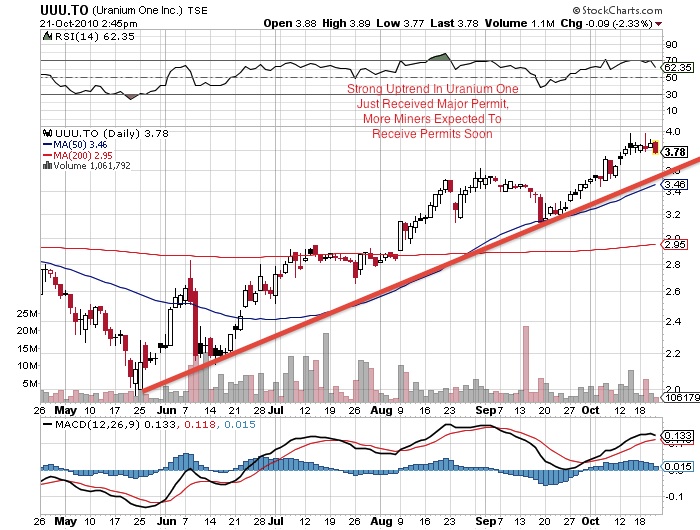
| You are subscribed to email updates from Gold World News Flash To stop receiving these emails, you may unsubscribe now. | Email delivery powered by Google |
| Google Inc., 20 West Kinzie, Chicago IL USA 60610 | |





No comments:
Post a Comment