


Gold World News Flash |

- News That Matters
- Wall Street Journal says Comex has been classified as 'too big to fail'
- Ron Hera and Alasdair Macleod On Why Gold Will Reemerge as a Safe Haven
- So Whats Up with the Gold Price?
- Agenda 21′s Globalist Death Plan for Humanity
- Silver Update 5/24/12 Bond Balloon
- Rick Rule - Three Things That Will End This Bear Market
- GOLD: 5000 Year History of Being MONEY – Andy Schectman
- New Legislation Targets FDA Raids: “We Have Too Many Armed Federal Agencies and We Need to Put an End to This”
- Why we’re nowhere near the mania phase in precious metals
- Before You Get The Clever Idea Of Leaving the Country With Your Physical Gold…..
- 'Top five gold commentators' all have GATA connection
- The Gold Price Closed $1,557.30 up $9.20
- Here’s the REAL DEAL NO BS Situation with Europe (Warning What Follows is EXTREMELY BAD).
- CME Lowers Margin for Gold Futures
- The Facebook IPO Fallout
- Precipitate Completes its Prospectus Offering and Lists on the TSX Venture Stock Exchange
- No Bad Call Goes Unrewarded
- The Top Five Gold Commentators
- Gold Daily and Silver Weekly Charts - Quiet Option Expiration With a Little Gut Check
- Gold Seeker Closing Report: Gold and Silver End Mixed
- Cash is the New Bubble-Dana Meador--24.May.2012
- GoldSeek.com Radio Silver Nugget: CEO of Huldra Silver - Ryan Sharp & Chris Waltzek
- Uncivilized Investing
- Gold Correction to End above 1600
- Commodities Rise Despite Dismal Chinese, Eurozone PMIs - Why?
- Investing in Gold as World Economies Falter
- James Turk: Only One Defense Against Fiat Currency — Dump It For Gold
- LGMR: Gold & Silver Rally with Stocks, Euro Hits 23-Month Low, as "Grexit" Planning Begins
- Greek Exit Date Via Citicorp – Jan. 1st 2013
| Posted: 24 May 2012 07:54 PM PDT Ft.com Europe's political leaders need to make a "brave leap" towards greater fiscal union to address the eurozone's deepening debt crisis, the head of the European Central Bank urged on Thursday. Mario Draghi said his institution may have bought the eurozone time through its massive injection of cash into Europe's banking system and sovereign bond markets but now it needed to embrace much closer integration. http://www.ft.com/intl/cms/s/0/281e032c-a5b6-11e1-b77a-00144feabdc0.html#axzz1vr0JKlSp Wholesale brokerages including Knight Capital and Citadel suffered trading losses that could top $100m as a result of computer glitches in Nasdaq OMX's software on the morning of Facebook's trading debut last Friday. Problems with the exchange's trading software meant the brokers were unable to calculate their precise shareholdings in the social network through more than two hours of share trading, people close to the firms said.http://www.ft.com/intl/cms/s/0/68cc8164-a5c5-11e1-a3b4-00144feabdc0.html#axzz1vr0JKlSp Thetrader.se
Its crooked, cobbled streets crammed up against mist-shrouded mountains, the town of Corleone has long been synonymous with the Sicilian M afia, becoming infamous as the Tombstone town that gave birth to its most ferocious godfathers. But at the state funeral on Thursday of Placido Rizzotto, a trade unionist murdered by the Mafia in 1948, crowds of Corleone's inhabitants turned out in the hope that the honour finally granted to their local hero would deal another blow to "Cosa Nostra" – even as it mutates into a multinational conglomerate that some call Mafia Inc.http://www.ft.com/intl/cms/s/0/5cb41740-a5aa-11e1-a77b-00144feabdc0.html#axzz1vr0JKlSp India has threatened to ban European airlines from its airspace if Brussels sanctions Indian carriers in a dispute over an EU plan to charge carriers for their pollution. "Travelling is always a two-way traffic," Ajit Singh, civil aviation minister, said in an interview. "If they can impose sanctions so can other countries."Last week 10 Chinese and Indian airlines refused to provide the EU with carbon emissions data – the most serious revolt against Brussels' scheme to charge carriers for their pollution. The airlines risk being banned from flying to EU countries if they refuse to comply with its carbon emissions tradingscheme. http://www.ft.com/intl/cms/s/0/aceffc00-a58d-11e1-a77b-00144feabdc0.html#axzz1vr0JKlSp Russia's new government bears all the marks of a country paralysed by infighting. On his return to the presidency, Vladimir Putin's priority seems to be maintaining the balance of power between the rival political clans that surround him. His strategy of balance and rule does the country little good, and in the long run hems him in as much as it preserves his supremacy. Dmitry Medvedev, the prime minister whom Mr Putin used to keep the presidential chair warm for him, is more sympathetic to reforms needed to modernise the top-heavy petro-state that is Russia. But if he expected greater opportunities to pursue a reformist agenda, he must be disappointed. http://www.ft.com/intl/cms/s/0/63ffdd52-a5b6-11e1-a3b4-00144feabdc0.html#axzz1vr0JJ0gA Wsj.com The European Union on Friday is expected to file a complaint at the World Trade Organization challenging Argentina's import regulations, part of a plan to pressure President Cristina Kirchner on a range of policies that are angering the world's largest economies. EU officials say Argentina's decision last month to nationalize oil and gas producer YPF SA, YPF +7.80%a unit of Spanish oil company Repsol YPF SA, REP.MC +3.37%was only the most recent in a series of moves by Mrs. Kirchner's government that have harmed foreign investors and manufacturers. Friday's complaint at the WTO, the Geneva-based arbiter of trade disputes, won't mention the nationalization of YPF, which doesn't violate WTO rules, two of the EU officials said. But the nationalization has convinced European officials that more forceful action is needed to fix the deteriorating economic relationship between Europe and Argentina.http://online.wsj.com/article/SB10001424052702304840904577424443455858220.html?mod=WSJEurope_hpp_LEFTTopStories As evidence gathers that the Chinese economy continued to slow in May, Beijing is outlining a series of steps to prop up growth, including targeted tax cuts and support for favored sectors like new energy technologies. The latest sign of weak economic performance came on Thursday, with HSBC Holdings PLC's purchasing managers index, which fell to a preliminary reading of 48.7 in May from 49.3 in April, indicating that manufacturing activity declined for the seventh straight month. A reading below 50 indicates contraction; above 50, expansion. The May PMI follows a series of weak readings for April on everything from foreign trade to bank lending. http://online.wsj.com/article/SB10001424052702304707604577423132457175816.html?mod=WSJEurope_hpp_LEFTTopStories The J.P. Morgan Chase & Co. unit whose wrong-way bets on corporate credit cost the bank more than $2 billion includes a group that has invested in financially challenged companies, including LightSquared Inc., the wireless broadband provider that this month filed for Chapter 11 bankruptcy protection. The investments raise new questions about the risks being taken by the bank's Chief Investment Office, or CIO, which J.P. Morgan has said is tasked primarily with investing excess cash and managing risks for the New York company.http://online.wsj.com/article/SB10001424052702304065704577424630055781026.html?mod=WSJEUROPE_hpp_LEFTTopWhatNews Lending stumbled in the first quarter after nearly a year of growth, deepening questions about the recovery and confidence of borrowers and bankers. Loan balances fell by more than $56 billion, or 0.8%, in the quarter ended March 31, according to the Federal Deposit Insurance Corp. The quarter-over-quarter decline marks a reversal from three consecutive quarters in which lending expanded. While lending to larger commercial and industrial customers rose as it has for nearly two years, declines came in nearly all other types of loans, including those to smallhttp://online.wsj.com/article/SB10001424052702304840904577425061070925698.html?mod=WSJEUROPE_hpp_LEFTTopWhatNews Asian markets edged downwards on Friday despite speculation by the Italian Prime Minister that Greece will remain in the euro zone, easing some concern about forthcoming Greek elections. Japan's Nikkei was flat, Australia's S&P ASX 200 fell 0.3%, and Korea's Kospi gained 0.5%. Hong Kong's Hang Seng Index and Singapore's Straits Times Index both dropped 0.4%, while the China Shanghai SE Composite was down 0.2%.http://online.wsj.com/article/SB10001424052702304840904577425061070925698.html?mod=WSJEUROPE_hpp_LEFTTopWhatNews Marketwatch.com Downside risks to the economic outlook are a key reason for sticking to the current guidance that short-term interest rates are likely to remain ultra-low until late 2014, a key Fed official said Thursday. In a speech to the Council on Foreign Relations, William Dudley, the president of the New York Federal Reserve, noted that one popular academic rule for Fed monetary policy, developed by John Taylor at Stanford University, currently puts the best "liftoff date" for interest rates as sometime in 2013. http://www.marketwatch.com/story/downside-risks-key-to-late-2014-rate-hike-dudley-2012-05-24 Reuters.com n"Goldman Sachs Group Inc plans to channel investments totaling $40 billion over the next decade into renewable energy projects, an area the investment bank called one of the biggest profit opportunities since its economists got excited about emerging markets in 2001. Goldman executives said this week that demand for alternative energy sources will grow with global energy demand, and as big manufacturing countries, including China and Brazil, set more aggressive targets for reducing emissions. The bank plans to finance deals with clients' money and, to a lesser extent, its own fundshttp://www.reuters.com/article/2012/05/23/goldman-green-idUSL1E8GMDPR20120523 Bloomberg.com China's stocks fell to a five-week low on concern bank lending is slumping and business conditions are deteriorating, adding pressure on the government to ease monetary policy to avert a deeper economic slowdown. Industrial & Commercial Bank of China (601398) Ltd. and Bank of China Ltd. (3988) paced declines for lenders after three bank officials with knowledge of the matter said China's biggest banks may fall short of loan targets for the first time in at least seven years. SAIC Motor Corp. (600104) slid more than 2 percent as automakers slumped on the prospect car financing may be more difficult as banks curtail loans. http://www.bloomberg.com/news/2012-05-25/china-s-stocks-drop-to-5-week-low-on-lending-slowdown-concerns.html Prime Minister Manmohan Singh seeks to make up lost ground in the charge to secure resources and business ties in Myanmar when he next week becomes India's first leader to visit its eastern neighbor in a quarter of a century. India, which in British colonial days oversaw the monetary and financial system of what was then Burma, ranked 13th last year in investments in Myanmar, with $189 million pledged in five projects, according to data compiled by IHS Global Insight. China led with $8.3 billion, and South Korea, whose president visited Myanmar earlier this month, pledged $2.95 billion.http://www.bloomberg.com/news/2012-05-24/india-plays-catch-up-on-myanmar-as-china-south-korea-rush-in.html Facebook Inc. (FB) may fall more than 42 percent below its initial public offering price by the end of the year, according to bets by structured-product investors. The most actively traded structured products tied to Facebook since its IPO have been so-called put warrants, whose buyers profit if the shares drop below a pre-defined level, in some cases as low as $22, data compiled by Bloomberg show. UBS AG (UBSN), Commerzbank AG (CBK) and Julius Baer Group Ltd. (BAER) are among lenders that listed 1,504 warrants and certificates in Europe linked to shares of the social networking site that were offered at $38. http://www.bloomberg.com/news/2012-05-23/facebook-at-22-by-december-seen-in-europe-s-structured-warrants.html Cnbc.com Cnn.com Foxbusiness.com USAtoday.com Washingtonpost.com BBC.co.uk Telegraph.co.uk Economists have warned of a fresh threat to the recovery after official figures showed that the country is being propped up by "unsustainable" Government spending. The concerns emerged after the Office for National Statistics (ONS) revealed that the double-dip recession was even worse than feared. The economy shrank by 0.3pc in the first quarter of the year, the ONS said in its second estimates, rather than the 0.2pc initially thought. Government spending hit record levels in the three months to March in spite of the austerity drive, rising by 1.6pc to £81.5bn and delivering 0.4 percentage points of overall economic growth. However, the taxpayer-funded boost was not enough to offset weak activity in construction, trade and the financial sector.http://www.telegraph.co.uk/finance/financialcrisis/9288398/Government-spending-prevents-worse-double-dip-recession.html Le Grand Depart has started early. High-earning Parisians who normally escape the French capital for the month of August have already crossed the Channel. Following the socialist triumph in the French election, aristocrats and bankers have requested transfers to the City. And La Mondiale Europartner, the wealth management subsidiary of France's fourth-biggest insurer AG2R La Mondiale, wasn't far behind. It threw a London launch party at Bentley's Oyster Bar and Grill in Mayfair this week, hosted by chief executive Fabrice Sauvignon. Of course. http://www.telegraph.co.uk/finance/alex/9287106/French-bankers-miss-a-left-turn-and-head-to-UK.html Spain is to partially close 30 of the nation's 47 state-run airports in an attempt to reduce the costs of its "white elephants" built throughout the nation during the boom years. Some of the airports have no scheduled flights yet are fully staffed and operational in what has come to symbolise the r
|
| Wall Street Journal says Comex has been classified as 'too big to fail' Posted: 24 May 2012 06:09 PM PDT A Mess the 45th President Will Inherit Taxpayers Now Stand Behind Derivatives Clearinghouses From the Wall Street Journal http://online.wsj.com/article/SB1000142405270230484090457742239316410627... President Obama's standard gripe is that the economy has performed so poorly during his term because of the financial crisis he inherited from George W. Bush. But this week it is Mr. Obama who has bequeathed to his successors a landmark in financial regulation. It is bound to haunt them, though not as much as it will haunt taxpayers. J.P. Morgan's recent trading loss and the resulting Washington blather about tighter regulation have grabbed headlines. Little noticed is that on Tuesday Team Obama took its first formal steps toward putting taxpayers behind Wall Street derivatives trading -- not behind banks that might make mistakes in derivatives markets, but behind the trading itself. Yes, the same crew that rails against the dangers of derivatives is quietly positioning these financial instruments directly above the taxpayer safety net. As we noted in May 2010, the authority for this regulatory achievement was inserted into Congress's pending financial reform bill by then-Senator Chris Dodd. Two months later, the legislation was re-named Dodd-Frank and signed into law by Mr. Obama. One part of the law forces much of the derivatives market into clearinghouses that stand behind every trade. Mr. Dodd's pet provision creates a mechanism for bailing out these clearinghouses when they run into trouble. ... Dispatch continues below ... ADVERTISEMENT Sona Discovers Potential High-Grade Gold Mineralization From a Company Press Release VANCOUVER, British Columbia -- With its latest surface diamond drilling program at its 100-percent-owned, formerly producing Blackdome gold mine in southern British Columbia, Sona Resources Corp. has discovered a potentially high-grade gold-mineralized area, with one hole intersecting 13.6 grams of gold in 1.5 meters of core drilling. "We intersected a promising new mineralized zone, and we feel optimistic about the assay results," says Sona's president and CEO, John P. Thompson. "We have undertaken an aggressive exploration program that has tested a number of target zones. Our discovery of this new gold-bearing structure is significant, and it represents a positive development for the company." Sona aims to bring its permitted Blackdome mill back into production over the next year and a half, at a rate of 200 tonnes per day, with feed from the formerly producing Blackdome mine and the nearby Elizabeth gold deposit property. A positive preliminary economic assessment by Micon International Ltd., based on a gold price of $950 per ounce over eight years, has estimated a cash cost of $208 per tonne milled, or $686 per gold ounce recovered. For the company's complete press release, please visit: http://www.sonaresources.com/_resources/news/SONA_NR18_2011-opt.pdf Specifically, the law authorizes the Federal Reserve to provide "discount and borrowing privileges" to clearinghouses in emergencies. Traditionally the ability to borrow from the Fed's discount window was reserved for banks, but the new law made clear that a clearinghouse receiving assistance was not required to "be or become a bank or bank holding company." To get help, they only needed to be deemed "systemically important" by the new Financial Stability Oversight Council chaired by the Treasury Secretary. Last year regulators finalized rules for how they would use this new power. On Tuesday, they began using it. The Financial Stability Oversight Council secretly voted to proceed toward inducting several derivatives clearinghouses into the too-big-to-fail club. After further review, regulators will make final designations, probably later this year, and will announce publicly the names of institutions deemed systemically important. We're told that the clearinghouses of Chicago's CME Group and Atlanta-based Intercontinental Exchange were voted systemic this week, and rumor has it that the council may even designate London-based LCH.Clearnet as critical to the U.S. financial system. U.S. taxpayers thinking that they couldn't possibly be forced to stand behind overseas derivatives trading will not be comforted by remarks from Commodity Futures Trading Commission Chairman Gary Gensler. On Monday he emphasized his determination to extend Dodd-Frank derivatives regulation to overseas markets when subsidiaries of U.S. firms are involved. Readers know Mr. Gensler as the chief regulator of MF Global, which was run into bankruptcy by his old Beltway and Goldman Sachs pal Jon Corzine. An estimated $1.6 billion is still missing from MF Global customer accounts. What an amazing feat Mr. Gensler will have performed if, through his agency's oversight, he can manage to have U.S. customers eat the cost of Mr. Corzine's bets on foreign debt and have U.S. taxpayers underwrite bets in foreign derivatives trading. If there's one truth we've learned about government financial backstops, it's that sooner or later they will be used. So eventually taxpayers will have to bail out one derivatives clearinghouse or another. It promises to be quite a mess. And if the 45th president spends his first term whining about his predecessor's mistakes, he'll have a point. Join GATA here: Vancouver World Resource Investment Conference Standard Chartered's Earth Resources Conference Hong Kong Gold Investment Forum Toronto Resource Investment Conference New Orleans Investment Conference * * * Support GATA by purchasing DVDs of our London conference in August 2011 or our Dawson City conference in August 2006: http://www.goldrush21.com/order.html Or by purchasing a colorful GATA T-shirt: Or a colorful poster of GATA's full-page ad in The Wall Street Journal on January 31, 2009: http://gata.org/node/wallstreetjournal Help keep GATA going GATA is a civil rights and educational organization based in the United States and tax-exempt under the U.S. Internal Revenue Code. Its e-mail dispatches are free, and you can subscribe at: To contribute to GATA, please visit: ADVERTISEMENT Prophecy Platinum (TSXV: NKL) and Ursa Major Minerals Company Press Release VANCOUVER, British Columbia, Canada -- Prophecy Platinum Corp. (TSX-V: NKL, OTC-QX: PNIKF, Frankfurt: P94P) and Ursa Major Minerals Inc. have signed a binding letter of agreement for a business combination through a proposed all-share transaction. In doing so Prophecy and Ursa have acted at arm's length and the transaction has been negotiated at arm's length. Prophecy will issue one common share in exchange for every 25 outstanding common shares of Ursa. Ursa options and warrants will be exchanged for options and warrants of Prophecy on an agreed schedule. Prophecy's offer represents a value of about $0.15 per each common share of Ursa based on Prophecy's share price of $3.70 as at March 1, representing a premium of 130 percent to Ursa's March 1 closing price of $0.065. Prophecy is to subscribe for $1 million common shares of Ursa by way of private placement financing at $0.06 per share, subject to regulatory approval. Upon placement completion, John Lee and Greg Hall, current Prophecy directors, will be appointed to Ursa's board. Prophecy thus will become a mid-tier resource company with a robust and diversified pipeline of platinum nickel projects, including: -- The fully permitted open-pit Shakespeare PGM-Ni-Cu mine close to Sudbury, Ontario, infrastructure with near-term production capabilities. -- The flagship Wellgreen (Yukon) PGM-Ni-Cu project with more than 10 million ounces of Pt-Pd-Au inferred resource. Drilling is under way and a preliminary economic assessment study is pending. -- Manitoba's Lynn Lake Ni-Cu project with more than 262 million pounds Ni and 138 million pounds Cu measured and indicated. For the complete announcement, please visit Prophecy Platinum's Internet site here: http://www.prophecyplat.com/news_2012_mar02_prophecy_platinum_ursa_major...
|
| Ron Hera and Alasdair Macleod On Why Gold Will Reemerge as a Safe Haven Posted: 24 May 2012 05:43 PM PDT Hera Research
|
| So Whats Up with the Gold Price? Posted: 24 May 2012 05:39 PM PDT Bullion Vault
|
| Agenda 21′s Globalist Death Plan for Humanity Posted: 24 May 2012 05:38 PM PDT Lord Monckton exposes those who hold the creed that 'the real enemy is humanity itself.' from TheAlexJonesChannel: Lord Christopher Monckton joins Aaron in-studio today, Wednesday, May 23. Monckton is a British politician, public speaker, former newspaper editor, and a spirited critic of the globalist theory of anthropogenic global warming. Mr. Monckton is in the United States to attend the libertarian Heartland Institute's conference in Chicago. At the U.N. Summit at Rio in 1992, the Conference Secretary-General, Maurice Strong, said "Isn't the only hope for this planet that the industrialized civilization collapse? Isn't it our responsibility to bring that about?" "The common enemy of humanity is man. In searching for a new enemy to unite us, we came up with the idea that pollution, the threat of global warming, water shortages, famine and the like would fit the bill. The real enemy then is humanity itself." – From the Club of Rome's "The First Global Revolution" p. 75 1993 "Therefore, send not to know for whom the bell tolls, It tolls for thee."
|
| Silver Update 5/24/12 Bond Balloon Posted: 24 May 2012 04:50 PM PDT |
| Rick Rule - Three Things That Will End This Bear Market Posted: 24 May 2012 04:46 PM PDT  Today King World News interviewed one of the wealthiest and most street-smart pros in the business, Rick Rule. Investors have been incredibly worried about the plunge in stocks, and mining shares, but Rule told KWN that one of several things that will end the bear market in gold shares is takeovers. He also warned, "the big picture for Europe is bleak." Rule, who is now part of Sprott Asset Management had this to say about what is happening in the markets: "We have a market where I think the leadership will switch from an institutional buyer to an industry buyer. Meaning that when the market resumes higher, it will be driven by companies that will be taken over by industry, rather than companies that exhibit things like leverage to gold." Today King World News interviewed one of the wealthiest and most street-smart pros in the business, Rick Rule. Investors have been incredibly worried about the plunge in stocks, and mining shares, but Rule told KWN that one of several things that will end the bear market in gold shares is takeovers. He also warned, "the big picture for Europe is bleak." Rule, who is now part of Sprott Asset Management had this to say about what is happening in the markets: "We have a market where I think the leadership will switch from an institutional buyer to an industry buyer. Meaning that when the market resumes higher, it will be driven by companies that will be taken over by industry, rather than companies that exhibit things like leverage to gold."
This posting includes an audio/video/photo media file: Download Now |
| GOLD: 5000 Year History of Being MONEY – Andy Schectman Posted: 24 May 2012 04:28 PM PDT |
| Posted: 24 May 2012 03:37 PM PDT  The US Food and Drug Administration, charged with keeping America's food supply safe for consumption, has gone from regulator to armed enforcer, with the most notable recent actions by the agency focusing on small farmers, retailers and individuals who engage in the illegal practice of … get this … drinking milk directly from the cow. But It's not just dairy products. The FDA has also targeted fruit and vegetable producers, as well as providers of natural medicines that have been been used for generations to cure everything from constipation to serious medical illnesses. The US Food and Drug Administration, charged with keeping America's food supply safe for consumption, has gone from regulator to armed enforcer, with the most notable recent actions by the agency focusing on small farmers, retailers and individuals who engage in the illegal practice of … get this … drinking milk directly from the cow. But It's not just dairy products. The FDA has also targeted fruit and vegetable producers, as well as providers of natural medicines that have been been used for generations to cure everything from constipation to serious medical illnesses.The crimes are considered so serious that the FDA has deployed armed federal agents and local SWAT teams with complete impunity in an effort to curb the distribution of these dangerous products. If it were up to the FDA, all naturally grown organic foods and food practices would be criminalized and we'd all be subject to consuming engineered genetically modified foods, synthetic vitamins, and cocktails of pharmaceutical drugs to control our moods and emotions. As is the case with most federal agencies, the FDA and large mega corporations have an incestuous relationship that has led to extreme regulation of any foods or products that may pose a competitive risk to pharmaceutical companies and large scale food production conglomerates. At the behest of these billion dollar giants, the FDA has taken measures to effectively silence those who would pose a threat to their business model by shutting down businesses and imprisoning their operators. Read more..... 
This posting includes an audio/video/photo media file: Download Now |
| Why we’re nowhere near the mania phase in precious metals Posted: 24 May 2012 03:15 PM PDT by Simon Black, Sovereign Man :
Just like the real estate bubble in the early 2000s when every Tom, Dick, and Harry was flipping off-plan condos in Miami, precious metals will enter bubble territory when the masses get into the market. It may be a bumpy ride for precious metals as the euro crisis continues to unfold… but it's clear that we're a long way off from the Joe Six-Pack mania phase.
|
| Before You Get The Clever Idea Of Leaving the Country With Your Physical Gold….. Posted: 24 May 2012 02:00 PM PDT |
| 'Top five gold commentators' all have GATA connection Posted: 24 May 2012 01:25 PM PDT 9:22p ET Thursday, May 24, 2012 Dear Friend of GATA and Gold: Will Bancroft of The Real Asset Co. in London has identified those he considers the top five gold commentators in the world -- gold trader, educator, and mining entrepreneur Jim Sinclair; Hinde Capital CEO Ben Davies; Sprott Asset Management CEO Eric Sprott; GoldMoney founder and Free Gold Money Report editor James Turk; and geopolitical analyst, author, and investment banker James G. Rickards. What do these five have in common? For starters, they all spoke at GATA's Gold Rush 2011 conference in London last August. They also are often interviewed by King World News. Bancroft adds that he would have liked to include the late Swiss gold banker and author Ferdinand Lips, who died in 2005 just weeks before he was to have spoken at GATA's Gold Rush 21 conference in Dawson City, Yukon Territory, Canada. Lips' address, titled "Three Revolutions," was delivered to the GATA conference by his business partner, J.P. Schumacher, and is posted at the Lips Institute's Internet site here: http://lips-institute.ch/en/wp-content/uploads/file/speeches_pdf/Three_R... In his book, "Gold Wars," published in 2001, Lips wrote that in the United States, "in spite of its concentration of huge financial and political powers, one still finds courageous men ready to speak up for honest business practices and freedom. Such people are Bill Murphy and Chris Powell, who set up GATA. Their goal is to restore gold to a free and transparent market." GATA gold market rigging lawsuit litigator Reginald H. Howe memorialized Lips here: http://www.goldensextant.com/In%20Memoriam%20Lips.html Bancroft's commentary is headlined "The Top Five Gold Commentators" and it's posted at The Real Asset Co.'s Internet site here: http://therealasset.co.uk/gold-investment-quintet/ CHRIS POWELL, Secretary/Treasurer ADVERTISEMENT Prophecy Platinum (TSXV: NKL) and Ursa Major Minerals Company Press Release VANCOUVER, British Columbia, Canada -- Prophecy Platinum Corp. (TSX-V: NKL, OTC-QX: PNIKF, Frankfurt: P94P) and Ursa Major Minerals Inc. have signed a binding letter of agreement for a business combination through a proposed all-share transaction. In doing so Prophecy and Ursa have acted at arm's length and the transaction has been negotiated at arm's length. Prophecy will issue one common share in exchange for every 25 outstanding common shares of Ursa. Ursa options and warrants will be exchanged for options and warrants of Prophecy on an agreed schedule. Prophecy's offer represents a value of about $0.15 per each common share of Ursa based on Prophecy's share price of $3.70 as at March 1, representing a premium of 130 percent to Ursa's March 1 closing price of $0.065. Prophecy is to subscribe for $1 million common shares of Ursa by way of private placement financing at $0.06 per share, subject to regulatory approval. Upon placement completion, John Lee and Greg Hall, current Prophecy directors, will be appointed to Ursa's board. Prophecy thus will become a mid-tier resource company with a robust and diversified pipeline of platinum nickel projects, including: -- The fully permitted open-pit Shakespeare PGM-Ni-Cu mine close to Sudbury, Ontario, infrastructure with near-term production capabilities. -- The flagship Wellgreen (Yukon) PGM-Ni-Cu project with more than 10 million ounces of Pt-Pd-Au inferred resource. Drilling is under way and a preliminary economic assessment study is pending. -- Manitoba's Lynn Lake Ni-Cu project with more than 262 million pounds Ni and 138 million pounds Cu measured and indicated. For the complete announcement, please visit Prophecy Platinum's Internet site here: http://www.prophecyplat.com/news_2012_mar02_prophecy_platinum_ursa_major... Join GATA here: Vancouver World Resource Investment Conference Standard Chartered's Earth Resources Conference Hong Kong Gold Investment Forum Toronto Resource Investment Conference New Orleans Investment Conference * * * Support GATA by purchasing DVDs of our London conference in August 2011 or our Dawson City conference in August 2006: http://www.goldrush21.com/order.html Or by purchasing a colorful GATA T-shirt: Or a colorful poster of GATA's full-page ad in The Wall Street Journal on January 31, 2009: http://gata.org/node/wallstreetjournal Help keep GATA going GATA is a civil rights and educational organization based in the United States and tax-exempt under the U.S. Internal Revenue Code. Its e-mail dispatches are free, and you can subscribe at: To contribute to GATA, please visit: ADVERTISEMENT Sona Discovers Potential High-Grade Gold Mineralization From a Company Press Release VANCOUVER, British Columbia -- With its latest surface diamond drilling program at its 100-percent-owned, formerly producing Blackdome gold mine in southern British Columbia, Sona Resources Corp. has discovered a potentially high-grade gold-mineralized area, with one hole intersecting 13.6 grams of gold in 1.5 meters of core drilling. "We intersected a promising new mineralized zone, and we feel optimistic about the assay results," says Sona's president and CEO, John P. Thompson. "We have undertaken an aggressive exploration program that has tested a number of target zones. Our discovery of this new gold-bearing structure is significant, and it represents a positive development for the company." Sona aims to bring its permitted Blackdome mill back into production over the next year and a half, at a rate of 200 tonnes per day, with feed from the formerly producing Blackdome mine and the nearby Elizabeth gold deposit property. A positive preliminary economic assessment by Micon International Ltd., based on a gold price of $950 per ounce over eight years, has estimated a cash cost of $208 per tonne milled, or $686 per gold ounce recovered. For the company's complete press release, please visit: http://www.sonaresources.com/_resources/news/SONA_NR18_2011-opt.pdf
|
| The Gold Price Closed $1,557.30 up $9.20 Posted: 24 May 2012 11:39 AM PDT Gold Price Close Today : 1,557.30 Change : 9.20 or 0.6% Silver Price Close Today : 28.14 Change : .63 or 2.2% Platinum Price Close Today : 1,420.60 Change : 8.30 or 0.6% Palladium Price Close Today : 587.40 Change : -3.55 or -0.6% Gold Silver Ratio Today : 55.34 Change : -0.95 or 0.98% Dow Industrial : 12,496.15 Change : -6.66 or -0.1% US Dollar Index : 82.03 Change : 0.28 or 0.3% Franklin will be away until June 4th and wont be publishing commentary until that time. Argentum et aurum comparenda sunt -- -- Gold and silver must be bought. - Franklin Sanders, The Moneychanger The-MoneyChanger.com 1-888-218-9226 10:00am-5:00pm CST, Monday-Friday © 2012, The Moneychanger. May not be republished in any form, including electronically, without our express permission. To avoid confusion, please remember that the comments above have a very short time horizon. Always invest with the primary trend. Gold's primary trend is up, targeting at least $3,130.00; silver's primary is up targeting 16:1 gold/silver ratio or $195.66; stocks' primary trend is down, targeting Dow under 2,900 and worth only one ounce of gold; US$ or US$-denominated assets, primary trend down; real estate bubble has burst, primary trend down. WARNING AND DISCLAIMER. Be advised and warned: Do NOT use these commentaries to trade futures contracts. I don't intend them for that or write them with that short term trading outlook. I write them for long-term investors in physical metals. Take them as entertainment, but not as a timing service for futures. NOR do I recommend investing in gold or silver Exchange Trade Funds (ETFs). Those are NOT physical metal and I fear one day one or another may go up in smoke. Unless you can breathe smoke, stay away. Call me paranoid, but the surviving rabbit is wary of traps. NOR do I recommend trading futures options or other leveraged paper gold and silver products. These are not for the inexperienced. NOR do I recommend buying gold and silver on margin or with debt. What DO I recommend? Physical gold and silver coins and bars in your own hands. One final warning: NEVER insert a 747 Jumbo Jet up your nose. No, I don't. 
|
| Here’s the REAL DEAL NO BS Situation with Europe (Warning What Follows is EXTREMELY BAD). Posted: 24 May 2012 09:55 AM PDT
Here’s the REAL DEAL NO BS Situation with Europe (Warning What Follows is EXTREMELY BAD).
The media is rife with misrepresentations and analysis of the EU. Here’s the real deal.
In plain terms, having spent two years and hundreds of billions (even TRILLIONS of Euros) dealing with the EU Crisis, the powers that be over there have backed themselves into a corner from which they cannot escape. Let me be blunt:
THERE IS NO ENTITY ON EARTH THAT CAN BAILOUT EUROPE.
It’s game over for that idea. And the idea that one bankrupt nation (even Germany sports a REAL Debt to GDP of over 200% when you include unfunded liabilities) prop up several others is ridiculous.
And all of this is happening at the precise time that Spain is about to implode.
This is the REAL DEAL for Europe. Anyone who has some kind of counter-argument to these points either doesn’t understand the political environment we’ve entered (even Central Banks are fed up with bowing to political pressure from politicians) or is simply hoping that by ignoring these realities they (the realities) will go away.
They won’t. Europe’s banking system as a whole is at risk a la 2008. And it’s nearly four times the seize of the US banking system.
So if you’re not already taking steps to prepare for the coming collapse, you need to do so now. The US will not escape from this unscathed. No one will. The global banking system is too interconnected: some estimates put US exposure in the ballpark of several TRILLION Dollars.
I recently published a report showing investors how to prepare for this. It’s called How to Play the Collapse of the European Banking System and it explains exactly how the coming Crisis will unfold as well as which investment (both direct and backdoor) you can make to profit from it.
This report is 100% FREE. You can pick up a copy today at: http://www.gainspainscapital.com
Good Investing!
Graham Summers
PS. We also feature numerous other reports ALL devoted to helping you protect yourself, your portfolio, and your loved ones from the Second Round of the Great Crisis. Whether it’s a US Debt Default, runaway inflation, or even food shortages and bank holidays, our reports cover how to get through these situations safely and profitably.
|
| CME Lowers Margin for Gold Futures Posted: 24 May 2012 09:37 AM PDT On Thursday, May 24, the Chicago Mercantile Exchange Inc., Clearing House Risk Management announced lower initial bond and maintenance (margin) requirements for 100-ounce gold futures contracts (GC). Initial bond requirements decline 10% for Spec traders from $10,125 to $9,113 per 100-ounce contract. Initial bond rates for Hedge traders drop 10% from $7,500 to $6,750 per contract. Maintenance (margin) requirements for both Spec and Hedger members dip 10% from $7,500 to $6,750 per contract. Similar margin reductions were announced for the COMEX "MINY Gold Futures" (QO) and 10-ounce contracts (MGC). The new rates will be effective after the close of business on Tuesday, May 29, 2012. May 24, 2012 (Source: CME Group) http://www.cmegroup.com/tools-information/lookups/advisories/clearing/files/Chadv12-221.pdf
|
| Posted: 24 May 2012 09:28 AM PDT Synopsis: Revealed: Why the Facebook IPO face-plant could be seen coming from a long ways away, and what the fallout may mean for some players. Dear Fellow Technophiles, Some issues in events in popular society are simply too big to be missed. The OJ trial. A "Royal Wedding." Facebook's IPO. In all the aforementioned cases, I did my own personal best to be as far from the action as possible when the fateful day came. It's not a lack of interest, but just a time-tested life lesson that the real opportunities in life are where the circus has yet to land. Still, at Casey Research we're not content to simply write off a profit-making opportunity to "carnie wisdom." And thus, we took a hard and close look at the Facebook IPO for Casey Extraordinary Technology subscribers. The result of that detailed analysis? Stay as far out of the way as you can. We made sure that subscribers understood that given the "muppet demand" on one side, the insiders cashing out on the other, and the banks taking billion-dollar paydays for nothing other than their government-mandated oligopolic postions in the middle, there was no play for a smart individual investor, long or short. Yet even we didn't see the Nasdaq's side. So, despite our desire to turn our attention back to the companies still creating value for individual investors, we felt little choice but to delve one last time into the IPO waters to try to explain why, only six days later, we find accusations of malfeasance being thrown around like confetti, lawsuits mounting, and big questions now being asked. So, our own Adam Crawford tries to break down one of the most complex financial events of the decade in 1,000 words or so of as plain an English as can be done. Sincerely,
|
| Precipitate Completes its Prospectus Offering and Lists on the TSX Venture Stock Exchange Posted: 24 May 2012 09:26 AM PDT Vancouver, British Columbia. Precipitate Gold Corp. (the "Company") is pleased to announce that it has completed its initial public offering ("IPO") of 5,500,000 Shares at a price of $0.40 per share for aggregate gross proceeds of $2,200,000. The TSX Venture Exchange (the "TSXV") has accepted the Company's listing application, and the Company's common shares will commence trading on the TSXV at the opening on Tuesday, May 29, 2012 (the "Listing Date") under the trading symbol "PRG". Wolverton Securities Ltd. (the "Agent") assisted the Company in selling the IPO. As consideration, the Agent and its sub-agents received a cash commission of $176,000 (8% of the gross proceeds of the IPO) and options to acquire an aggregate of 440,000 shares, exercisable at $0.40 per share for a period of 24 months expiring May 29, 2014. The Agent also received a corporate finance fee of $40,000 (plus HST) and reimbursement of its expenses as incurred.The Company has also issued 5,068,827 common shares (the "Strategic Shares") to Strategic Metals Ltd. ("Strategic") pursuant to a mineral property option agreement. 1,222,460 of the Strategic Shares are subject to a two year hold period under TSXV policies (20% being released on the Listing Date and an additional 20% being released every six months thereafter). The balance of 3,846,367 Strategic Shares (the "Strategic Escrow Shares") are subject to a three year Value Security Escrow Agreement dated May 24, 2012 among the Company, Equity Financial Trust Company ("EFTC") and Strategic (the "Value Security Escrow Agreement"). In accordance with National Instrument 62-103 The Early Warning System and Related Take Over Bids and Insider Reporting Issues, Strategic advises it holds 19.9% of the Company's issued and outstanding voting shares, that it has filed an early warning report (a copy of which can be viewed on SEDAR), and that it has the right to participate in future financings of the Company so as to maintain its percentage equity interest. The Company presently has 25,471,493 common shares issued and outstanding of which 2,665,000 common shares are subject to escrow restrictions set out in an Escrow Agreement dated February 1, 2012 among the Company, EFTC and certain principals of the Company, to be released as to 10% on the Listing Date and 15% every six months thereafter; and of which 3,846,367 Strategic Escrow Shares are subject to the Value Security Escrow Agreement. Complete details of the IPO and the Company's business are as set out in the Company's IPO Prospectus dated March 30, 2012 and filed on SEDAR. The Company's board of directors consists of Darcy W. Krohman (CEO, President, Secretary), Adrian W. Fleming, Darryl S. Cardey, Gary R. Freeman and Quinton T. Hennigh. Hallein J. Darby is the Company's CFO, and Michael P. Moore is the Company's Vice President of Exploration. The Company announces that it has granted an aggregate of 1,930,000 incentive stock options to directors, key employees and consultants, which will become effective on the Listing Date, exercisable at $0.40 per share for a period of five years. ON BEHALF OF THE BOARD Darcy W. Krohman Darcy W. Krohman CEO, President, Secretary and Director FOR FURTHER INFORMATION PLEASE CONTACT: Telephone: 1-604-558-0335 Facsimile: 1-604-558-1590 Website: www.precipitategold.com Contact: Darcy W. Krohman May 24, 2012 (Precipitate Gold Corp) http://www.precipitategold.com/s/news.asp?ReportID=526896 Comment: The late David Coffin, our good friend and colleague, was instrumental in the development of Precipitate Gold. We have high hopes for this new issue operating in the Yukon and northern B.C. We plan to have more coverage of Precipitate in the next full Vulture Bargain Roundup update scheduled for the first week of June. Disclosure: Precipitate Gold is a Vulture Bargain Candidate of Interest (VBCI). Members of the GGR team may hold long positions in PRG.V. The editor of GGR participated in a private placement for Precipitate Gold and holds a long position at the time of publication.
|
| Posted: 24 May 2012 09:18 AM PDT Dave Gonigam – May 24, 2012
The agencies that failed to "connect the dots" before Sept. 11 were rewarded with more manpower, more resources, more authority. Heck, entire new agencies were created. There's even an "Office of the Director of National Intelligence" to hypothetically oversee the other 16 intelligence agencies. We see this morning that what holds for government also holds true for that peculiar public-private mongrel known as central banking.
That was the year Ben Bernanke told us with such confidence that "We've never had a decline in housing prices on a nationwide basis." Such a colossal miscalculation… and all the assorted fallout in the credit markets and the economy… turns out to merit a 50% budget increase in the ensuing years. Worse, the Fed's income from assorted fees — check processing and the like — hasn't kept pace with expenses. So the net cost of running the Fed has more than doubled.  By year's end, the Fed's Board of Governors alone will have grown its head count by 25% since the start of the crisis, to more than 2,400. True, the Fed's budget doesn't come from federal tax revenue. Well, not directly. Its operations are funded by the interest it earns on its portfolio of Treasuries, mortgage securities, etc. — plus any capital gains from the sale of those instruments. But what's a U.S. Treasury, other than a claim on the confiscated future production of U.S. income earners? If they don't get you one way, they get you another…
Among the worldwide data in traders' sights today…
Most worrisome about the "durables" report: Business orders for computers, machinery and other capital goods shrank for a second straight month.
There were the expected noises about wanting Greece to stay in the eurozone, but only if the government "lives up to its obligations" — that is keeps up its payments to the French and German banks that foolishly bought Greek bonds. But that was it. [Ed. Note: It is our strict policy at The 5 to avoid using the trendy and hideous neologism "Grexit" to describe a potential Greek departure from the eurozone. You're welcome.]
"If they have obligations to foreigners," he adds, "it's the mistake of bureaucrats in Brussels." Greece, he suggests, is only further along the path that all European governments are: "Government spending as a percentage of the economy has grown from 44% to 49%. There has been no austerity."
In theory, JPM lost $2 billion from its bad derivatives bet run from London. "The question is, 'Is this $2 billion loss going to be $3 billion, $4 billion or $5 billion?' I don't know," he tells Yahoo Finance. Thus has Mr. Ritholtz's firm cut its JPM exposure; he loaded up early this year because it was the "best house in a not great neighborhood," and indeed he was able to book a profit even after the sell-off. "The reason to own banks is that they used to be a safe, money making machine," he adds. "The old joke was 'Borrow at 3%, lend at 6%, be on the golf course at 4 o'clock.' That's how bankers lived. It was a boring, highly profitable business. And now these banks seem to think they're hedge funds."
Brent crude — a better reflection of what most of the world pays — is at $106.50.
The reason: Oil producers can't afford to let it fall much further. To illustrate, here's a chart prepared by the chief economist at the French oil giant Total:  "Basically," Byron explains, "the chart describes the oil price level that a series of major producers require in order to balance their national budgets." "The red-shaded region at the bottom is the 'break-even cost' for producers (as estimated by Total). That is, the red shading reflects how much it costs to lift barrels of crude oil out of the ground." "As you can see from the chart, many producers lift oil at an overall cost of $10-20 per barrel. Even the major international players (the blue shading on the right) are in the $40 per barrel average for production. "But take a look at that 'budget break-even' line — the yellow shading. That's the price at which a list of petro players has to sell oil in order to fund their national spending. Keep in mind that all of the countries on the list — from Qatar to Venezuela — rely on oil sales for the vast majority of their national income. "Without a strong oil price," Byron concludes, "these countries will have bread lines and riots." And they account for 40% of total world crude output. "WTI at $90 and Brent hovering over $100 is the threshold of financial pain for the world's largest oil-producing nations."
Western nations have lost their edge when it comes to education, he says. Education is one of the six "killer apps" Ferguson believes lay behind the West's ascendance — a theme he explores in depth in Civilization — his current PBS documentary series and its accompanying book. "The U.S. has a disadvantage," he said at a recent conference, "in that a substantial number of our potentially talented young people who had the misfortune to live in poor ZIP codes are not being educated to nearly a high enough standard in basic math and science." Result? Mainland China ranks No. 1 in math and science, judging by standardized tests on students up to age 15. The gap between China and the United States is as wide as that between the United States and Albania. Professor Ferguson will explore some unexpected investment implications during what's sure to be a rousing session at the Agora Financial Investment Symposium, which starts only two months from today — July 24-27. The aforementioned Dr. Faber will be there. So will Barry Ritholtz. Along with Byron King and the rest of the Agora Financial editors. We'll have return engagements with the colorful oil field geologist Marcio Mello and the always-provocative venture capitalist Juan Enriquez. Small-cap resource guru Rick Rule will lead his enlightening and entertaining breakfast sessions. By the time you leave, you'll have no shortage of ideas to consider and act on. [Ed. Note: We're still offering an early-bird registration discount... but not for long. The fee goes up as of 5:00 p.m. tomorrow. At last check, fewer than 300 seats remain. For each of the last three years, we've had to turn people away from this event. We'd hate to see that happen to you. In addition, our block of rooms at the host hotel, the Fairmont Hotel Vancouver, is filling up quickly. Here again, time is of the essence. We look forward to seeing you in Vancouver, July 24-27. For a full speaker lineup and registration details, please review your invitation here.]
"Do you really think that anything more than a handful of these kids who went through Principal Pennington's P.C. bicycle shenanigans will end up being nanny-state types as adults after experiencing this?" "If so, maybe you should go ask that 10-year-old girl in the yellow dress who is currently doing 10-20 breaking rocks in Leavenworth for selling lemonade."
"Being a curious person, I thought to take a couple of hours to walk through. Imagine my surprise when told I needed to be registered — and my greater surprise to know that registration was $700 per person — $600 if preregistered." "A minimum of 4,000 registered — gives new meaning to Bakken Gold.' Ah, then it gets better, as about 300 vendors paid $3,500 for their 10'x10' space. Looks like $3.5 million for a two-day show — much better than drilling for oil!" The 5: Amen… but that too illustrates Byron King's bigger point about the new fortunes being created in the Bakken, the Eagle Ford and other shale plays. They're feeding all manner of add-on industries in formerly down-and-out communities. Whether it's new restaurants, new housing or a $3.5 million trade show, it's creating new streams of money. And it's not too late to claim some of it for yourself.
"As a fairly conservative individual and probably more of a libertarian than anything, the views of The 5 are fairly close to my own, but not always. "That is part of why I value it. You do throw me come curveballs and I have to think them through. It causes me to constantly see a different view of the road and hopefully navigate it better. Keep up the good work!"
"They are: 'If in danger, if in doubt, run in circles, leap and shout.' The other: 'Hands on ears please, now pull your head out of your ass.'" "I am daily reader of The 5 and appreciate and thank you for the truths you report, no matter your sources."
"Are you working for Soros? You just can't rely on anyone these days." The 5: The only thing that would have made this email funnier is if the guy who got this discussion going in the first place would write back… to accuse us of being in the pay of the Koch brothers! Cheers, Dave Gonigam P.S. "Spread over 2,700 acres of rolling farmland, beach and forest, Rancho Santana is a collection of more than 50 homes and 25 villas," says an article in The Nicaragua Dispatch, the country's English-language daily. "It has as a mini-grocery market, a fully functioning clubhouse, the best restaurant in Tola (and one of the best in Nicaragua) and the first modern conference center on the Pacific coast."  "Rancho Santana," says guest services manager Matt Prezzano, "is very unique in that it was one of the first significant tourism-investment projects made by foreigners in the Republic of Nicaragua. They helped put Nicaragua tourism on the map through various press publications and have been marketing Nicaragua tourism for over 12 years." We're still in the planning stages for the second iteration of the Rancho Santana Sessions, coming up Dec. 5-9, 2012. As we line up topics and speakers, we'll keep you posted…
|
| The Top Five Gold Commentators Posted: 24 May 2012 08:49 AM PDT Dear CIGAs, I would like to send a special thanks to Will Bancroft of www.RealAsset.co.uk for the kind words. The Top Five Gold Commentators Posted MAR 20 2012 by WILL BANCROFT There are a range of commentators on the precious metals but there is a golden elite whose insights, opinions and research should Continue reading The Top Five Gold Commentators
|
| Gold Daily and Silver Weekly Charts - Quiet Option Expiration With a Little Gut Check Posted: 24 May 2012 08:31 AM PDT |
| Gold Seeker Closing Report: Gold and Silver End Mixed Posted: 24 May 2012 08:24 AM PDT Gold fell $8.87 to $1552.33 at about 4AM EST before it rebounded to $1577.70 at about 9AM EST, but it then fell to as low as $1551.69 in afternoon New York trade and ended with loss of 0.11%. Silver slipped to as low as $27.624 before it bounced back to $28.533 and then also fell back off, but it still ended with a gain of 1.58%.
|
| Cash is the New Bubble-Dana Meador--24.May.2012 Posted: 24 May 2012 08:19 AM PDT www.FinancialSurvivalNetwork.com presents: Dana Meador is back with FSN today to discuss why your bank is insolvent and what the issue of collateral means in this day-and-age. With JP Morgan front and center of the economic meltdown, you should be aware that the little JP blowup is indicative of a much bigger problem that a lot of people are not aware of. If you are not aware, cash is the new bubble; it is where everybody has parked their money. What are the banks doing with the cash sitting in accounts everywhere? Go to www.FinancialSurvivalNetwork.com for the latest info on the Economy, Markets and Precious Metals.
This posting includes an audio/video/photo media file: Download Now |
| GoldSeek.com Radio Silver Nugget: CEO of Huldra Silver - Ryan Sharp & Chris Waltzek Posted: 24 May 2012 08:14 AM PDT GoldSeek.com Radio Silver Nugget: CEO of Huldra Silver | TSX-V: HDA - Ryan Sharp & Chris Waltzek
|
| Posted: 24 May 2012 07:30 AM PDT Uncivilized times call for uncivilized investments. Charlie Munger, Warren Buffett's partner in crime at Berkshire Hathaway, told CNBC recently, "I think gold is a great thing to sew into your garments if you're a Jewish family in Vienna in 1939, but I think civilized people don't buy gold. They invest in productive businesses." In a way, Munger is correct. Gold is uncivilized in the sense that it functions best when civilization functions worst. The more uncivilized a society becomes, the more civilized gold becomes. So the easiest way to dismiss this statement is to say that maybe it's 1939 again and maybe this time "we're all Jewish families in Vienna." But let's not let Charlie off the hook so easily. Instead, let's "unpack it," in the words of our tutors at St John's College in Santa Fe, New Mexico. To 'unpack it' we need to focus on two key words in Charlie's statement: "productive" and "civilized." Charlie might be right if the world were, indeed, civilized. But maybe the modern world isn't as civilized as he thinks. Part of what made the world so uncivilized in 1939 was unsound money. The abandonment of the classical gold standard in 1914 made the expansion of the Warfare state possible. The equally unsound system that emerged from World War I — including the Treaty of Versailles — virtually guaranteed that monetary and fiscal instability would lead to political instability. Radical parties like the Nazis flourished. Gold, on the other hand, is sound money. You are not buying it for a capital gain. You are buying it, by our reckoning, as a way of preserving purchasing power. You extract paper from the fiat money system and turn it into something (bullion) you can later exchange for whatever currency emerges when the financial system becomes more civilized. Interestingly, for more than a decade Berkshire has underperformed gold — the investment asset Buffett recently called "forever unproductive."
Since 1997, Berkshire's shares have declined relative to this forever unproductive asset. The nearby chart depicts the trailing 10-year return of gold since 2007. Thus, the first data point on this chart shows the return an investor would have received from buying gold or Berkshire Hathaway in 1997. Moving across the chart to the right shows subsequent 10-year time frames. Bottom line: Based on a 10-year holding period, there has not been a single moment since late 1997 what an investor would have been better off buying Berkshire Hathaway instead of gold. No wonder Charlie is so cranky! This lengthy underperformance by Berkshire may explain Buffett's and Munger's very vocal and public hostility toward gold. Or maybe that's just a function of both men living most of their adult lives in an era where the monetary system was not disintegrating. They are unable to imagine it. But the chart above isn't an indictment of the investment acumen of Buffett and Munger. It's an indictment of the world's fiat monetary system! A civilized society with civilized people has sound money. An economy with sound money has price stability. This stability allows for long-term planning and investment. This stability rewards investors for identifying which businesses are the most productive and efficient users of shareholder capital. For these exact reasons, William McKinley campaigned for President in 1896 and again in 1900 as a champion of the gold standard. He won…twice. But just 12 years after his assassination in 1901, the Era of Incivility began: The Federal Reserve came into being. Just 20 years after that, FDR confiscated all privately held gold. And 38 years after that, Nixon cut the dollar's last remaining ties to gold, thereby establishing today's very uncivilized "fiat money" system.
In an uncivilized society, where the value of your labor is stolen through inflation (made possible by an unsound money system) long-term planning and investment become much more difficult, if not impossible. If you accept that we live in civilized monetary times where productive labor is actually rewarded, your brain has been tranquilized by the Big Lie of our times. Munger wants you right where you are. The less you think about how uncivilized the current monetary system is, the less likely you are to question it or disrupt it (which would be inconvenient for Charlie). But if you live an era that subverts accurate valuation of productive businesses — an era that subverts the productivity of the economy itself by encouraging debt and consumption, owning gold seems prudent, not wacky. Uncivilized times call for uncivilized investments. Regards, Dan Denning Uncivilized Investing originally appeared in the Daily Reckoning. The Daily Reckoning, published by Agora Financial provides over 400,000 global readers economic news, market analysis, and contrarian investment ideas. Recently Agora Financial released a video titled "What Causes Gas Price to Increase?".
|
| Gold Correction to End above 1600 Posted: 24 May 2012 06:44 AM PDT courtesy of DailyFX.com May 24, 2012 07:53 AM Daily Bars Prepared by Jamie Saettele, CMT “Gold has broken below a major trendline (and channel) that extends off of lows in 2008, 2010, and 2011. Focus is now on the December low at 1522.50 and then support from May 2011 and resistance from December 2010 at 1430/60.” Near term, the rally from the low is impulsive. Therefore, expect an assault on trendline resistance above 1600 before the trend turns down once more. LEVELS: 1625 1600 1522.50 1477 1462...
|
| Commodities Rise Despite Dismal Chinese, Eurozone PMIs - Why? Posted: 24 May 2012 06:44 AM PDT courtesy of DailyFX.com May 24, 2012 03:00 AM Commodity prices are on the upswing along with a recovery in stocks and softer US Dollar despite dismal Chinese and Eurozone PMI readings. What’s going on? Talking Points [LIST] [*]Crude Oil, Copper Follow Shares Higher as Risk Appetite Corrects [*]Gold and Silver Find Support on Waning Haven Demand for US Dollar [/LIST] Risk appetite trends appear to be shrugging off softer Chinese and Eurozone PMI figures, with European shares on the upswing and growth-geared crude oil and copper prices following suit. Meanwhile, waning haven demand is pressuring the US Dollar, allowing an upside correction for anti-fiat gold and silver prices. S&P 500 stock index futures have erased earlier losses and now trade firmly in positive territory ahead of the opening bell on Wall Street, reinforcing the likelihood of a recovery across the sentiment landscape as North America comes online. While the chipper mood is undoubtedly running counter to e...
|
| Investing in Gold as World Economies Falter Posted: 24 May 2012 06:36 AM PDT Are you a civilized individual or a Neanderthal? Berkshire Hathaway's Charlie Munger provides a simple litmus test… "Civilized people don't buy gold," says Munger. There you have it. If you possess absolutely no gold, other than maybe a tooth filling, you are civilized. Congratulations! If, however, you've stashed a few Krugerrands under your mattress, we've got some bad news for you. You are hopelessly uncivilized — a financial Neanderthal, deserving of pity from your civilized counterparts. "I think gold is a great thing to sew into your garments if you're a Jewish family in Vienna in 1939," Munger remarked recently, "but I think civilized people don't buy gold. They invest in productive businesses." Yes, that's right, Charlie. Civilized people invest in productive businesses…until an uncivilized government decides to steal it, or merely tax and regulate it into oblivion. Some Jews in Vienna in 1939 operated extremely productive businesses. Unfortunately, they could not stitch any of those into their garments. In other words, Charlie, civilized investment strategies function in civilized societies. In uncivilized societies, gold is usually a better bet. Or to put it another way, as civilizations lose their civility, share prices fall and gold soars…which is exactly what has been happening here in our beloved US of A. During the last decade and a half, the investment return of Berkshire Hathaway, perhaps the most civilized of American stocks, has trailed far behind that of gold. Civilized folks like Charlie Munger and Warren Buffett consider that 15-year trend a fluke. Maybe so. Or maybe this trend is a warning that America is becoming a bit less civilized — a bit less friendly to productive businesses. Notwithstanding this trend, civilized folks know better. They shun gold in order to invest in the shares of overhyped social media companies, highly leveraged banks, bonds of bankrupt governments and complex derivatives that are impossible to value precisely… until they go to zero… at which point their precise value is known. That, Dear Reader, is civilized! But there is one additional echelon: the über-civilized investor. Über-civilized investors shun gold to invest in über-complex derivatives. These are the folks like Warren Buffett who do not merely shun gold, but also belittle it very publicly while loading up on highly leveraged finance companies that are loaded up on complex financial derivatives. Often, these banks are run by über-über-civilized investors — the kinds of guys who do not merely load up on complex derivatives, they load up on complex derivatives linked to the bonds of bankrupt governments. Then they utilize a "risk control" methodology that has a perfect record of failing to control risk. You just can't get any more civilized than that. Eric Fry Investing in Gold as World Economies Falter originally appeared in the Daily Reckoning. The Daily Reckoning, published by Agora Financial provides over 400,000 global readers economic news, market analysis, and contrarian investment ideas. Recently Agora Financial released a video titled "What Causes Gas Price to Increase?".
|
| James Turk: Only One Defense Against Fiat Currency — Dump It For Gold Posted: 24 May 2012 06:35 AM PDT "The other standout is the price action in the precious metal equities. There are very deep pockets buying everything in sight. " ...
|
| LGMR: Gold & Silver Rally with Stocks, Euro Hits 23-Month Low, as "Grexit" Planning Begins Posted: 24 May 2012 06:18 AM PDT London Gold Market Report from Adrian Ash BullionVault Thurs 24 May, 08:10 EST The WHOLESALE PRICE of gold investment bars rose 2.0% from yesterday's low to reach $1569 per ounce in London Thursday morning, recovering from $1535 for the fourth time since gold hit all-time peaks above $1900 in late-summer 2011. European stock markets also rose from new 2012 lows, while commodities halted their plunge and the silver price rallied 3.4% to trade back above $28 per ounce. The Euro currency also bounced after slipping to $1.2520 – a new 23-month low. Raising the odds of a Greek exit from the Eurozone to 50-75% by 2014, "We assume Grexit occurs on Jan. 1 2013," says Citigroup economist Michael Saunders in a new report. Citi's base scenario sees "Greece staying in the European Union and receiving external loan support" – an idea mooted by German weekly magazine Der Spiegel ahead of Wednesday night's "informal" summit of EU leaders. After the meeting Herman Van Rompuy, president...
|
| Greek Exit Date Via Citicorp – Jan. 1st 2013 Posted: 24 May 2012 05:47 AM PDT Well Citi is putting out Jan. 1st 2013 as the Greek exit date. I guess Jan. 2nd 2013 is when we should expect a big gold jump… See article here.
|
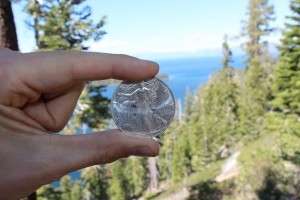 …Gold and silver's real breakout will be when the average, everyday guy has signed up to receive gold price SMS alerts to his smart phone and has the local coin dealer on speed dial.


 It's an ironclad law of government: The bigger you screw up, the bigger budget you get.
 The Federal Reserve has issued its 2012 budget. At $4.7 billion, it is 50% larger than it was in 2005.
 Major U.S. stock indexes are fluctuating today after a rally late yesterday that managed to reverse hefty losses. Thus the S&P is holding the line on 1,300 with a comfortable margin.
 Eurozone leaders have held a summit amid a raging credit crisis… and put off making any decisions till next month.
 "What should happen," says the Gloom Boom & Doom Report's Marc Faber, "is that Greece exit the eurozone right away and default on all its obligations to foreigners."
 Precious metals are slowly climbing back from their most recent beat-down. Gold is at $1,556. An ounce of silver fetches $28.24.
 "The lesson we learn about cockroaches is that there's never just one," says Barry Ritholtz — applying this wisdom to J.P. Morgan Chase.
 Oil is stabilizing after falling below $90 yesterday. At last check, a barrel of West Texas Intermediate fetches $90.64.
 "Never say never, but in my view, the oil price shouldn't go down much from here," ventures Byron King.
 "I can't think of a single bigger thing for us to worry about," says Harvard historian Niall Ferguson, with an eye toward the biggest of big pictures.
 "You need to thank Principal Katie Pennington," writes a reader who caught our item about the 64 high-school seniors suspended on their last day for riding bicycles to class.
 "The North Dakota oil field known as the Bakken had a trade show in Bismarck Tuesday and Wednesday for oil field vendors," a reader writes with an on-site report.
 "Read your comments from the reader regarding the Drudge Report and was a bit stunned," says yet another reader rising to The 5's defense.
 "I have been reading The 5 for several years and it hadn't dawned on me why I liked it so much until lately when I've been reading the latest comments about no spin, no bias and open reporting…quite refreshing!!"
 "I'm an 85-year-old veteran of World War II, and I served in the military for many years. We had two sayings that were relevant then as well as now."
 "What, you [also] quote left-wing media?" writes a reader with tongue firmly in cheek. "I am appalled! How can you quote this brainwashing propaganda nonsense?"

| You are subscribed to email updates from Save Your ASSets First To stop receiving these emails, you may unsubscribe now. | Email delivery powered by Google |
| Google Inc., 20 West Kinzie, Chicago IL USA 60610 | |


No comments:
Post a Comment